
Hair for a Kerala Hindu wedding has a practical job before it has a pretty one. It has to sit under jasmine for hours, stay smooth in humidity, leave room at the nape for the thali and look right from behind, since guests watch the ceremony mostly from the side and back. The kasavu or silk saree and temple jewelry set the tone, and the hair supports them. These Kerala Hindu wedding hairstyles run from the classic jasmine bun to softer reception styles, with notes on hair length, face shape and how each one wears through the day.
How Much Jasmine a Bridal Bun Can Carry, and How to Keep It White
Jasmine looks light, but several layered strings around a bun weigh more than you’d expect, and the weight pulls down and back for hours. The base has to be built for it.
- I use a padding or donut under the bun so the flowers wrap a firm shape rather than soft hair.
- Each string is fixed with U-pins pushed through the base, not just tucked in.
- Buy buds that are just about to open on the morning of the wedding. They open slowly through the day, so they look fresh by the ceremony.
- Keep them wrapped in damp cloth in a cool place until styling. Avoid the fridge, as cold can brown the petals.
- Handle them as little as possible; jasmine browns quickly where fingers press it.
If you’re sensitive to strong scents, mention it at the trial. A full jasmine bun is very fragrant up close, and a lighter wrap with gold pins gives the look without the headache.
Order more than you think you need. Strings get trimmed to fit the bun, a few buds always drop, and having a spare length on hand lets me replace a bruised section before the photos instead of leaving a brown patch at the back.
1. Kerala Hindu Wedding Jasmine Bun
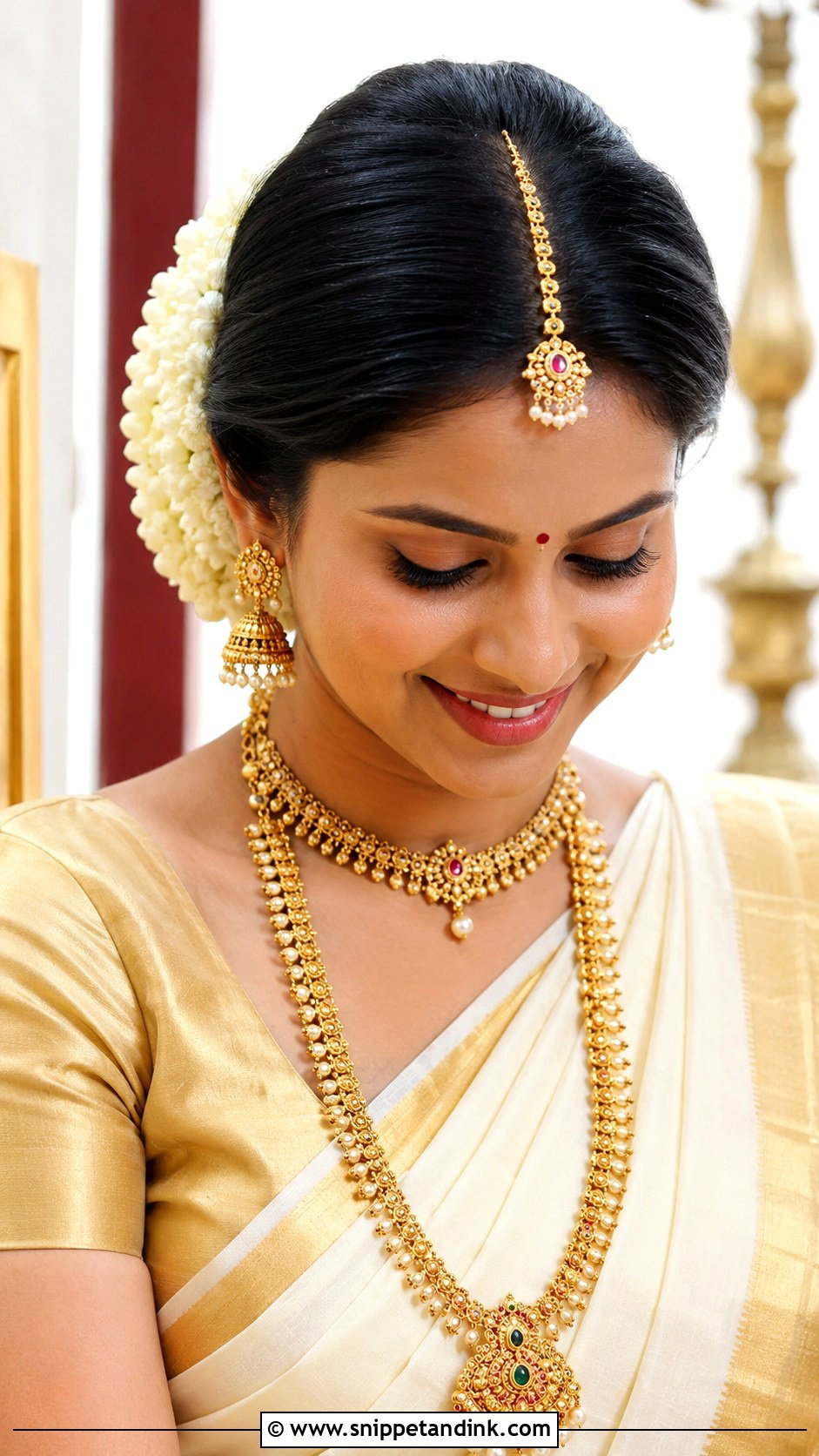
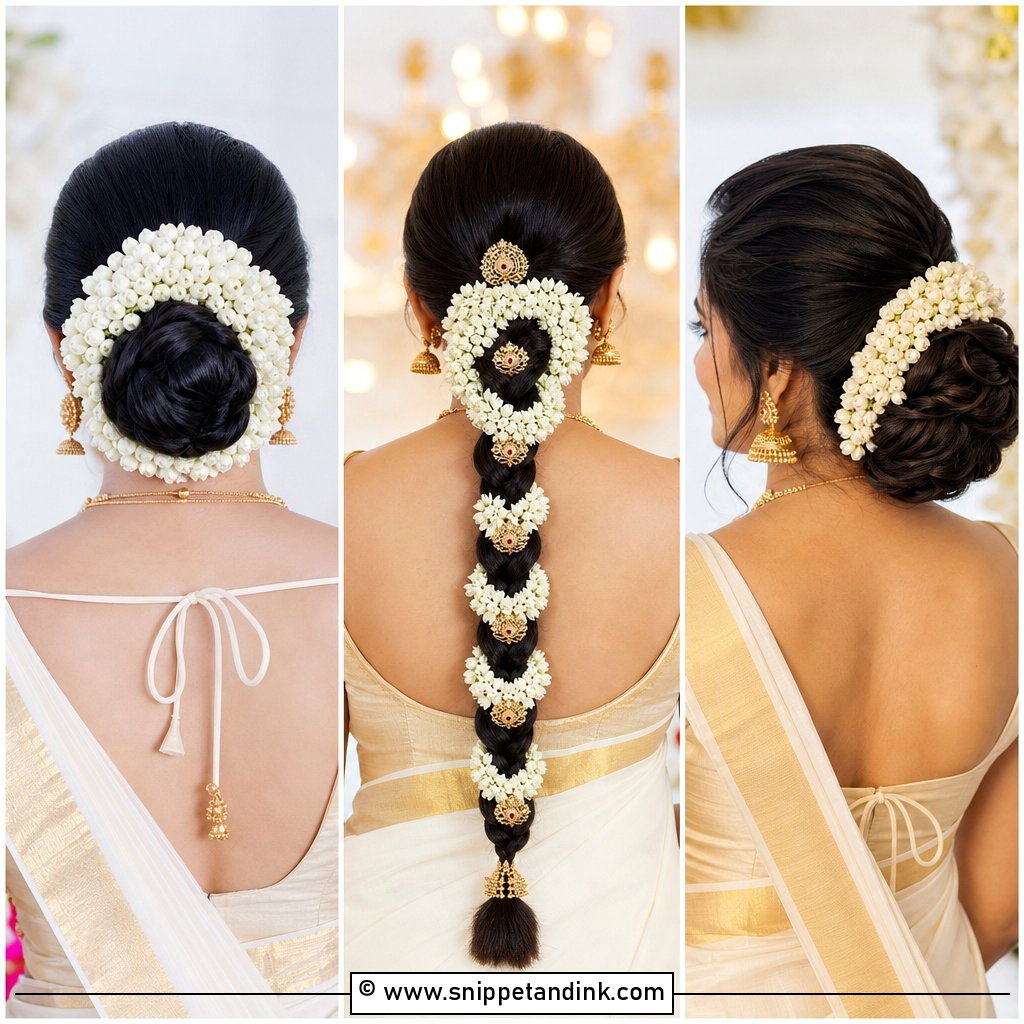
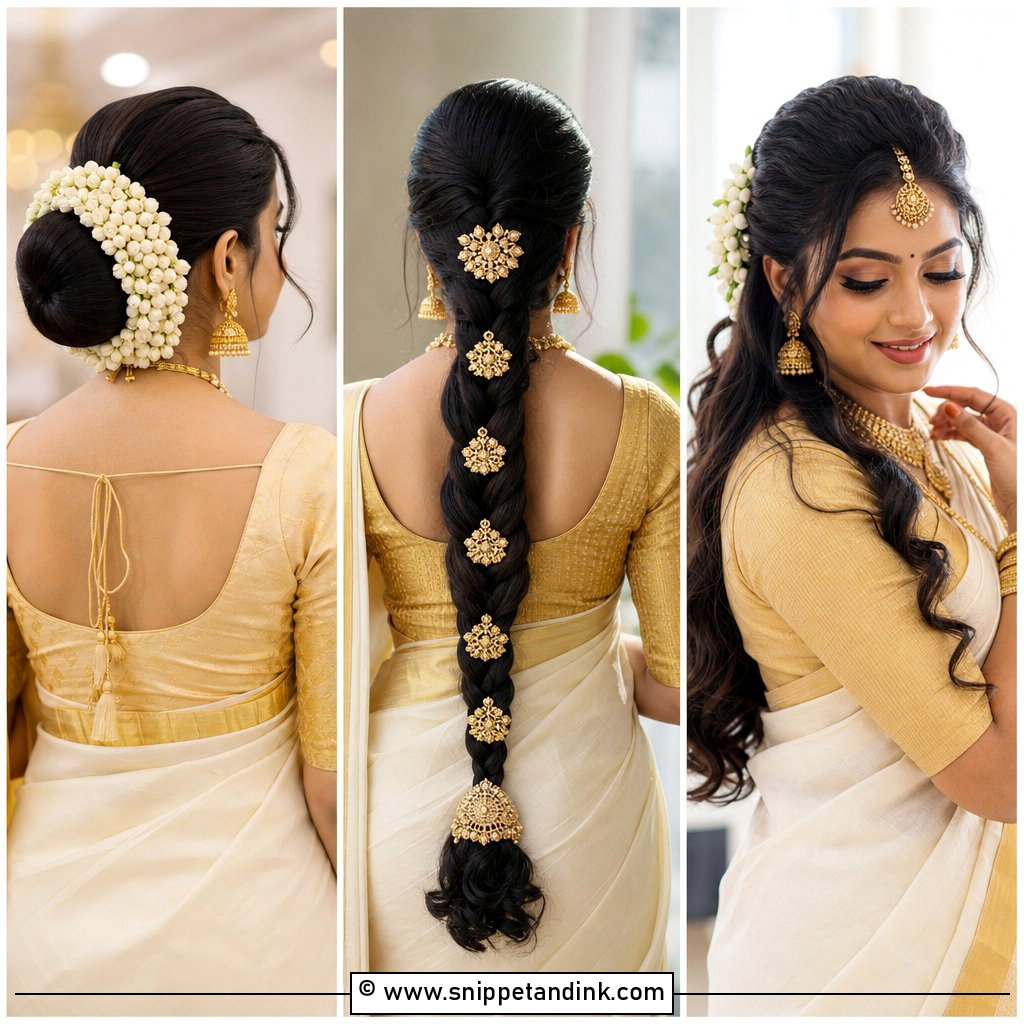
The center part, the smoothed crown and the low or mid bun wrapped in jasmine: a Kerala Hindu wedding jasmine bun is still the look most brides picture. I build the bun over a small donut or padding so it has a firm shape for the flowers to hold onto, then pin each jasmine string with U-pins rather than bobby pins, which tend to slide out under the weight. It leaves the neck clear for necklaces and earrings, and it hardly moves during a long ceremony.
2. Kerala Hindu Wedding Long Braid
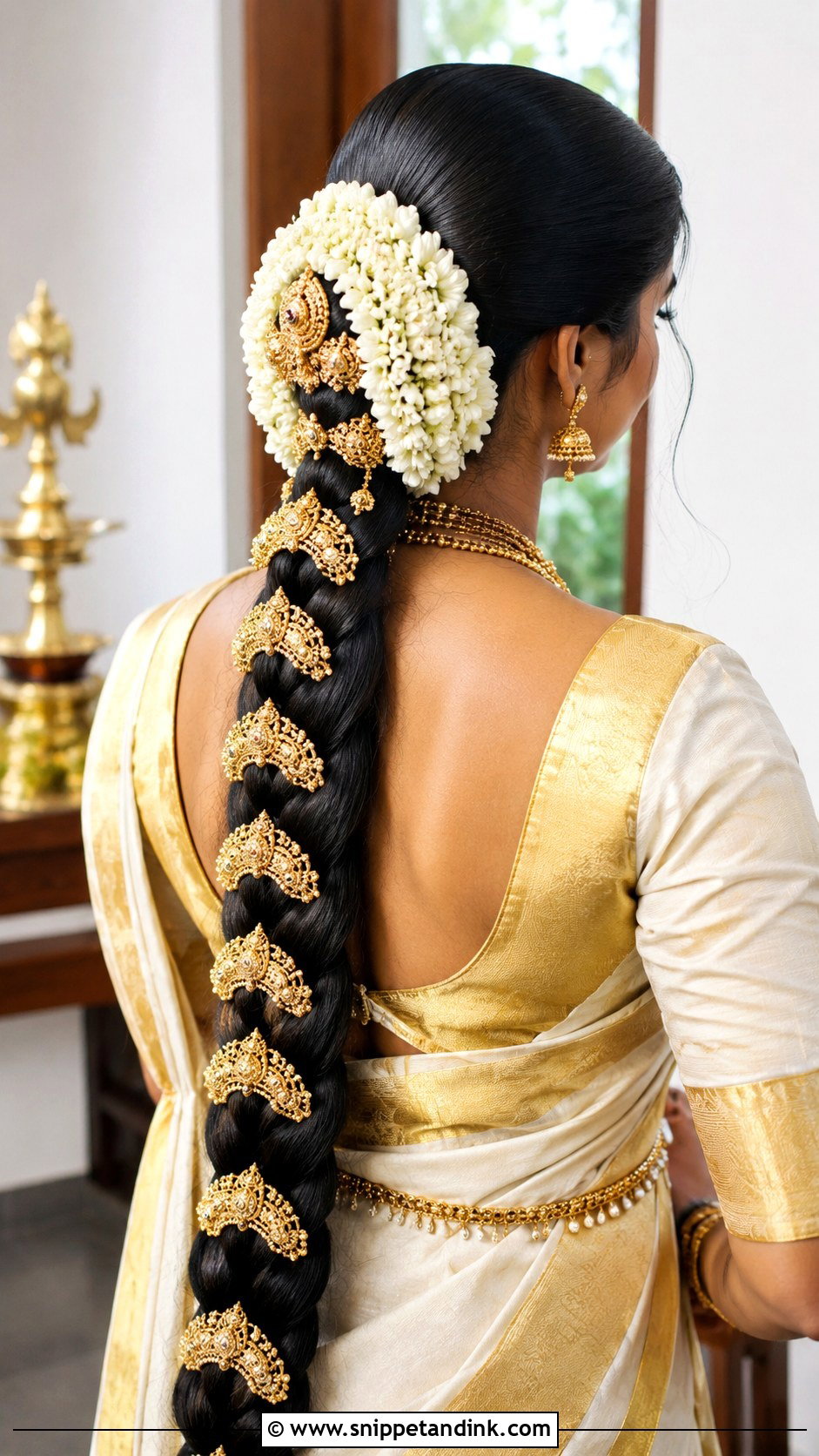
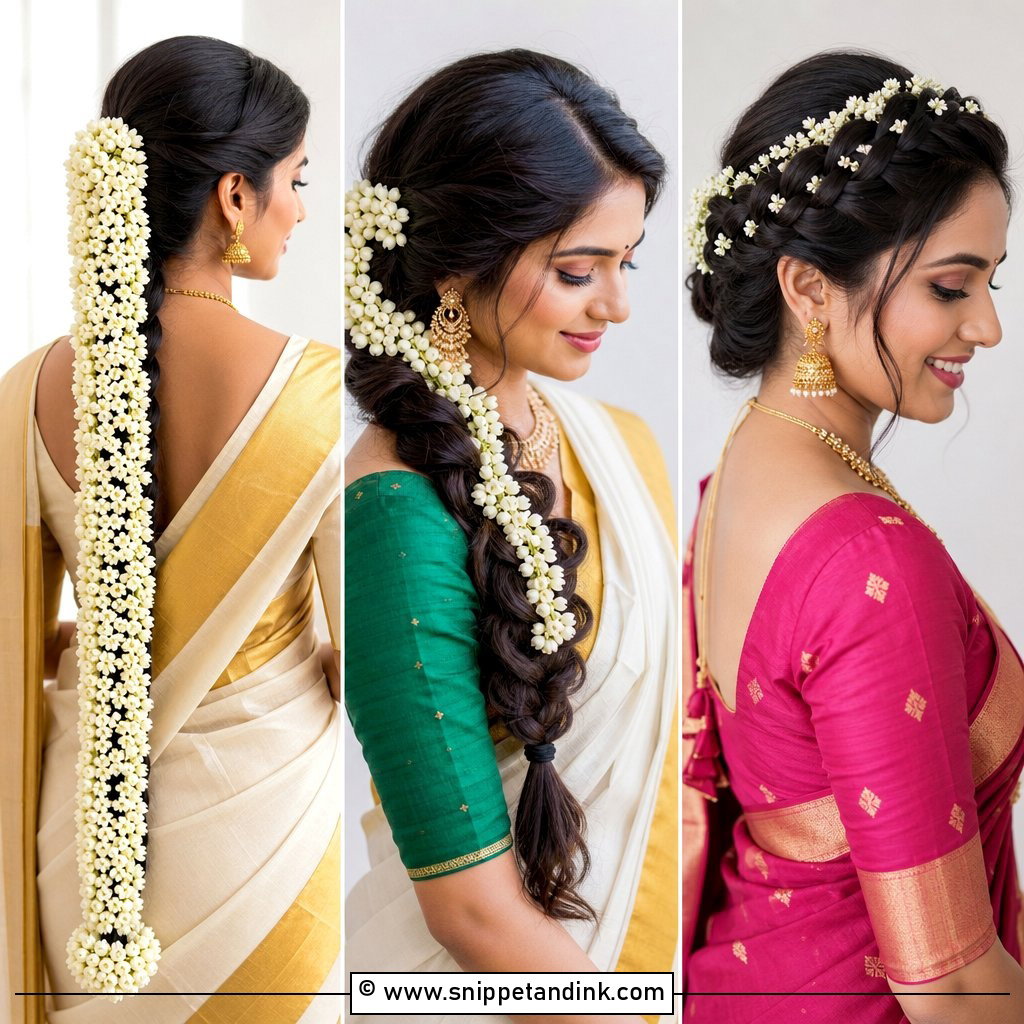
A long braid down the back puts the hair center stage with the saree and gold. Most brides I work with add a matching braid extension for length, because a braid tapers naturally and loses fullness toward the end. Jasmine strings, gold jada pieces or small floral clusters are placed along it. The thing people forget is sitting down: a long braid gets crushed against a chair back, so I check where you’ll be seated during the ceremony before deciding how heavily to decorate it.
3. Kerala Hindu Wedding Poola Jada
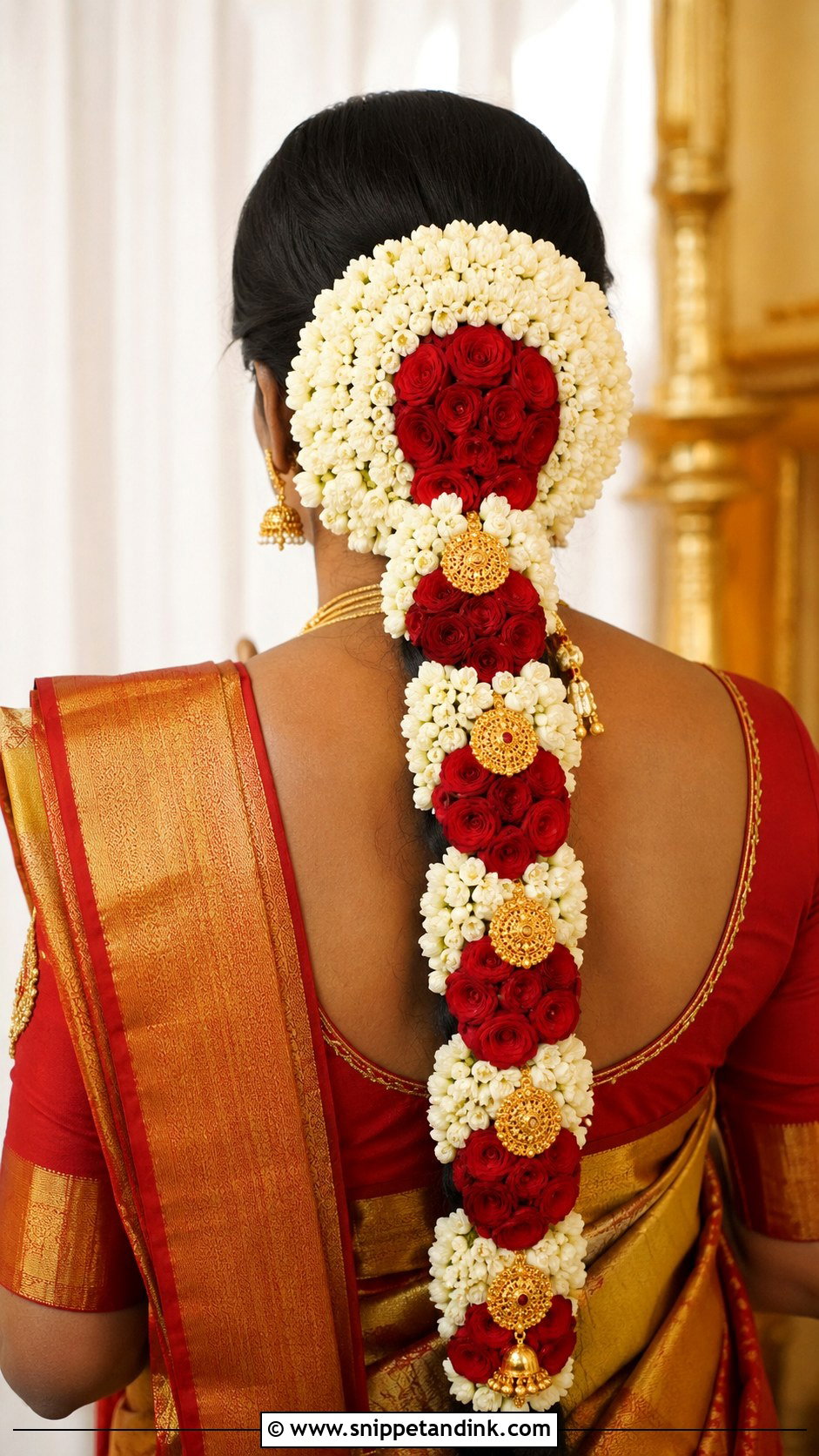
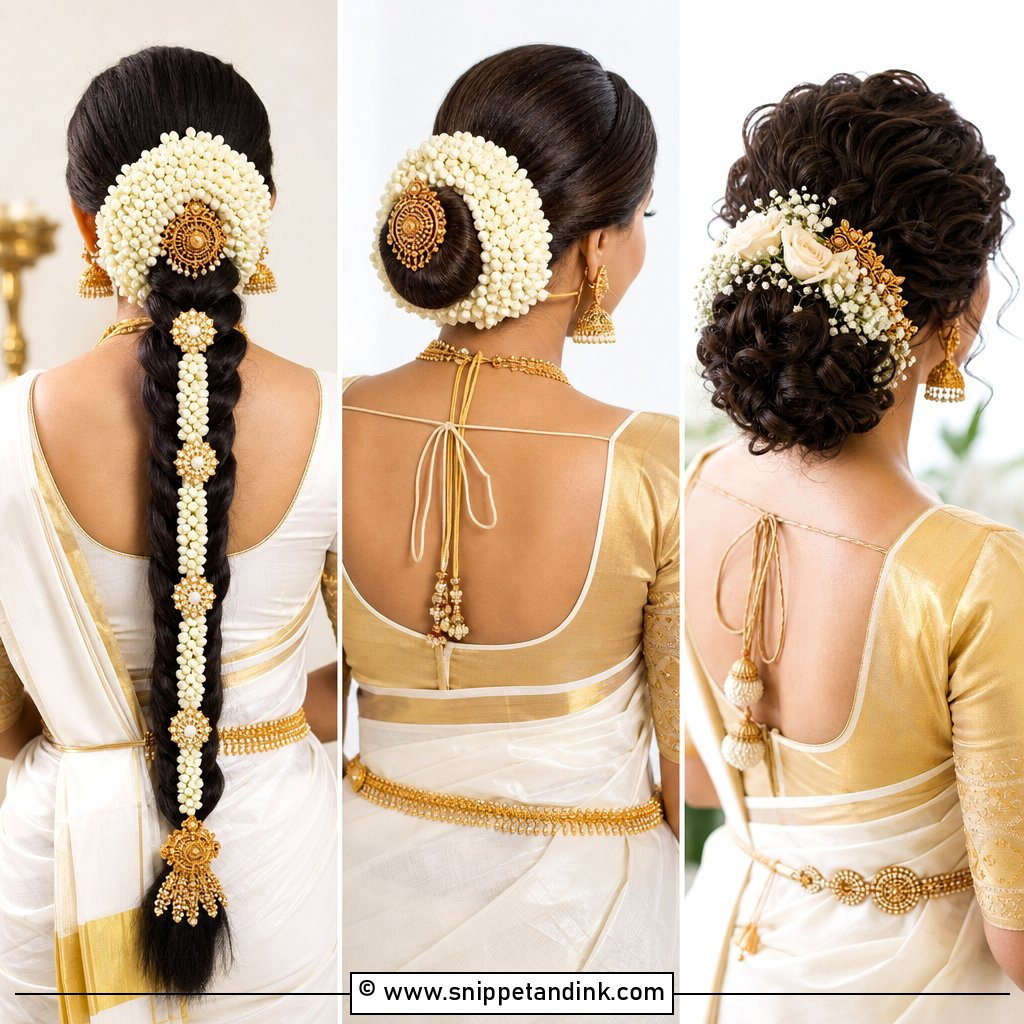
Covered from crown to tip in flowers, a Kerala Hindu wedding poola jada is the grandest of these looks. The flowers are usually sewn or pinned onto a prepared base and then attached to an extended braid, rather than built on the hair itself, which keeps the work neat and lets it be prepared ahead. Jasmine, roses or other wedding flowers can be arranged in rows, with gold ornaments between them. It’s heavy, so I anchor it high at the crown with several crossing pins to spread the weight.
4. Kerala Hindu Wedding Bun With Gajra
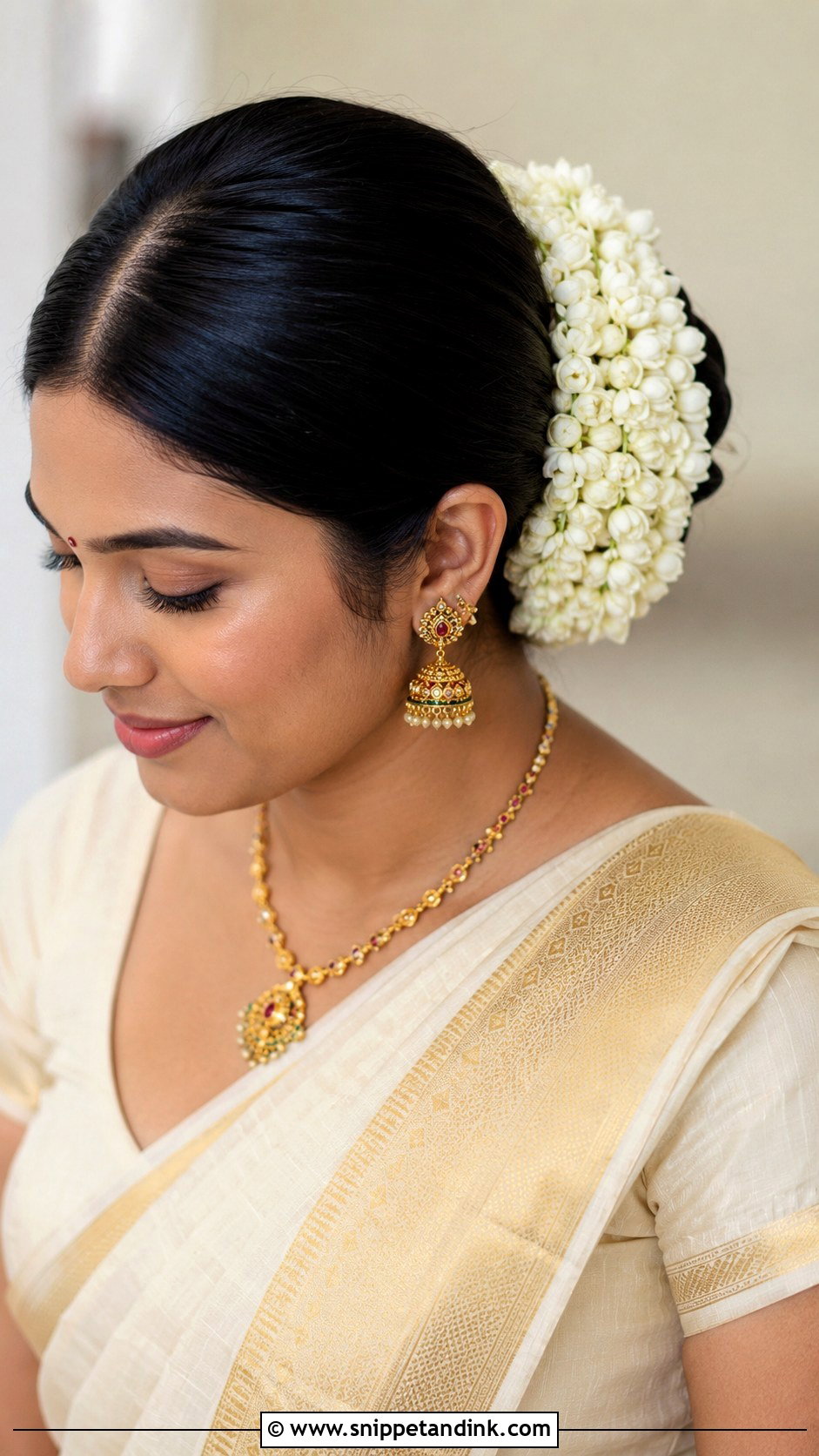
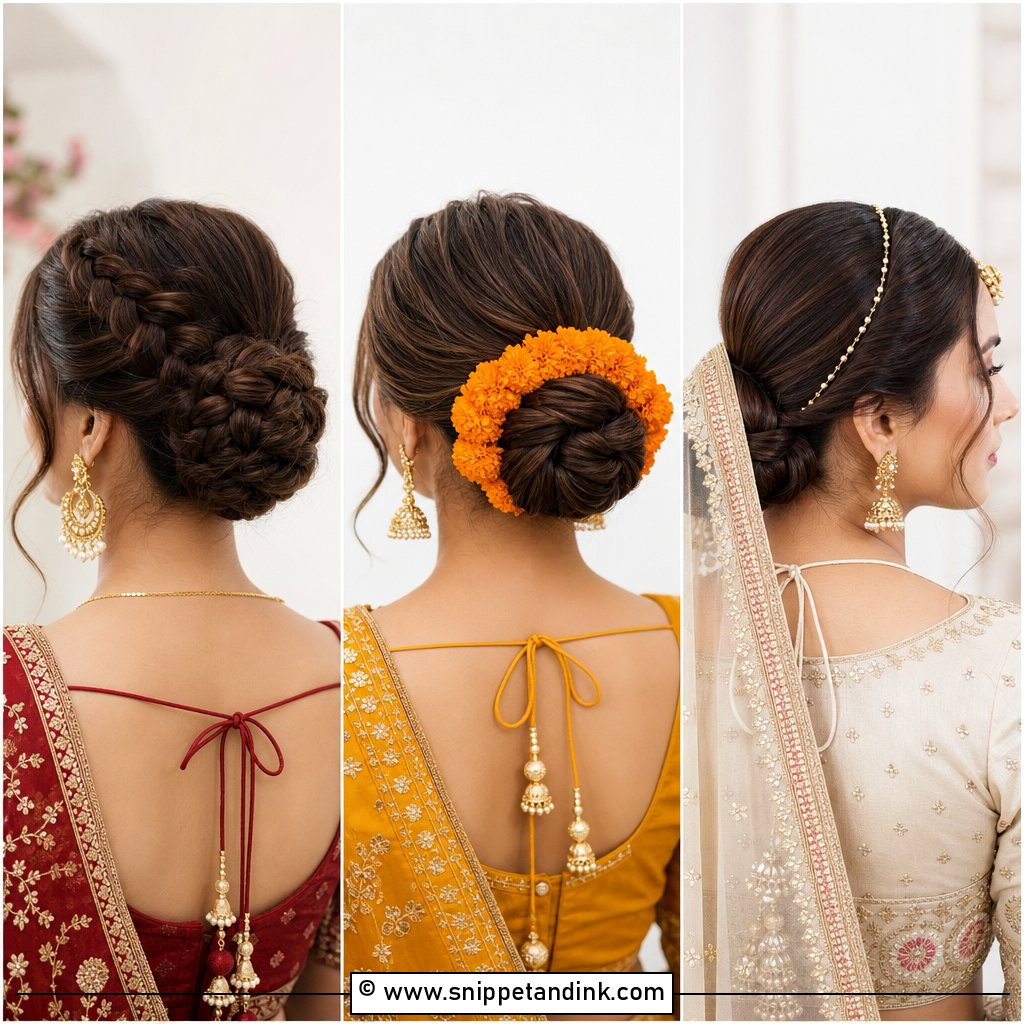
A bun with gajra is the easiest of these to personalize. The bun itself can be sleek, braided or loosely twisted, and the jasmine can wrap once for a minimal finish or several times for fullness. White jasmine sits naturally beside gold jewelry and cream sarees. In humid weather, keeping everything gathered is the most reliable way to avoid frizz by the afternoon.
5. Kerala Hindu Wedding Braided Bun
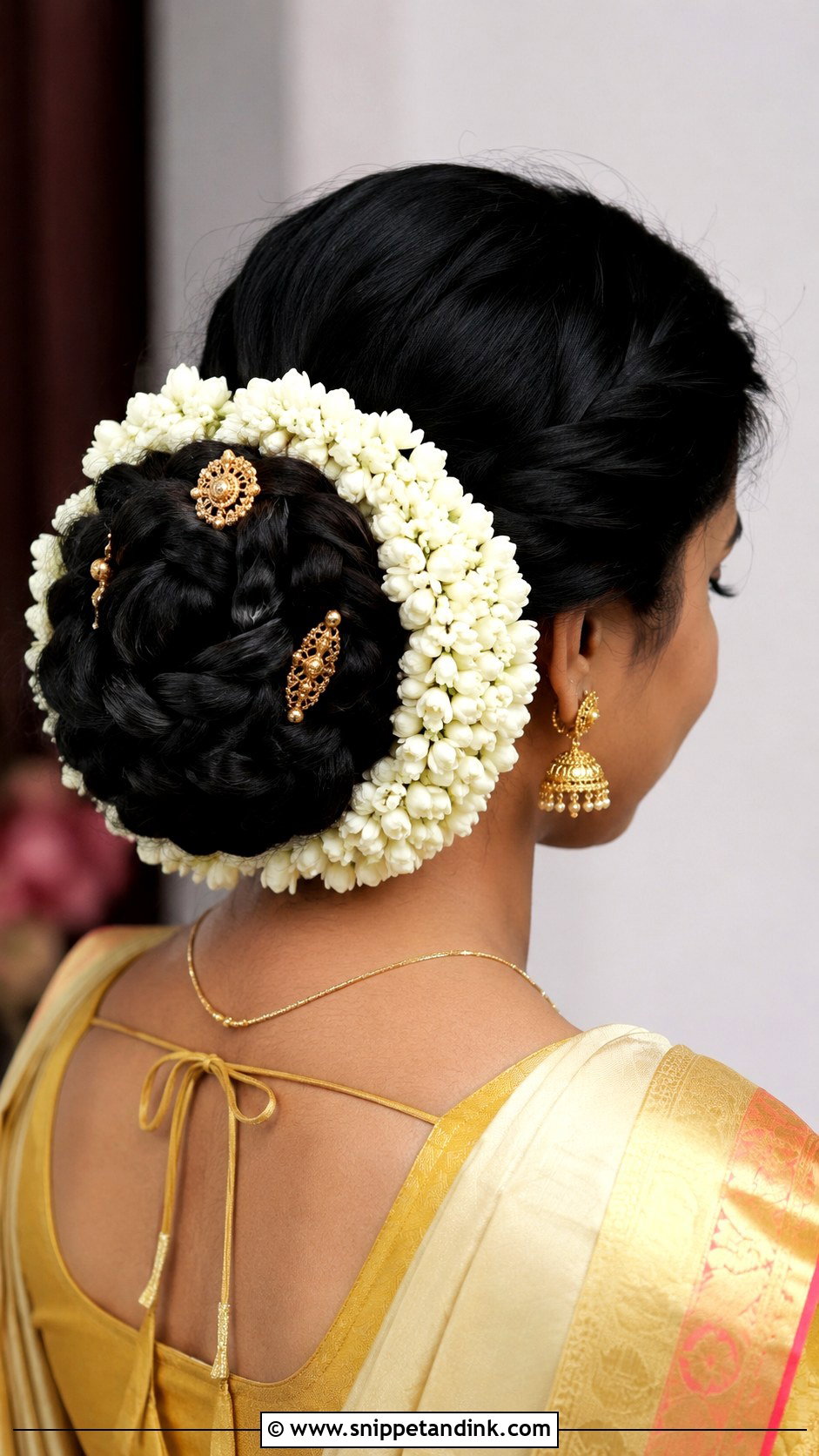
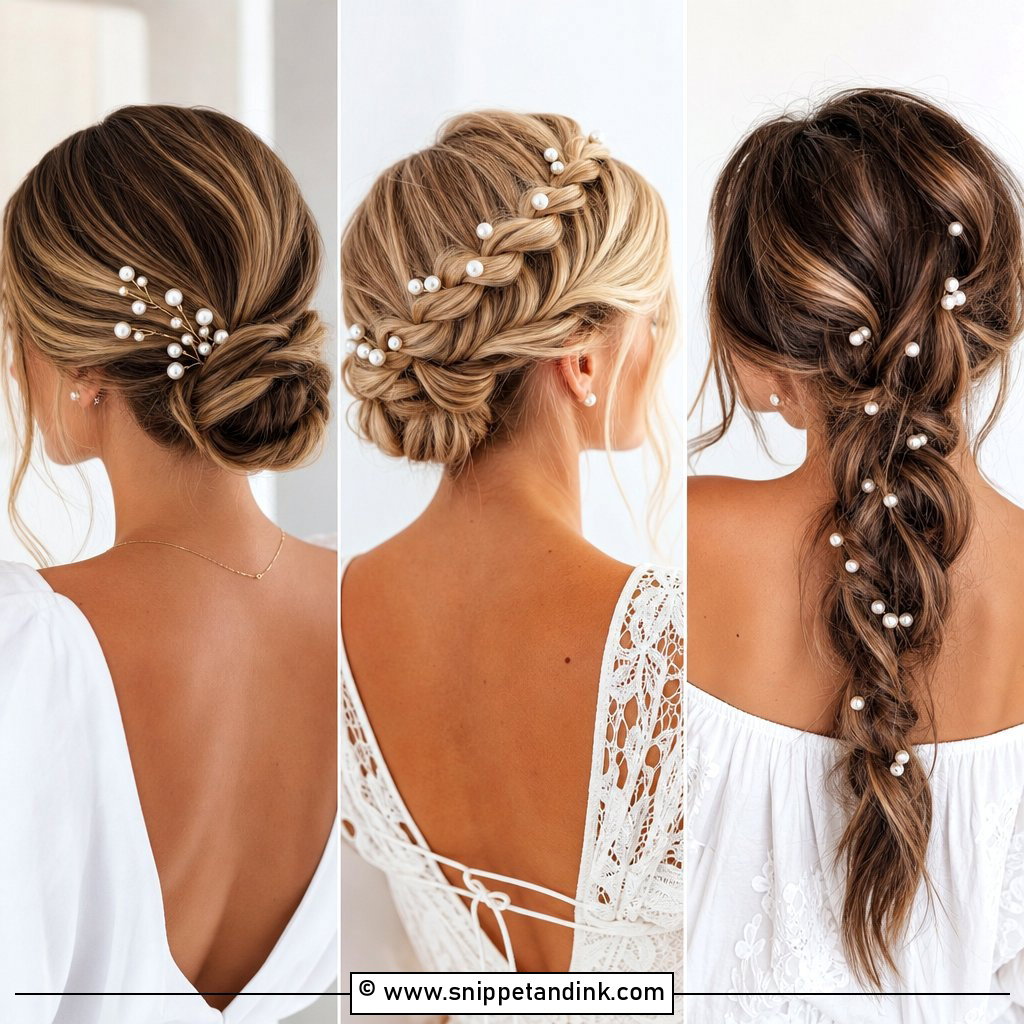
Braiding the hair first and then coiling it into a bun gives more texture and depth than a plain shape. I pull the edges of the braid gently before coiling it so the pattern shows in close-ups. Thick hair makes a full bun on its own; finer or shorter hair needs padding or an extension woven in. Jasmine, gold pins or small pearls can go around it. It’s one of the most secure styles here.
6. Kerala Hindu Wedding Low Bun
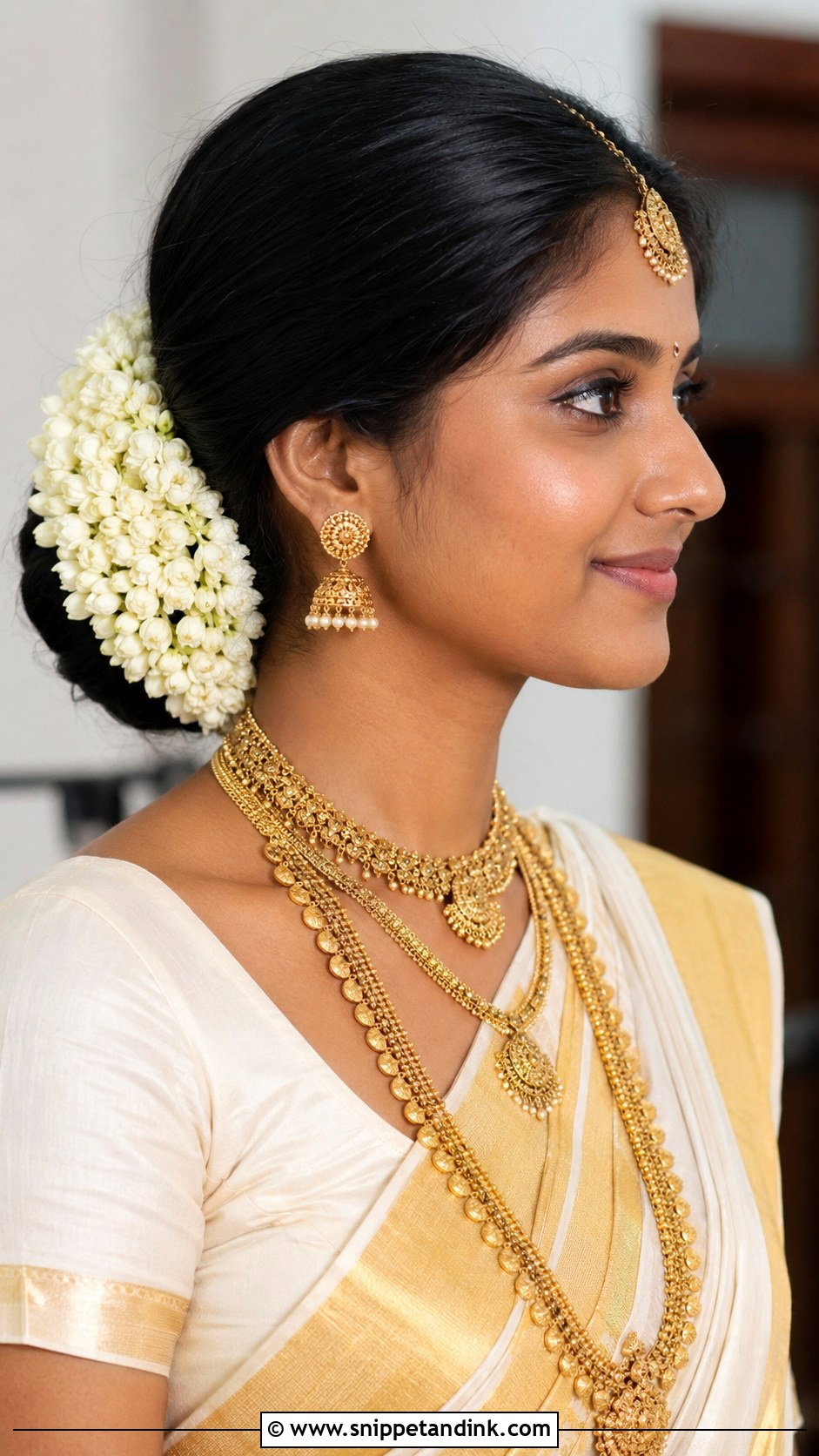
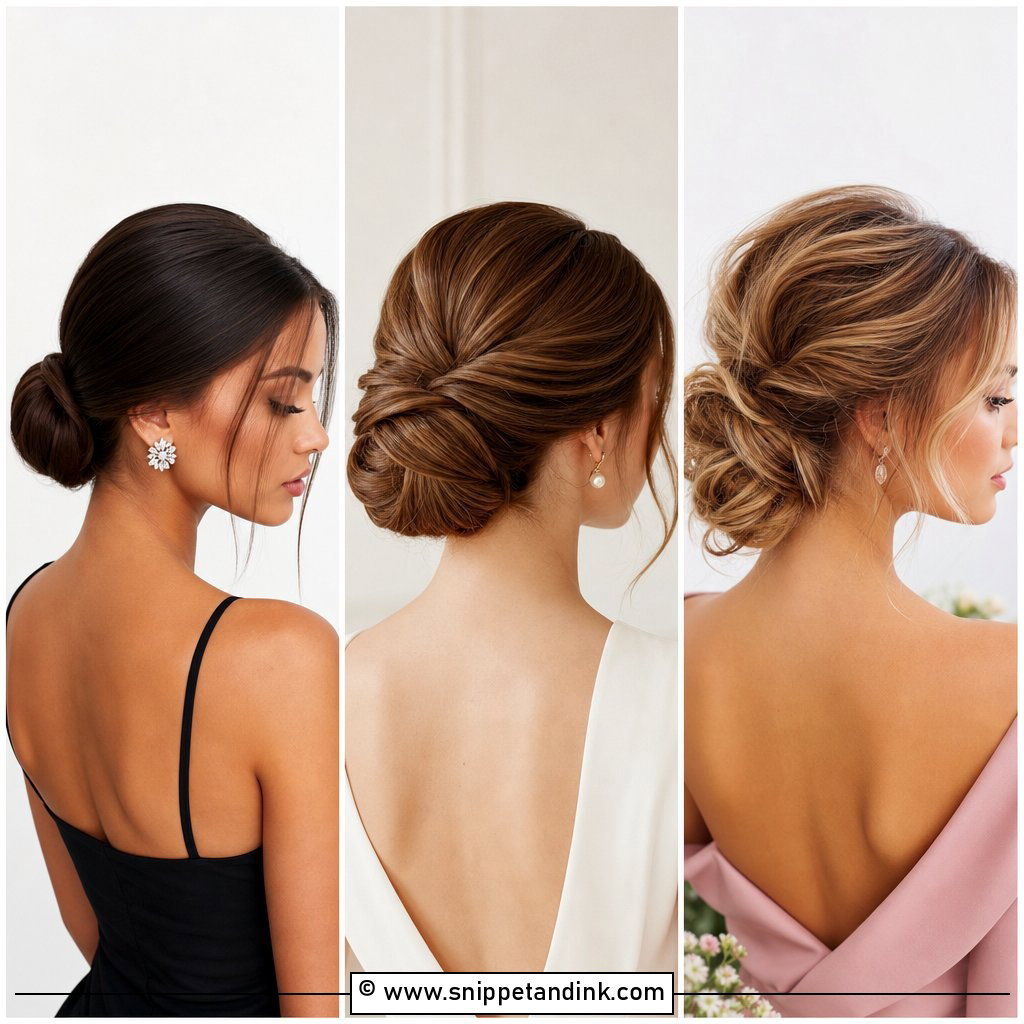
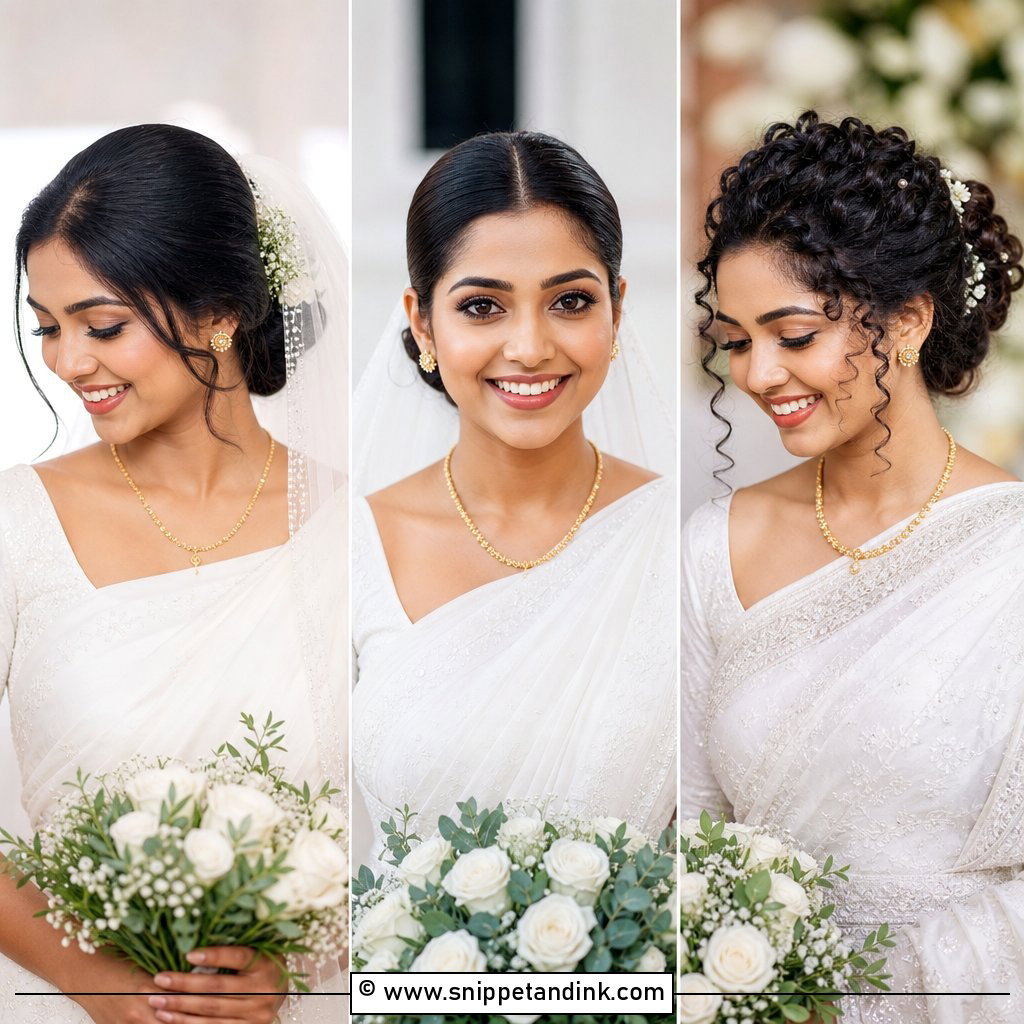
Sitting close to the nape, a low bun is calm and mature, and it suits most face shapes. I keep the front sleek with a center part or add a little lift at the crown if your face is round. One thing I check here more than anywhere else: the thali is tied at the back of the neck, so the bun can’t sit so low that it blocks the clasp. A jasmine ring or gold bun pin dresses it up.
7. Kerala Hindu Wedding Side Braid
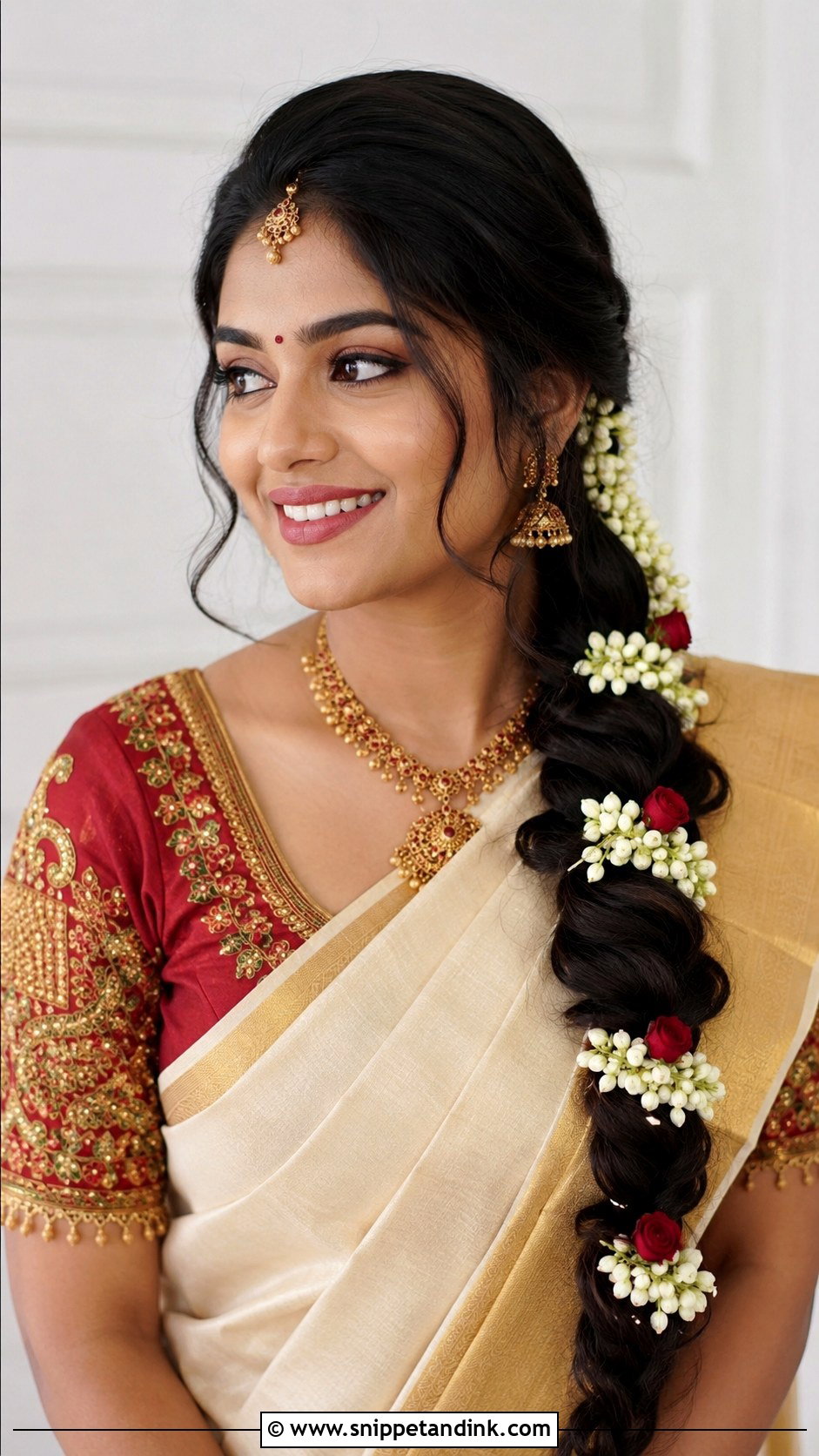
Bringing the braid over one shoulder moves the flowers into the front view, which suits portraits. It can be a three-strand braid, a fishtail or a softer textured version, with jasmine strands, tiny roses or gold charms through the length. I pin it in place at the shoulder with a hidden pin so it doesn’t slip back when you turn. It also leaves the back free to show off sarees with rich blouse work.
8. Kerala Hindu Wedding Fishtail Braid
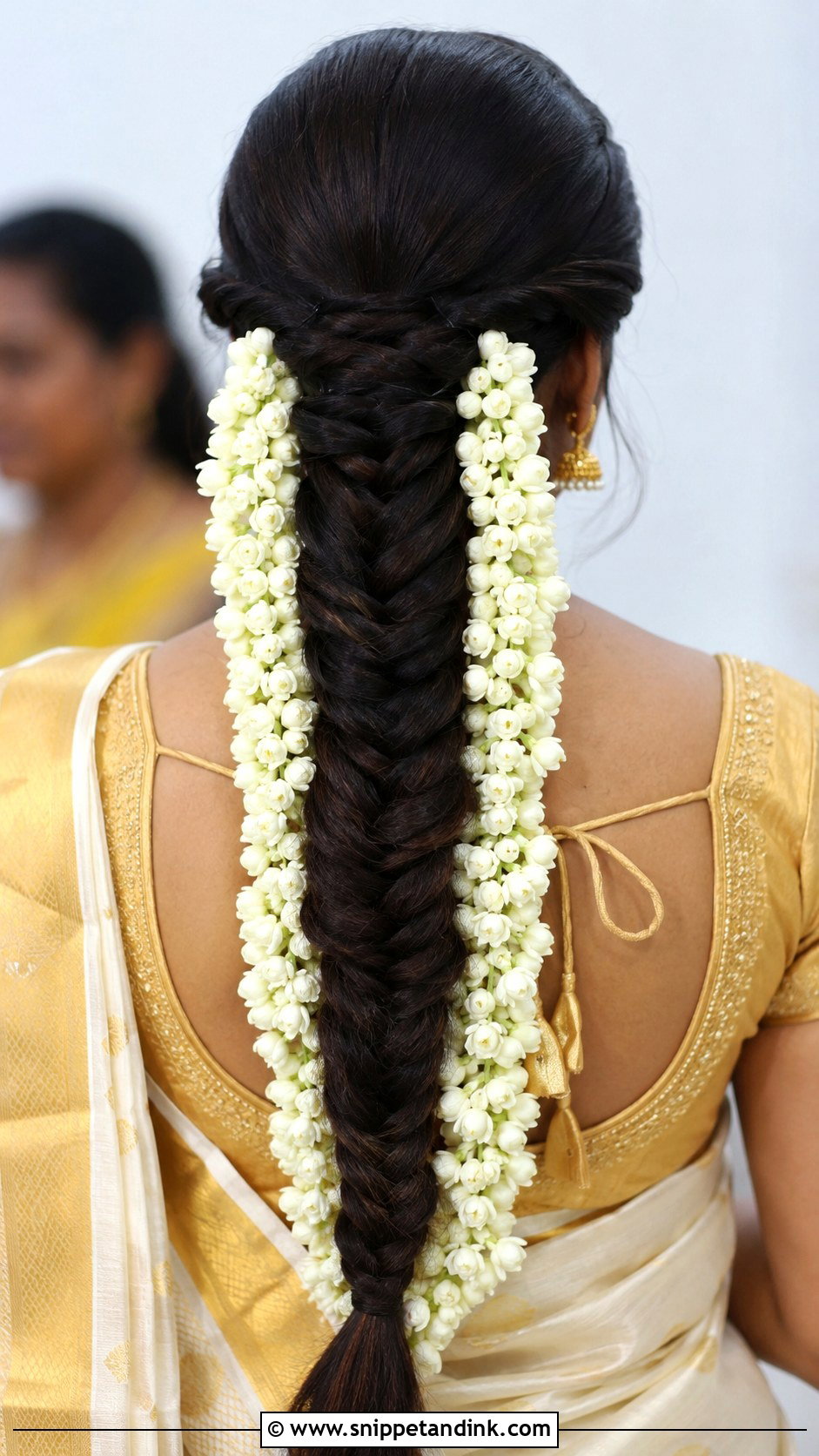
A fishtail braid looks modern but still fits traditional clothes. The fine woven pattern holds flowers well along the sides. Long, thick hair gives the fullest result; extensions help everyone else. It takes longer to plait than a three-strand braid and is harder to fix if it loosens, so I finish it tighter at the top and looser toward the end. Where the saree and jewelry are already ornate, this braid needs very few accessories.
9. Kerala Hindu Wedding Braid With Gold Jada
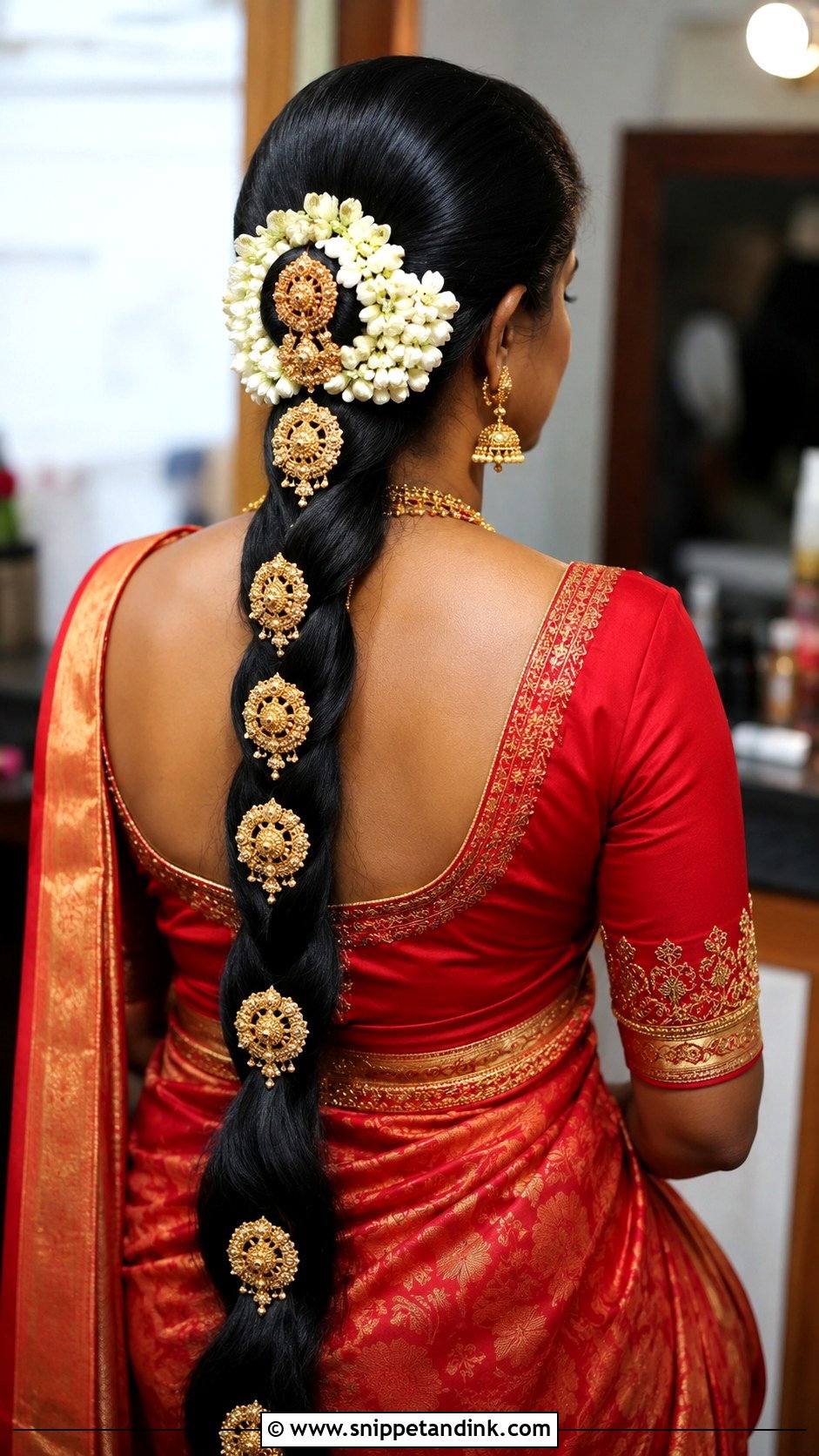
This is the most ceremonial braid here: sleek at the crown, long through the back, with gold jada ornaments spaced evenly down the length, aiming for a royal South Indian bridal look. Jada pieces are heavy, so the braid has to be firm and well anchored or the ornaments pull it crooked. Jasmine or small roses fill the gaps, and a decorative end piece finishes it. With temple jewelry the gold matches from head to toe.
10. Kerala Hindu Wedding Bun With Temple Jewelry
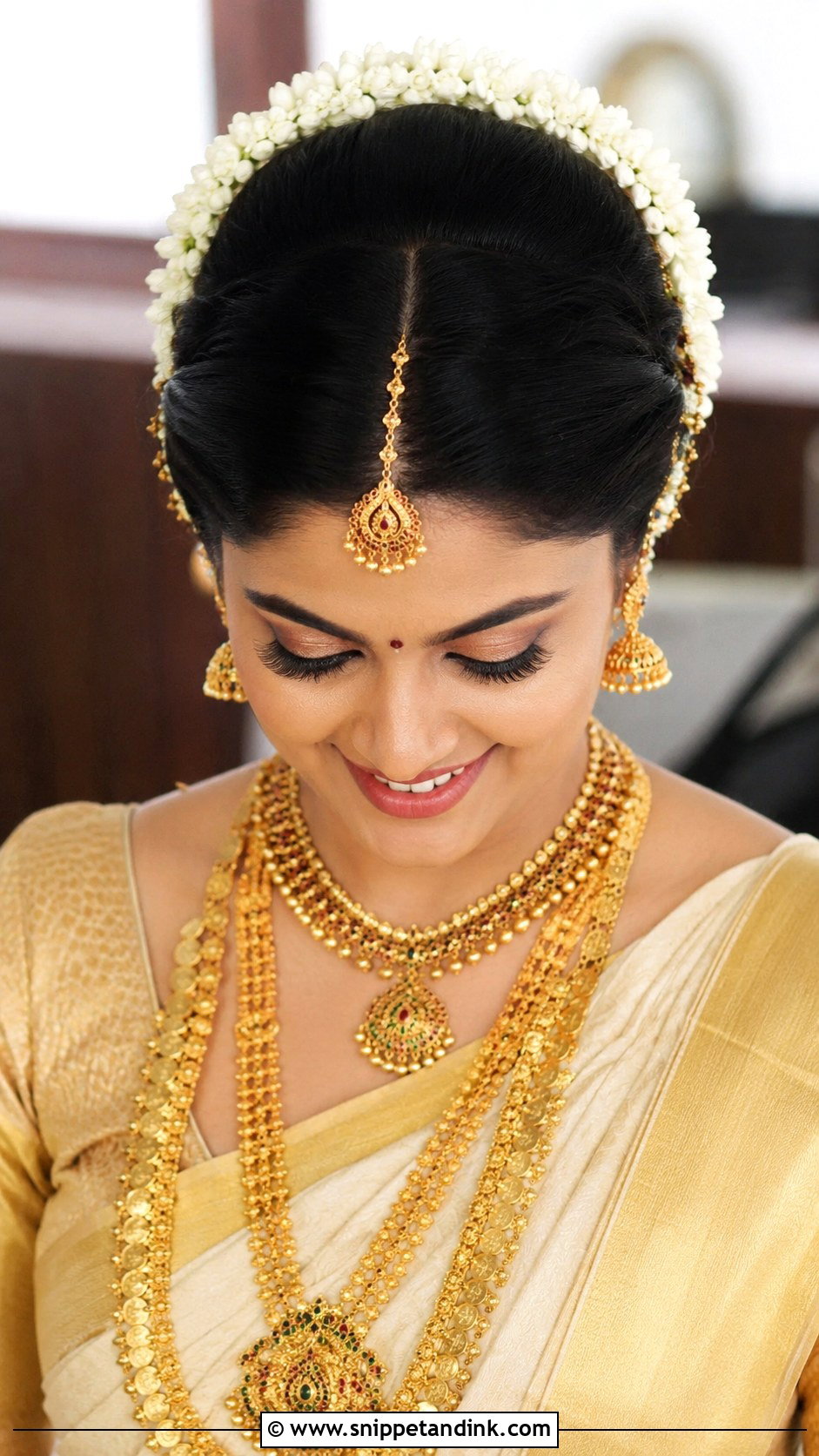
Here the bun is a base for the ornaments: gold pins, sun and moon motifs or one statement hairpiece, with jasmine around it to soften the gold. I plan the pin positions at the trial with the actual jewelry, since some pieces need a flat area and some need height. It suits a center part with forehead jewelry, silk sarees, gold chokers and long harams.
11. Kerala Hindu Wedding Center Part Bun
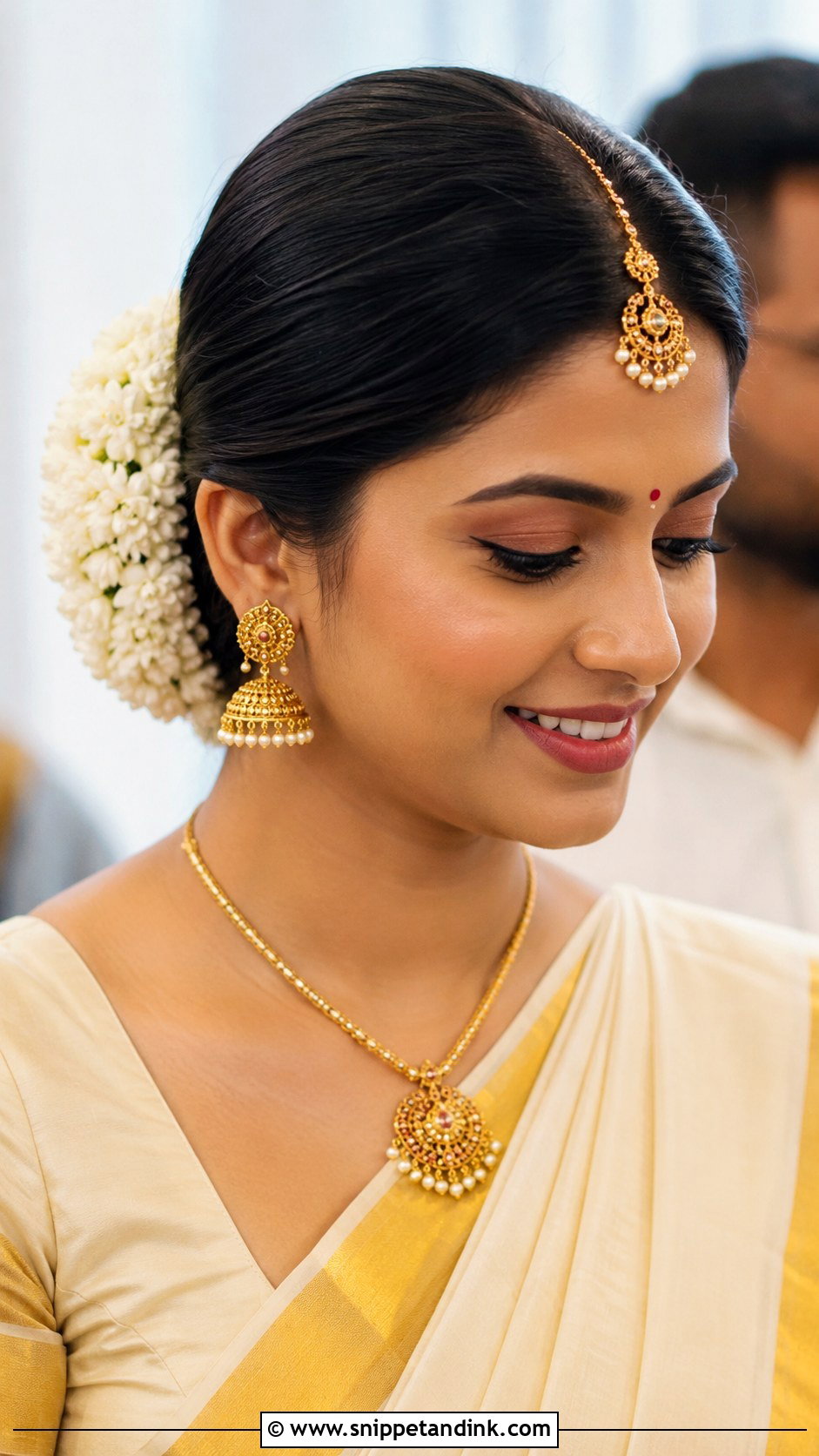
A center part gives room for the netti chutti or maang tikka to sit straight, which is why it’s so common for Kerala brides. I measure the part from the nose and check it from above; a crooked part pulls the forehead ornament off center. The bun behind can be sleek or softened with a little crown volume, with jasmine around it. It keeps the focus on your face, saree border and jewelry.
12. Kerala Hindu Wedding Half Up Curls
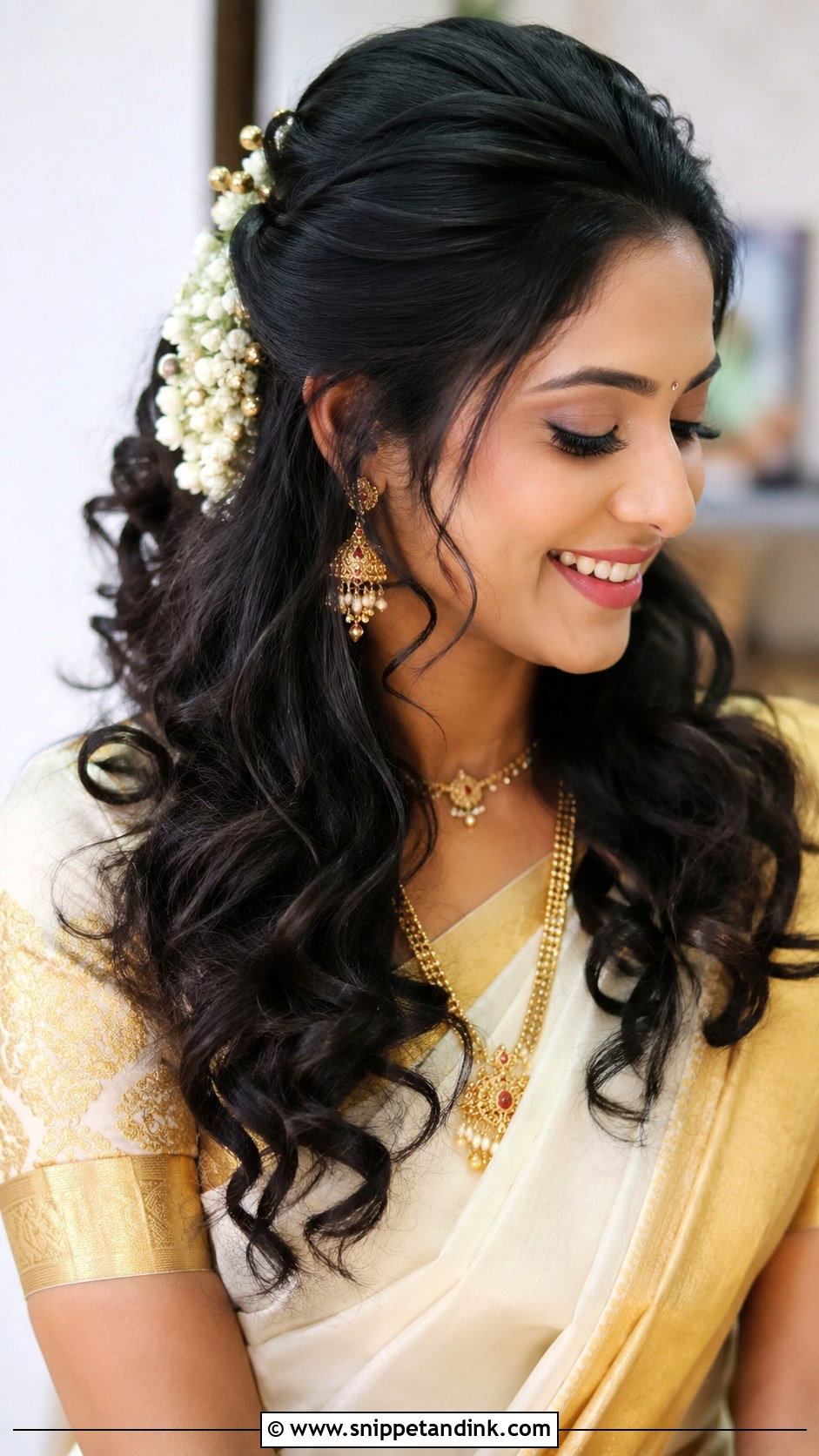
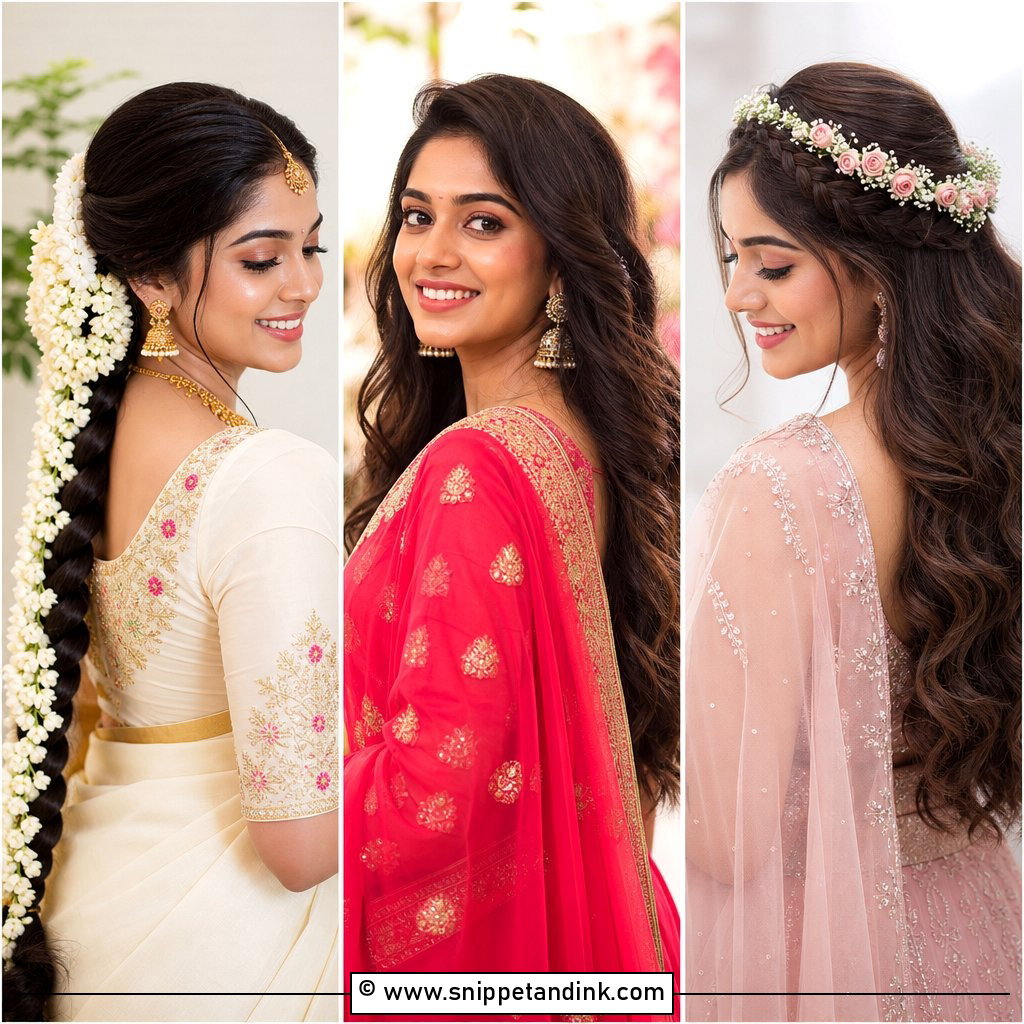
Half up with curls is softer and more modern. The top section is pinned back, and the rest falls in curls over the shoulders or down the back. Small jasmine flowers, gold pins or a hair chain tie it to the outfit. Curls drop faster in humidity, so I set them with a firm-hold product and let them cool fully before brushing. It suits an engagement, reception or relaxed ceremony.
13. Kerala Hindu Wedding Open Hair Curls
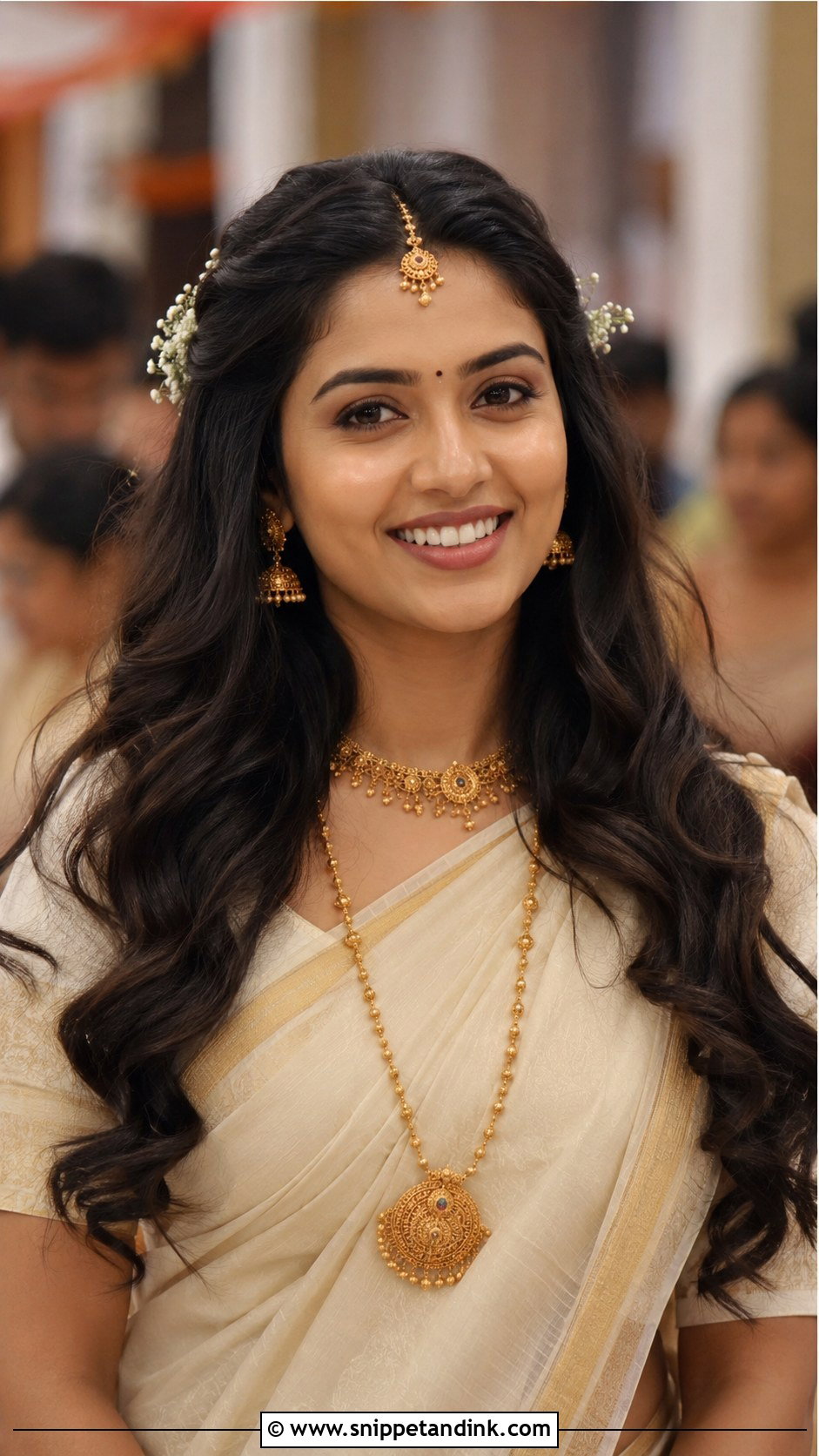
Wearing the hair fully open works for some brides, but only with polished curls and a few hidden pins at the front. A center part, slight lift at the crown and small floral accents keep it bridal. I’d only recommend it for an air-conditioned venue or if you’re used to loose hair for many hours. Lighter jewelry and softer drapes suit it best.
14. Kerala Hindu Wedding Sleek Bun
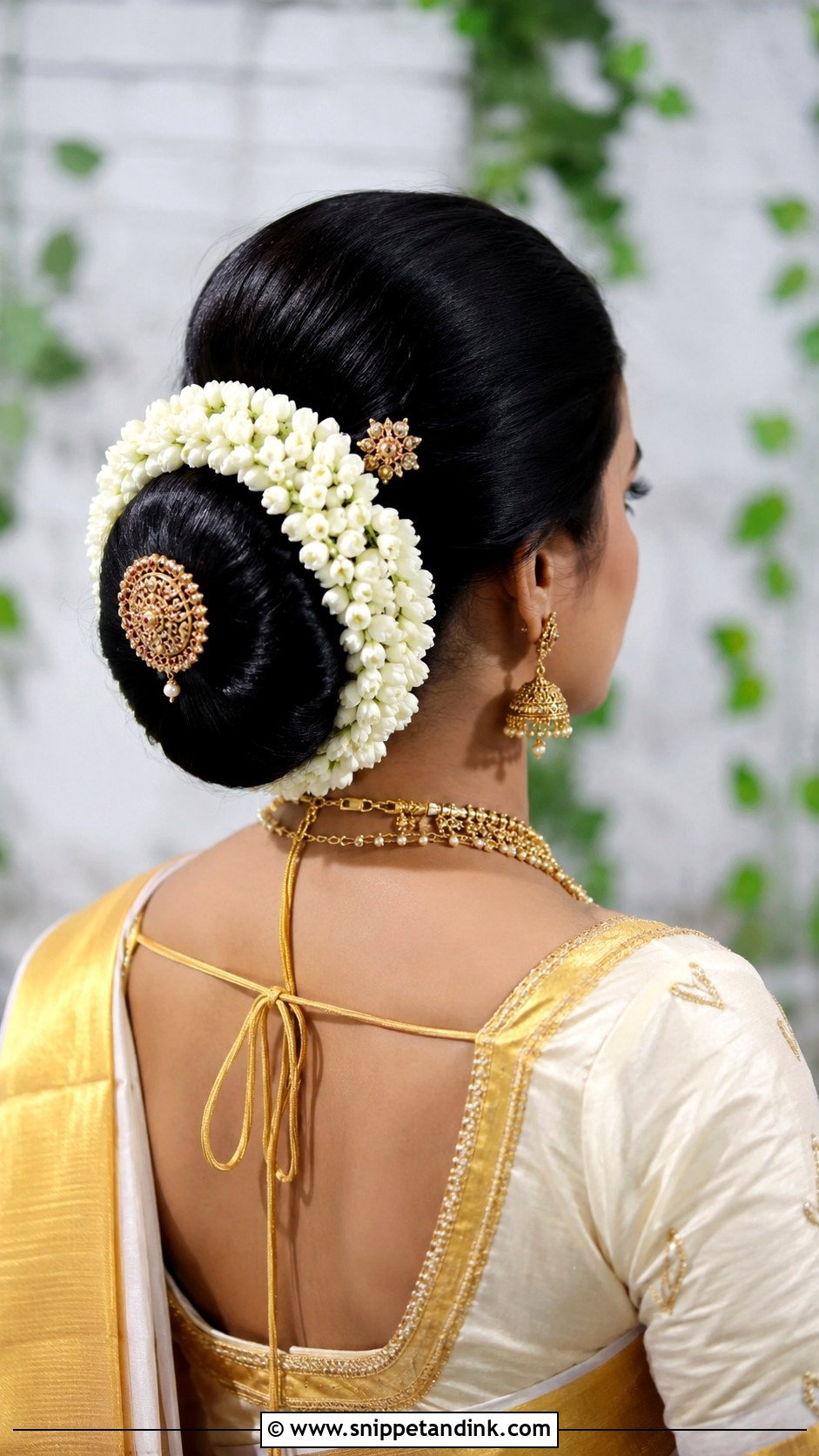
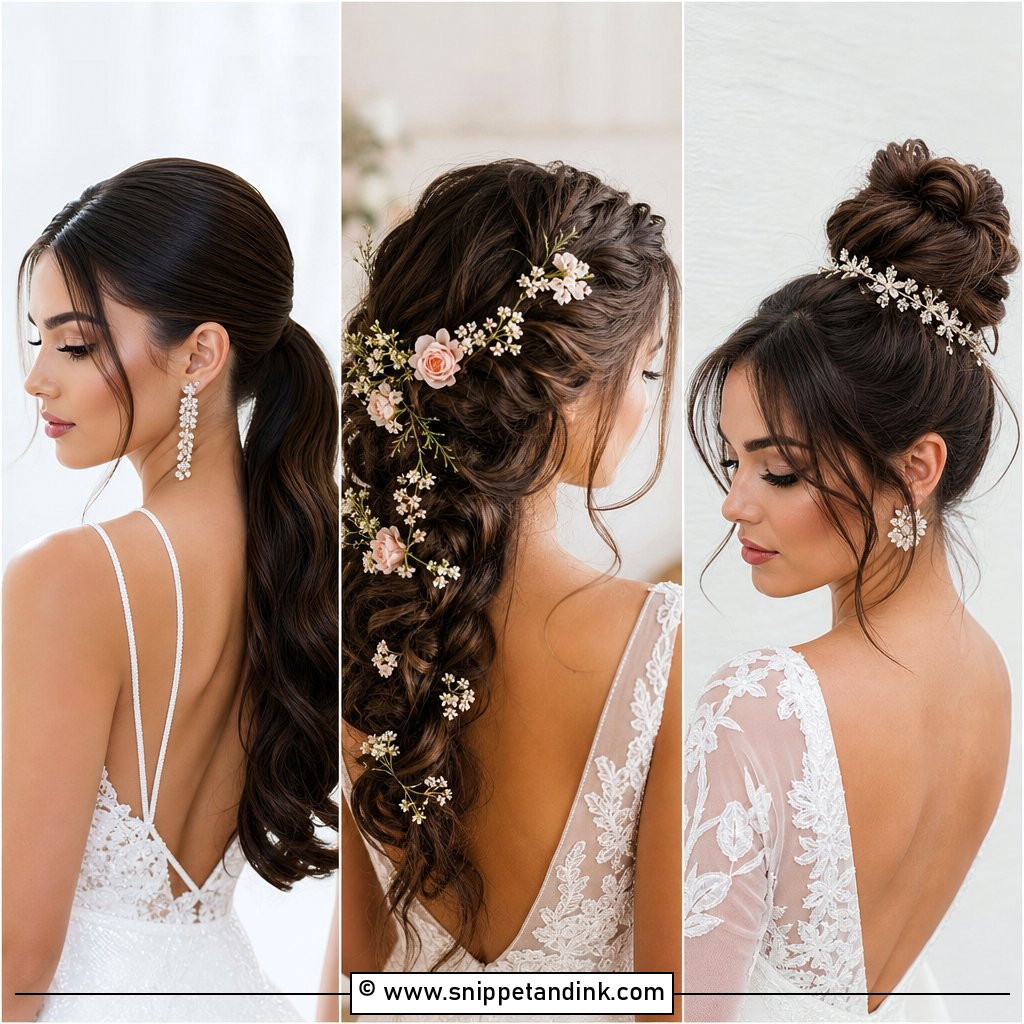
The hair is smoothed close to the scalp and gathered into a firm bun at the back or lower nape. Getting it truly smooth takes a light gel or cream and a boar bristle brush, and flyaways at the temples need a little wax. It frames the face sharply and suits strong bridal makeup. In humid weather this is the style least likely to frizz. One accessory is enough.
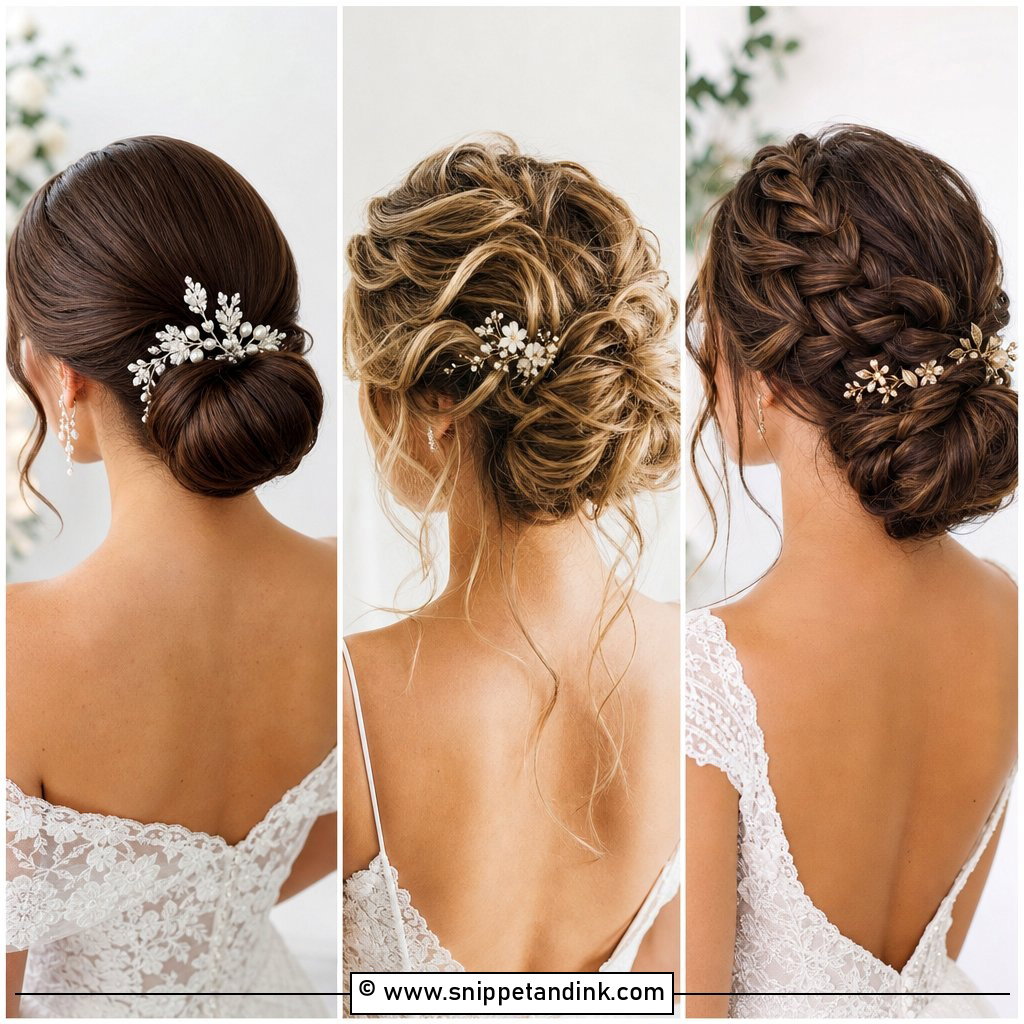
15. Kerala Hindu Wedding Curly Bun
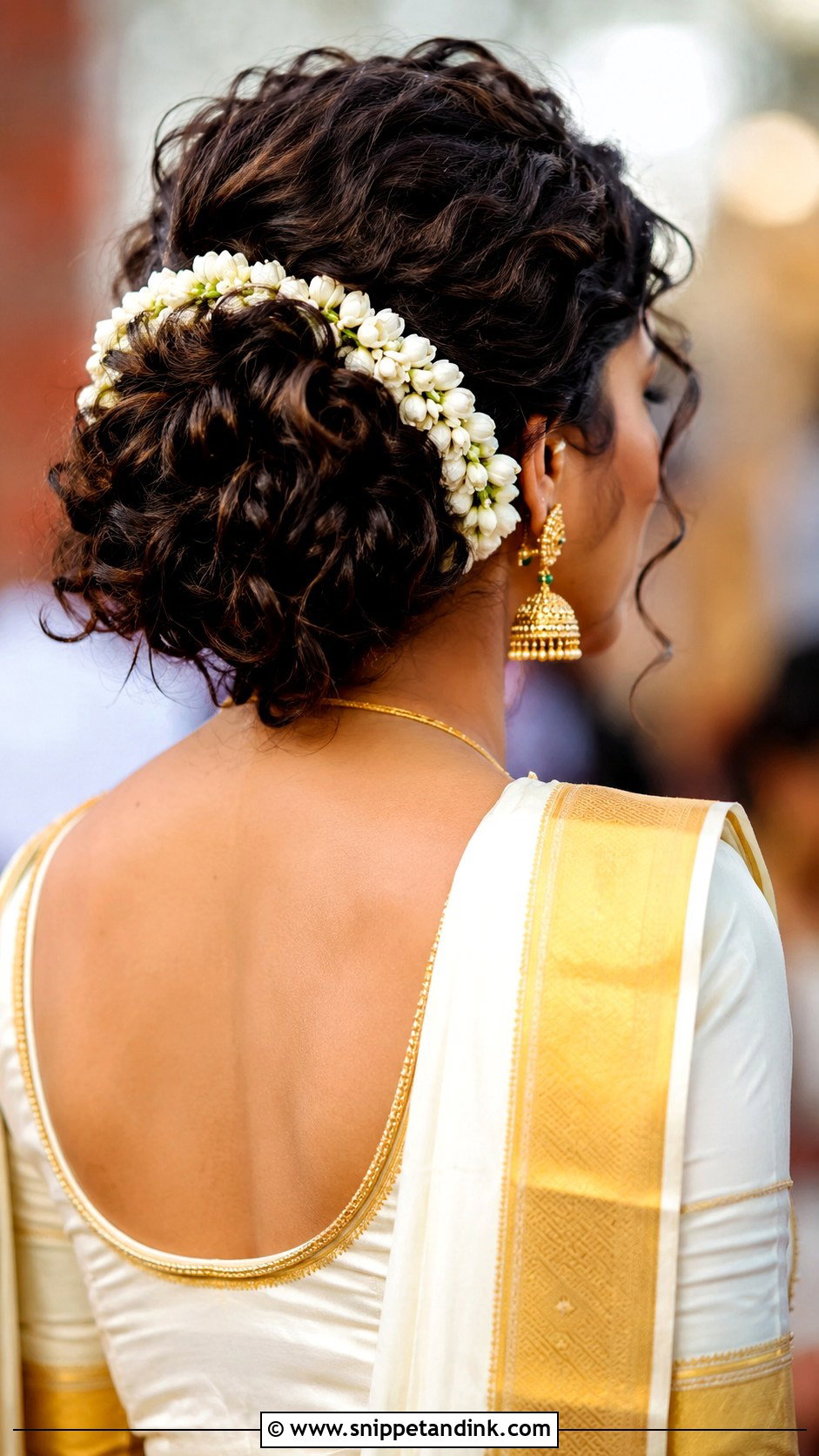
Curling the hair first and then pinning the curls into a rounded shape makes a soft, full bun. Loose curls can sit around the edges, with small white blooms tucked between them. Naturally wavy or curly hair does this beautifully with less heat. Each curl needs its own pin, so it’s a slower style, but it holds better than it looks.
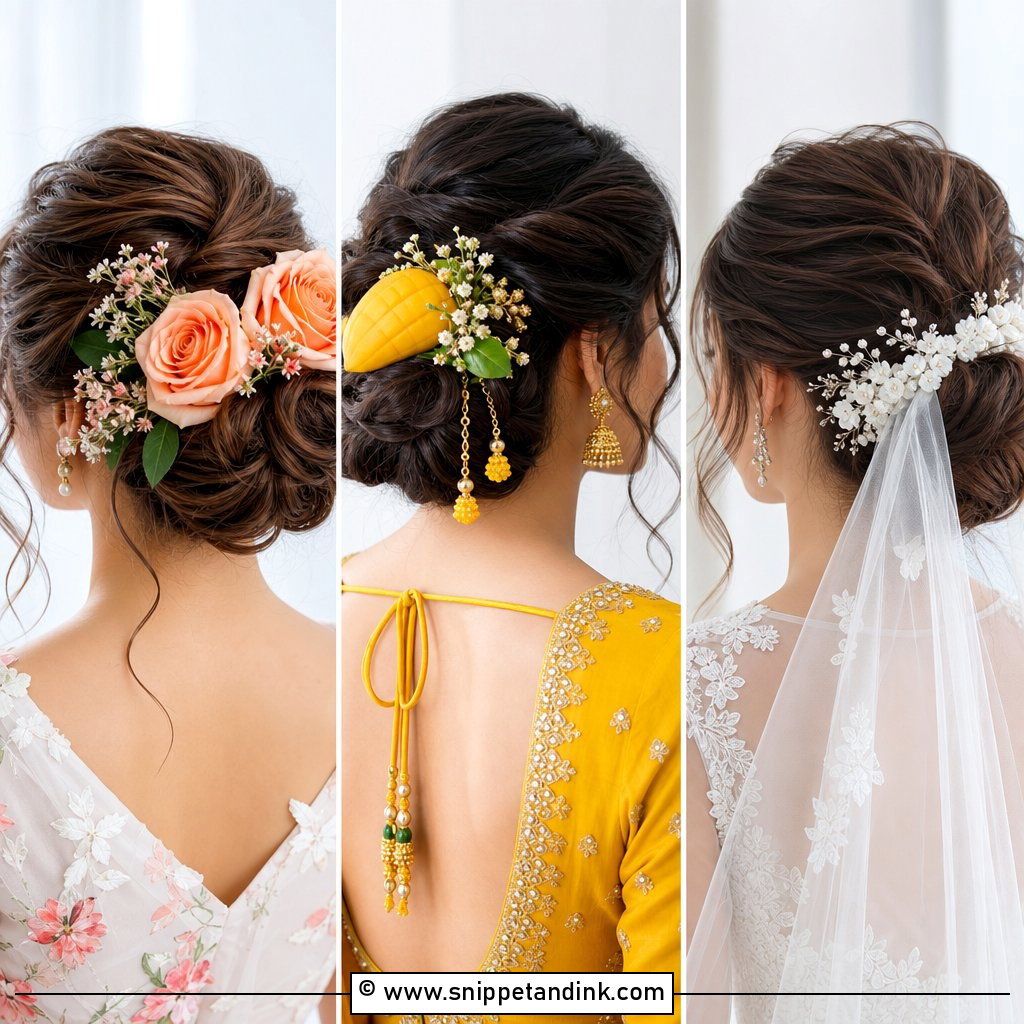
16. Kerala Hindu Wedding Rose Bun
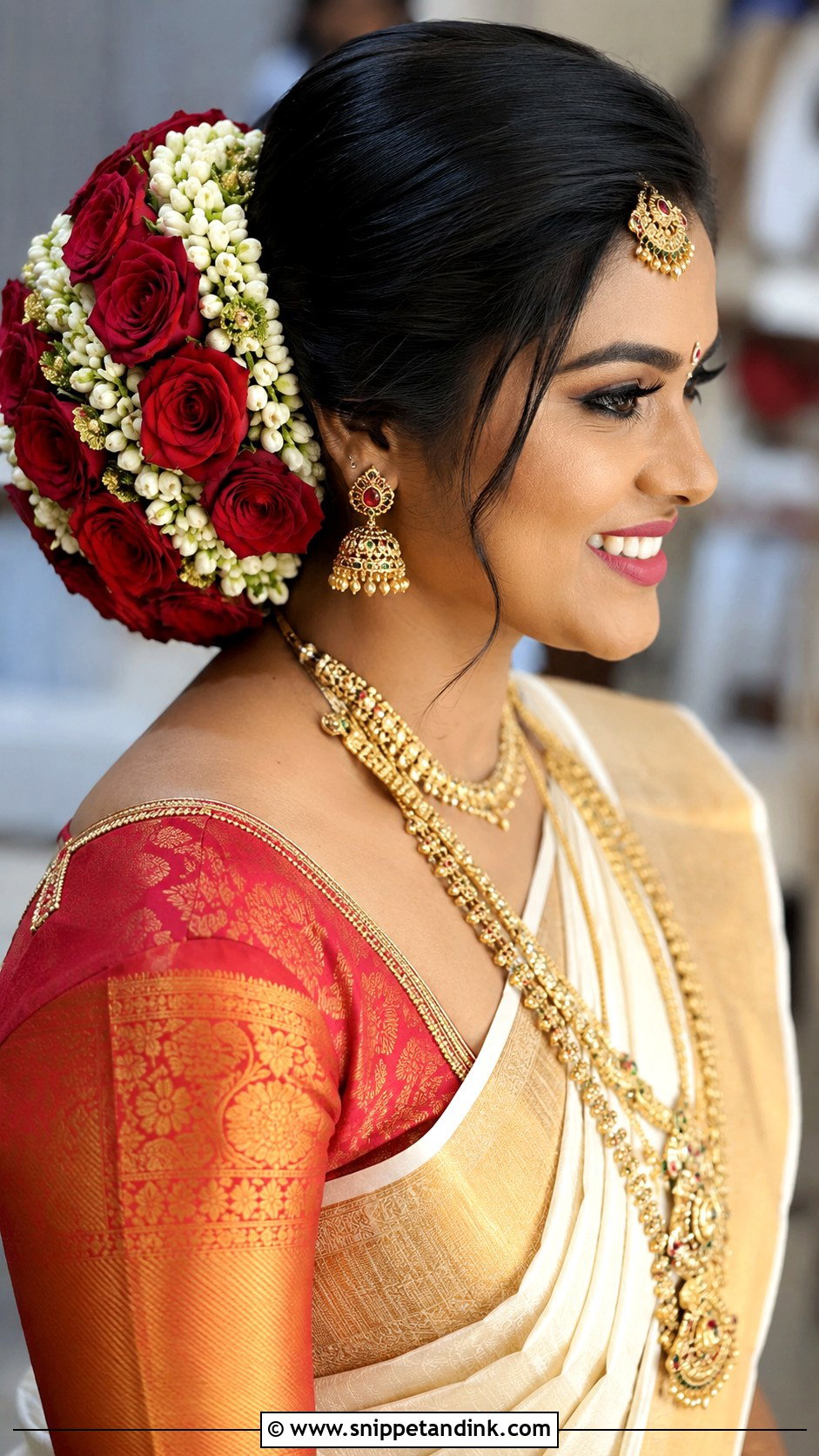
Adding roses to jasmine brings color, and red, pink or deep maroon roses suit gold sarees and temple jewelry. I wire the roses with short stems so they sit close to the bun and don’t droop. You can match them to the saree border or blouse. Roses bruise and darken where they’re touched, so they should go in near the end of the hair appointment, not first.
17. Kerala Hindu Wedding Jasmine Braid
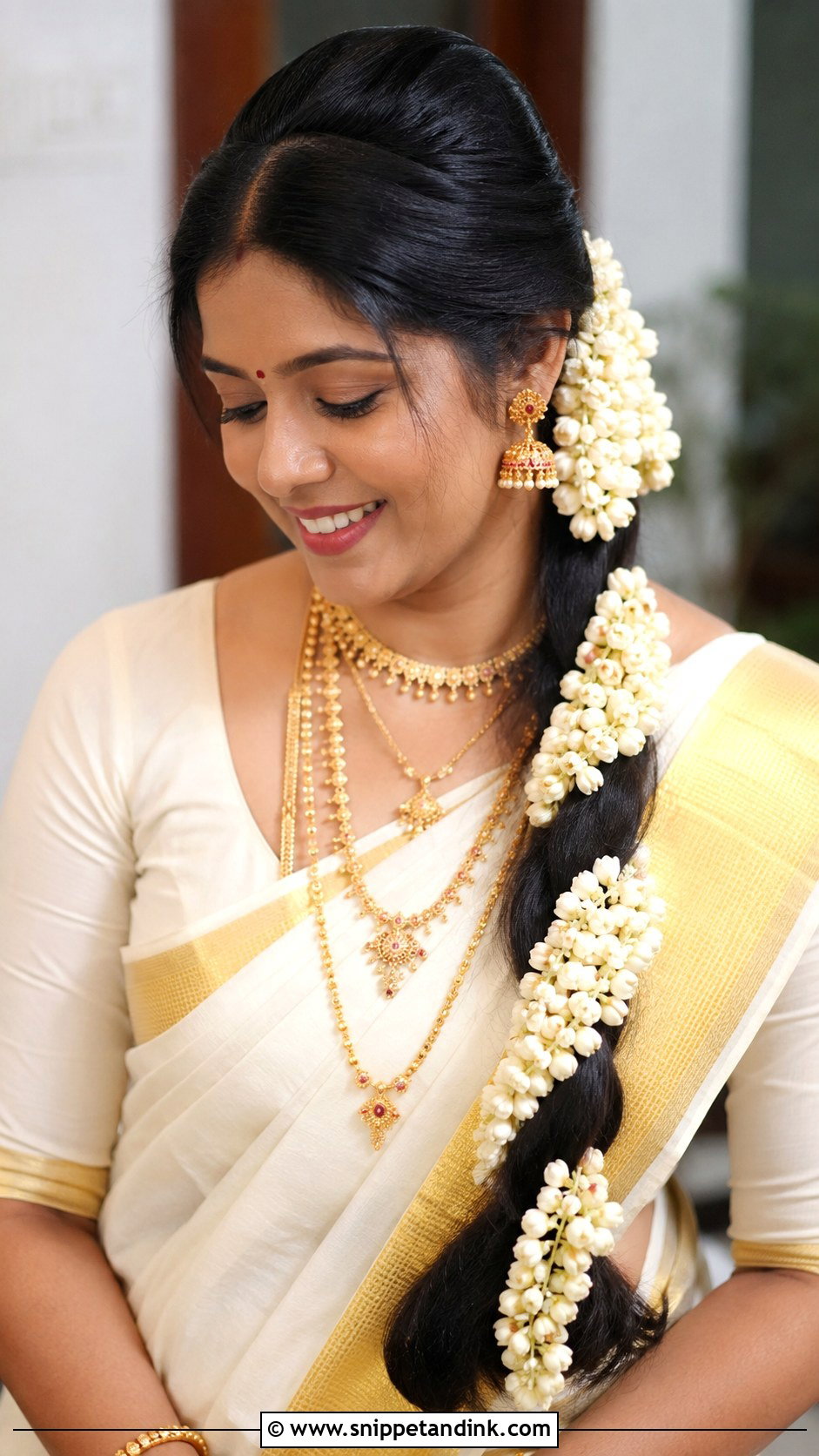
A long braid with jasmine strands wrapped or pinned along it is one of the most traditional looks. The white flowers echo the cream and gold of a kasavu saree. Some brides keep the flowers to one side of the braid, others cover it fully. It holds the hair comfortably through long ceremonies and looks elegant from behind, where most guests see it.
18. Kerala Hindu Wedding Crown Braid Bun
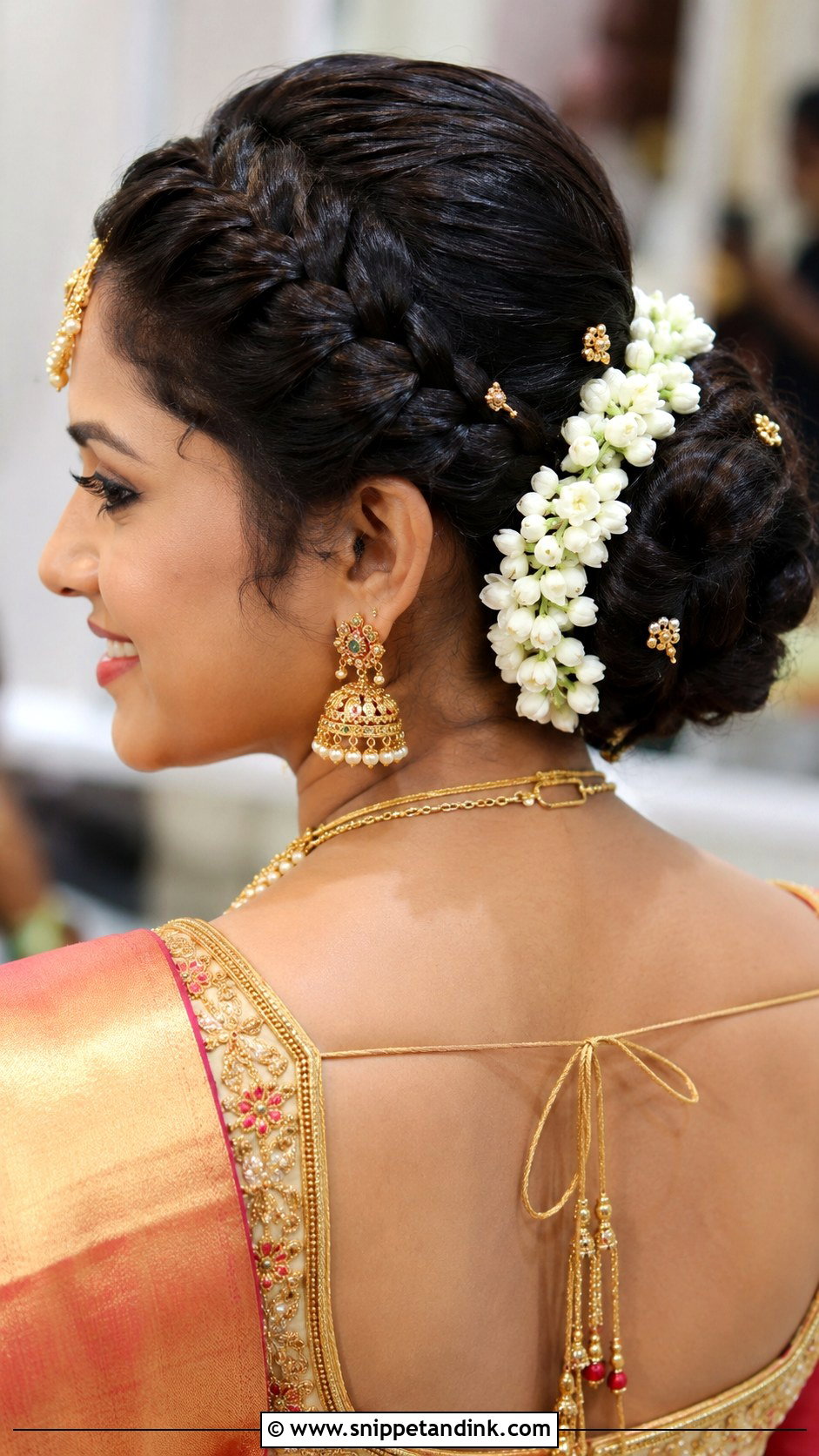
Braiding around the crown and finishing with a bun at the back frames the face and keeps everything secure. It gives height without a puff, which suits brides who dislike volume at the front. Jasmine, pearls or small gold pins go on the bun. I’d recommend it for round, oval and heart-shaped faces; on a long face, the height can lengthen it too much.
19. Kerala Hindu Wedding Puff Bun
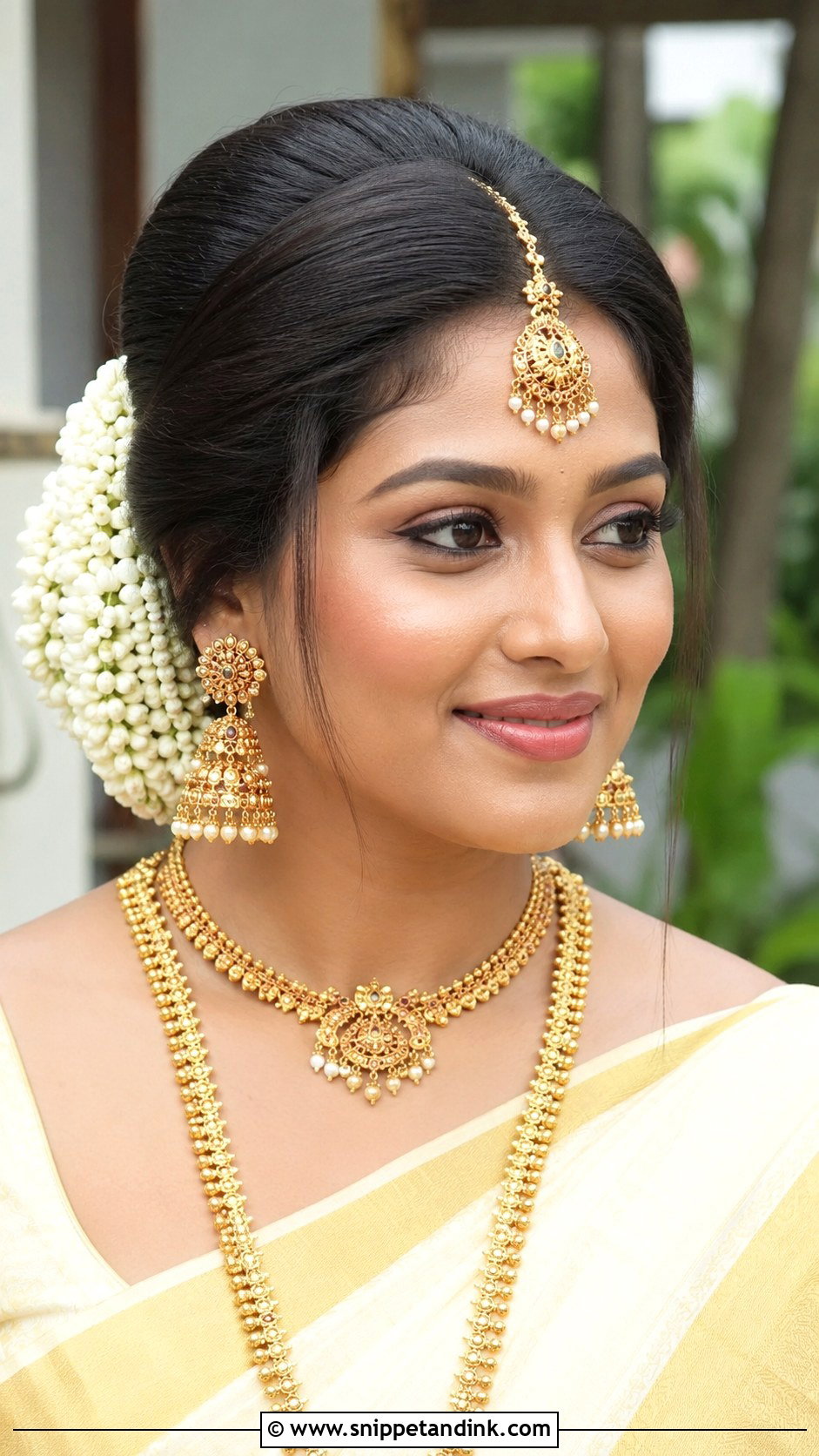
The front crown section is lifted gently before the hair is gathered into a bun. That height balances heavy sarees, bold jewelry and larger flowers. The puff should be smooth and moderate, not stiff or tall; I tease underneath and smooth a clean layer over the top so there’s no visible backcombing. It flatters side-angle photos. Jasmine around the bun softens the shape.
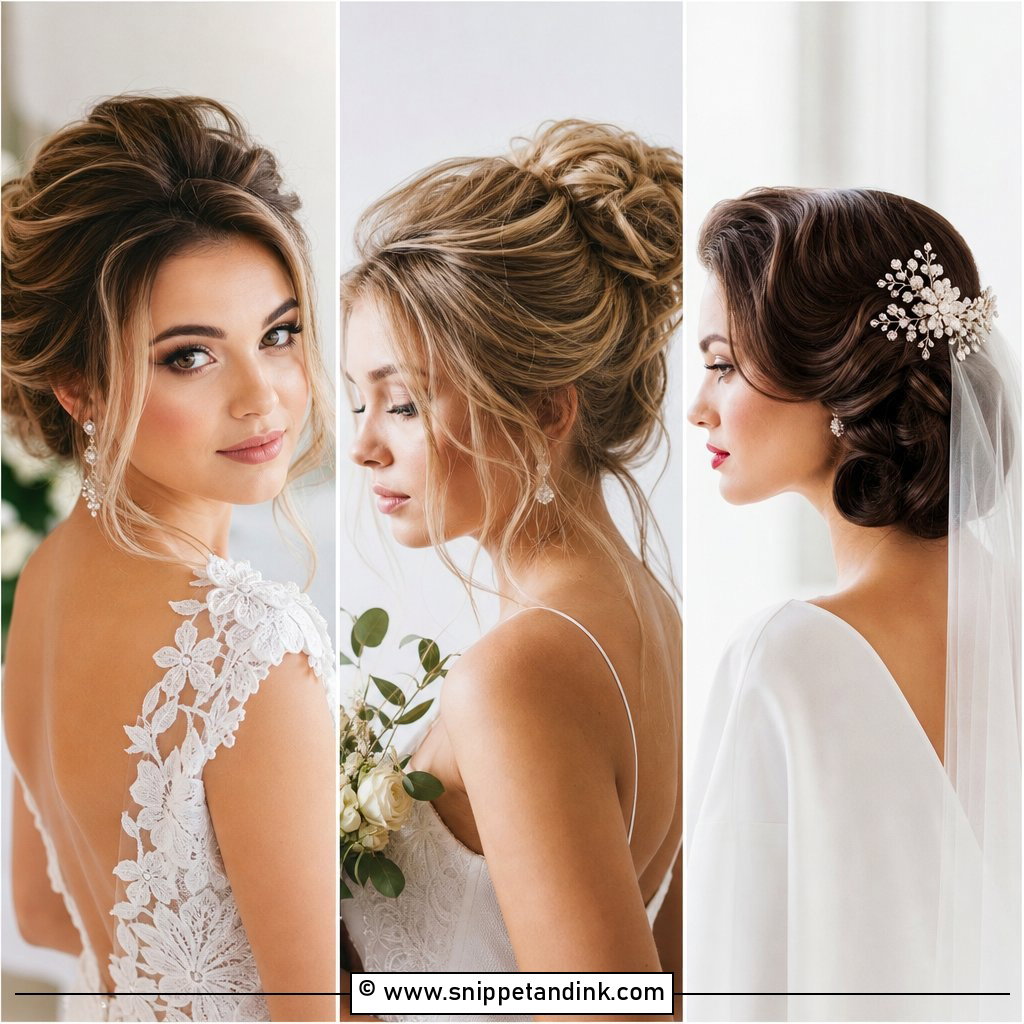
20. Kerala Hindu Wedding Reception Hairstyle
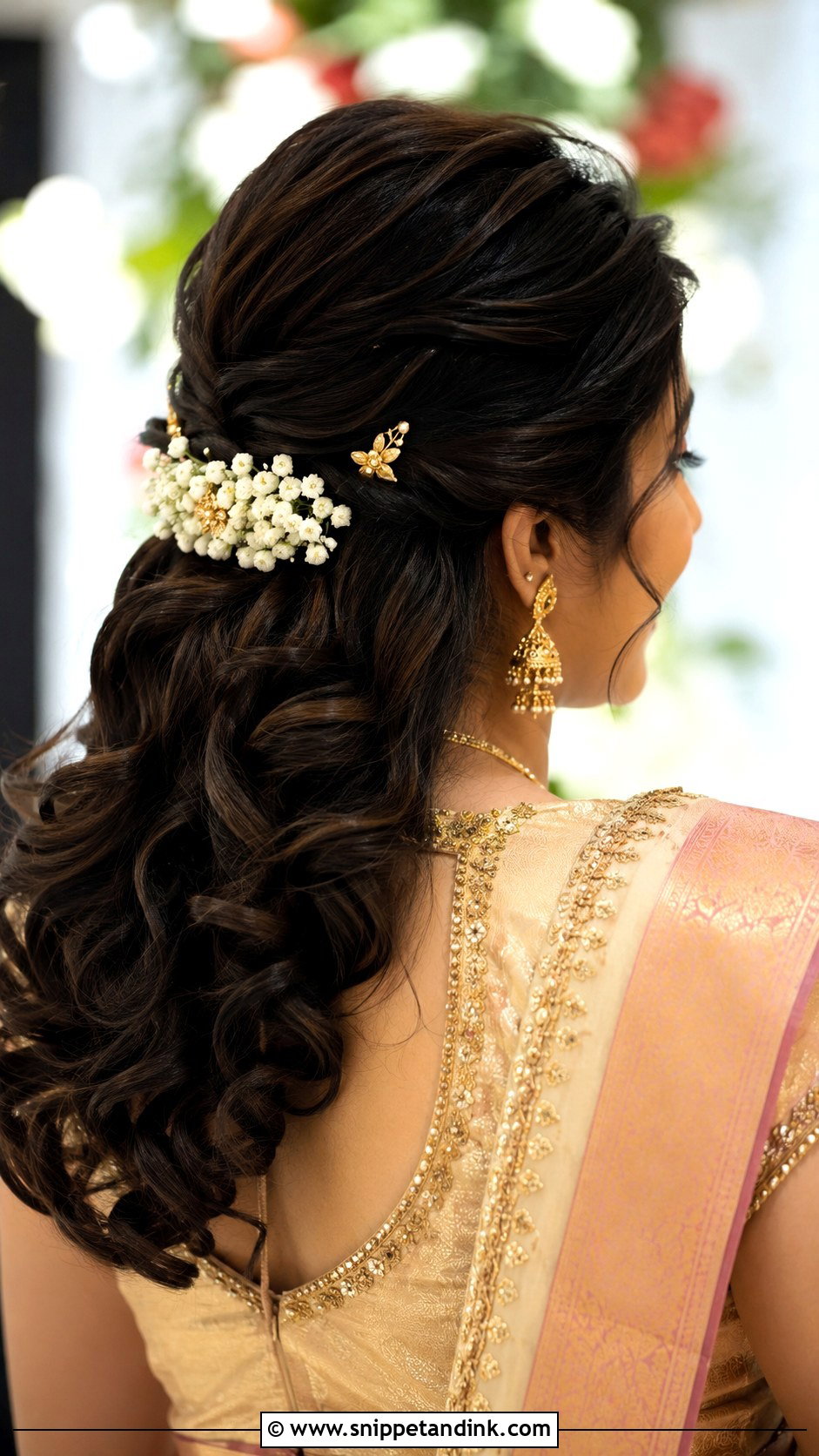
For the reception, most brides want to relax a little: half-up curls, loose waves, a textured bun or a side-swept braid. I often take the ceremony bun down and reuse its curls, since that’s quicker than starting again. Small jasmine accents or gold pins keep a traditional link. Choose something comfortable for hours of greetings and photos.
The Thali, the Garlands and a Long Braid on the Day
Kerala Hindu ceremonies have moments that affect hair directly, and planning around them prevents last-minute fixes.
Room at the nape
The groom ties the thali at the back of your neck. I keep the bun or braid base high enough that the knot can be tied without anyone lifting flowers out of the way, and I make sure no loose hair is caught in it.
Garland exchange
Heavy flower garlands go over your head during the ceremony. They can catch on pins, jada pieces or the sides of a puff. Have someone nearby to check the hair right after, and keep two or three spare pins with them.
Extensions
A braid extension should match your hair color and texture closely. I prefer clip-in pieces I can position myself, and I test the total weight at the trial. If your scalp aches after an hour then, it will hurt more after six.
Build the Bun for the Thali Before You Build It for Photos
A jasmine bun, long braid, poola jada, low bun or soft reception curls can all suit a Kerala Hindu wedding. What decides it is your saree, your jewelry, the length and thickness of your hair, and how long you need it to hold. Fresh flowers bring the fragrance and tradition, gold brings the richness. Book a trial with the real jewelry and ask your stylist to place everything around the thali tying moment first.
You'll Like These Ideas:


Leave a Reply