
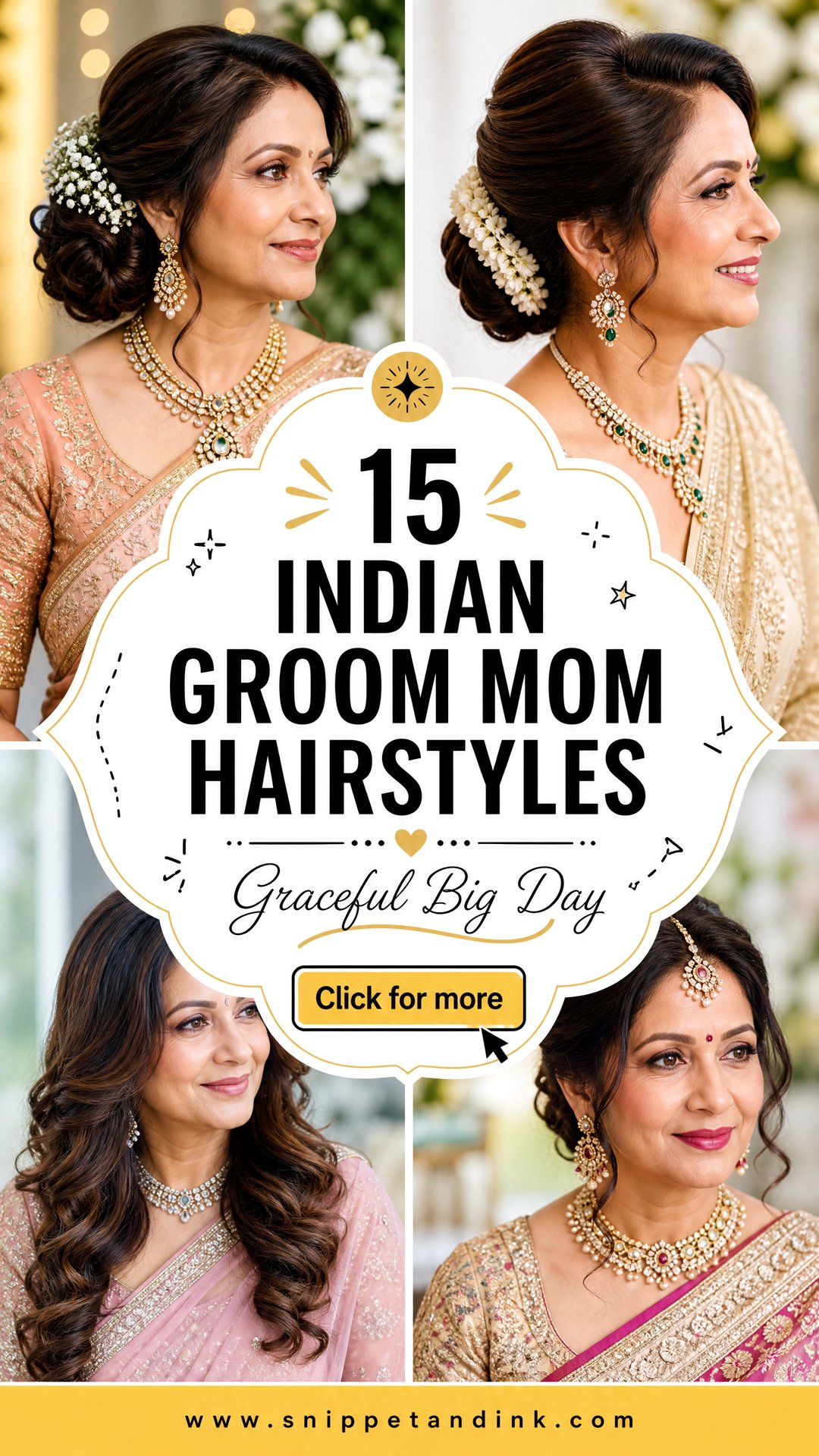
Doing hair for the groom’s mother is a different brief from the bride’s. She is a host for most of the wedding: receiving guests, leading rituals at home, walking with the baraat, posing in every family photo. So the style has to look festive, hold for a very long day and never pull or ache. A saree usually suits a polished bun; a lehenga gives room for waves, a braid or a half-up look. Many mothers also want space for a dupatta, a gajra, a maang tikka or heavy earrings. The fifteen looks below are the ones I’d suggest to a proud mother of the groom, with honest notes on comfort and hair texture for each.
Working With Grey Roots and a Wider Parting
Most of the mothers I style have some grey and some thinning, usually at the parting or the crown. Neither is a problem if we plan for it instead of discovering it on the morning.
Colour Timing
A root touch-up looks most natural about a week before the first function, once the colour has softened slightly. If she uses henna, do it a little earlier: henna keeps darkening for a couple of days after application, and fresh henna on grey roots can look orange at first. Grey hair is often coarser and wirier than the rest, which actually holds pins well, but it frizzes, so a smoothing cream helps.
Hiding a Thin Parting
- Move the parting slightly to one side, or zigzag it, so the line is less obvious.
- Use a tinted root powder matched to her hair colour along the part.
- Choose buns with lift at the crown, such as a puff bun, rather than flat, sleek styles.
- For a tikka, keep the centre part but pin a small section over it so less scalp shows around the jewellery.
1. Indian Groom Mom Low Bun
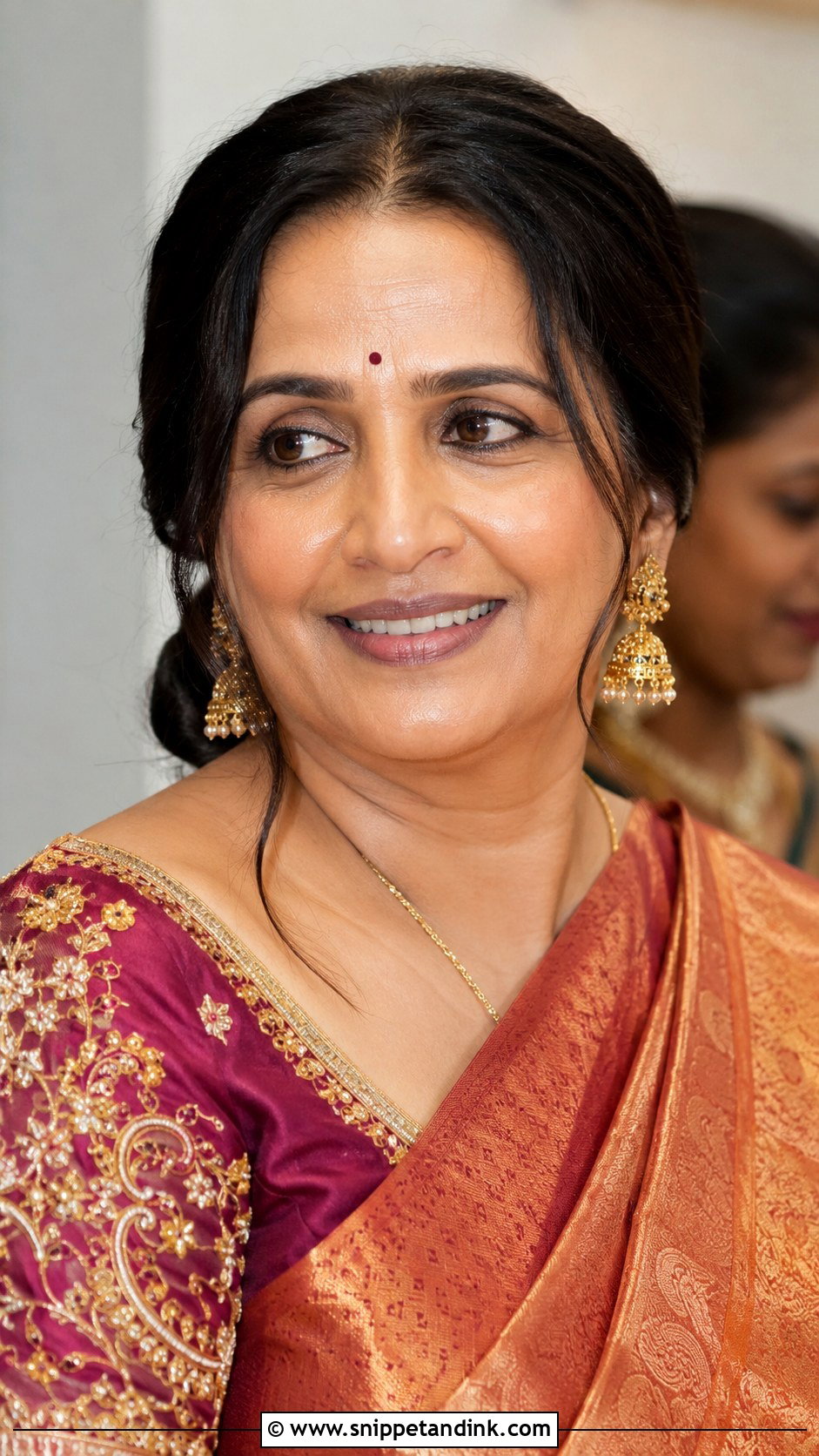
If she wants one hairstyle that will survive the pheras, the photos and the reception, this is it. The bun sits close to the nape, so a saree pallu or dupatta drapes over it without lifting, and it stays out of the way of a high blouse neckline. I keep the front simple, a centre part for a classic look or a soft side part to frame the face more gently. Fresh jasmine, a single bun pin or a small gold accessory finishes it. For temple weddings and formal family portraits, I rarely suggest anything else.
2. Indian Groom Mom Gajra Bun
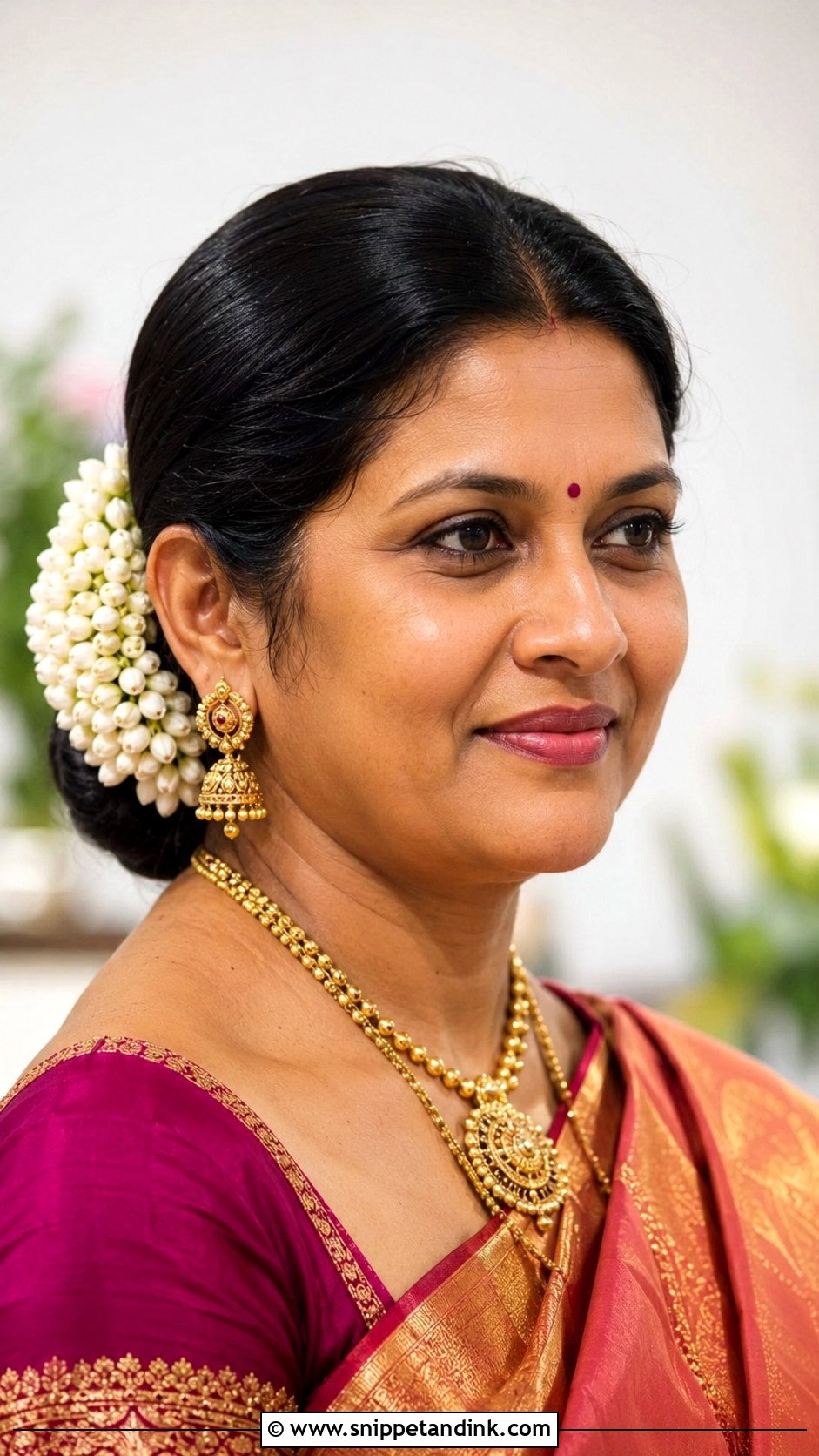
Jasmine wrapped around a bun is the most traditional choice here, and with silk, Kanjivaram or Banarasi sarees and gold jewellery it looks entirely right. For the groom’s mother I keep the bun smaller than a bride’s, so it reads graceful rather than ceremonial-heavy. I pin the gajra into the bun itself with U-pins, not into the loose hair around it, so it doesn’t slide down by afternoon. A neat middle part keeps it classic; a couple of soft face-framing pieces relax it. Jasmine wilts in heat, so for a midday ceremony I’d put it on as late as possible.
3. Indian Groom Mom Side Bun
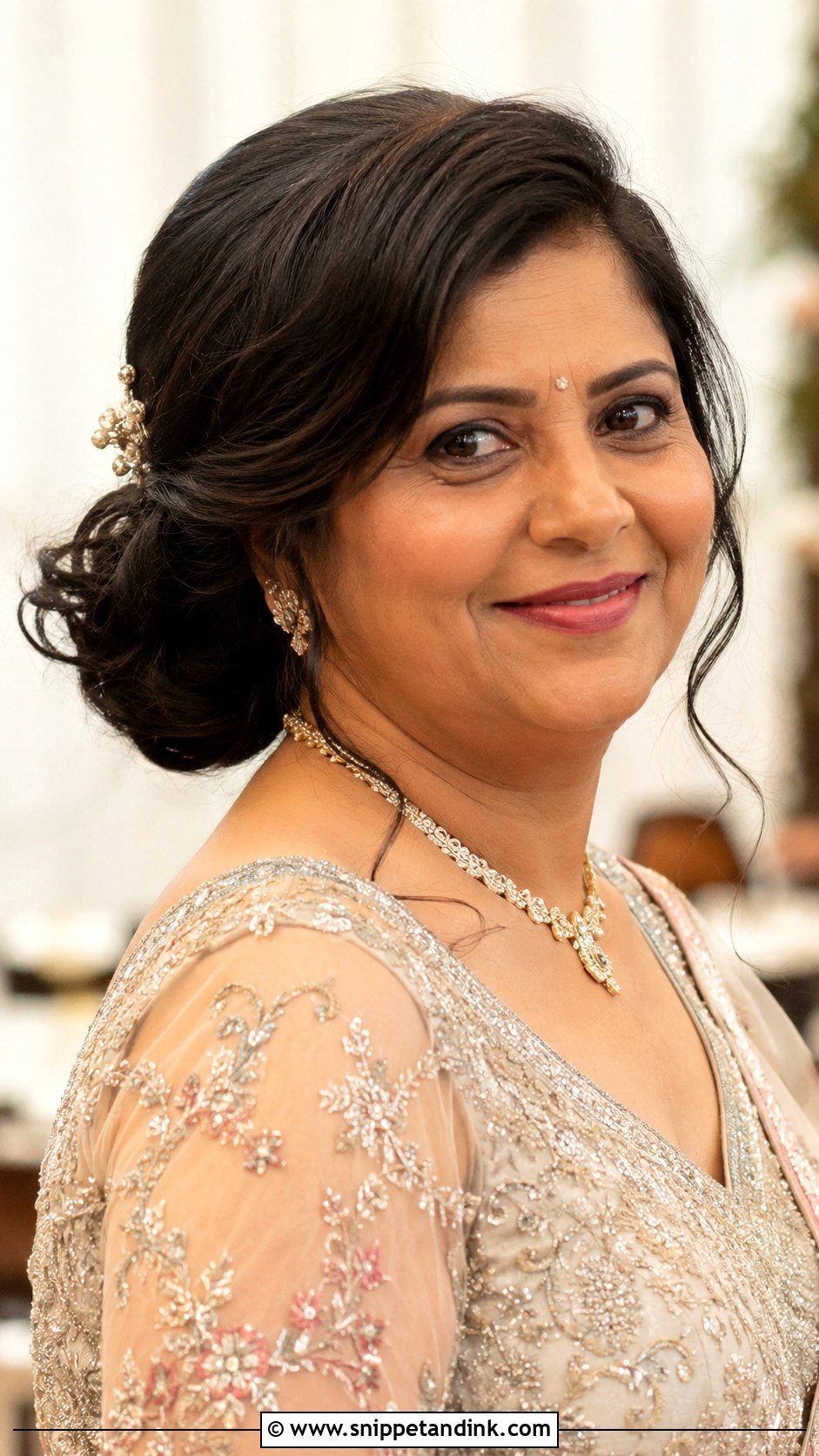
Shifting the bun slightly to one side and low near the neck softens the whole silhouette and gives a better profile in photos. It suits sarees, lehengas and salwar suits, and it shows off statement earrings on the open side. An angled bun also adds shape to a round or oval face. Keep the front smooth for the ceremony, or loosen a few waves at the temples for the reception. One practical note: if she’ll wear a dupatta pinned on one shoulder, I put the bun on the opposite side so the two don’t fight.
4. Indian Groom Mom Braided Bun
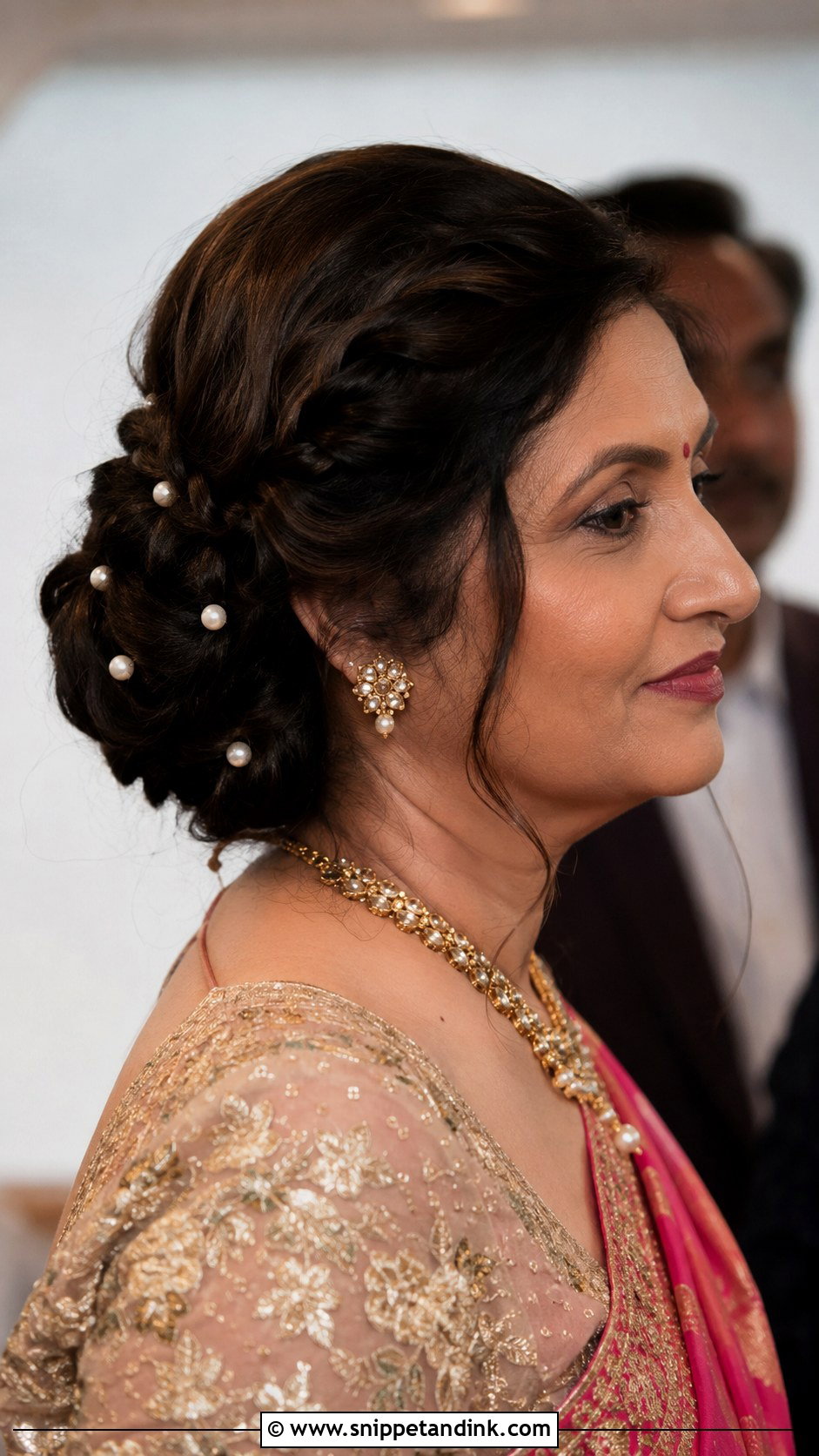
Braiding the hair before wrapping it gives the bun texture and a much firmer hold. That’s especially useful for thick hair, where a plain bun can end up huge. Plaited sections also grip pins better, so it rarely loosens during a long day. It looks right with a silk saree or an elegant lehenga. A few pearl or gold pins, or a thin floral border, is enough decoration. On very fine or thinning hair I’d skip it, because braiding shrinks the hair and the bun comes out small.
5. Indian Groom Mom Puff Bun
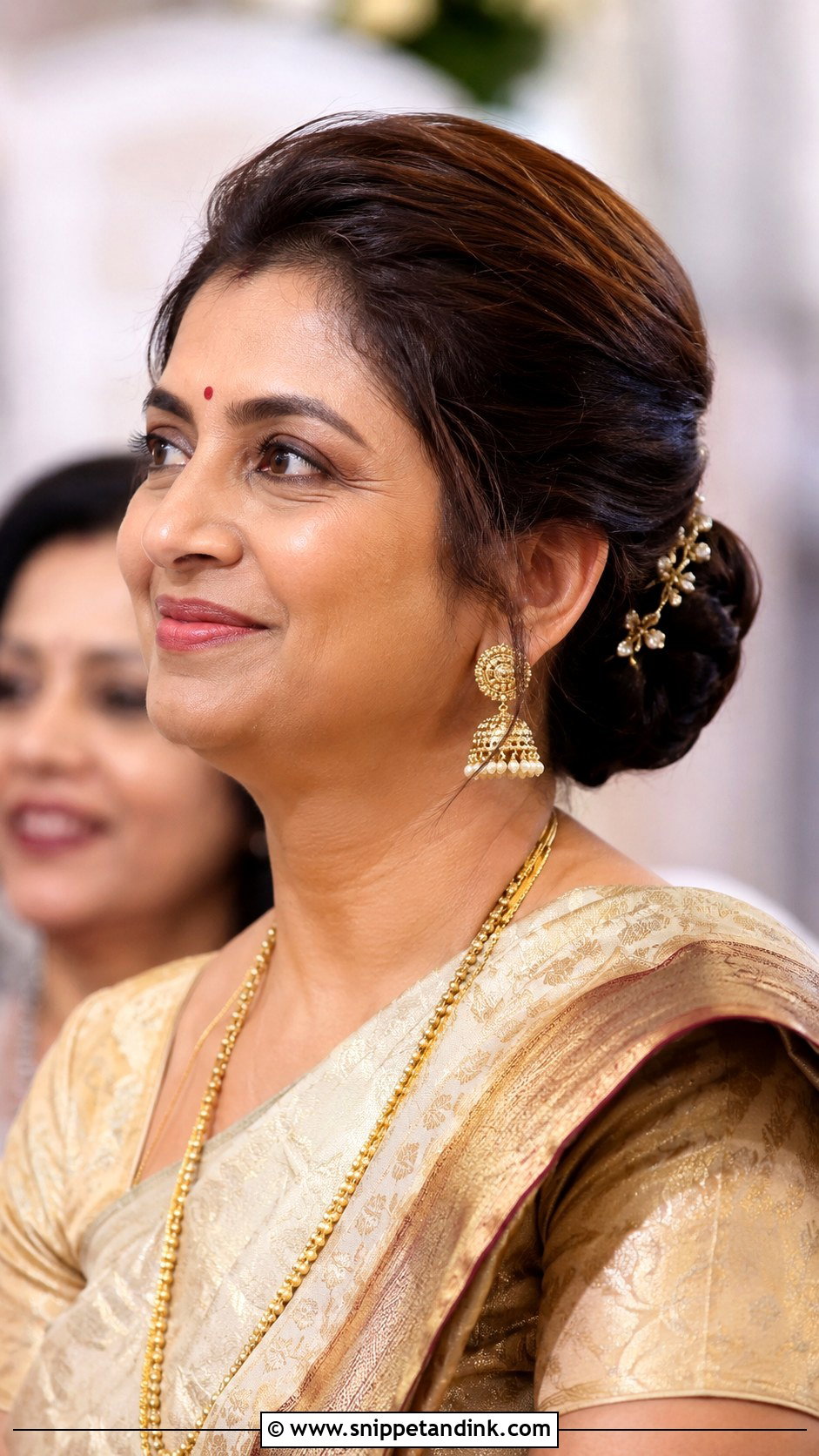
A little lift at the crown changes how the whole face reads, which is why a puff bun suits petite women and anyone wanting a longer-looking face. I backcomb just the underside of the front section, smooth the top layer over it and pin it from underneath. Kept soft and modest in height, it balances heavy sarees and bold jewellery; pushed too high, it looks dated. Thin hair at the crown benefits most, since the puff hides a widening parting. Pair it with a tikka only if the parting is clean, or let the earrings and necklace carry the look.
6. Indian Groom Mom French Roll
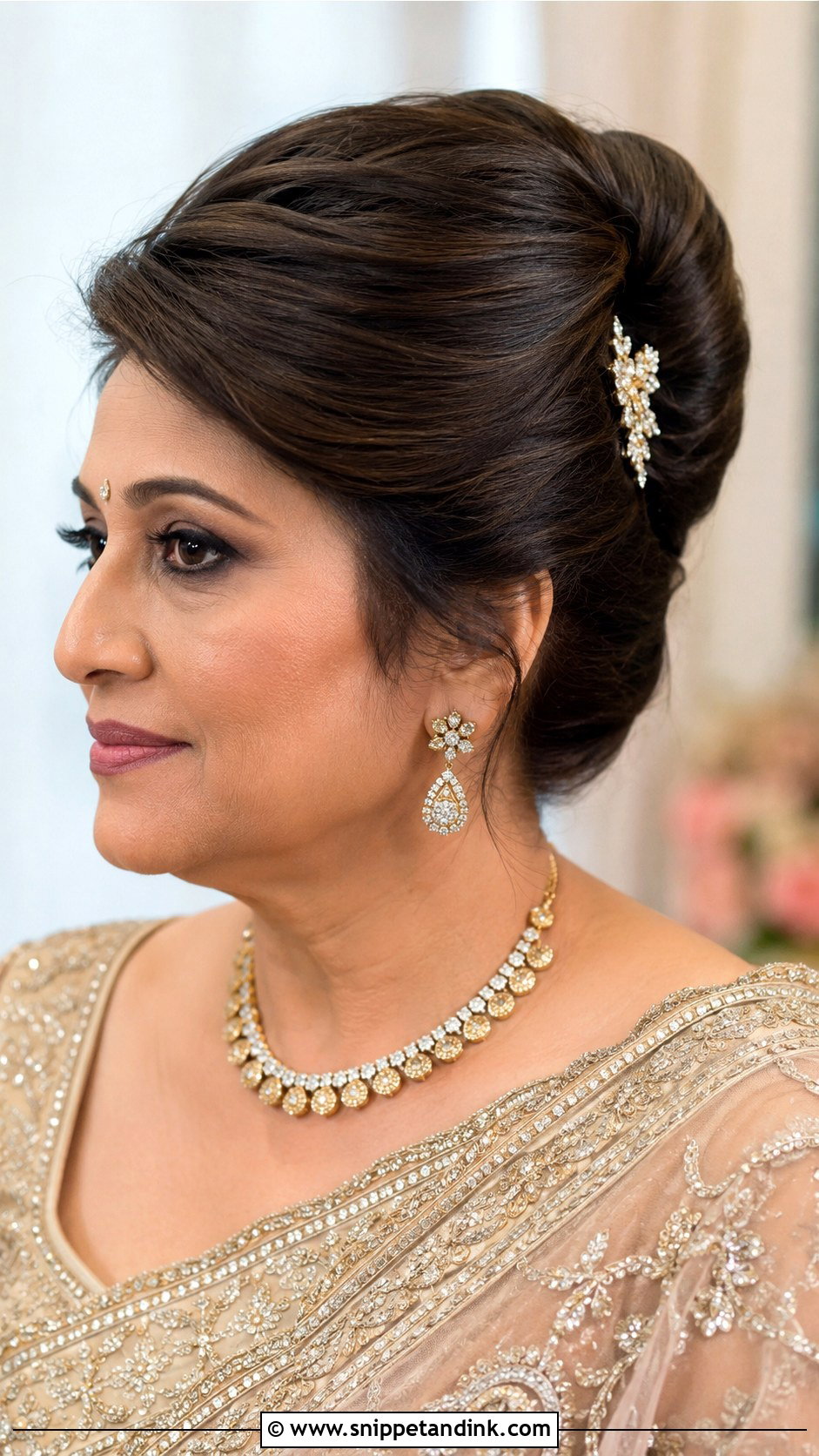
The French roll is my reception suggestion for mothers who want something polished and slightly modern. The hair is swept up and tucked into a vertical roll, held with a row of hidden pins along the seam. It suits sarees, gowns and Indo-western outfits and needs almost no accessories. It does require medium to long hair with some grip; very silky hair slips out of the roll unless I prep it with a texturising spray first. A small jewelled comb on one side is a nice finish.
7. Indian Groom Mom Open Curls
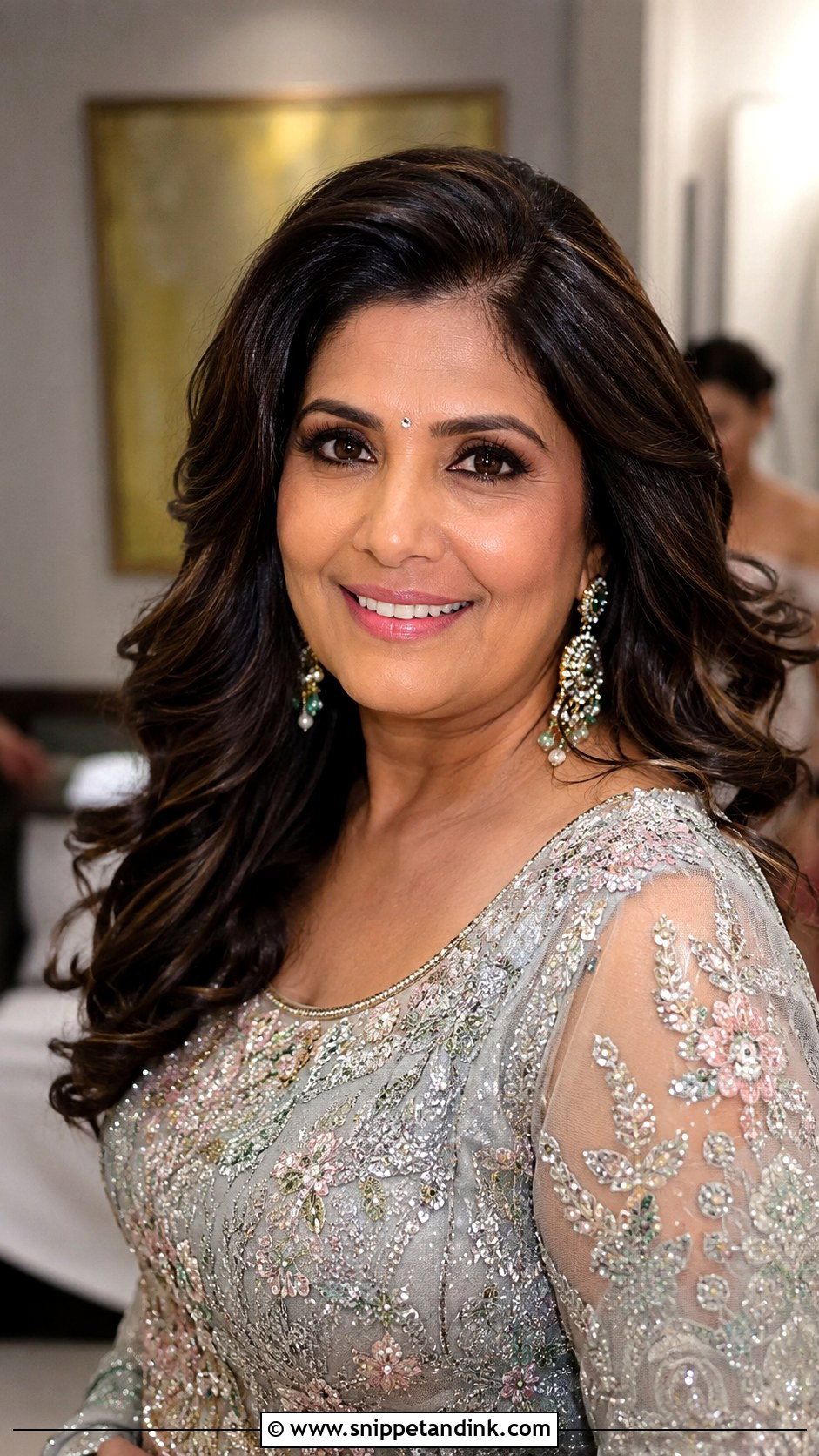
For a sangeet, engagement, or reception, open curls feel more relaxed than a bun while still looking dressed. I keep them large and smooth rather than tight, which reads more elegant and moves softly around the face. A side part adds volume at the top; a centre part feels more traditional. Lift at the crown matters more on mature hair, which often loses density there, so I set the roots with a round brush. Add an accessory only if the outfit is plain.
8. Indian Groom Mom Half Up Hairstyle
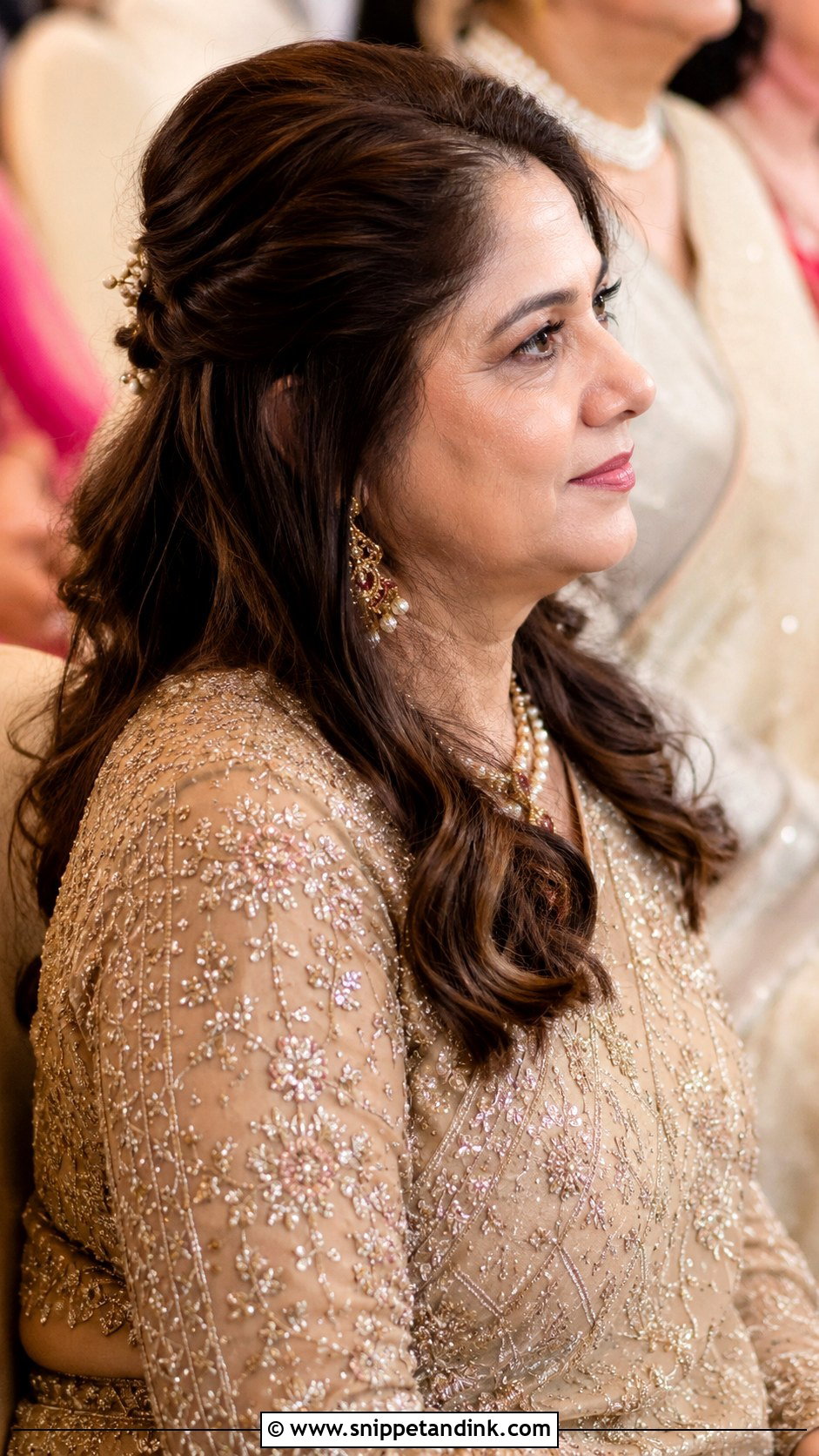
Half-up gives softness without the risk of hair falling into the face during greetings and rituals. I pull the top section back neatly, pin it over a small backcombed base and curl or wave the lengths. It needs medium to long hair and suits lehengas, anarkalis and lighter sarees. The pinned section can take a small twist or soft braid. For a mother who hates a tight bun, it’s the most comfortable choice on this list.
9. Indian Groom Mom Side Braid
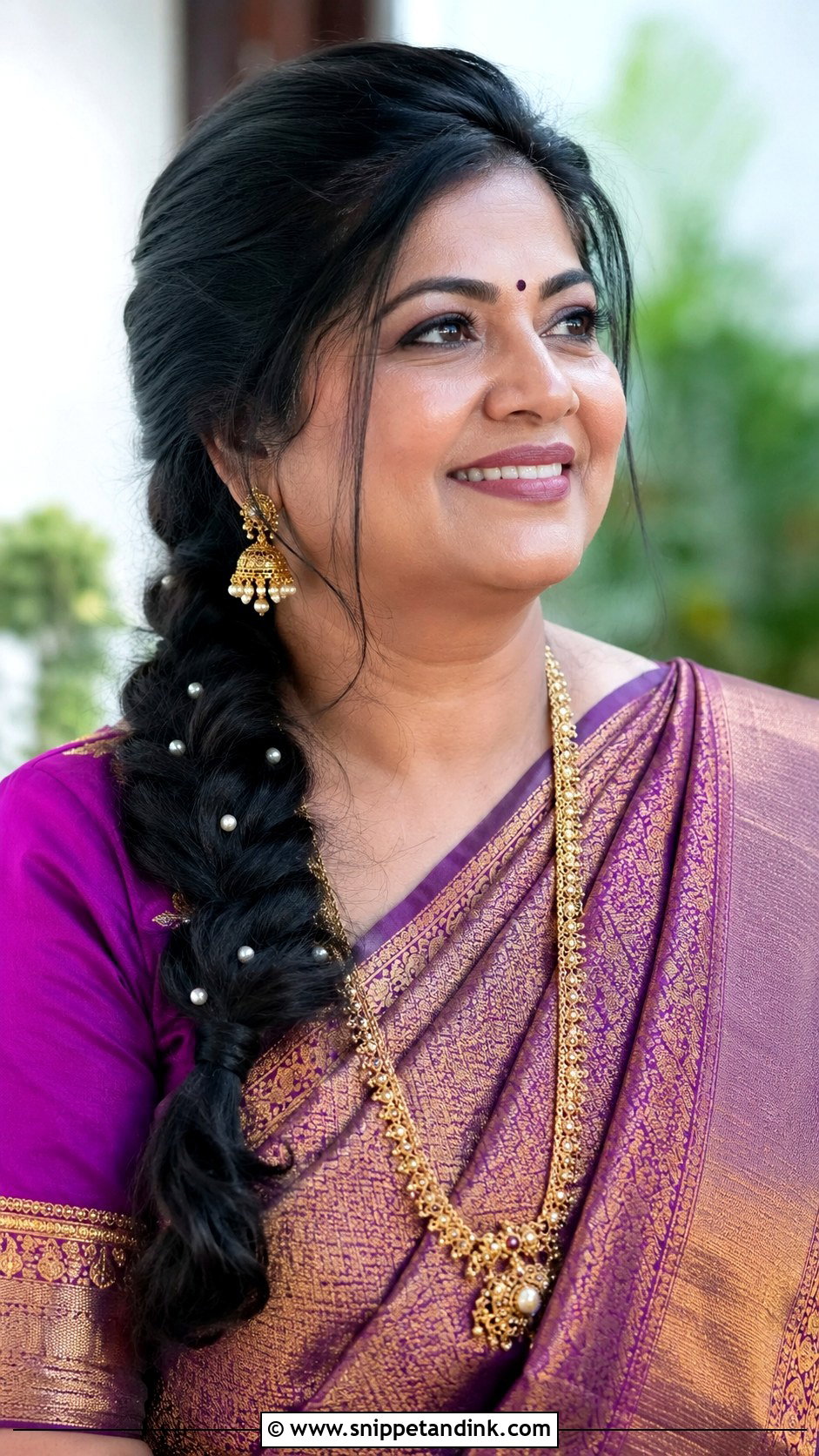
A side braid keeps long hair under control while letting its length show, and because it falls over one shoulder, it shows off the blouse at the back. I’d keep it loose and soft for the mehndi or sangeet, and tighter and smoother for the main ceremony. For the groom’s mother the best version is understated: a few small flowers, pearl pins or a simple parandi. With heavy jewellery around the neck, the braid can catch on necklace hooks, so I sweep it over the shoulder after the jewellery is on.
10. Indian Groom Mom South Indian Braid
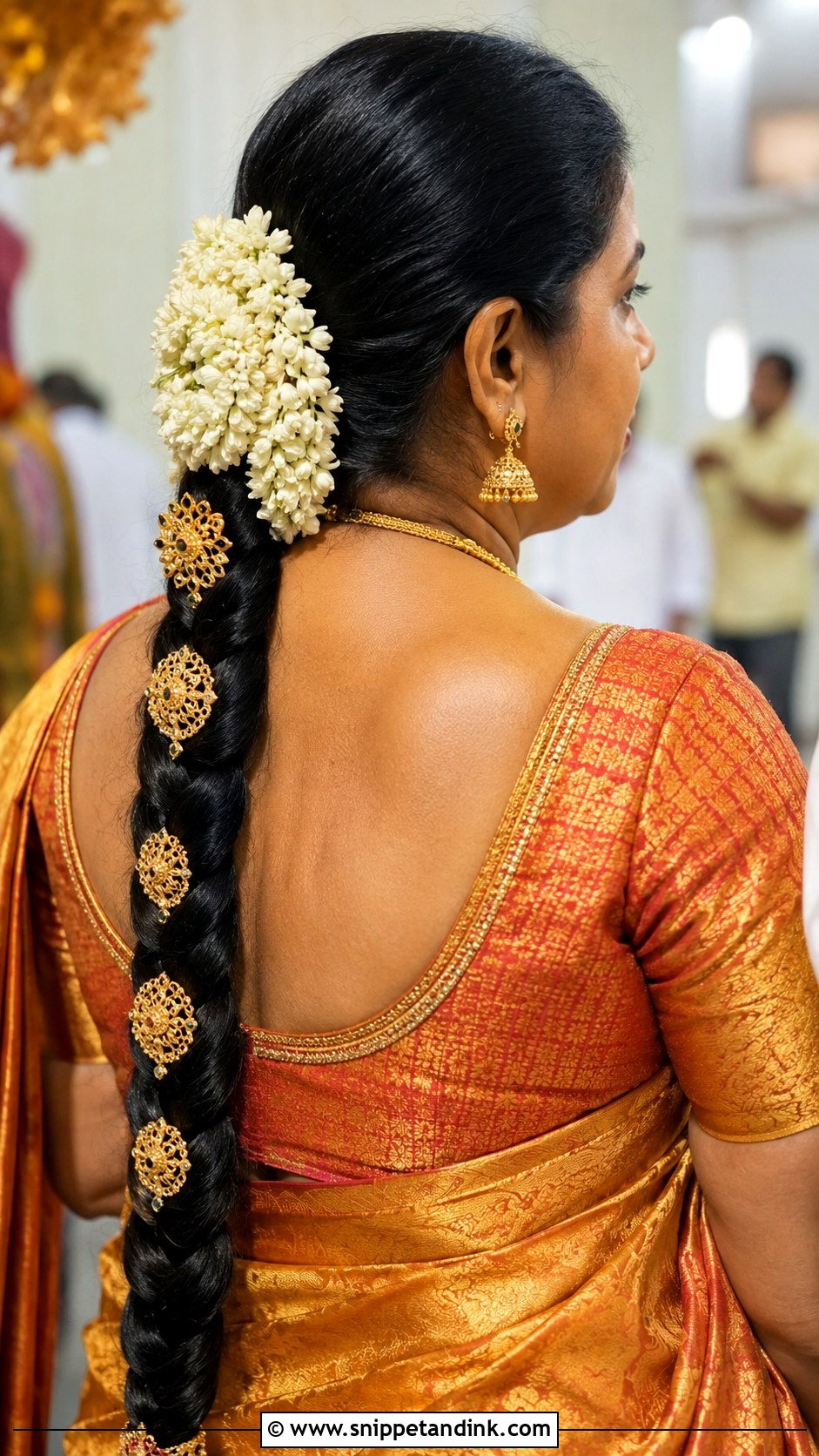
With silk sarees and temple jewellery, the long South Indian braid is the natural choice, and it photographs well from behind during rituals. I centre-part it, smooth the crown and braid down the back, adding a braid extension if the length needs it. For the groom’s mother I keep it lighter than a bridal version, with a string of jasmine, a few roses or one gold ornament rather than a full jada. It suits wedding mornings and temple ceremonies best.
11. Indian Groom Mom Loose Waves
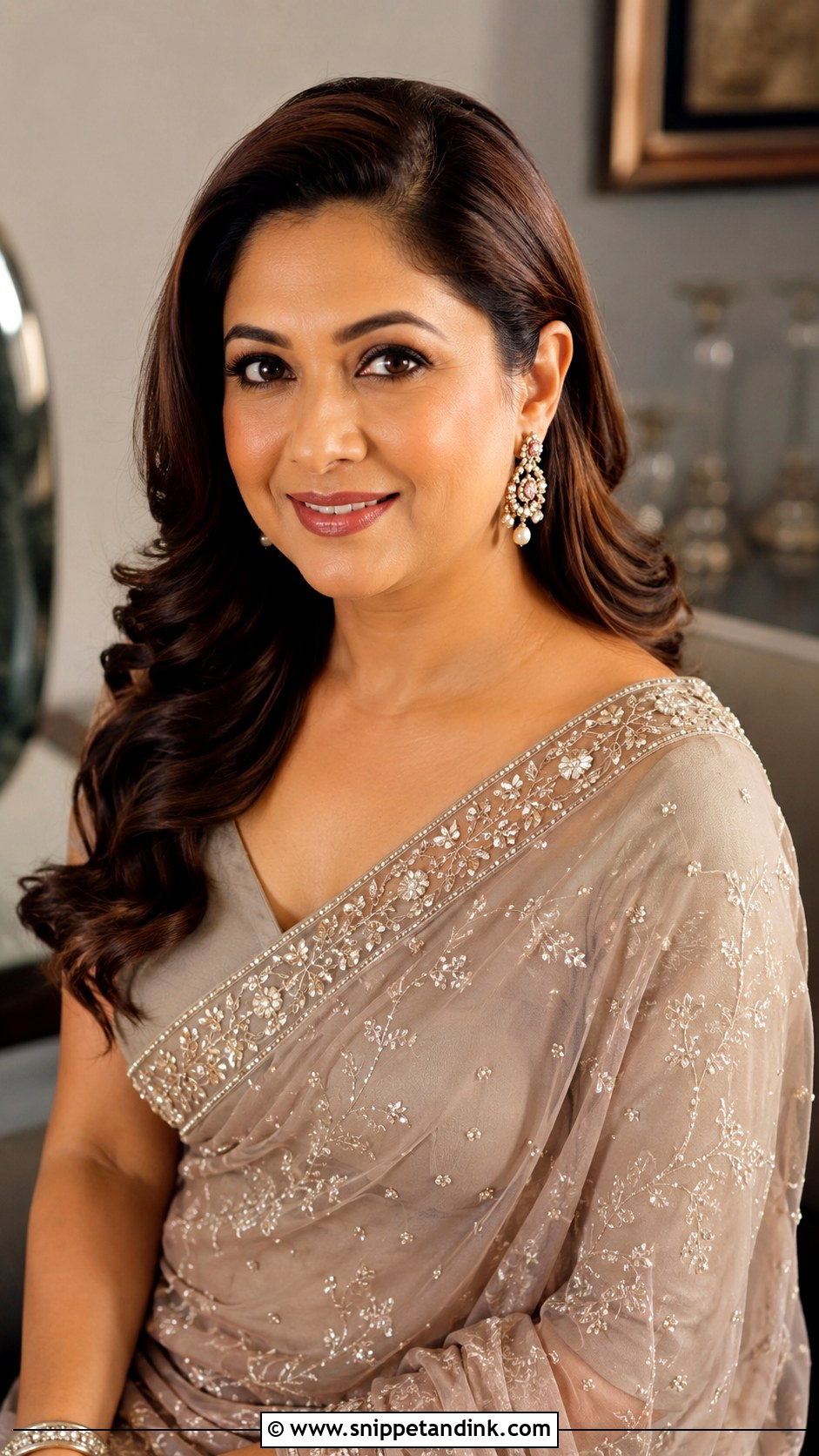
Loose waves give a modern look for receptions, cocktail evenings or engagement parties. The waves need volume at the crown and soft bends through the lengths; flat roots with heavy waves look tired by the end of the night. They work with lehengas, pre-draped sarees and Indo-western outfits. A side part softens the face; a middle part feels sleeker. For a long evening, I pin the front sections discreetly behind the ears so she isn’t constantly pushing them back.
12. Indian Groom Mom Sleek Bun
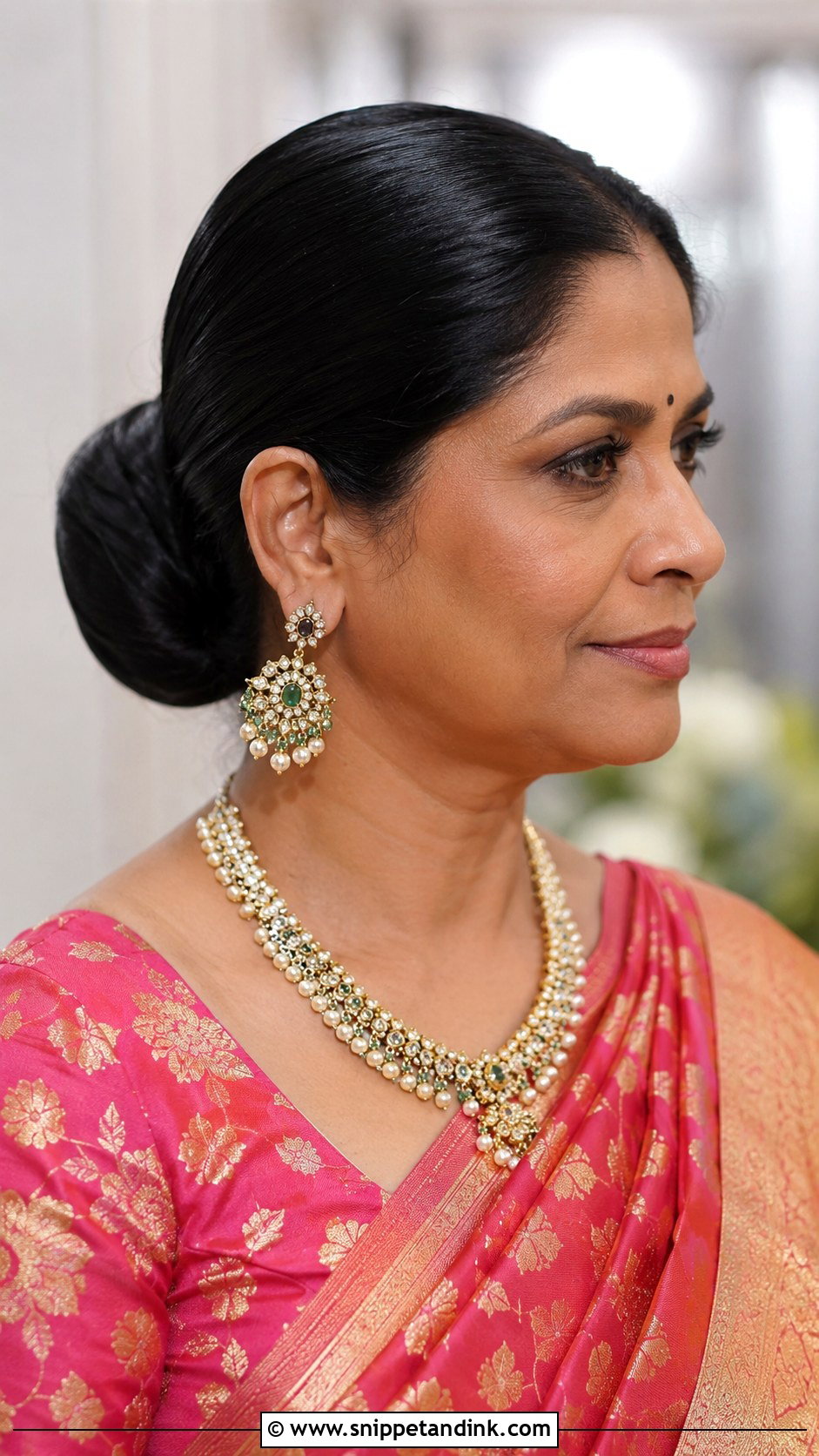
When the outfit, jewellery or makeup is already rich, a sleek bun is the quietest way to let them lead. It highlights the face, the earrings and the neckline, and looks right with Banarasi and silk sarees, embellished blouses and statement necklaces. For the groom’s mother I’d place it low rather than high; a tight high bun can look severe and pulls on the hairline over hours. A centre part reads classic, a side part softer. One bun accessory, a few flowers or nothing at all.
13. Indian Groom Mom Messy Bun
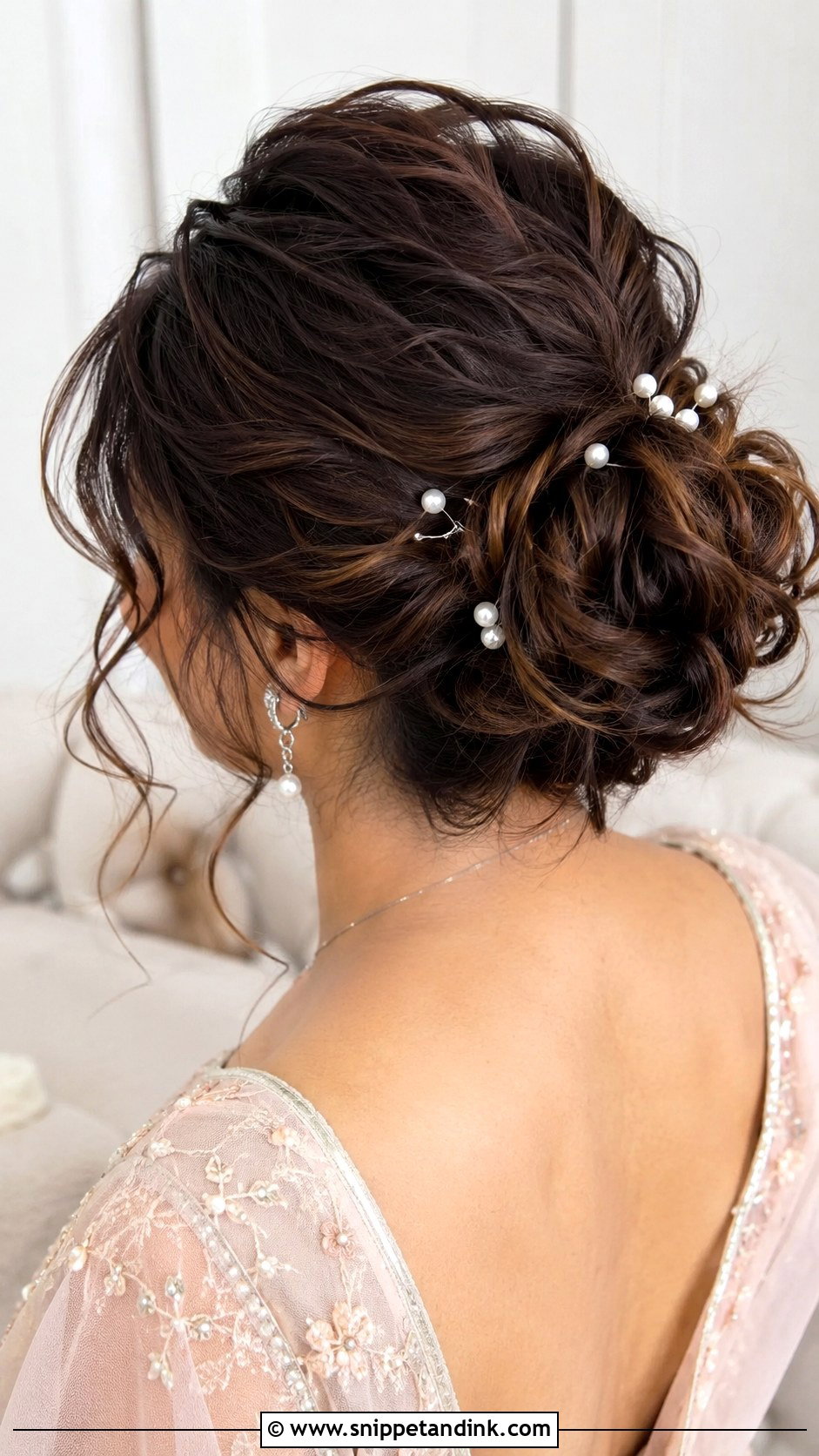
This is not a casual bun. I curl the hair first, pin each section into place and only then loosen a few pieces, so the texture is planned rather than accidental. It suits mothers who find a sleek bun too strict, and it sits well with pastel sarees, light lehengas, organza and modern jewellery. Layered hair benefits most, because the layers turn into texture instead of escaping. Keep the front tidy enough to look polished. A few pearl pins or tiny flowers finish it.
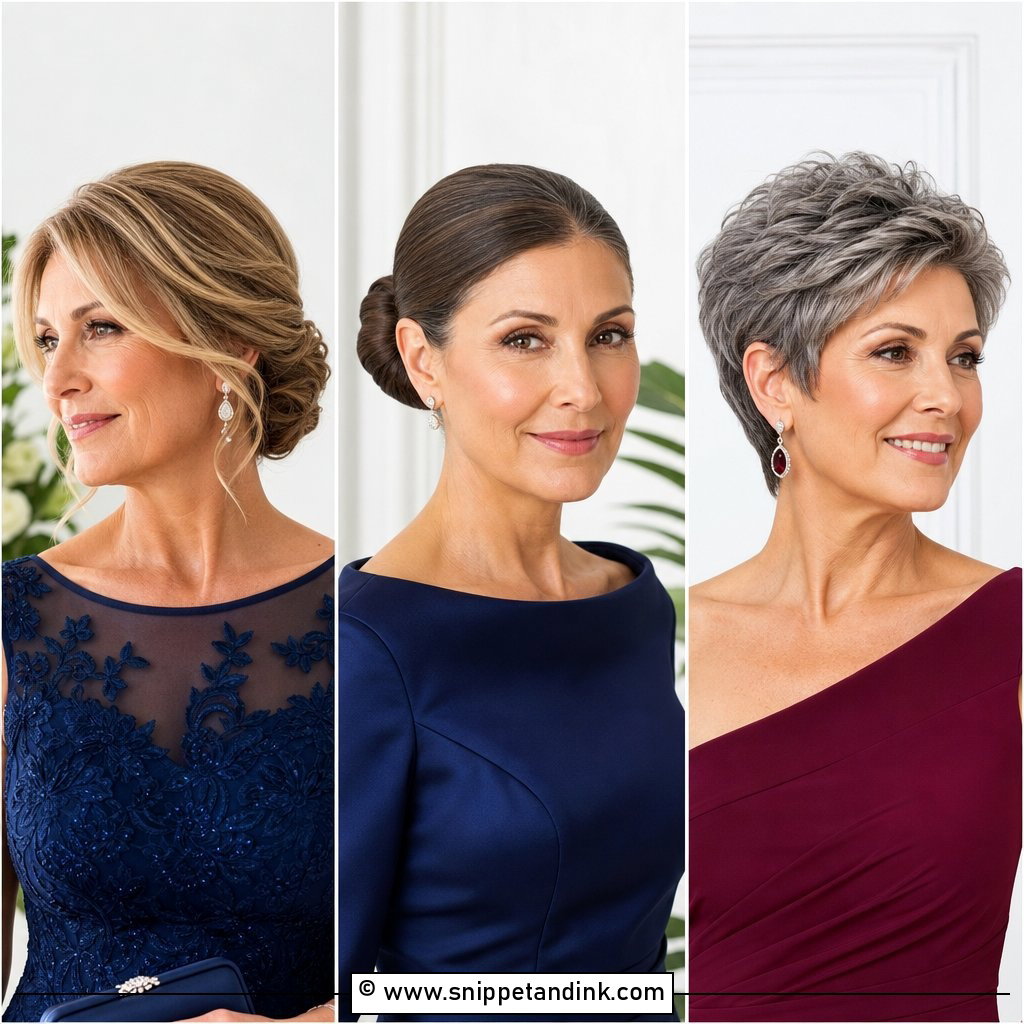
14. Indian Groom Mom Short Hair Waves
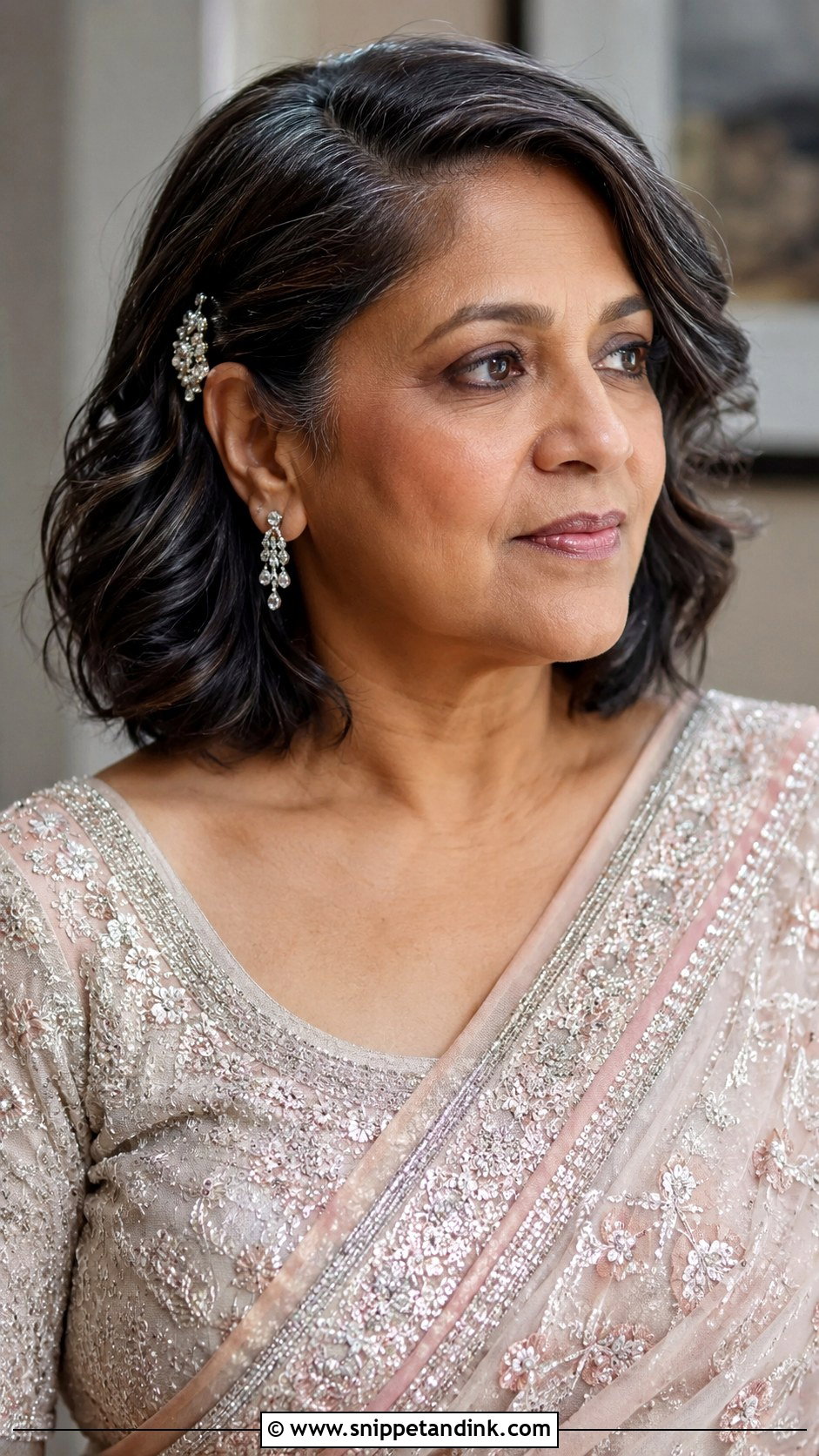
A bob, lob or shoulder-length cut can look just as festive as long hair with soft waves and a polished finish. I wave it with a medium barrel, brush it through and set it with a light spray, and that adds volume without any extensions. Side-part for lift, tuck one side behind the ear, or pin it back with a small decorative clip. It keeps the neckline open and cool, which is welcome on a long day. Smooth bends look more refined than tight curls on short hair, which can bounce up and look shorter than intended.
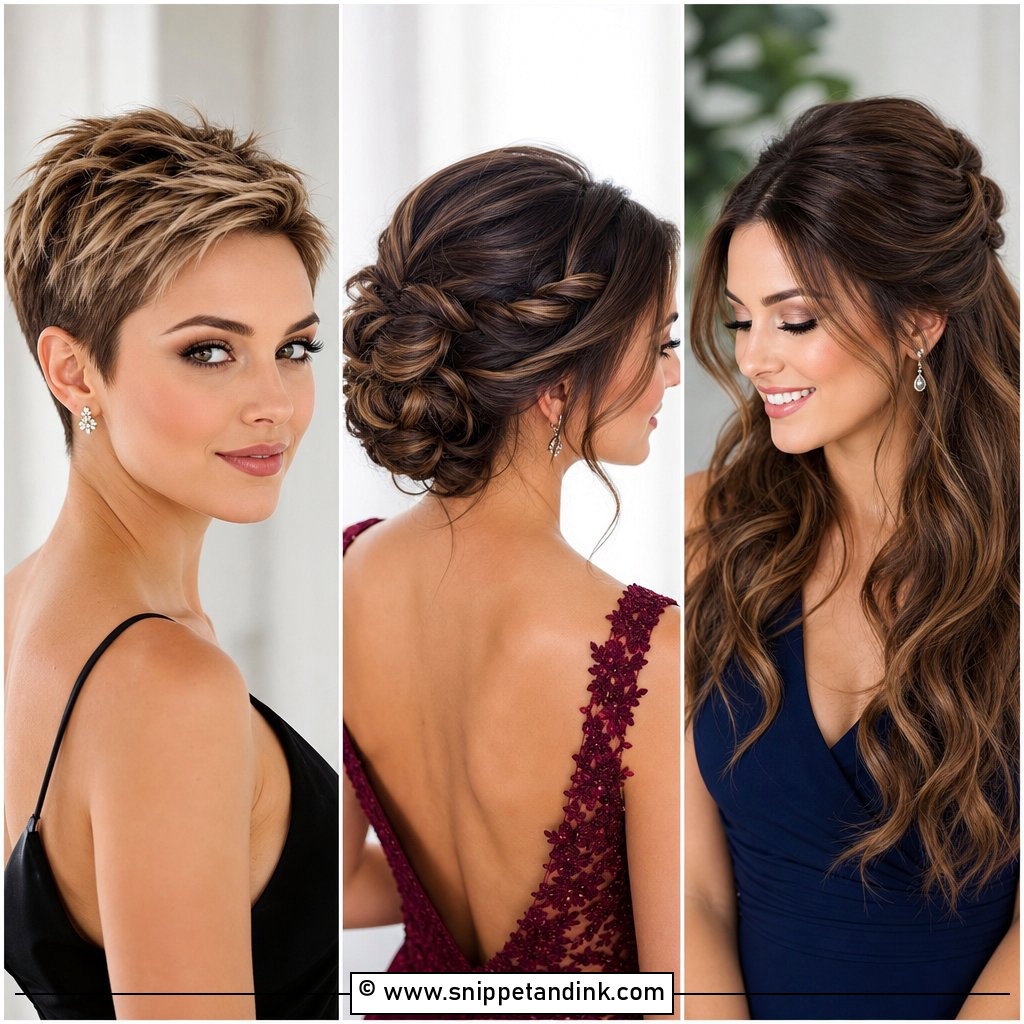
15. Indian Groom Mom Maang Tikka Hairstyle
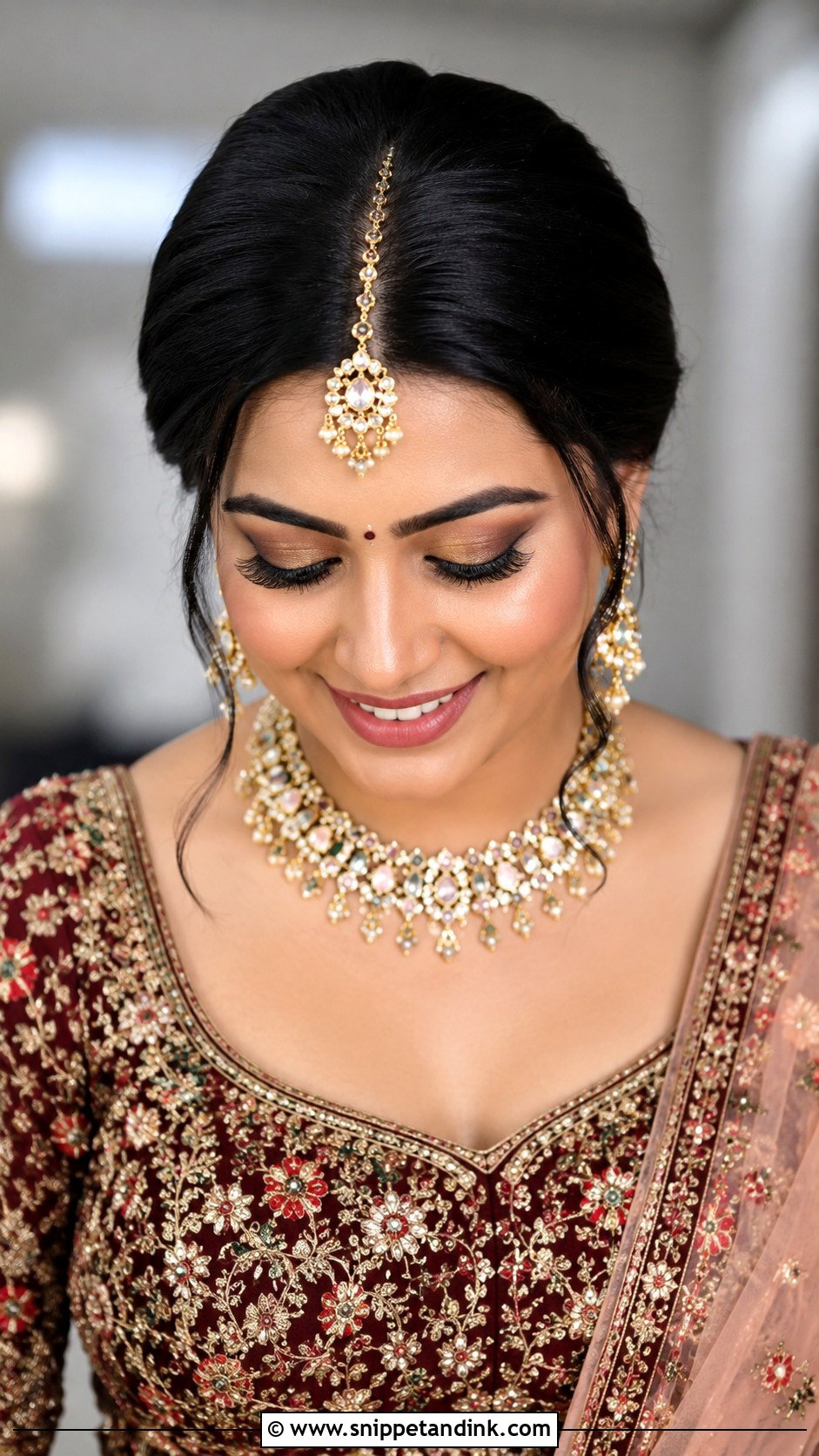
A tikka turns any of these looks ceremonial. Underneath, the hair can be a low bun, a soft bun or half-up, but the parting has to be neat enough to hold the jewellery straight. A centre part works best. I hook the tikka under a small section at the crown and secure it with two crossed bobby pins, so it doesn’t swing when she bends to greet elders. A maang tikka hairstyle suits lehengas, heavy sarees and traditional sets for the main ceremony, the engagement or formal family portraits. Keep the rest of the hair simple.
A Bun That Won’t Cause a Headache by the Pheras
The most common complaint I hear from mothers at weddings isn’t about how the hair looks. It’s that it hurts. A tight bun with dozens of bobby pins pressed against the scalp starts to ache after a few hours, and pulling on a thinning hairline makes it worse.
I build buns on U-pins pushed into the base, which hold more with fewer pins and less pressure. I leave the hairline a little relaxed instead of dragging it back, and spread the weight of gajra or accessories across the bun rather than hanging it all on one side. If something starts pinching during the day, it’s almost always one pin; take it out and the rest will hold.
The Groom’s Side Leaves Early, So Her Hair Goes First
On the wedding day, the groom’s family often has rituals at home and then the baraat, which means the mother is ready well before the bride. Her hair appointment usually falls very early, sometimes before dawn, and the style has to last until the reception ends.
Tell the stylist the full schedule, not just the time she needs to leave. A style for twelve or more hours needs a firmer base and more set than one for a few hours. And if she changes for the reception, plan whether the hair changes too: a low bun can be loosened into waves in a few minutes, but rebuilding a style from scratch in a busy changing room rarely goes to plan.
Dressed for the Pheras, Comfortable Until the Last Guest Leaves
The right hairstyle for the groom’s mother holds up through the whole day and still feels like her. A low bun, gajra bun, braided bun or South Indian braid suits traditional ceremonies. Soft waves, half-up hair, short waves and French rolls work for receptions and modern celebrations. Think about the neckline, jewellery weight, weather and length of each event. Hours of greetings, walking and photos will test any style, so comfort counts as much as looks.
You'll Like These Ideas:


Leave a Reply