
The mother of the bride has the longest day of anyone in the family. You’re up before your daughter, greeting guests, sitting through rituals, covering your head for some of them, and still standing at the vidaai. Your hair has to look polished at dawn and still be holding late at night. These twenty styles for the mother of the bride run from neat buns to soft open hair, and with each one I’ve noted who it suits and what I’d watch for, especially on hair that’s finer or greyer than it used to be.
Thinner Crowns, Grey Roots and Finer Lengths
Many mothers tell me in the chair that their hair isn’t what it was at their own wedding. That’s normal. Hair often gets finer with age, the part widens, and grey strands grow in coarser than the rest. None of it rules out any style below, but it changes how I build each one.
- Root colour: book a touch-up three to seven days before the wedding, so any staining on the scalp has faded but the roots haven’t grown back.
- A thinning crown: a little backcombing under a smooth top layer, or a clip-in topper matched to your shade, fills the area that shows under flash.
- Fine lengths: a donut ring or padding under the bun gives size without pulling hard on the scalp.
- Wiry greys: a smoothing cream before styling so loose pieces lie flat instead of standing away from the head.
Tell your stylist about any hair loss, a sensitive scalp or a history of headaches from tight styles. I’d much rather plan a softer bun than have you in pain halfway through the kanyadaan.
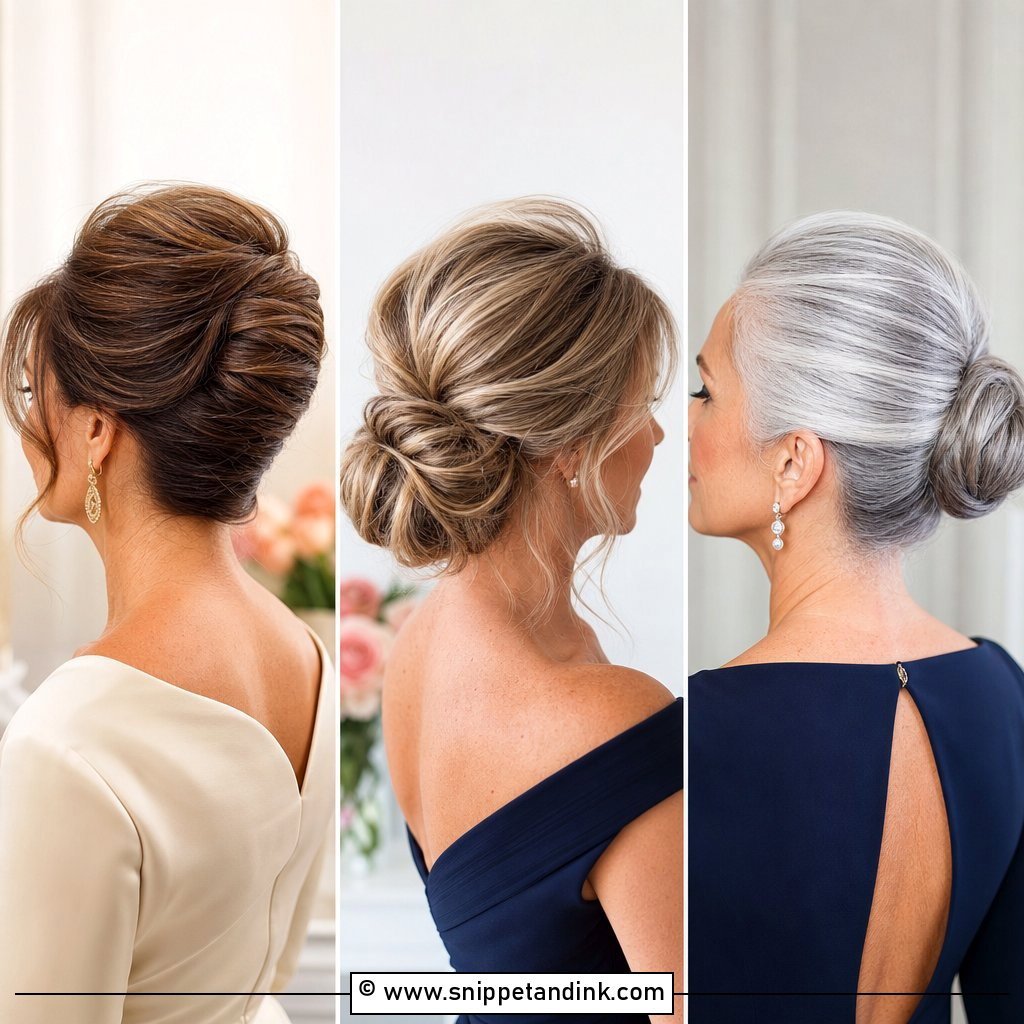
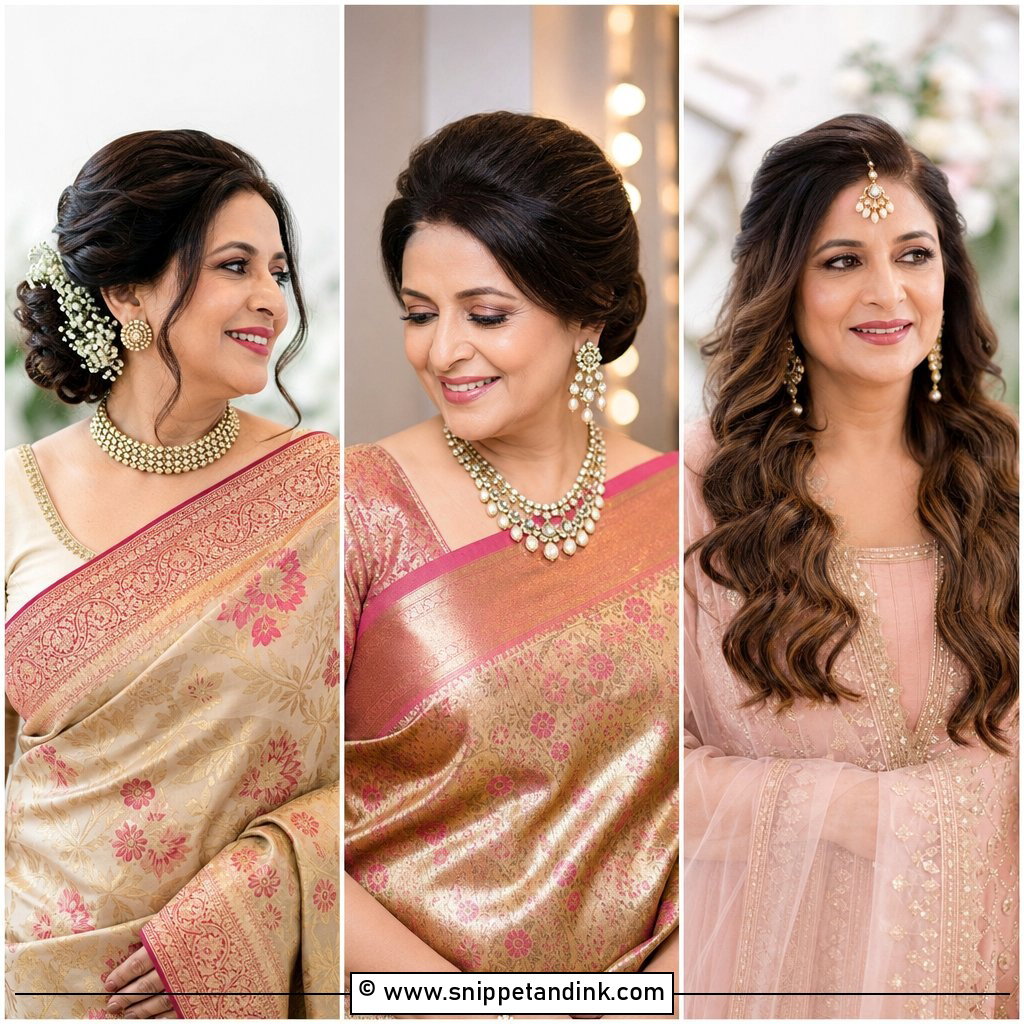
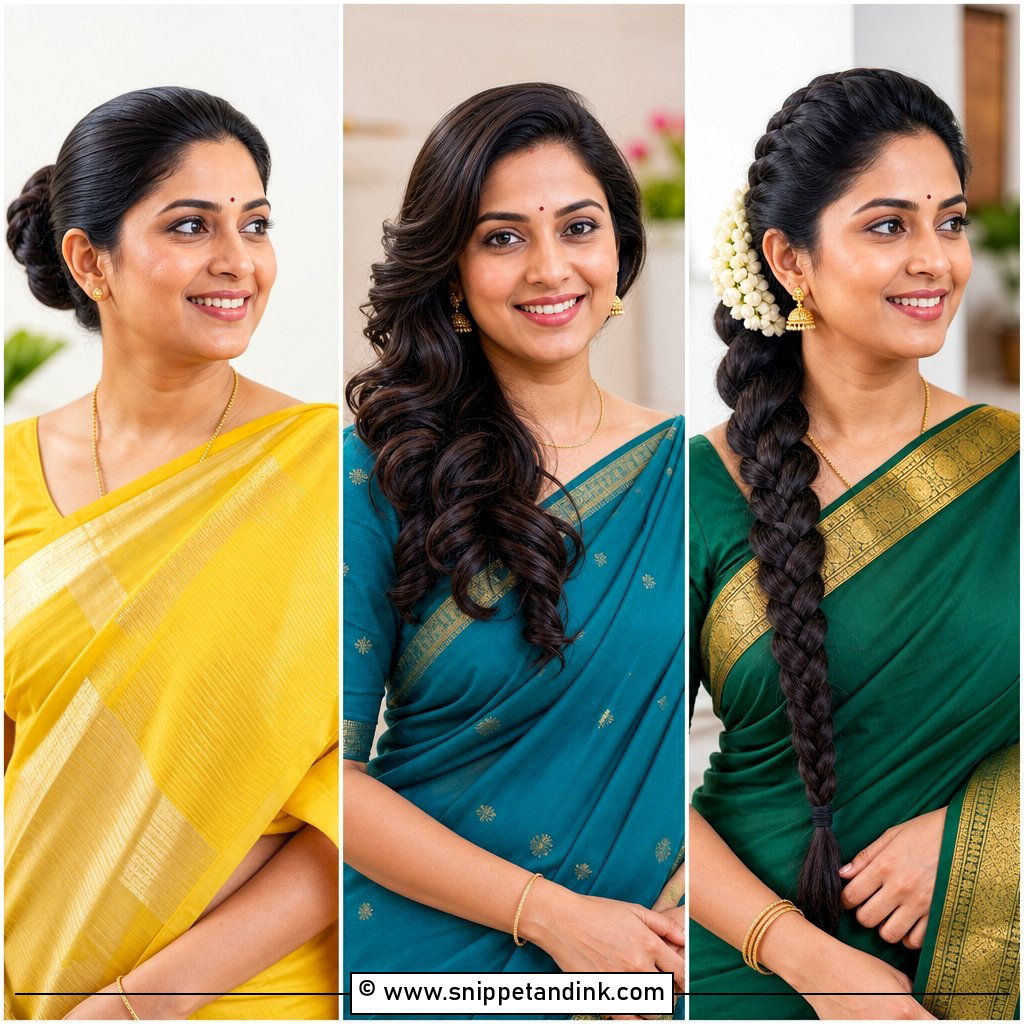
1. Classic Low Bun With Saree
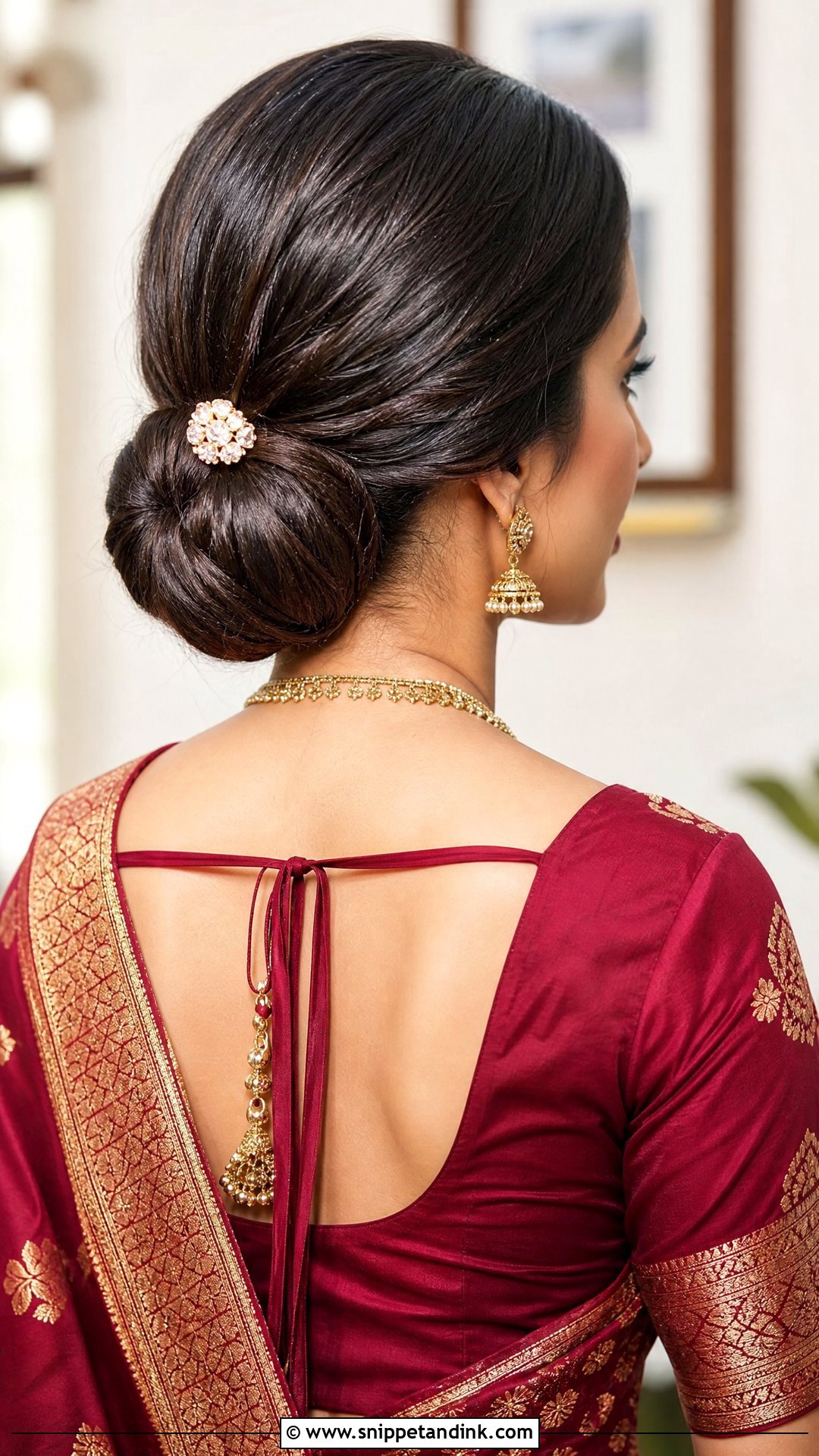
I put a low bun on more mothers than any other style, and for good reason. It sits at the nape, keeps hair off the face and stays clear of a heavy silk or Banarasi pallu, which leaves your jewelry and blouse to do the talking. Medium to long hair makes the cleanest shape. If the crown has thinned, I backcomb a little lift there first so the smooth top doesn’t show scalp under the photographer’s flash. A small gajra or one jewelled pin is plenty.
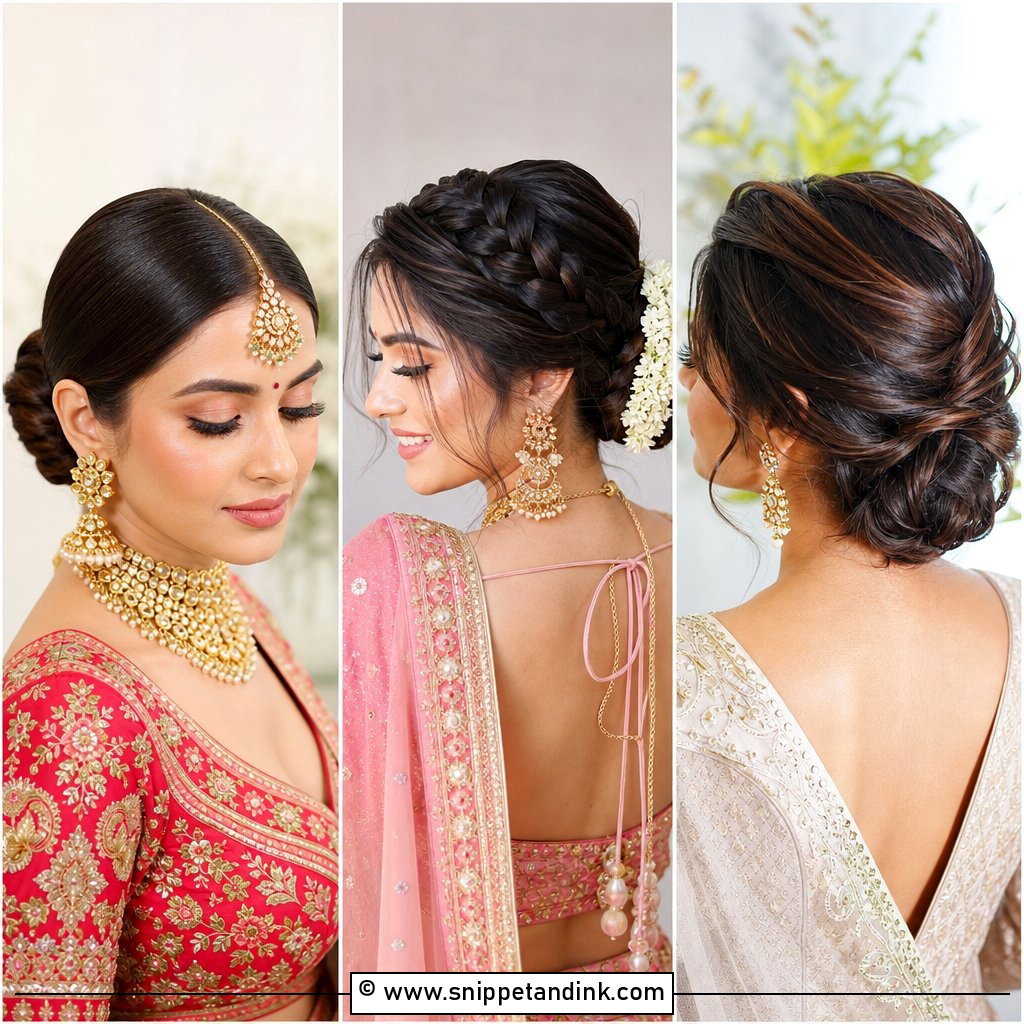
2. Braided Bun With Mogra Flowers
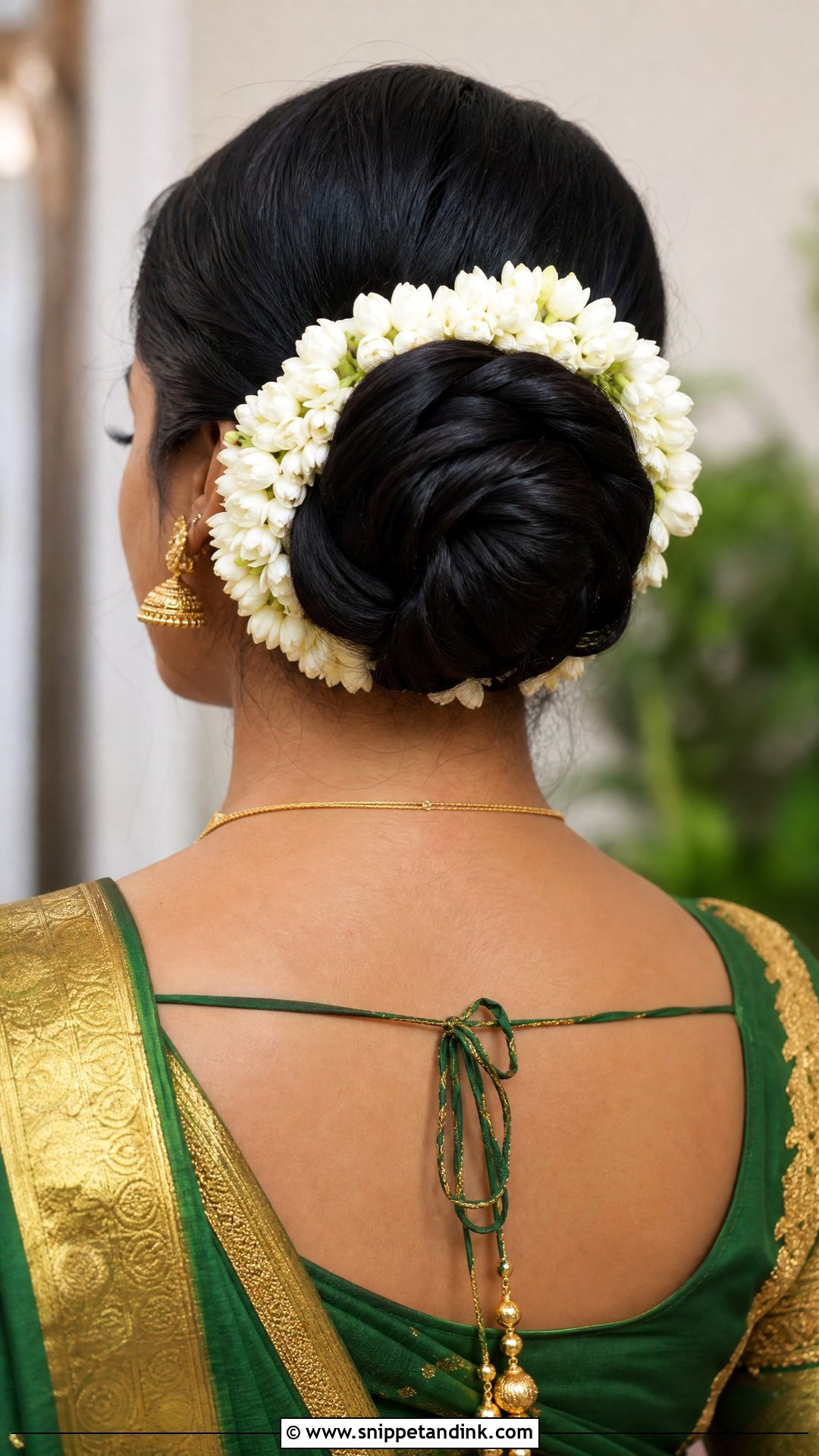
Mogra around a braided bun is a South Indian classic, and it’s easier to wear than a full floral bun because the braid holds the flowers in place. I plait the length, coil it at the nape, then wind the strings of mogra so they settle into the grooves of the braid. With a Kanjeevaram or Mysore silk saree you need no other hair ornament at all. The scent is strong in a closed hall, so if fragrance bothers you, ask for one string instead of a full wrap.
3. Sleek Side Swept Hairstyle
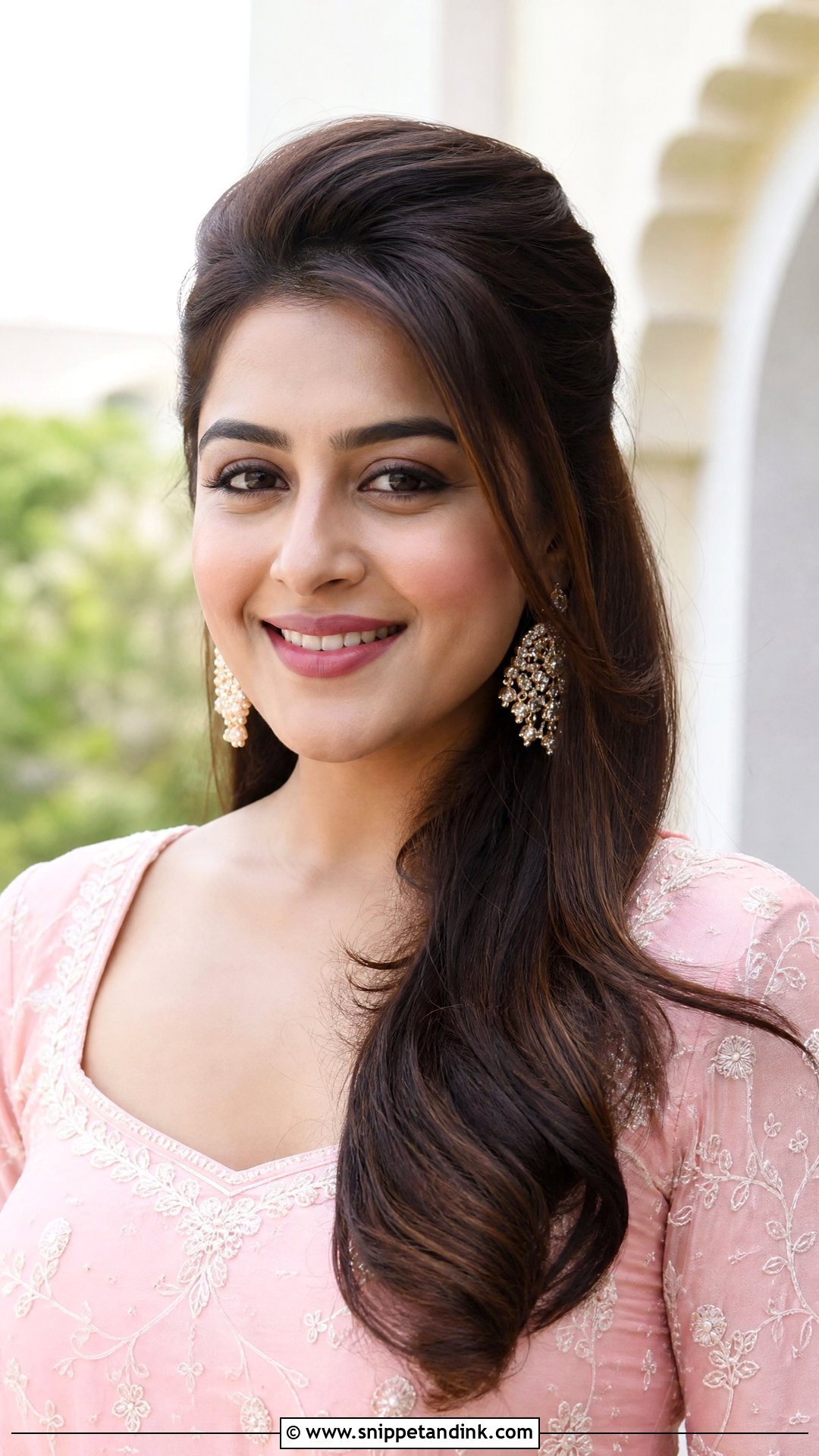
Hair smoothed across to one shoulder, often with a small lift at the crown. It’s relaxed enough for the Mehndi or Sangeet and shows off earrings and a sleeveless or deep-neck blouse. Which side matters more than people think: I sweep it away from the hand you use most, so it doesn’t fall forward every time you reach for something. A hidden row of pins behind the ear stops it creeping back. I wouldn’t pick it for the ceremony if you’ll be covering your head.
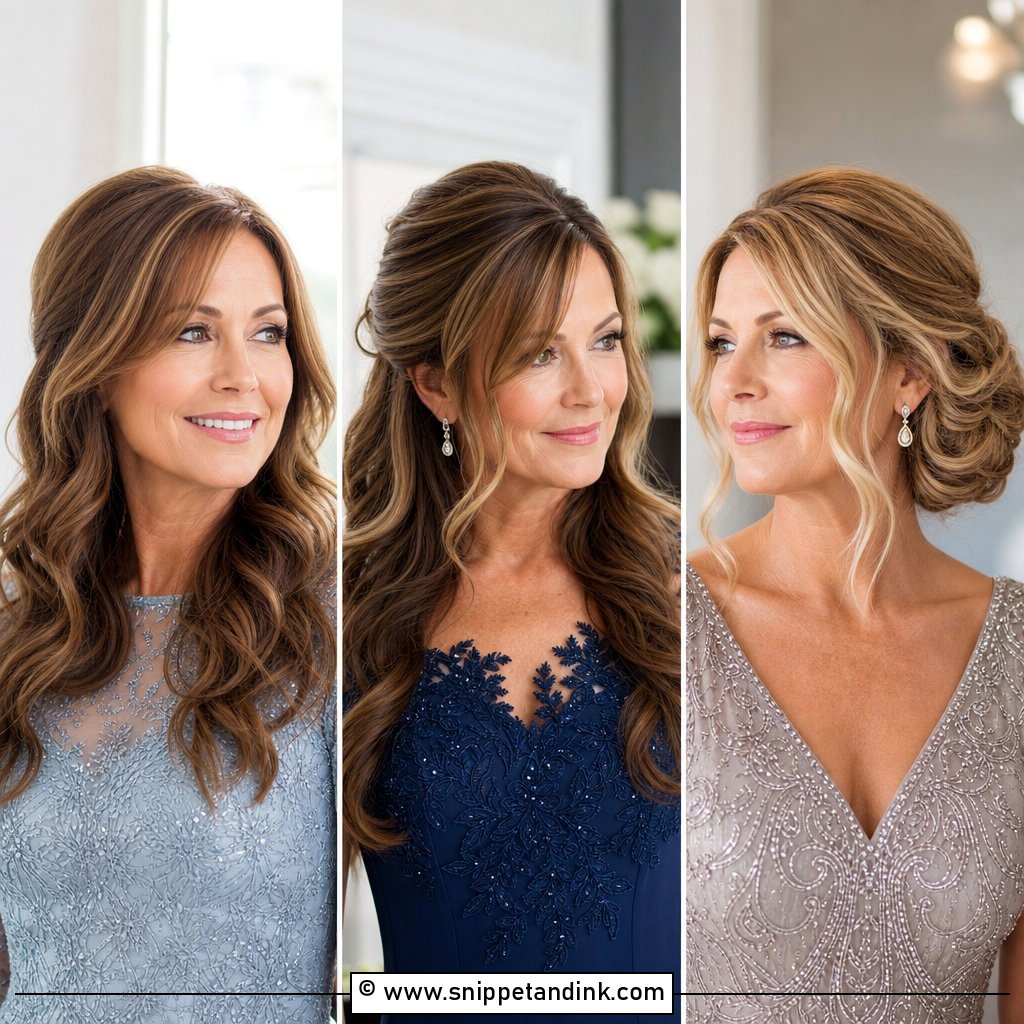
4. Curly Open Hairstyle With Volume
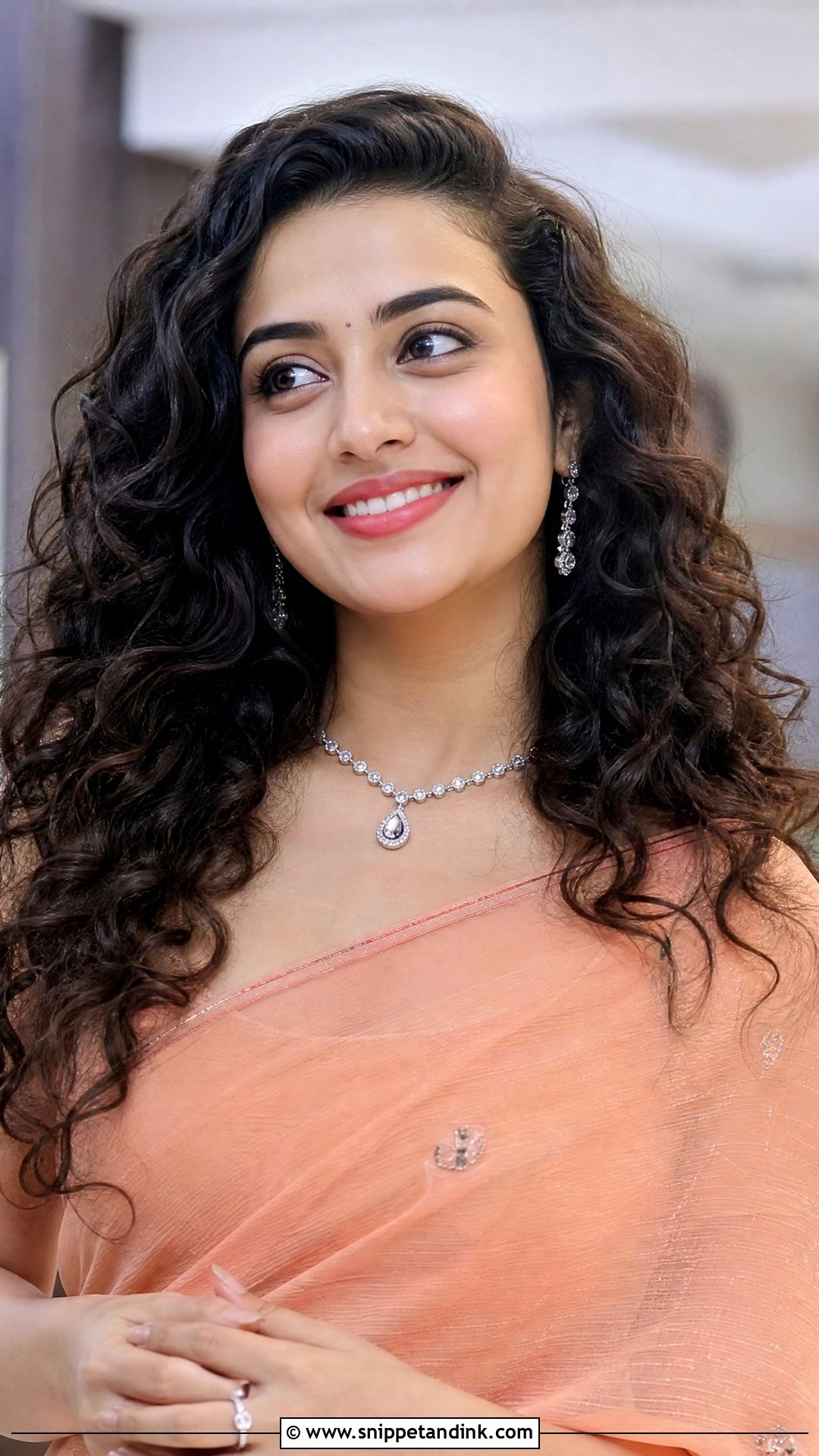
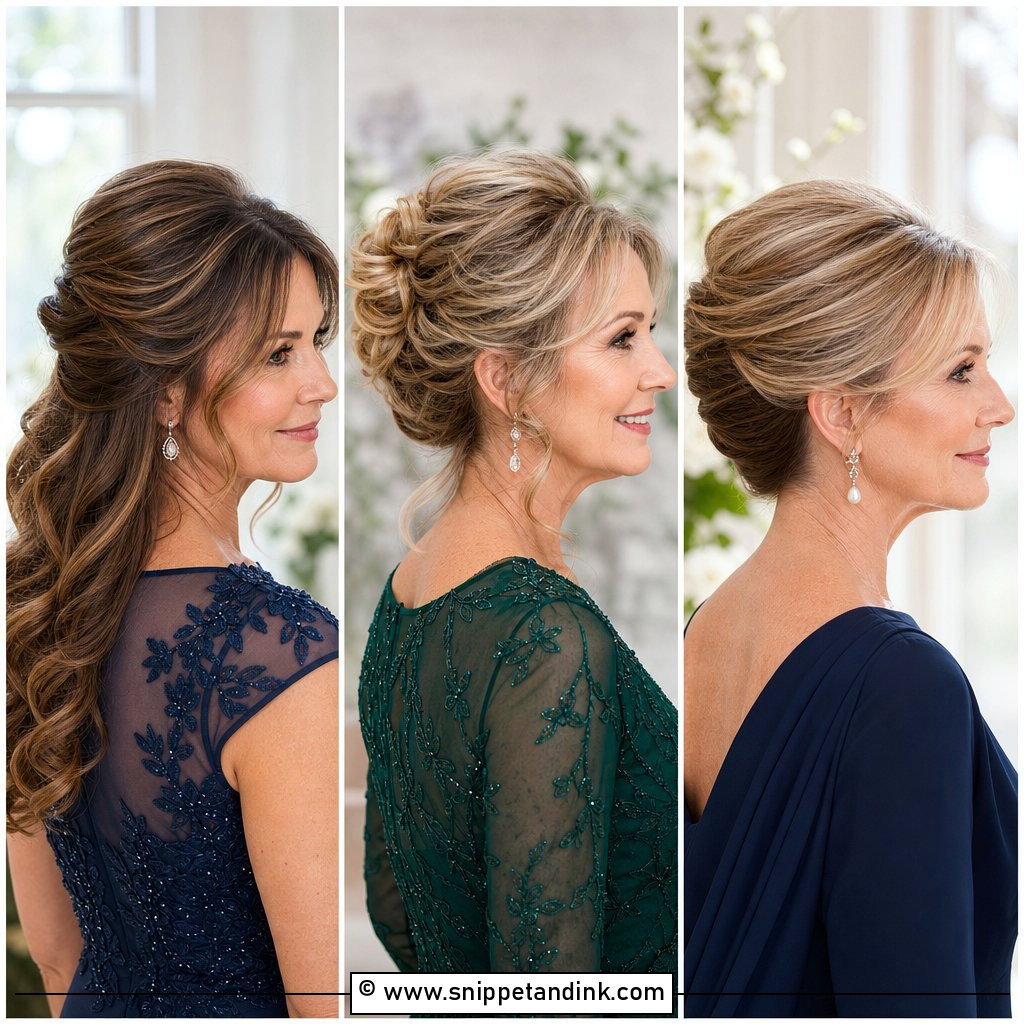
Curls worn down add fullness, soften the face and move nicely with chiffon or georgette. They are also the least durable option on this list. In a warm venue curls relax within a few hours, and open hair gets trapped under a pallu or caught in a necklace clasp. I’d keep this for an evening reception in air conditioning, with one side pinned back so hair doesn’t swing forward when you bend to greet elders.
5. Centre Parted Low Bun
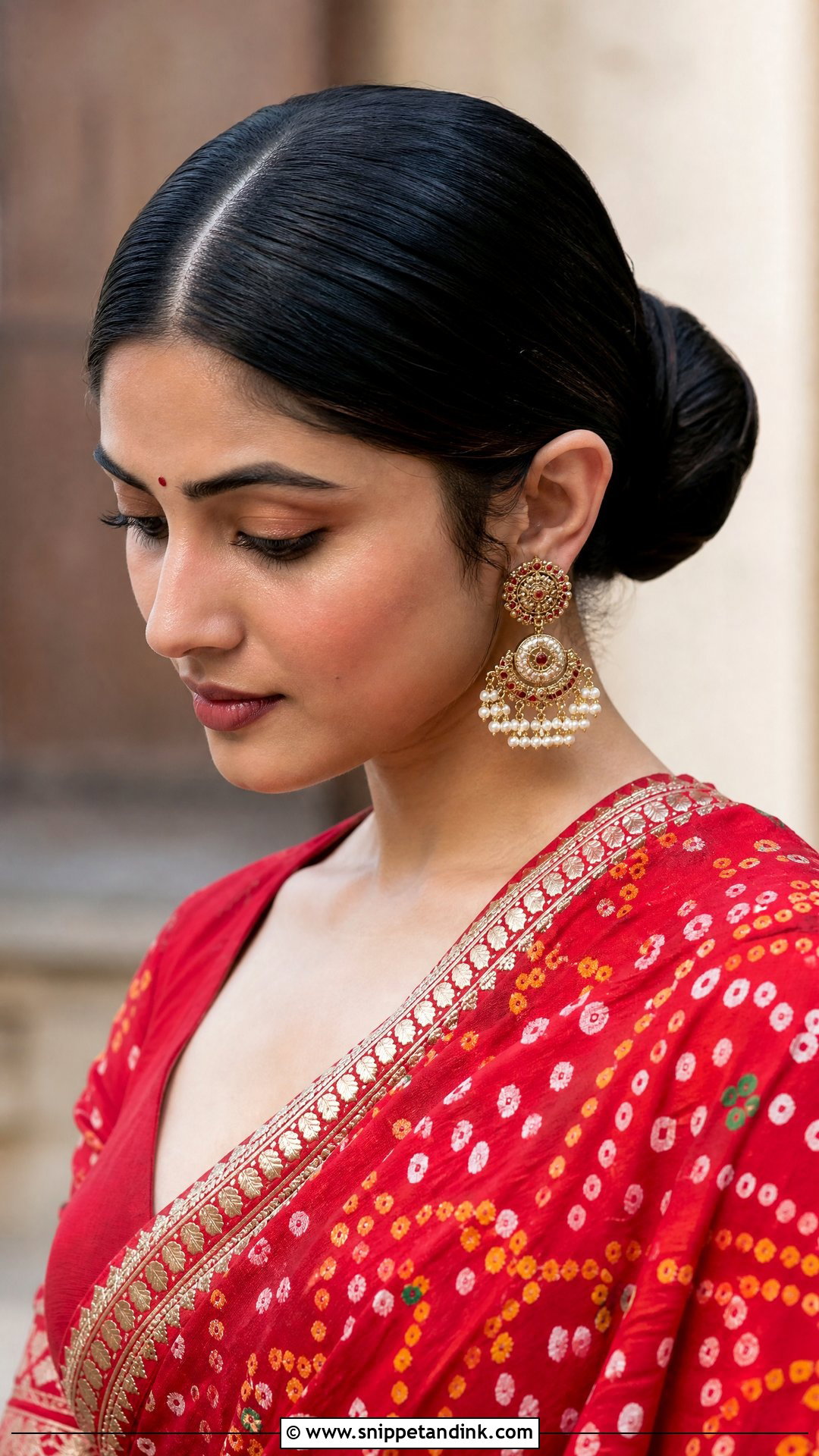
A centre part and a smooth low bun give a calm, symmetrical frame. It suits Bandhej and Banarasi sarees and statement earrings, and it holds all day without attention. The honest catch for many mothers is that a centre part shows grey roots and a widening part line more than any other. Either book a root touch-up a few days before the wedding or move the part slightly off-centre, where the hair is usually denser. A few small flowers beside the bun add a festive note.
6. Waterfall Braid With Puff
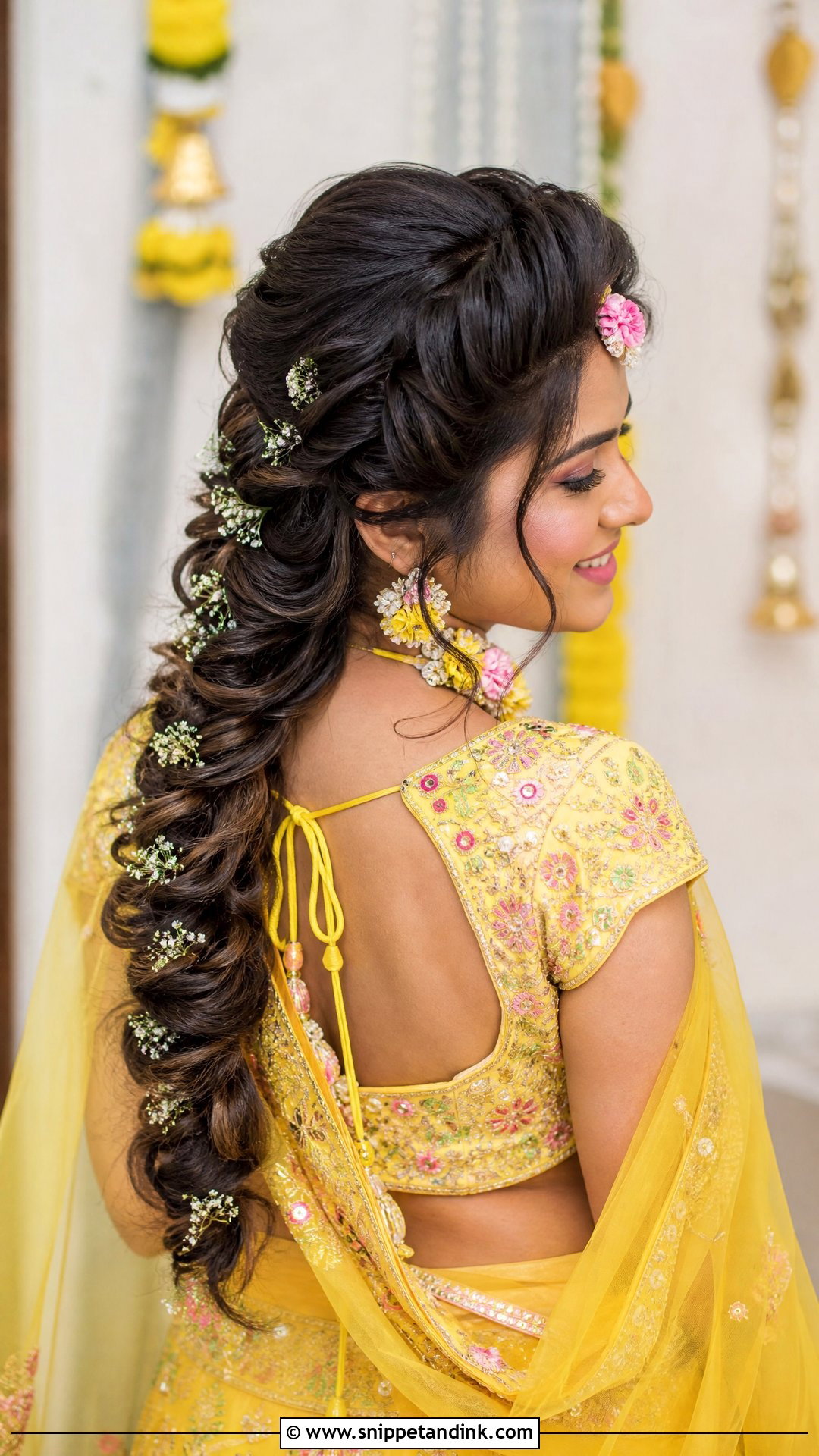
Looking for something a little different? A waterfall braid drops strands through as it travels across the back of the head, and a soft puff at the crown adds height. It’s a pleasant change for the Mehndi or Sangeet with a light lehenga or salwar suit. The waterfall needs medium to long hair with some thickness, because on fine hair the dropped strands look sparse. Keep the puff low and rounded; a tall puff on top of an intricate braid is too much at once.
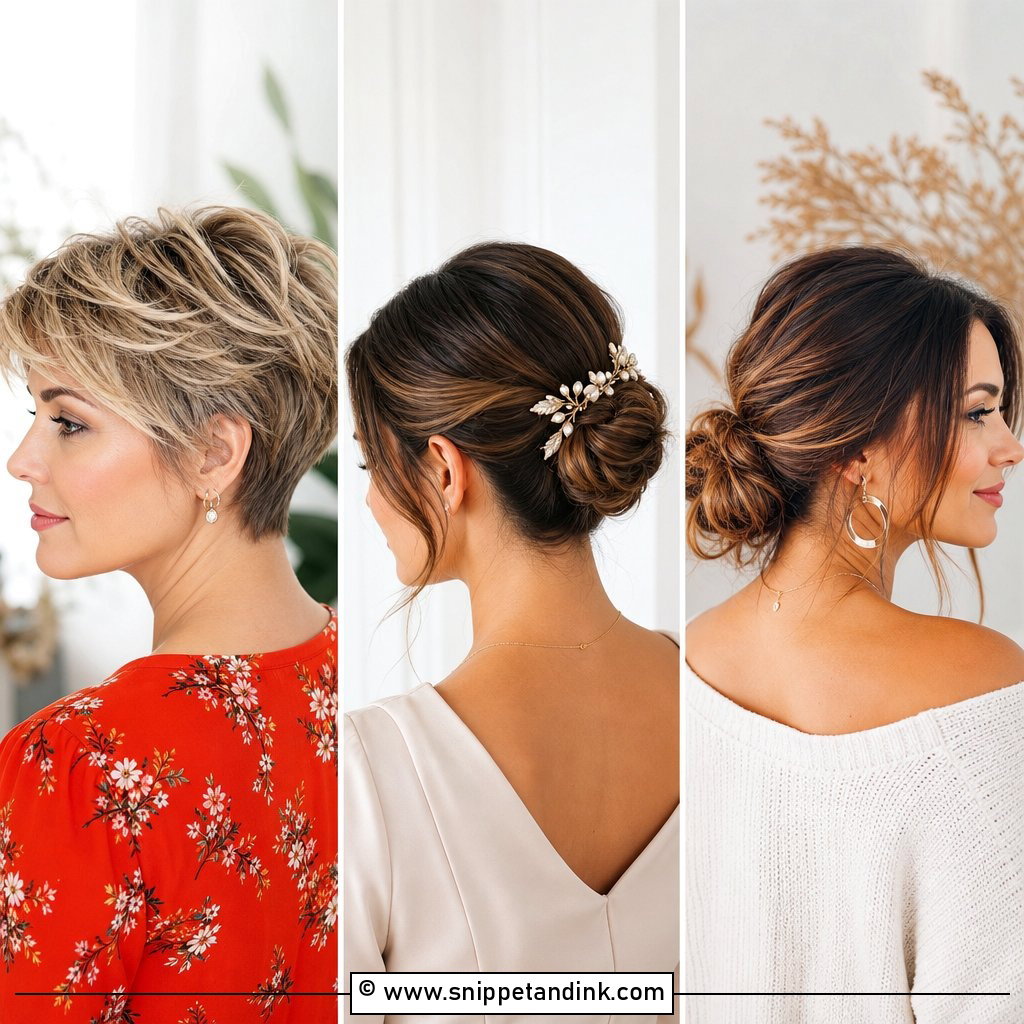
7. Messy Bun With Loose Strands
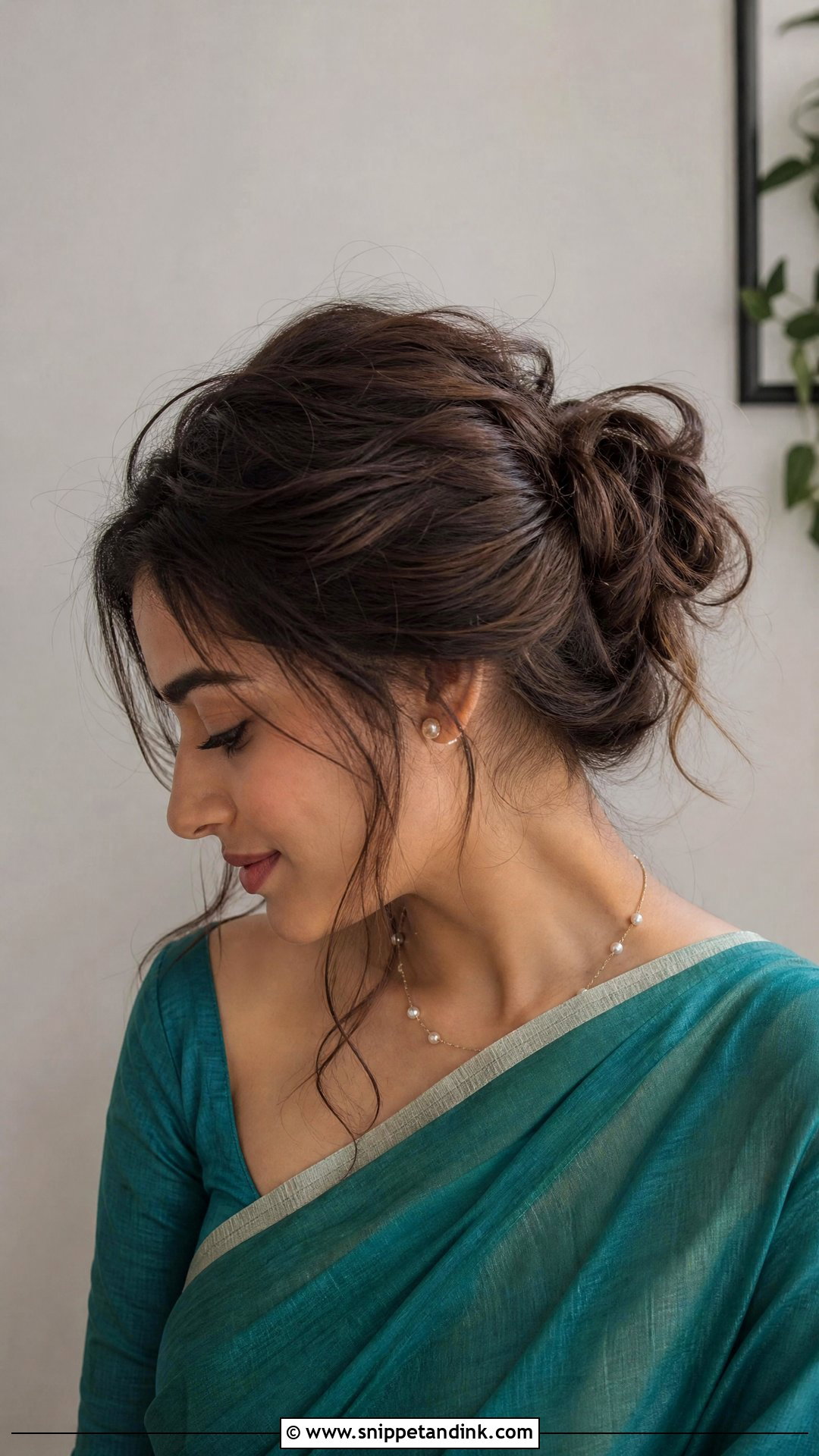
A slightly undone bun with a few strands left out is comfortable and forgiving, which counts at daytime functions where you’ll be up and down constantly. It pairs well with cotton silk or linen sarees and lighter jewellery. The texture has to be deliberate. I curl the hair, pin the bun firmly, then loosen it by hand. Grey hair often grows in coarser and wirier, so on greying hair I work in a smoothing cream first, which lets the loose pieces fall soft instead of standing up.
8. Sleek Puff With Bun
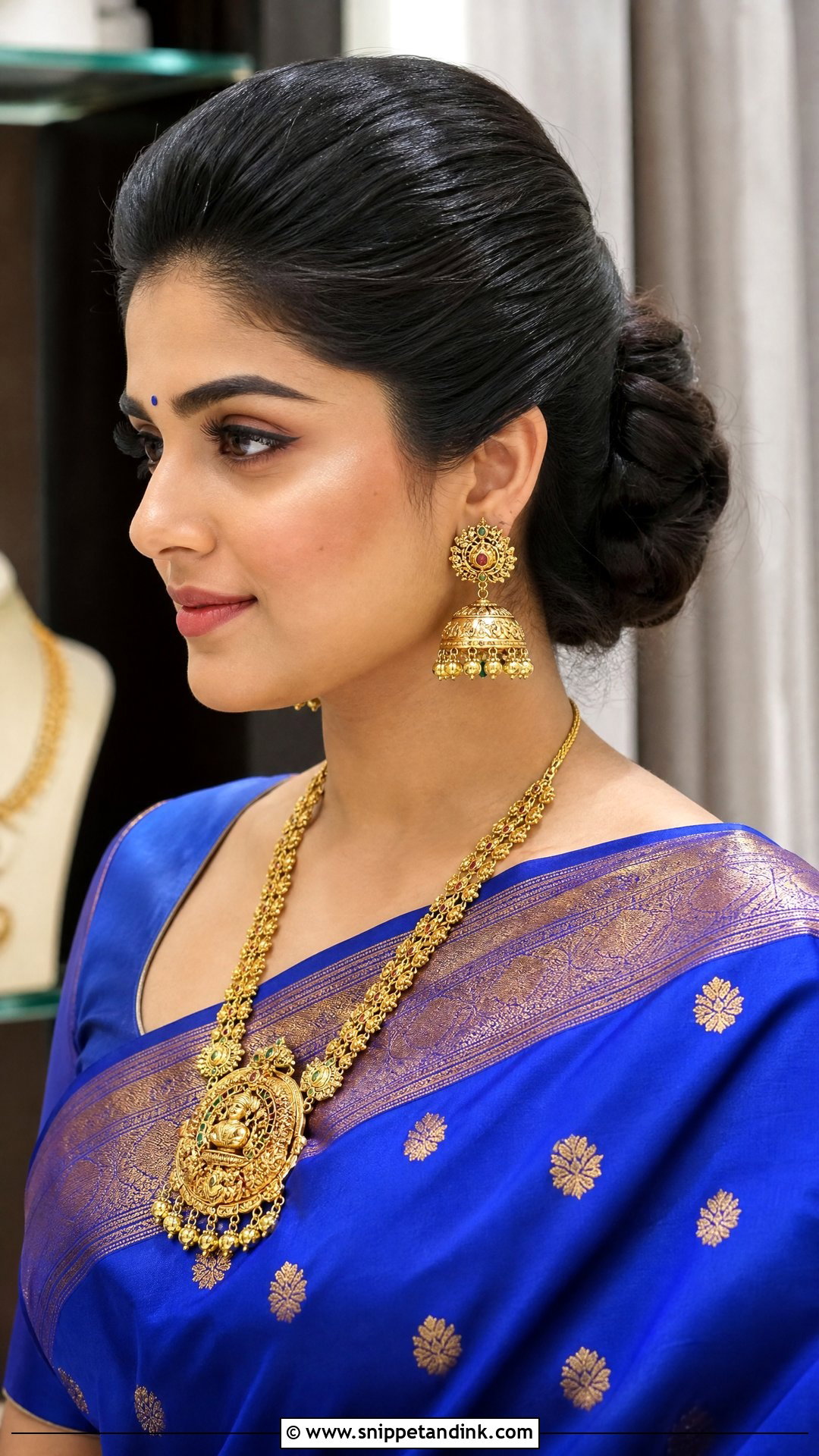
A smooth puff at the front with a neat bun behind is the formal look many families picture for the bride’s mother. It sits naturally with heavy silk and bold jewellery and holds through long ceremonies. The puff also hides thinning at the front hairline better than any flat style, because the backcombing underneath adds density. Keep it at a height you can still drape a pallu over. A tall puff pushes the fabric up into a point.
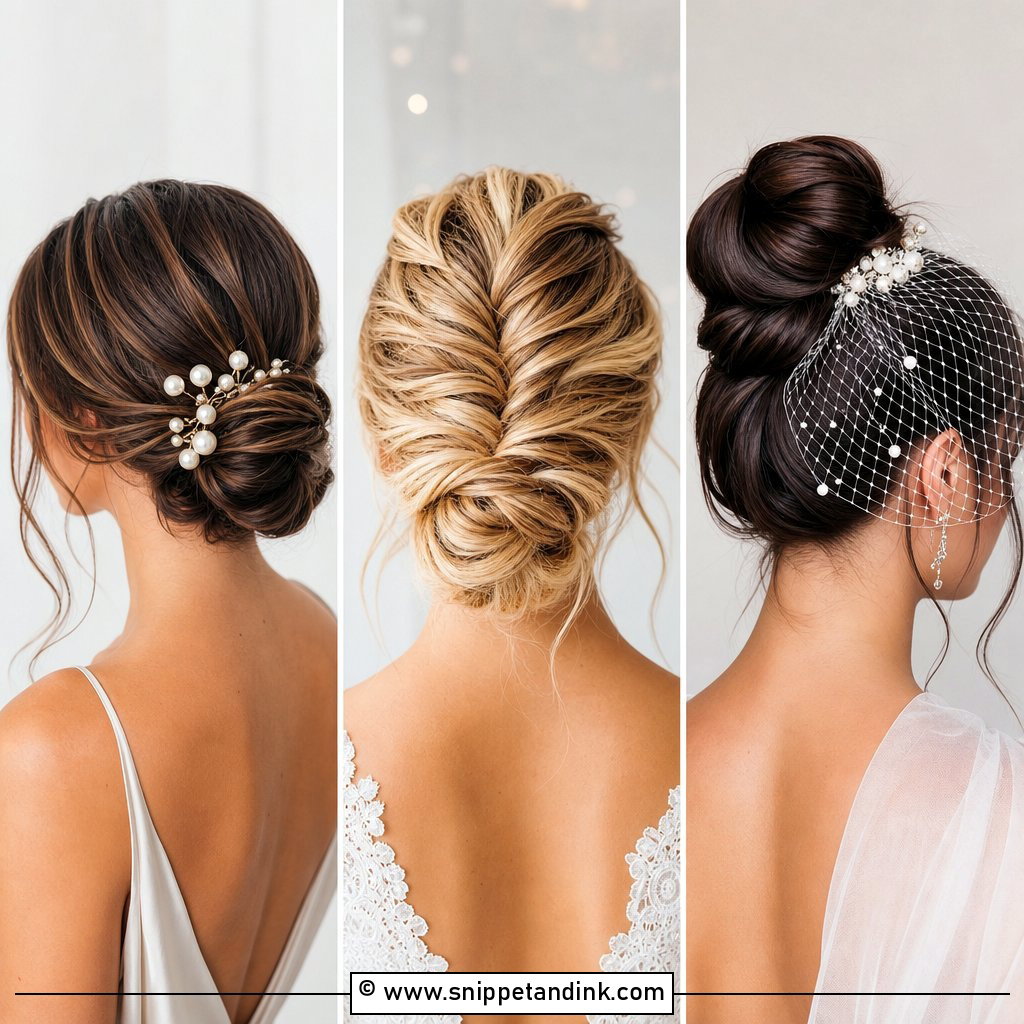
9. French Braid Updo
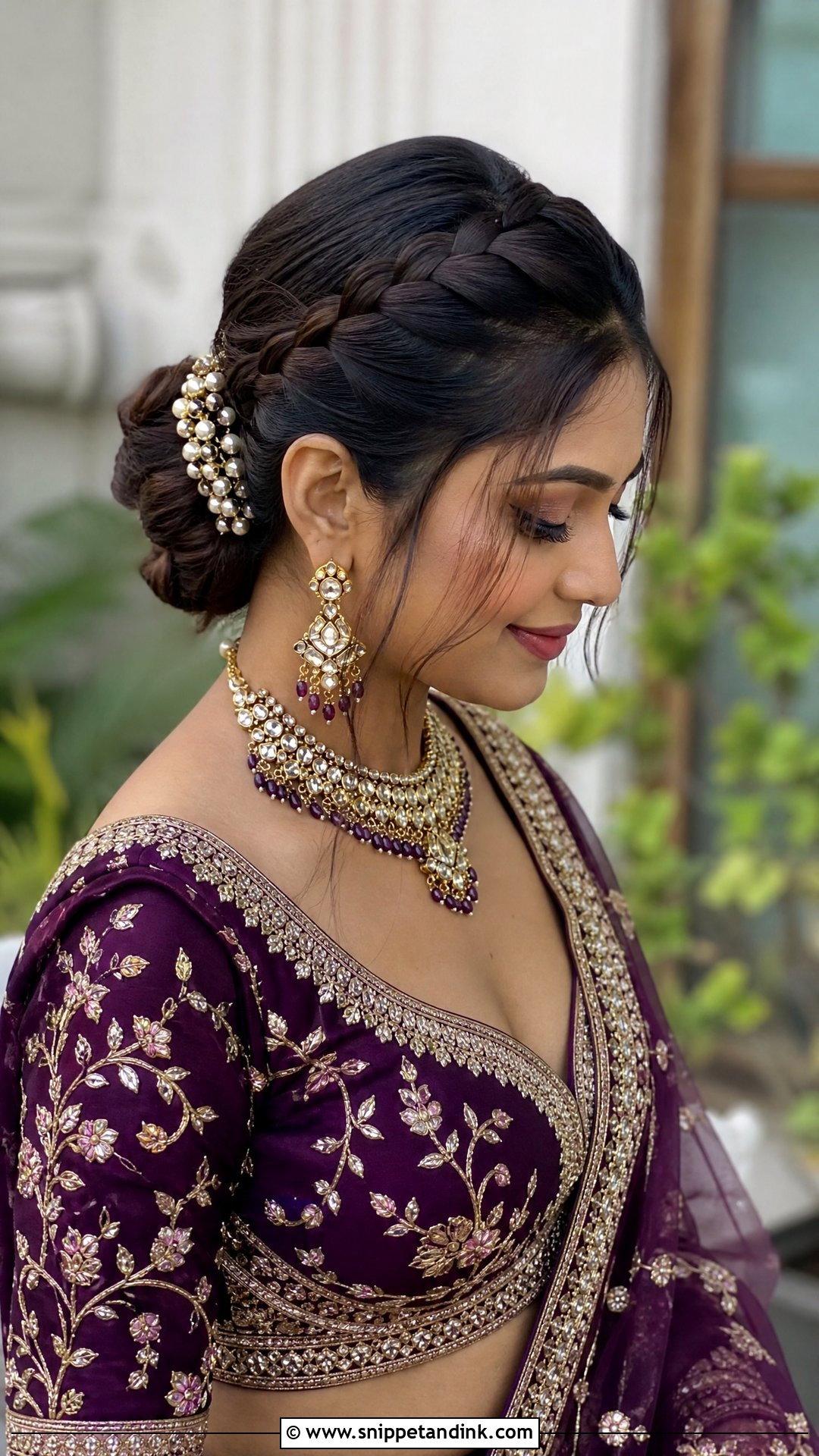
Here the braid runs along the scalp and tucks into a low knot. Because it catches hair as it travels, nothing works loose, which makes it reliable through rituals and dancing. It suits sarees and lehengas alike, and small pearls or flowers can sit inside the braid. Layered or shorter cuts work too, since the braid gathers short pieces that would escape a plain bun. Ask for it not too tight at the hairline; tension there is what gives you a headache by the afternoon.
10. Bun With Maang Tikka
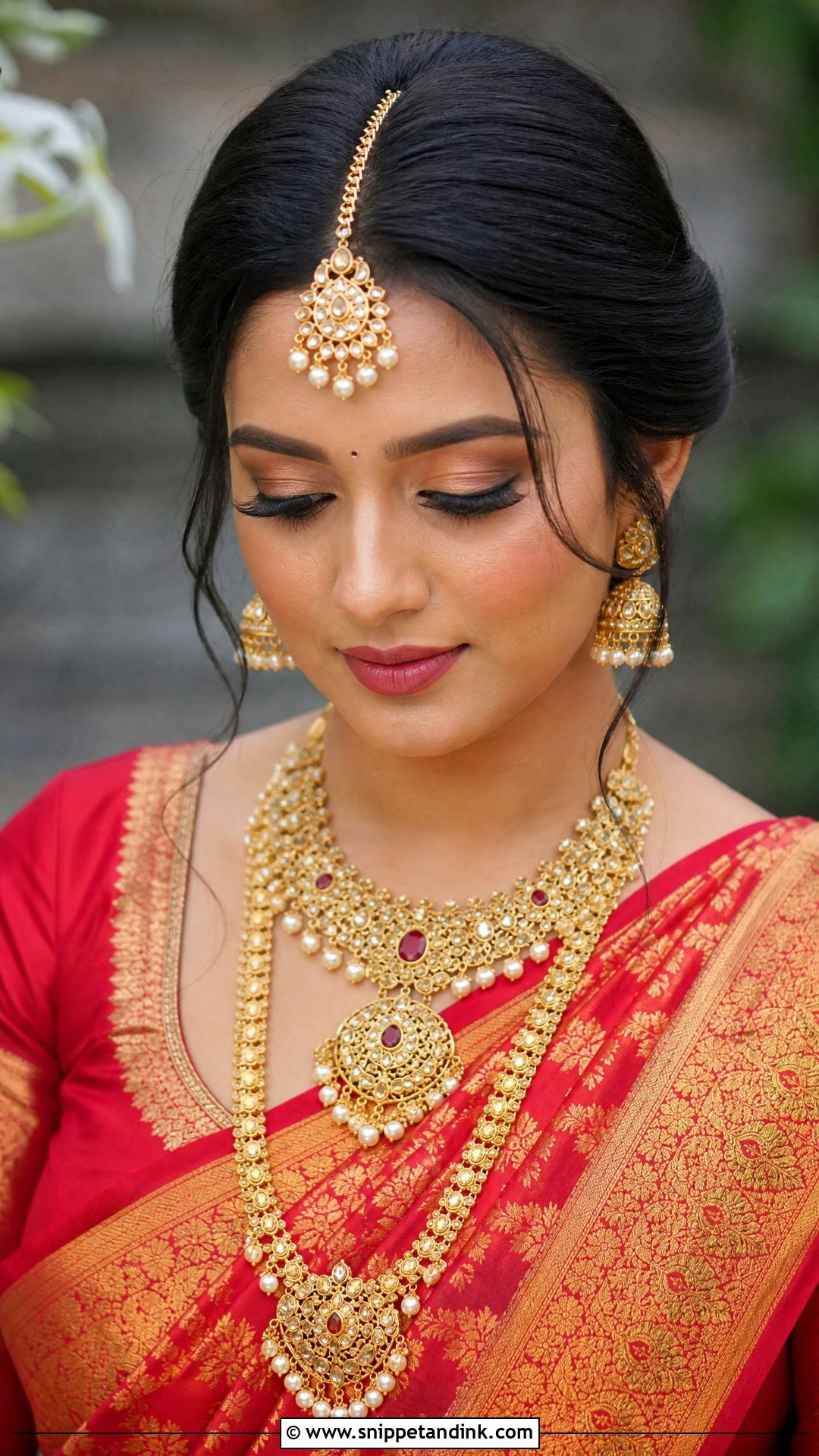
A maang tikka on a simple bun is a quiet way to look formal for the main ceremony. The bun keeps everything neat, and the tikka brings sparkle to the hairline. With rich silk sarees and heavy lehengas it looks complete without flowers. I fix the tikka with a small pin hidden in the part so it doesn’t swing when you bend during rituals. Set the bun low if you’ll be covering your head and slightly higher if you won’t.
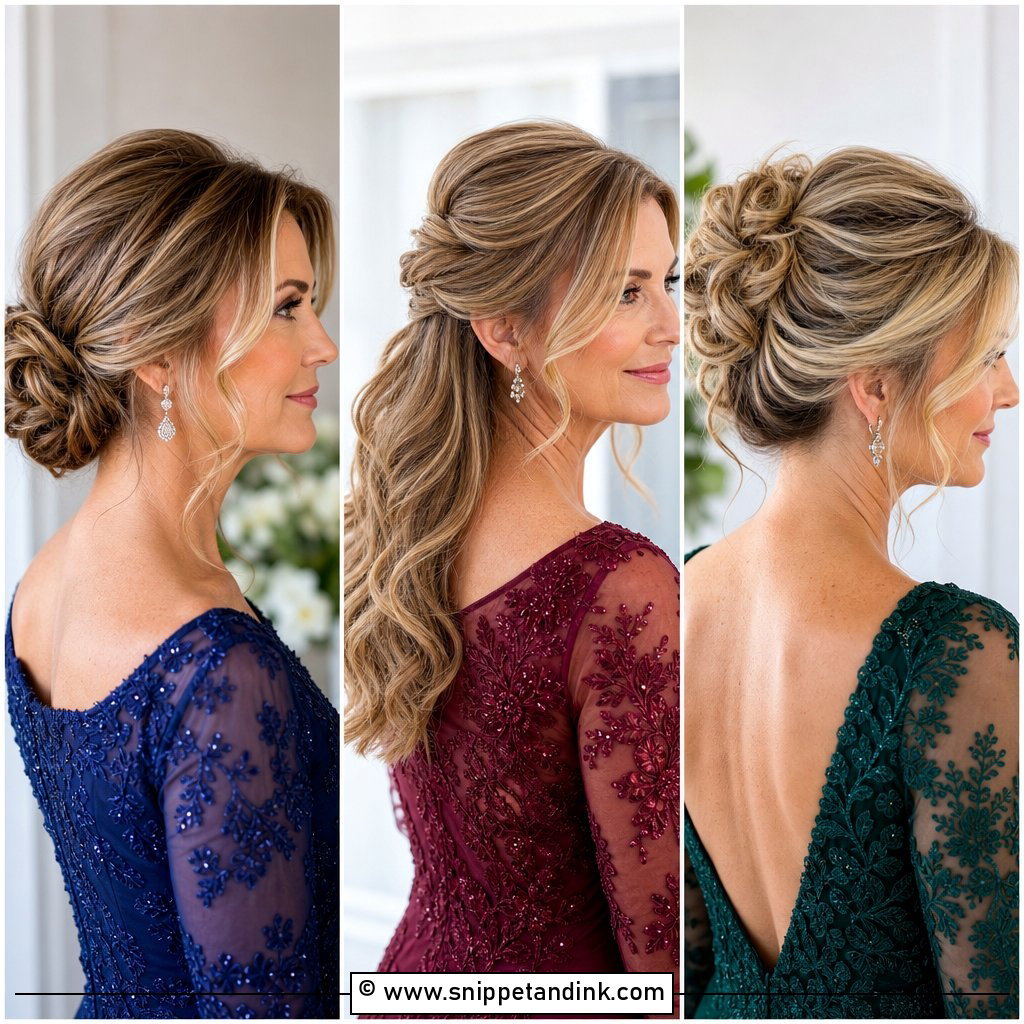
11. Half Up Half Down Curls
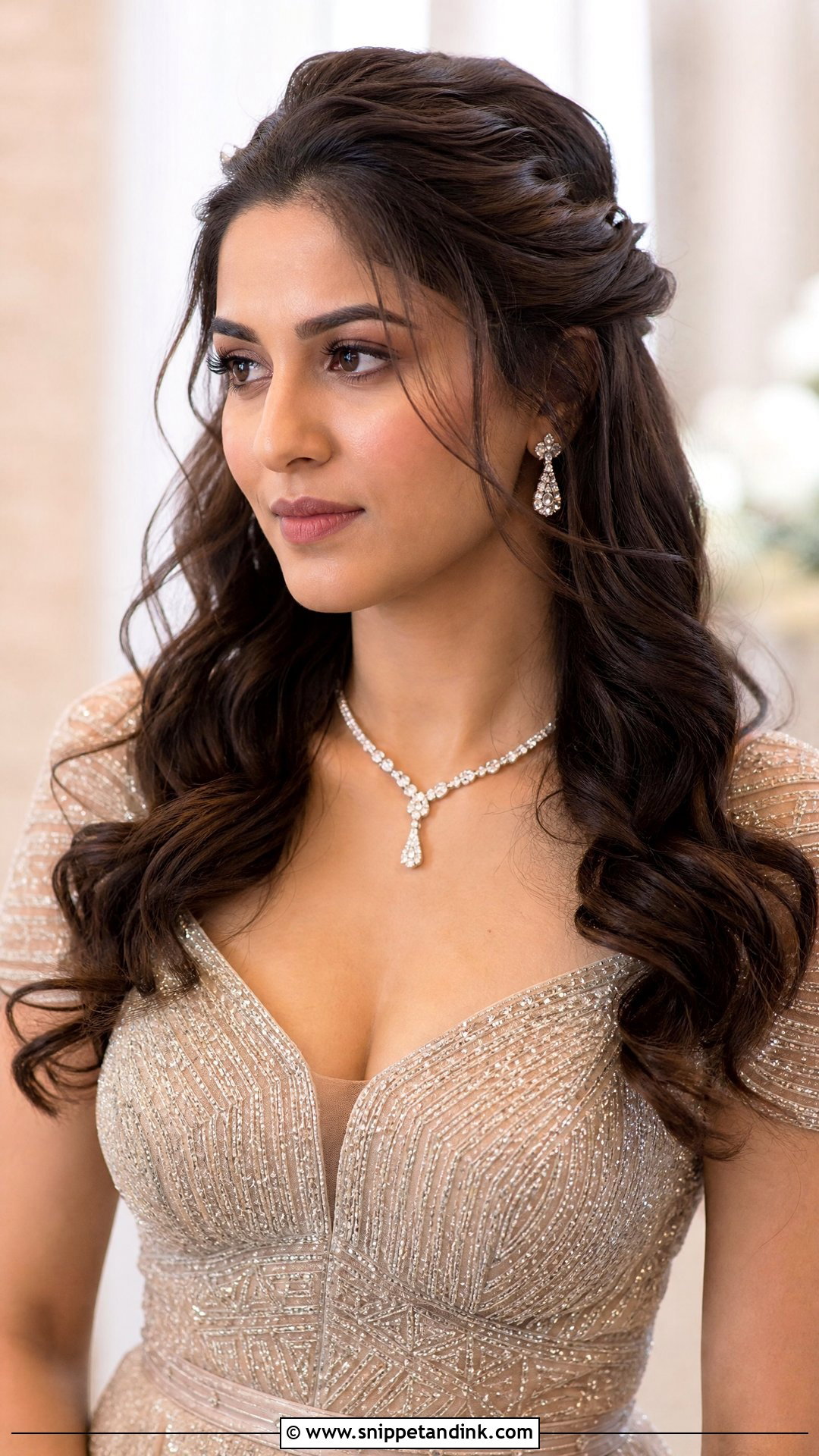
Can’t decide between an updo and open hair? The top section is pinned back and curls fall below, which frames the face without fully committing to hair down. Flowing gowns, chiffon sarees and lighter lehengas suit it at evening functions. I anchor the top with a small elastic under the pins, because a half-up held by pins alone loosens as the curls below drop. A decorative clip at the back of the crown hides the elastic.
12. Bun With Gajra Wrap
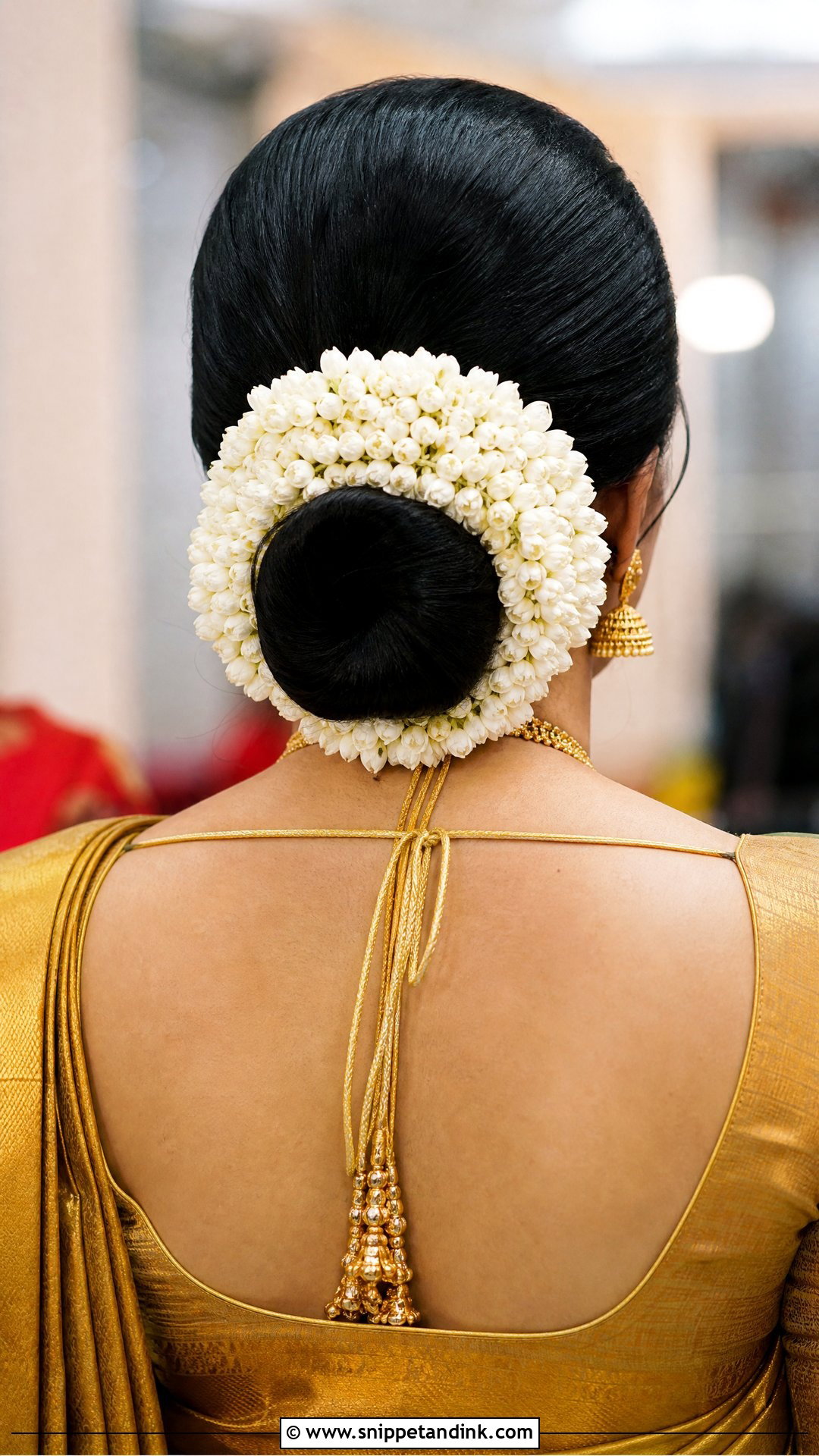
A fresh gajra around a neat low bun is about as traditional as it gets, and in many South Indian families the mother is expected to wear one. It goes with silk sarees and gold jewellery. Fresh jasmine opens through the day and starts browning by late evening, so if your day runs long, keep a second string for the reception. Pin through the string itself so it can’t slide off the bun.
13. Low Chignon With Hair Accessory
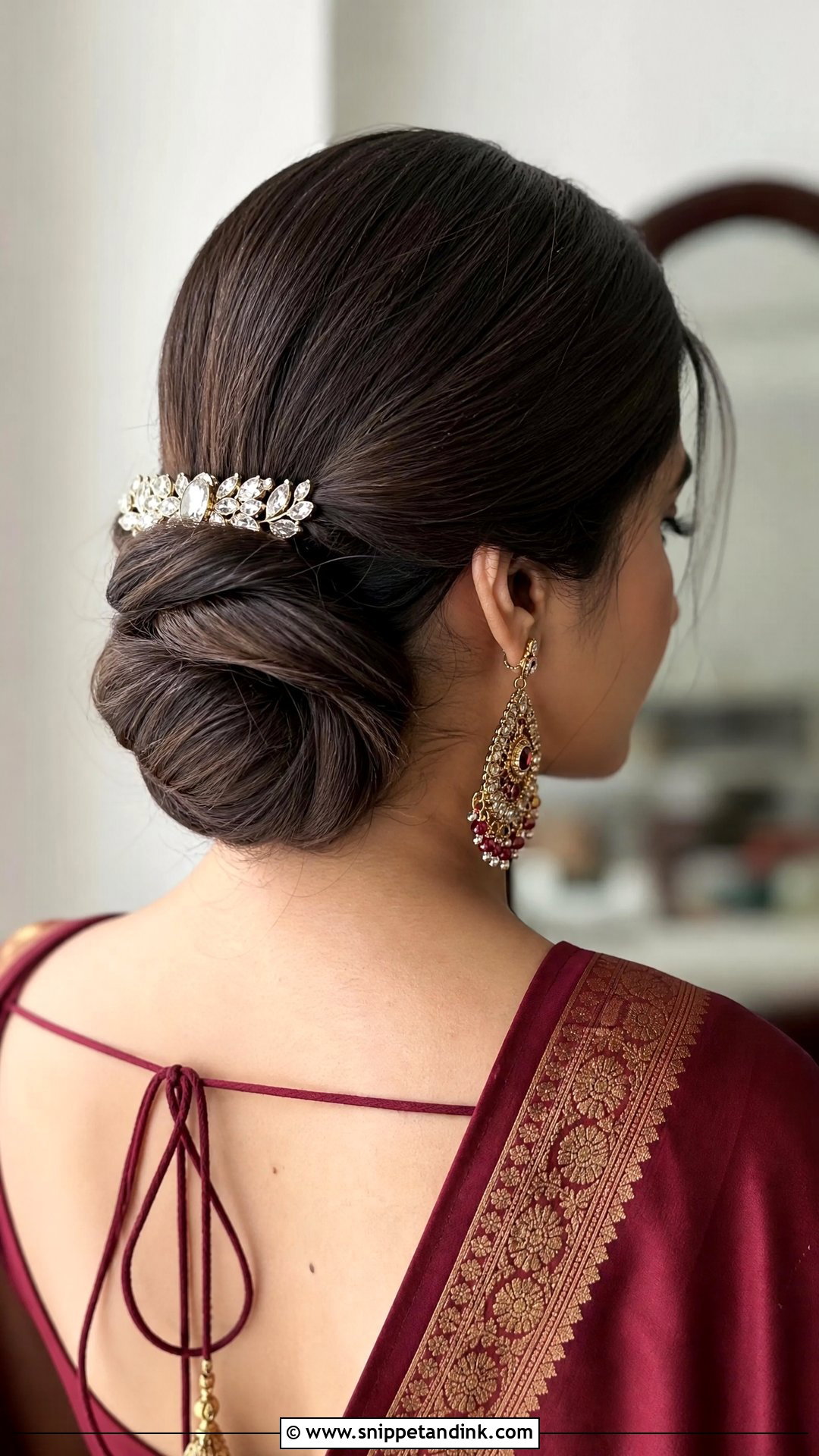
The hair is twisted into a smooth coil at the nape, and a jewelled pin, brooch or comb adds the festive finish. It sits well at formal receptions and main ceremonies with rich sarees and statement earrings. I like it on mothers with shoulder-length hair, because a twisted chignon needs less length than a round bun. A comb grips best when you push it in against the direction of the twist.
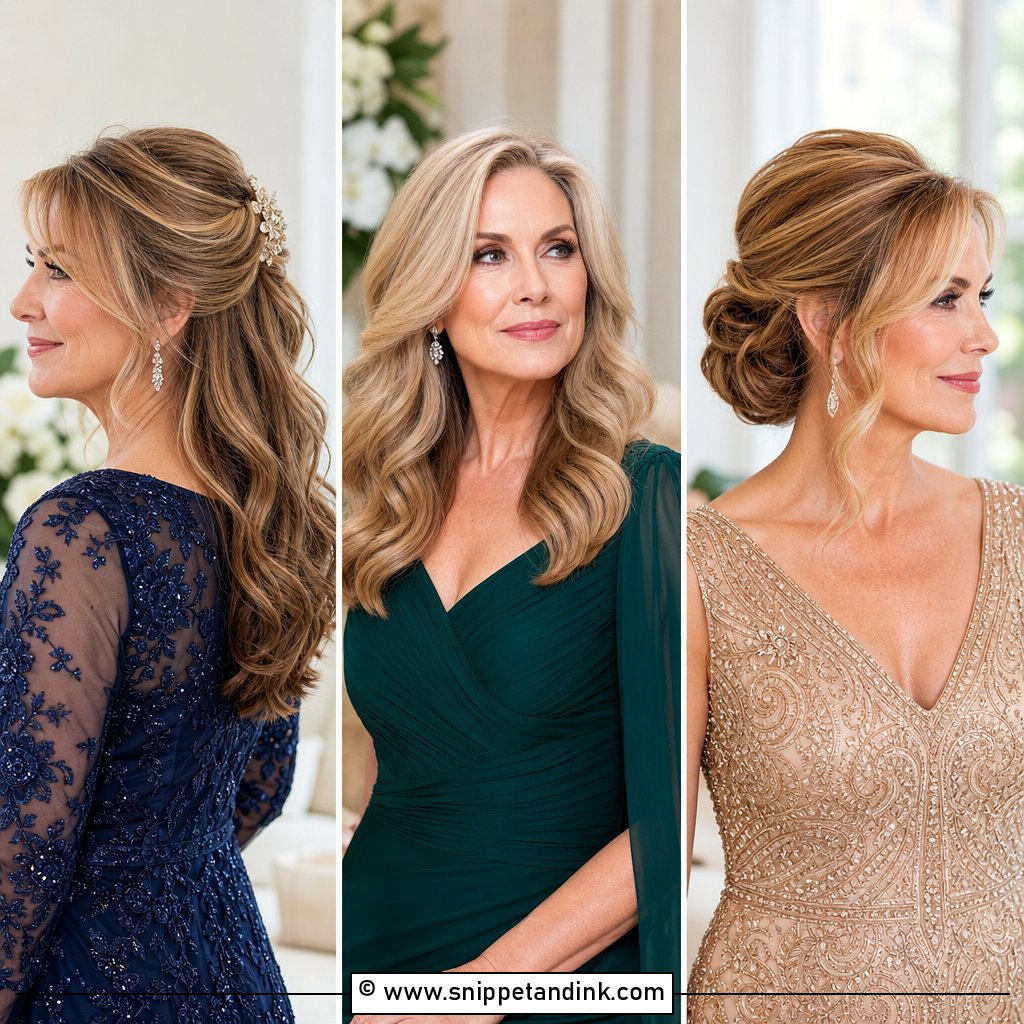
14. Soft Waves With Side Parting
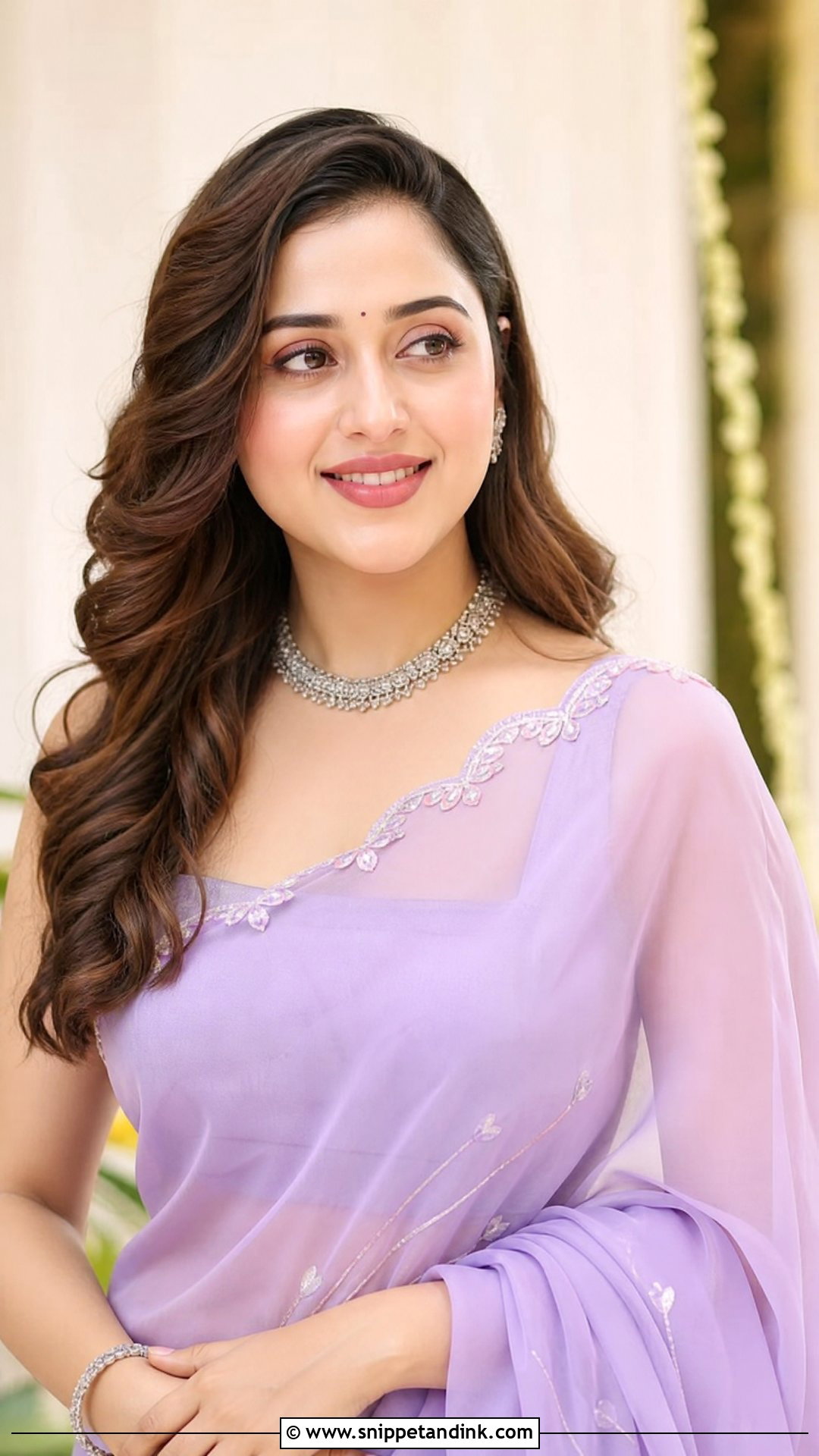
Soft waves with a side part are one of the easiest options to wear. The side part adds lift at the root and hides a thinning part line better than a centre part does. Chiffon, georgette and flowing gowns suit it, by day or evening. Waves also outlast tight curls in heat, simply because they have less shape to lose. Pin one side back if you’ll be hugging relatives all evening; open hair snags on embellished blouses.
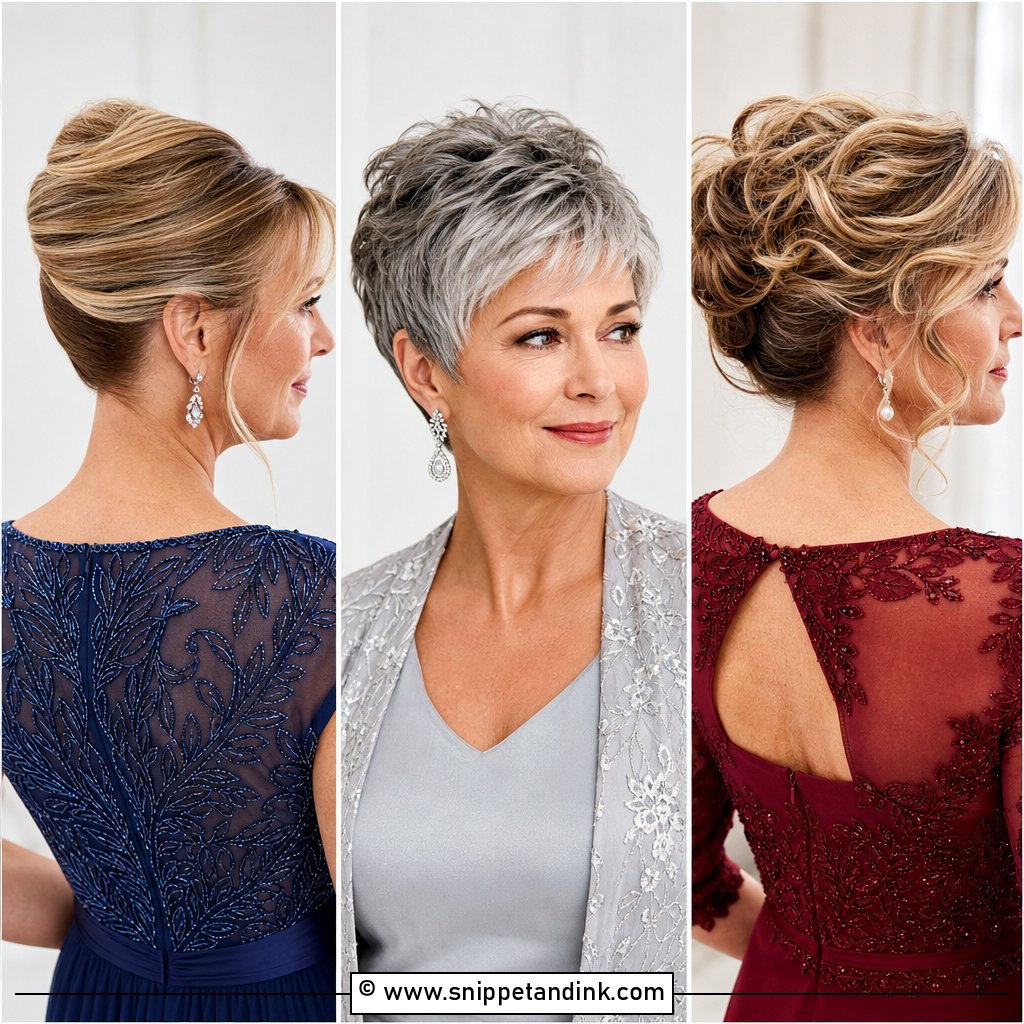
15. Braided Crown Hairstyle
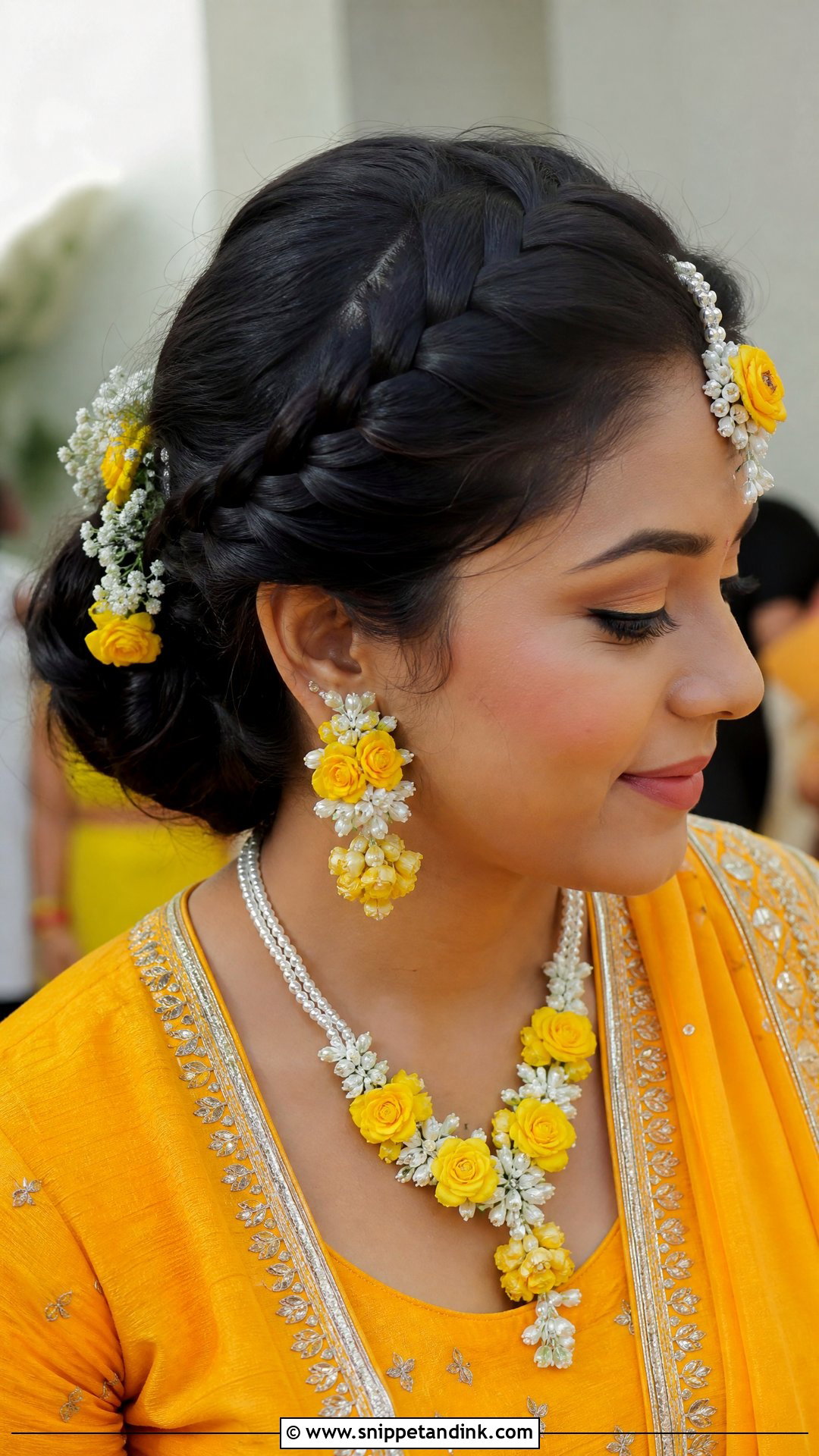
A braid circling the crown keeps hair off the face and reads as both traditional and festive. It’s a cheerful choice for daytime ceremonies and the Haldi function, with lighter sarees, salwar suits or lehengas. It needs enough length to reach around the head, so for shorter hair I use two braids pinned to meet at the back. Small flowers tuck into it neatly. Skip it if your pallu will go over your head, because the braid adds bulk exactly where the fabric sits.
16. Bun With Statement Hairpin
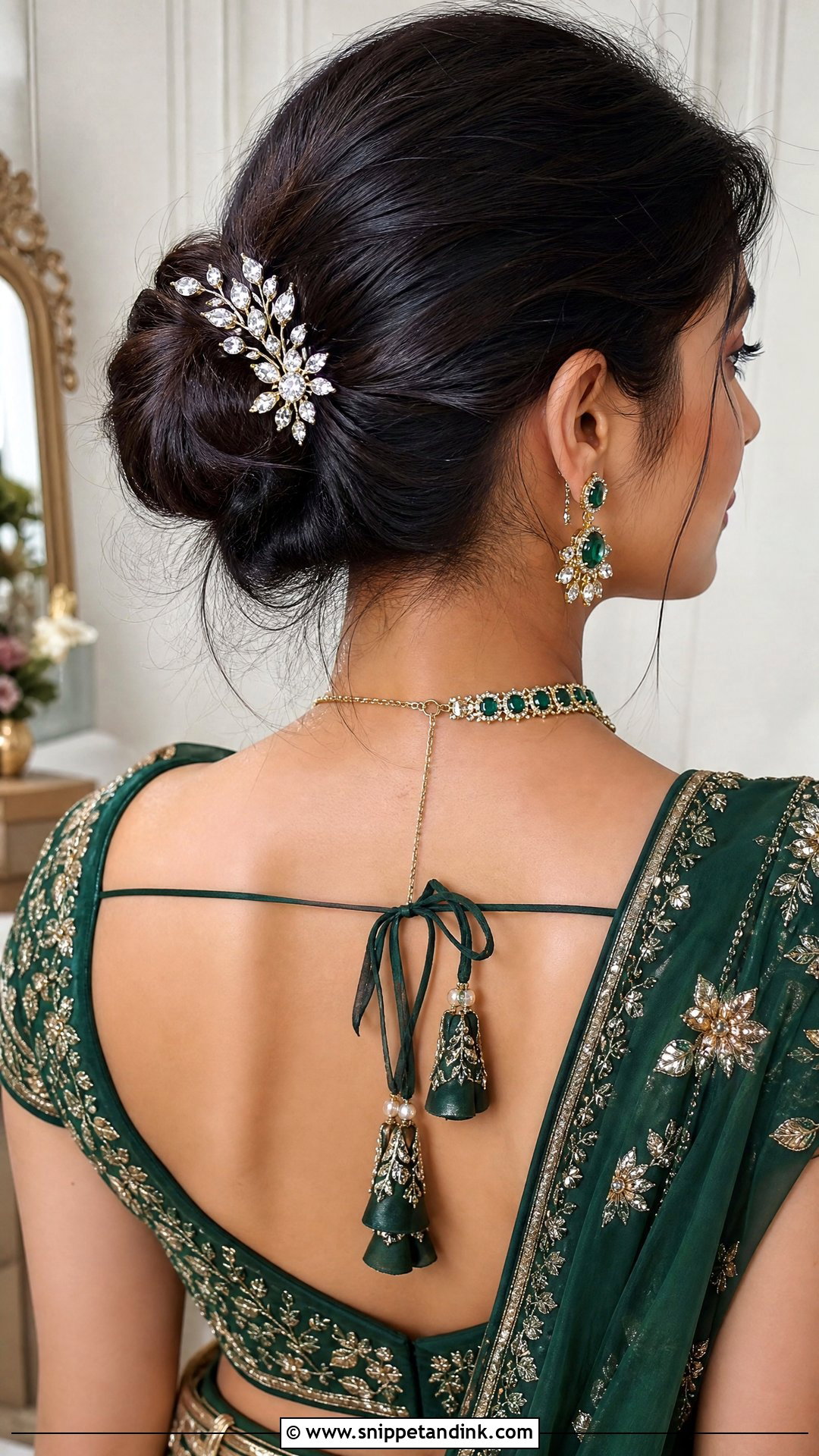
One good pin can carry the whole look. The bun stays understated and the pin becomes the focal point, in pearl, crystal or gold to match your jewellery. It suits receptions and the main events with a saree or lehenga. Heavier pins need a crossed bobby pin underneath or they tilt within the hour. I place it on the side that will face the guests during the ceremony, since that’s the side most photos catch.
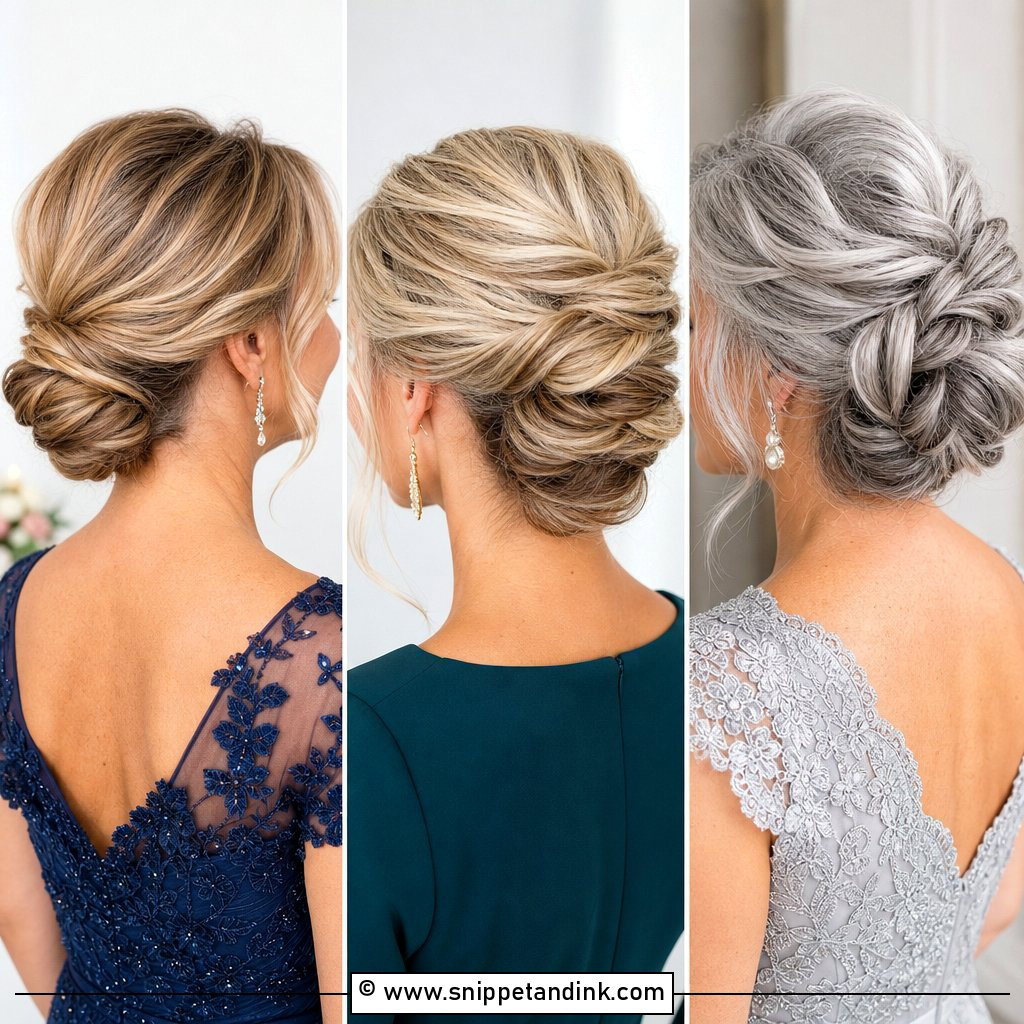
17. Twisted Updo With Volume
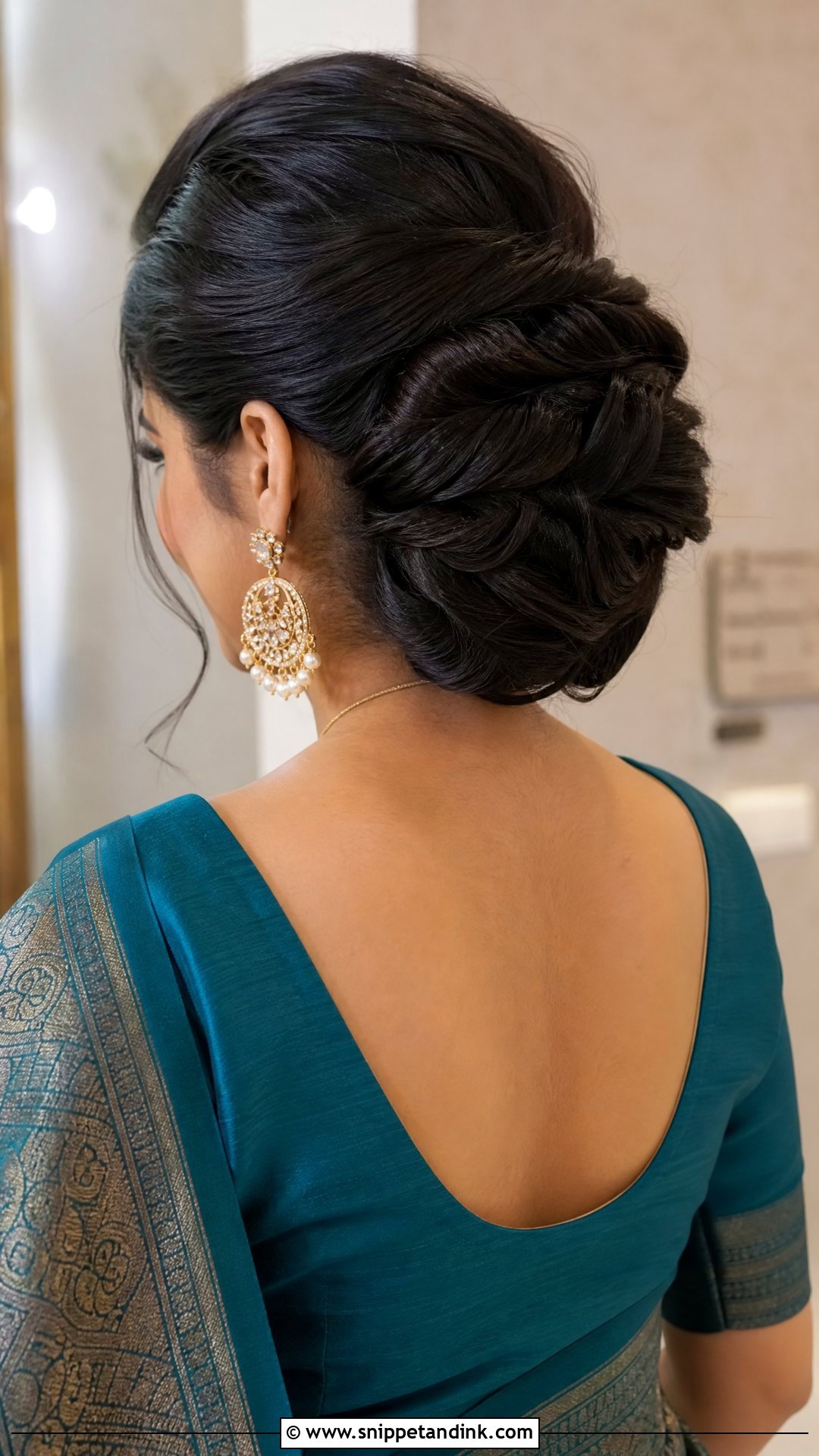
Sections are twisted and pinned into a sculpted shape with volume at the back. It flatters with heavy silk sarees and statement earrings at formal functions, and because each twist locks against the next, it holds through dancing. It’s also kind to fine or thinning hair: twisting builds bulk from a limited amount of hair. A few small flowers or pins add sparkle.
18. Sleek Straight Open Hair
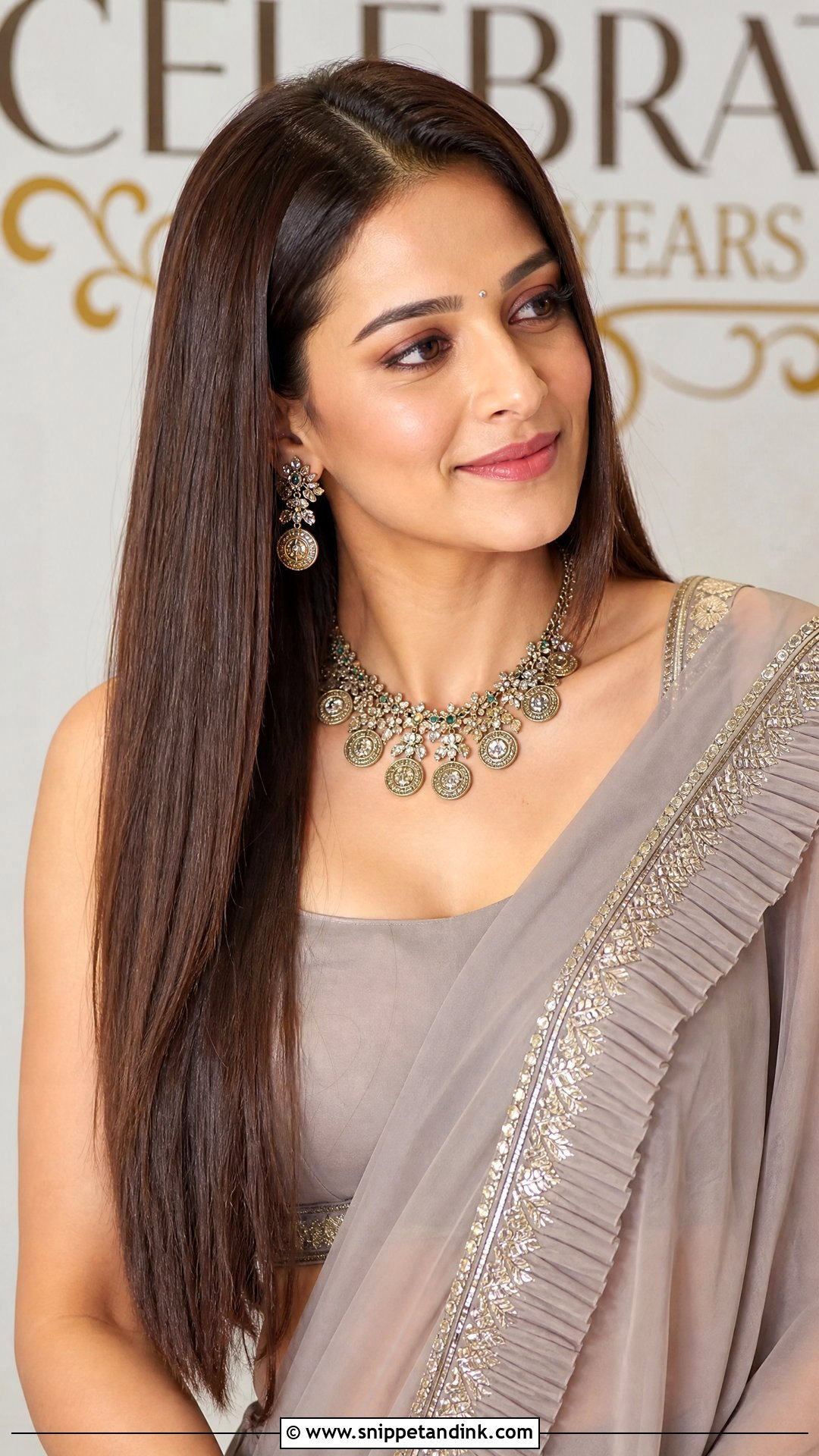
Straight, glossy open hair suits contemporary sarees, gowns and fusion outfits, and it needs little upkeep once it’s done. It is, however, the most demanding style here in terms of hair condition, because straight hair shows every split end and dry patch. A trim two or three weeks before and a smoothing serum on the day help a lot. In humidity it frizzes, so I’d save it for an indoor evening and pin one side back to keep it off your face.
19. Fishtail Braid Hairstyle
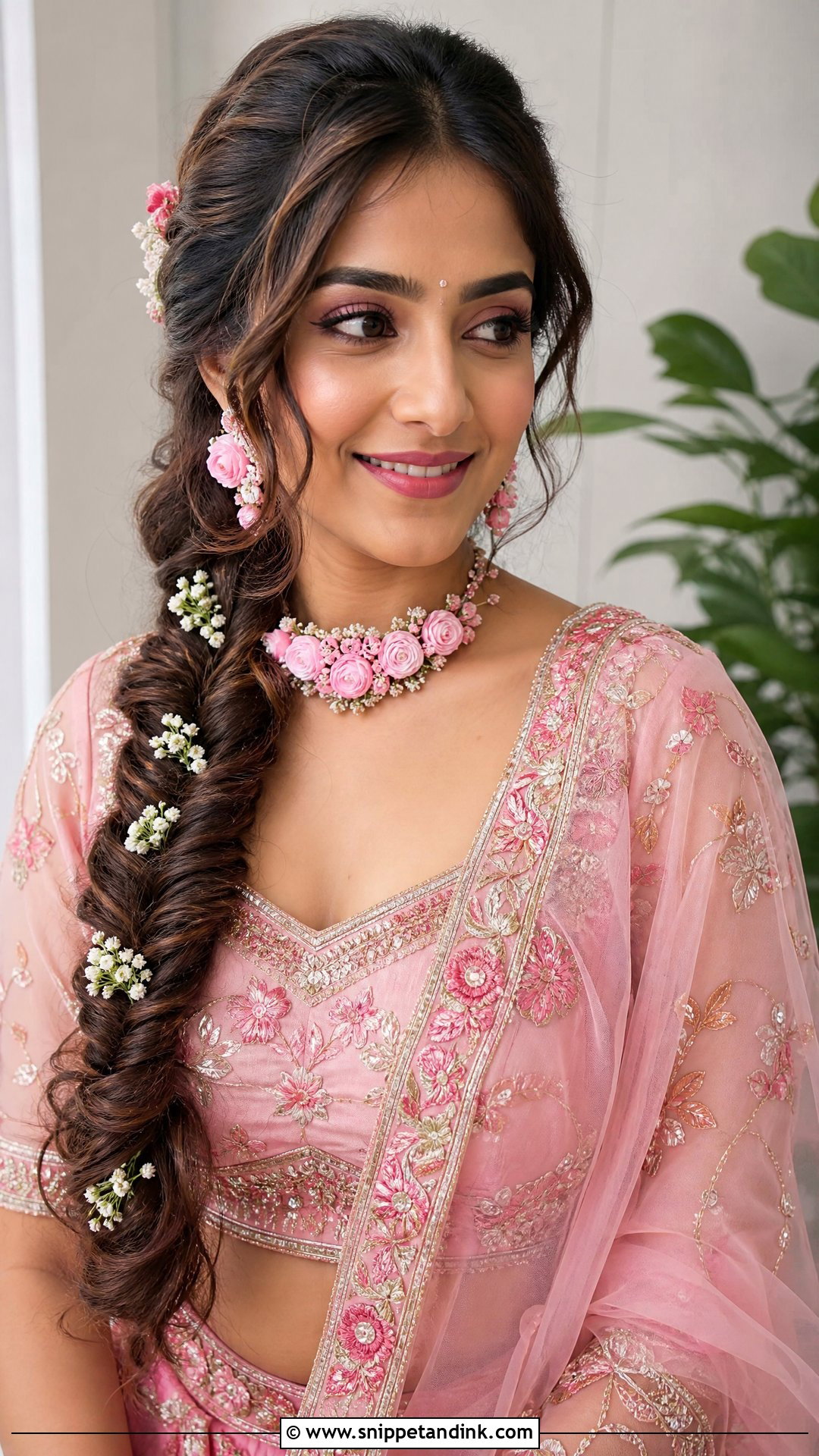
A fishtail makes a textured rope that drapes over one shoulder. It’s relaxed enough for the Mehndi or Sangeet, with lighter lehengas, sarees and salwar suits, and small flowers, pearls or beads can sit along it. Medium to long hair works. After braiding I pull the edges out slightly so it looks fuller, because on fine hair a tight fishtail looks thin.
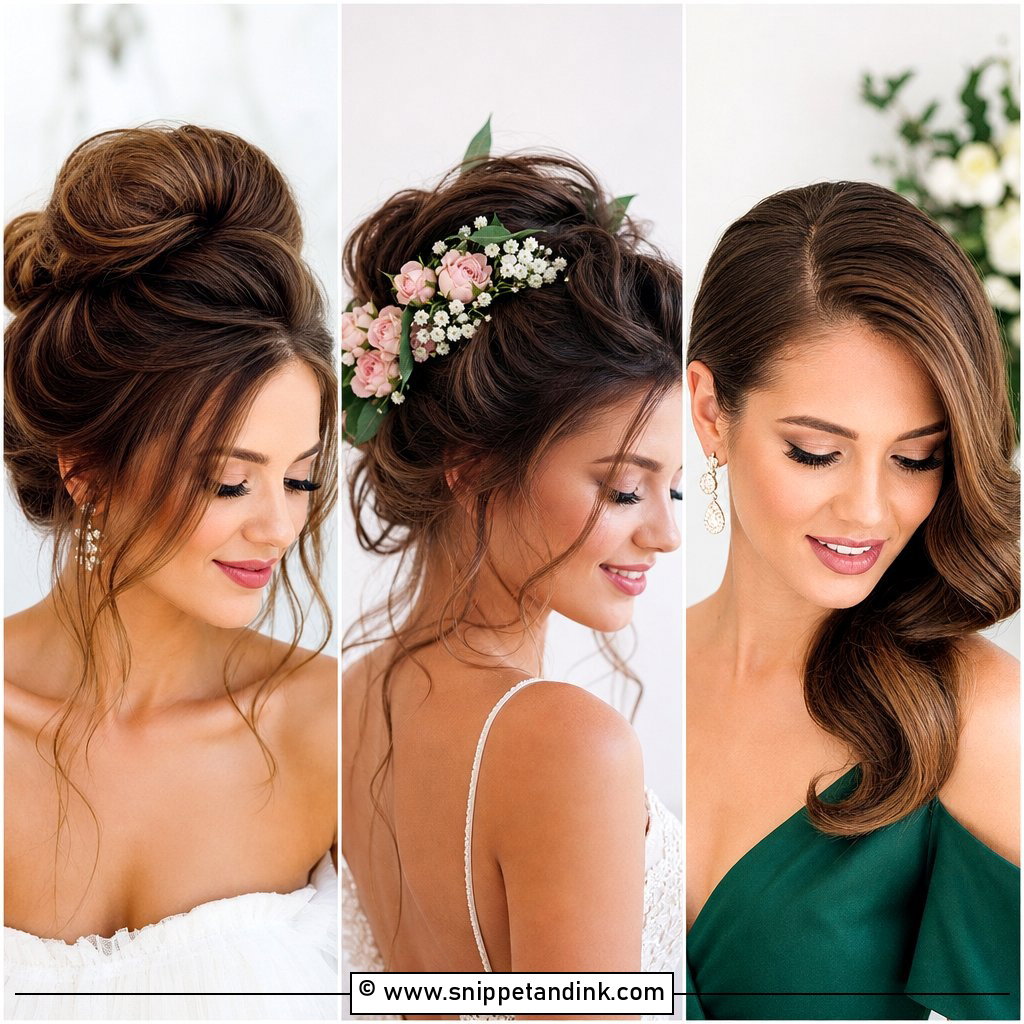
20. Bun With Floral Hair Accessories
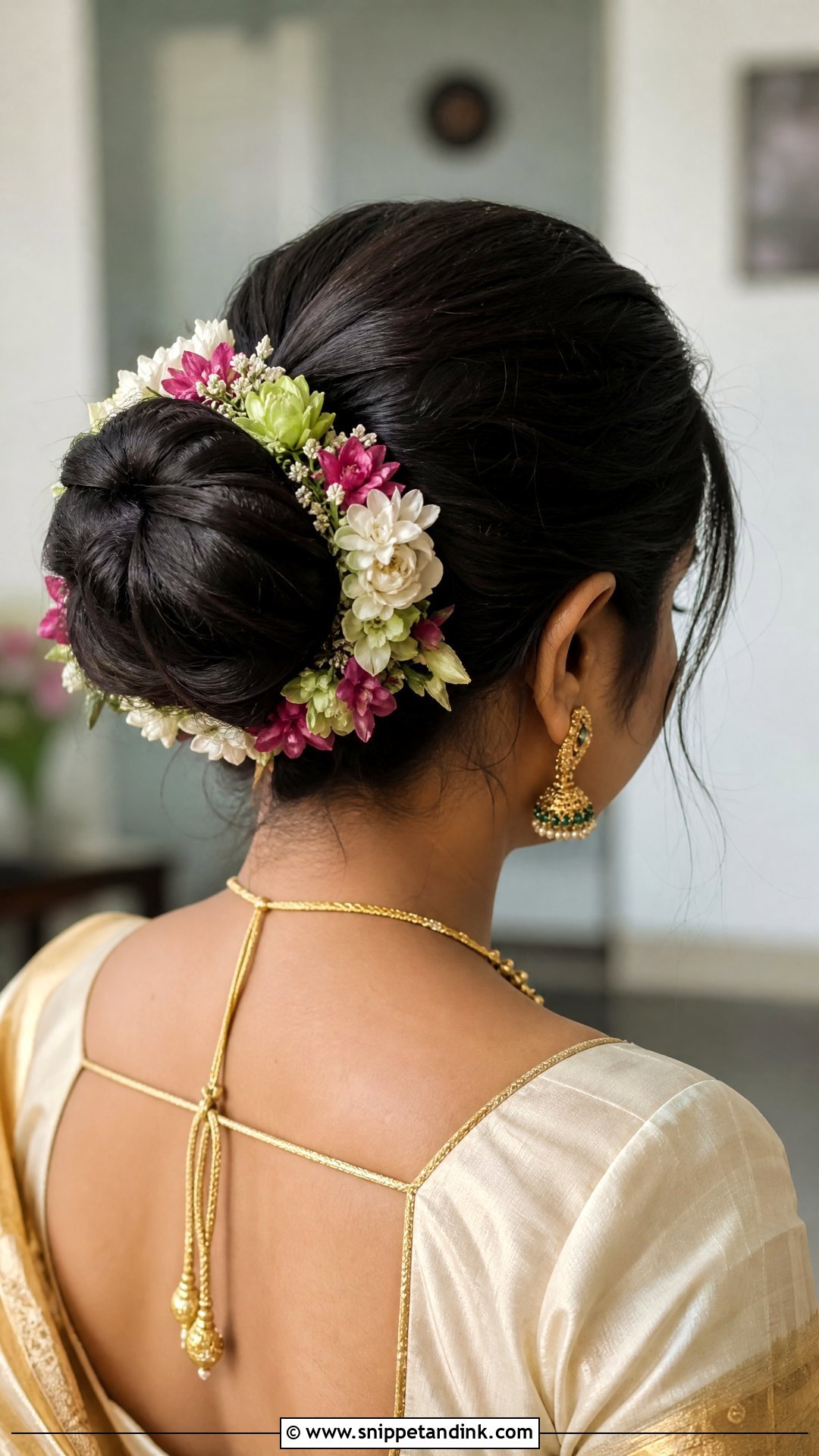
A neat bun ringed with flowers is festive and simple. Real blooms smell better; good artificial ones last a long day without wilting and won’t drop petals on your silk. It goes with silk sarees and traditional jewellery at the main ceremony. Matching the flowers to the border colour of your saree ties the look together. Add them after the hairspray, since spray spots fresh petals.
When Your Pallu Goes Over Your Head
In many families the bride’s mother covers her head with her pallu or dupatta during the kanyadaan and pheras. It’s the detail most often forgotten at trials, and it decides which of these styles will actually work.
- Low buns, chignons and braided buns sit neatly under fabric. Puffs and crown braids push it up into a peak.
- Ask for one small pin at the top of the bun to catch the pallu, so it doesn’t slide back each time you lean forward.
- Practise lifting the fabric on and off at the trial. You’ll do it many times on the day, and the style has to spring back.
Ready Before the Baraat Arrives
You’ll often need to be dressed earlier than your daughter, because someone has to welcome guests and the groom’s family. Ask to be styled in one of the first slots of the morning rather than squeezed in at the end. A bun or braid done early holds far better than open curls done early. Keep a small kit in your bag: bobby pins in your hair colour, a travel hairspray and a fine comb. If you don’t need it, someone in the family will.
Standing Beside Her All Day
The right hairstyle for your daughter’s wedding is the one you forget about once it’s done. Classic low buns, flower-wrapped braids, soft curls and sleek open hair all have their place. Think about your saree or lehenga, your face shape, how many hours you’ll be on your feet and whether you’ll cover your head for any ritual. Book a trial, wear the actual jewellery to it, and then let your hair be one less thing on your mind.
You'll Like These Ideas:


Leave a Reply