
At an Indian wedding the mother is in almost every frame, from the haldi to the vidaai to the last reception photo, and she is usually on her feet for all of it. When I style mothers of the bride or groom, my brief is simple: it must stay put, it must not hurt by evening, and it must look like her on her best day rather than like someone else. That usually means polished buns with jasmine, soft curls with a saree, braided buns that carry heavy jewelry and open waves for the lighter functions. All of these work with silk sarees, Banarasi sarees, lehengas, anarkalis and modern gowns.
Grey, Henna-Dyed or Thinning: Start From Her Real Hair
A mother’s hair often behaves very differently from the bride’s, and the photos in a list like this rarely show that. Before choosing a style, I look at three things.
Colour timing. If she colours her greys, the touch-up should happen about one to two weeks before the wedding, so the shade settles and the scalp isn’t irritated on the day. Henna-dyed hair tends to be coarser and grippier, which actually holds buns and pins well, but it can resist curling.
Density at the crown and parting. Thinning hair suits styles with lift at the crown and a softened part. I avoid tight centre parts and slick finishes that show the scalp under camera flash.
Comfort. I ask plainly whether heavy buns or long pinning give her headaches. Some mothers have sensitive scalps or neck stiffness, and a lighter style she can forget about will always look better than an elaborate one she’s quietly tolerating.
1. Indian Mother Low Bun With Gajra
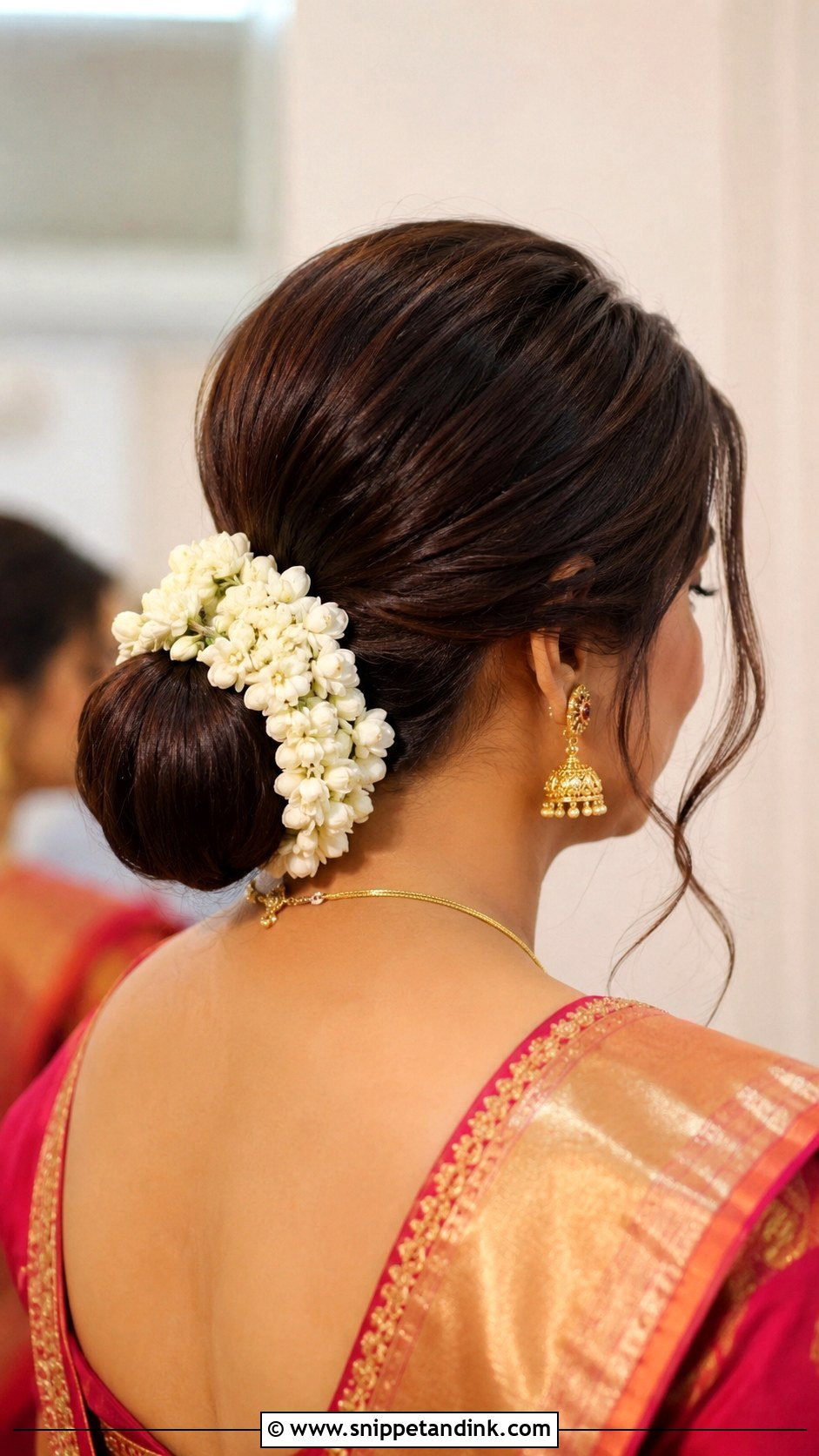
A low bun with gajra is the style mothers request more than any other, and for good reason. It sits at the nape, so the saree pallu or dupatta drapes over it without catching, and jasmine adds fragrance without real weight. Silk and Kanjeevaram sarees, temple jewelry and gold accessories all sit naturally with it. I build it on a firm elastic base and give the crown a little lift, because a flat crown on thinner hair shows the scalp under flash.
2. Indian Mother Side Part Bun
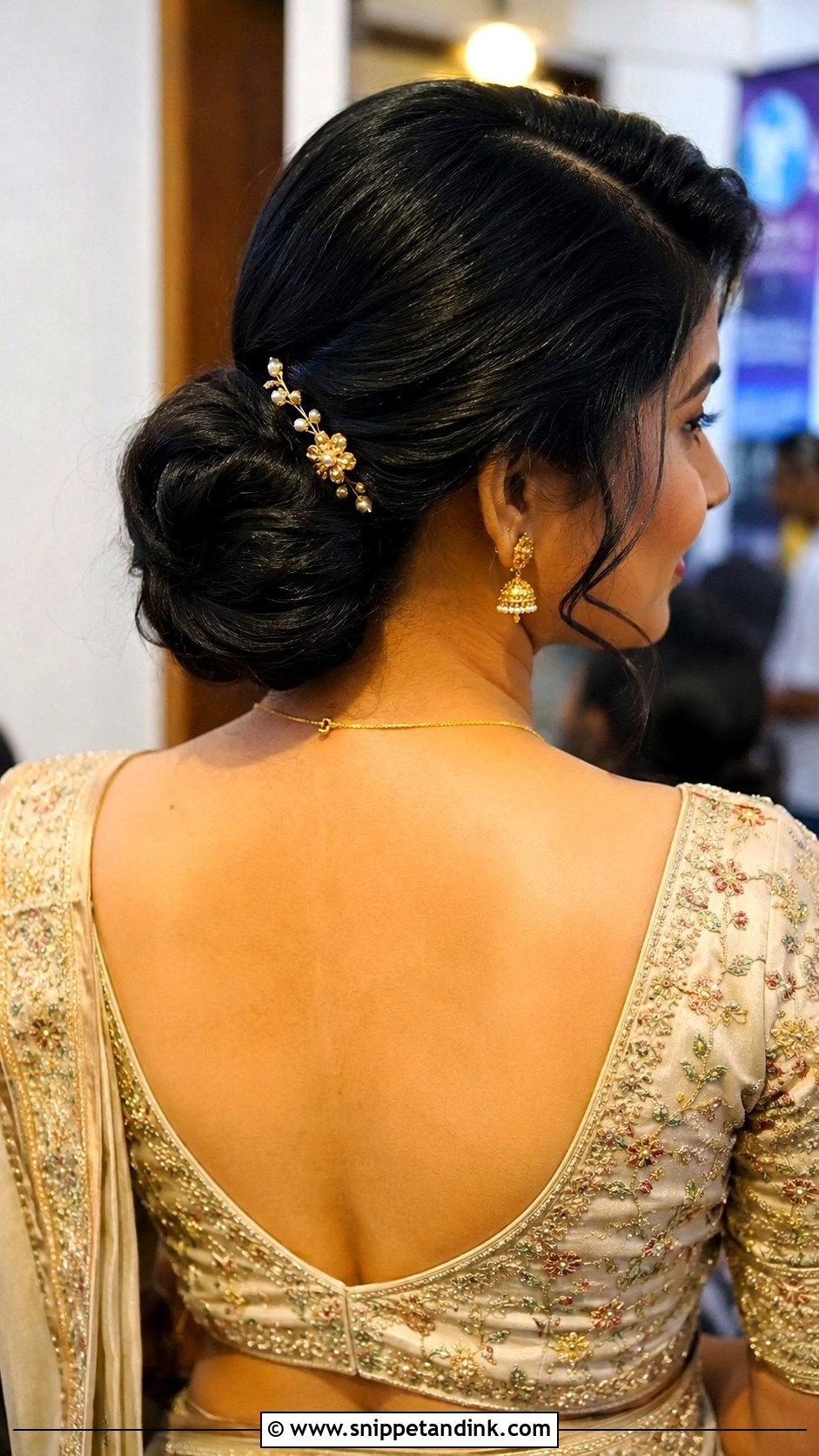
A deep side part frames the face and softens a high forehead, which is why many mothers feel more like themselves with it than with a strict centre part. It suits a bindi, statement earrings and a saree blouse neckline. I set the bun low or slightly to the side opposite the part for balance. Medium to long hair works, and extensions can fill out a smaller bun. A floral pin, pearl clip or gold accessory goes on the fuller side of the part.
3. Indian Mother Braided Bun
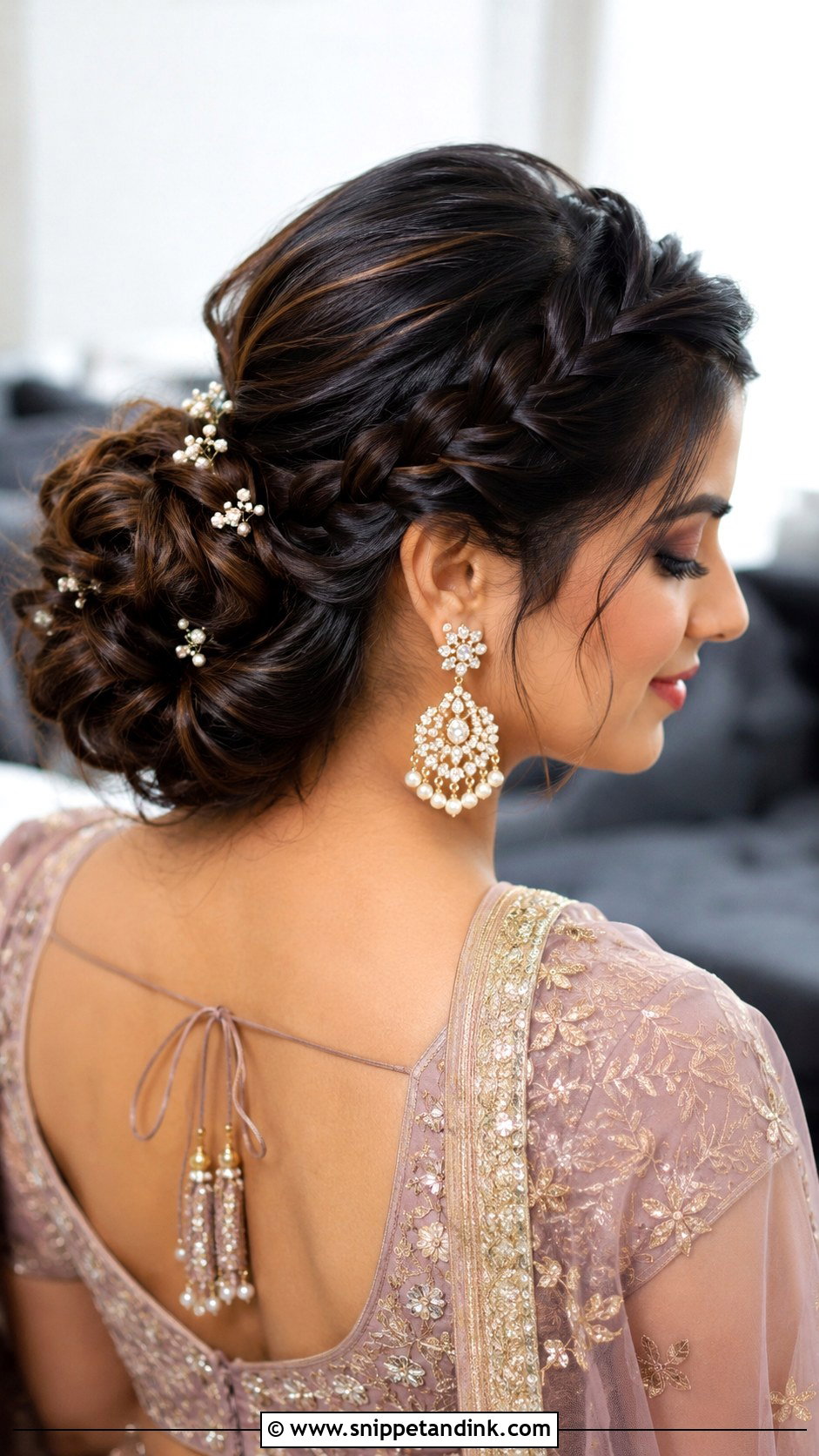
Braids give a bun grip. The plait can start at the side, run around the crown or feed into the bun at the back, and because the hair is already locked, it holds under lehengas, embroidered sarees and heavy dupattas without collapsing. It’s well suited to thick, wavy or layered hair, where a plain twist would let ends escape. Small fresh flowers or fine pins along the braid keep it festive without looking too young.
4. Indian Mother Juda With Flowers
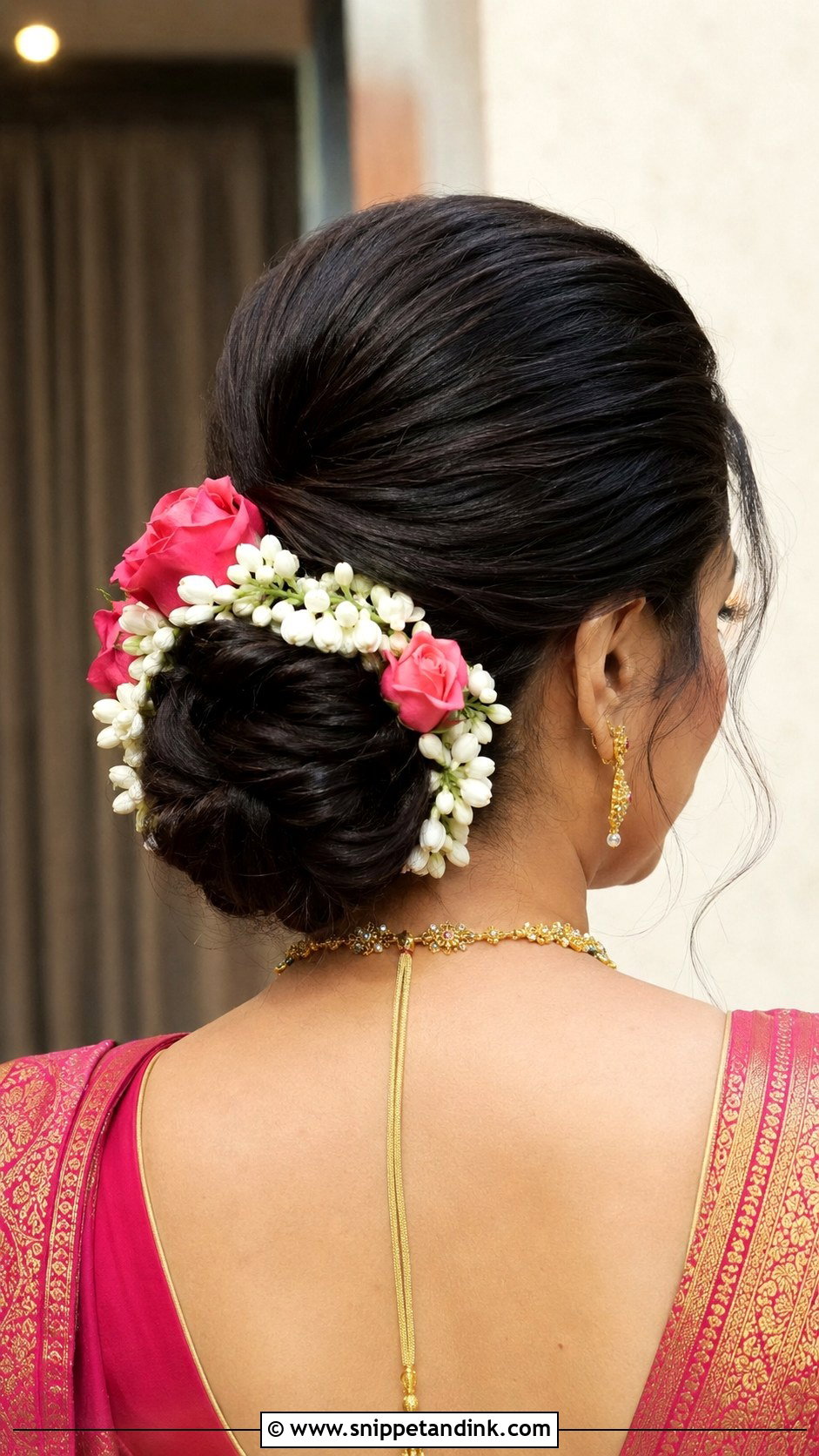
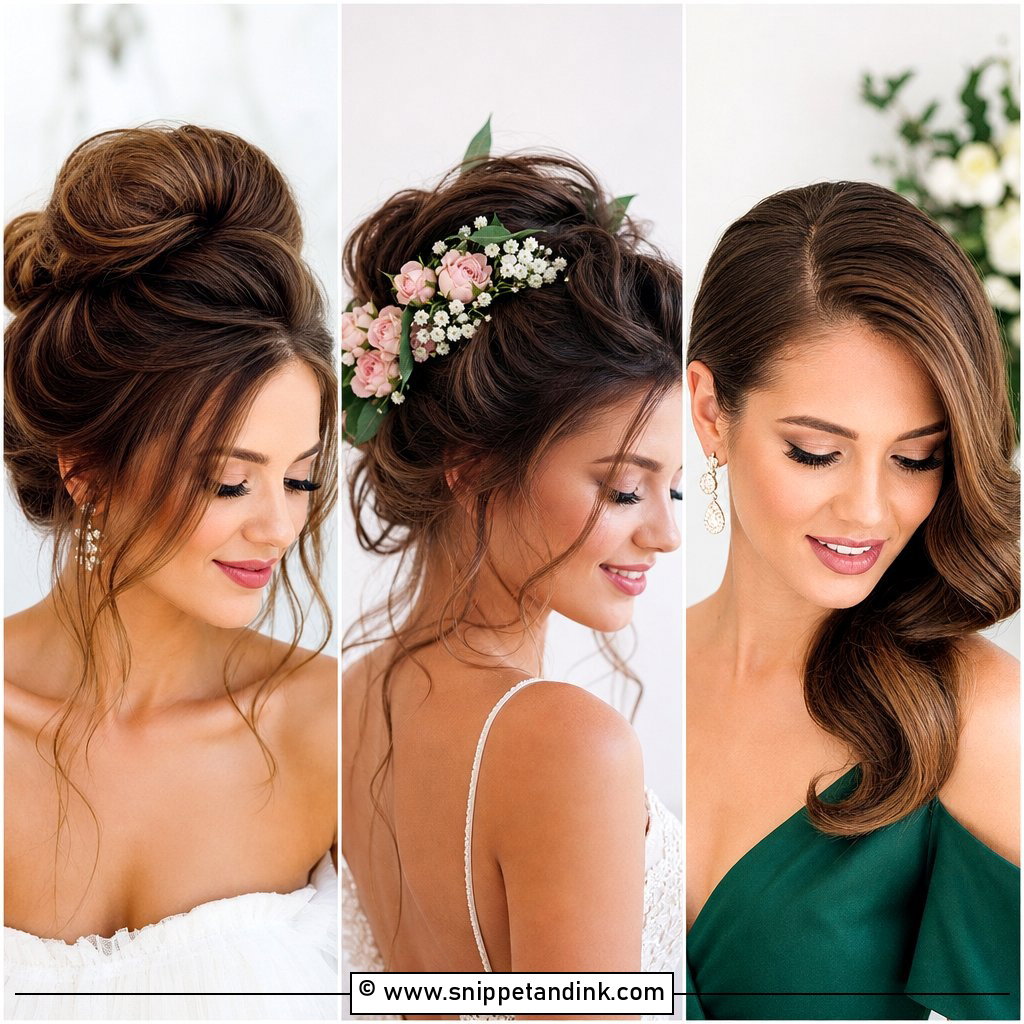
A juda with flowers is fuller and rounder than an everyday bun, finished smoothly, with flowers chosen to match the saree: roses, jasmine, baby’s breath or mogra. It sits well with Banarasi, Paithani, Kanjeevaram or Chanderi sarees and leaves necklaces and earrings clear. Many mothers find a tight pulled-back front ageing in photos, so I soften the hairline with a small puff or a couple of face-framing pieces.
5. Indian Mother Soft Curls With Saree
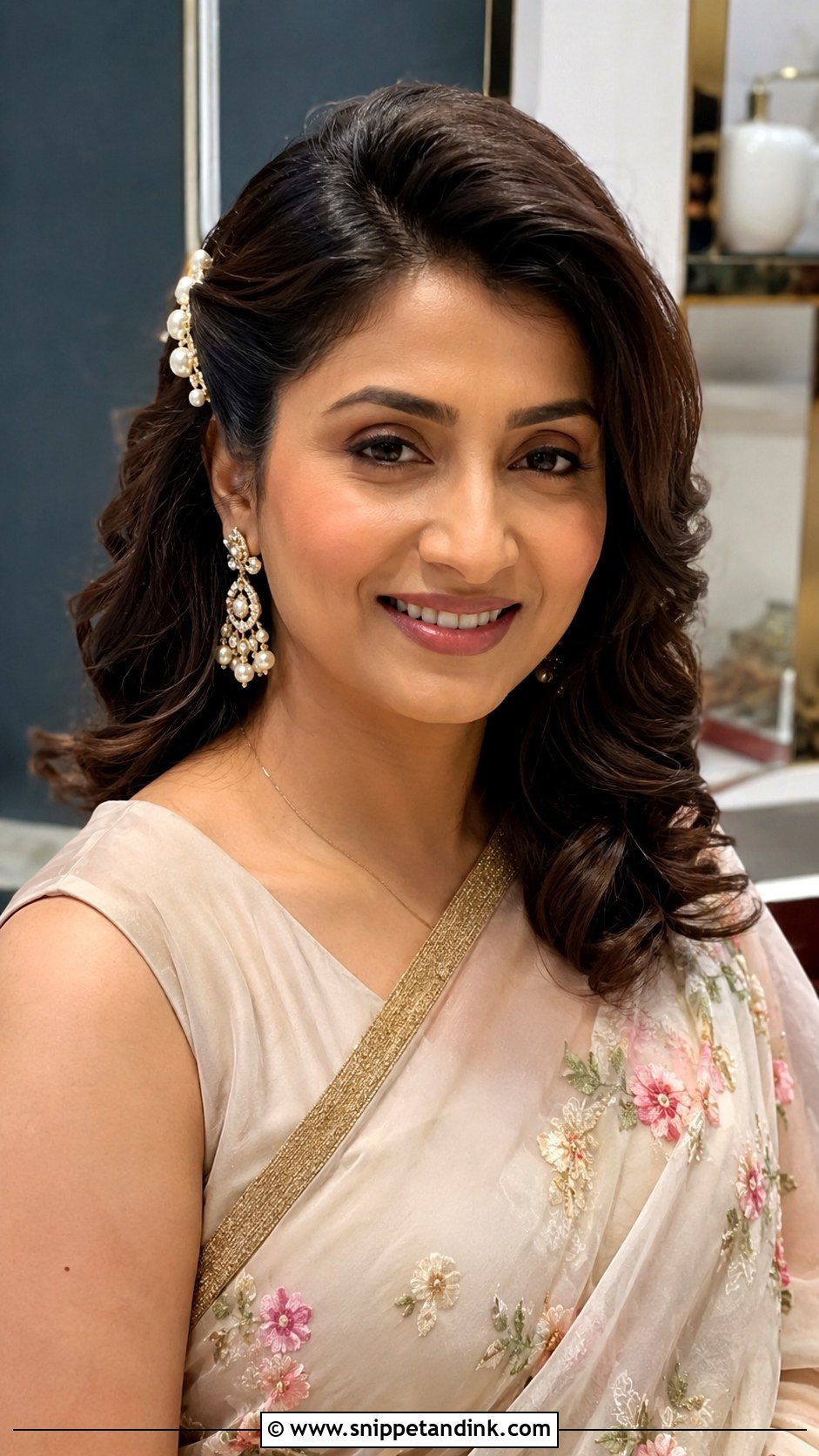
Soft curls suit a reception, engagement or sangeet when the mother wants something more relaxed. They move around the shoulders and pair well with a lightweight saree or a gown. Grey and coarse hair can resist curling, so I use a lower heat with a longer hold and a light mousse first. Shoulder-length, medium and long hair all work. Pin one side back with a pearl clip or small floral piece to keep it from falling forward over the face while greeting guests.
6. Indian Mother Half Up Hairstyle
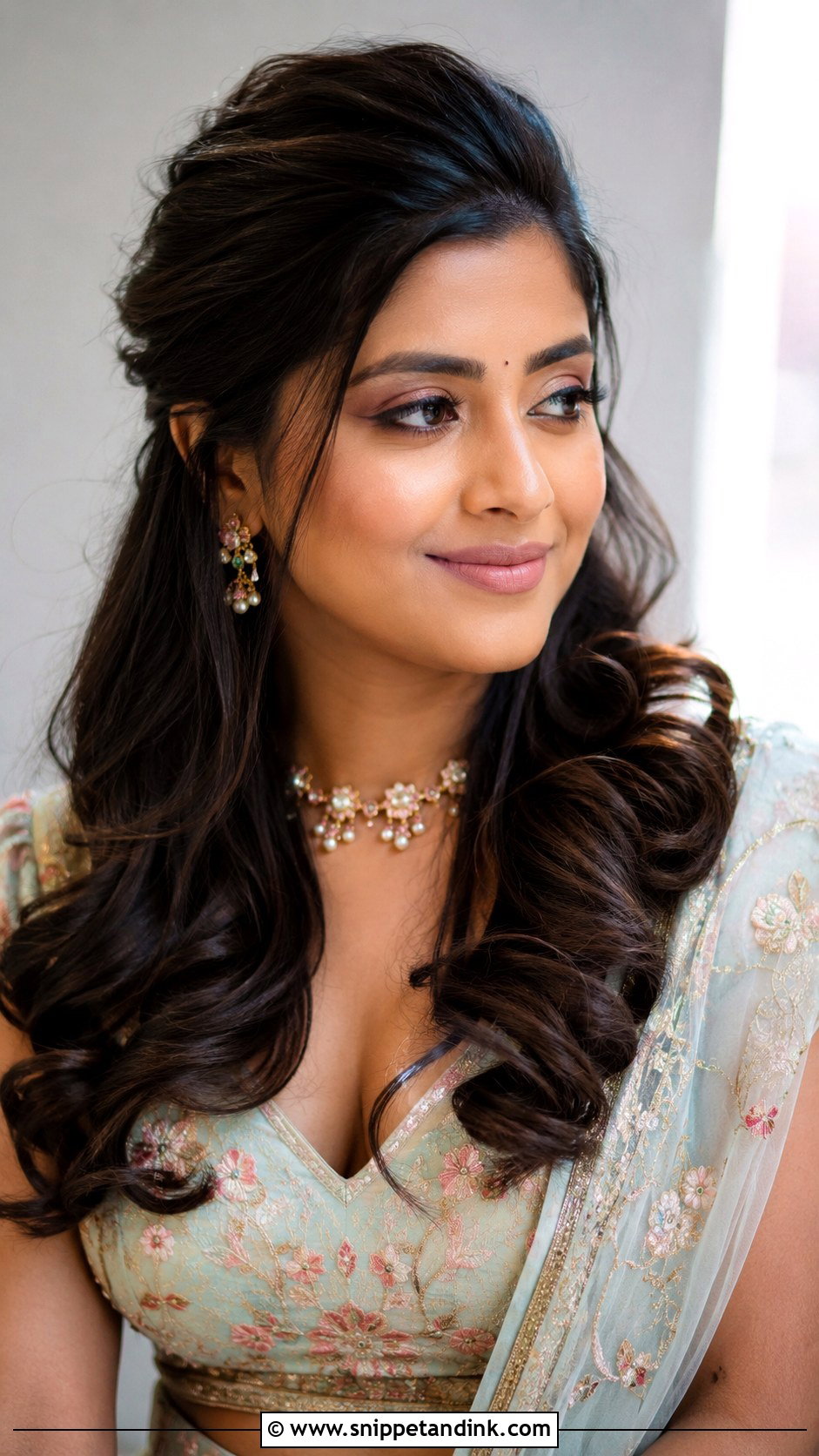
A half up style keeps the face clear without committing to a full bun. The top is pinned back and the rest falls in curls or waves, giving height at the crown. It suits lehengas, anarkalis and reception sarees, finished with a small brooch, pearl pins or a few flowers. On fine hair it’s one of my favourites, because the pinned section creates the look of volume without weight pulling on a thinning crown.
7. Indian Mother French Twist Bun
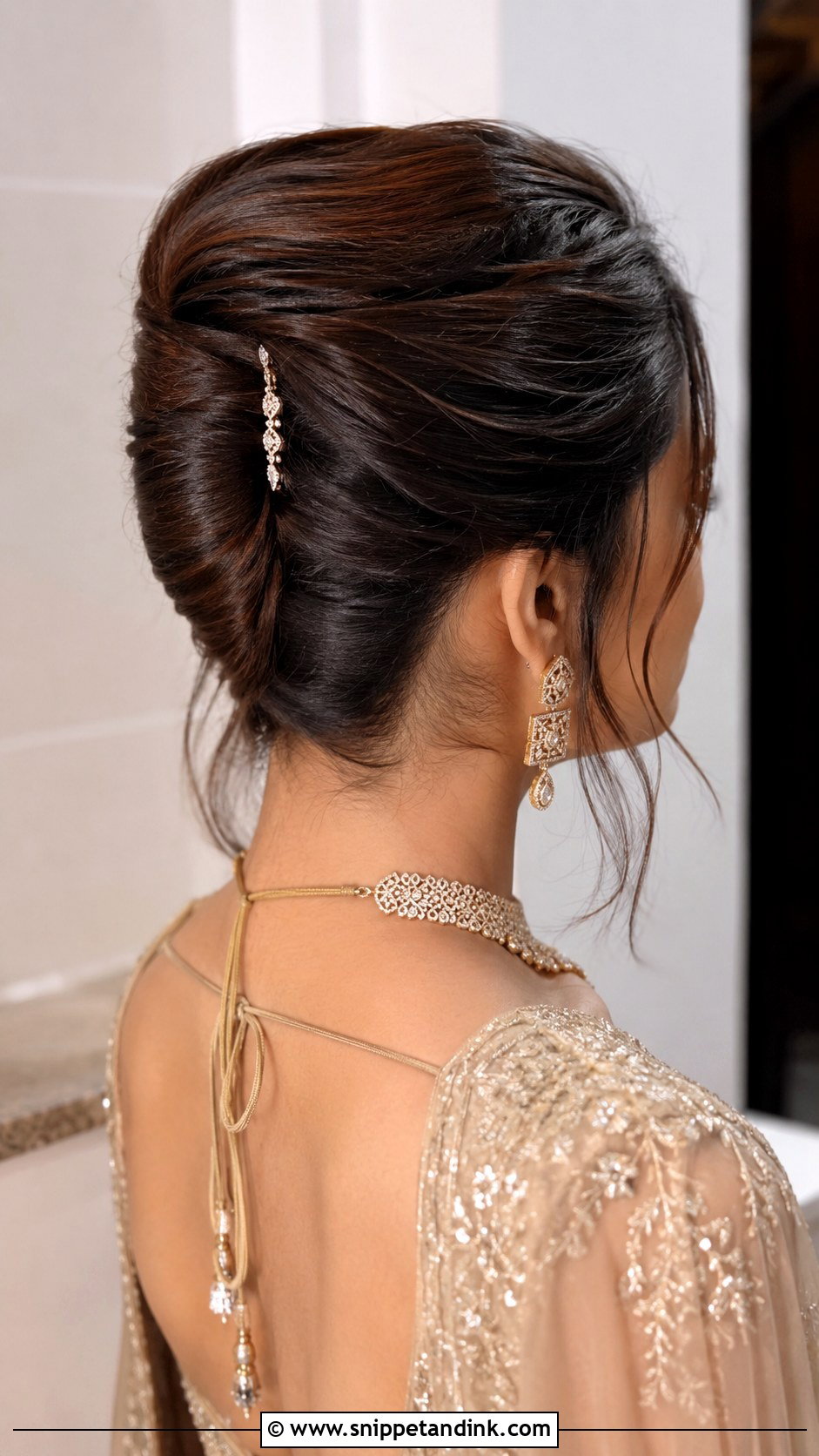
The French twist is the most formal style on this list. Hair is rolled vertically up the back of the head and pinned along the seam, which gives a clean, lifted line that suits receptions and cocktail-style events with silk, designer sarees or Indo-western gowns. It needs a smooth blow-dried base and medium to long hair. I leave the front a little soft so it doesn’t look strict, and a jeweled pin or slim gold accessory along the seam hides the pins.
8. Indian Mother Messy Low Bun
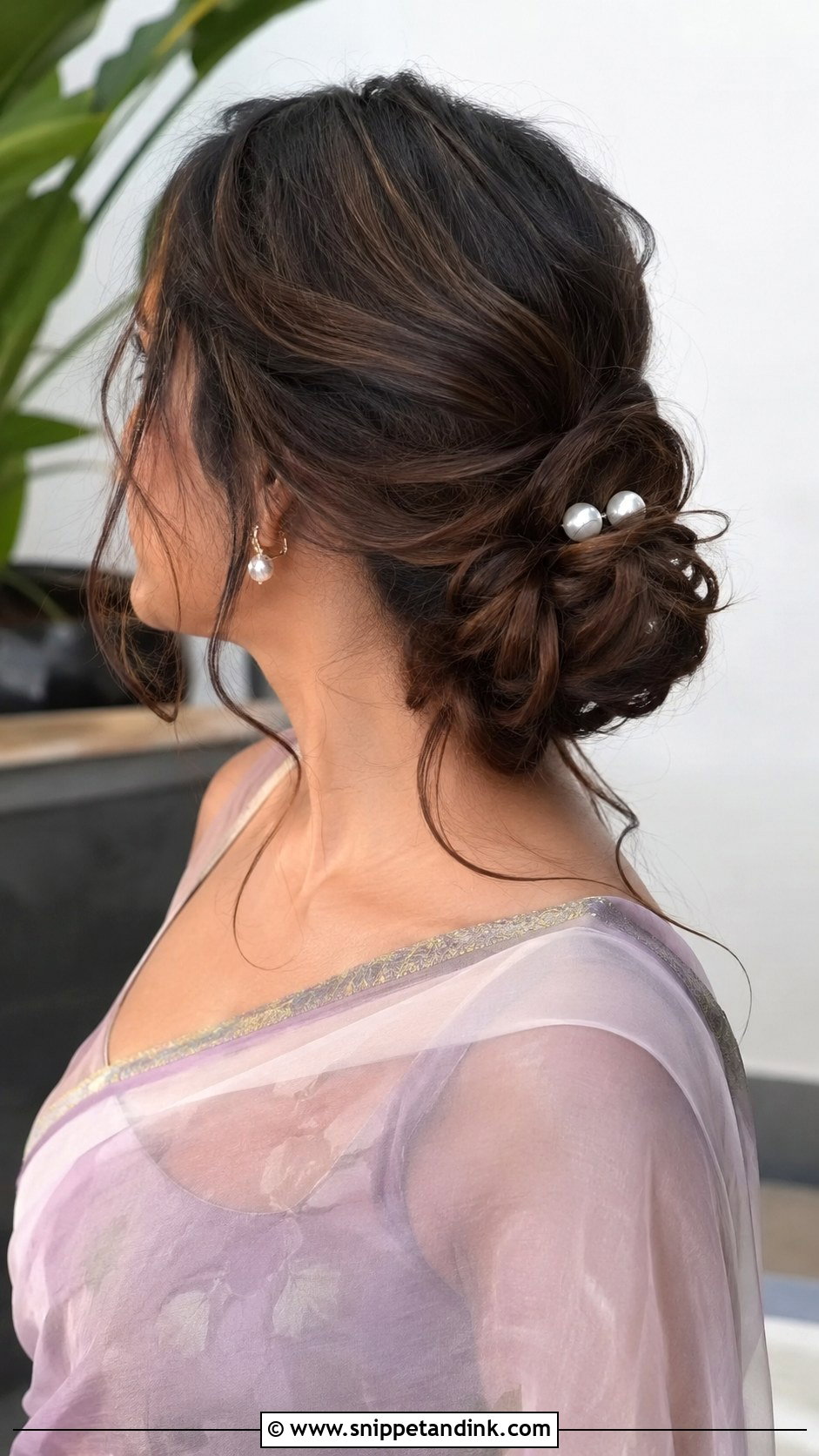
A messy low bun isn’t really messy. It has gentle texture, a few loose pieces and an airy shape, and underneath it’s pinned as firmly as any other bun. It gives a softer finish than a stiff salon set and suits pastel sarees, floral lehengas and georgette outfits. I like it for daytime ceremonies and outdoor events, where a looser style looks natural. Pearl pins, tiny flowers or a delicate accessory finish it.
9. Indian Mother Sleek Bun
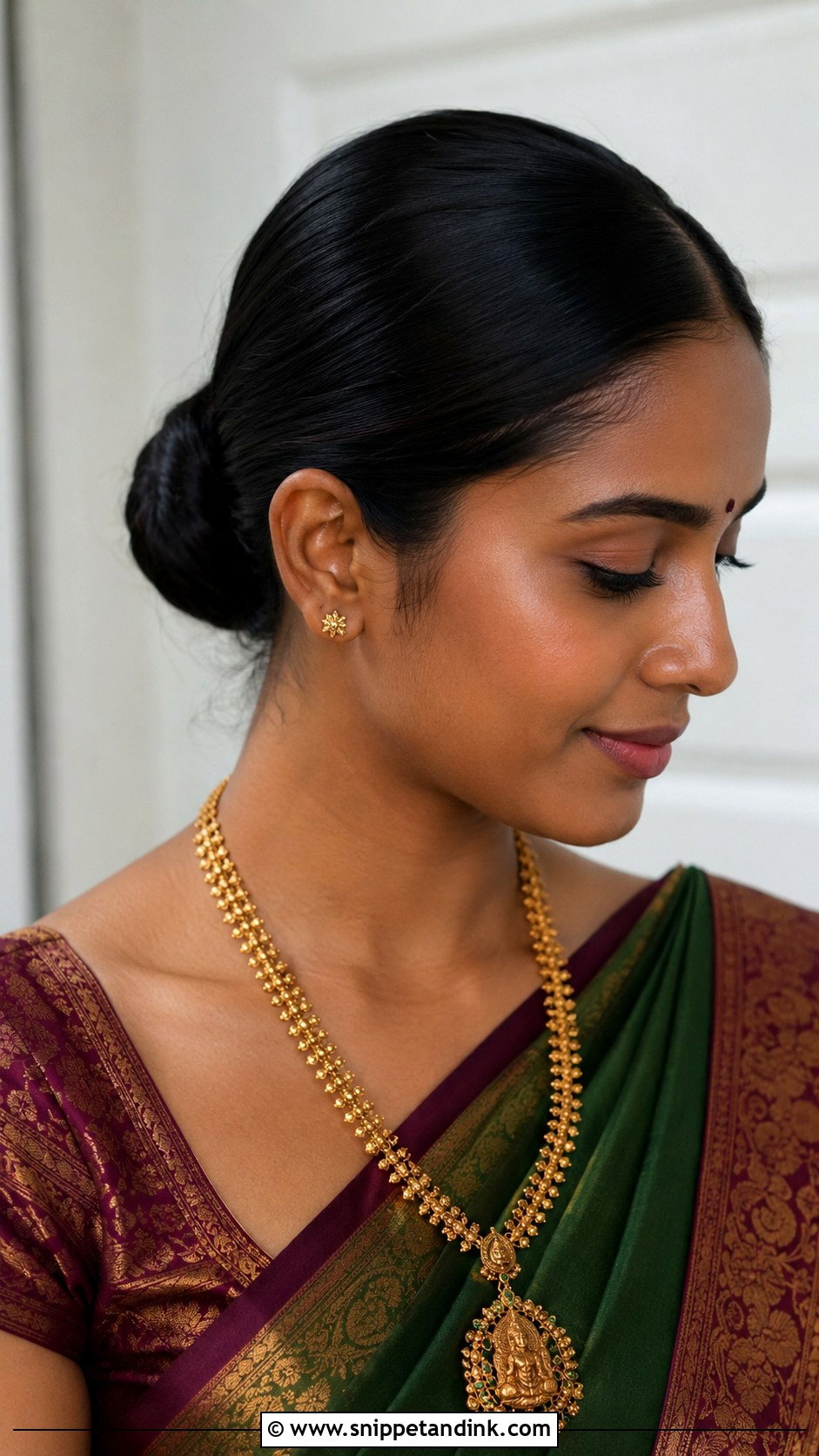
When the saree has a rich border and the jewelry is a temple set, choker and heavy earrings, a sleek bun keeps everything balanced. No flyaways cover the face or the jewelry in photos. The bun can be round, oval or slightly flattened to suit face shape, with a centre part for tradition or a side part for softness. I set it with hidden pins and a firm spray, then finish with a light shine spray so it doesn’t look lacquered on grey hair.
10. Indian Mother Center Part Bun
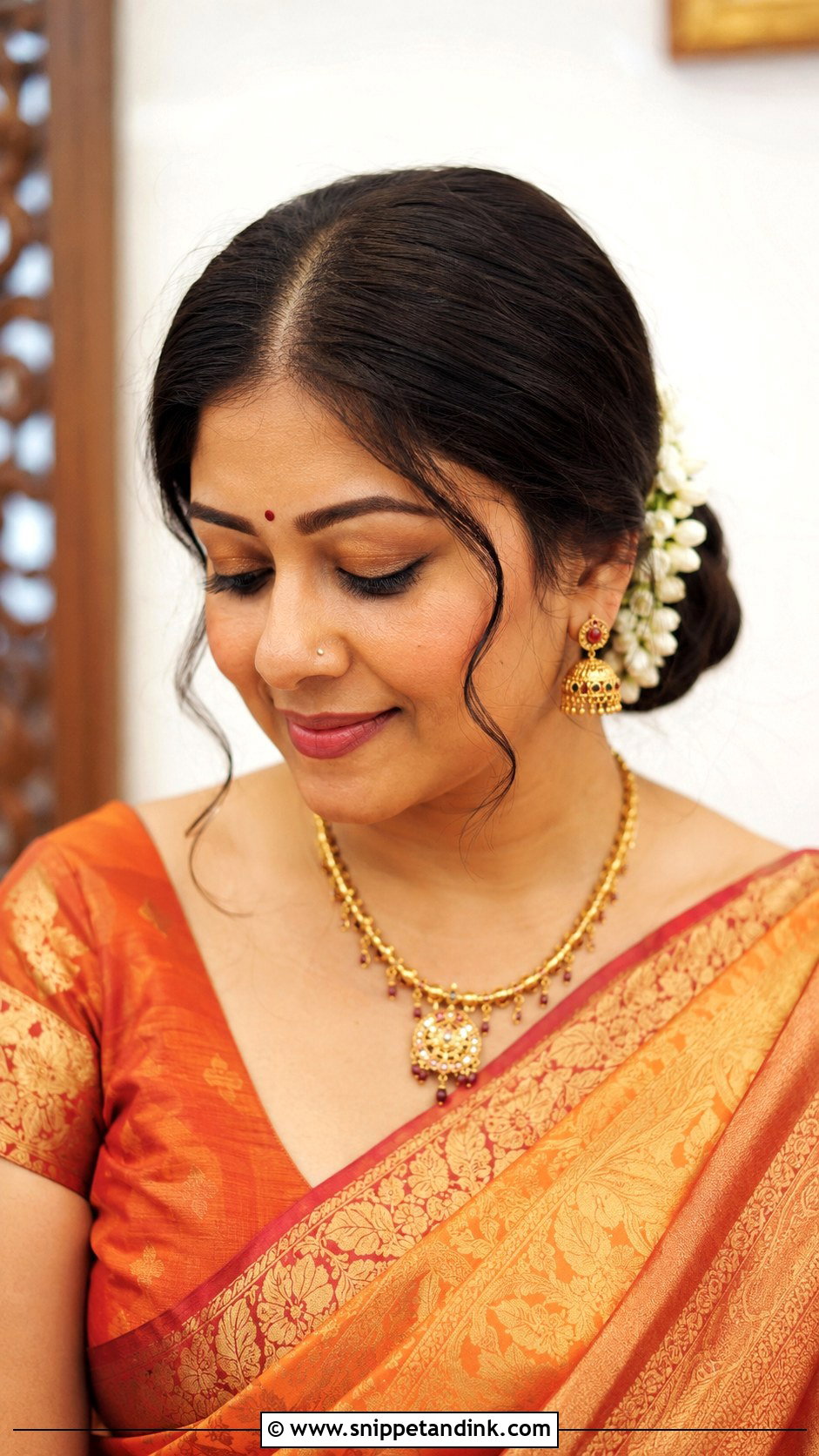
A centre part bun has a symmetry that looks right with a round bindi, maang tikka or simple gold jewelry. It suits silk sarees, family-heirloom sarees and classic lehengas, and it gives that respectful, composed look many mothers want for the main ceremony. Jasmine, roses or a gold hairpiece can decorate the bun. If the parting has thinned with age, I move it a few millimetres to fresh hair rather than drawing attention to a wide part.
11. Indian Mother Bun With Maang Tikka
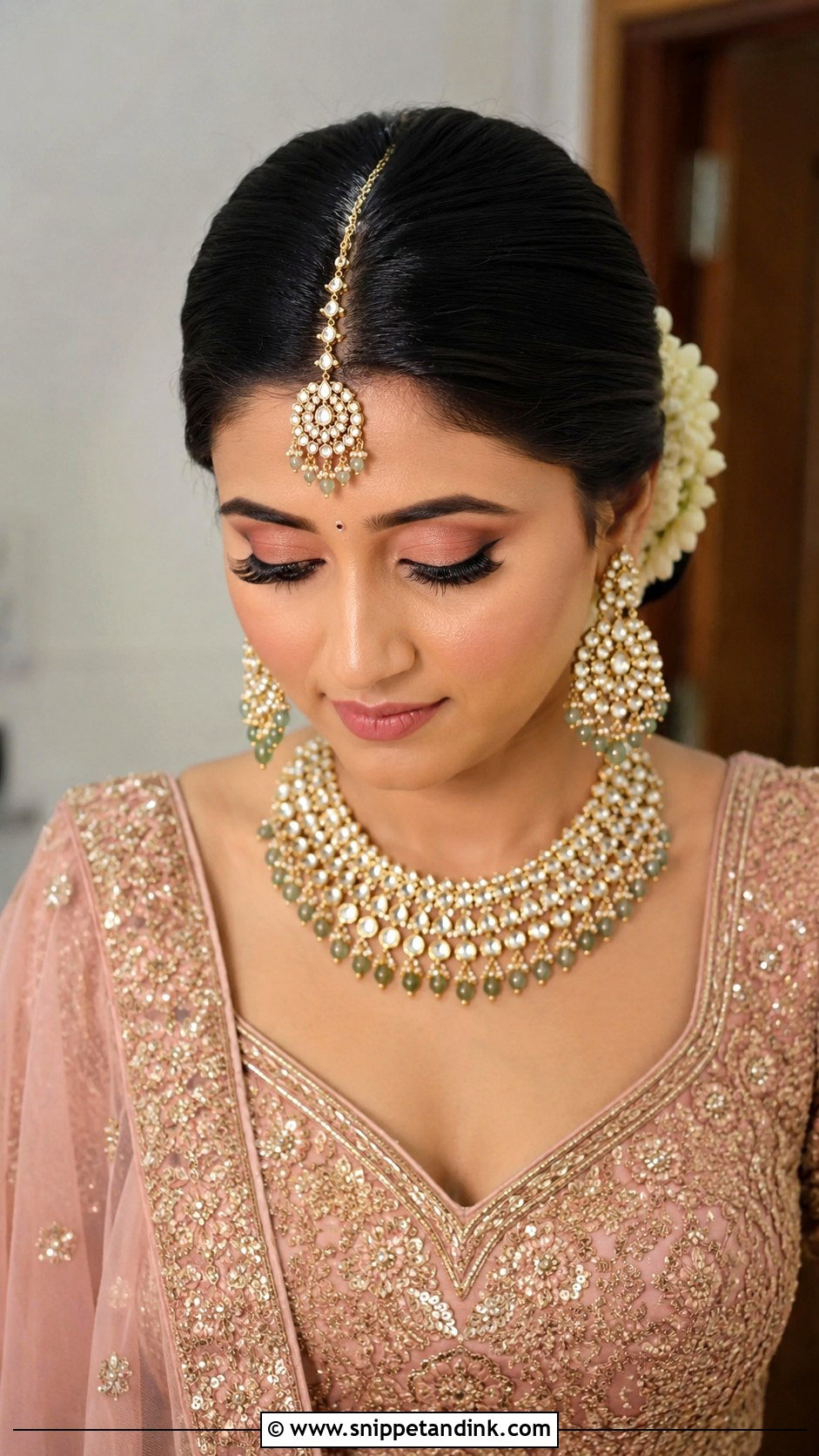
A maang tikka needs a centre part and a bun that doesn’t compete with it. For the mother of the bride or groom at the main ceremony, I keep the bun polished but moderate in size so the tikka stays the highlight, then add a few flowers around the base. It suits lehengas, heavy sarees and traditional sets. The tikka’s chain needs to be pinned into the hair behind the parting, not just hooked, or it slides sideways during rituals.
12. Indian Mother Side Swept Curls
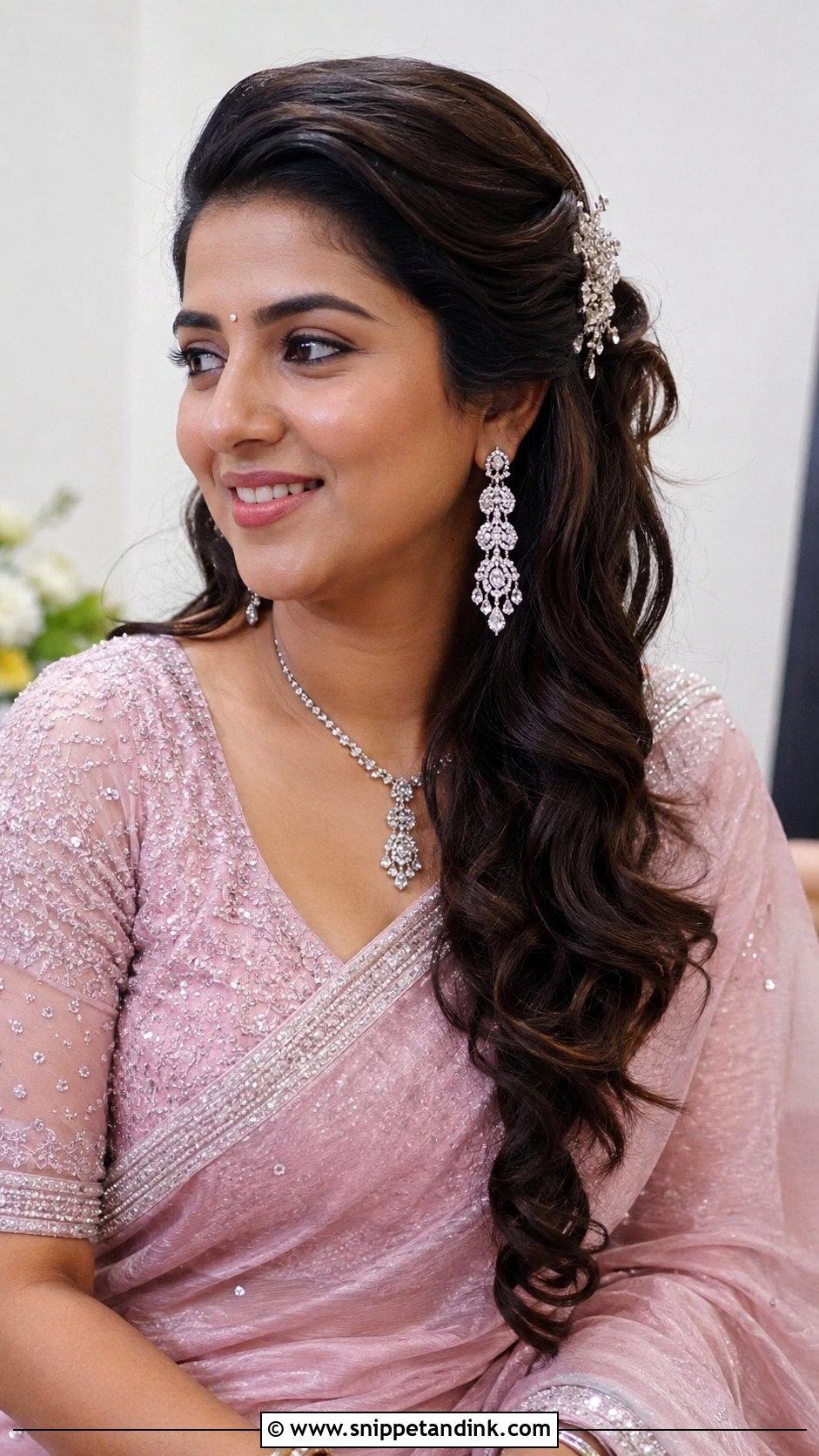
Side swept curls give evening functions some glamour while keeping open hair under control. The curls are gathered over one shoulder and pinned firmly on the other side, which shows off earrings, necklaces and blouse details. Medium to long hair suits it best, with sarees, gowns or lehengas. A jeweled clip or floral pin on the pinned side helps hold it. I brush the curls out slightly so they look soft rather than set.
13. Indian Mother Low Bun With Puff
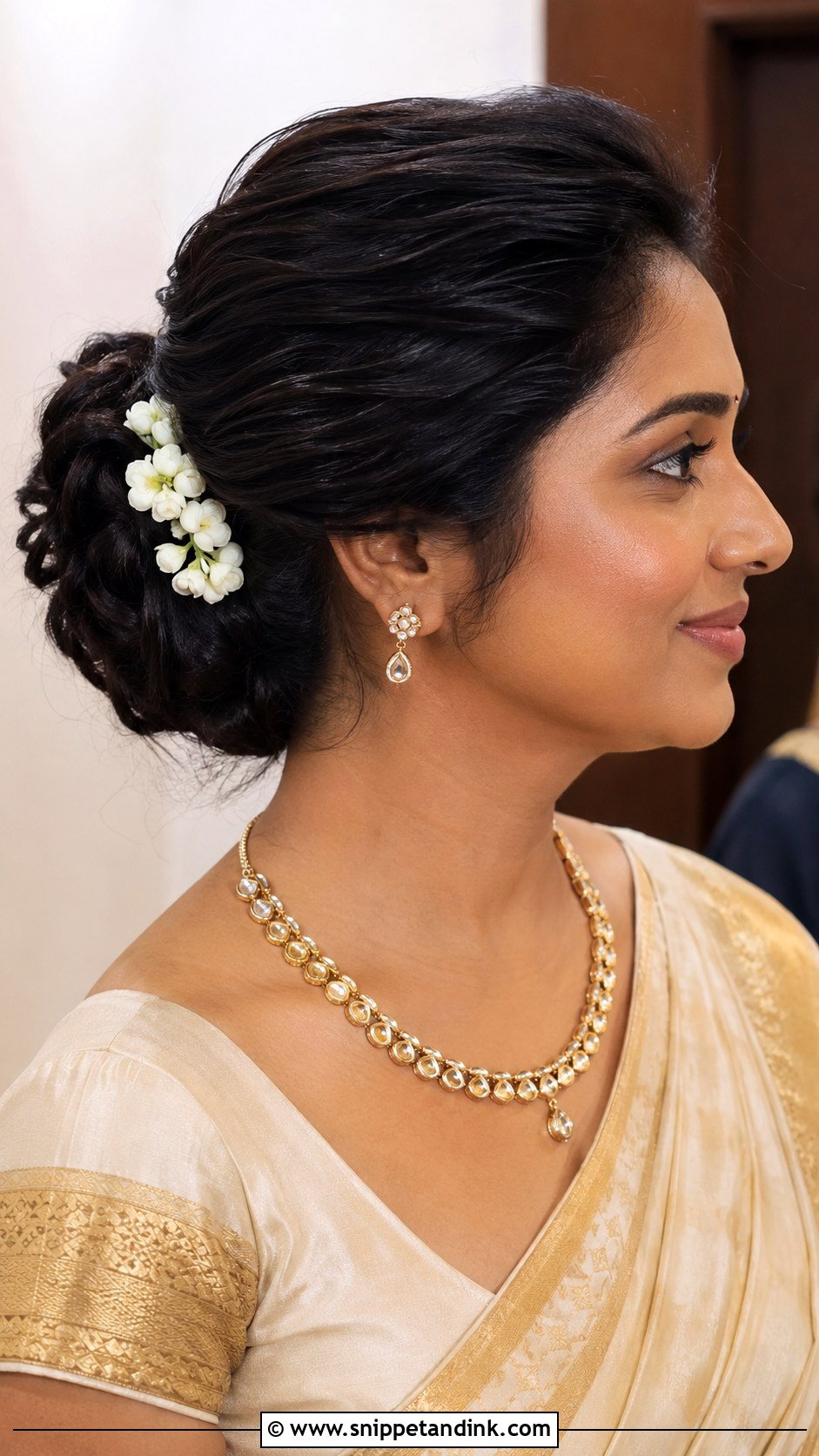
A low bun with a soft puff adds height without looking dramatic, which balances round, oval and heart-shaped faces. It suits sarees with heavy borders and lehengas with dupattas. For a mature look, keep the puff low and natural; a tall, stiff puff dates the style instantly. Jasmine, roses or a gold pin around the bun add detail. On fine hair, the puff is often the single most flattering change I can make.
14. Indian Mother Open Waves
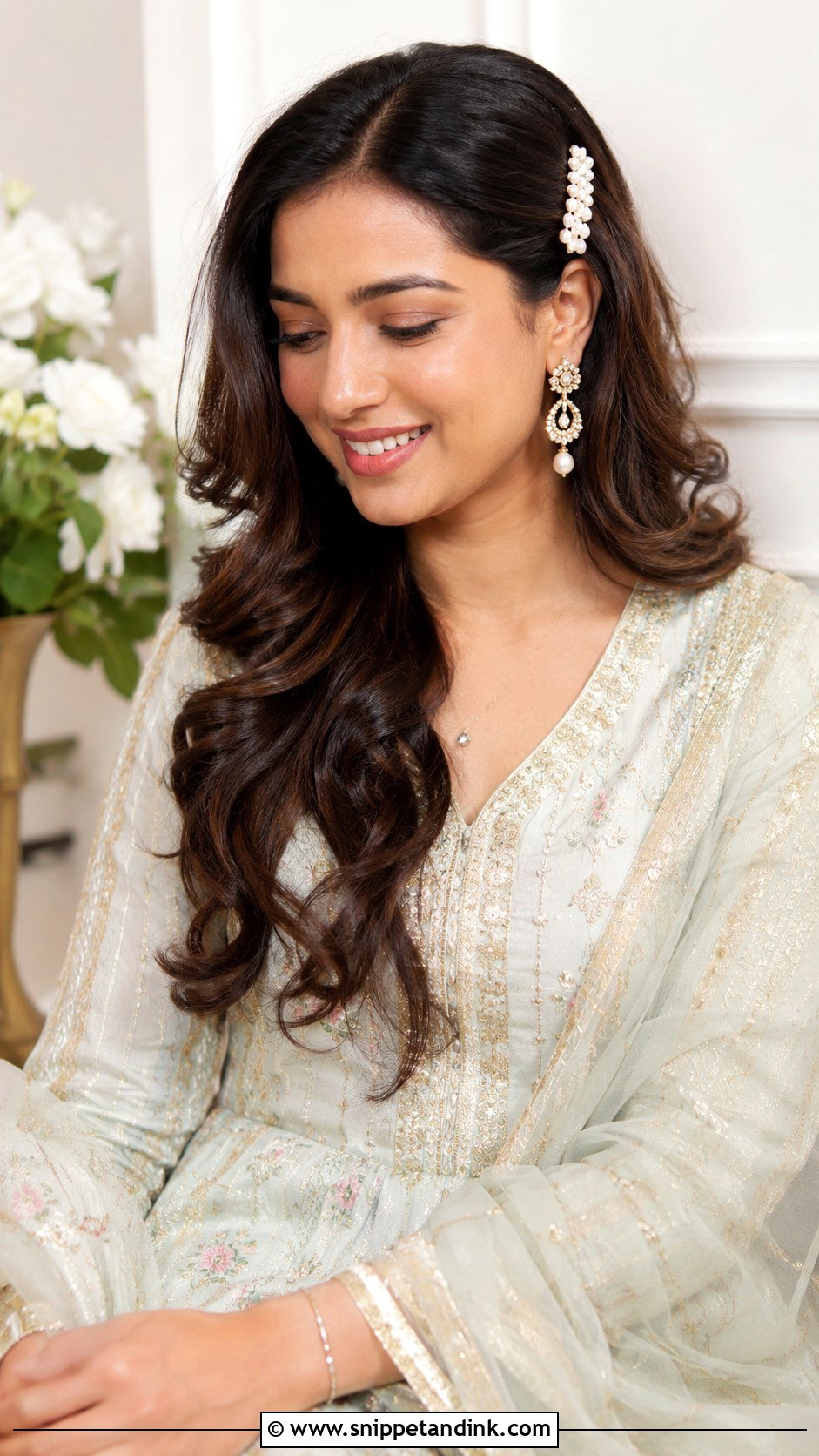
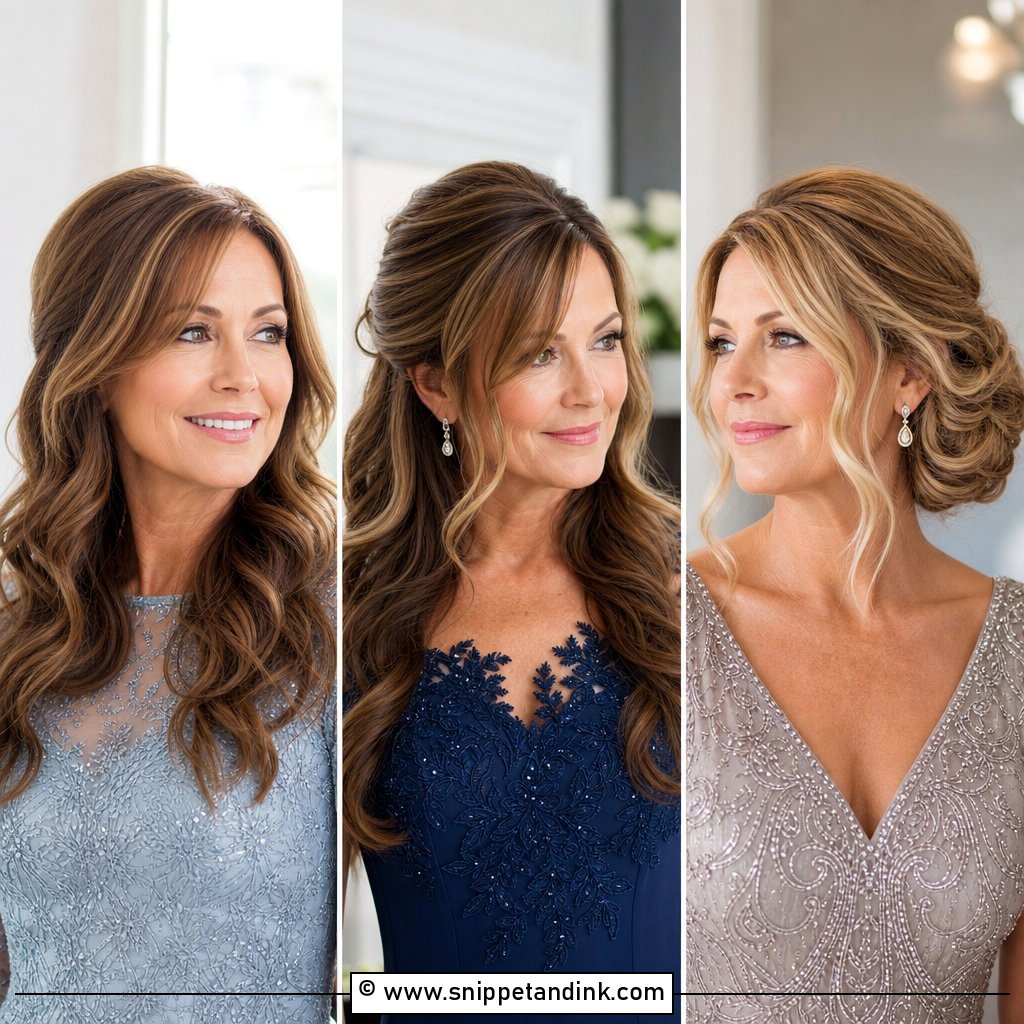
Open waves suit pre-wedding functions where the mood is festive but relaxed: mehndi, sangeet, engagement or a reception. For an Indian wedding I keep them smooth and glossy, not beachy. They pair with anarkalis, lighter sarees and flowy lehengas, with a side or soft middle part depending on face shape. A small accessory on one side makes it feel special. This is only worth choosing if she’s genuinely comfortable with hair down for hours.
15. Indian Mother South Indian Braid
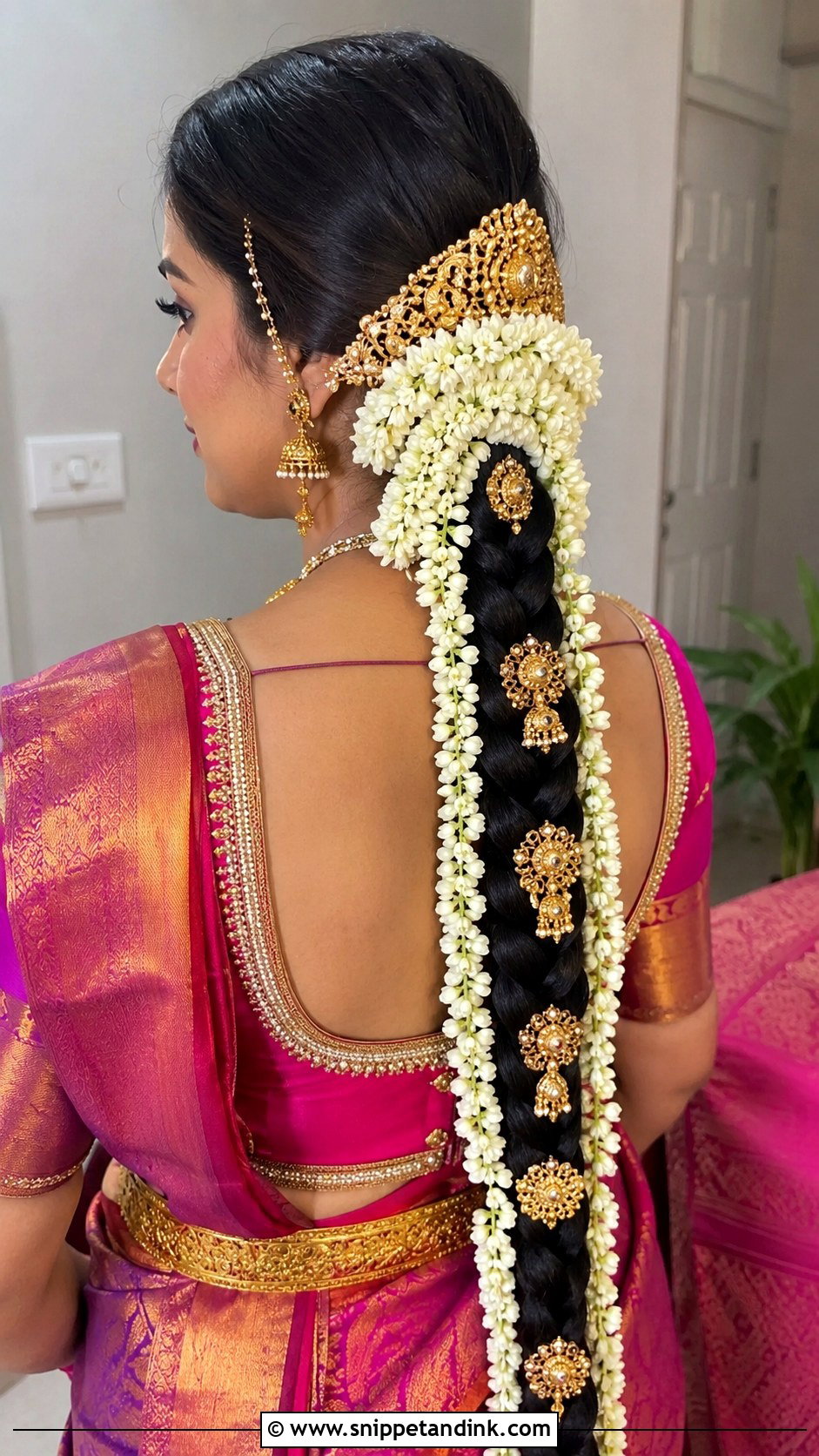
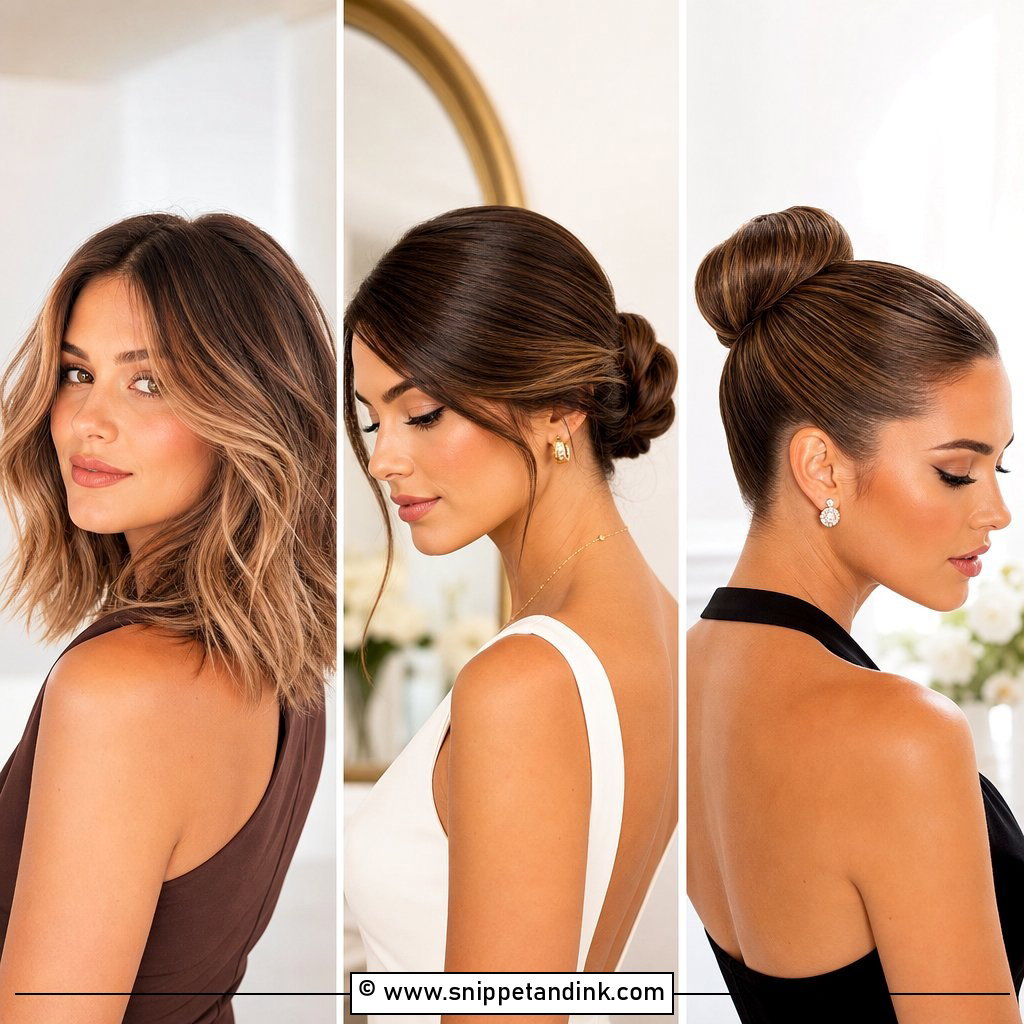
A South Indian braid with silk sarees and temple jewelry carries real meaning at ceremonies with a strong traditional dress code. It’s long, neat and dressed with jasmine, gold accessories or floral strings, and it gives a strong back view in photos. Mothers with medium-length hair can add a braid extension for fullness. I keep the braid firm but not tight at the nape, because a heavy plait pulled hard gives a headache long before the blessings are over.
16. Indian Mother Fishtail Braid
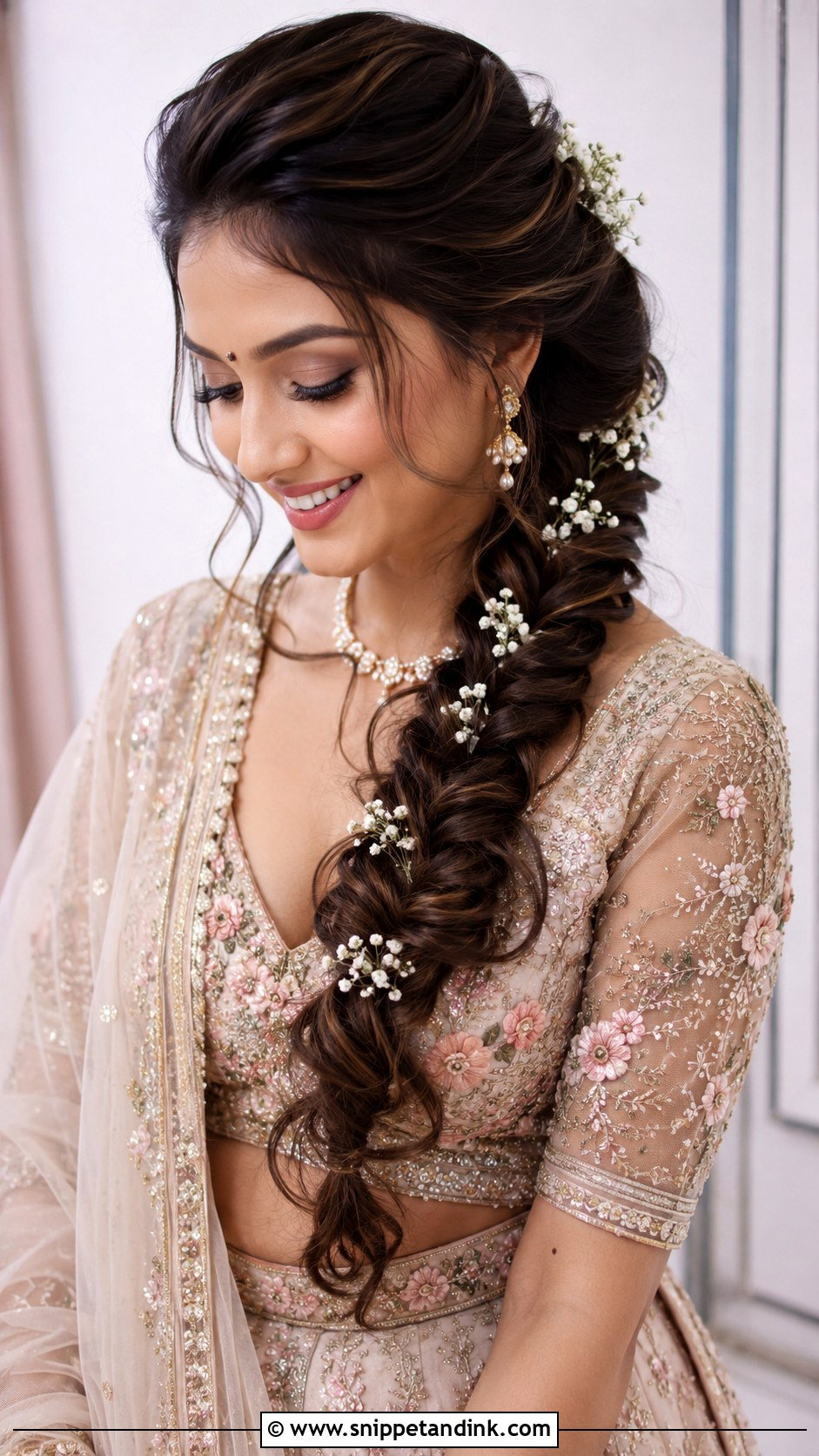
A fishtail braid is a modern option that still reads grown-up when the weave is kept neat rather than heavily pulled apart. It suits mehndi, haldi and sangeet, worn over the shoulder or down the back, with lehengas, printed sarees or Indo-western outfits. Medium to long hair with some texture works best. A few face-framing pieces soften it, and tiny flowers, pearls or a decorative pin near the base finish it.
17. Indian Mother Bun With Baby Breath
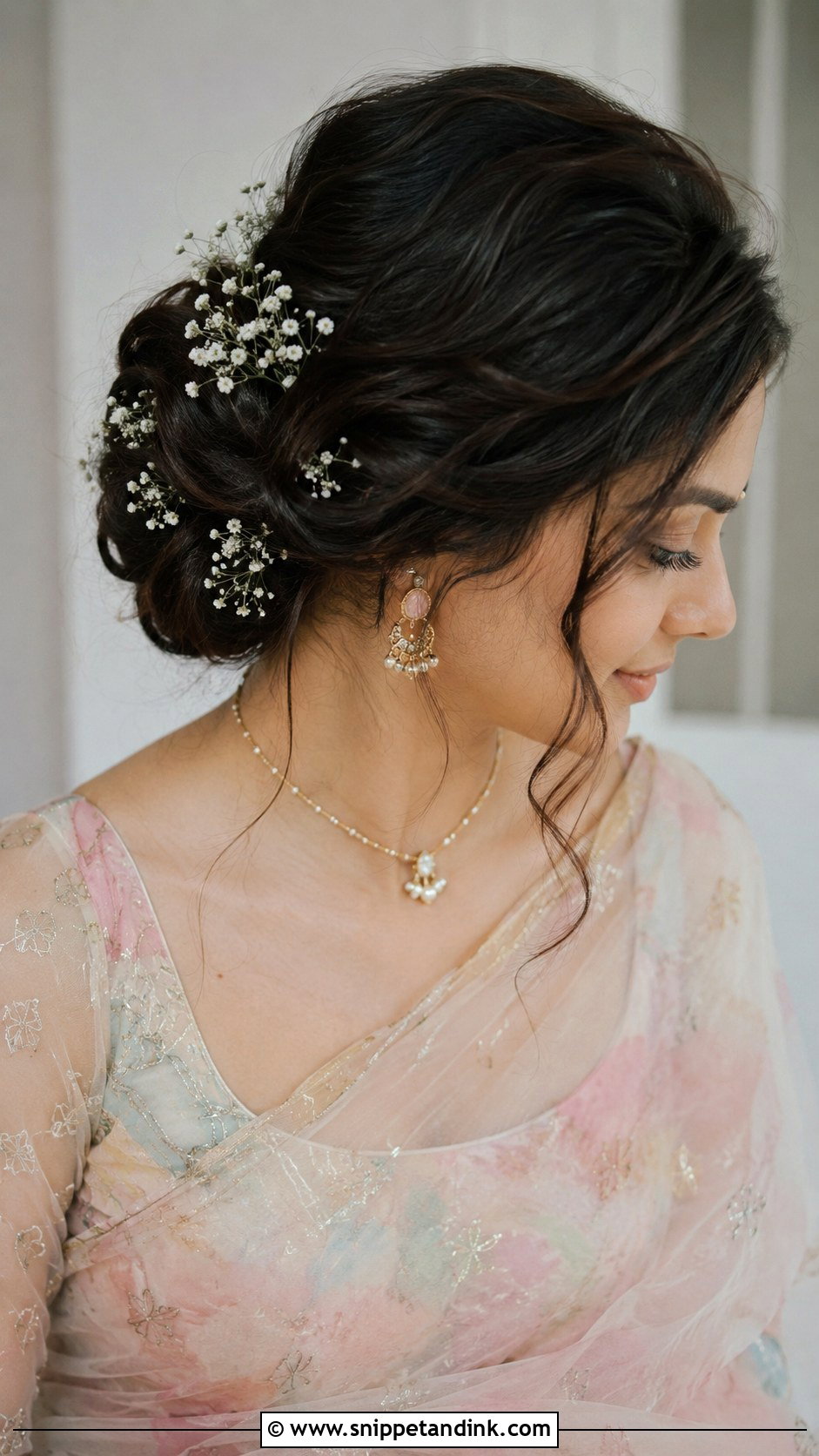
Baby’s breath gives a bun a fresh, delicate finish that’s ideal for daytime events. The tiny flowers soften the look without overpowering the saree or jewelry, and they suit pastel and organza sarees, floral lehengas and anarkalis. I scatter small sprigs rather than packing them, which looks lighter and holds better. It’s a festive option for a mother who’d rather not wear a heavy gajra.
18. Indian Mother Short Hair Curls
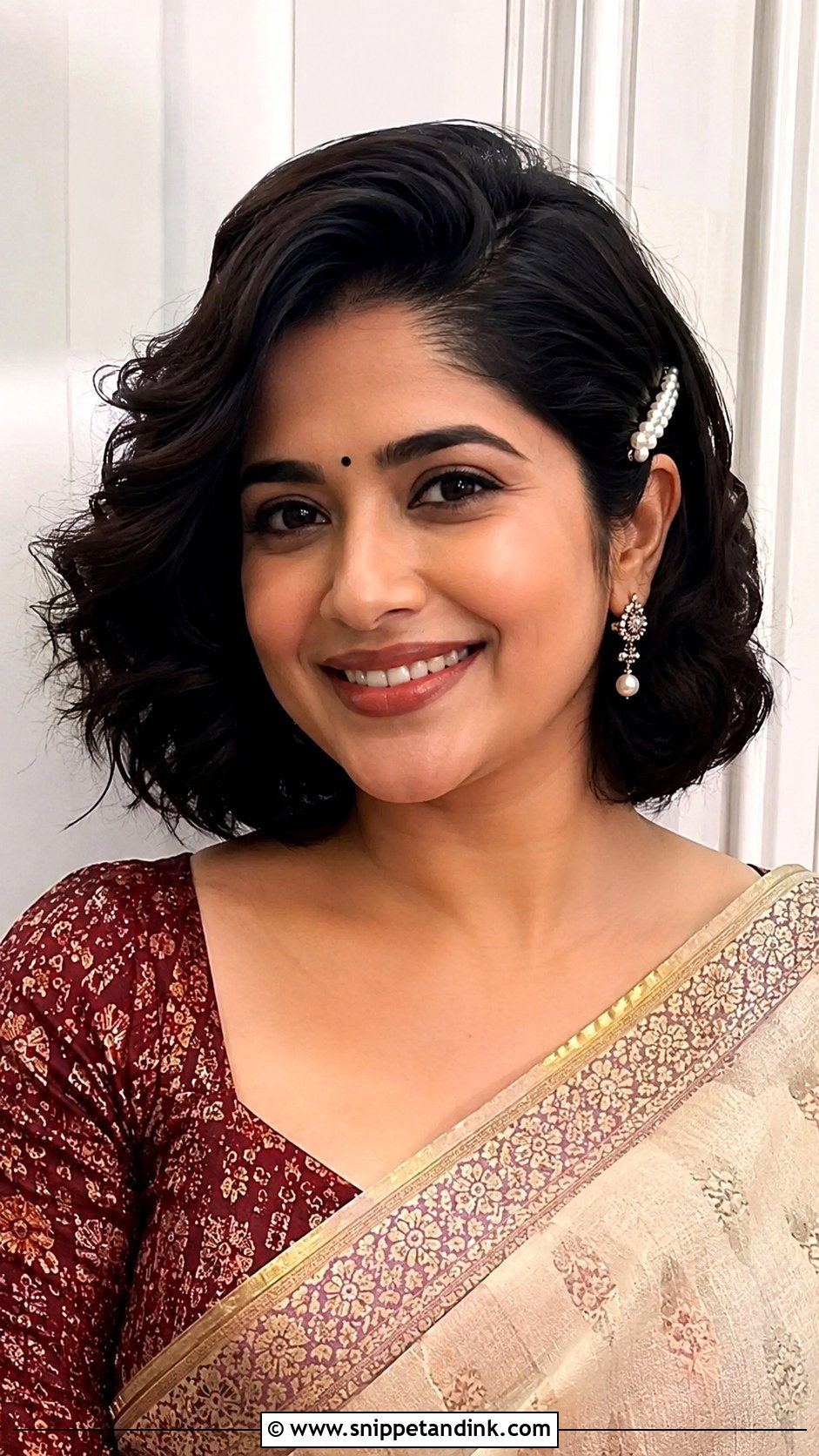
Short hair can look every bit as festive. Soft curls and a side part suit bobs, shoulder-length cuts and layered short hair, adding volume and movement around the face. A jeweled clip, pearl pin or a fresh flower tucked above one ear makes it a wedding look. It pairs with sarees, salwar suits and gowns, and it’s comfortable through long functions with no bun or extension weighing on the head. I use a light, brushable spray so the curls stay soft.
19. Indian Mother Shoulder Length Blowout
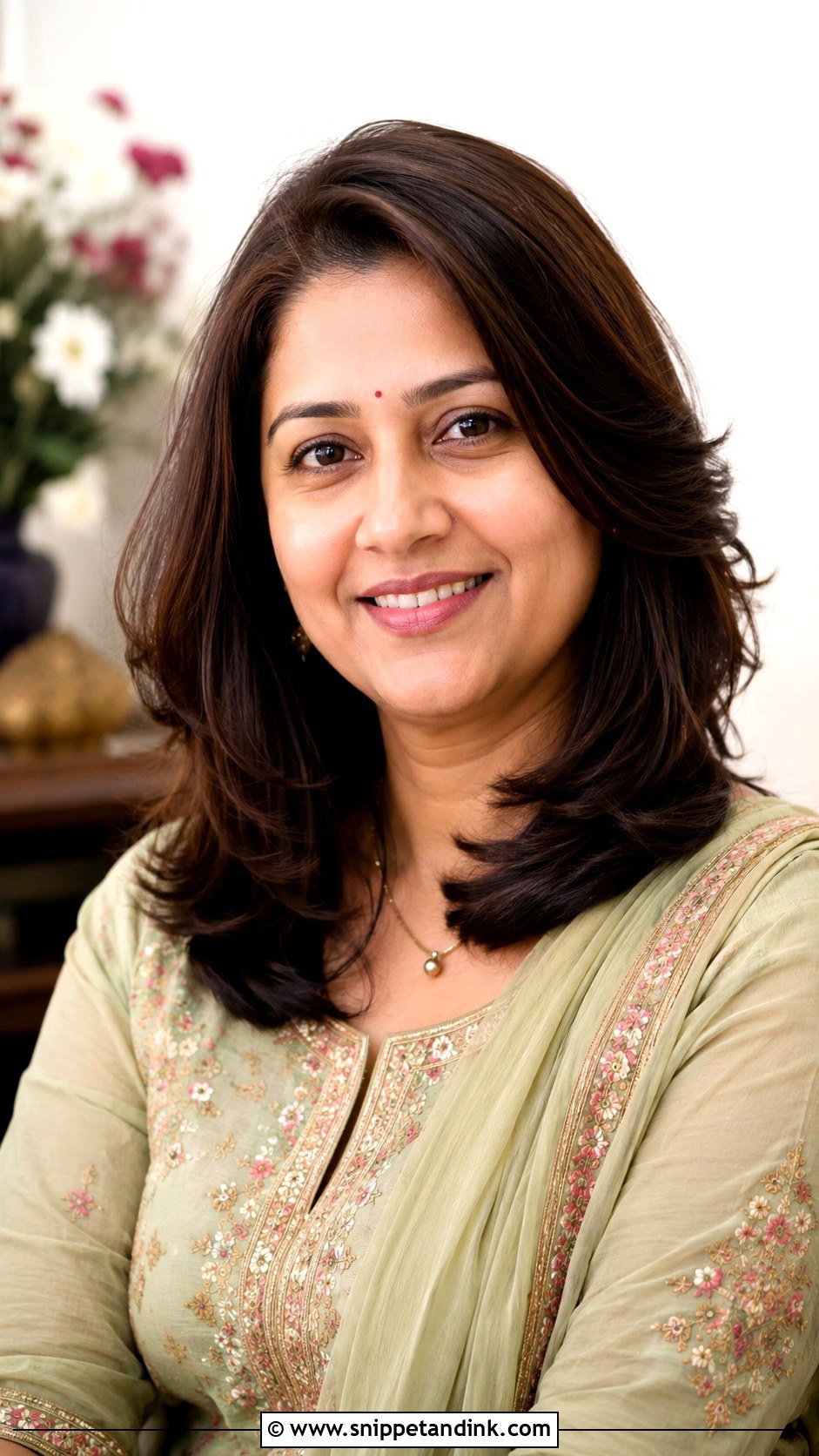
A shoulder-length blowout gives smooth volume and curved ends, and it’s the most natural-looking option here. Many mothers prefer it to a heavy updo, and it suits sarees, lehengas and formal suits. The front can be side-parted, centre-parted or lifted at the crown. I add a small clip near one ear or tuck one side behind a statement earring. Layered hair shows its movement beautifully this way, and humid weather is its only real enemy.
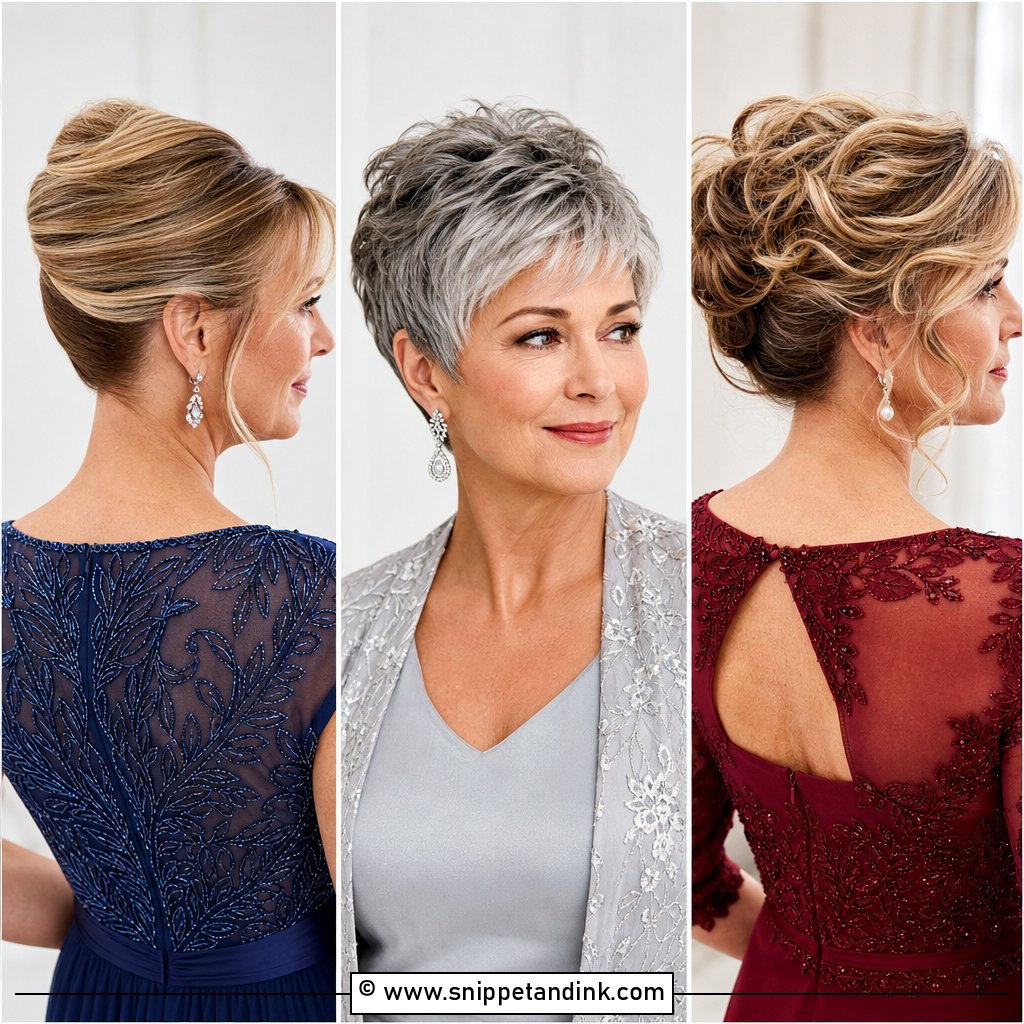
20. Indian Mother Reception Bun
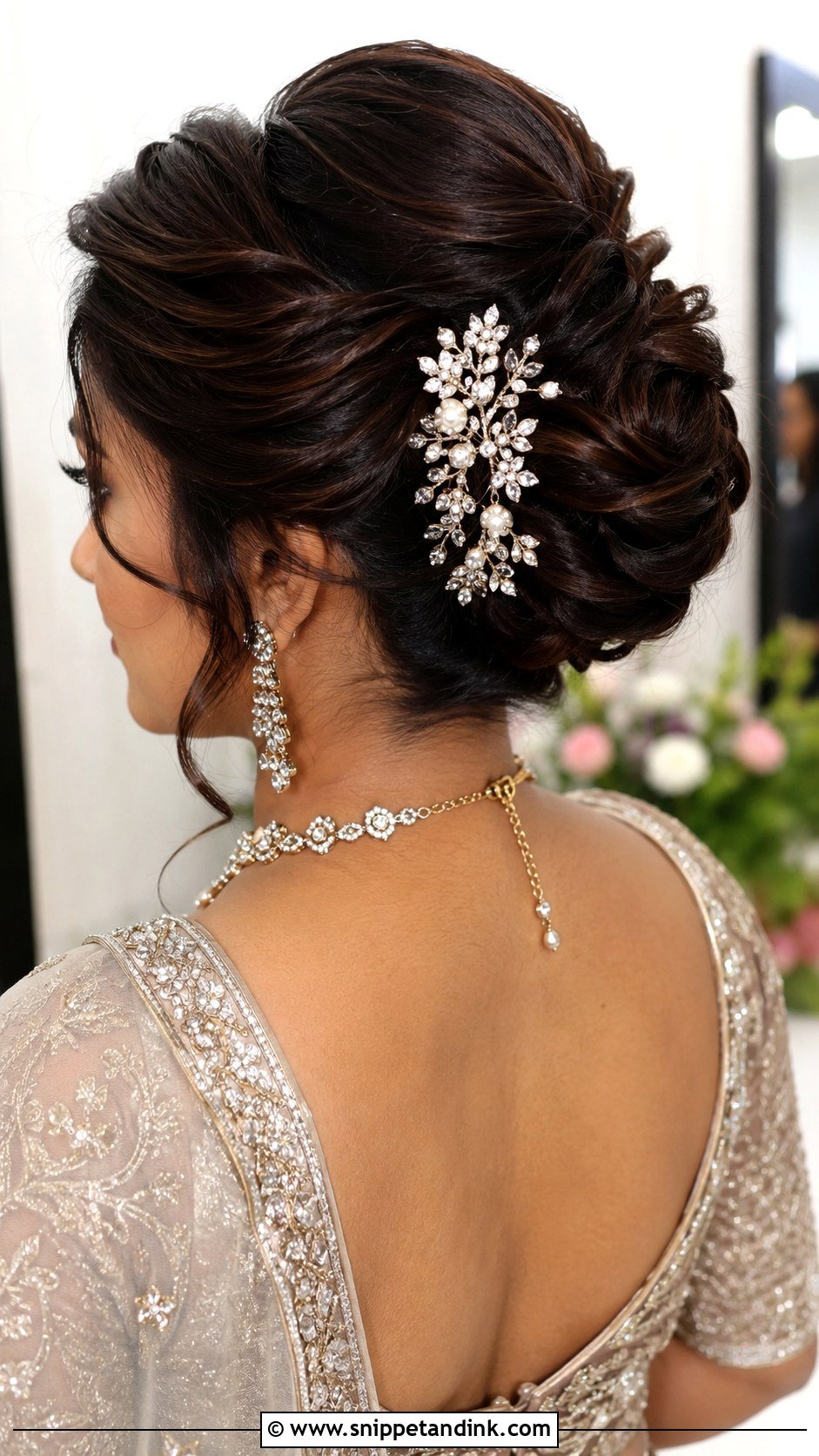
A reception bun can be a notch more glamorous than the ceremony one: textured, twisted or softly voluminous to suit the outfit. It suits designer sarees, evening lehengas and formal gowns, and it has to look polished under bright stage lights and in close-ups. A jeweled clip, pearl comb or metallic hairpiece makes it special, with a side sweep or gentle lift at the front. If she’s already worn a bun all day, I rebuild it fresh rather than re-pinning the old one.
She’s Up Before the Bride and Home After Everyone
The mother’s day usually starts earliest and ends latest, and her hair is often done in a rush between other people’s appointments. A few things I plan around:
- Schedule her slot before the bride’s, not squeezed in at the end. Mothers end up skipping their own styling when the morning runs late.
- If she wears glasses, tell the stylist. The arms sit over the ears exactly where side pins go, and pressure there gets uncomfortable fast.
- Plan for the pallu over the head during rituals. A low bun gives it something to rest on; a high one makes it slide.
- Give a cousin a small kit: pins, a mini spray and a comb for a quick fix before the reception.
- For a multi-day wedding, alternate a pinned style with a looser one so her scalp gets a break.
And one honest note: mothers sometimes feel they should keep things plain so the bride shines. A graceful, well-made style never takes attention away from the bride. It just means the family photos look complete.
Let Her Choose What Feels Like Her
The right style for a mother is the one that feels comfortable and true to her. She greets guests, joins rituals, hosts relatives and appears in countless photos, so her hair has to stay secure and easy through all of it. Traditional buns, gajra looks, braids, soft curls and reception updos all have their place. The choice comes down to the outfit, jewelry, face shape, hair length and when each event falls in the day. Book her trial alongside the bride’s, and she’ll walk into every function looking composed and confident.
You'll Like These Ideas:


Leave a Reply