
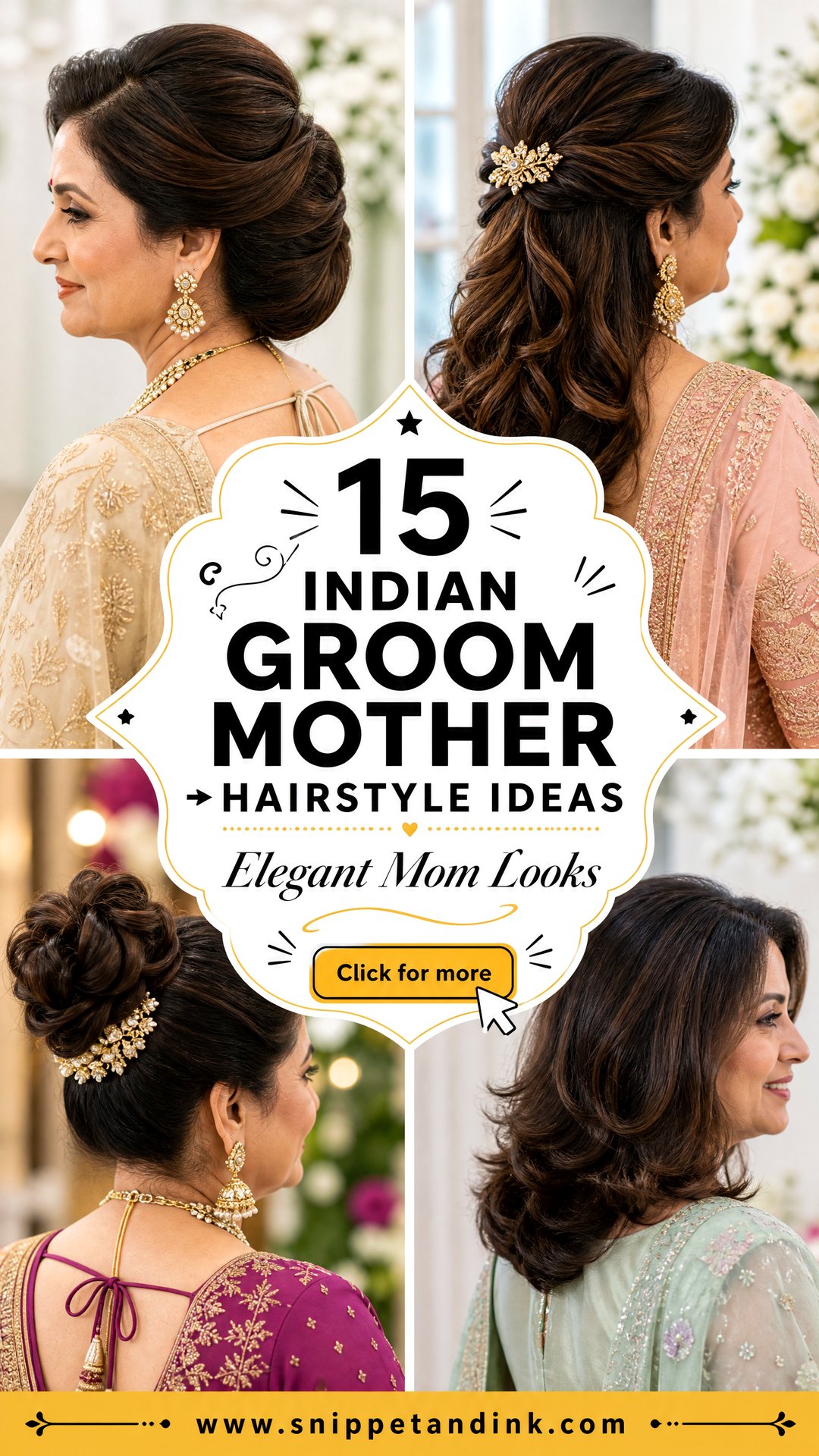
The groom’s mother is on her feet for most of an Indian wedding: sending off the baraat, standing through the rituals, hosting relatives at dinner. Her hair has to hold through all of it and still sit right in the last family photo. When I plan her look I start with the outfit and the jewelry, then how long the event runs, and only then the style. A silk saree with a heavy pallu usually points me to a low bun with flowers, while a reception lehenga leaves room for waves or a softer updo. The fifteen styles below are the ones I actually suggest to mothers, with notes on who each suits and where it tends to slip.
Why the Groom’s Mother Gets the First Chair of the Morning
On the groom’s side, his mother is usually needed before anyone else: for pujas at home, for the baraat send-off, for greeting relatives as they arrive. I put her first on the schedule, ahead of aunts and cousins, so she is never the one squeezed into the last few minutes while the car waits outside.
A few things make her appointment go faster and hold longer:
- Wash the night before and dry fully. Hair that is a day old grips pins better than hair that is squeaky clean.
- Wear the blouse, or a button-front shirt, so nothing gets pulled over the finished style.
- Lay out the jewelry, maang tikka and flowers so I can place pins around them instead of guessing.
- Bring her glasses if she wears them. The arms rest just above the ear, and I keep that path clear of pins.
If she changes outfits between the ceremony and the reception, mention it at booking. Loosening a bun into a half up style takes me about fifteen minutes. Going the other way, from open hair to a neat bun, takes nearly as long as starting again.
1. Indian Groom Mother Low Bun With Gajra
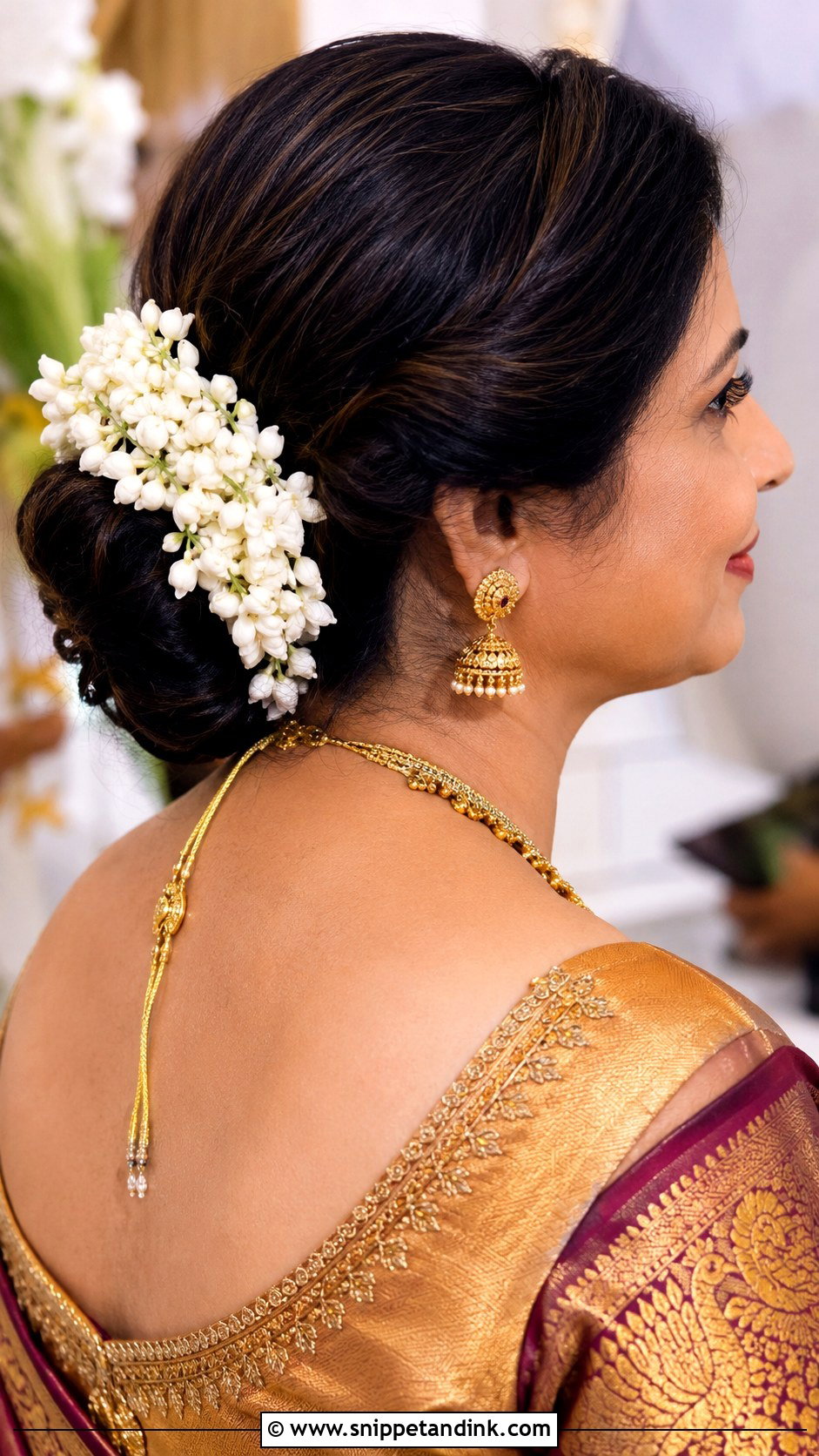
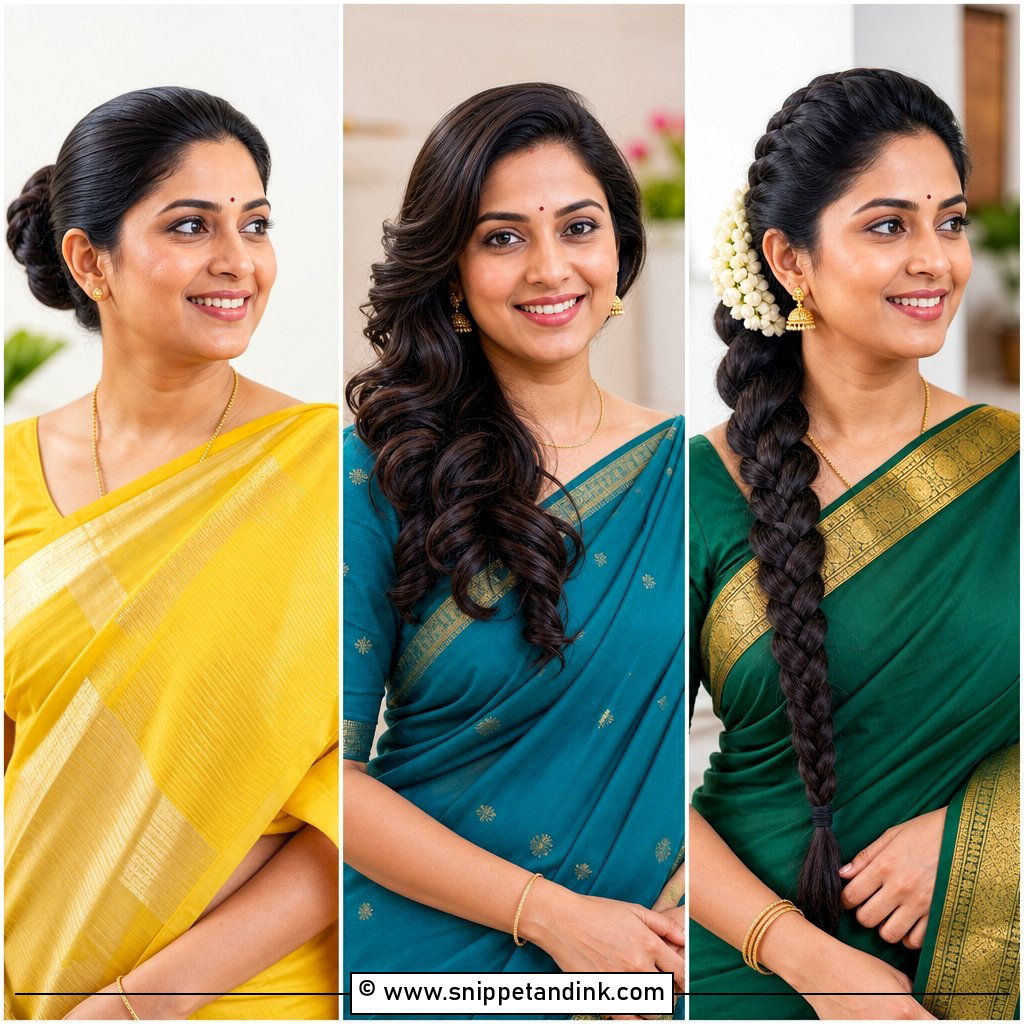
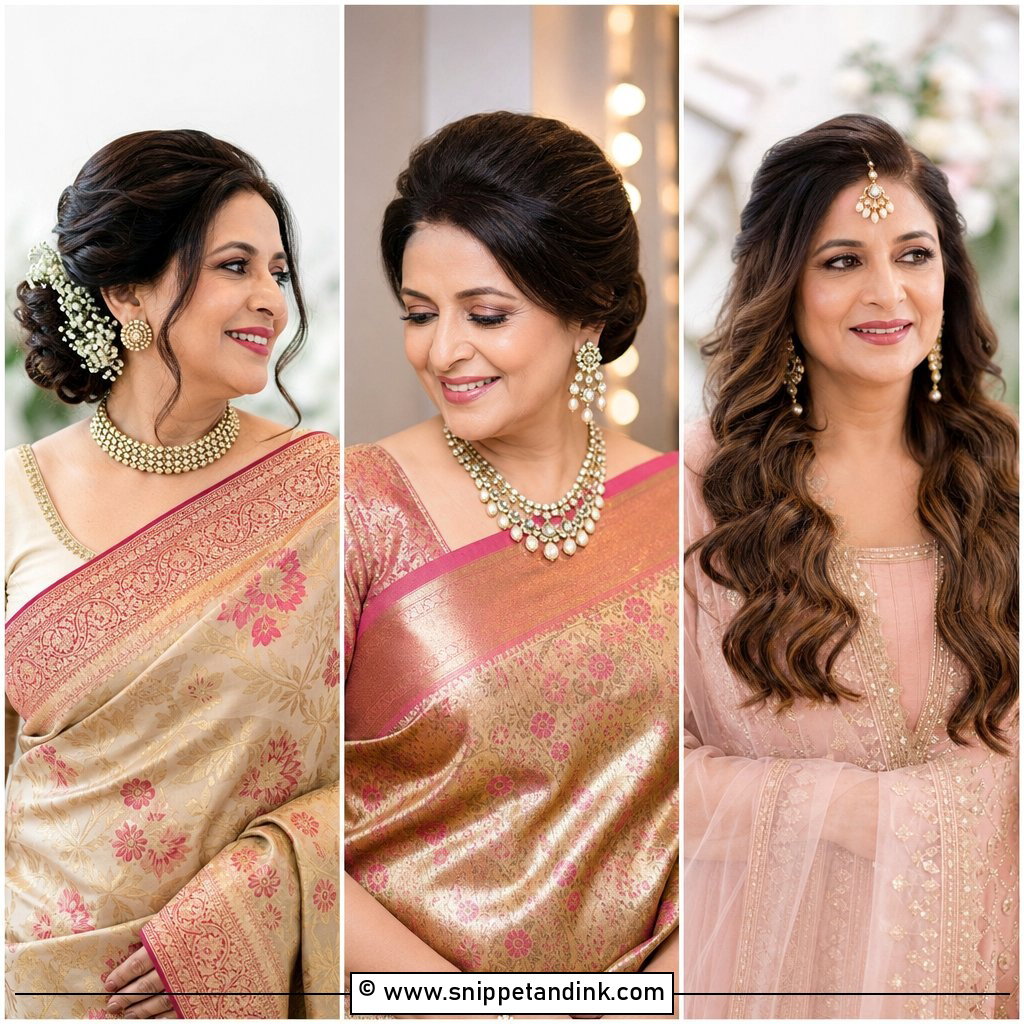
This is the style I reach for most often with a silk saree. The bun sits at the nape, so the earrings, necklace and saree border all stay visible, and jasmine adds fragrance without much bulk. It suits Kanjeevaram sarees, Banarasi sarees, Paithani and other rich silk drapes. I pin the gajra with U-pins threaded through the bun itself, not just its surface, because three or four strands of fresh jasmine are heavier than they look. Ask for a smooth crown with some lift rather than a tight pull, and leave two soft pieces at the temples so the shape never reads severe.
2. Indian Groom Mother Sleek Low Bun
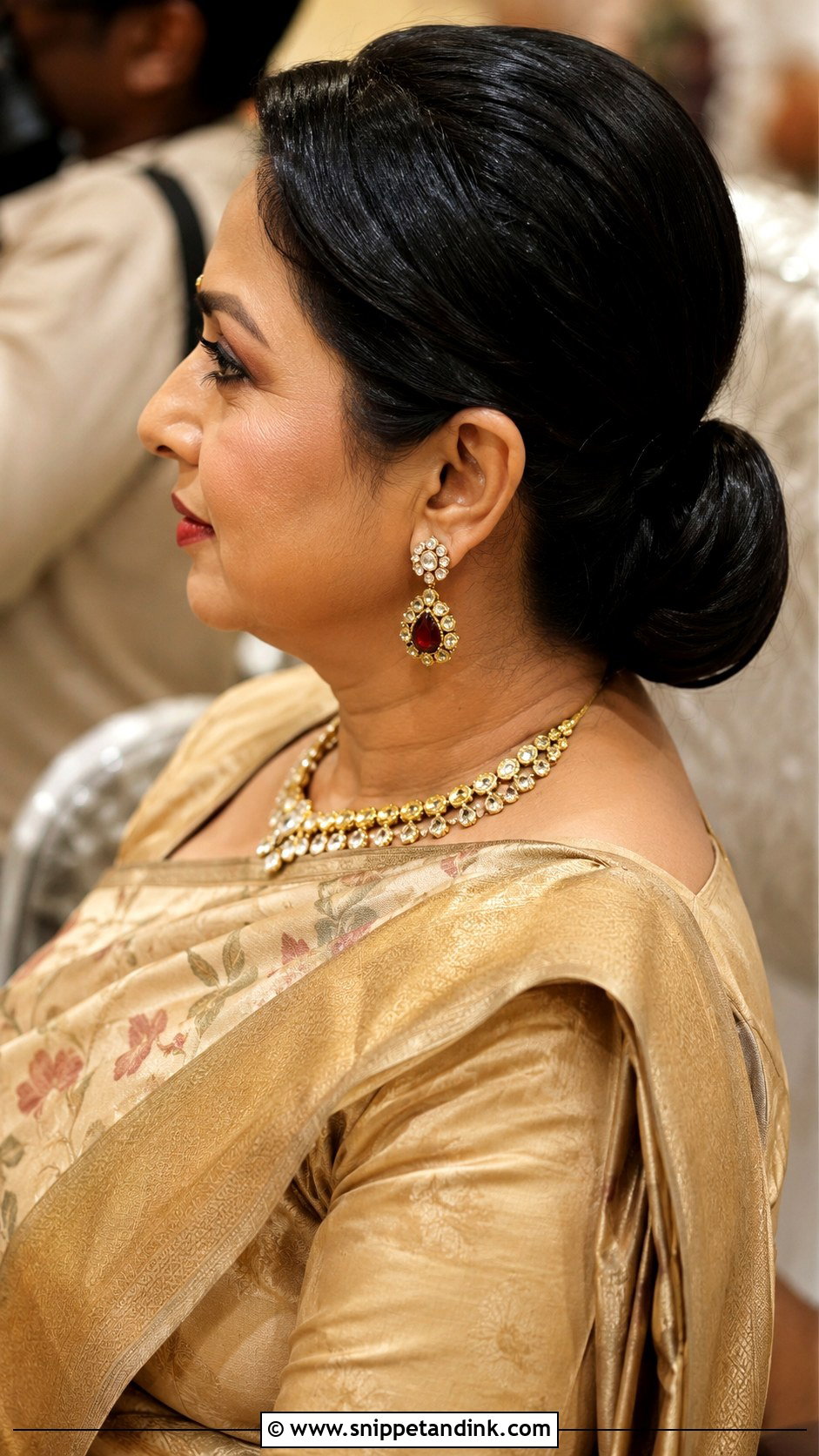
When the blouse is heavily embroidered or the pallu is busy, I keep the hair quiet, and a sleek low bun does exactly that. Straight or lightly wavy hair takes it easily; curlier hair needs a blow-dry first and a bun padding so the shape stays even. The risk with a sleek finish on mature hair is that it flattens the crown and shows every thin patch, so I backcomb lightly underneath before smoothing the top layer over it. A drop of shine serum pressed between the palms, not combed through, keeps flyaways down without looking greasy by evening. Temple jewelry, kundan and pearls all sit comfortably against it.
3. Indian Groom Mother Textured Bun
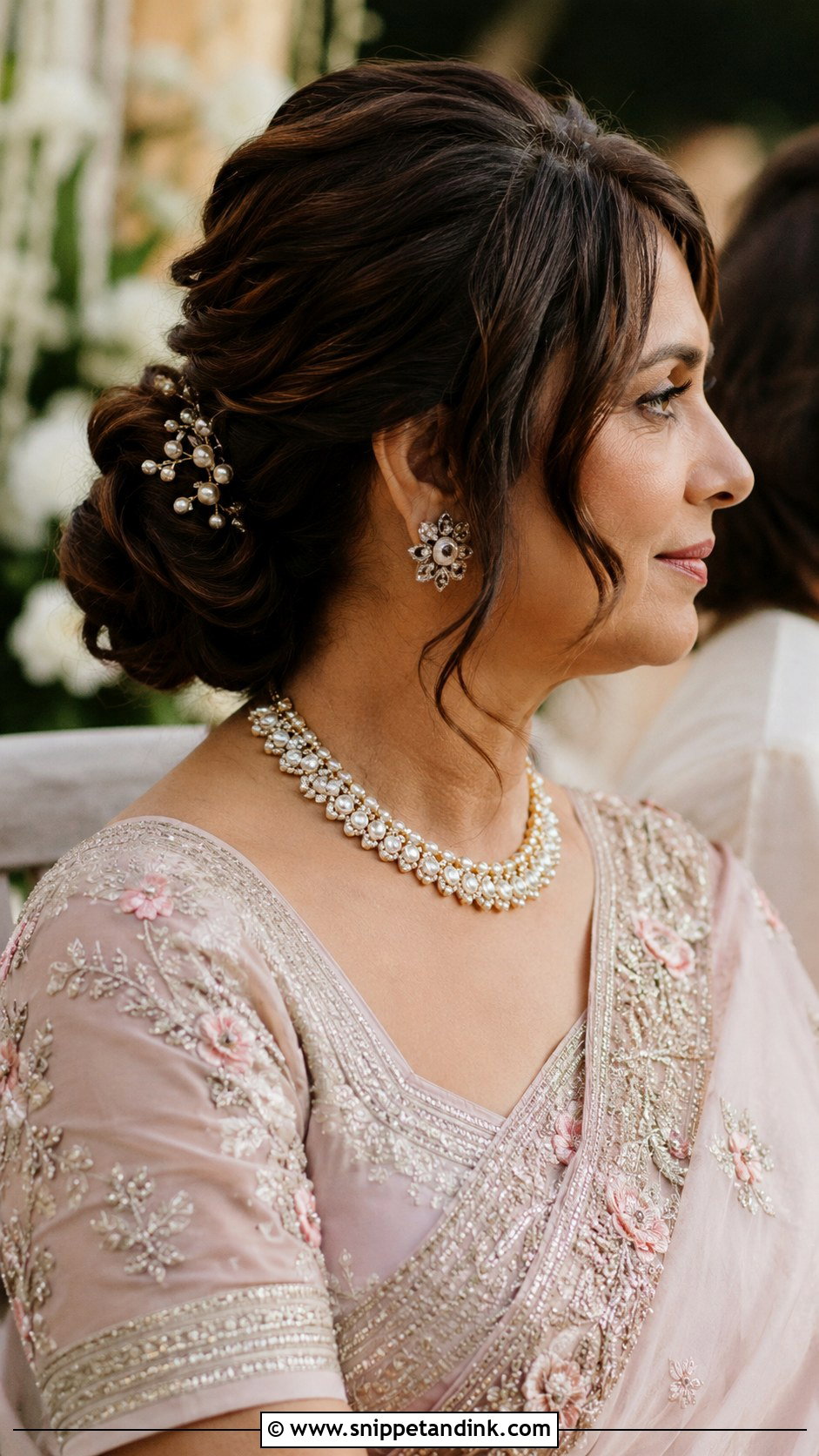
Fine or thinning hair looks fuller in a textured bun than in almost any other updo. I set the hair in loose waves first, then twist and pin it in sections, so the volume comes from the bends rather than from heavy teasing. In close family portraits, the softer edges are kinder to the face than a hard outline. It goes with a saree, a lehenga or an Indo-western outfit, so it can carry her from engagement to reception. The thing I watch is the line between textured and untidy: I pull pieces loose only at the very end, in daylight, and stop sooner than feels natural.
4. Indian Groom Mother Braided Bun
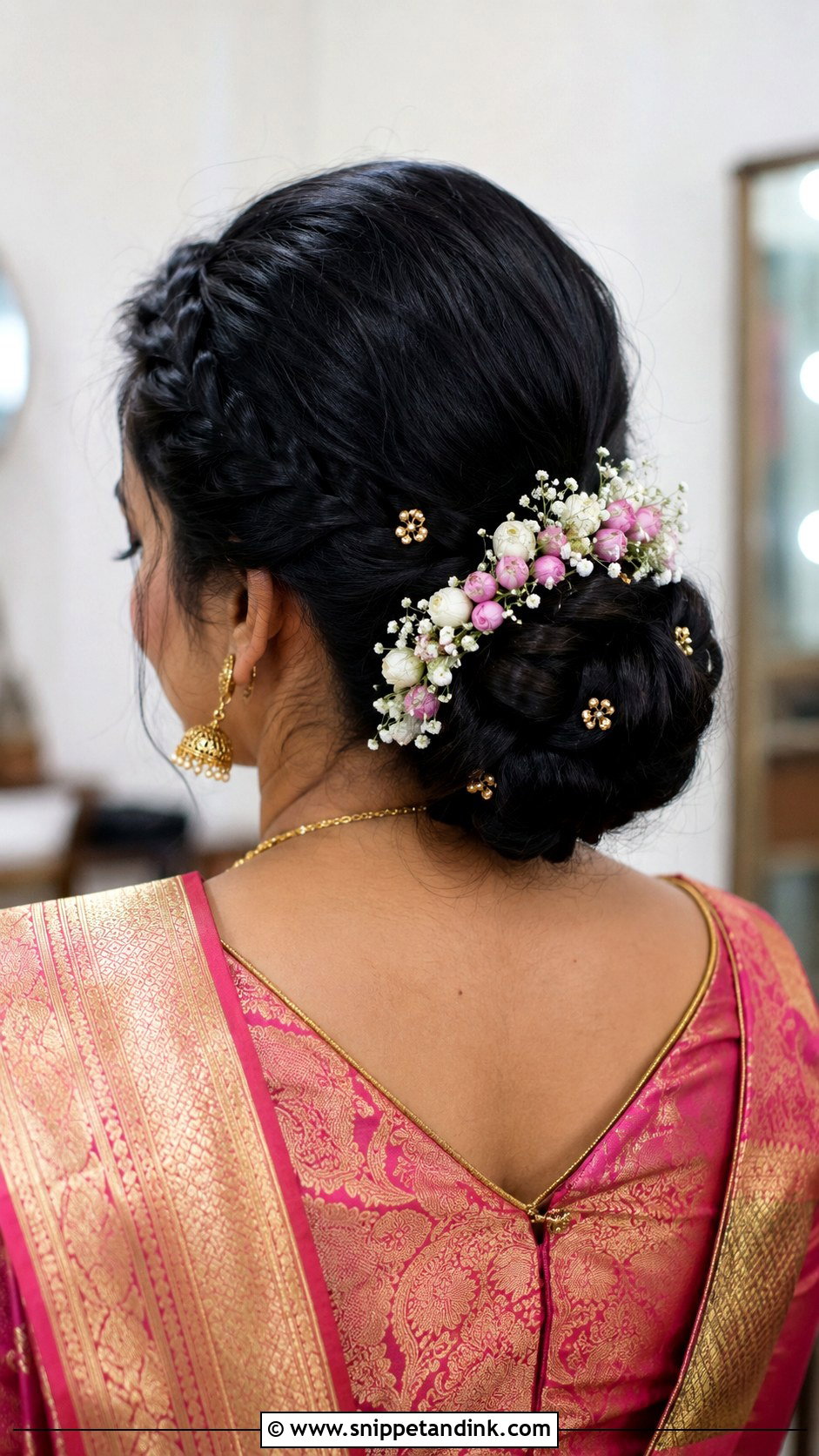
A braided bun gives her more detail than a plain bun without needing a big accessory. The braid can start at the side, run along the crown or wrap the bun itself. Medium to long hair is the minimum. With shorter lengths the braid comes out too thin to show, and that is when I braid in a matching extension before forming the bun. Small flowers or gold pins tucked into the braid’s outer loops stay put far better than pins pushed into the smooth part of the bun.
5. Indian Groom Mother Side Part Bun
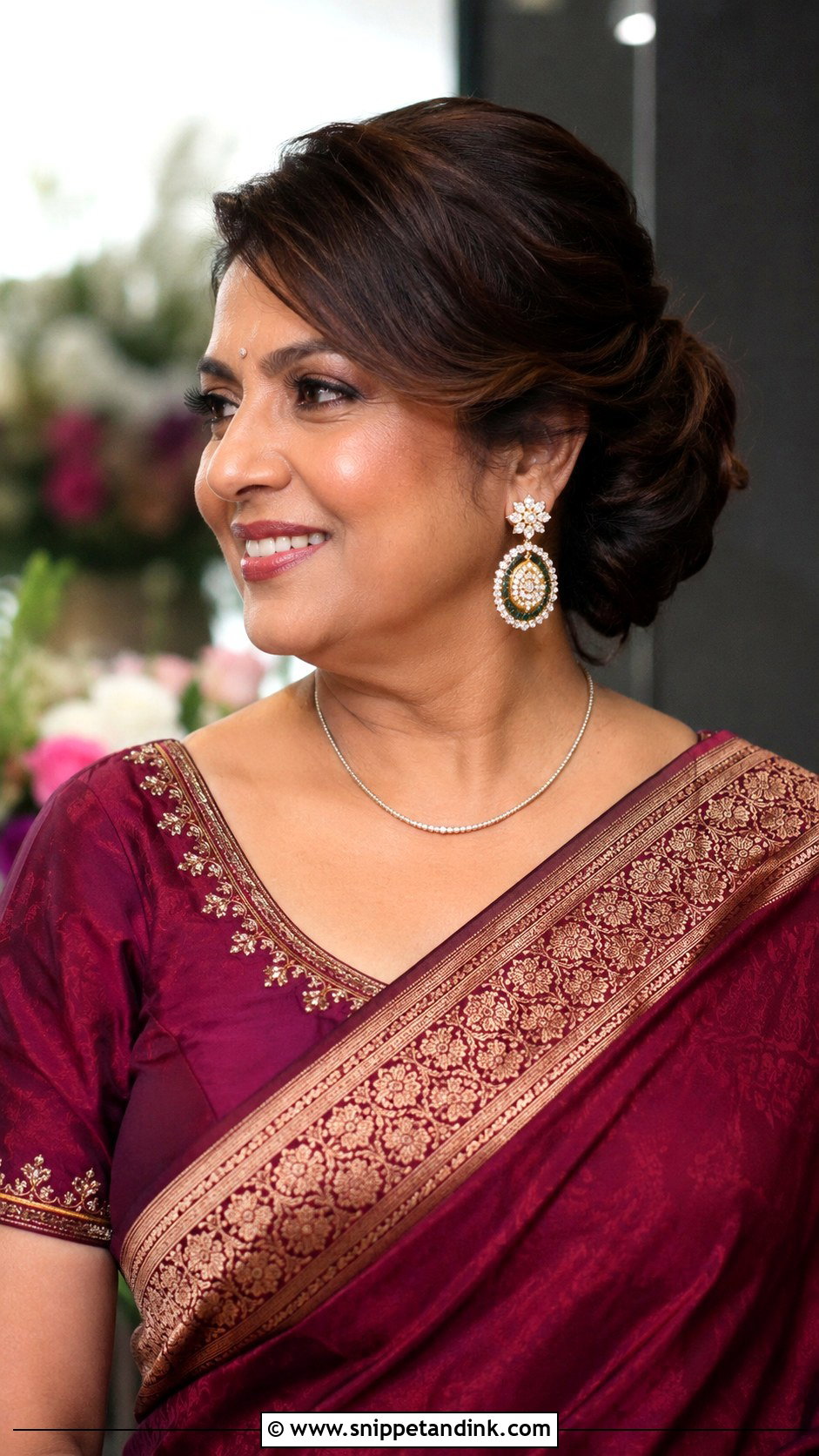
A side part is softer on the face than a center part, and it hides a cowlick or a widening parting better too. I place the bun low and neat for the ceremony, or loosen it slightly for evening. With a heavy pallu, the bun keeps everything secure while the side part adds shape at the front, and the open side leaves room for a statement earring. One decorative pin or a small jeweled clip is enough. I’d steer away from it if her hair has parted in the middle for decades, because hair trained one way fights a new part all day.
6. Indian Groom Mother Center Part Bun
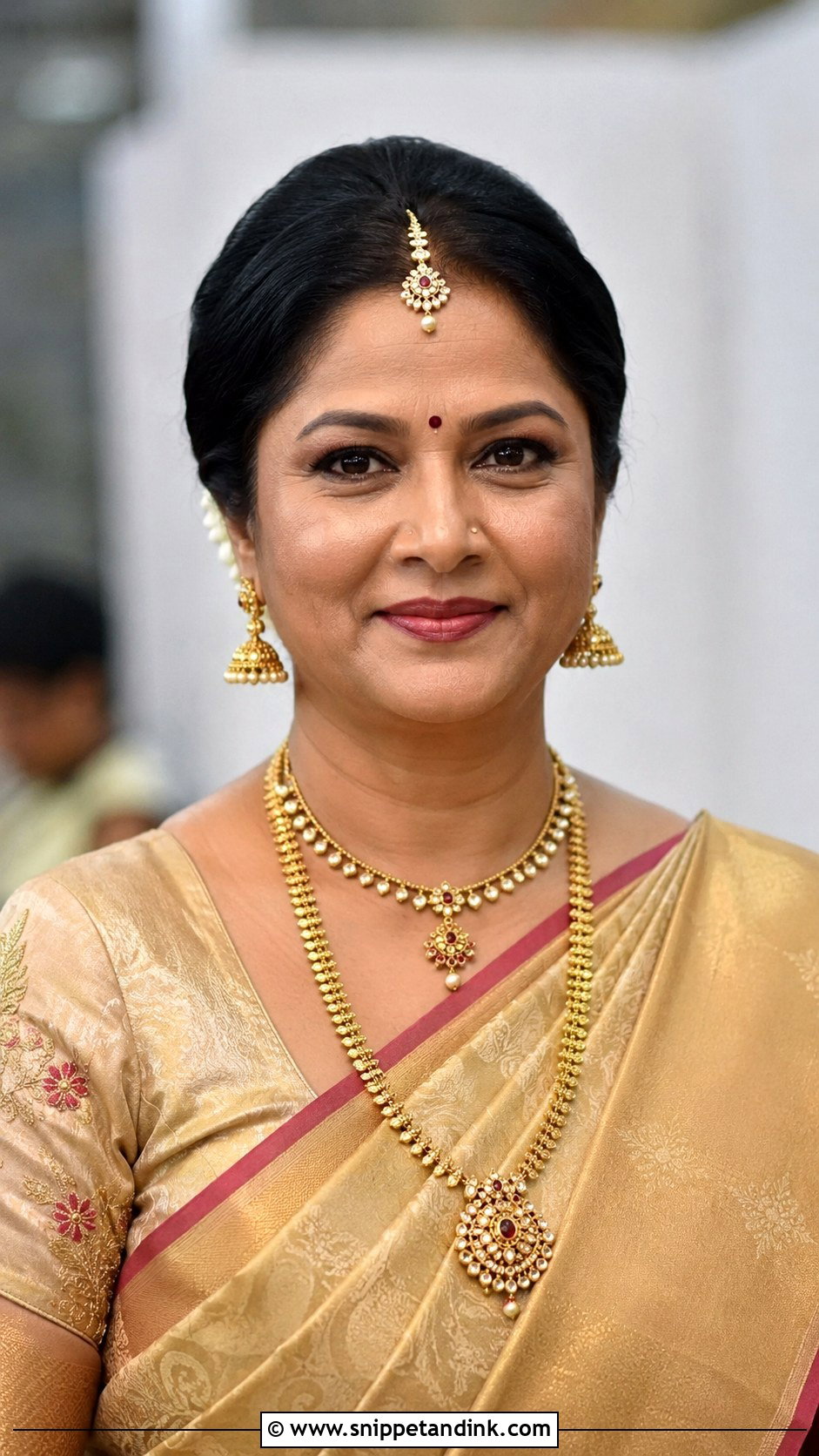
The center part is the regal option, and it belongs with traditional sarees and heavier sets. Symmetry is the whole point, so I check the parting against the nose and brows in a mirror before a single pin goes in. It frames a maang tikka or a small bindi well, and temple jewelry looks right with it if the outfit carries that weight. Where it goes wrong is tension. Hair dragged tight across the scalp exposes thinning at the part and gives her a headache well before the pheras, so keep a little crown lift and smooth, not tight, sides.
7. Indian Groom Mother French Roll Bun
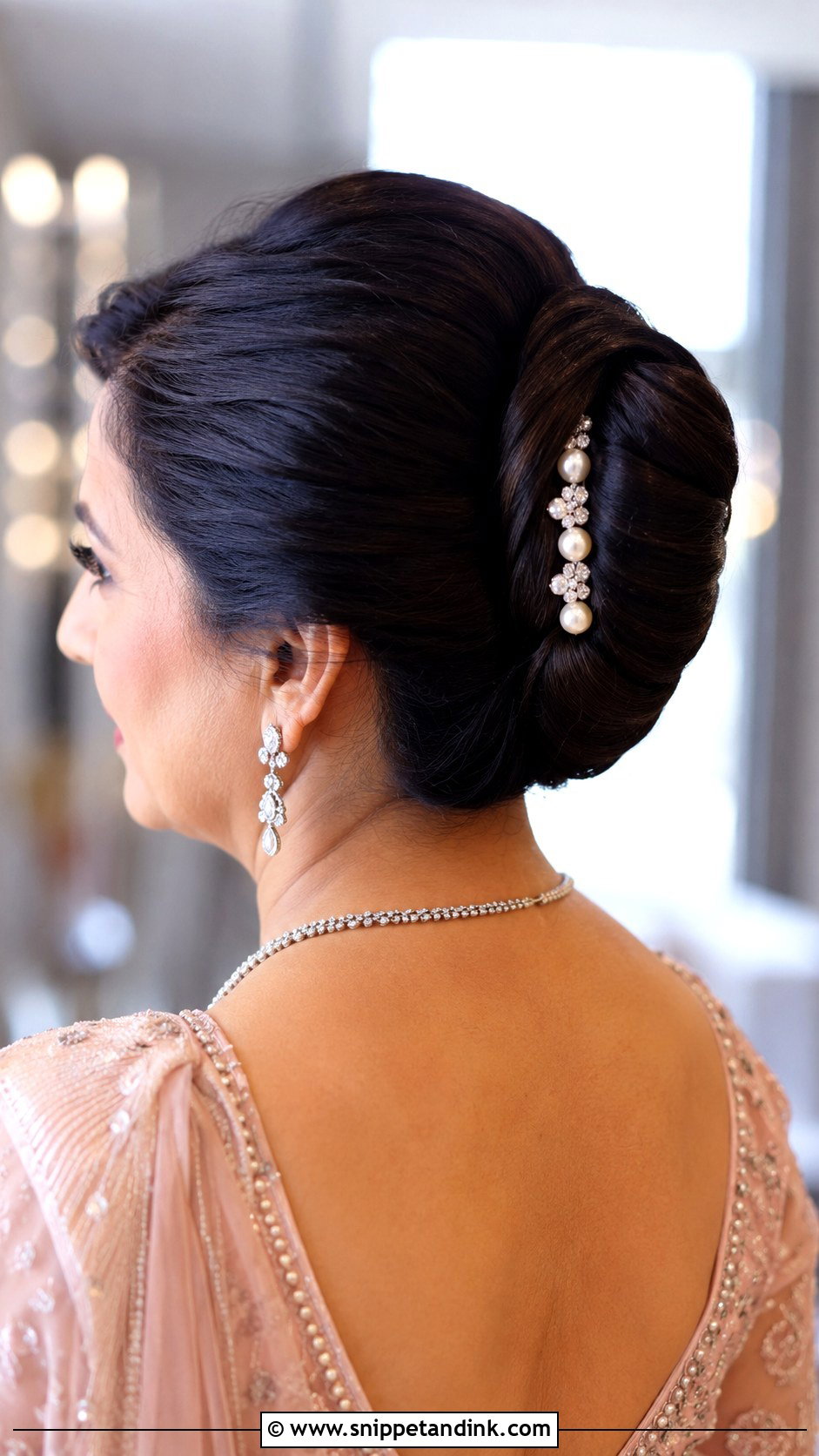
For receptions and formal dinners, the French roll gives height at the back without looking bridal. Medium-length hair suits it best, because the roll gathers the length into one structured shape and makes it look fuller. I anchor a row of crossed bobby pins up the center before rolling, then hide U-pins inside the fold. A roll pinned only along its seam tends to open after a few hours of hugging relatives. Silk and chiffon sarees, gowns and Indo-western jackets all sit nicely under it, and a pearl comb at the top finishes it. Keep the front soft or it looks stiff.
8. Indian Groom Mother Half Up Hairstyle
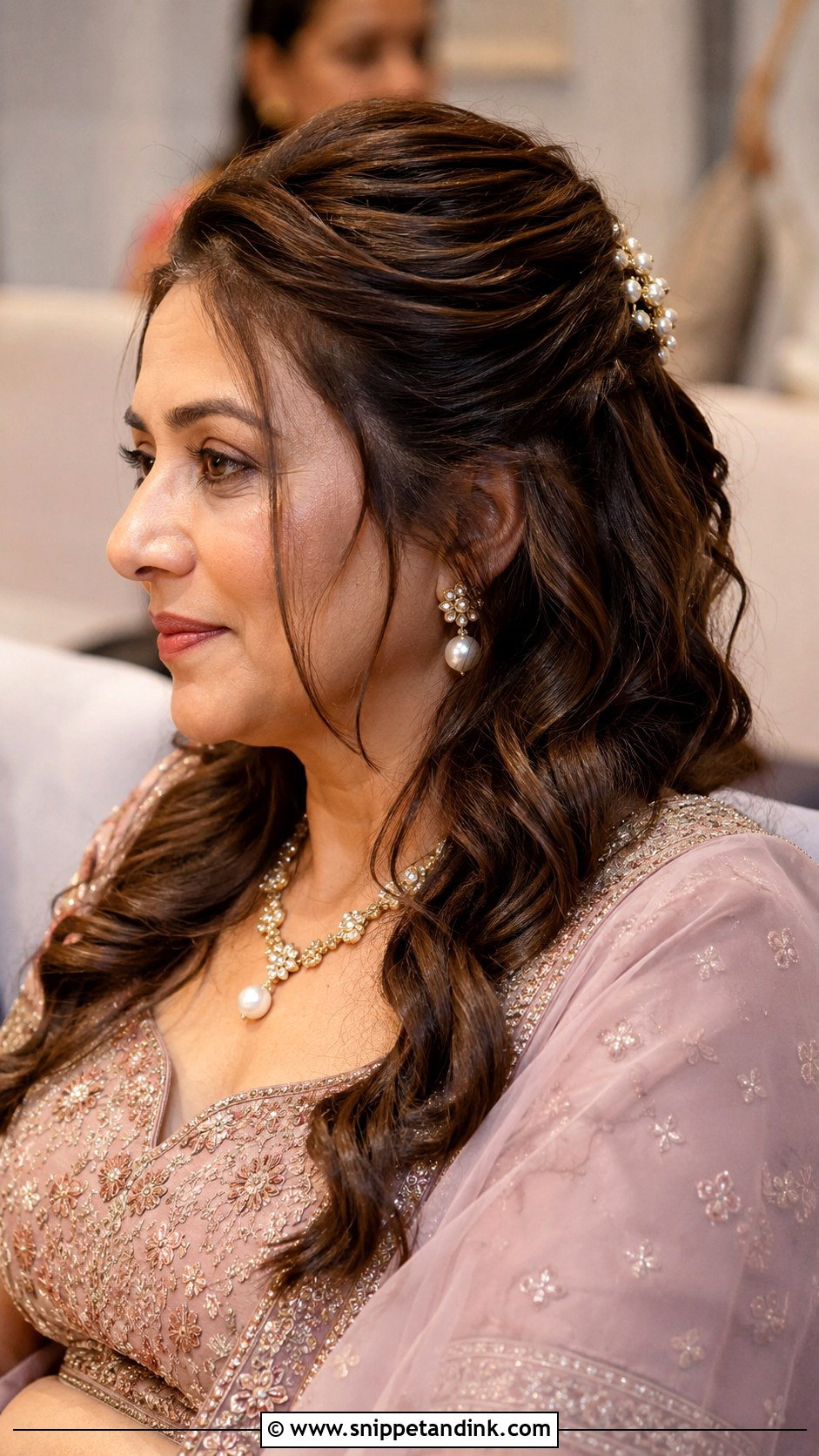
Half up is the answer when she wants some hair open but worries it will fall flat. The crown section is pinned back with volume and the rest falls in waves. I suggest it for receptions, sangeet and engagement evenings, when the outfit is lighter and there is no pallu to manage. The pinned section can hold a small accessory or a few flowers. In humid weather or with fine hair, the open lengths drop fastest, so I curl with a smaller barrel than the wave I actually want and let it relax into place.
9. Indian Groom Mother Soft Curls
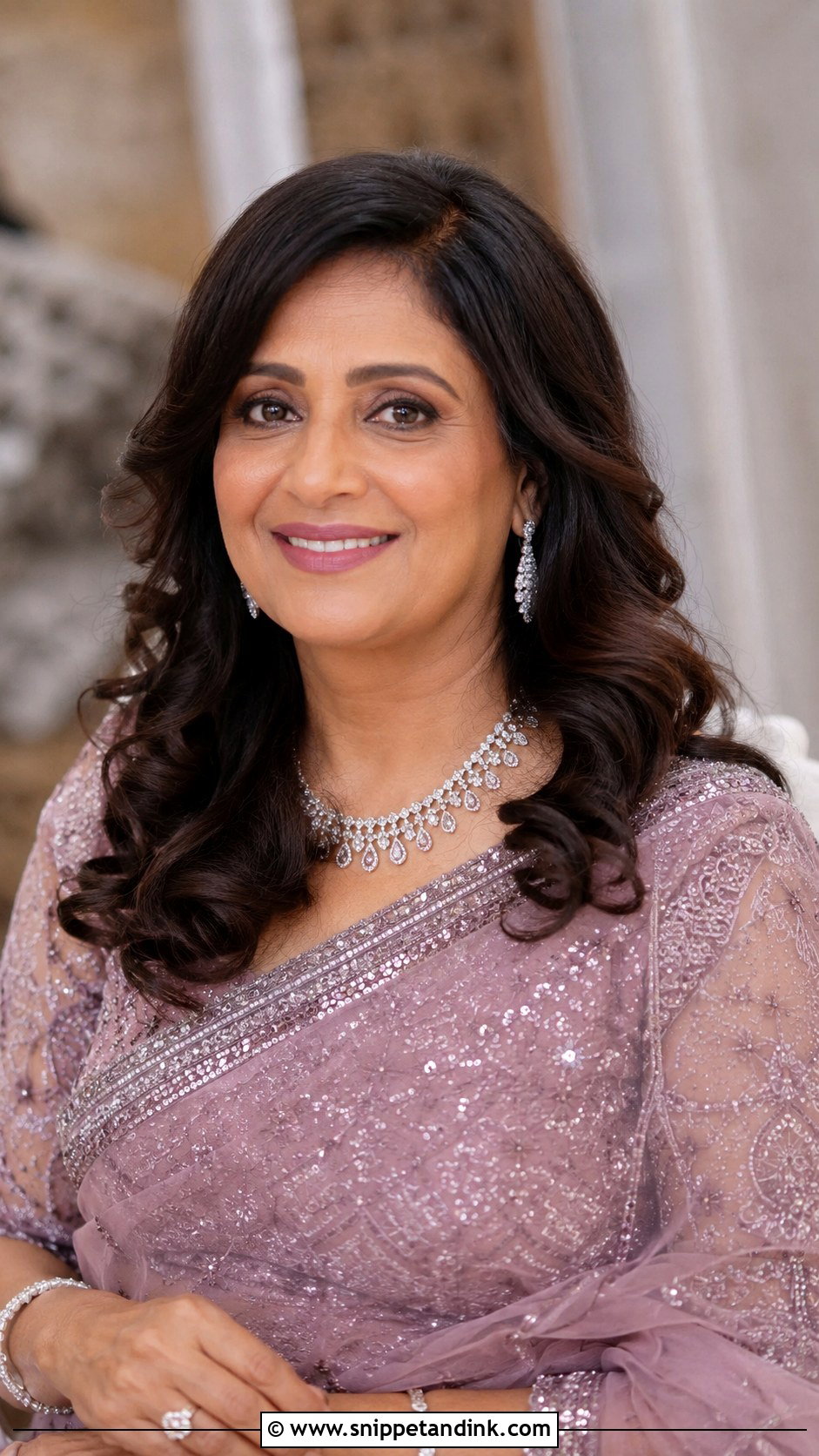
Curls for an evening event need to be loose and smooth. Tight ringlets read like a prom style on the mother of the groom. I like them with face-framing layers or a soft side part, worn with a reception saree, lehenga or gown. A light-hold spray is plenty; a strong one turns curls crunchy by the time dinner is served. If her hair is fine, two clip-in wefts placed below the crown add fullness without showing. Frizz is the real problem with this look, so I smooth a little cream through the mid-lengths before the final brush-out.
10. Indian Groom Mother Side Swept Waves
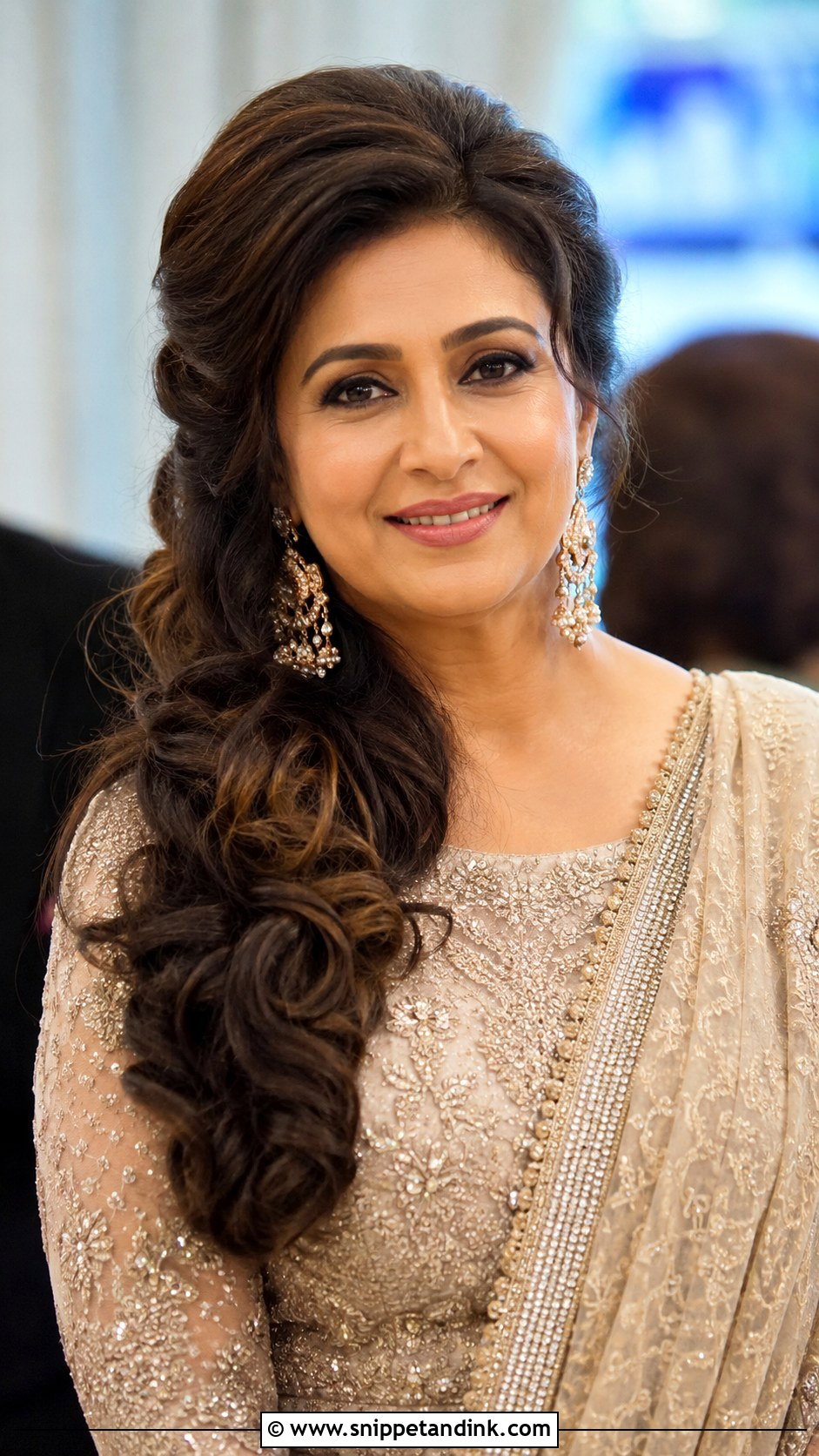
Side swept waves feel dressy for a reception or sangeet and leave one side of the neck clear for earrings or a statement blouse. I pair them with lehengas, pre-draped sarees and evening gowns. Crown height is how I adjust them to the face: more lift for a round face, less for a long one. Dancing is what usually undoes them, so I hide two crossed pins behind the ear on the swept side. They take the weight of the hair where it is pulled across, and nobody sees them.
11. Indian Groom Mother Long Braid With Flowers
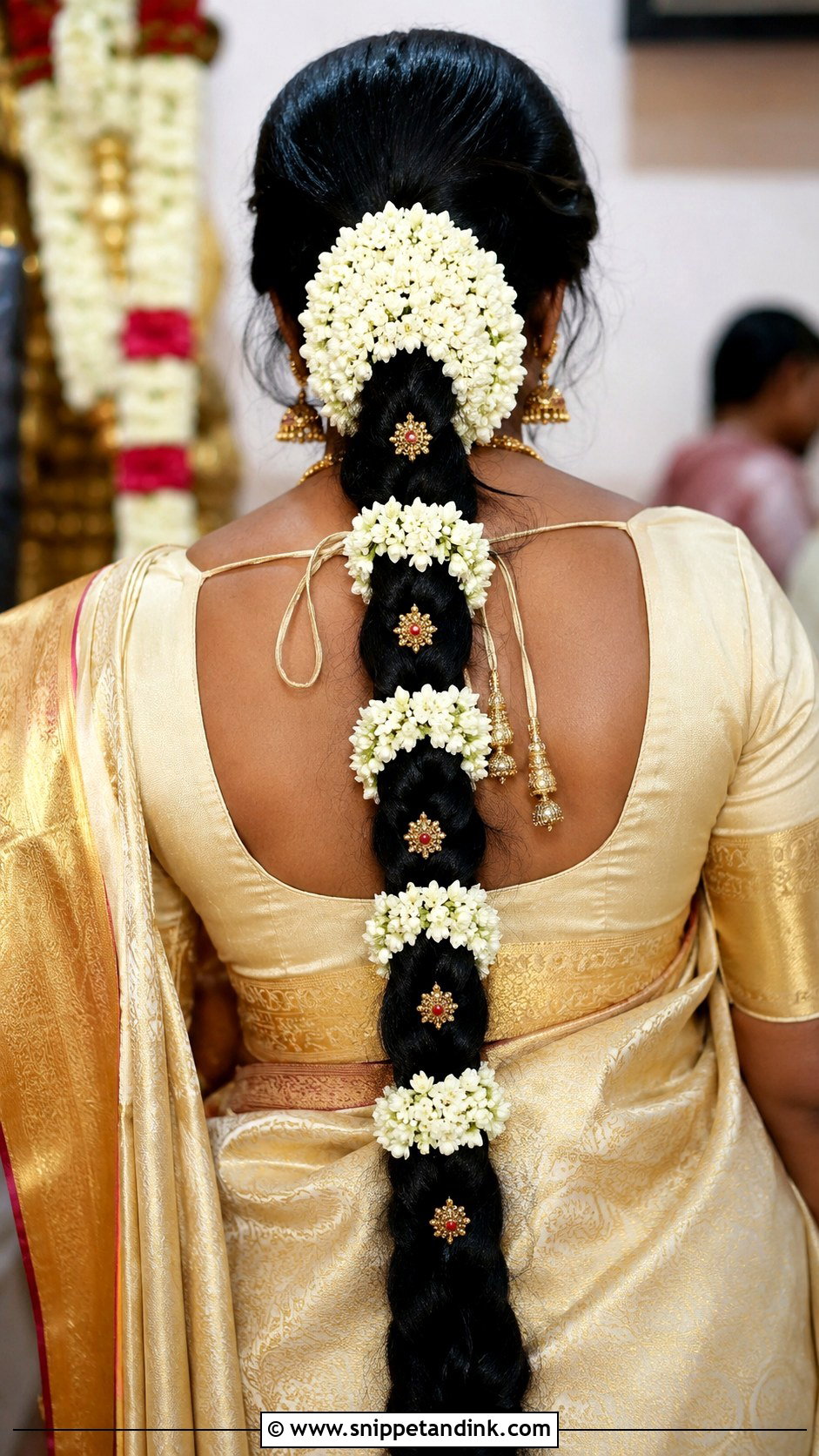
At South Indian weddings especially, a long braid dressed with jasmine or a braid ornament is the traditional partner for a silk saree. It keeps all the hair under control and draws a clean line down the back, which shows every time she turns during the rituals. Her own hair should reach at least mid-back. Shorter hair gets a matching braid extension, which I attach at the nape and blend over the first few crosses so the join disappears. The front can be center parted, softly puffed or side parted. I keep the decoration in proportion to the zari border, so the back view never looks crowded.
12. Indian Groom Mother Fishtail Braid
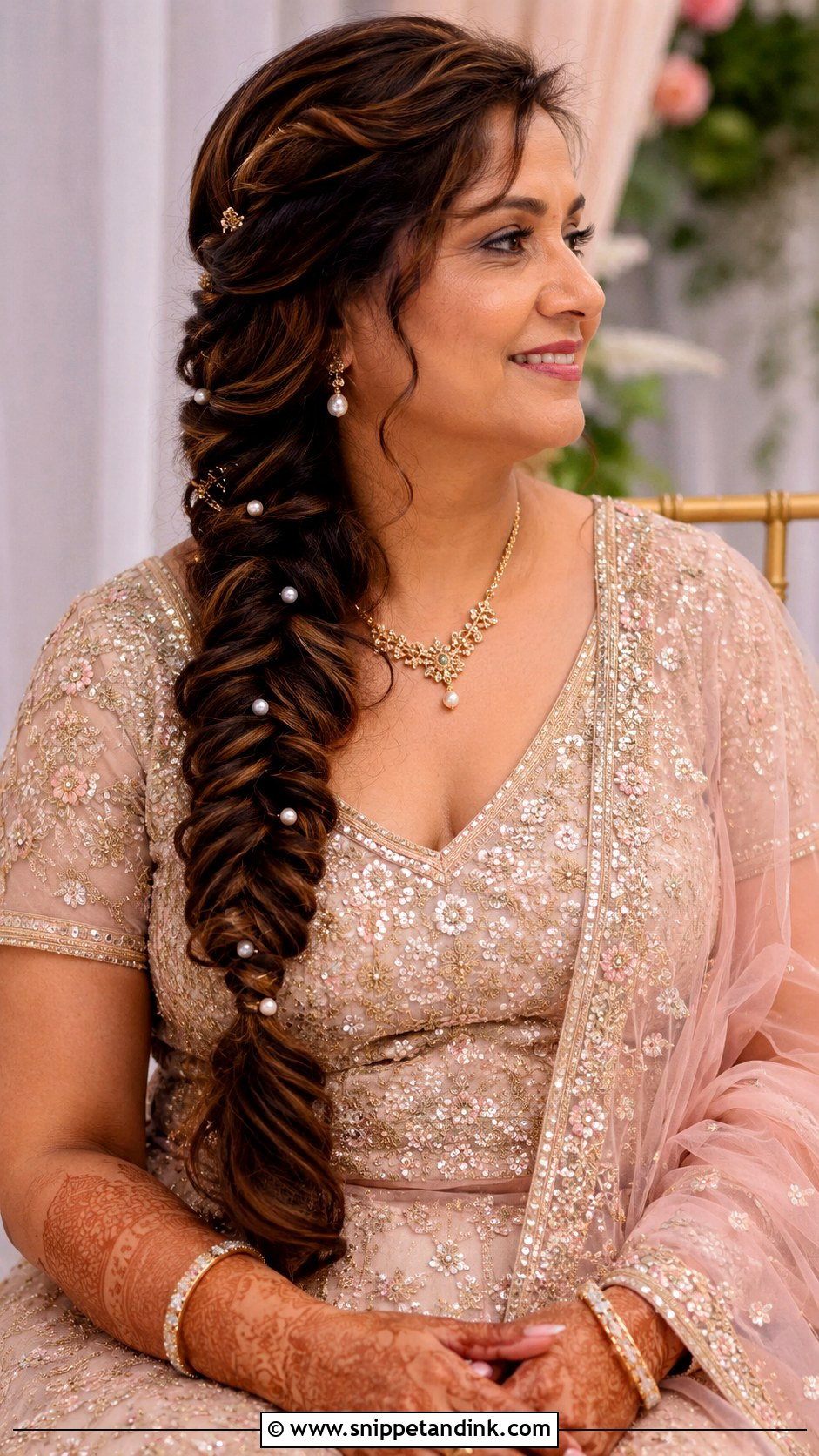
For pre-wedding functions like mehndi, haldi or sangeet, a fishtail is more relaxed than a three-strand braid but still tidy. It can run down the back or over one shoulder, depending on the neckline and jewelry. I loosen the edges only a little for a mother’s look; pulled wide, it starts to resemble a festival braid. A delicate paranda or a few pearl pins finish it. For haldi, warn her that turmeric will land on it, so leave out anything she wants to wear again.
13. Indian Groom Mother High Bun
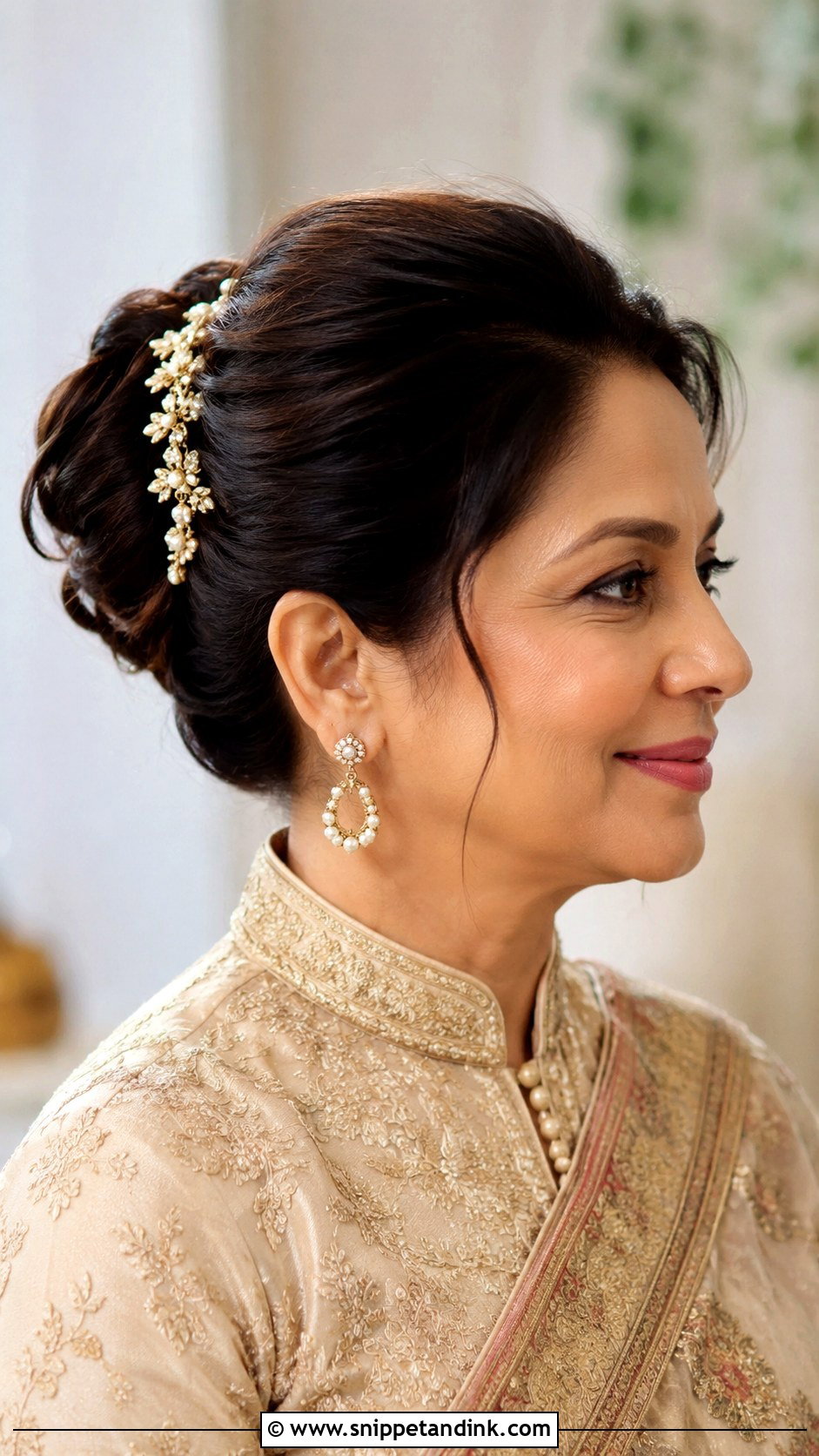
A high bun lifts the face and solves the high-neck blouse, where a low bun gets crushed against the collar every time she looks down. Placement matters more than shape: set at the back of the crown rather than right on top, it stays out of bridal territory. I build volume at the crown first so the bun doesn’t look perched on a flat head. A jeweled comb or plain gold pins are enough decoration. In hot weather it is the coolest style here, because nothing touches the neck.
14. Indian Groom Mother Short Hair Waves
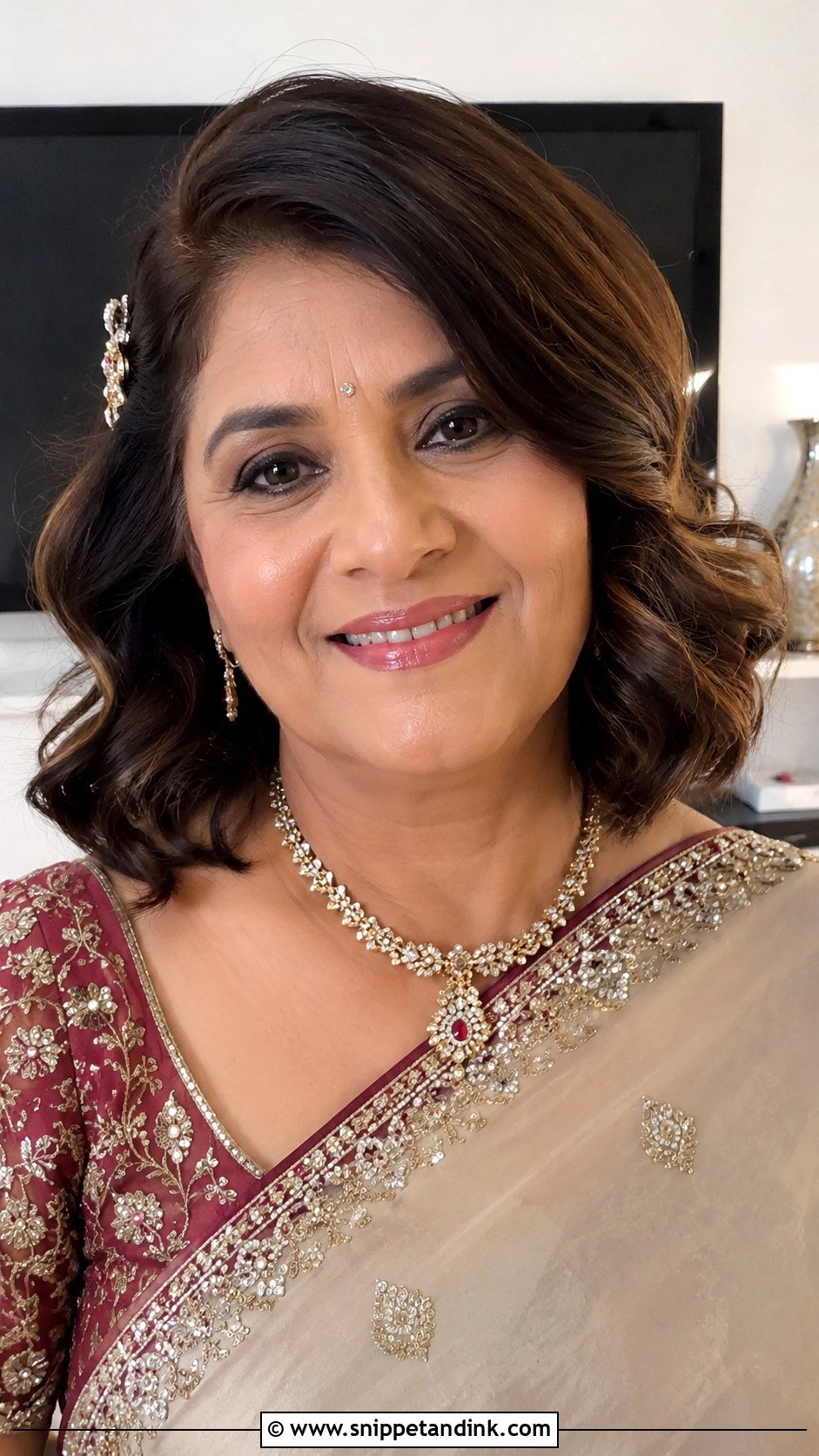
Short hair doesn’t need extensions to look dressed for a wedding. A waved bob or shoulder-length cut gets root lift from a round brush and soft bends through the ends, with a side part if she likes it. A small jeweled clip behind one ear adds the festive note. For a mother who dislikes heavy pins or extensions, this is the easiest day she could have, since the cut does most of the work. I ask for any trim two weeks ahead rather than two days, so the ends have settled and the line looks natural.
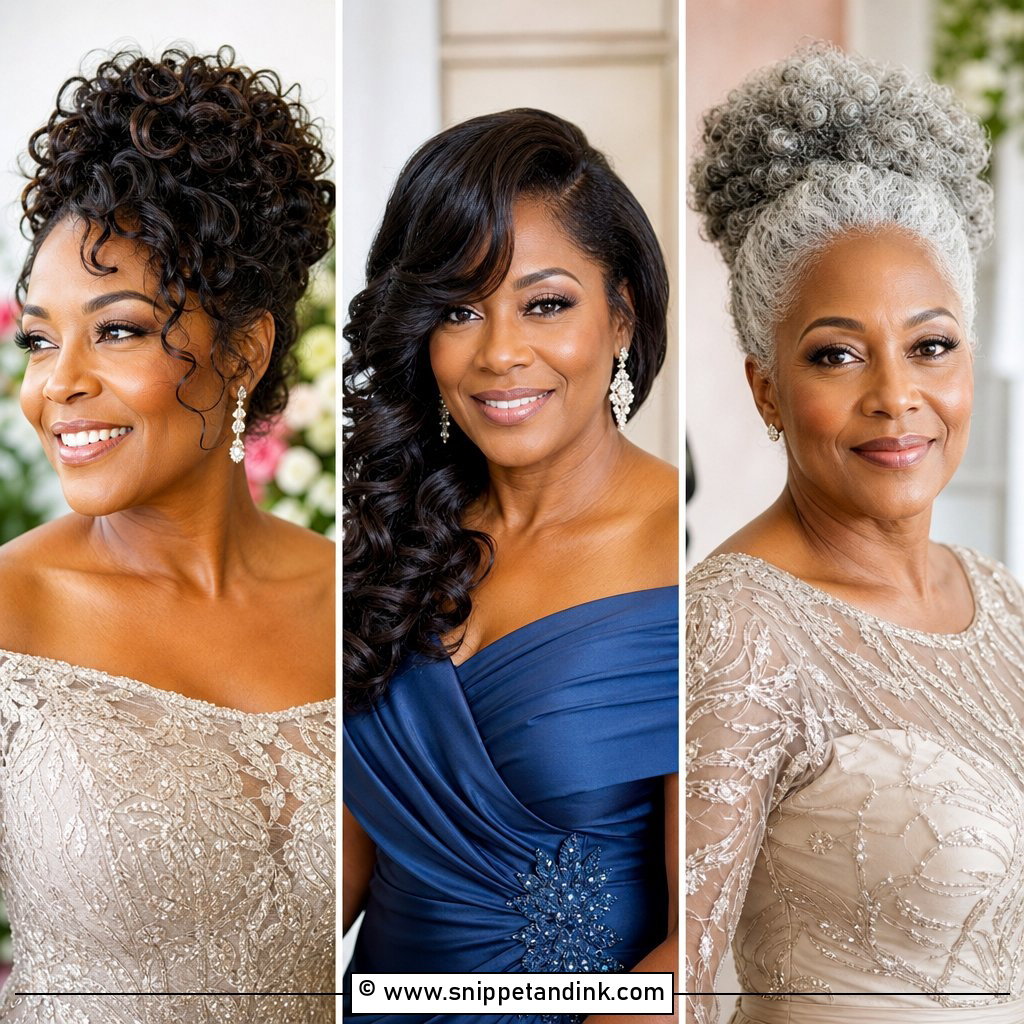
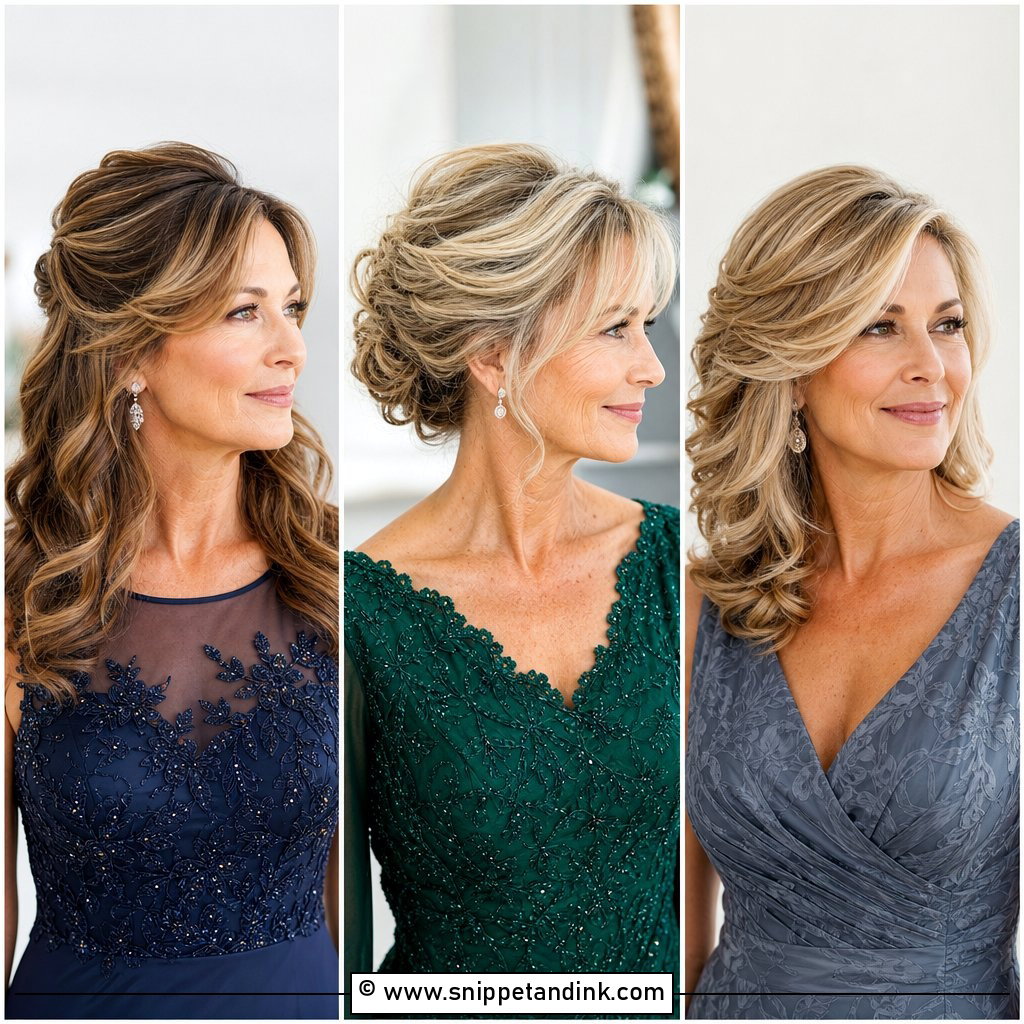
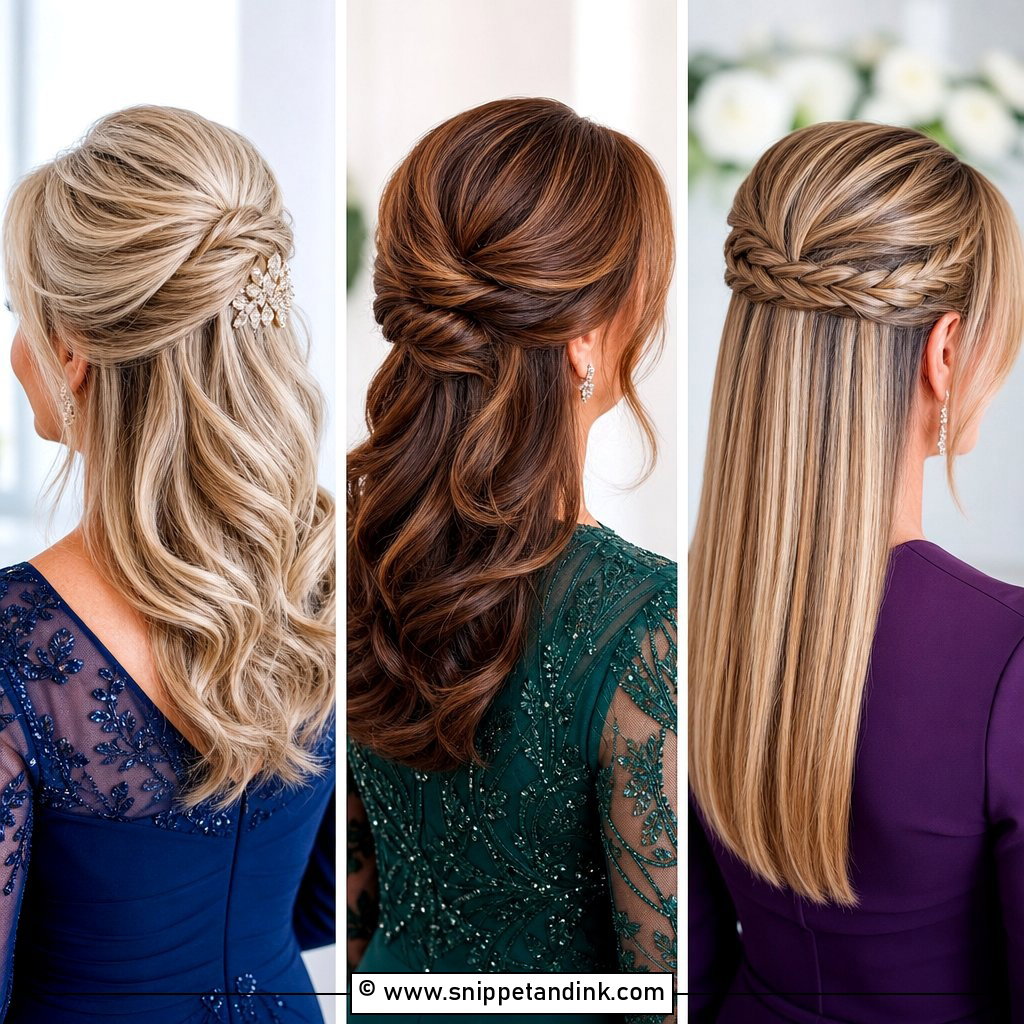
15. Indian Groom Mother Shoulder Length Blowout
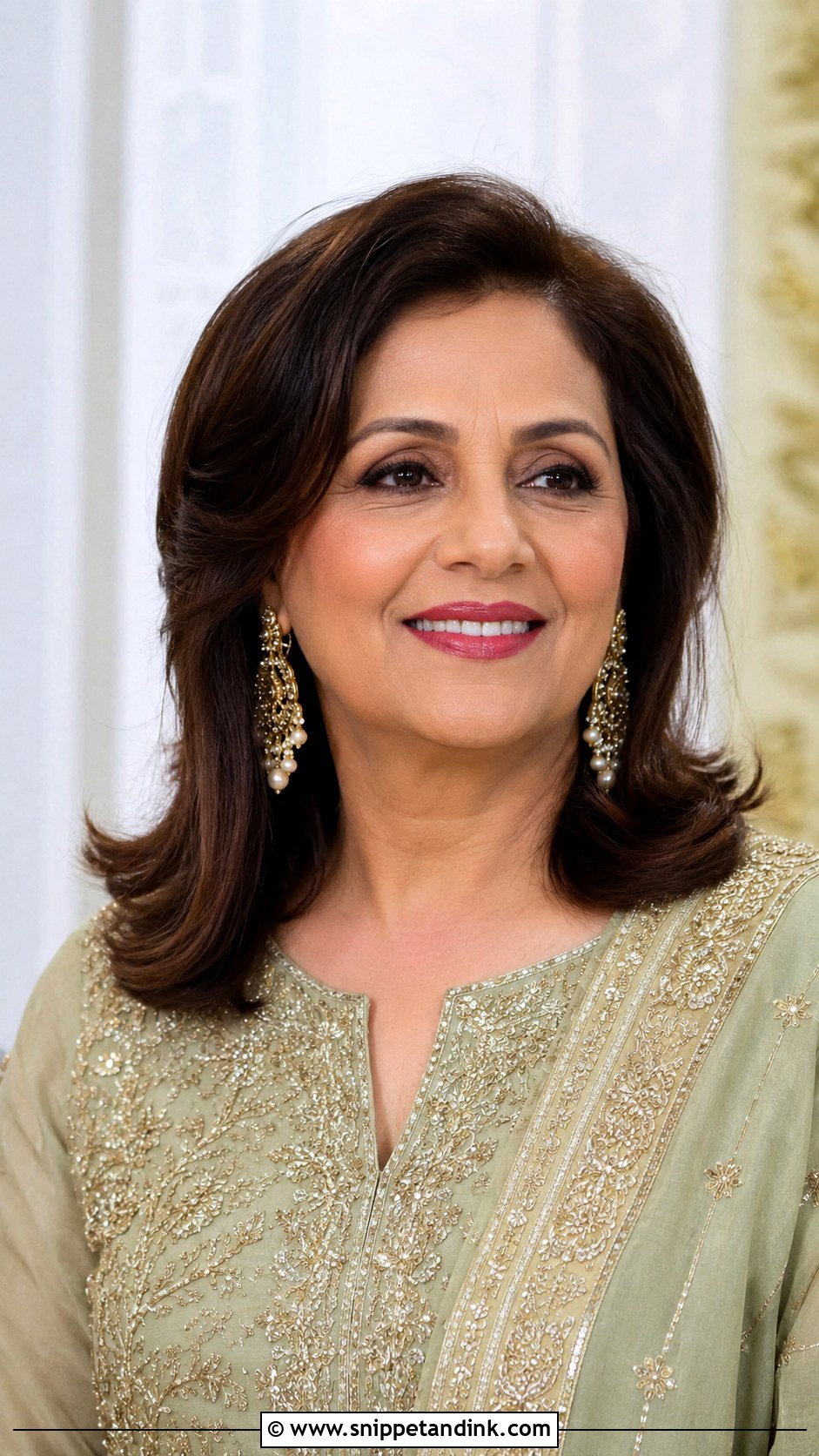
A blowout suits the mother who wants her hair open and smooth. The roots are lifted, the lengths smoothed and the ends turned under. It goes with sarees, lehengas, salwar suits and reception gowns, and women who get headaches from tight buns usually love it. Its weak point is humidity: in a hot marquee, a blowout can puff out within an hour. I seal it with an anti-humidity spray and send her off with a small paddle brush in her bag.
When the Pallu Goes Over Her Head During Rituals
In many families the groom’s mother covers her head for parts of the ceremony, and that one habit rules out half the styles above. A high bun or a French roll pushes the pallu up into a tent shape that slides off every time she bends. A low bun at the nape lets the silk drape over it and settle.
I pin the gajra below the bun rather than around it, so the pallu rests on hair instead of crushing the flowers. To stop the drape sliding back, I set a crossed pair of bobby pins at the crown and catch the pallu to that anchor with a small saree pin. The weight then pulls on the pins, not on her hair. Try it at the trial with the real saree, because a heavy Kanjeevaram behaves nothing like a light georgette.
Grey, Fine or Thinning Hair Under Wedding Pins
Most mothers I style are dealing with at least one of these, and each changes how I work.
Grey and silver strands
Grey hair is often coarser and resists a curl, yet it can scorch or yellow under a very hot iron. I lower the heat and hold each section a little longer. If she already uses a purple shampoo, a wash with it two or three days before keeps the silver bright in photos; I wouldn’t introduce a new product that close to the day.
A thin crown
Gentle teasing underneath, a bun padding matched to her hair colour and a tinted root spray along the part hide far more than a flower placed over the gap. The padding has to match closely, since a dark doughnut shows through grey hair under flash.
A sensitive scalp
Fewer, longer U-pins spread the weight better than dozens of small grips. If she starts getting a headache, the gajra is the first thing to come off after the ceremony, and the style will still hold without it.
A Bun for the Pheras, Waves for the Reception
For the ceremony, a low bun with gajra rarely lets anyone down, and side swept waves or a half up style come into their own at the reception. Braids, textured buns, French rolls and blowouts each sit somewhere between traditional and modern, so let the neckline, the weight of the jewelry, the weather and the length of the event shorten the list for you. Then do a trial wearing the actual blouse and jewelry, with the pallu pinned as it will be on the day. A style that looks right in the salon mirror can feel very different after a silk pallu has dragged on it for an hour.
You'll Like These Ideas:


Leave a Reply