
When a bride says she wants Italian wedding hair, she usually means something soft that still has a clear shape: a smooth chignon, glossy waves, a relaxed bun, a braid running through it. The look is easy to love and harder to make last, because Italian venues are rarely gentle on hair. Vineyard heat, sea air on the coast, cathedral steps and breezy villa terraces all test a style. The fifteen ideas below cover up, down, half-up, braided and veiled options, and I’ve added what each one needs underneath to hold.
Heat, Sea Air and Hilltop Wind at an Italian Venue
The setting decides more about which of these styles survives than the dress does. Before I commit to a look for an Italian wedding, I ask where the ceremony is, what month it is, and whether photos happen outdoors at midday.
- Inland summer heat: vineyards and countryside villas get very hot in July and August, and sweat at the hairline loosens face-framing pieces first. Updos with fewer loose strands last far better than hair worn down.
- Coastal humidity: on the sea, waves and curls relax fastest. If you love hair down, ask for curls set tighter than the look you want, so they soften into it by the reception.
- Hilltop and terrace wind: long veils and loose lengths whip around. A sleek or braided updo with the veil anchored under the bun handles wind best.
- Evening chill: many receptions move outside after sunset, so hair holding up through the day matters more than an afternoon touch-up.
1. Italian Wedding Low Chignon
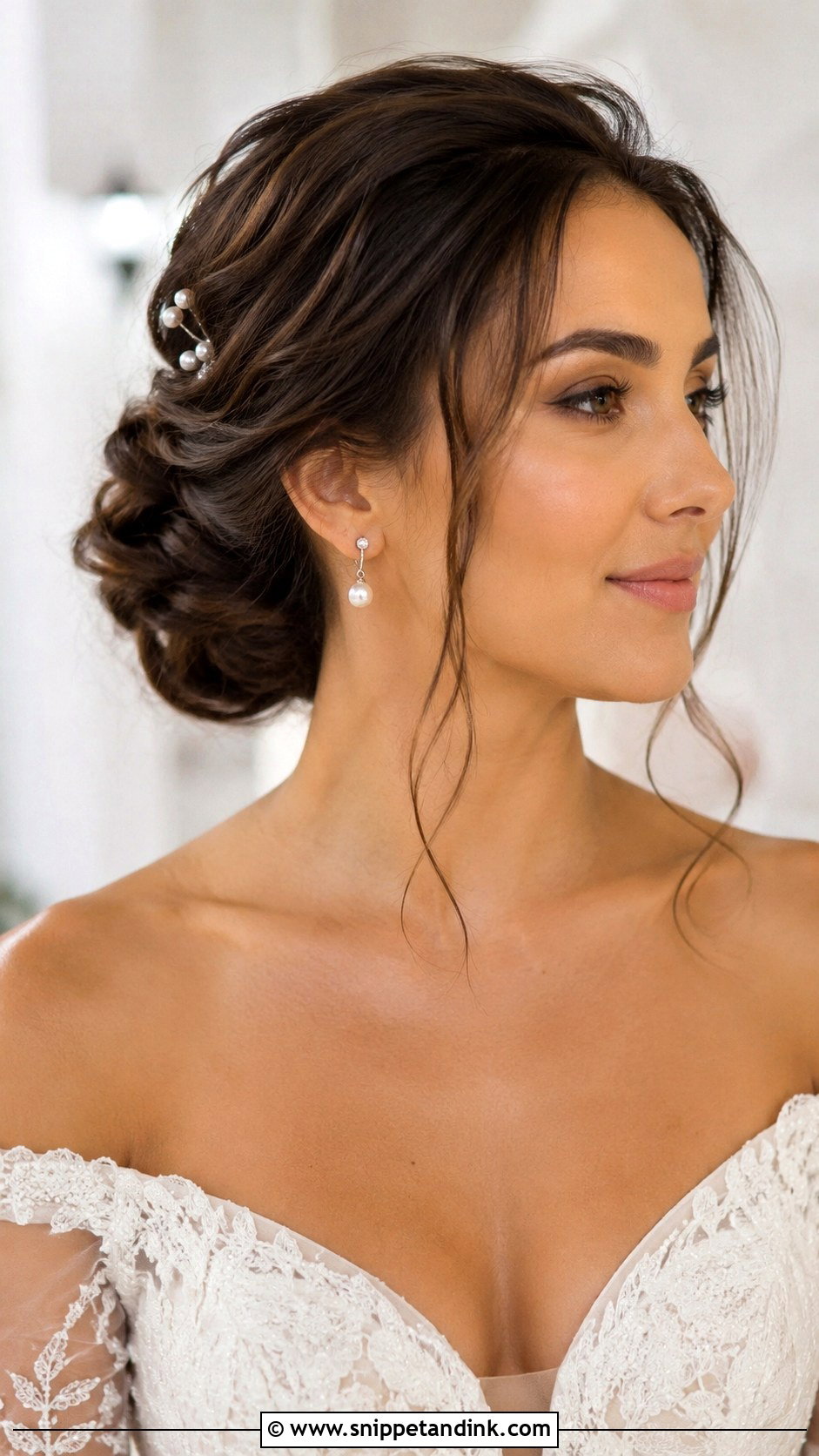
A low chignon is the first style I’d suggest for a formal Italian ceremony. The hair is gathered at the nape and shaped into a smooth or softly twisted bun close to the neck. It pairs well with pearl pins, a cathedral veil, drop earrings or an off-the-shoulder gown, and it keeps hair off your neck on a warm afternoon. I build it on a small anchor of crossed pins before shaping, because a chignon that holds the weight of a long veil needs more than the bun itself to grip. Light crown volume and a couple of fine face-framing pieces soften it.
2. Italian Wedding Soft Waves
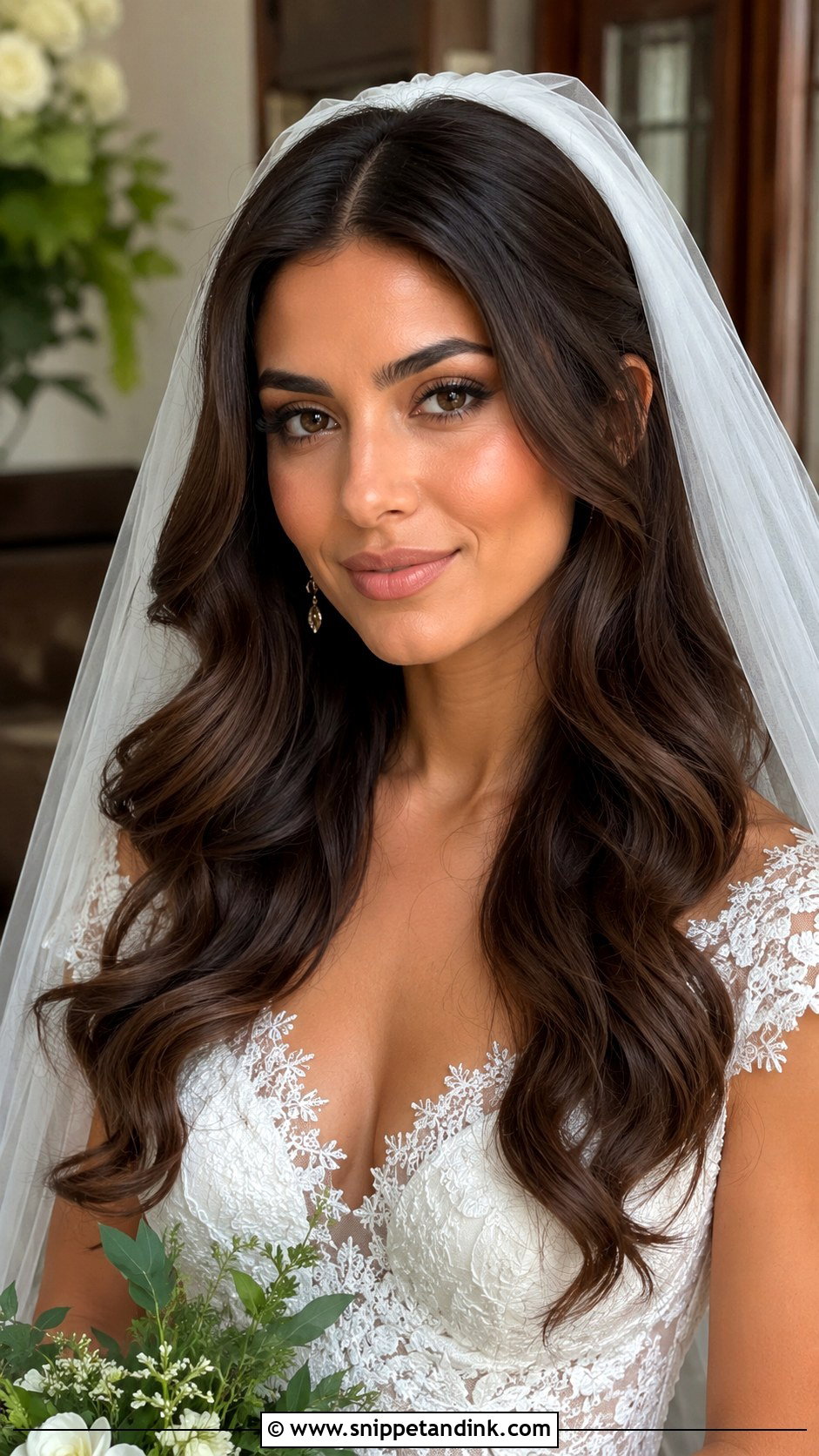
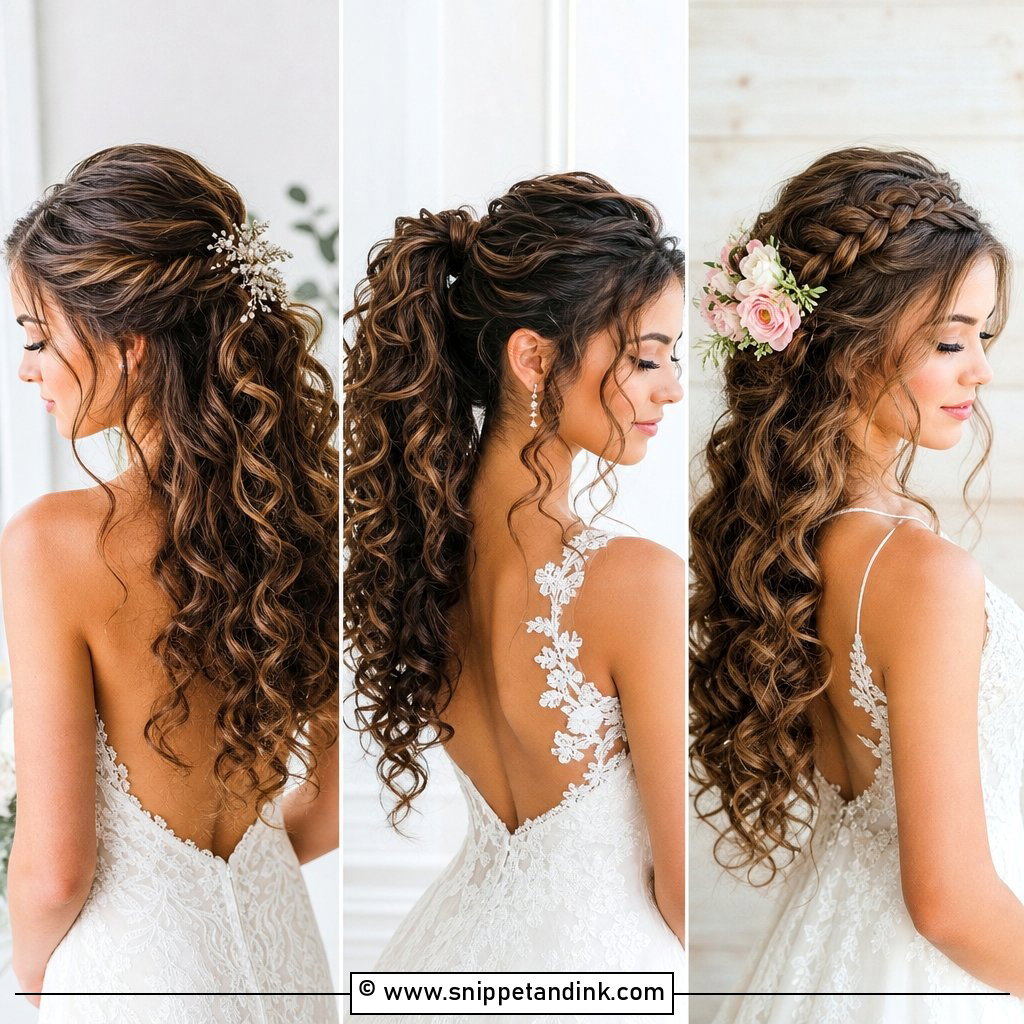
Soft waves suit long or medium hair with light layers, which let the movement frame the face and the neckline. They should look smooth and glossy, never beachy. A center part reads classic; a side part leans toward old-film glamour. The honest problem with waves at a summer wedding in Italy is heat and humidity. I set each section on the iron, clip it in a coil while it cools, and use a flexible spray, which buys hours. A veil at the crown or one side tucked behind the ear finishes it.
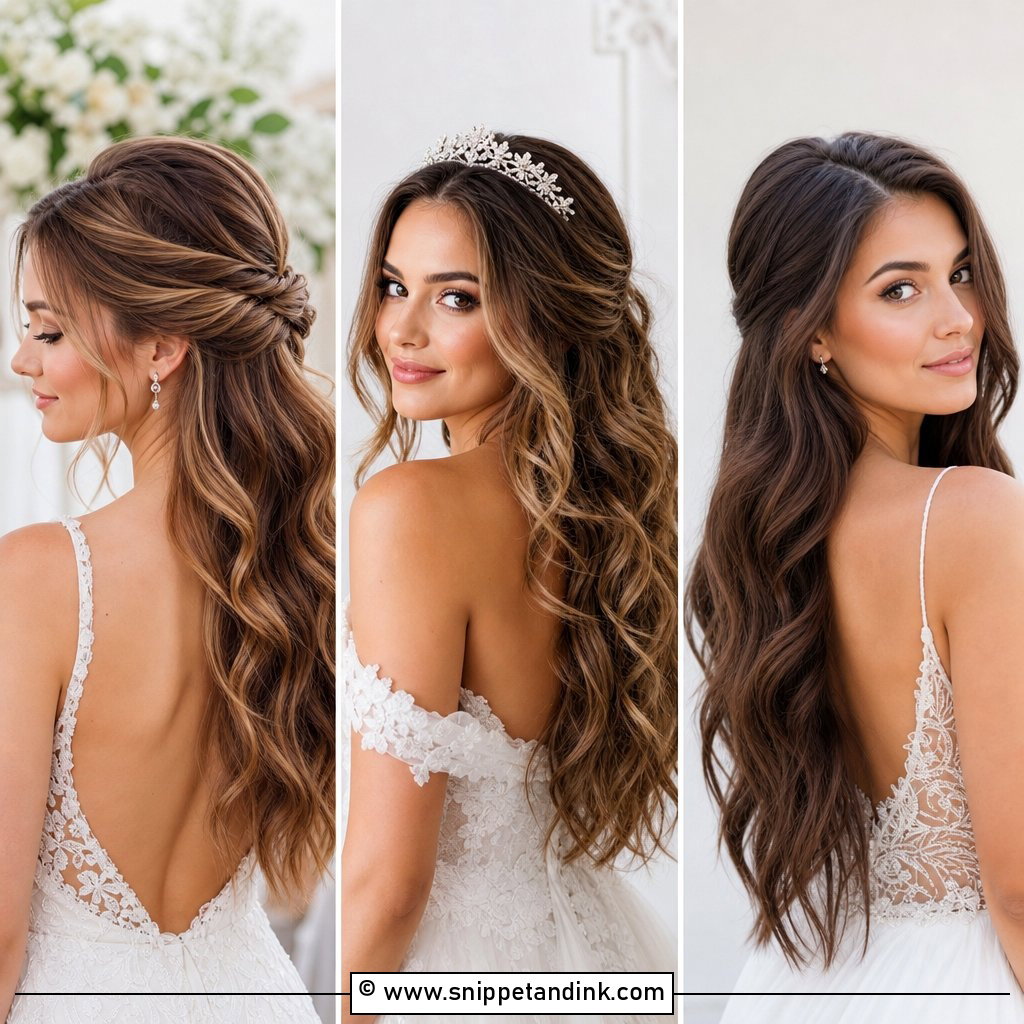
3. Italian Wedding Half Up Hair
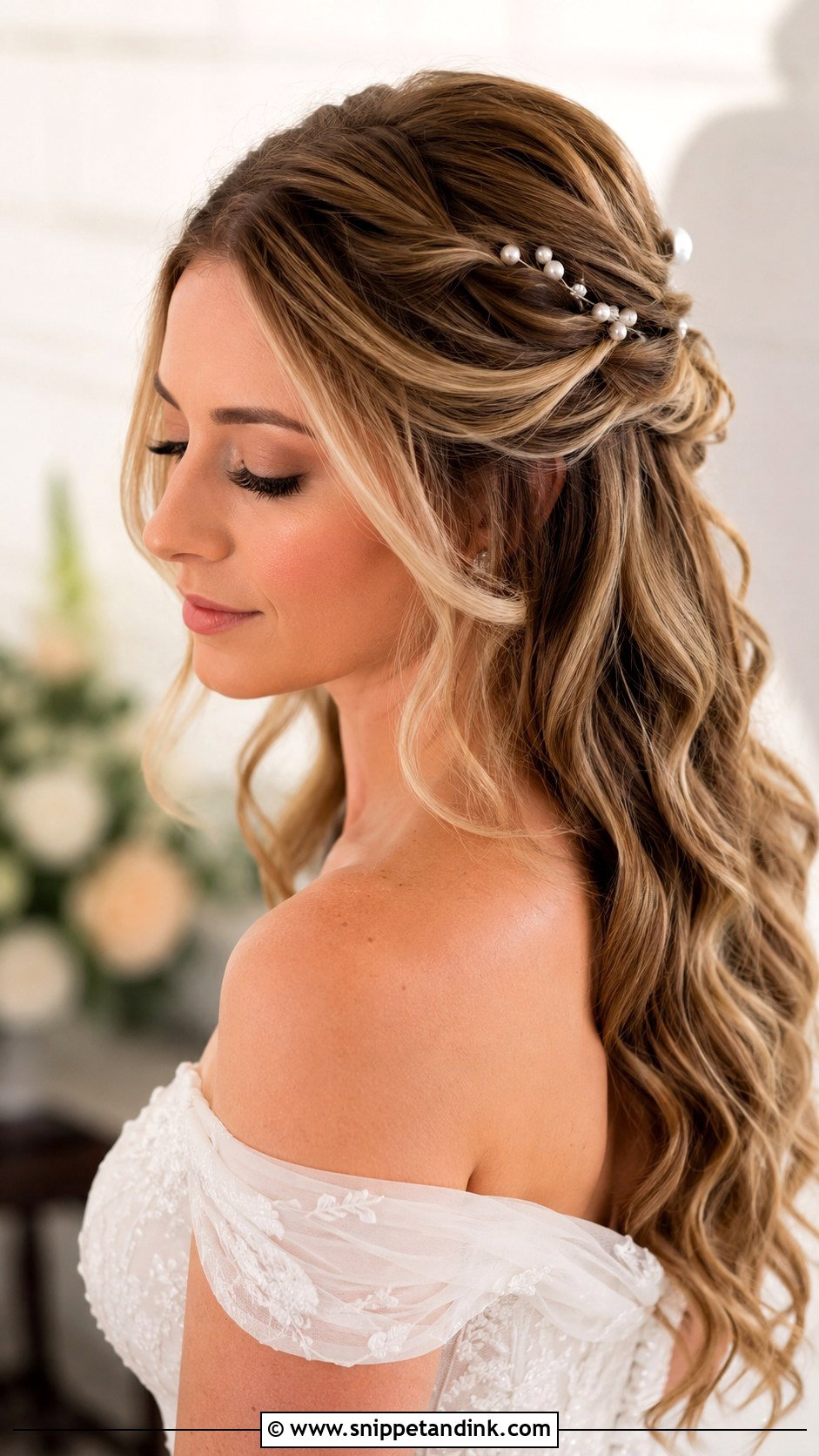
Half-up hair takes the softness of loose lengths and the security of an updo and puts them together. The top section is pulled back and twisted, braided or pinned while the rest falls in curls or waves. It’s one of my favorite styles under a veil, because that pinned section becomes a solid anchor for the comb. Floral combs, pearl clips and fine gold pieces sit naturally there too. I keep the crown softly lifted, never flat, and let a few pieces fall around the face for a relaxed villa feel.
4. Italian Wedding Sleek Bun
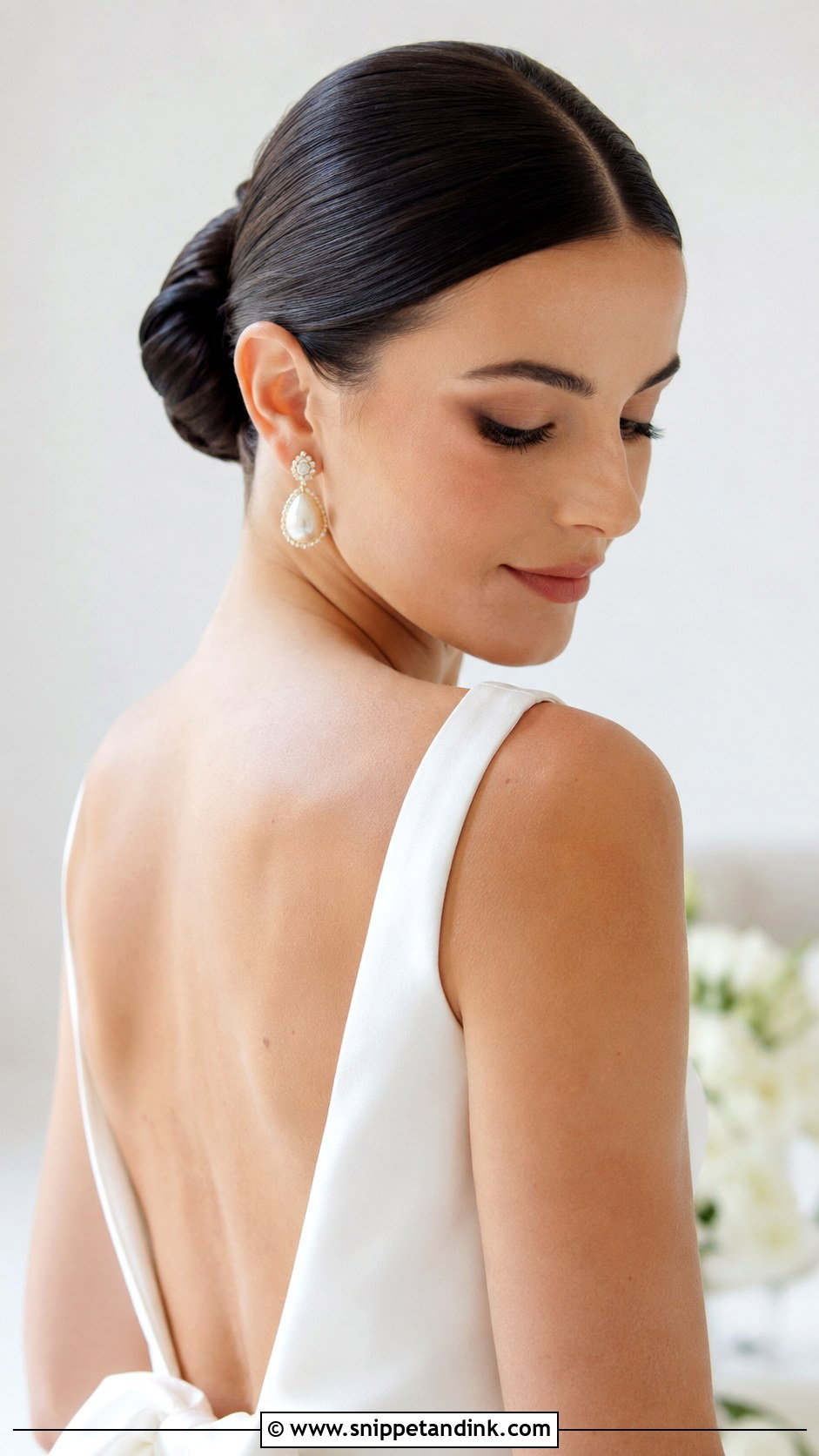
Sleek buns are the modern choice, clean and quite chic. The hair is smoothed back from a center or soft side part and wrapped into a polished bun at the nape or just above. Minimalist gowns, high necklines, structured satin and statement earrings all suit it. What makes it work is shine, not stiffness: I want a glossy finish with controlled edges, not a helmet of gel. It’s my first suggestion for windy seaside ceremonies, since there’s nothing loose for the wind to catch.
5. Italian Wedding Braided Updo
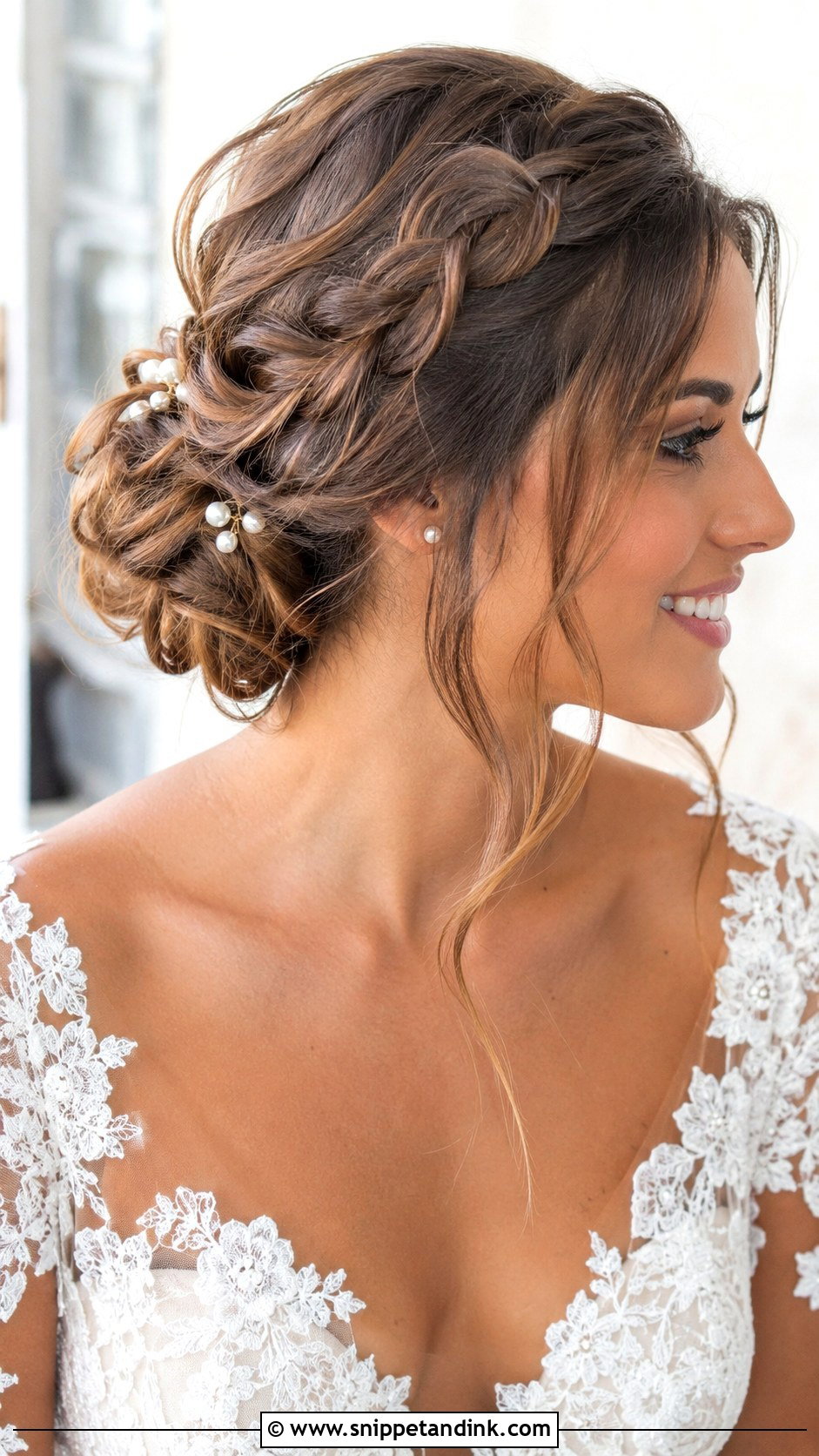
A braided updo adds texture without looking like a festival braid. The braid can wrap into a low bun, cross over the crown or blend into a twisted chignon. Braided sections hold their shape through movement and weather much better than smooth sections do, which makes this a strong pick for outdoor ceremonies. It also rescues layered hair; shorter pieces that would escape a plain bun get locked into the braid. Tiny pearl pins, a soft veil or a simple comb are all it needs.
6. Italian Wedding Messy Bun
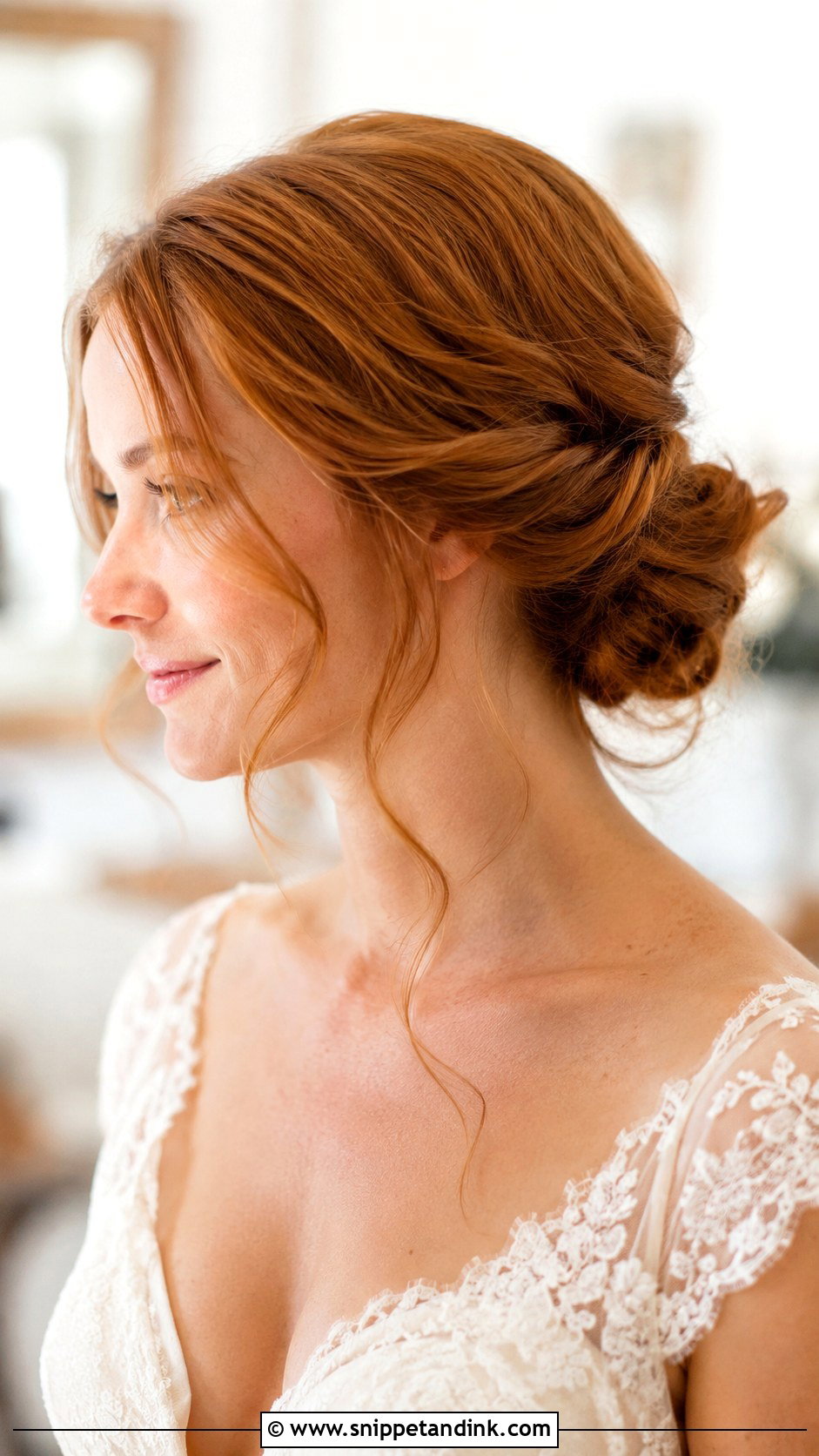
Messy buns need more planning than they look. I curl the hair first, add volume at the roots, then build the bun loosely from those waves and pin it firmly underneath, so the texture is on the surface and the structure is hidden. It sits low or mid-height with a few tendrils near the face. Lace gowns, garden ceremonies and relaxed villa weddings suit it. If your hair is very silky and slippery, a little texture spray first stops the bun from sliding out over the evening.
7. Italian Wedding Hollywood Waves
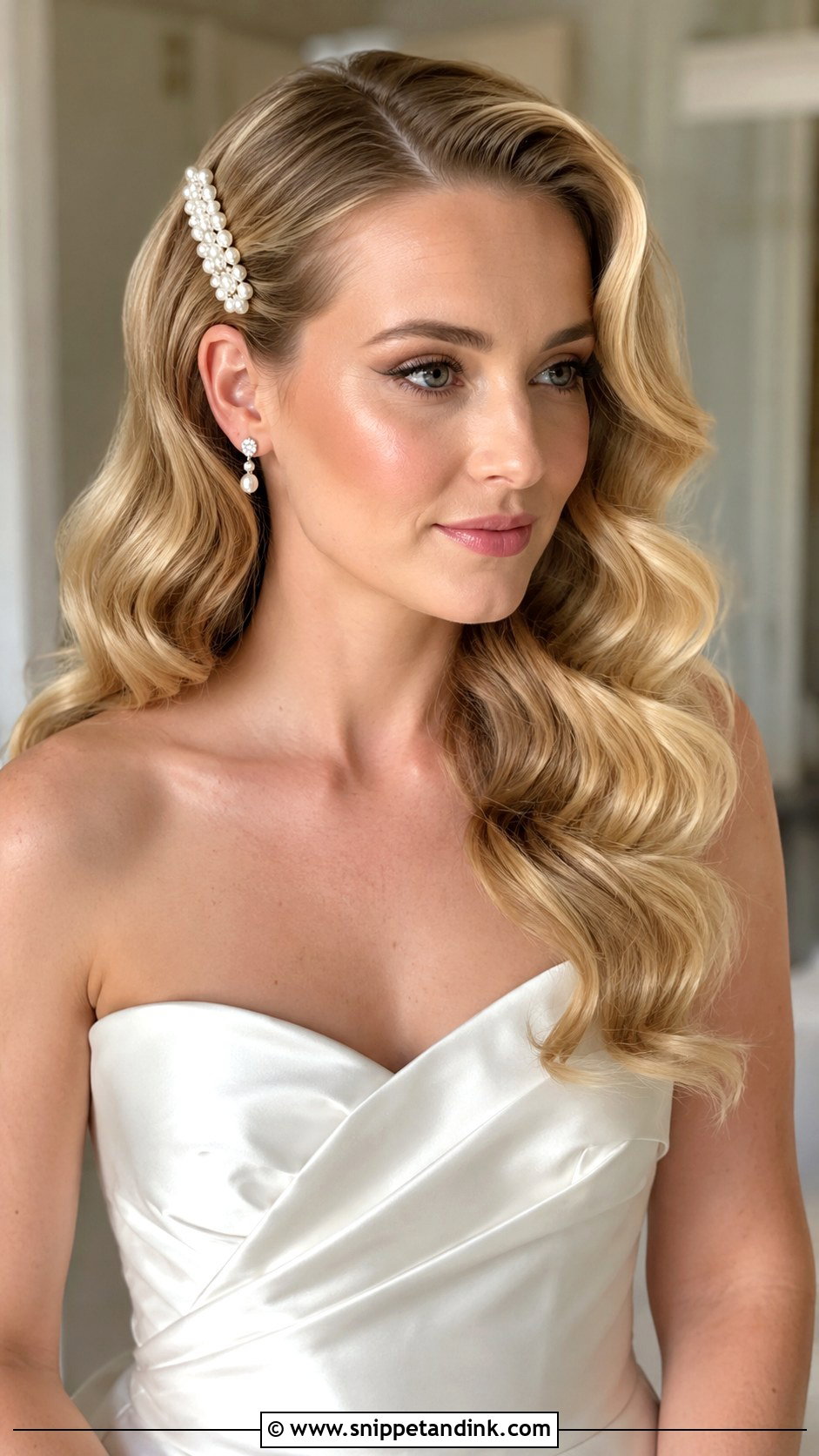
Hollywood waves are glamour with softness: smooth, uniform waves brushed into one flowing shape, usually with a deep side part. They work with strapless gowns, vintage-inspired dresses, satin and bold earrings. For an Italian feel, I keep the shine high and the accessories minimal, perhaps one side clip or pearl barrette. They do take a skilled hand, since every section has to be curled the same direction and set before brushing, and they’re the least forgiving style here in humid coastal air.
8. Italian Wedding Twisted Chignon
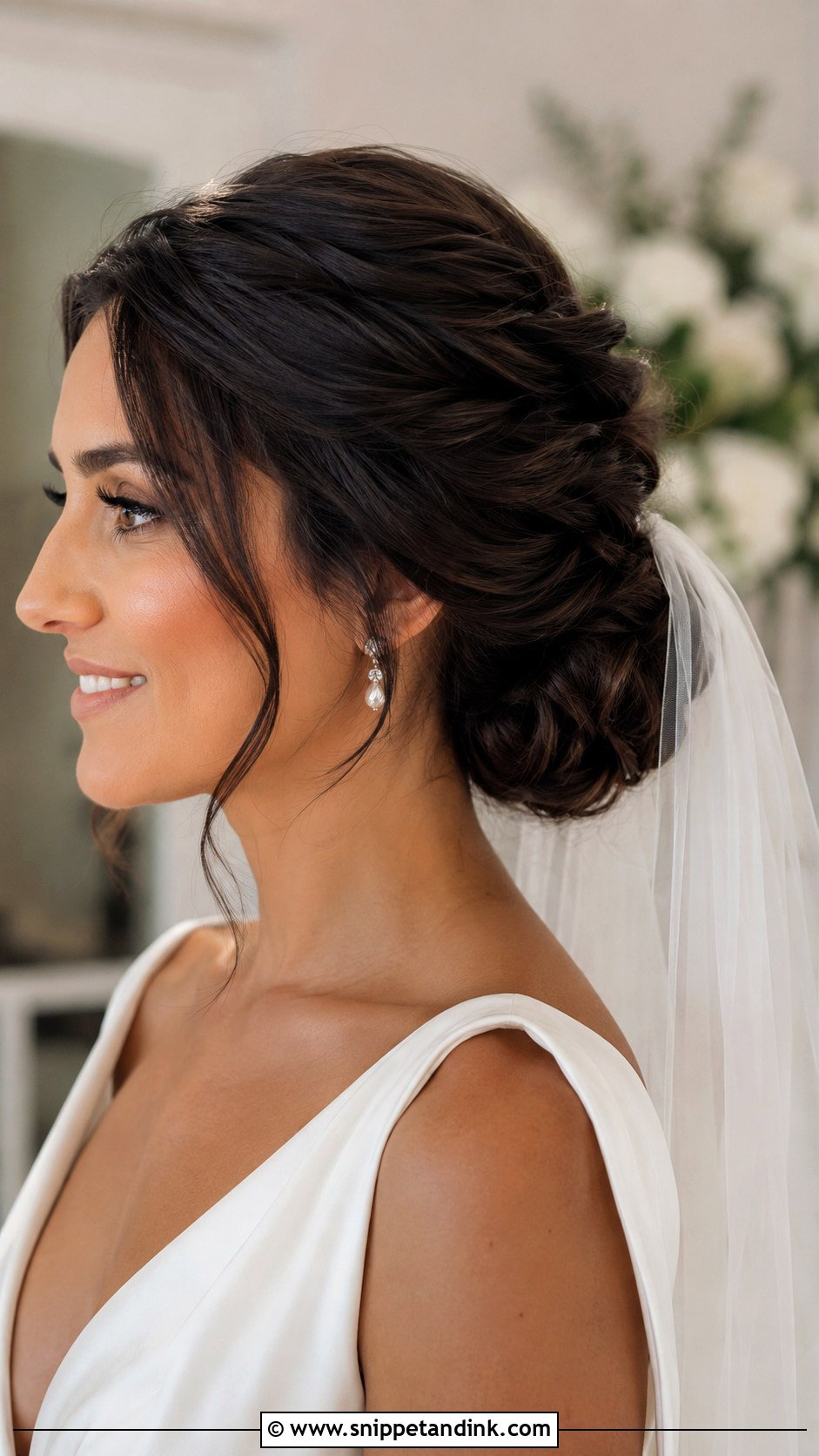
Twisted chignons sit between a sleek bun and a messy updo: the hair is divided into soft sections, each one twisted back and pinned into a low bun with visible movement. It’s more relaxed than sleek but still clearly polished. Twists are good at faking volume, so this works on fine hair as well as medium or thick. Pair it with a sheer veil, pearl pins or a delicate comb placed just above the bun.
9. Italian Wedding Curly Updo
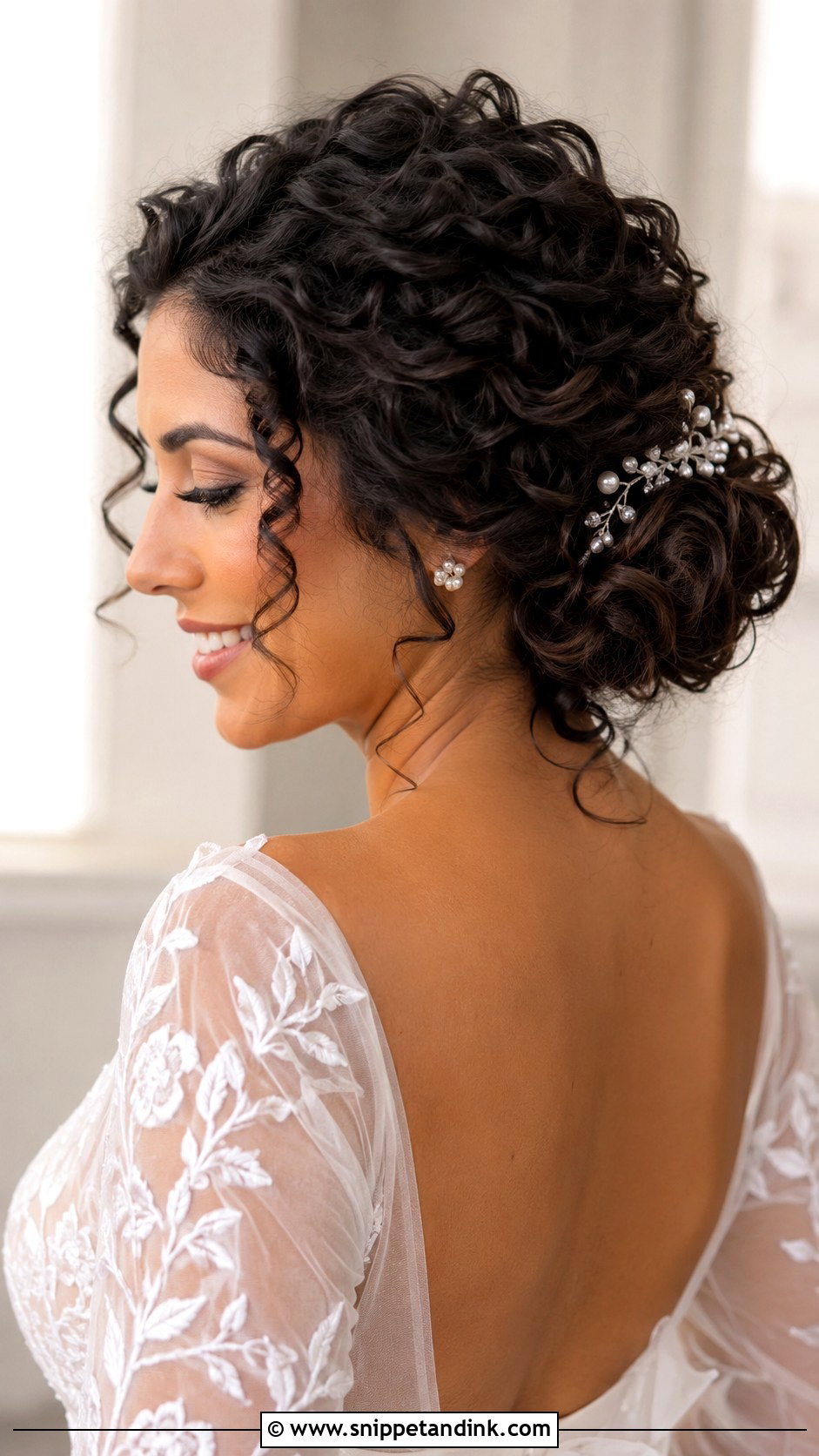
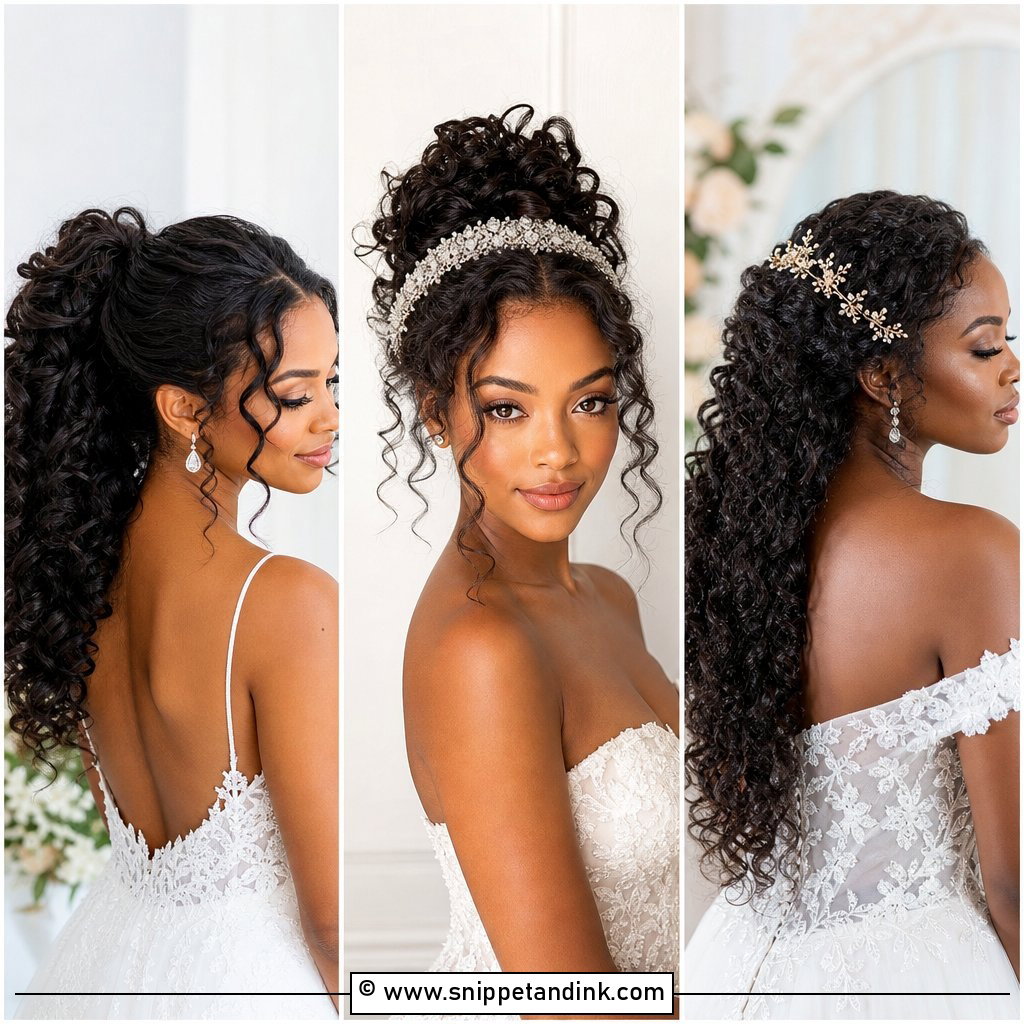
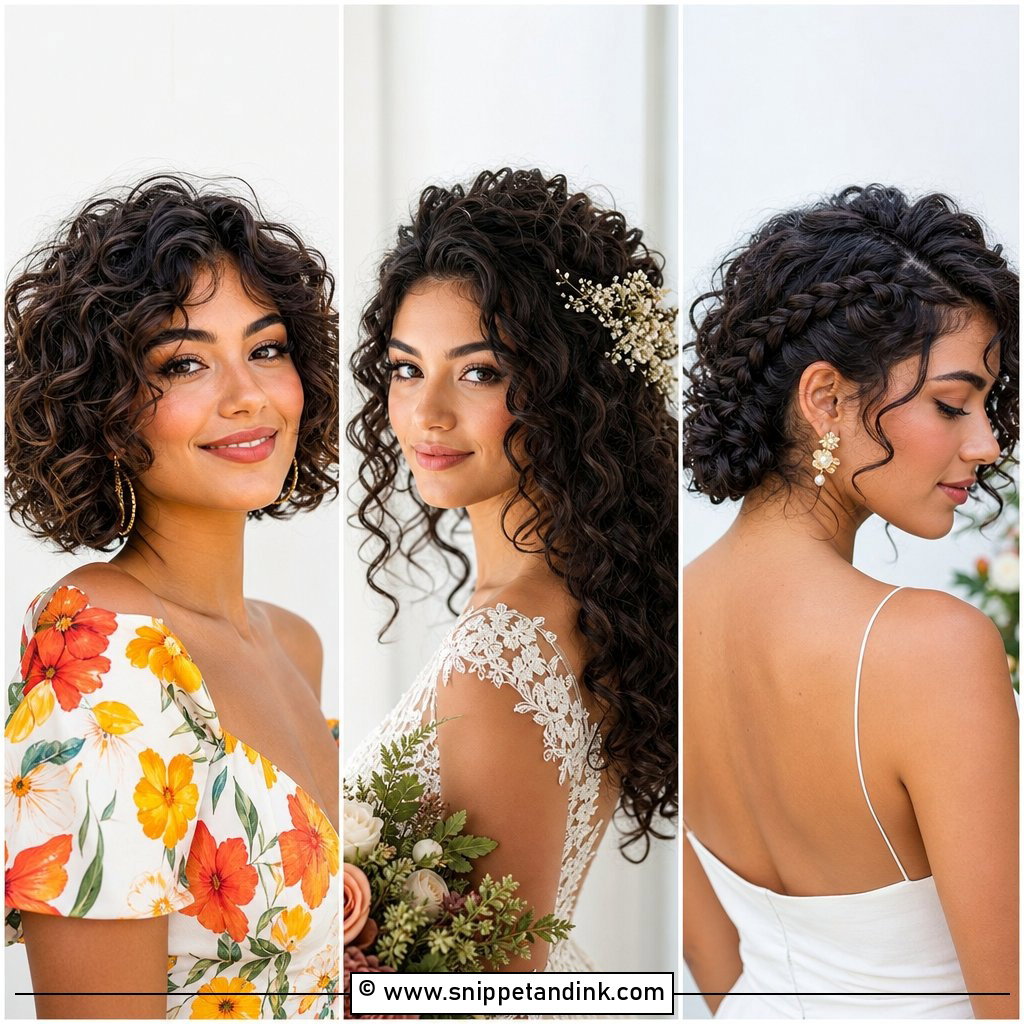
Natural curls deserve to be part of the wedding look, not ironed away. In a curly updo, the curls are pinned into a low bun, gathered at the crown or swept to one side, with their definition left visible. I style curly hair with a curl cream while it’s damp and let it dry fully before pinning; brushing dry curls is what turns them into frizz. Skip heavy sprays that make them crunchy. A few curls around the face, plus pearl pins or a veil, finish the look.
10. Italian Wedding Side Swept Hair
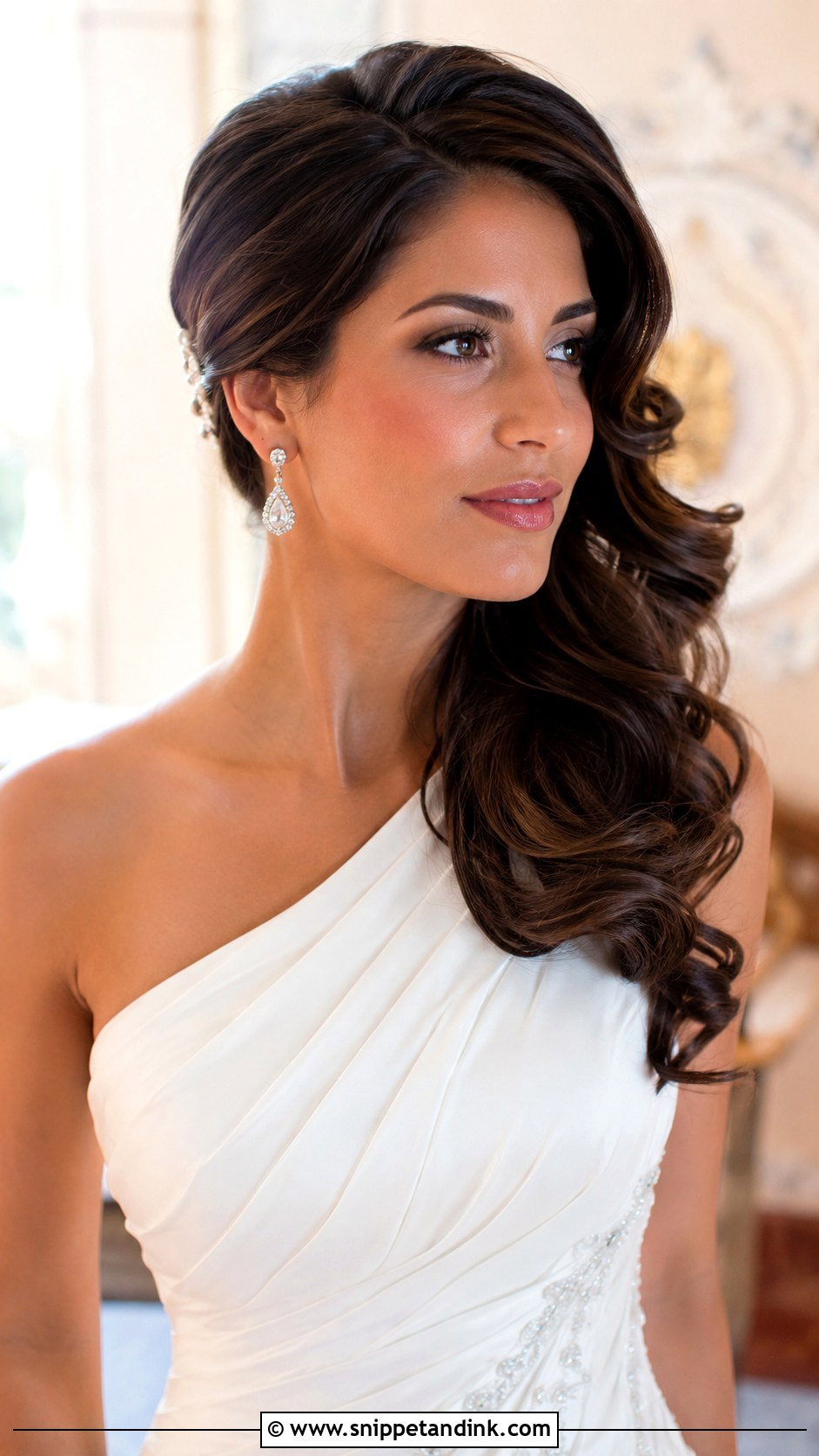
Sweeping curls over one shoulder is a little dramatic in the best way. Most of the hair is curled or waved, then brought across and pinned firmly on the opposite side behind the ear. That’s what shows off an open back, a one-shoulder gown or a detailed neckline. It gives you more control than fully loose hair, too. I usually hide a small twist or braid at the pinned side, which grips better than pins alone, and sometimes cover it with a jeweled comb.
11. Italian Wedding High Bun
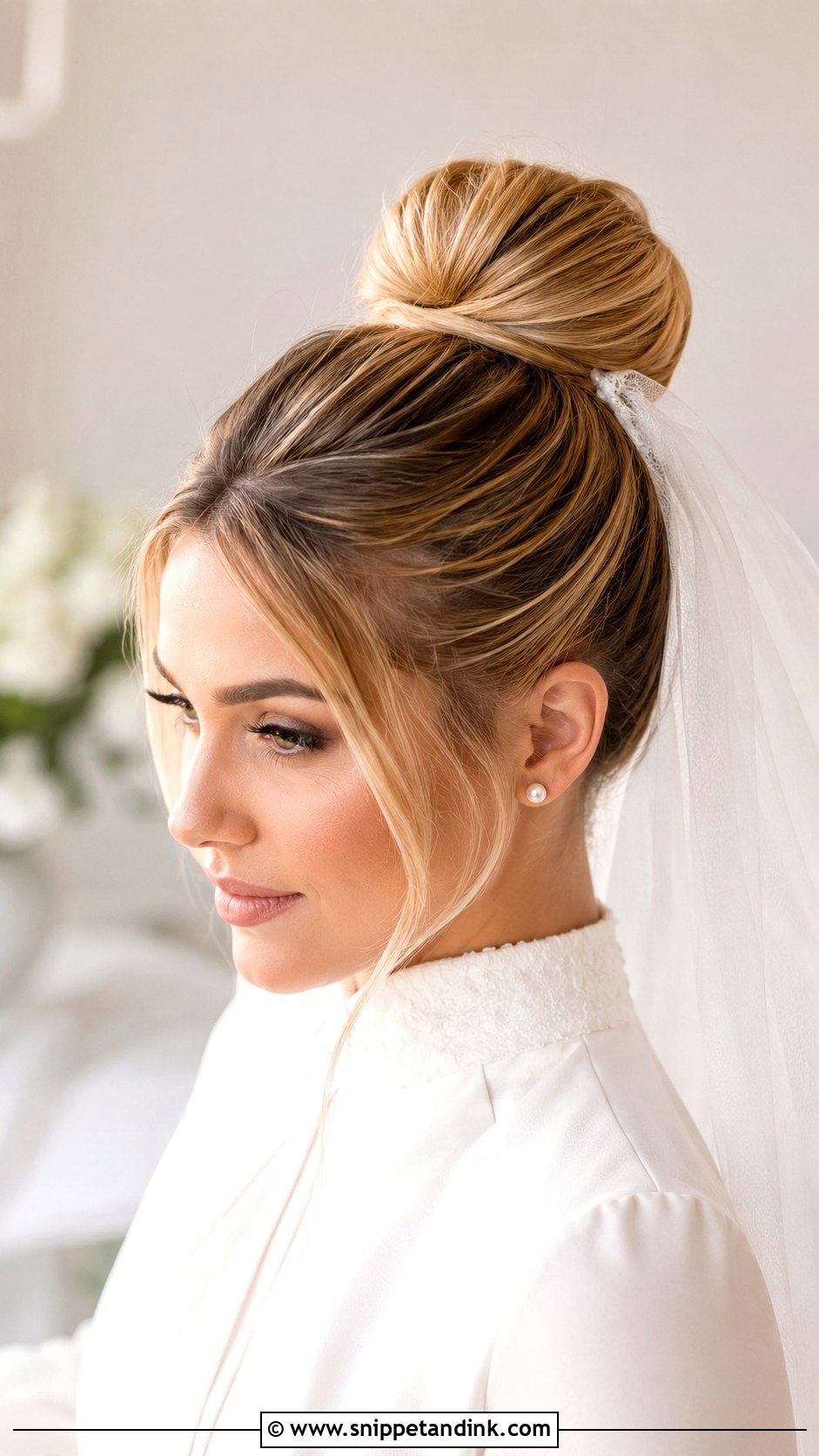
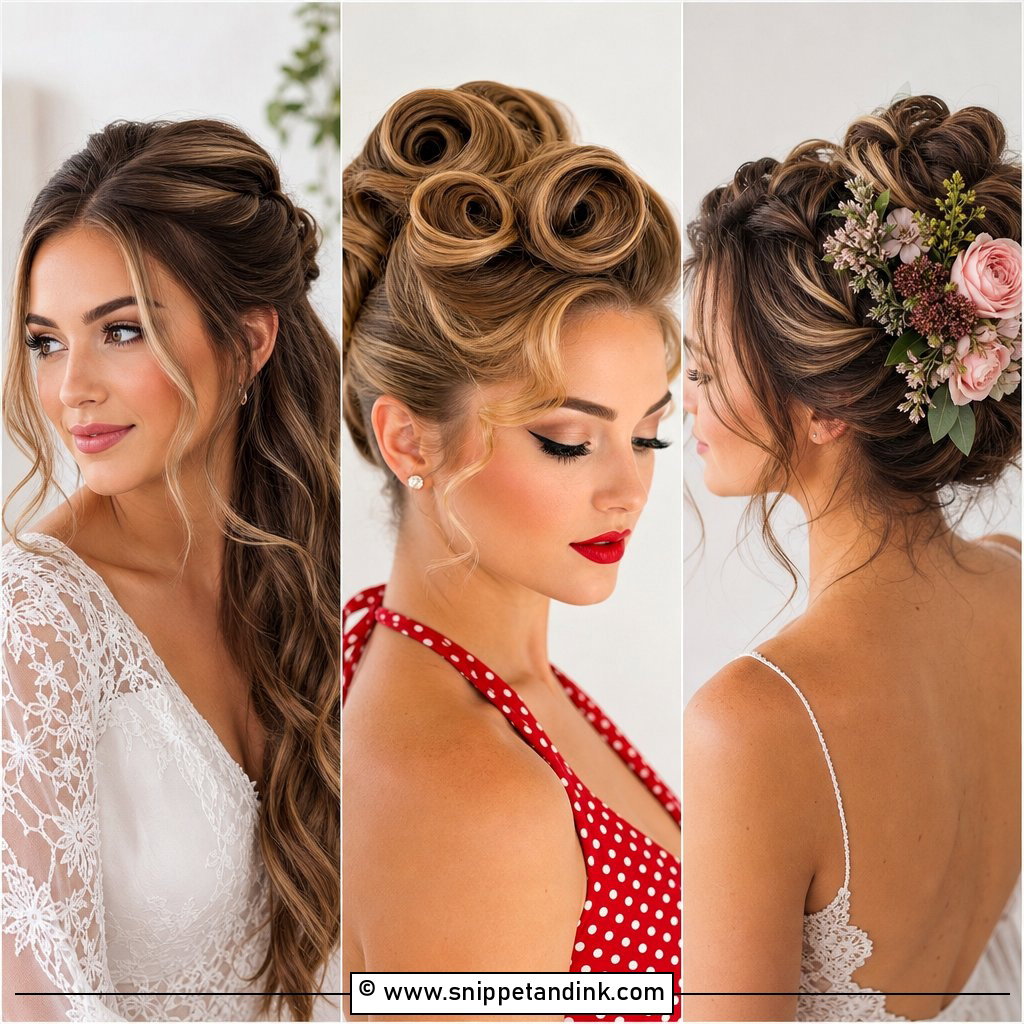
A high bun lifts the face and opens up the neck, so it suits high-neck gowns, long veils and statement earrings. It can be smooth or slightly textured depending on dress and venue, and it keeps hair off the shoulders in the heat. The risk is a severe, pulled look. I leave soft volume at the crown and don’t drag the hairline tight. A veil can sit just beneath the bun, which also hides the comb neatly.
12. Italian Wedding Braided Crown
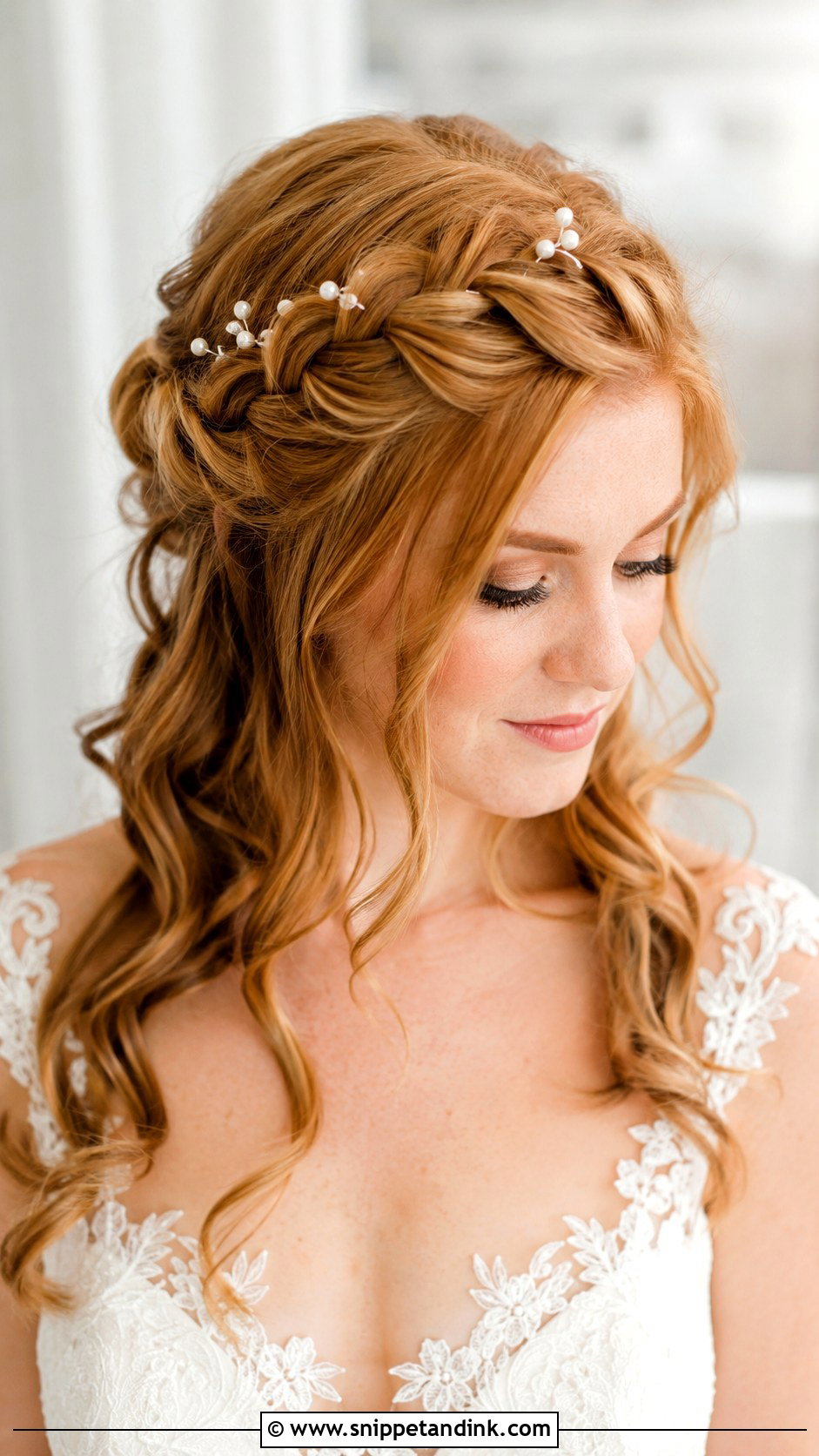
A braided crown wraps around the head or across the top while the rest of the hair is pinned up or left in waves. It suits lace dresses and garden settings, and it holds up well on long days because the braid locks the hair in place. I braid it firmly, pin it at the back and sides, then gently loosen the edges so it doesn’t look tight. Small pearls or tiny flowers tucked into it give it a countryside feel. It’s harder on short layers, which can poke out of the braid by evening.
13. Italian Wedding Veil Updo
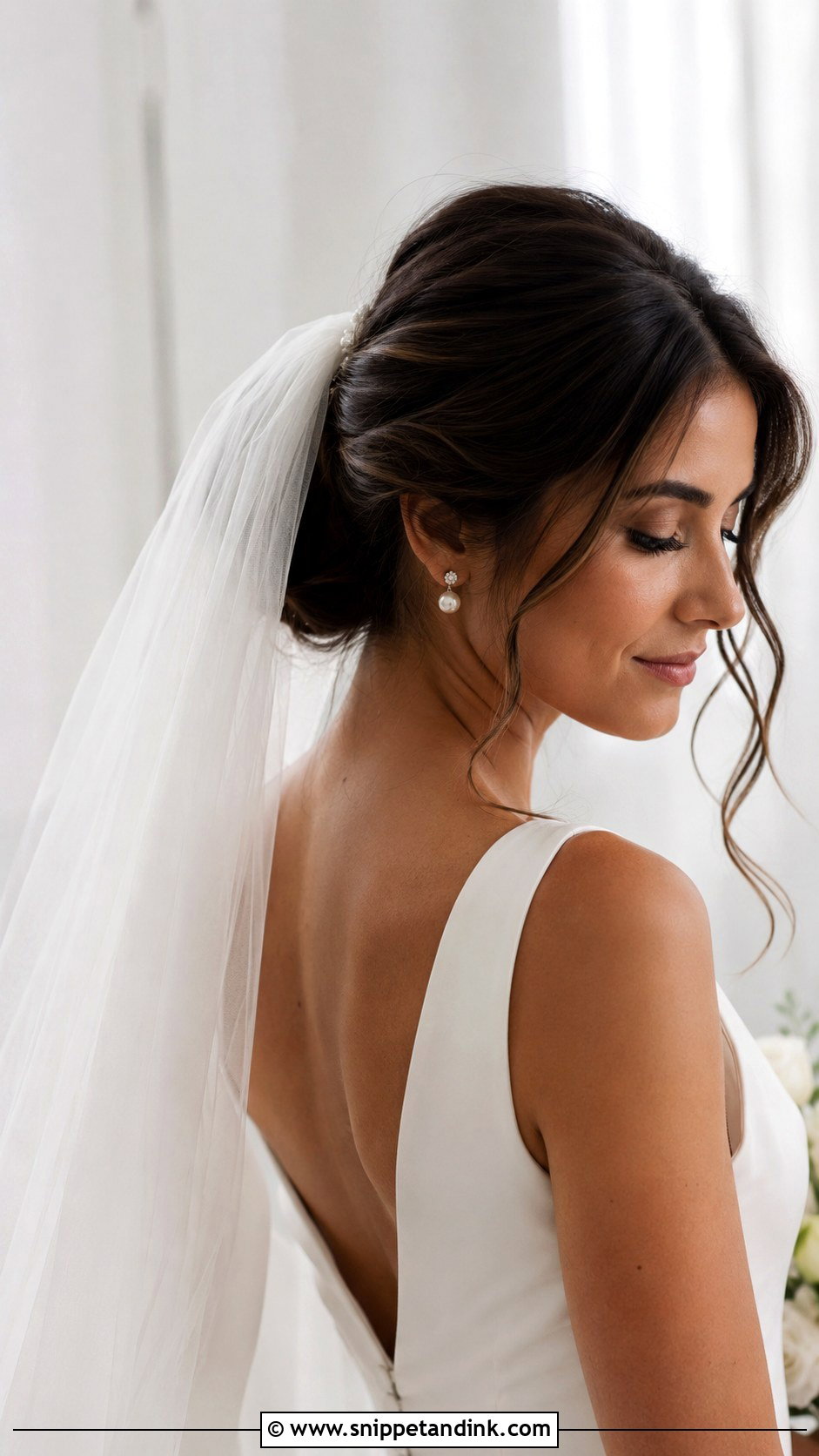
This updo is shaped around the veil from the start, so the veil looks like part of the style rather than an afterthought. The hair is pinned into a low bun, chignon or twisted updo with enough structure to hold a comb firmly, whether that’s a cathedral veil, a mantilla-inspired veil or sheer fingertip veils. The bun also needs to look finished once the veil comes off for the reception, so I hide the support pins under the outer layer of hair. A smooth crown, soft face pieces and subtle shine finish it.
14. Italian Wedding Short Bob
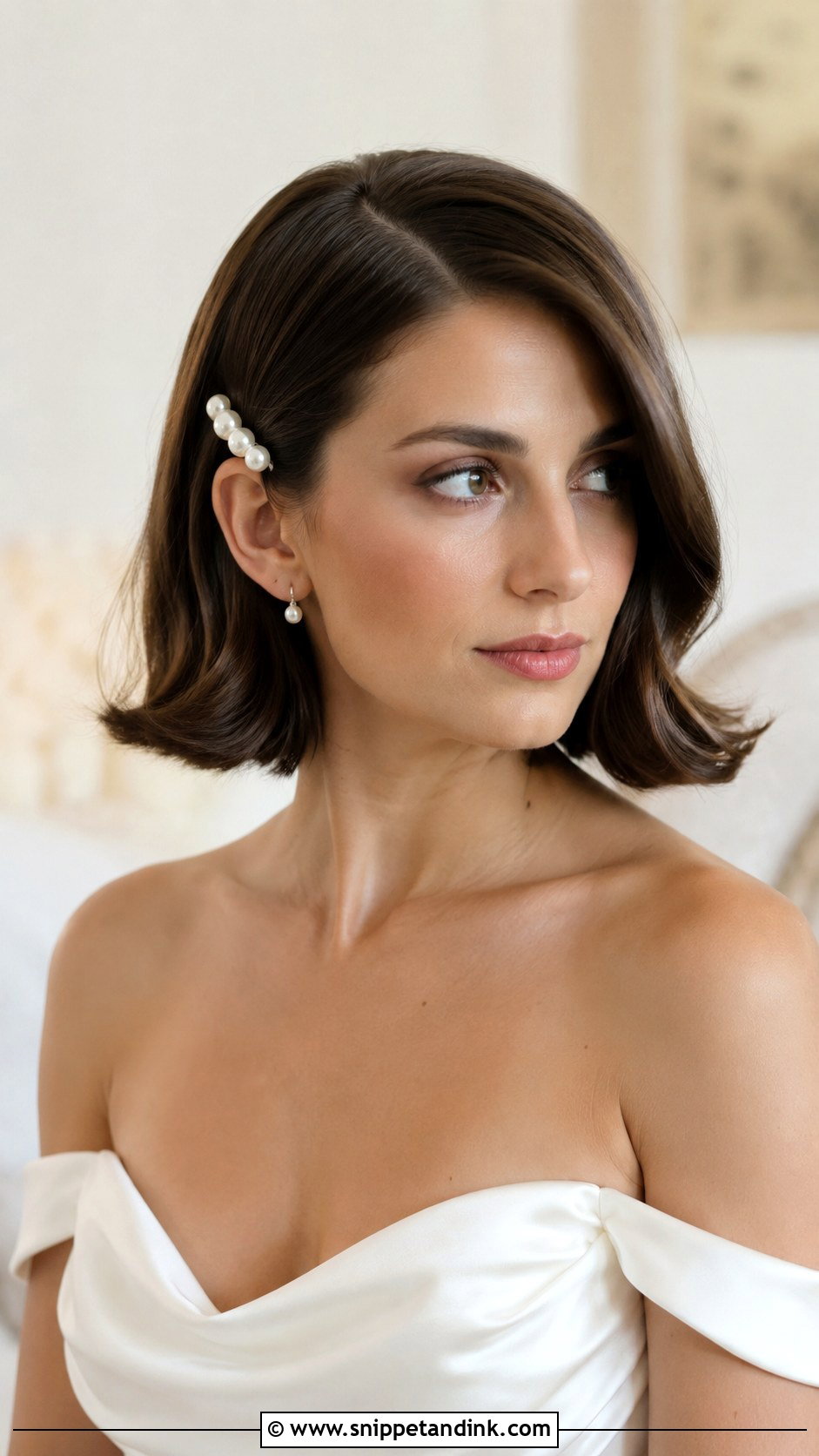
A short bob can look very modern and confident at a wedding. A chin-length or jaw-length bob can be styled with smooth bends, soft waves or a glossy shape tucked behind one ear, and it pairs with minimalist gowns, structured dresses and bold earrings. A side part and some volume through the ends make it softer. I’d book the trim about two weeks before the wedding so the line looks fresh but has time to settle. A small veil, pearl clip or fine headband makes short hair read as bridal.
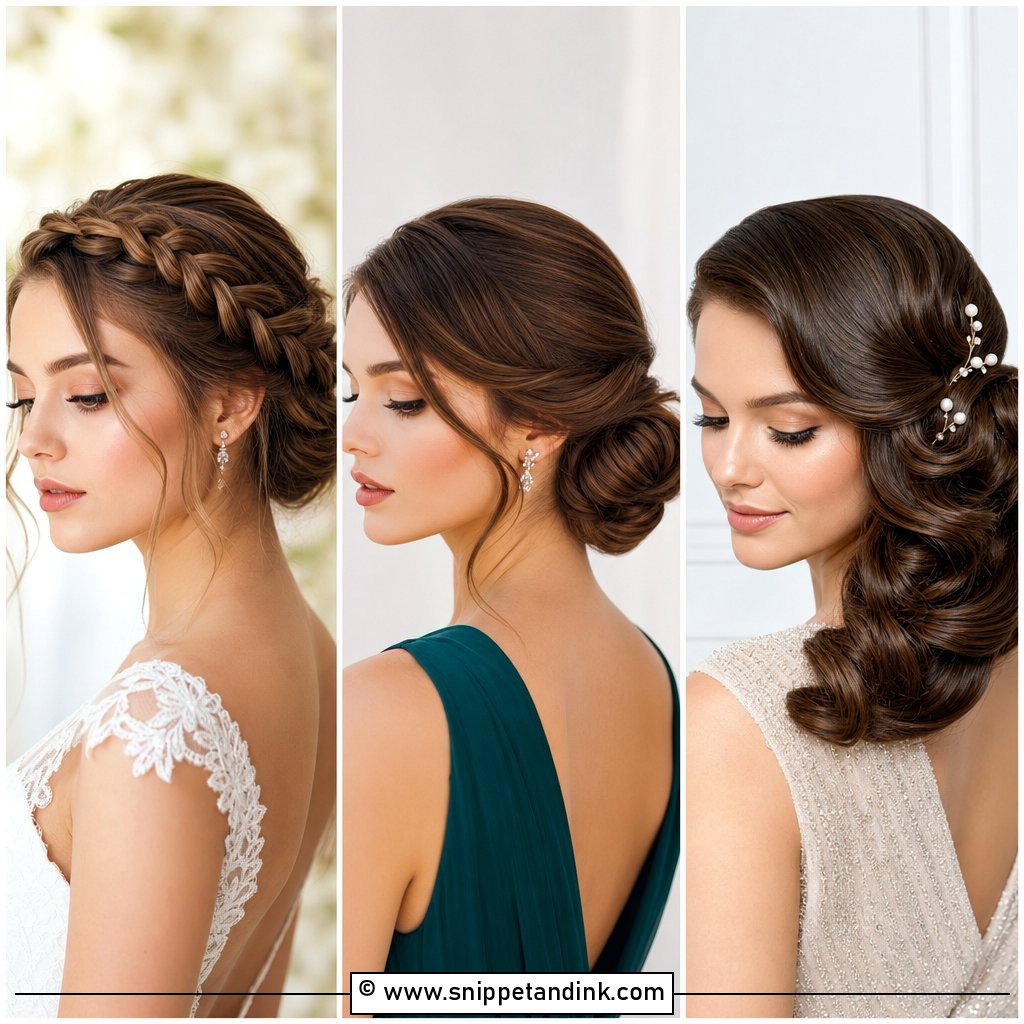
15. Italian Wedding Loose Bun
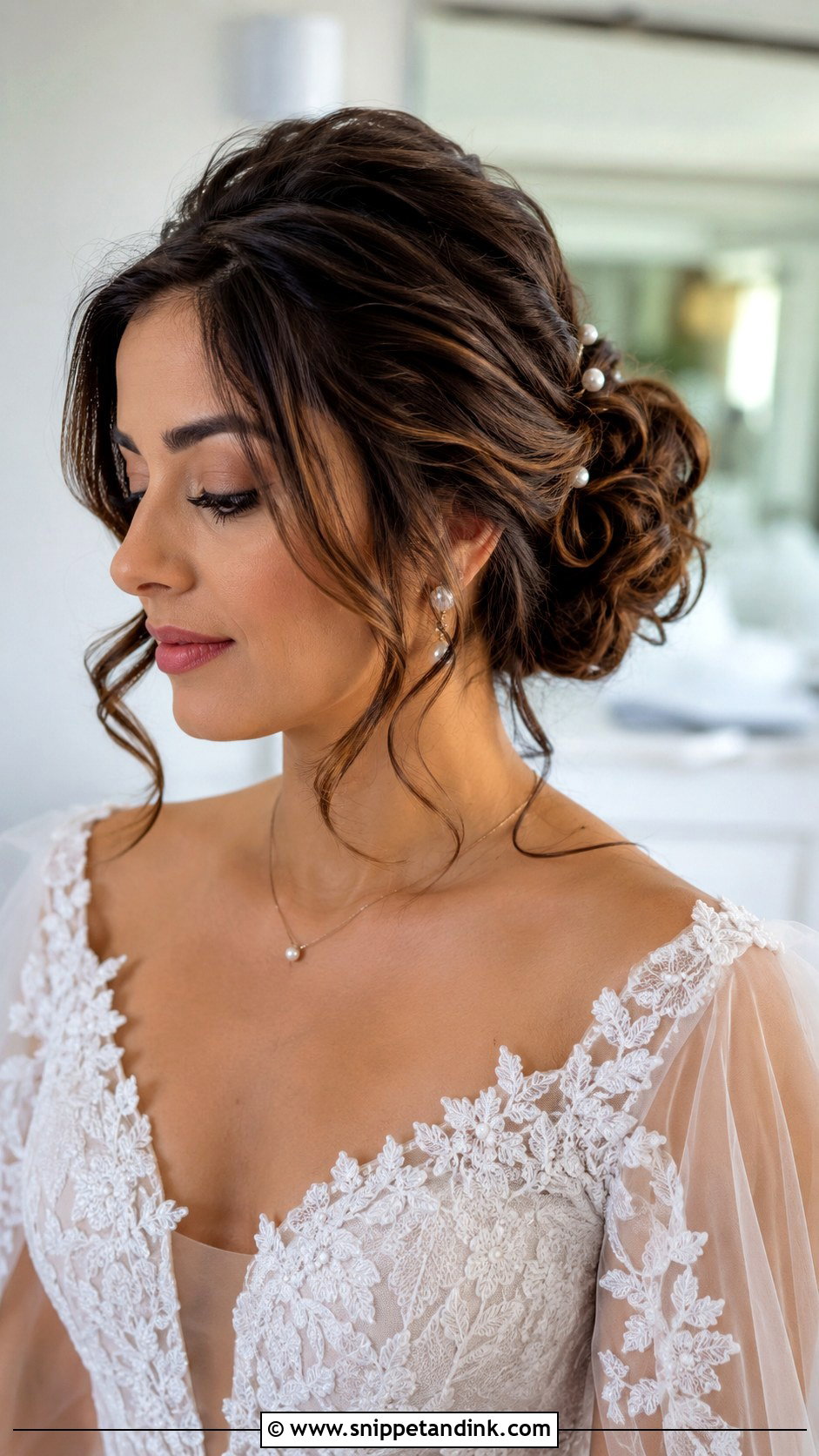
The loose bun is the easiest to personalize. It sits low at the nape with airy texture through the crown and curled pieces around the face, and it works with lace, plain satin and almost everything between. Medium and long layered hair suits it best, especially when the layers are curled before pinning. Underneath all that softness, I hide a firm base so the bun stays comfortable and in place all day. Pearl pins, a veil or a fine comb finish it.
A Mantilla in a Church Needs a Different Anchor
A lace mantilla doesn’t hang like an ordinary veil. It sits further forward, framing the face, and the comb usually goes on top of the head rather than under a bun. That means the hair at the crown has to grip. I’d put a smooth low bun or chignon under it and tease a small section just where the comb sits, then add two bobby pins crossed through the comb’s teeth. Heavy lace slides back on silky hair otherwise.
Packing Hair Pieces and Hot Tools for a Wedding Abroad
Brides flying in for an Italian wedding often lose more hair plans to logistics than to weather. Italy runs on 230 volt power, so a single-voltage curling iron or straightener from a 110 volt country can burn out with a plug adapter alone. Bring dual-voltage tools, or let the local stylist use hers.
I’d carry the veil, combs and hair accessories in hand luggage, never in a checked bag. Do a trial at home, take photos from the front, sides and back, and send them to your stylist in Italy along with the veil length and dress neckline. If you can, book a short trial with her a few days before the wedding, once you’ve arrived and your hair has adjusted to the local water and climate.
Soft Shape, Hidden Pins and a Veil That Stays Put
The Italian look comes from pairing structure with softness so it never looks forced. A low chignon is classic, soft waves are natural and braided updos bring detail; sleek buns suit modern ceremonies, while loose buns and half-up styles feel relaxed. Your neckline, veil, venue, hair texture and comfort narrow it down from there. Bring a few saved photos to your trial, and be open to small changes that suit your face better than the picture does.
You'll Like These Ideas:


Leave a Reply