
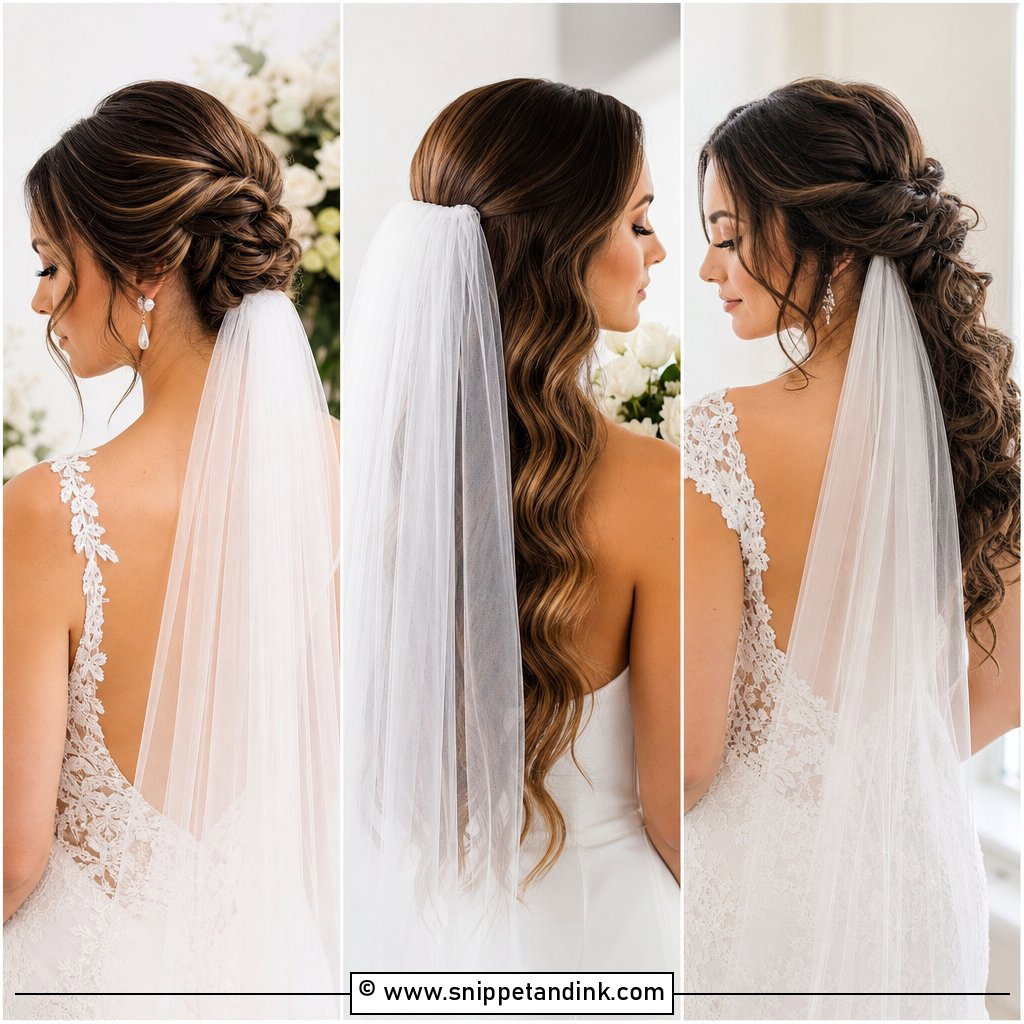
A veil changes how an updo has to be built. The hair stops being just a shape and becomes the mount for a piece of tulle that may run several feet long, and that weight pulls on the style every time you turn your head. So when a bride mentions a veil, my first question is which one, because a mantilla, a drop veil and a cathedral each need a different base. The pairings below come with notes on where the comb sits and why, across different hair types and lengths, so you can bring your stylist a combination where the hair and the veil actually work together.
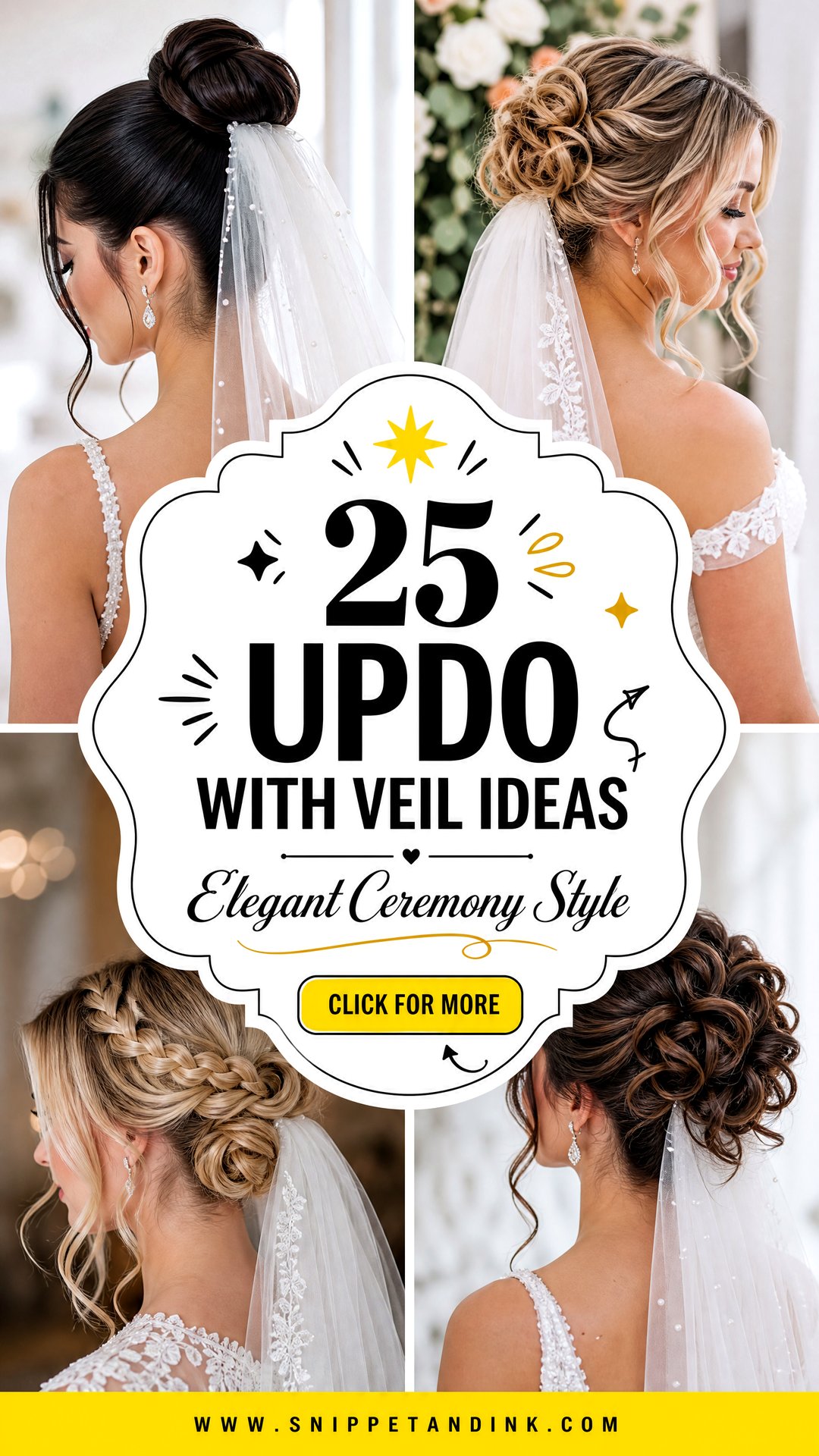
Every Veil Attaches a Little Differently
Veils look alike on a hanger, but each type sits on the head in its own way, and that decides the hair underneath. This is what I plan for with each one:
- Cathedral and chapel lengths: long and heavy. They need a firm pinned base and usually sit low or mid-height, so the weight stays close to the neck.
- Drop veil: one ungathered layer lying over the top of the head. It needs a smooth, modestly sized bun, or the fabric bulges.
- Mantilla: a lace-edged circle worn flat on the crown, set back about an inch from the hairline. Volume at the crown spoils its line, so the top stays sleek.
- Blusher: a short front layer over a longer back one. The comb takes extra strain when the front is lifted back, so it gets extra anchoring.
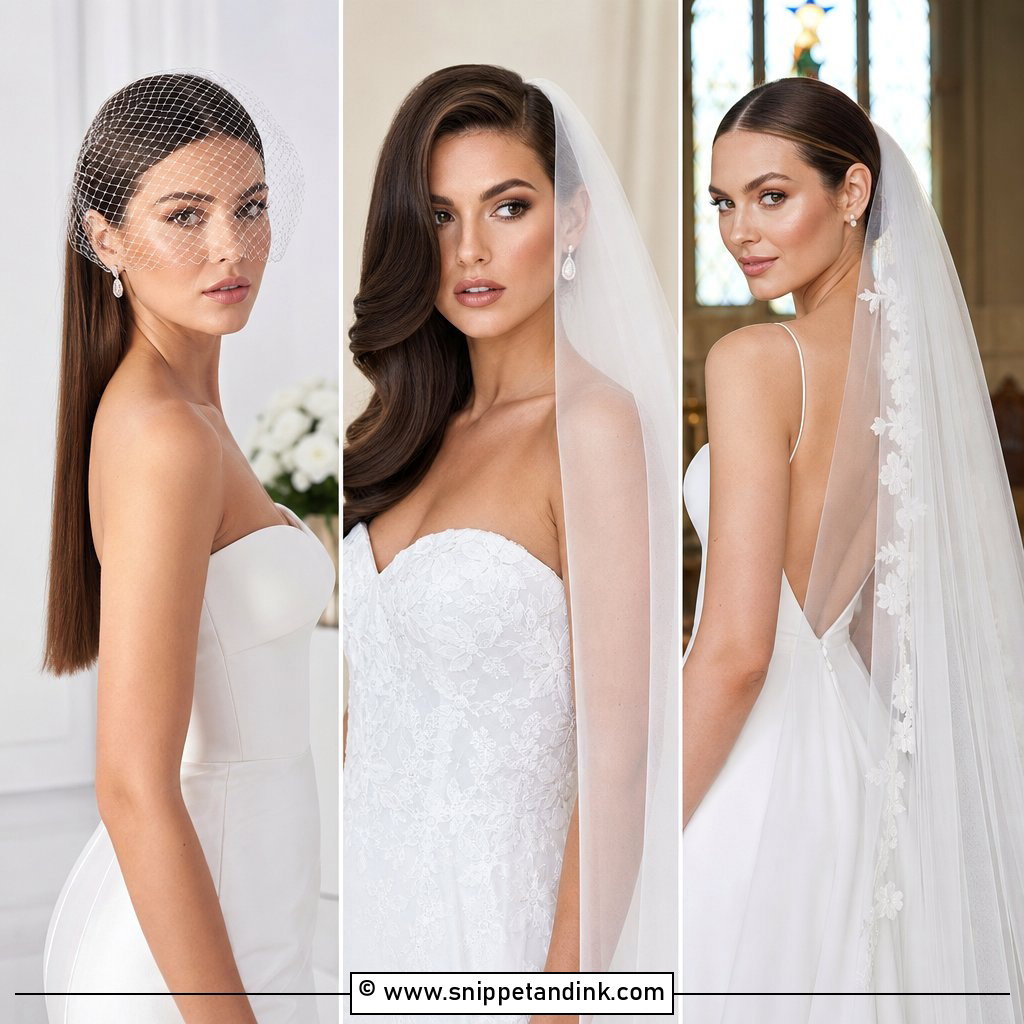
- Birdcage: short netting across the face, fixed with small combs or clips at the sides. The updo is exposed from behind, so the back must be finished properly.
- Fingertip: falls to about where your hands rest. It is light, never trails and suits relaxed styles.
The veil goes on last, after the dress is on and makeup is finished. If your stylist won’t still be there, ask her to show a bridesmaid exactly where the comb slides in.
1. Low Bun Updo With Cathedral Veil
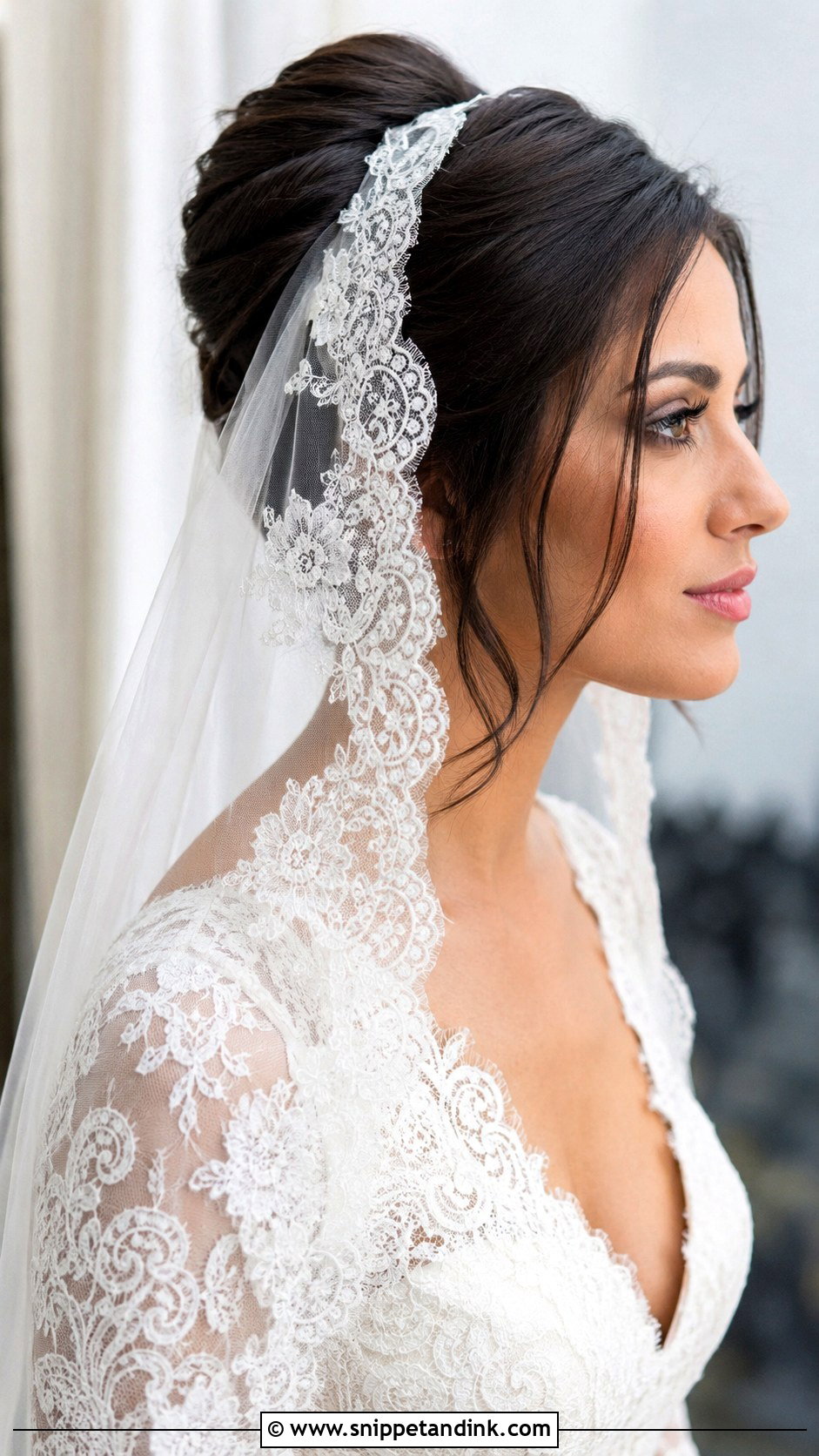
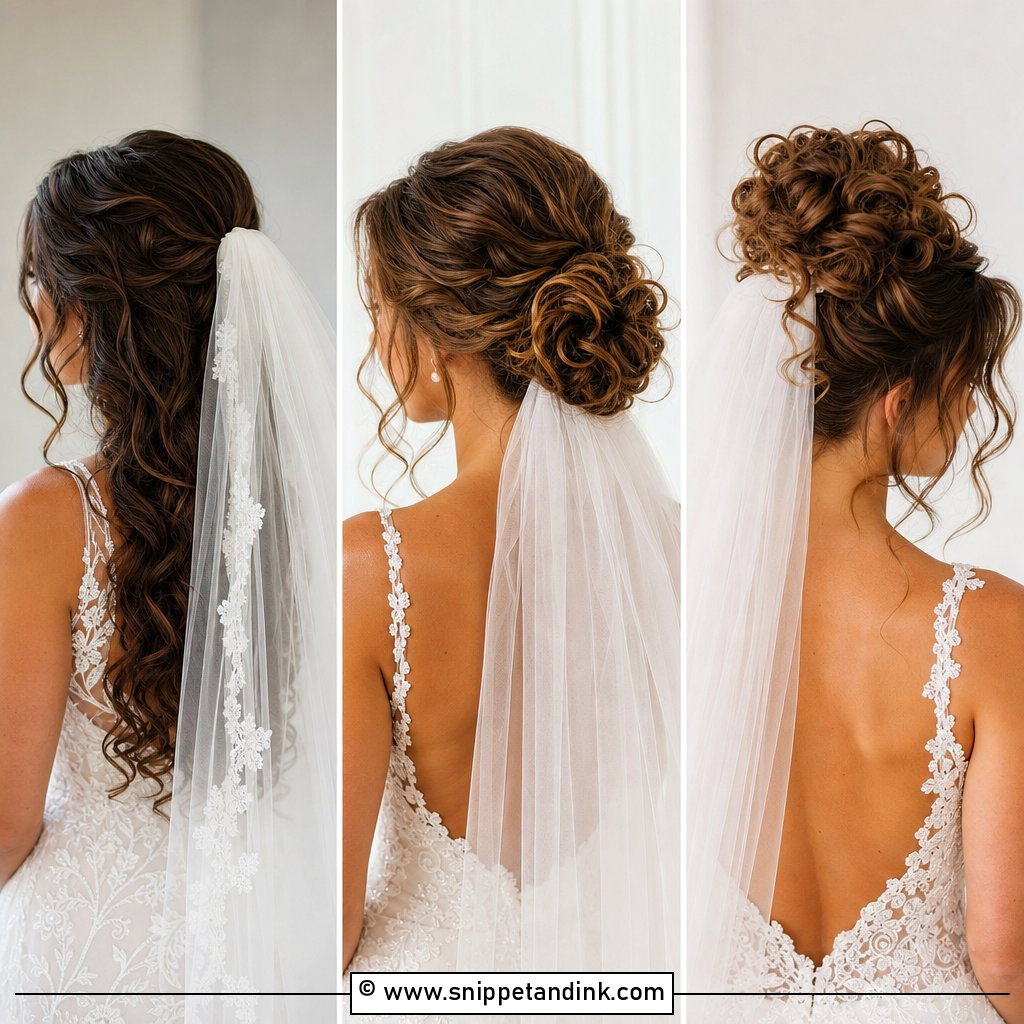
Cathedral veils are long and heavy, and a low bun is the steadiest thing to hang one from. I set the comb just above the bun, or right at the nape for a softer, more modern line; either way the weight sits close to the neck, where it pulls least. Church aisles and ballrooms suit the length. A few loose pieces at the face keep things from looking stiff. When you turn to walk back up the aisle, the veil follows the bun instead of dragging it sideways.
2. High Bun Updo With Drop Veil
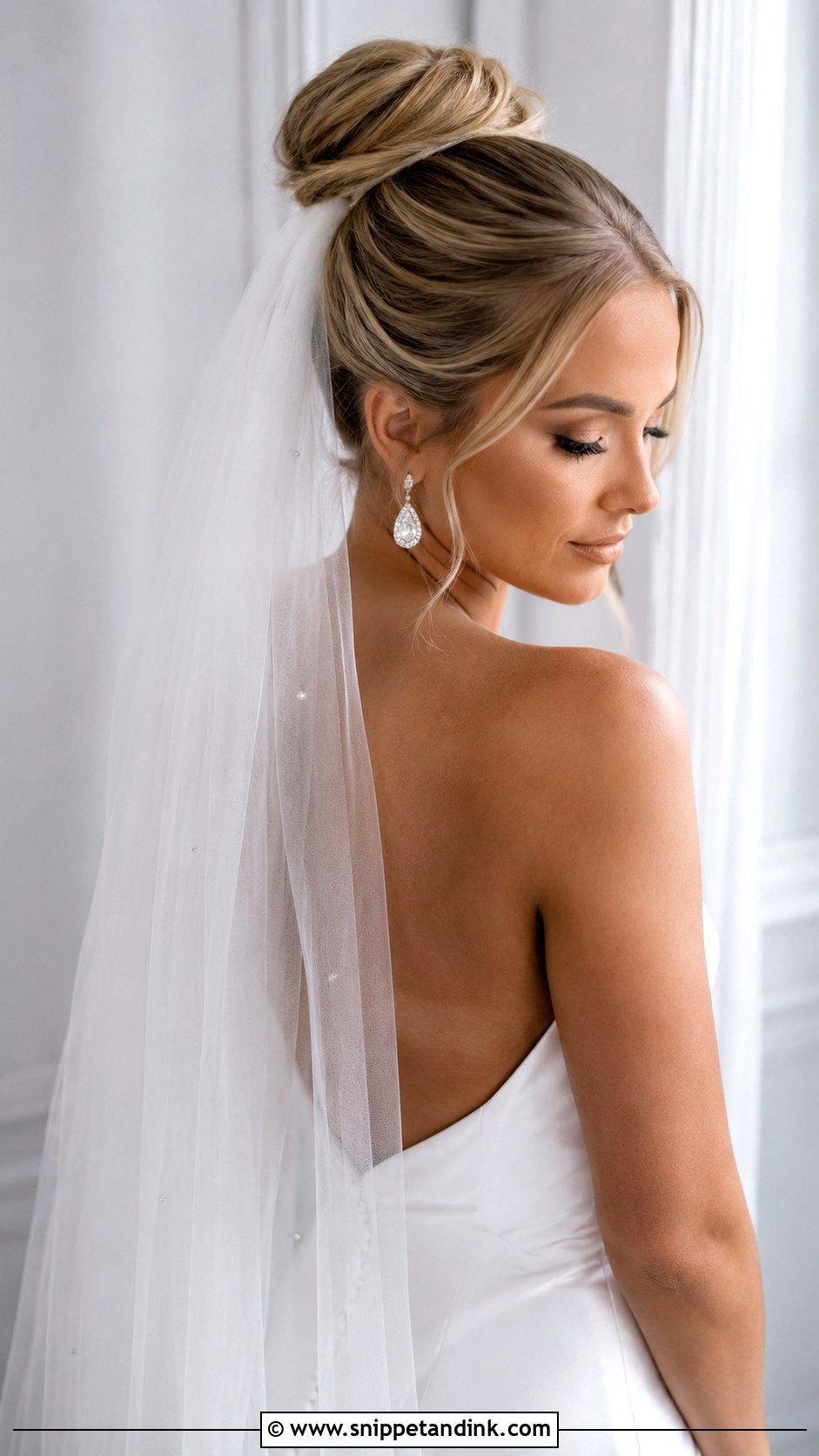
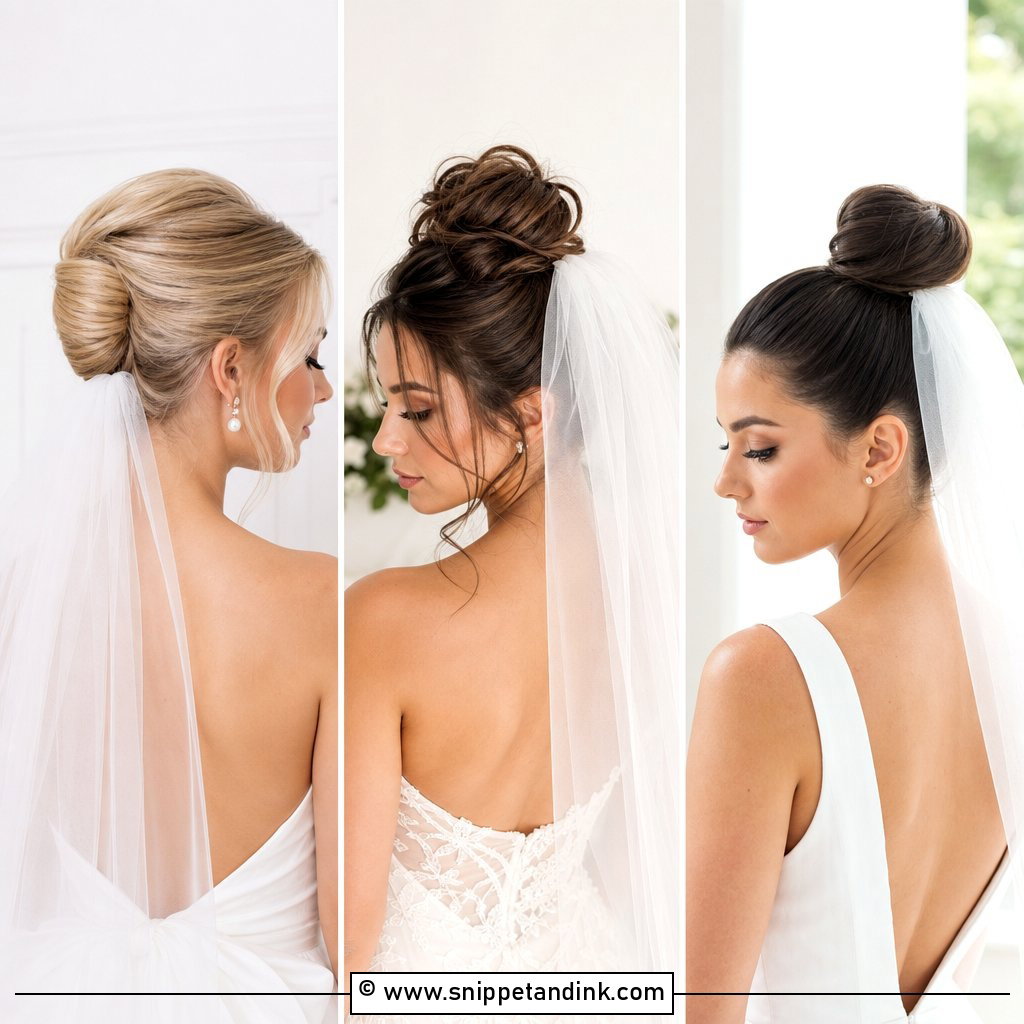
A drop veil is a single layer of tulle with no gathering at the comb, so it lies flat over the head instead of puffing out. Over a sleek high bun, it falls across the top and frames the shape. I keep the bun smooth and modest in size, since an oversized bun pushes the fabric outward and the drape turns lumpy. The comb goes just above the bun. Lifting the hair this way lengthens the neck, and the ungathered tulle moves with almost no weight, which suits clean, modern dresses.
3. Messy Bun Updo With Soft Tulle Veil
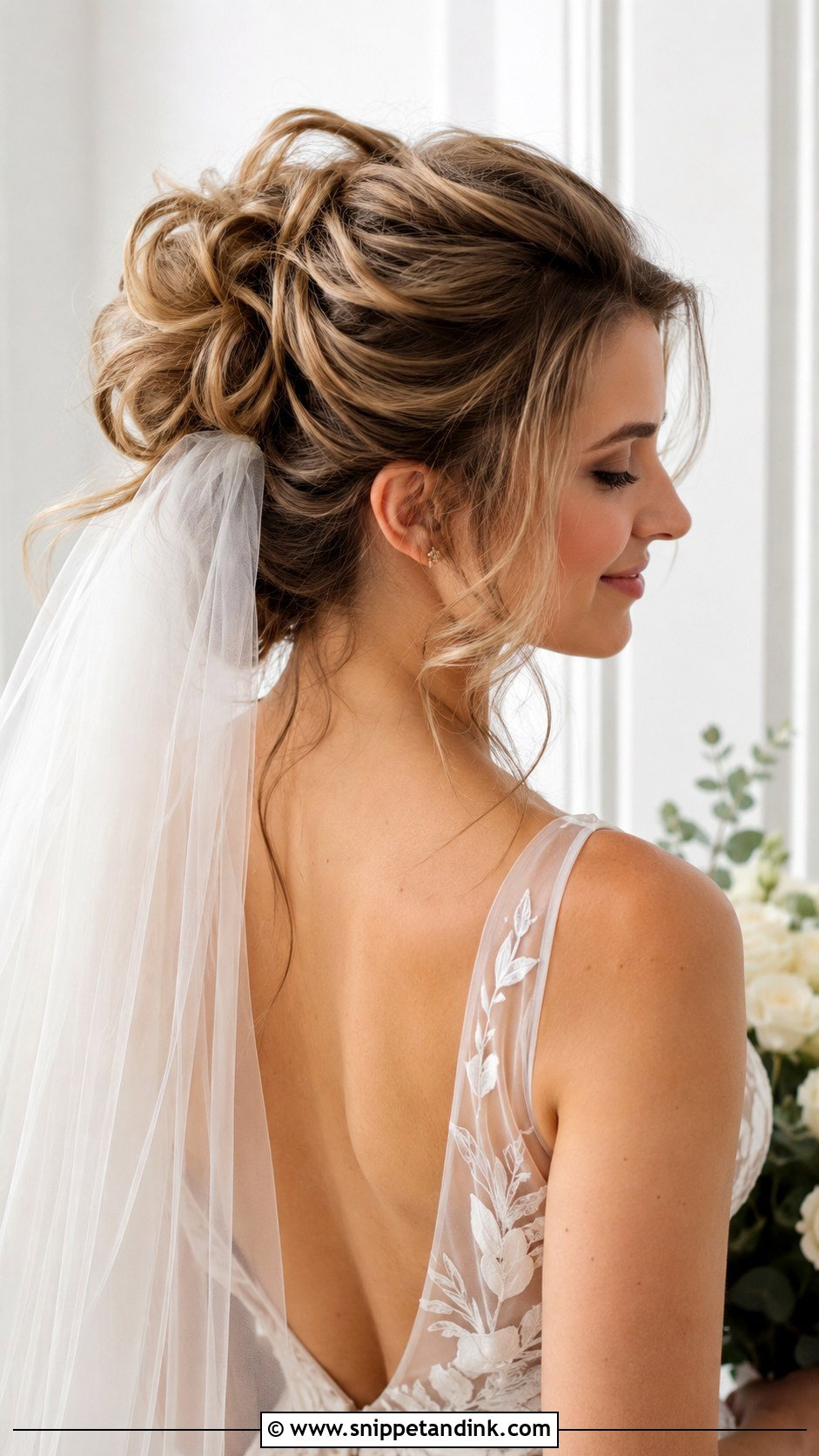
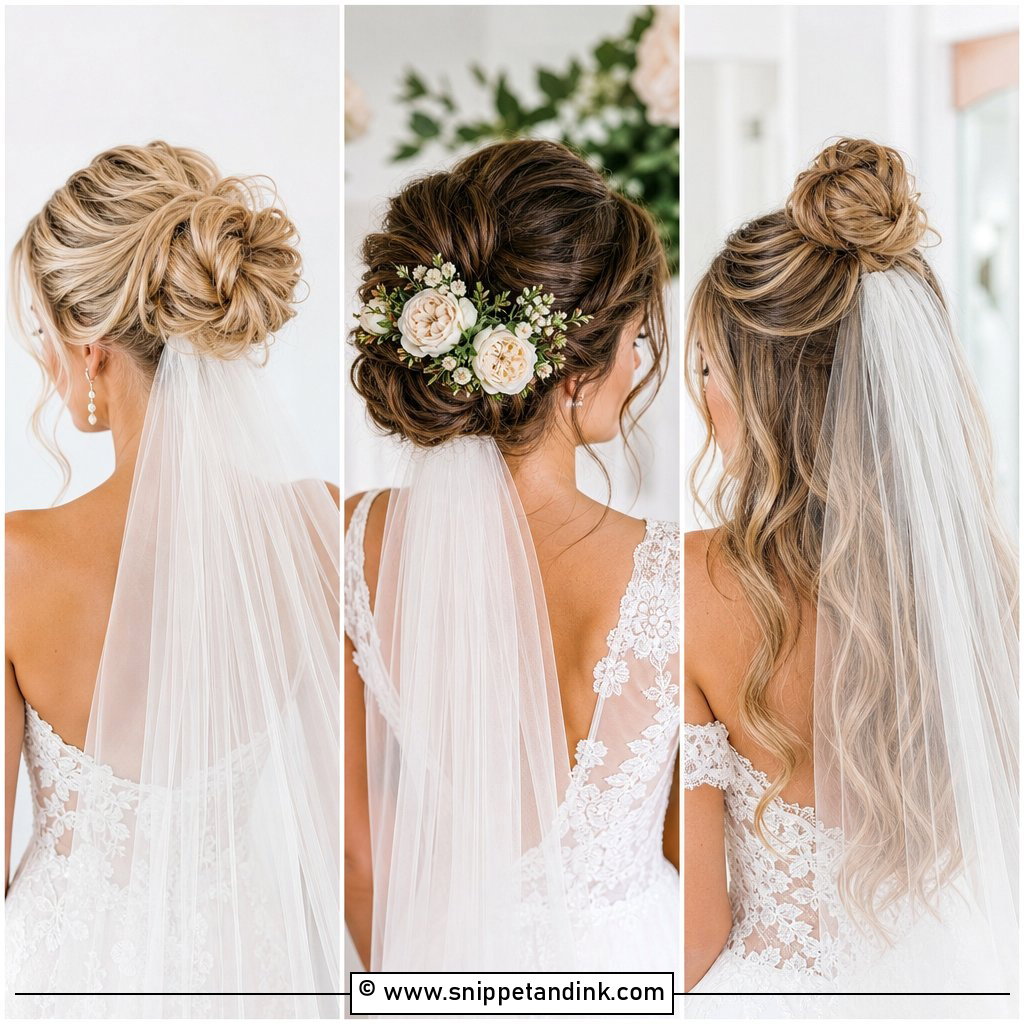
Soft tulle is light enough that a messy bun can carry it without losing shape, which is why I’m comfortable with this pairing. Loose tendrils fall around the face while the veil drapes behind, and tucking the comb beneath the bun keeps the texture on top visible. Garden and outdoor weddings suit it. Grip is the catch. A relaxed bun has little structure, so I build a firm, hidden pin base under it just for the comb and keep all the mess on the surface.
4. French Twist Updo With Mantilla Veil
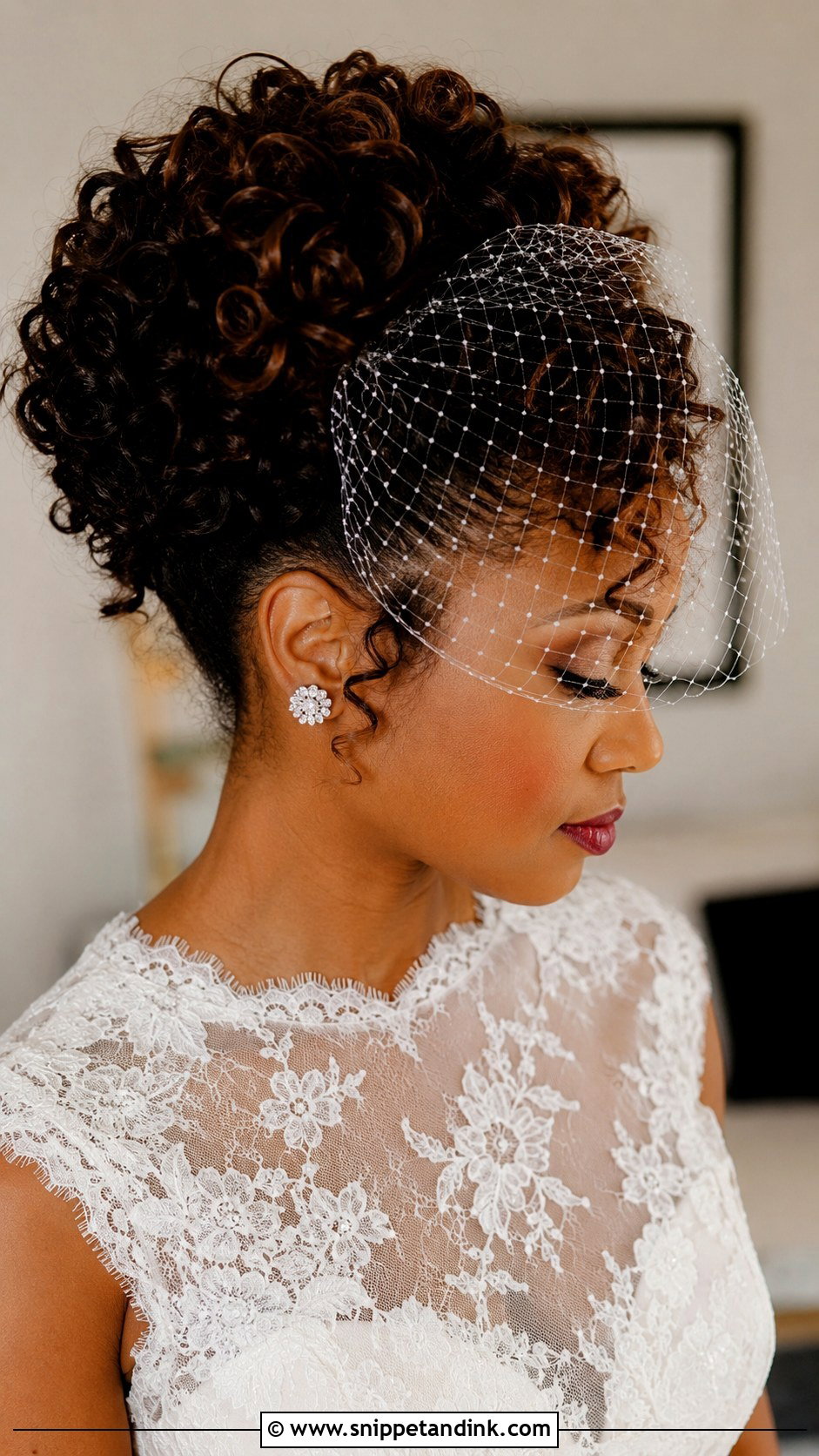
A lace mantilla over a French twist is about as traditional as pairings get. The twist keeps the back of the head smooth, and that matters, because a mantilla lies flat on the crown and shows every bump underneath. I place it roughly an inch back from the hairline so the lace edge outlines the face. Mantilla combs are small and light, so the anchor under them needs to be firm. Traditional church ceremonies suit it, and it photographs with a lovely symmetry from the front.
5. Braided Updo With Fingertip Veil
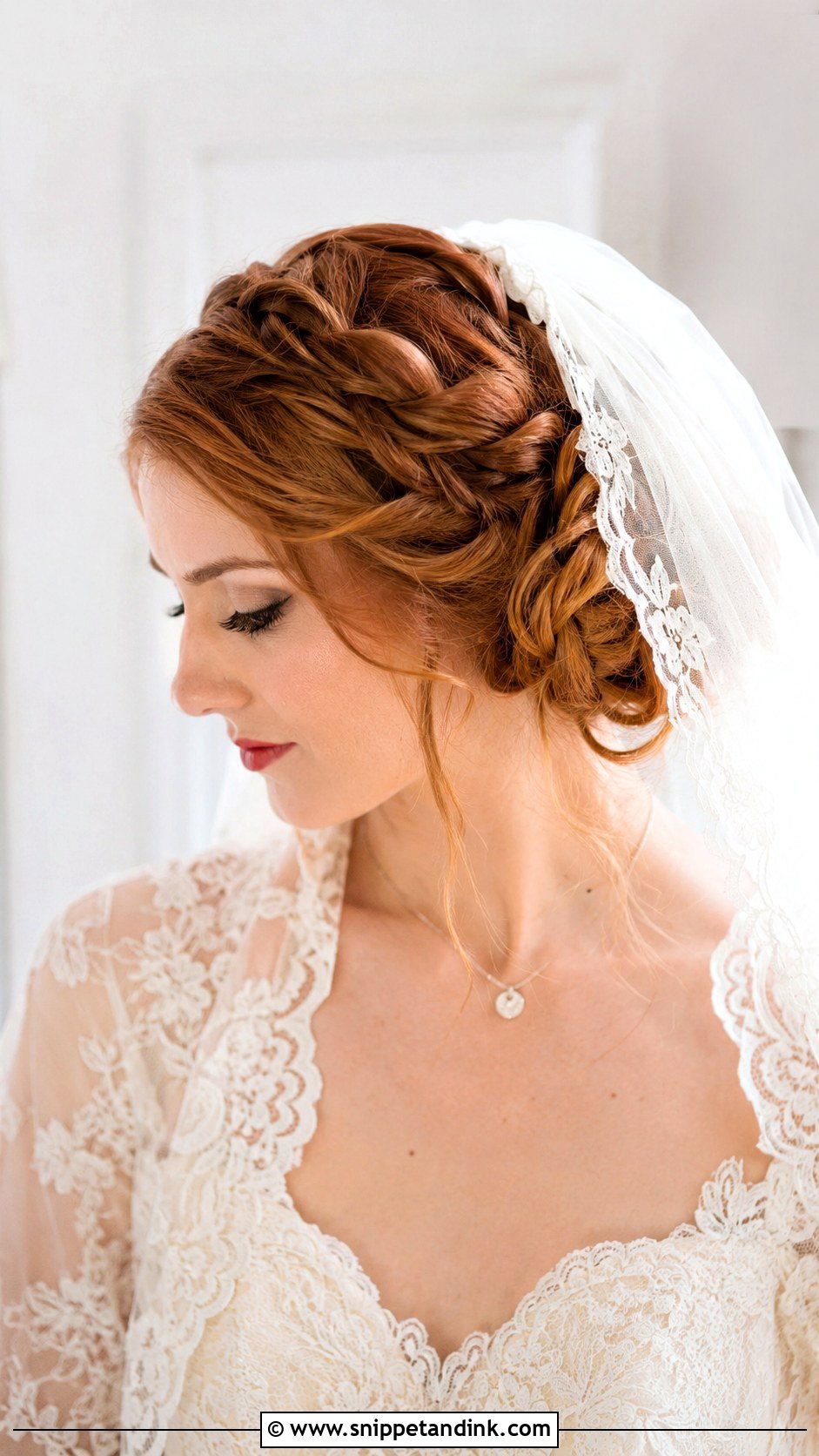
Braids give a veil comb plenty to hold on to, because woven sections grip the teeth far better than smooth hair. I work braids into a low or side-swept bun and set the comb above the braided base. A fingertip veil, falling roughly to where your hands rest, is long enough to feel bridal without hiding the braid work. Boho and romantic weddings suit it, and it works on most hair types. On shorter or finer hair, clip-in extensions are often what make the braids look full.
6. Sleek Chignon With Blusher Veil
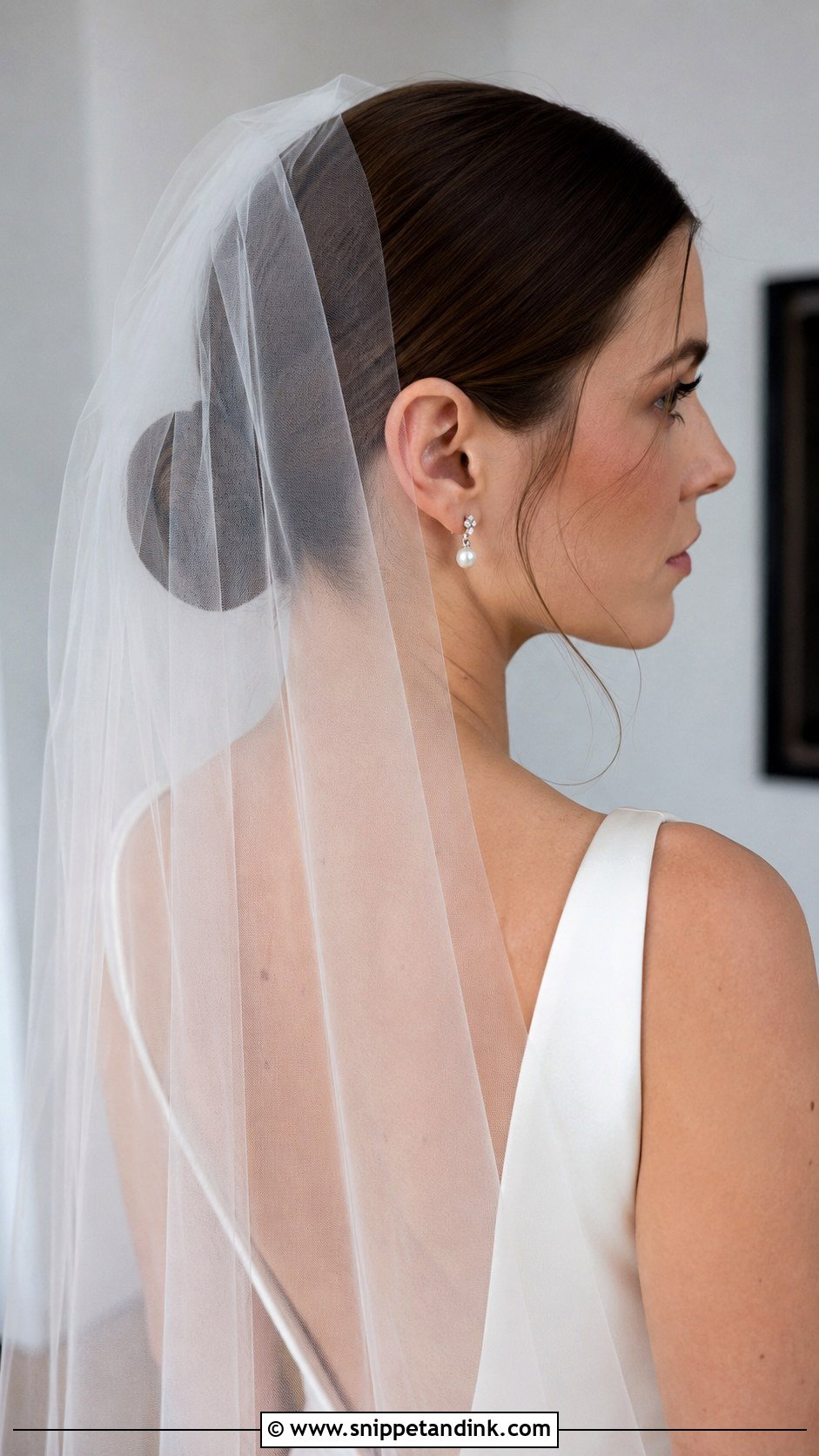
A sleek chignon under a blusher veil is minimal and formal. The blusher is the short front layer worn over the face during the ceremony, then lifted back. Plan for that lift: whoever raises it pulls on the comb, so I anchor it more firmly than a single-layer veil and seat it above the chignon. Keep the knot smooth, because once the blusher is back, the front of your hair is fully on show. Formal venues suit it.
7. Curly Updo With Birdcage Veil
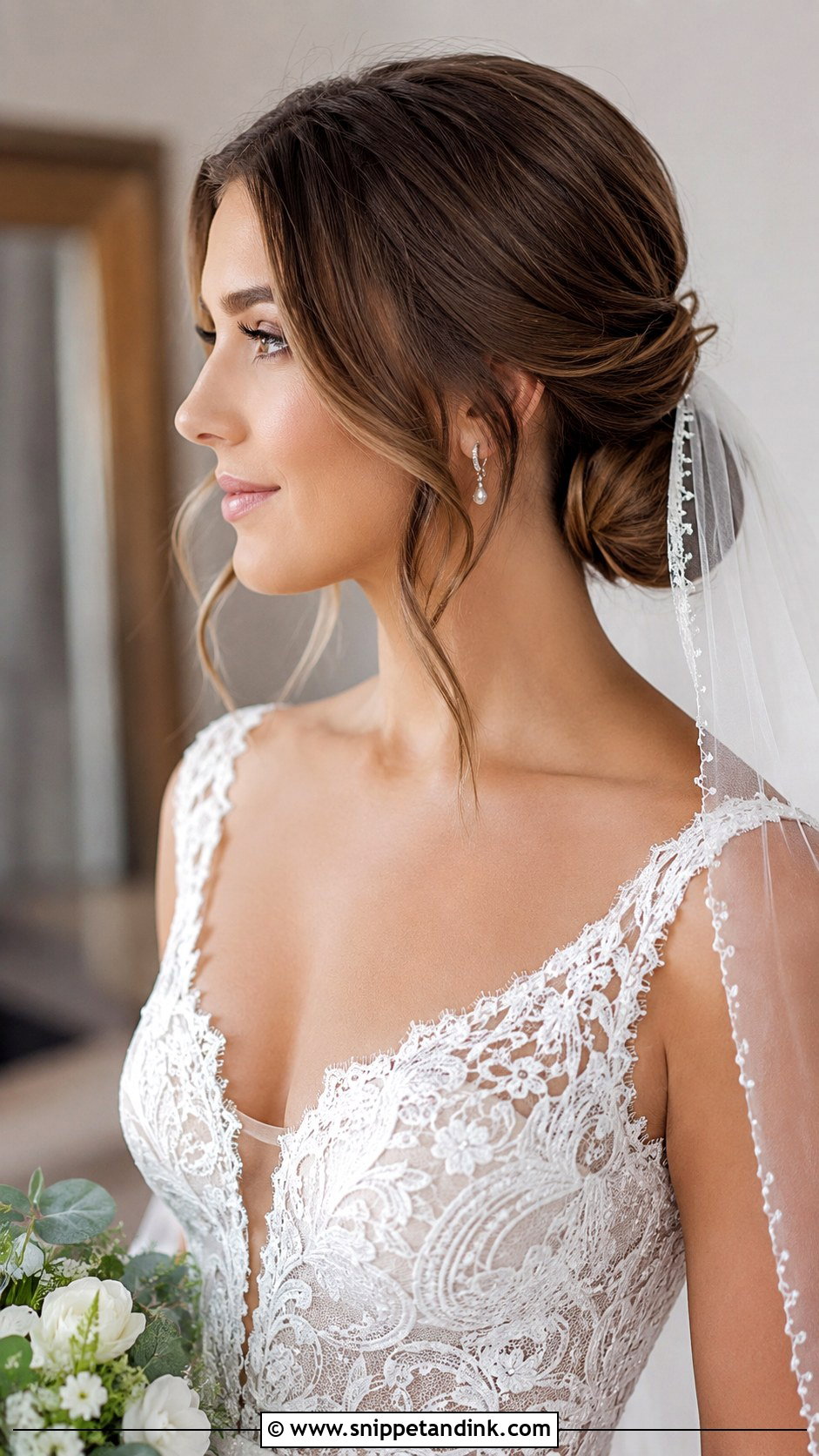
Curly and coily hair has the volume for a full updo and holds pins well, so it carries a short birdcage veil without fuss. I pin the curls loosely at the back in their natural pattern and attach the birdcage at the side or front, so the netting crosses part of the face at an angle. Birdcages are usually held by small combs or clips on each side, and curls grip them with very little help. Intimate and themed weddings with a retro streak suit it.
8. Twisted Low Bun With Lace Edge Veil
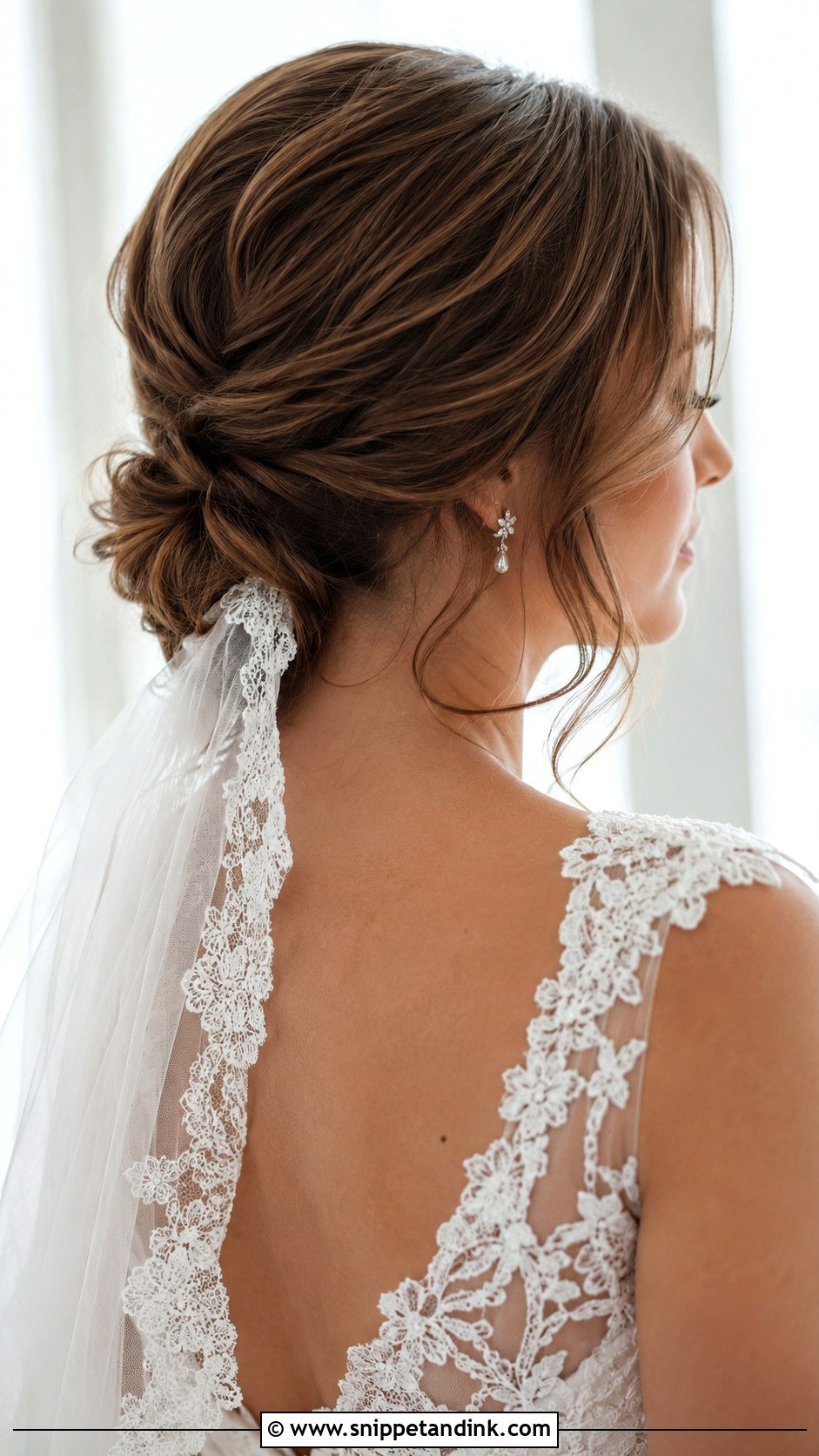
Soft twists gathered into a low bun give the lace edge of a veil something textured to sit against. I set the comb just above the bun so the trim falls straight down the back and frames the updo. Lace edging adds a little weight at the hem, which helps the veil hang neatly rather than floating up. Loose tendrils at the face soften the look, and it’s understated enough for classic and boho weddings alike.
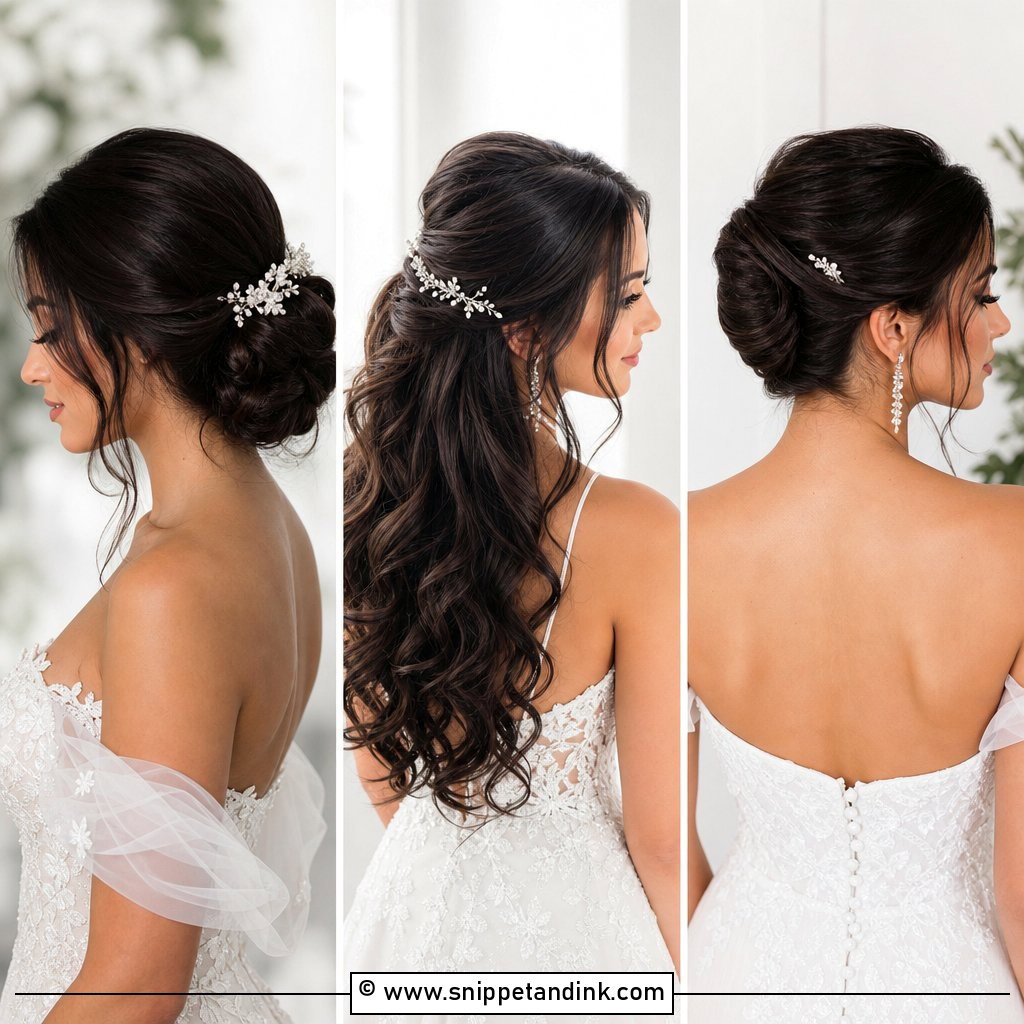
9. Half Up Half Down Updo With Veil
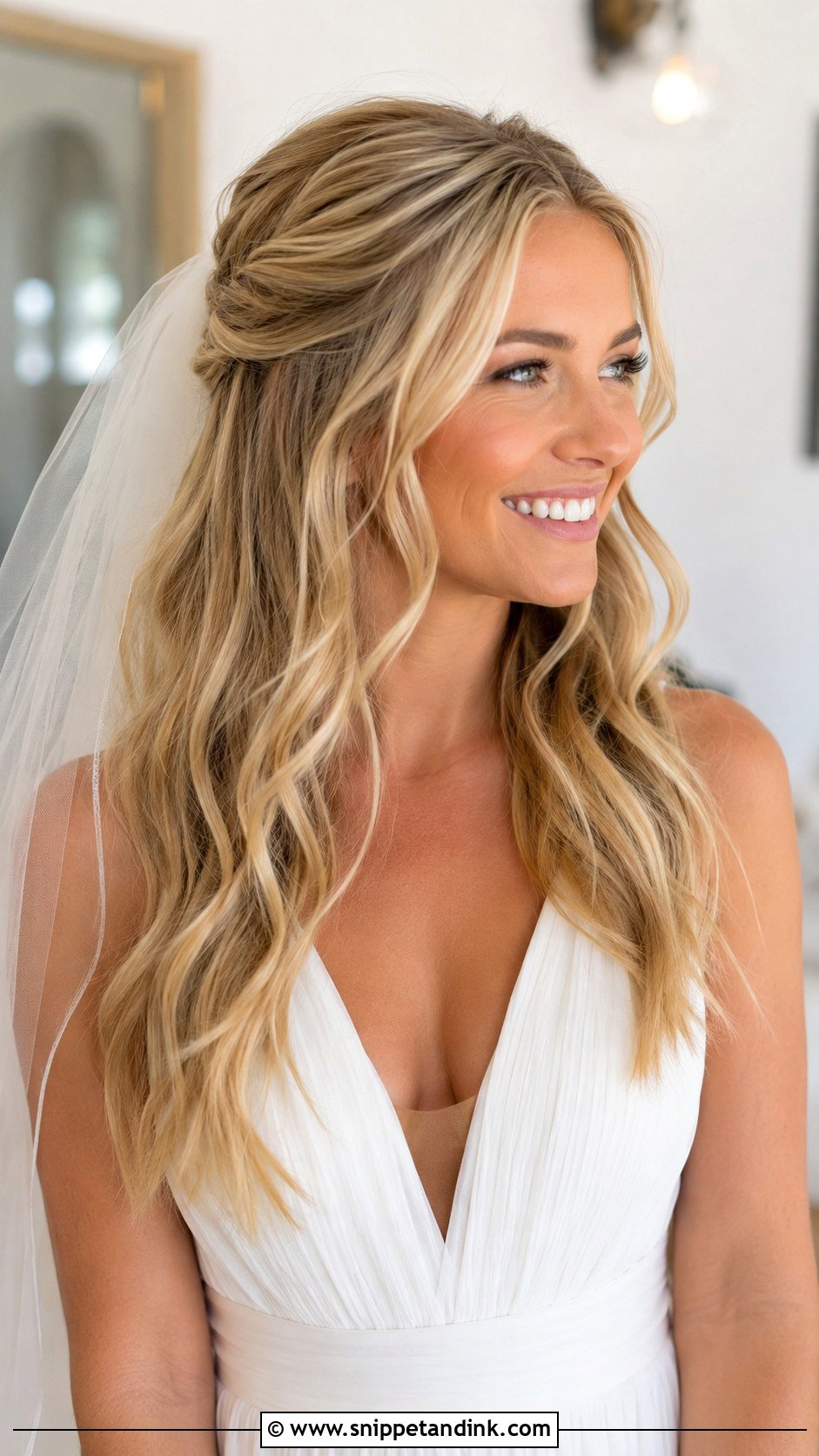
Half up, half down keeps your length on show while the veil comb hides under the pinned top section. That top section is the only anchor, since loose lower hair offers no grip, so it has to be secured properly. Long, wavy or curly hair suits it best. The veil also brushes those loose lengths all day, which is why I avoid veils with beaded or crystal edges here; they catch and tangle. It works anywhere from a beach to a ballroom.
10. Rolled Updo With Cathedral Veil
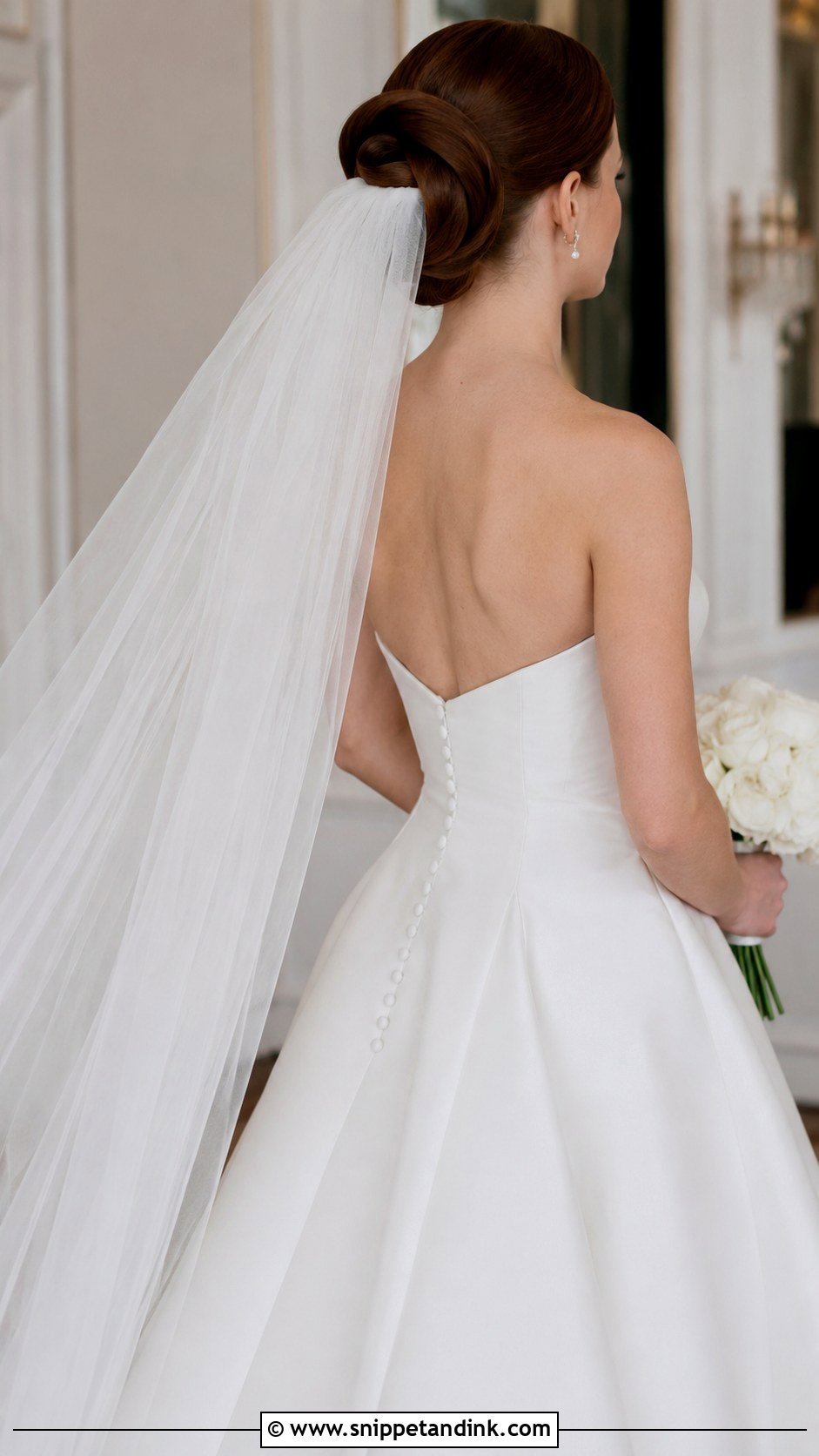
A rolled updo is about the most structured base you can give a cathedral veil. The sculpted rolls hold their shape under weight, and I fix the comb firmly above them so the long fabric falls in a straight line behind you. In a grand venue with a long aisle, that length makes an entrance. I add extra anchoring here, because a heavy cathedral veil drags backward over a long ceremony and the rolls must not loosen with it. Vintage-inspired and formal gowns suit it.
11. Side Bun Updo With Soft Veil
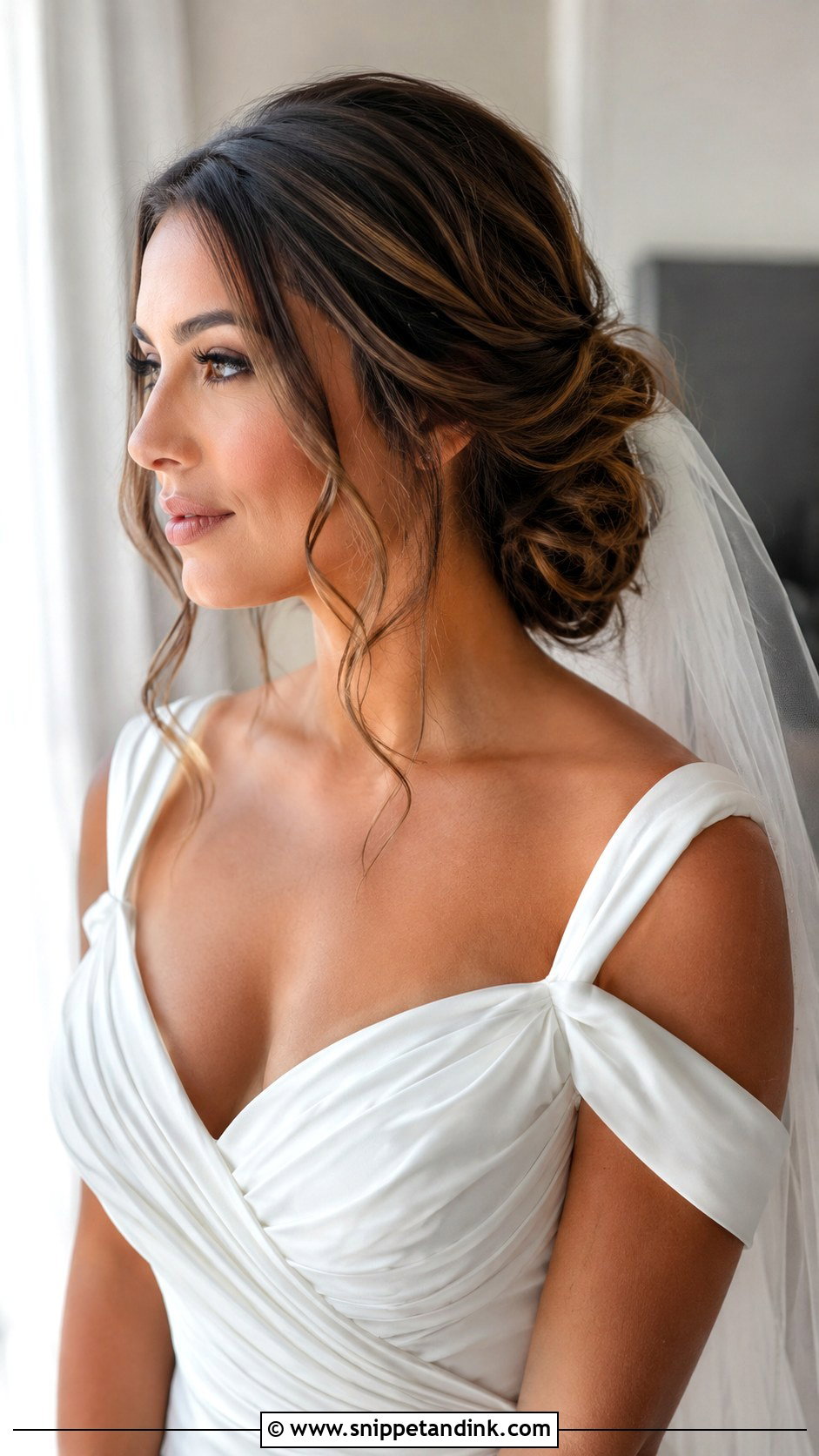
A side bun gathers the hair into a soft knot over one shoulder, with the veil set on the opposite side or centered above it for balance. Waves at the face soften it. The off-center shape shows the jawline and one side of the neck, which flatters profile shots, and garden and vineyard weddings suit it. Keep the veil’s weight away from the bun, or everything slides toward one side; I anchor the comb on its own pinned base rather than into the bun itself.
12. Sleek Top Knot With Drop Veil
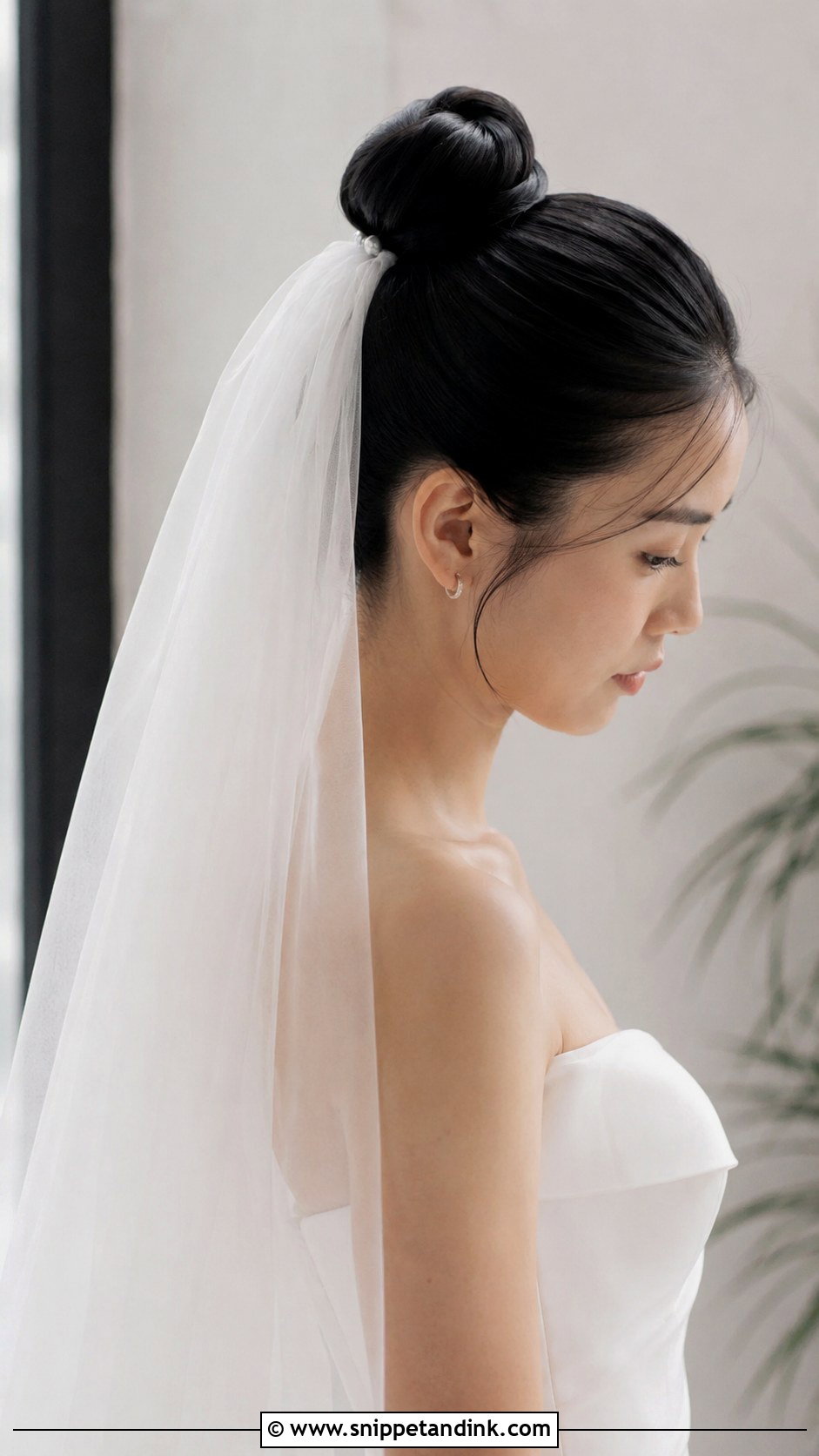
A sleek top knot sits high at the crown with clean lines and real height, and a sheer drop veil over it softens all that polish. Because the knot is high, the comb goes just beneath it so the fabric drapes over and around. It lengthens the neck and frames the face, which suits city weddings and contemporary venues. One thing to check: a top knot raises the veil’s starting point, so it hangs shorter than it would from a low bun. Hold the veil up to your hair at the trial before deciding on a length.
13. Romantic Loose Updo With Tendrils
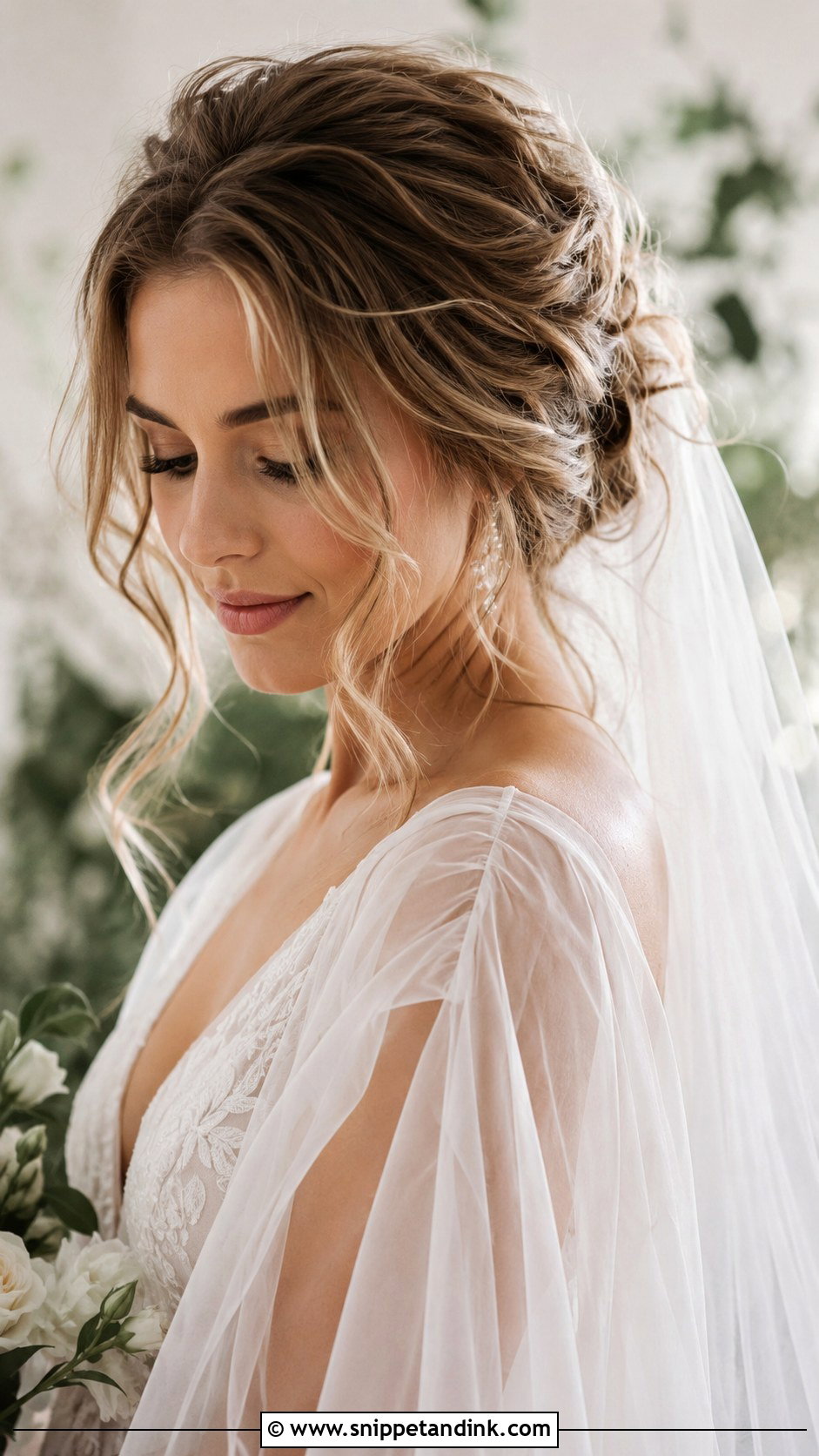
A loose updo with face-framing tendrils pairs naturally with a soft tulle veil. The hair is gathered gently, with plenty of air and movement, and the comb sits beneath the loose bun so the veil drapes from underneath. Outdoor and bohemian weddings suit it. Tendrils and tulle tangle easily in wind, so I mist the face pieces lightly with spray and tell brides to keep the veil gathered in one hand when walking outdoors between photos.
14. Vintage Updo With Birdcage Veil
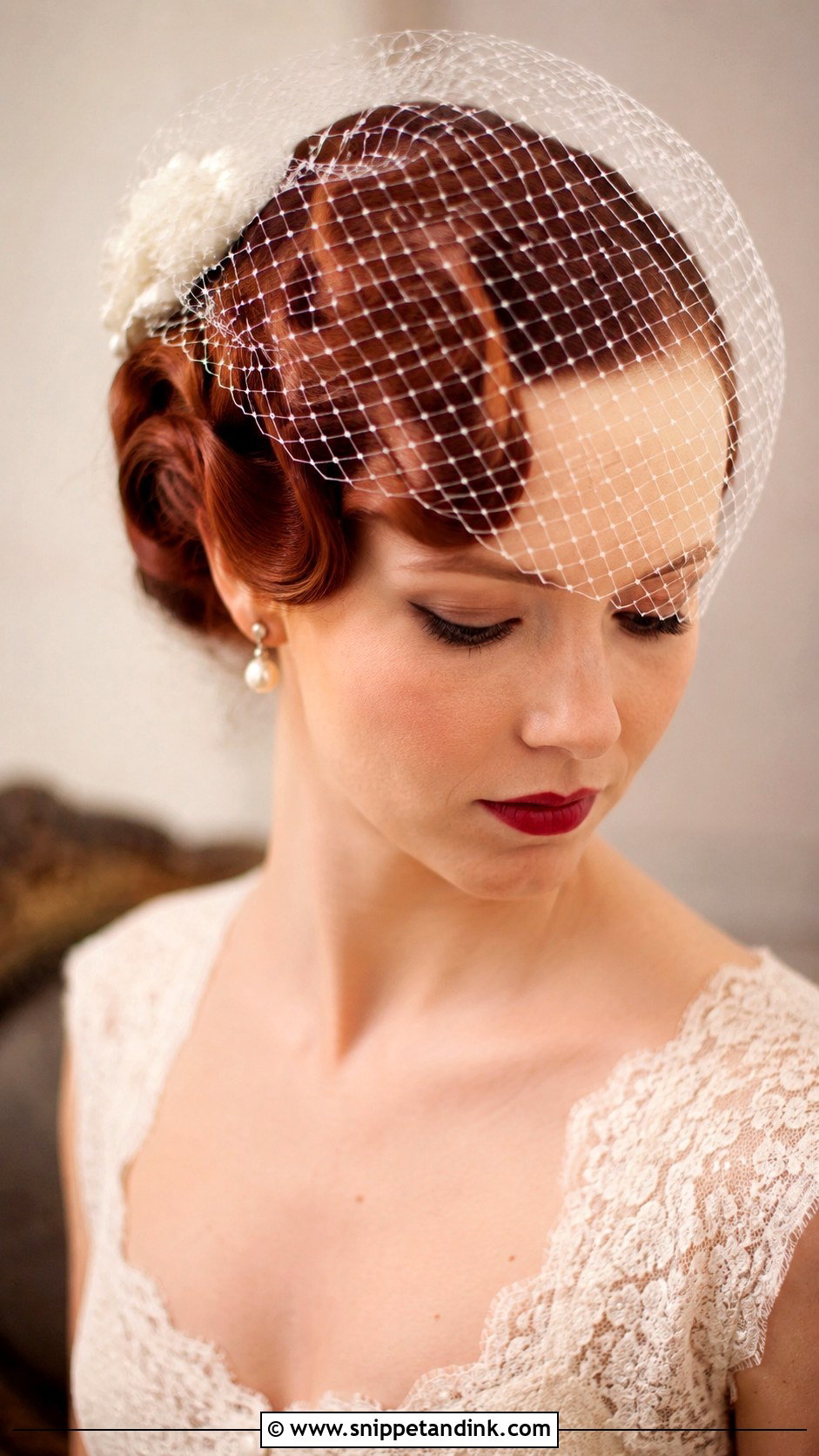
Old Hollywood glamour rests on sculpted waves or pin curls swept into a defined shape, with a short birdcage veil across the face. I secure the birdcage at the front or side for an angle. The veil covers only the face and upper head, so the updo behind stays fully on show, and the curls need a proper set with rollers or overnight pin curls. Intimate ceremonies and vintage-themed weddings suit it.
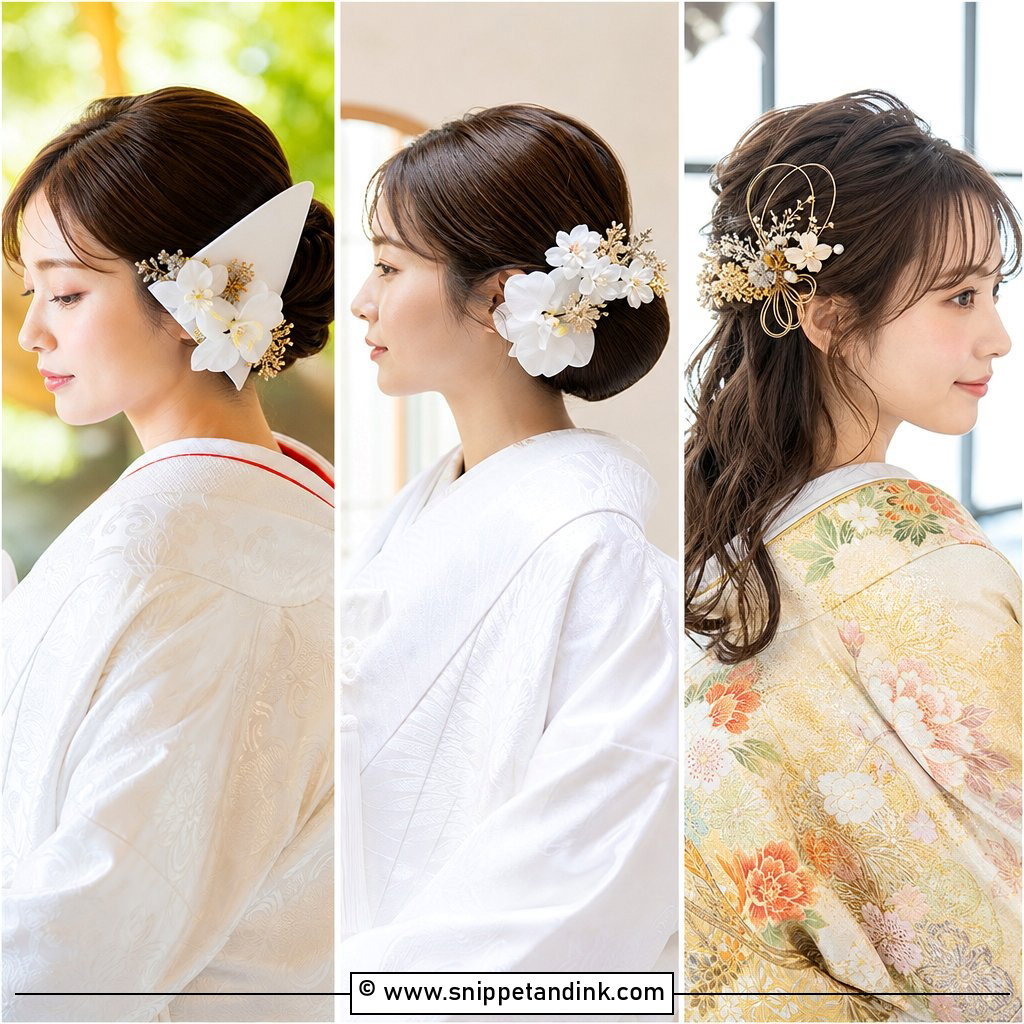
15. Braided Crown Updo With Veil
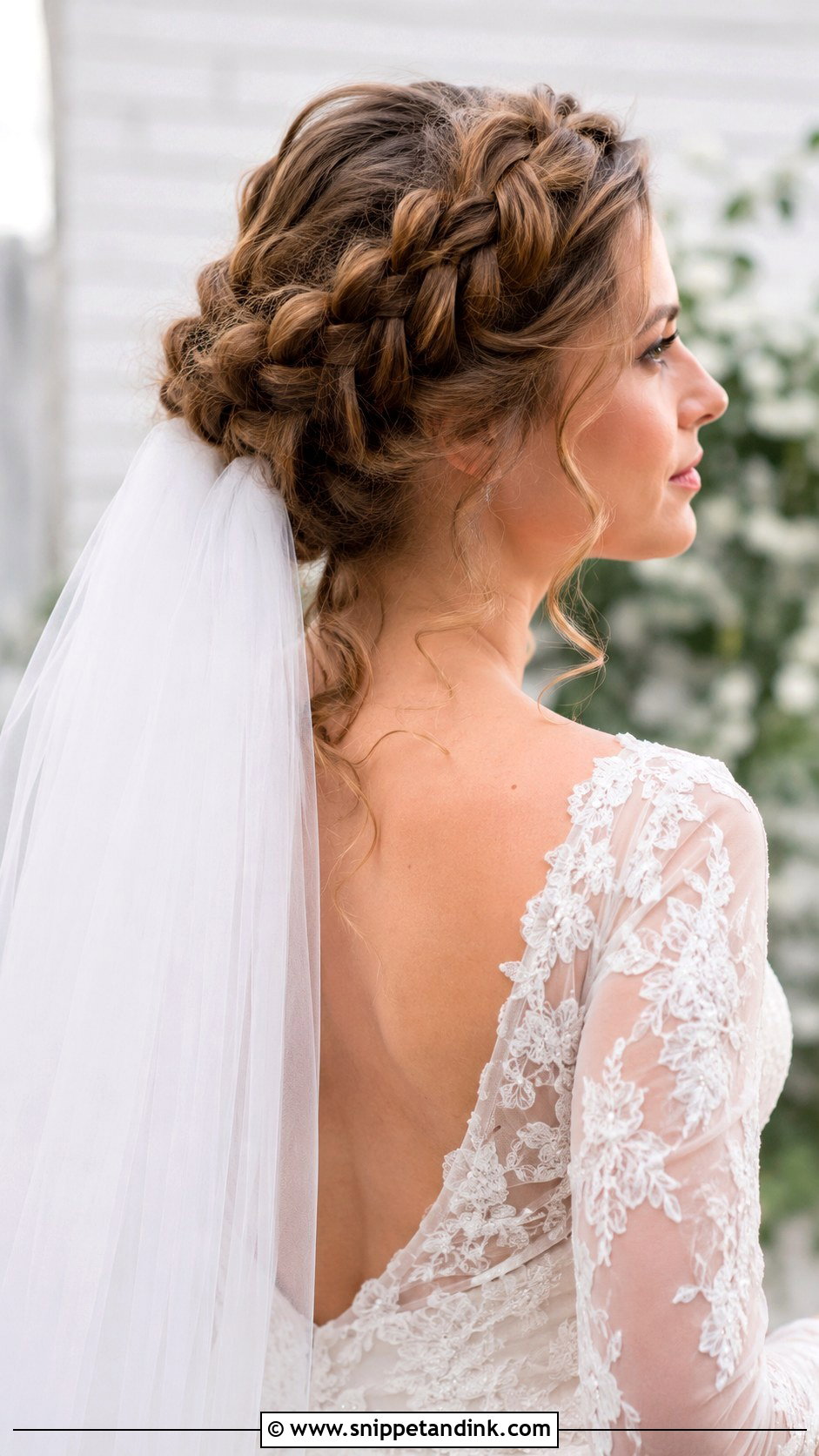
A braided crown wraps around the head, and the veil comb tucks beneath the braid at the back, where it can grip the plaits. The braid keeps hair off the face and holds the veil securely, which makes it a practical choice for windy outdoor and garden weddings. A soft, flowing veil suits the woven texture. Tight braids hold combs best, so if you like a loose, pulled-apart braid, I’ll braid the section under the comb tighter than the rest.
16. Low Chignon With Mantilla Veil
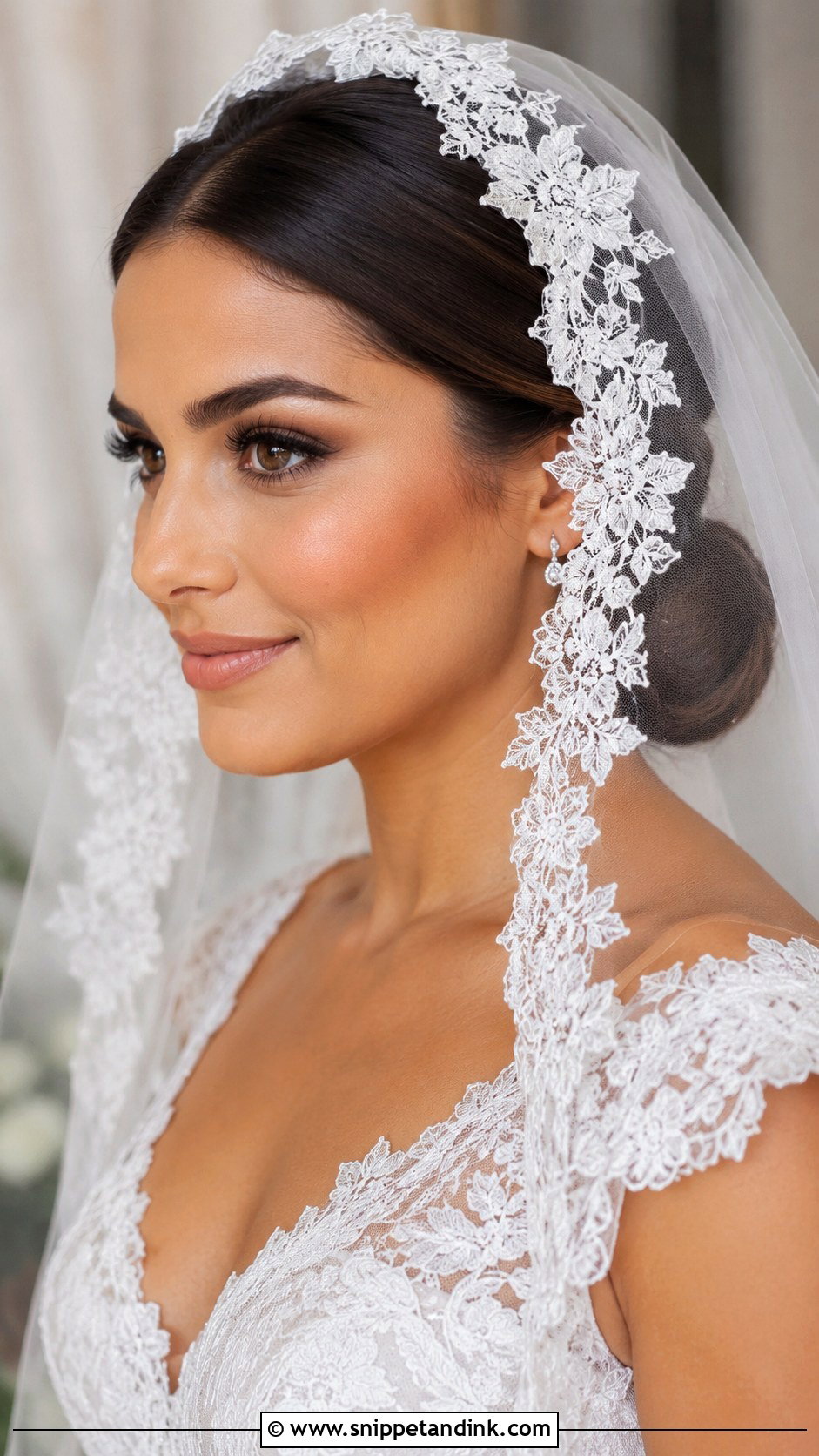
A low chignon with a mantilla veil is one of the classic church pairings. The knot rests at the nape, and the lace-edged veil sits about an inch back from the hairline so the lace frames the face. Because a mantilla covers the crown and drapes over the chignon, I keep the top of the head flat and smooth; volume there lifts the lace at an odd angle. Cathedrals and formal venues suit it.
17. Textured Bun Updo With Long Veil
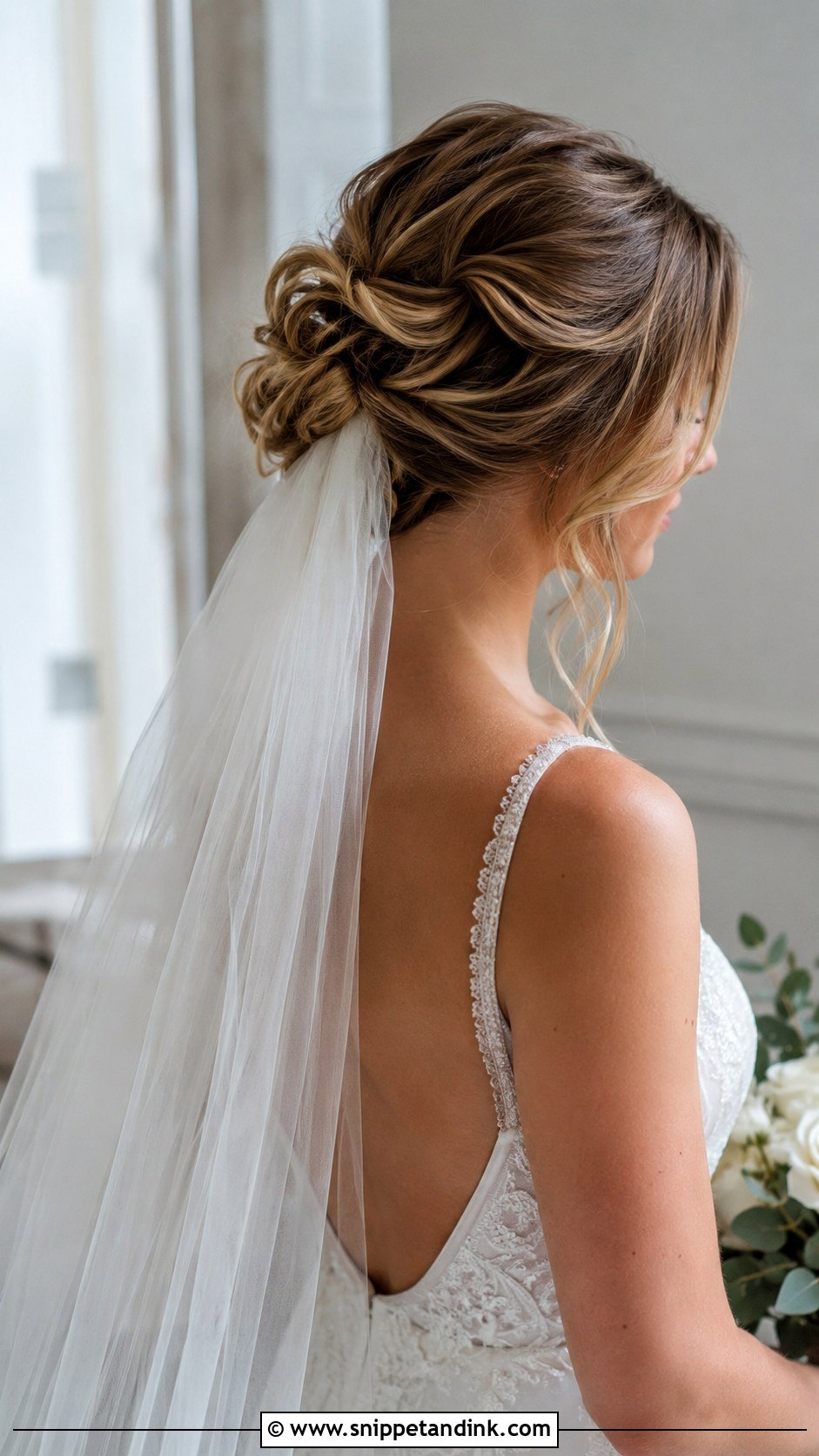
A textured bun gives a long veil a soft base. Gentle waves are gathered into a relaxed knot, and I prefer the comb beneath it, which keeps the texture visible from behind in ceremony photos. Loose pieces at the face keep it romantic. Long veils trail on the ground, and when someone steps on the hem it yanks the comb, so I build this bun with a firm, hidden center and keep the texture on the outside. A tug then pulls the veil free instead of taking the hair with it.
18. Sleek Ponytail Updo With Veil
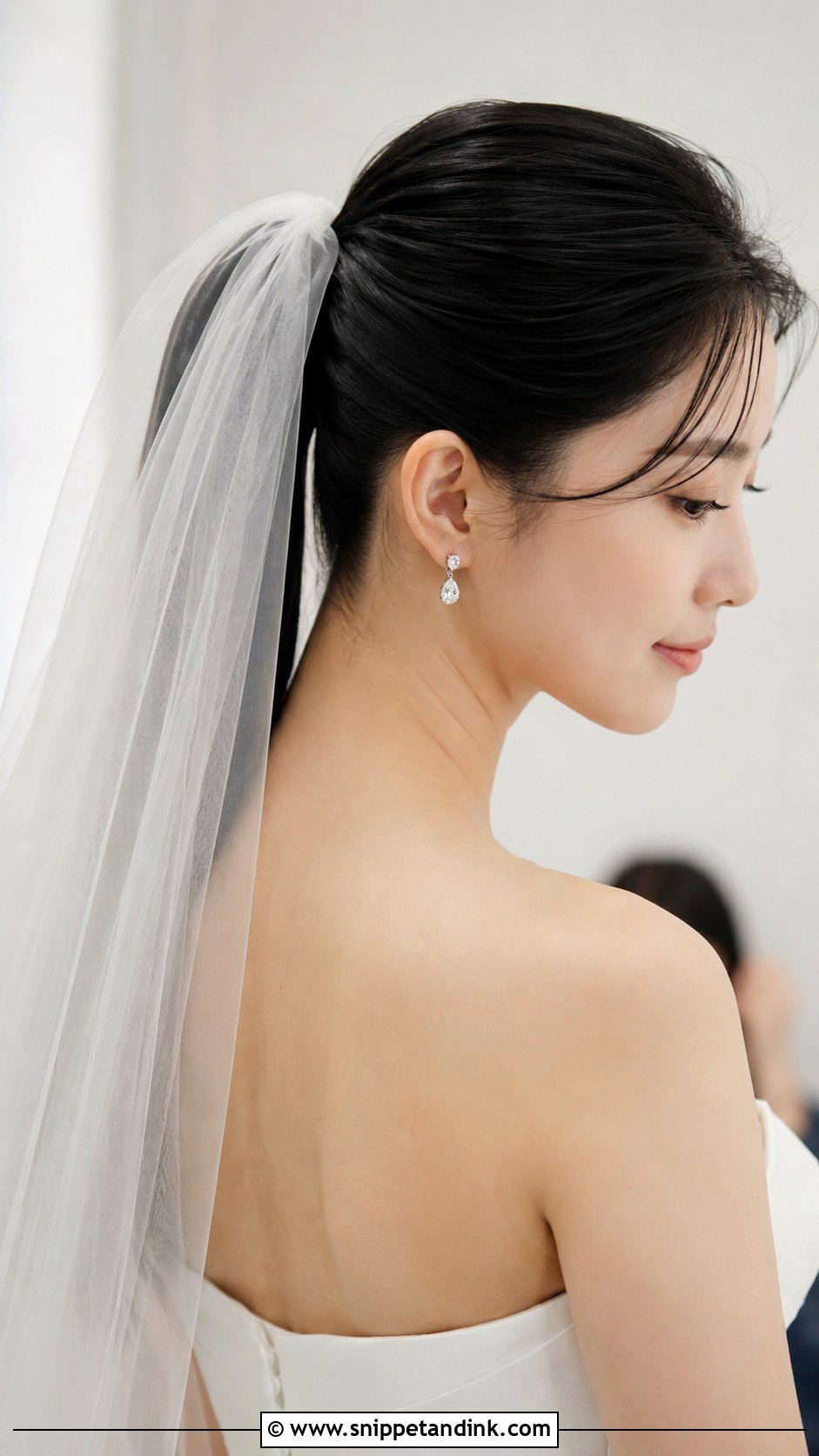
A sleek ponytail with a veil is the most unexpected pairing here. The hair is smoothed back into a polished, high pony, and the comb goes just beneath the base so the veil falls behind the ponytail. It lengthens the silhouette and keeps attention on the face, which suits city weddings and minimalist venues. Both the ponytail and the veil hang from one point, so the base needs a strong elastic plus pins crossed through it.
19. Bohemian Updo With Flower Crown And Veil
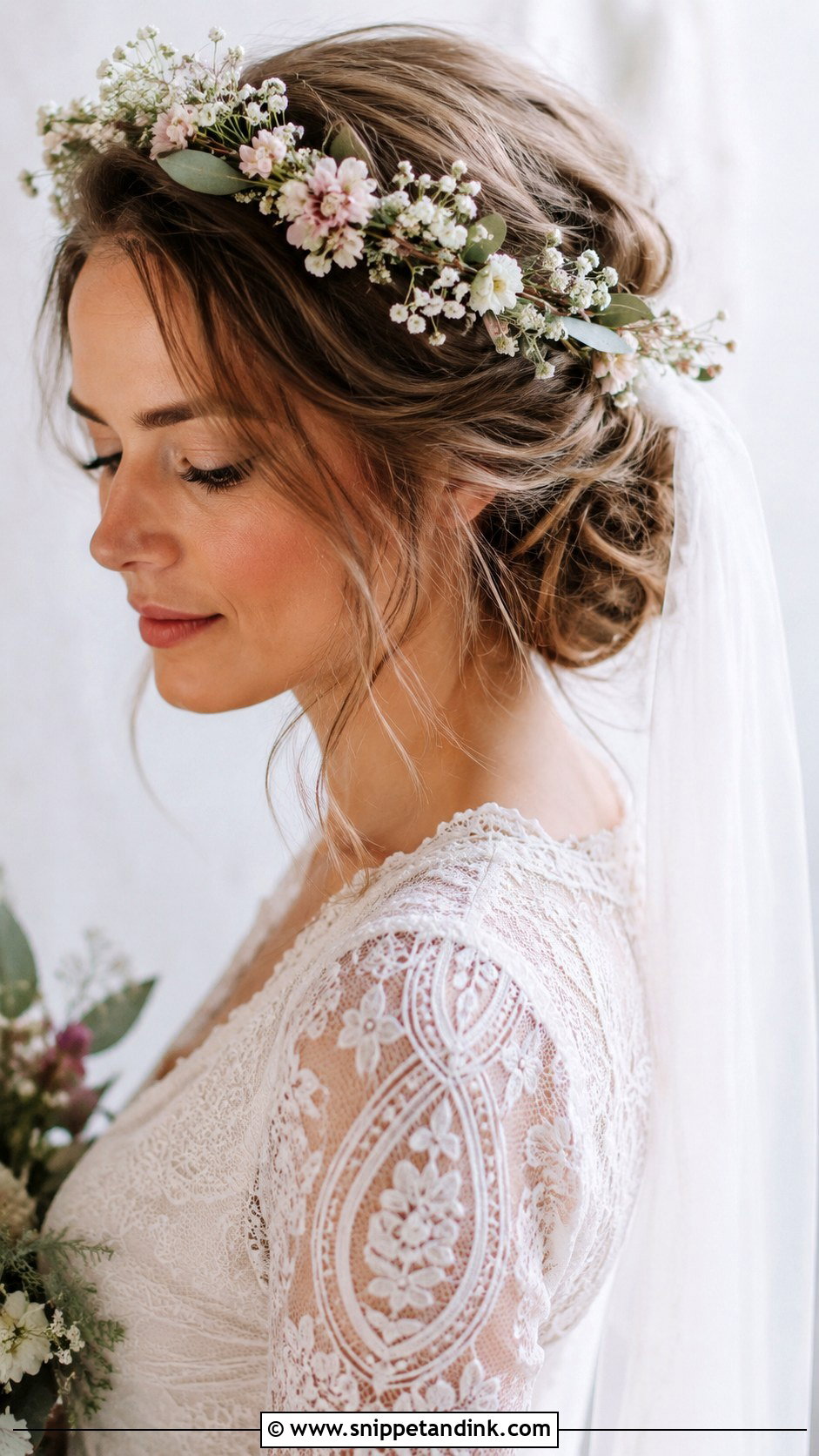
A boho updo, a flower crown and a veil together is a lot for one head, so I build in layers. The hair is gathered loosely with volume and wispy tendrils, the veil comb goes in next, and the flower crown sits on top to hide the comb. Outdoor and forest weddings suit it. Ask your florist for a light crown, because real flowers add weight, and a heavy crown on top of a veil presses on the same few pins all day.
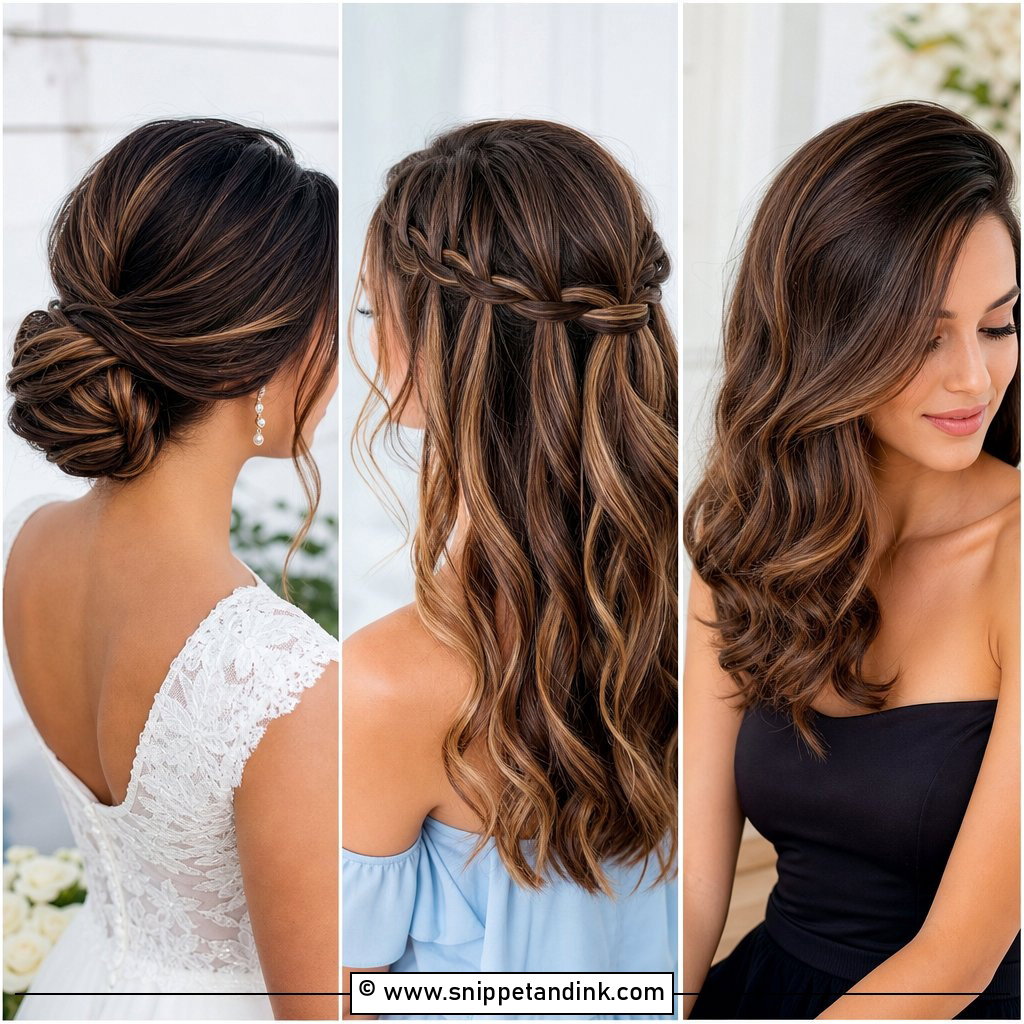
20. Twisted Updo With Cathedral Veil
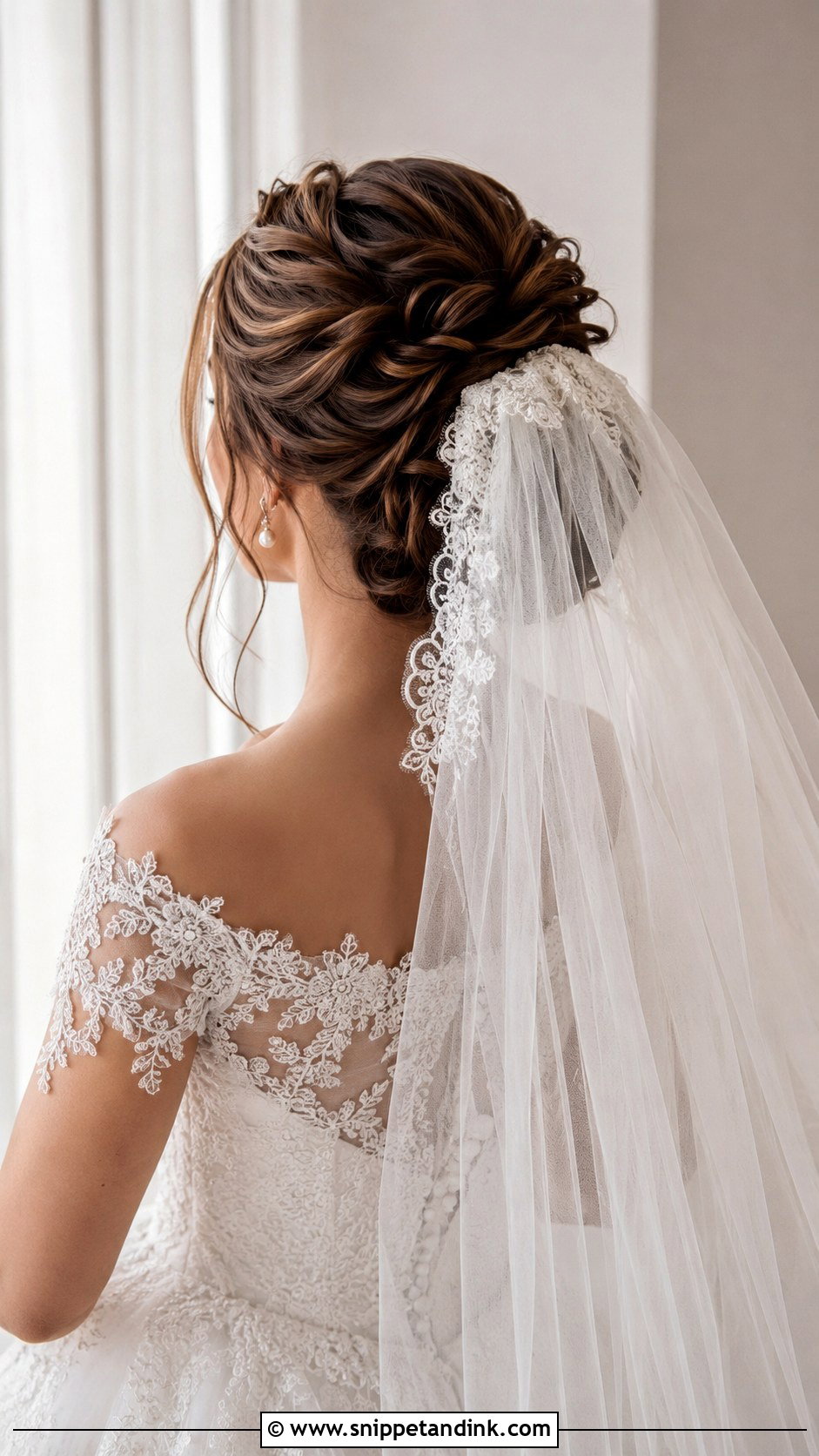
A twisted updo under a cathedral veil sets fine detail against breathtaking drama. Soft twists are gathered into a shaped bun at the back, and the long veil flows from just above it. I fix the comb firmly, since a cathedral veil’s weight keeps working on the hair for hours. The twists catch the light in close-ups, while the veil fills the frame in wide shots down a long aisle. Grand venues suit it best.
21. Soft Waves Updo With Fingertip Veil
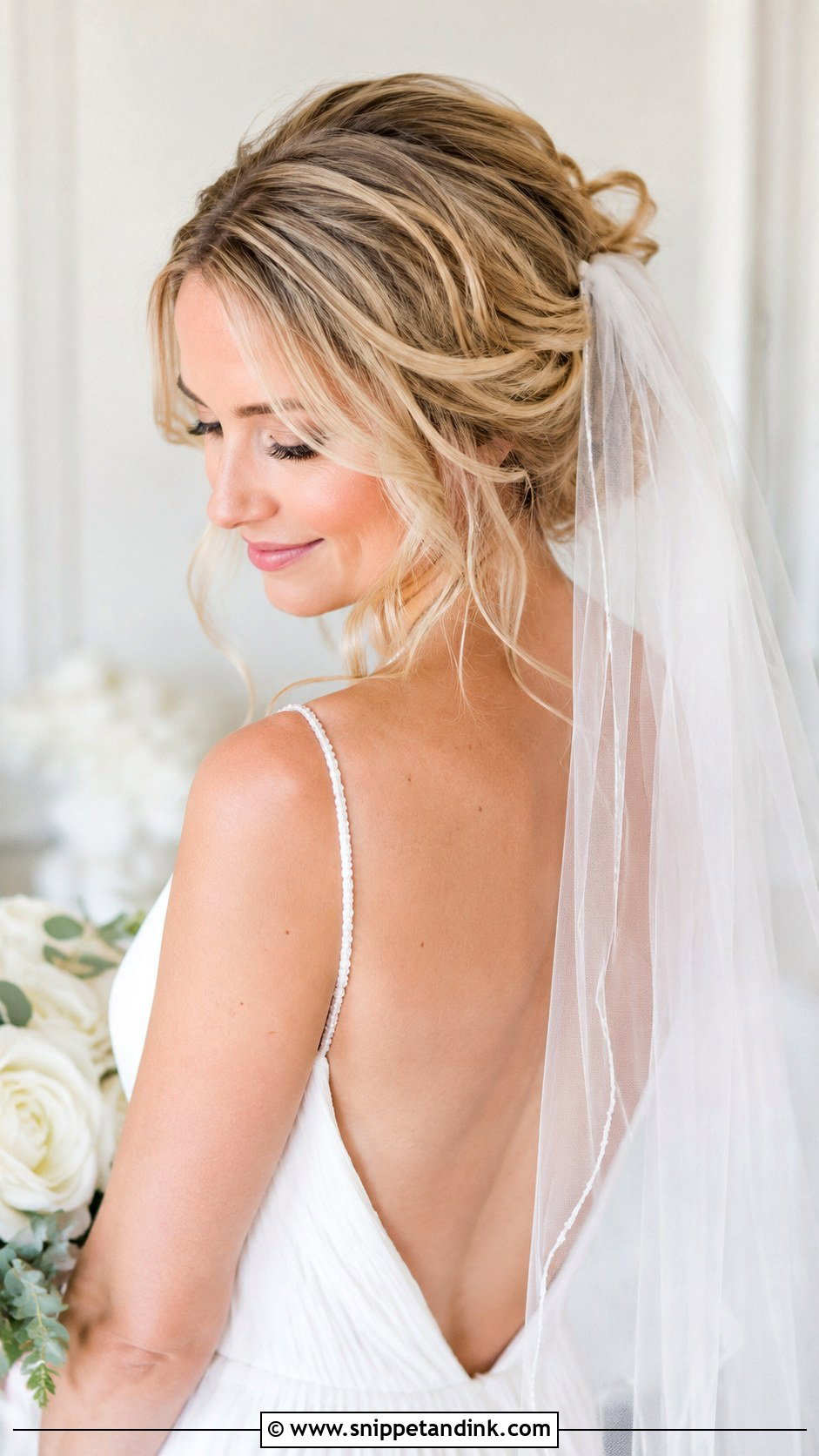
Loosely pinned waves suit a fingertip veil, which falls to about the hands and won’t overwhelm a soft style. I tuck the comb beneath the waves, and face-framing pieces keep it gentle. Indoors or out, it works. Fingertip is a sensible length if you’ll be moving around a lot, because it doesn’t trail on the ground and nobody needs to manage it for you.
22. Knotted Bun Updo With Lace Veil
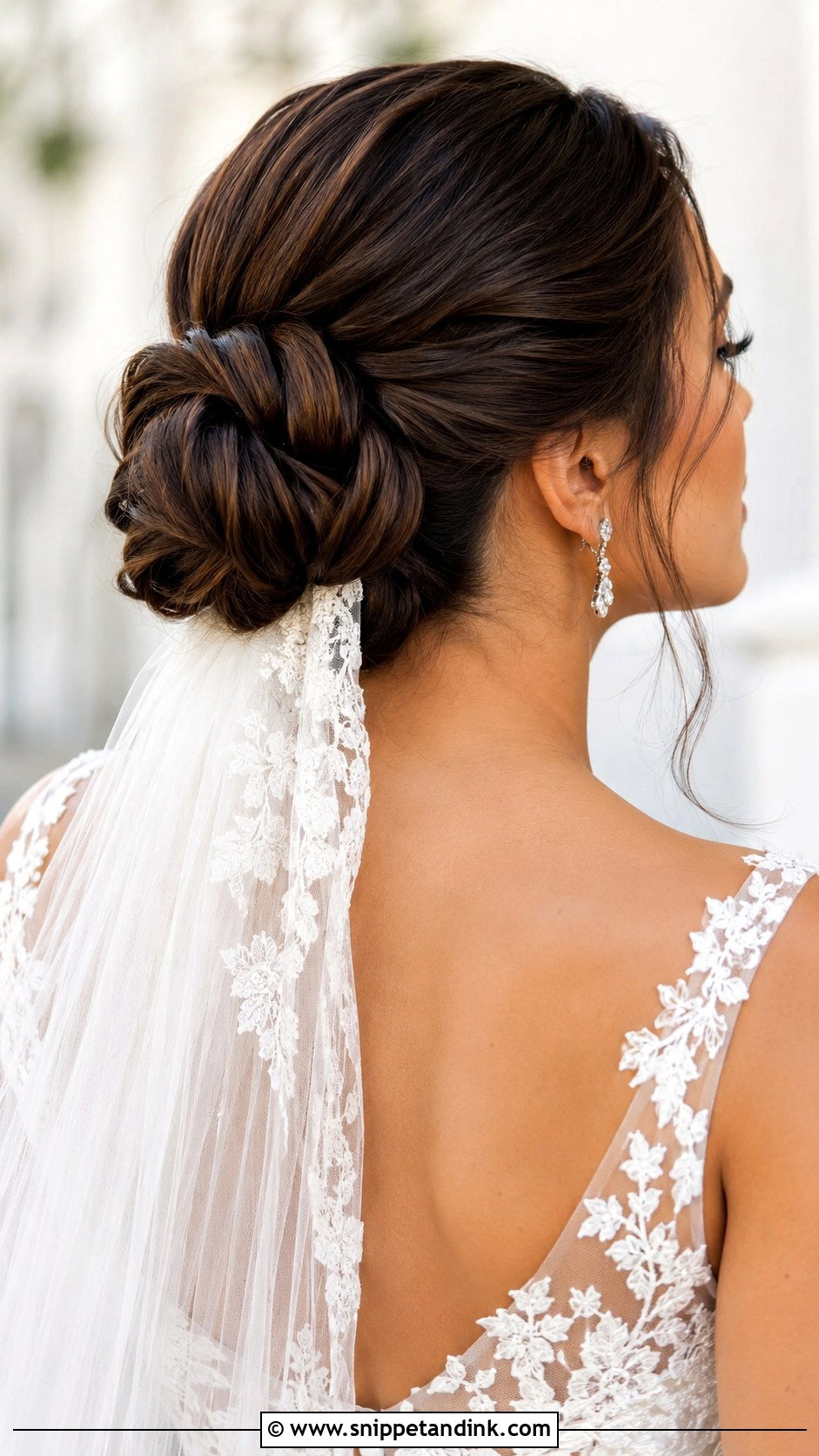
A knotted bun at the nape is sculpted and secure, with a lace veil draping from just above it. Knots grip a comb better than smooth hair, and that matters here, because lace veils weigh more than plain tulle. The clean structure of the knots contrasts with the soft fabric. Classic and contemporary weddings both suit it.
23. Pinned Curls Updo With Drop Veil
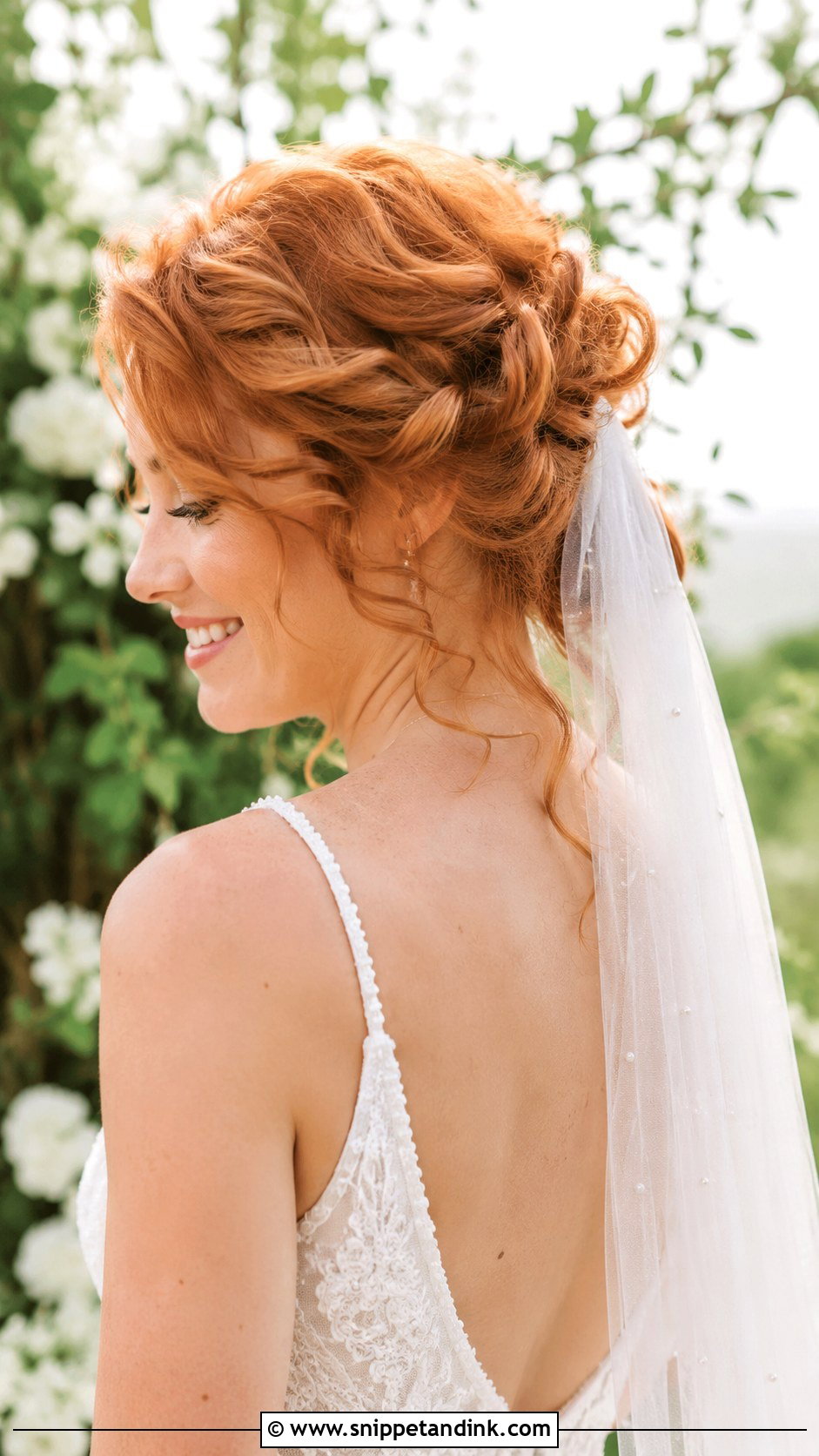
Pinned curls make a soft, voluminous updo, and a sheer drop veil over the top adds a light layer. I place the comb just above the curls and leave a few framing the face. Curly and wavy hair suits it best because the volume is already there. Since the drop veil sits directly on the curls, I pin them a little flatter at the crown than I would without a veil; otherwise the veil rides too high and looks perched.
24. Elegant Bun With Crystal Hairpiece And Veil
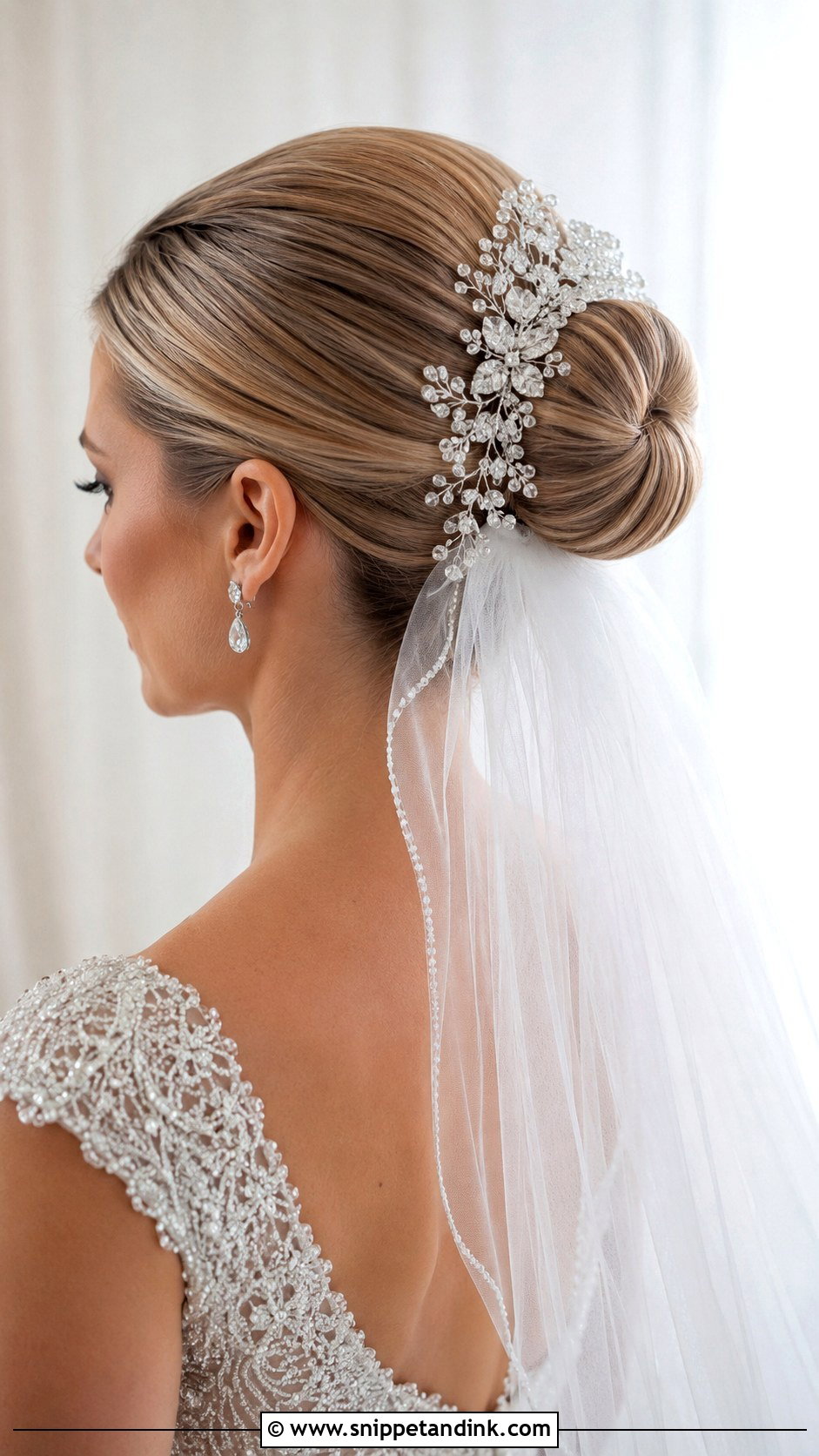
A crystal hairpiece placed where the comb meets the hair covers the join and adds sparkle. The bun sits smooth at the nape or crown, and the veil drapes softly behind the piece. Formal and luxurious venues suit it. Wire-backed crystal vines can be bent around the curve of a bun, and I pin them through their own loops so they don’t shift. When the veil comes off later, the hairpiece stays, and your hair still looks finished.
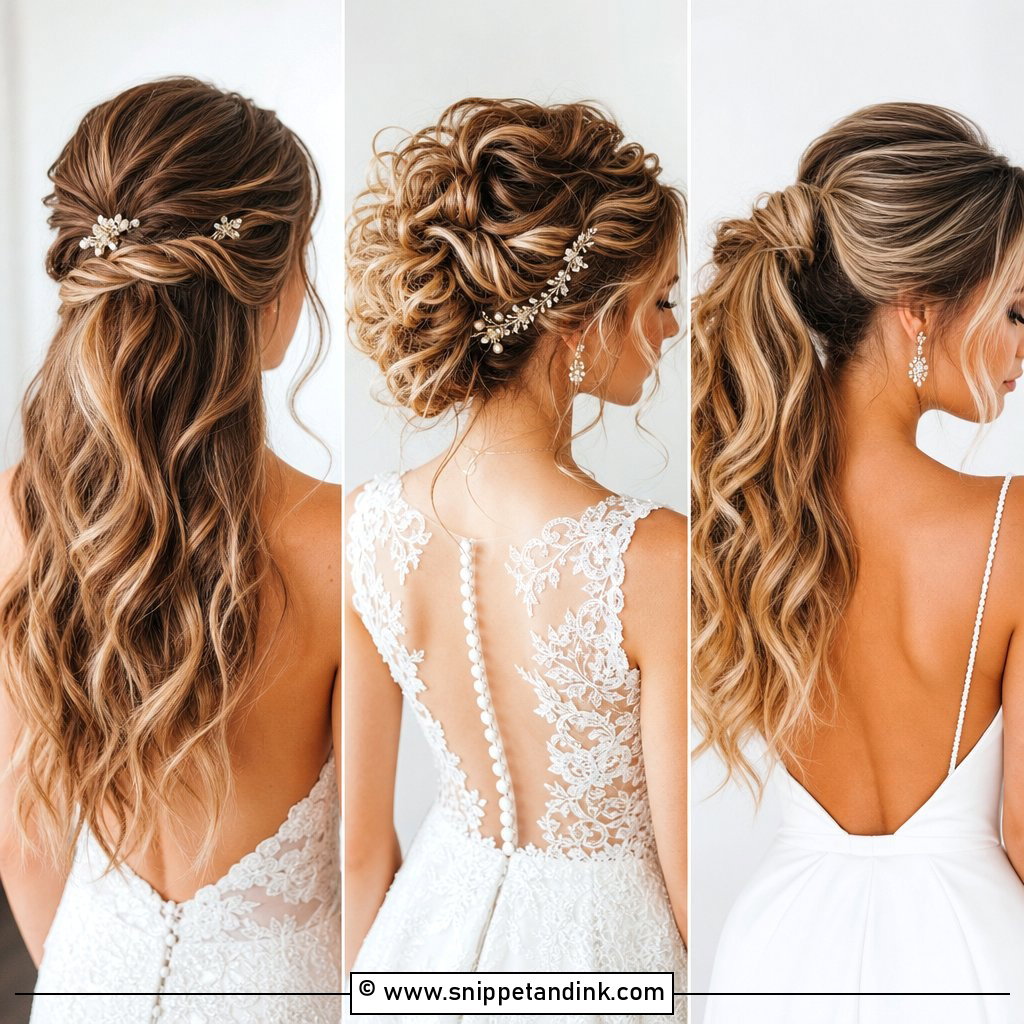
25. Modern Low Bun With Under-Veil Placement
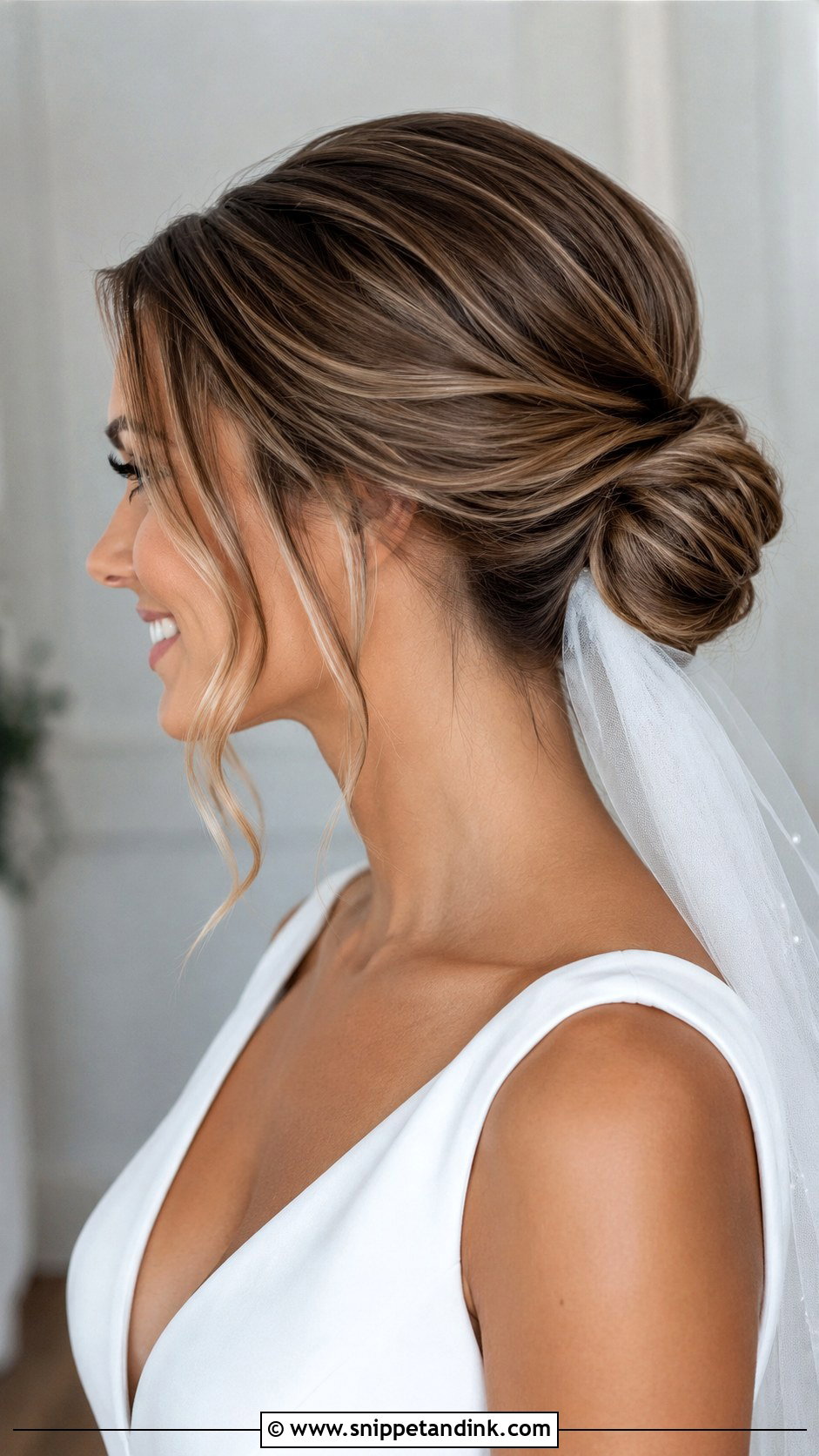
Placing the comb under the bun rather than above it is the modern approach. The veil emerges from beneath, so the whole updo stays visible from behind. Keep the bun smooth or slightly textured, with loose tendrils at the face, for formal or relaxed weddings. This placement only works if the bun is big enough to cover the comb’s spine, so on fine hair I add a little padding inside it.
Wind, the Blusher Lift and the Reception Swap
Outdoors, a long veil behaves like a sail. Keep it loosely gathered in one hand while you walk between locations, and let it go only when the photographer is ready. If the forecast looks gusty, a shorter veil or one with a weighted lace edge hangs down instead of lifting.
Whoever lifts your blusher should take the bottom edge in both hands and raise it straight up and back over your head, never pull it toward themselves, since pulling forward drags the comb out. Run through it once at the trial so nobody is guessing at the altar.
If the veil comes off for the reception, the comb can leave a small flattened spot where it sat. A jeweled pin or small decorative comb slipped into that place covers it, so plan a second accessory with your stylist in advance.
Above the Bun or Beneath It?
Every pairing here comes down to the same few decisions: where the comb sits, how heavy the veil is and how much structure the hair has to carry it. Above the bun reads classic; underneath reads fresh and modern. Settle the veil’s length and weight before you settle the hair, not after. And pick a style that looks finished without the veil, since you’ll probably wear it for hours after the ceremony. Take the real veil to your trial, and you’ll know within minutes whether the pairing works.
You'll Like These Ideas:


Leave a Reply