
Most of the brides I dress for Italy arrive with a picture of lace in a villa garden, and then the venue changes the plan. Stone steps snag hems, July sun shows every sweat mark on silk, and a church in a hill town may ask you to cover your shoulders. The Italian look I love is less about drama and more about craft: good fabric, a fit that lets you climb terraces, and accessories chosen with the dress rather than piled on afterwards. Below are thirty full looks, each with shoes, veil, jewelry and hair worked out, plus what I watch for when a client actually wears them on the day.
Fabric for Italian Heat, Stone Steps and a Church Dress Code
Before we look at styles, I match the fabric to the month and the venue, because that one decision rules out half the rail. Italian summers are hot and bright, and most venues mean walking on gravel, cobbles or terraces.
- June to August: lace, organza, chiffon and lightweight crepe breathe. Heavy satin and mikado trap heat and show sweat marks under the arms.
- Spring and autumn: satin, mikado and long sleeves come back into play, since evenings in the hills and by the lakes get cool.
- Uneven ground: choose a bustle that hooks the train up properly, and block heels or wedges rather than stilettos.
- Catholic church ceremonies: many parishes expect covered shoulders inside. A lace bolero, a sheer cape or a long veil worn over the shoulders solves it without changing the dress.
I also ask where the photos will be taken. Midday sun on white silk blows out detail, so if your portraits are at noon, a matte crepe or textured lace keeps the shape readable.
1. Italian Lace Wedding Dress
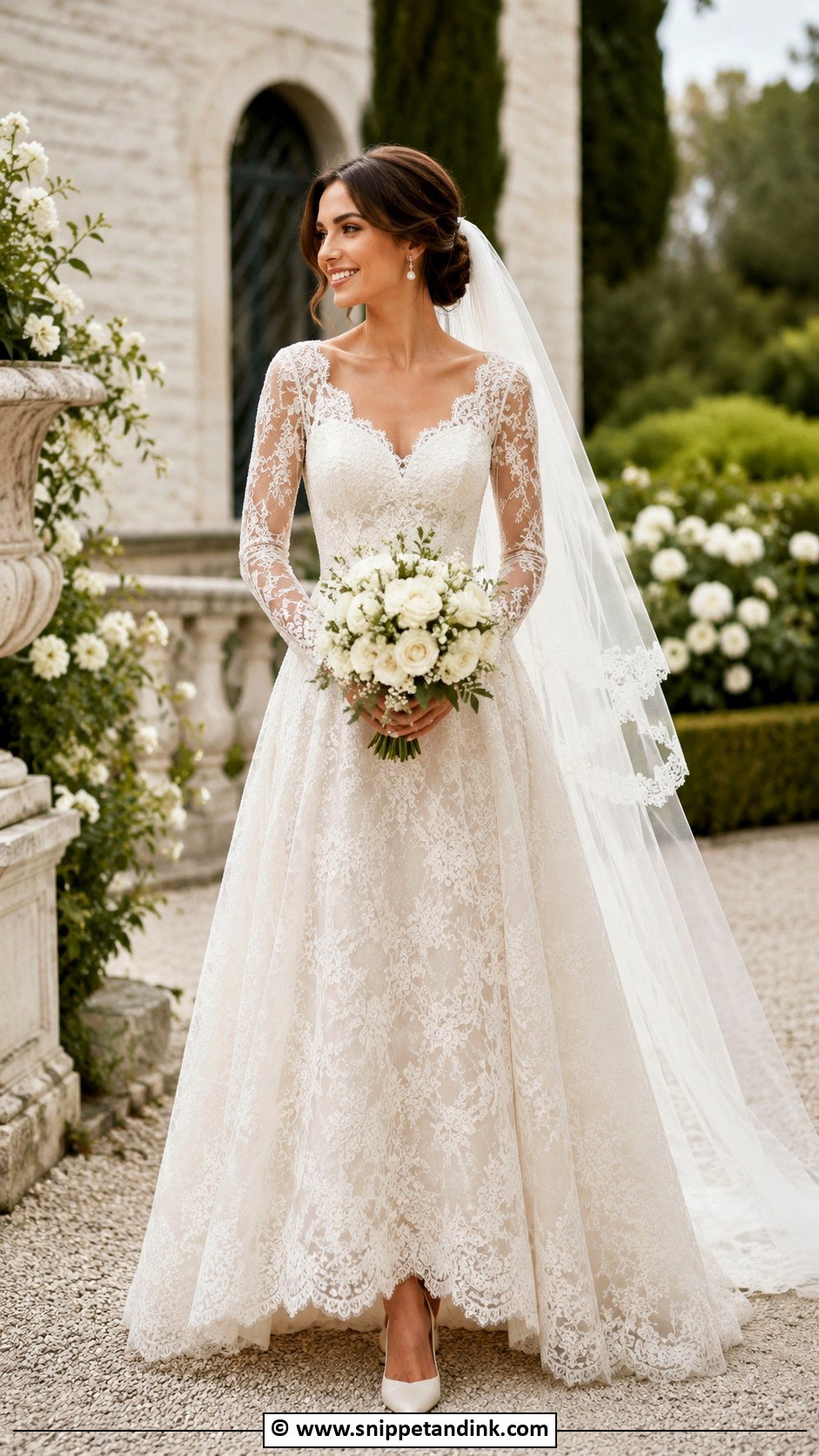
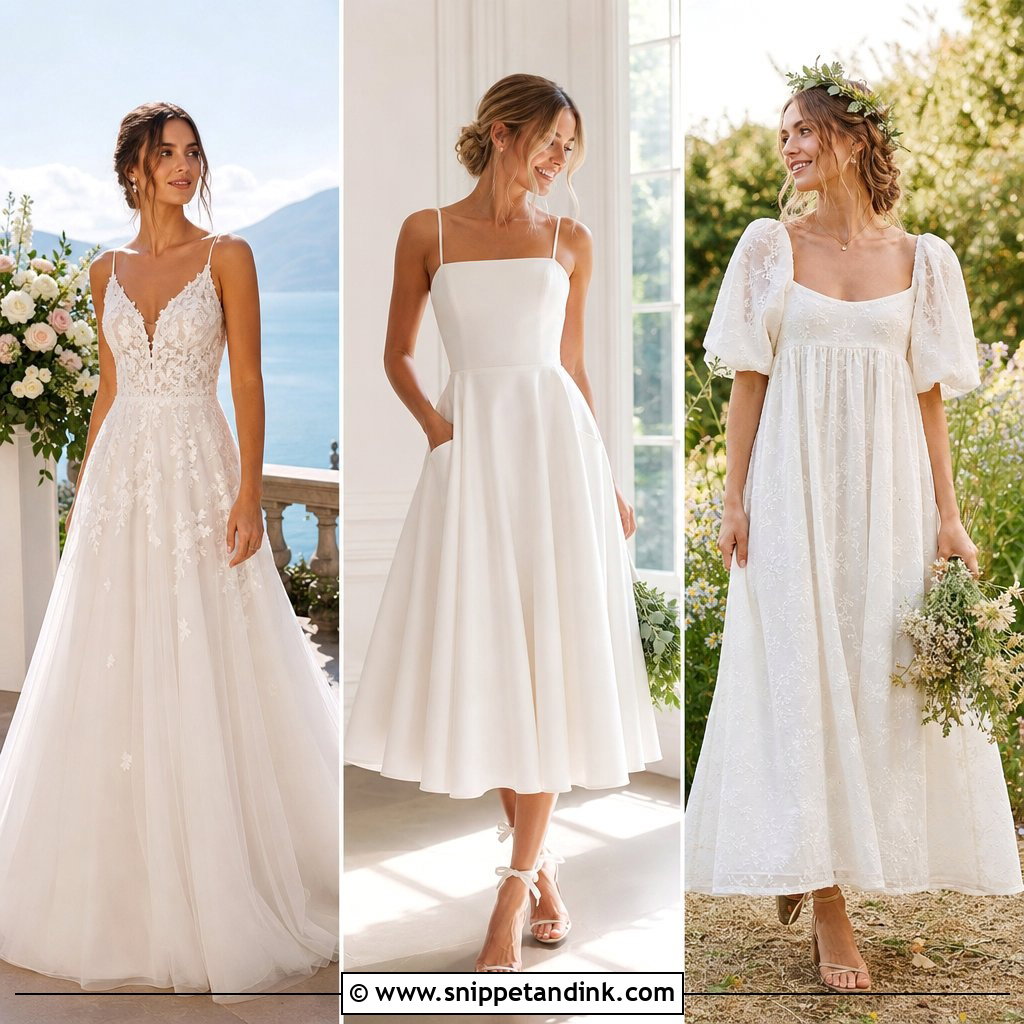
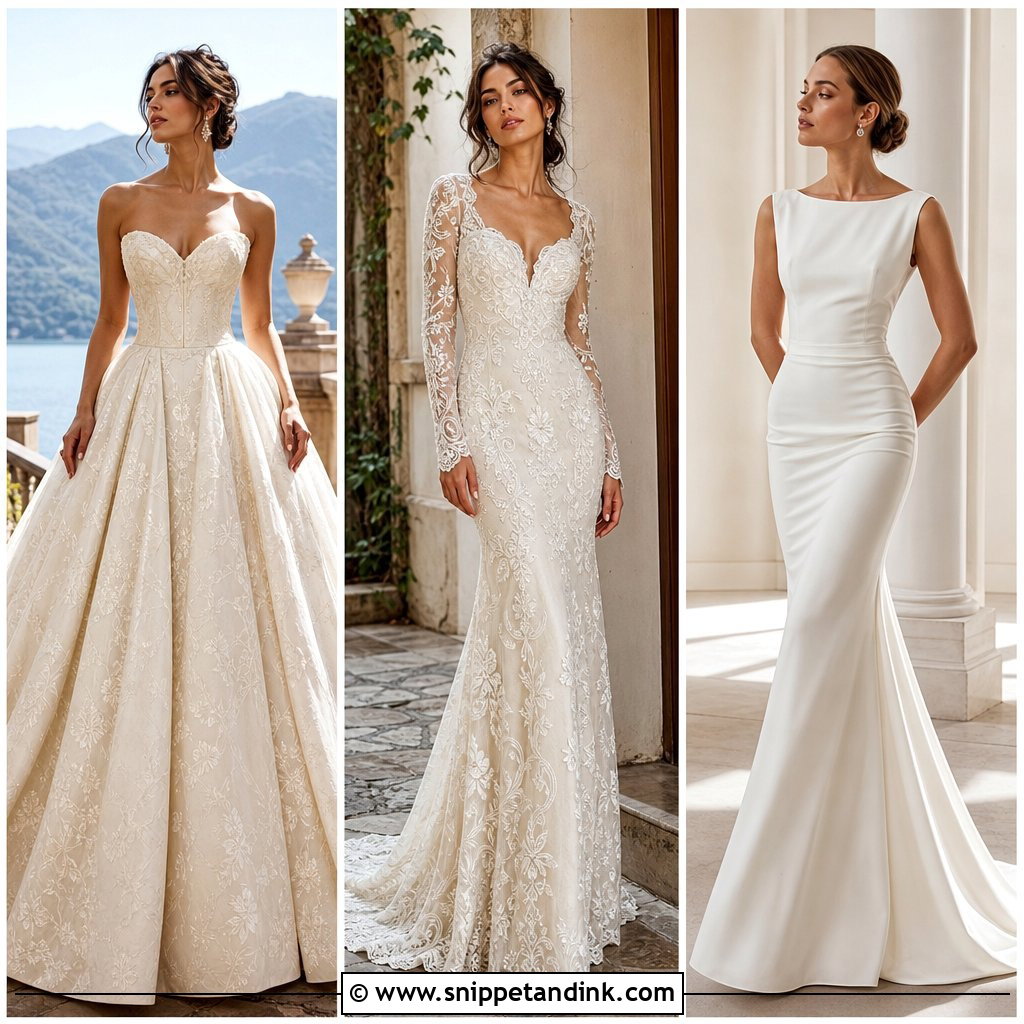
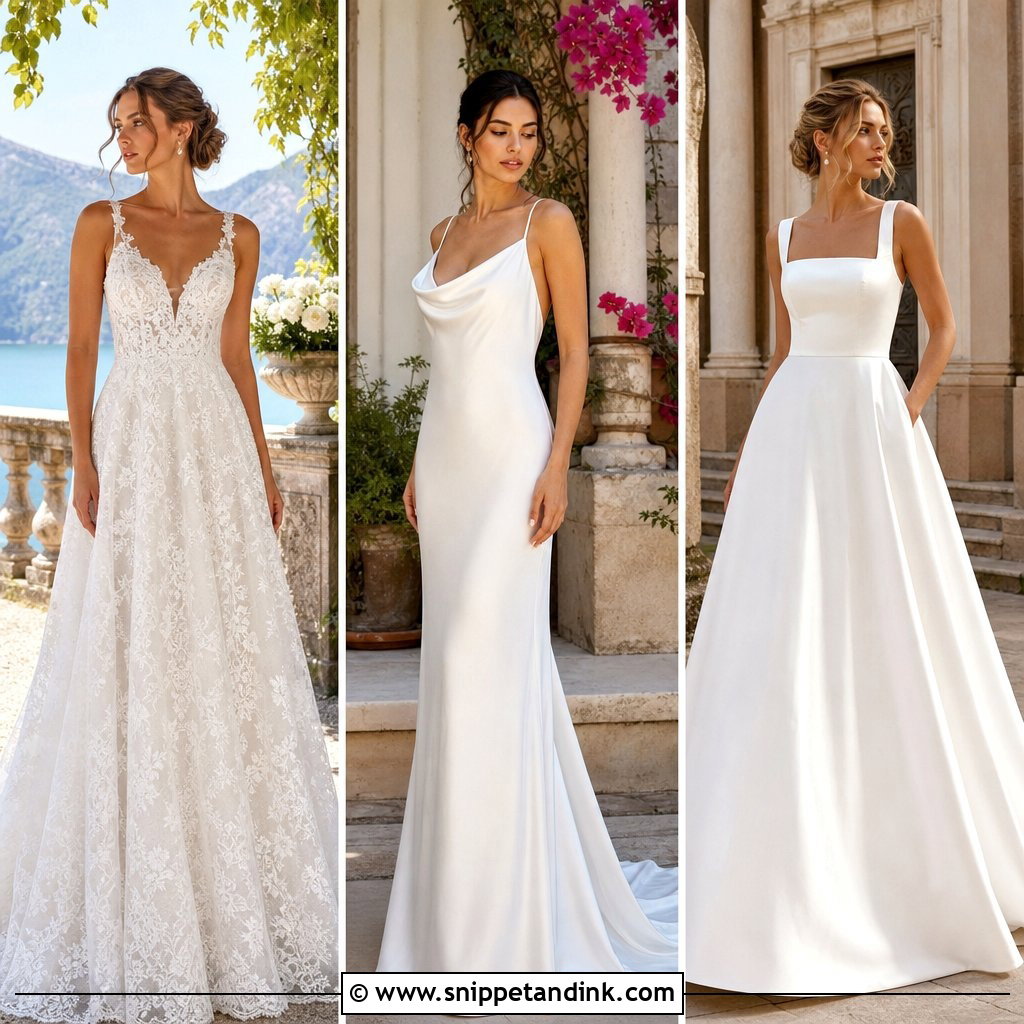
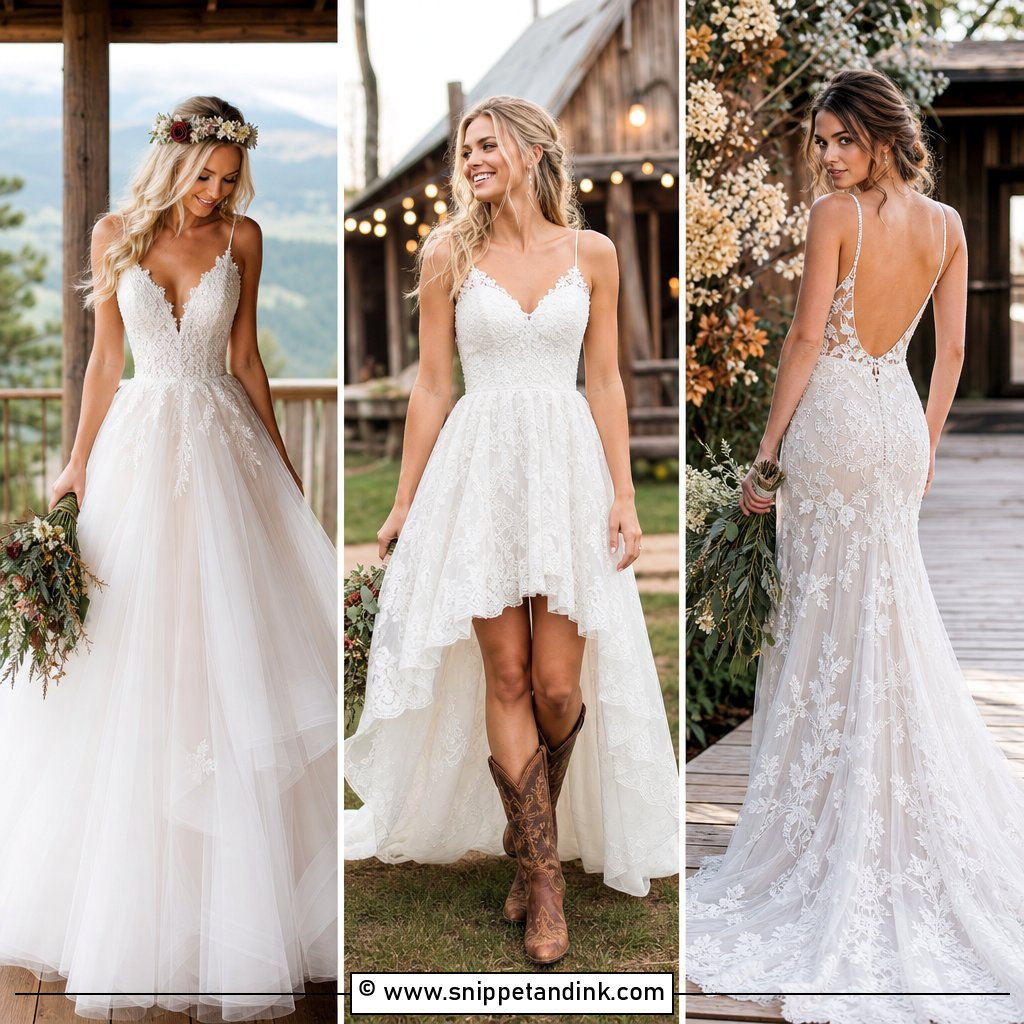
Lace is where I start most Italy fittings, because it forgives heat better than a solid silk and hides the small marks a long day leaves. A fitted or soft A-line gown with a scalloped neckline, sheer long sleeves or a subtle open back all work. I keep the veil sheer and fingertip length so the pattern still shows through it, and add ivory pointed heels and pearl drops. A low chignon clears the neckline. One warning from fittings: re-embroidered lace with raised cording can catch on a lace veil comb, so I sew a small ribbon loop for the comb instead. With a detailed lace, the bouquet can stay plain: white roses, ranunculus or a few olive branches.
2. Italian Silk Satin Wedding Dress
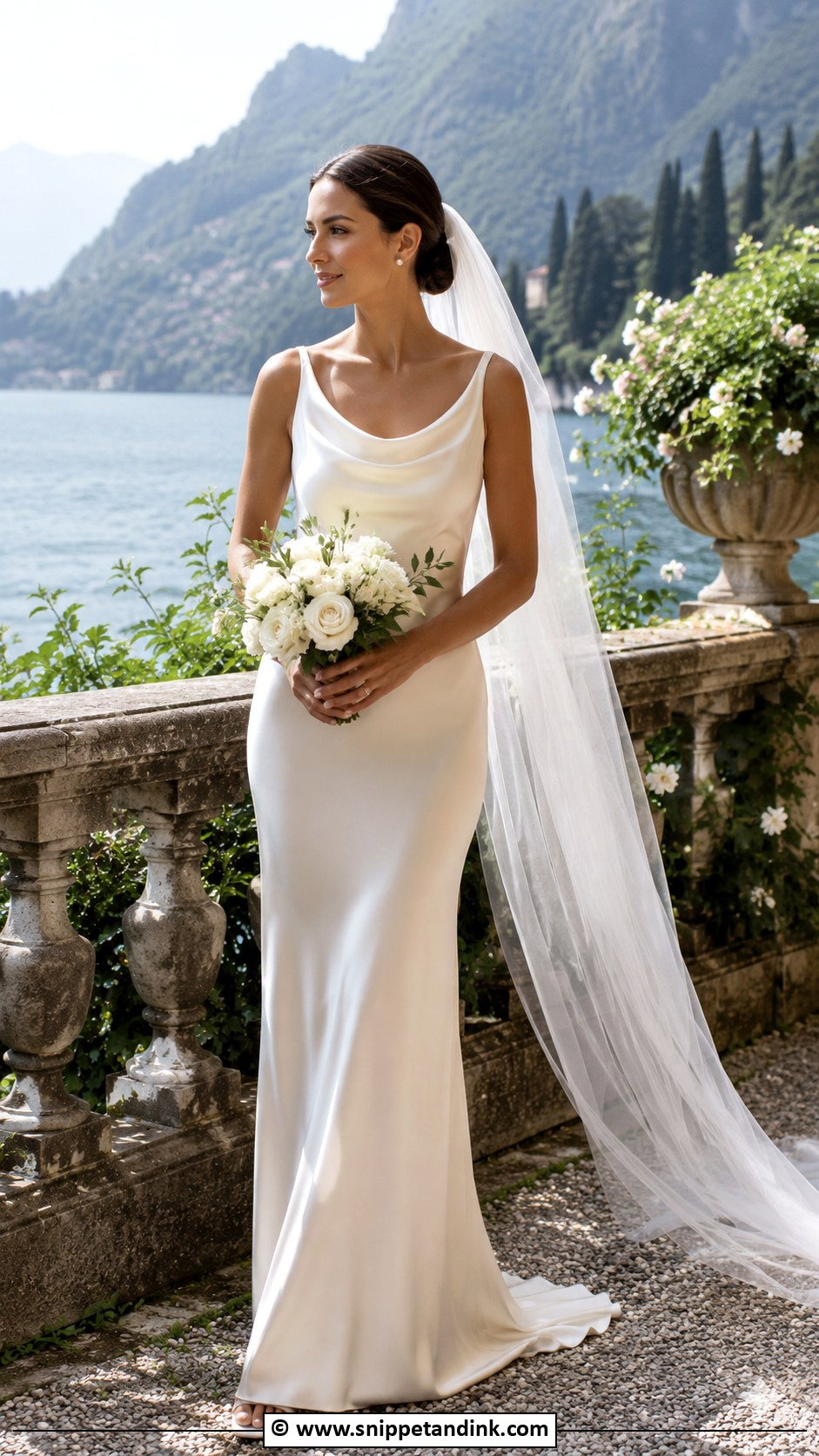
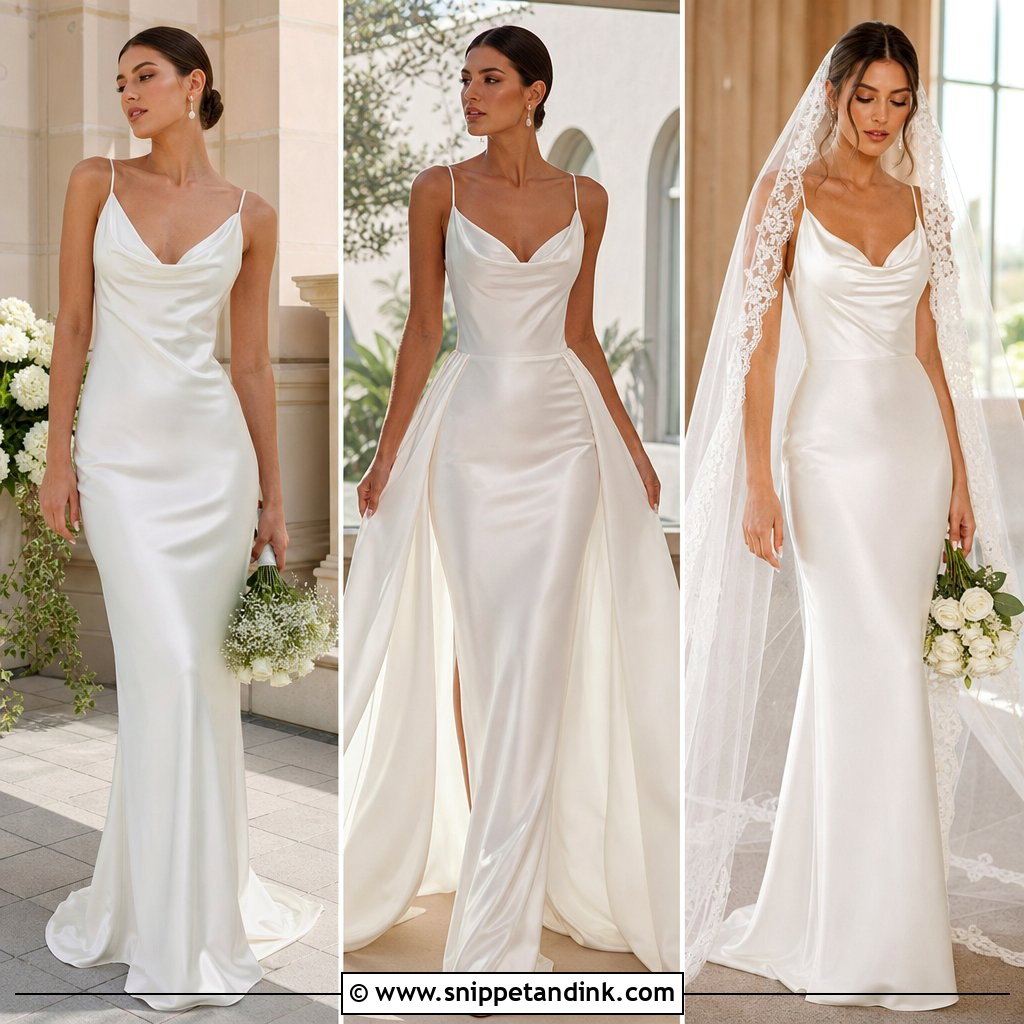
Silk satin reflects light like nothing else, which is exactly why I warn brides about it. Every crease from the car ride shows, and in direct midday sun the shine can flatten the shape in photos. A bias-cut slip, a structured column or a soft A-line in ivory or pearl white all suit it. I style satin with satin slingbacks, a clean low bun and small diamond or pearl studs, and nothing heavier. A cathedral veil makes it formal; a short one relaxes it. It belongs at an evening reception or a lakeside ceremony on Lake Como, ideally after the light softens.
3. Italian Off Shoulder Wedding Dress
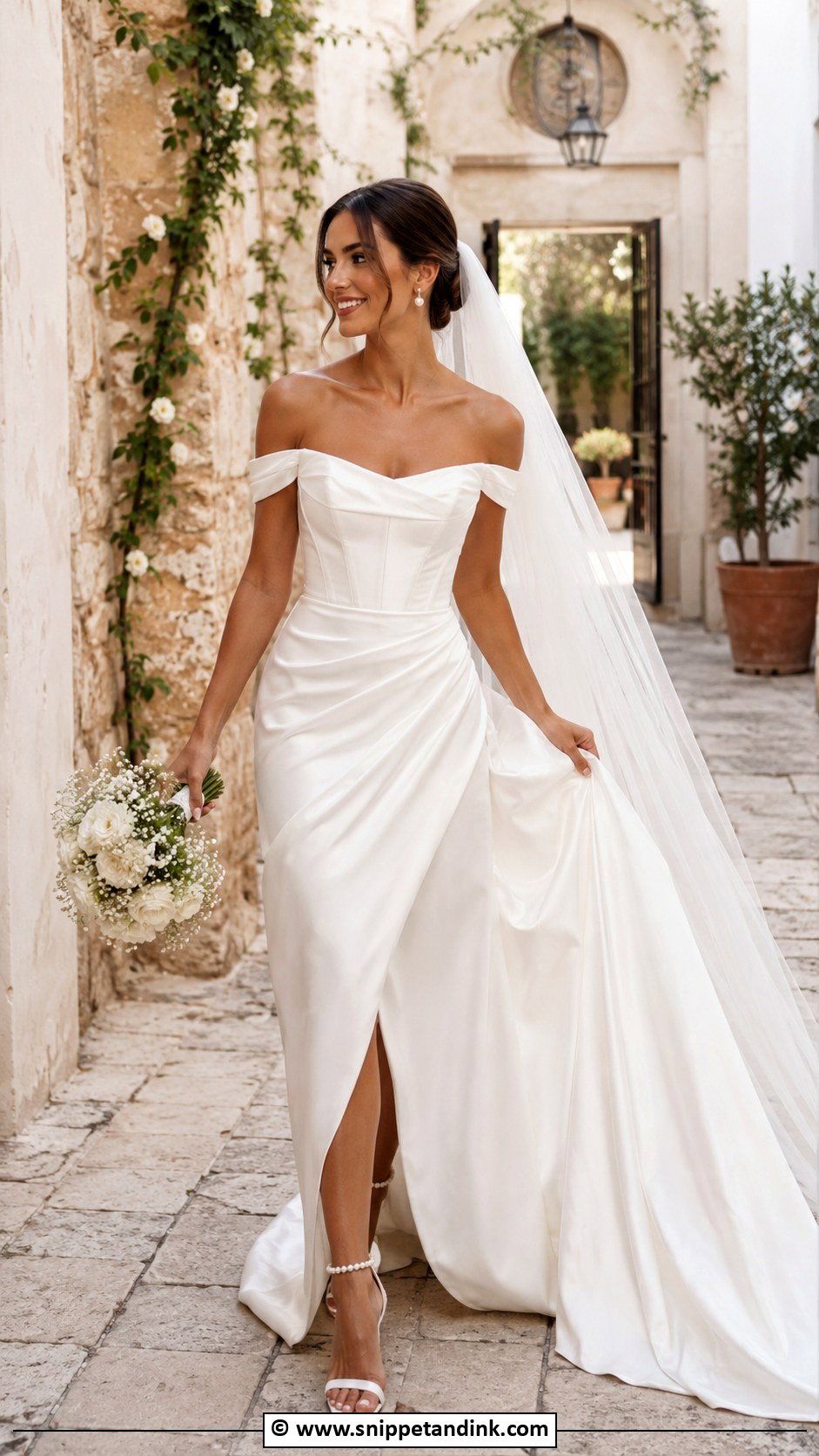
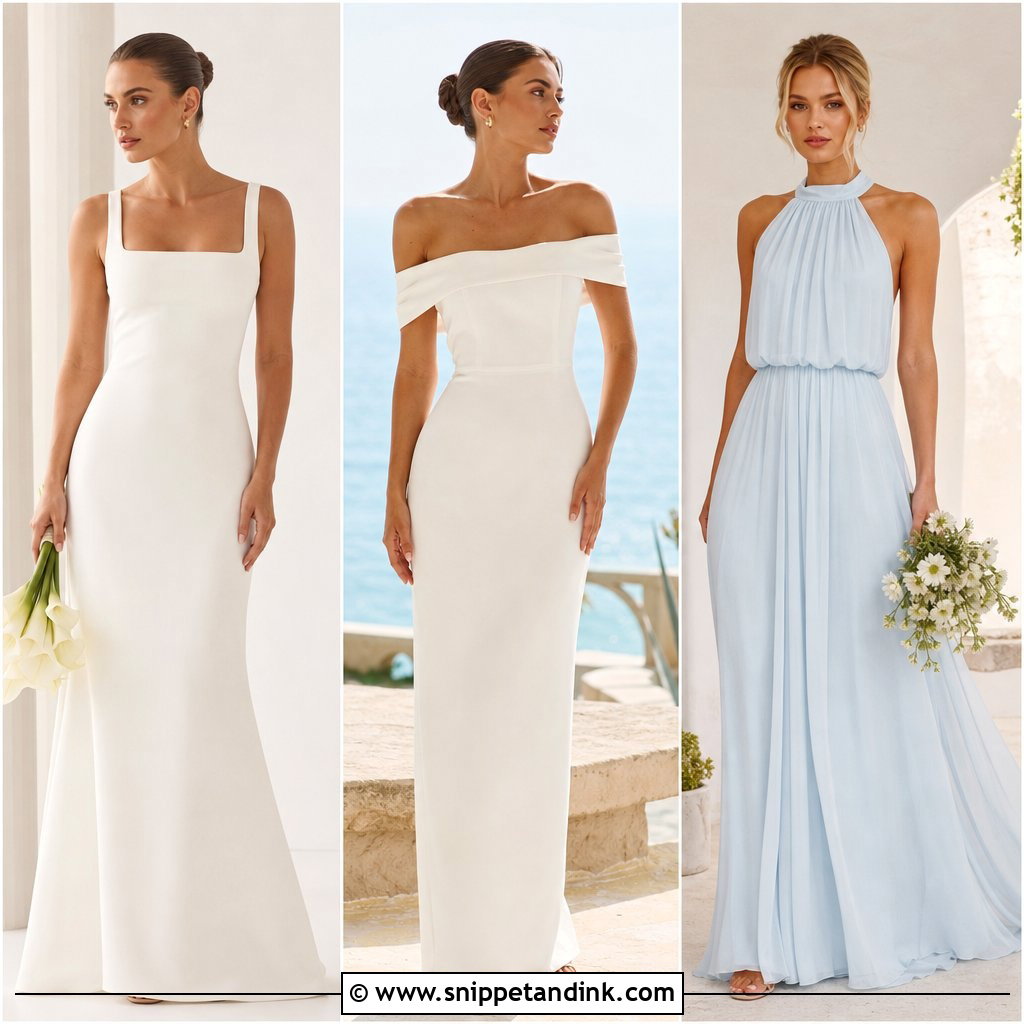
Off-shoulder bodices only work if the structure is inside the dress, not in your arms. At a fitting I ask the bride to hug someone and raise a glass; if the sleeves ride up or she starts hitching the neckline, we add boning or a silicone grip band. Once it sits right, the shape frames the collarbone well in warm weather. I pair it with ivory heeled sandals, pearl studs and a long veil tucked under soft waves, and keep a light silk wrap or sheer gloves ready for evening. Peonies, garden roses and greenery suit the open neckline.
4. Italian Corset Wedding Dress
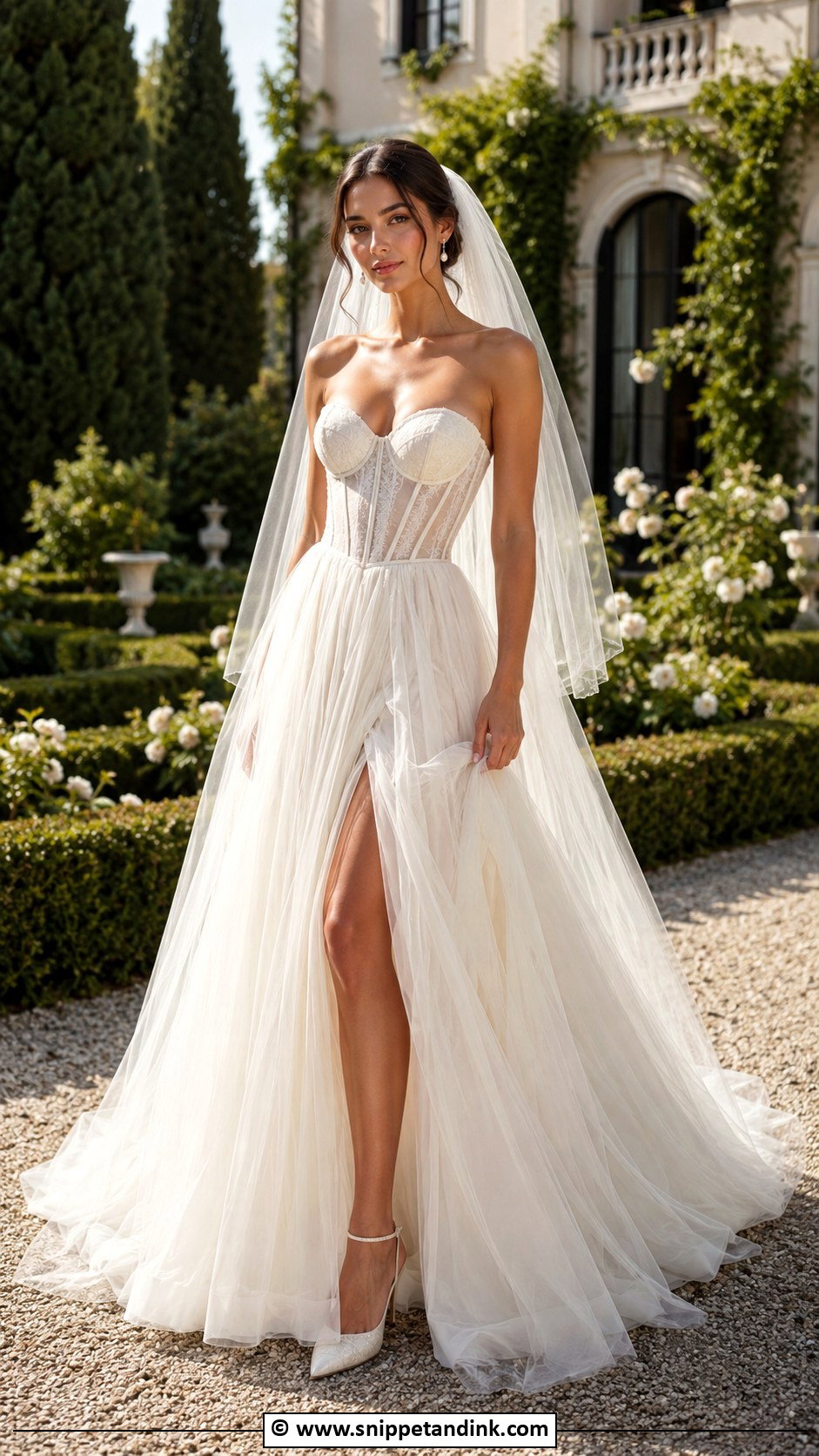
A corset bodice brings structure and a couture-inspired feeling to the outfit, and it is the one style I insist on fitting in the shoes you will wear. Visible boning, a soft sweetheart line and a flowing skirt in tulle, organza or silk mikado give you a defined waist without a stiff, traditional effect. In Italian summer heat, a corset laced too tight at the final fitting will feel tighter by the reception, so I leave a finger of room. Keep the accessories delicate: pearl earrings, slim heels, a simple veil. Fresh skin and a bouquet that looks gathered rather than arranged keep it from feeling costume-like.
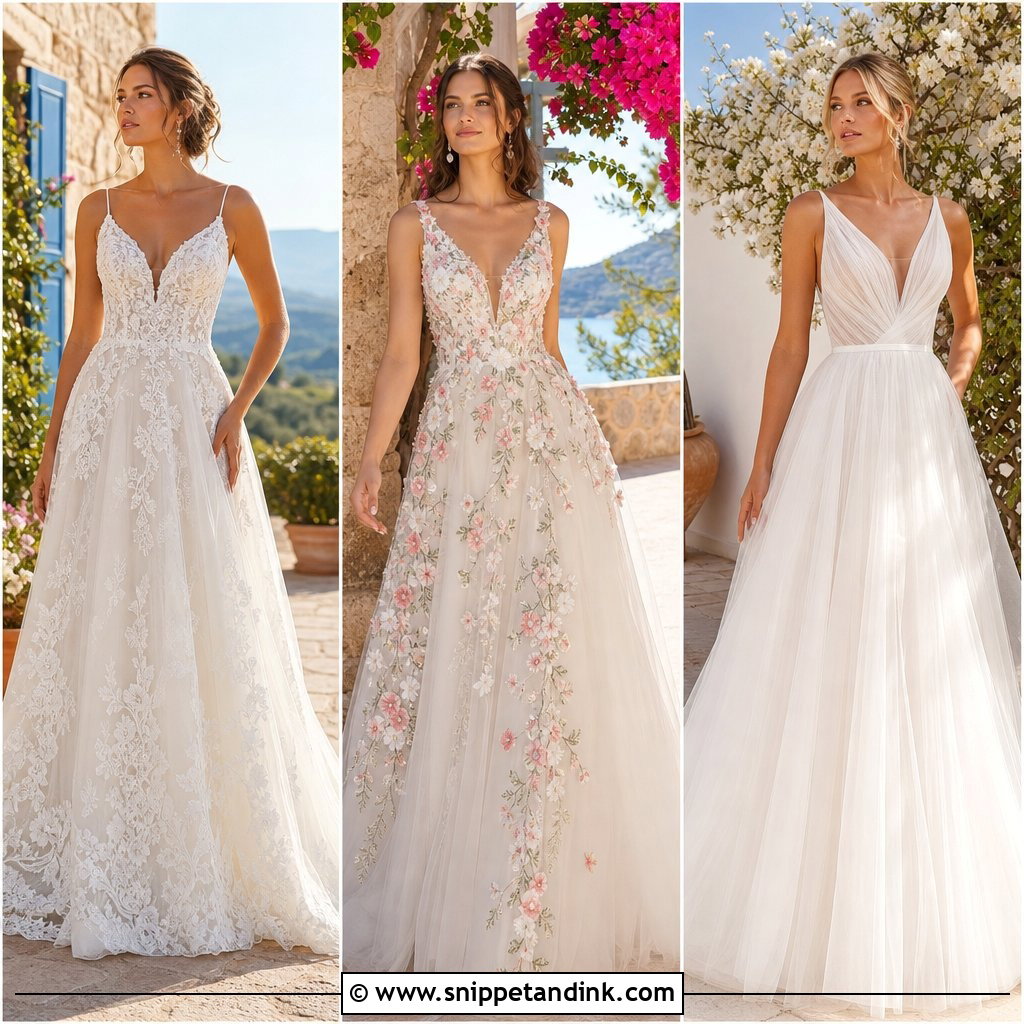
5. Italian A Line Wedding Dress
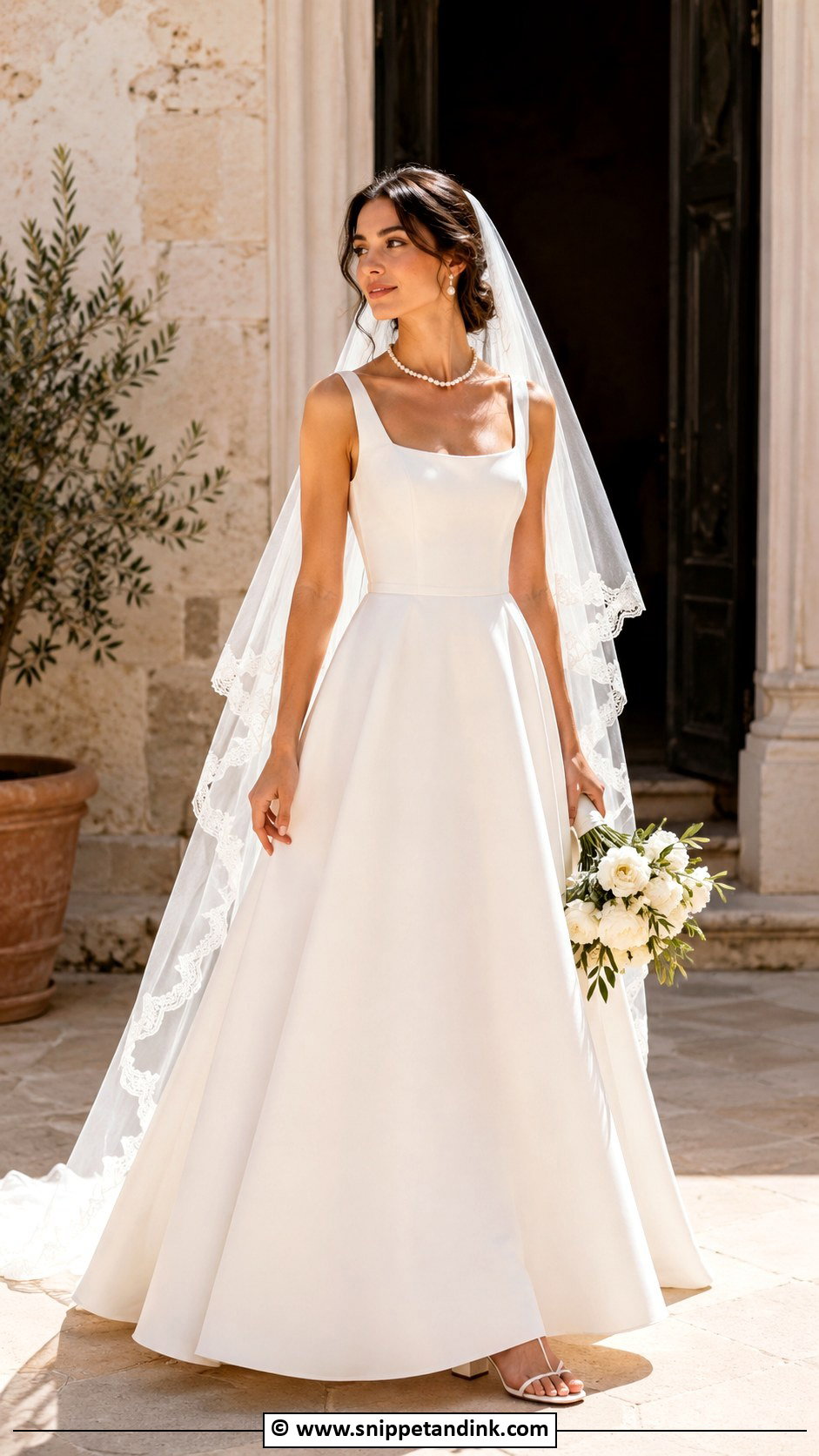
If a bride is unsure of her shape, I pull an A-line first. The fitted bodice and gently widening skirt suit most bodies and leave room to walk up stone courtyard steps without lifting the hem. The fabric is the decision that matters: lace or organza for a summer garden, satin or silk mikado for autumn and indoor rooms. Block-heel sandals are kinder than stilettos on gravel and cobbles, and a chapel veil plus refined pearls finish it. It moves comfortably through a whole day of gardens and terraces.
6. Italian Mermaid Wedding Dress
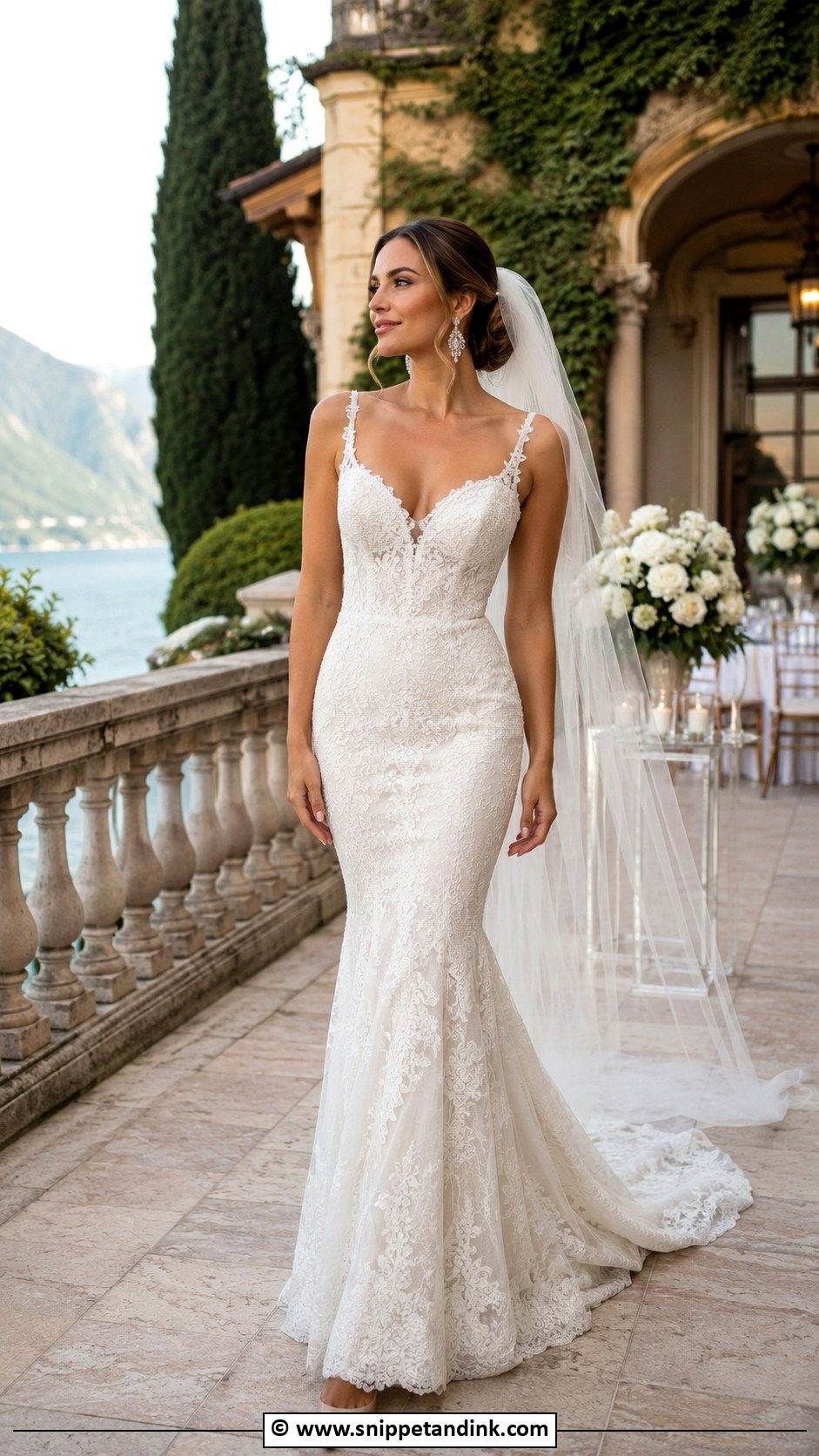
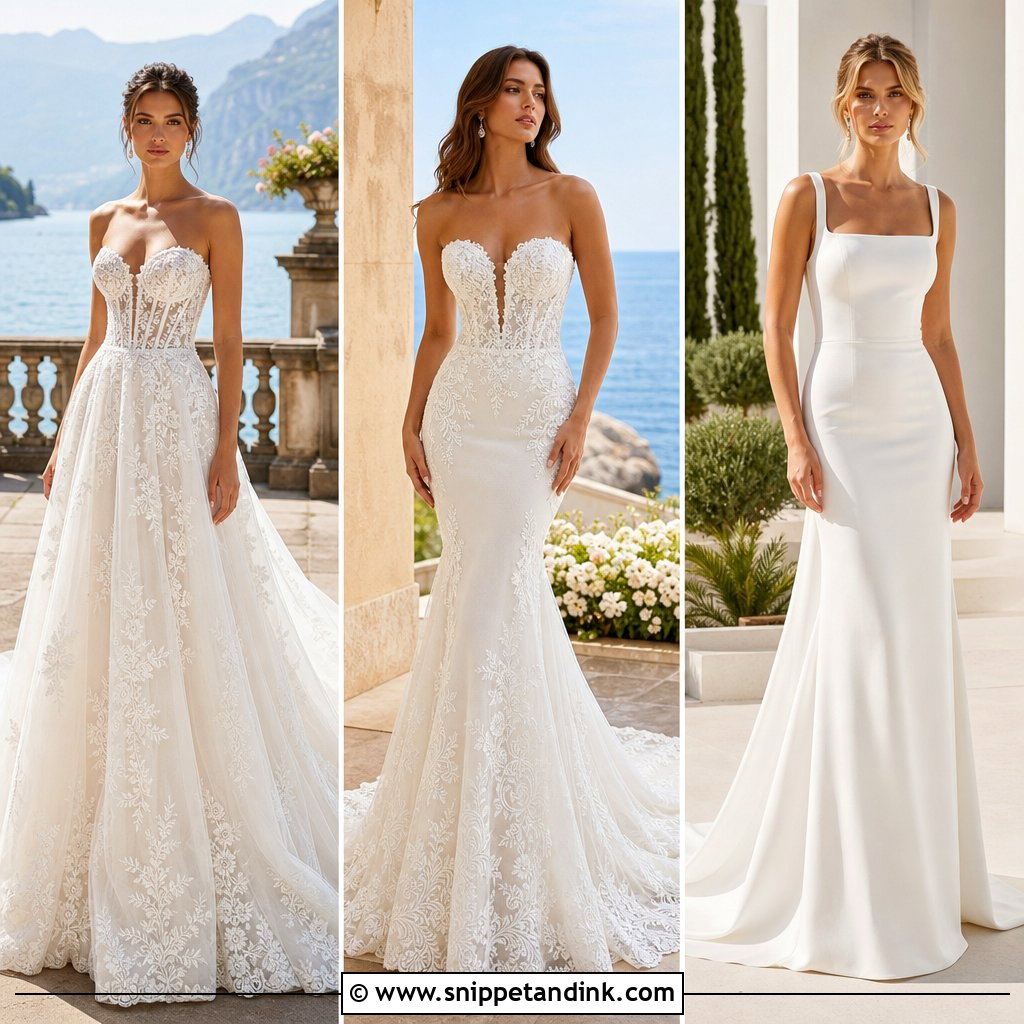
Mermaid gowns are the most fitting-dependent dress on this list. The flare has to start at the right point on your leg; too high and it reads as a trumpet, too low and you shuffle. I always have clients sit, climb a step and dance a few bars before we pin the hem. Lace, crepe or satin all suit the shape. I skip the necklace and use statement earrings with sleek heels and a long veil, which keeps the neckline clean and lengthens the body. Save it for a grand hotel, a formal villa or an evening ceremony, where you won’t be walking far over uneven ground.
7. Italian Ball Gown Wedding Dress
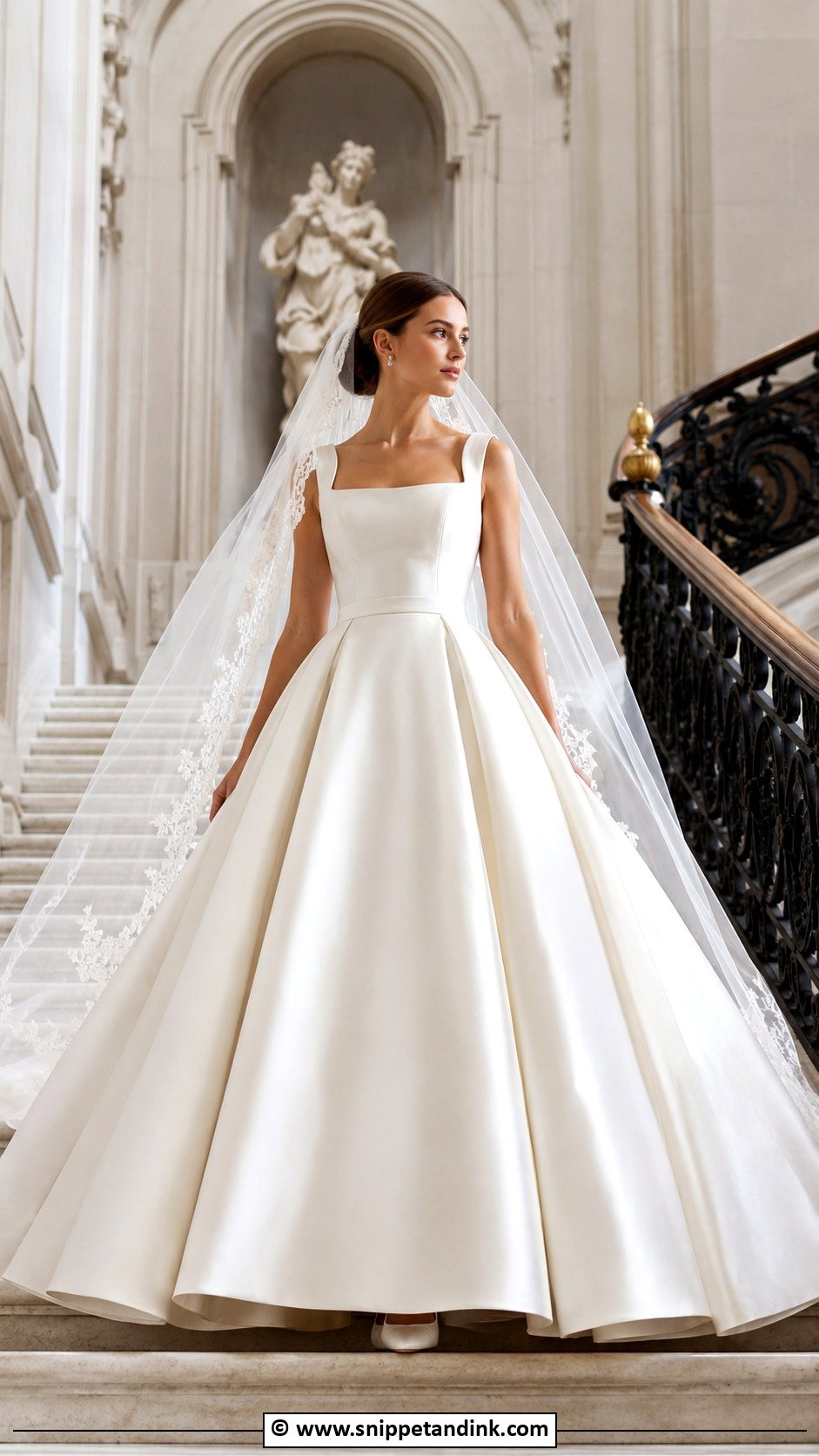
A ball gown in silk mikado, satin or layered tulle gives you the big entrance, but it also takes up an aisle, a car and a narrow palazzo staircase. Before a client commits, I ask her to measure the doorways and the back seat of the transfer car. Keep the bodice simple if the skirt is full, or use delicate lace for a softer effect. Classic pumps, a long veil and small sparkling earrings are plenty. A clean bouquet and smooth updo stop the whole thing from looking heavy. Large villas and historic estates have the space for it; a tiny chapel does not.
8. Italian Long Sleeve Wedding Dress
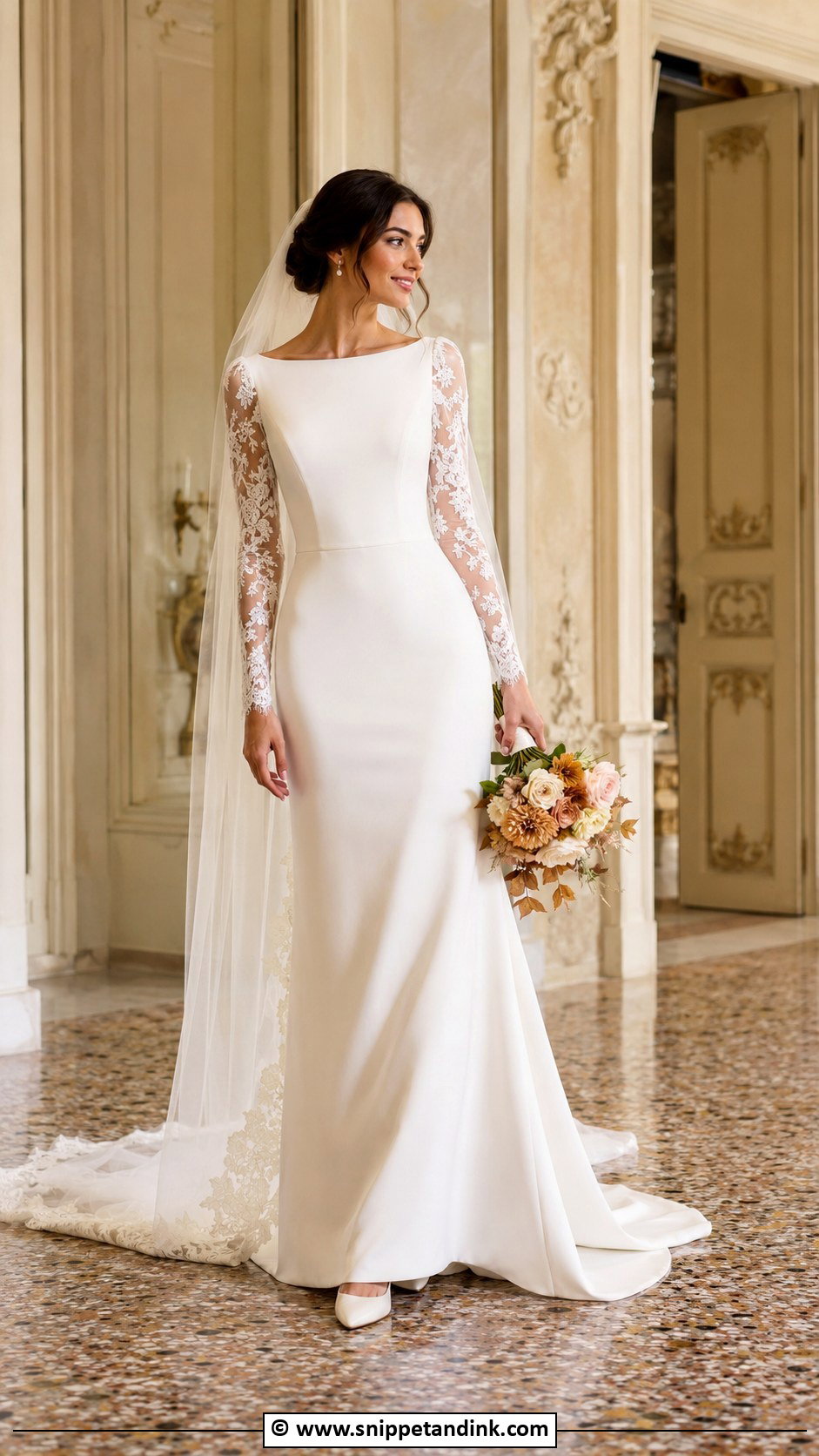
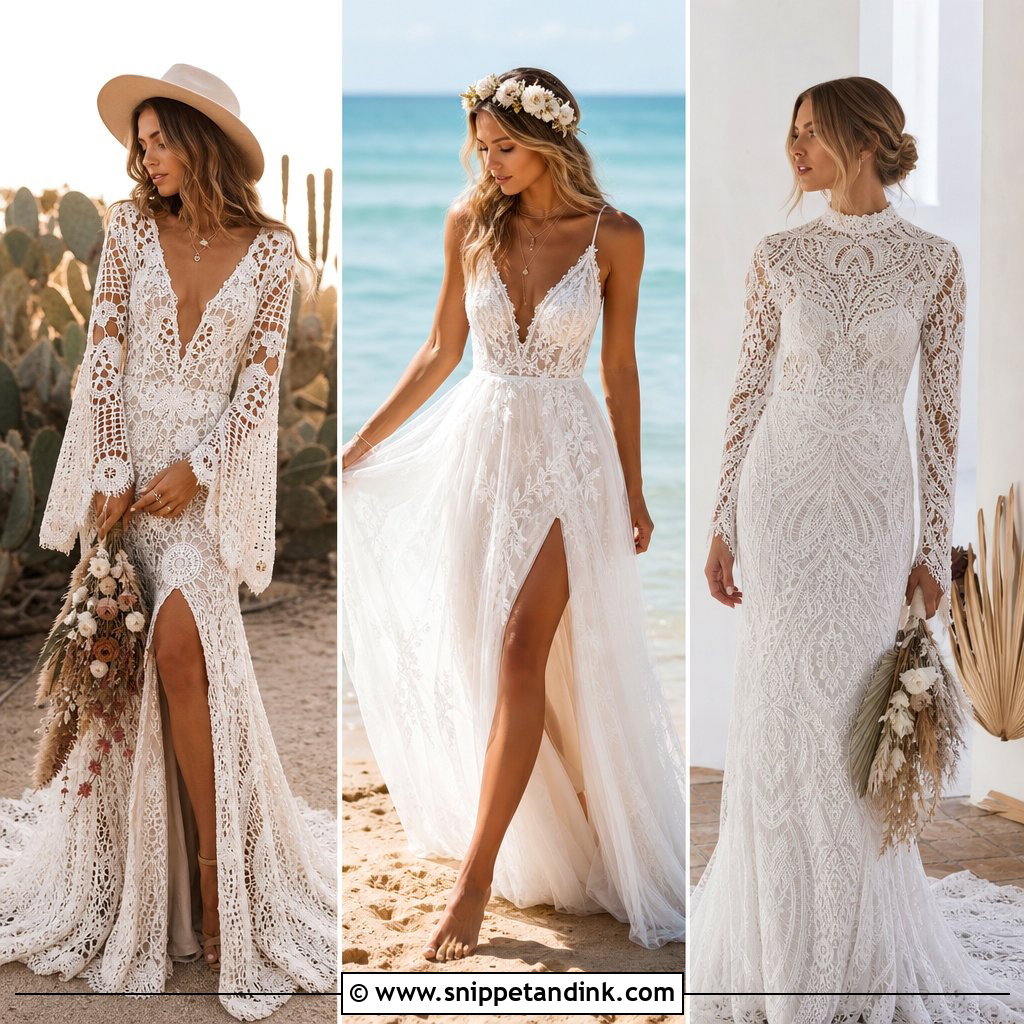
For an October or winter wedding in Italy, long sleeves are practical as much as pretty, since evenings in the hills turn cold fast. Sheer lace sleeves read romantic; fitted crepe sleeves read modern. I always check the armhole at a fitting by having the bride reach forward, because a tight sleeve pulls the whole bodice when she hugs guests. Closed-toe ivory pumps, pearl earrings and a soft veil complete it. With a high neckline, I put the hair up so the face doesn’t feel crowded; with an open neckline, soft waves sit well.
9. Italian Square Neck Wedding Dress
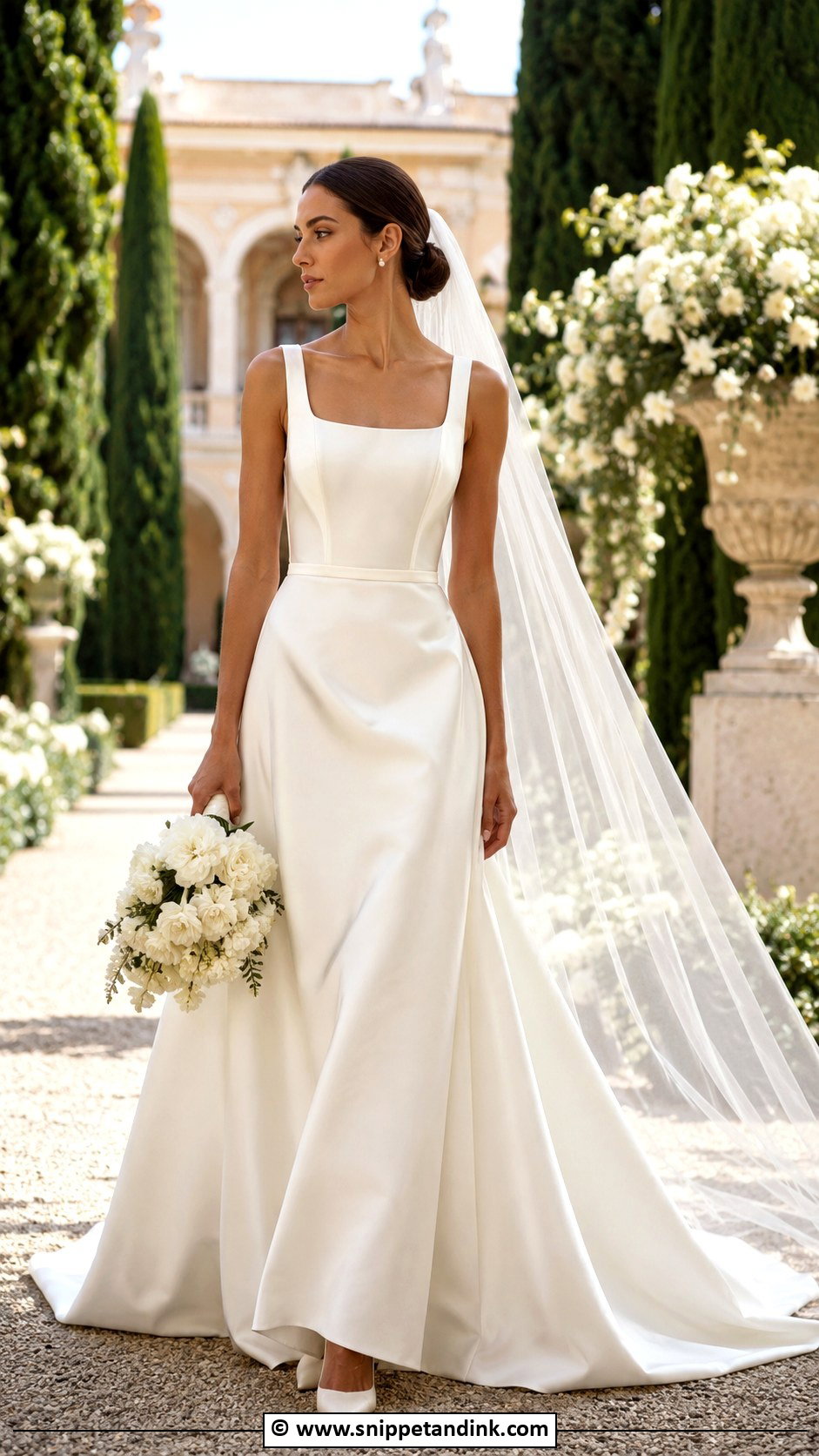
The square neck is a quiet favourite of mine because it frames the collarbone and suits fitted, A-line and ball gown skirts alike. The corners need to sit exactly level, and that is a detail I check from the front and in a mirror at every fitting, since one corner lifting shows straight away in photos. Choose silk, satin or lace with simple seams. Pearl studs, a low bun and pointed ivory heels work, with a sheer veil edged in a narrow border. It is a good route for brides who like classic shapes but find strapless too exposed.
10. Italian High Neck Wedding Dress
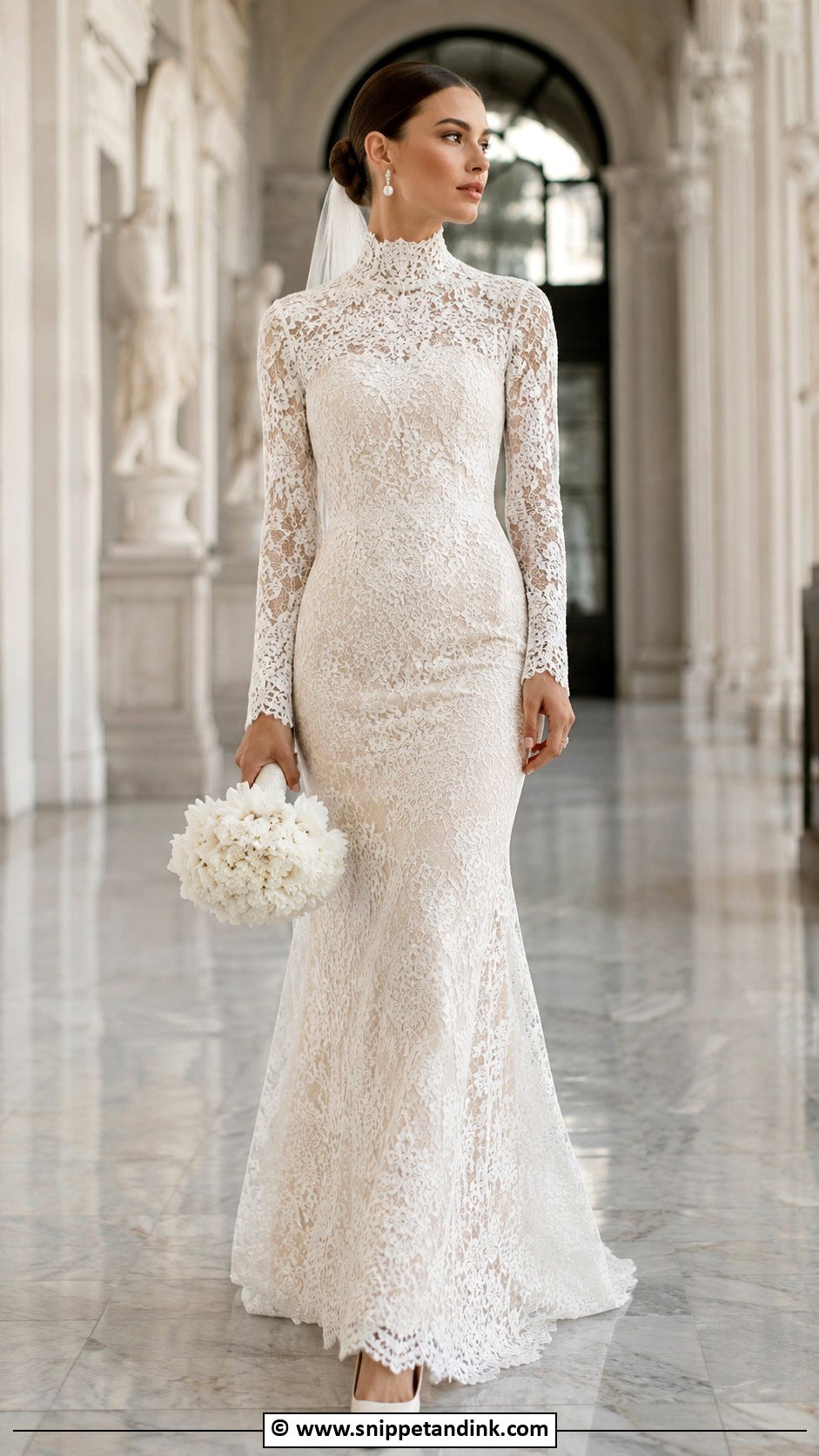
Because a high neck already makes the statement, I never add a necklace. Earrings that catch light near the face do more. Sheer lace, soft crepe or satin in a clean column all suit it, finished with a sleek bun, ivory pumps and a simple veil. One practical note: a closed neckline traps heat, so for an outdoor summer ceremony I steer brides toward illusion tulle rather than solid fabric. In a cooler palazzo or a formal indoor ceremony, smooth crepe looks sharp and modest without reading plain.
11. Italian Drop Waist Wedding Dress
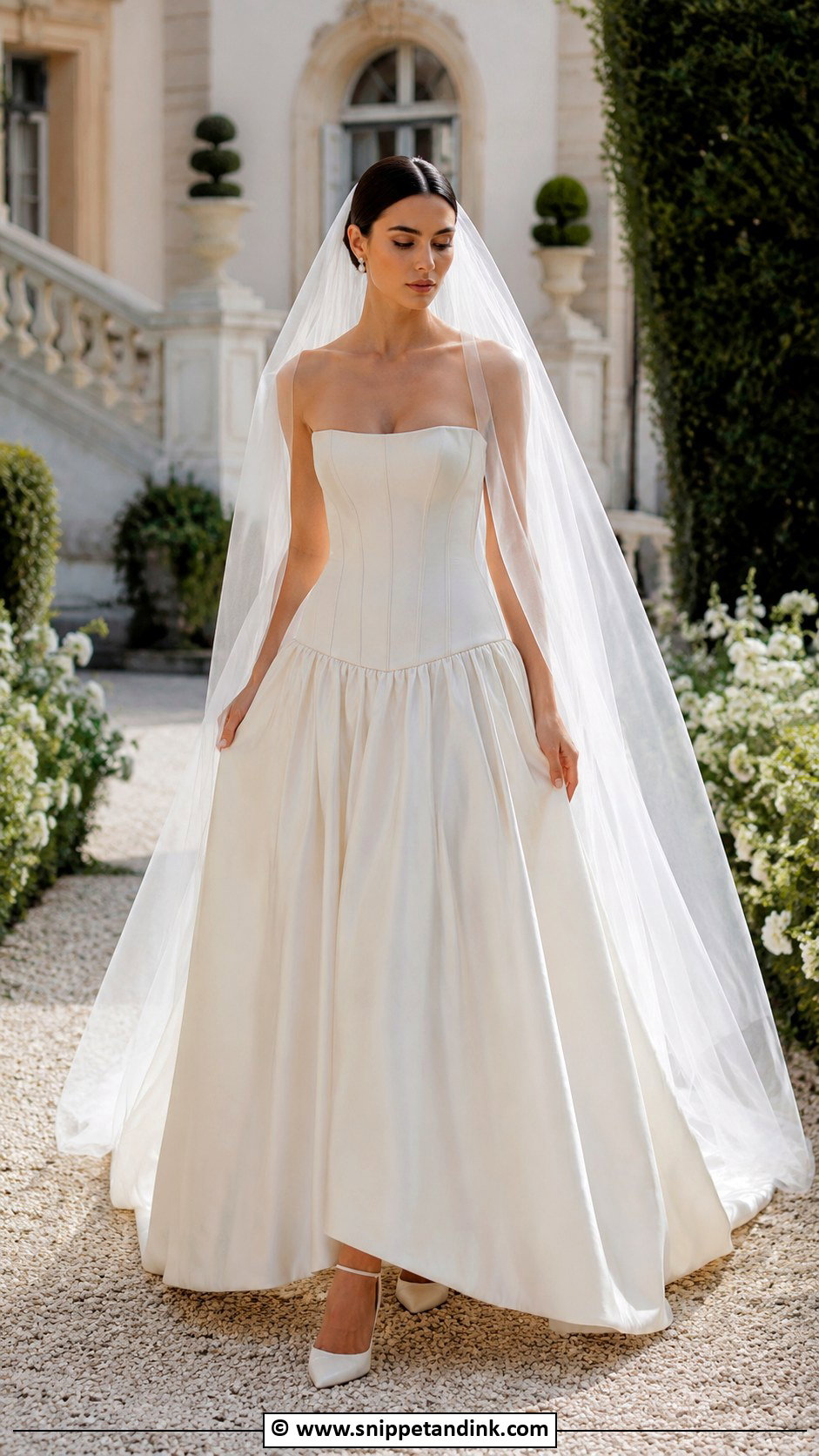
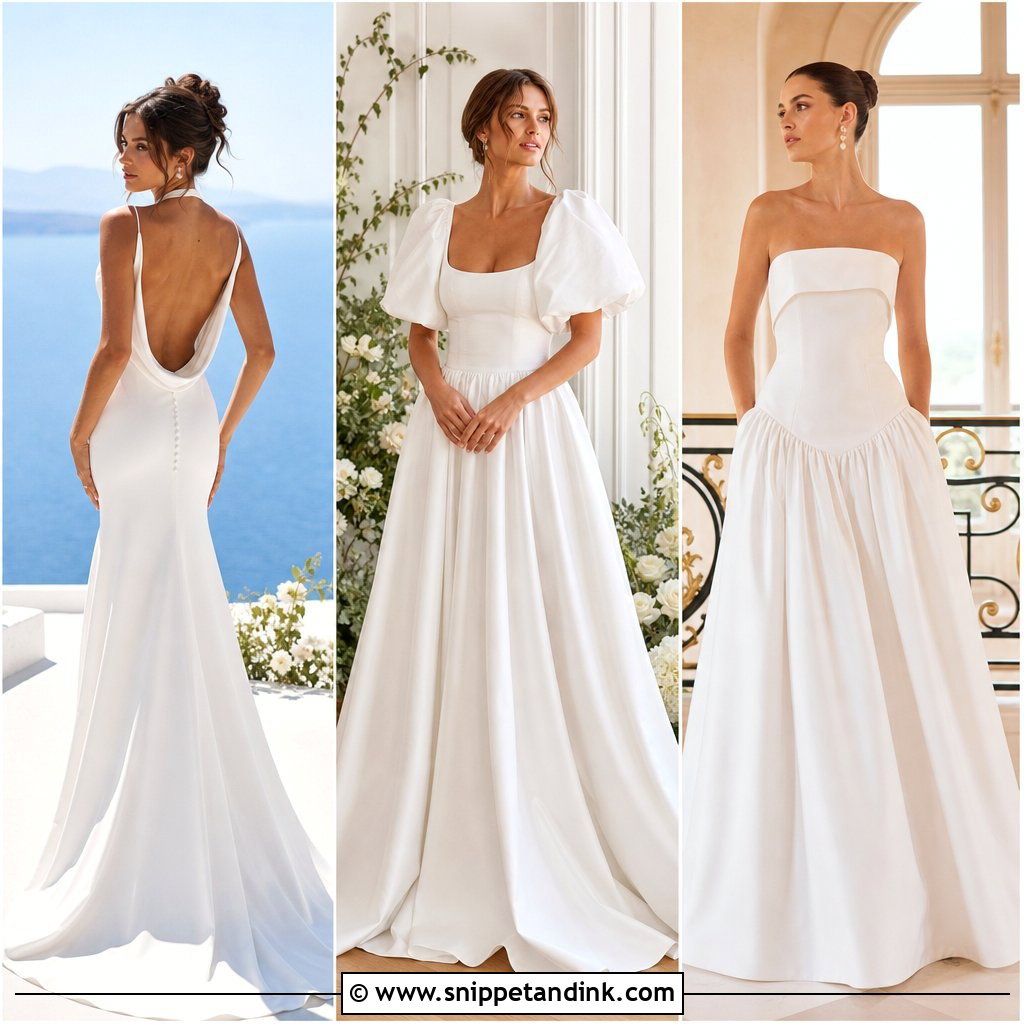
A drop waist wedding dress extends the bodice below the natural waist before the skirt opens, which lengthens the torso in a fashion-forward way. It suits brides with a longer frame; on a petite client the low seam can cut the leg short, so I try it on before anyone falls for a picture. Corset details, lace overlays or clean satin all work with the shape. Slim heels, a long veil and simple pearl or diamond earrings are enough, because the silhouette is the feature.
12. Italian Tea Length Wedding Dress
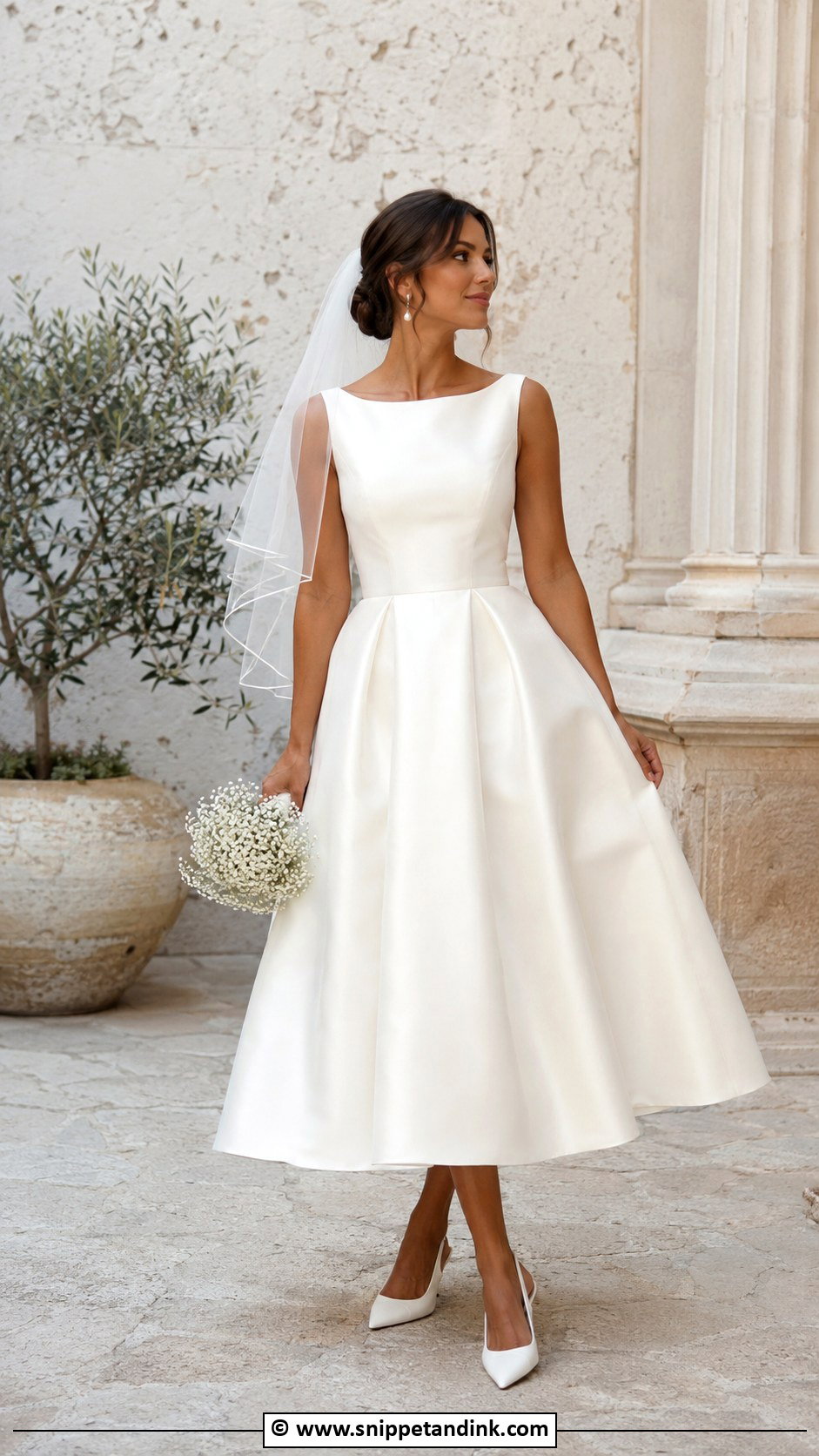
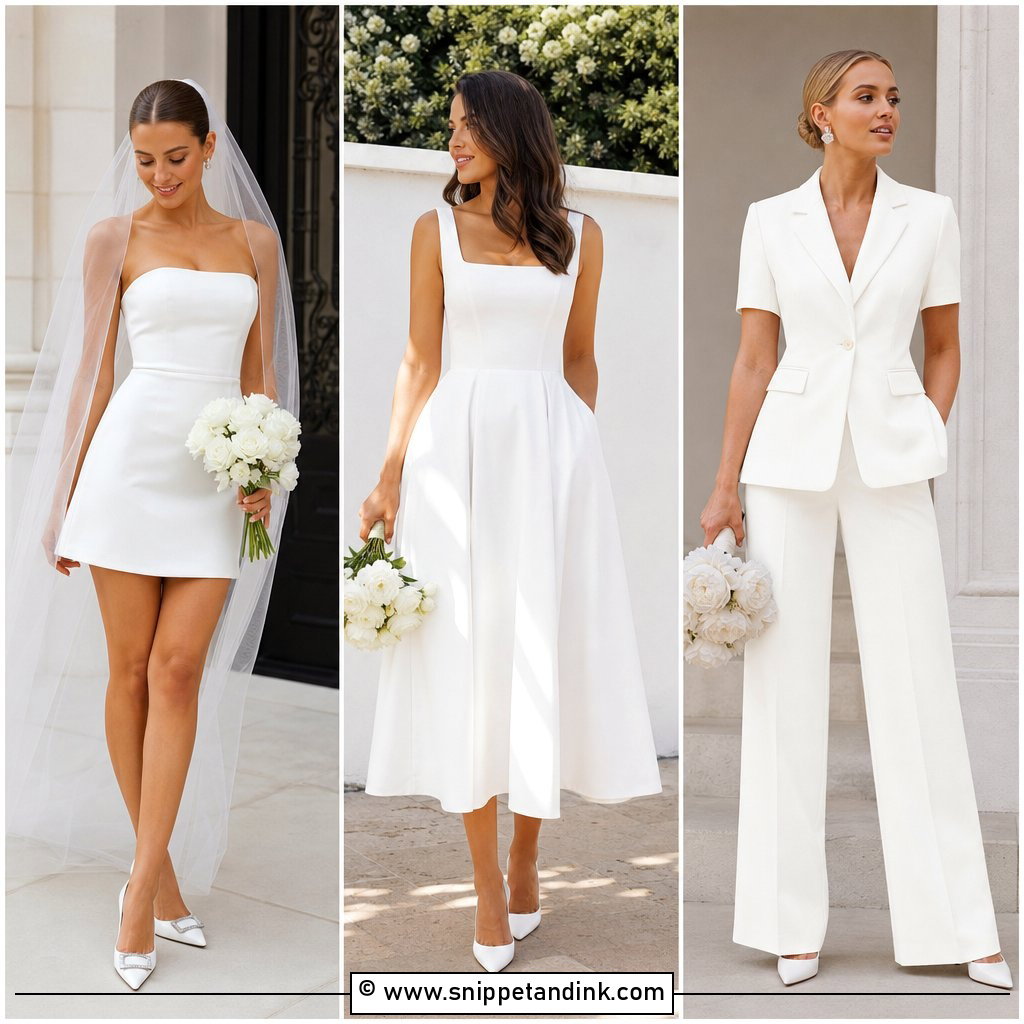
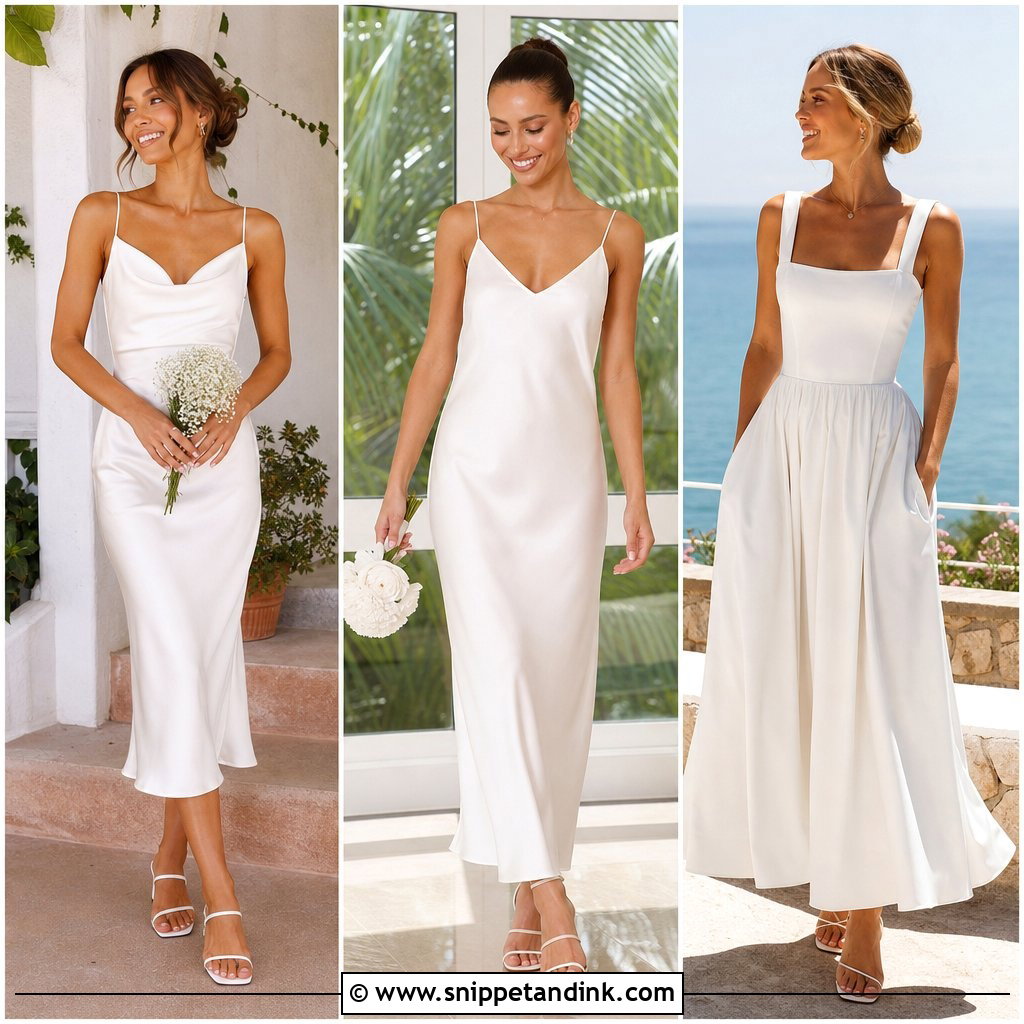
Tea length falls between the knee and ankle, so your shoes become part of the dress and I tell clients to budget for that. Lace, satin or organza with ivory slingbacks, pearl earrings and a short veil or hair bow gives it a gentle vintage note. The hem must be dead level all round; with a short skirt every tailoring wobble is visible. I like it for civil ceremonies, intimate dinners and hot afternoons, and as a change for the evening.
13. Italian Mini Wedding Dress
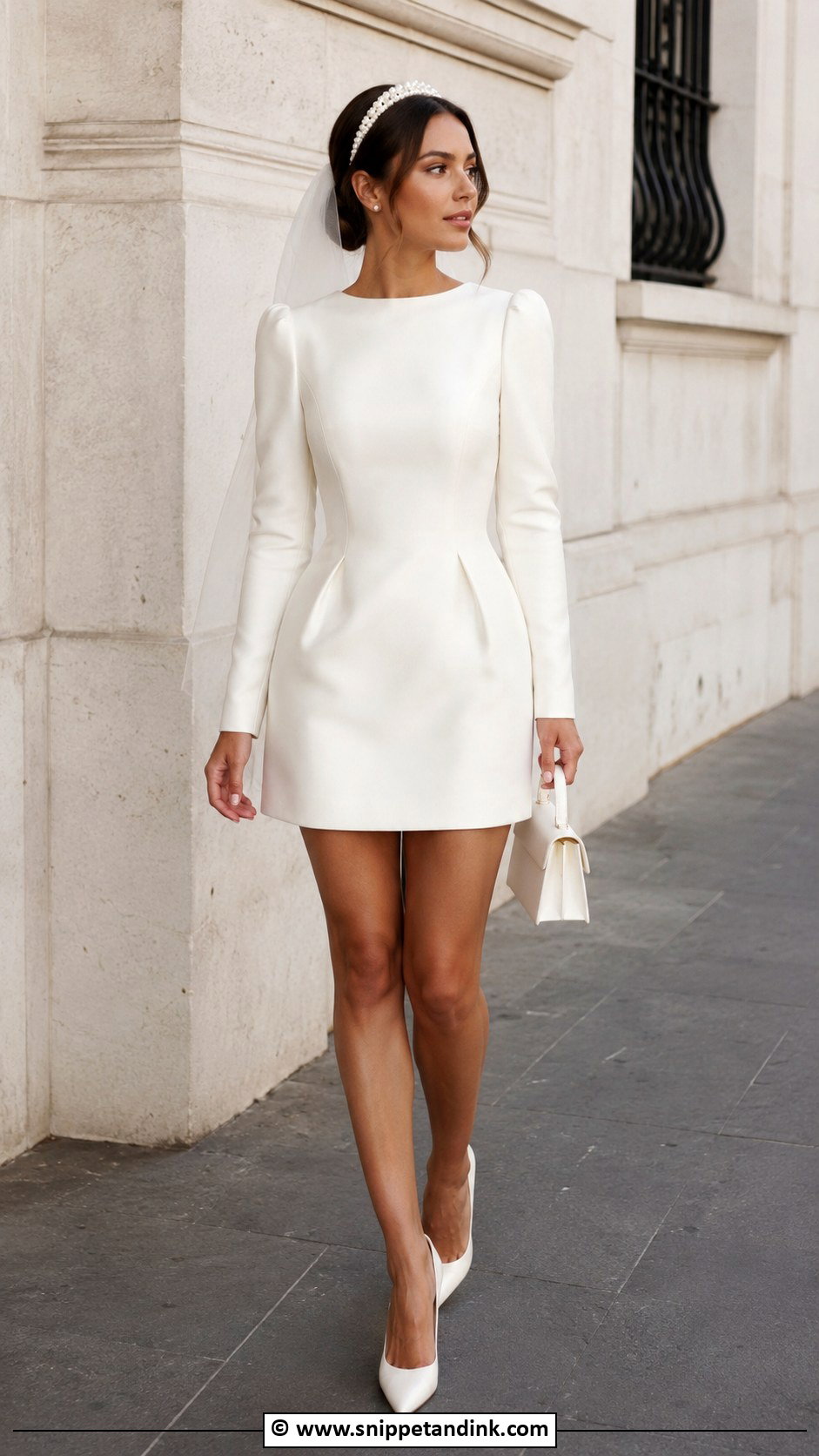
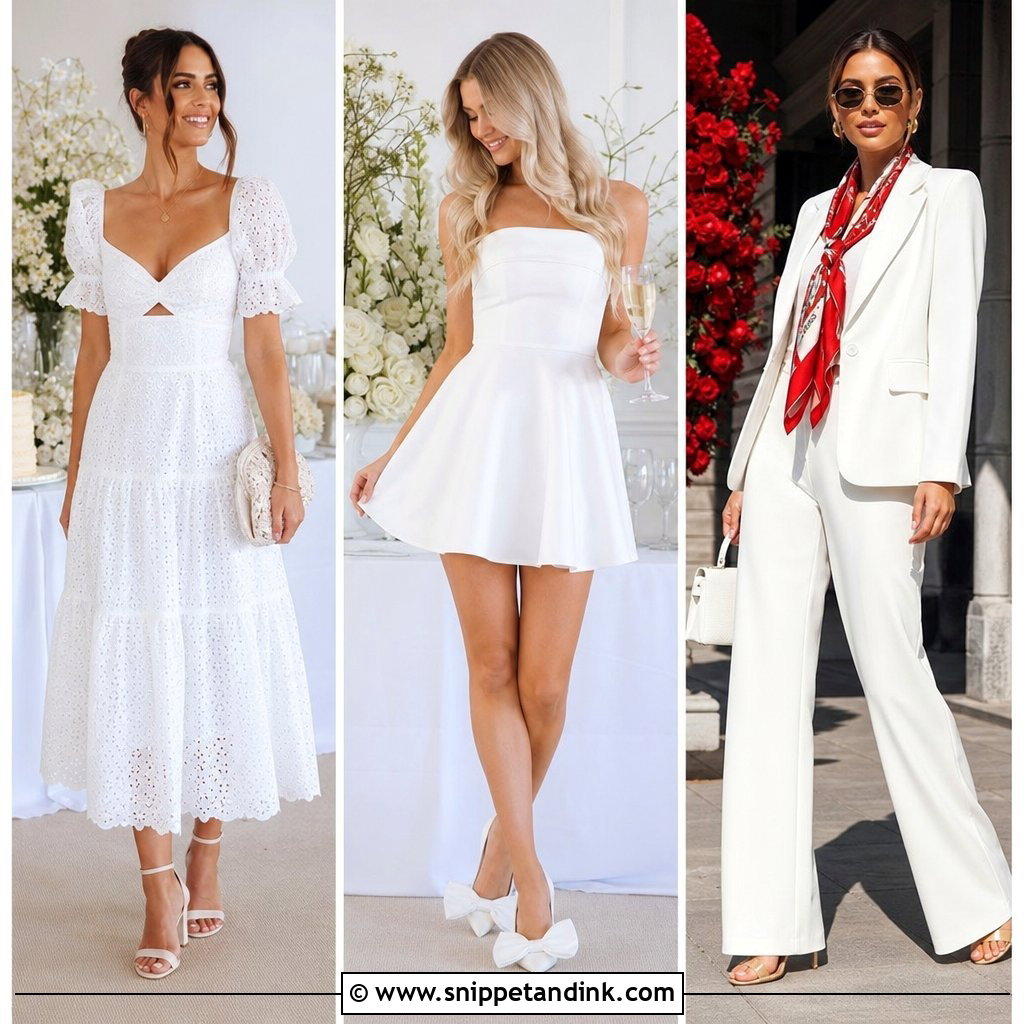
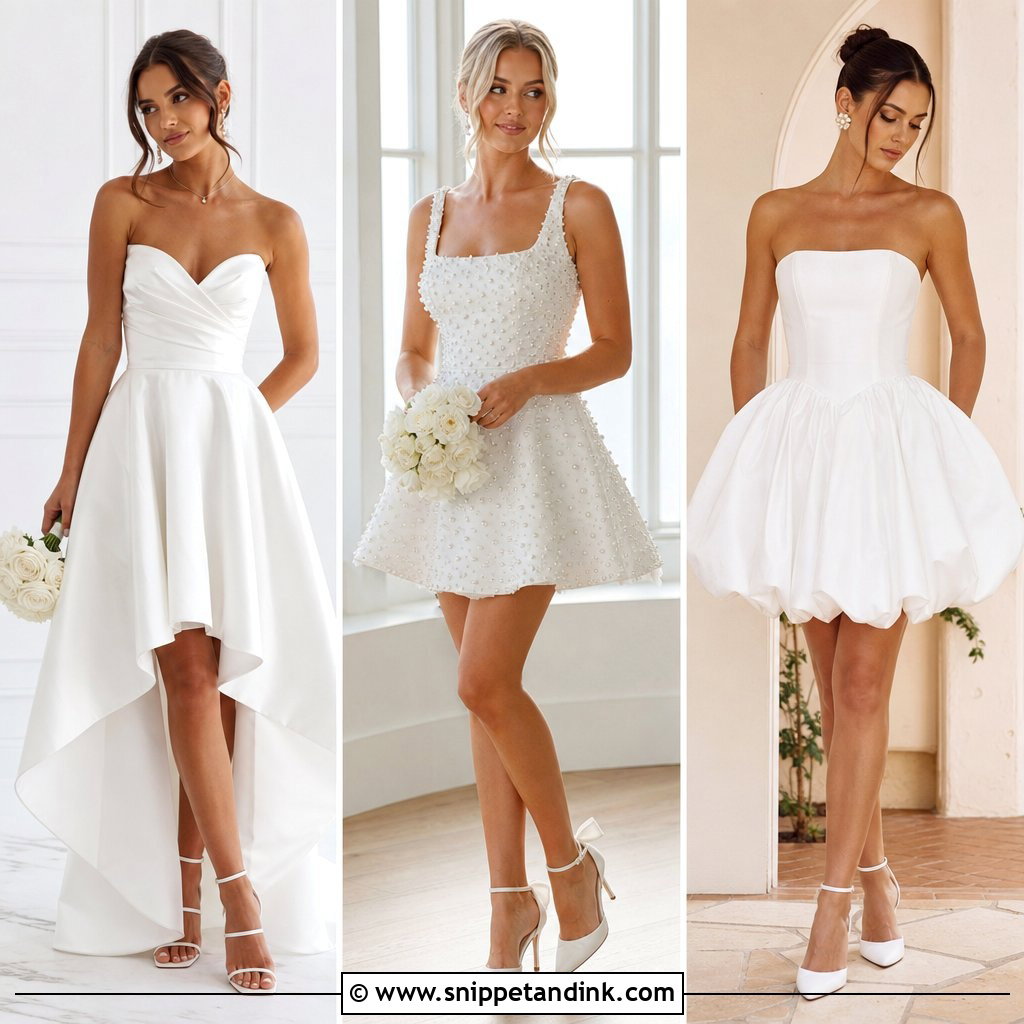
Italian town hall ceremonies are short and often in the middle of a working day, and a white mini fits that setting well. I look for structure: long sleeves, a square neckline, floral appliqué or a clean satin finish, so it reads bridal rather than party. Pointed pumps, sheer tights if needed and a small top-handle bag keep it sharp. A short veil or pearl headband tells everyone who the bride is. Fit is everything here, so I have minis taken in at the side seams rather than shortened further.
14. Italian Slip Wedding Dress
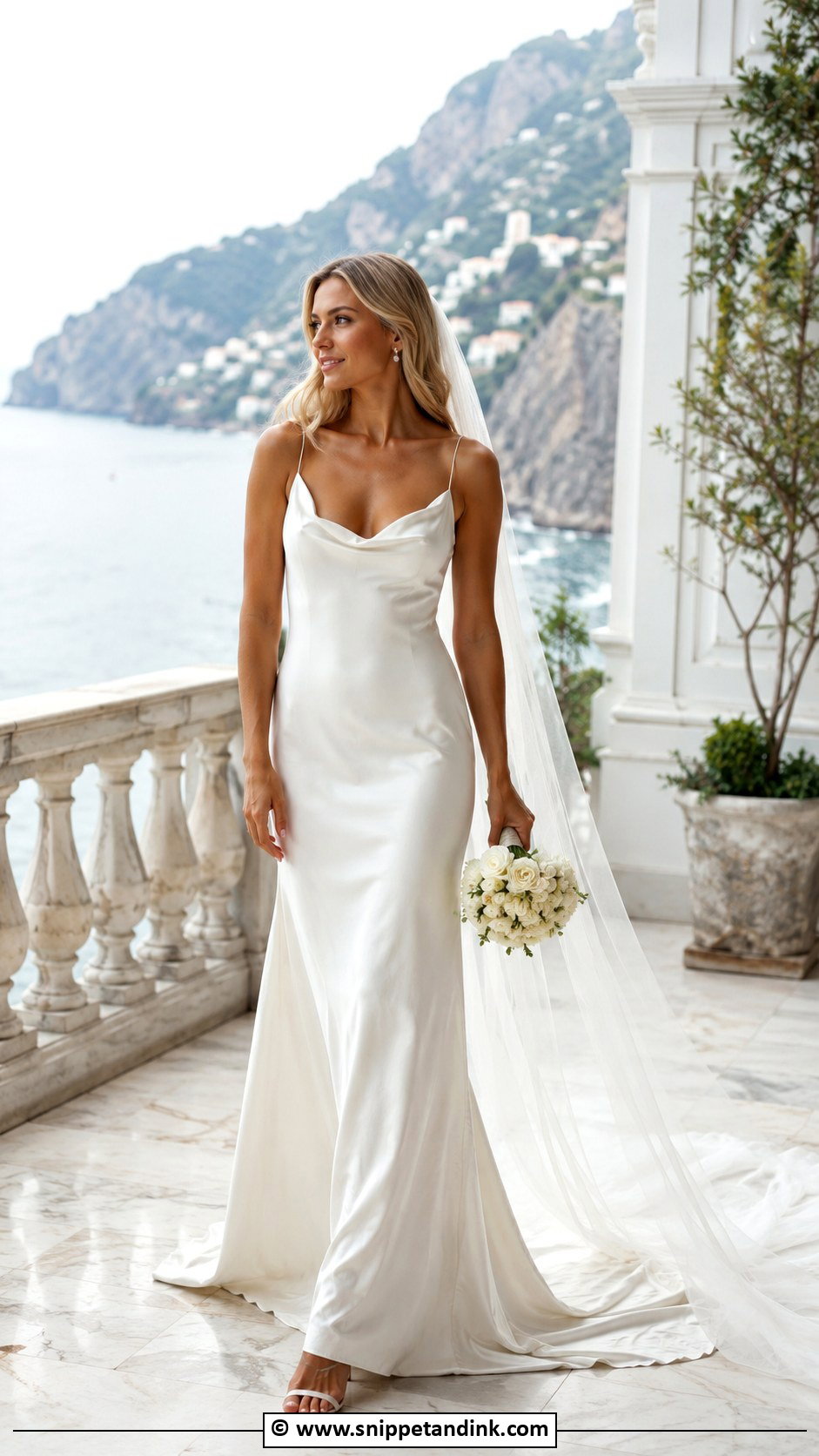
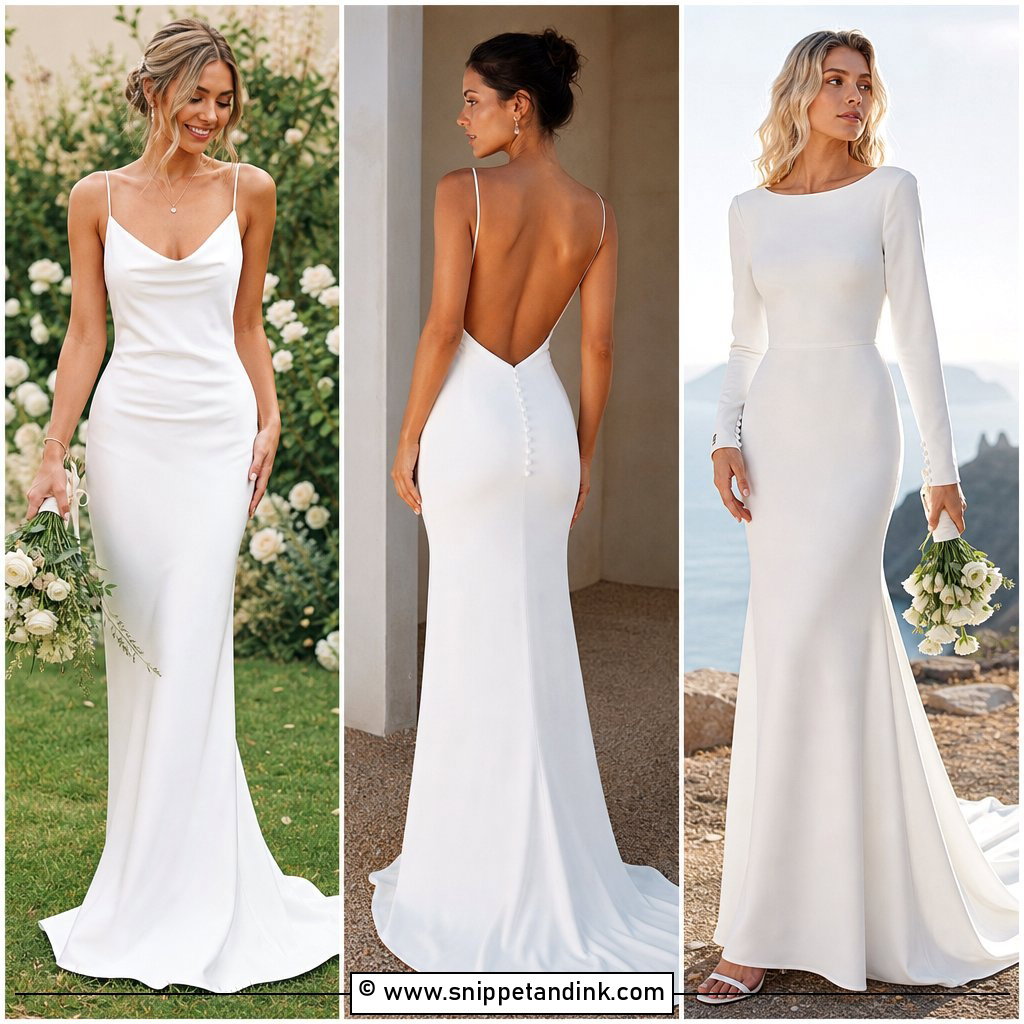
A bias-cut slip in silk satin or crepe should skim the body, not cling, and getting that right takes a skilled fitter, because bias fabric stretches and drops after it hangs. I ask for the slip to be hemmed only after it has hung for a day. Style it with delicate heeled sandals, a long sheer veil and small pearl earrings, with soft waves or a smooth bun depending on the mood. A sheer cape or light jacket adds coverage for a church. On a coastal terrace or in a small modern villa, it looks simple in the best sense.
15. Italian Crepe Wedding Dress
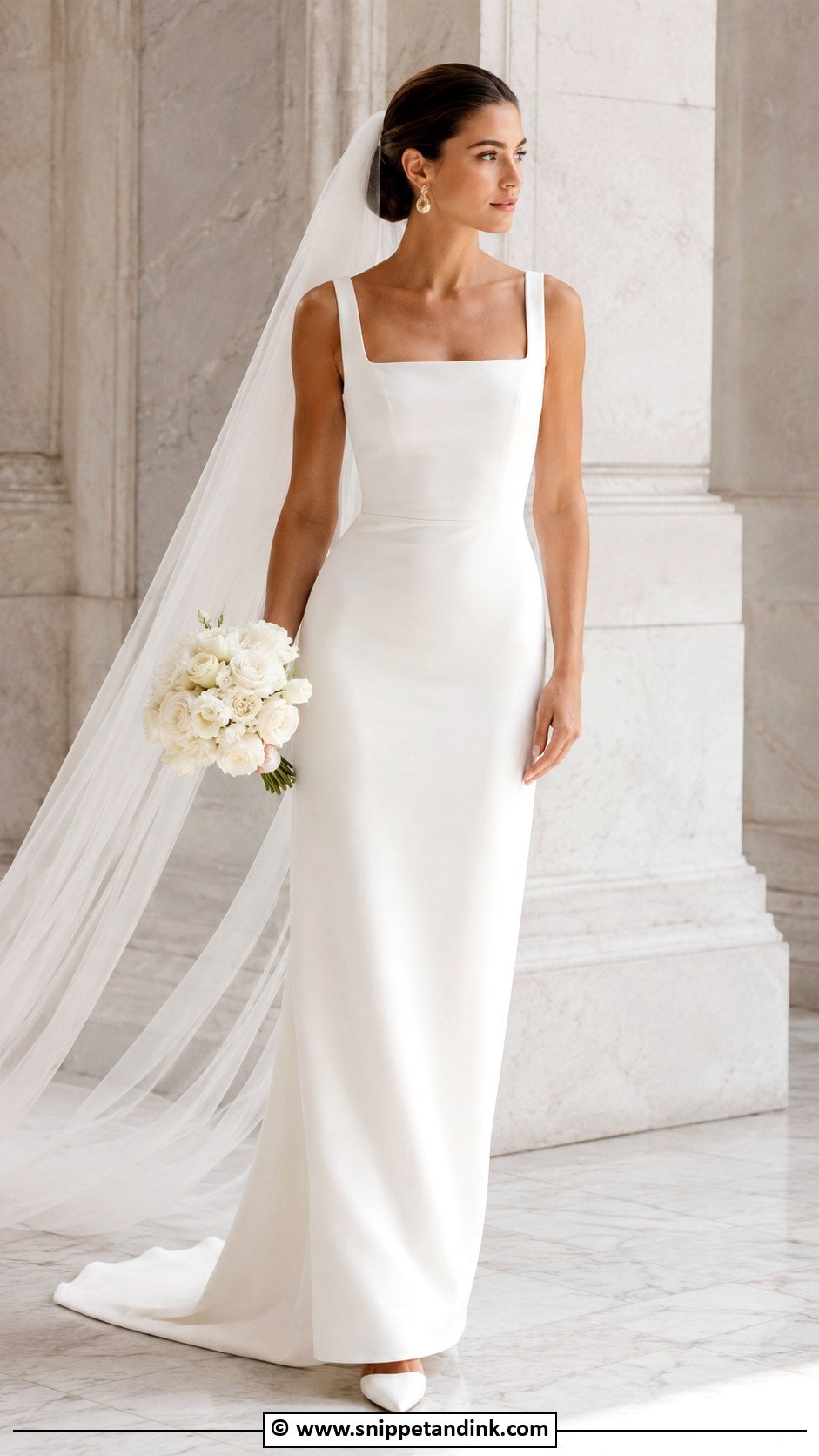
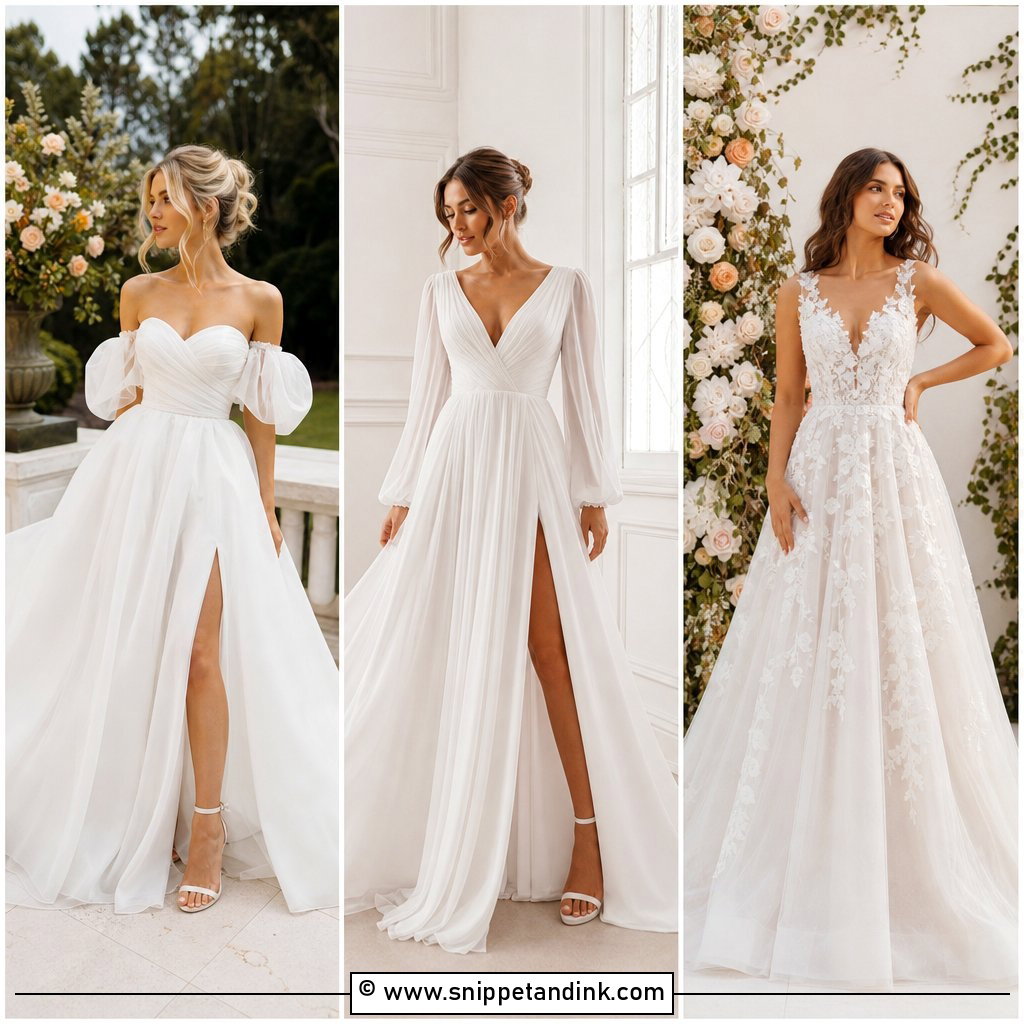
Crepe is what I suggest to the bride who hates creasing and plans a long day. It resists wrinkles far better than satin, breathes reasonably and holds a clean line. A fitted column, long sleeve dress or square neck in smooth ivory crepe pairs with pointed pumps, sculptural earrings and a simple veil. The trade-off is that crepe shows every seam and every undergarment line, so I insist on smooth, no-line shapewear at the fitting. With a very plain dress, a dramatic veil or long gloves gives the eye somewhere to go.
16. Italian Tulle Wedding Dress
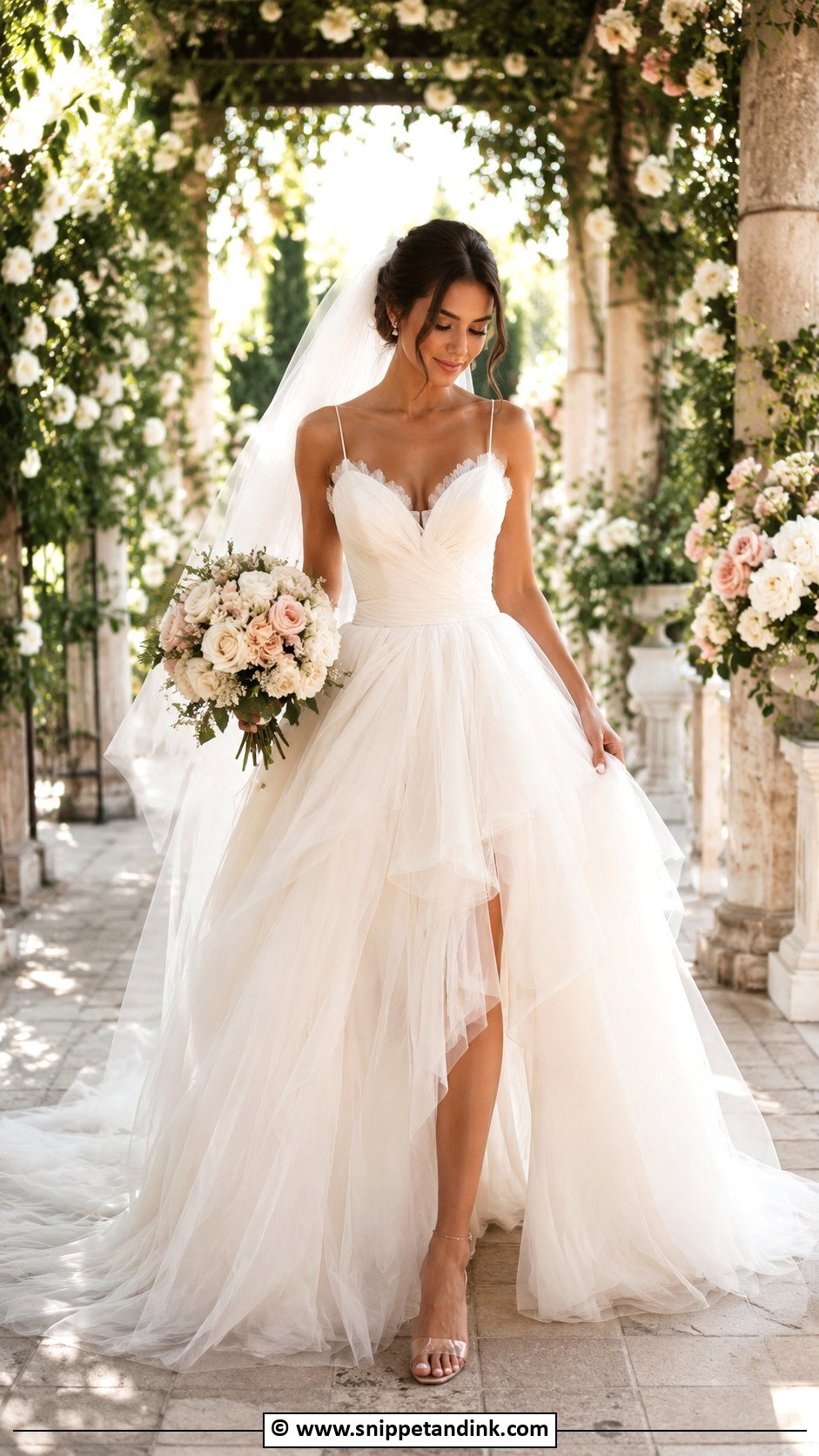
Layered tulle catches the breeze in an Italian garden and moves well in photos, but it also catches on rose bushes and rough stone. I advise a fitted bodice with delicate straps or lace appliqué, and barely-there sandals with pearl earrings. Choose a veil in a tulle that matches the skirt so they blend. Balance matters: a full skirt wants a simple top, a detailed bodice wants a plain veil. Pack a small pair of scissors and clear thread for any snagged layer on the day.
17. Italian Organza Wedding Dress
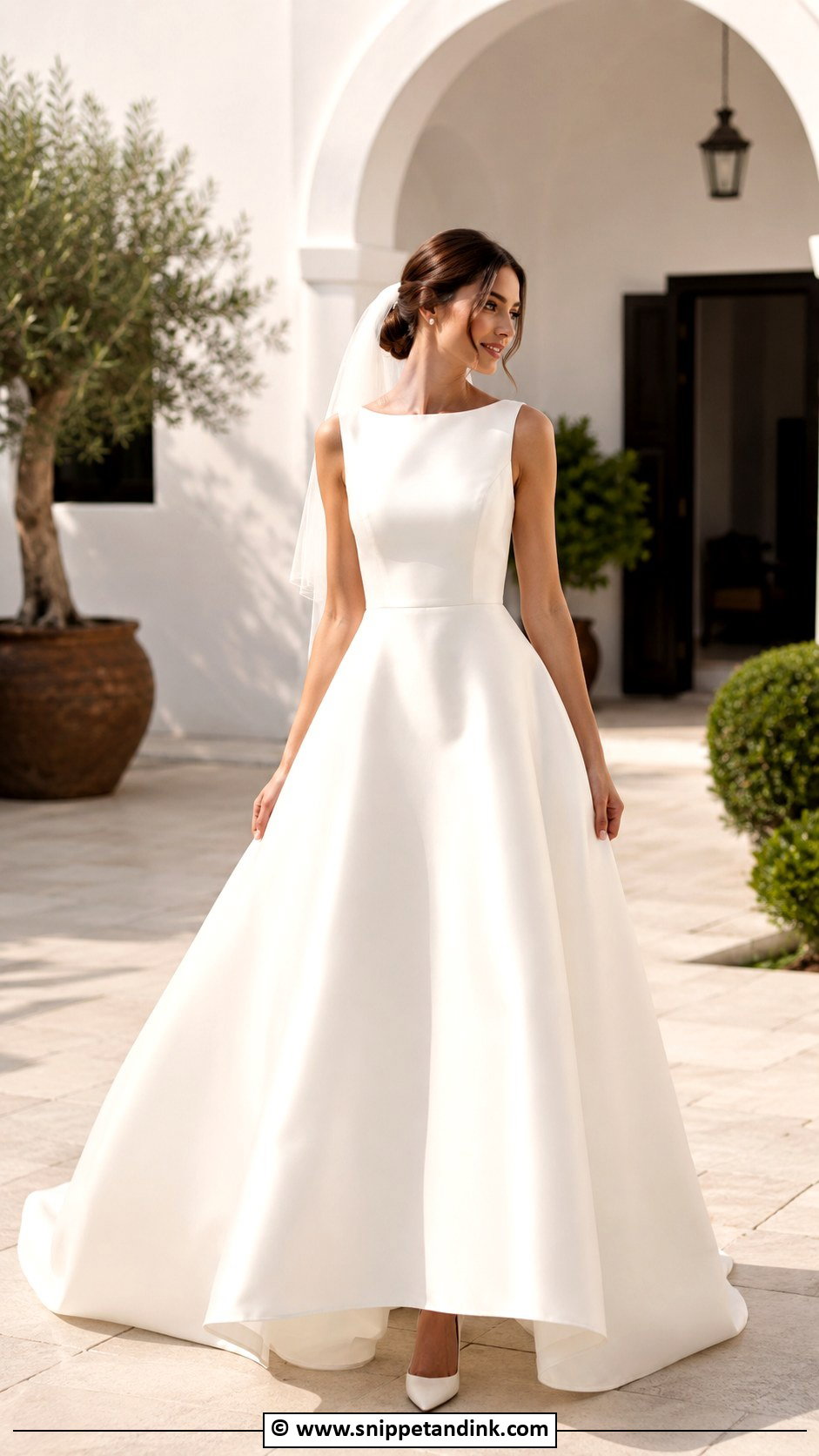
Organza sits between tulle and satin: it holds a shape better than tulle but stays airy. The catch is that it crinkles if crushed in a suitcase, and it is fussy to steam because water can spot it, so I always plan for a professional press near the venue. An organza A-line, puff sleeve or full skirt with a clean bodice suits spring and summer. Ivory heels, pearl studs and a simple veil keep it crisp. For hair, a low bun with a few face-framing pieces stays controlled in the wind of an open-air venue.
18. Italian Mikado Wedding Dress
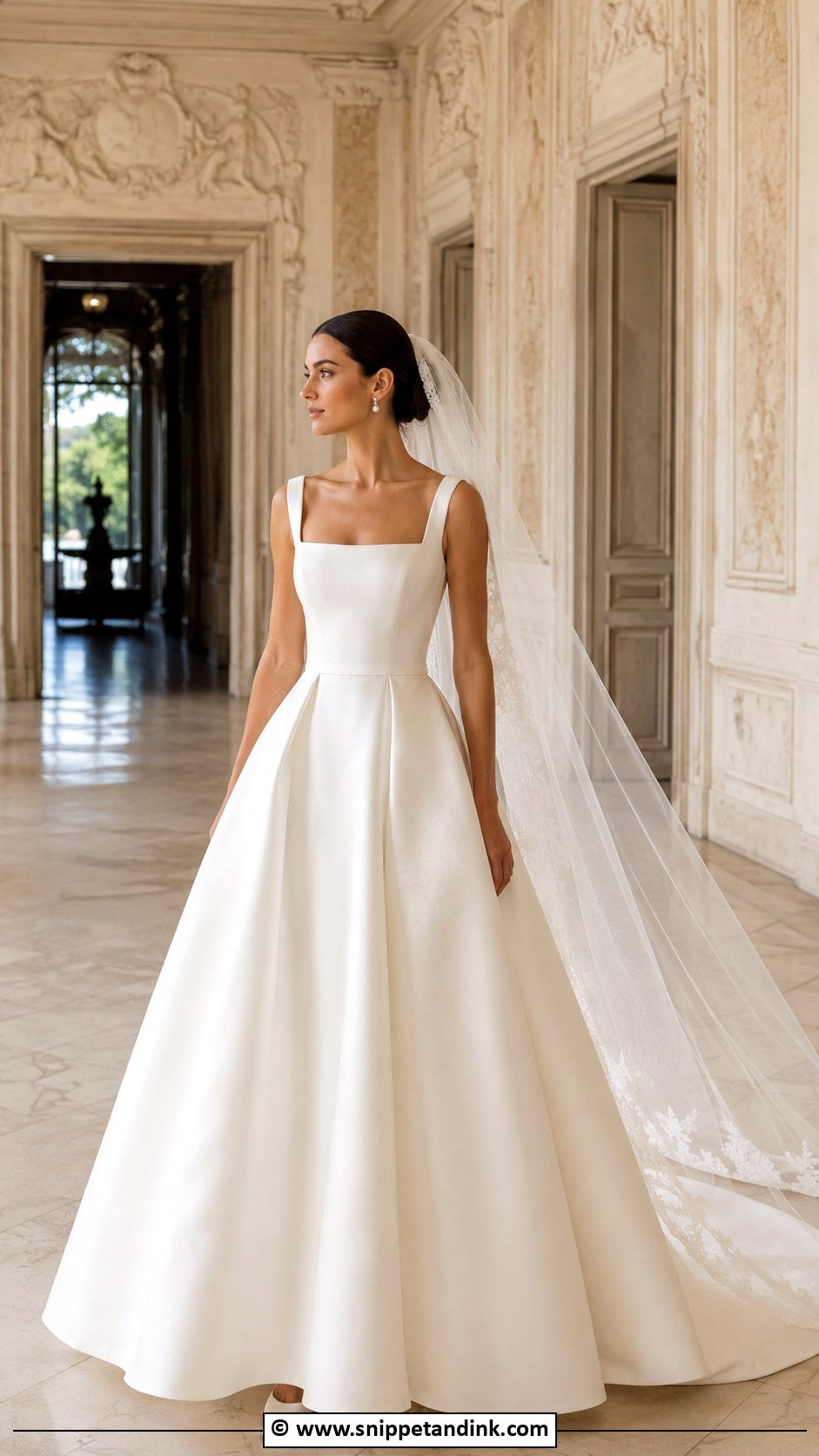
A mikado wedding dress has real body, which is why it holds architectural shapes: ball gowns, structured A-lines, clean strapless tops. That stiffness is also its weakness. When you sit for dinner, mikado creases across the lap and the creases stay, so I schedule a quick steam between the ceremony and the speeches. A square neckline or off-shoulder bodice works well. Classic pumps, a cathedral veil and pearl or diamond earrings are all it needs. It is at home in a grand hotel or a black-tie villa dinner.
19. Italian Floral Applique Wedding Dress
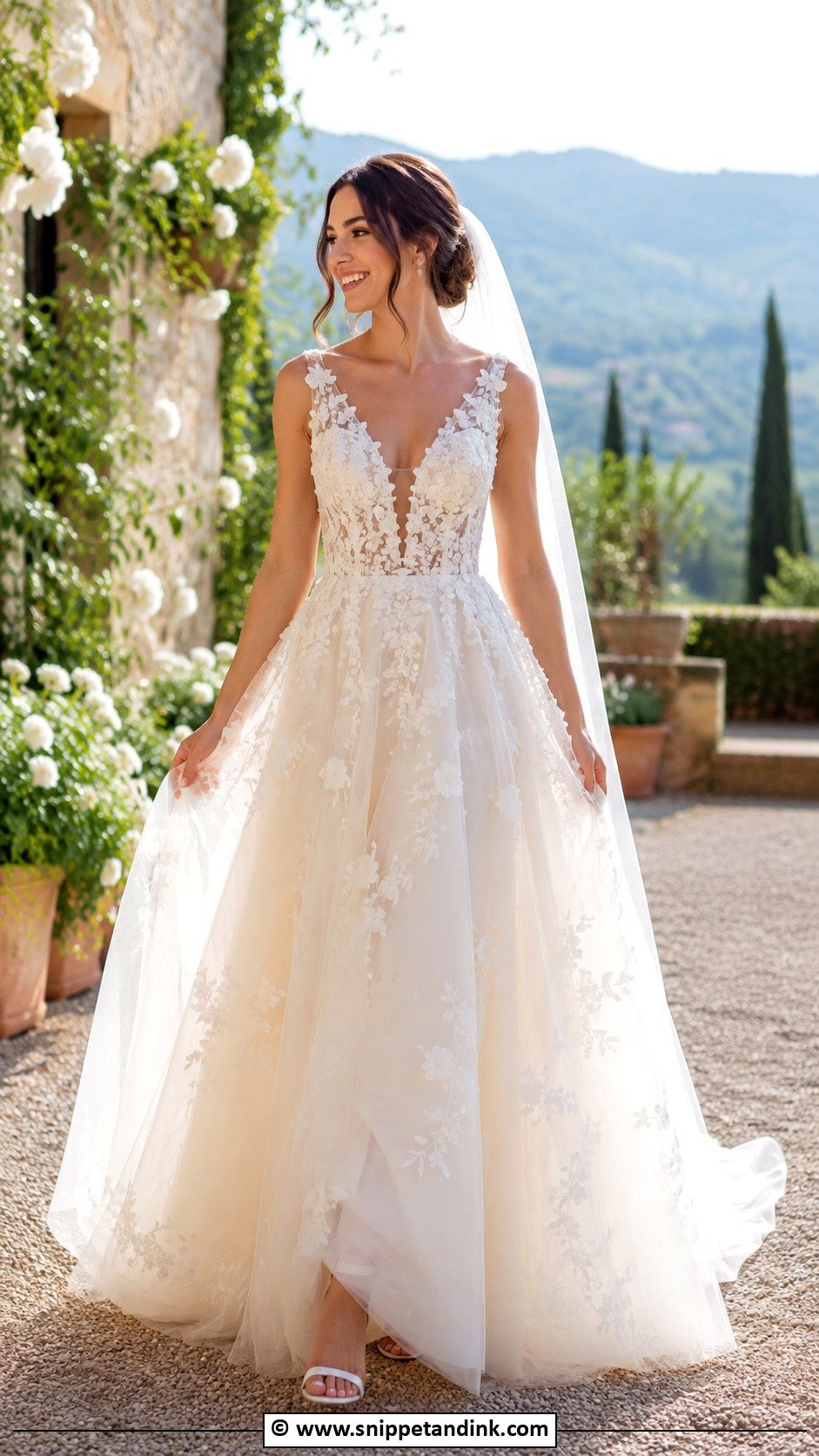
With a floral applique wedding dress, the flowers are the jewelry. Three-dimensional petals on tulle, lace or organza look fresh in a countryside garden in spring, so I keep the heels simple, the earrings delicate and the veil plain. Check where the appliqués sit before you buy: raised flowers at the inner arm rub against the bodice and can fray by evening. Bold flowers suit a simple silhouette; subtle ones can carry a fuller skirt or longer train. White blooms and greenery in the bouquet avoid a clash.


20. Italian Bow Wedding Dress
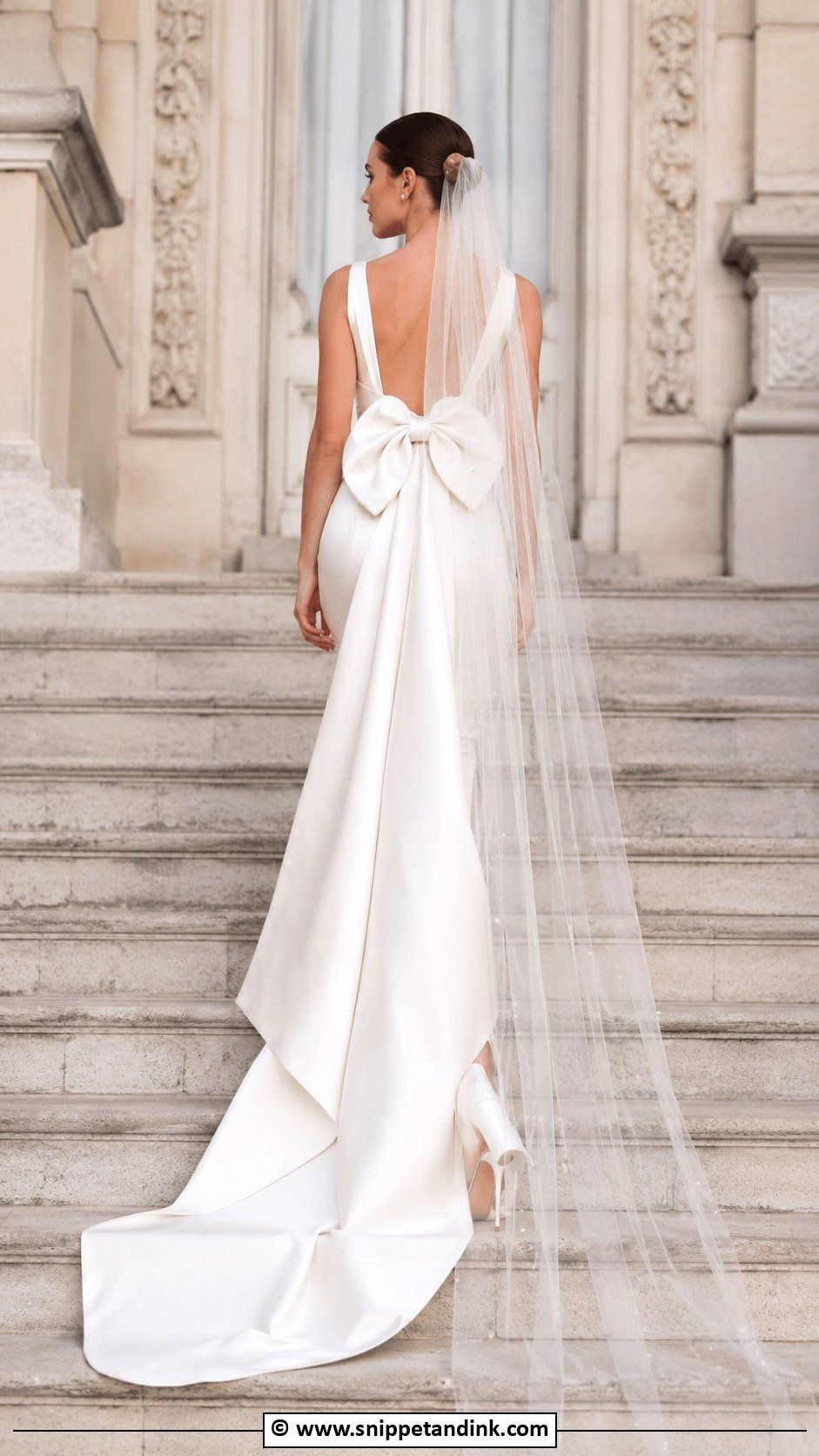
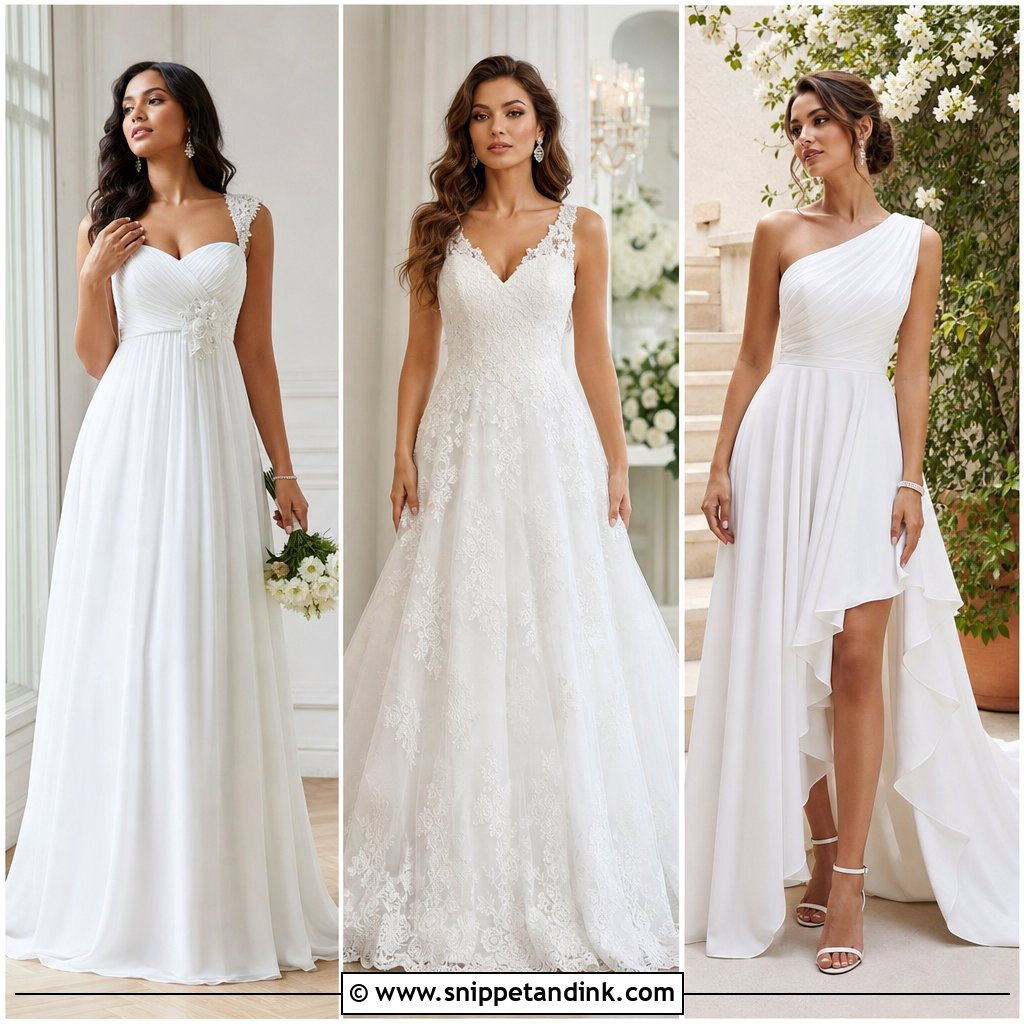
Bows add charm without sparkle, and the placement changes the whole dress. A back bow photographs best from behind, on steps or through a villa garden, so I ask the photographer for a walking-away shot. Keep the fabric refined: silk mikado, satin or clean crepe hold a bow’s shape, while soft chiffon droops by lunch. Simple pumps and pearl earrings suit it, and the veil should sit above the bow rather than crush it. I attach a back bow with snaps so it can come off for dancing.
21. Italian Strapless Wedding Dress
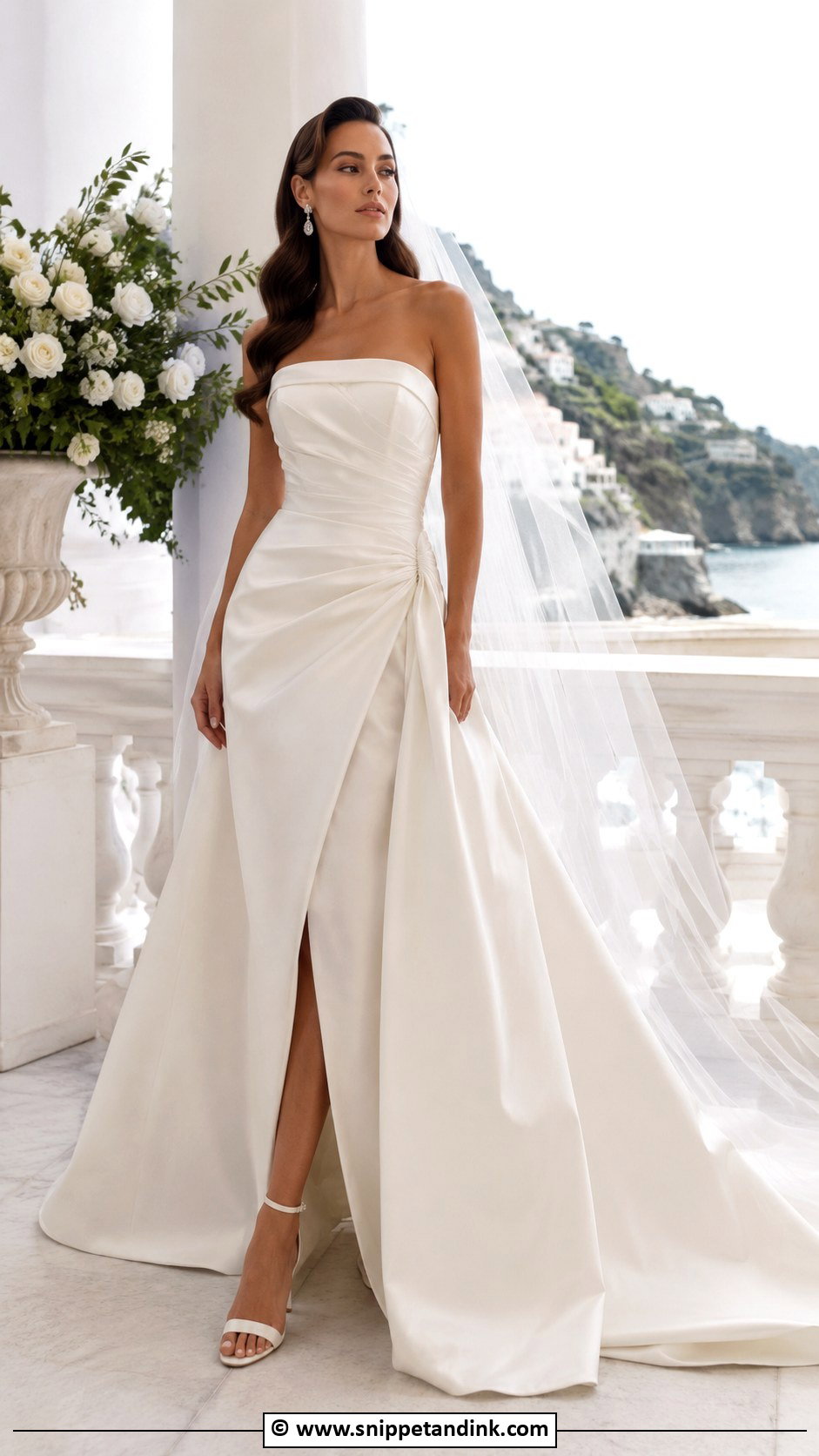
Strapless is the most common gown I fit, and it fails for one reason: a bodice that relies on tightness instead of internal structure. A good one has boning and a waist stay, and the bride should be able to raise her arms without hitching it up. Smooth satin, lace overlay or a sculpted neckline all suit Italian settings when styled with restraint. A long veil, drop earrings and comfortable heels in the dress tone are enough. With bare shoulders, a soft updo or waves tucked behind the ears keeps the line clean. Bring sunscreen; a strap tan line is not a concern, but sunburn is.
22. Italian Cap Sleeve Wedding Dress
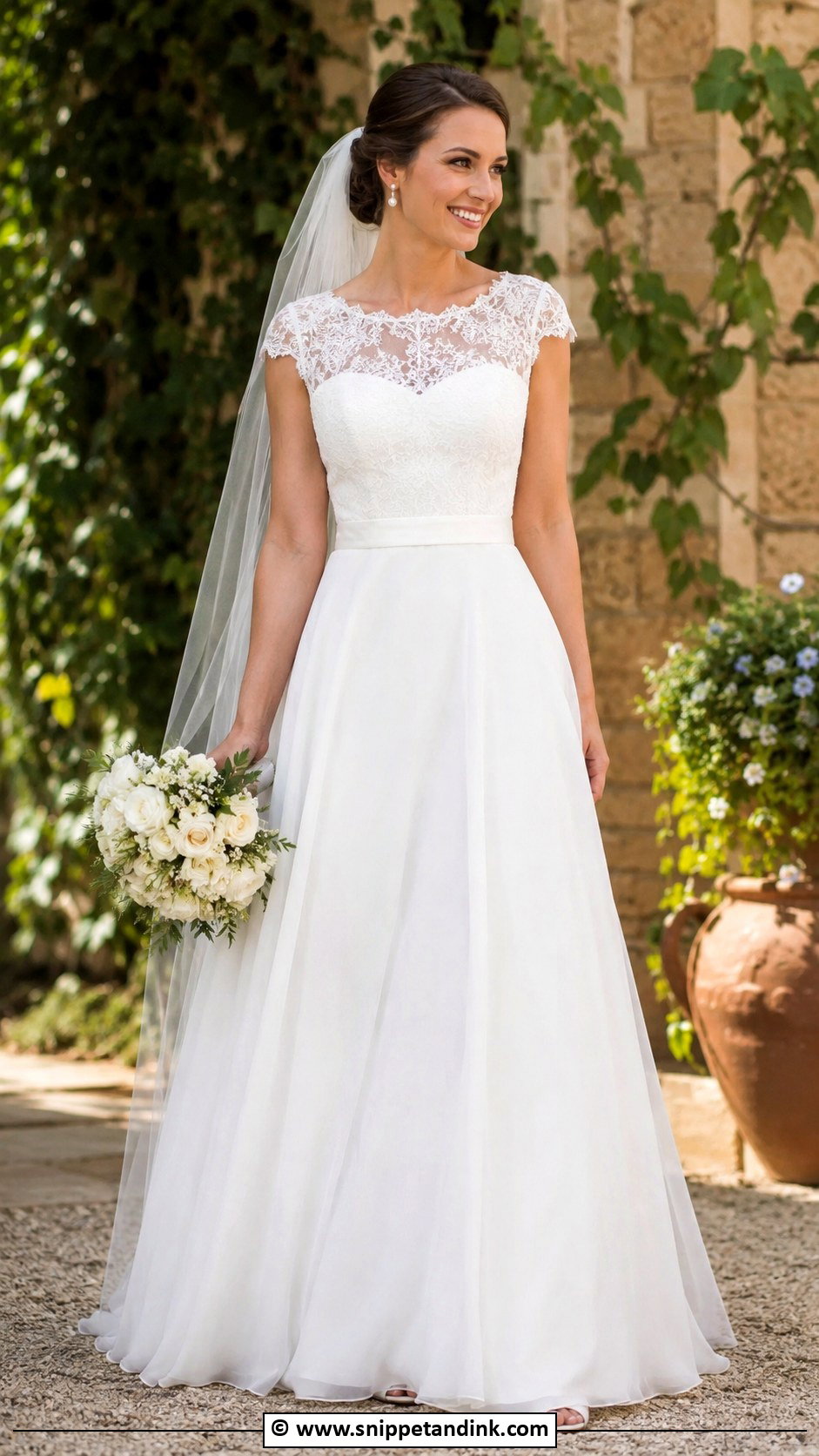
Cap sleeves give a little coverage without the warmth of full sleeves, which makes them a sensible pick for a summer church ceremony where shoulders should be covered. Lace, silk or illusion cap sleeves should blend into the bodice rather than look added on. I set the veil low at the back of the head so it doesn’t fight the sleeve line. A fitted bodice with an A-line skirt balances well; a column shape feels more modern. Pearl earrings and ivory heels finish it with a soft vintage note.
23. Italian Plisse Wedding Dress
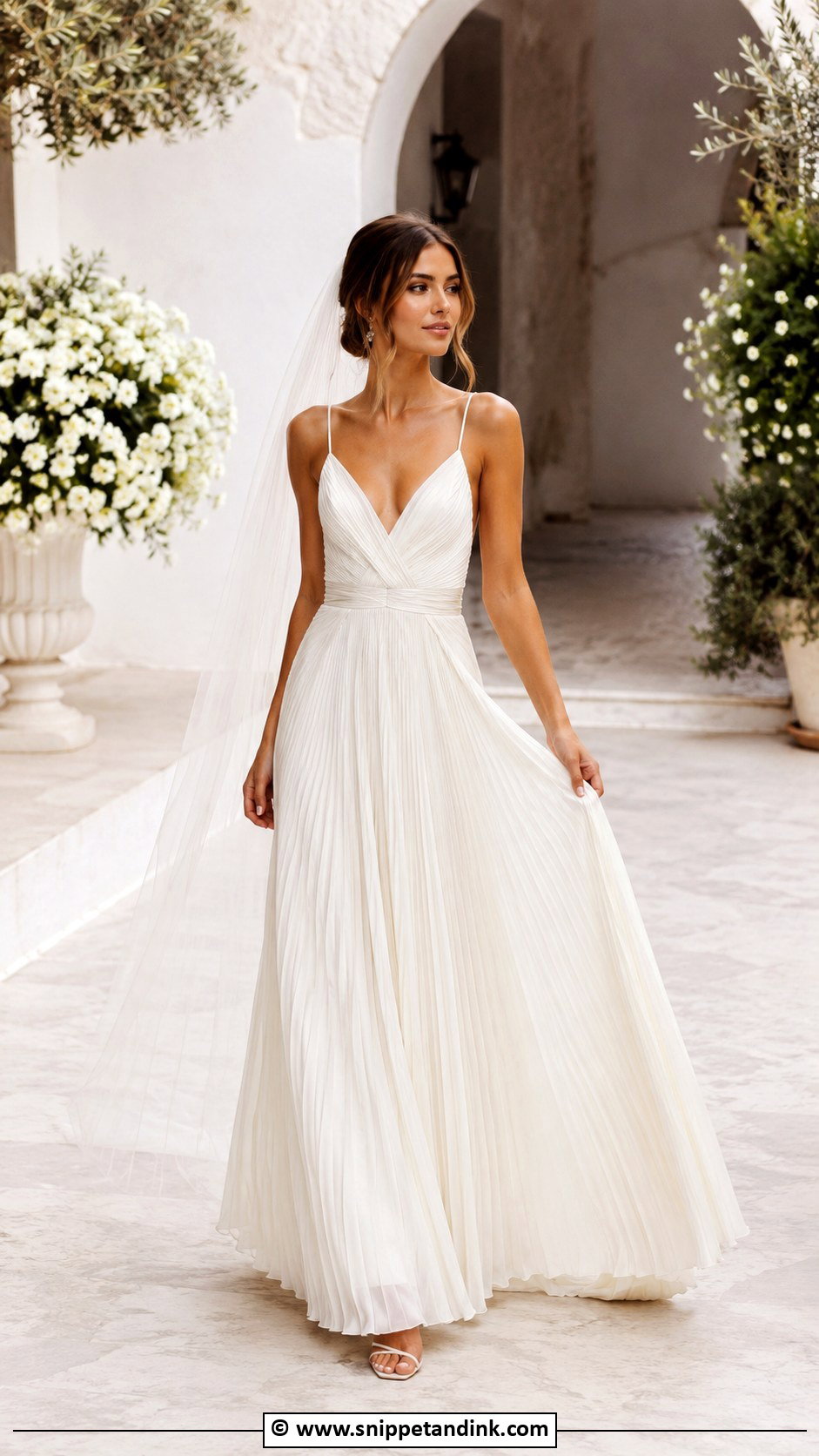
Plissé is fine permanent pleating, and it moves better than almost any fabric as you walk. Chiffon, organza or light satin pleats on a fitted bodice or a fully pleated gown suit brides who want texture without lace or beading. The pleats are heat-set, so I never let anyone press them flat with an iron; a light steam from a distance only. Slim heeled sandals, small earrings and a simple veil keep the lines clear. A sleek bun or soft ponytail gives it a modern edge.
24. Italian Crochet Wedding Dress
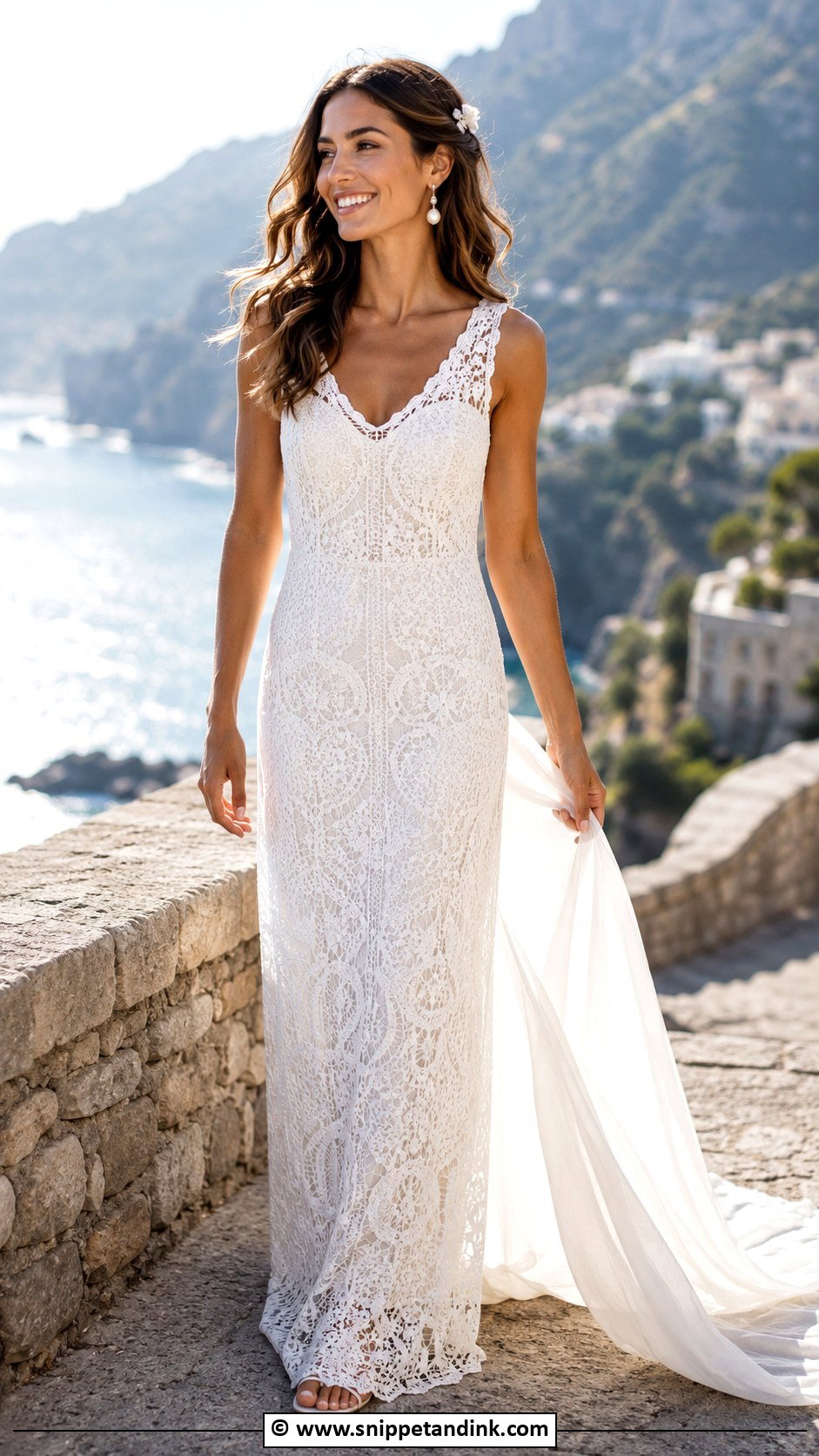
Crochet lace suits a coastal or countryside wedding, but I’d steer anyone in a formal palazzo away from it. Fine crochet over a soft lining, in a column shape with long sleeves or delicate straps, reads handcrafted. The lining matters most: a cheap one shows through the open stitches in flash photos. Simple sandals, natural pearl earrings and loose waves or a low bun fit the mood, with a light veil or a small hair piece. Refined shoes and a clean bouquet stop it drifting into beachwear.

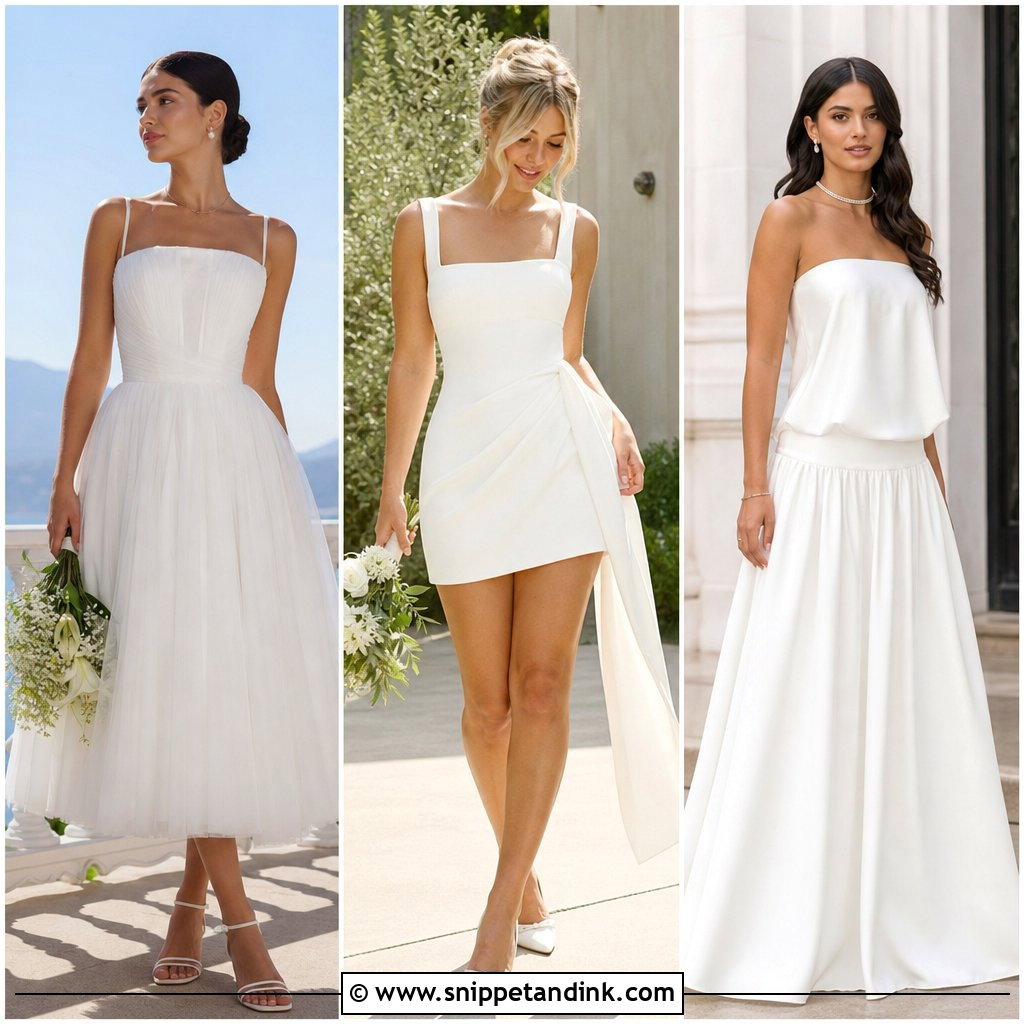
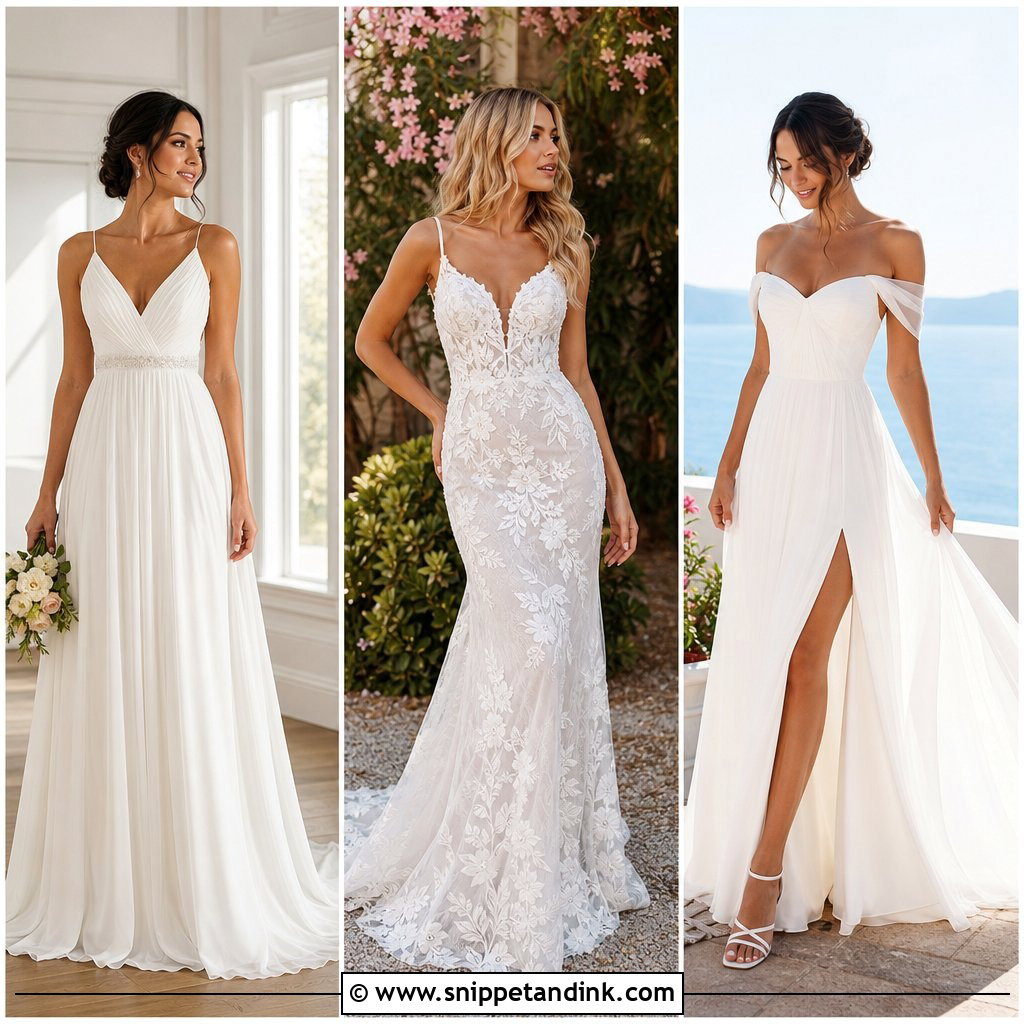
25. Italian Cape Wedding Dress
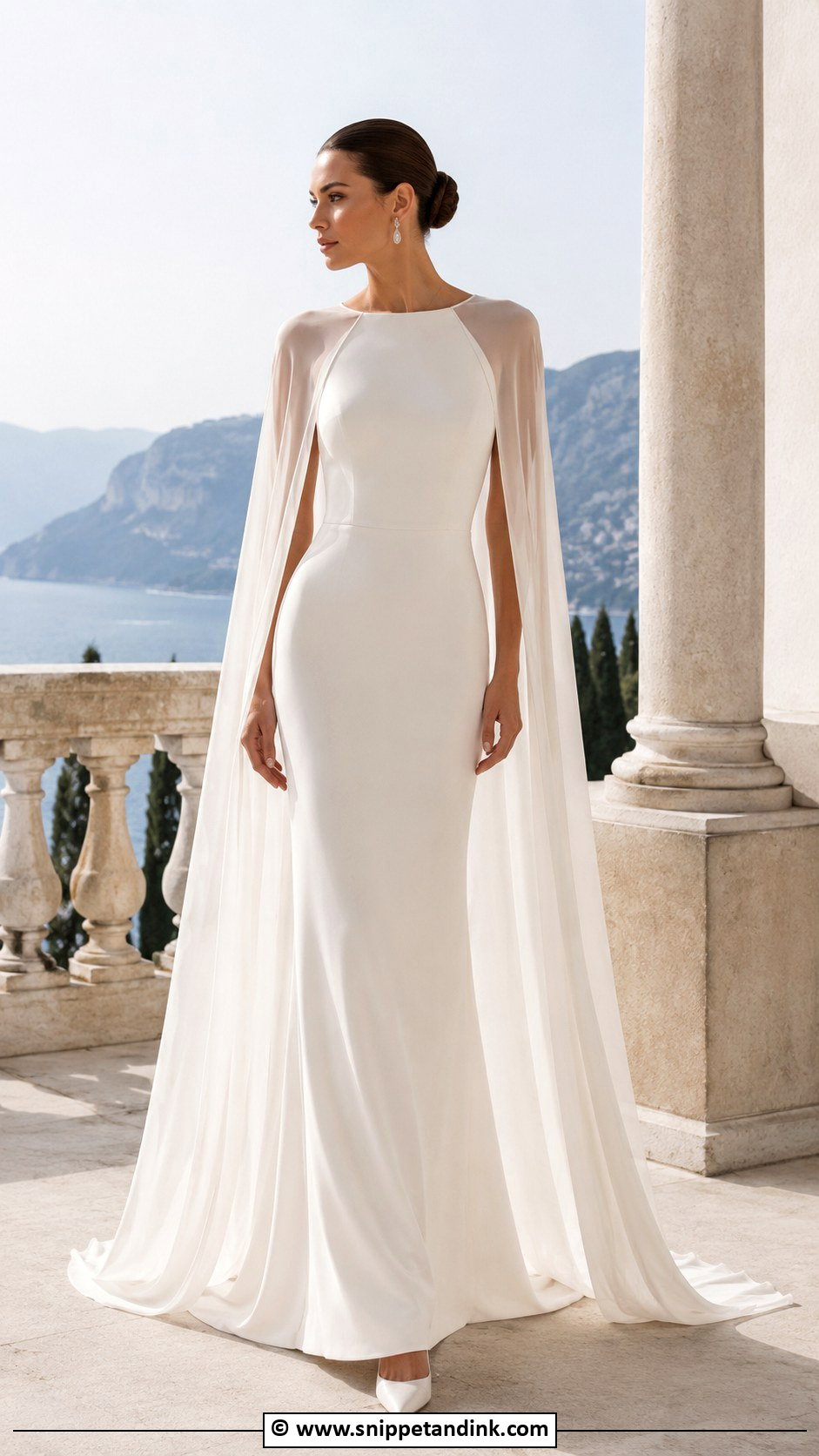
A cape gives you movement without the weight of a long train, which is why I suggest it to brides worried about dragging fabric over gravel. A clean crepe or satin gown with a sheer cape, a lace capelet or a detachable shoulder cape all work. Pointed heels, sleek earrings and a polished bun suit it. A cape can replace a veil or layer over one, and on villa steps or a windy terrace it catches the air for photos. I check that it is fastened at both shoulders, since a single-point cape slides sideways as you hug guests. Keep the dress underneath plain.
26. Italian Two Piece Wedding Dress
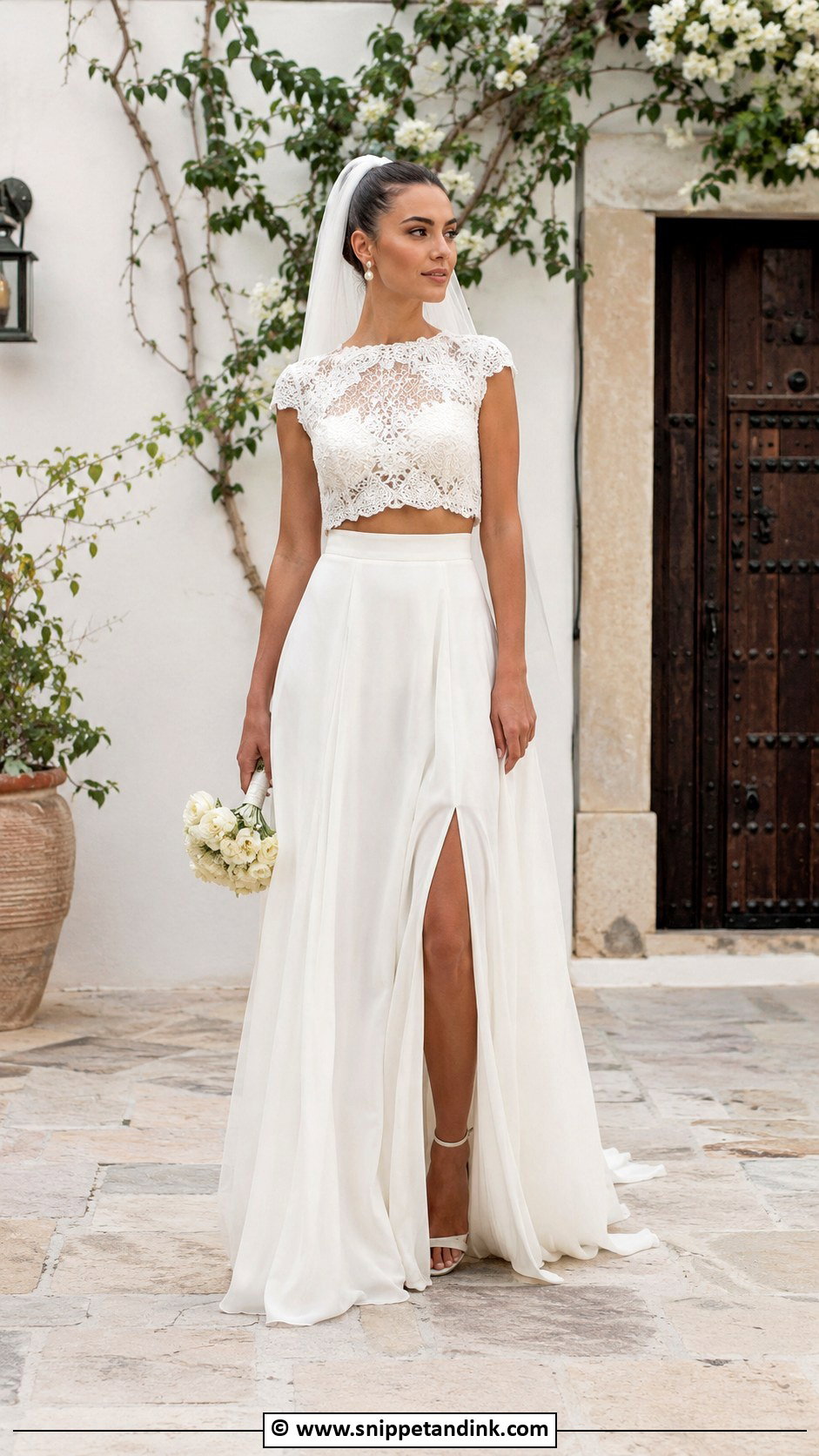
Two-piece looks suit the bride who wants flexibility, and they are easier to alter than a gown because top and skirt are fitted separately. A cropped lace top with a high-waist skirt, a silk blouse with a flowing skirt, or a structured bridal top with tailored separates all work. The pieces must match in tone exactly; ivory and white side by side look like a mistake under daylight. I check the gap at the waist as the bride sits and lifts her arms. Heeled sandals, pearl earrings and a neat veil or hair bow keep it bridal. It suits civil ceremonies and destination weddings.
27. Italian Bridal Suit
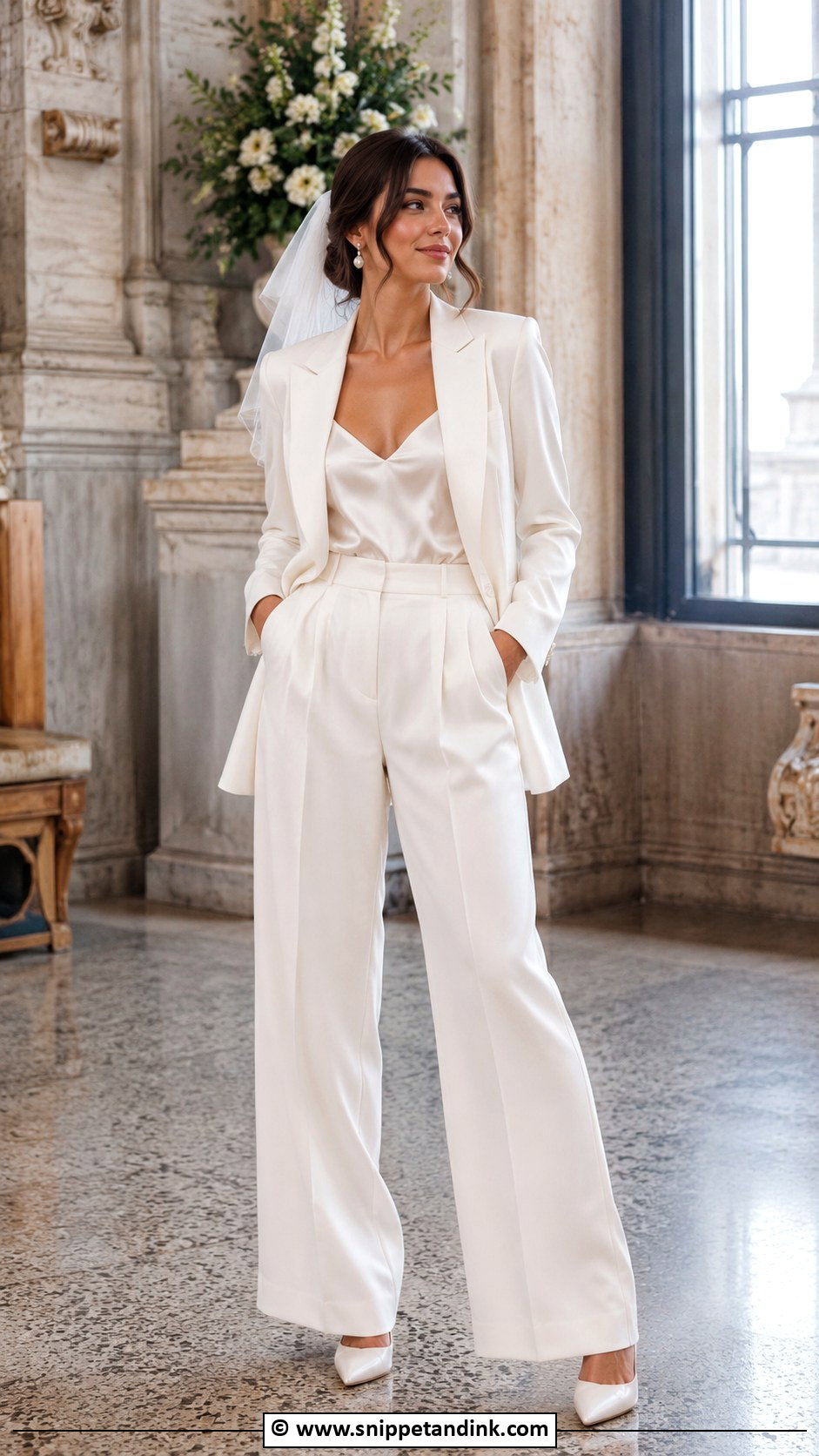
A bridal suit is a confident alternative to a gown, and the Italian version lives or dies on tailoring. A white or ivory blazer over slim trousers, wide-leg pants or a soft satin camisole should fit at the shoulder before anything else, because shoulders are the hardest part to alter. Hem the trousers to the exact shoes you’ll wear. Pointed pumps, pearl earrings and a short veil or sleek hair accessory finish it, with a small bouquet or structured clutch. I recommend a suit for a civil wedding, a modern city ceremony or a reception change.
28. Italian Sheer Sleeve Wedding Dress
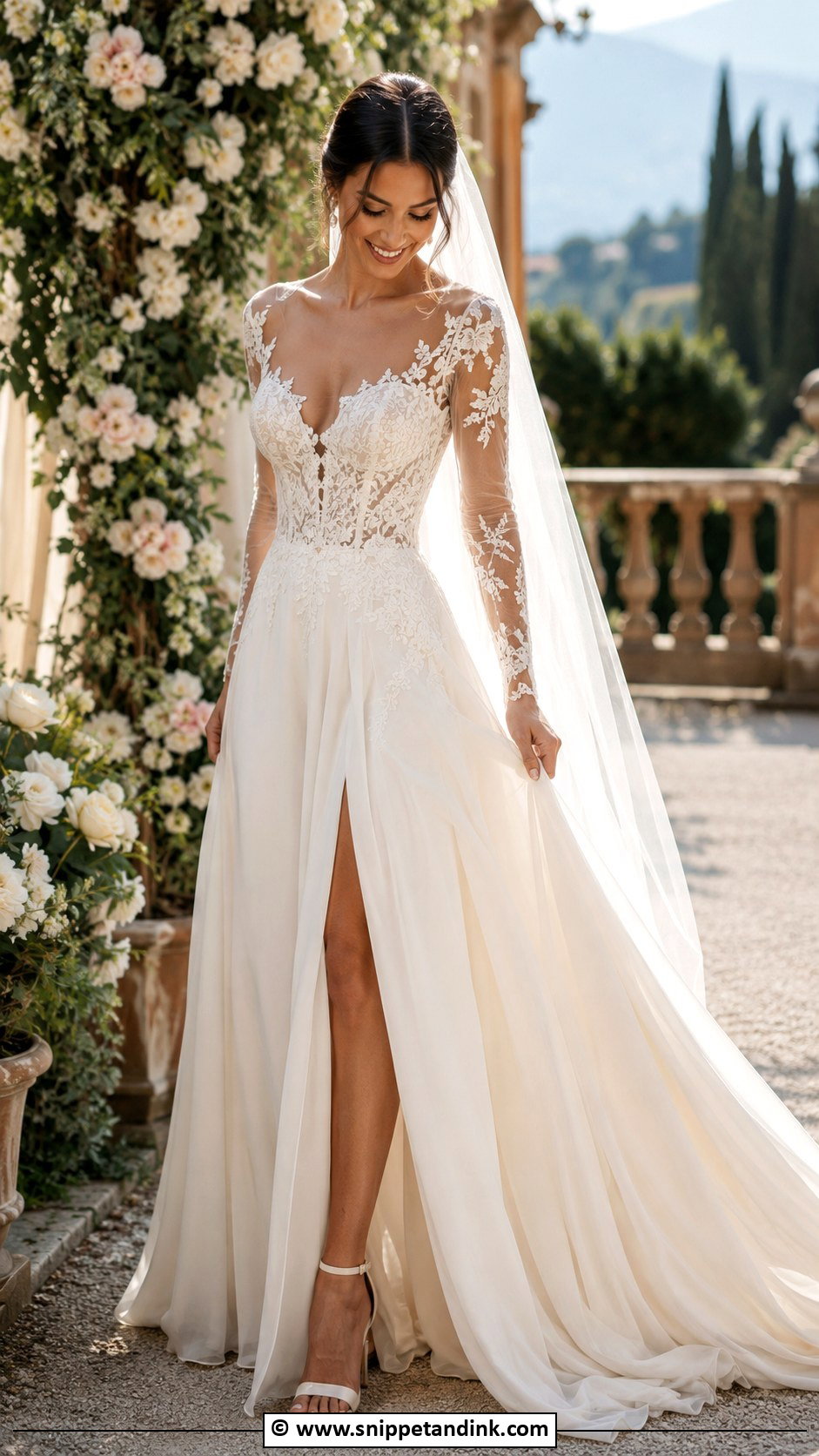
Sheer sleeves give coverage with very little weight. Illusion tulle, lace sleeves or light embroidery over a fitted bodice show detail in close-ups. My check here is colour: illusion tulle comes in several skin tones and the wrong one shows as a grey band in photos, so I match it to the bride’s skin in daylight, not under shop lights. Ivory heels, pearl earrings and a veil whose texture echoes the sleeve work well. A low bun, natural makeup and a soft bouquet keep it light.
29. Italian Backless Wedding Dress
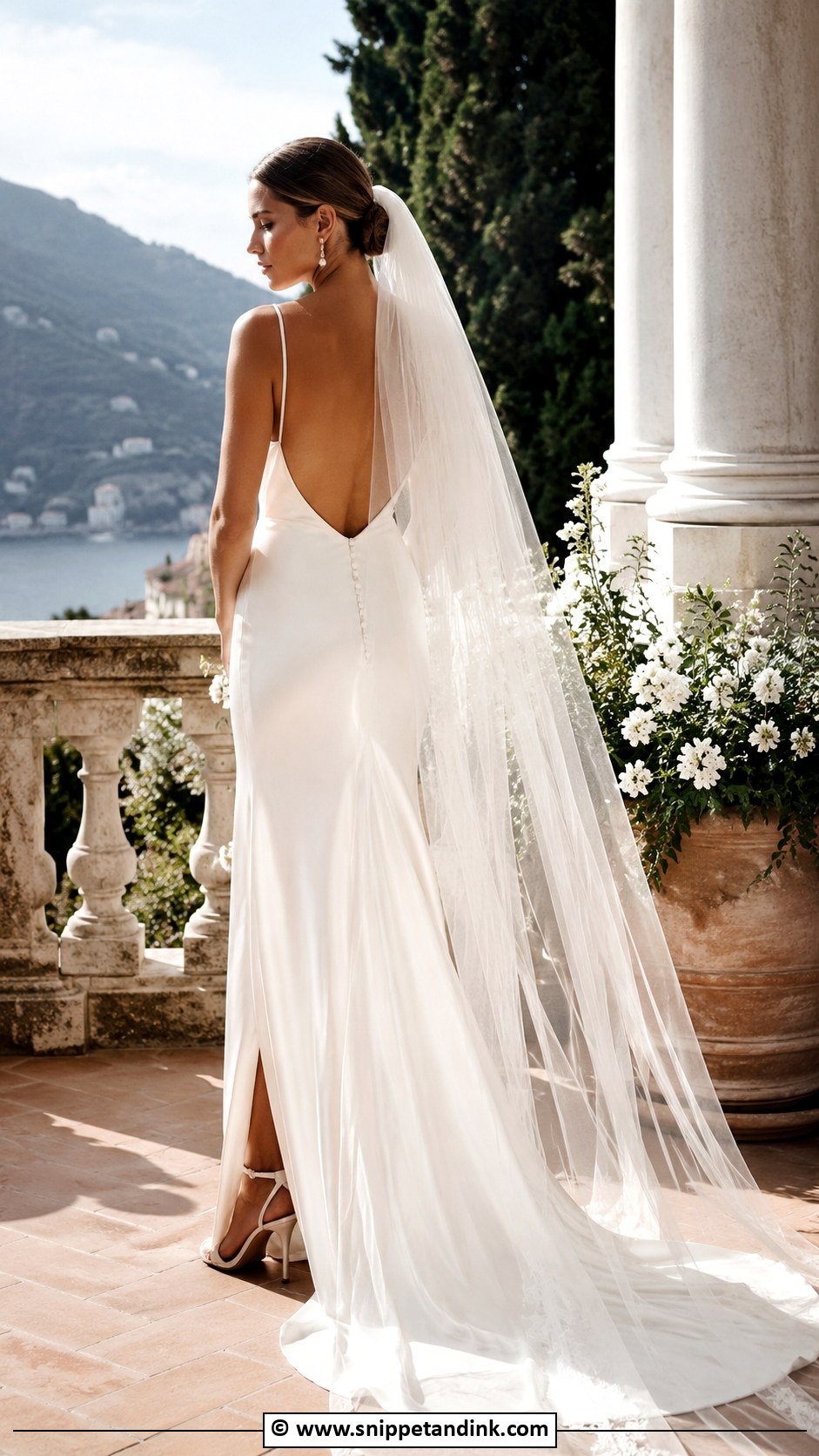
An open back keeps the front simple and puts the drama behind you. A silk slip, crepe column or lace gown with a backless cut needs real support built in, such as a sewn-in cup and a strap across the lower back, because normal bras are out. I skip the necklace and let the back carry the look, with a long veil, delicate earrings and comfortable but refined heels. A low bun or side-swept waves leave the back visible. It suits a warm outdoor ceremony or an evening reception, though not a church that asks for coverage unless you add a cape.
30. Italian Reception Wedding Dress
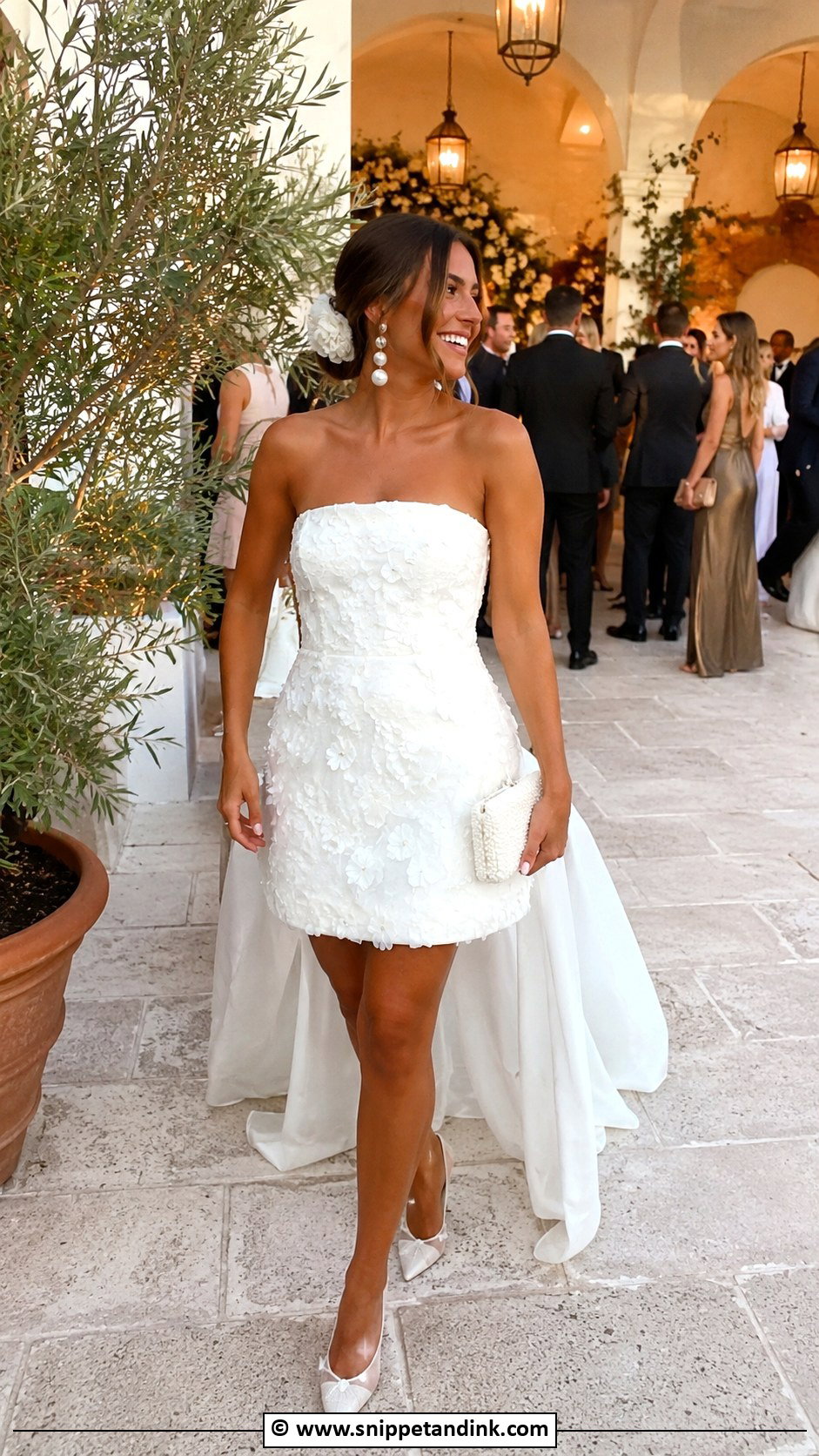
For the reception, mobility wins. I suggest a mini dress, tea length dress, a satin slip or a feather-trimmed white gown for a second look, styled with comfortable heels, statement earrings and a small clutch or hair accessory. Plan the change: a fifteen-minute window, a room near the terrace and someone to help with buttons. Tie it to the ceremony gown through colour, fabric or jewelry. If the first dress is classic, the second can be more playful, and you can dance without managing a train.
Getting the Gown to Italy Without a Single Crease
Never check a wedding dress in the hold. I tell every client to call the airline ahead and ask about bringing it on as cabin baggage; some will hang it in a cabin closet, many will not, so plan for it folding into an overhead bin.
- Finish the final fitting at home before you fly, with the shoes and underwear you’ll wear. Last-minute alterations abroad are hard to arrange.
- Pack the gown in a breathable garment bag, bodice folded with acid-free tissue in the creases, and the skirt rolled loosely rather than pressed flat.
- Book a pressing service or a local seamstress near the venue for the day before. Satin, mikado and organza can water-spot under a home steamer.
- Hang the dress in the coolest, darkest room you have. Strong Italian sun through a window can yellow ivory silk faster than you’d think.
Bring a small kit: clear thread, a needle, safety pins, a white chalk stick for marks and fashion tape. It covers most things that go wrong on the day.
A Villa, a Church or a Town Hall Decides Half of This
The setting does more of the choosing than most brides expect. Lace suits a villa garden, silk satin suits the water at dusk, mikado suits a formal ballroom, and a mini or bridal suit suits a short civil ceremony. Shoes, veil, jewelry, hair and bouquet should support the dress rather than compete with it. If I could give one instruction, it would be this: try your shortlist on, walk a flight of stairs and sit down in it. The dress that still feels right after that is the one to take to Italy.
You'll Like These Ideas:




Leave a Reply