
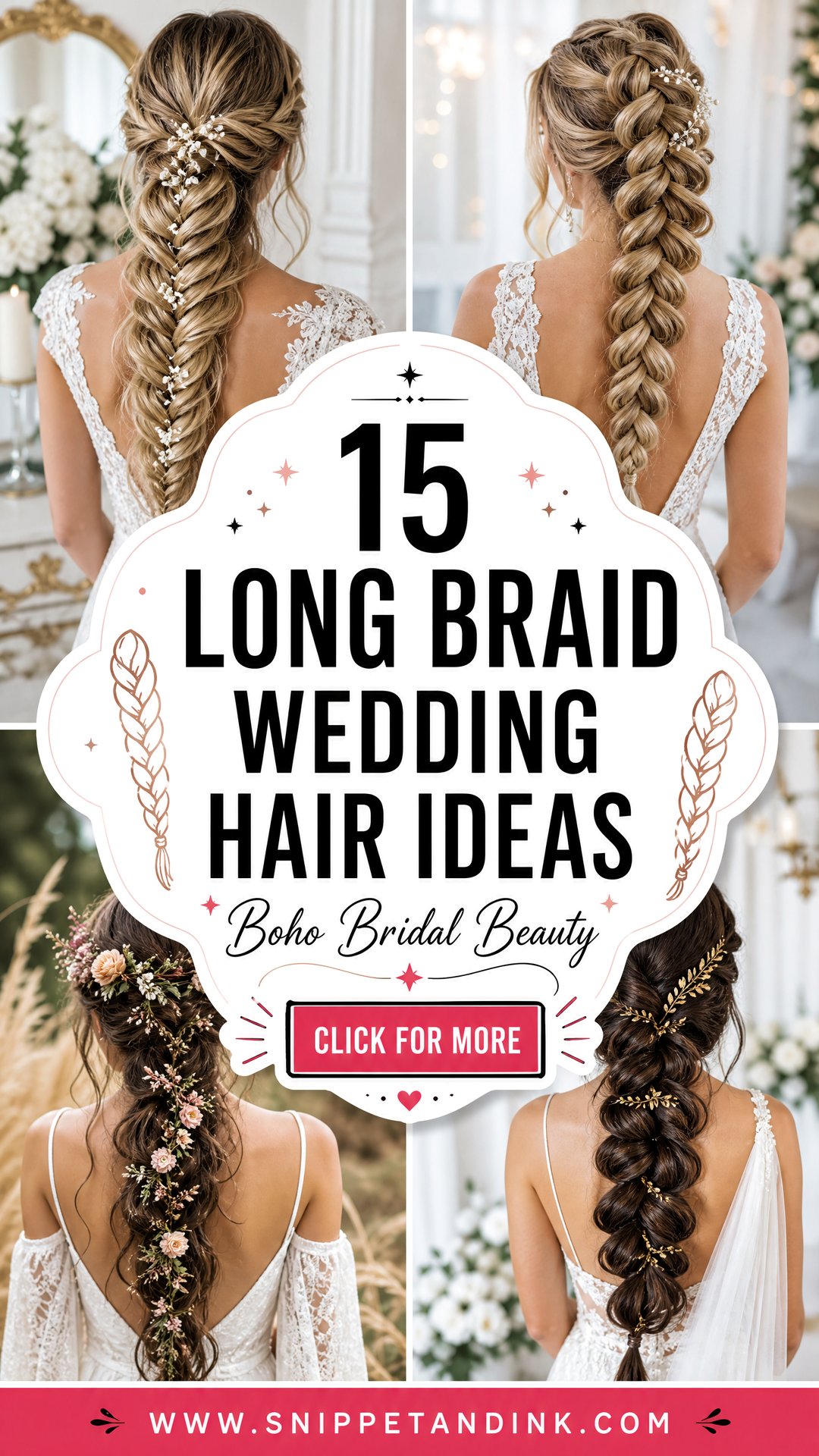
A braid is the most forgiving way I know to wear long hair at a wedding. It keeps the length off your face during vows, it doesn’t fall flat the way loose curls do by evening, and it carries flowers, ribbon or a veil comb without extra scaffolding. The catch with boho braids is that the relaxed look takes more planning than a sleek one, because the looseness has to be built in on purpose. I’ve put together fifteen braids below, from a loose fishtail to a full South Indian choti, with honest notes on what each one asks of your hair and your dress.
Open Backs, Lace Collars and Where a Long Braid Should Fall
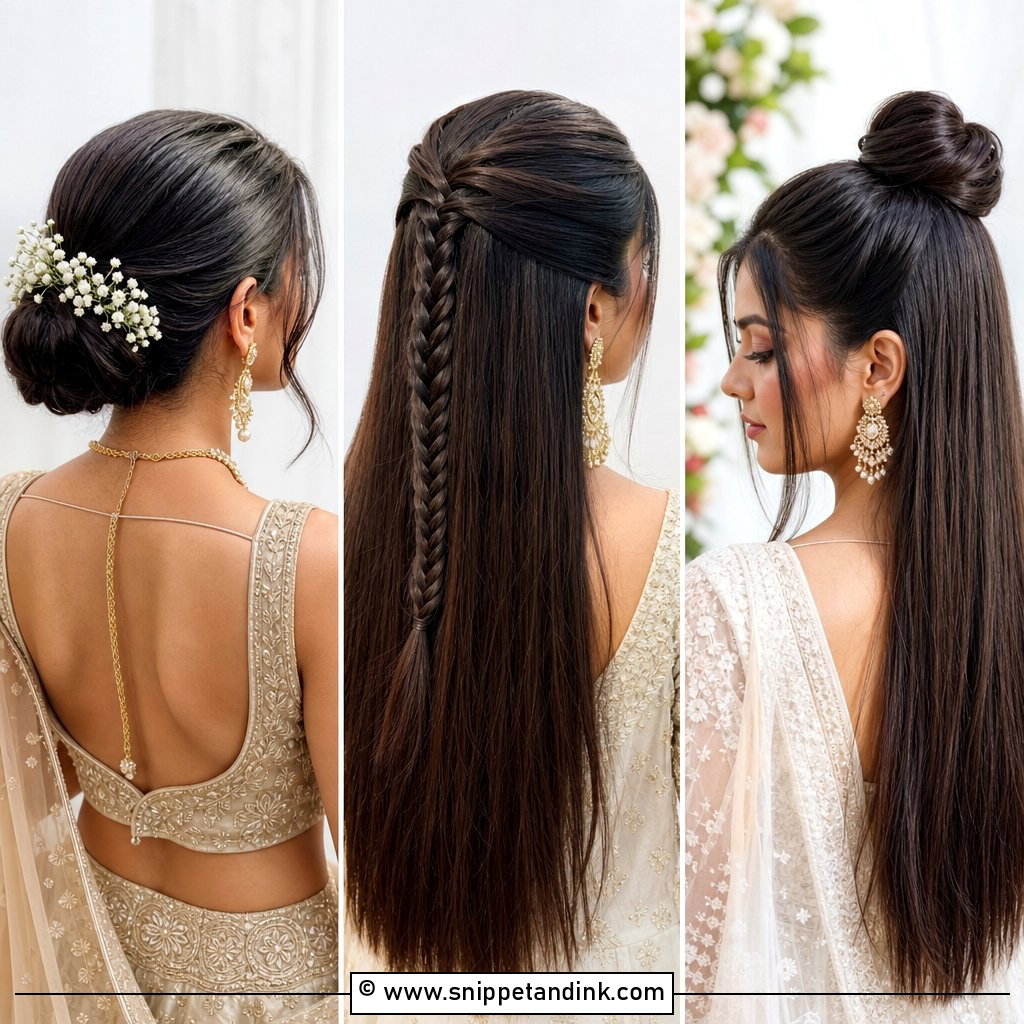
The first photo I ask a bride for isn’t hair inspiration. It’s the back of her dress. A long braid lies right on top of whatever the designer put there, and a beautiful plait can hide the very detail she fell in love with.
- Low or open back: a side braid, a crown braid or a braided bun. A braid down the spine covers the skin you wanted to show.
- Button back or lace keyhole: a braid that sits to one side, or one that ends above the detail. Loose ends catch on lace.
- High neck or halter: lift the hair. A braided ponytail or bun clears the collar so the neckline reads as one clean line.
- Strapless or sweetheart: almost anything works, and a waterfall or half up braid fills the bare shoulders nicely.
Length matters too. A braid that ends exactly at the waistline or a bodice seam draws a hard line across it in photos, so I adjust the finished length by tucking or curling the ends.
1. Long Fishtail Braid Wedding Hair
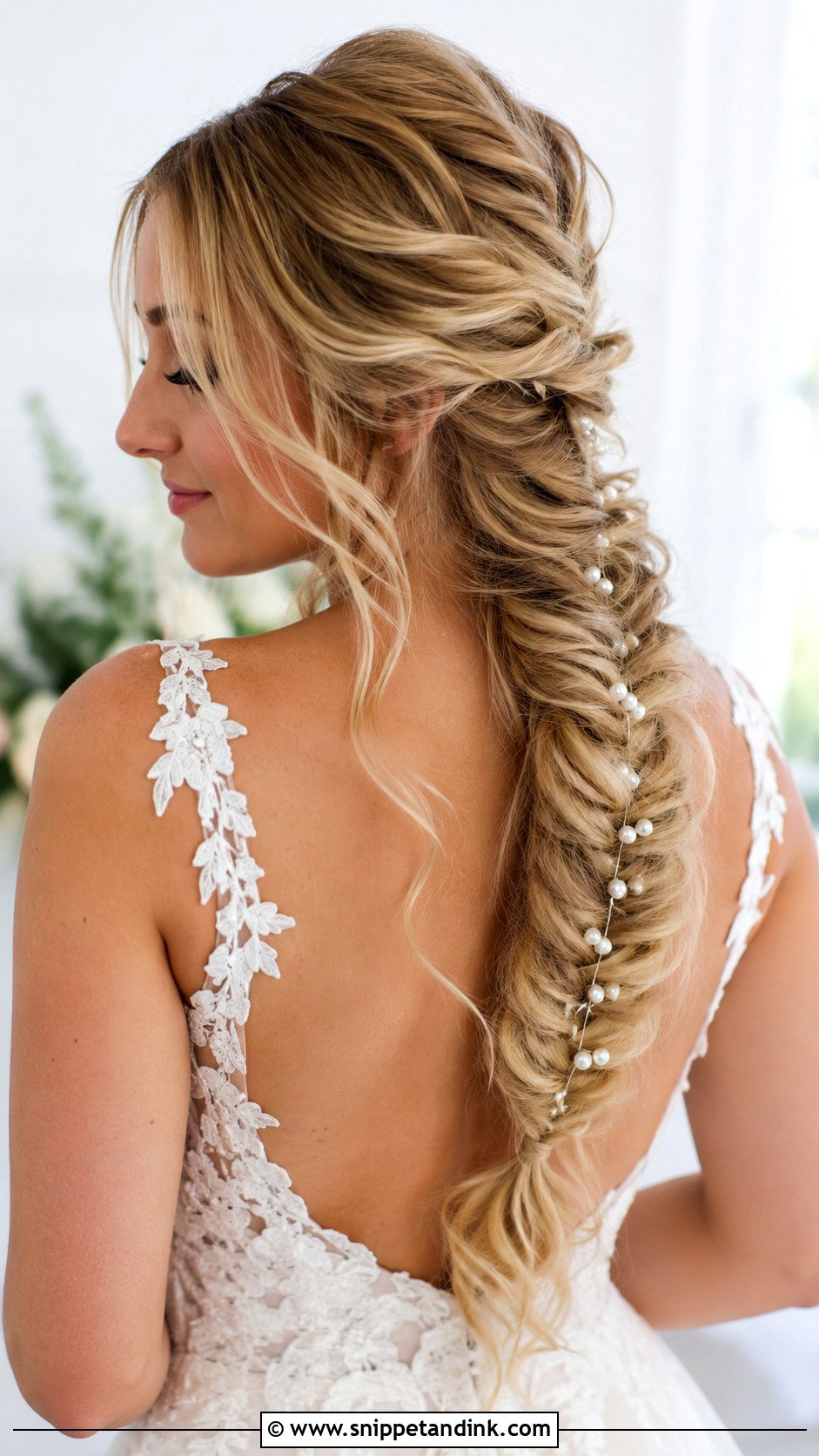
Highlights are the fishtail’s best friend. Every tiny crossing shows a flash of a different tone, so dimensional colour turns the braid into something that reads like lace from a few feet away. On solid dark hair the pattern is subtler, and I’d keep the sections slightly bigger so it still shows on camera. Lift the crown a touch and leave two cheek pieces out. For a garden ceremony I pull it apart; for a formal gown I leave it tight and glossy, with a veil comb set just above where the braid begins.
2. Long Side Braid Wedding Hair
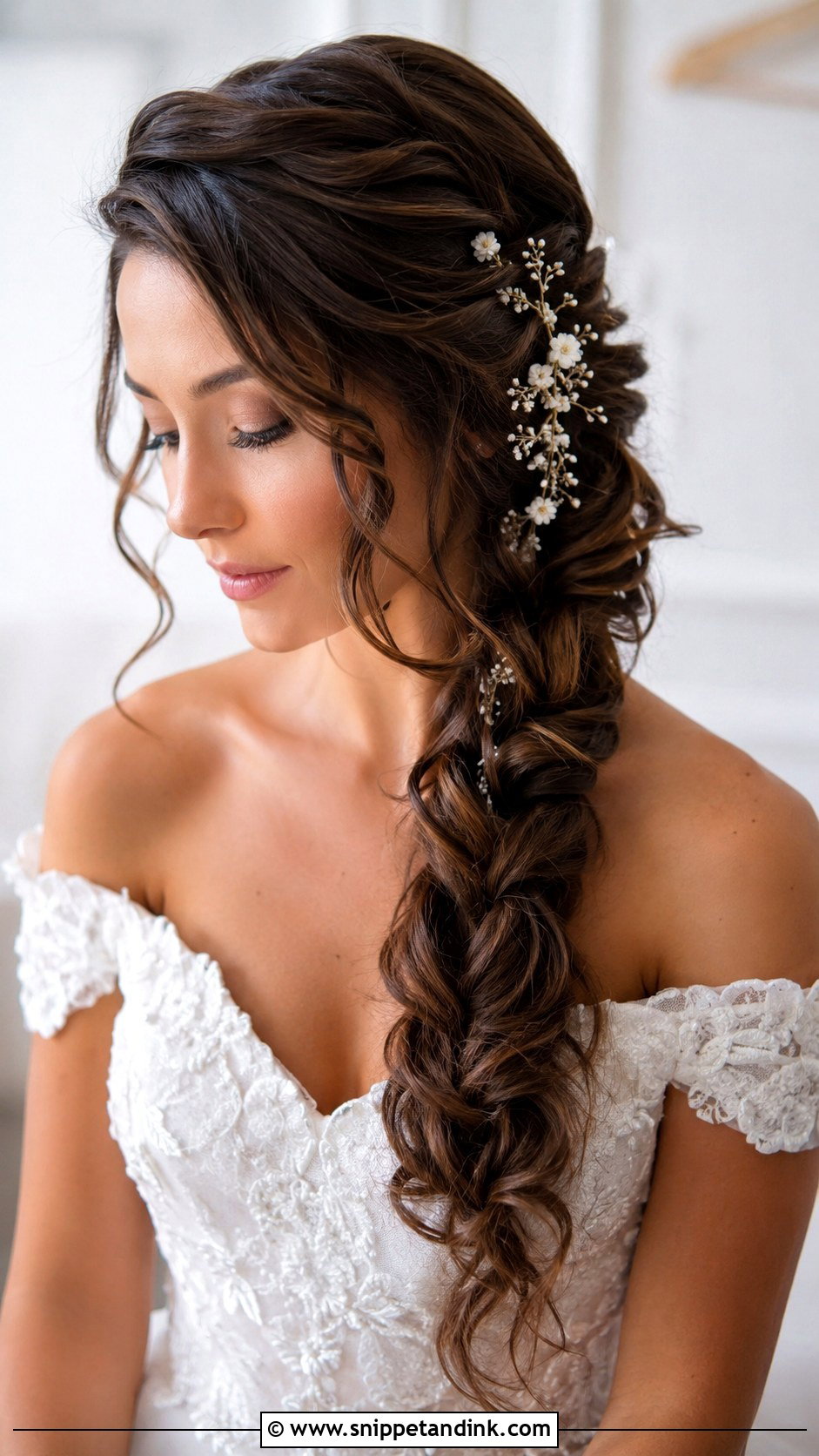
I reach for a side braid when the back of the dress is the main event. Moving all the hair over one shoulder keeps lace, buttons or a low back completely clear for the processional photos. The trade-off is that the braid’s weight pulls everything to one side, so I anchor it with a hidden pin behind the opposite ear; otherwise the parting creeps over during the day. Keep root lift at the crown and a little texture through the plait.
3. Long Dutch Braid Wedding Hair
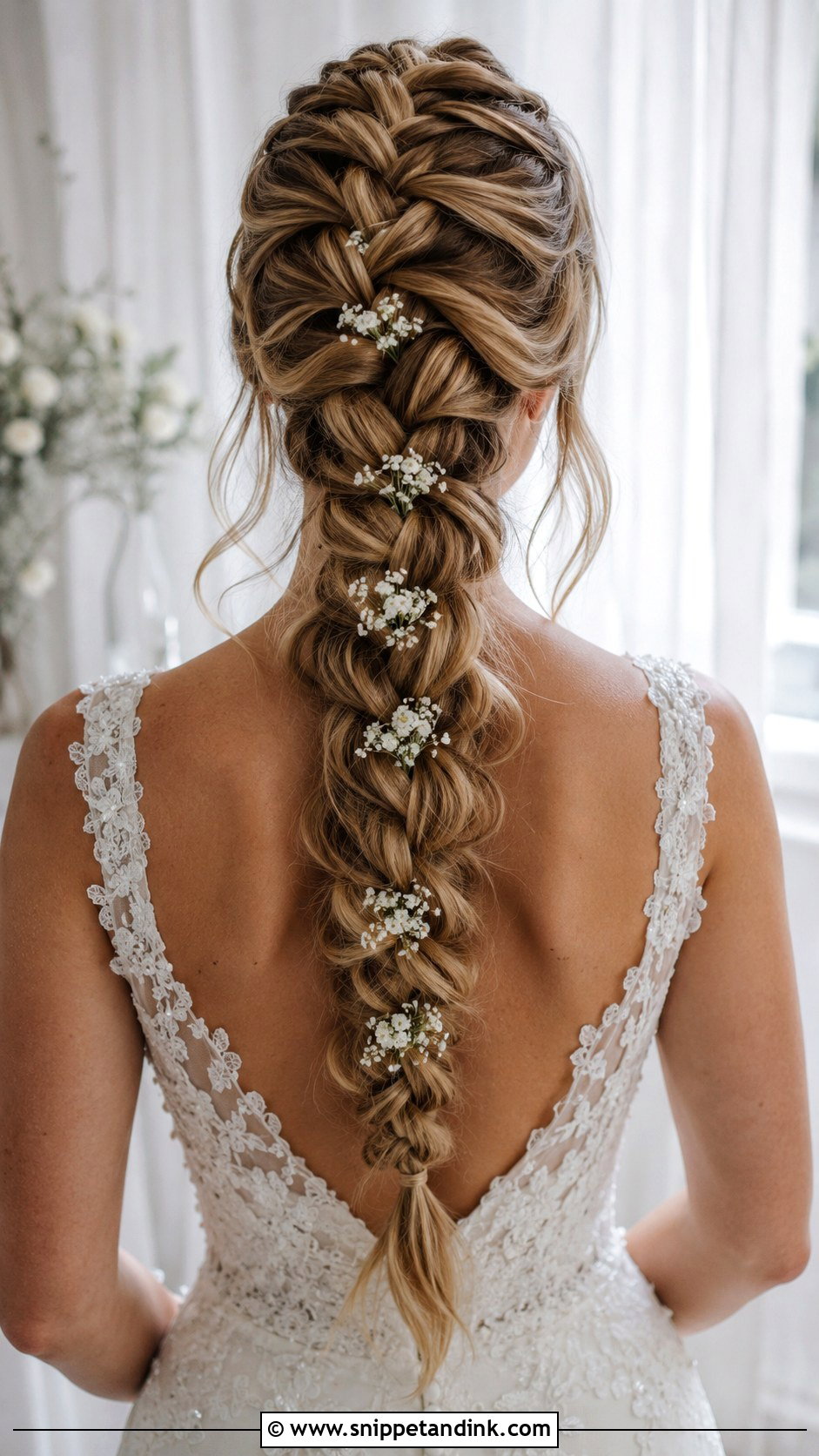
Humidity is where the Dutch braid earns its place. Because a long Dutch braid sits on top of the hair and is locked to the scalp the whole way down, frizz has nowhere to escape to, and the shape stays put long after a curled style would drop. Centre it for symmetry or angle it off to one side. I widen only the outer loops, smooth the sides with a little cream, and add pins or small blooms along the raised pattern, where they have something firm to hold.
4. Long French Braid Wedding Hair
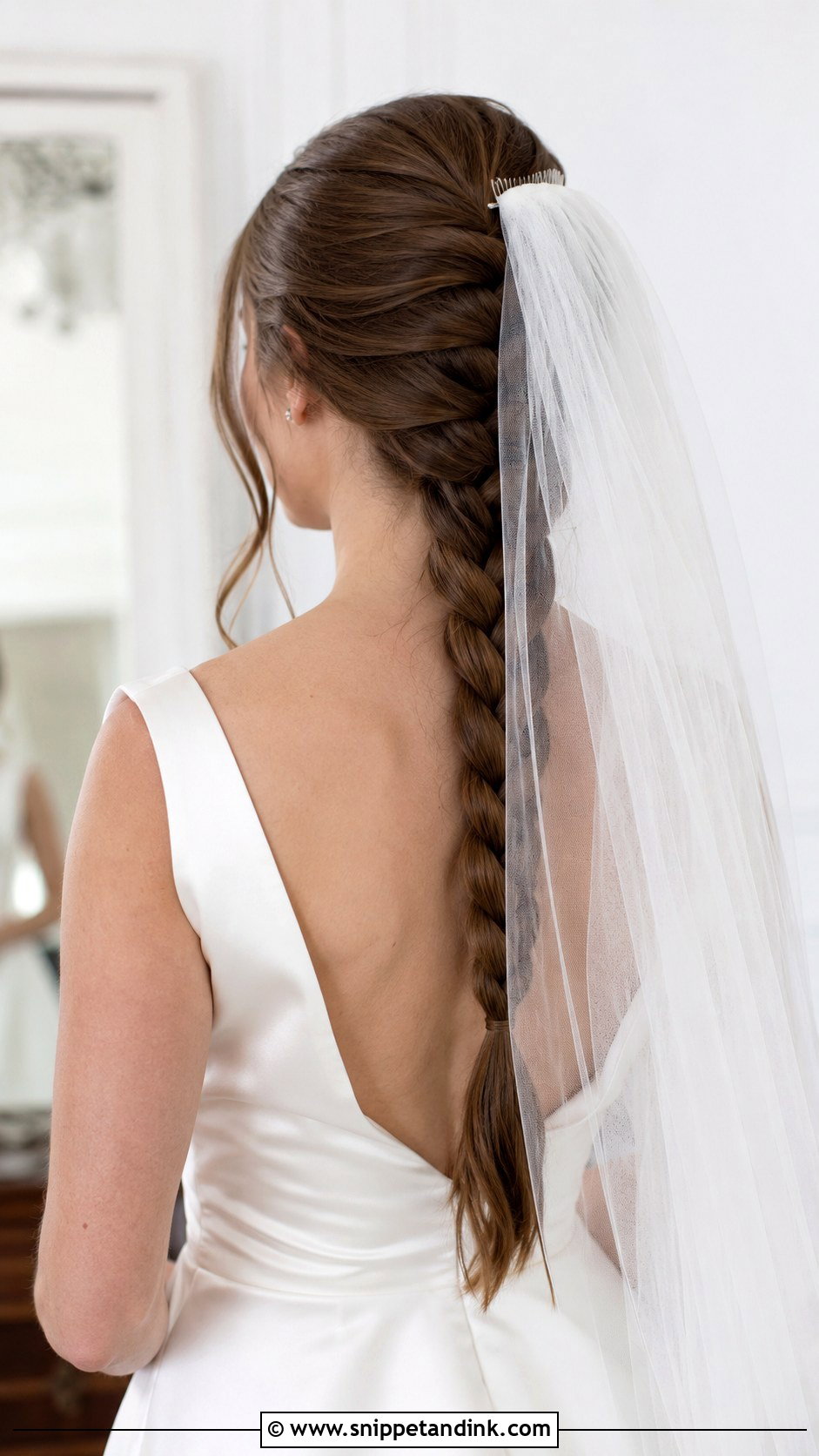
A French braid suits the bride who wants detail but hates feeling anything loose around her face. It tucks in close to the head, so it’s the quiet option on this list. The thing I watch on long hair is the lower half: once the braid leaves the scalp, it can taper into a thin tail. I braid with even tension right to the end and finish with a hidden elastic plus a wrapped strand. A veil sits well either just above the braid or slipped in under its top section.
5. Long Boho Braid Wedding Hair
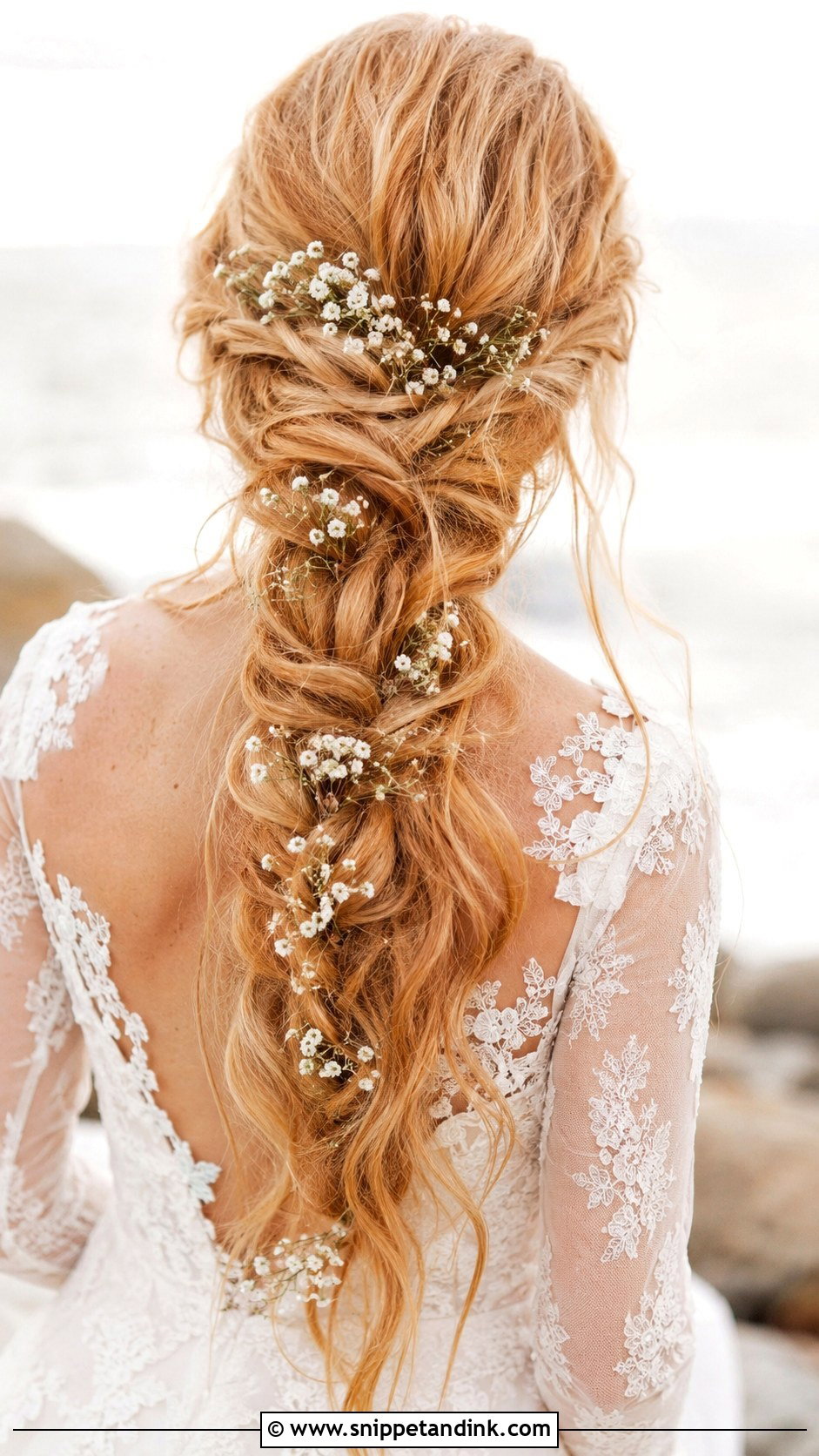
Done properly, a boho braid looks like you braided it on a breezy afternoon, even though there’s a structured base underneath. I braid loosely, widen it, then pin the inner layer to itself so it can’t sag. Small accents like dried flowers, baby’s breath, tiny pearls or a strip of silk ribbon all thread through easily because the loops are open. Pair it with lace sleeves or a simple slip and soft makeup. Leave out pieces around the face, but cut them to sit at cheekbone or jaw rather than in the eyes.
6. Long Crown Braid Wedding Hair
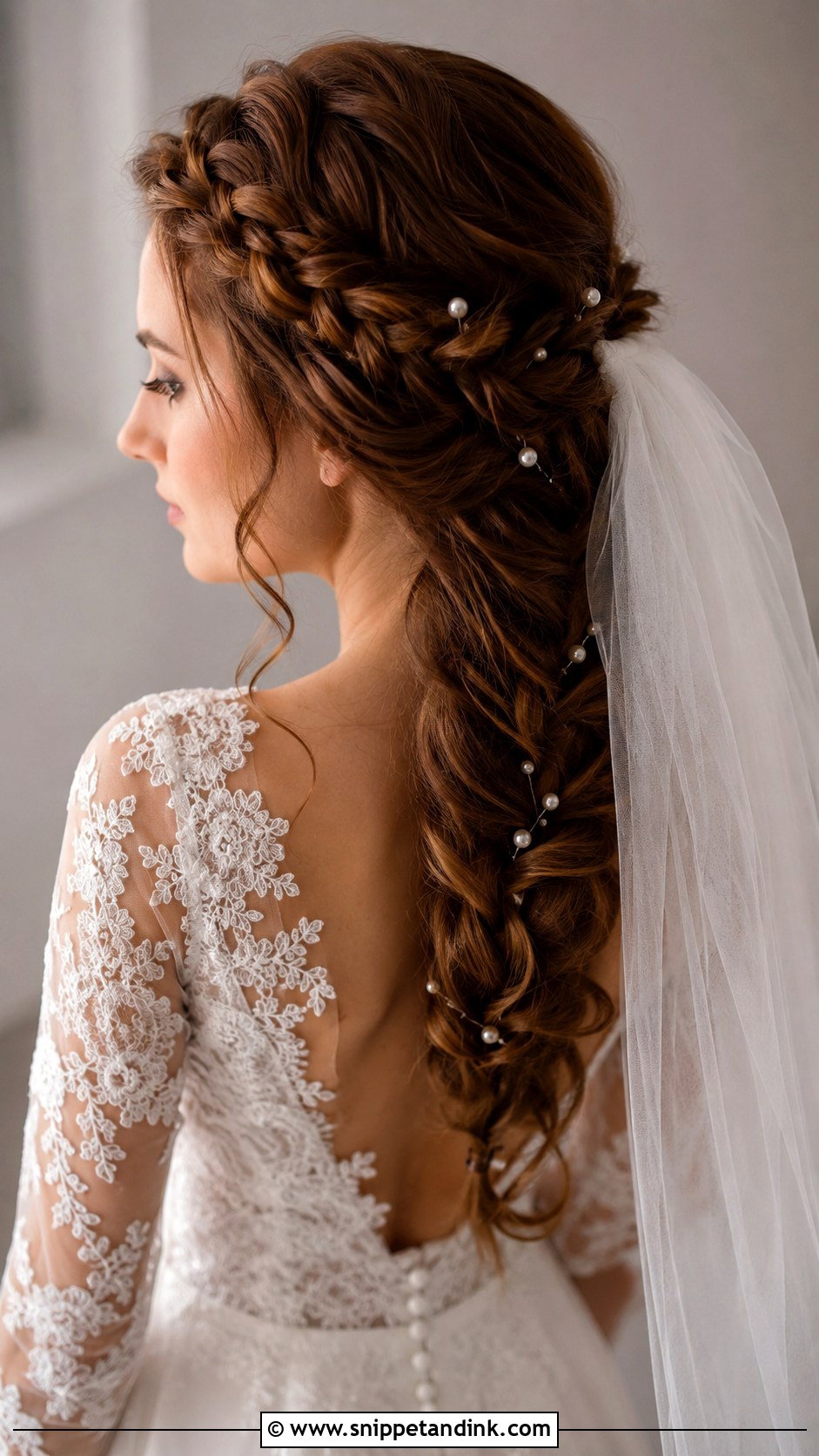
A crown braid is the cooling option for summer: the neck and shoulders stay bare and nothing sticks to damp skin. With long hair I can usually wrap a full halo and still have length left to tuck into a low braid at the back. Very thick hair can make the crown look wide, so in that case I’d split the hair and only wrap the top half. Small flowers tuck right into the crown, and a veil comb can be set behind it.
7. Long Waterfall Braid Wedding Hair
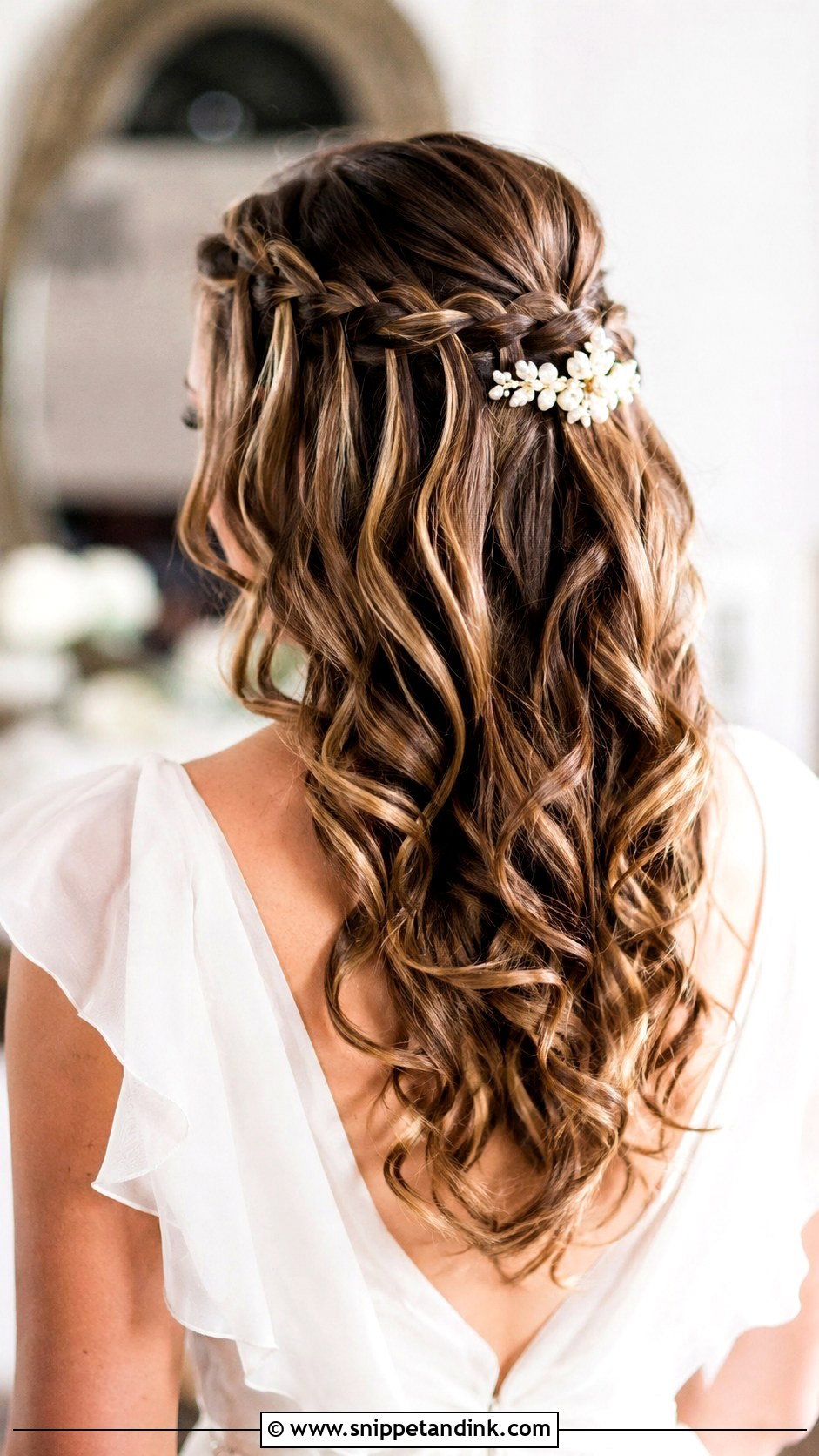
When a bride wants to wear her hair down but worries it’ll look shapeless by dinner, a long waterfall braid is my usual answer. The braid runs across the back, catching and releasing strands, so the loose hair has a frame. Balayage shows especially well here, since the braid separates the lighter ends from the darker roots. I’d skip it on hair that won’t hold a curl at all, as the dropped pieces simply vanish. A small floral comb where braid meets waves finishes it.
8. Long Braided Ponytail Wedding Hair
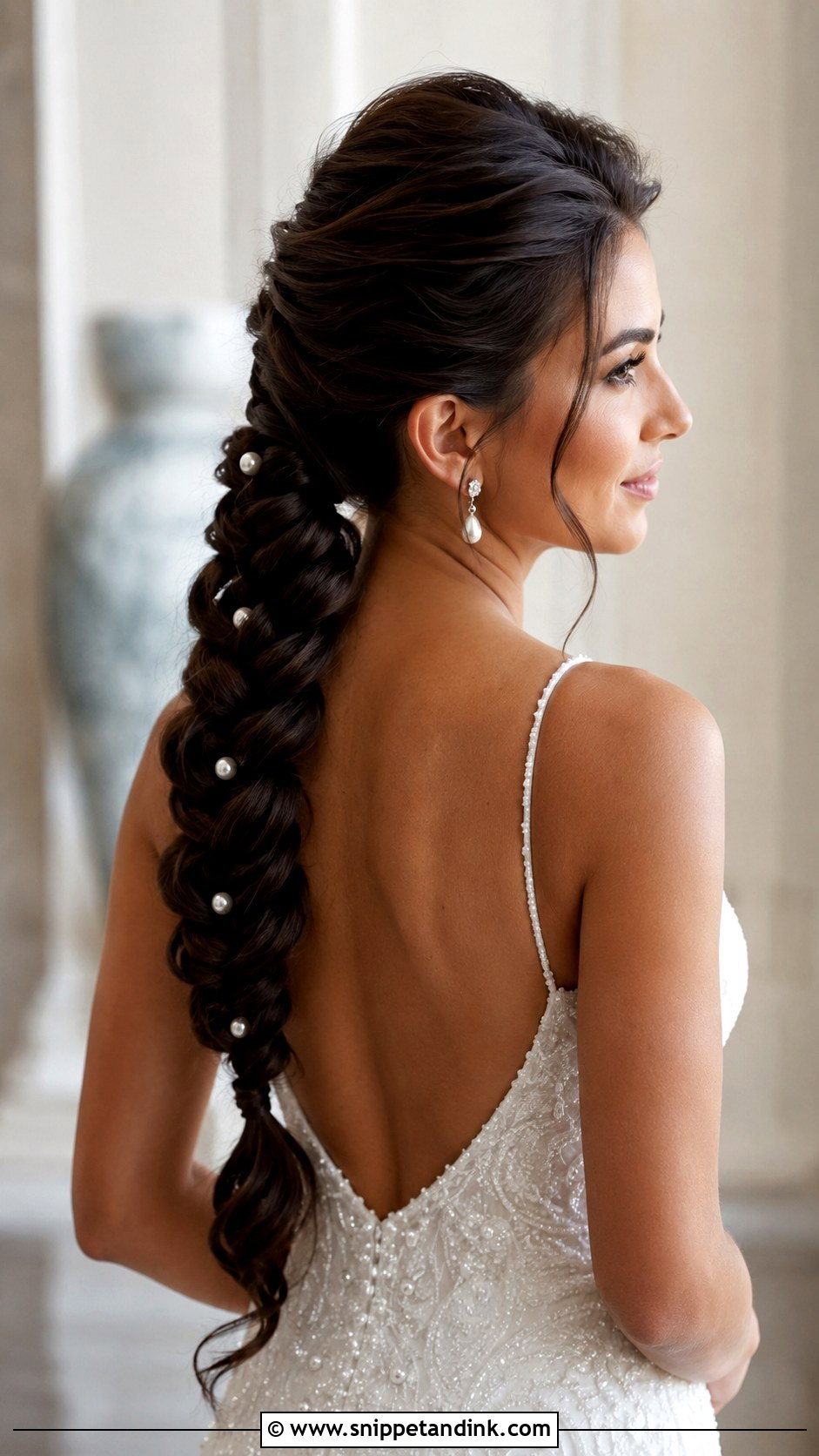
High, braided and tight at the crown, this ponytail is the most dance-proof look here. It also flatters a high neckline because it lifts the hair away from the collar. I smooth the top with a boar bristle brush, secure the base with two elastics, then braid the length and wrap a strand round to hide them. A decorative cuff can cover the base instead. Brides with sensitive scalps should try it for a full afternoon at the trial; the weight of long hair in one high point adds up.
9. Long Bubble Braid Wedding Hair
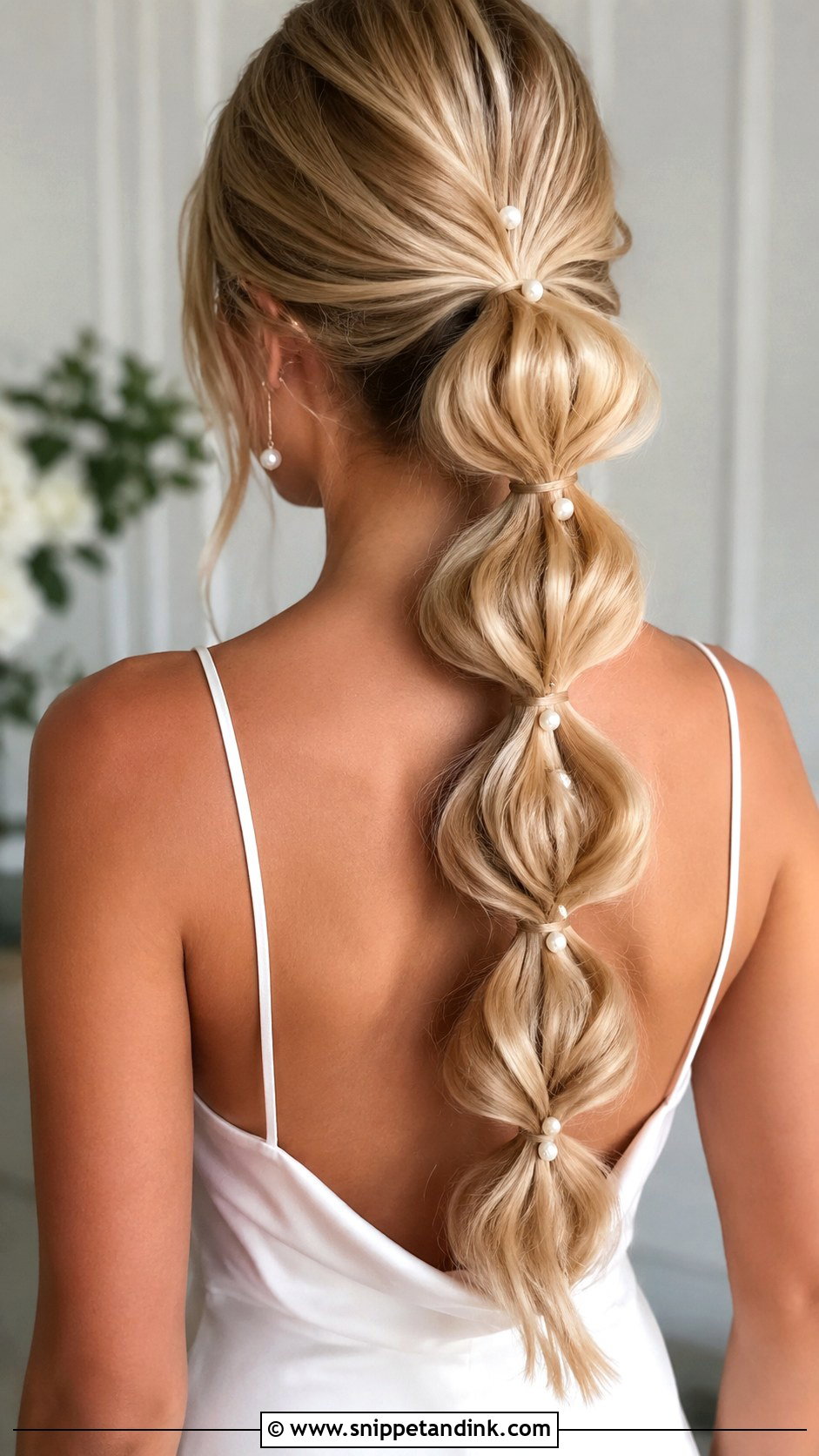
A long bubble braid uses elastics, not weaving, to make rounded sections down the length. It’s fast and holds well, which is why I suggest it to bridal parties who need several styles done in a short window. Thick hair or extensions give the bubbles proper shape; thin hair makes them look sparse. I hide each elastic under a wrapped piece of hair and keep the finish glossy for a modern wedding or textured for an outdoor one.
10. Long Pull Through Braid Wedding Hair
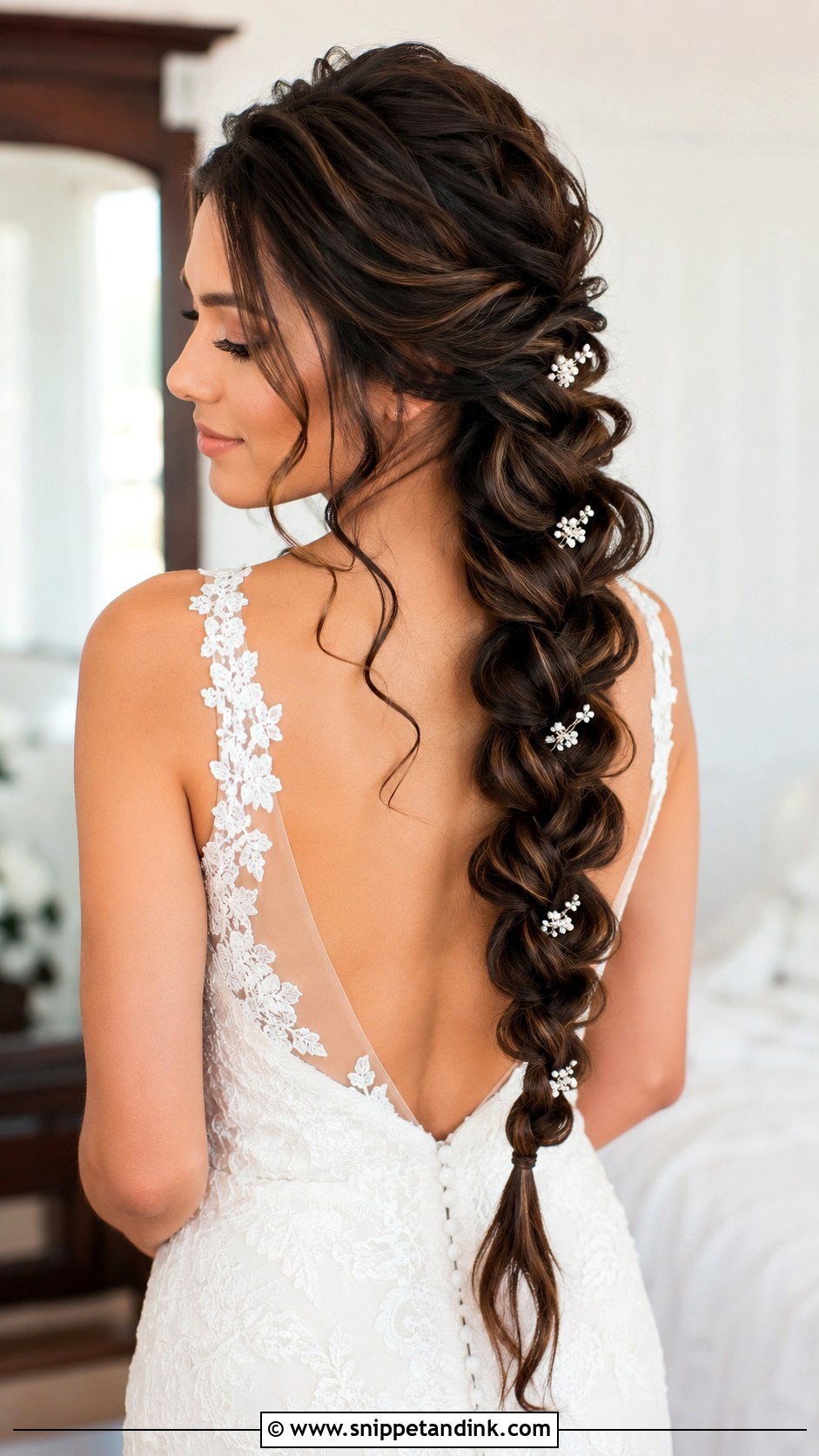
The pull through braid isn’t really a braid; it’s a stack of small ponytails threaded through each other, then pulled wide. That’s why it gives so much volume with so little skill, and why I like it on very long hair that’s hard to manage in a traditional plait. Its weakness is the elastics, which can show if they’re not colour-matched. Extensions make it plush. Keep the top soft and slip pearl pins or flowers into the gaps between sections.
11. Long Rope Braid Wedding Hair
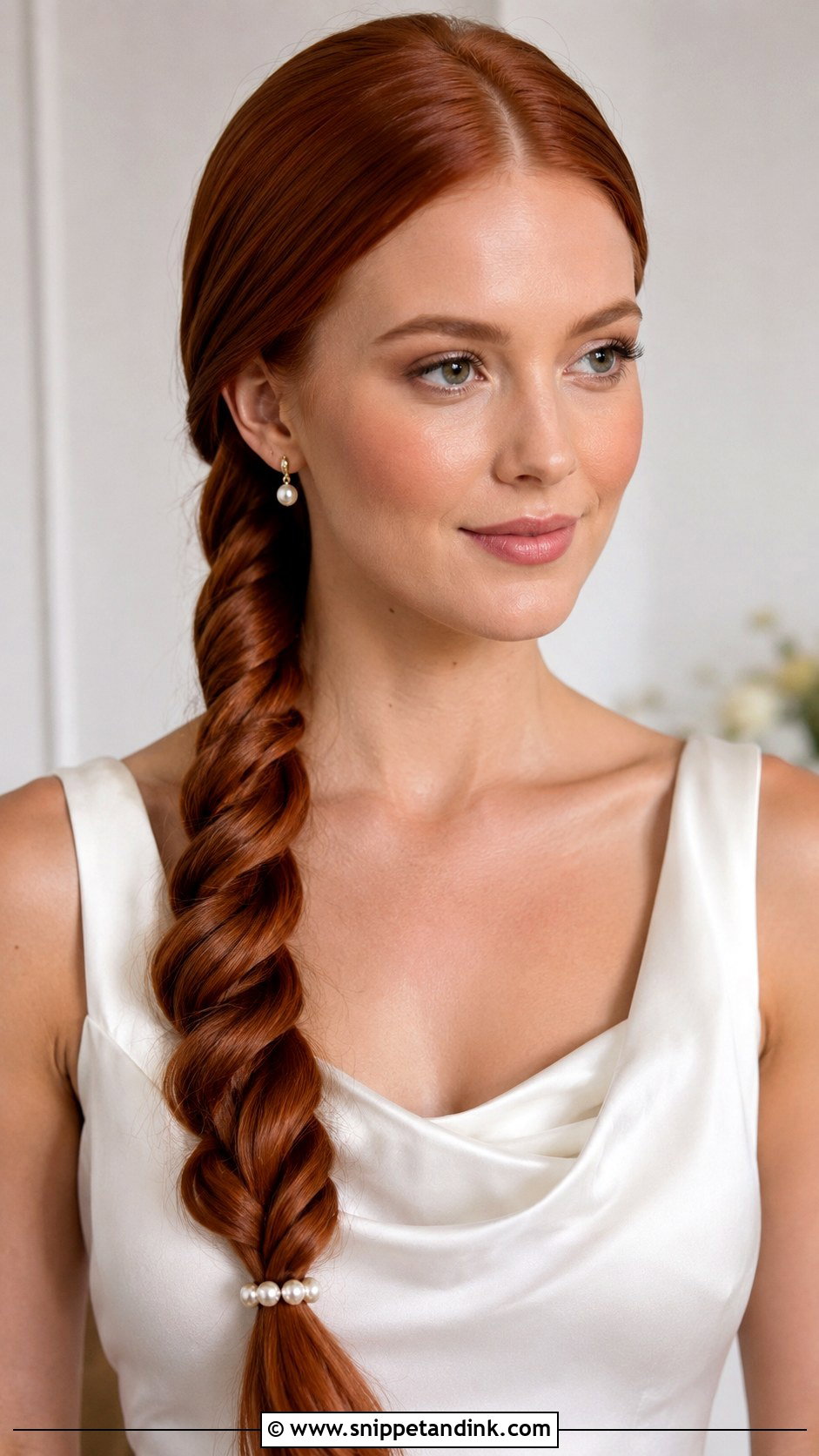
Minimal brides tend to like the rope braid because it’s two strands and nothing more. The spiral shows best on smooth hair, so frizz control comes first: a light serum on the lengths and shine spray at the end. Sleek satin gowns and a middle part suit it, and I’d stop at one accessory near the base. Twisting both strands the same way and crossing them the opposite way is what keeps it from unwinding by the speeches.
12. Long Half Up Braid Wedding Hair
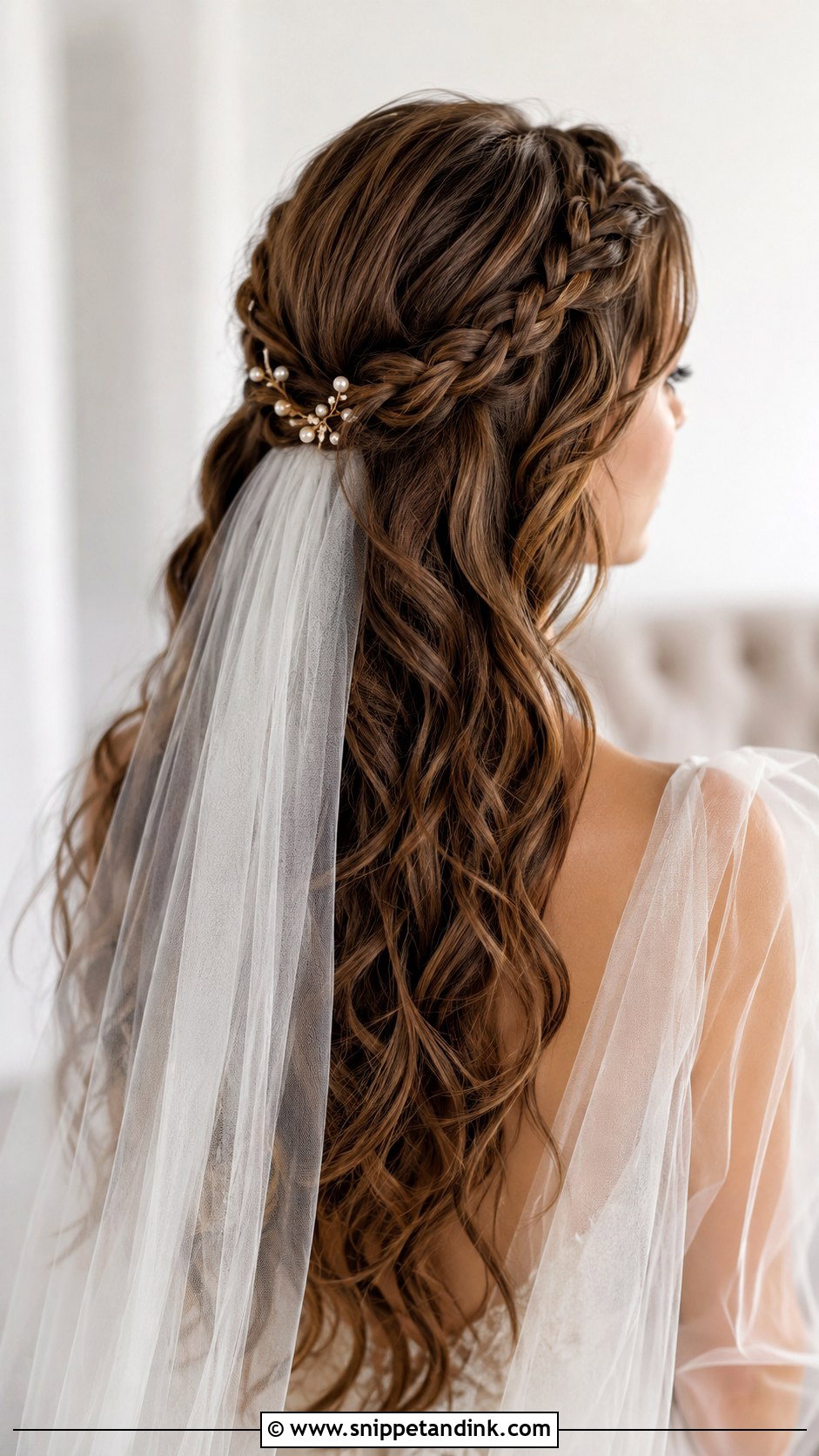
Two small braids from each temple, joined at the back, give the most face-framing half up style I know. It keeps hair out of the eyes during the ceremony and leaves the lengths free. I pin the join with crossed bobby pins and cover it with a floral clip or pearl pin, because that meeting point is exactly where a veil comb wants to sit. Curl the loose lengths before braiding so the waves have time to set.
13. Long Goddess Braid Wedding Hair
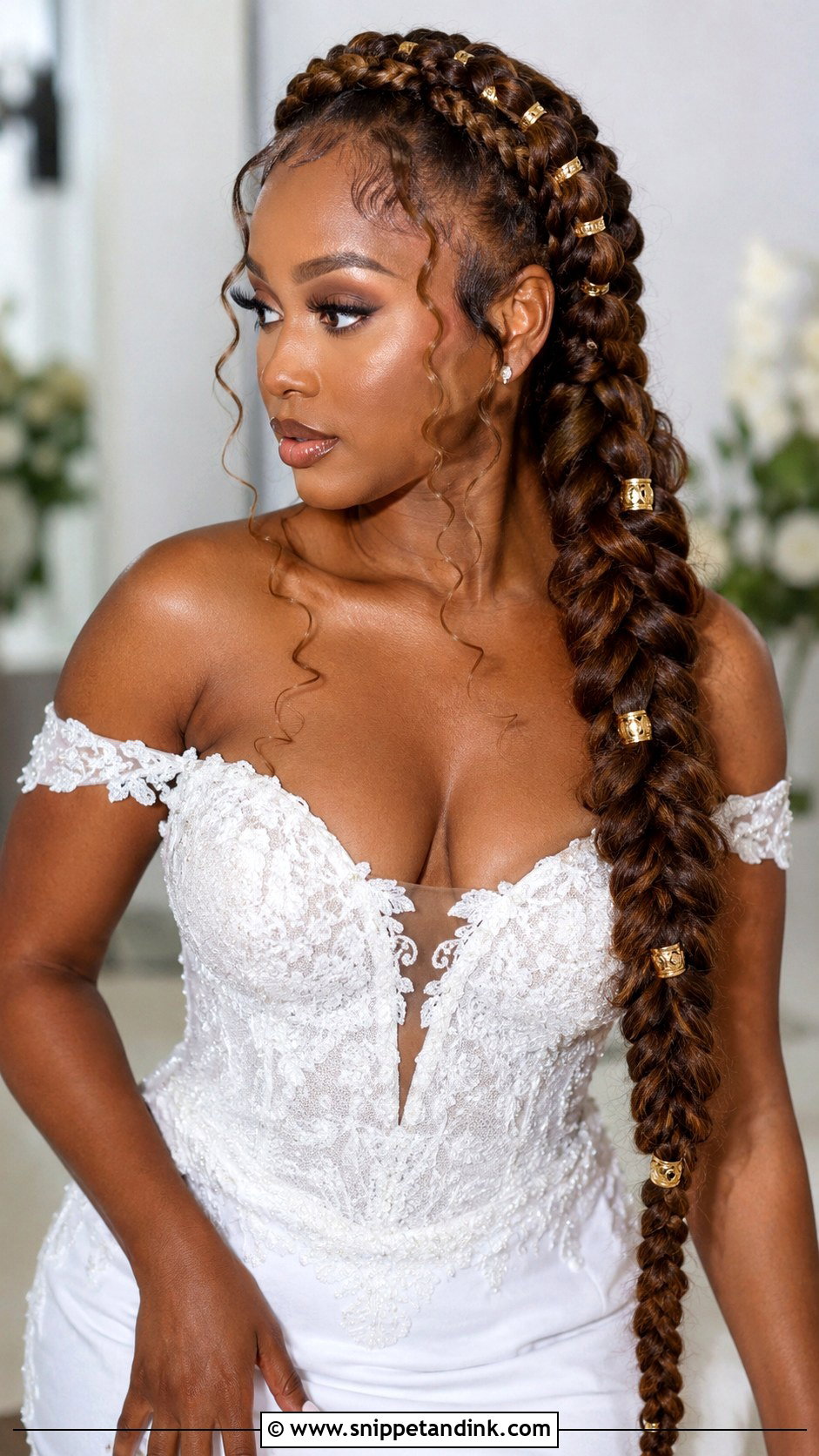
A goddess braid is a protective style that can still look fully bridal, worn as one large braid, a side braid or a ponytail with curly pieces left out. The braid can be decorated with gold cuffs, pearls, flowers or a veil at the crown. My priority is the foundation: secure but not tight, because tension around the hairline over a long day causes soreness and, over time, breakage. Get it installed several days ahead so the scalp settles, and refresh the curly pieces with a little water and leave-in on the morning.
14. Long South Indian Bridal Braid
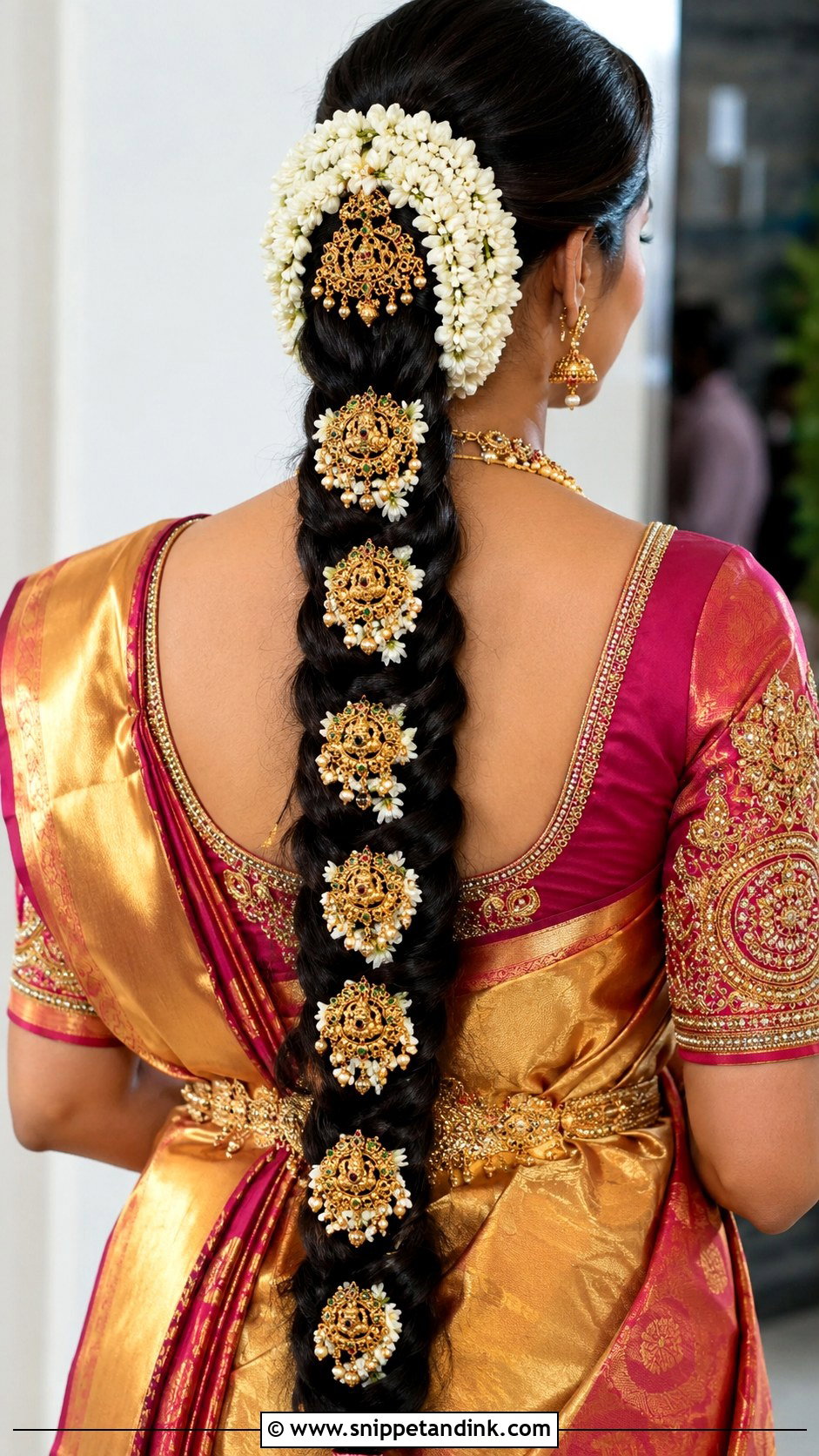
A South Indian bridal braid is smooth and centre-parted at the top, then dressed down its whole length with jasmine, gold braid pieces and the jada billalu ornaments that run along the spine. It balances silk sarees and temple jewelry. Most brides need a hair extension to reach the traditional length and carry the ornaments. I sew the flowers onto the braid in stages rather than pinning them, because pins pull out under the jewelry’s weight. It shows best in full-length photos, so stand where the whole braid is in frame.
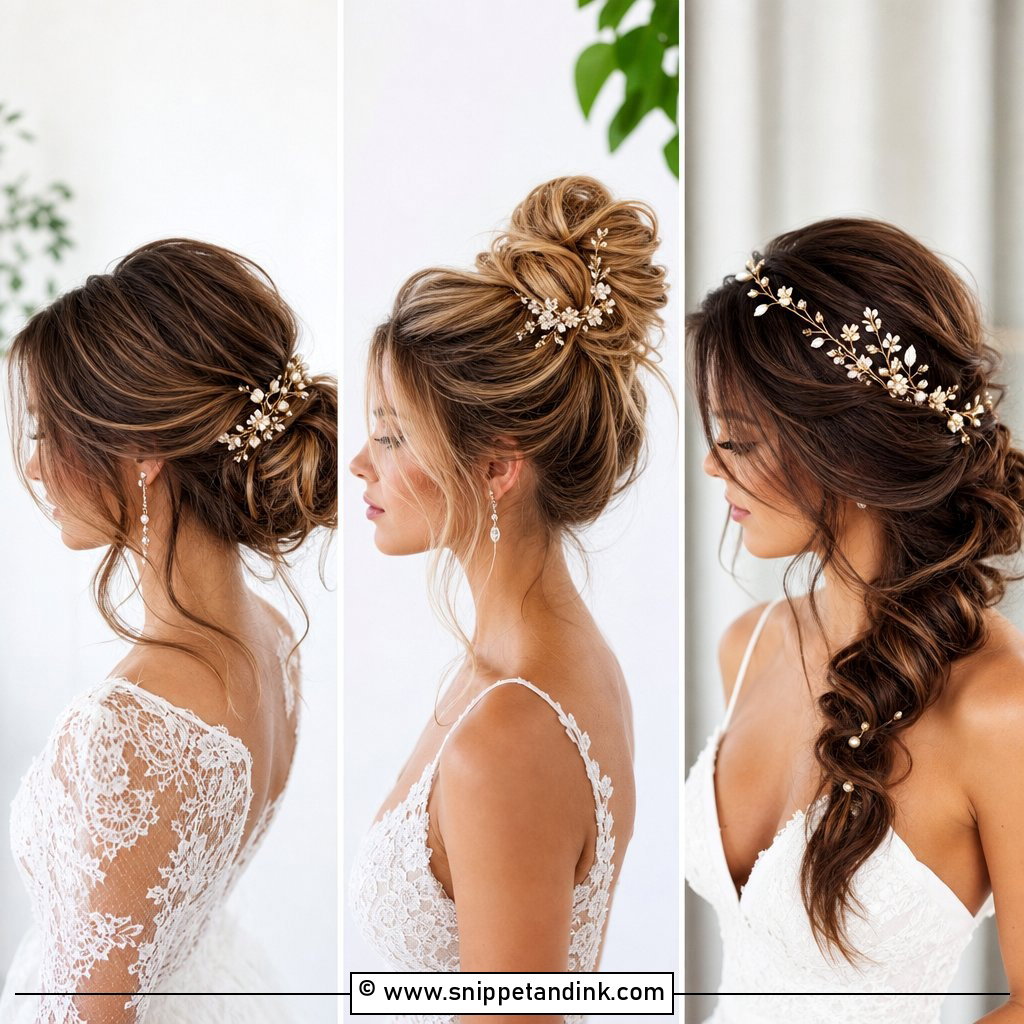
15. Long Braided Bun Wedding Hair
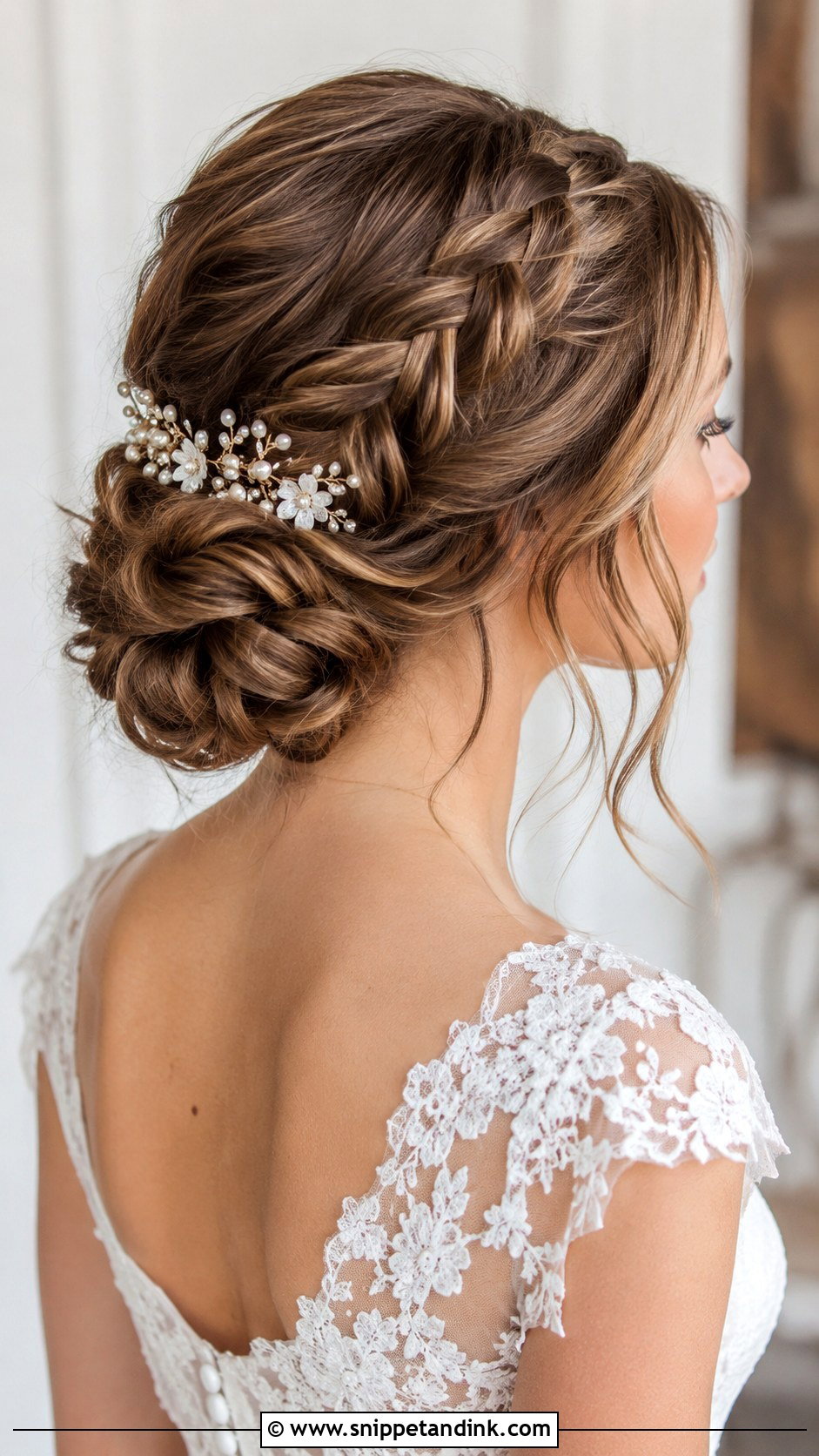
Braiding the hair before twisting it into a bun gives the updo a texture a plain chignon doesn’t have. Long hair makes the bun fuller, though very long, heavy hair can feel like it’s dragging at the nape by evening. For that, I split the braid in two and wrap them in opposite directions so the weight spreads. It holds well under a veil and keeps the neckline open. Keep the crown soft and place a comb above the bun.
Threading Dried Flowers, Ribbon and Pearls Into the Weave
Boho braids invite add-ons, and the way they go in matters more than what you choose. Dried flowers are my first choice for summer or outdoor weddings because they don’t wilt or bruise, and they weigh almost nothing. I cut the stems to about an inch, wrap each one with a little floral wire, and push it into a loop at an upward angle so it locks against the braid.
Ribbon should be woven in while braiding, as one of the strands or folded around a section, not added later. Silk or chiffon in a narrow width moves with the hair; stiff grosgrain sticks out. Pearl pins go in last, after the hairspray, so the spray doesn’t dull them.
Hour by Hour: What a Long Braid Does Between the Aisle and the Last Dance
Braids change across a day, and knowing how helps you plan. In the first hours they’re at their neatest, sometimes a bit too neat, which is why I’d rather they’re slightly looser at the ceremony than tight. After the veil comes off, the crown usually needs a quick smoothing, so keep a few pins and a small spray with whoever holds your lipstick.
By the evening, a loose boho braid relaxes further and face pieces drop their curl. That’s normal and usually looks better in candlelit photos. What shouldn’t happen is the braid sliding down or the scalp aching. If either shows up at your trial, the base needs to be re-anchored before the wedding, not tolerated on the day.
Boho Braids Still Need a Plan Behind the Looseness
A soft fishtail, a romantic side braid, a neat French braid, a goddess braid or a South Indian choti: each of these asks something different of your hair. Your neckline, your venue’s weather and how much you’ll be moving all narrow the field more than any inspiration picture. Take photos of your dress back and neckline to your stylist alongside the braids you like, book a trial, and wear the result with your veil and accessories for a few hours. If it still feels secure and comfortable at the end, you’ve found it.
You'll Like These Ideas:


Leave a Reply