
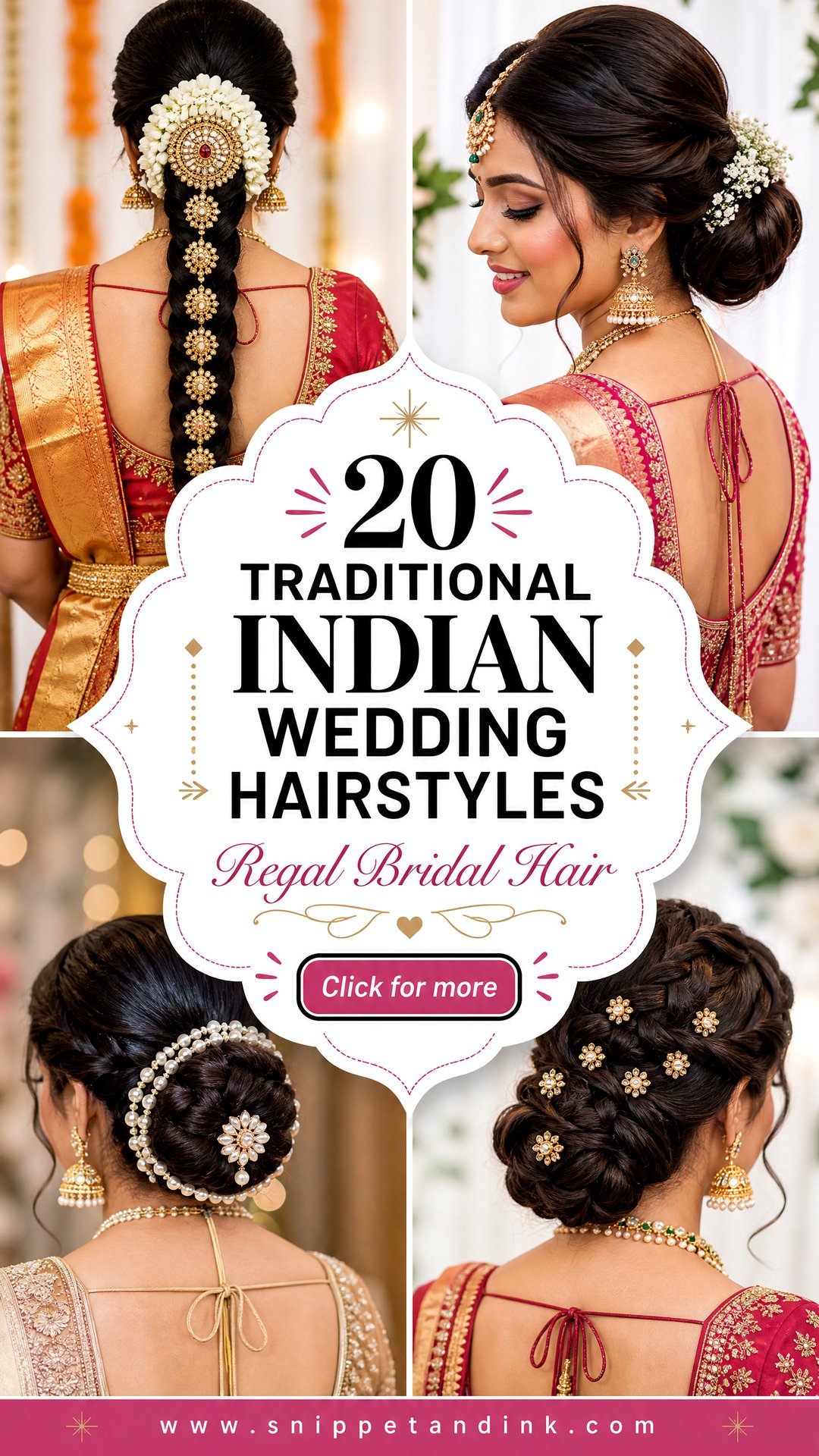
An Indian bride’s hair carries more than any other bride’s: fresh flowers, a maang tikka, sometimes a full braid of gold, and a dupatta pinned over all of it for hours. So when I plan Traditional Indian wedding hairstyles, I start with what the style has to hold and only then think about the shape. Below are the looks I’m asked for most, from North Indian judas to South Indian braids heavy with jasmine, flower-wrapped buns and open curls pinned with kundan. With each one I’ve noted the regional outfit it belongs with, how it’s anchored and which function it suits, because the style that works for the pheras is rarely the right one for the sangeet.
One Bride, Five Functions, Five Different Hairstyles
Most Indian weddings run over several events, and the same hairstyle at each one makes the photo albums look repetitive. I plan the looks as a set, so each function has its own shape.
- Haldi: something you can wash out. Open waves or a loose braid with fabric flowers.
- Mehendi: hair off the hands and arms for hours of sitting. A fishtail or half-up style.
- Sangeet: movement for dancing. Open curls, a ponytail or a soft braid.
- Wedding ceremony: maximum hold under the dupatta. A juda, gajra bun or decorated braid.
- Reception: a change of mood. A side bun, rose bun or sleek ponytail.
If you’re doing several looks on one day, ask your stylist to plan the order so the next style builds on the last. Curled open hair turns into a bun easily; a sleek bun’s tight crease doesn’t turn back into open curls.
1. Gajra Bun With Fresh Jasmine
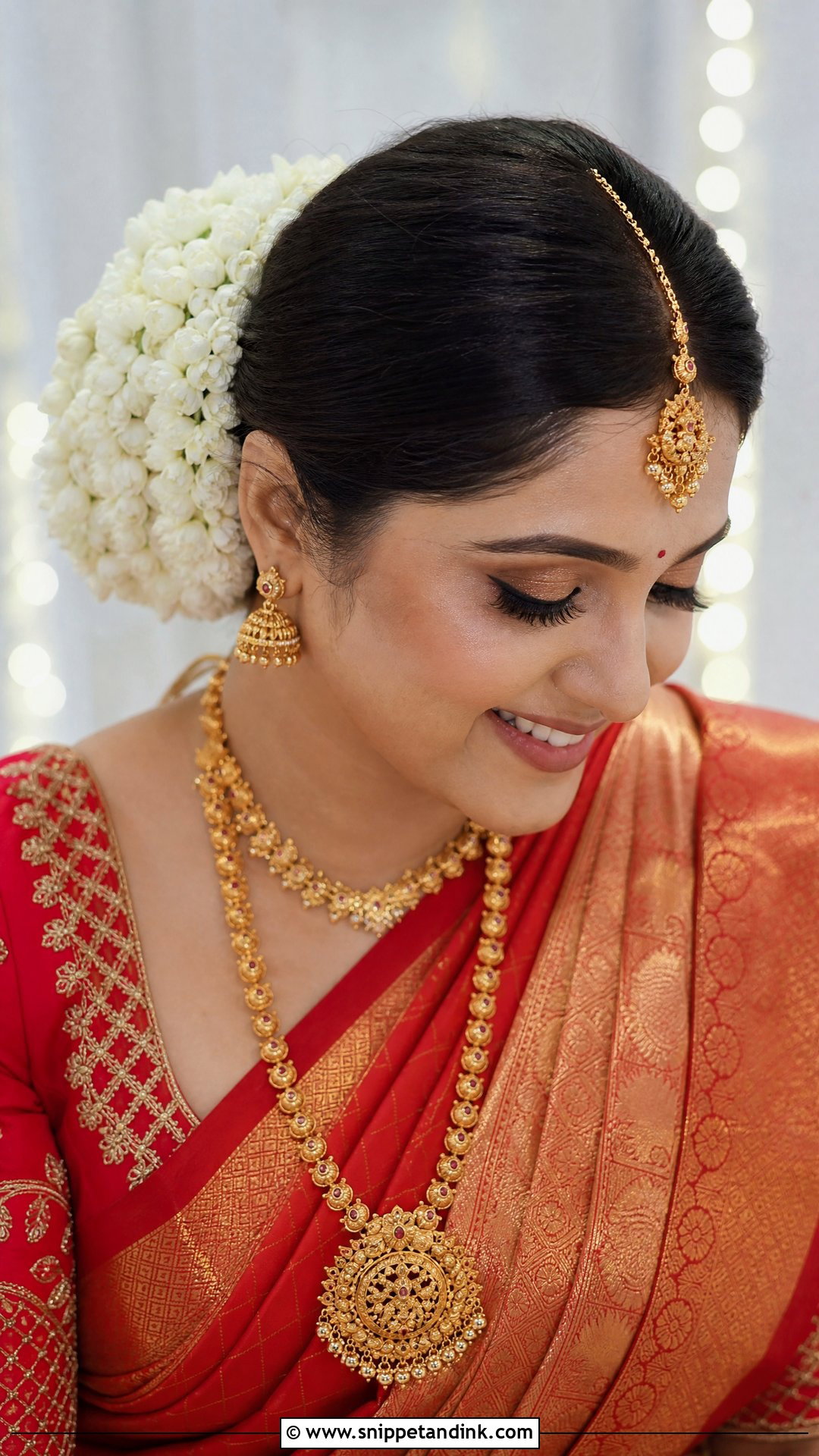
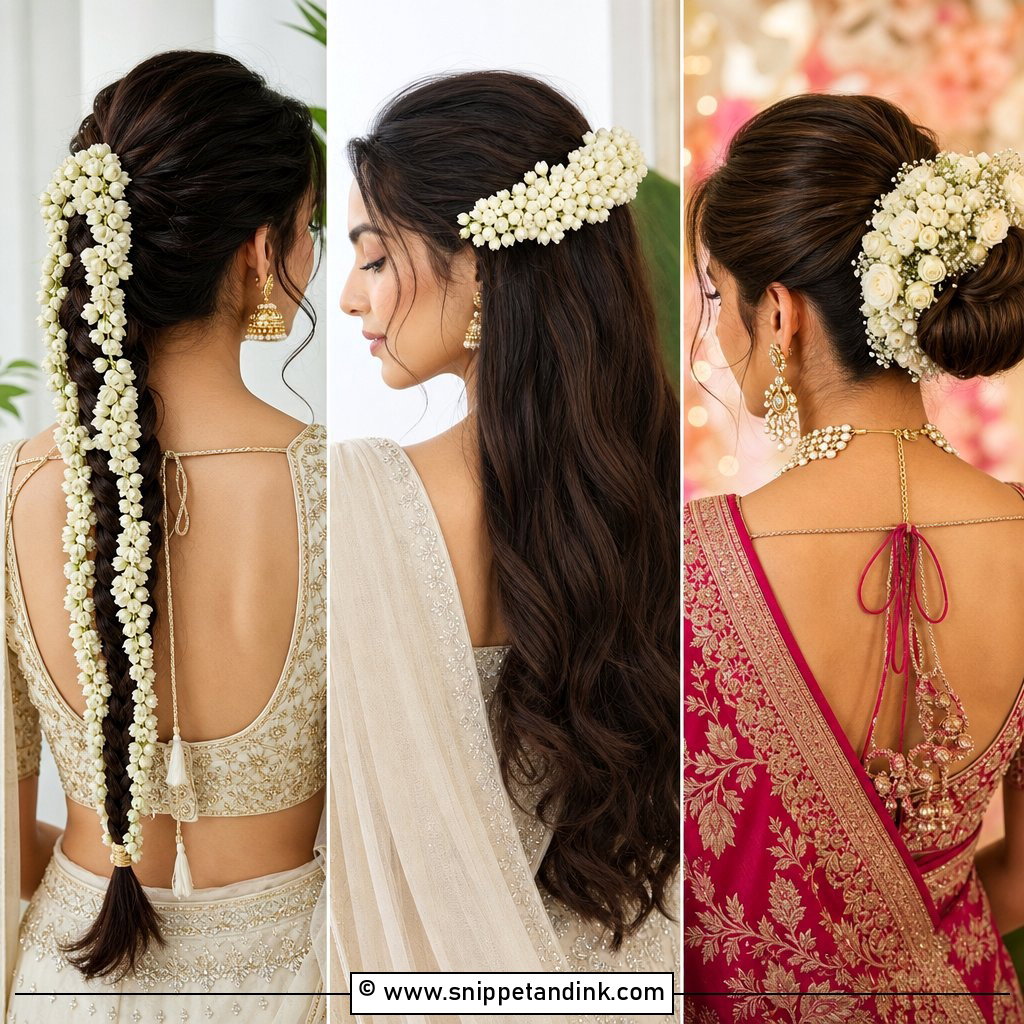
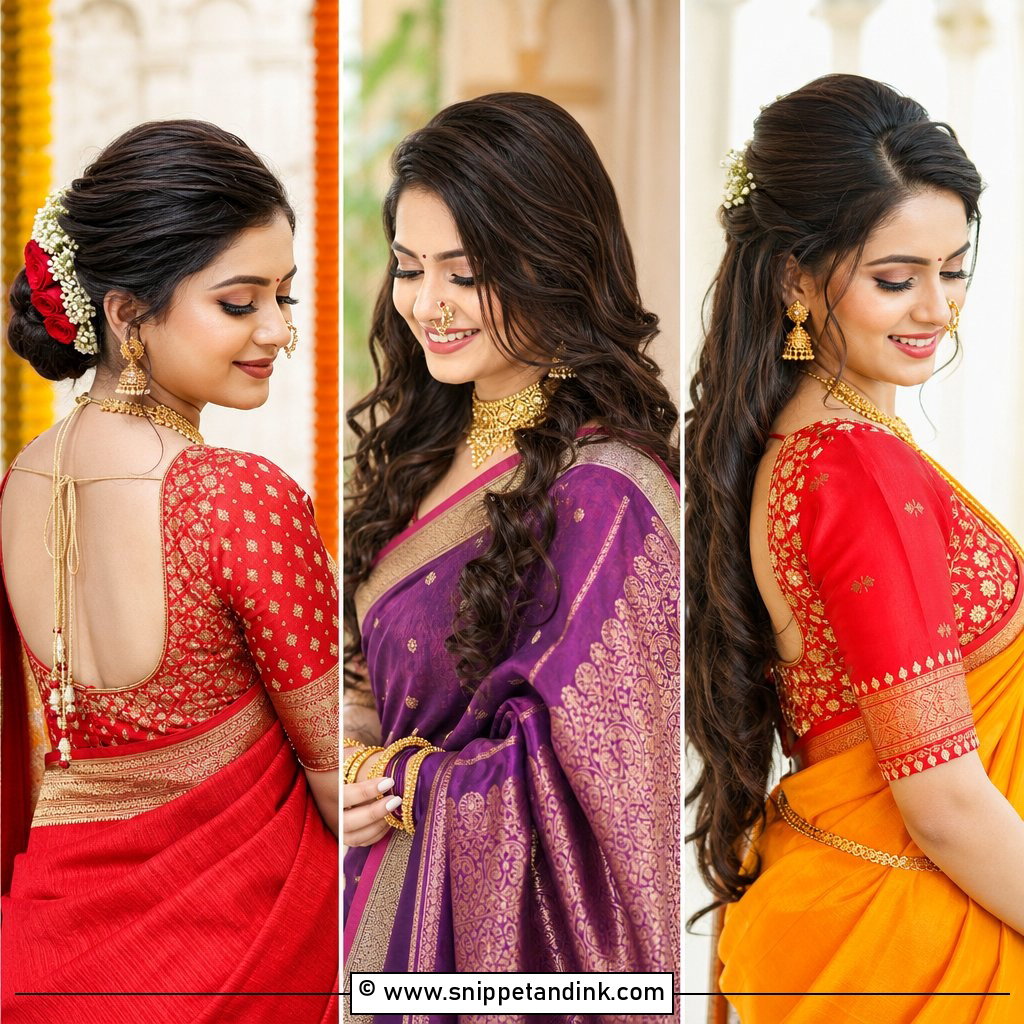
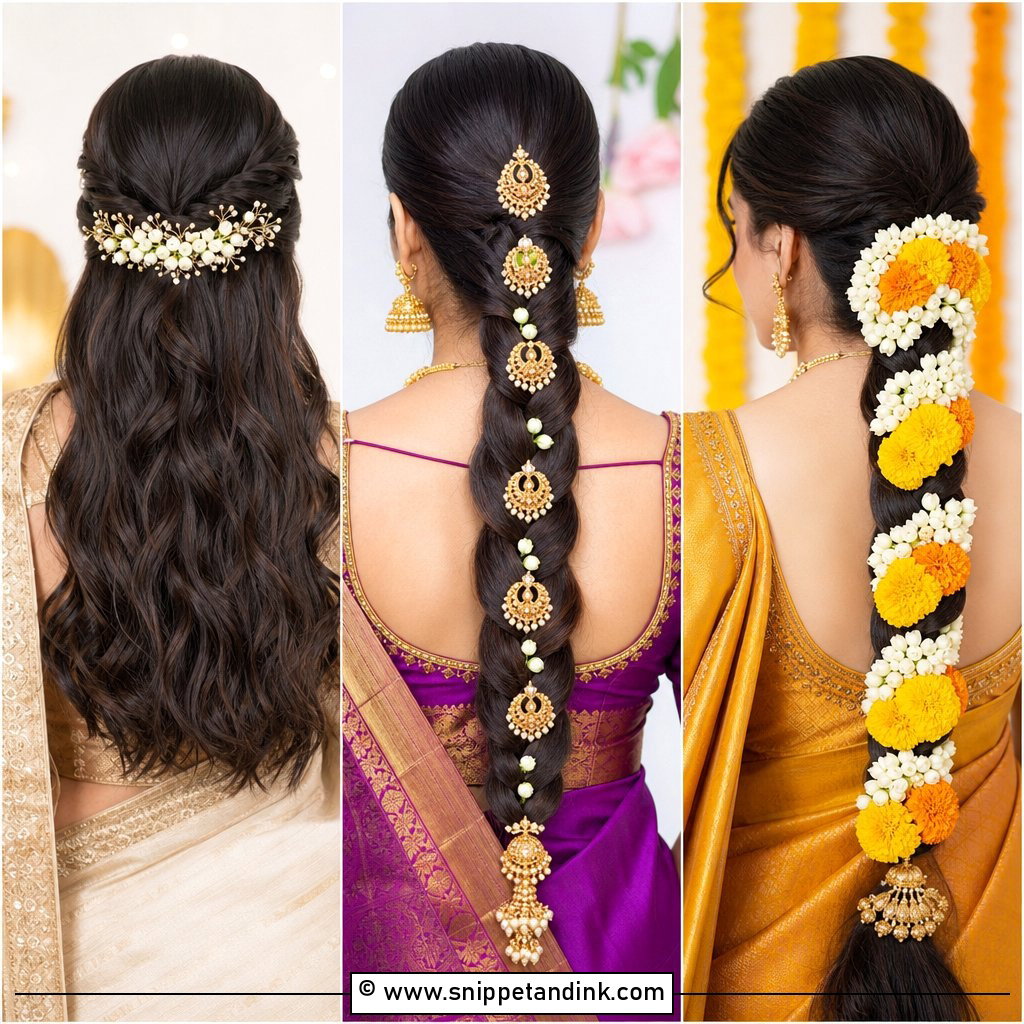
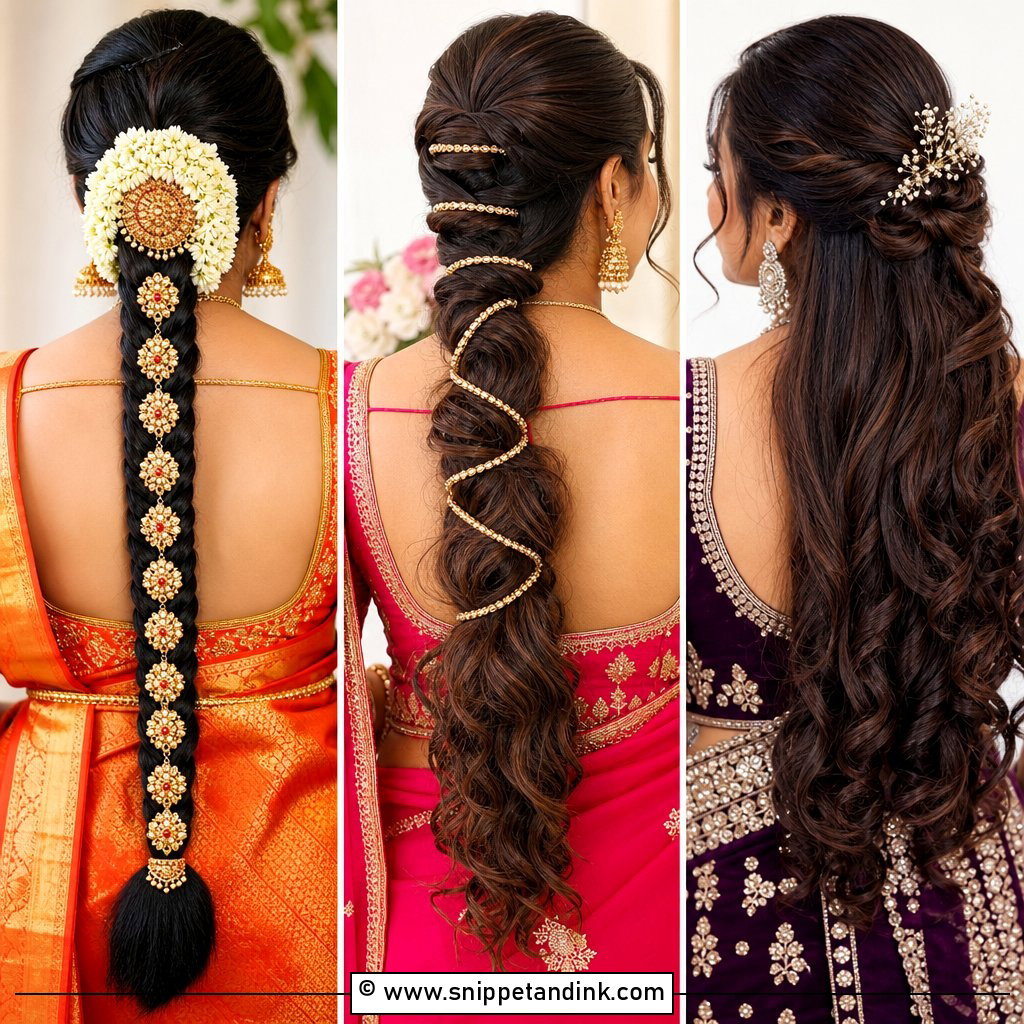
Few looks say bride as clearly as a sleek bun wrapped in jasmine gajras. I comb the hair back smoothly and set the bun at the nape or crown on a firm base, because a gajra is heavier than it looks and pulls a loose bun downward. Then I wrap the strands around the base and pin them with U-pins every few centimeters, never through the flowers themselves. White jasmine against dark hair stands out in every photo, and it suits silk sarees and heavy lehengas alike. A maang tikka finishes it.
2. South Indian Decorated Braid
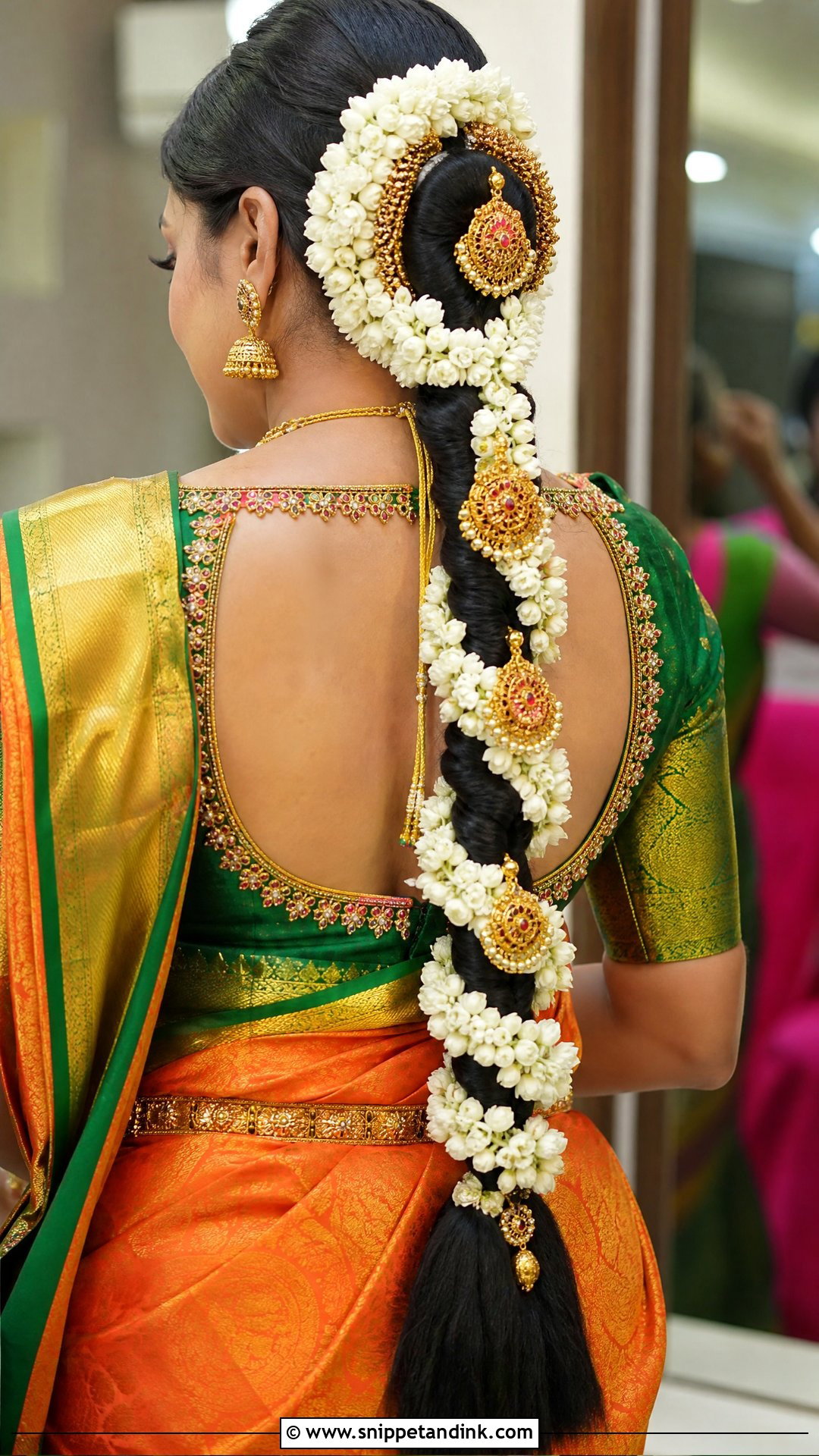
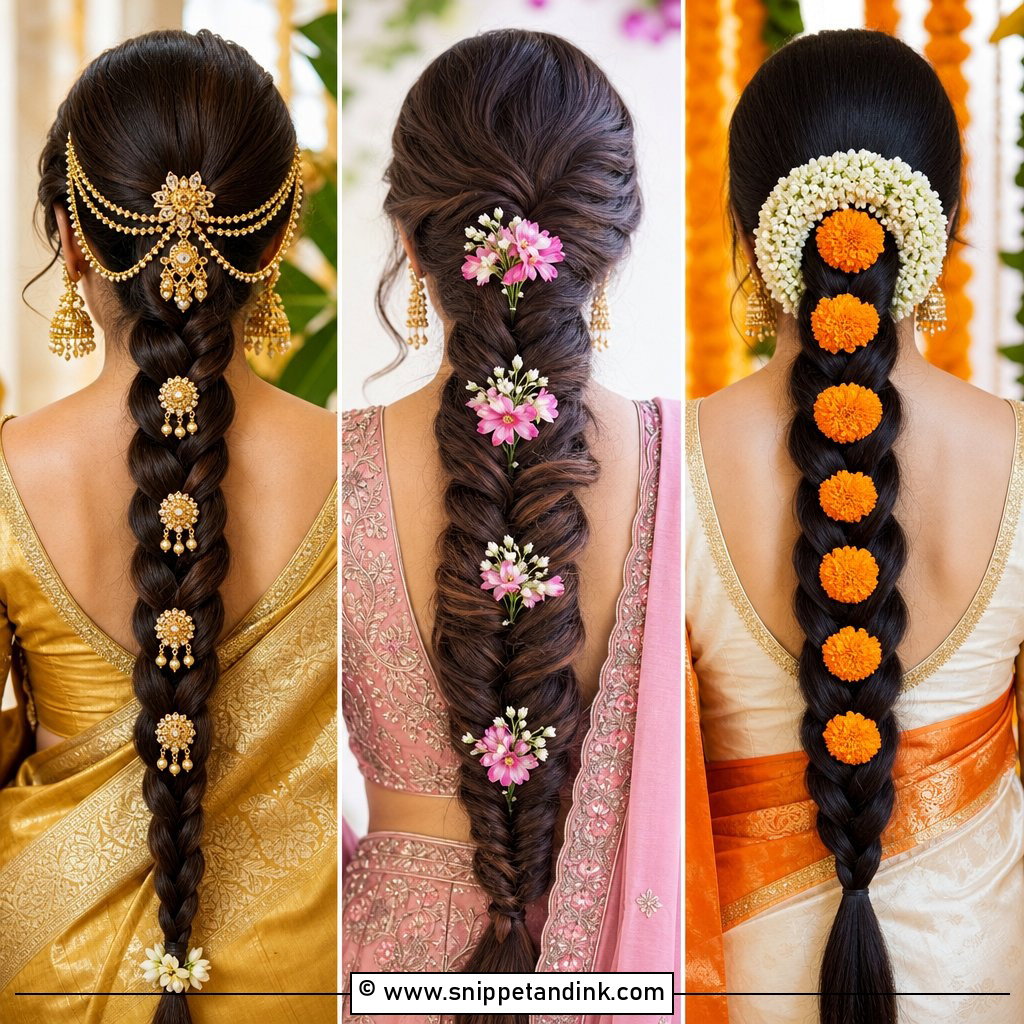
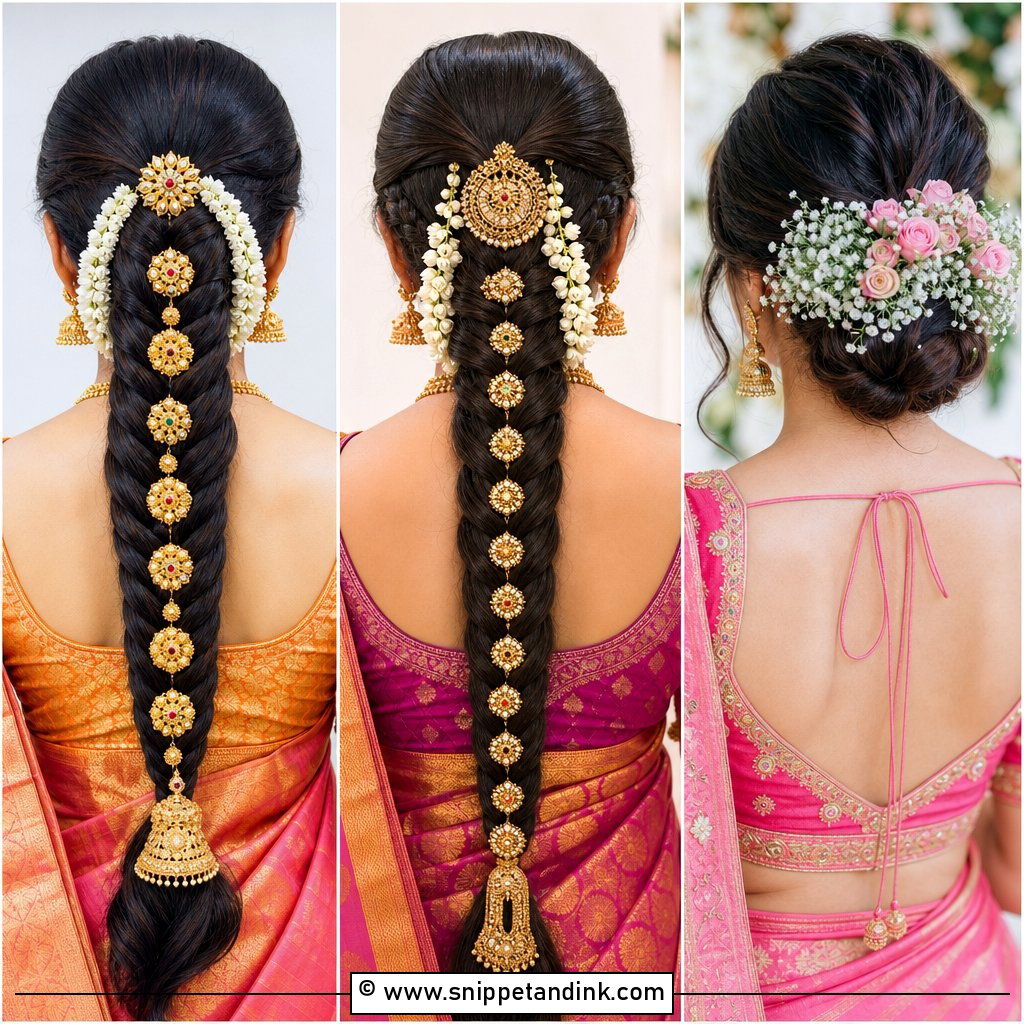
A long, thick braid is central to many South Indian weddings, and most brides need help to make it long enough. I tie the hair into a firm ponytail at the crown and braid it down, adding a matching hair extension or a traditional false braid when length or thickness falls short. The jadai billalu or temple pieces then run from crown to tip, with jasmine and orange kanakambaram woven between them. Pair it with a Kanjeevaram saree and gold jewelry. The braid swings as you walk the rounds, so every ornament needs to be stitched or pinned tight at both ends.
3. Twisted Low Bun With Maang Tikka
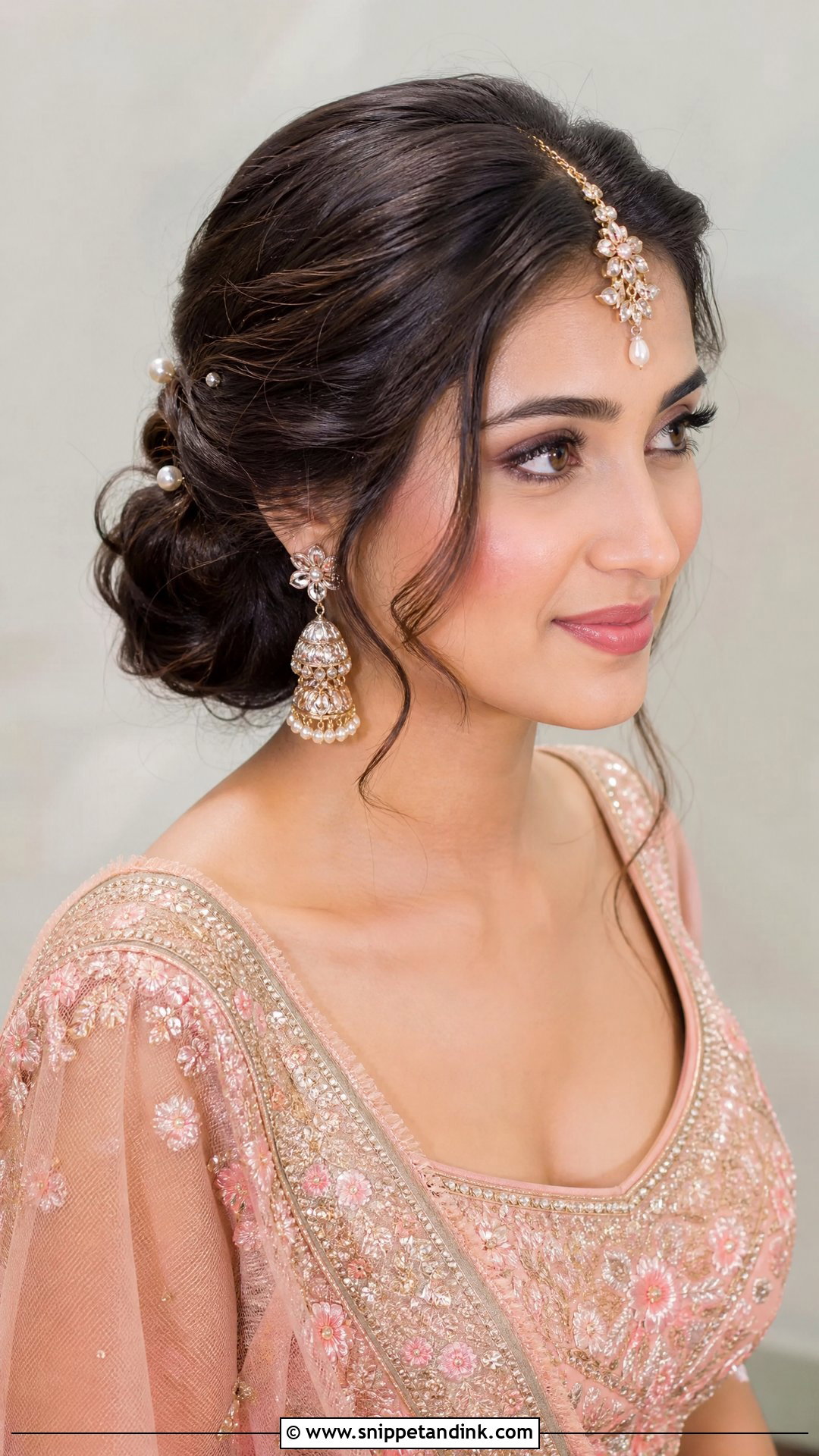
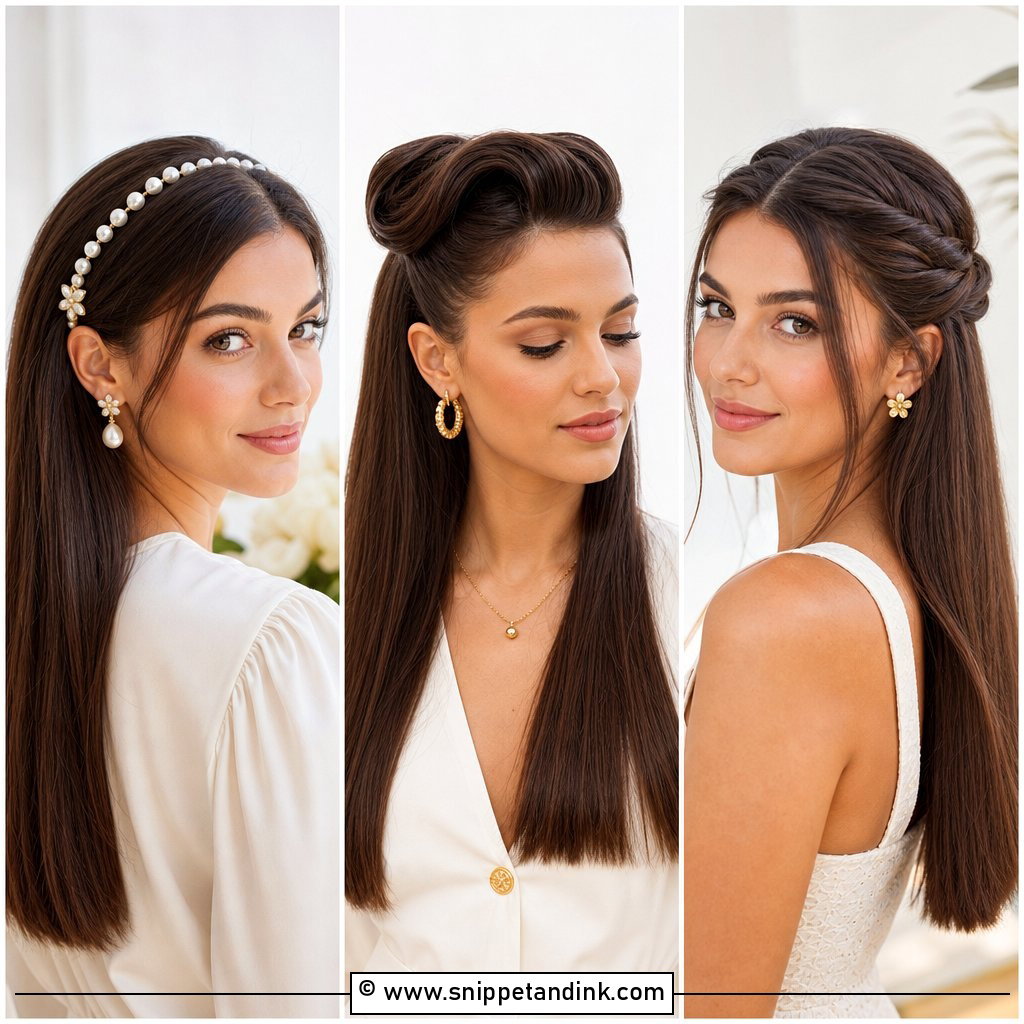
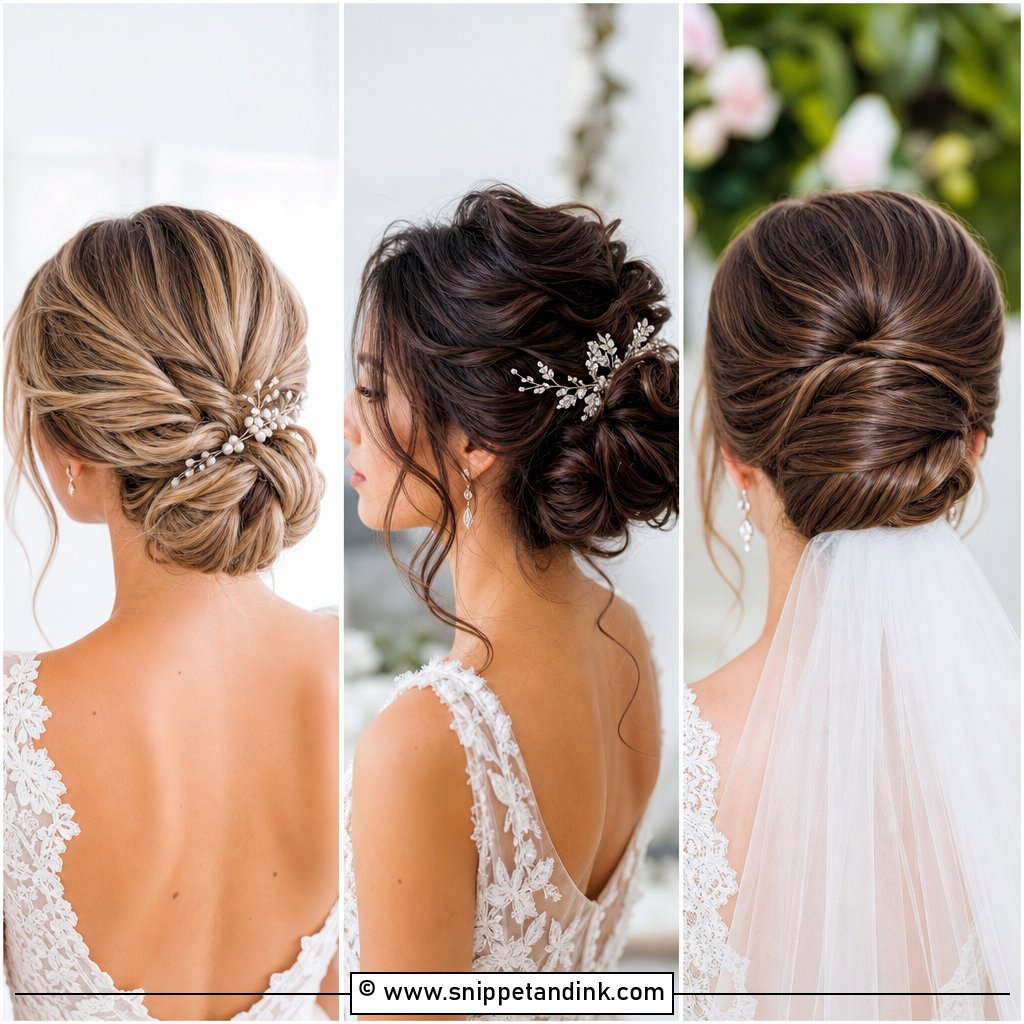
For a bride who wants something quieter, a twisted low bun is my usual suggestion. I loosen the hair at the crown first for a little volume, then twist sections and coil them at the nape, pinning each twist on its own so the weight is spread. Sitting low, it leaves the parting clear for a maang tikka, which I hook to a small clip hidden in the hair so it can’t shift. Pearl pins or a few small roses add detail. It’s well suited to a reception or an intimate ceremony.
4. Fishtail Braid With Floral Accents
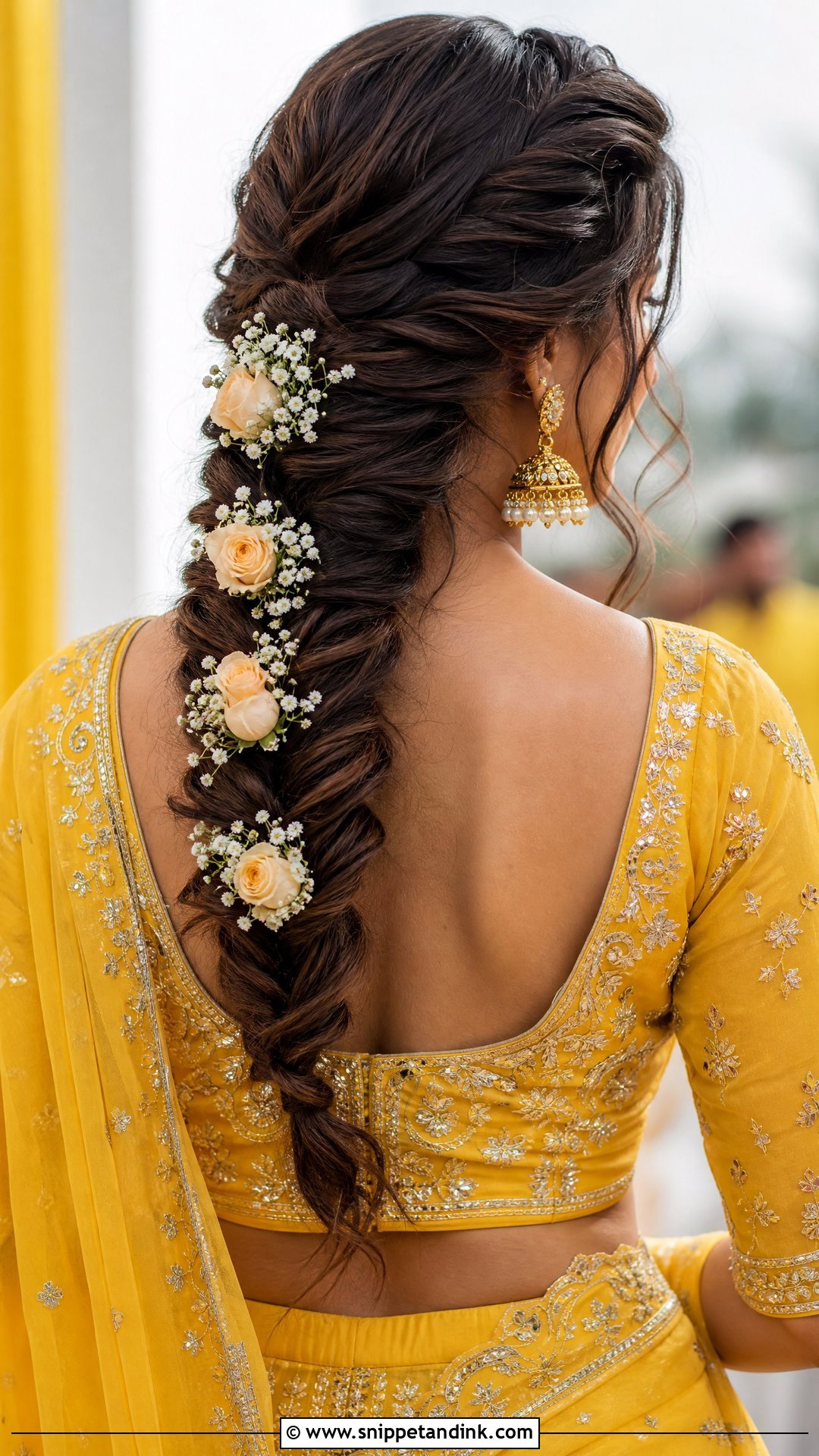
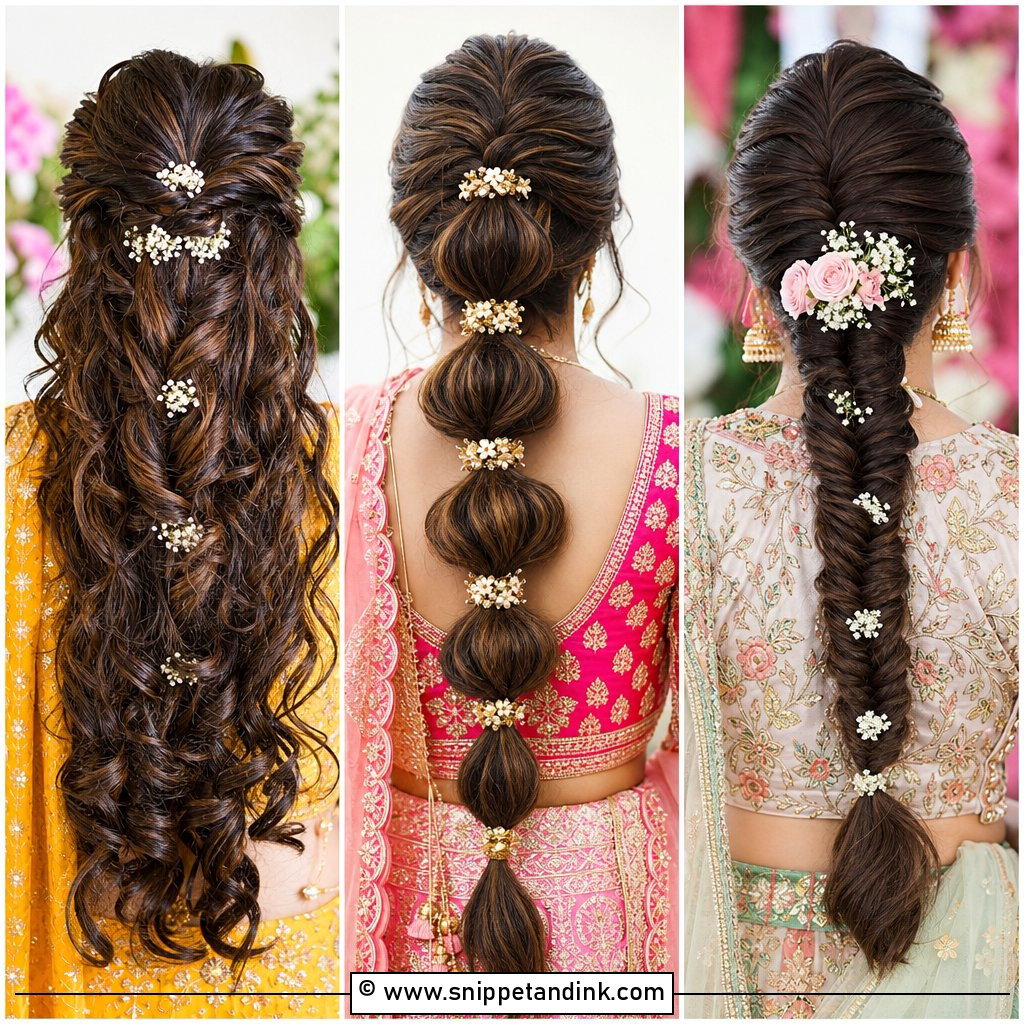
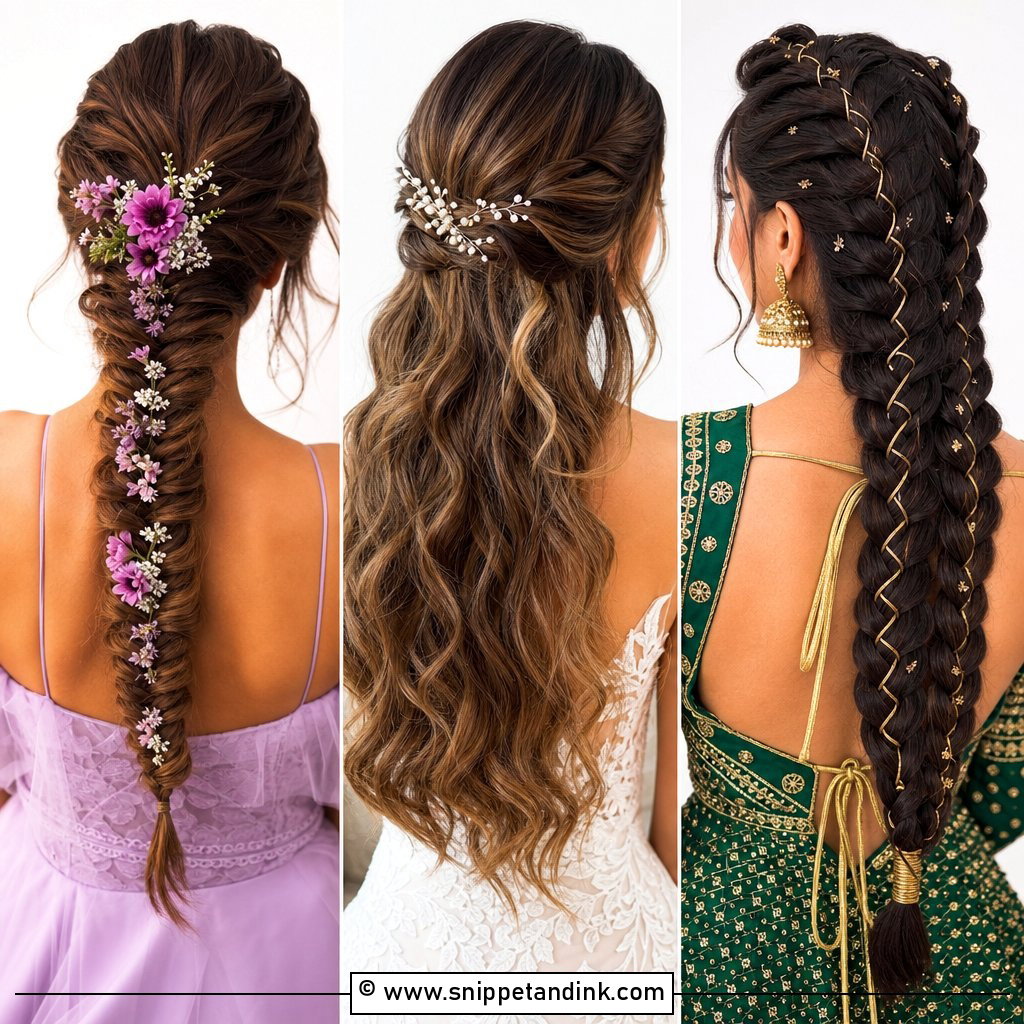
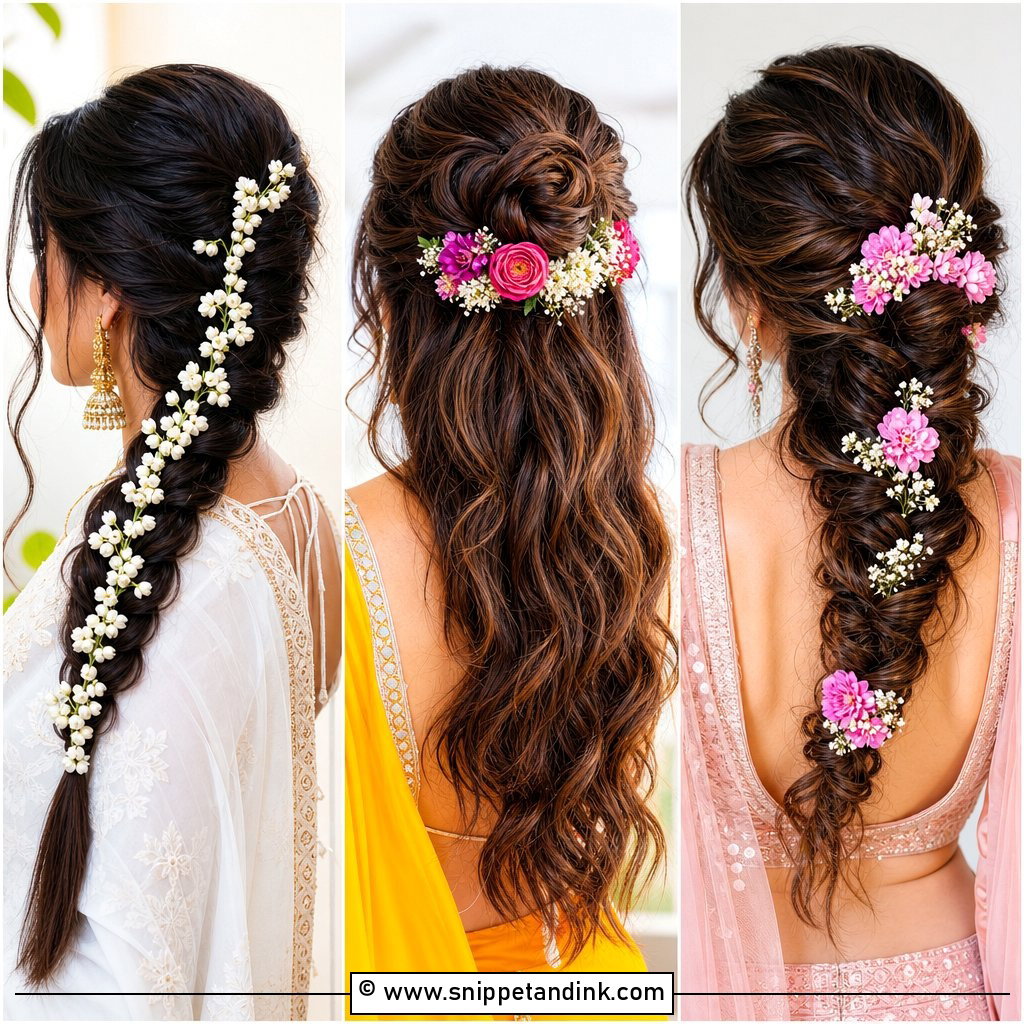
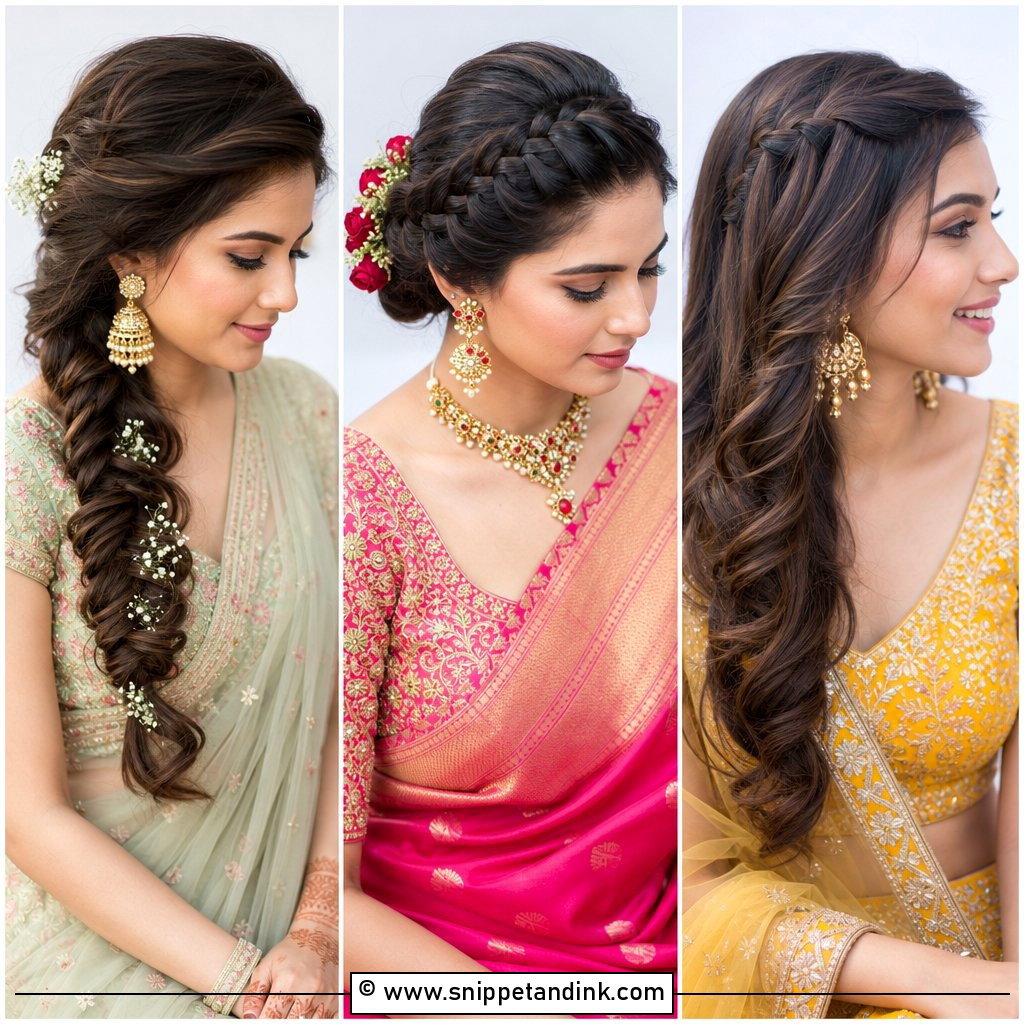
Fishtails come alive at the mehendi and sangeet, when the bride is sitting, dancing and moving all evening and a structured bun would feel stiff. The braid is made by crossing thin strands from one side to the other, then pulled a little wider for fullness. Long, thick hair shows the pattern best; on fine hair I add texture spray first so the strands don’t slip. Small roses or baby’s breath tucked along it give a garden finish. Jhumkas and a light hair chain complete it.
5. Voluminous Juda Bun for North Indian Brides
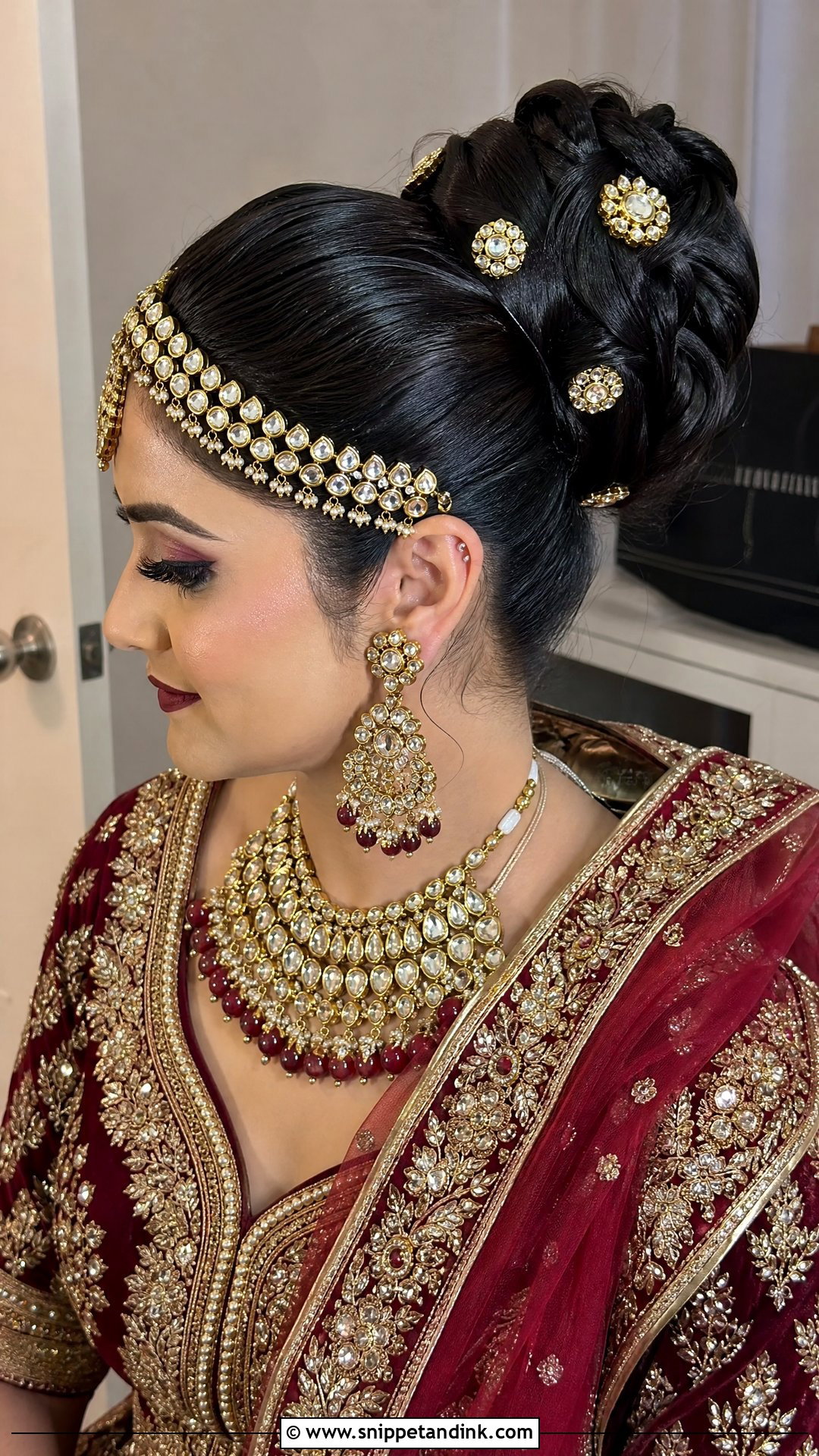
The juda is the classic of North Indian bridal hairstyles, a high, decorated bun that adds height under the dupatta. I tease the crown for volume, gather the hair into a structured bun on a bun donut or filler and pin it into the base. That filler matters: a heavy lehenga dupatta pinned over a soft bun flattens it within an hour. A matha patti or ornate hair chain drapes across it, and fresh flowers or kundan pins frame the bun.
6. Messy Bun With Loose Face-Framing Strands
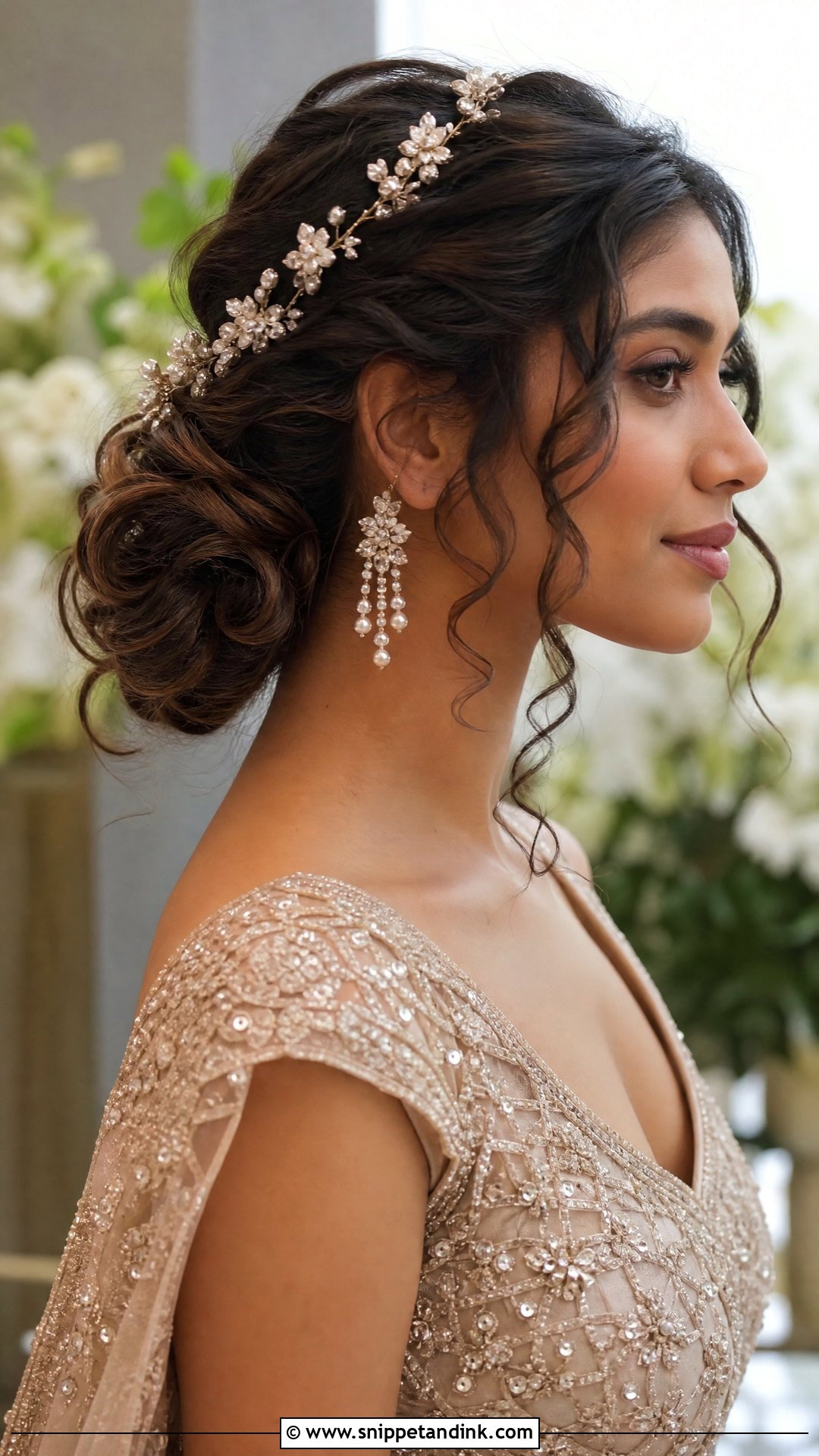
A messy bun has to be built carefully to survive an Indian wedding evening. I curl the hair first so there’s texture to work with, then gather it high or low and pin each loose loop in place, leaving a few soft strands at the face. The undone shape suits a reception gown or lighter lehenga far better than a heavy bridal outfit. A floral tiara or one statement clip adds sparkle. If you’ll wear a dupatta over it, keep the bun lower so the fabric can rest on it.
7. Braided Bun With Pearl Detailing
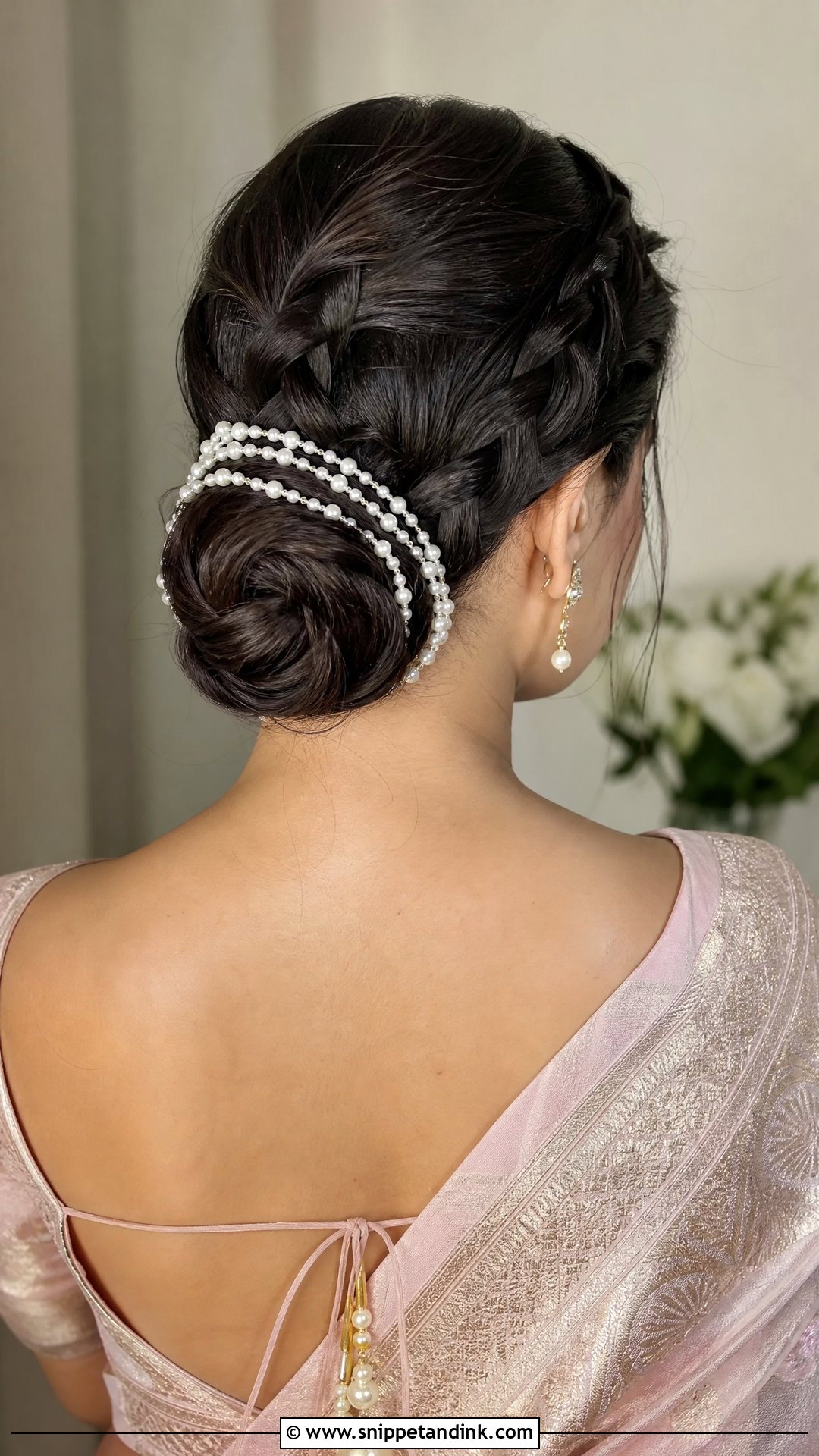
Combining a braid with a bun gives detail and grip in one style. I start with a French or fishtail braid along the crown and coil the rest of the length into a neat bun at the nape. Pearl strings woven through the braid catch light softly; I thread them on with a long hair needle rather than pins, so they lie flat. It holds well through long events and sits nicely with pastel lehengas and Banarasi sarees. Matching pearl earrings and a small maang tikka finish it.
8. Open Curls With Kundan Hair Pins
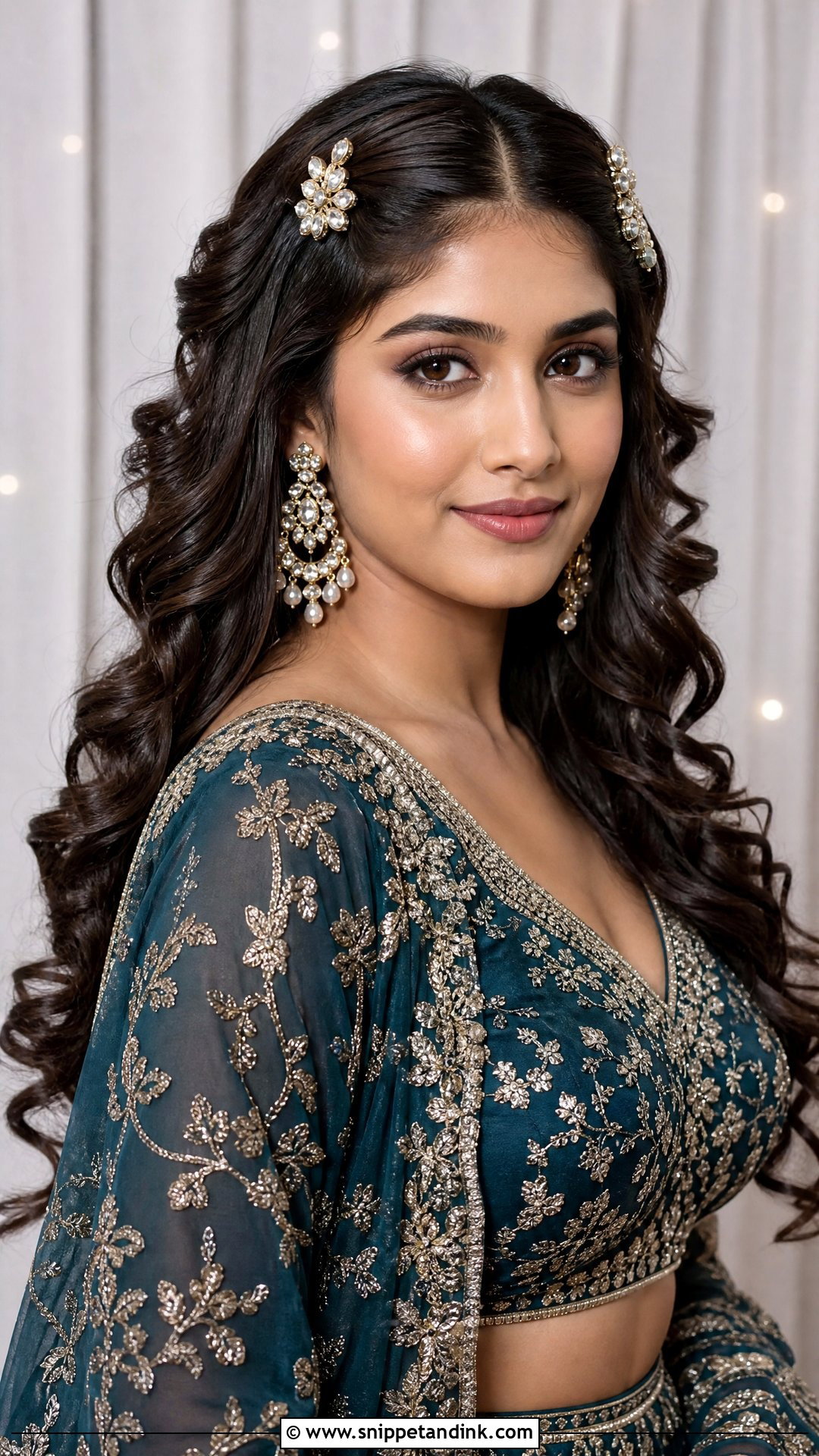
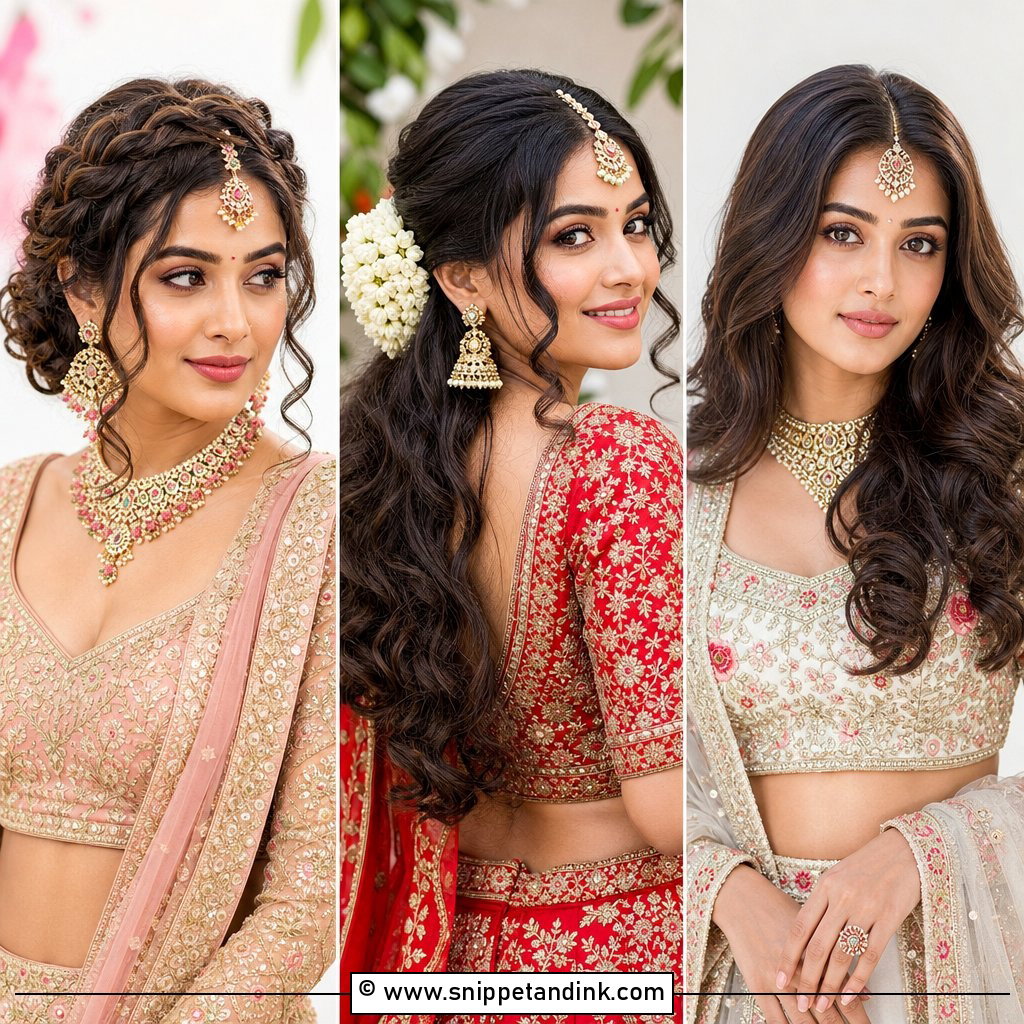
Open hair is a lovely choice for receptions and sangeet nights, but it needs more preparation than an updo. I curl every section and let it cool before brushing out, then pull a few pieces back from the front and pin them with kundan or diamond clips to keep the face clear. In humid weather, open curls are the first style to drop, so I set them with a strong spray and suggest a bun for an outdoor afternoon ceremony. Chandelier earrings and a light necklace suit it.
9. Side Swept Bun With Gajra Wrap
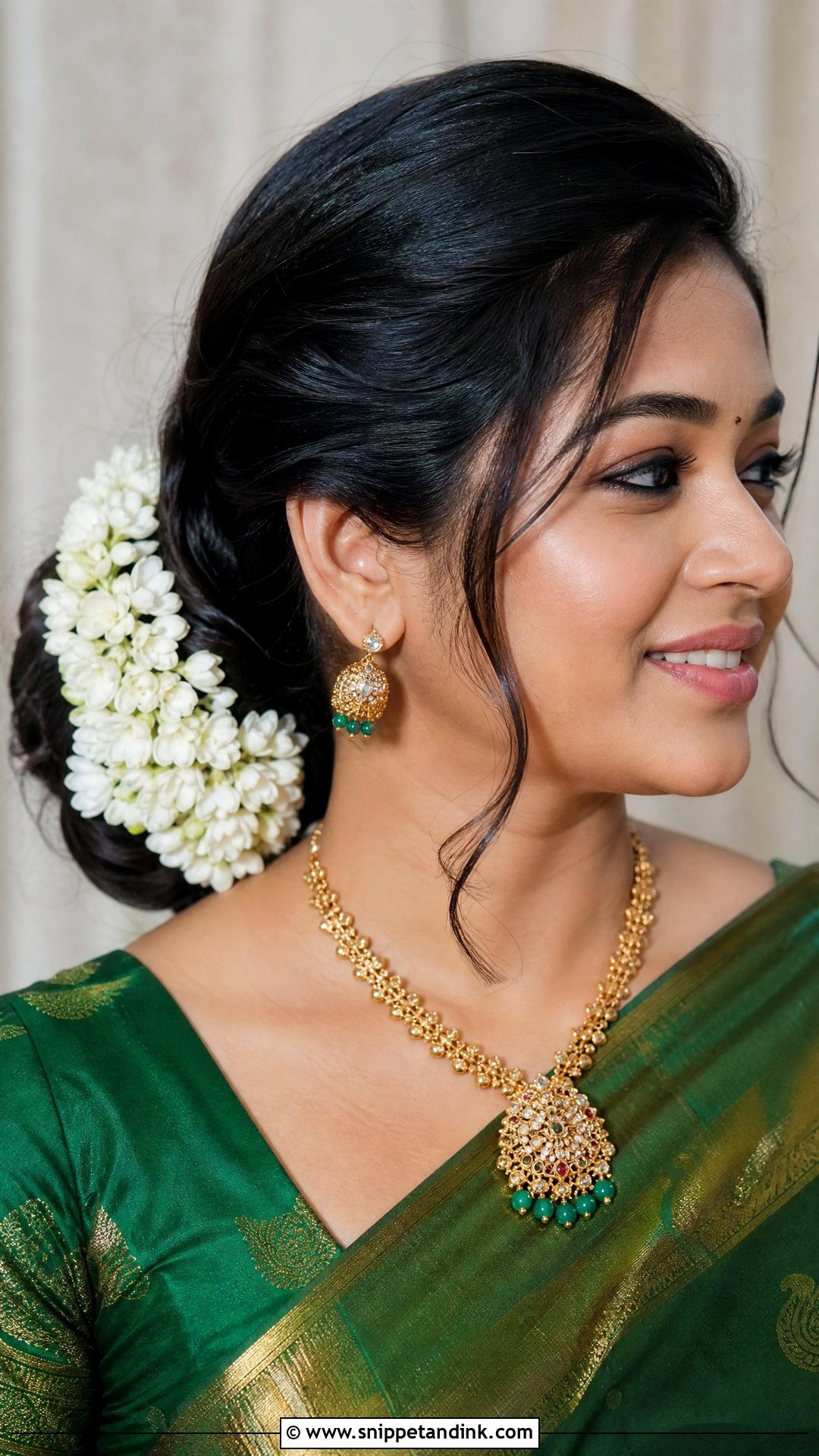
Placing the bun to one side, near the ear or shoulder, shows off earrings and the neckline in side profile. It suits longer faces especially, since the asymmetry breaks up the length. I pin the bun to a small ponytail anchor behind the ear so it can’t slide down toward the shoulder, then wrap gajra around it. Leave a few wisps loose. Before choosing it, check the dupatta drape; a side bun can push heavy fabric off balance.
10. Temple Jewelry Braid With Gold Accents
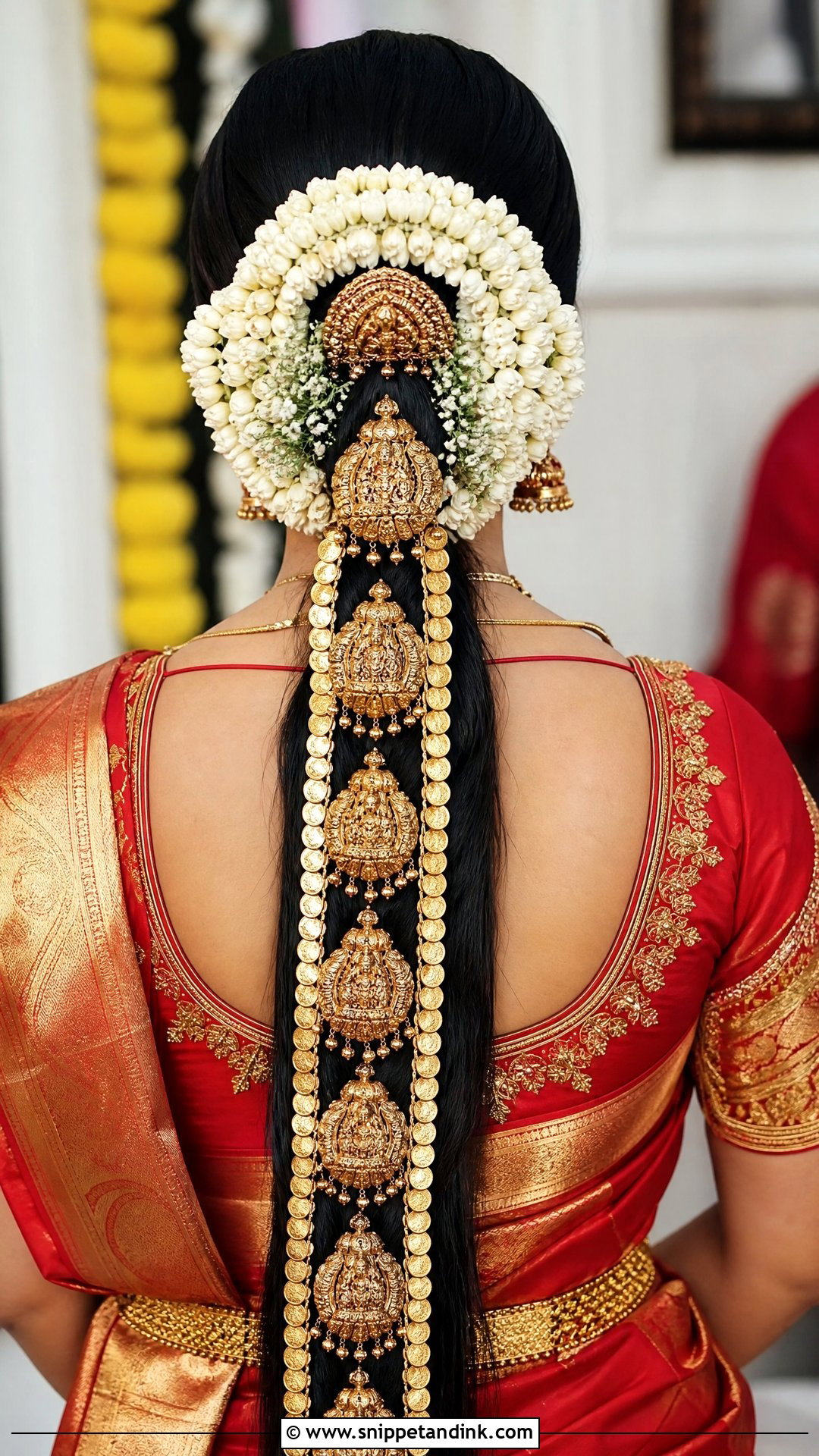
This braid is built around temple jewelry: jadai nagam, gold coin strings and temple-style pieces running the full length. With that much metal, the braid has to be tight and the ornaments secured at the top and the bottom, or they swing and drag the hair. Some brides layer fresh flowers between the gold for color and fragrance. It belongs with heavy temple jewelry and a classic silk saree at a grand ceremony, and it’s one of the most heritage-rich looks on this list.
11. Half Up Half Down With Maang Tikka
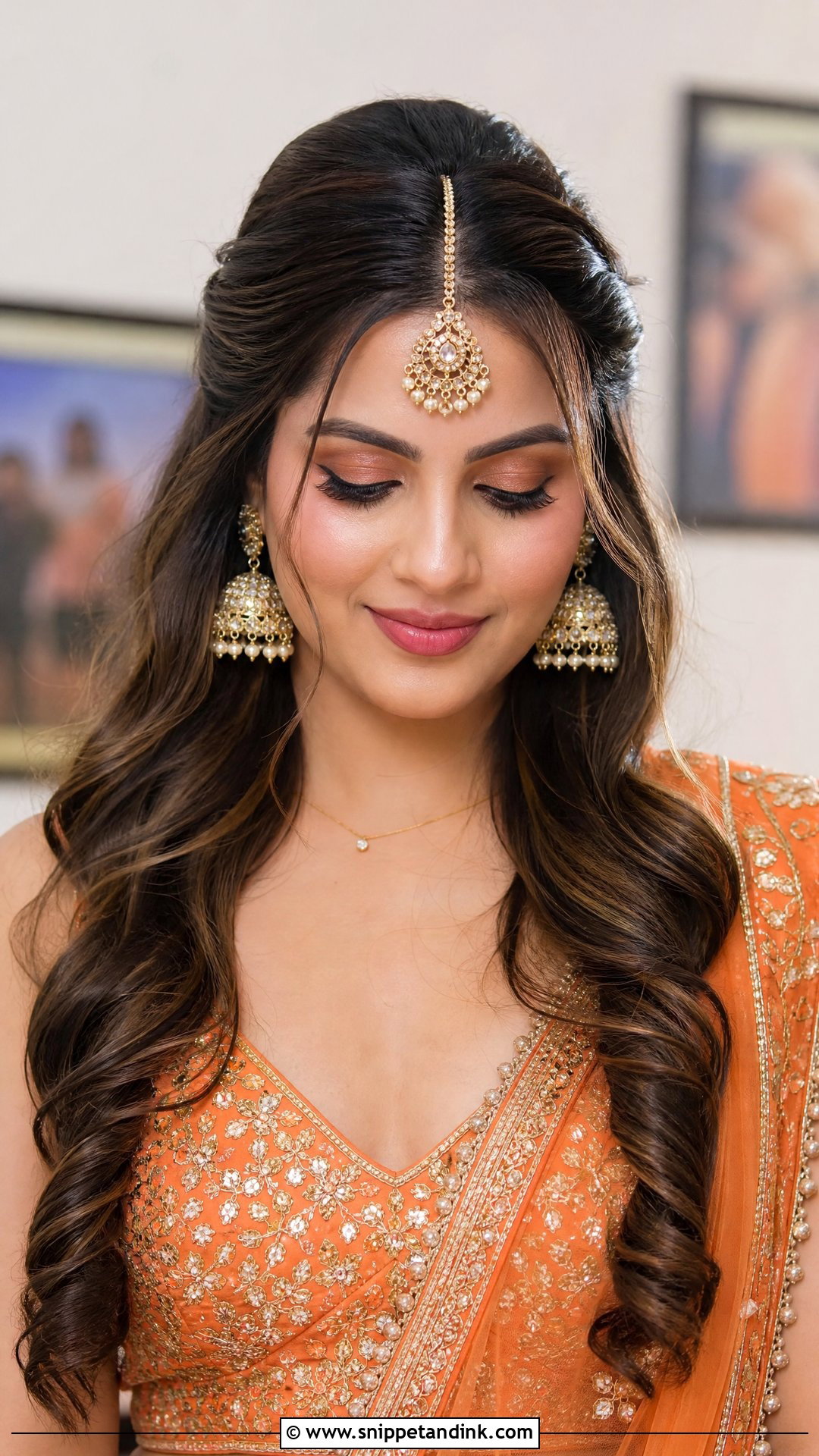
Half-up, half-down keeps the hair off the face while still showing its length. I pull the top section back and secure it to a small hidden base, leaving the rest in soft waves, then center a maang tikka on the parting. It fits mehendi and sangeet functions best, where the mood is relaxed. Small flowers or pearl pins at the crown add detail. For the main ceremony, I’d steer most brides toward an updo, since loose hair tangles under a pinned dupatta.
12. Braided Crown With Fresh Flowers
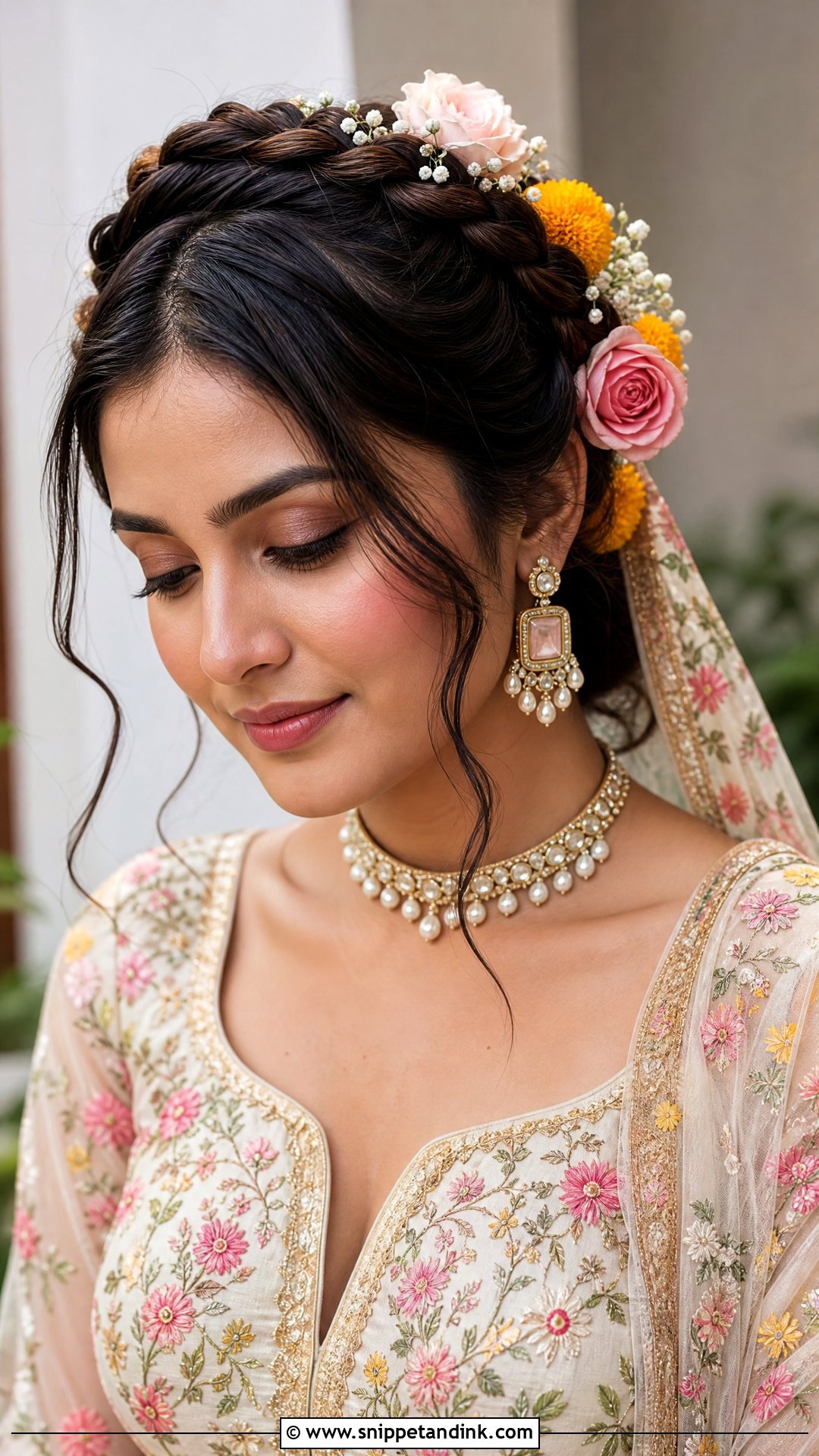
A braided crown is two braids, one from each side, lifted and pinned across the top of the head like a halo. Roses, jasmine or marigolds tucked into it suit a daytime or outdoor function, and since all the hair is up, it’s one of the coolest styles for a hot ceremony. It’s a rare choice for the main wedding look, but it comes into its own at the haldi or mehendi. Simple jhumkas and a light dupatta keep it from feeling crowded.
13. Sleek Low Ponytail With Hair Chain
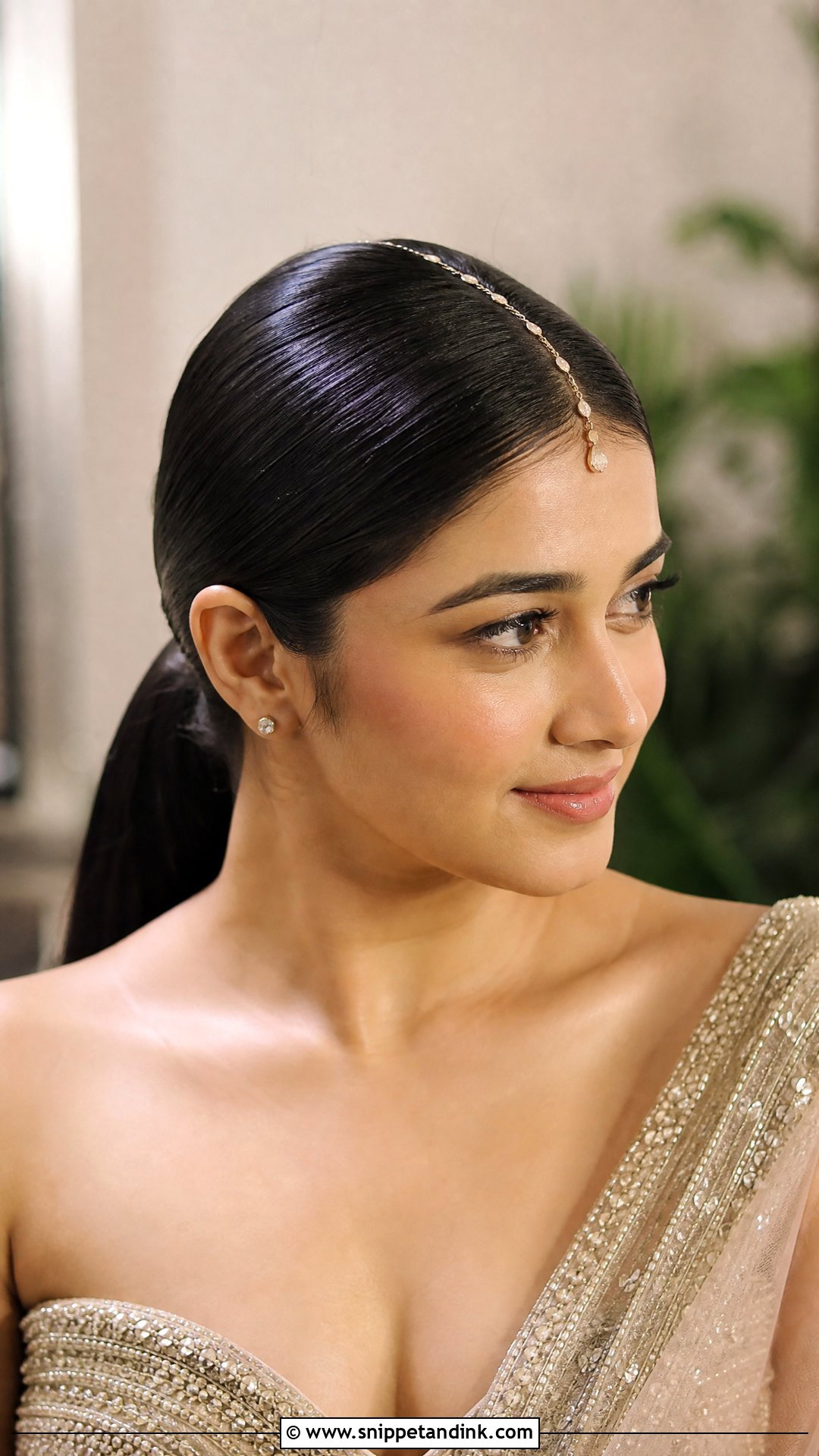
The sleek low ponytail is for a reception in a fusion outfit or gown, where the bride wants clean lines and lets jewelry and makeup lead. I smooth the hair back and wrap a small section around the elastic so no band shows. A delicate hair chain along the parting or a decorative cuff at the base brings in a traditional touch. Thin or shoulder-length hair can look sparse in a ponytail, so I add a few clip-in wefts underneath.
14. Rose Adorned Bun for Reception
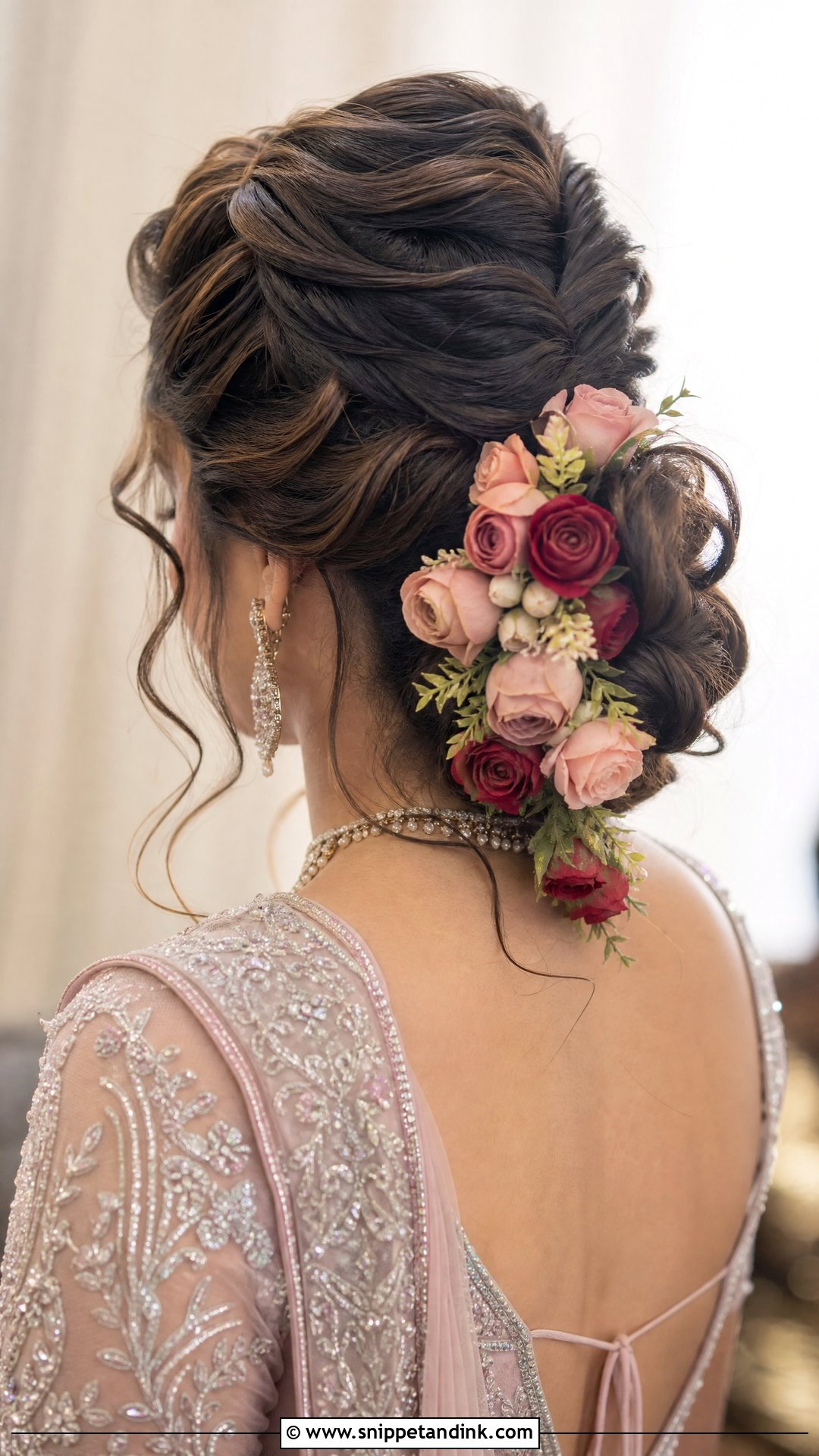
Full roses look rich around a bun, but they’re heavy, so I wire each bloom to a hairpin and anchor them into the base rather than resting them on the surface. Gather the hair high or low into a full bun, then arrange the roses in a cascade around it. Pick the color from your outfit, blush, deep red or cream. A few curled strands left loose soften the shape. It suits a reception gown or pastel lehenga.
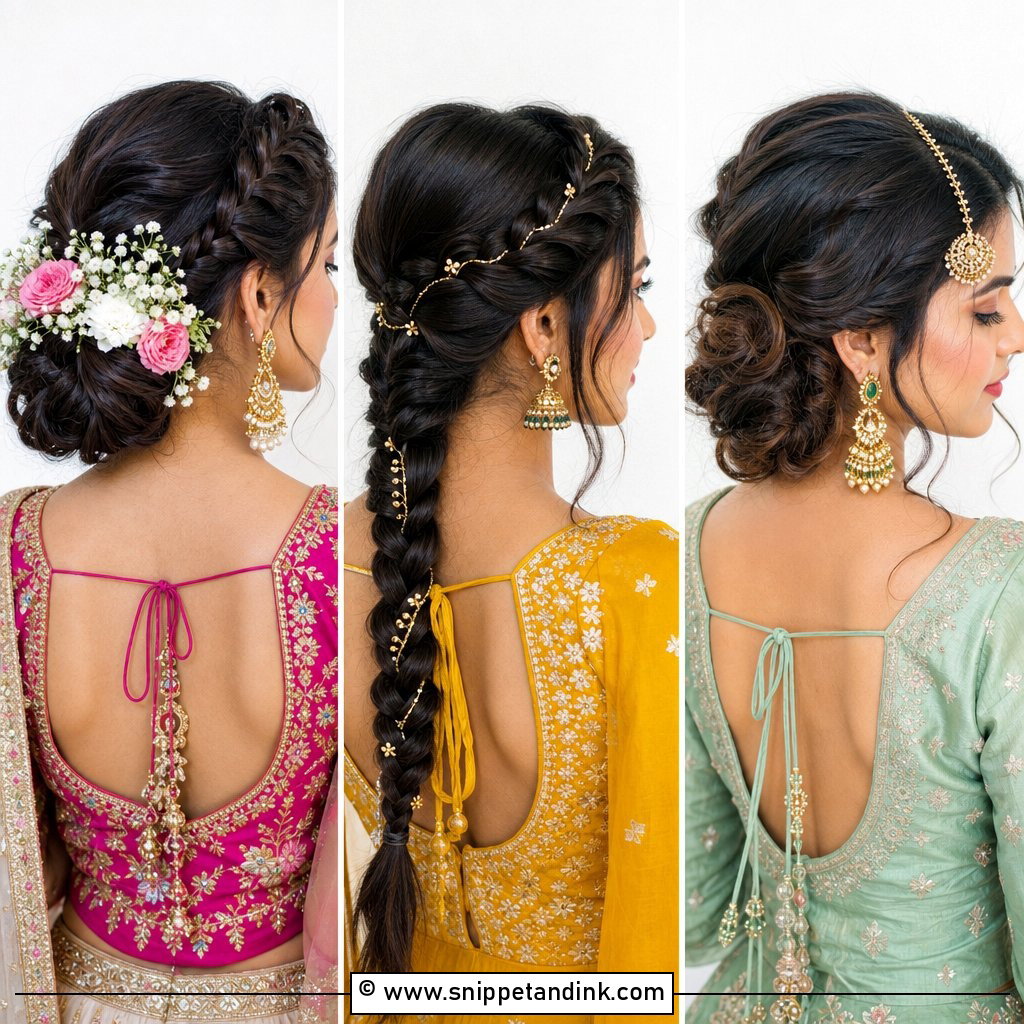
15. Bengali Style Bun With Mukut
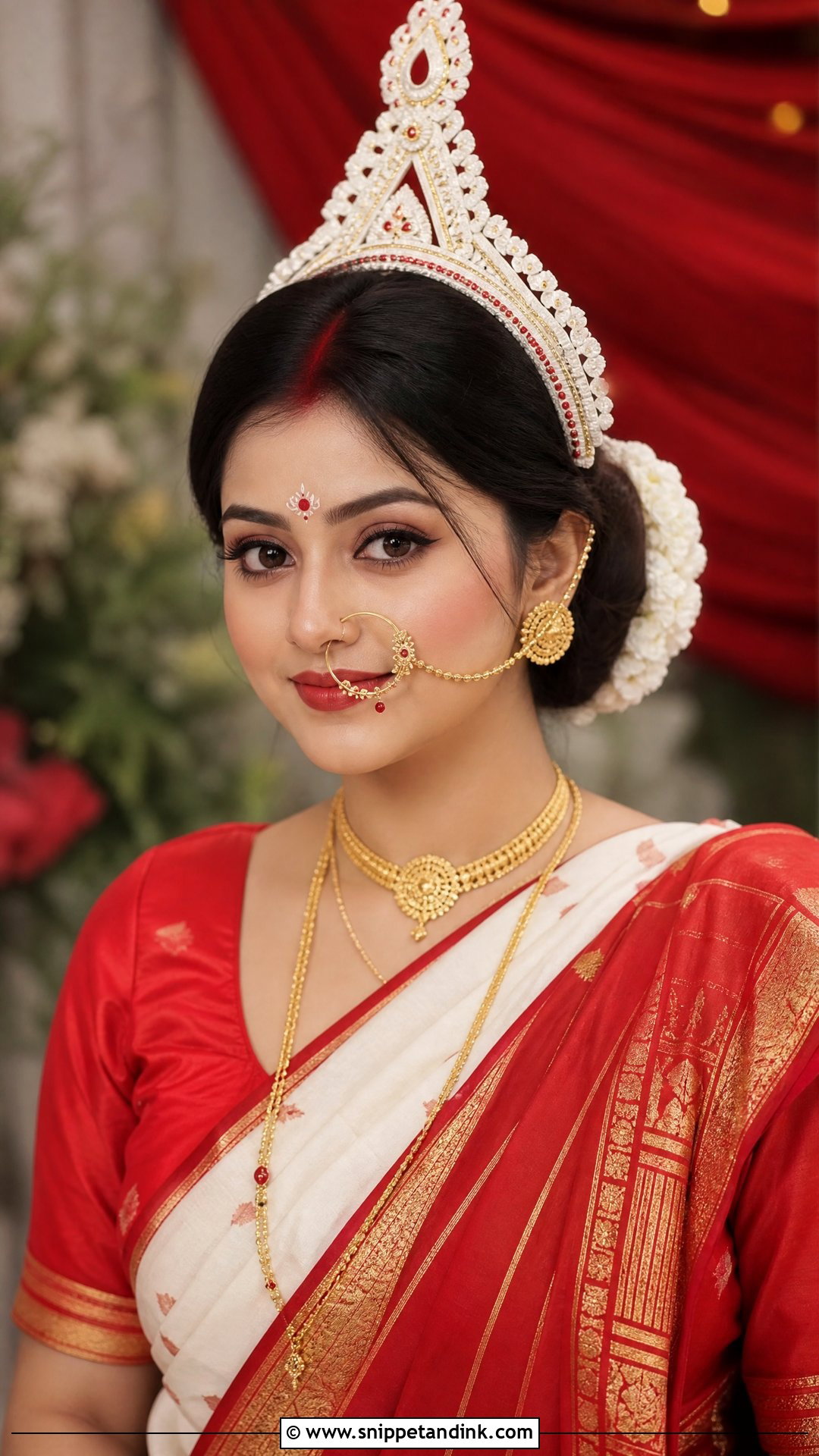
The traditional Bengali bridal bun is smooth and rounded, set at the back to support the mukut, the tall crown traditionally made of white shola pith. Shola is light, but the mukut is tall, so it needs a firm base and is tied at the back of the head as well as pinned. It belongs with the red and white Bengali bridal saree. Small flowers or gold pins can decorate the bun. Fit the mukut at the trial; the bun’s height decides how it sits on the head.
16. Loose Waves With Floral Hairband
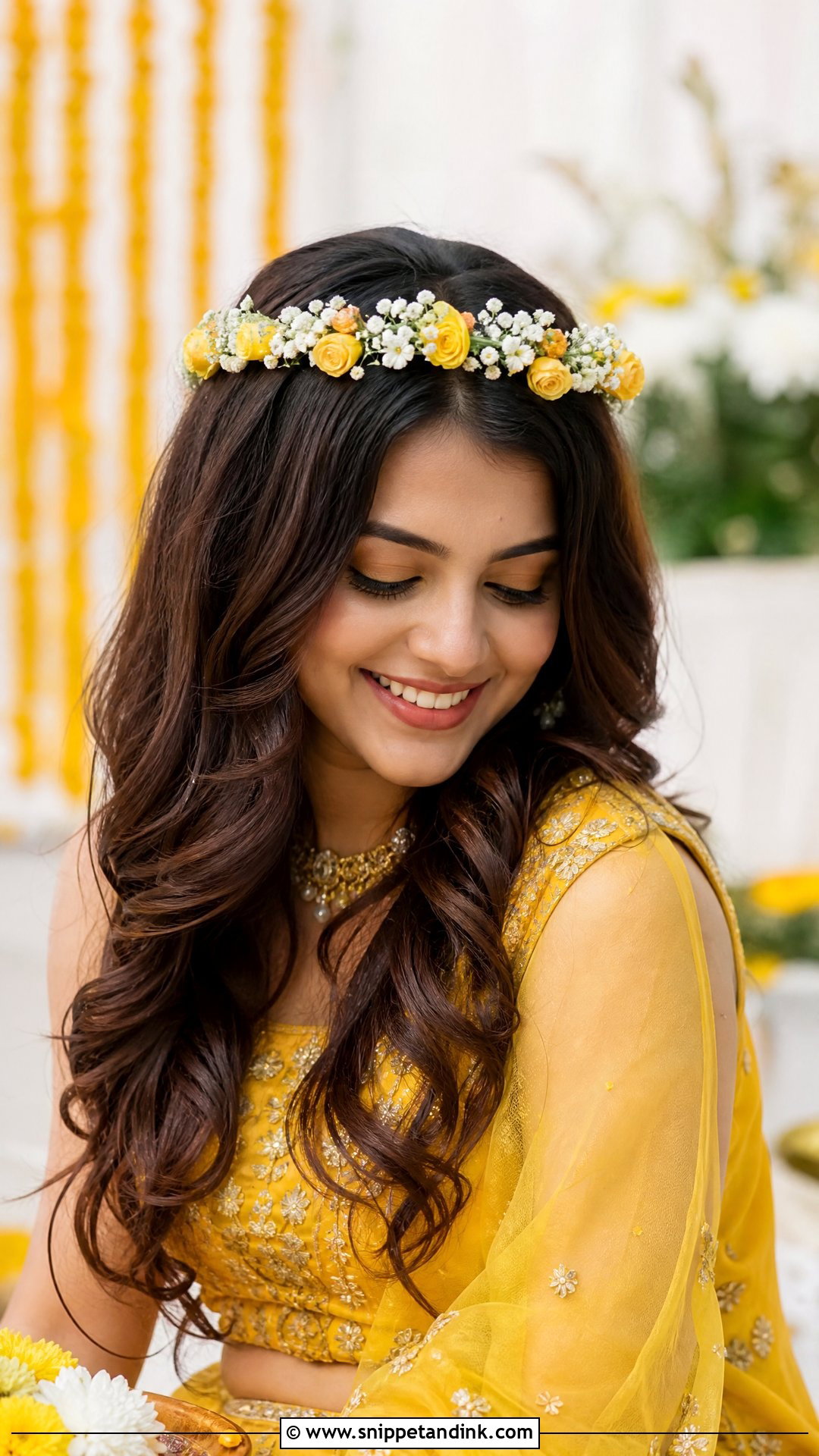
Loose waves with a floral band suit the haldi and mehendi, when the bride wants to feel relaxed and the flowers make the look. I curl the hair in gentle waves, let them fall past the shoulders and set a fresh or fabric floral band across the crown. For haldi, use fabric flowers and a style you don’t mind getting turmeric in, because it will. Light jewelry and soft makeup keep it easy.
17. Maharashtrian Bun With Mundavalya
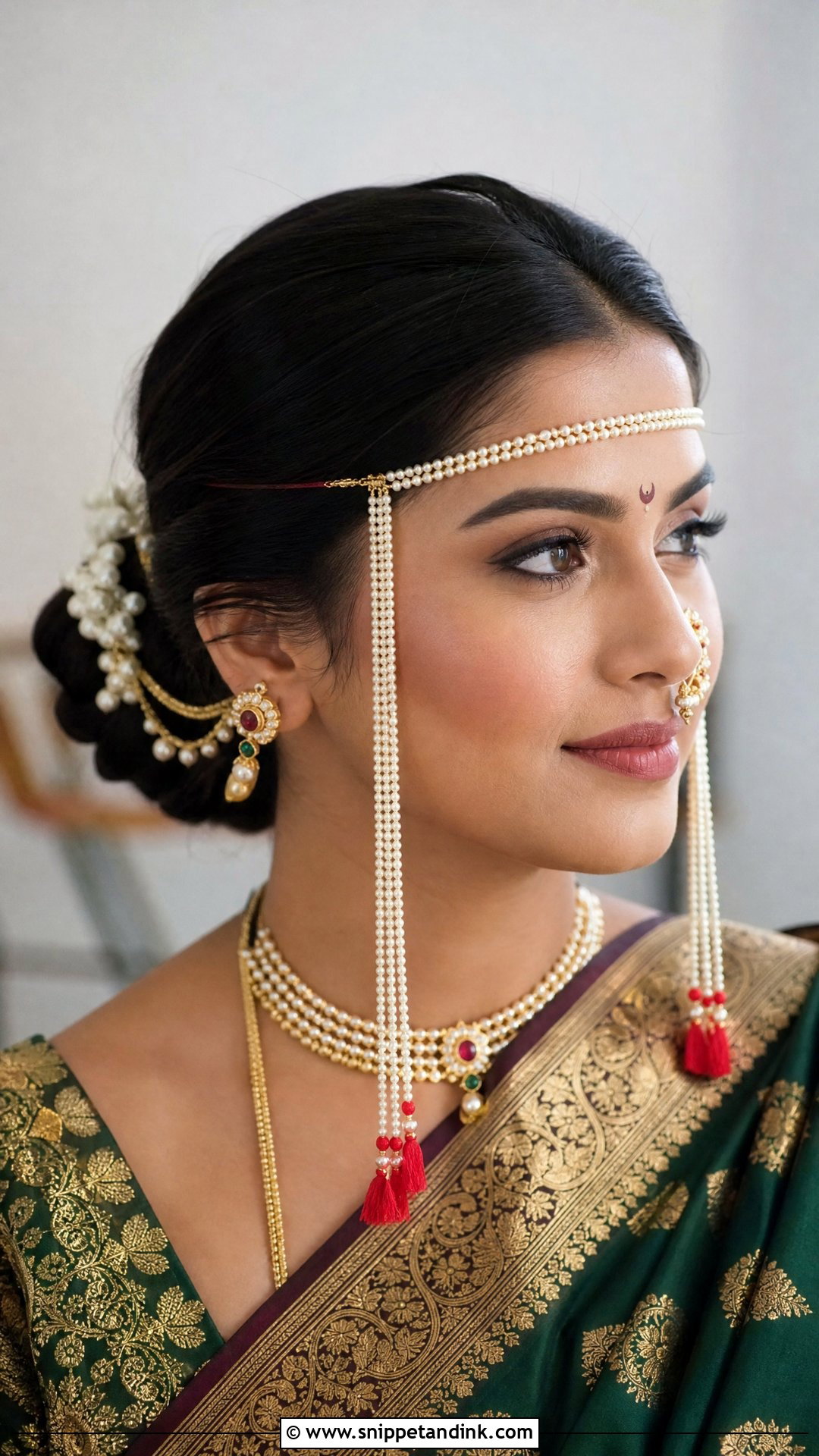
The Maharashtrian bridal bun is neat and modest, positioned at the back of the head. The traditional mundavalya, strings of pearls draped across the forehead, is tied around the head and secured behind, so I place the bun where the ties can sit just above it. A nath and simple gold jewelry complete it, and a few flowers near the bun add softness. It belongs with the nauvari saree and rewards a bride who likes simplicity over heavy embellishment.
18. Floral Bun With Maang Tikka and Veil
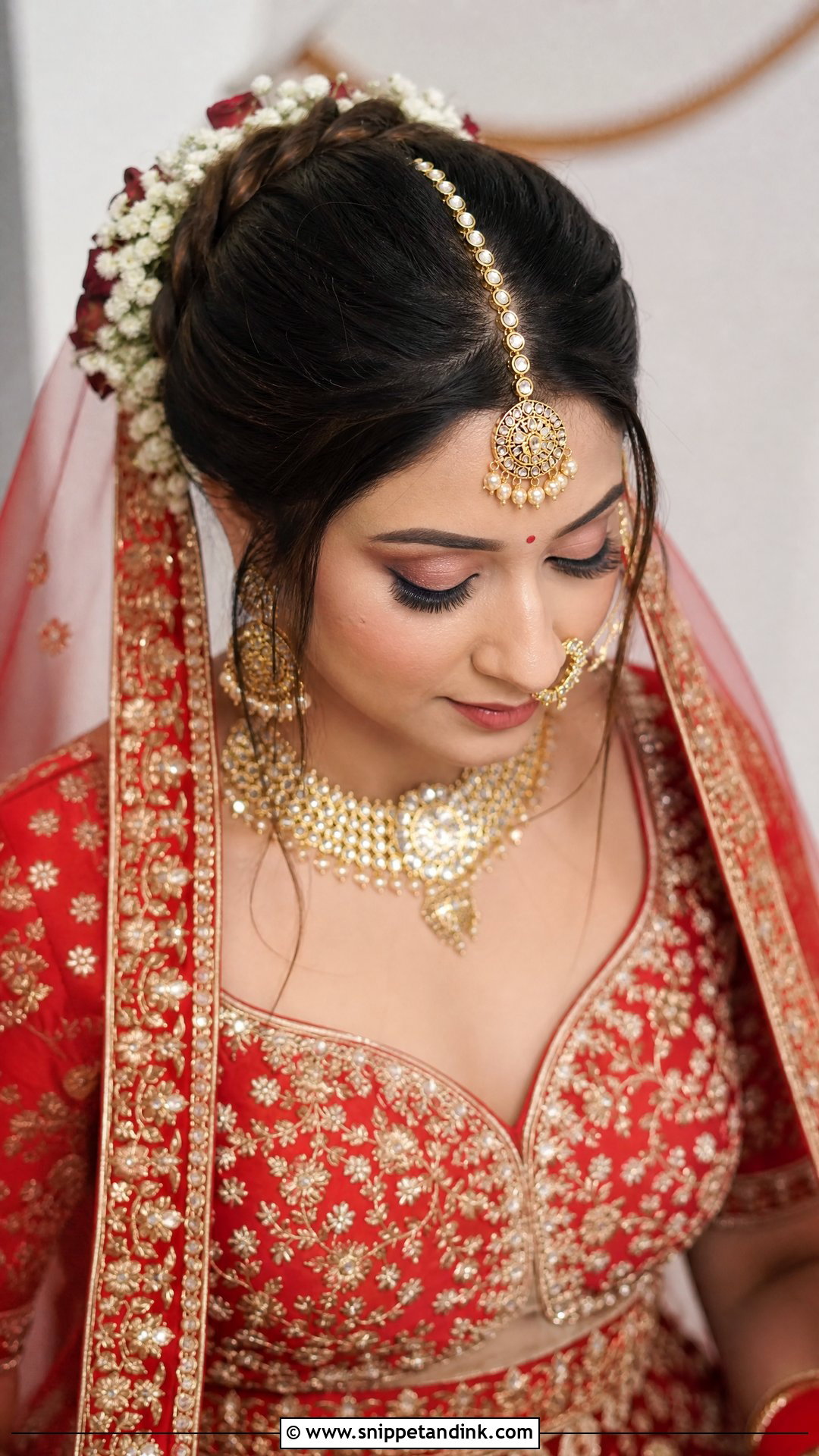
A dupatta pinned as a veil needs a firm bun to hold it. I build a structured bun at the back, decorate it with small flowers or pearl pins and pin the dupatta just above or behind it with several U-pins, so the weight is shared. A maang tikka sits on the center parting. Ask your stylist to stay until the dupatta is set, since draping it after the hair is done can pull the whole style back. The flowers peek out beneath the fabric.
19. Curly Updo With Statement Hair Accessory
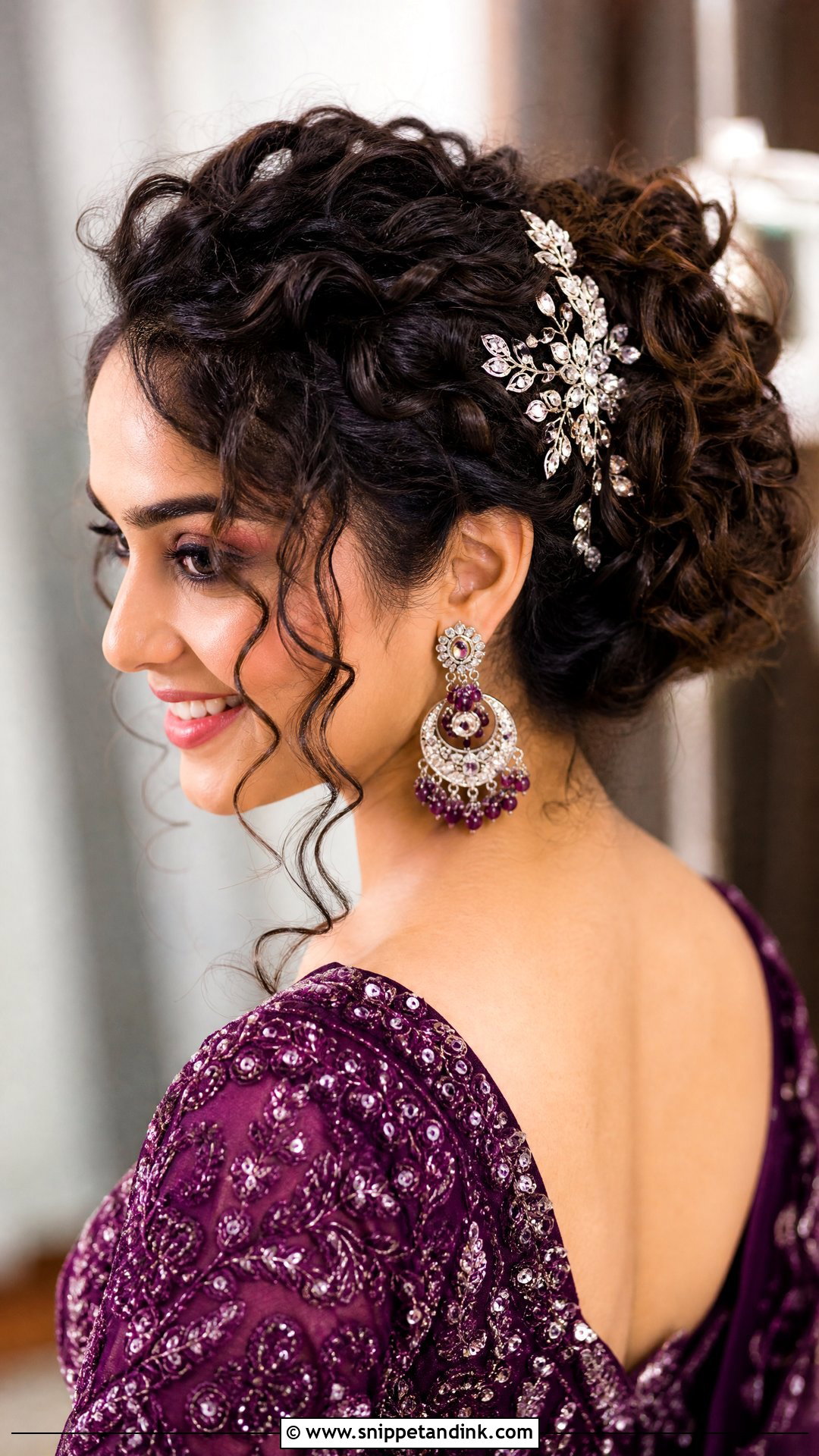
Naturally curly or textured hair looks richest worn curly. I gather the curls loosely toward the crown or nape and pin them in clusters, without brushing them out, so the texture stays defined. A few curls left at the face soften the outline. One statement comb or floral clip is enough decoration. It works best at receptions and sangeet nights, with bold earrings and confident makeup.
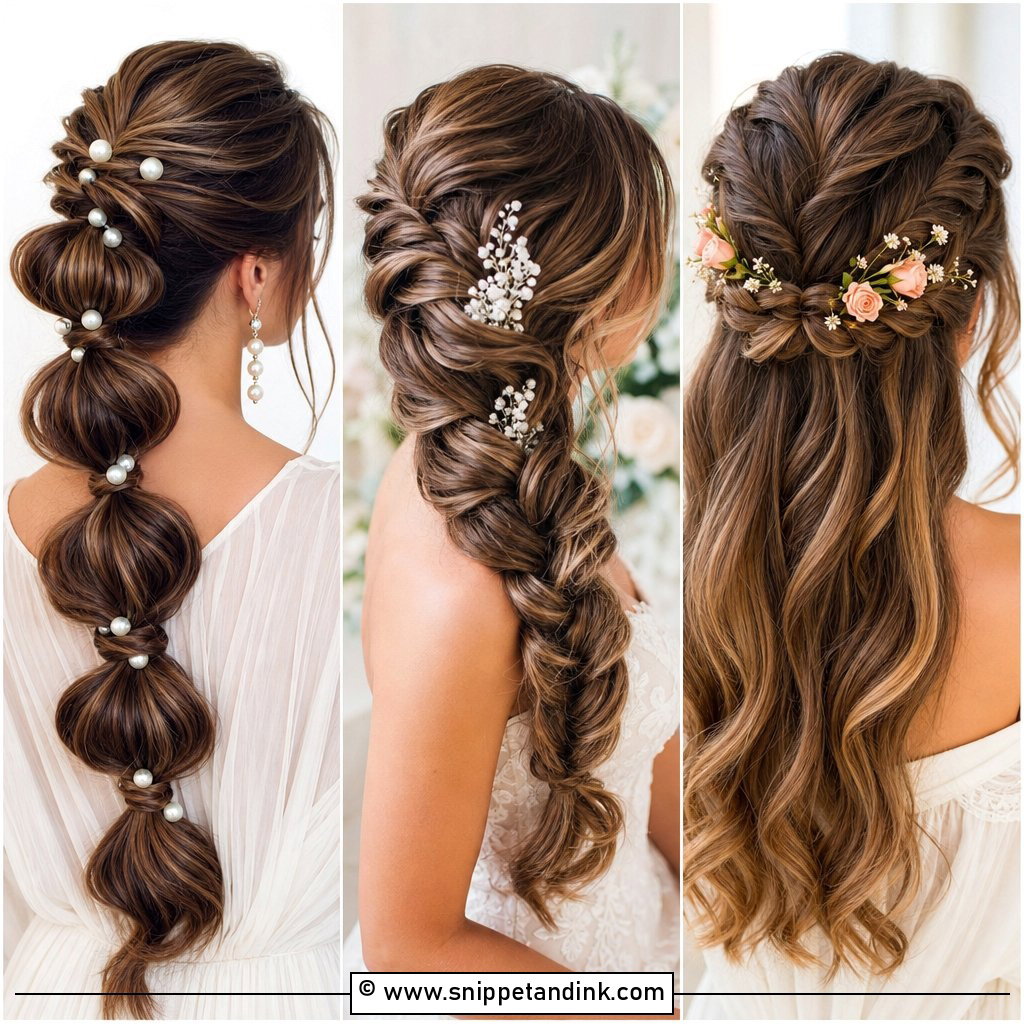
20. Dutch Braid Bun With Kundan Pins
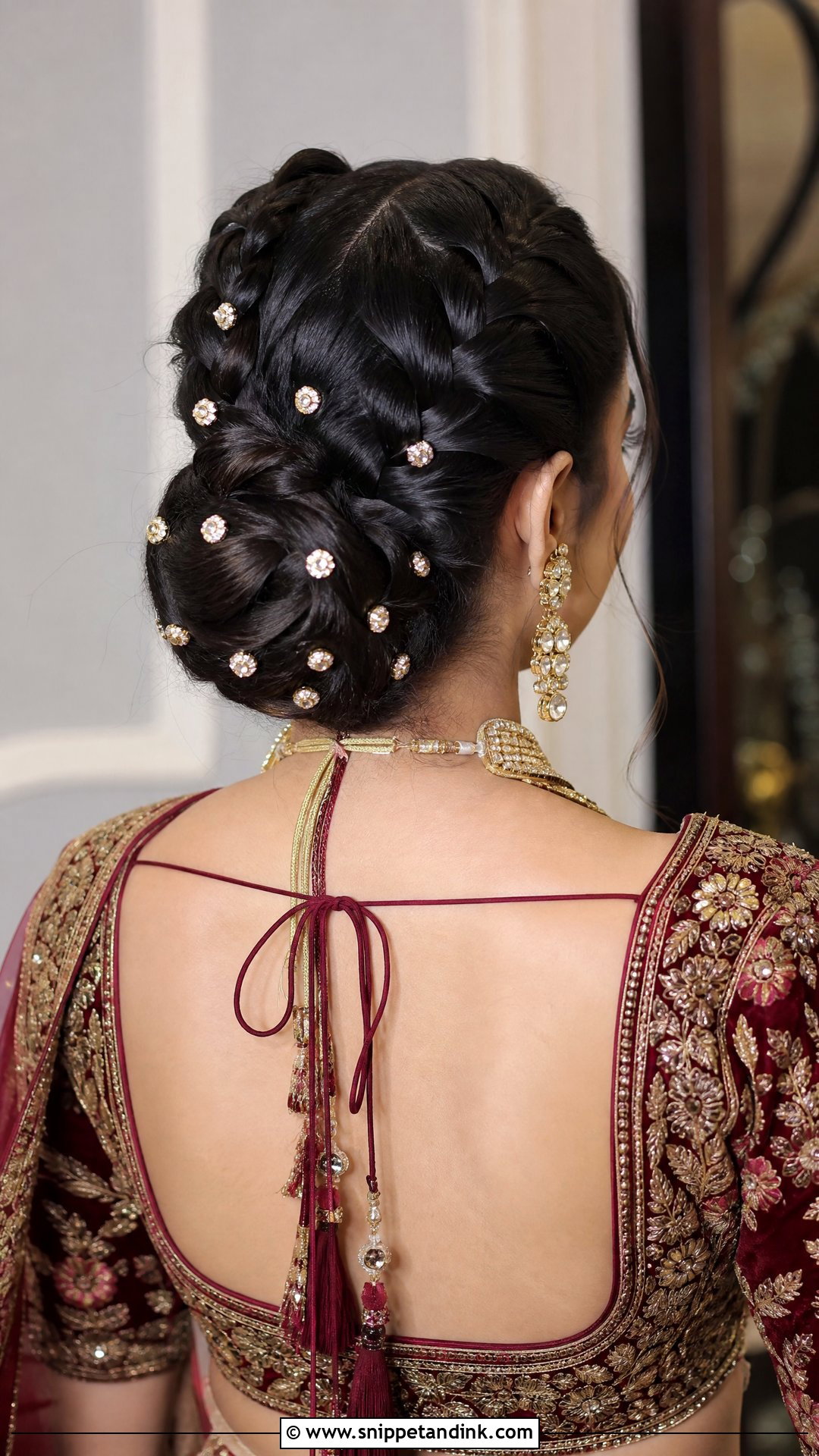
The Dutch braid bun is the most secure style on this list. One or two Dutch braids start at the hairline, crossing strands underneath so the braid sits on top of the hair, then gather into a low bun at the nape. Kundan pins scattered through the raised braid catch light. Because the braids lock every strand, it holds through active ceremonies, the pheras and hours of dancing. It goes with traditional jewelry and a heavy lehenga.
Carrying Jasmine, Gold and a Dupatta for Hours
By the end of a long ceremony, the most common complaint I hear isn’t about how the hair looks, it’s a headache. Weight placed in one spot pulls at the scalp, so I spread it across several anchor points: the bun’s base, crossed pins at the crown and a hidden clip at the parting for the tikka.
Bring the real jewelry and the actual dupatta to your trial, not lighter stand-ins. Wear the finished style for at least an hour, sit down, stand up and turn your head. If anything presses or tugs by then, it will be painful by the vidaai, and that’s the moment to move a pin or lighten a piece.
Keeping fresh jasmine fresh
Buy jasmine strings as close to the wedding as you can, while the buds are still closed. Wrap them in a damp cotton cloth and keep them somewhere cool until styling; a light mist of water keeps them from browning. Add them last, after the hair spray, since spray discolors white petals.
Between events
If you have a break between the ceremony and the reception, have someone unpin the dupatta and any heavy ornaments for a while. Your scalp will thank you, and the style underneath usually needs only a few pins to refresh.
Which Style Fits Your Outfit, Your Region and Your Longest Ceremony?
Your wedding hairstyle reflects your family’s traditions as much as your taste. You may love a jasmine-wrapped bun, a South Indian braid in gold or open curls with kundan pins, but start with the outfit and the ceremony: what it has to hold, how long you’ll wear it and whether there’s a dupatta over it. Then add the accessories that mean something to you, a maang tikka, a mukut, fresh jasmine. Book a trial with everything you’ll wear on the day. Done right, you’ll forget about your hair and remember the wedding.
You'll Like These Ideas:



Leave a Reply