
Braids are the hardest-working thing I can put in a bride’s hair. A braid is its own anchor: it grips the pins, it holds a veil comb, and it still looks deliberate after the third hour on the dance floor, when loose curls have long since dropped. They suit a garden ceremony as easily as a ballroom, and almost every length can carry one. Below are 25 braided wedding styles, from crowns and fishtails to goddess braids, with notes on what each one needs from your hair and where I’d steer you elsewhere.
Adapting a Braid to Layers, Fine Strands and Coils
Almost any braid on this list can be adjusted to your hair. What changes is the technique I use, the products, and sometimes how much hair I add.
Layered cuts
Short layers escape braids. I braid tighter and tuck the ends with small pins, or choose a style like a Dutch braid that locks pieces in more easily than a waterfall or a loose fishtail.
Fine or thin hair
Fine hair braids neatly but can look sparse. Pulling the edges out after braiding makes it look fuller, and a clip-in weft placed under the top layer adds real volume. I use texture spray so the sections grip.
Curly and coily hair
Textured hair holds braids beautifully and needs less product to grip. I braid on stretched or lightly moisturised hair and avoid brushing curls out more than necessary. Raised styles like Dutch braids and goddess braids suit coily hair particularly well.
1. Crown Braid for Wedding
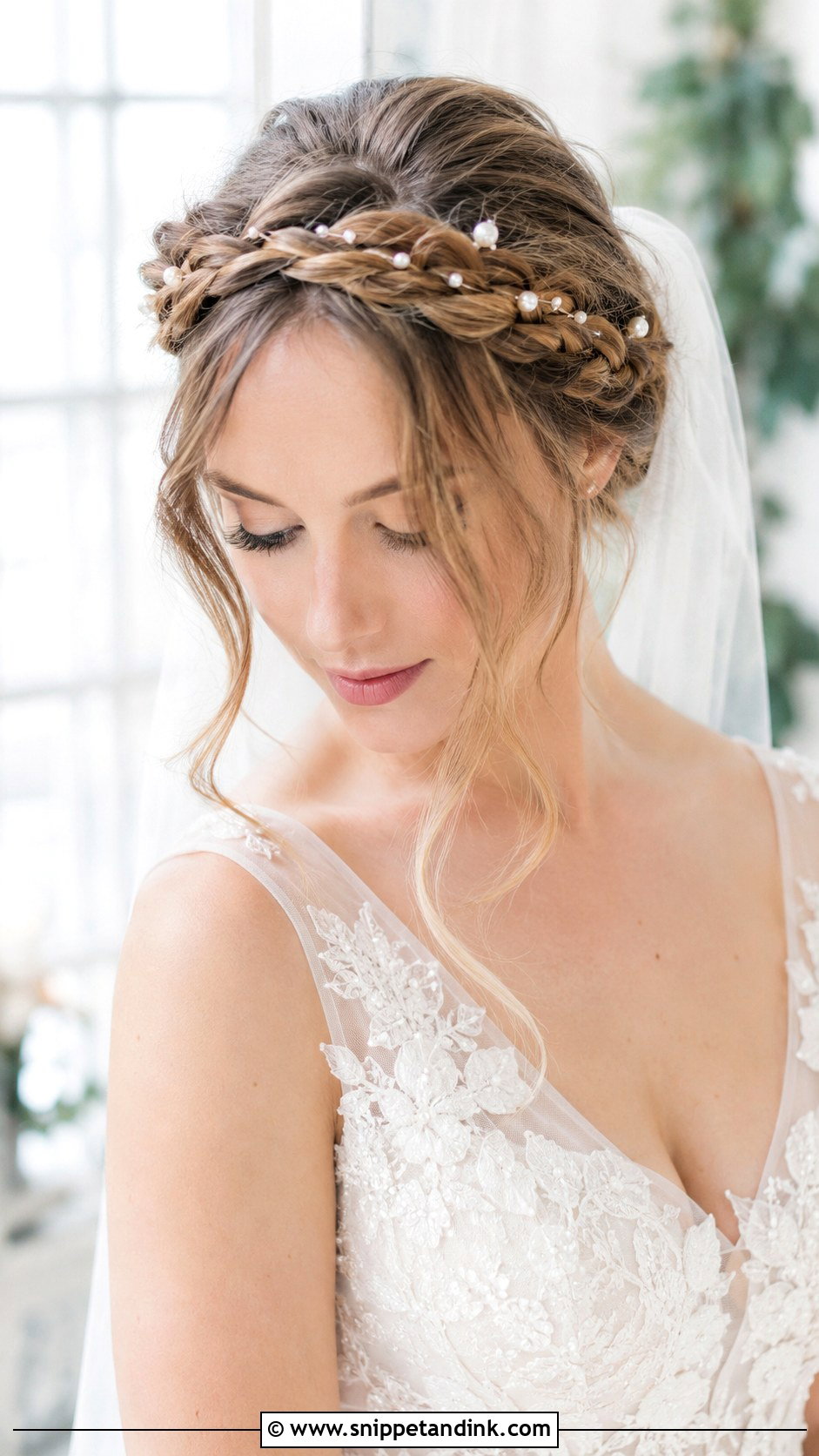
The crown braid circles the head like a halo, and I’m asked for it constantly. Tight and polished, it reads formal; loosened at the edges, it reads boho. The real question is length: the hair has to reach most of the way around the head, so on shoulder-length hair I build it from two braids, one from each side, and hide the meeting point under the opposite braid. Set delicate hairpins or flowers along it, and you’ll have your face and neck clear for a hot outdoor ceremony.
2. Fishtail Braid for Wedding
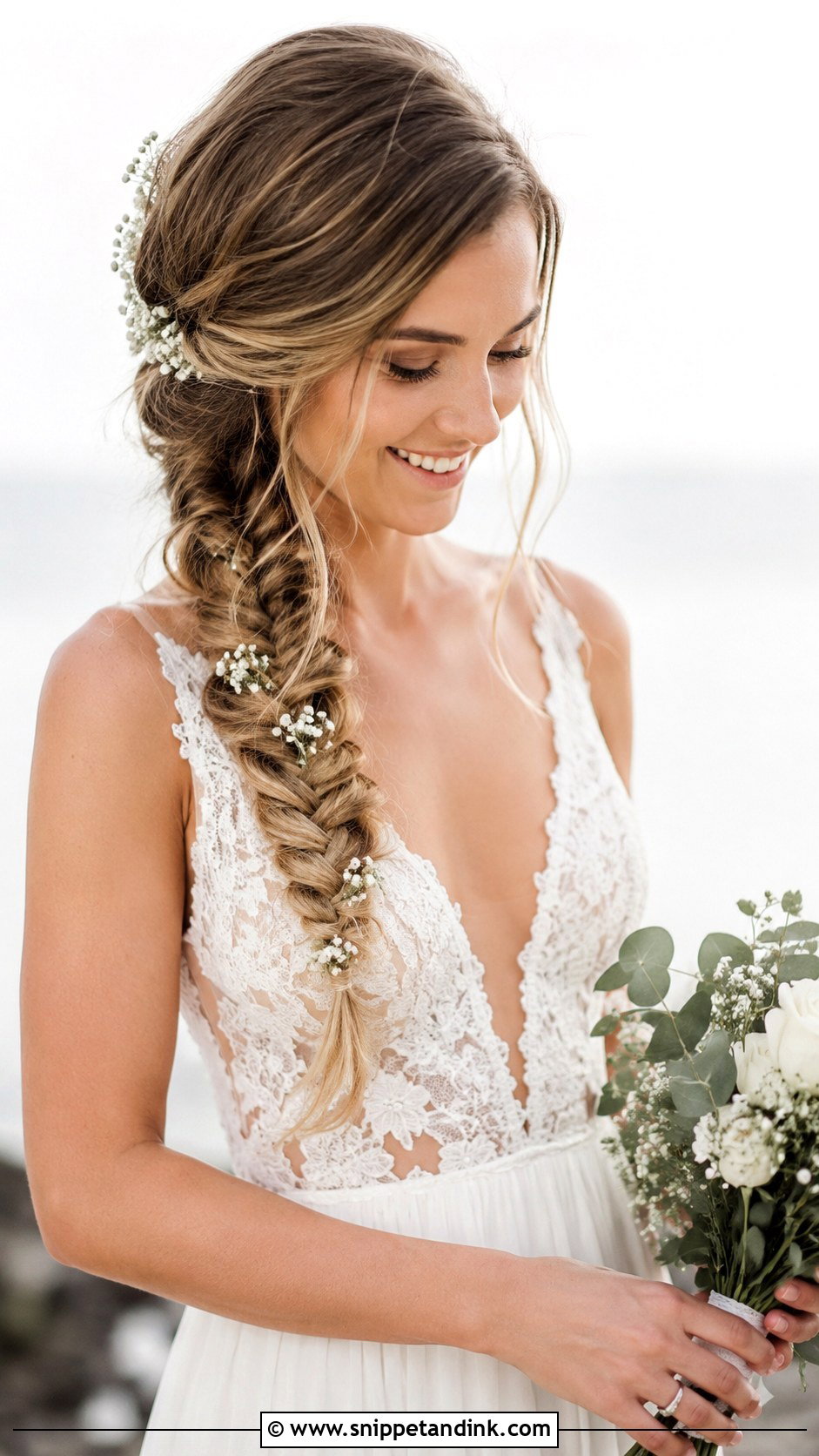
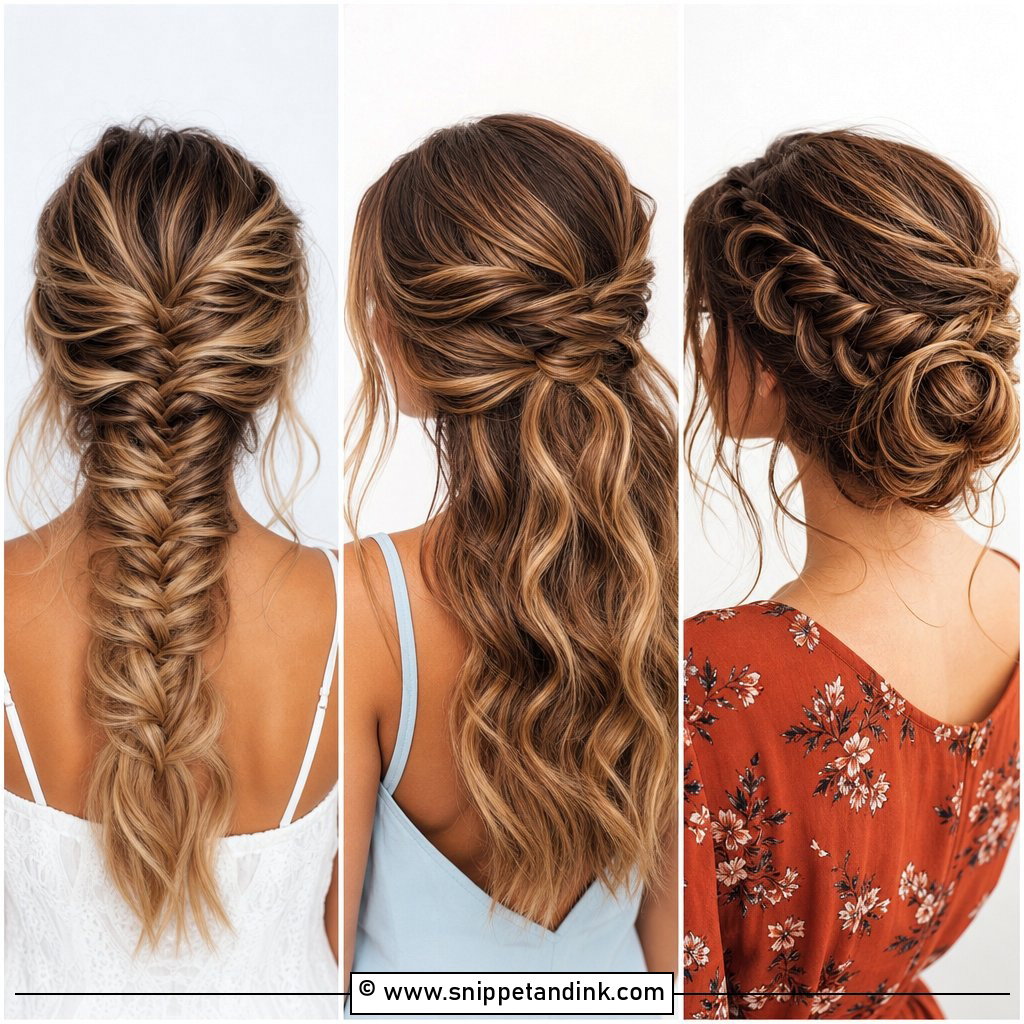
Fishtails look complicated and aren’t; it’s just two sections with small pieces crossed over again and again. What decides whether one lasts is grip. Very clean, silky hair slides apart, so I prep with a texture spray first. Swept over one shoulder, it shows off a strapless neckline, and baby’s breath tucked along the weave suits a beach or garden setting. Sleek or loosened, it needs a clear elastic at the end and a strand wrapped over to hide it.
3. French Braid Updo for Wedding
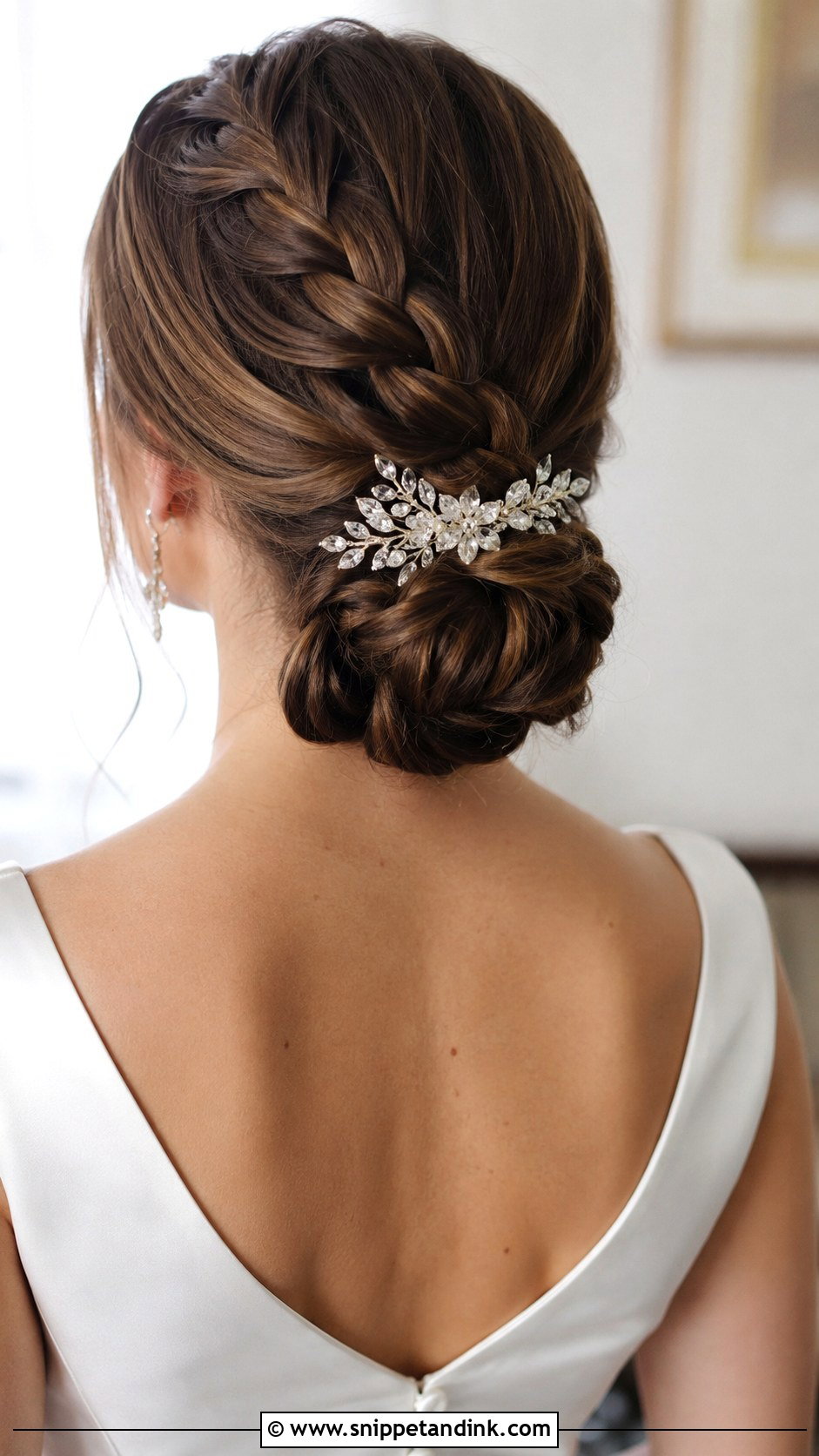
A French braid that rolls into a chignon at the nape is my answer for brides at a church or ballroom who still want texture. The braid is worked over, so it lies flatter and neater than a Dutch braid, and I pin the tail under into the bun so no elastic shows. It holds through hours of dancing. Long and medium hair suit it; very short layers at the nape can poke out, so I smooth those with a little wax before pinning.
4. Dutch Braid for Wedding
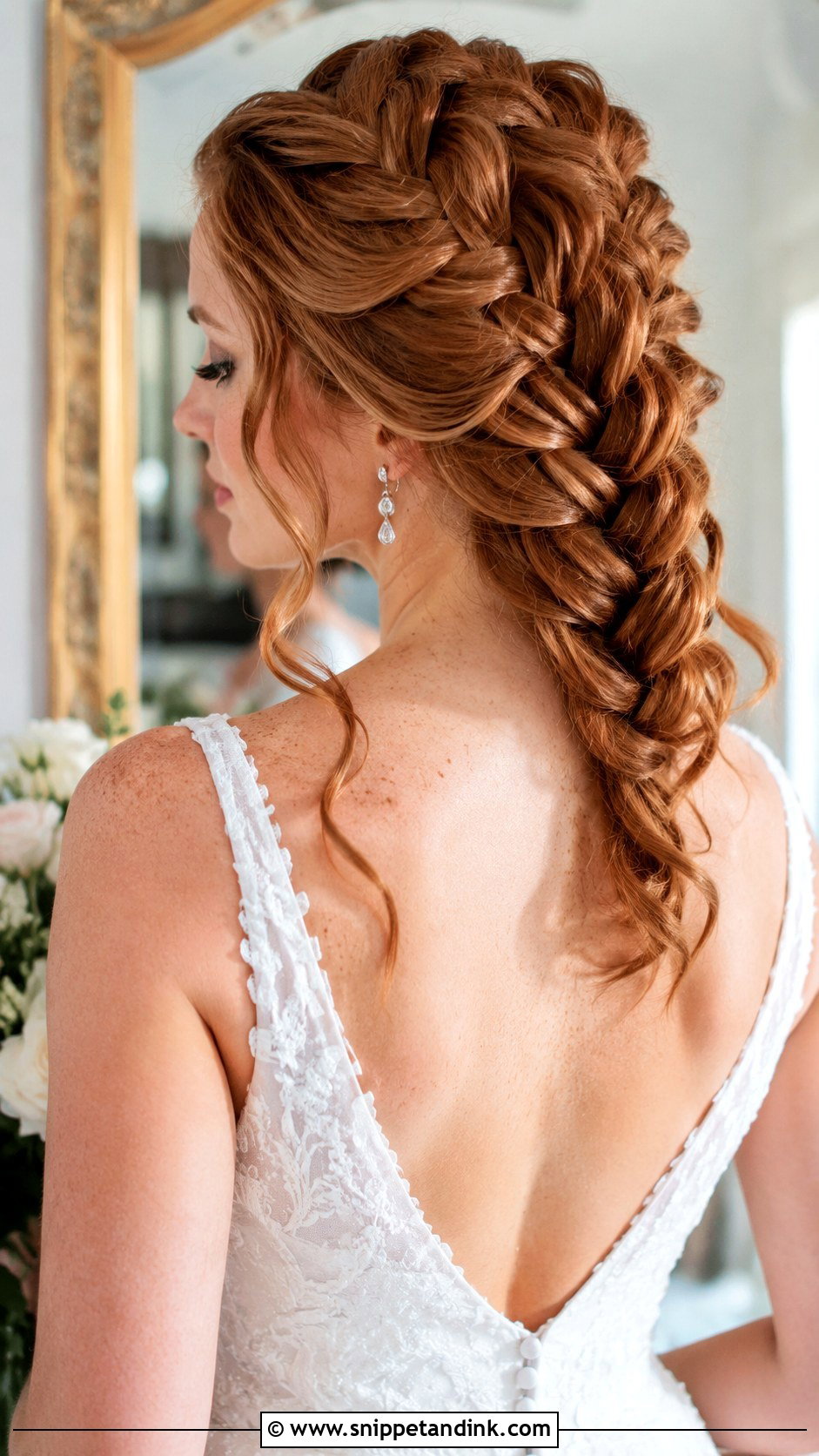
Dutch braids are worked by crossing strands underneath, so the braid stands up off the head instead of lying in it. That raised ridge reads clearly in photos, even from the back of a church. One braid down the back, two for a younger feel, or both pinned into a low updo all work. On fine hair I braid tighter and pull the edges out afterwards to fake thickness. Leave a few loose face-framing tendrils to soften the structure.
5. Halo Braid for Wedding
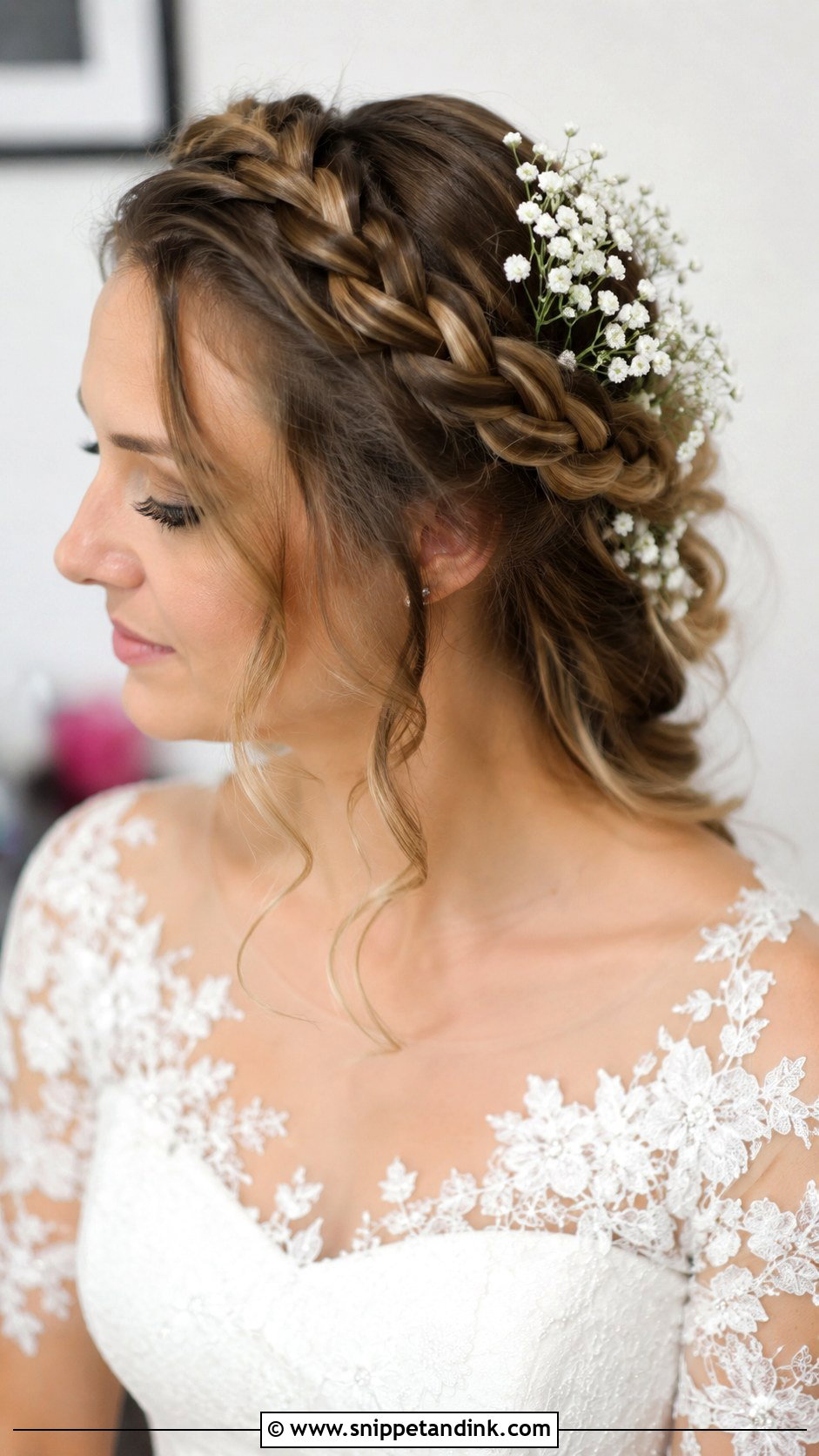
A halo braid circles the whole head at roughly the hairline, a little lower than a crown braid, which gives that goddess-inspired bridal look. Because it sits lower, it frames the face more. It keeps hair off the shoulders in summer heat and works well for vineyard and garden weddings. Pearls or small flowers can be pinned along it. Expect it to take longer than most styles here; a full halo is slow, careful work.
6. Waterfall Braid for Wedding
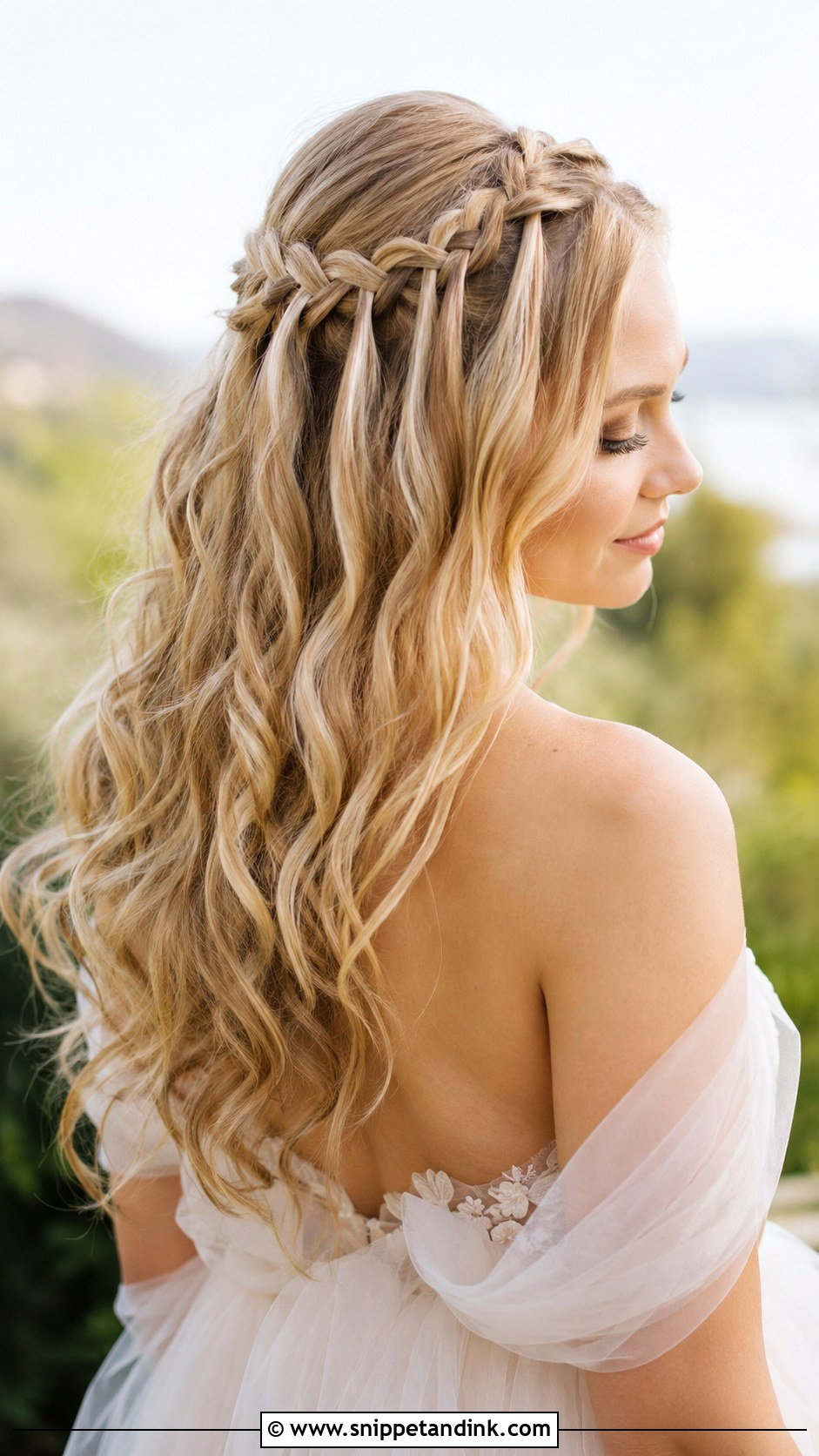
A waterfall braid runs sideways across the head and drops a strand with each pass, so curls spill out beneath it like falling water. The dropped strands are what people notice, so I curl them separately and set them before brushing out. Long hair shows it best. Short layers tend to escape the braid, so it’s a style I’d test at a trial if your cut has a lot of layering. A few small blooms finish it.
7. Braided Bun for Wedding
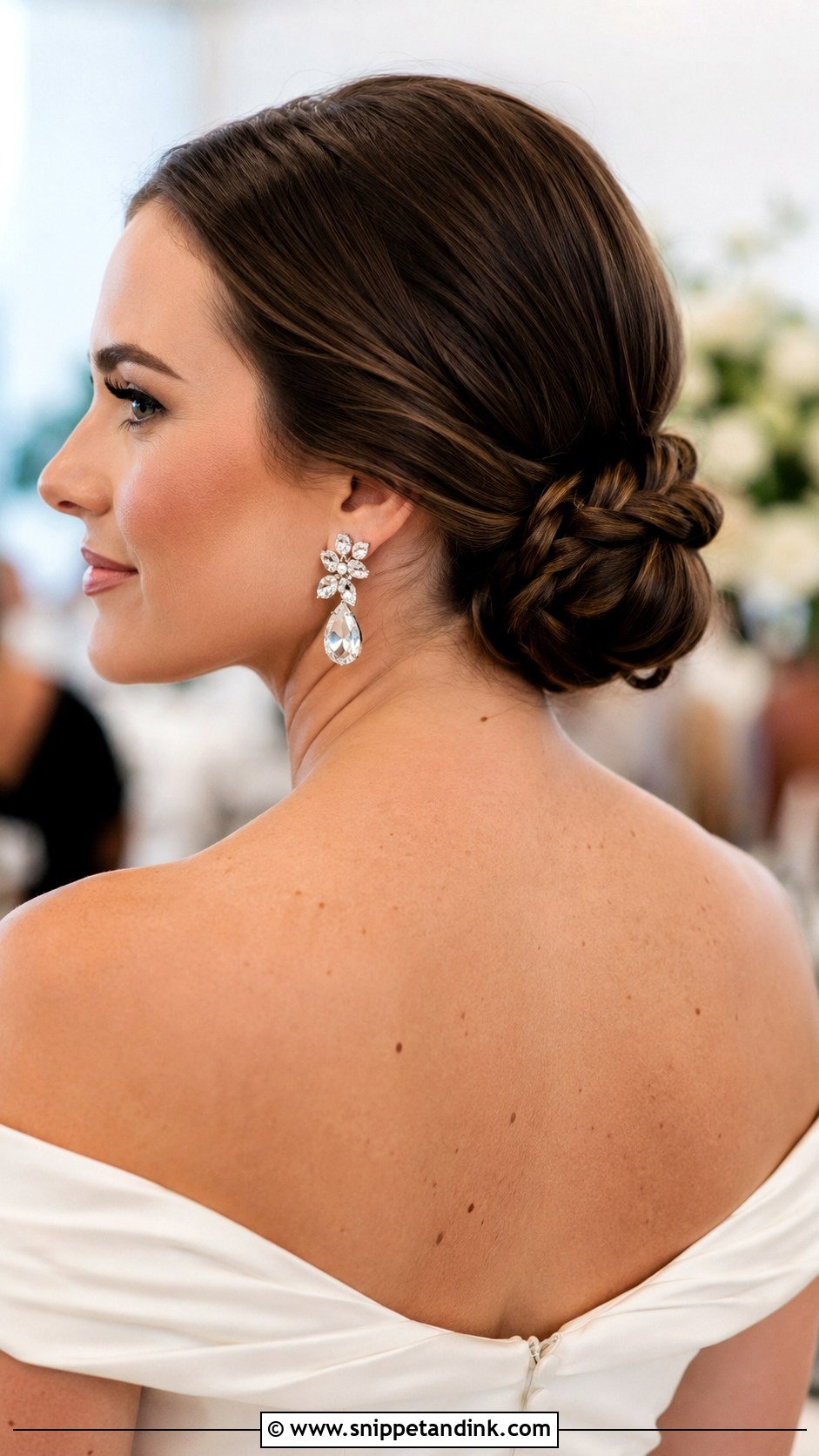
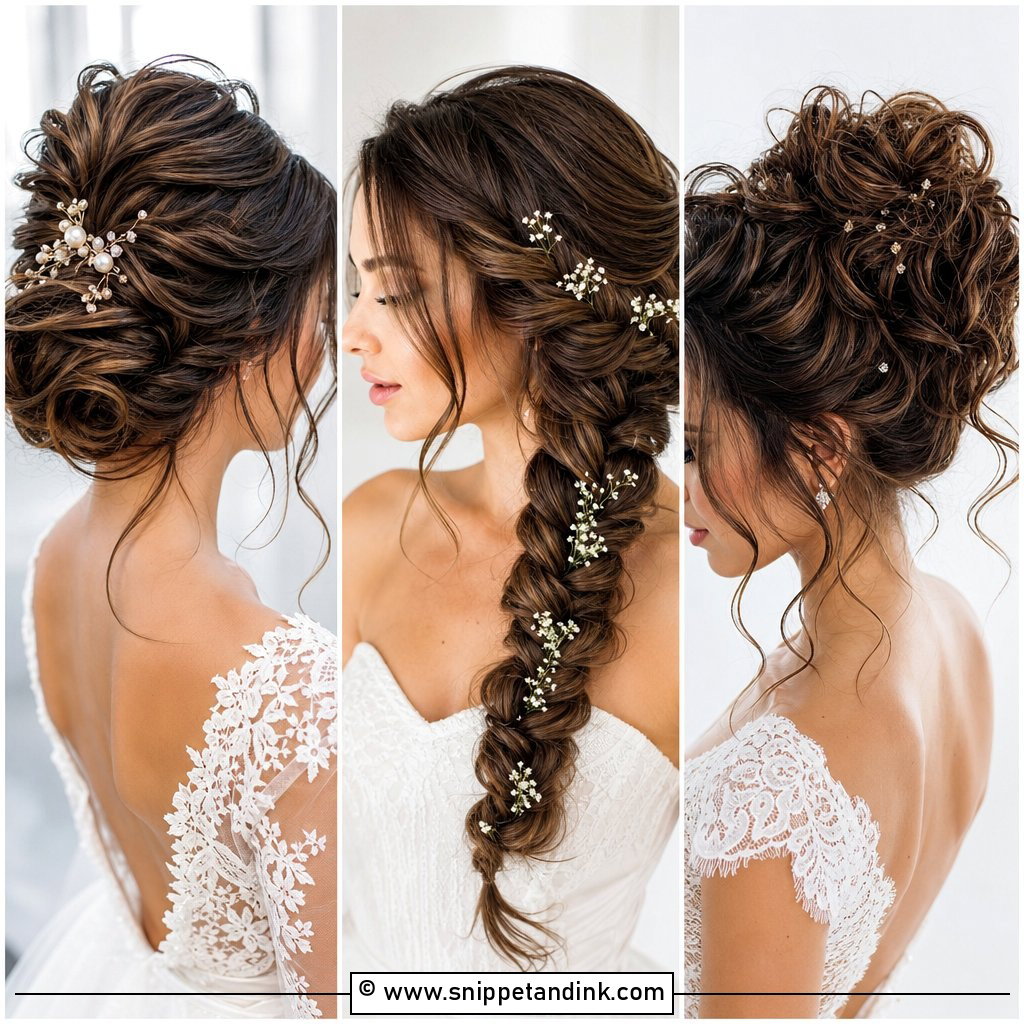
A braided bun is a structured updo with braids wound into or around it. I usually put the bun low or mid-height and braid the lengths before wrapping them, which hides the base and adds detail at the back where guests look during the ceremony. Sleek suits a modern wedding; softer suits a romantic one. It’s sturdy, it sits well under a veil, and it suits almost every length that can reach the nape.
8. Boho Braid for Wedding
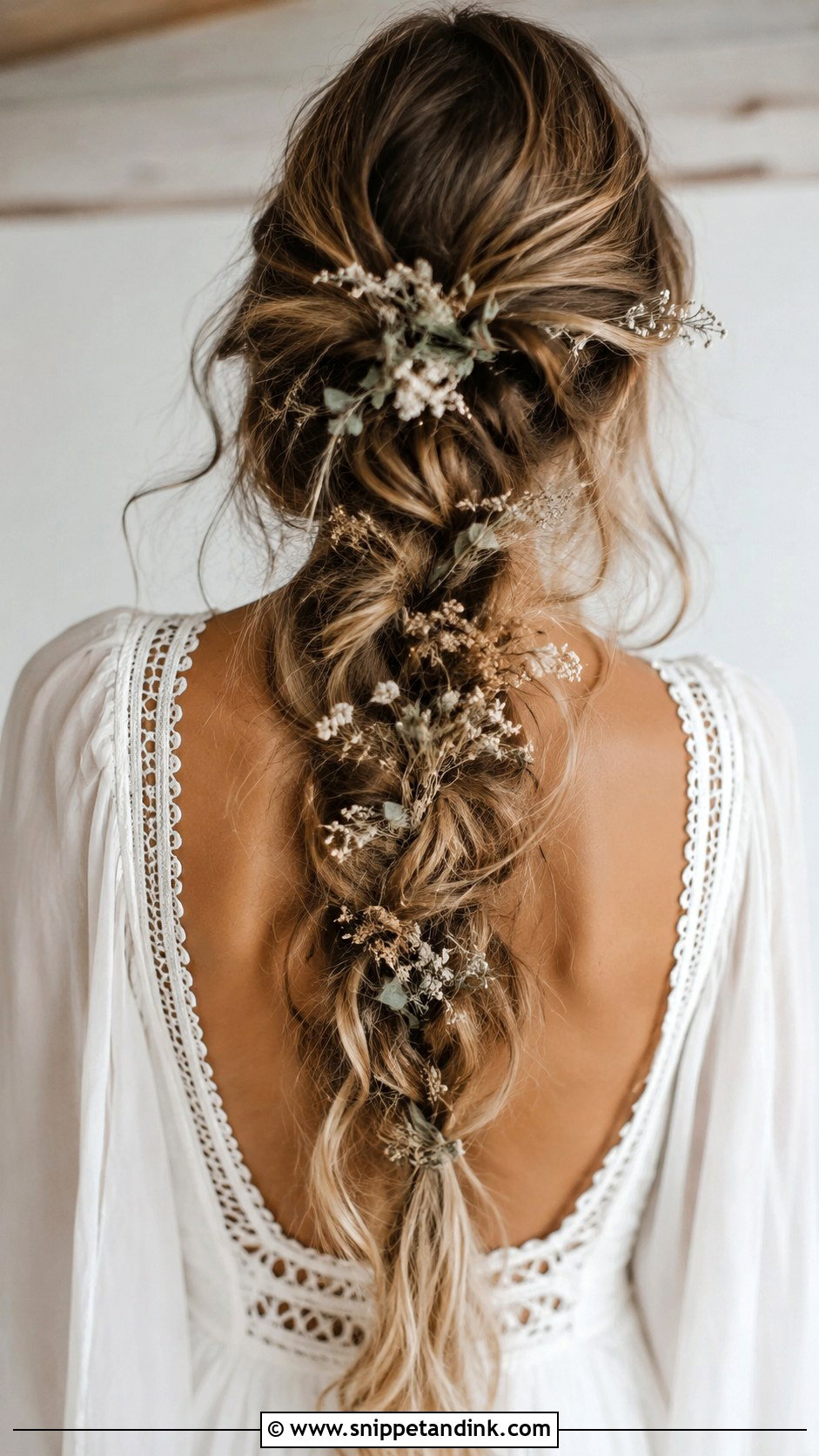
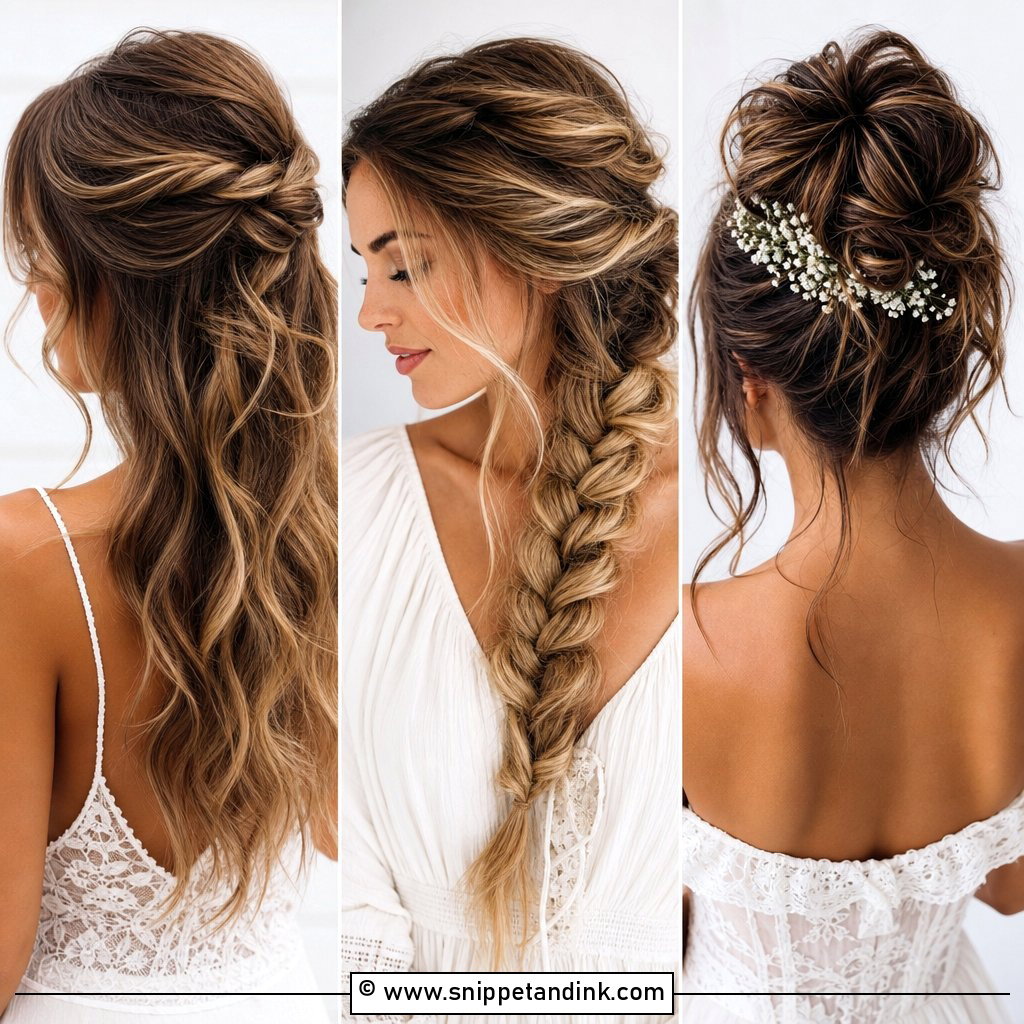
The boho braid is chunky, loose and slightly undone. Here’s the catch: “undone” still has to be pinned. I braid it firmly first, secure it, and only then pull the edges out, because loosening a braid before it’s anchored makes it fall apart within the hour. Dried flowers, greenery or small gold cuffs suit it. It’s a natural match for flowing gowns and barefoot beach ceremonies, and it softens prettily through the day rather than falling flat.
9. Side Braid for Wedding
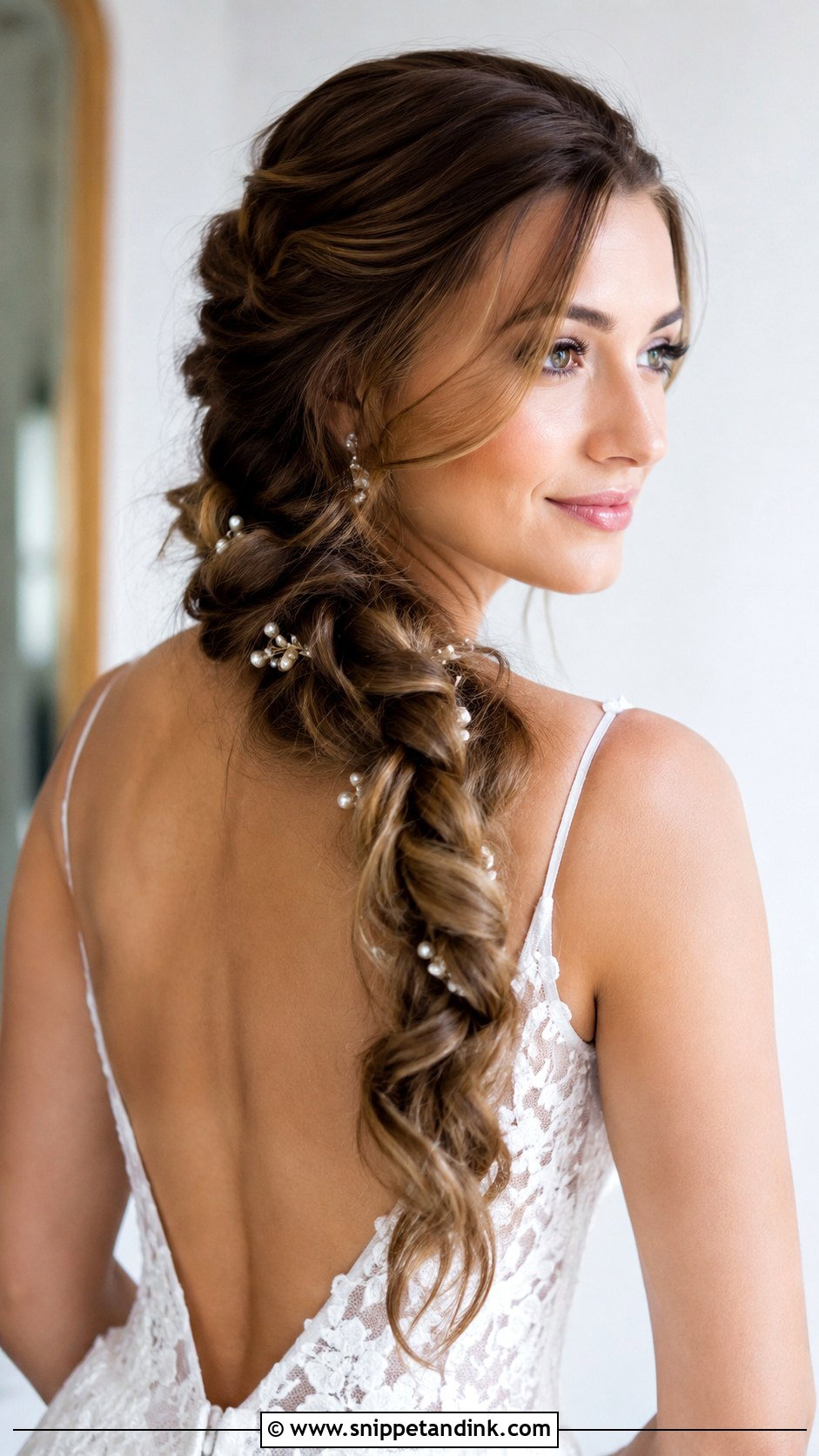
A side braid draped over one shoulder leaves the other side of the neck open for statement earrings or a low back detail. I braid it loose and then pull it apart for fullness, anchoring the start of the braid behind the ear so it doesn’t swing forward every time you turn. Small flowers or pearl pins make it bridal. It suits long, thick hair best; on thin hair, I’d add a clip-in piece underneath for fullness.
10. Half-Up Braid for Wedding
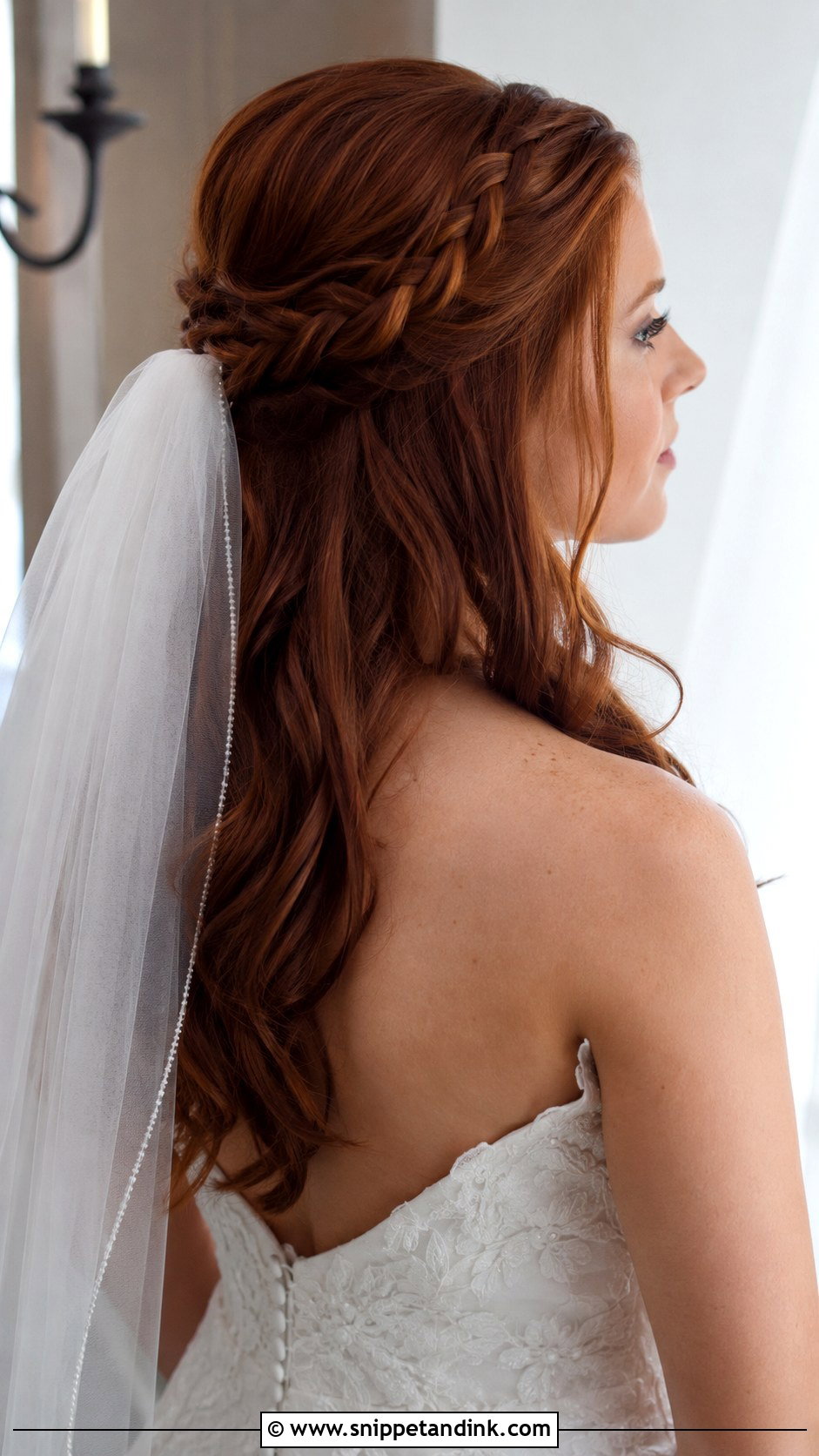
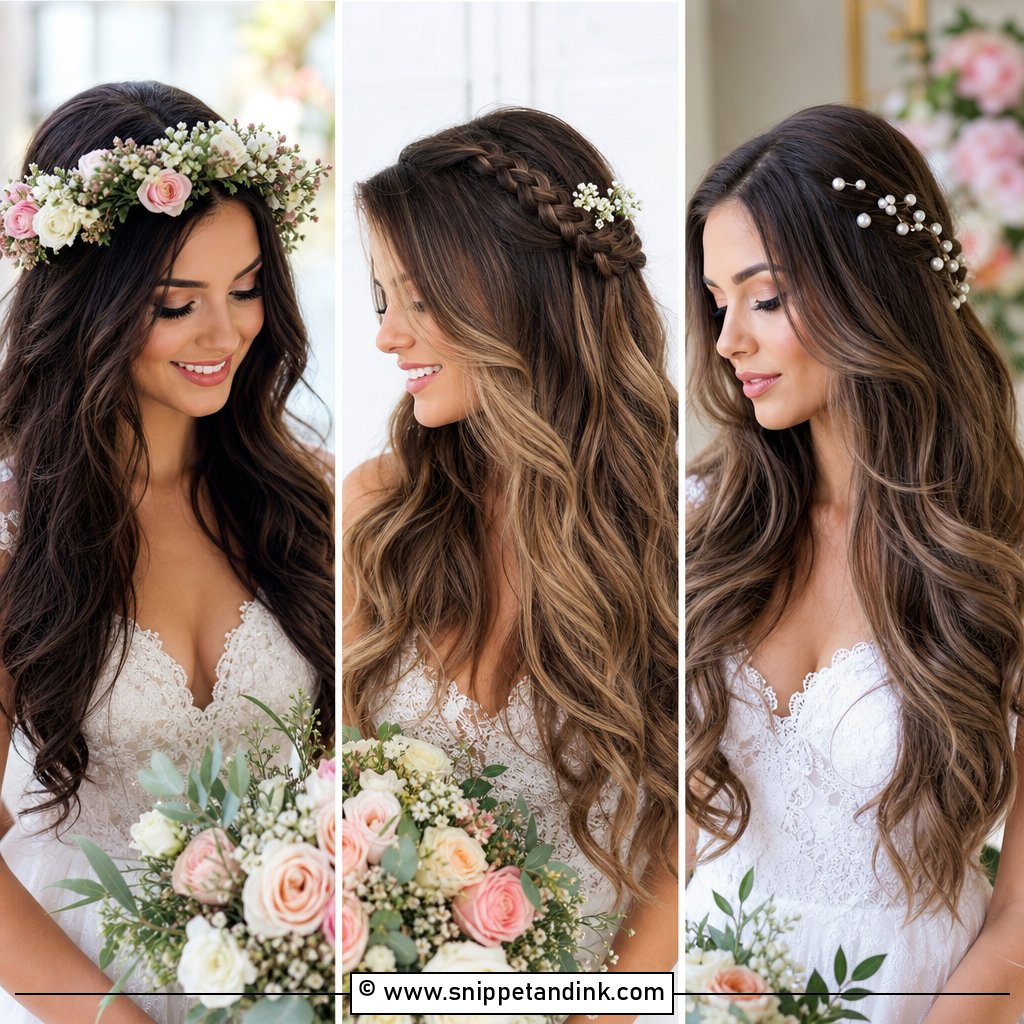
Half-up braids keep the face clear while the length stays down. I braid the top section back, whether that’s one braid, two, or a small crown, then pin it at the back where a veil comb can slide in right above. The waves below need setting time, since they’ll relax during the evening. It’s one of the most comfortable bridal styles to wear for a full day.
11. Milkmaid Braid for Wedding
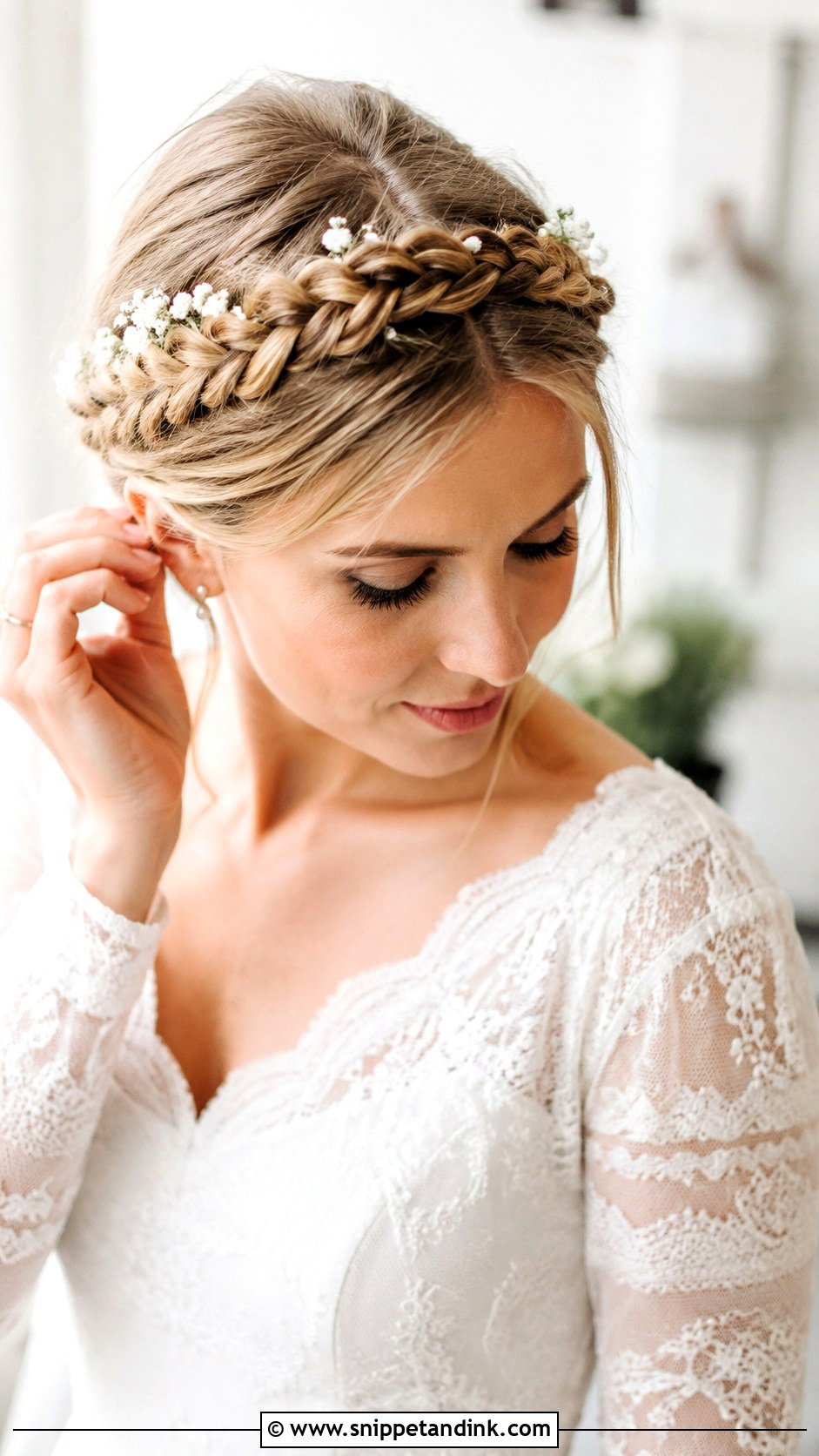
The milkmaid braid is two braids pinned over the top of the head, ending near the opposite ear. It has a vintage, almost folk quality and keeps hair completely off the shoulders, which makes it good for summer or destination weddings. The braids need to be long enough to cross the crown, so it really suits long hair. Small flowers along the braids suit a garden wedding; with a simple dress and minimal jewellery, it can stand on its own.
12. Braided Ponytail for Wedding
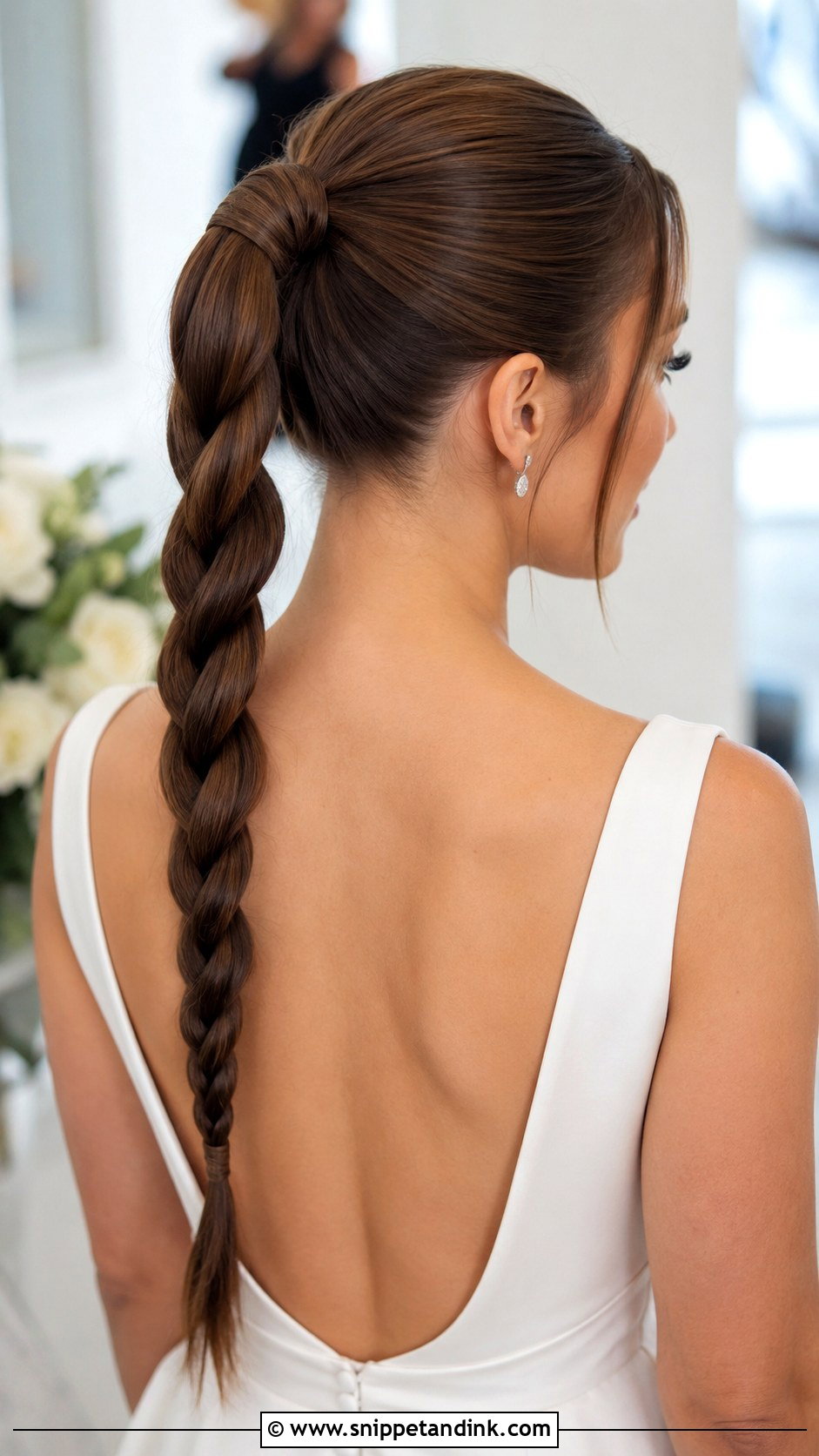
A braided ponytail is a ponytail first and a braid second. I set the pony with a strong elastic, wrap a strand around the base to hide it, then braid the length. High placement looks dramatic; low is calmer and more comfortable for a long day. Ponytails pull on the scalp over hours, so I’d do a low one for a bride who gets headaches easily. Long hair carries it best.
13. Braided Chignon for Wedding
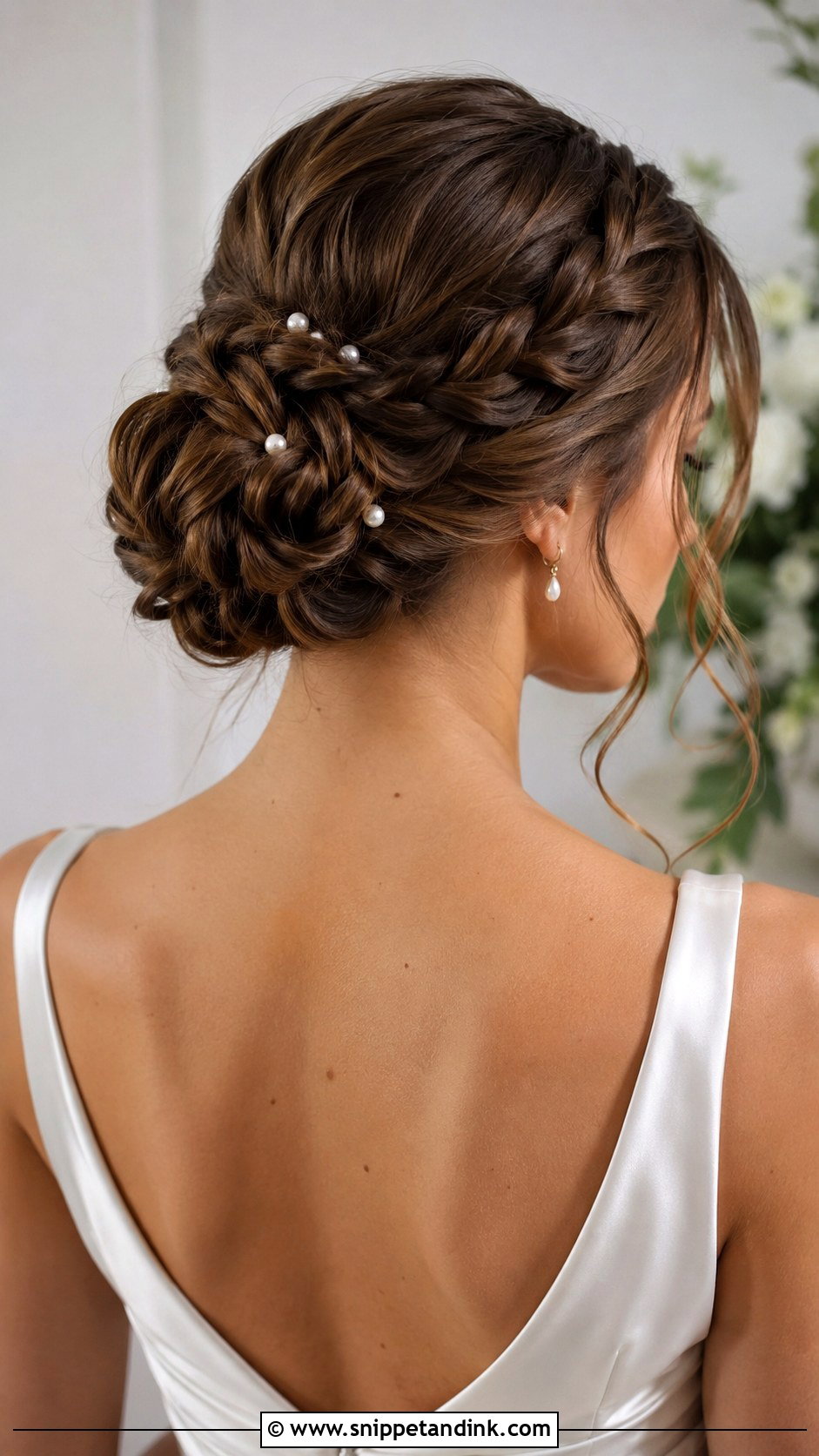
A braided chignon gathers at the nape with braids worked through it. It’s one of the most windproof styles I know, which is why I recommend it for clifftop and beach ceremonies. A veil can sit right above the chignon, held by the braid. Pearl pins, a pair of statement earrings and an elegant gown all suit it. Most lengths from shoulder down can do it.
14. Infinity Braid for Wedding
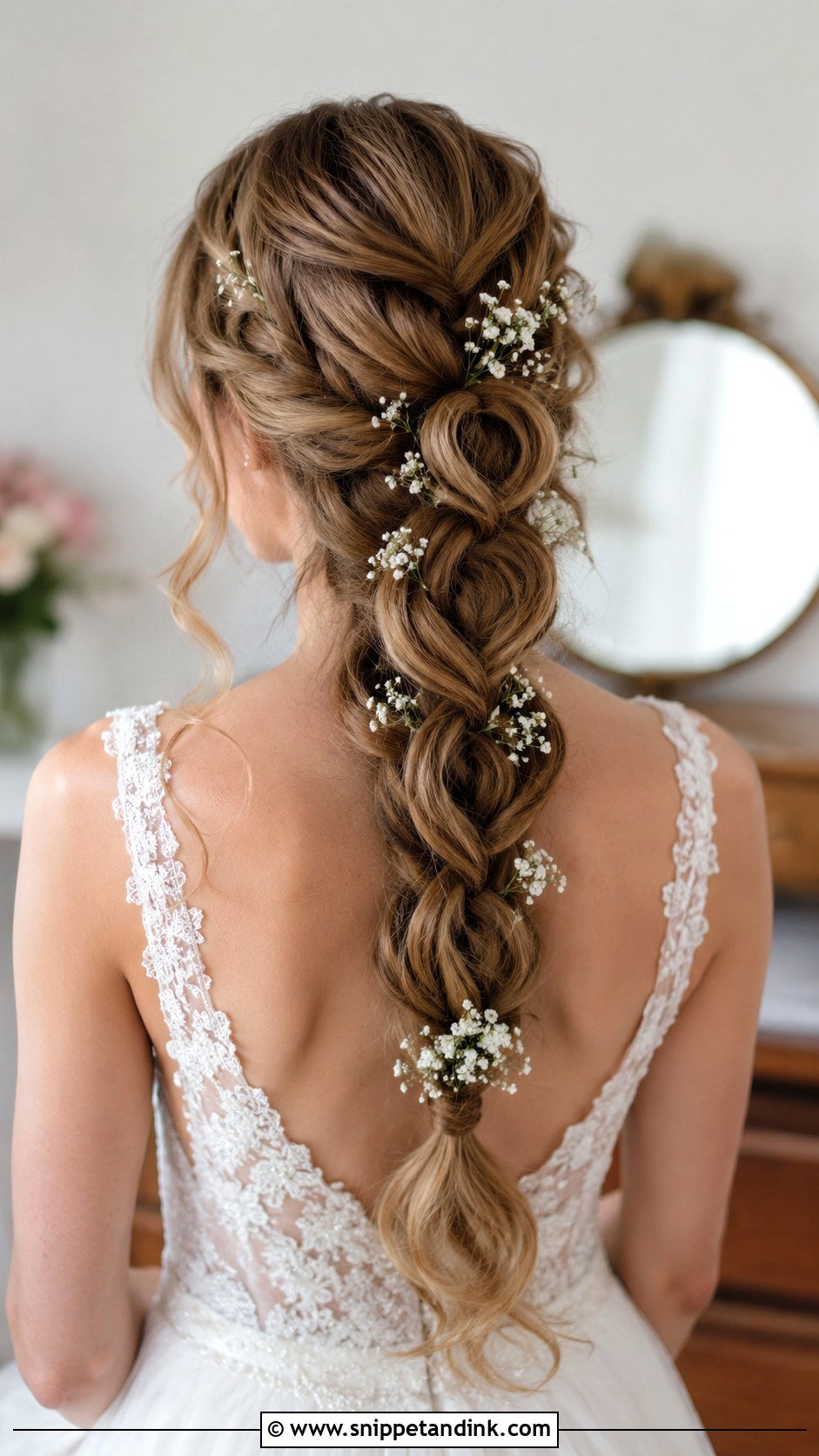
The infinity braid loops strands in a figure-eight pattern, and couples love the symbolism. It’s slower to create than a standard braid and shows most clearly on long hair worn down the back or within a half-up style. Smooth hair shows the loops best; very curly or textured hair can blur the pattern, so I’d test it first. Tiny flowers or pearls along the loops add detail.
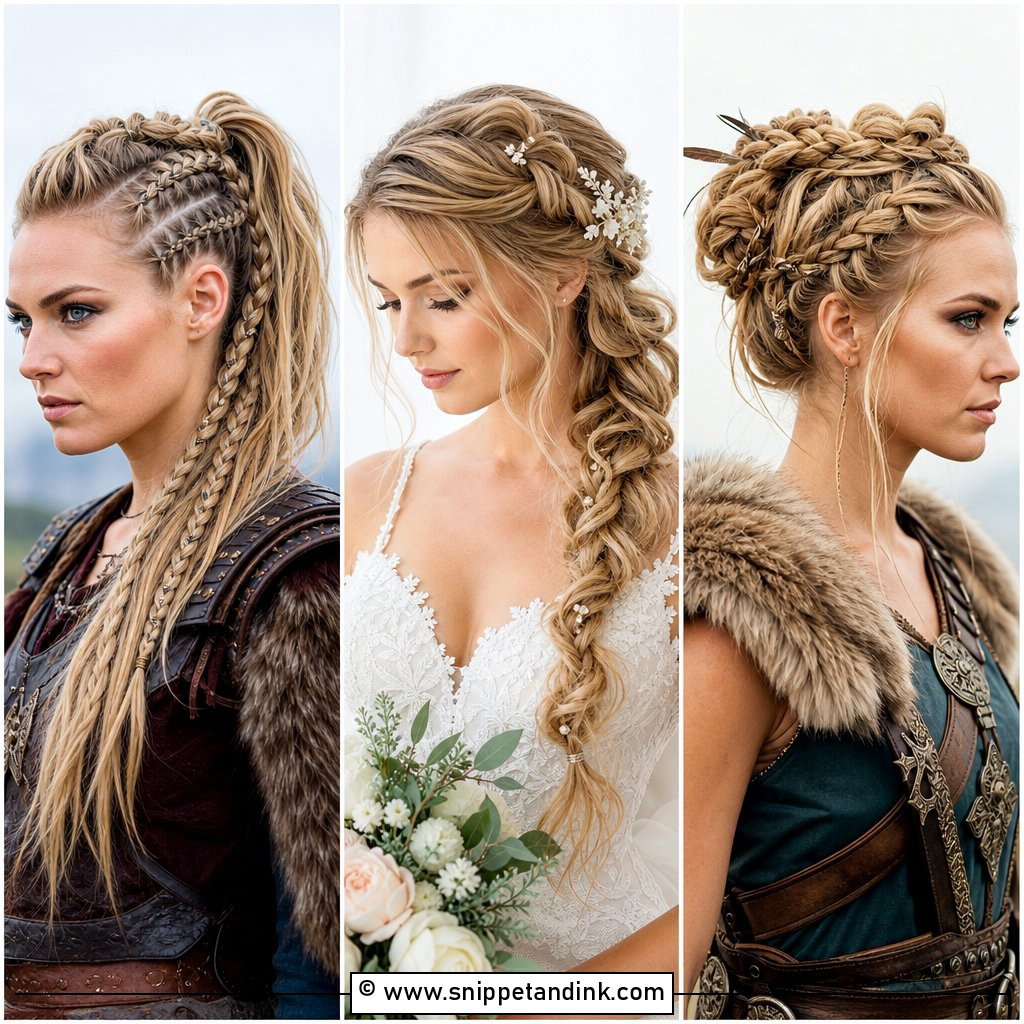
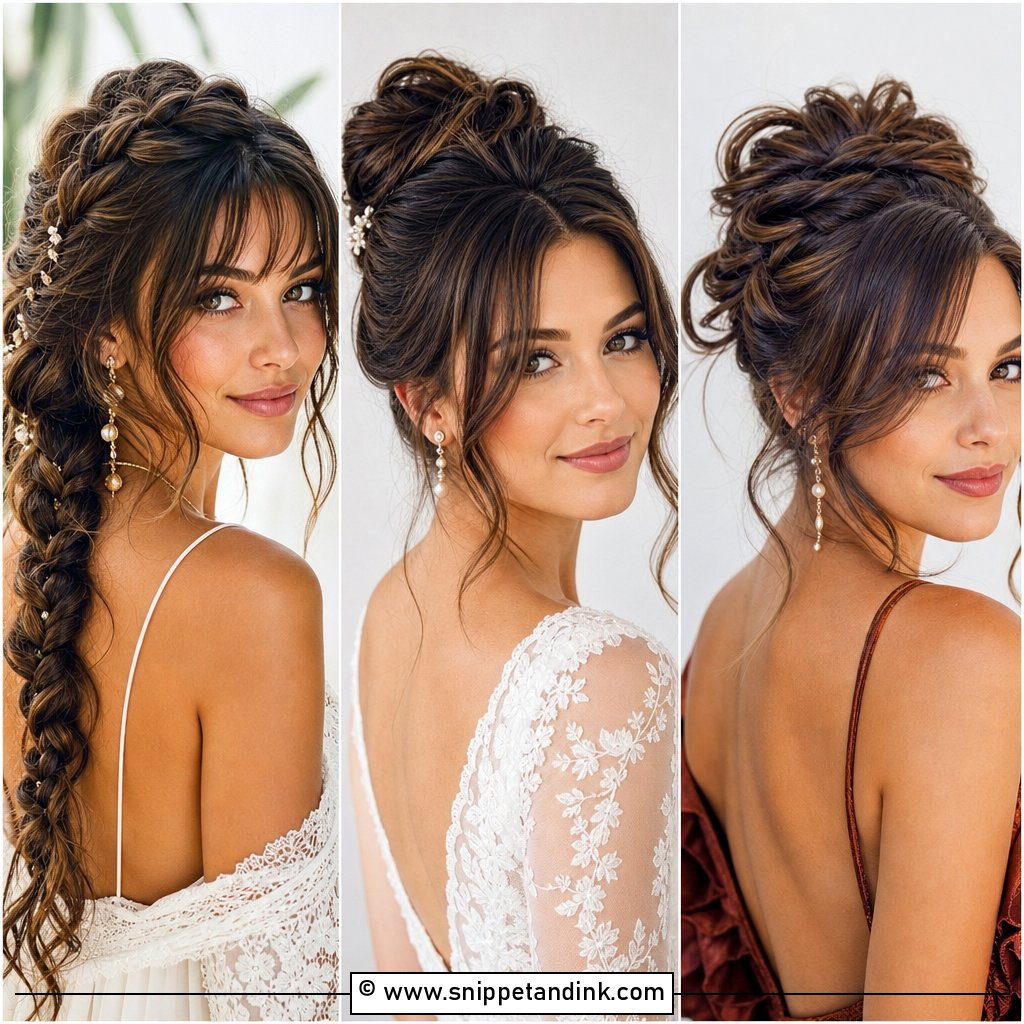
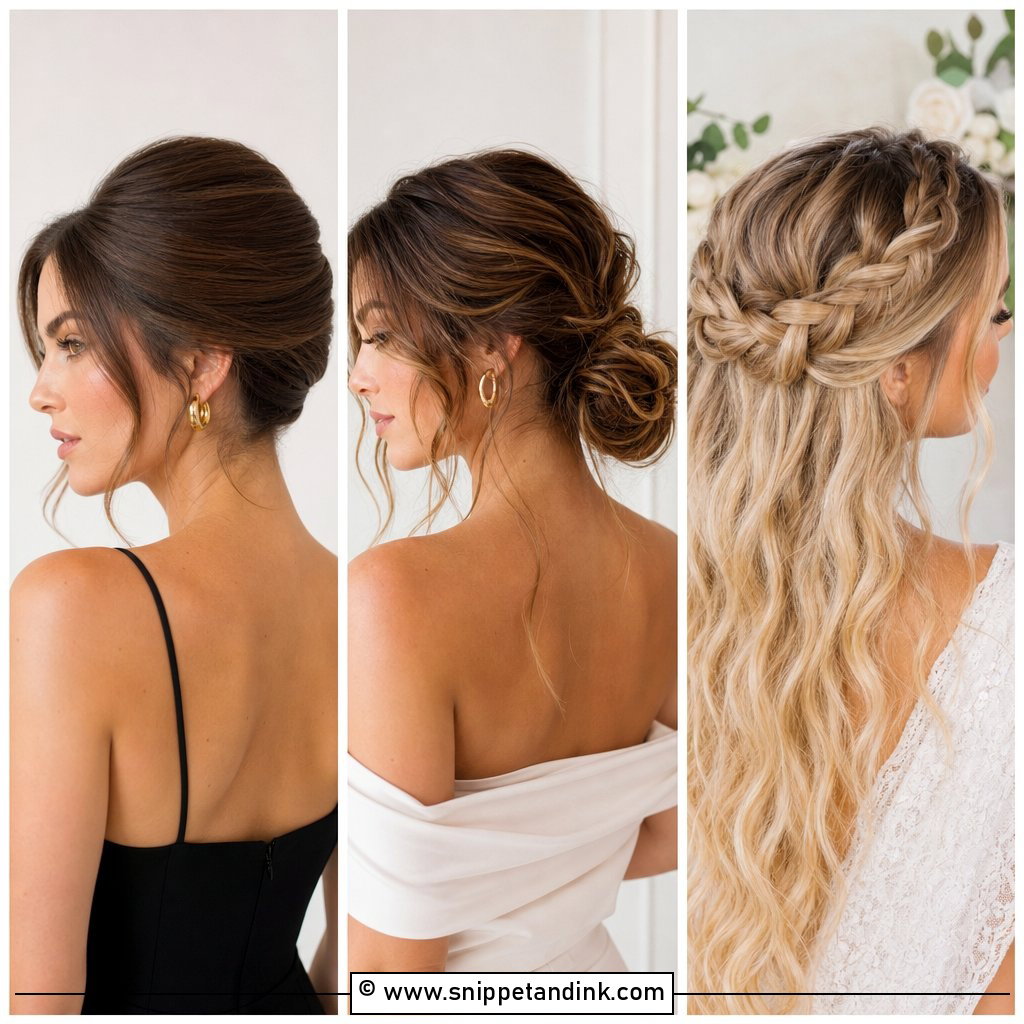
15. Braided Crown With Bun for Wedding
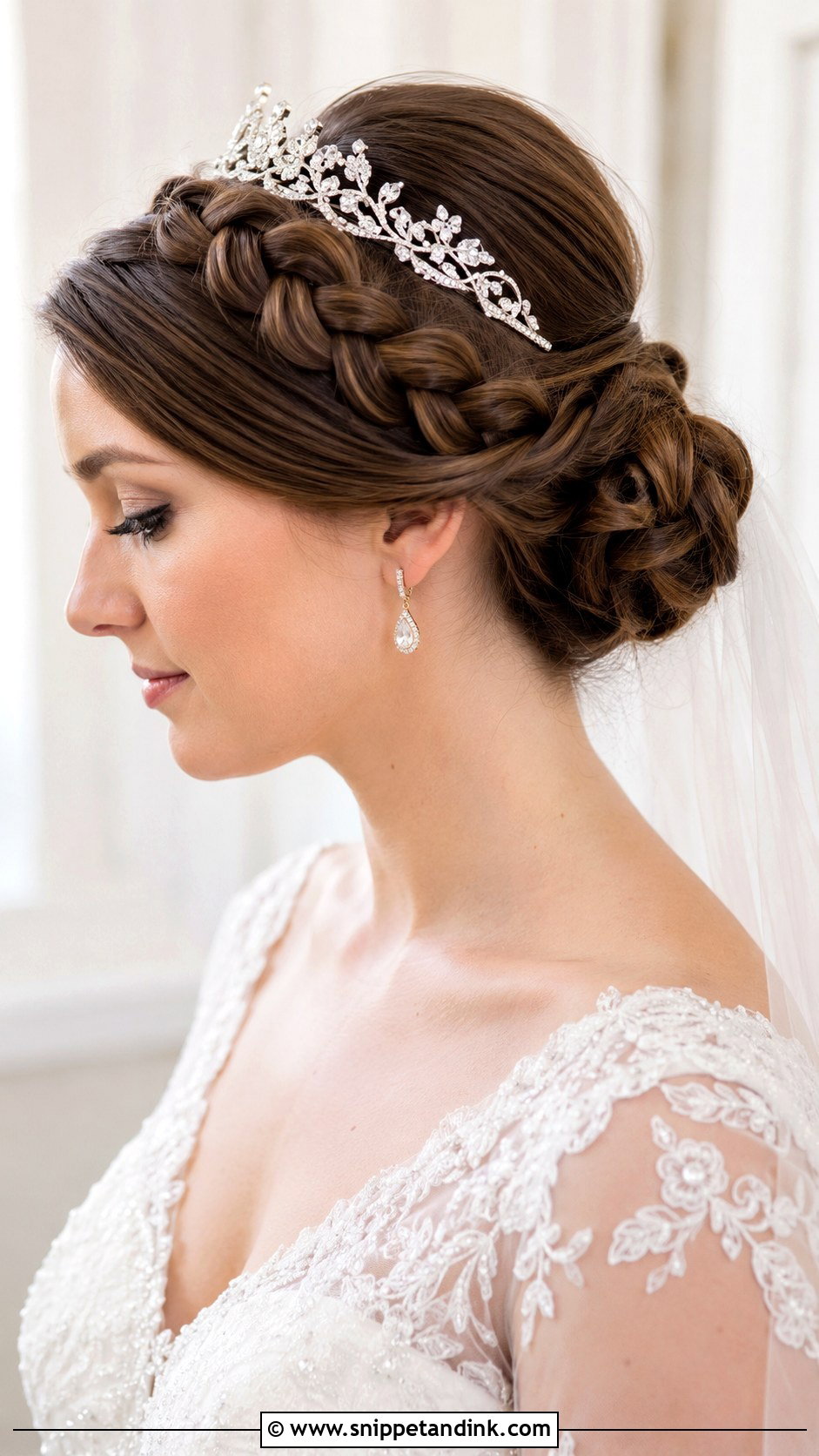
A braided crown flowing into a low bun gives you the halo at the front and a structured finish at the back. The braid wraps the crown and then ends in the bun, so it’s one continuous piece. It suits formal ceremonies, royal-inspired themes, tiaras and veils. Medium to long hair works. It’s very secure, but with a tiara I place the tiara first and braid around its combs so it can’t shift.
16. Messy Braid for Wedding
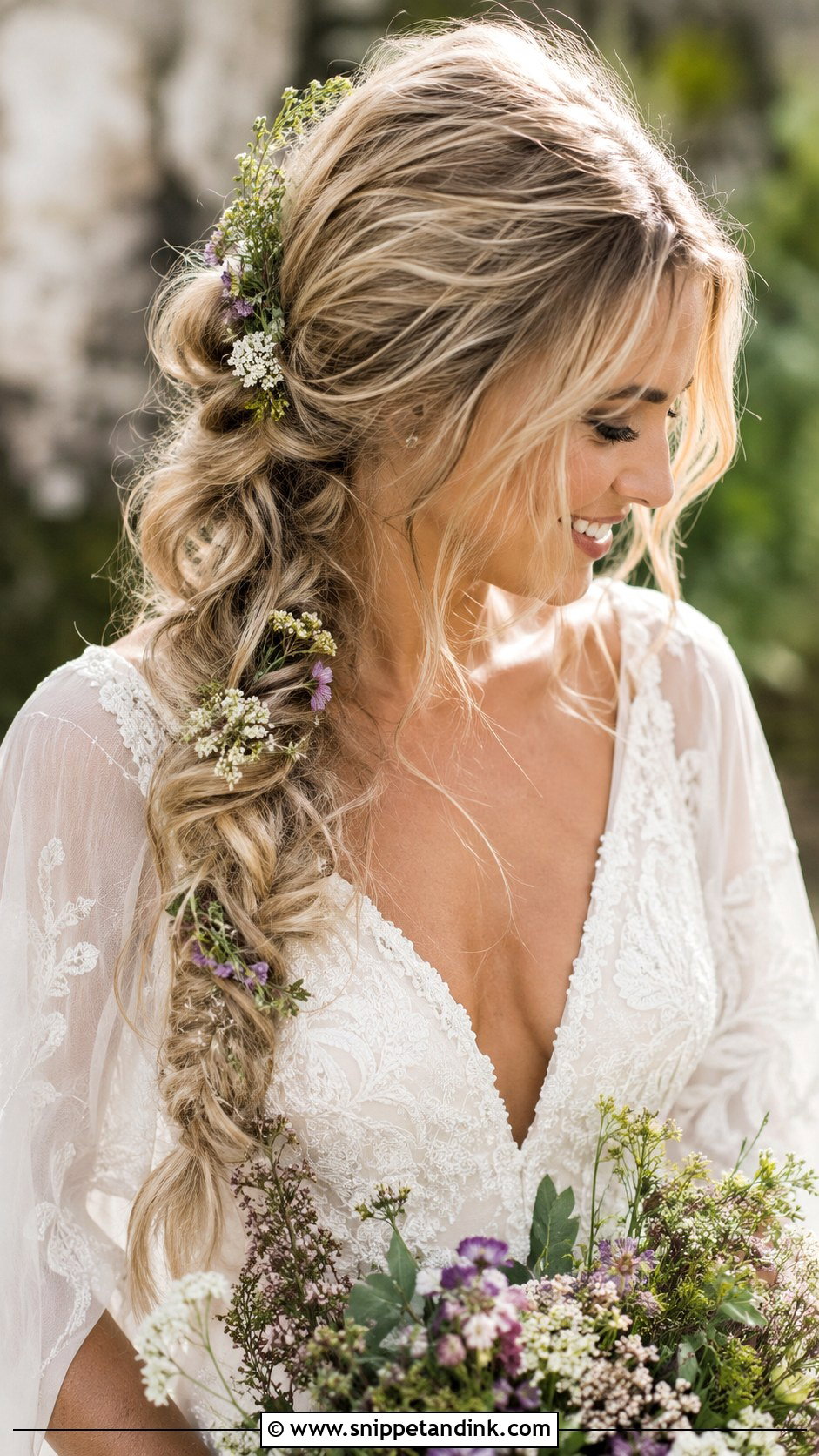
Messy braids are about volume and an undone finish. I pull strands loose deliberately, but always after the braid is secured. Wear it as a side braid, a low braided bun or a loose plait. Wildflowers or greenery fit its relaxed mood. It gets softer through the day rather than falling apart, as long as the base is secure, which makes it a sensible choice for an outdoor wedding.
17. Braided Updo for Wedding
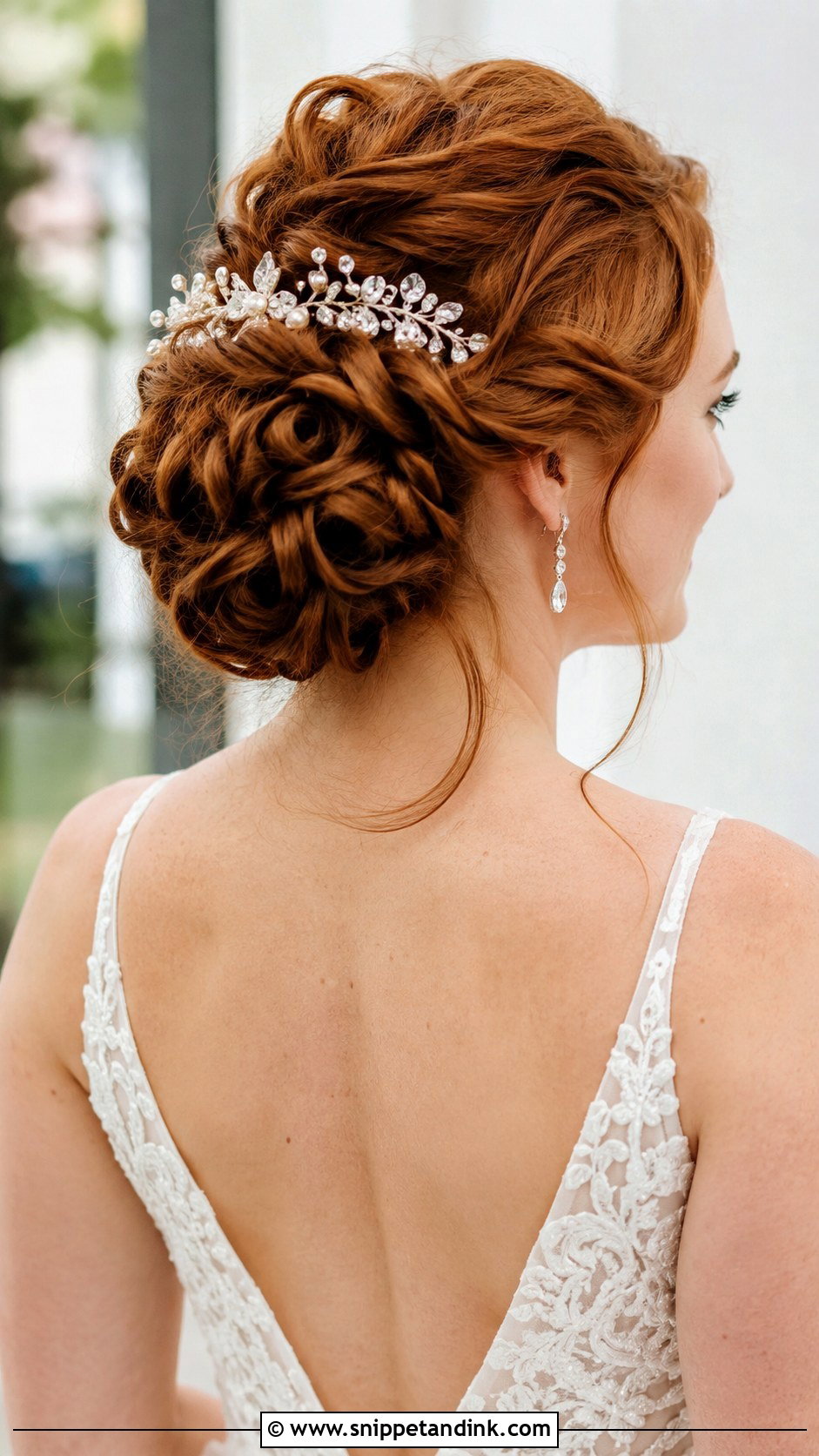
A braided updo uses one or several braids inside a structured shape. I often build a simple bun base first and lay braids over it, so the braids carry the detail and the base carries the weight. That’s how it keeps every strand secure through a long reception. Veils, statement earrings and sparkly accessories all sit well on it. Most lengths and textures work.
18. Twist Braid for Wedding
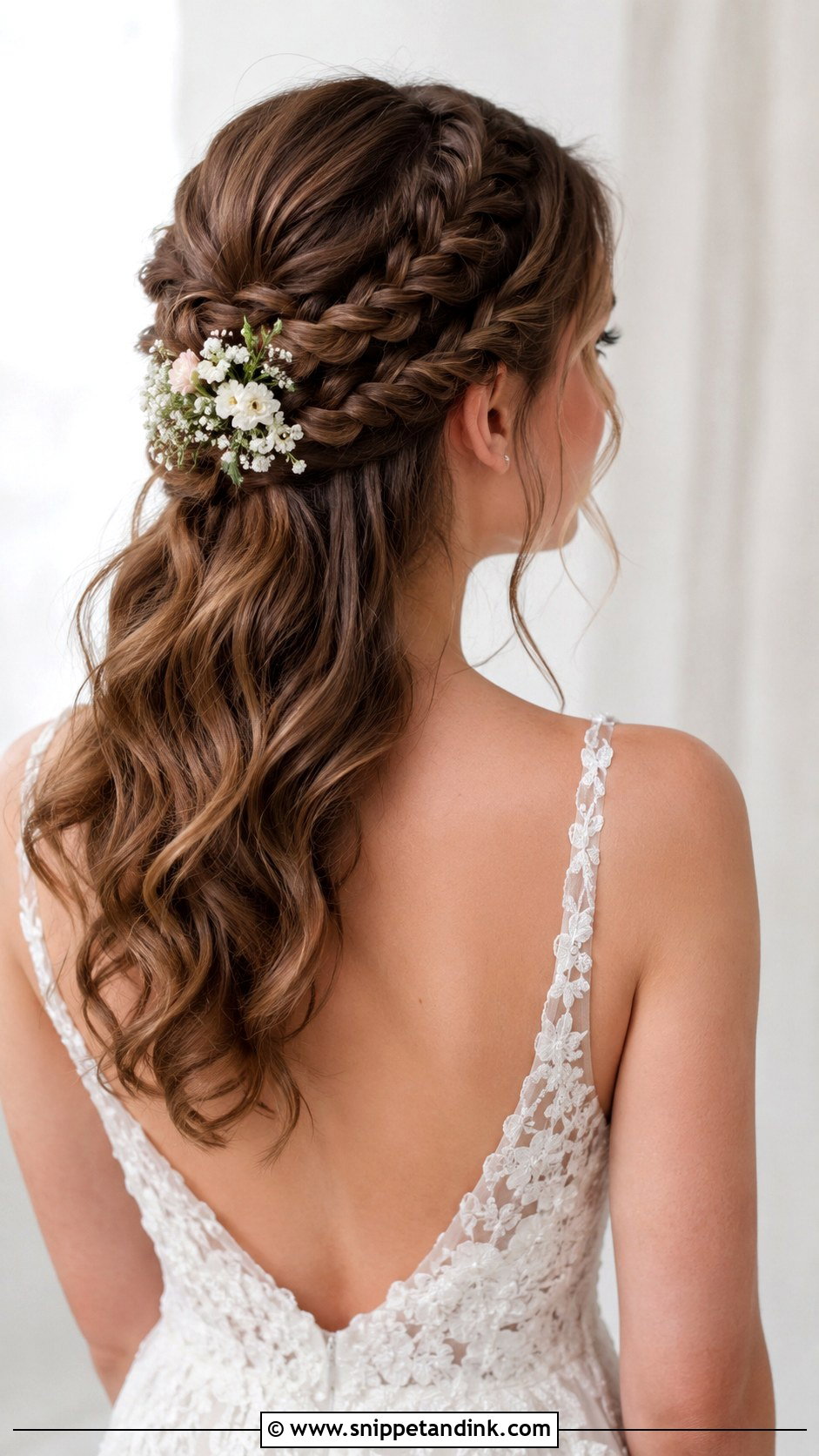
Twist braids, often called rope braids, are made by twisting two sections around each other instead of plaiting three. They catch light differently from a plait and look creative and modern. Half-up, worked into an updo or down the back, all work. Twists unravel if the hair is slippery, so I twist each section in the same direction before wrapping them the opposite way, which locks the rope. It suits most hair types.
19. Braid With Flowers for Wedding
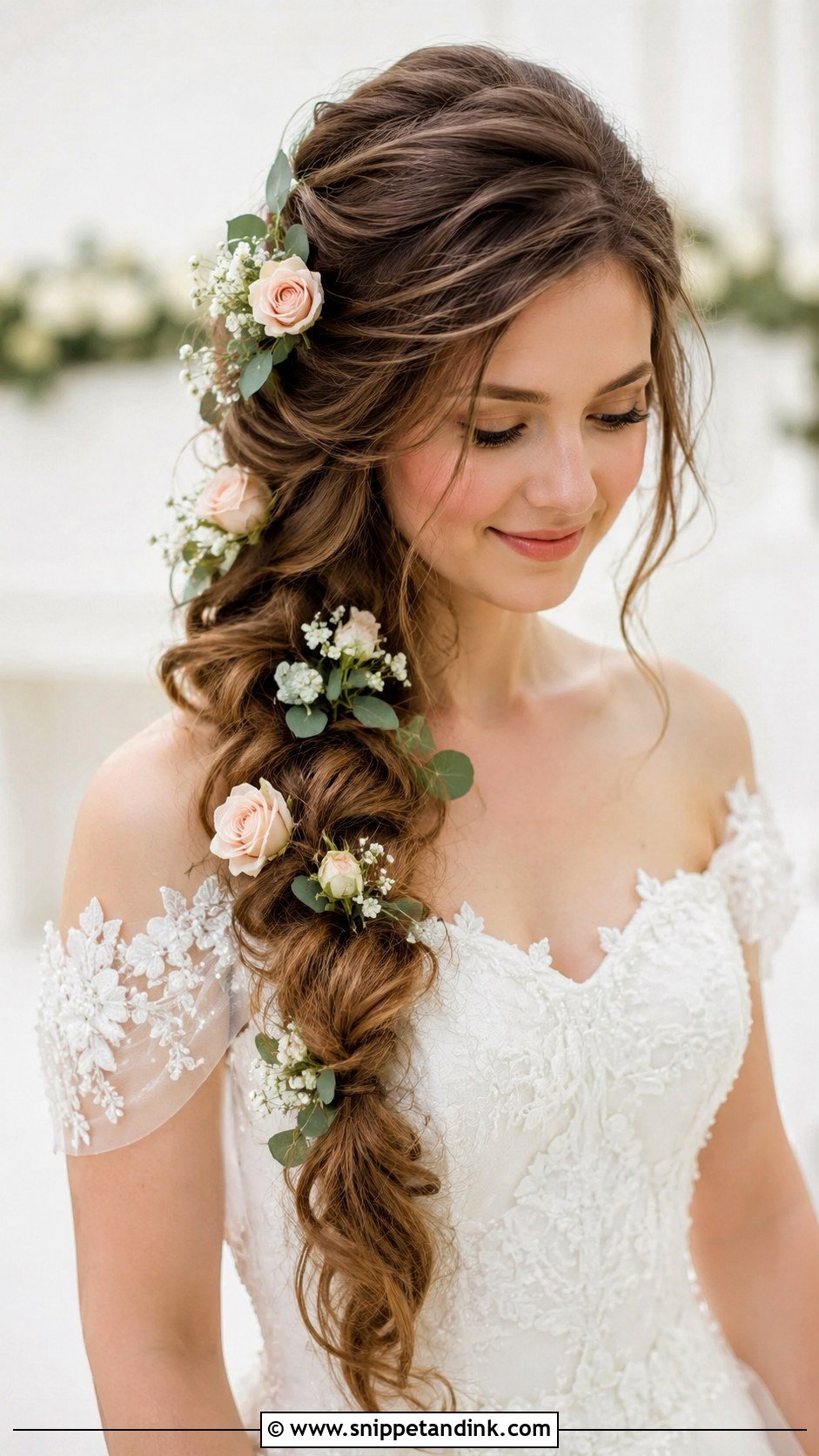
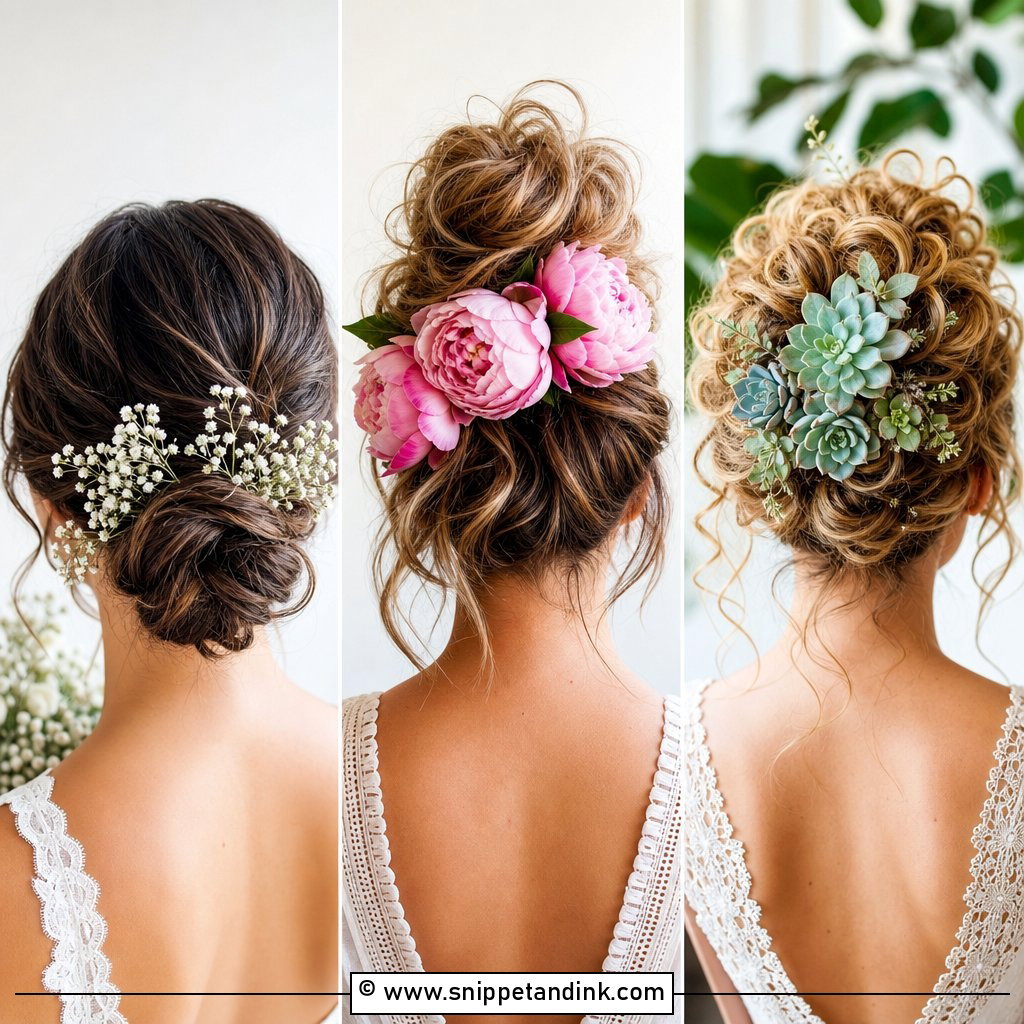
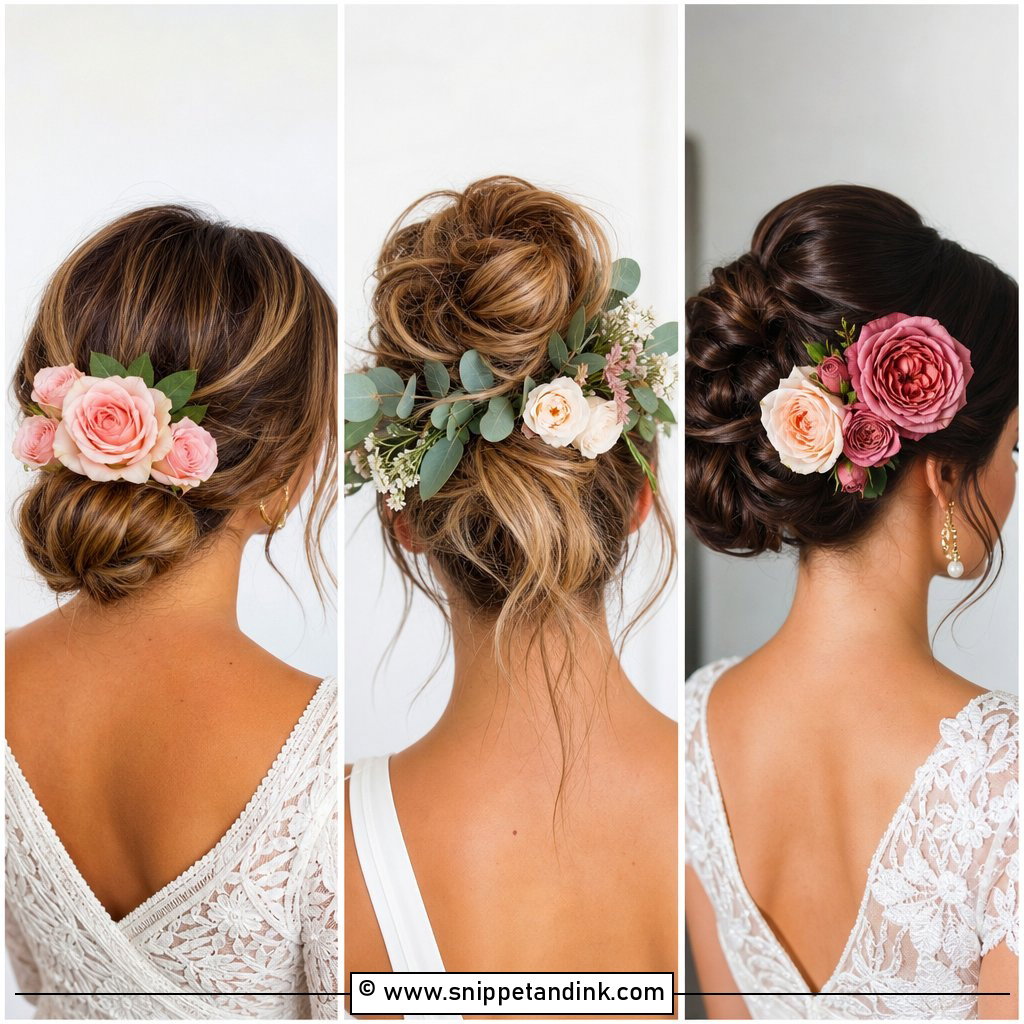
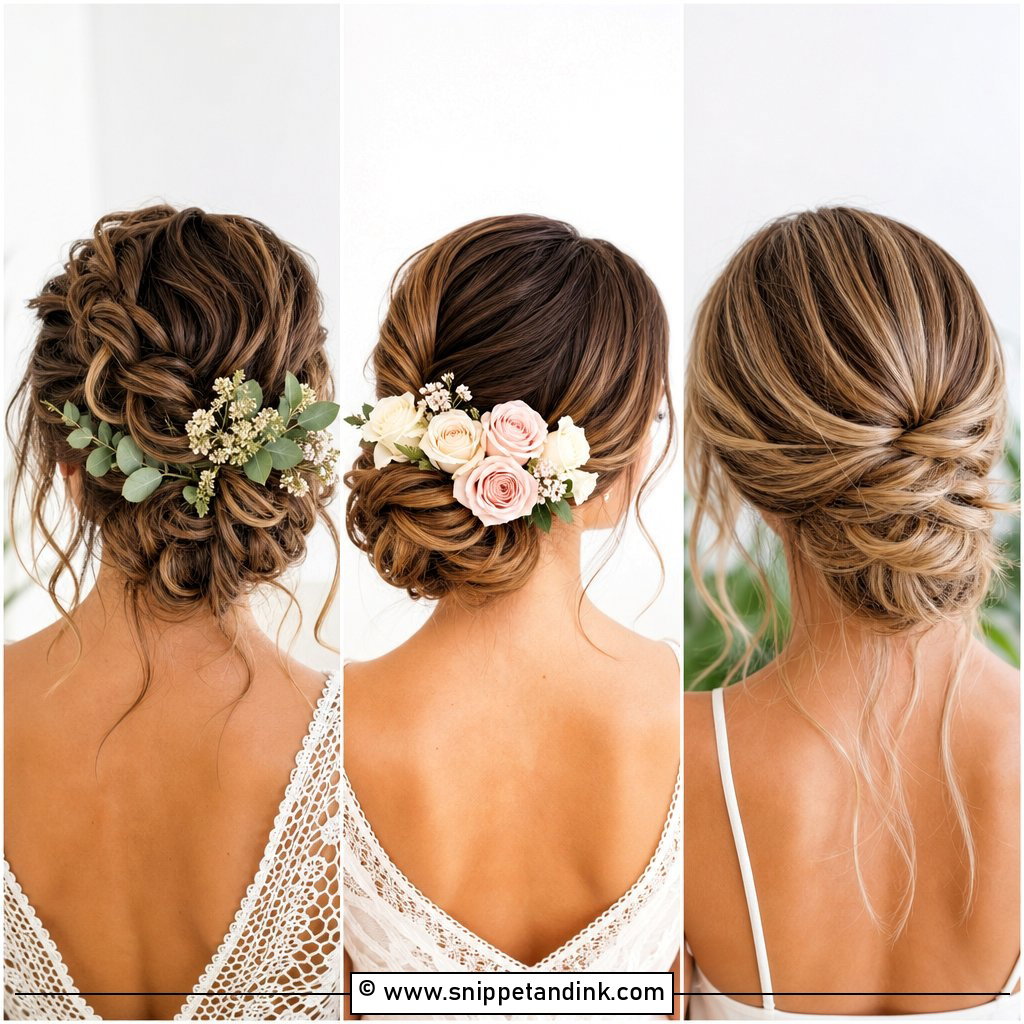
Flowers woven through a braid turn a simple plait into something garden-fresh. Baby’s breath, small roses and greenery hold up best; I tuck stems along the braid where the weave grips them. Crown braids, side braids and half-up styles all take flowers easily. Ask your florist for extra stems that match your bouquet, and have a few spares ready for touch-ups later.

20. Loose Braid for Wedding
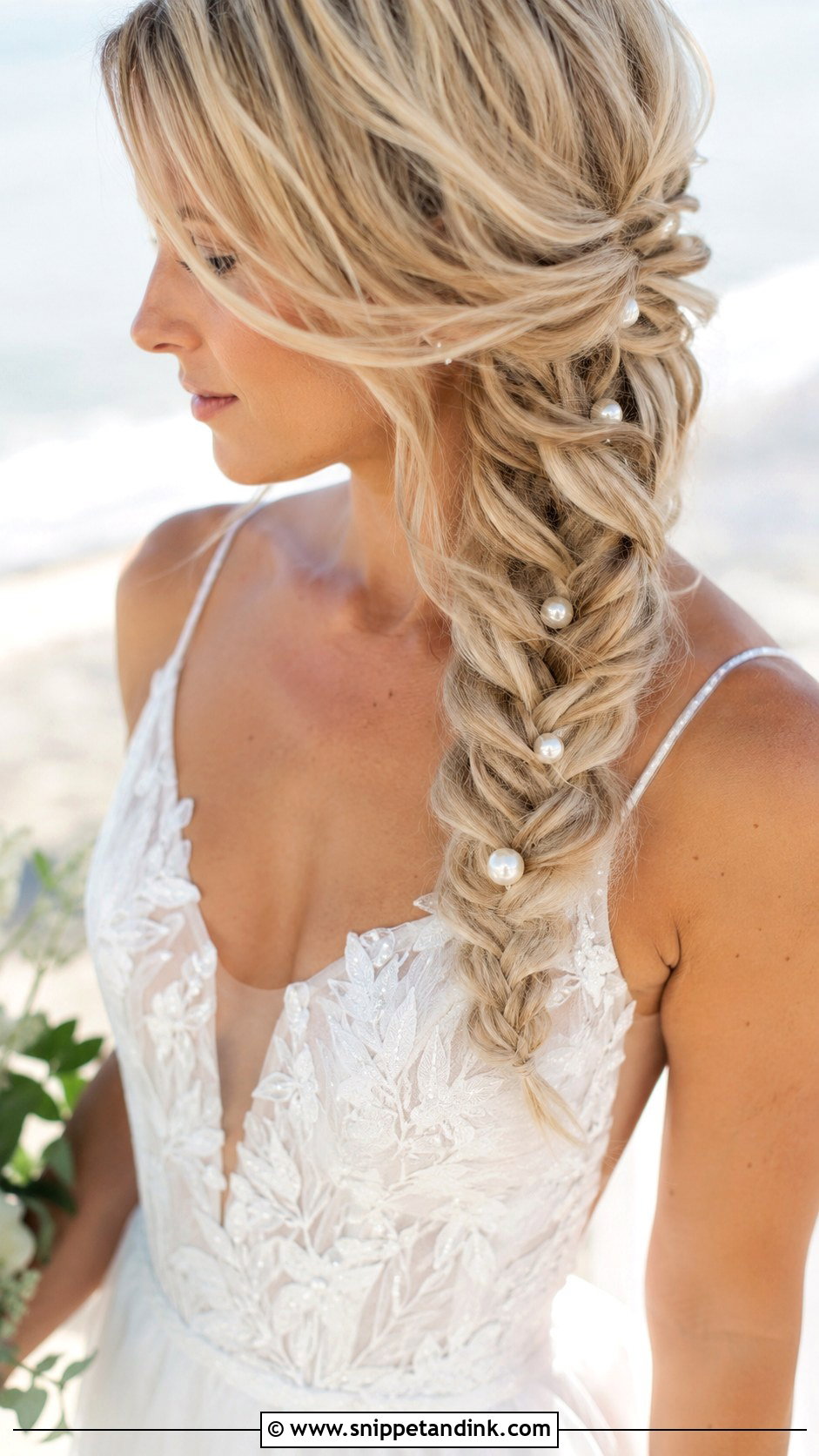
A loose braid is woven gently and then pulled apart for volume. It suits a bride who wants her hair down but styled. Over one shoulder or straight down the back both work, with pearl pins or small flowers. Long, thick hair suits it best. Its weak point is the elastic at the bottom: on heavy hair, I use two and pin the braid’s tail from underneath.
21. Braided Headband for Wedding
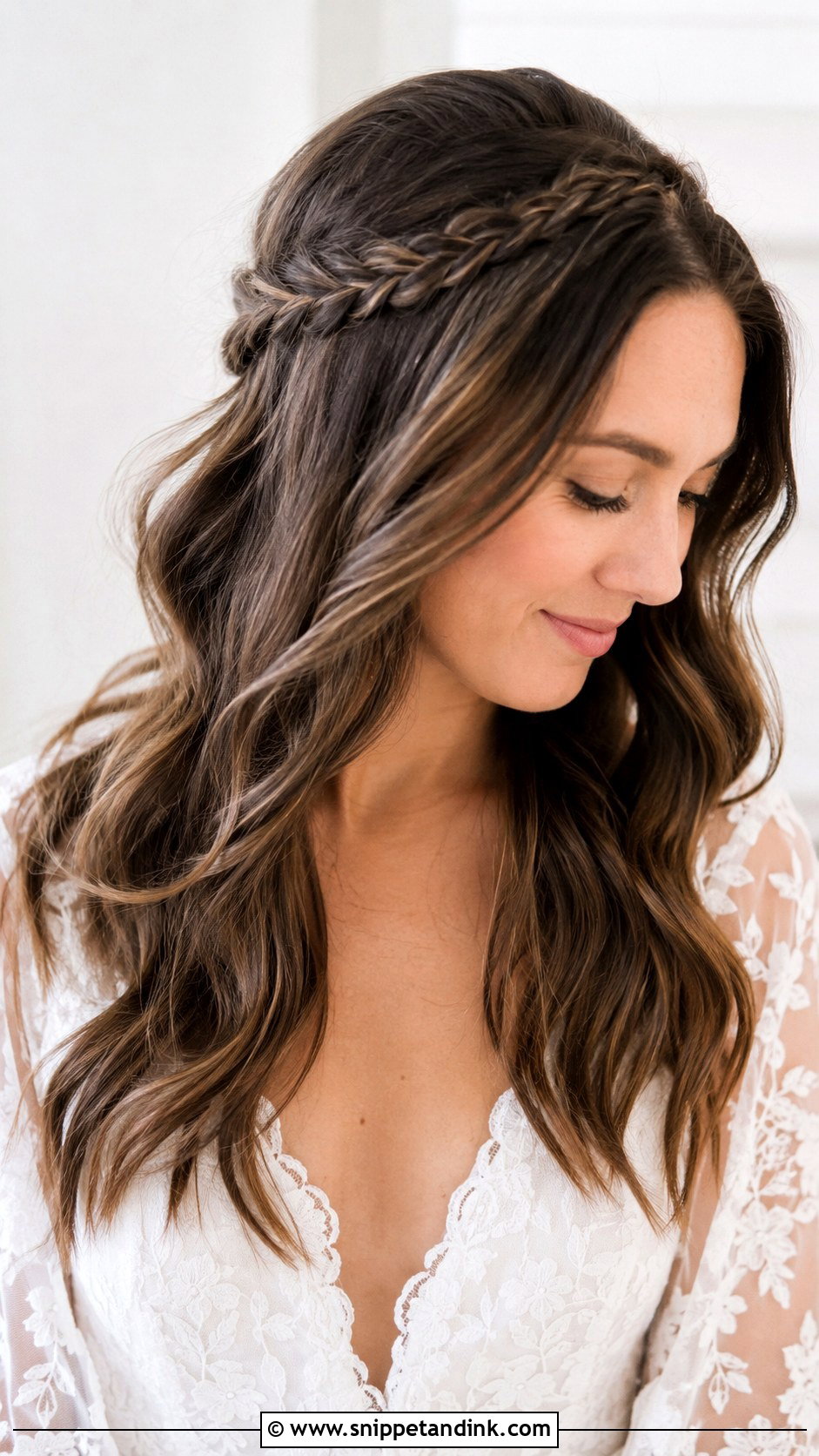
A braided headband is a thin braid wrapped across the head from ear to ear, acting like a natural accessory. I braid it from a section just behind the hairline and pin the ends behind the ears. Loose waves below or a soft updo both suit it. It’s understated and works at almost any length, even a bob, which makes it one of my go-to options for short hair.
22. Double Braid for Wedding
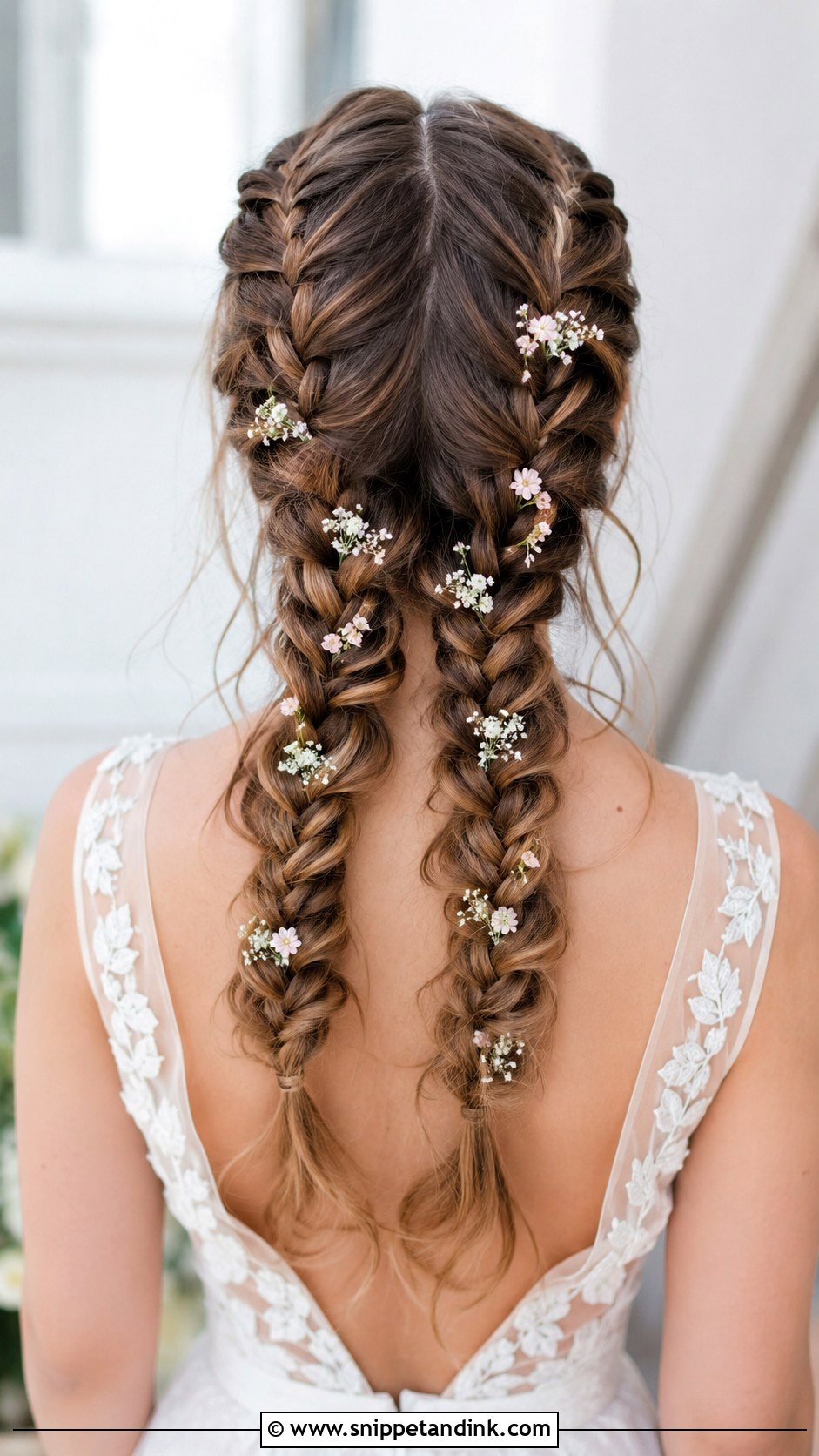
Double braids give symmetry. Two braids down the back, two crown braids or twin Dutch braids pinned into an updo all look balanced from behind. I part the hair carefully down the centre first, since a crooked part shows more with two braids than anything else. Tight is polished; loose is soft. Flowers or accessories can go along both.
23. Braided Low Bun for Wedding
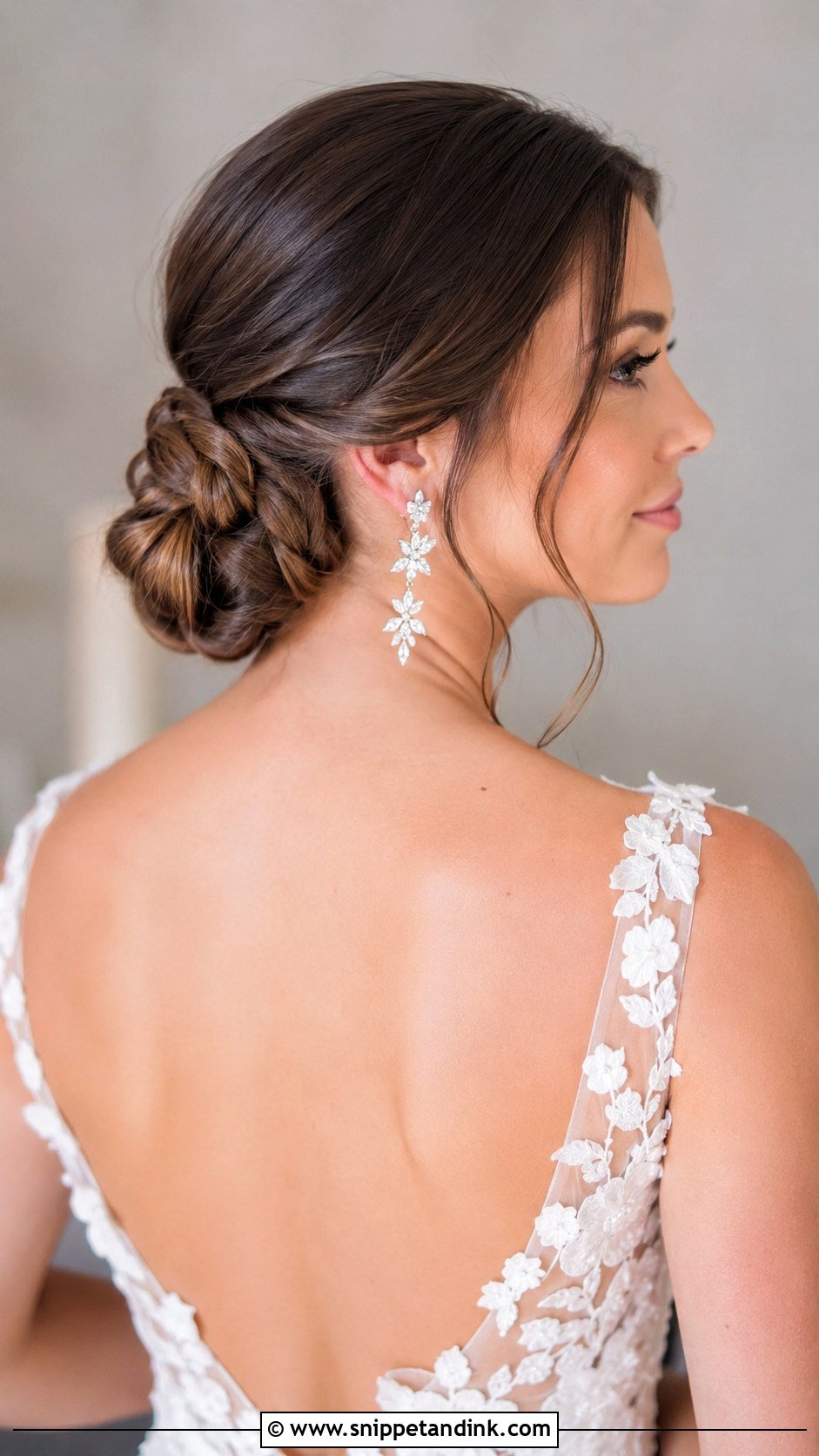
A braided low bun sits at the nape and suits formal weddings. I braid the hair, then coil the braid into the bun, so the texture shows all the way around. It sits well under a veil and next to statement earrings. Sleek for a modern look, softened with tendrils for a romantic one. The low placement suits most face shapes and most lengths.
24. Goddess Braid for Wedding
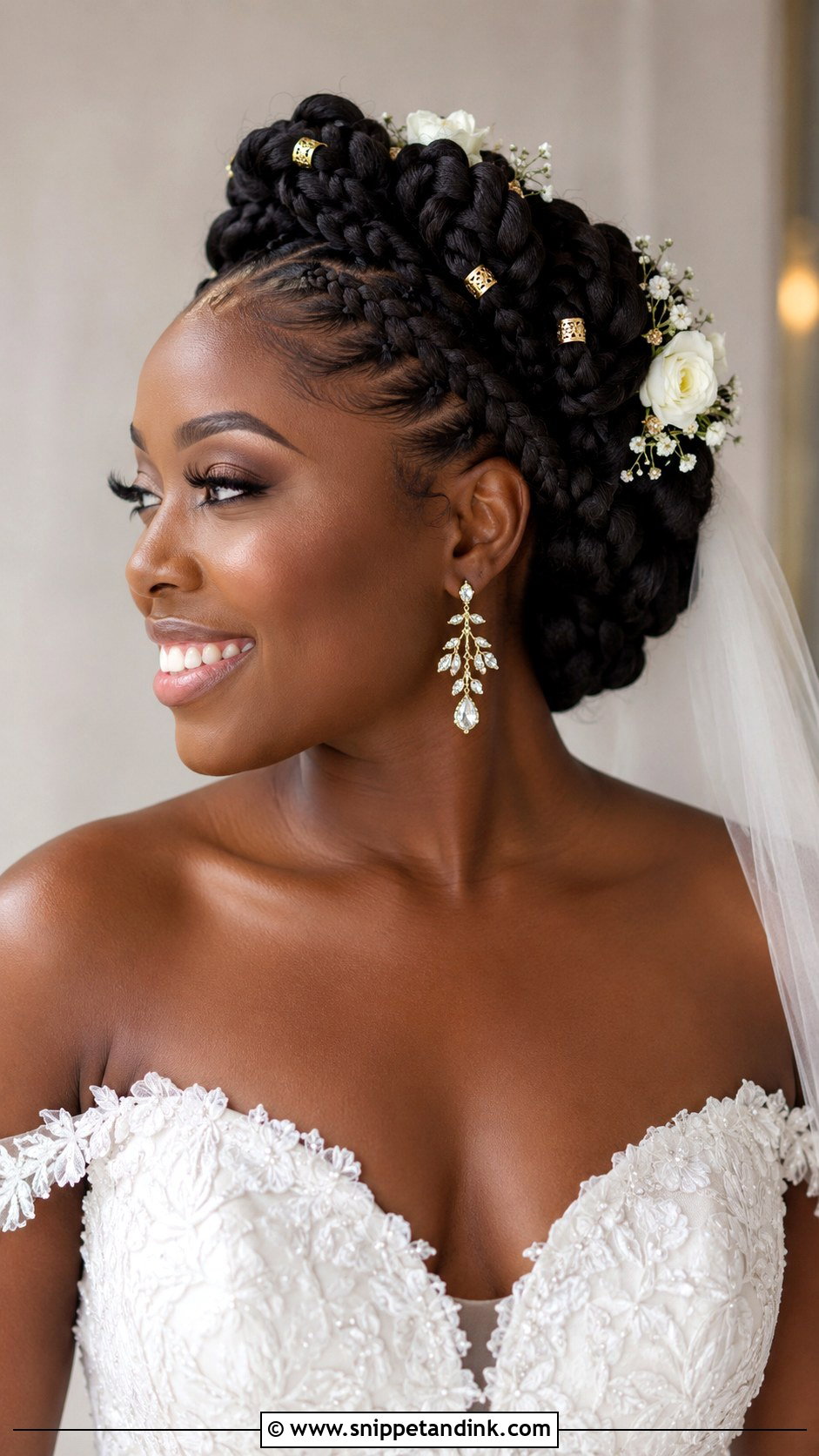
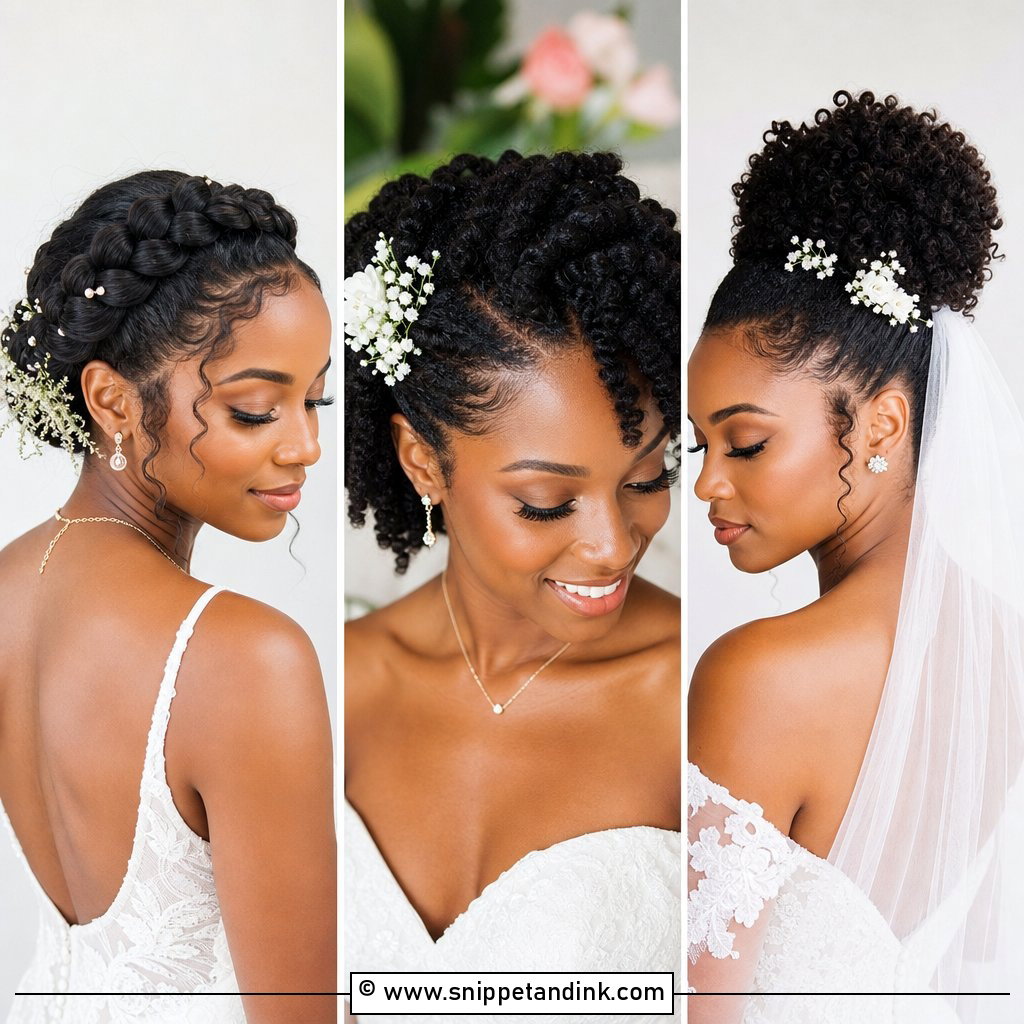
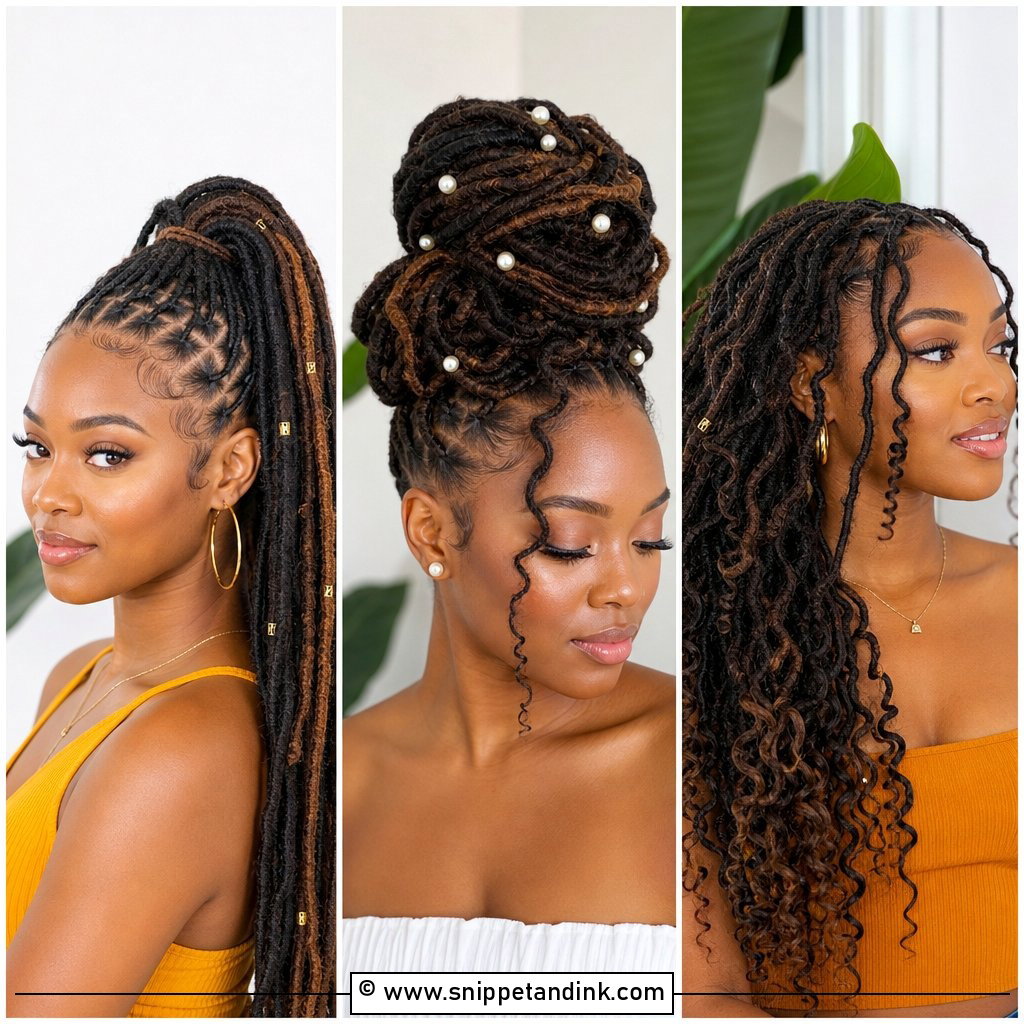
Goddess braids are thicker, raised braids rooted in Black hair traditions, braided close to the scalp. They’re usually done by a specialist braider a day or two before the wedding rather than on the morning, since they take hours. Crown, updo or flowing down the back, they hold for the whole day and beyond. Gold cuffs, beads or flowers suit them. Talk to your braider early about tension along the hairline, because tight braids there can be painful and stressful on the edges.
25. Braided Half Crown for Wedding
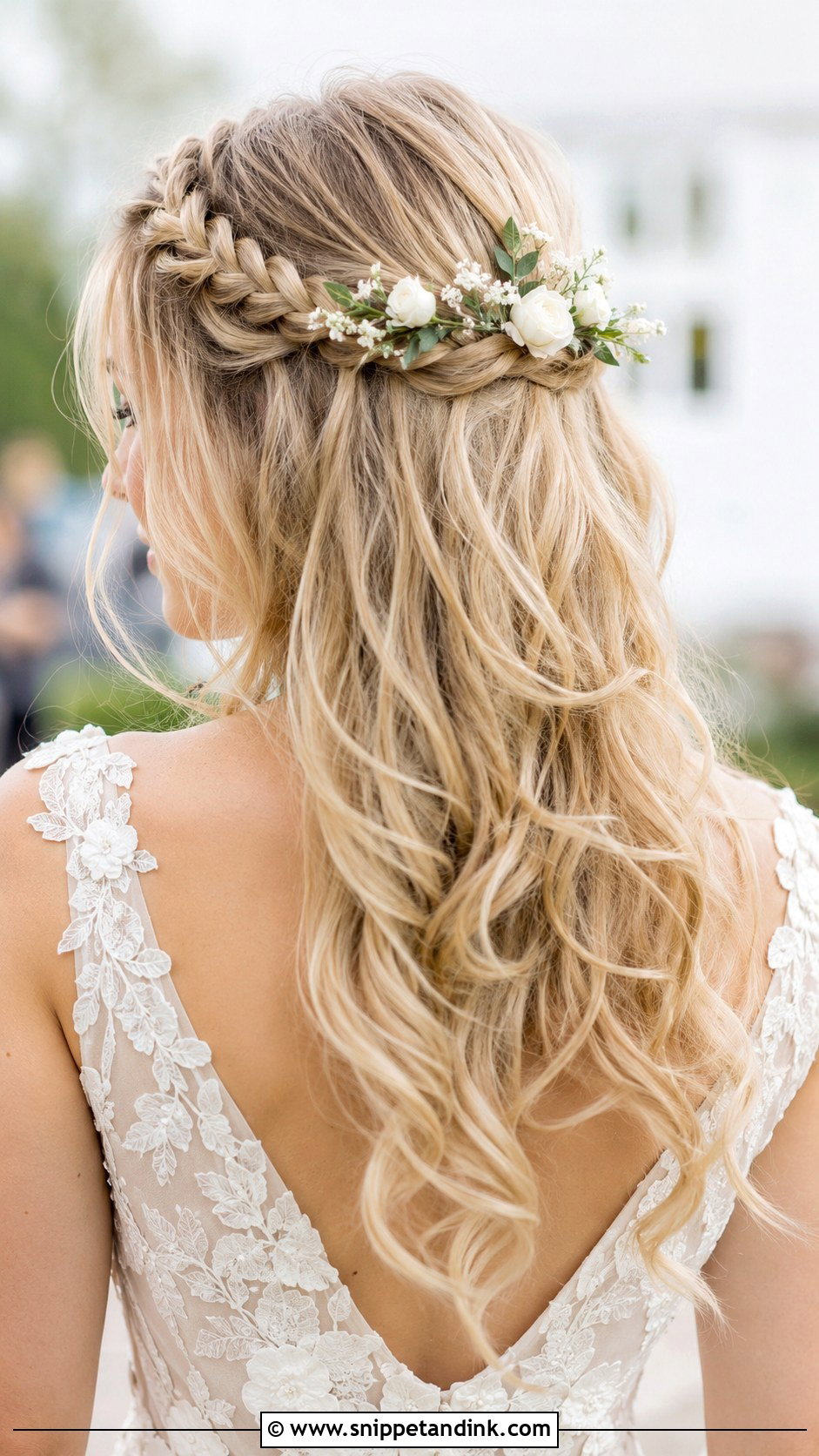
A braided half crown brings a braid back from each side to meet at the back like a soft tiara. The rest of the hair falls in waves below. The meeting point is where pins show, so I always cover it with a flower, a pearl clip or a small comb. It keeps your face clear while the length stays down, and it suits most lengths.
Chair Time for Intricate Braids on the Morning
I also plan braids around photography. If the photographer wants getting-ready shots of the hair being finished, I leave the final pinning and flowers for that moment, so the braid itself is already secure and only the details happen on camera.
Braided styles take longer than most brides expect, and that matters when the timeline is tight. A simple side braid can be done fairly quickly; a full halo, infinity braid or braided updo takes much longer, and I’d plan more time for long or thick hair. Times vary with the style and the hair, so confirm yours at the trial and add a buffer.
- Arrive with dry hair, washed the day before, unless your stylist says otherwise.
- Wear a button-up top so you don’t have to pull anything over the braids.
- Put the bride’s hair in the middle of the schedule, not last, so there’s time to fix things.
- Book specialist braiding like goddess braids for the day before.
If a braid comes loose during the day, don’t pull at it. A couple of bobby pins slid in along the weave, in the same direction as the braid, will hold it until a quick touch-up.
Your Veil Decides Where the Braid Can Sit
The right braid comes down to your hair, your dress and your venue. A crown braid, a fishtail and goddess braids all bring different structure, but all of them grip pins and hold a veil far better than loose hair. Flowers, pearls and small pins personalise any of them. Save a few favourites, bring them to your trial with a photo of your dress, and ask your stylist which ones your hair can really carry.
You'll Like These Ideas:


Leave a Reply