
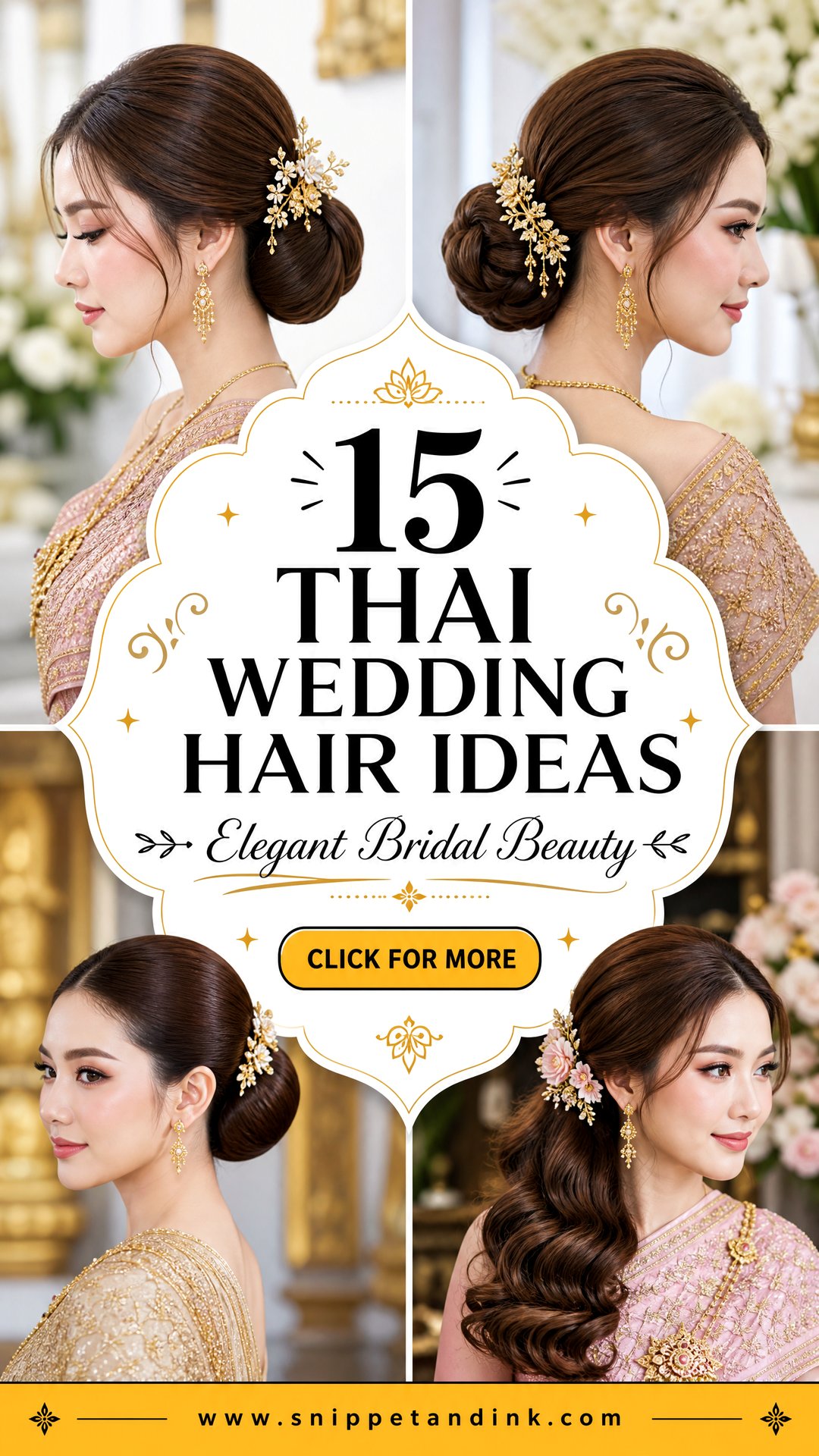
Plenty of Thai couples now hold two ceremonies in one day, so the hair has to answer to more than one outfit. A bride might start in a traditional Thai silk dress with a high collar and finish in a strapless white gown, and the style that suits one can fight the other. I plan from the neckline, the jewelry and the weather first, then add flowers, pearls or gold. The fifteen ideas below cover classic buns, braids, waves and short cuts, each with the details I’d check before you book it.
Thai Collars and Drapes Decide How High the Hair Goes
Before I look at a single inspiration photo, I ask which Thai dress the bride is wearing, because the neckline sets the limits. The traditional styles differ more than people expect.
- High round collar with long sleeves, as on the Boromphiman or Chitralada styles: hair has to come up and away from the neck. A low or mid bun works; anything resting on the shoulders bunches against the collar.
- One bare shoulder with a sabai over the other, as on the Chakkri: the bare side becomes the focal point, so I keep that side clean and avoid a side bun that sits on top of the drape.
- A modern strapless or off-shoulder silk gown: this is where loose waves, half-up and side-swept styles finally make sense.
Jewelry comes next. A heavy collar necklace or long gold earrings need space, so the more gold there is at the neck, the cleaner and higher I keep the hair.
Silk is also slippery against hair. A braid or curls resting on a silk shoulder slide and flatten through the day, so for silk ceremony outfits I lean toward styles that finish above the collar line.
1. Thai Wedding Low Bun
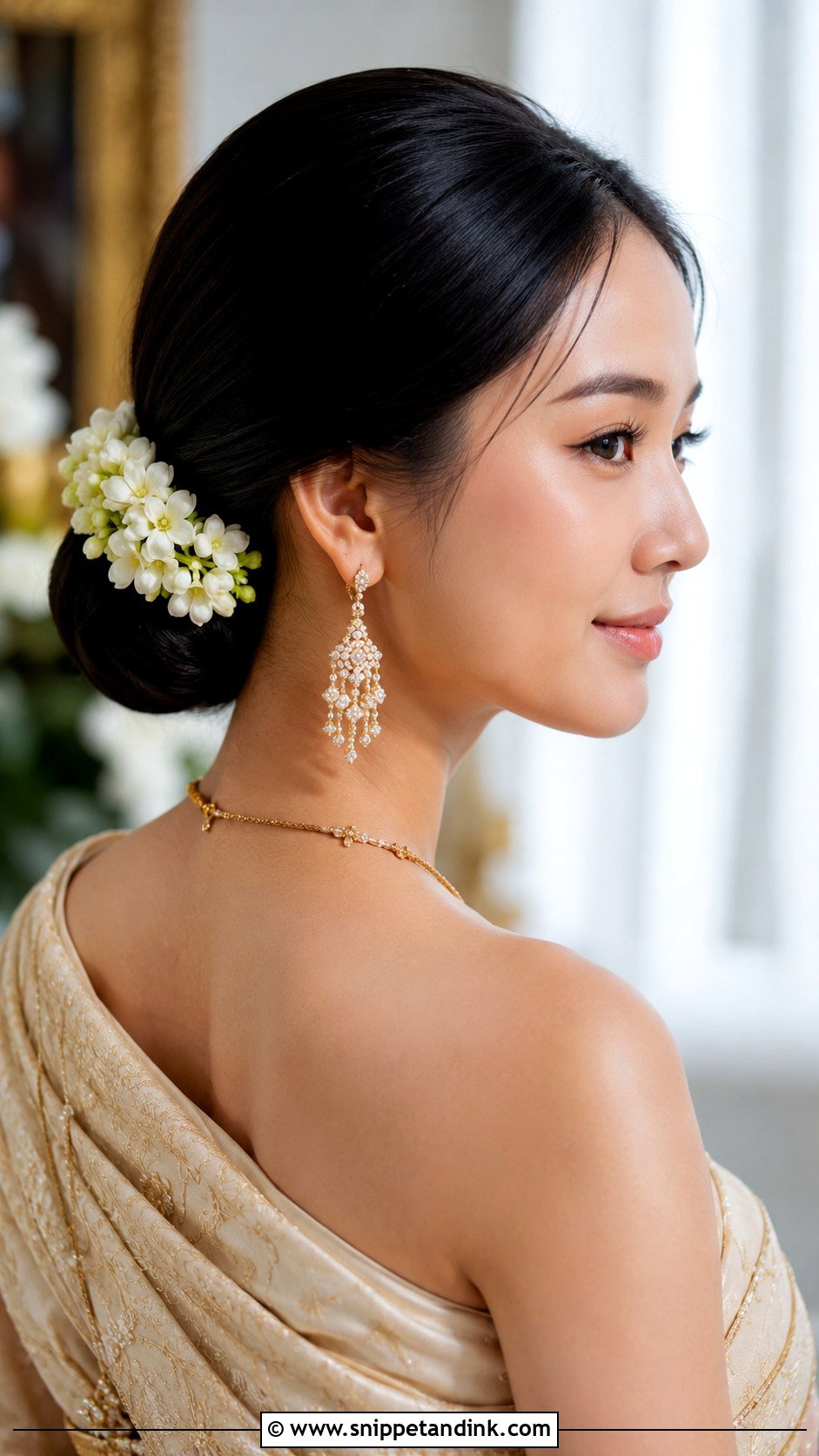
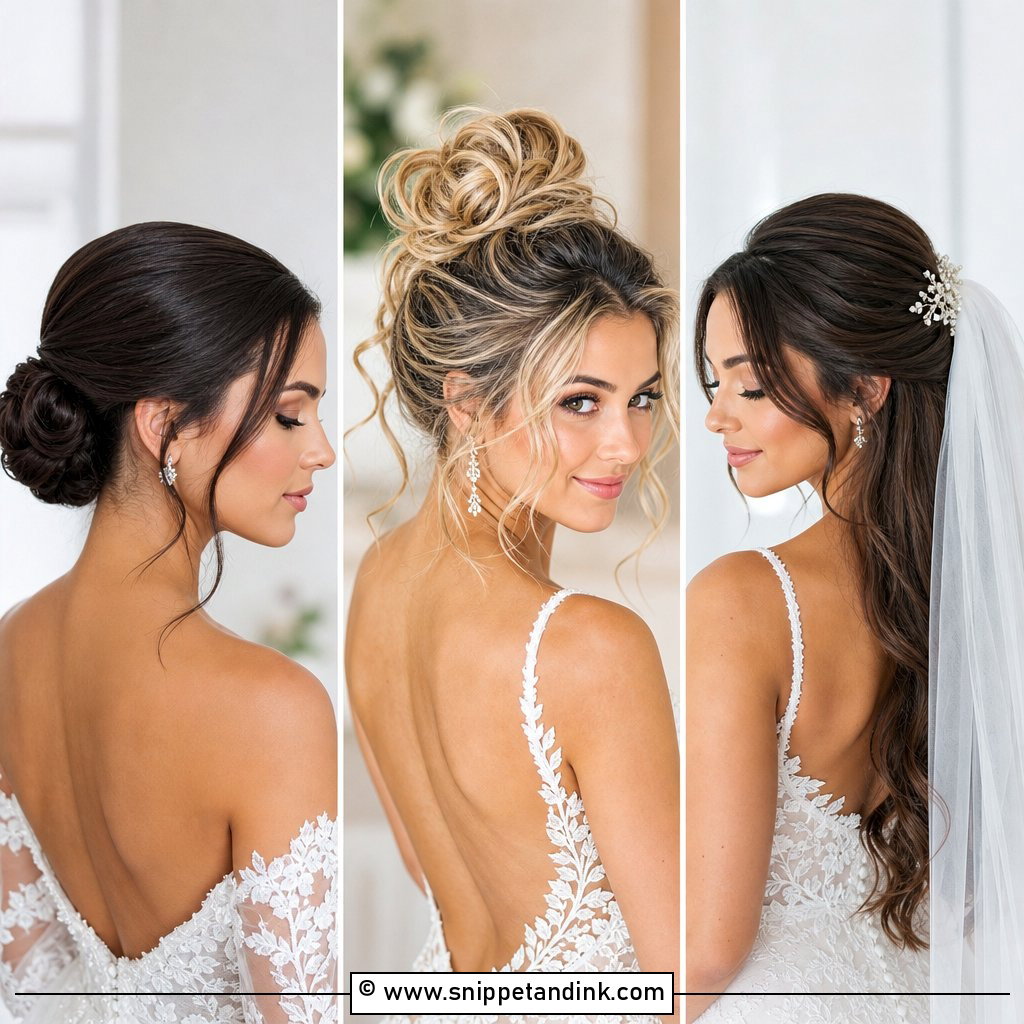
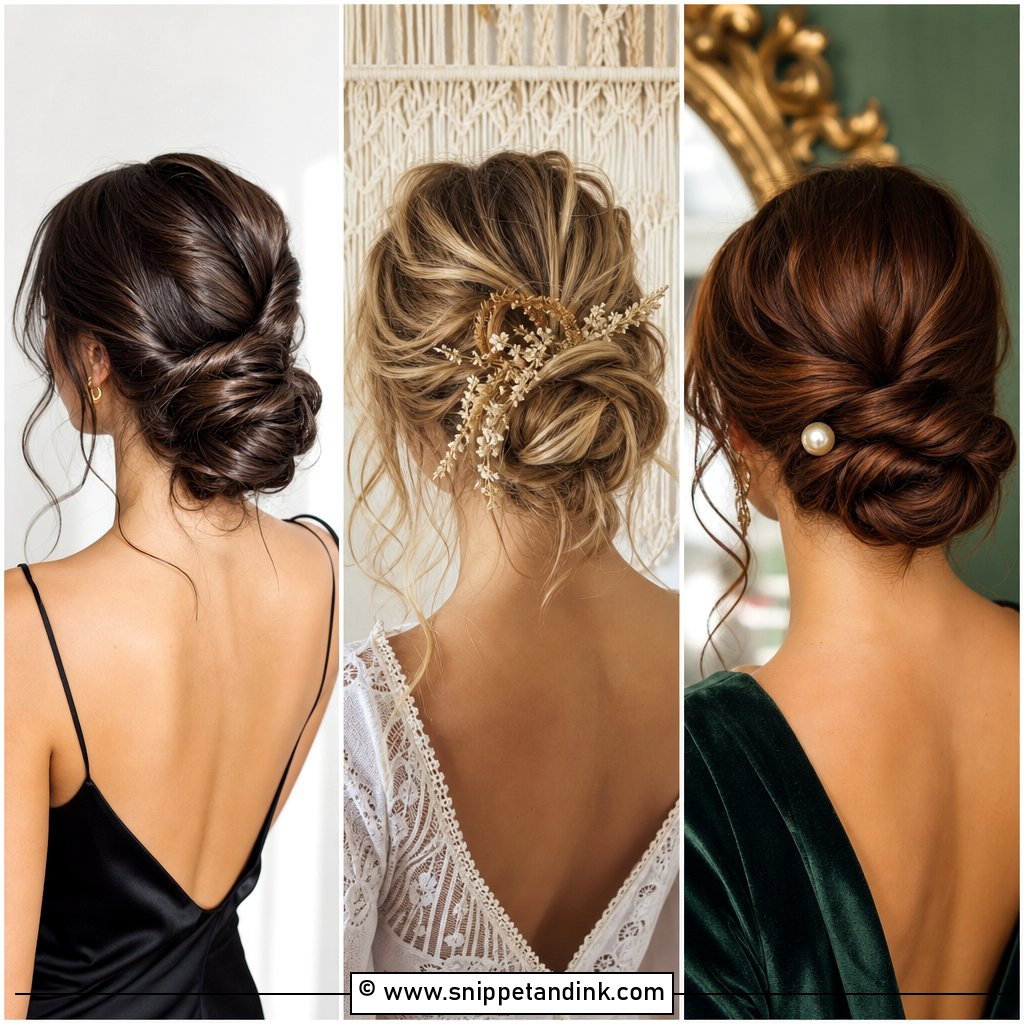
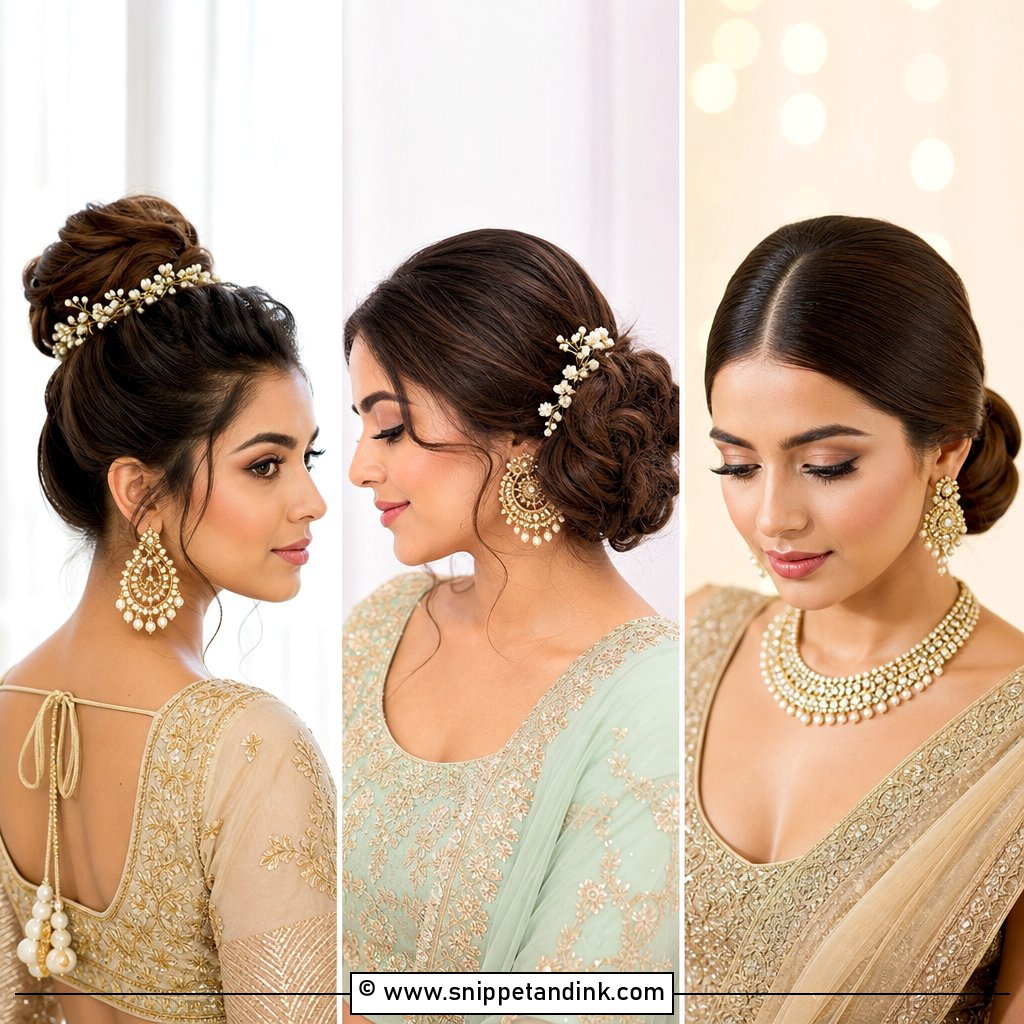
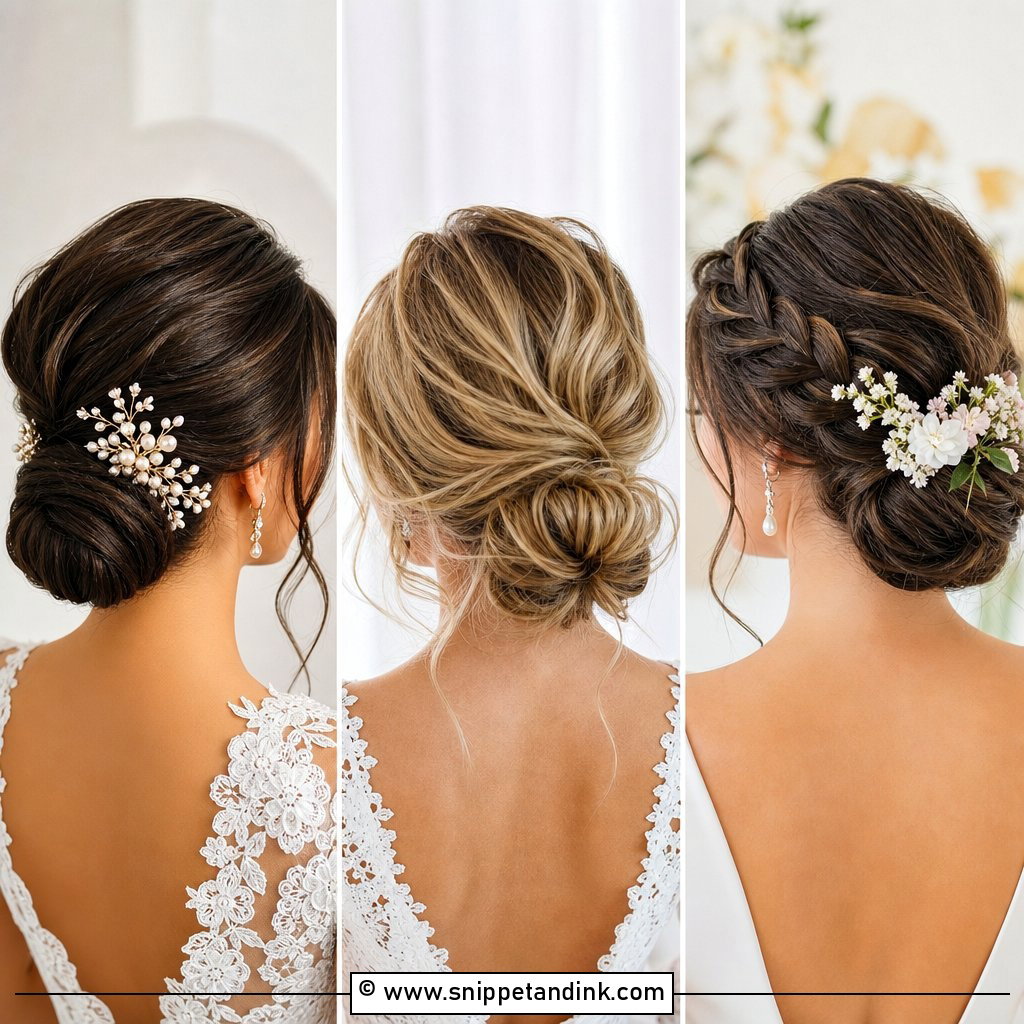
The low bun is my default for a Thai silk dress because it never fights a collar. Sitting close to the nape, it clears high necklines and leaves statement earrings in full view. It also behaves in warm weather, since hair gathered at the neck has nowhere to frizz. I add a little lift at the crown so it doesn’t look flat from the front. Round, twisted or softly textured all work; jasmine, pearl pins or a gold comb make it traditional.
2. Thai Wedding Chignon
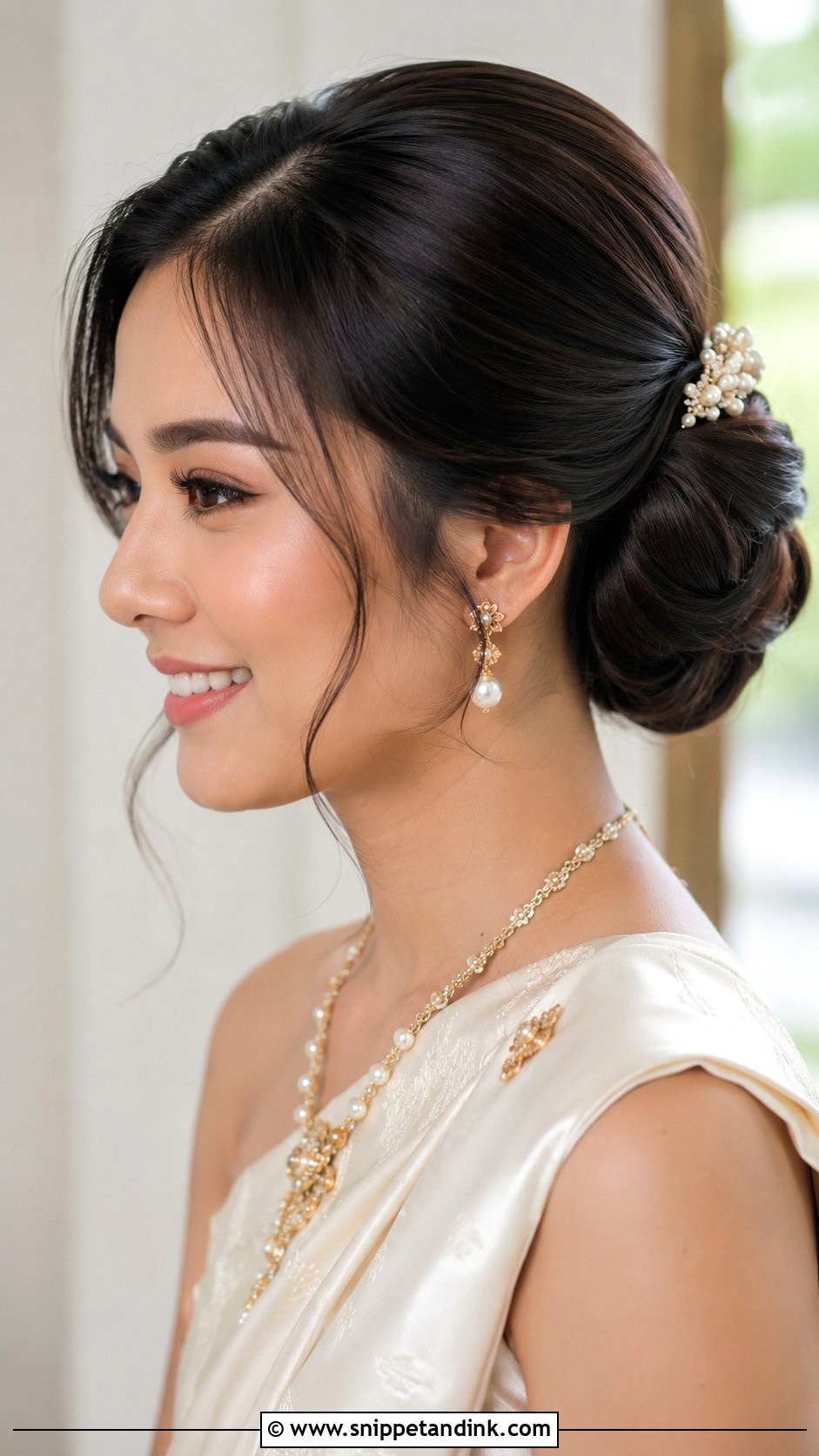
A chignon is shaped rather than simply wound. I roll, tuck or twist the sides and back into a sculpted form, which reads more formal than a plain bun. Shoulder-baring Thai outfits suit it because it keeps the neckline clean. Fine hair usually needs a padding piece or a few extensions to hold the shape. Part it in the center for a classic mood or to the side for something softer, but decide at the trial; switching the part on the day changes the whole balance.
3. Thai Wedding Hair With Jasmine Flowers
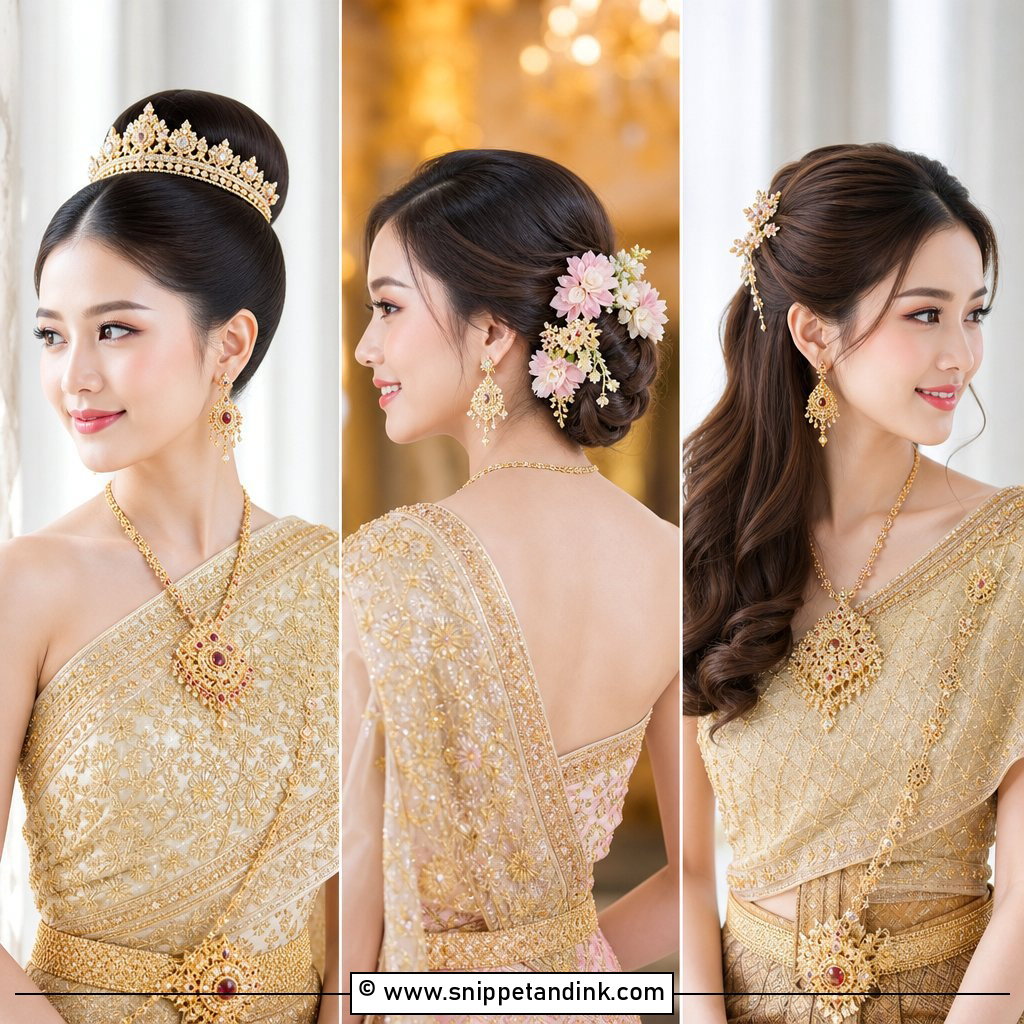
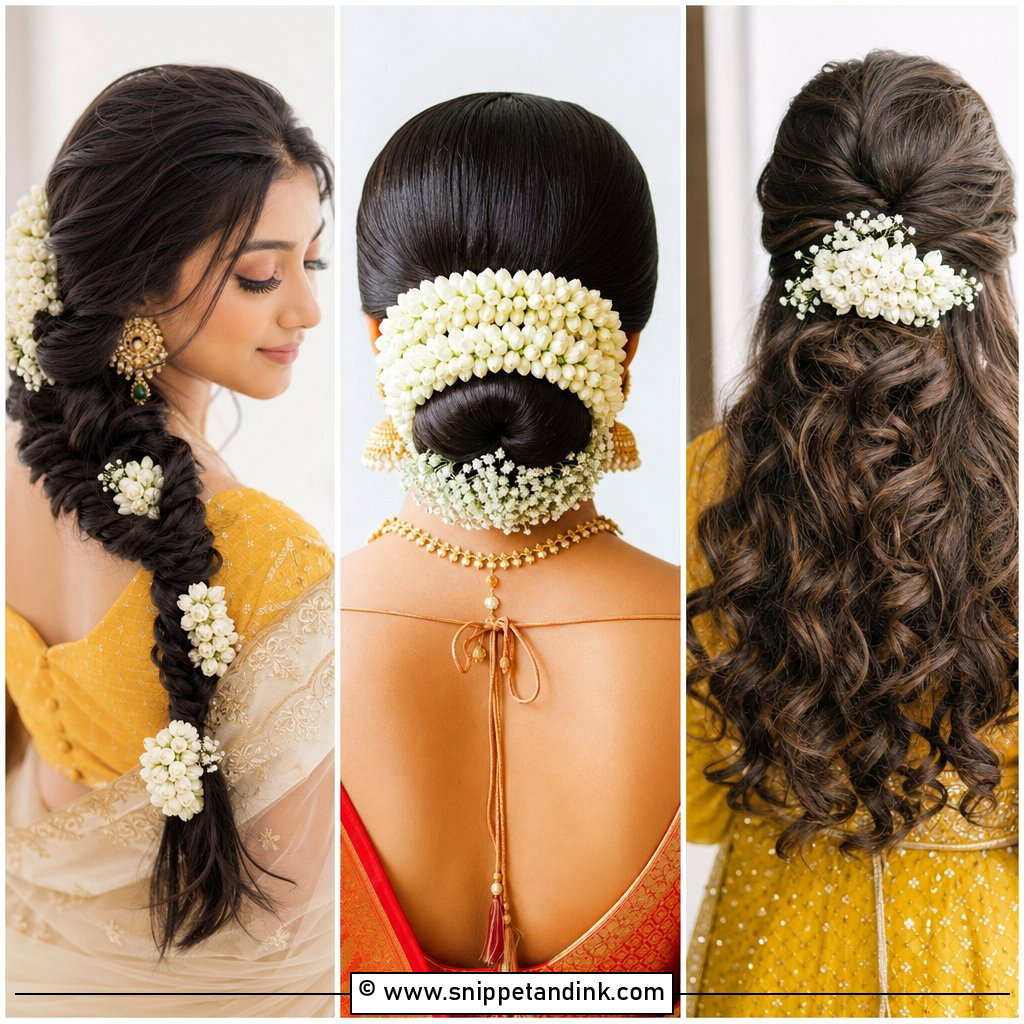
Thai wedding hair with jasmine flowers carries real meaning, and the fragrance is half the point. Jasmine goes around a bun, along one side or woven into a braid. Under it I want a smooth, structured base, because loose texture makes the white buds look scattered rather than placed. For daytime ceremonies and garden weddings, fresh is best. For a long celebration in heat, I sometimes mix fresh strands at the front with good silk jasmine pins at the back, where nobody gets close enough to tell.
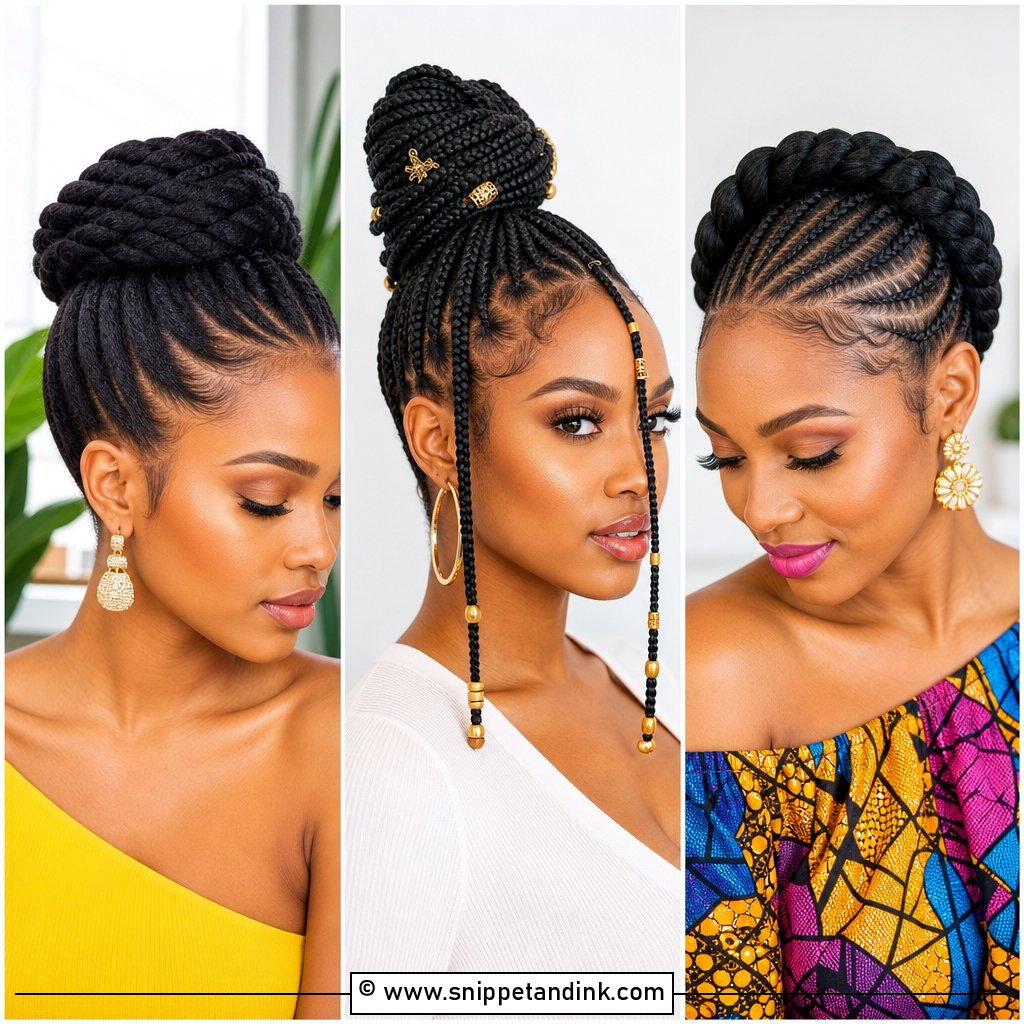
4. Thai Wedding High Bun
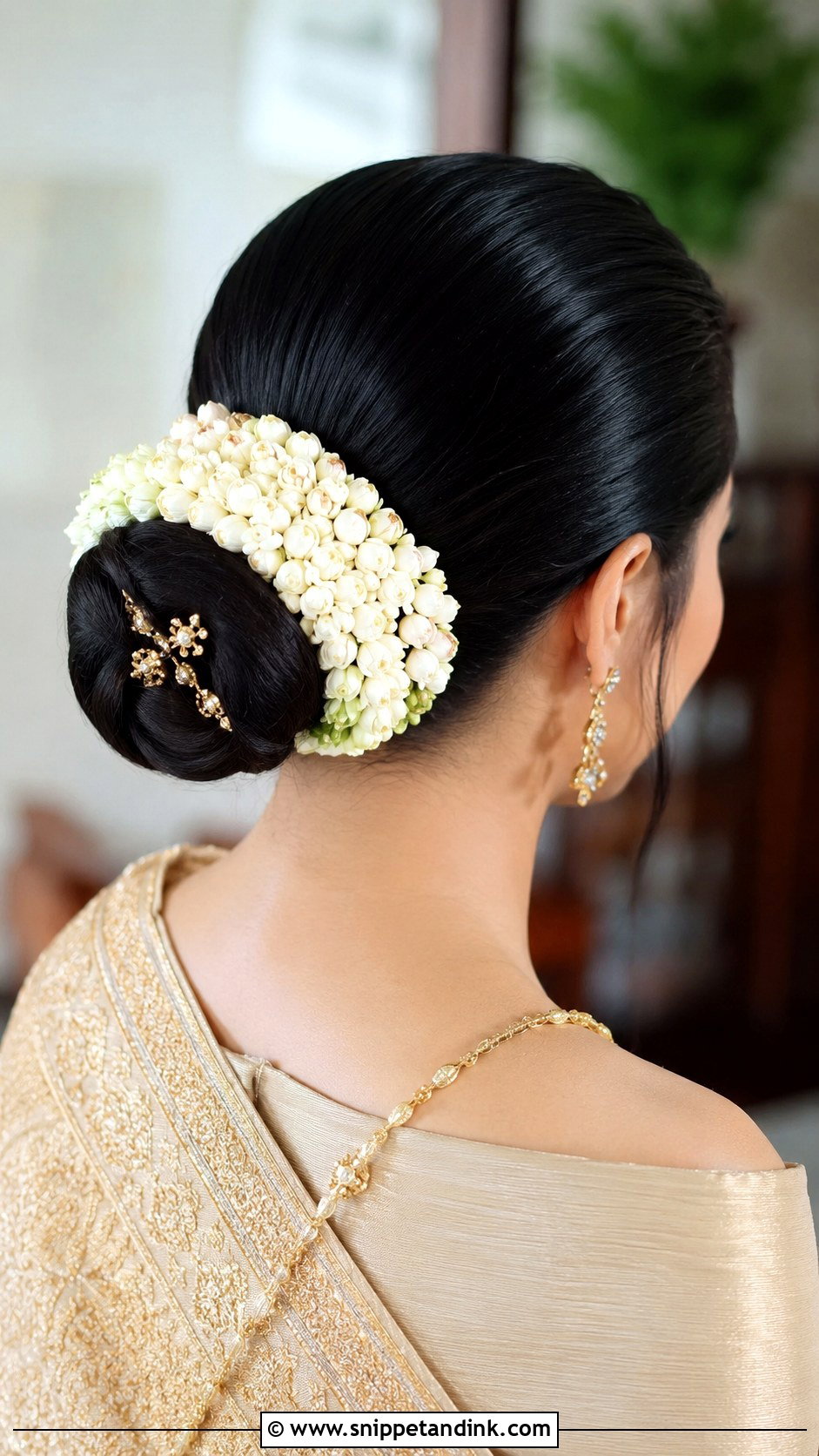
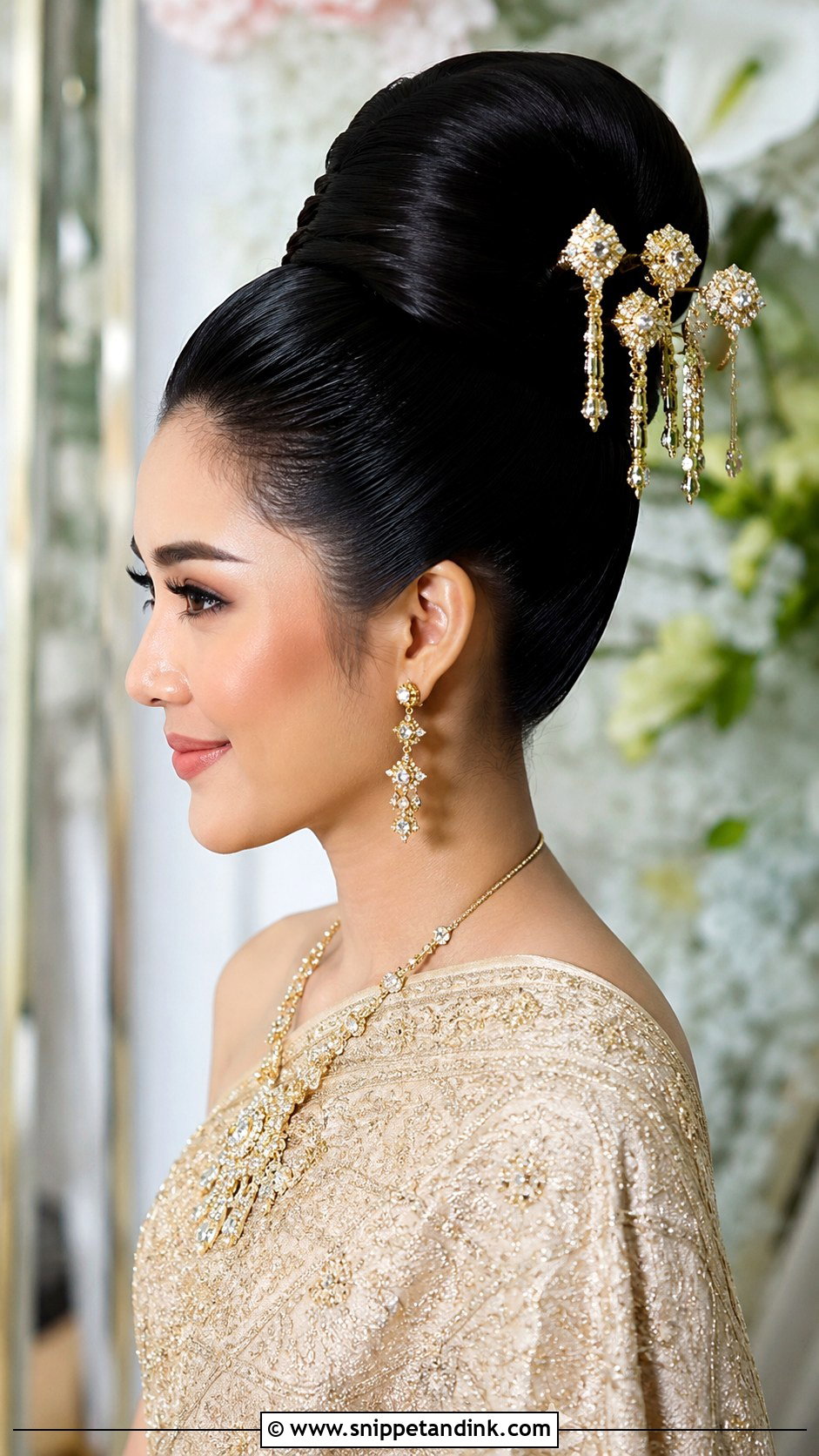
Height lifts the face and lengthens the neck, which is why a high bun holds its own next to ornate jewelry, a fitted Thai dress or a dramatic veil. Keep the surface smooth for a traditional finish or slightly textured for a modern one. It’s an excellent holder for gold pins, floral pieces or a jeweled comb. Build it on a firm ponytail base with strong but flexible hold. Brides with a high collar should check the side view, since a high bun plus a tall collar can make the neck disappear in profile.
5. Thai Wedding Half Up Hair
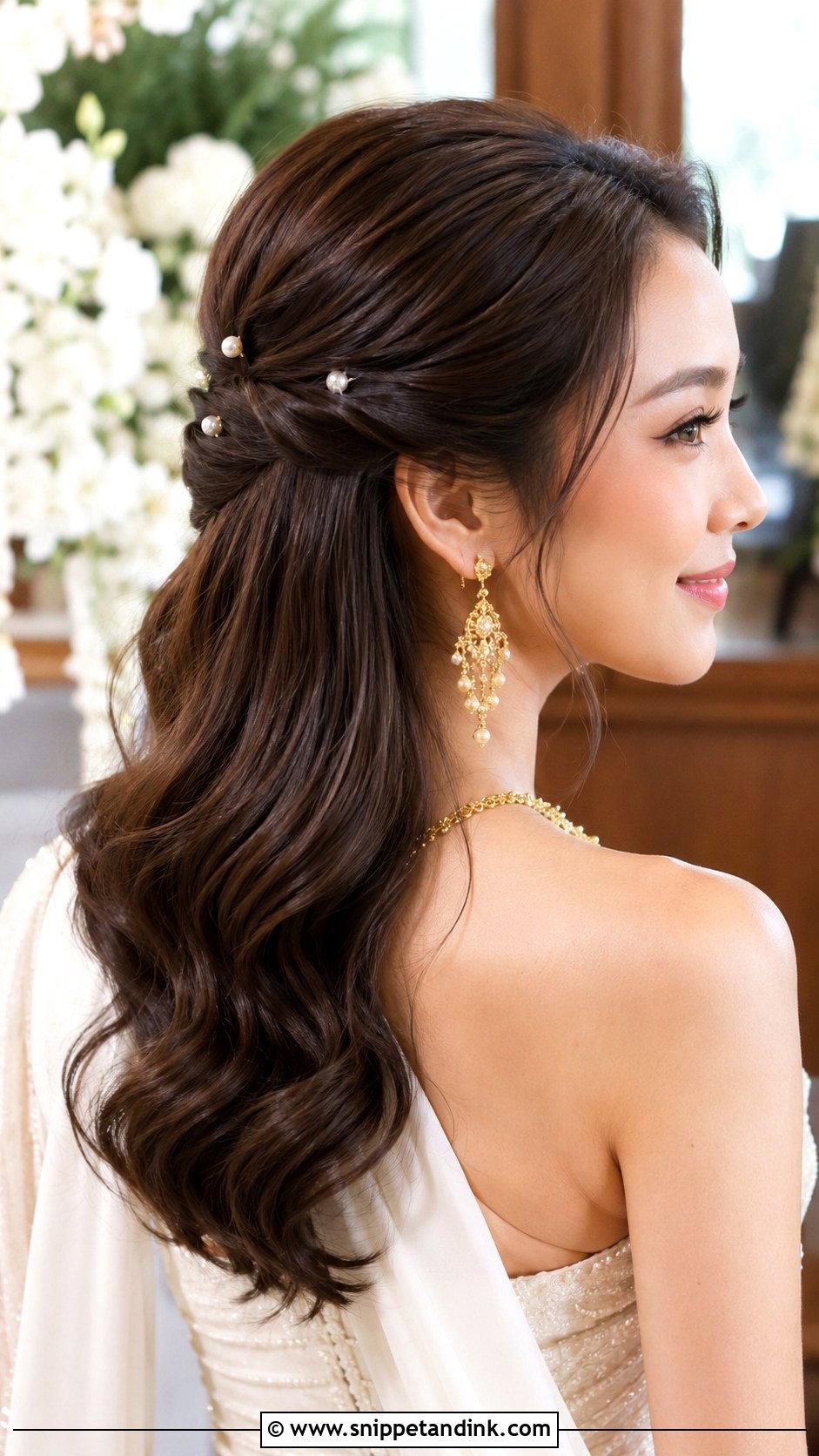
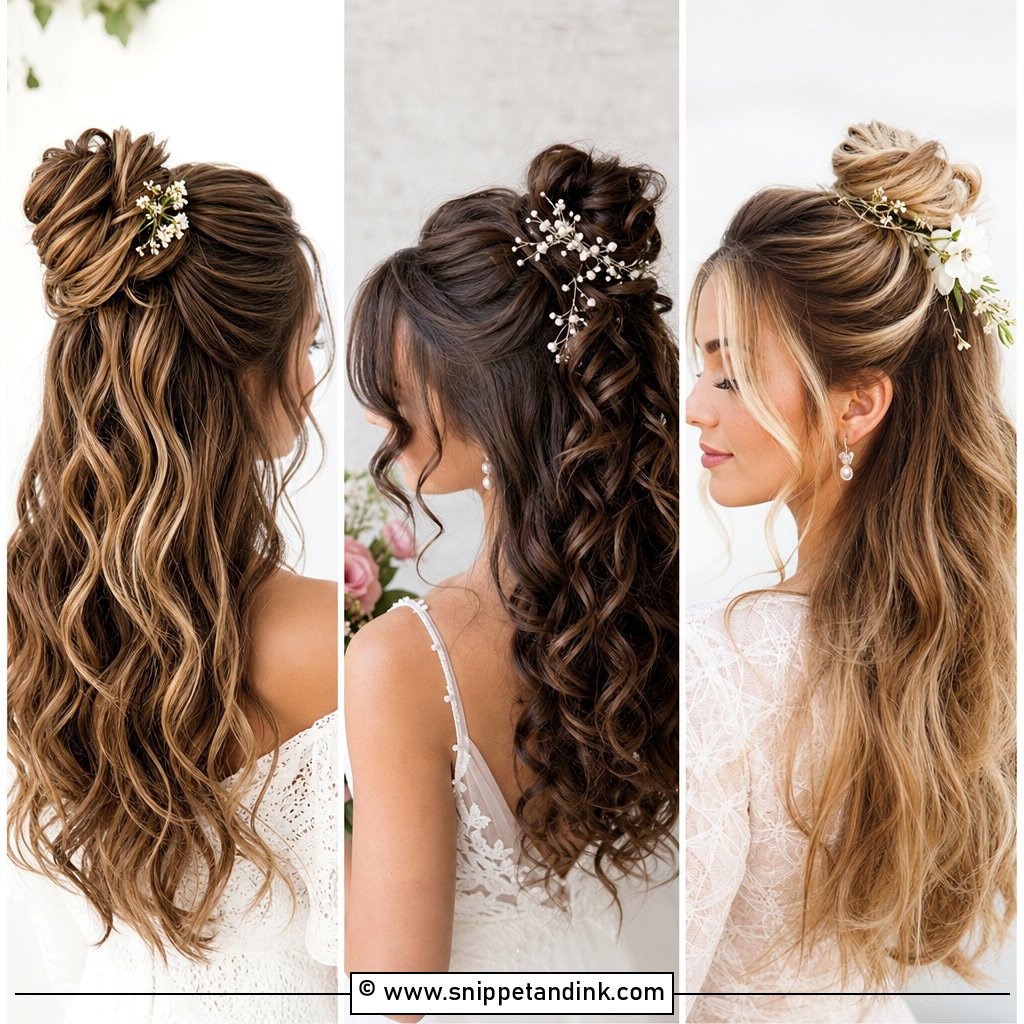
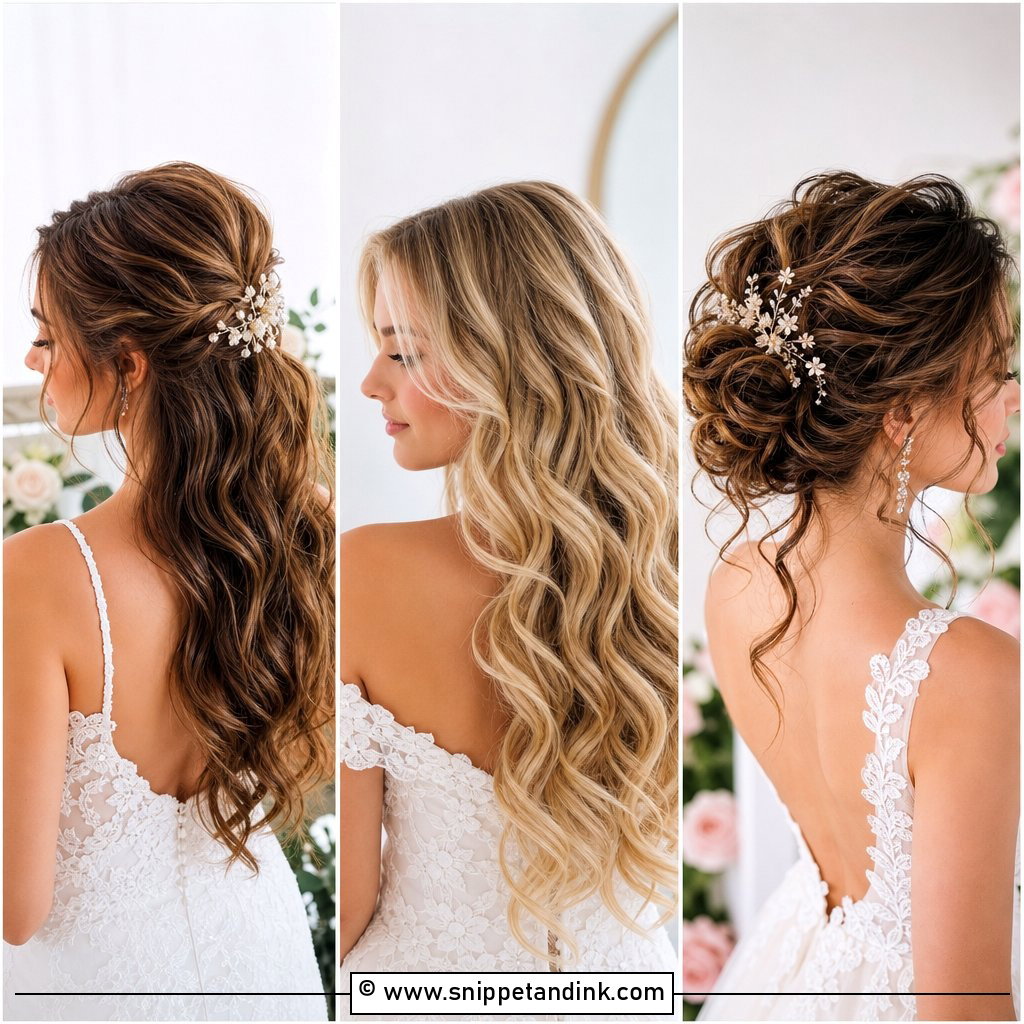
Half-up keeps the front tidy and leaves softness over the shoulders. I twist, braid or pin back the top section with gentle crown volume, then finish the lengths in polished waves, soft curls or a smooth blowout. It suits long and medium hair with a simple neckline, and it’s my usual reception switch after a ceremony updo. Pearl pins or small flowers at the join are enough. On a high-collared Thai dress, though, loose lengths bunch against the collar, so I keep this one for open necklines.
6. Thai Wedding Hair With Gold Accessories
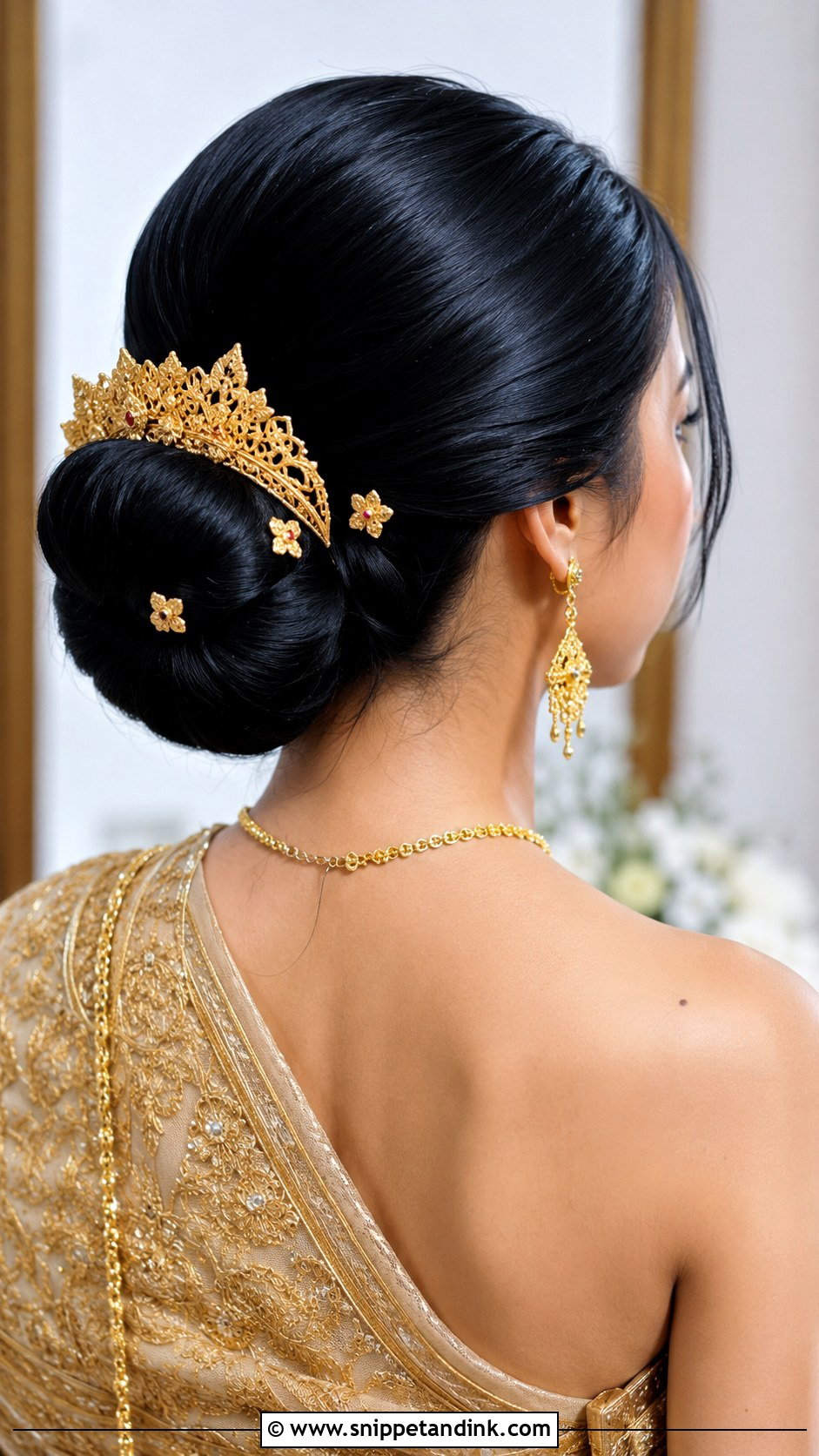
Gold in the hair ties the whole outfit together when the jewelry is gold too. Thai silk, embroidered fabric and warm-toned makeup all suit it. A sleek bun, chignon or half-up base lets the accessory lead, and one statement piece beats several competing ones. Match the gold tone: a yellow-gold comb next to rose-gold earrings looks off in close-ups. I anchor heavier gold combs over a pair of crossed bobby pins, because the teeth alone slide out of smooth hair.
7. Thai Wedding Long Waves
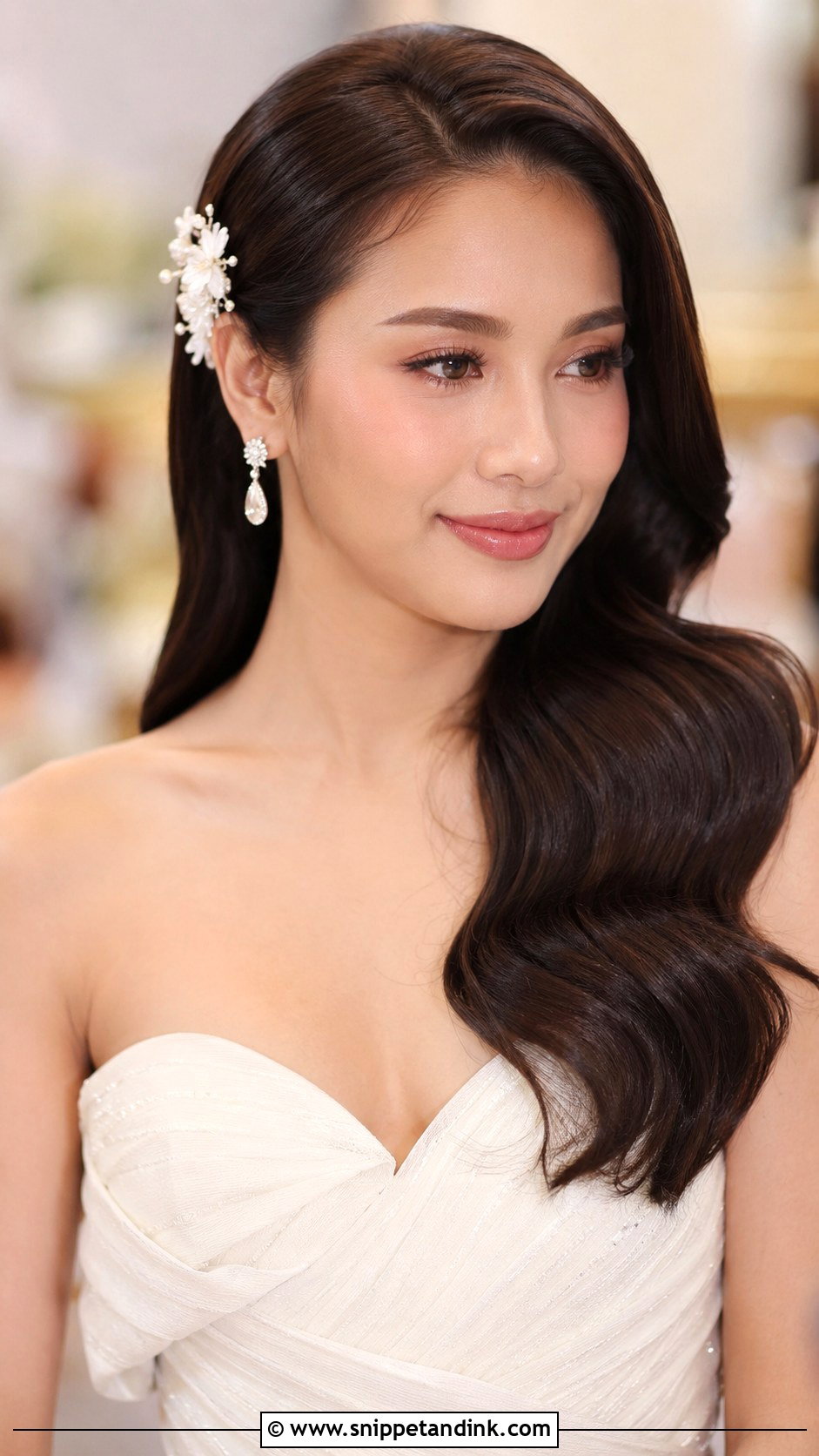
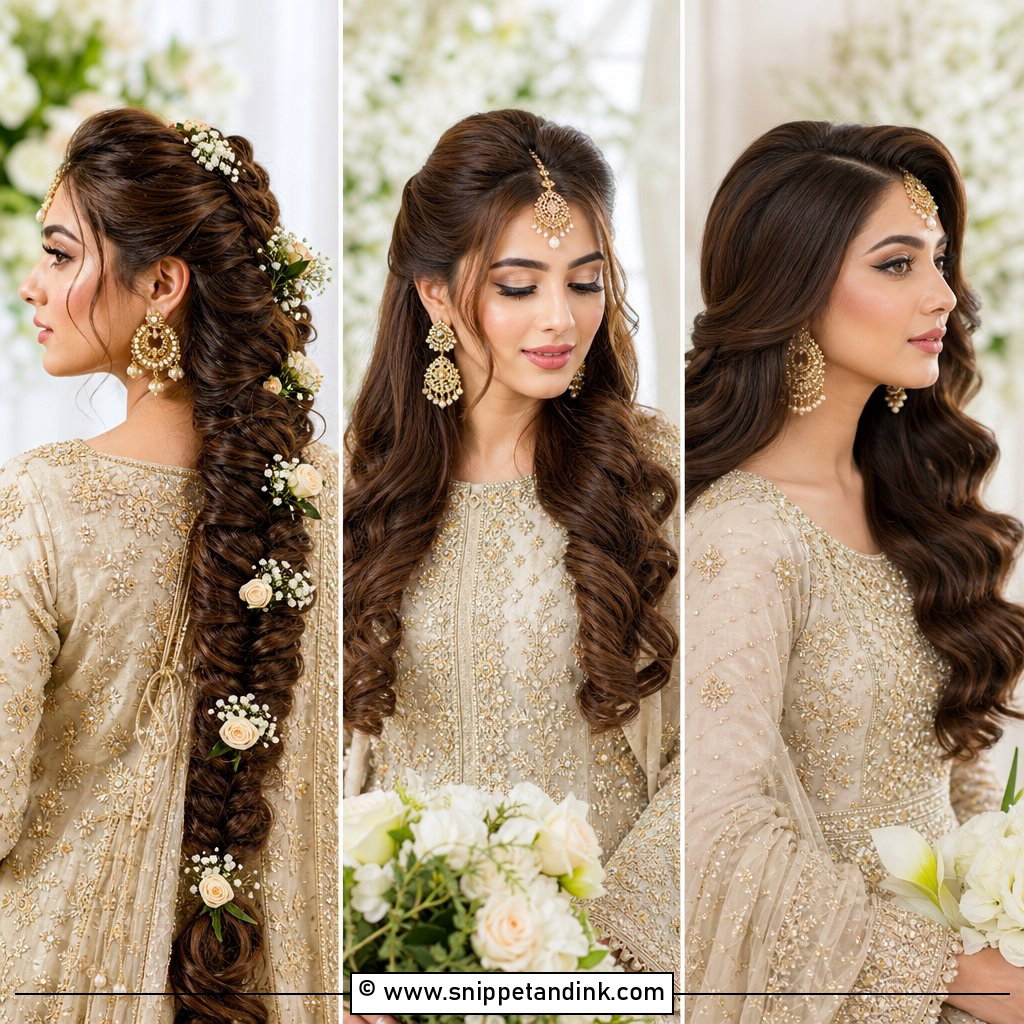
Polished, glossy waves with smooth roots, not beach waves. They need length, natural or added, to fall properly, and they sit best with strapless dresses, modern Thai fusion gowns and reception outfits. I curl tighter than the final shape and let the curls relax into waves over the evening, because waves that start loose are flat within a couple of hours. A side clip, a pearl comb or one fresh flower brings in the Thai touch.
8. Thai Wedding Sleek Bun
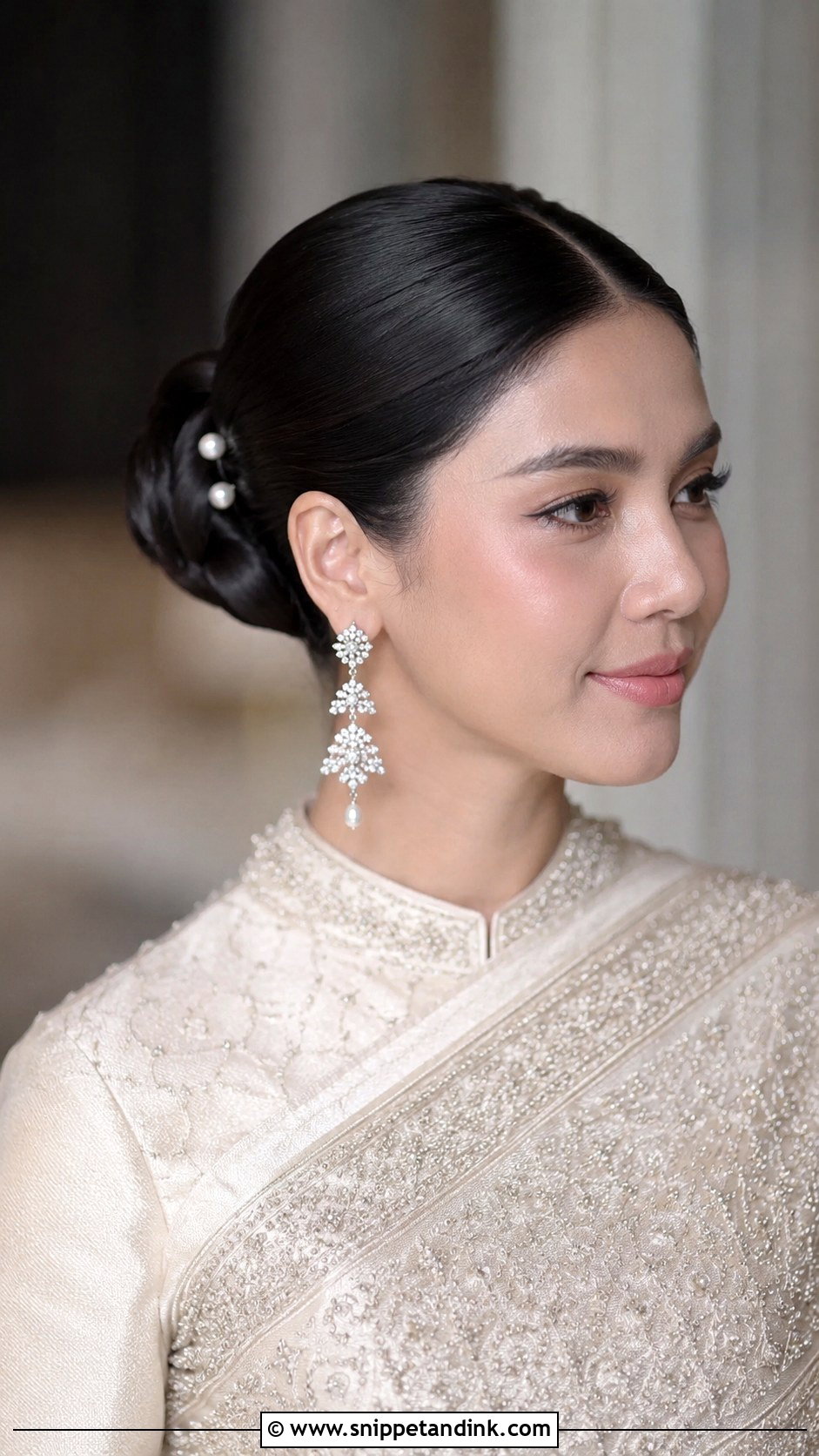
Smoothed close to the head and wrapped into a neat bun with nothing loose, this is the minimal option. It holds up very well in humid weather because there’s no free hair to frizz. Bold earrings, glowing skin and a structured Thai outfit suit it. A middle part looks editorial; a soft side part feels more classic. The catch is that sleek shows every bump, so I brush it with a boar-bristle brush and set it with gel at the hairline before the shine spray and pins.
9. Thai Wedding Braided Bun
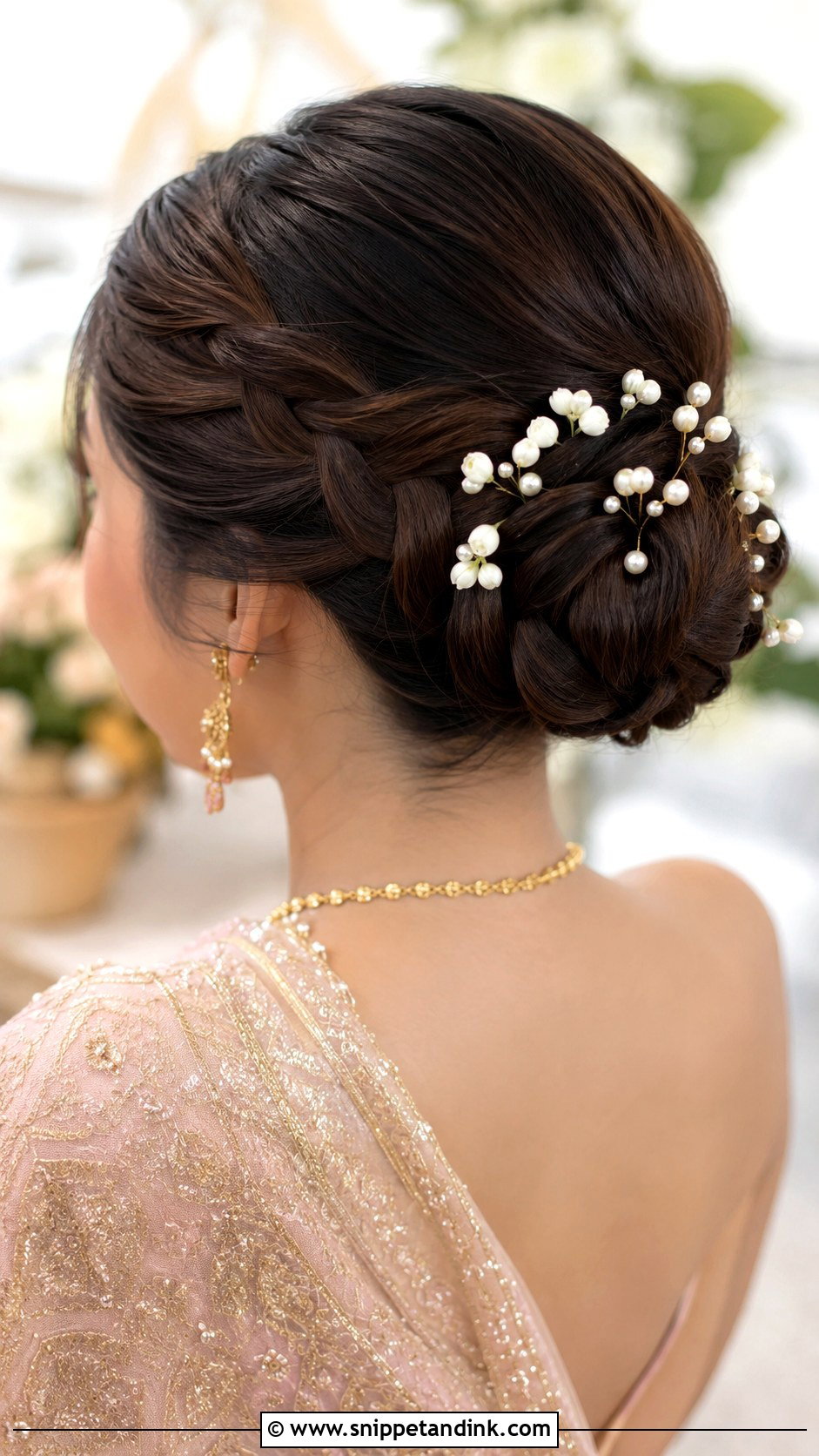
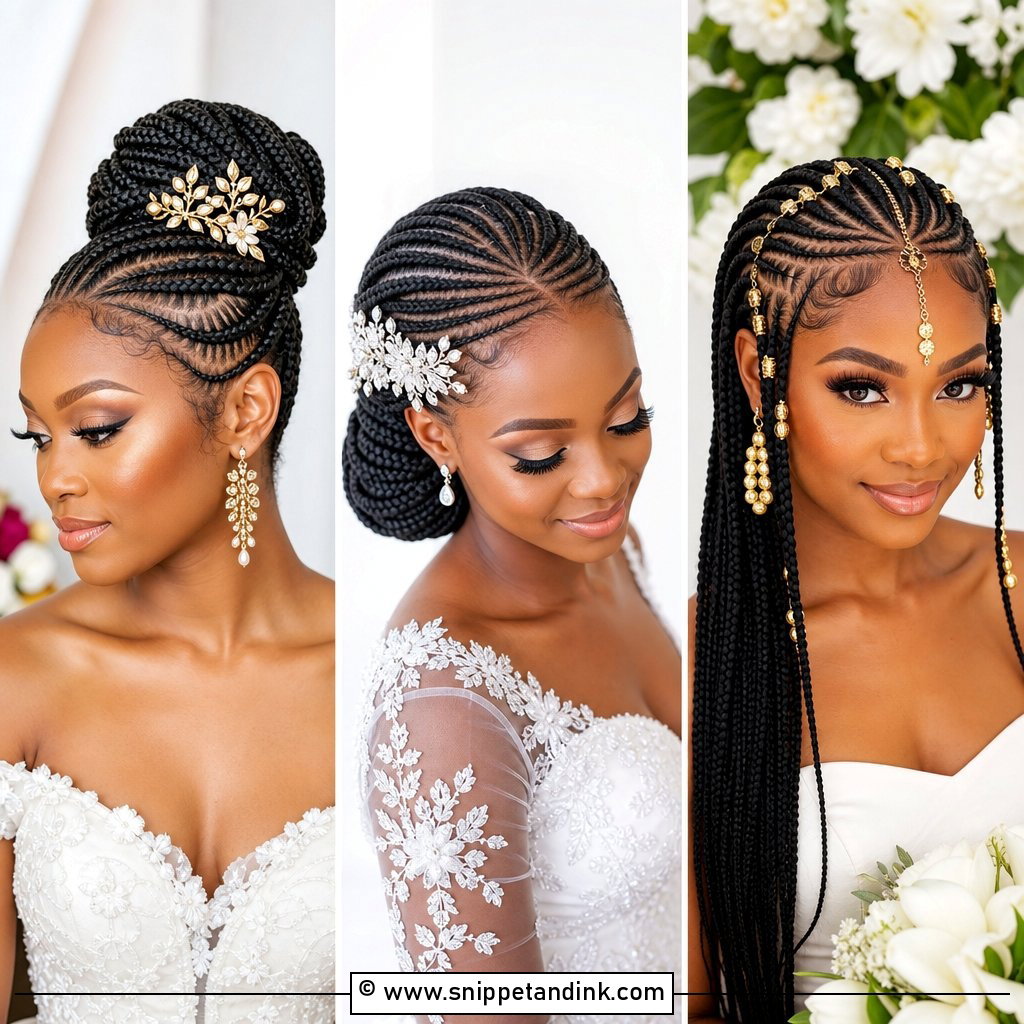
A braid gives the bun detail on its own, so you can wear fewer accessories. It can wrap around the bun, start from one side or blend in at the back, and it’s my go-to for creating fullness on medium or fine hair, because braiding and then gently widening each section makes the hair look thicker. Leave loose pieces at the face for softness or keep the crown neat for a traditional finish. Tiny jasmine buds, pearl pins or a gold hairpiece tie it to the outfit.
10. Thai Wedding Side Swept Hair
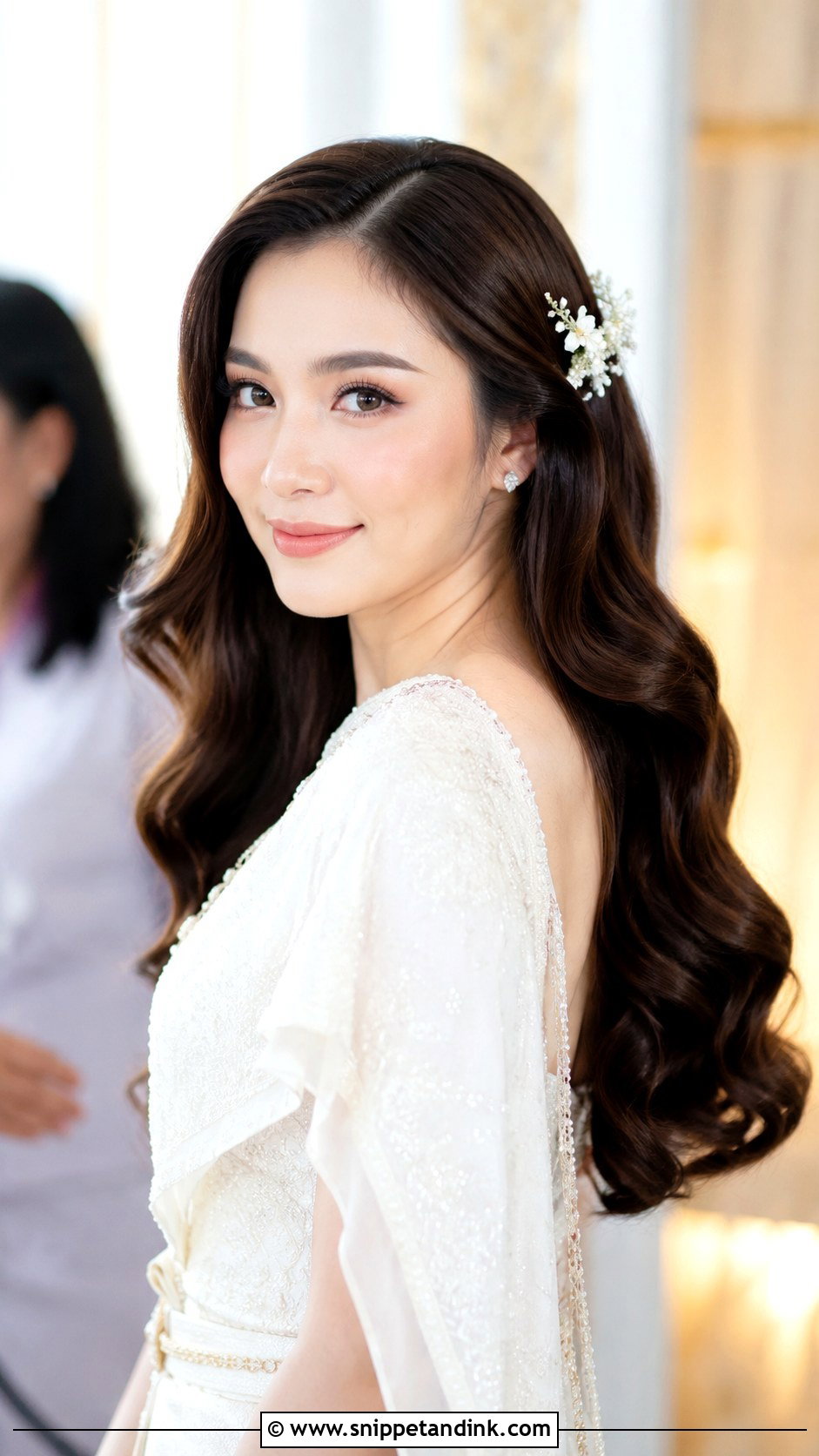
All the hair goes over one shoulder in smooth waves or soft curls, with the other side pinned flat to open up the face, earrings and neckline. It’s a reception and portrait style, especially when a modern gown follows the Thai ceremony. I hide crossed pins behind the ear on the pinned side, since that’s what holds the shape when you turn your head. Keep the waves glossy, and put a comb, floral pin or small gold piece on the pinned side.
11. Thai Wedding Hair With Pearl Pins
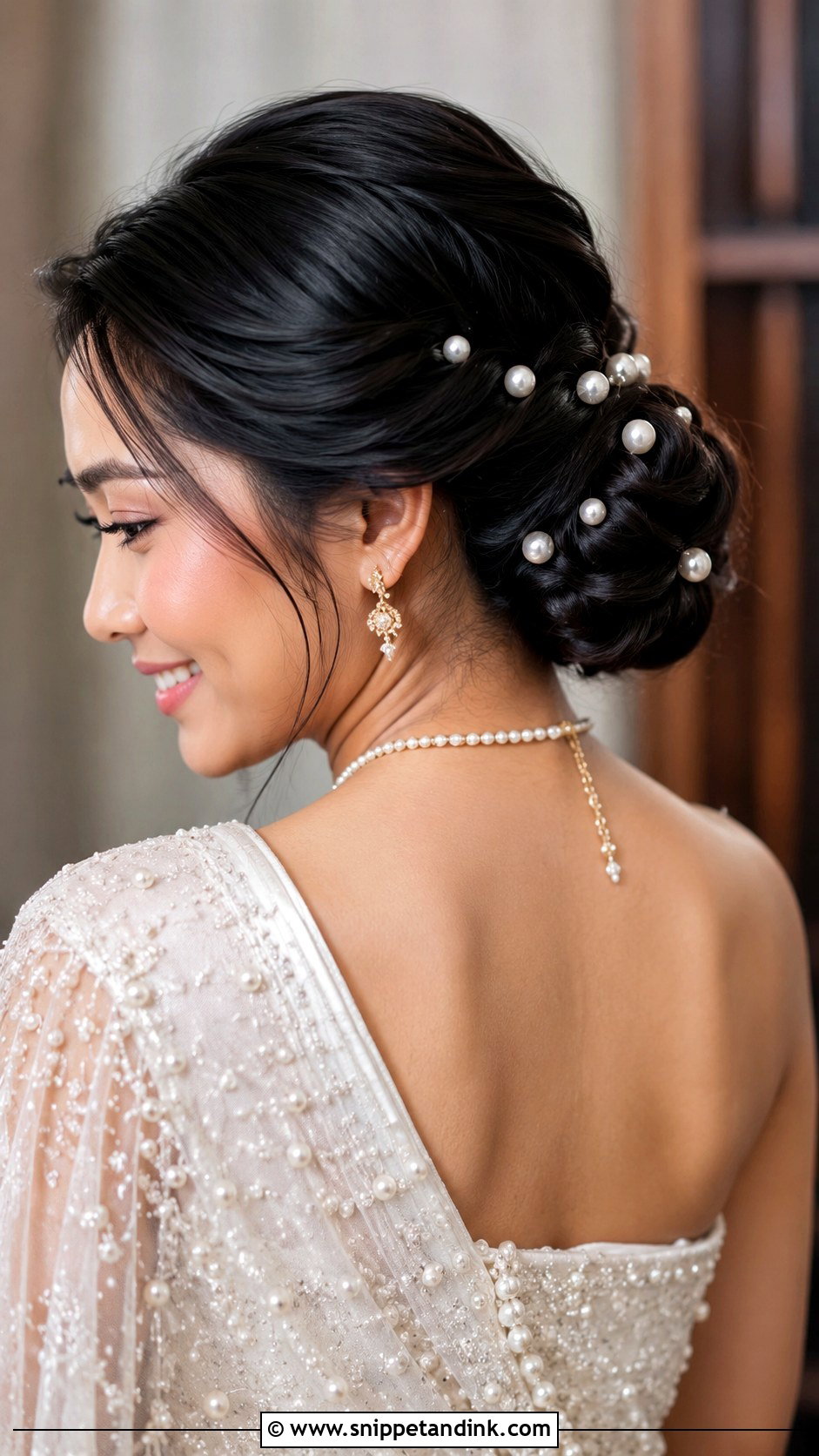
Pearls cross over easily between a traditional Thai look and a modern gown, which makes them useful when you’re wearing both. Place them around a low bun, through a twisted half-up or along a braided chignon. They suit dresses with pearl beading or soft white fabric especially well. I mix two or three pearl sizes for depth, but I stop before the hair looks sprinkled. Neat styling underneath is what makes the pearls look deliberate.
12. Thai Wedding Crown Braid
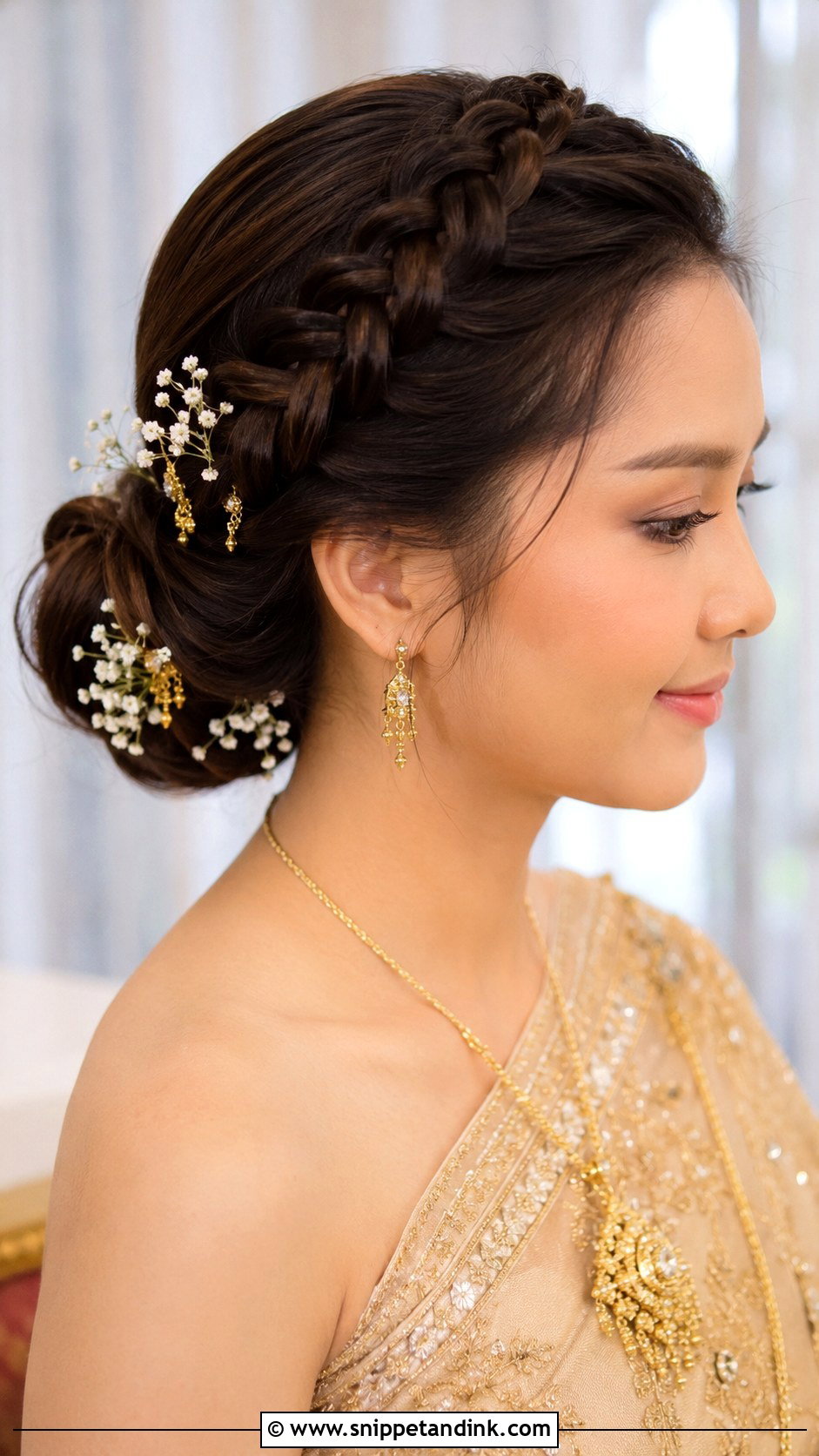
A crown braid frames the face and keeps hair off it at an outdoor wedding. It can run across the front like a headband, wrap the back, or feed into a low bun. Tiny white flowers, gold pins or pearls slot in along its length. I build it a little full and pin it flat to the head every couple of inches, so it photographs well from the side without lifting. Very short layers around the face tend to poke out of crown braids, so a few may need tucking with small pins.
13. Thai Wedding Loose Curls
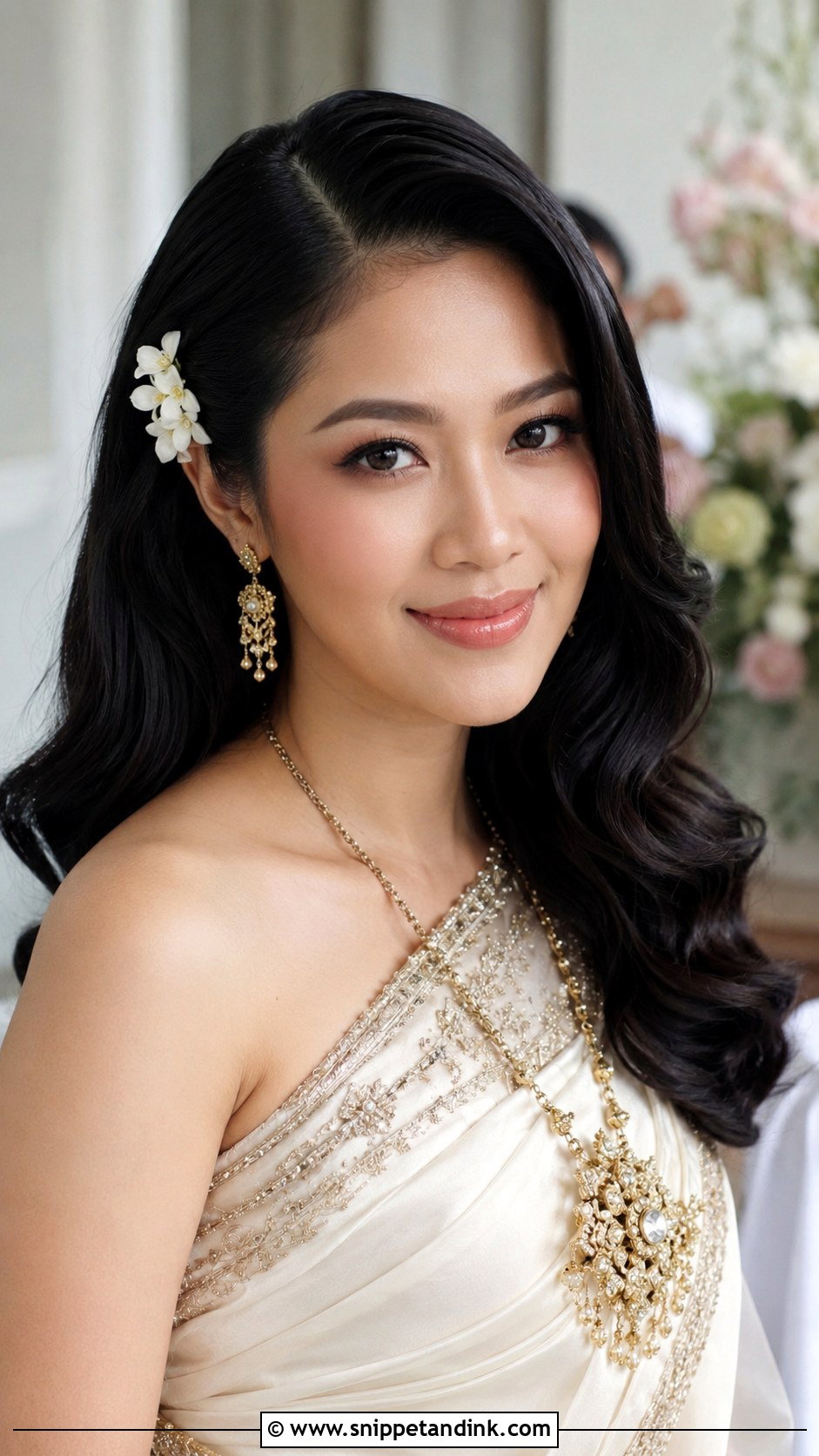
Loose curls give movement for a reception, pre-wedding photos or a bride who simply prefers her hair down. They should look shaped, not messy. A deep side part adds glamour; a middle part keeps things balanced. If your hair drops curl quickly, extensions add both length and support for the curl to hold onto. A lightweight spray keeps the curls touchable, and one small floral clip brings in the Thai note.
14. Thai Wedding Short Hair
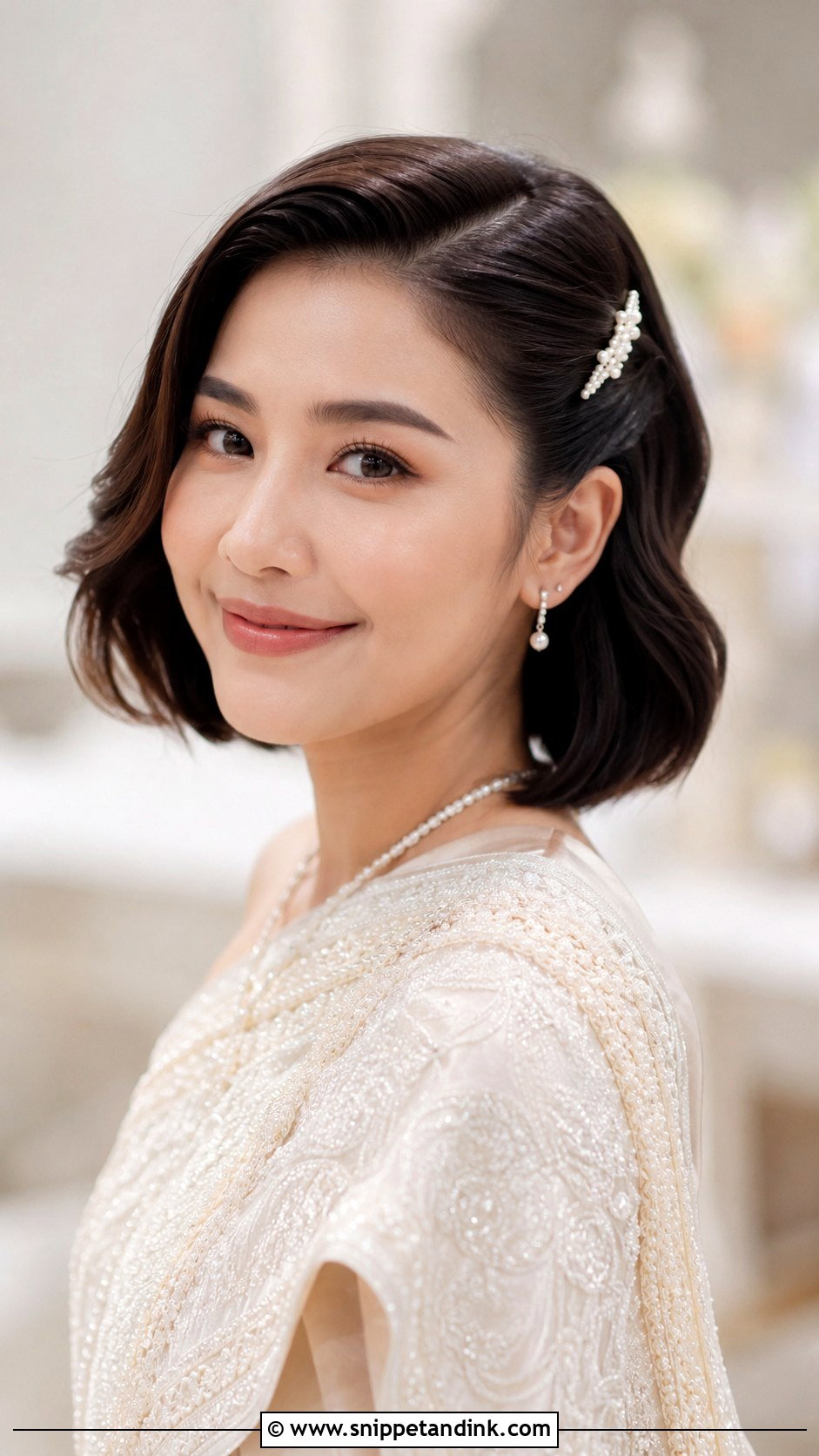
Short hair works well at a Thai wedding when it’s styled with intent. A sleek bob, soft waved lob or tucked pixie needs shine, shape and one good accessory such as a pearl clip, gold comb or fresh flower. With a traditional Thai outfit, smooth hair keeps the look refined. Add a touch of crown volume if the proportions need balancing against a high collar. Book the trim about two weeks ahead so the line looks natural rather than freshly cut.
15. Thai Wedding Hair With Veil
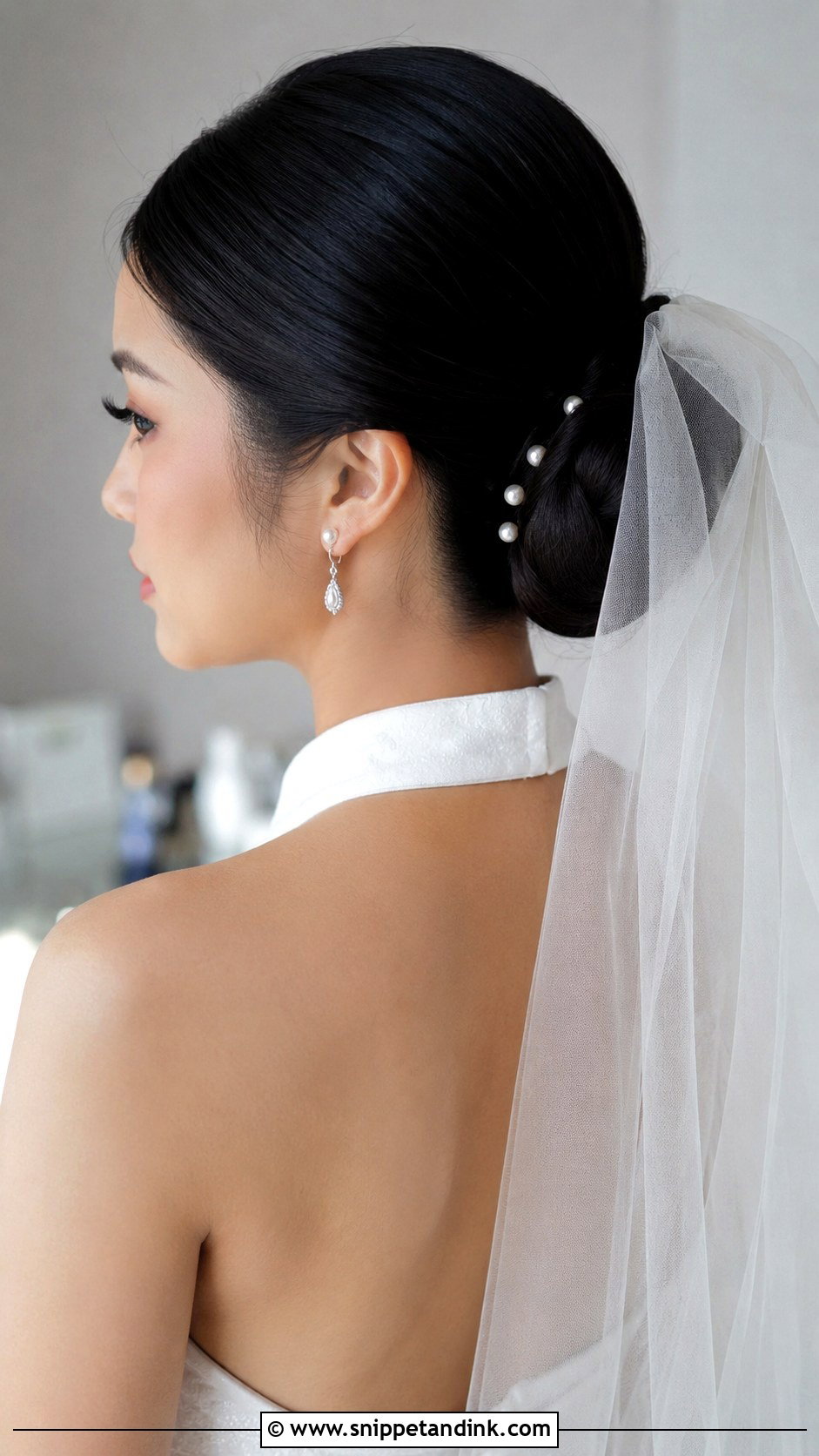
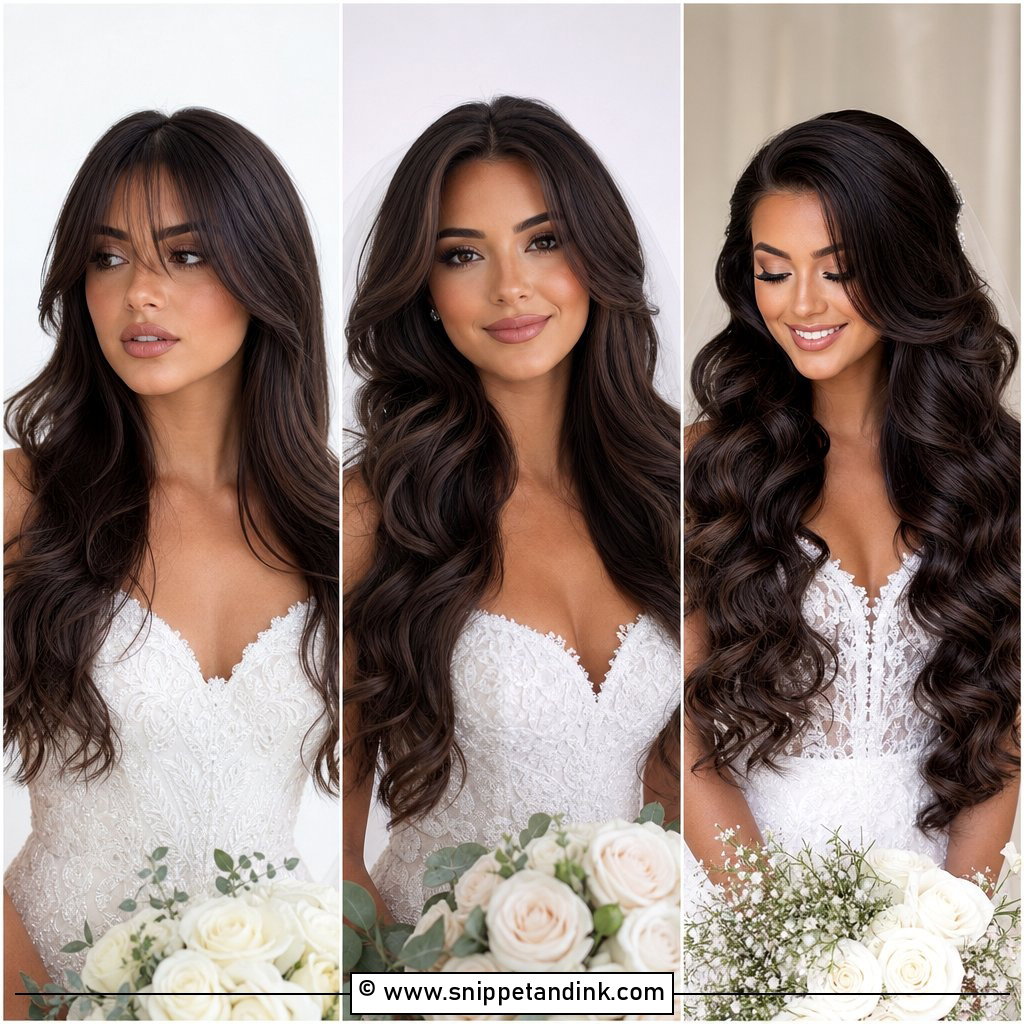
A veil needs a stable base, so a low bun, chignon or half-up is usually the right choice. I place the comb where it frames the style rather than burying its best detail. If the veil comes off later, the hair underneath has to look finished, so I style the bun as though there were no veil at all. A smooth bun with pearl pins or a soft chignon with jasmine works both ways, and it makes sense for brides pairing Thai traditions with a Western ceremony.
Testing the Look in Real Heat and Real Silk
A trial in an air-conditioned salon tells you very little about a ceremony outdoors in Thai humidity. If you can, schedule the trial on a warm day and spend an hour or two outside afterward. Curls that drop, flowers that wilt and pins that slip all show up there, not in the chair.
Bring the things that change how the hair sits:
- The dress itself, or a top with the same collar height, so we can see where the bun clears the neckline.
- Your actual earrings, necklace and any hair ornaments, because weight and gold tone only show in person.
- A photo taken with flash on your phone at the end, which shows flyaways and shine the mirror hides.
If there’s a second outfit later in the day, try that change at the trial as well. Knowing how long it takes to go from a bun to waves is the best way to keep the evening on schedule.
Let the Silk Lead and the Hair Follow
A sleek bun usually suits a formal Thai silk look, while waves or half-up hair feel right for a modern reception. Flowers, gold, pearls and a veil each shift the mood, so pick details that support the whole outfit instead of competing with it. Test the style before the day, especially if the venue is outdoors or the celebration runs long. Get the shape, the hold and the finishing touches right, and the hair will look as good in the last photo as the first.
You'll Like These Ideas:


Leave a Reply