
A groom’s hair has to do two jobs at once: look sharp in close-up portraits and stay put through a ceremony, a receiving line, dinner and a dance floor. Most of the problems I see on the day aren’t about the cut itself. They come from a fade cut too early, a product that shines under flash, or a style the groom has never actually worn before. Right now the leaning is toward clean lines and natural finishes that sit well with tailoring. Below are 20 men’s wedding hairstyles, from slick backs and side parts to curly crops and long hair, with notes on who each suits and how it holds up.
A Fade Grows Out in Days, So Time the Last Cut Around It
The most common mistake I see is a groom getting one cut a week or two out and expecting every style to look the same on the day. Different cuts grow out at very different speeds, at least visibly. Plan backward from the date:
- About two months out: try the new style if it’s a change. That leaves time for one more cut to correct anything you don’t like.
- One to two weeks out: final cut for longer styles, textured tops and long hair. Freshly cut longer hair can look too neat; a week lets it settle.
- Two to four days out: final cut for skin fades, hard parts and very short sides, where regrowth shows quickly.
- A day or two out: beard trim and neck line-up, so any irritation has calmed down before the close-ups.
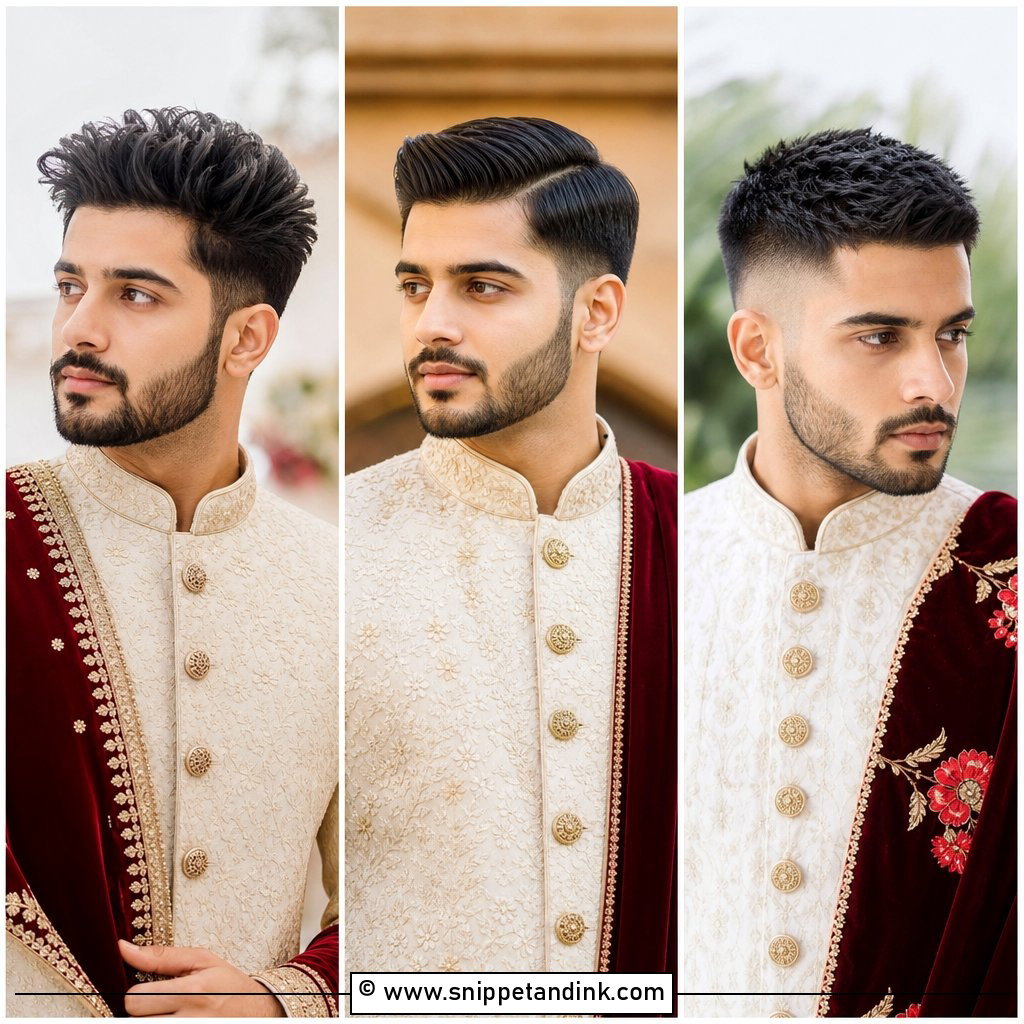
When you brief your barber, tell them it’s for your wedding and when it is. Bring photos of the style and of the suit. A cut that suits a slim navy suit can look wrong with a heavily embellished sherwani or a full tuxedo, and a good barber will adjust the length on top to match. If your barber is likely to be fully booked that week, book the final appointment as soon as you set the trial.
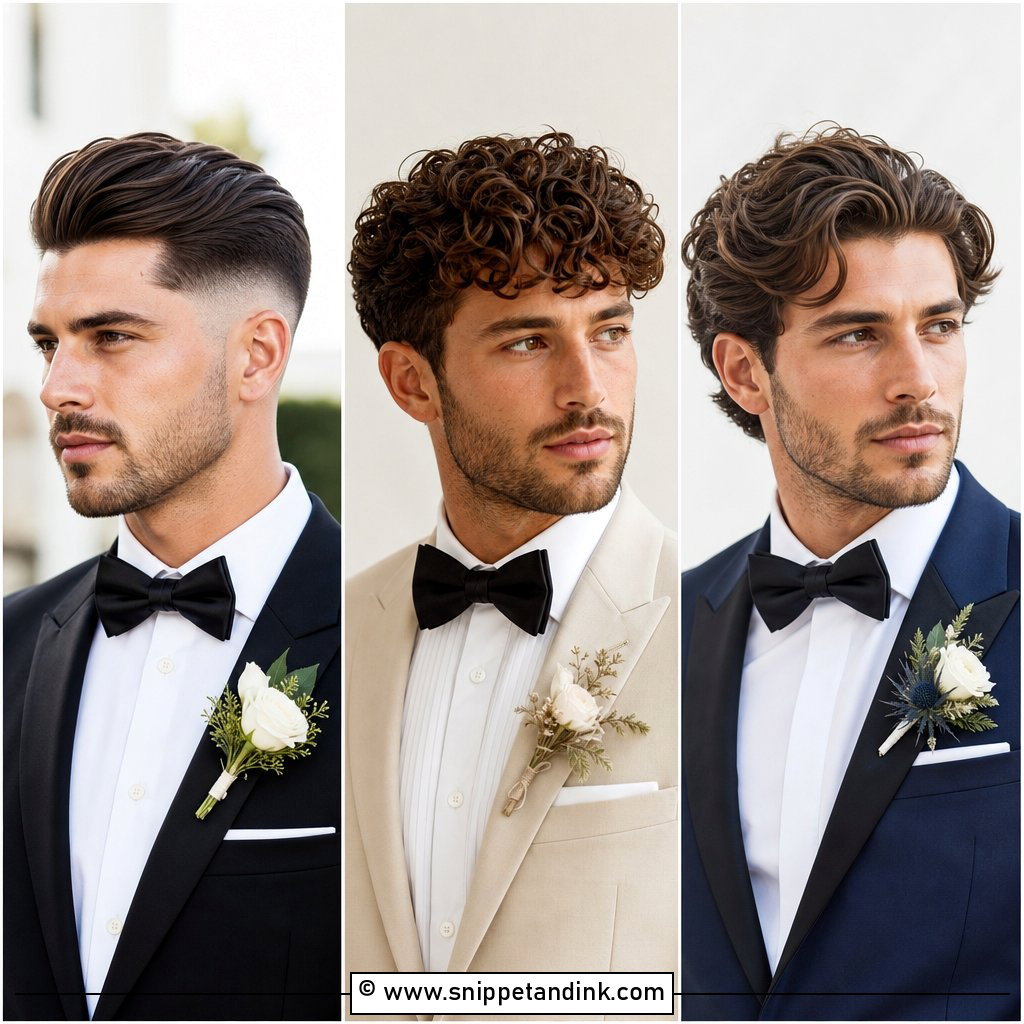
1. Classic Side Part for Grooms
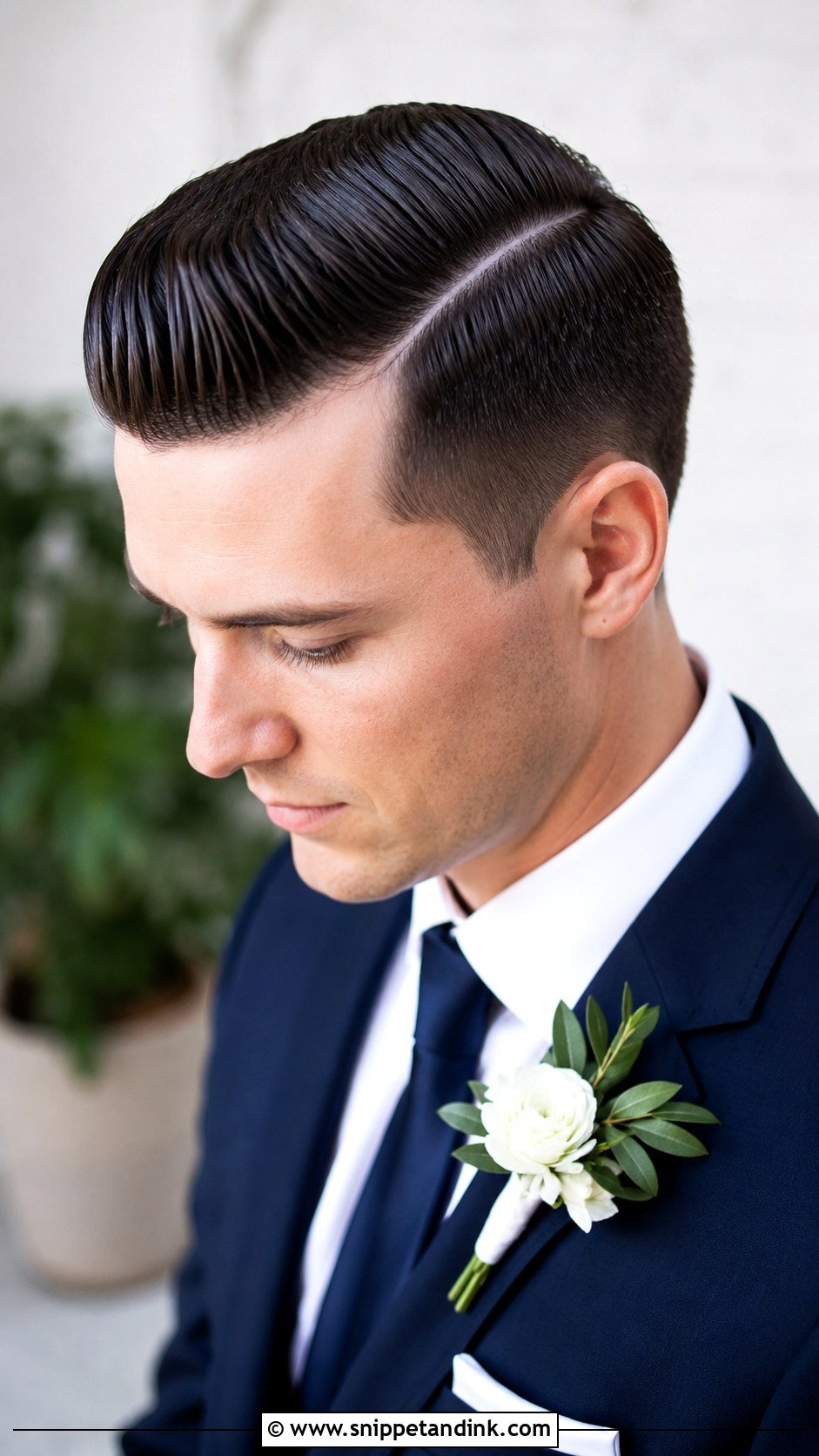
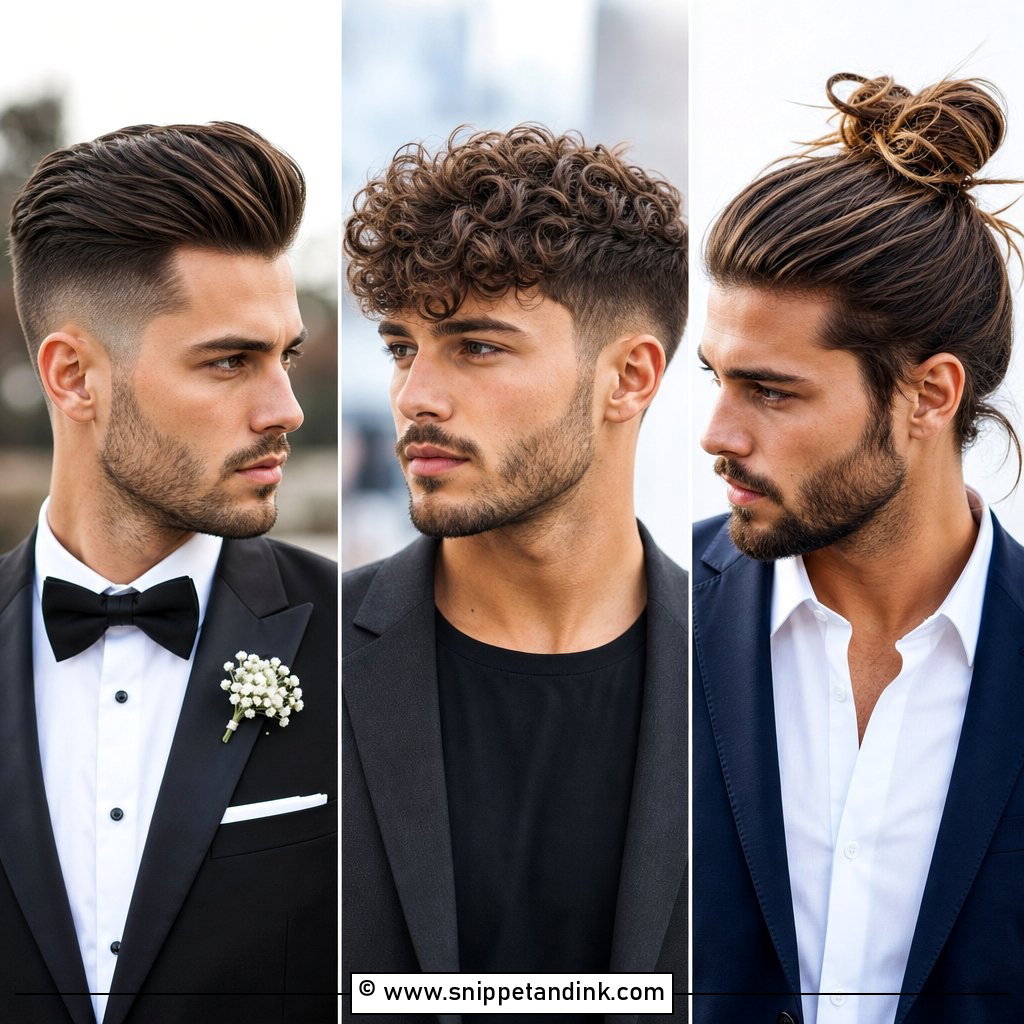
The side part is the cut I’d put on a groom who wants zero risk. It works on short and medium hair and suits most face shapes. Taper or fade the sides, comb the top across, and decide early whether you want a natural part or a shaved hard part, because a hard part is visible for weeks as it grows out and needs touching up just before the day. A matte pomade holds without shine. With a tuxedo or a formal suit, it simply looks correct.
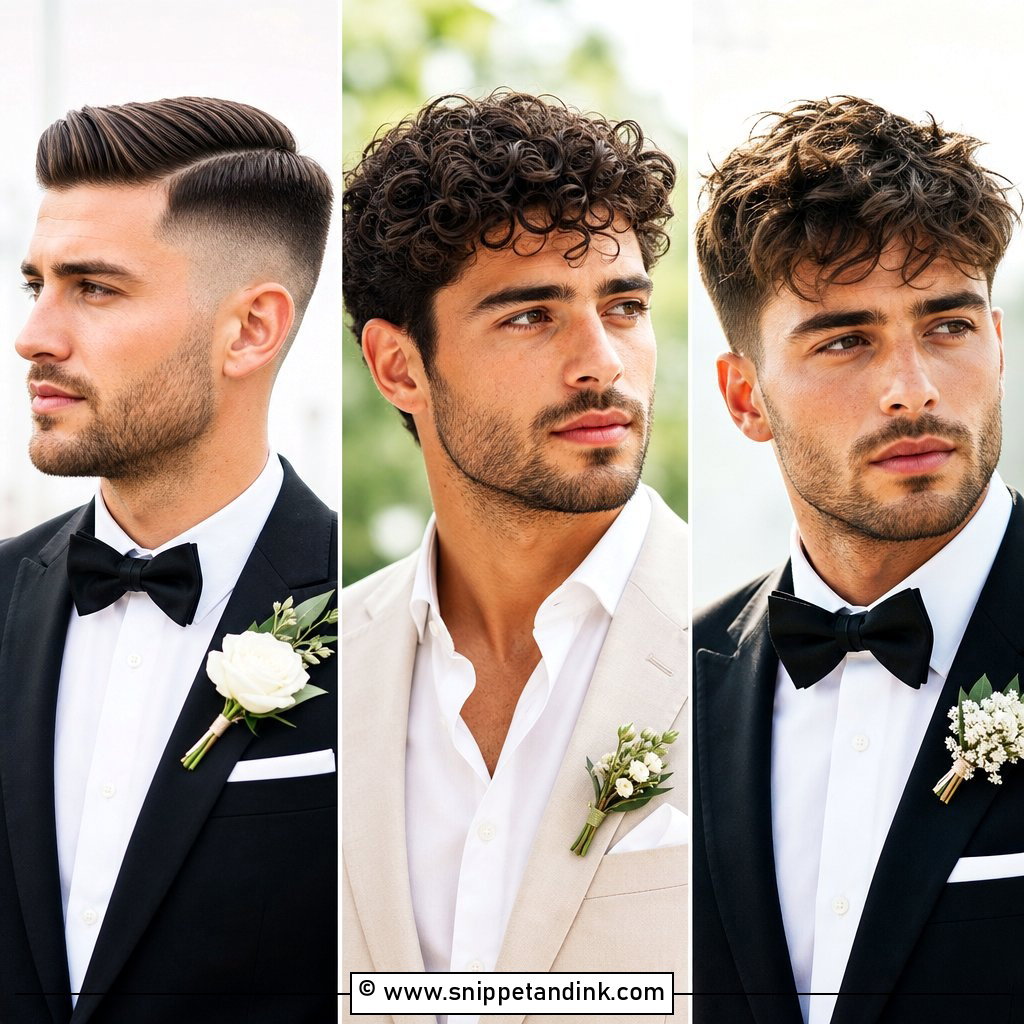
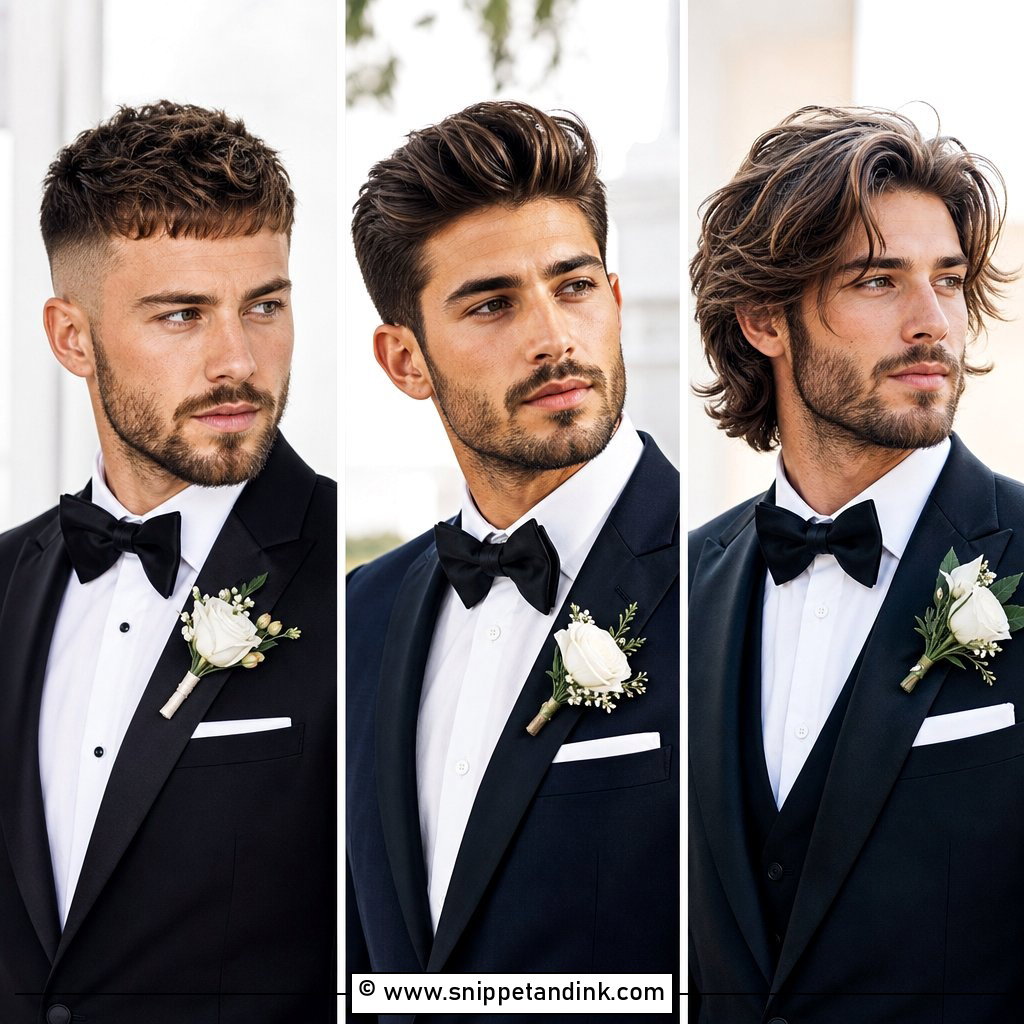
2. Skin Fade With Textured Top
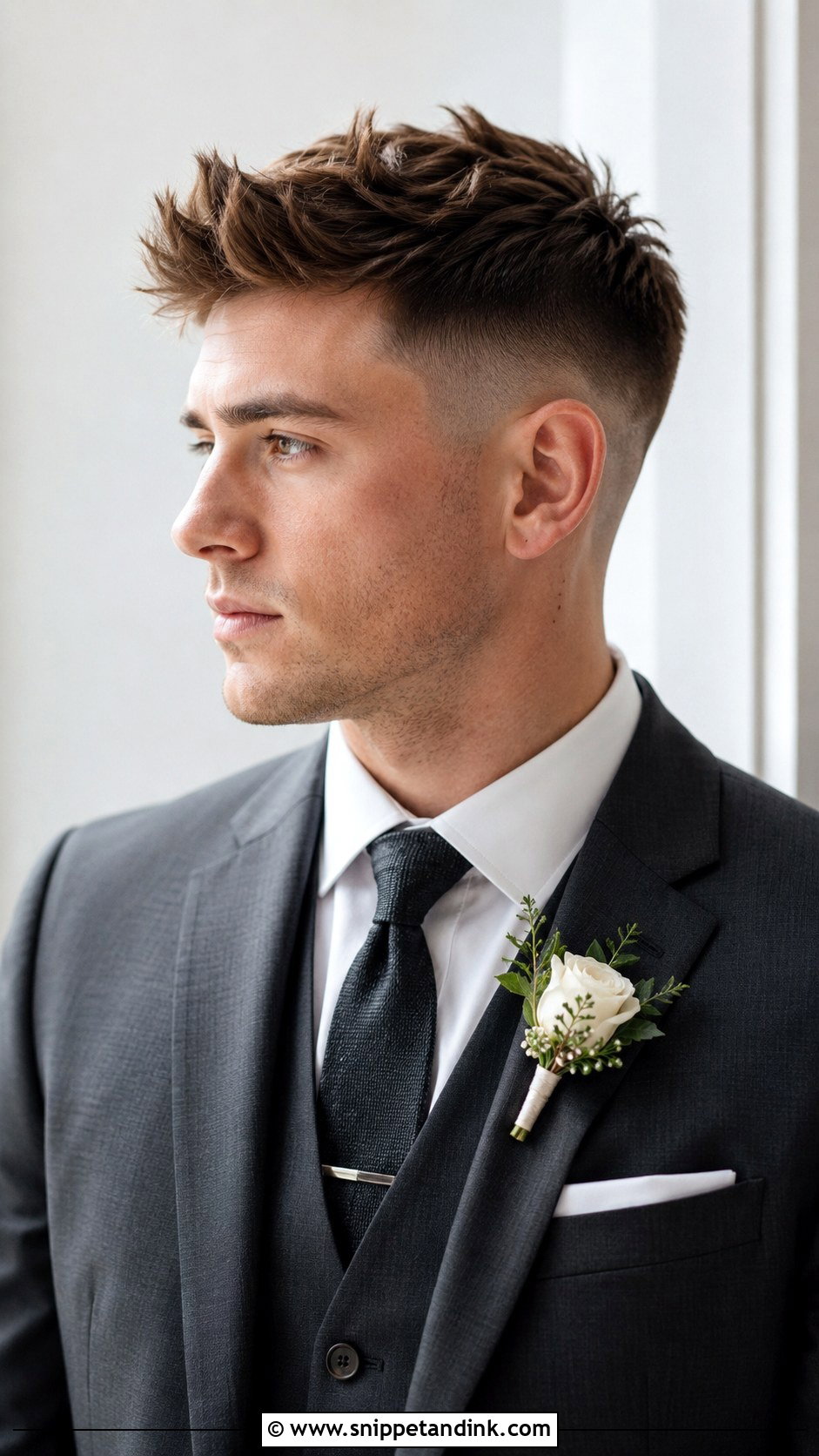
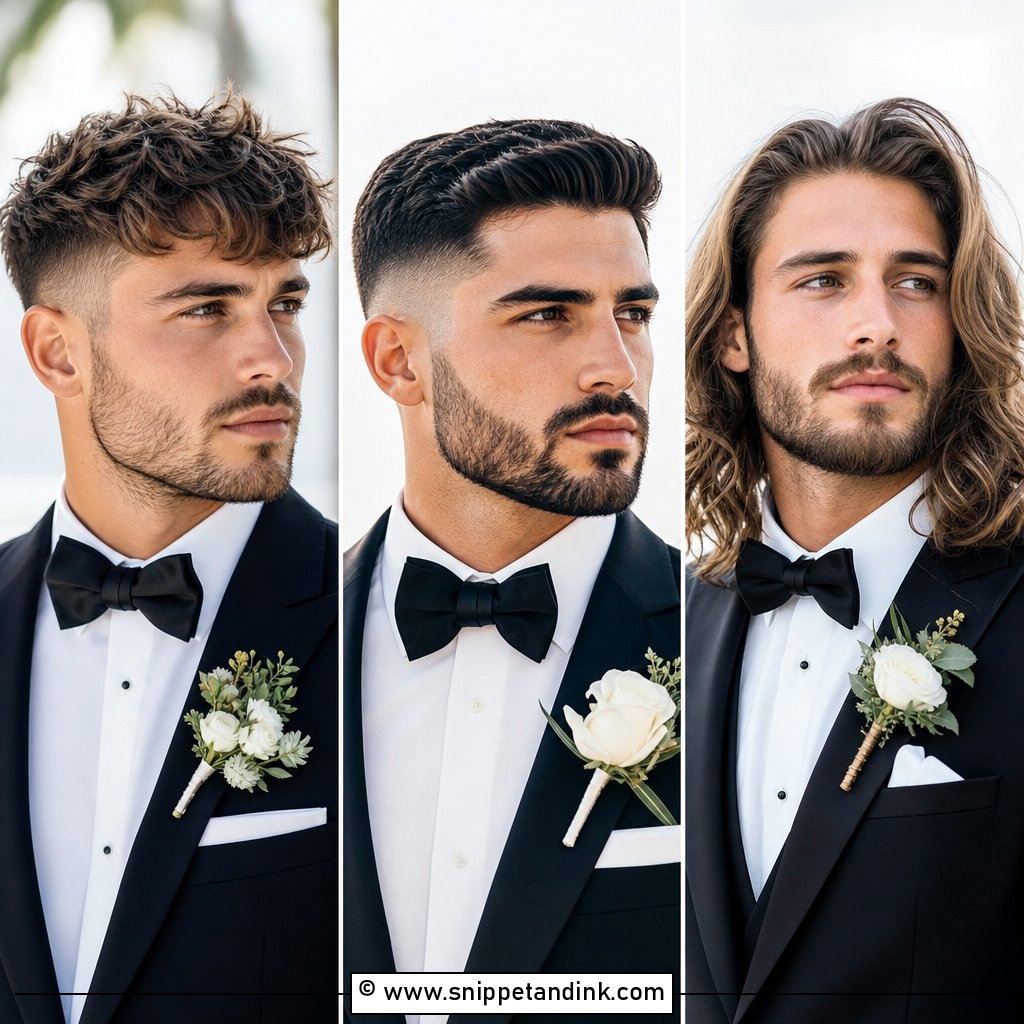
A skin fade with a textured top is one of the most requested groom cuts at the moment. The sides go down to skin while the top keeps length and movement, worked with a matte product for separated texture. The catch is timing: a skin fade shows regrowth within days, so this is the cut you have done closest to the wedding. Pair it with a clean beard line or a close shave. It’s sharp and current while still looking relaxed.
3. Slick Back Undercut
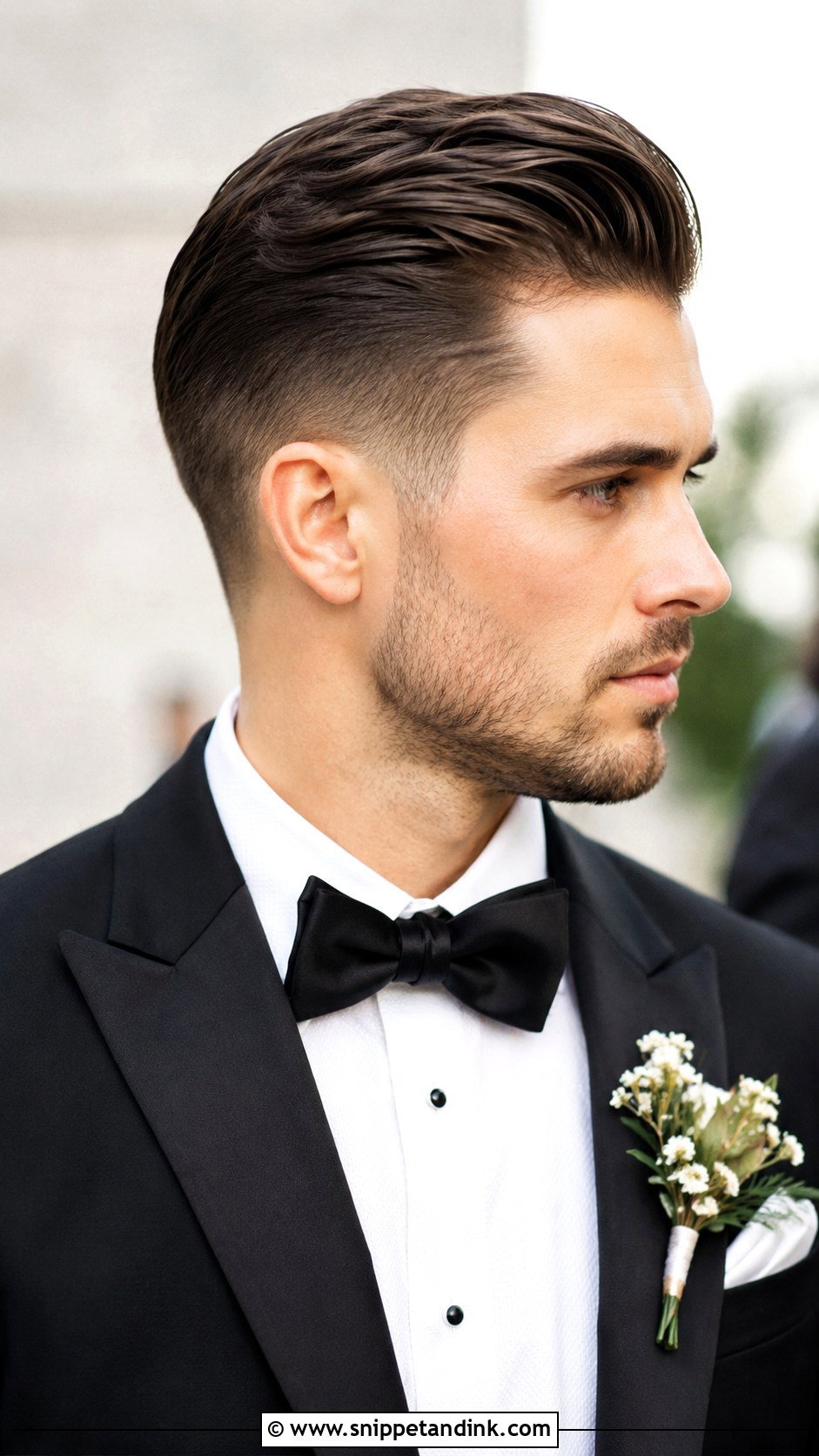
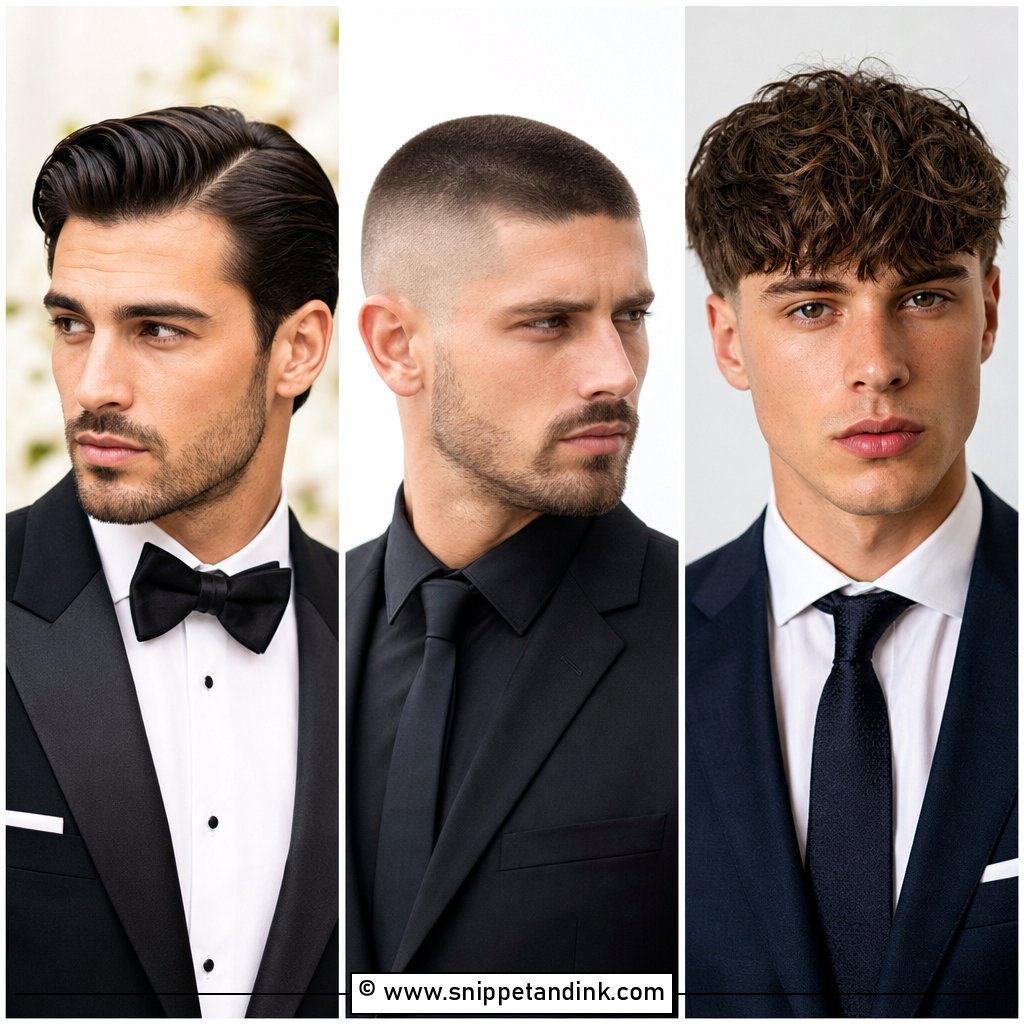
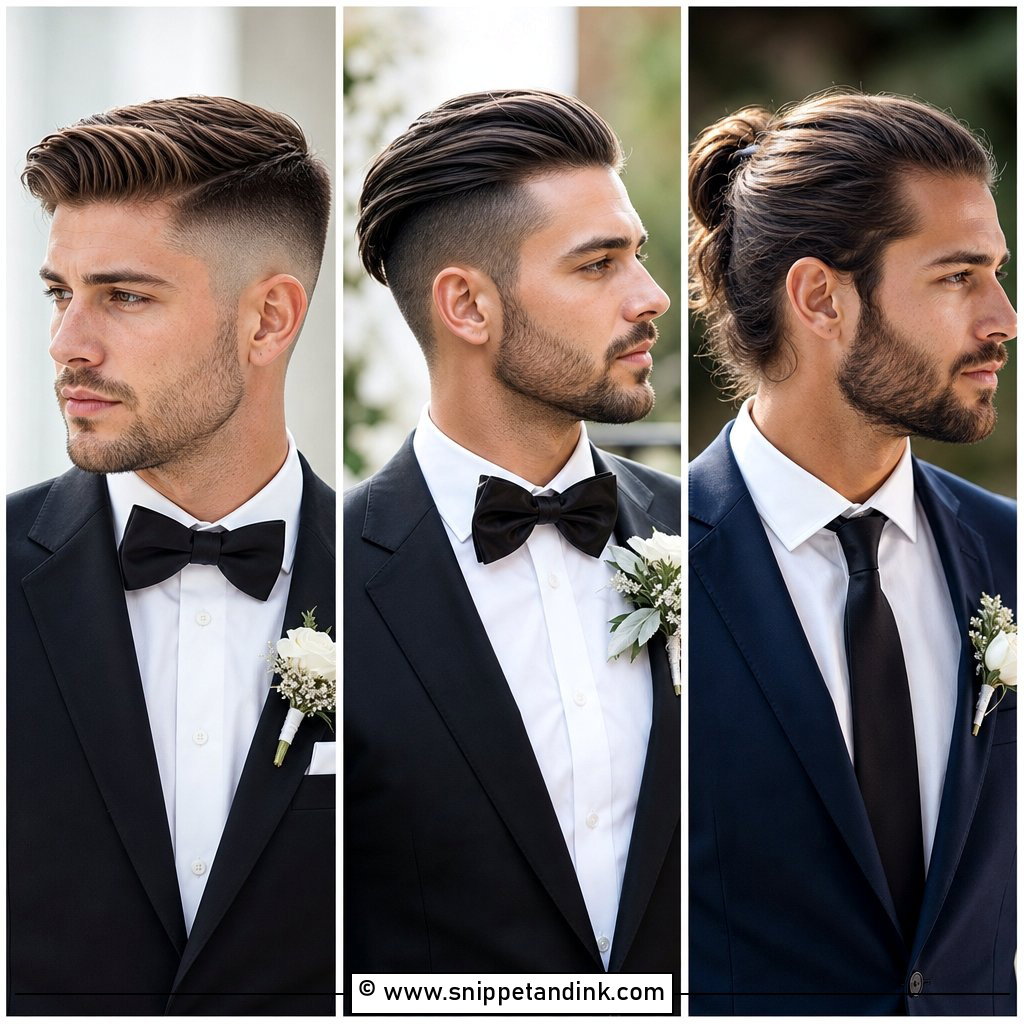
With short or faded sides and the top brushed straight back, the slick back undercut has a lot of structure. It suits black-tie dress codes and formal venues. Product choice changes it completely: a strong-hold pomade gives shine and staying power, while a matte paste gives a softer, more modern finish. It works on straight to wavy hair. Very curly hair tends to spring forward as the day warms up, so I’d only suggest it there with a firm gel and a test wear first.
4. Textured Quiff for the Big Day
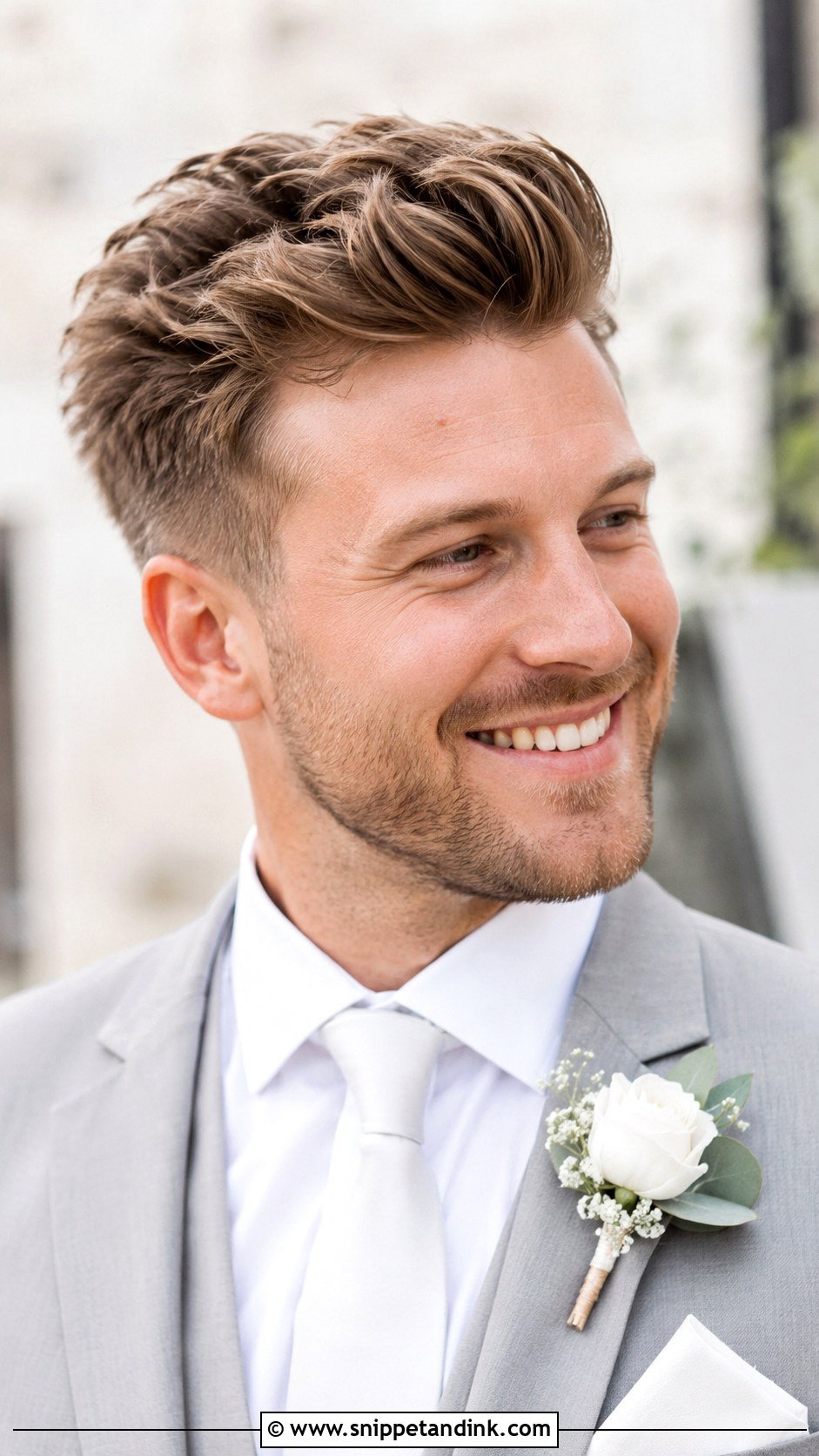
A quiff lifts the front hair up and back, adding height that frames the face, with shorter tapered or faded sides. For a wedding I’d go soft and textured rather than sculpted; a stiff quiff looks dated in photos and collapses unevenly when it fails. Blow-dry the front upward first, since the dryer sets the shape and the product only holds it. Finish with a light pomade. It adds length to round and oval faces.
5. Short Taper Haircut
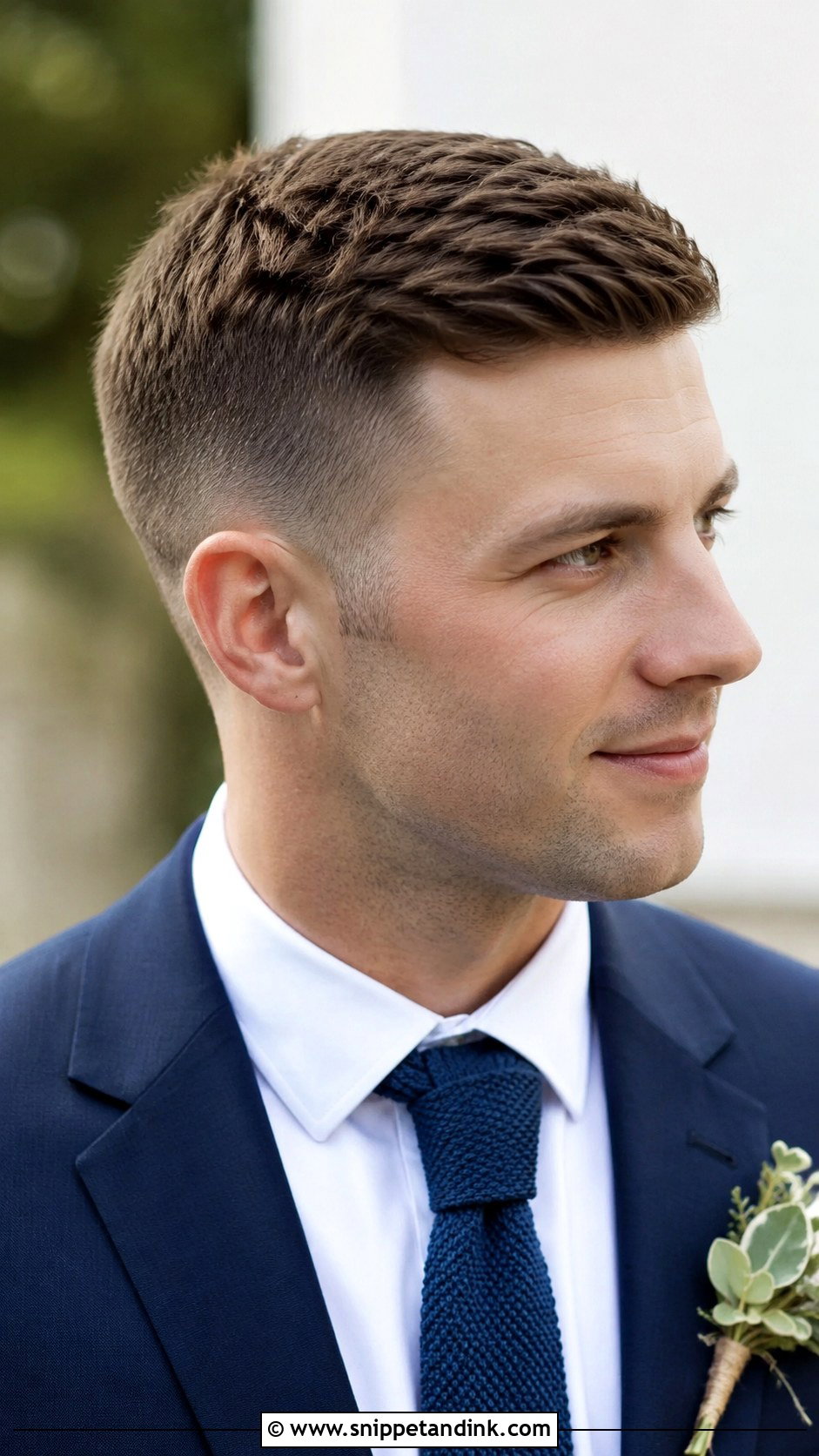
The short taper is what I recommend to grooms who don’t want to think about their hair at all. The length shortens gradually around the sides and back into the neckline, and the top stays short enough to manage but long enough for a bit of texture. It needs very little product and looks tidy at a formal venue or an outdoor ceremony. Because the taper is gradual, it also grows out more gracefully than a fade, so you have more leeway on when to cut it.
6. Ivy League Cut
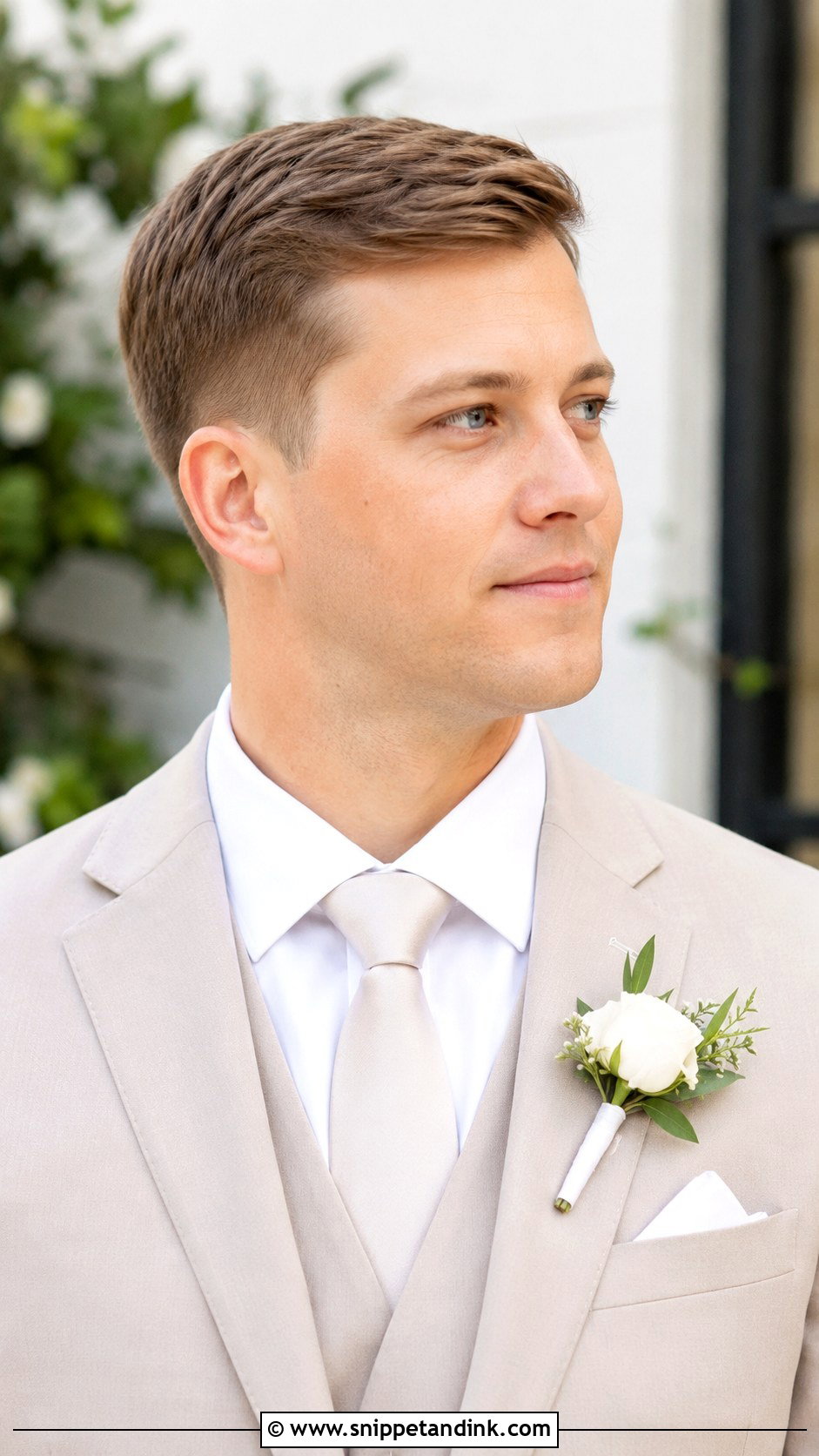
An Ivy League cut is a crew cut with enough length on top to part and comb across, while the sides and back stay tapered. It works on most hair textures and pairs easily with formal clothes. A light pomade keeps it smooth. It flatters square and oval faces especially. If your hair is very fine, the top can look sparse when combed flat, so ask your barber to leave it a little longer and add texture rather than slicking it down.
7. Curly Top With Faded Sides
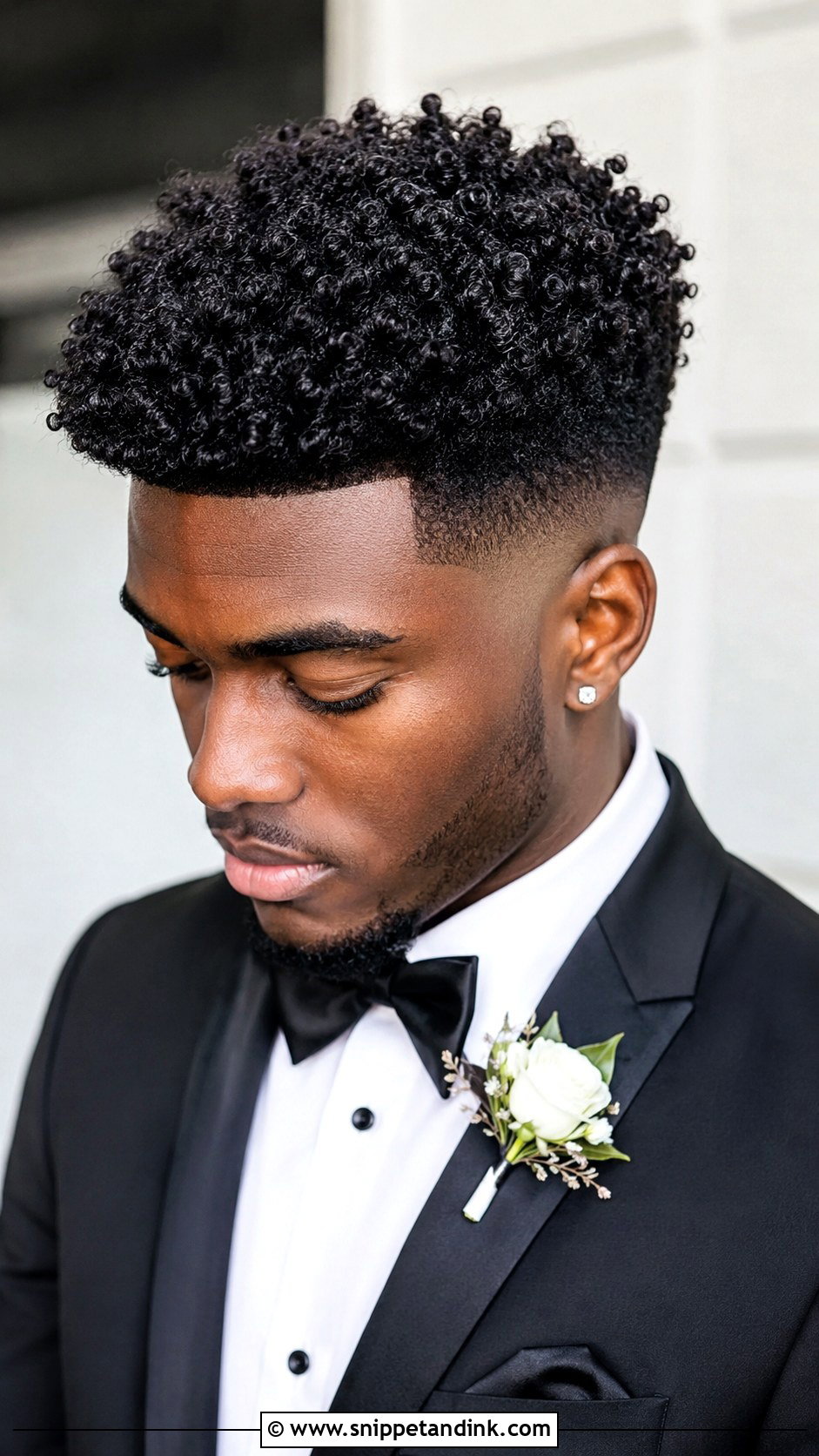
Curly grooms should wear their texture, not fight it. Keep the curls full and defined on top and fade the sides for contrast. The trouble spot is frizz: a long day, a warm room and nervous hands touching the hair will break curls up. Apply a curl cream or light gel to damp hair, let it dry without touching, and avoid brushing once dry. The faded sides keep it reading formal even with volume on top. It suits round and heart-shaped faces.
8. Pompadour Hairstyle
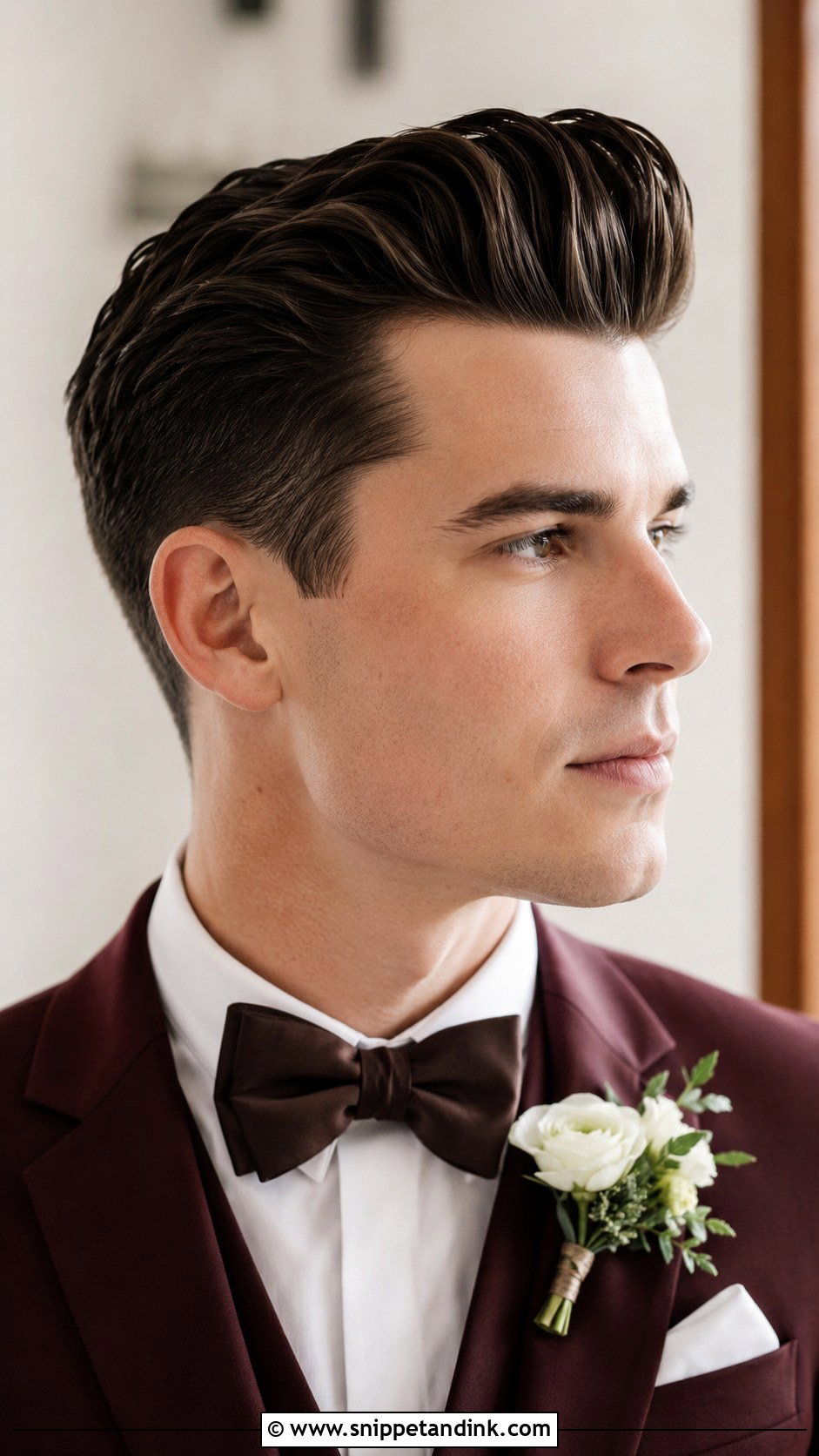
The pompadour sweeps the front hair up and back into real height, with shorter tapered or faded sides balancing it. For a wedding, I’d take it slightly lower than a rockabilly version so it looks deliberate rather than costume. It needs thick, fairly straight hair and a blow-dry for lift before a strong-hold pomade goes in. Fine hair can’t support the height for long. On longer faces, keep the height modest and the sides fuller so it doesn’t lengthen the face further.
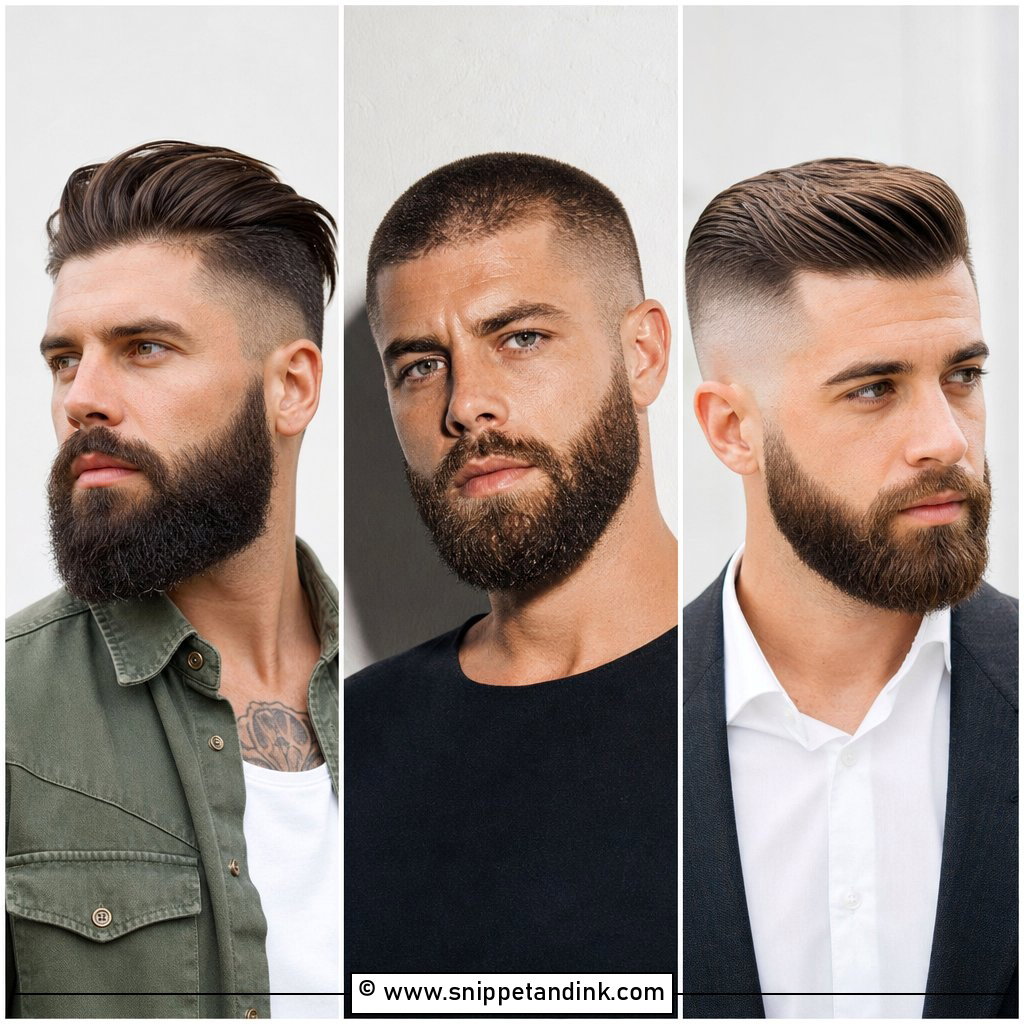
9. Buzz Cut for Grooms
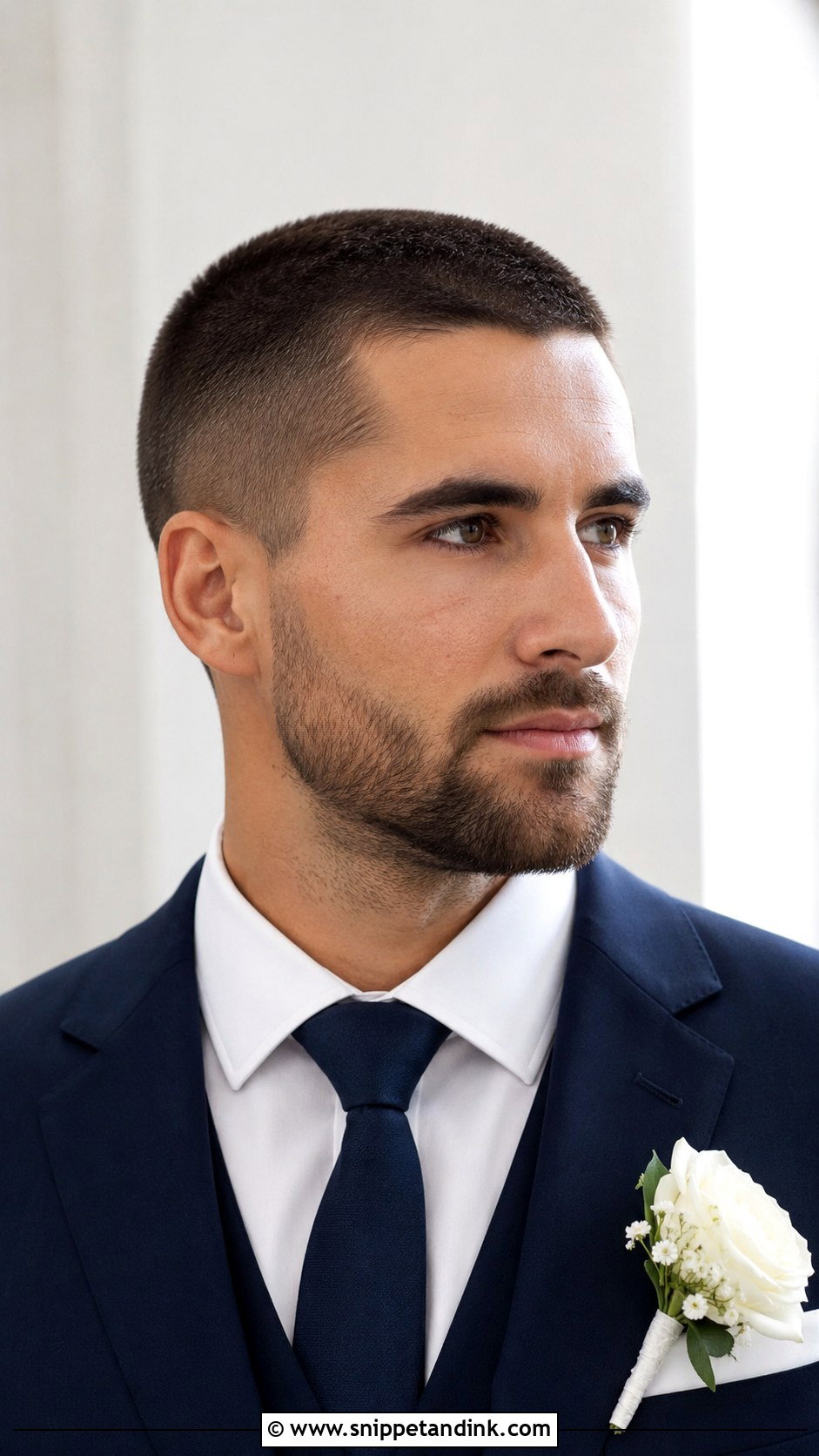
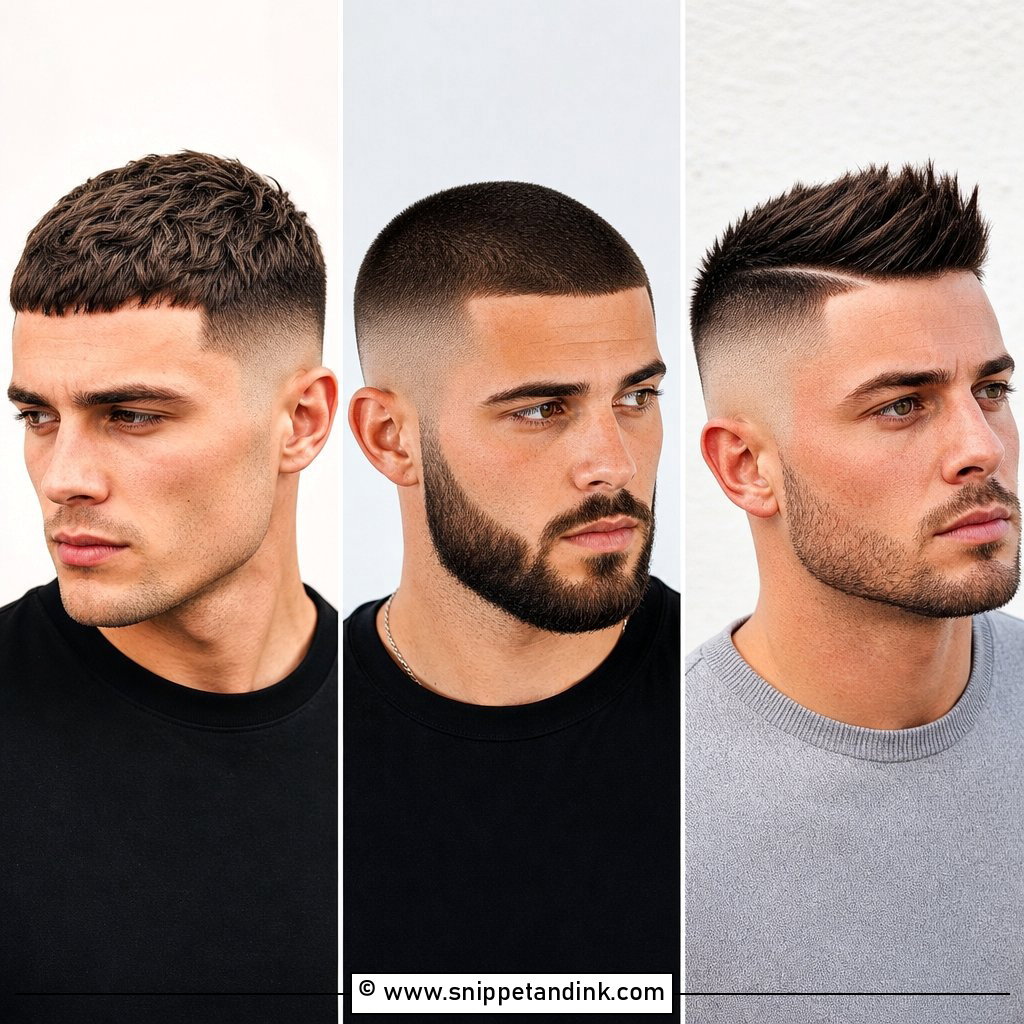
A buzz cut is short and even all round and needs nothing on the day. It suits grooms with thinning hair or anyone who simply prefers minimal. Pair it with a well-groomed beard to add shape to the face. It’s the one style here that can’t be ruined by sweat or a hug. Two things to check: a fresh buzz can show paler skin at the scalp if you’ve been wearing it longer, so have it done a few days ahead, and the scalp can shine under flash, which a little mattifying powder fixes.
10. Comb Over Fade
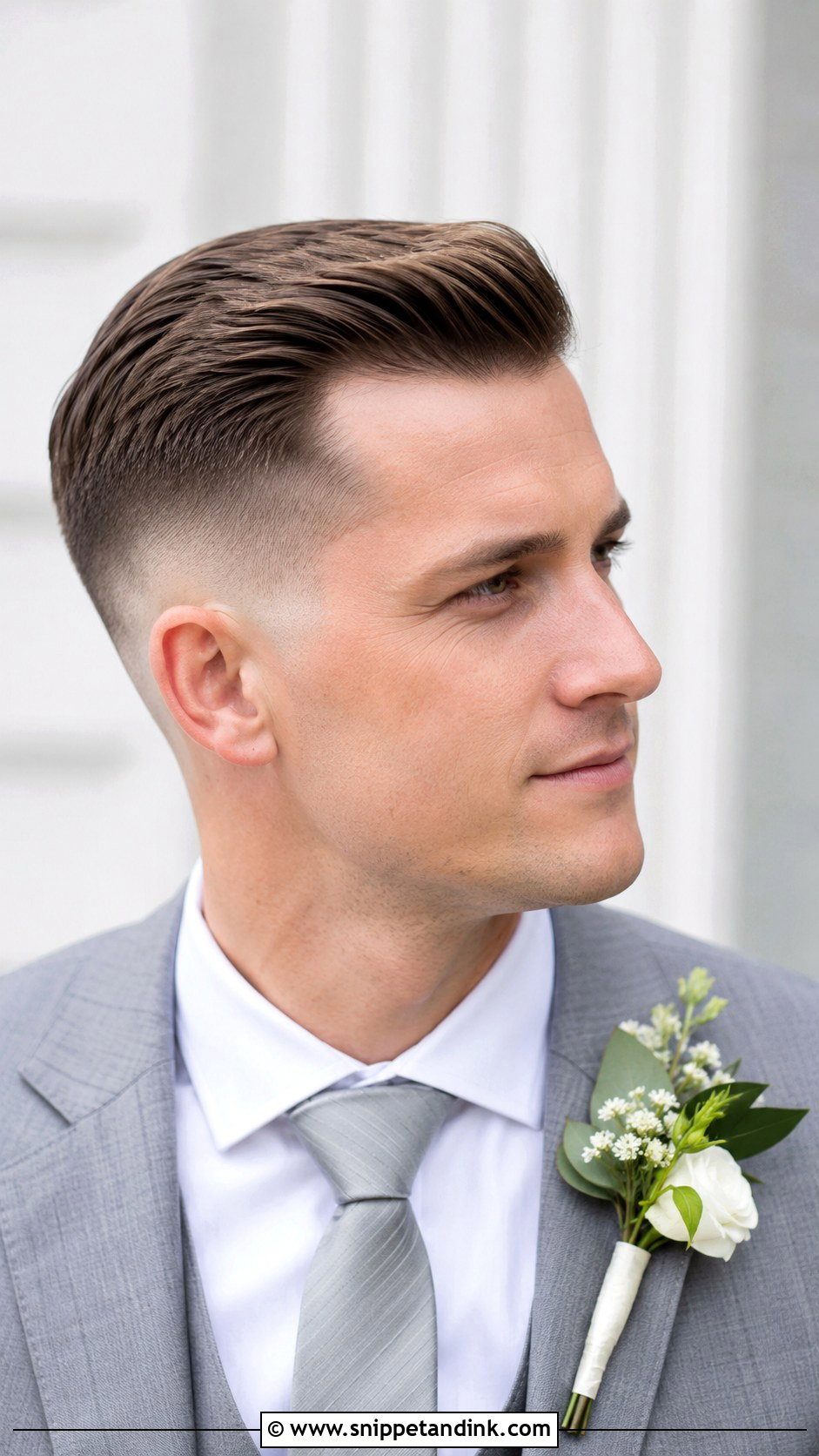
The comb over fade combines a side-combed top with a faded gradient on the sides. It’s polished and works with traditional and contemporary suits alike. Use a comb and light pomade to set a smooth, clear part. Like any fade, it needs a fresh cut close to the date. I’d also ask the barber to keep the fade a little higher on the part side, which keeps the shape balanced when the top is combed over and makes the line read clearly from the side in photos.
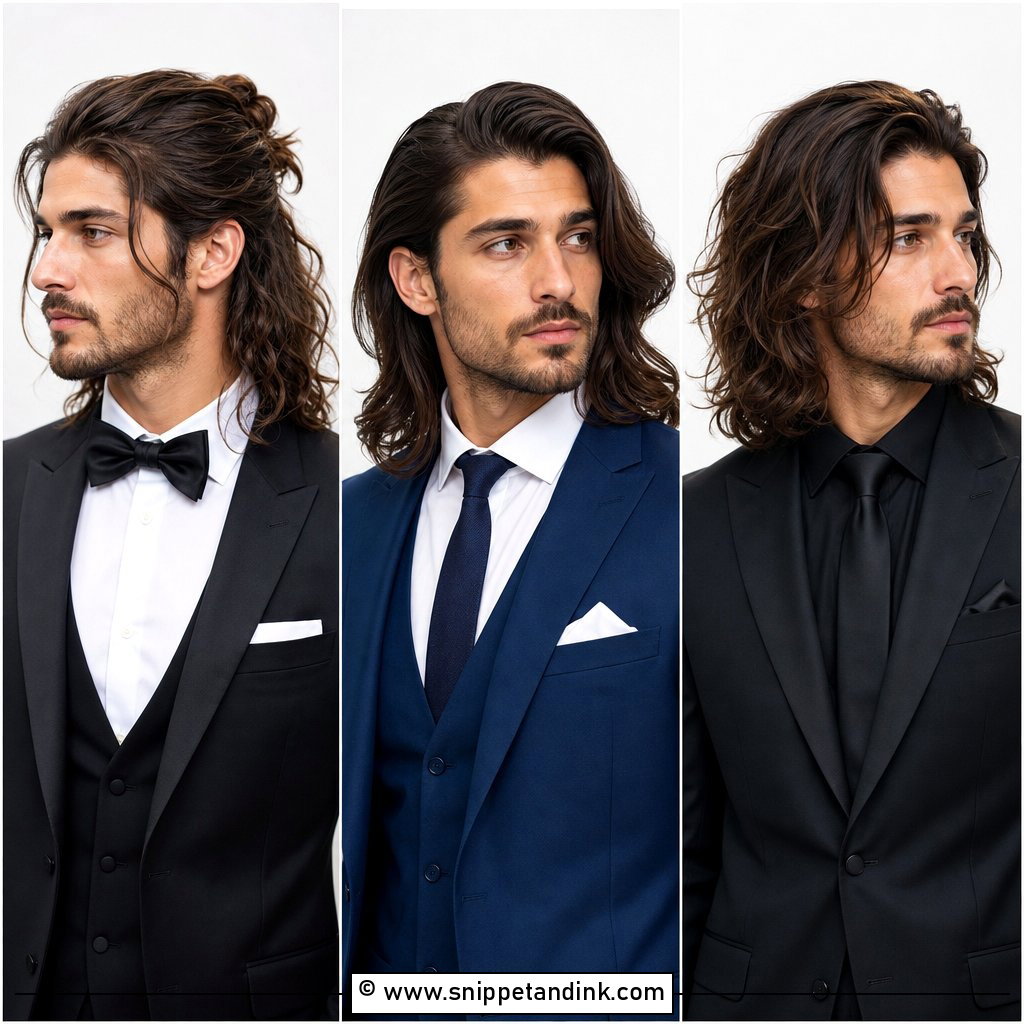
11. Long Flowing Hair for Grooms
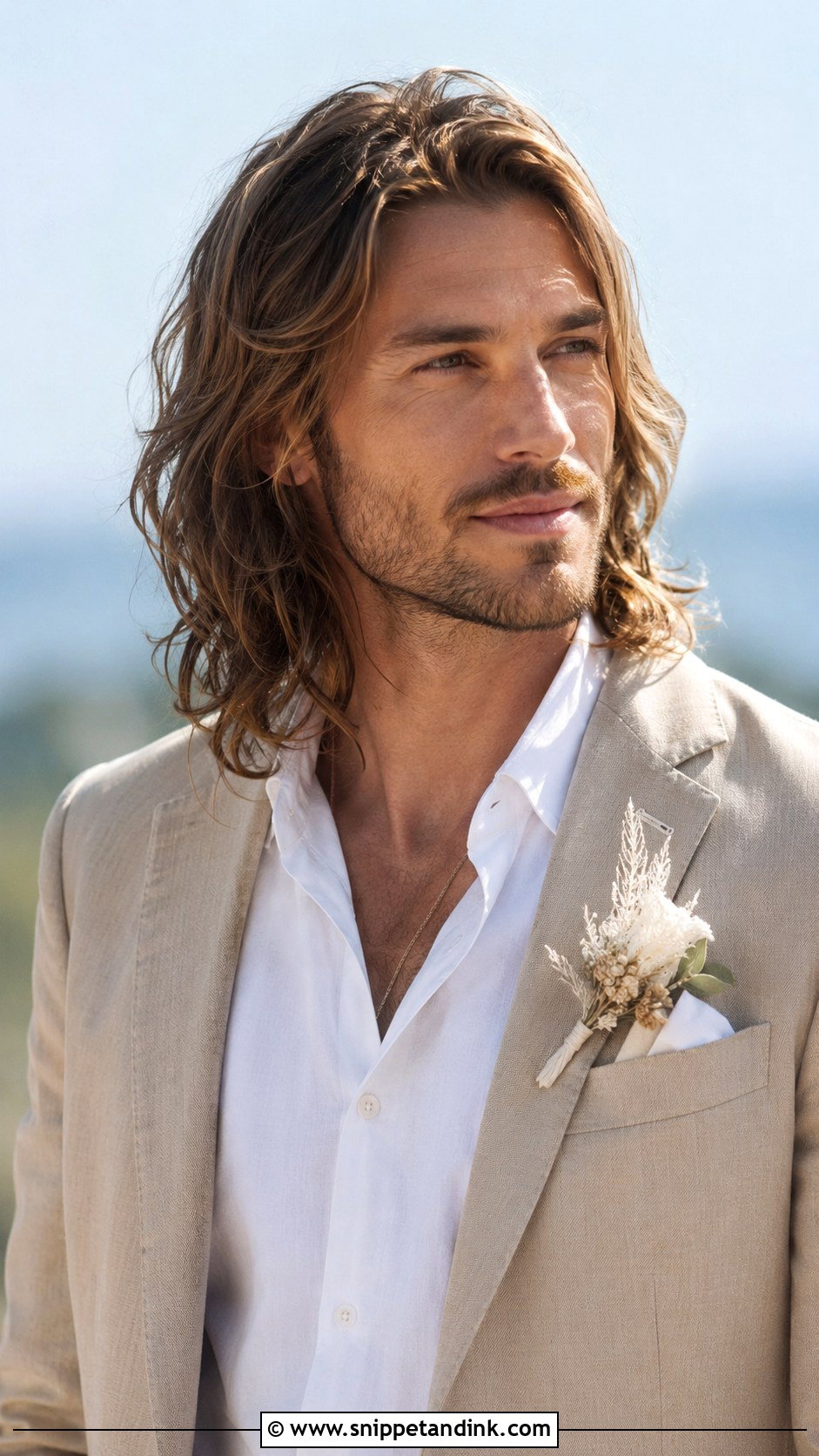
Long hair, straight, wavy or curly, looks relaxed worn loose, especially at outdoor, rustic or bohemian weddings. Get the ends trimmed a few weeks ahead so they’re healthy without looking freshly cut, wash and condition the day before or morning of, and use a light leave-in to tame flyaways without weight. Loose hair blows across the face at outdoor ceremonies, so have a plan to half-tie it back for the vows. A spare hair tie on the wrist is worth its weight.
12. Man Bun Wedding Style
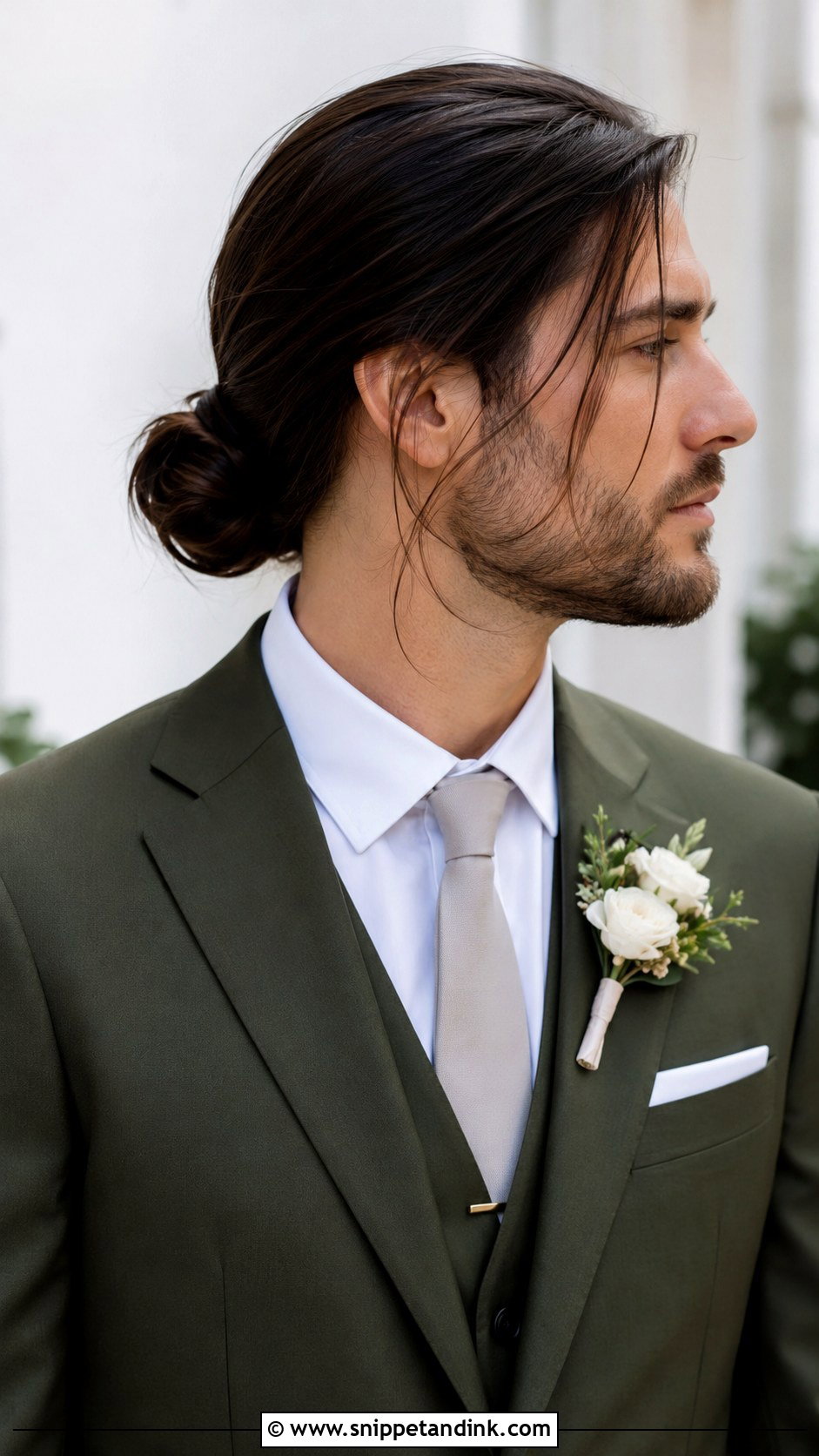
A man bun gathers longer hair into a low or top knot and keeps it out of the face all day, which helps if you’ll be dancing. Smooth stray strands with a light product, and leave a couple of face-framing pieces out if you want it softer. I’d usually go for a low bun with a suit; a high top knot reads more casual. Tie it with a snag-free elastic, since a tight band worn for twelve hours can give a headache. It suits modern and boho weddings.
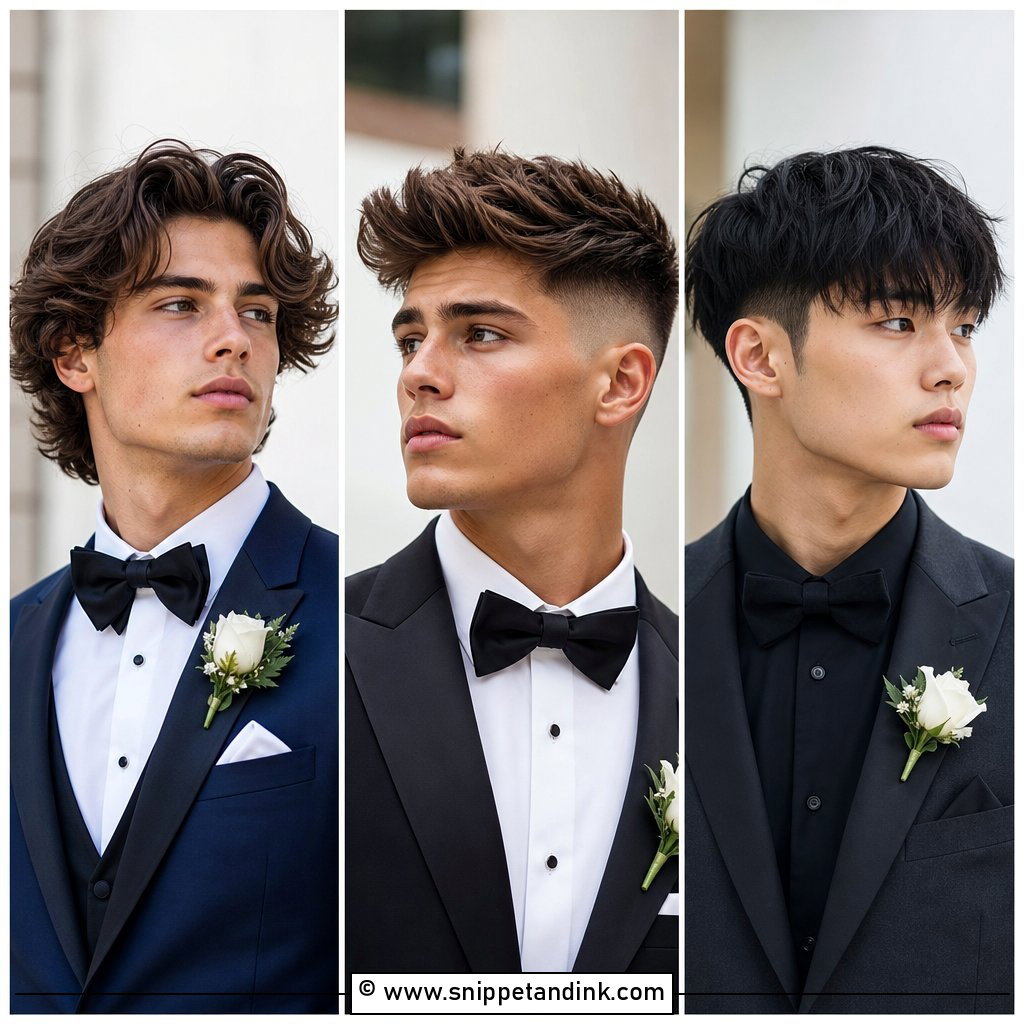
13. Textured Crop Top
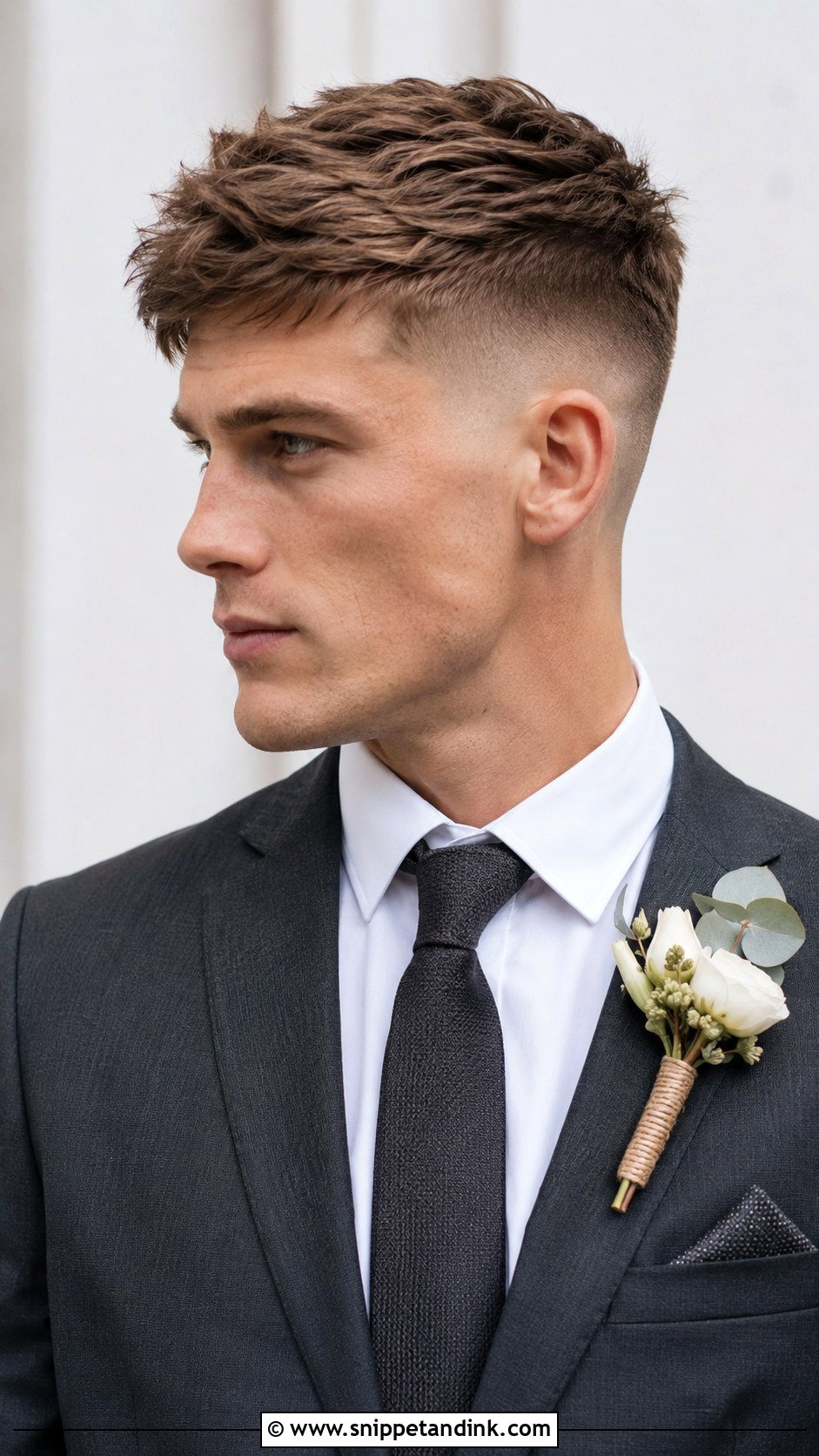
The textured crop is cut short on top with plenty of texture, usually pushed forward into a small fringe, with faded or tapered sides. It works on straight and slightly wavy hair and needs only a matte clay. It’s forgiving if your hairline is starting to recede, since the forward fringe covers the temples. It flatters square and oval faces. It reads young and current, so think about whether it suits the formality of your suit.
14. Slicked Back Long Hair
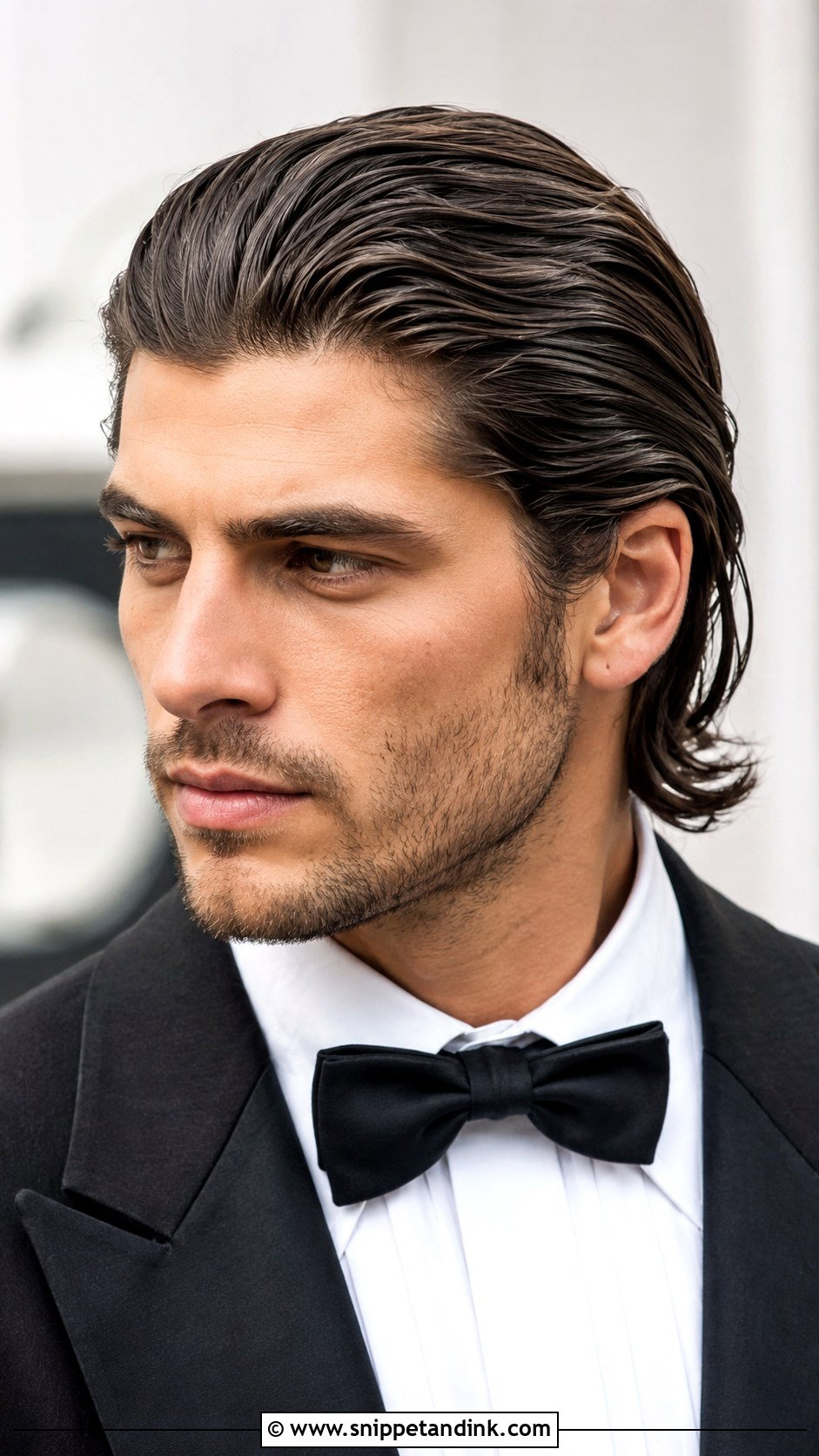
Slicking medium to long hair straight back gives a smooth, formal shape that suits classic and vintage-themed weddings. A strong-hold gel or pomade keeps it in place all day on straight or wavy hair. Comb it back while the product is still damp so the lines are even. It does put all the attention on your face and hairline, so it’s less forgiving for a high or uneven hairline. Combined with a sharp suit, it looks dramatic in the right way.
15. Crew Cut for Grooms
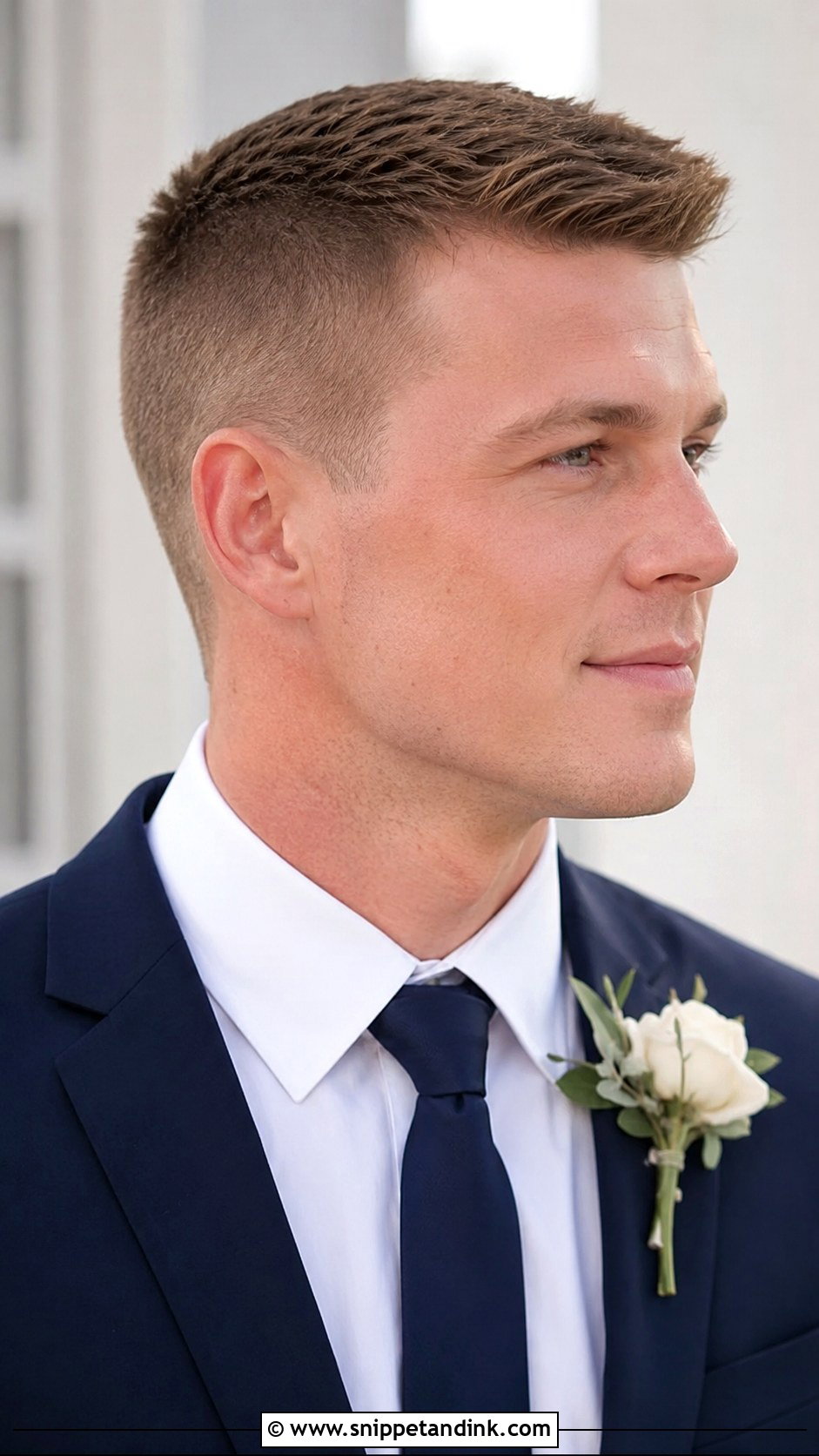
A crew cut keeps the top short, slightly longer at the front, with tapered sides. It needs no heavy styling and stays neat all day. A small amount of product adds texture if you want it. Most face shapes suit it, and it fits casual or formal weddings. Because the front is the longest part, ask your barber to leave it just long enough to push up slightly; a crew cut that’s too short at the front can look like the army rather than a wedding.
16. Low Fade With Side Swept Hair
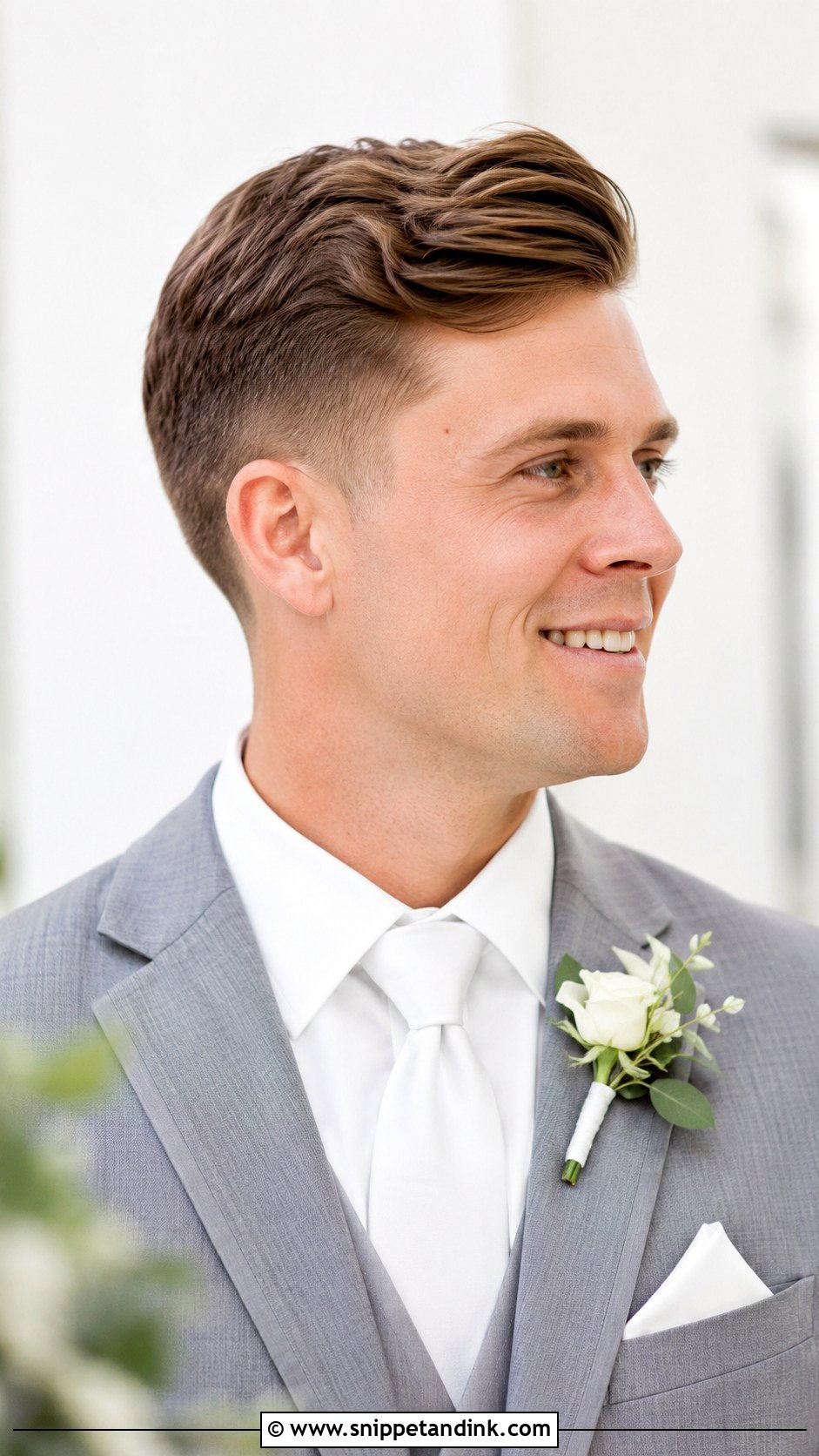
A low fade starts near the ears and blends upward gradually, so it looks cleaner than a taper but quieter than a high fade. Sweep the top to one side with a light pomade, enough to control it without stiffness. Most face shapes and hair textures suit it. It’s a good middle ground for grooms who want structure without anything dramatic, and since less skin shows, regrowth is less obvious than with a skin fade.
17. Wavy Medium Length Hairstyle
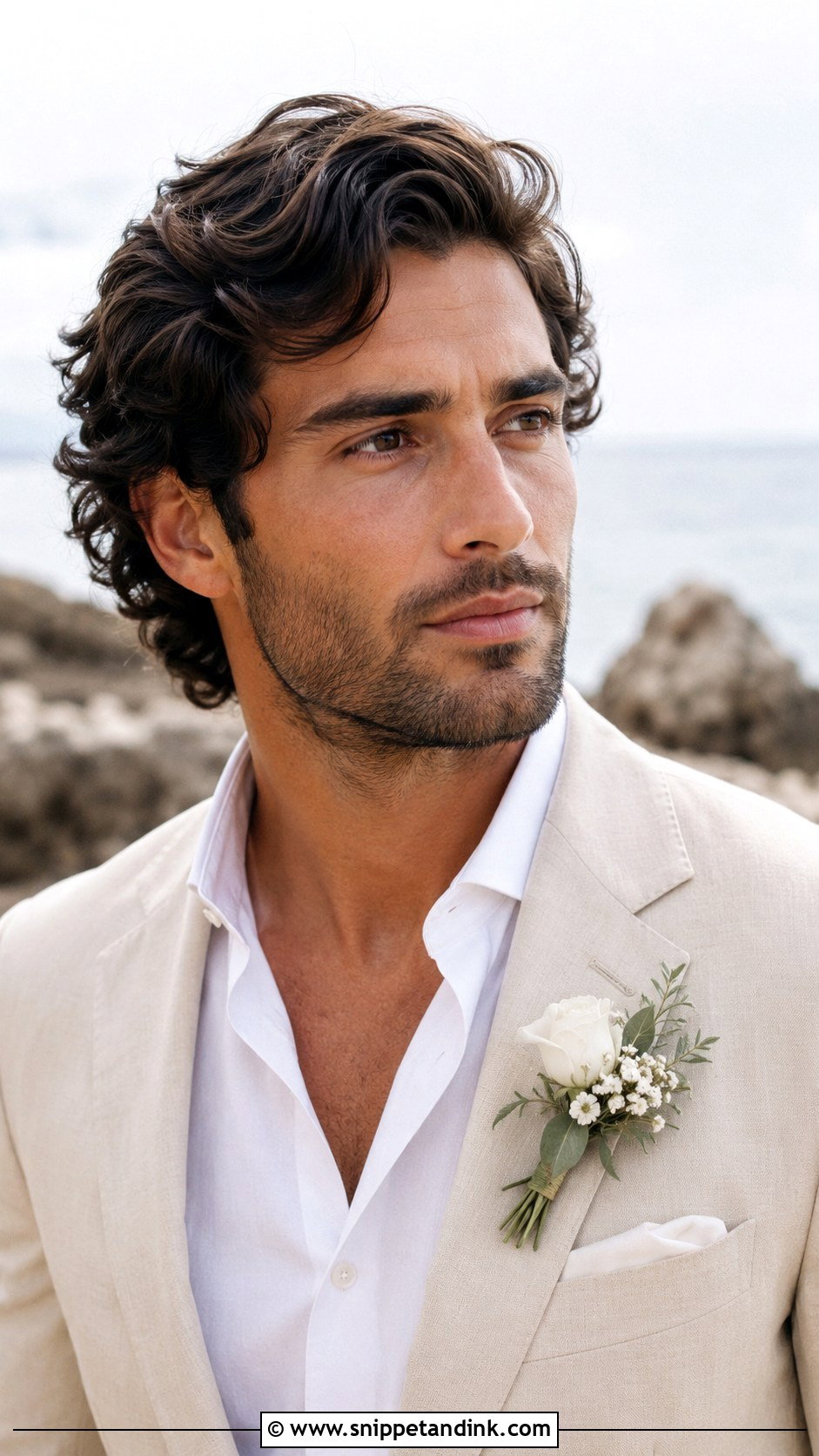
Natural waves at medium length look relaxed and still neat when they’re shaped. Keep enough length to show the wave, and use a light cream to define it and add shine. Sweep it back or to the side away from the face. It suits outdoor and seaside weddings, with the caveat that wind and salt air will loosen it, so a slightly firmer cream is wiser by the water. Waves photograph naturally in daylight.
18. Faux Hawk for the Wedding
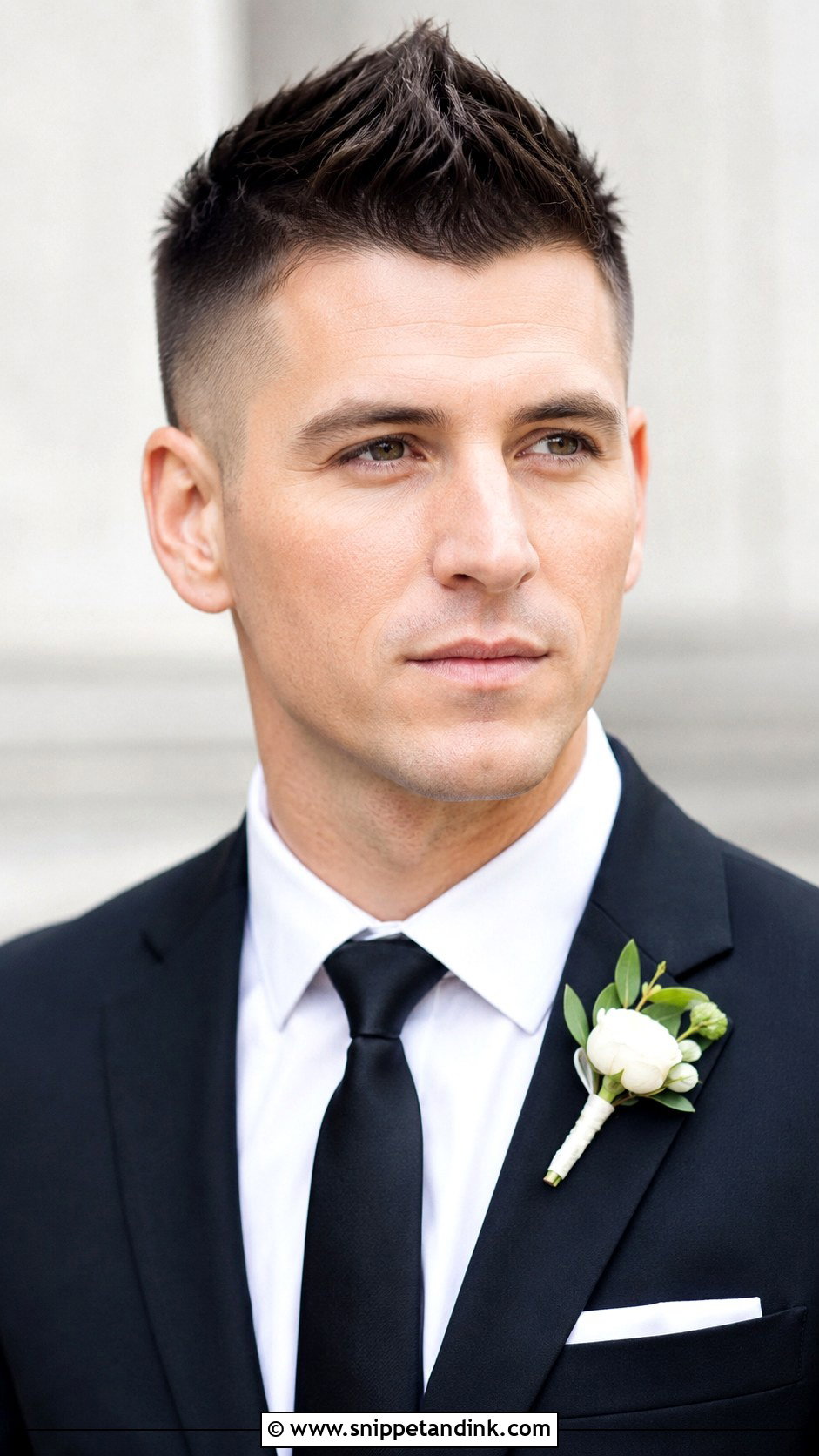
A faux hawk pushes the hair up toward the center into a soft peak while the sides stay short or faded. Unlike a real mohawk, it can be toned down to suit a suit. Shape it with a matte product so it doesn’t look stiff or wet. It suits straight and wavy hair and a groom with a bit of personality. I’d keep the peak low for a formal ceremony; anything tall competes with the tailoring rather than finishing it.
19. Classic Pompadour With Beard
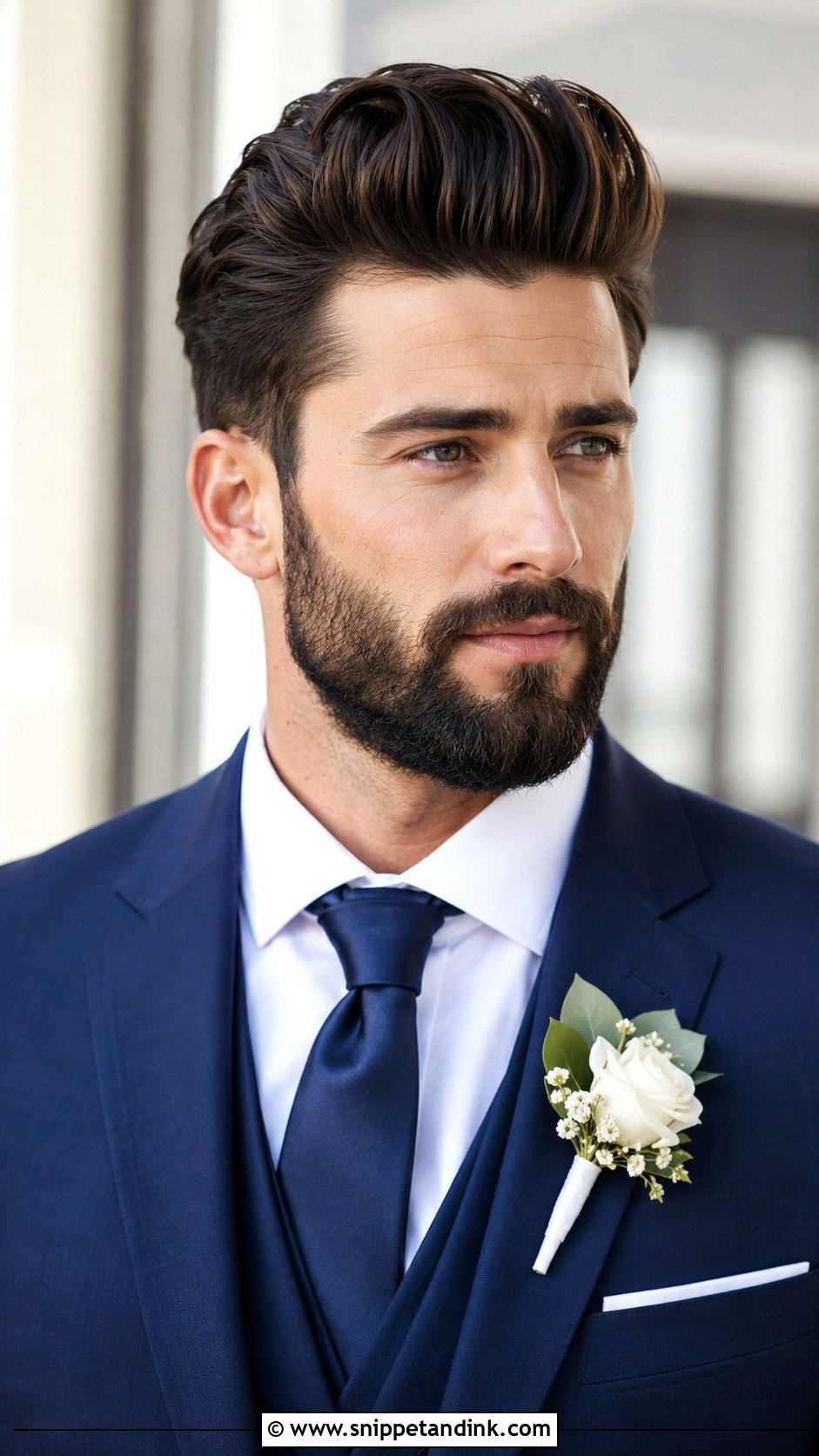
A pompadour with a beard balances height on top with weight at the jaw. The beard should be trimmed and lined to the same standard as the hair, ideally a day or two before so any redness from the line-up settles. Style the pompadour with height and a smooth finish using a strong-hold product. It suits longer and oval face shapes and a groom who likes a vintage feel. Matching the polish of beard and hair is what makes the pairing look deliberate.
20. Caesar Cut for Grooms
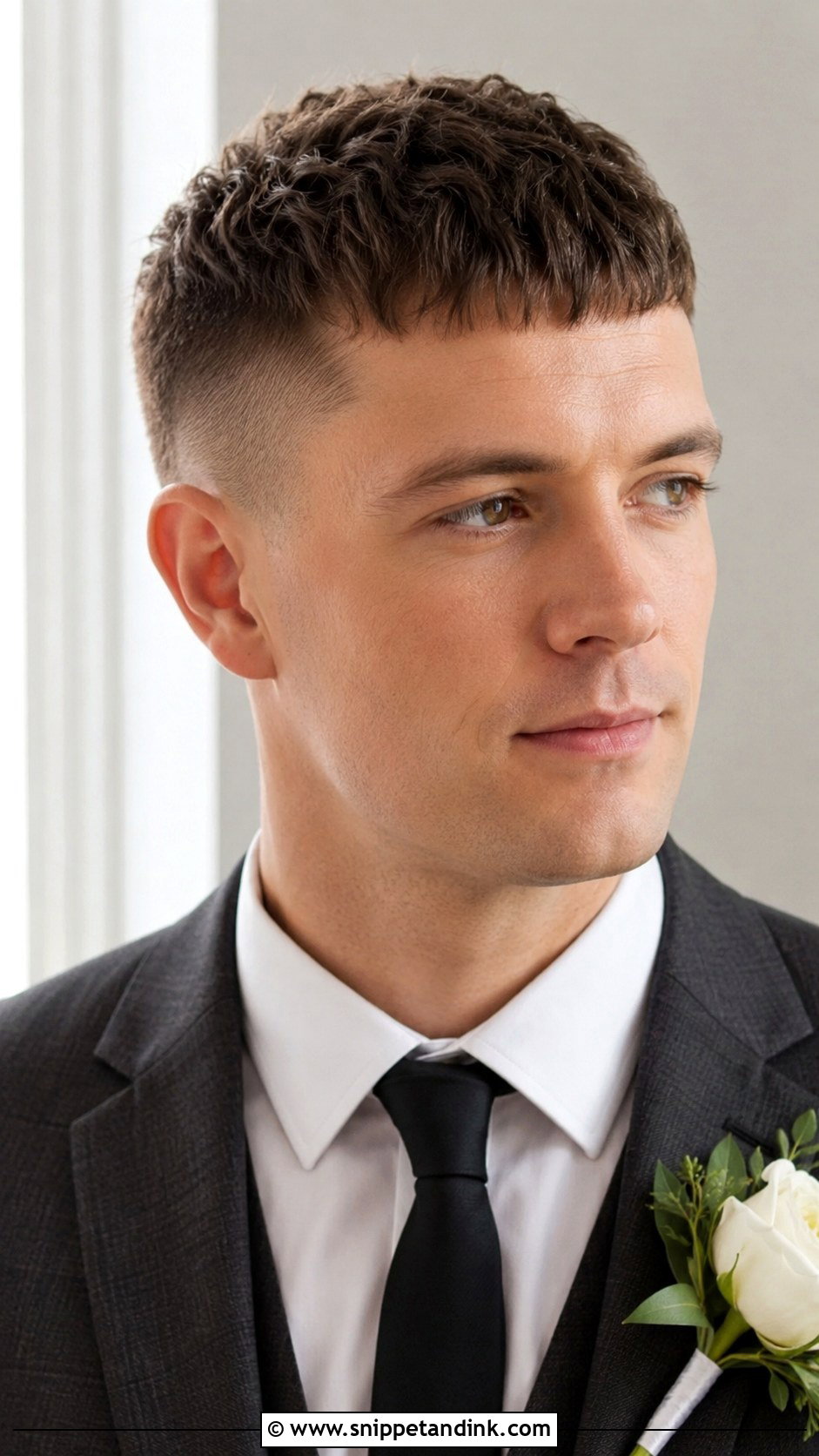
The Caesar cut is short and uniform with a small straight fringe across the forehead and short or faded sides. It needs only a touch of matte product. For grooms with thick hair, it’s quick and neat; for those with a receding hairline, the forward fringe softens the temples. It suits round and oval faces. Because the fringe line is so straight, it’s another cut that should be refreshed close to the date so the line is crisp in photos.
Flash, Sweat and Headwear on the Day
Most grooms style their hair once in the morning and then don’t see a mirror for hours. A few things change how the cut looks by the evening.
Shine reads differently in photos
High-shine pomades look sleek in person but can show as wet or greasy under flash and indoor lights. Unless you specifically want a glossy slick back, choose a matte or low-shine product. The same goes for skin: a little oil at the hairline or forehead reflects strongly, and blotting papers fix it in seconds.
Heat and a warm venue
Sweat at the hairline loosens product, so fronts and fringes drop first. Don’t over-apply product in the morning to compensate; it gets heavier and separates. A small pocket kit works better: a pocket comb, a travel tin of your product and blotting papers, carried by the best man.
Turbans, safas and hats
If you’ll wear a safa, turban, kufi or hat for part of the day, the hair underneath will flatten. Short tapers, crops and buzz cuts recover quickly; quiffs and pompadours don’t. Either choose a cut that survives headwear, or plan two minutes and a comb for when it comes off.
Wear It for a Full Day Before the Wedding
The right style is one that suits your hair type, face shape and the formality of the wedding, and one you’ve actually worn for a day before. A classic side part, a skin fade and long hair all work if they’re cut and timed well. Get your final cut about one to two weeks before for longer styles and a few days before for fades, bring a photo to your barber, and do a trial with the products you’ll use on the day. Then you can stop thinking about your hair.
You'll Like These Ideas:


Leave a Reply