
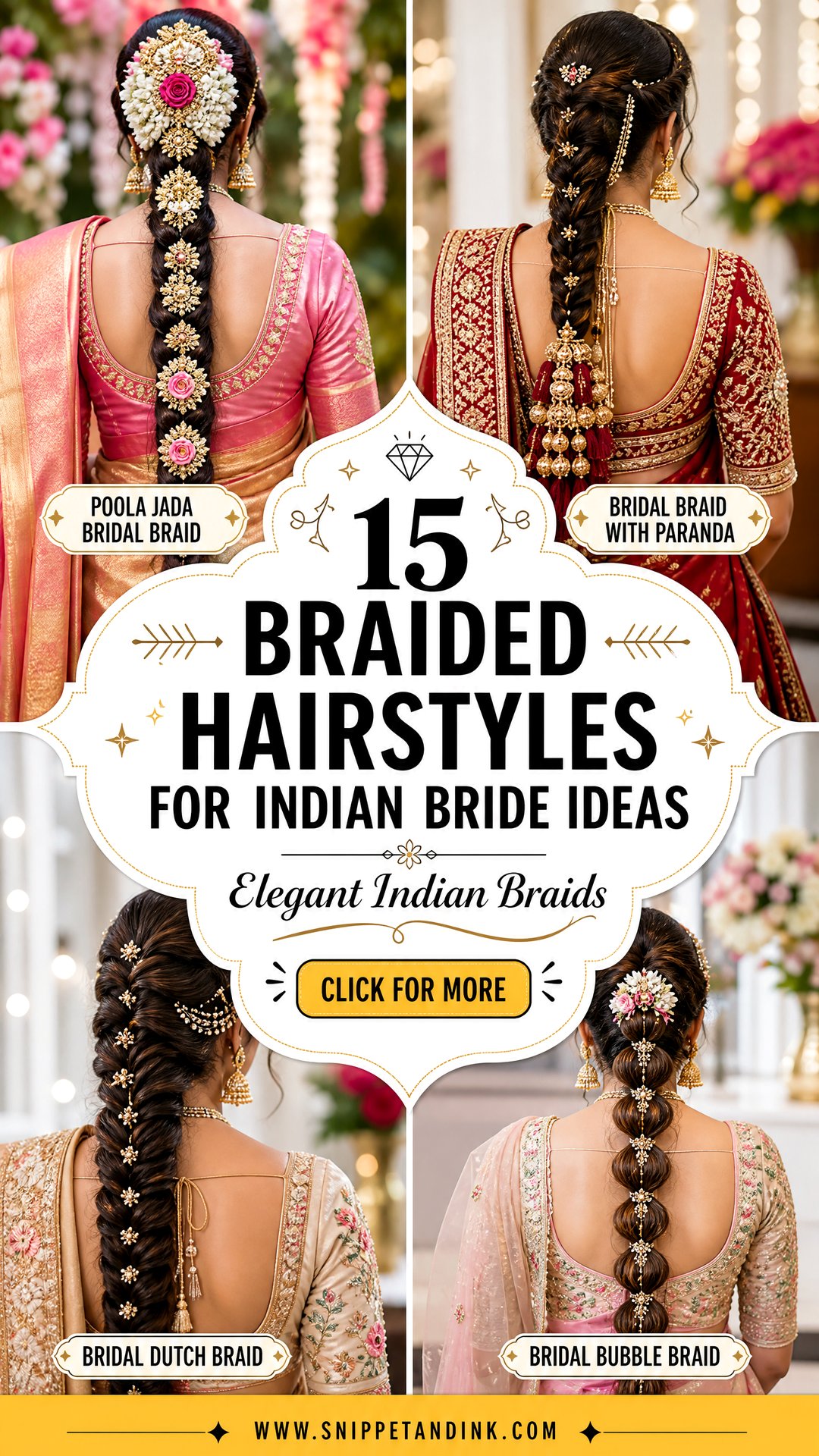
Indian bridal braids carry more than hair. On the wedding morning a braid may be asked to hold fresh jasmine, gold jada, pearls, a paranda or roses, and then sit under a pinned dupatta through hours of rituals. That’s why I plan the braid around the outfit, the dupatta setting, the jewelry and the regional tradition before I think about the pattern. A South Indian bride may want a long poola jada; a bride with a reception lehenga may prefer a fishtail or a braided bun. These are the fifteen I’m asked for most, with what each needs to stay put.
Bring the Dupatta to Your Trial, Not Just Pictures
The single most useful thing you can bring to a hair trial is the actual dupatta you’ll wear for the ceremony, or one of the same weight. How it’s draped decides almost everything about the braid underneath it.
- Draped over the head and pinned: you need a firm base at the crown or a bun the pins can grab. A loose braid will shift as the fabric pulls on it.
- Over the shoulders only: the back of the head is fully visible, so a poola jada, paranda or detailed braid gets its moment.
- Draped to the side: a side braid on the opposite shoulder keeps them from fighting.
I also want to see the jewelry. A matha patti, heavy jhumkas with sahara chains, or a passa on one side each need a pin point planned into the style. Tell your stylist if you’ll change outfits between rituals too; a braid that has to survive a dupatta coming on and off needs more anchoring than one that’s set once.
1. South Indian Bridal Braid
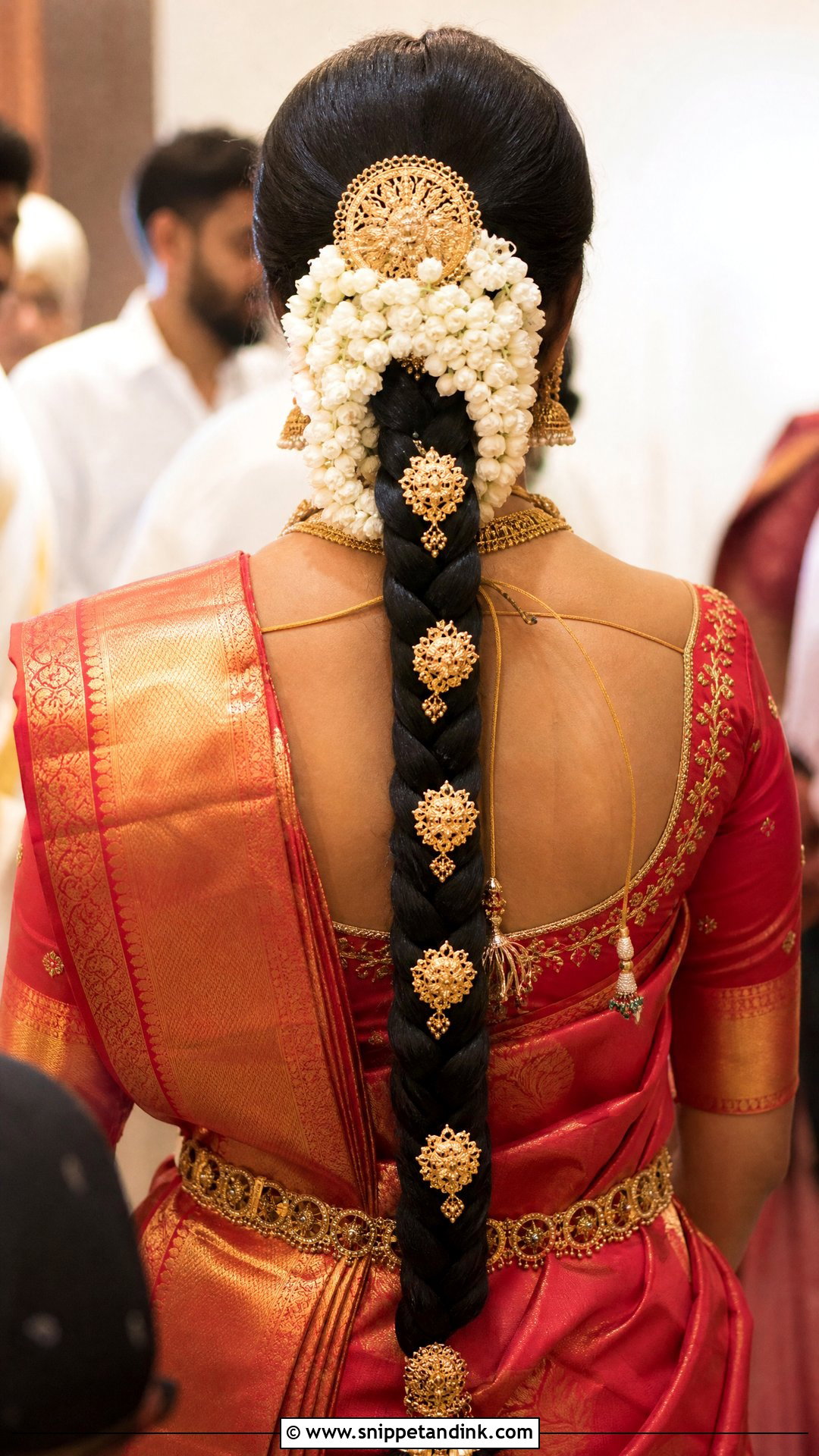
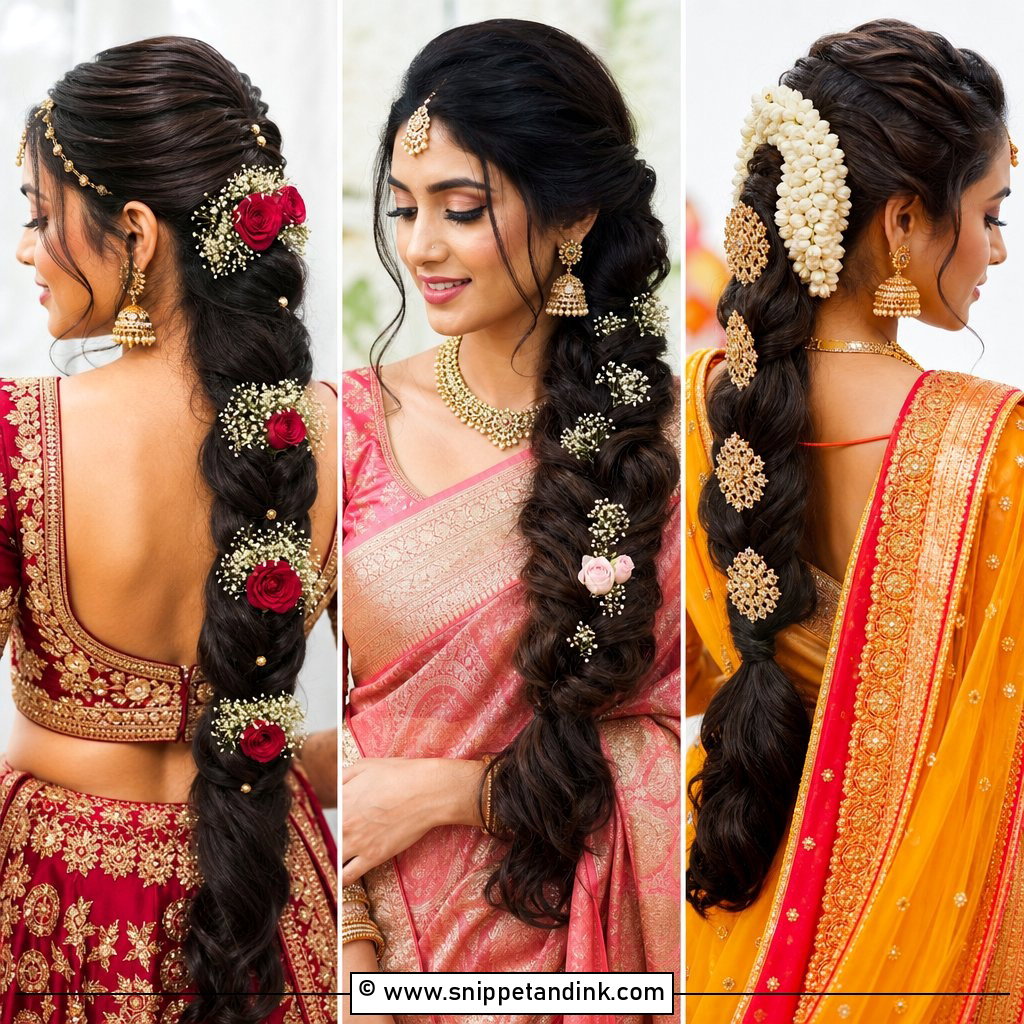
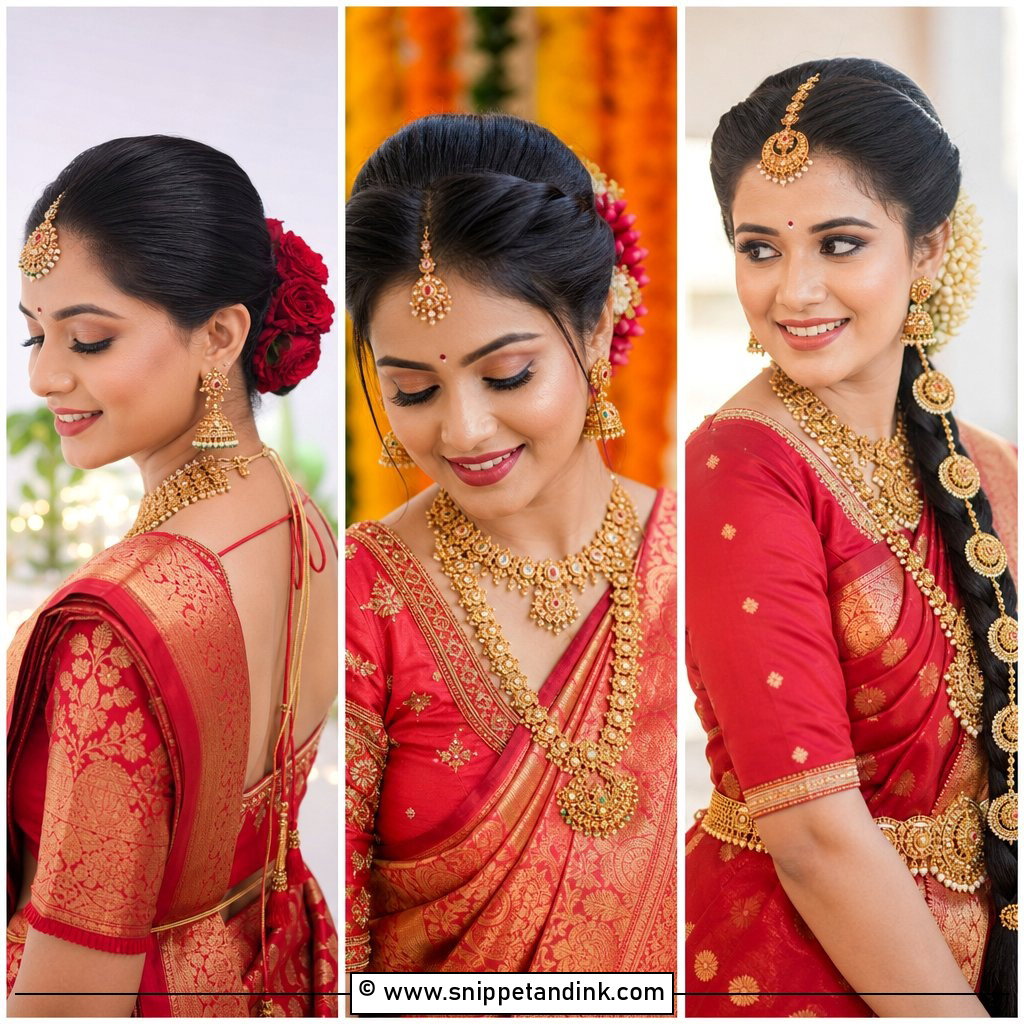
The long, smooth South Indian braid decorated with gold jada billalu, jasmine or roses, or a full poola jada arrangement, is the classic ceremony look. It sits with silk sarees, temple jewelry and a center-parted maang tikka or matha patti. Very few brides have the natural length the traditional braid expects, so I usually add a braided extension at the nape and work it in from the ponytail. The crown should be sleek but not flat; if I press it down too hard, the veil or pallu sits on a dent. Built properly, it lasts through the longest muhurtham.
2. Poola Jada Bridal Braid
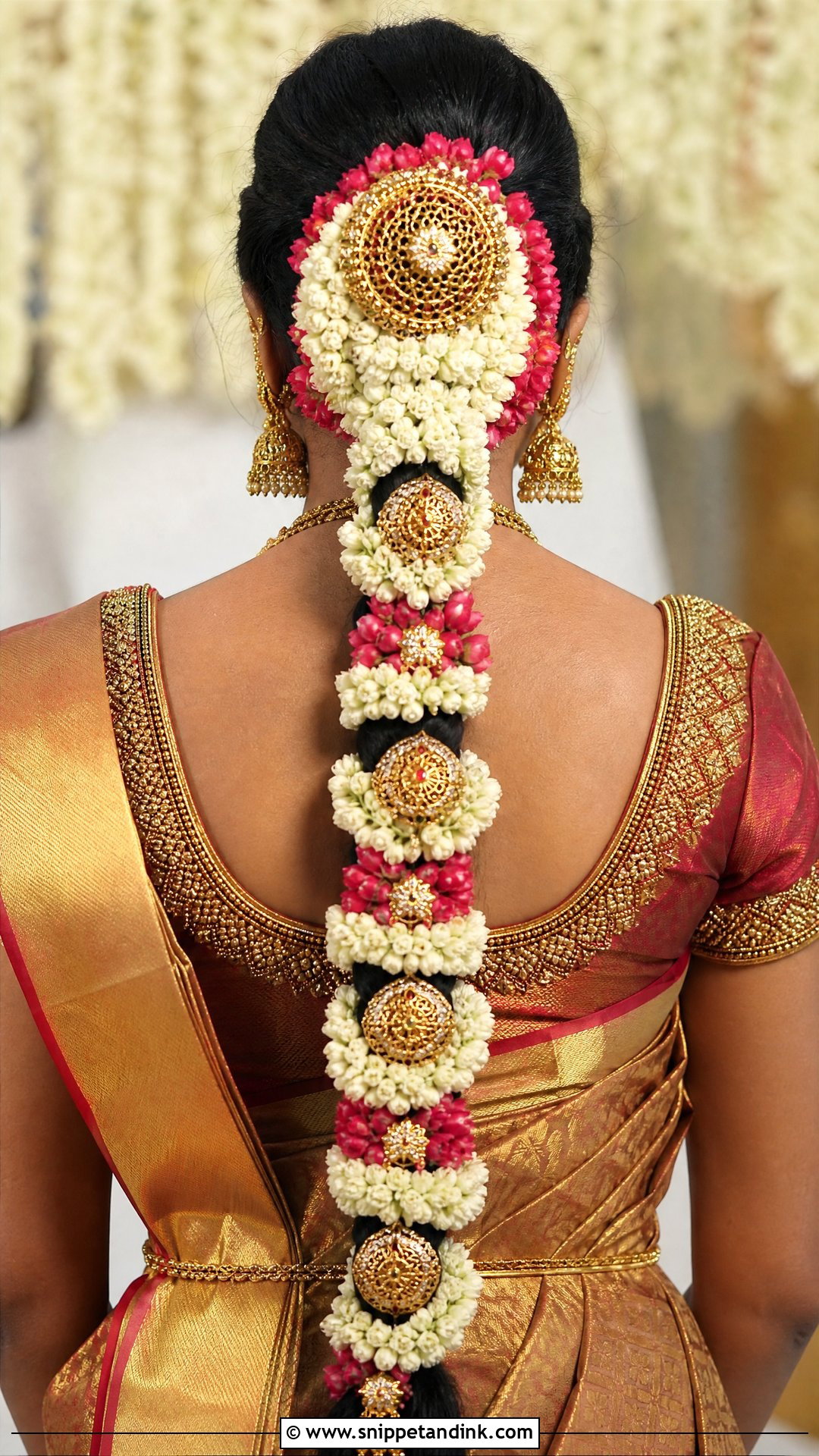
A poola jada covers the braid with a floral panel, often jasmine, roses or marigolds, sometimes artificial flowers dyed to match the saree. It’s central to Telugu, Tamil, Kannada, and Malayali weddings, and because the photographer shoots so much from behind during the rituals, the back of the head carries the look. Fresh panels are heavy. I stitch or pin them into the braid along its full length rather than hanging them from the top, which is what causes the dragging feeling at the crown. Thin hair needs extensions here, not for length alone but to give the panel something to grip.
3. Gajra Bridal Braid
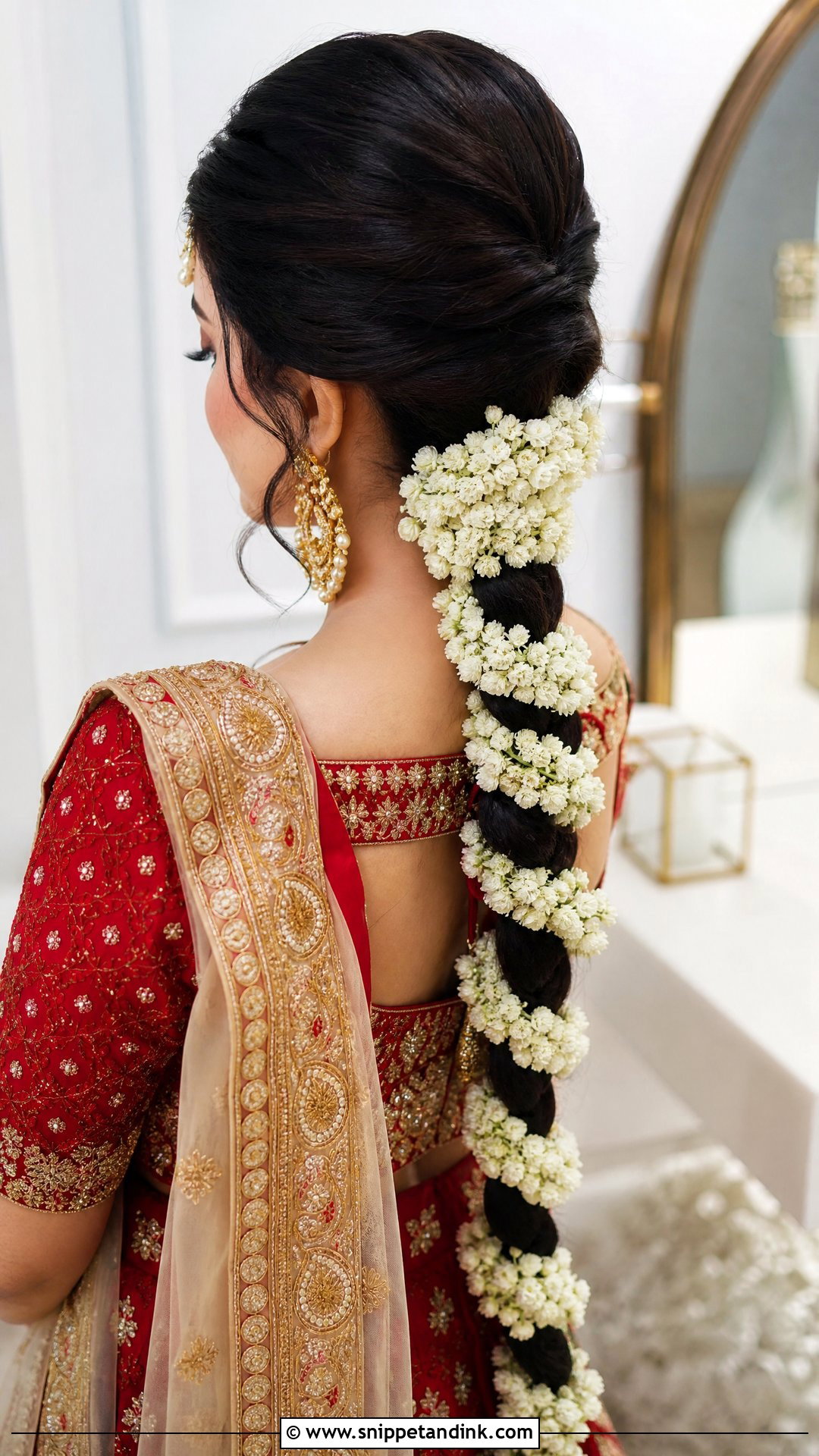
A gajra bridal braid gives you the traditional fragrance and the white contrast against dark hair without the weight of a full panel. It works with lehengas, sarees and Anarkali outfits. The braid underneath can be plain, rope-style or pancaked for width. I wind the gajra along the length or only around the lower half, and secure it with U-pins every few inches so it doesn’t slide as you walk. Keep the rest of the jewelry to a tikka and earrings, or the flowers lose their impact.
4. Bridal Fishtail Braid
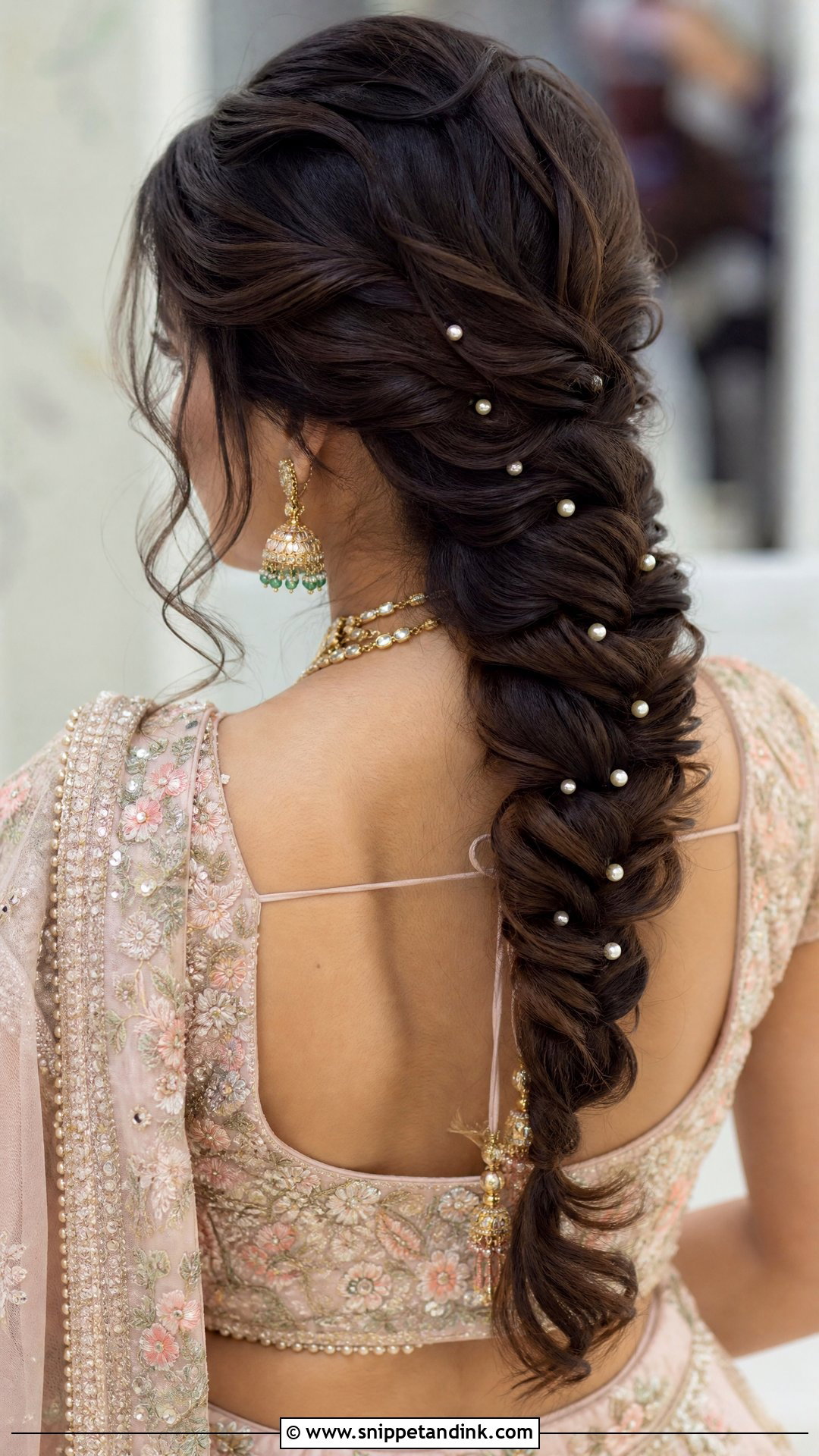
The fishtail’s tight woven pattern reads as detailed and modern, and it holds well because the sections are small. It needs long, thick hair or extensions to show properly. I pancake the edges after it’s finished to widen it. One honest caution: a heavy embroidered dupatta pinned over a fishtail flattens the pattern, so I’d save it for a function with a lighter dupatta or an open neckline. Small pearls or gold pins sit nicely in the weave.
5. Side Bridal Braid
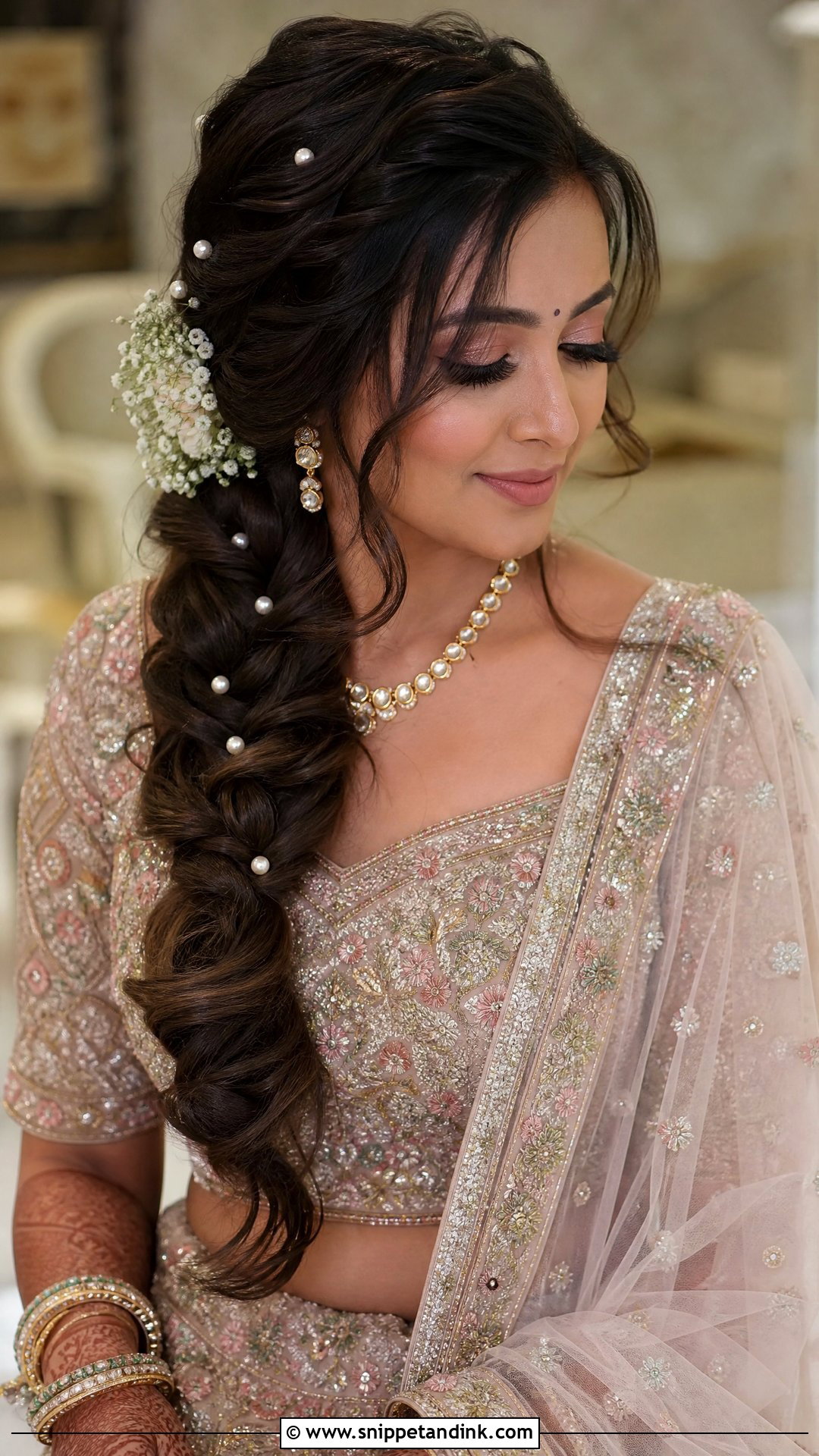
Bringing the braid over one shoulder keeps it visible from the front, even with a dupatta draped behind. I like it for mehendi, haldi and sangeet, when you’re sitting and moving a lot. I anchor the braid behind the ear before it crosses forward; if it’s only held at the end, it creeps backward every time you lean in for a hug. Lift the crown a little on the opposite side for balance, and let a face-framing layer fall if you have one.
6. Bridal Braid With Paranda
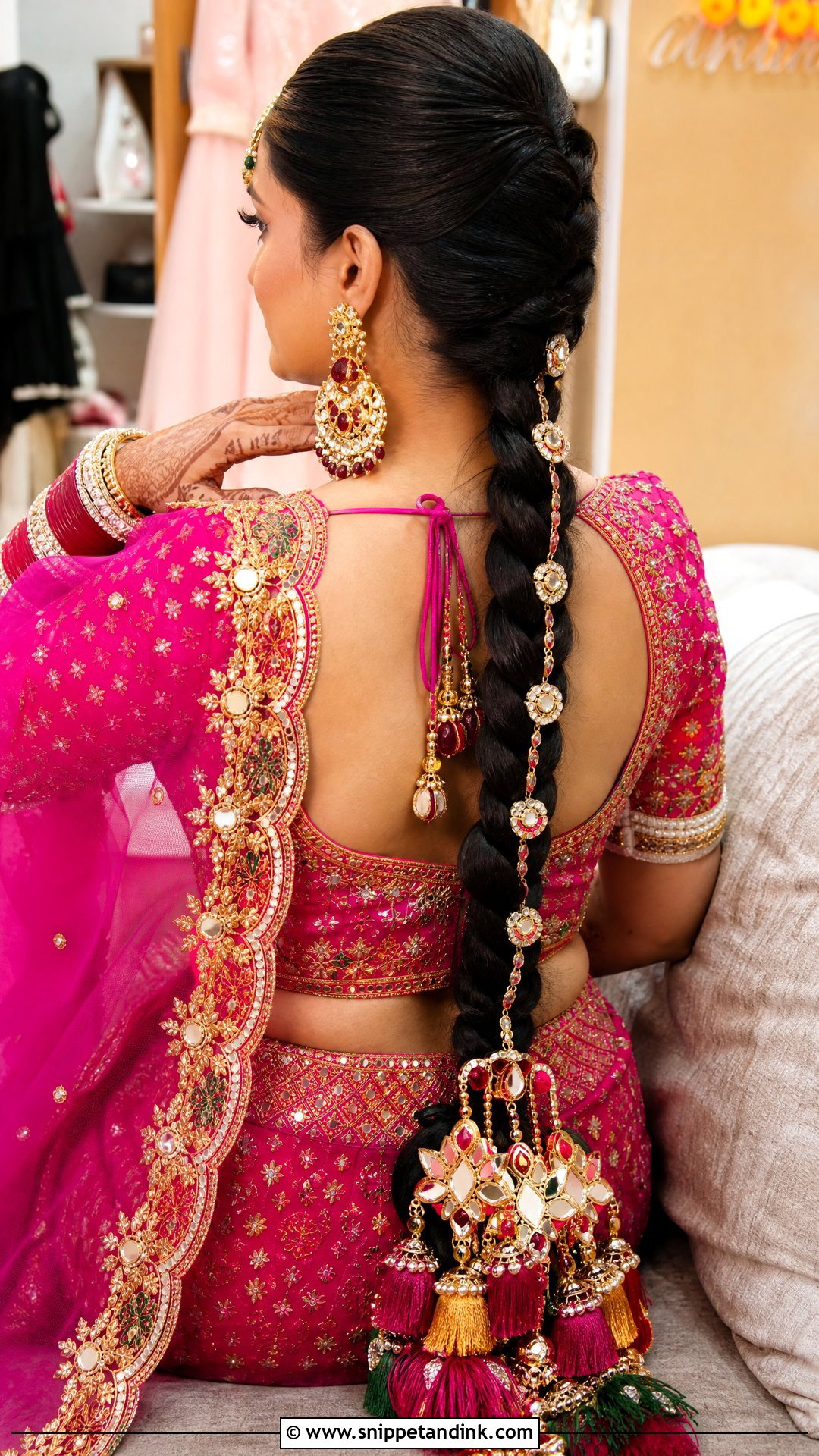
A paranda brings a Punjabi touch: silk threads, tassels, beads, mirrors or gold work braided into the lower half of the hair so it swings as you move. It shines at mehendi and sangeet, where you’ll be dancing. I braid the paranda in from about halfway down rather than tying it at the end, which keeps it from slipping out during bhangra. Match it to the lehenga border or dupatta. The braid itself has to be firm, because a loose braid lets a weighted paranda twist sideways.
7. Bridal Dutch Braid
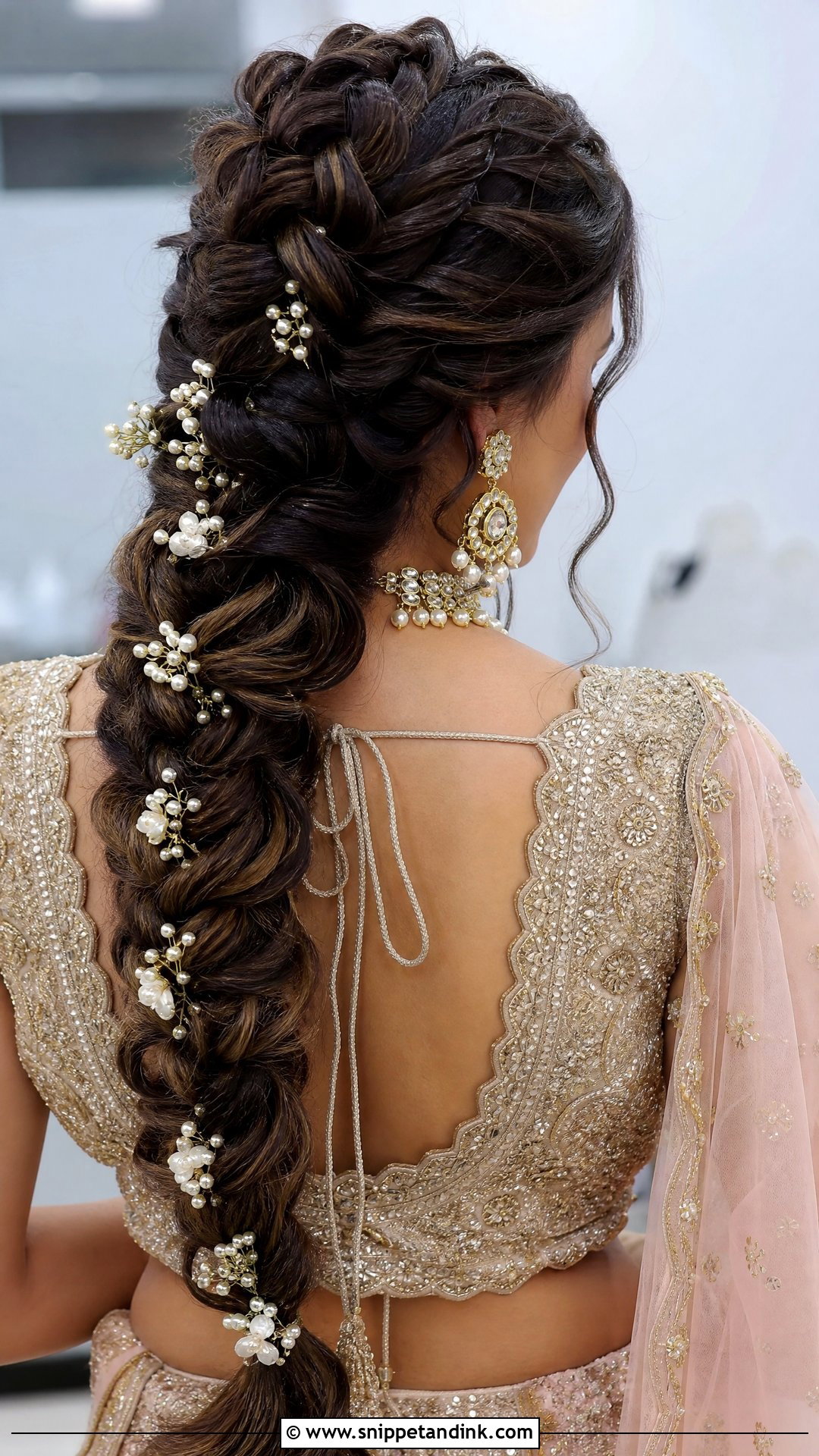
In a Dutch braid the strands cross under, so the braid sits raised on the hair. That ridge gives structure and shows clearly under bright stage lighting. It’s also the braid I recommend most for layered cuts, since crossing under traps shorter pieces that would poke out of a French braid. You can wear it as one long braid, to the side, or let it melt into curls at the ends. Kundan clips or small flowers soften it.
8. Bridal French Braid
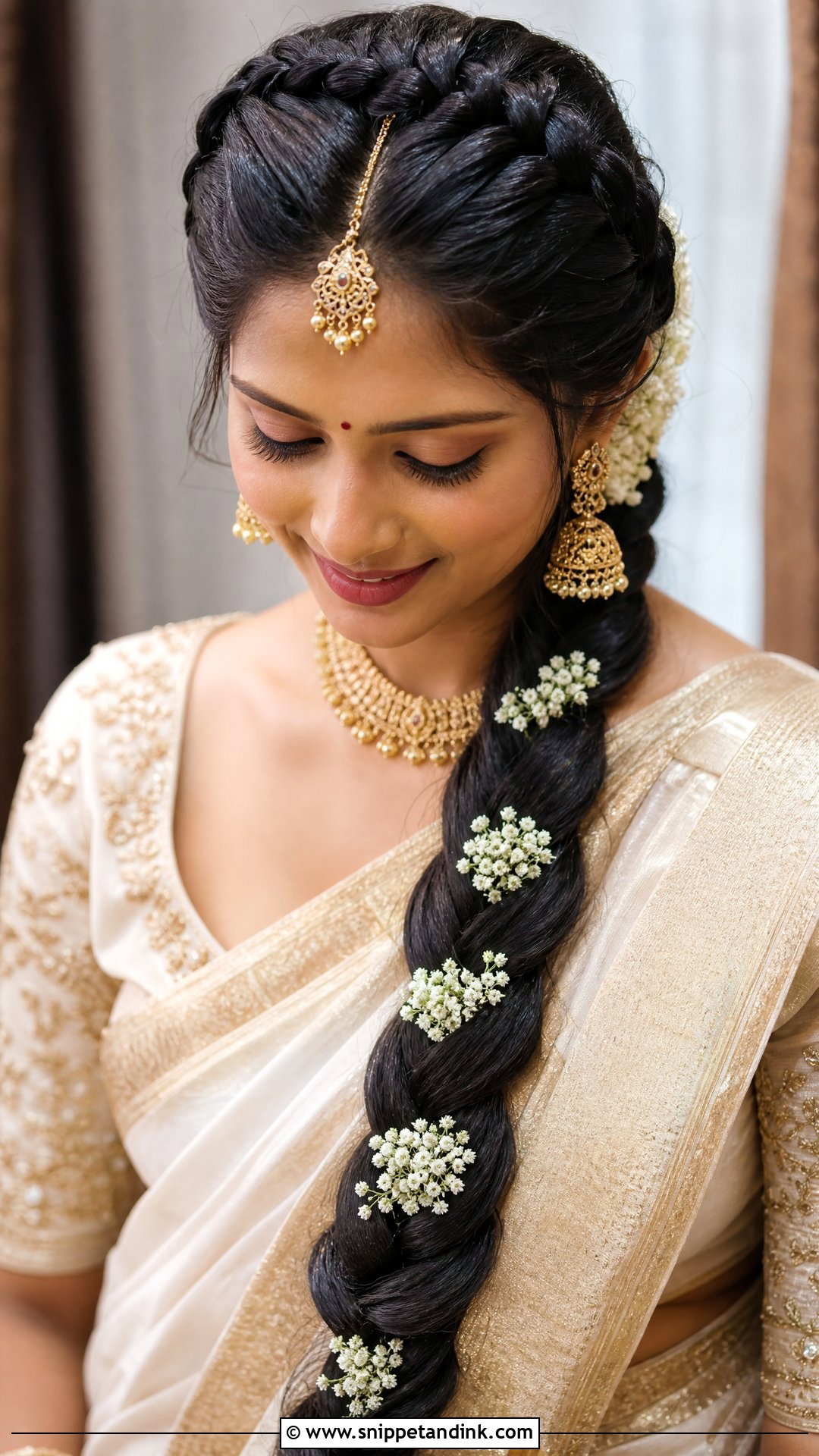
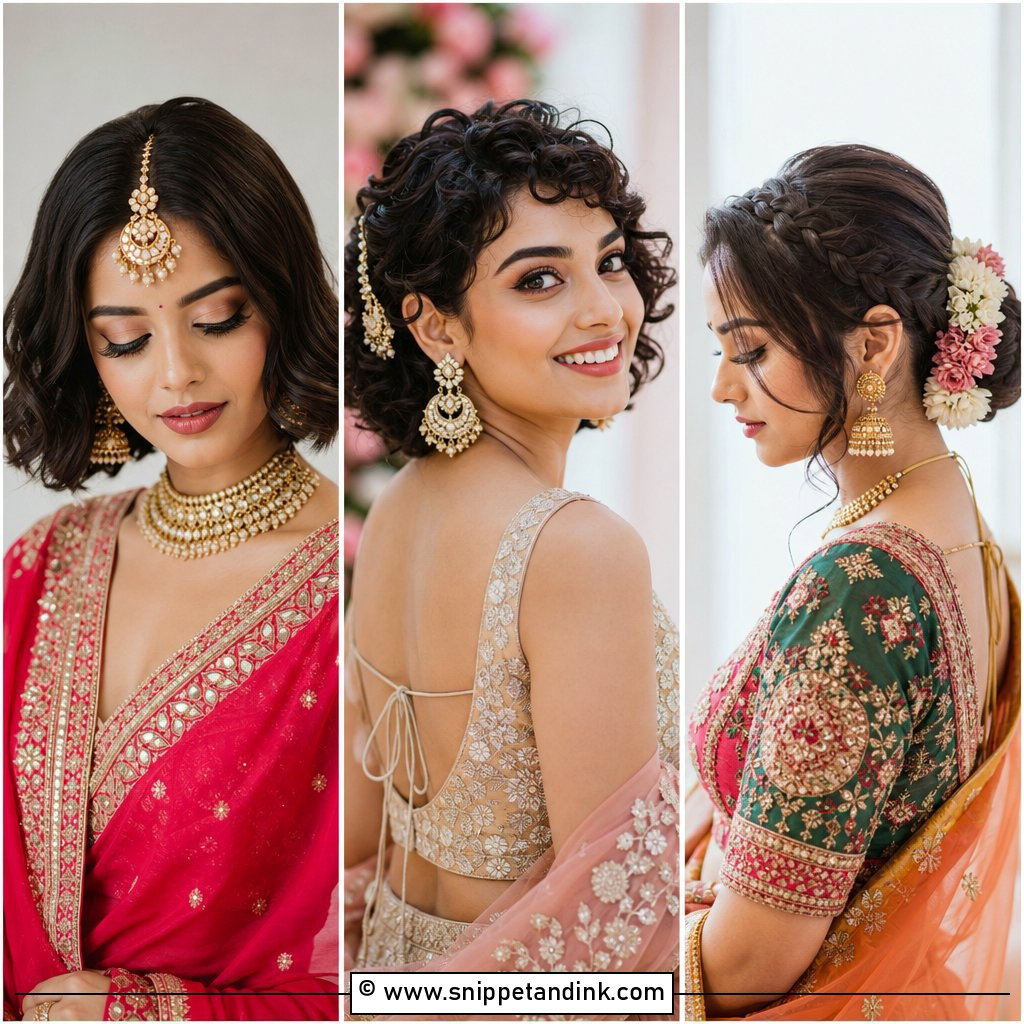
The French braid starts at the crown and gathers hair as it moves down, so it lies close to the head. It’s the one I suggest when a bride wants minimal fuss across long functions. It can stay as a full braid, move to the side or turn into a low bun at the nape. Put the maang tikka at the center part and keep flowers further down the braid. Because it lies flat, it’s also comfortable to lean back against a chair in.
9. Braided Bun Indian Bride
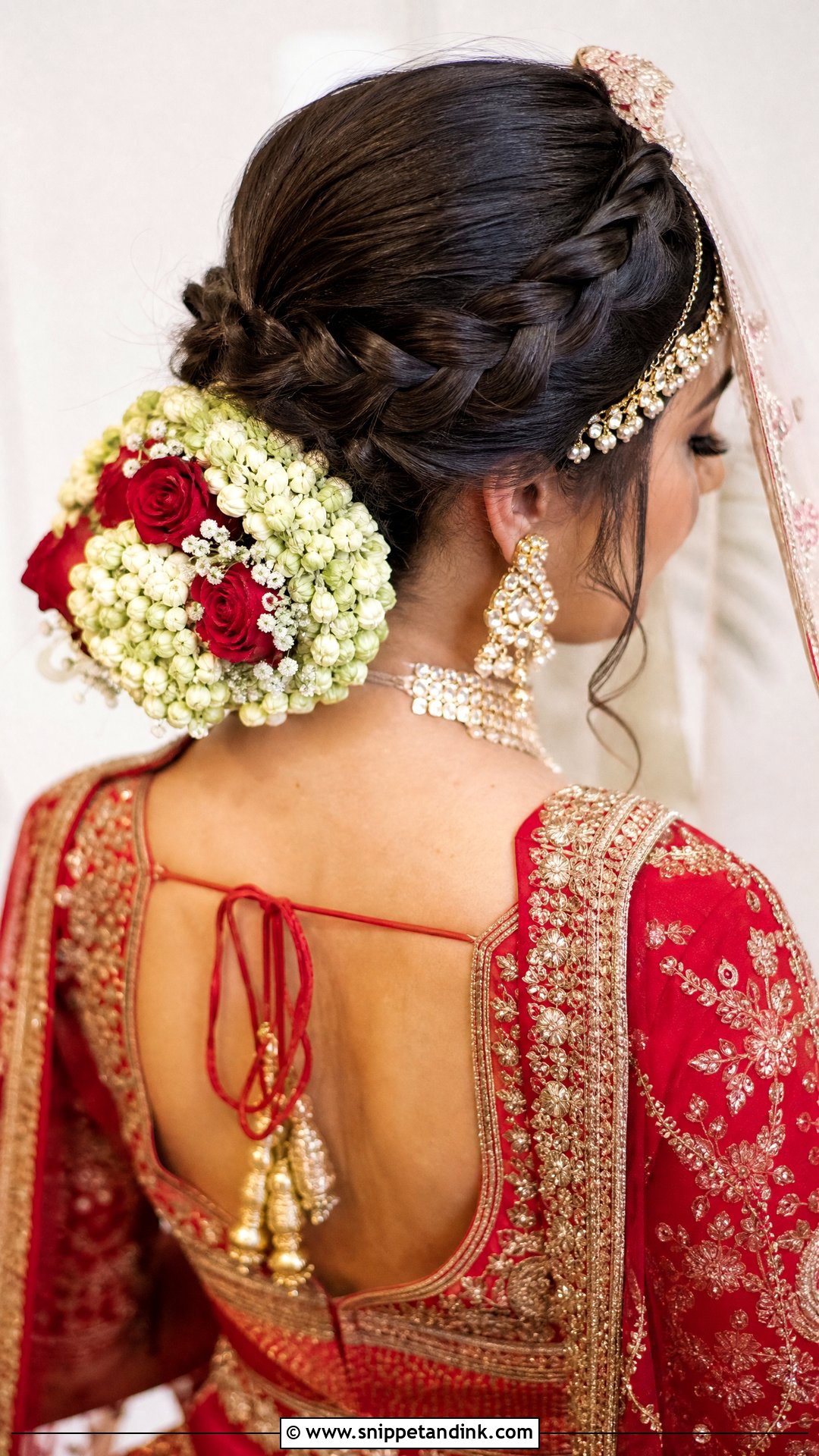
If you’re wearing a heavy dupatta pinned to the head, a braided bun is the most secure base I know. The bun gives the dupatta pins something solid to grip, and the braid keeps the surface interesting. It keeps the neckline clear for layered necklaces. The braid can wrap the bun, cross the crown or sit within a low textured bun. In humid weather it barely moves, which matters when the ceremony runs past midnight. Roses, jasmine or pearl pins around the base finish it.
10. Half Up Bridal Braid
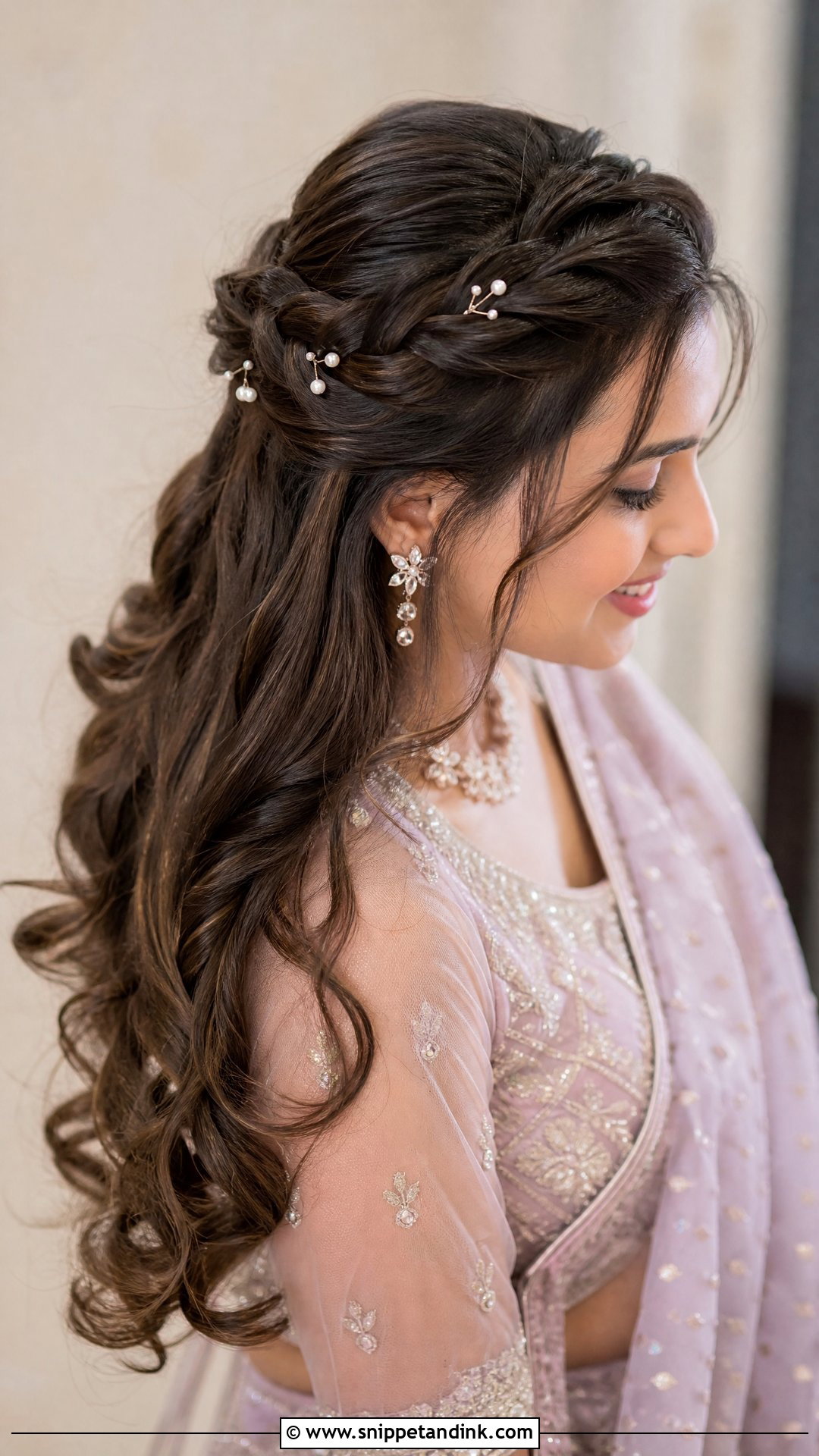
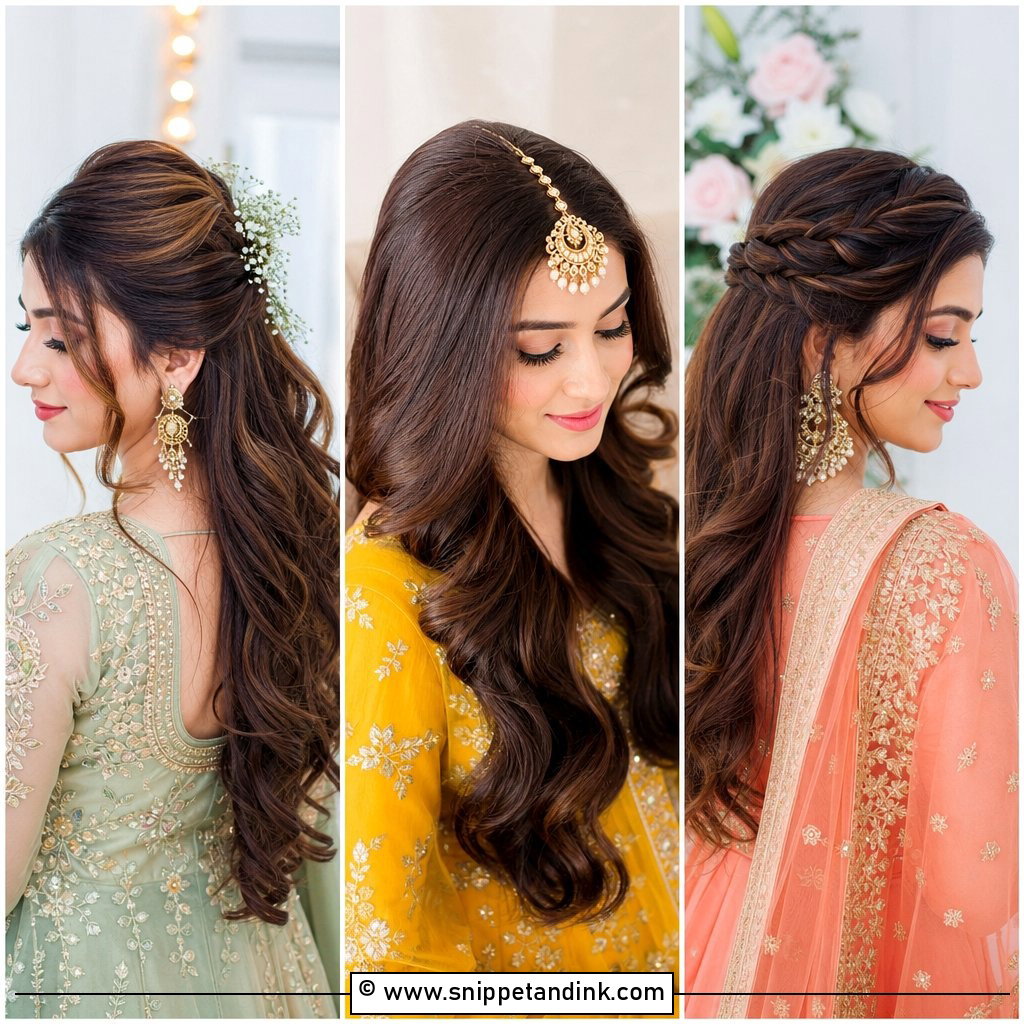
Half-up braiding keeps the front neat for jewelry while letting curls fall behind. The top can be a crown braid, twist or fishtail detail. I tend to suggest it for engagement, reception, mehendi, or sangeet looks rather than the main ceremony, since open hair tangles with a heavy dupatta. If you have long hair you’ve been growing for the wedding, this shows it off. Set the curls well and use a flexible spray; heavy curls drop in heat faster than people expect.
11. Bridal Crown Braid
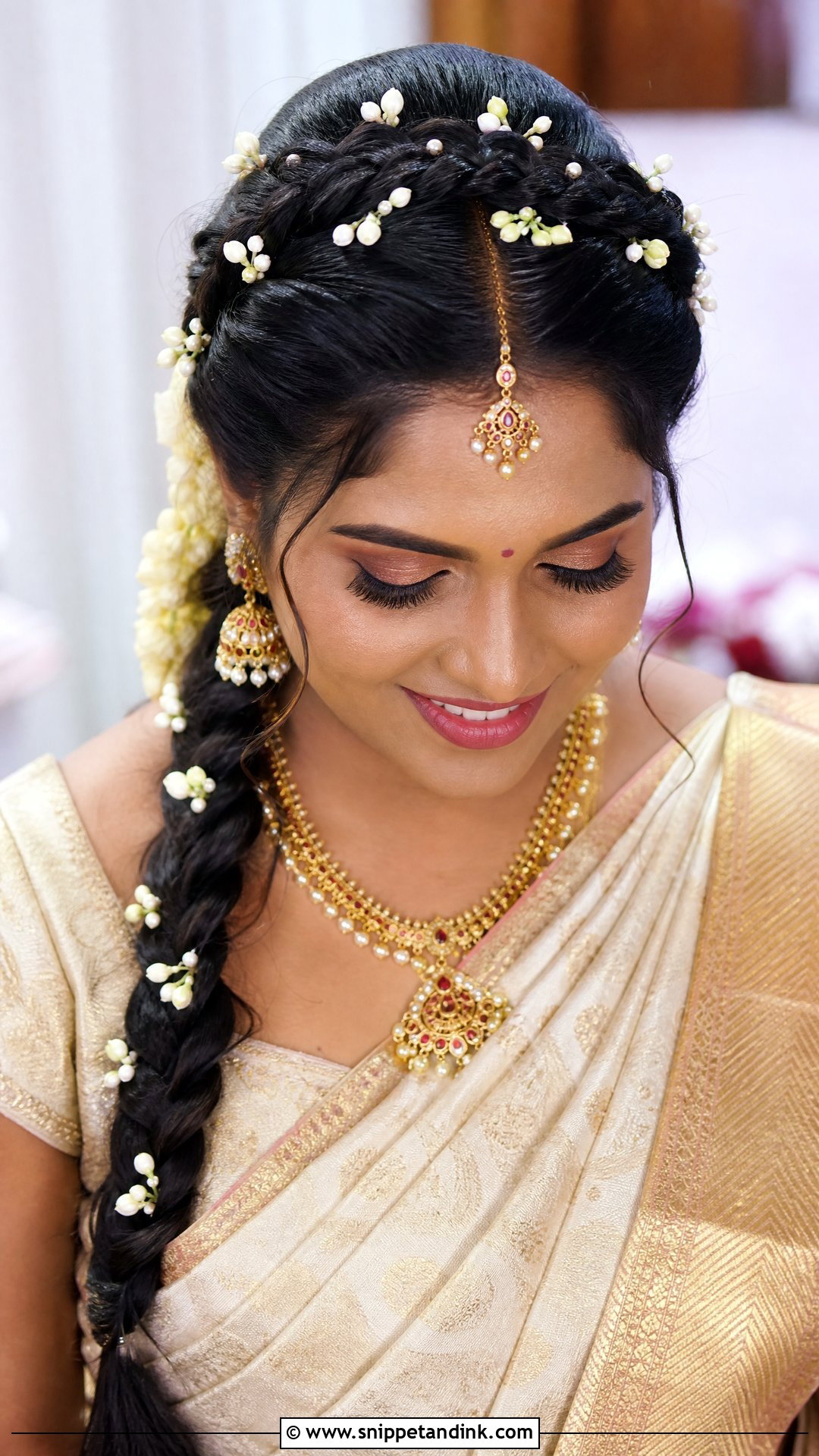
A crown braid frames the face, which leaves the makeup and jewelry fully on show. It can wrap the head or start on one side and lead into a bun or long braid. It sits well with veils and lighter dupattas because the braid gives shape at the top. With a matha patti, I plan the braid to run just behind it so the chains rest on hair, not on a pin. Keep it slightly soft, and finish with jasmine buds or gold pins.
12. Bridal Waterfall Braid
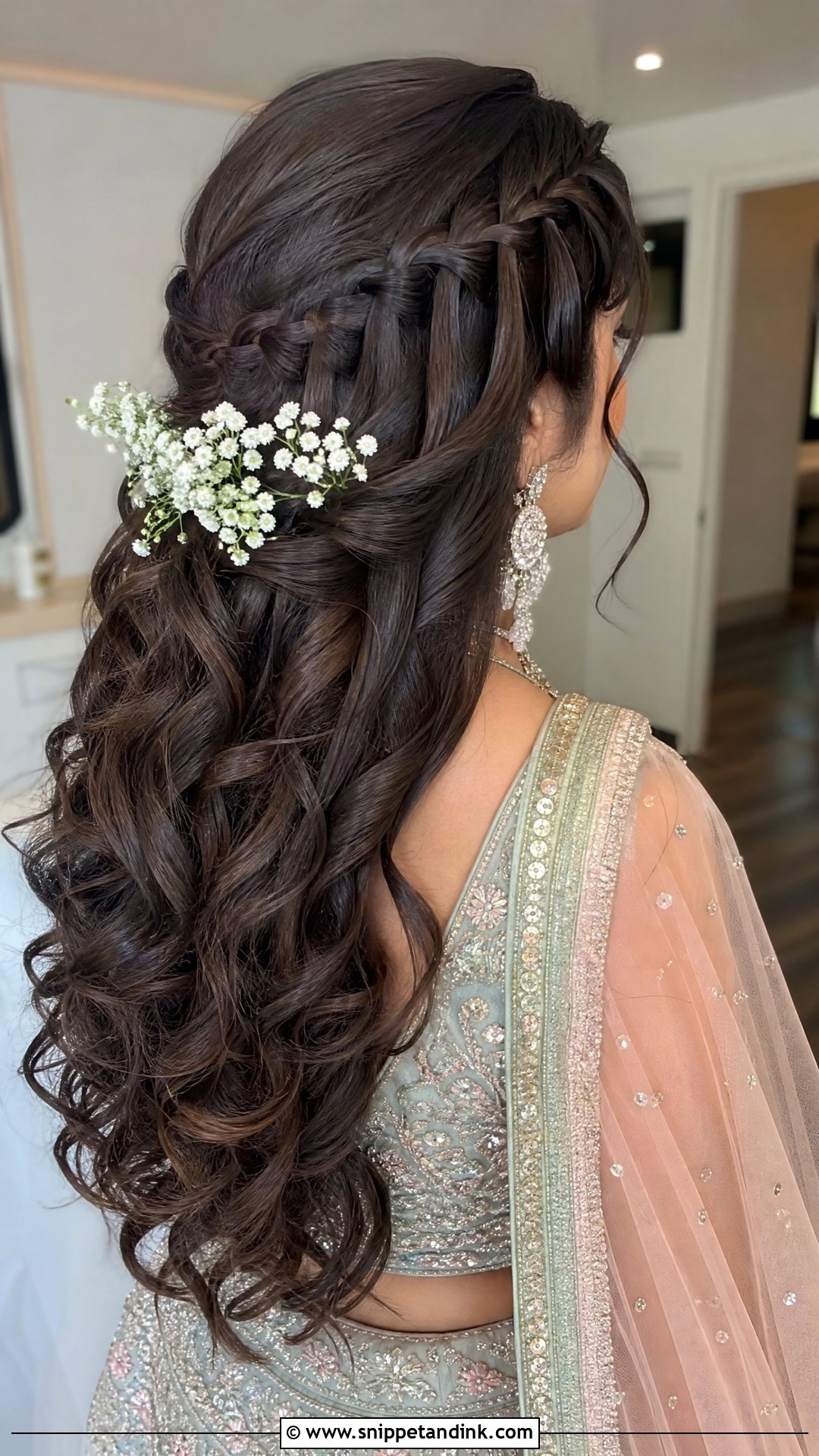
A waterfall braid runs across the back or side while sections drop through and hang loose, so most of the hair stays open. I recommend it for the reception, engagement or sangeet. It needs good curls or a smooth blowout underneath to look finished. Fine hair benefits from a few extensions so the dropped sections don’t look sparse. Flowers or delicate pins go where the braid crosses, and the loose hair moves nicely when you dance.
13. Bridal Rope Braid
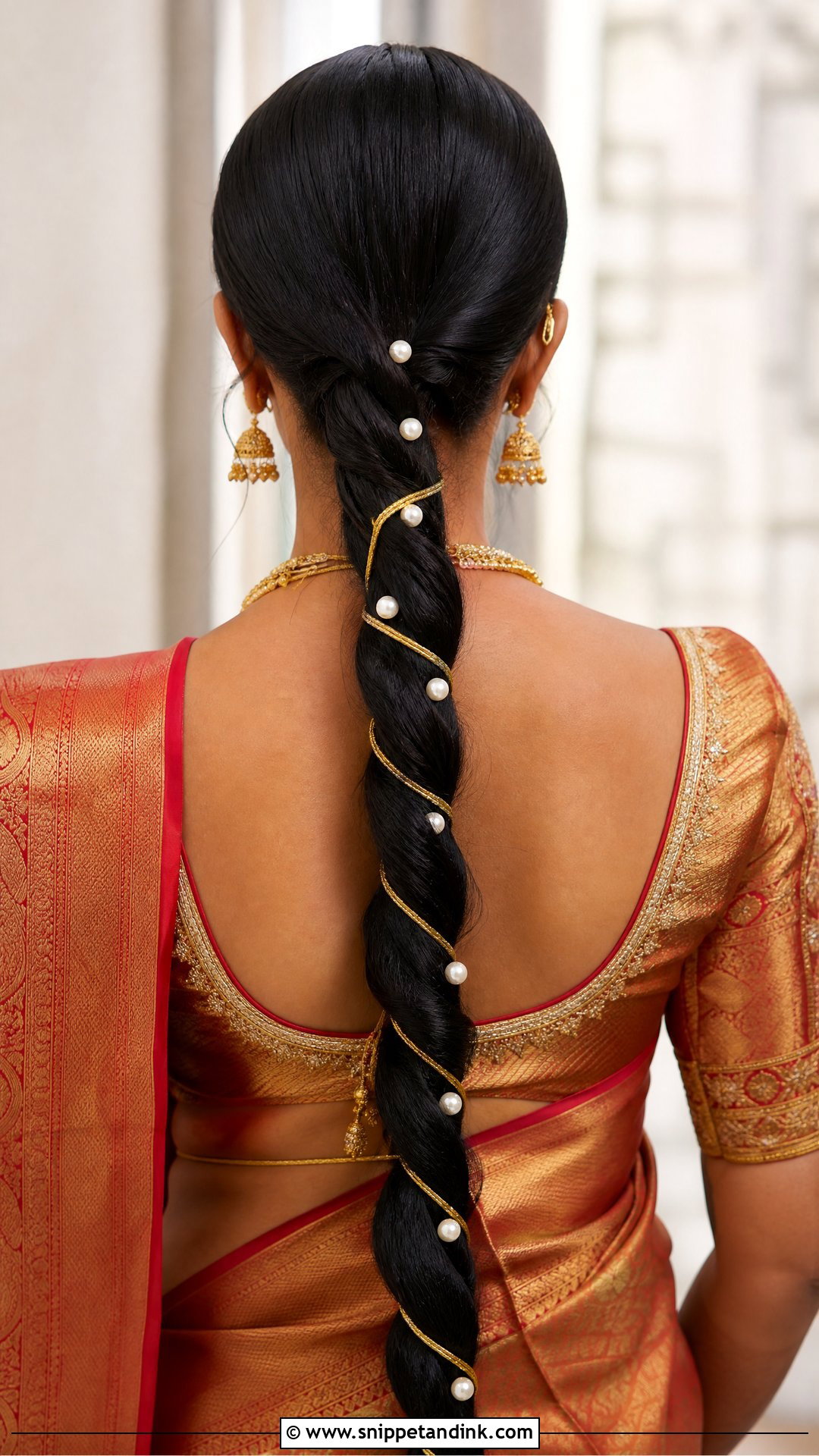
Twisting two sections into a rope gives a sleek, clean braid that looks finished from every angle. It suits brides who like minimal styling but want more than a plain plait. I twist each section the opposite way to the rope so it doesn’t unravel, and I check it again after a couple of hours of wear at the trial. It can be worn down the back, to the side or wrapped into a low bun. Gold thread, pearl pins or jasmine at the base add the Indian bridal finish, and it looks best on smooth, long hair.
14. Bridal Bubble Braid
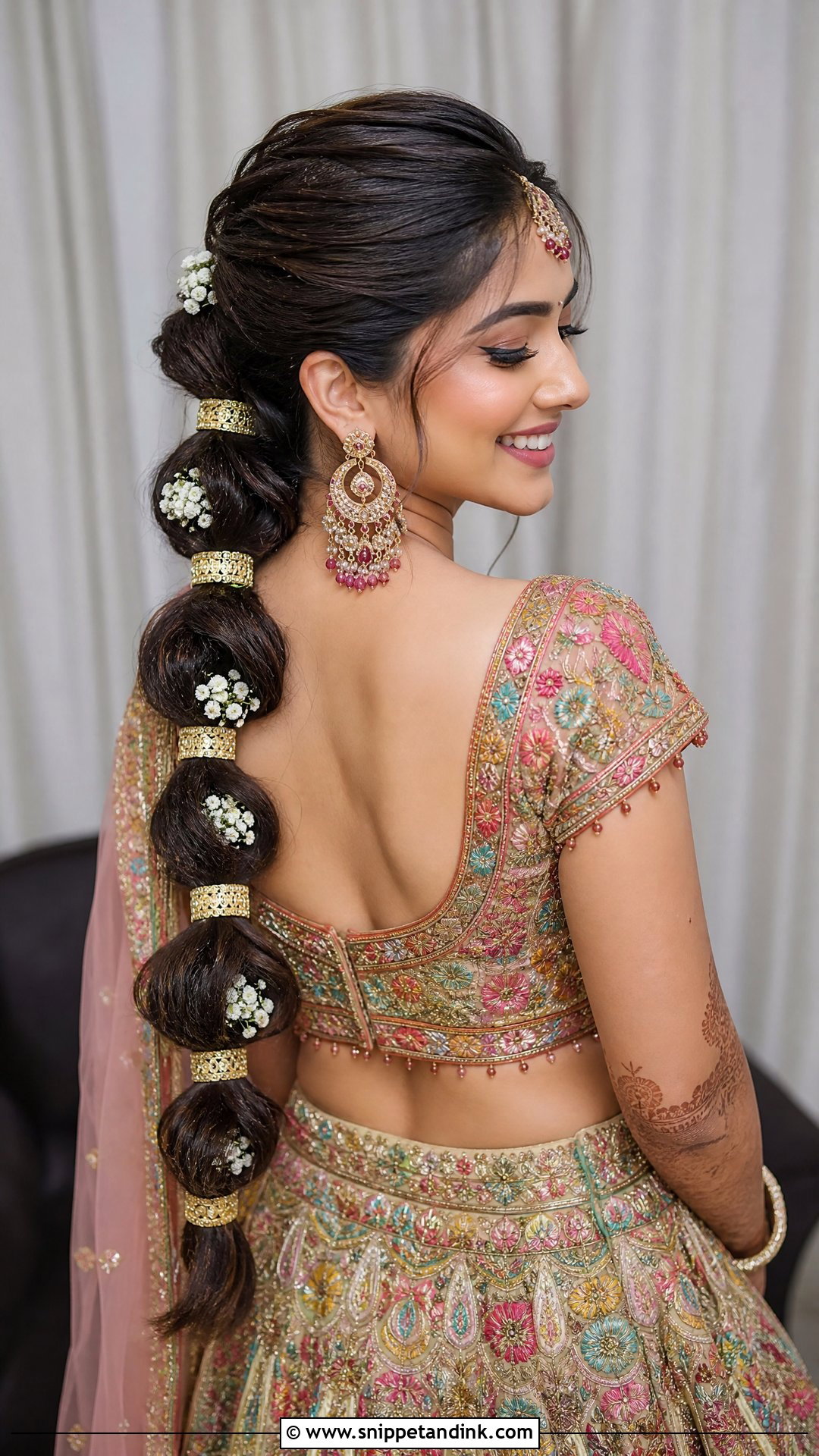
Bubble braids aren’t woven at all. The hair is tied off in sections down its length and each section is gently pulled out into a rounded bubble. It’s quick, playful and suits mehendi, haldi and sangeet. Pearl bands, gold cuffs or small flowers can cover the elastics. On medium-length hair, extensions hide easily inside the bubbles, which makes this one of the easiest ways to fake length. Use clear or hair-colored elastics; black ones show in close-ups on lighter hair.
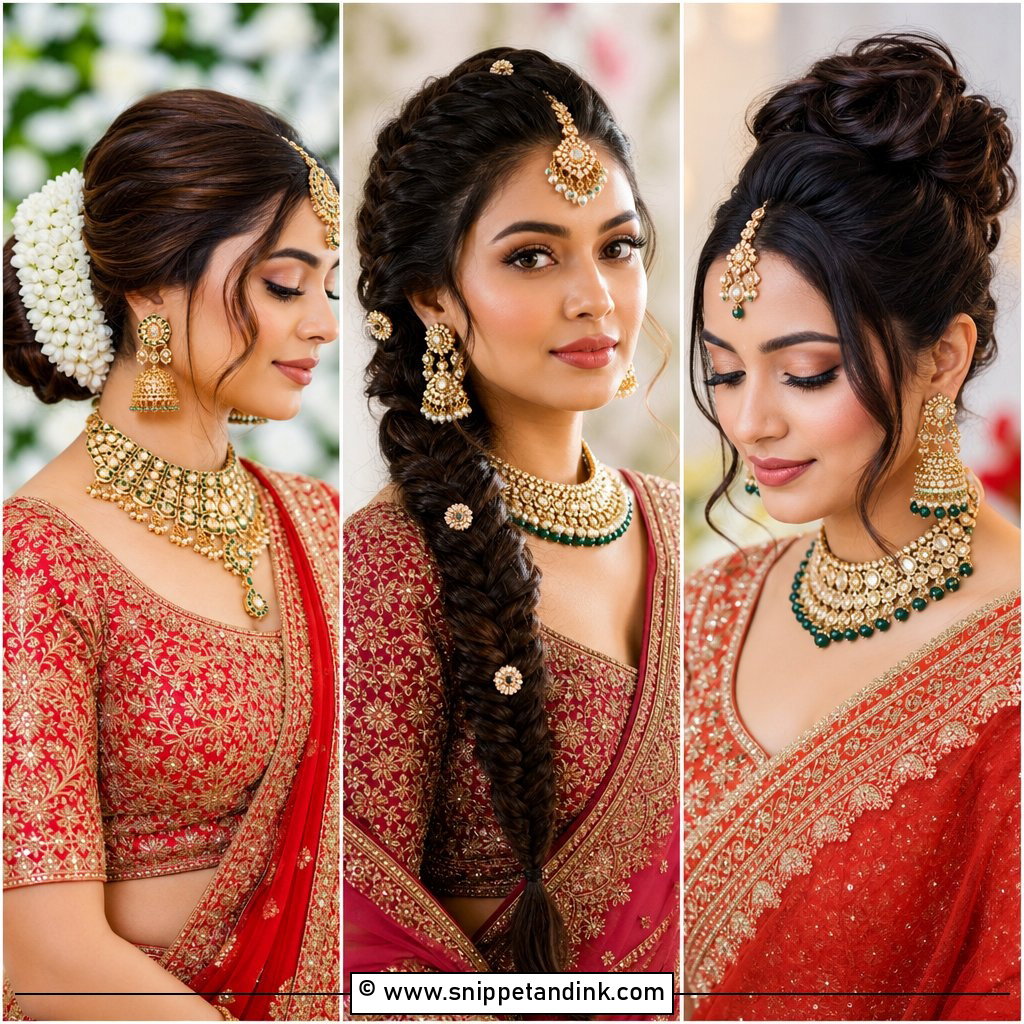
15. Bridal Braid With Maang Tikka
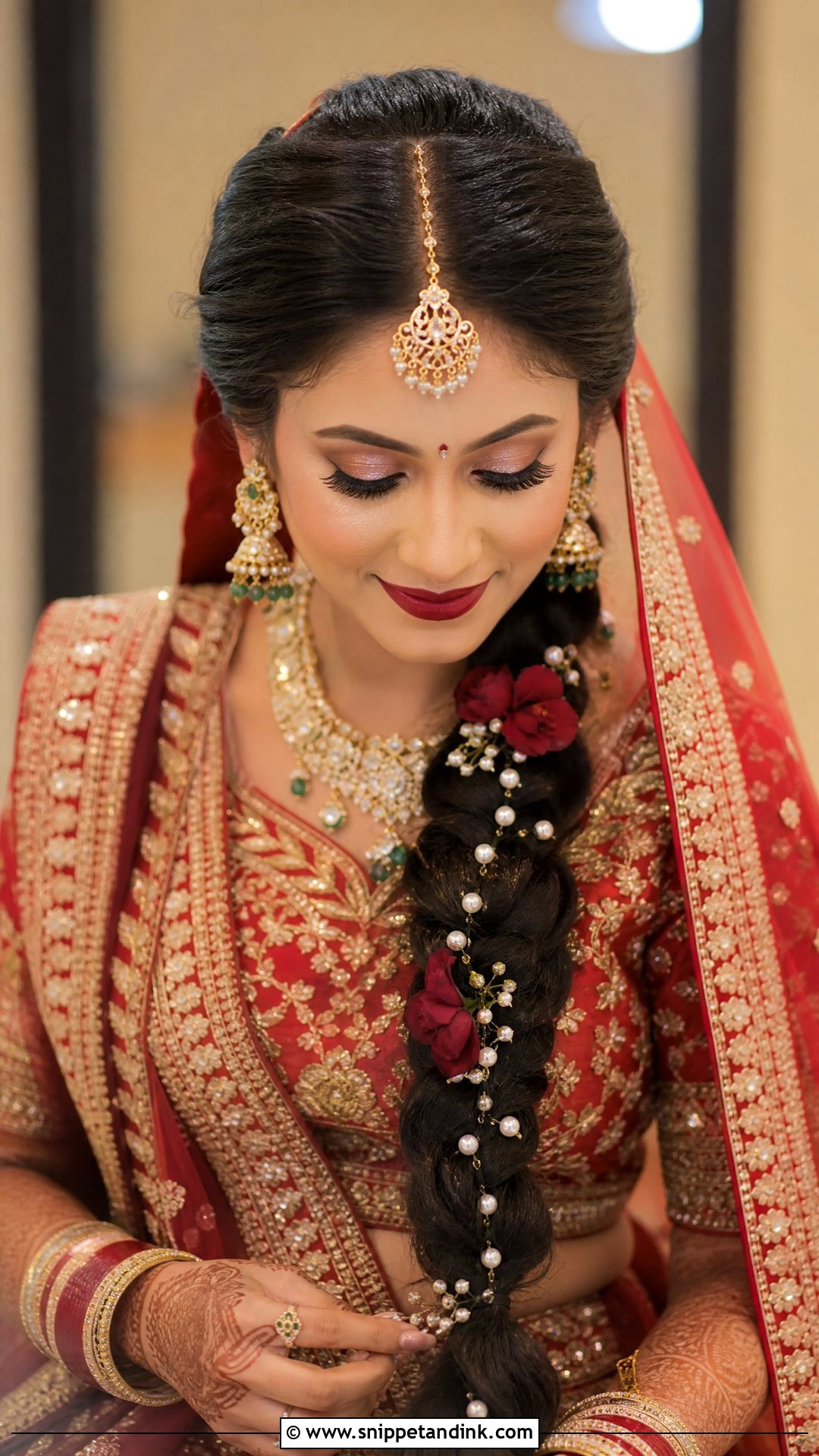
The center part gives the tikka a clean place to sit, and the braid keeps everything behind it secure. Underneath, a simple three-strand, fishtail or floral braid all work with lehengas, sarees and shararas. A heavy tikka pulls the front of the hair flat over a few hours, so I build a little hidden volume at the crown and anchor the tikka hook into a small pinned section instead of loose hair. Keep flowers lower on the braid so the forehead jewelry stays the focal point.
Jasmine Browns Faster Than You Think
Fresh flowers are the most fragile part of a gajra or poola jada. Jasmine starts browning at the edges within a few hours in heat, and the scent fades with it.
I ask for strings made with buds that are still closed, since they open slowly through the day instead of peaking at breakfast. Until they go in, keep them wrapped in a damp cotton cloth in the fridge, never the freezer. I spray the hair first and let it dry before attaching any flowers, because hairspray on petals turns them brown quickly. A light mist of plain water between rituals helps, and a spare string kept cool can replace a wilted one for the evening.
Heavy Jada Through a Long Seated Ceremony
Gold jada billalu and full floral panels feel fine at the mirror and heavy two hours into a ceremony. The pull builds slowly at the crown and the back of the neck, so many brides only notice once they’re already sore.
My fix starts with the base: a firm braid with extensions added before any ornaments, so the weight spreads along the length. At the trial, wear the full piece for at least an hour and sit cross-legged as you would at the mandap. If it aches, wearing a lighter jada for the rituals and the heirloom piece only for portraits is a sensible compromise.
The Braid Has to Work With Your Jewelry and Your Schedule
You can go deeply traditional with a poola jada, choose a jasmine-wrapped gajra braid, keep it minimal with a sleek rope braid, or wear a half-up braid with curls. What decides it, in my experience, is the dupatta, the jewelry weight, the weather and how many hours you’ll be seated. A heavy pinned dupatta needs a braided bun or a firm long braid. Lighter functions can carry side, waterfall and bubble braids. Bring your outfit and jewelry to the trial and wear them for an hour, because that tells us more than any photo.
You'll Like These Ideas:




Leave a Reply