
An updo is the style I get asked about most, and for good reason: it keeps hair off your face through the vows, shows the neckline of the dress, and survives a long day better than anything worn down. The catch is that every updo has its own engineering. Some sit on a few pins and a lot of texture, others need a solid base to carry a veil. Below are twenty I set regularly, from sleek ballerina buns to loose braided shapes, with notes on what each one needs from your hair and what tends to go wrong.
The Prep That Decides How Long an Updo Lasts
Most updos that collapse fail before a single pin goes in. Freshly washed, conditioned hair is soft and slippery, and pins slide straight out of it. I ask brides to wash the evening before the wedding, skip heavy conditioner on the lengths, and arrive with completely dry hair. Second-day hair gives me grip without looking greasy.
On the morning itself, I curl almost every updo, even the sleek ones, because a curled section has shape and memory. Then I add a dry texture spray at the root. For very fine hair, a few pre-set pin curls hidden under the outer layer act like scaffolding.
- Wash the night before; dry hair fully, since damp roots loosen pins.
- Avoid shine oils on the morning of the wedding unless the style is meant to be sleek.
- Tell your stylist about any extensions, recent color or a fresh cut, which can change how hair holds.
- Wear a button-front shirt to the appointment so nothing goes over your head afterward.
1. Low Bun Wedding Updo
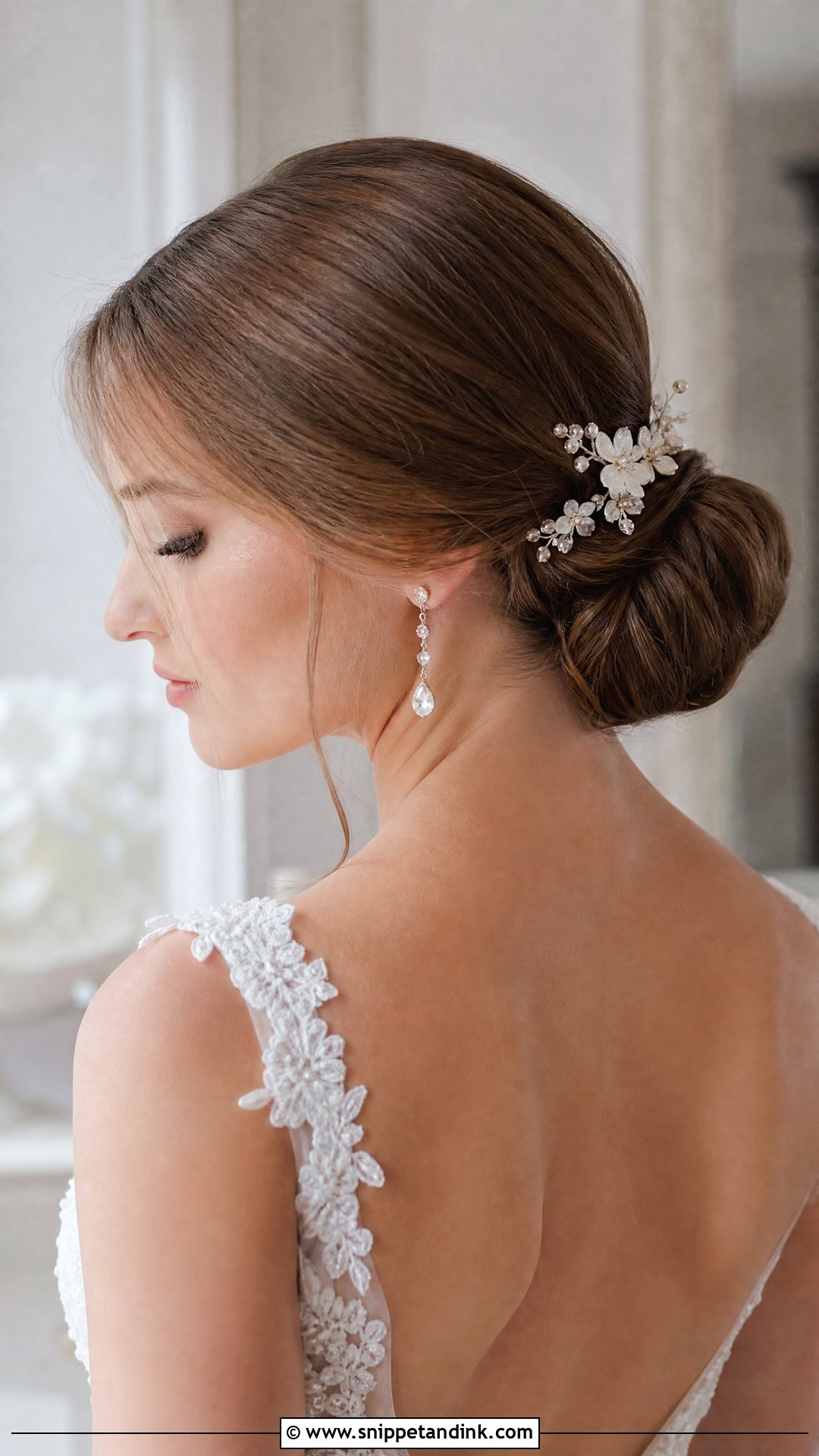
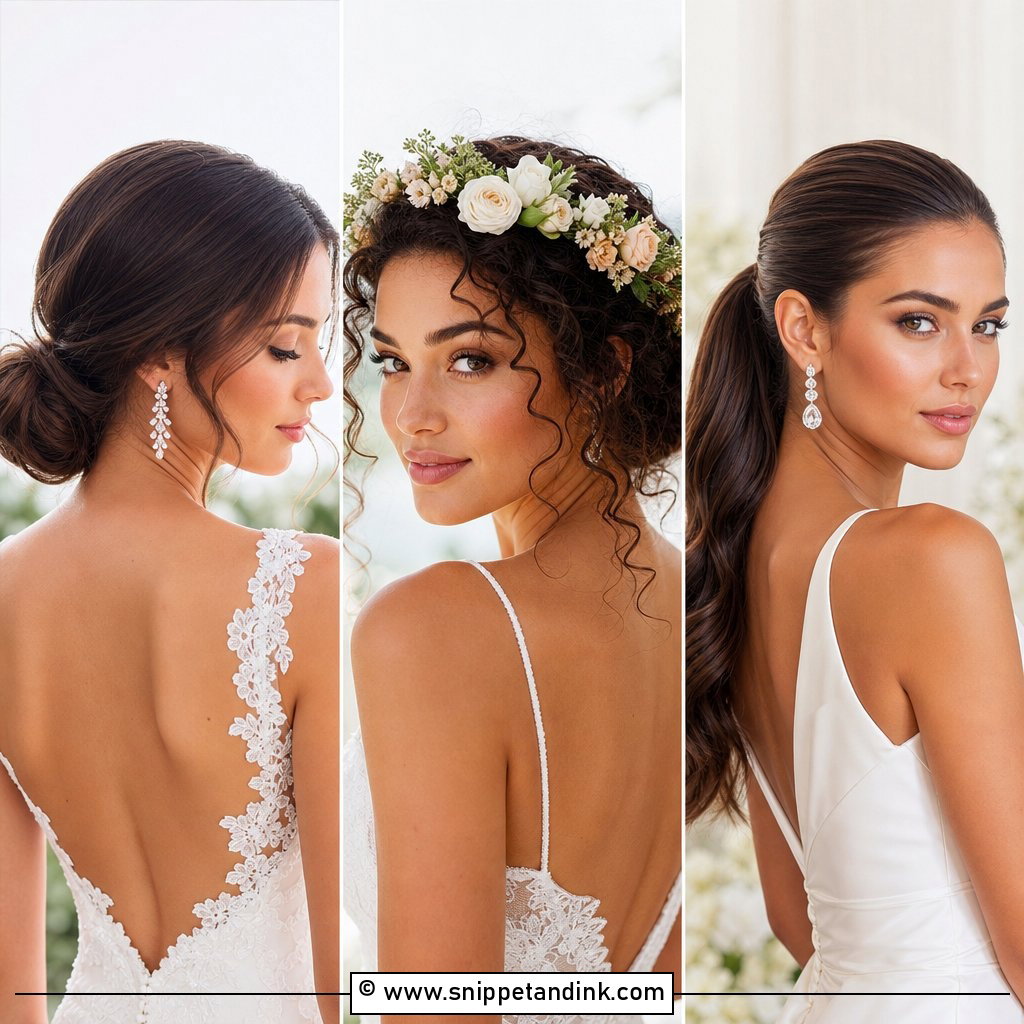
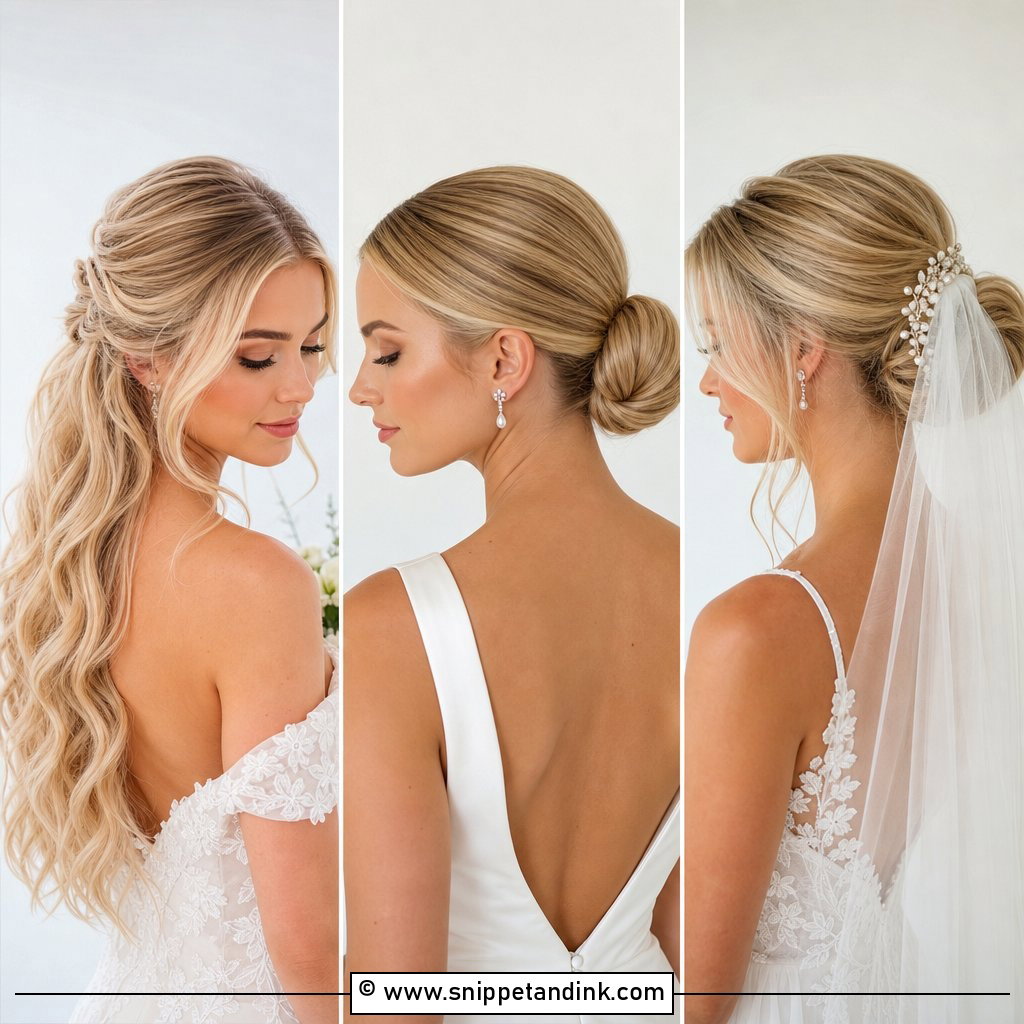
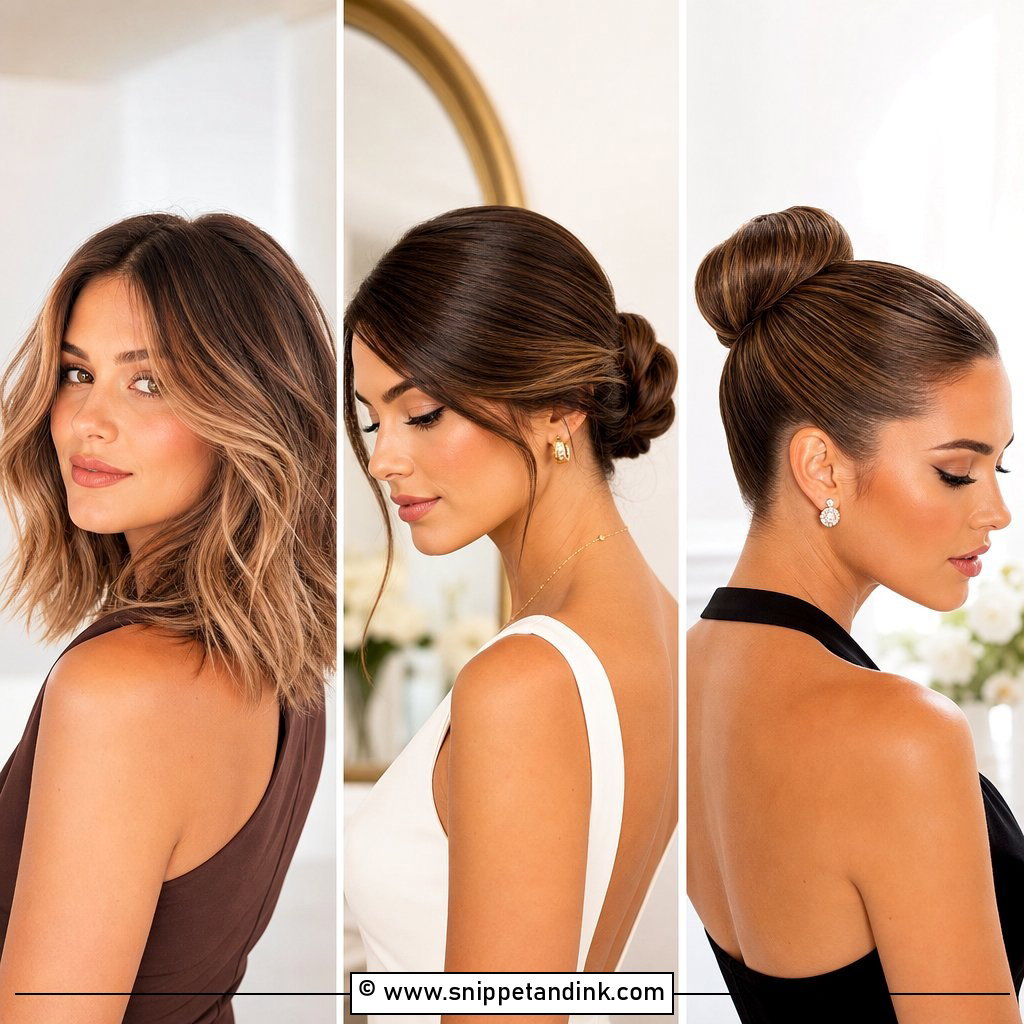
The low bun is the shape I reach for when a bride isn’t sure what she wants, because it suits almost every face and sits exactly where a comb veil anchors. I build it on a small elastic base at the nape, then wrap and pin, so the weight rests against the neck instead of pulling on the crown. Keep it sleek for a formal ceremony or pull two or three strands free near the ears. One thing to watch: a very low bun can catch on a high collar or a beaded back, so wear the dress, or something with the same neckline, to your trial.
2. Messy High Bun for Bride
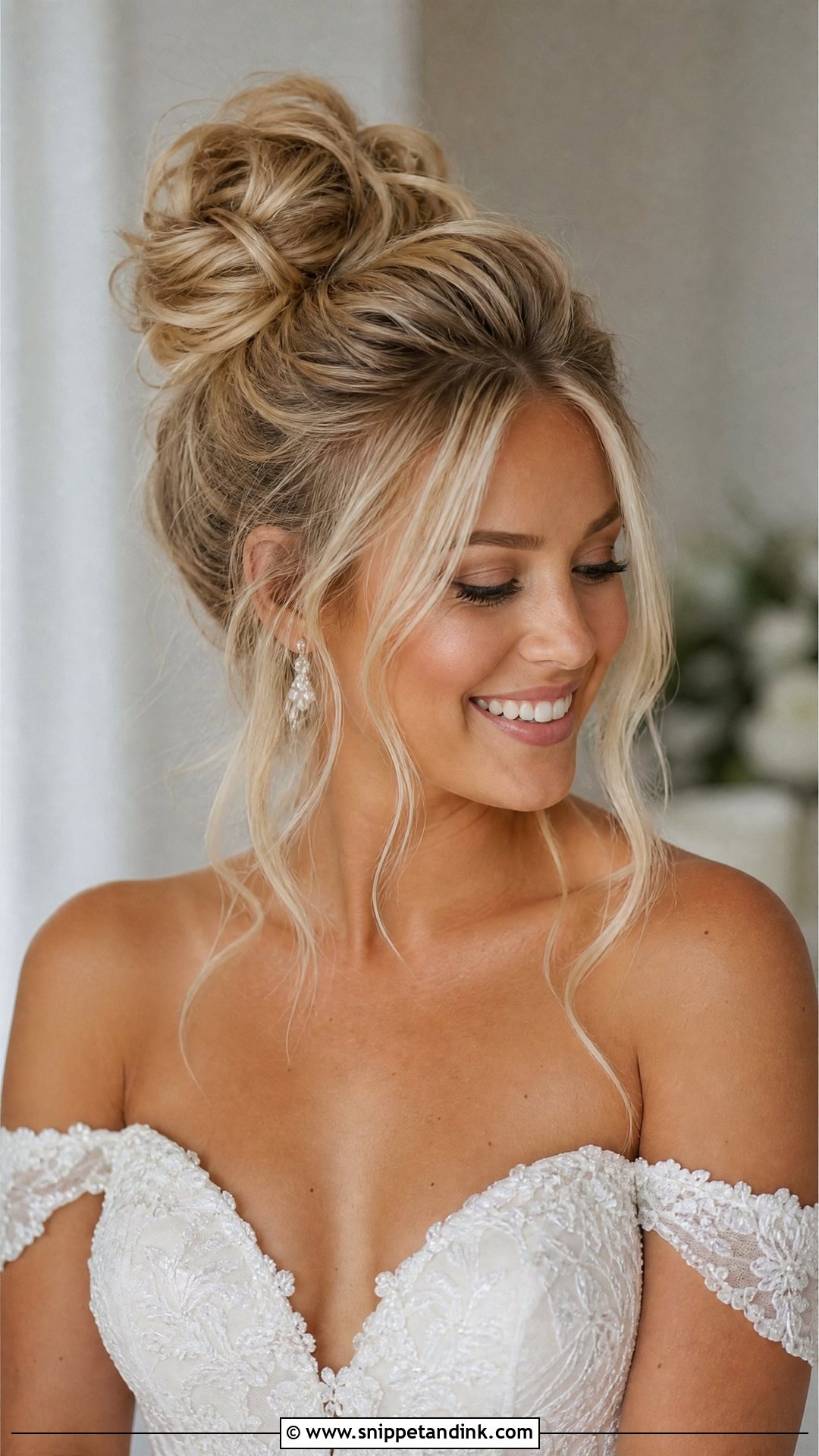
A messy high bun only looks careless. To get that loose crown volume to hold for hours, I curl the whole head first, backcomb at the root and pin each loop separately rather than twisting everything around one tie. It works on most lengths from shoulder down. I’d skip it if you’re wearing a long cathedral veil, since there’s no clean spot to anchor the comb under a bun that high, and on very fine hair the tendrils can go limp by the evening speeches.
3. French Twist Wedding Hairstyle
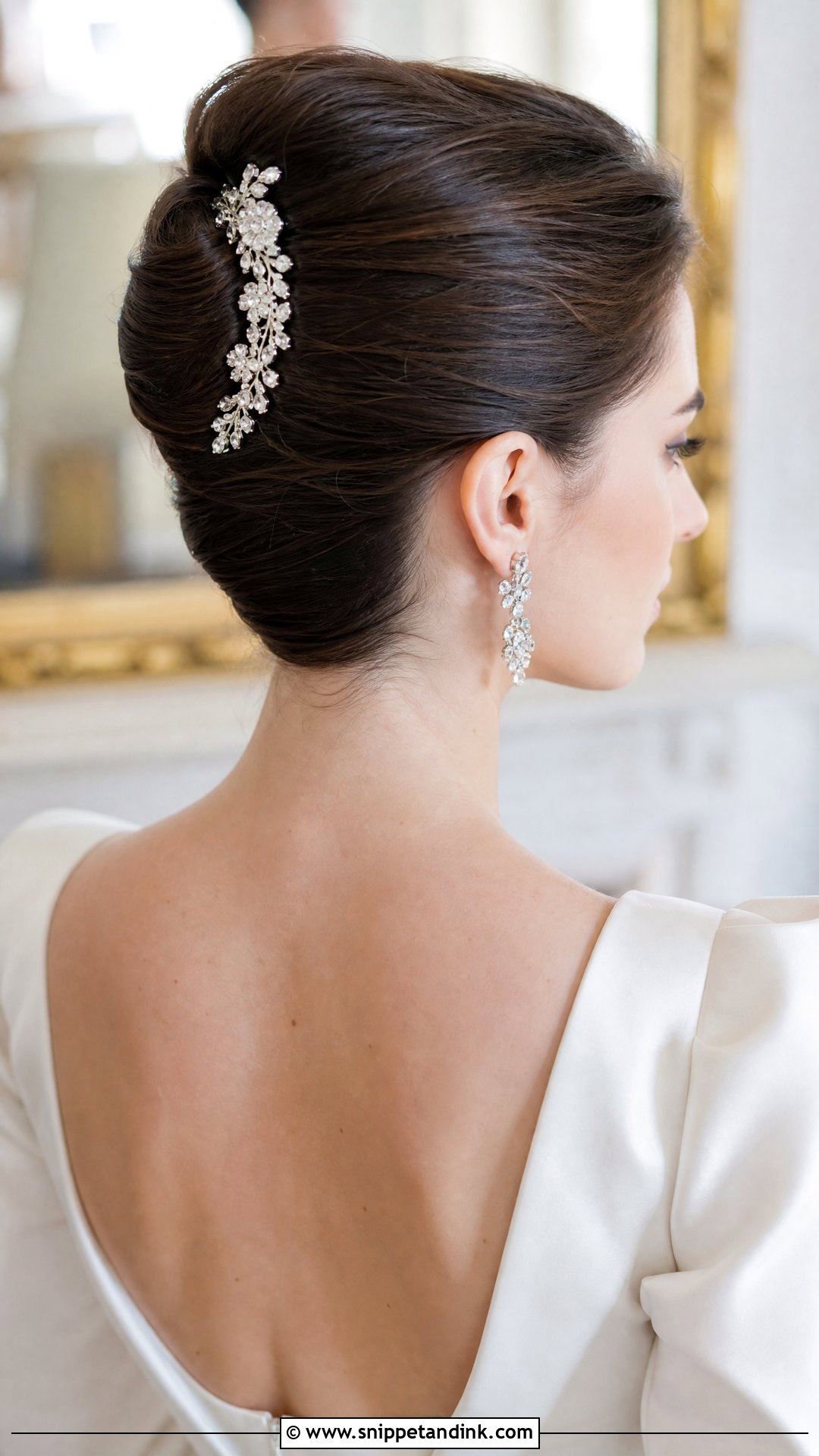
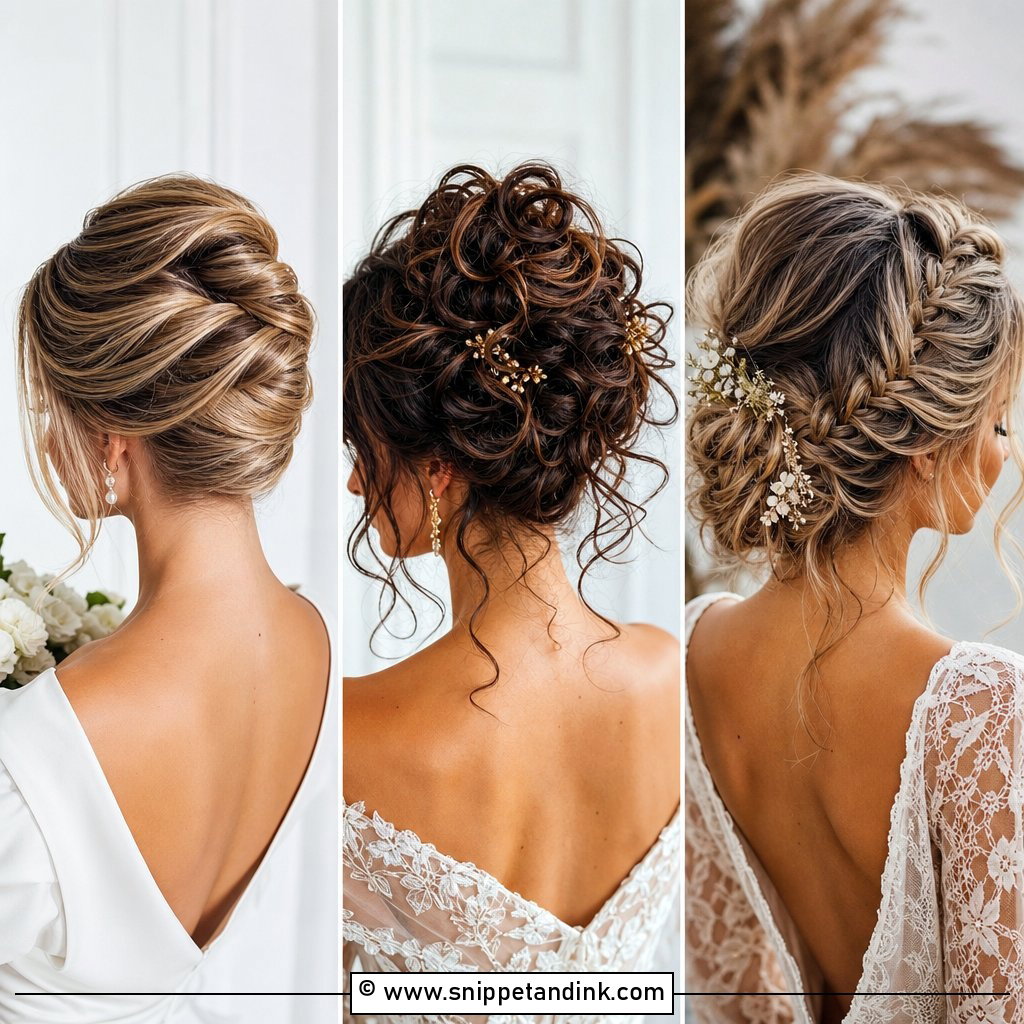
Few updos look as tidy from the back as a French twist. The hair is brushed to one side, folded into a vertical roll and locked with pins that run along the seam, so it needs enough length to wrap: roughly collarbone or longer. That clean line shows off an open neckline and drop earrings. If your hair is freshly washed and silky, ask your stylist to prep it with a texture spray first, or the roll will slide loose around the time dinner is served.
4. Sleek Ballerina Bun for Wedding
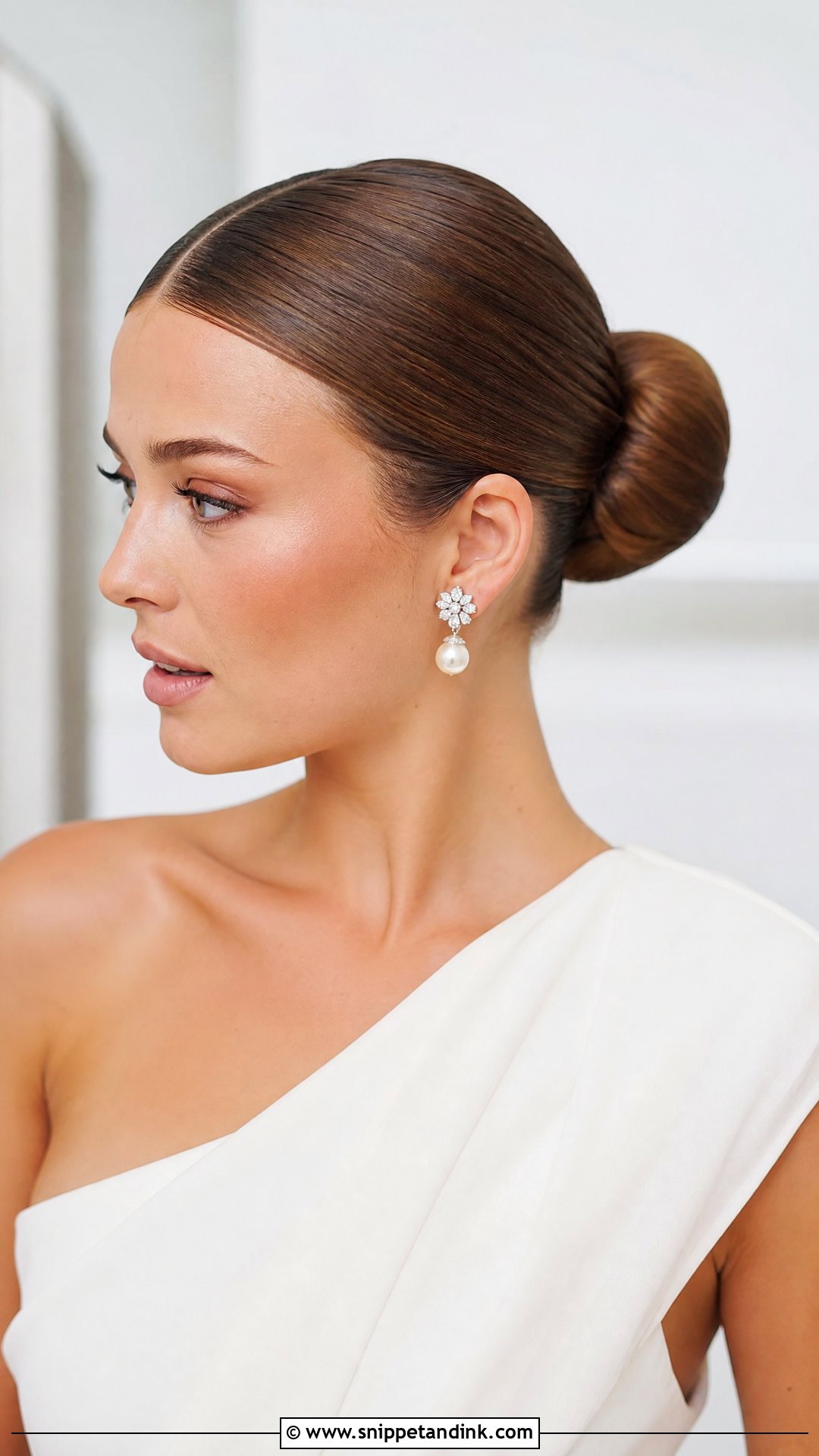
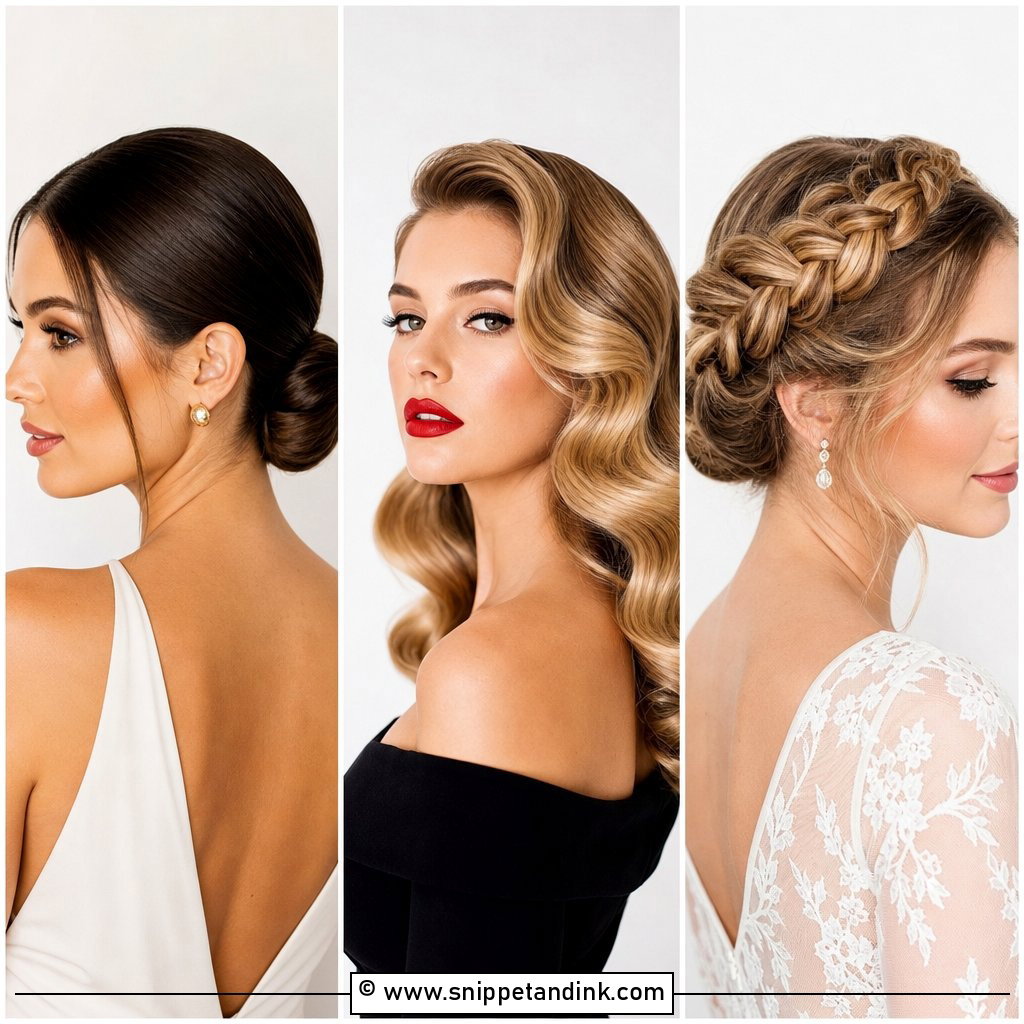
The sleek ballerina bun is all about the surface. A sharp center part, hair brushed flat with a little shine serum, and a tightly wound bun at the back leave nothing to hide behind, so any frizz or a cowlick will show in close-ups. I smooth it with a boar bristle brush and set the hairline with a light gel before the bun goes in. It suits clean dresses and bold jewelry, and it barely moves through the dancing. Hair with a strong natural wave needs a blow-dry the morning of, not the night before.
5. Half Up Half Down Bridal Hairstyle
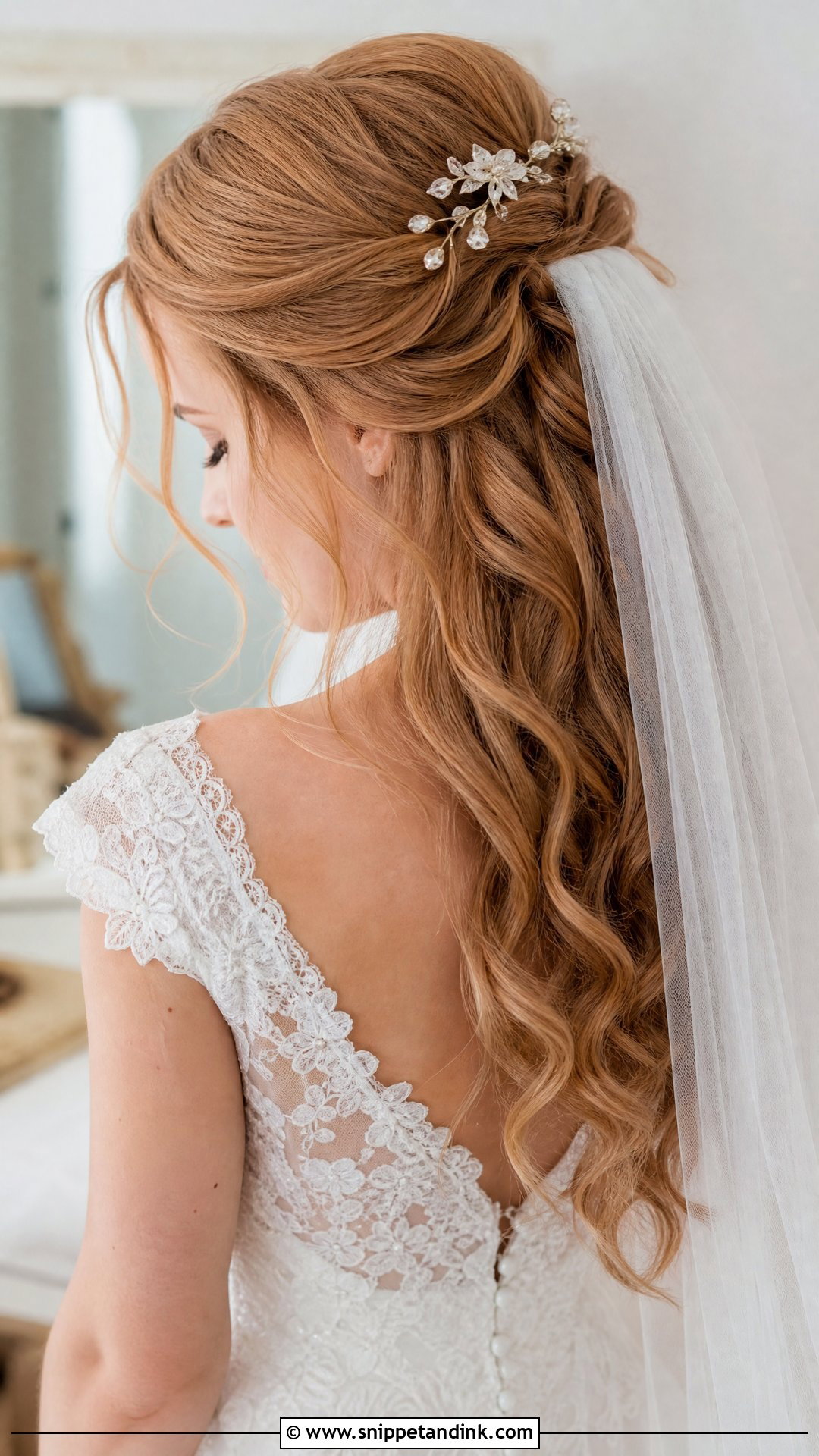
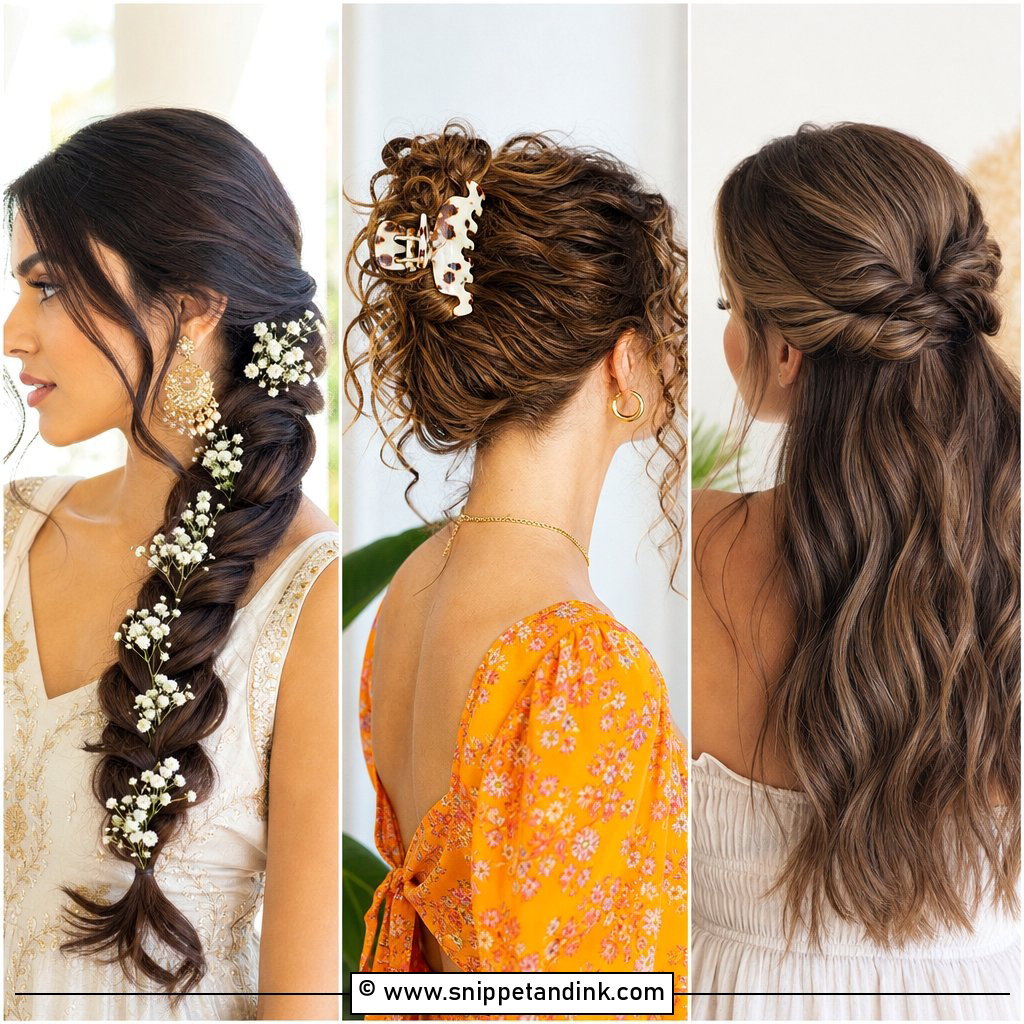
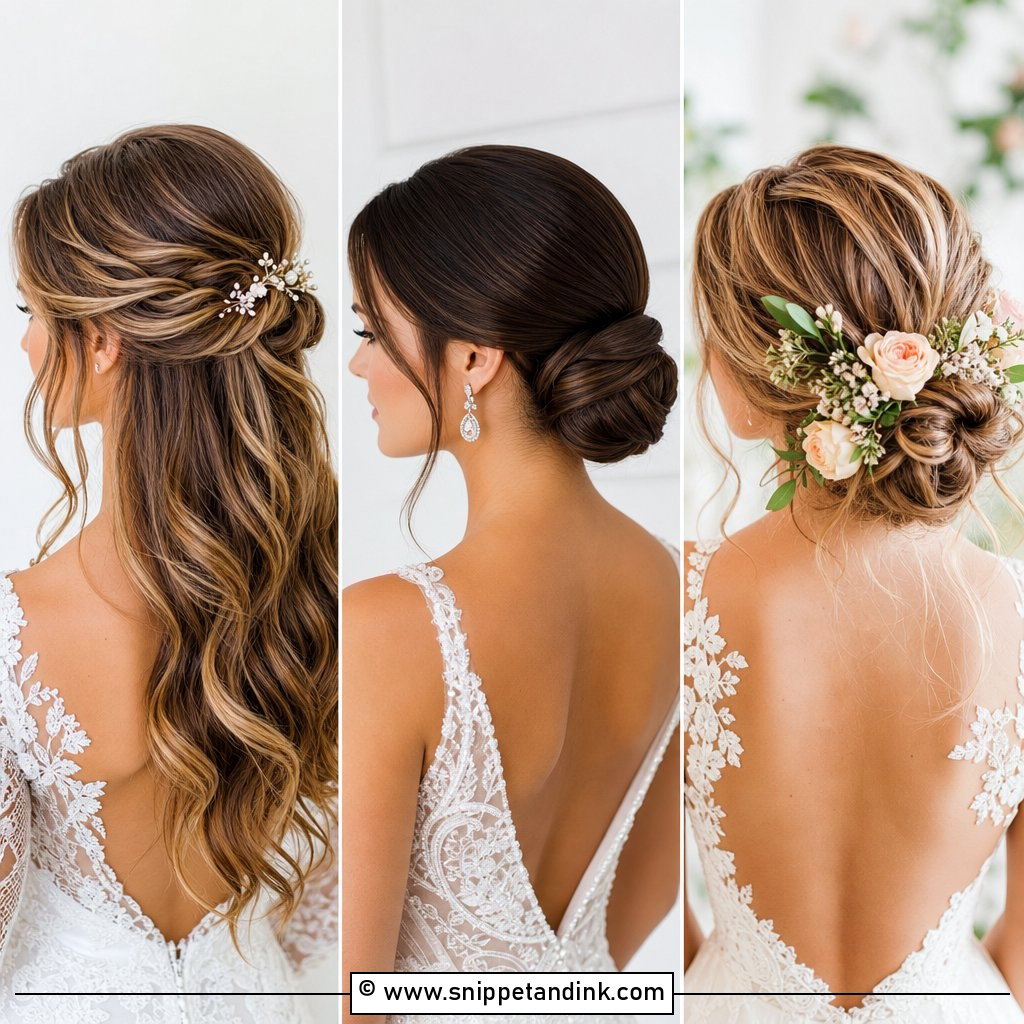
For brides torn between up and down, the half up half down style pulls the top section back and lets the length fall. It shows off long, wavy hair well, and it takes a veil easily because the gathered section gives the comb something to grip. The honest drawback is heat. Hair resting on your shoulders and back all afternoon in summer will lose curl and stick, so I set the waves with a firm spray and suggest keeping a clip in your bag for the reception.
6. Braided Bun Wedding Updo
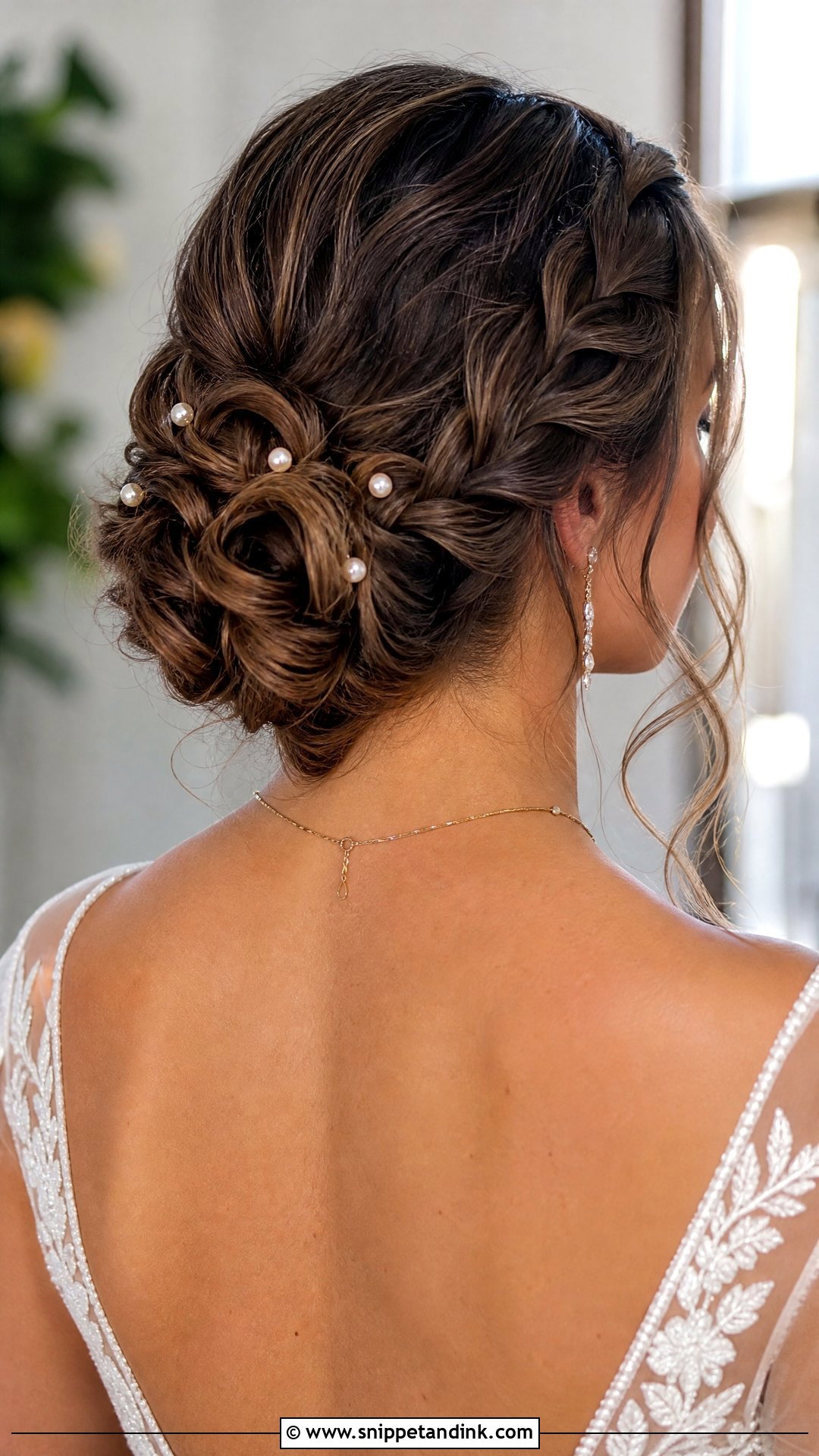
A braided bun gives the back of the head real detail, which matters more than people expect, because guests see the back of you during the whole ceremony. I braid first, pancake the braid slightly to widen it, then coil it and pin through the plaits so nothing shifts. A tight braid reads formal; a loosened one reads relaxed. Tucked pearls or small flowers sit nicely in the gaps of the weave. It holds well on most textures, though very short layers may poke out of the braid and need extra pins.
7. Textured Updo for Wedding Day
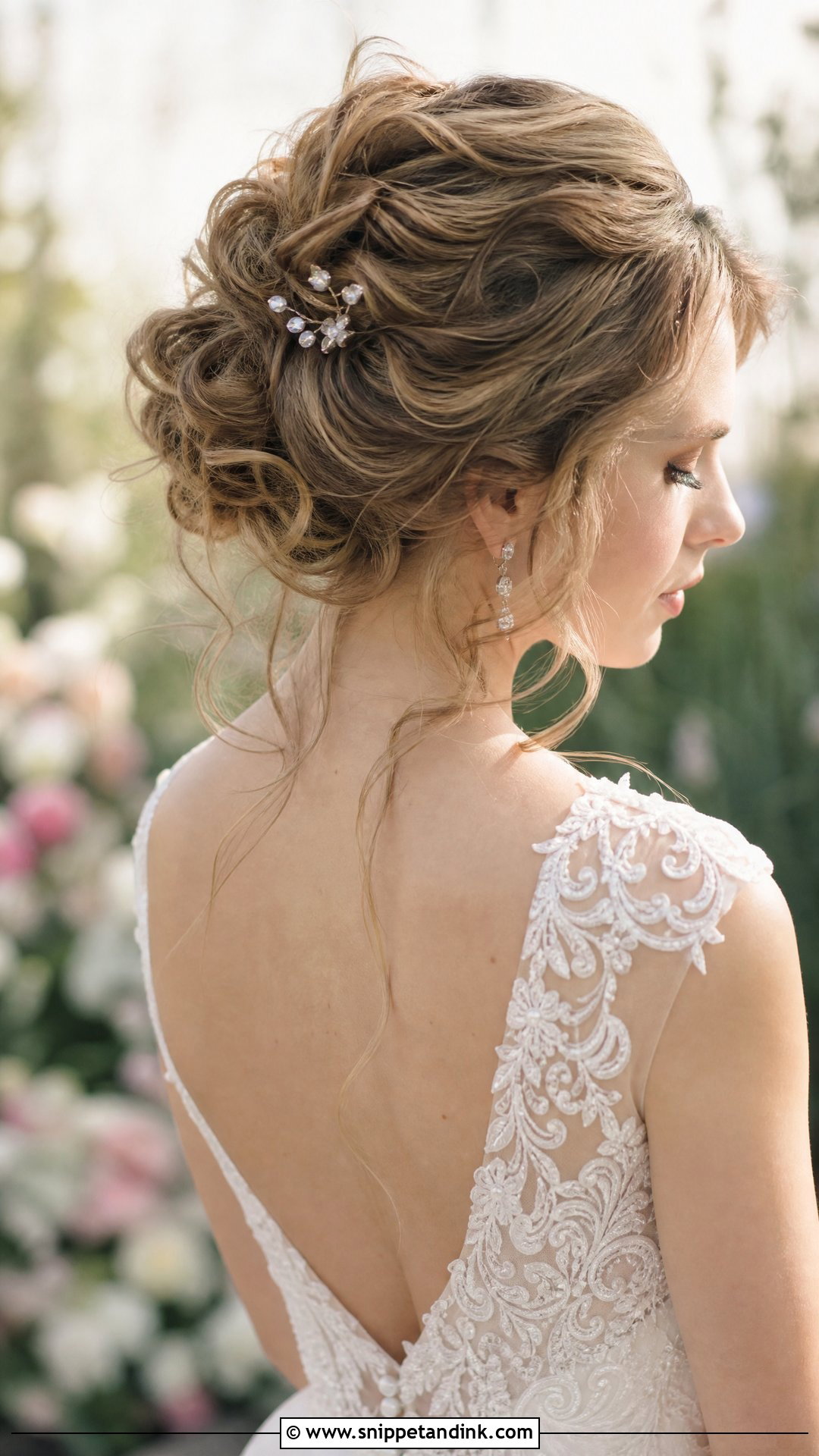
Textured updos are my answer for fine hair that wants to look thicker. Curling the hair, then gently pulling apart each section before pinning, creates depth and shadow that reads as volume in photos. The shape stays airy rather than sleek, and a few face-framing pieces soften it further. The trade-off is that soft texture relies on product and grip, so I prep with a dry texture spray from root to mid-length. Clean, slippery hair is the enemy here; skip the conditioner on the morning of the wedding.
8. Low Chignon Bridal Updo
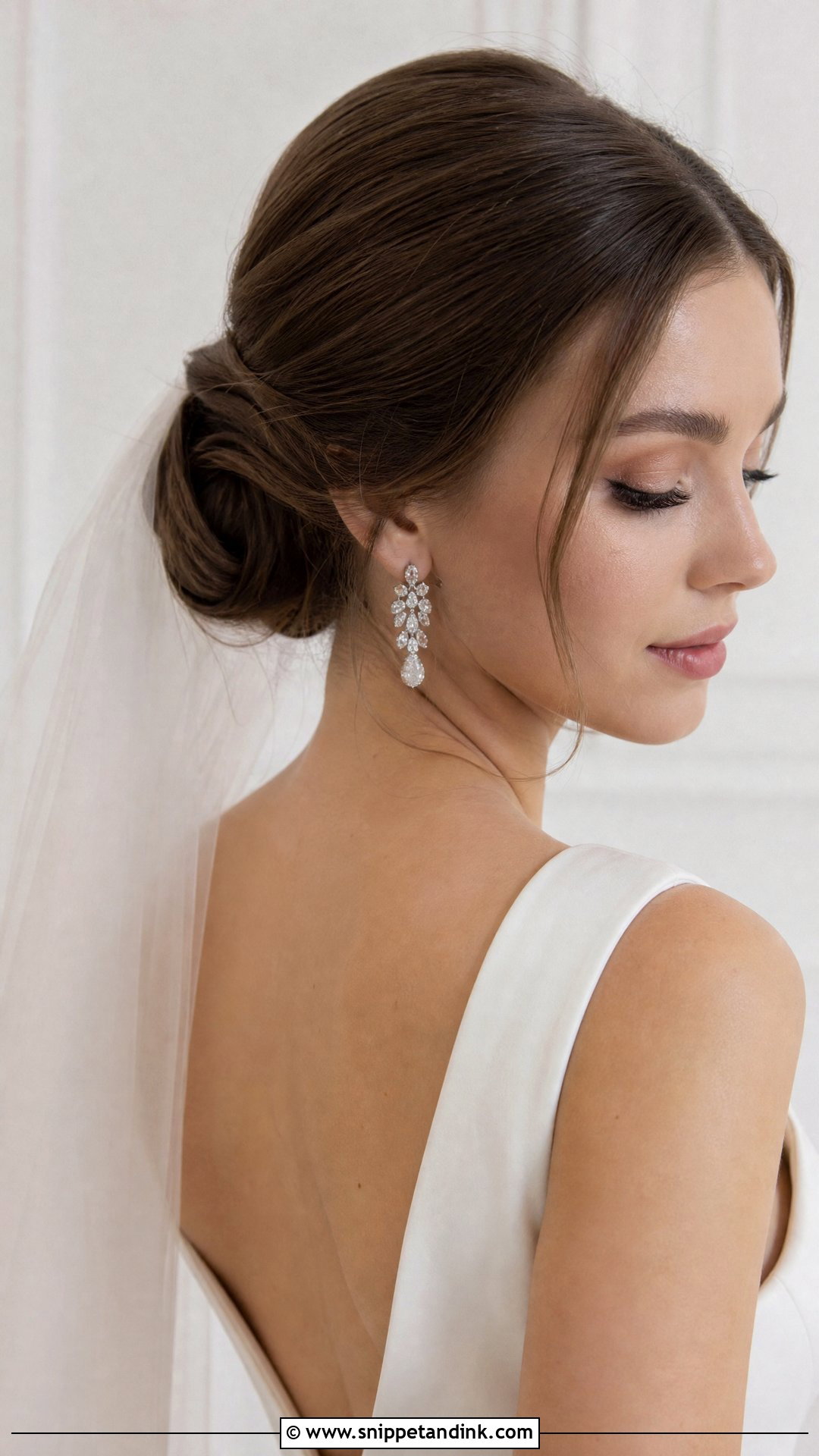
The low chignon is a smooth, looped knot at the nape, quieter than a twist and more refined than a plain bun. I like it under a drop veil, because the veil comb can tuck neatly just above the knot and the fabric falls straight. It works on most hair types and lengths past the shoulder. To soften it, I leave out a couple of strands around the temples. Heavy, very thick hair can make a chignon bulky, so I’ll often thin out the underneath section and pin it flat before forming the knot.
9. Boho Braided Updo for Bride
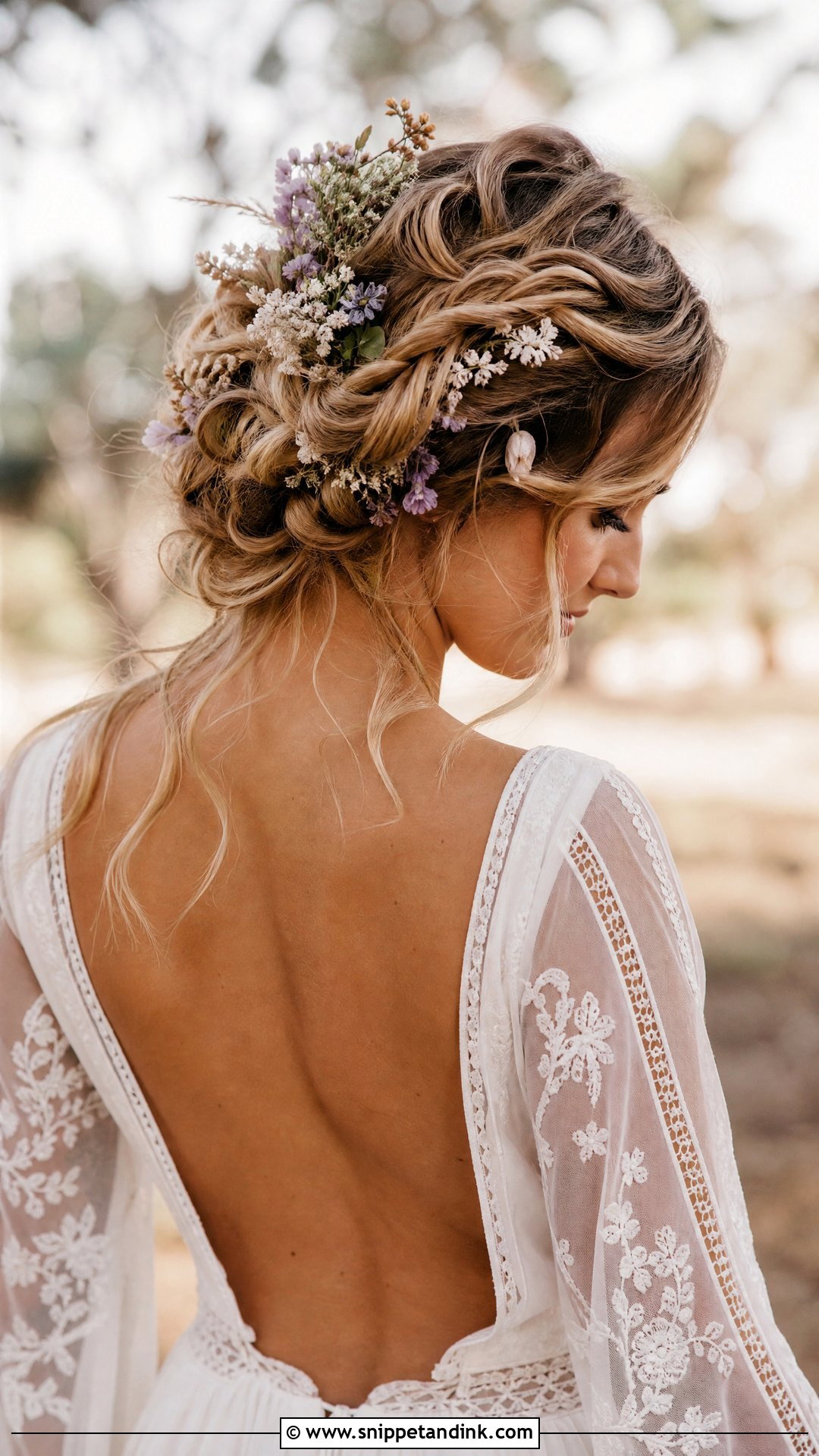
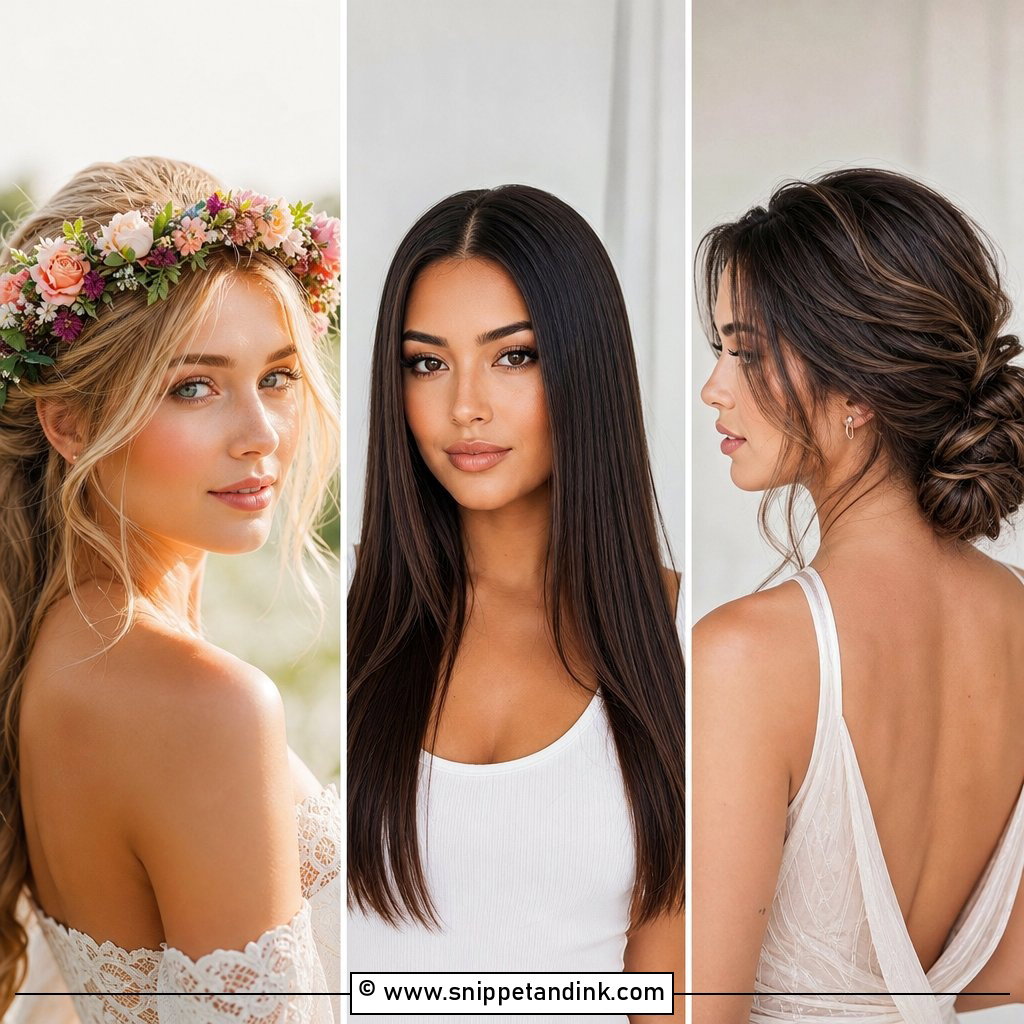
Boho braided updos look loose, but the base underneath is usually firmer than the surface suggests. I pin the braids into place, then pull pieces out only after the structure is secure. That relaxed texture suits outdoor, garden and beach weddings, and wavy or textured hair carries it best because the natural movement does half the work. Wildflowers and greenery look right woven in here. If you’re on a windy beach, keep the loose pieces short; long tendrils end up stuck to lip gloss.
10. Curly Updo Wedding Hairstyle
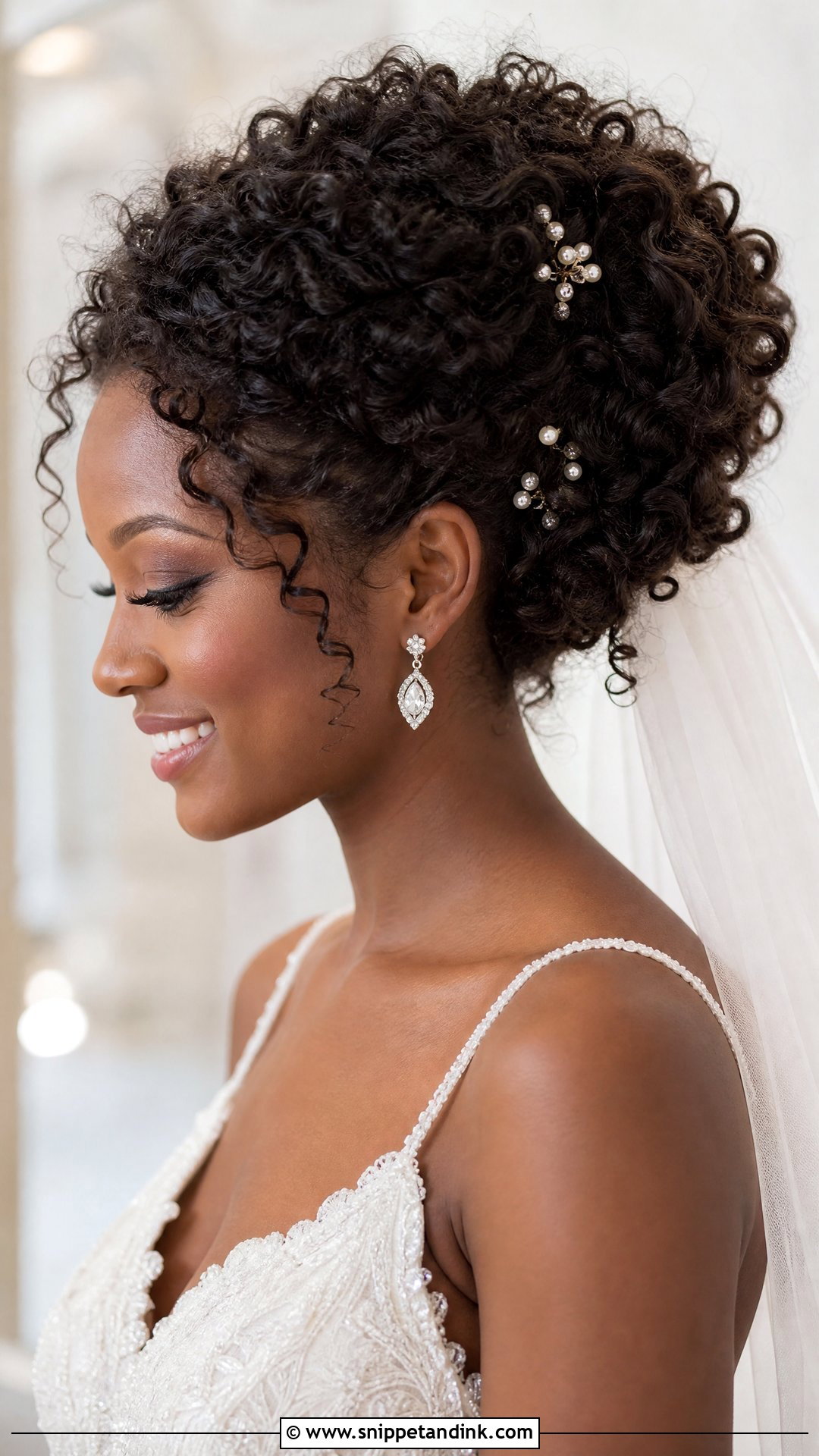
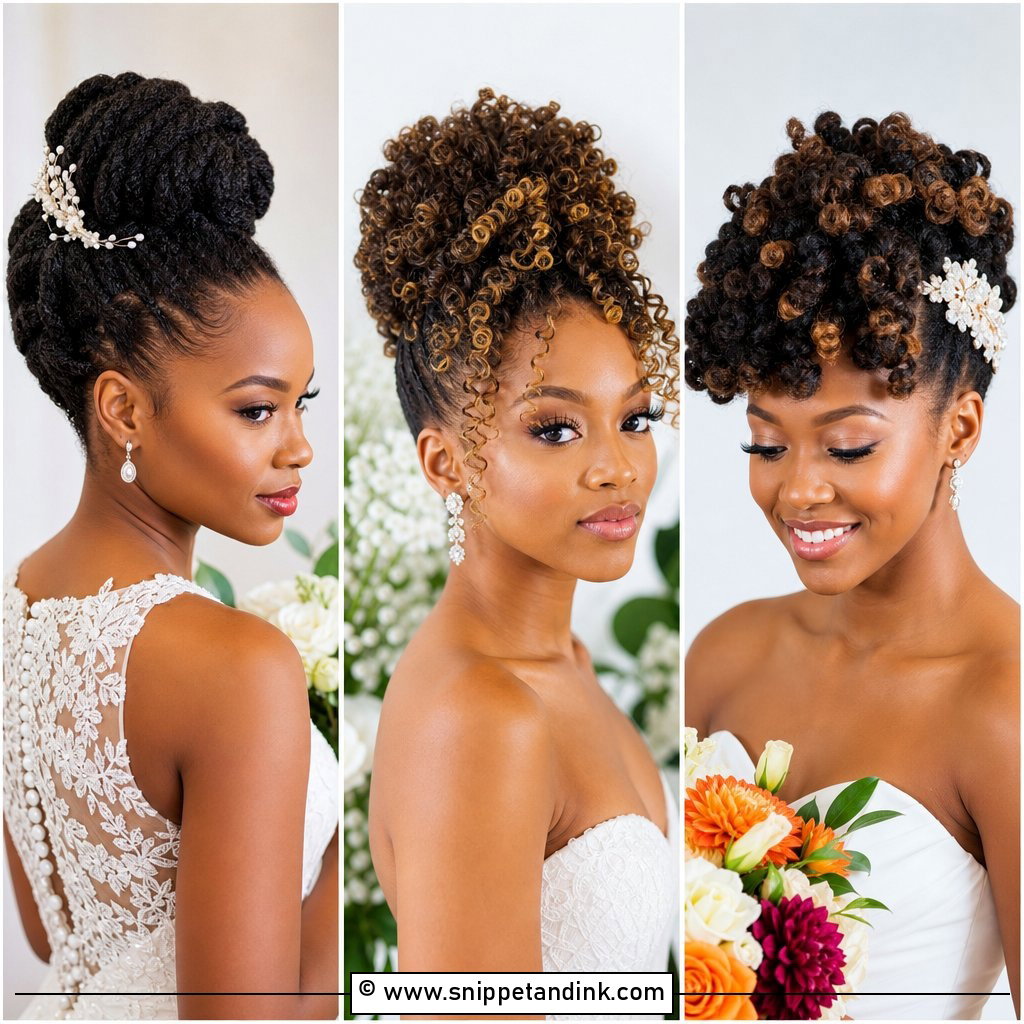
If you have natural curls, a curly updo works with your texture instead of fighting it. I gather the curls toward the crown or the back, pin them in clusters and never brush them out, so the definition stays intact. Moisturize the curls well the night before and use a gel or cream you already know your hair likes; a trial is not the time to try a new curl product. I leave out soft, curly tendrils around the face. Pearls and small floral pins sit securely in curls because the texture grips them.
11. Twisted Updo for Wedding
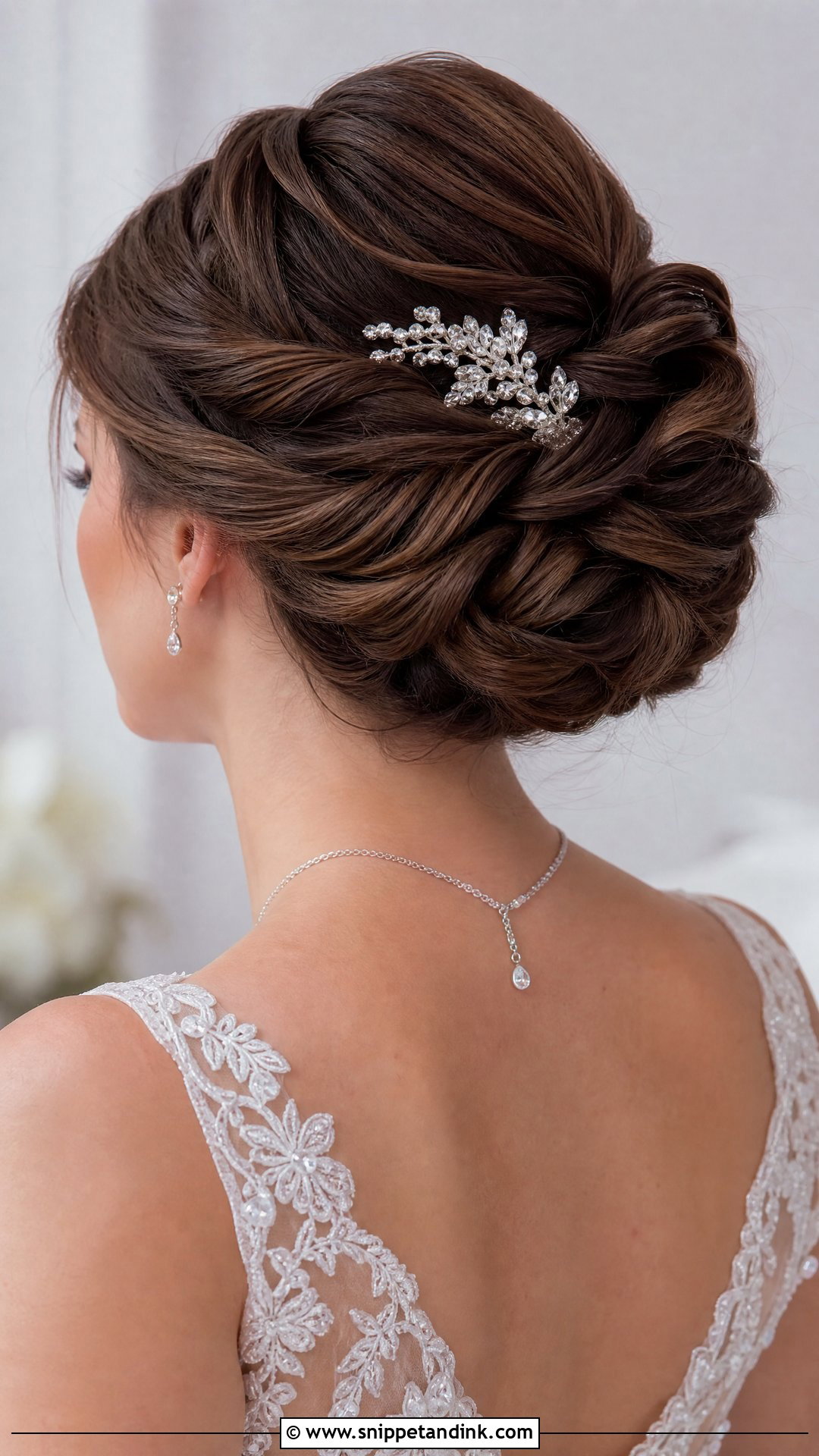
A twisted updo is made from rope twists gathered and pinned at the back, which gives you detail without the time a full braid takes. Each twist is pinned where it meets the next, so the style feels secure without being stiff. It can be kept smooth or loosened slightly at the edges. A sparkly hairpiece slotted between the twists adds a focal point. Very layered hair tends to spring out of twists, so if your layers are short, ask your stylist to use a little pomade along each one.
12. Vintage Updo Bridal Hairstyle
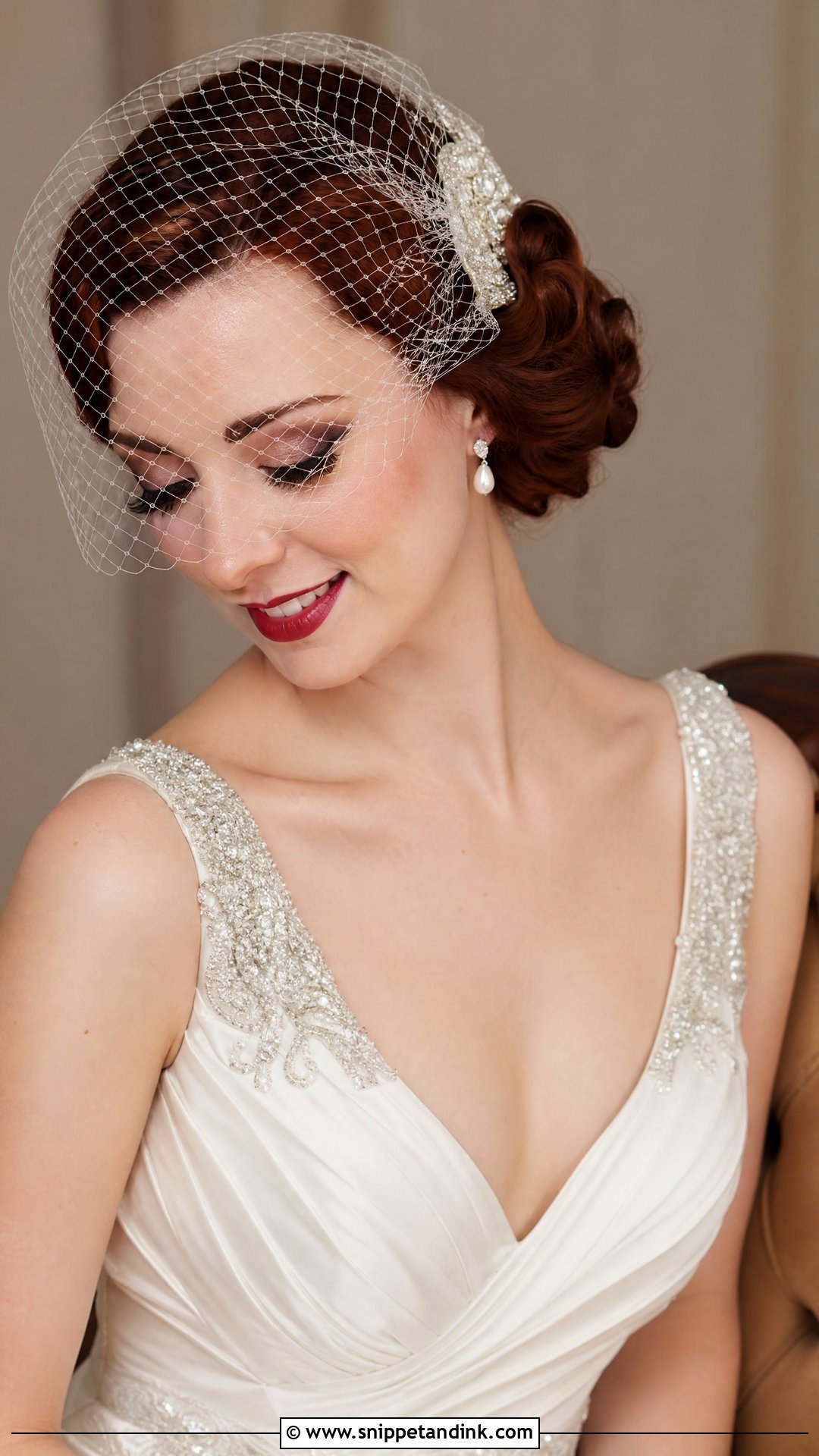
A vintage updo borrows from old Hollywood: sculpted rolls, a glossy wave at the front and a structured shape that doesn’t move. Pair it with a birdcage veil or a jeweled comb. For deep finger waves, the hair is set with heat or pin curls, brushed out and shaped with clips while it cools, and that takes time, so add twenty to thirty minutes to your hair slot. The look depends on a smooth finish, which makes it a harder sell on humid days or for very curly hair unless you’re comfortable with a silk press first.
13. Side Swept Updo for Wedding
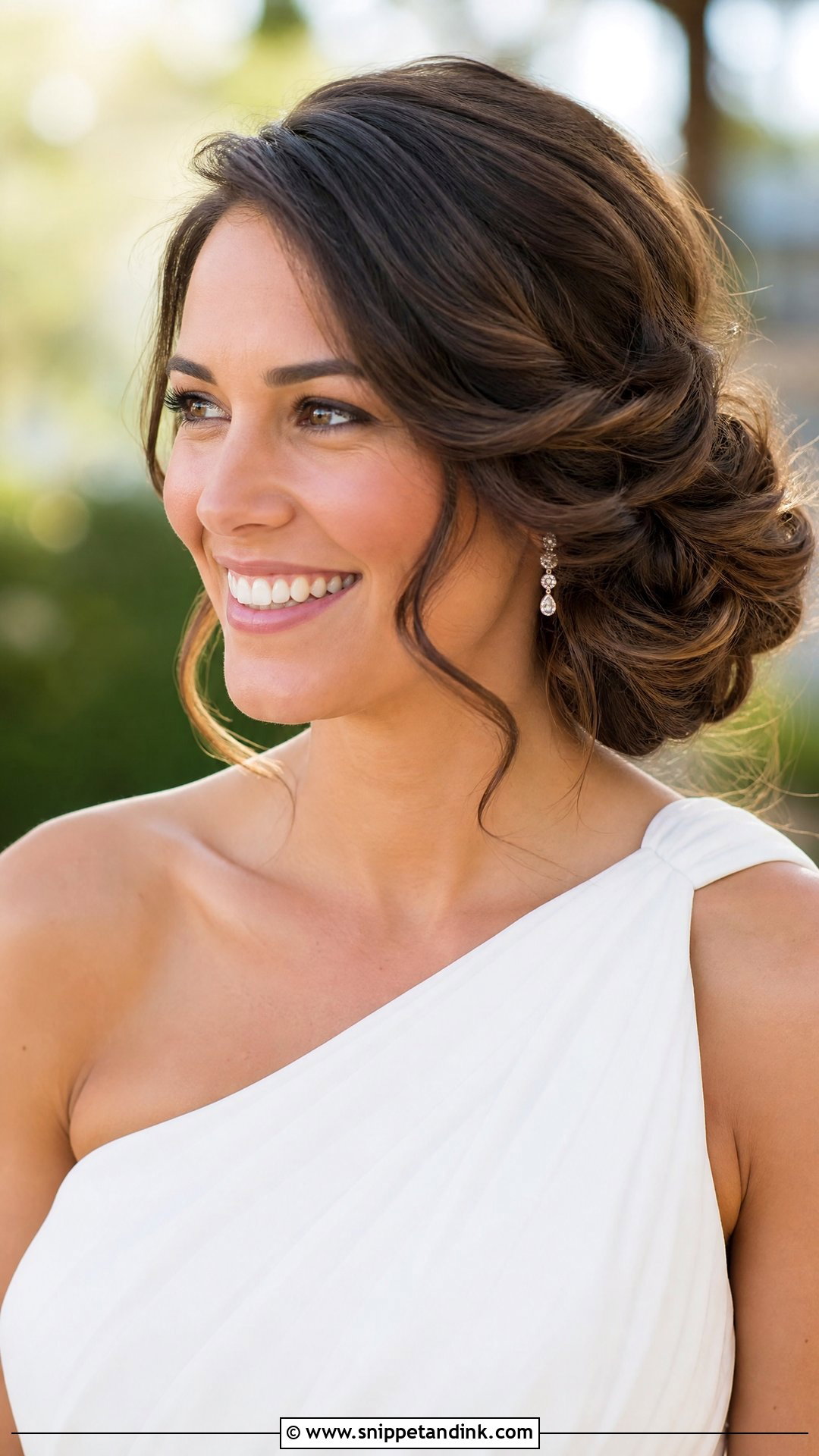
The side swept updo gathers the hair at one side of the nape, leaving the other side of the neck open. It works with a one-shoulder gown when the hair sits on the side opposite the strap, so the outline stays balanced. Curls, twists or braids can all form the gathered section. Before choosing it, think about your photographer: the side with the hair is the side that will look fuller, and most couples are photographed on a fixed side at the altar, so plan which way it falls.
14. Pull Through Braid Wedding Updo
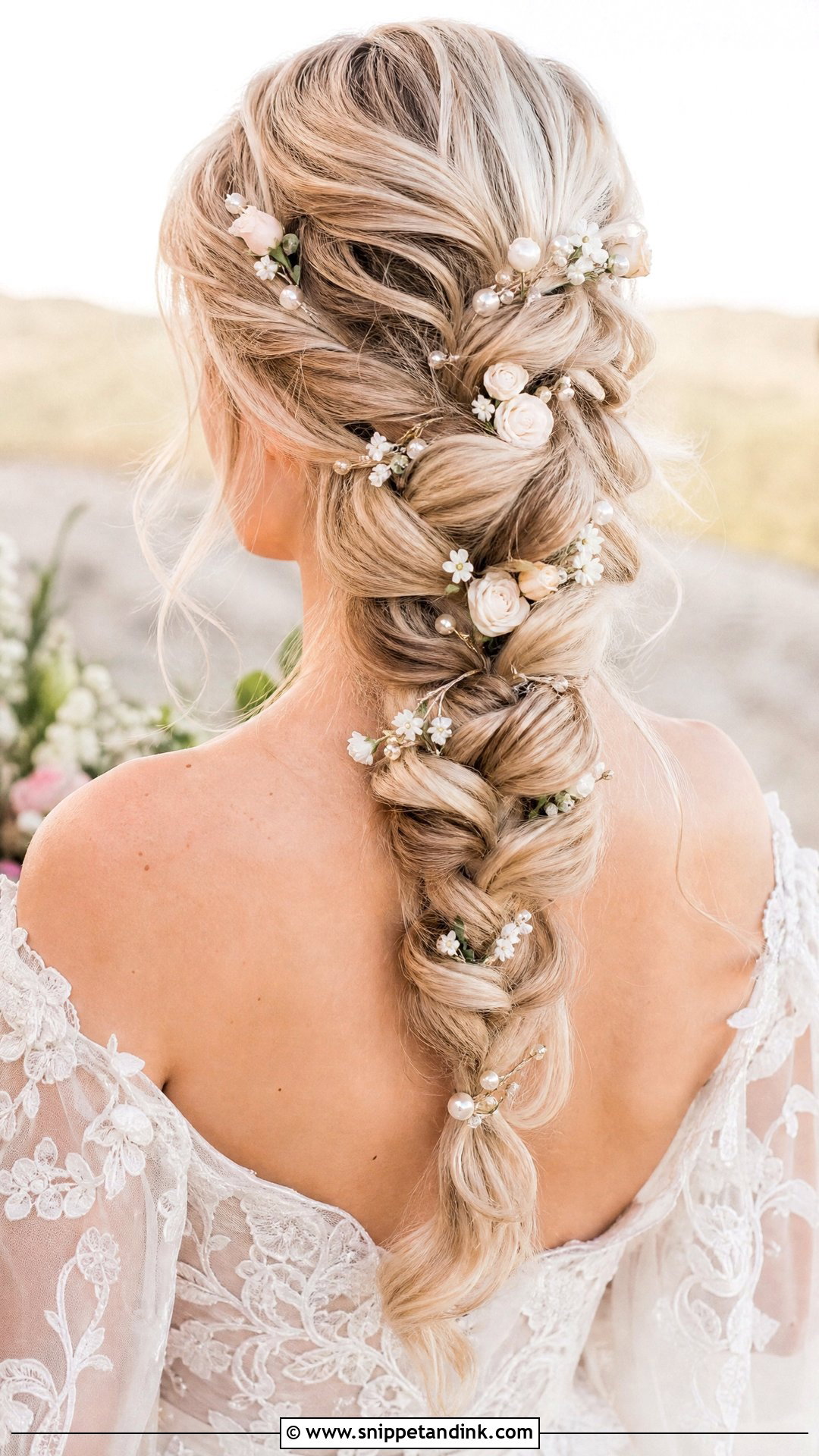
A pull-through braid isn’t a true braid; it’s a chain of small ponytails, each one split and pulled over the next, then widened with your fingers. That’s why it looks so full even on medium-density hair. It needs length from the shoulders down. Keep it loose for an outdoor wedding or tighten the loops for a cleaner line, and add flowers or pins in the gaps. The small elastics are its weak point, so I use clear ones that match the hair and hide them under the widened sections.
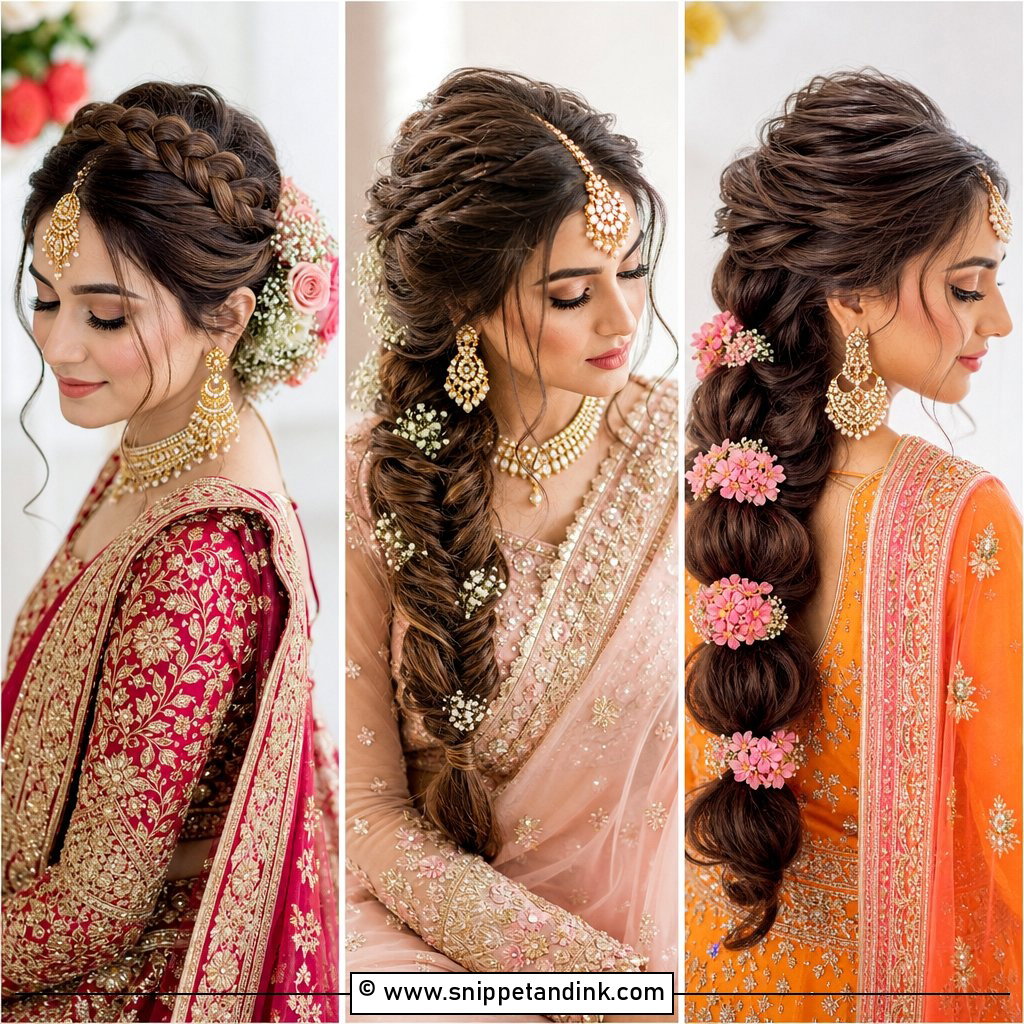
15. Floral Updo for Bride
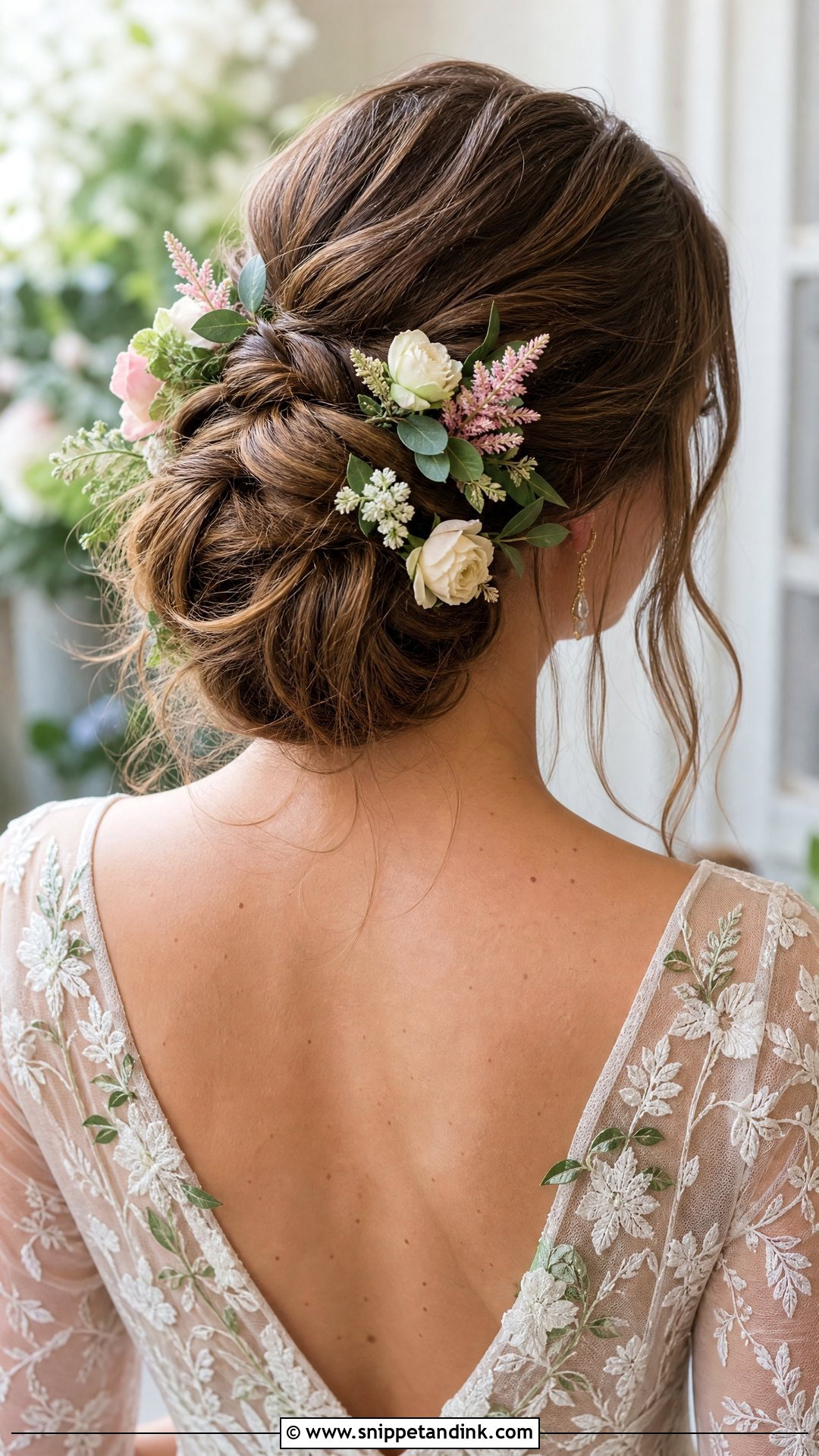
A floral updo adds real or silk blooms to a bun, braid or twist. With fresh flowers, I ask the florist for sturdy, hardy varieties wired or taped as small picks, since soft petals wilt in warm hair within a couple of hours. Waxflower, spray roses and baby’s breath hold up far better than gardenias or peonies. Match one or two blooms to your bouquet rather than repeating all of it. Faux blooms are a sensible backup on hot days, and they won’t brown before the photos are done.
16. Sleek Top Knot Wedding Hairstyle
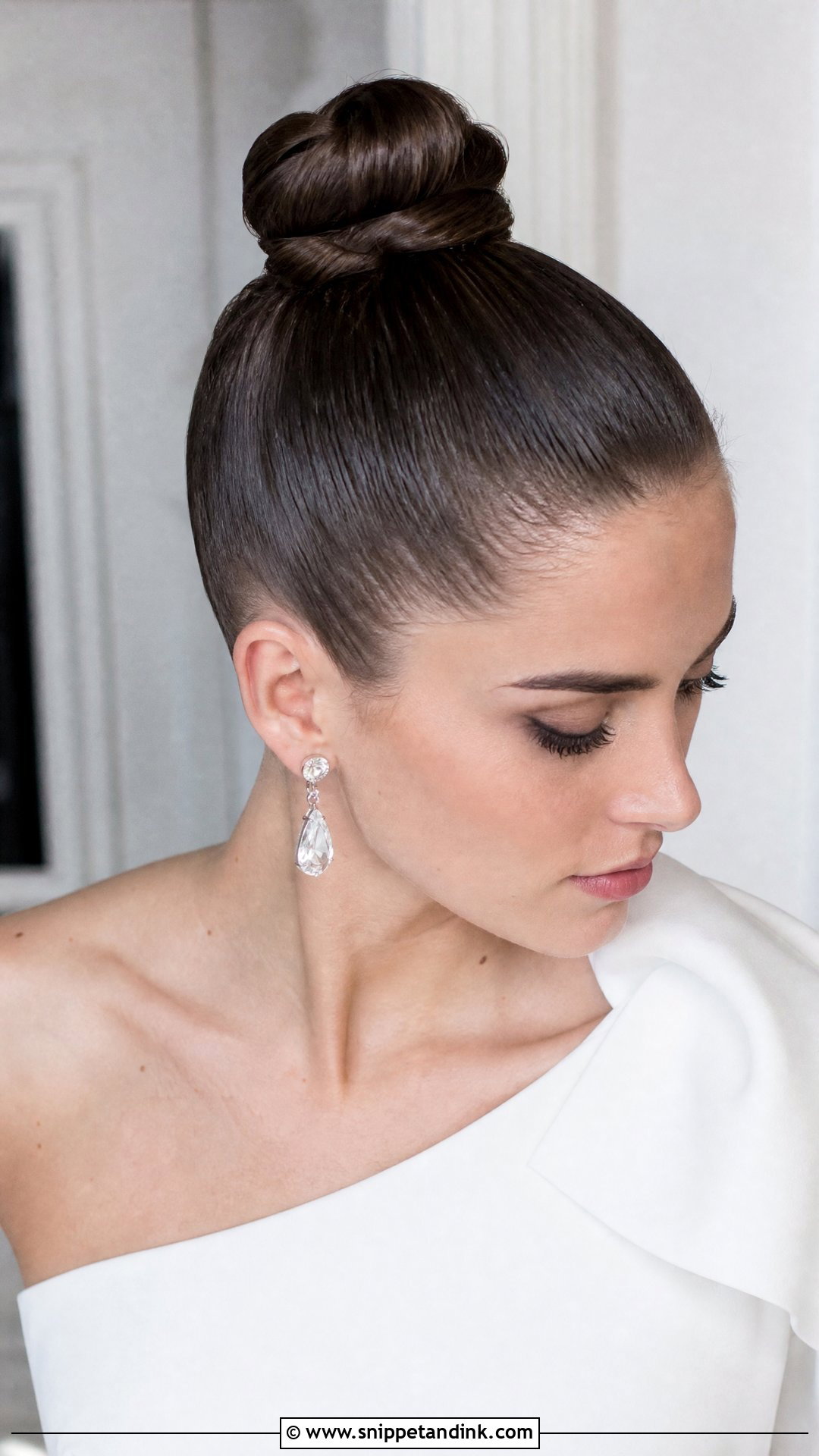
A sleek top knot sits high on the crown, so it lengthens the neck and keeps everything off your shoulders. Like the ballerina bun, it lives or dies by a smooth surface; I use a little shine serum and set the hairline before the knot goes in. It suits minimalist gowns and big earrings. The high placement does create one issue: there’s nowhere obvious for a veil to sit, so if you want a veil, it has to anchor beneath the knot, which only works with a lighter tulle.
17. Romantic Loose Updo for Wedding
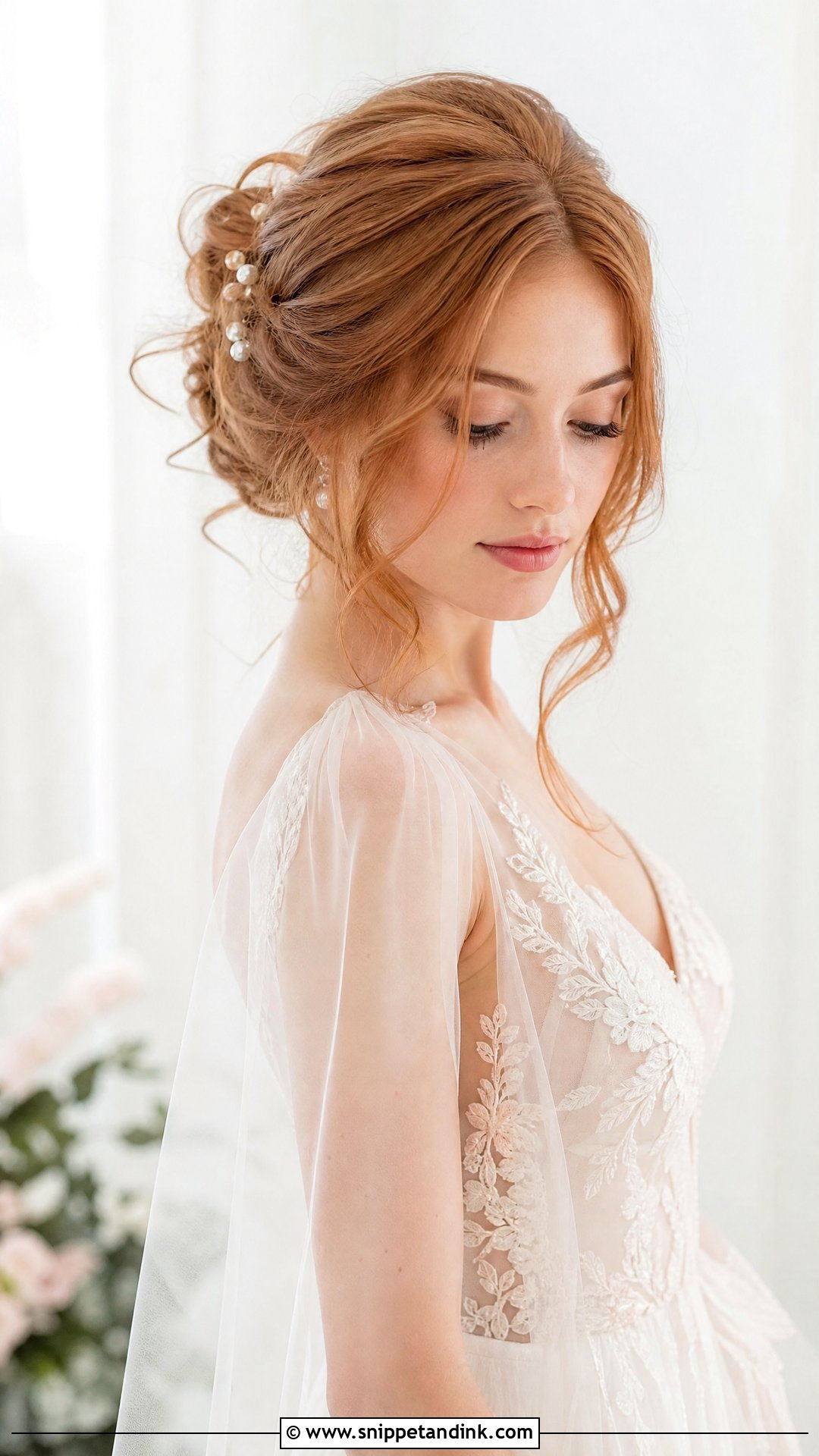
A romantic loose updo gathers the hair gently and leaves plenty of soft pieces around the face. It suits flowing gowns and outdoor settings, and it’s forgiving for brides who dislike tight styles. The trick is that loose doesn’t mean unpinned. I pin the hidden base firmly and keep the looseness only on the outer layer, so it lasts past midnight. Pearls or small flowers can be added at the end. Brides with very straight hair will need a full curl set first, or the soft pieces fall flat within hours.
18. Crown Braid Wedding Updo
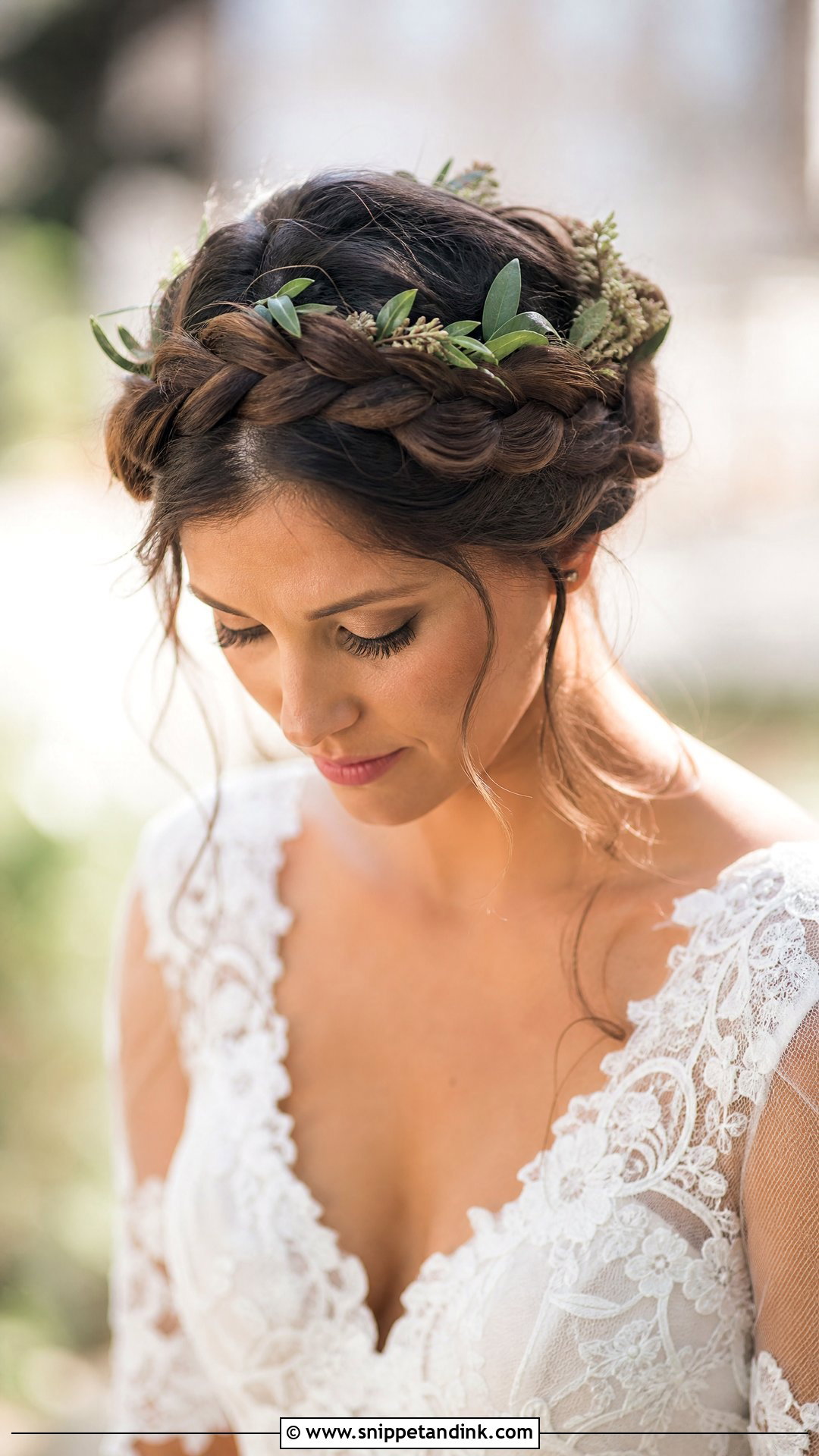
A crown braid wraps around the head like a halo, starting behind one ear and pinning flat at the other. It needs at least shoulder length to complete the circle, and on shorter hair I’ll braid two sections and meet them at the back. It keeps every strand off your face, which is useful in wind or heat. Flowers or greenery tuck easily into the plaits. The braid sits on top of the head, so a veil works best set below it at the back of the crown.
19. Pearl Embellished Updo for Bride
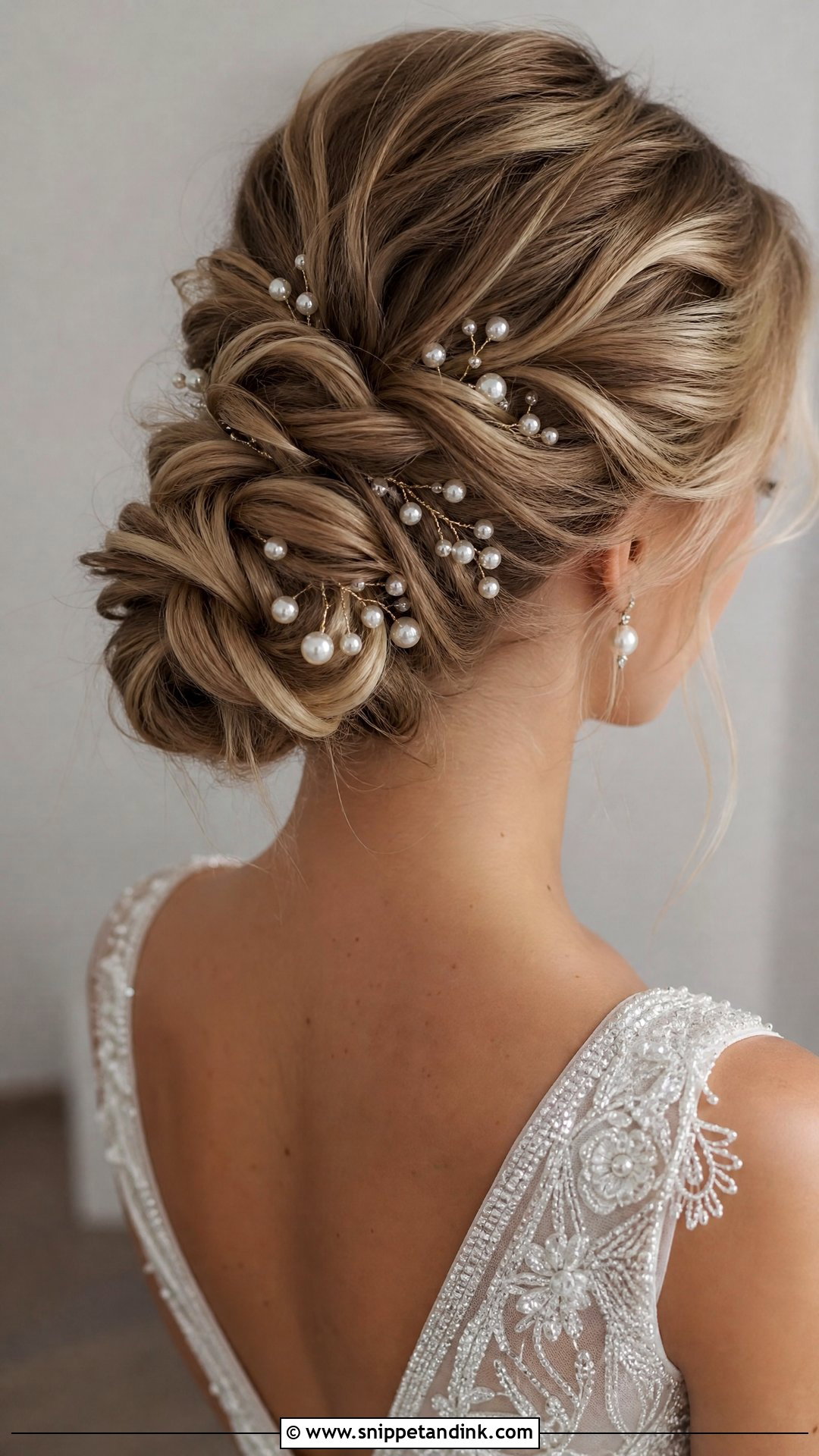
A pearl embellished updo takes a plain bun, braid or twist and adds pearls either scattered across it or grouped in one place. Scattered pearls catch the light from every angle; a cluster reads more like a hairpiece. I attach single pearls on pins and pearl clips through a section that already holds a pin, so they don’t slide down during the evening. Sleek and textured bases both work. If your dress has pearl detail, pick a similar size and finish so they look related.
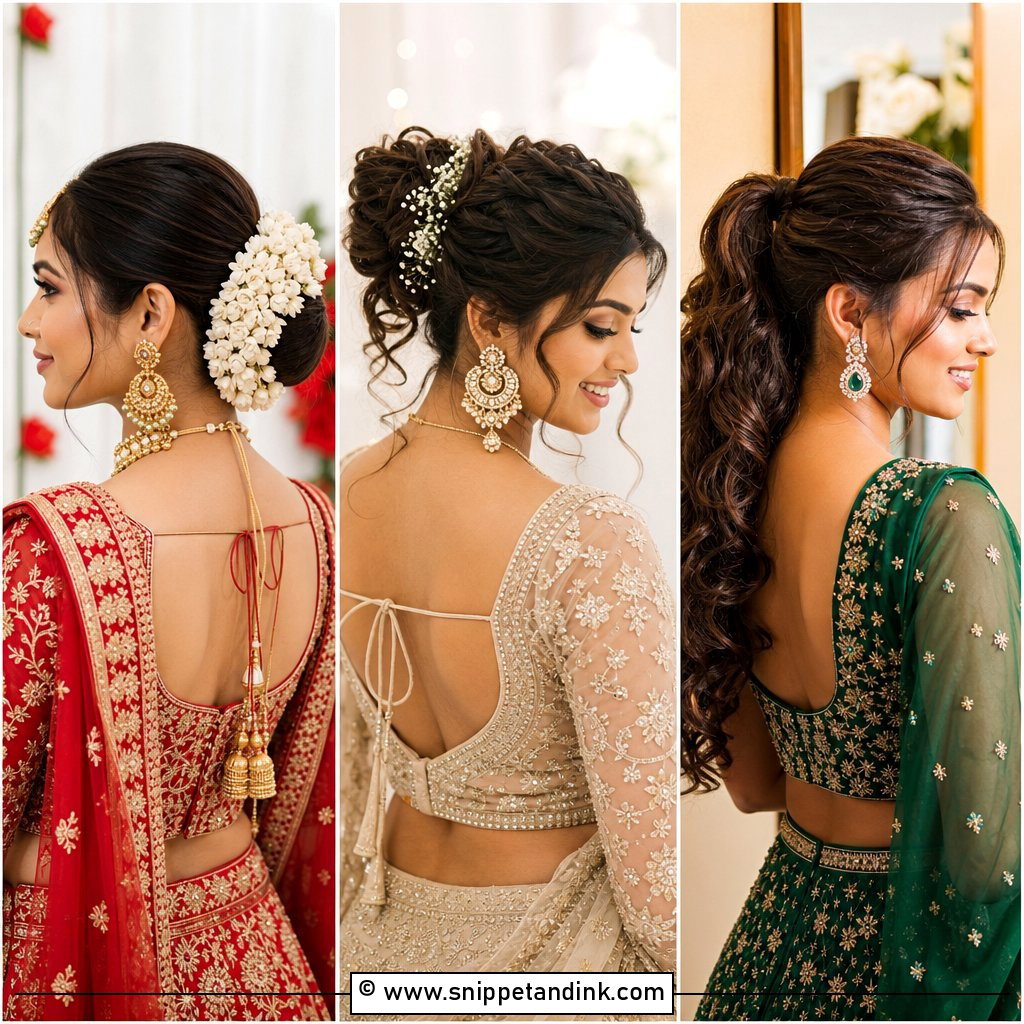
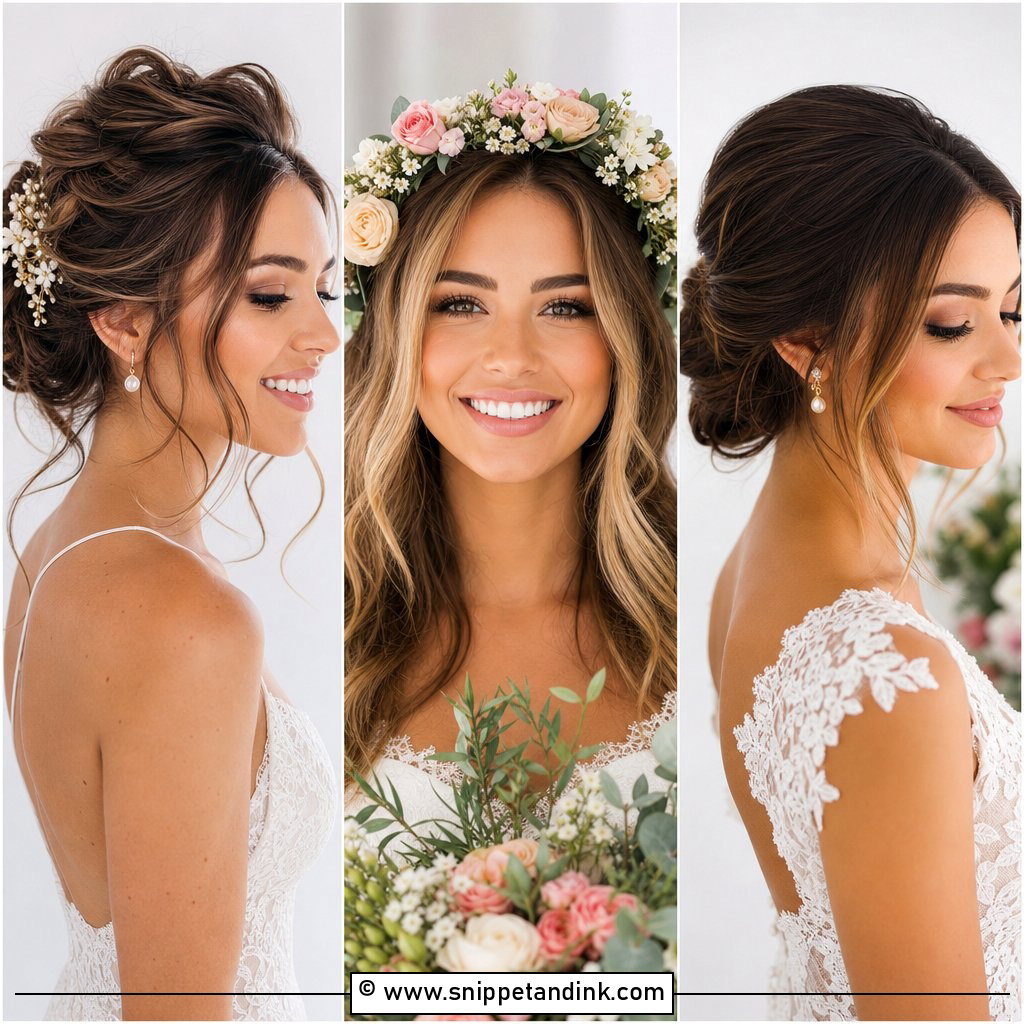
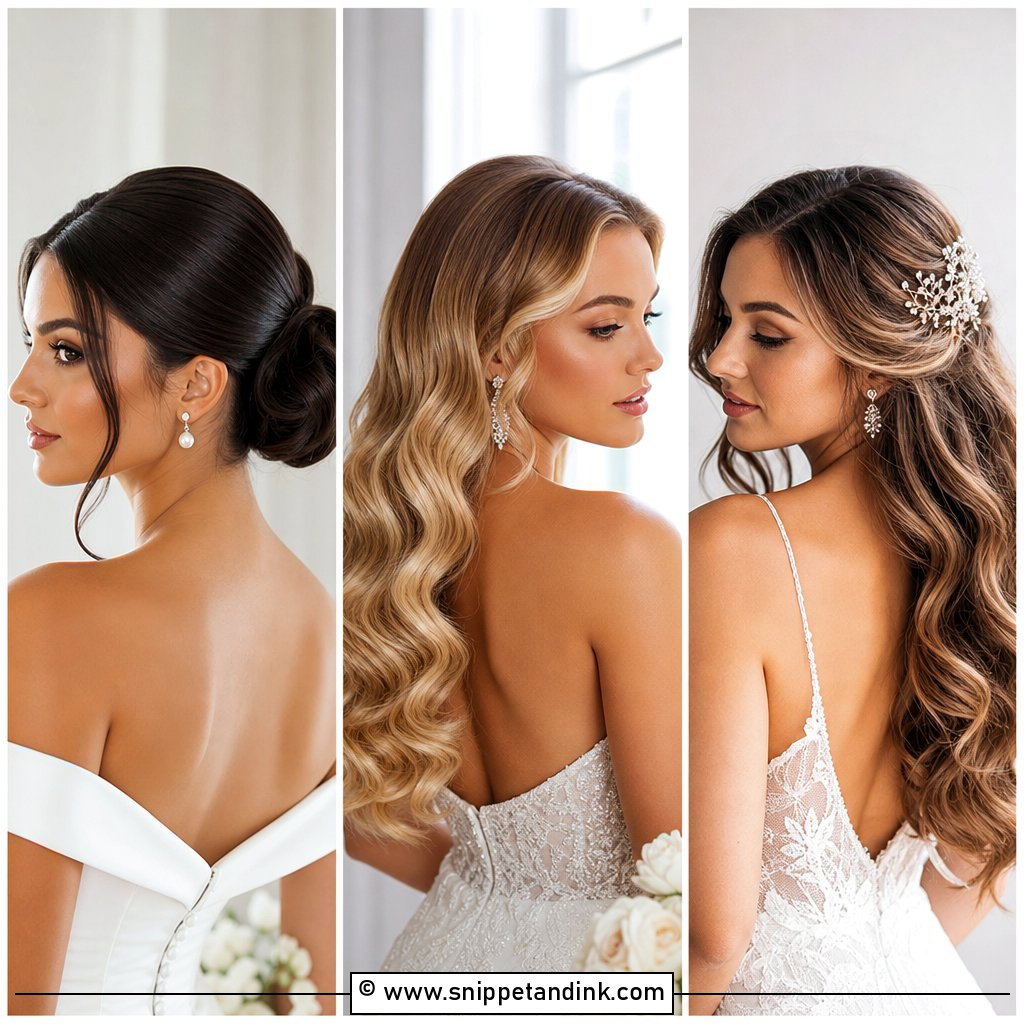
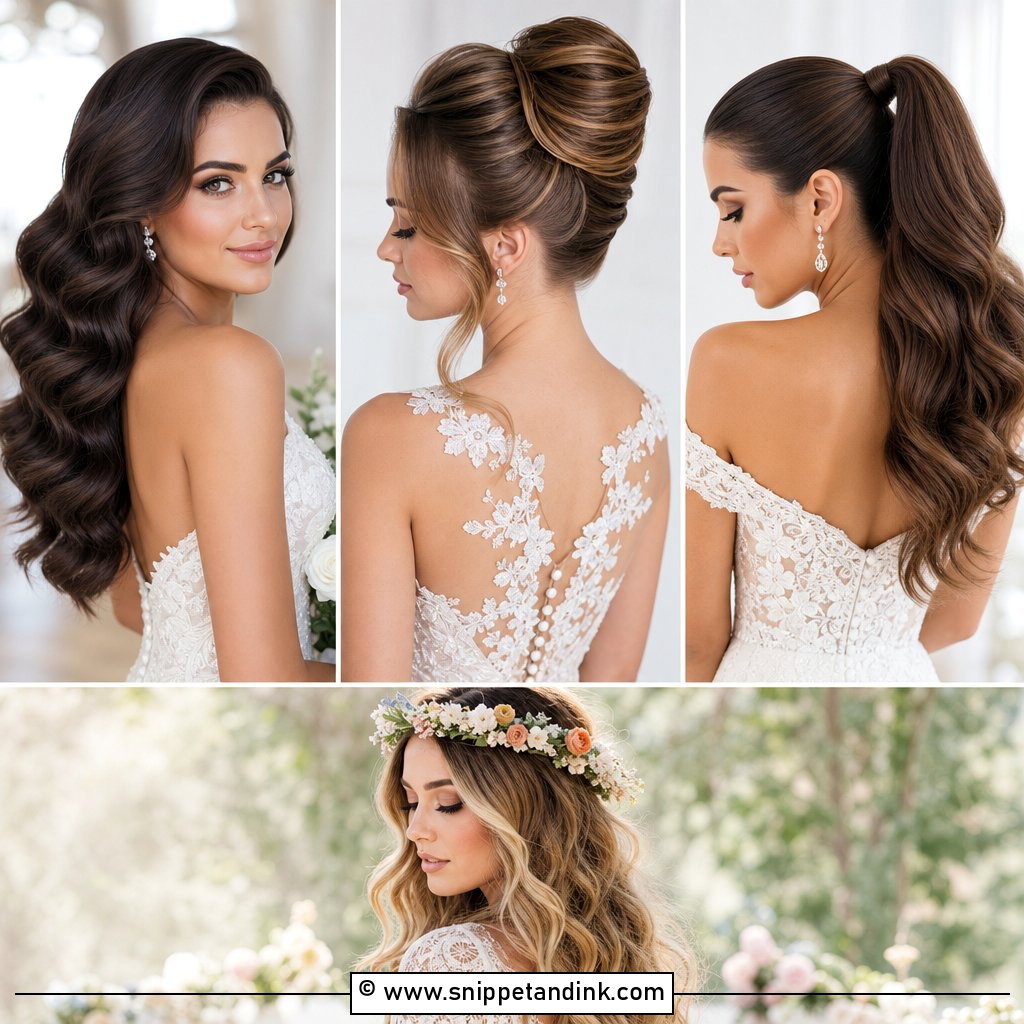
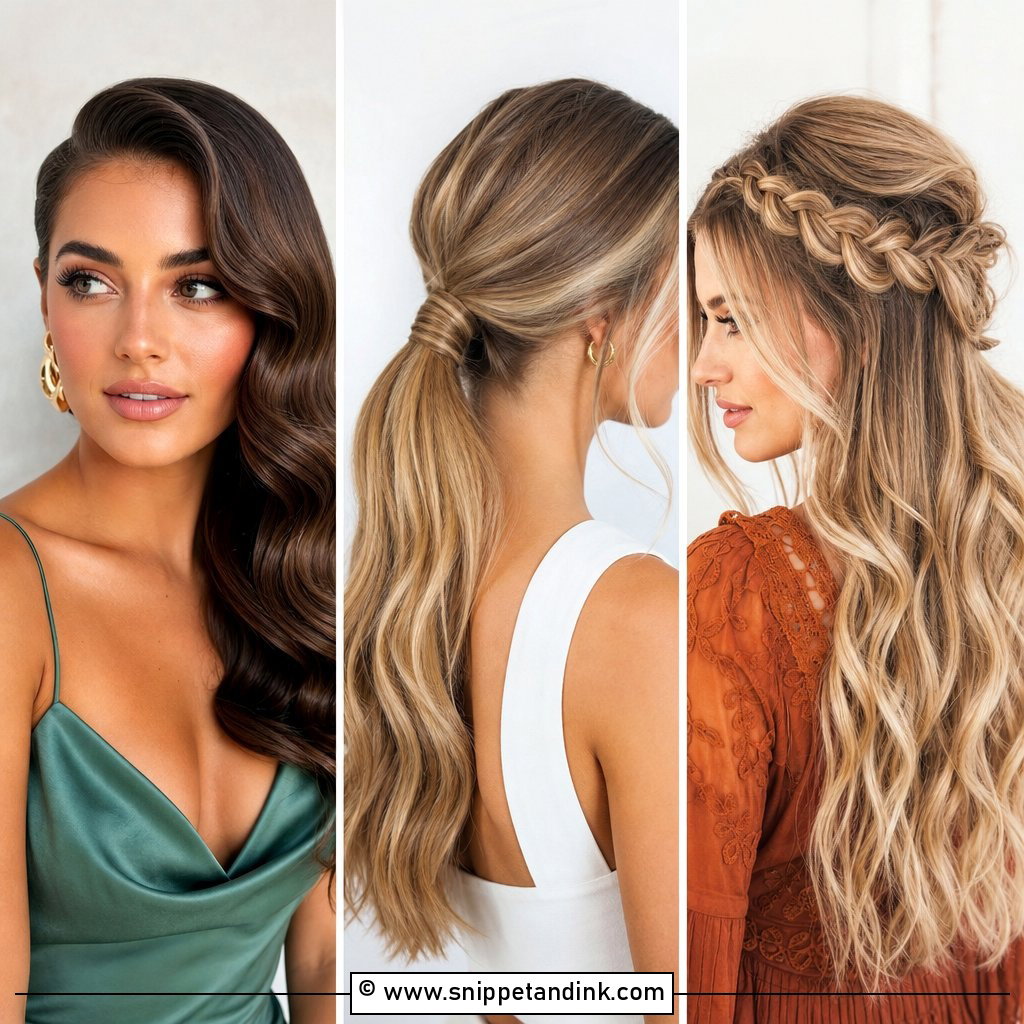
20. Bun With Face Framing Pieces
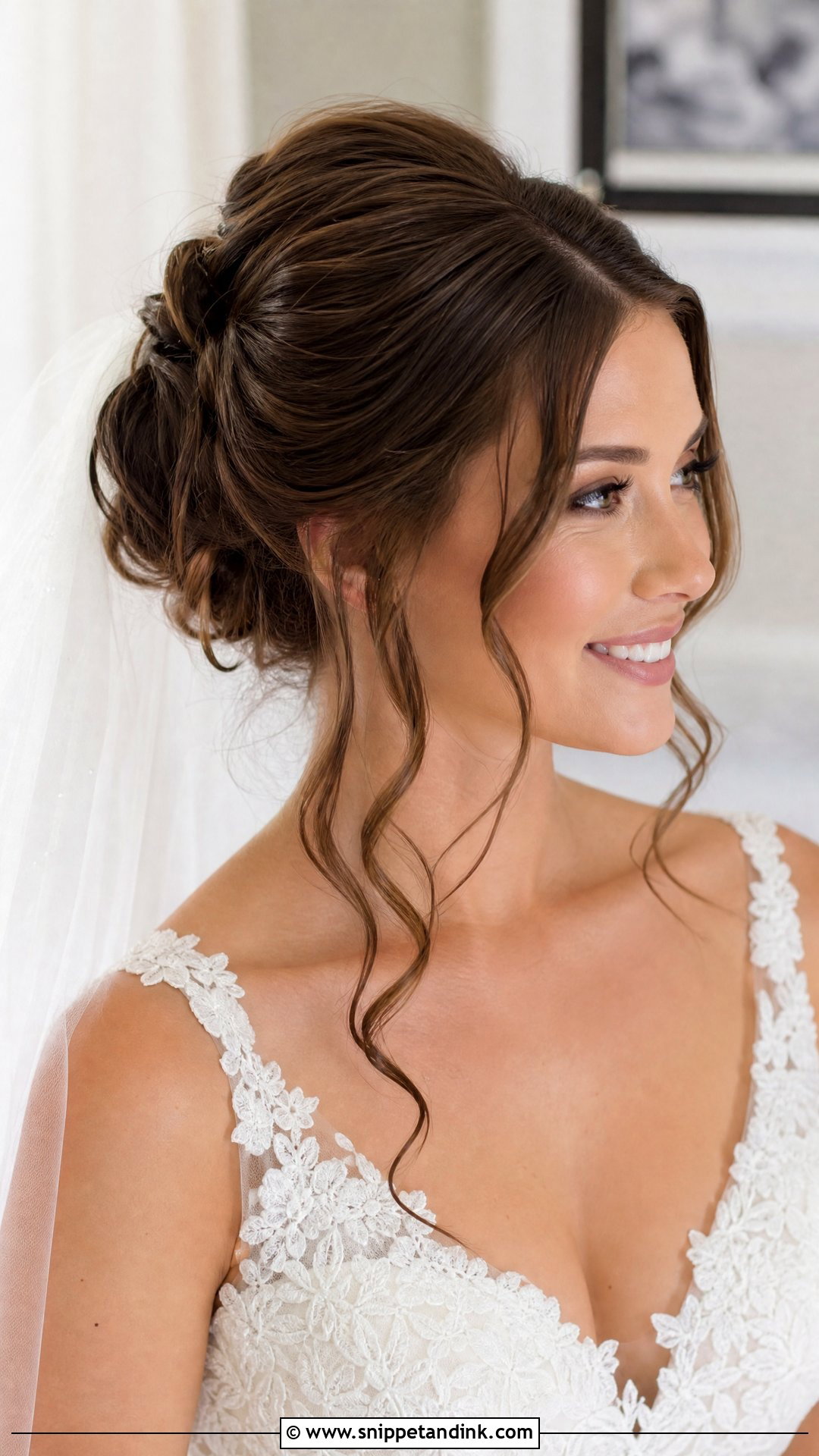
A bun with face-framing pieces is the compromise I recommend most when a bride wants an updo but feels exposed with everything pulled back. Most of the hair goes into a neat bun; two pieces on each side stay loose and get a soft curl. The length of those pieces is the detail to decide at your trial. Cheekbone length suits most faces, while chin length can drag the eye downward. Veils, pins and floral accents all sit easily with it.
Sorting the Twenty by Length and Density
Length and density narrow the list faster than any mood board. Here’s how I’d sort the twenty if you came to me unsure.
Shoulder length or shorter
Low buns, twisted updos and loose romantic shapes work, often with a small padded base or a few clip-in wefts for bulk. French twists and full crown braids usually need more length than you have.
Fine hair
Choose textured updos, pull-through braids and messy buns. Pulling sections apart creates the illusion of volume. Sleek top knots and ballerina buns show the scalp under strong light, so a root-touch powder helps if you go that way.
Very thick or heavy hair
Thick hair can hold any of these, but weight is the issue. I split it into two smaller buns stacked as one, or thin the underneath layer flat before forming the shape. Expect to need more pins and a slightly longer appointment.
Undoing Sixty Pins at Midnight
Nobody warns brides about the end of the night. Pulling a pinned updo apart in a hurry snaps hair, so go slowly: remove any veil or hairpiece first, then feel along the style for pins and drop them into a cup so you can count them. Brides are often surprised how many came out.
Once the pins are out, don’t brush. Spray-hardened hair tangles easily. Work a little conditioner or oil through the lengths with your fingers, then wash in the morning. If your hair feels sore at the root, that usually means one pin sat too tight against the scalp, and it’s worth mentioning at the trial next time.
Your Trial Is Where an Updo Proves Itself
Every updo here comes down to the same few things: what your hair will hold, what your dress and veil need, and how long the day runs. Ballerina buns and soft braids have very different demands, so bring photos of the dress and your venue to the trial, and wear something with a similar neckline. Add flowers, pearls or pins once the shape is right, not before. Give the finished style a full afternoon at home after the trial, and you’ll know whether it’s the one.
You'll Like These Ideas:


Leave a Reply