
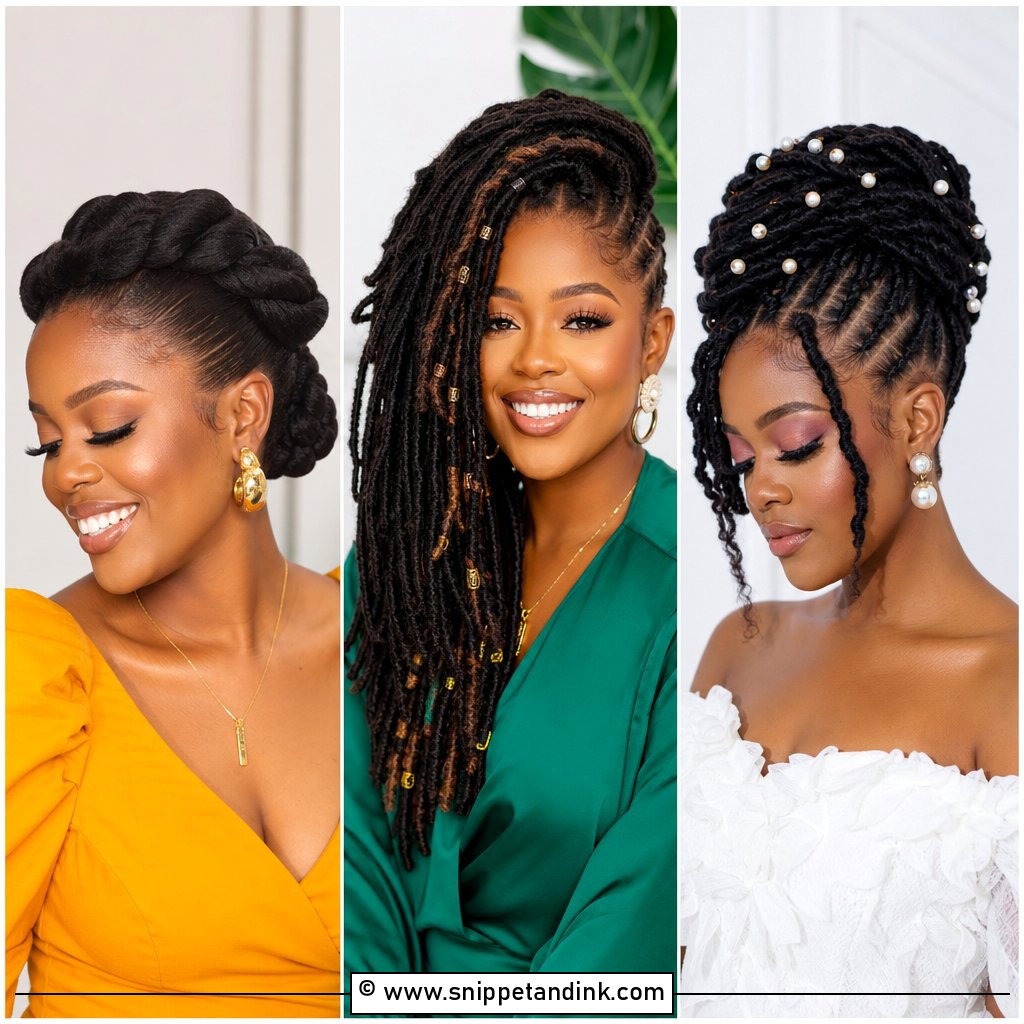
Coily 4C hair holds a sculpted shape better than almost any texture I work with, and that is the real advantage on a wedding day. Its density grips pins, it keeps volume without much spray, and a well-set style can look the same at the last dance as it did at the ceremony. Below are the shapes I build most often, from a tucked updo or a twist-out to a puff, loc-inspired detail or a braided crown. Each one can sit securely under a veil or crown and still show your coils instead of hiding them.
A Week-Out Prep Calendar for Coily Hair That Has to Be Pinned
Most problems I see with natural bridal hair start days before anyone picks up a pin. 4C hair that arrives dry, freshly cut or matted at the nape is hard to shape and fragile under tension, so I give every bride a short prep calendar.
- Seven to ten days out: trim if you need one and do a moisture-focused deep conditioning session. A heavy protein treatment this close to the wedding can leave coils stiff and brittle.
- Three to four days out: install any twists, braids, faux locs or cornrow bases, so the scalp has time to relax before photos.
- Two days out: if you’re wearing your hair loose or puffed, wash, deep condition and detangle in sections. Stretch it by banding, threading or a low-heat blow-dry with a heat protectant.
- The night before: set twists or coils for definition, cover everything with a satin bonnet or scarf, and use a satin pillowcase as backup.
- The morning: arrive with dry, stretched hair and clean edges. I add moisture lightly at the start, never a heavy layer at the end.
Bring your accessories to the trial and again on the morning. I place pins and combs based on the real weight of the piece, and a long cathedral veil needs a far bigger anchor than a ribbon or a birdcage.
Tell me about your edges
If your hairline is thin or has broken before, say so at the consultation. I’ll keep tension off the front, skip tight elastics and lay the edges with a soft brush and a light gel instead of pulling them back. A style that hurts at breakfast will be throbbing by dinner, and that discomfort shows on your face in photos.
1. 4C Bridal High Puff Bun
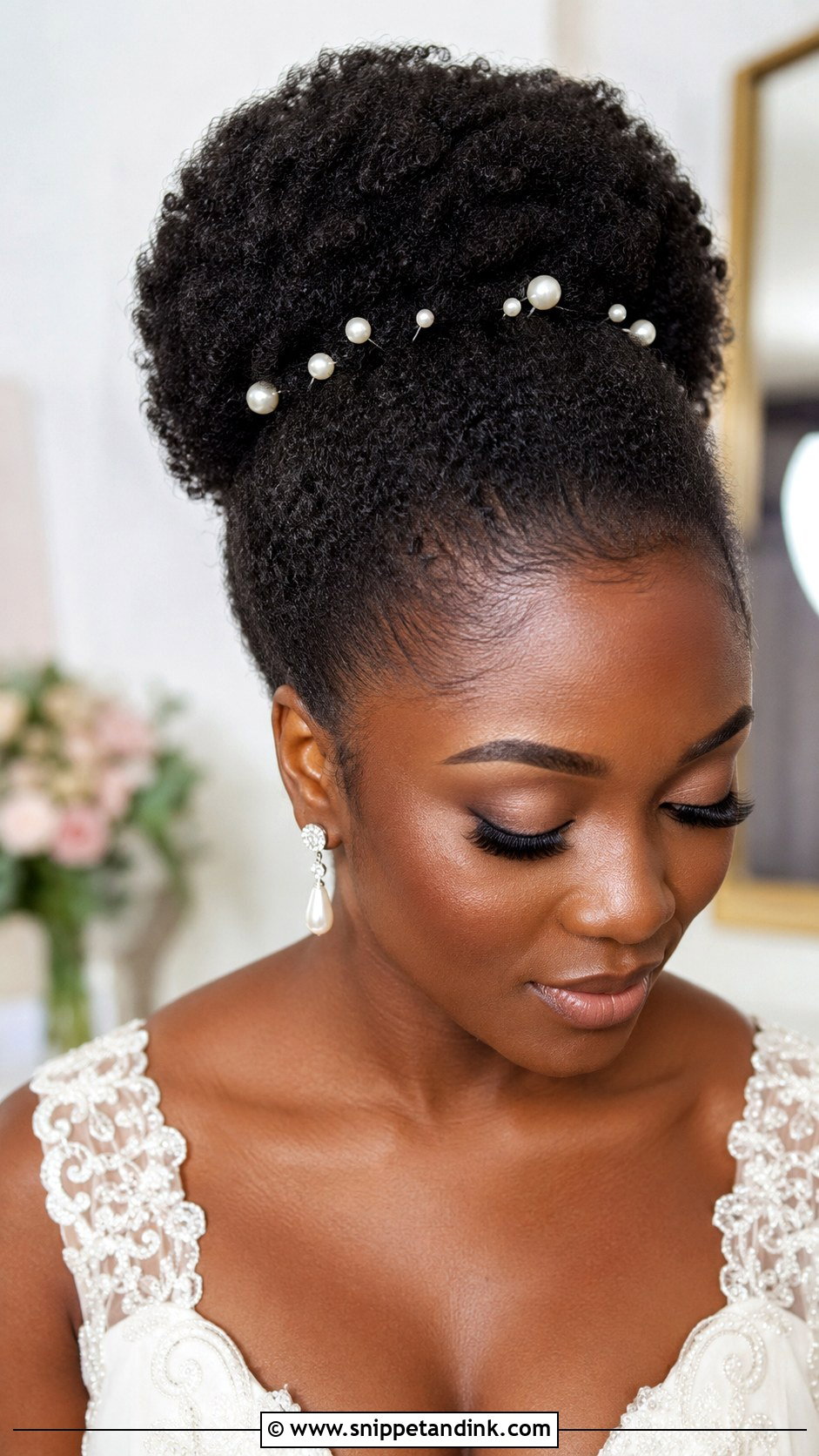
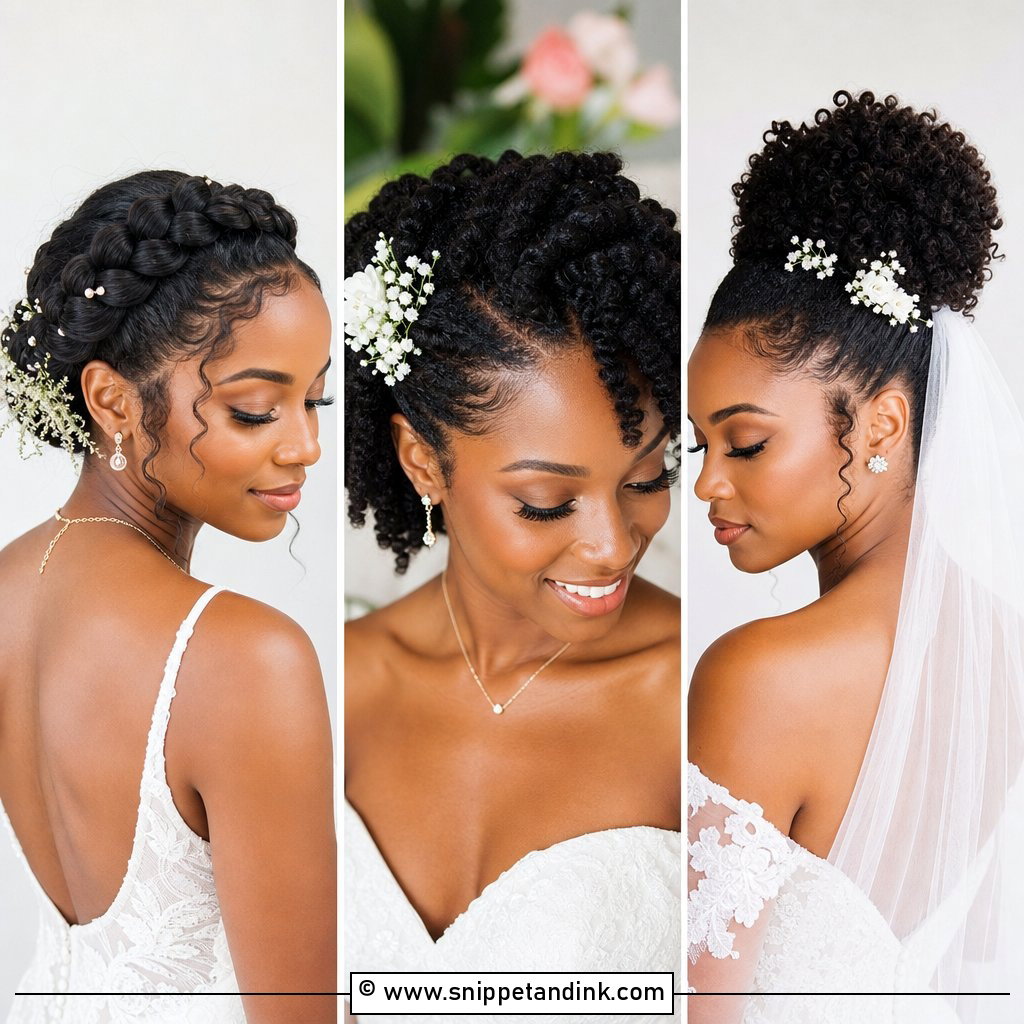
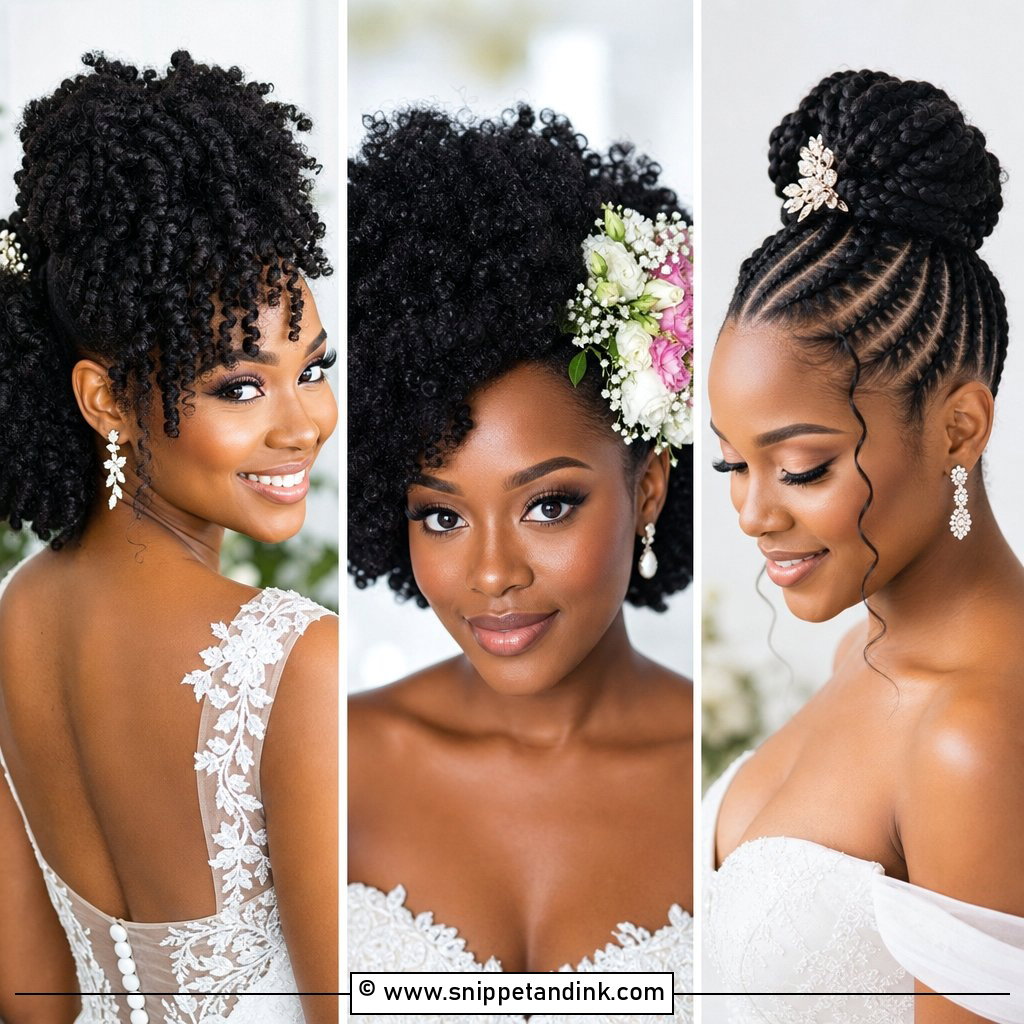
Height at the crown is the quickest way to look formal with 4C hair, and the puff bun gets you there with very little manipulation. I stretch the hair first, either banded overnight or blown out on low heat, because unstretched coils shrink so much that the puff ends up smaller and lumpier than you pictured. I gather it with a soft band, never a tight elastic, and hold the rounded shape with U-pins rather than bobby pins, which crush the texture. A slim headband or a few pearl pins is plenty. Keep the edges smooth but give them some slack; scraped-back edges hurt by hour six.
2. 4C Bridal Flat Twist Updo
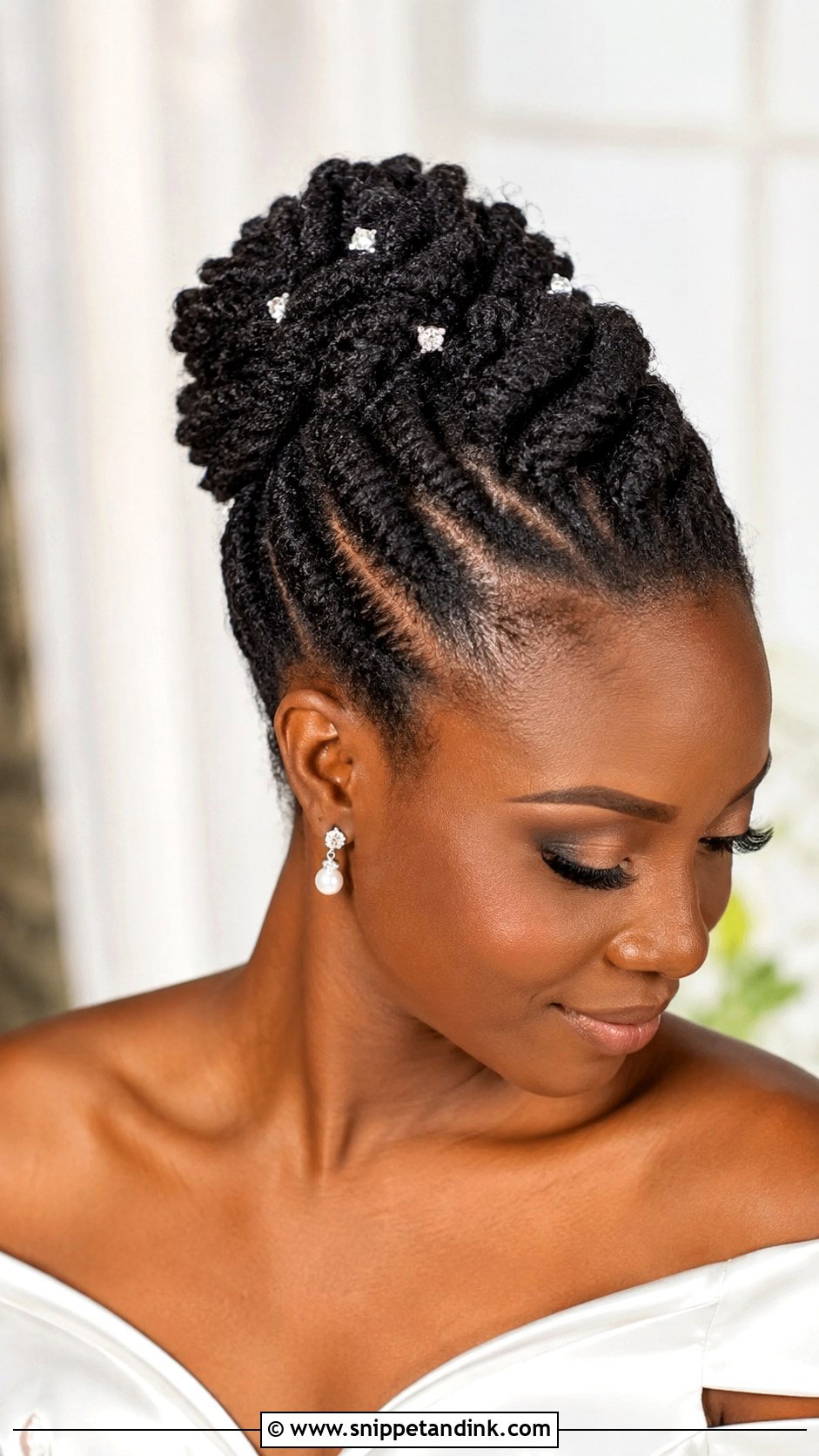
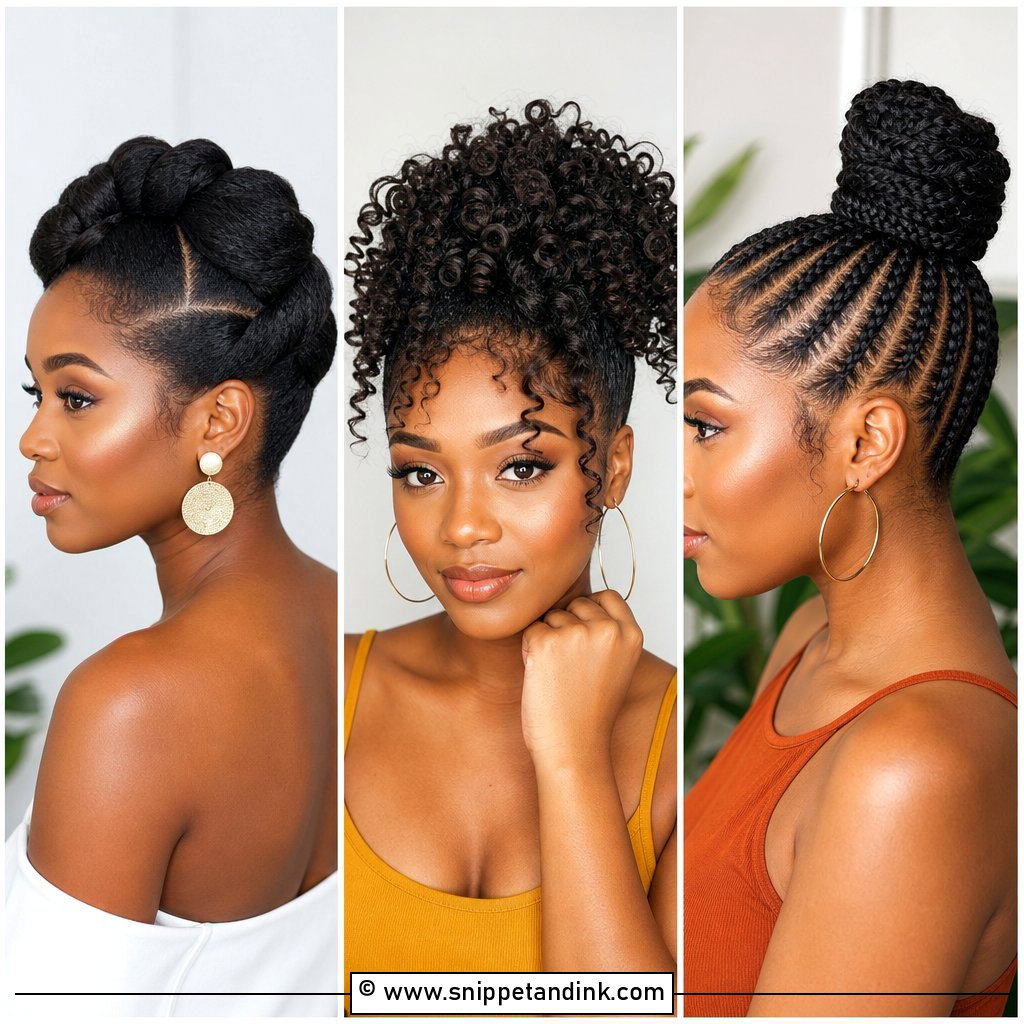
Flat twists give you structure at the scalp and softness at the back, which is why I reach for them when a bride has a long day and a big veil. I direct the twists according to where the veil comb will sit: upward for a crown placement, toward the nape for a low bun. Tucking the ends is the fiddly part. On 4C hair I roll each end around a finger, smooth it with a little cream and pin it under the neighbouring twist so nothing pokes out in close-ups. Crystal pins along a few twists catch the light; one on every twist looks busy.
3. 4C Bridal Two Strand Twist Updo
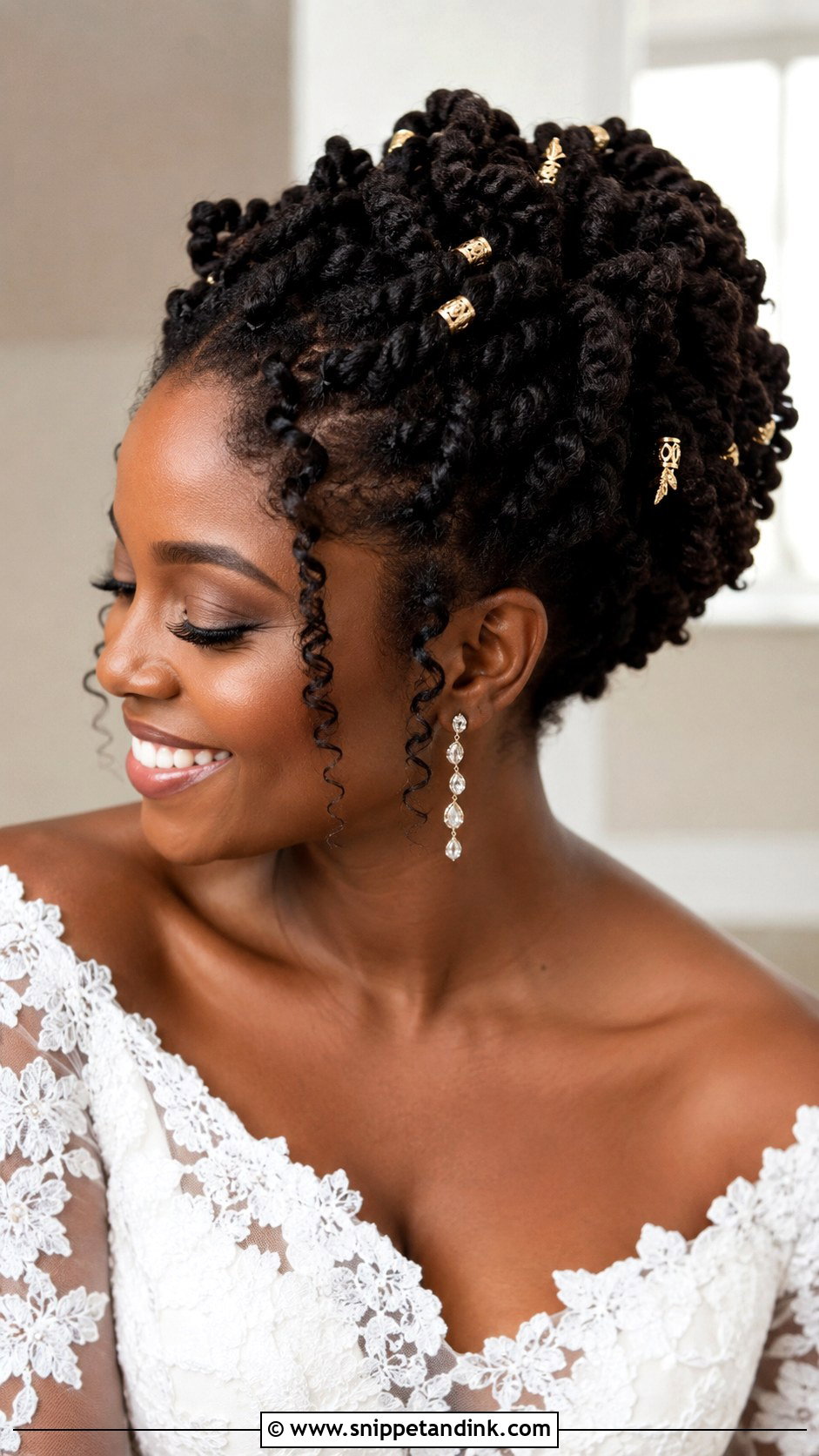
Two-strand twists are my favourite protective base for a nervous bride, because the real work happens days before the wedding instead of at seven in the morning. I install medium twists three to four days out so they settle and lose that freshly done stiffness, and on the day I only have to pin them into a crown or a rolled bun. Smaller twists take longer but show finer detail in close portraits. A gold cuff or one side comb is enough decoration. They also last into the honeymoon if you sleep in a satin bonnet.
4. 4C Bridal Twist Out
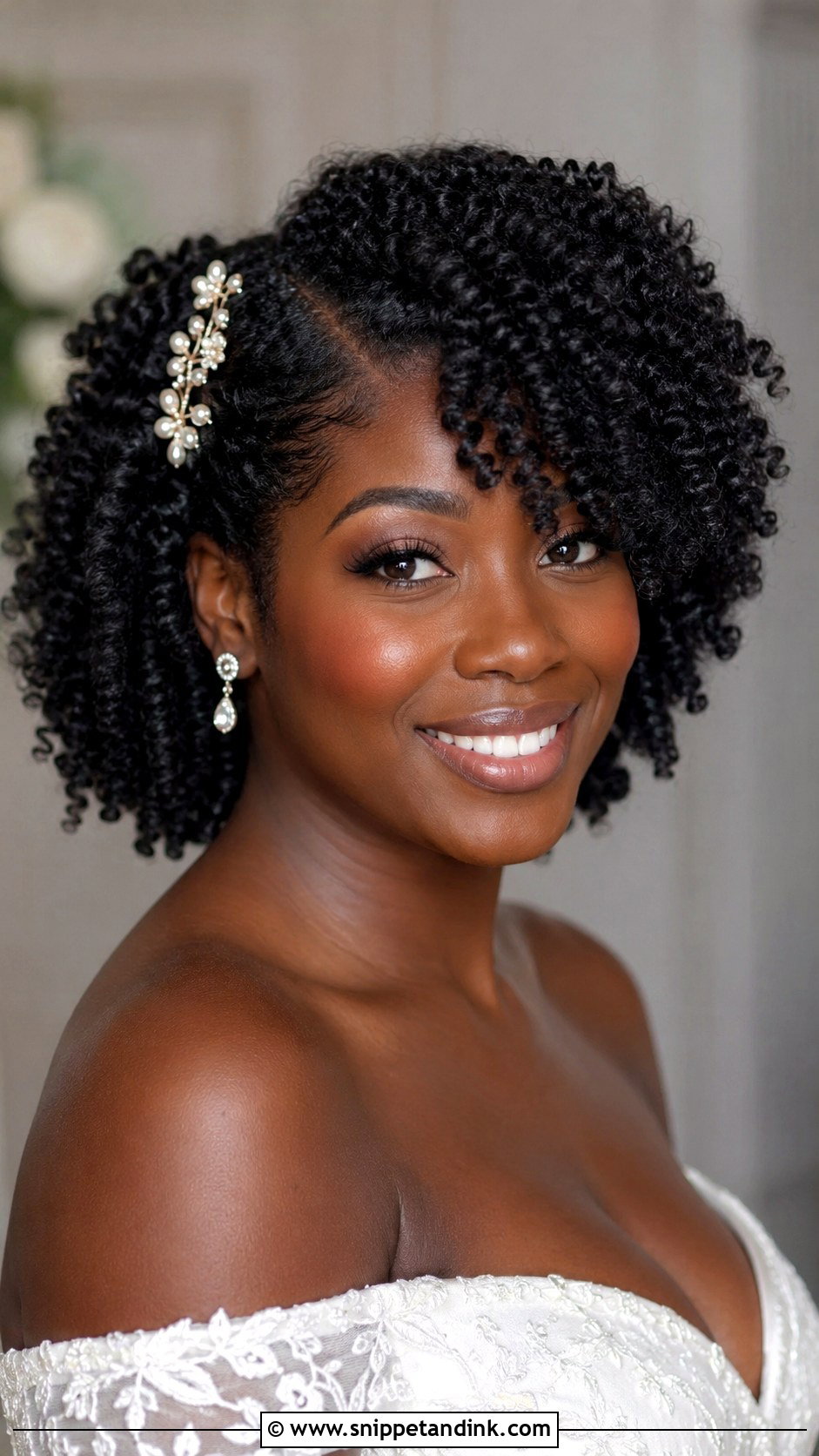
A twist-out lives or dies on how dry the set is before you take it down. If the twists are still damp at the centre, the coils frizz and shrink the moment you separate them, so I set mine at least a day ahead and check the thickest sections by feel. On the morning I unravel, separate gently and lift the roots with a pick only at the crown. A side part or one pinned-back temple makes it read formal. I’d steer you away from this one for an outdoor wedding in a humid month: definition softens as the afternoon goes on, and some brides love that while others really don’t.
5. 4C Bridal Afro
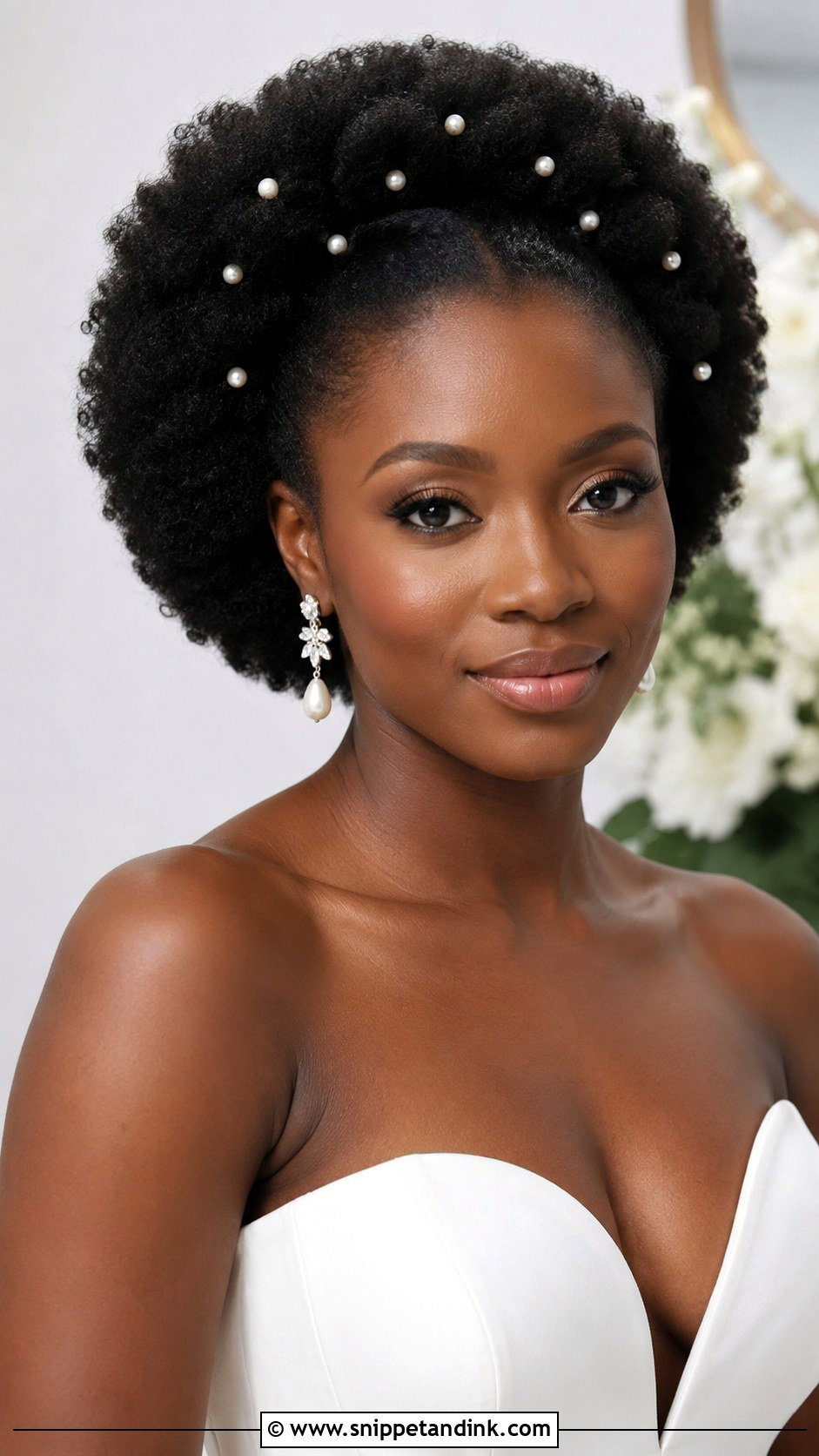
A rounded 4C bridal afro is the most honest look on this list, because your natural shape is the whole design. What makes it bridal rather than everyday is the shaping. I stretch the hair, pick it out from the roots in sections, then sculpt the outline with my palms and a little water-based moisture, checking the back in a hand mirror since the nape always ends up flatter. It balances off-shoulder and minimal gowns well. Skip heavy butters on the day; they drag the shape down within hours.
6. 4C Bridal Bantu Knot Updo
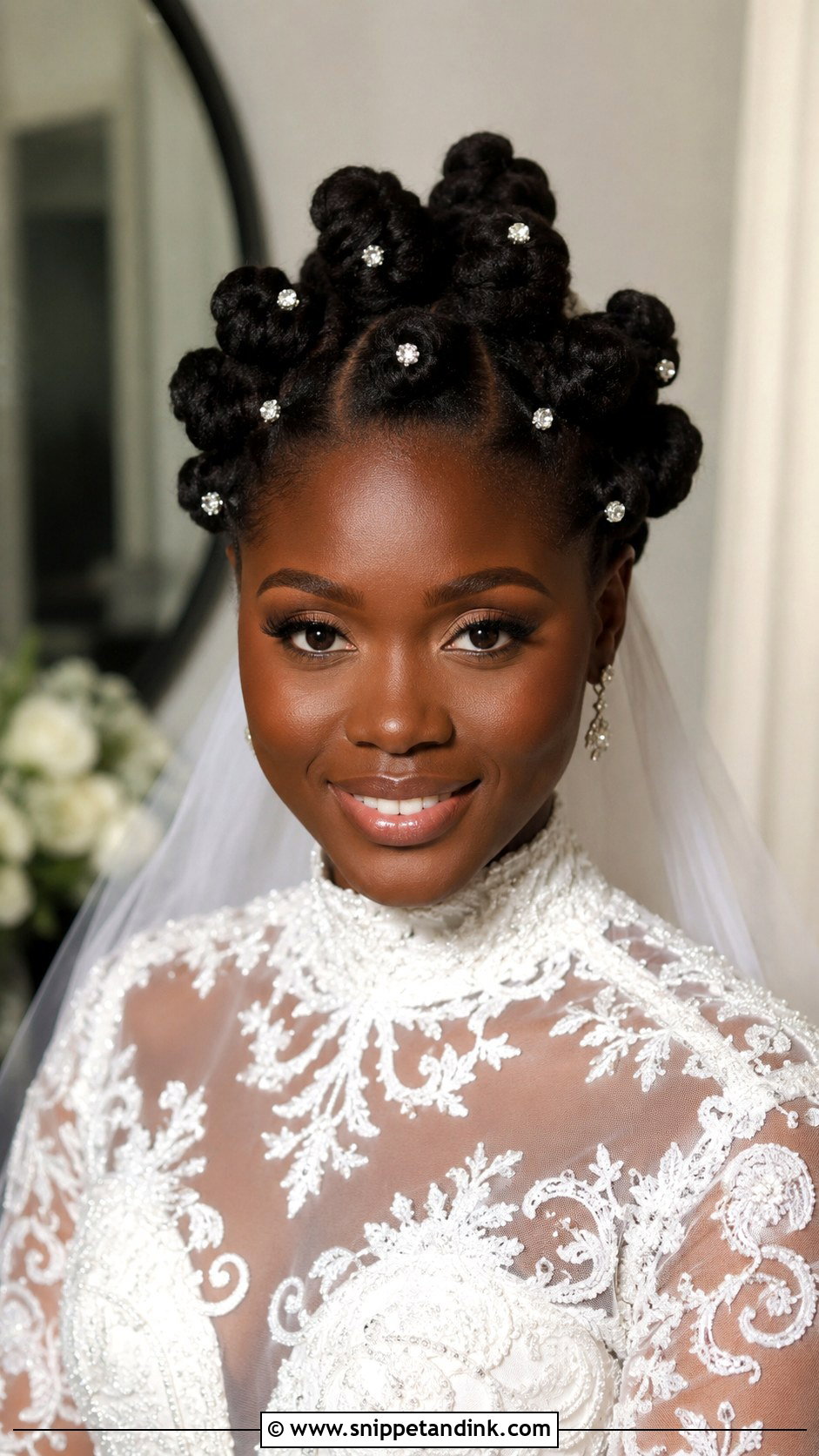
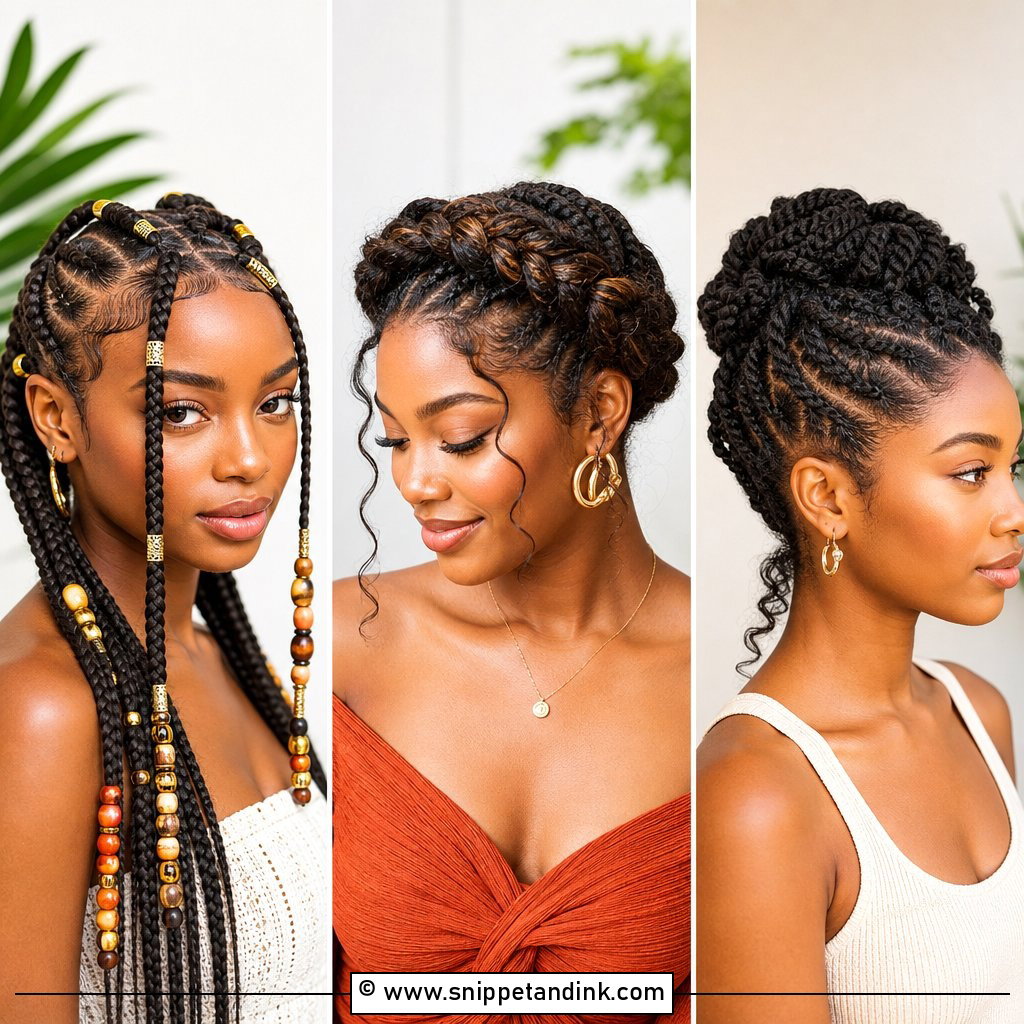
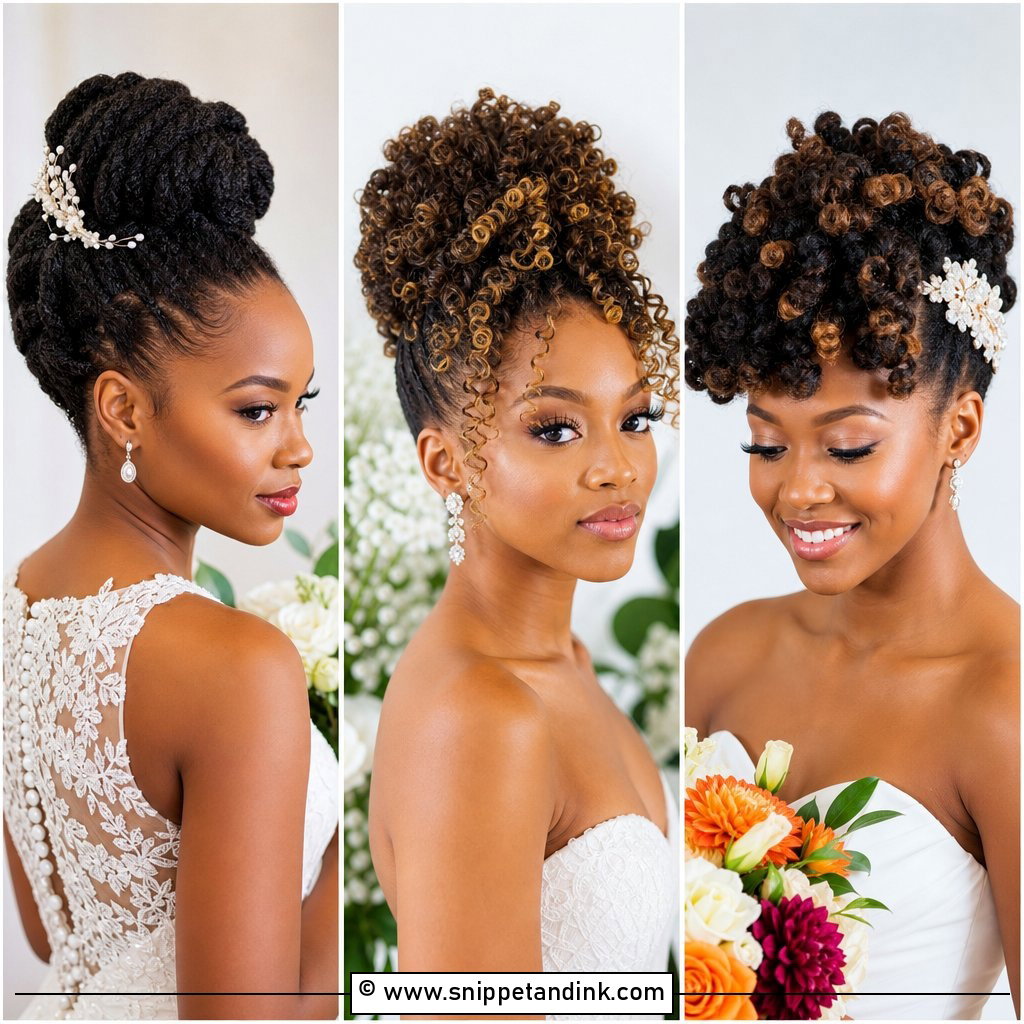
Bantu knots are sculpture, and they carry real cultural weight, so I treat their placement as a design decision rather than a grid. On 4C hair the knots hold firmly because the texture grips itself, and I rarely need more than a pin or two per knot. For a softer finish I leave a couple of short coiled tendrils at the hairline or tuck small pins between the knots. One thing I always check: knots at the back of the head get pressed flat against car seats and high-backed chairs, so I keep the rear ones smaller and lower in profile.
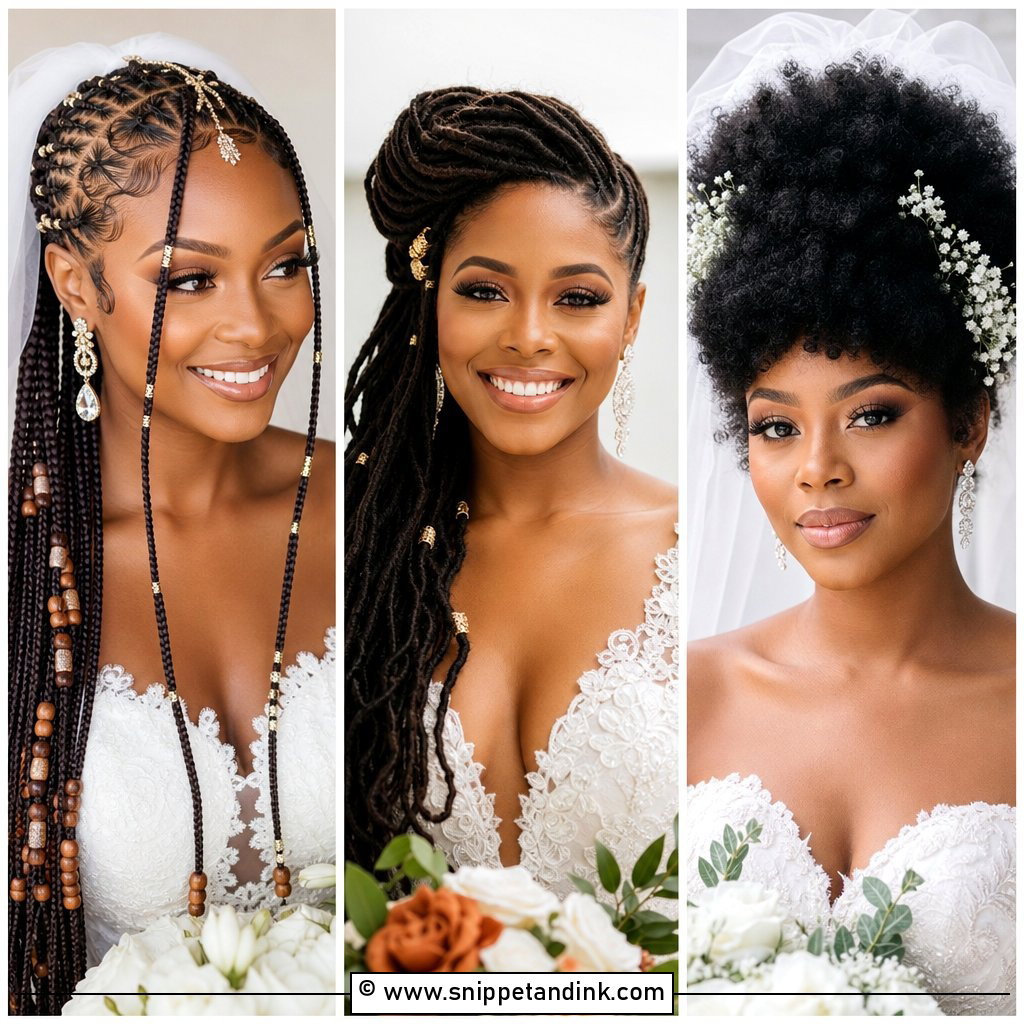
7. 4C Bridal Braided Crown
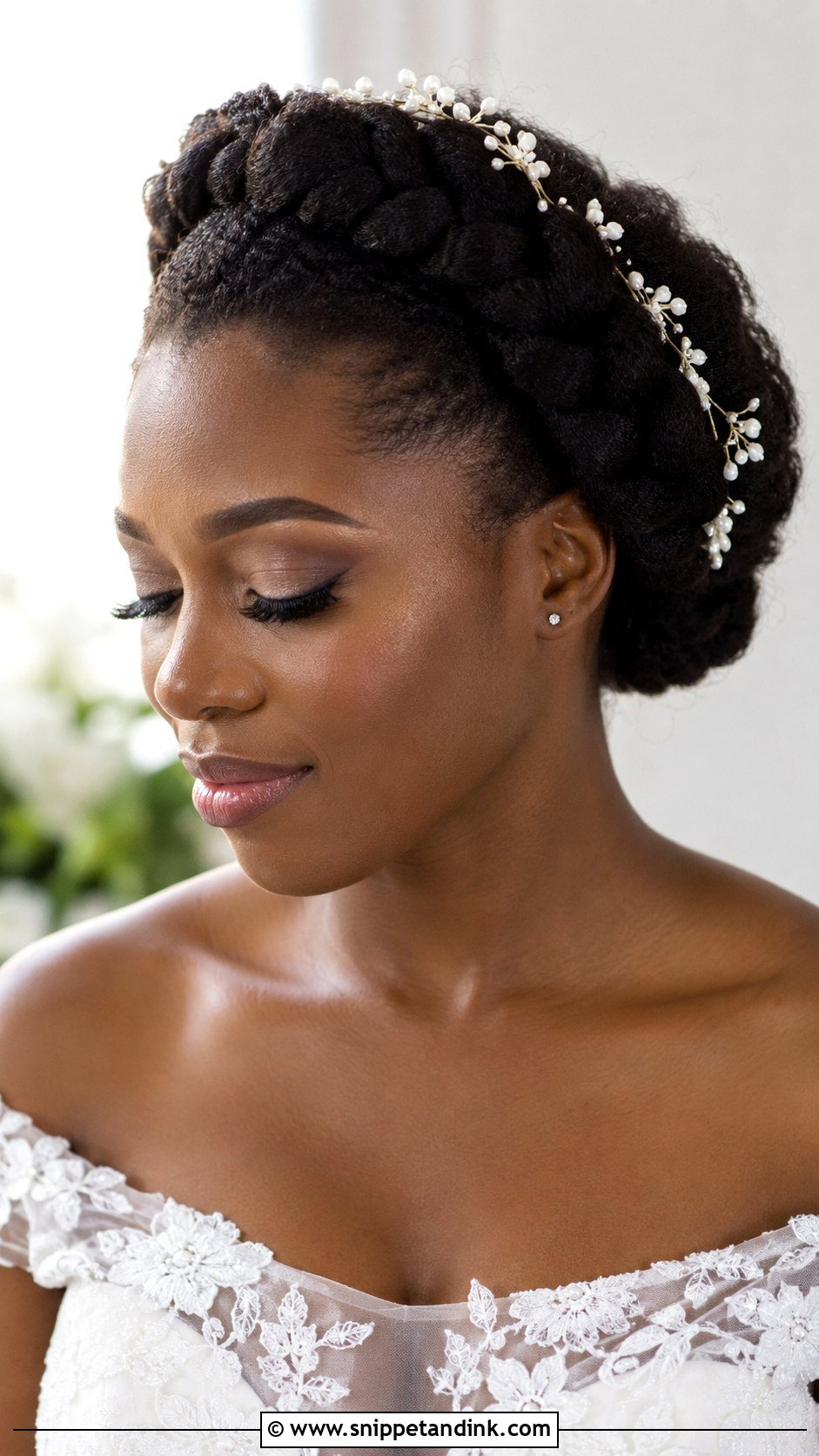
A braided crown frames the face and gives the veil comb something solid to grip. I usually braid it with your own hair plus a little added kinky-textured hair, because natural 4C length often runs out before the braid meets itself at the nape, and textured hair blends where silky extensions would shine. The join at the back is where crowns fail, so I overlap the ends and pin them flat before anything else goes in. Small flowers or pearls along the braid are optional; with a lace neckline I’d keep it bare.
8. 4C Bridal Cornrow Bun
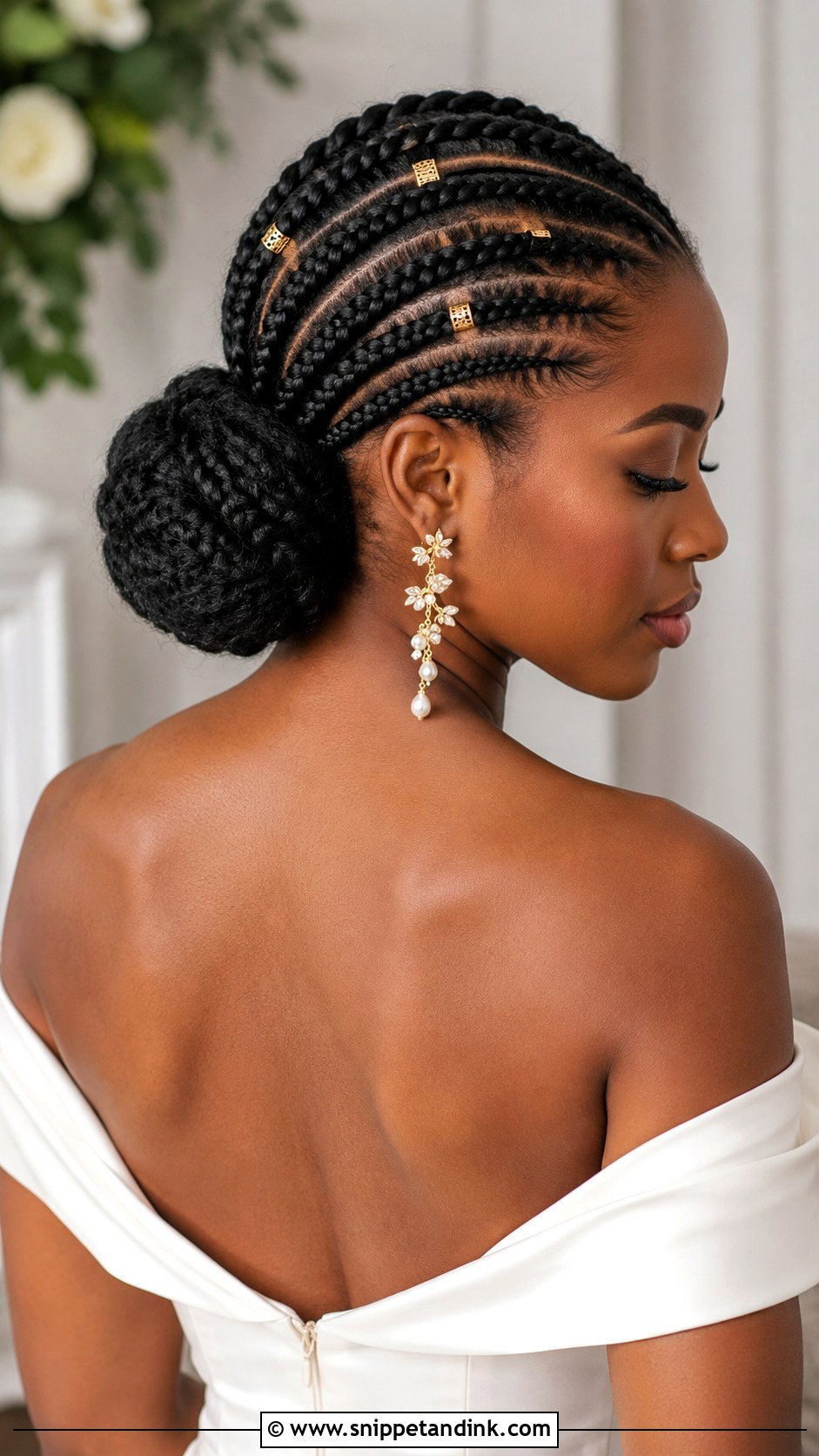
A 4C bridal cornrow bun is what I suggest for hot-weather weddings, because the braids keep hair off the neck and nothing can unravel. The rows can run straight back, curve or sweep to one side. I plan the braid pattern after I know where the bun sits, since a low bun under a veil and a high bun under a tiara need different braid angles. I braid with moderate tension only. Tight cornrows look neat at breakfast and give you a headache by dinner. Gold cuffs or a thin bridal vine will show off the pattern.
9. 4C Bridal Low Bun
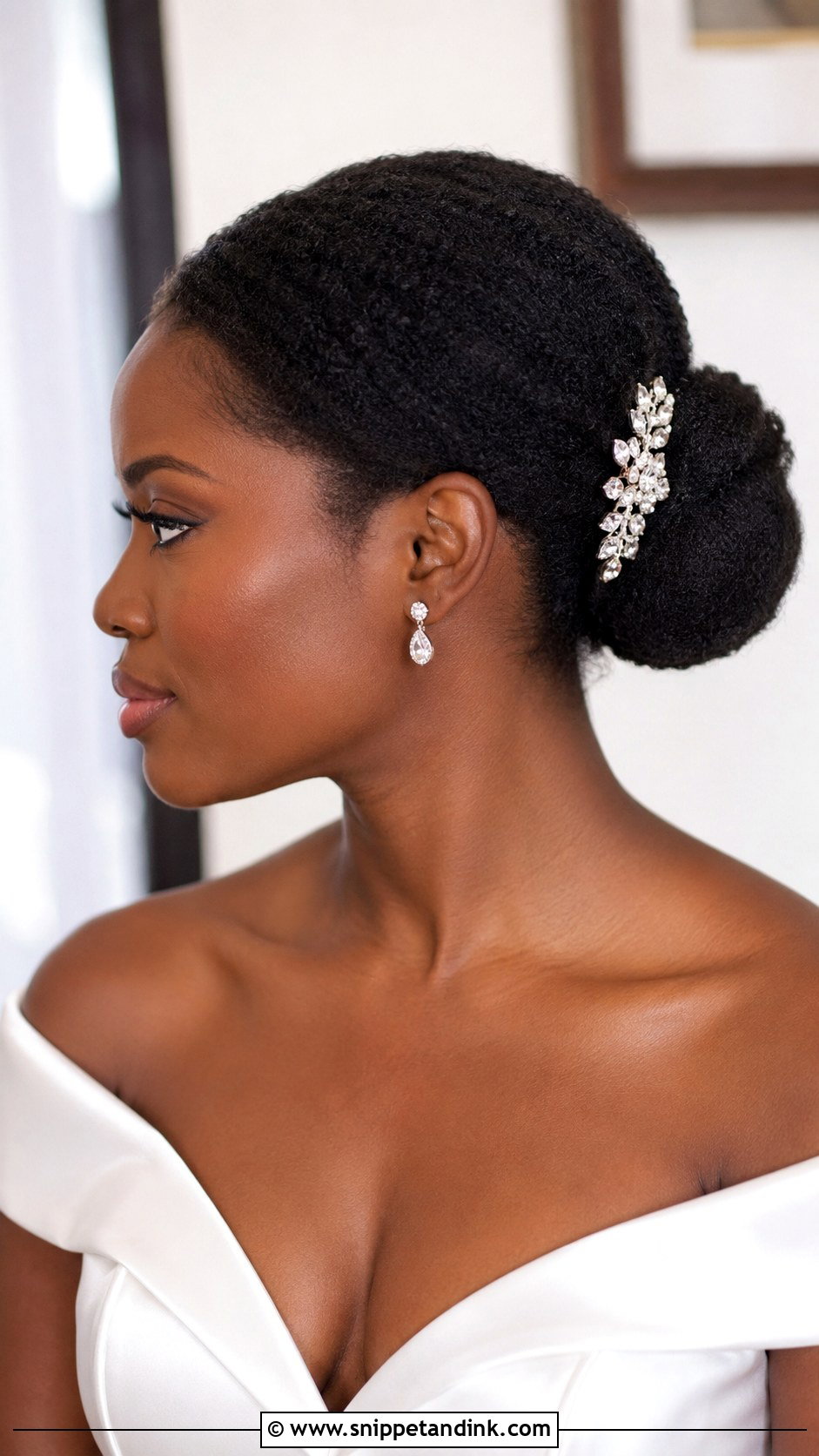
A low bun slips under a cathedral veil, shows off an open back and leaves the top of the head clear for a comb. I stretch, twist or braid the hair first so the bun stays compact; loose 4C hair gathered straight into a bun swells as it takes on moisture through the day. It doesn’t need to be glossy. I prefer to leave visible texture in the bun, because over-smoothed coils start to fuzz by the reception and end up looking messier than natural texture would have.
10. 4C Bridal Side Swept Updo
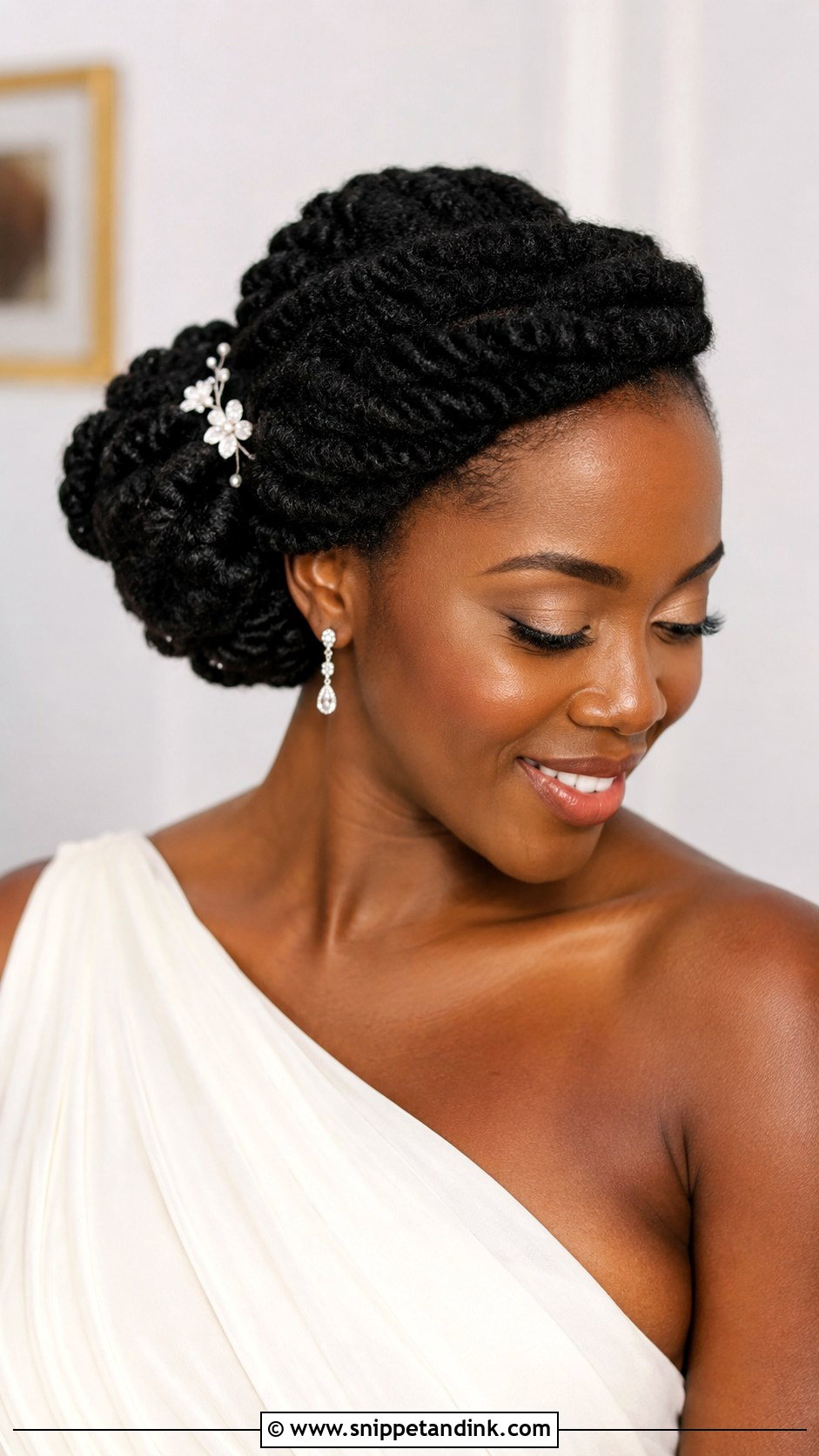
Sweeping everything to one side puts the focus on the cheekbone, the earring and the neckline, so I plan this one around the dress. One-shoulder and asymmetric gowns pair well, with the hair falling toward the bare shoulder. I flat twist the lighter side first so it lies close to the head, then build the coil cluster on the fuller side and anchor it with crossed pins. A side-swept style is front-heavy, so I check it from behind before you leave the chair. Put any floral pin or jeweled comb on the fuller side, never the twisted side.
11. 4C Bridal Halo Twist
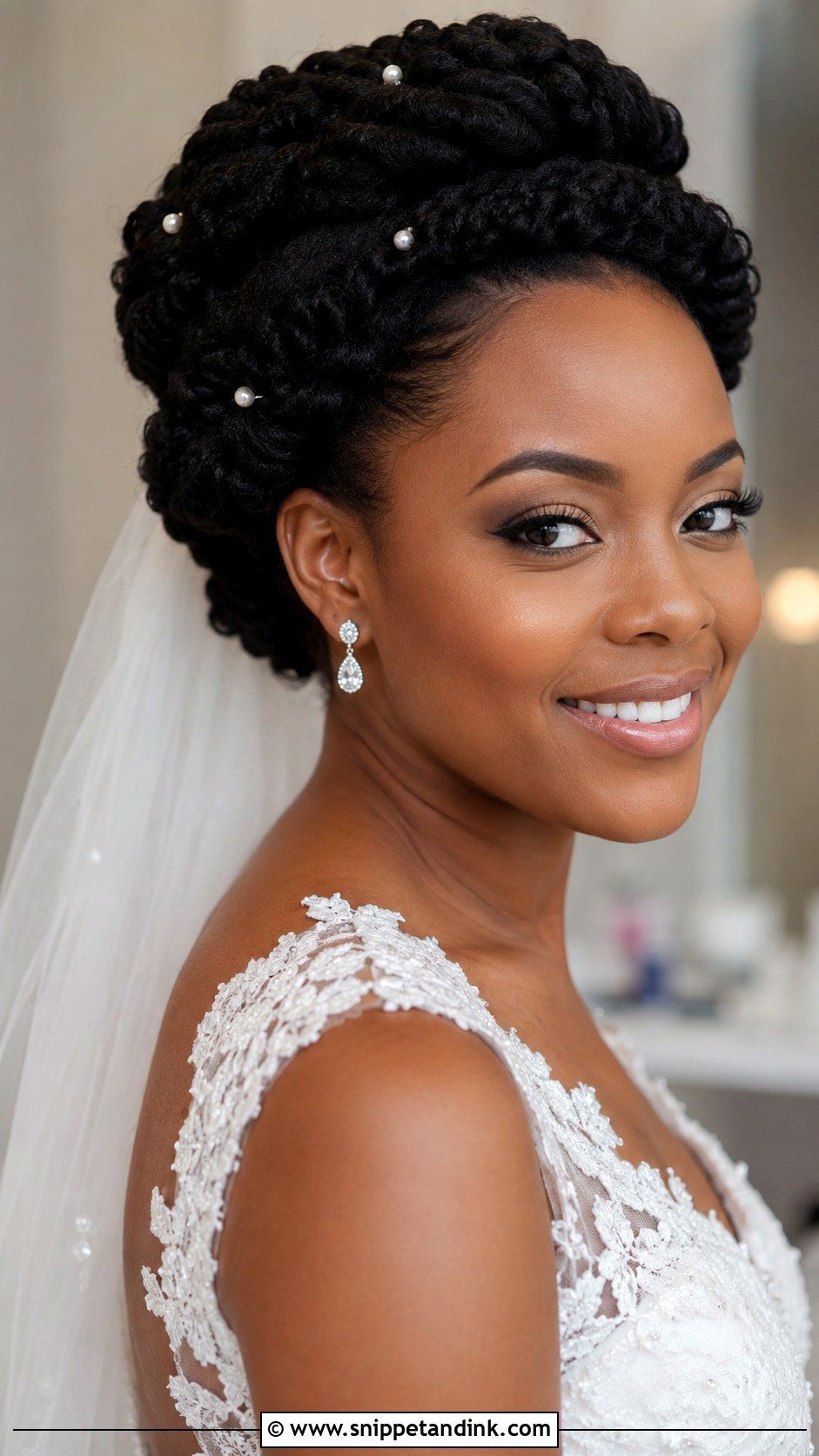
A 4C bridal halo twist gives you a crown shape in a fraction of the time a full braid takes. Two large rope or flat twists wrap around the head and meet at the back, where I tuck the ends or coil them into a small bun. Stretched hair makes the fullest, smoothest twists; on unstretched hair the twist looks thin and the scalp shows through. I slide the veil comb under the back of the twist. Of all twenty, it’s one of the most comfortable to wear for twelve hours.
12. 4C Bridal Mini Twists
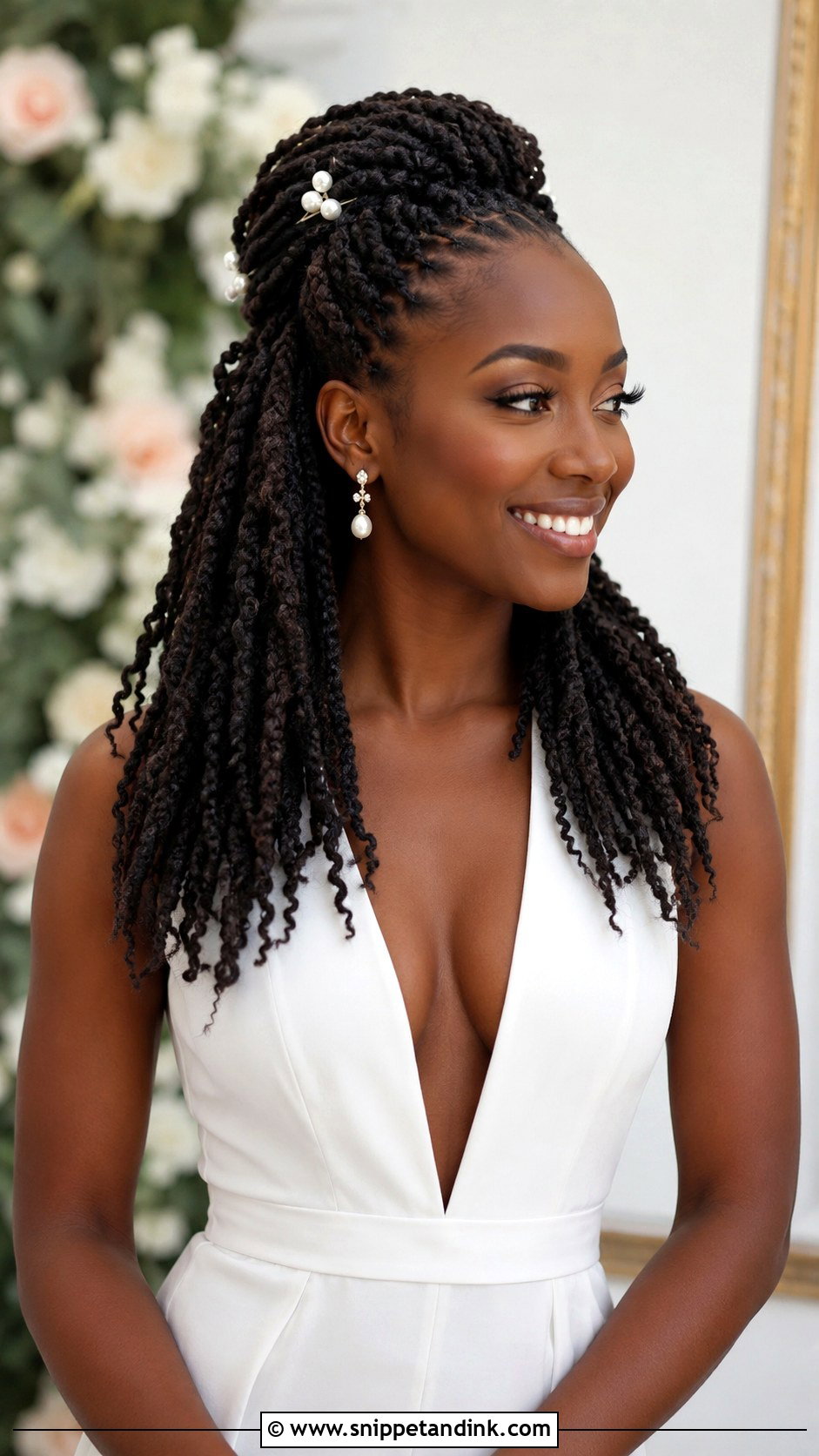
Mini twists need a long installation session, often most of a day, but they buy you a calm wedding morning. Because each twist is small, you can wear them down for the ceremony and pinned up for the reception without redoing anything. I’d plan the install about a week out so they lose their newness, and refresh them with a light mist rather than a full wash. A few pearls or gold rings slipped onto scattered twists make them formal. Overdo the rings and the look drifts toward festival rather than bridal.
13. 4C Bridal Tuck And Roll Updo
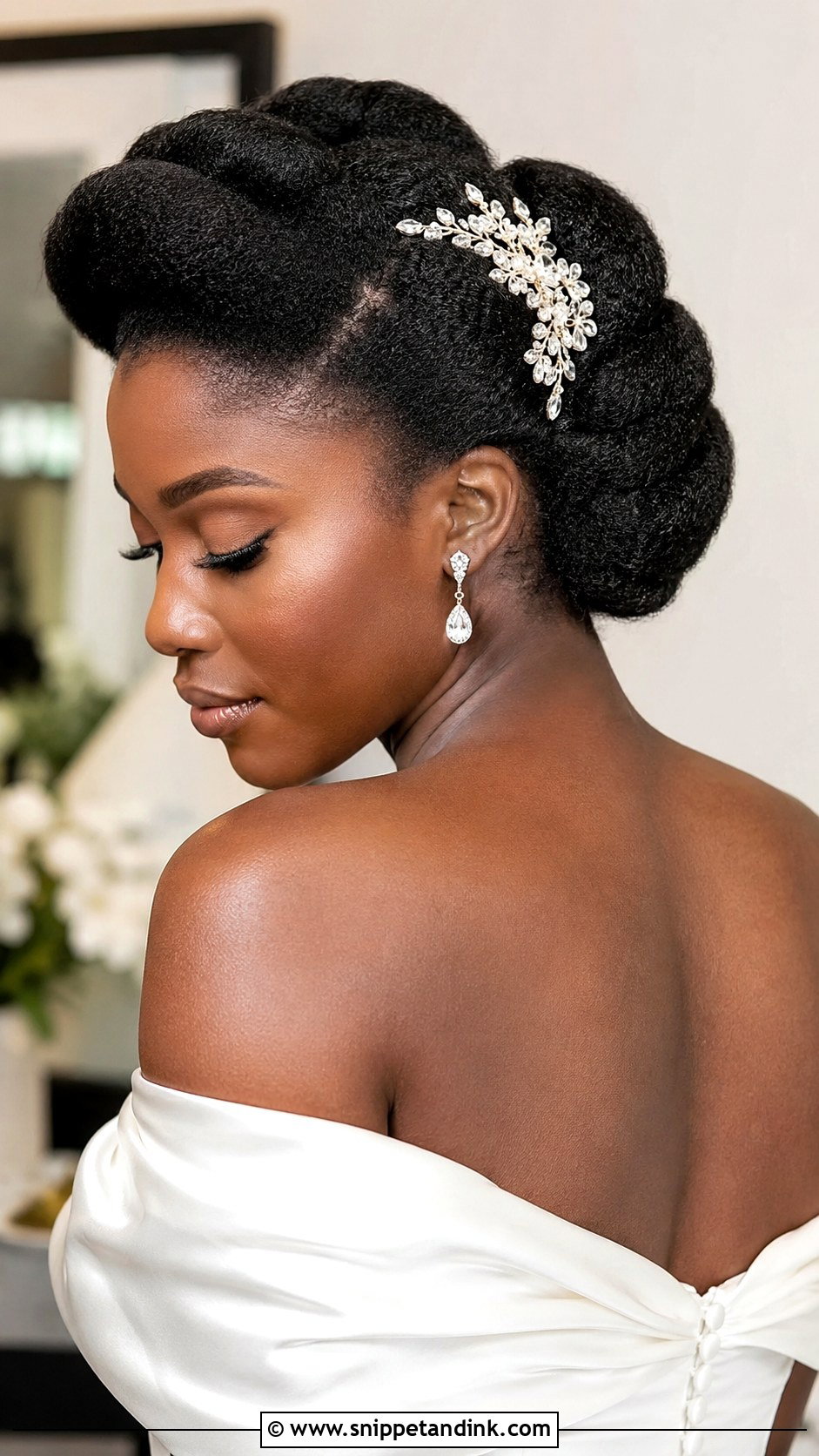
This is the vintage-feeling option, and on 4C hair it needs no heat straightening at all. I stretch the hair, roll it inward in sections around my fingers and pin each roll before starting the next, working from one side across so the curve stays continuous. The rolls can sit at the nape, at the crown or on a diagonal. Fine pins vanish into dense coils, which makes the finish look neater than the same style on straighter hair. A single jeweled comb on one side is all the sparkle it needs.
14. 4C Bridal Mohawk Updo
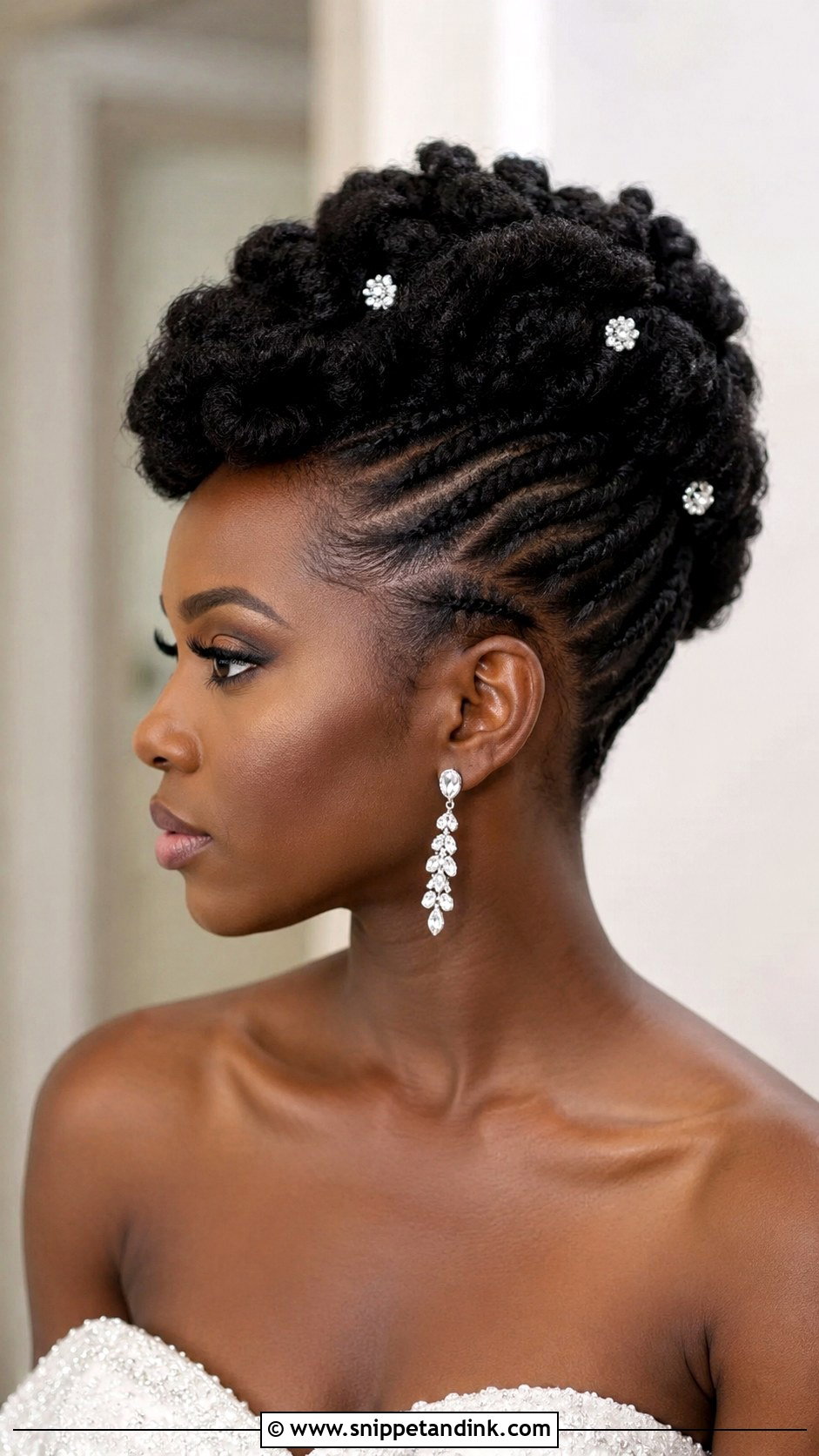
A mohawk updo is the boldest shape here, and it suits a bride who already loves statement hair rather than one being talked into it. I flat twist or cornrow the sides upward, then shape the centre line into curls, knots or a run of small puffs. It lengthens the face, which helps rounder faces in profile shots, and next to a strapless gown or dramatic earrings it looks deliberate. The catch is the veil. The only placement that works is low behind the centre line, so test that with your actual veil before you commit.
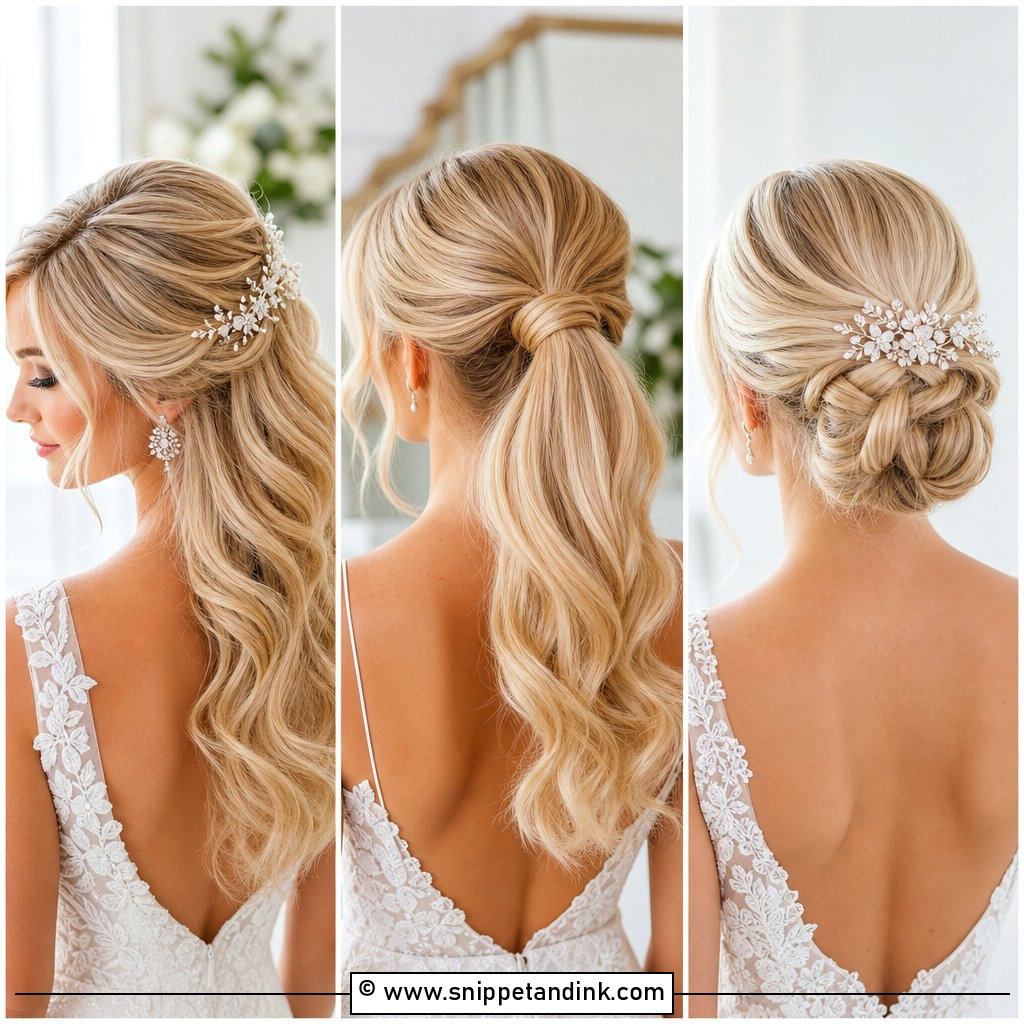
15. 4C Bridal Finger Coil Updo
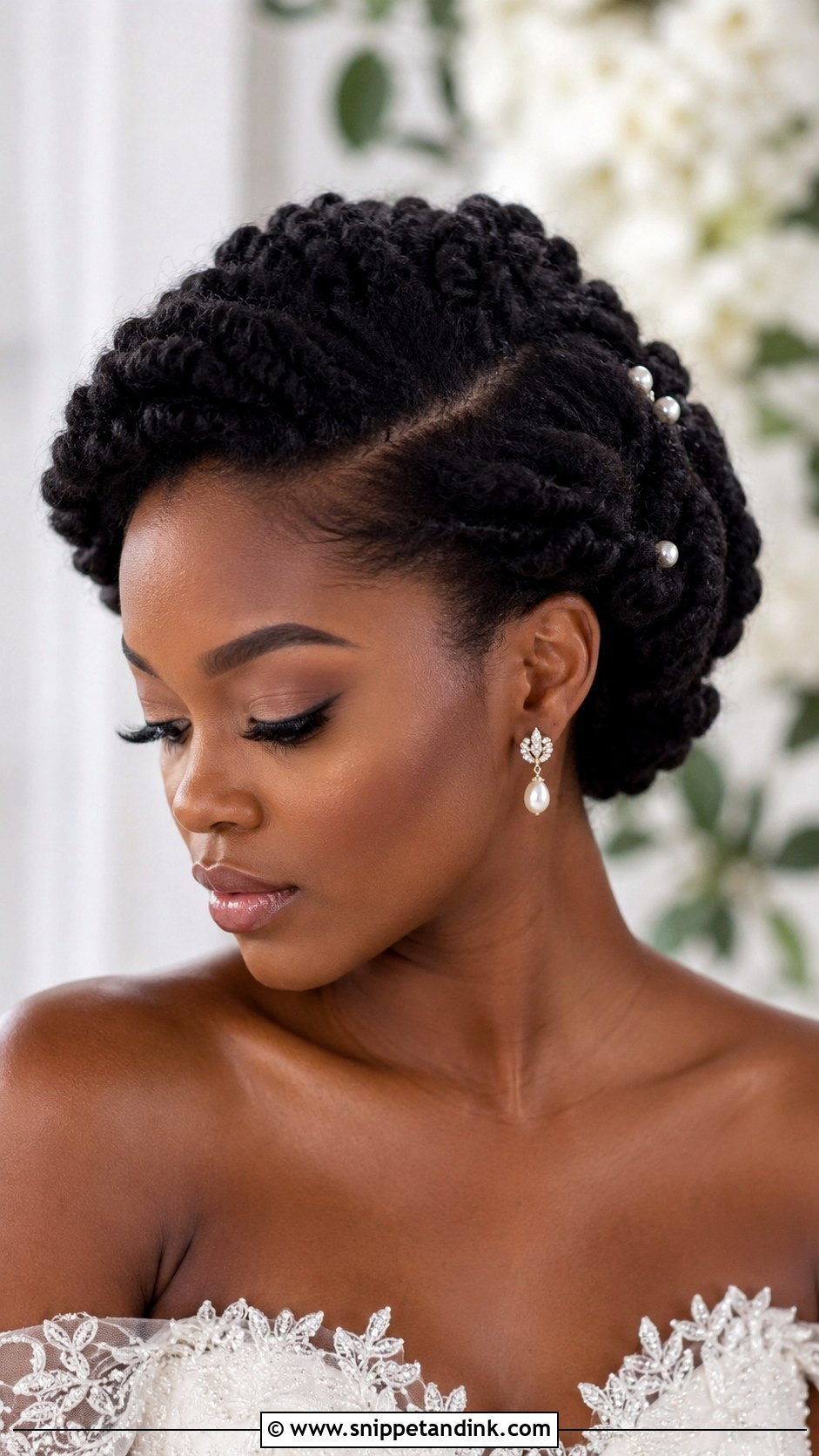
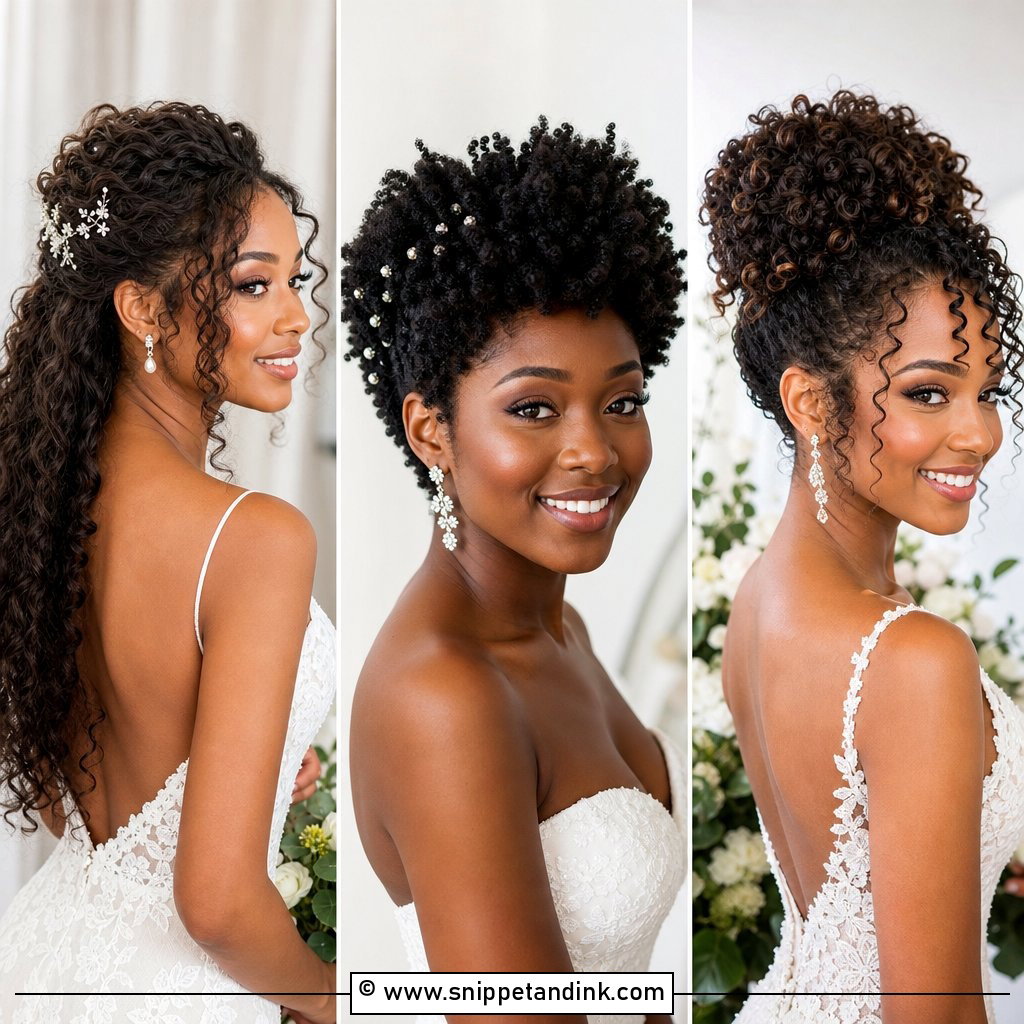
Finger coils turn tight 4C texture into defined spirals, and they suit short and medium lengths because the coils give structure where there isn’t enough length to roll. I set them on damp hair with a gel that holds without flaking, then let them dry completely, ideally overnight. Touching them before they’re dry is the most common way a set gets ruined. On the day they can be gathered into a bun, a pinned crown or a half-up shape, and a side part or pinned temple adds formality. Keep accessories light; the coil pattern is the detail.
16. 4C Bridal Faux Loc Updo
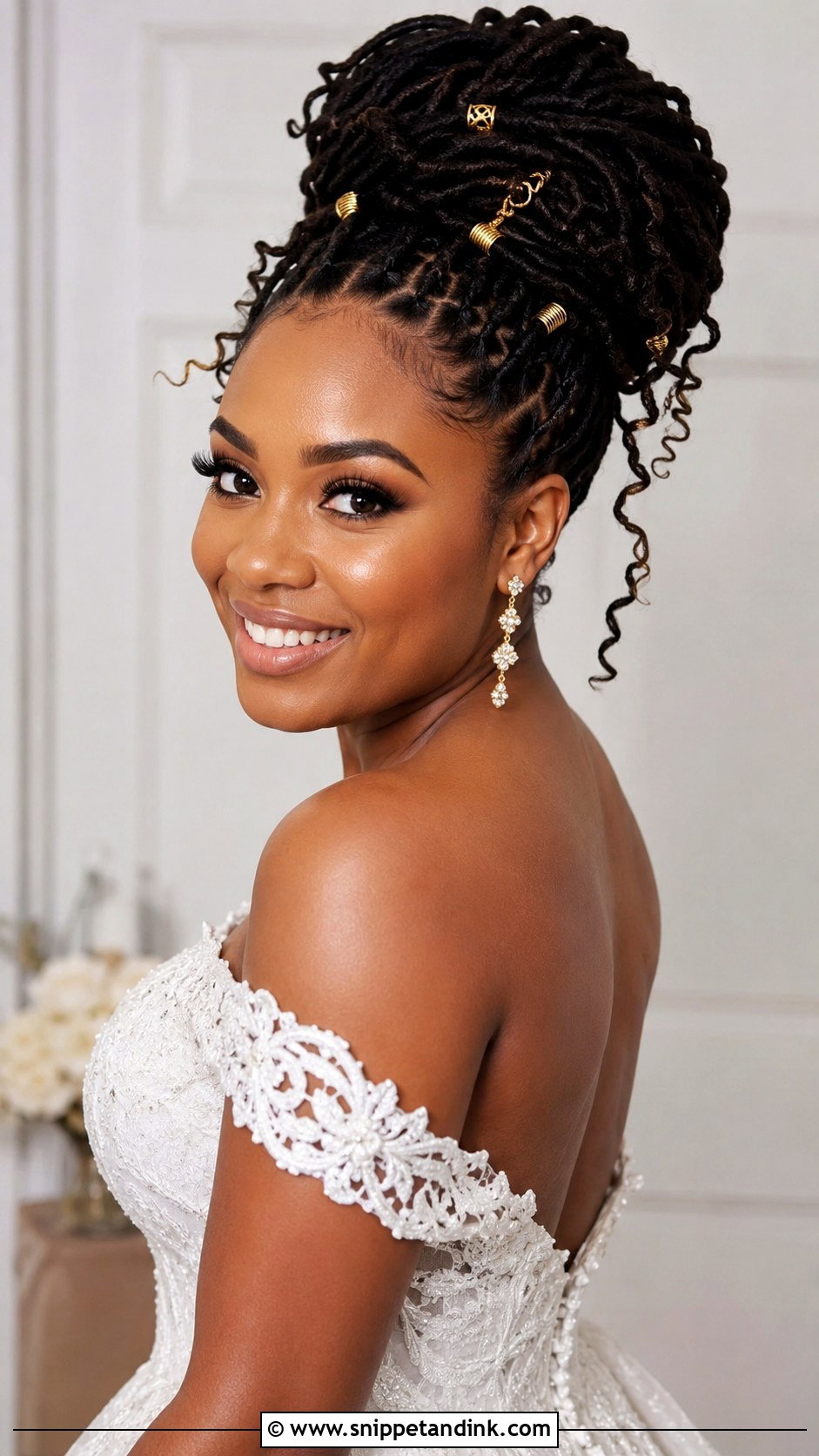
A 4C bridal faux loc updo gives you length and volume for the whole wedding week while your own hair stays tucked away. Locs are heavy, so I choose the shape by how much weight your edges can carry: a low chignon spreads it out, while a high bun pulls on the hairline all day. I’d install them several days before the wedding, since brand-new locs feel tight and stiff at the root. A few pearl pins or gold cuffs do the decorating, and the style still looks fresh in honeymoon photos.
17. 4C Bridal Natural Hair With Veil
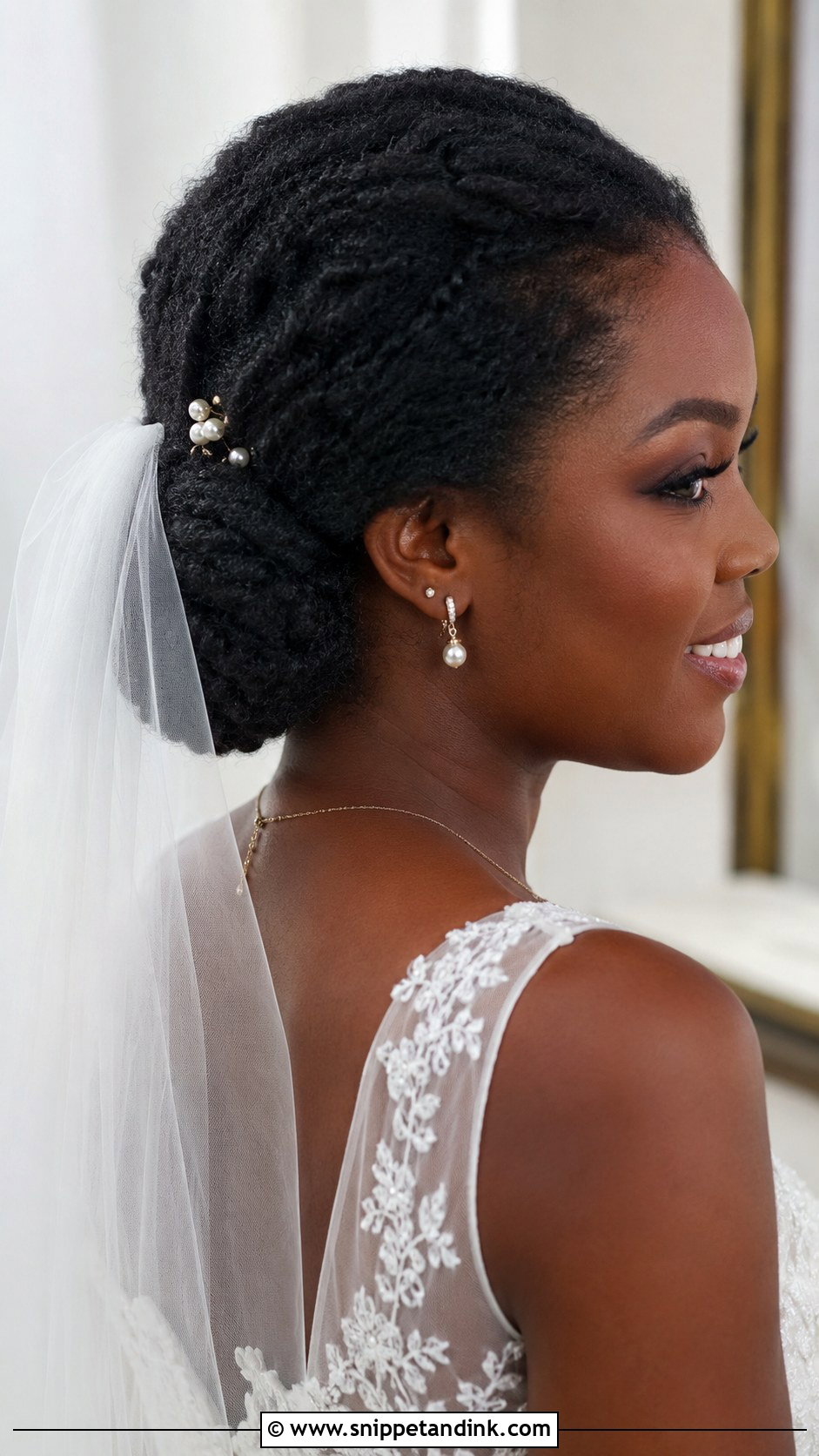
Wearing a veil on 4C hair is more a planning job than a styling one. The comb needs a secure anchor such as a bun, twist crown, cornrow base or pinned updo; pushed straight into loose coils, it snags and tugs at fragile edges. I usually braid or twist a small hidden section exactly where the comb will go and pin through that. If the veil comes off for the reception, the style underneath must look finished on its own, which is why a high puff, low bun, braided crown or twist updo is the safest base. The veil should frame your texture, not cover it.
18. 4C Bridal Natural Hair With Flowers
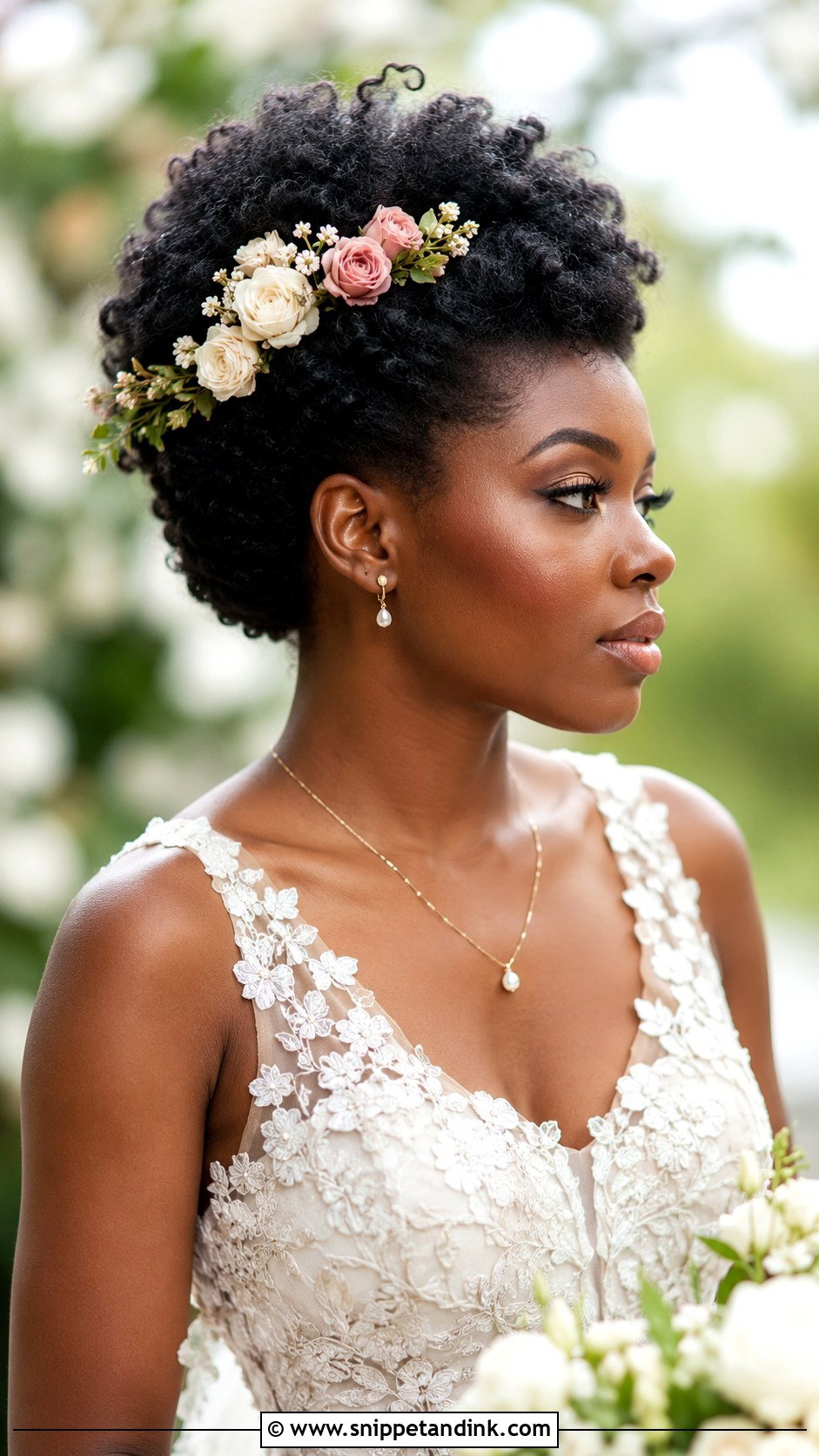
Pale flowers show up clearly against dark coils, especially white, cream and blush. Small blooms sit best; large heads wobble in a puff and slide out. Fresh flowers wilt quickly from scalp heat, so I ask the florist to condition and wire stems meant for hair, and I place them last. Silk flowers are the safer call for long outdoor days because they look the same at midnight. I push stems into a twist, braid or bun rather than an open puff, which gives them nothing to grip.
19. 4C Bridal Short Natural Hair
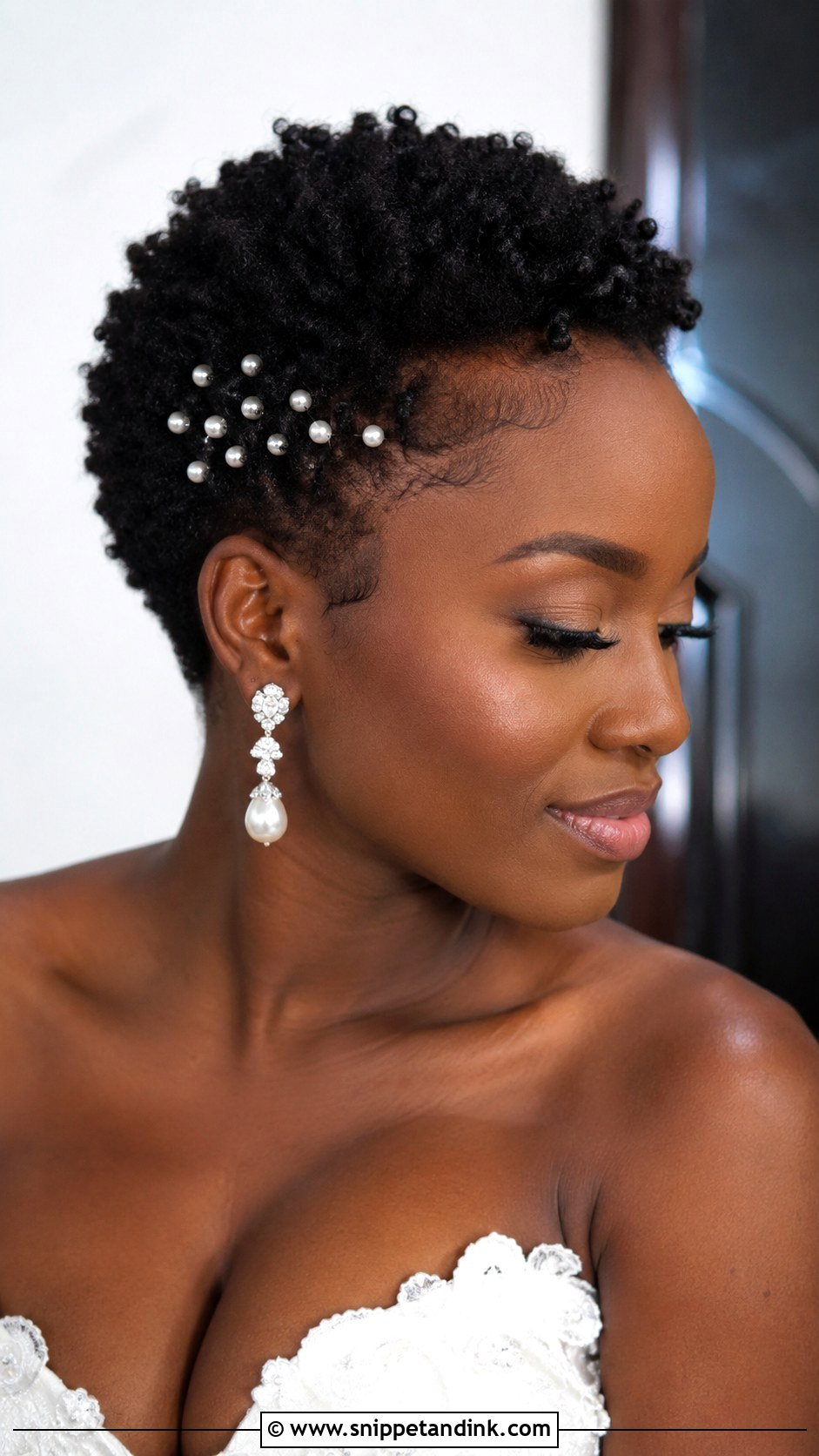
Short 4C hair can be every bit as formal as a long updo, and you don’t need extensions to get there. A tapered cut, a teeny afro, finger coils, mini twists or sponge coils all read bridal once the shape is crisp. I’d get the cut a week or two before the wedding so it has time to settle, then define the coils the night before. The bridal part comes from clean edges and one well-matched accessory, a slim headband or a single pearl pin, rather than piling on several.
20. 4C Bridal Natural Hair With Tiara
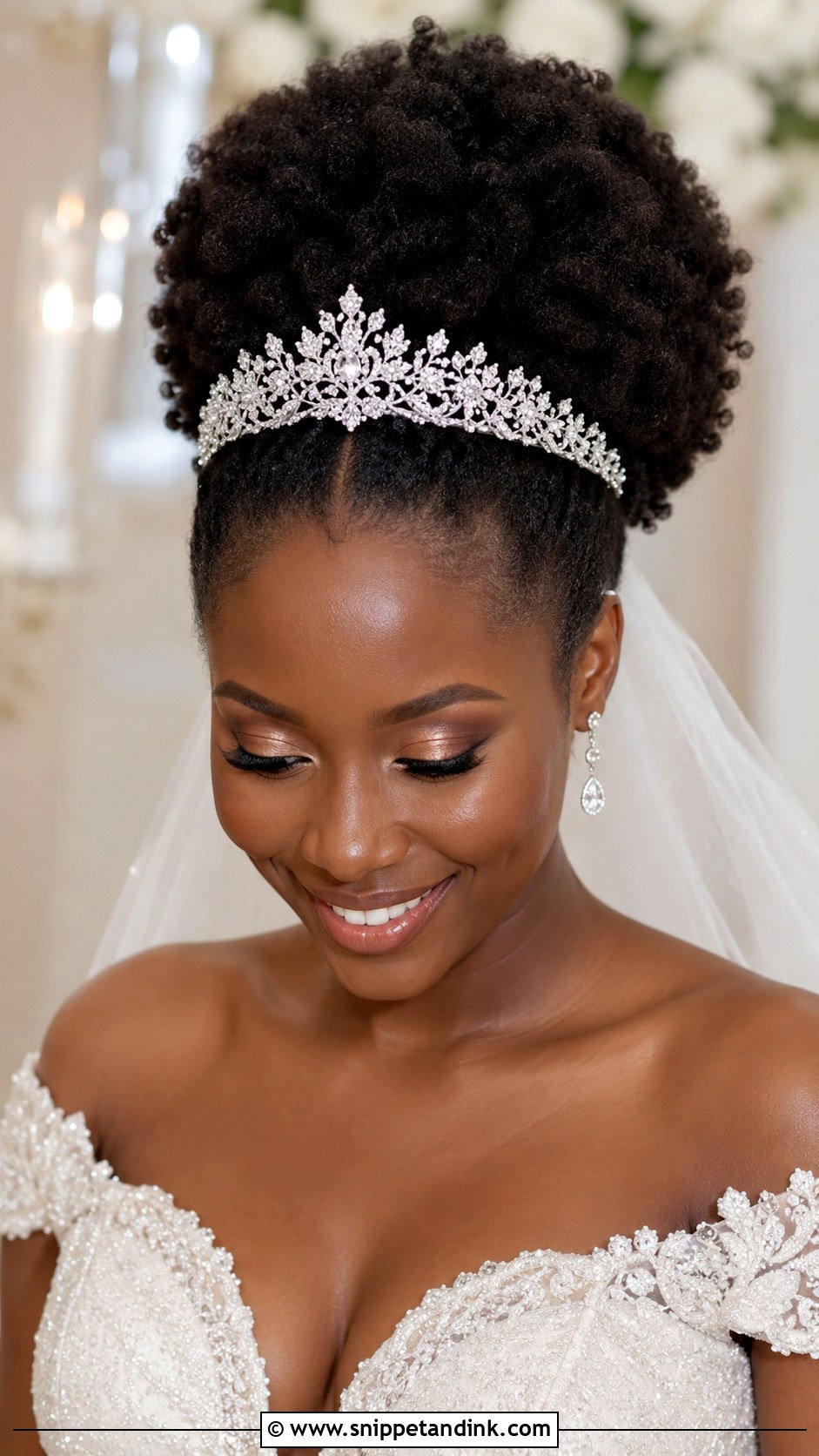
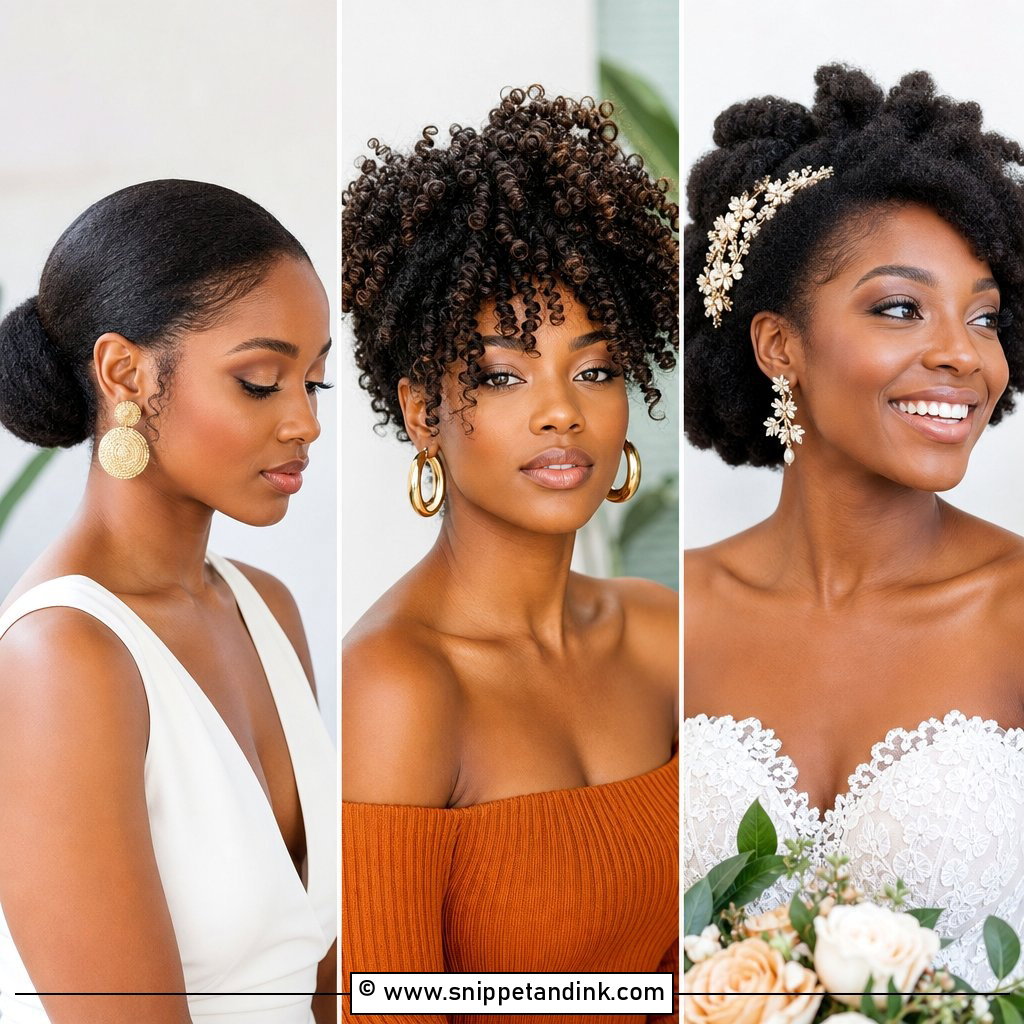
A tiara needs a base to sit on. Without one it presses into the scalp and flattens the hair around it. I build a small twisted or pinned ridge where the band will rest, then thread pins through the tiara’s loops into that base. High puffs, rounded afros, low buns, braided crowns and flat twist updos all carry a tiara well. If the band digs in at the trial, it will feel far worse six hours into the wedding, so speak up. Keep the earrings modest so the two pieces aren’t competing.
Dew Points, Dance Floors and the Way 4C Styles Change by Evening
Moisture in the air changes coily styles more than anything else over a wedding day. Stretched hair pulls back toward its natural length as it absorbs humidity and sweat, so a sleek low bun can look fuller by the reception and a twist-out can lose a surprising amount of length. Neither is a disaster, but you should know which way your style will move.
Styles that stay put
Cornrow buns, flat twist updos, Bantu knots and braided crowns barely change, because the hair is already locked into its pattern. For an outdoor summer wedding or a packed, hot dance floor, I’d lean toward these.
Styles that grow
Twist-outs, afros and high puffs expand. I build the shape slightly smaller than the finished look we agreed on, knowing it will open up. A light anti-humidity spray at the end helps, but too much can leave a dull, whitish film on dark hair under flash.
What goes in the touch-up pouch
- Six to eight spare U-pins and bobby pins in your hair colour
- A small spray bottle of water with a little leave-in conditioner
- A satin scarf for the car ride between venues
- A wide-tooth pick for lifting a crown that has flattened
If something slips, resist adding more product. Re-pin through the base, mist the area lightly and press the shape back with your palms. That fixes nearly everything I’m called over for at a reception.
Your Coils Are the Design, So Build the Base First
The right style is one that works with your texture instead of fighting it, holds for the whole day and still looks like you. I’d book a trial four to six weeks out, bring the actual veil, tiara or flowers, and wear the trial style for a full afternoon so you learn where it pulls. Keep products moisturizing but light, since heavy creams flatten 4C hair long before the reception. Get the base right and any style above will hold from the aisle to the last song.
You'll Like These Ideas:


Leave a Reply