
There’s no single way to wear bridal hair as a Black bride, and I’d never ask you to straighten your way into one. You can walk down the aisle in coils, twist-outs, locs, or a sculpted afro and look exactly like yourself on your best day. What changes from style to style is the prep: a set needs drying time, a braided style needs an install date, and an afro needs a plan for humidity. Below are 20 natural styles I’d happily put on a bride, with notes on how each one actually behaves from the first look to the last dance.
Planning the Install, the Set and the Trial Around Your Wedding Date
Natural bridal hair has a calendar that straight hair doesn’t. A set needs a night to dry, braids need an install appointment, and a protective style needs time to settle on your scalp. Here’s how I map it out with brides.
- Braided styles, Fulani and crochet: install two to four days before the wedding. The scalp tenderness goes, the parts still look crisp, and there’s time to fix a braid that’s too tight.
- Loc retwist: about a week out, so the new growth softens and doesn’t look freshly tightened in close-ups.
- Twist-outs, Bantu knots and rod sets: set the night before on clean, conditioned hair, then sleep in a satin bonnet. Leave an hour in the morning for a hooded dryer if the centre of the set still feels cool.
- Tapers and shape-ups: three to five days before, so the line has softened a little.
Do your trial with the same product line you’ll use on the morning, ideally six to eight weeks out. Then wear the style for the rest of that day and photograph it in the evening. That tells me far more about your hair than how it looks in the chair.
Wash Day Placement
For a set style, wash and deep condition the day before, not three days before. Coily hair defines best when it’s freshly cleansed and well moisturised, and old product buildup is what makes a twist-out look dull.
1. Curly Afro Updo for Black Bride
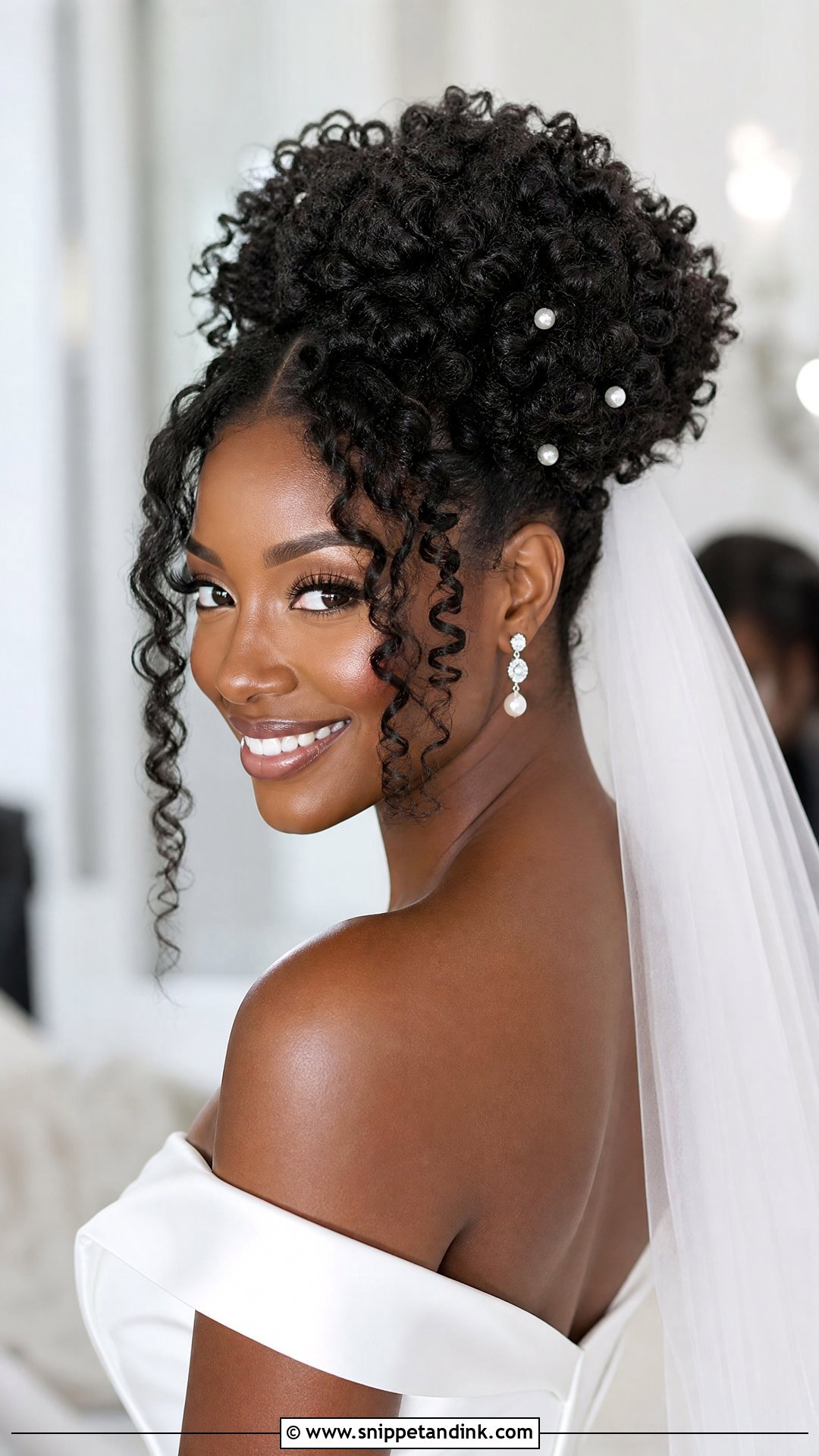
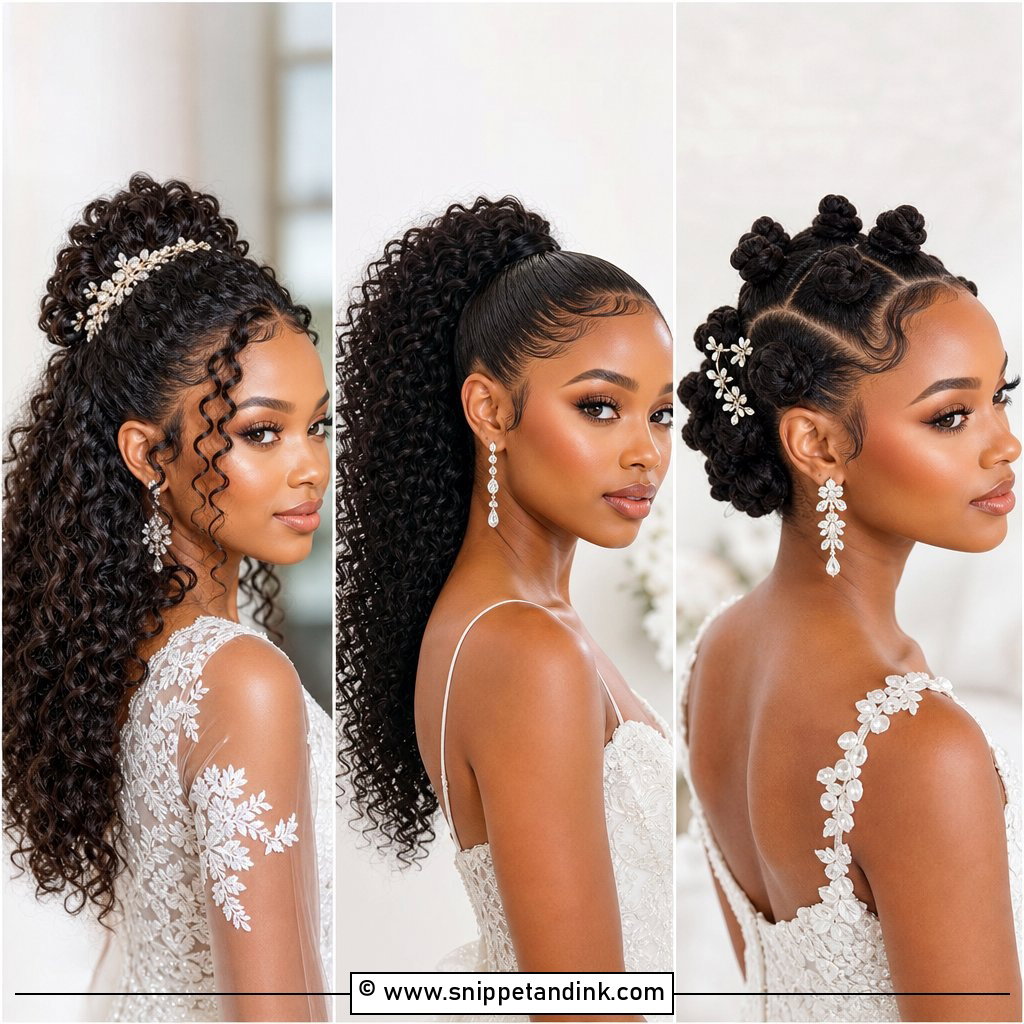
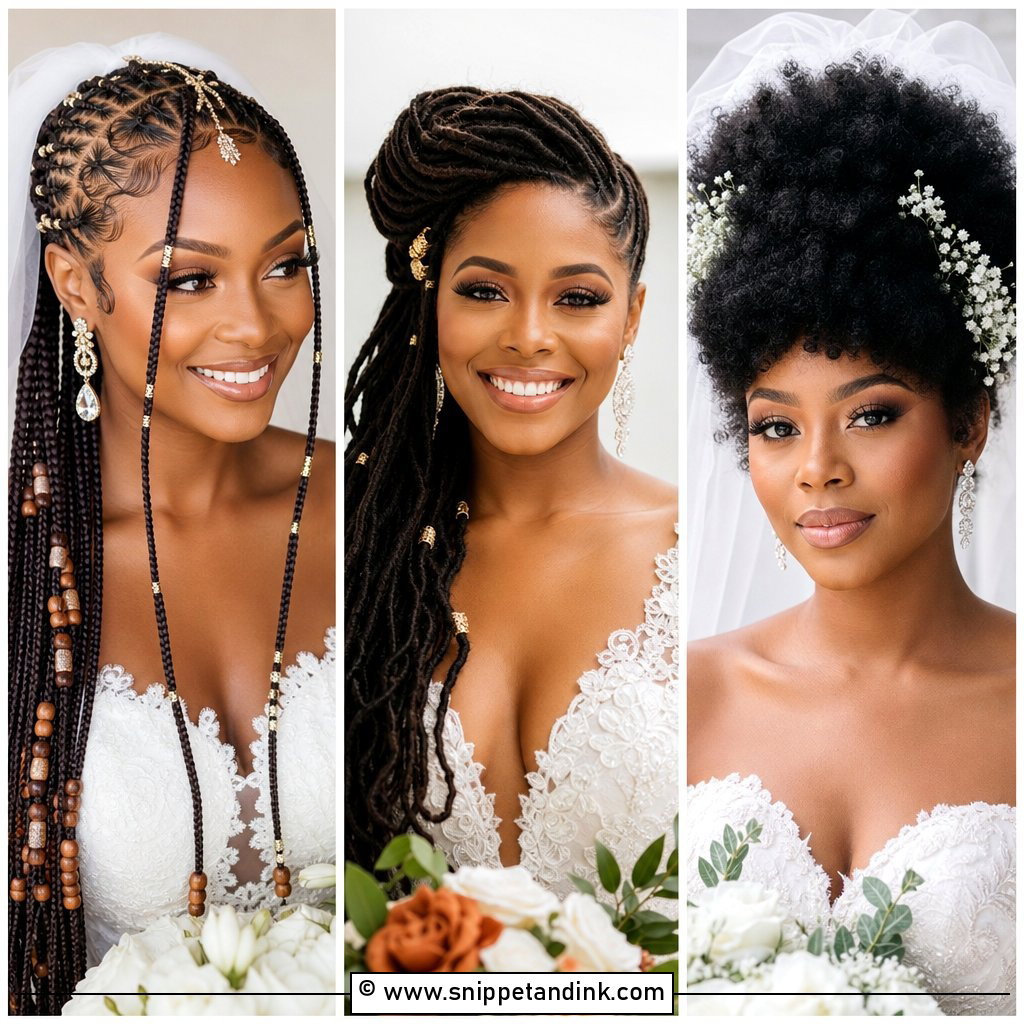
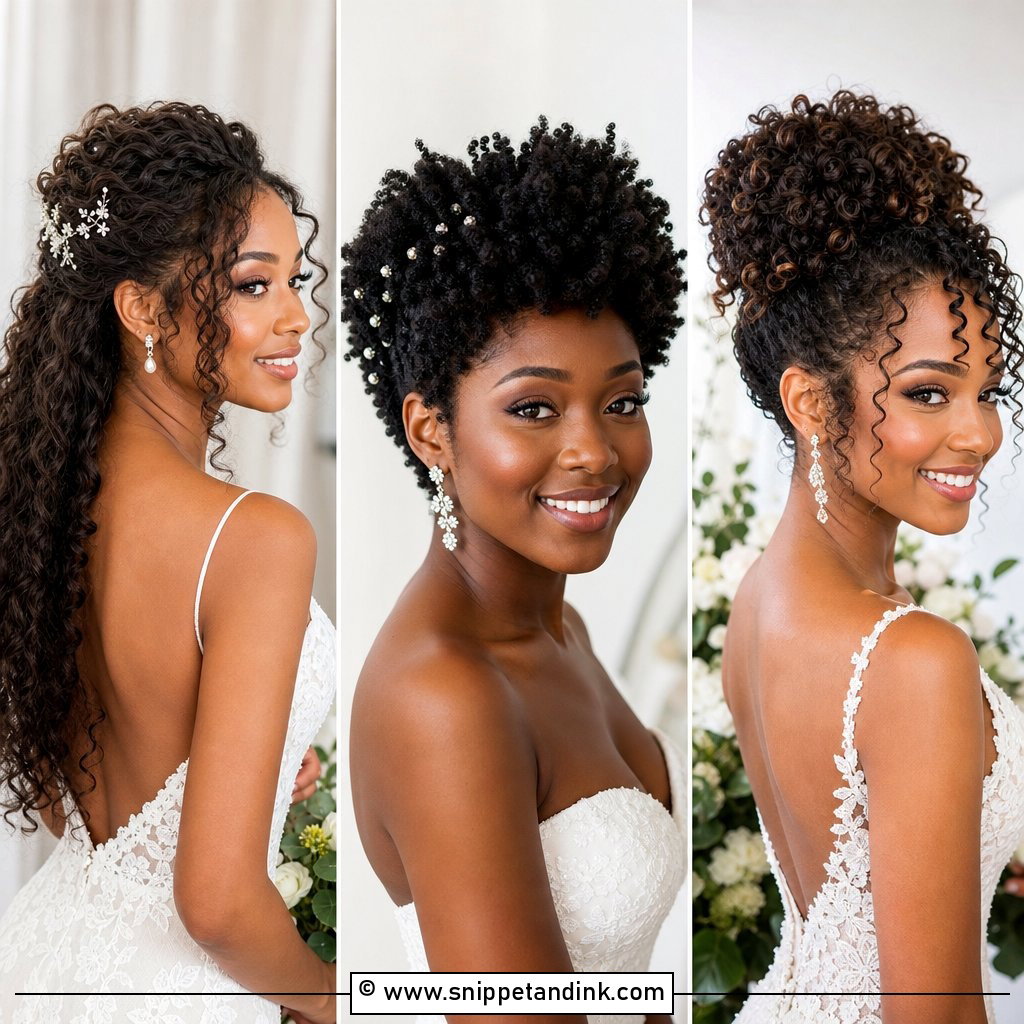
An afro updo is mostly about where you build the base. I gather the hair onto a soft, stretched foundation at the crown first, usually a banded or threaded section, so the coils sitting on top have something to grip instead of collapsing by the reception. Off-the-shoulder gowns love this shape because the neck stays clear. Leave two or three coils loose at the forehead, not ten, or the front starts to look undone rather than intentional. Pearl pins slide into coily hair easily, but fresh flowers need wiring or they droop into the curls by mid-afternoon.
2. Bridal Twist Out With Side Part
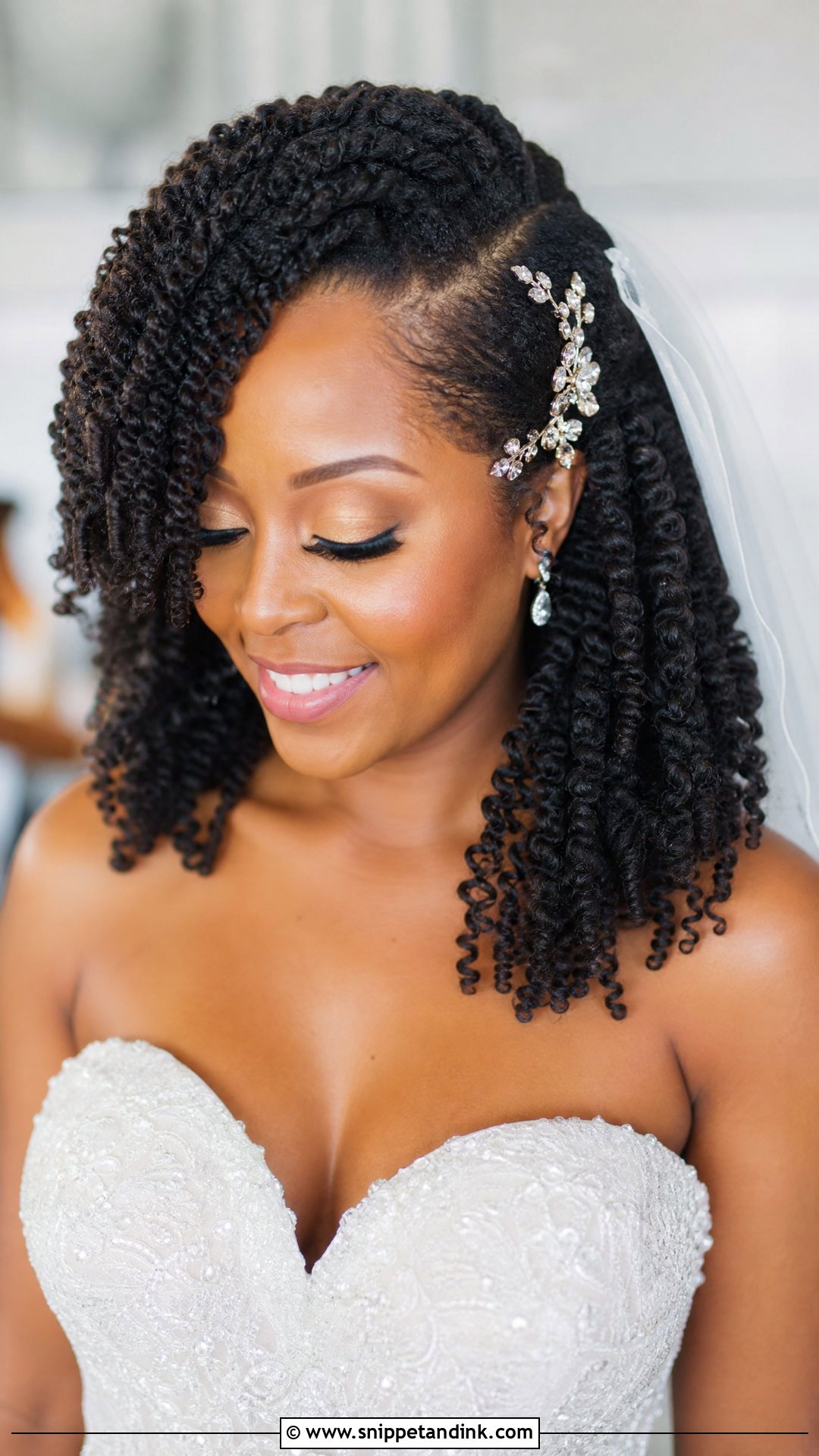
A twist-out lives or dies on drying time. Twist on damp, conditioned hair the night before, and don’t unravel until it’s completely dry, because a twist that’s still cool to the touch at the centre will frizz the moment you separate it. I take the deep side part in before I unravel so the definition falls in the right direction. Worn loose past the shoulders it moves well outdoors; pinned back on one side it holds a veil better. One sparkly pin near the part is plenty.
3. Flat Twist Bun for Natural Hair Bride
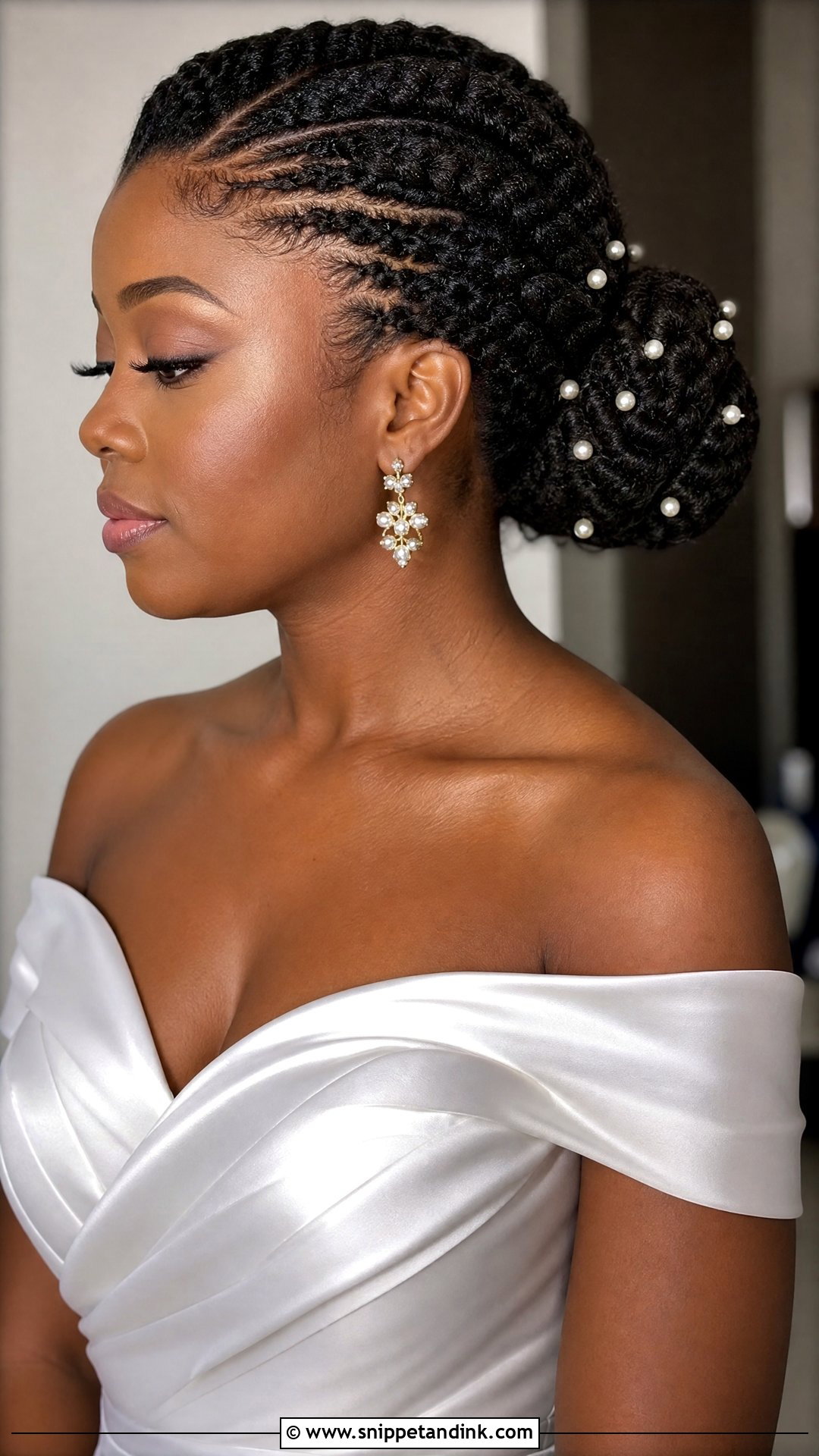
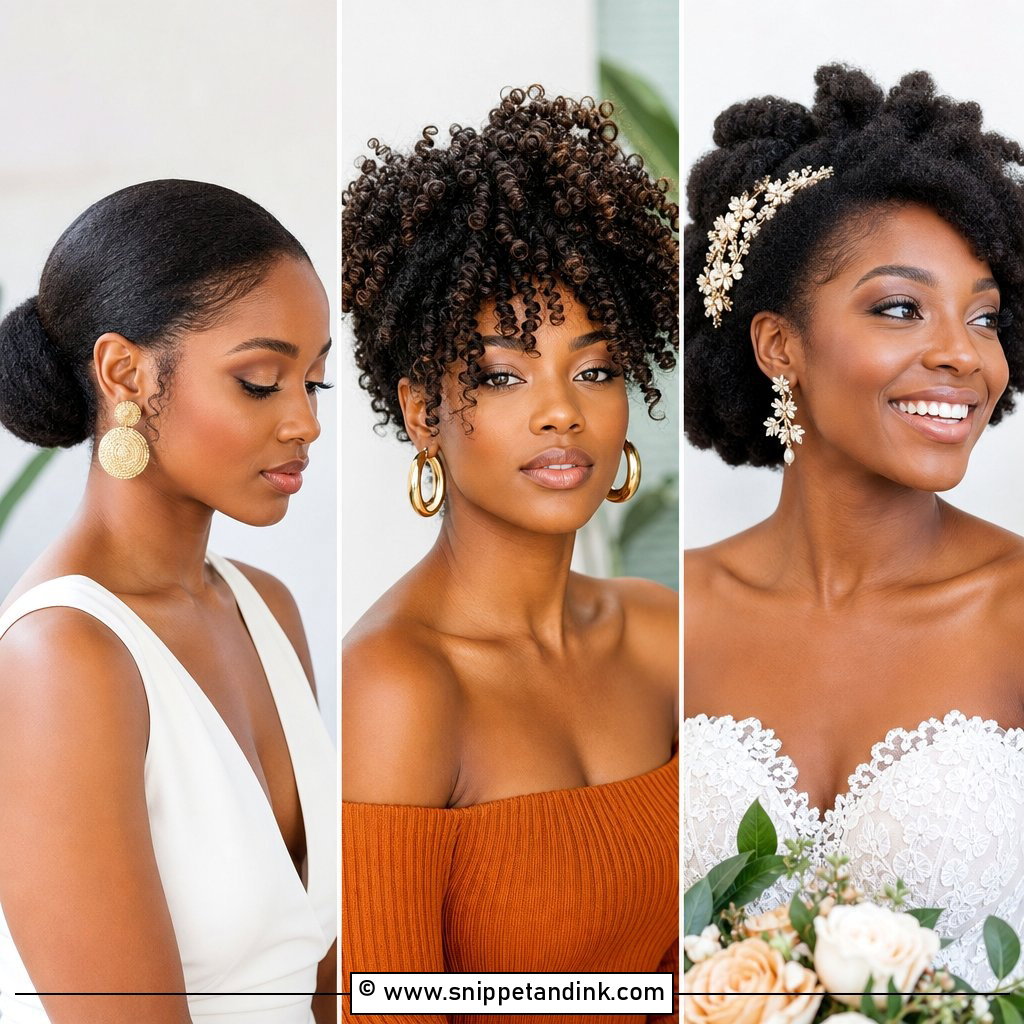
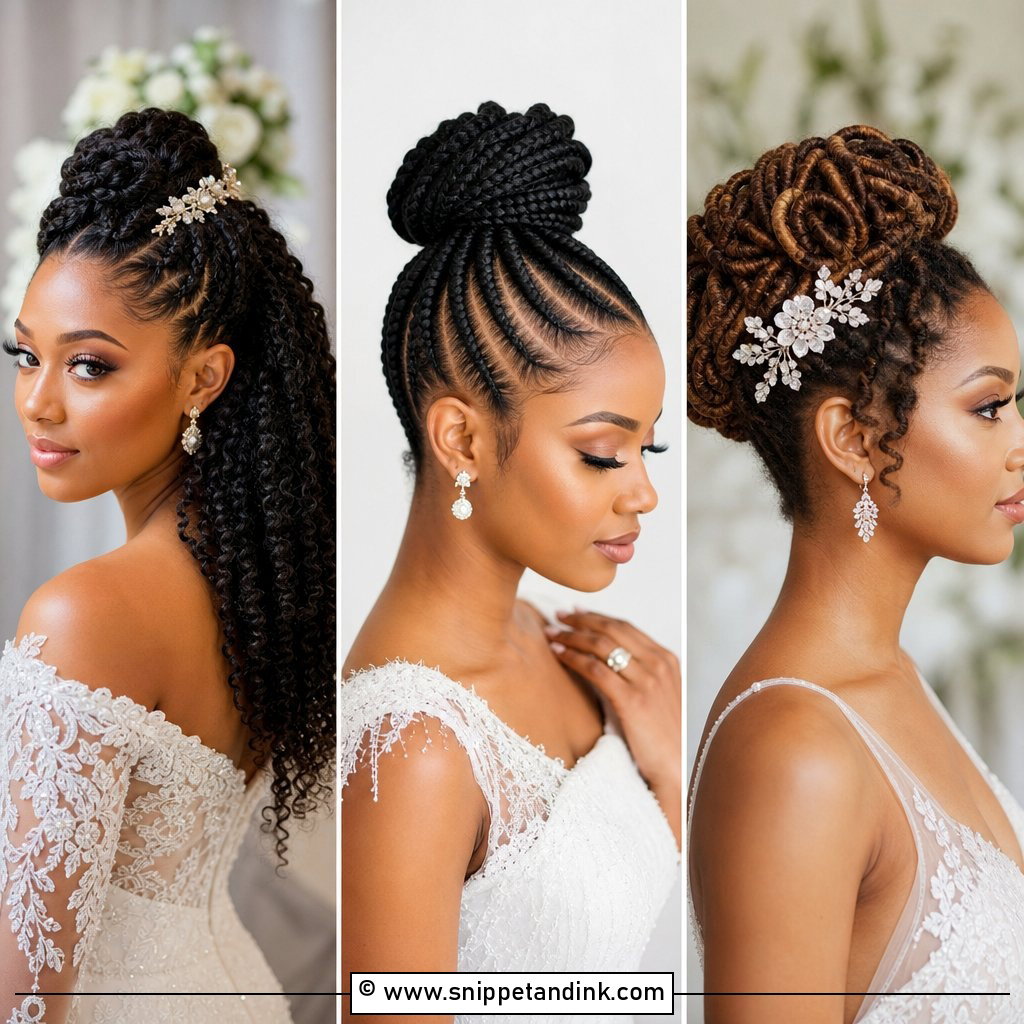
This is the style I suggest to brides who want to do their own hair. Flat twists sit close to the scalp, so they lock everything in place, and the bun at the back hides any uneven ends. Practise the parting at least twice before the wedding; it’s the straight lines along the scalp that show in photos, not the bun. A high bun reads more formal, a low one tucks better under a cathedral veil. It survives hugging and dancing without losing shape, and a few gold cuffs along the rows are easy to add on the morning.
4. Goddess Braids Updo for Wedding
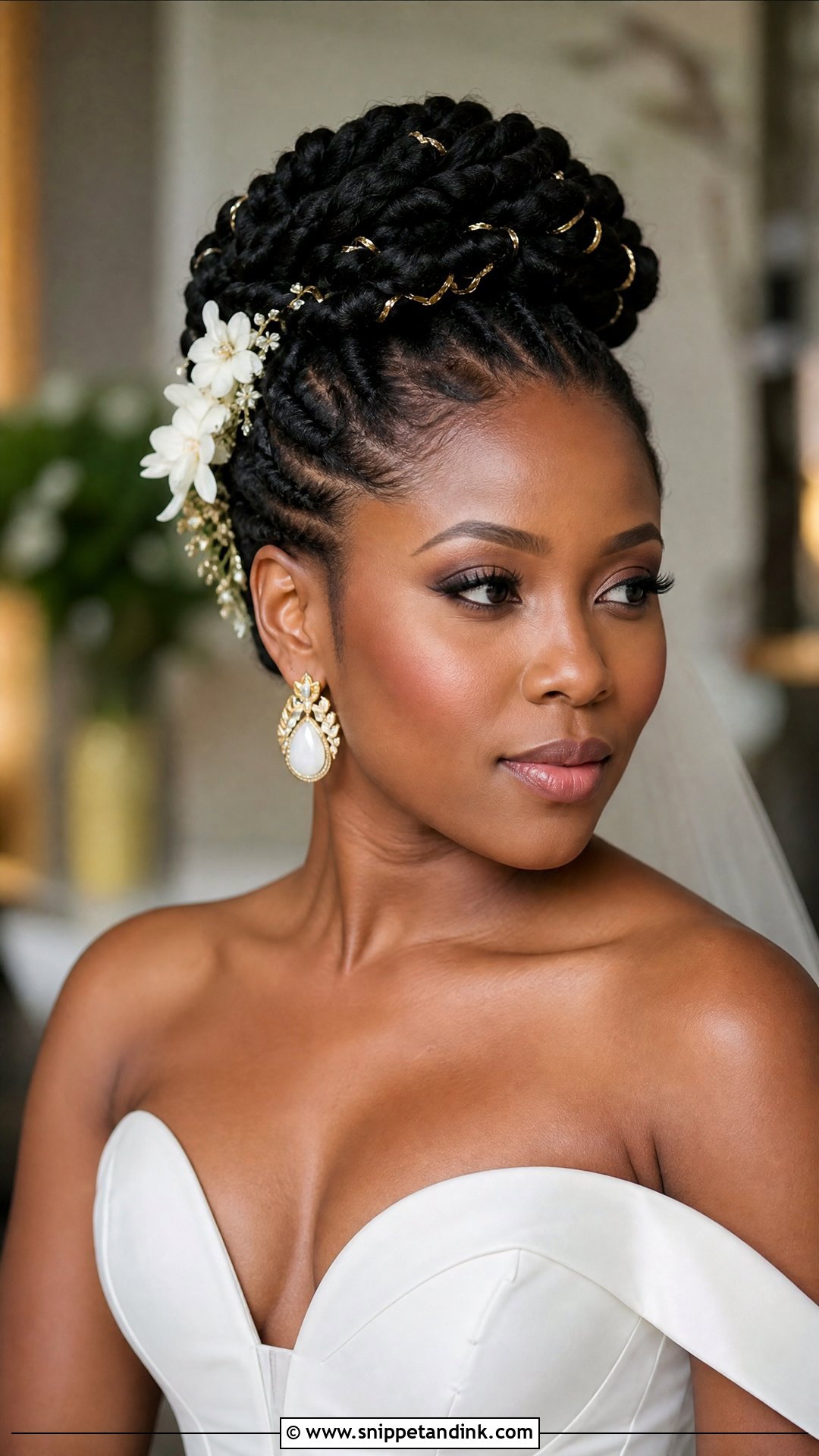
Goddess braids are thick, so they carry a lot of weight once they’re wrapped into a crown. The first thing I check is whether the braids at the nape have been installed with too much tension; if your edges or the back of your neck are sore on day one, they’ll be worse by the reception. Installed properly, they keep your neck and shoulders clear and suit structured gowns and bold jewellery. Gold thread or small flowers can be woven in on the morning. Because they last well beyond one day, they’re my first suggestion for brides with a mehndi, a traditional ceremony and a white wedding in the same week.
5. Loc Updo for Black Bride
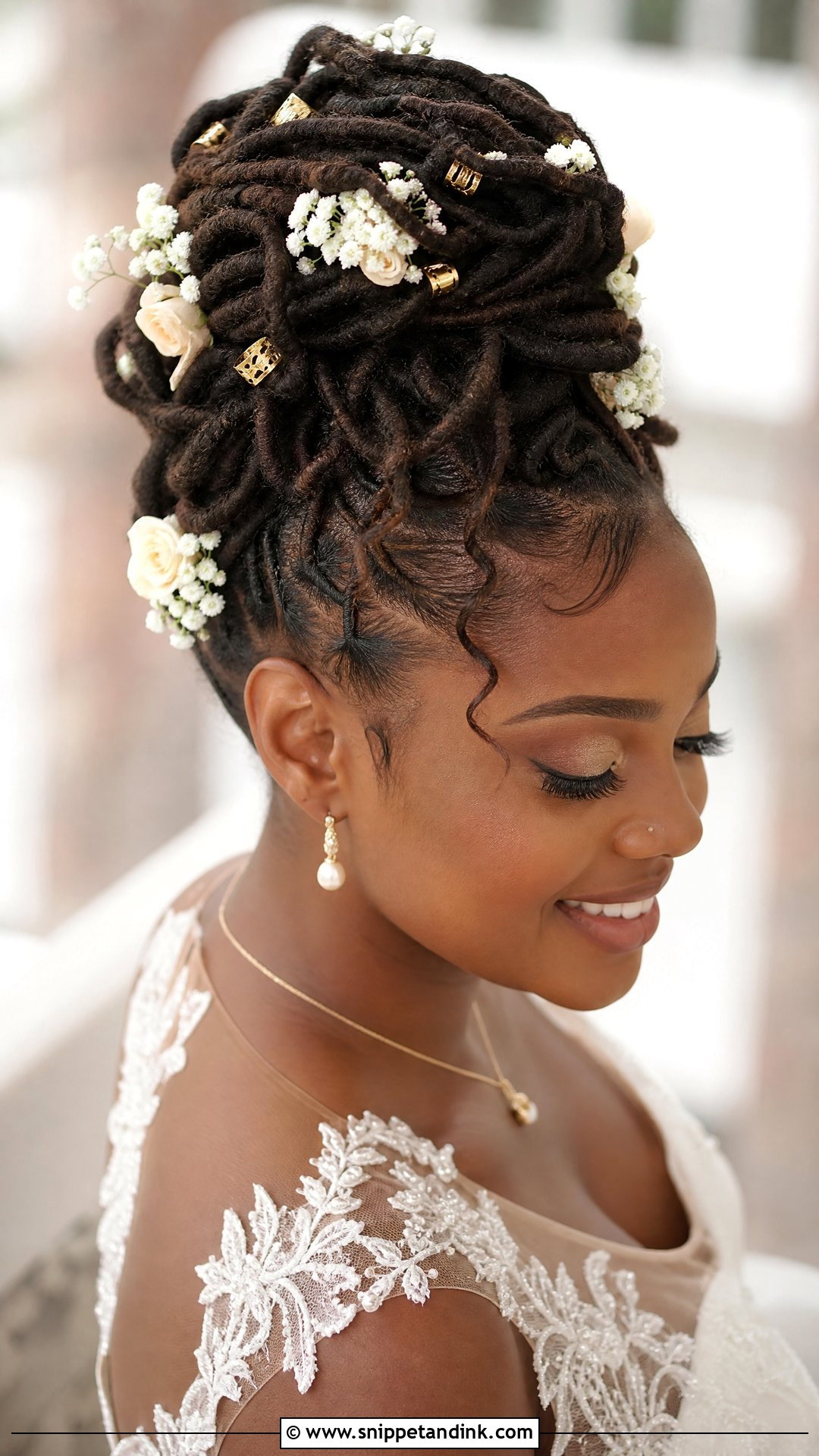
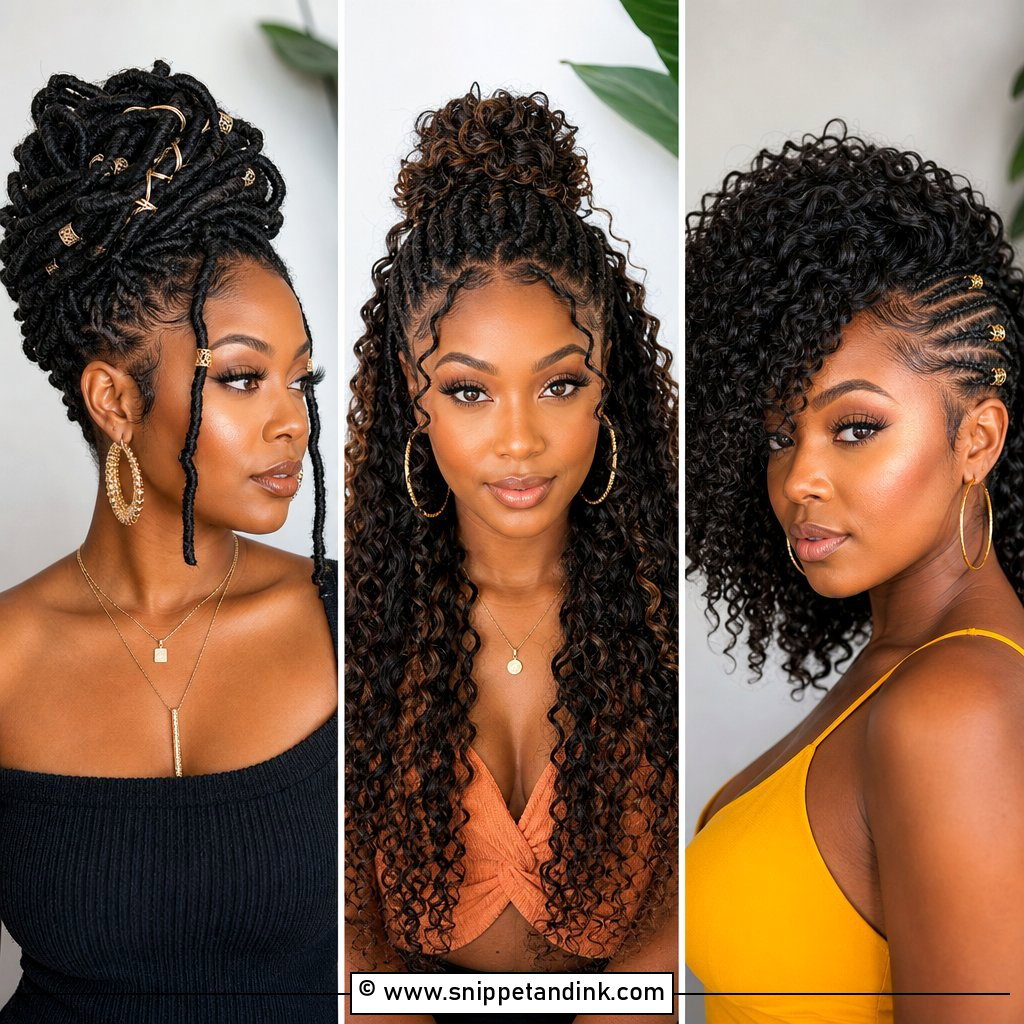
Locs give me more to work with than almost any other texture, because each one holds a shape and takes a pin securely. Sweep your locs upward and I’ll pin them into a sculpted shape that frames your face, sometimes twisting two or three together for extra texture. Long, heavy locs need the base anchored at more than one point, or the whole updo tips backward by evening. Book your retwist a week or so before the wedding rather than the day before, so the new growth softens and doesn’t look freshly tight in close-ups. Gold cuffs and pearls slip on without any damage to the loc.
6. Halo Braid for Natural Hair Bride
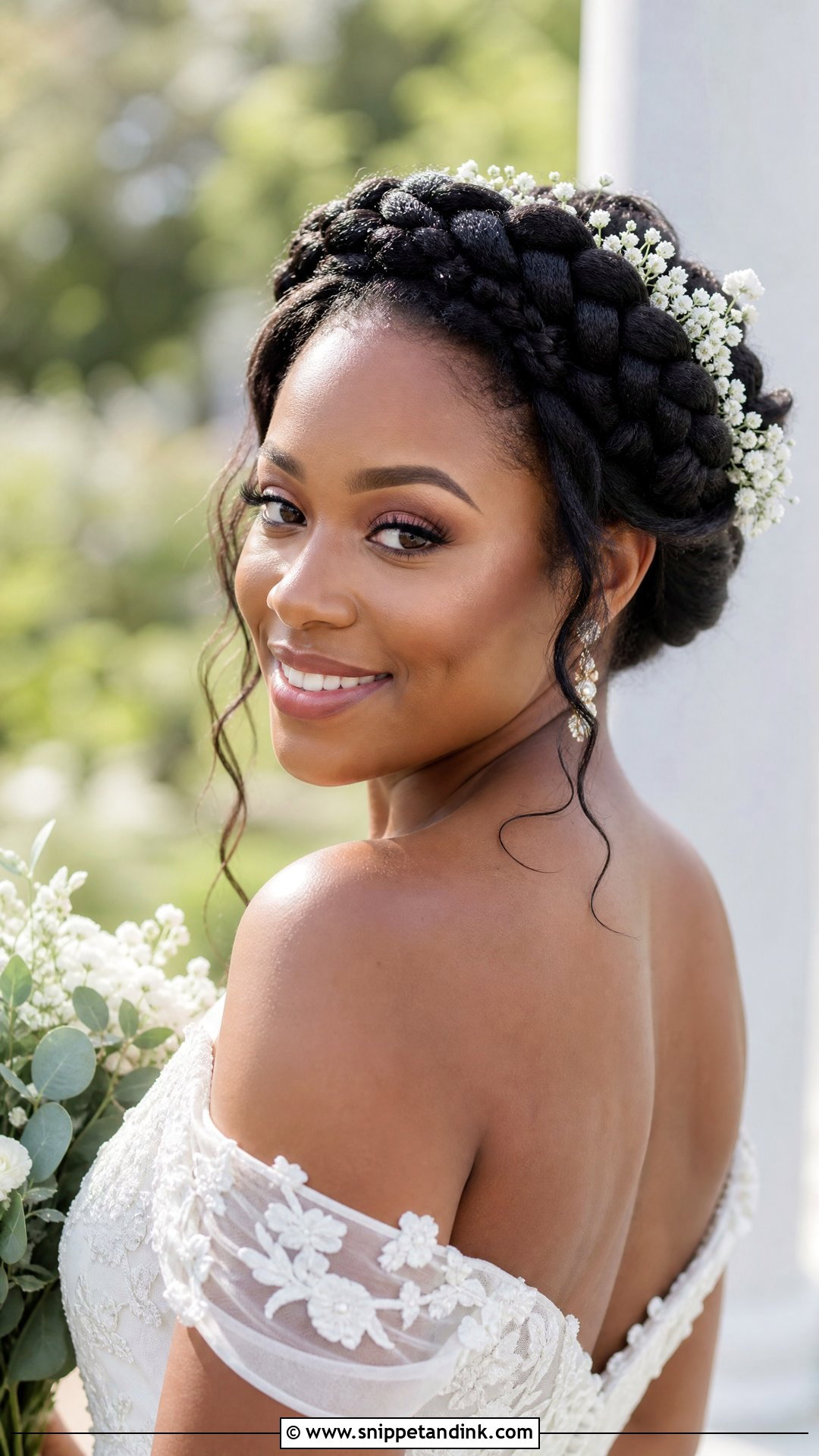
A halo braid needs enough length to travel all the way around your head, so I always measure before promising it. If your hair stops at the shoulders, I’ll add a matching braiding hair extension to finish the circle and pin the join behind one ear where it disappears. It’s comfortable to wear for hours because the weight is spread evenly. Baby’s breath tucked along the braid suits a garden wedding, but it browns quickly in direct sun, so add it as late as possible. Pull just a couple of face-framing pieces loose; more and the crown loses its outline.
7. Pineapple Updo for Curly Bride
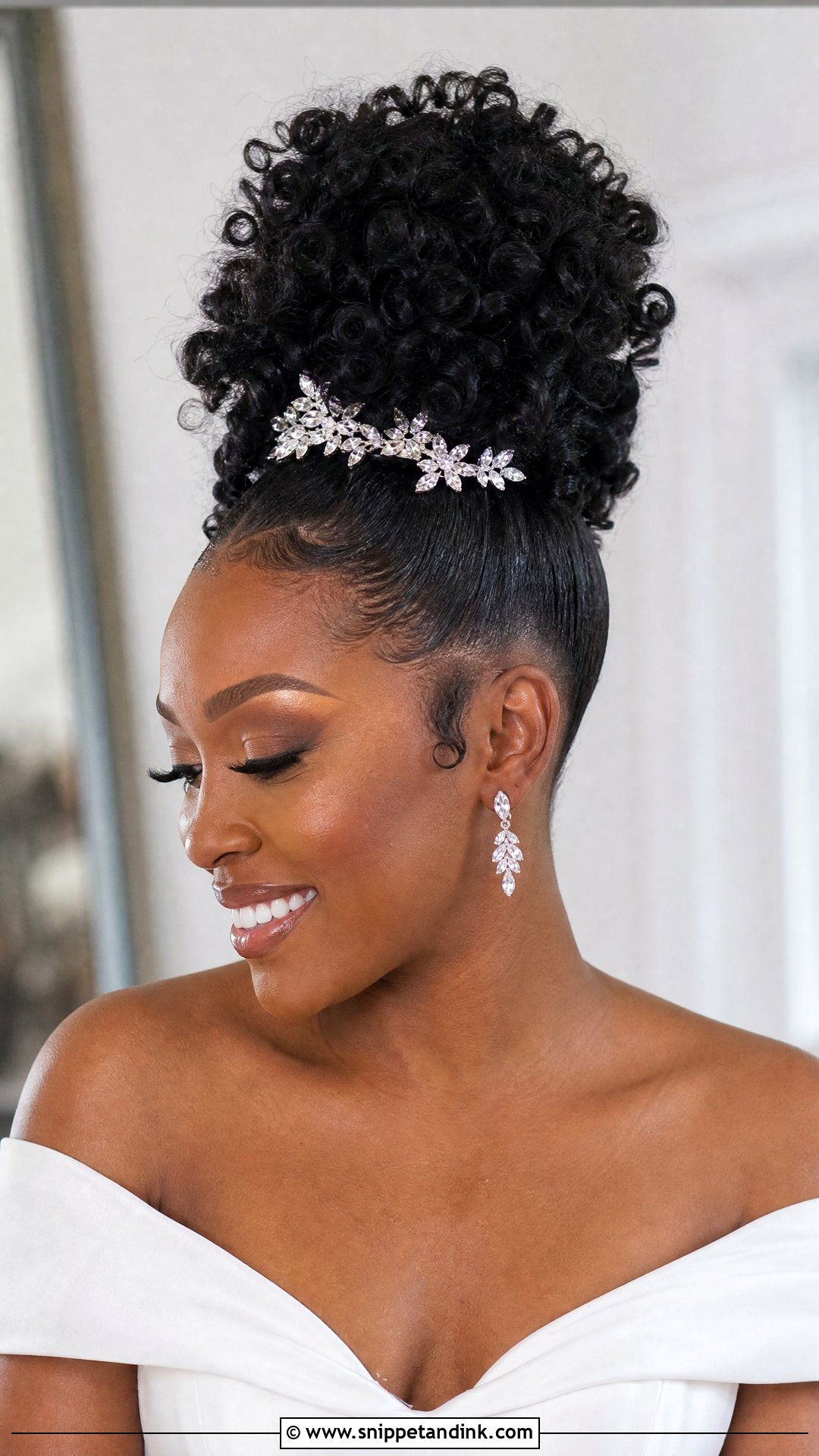
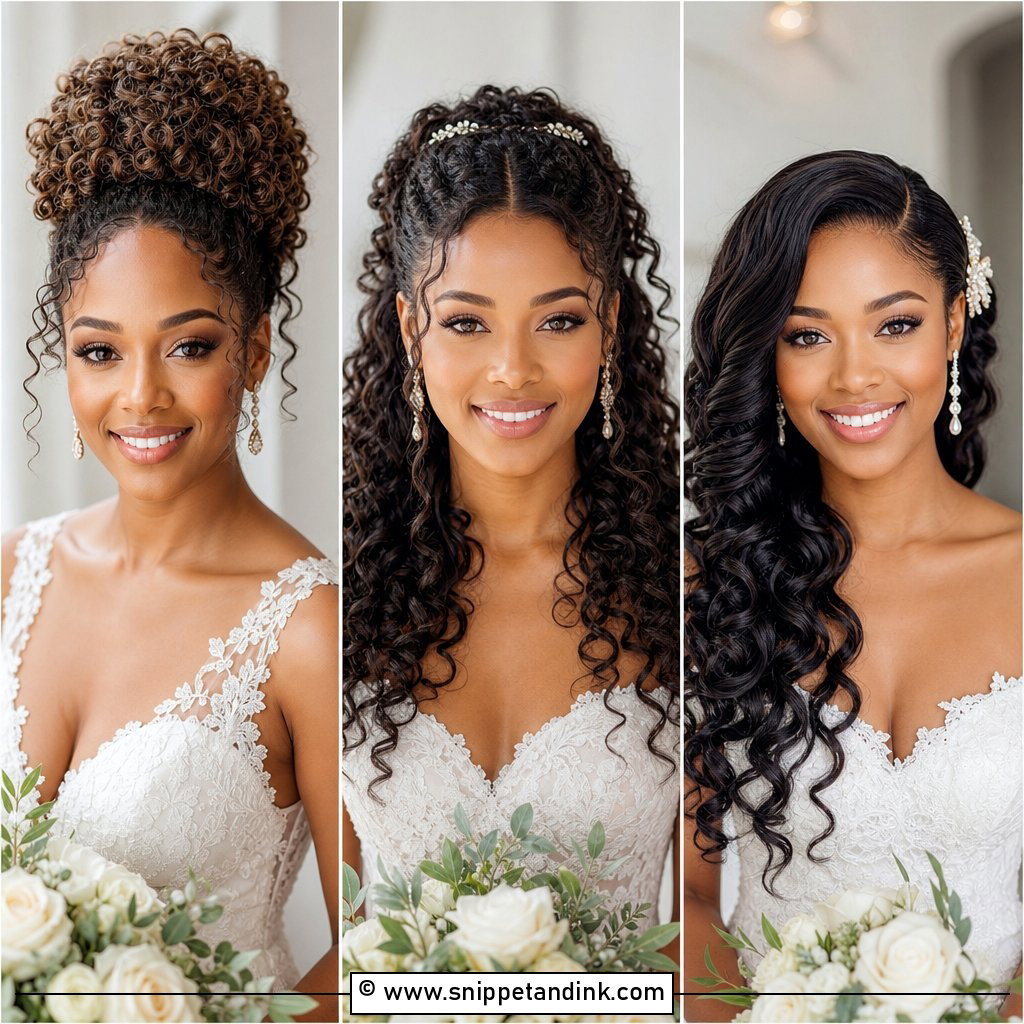
Most curly brides already know the pineapple from bedtime, and that’s why it’s so dependable on the day. Gathering the curls high on the head keeps your length, protects the definition and clears your neck for an off-the-shoulder gown. I use a soft scrunchie or a satin-covered band at the base, never a thin elastic, because it snaps coils and leaves a dent you can’t hide. Smooth the sides with a little gel if you want it polished. It’s quick enough to redo yourself if the curls flatten during dancing.
8. Cornrows Updo for Black Wedding
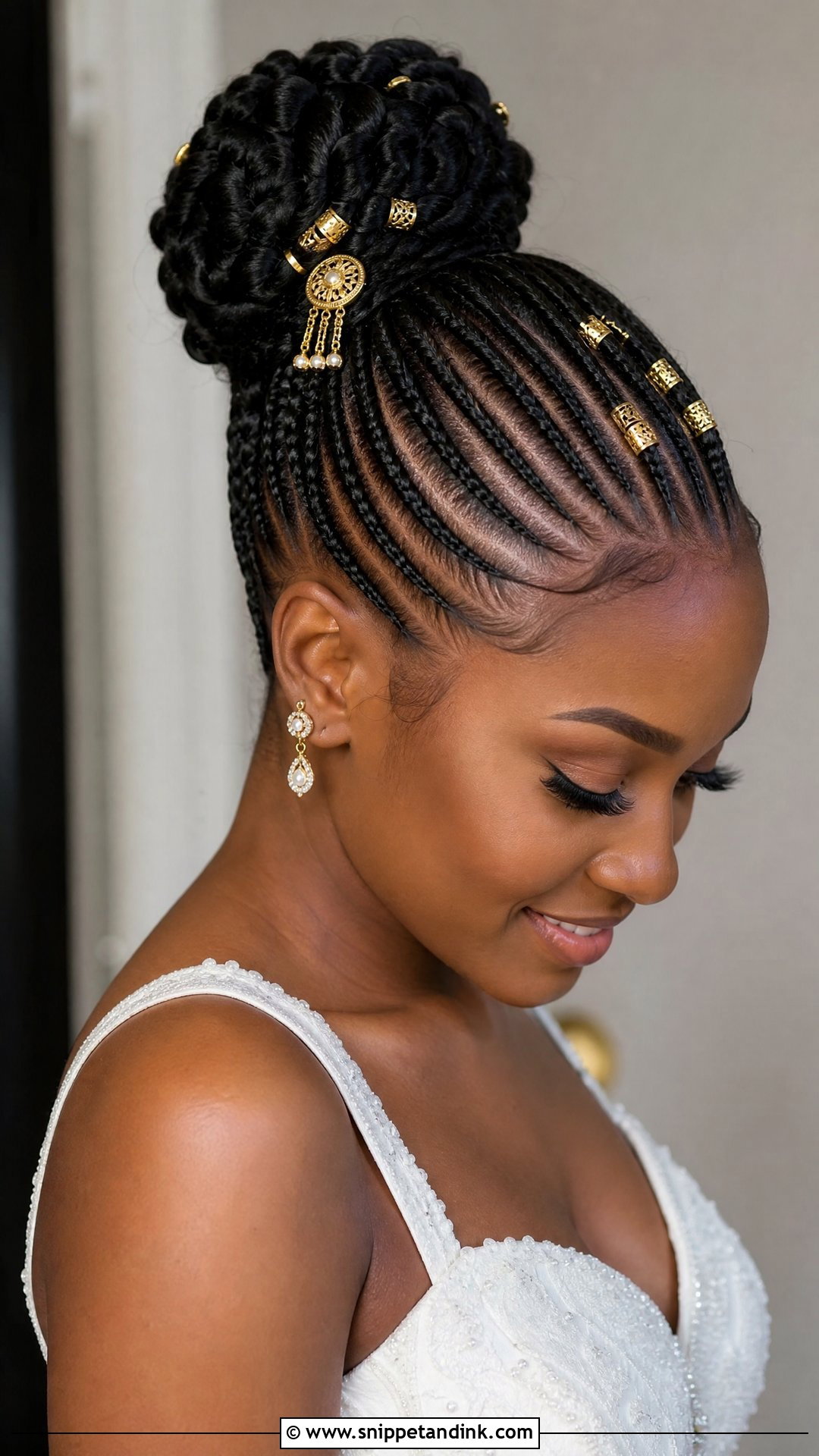
Cornrows give a braider room to design, and the pattern is what people notice first. Ask for the rows to curve toward the area where the updo or bun will sit, so the lines lead the eye there instead of stopping abruptly. They stay neat all day, resist frizz in humidity and show off beads, cuffs or gold thread well. Get them done two to four days before the wedding: fresh enough to look crisp, settled enough that the scalp tenderness has gone. They suit traditional attire and a modern gown equally.
9. Half Up Half Down Curls for Bride
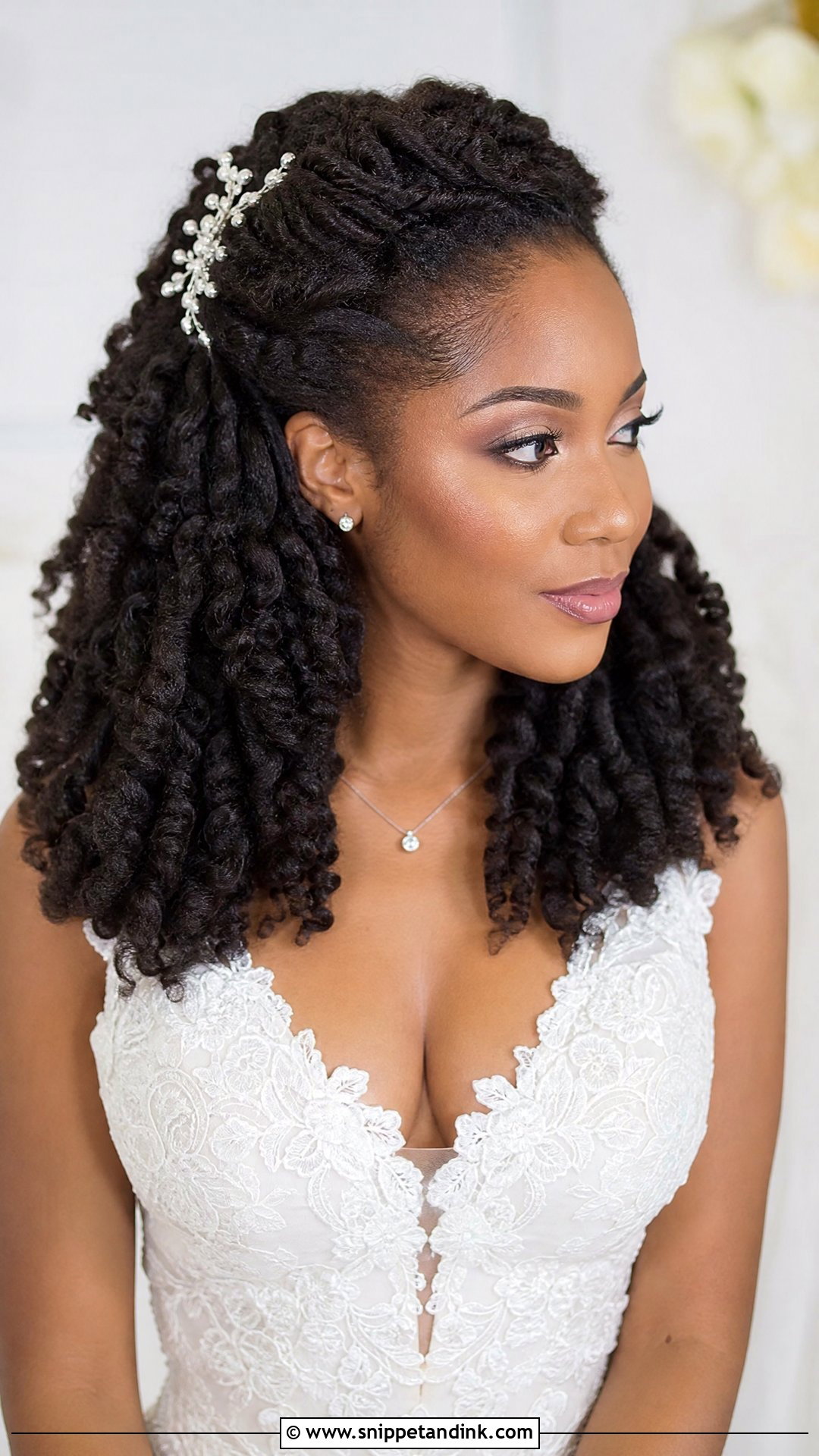
Half up, half down is the answer I give brides who can’t commit to an updo. The top section is pinned back, the curls fall free underneath, and you get your full texture around your shoulders. On coily hair I place the pins in a criss-cross pair rather than a single pin, because one pin slides straight out of springy hair. Twist-outs, braid-outs and natural coils all work here. Place a comb or a fresh flower right where the two sections meet; it covers the pins and gives a veil something to sit beneath.
10. Bantu Knot Out for Natural Bride
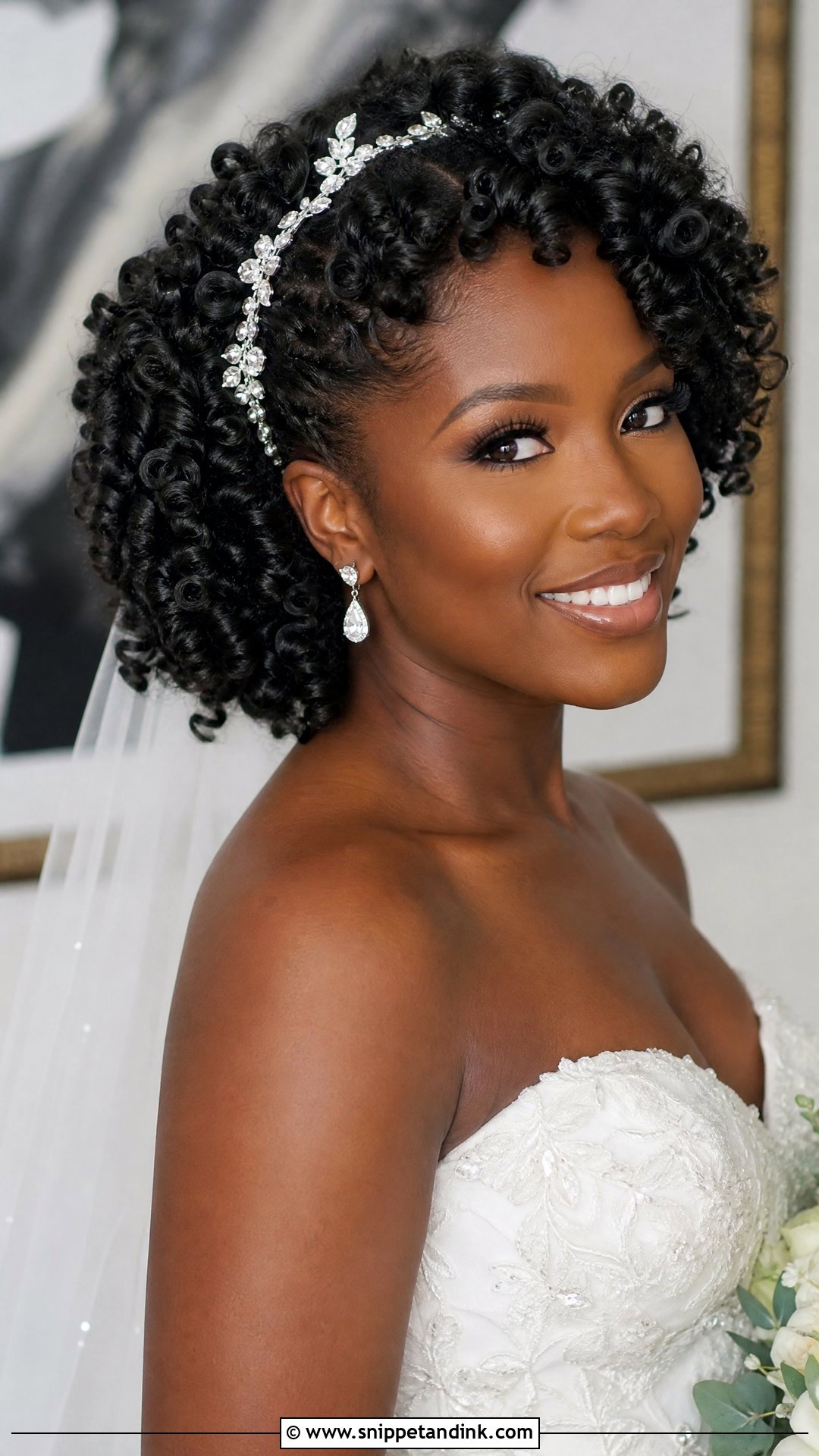
A Bantu knot-out gives tighter, more uniform spirals than a twist-out, and that definition reads clearly in photos. The knots need the most drying time of any set in this list, often a full night under a bonnet and sometimes a hooded dryer in the morning. Unravel with oiled fingertips and separate gently, or the spirals turn to fluffy waves. Worn fully down it has real volume; pinned on one side it sits more formally. A jewelled headband suits it better than a single clip, since it lies across the spirals instead of crushing one.
11. Sleek Low Bun for Natural Hair Bride
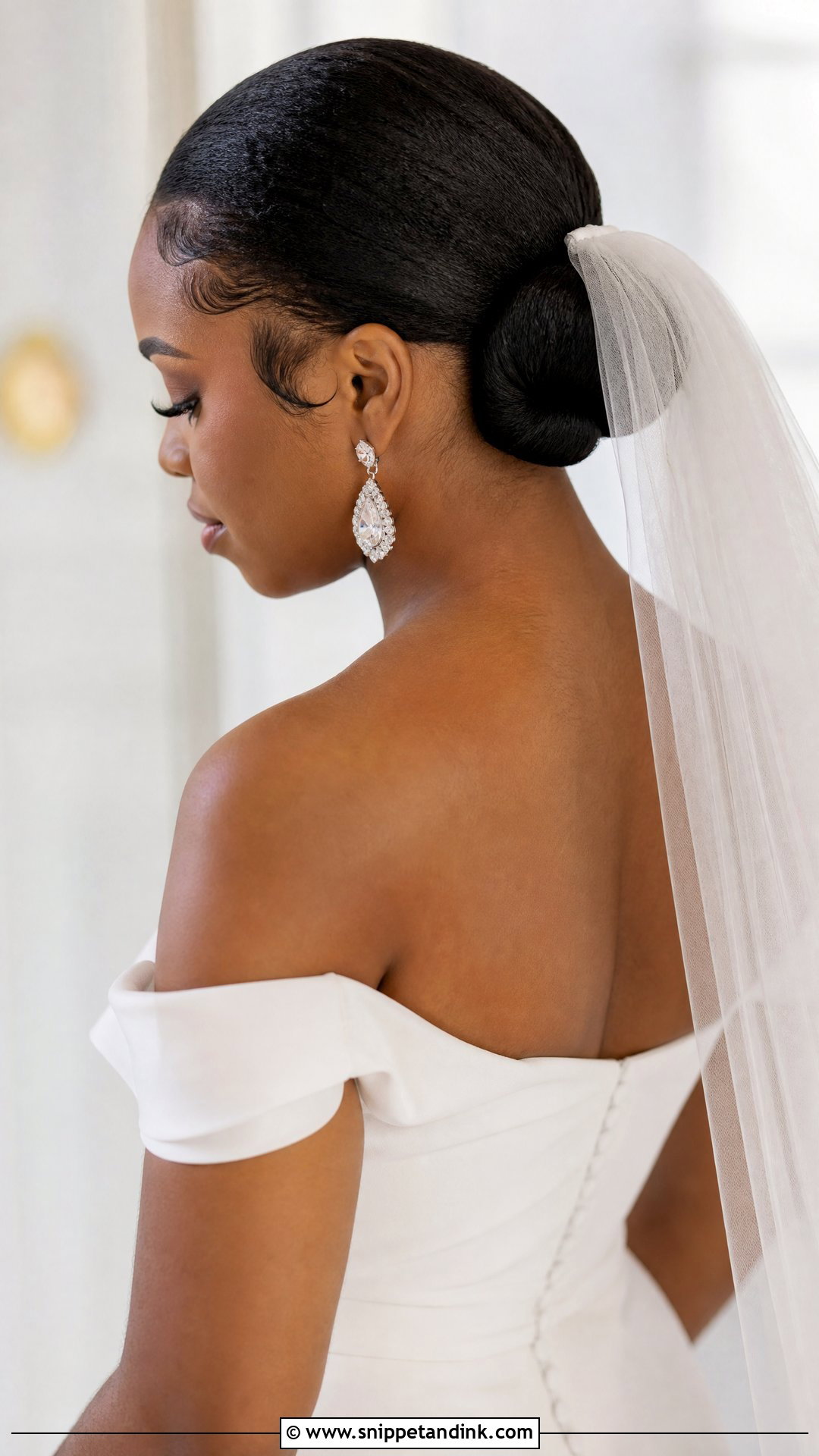
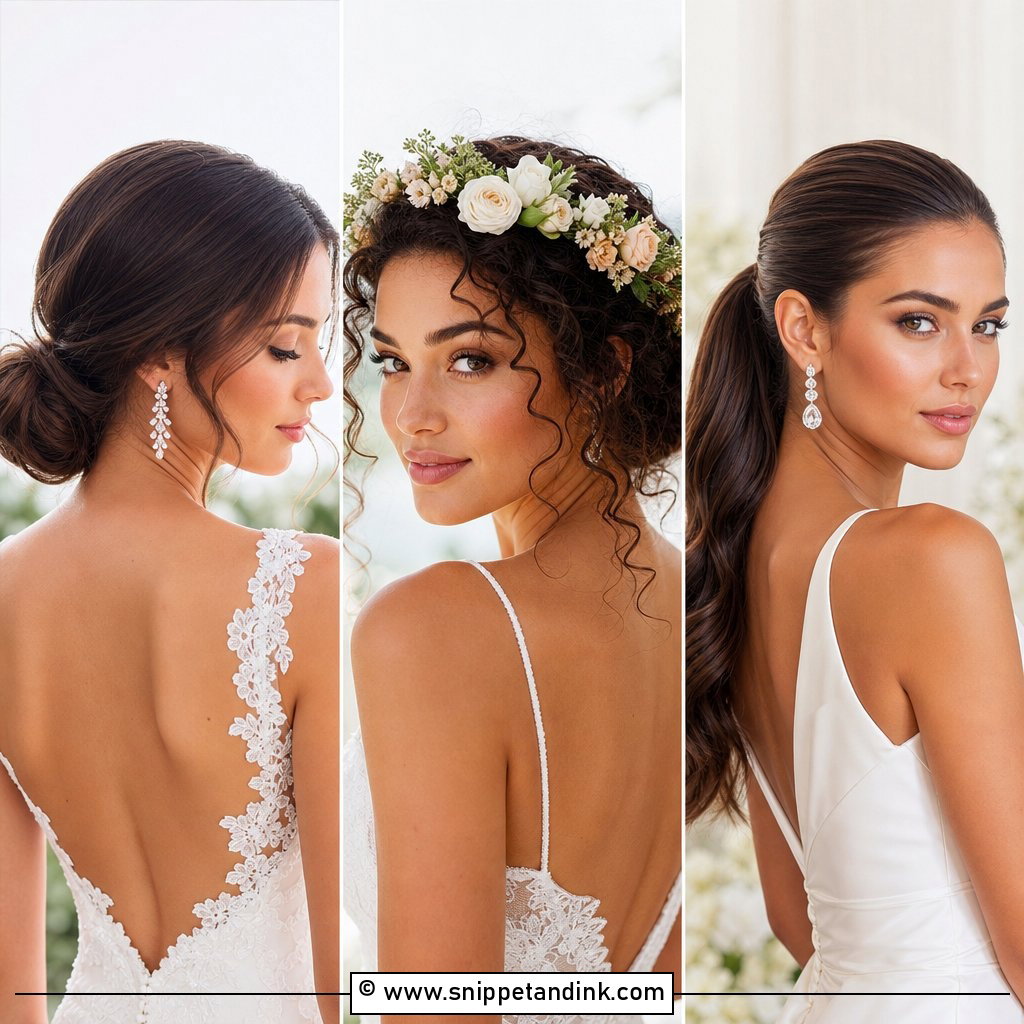
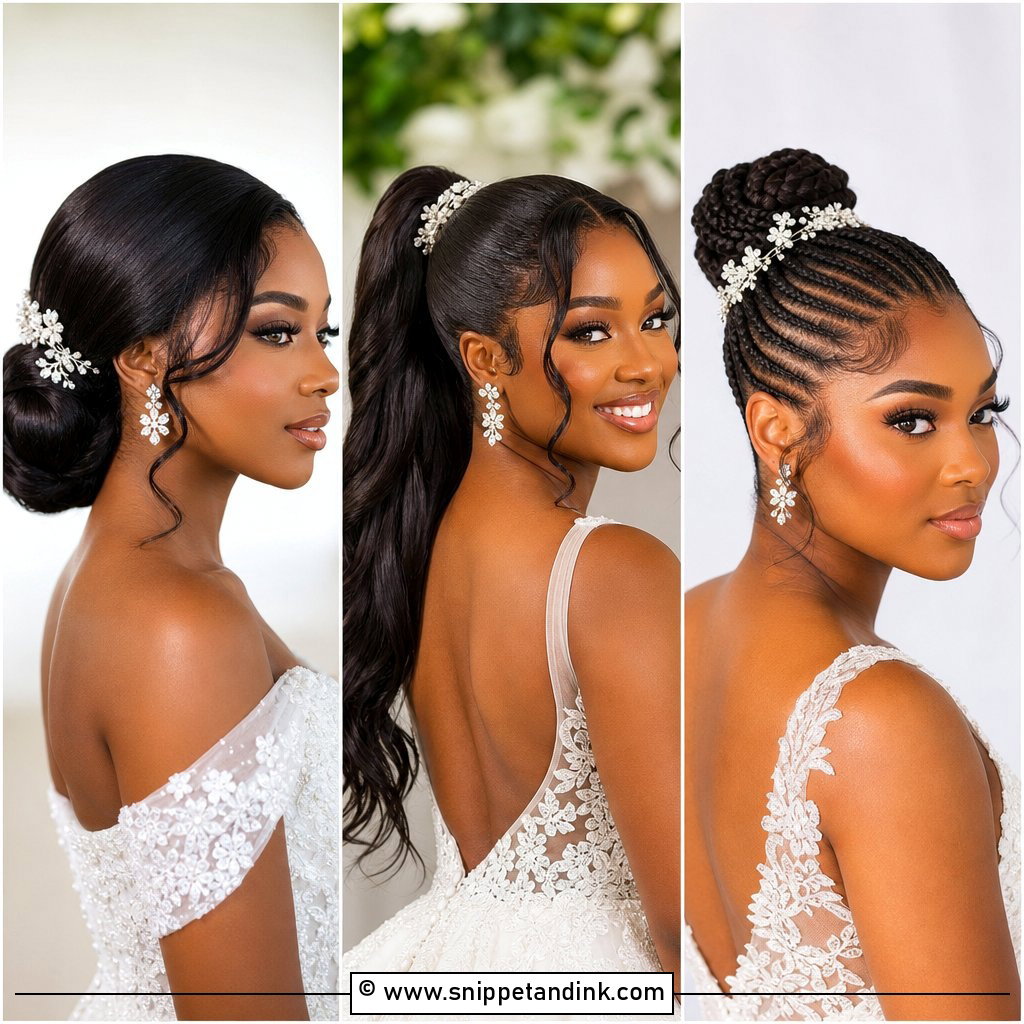
A sleek low bun is the most reliable style I know for a long veil. The hair is smoothed back with gel or edge control and gathered at the nape, which keeps the focus on your face, earrings and the back of the gown. Natural hair usually needs to be stretched first, by a blow-out or a banded set, so the bun looks smooth instead of lumpy. Style your baby hairs lightly; heavy swoops can melt and shine under a hot sun. It suits a formal ballroom and a twelve-guest ceremony equally well.
12. Floral Crown Afro for Bride
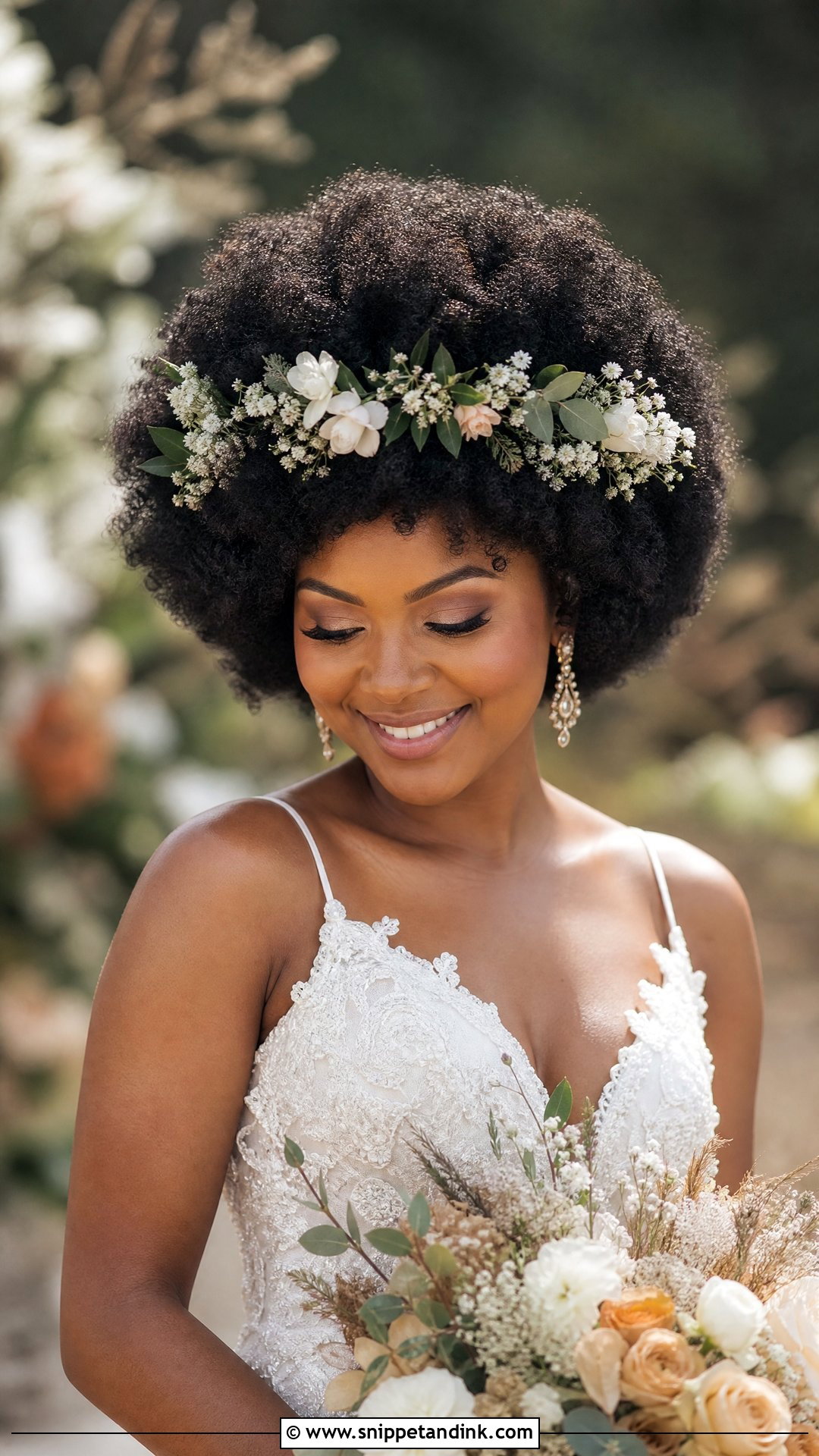
A picked-out afro with a ring of fresh flowers is pure joy to style. This bohemian-inspired look lets your full volume carry the shape while the crown adds colour and softness. I pick out the afro first, then set the crown on top and pin it through the hair from behind in four spots so it doesn’t slide forward. Choose sturdy flowers that match your bouquet, such as spray roses or waxflower, rather than delicate blooms that wilt against warm hair. It’s at home outdoors and at a relaxed ceremony. Leave the rest loose and full.
13. Twisted Updo With Curly Tendrils
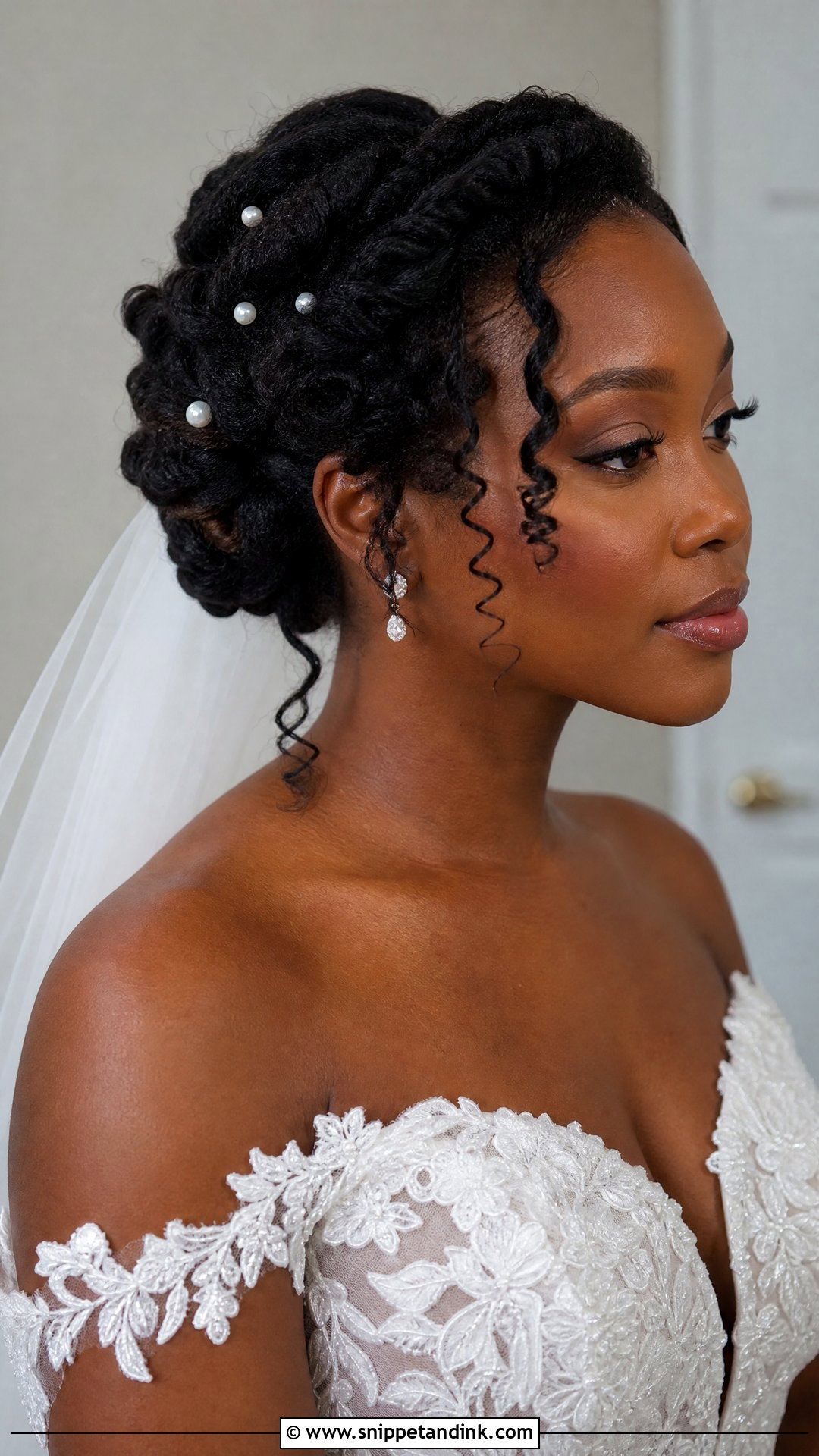
Structured twists with soft tendrils around the face give this updo its balance. I twist sections of your natural hair, pin them into the shape, then pull a few coils loose at the hairline only after everything else is secure, because tendrils taken out early end up pinned by accident. The tendrils soften the face and suit lace gowns and finer jewellery. If your hair shrinks easily, set the tendrils with a small flexi-rod the night before so they keep their length on the day. A few pearls between the twists is enough decoration.
14. Fulani Braids for Black Bride
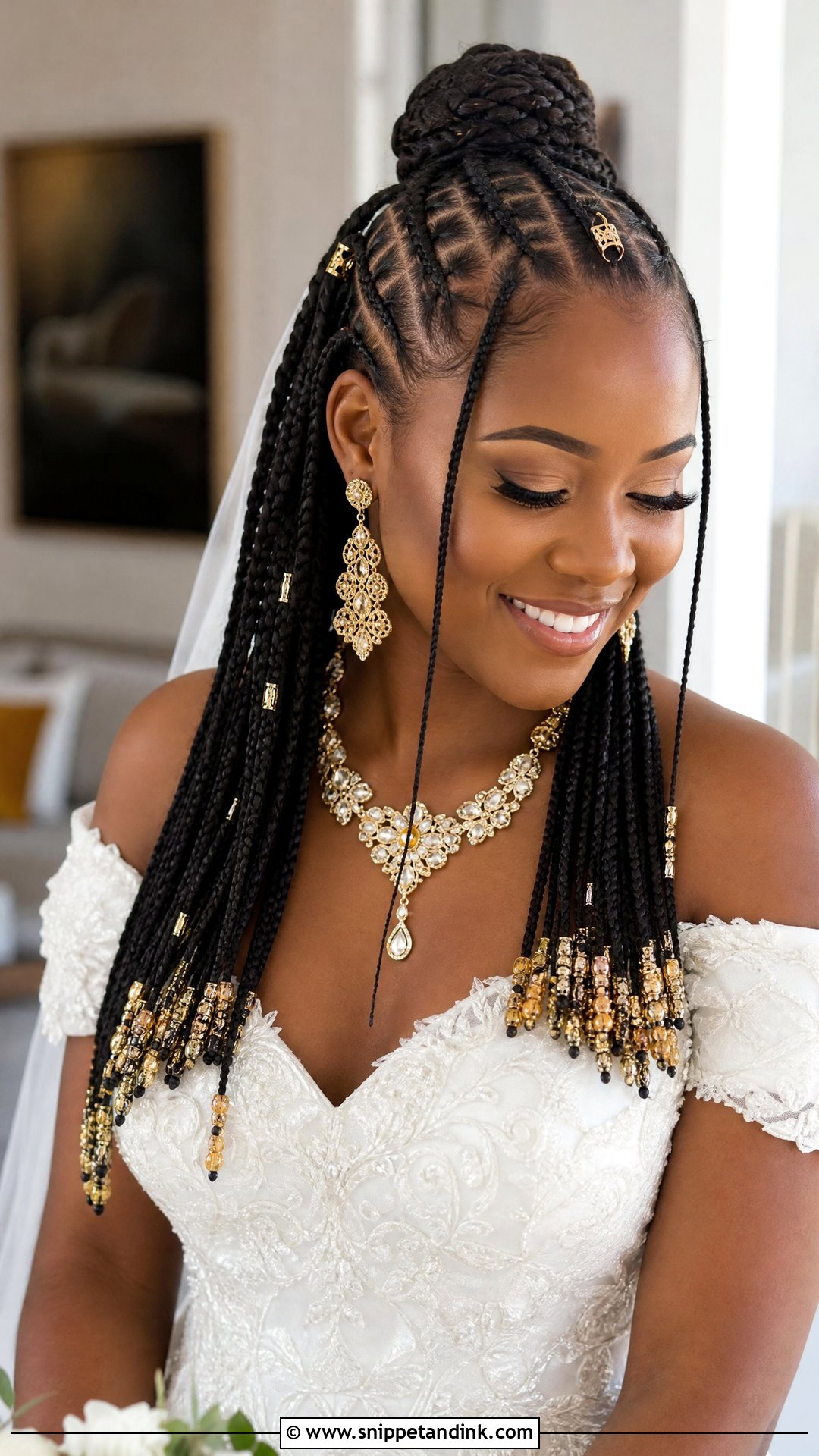
Fulani braids combine sleek cornrows with hanging braids and usually beaded accents, so there’s a lot of artistry in one head of hair. You can wear them down, half up or gathered into an updo, and they handle a multi-day celebration better than almost anything else here. The beads add weight to the ends, so if you plan to dance a lot, ask your braider to keep the heaviest beads to a few braids at the front. Gold accents and pearls finish them. Leave a day or two between the install and the wedding so your scalp has settled.
15. Curly Side Swept Style for Bride
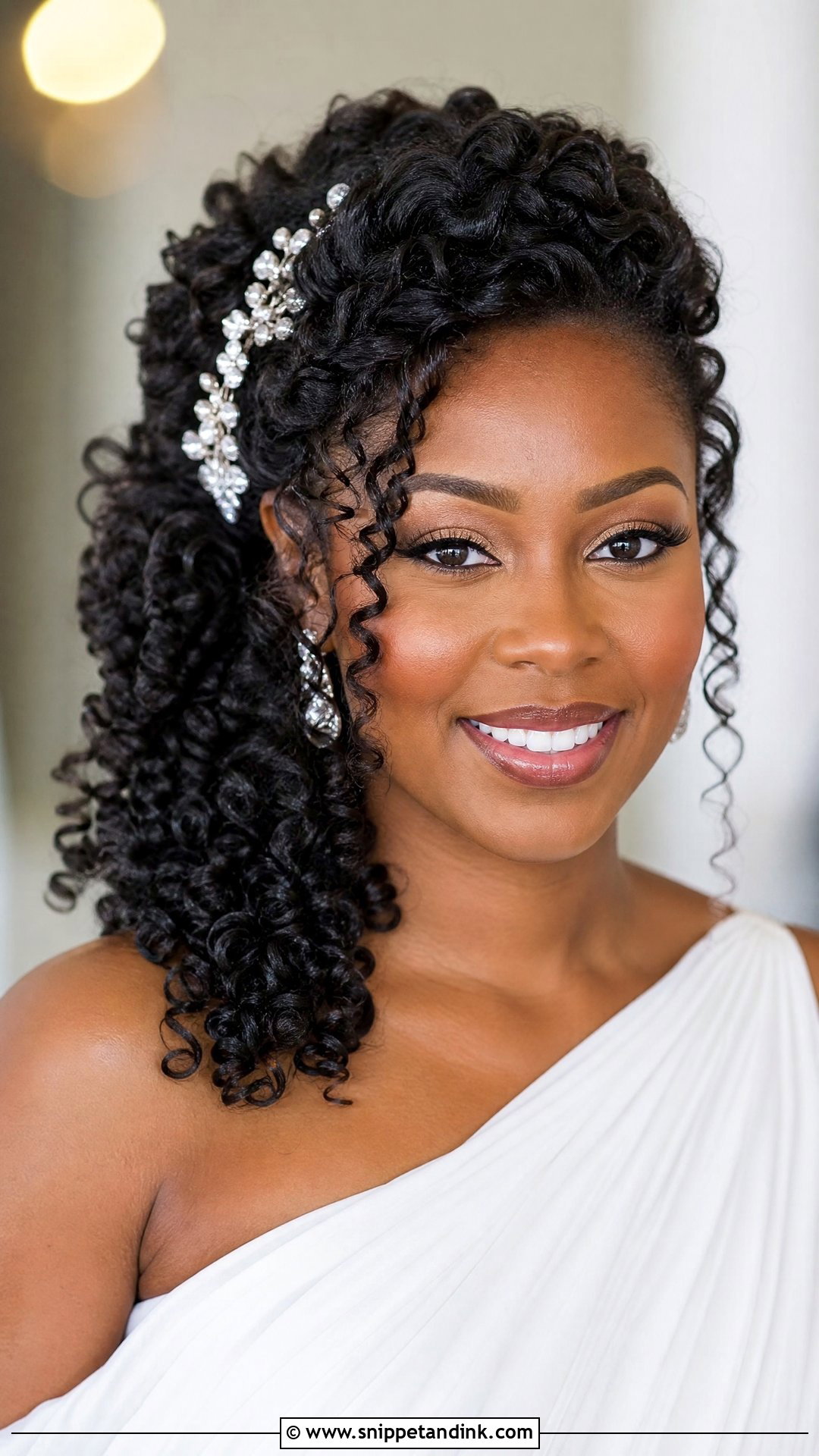
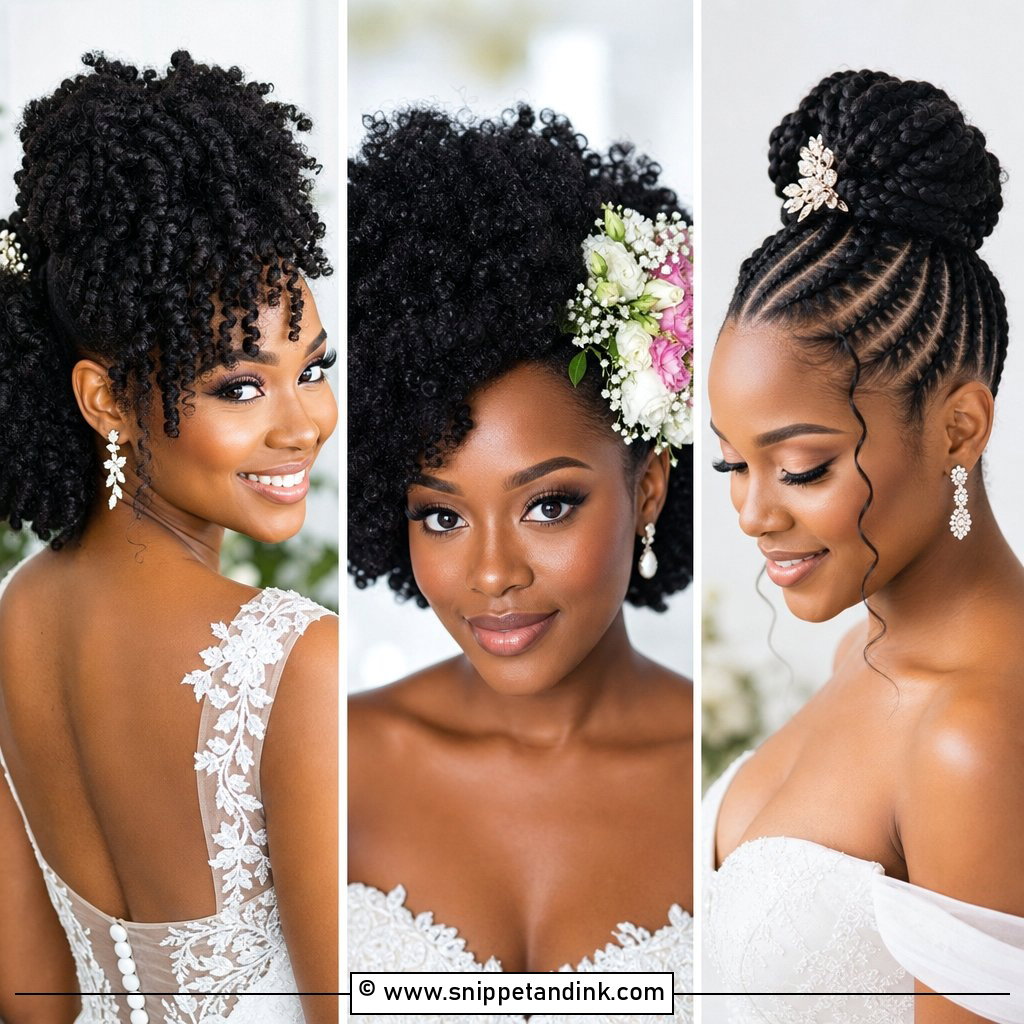
A side-swept style pulls all your curls over one shoulder, which looks romantic and leaves one ear clear for a statement earring. It works best with one-shoulder gowns, worn on the bare side. The pinning is the hard part: I build a hidden row of crossed pins behind the ear on the opposite side, so the volume doesn’t creep back toward the centre as the day goes on. Leave a few coils loose at the front. A sparkling comb at the gathering point hides the pins, and the asymmetry flatters most face shapes.
16. Crochet Updo for Natural Hair Wedding
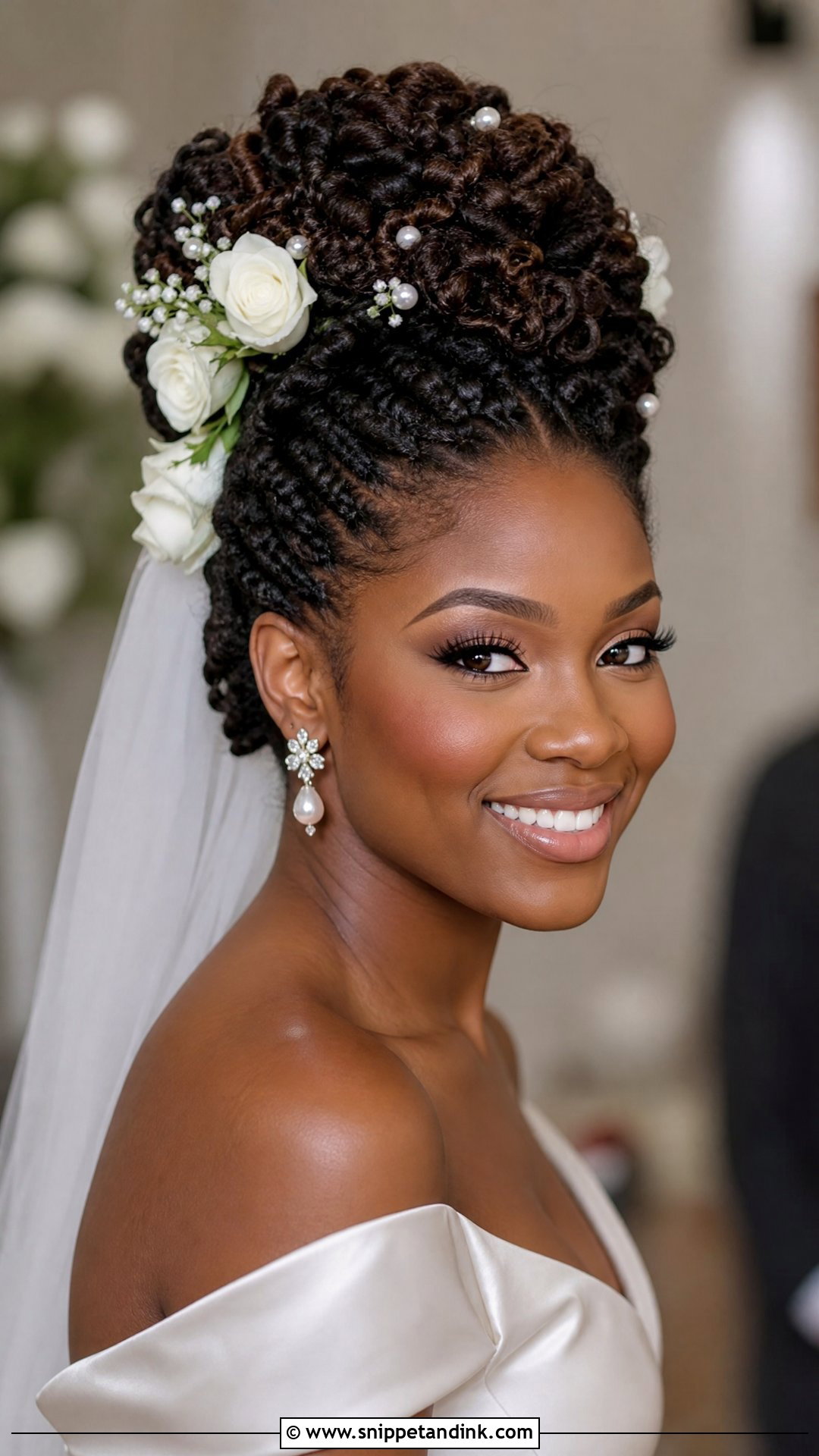
Crochet curls give you volume and length without manipulating your own hair on the day. The curls are attached to cornrows underneath, then sculpted into the updo, so it’s protective and very secure. Choose the curl pattern closest to your own texture; a pattern that’s too loose or too shiny gives it away in close-up photos. Get the install done a few days ahead so the cornrows relax and the leave-out at the hairline can be blended properly. Pearls, cuffs or flowers all sit well in it, and it rarely frizzes before the night ends.
17. Tapered Afro for Black Bride
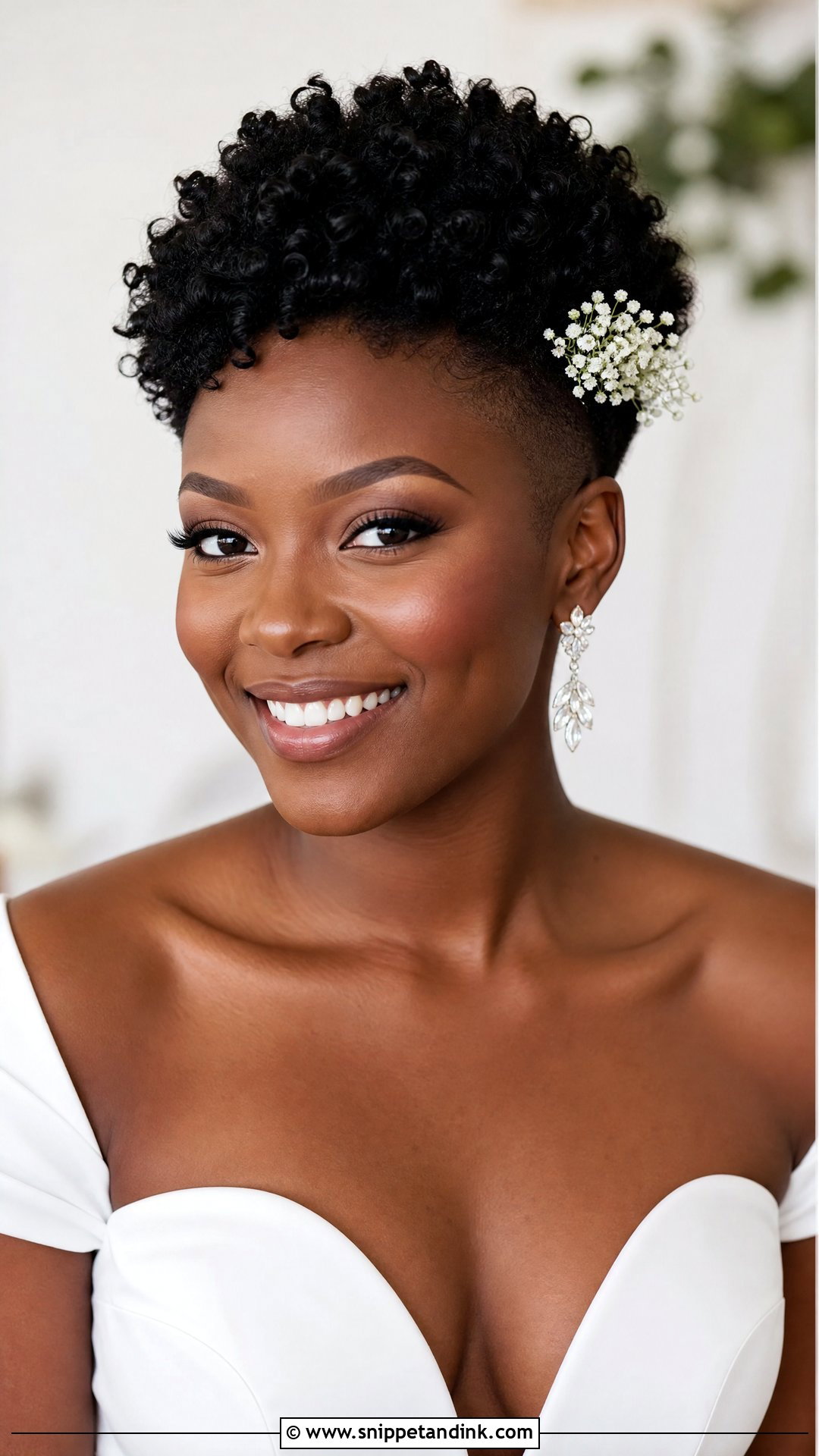
A tapered afro is the most modern shape here, with shorter faded sides and full volume on top. It puts your face and jewellery front and centre, so statement earrings and a clean gown suit it best. Book your barber or stylist for the taper three to five days before the wedding; a cut done the day before can look too sharp at the edges in photos. A defining cream on top adds polish, and a single small flower above one ear is the only accessory it needs.
18. Braided Bun With Edges for Bride
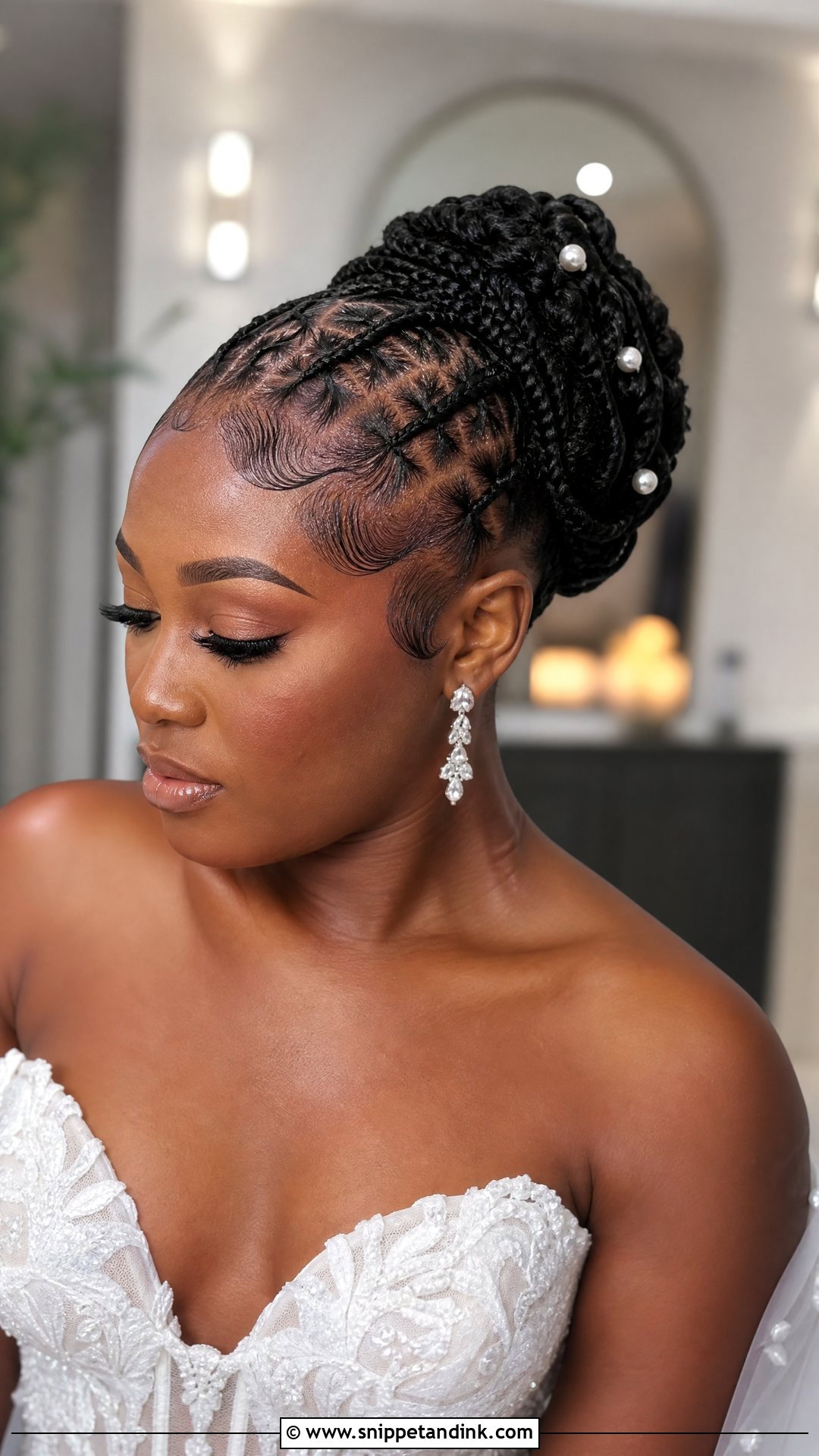
A braided bun is only as good as the edges around it. I lay the hairline last, after the bun is secure, so the brush and gel aren’t disturbed while I’m pinning at the back. The braids are coiled into a sculpted bun and hold all day, from the first look to the reception. Gold cuffs or pearl pins slot easily between the braids. If you have fine or fragile edges, skip heavy edge control and let them sit softer; a gentle finish looks better than a hairline that’s been pulled to look laid.
19. Rod Set Curls for Natural Bride
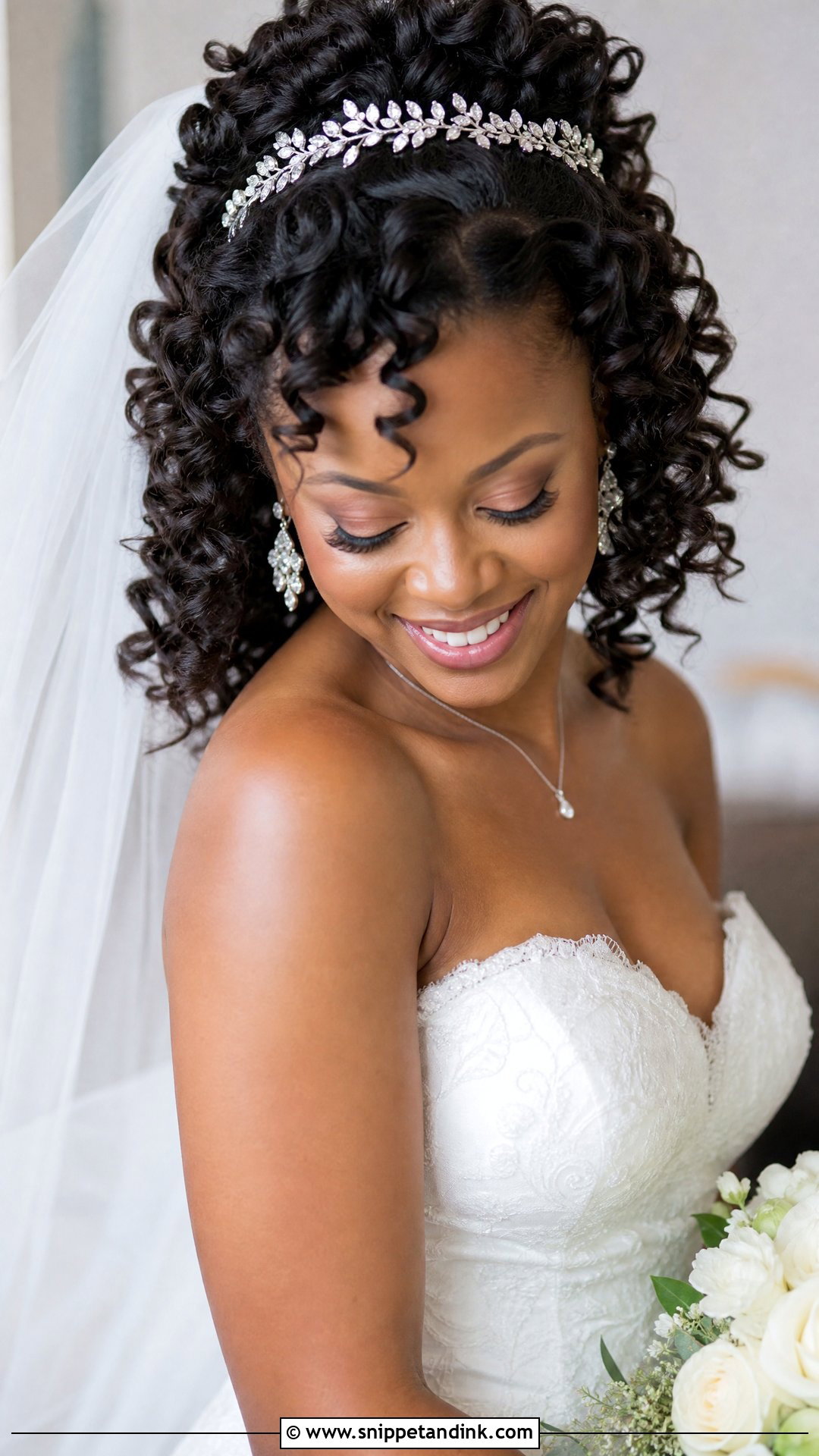
A perm rod set gives uniform, springy curls with real bounce. Damp hair is wrapped around rods and left to set completely, ideally overnight, then unrolled and separated gently with oiled fingers. Rod size decides everything: smaller rods give tighter spirals that last longer, larger ones a softer curl that drops faster in humidity. Worn down, it has lots of movement; pinned back on one side, it sits better under a veil. A headband or a small cluster of flowers finishes it.
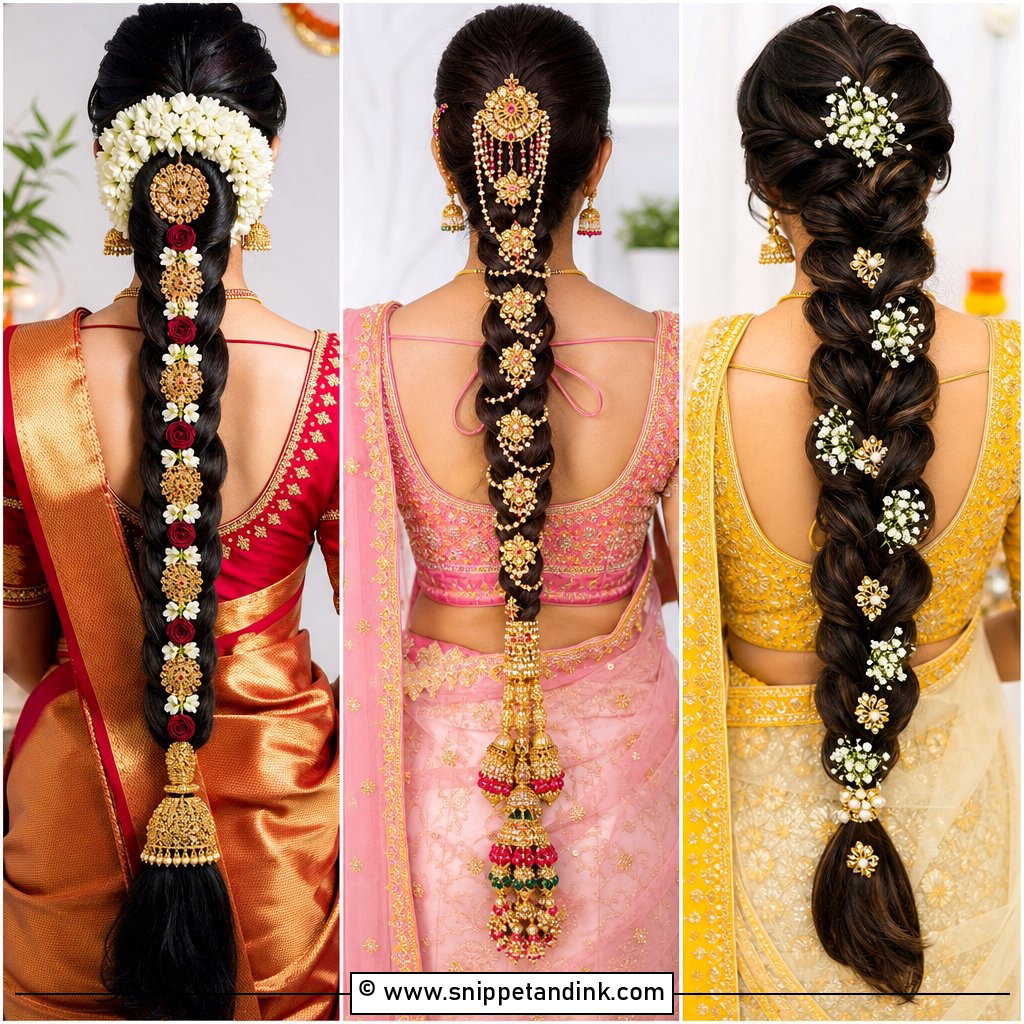
20. Crown Twist Updo for Black Bride
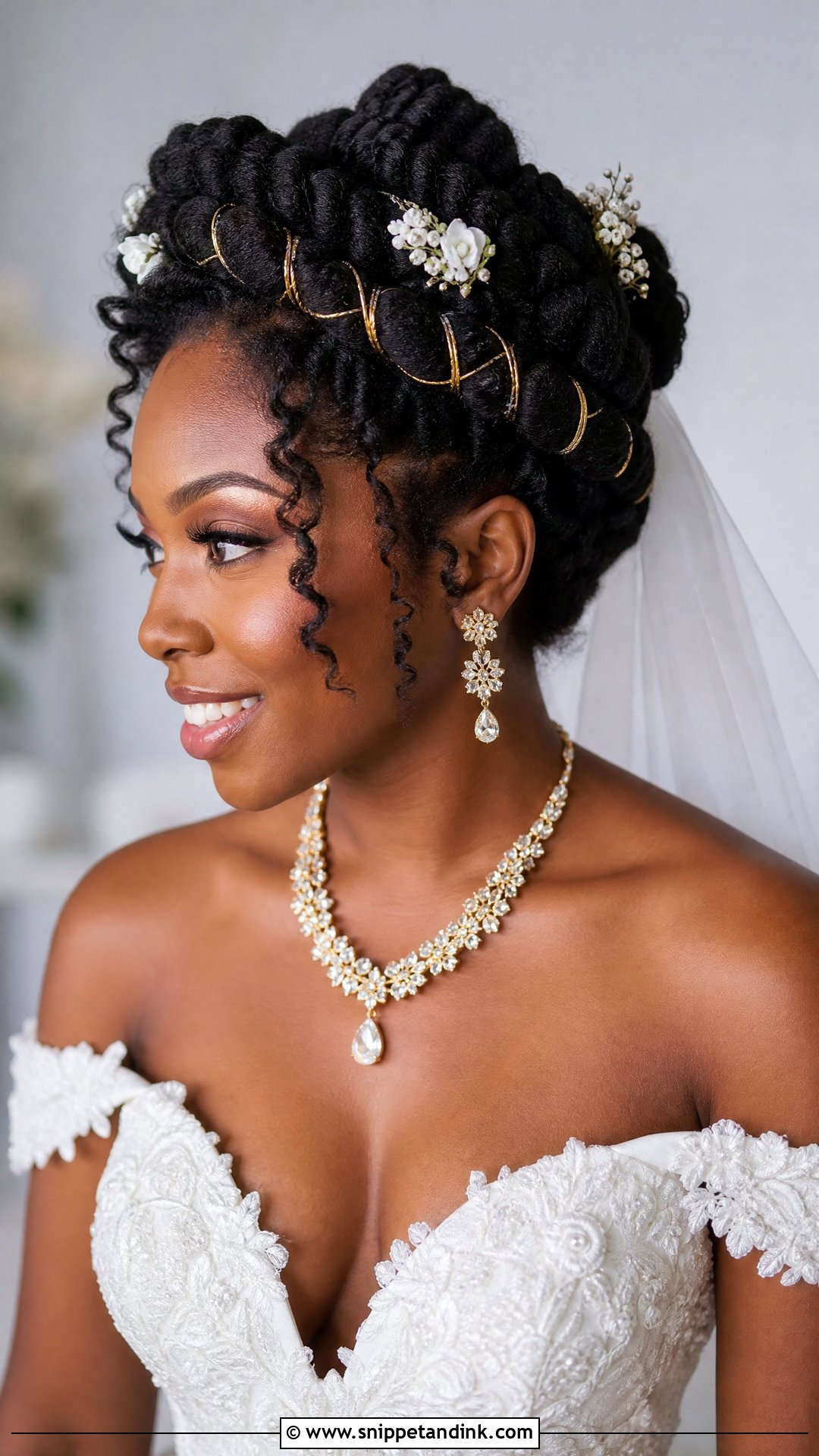
The crown twist updo wraps twisted sections all the way around your head, so it reads regal from the front, back and side. Twisting adds texture, while the updo keeps everything neat. Each twist has to be pinned where it starts and where it ends, or the crown loosens toward one side as the day goes on. Leave a few soft coils at the hairline. Pearls, gold thread or small blooms tucked between the twists add detail, and it pairs well with statement jewellery and a formal gown.
Securing a Veil in Coily Hair Without Snags or Dents
Veil combs are designed for straight hair, and pushed into coils they either slide out or catch and pull a curl loose. I fix that before the veil goes anywhere near your head.
I build a small anchor first: a tight mini braid or a flat twist exactly where the comb will sit, hidden underneath the top layer. The comb slides into that and two crossed bobby pins lock it down. On an afro or a loose twist-out, I sew a couple of small loops of thread to the comb so it can be pinned through rather than pushed in.
Plan the veil removal too. A heavy cathedral veil comes out after the ceremony photos, and whoever takes it out needs to lift the pins first, not tug the comb. Ask your bridesmaid to keep a satin scarf to hand for the car ride, and a small spray bottle of water mixed with leave-in, so any crushed curls can be revived in two minutes.
Reception Revival Kit
- A wide-tooth pick for lifting flattened roots
- Six to eight extra bobby pins in your hair colour
- Edge control and a small brush, if your edges are laid
- A satin scrunchie, in case you want to pineapple your curls for dancing
Your Texture, Your Timeline, Your Wedding Hair
From sculpted afros and twist-outs to locs, braids and polished buns, there’s a natural style here for every kind of wedding day. What decides which one you wear is your texture, the time you can give to the set or install, and how much weight your hair can comfortably carry for twelve hours. Book a trial, wear it for a whole afternoon, and notice what moves. Then add the pearls, cuffs or flowers that make it yours, and go enjoy the day in your own hair.
You'll Like These Ideas:


Leave a Reply