
Natural hair for Black brides can be regal or relaxed, protective or full of movement, and much of the choice comes down to how you want to feel when you catch yourself in a mirror at midnight. None of the styles below hide texture. They shape it. You’ll see defined coils, twist crowns, afro puffs, loc updos and braided halos, and I’ve written each one with the practical side in mind: how it carries pearls or a veil, how it copes with heat, and how much work it asks of you on the morning.
Pearls, Cuffs and Combs on Textured Hair
Accessories behave differently on coils. Dense hair grips a pin firmly at the root but swallows anything laid flat on the surface, while loose curls let a comb slide straight out. So before the style is finished, I plan where every accessory will sit and build a small anchor there.
- Pearl pins: angle them toward the scalp in a slight curve so the pearl stays on top. Bring more than you think you need, because a few always vanish into the hair.
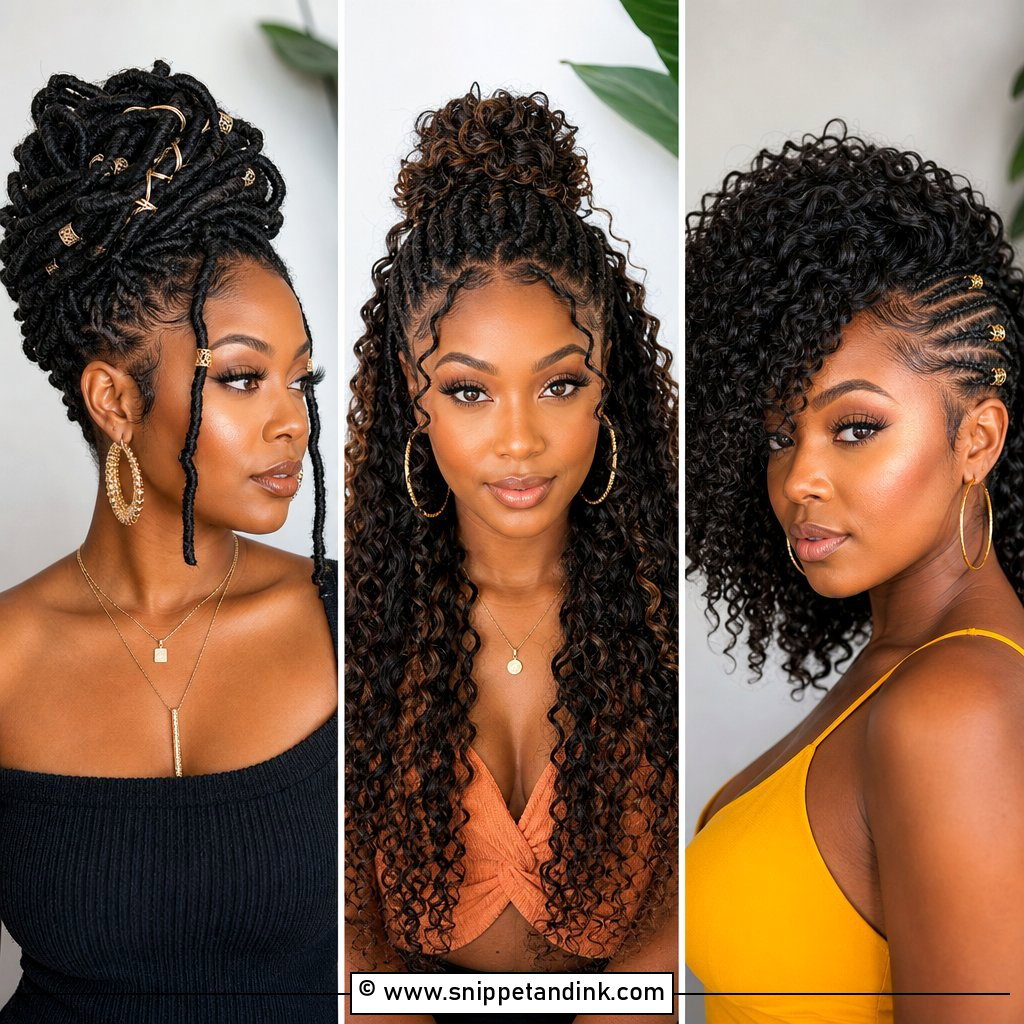
- Gold cuffs: these belong on twists, braids or locs, not loose curls. Slide them on before the style is pinned up, since closing a cuff on a finished updo tugs it out of shape.
- Combs: push them into a braid, a twist or a tight bun base with the teeth facing down, then flip them upward to lock.
- Headbands: choose fabric-lined or padded ones. A bare metal band can press a dent into coils and start a headache after a few hours.
Try everything at the trial, including the full veil. An accessory that feels weightless for five minutes can feel very different by the time the speeches start.
1. Natural Wedding Afro With Pearl Pins
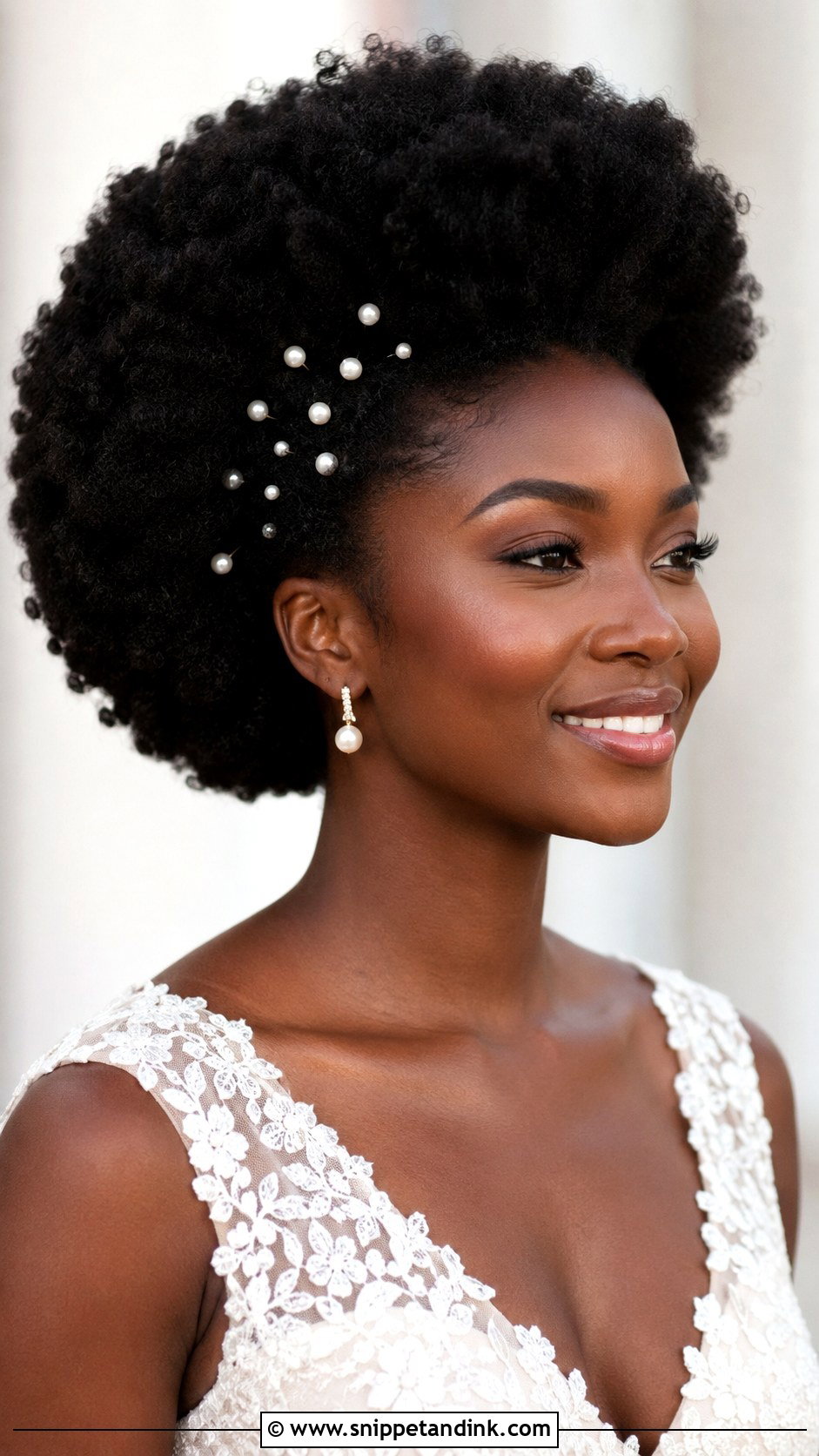
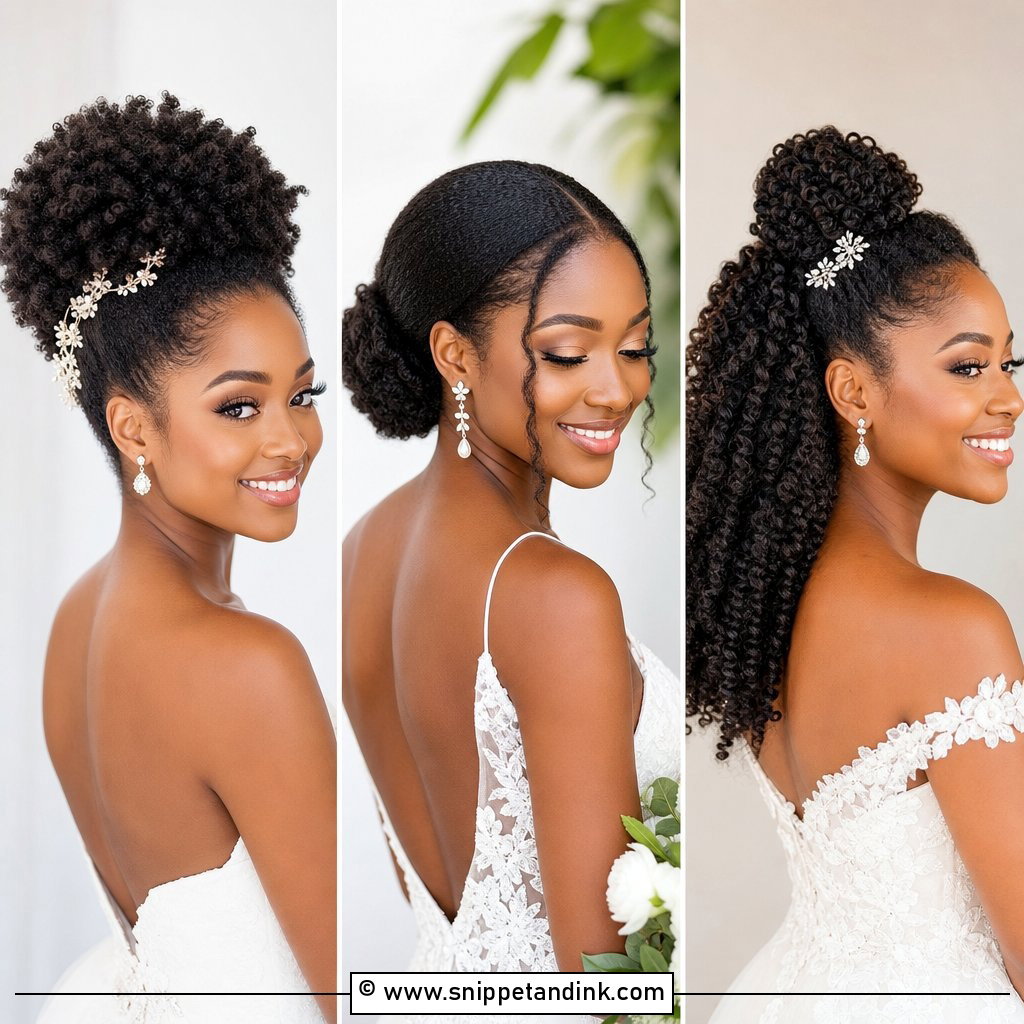
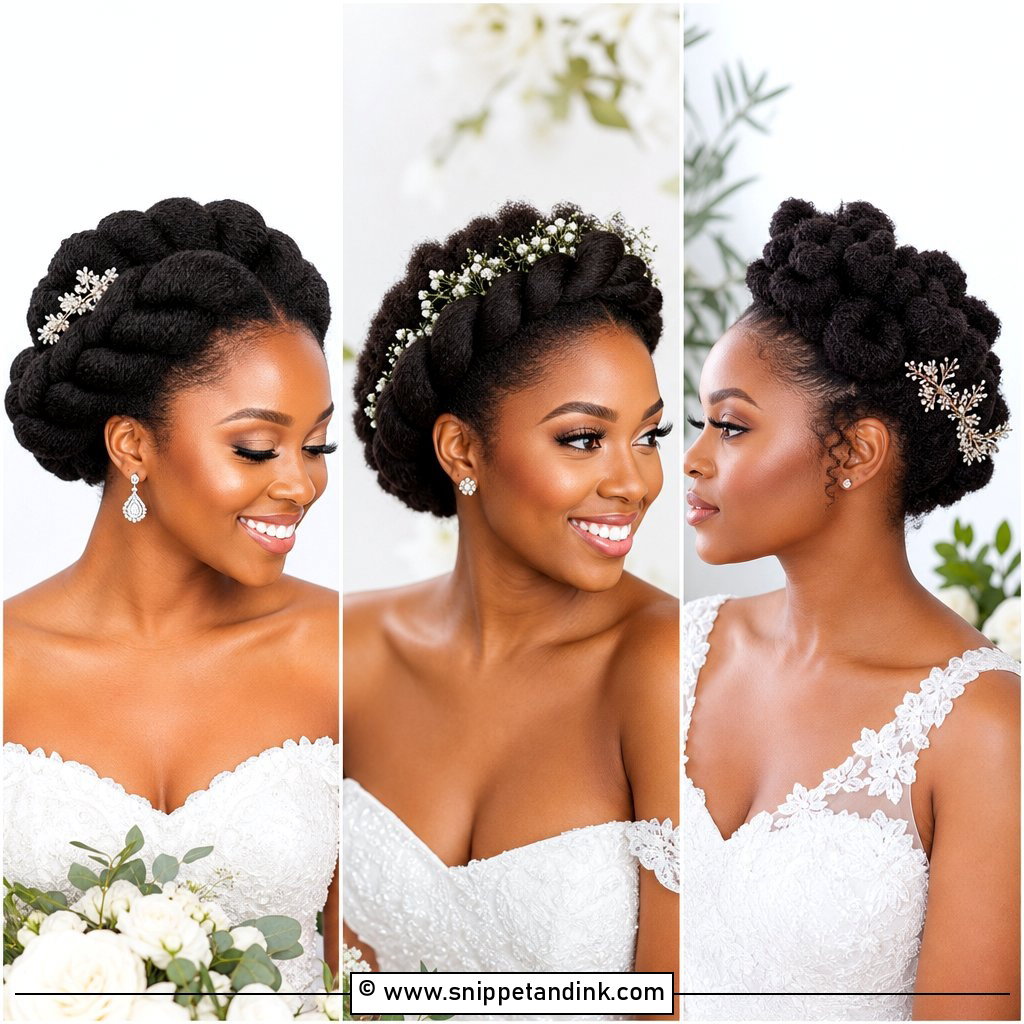
Pearl pins sit well in an afro only if they’re placed with intent. In a natural wedding afro, I push each pin in at an angle toward the scalp so the pearl rests on the surface while the prong grips near the root; pins slid in flat sink out of sight within the hour. Grouping them around a side part looks more deliberate than scattering them. The shape comes first, though: hydrated hair, picked out just enough to round the silhouette while the ends keep their coil definition. A light water mist before photos brings it back to life.
2. Natural Wedding High Puff With Veil
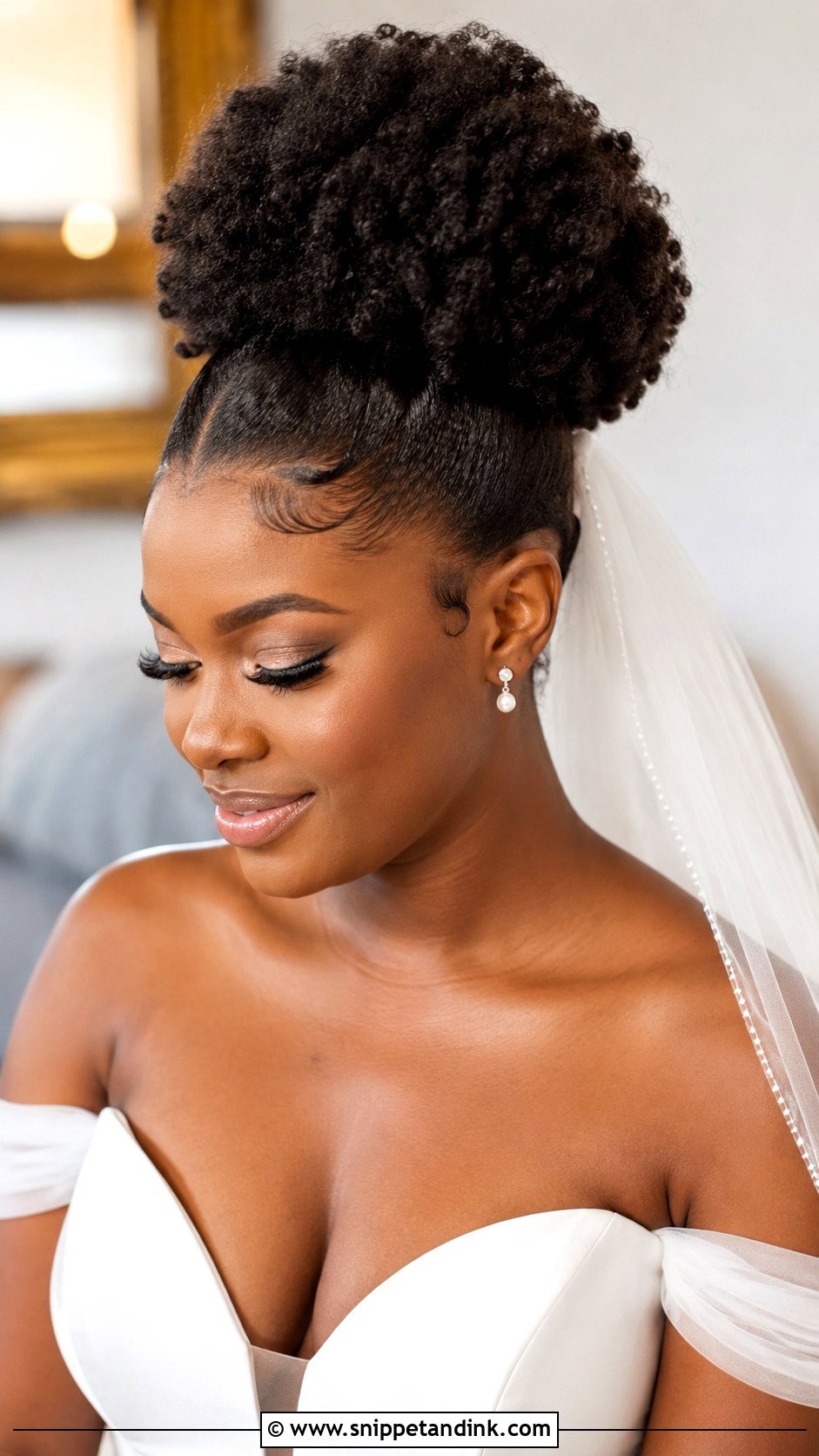
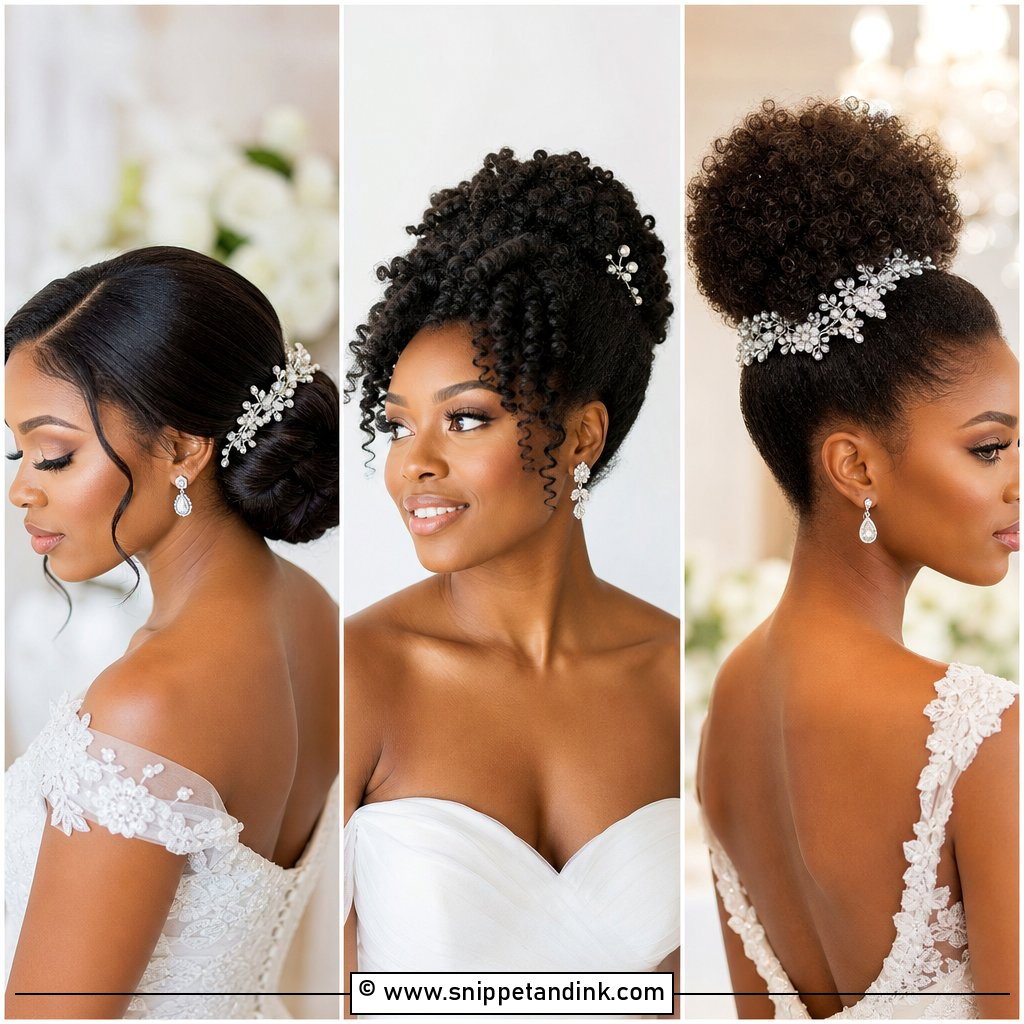
The veil is the awkward partner for a puff. A comb has nothing to hold if it’s pushed into loose volume, so I attach the veil at the base of the puff, where the hair is gathered and smoothed, or to a small hidden braid underneath. Medium to long hair gives enough length to gather without strain. Decide early whether you want laid baby hairs or a softer natural edge, because laid edges take practice to look neat, and that practice shouldn’t be happening on the wedding morning. Gold cuffs or a few small florals can sit at the base without hiding the shape.
3. Natural Wedding Low Bun With Coils
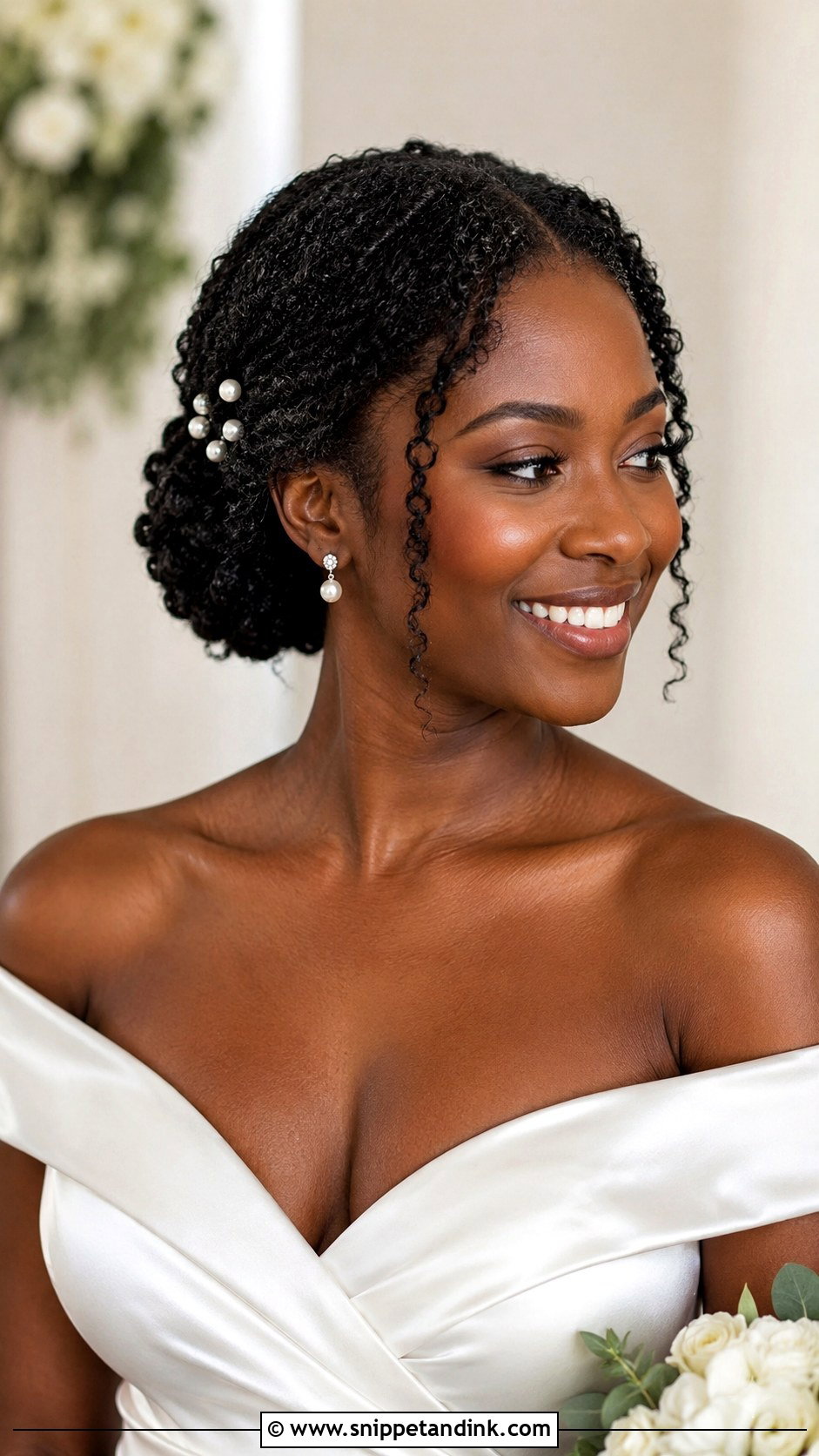
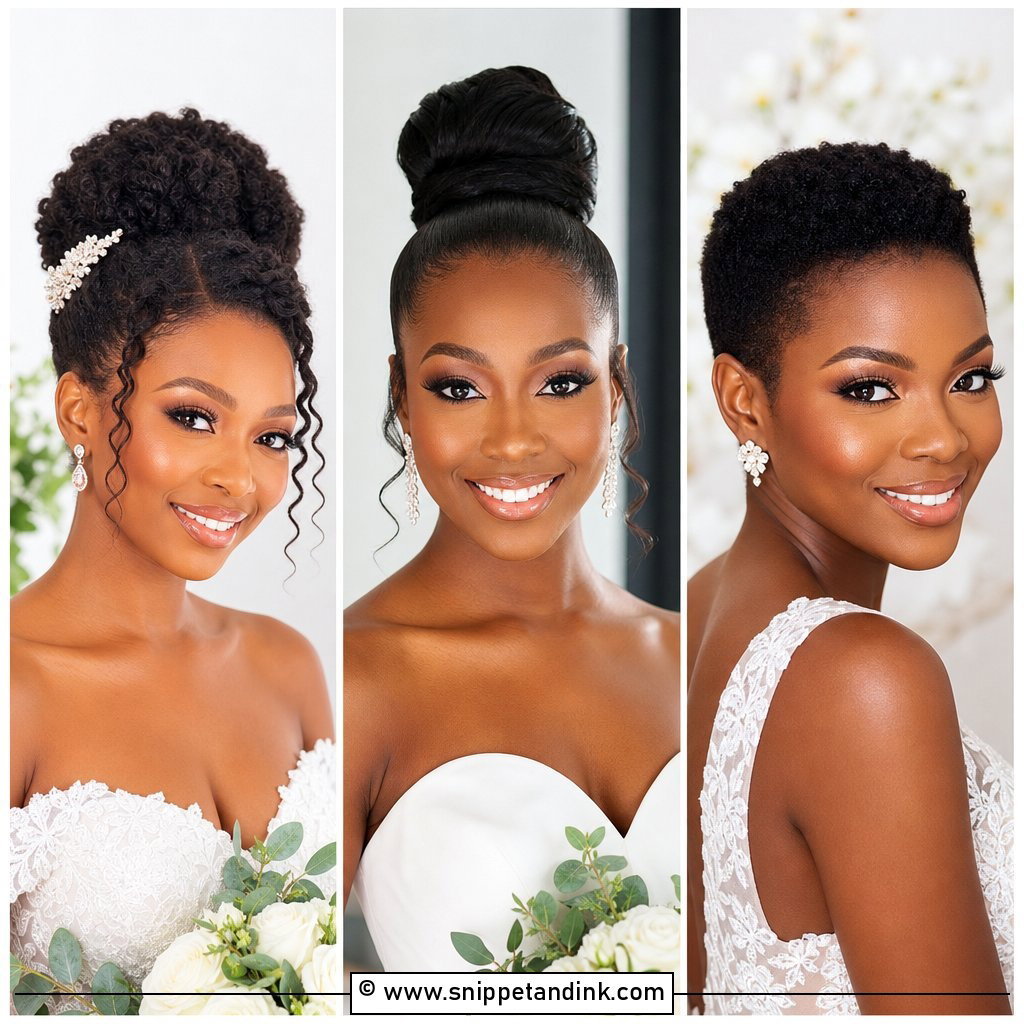
I like a coil bun to look like coils. Pull a stretched bun too smooth and it could be anyone’s hair; build it from tucked coils or twists, and the texture reads clearly in close-up shots. The front can be smoothed back or parted, and I decide that with the veil on, since a centre part splits the face symmetrically under tulle. Go light with the edge control. A couple of curly pieces left near the ears soften the line without any heat.
4. Natural Wedding Twist Crown
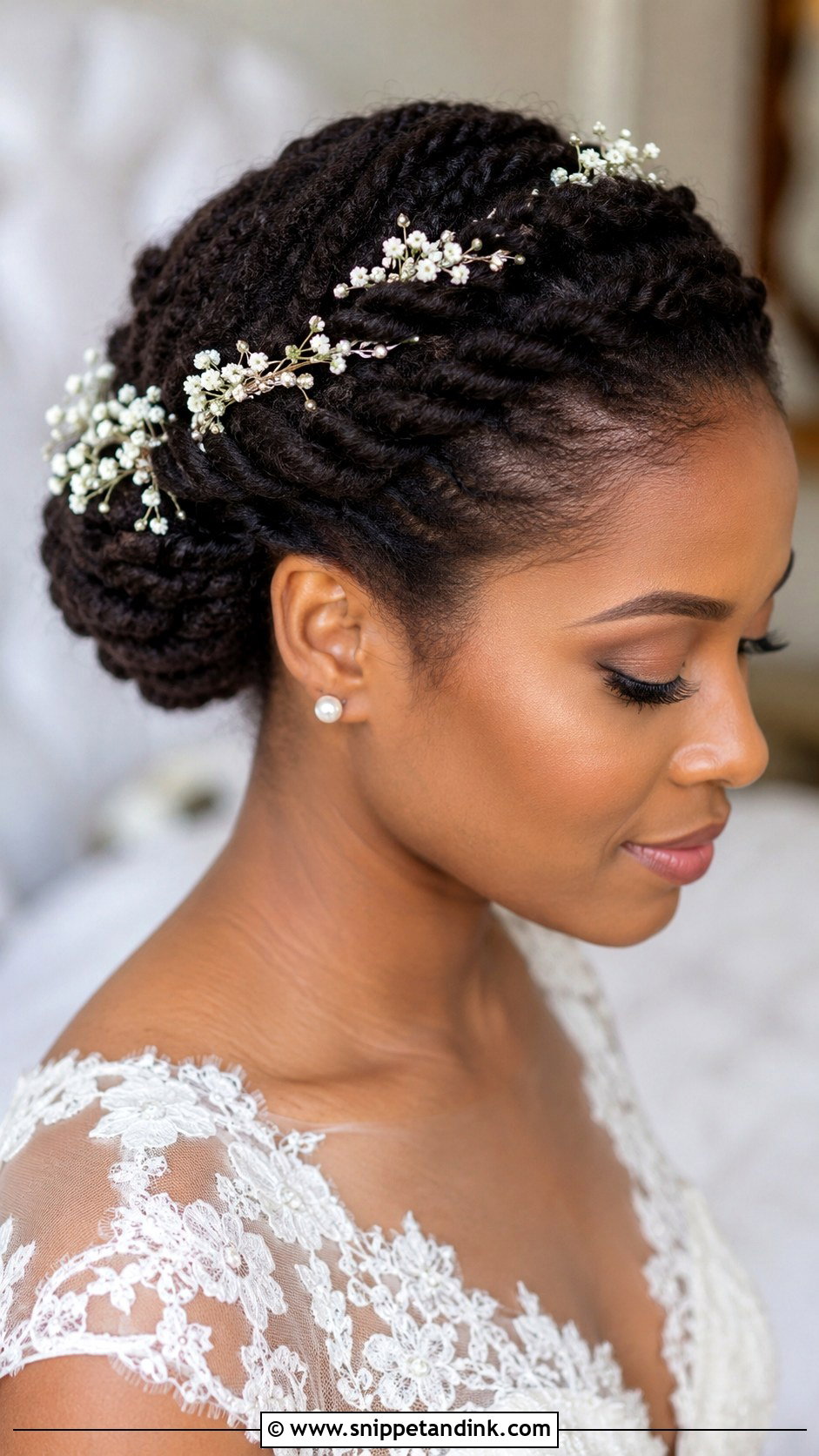
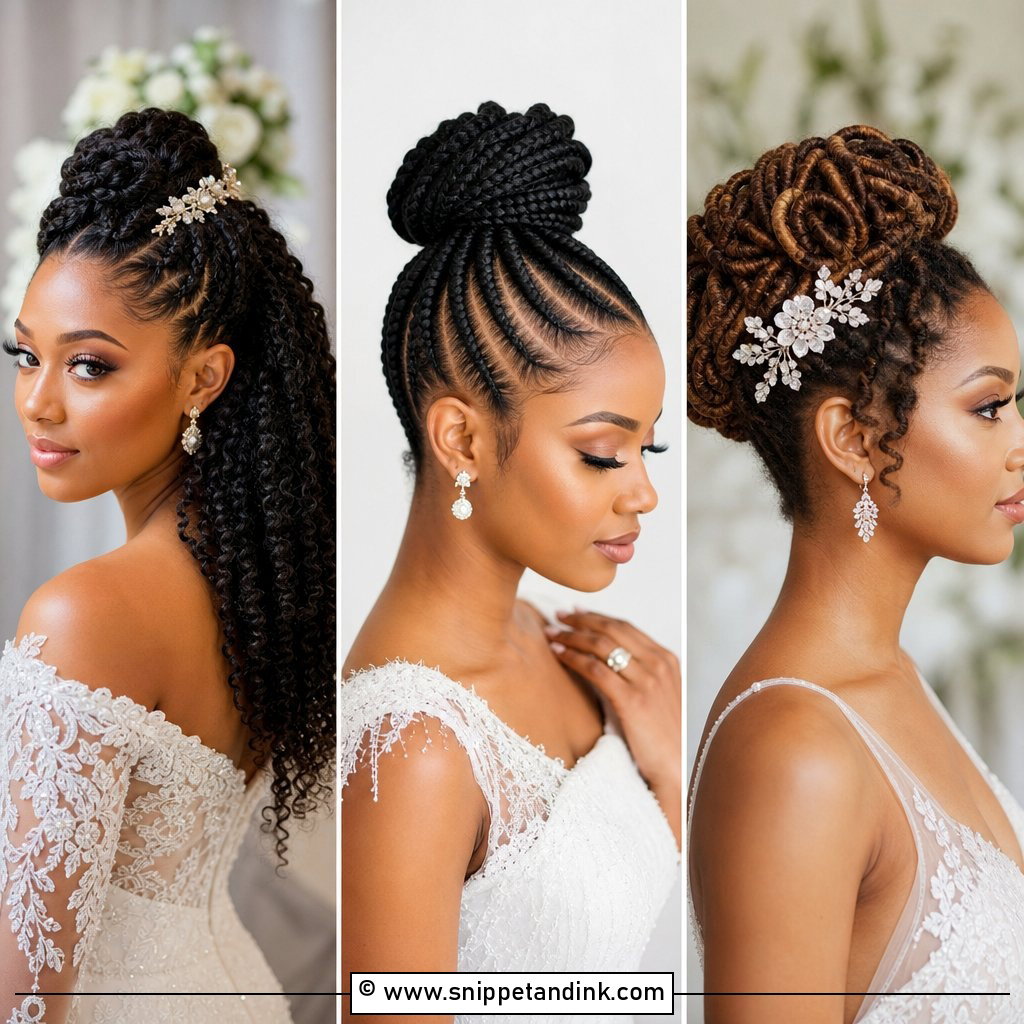
A twist crown keeps hair off the shoulders while showing pattern all the way round. The hair is flat twisted or two-strand twisted around the head, and where the ends finish matters. I tuck them into a small low bun if there’s a veil, and into a little puff at the back if there isn’t. Fresh white flowers along the twist path look delicate, but many brown at the edges within hours in summer heat, so I’d choose sturdier blooms like spray roses or switch to pearls. The twists themselves shrug off warm weather.
5. Natural Wedding Wash And Go Curls
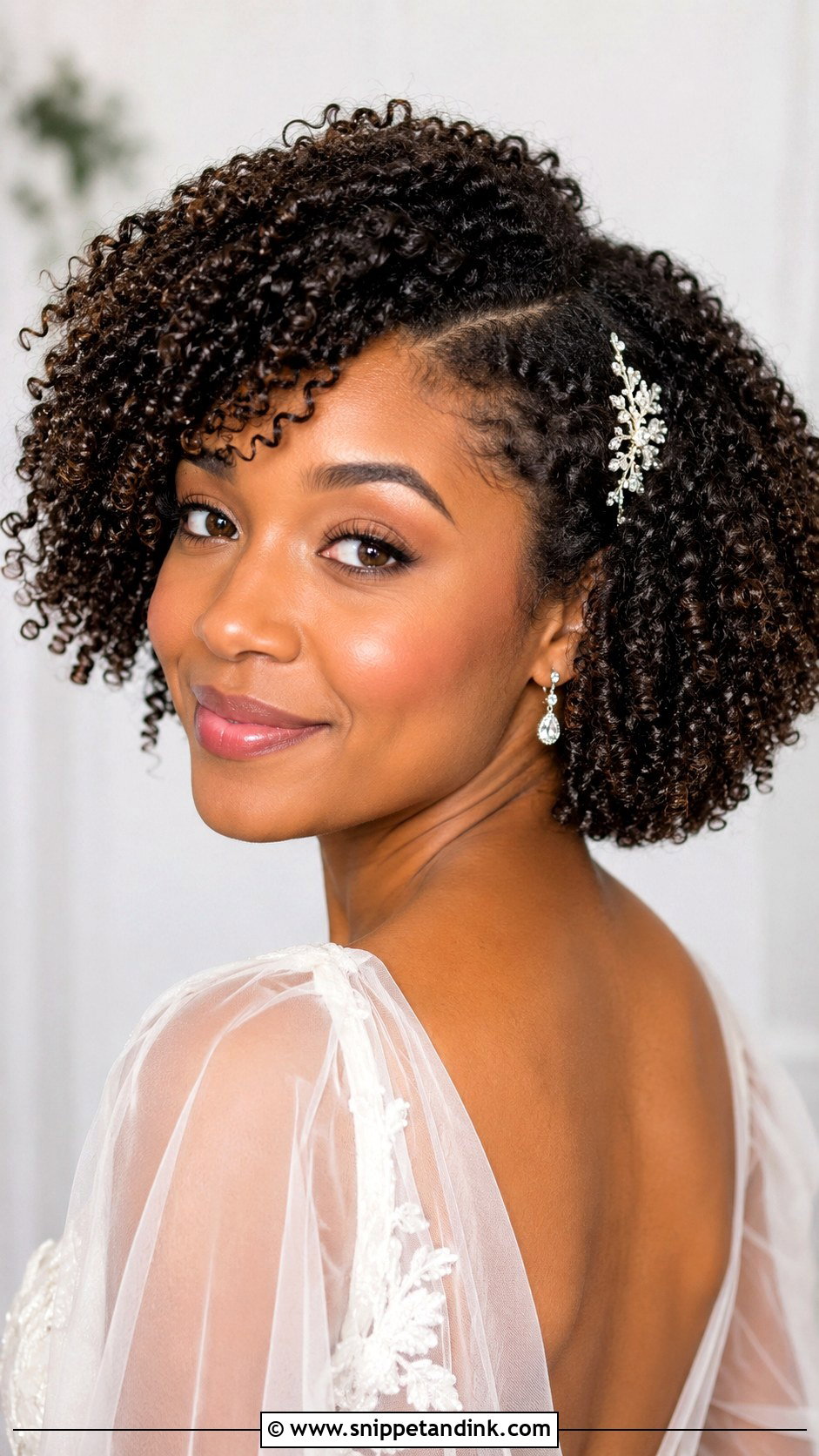
Wash and go curls depend on the trim and the gel test more than anything else. Book the trim three or four weeks out so the ends have settled into clumps; a cut the day before can leave blunt ends that fall unevenly. A strong-hold gel controls frizz, but some leave a cast that won’t break without turning crunchy, so try yours at the trial and watch how it behaves as it dries. Changing the part, or having none at all, alters the shape more than most brides expect. One small crystal comb is all the decoration it needs.
6. Natural Wedding Flat Twist Updo
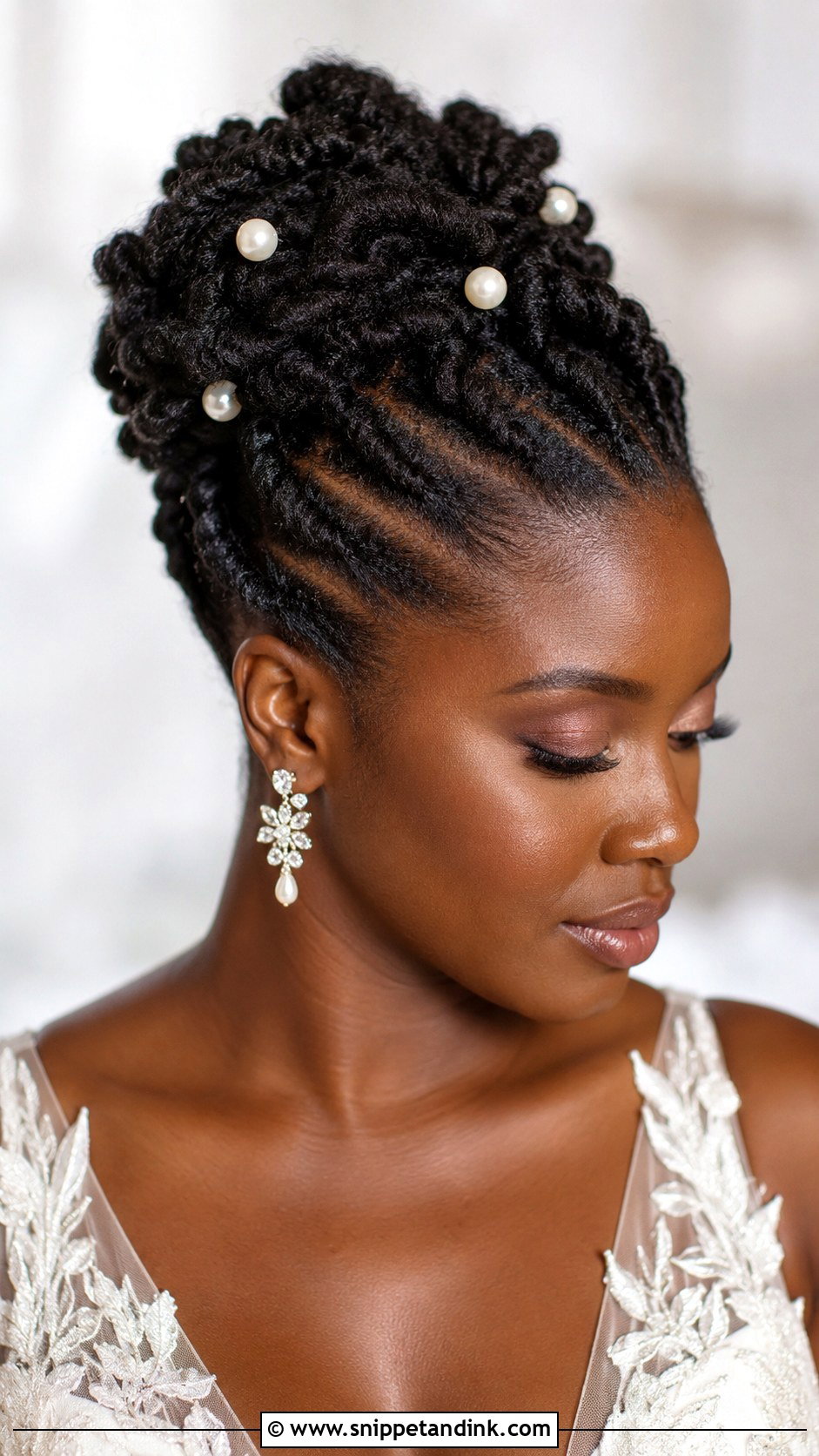
Flat twists protect the ends, which is the main reason I suggest them to brides partway through a growth journey who don’t want heat anywhere near their hair. They can sweep diagonally across the head, a direction that gives movement even though every strand is secured. Because the hair stays lifted off the face, tiaras and statement earrings both show clearly. A few small coils left at the nape stop the back from looking severe in the processional photos.
7. Natural Wedding Bantu Knot Updo
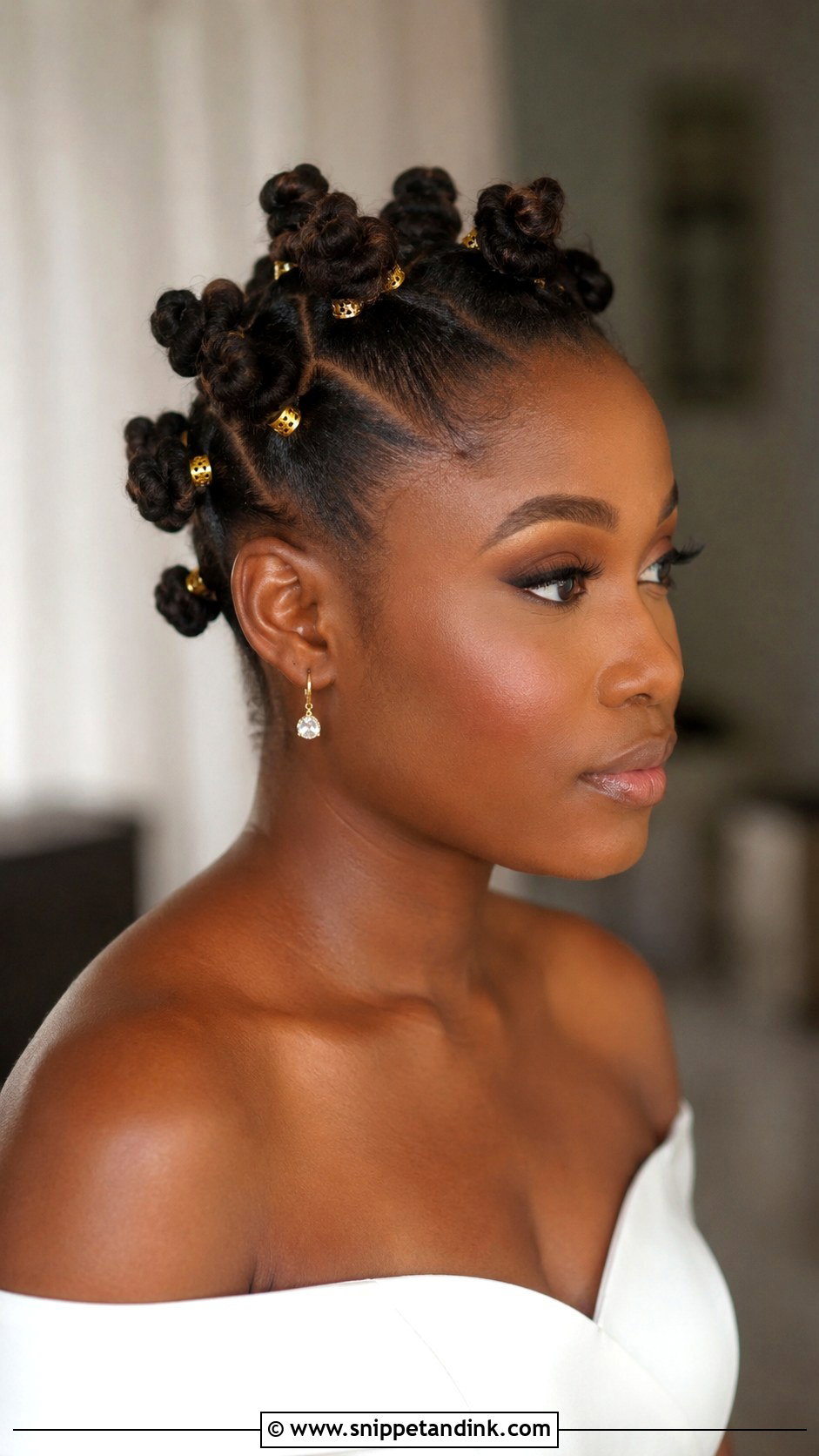
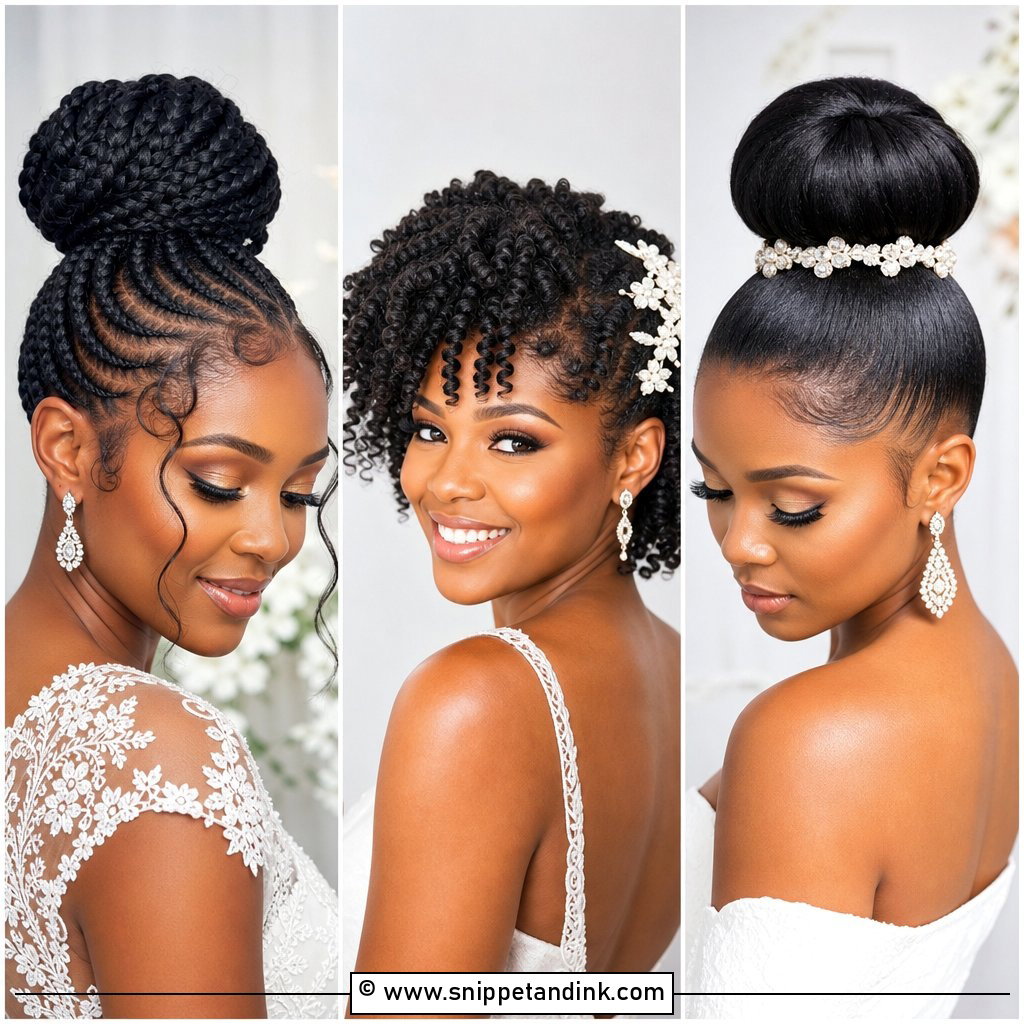
Size changes everything with a natural wedding Bantu knot updo. Smaller knots look delicate and take longer to do; larger knots read modern and go faster. Clean parts are non-negotiable, and so is moisture before styling, because dry hair wound tightly can snap where it twists. A minimalist veil pinned under the last row of knots avoids squashing them. I’d keep heavy cuffs off the front knots, where their weight can tip a knot forward.
8. Natural Wedding Curly Frohawk
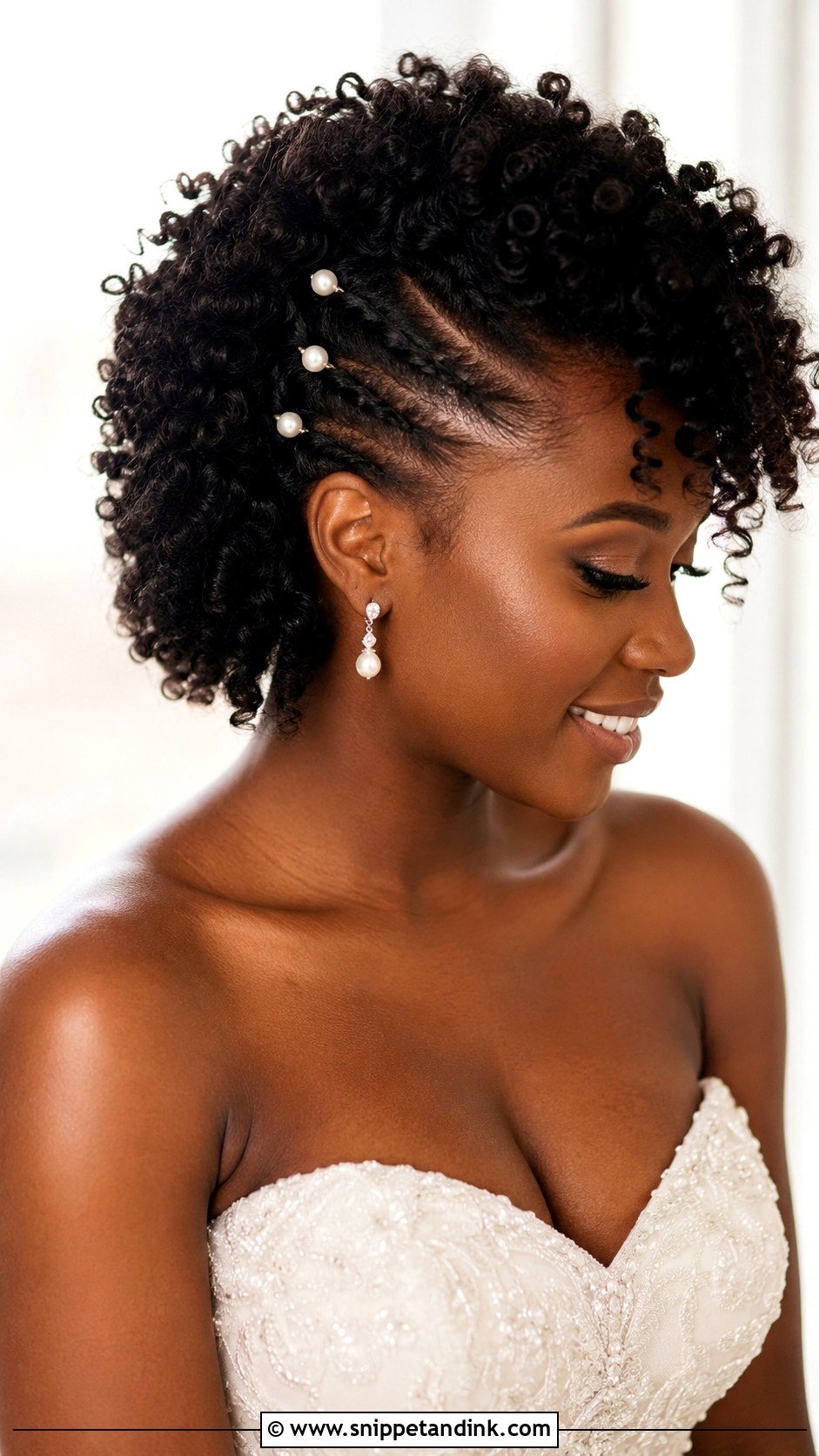
The frohawk is for a bride with a sense of theatre. The sides are braided or flat twisted upward and the curls stay full along the centre, so the silhouette is tall and narrow from the front and bold in profile. That narrow line suits a round face particularly well. The side twists take all the strain, so they need to be firm and still comfortable. Pearl pins along the twisted sides look intentional, while the curly centre is better left bare, since it already carries the shape. Strapless and high-neck gowns both sit nicely beneath it.
9. Natural Wedding Loc Updo
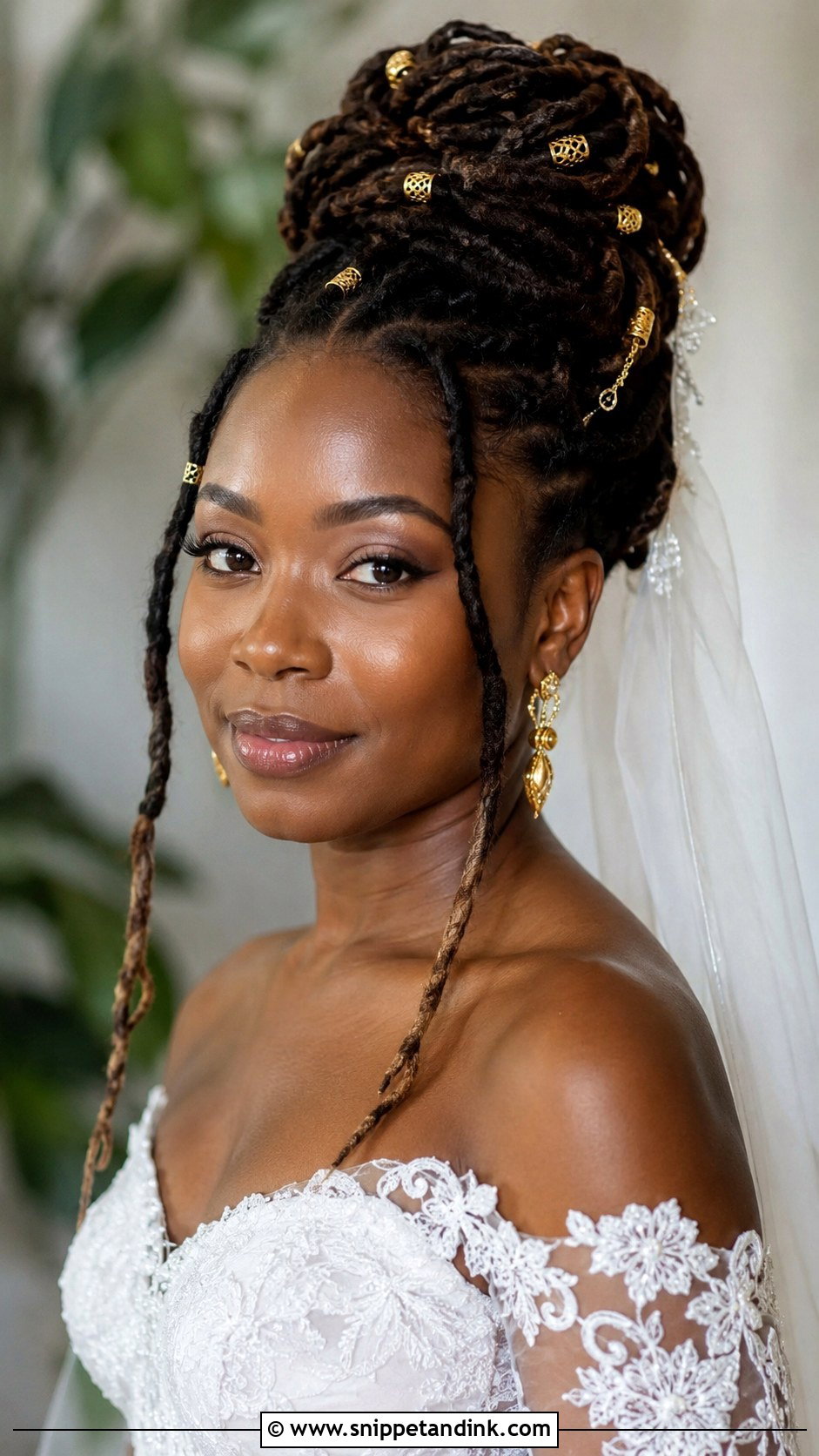
Thickness matters as much as length for a natural wedding loc updo. Thick locs fold into a low chignon easily but resist tight curves, while thinner locs can be wrapped into more intricate crown shapes. Your loc journey is part of the look, so I’d rather show the locs’ character than force them into a shape that hides it. A comb tucked at one side and a couple of locs left loose around the face take weight off the scalp. Wear the headpiece at the trial too, because locs are heavier than they look and every accessory adds to that.
10. Natural Wedding Twist Out With Side Part
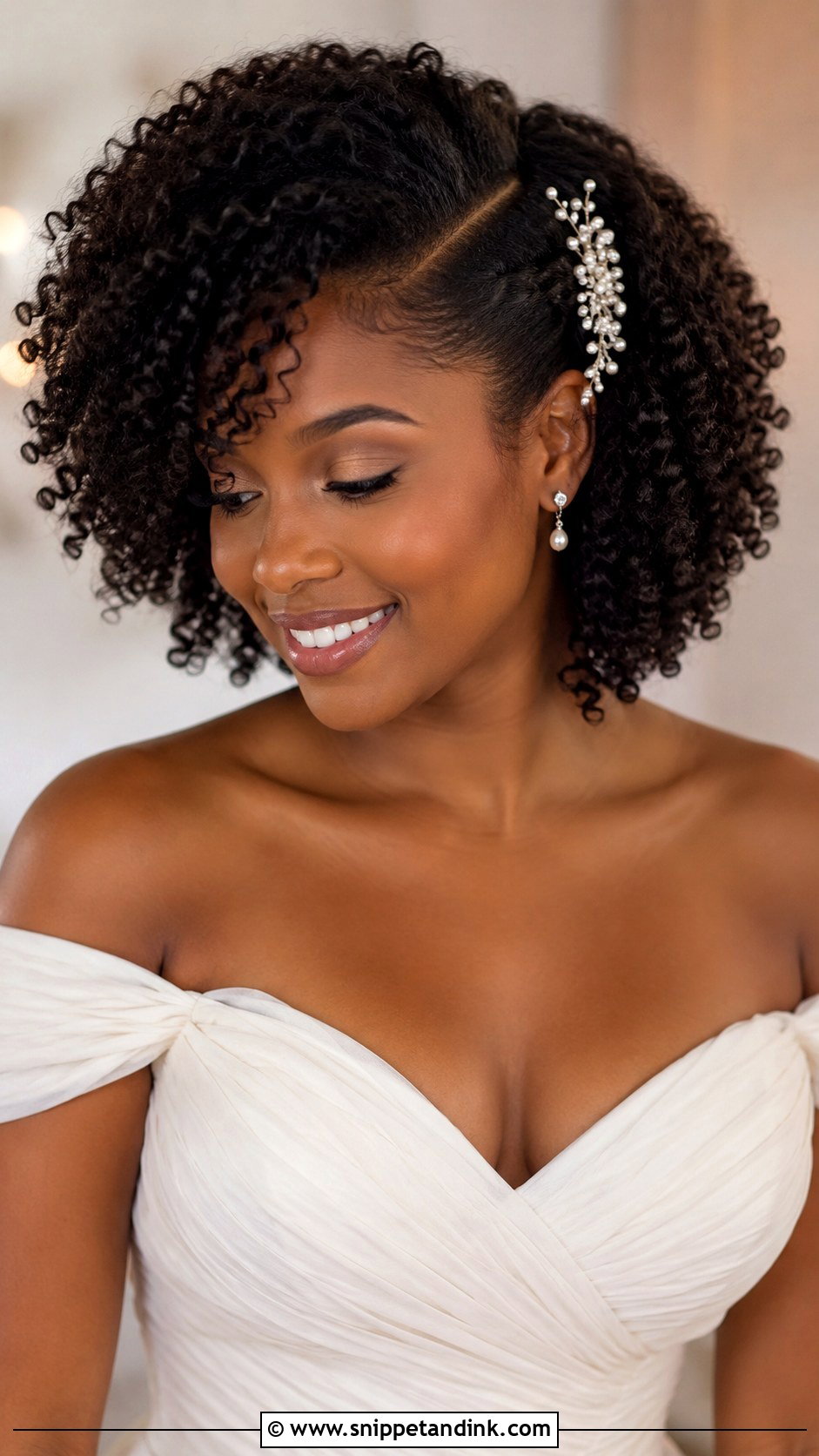
A deep side part does two jobs here. It frames the face, and it gives you a lighter side, which is where the comb or flower goes. The twist out underneath has to be set and fully dry before it’s separated, or the curl pattern blurs. On shorter hair I keep the shape rounded; on longer hair, slightly stretched. If your curls frizz quickly, I’d point you to this over a loose wash and go, because twisted sets hold their shape for longer.
11. Natural Wedding Braided Crown With Curls
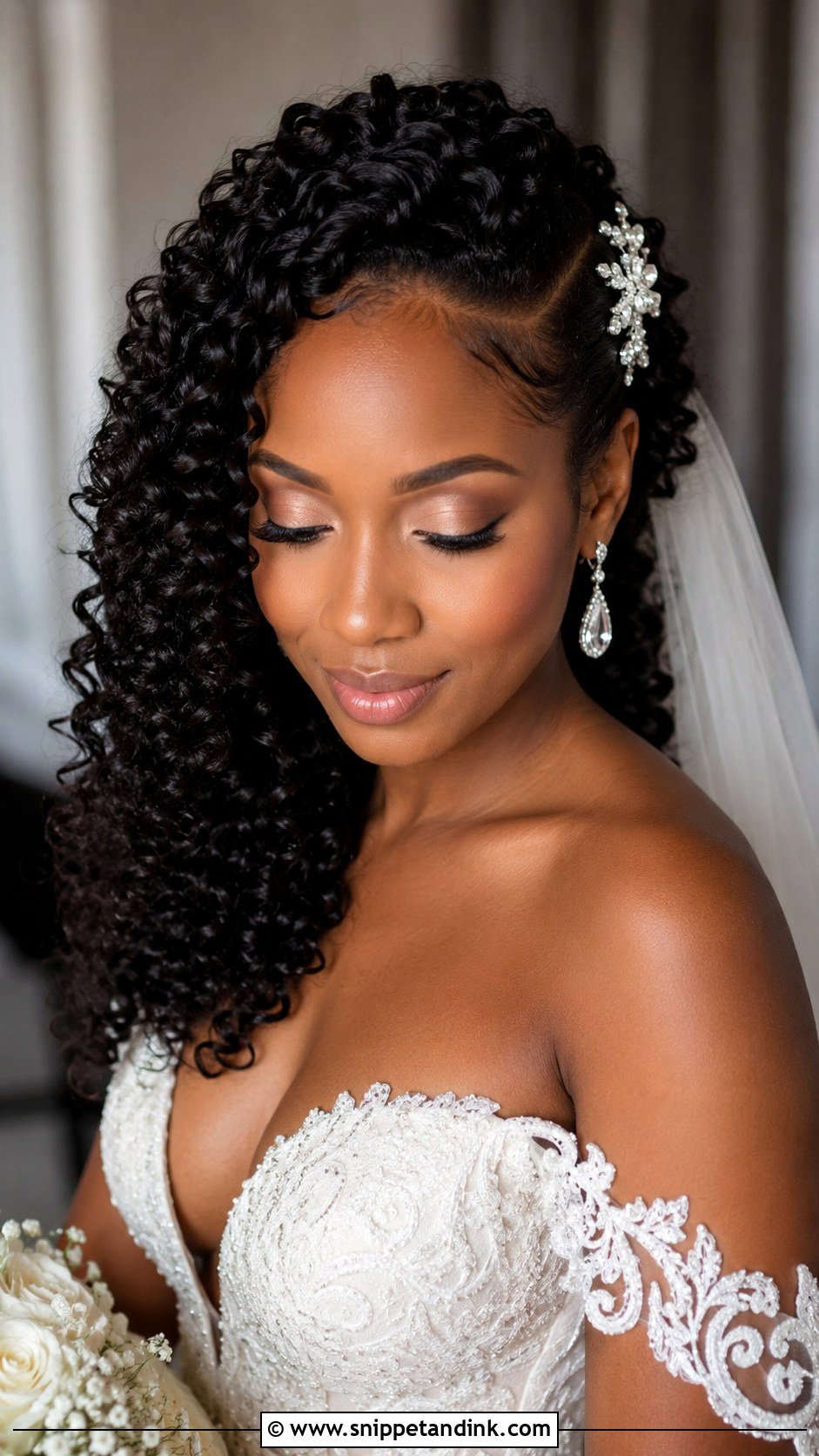
Pairing a crown braid with loose curls gives you a protected hairline and softness everywhere else. The braid controls the front, which is the part photographed most, and the curls stay free at the back. Moisturise those curls well, since dry ends look rough beside a neat braid in close-up. Pearl pins tucked into the braid hold far better than pins in curls. It’s a smart pick for outdoor ceremonies where wind would otherwise blow the front across your face.
12. Natural Wedding TWA With Hair Accessories
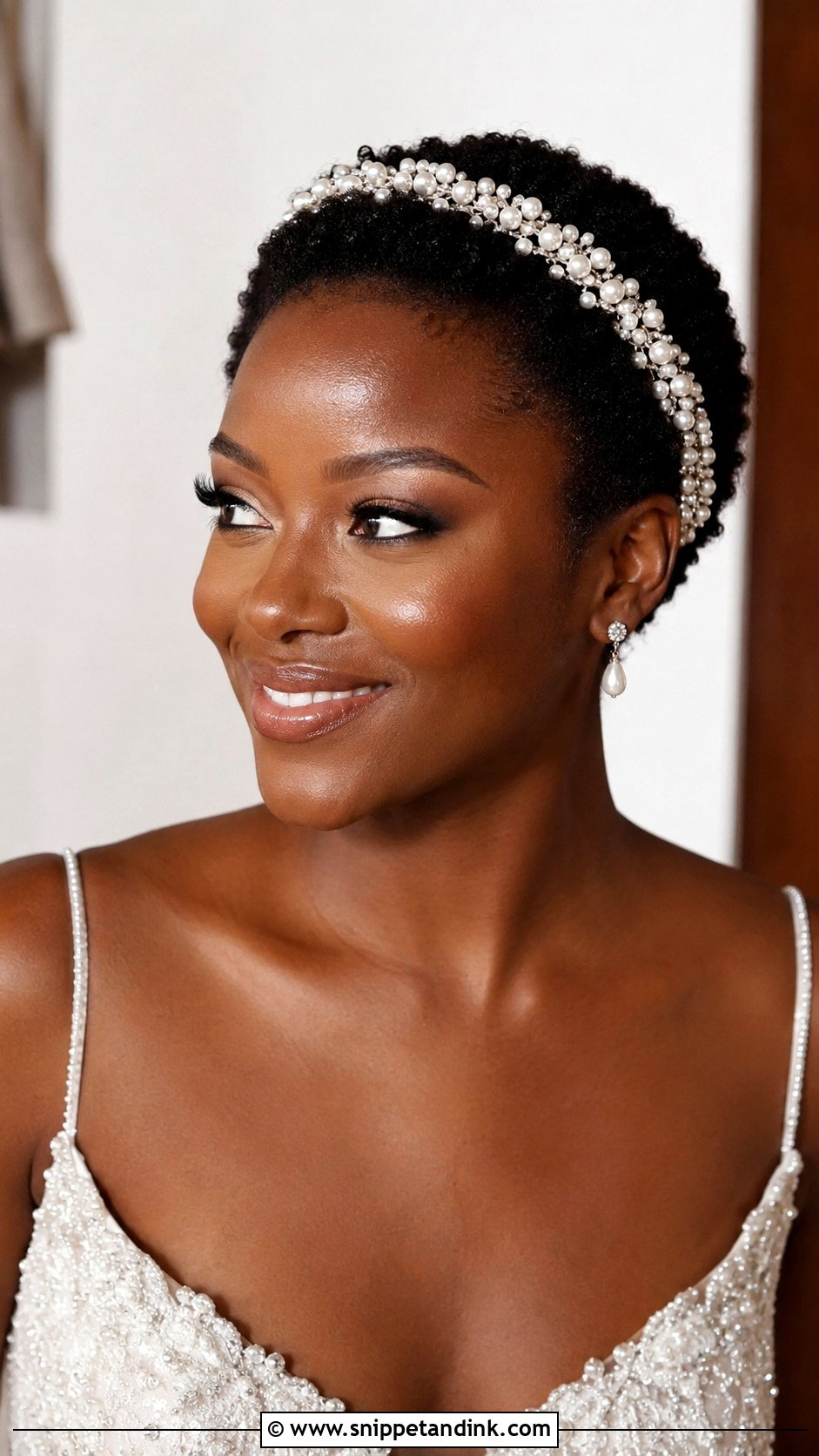
A TWA is the most comfortable bridal style on this list, and the one where a fresh shape matters most. Get it trimmed about a week before so the outline looks clean but not raw, then keep it moisturised and defined with a curl cream. The accessory does the bridal work. A pearl headband sits well against short coils, while gold clips placed to one side change the mood entirely. Brushing the coils slightly forward softens the face. With the neck and ears completely clear, your earrings and neckline get the attention.
13. Natural Wedding Halo Braid
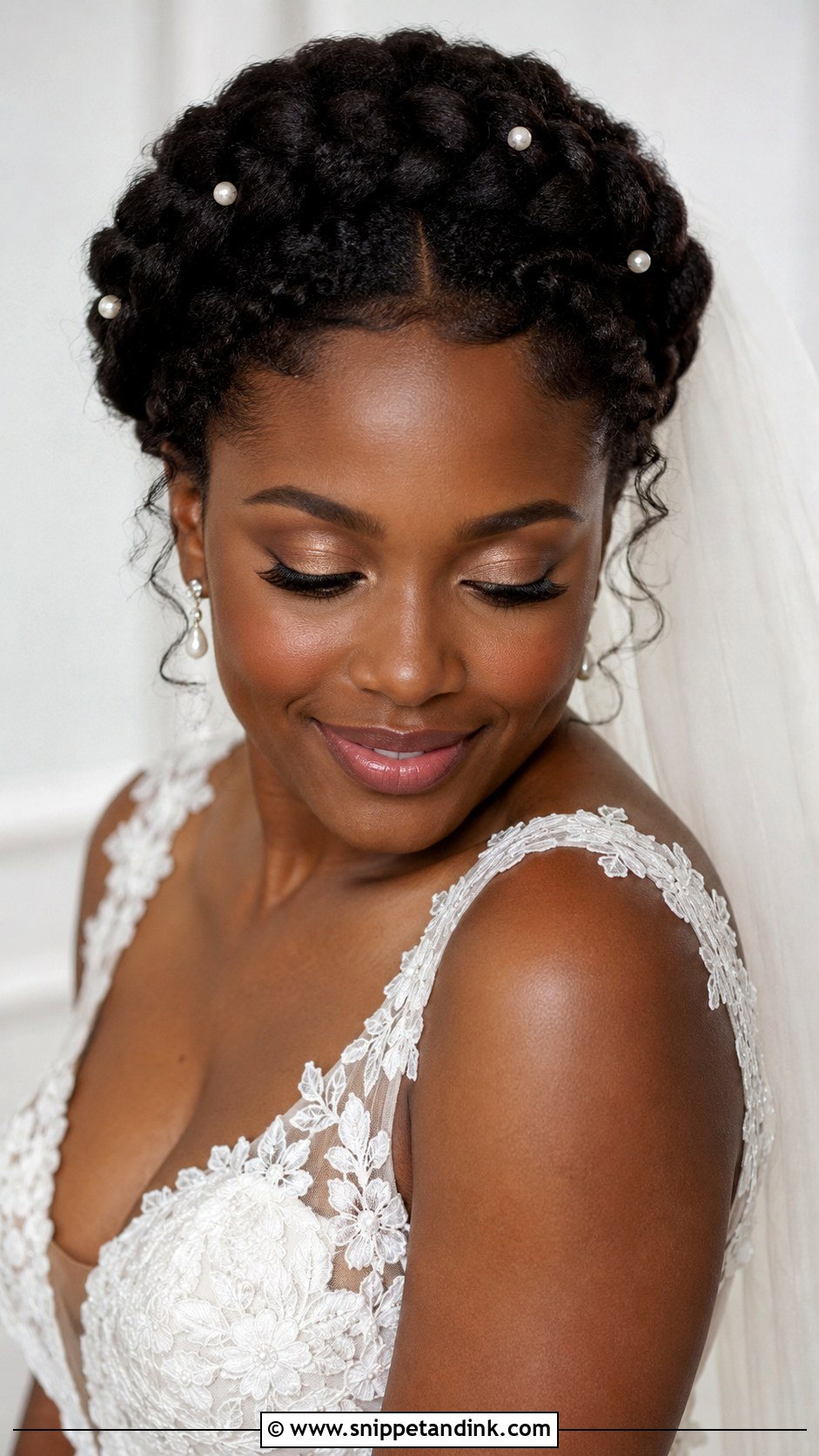
Once a halo braid is in, it needs almost no touching, which is why I suggest it to brides who’d rather not think about their hair all day. Added hair gives fullness to shorter lengths, but choose extension hair that matches your curl pattern rather than smooth braiding hair, so the braid looks like it grew there. The front can be sleek or softly textured. Hair vines lie flat along the braid without slipping. It sits as comfortably with a plain crepe gown as with a heavily beaded one.
14. Natural Wedding Mini Twists Updo
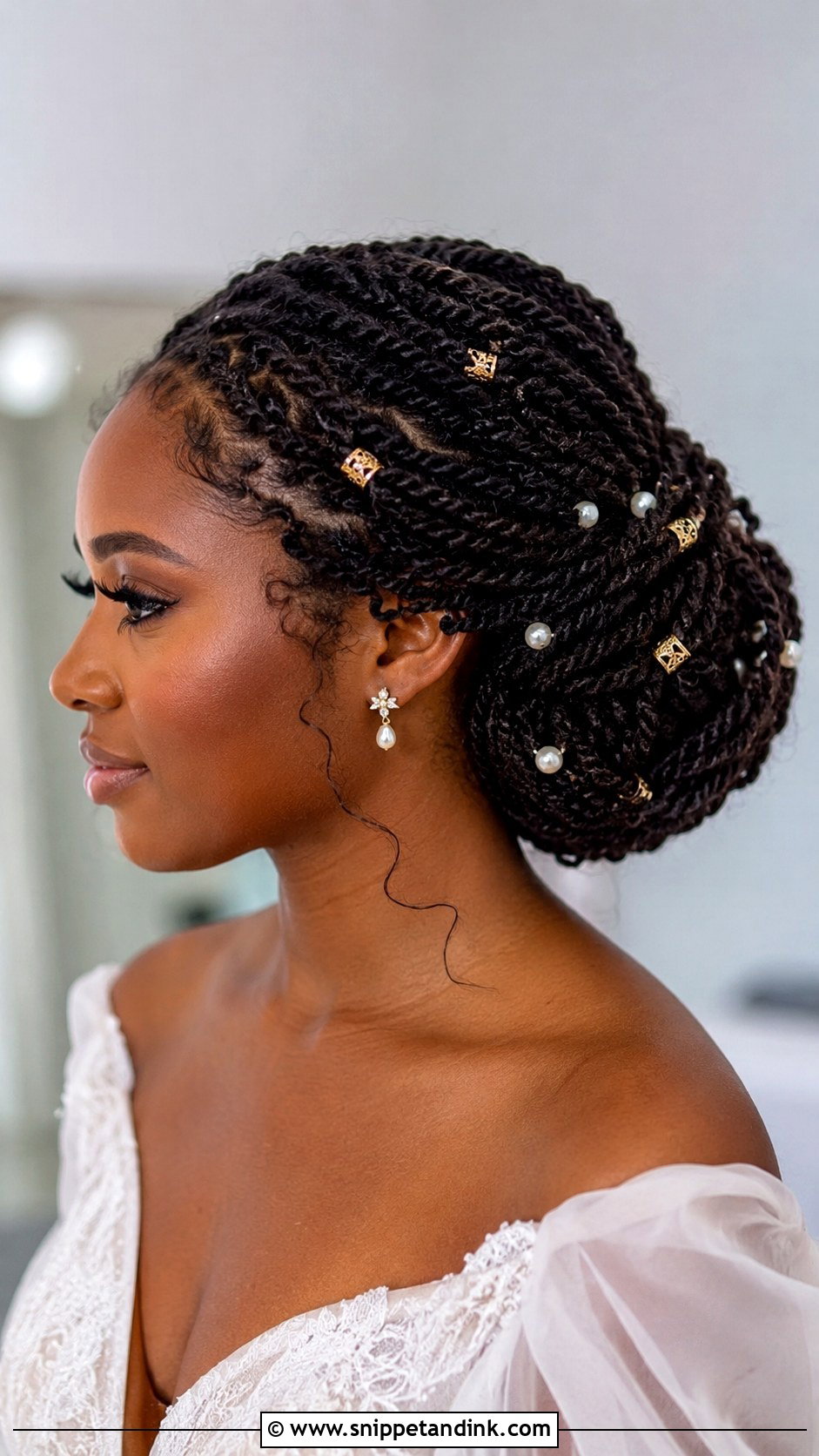
Mini twists are installed days ahead, so on the wedding morning they only need refreshing and pinning, which is a real relief for a bride who’s nervous about her hair. Gather them into a low bun or stack them at the crown; they’re flexible because each twist moves on its own. The install itself can take many hours, so leave a comfortable gap before the wedding. A light shine spray before photos stops the twists looking dry.
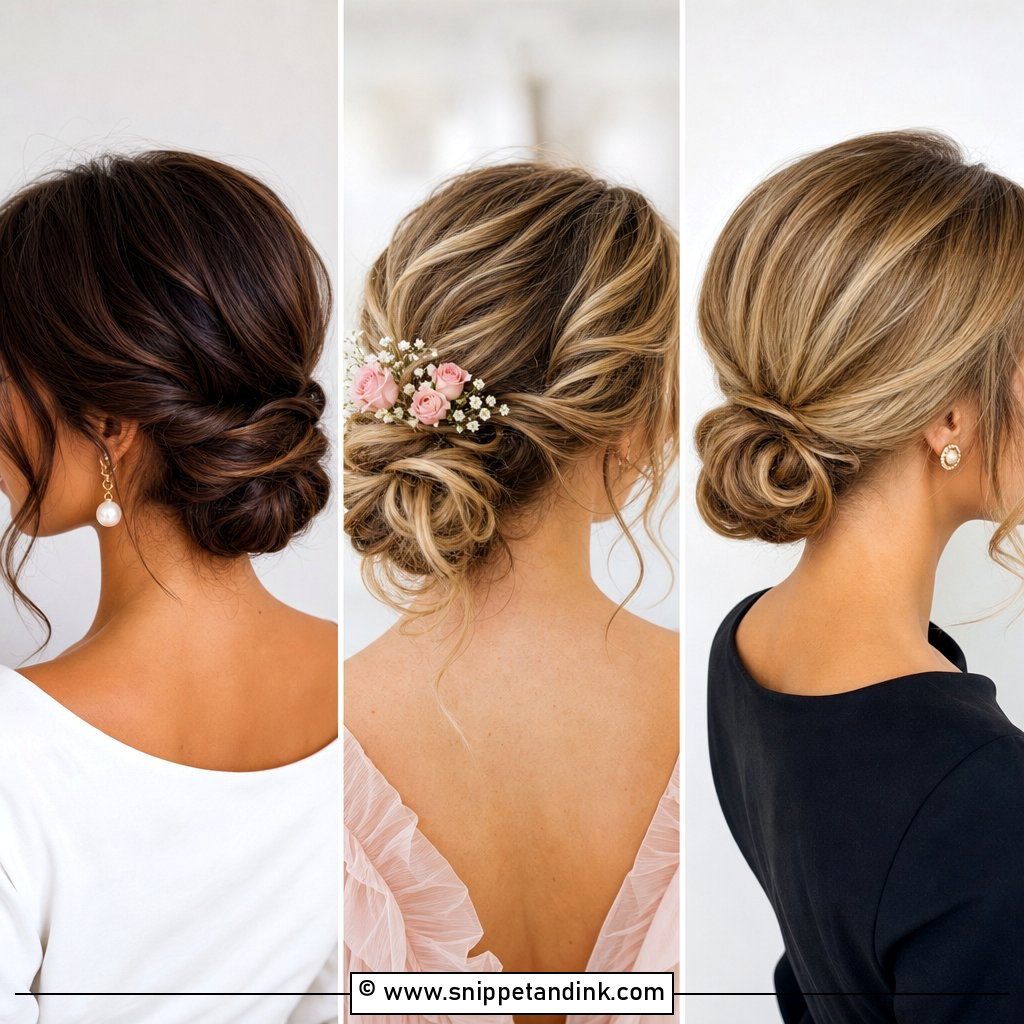
15. Natural Wedding Side Swept Curls
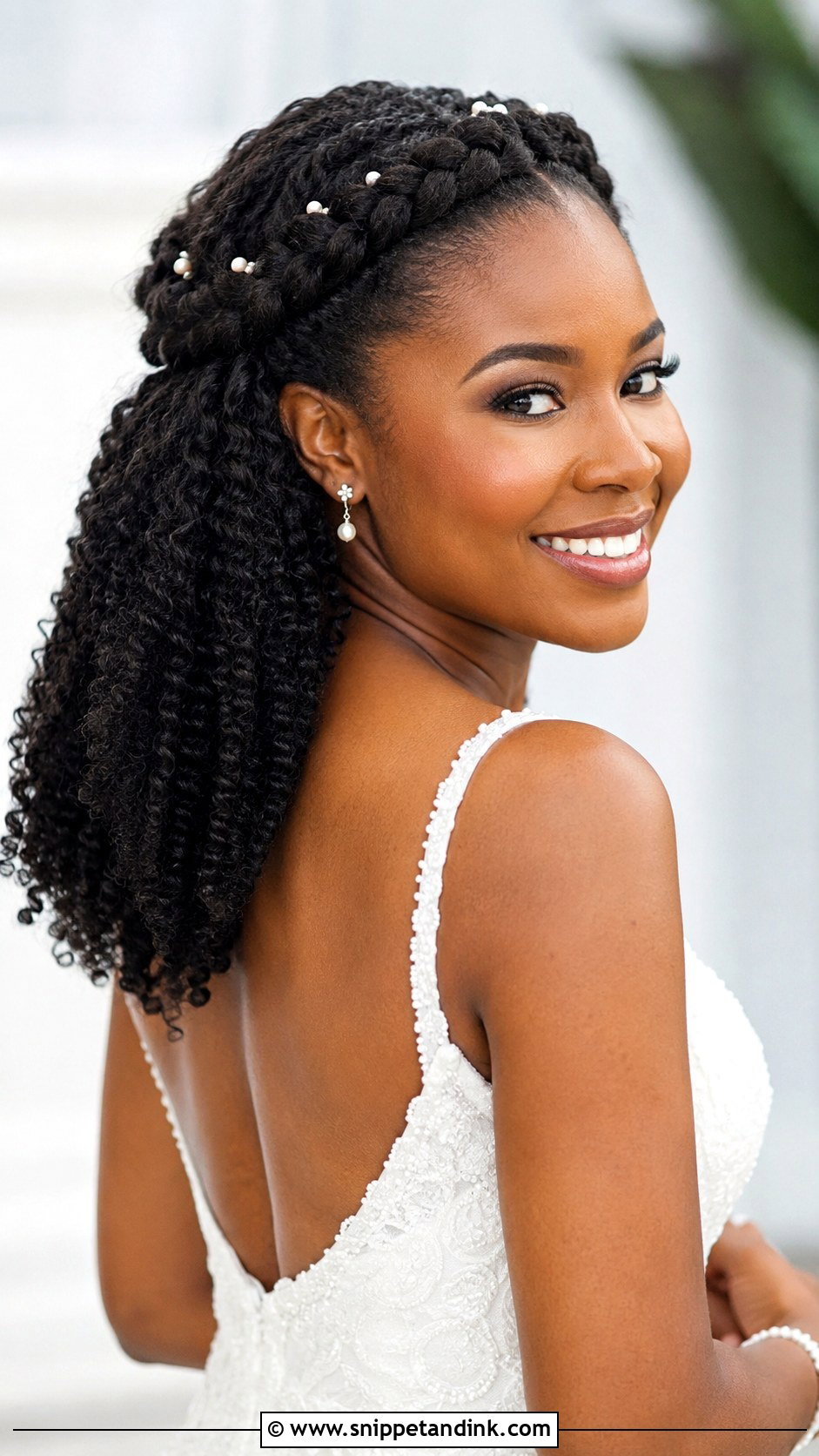
Side-swept curls can sit on a twist out, braid out, rod set or wash and go, so the base is whichever set your hair holds best. The angle draws the eye to the face, neckline and earrings on the open side. Hidden pins are the whole trick: I cross them under a layer of curls just behind the ear, so nothing glints in photos. A pearl barrette or small floral clip can mark the swept side. A rod set gives the most uniform curl if you want a polished, slightly retro feel.
Tight Styles and Your Hairline
Many styles above are protective, but a protective style done too tight does the opposite. Constant pulling on the hairline from cornrows, tight puffs, heavy buns or edges brushed down hard can cause traction hair loss at the temples and nape, and repeated strain can make it permanent. Weddings carry extra risk here because there are often several events, each with a fresh style on the same tension points.
Signs a style is too tight
- Small bumps or pimples rising along the parts
- Soreness when you lay your head on a pillow that night
- A headache that only eases once the style is loosened
- A pulling feeling when you raise your eyebrows
If any of these appear, ask for the style to be loosened. A good stylist won’t take it personally. Between events, give your edges a rest with a looser look rather than a second sleek style on the same spots.
Styling Your Own Coils for the Wedding
Plenty of natural brides do their own hair, and several of these styles are ones you may already wear every week. If that’s your plan, pick a style you’ve done many times, practise it twice in the final month with your accessories, and allow double your usual time on the morning. Set it the night before, then have a bridesmaid check the back. It’s the part you can’t see, and the part the camera sees throughout the vows.
Coils, Twists and Locs All Belong at the Altar
No single shape counts as the bridal one for natural hair. Your length, your texture, how much tension your scalp tolerates and what the weather is likely to do will narrow the list quickly. Book a trial if you’re using accessories or need the style to last into the night. Whether you go with curls, twists, locs, a puff or a bun, aim for moisture and a hold that lasts, then let the finish look like you on your best ordinary day.
You'll Like These Ideas:


Leave a Reply