
Textured hair gives a bridal stylist more options than almost any other hair type, and it also asks for more planning, because many of these looks start days or weeks before the wedding.
The thirty styles below cover sculpted natural updos, braided crowns, locs, sleek buns with laid edges, wigs and silk-pressed curls, plus the pearls and gold cuffs that dress them. For each one I have noted what the style asks of your hair, how far ahead it needs to be done, and how it tends to hold up from the first look to the last song. Read them with your own texture, length and density in mind, since the same picture can mean a two-hour set on one bride and a full day of installation on another.
Working Backward From the Date: Installs, Retwists and Sets
The single biggest difference between these styles is when the work happens. A natural updo is done on the morning. Braids, twists, crochet and wigs are installed days ahead. I plan backward from the wedding so nothing lands on the same week as the dress fitting.
- Braids and twists: install two to four days before, so the scalp has time to relax and any tight spots can be loosened.
- Locs: retwist one to two weeks out; a fresh retwist can look stiff.
- Wigs: customize and tint the lace early, install a day or two before.
- Natural sets and blowouts: wash and deep condition two to three days ahead, set the night before or on the morning.
- Trims and color: two to three weeks before, so ends and tone settle.
Book your trial with enough time to change your mind. If the trial shows a braided crown is too heavy for you, there needs to be room to switch to a lighter install.
1. Natural Hair Updo With Curls
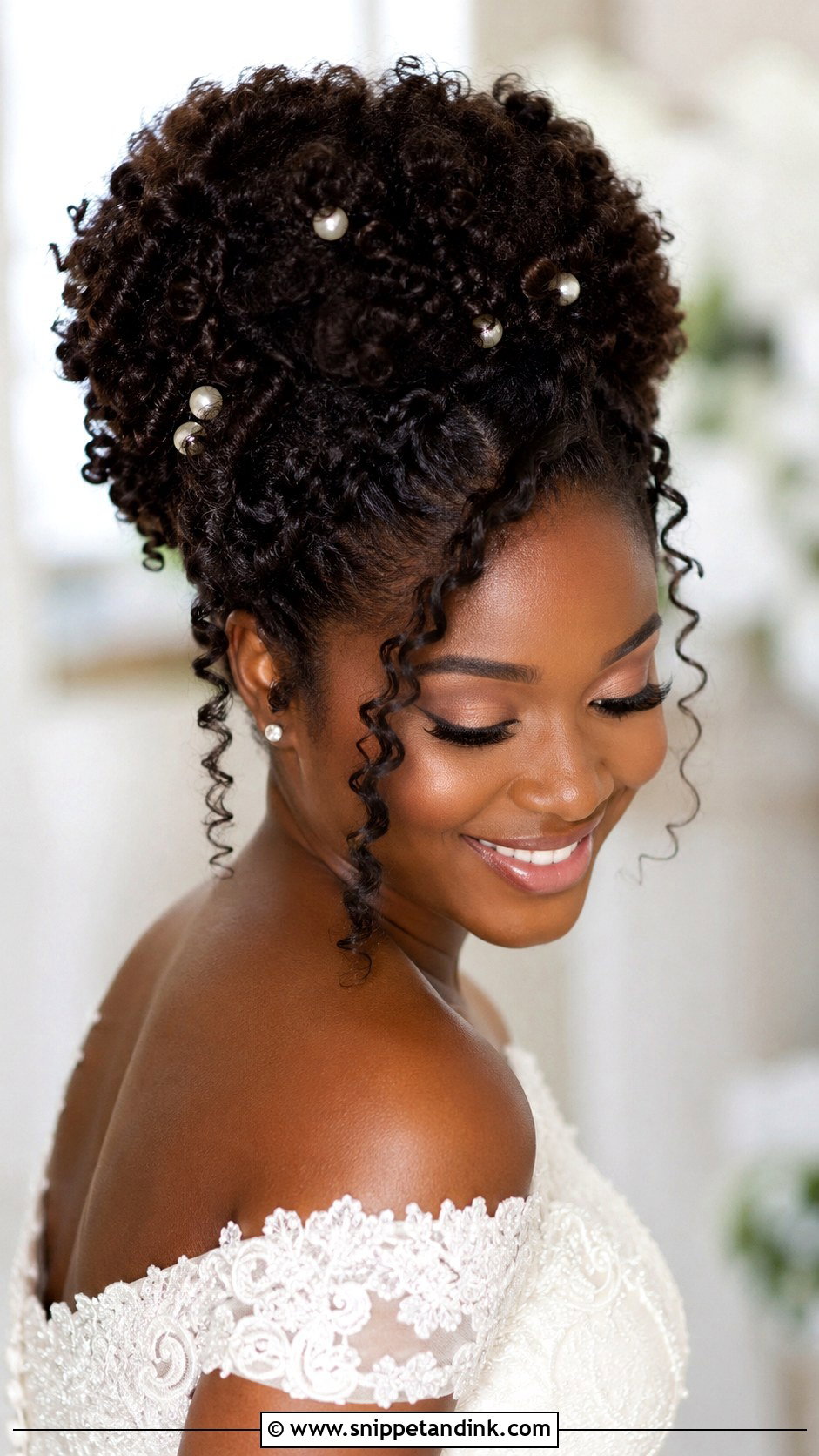
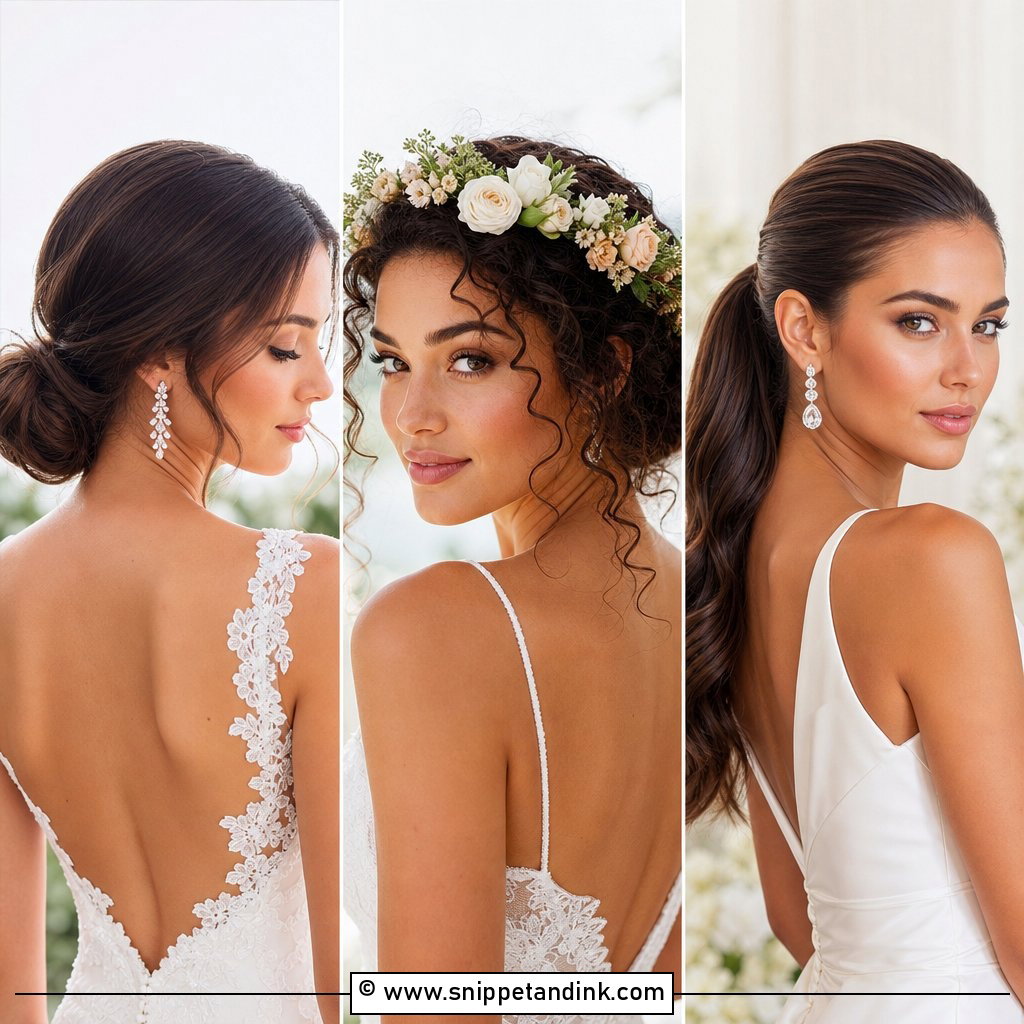
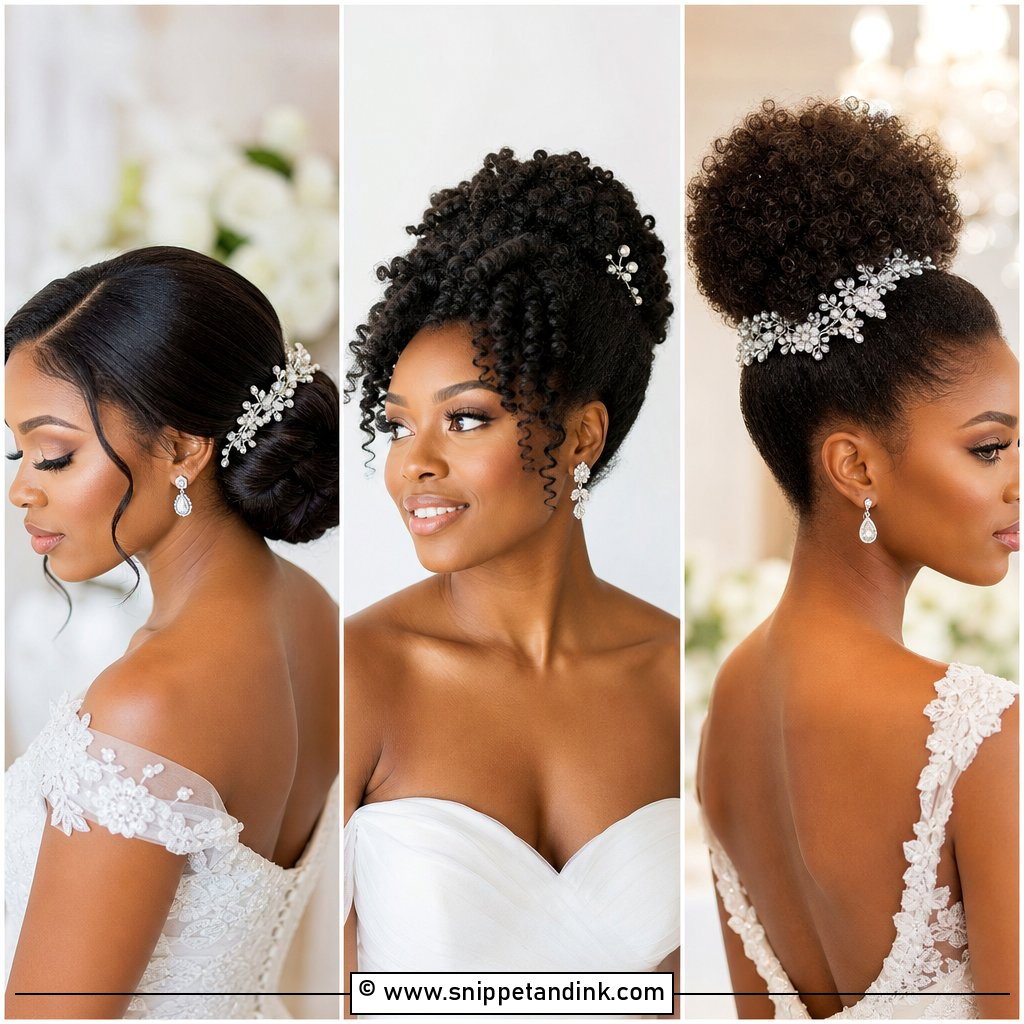
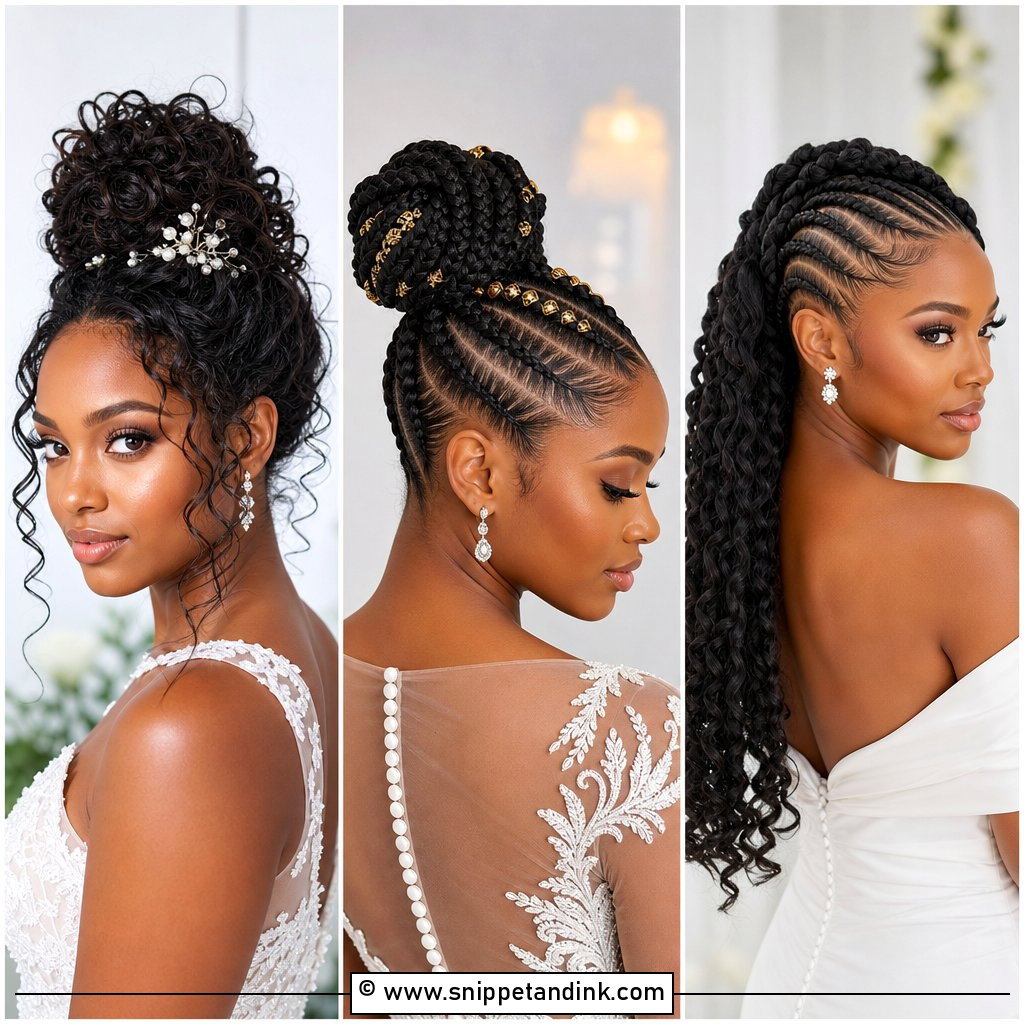
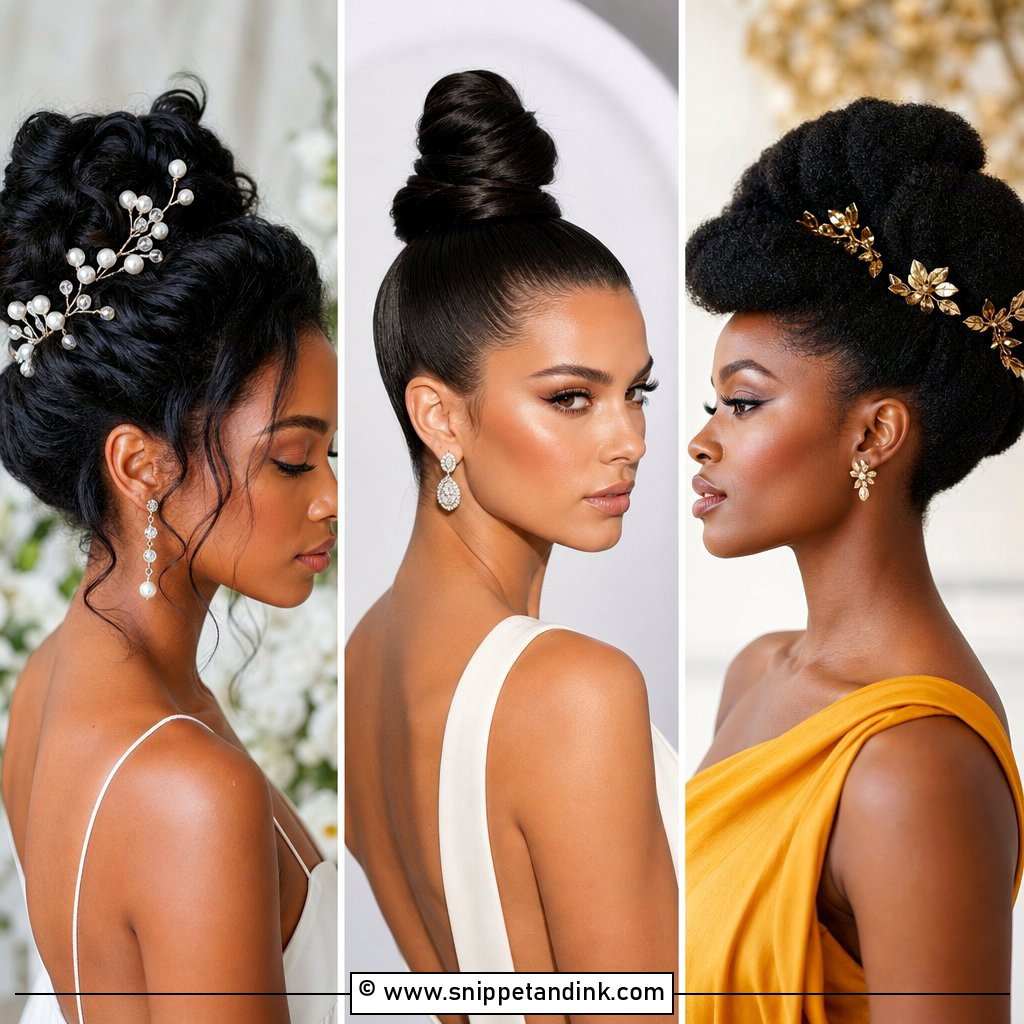
A natural updo starts with stretched hair. I usually ask for a blow-dry on low heat or a banded set the day before, because sculpting fully shrunken coils into a smooth shape puts too much tension on the hairline. Once the hair is stretched, I gather it with gel and a soft brush, then pin the shape with long U-pins that sit inside the volume. A few tendrils around the cheekbones soften the line, and pearl pins or a thin gold cuff are all it needs.
2. Sleek Low Bun With Edges
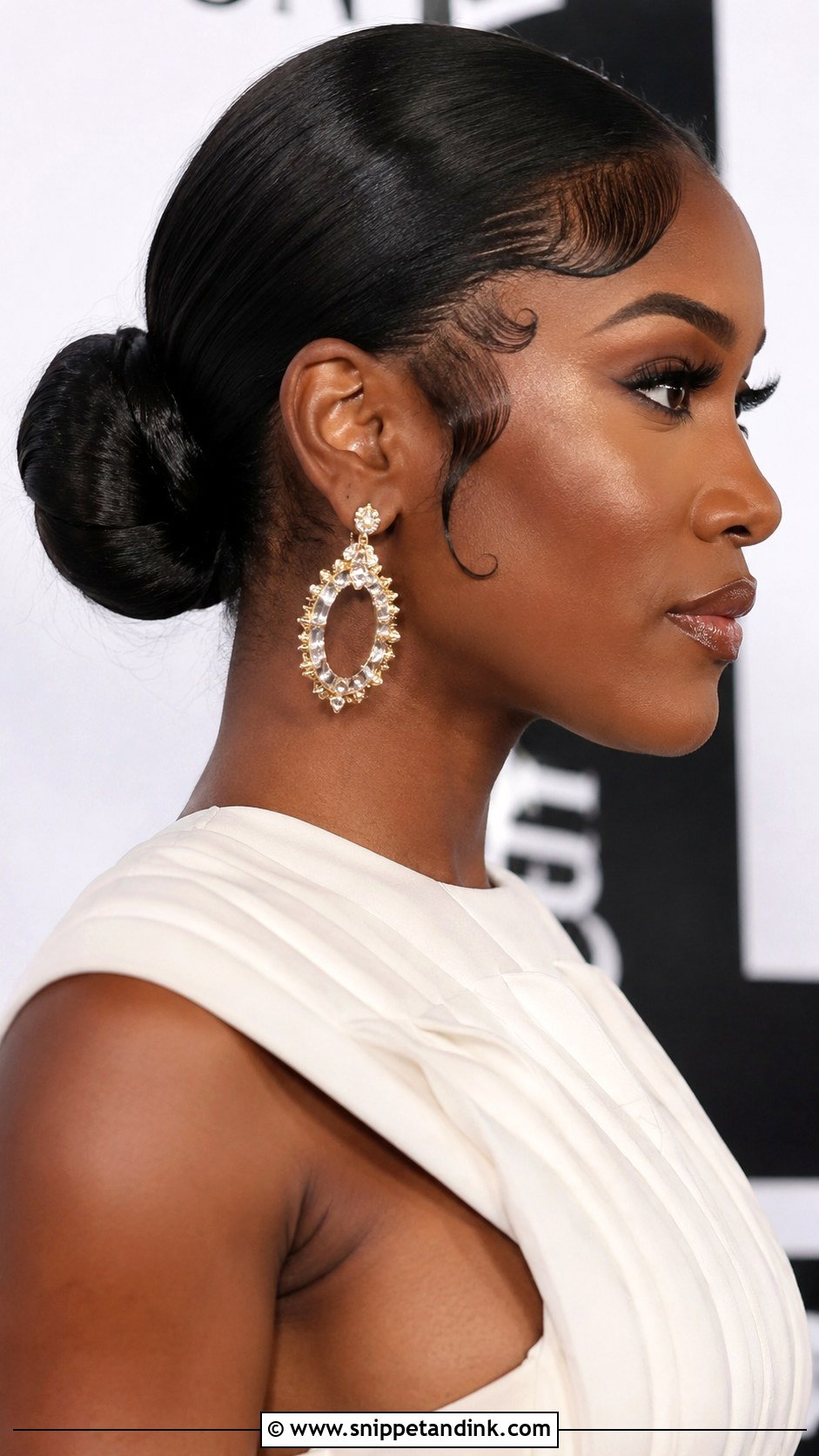
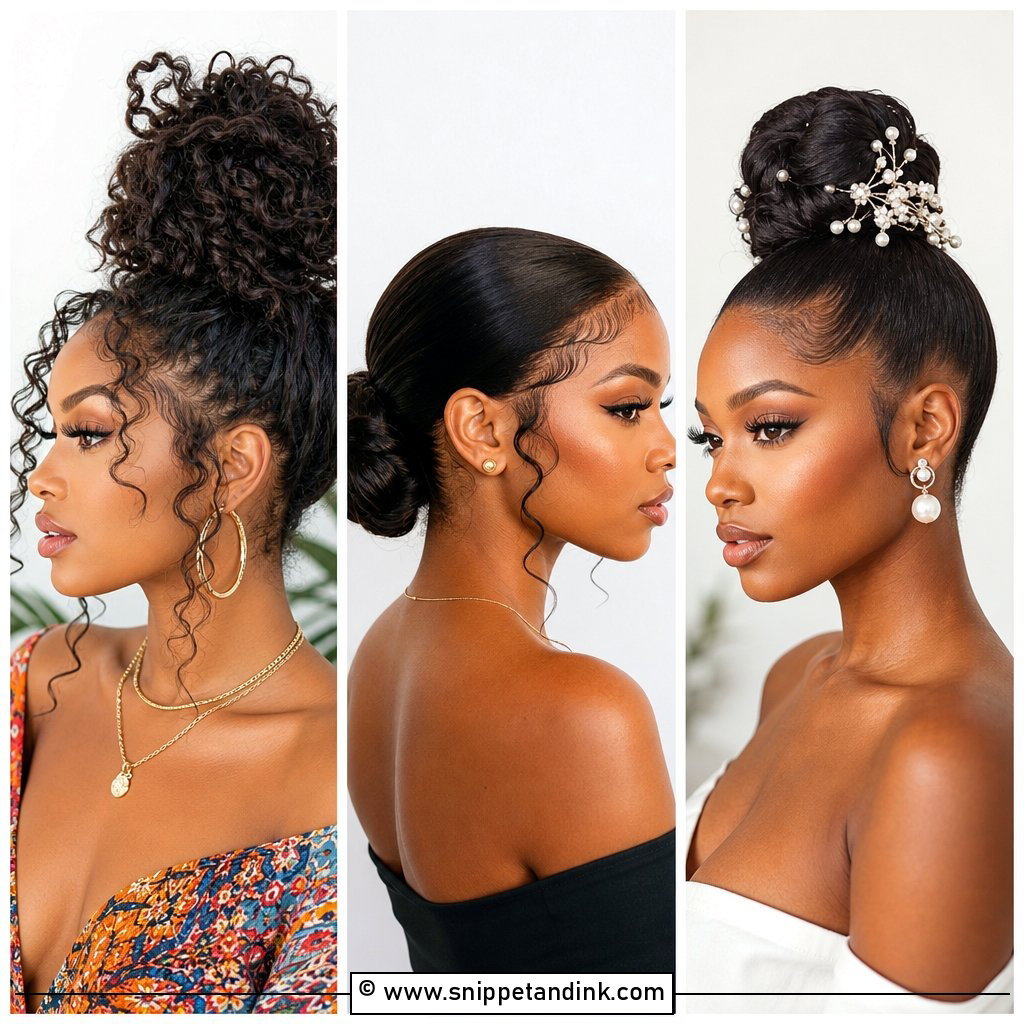
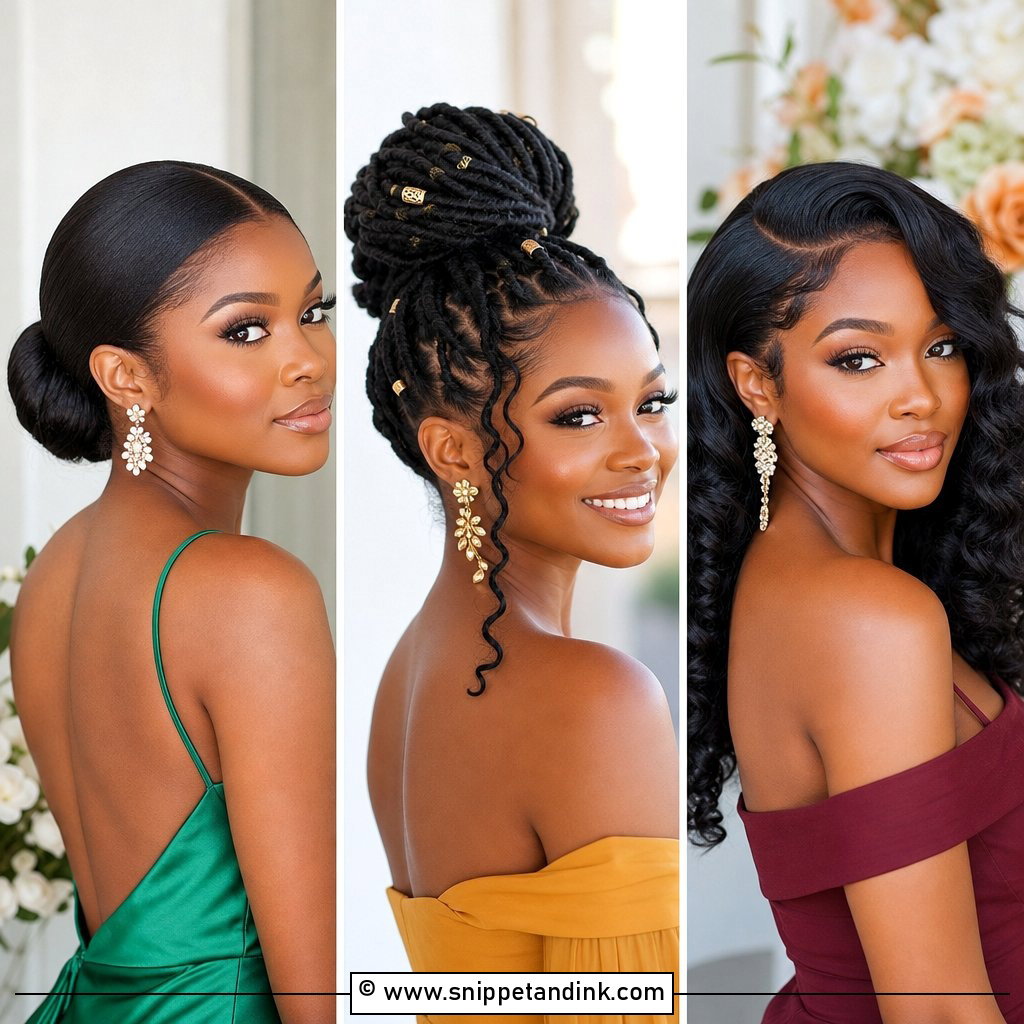
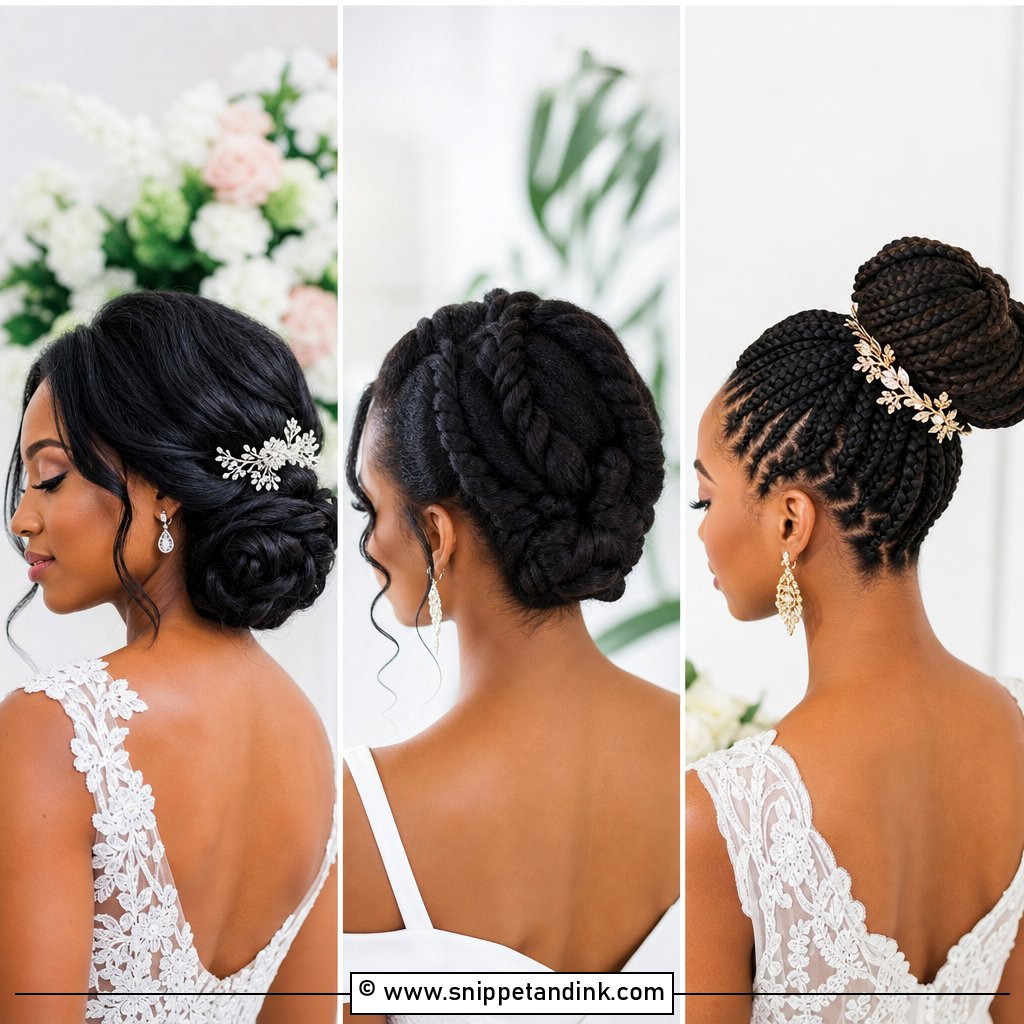
A low bun at the nape only looks sleek if the base is right. I smooth the hair with a firm gel and a boar bristle brush, tie it with a soft elastic, and wrap the bun over a donut or a small pad of matching hair. Edges are laid last with a small brush and edge control, kept close to the natural hairline. The bun leaves the face and earrings clear, so it suits a structured gown and a bold earring.
3. Goddess Braids Updo
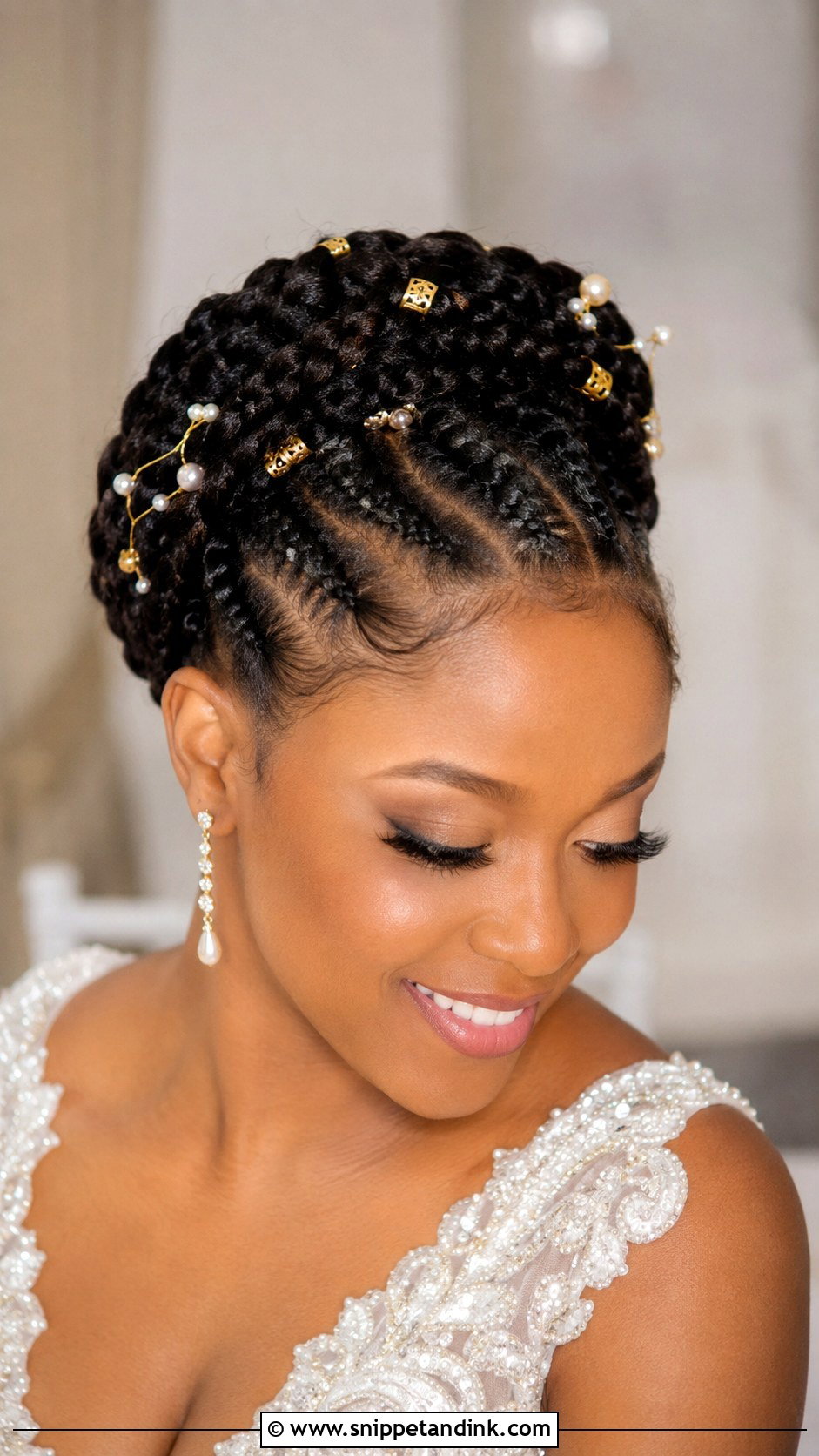
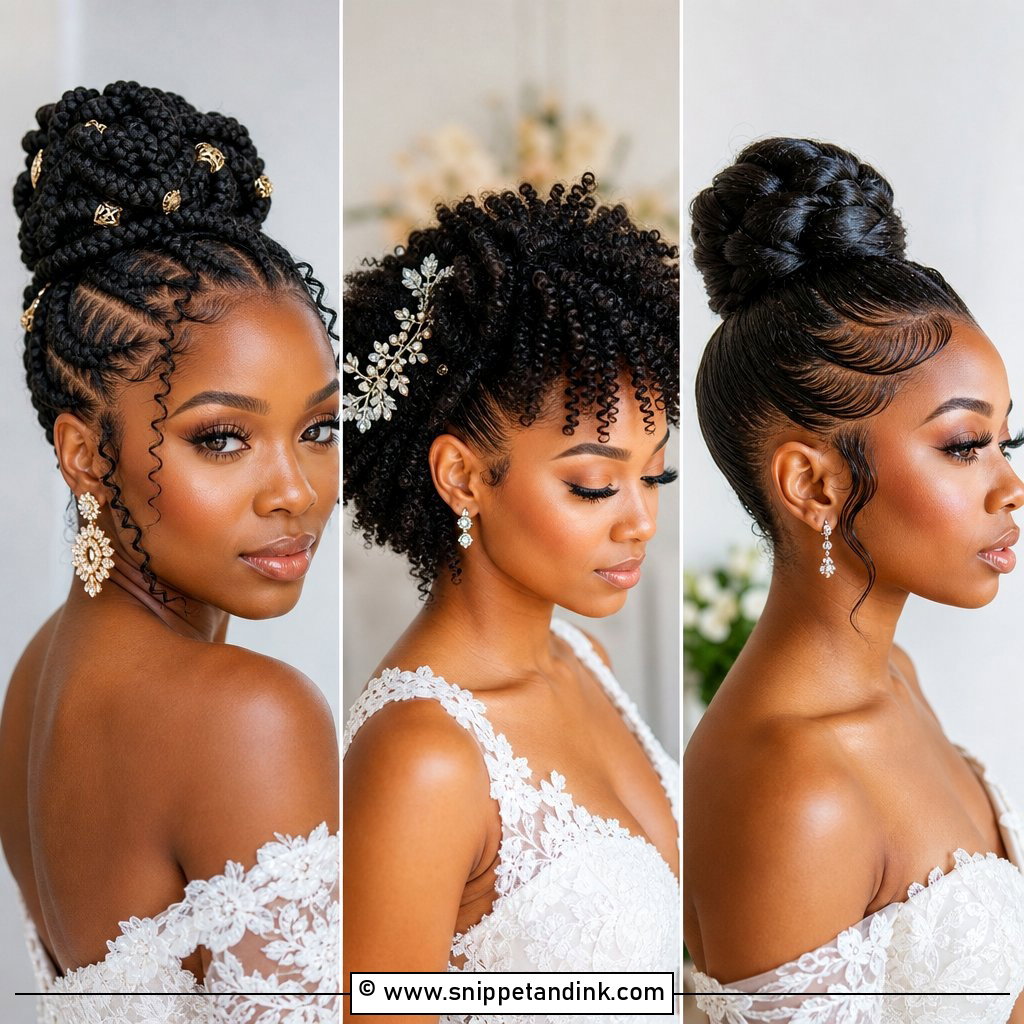
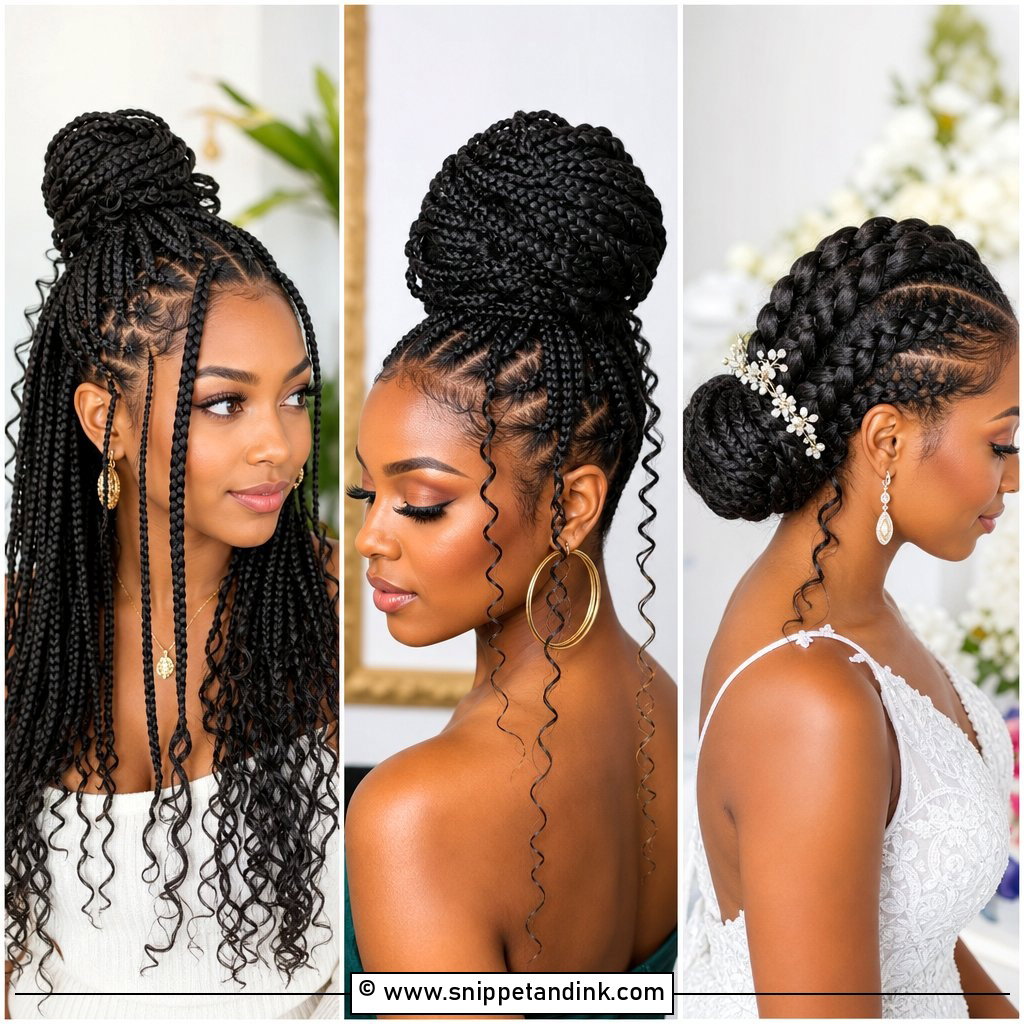
A goddess braid updo is a full installation, often several hours in the chair, so book it two to four days before the wedding. That gives the scalp time to settle and loosens any tightness at the hairline. I sculpt the braids into a crown by pinning each one along the curve of the head rather than piling them, which keeps the weight spread out. Gold beads or a few pearl strands slide on easily, and the style lasts through every event of a wedding weekend.
4. French Roll With Face-Framing Tendrils
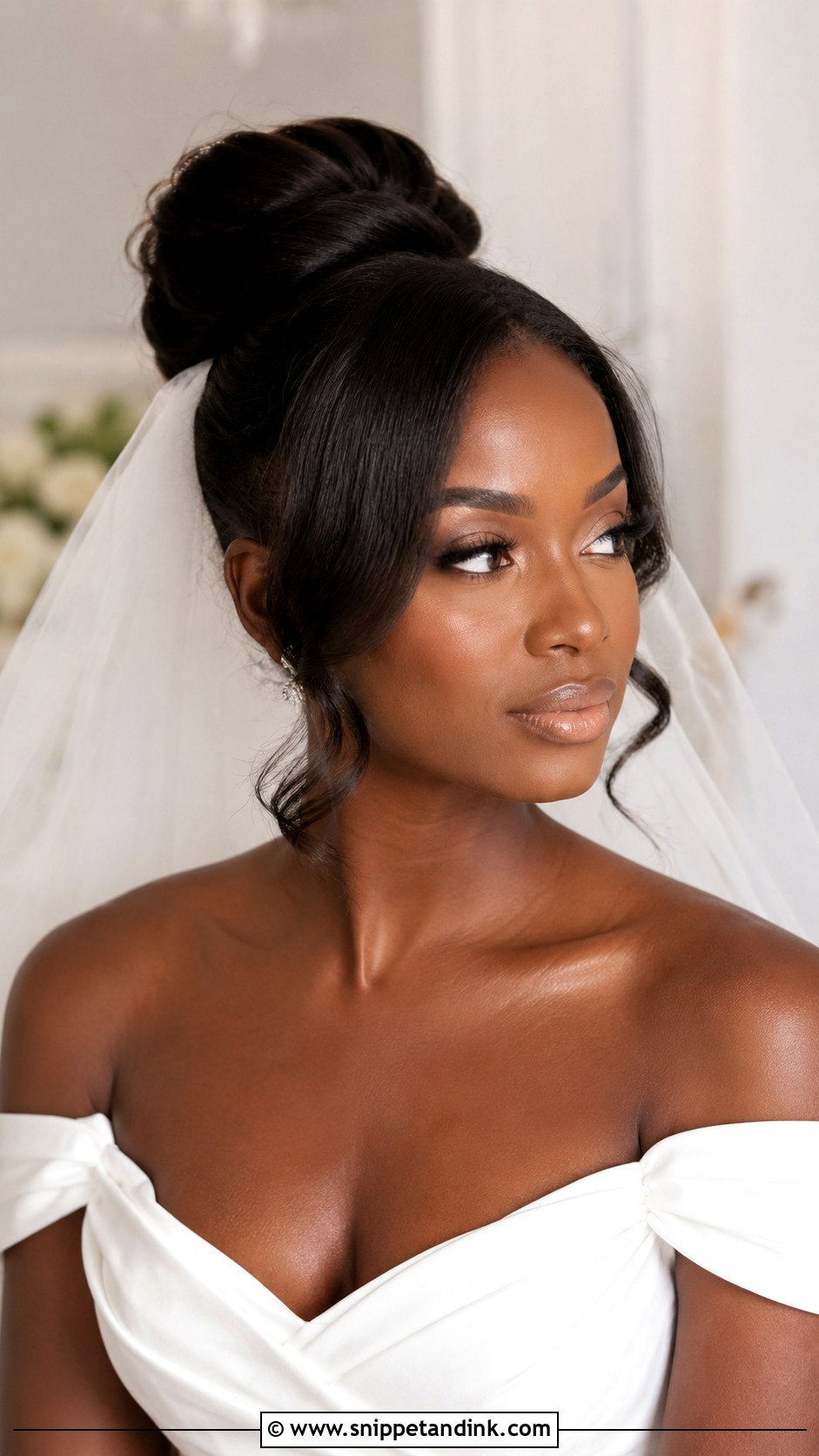
The French roll works on relaxed, pressed or blown-out hair, and also with extensions for brides with shorter lengths. The roll depends on a smooth section at the back, so I cross a row of bobby pins vertically up the center first and fold the hair over them. On thick hair I sometimes split the roll in two to reduce bulk. Loose tendrils at the temples soften it, and it carries a cathedral veil or a tiara without strain.
5. Knotless Braids Bun
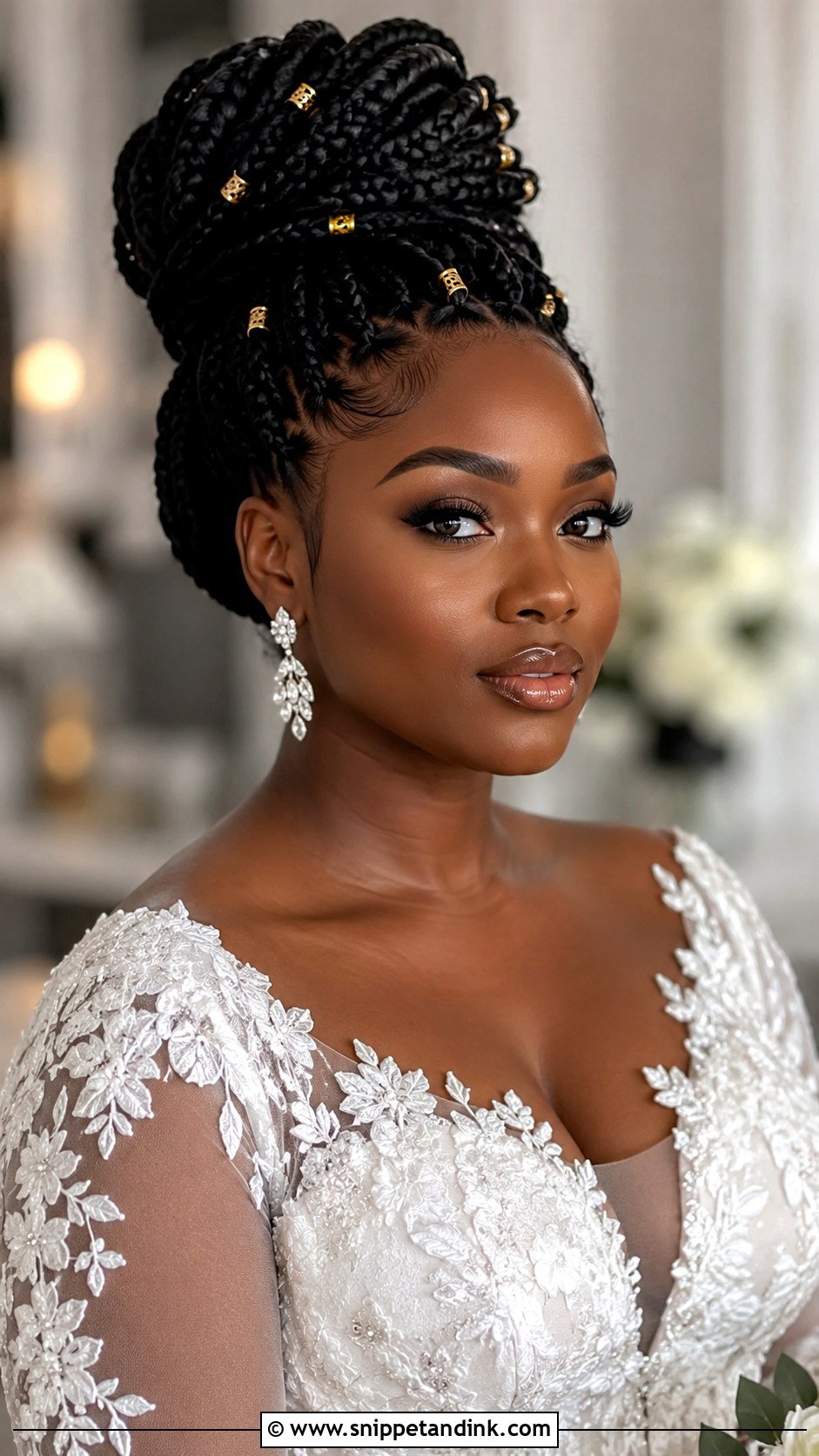
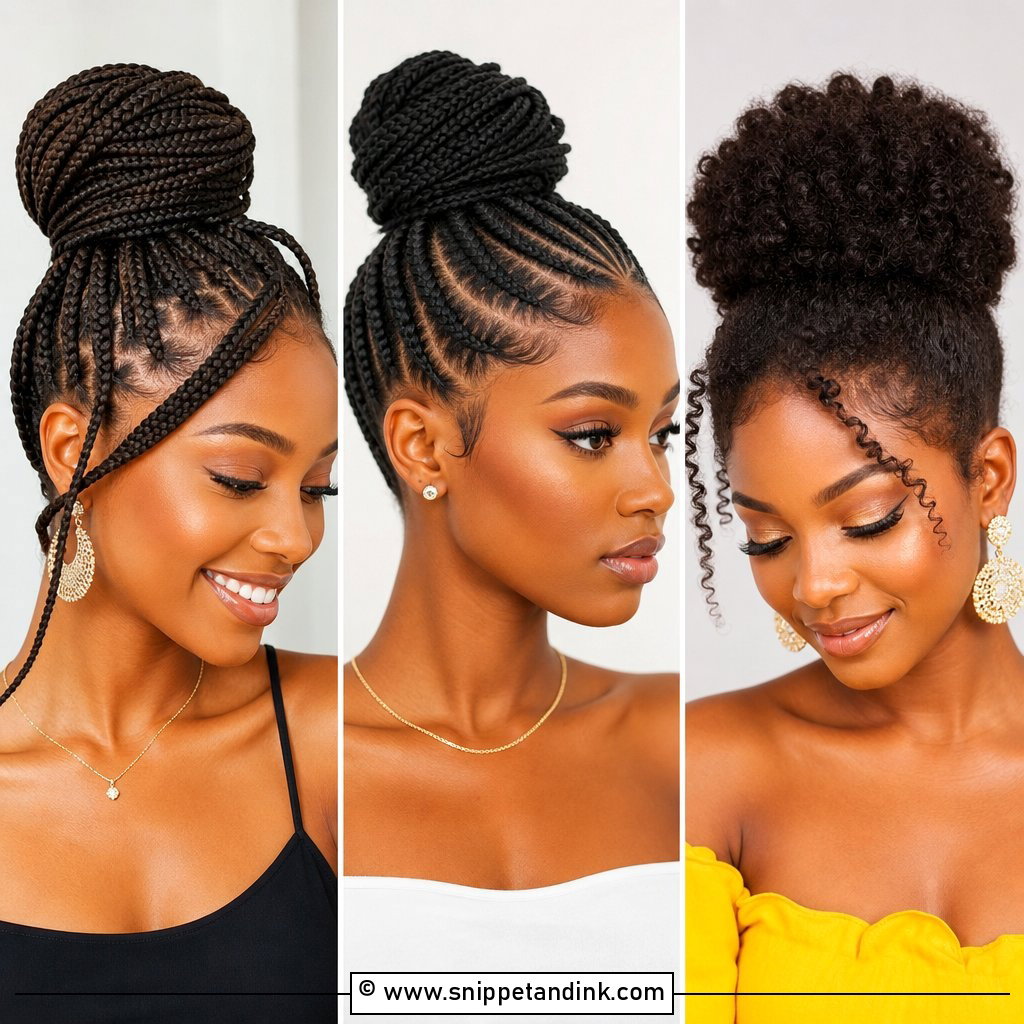
Knotless braids are lighter on the scalp than traditional box braids because the braid starts with your own hair and the extension is fed in gradually. Gathered into a high bun, though, long braids still add up to real weight. I ask brides to try the bun shape for an hour at the trial before deciding on the height. One braid wrapped around the base hides the elastic, and the braids carry straight on into the honeymoon.
6. Half-Up Half-Down Natural Curls
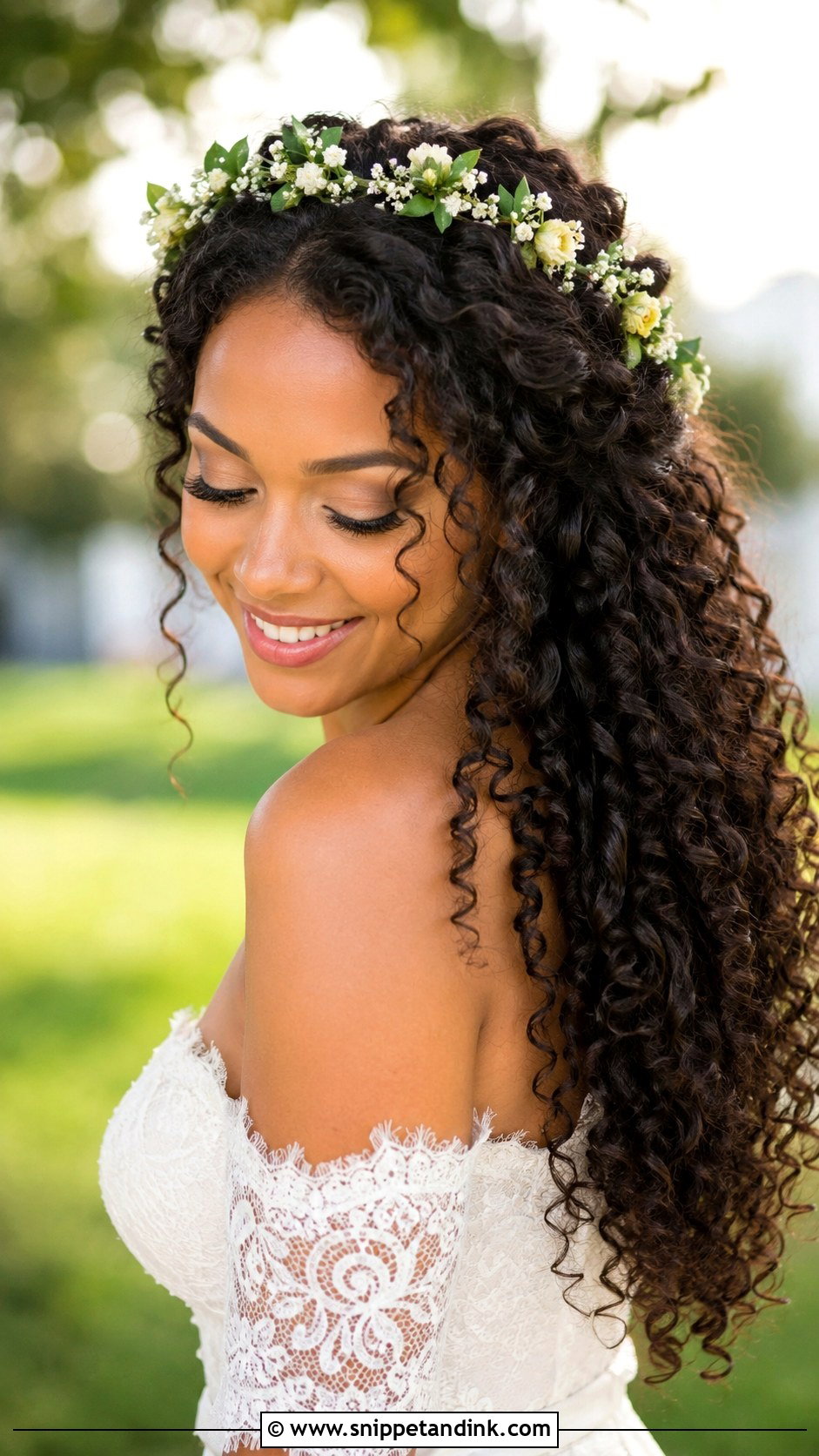
Half-up natural curls give you the definition of a wash-and-go with the hair kept off your face for photos. The top section gets pinned into a small twist or held with a decorative clip. What I watch for is shrinkage: curls that hang at shoulder length in the morning can draw up an inch or two in humidity. A flower crown or jeweled pin where the sections meet covers the anchor point.
7. Twist-Out Updo
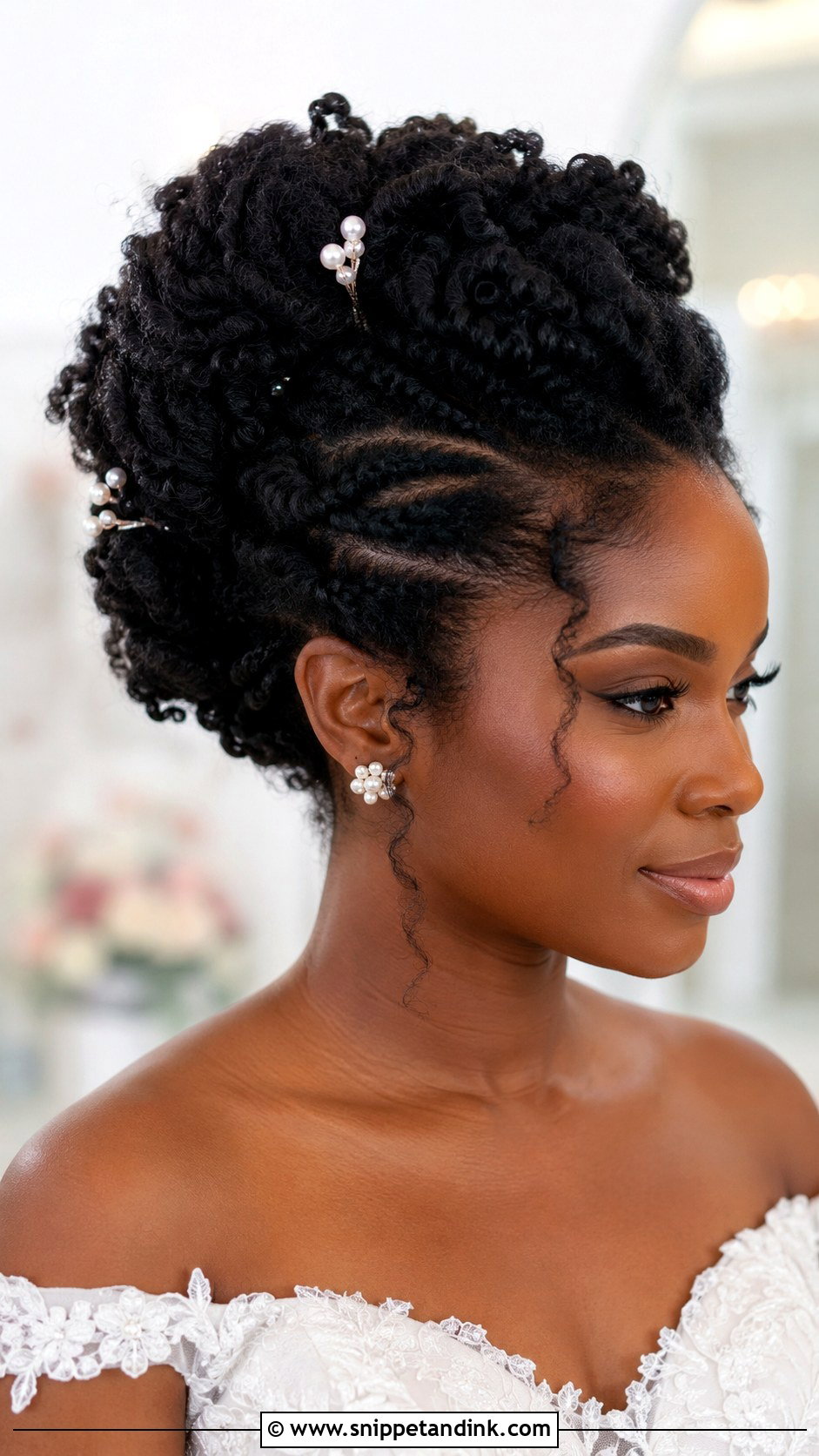
A twist-out updo depends on how well the twist-out sets. I prefer twists set on damp hair the night before and left to dry fully, because separating them while still damp leaves frizz instead of definition. Separate gently, lift at the root with a pick, and then gather the shape upward. A few loose pieces at the face and some pearl pins finish it. If your hair is fine and loses definition quickly, a rod set holds longer.
8. Bohemian Goddess Braids
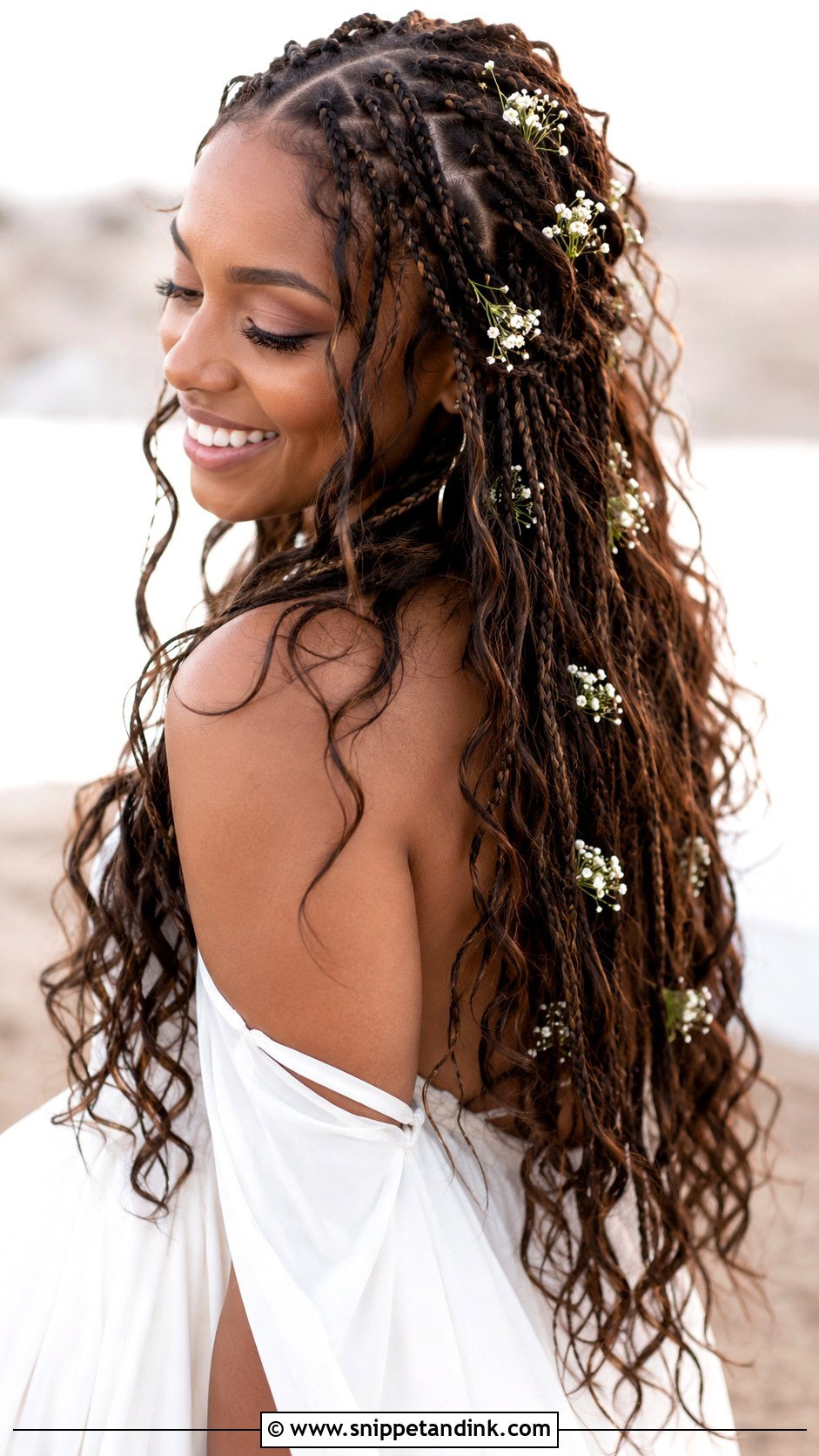
Bohemian goddess braids leave loose curly pieces along the braids for a softer outline. Those loose pieces are usually human or blended hair, and they will tangle if they get too dry or rubbed by a bag strap. I mist them with a light leave-in on the morning and avoid heavy oils that weigh the curl down. They suit beach and garden weddings well, worn down or loosely gathered, with small flowers or gold rings added.
9. Flat Twist Bun
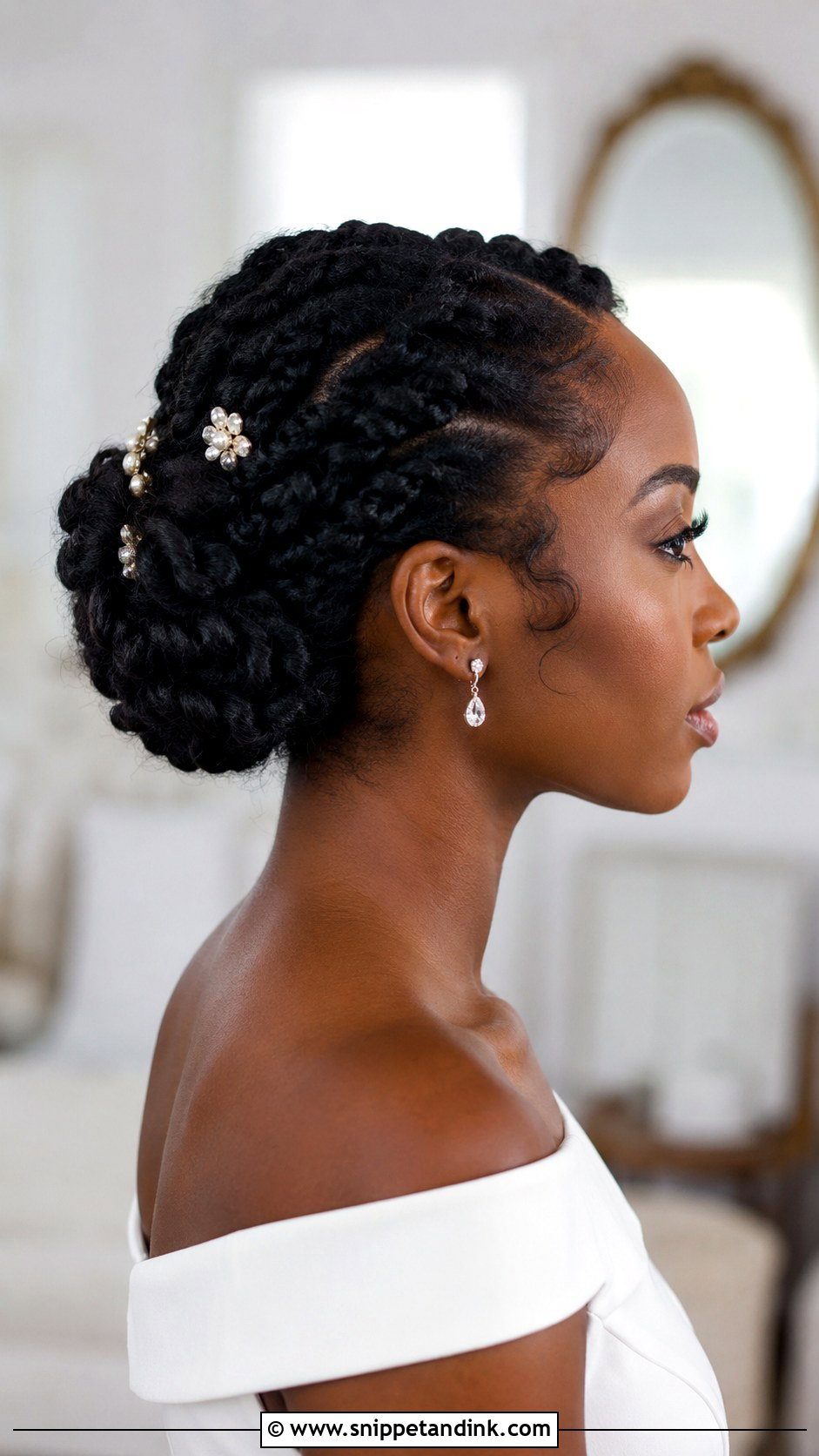
Flat twists are one of the few styles here a bride can genuinely do herself or with a friend. The pattern leads into a soft bun, so the parting is what people see first; I map it with a rat-tail comb before starting. Keep the twists snug, not tight, at the hairline. A high bun reads more formal than a low one, and a single sparkly clip at the base is plenty.
10. Voluminous Curls With Side Part
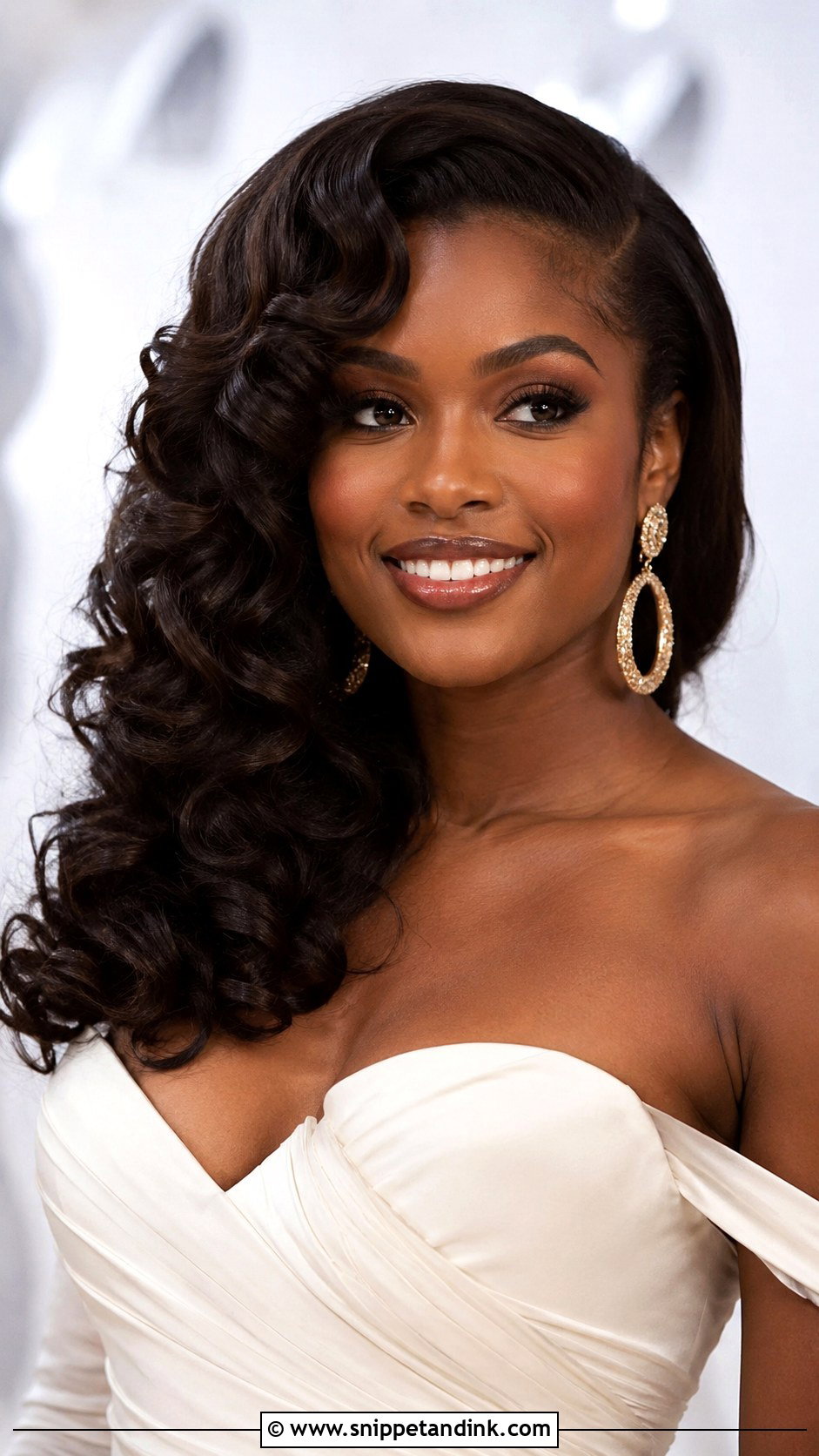
Big curls with a deep side part look dramatic, and they need a plan for the hours after the photos. On natural hair I set them with flexi rods or a wand on stretched hair and pin the curls while they cool. Extensions or a curly wig add fullness and hold the curl longer in humidity. Expect some drop by evening, which honestly looks more relaxed and natural.
11. Fulani Braids Updo
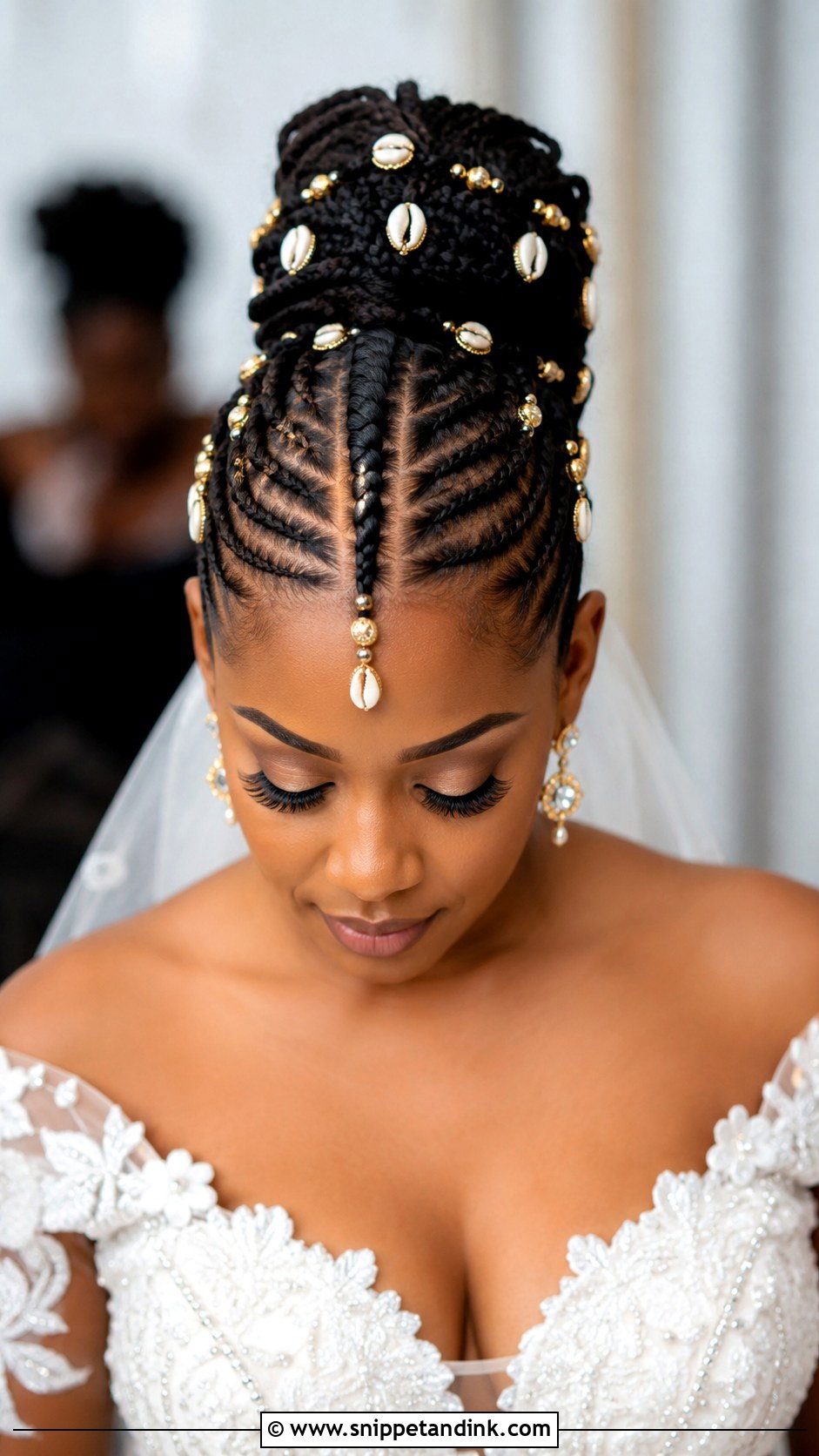
Fulani braids follow a specific pattern: cornrows along the center and sides, often with one braid down the middle, and braids falling or gathered at the back. Gathered into an updo, they can carry gold beads, cowrie shells or pearl accents. Because the cornrows sit tight to the scalp, ask your braider to keep the hairline braids looser than the rest. They hold for weeks and honor a heritage many brides want present on the day.
12. Sleek High Ponytail
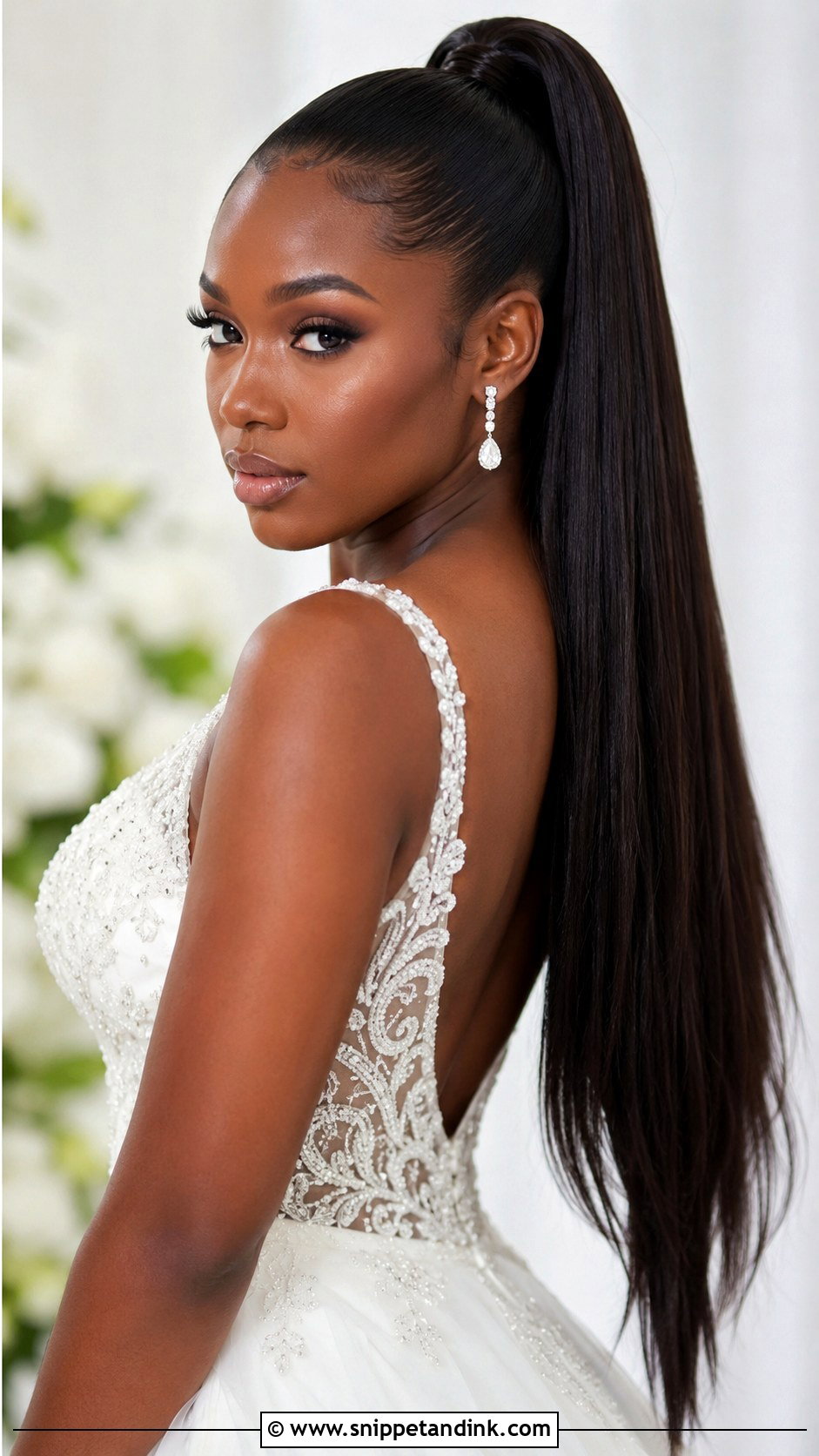
A high sleek ponytail lifts the face and swings when you walk. I build it on a firm base with gel and brush, secure it with two elastics, and often add a clip-in or wrapped extension for length. The tension point is the crown; if you get headaches from tight styles, set the ponytail slightly lower. Wrapping a piece around the base hides the elastic, and the style carries straight through the reception.
13. Textured Puff Updo
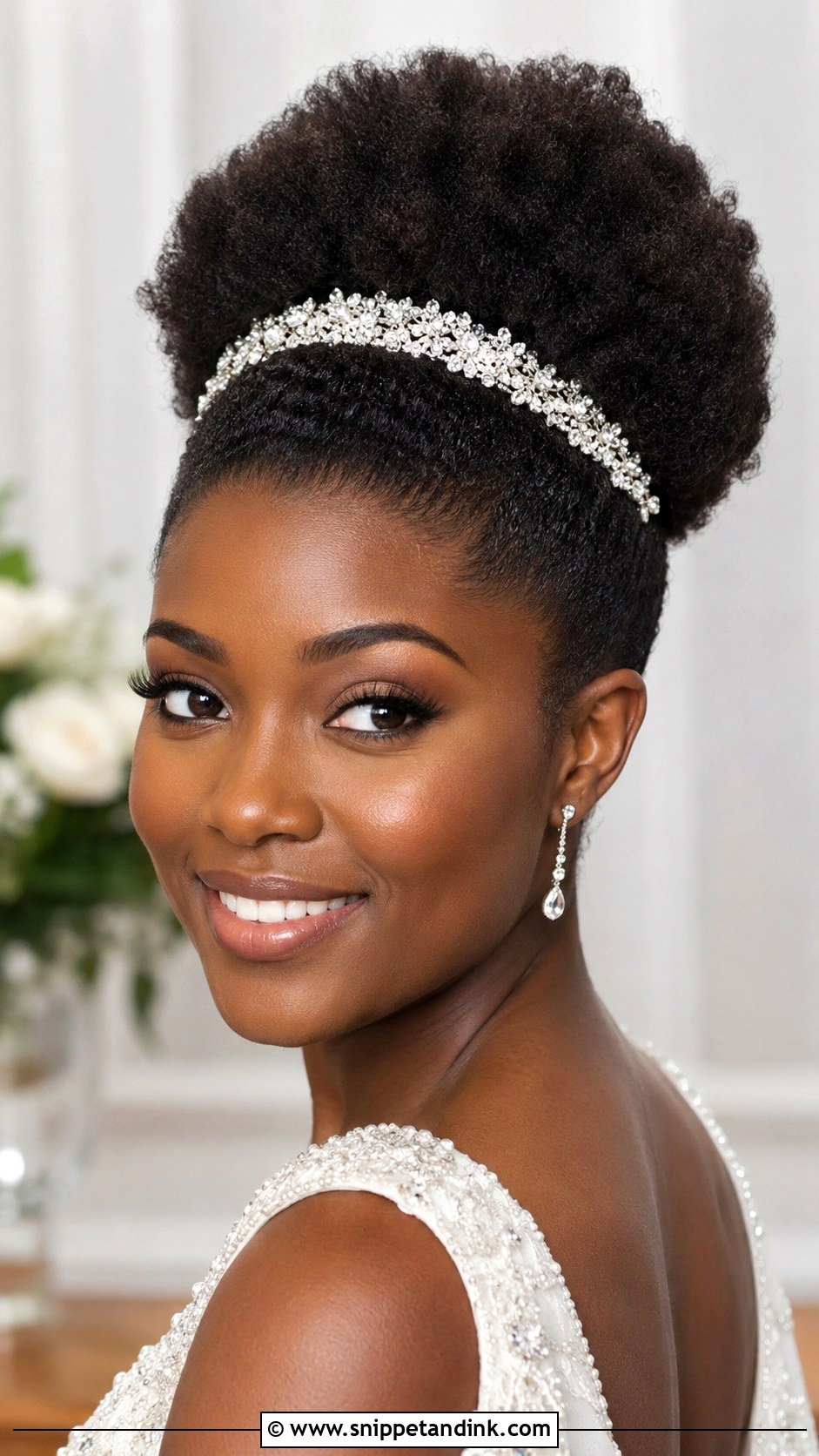
A textured puff shows off volume with very little heat. I shape it with a stretched base and a soft scarf or a satin band tied loosely to gather the hair, then fluff out the puff with a pick. A high puff on the crown reads modern; a lower one is softer. A jeweled headband placed just in front of the puff gives the shape a clear frame.
14. Cornrow Crown Braid
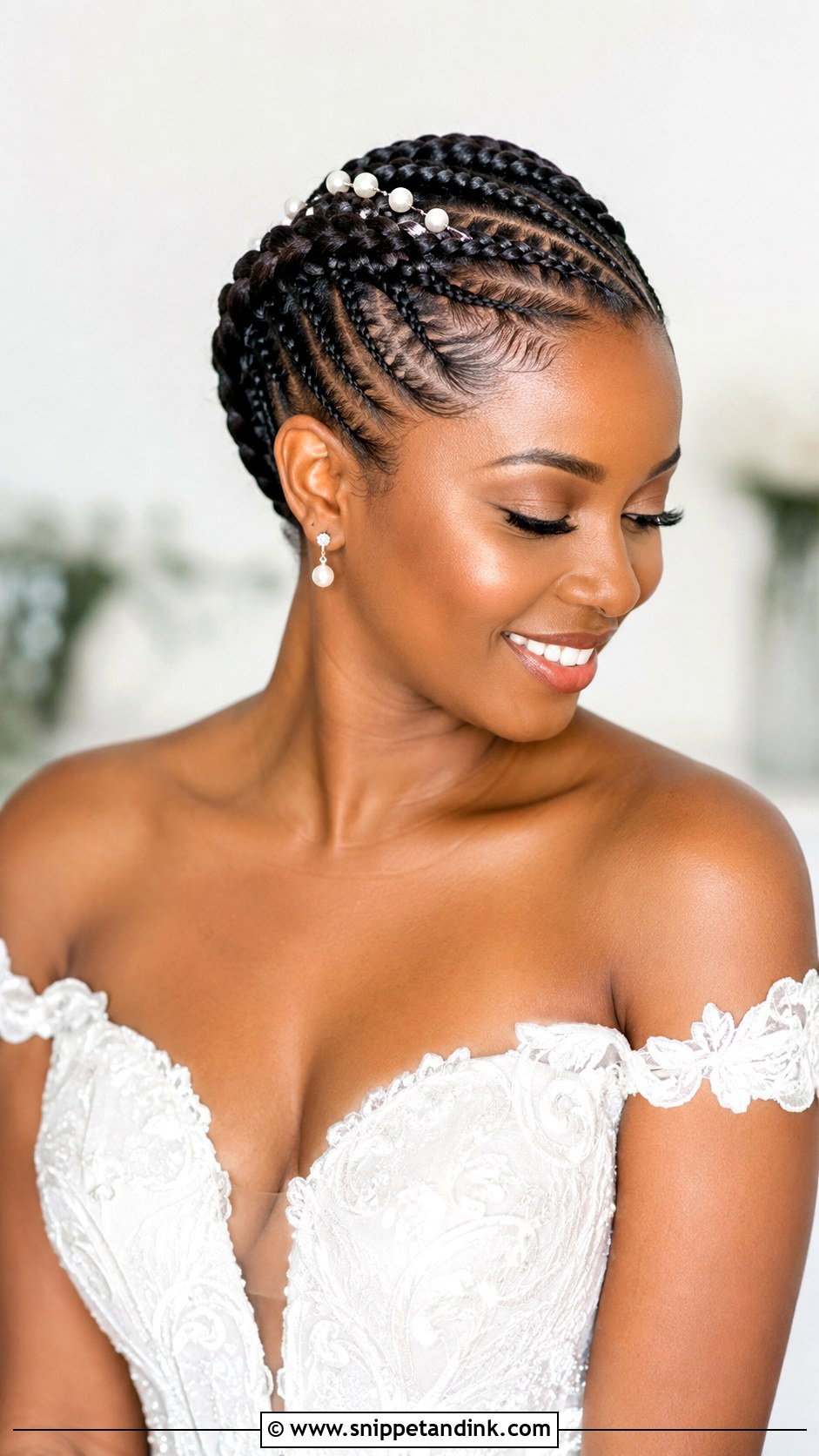
A cornrow crown braid is a feed-in or traditional cornrow that circles the head like a halo. The clean partings are what make it, so I look for an experienced braider who maps the circle before starting. The back can fall in curls or tuck into a bun. Pearls or gold thread along the crown look striking, and the style asks almost nothing of you on the morning itself.
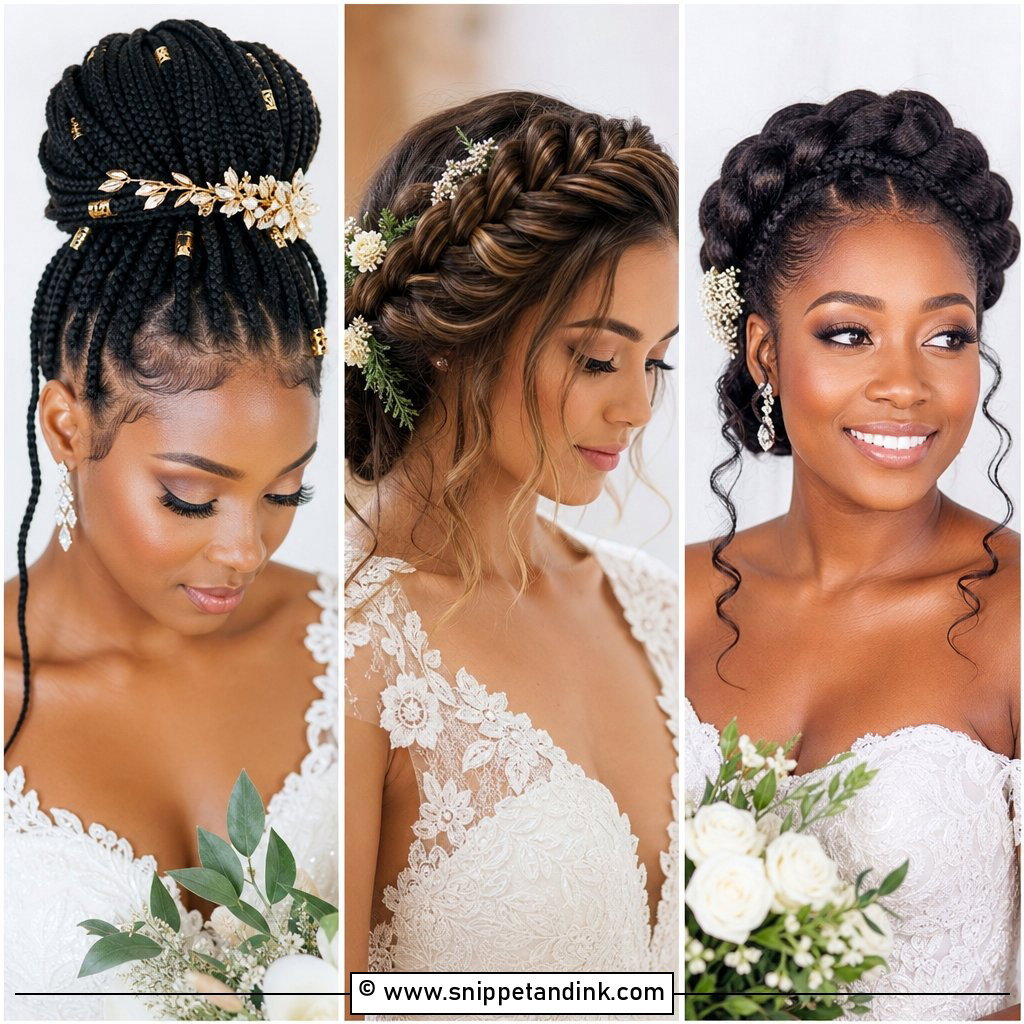
15. Low Bun With Dutch Braid
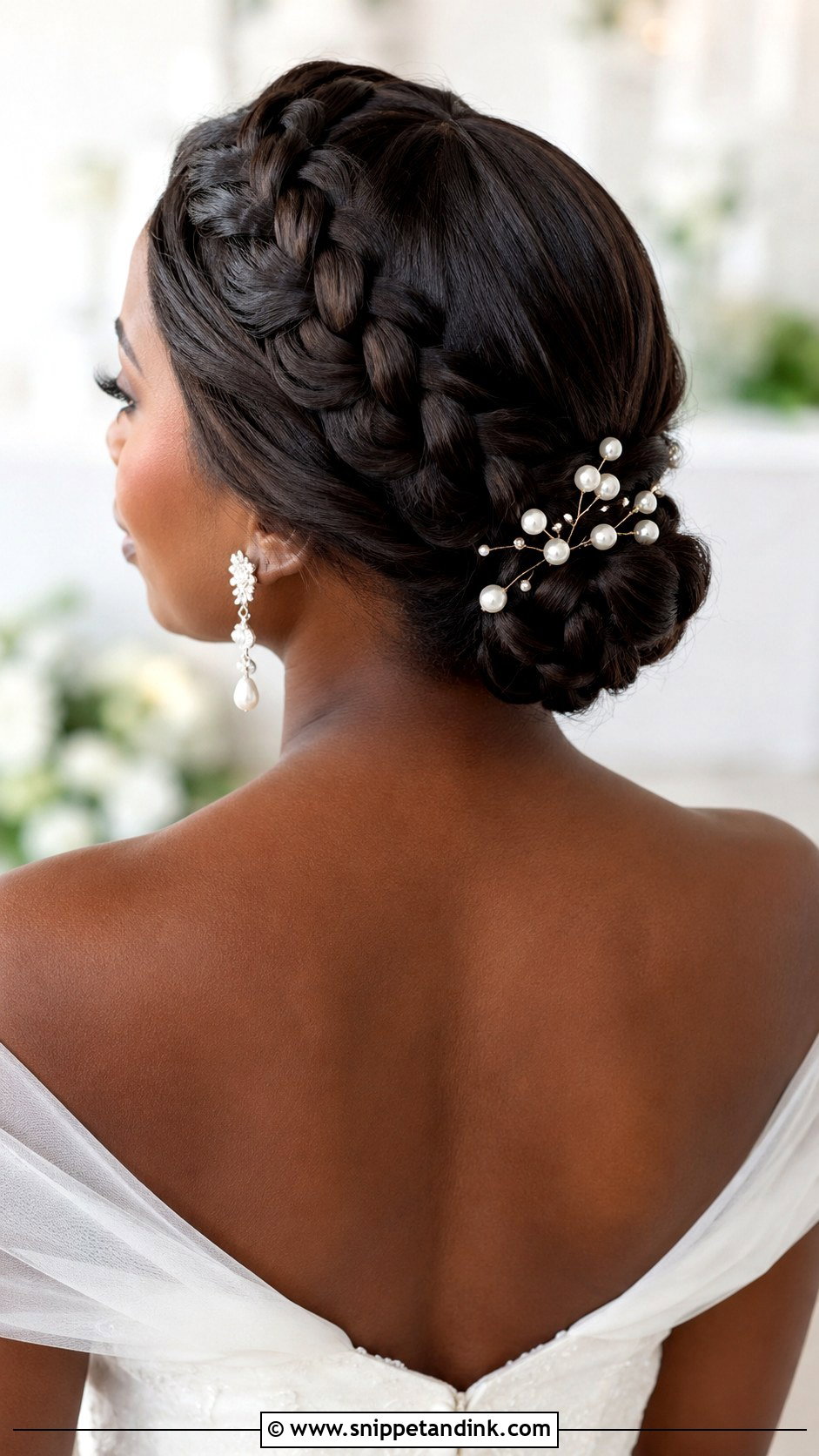
A Dutch braid sits on top of the hair rather than flat into it, which is why it gives this low bun visible texture. On textured hair I braid on stretched hair for a cleaner line. Keep it tight for a formal look, or pancake it gently with your fingers for a softer edge. A few pearl pins along the braid catch light without crowding it.
16. Curly Wig With Side Sweep
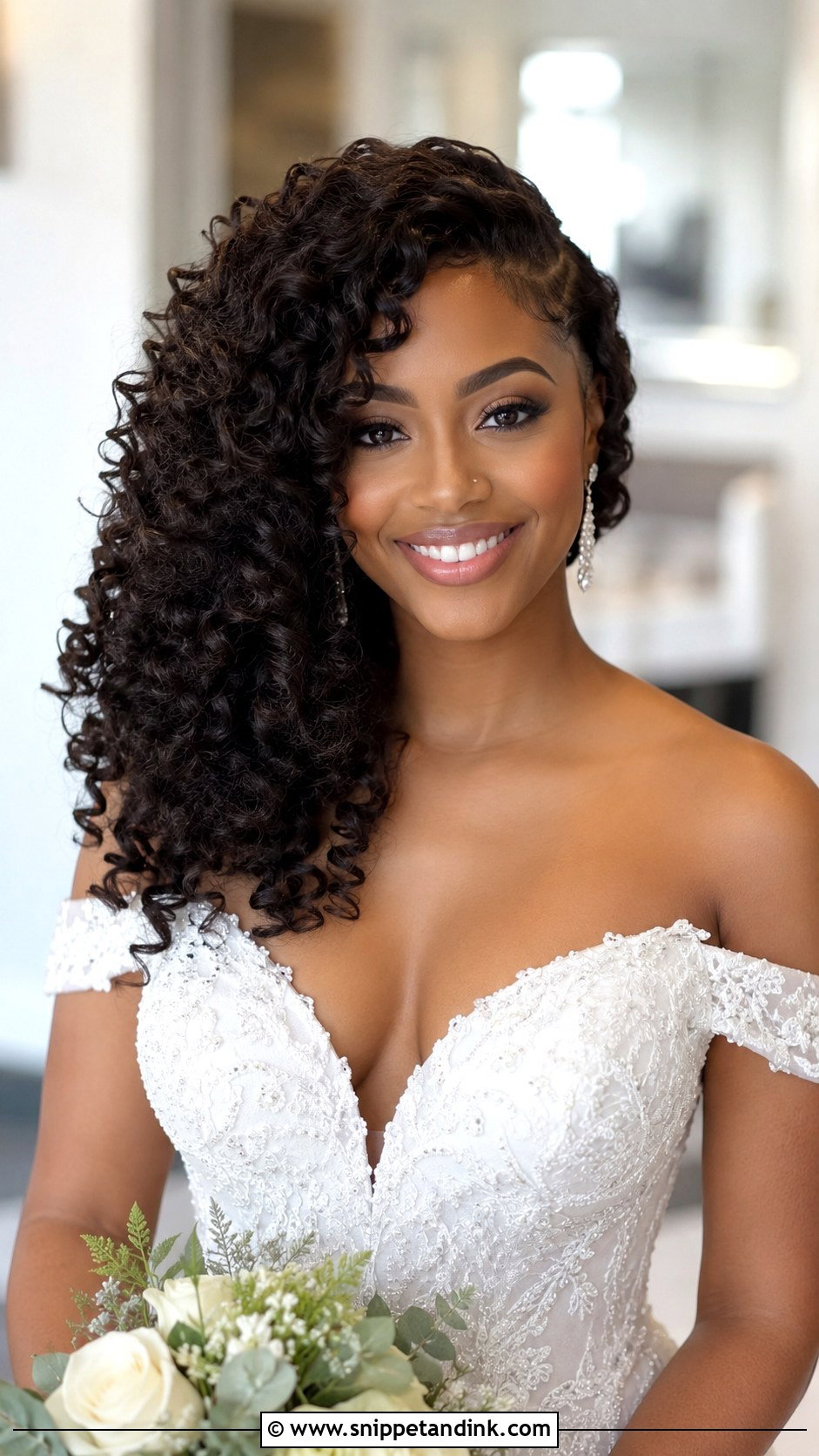
A curly wig gives you complete control over length and texture, and it protects your own hair underneath. The two details I care about most are the lace and the install. A lace front that is tinted to your skin and pre-plucked at the hairline looks natural up close; an untinted lace shows in flash photos. Have it installed a day or two before and ask your stylist how it will be secured for a long, warm day.
17. Senegalese Twists Updo
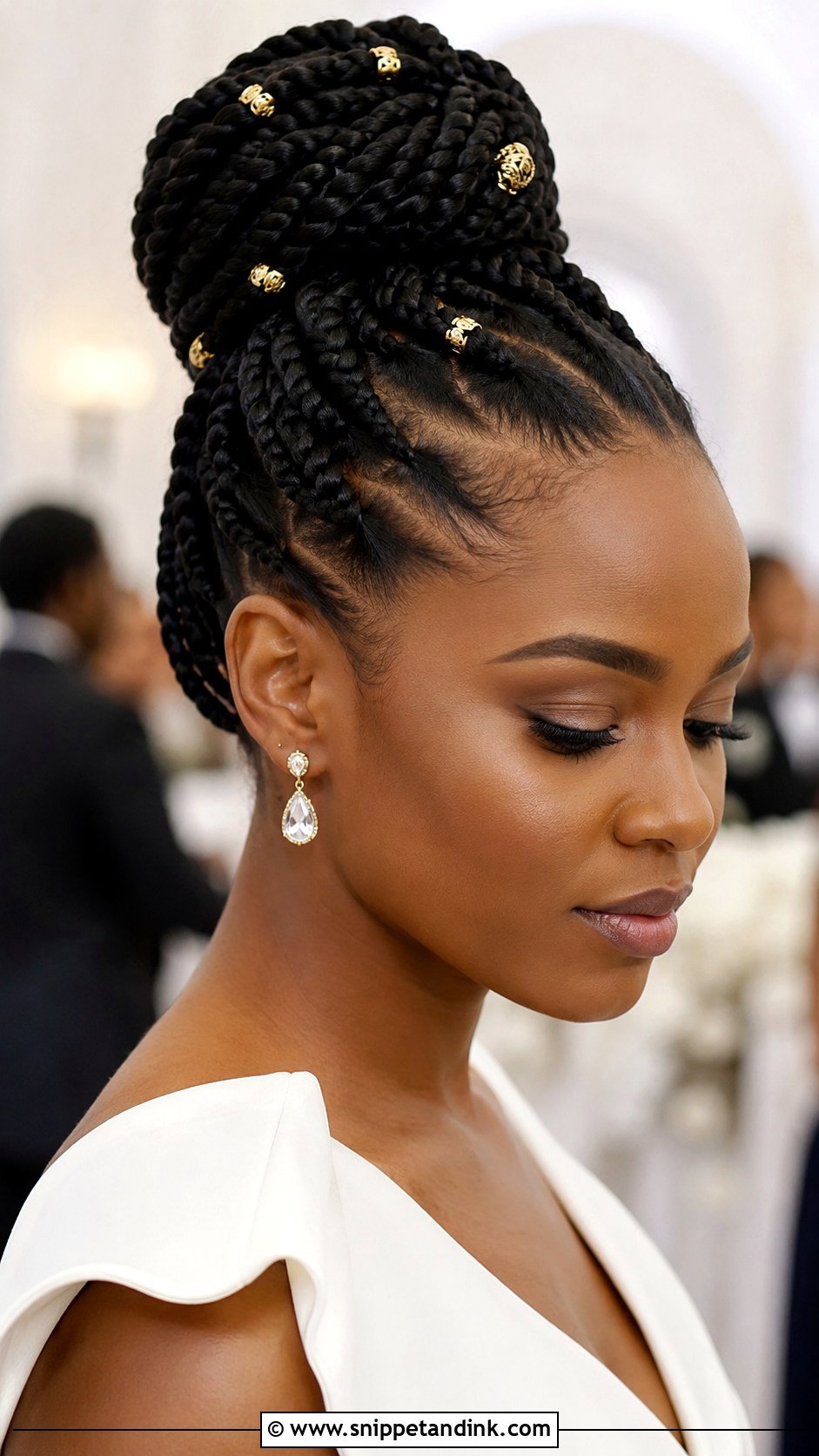
Senegalese twists are smooth and rope-like, which makes them easy to sculpt into a bun, chignon or crown. Because the twists are made of two strands, they can unravel slightly at the ends; dipping the ends in hot water seals them. I pin twists in a figure-eight motion so the weight spreads. Gold cuffs or fresh flowers finish it, and the twists last well past the honeymoon.
18. Big Chop Pixie With Accessories
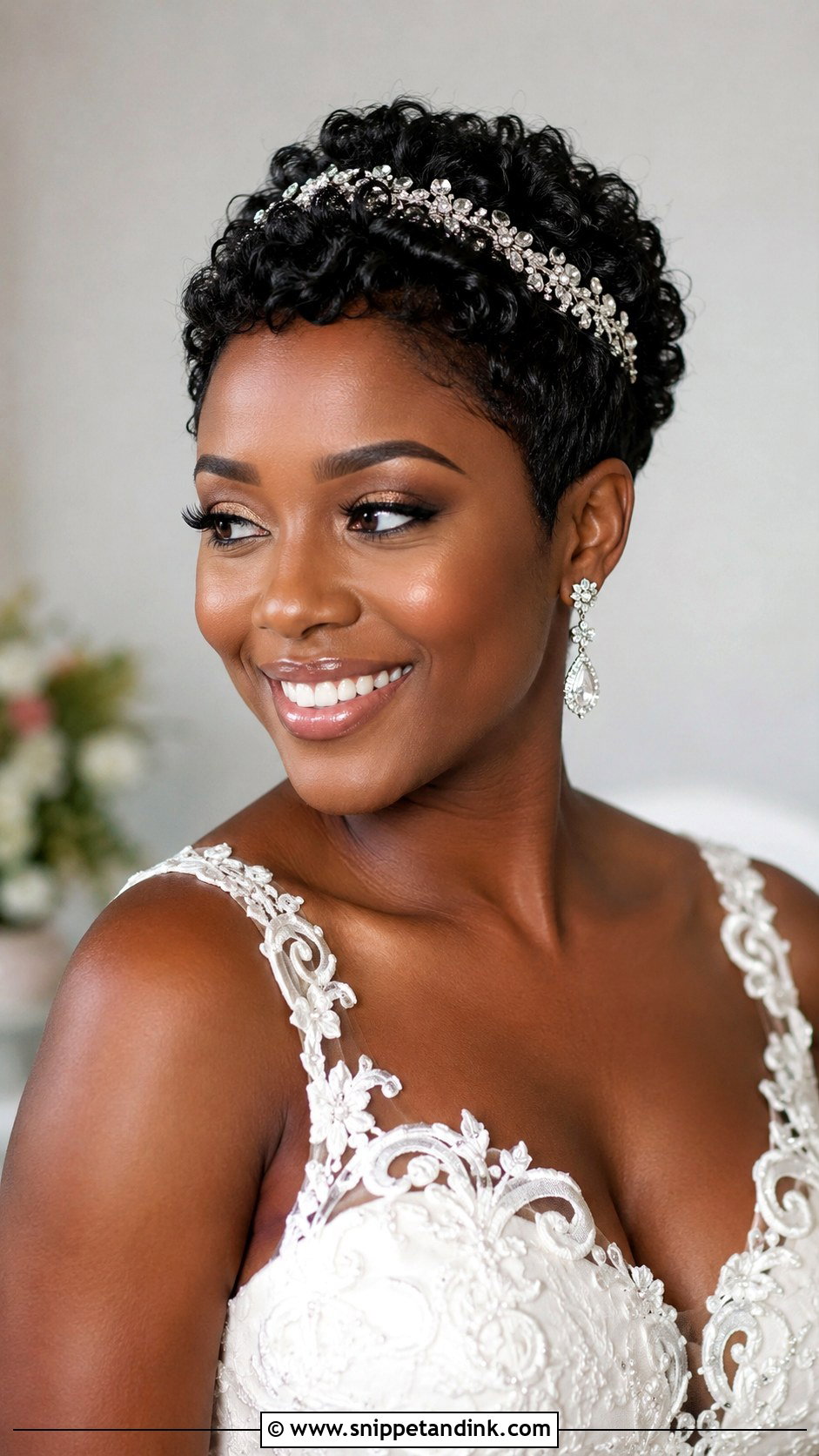
Short natural hair shows off the face, the neck and the earrings in a way few long styles can. For a TWA or big chop, I define curls with a light gel or a curl sponge, then shape the edges carefully. A jeweled headband or a few pins pushed into the curls dress it up, and short hair stays cool through a hot afternoon. Choose this if you love your short hair already; it isn’t a style to try for the first time on the day.
19. Box Braids Half-Up Bun
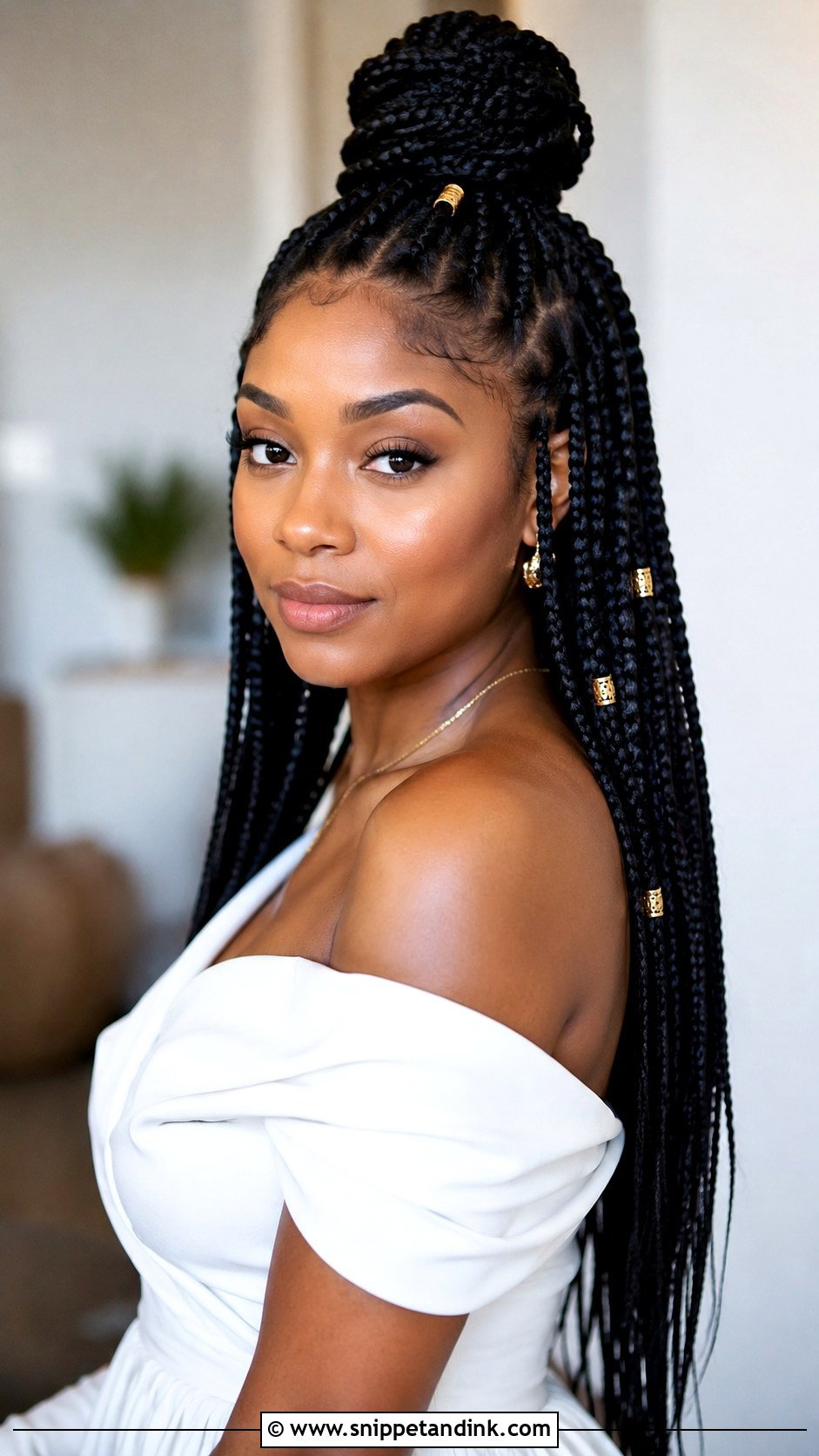
Box braids in a half-up bun keep the face clear while the rest hangs down the back. Long, thick braids are heavy in a top section, so I use a soft scrunchie rather than a thin elastic to protect your edges. A braid wrapped around the bun base hides it, and gold beads or cuffs slide on in minutes. The style moves well from ceremony to dance floor.
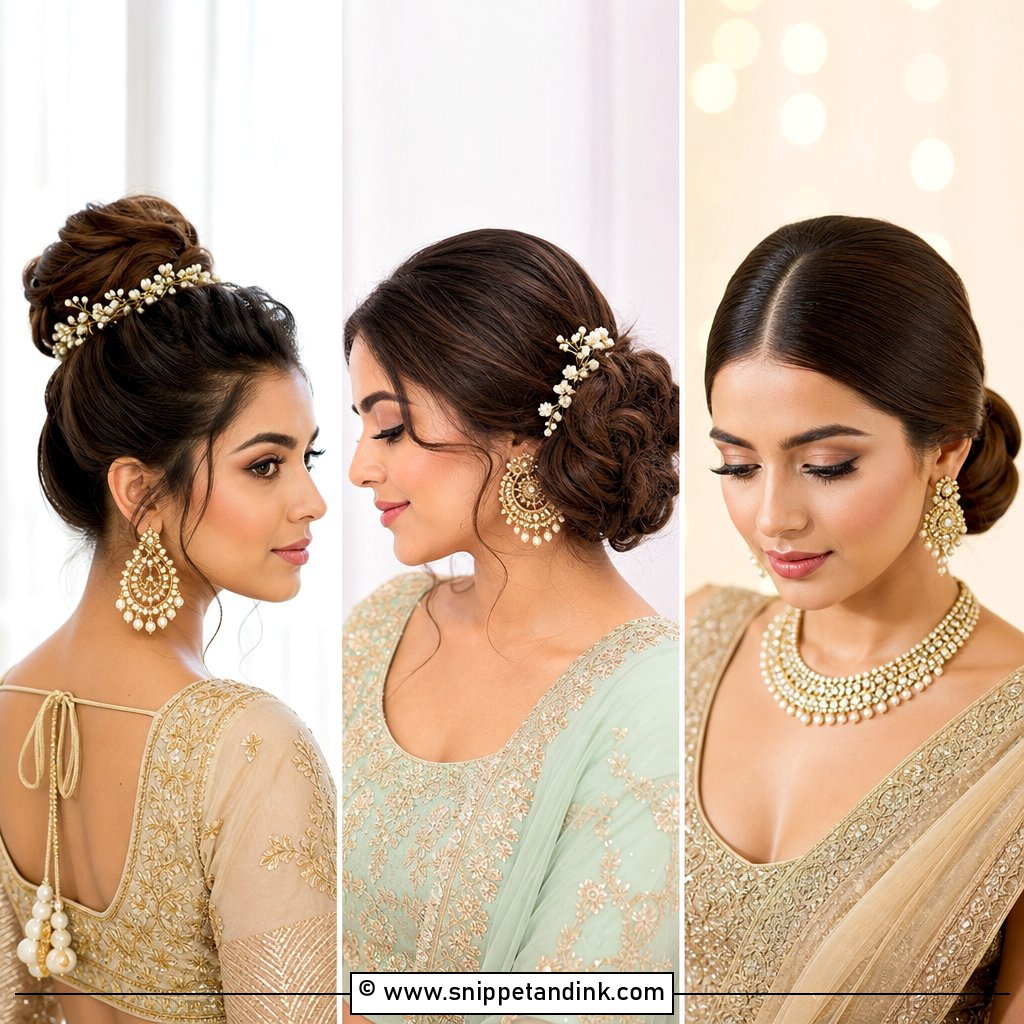
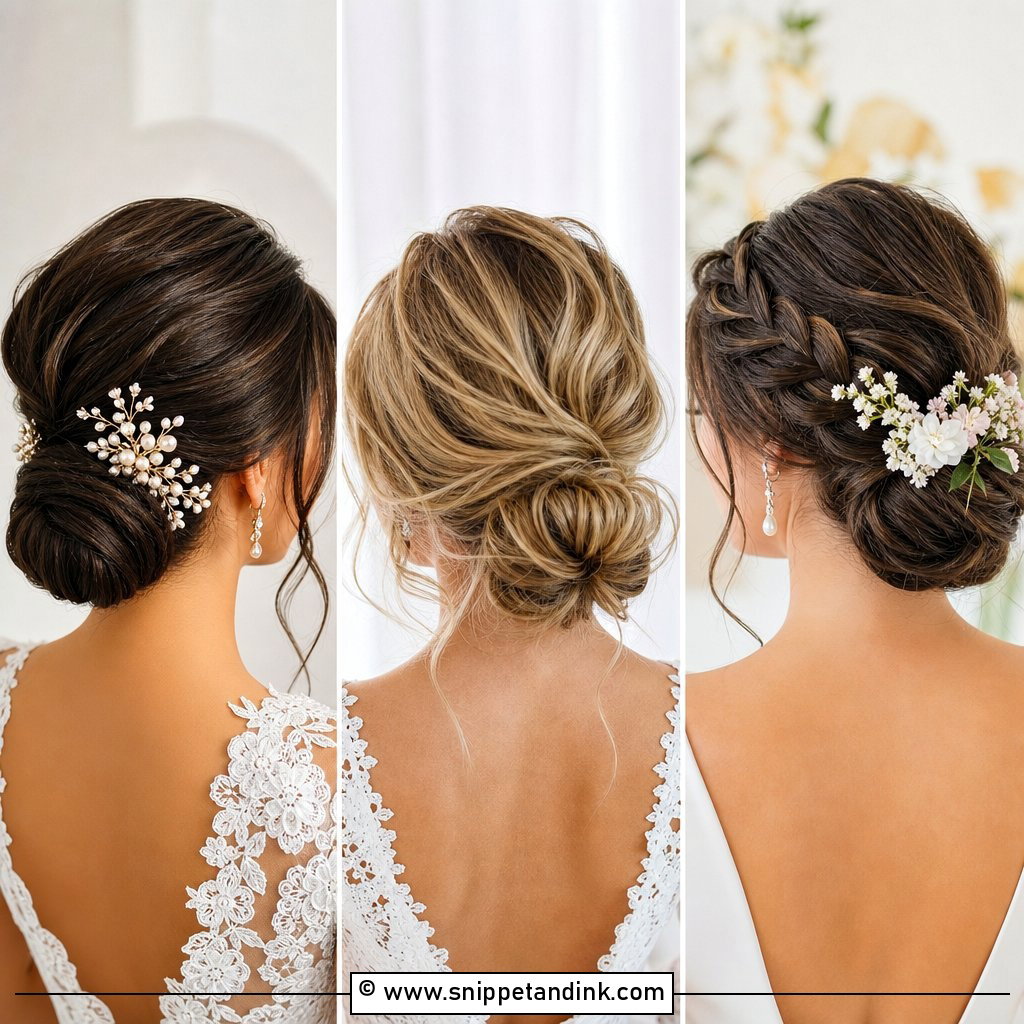
20. Chignon With Pearl Pins
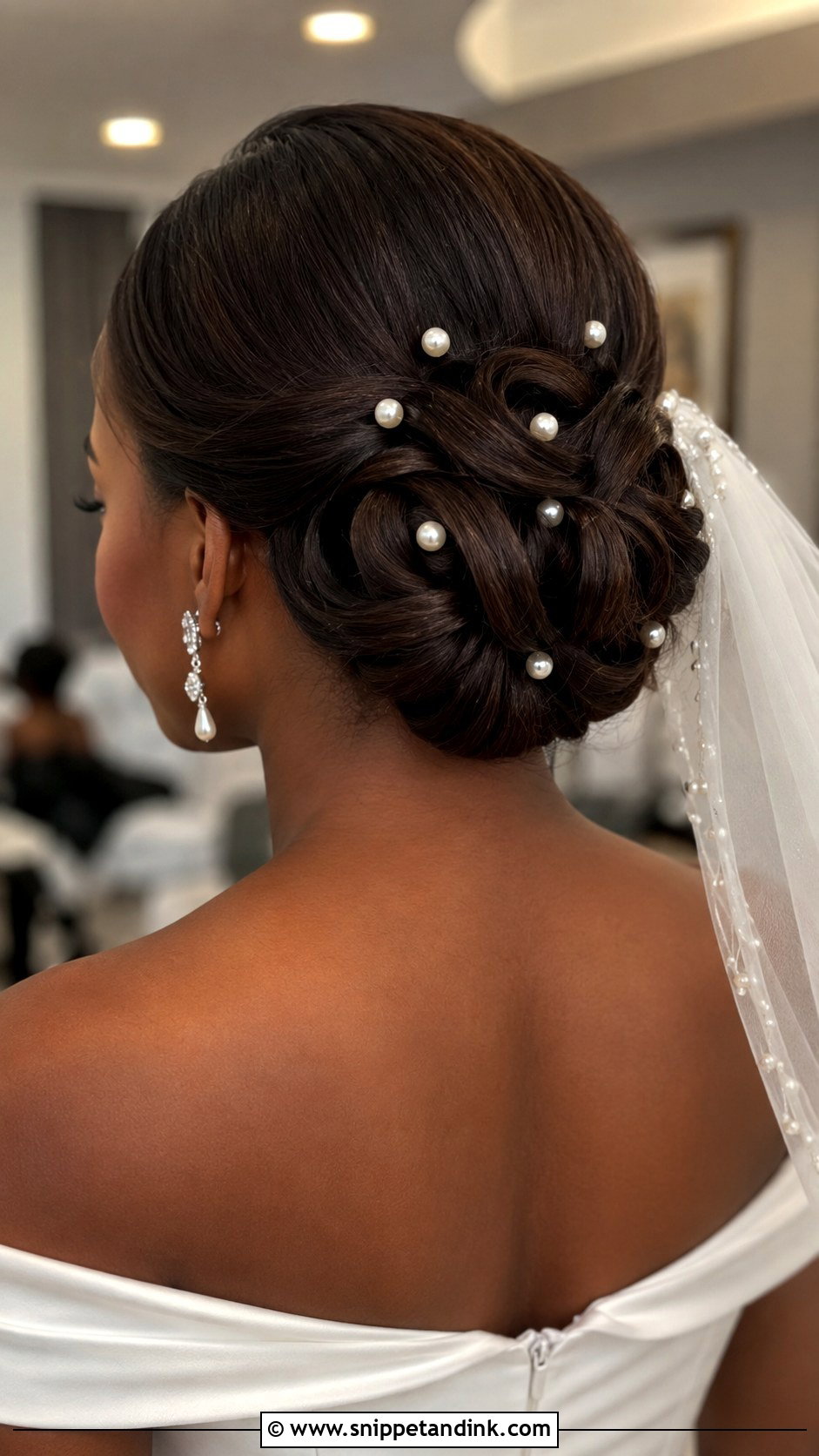
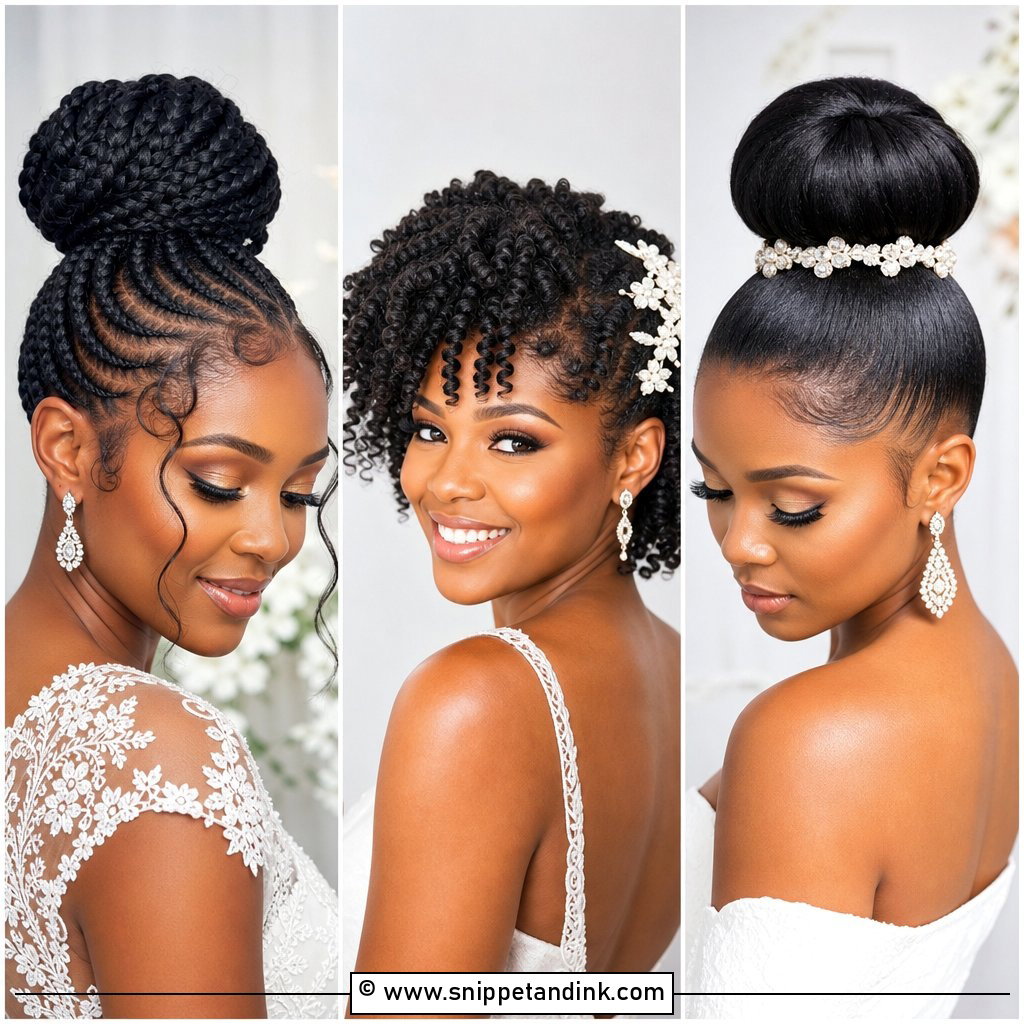
A chignon gathers the hair into a smooth looped knot at the back of the head. It works on relaxed hair, blowouts or extensions, and the smoother the hair, the cleaner the loops. I set two crossed pins under the knot so the veil comb has something to grip. Scattered pearl pins add a quiet shine. If your hair reverts quickly in humidity, ask your stylist to finish with a light anti-humidity spray.
21. Curly Mohawk Updo
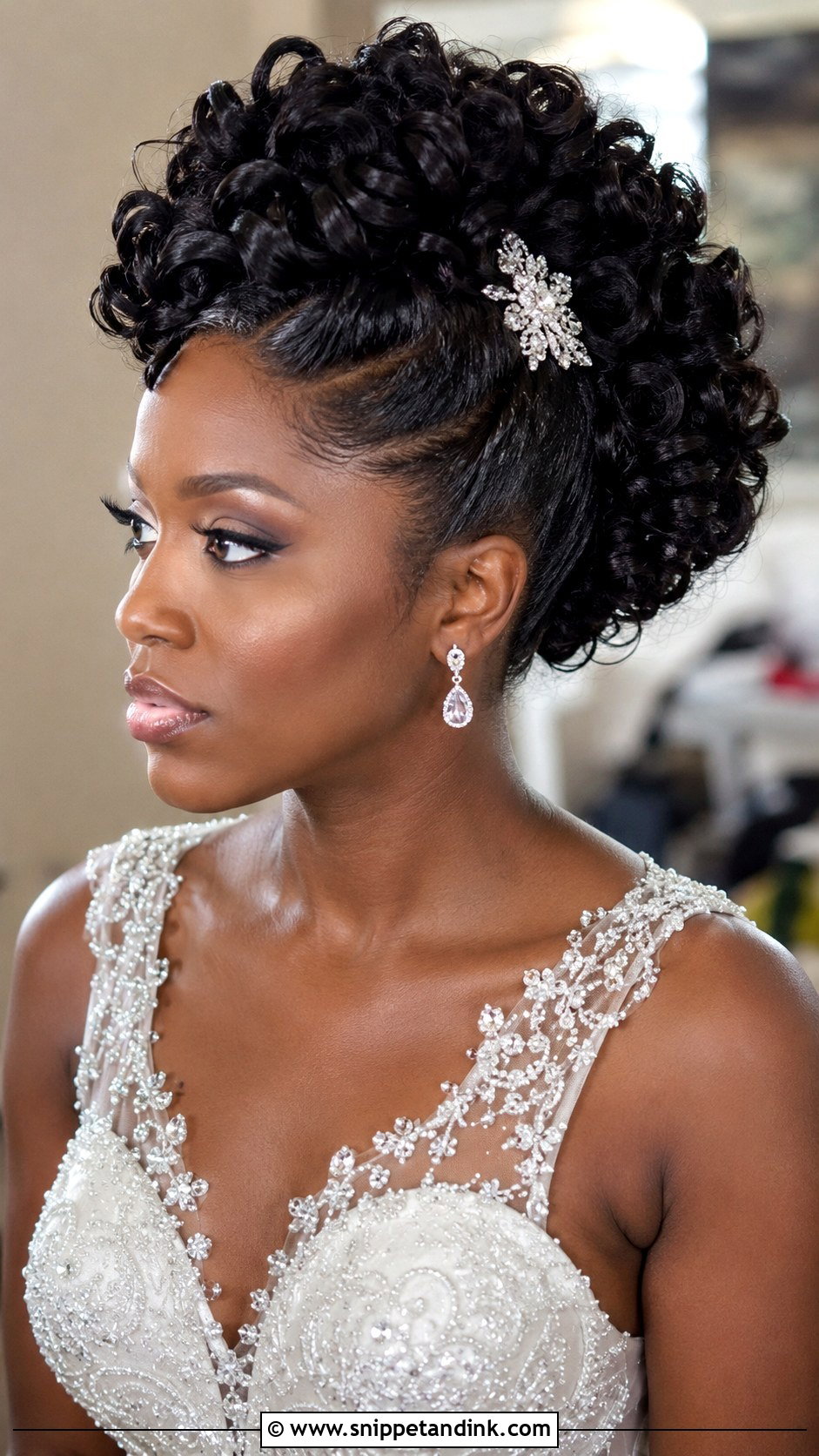
A curly mohawk updo keeps the sides tight and puts height and curls in the center. It reads bold, so I suggest it when the bride already loves an edgier look in daily life. The sides are usually flat-twisted or pinned with gel, and the center is built with curls pinned upward. Fresh flowers or a jeweled pin along the sides keep it bridal.
22. Loose Curls With Double Braid
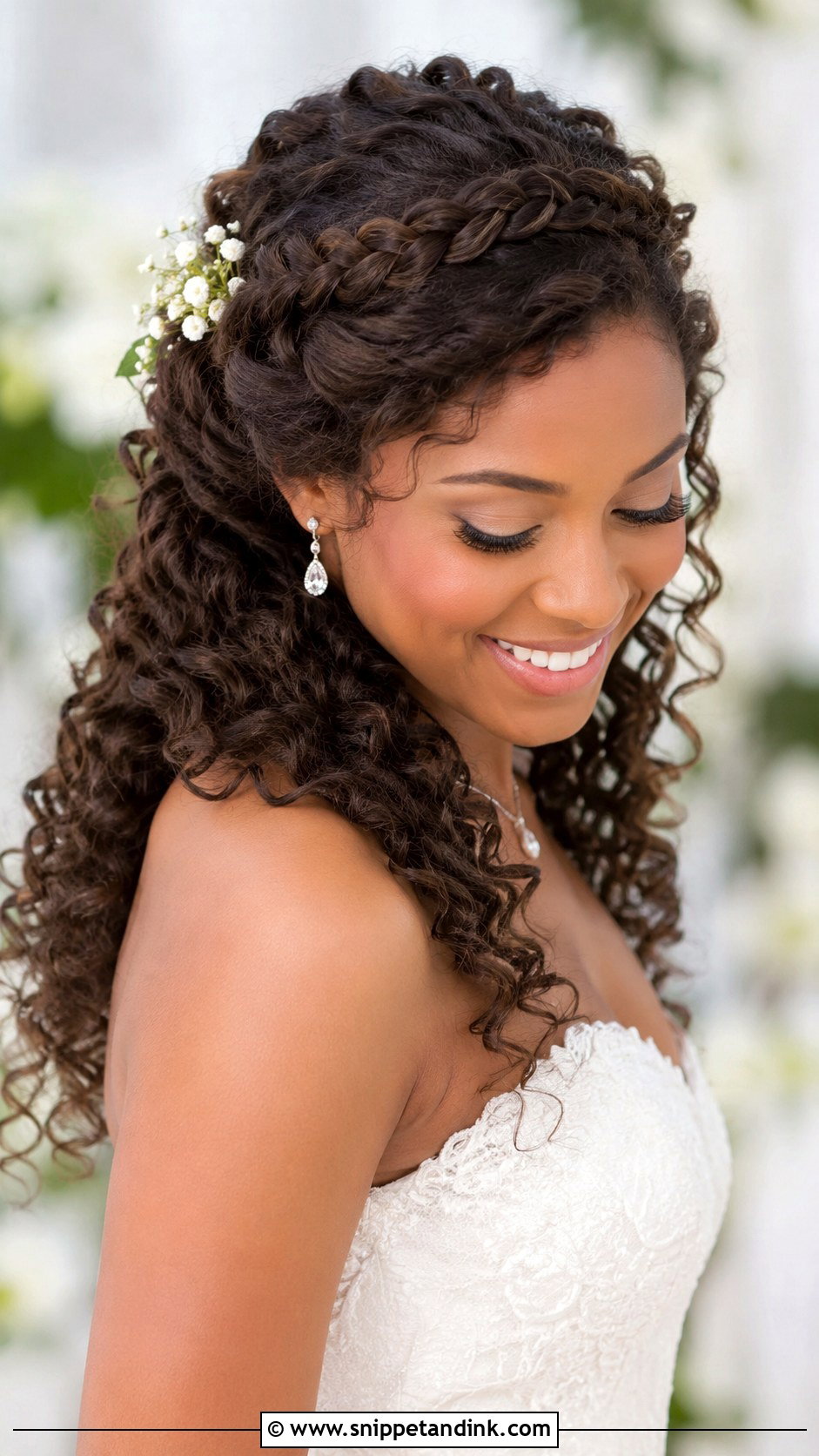
Loose curls with a double braid across the head give you flowing hair with a clean face. The braid acts like a headband, so I pin it securely behind each ear. Small flowers tucked into the braid add color. With your own curls the style depends on good definition; curly extensions help it hold longer. It suits garden and beach ceremonies and relaxed receptions.
23. Sculpted Finger Waves
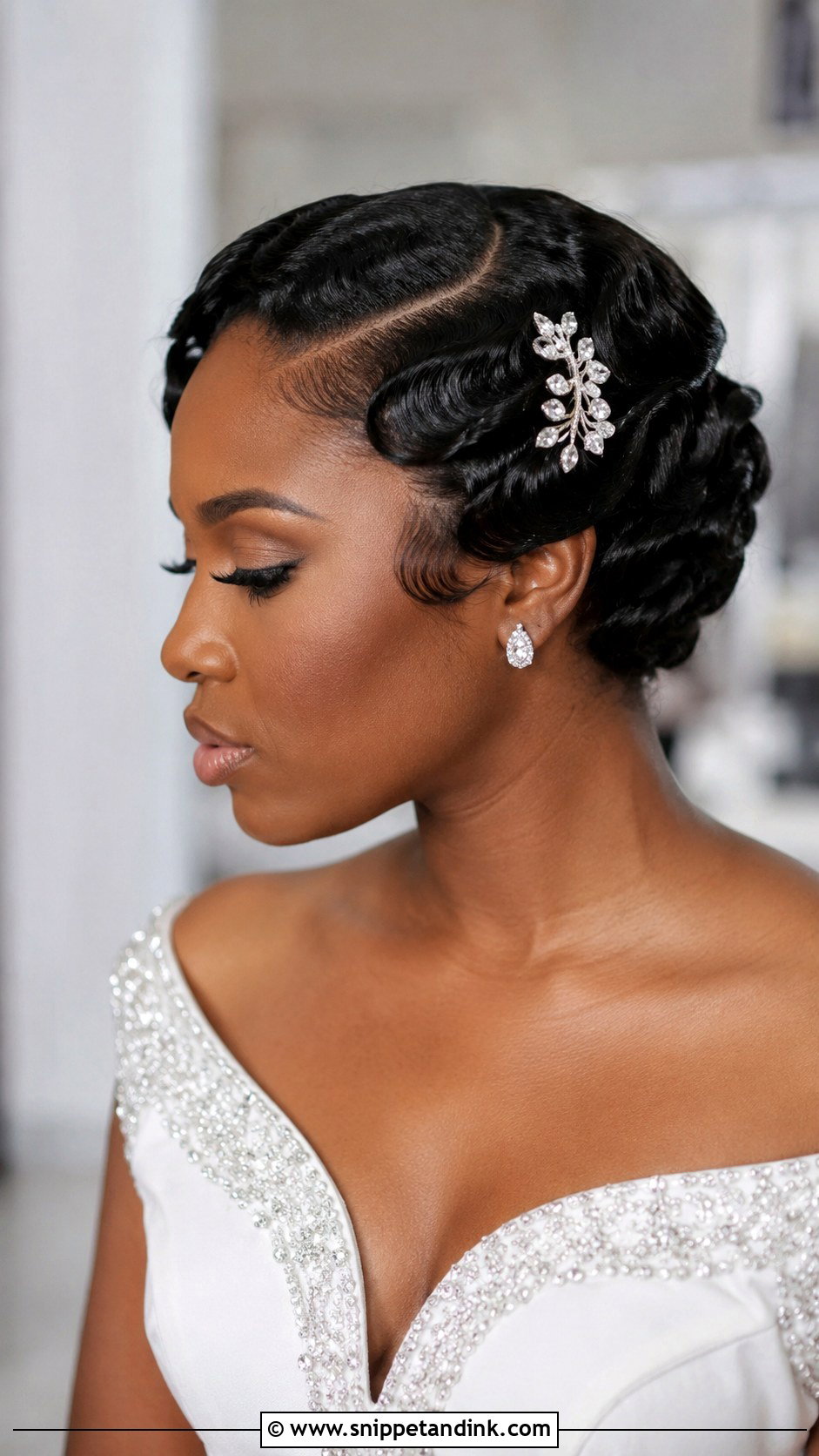
Finger waves are sculpted, not curled. On short relaxed or pressed hair, I work setting lotion or gel through damp hair and pinch each S-shaped ridge with fingers and a fine comb, then let it set under a dryer. They can also be added as a front accent on a pinned style. A jeweled clip or small fascinator gives the vintage look its finish. This needs a stylist who already does them often.
24. Crochet Curls Updo
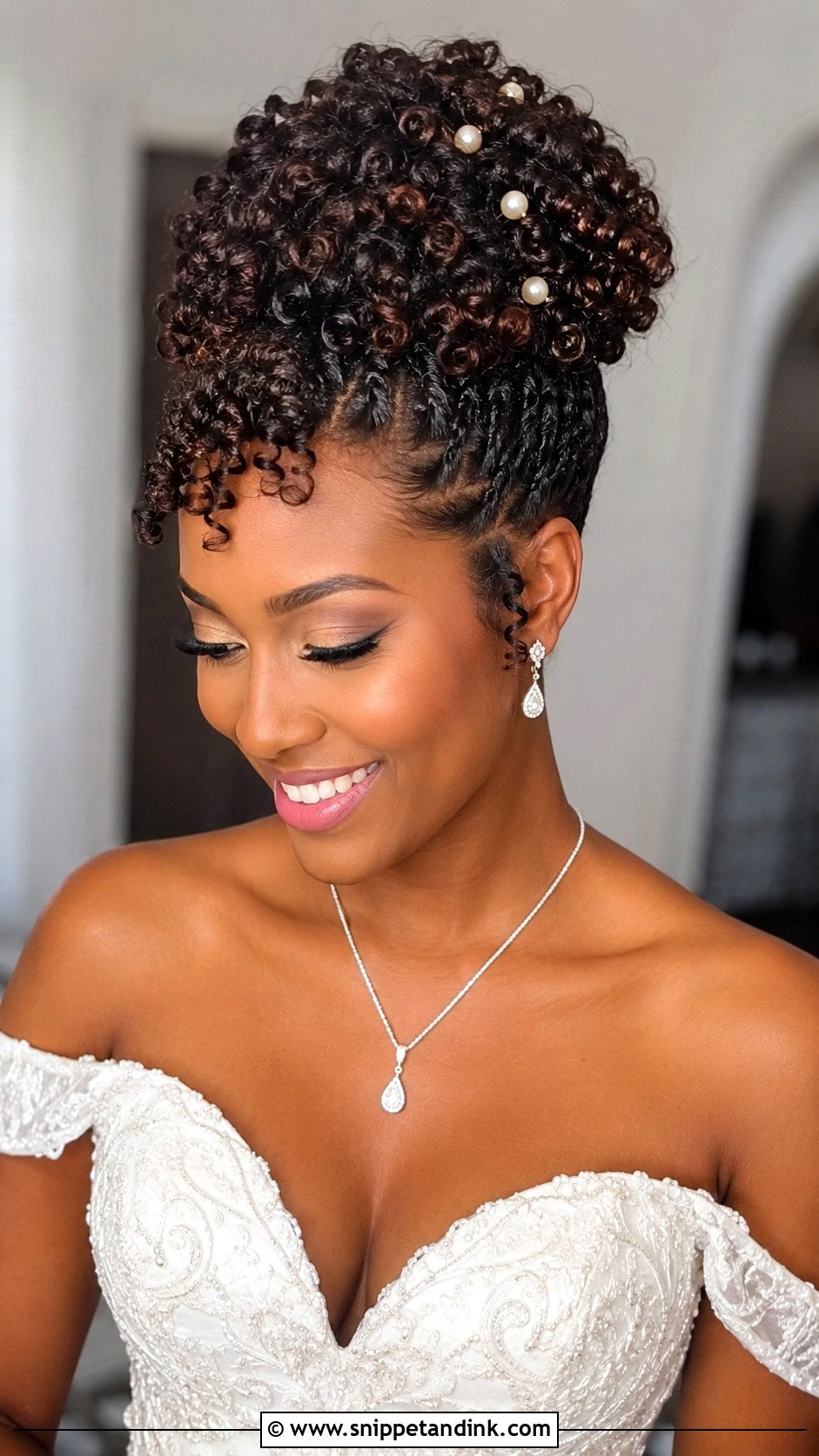
Crochet curls install quickly compared with braiding, since pre-curled hair is looped onto cornrows underneath. That makes them practical if you want lots of volume without heat. Sculpted into a high bun, soft chignon or textured crown, the curls keep their shape well. Install them a few days before the wedding and sleep in a satin bonnet to prevent frizz.
25. Slicked-Back Bun With Baby Hairs
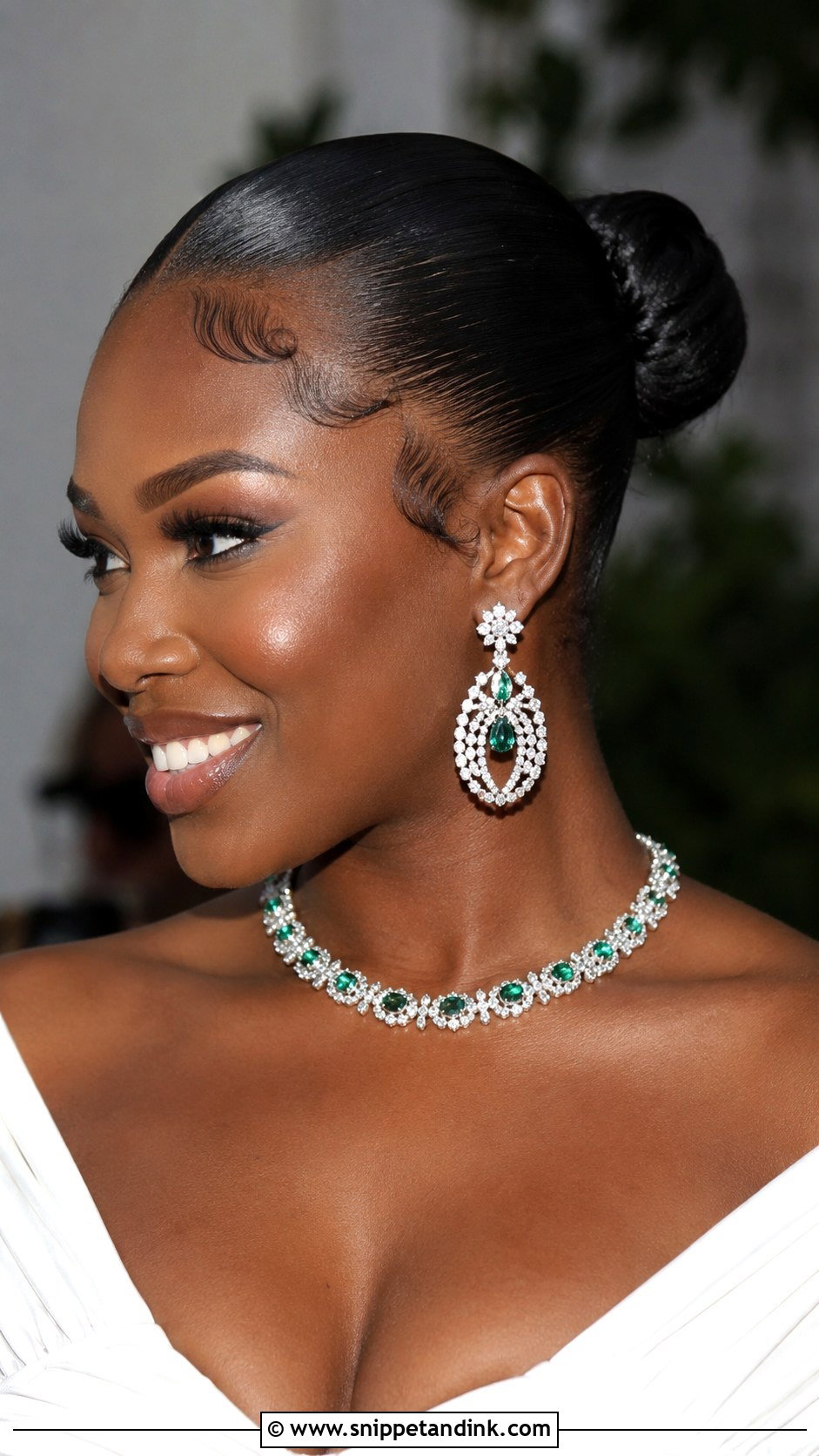
A slicked-back bun puts all the attention on your face and your earrings. The finish depends on two things: a firm hold gel and laid edges that follow your natural hairline. I lay edges with a small brush and a scarf tied over them for a few minutes while the gel sets. Place the bun high for drama or low for a quieter look, and add a pearl accent or a sparkly clip.
26. Twisted Halo Updo
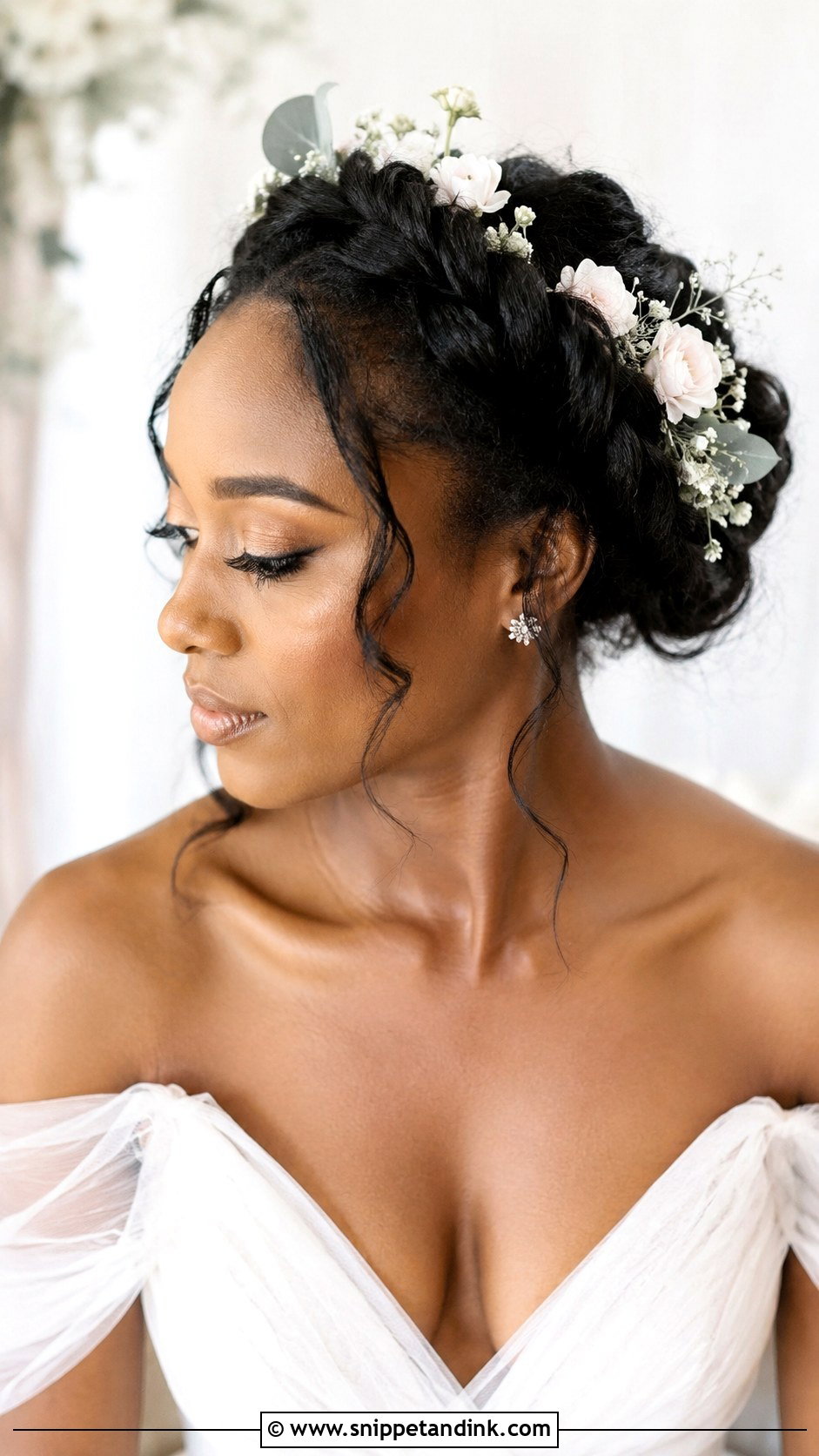
A twisted halo wraps twists around the head like a crown. I pin each twist along the circle with U-pins hidden inside, which keeps it flat and secure. Loose tendrils at the temples soften it. Fresh flowers or a thin gold band look natural tucked into the halo. It is one of the more comfortable updos to wear for a long day because the weight sits close to the head.
27. Layered Curly Bob
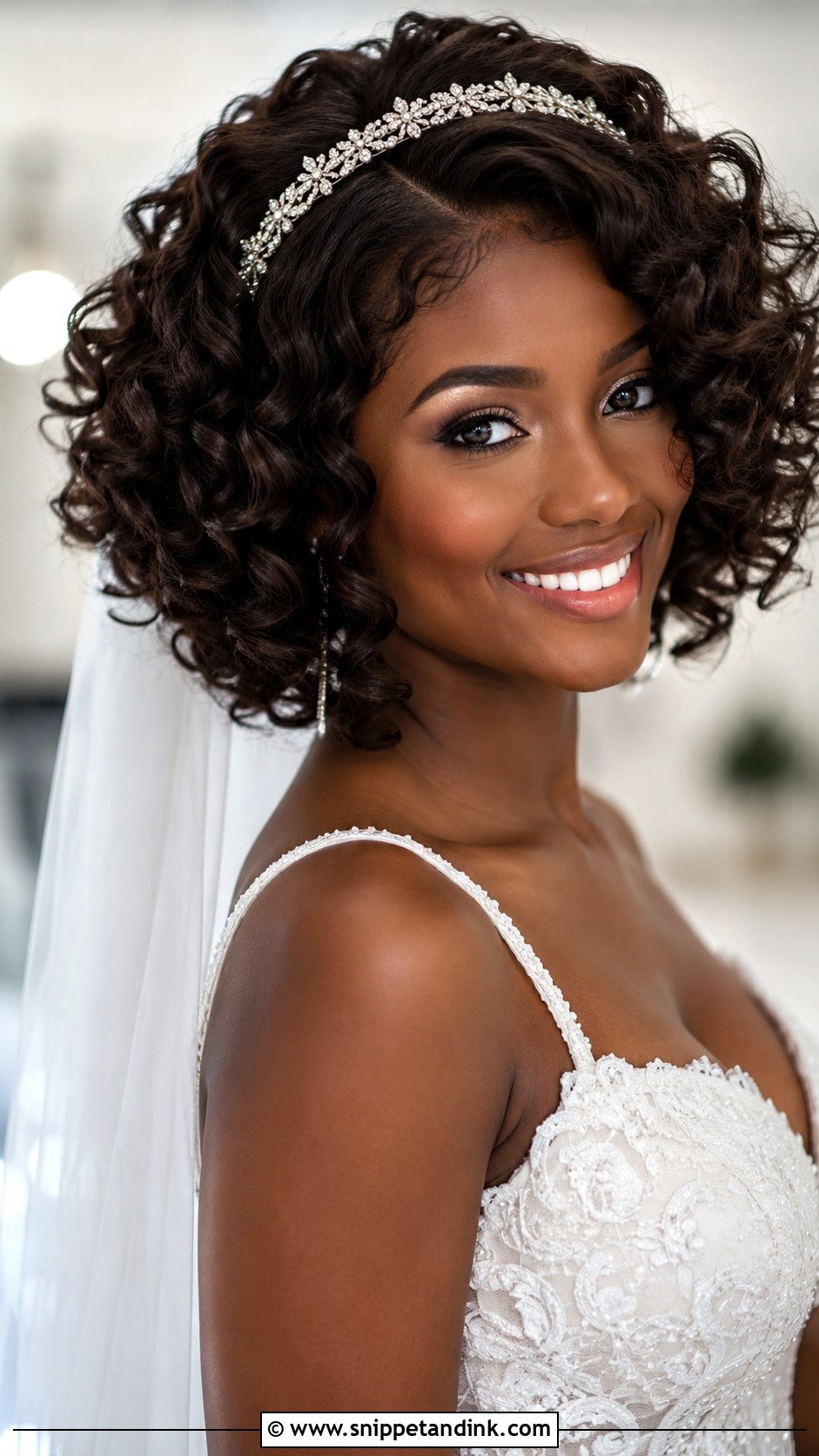
A layered curly bob suits brides who already wear their hair short and like it. Layers give the curls room to move and keep the shape from looking triangular. I define curls with a light cream and diffuse on low heat. A sparkly headband or a few jeweled pins dress it up without needing to style much. Book a trim two to three weeks before, so the shape has time to soften.
28. Gele Inspired Updo
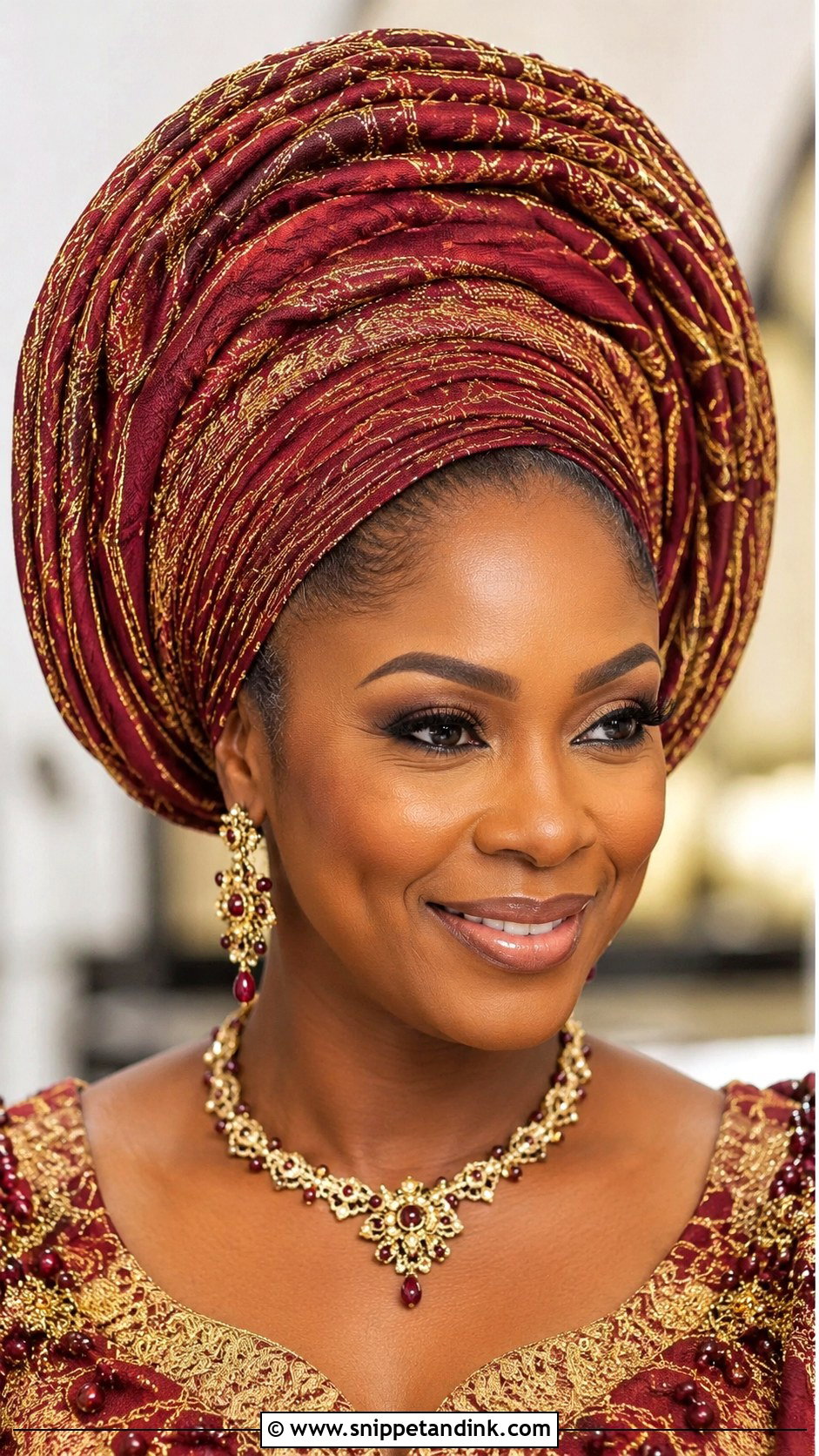
A gele is a wrapped headtie, traditionally tied from stiff fabric like aso oke, and it is a skill in its own right. Some brides prefer to have hair sculpted into a similar shape instead. Either way, it celebrates African heritage in a way that reads instantly in photos. I recommend booking a gele specialist, since the fabric needs to be folded and pinned precisely. It pairs with traditional attire or modern gowns as a fusion look.
29. Bridal Locs Updo
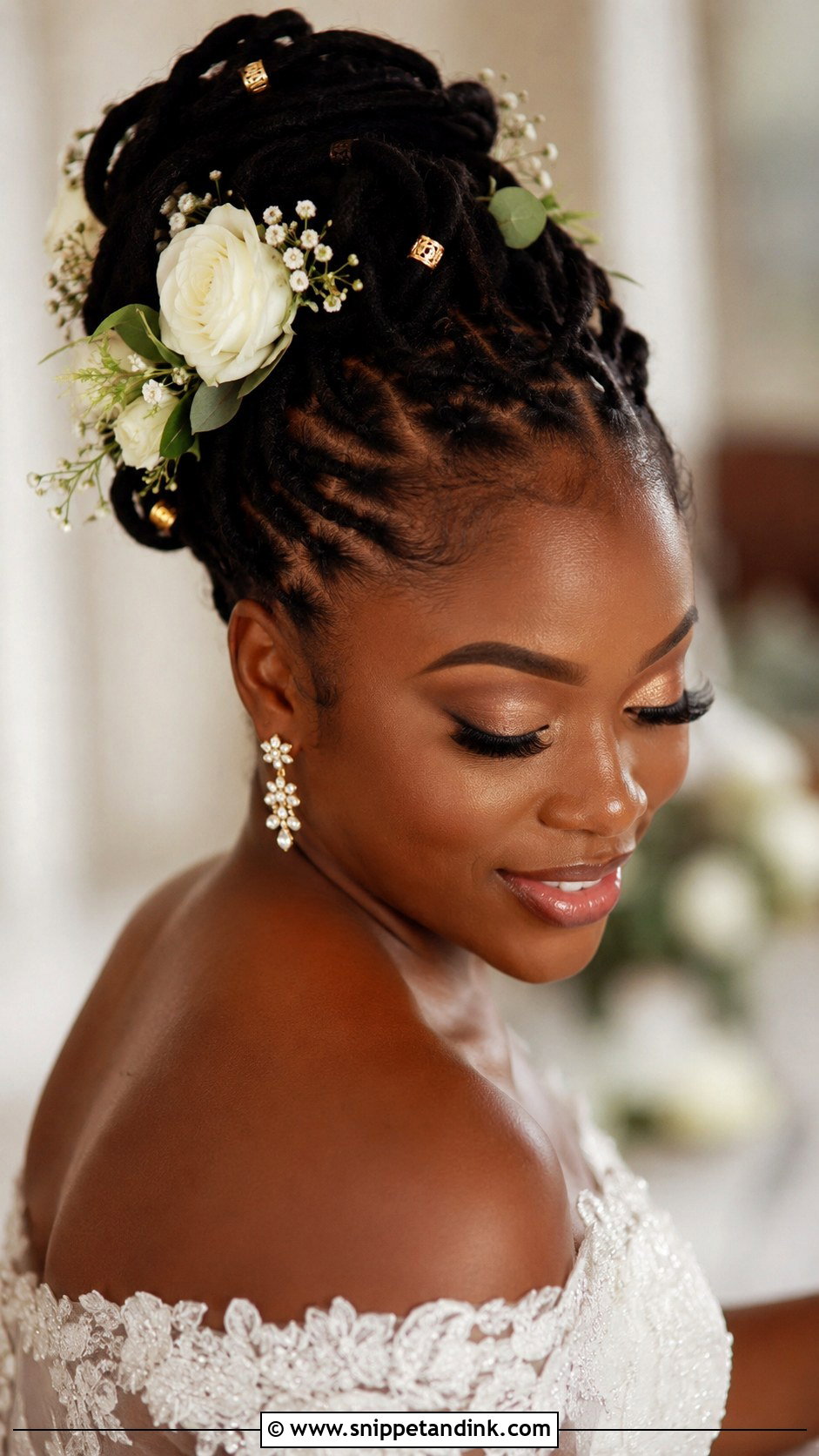
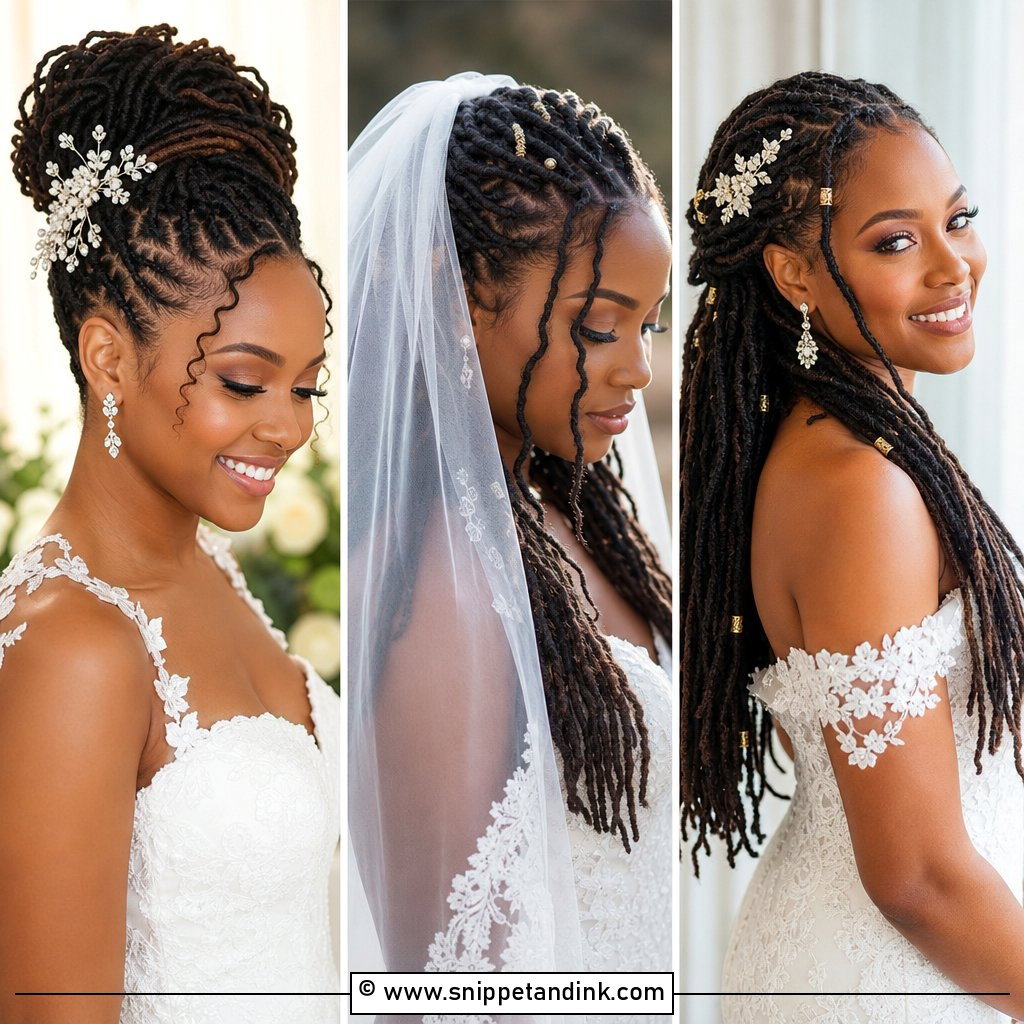
Locs styled into an updo can take many shapes: a bun, a crown or a sculpted pin-up. I ask for a retwist one to two weeks before, so the new growth looks neat but not tight. Longer locs are heavy, so I pin them in sections and spread the weight. Gold cuffs, beads or pearls slide onto locs easily and are a meaningful way to personalize the look.
30. Soft Glam Blowout With Curls
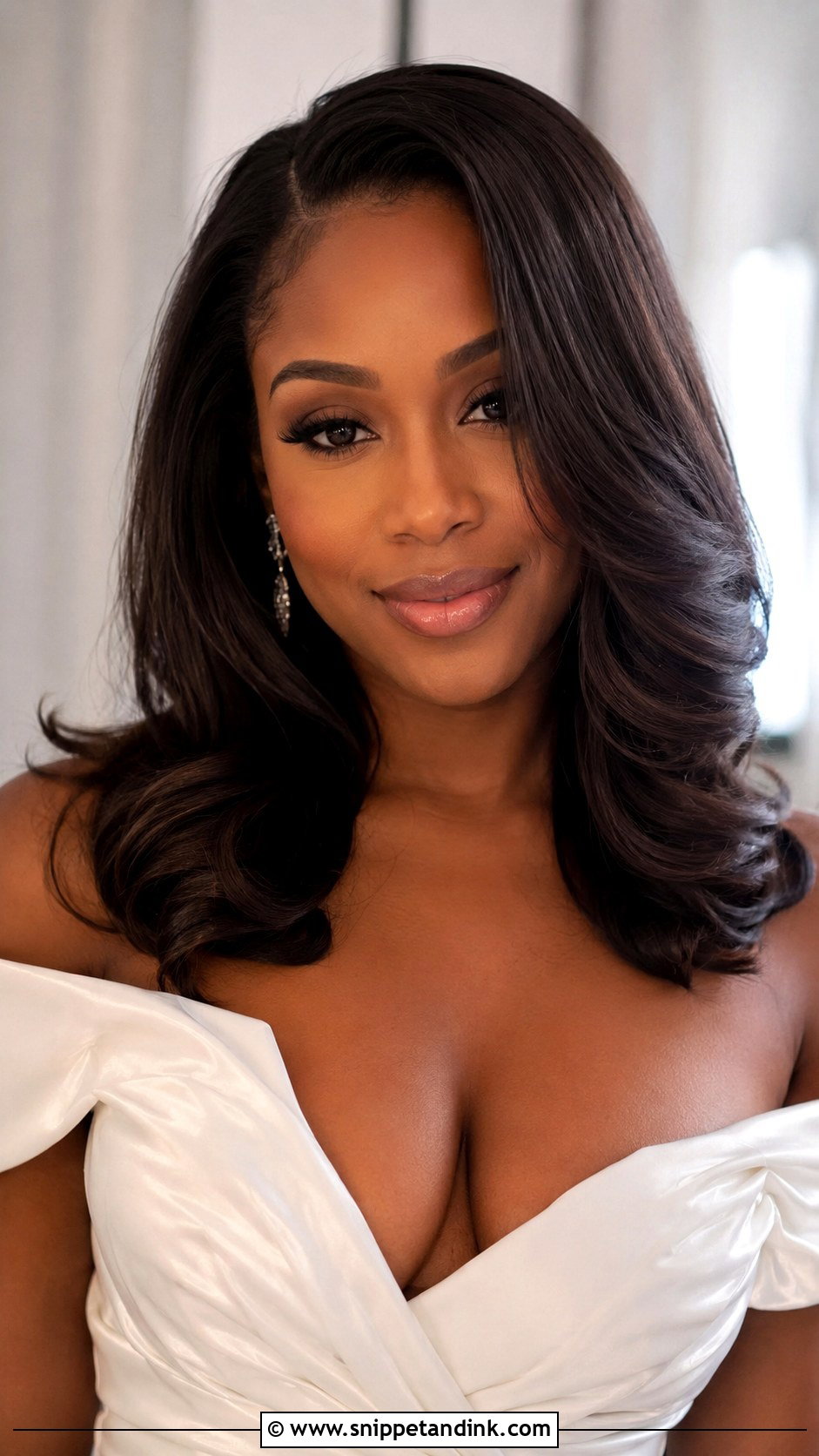
A soft glam blowout gives smooth volume with curled ends. On natural hair it means a careful blow-dry with heat protectant and a round brush, followed by curls with a wand or rollers. Heat on natural hair needs care, since too much heat can damage curl pattern over time. In humidity, a blowout can revert, so I always ask what the weather will be and plan for a pinned-up backup.
Humidity, Shrinkage and the Ten-Hour Test
Every texture reacts to the day differently. Blowouts and silk presses can revert as soon as the air turns damp. Natural curls shrink. Braids, twists and locs barely change, which is one reason so many brides choose them for outdoor and summer weddings. If the forecast looks wet, I’d rather plan a pinned-up version of a blowout at the trial than improvise one on the morning.
What I keep in the kit: a satin scarf for the car, edge control and a small brush, a light leave-in mist for curls, spare U-pins, and a wide-tooth comb. If your bridesmaid knows where the scarf is, your edges will look as neat at the reception as they did at the ceremony.
Protecting Your Edges Under All That Tension
Many of these styles pull at the hairline, and repeated tension there can thin edges over time. I’d rather loosen a braid than see a bride wince. Small bumps, redness or soreness after installation mean the braid is too tight. Ask your braider to keep the hairline sections looser, use soft scrunchies instead of thin elastics, and take the style out gently after the honeymoon with plenty of conditioner.
Your Texture Leads, the Accessories Follow
The best wedding hair for textured hair starts with a stylist who works with your texture every week. Bring photos of your hair as it is today, tell them how your edges respond to tension, and plan the timing around installs, retwists and sets. If a style hurts or pulls at the trial, say so. Comfort for ten hours is part of the look.
You'll Like These Ideas:


Leave a Reply