
Haldi is the one function where I tell brides to dress for the mess first and the photos second. Wet turmeric paste, marigold petals, oiled hands and a lot of hugging will land on whatever you wear, often while you sit cross-legged on a low chowki for an hour. That changes the brief completely. Light fabrics, a dupatta that is pinned rather than draped, flat footwear and jewelry you won’t mind getting yellow matter more than heavy embroidery. Below are thirty outfits I’d genuinely put a haldi bride in, with notes on what each one asks of you on the day.
How Turmeric Paste Treats Each Fabric
Haldi paste is turmeric mixed with things like gram flour, rose water, milk cream or oil, and that mix matters as much as the colour. The oily versions sink into natural fibres and leave a greasy ring around the yellow. Water-based pastes sit on the surface longer and brush off more easily once dry.
When I’m pulling outfits for a haldi, I sort fabrics by how they handle that paste:
- Cotton and cotton silk: absorb the stain quickly but can be washed, so the yellow fades over a few laundry cycles.
- Georgette and chiffon: synthetic versions resist staining better than silk ones and dry fast if they get wet.
- Pure silk and tissue: show water marks as well as yellow, and usually need a dry cleaner to recover.
- Heavy embroidery and sequins: paste dries into the stitching and is very hard to lift without damaging the work.
If you hope to wear the outfit again, test a hidden seam allowance first. Rub a little wet turmeric on it, leave it for twenty minutes, then rinse in cold water. What you see is roughly what you’ll get on the day. If the result upsets you, choose a cheaper piece for the ceremony and save the special one for photos before the paste comes out.
1. Yellow Haldi Lehenga For Bride
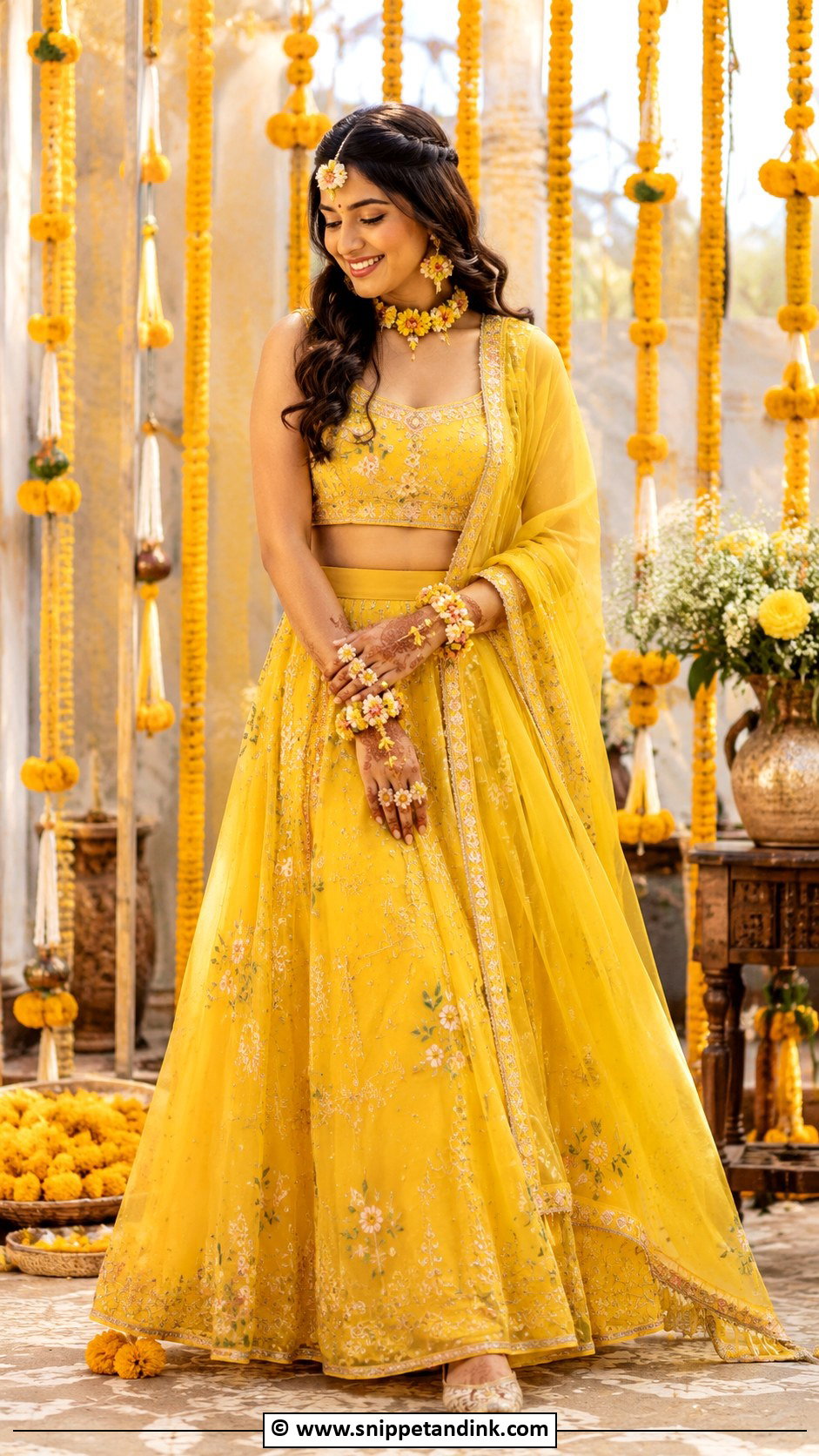
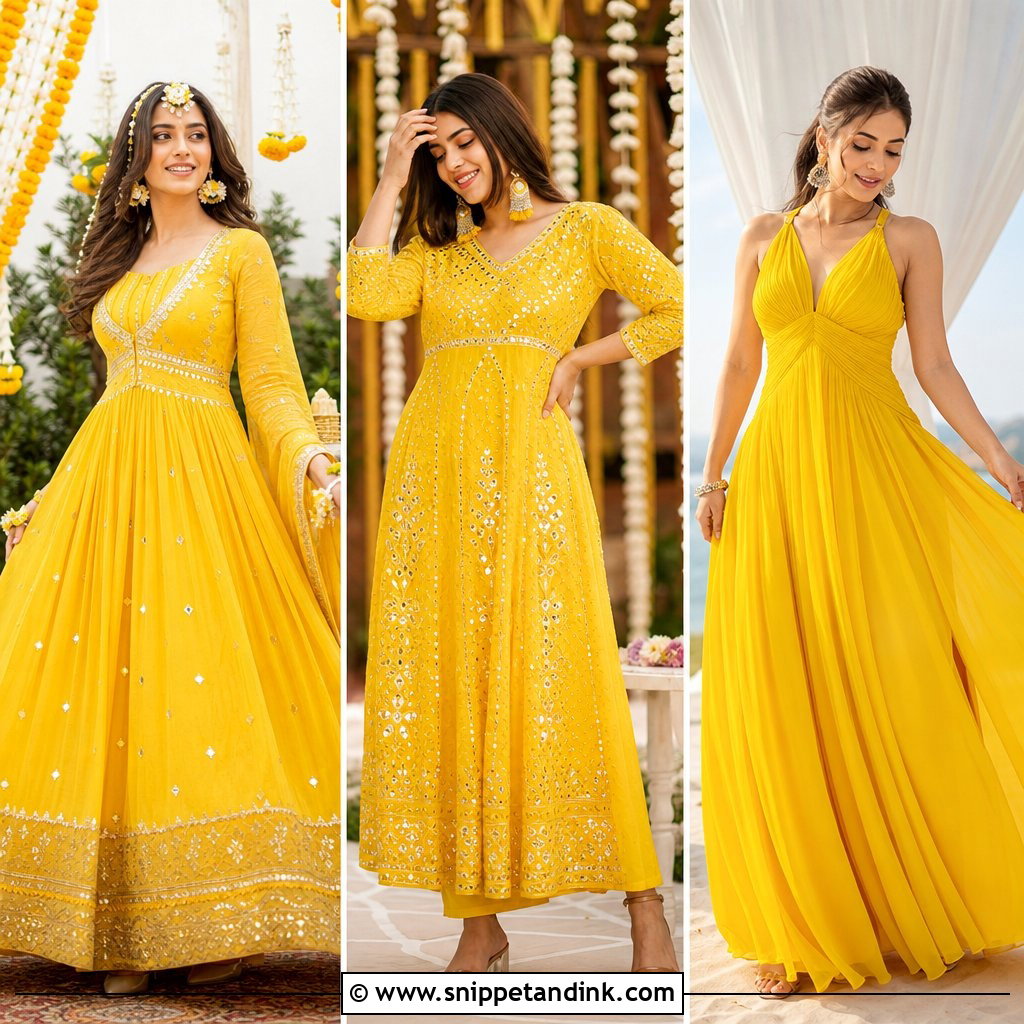
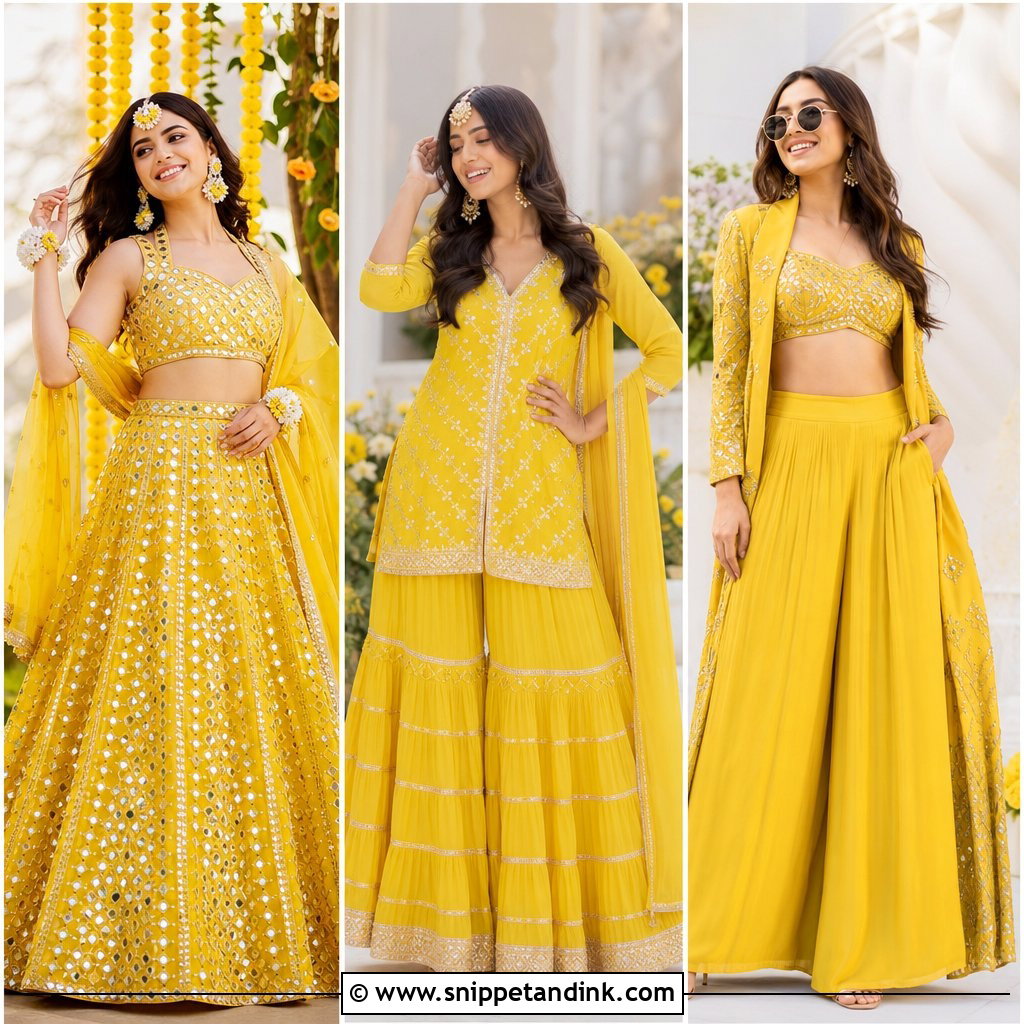
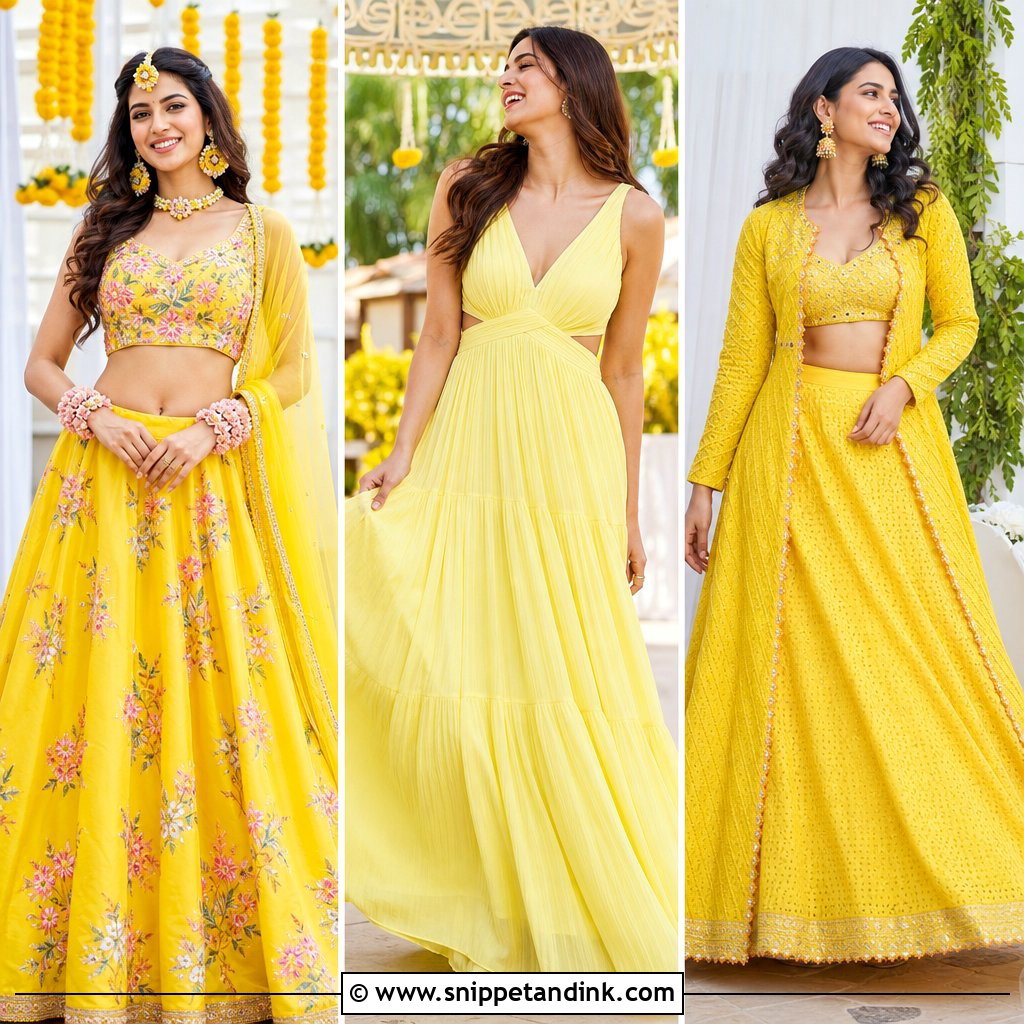
There’s a reason yellow keeps winning. Paste that lands on it simply disappears into the colour, so you don’t spend the ceremony worrying about every smear. I pull georgette, organza or cotton silk for this, because a heavy raw silk skirt gets hot fast in morning sun. A cropped blouse with short sleeves keeps turmeric off a long cuff, and I pin the dupatta at one shoulder so aunties can reach your arms. Thread or gota work gives enough detail; dense zardozi is wasted on a function where the outfit gets painted.
2. White Haldi Lehenga For Bride
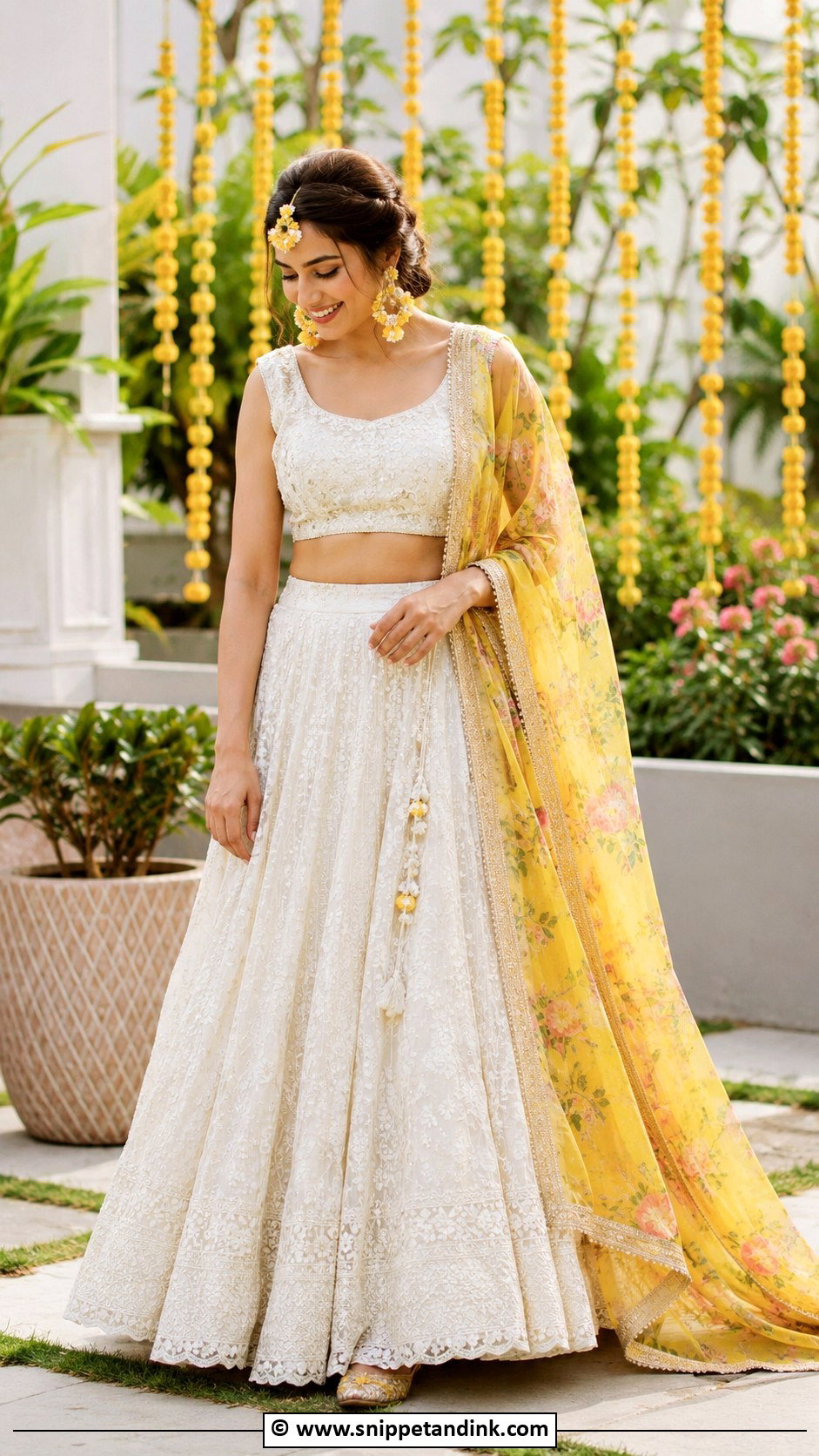
White against turmeric and marigold is one of my favourite contrasts in daylight. Be honest with yourself before you buy it, though: haldi on white rarely comes out completely, so treat it as a keepsake rather than something you’ll rewear. I’d choose ivory over stark optical white, since it forgives the faint yellow cast that’s left behind. A yellow floral dupatta, marigold earrings and a flower maang tikka bring the ceremony colour back in. Nude or gold flats finish it.
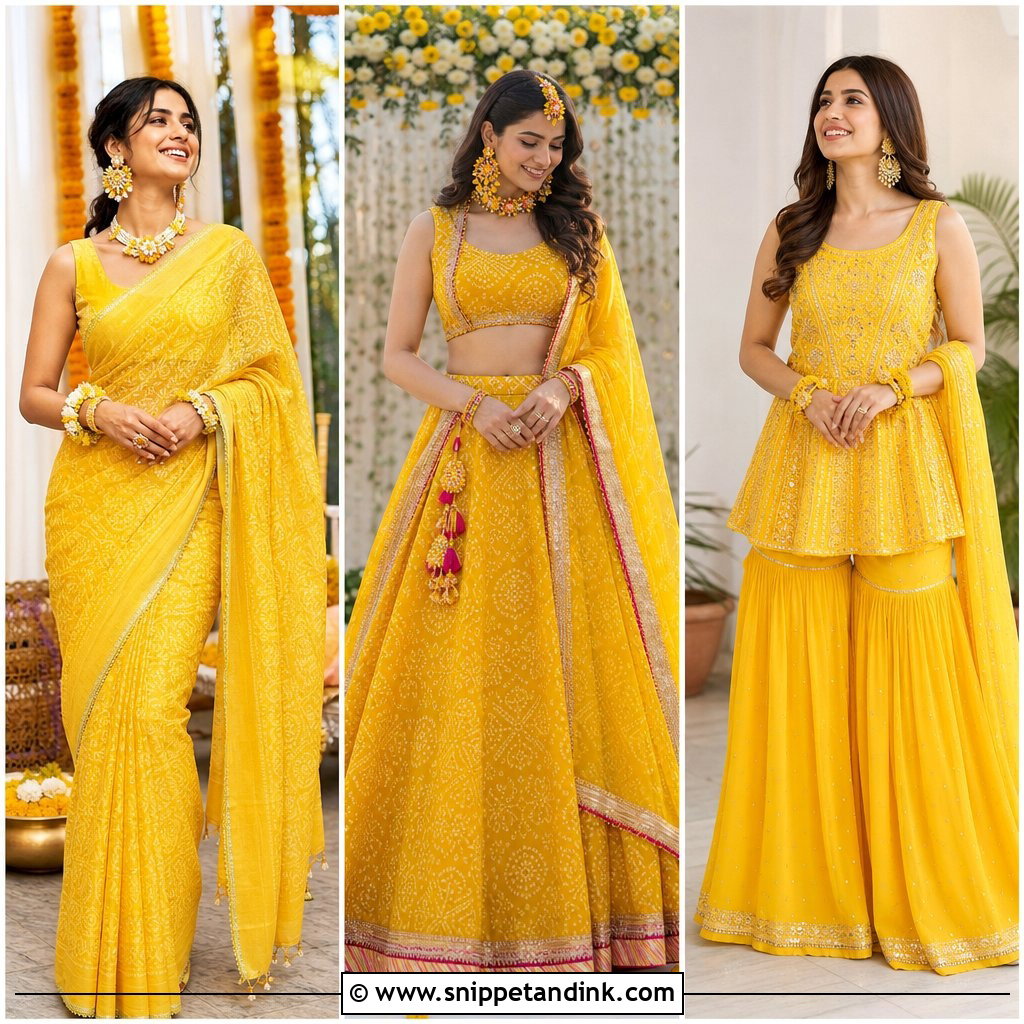
3. Mustard Haldi Sharara For Bride
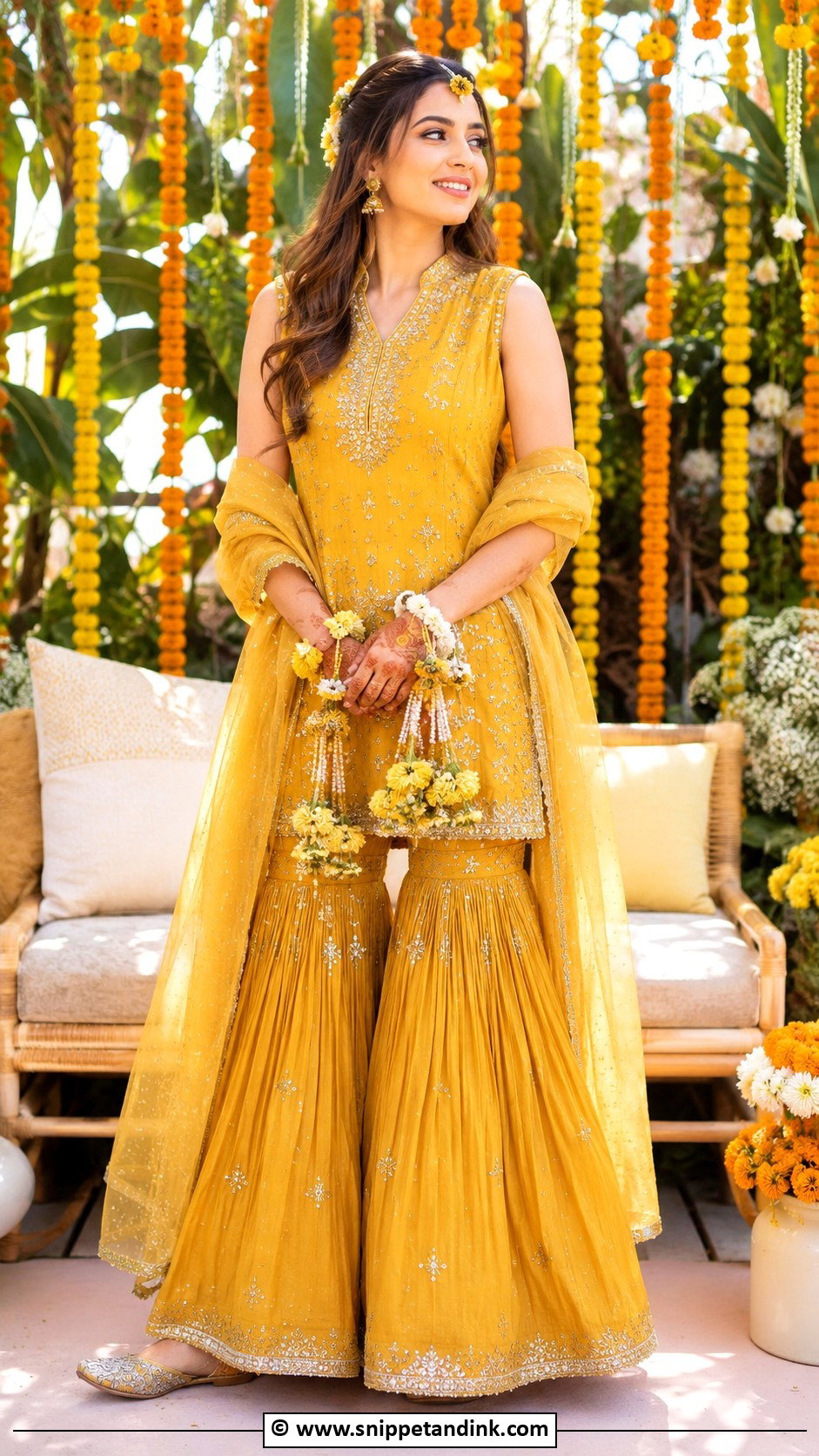
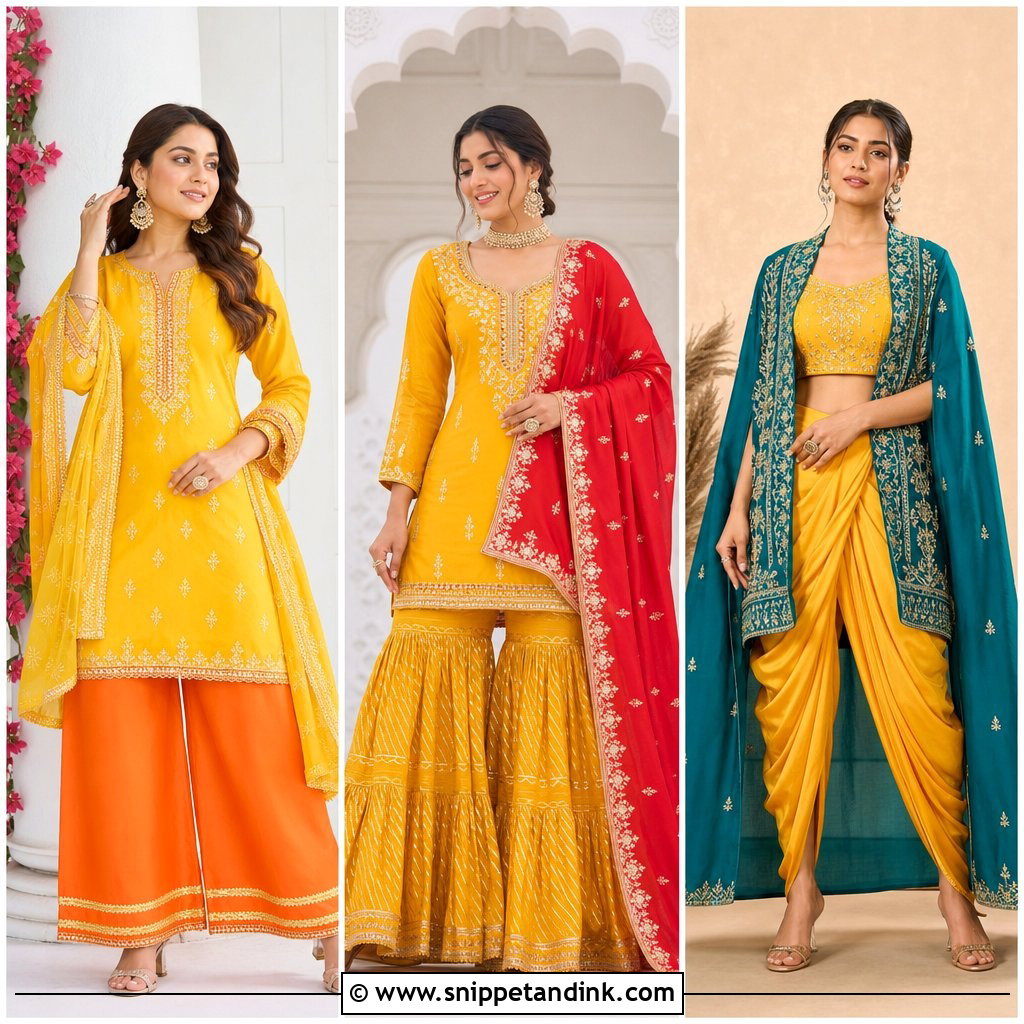
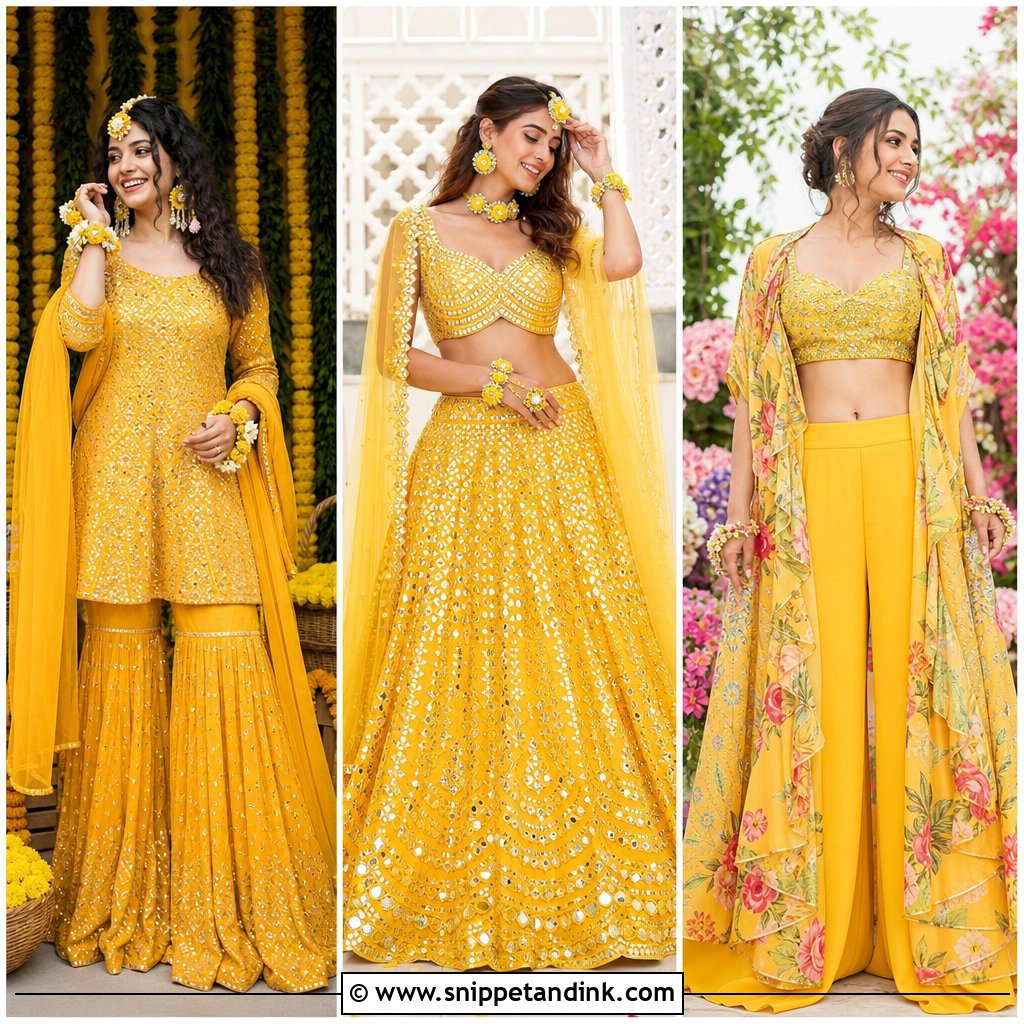
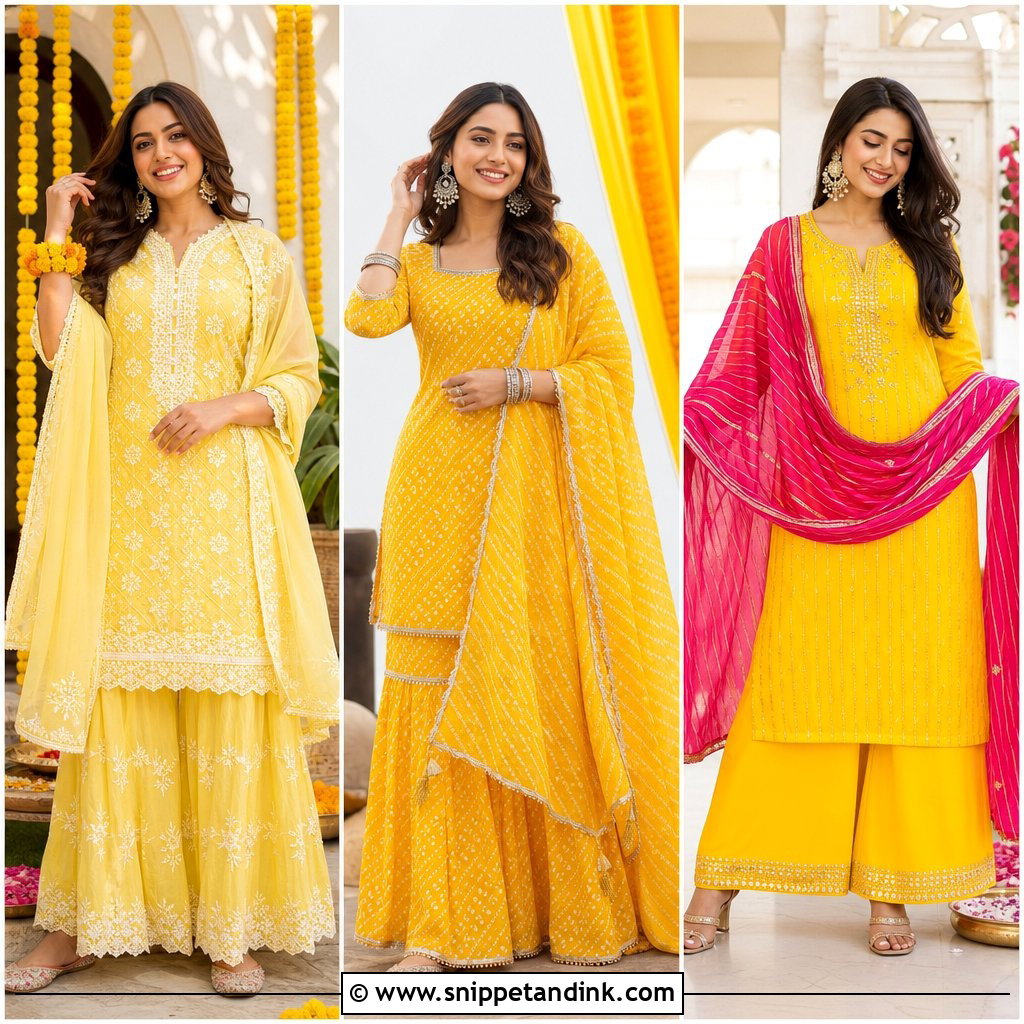
Mustard reads richer than lemon yellow and suits deeper skin tones particularly well outdoors, where bright yellow can bounce a sallow cast onto the face. A short kurti over a flared sharara gives you the full bridal shape without the weight of a lehenga can-can. Check that the sharara waistband sits comfortably when you’re seated low, because that’s how you’ll spend most of the ritual. I keep detail to gota patti or small mirrors, then add floral kaleere, small jhumkas and embroidered juttis.
4. Yellow Haldi Saree For Bride
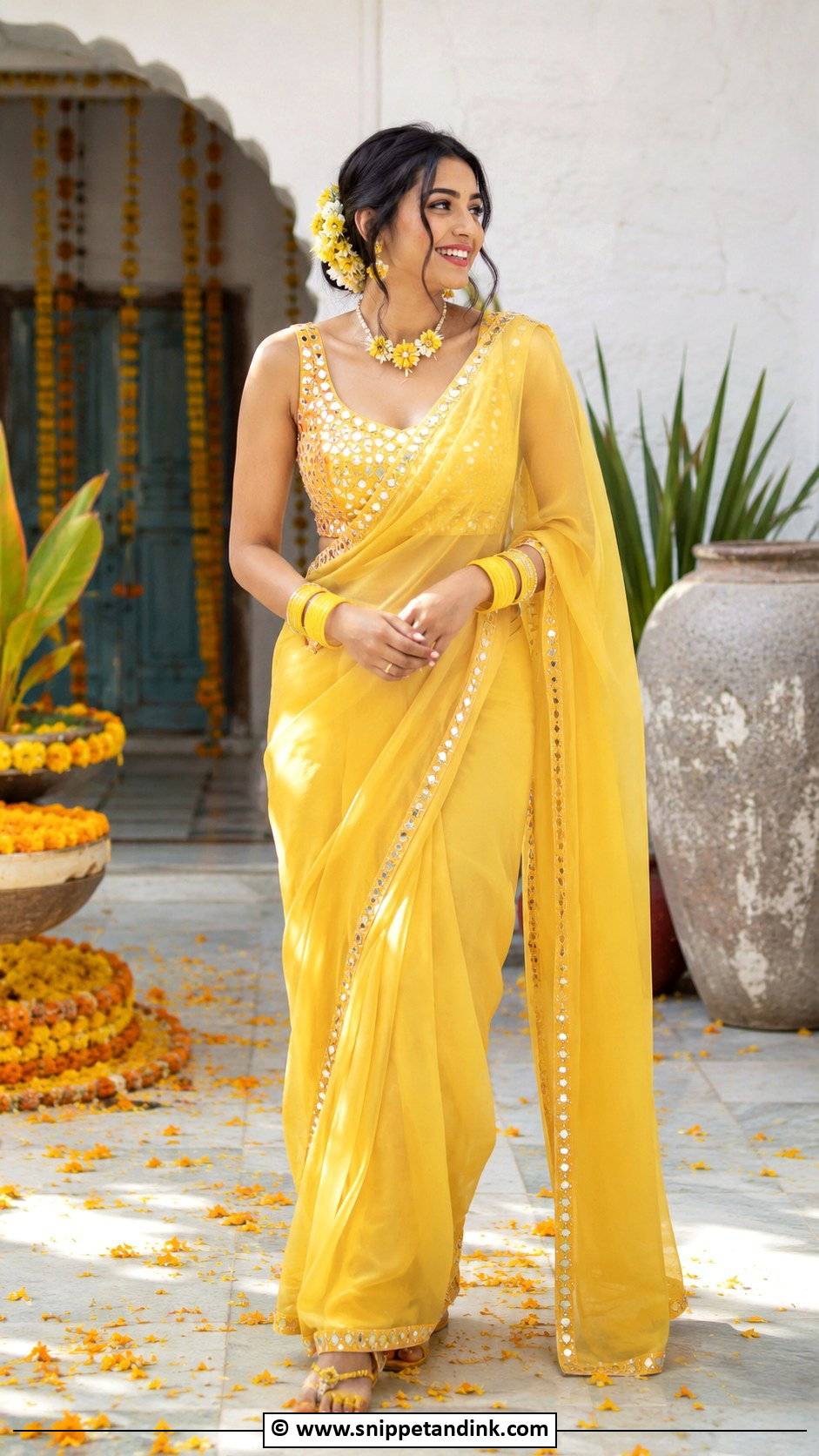
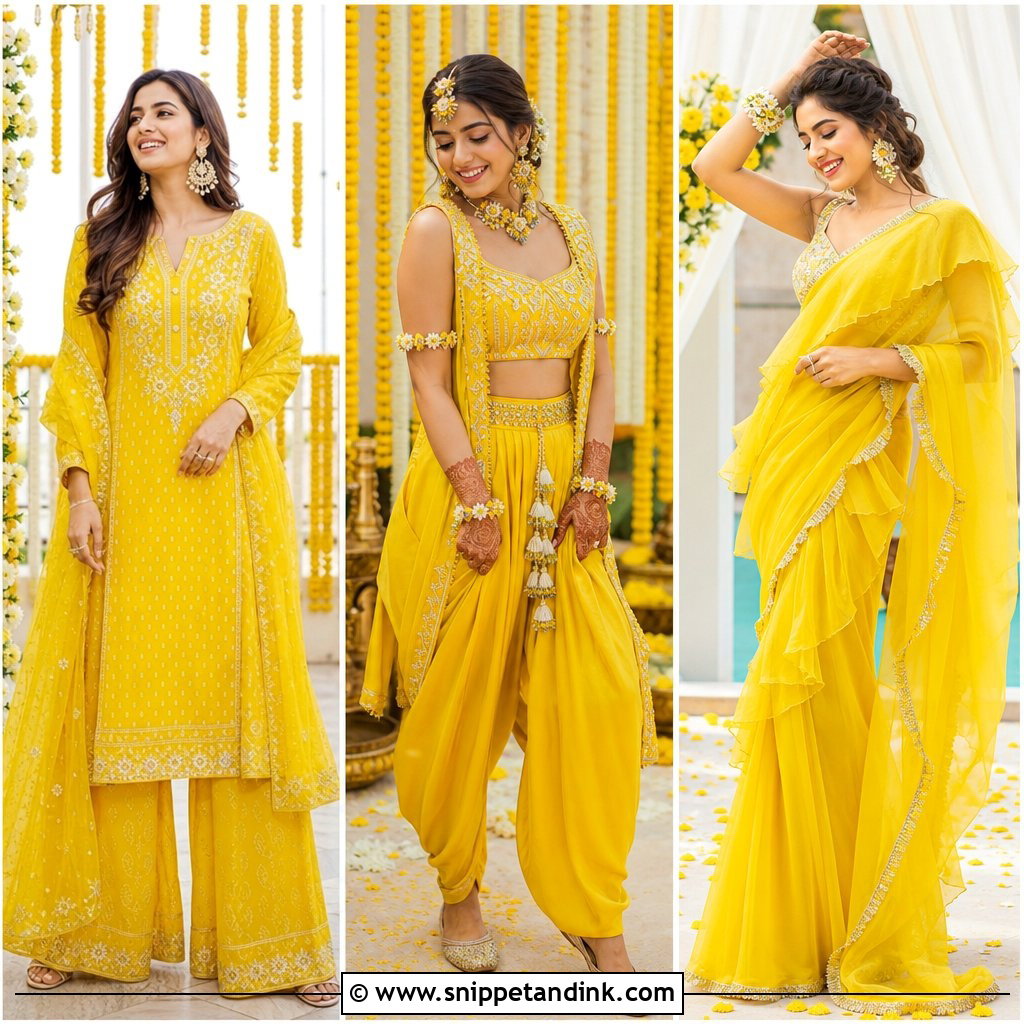
A saree is the most graceful option on this list and also the most demanding at a haldi. The pallu is what gets grabbed, dipped in paste and pulled when someone hugs you. So I pin it in at least two places and keep it shorter than you’d wear at an evening function. Chiffon, georgette and soft organza drape without stiffness; tissue looks festive but shows water marks. A sleeveless or back-tie blouse leaves your arms free for the paste, and fresh flowers in the hair keep it ceremonial.
5. Ruffle Saree Haldi Outfit For Bride
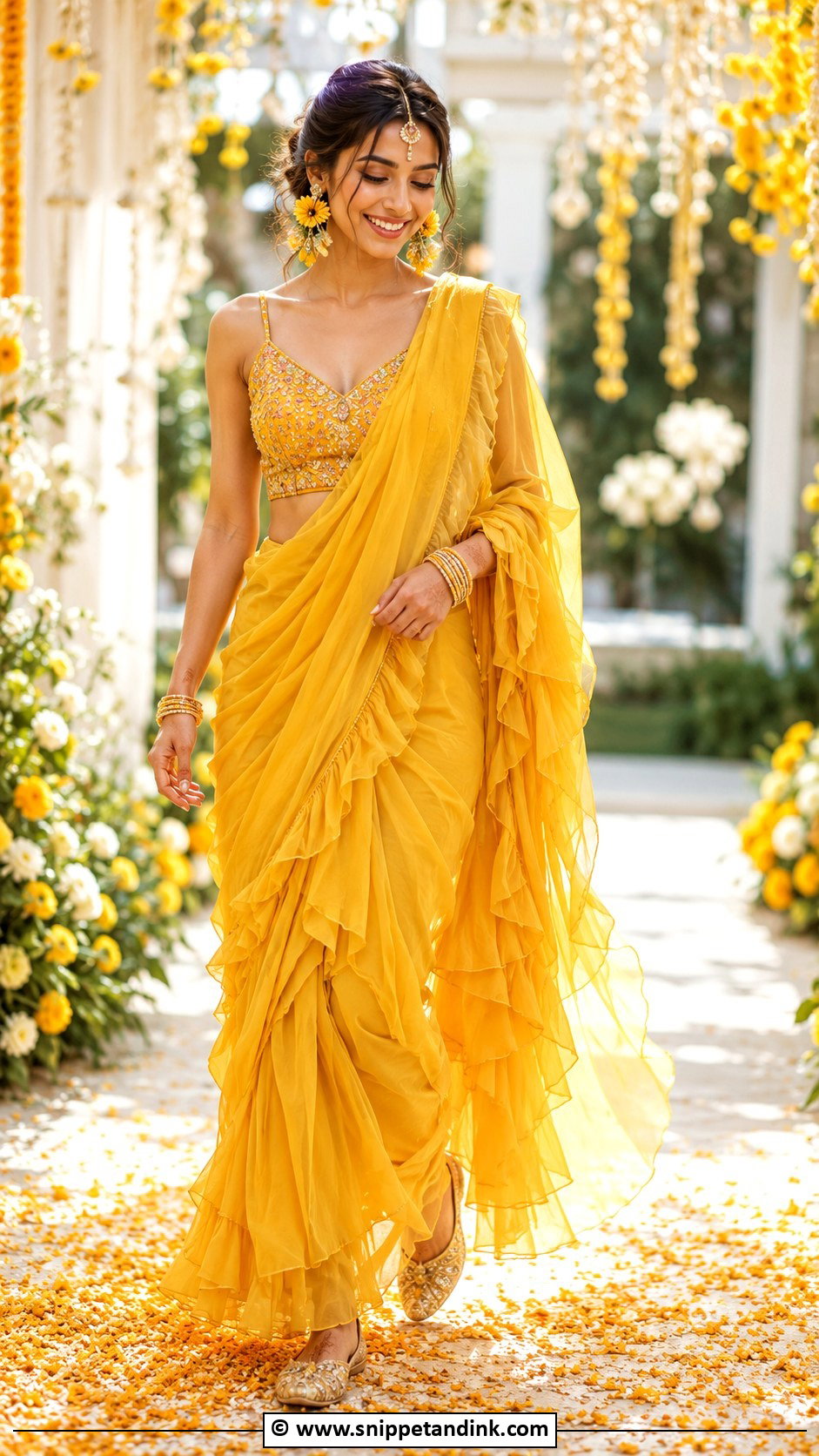
Ruffles move every time you laugh or dance, which is why candid photographers love this saree. The catch is that layered frills hold wet paste in the folds, so expect the hem to come home heavier than it left. Yellow, ivory, lime, peach and mango all suit it. I add structure with a fitted mirror or embroidered crop blouse, then go light on jewelry: floral earrings, a fine maang tikka and slim bangles. The ruffles are already doing the talking.
6. Floral Print Lehenga Haldi Outfit For Bride
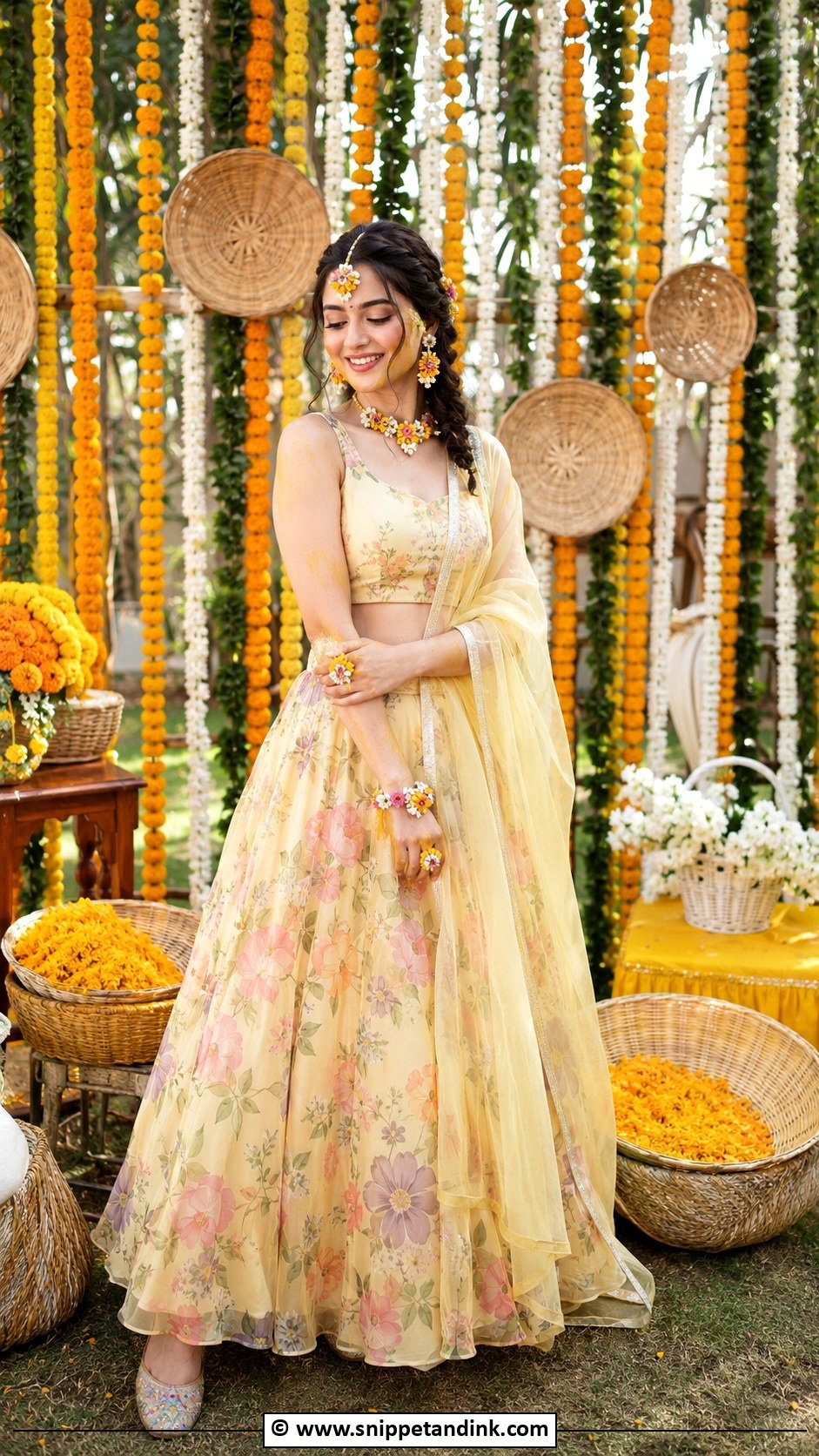
Florals match the garden mood of most morning haldis, and a printed lehenga is far easier to clean than an embroidered one. I’d pick organza or chiffon so the skirt floats rather than clings when it’s damp. Keep the blouse plain and the dupatta sheer, otherwise two busy layers fight each other in photos. Marigold, jasmine or rose floral jewelry ties the print to the decor. A print with some white ground in it will show turmeric more than one with a warm base, so check the background colour, not just the flowers.
7. Mirror Work Haldi Lehenga For Bride
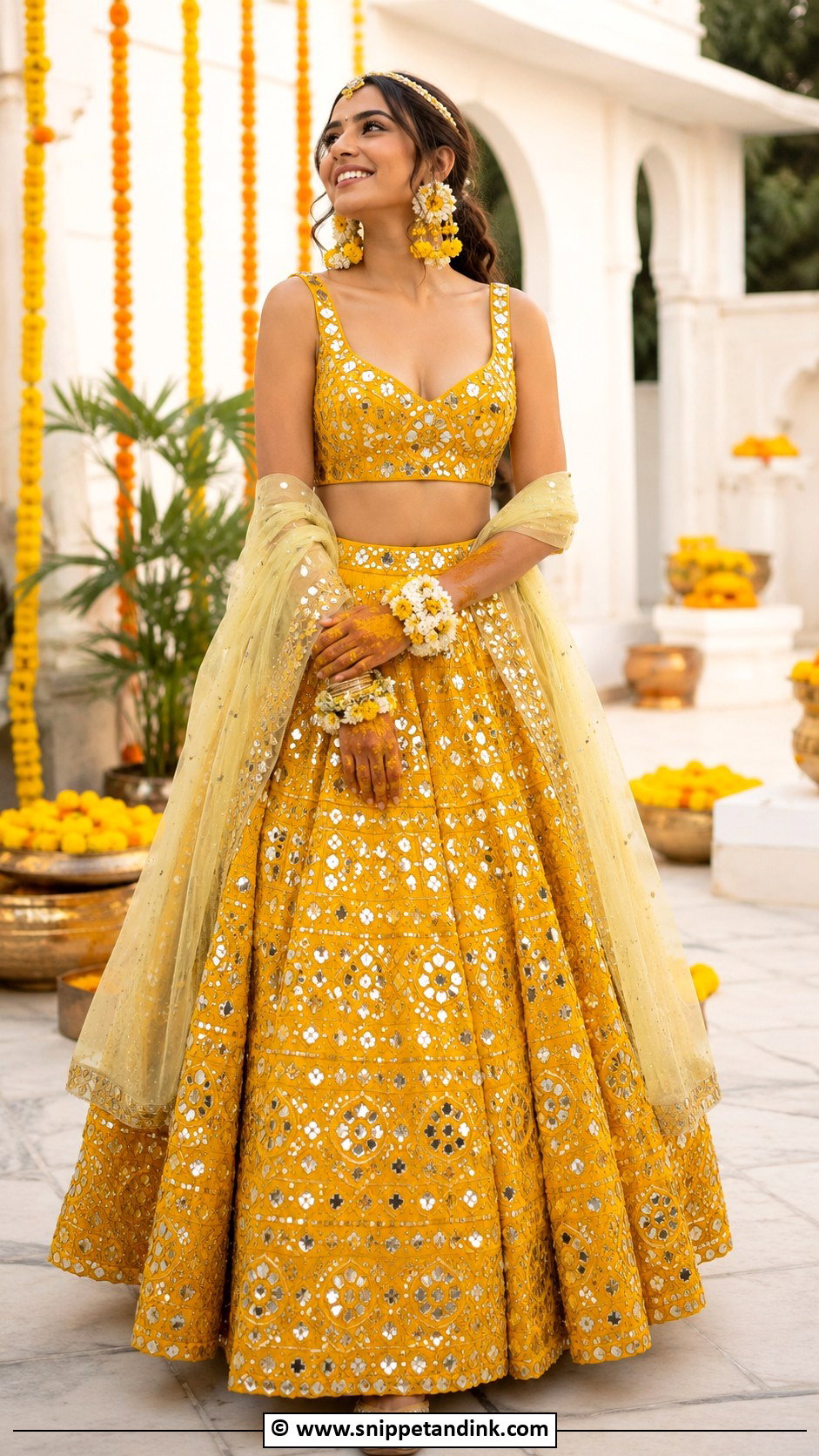
Mirror work throws light around in sunshine in a way stones never do, and it’s much lighter to wear. A yellow or mustard mirror work lehenga with small mirrors scattered across the skirt sits better than one with big glass rounds that dig in when you sit. Ask whether the mirrors are stitched or glued; glued pieces can lift once paste and water get under them. A light dupatta with secure pins, a matha patti and stacked bangles are enough. Embellished juttis pick up the shine at floor level.
8. Gota Patti Haldi Lehenga For Bride
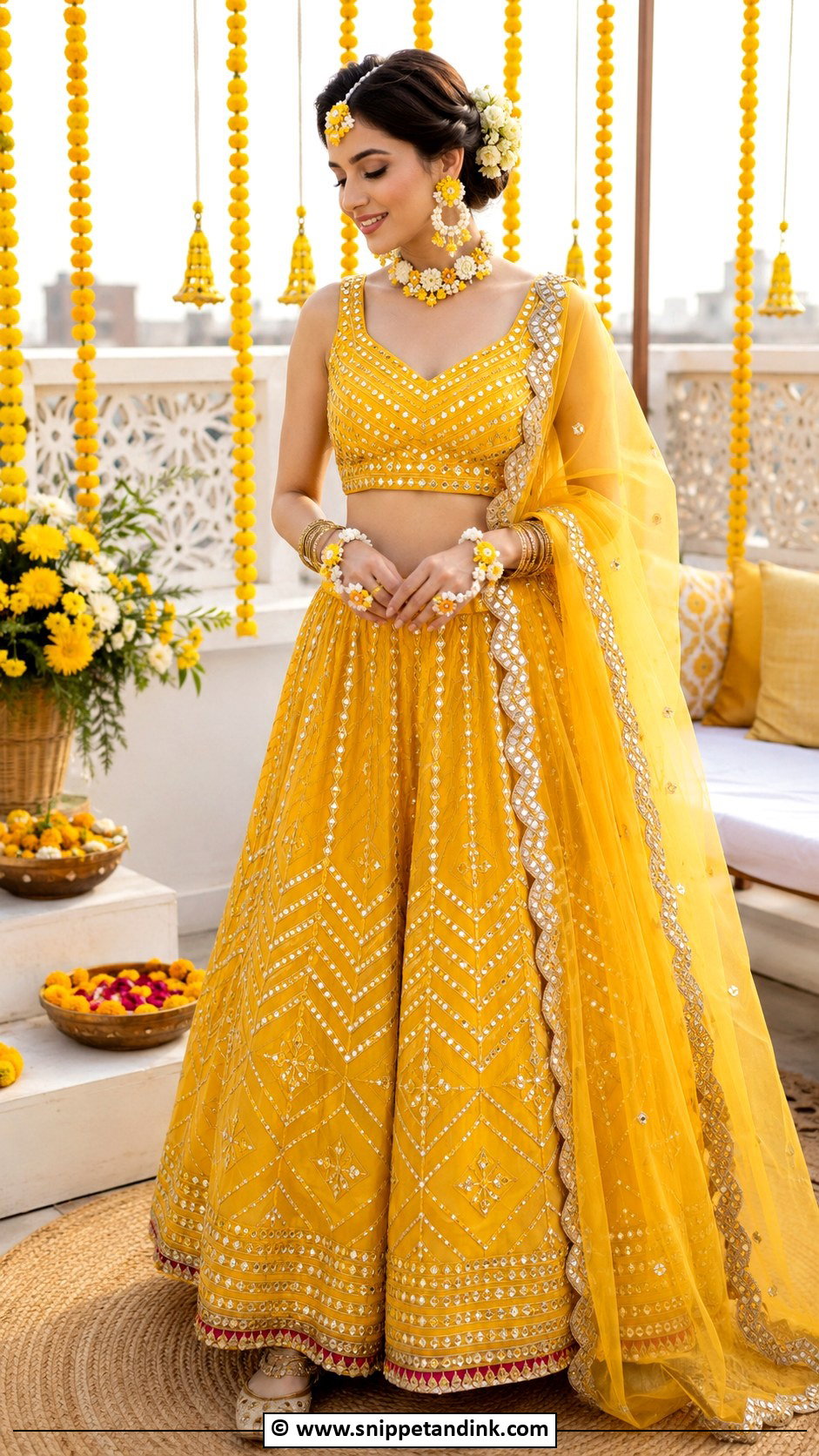
Gota patti was made for this kind of function. It’s metallic ribbon appliqué, so it catches daylight without adding much weight, and good gota wipes clean far more easily than threadwork. A mango or marigold lehenga with gota borders and a narrow-trimmed dupatta looks properly traditional. I keep sleeves simple so the borders lead the eye. A low flower bun, a small bindi and gold bangles complete it. One caution: cheap plastic gota can dull if turmeric sits on it overnight, so wipe it down the same day.
9. Yellow Anarkali Haldi Outfit For Bride
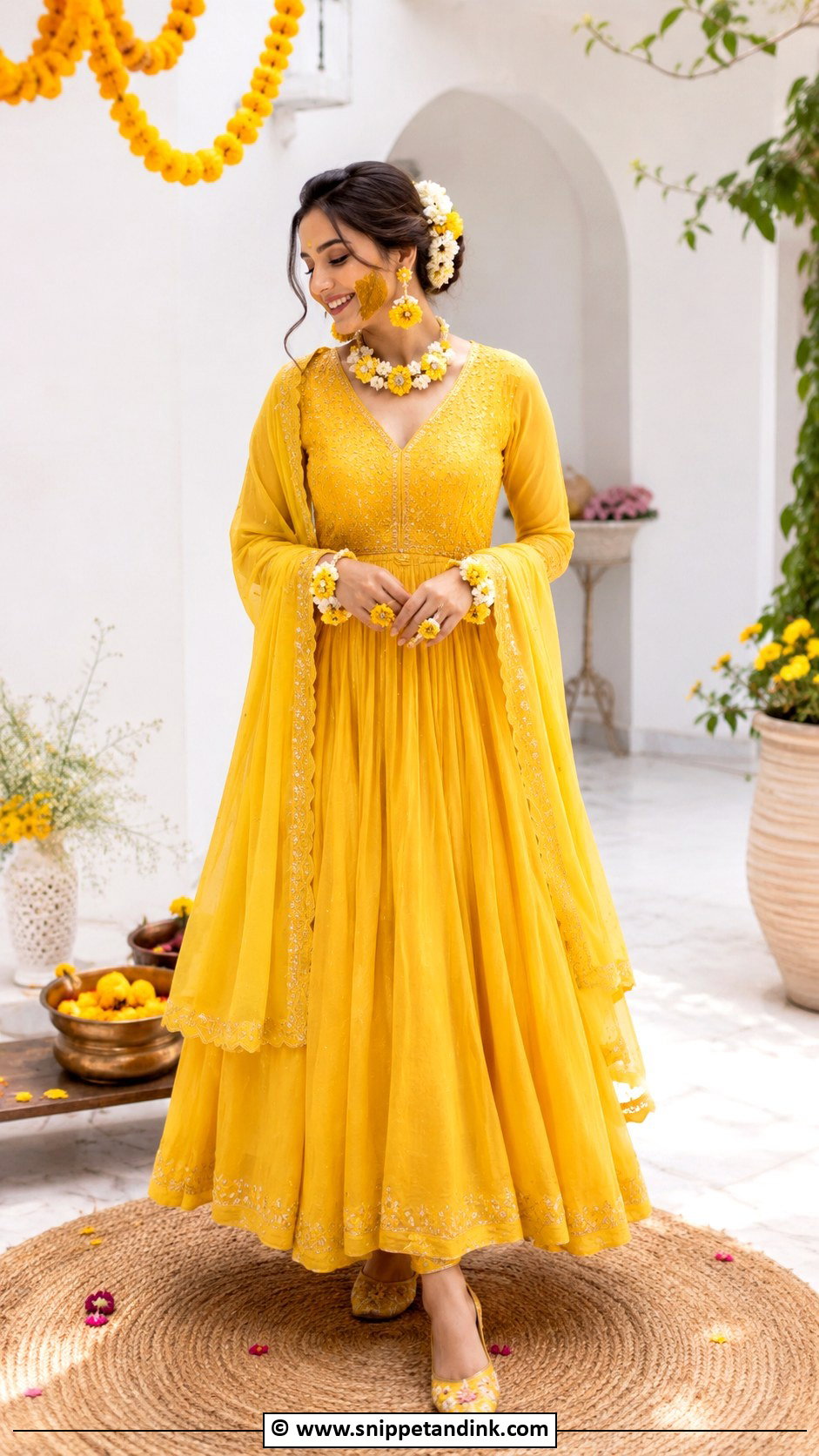
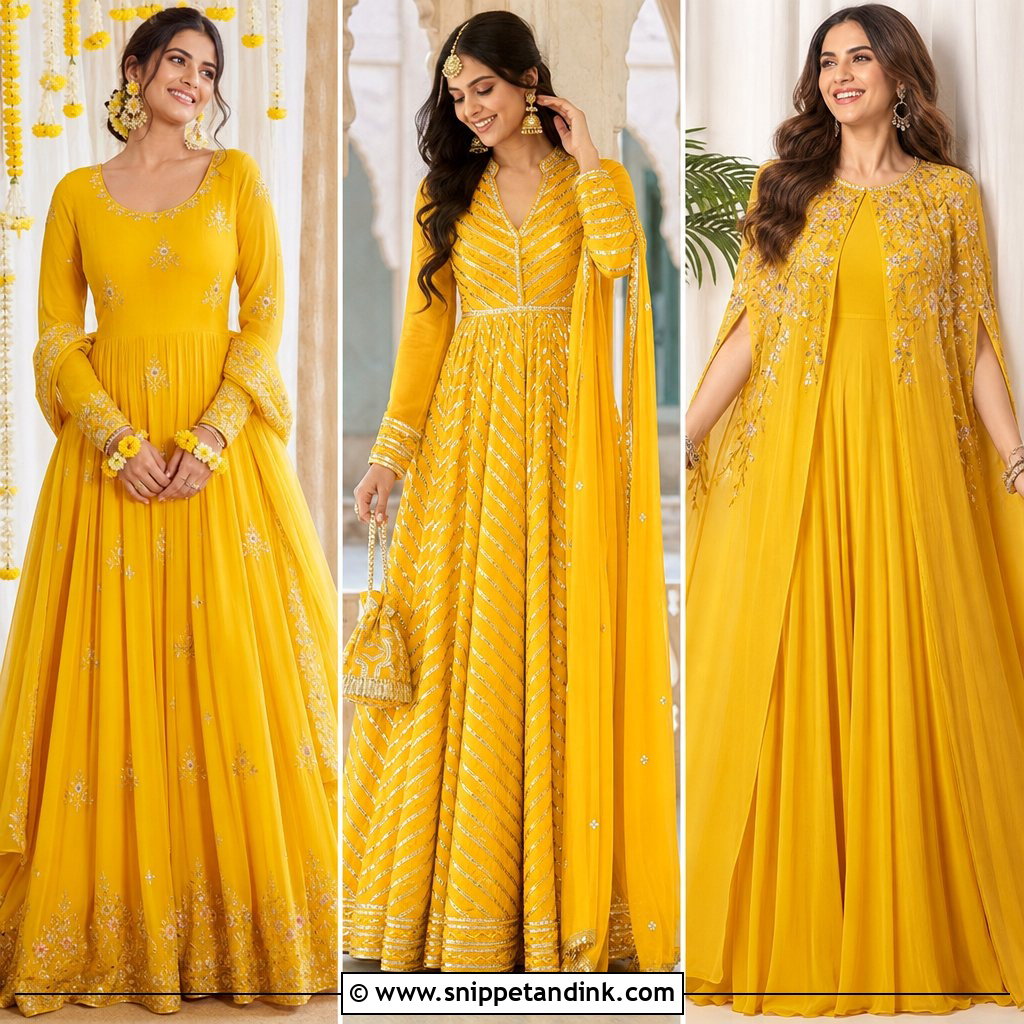
If you’d rather stay covered, an Anarkali gives you that without the fuss of a separate skirt and blouse. The flare is what makes sitting on the floor easy, so don’t let the tailor slim the panels. Cotton silk, georgette or chiffon with embroidery at the neckline and hem keeps the weight where it looks good. Drape the dupatta over one shoulder or loosely around the arms. Fresh blooms in a simple hairstyle and flat juttis suit home ceremonies especially.
10. Chikankari Haldi Kurta Set For Bride
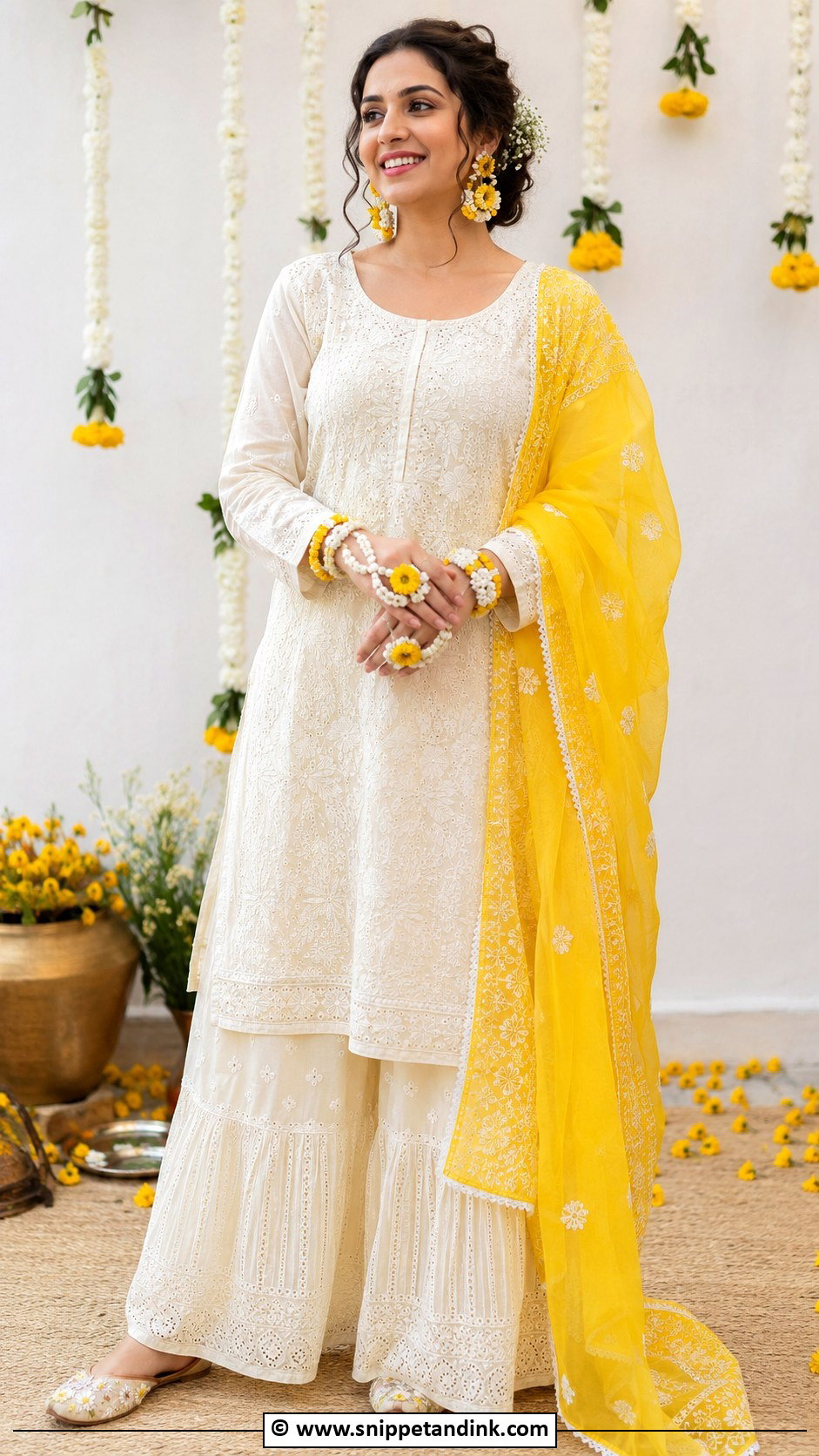
Chikankari is hand embroidery on fine cotton or georgette, and it’s the quietest outfit here. I like it for a morning haldi in white, ivory or pastel yellow, with a straight kurta over palazzos or a sharara. Fine chikan cotton is semi-sheer, so plan the right lining or camisole before the day. If your family applies haldi generously, this is a good call, because cotton tolerates washing better than most festive fabrics. A bright yellow dupatta and a flower necklace, haathphool and earrings make it read as bridal.
11. Haldi Crop Top And Skirt For Bride
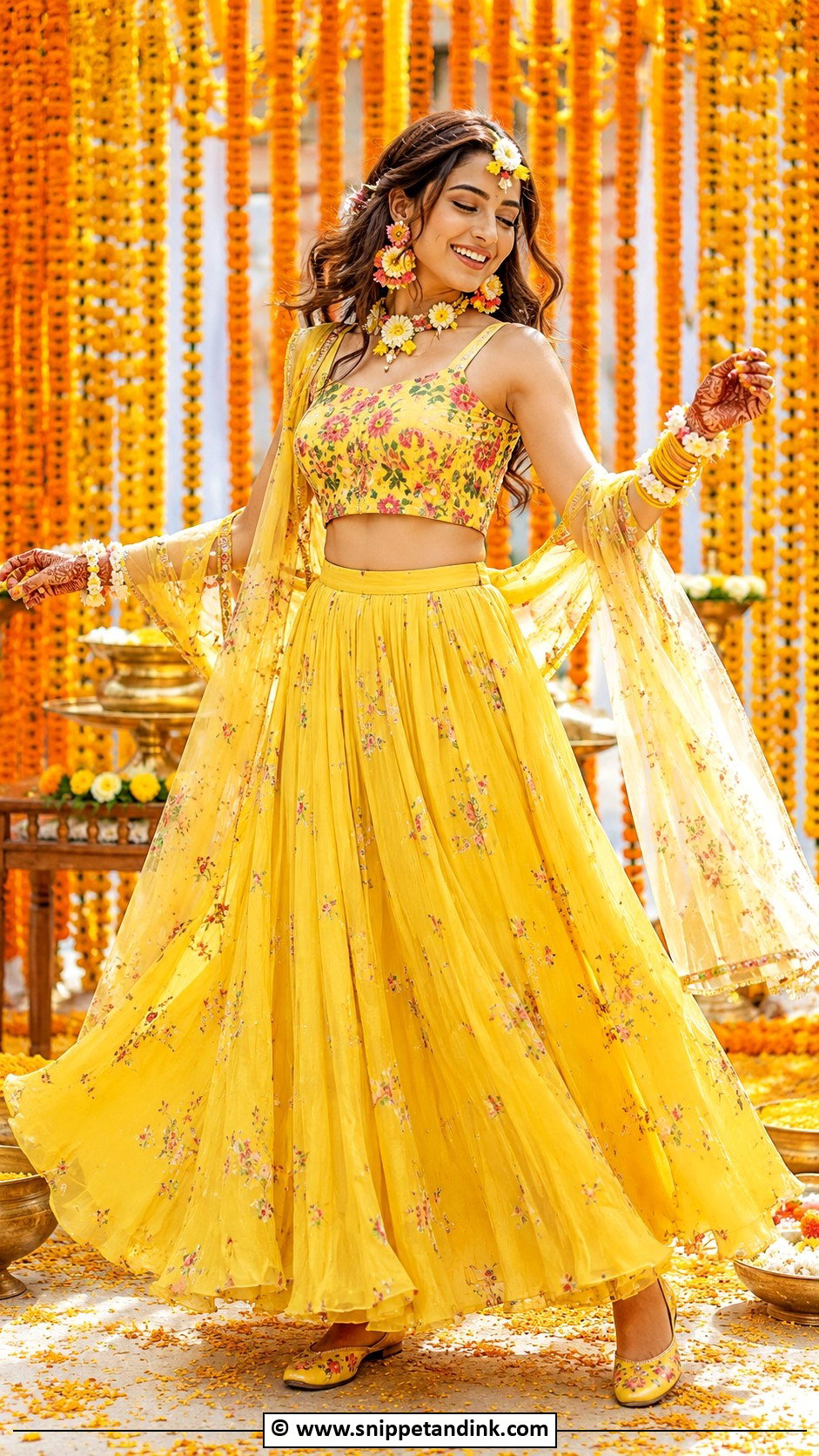
A crop top and skirt feels like a lehenga but behaves like separates, which means you can swap the top if it gets soaked. Pick a flowy skirt in yellow, ivory, peach or lime. You can skip the dupatta completely here; I then add a statement floral necklace or a large flower in the hair so there’s still a clear focal point. Watch the gap at the midriff when you raise your arms, since that’s exactly where paste ends up during dancing.
12. Haldi Co Ord Set For Bride
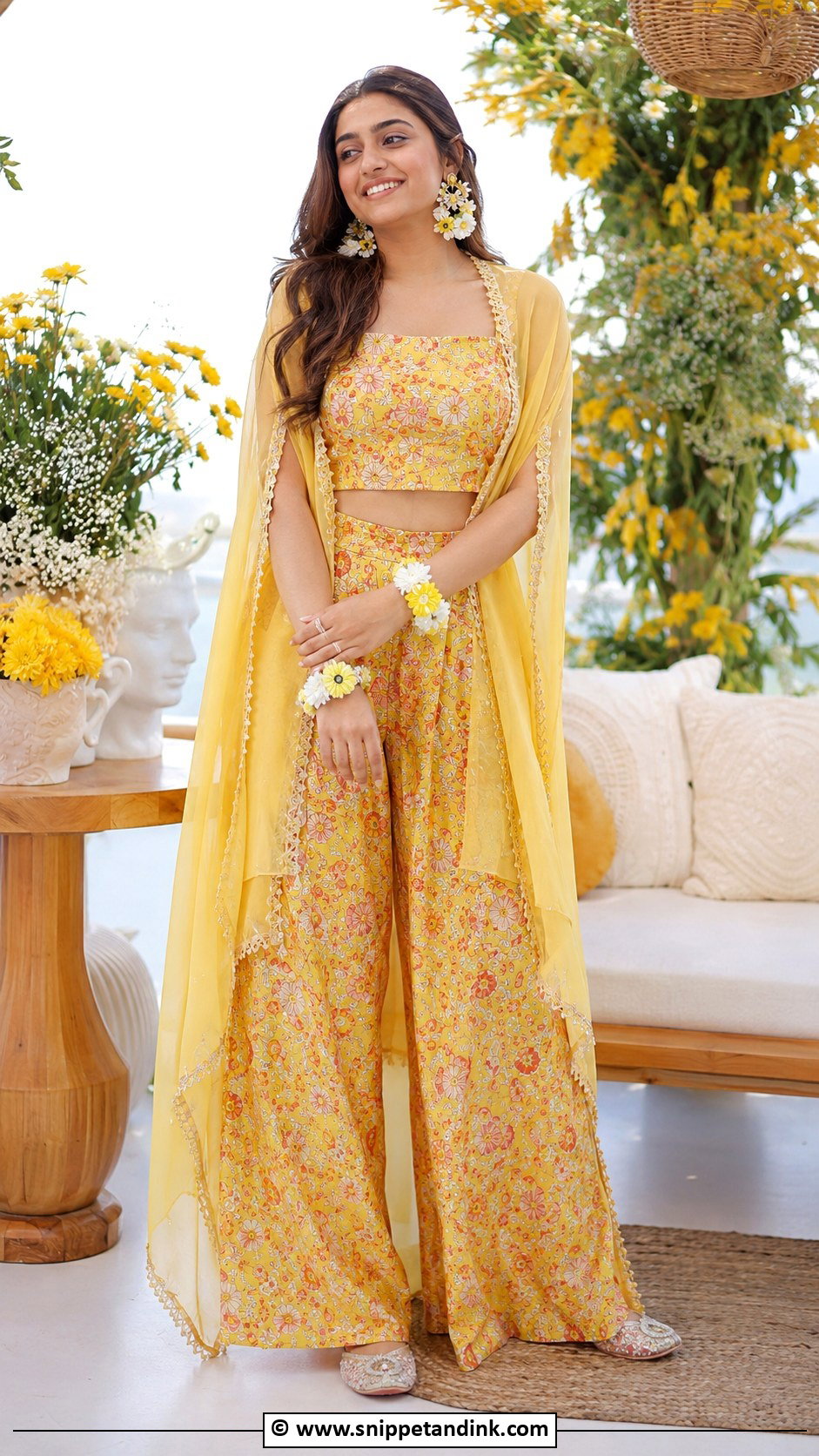
A haldi co ord set can look casual very quickly, so fabric is everything. I steer brides toward printed organza, cotton silk or light georgette rather than plain cotton, and toward a peplum or short kurti on top. A sheer cape or long jacket adds the bridal layer that a matching set otherwise lacks. Mirror trims or gota accents help too. I like this for intimate haldis and for destination weddings, where it packs flat and rewears afterwards.
13. Haldi Palazzo Suit For Bride
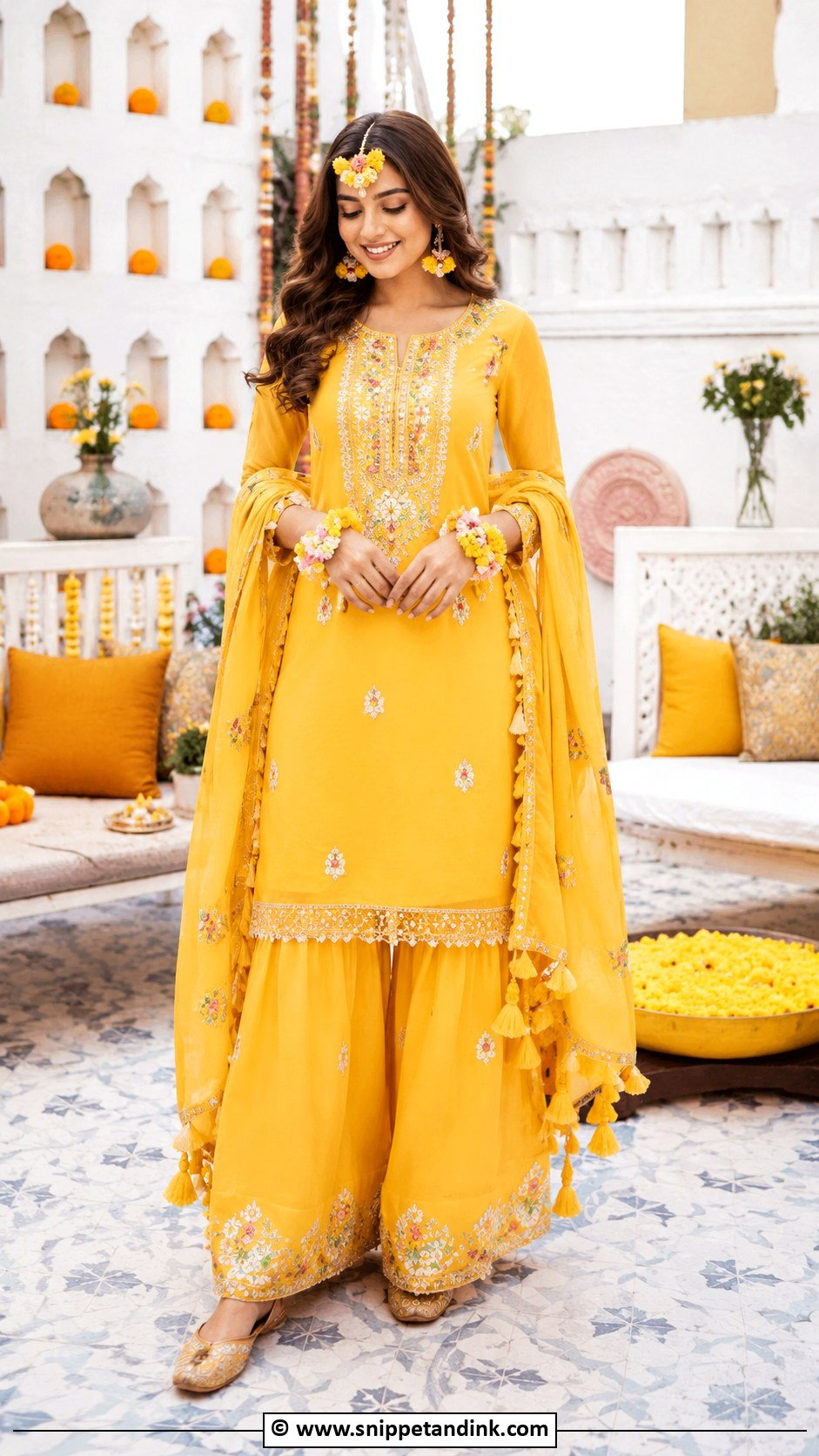
Long ceremonies are where palazzos earn their place. Wide legs let you sit cross-legged without the fabric pulling at the knee, and nothing clings when it’s damp. To keep it from looking like daywear, I want some embroidery, mirror work or a festive print on the kurta and a dupatta with tassels or gota edging. A maang tikka, floral bangles and a flower bun finish it. This silhouette flatters a wide range of body shapes because it skims rather than fits.
14. Haldi Dhoti Set For Bride
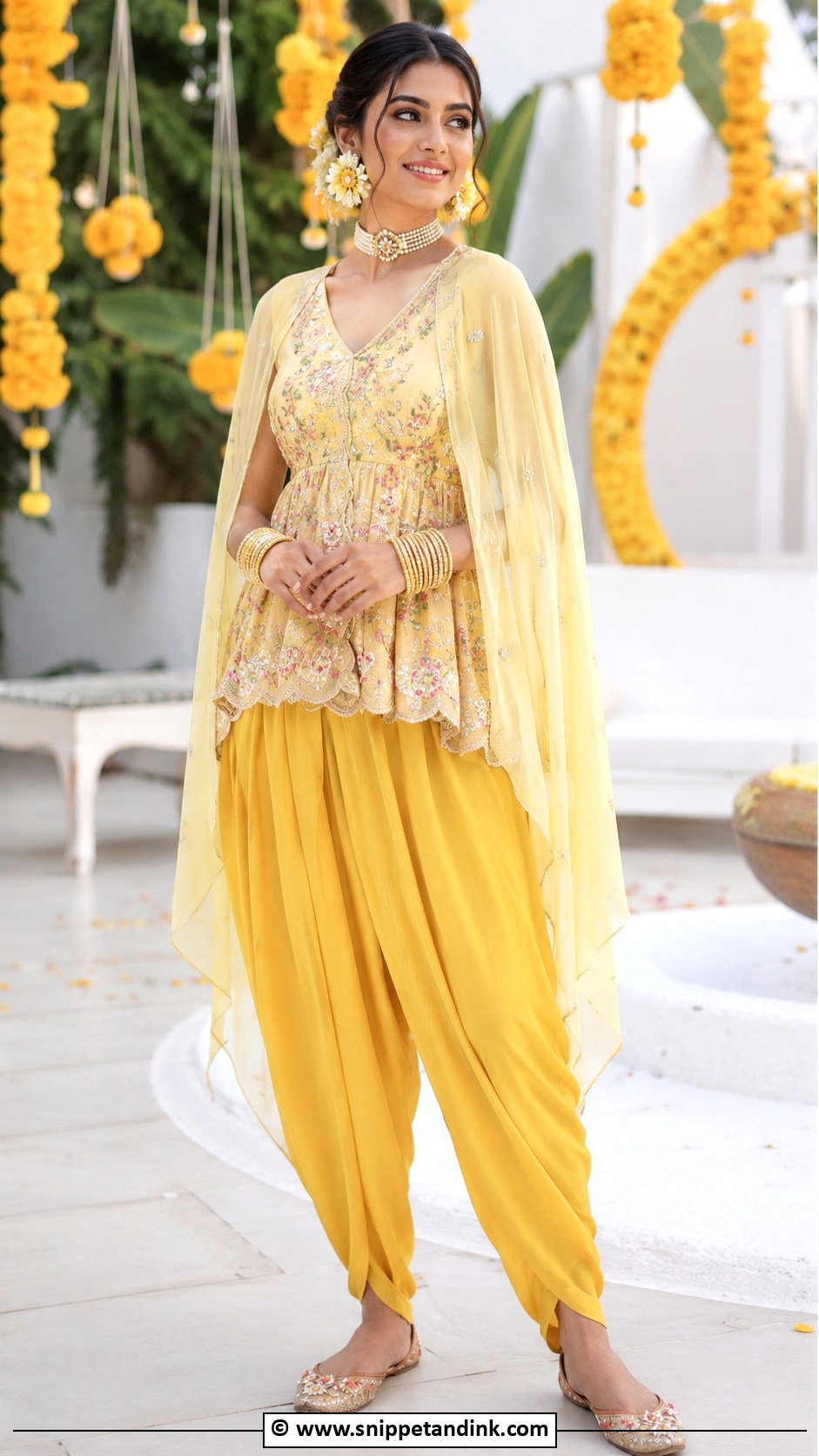
A dhoti set is for the bride who’d rather dance than pose. The draped bottom gives movement without a full skirt, and a peplum, crop blouse or short kurti keeps it festive. Ask for a pre-stitched dhoti; tying a real drape in the morning rush is one more thing to go wrong. Mustard, ivory, orange or yellow all work. Because the shape is already strong, I stop at floral earrings, a choker and juttis, with a cape or jacket if you want more bridal weight.
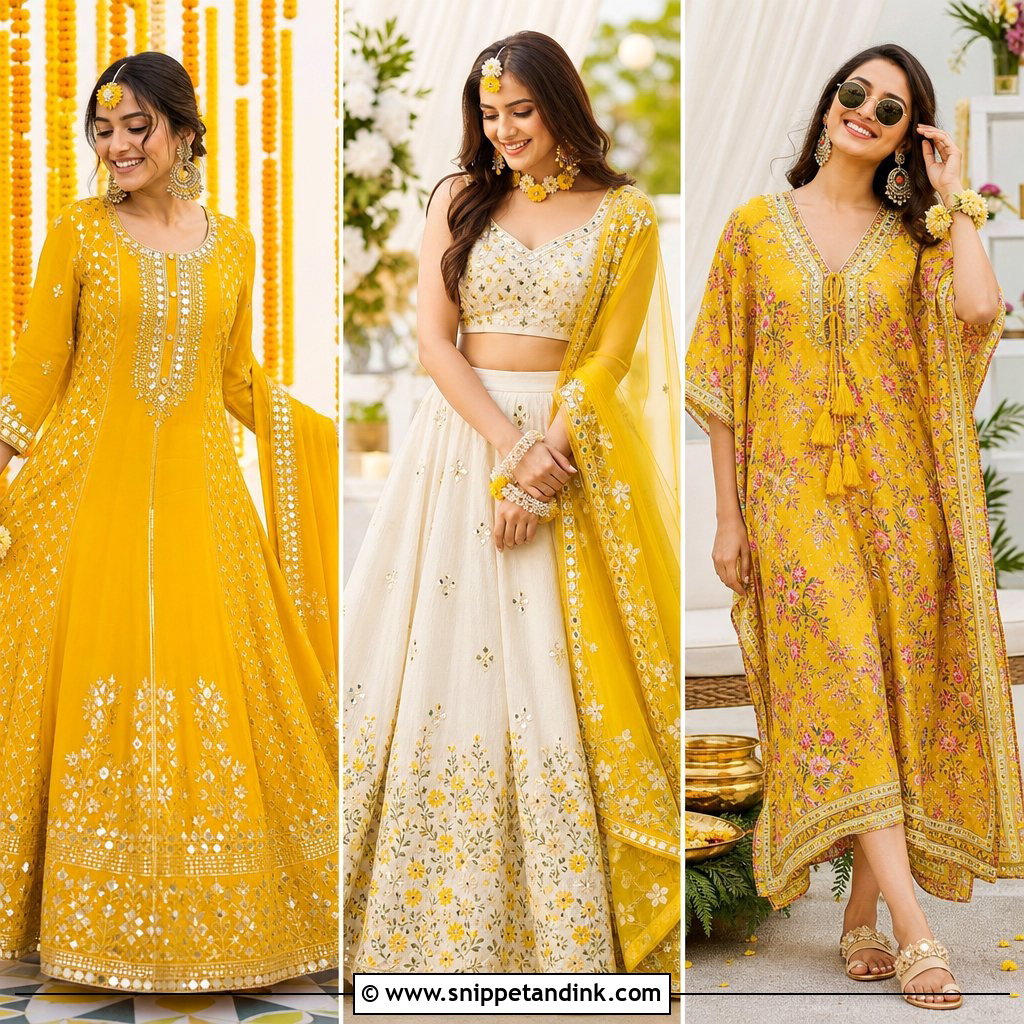

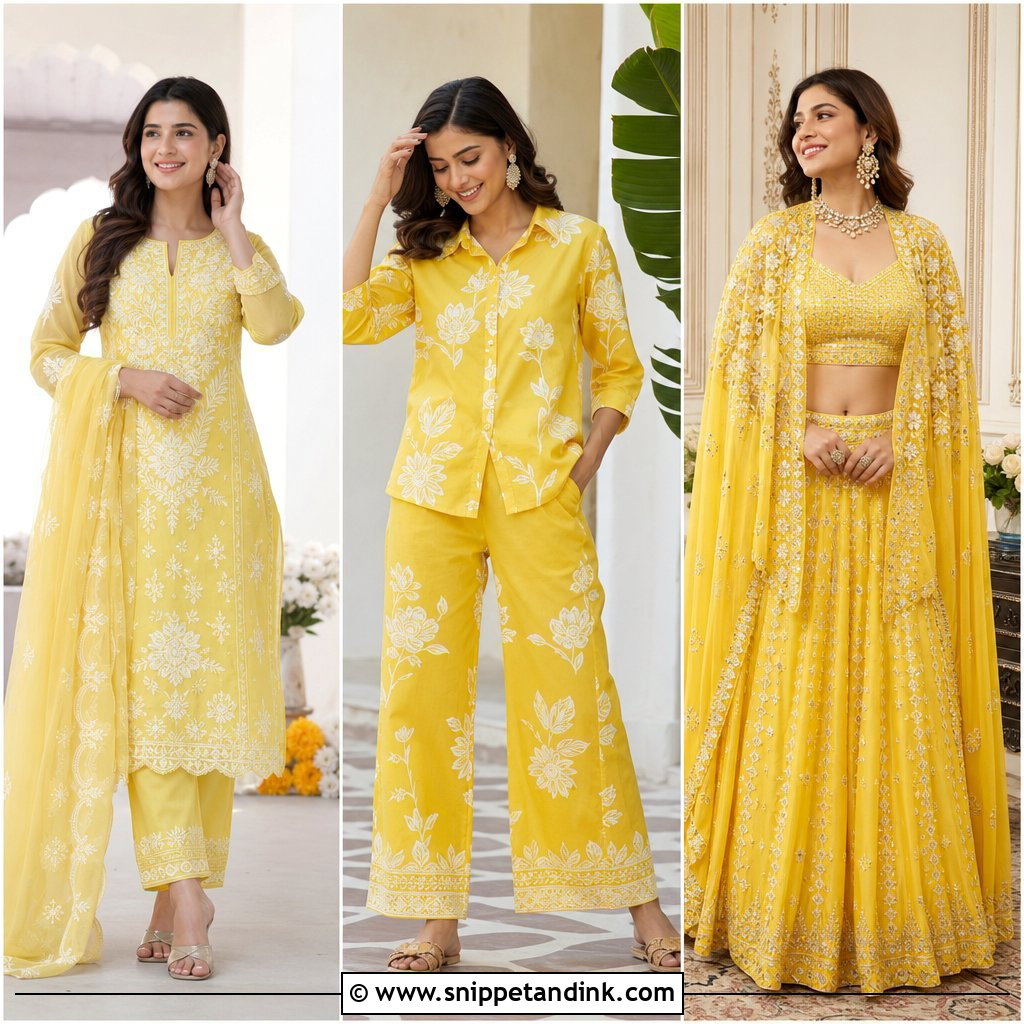
15. Cape Lehenga Haldi Outfit For Bride
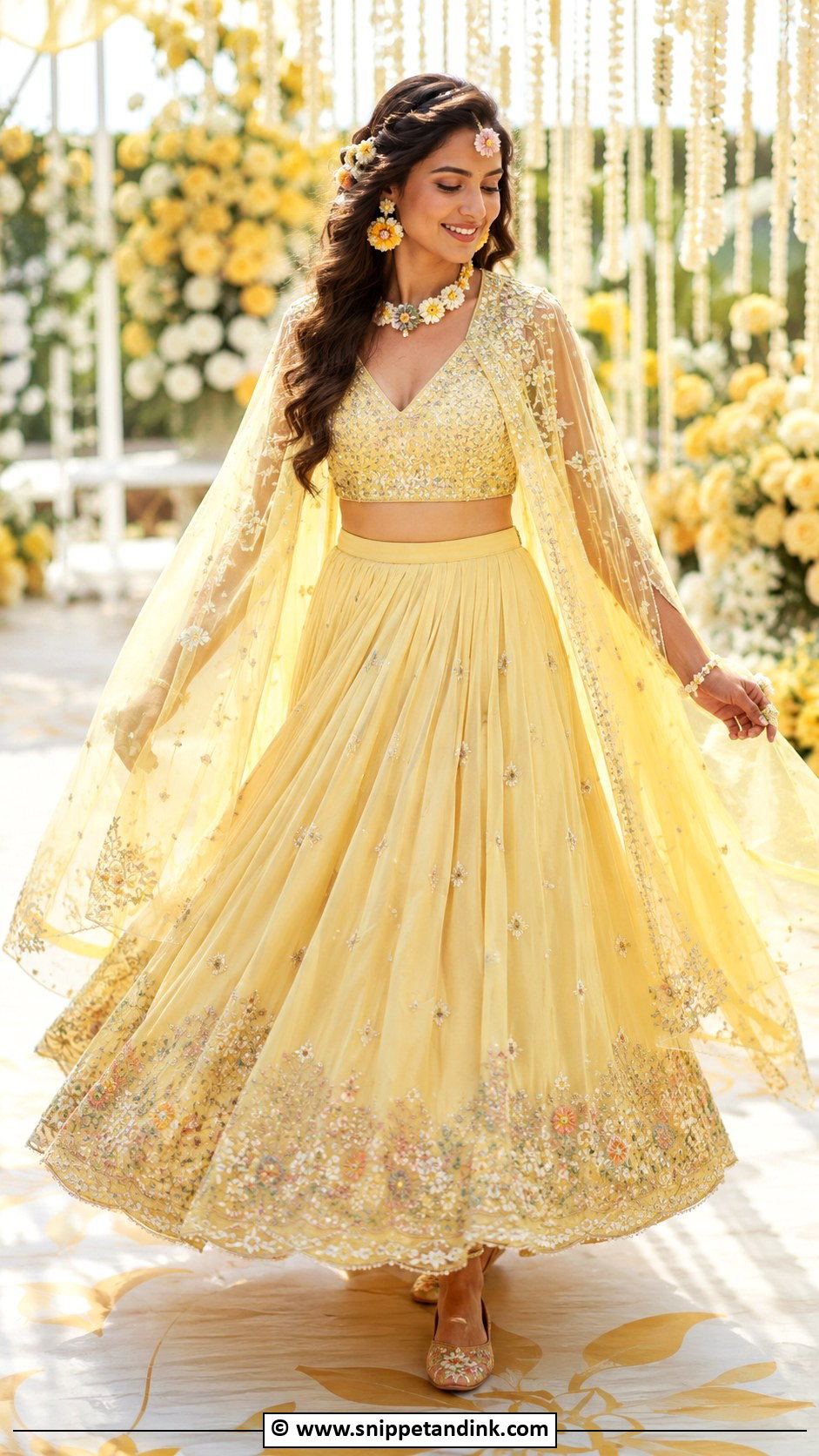
A cape gives you the drama of a dupatta with none of the re-pinning. It stays on your shoulders while you sit, hug and get painted, which is why I suggest it to brides who hate fiddling. A sheer cape with small flowers, pearls or mirrors over a yellow or ivory lehenga moves well when you walk. Keep the blouse fitted and the skirt light, or the layers start to feel bulky. Floral jewelry, soft curls and embroidered juttis are all it needs.
16. Jacket Lehenga Haldi Outfit For Bride
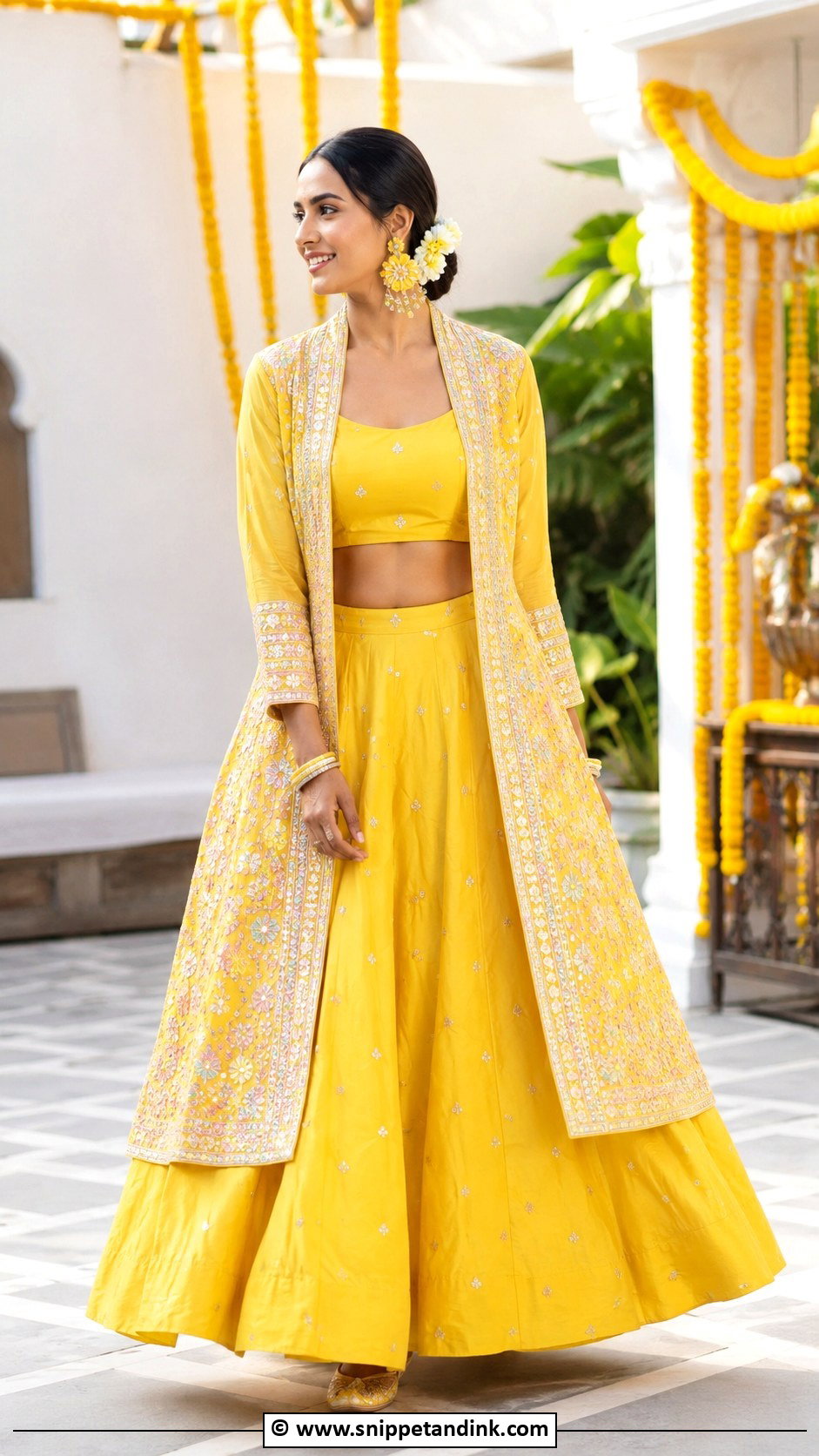
Of all the layers here, a jacket is the most practical because it doesn’t slide. A cropped one feels young; a long one looks regal and covers more if you’re sitting low for a long time. I’d keep the inner blouse plain so the jacket carries the print or mirror work. Fit matters at the shoulder: too tight and you won’t lift your arms for the paste. Floral earrings, slim bangles and soft makeup keep the look from getting crowded.
17. Yellow Peplum Sharara For Bride
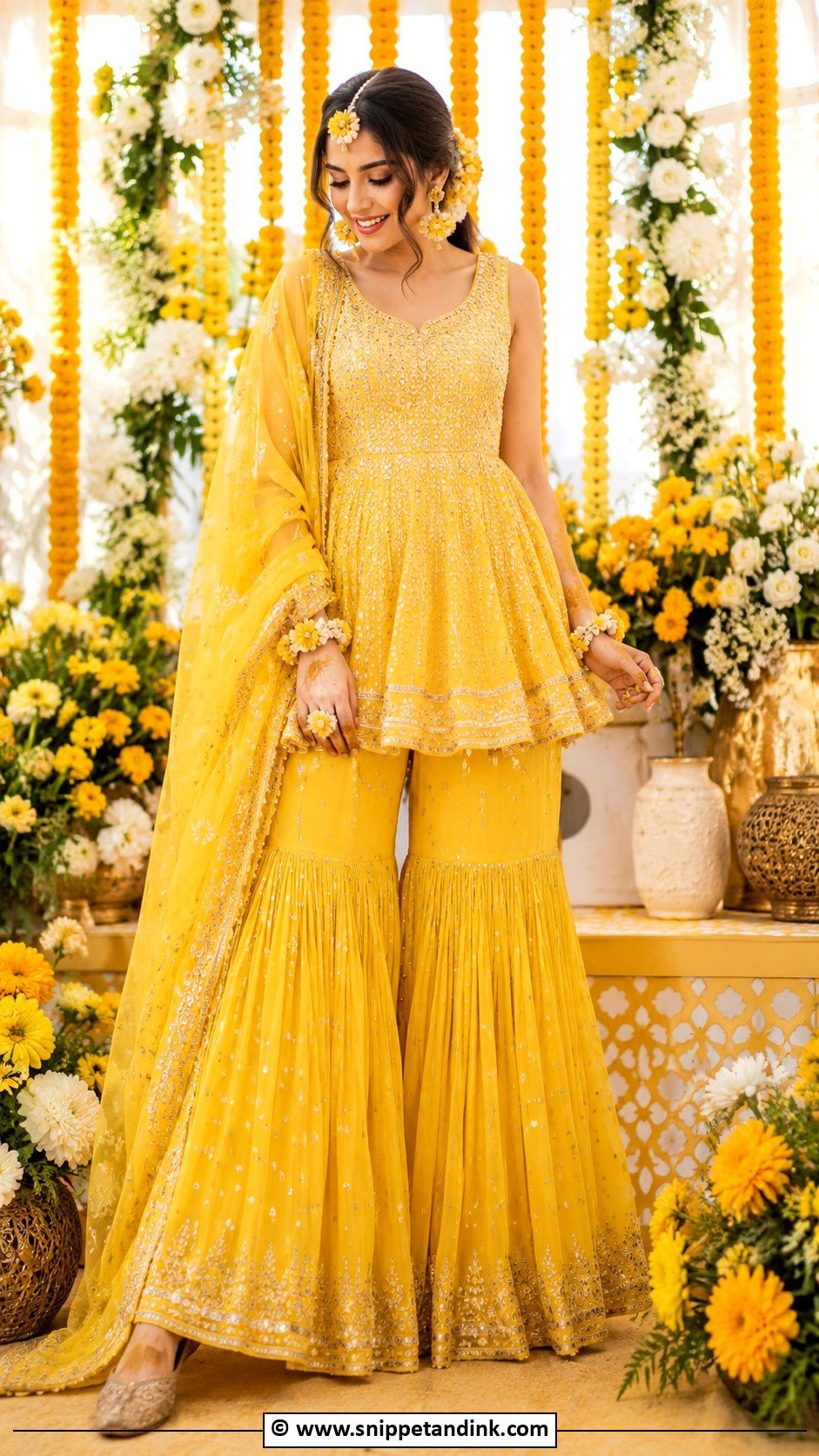
The peplum is what makes this set work. It nips in at the waist and then flares, so the sharara volume below looks balanced rather than heavy. Brides who want comfort through the midsection often choose it for that reason. Decide on one technique for decoration, mirror, gota or thread, rather than all three. If the top is busy, skip the dupatta. A maang tikka, flower jewelry and juttis are enough.
18. Ivory Haldi Saree For Bride
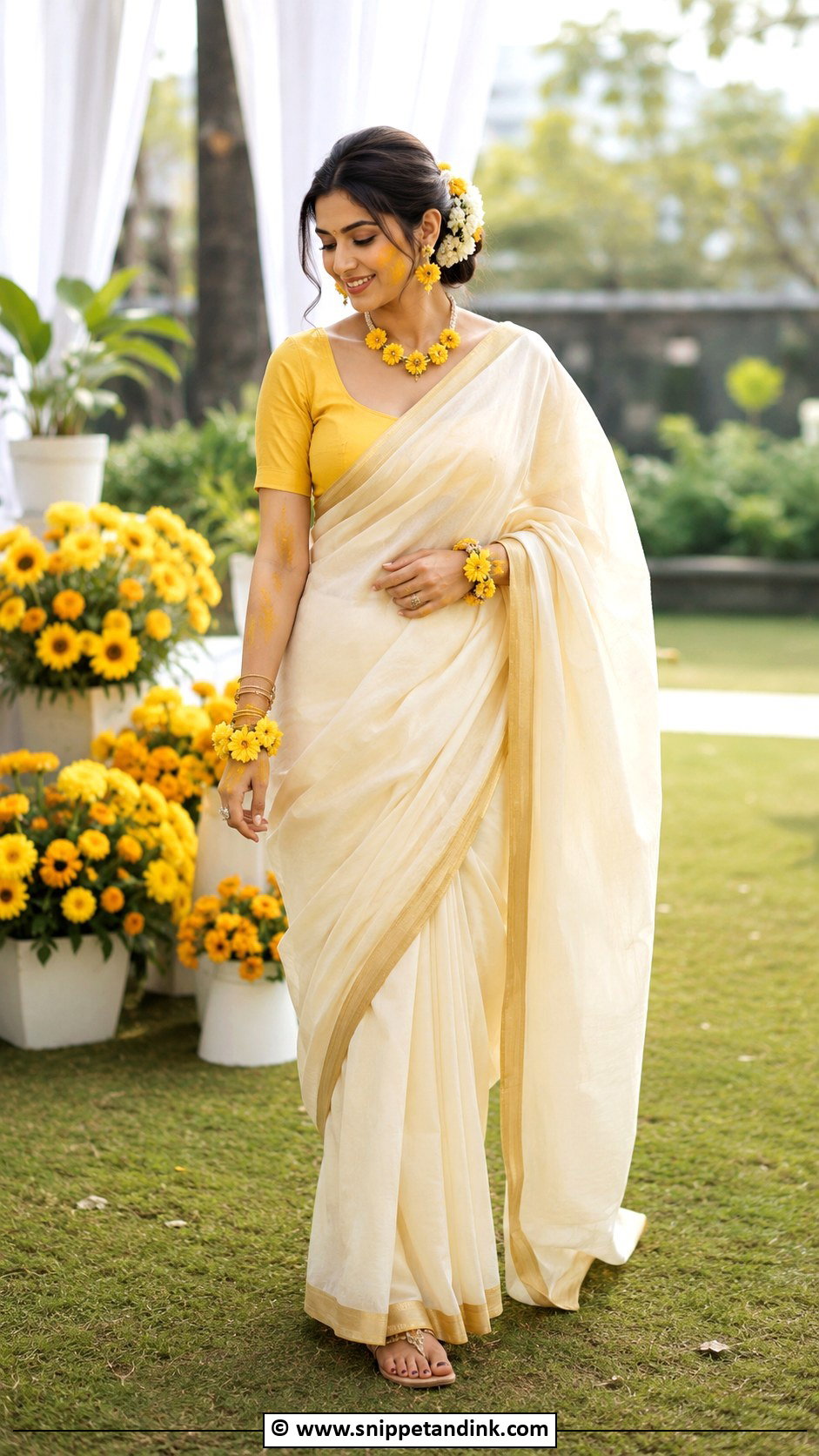
Ivory gives yellow decor and turmeric a clean background, and in photos it makes the haldi itself the colour story. I’d choose a saree with a subtle gold border, pearl edging or fine thread work, then decide on the blouse: yellow for contrast, ivory for a tonal look. Marigold jewelry and a flower bun bring the ceremony in. Keep the drape simple and the pallu tucked or pinned, because a long pallu on an ivory saree will be yellow within ten minutes.
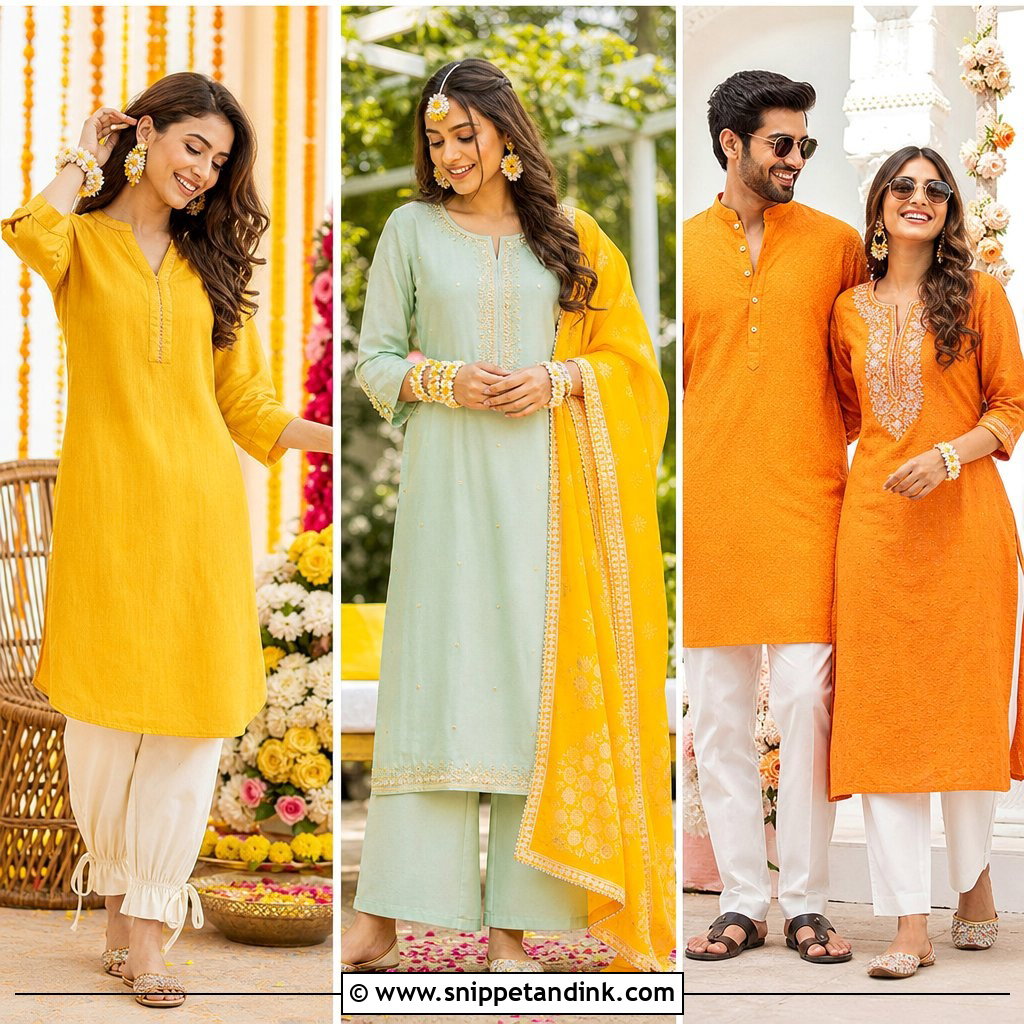
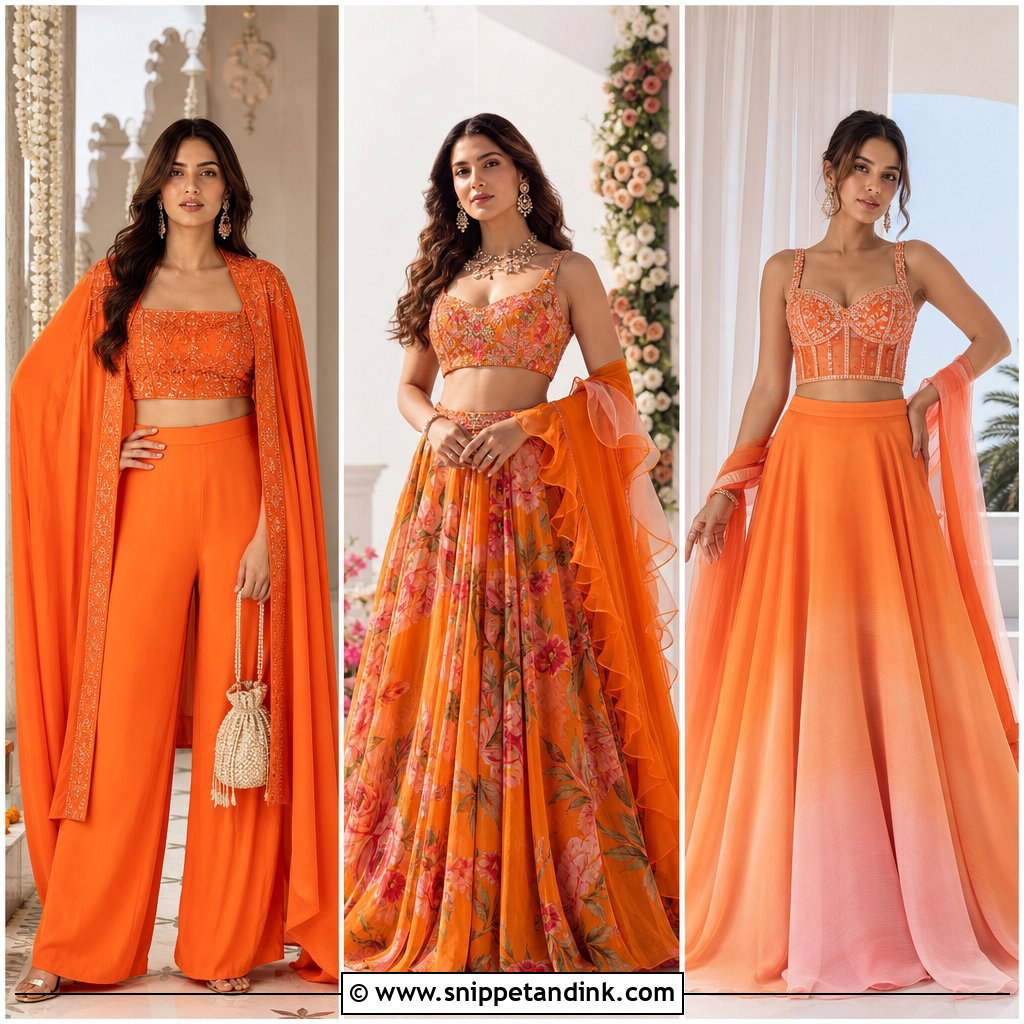
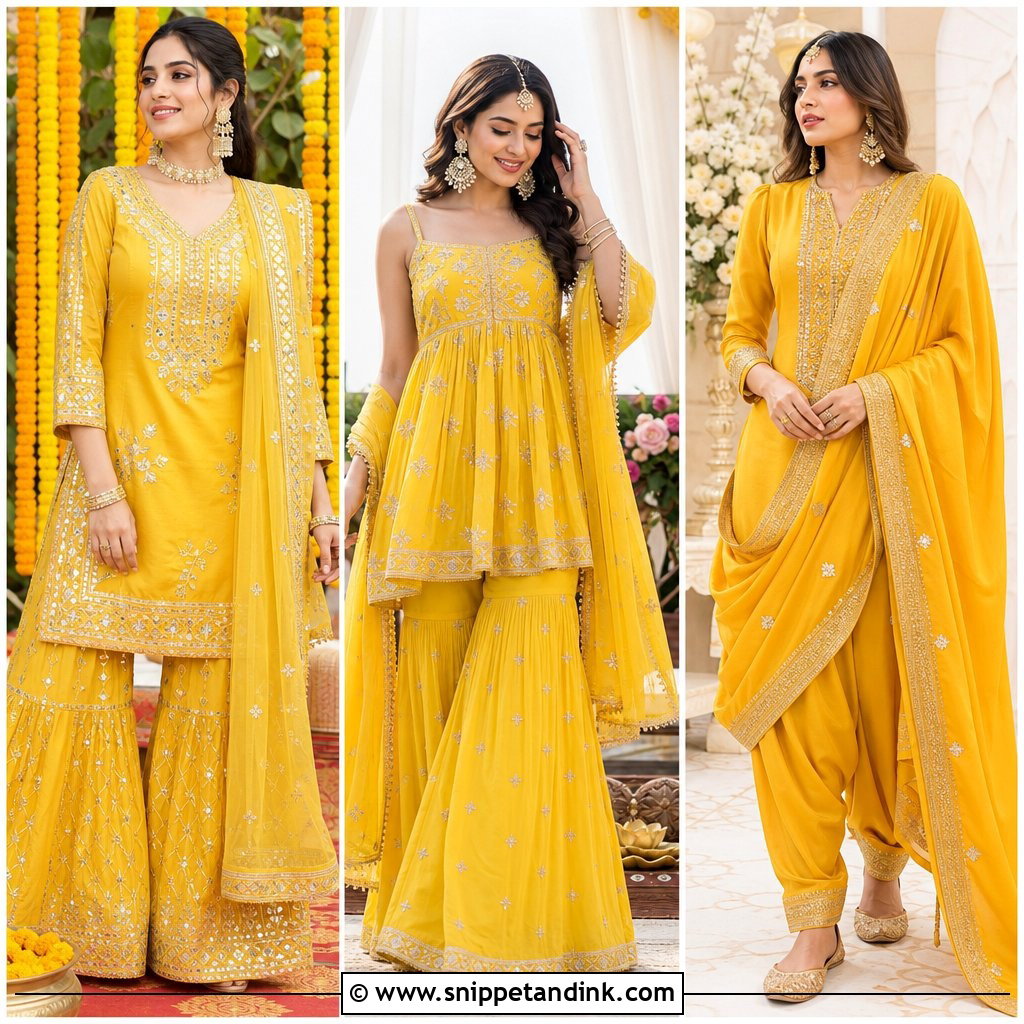
19. Orange Haldi Lehenga For Bride
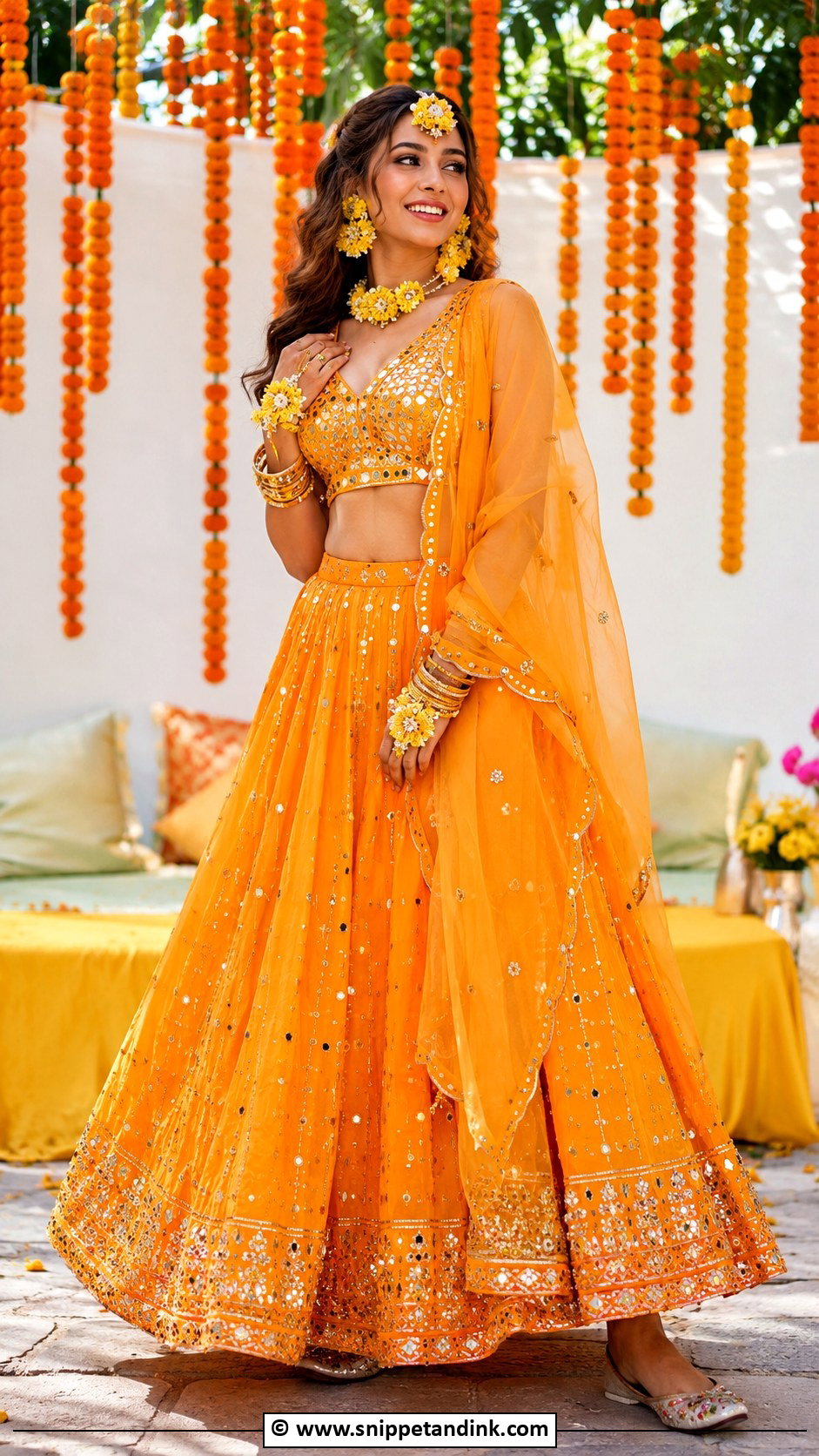
Orange is my suggestion when the whole family has been told to wear yellow and the bride still wants to stand out. Tangerine, marigold or a coral-orange all sit inside the haldi palette without blending into the crowd. I keep the lehenga light with mirror work or gota borders so it doesn’t look like a sangeet outfit. Yellow floral jewelry links it back to the ceremony. Against green leaves and marigold strings, orange holds its colour very well in outdoor light.
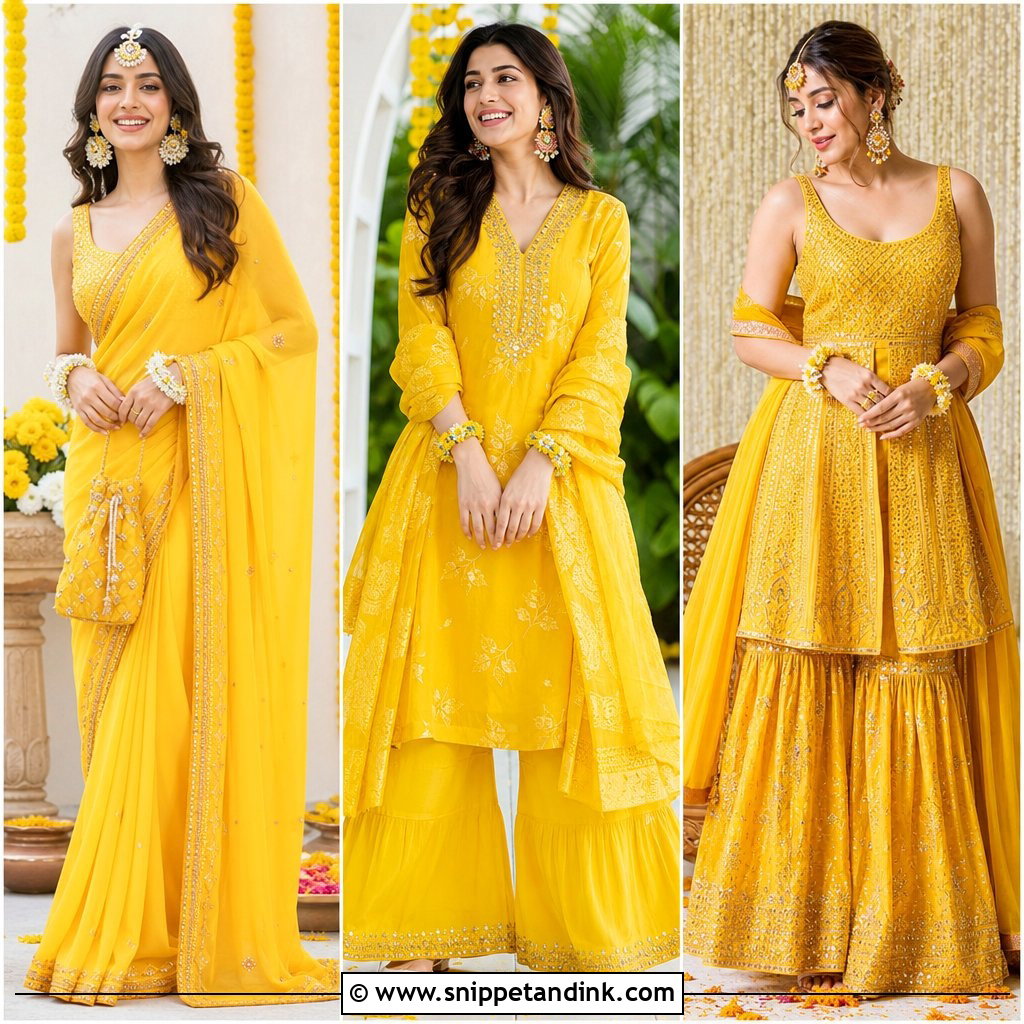
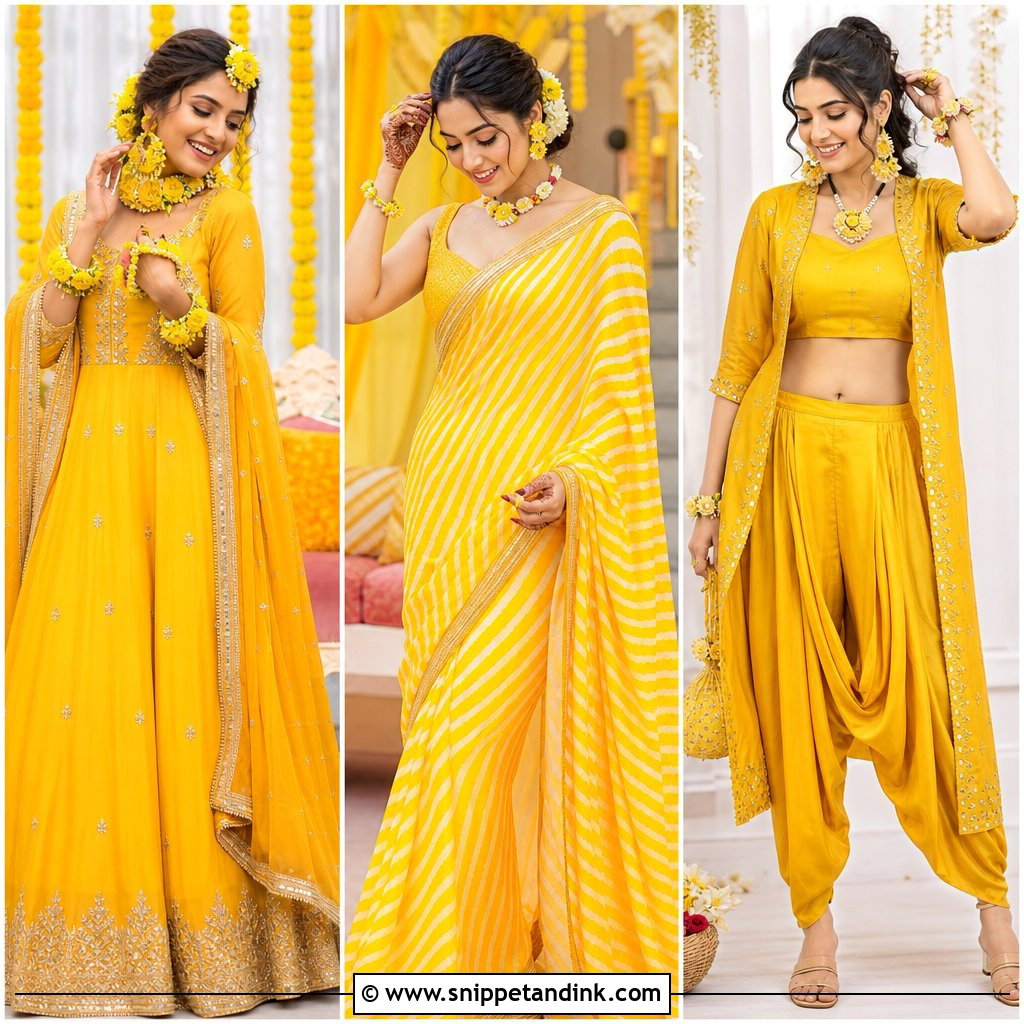
20. Lime Green Haldi Outfit For Bride
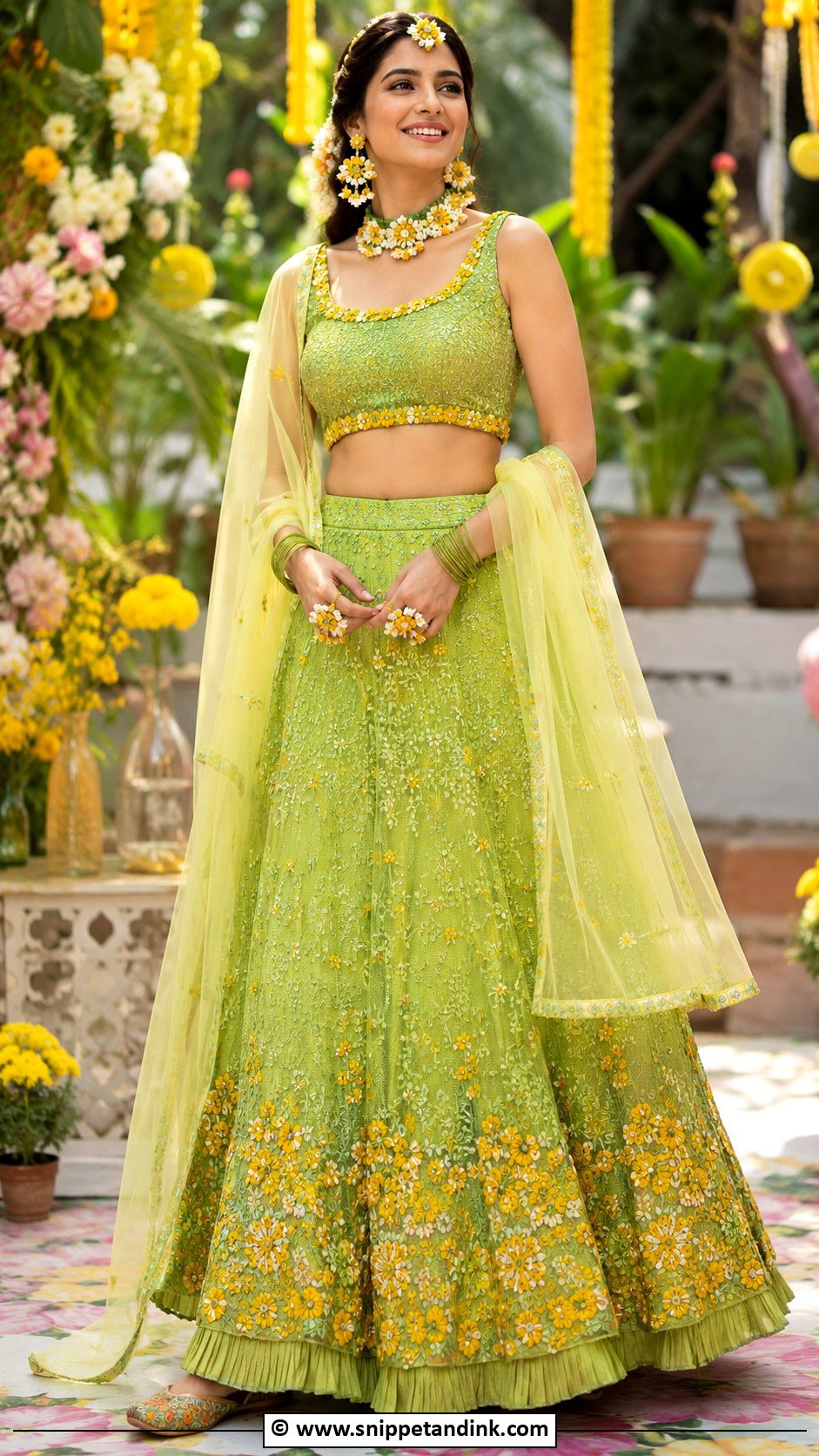
Lime is a fresher, cooler take on the brief, and it suits garden or poolside setups where everything around you is green and yellow anyway. A lime lehenga, sharara or saree with yellow accents or mirror work keeps it in the family of haldi colours. Yellow flower jewelry matters more here than with any other colour, because without it lime can read as a mehendi outfit. A lemon or ivory sheer dupatta softens it, and simple glowing makeup keeps the face from competing.
21. Peach Haldi Sharara For Bride
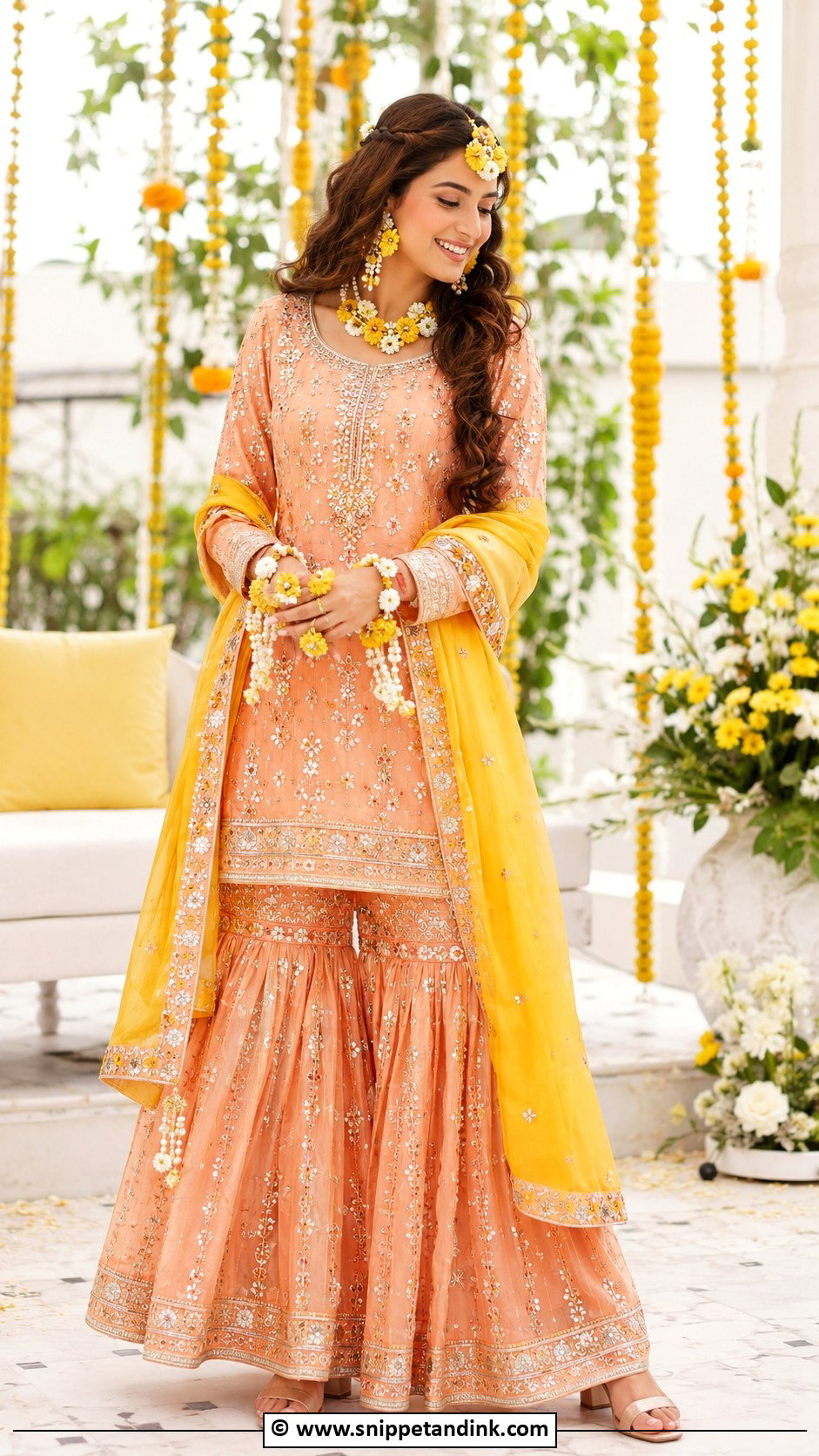
Peach warms the face without the intensity of orange, and it’s the colour I suggest for brides who find yellow drains them. A peach sharara with yellow embroidery or a gota border feels delicate but still festive. Add a yellow dupatta if you want the ceremony colour closer to your face. Marigold, white and peach flowers tie it together. Wear juttis or low block heels depending on whether the ground is grass or tile.
22. Pastel Yellow Haldi Lehenga For Bride
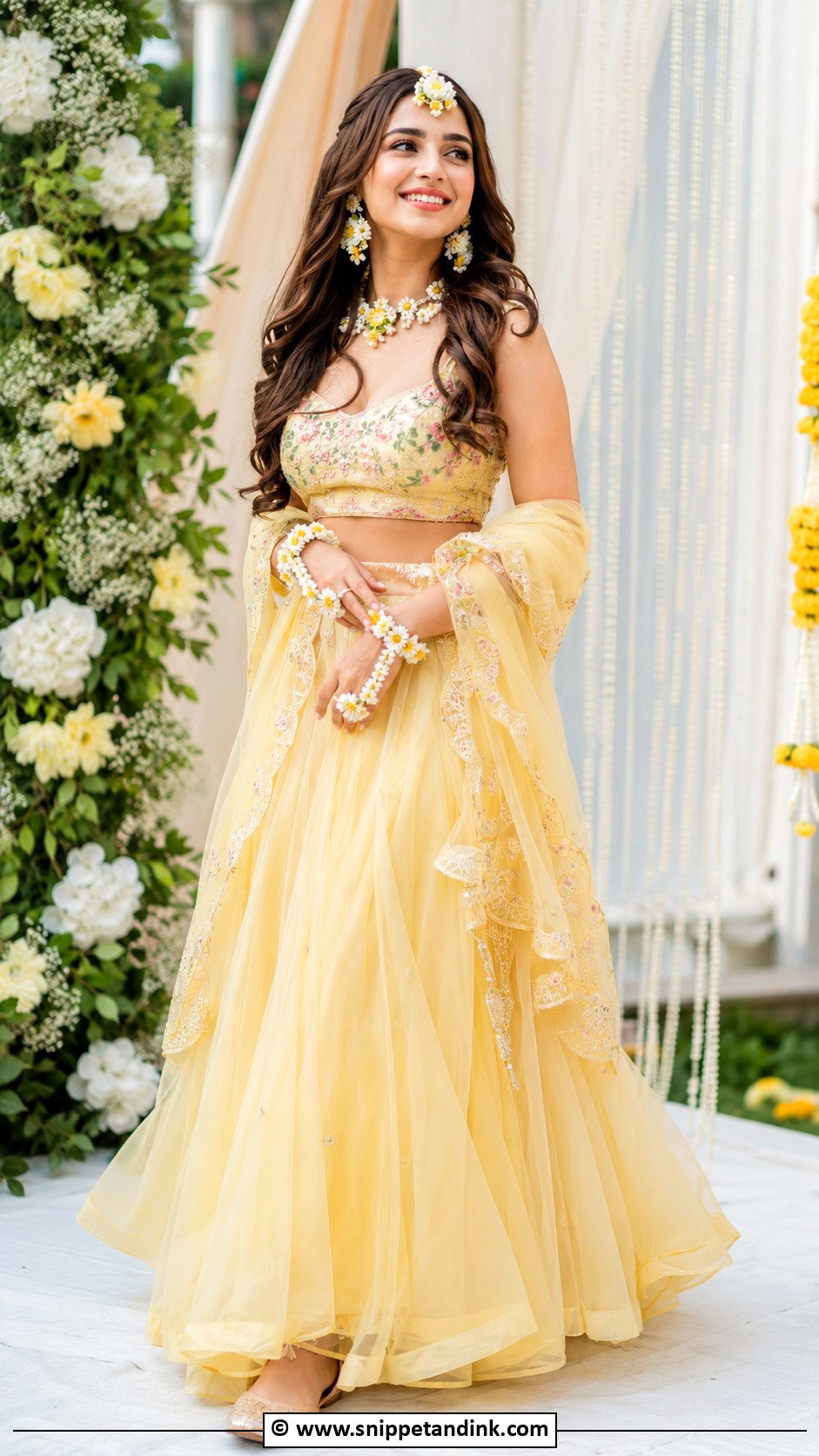
Pastel yellow sits between ivory and classic haldi yellow, so it photographs soft without losing the ceremony colour. It needs light fabric to look right: organza, chiffon or net. Heavy silk in a pale shade can look washed out. Floral embroidery, pearls or a light scattering of sequins keep it bridal, and a matching dupatta with a narrow border adds polish. I pair it with white and yellow flower jewelry and soft curls for a morning ceremony in natural light.
23. Haldi Kurta And Skirt For Bride
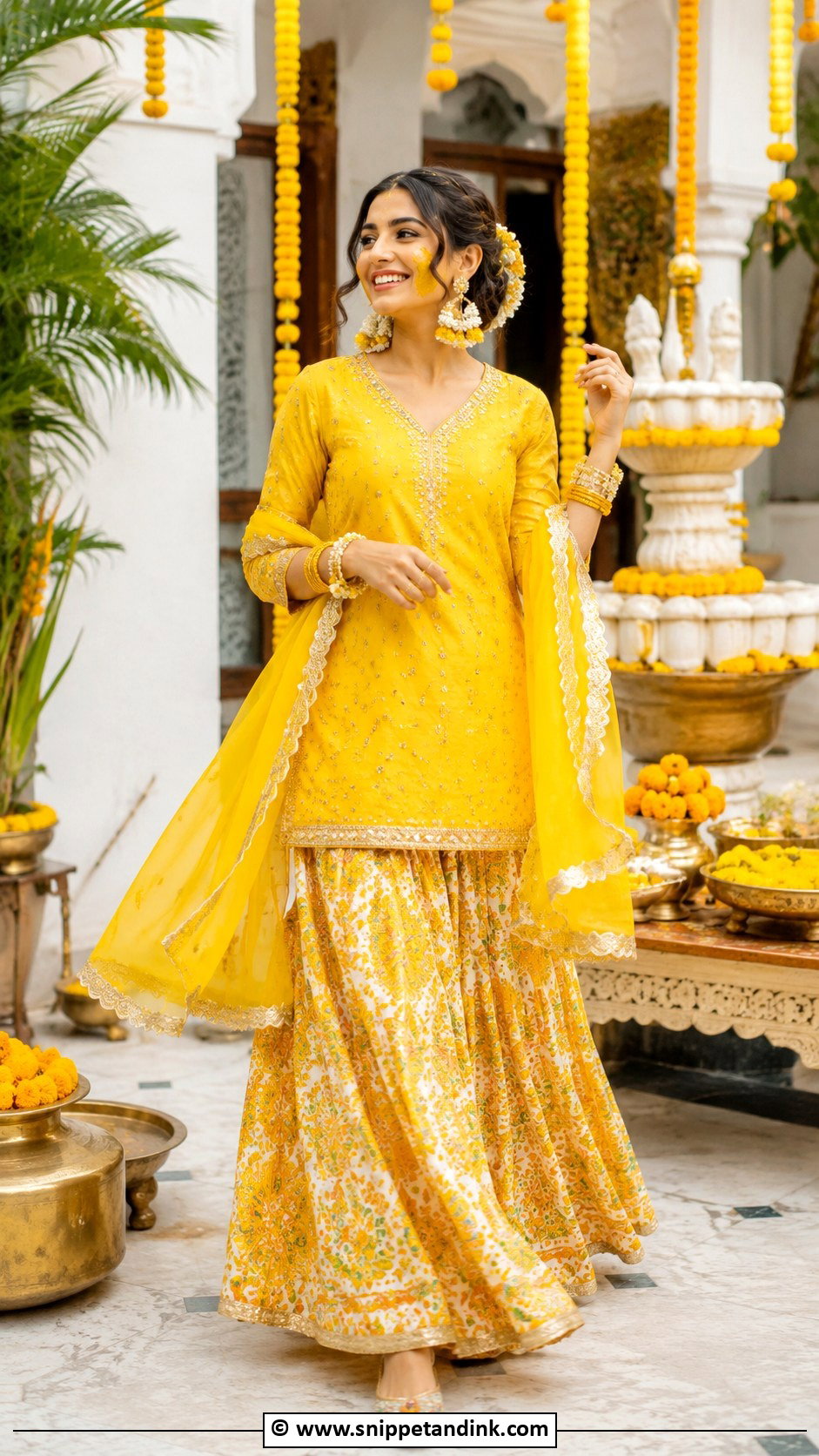
Think of this as a lehenga you can actually wash. A kurta over a flared skirt gives the same fullness and more coverage. A short kurta looks young; a longer one with a printed skirt feels more traditional. Yellow with mustard, ivory with peach, that kind of tonal pairing suits it. A dupatta with tassels or mirror edging and some floral jewelry are enough to make a simple set read as the bride’s outfit.
24. Bandhani Haldi Outfit For Bride
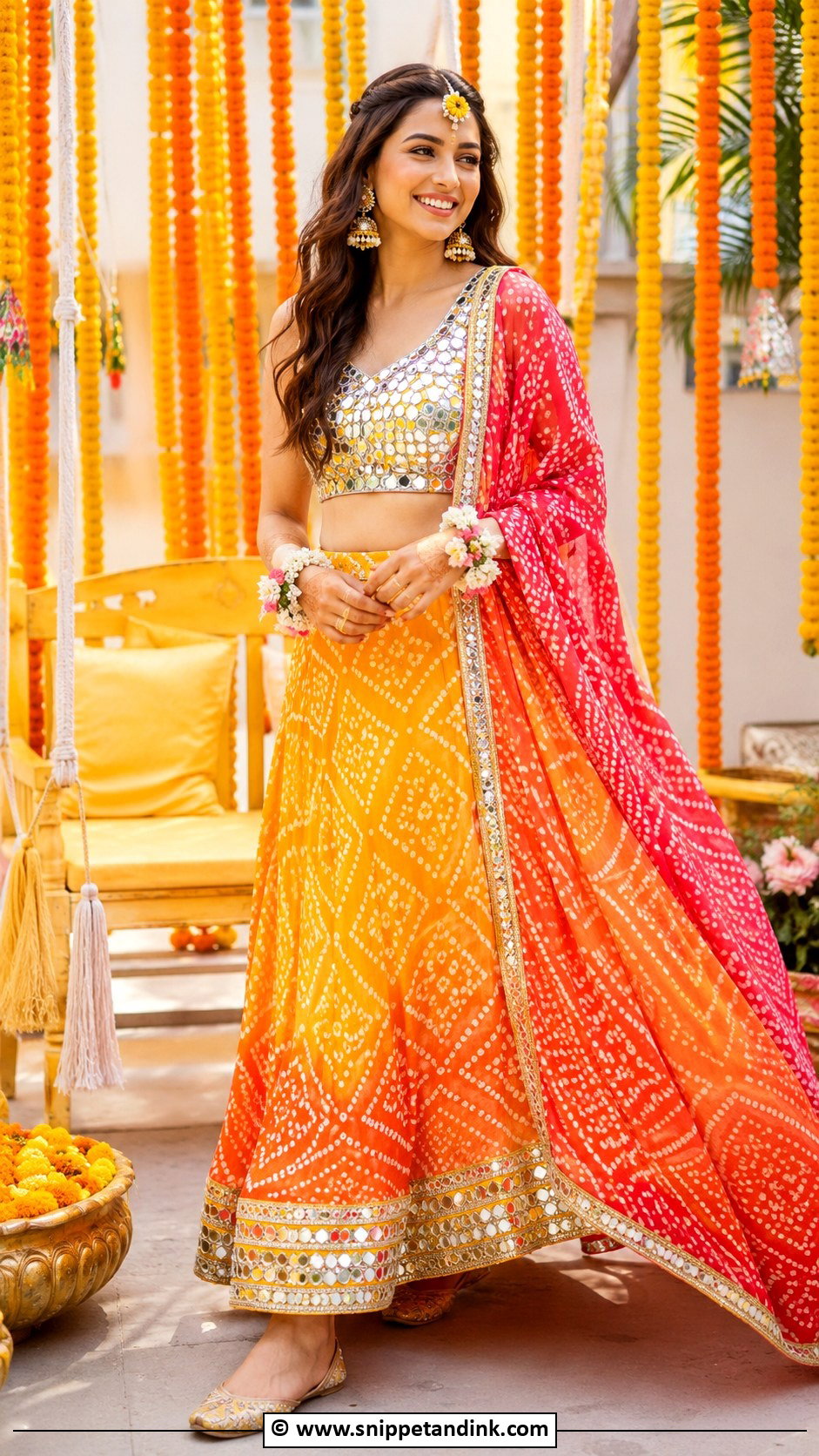
Bandhani is tie-dye made by pinching and binding tiny points of cloth, and that dotted texture is decoration in its own right. A yellow, orange or green bandhani lehenga, saree, or sharara doesn’t need embroidery on top. I’d add one finishing detail at most: a gota border, a mirror blouse or a contrast dupatta. Bandhani is usually dyed with strong colours, so check it doesn’t bleed when wet paste sits on it. Traditional jhumkas, flower bangles and juttis complete a look with real heritage behind it.
25. Phulkari Haldi Outfit For Bride
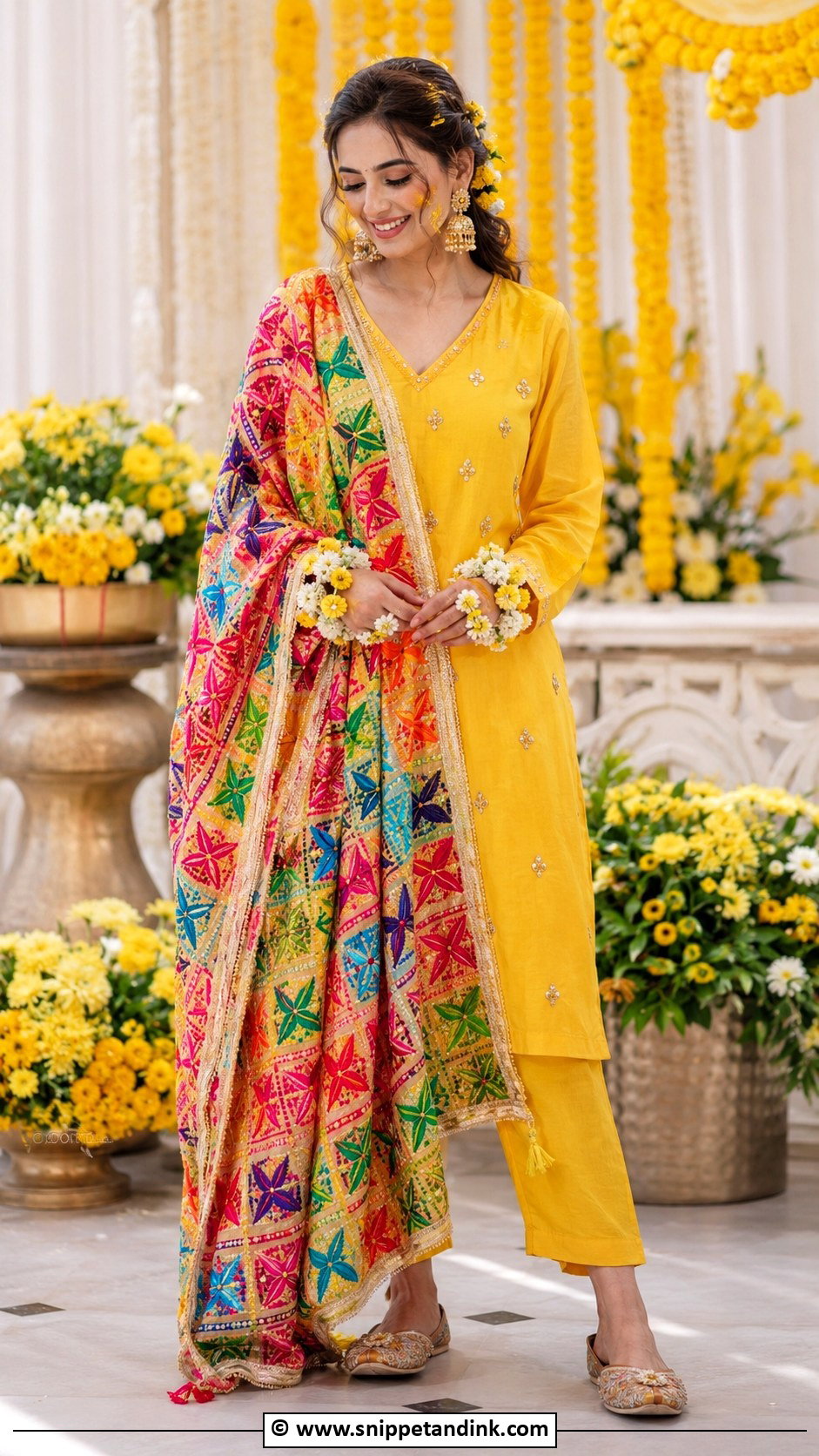
Phulkari is Punjabi embroidery worked in bright floss, and the dupatta is where it shines. I keep the base outfit simple, a yellow kurta set, lehenga, or sharara, and let the phulkari carry all the colour. Mustard, pink, green and orange mixed together feel joyful at a family haldi. If the dupatta is very colourful, I switch floral jewelry for plain gold earrings so the two don’t compete. Comfortable juttis, nothing more.
26. Haldi Jumpsuit For Bride
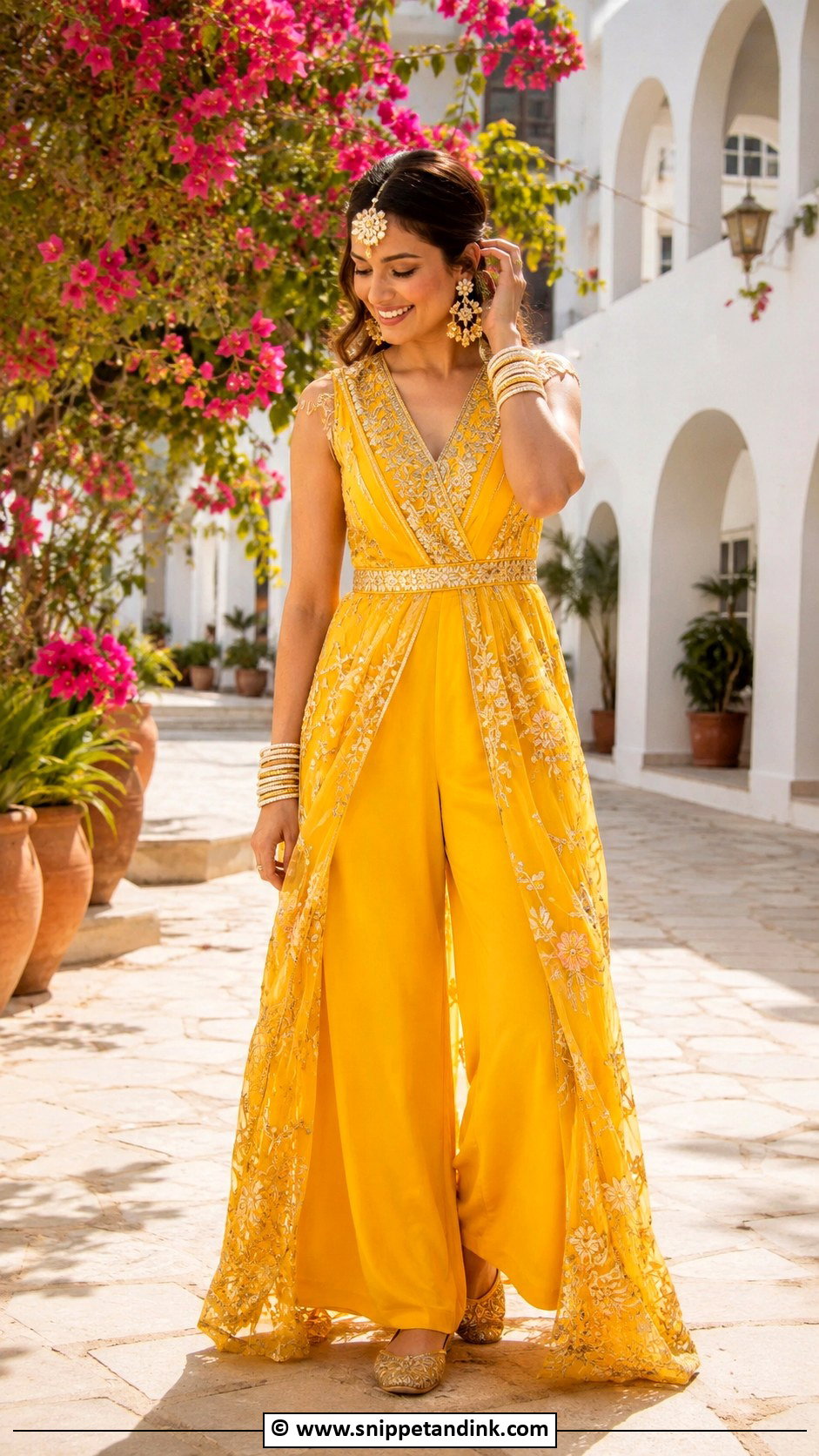
A jumpsuit is the most modern option here and the one I’d only suggest for a smaller or destination haldi. Wide legs matter; a fitted jumpsuit looks like eveningwear and is awkward to sit in on the floor. Look for one with a draped overlay, cape or attached dupatta in yellow, ivory, lime or peach. Because the shape isn’t traditional, bridal accessories do the work: a flower maang tikka, statement earrings, bangles and embellished flats. Think about bathroom breaks before you commit.
27. Yellow Haldi Gharara For Bride
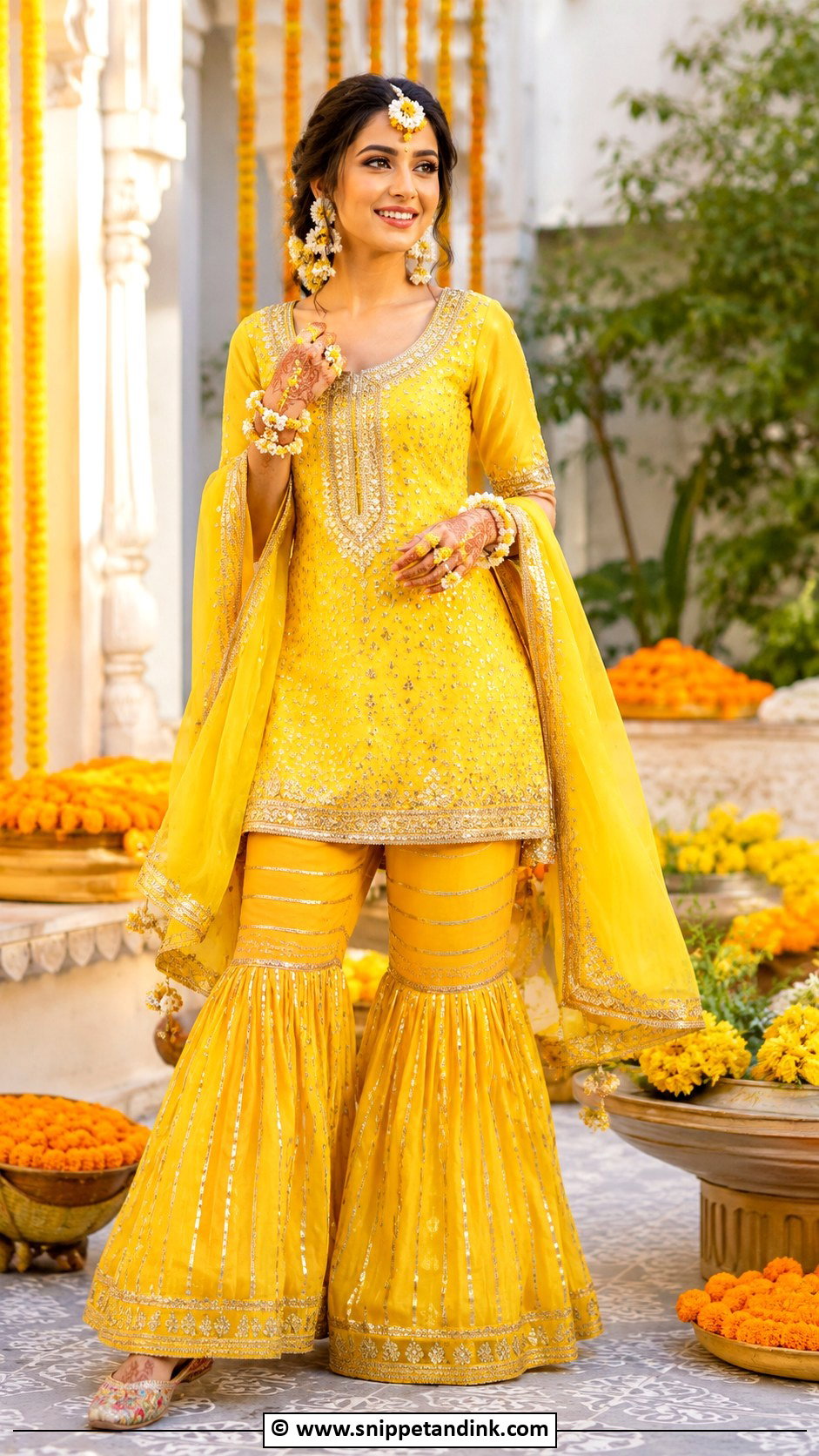
A gharara is fitted to the knee and then bursts into flared panels, usually joined by a decorated band at the knee. That shape looks dramatic in seated portraits. It’s more structured than a sharara, so try sitting cross-legged at the fitting, because the knee join can pull. A short kurti with gota patti or mirror work suits it. Drape the dupatta over one shoulder, then add floral jewelry, a passa or maang tikka and embroidered juttis.
28. Floral Jewelry Haldi Outfit For Bride
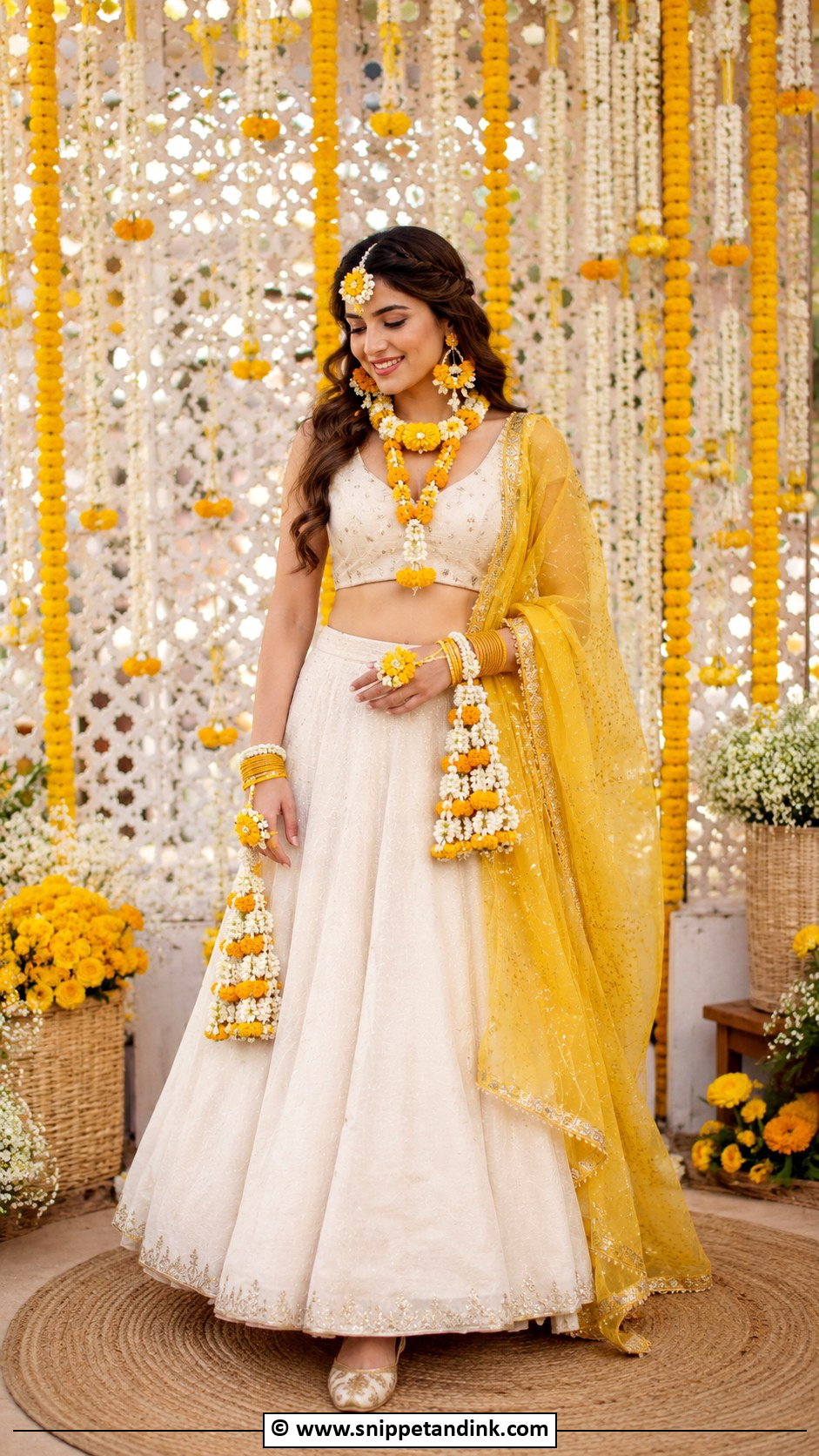
Sometimes the jewelry is the outfit. Start with a plain yellow, ivory or pastel kurta set, saree, lehenga or sharara, then build a full flower set: earrings, necklace, haathphool, bangles, maang tikka and floral kaleere. Fresh marigold and jasmine smell wonderful but wilt in heat and can stain fabric where petals are crushed, so I order them for the morning itself. Artificial flowers last longer and weigh less. Keep the clothing quiet if the jewelry is large.
29. Minimal Haldi Outfit For Bride
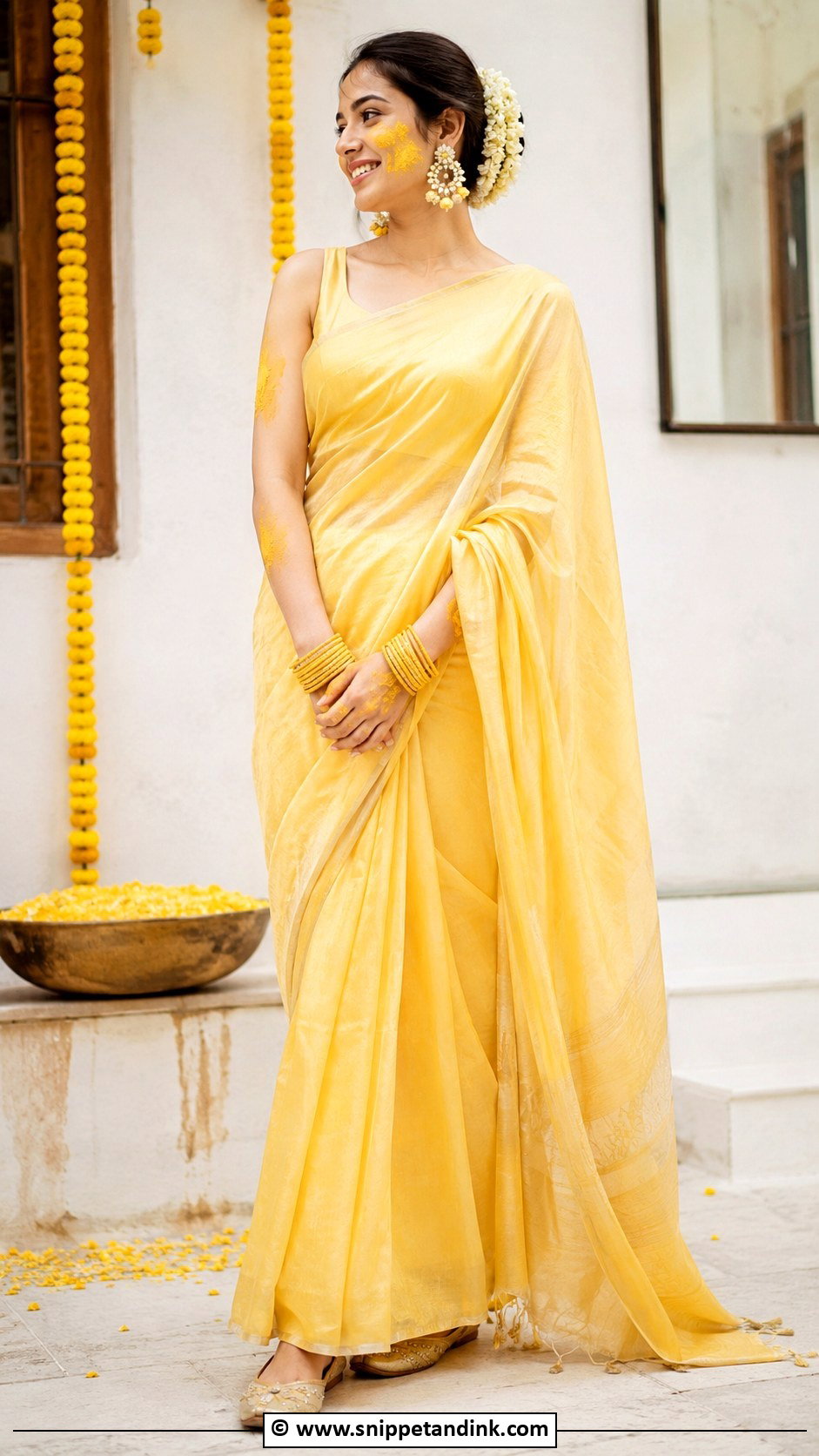
Minimal works when everything left is deliberate. A yellow cotton silk saree, an ivory kurta set or a plain sharara with clean lines, plus one standout detail: a floral dupatta, bold earrings, a flower bun or bright bangles. I suggest this route when the family applies haldi generously, because there’s less embroidery to ruin. Fit is what separates minimal from underdressed, so get it tailored properly. Fresh makeup and comfortable footwear finish it.
30. Destination Haldi Outfit For Bride
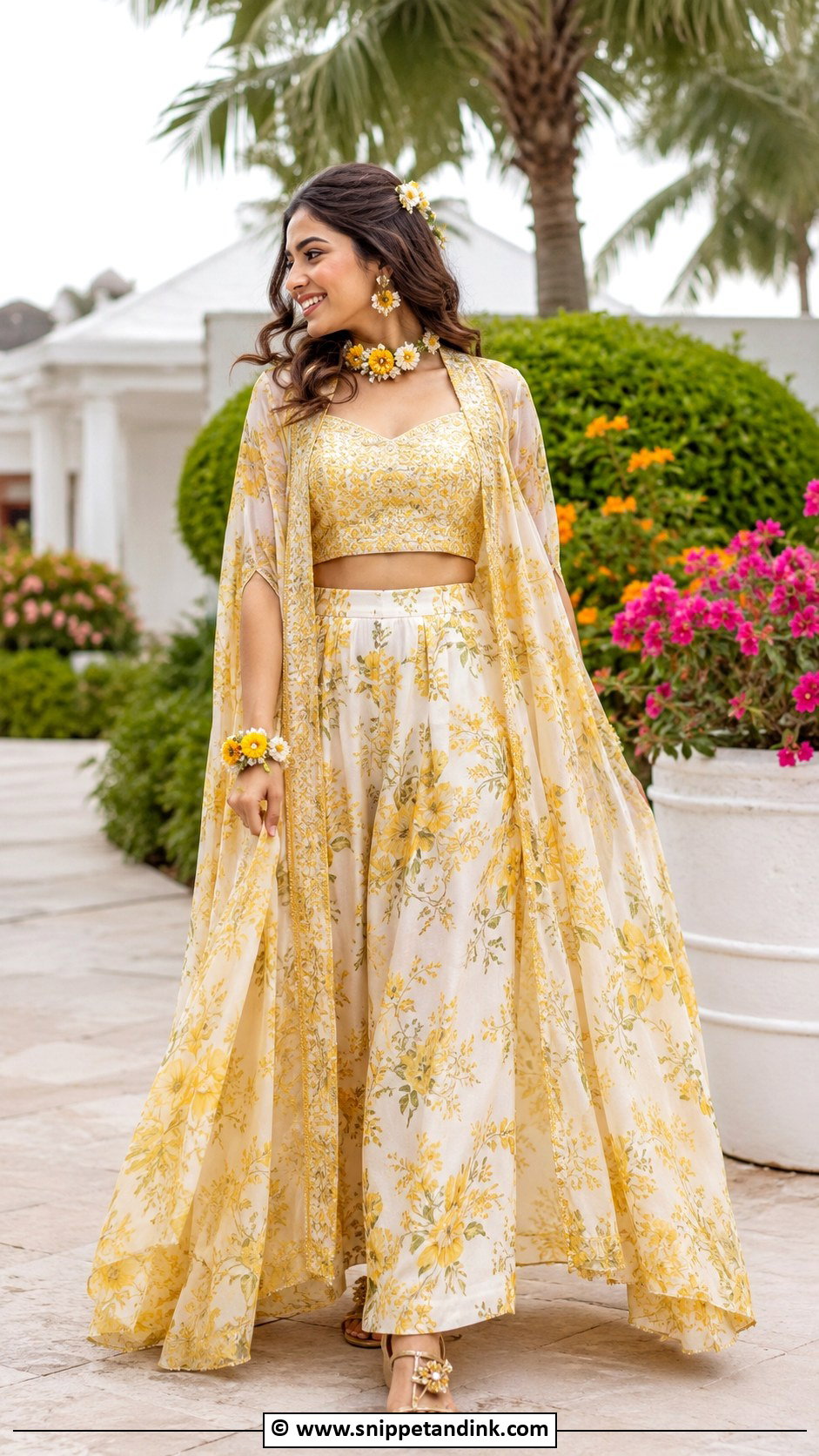
For a destination haldi outfit I’m thinking about the suitcase and the weather before anything else. A flowy lehenga, cape set, printed co ord, ruffle saree or sharara in yellow, ivory, peach or lime packs well; heavy raw silk traps heat and creases badly. On sand or grass, flat sandals beat juttis. Pin the dupatta and secure the blouse, and choose a hairstyle that copes with humidity, such as a braid or a low bun. Floral jewelry and sunglasses for the casual shots are enough.
Getting Haldi Out Once the Ceremony Ends
Act the same day. Turmeric sets harder the longer it sits, and a stain left overnight in a warm room is much more stubborn.
- Let the paste dry, then scrape off as much as you can with a blunt knife or the edge of a card. Wet scrubbing only spreads it.
- Rinse the back of the fabric under cold water so the colour is pushed out rather than through. Hot water sets it.
- On washable cotton, work in a little liquid detergent and rinse again. Don’t panic if the spot turns reddish brown with soap; turmeric changes colour in alkaline conditions and usually goes back to yellow as you rinse.
- Dry white or ivory cotton in direct sunlight. Turmeric fades in strong light, and this alone often removes the last faint cast.
- Silk, tissue, embellished and gota pieces go to a dry cleaner. Tell them it’s turmeric and point to each mark.
Protecting the Rest of the Look
Bring an old dupatta or a shawl to wrap around your shoulders while you walk from the ritual to the bathroom, so the paste on your arms doesn’t transfer onto the blouse. Fresh flower jewelry should come off before you shower, since crushed petals can stain too. Store the cleaned outfit in a cotton bag, away from plastic, and let it air fully before it goes into a trunk with your other wedding clothes.
The Outfit That Lets You Enjoy the Turmeric
A haldi outfit has a short life and a rough one, so judge it by how it feels after an hour on the floor with paste on your arms. Look at the venue, the weather and how your family does the ritual, then choose the fabric and drape that suit those conditions. Light cloth, a pinned dupatta, floral accessories and flat shoes cover most of what goes wrong. After that, pick the colour and silhouette that make you smile when you see yourself in yellow.
You'll Like These Ideas:





Leave a Reply