
A Punjabi bride rarely wears one hairstyle. She wears four or five across the maiyan, the mehndi, the sangeet, the Anand Karaj and the reception, and each one has to work with a different outfit, a different weight of jewelry and, for the ceremony, a covered head. That’s why I think about hair as a plan rather than a single look. Here are twenty Punjabi bride hairstyle ideas, from the parandi braid to sleek reception buns, with honest notes on which function each suits and how it copes with a maang tikka, a passa or a dupatta pinned on top.
One Bride, Five Functions and a Hair Plan for Each
Before we look at individual styles, sketch the week. Each function puts different demands on your hair, and the right choice for a sangeet can be a poor one at the gurdwara.
- Maiyan or haldi: oil and turmeric paste get everywhere. Wear a simple braid or bun you don’t mind washing out, and keep highlighted hair covered.
- Mehndi: you’ll sit for hours with paste on your hands. Pick something fully off the face and neck that won’t need touching.
- Sangeet and jaggo: lots of dancing. Waves, half-up styles and side braids give movement and survive a bit of chaos.
- Anand Karaj: your head stays covered. Choose a low or side bun with a firm base for pinning the dupatta.
- Reception: the dupatta often comes off, so this is the moment for a high bun, a passa or open curls.
Back-to-back days matter too. Heat styling every day for a week dries out the ends, so I suggest alternating a heated look with a braided or bun style the next day, and washing out the oil from the maiyan properly before the wedding morning.
1. Classic Parandi Braid
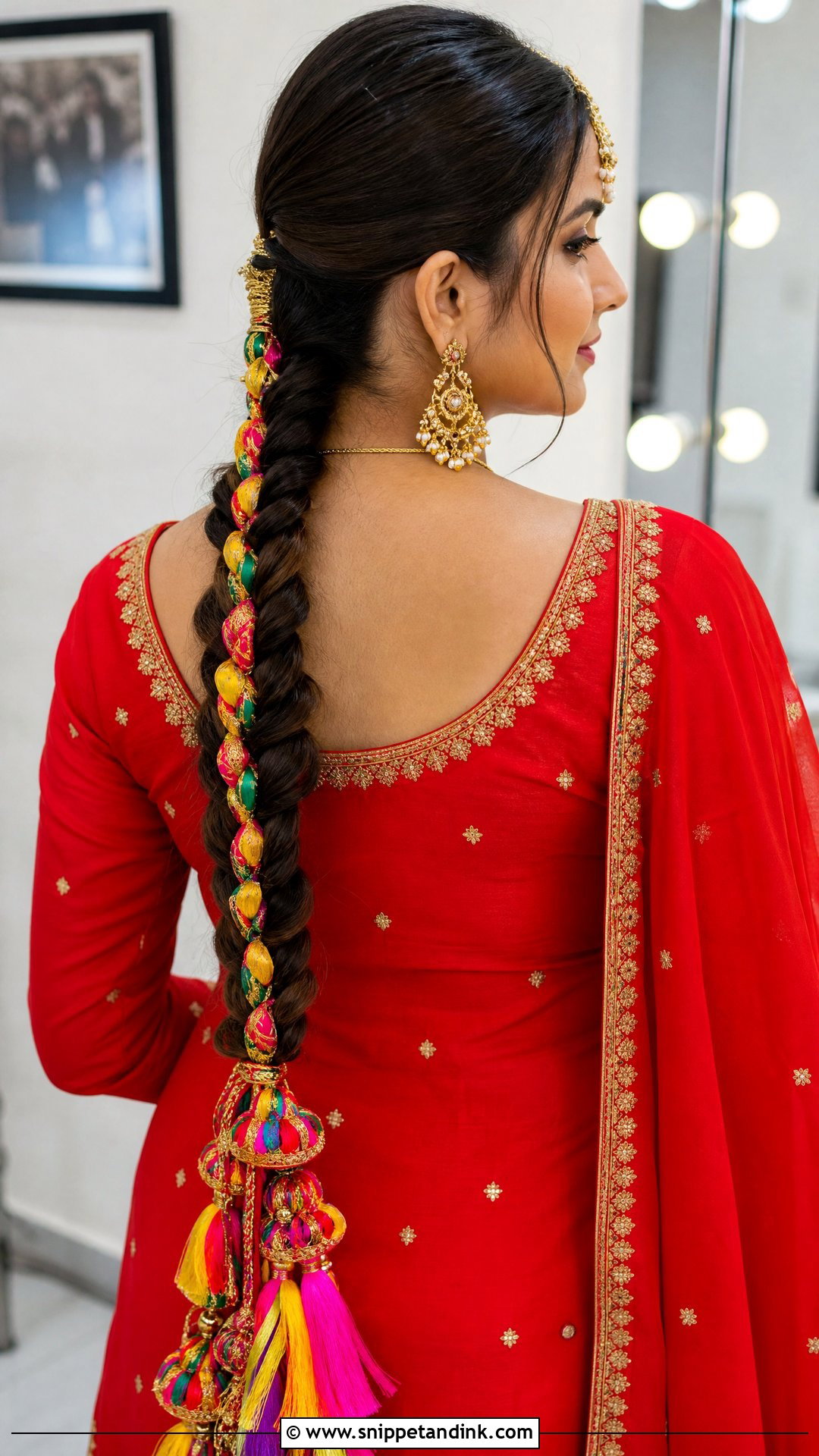
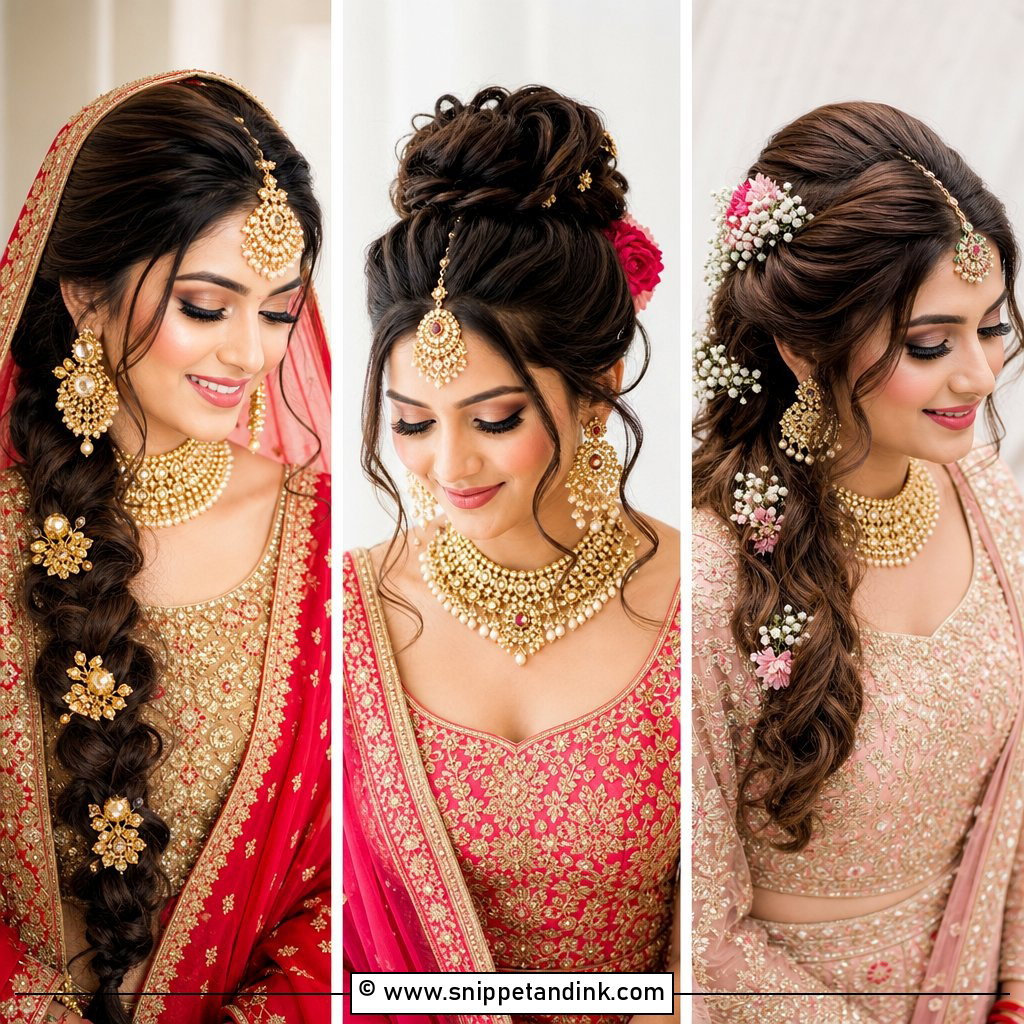
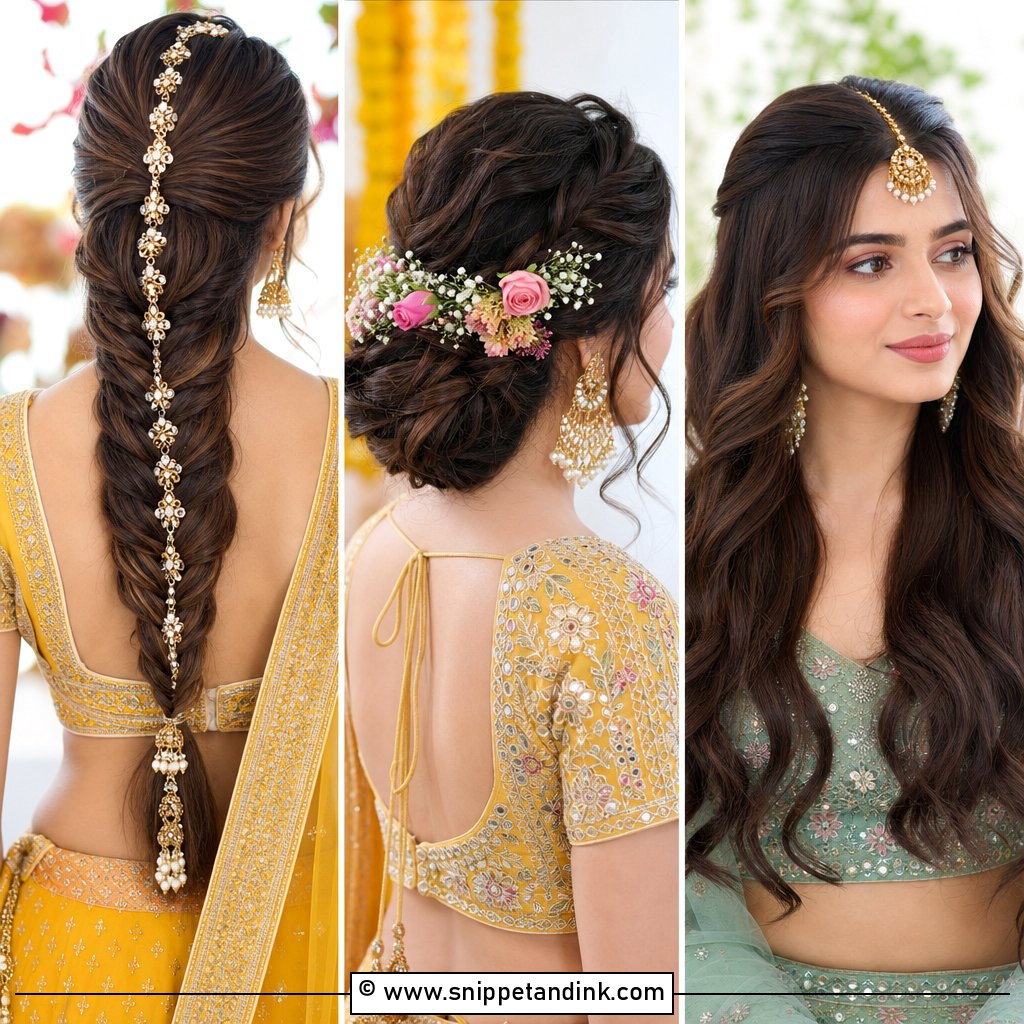
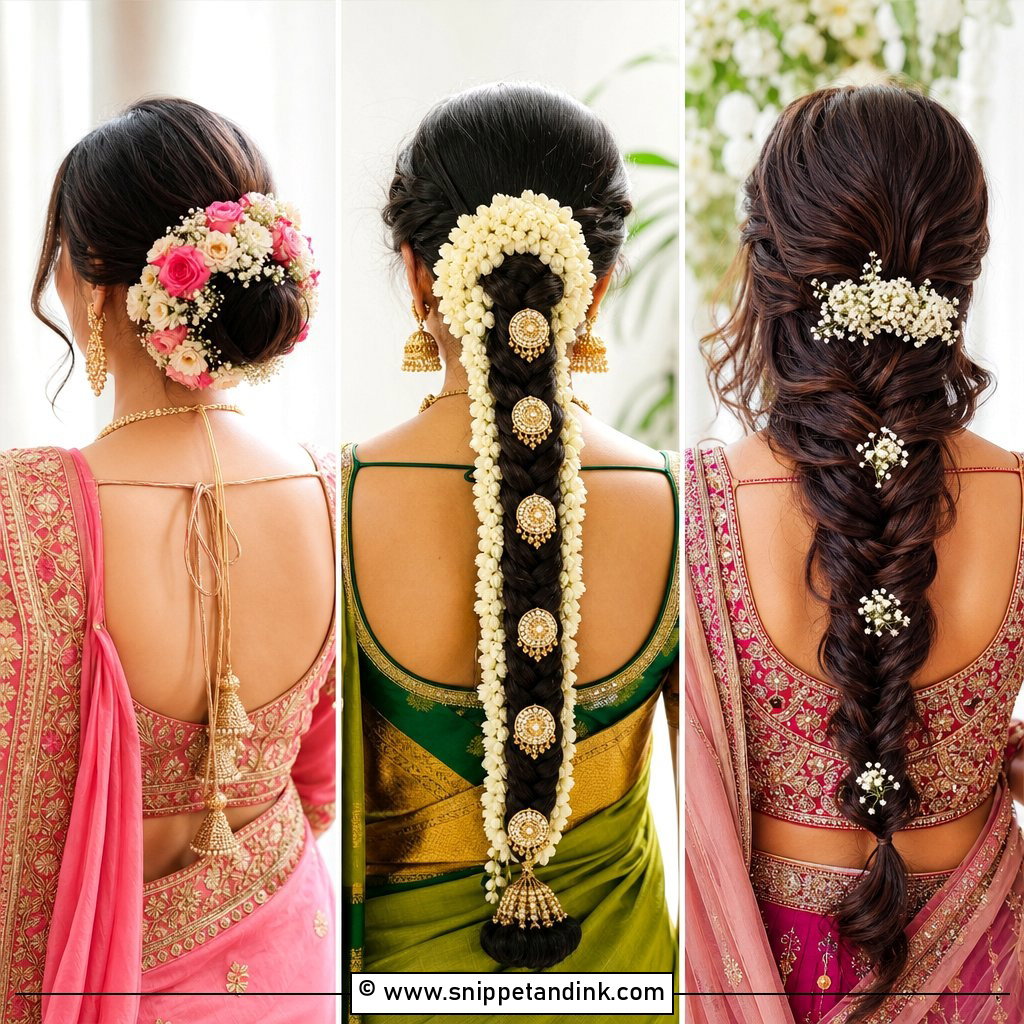
No style says Punjabi bride as clearly as the parandi braid, a long plait finished with silk tassels that swing as you walk. The parandi is often a gift from the groom’s family, so it carries real meaning. I start it with a firm three-strand plait and feed the parandi threads in about a third of the way down, which keeps the tassels hanging straight instead of twisting sideways. Long hair shows it best, but shorter hair can wear one too, with the parandi doing more of the length. Pair it with a matching tikka and jhumkas, and ask your photographer for a shot from behind.
2. Low Bun With Gajra
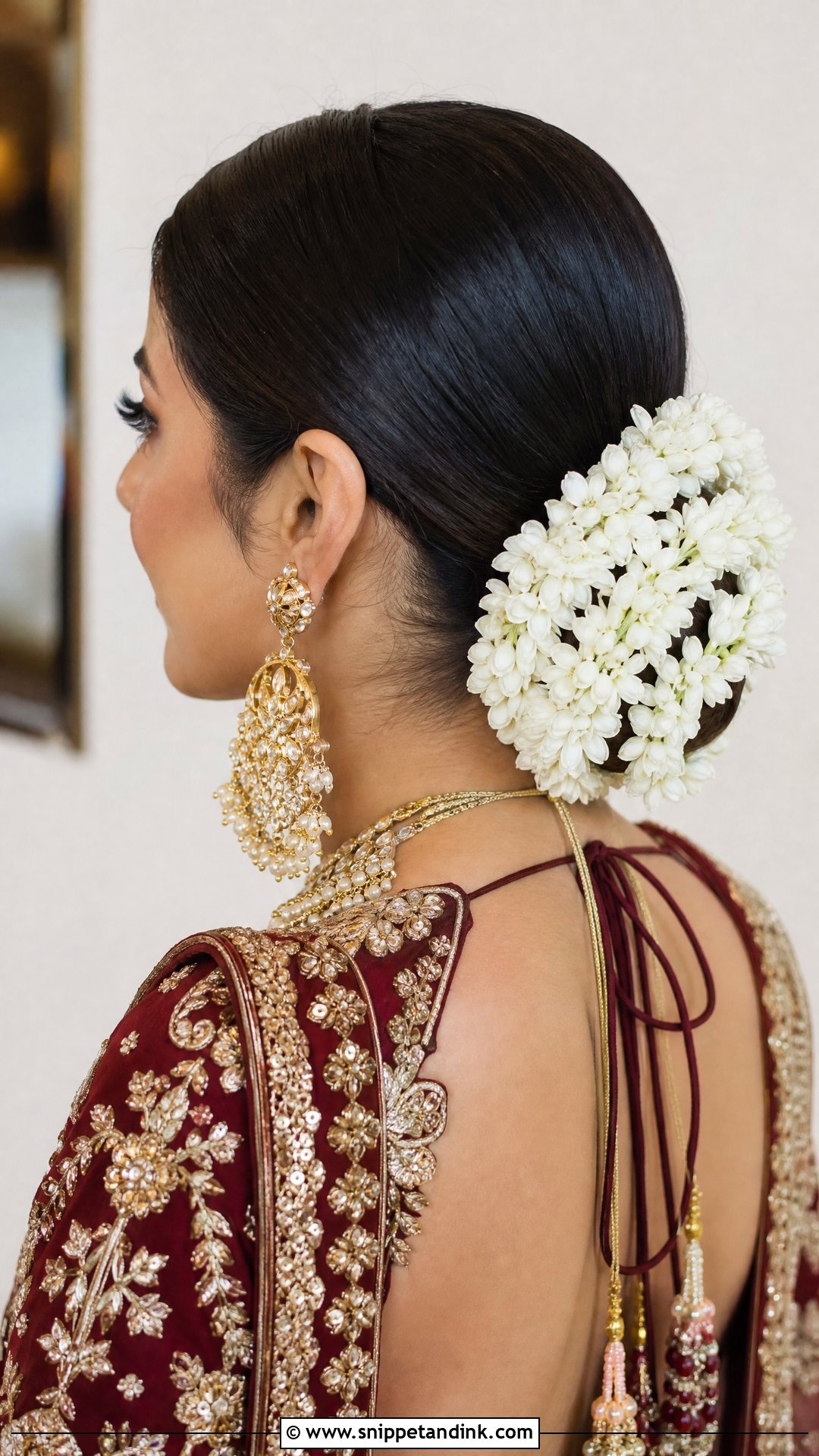
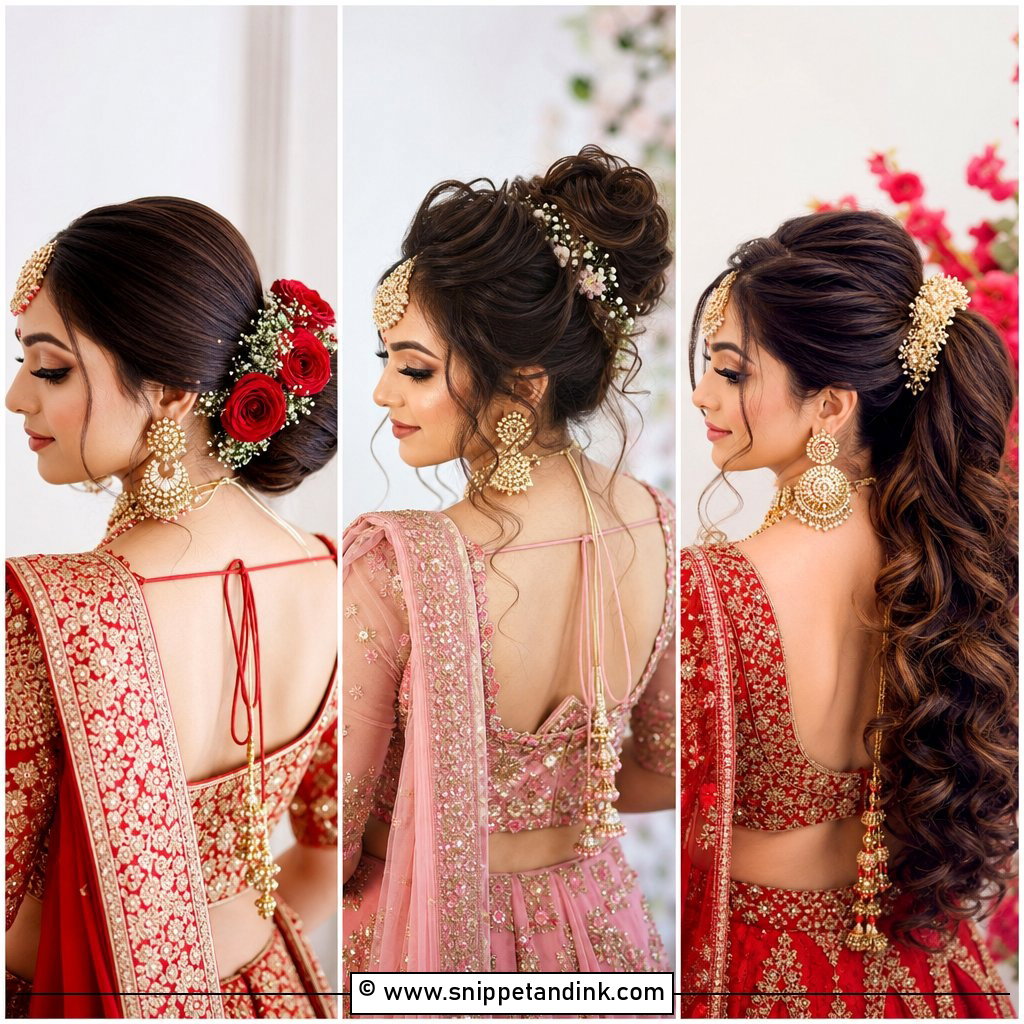
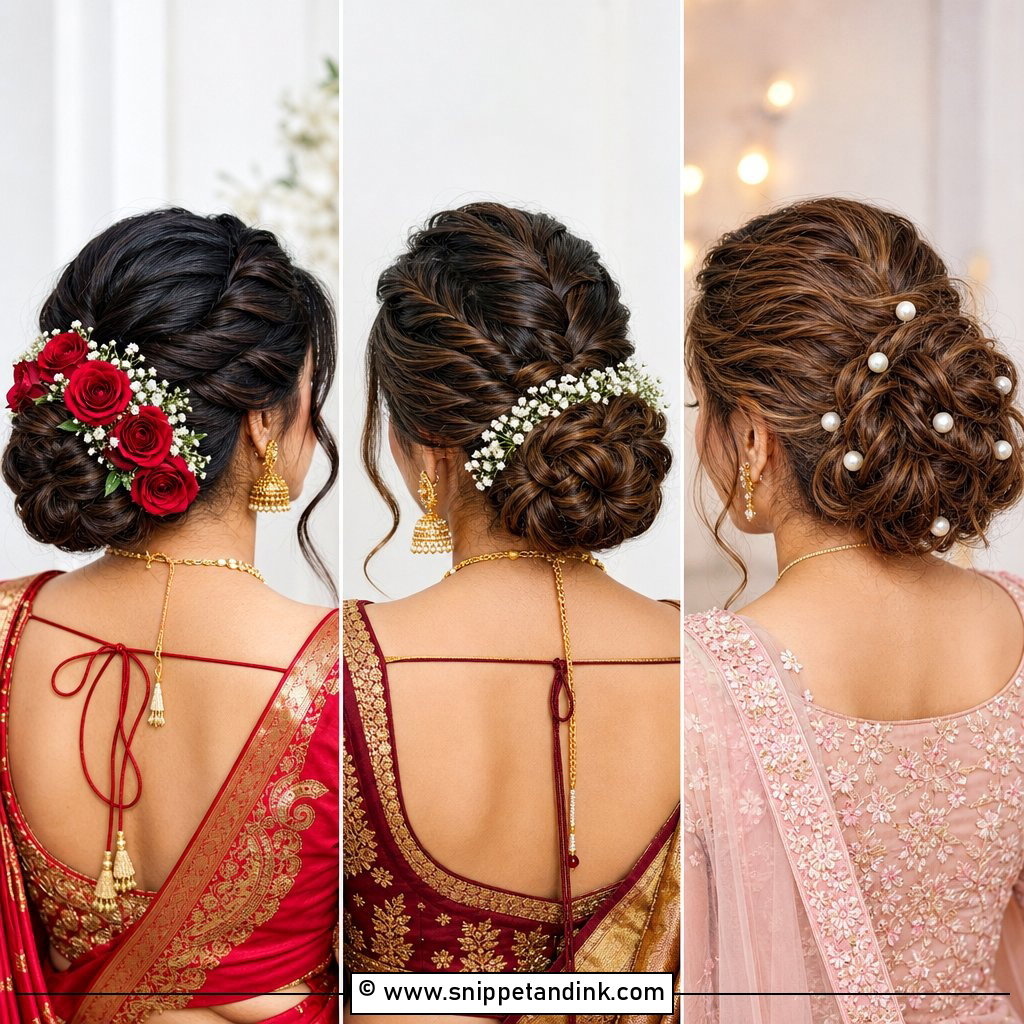
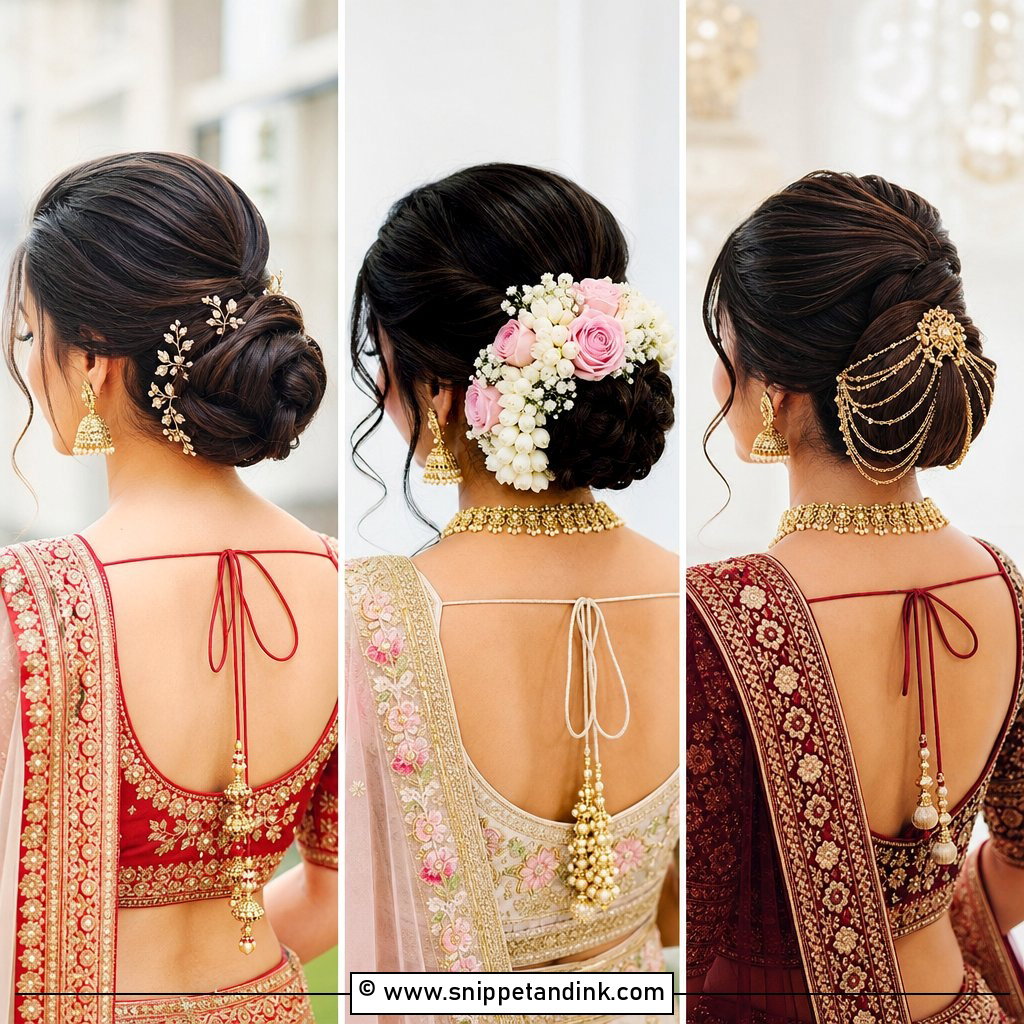
Jasmine wrapped around a soft low bun is classic and practical. The bun sits at the nape, out of the way of a dupatta, and leaves your neck and necklace clear. I pin the gajra in three or four places along its length rather than just at the ends; otherwise it slides as the flowers get heavier with moisture. It suits brides who want a polished, quiet look, with either sleek sides or a little volume at the crown. One honest warning: the scent is strong, and some brides find it heady after several hours in a warm room.
3. Side Swept Curls
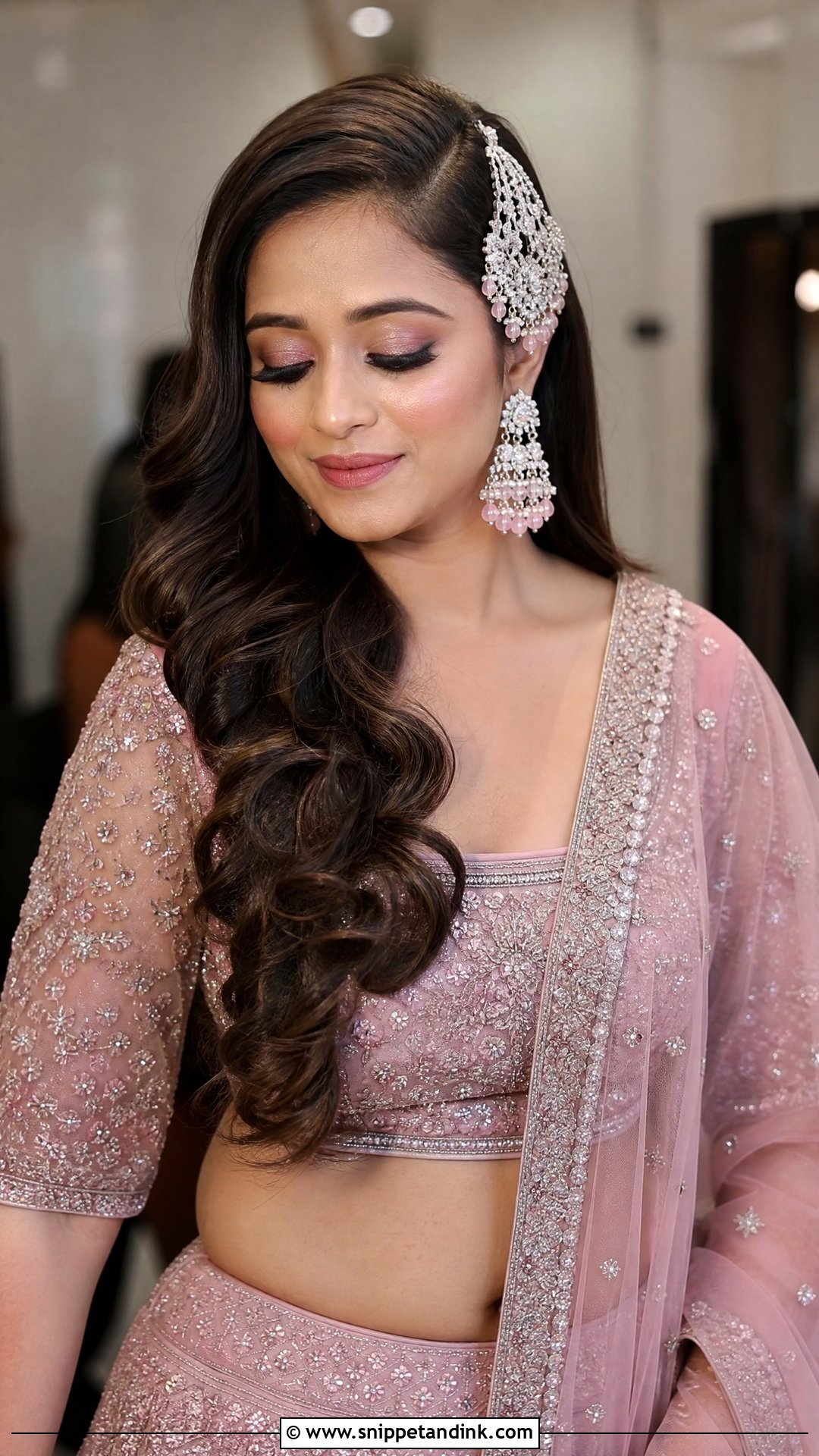
Loose curls swept over one shoulder suit the sangeet and the reception, when you want movement and a free neck on one side for earrings. A passa or hair chain near the part adds drama. The weak spot is the side the curls are swept away from: I anchor the hair behind that ear with a hidden row of crossed pins, or the whole lot drifts back to center by the second dance. Naturally wavy hair holds this easily. Straight, silky hair needs curls set tighter than you’d like, since they relax under body heat.
4. Dutch Braid Crown
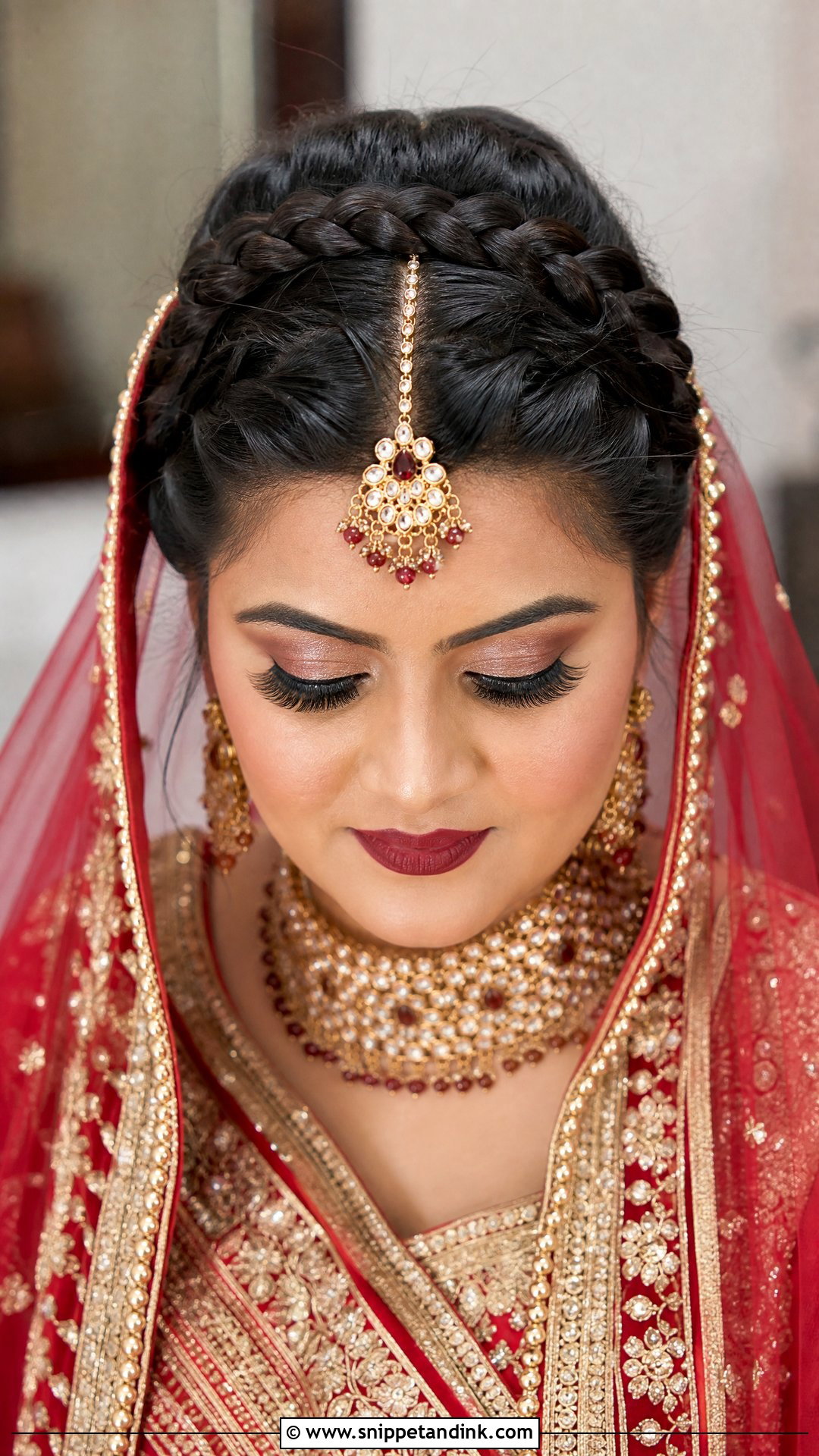
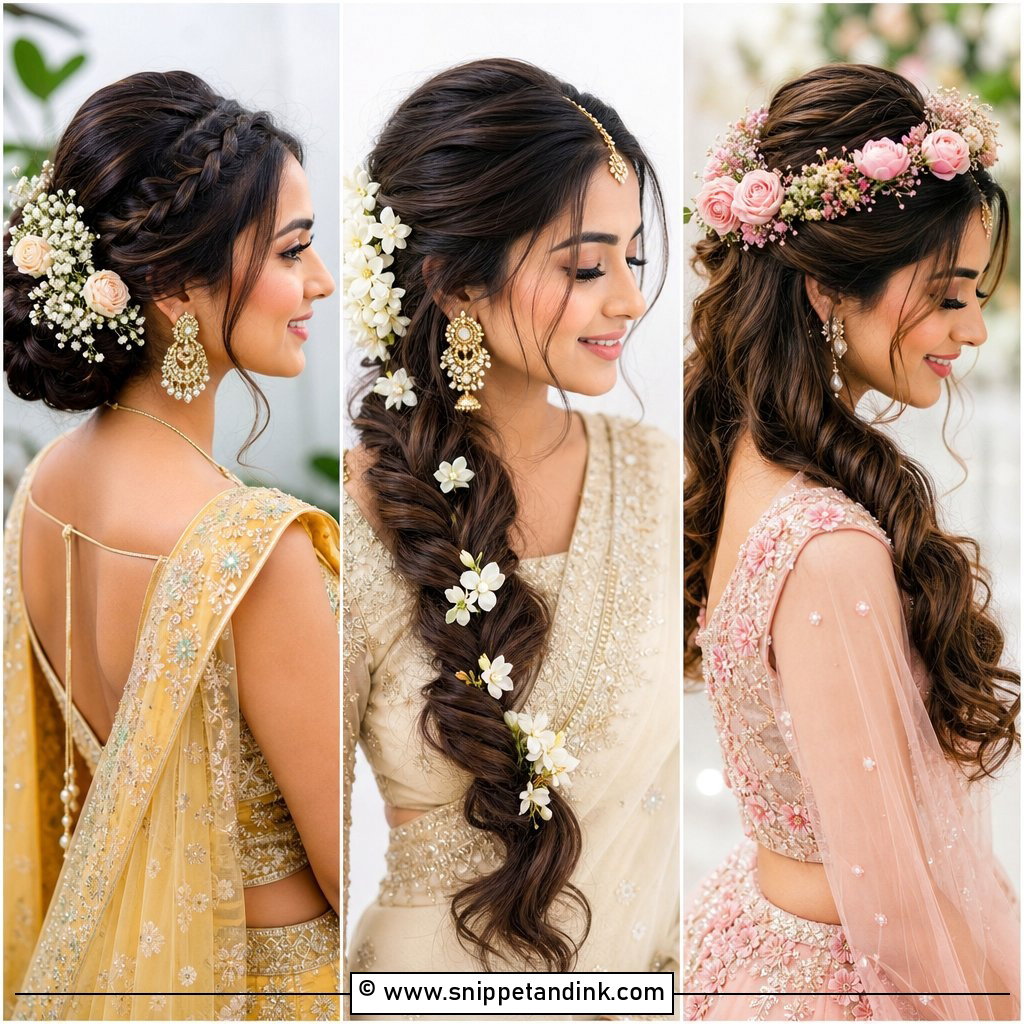
Raised Dutch braids wrapped around the head form a crown that sits like a tiara and doesn’t move. Because the strands are crossed under rather than over, the braid stands up off the scalp and shows its pattern from every angle. A maang tikka rests neatly at the center part in front of it. It’s one of the most secure styles I can build for a long ceremony, and it suits round and oval faces. Tiny flowers or pearl pins slot into the braid’s gaps. Very fine or short-layered hair may need a little added length braided in to finish the loop.
5. Messy Braided Bun
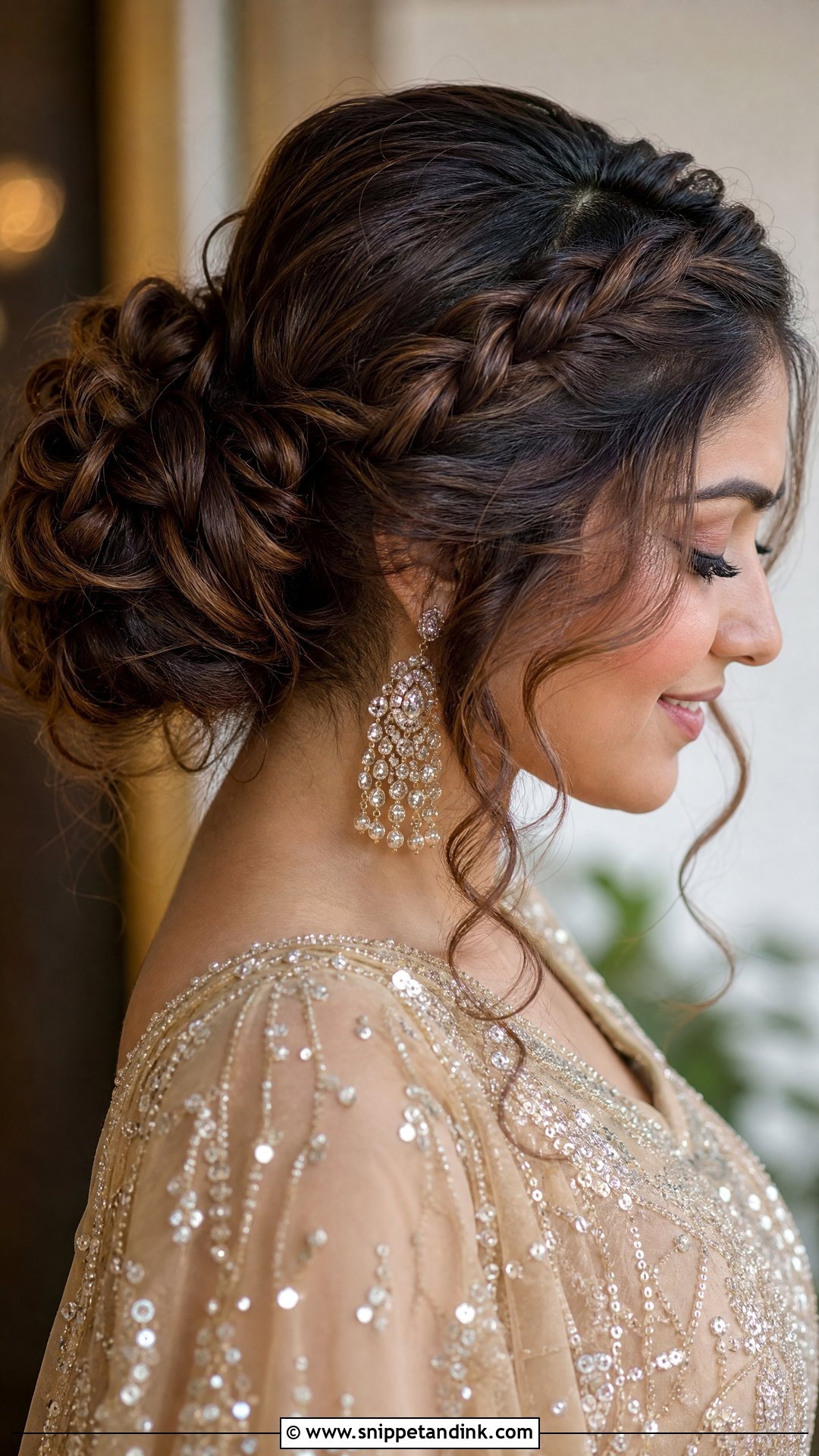
Side braids feeding into a full, textured bun give you detail near the face and softness at the back. I’d pick it for a sangeet or reception, particularly with a blouse or gown that has a detailed back you want on show. Loose tendrils at the temples stop it from looking stiff. The braids should be pulled wider after pinning, not before, so they keep their grip. It works on most hair lengths and textures, which makes it the style I suggest when a bride isn’t sure what her hair can hold.
6. Open Hair With Maang Tikka
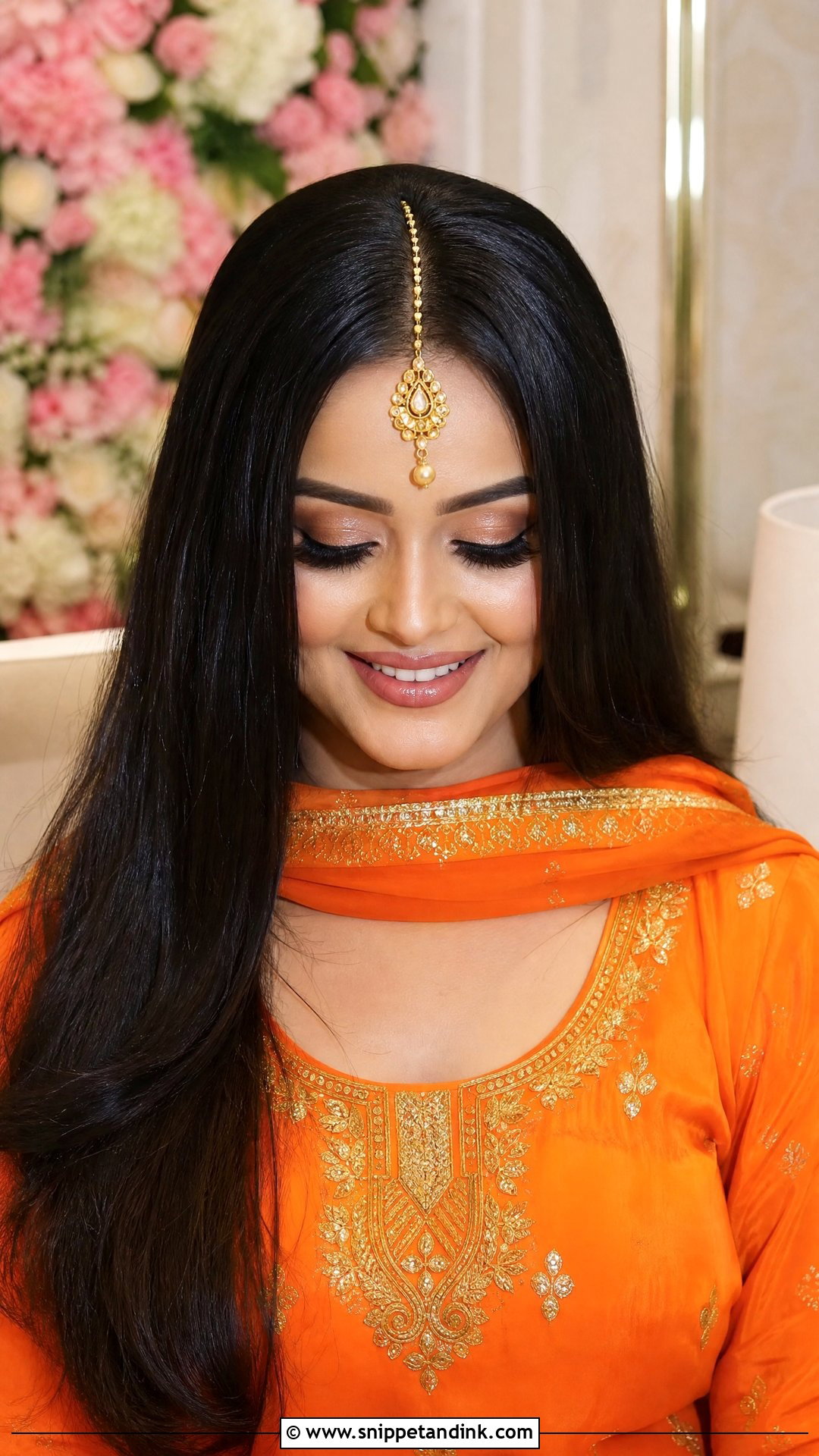
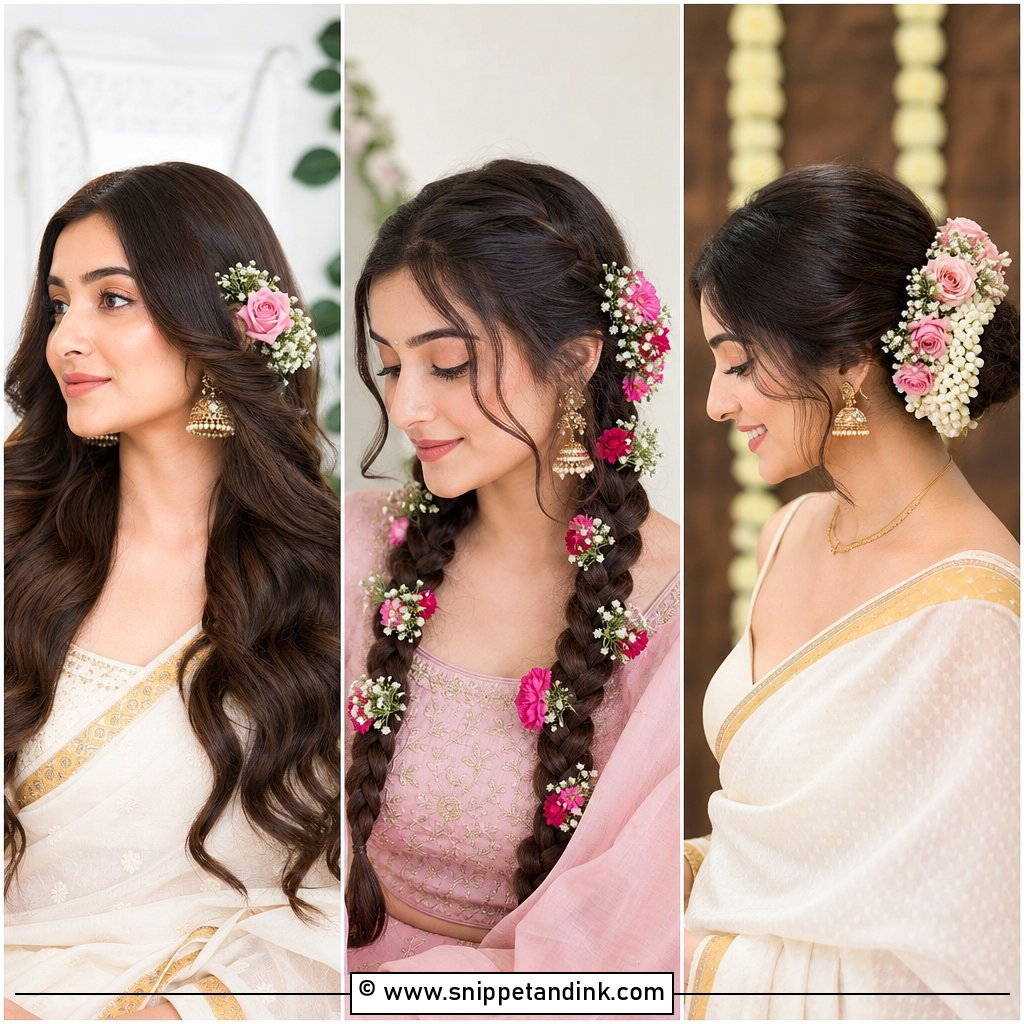
Sometimes the plainest choice is right. Open hair, sleek or softly waved, with a maang tikka at the center part keeps the tikka as the focus and feels young and light for daytime events. It looks simple, though it has hidden work in it: the tikka hook needs a small anchor of pins at the crown, or the chain tilts as soon as you turn your head. Under a dupatta for the ceremony, open hair can get flattened and static, so I’d save it for a daytime function rather than the Anand Karaj. A drop of serum at the ends adds gloss.
7. Half Up Half Down With Puff
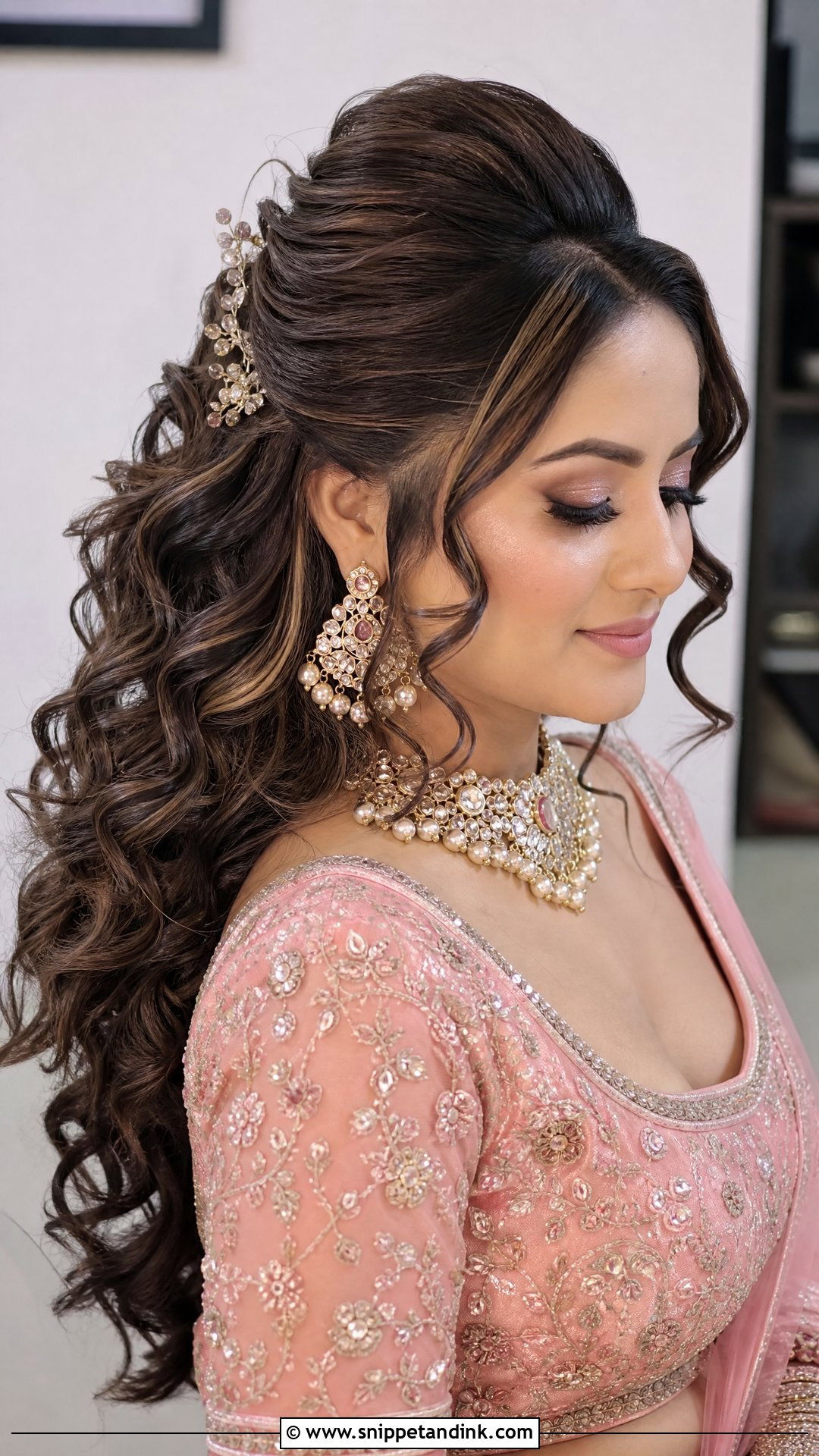
A puff at the crown with curls flowing below adds height, which helps balance a round face and makes the neck look longer. I tease the puff at the roots, smooth the surface over it and lock it with crossed pins, then curl the lengths. How high it sits depends on your face shape and how tall your groom is in photos, so we adjust it at the trial. A small tiara or jeweled pins finish the crown. It suits engagement parties, sangeets and receptions, and keeps hair out of your eyes while you dance.
8. Waterfall Braid
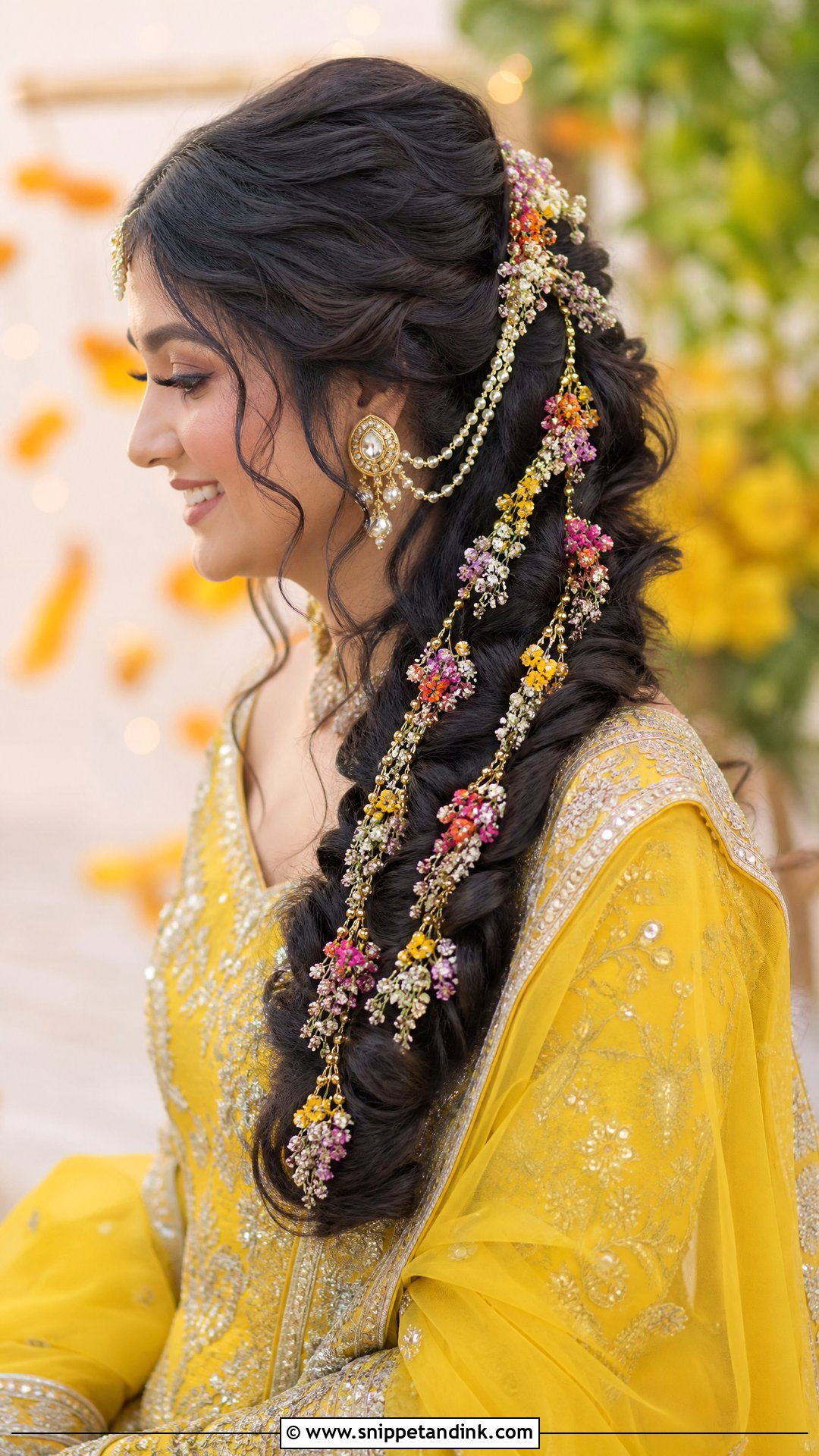
A waterfall braid runs across the back of the head, dropping a strand at every pass so the rest of the hair falls through loose. It’s delicate and works best for daytime and outdoor events, framing the face while leaving length free. Small colored blossoms slipped into the braid suit a mehndi. Be aware that it’s a fragile style; on very slippery hair the dropped strands work loose, so I add a light texture spray before I start. Delicate ear chains or a slim tikka keep the proportions right.
9. Donut Bun With Center Part
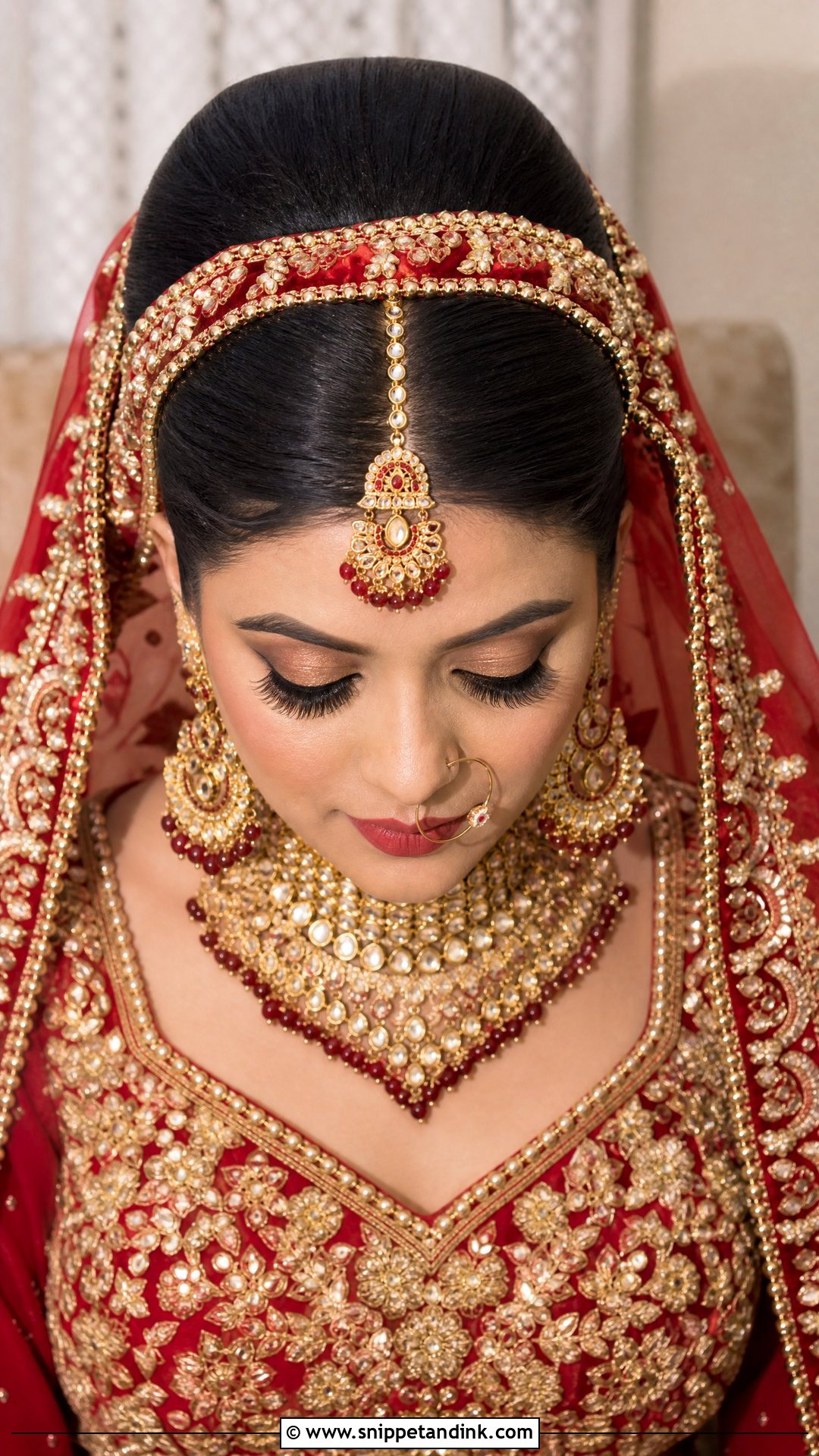
A center-parted donut bun is structured, full and very traditional, and it’s one of the steadiest bases for a heavy dupatta. The donut ring underneath gives the volume and a firm surface to pin into. I choose a ring a shade close to your hair so nothing peeks through. A maang tikka lies along the part, and a parandi or strands of pearls wrapped around the bun add detail. It suits symmetrical features and formal ceremonies, and it holds through a full day of rituals without loosening.
10. Loose Beach Waves
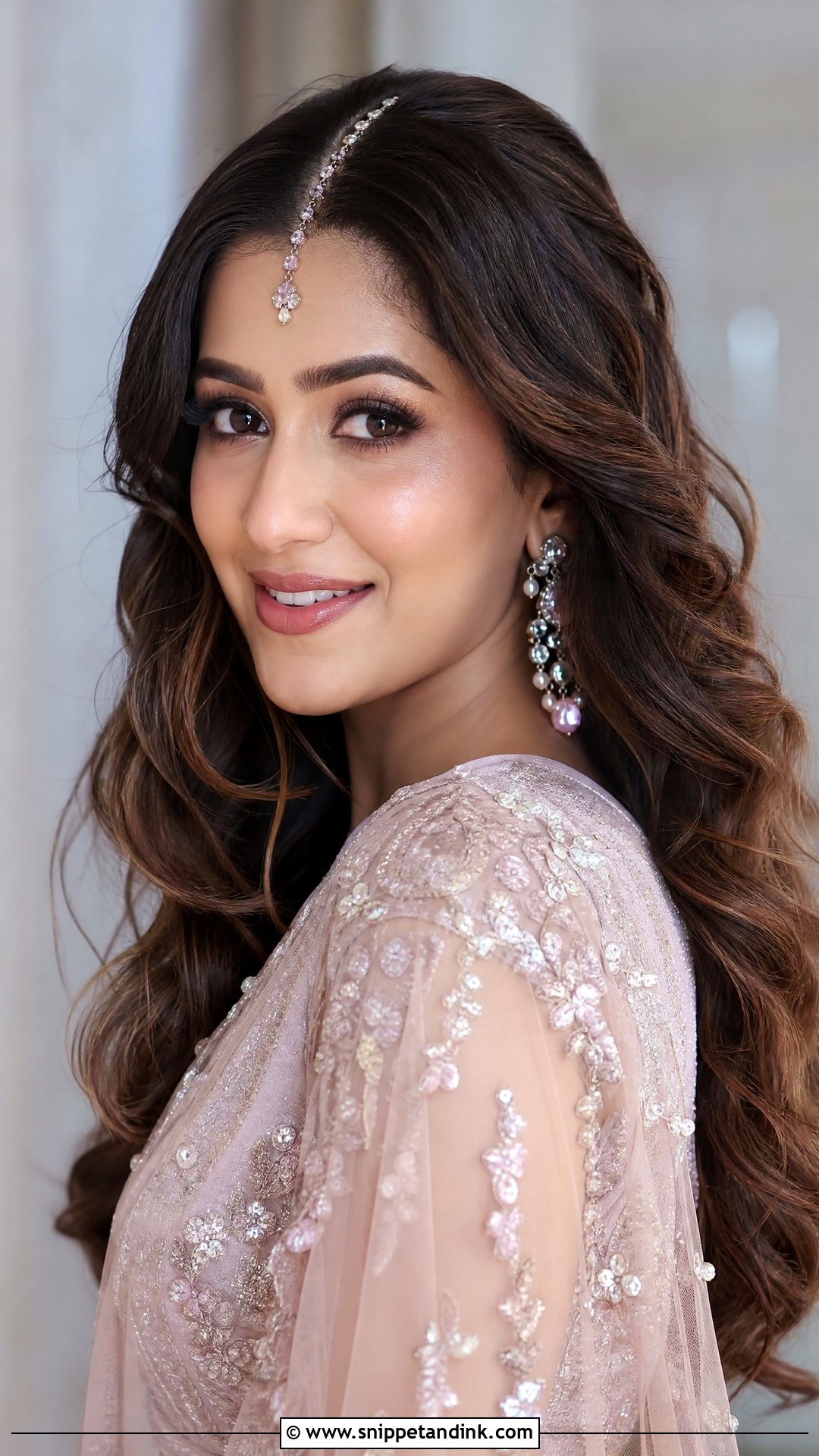
Soft, tousled waves with a middle part feel modern and relaxed, which is why I’d keep them for the sangeet or a fusion outfit rather than the main ceremony. A passa or hair chain adds sparkle. I set the waves with a flat iron, twisting rather than clamping, and brush them out after they cool. Texture spray keeps them defined. The catch is that beach waves are designed to look loose, so in humid weather they can drop to almost straight by the end of the evening.
11. Fishtail Braid With Flowers
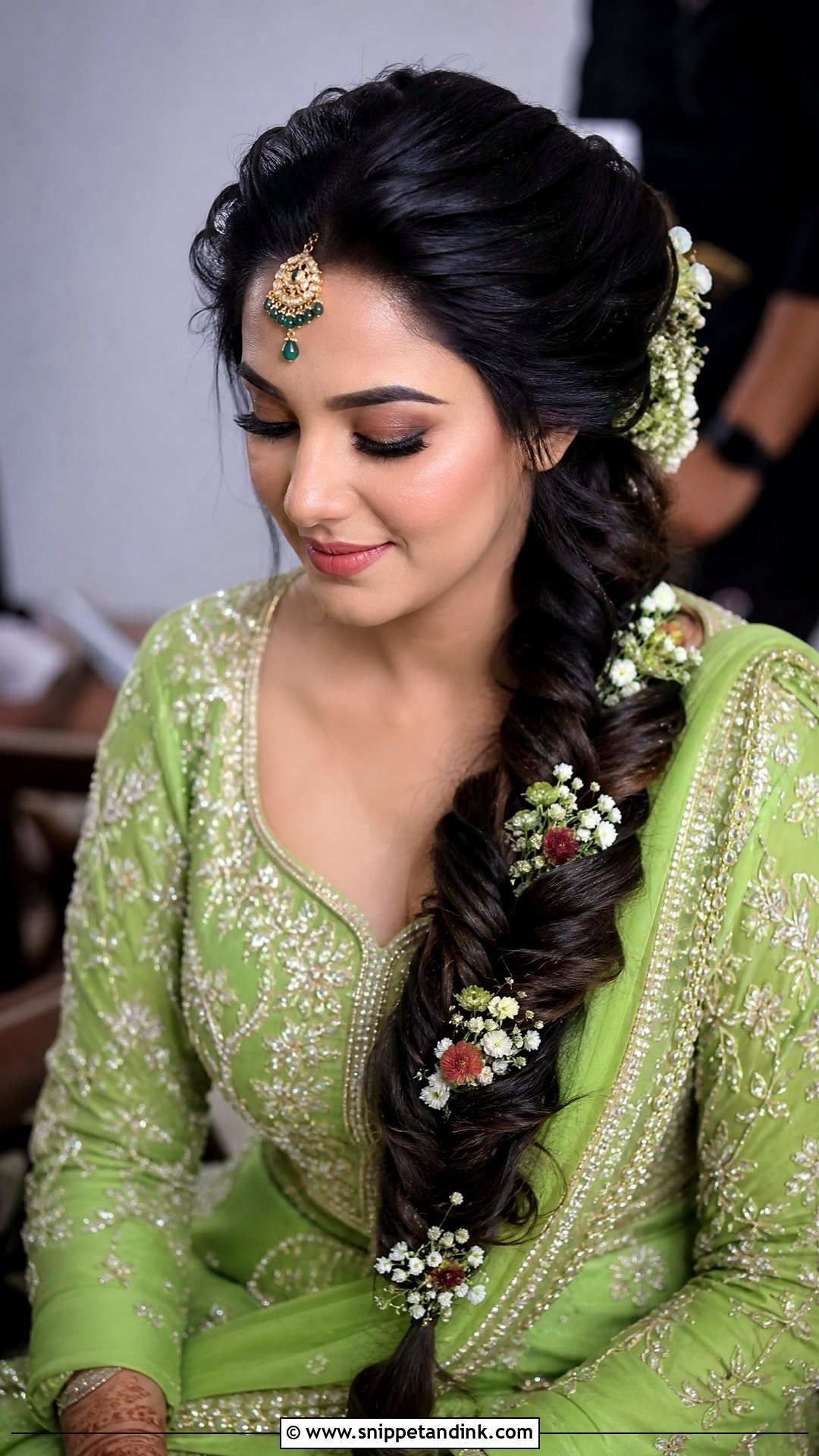
Fishtail plaits look complicated but are comfortable to wear, because the weight is spread across many small crossings instead of three thick strands. Draped over one shoulder with small flowers tucked in, it’s a relaxed fit for a haldi or mehndi. I’d skip silk flowers here and use fresh buds, which grip the plait better. Pair it with delicate earrings and a slim tikka. The fishtail holds well for hours, though turmeric paste at a haldi can stain light or highlighted hair, so keep the braid tucked away from the vatna.
12. Sleek High Bun
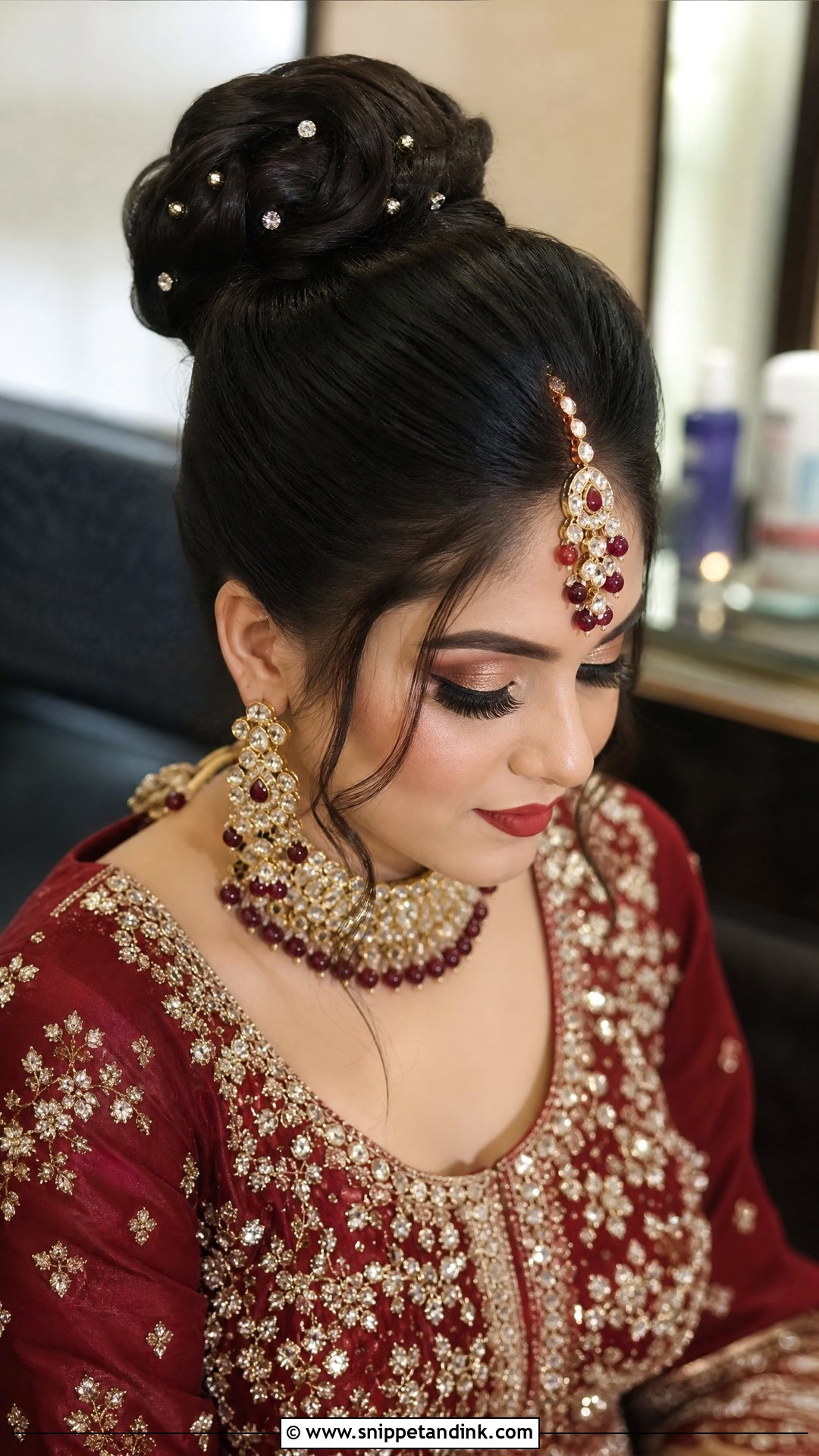
Smooth hair pulled high onto the crown lifts the face and shows the jawline, which makes this a strong reception choice with statement earrings and a bold tikka. I build it on a firm ponytail with two elastics and keep the sides very flat with a little gel, since bumps show under bright lights. Jeweled pins or a wrapped base add detail. It balances a heavy lehenga well. It won’t sit comfortably under a dupatta, so think of it as an evening style rather than one for the ceremony.
13. Braided Bun With Parandi
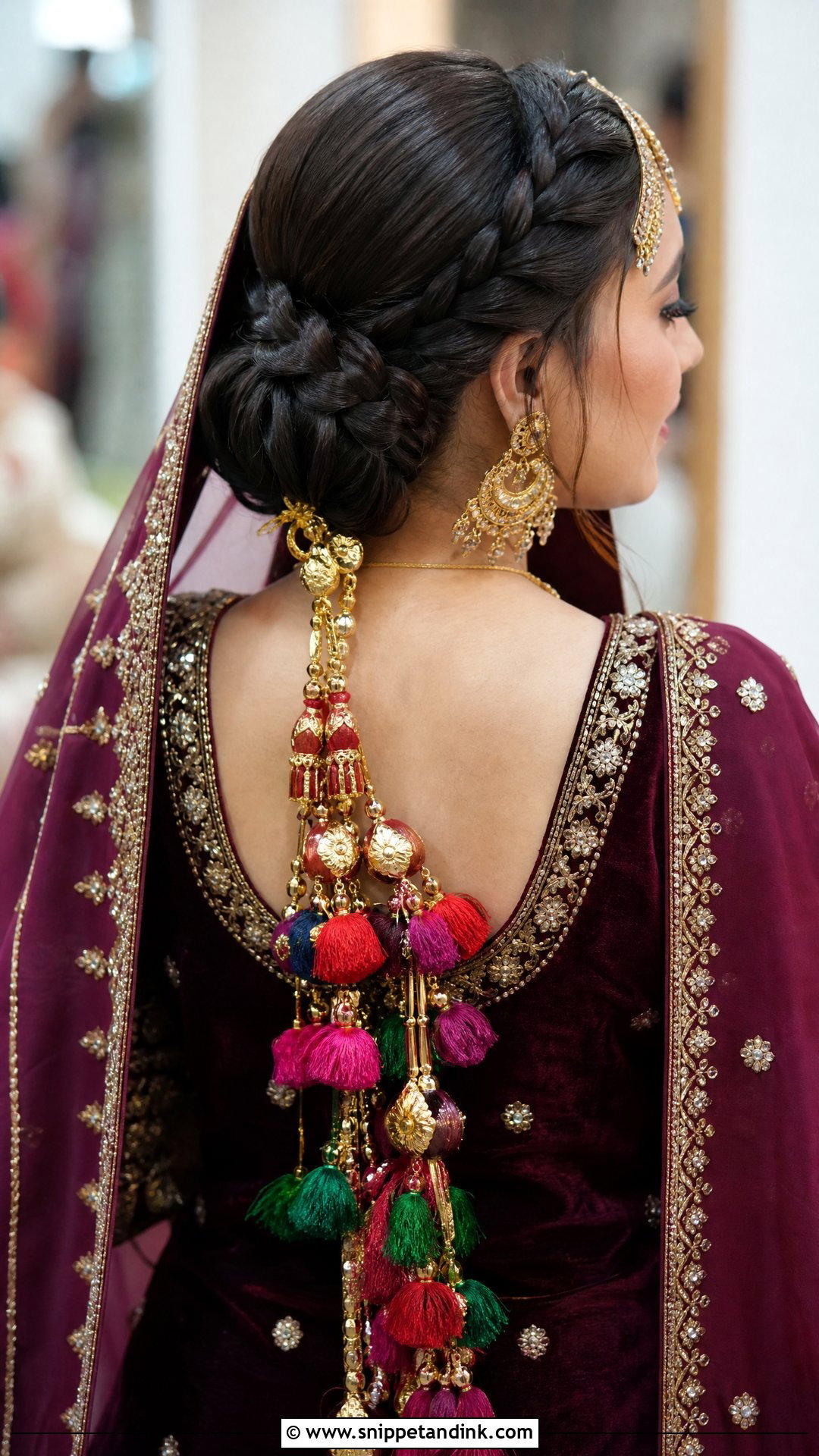
Pairing a bun with a parandi lets you have the tradition without wearing a long braid all day. The plait is coiled into the bun and the tassels are left to hang below it, so they swing when you move. I tuck the parandi’s top threads inside the bun and pin through them, because a parandi slipping out halfway through the ceremony is one of the most common problems I see. Low for elegance, higher for drama. It sits comfortably beneath a heavy dupatta.
14. Wavy Hair With Passa
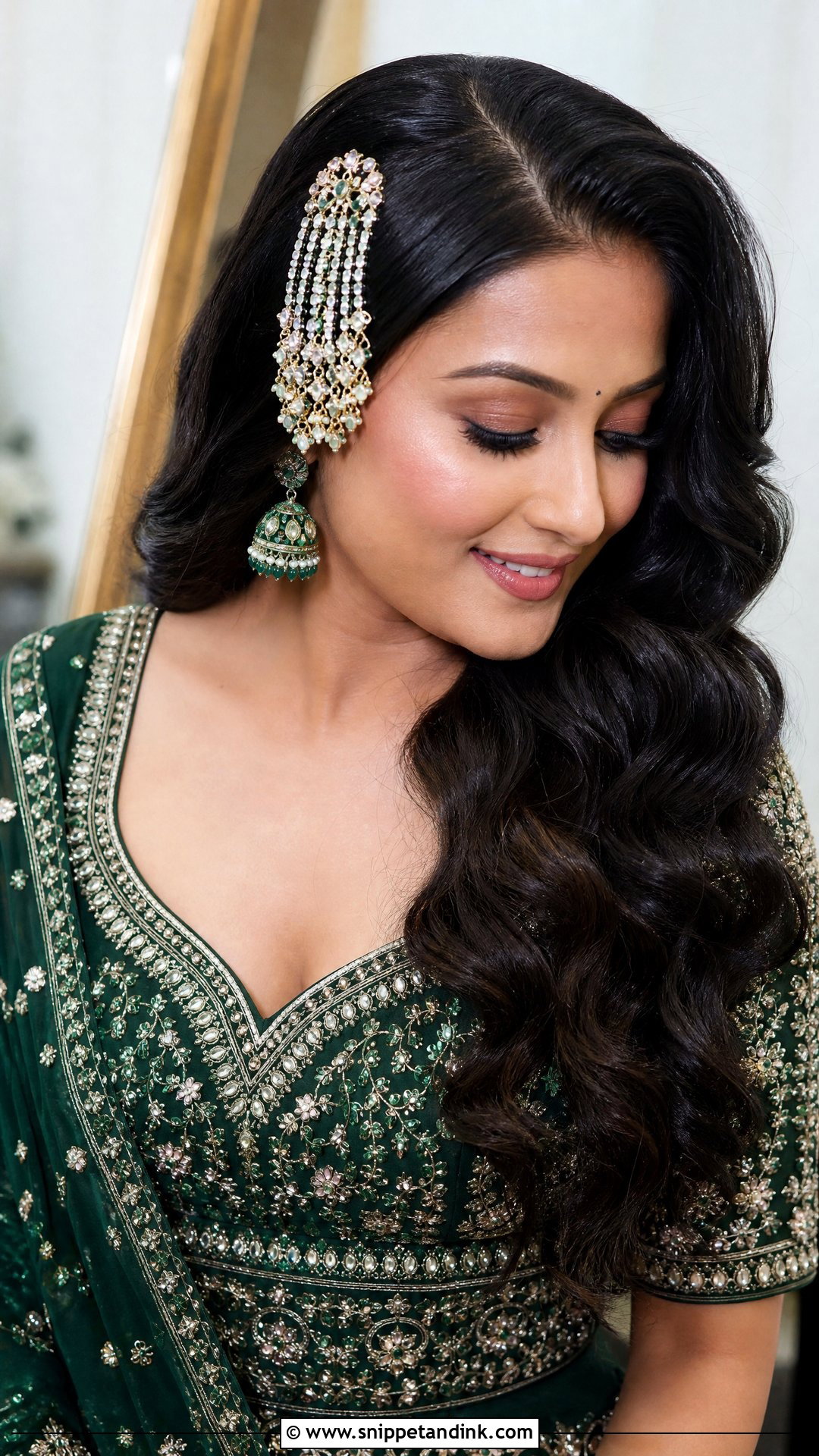
A passa sits on one side near the temple and adds shimmer that suits evening events. Soft waves fall over the opposite shoulder to balance it. The passa is heavier than it looks, so I secure its hooks into a small pinned base hidden under the top layer of hair, and add a pin at each end of the chain. Matching jhumkas tie it together. Use a light hold spray on the waves. For receptions and sangeets this is one of the most glamorous looks on the list.
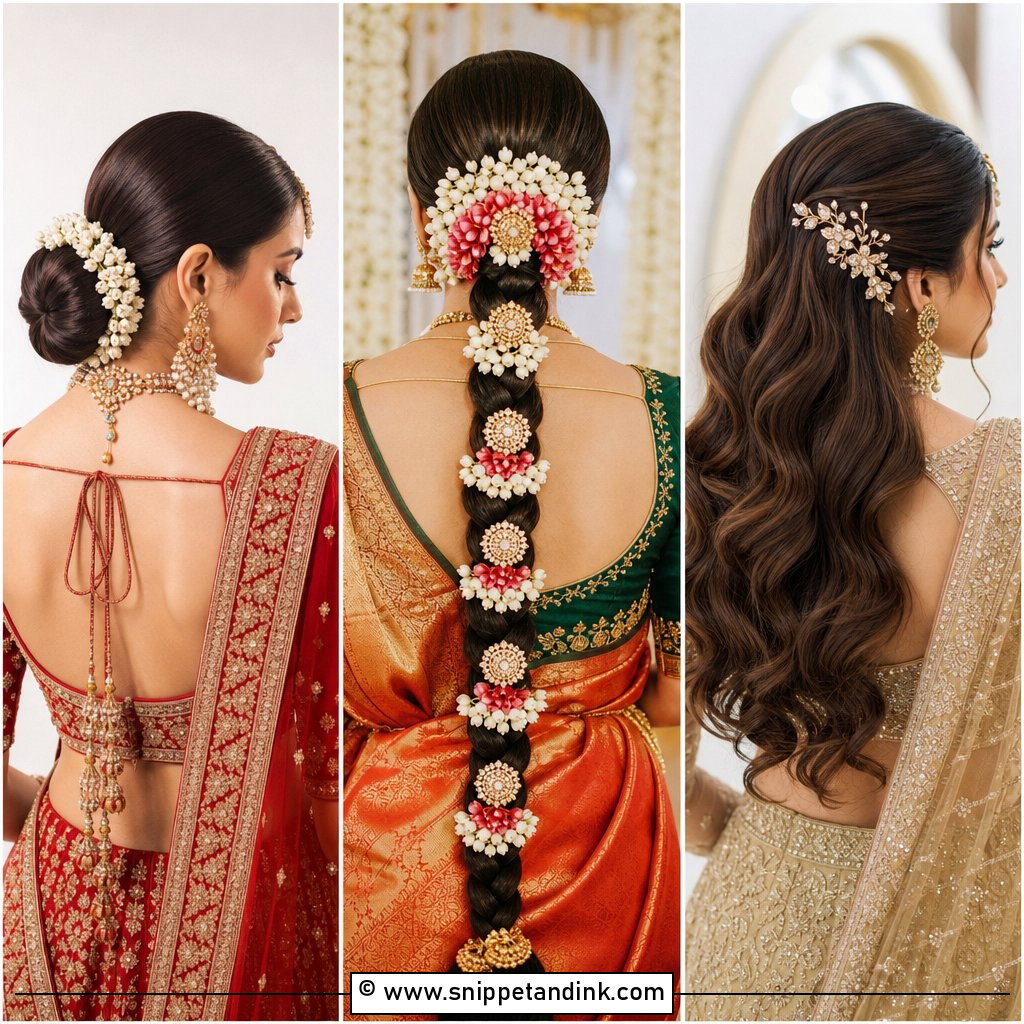

15. Entwined Bun With Puff
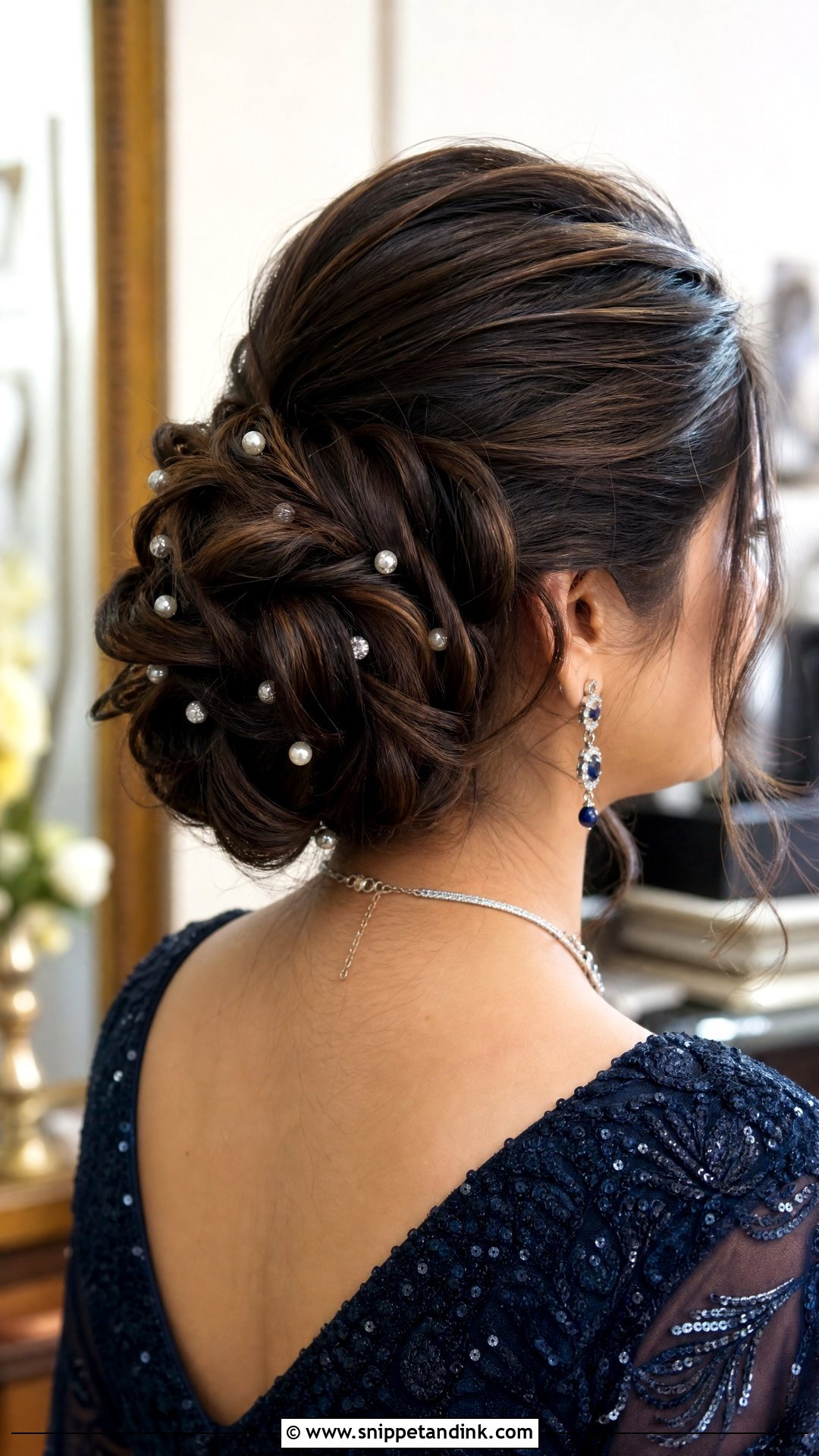
Twisted sections wrapped into a bun, with a lifted puff at the crown, give texture and height together. I’d choose it for a reception with a gown or a lighter lehenga. Twists hold better than curls on hair that refuses to keep a curl, and each one is pinned separately, so the bun stays firm through a long night. A few face-framing twists soften it. Pearl pins or small jeweled accents slot between the twists, and the height balances heavy earrings and necklaces.
16. Twisted Side Braid
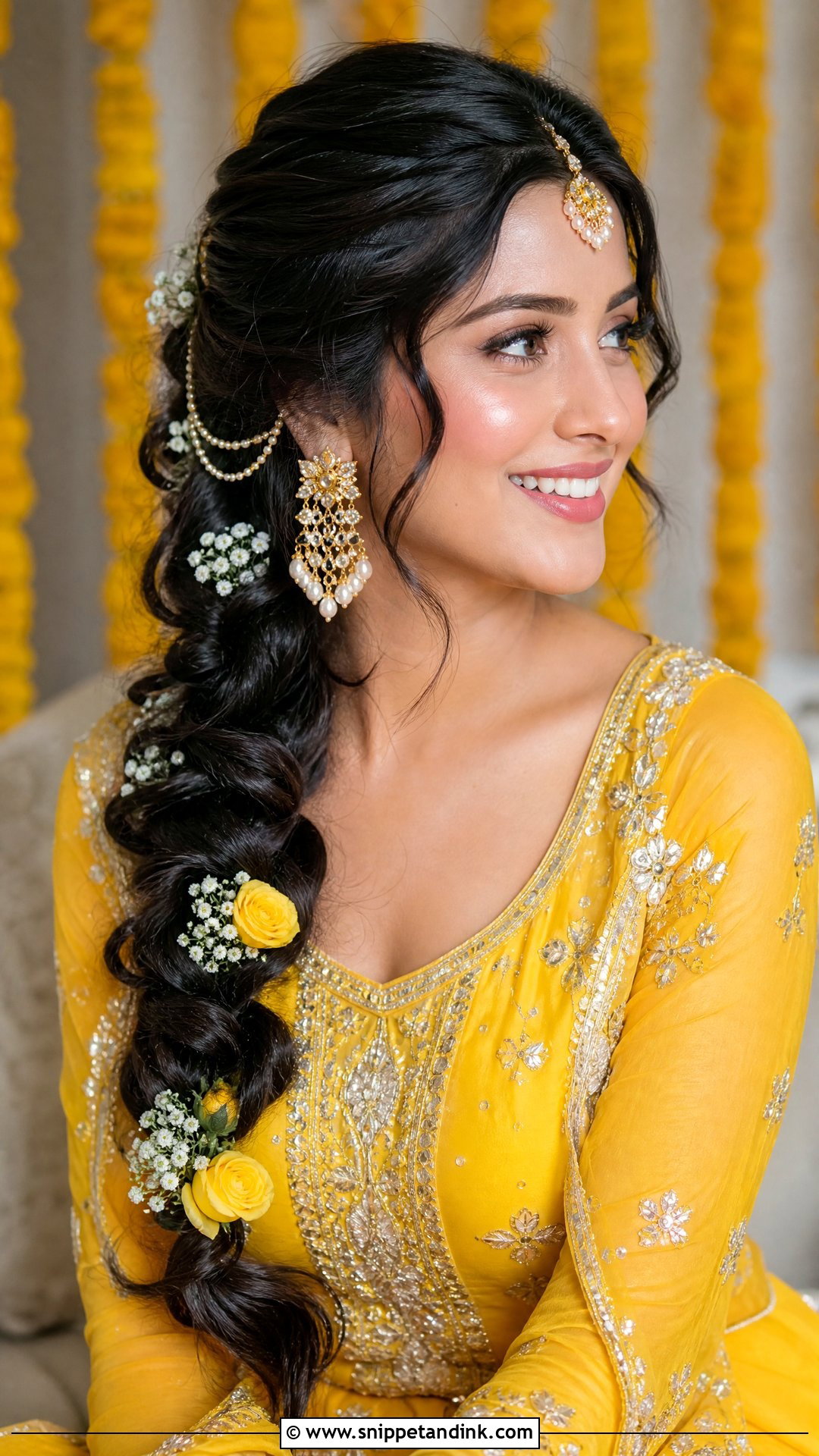
Loosened twists braided over one shoulder make a soft, comfortable style for mehndi or haldi functions, when you’ll be sitting still for hours with wet hands and can’t touch your hair. That’s the real reason I suggest a side braid there: it keeps hair off the hands and the drying paste. Fresh flowers or colored threads make it festive. Delicate ear chains and a simple tikka keep it light. It works for most hair lengths and textures.
17. Curly Bun With Flowers
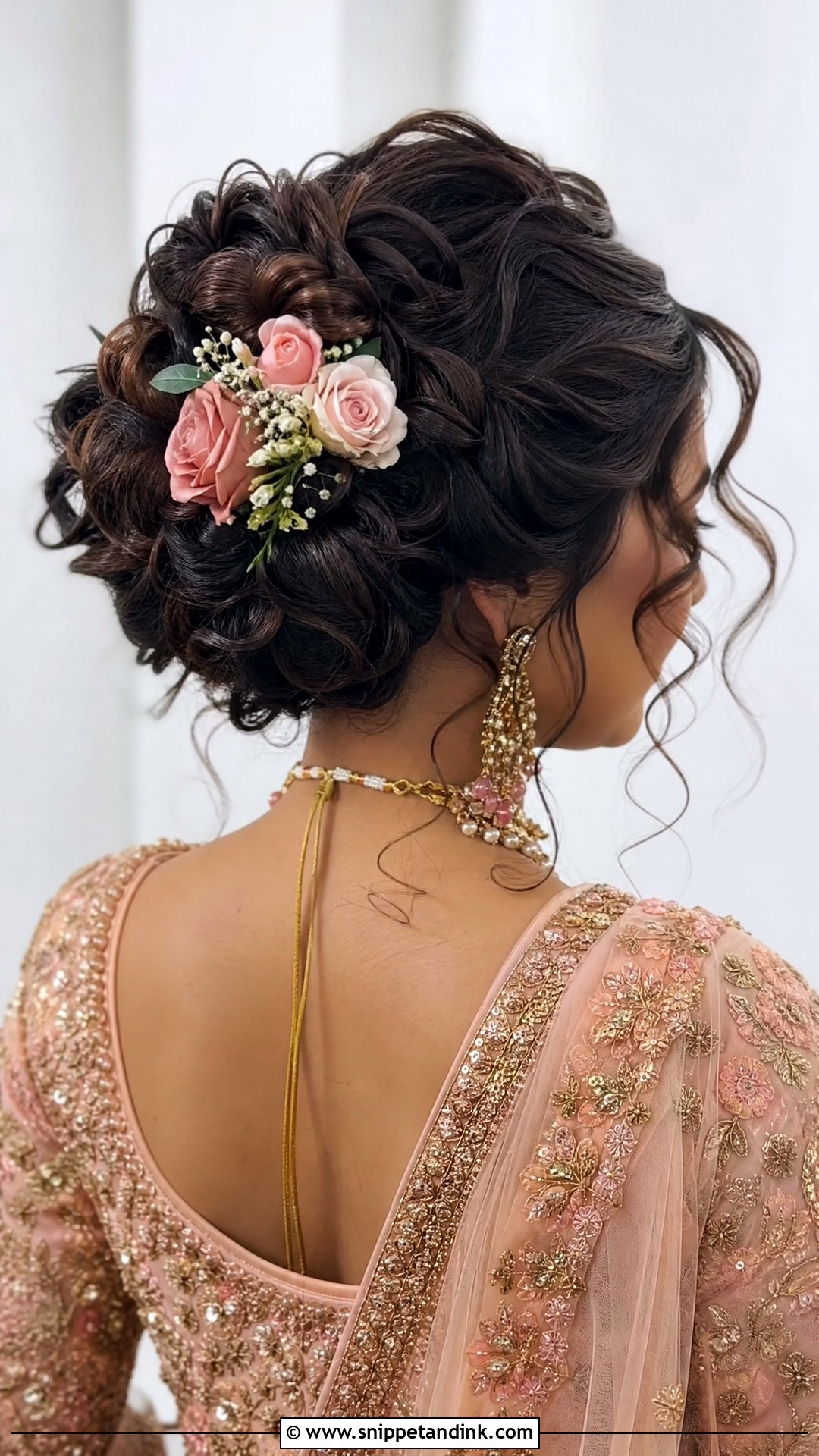
Curls pinned into a full bun and dotted with roses or jasmine are soft and fragrant, and the curls give natural volume without heavy backcombing. Pin the flowers last, after the spray has dried, so the petals don’t turn translucent. It suits daytime and outdoor ceremonies and sits well with a draped dupatta. A few loose tendrils frame the face. Roses bruise easily when the dupatta is adjusted over them, so I place them low at the sides of the bun rather than on top.
18. Straight Hair With Center Part
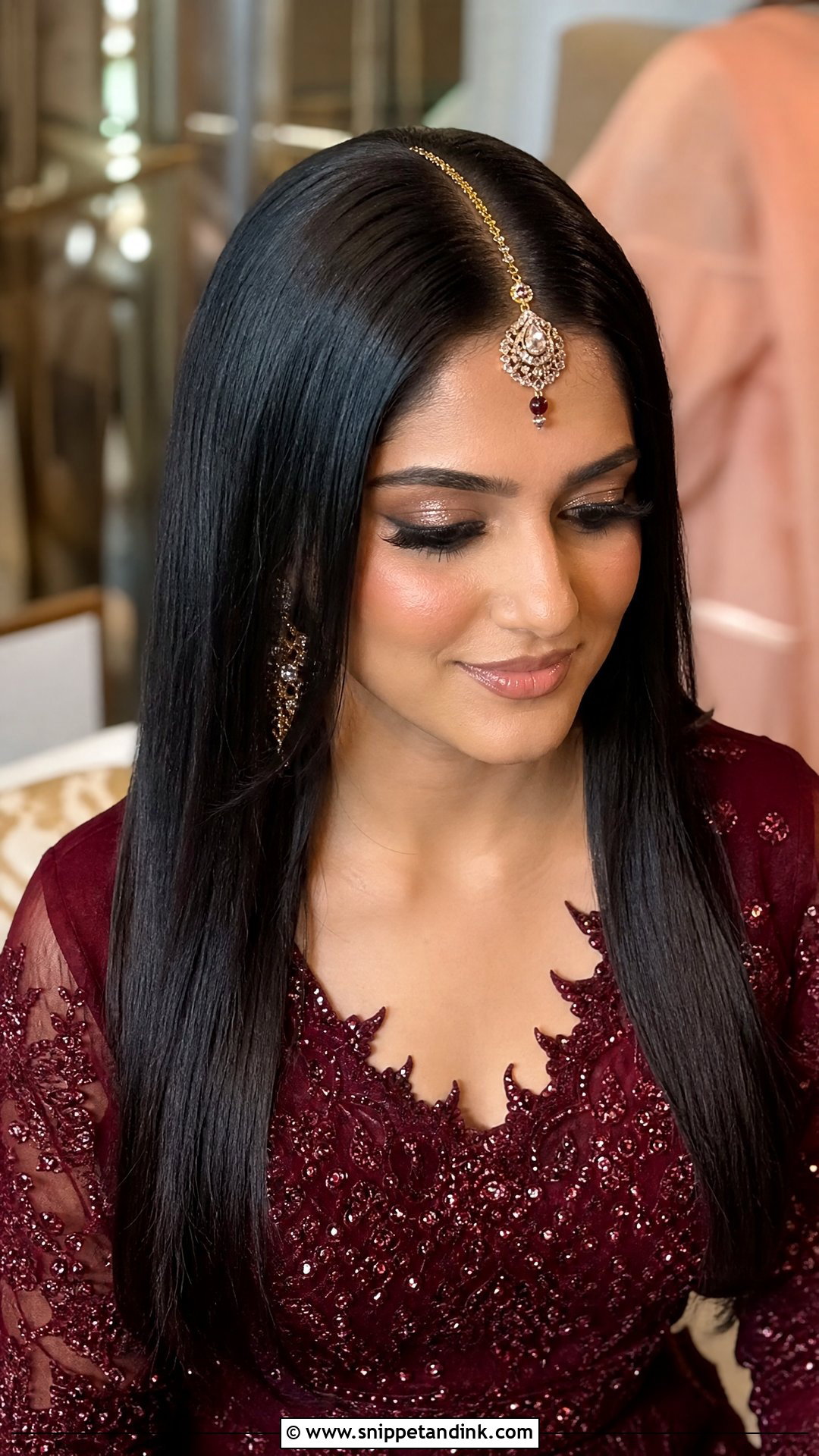
Straight hair with a sharp center part lets your jewelry and makeup do all the talking. A maang tikka along the part adds a traditional note, and serum gives that glassy shine. I’d suggest soft face-framing layers if you wear it, because blunt straight hair around the face can look severe in photos. It suits receptions and engagement parties more than the ceremony, since straight hair under a dupatta tends to cling to the fabric with static. Keep a small anti-static spray handy.
19. Floral Crown Braid
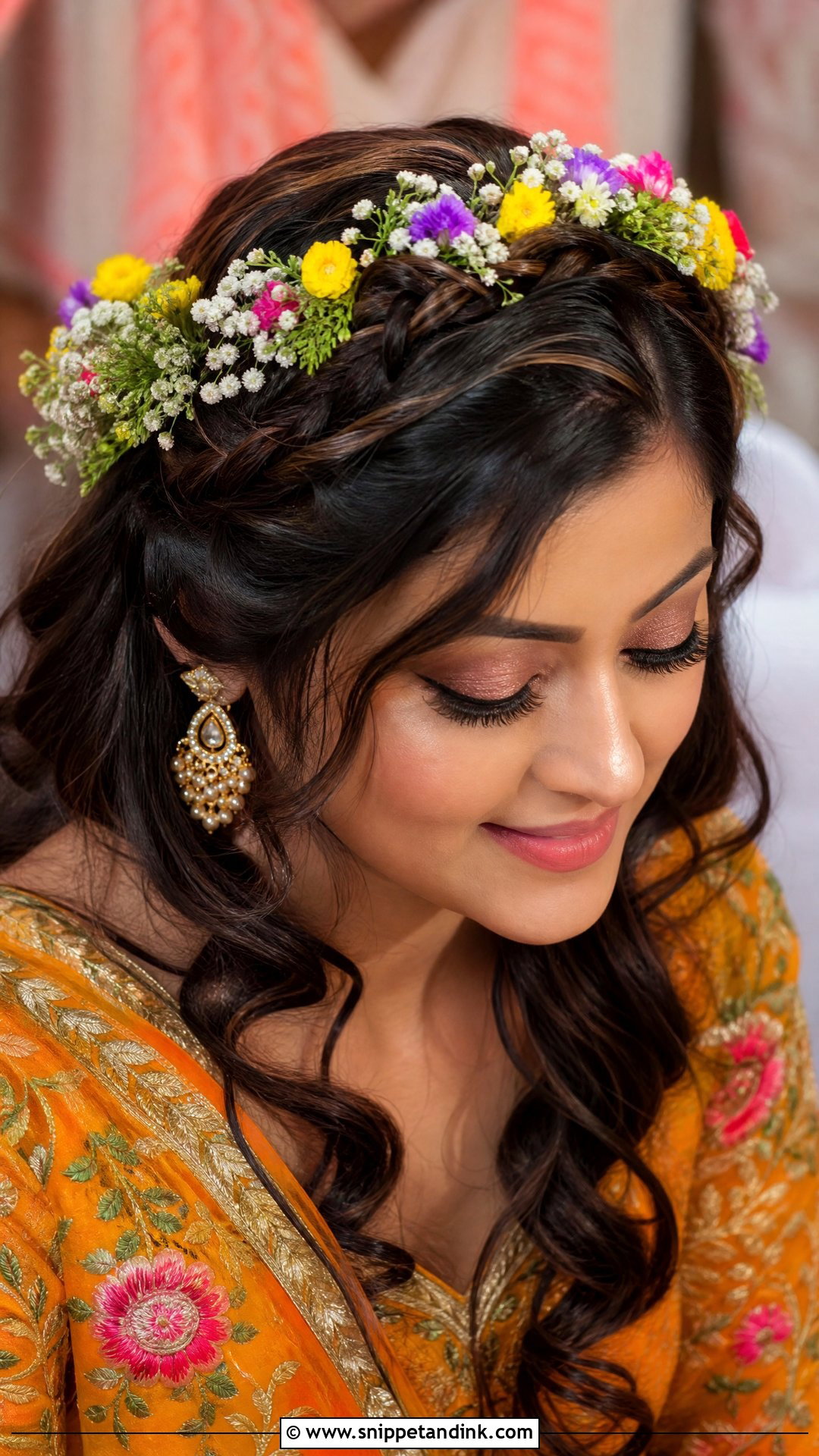
Braids and blossoms woven together into a crown are a cheerful fit for mehndi and haldi functions. The braid circles the head and holds the flowers securely, and it keeps hair completely off the face while you’re sitting for henna. I wire small flower heads onto bobby pins first and slide them in, instead of threading stems through the braid, which crushes them. Pair it with delicate earrings. In daylight photos the color of the flowers against dark hair stands out well.


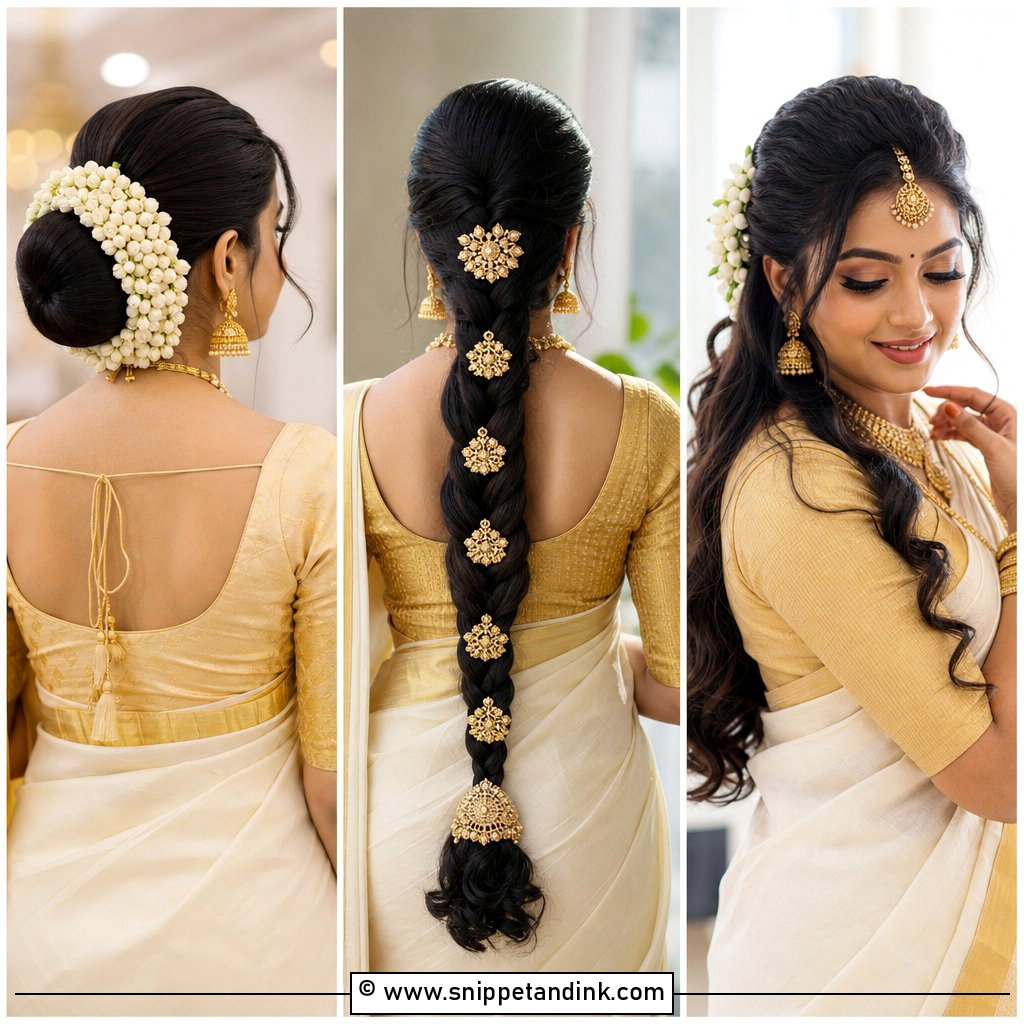

20. Low Side Bun With Dupatta
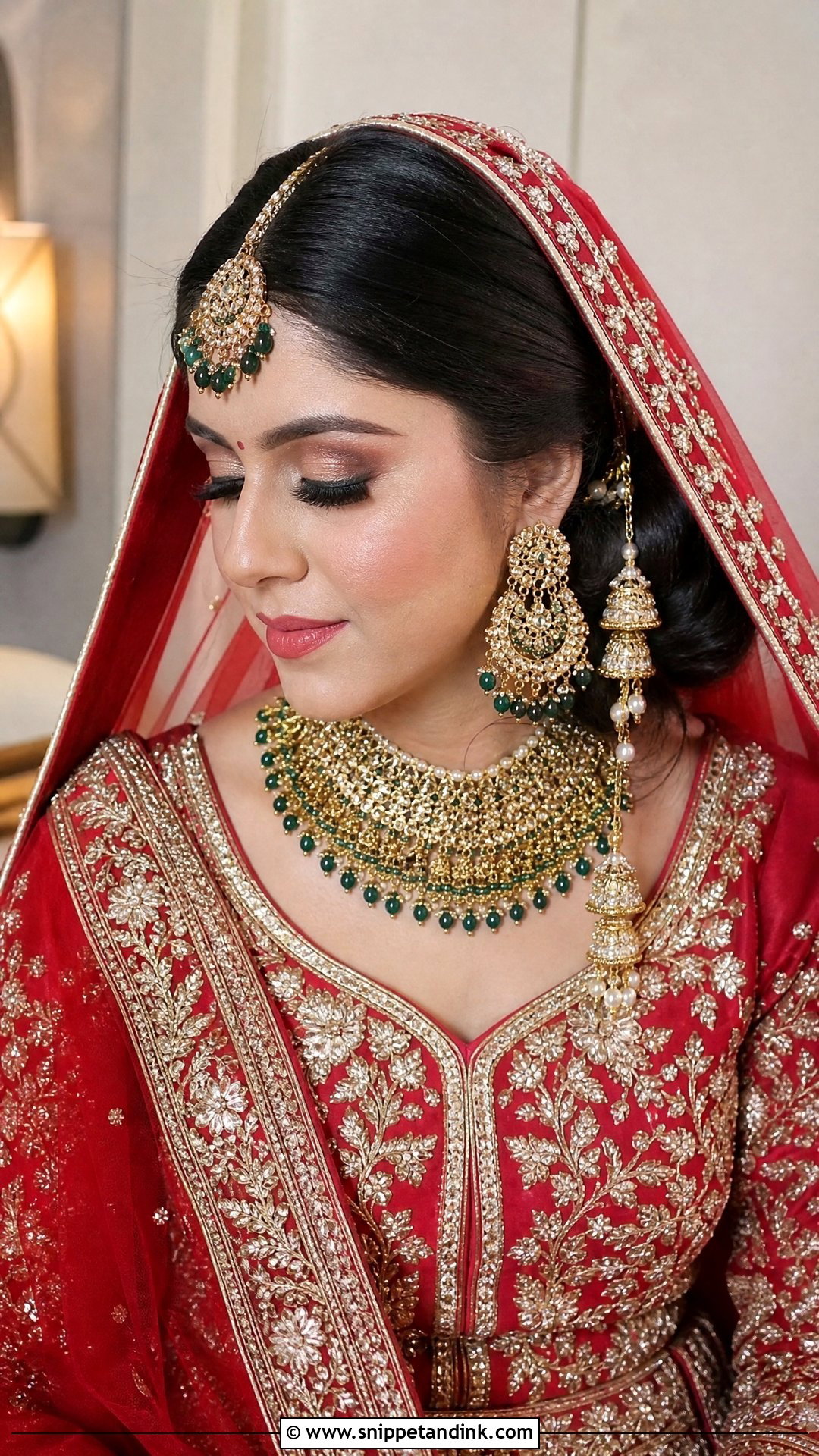
A low bun set slightly to one side, with the dupatta draped over the head, is made for the Anand Karaj. Covering the head is part of the ceremony, and a side bun gives the dupatta a natural shape to fall around. I pin the dupatta into the base of the bun rather than the top of the head, which spreads its weight and stops it pulling the tikka backward. A parandi or fresh flowers on the bun add detail. It stays comfortable through the lavaan and the long sitting that follows.
Where the Tikka, Passa and Dupatta Actually Get Pinned
Bridal jewelry for the head is heavy, and it pulls in different directions. The tikka chain runs along the part and hooks in at the crown; the passa hangs off one side; the dupatta adds weight across the top and back. If all of that hangs from the hairstyle alone, it drags the style down by the afternoon.
What I do instead is build small hidden anchors first. A tight pinned base at the crown takes the tikka hook, a second one behind the temple takes the passa, and the dupatta is pinned into the base of the bun on both sides. Each piece then hangs from its own support, and the hairstyle itself only has to look good. Bring every piece of head jewelry to your trial, including the dupatta, so the anchors are placed for your exact set.
Keeping Jasmine Fresh Until the Lavaan
Fresh jasmine opens and browns quickly in warm air. Collect the gajra as late as you reasonably can, keep it wrapped in a damp cotton cloth in the fridge, and have it pinned on only after the hairspray has dried, since spray turns the petals transparent. A light mist of water before you leave for the ceremony keeps the buds closed a little longer.
Which Look Belongs at Which Function?
Start with the schedule, not the photo. Traditional, secure styles such as the donut bun, the parandi bun and the side bun belong at the main ceremony, under the dupatta. Waves, open hair and looser braids feel right at the sangeet and mehndi, where comfort and movement count. Then match each look to its outfit and jewelry, and try the heaviest combination of tikka, passa and dupatta at your trial, because that’s the one that tells you whether a style will hold.
You'll Like These Ideas:



Leave a Reply