
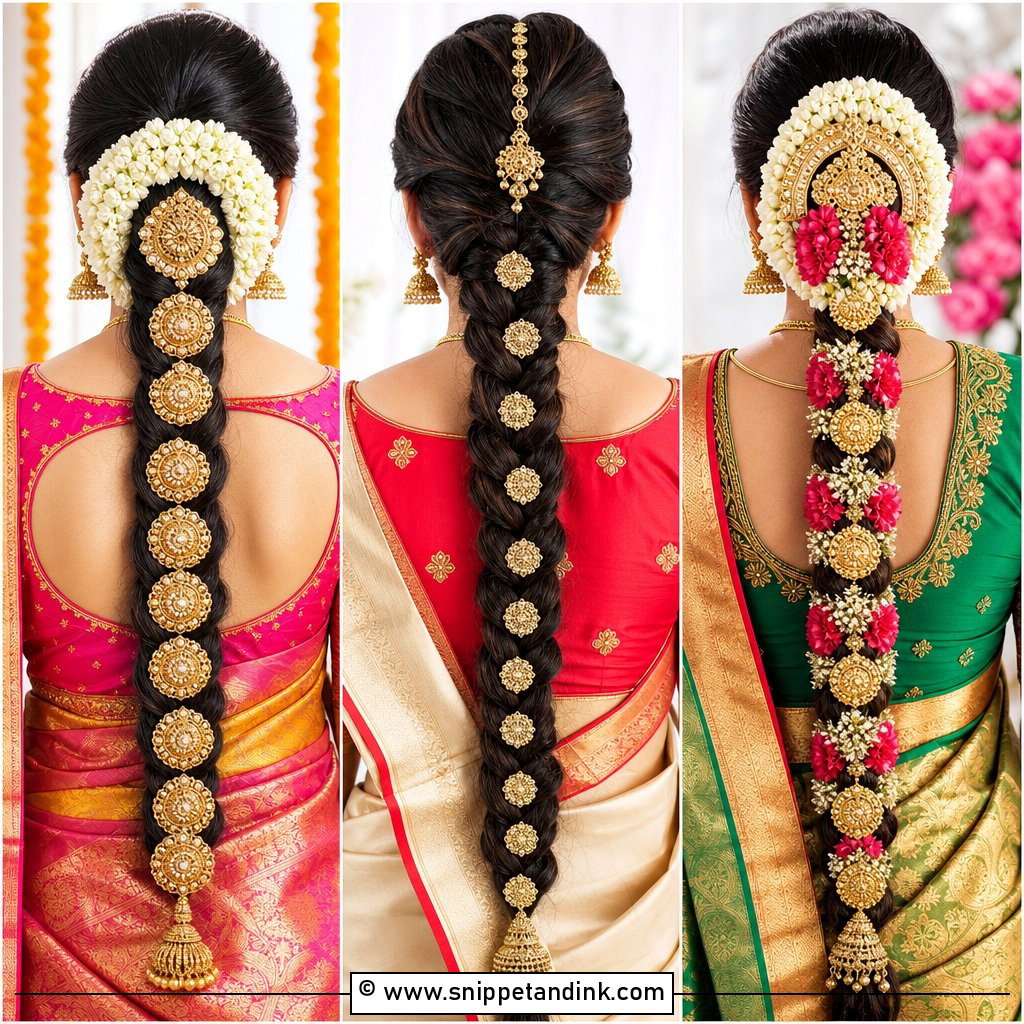
A paranda is one of those Punjabi bridal details that never went out of style. It just keeps getting reinvented. Also called a parandi, it’s a length of silk threads finished with tassels, sometimes pearls, gota or small charms, and it gets braided into the hair so it becomes part of the plait rather than something pinned on top. Brides wear it for the mehndi, sangeet, haldi, Anand Karaj, reception and the parties after. Even a plain braid looks longer and far more festive with one woven through. I see brides go fully traditional with a sharp centre part and a red paranda, and I see them soften it with pearls, waves or flowers. Both are right; it depends on the event.
How a Paranda Is Actually Braided Into the Hair
Many brides assume I tie the paranda on at the end of a finished braid. I don’t, and that’s why it looks so integrated. A paranda has three thread sections joined at the top. I tie that top point just below where the braid begins, usually at the nape, then lay one thread section against each of the three hair strands. From there, hair and thread are braided together as one, so the colour runs the full length and the tassels hang where the hair runs out.
If your hair is shorter than the paranda, the threads simply carry on past your ends and get braided on their own down to the tassels. That’s why the plait often looks longer than the hair itself.
Weight, length and material
- Lift it before you buy it. A paranda heavy with beads, mirrors and metal charms pulls on the nape over a long evening, especially in a side braid.
- Check the length against your back. A very long one catches on chairs and dupatta borders.
- Silk threads have more sheen in photos. Cotton and synthetic ones are lighter and cheaper, which helps for a mehndi you’ll dance through.
- Look at how the tassels are finished. Loose stitching sheds beads on the dance floor.
I’d practise once at home with a simple three-strand braid before your trial. It takes a few tries to keep the threads flat instead of twisting, and it helps you tell me exactly how tight you want it.
1. Classic Bridal Paranda Braid
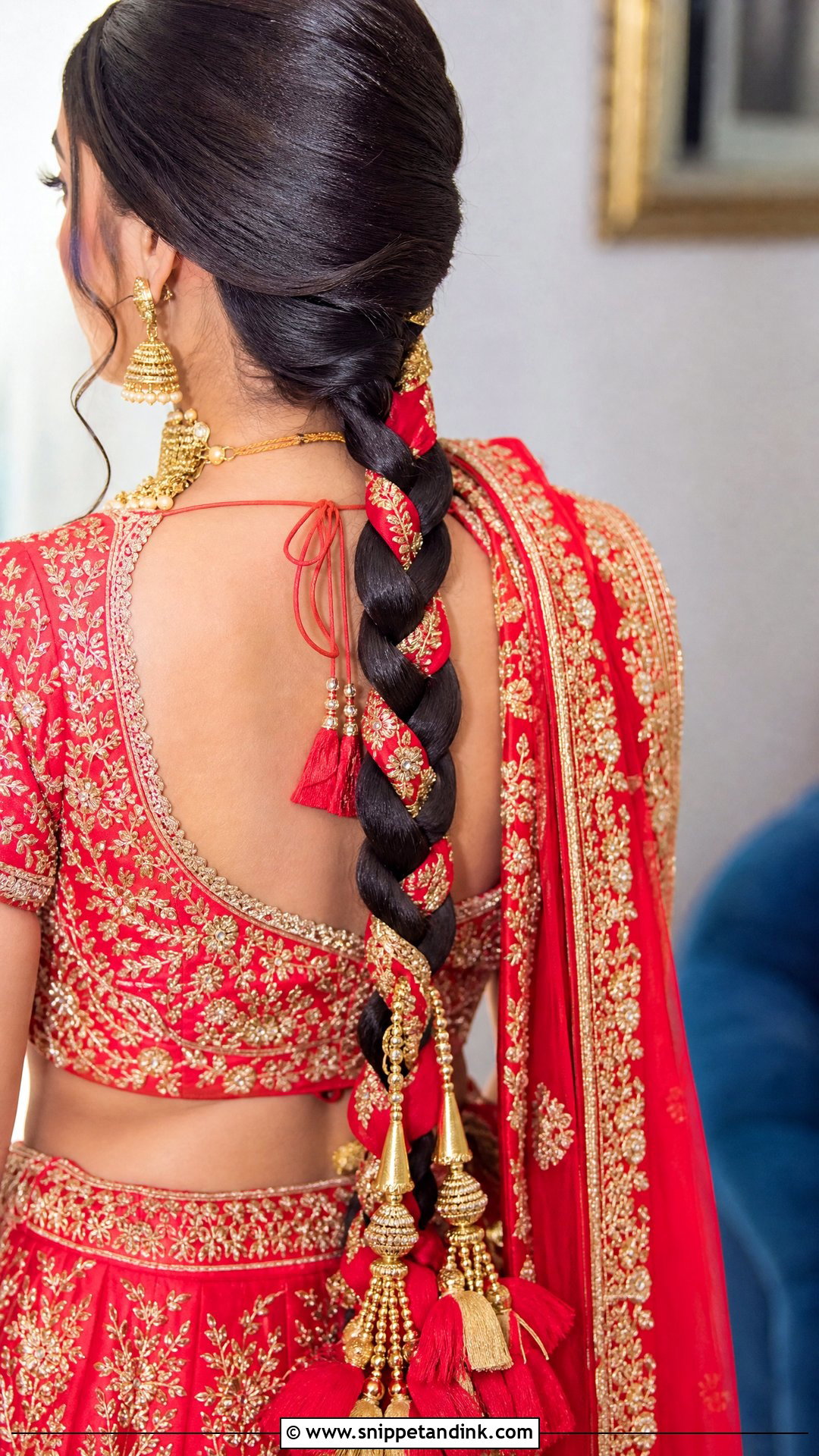
The classic plait is the one I’d pick for a Punjabi-inspired wedding look when the outfit and jewellery are already busy. Hair is gathered smoothly at the nape, split into three, and braided with the paranda from the top of the plait down to the ends, so nothing on the head competes with the dupatta. Before I start, I check where the dupatta will sit: if it’s pinned low at the back, I start the braid a little lower so the two don’t fight. Fine hair gets a soft hair pad or a clip-in weft under the top section for fullness.
2. Punjabi Bridal Paranda Braid
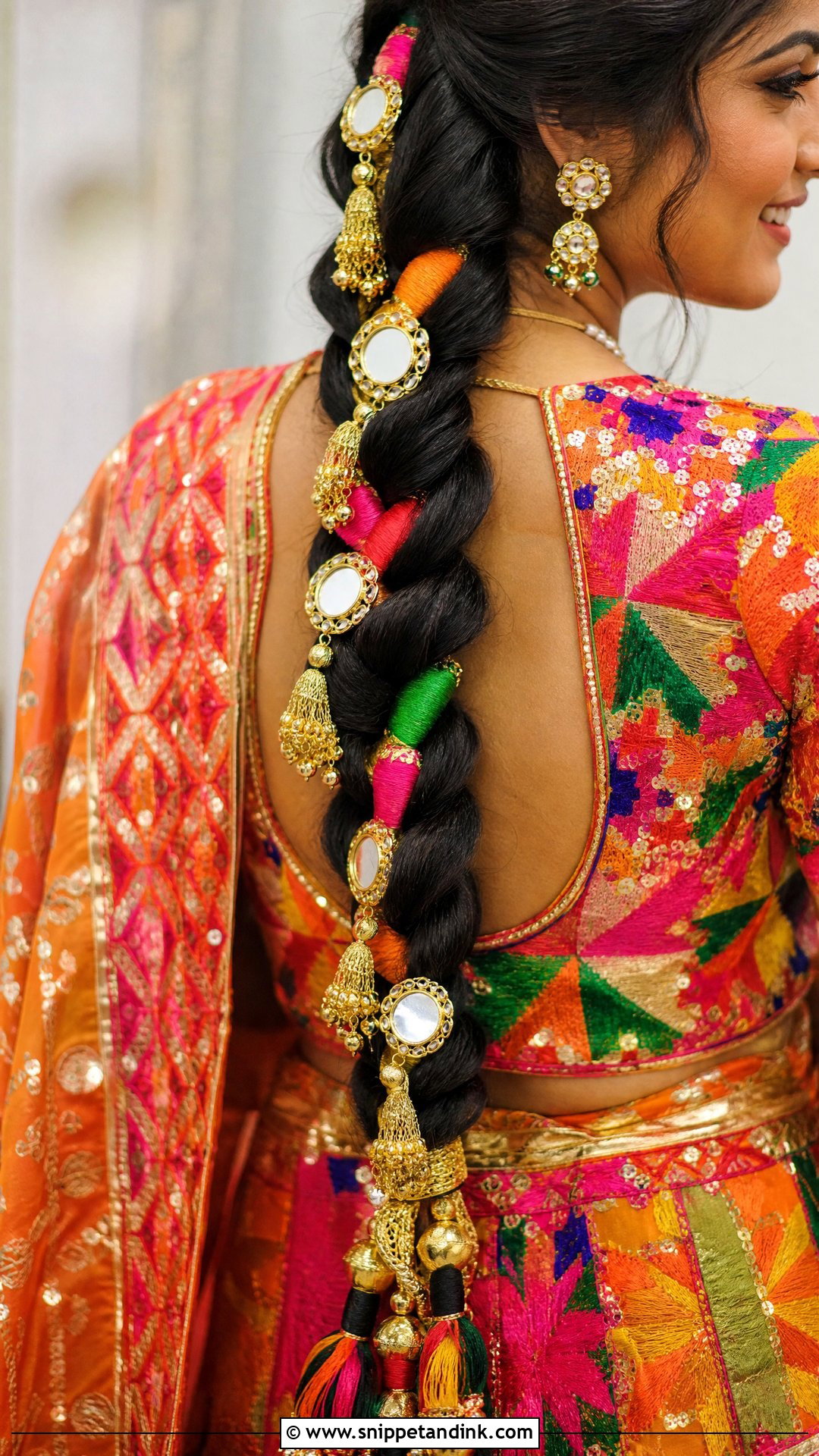
This is the loud, happy version, built for dancing. Thick plait, bright silk threads, gold tassels, mirrors or small charms, usually worn with a phulkari dupatta or kundan jewellery. My rule here is secure but not tight. A braid pulled very hard looks thin and flat in photos, and it gives the bride a headache by the second hour of the sangeet. I braid firmly at the nape where the weight hangs, then ease the lower loops wider. Picking a paranda that repeats one colour from the outfit ties it all together better than matching every shade.
3. Gota Patti Paranda Braid
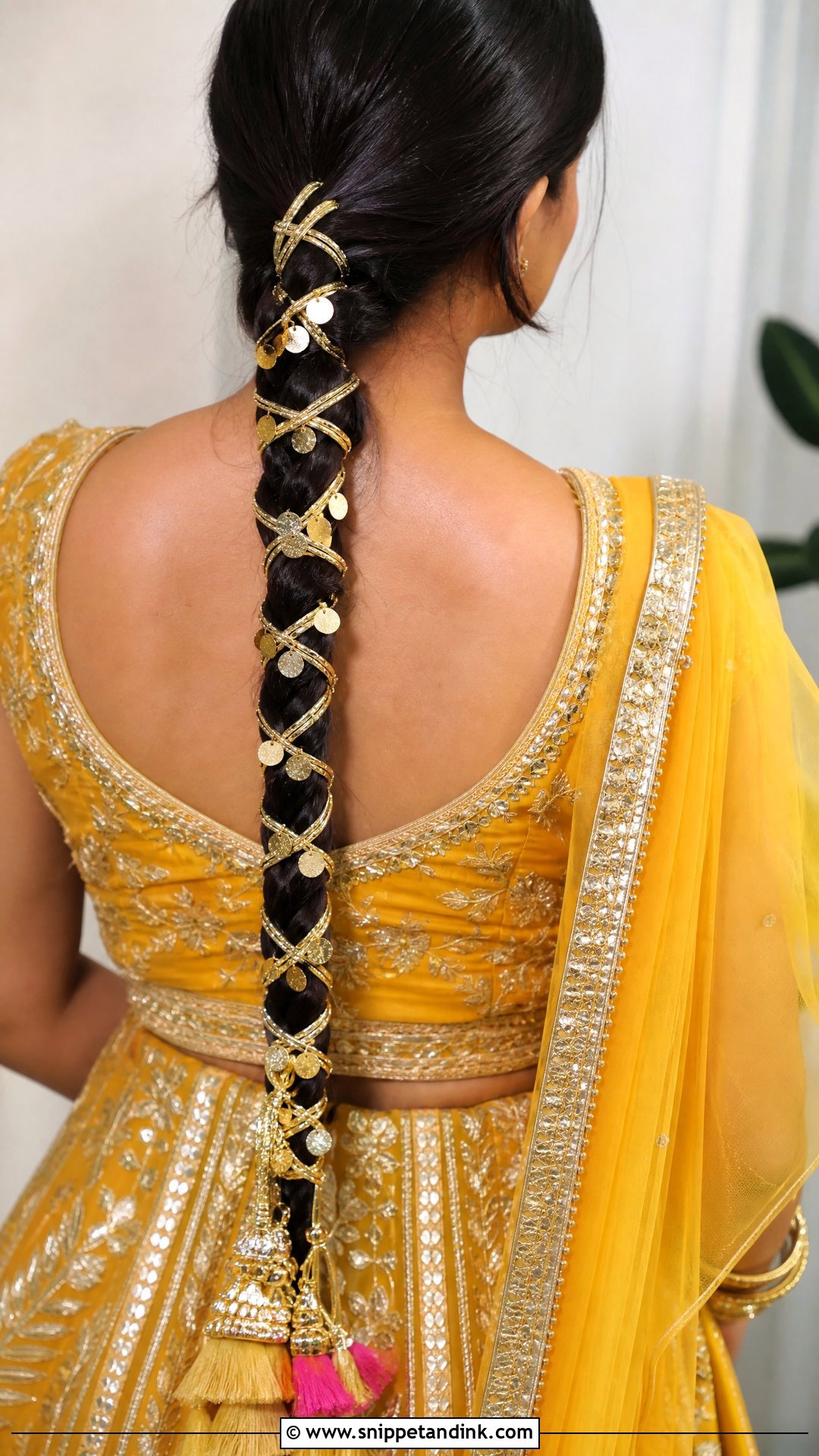
Gota is the shimmer option with cultural weight behind it, and I prefer it to a crystal hairpiece on a haldi or mehndi bride. The gold or silver strips and little discs catch daylight in a way crystals don’t. It goes with yellow, green, pink and ivory outfits, especially for mehndi or haldi. Keep the braid thick and smooth so the gota lies flat on the surface. One practical warning: gota trim can snag fine hair as it’s woven, so I keep the braid sections slightly bigger and work slowly.
4. Pearl Paranda Bridal Braid
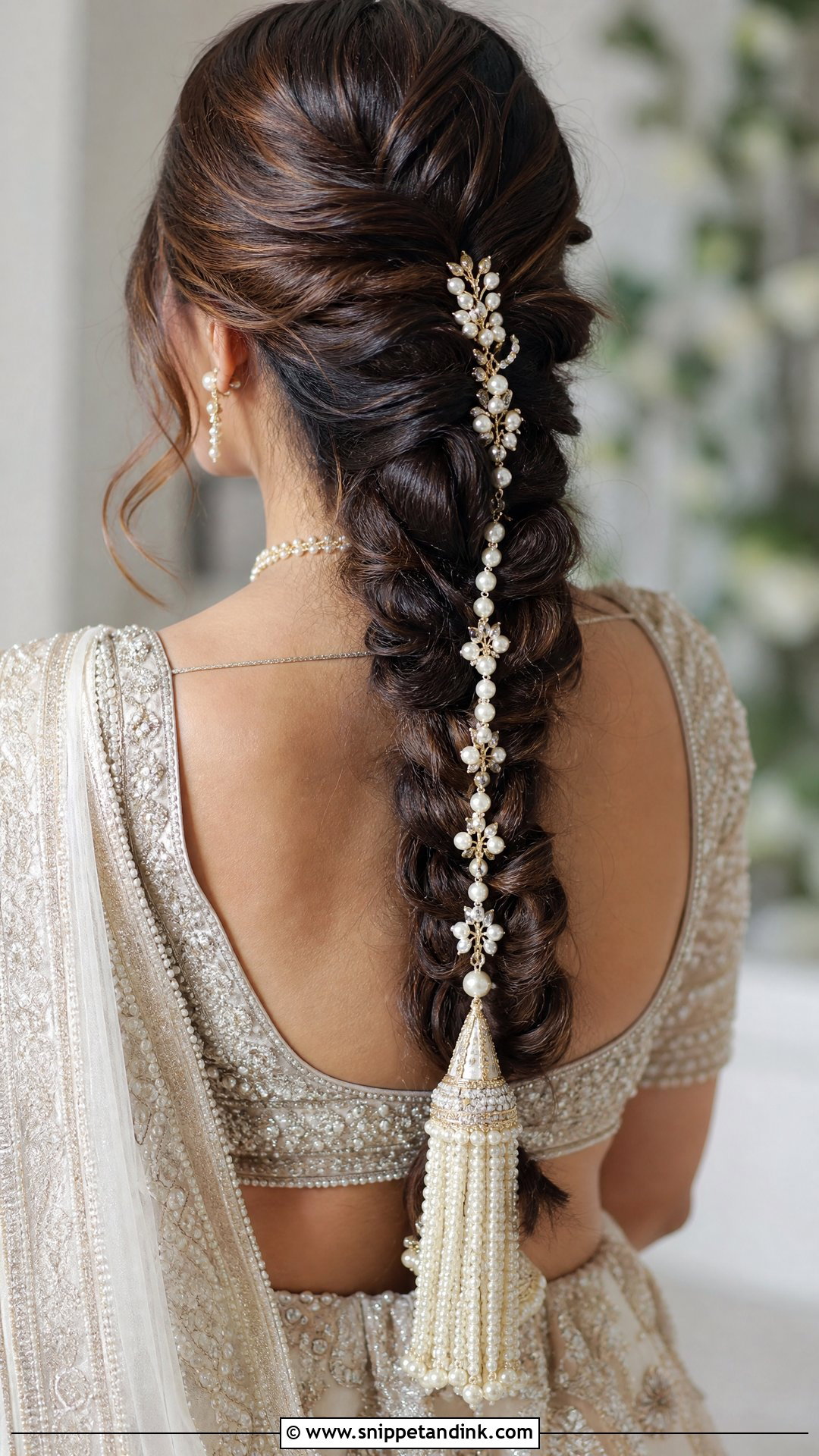
Pearls are where I go when a bride says she wants a paranda but finds the bright threads too much. Pearl strings, pearl drops and ivory cords woven into a long braid sit nicely with pastel lehengas, white suits, champagne tones and reception outfits. They also share space politely with a matha patti or passa. The catch is weight: strands of real or glass pearls are heavier than silk, so I anchor the top of the paranda with two crossed pins under the braid, not just the tie. Sleek reads regal; a gently loosened braid reads softer.
5. Floral Paranda Braid
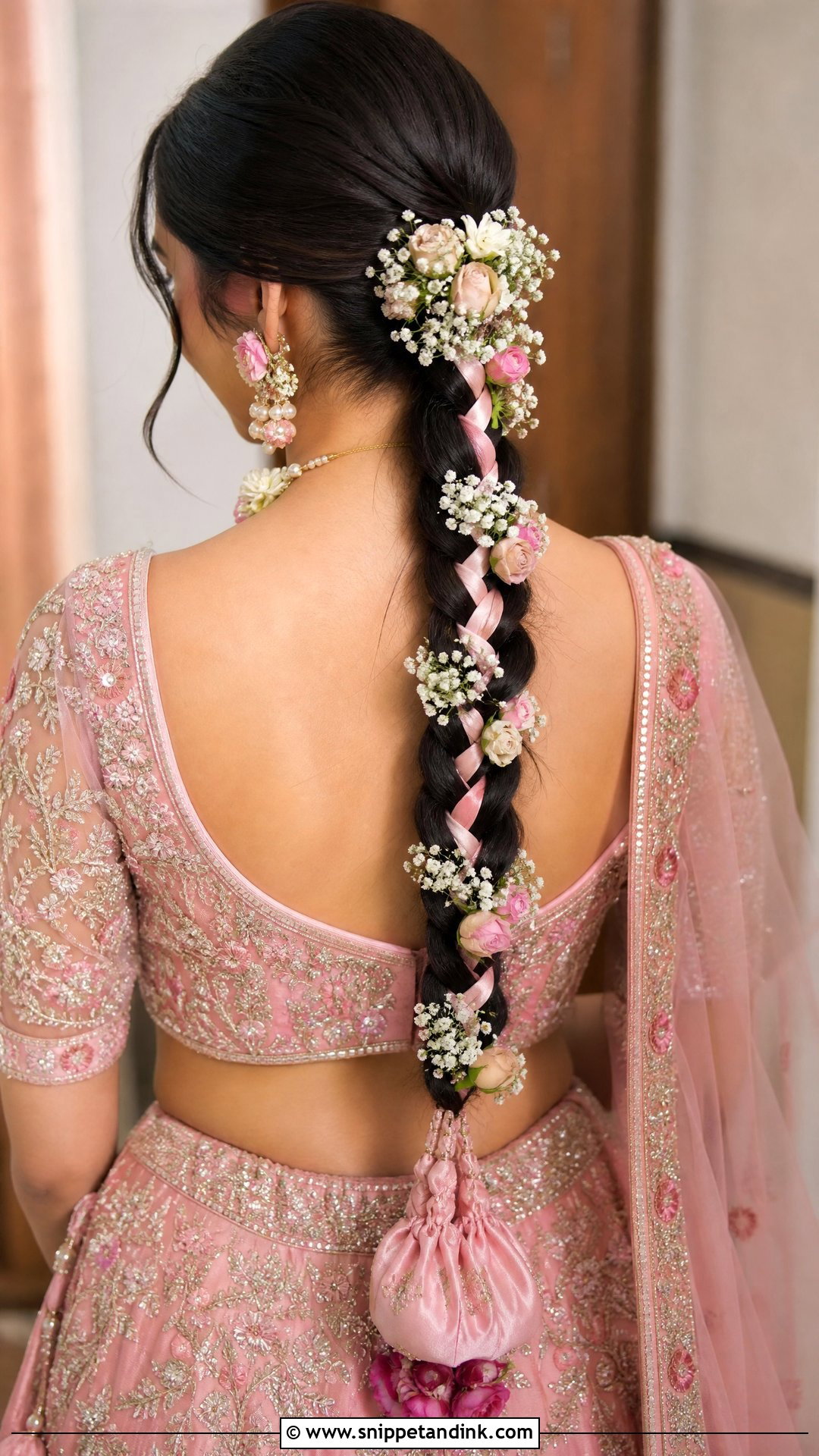
Flowers bring freshness, but they’re the most fragile element on this list. I weave a light paranda first, then add small clusters of Jasmine, baby’s breath, roses, marigolds or silk blooms along the length, each held with a hidden pin. Real jasmine bruises and browns within a few hours in heat, so for an afternoon haldi outdoors I’d use silk flowers or add fresh ones at the very last minute. Keep the clusters sparse; a fully covered braid gets heavy and you lose the tassel at the end.
6. Fishtail Paranda Braid
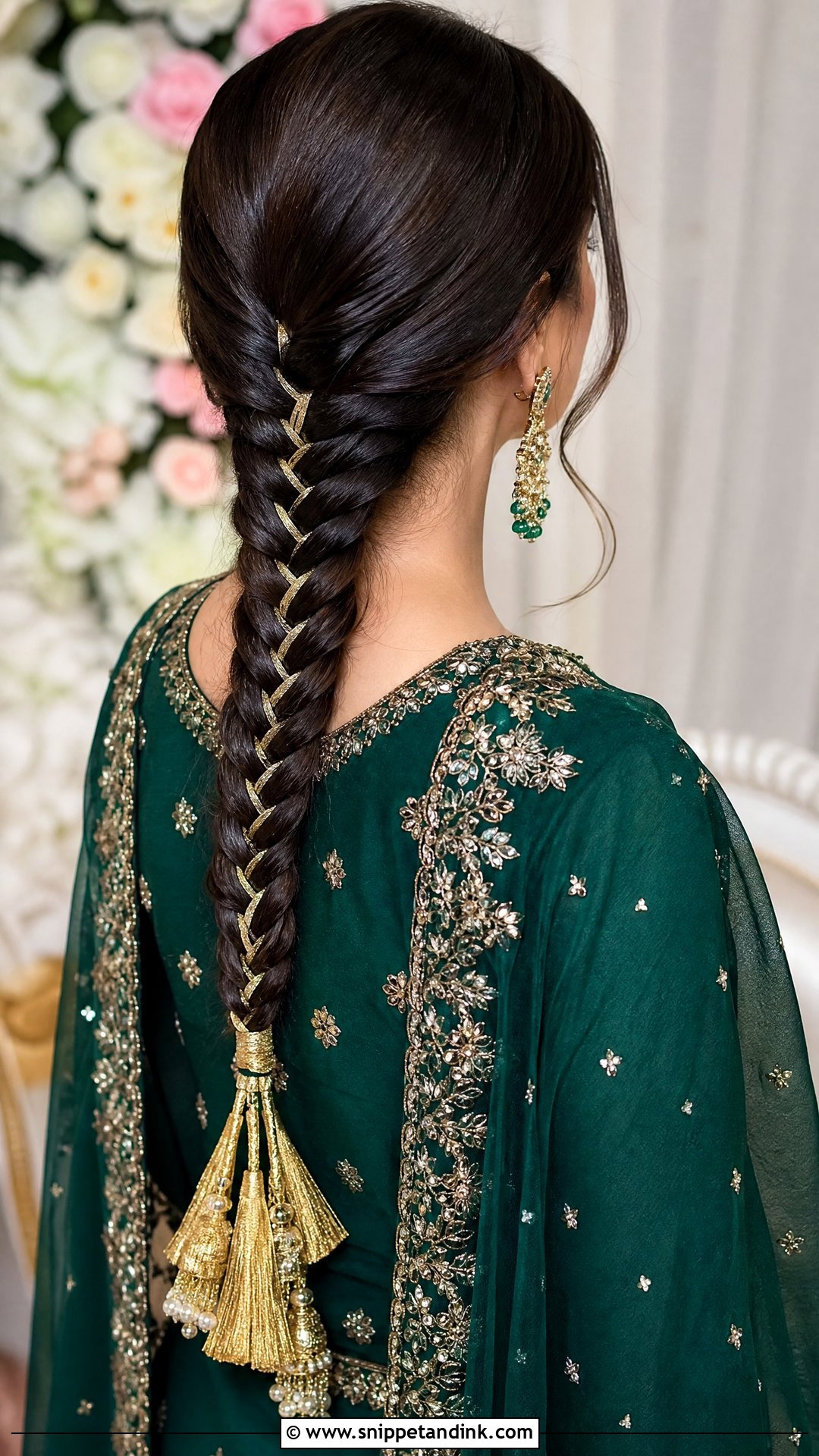
A fishtail has far more texture than a three-strand plait, and it looks modern in close-ups. Two sections, thin pieces crossed from the outside over and over. The paranda is the tricky part, because a fishtail doesn’t have three strands to lay threads against. I use a slim paranda and split its threads between the two sections, so the colour peeks in and out. You need long hair or extensions for the pattern to show. I’d avoid this one for a bride with heavy layers; short ends poke out of a fishtail all evening.
7. Bubble Braid Paranda
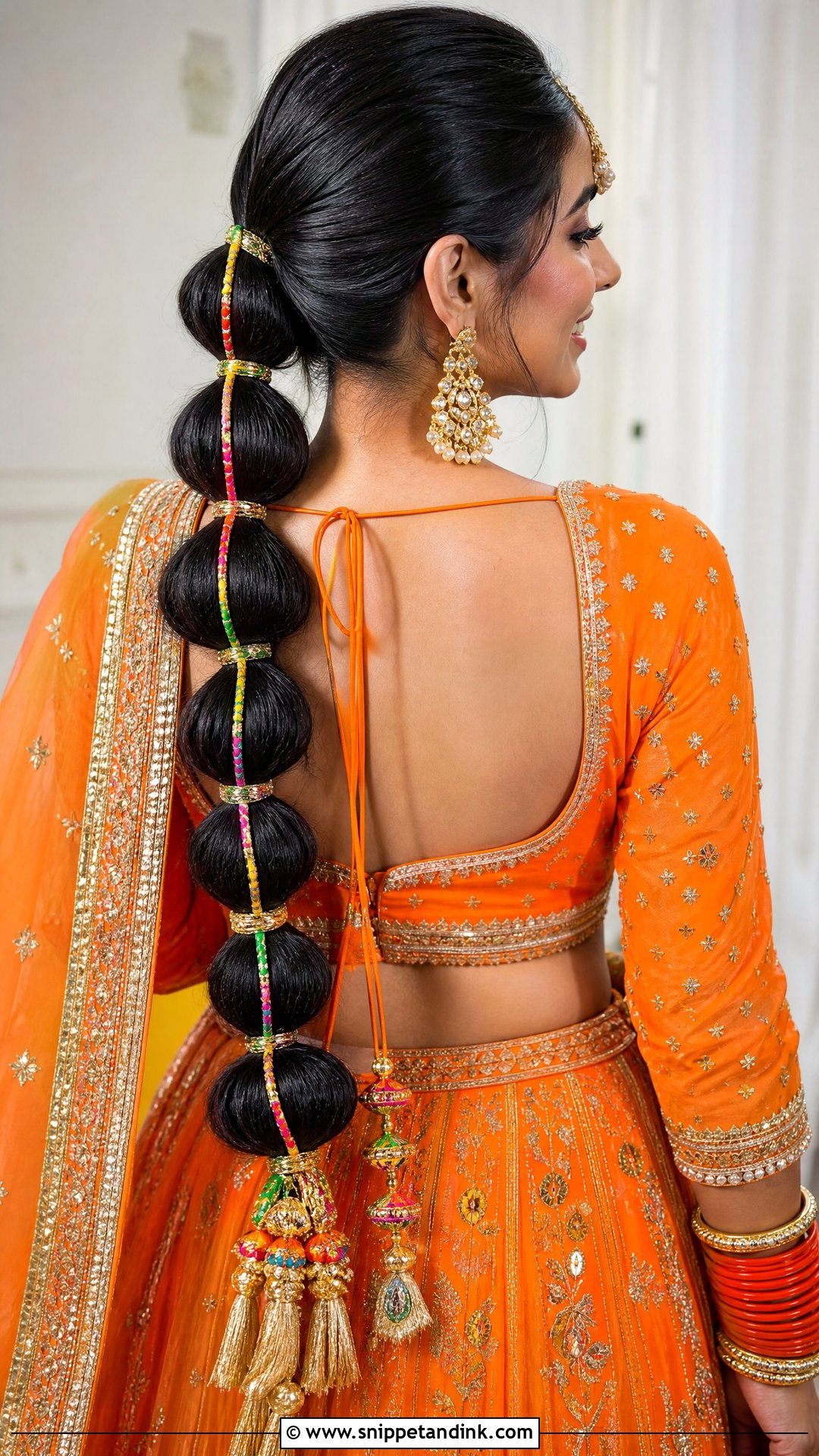
Bubble braids are the easiest way to give a lot of volume to hair that isn’t very thick. I tie the hair into sections down the back with small elastics, gently pull each section outward to round it, and thread or wrap the paranda through. Because elastics hold each bubble, it survives dancing better than most woven braids, which makes it a strong choice for mehndi or sangeet. Use covered elastics in a matching colour, not clear plastic ones that flash under camera light. Keep the top smooth so it still looks bridal.
8. Side Braid Paranda
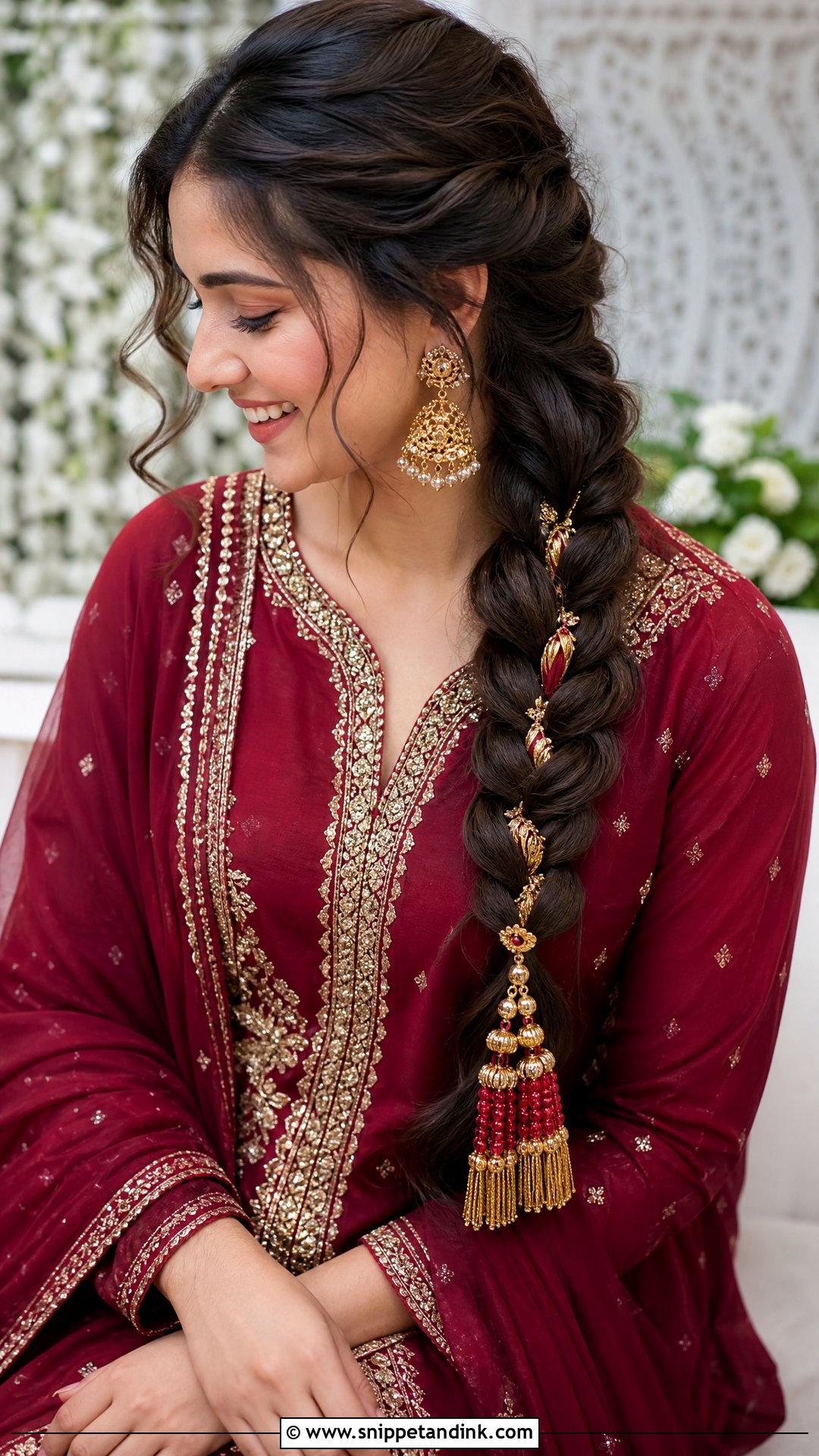
A side braid puts the paranda in front of the camera, over one shoulder, where the tassels frame the outfit. It suits a one-sided dupatta drape, an off-shoulder blouse or a deep neckline. The thing I check first is weight. All of it now hangs from one side of the head, and a heavy beaded paranda will pull at the temple by the end of a long celebration. I choose a light one and anchor the braid behind the ear with crossed pins. A couple of curled pieces at the temples on the other side balance it.
9. Half Up Paranda Hairstyle
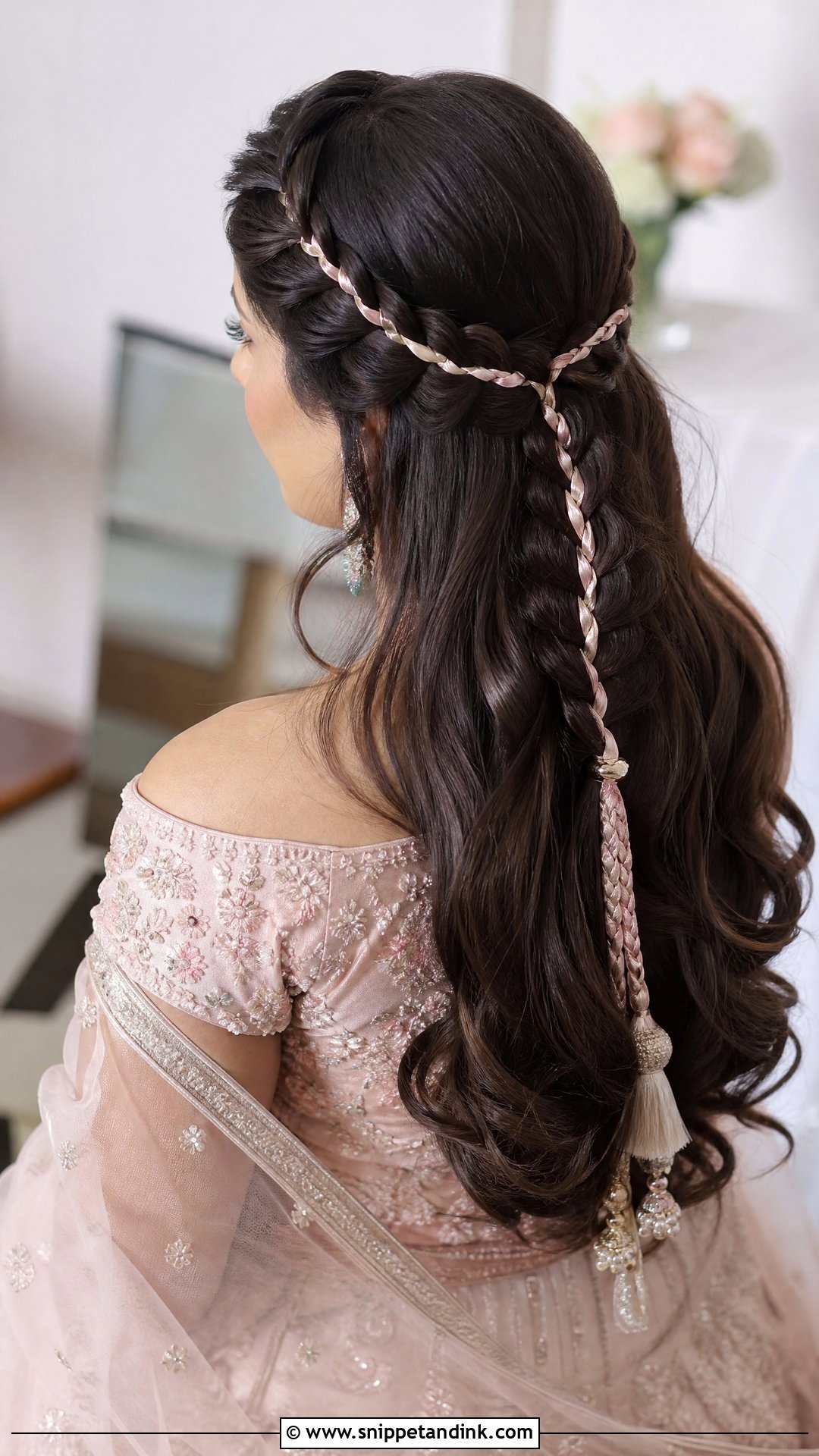
Half up is the gentlest way to wear a paranda. I braid a section from the crown, weave a slim paranda through it, and let the tassel melt into loose waves below. It’s lighter than a full braid and works on medium-length hair, where a full plait might look short. I like it for pre-wedding shoots, engagements and receptions. The waves are the weak point in humidity, so I set them with a firmer spray than I’d use for an updo. A delicate paranda keeps the waves as the main feature.
10. Messy Bridal Paranda Braid
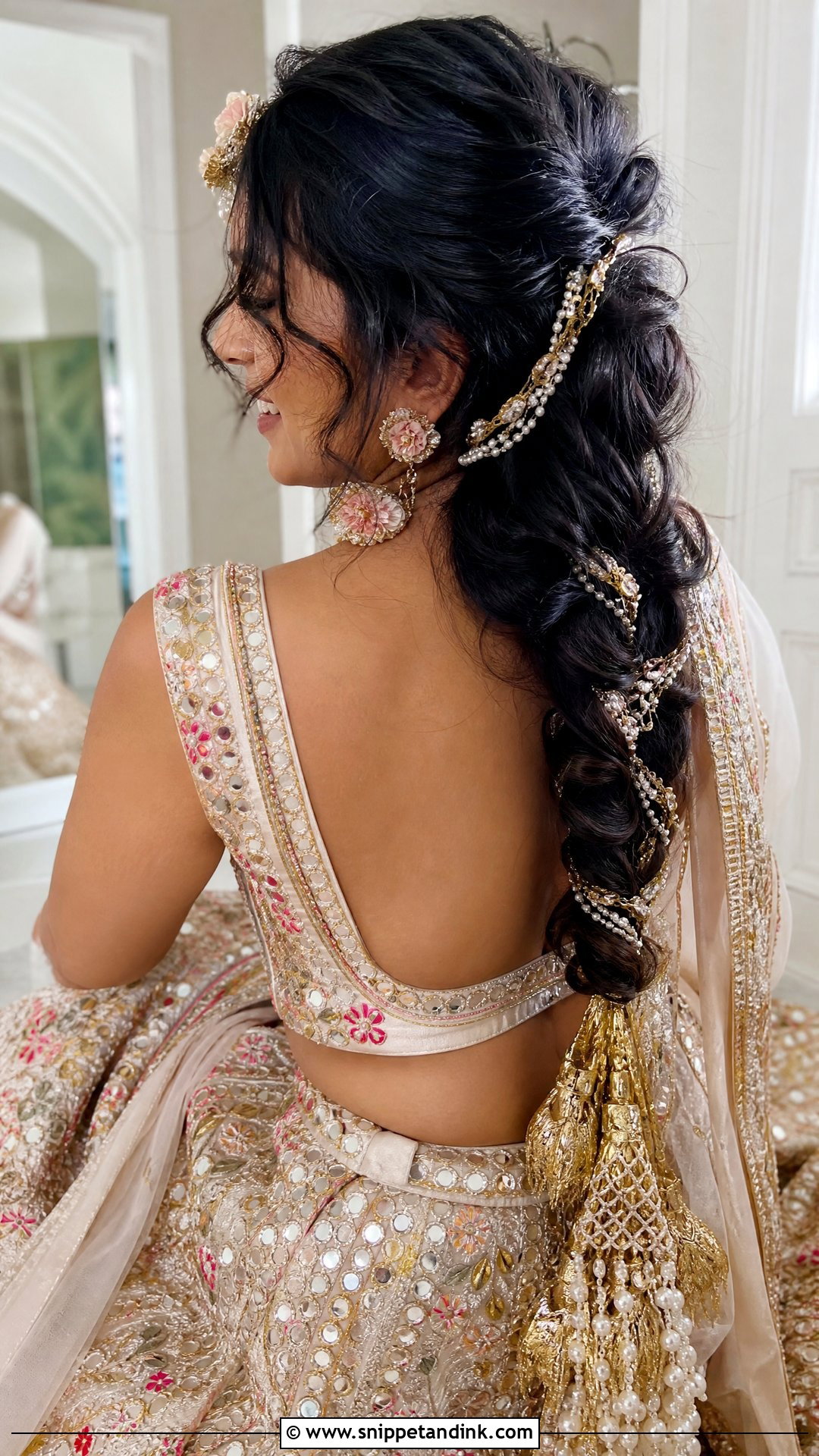
Controlled messiness takes more work than sleekness, which surprises people. I build width first, either with extensions or light backcombing along the lengths, braid the paranda in, then pull the loops wider one at a time. The crown stays polished; only the braid is loosened. That contrast is what keeps it looking intentional rather than slept in. It suits boho mehndi outfits, mirror-work and floral jewellery. Pin the paranda’s top tie well, because a loose braid gives it less to grip.
11. Sleek Middle Part Paranda Braid
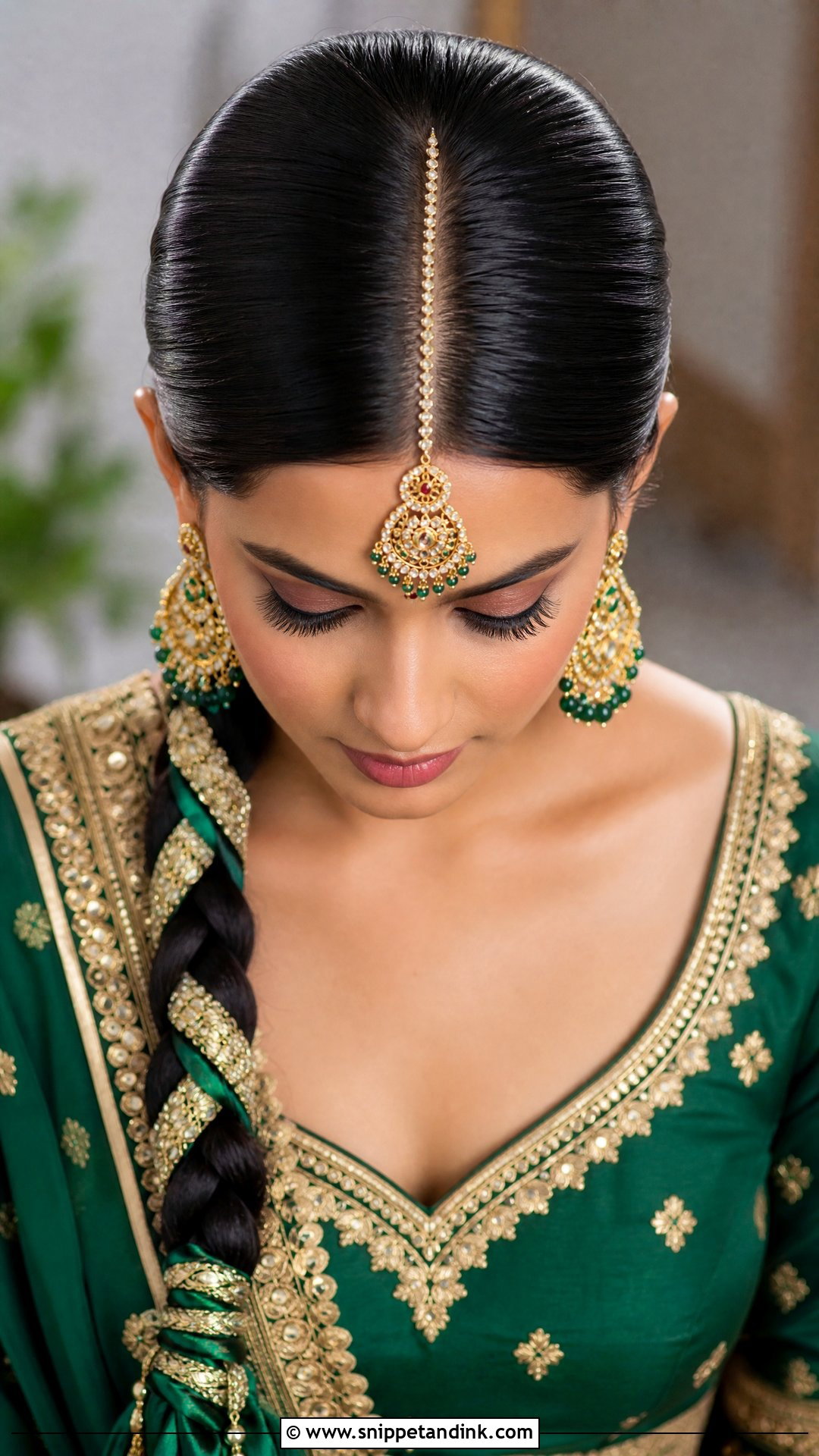
Sleek is about the parting. I take a sharp centre part, smooth the hair close to the head with a smoothing cream, and braid down the back with the paranda. With the head clean, the maang tikka, matha patti, nath and earrings get all the attention, and the dupatta has a firm, even base to pin into. I finish with a light shine spray rather than a heavy one, because heavy spray on dark, sleek hair can look greasy under flash. Red, gold, ivory or deep green all suit it.
12. Paranda Braid With Matha Patti
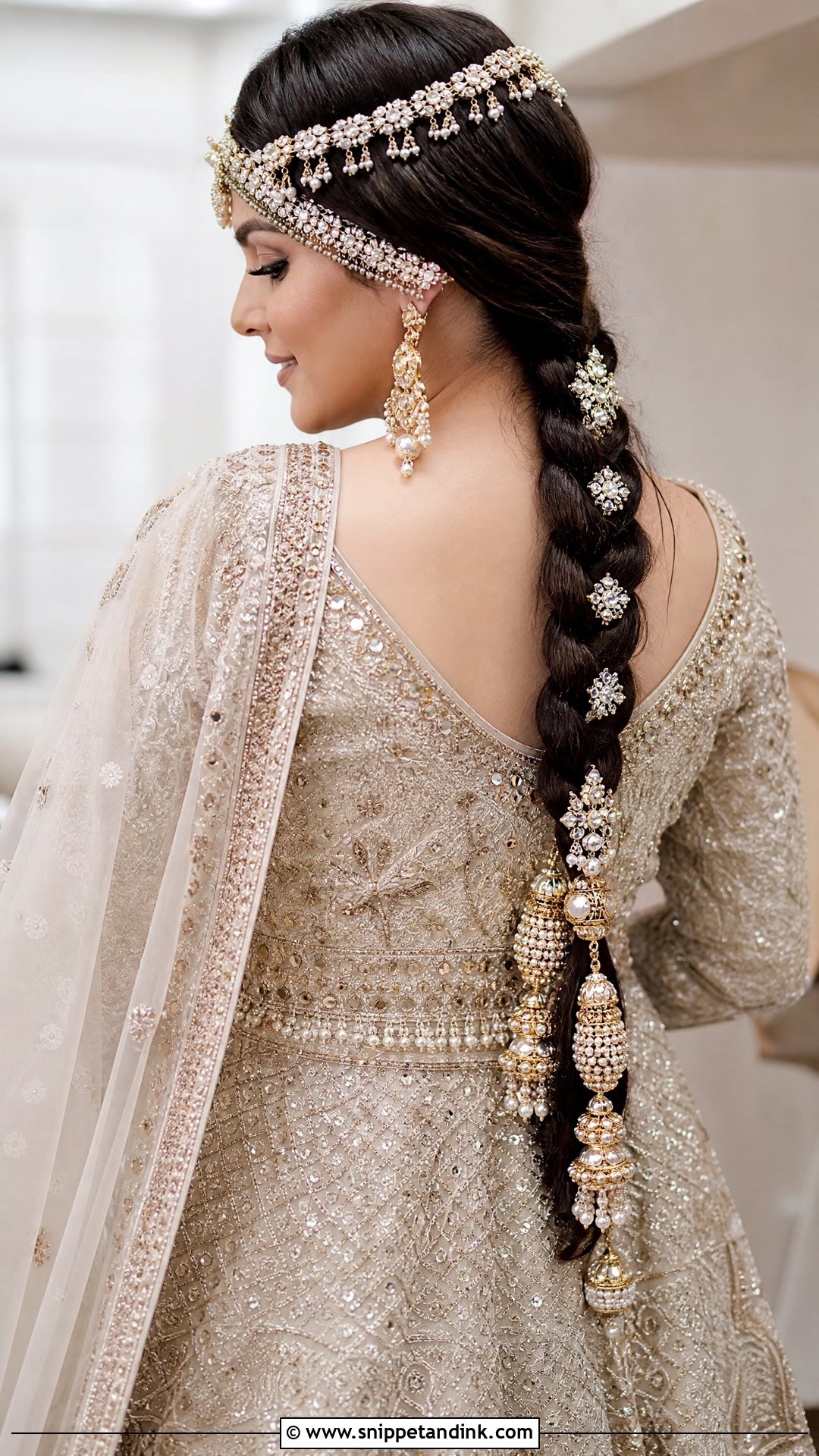
Matha patti and paranda together dress the head from front to back, so balance matters. If the matha patti is heavy, I pair it with soft tassels or pearls rather than big charms; if the paranda is the showpiece, the hairline jewellery should be simpler. I set the matha patti first and pin its chains into the hair behind the ears, then braid, so the braid hides the anchors. Neat and centred works best here, and the whole look sits well under a sheer dupatta.
13. Paranda Braid With Passa
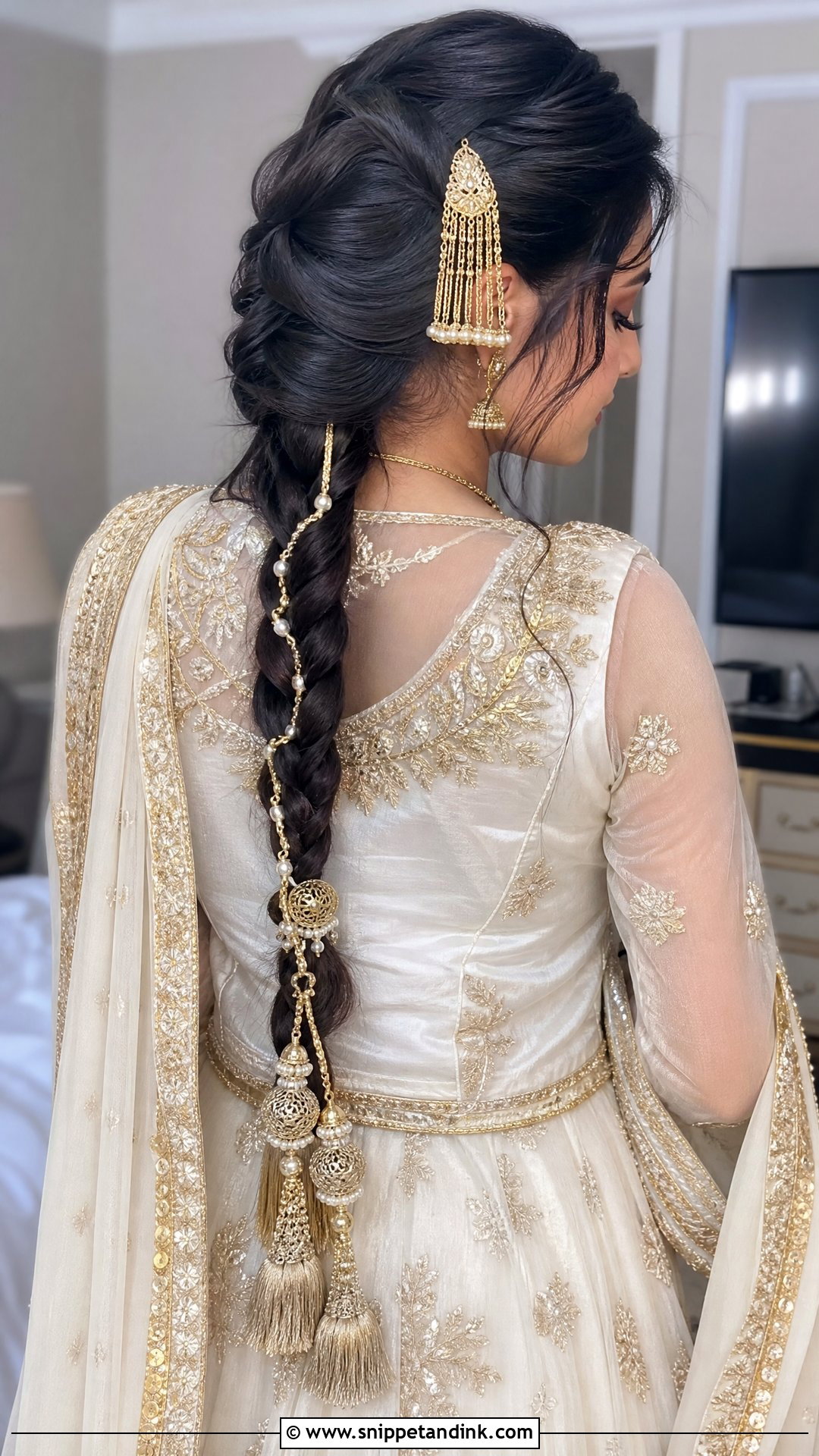
The passa sits on one side of the head, and the braid falls down the back or over the opposite shoulder. That asymmetry is what gives this its old-world, regal feel, and it reads well from the front and the side. It suits gharara, sharara, anarkali, lehenga or Pakistani bridal outfits. A passa is heavy, so I build a small padded base under it and pin through that rather than straight into flat hair. Add a little crown volume so the braid doesn’t look flat beside it.
14. Colorful Paranda Mehndi Braid
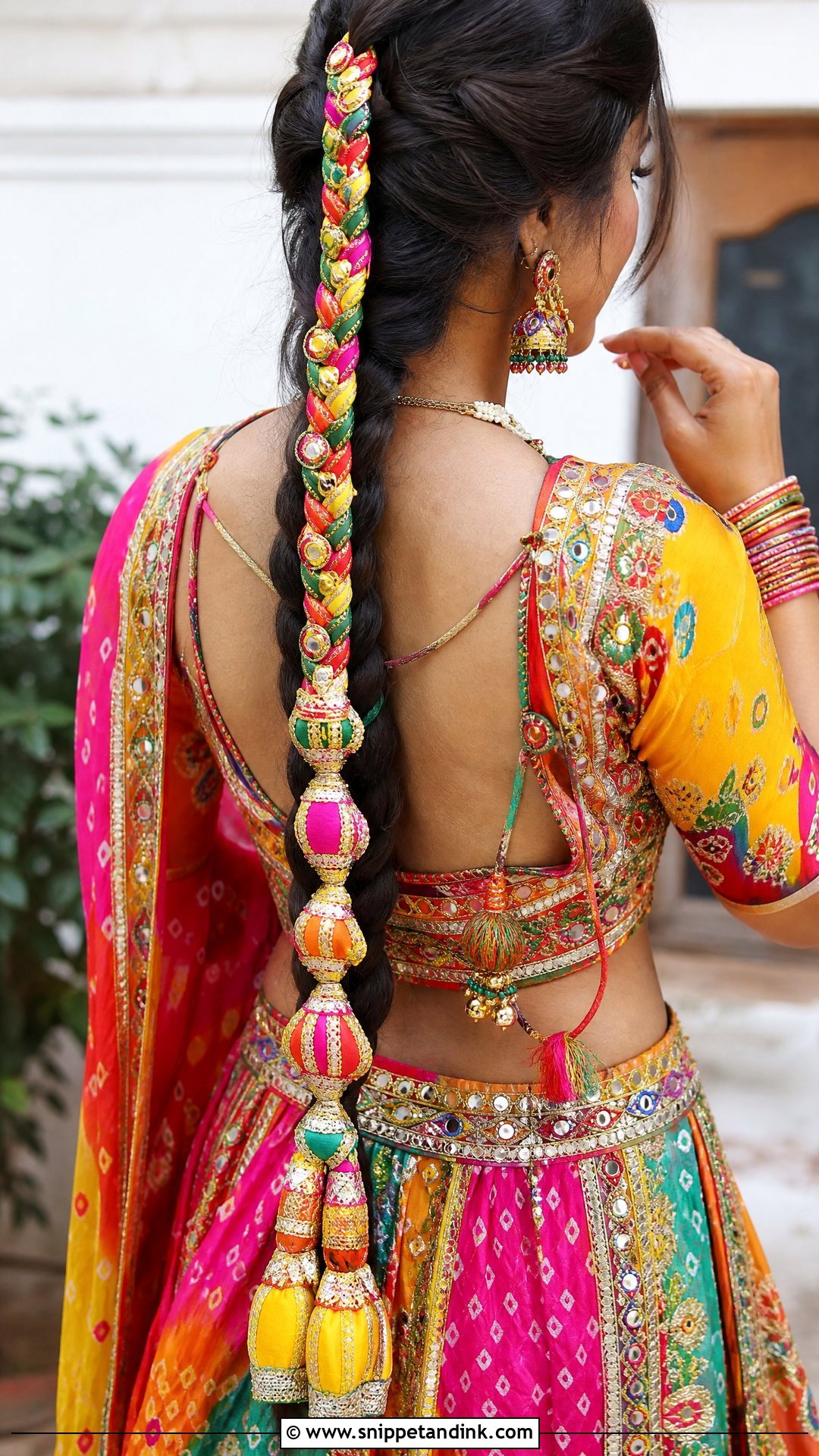
A colorful paranda mehndi braid is where you can be playful. Bright threads in pink, yellow, orange, green or blue, often matched to the outfit or bangles, sometimes with mirrors, shells or pom-poms. Mehndi is the right event for it: daytime light shows the colours properly, and the jewellery is usually lighter. I’d keep extras like pom-poms to the tassel end. Charms all the way along a braid catch on the dupatta and on the henna artist’s sleeve while you sit.
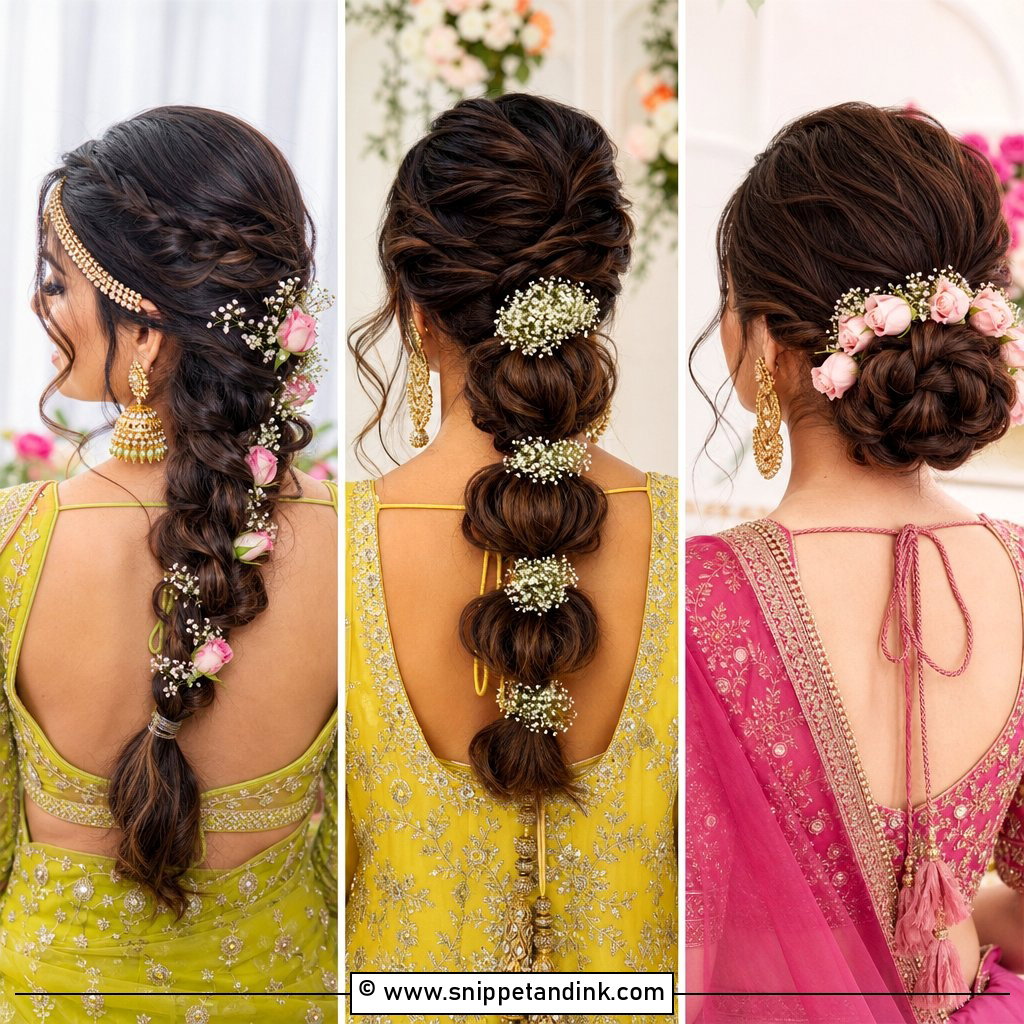

15. Long Braid Paranda With Extensions
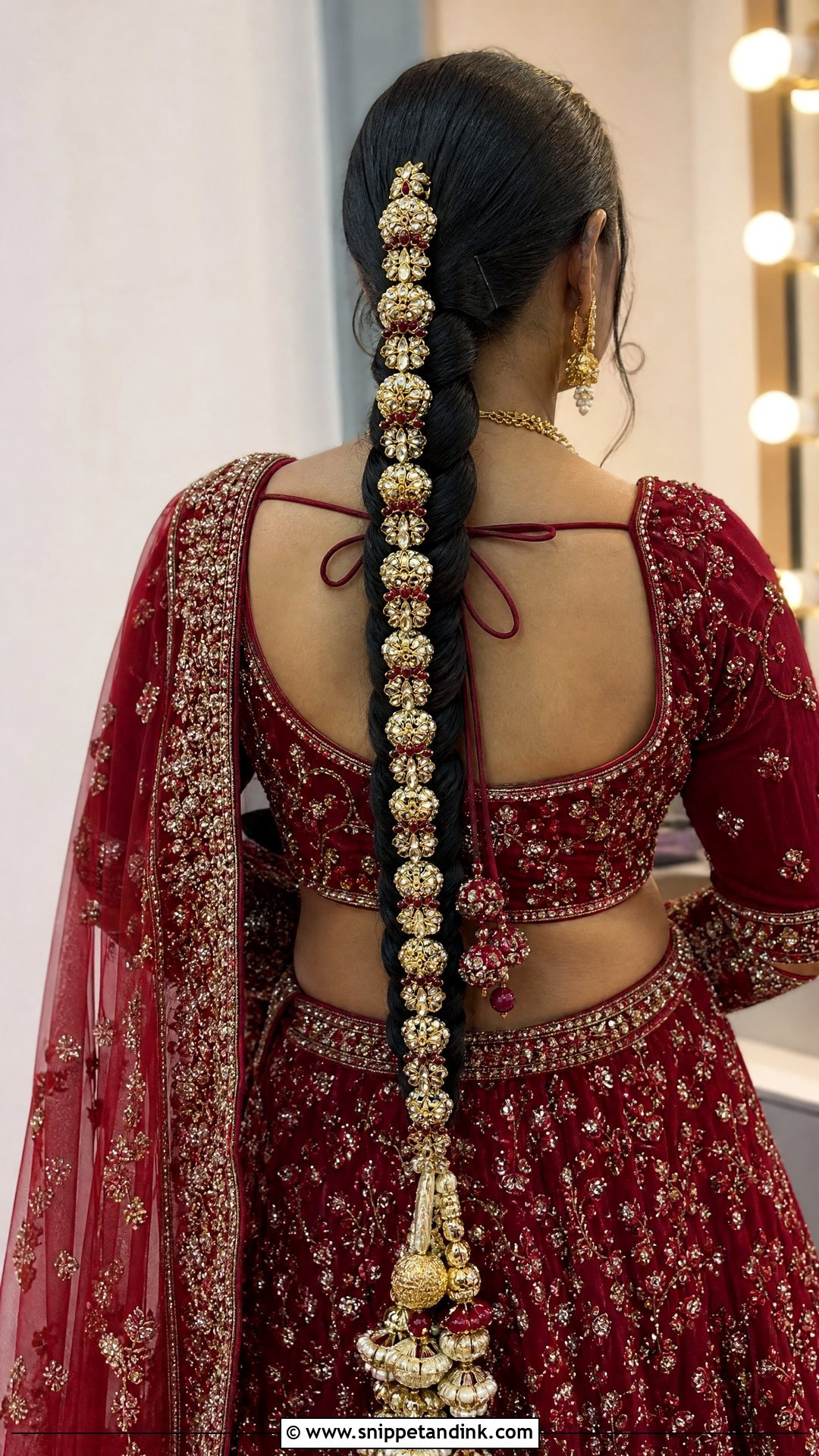
If you want a waist-length or hip-length plait and your own hair doesn’t reach, extensions are the honest answer. They add both thickness and length, and the paranda gives the finish, so even short, fine or medium hair can carry a full Punjabi braid. Colour match is everything: if the extension shade is off, the join shows and the paranda looks tacked on instead of woven through. I blend the wefts at the crown and nape and braid them in with the natural hair from the very top. With a heavy lehenga and a trailing dupatta, it’s the most dramatic look here.
Untangling and Storing It After the Celebrations
A paranda often gets passed to a sister or cousin, or kept for a daughter, so take it out carefully at the end of the night. Undo the braid from the bottom up, slowly, rather than pulling the paranda free. Threads that have been braided tight for ten hours tangle easily and take hair with them.
- Untie the top knot first, then unbraid in small sections with your fingers.
- Comb the thread sections gently with a wide-tooth comb, holding them above the comb so you don’t strain the top join.
- Pick out any hair, bobby pins and flower stems caught in the tassels.
- If there’s spray or oil on it, air it overnight. I wouldn’t wash a gota or pearl paranda, since metallic trim can dull and threads can bleed colour.
- Store it flat or loosely coiled in a soft cloth, away from damp. Keep gota pieces apart from silver jewellery so neither tarnishes the other.
Wearing different parandas across several events? Label each with the event and outfit. In a busy wedding week the haldi yellow one tends to vanish exactly when you need it.
Lay the Paranda Beside Your Outfit in Daylight
A paranda carries colour, texture and a bit of family tradition all in one braid. A classic red plait, pearls for the reception, gota for the haldi, flowers for daytime, bubbles for dancing: any of these can feel personal if it suits the event. Before you commit, hold the actual paranda against your outfit in daylight and wear it with your jewellery for a few minutes to feel the weight. Short or fine hair isn’t a barrier. Go with the one you’ll stop noticing once the dhol starts.
You'll Like These Ideas:


Leave a Reply