
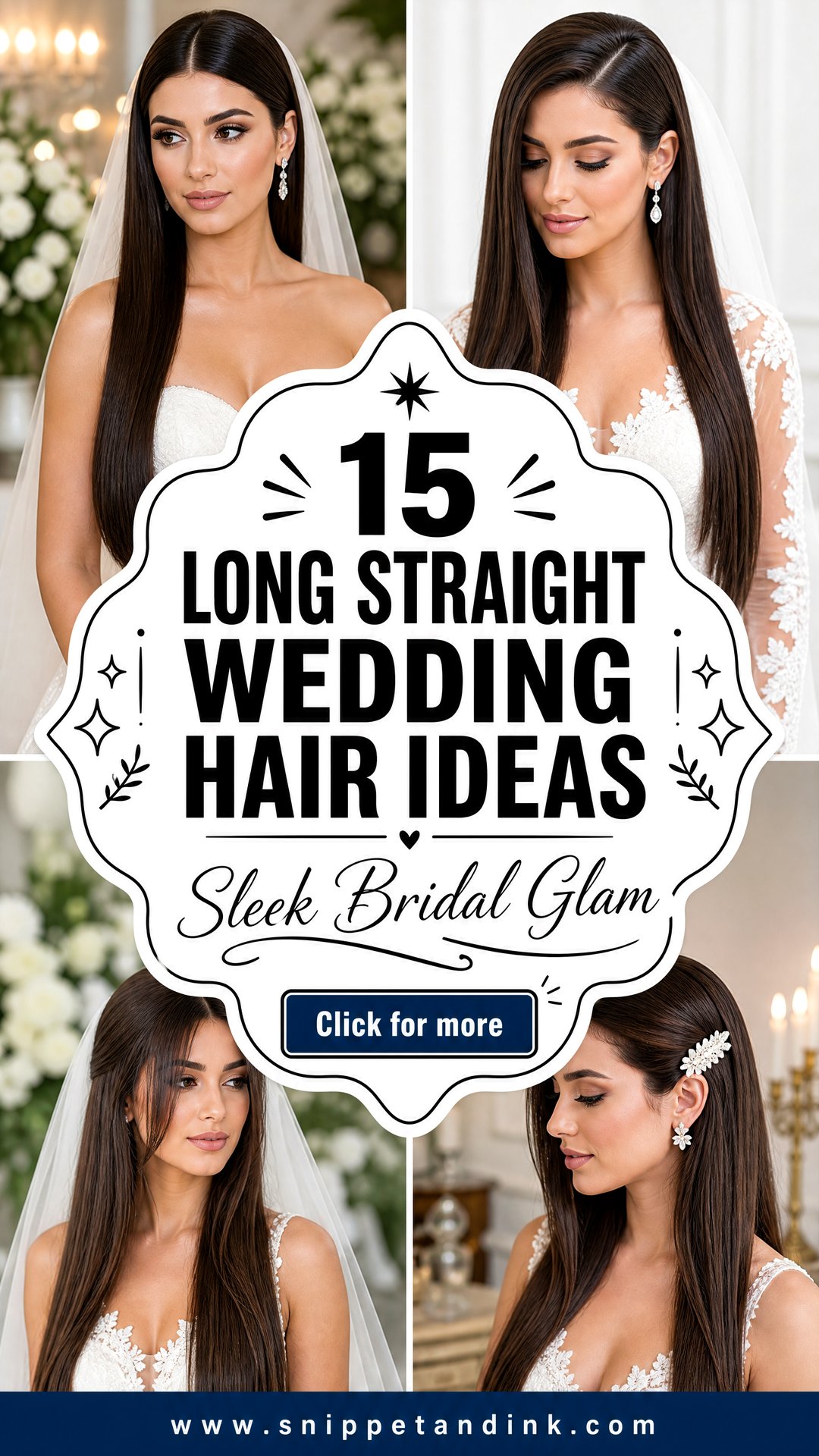
Brides with straight hair often apologise for it at consultations, as if curls were the only bridal option. They aren’t. Straight hair done properly has a shine and a clean line that waves can’t give you, and it doesn’t drop as the day goes on, because there’s nothing to drop. What it does need is finishing: healthy ends, a deliberate part and one detail that makes it look chosen rather than left alone. Here are fifteen ways I’d wear it, for brides, bridesmaids and guests.
Straight on the Day When Your Hair Isn’t Naturally Straight
Some of the brides who ask me for sleek straight hair have waves or curls the rest of the year. That’s absolutely doable, but it takes more planning than a blowout on the morning, because moisture makes straightened hair revert to its natural pattern.
A silk press can hold for a week or two as long as the hair stays dry, so it works well done a few days before. Smoothing treatments last longer but change the hair gradually as they wash out, which means they need a test run well ahead and never a first attempt just before the wedding.
The timeline I usually work to:
- Two to three months out, a trial of the exact method, so we can see how your hair holds after a full day.
- Three to four weeks out, any smoothing treatment, plus a trim to remove damaged ends.
- Two or three days out, the silk press or professional blowout, then a silk pillowcase or wrap for sleeping.
- Wedding morning, a touch-up at the roots and hairline only. Pressing the whole head again adds heat damage and rarely adds shine.
Humidity is the honest limit. For a beach or a summer garden wedding, I’d plan a low bun or a sleek ponytail as the backup, because both still look smooth after the hairline starts to frizz.
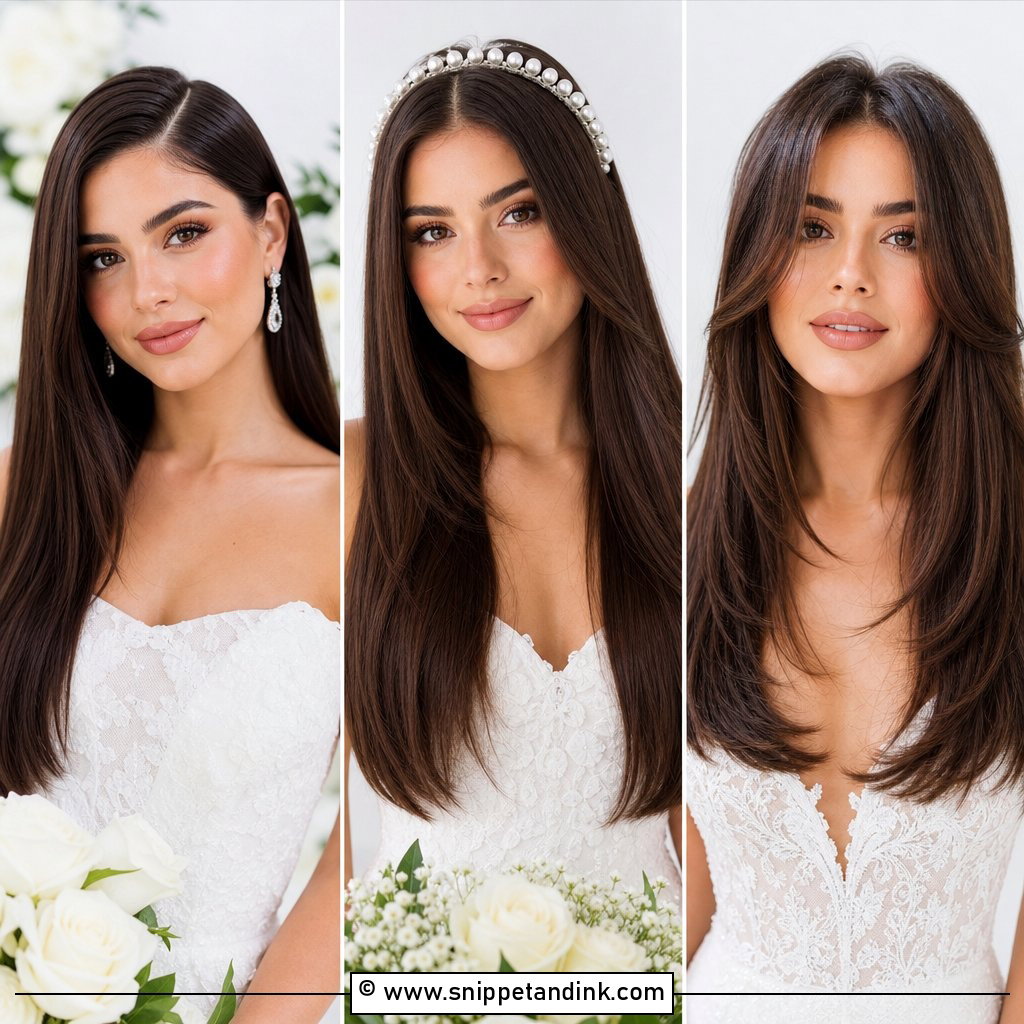
1. Long Straight Wedding Hair With Center Part
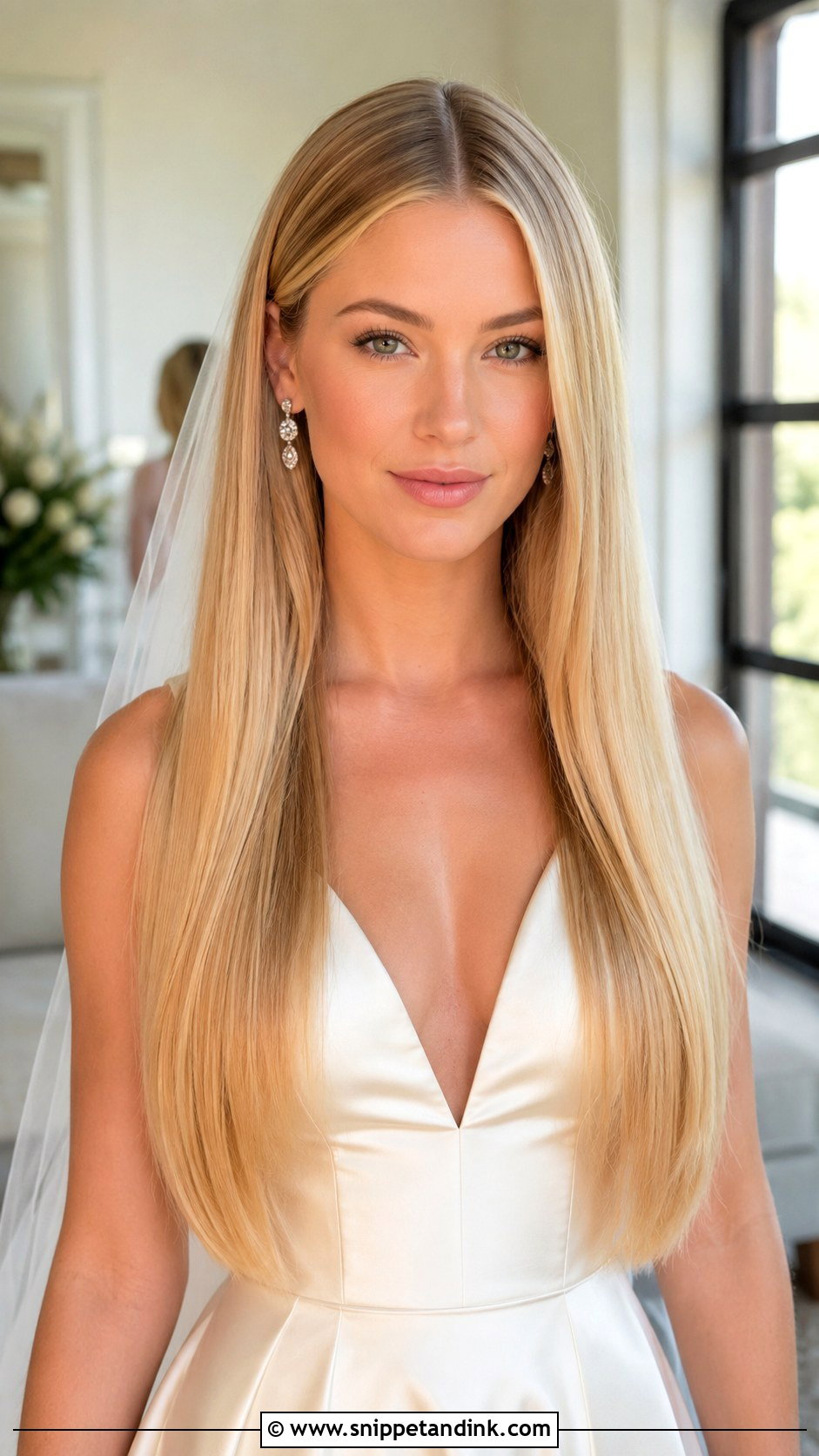
A center part on long straight hair is the plainest look here and the least forgiving. The part has to be dead straight and the ends freshly trimmed, because nothing distracts from either. When those are right, it frames the face evenly and sits neatly over strapless or square necklines. I start with a smooth blowout, use the flat iron only where the brush couldn’t reach, and hold the shine spray well back so it doesn’t weigh down the roots. Tucking one side behind an ear keeps it from looking too symmetrical.
2. Sleek Long Straight Wedding Hair
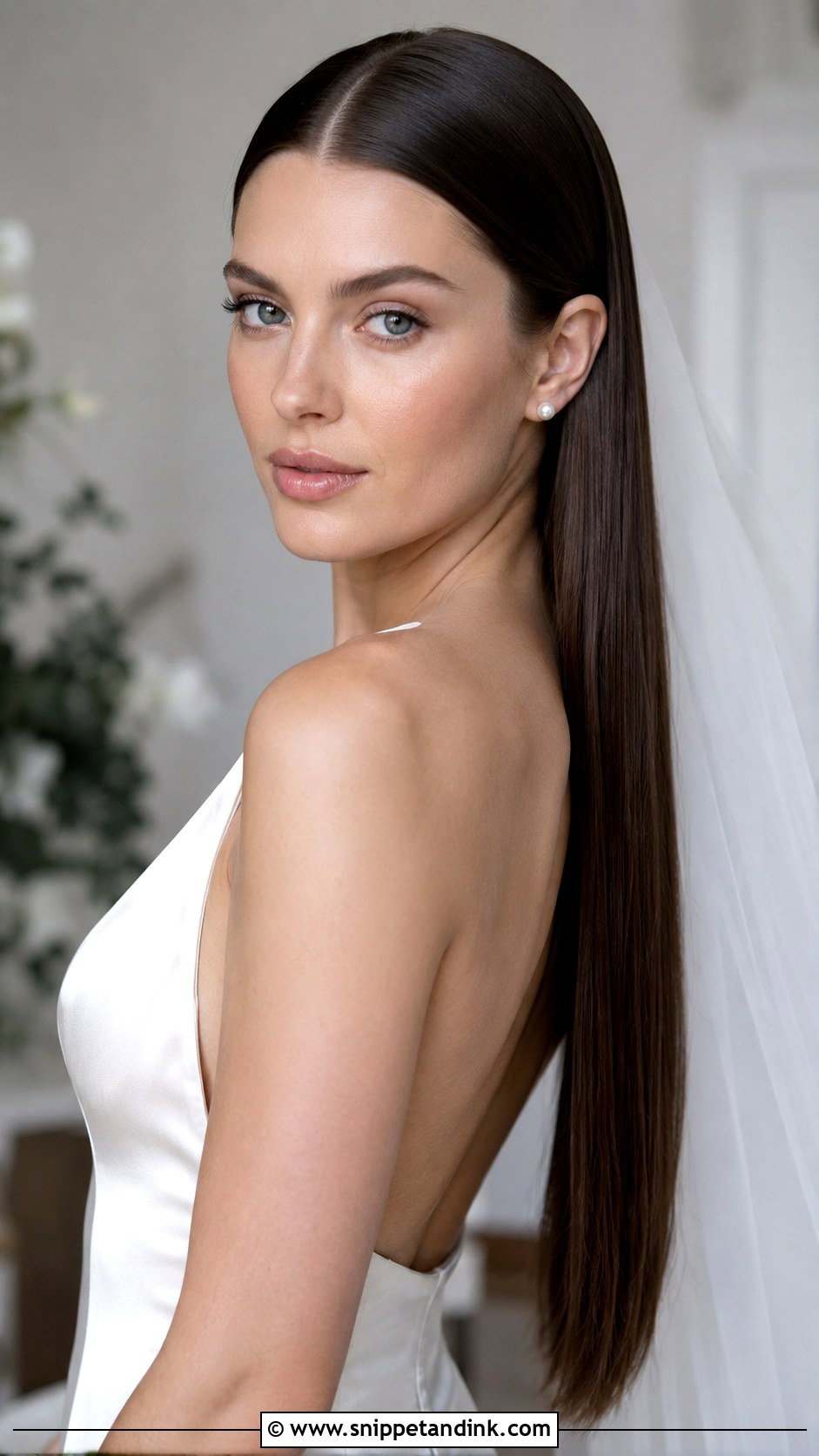
This is the glossy, pressed version, and the finish is everything. I work in thin sections with heat protectant and smoothing cream, passing the iron slowly once instead of quickly five times, which is kinder to the hair and gives more shine. Blunt ends or very long soft layers both suit it. Humidity is where it fails: sleek hair shows the first frizz at the crown, so I seal it with a humidity-resistant spray. A slim pearl clip near one temple is all the decoration it needs.
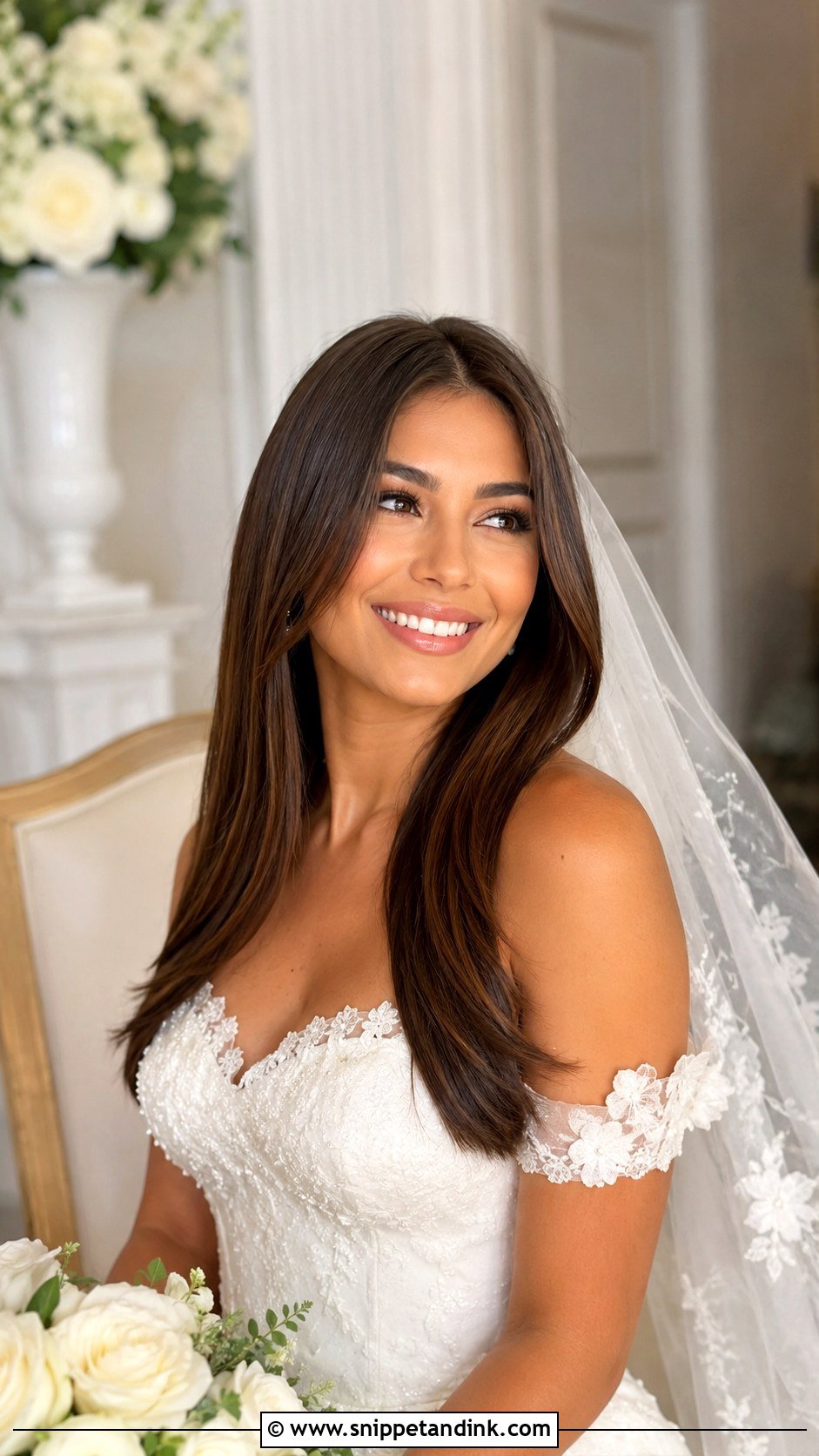
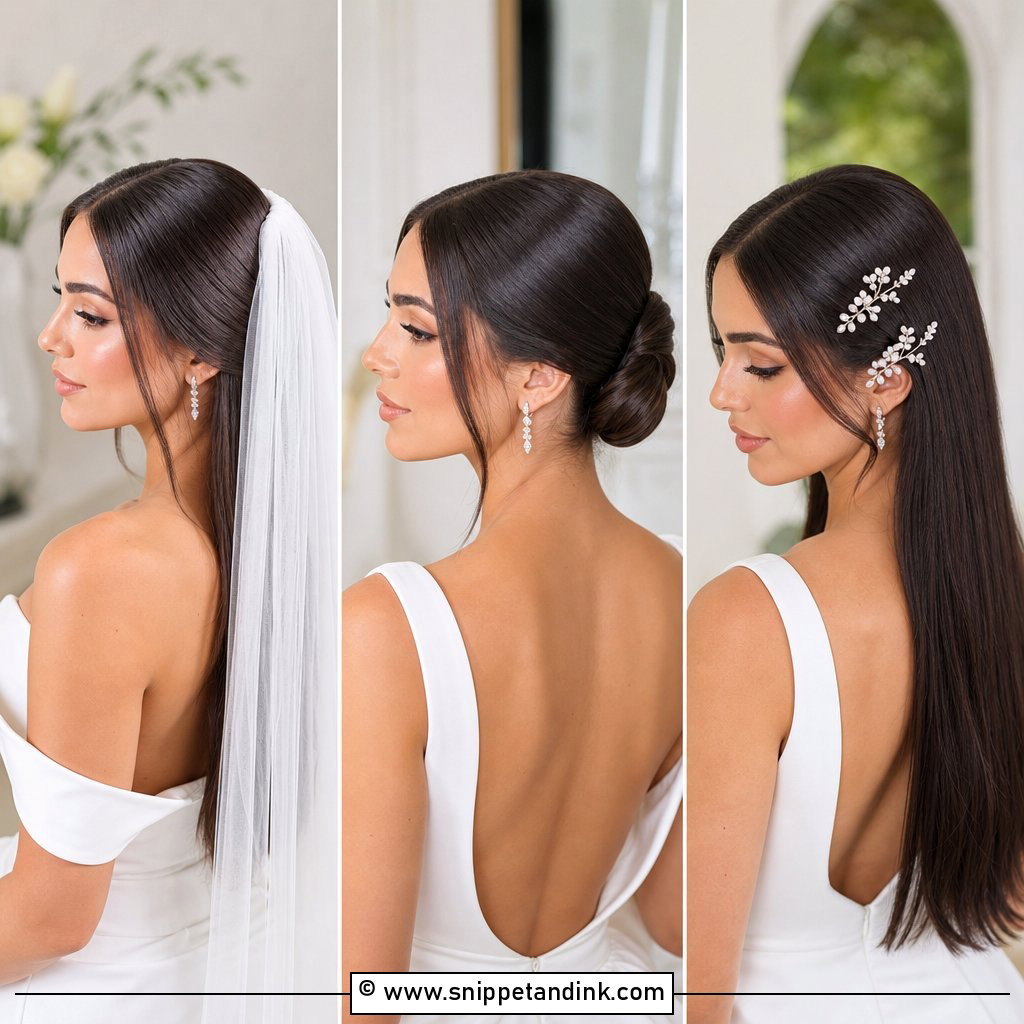
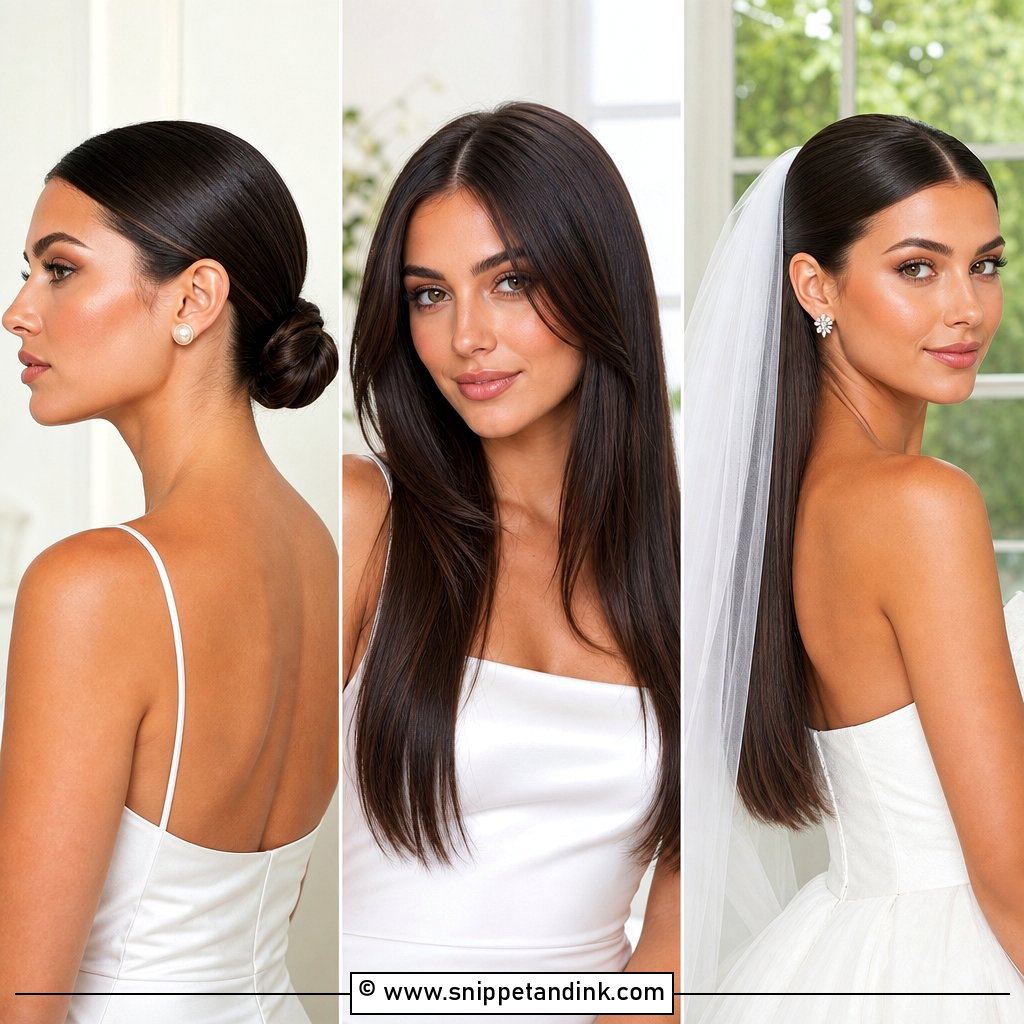
3. Long Straight Wedding Hair With Veil
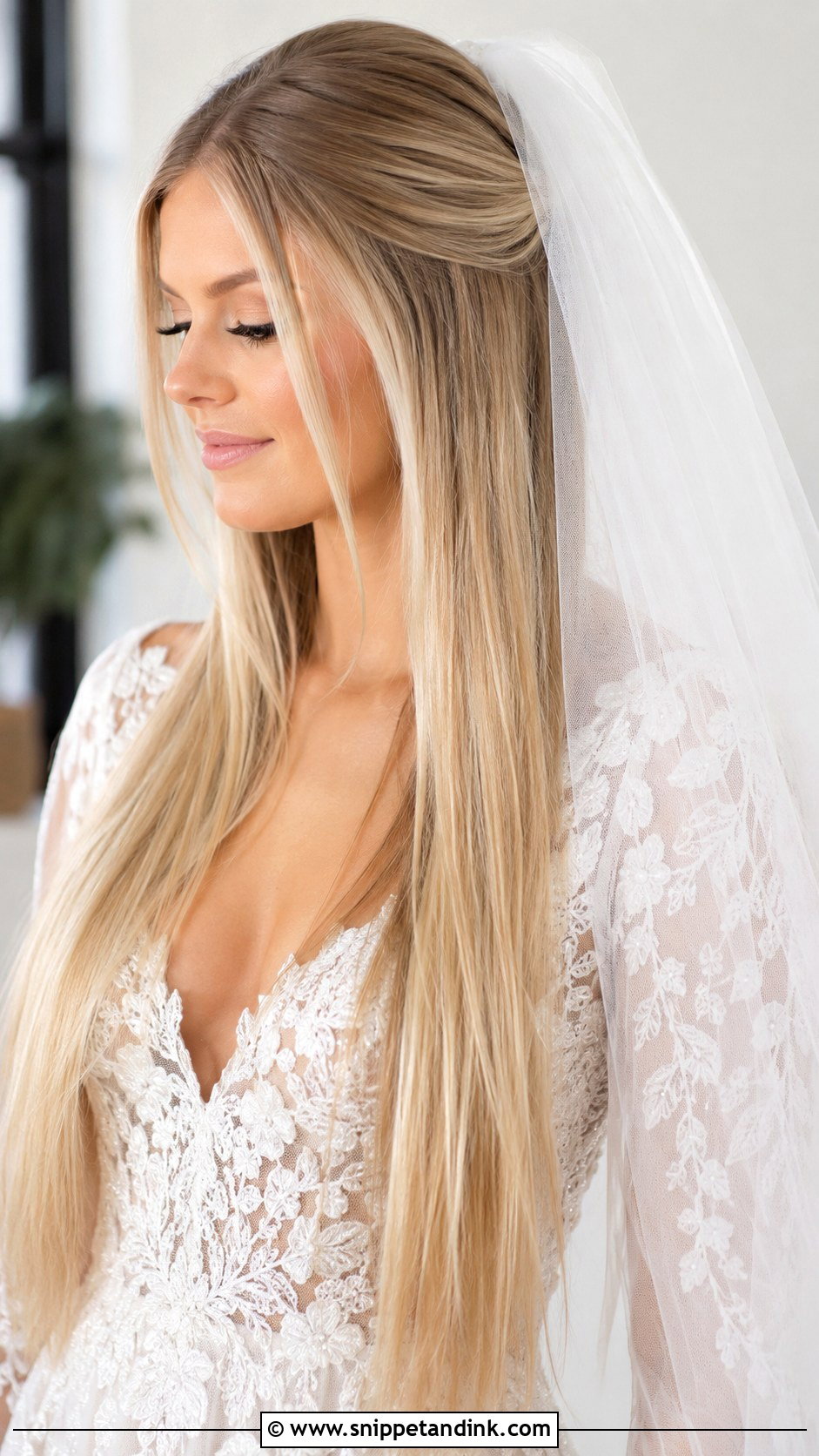
Straight hair lets a veil fall cleanly, without the bulk that curls add under the tulle. The comb can sit at the crown for a traditional look or lower, near the nape, for something softer. The problem is grip, because a comb slides straight down smooth, silky hair. I tease a small hidden section where the comb goes, or cross two bobby pins and push the teeth into them. Long cathedral veils and plain fingertip tulle both suit it.
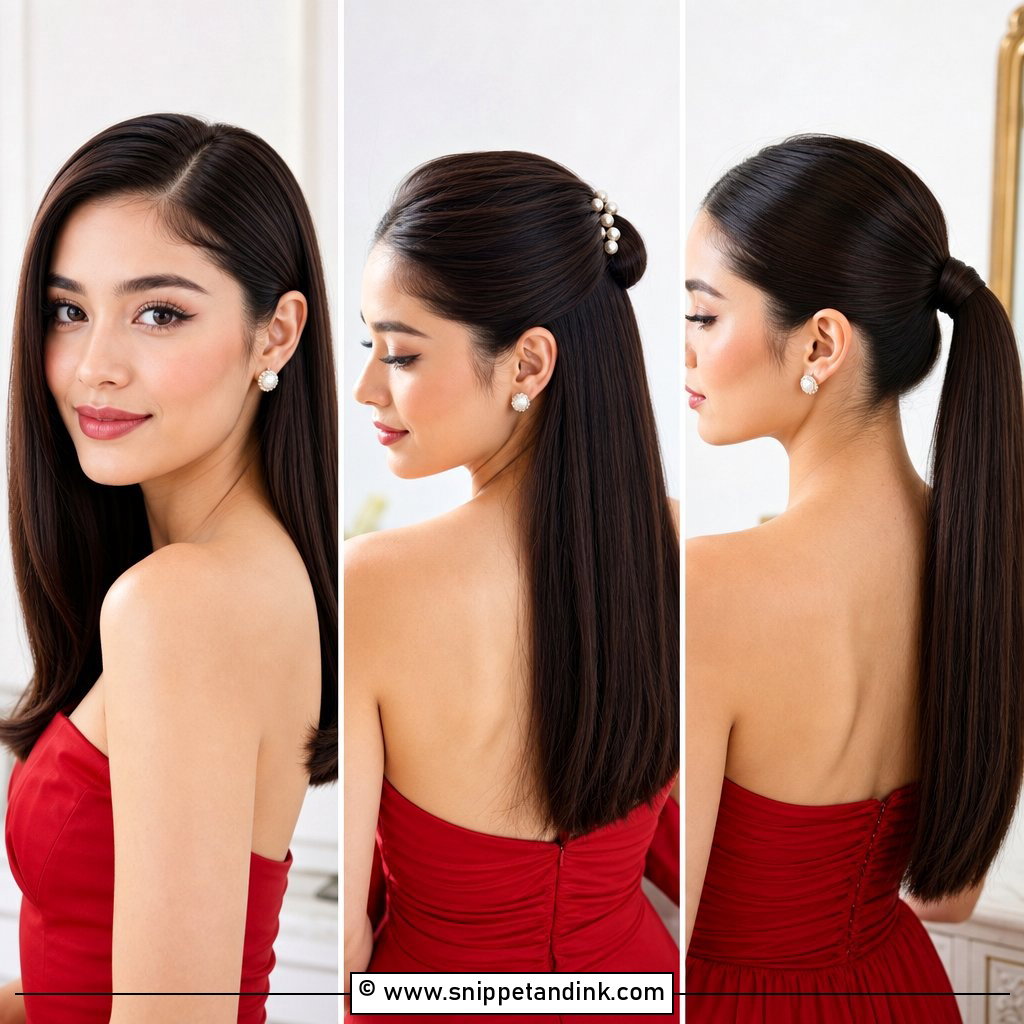
4. Half Up Long Straight Wedding Hair
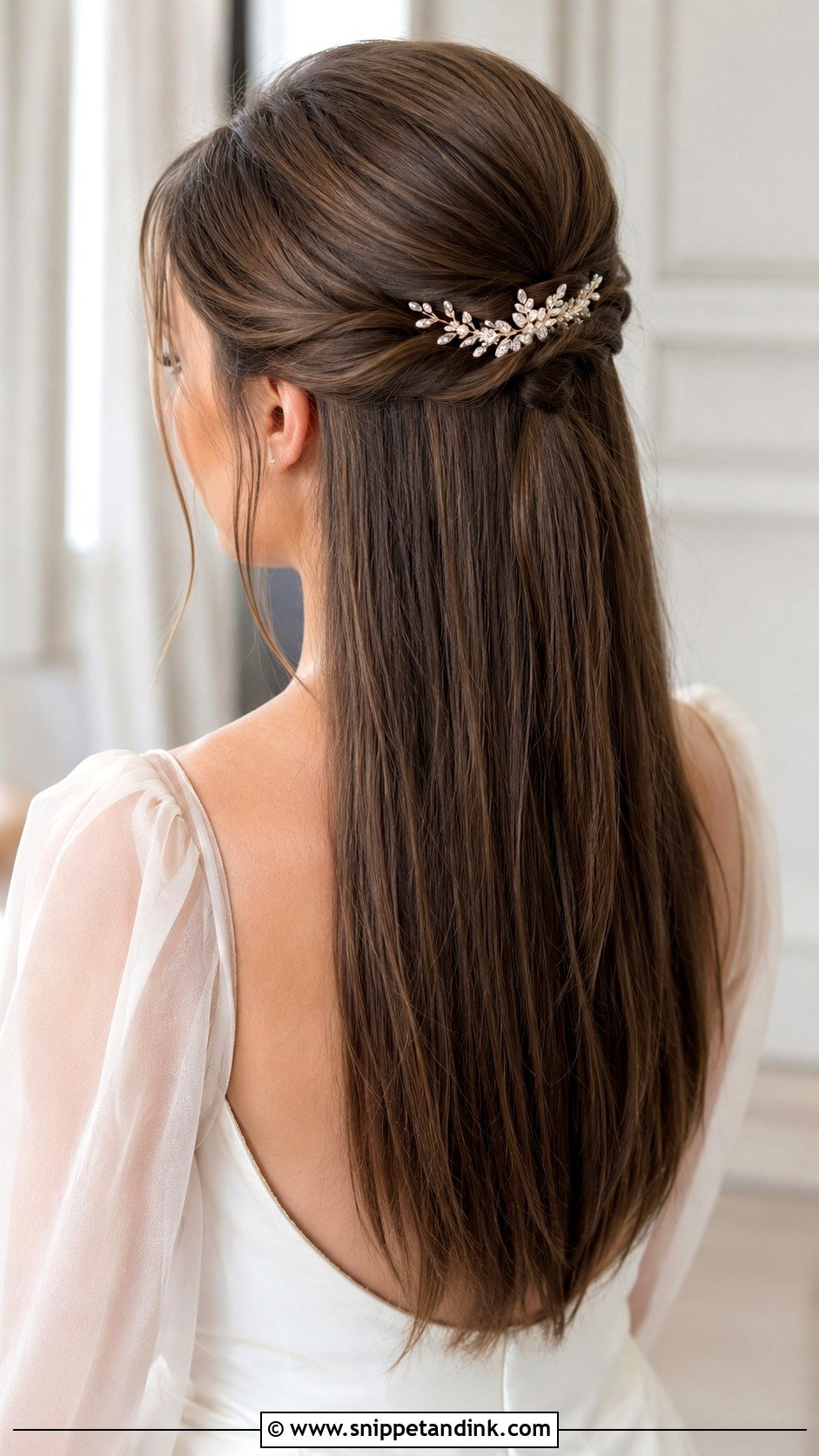
Half-up gives straight hair the structure it can otherwise lack. The top section is drawn back softly and twisted or held with a small comb, while the length stays smooth. Keep the crown lifted a little instead of pressed flat, or the profile looks pinched in side shots. For an outdoor ceremony, it’s the most practical version here, since a breeze can’t throw the front across your face.
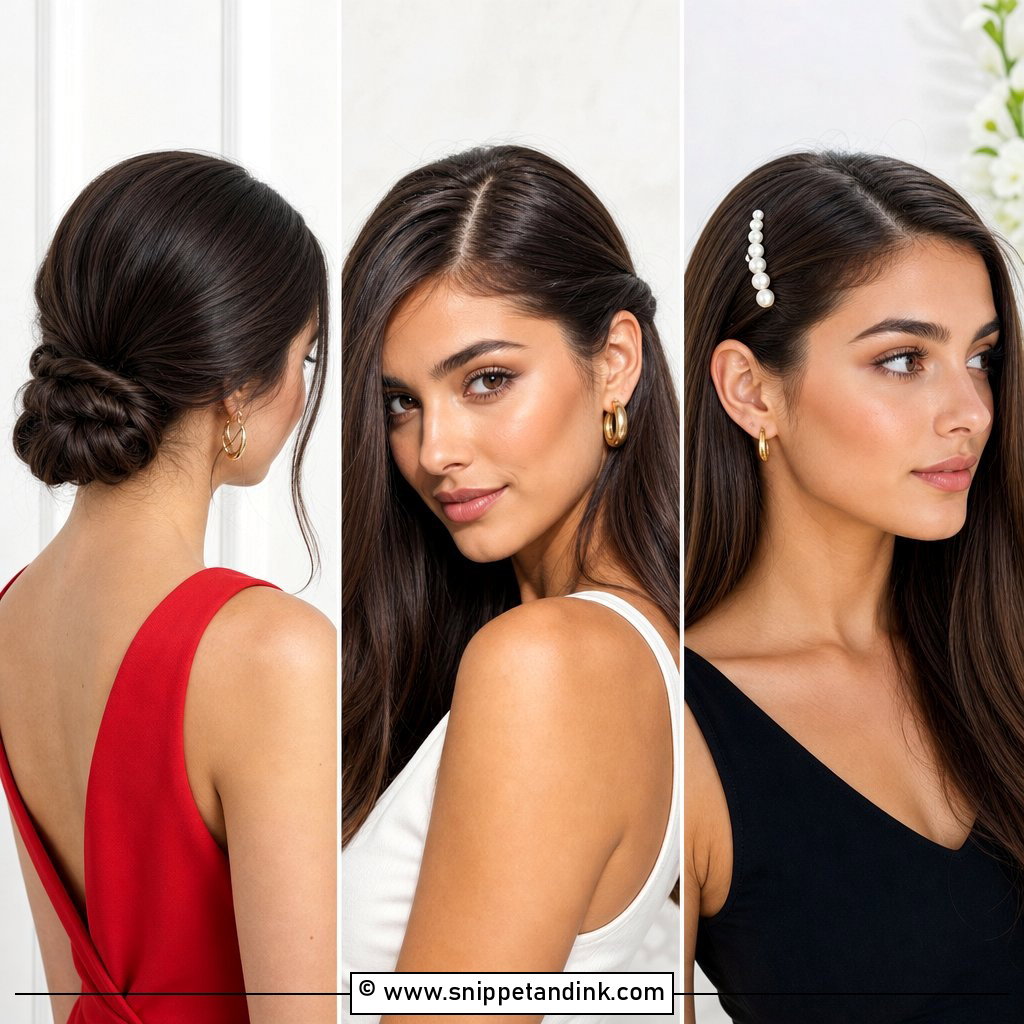
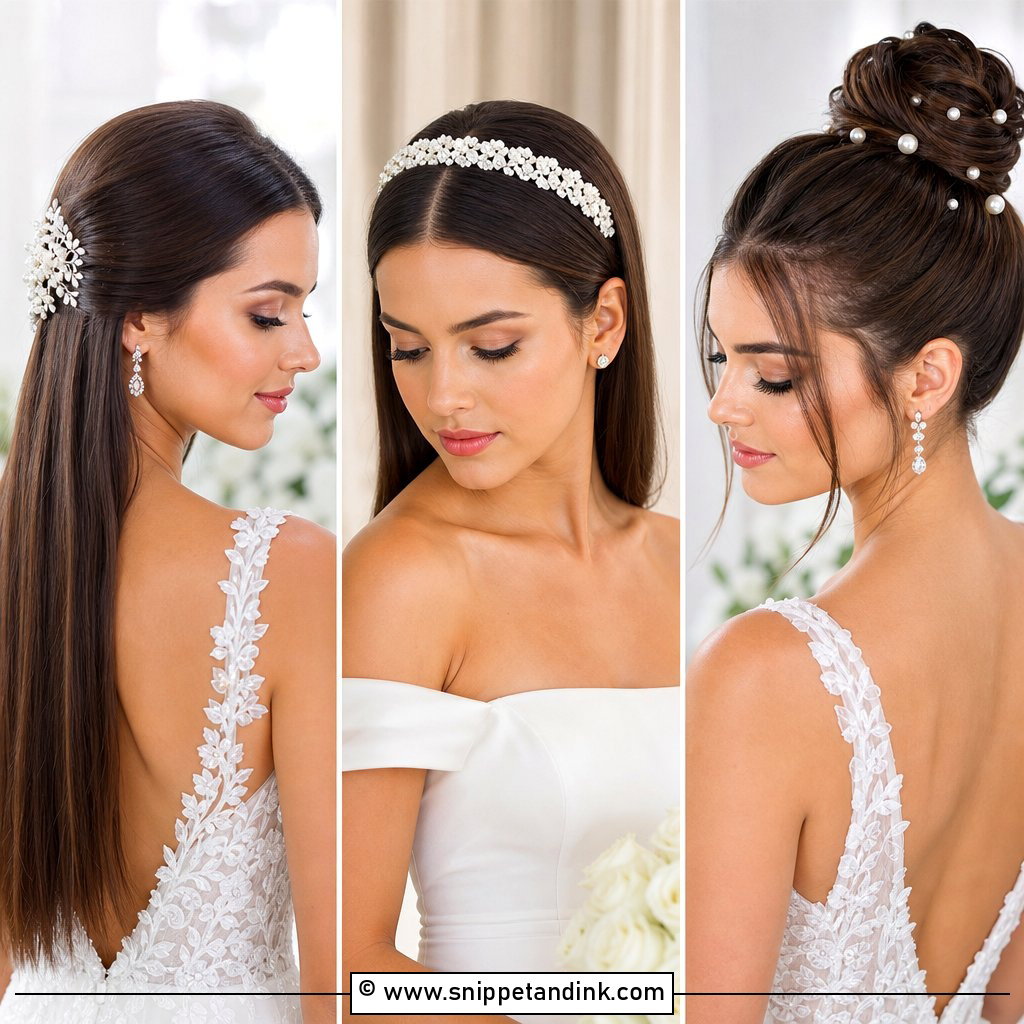
5. Long Straight Wedding Hair With Pearl Pins
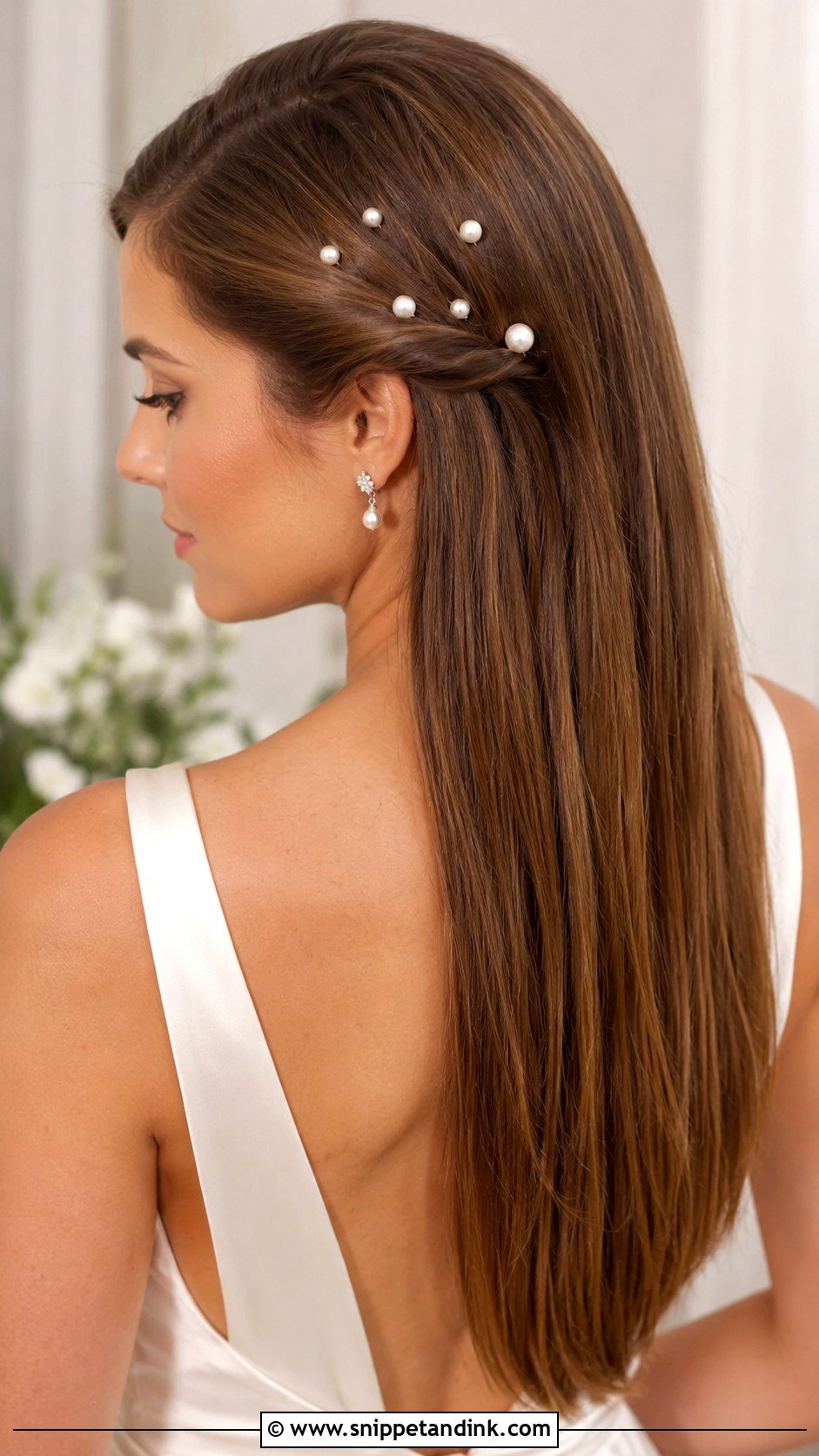
Pearls stand out sharply against straight hair, which is the reason to use them and also the risk. Every pin is visible, so uneven spacing shows. I line them behind one ear or set them along a half-up twist, and I use pins with a gentle wave in the shaft, because perfectly straight ones slide out of smooth hair. Keep everything around them glossy so they look deliberate. Pearl earrings and satin are their natural partners.
6. Long Straight Wedding Hair With Side Part
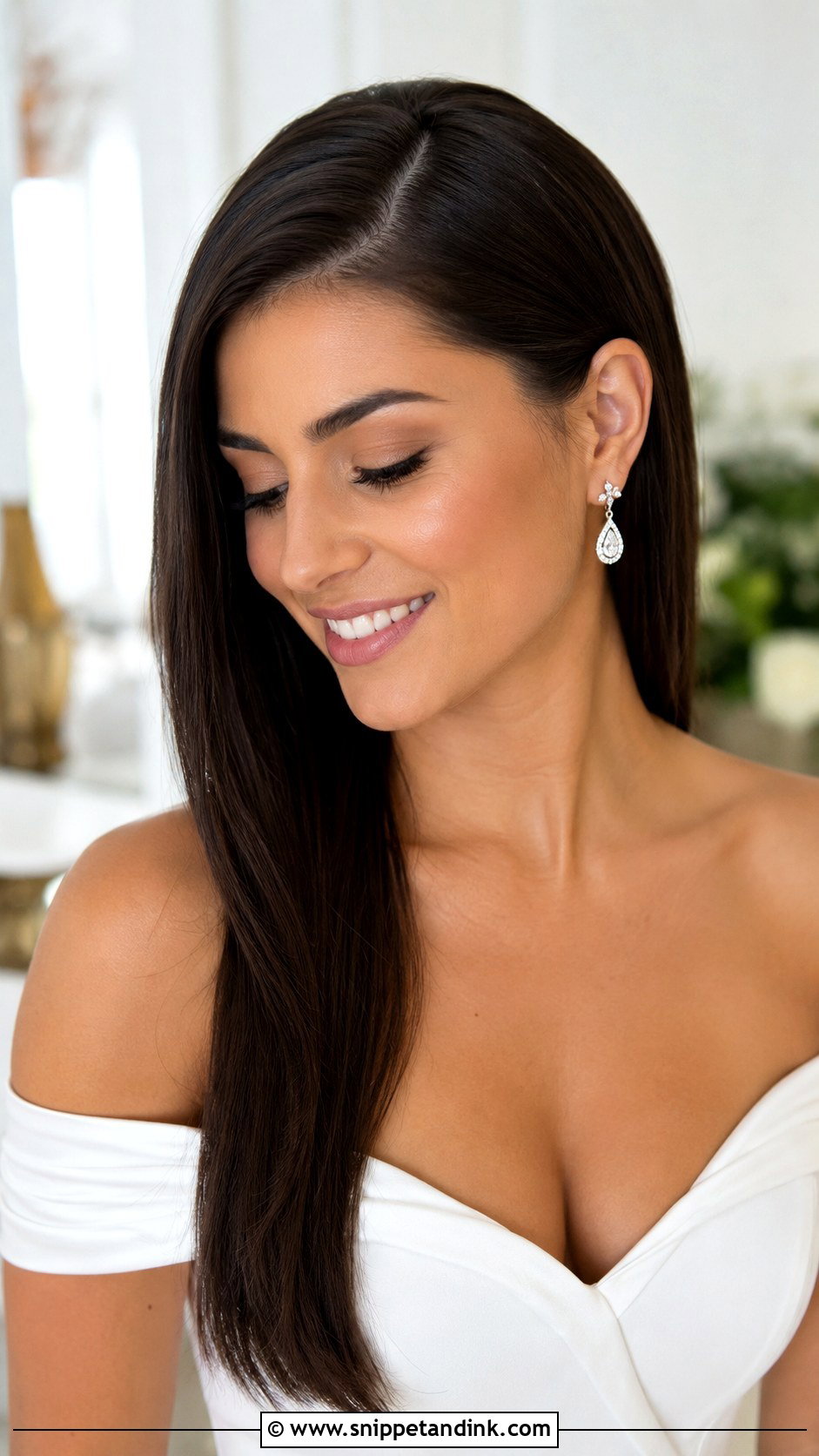
Switching to a deep side part gives straight hair instant lift at the root, because the hair is flipped against its usual direction. It’s the simplest fix I know for hair that lies flat. One side can be tucked behind the ear or left loose to swing. I smooth the ends with a drop of serum so the heavier side doesn’t look frayed, and it pairs naturally with one-shoulder gowns.
7. Low Ponytail Long Straight Wedding Hair
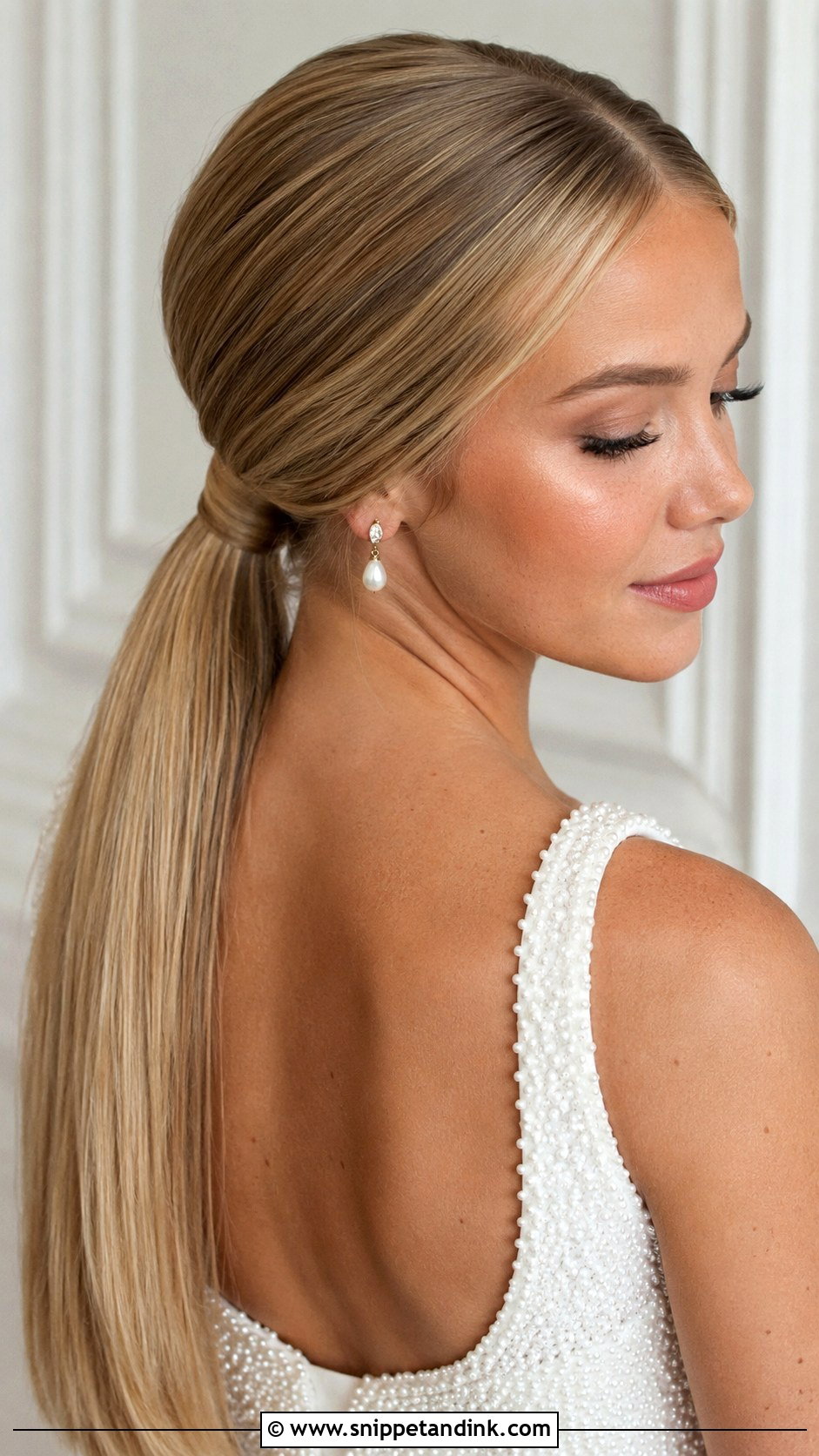
If you plan to dance hard, this is the one I’d suggest. A low ponytail keeps straight hair controlled while still showing the length, and nothing falls forward or needs fixing. I wrap a strand around the elastic and pin it underneath. A middle part reads modern, a side part softer. The ends look best with a slight inward curve from the iron, which stops the tail looking like a paintbrush.
8. Long Straight Wedding Hair With Face Framing Layers
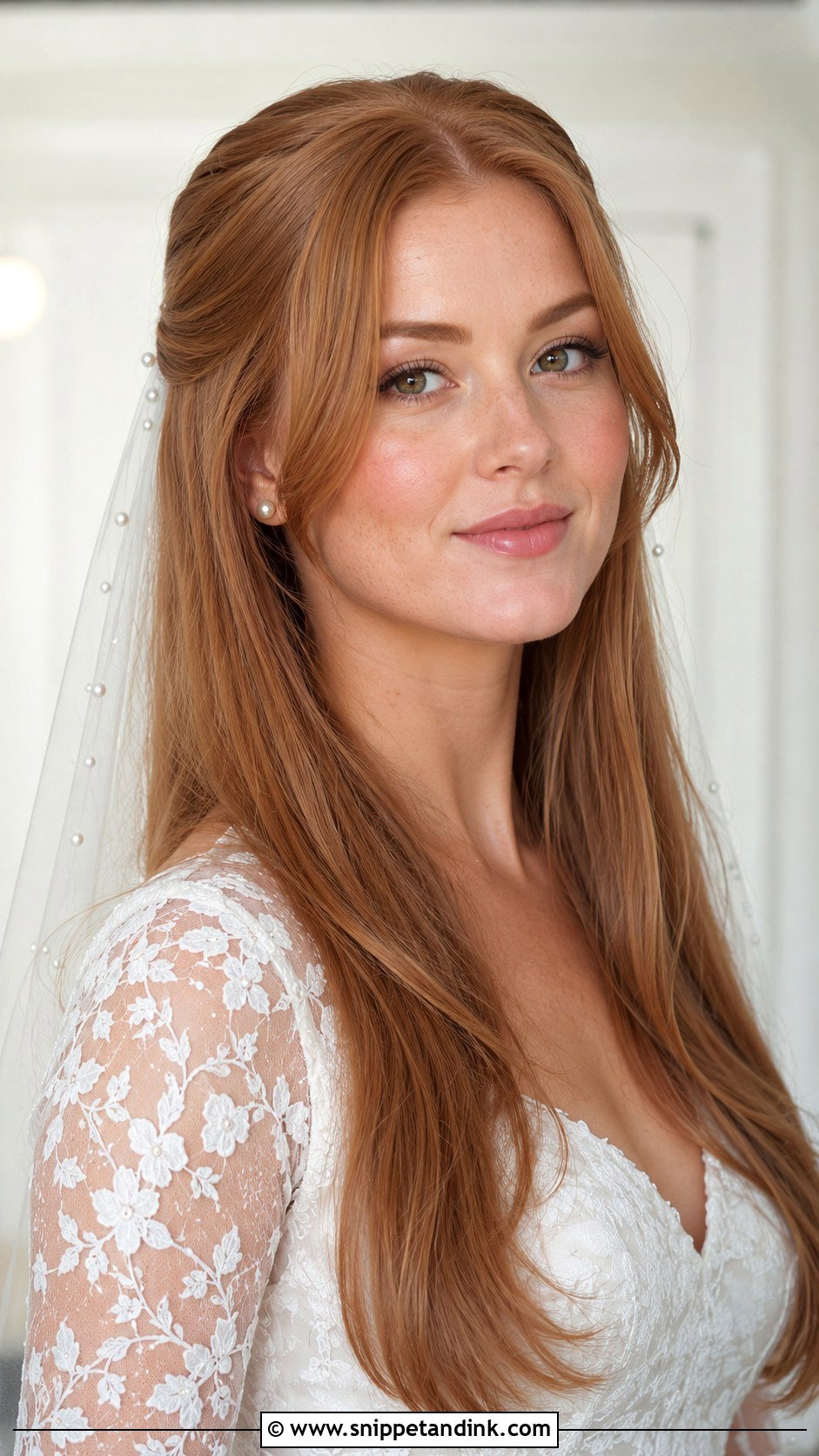
Face-framing layers add movement around the jaw and cheekbones without sacrificing length, and that movement is often exactly what straight hair is missing. They should be blended, never choppy. I blow-dry the front pieces over a round brush, bevelling them slightly inward so they fall toward the face. Have them cut a few weeks before, not the week of, so they lose that freshly cut stiffness. Fine hair gains the most, because the layers fake a little volume.
9. Long Straight Wedding Hair With Tucked Sides
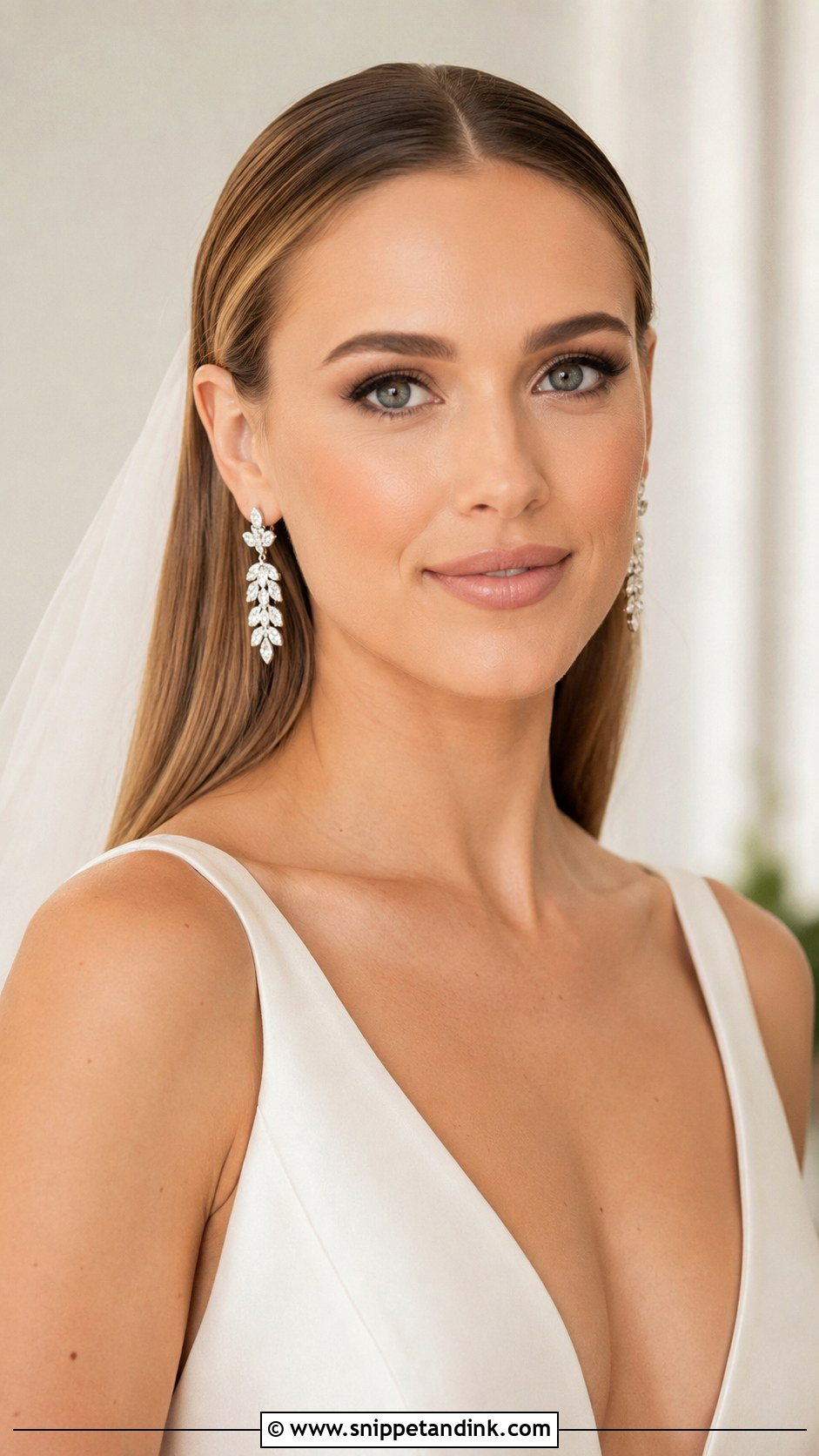
Tucking both sides behind the ears is a small move with a strong effect: the face and earrings become the focus. Tuck only one side and it softens. The trick is not flattening the top as you tuck. I keep a little root lift and slide a tiny hidden pin behind each ear so the tuck survives a hug. Pair it with a long veil and a clean, modern gown.
10. Long Straight Wedding Hair With Bridal Headband
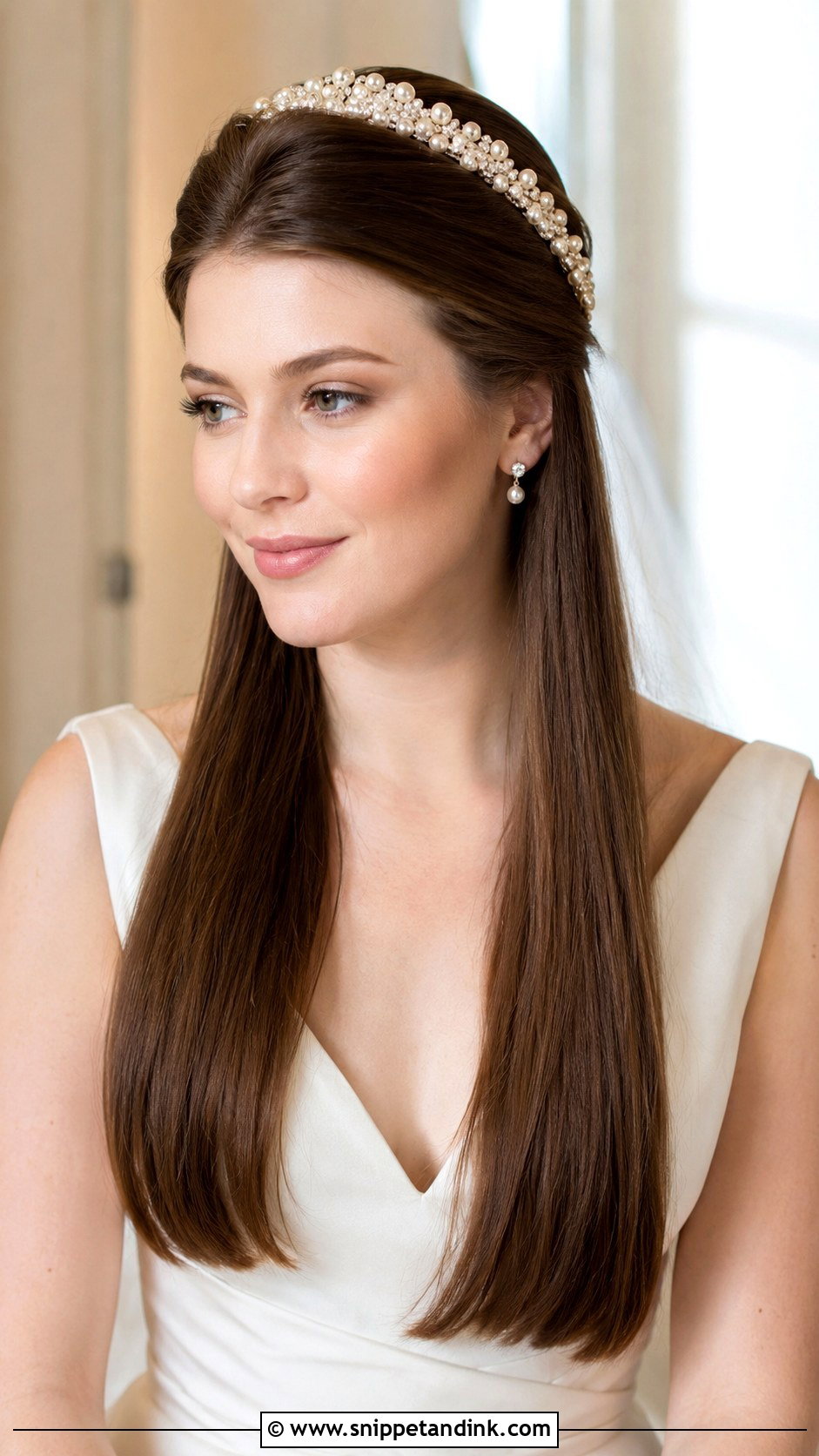
A headband is the quickest way to make straight hair look bridal, and it avoids pins altogether. It also holds the front flat through a long outdoor ceremony. Headbands do press into the scalp behind the ears, though, so wear yours for an hour at home before the wedding. A padded headband looks fashion-forward, while a thin pearl band looks delicate. I curve the ends slightly so the hair below the band looks finished.
11. Long Straight Wedding Hair With Blunt Ends
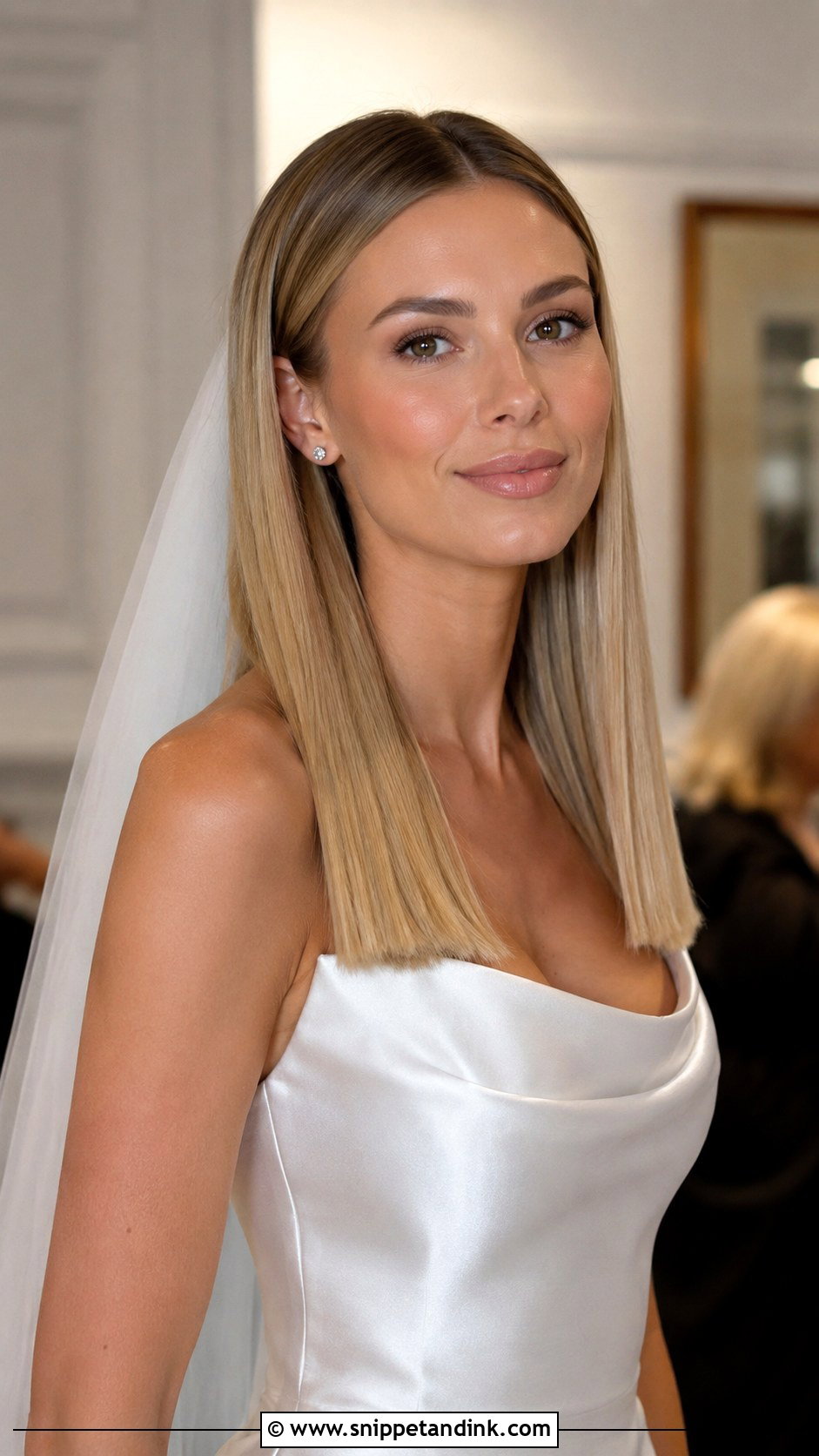
Blunt ends make long hair look thicker and healthier because the whole perimeter sits at one weight. On straight hair, that line becomes the main feature. Book the cut a week or two out so the edge is crisp without looking freshly shorn. A glassy shine, a clean part and a precise edge suit a minimalist gown. The drawback is that an uneven line shows instantly, so ask your stylist to check it with the hair dry and straightened, not only while it’s wet.
12. Long Straight Wedding Hair With Crown Braid
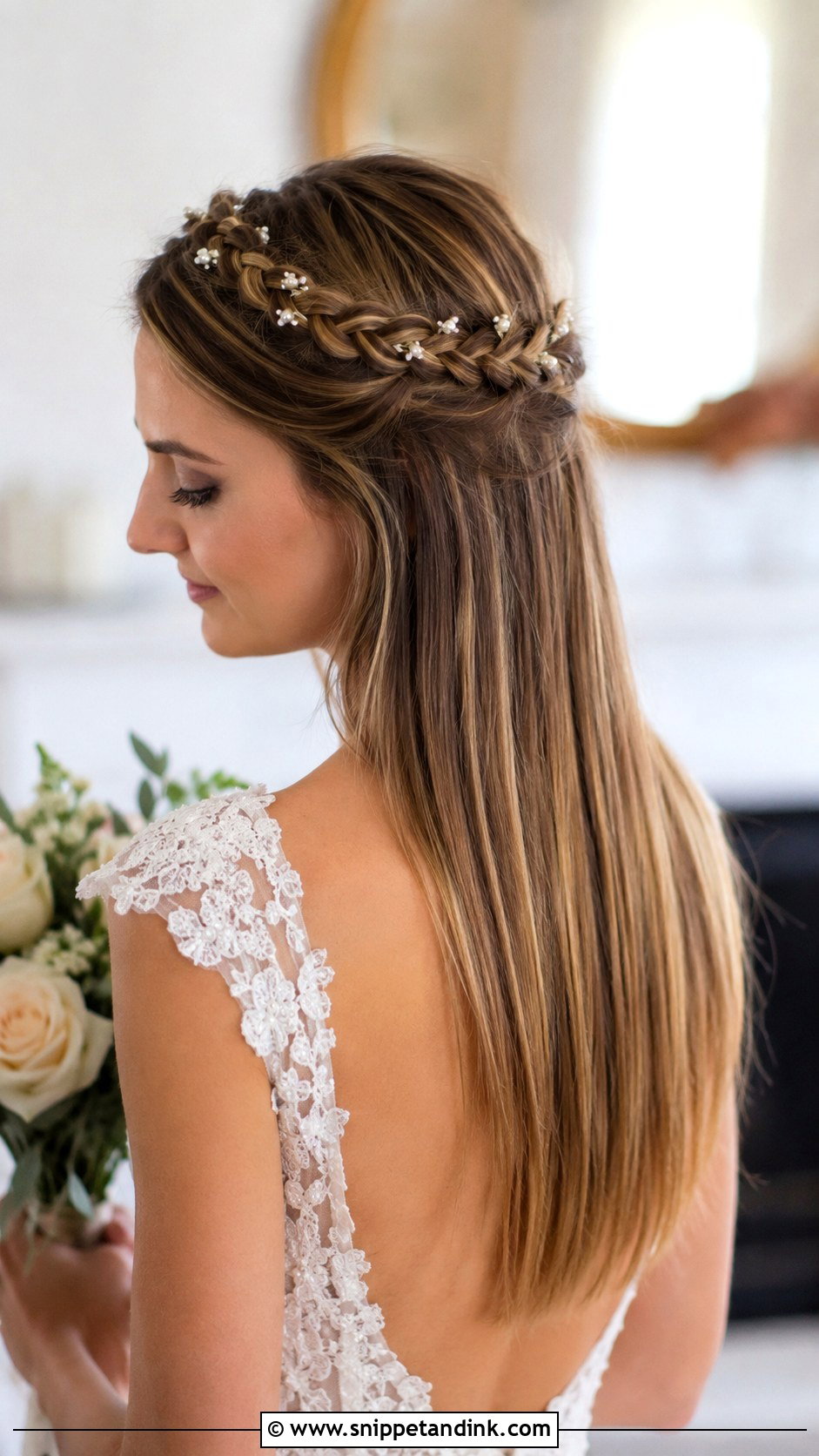
A crown braid on straight hair gives a halo of texture while everything else stays smooth, so you get a touch of boho without waves. Straight hair is slippery to braid, though. I mist texture spray on the braiding section only and keep the plait slightly loose, which looks softer and doesn’t pull. Tiny pearl pins or small floral accents can sit along it for a garden wedding.
13. Long Straight Wedding Hair With Low Bun
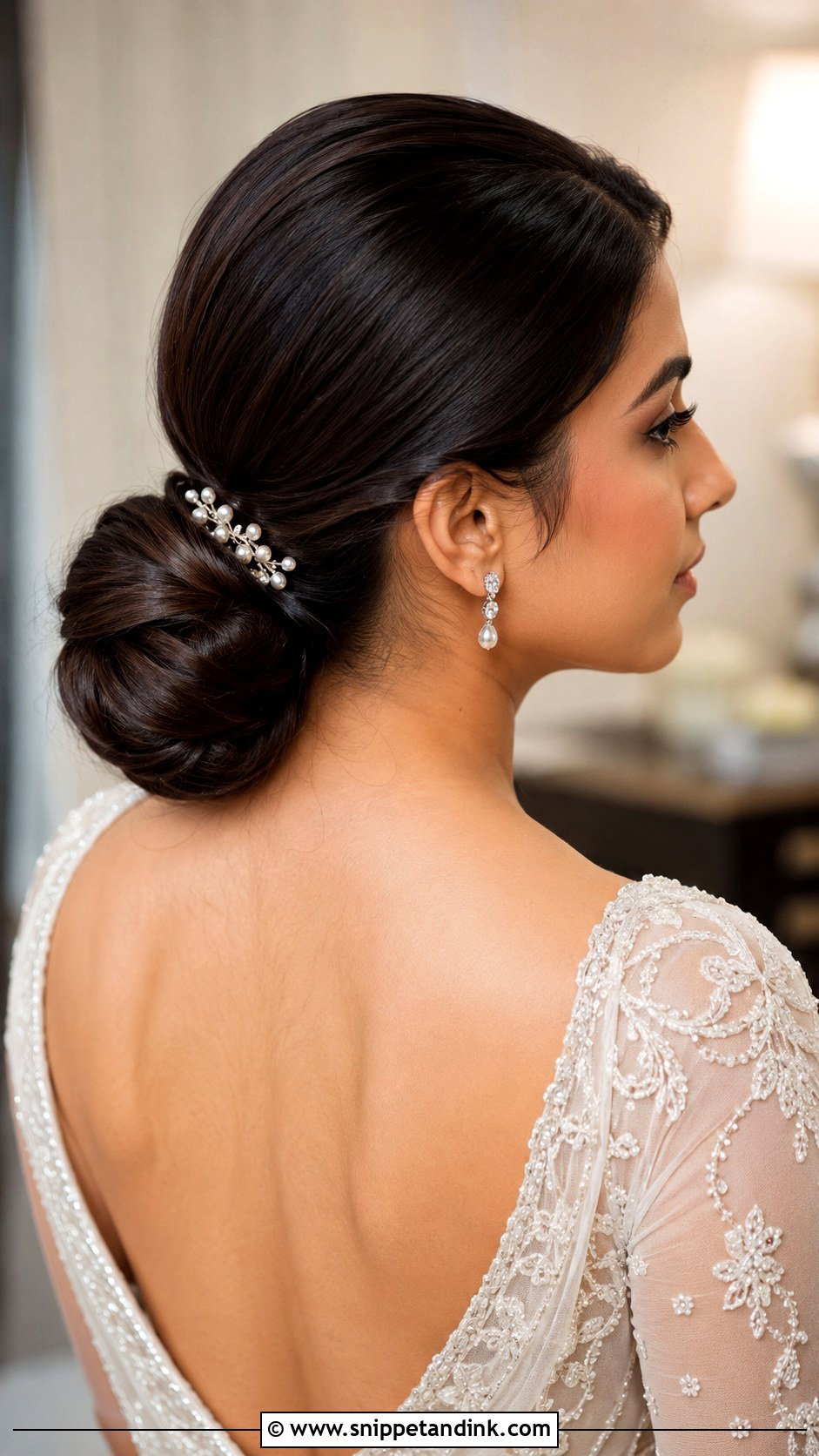
Want straight hair’s smoothness but need an updo for the ceremony? A low bun answers that, and straight hair makes a clean bun with less bulk and frizz than textured hair. It can be pulled tight or softly wrapped. I secure it with U-pins rather than bobby pins, since U-pins hold the shape without flattening it. A veil comb sits above or below the bun, and the open neckline suits high necks and detailed backs.
14. Long Straight Wedding Hair With Side Clip
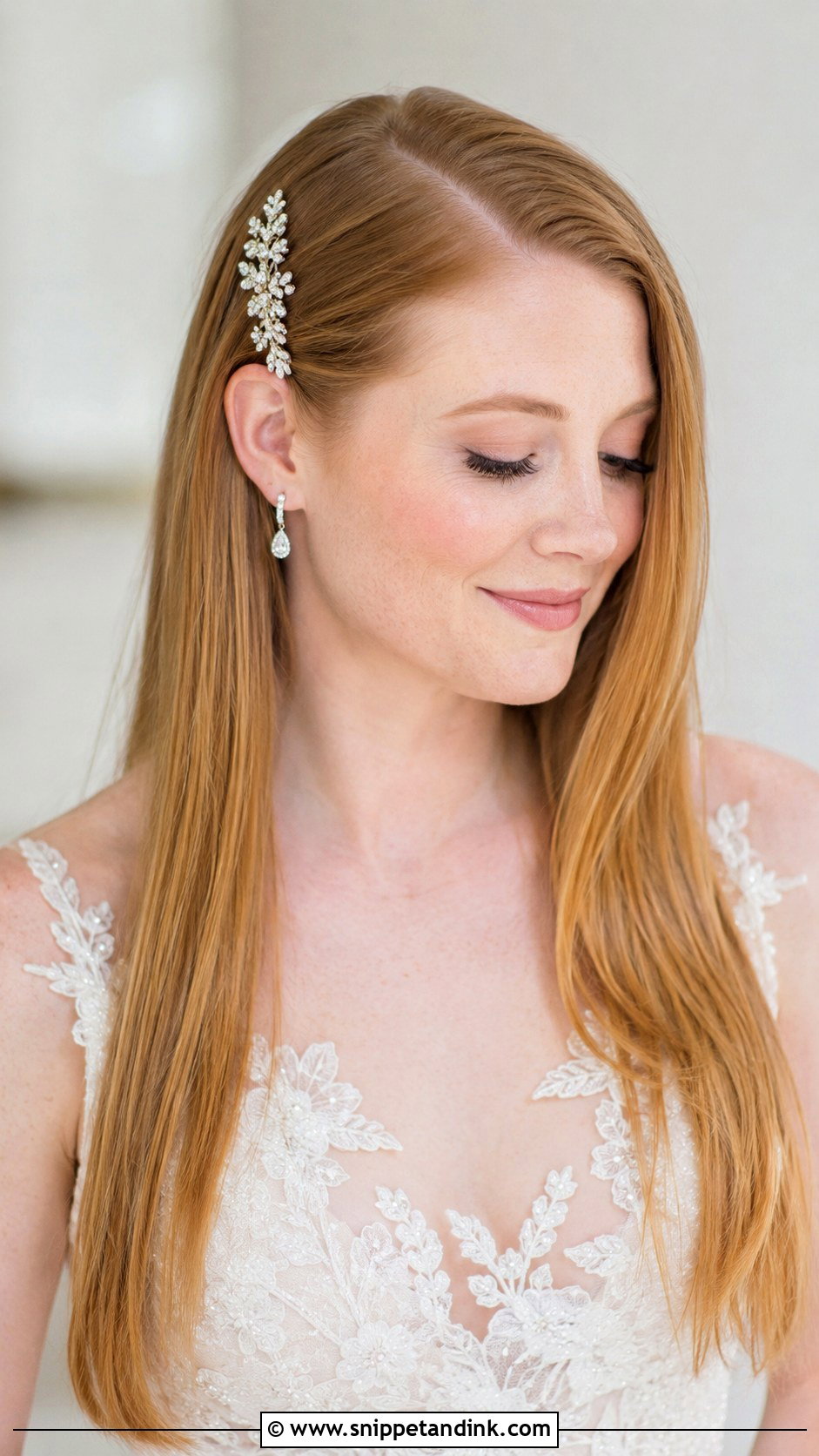
A single side clip gives straight hair the asymmetry that makes it look styled. Choose one material that relates to your dress or earrings. The clip needs a clean part and smooth hair around it, otherwise it looks dropped in. On fine hair, go lighter; a heavy piece slides down within the hour. I anchor every clip over a pair of crossed bobby pins so it has something to grip.
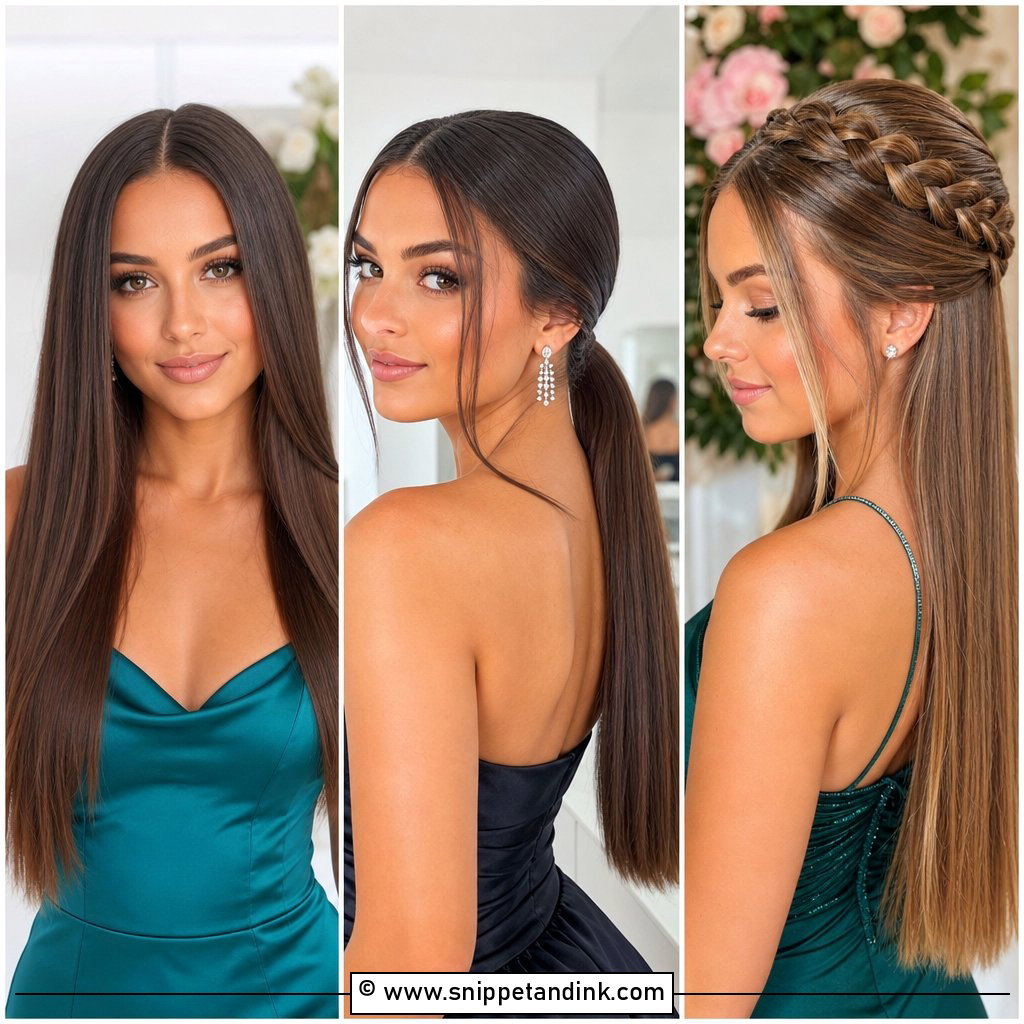
15. Long Straight Wedding Hair With Soft Ends
Soft ends are for the bride who finds fully flat hair too plain but doesn’t want curls. I bend the ends under or away from the face with a round brush or flat iron, which adds shape near the shoulders, and a flexible spray holds the bend without crunch. It’s also the easiest finish here to maintain, since a quick pass of the fingers resets it.
Oil, Static and Flat Roots by Evening
Should I wash my hair on the wedding morning?
Usually not. Freshly washed straight hair is slippery and won’t hold pins or a tuck. I prefer hair washed the day before, so a little natural grip has come back. If your roots turn oily within a day, wash the night before and work dry shampoo into the roots on the morning before styling, not after.
What stops the veil from causing static?
Tulle against dry, smooth hair builds static quickly, especially in heated winter venues. A tiny amount of hand cream rubbed between your palms and smoothed over the lengths calms it. So does a light mist of hairspray on a brush.
How do I lift flat roots before the reception?
Flip your part to the other side for a minute, mist the roots with dry shampoo, then flip it back. That restores some height without anyone needing a hot iron in the venue bathroom.
Is Straight Hair Too Plain for a Wedding?
Straight hair is more versatile than its reputation. It can be sleek, soft, or dressed with pearls, braids and ponytails, and it keeps its shape through humidity and hugs better than curls do. Work with your texture instead of forcing curls that won’t last. Book the trim, plan the shine, and give every accessory crossed pins to grip. Those three things are what make straight hair look like a choice.
You'll Like These Ideas:


Leave a Reply