
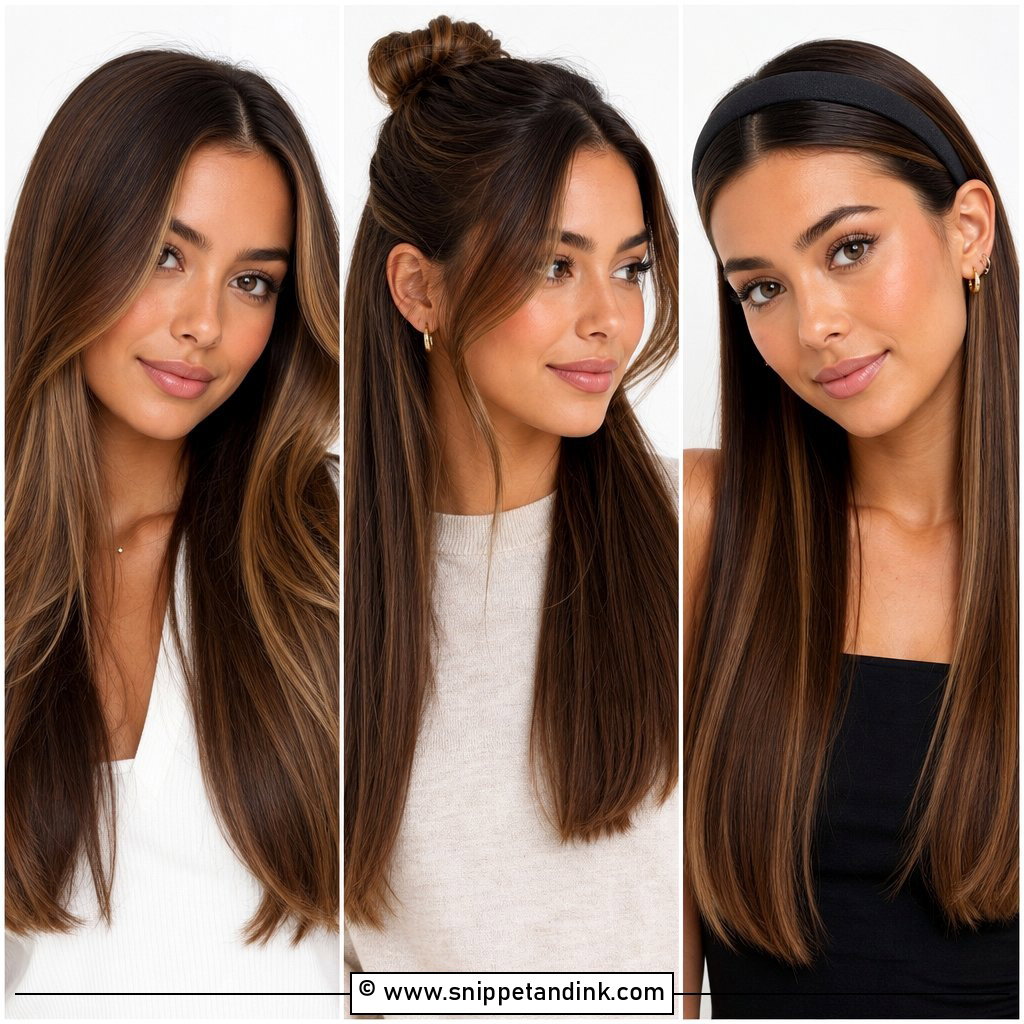
Wearing straight hair down is what I see most often from brides who never curl their hair at home, and it can look every bit as finished as an updo. What makes it bridal is shape: a clean part, ends that sit neatly against the dress, a little life at the crown and perhaps one accessory. Below are 20 ways I’d style it, from a glossy middle part to a braided half-up, with notes on what each length and density needs. Bridesmaids and guests with straight hair can borrow most of them too.
Adding Length and Density With Extensions
Hair worn down shows its density more than any updo, and fine straight hair can look thin against a full skirt or a long veil. Extensions are common for weddings, and I’d decide on them early, at or before the trial, never in the final week.
Clip-ins
Clip-ins are the simplest. They go in on the morning, come out at night, and you can test them at your trial. Match the colour in daylight rather than under bathroom lights, and have your stylist blend the ends into your own so there’s no visible step where your hair stops. On straight hair a clip can show as a bump, so I place the top row at least a finger’s width below the part.
Tape-ins and halo pieces
Tape-ins look natural worn down, but they need fitting a week or two ahead so they settle, and the tapes can show in a half-up style. A halo extension sits on a fine wire and doesn’t attach to your hair at all. It’s comfortable for a long day, but it won’t work with half-up looks or a veil comb high on the crown.
Whatever you choose, extensions add weight. If your own hair is very fine, add the volume you need rather than the length you’ve seen in photos.
1. Straight Wedding Hair Down With Middle Part
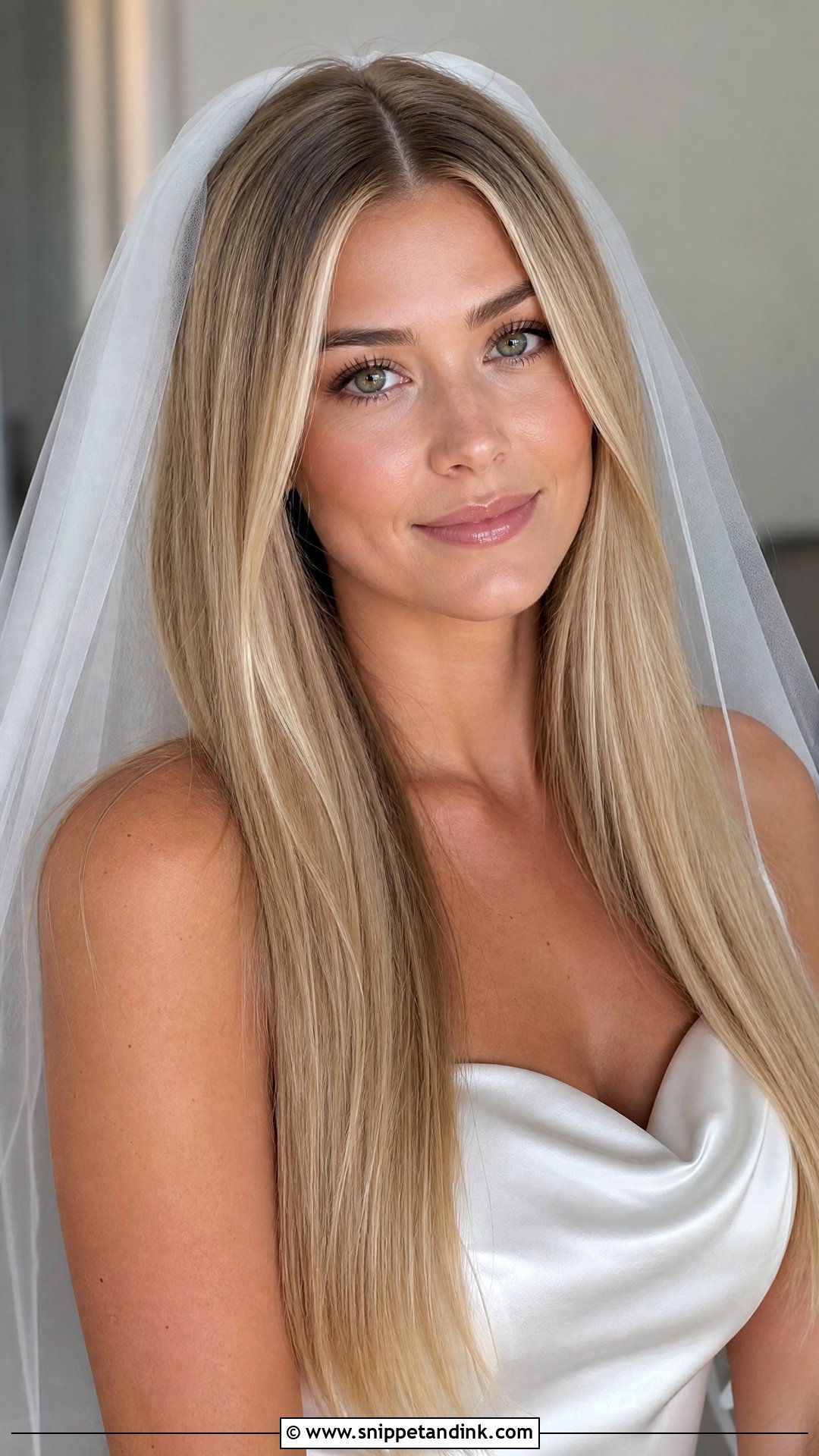
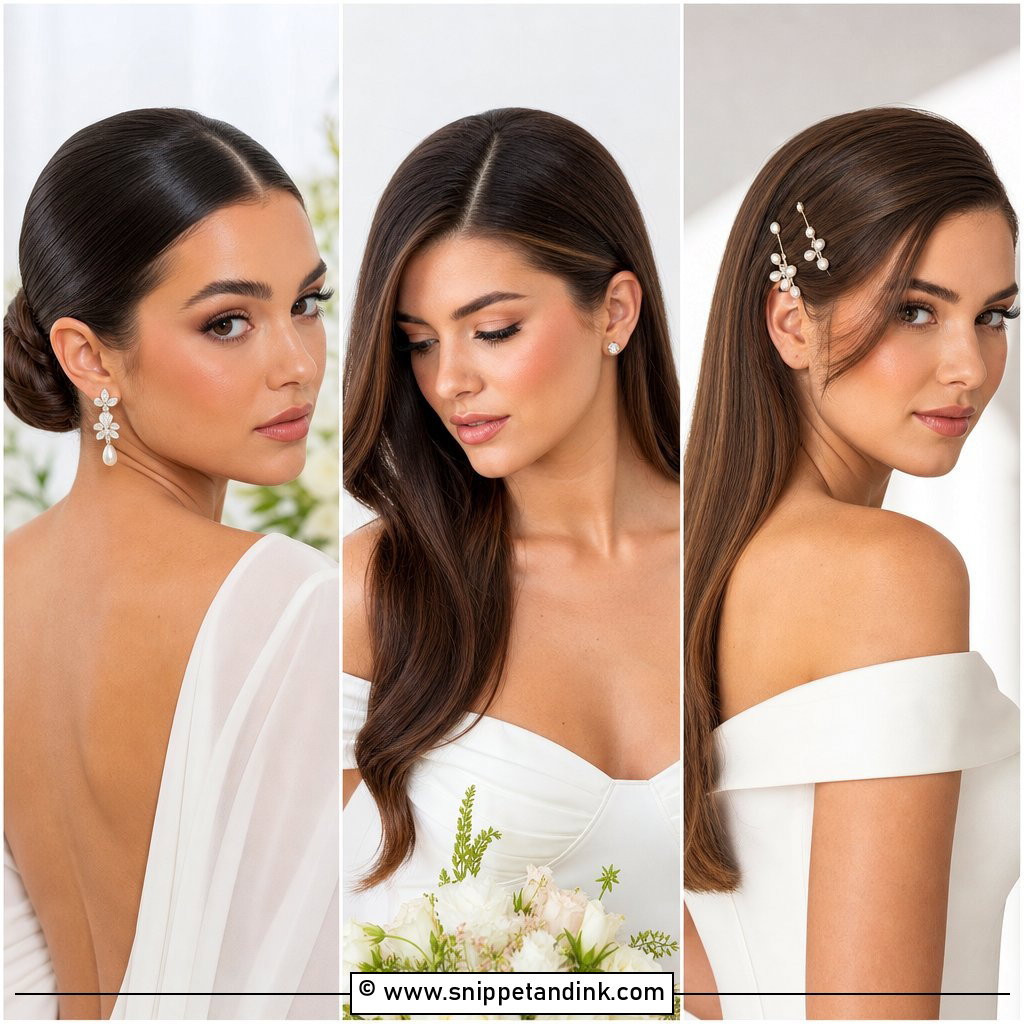
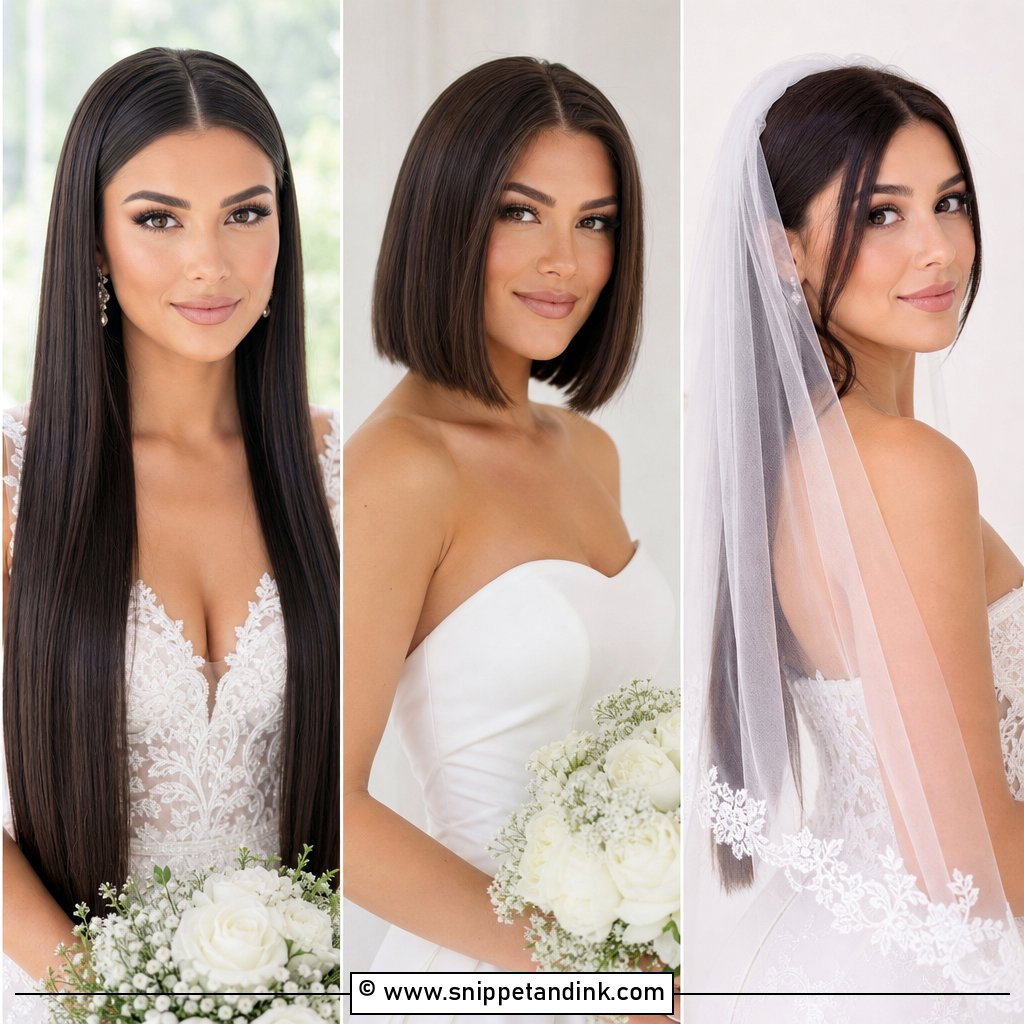
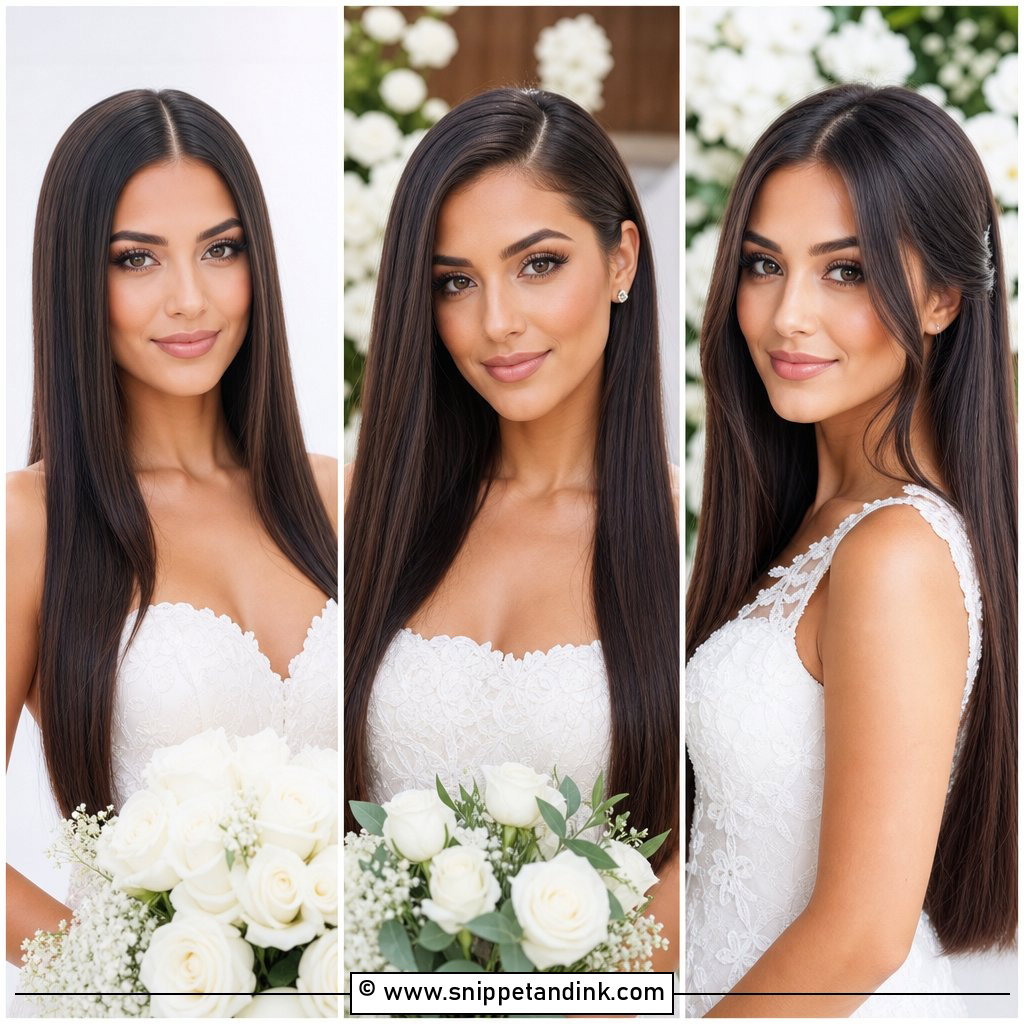
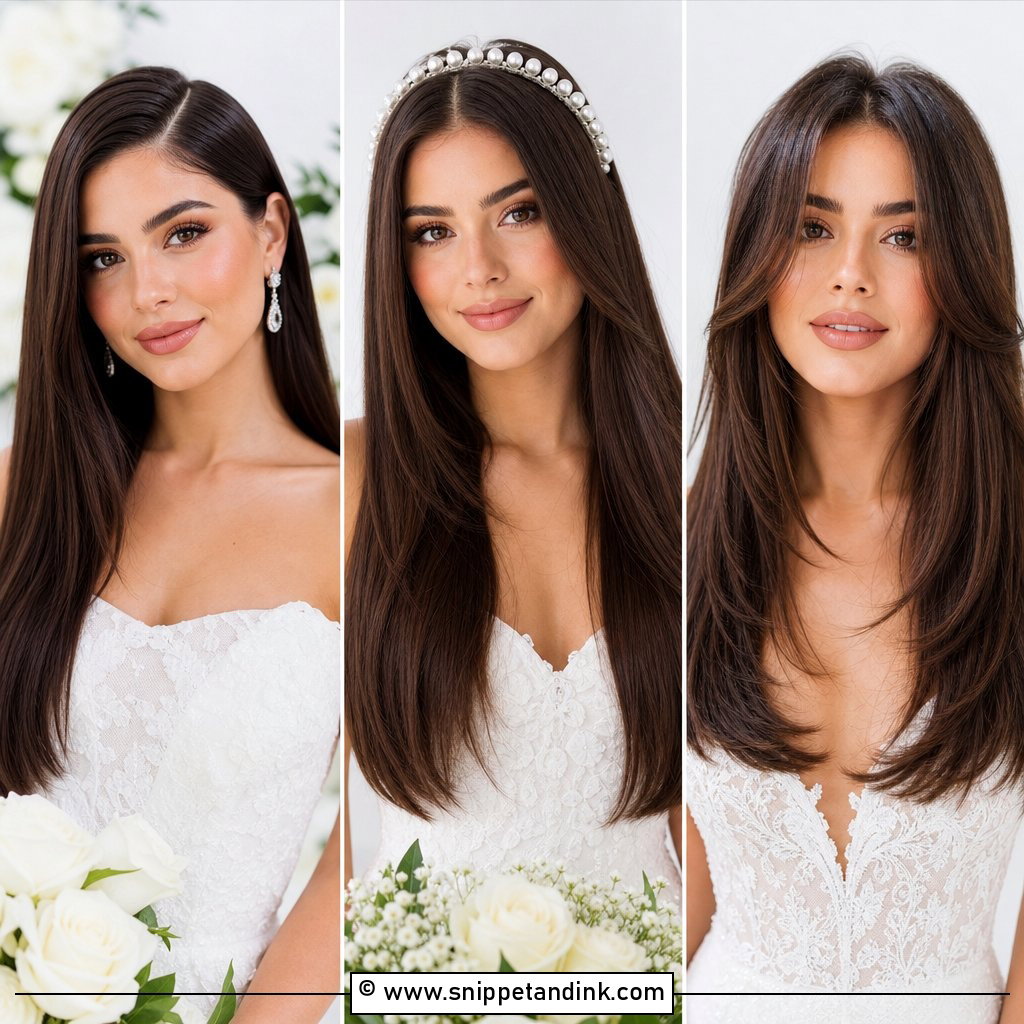
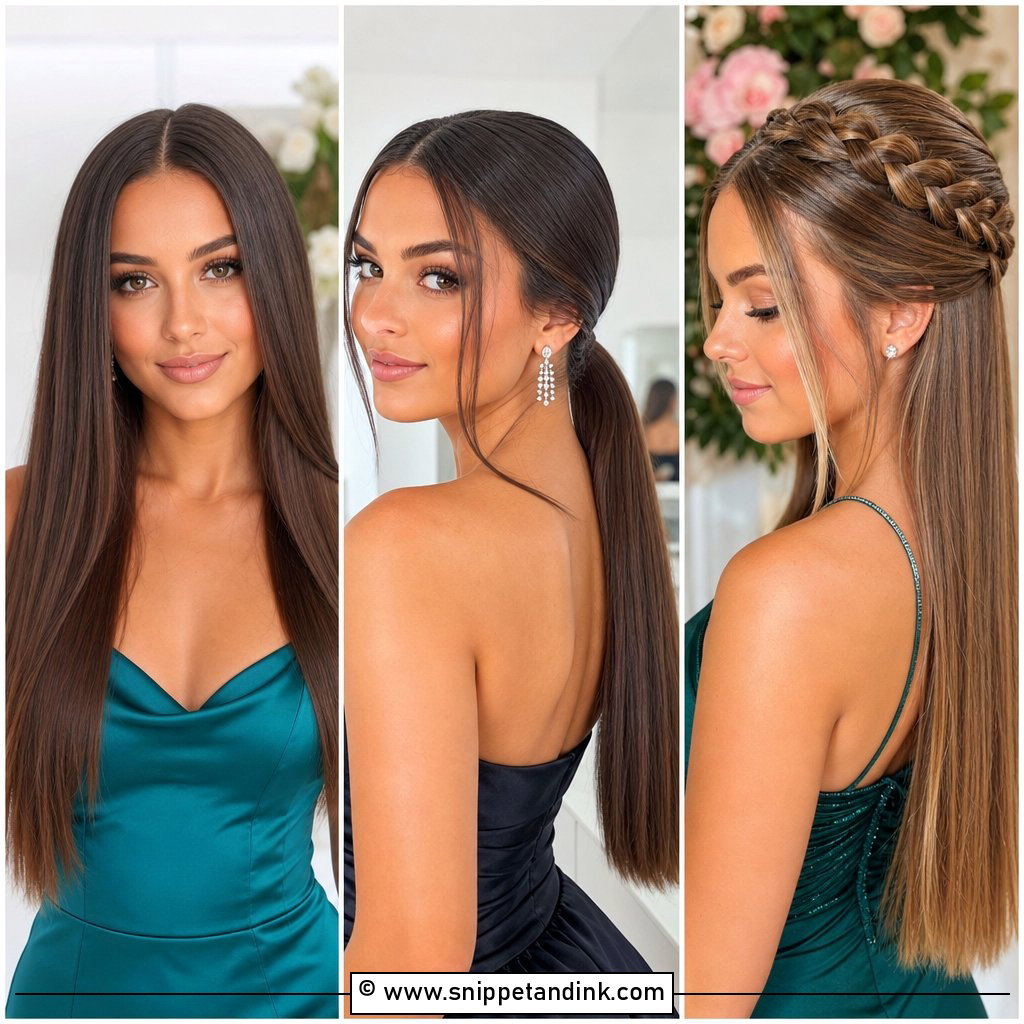
The center part is where I’d start if your dress is clean-lined, strapless, square-neck or high-neck, because the symmetry echoes the gown. It only works if the ends are even, so I check them from behind before anything else and tidy any uneven pieces at the trial. Face-framing pieces should melt into the length; short, sharp layers look choppy next to a smooth part. I use a light smoothing cream and a humidity spray rather than heavy oil, which separates the hair into strands by evening. With simple makeup and statement earrings, it’s the definition of quiet luxury.
2. Straight Wedding Hair Down With Side Part
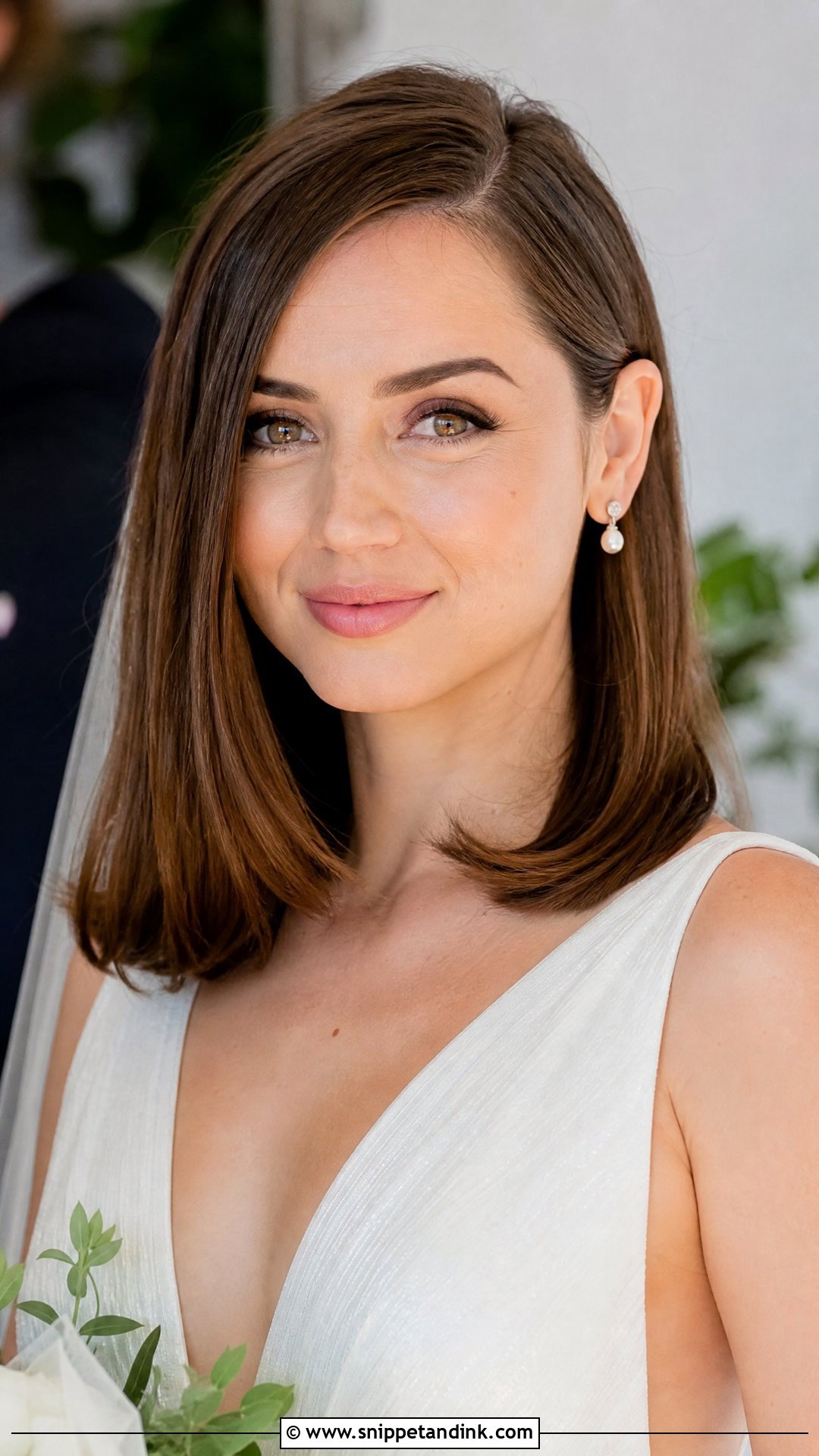
A side part lifts the hair at the root without any teasing, simply because the hair is flipped over the part. I ask brides which side of their face they prefer in photos and place the part so that side stays open. Tucking the open side behind one ear shows off earrings, a lace neckline or a single pin. Deep reads glamorous; a soft part reads relaxed. Bevel the ends under so the length doesn’t look flat in profile.
3. Long Straight Wedding Hair Down
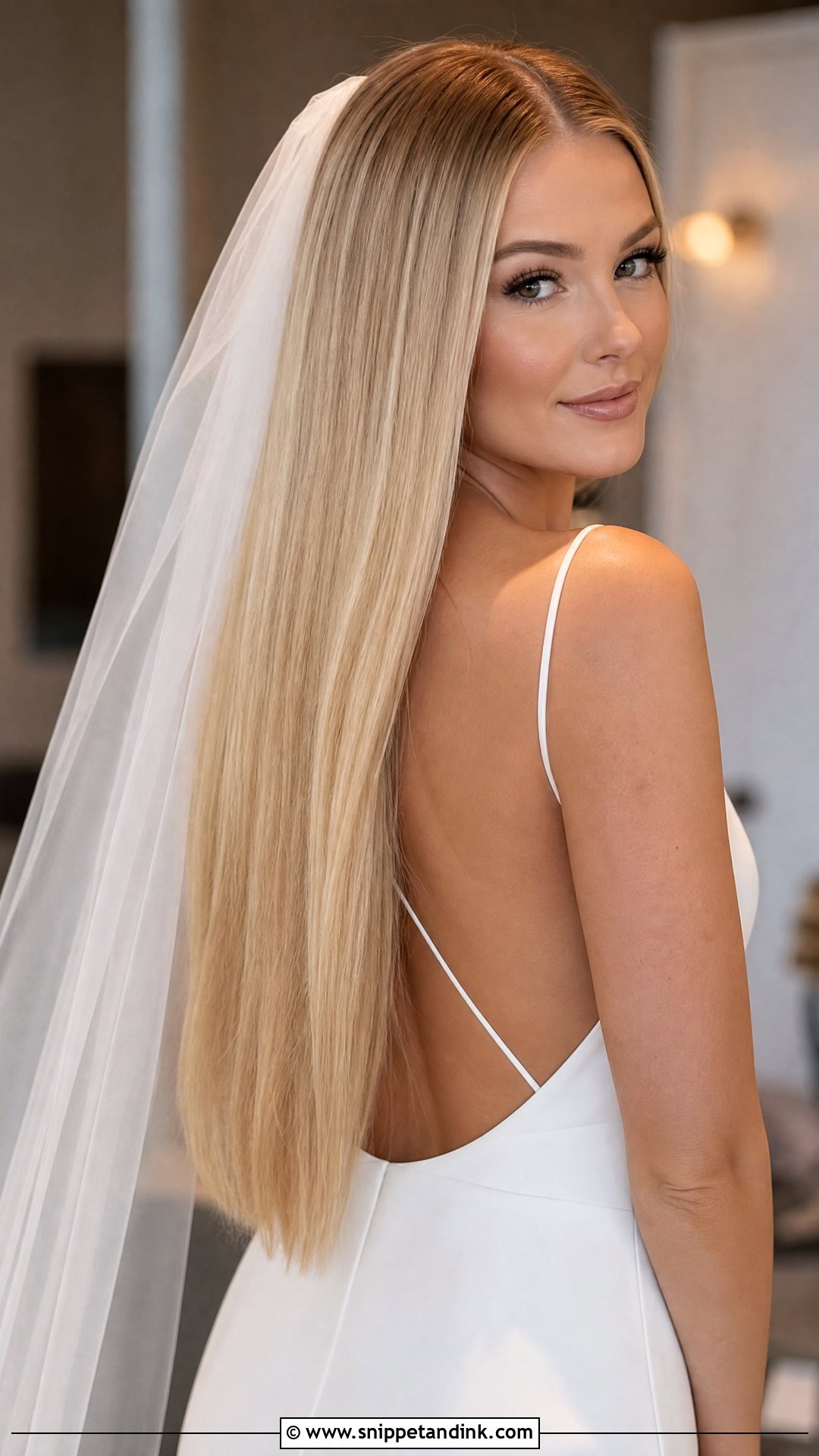
Very long hair is its own accessory, and it shows its condition more than any other length. A trim a couple of weeks before the wedding removes the thinned, see-through ends that make mid-back or waist-length hair look sparse in photos. I keep the finish touchable, with serum on the bottom third only. A hidden veil comb at the crown sits well here, since the length gives the tulle something to fall alongside, and an open back lets the hair become the line down the dress.
4. Medium Straight Wedding Hair Down
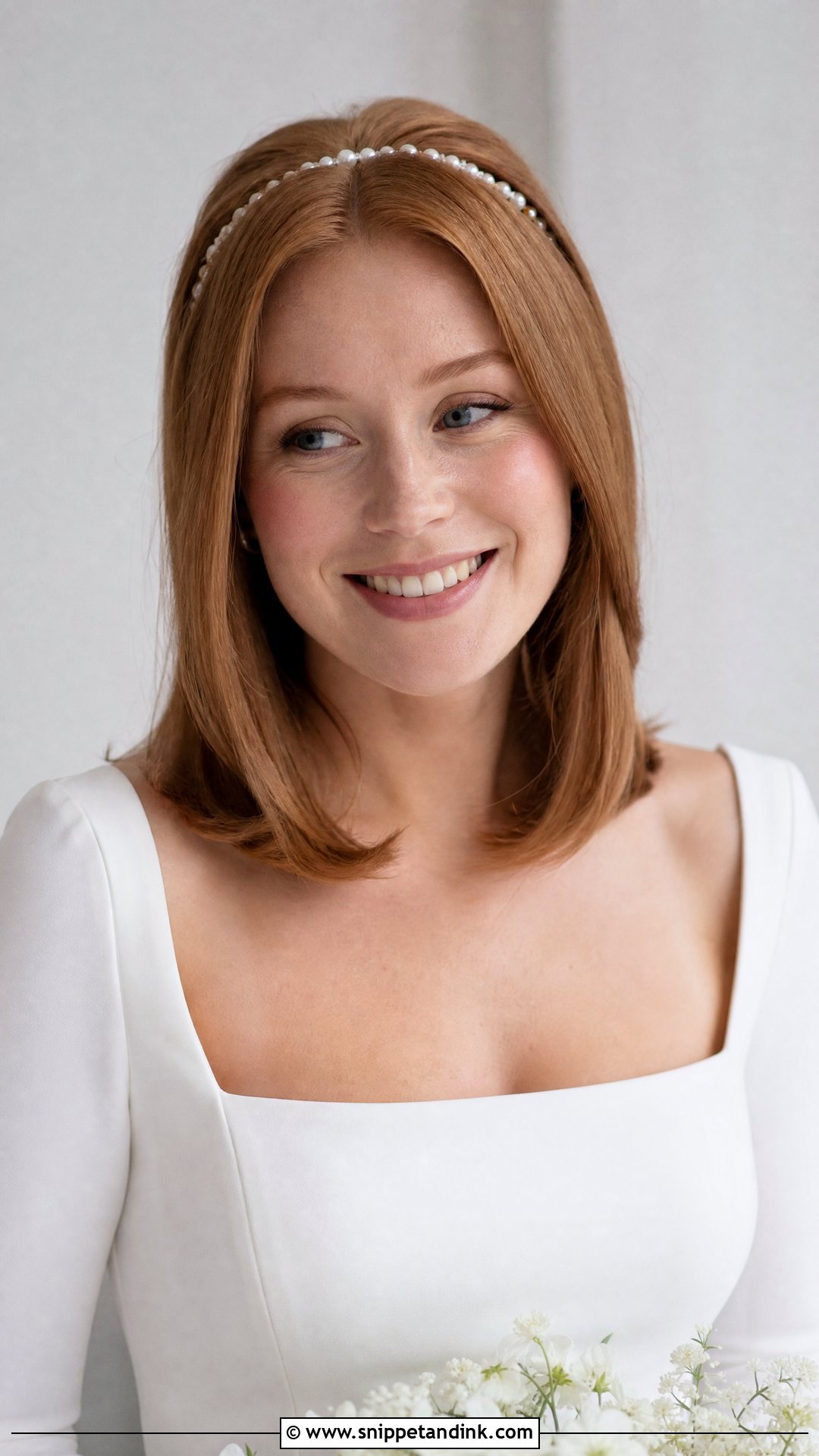
Collarbone length is the most practical length to wear down. It frames the neckline without covering the bodice detail. I blow-dry it smooth with a round brush, then do a single flat-iron pass, turning the ends slightly under so they don’t flip on the shoulders. Fine hair at this length goes flat by afternoon, so I lift the crown at the root. A slim headband or a veil set just above the crown is all the decoration it needs, and bridesmaids with similar lengths can copy it easily.
5. Short Straight Wedding Hair Down
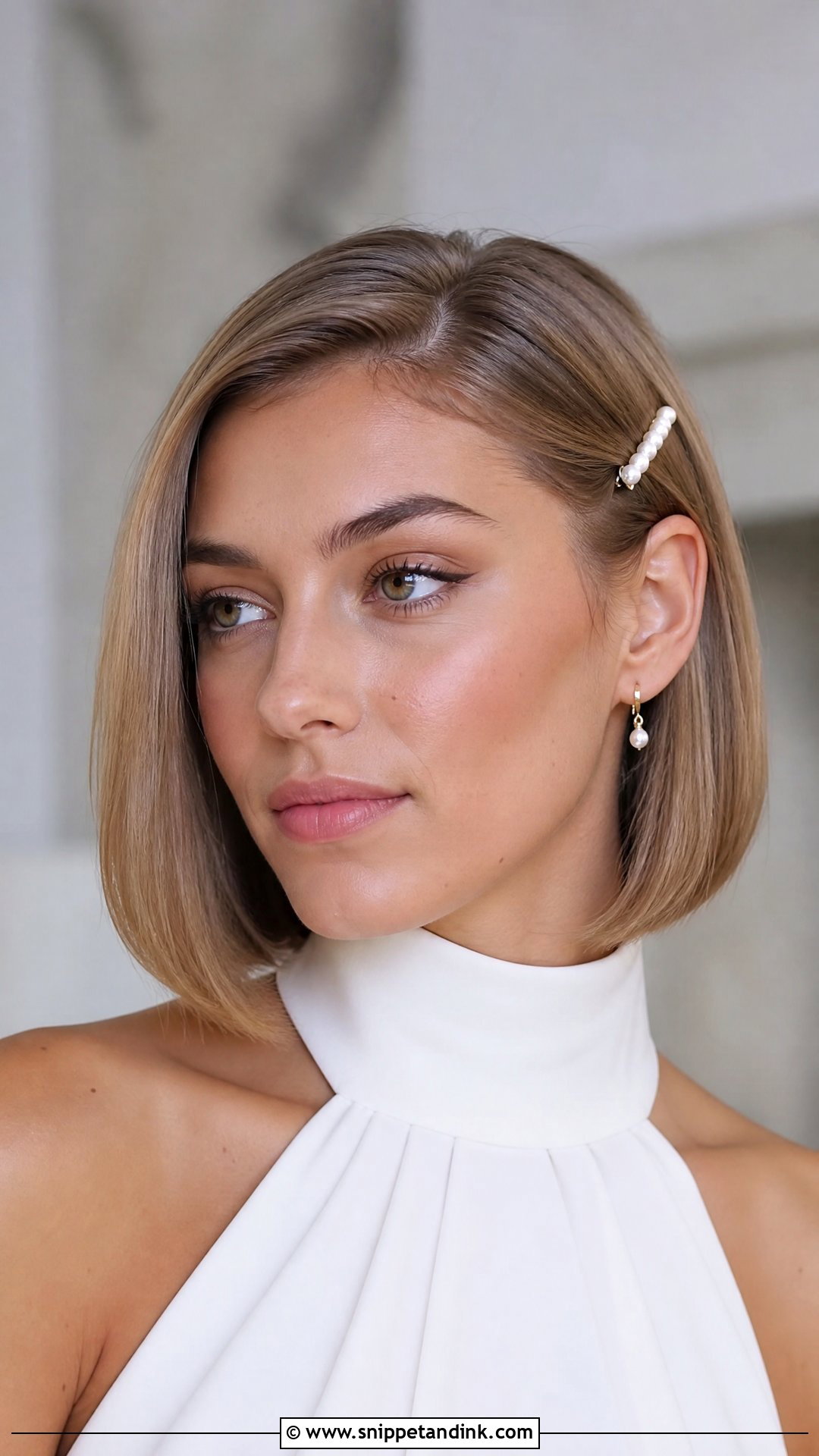
Short straight hair looks bridal when the cut looks intentional, which means booking a trim about a week before rather than relying on a cut that’s grown out of shape. Sleek bobs, tucked pixie-bobs and jaw-length cuts all work, and a pearl clip on a side tuck or a clean middle part dresses them up. Short hair stays neat in heat with very little product. With a high neckline or one of the birdcage veils, the cut and the veil become the whole look, so I keep the finish crisp and the volume modest.
6. Straight Wedding Hair Down With Veil
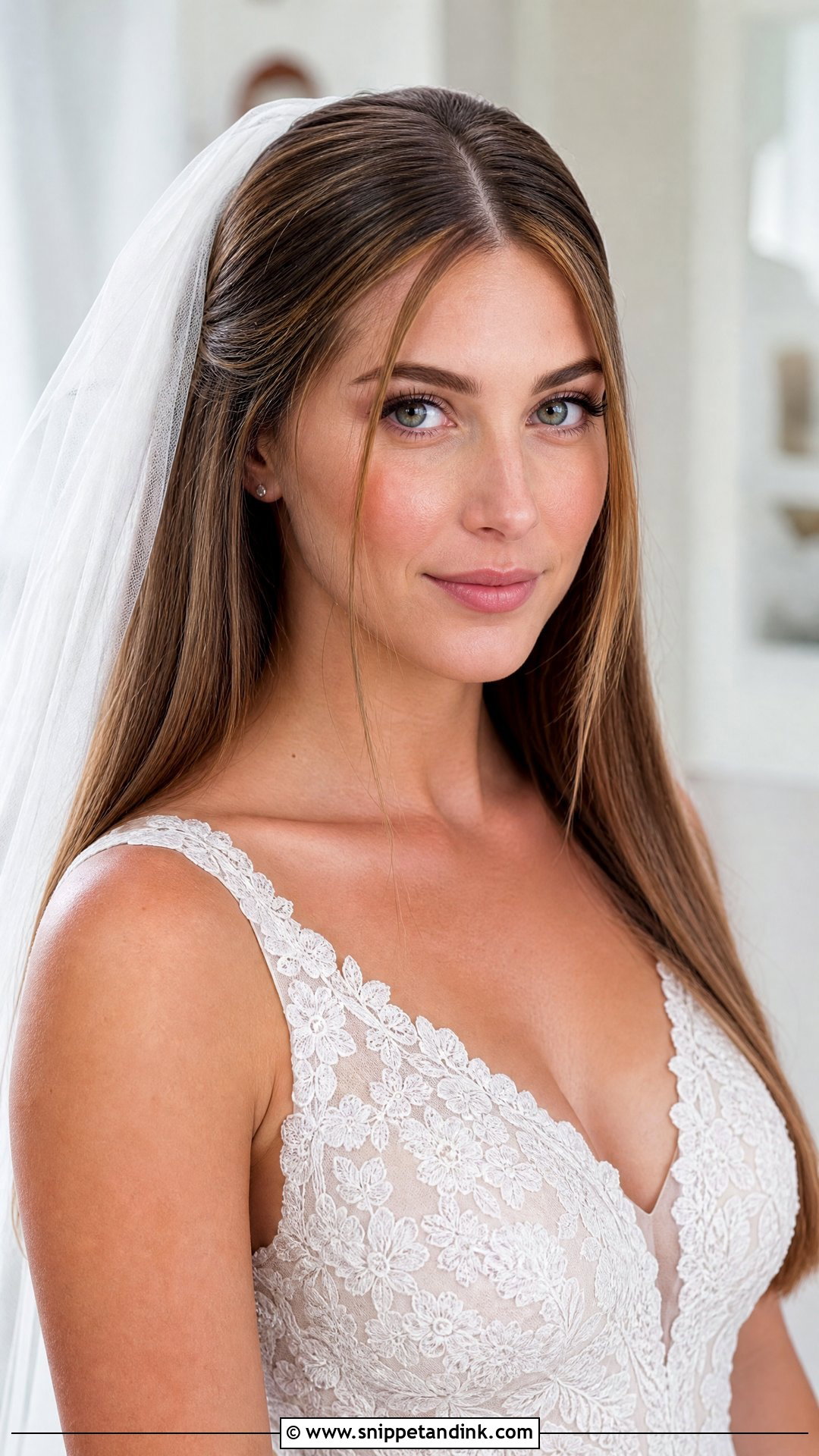
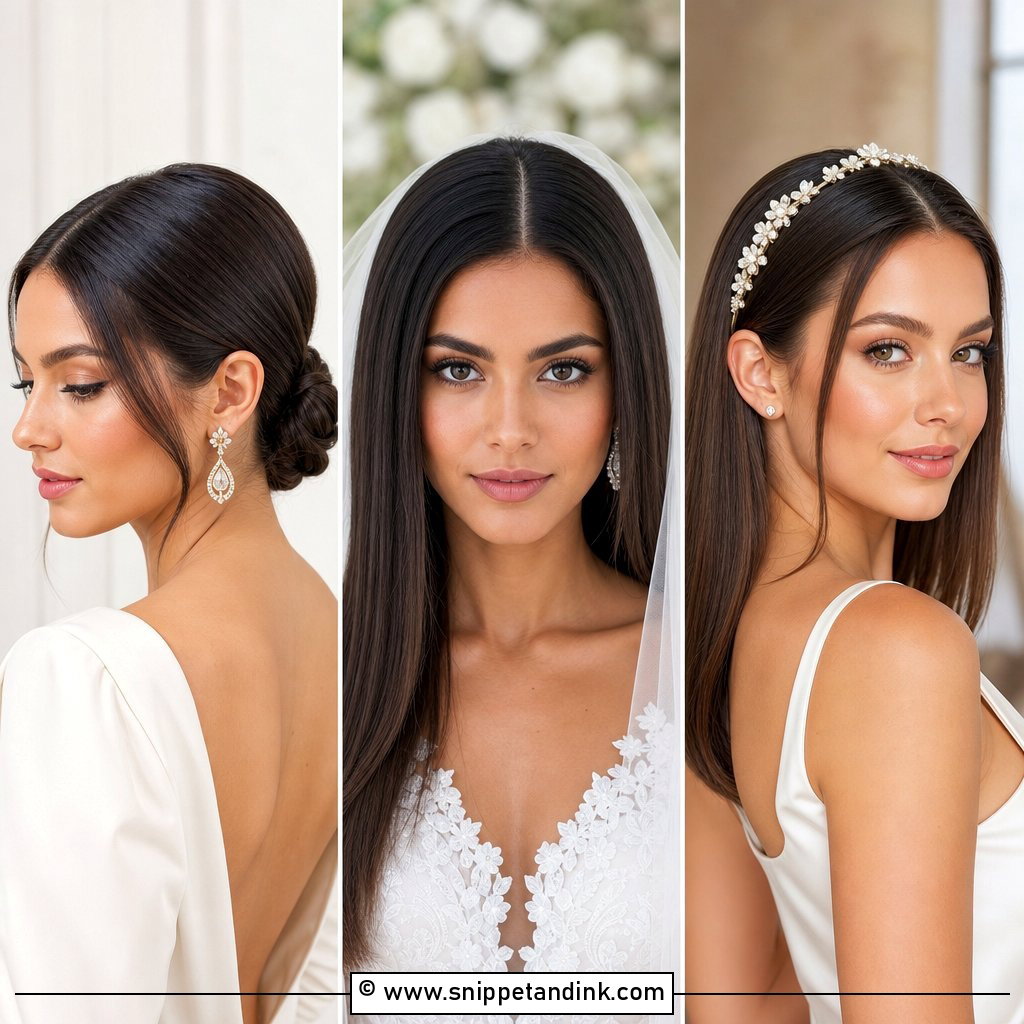
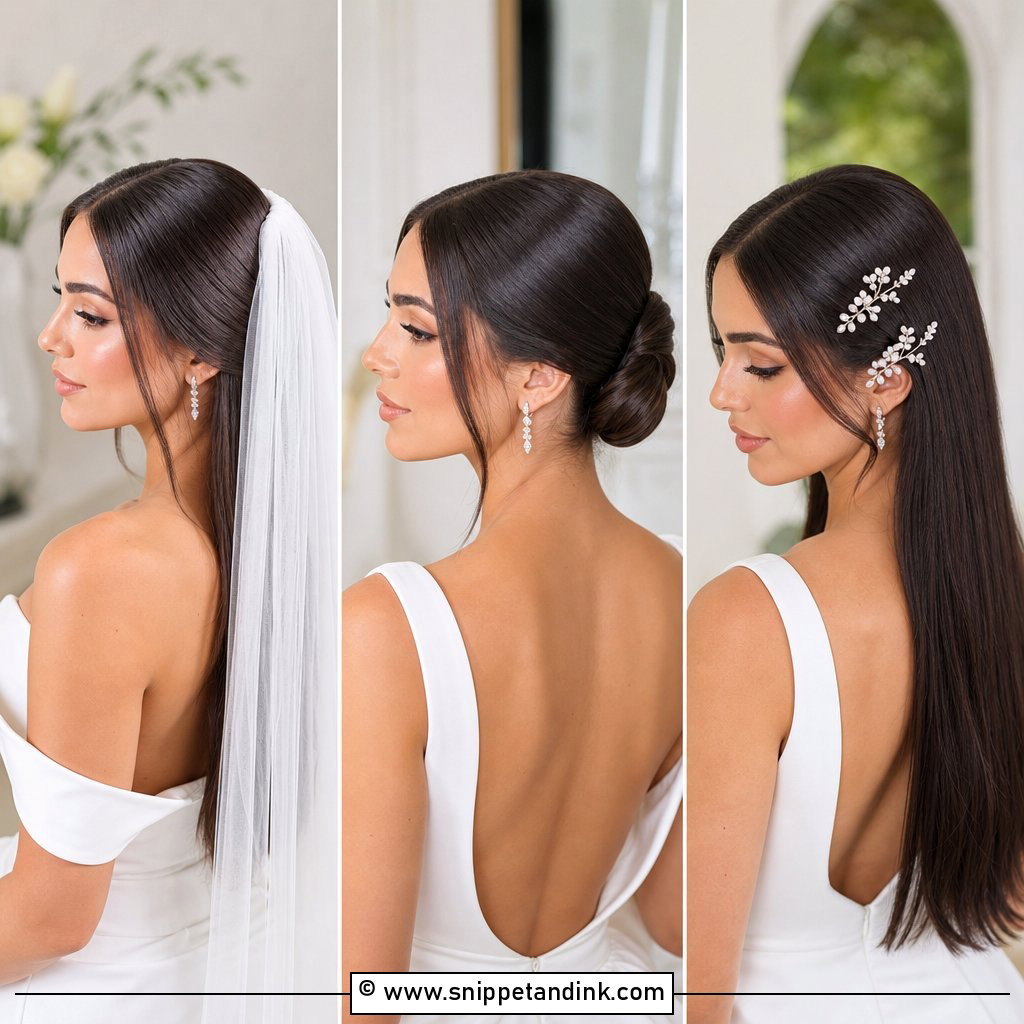
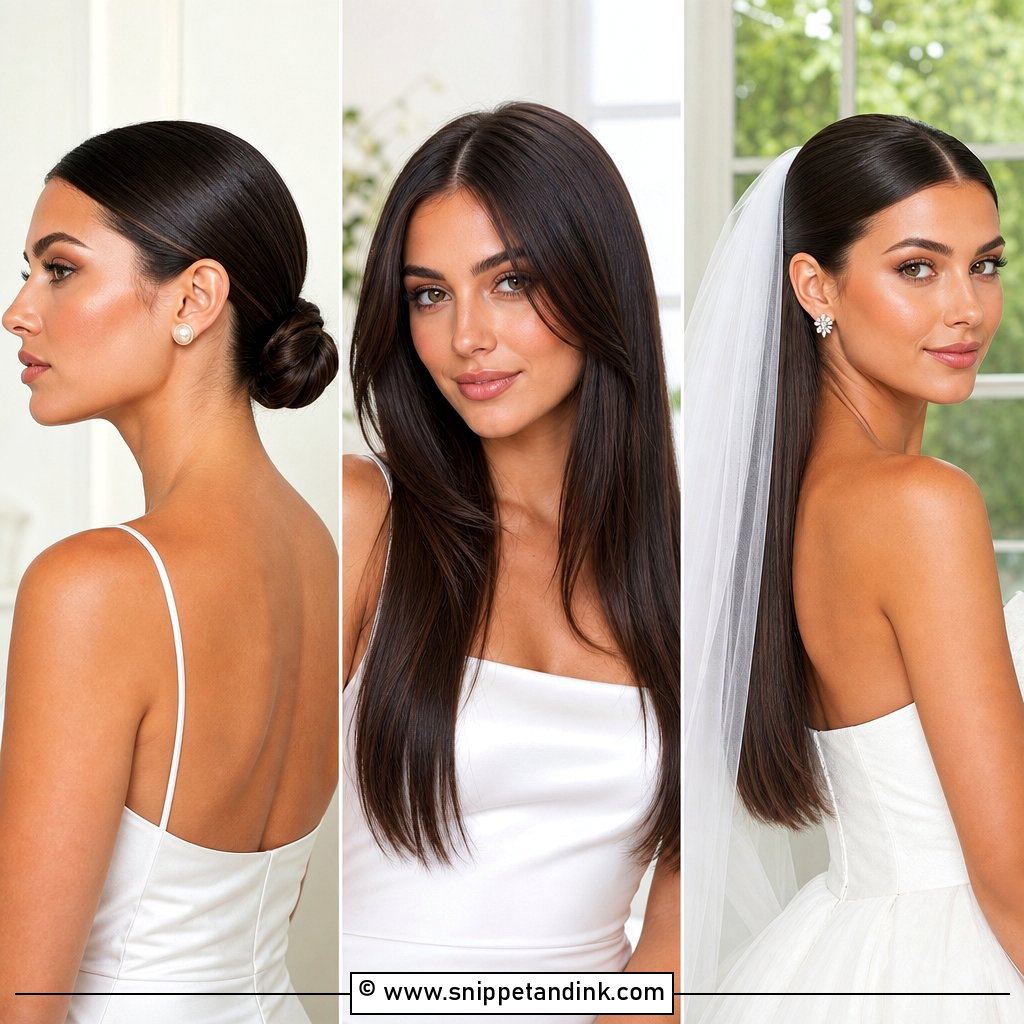
Plan the veil placement at your trial, with the actual veil, not on the morning. A comb can sit at the crown, behind a small half-up section or under a hidden lift, and I always rough up the anchor point with a little texture spray, because combs slide right out of slippery straight hair. Look at the veil edge, too. Straight hair lies flat against the tulle and shows exactly where lace, pearls or satin trim meet your dress, so those details need to agree.
7. Straight Wedding Hair Down With Pearl Pins
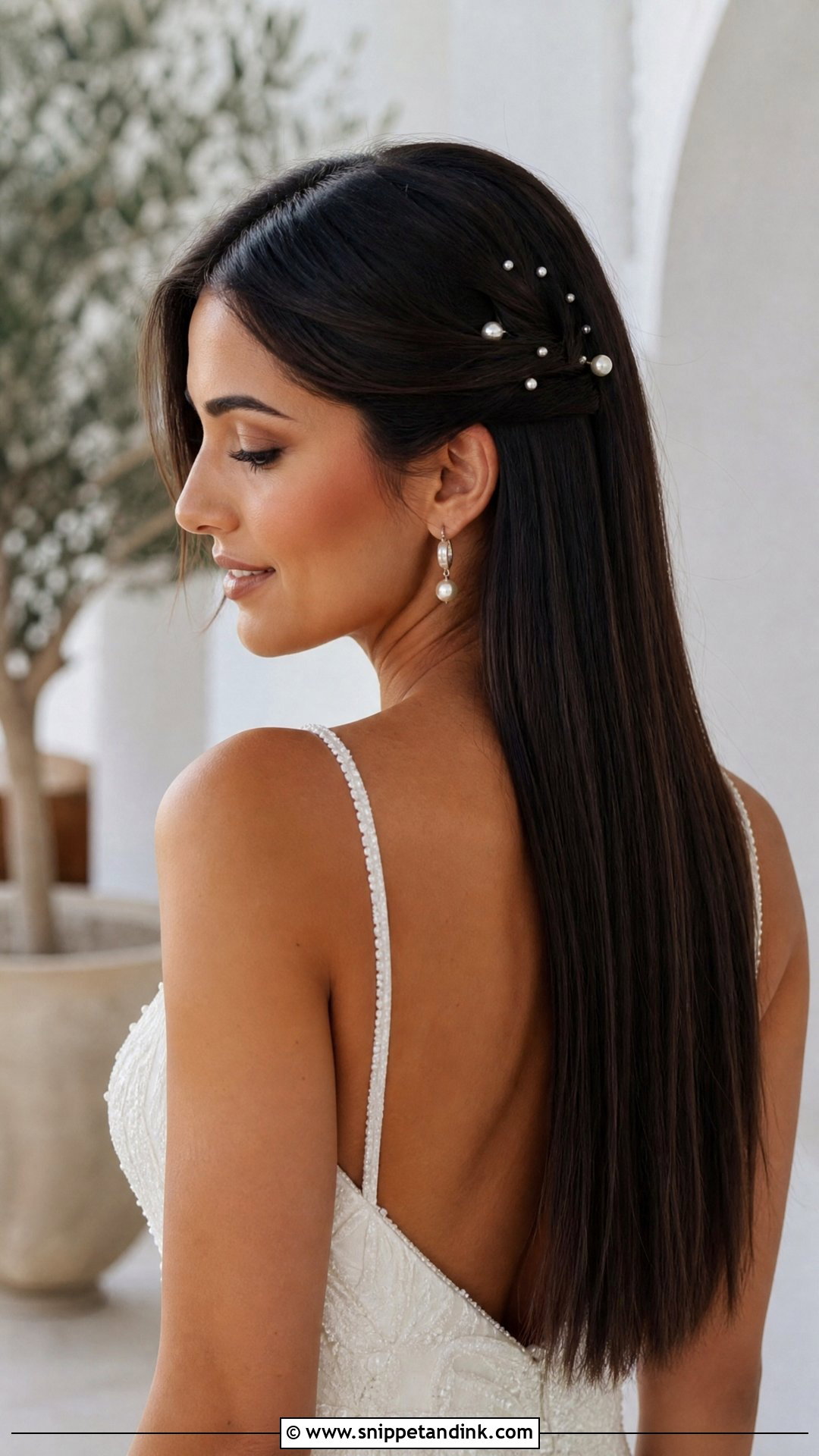
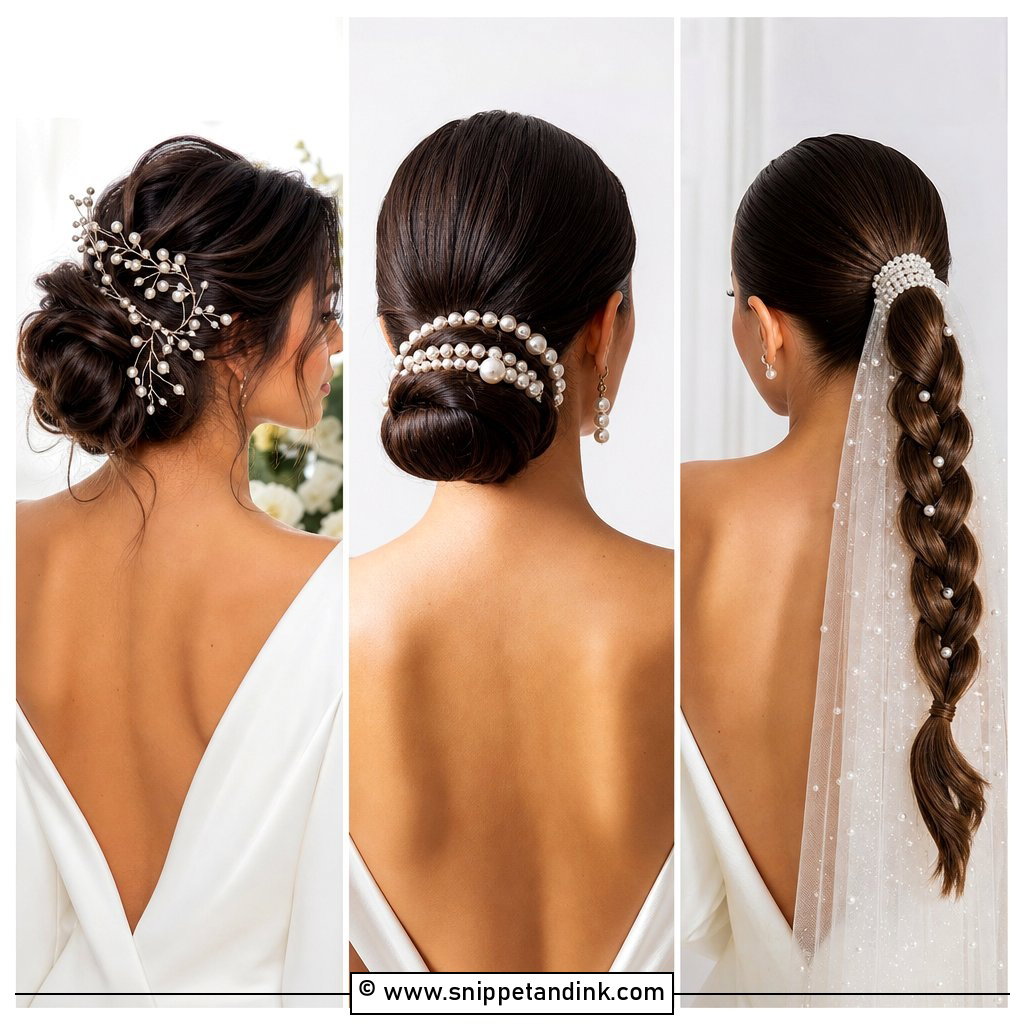
Pearl pins don’t change how the hair falls, which is why they suit hair worn down. My placement rule is simple: one side, along a soft twist or scattered lightly above the ear, never everywhere. Size depends on density. Fine hair holds smaller pins better and they look in proportion, while thick hair can carry larger pearls without swallowing them. Match the pearl tone to your earrings, since ivory and bright white side by side look mismatched up close.
8. Straight Wedding Hair Down With Headband
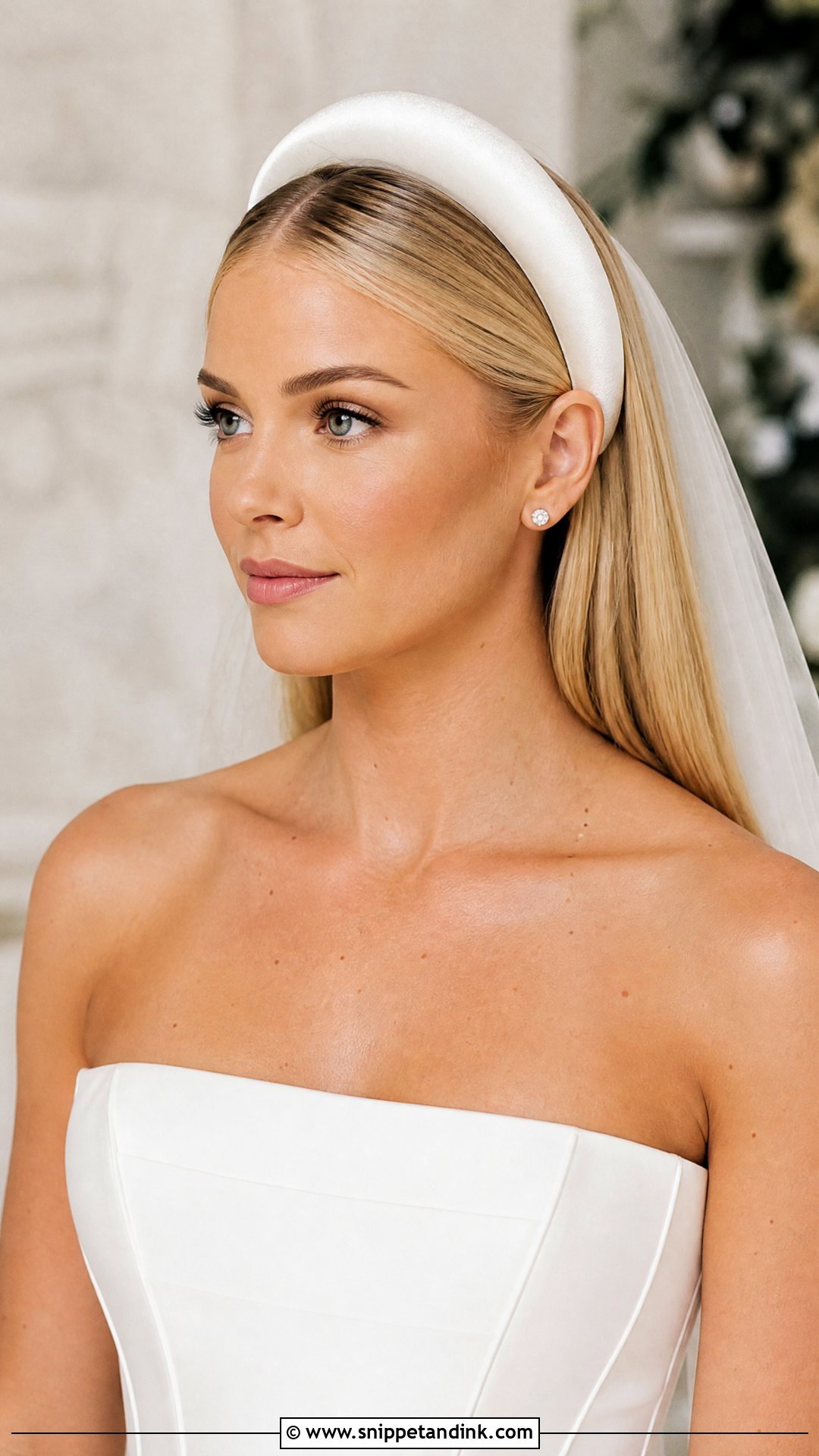
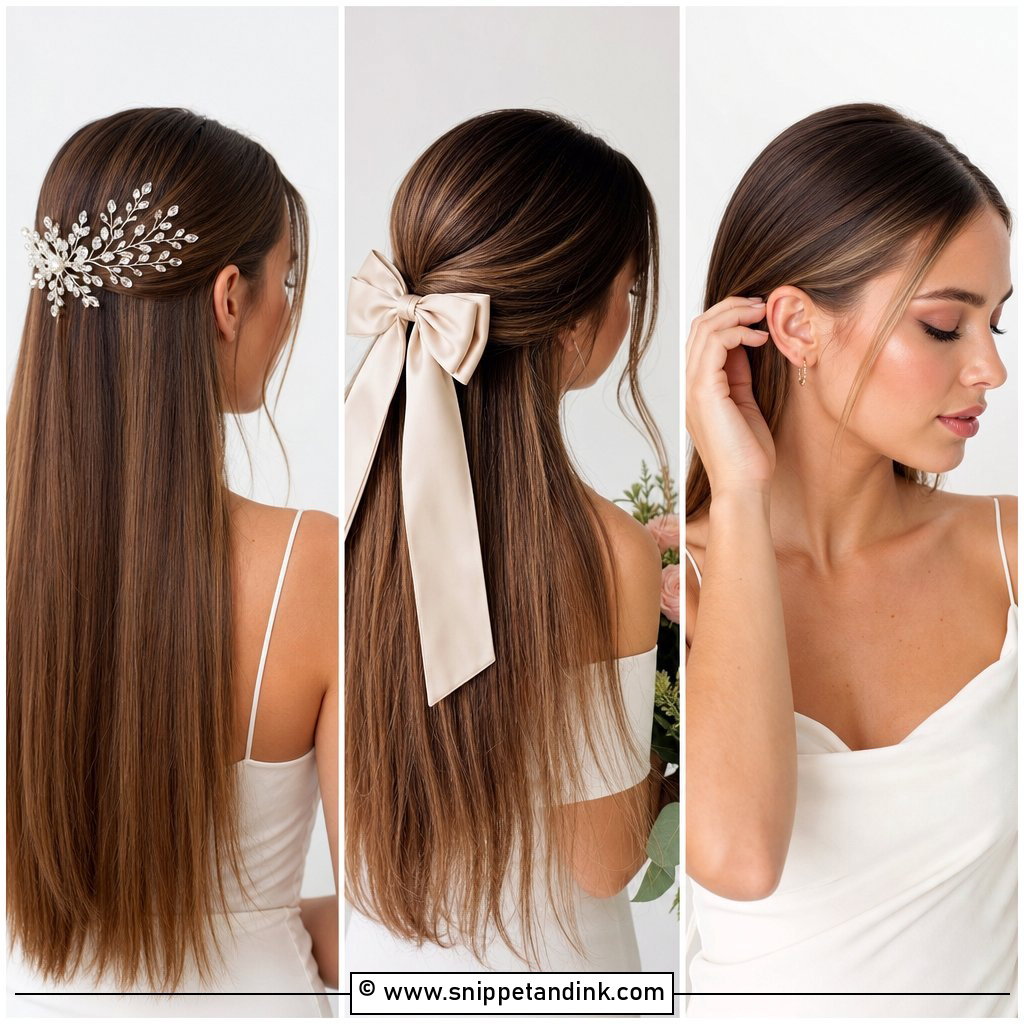
A headband turns smooth hair into a finished look in seconds and feels very secure once it’s on. I set it slightly behind the hairline and soften the front pieces so it doesn’t look tight. With a detailed dress I go narrow; with a plain gown, a wider padded band can carry the look. Slippery hair lets a band creep backward over the day, so I pin it behind each ear. Bridesmaids can wear a simpler version of the same band.
9. Straight Wedding Hair Down With Hair Clip
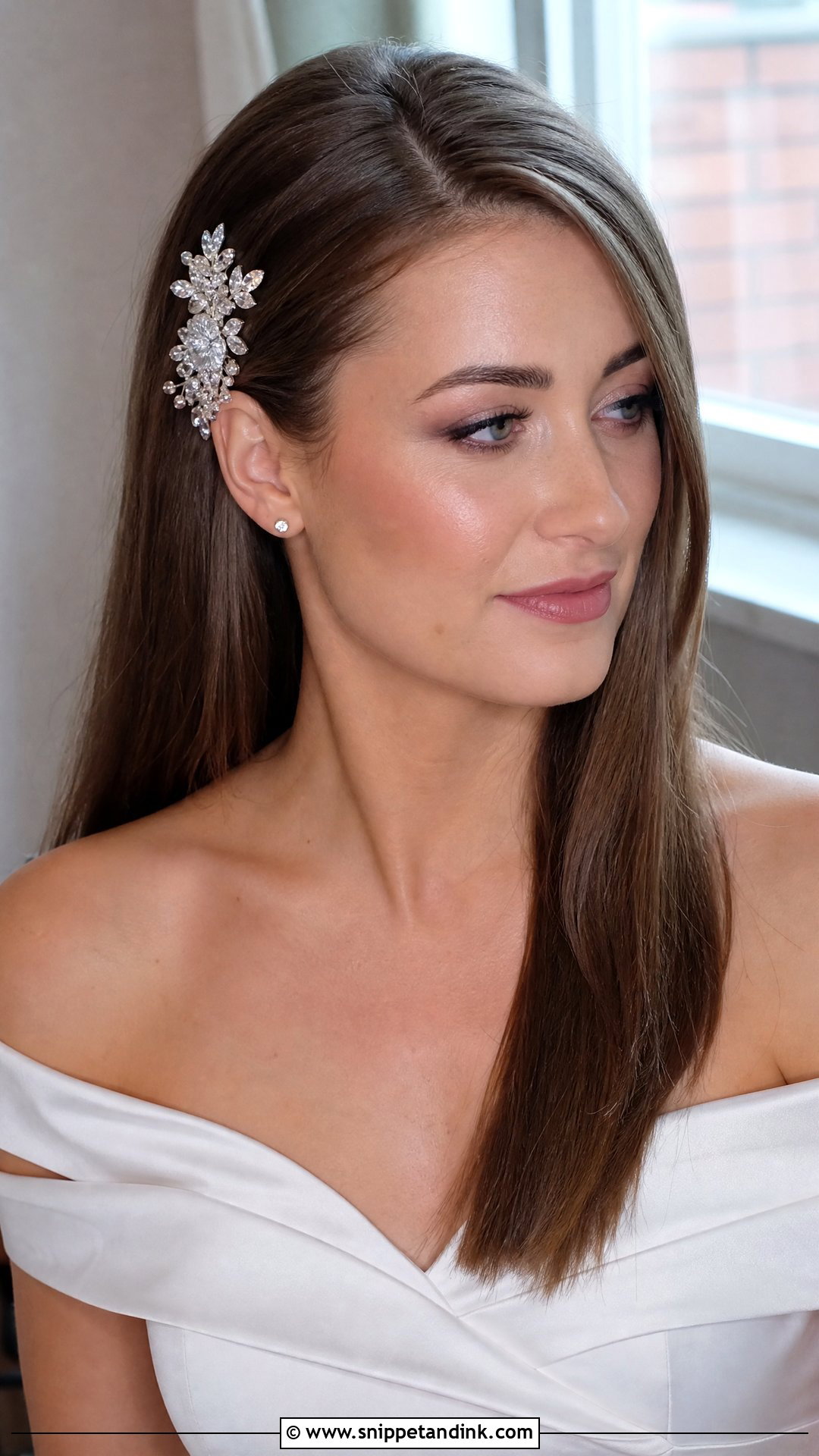
A single clip gives the style one focal point instead of a full headpiece. I usually place it above one ear, behind a side tuck or beside a small twisted section, because a clip on loose straight hair slides, and a twist gives it something to clamp. Choose the metal and stones to match the rest of your jewelry. Guests can wear this too, with a stone that isn’t white. A light mist of hairspray under the clip helps it hold.
10. Straight Wedding Hair Down With Face Framing Layers
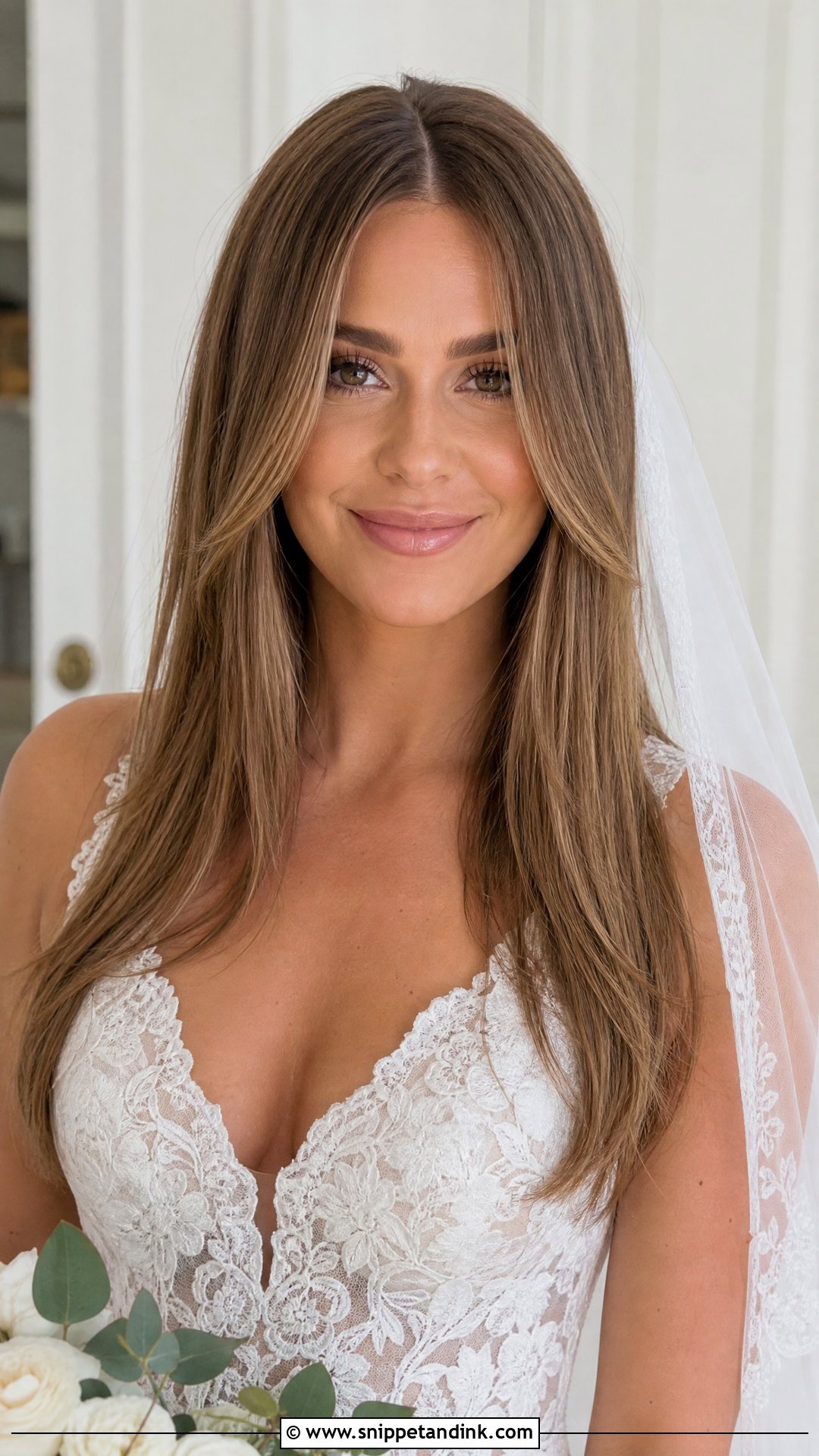
Face-framing layers soften hair worn down and make close-ups more flattering. Where they fall depends on the face: cheekbone length opens the eyes, jaw length sharpens a softer chin, and collarbone length is the gentlest. I’d have them cut a few weeks ahead so they settle and blend instead of looking freshly choppy. On the day, a light bend away from the face at the front stops the style looking severe without curling it.
11. Straight Wedding Hair Down With Curtain Bangs
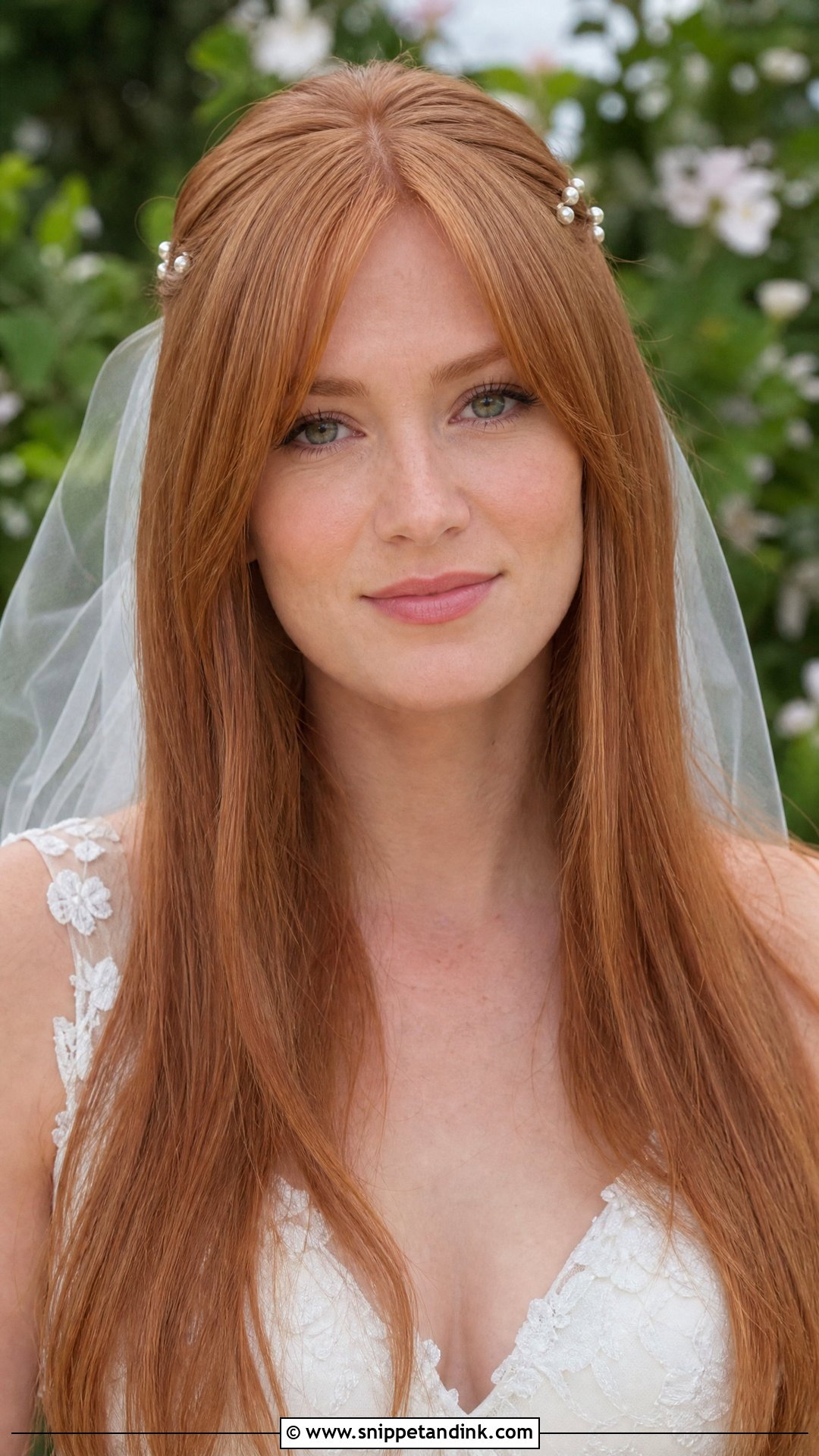
Wearing your hair down with curtain bangs moves the detail to the front, which helps when long straight lengths look flat around the face. I blow-dry each side away from the face over a small round brush and let it cool before releasing, so the split holds. Bangs pick up skin oil quickly, so I keep product to a whisper and hand you blotting papers. They sit well under a headband or with a veil set behind them.
12. Straight Wedding Hair Down With Blunt Bangs
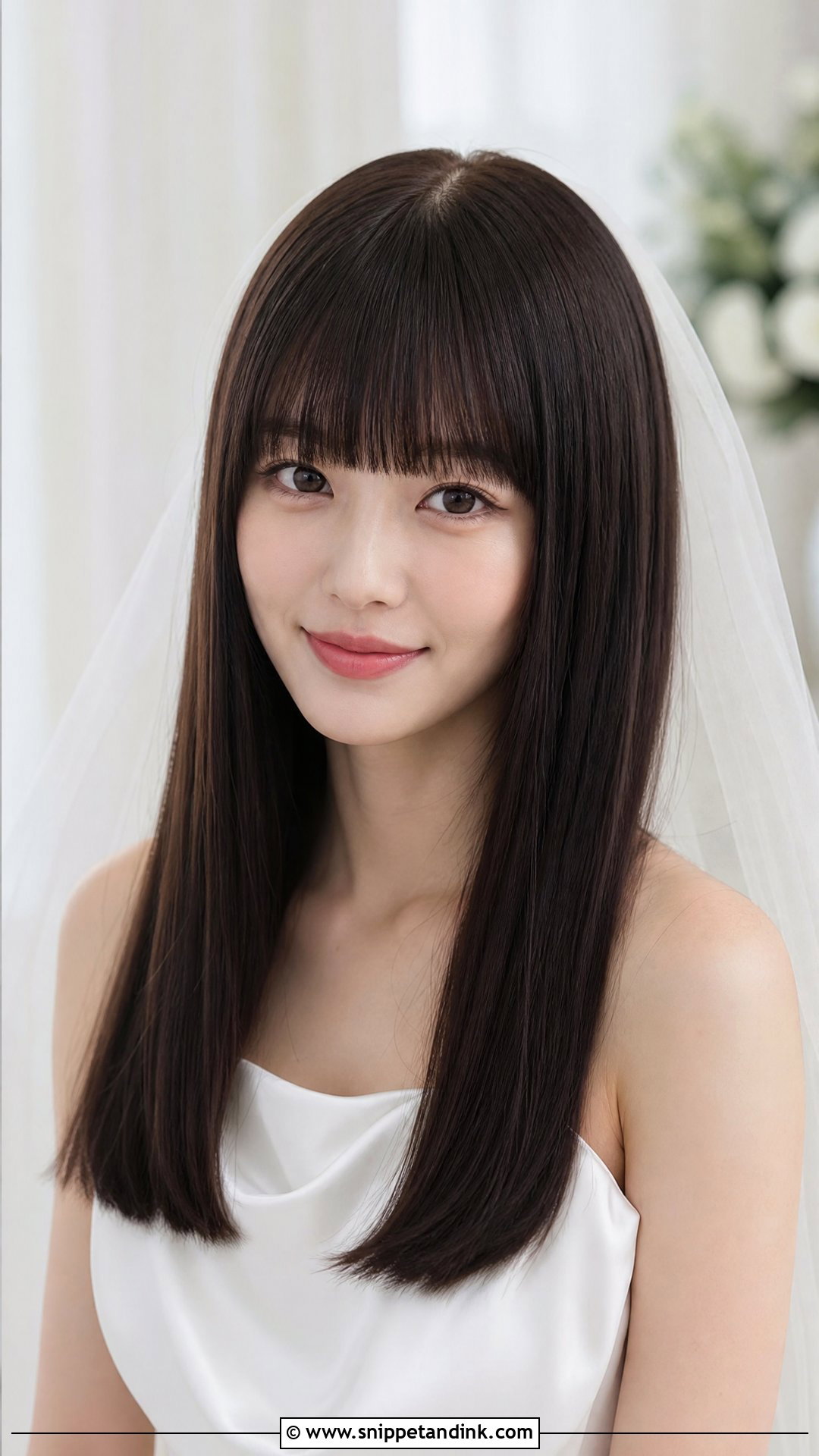
A full fringe of blunt bangs is the boldest option here and the least forgiving. The whole style depends on precision, so trim them about a week before, not the day before when you can’t know how they’ll sit. I press them with the flat iron but keep a slight curve so they don’t look stiff. Be honest about whether your forehead gets oily in heat, because blunt bangs separate when it does. Keep jewelry and makeup quiet for balance.
13. Straight Wedding Hair Down With Half Up Crown
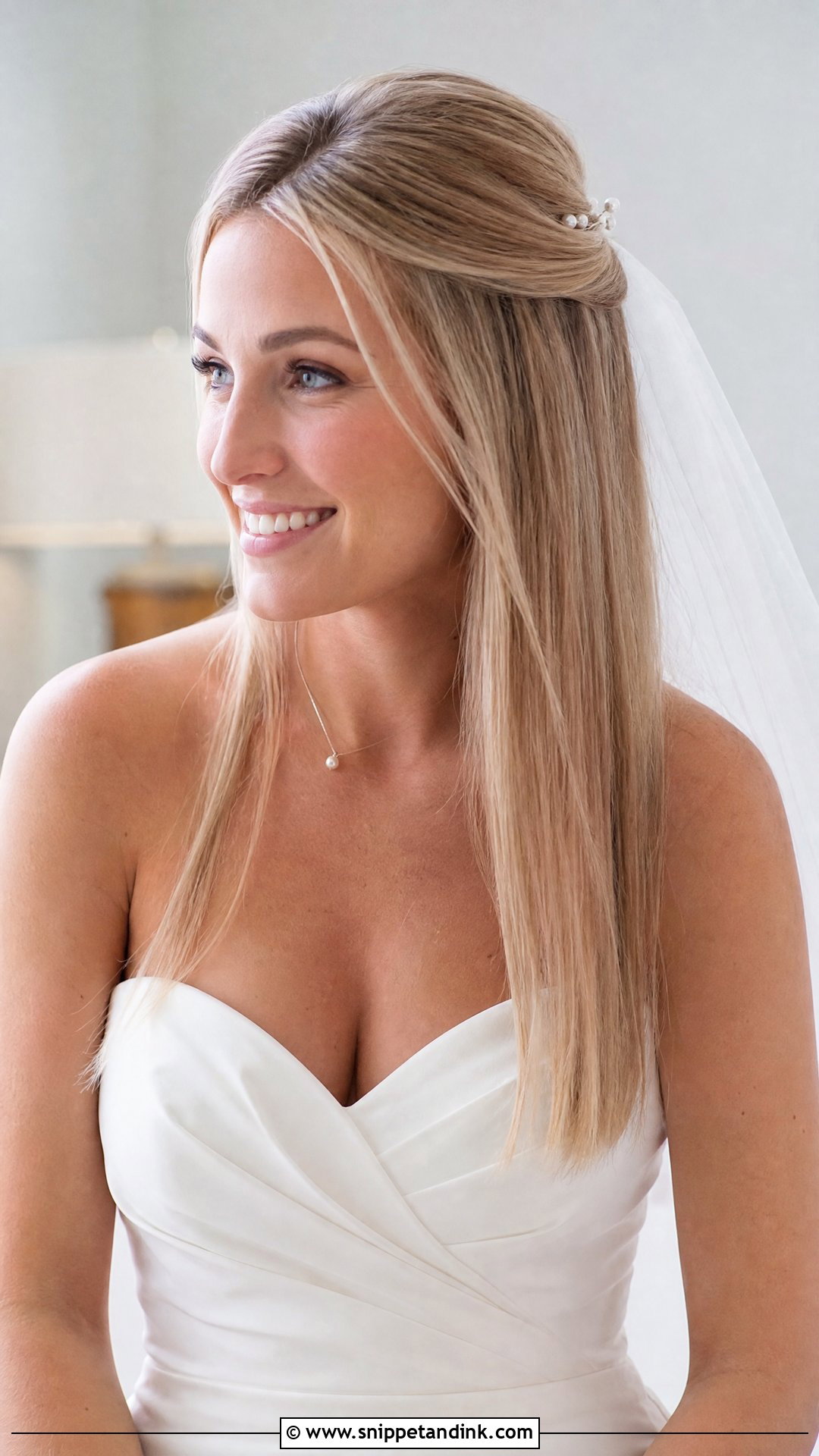
Lifting just the top section keeps your face clear without giving up the look of hair worn down. The crown can be sleek, softly teased, twisted or dotted with pearls. For very fine or slippery hair, this is the version I recommend with a veil, because the pinned crown gives the comb a firm base to grip. Leave the lengths below plain so the shape at the top reads clearly in photos.
14. Straight Wedding Hair Down With Twisted Half Up
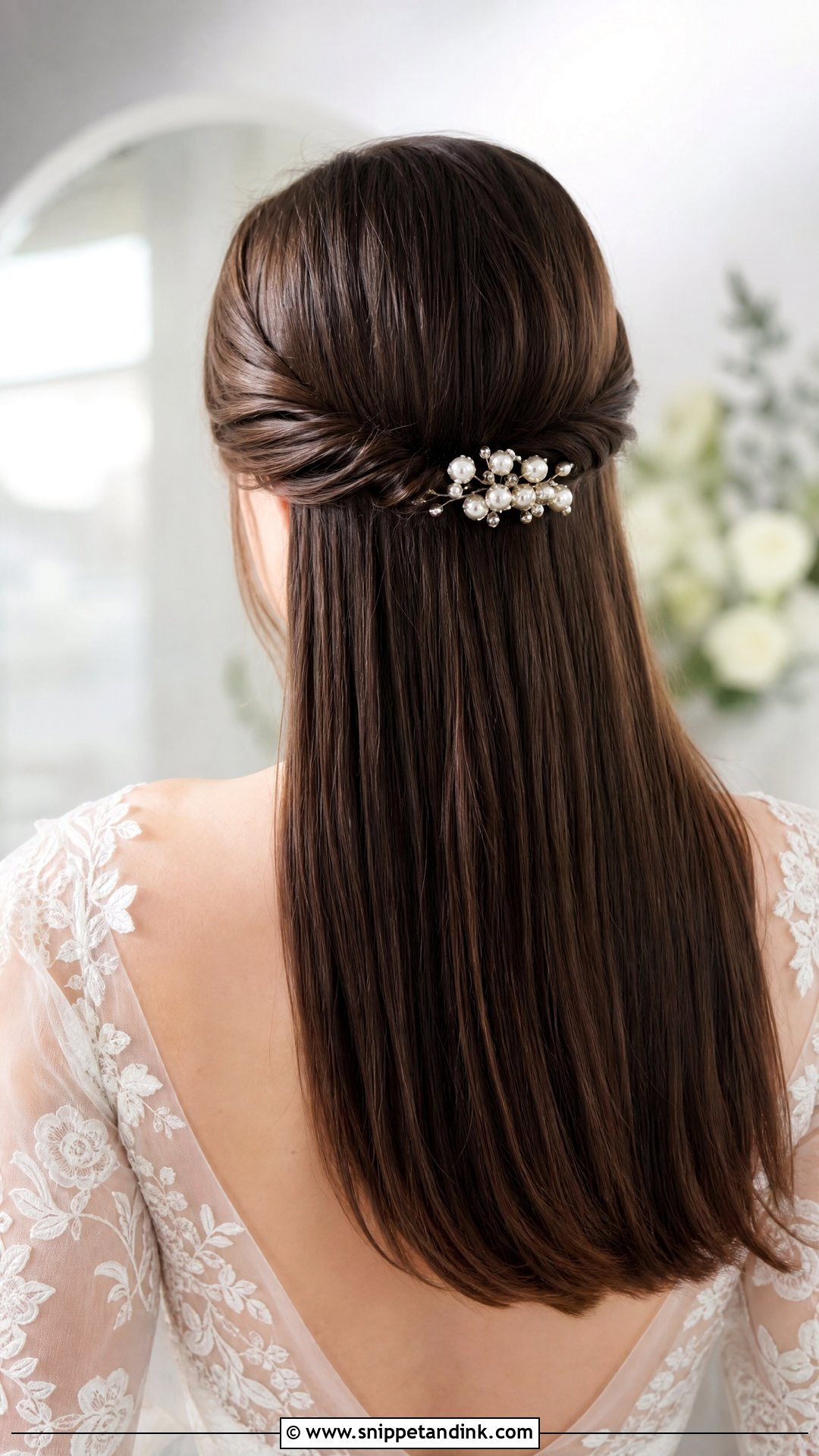
Two small twists from the sides, pinned at the center back, hold the front pieces off your face without looking formal. I keep the twists soft and turn them away from the face, so they tighten rather than unravel when you turn your head. You need at least shoulder length for them to meet comfortably at the back. Pearl pins, a small comb or a floral accessory can cover the join, and the style earns its keep at a windy outdoor ceremony.
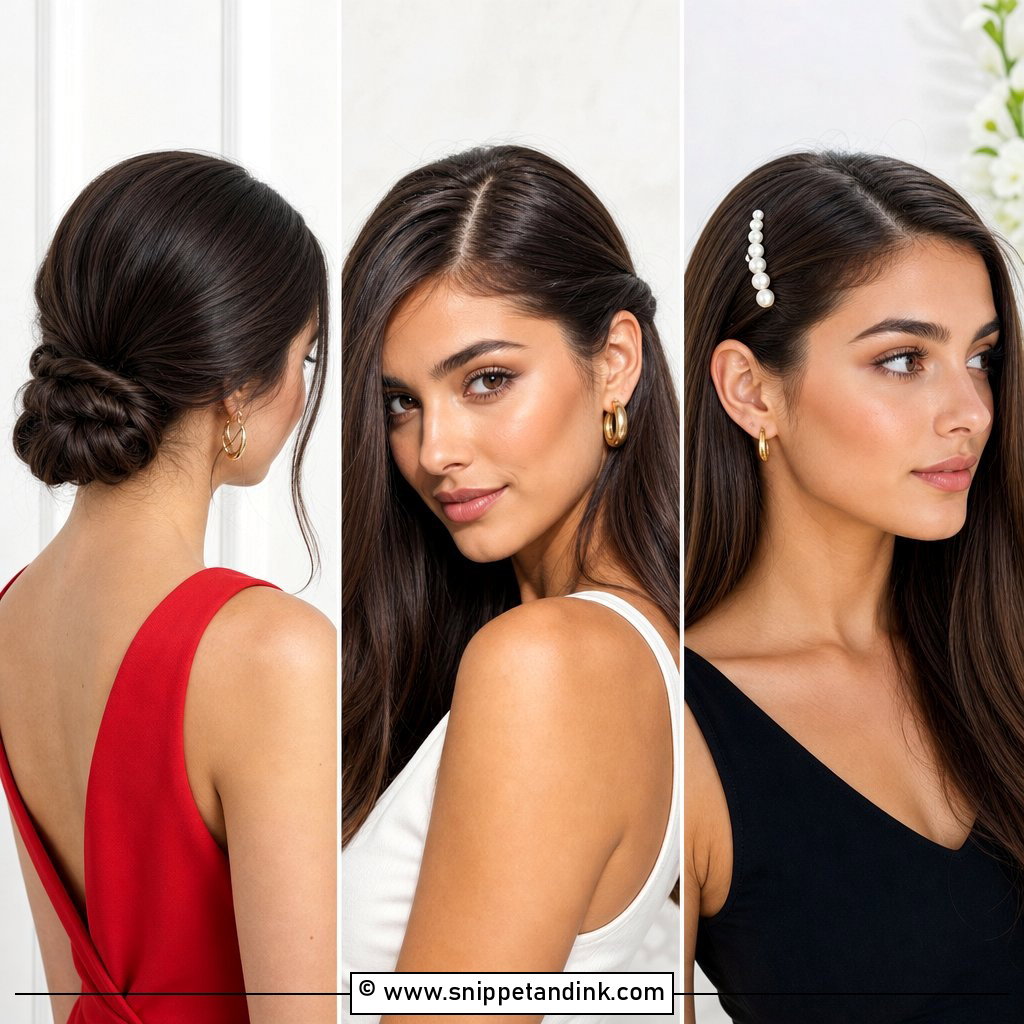
15. Straight Wedding Hair Down With Braided Half Up
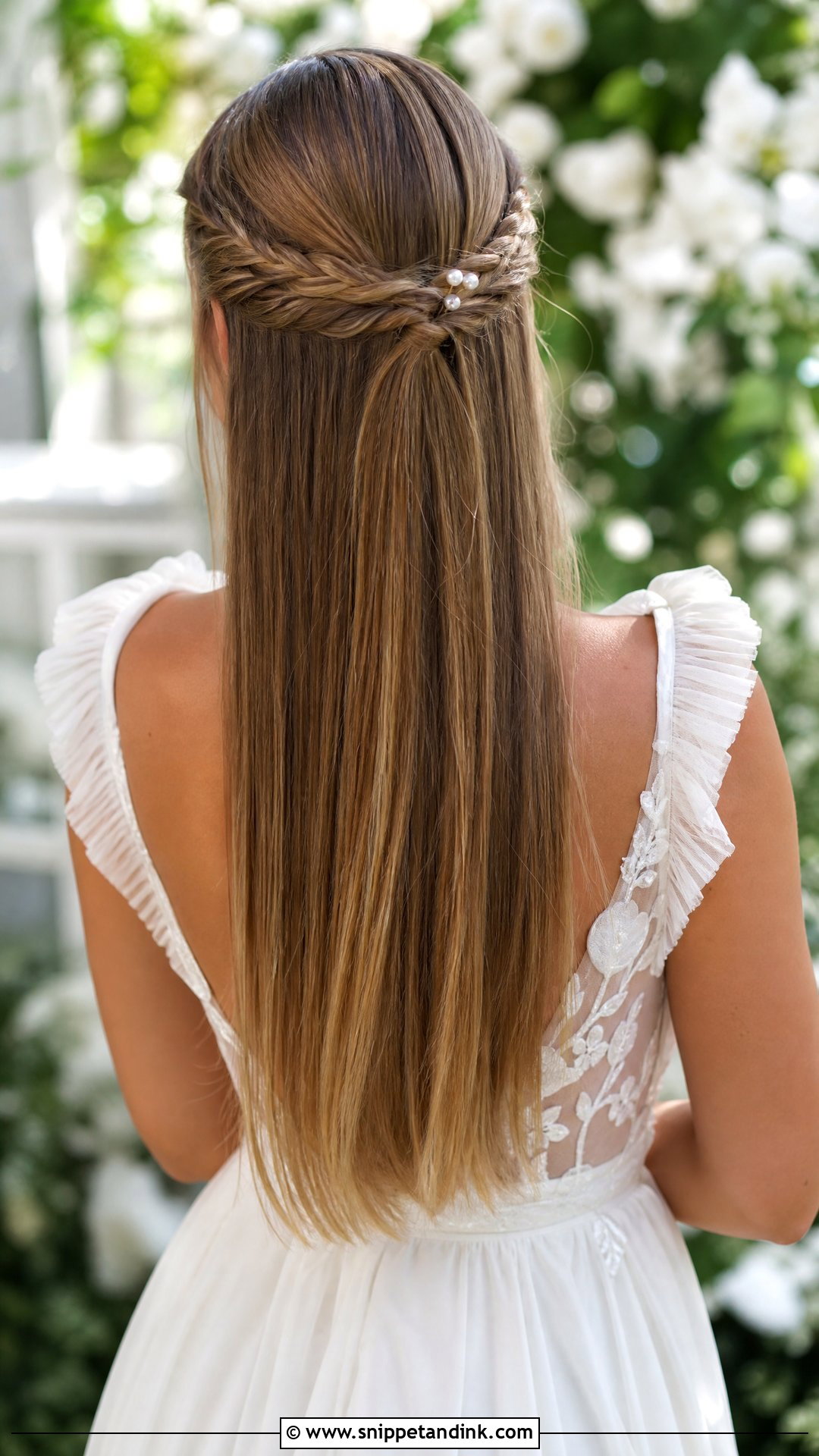
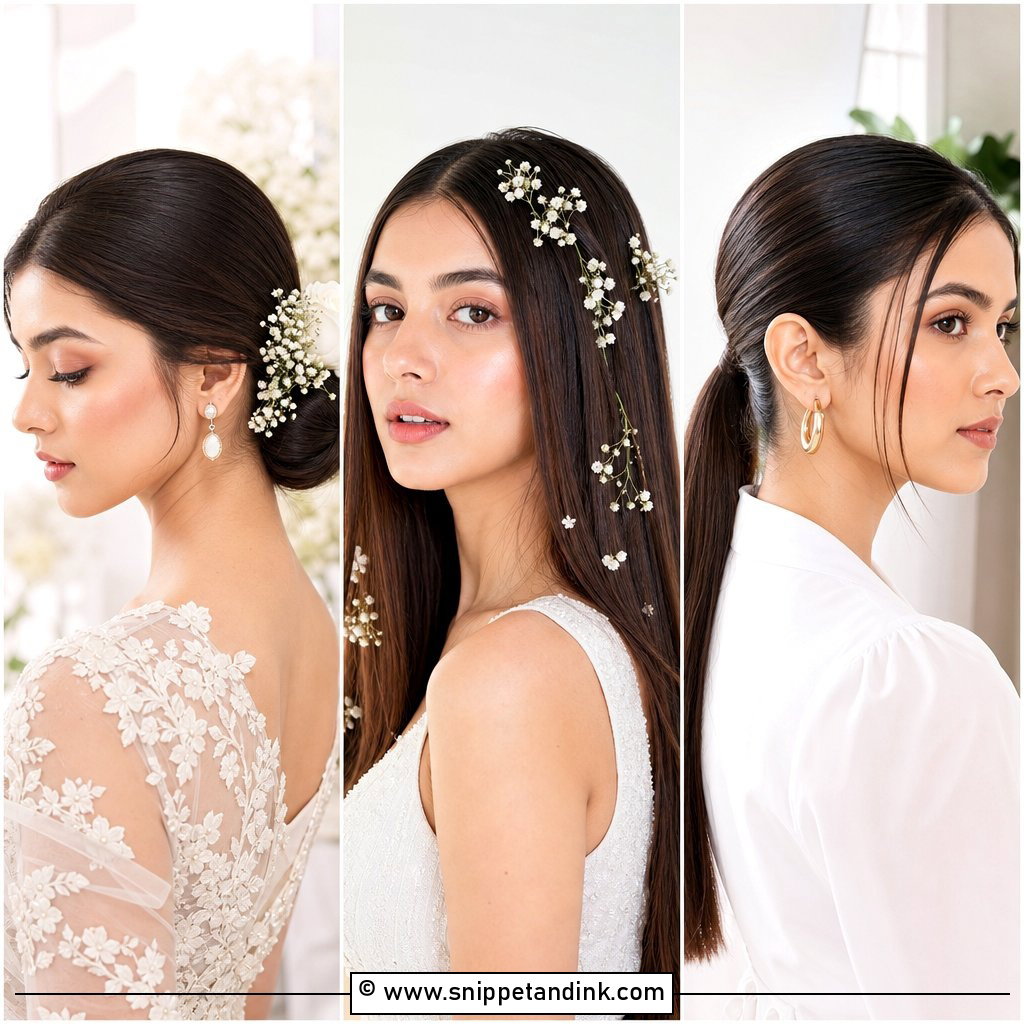
Braids are my answer for straight hair that won’t hold a curl but still needs texture. One small braid from each side can meet at the back, or a single braid can sweep across the crown. I braid straight hair slightly loose and then gently pull the edges to widen it, since tight braids on fine hair look skinny in photos. The braid also makes a strong anchor for tiny pearls or floral pins, which helps with a lace gown and a garden setting.
16. Straight Wedding Hair Down With Tucked Sides
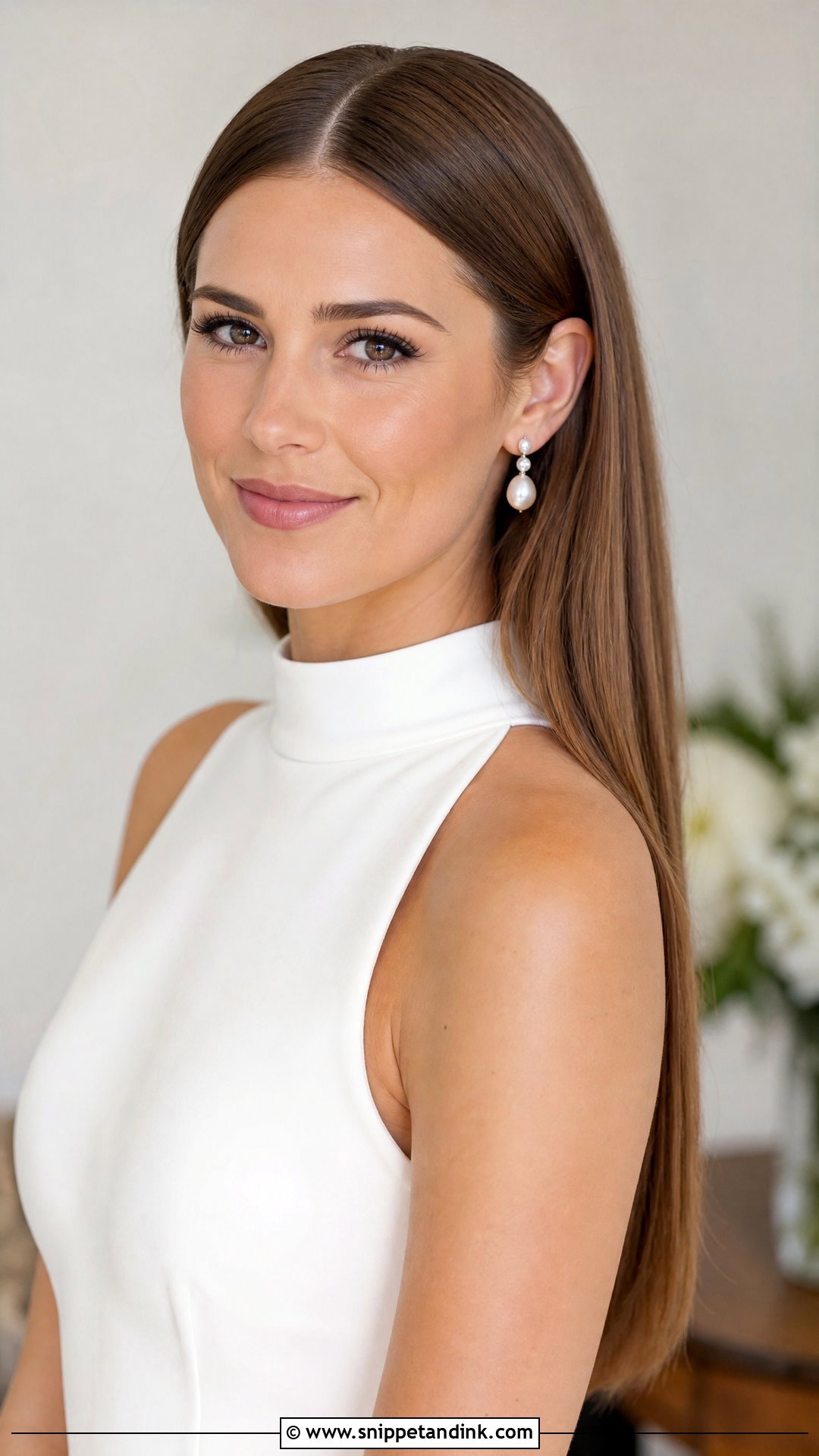
Tucking both sides behind the ears has a sleek, runway feel; tucking only one is softer. Either way, straight hair untucks itself, so this style needs a firm finish: a little gel or flexible hairspray at the temples and a hidden pin behind each ear. It shows off earrings and the line of a high neck or strapless bodice. As a bridesmaid look it’s sensible too, because it’s formal and quick to redo.
17. Straight Wedding Hair Down With Soft Volume
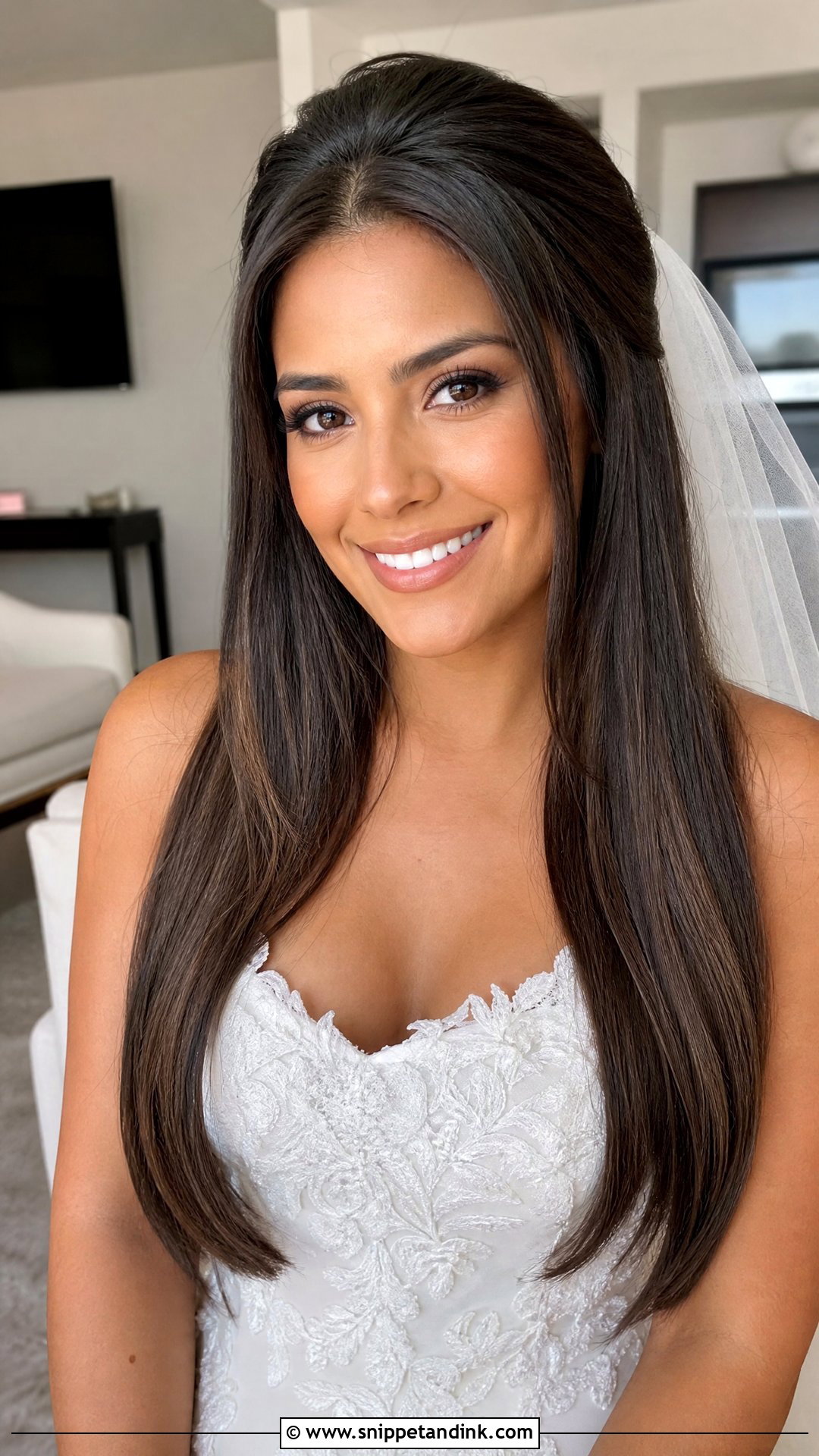
Straight hair worn down falls flat at the crown faster than any other style, and a little volume fixes most of what makes it look everyday. I blow-dry with a round brush, lifting the roots at the crown and sides, then add root spray and backcomb lightly under the top layer only, so no teasing shows. The ends can stay smooth or turn slightly under. It’s my default for fine, silky hair, and it sits comfortably with almost any dress.
18. Straight Wedding Hair Down With Sleek Ends
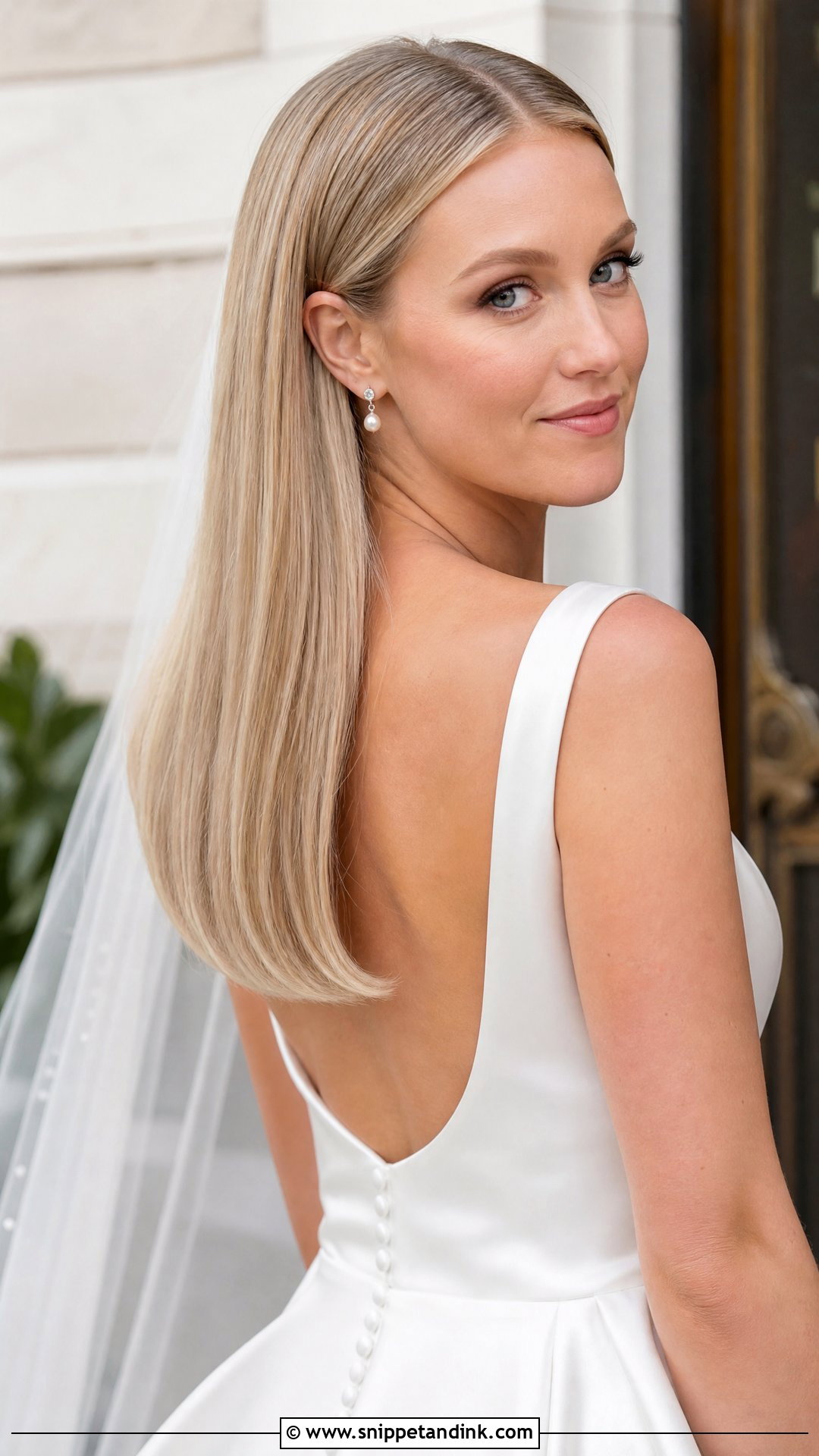
Sleek ends are about the lowest edge of the hair, where it meets the dress. A blunt cut or very light long layers both work, but the ends must look fresh, so book that trim. I use shine products sparingly so the hair stays touchable, then give the ends a tiny inward bend with the iron. With a satin gown or a minimal veil, the clean edge of the hair mirrors the clean edge of the dress.
19. Straight Wedding Hair Down With Deep Side Sweep
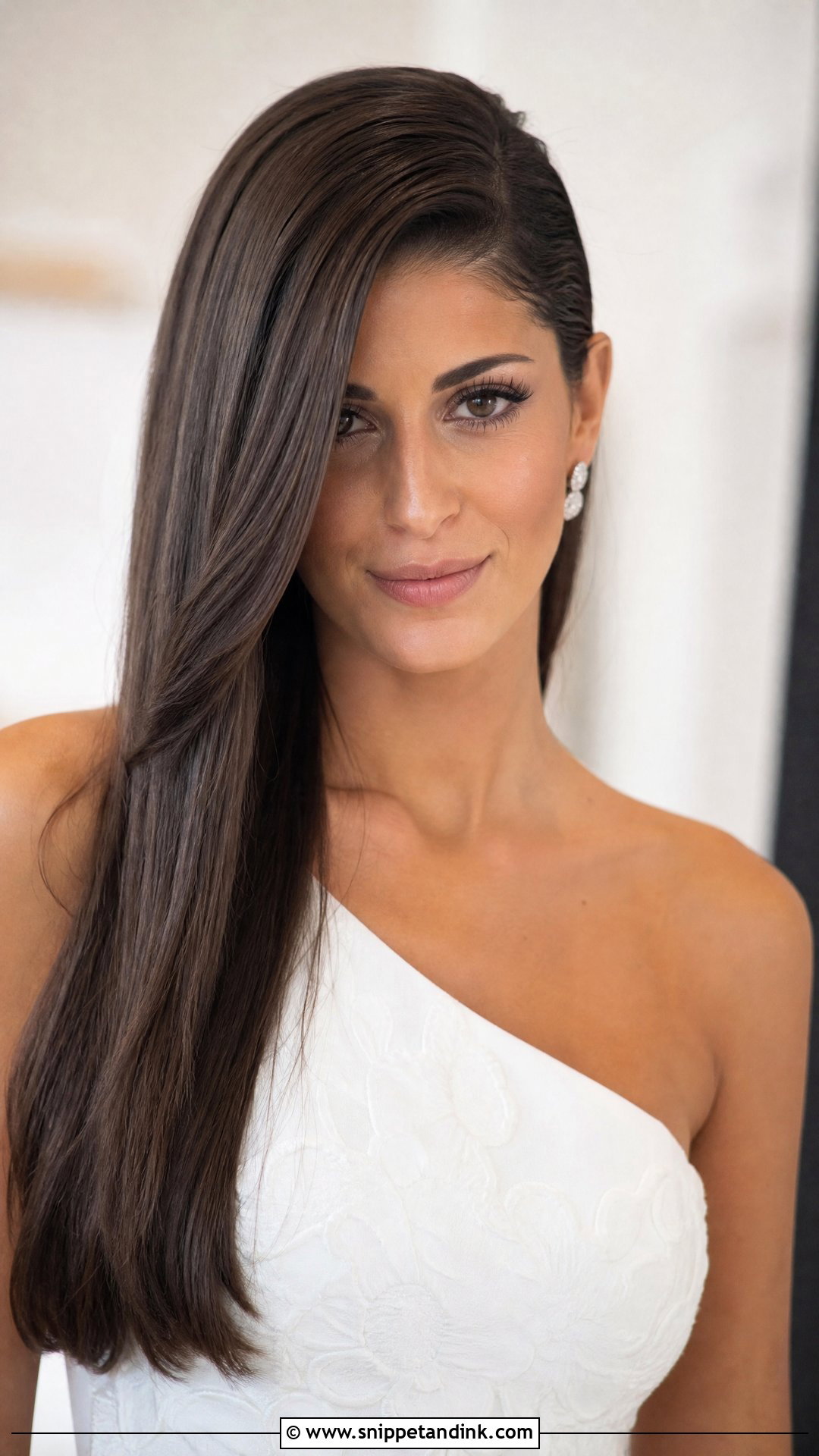
A deep side sweep gives straight hair drama without curls or an updo. The part goes far to one side and the front is smoothed across the forehead or lifted slightly. I pin the shorter side behind the ear and let the long side fall over the shoulder, which pairs well with a one-shoulder or off-the-shoulder gown. Use a flexible hold spray; strong hold makes the sweep look helmet-like by the evening reception.
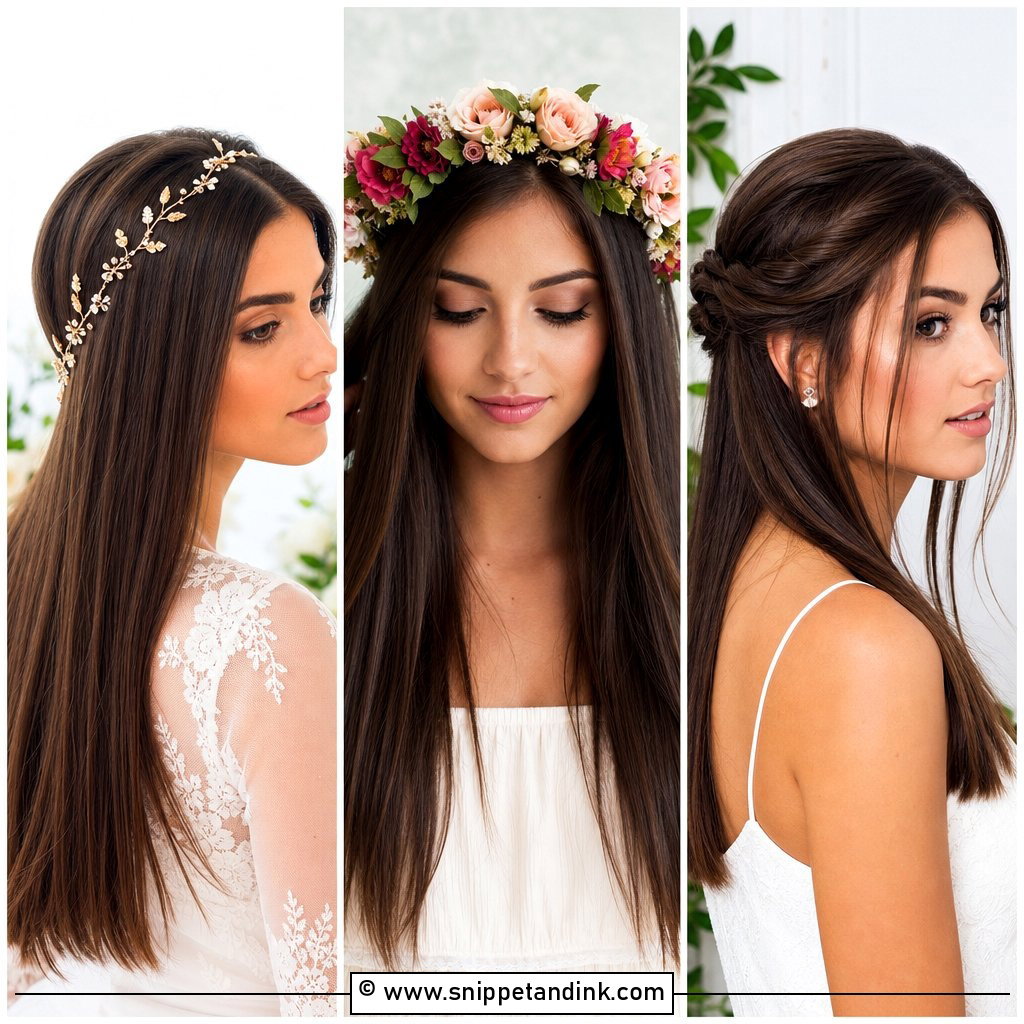
20. Straight Wedding Hair Down With Floral Pins
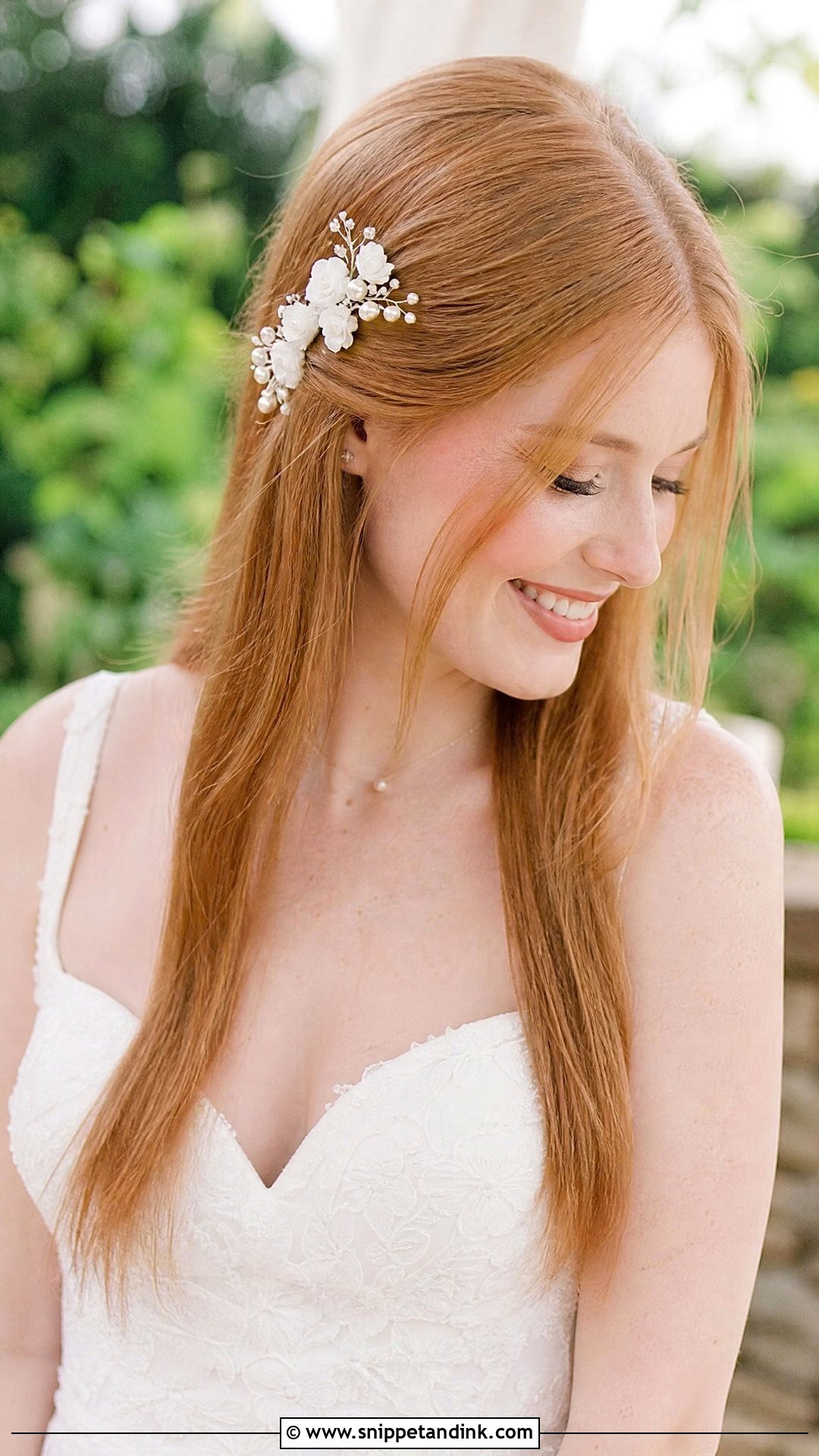
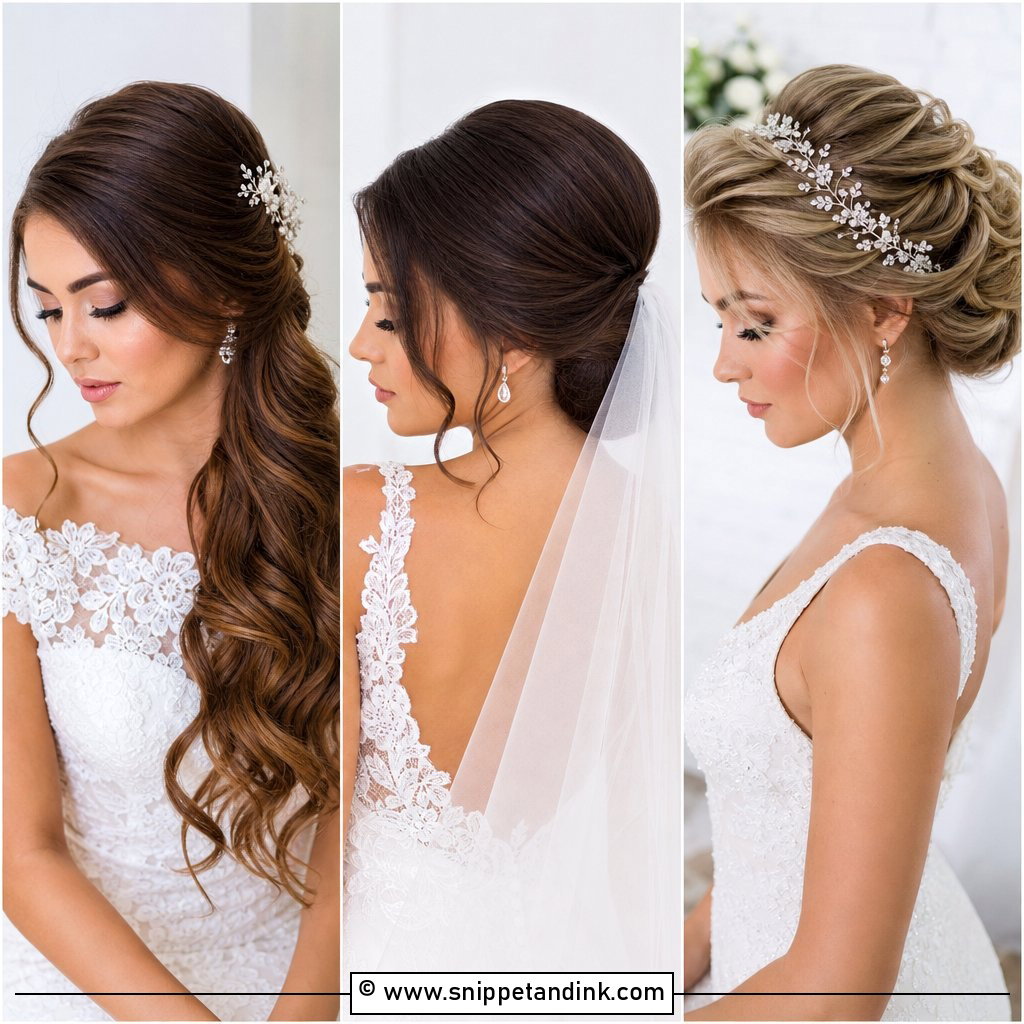
Floral pins suit spring, summer and garden weddings, and straight hair shows them clearly. I’d use small, delicate pins along one side, around a half-up twist or near the back of the crown, rather than big blooms, which drag on slippery hair. If you want fresh flowers, choose hardy small ones and ask your florist to deliver them on the morning. Matching them to your bouquet or wedding colours keeps the look consistent.
Lace, Beading and the Nape of Your Neck
Loose hair spends the whole day rubbing against the back of your dress, and that friction causes problems an updo never has. Lace and beading catch strands, tulle builds static, and the hair right at the nape twists into small knots after hours of hugging and sitting.
- Work a light leave-in or a drop of serum through the bottom half before you get dressed, so strands slide instead of catching.
- Lift your hair over one shoulder while the dress is buttoned or laced, so nothing gets trapped under the fastenings.
- Check that earring backs and necklace clasps are smooth; straight hair wraps around anything with a hook.
- Give a bridesmaid a wide-tooth comb for a gentle detangle at the nape before the reception photos.
Wind is the other thing I plan for. Outdoors, loose straight hair blows across your face during the vows. If the ceremony spot is exposed, I’d pick one of the half-up or tucked styles in this list, or at least pin one side behind the ear.
Down Doesn’t Mean Undone
Straight hair worn down is never plain when it’s planned: a deliberate part, fresh ends, a little volume and the right accessory. A middle part, a side sweep, a half-up twist, pearls or a veil can all work, and your length, density, dress and venue decide which. Get the prep and products right, and smooth hair will still be smooth at the last dance.
You'll Like These Ideas:


Leave a Reply