
Smooth hair looks simple on a mood board. In the chair it is a precise job, because every ridge from a clip and every frizzy strand at the hairline shows. When it is done properly, though, a straight style holds its shape through hugs and dancing better than most curled sets, and it gives a veil, a tiara or a single comb a clean background. The 25 ideas below run from fully loose to fully slicked, and I’ve added what I’d actually do, or warn you about, for each one.
Is Your Hair Naturally Straight, or Straightened?
This is the question I ask at every consultation, because the answer changes how I plan the day. Naturally straight hair keeps its shape, but it is often slippery and flat at the root, so pins and combs need extra grip. Wavy or curly hair that is blow-dried straight looks very polished in the morning and then starts to revert the moment it meets humidity, a steamy kitchen tent or a warm dance floor.
If your hair is wavy or curly underneath
- Book a trial in weather like your wedding’s, and look at it again four or five hours later.
- Choose an updo or a ponytail over loose lengths for an outdoor summer wedding; the hairline will frizz first, but tied-back lengths hide most of the reversion.
- A smoothing treatment can help, but do it at least two weeks before so the hair has time to settle and you can see the result.
- Ask for an anti-humidity finishing spray, and keep a small tube of smoothing cream in your kit.
If your hair is fine and very straight
Here the risk is collapse, not frizz. I add a light root spray before drying, and for any style with accessories I build a small backcombed base or a hidden elastic so tiaras, clips and veil combs have something to hold. Clean, conditioner-free roots help everything stay in place.
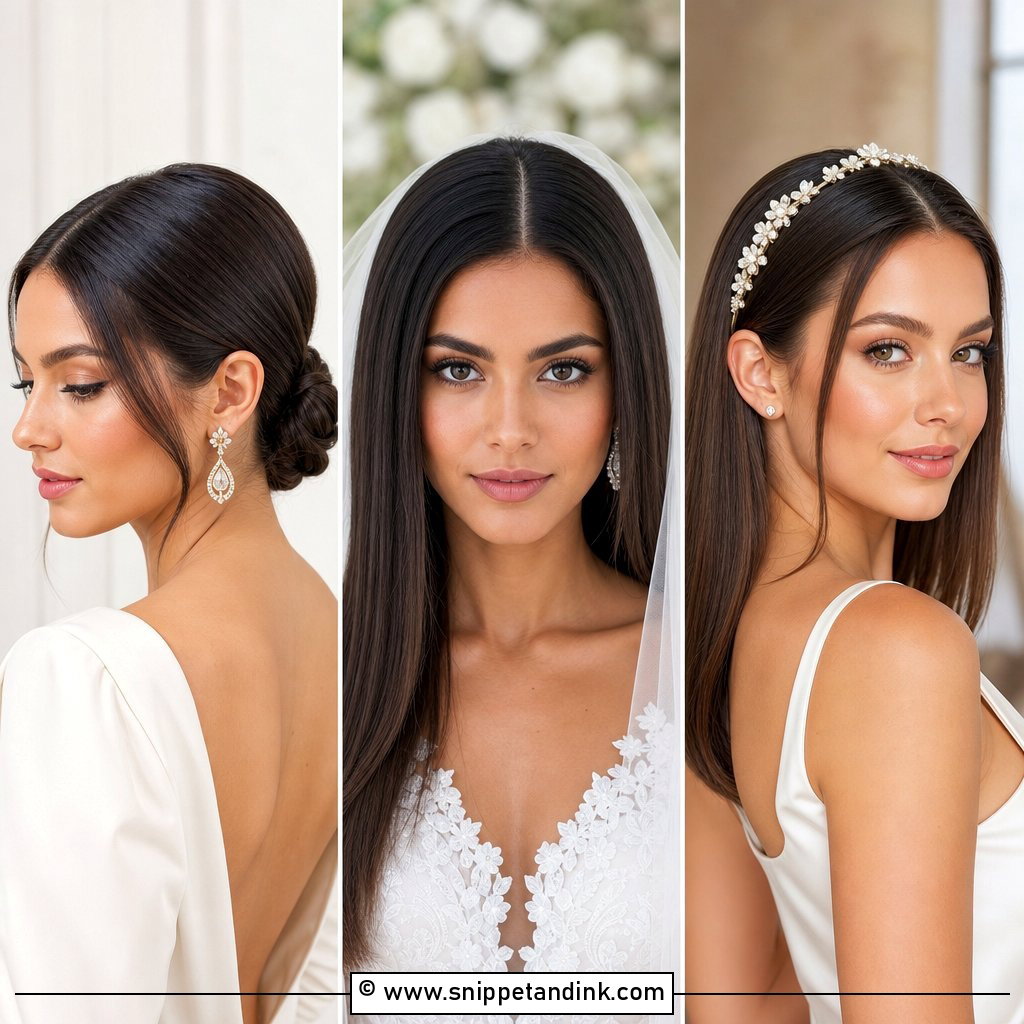
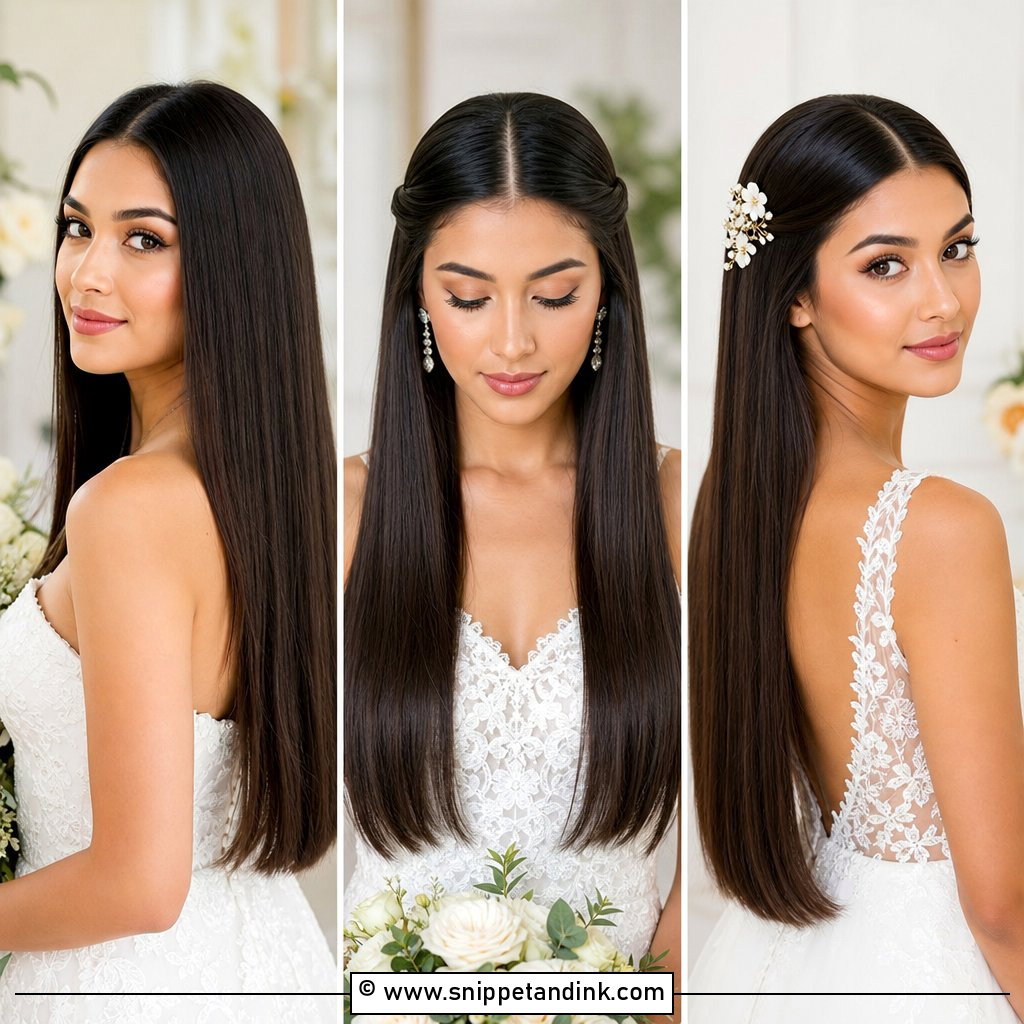
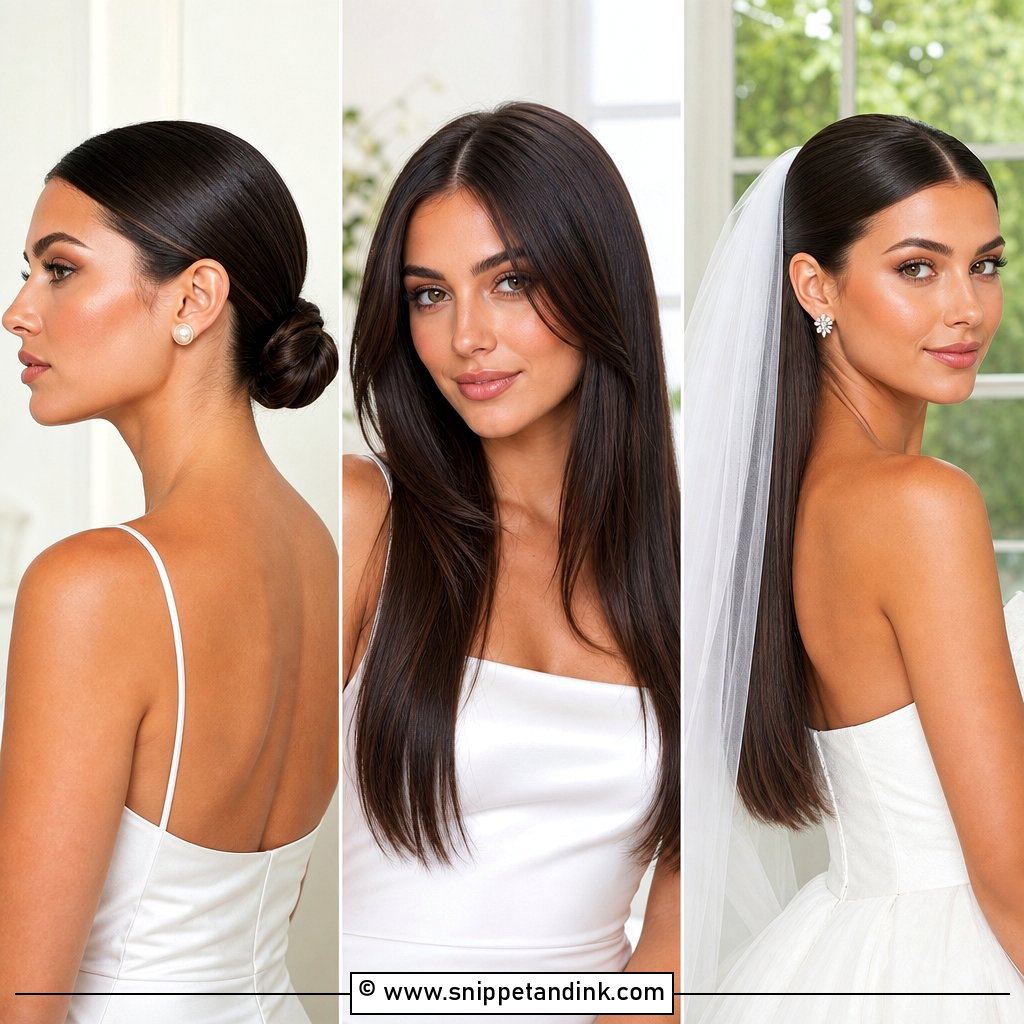
1. Sleek Straight Hair With Middle Part
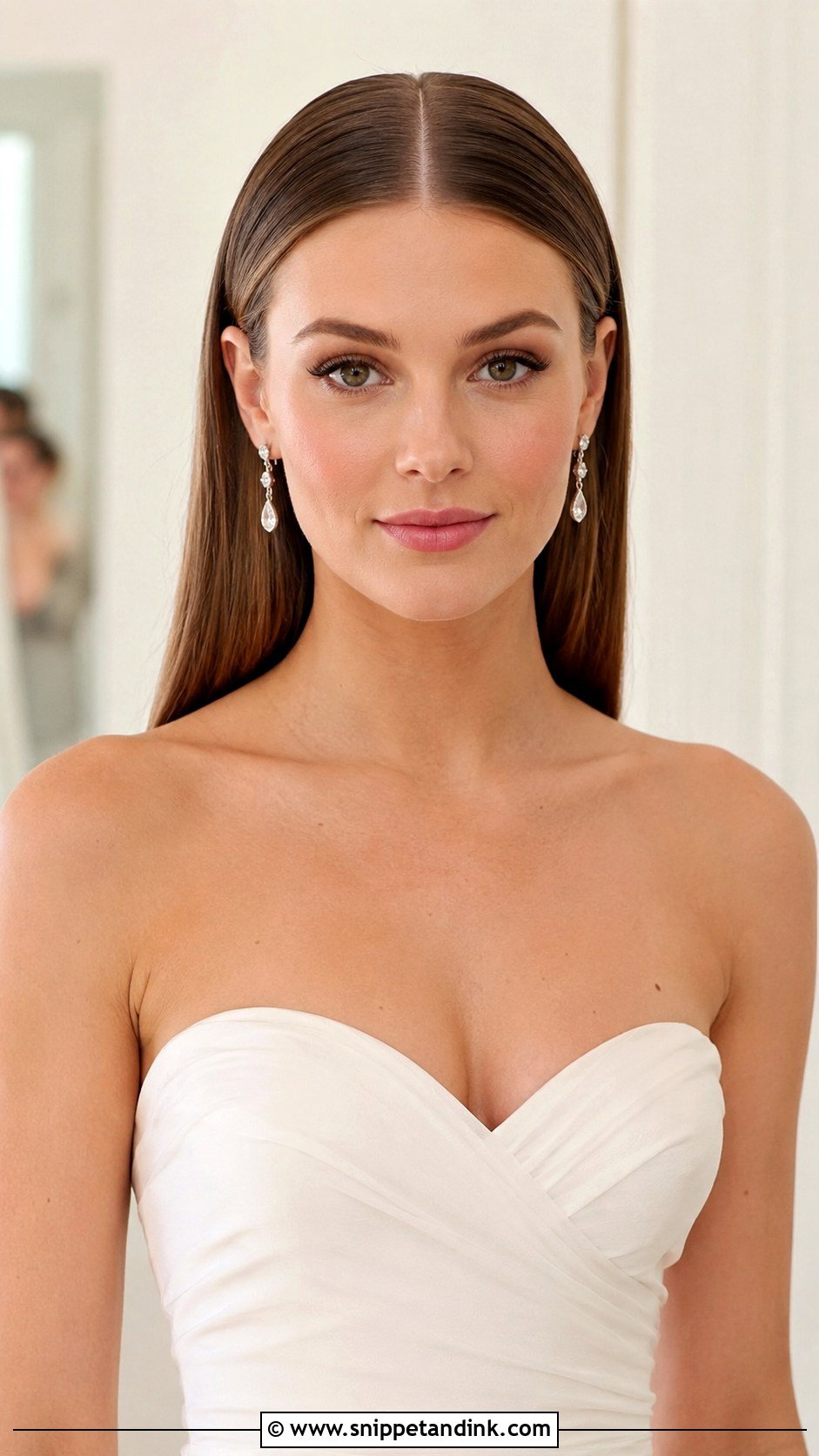
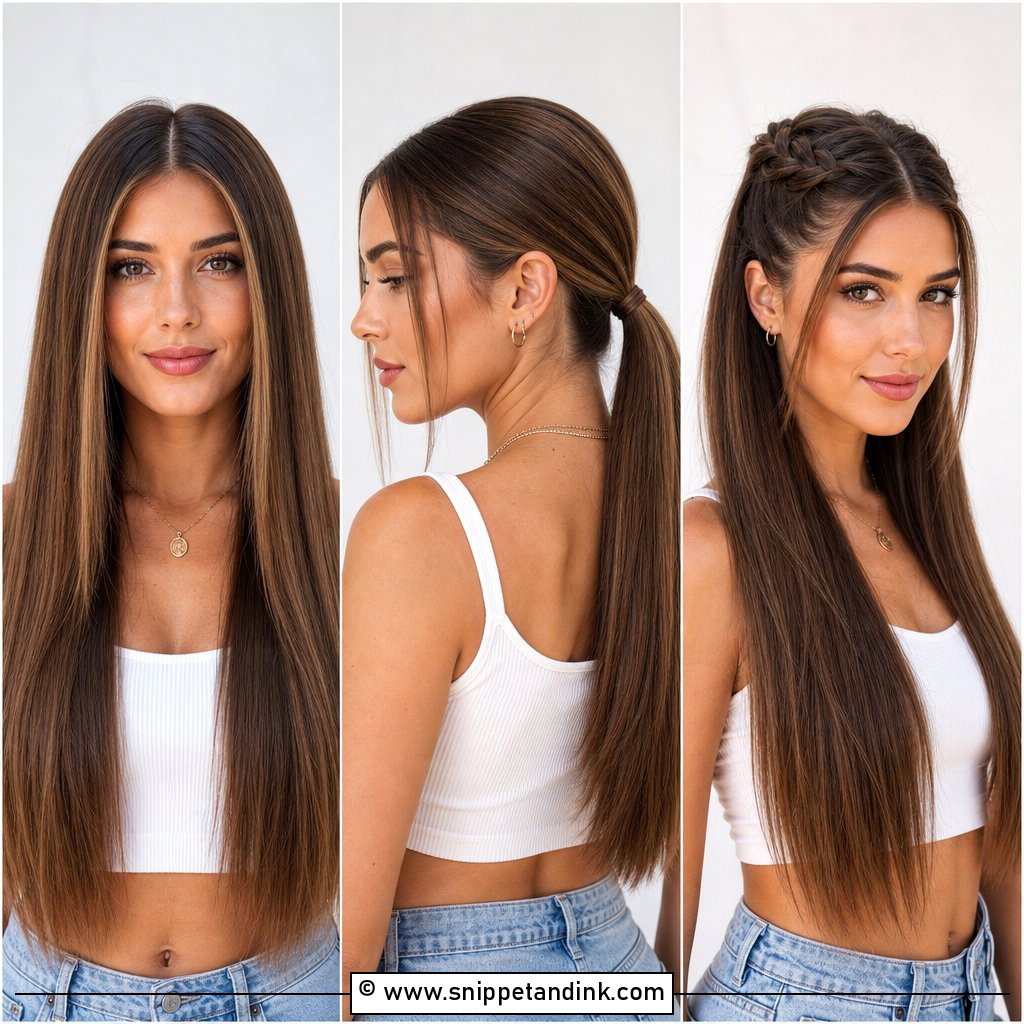
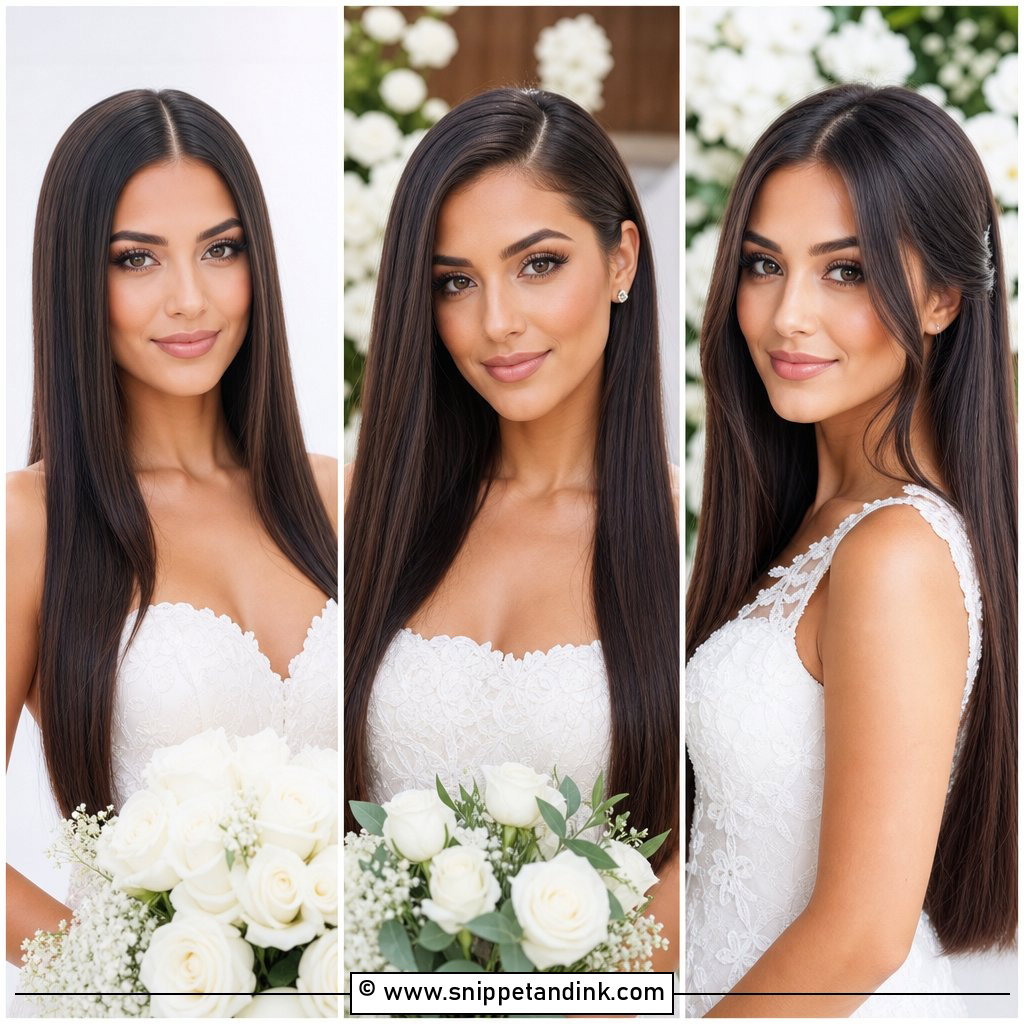
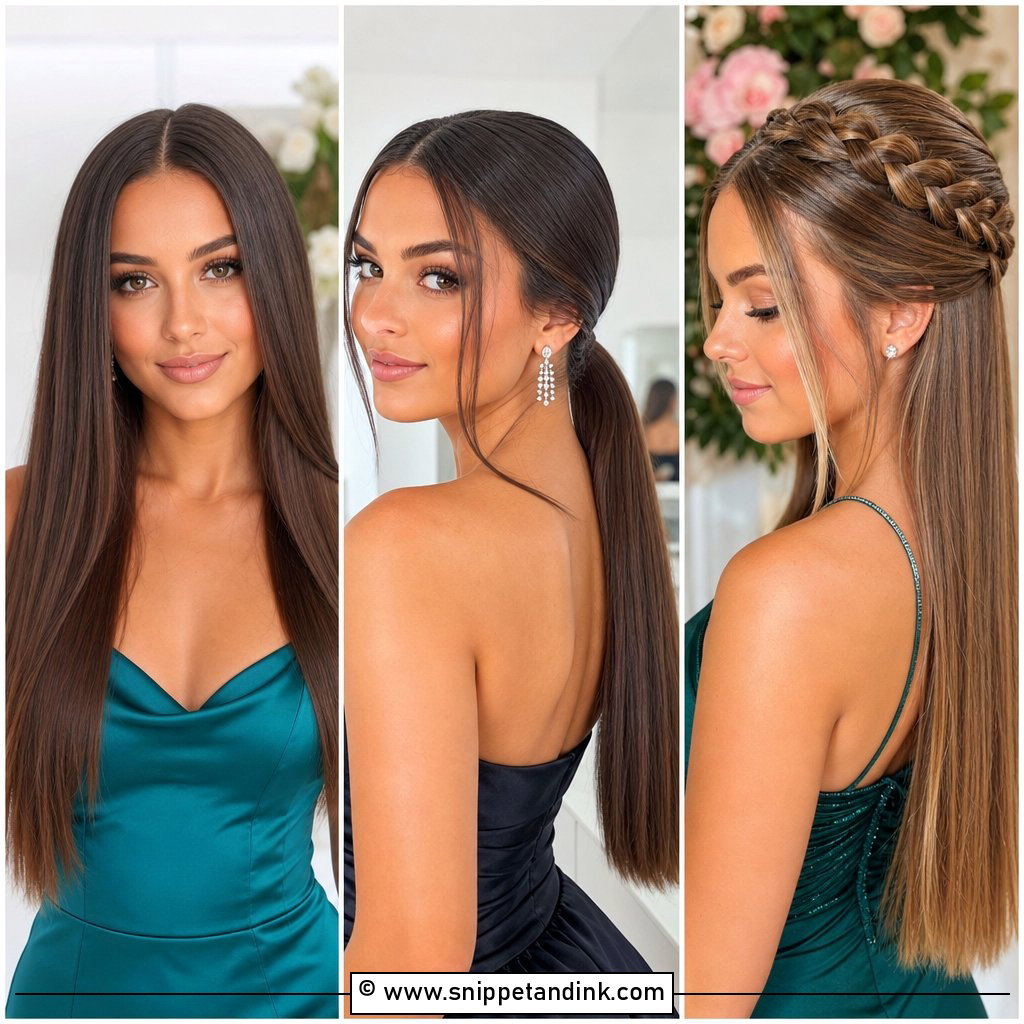
Verdict first: this needs healthy ends. A glass-smooth centre part magnifies split ends and uneven lengths, so get a dusting trim two to three weeks before. I flat iron in thin sections at a moderate heat, then press a pea-sized drop of serum between my palms and touch only the outer layer. Too much serum and the hair separates into strings by the evening. Studs and a sheer veil keep it quiet and modern.
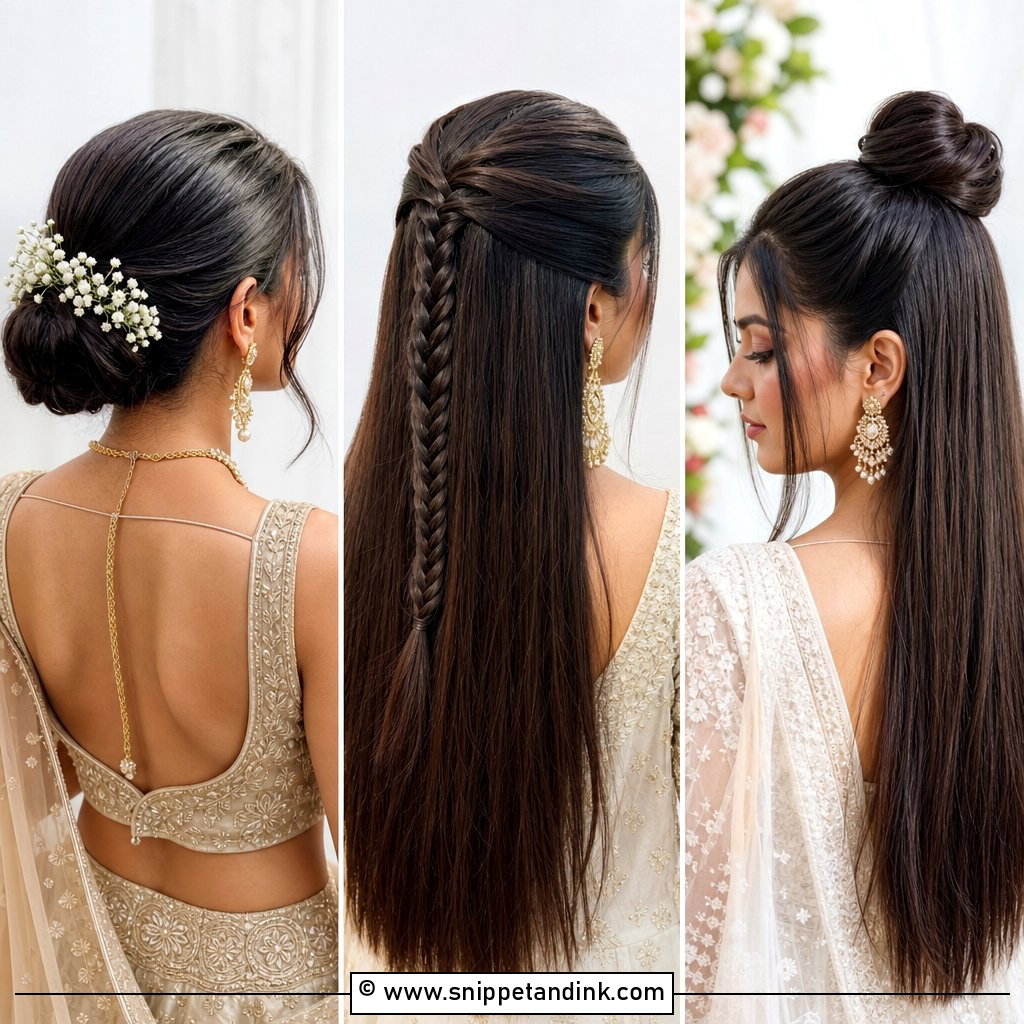
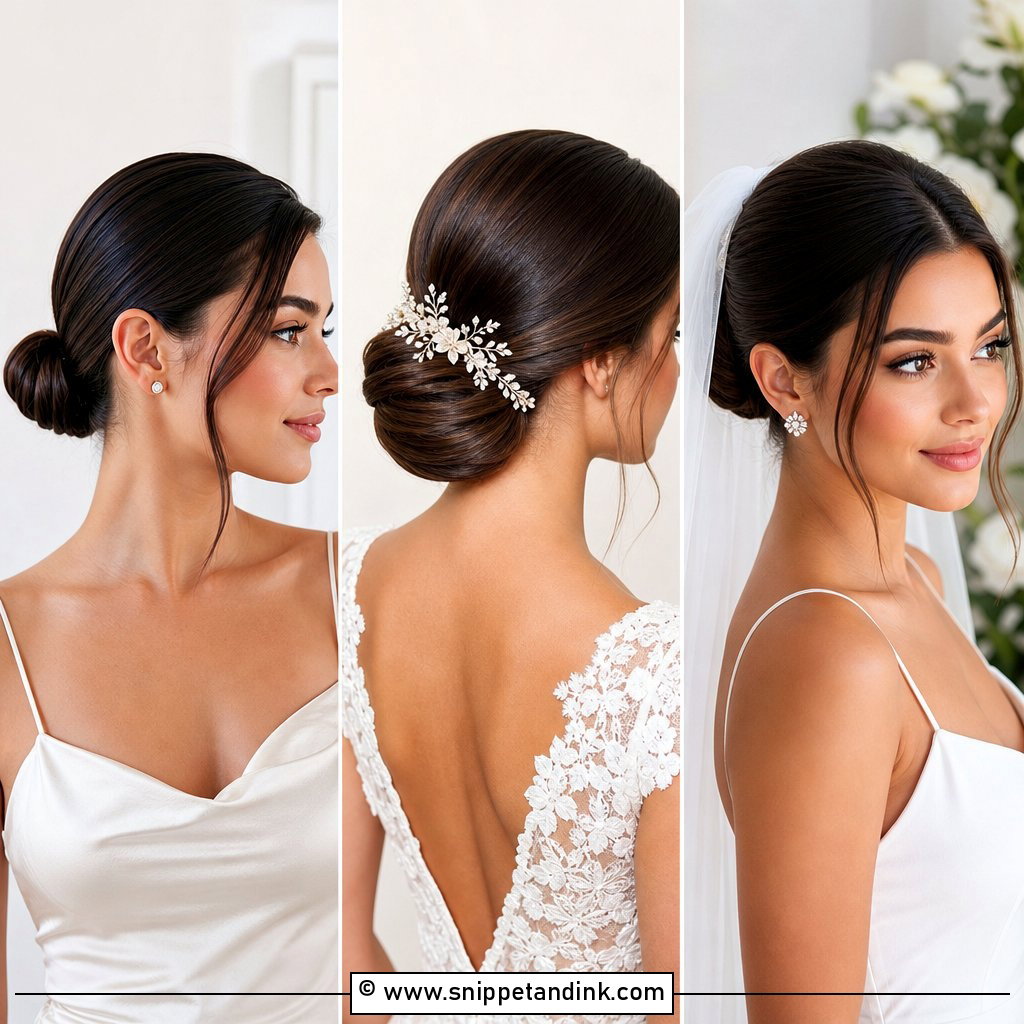
2. Low Bun With Straight Hair
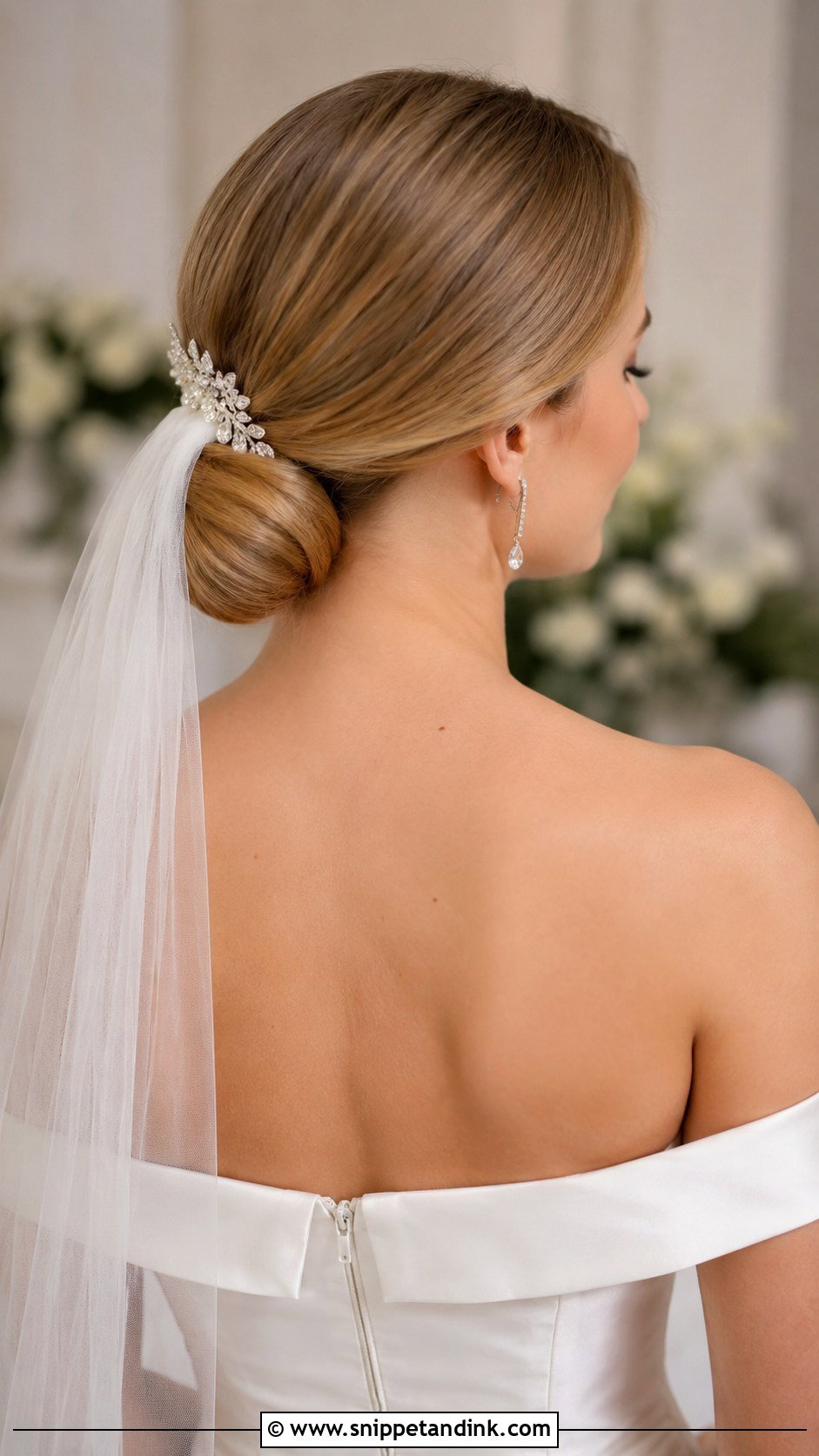
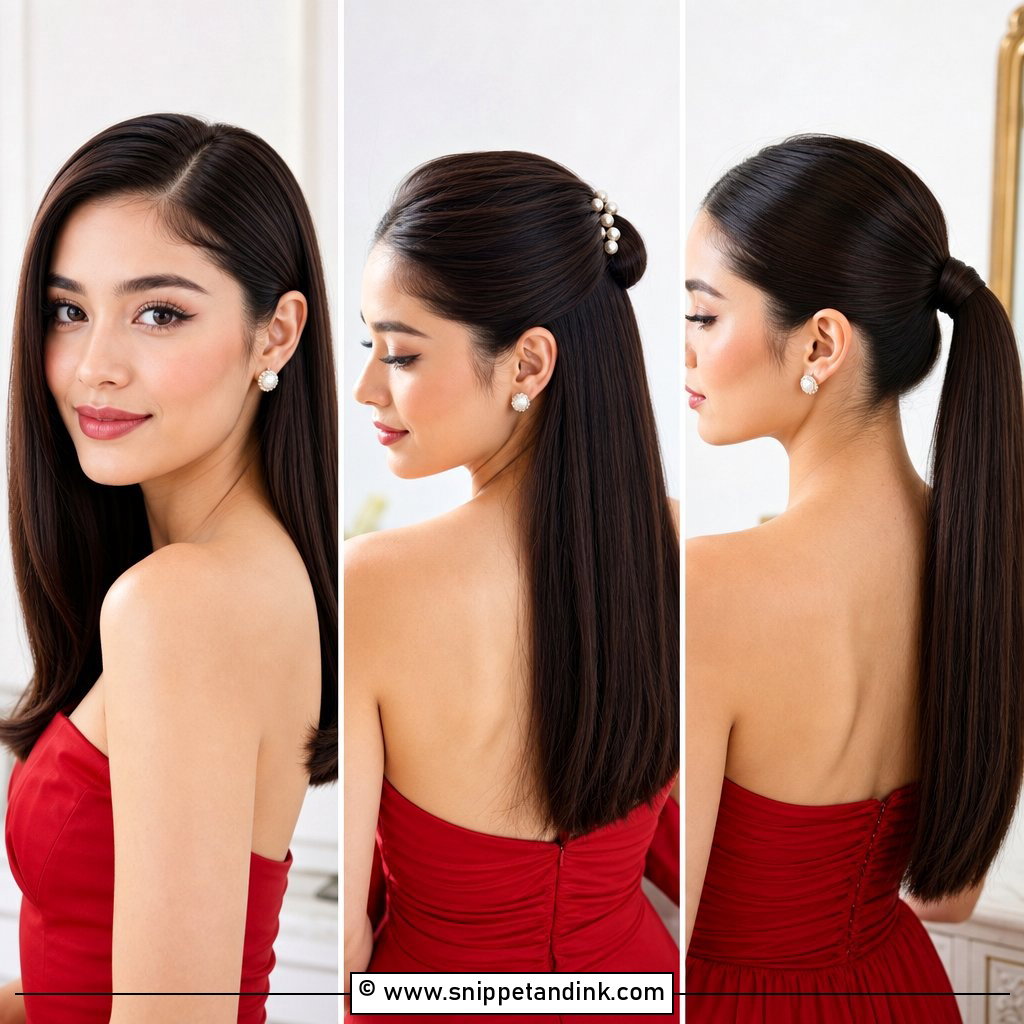
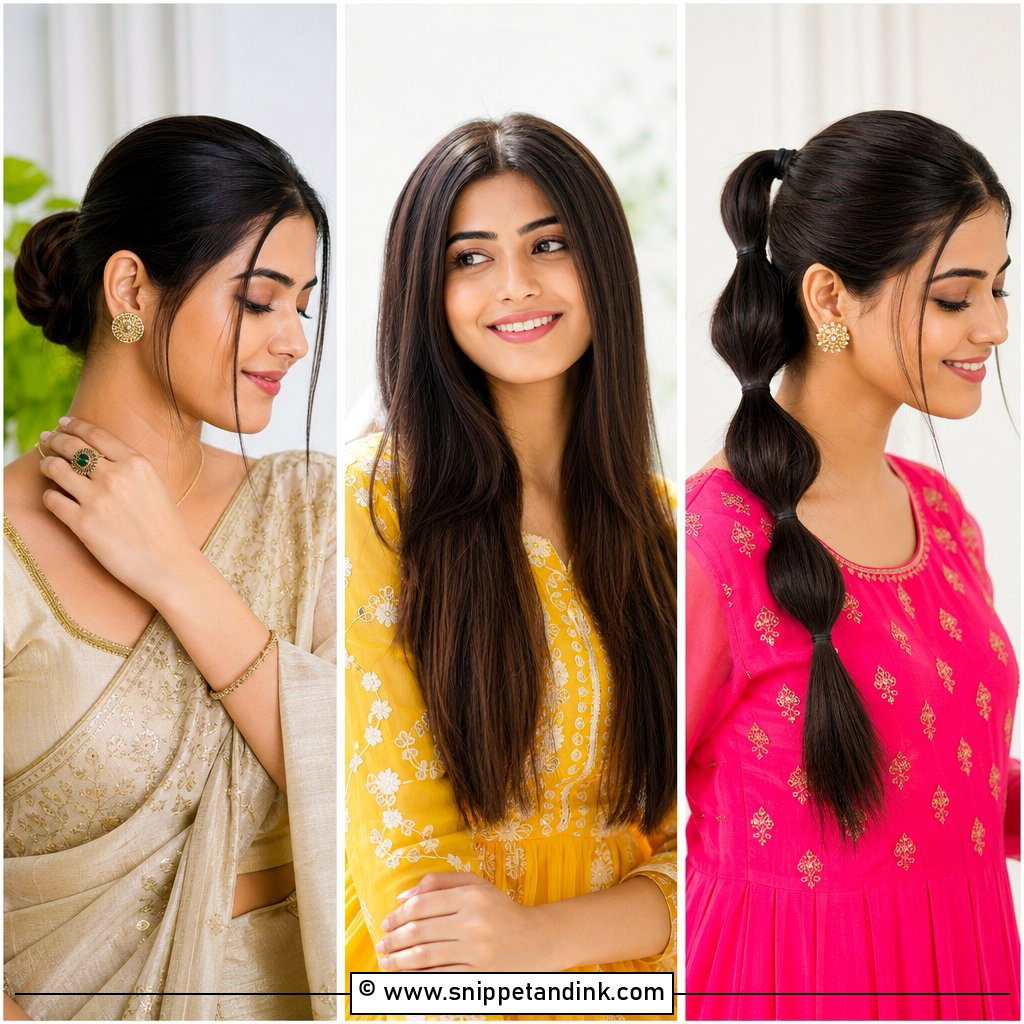
The low bun is the style I trust most for emotional, hug-heavy days. A knot at the nape doesn’t get crushed when someone wraps an arm around your shoulders, and it stays clear of a strapless or off-the-shoulder neckline. I tie a tight base ponytail first and pin the bun around it. Fine hair looks fuller if I backcomb the tail lightly before wrapping it. Slide the veil comb in just above the bun so the weight sits on the elastic, not on loose hair.
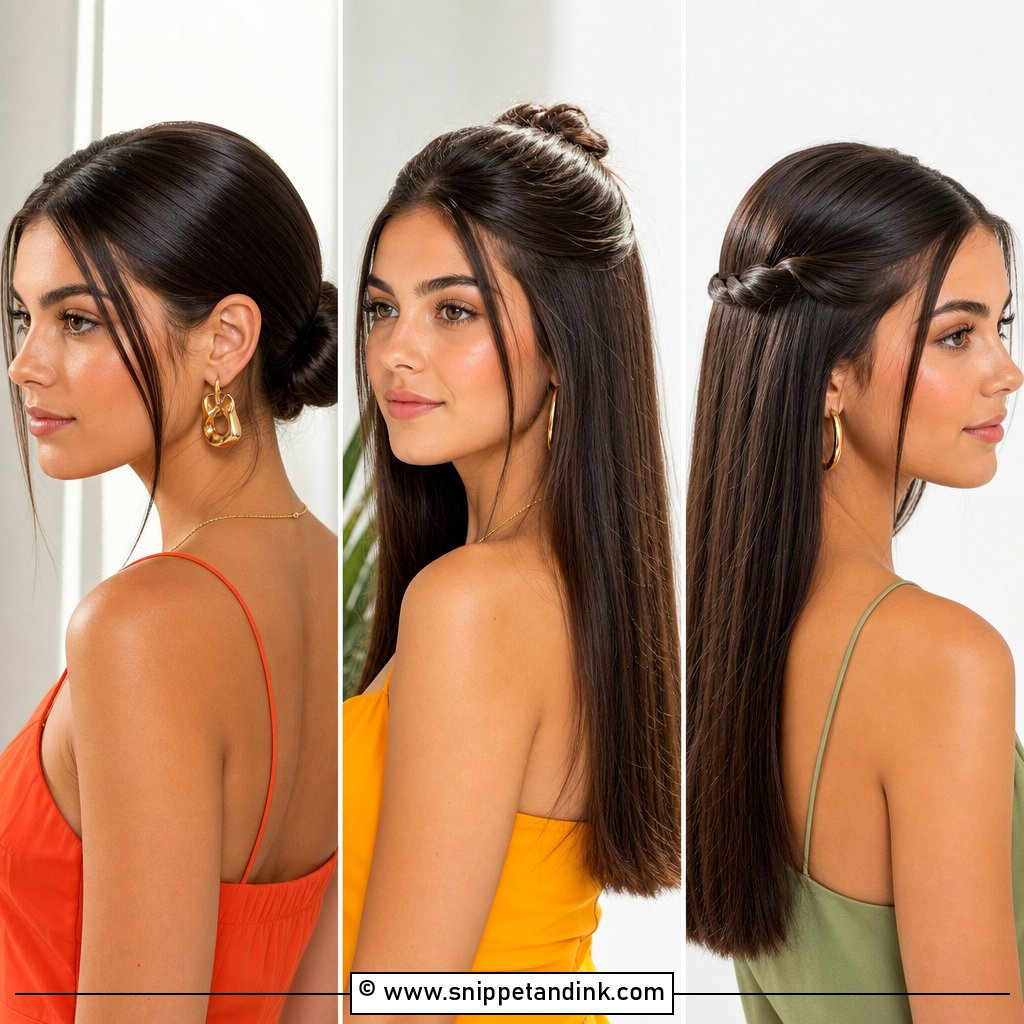
3. Sleek High Ponytail For Brides
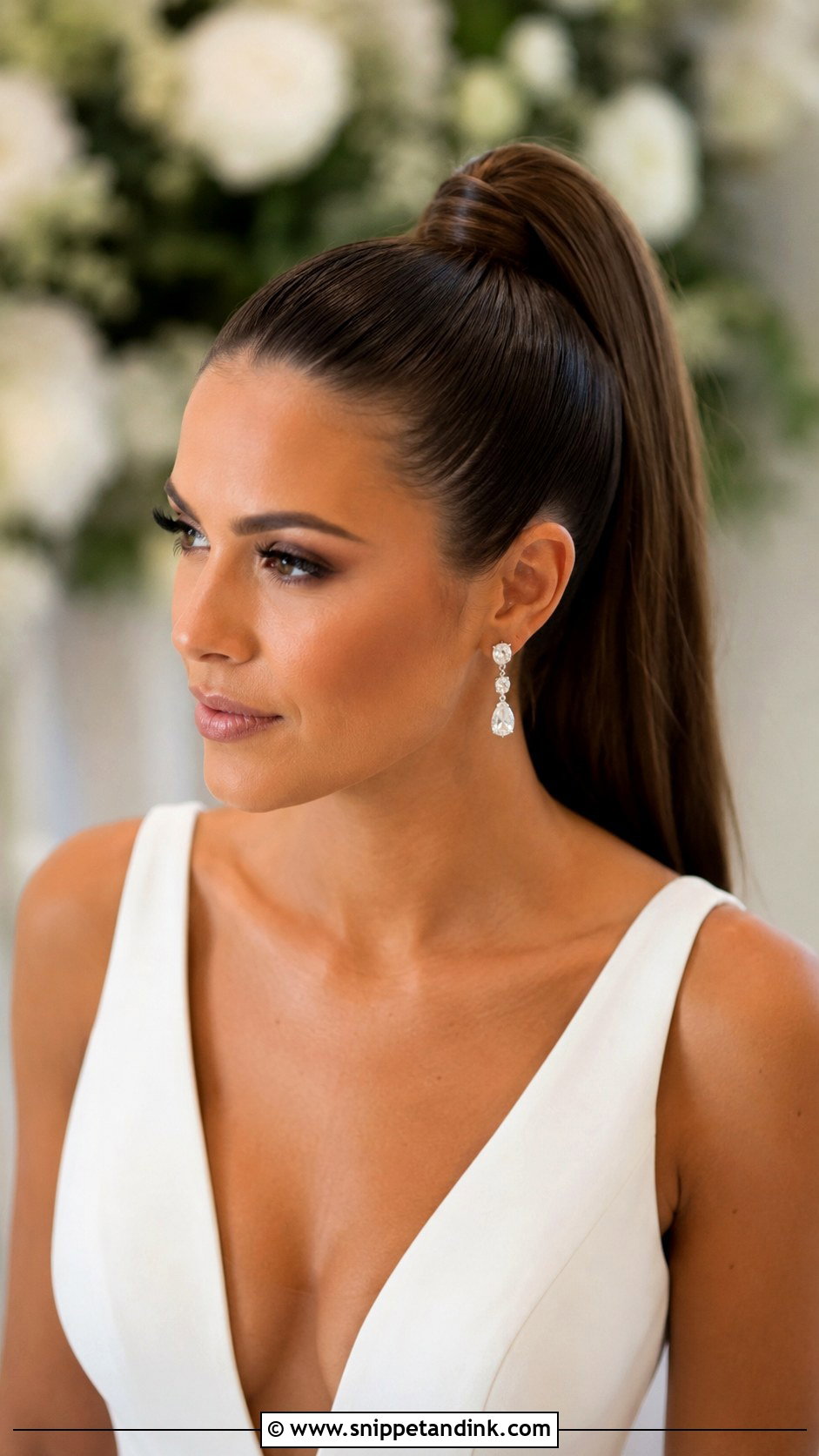
A high ponytail is the boldest way to wear straight hair, and the one most likely to give you a headache. The higher and tighter it sits, the more the scalp pulls by hour six. I build it with two elastics, one tight and one slightly looser above it, which spreads the tension and lifts the tail. Wrap the base with a strand and pin it underneath. It suits a confident bride with a long neck; with a short neck, I’d set it a little lower so it doesn’t look like it is sitting on your head.
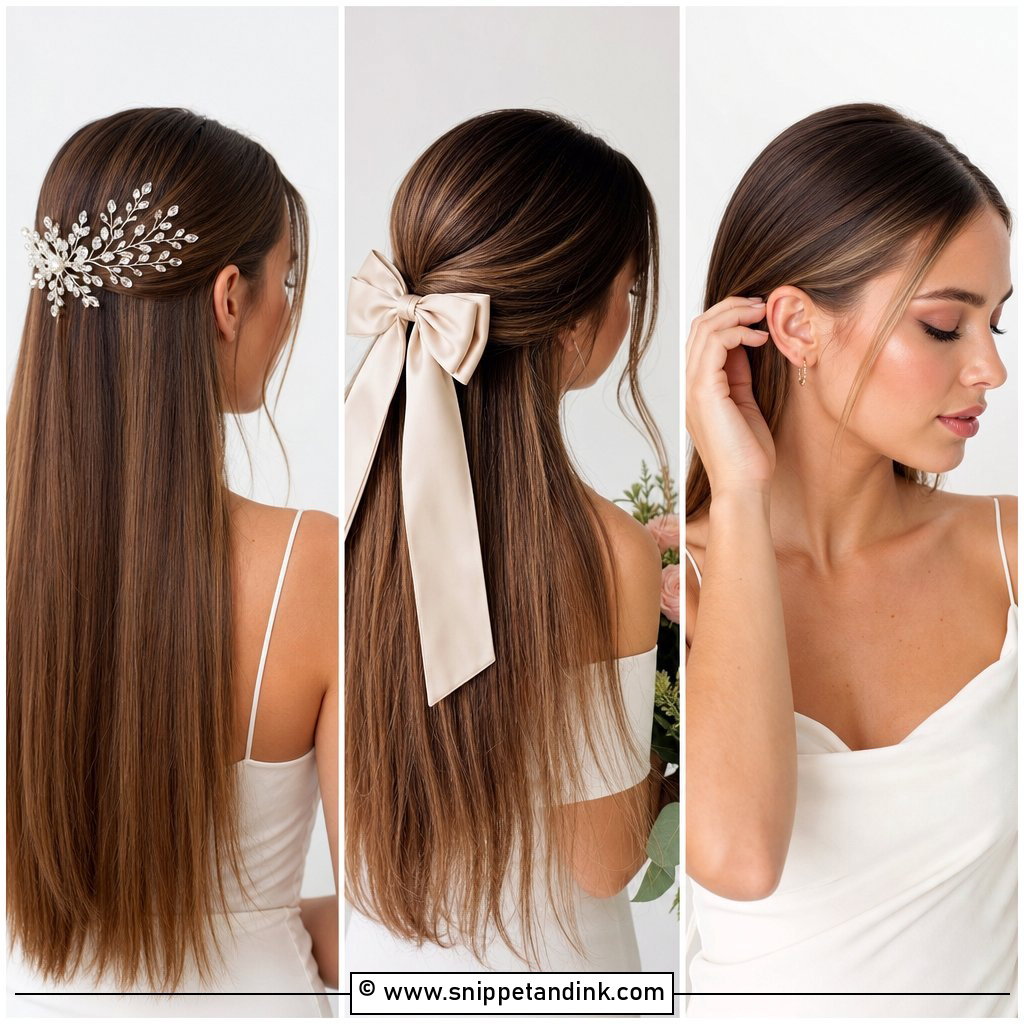
4. Half Up Half Down Straight Hair
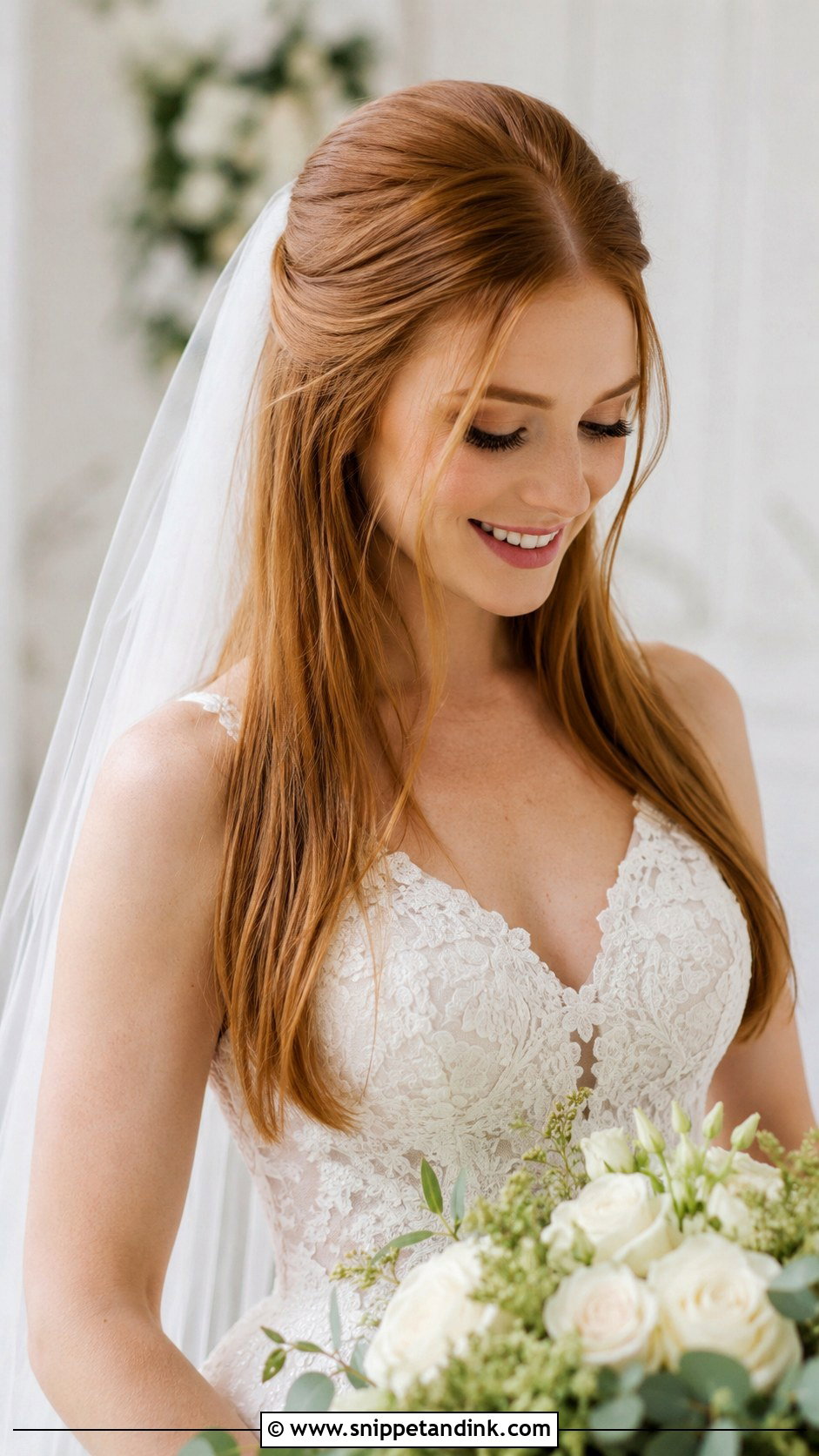
Undecided between up and down? This is the compromise that actually works. I gather the top section from the temples back, secure it with a small clear elastic and only then add a clip, because straight hair slides out of clips alone. Backcomb under the crown section so the top doesn’t look flat in profile shots. A veil sits right into that gathered point.
5. Straight Hair With Veil
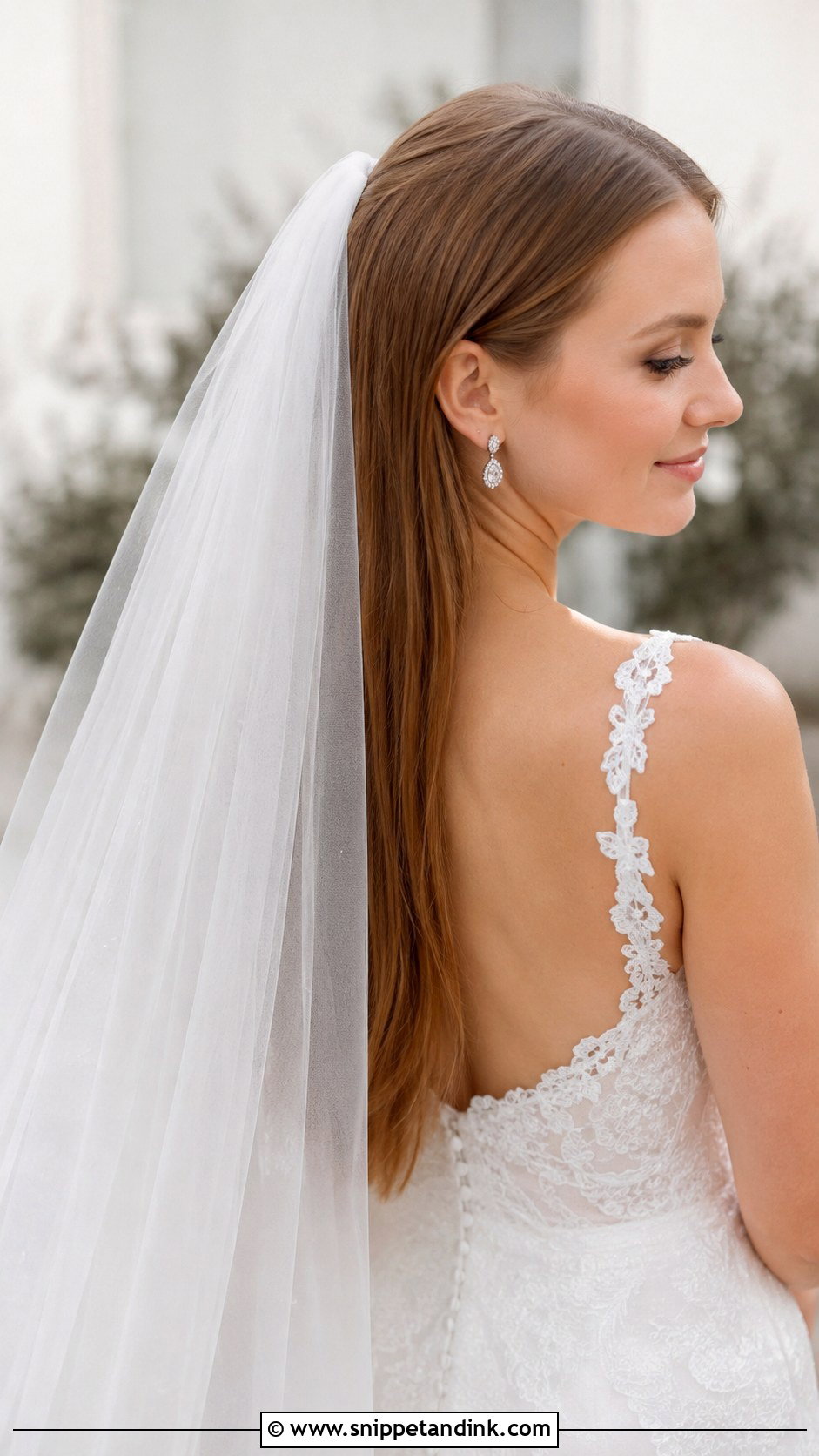
Straight hair under a veil is the plainest, most traditional pairing, and it asks for a solid anchor. Silky hair gives a comb nothing to bite, so I set two crossed bobby pins or a small backcombed patch where the comb will go. Crown placement lets a cathedral veil fall over the lengths; nape placement works better under a fingertip veil. When the veil comes out, a quick brush through removes the comb marks.
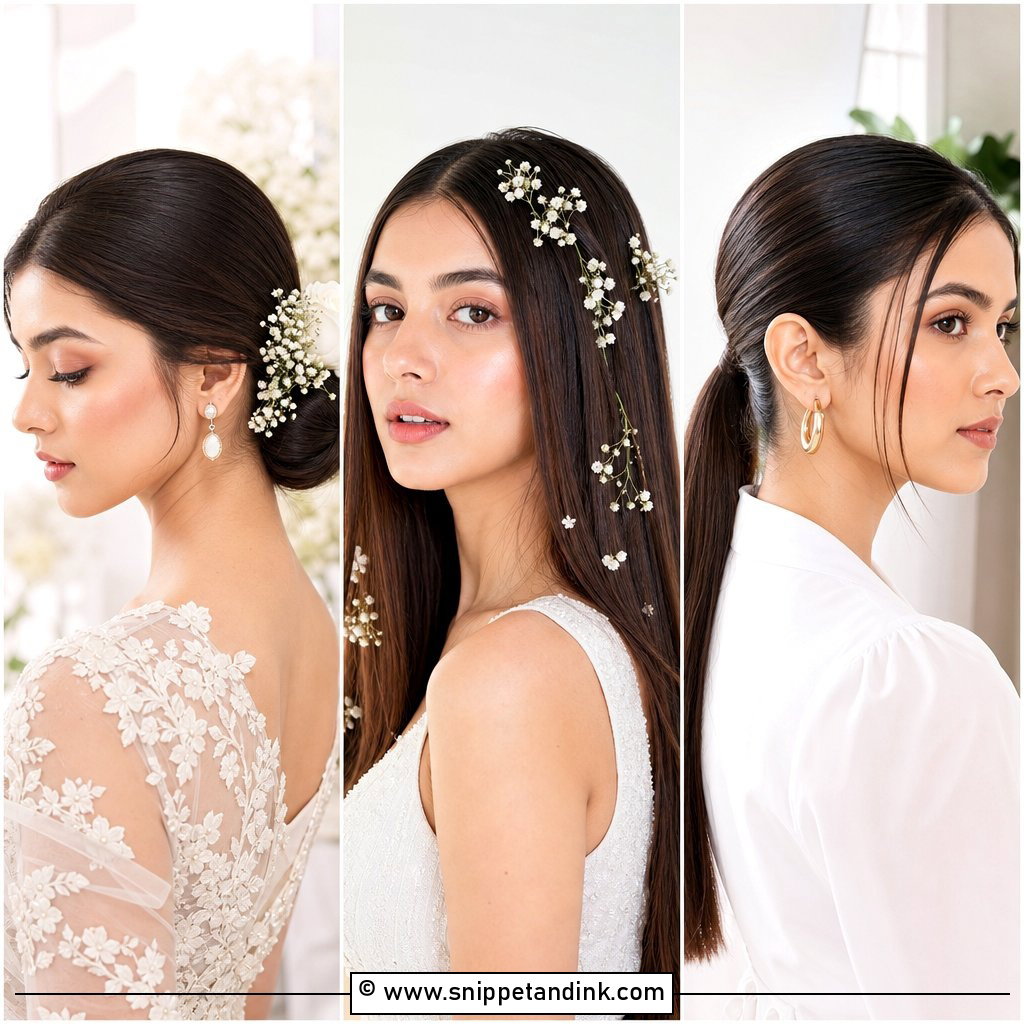
6. Sleek Low Ponytail
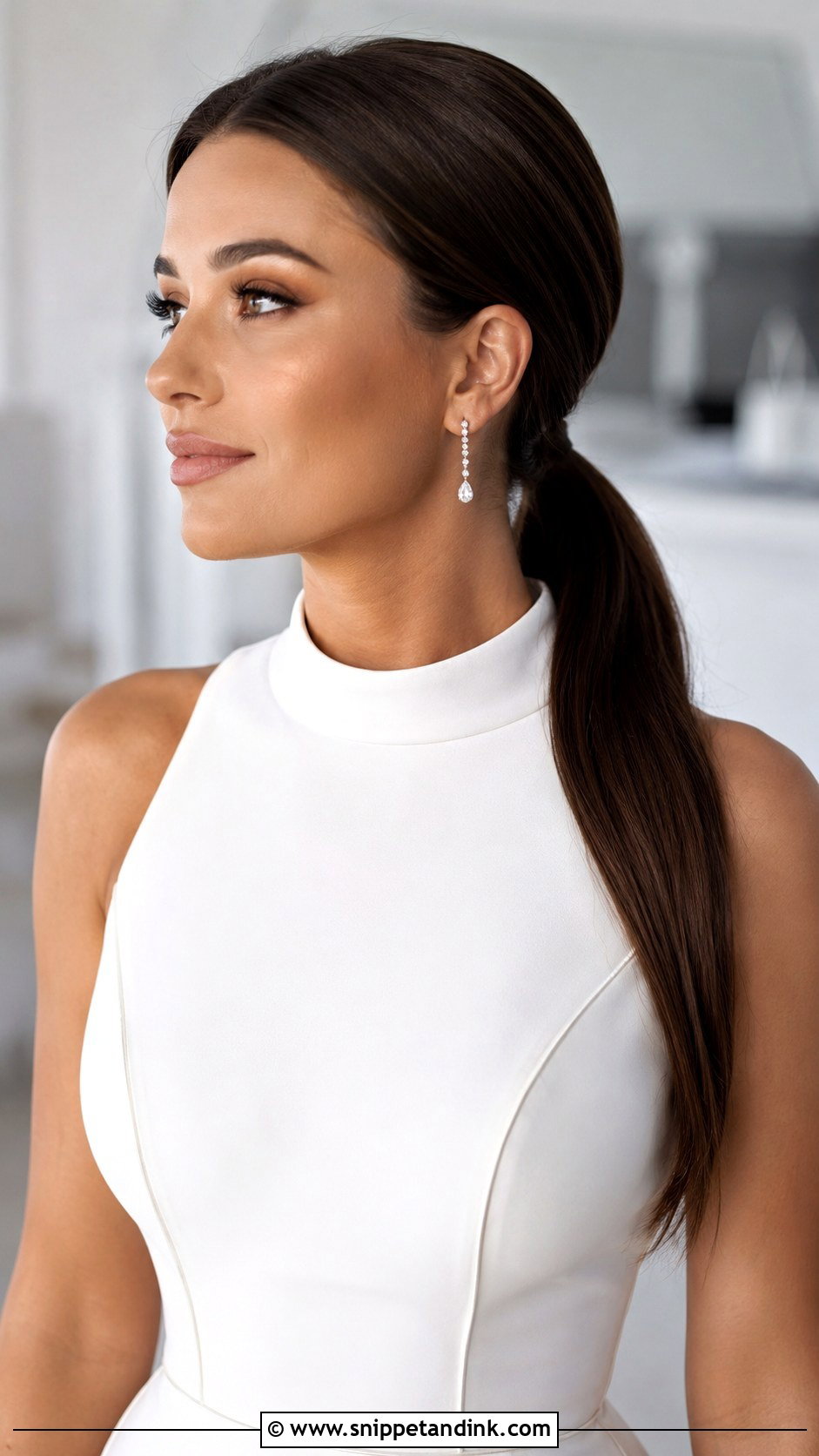
A low ponytail is calmer than its high cousin and far easier on the scalp. I tie it at the nape, conceal the elastic with a wrapped strand and decide at the trial whether it drapes down the back or over one shoulder. High necklines are its best match, since the tail sits neatly against the fabric. A thin ribbon or metal cuff at the base suits a minimal dress; keep heavy jeweled cuffs for thicker hair that can carry the weight without drooping.
7. Classic Chignon With Straight Hair
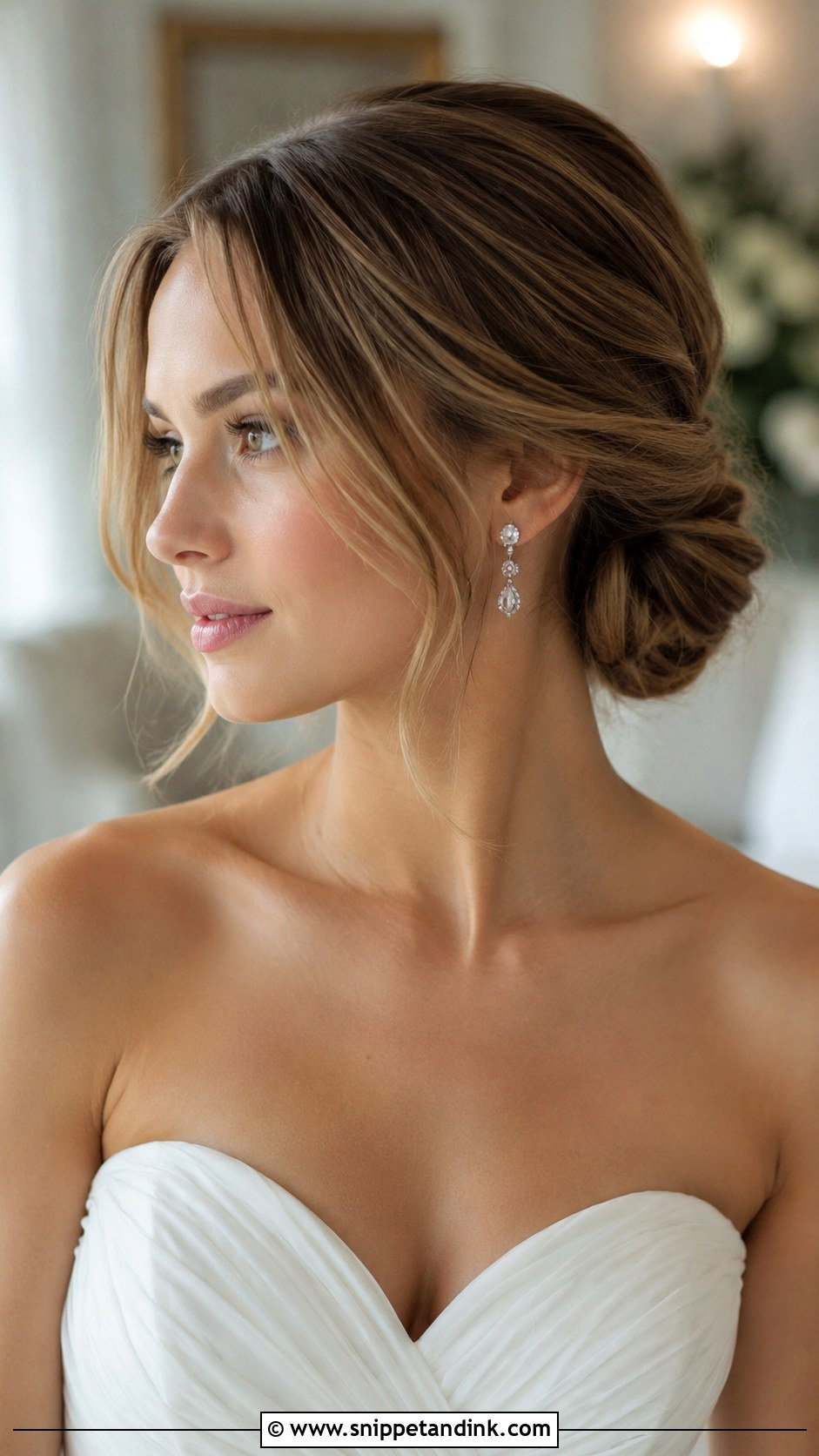
A chignon is the updo I’d suggest for a strapless or sweetheart neckline, because it leaves the shoulders bare and gives the veil a firm base. Straight hair wraps into a low, twisted knot neatly, and I pin through the twist into the base so it won’t loosen. Fine hair can take a small hidden padding to give the knot size. Leave a couple of face-framing pieces only if they are long enough to tuck later; short pieces just stick to the skin in heat.
8. French Twist For Wedding Day
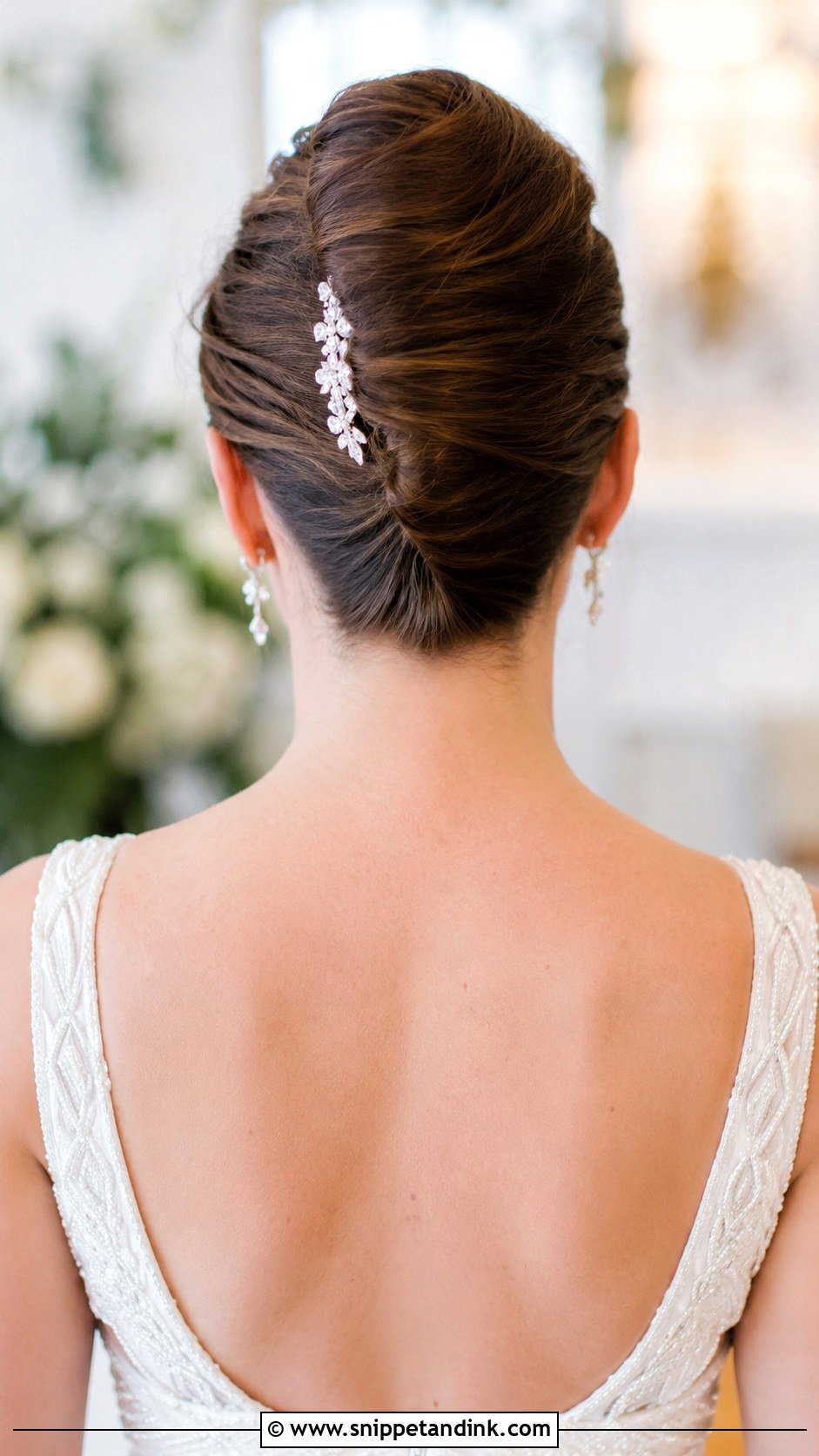
The French twist is a vertical roll up the back of the head, and it needs medium to long hair with some grip. Freshly washed silky hair tends to unroll, so I add texture spray or dry shampoo before twisting. I lock the twist with a row of pins worked from the bottom up, each one pushed against the roll. It clears the neck completely, which is a real comfort at a summer wedding. A decorative pin at the top hides where the ends tuck in.
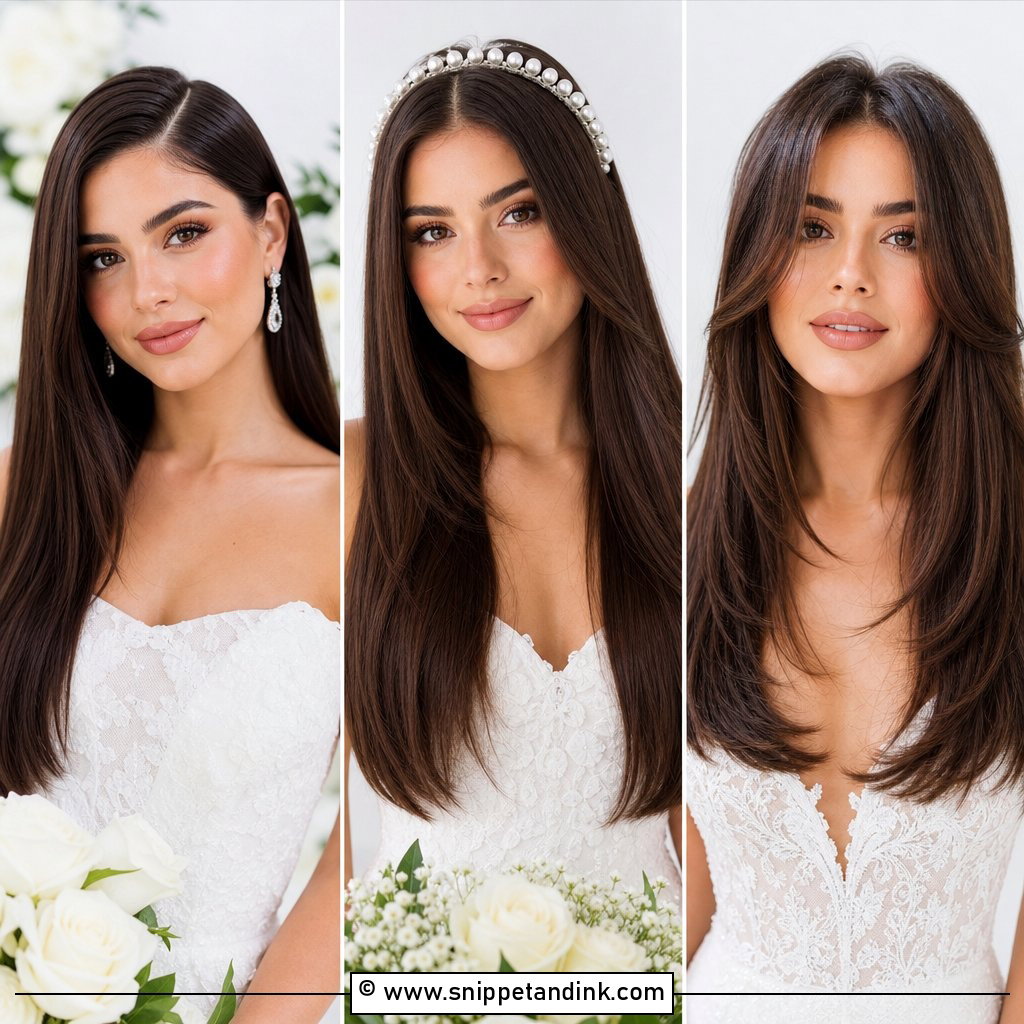
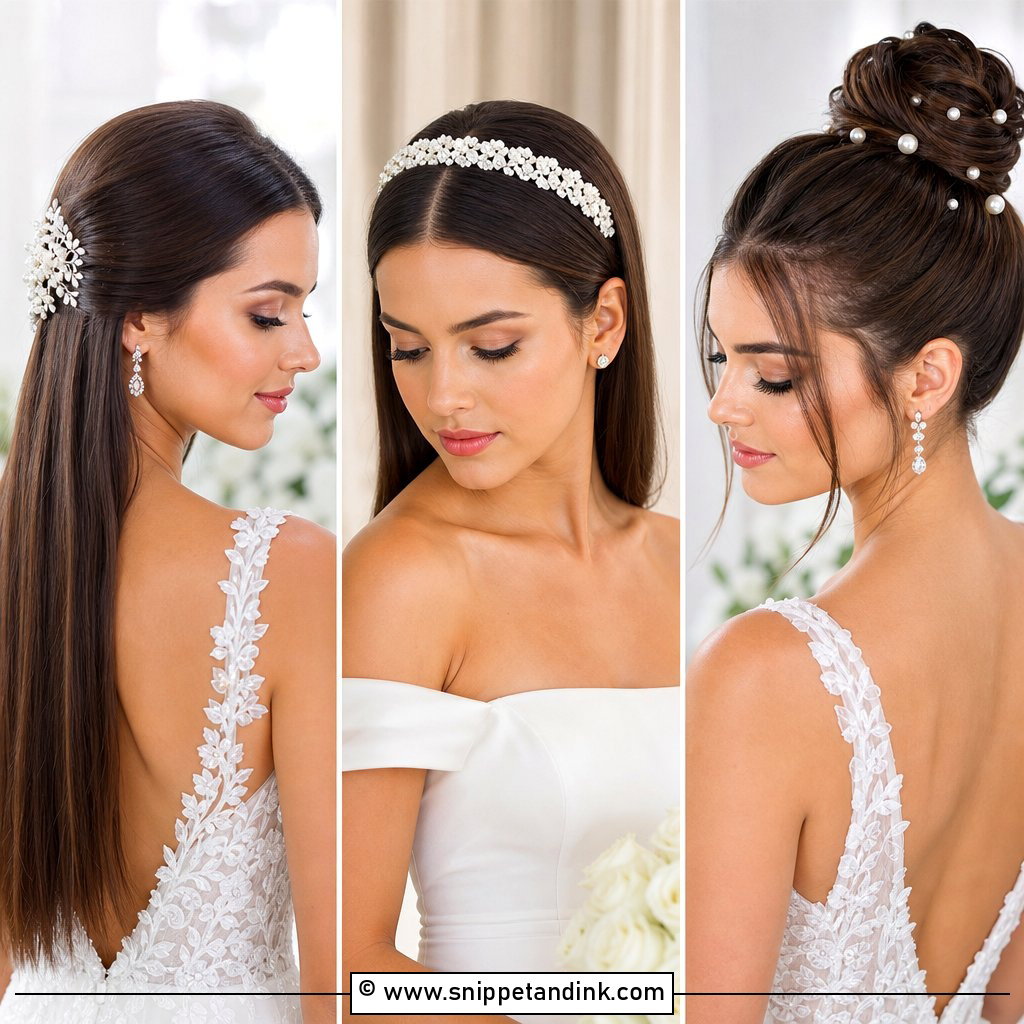
9. Straight Hair With Headband
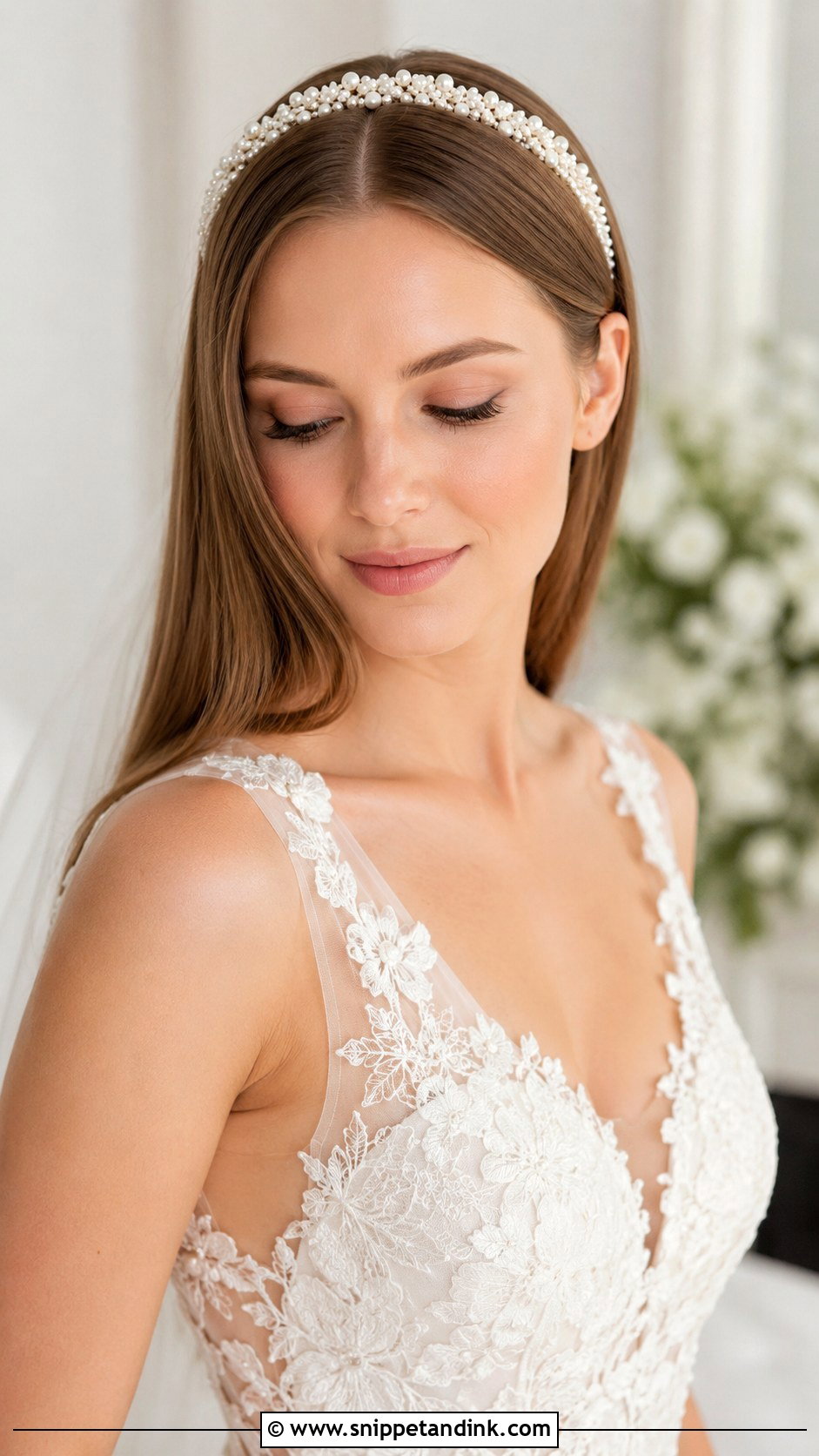
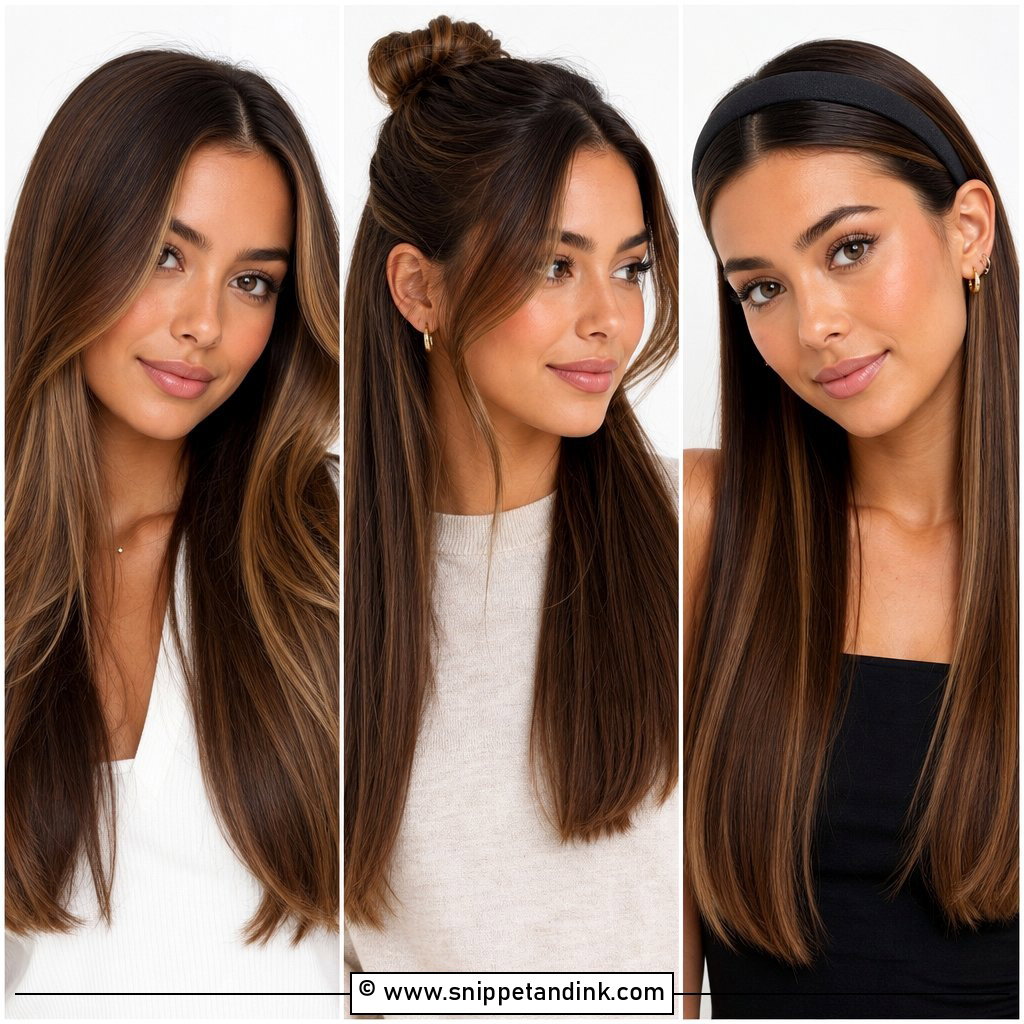
A headband over loose straight hair is the simplest way to wear something sparkly without an updo. The fit decides everything: a stiff metal band that presses behind the ears becomes painful, so bend it gently to your head shape before the day or choose one with a soft fabric wrap. I hide a pin under each end so the band can’t slide forward. A thin band suits loose hair; a wide padded one belongs with a bun.
10. Sleek Straight Bob For Brides
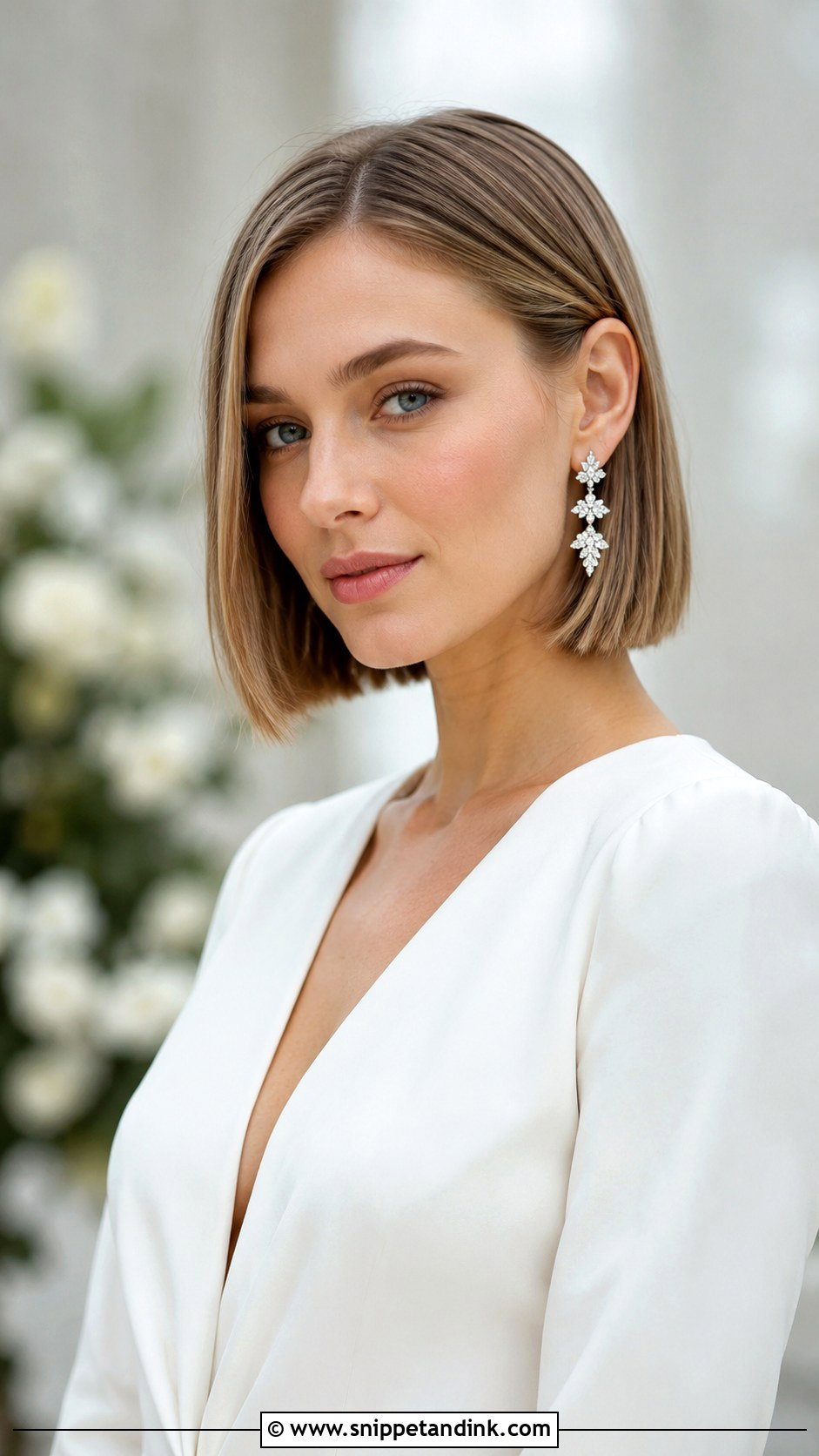
A sleek straight bob depends on the line of the ends, so I take my time on the blow-dry before I ever reach for an iron. I round the ends under slightly, then flat iron the mid-lengths only. That gives a polished bevel instead of a stiff, flat edge. Tucking one side behind the ear shows off an earring; a small clip on the same side holds it. A crown-set veil adds length to the silhouette.
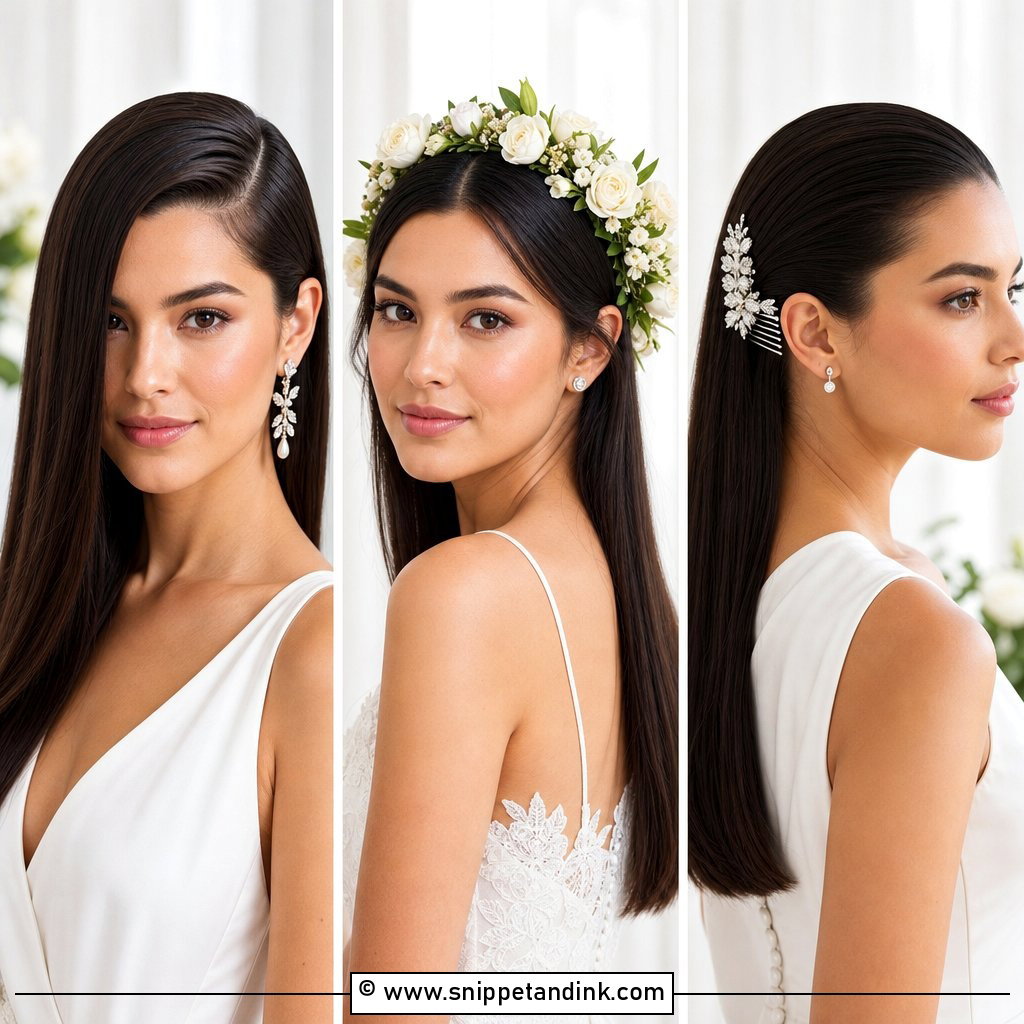
11. Straight Hair With Deep Side Part
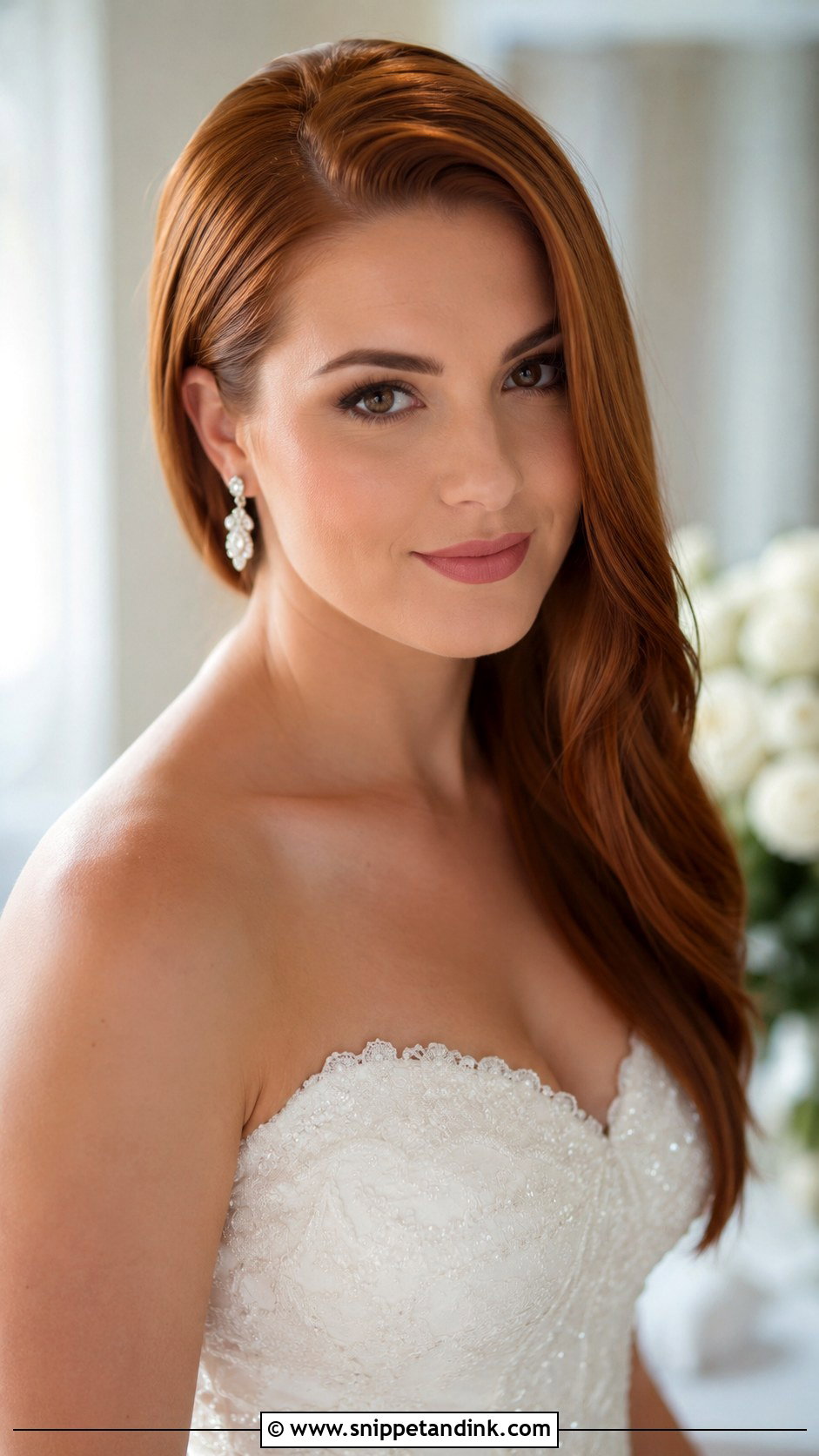
Flipping your part over to a deep side gives instant volume at the root, which straight hair otherwise lacks. Set the part while wet so it doesn’t fall back to its natural line by the reception. It softens angular features and lets the heavy side cascade over one shoulder. A sparkling pin near the part adds a point of light. I’d skip this one if you have a strong cowlick at the front, since it fights the new direction all day.
12. Half Up Bun With Straight Hair
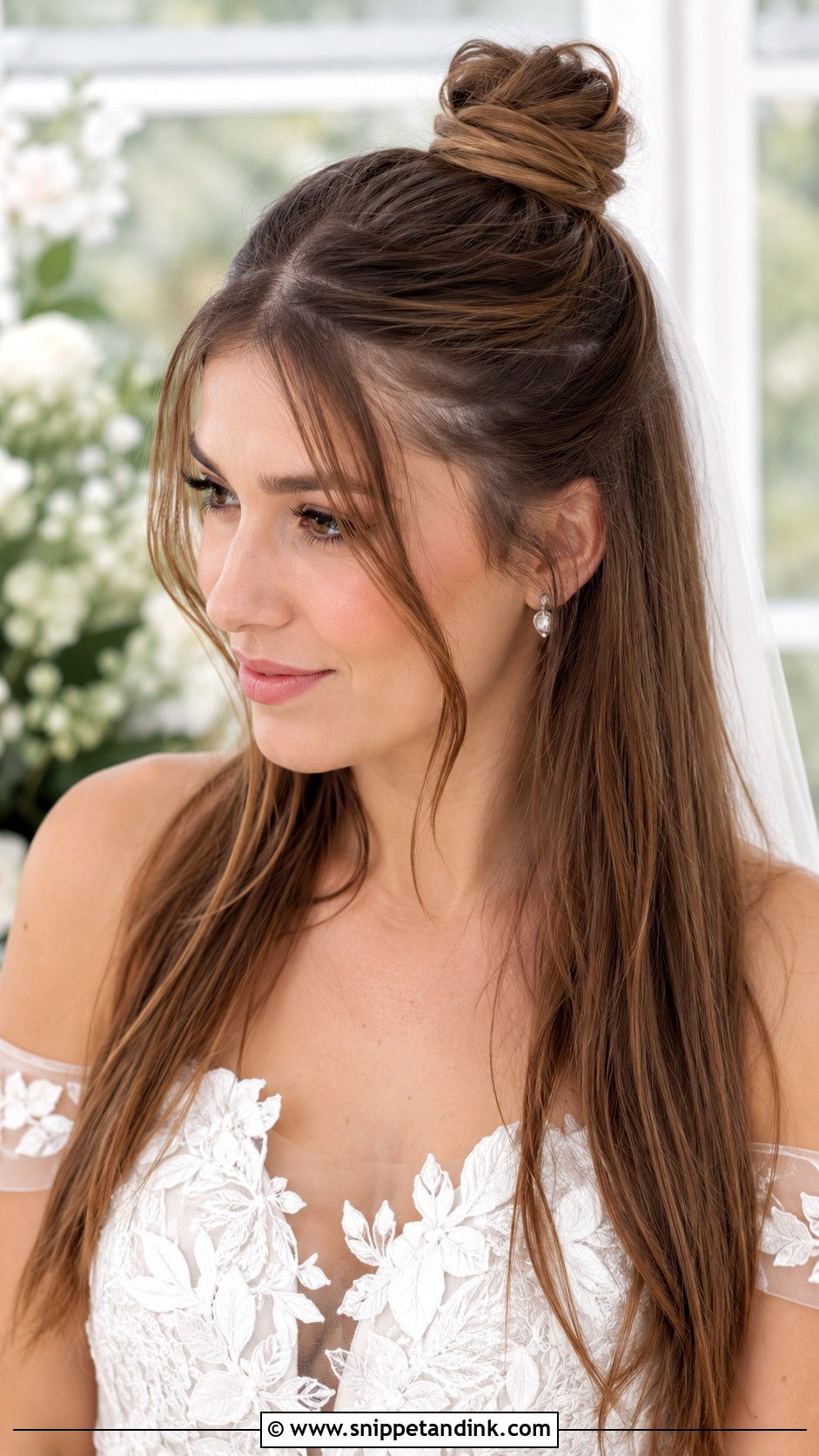
The half up bun suits relaxed, garden or daytime weddings more than black tie. I take a smaller section than for a standard half up so the bun stays neat and doesn’t overwhelm the head. Twist, coil, pin, then spray lightly. A couple of soft strands at the face work here because the mood is casual. The bun is a handy spot for a flower or a small veil.
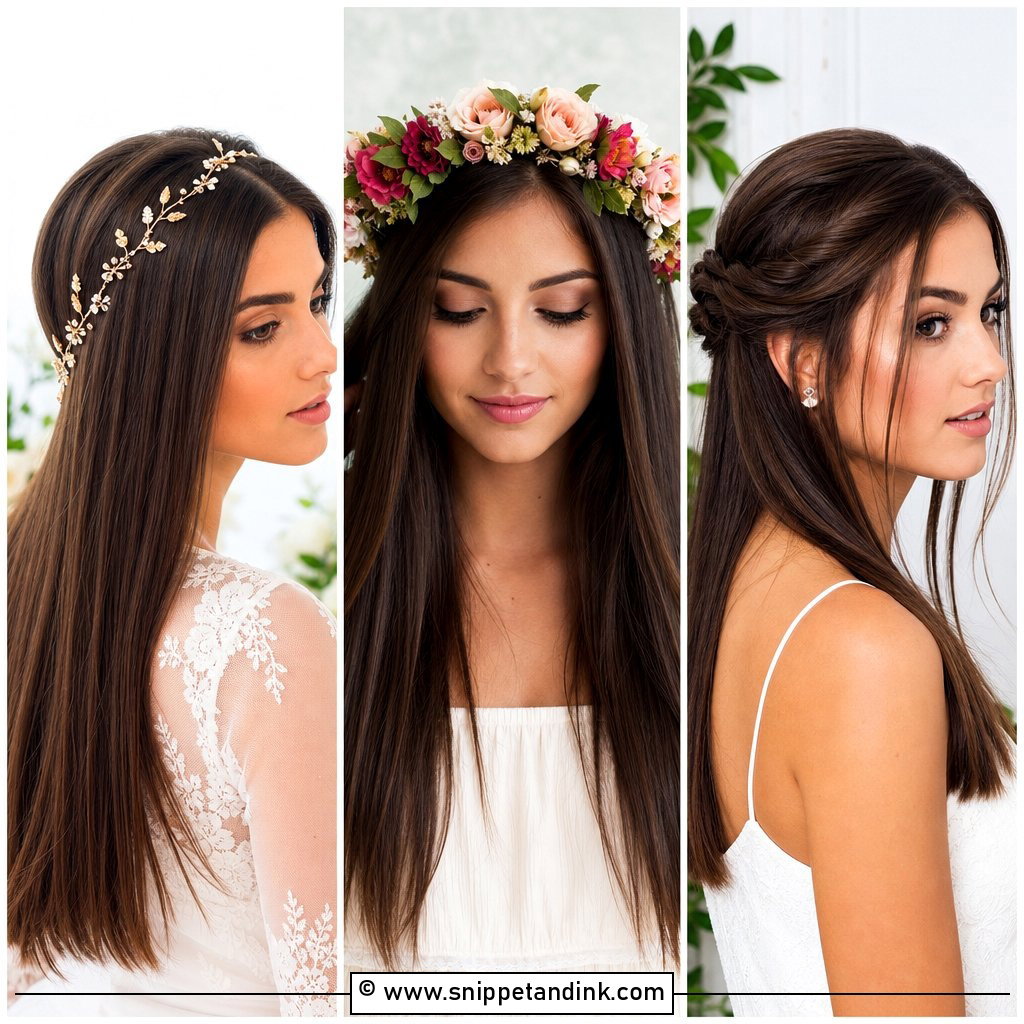
13. Straight Hair With Flower Crown
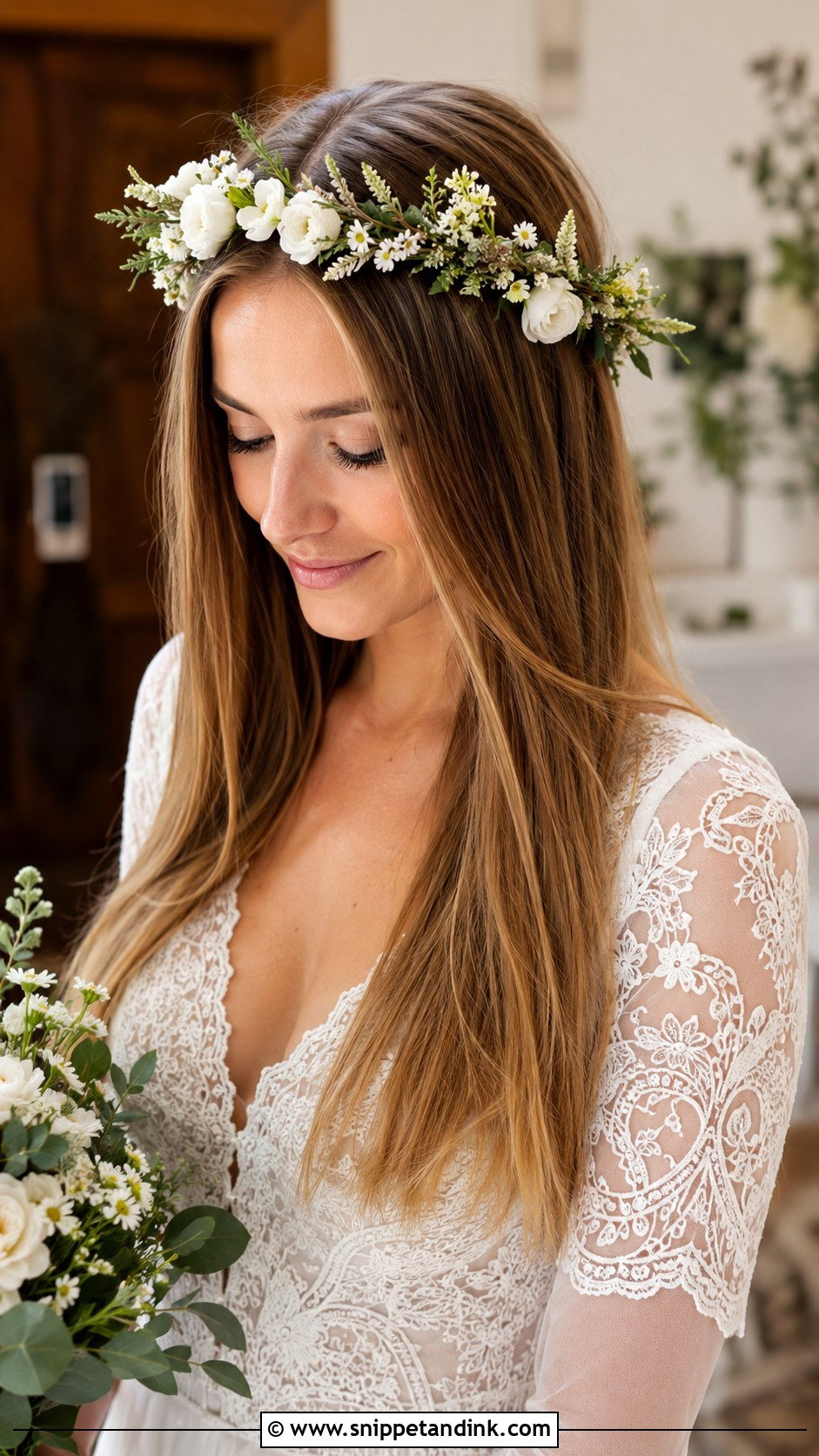
Flower crowns on straight hair look softer than they do on curls, because the blooms stand out against a smooth surface. Fresh flowers wilt on a hot day, so I ask the florist to use hardy blooms and wire them tightly. Keep the crown in the fridge until the last moment. Pin it with bobby pins at four points around the head so it doesn’t slip. A crown that matches the bouquet ties the look together; baby’s breath alone can look thin in photos.
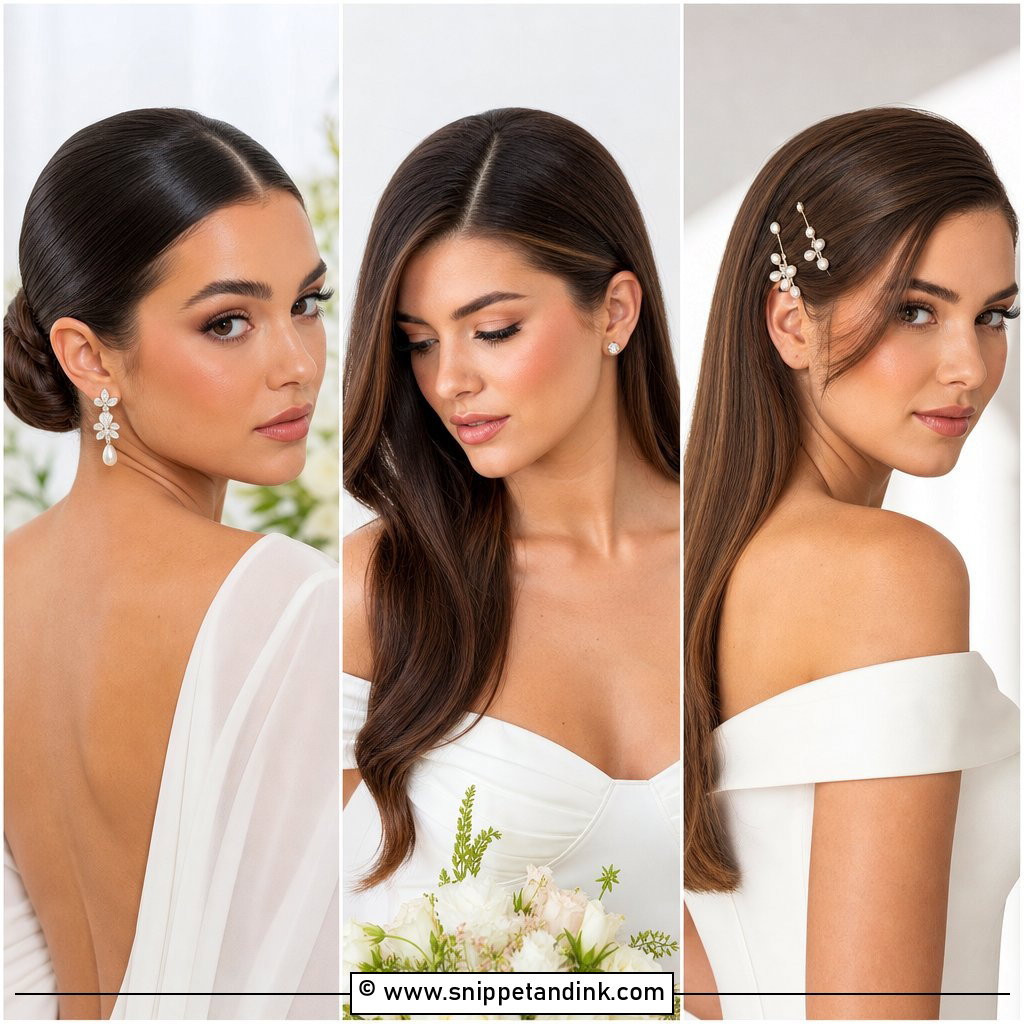
14. Slicked Back Straight Bun
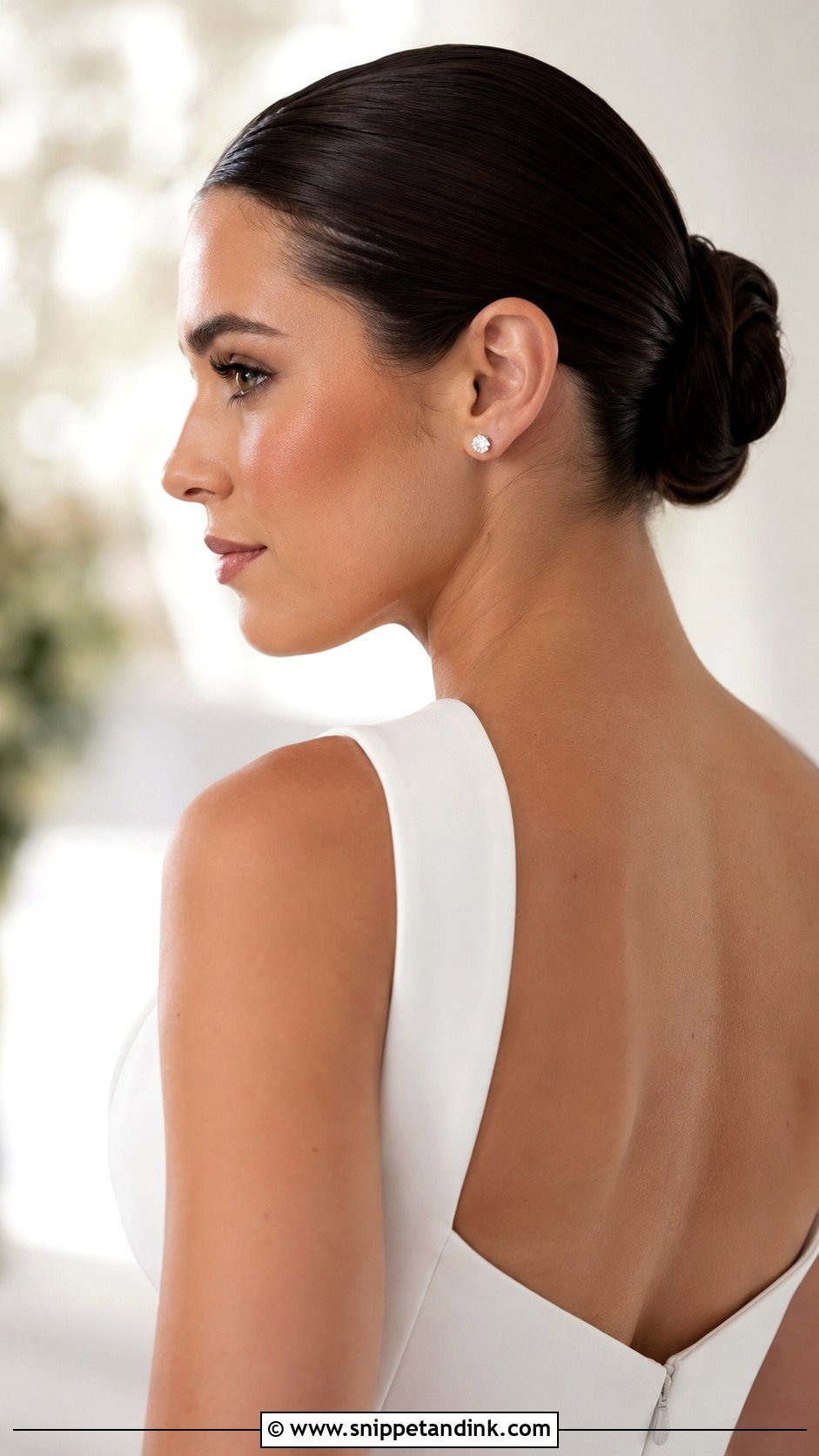
The slicked back bun is architectural and leaves nowhere to hide. A wet-look gel finish gives that glossy surface, but it can flake or look greasy in bright flash photos if layered too thickly. I apply a thin coat to damp roots, comb it back with a fine-tooth comb and let it set before tying the bun. Strong bone structure and a structured gown are its best match. Anyone with a sensitive scalp should ask for slightly less tension at the hairline.
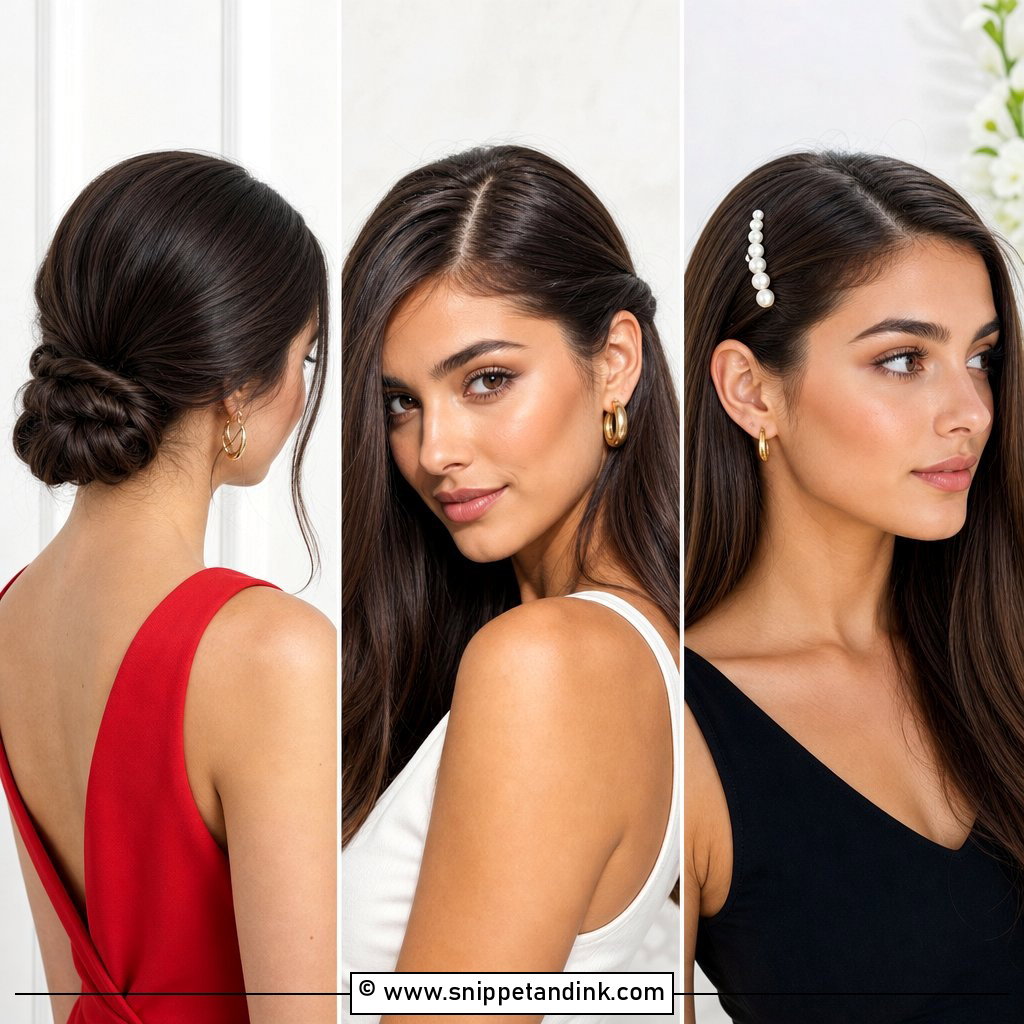
15. Straight Hair With Tiara
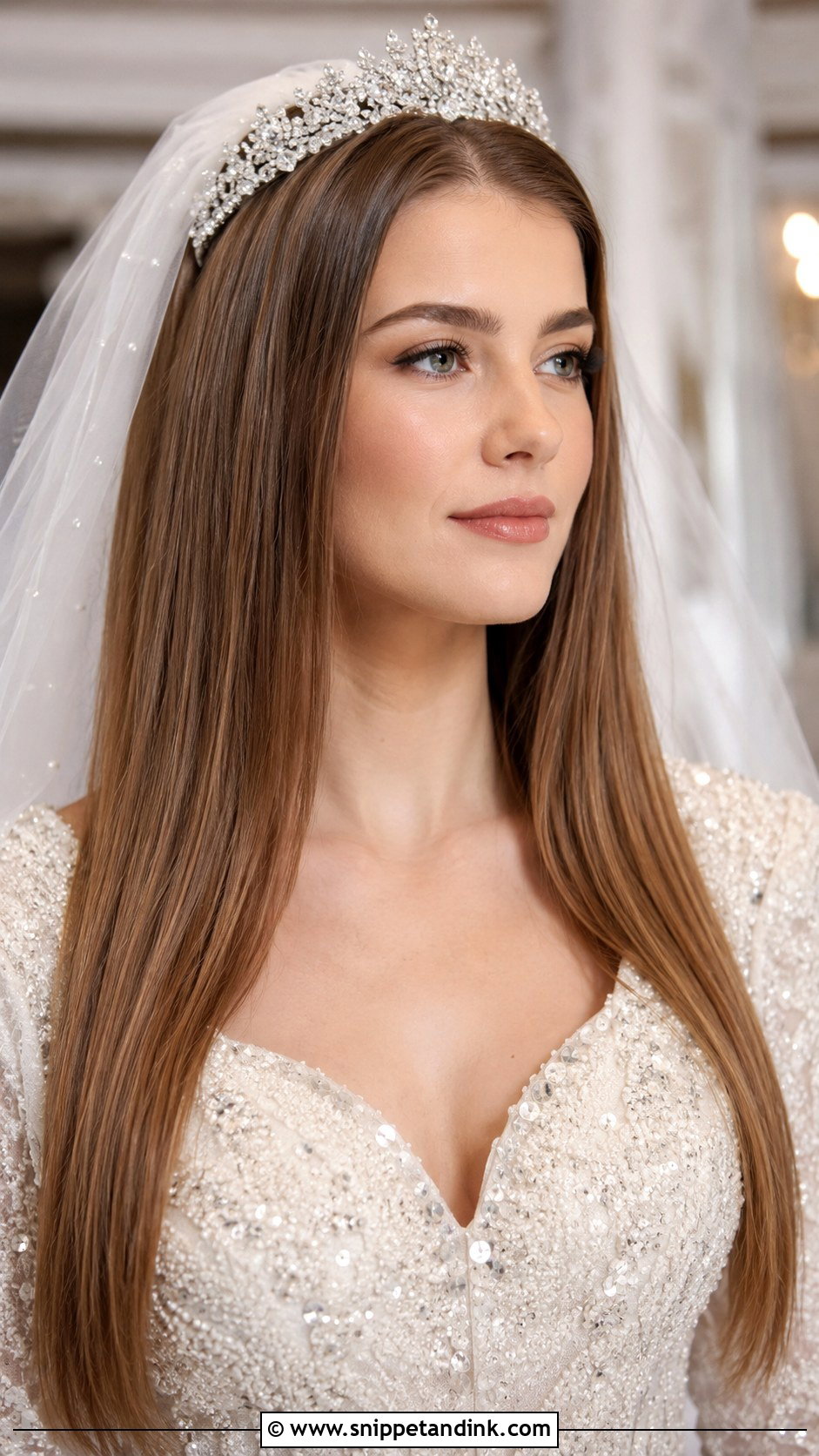
A tiara changes the scale of your look, so it needs the right foundation. I place it slightly behind the hairline, not right at the forehead, and secure it through its side combs plus a bobby pin threaded through each loop. Hair worn fully down needs a hidden ponytail or backcombed patch under the crown, or the tiara tilts forward. With a low bun, the tiara sits more securely. A matching veil goes behind it, never over it.
16. Straight Hair With Decorative Hair Clips
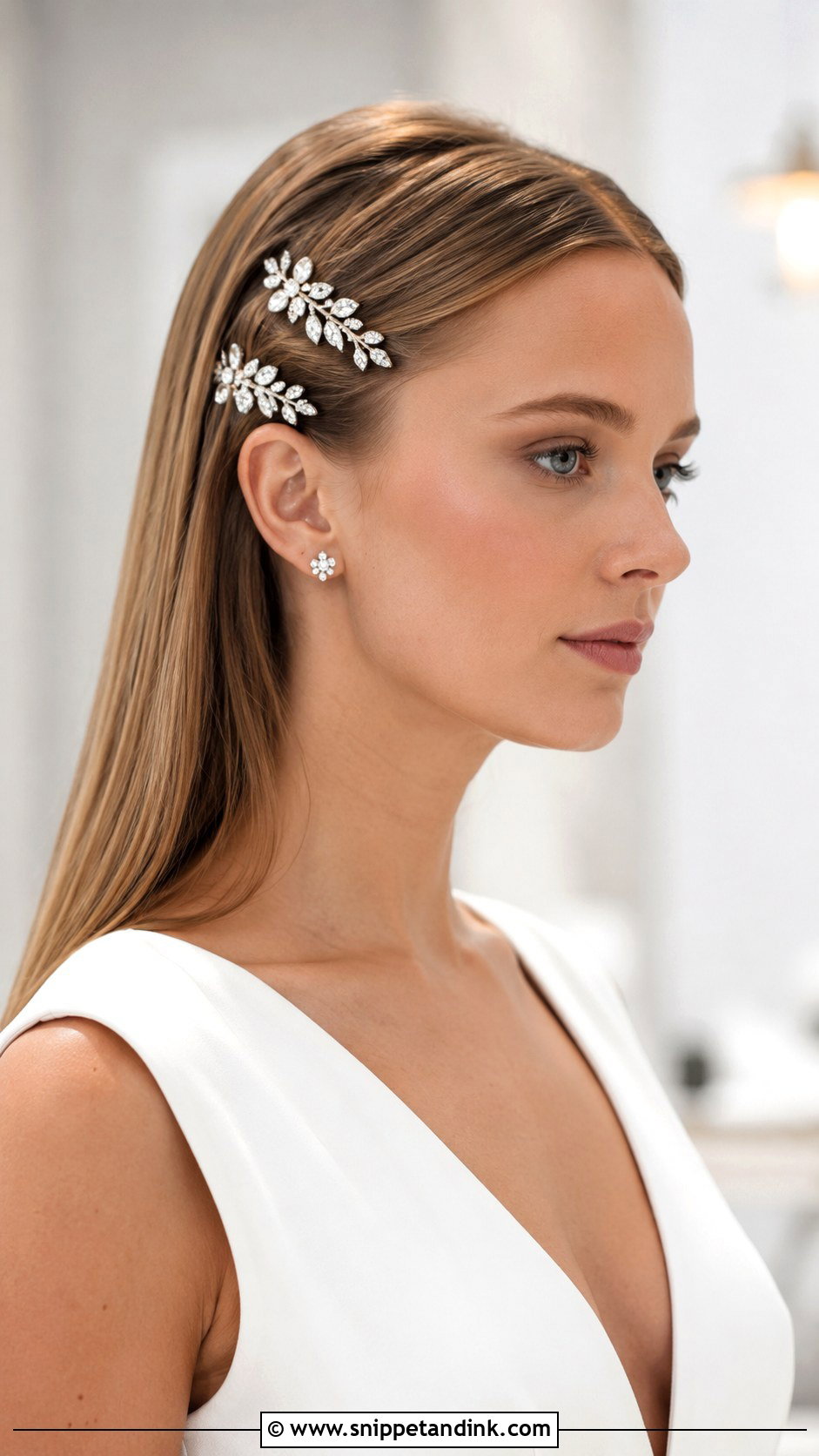
Clips are the easiest way to add sparkle to loose straight hair, but they slide on silky strands. I pin the section back first with a crossed pair of bobby pins and place the decorative clip over them. Several small pins clustered together look modern; one larger clip looks classic. Try them at your trial, because heavy crystal clips can drag a fine section downward by the evening. It is one of the most affordable ways to personalise a simple style.
17. Twisted Half Up Straight Hair
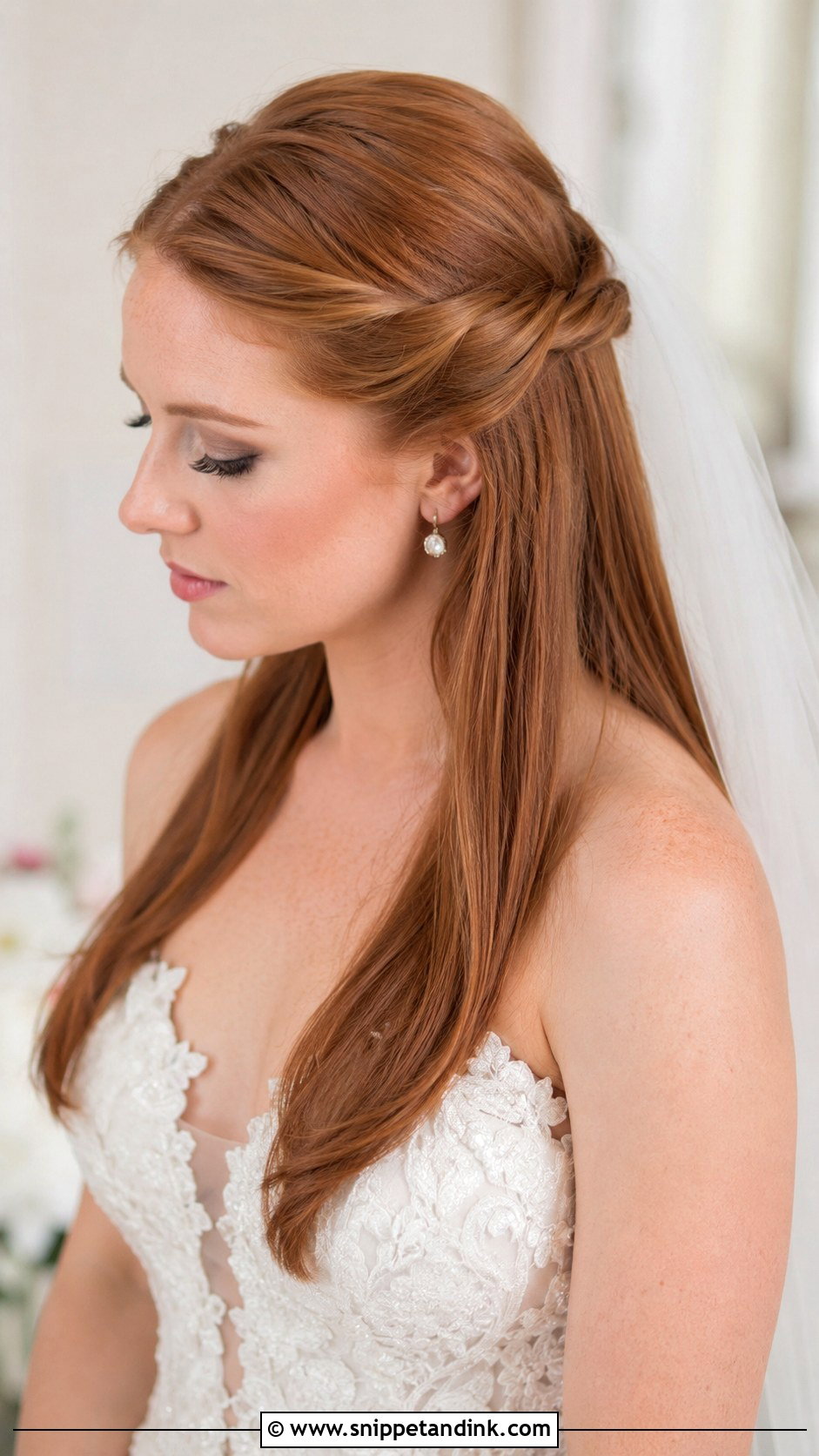
Two twisted sections from the front add some texture to an otherwise sleek look. I twist each section away from the face, never toward it, because that direction locks the strands. Where they meet at the crown, I secure with a small elastic and cover it with a jeweled pin. It stays comfortable all day and frames the face for close-up portraits. Very fine hair may show the scalp at the twist, so I loosen the sections slightly with my fingertips.
18. Sleek Straight Lob For Brides
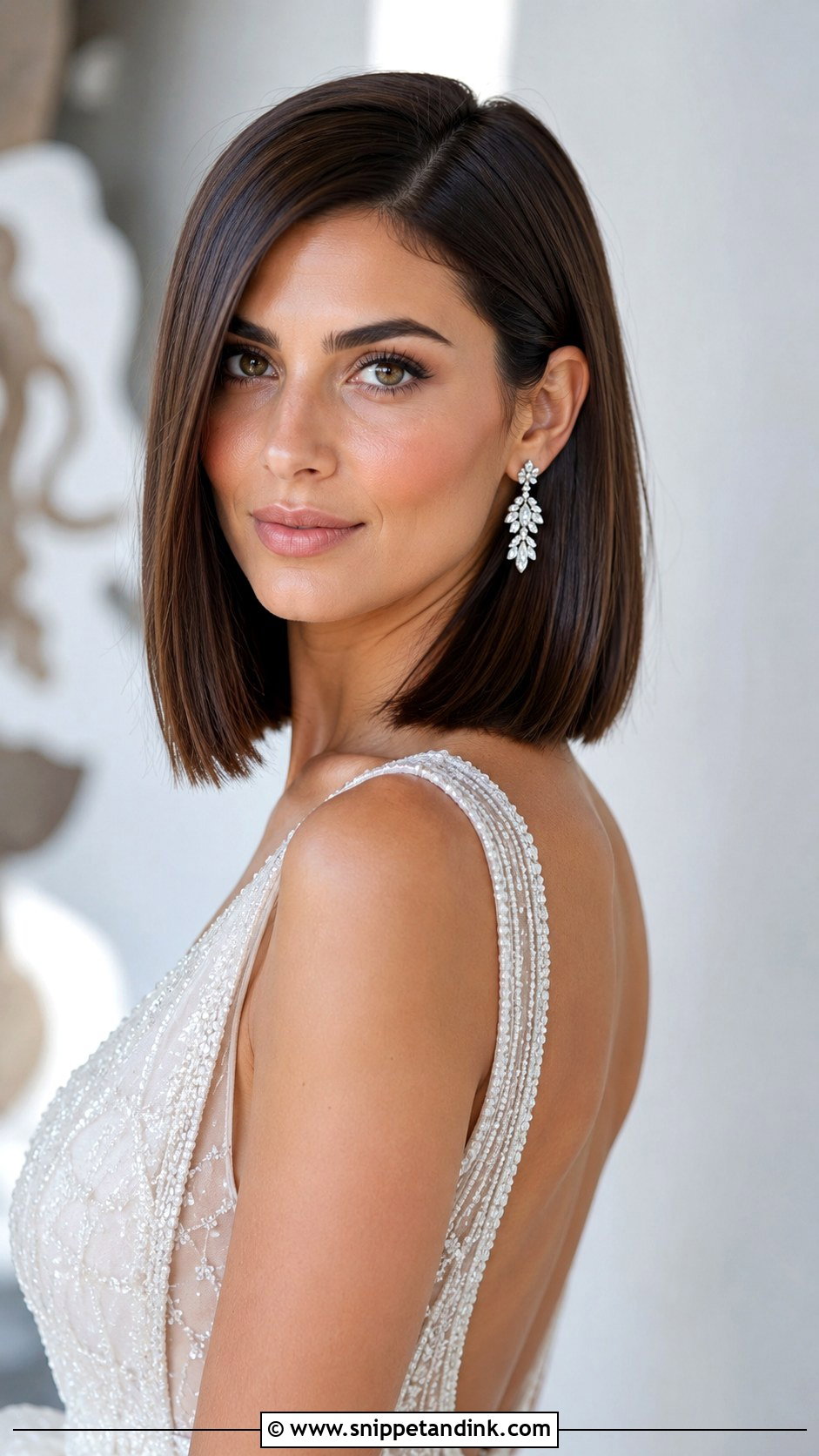
The long bob, or lob, lands at the shoulder, where it can flick outward against straps. I check the gown neckline during the trial and bend the ends slightly toward the collarbone if needed. A light serum keeps the ends from separating. The centre part feels modern; the side part adds lift to fine hair. Tucking one side behind the ear shows off an earring.
19. Straight Hair With Braided Crown
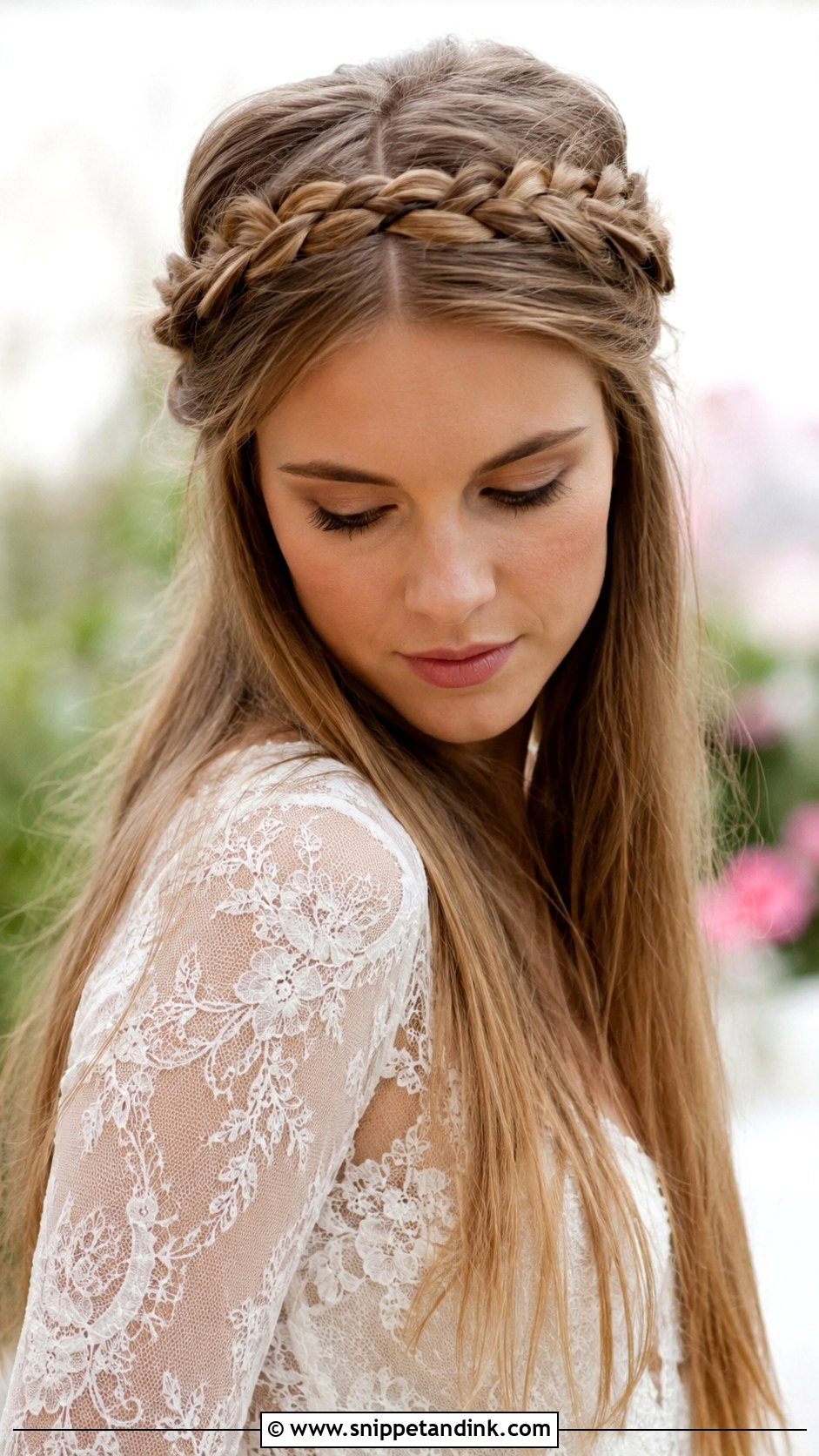
A braided crown mixes sleek lengths with texture at the top. On very silky hair, braids slip, so I add a texture spray or dry shampoo to the braiding section first. I braid around the head and pin the end under the start so the join disappears. It suits rustic and boho weddings. Small flowers tucked into the braid look better when wired, since they can fall out of loose plaits.
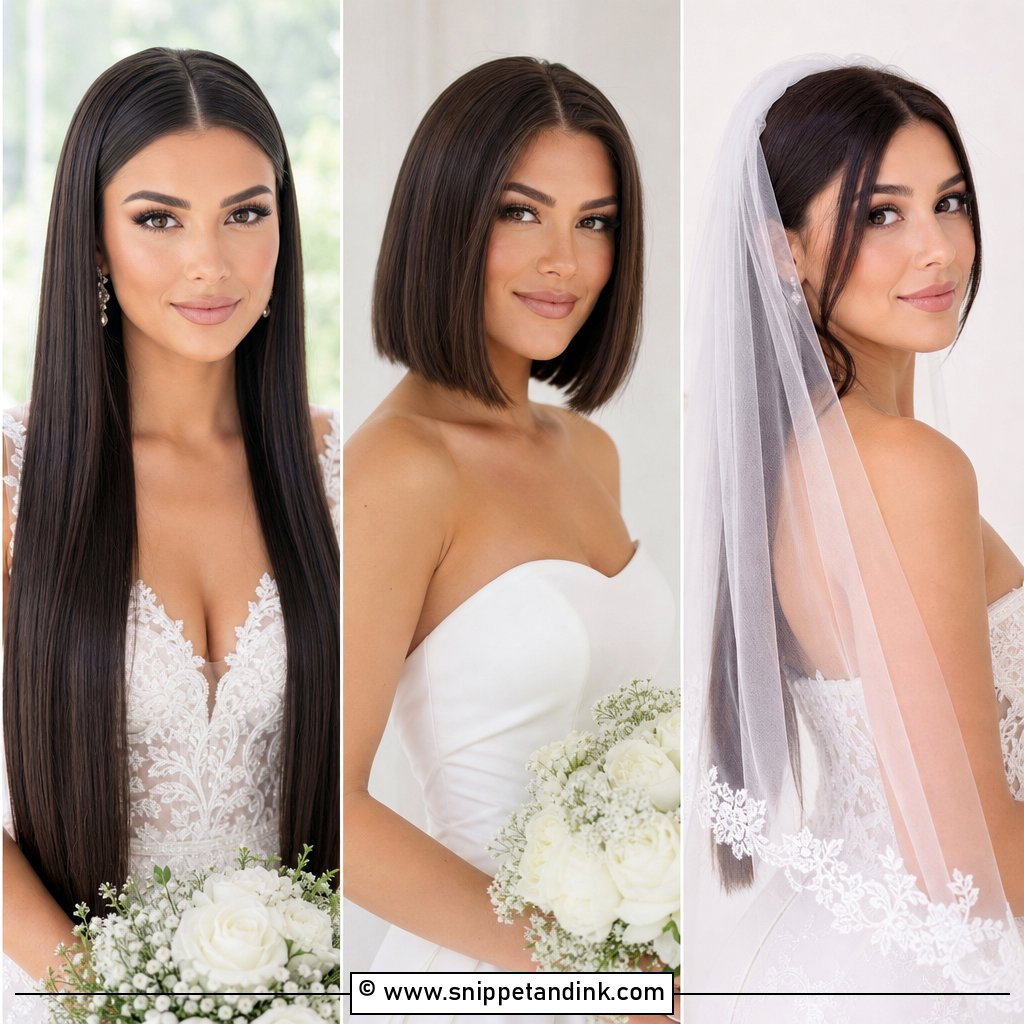
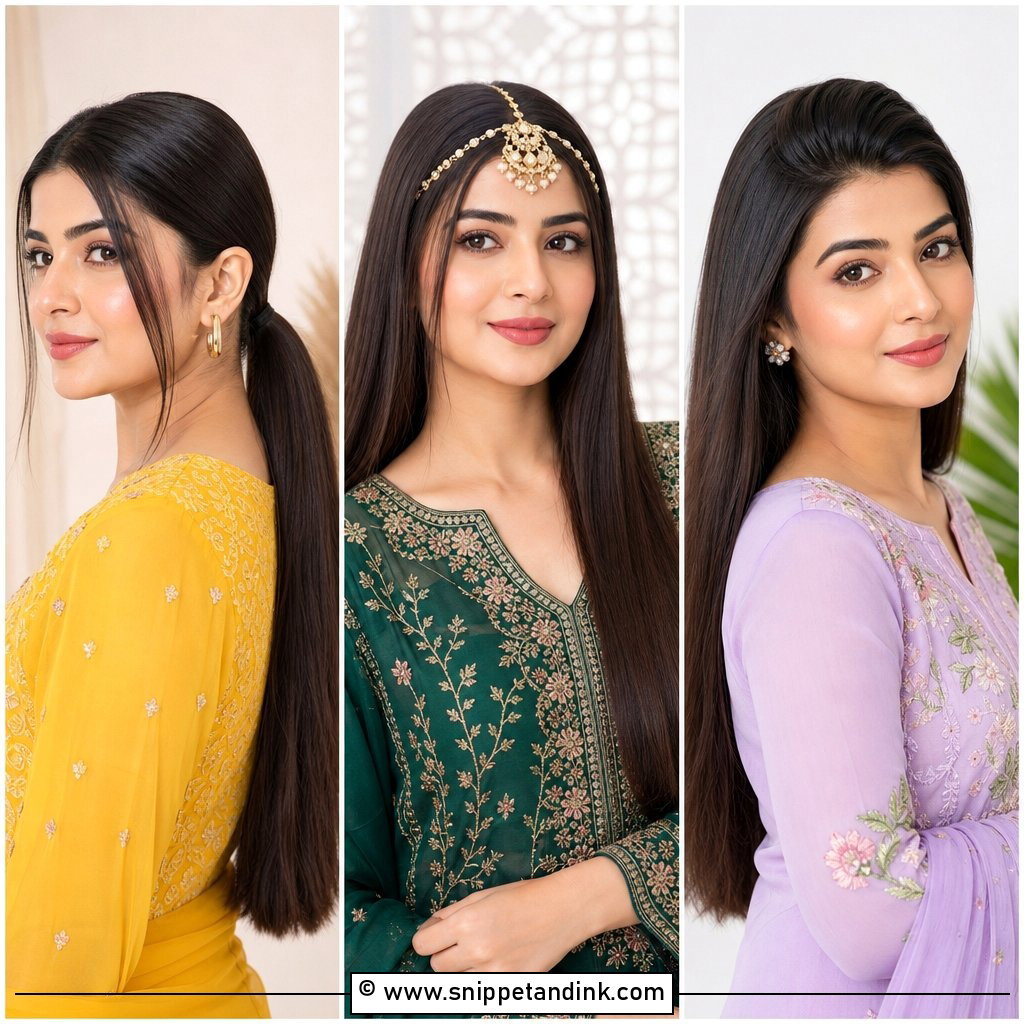
20. Straight Hair With Curtain Bangs
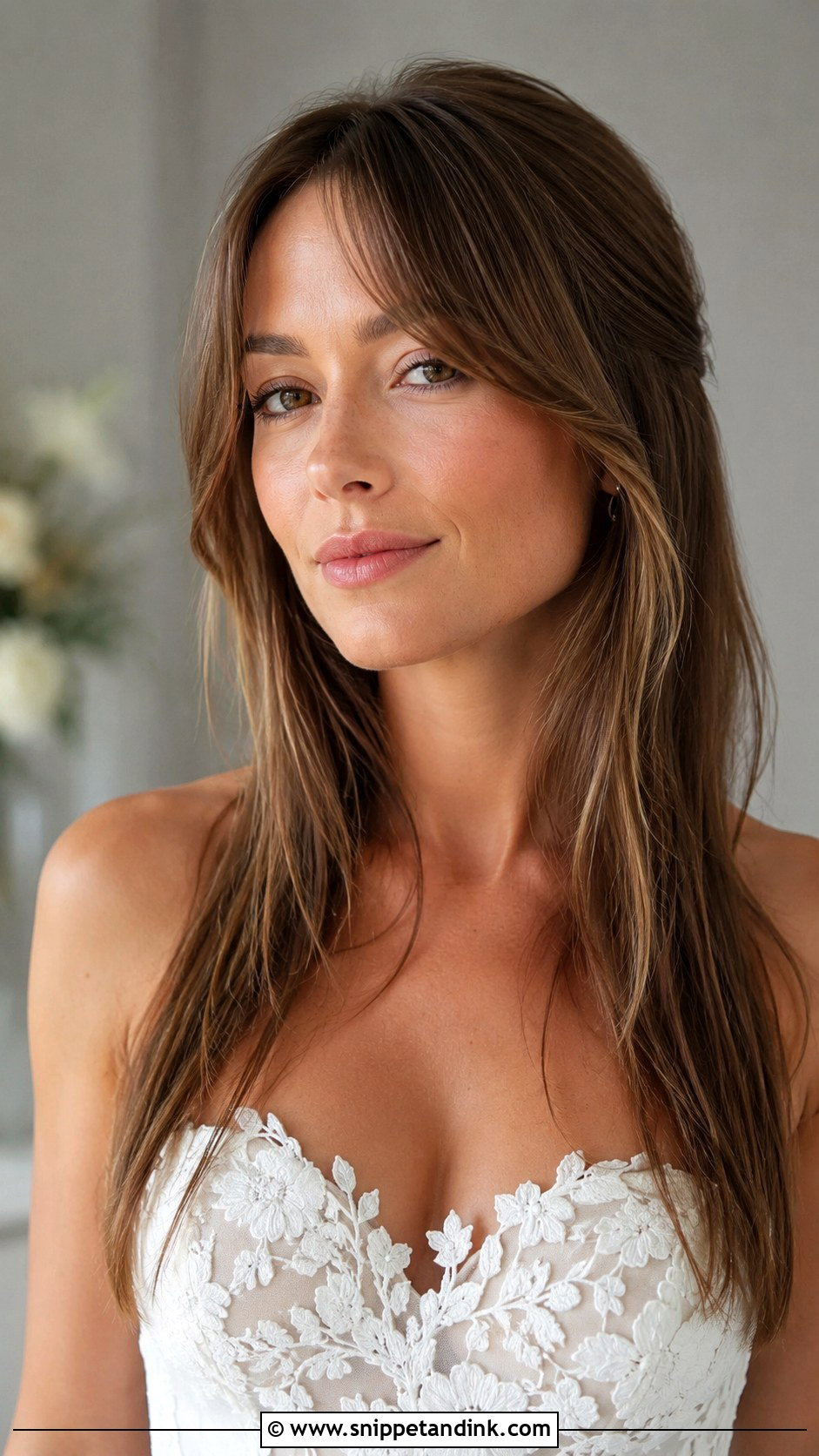
Curtain bangs need their own attention. I blow-dry them over a small round brush, centre-parted, and let them cool before brushing them to each side. That shape holds longer than flat-ironing them. The curtain bangs pull attention to the eyes, so coordinate the brow and lash look with your makeup artist. If your skin gets oily, a touch of dry shampoo at the bang roots stops them separating by the first dance.
21. Long Straight Hair With Extensions
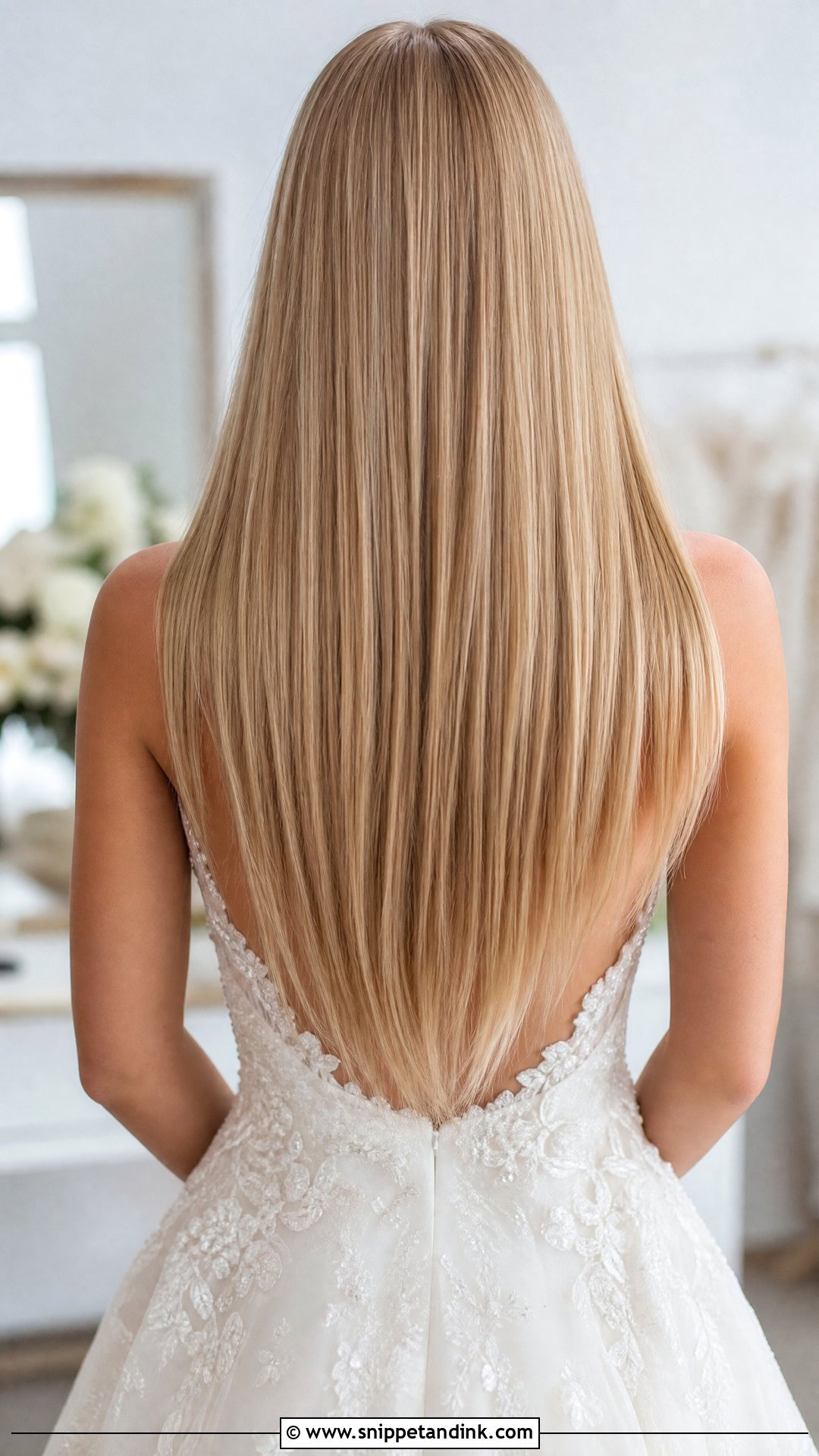
Extensions give fine or shorter hair the length and density for a full, glossy straight look. Clip-ins are the easiest for a single day, and I’d want them colour-matched and cut into your natural hair a few weeks ahead. Place them below the crown so the tracks don’t show when the hair moves. Flat iron extensions on low heat, since many synthetic and lower-grade wefts can’t take high temperatures. The extra weight also gives buns and half updos more body.
22. Pinned Back Straight Hair
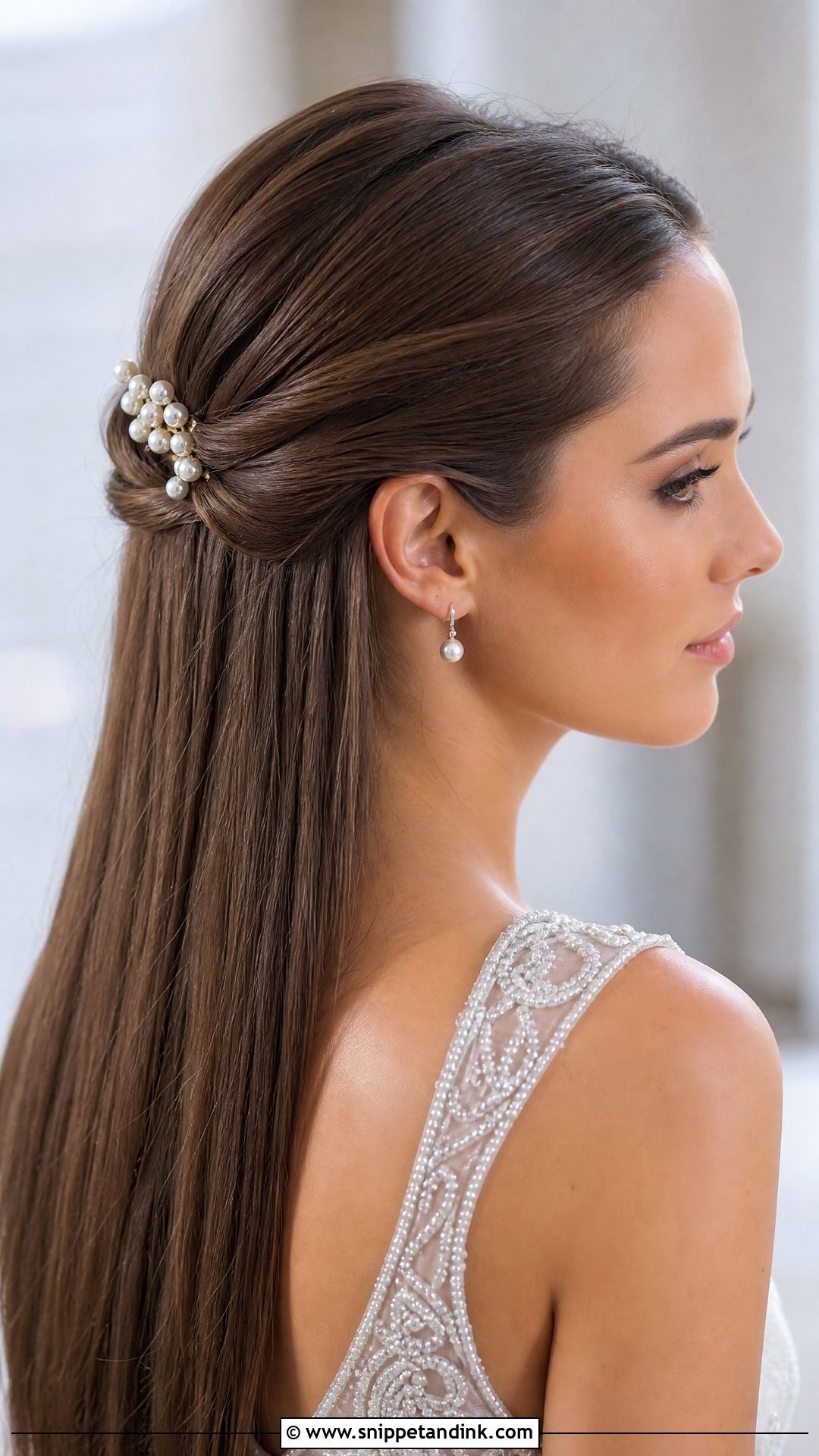
Pinning the front sections back keeps the face clear without committing to an updo. I take each side from the temple, twist it once and secure with crossed bobby pins behind the crown. Hidden pins give a minimal finish; jeweled pins add a little shine. It keeps hair from falling forward when you’re crying or dancing, which is the main reason I recommend it. Almost any wedding style suits it.
23. Straight Hair With Pearl Pins
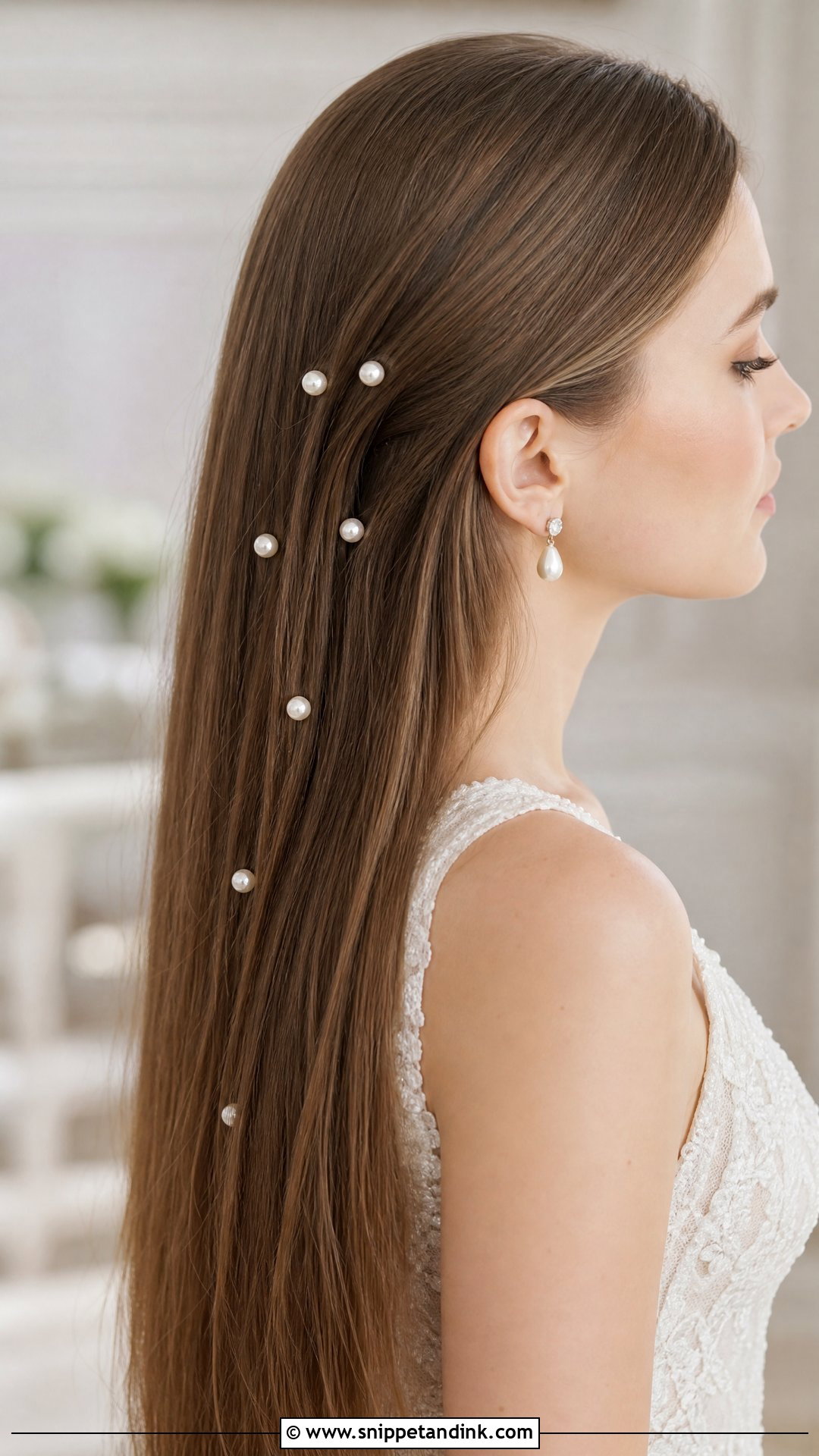
Pearl pins are gentle on straight hair, but placement makes them look intentional. I slide each one into a pinned section, not loose hair, so it won’t fall out. Scatter evenly for a starry effect; cluster on one side for a modern twist. Match the pearl colour to your earrings and gown, since a creamy pearl beside a bright white fabric reads yellow in daylight. They work in half up styles and low buns too.
24. Side Swept Straight Hair
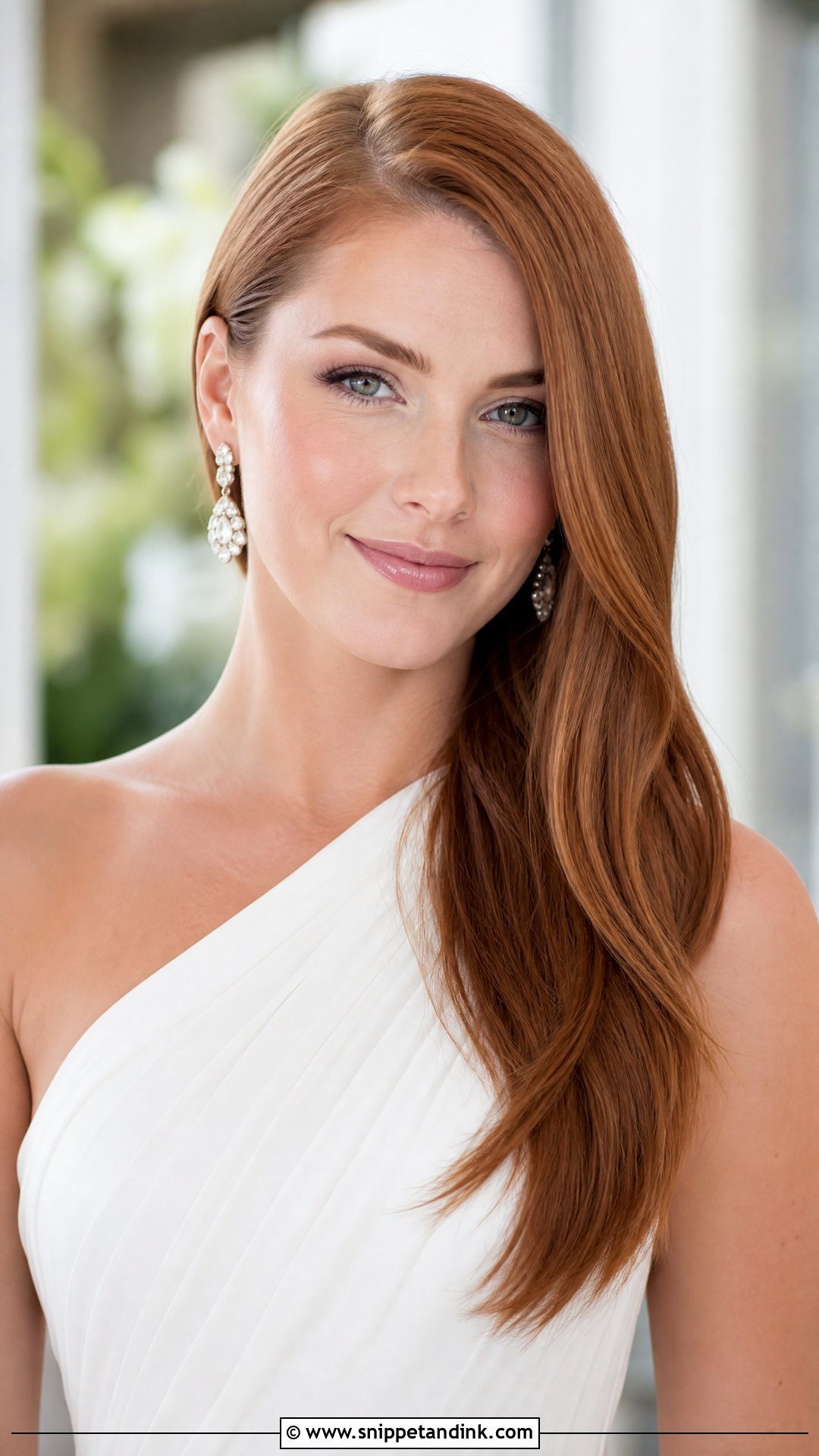
Sweeping all the hair over one shoulder suits a one-shoulder or off-the-shoulder gown, since the hair balances the neckline. I anchor it with a hidden pin behind the ear on the far side and comb the lengths over. A small clip covers the gathered point. Expect to re-smooth it after hugs; the shoulder side gets crushed by every embrace and jacket sleeve. It shows off a single statement earring well.
25. Straight Hair With Decorative Comb
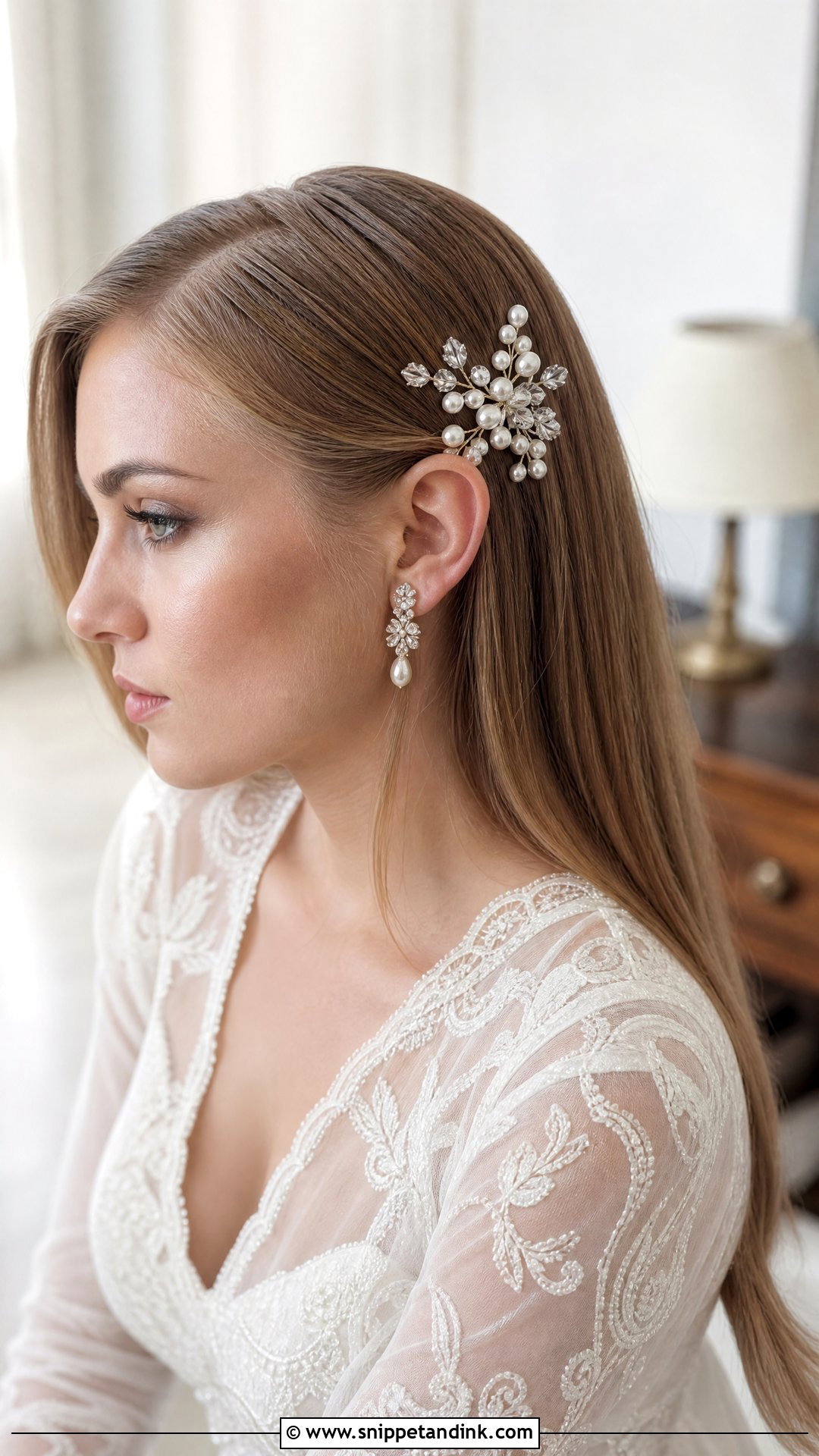
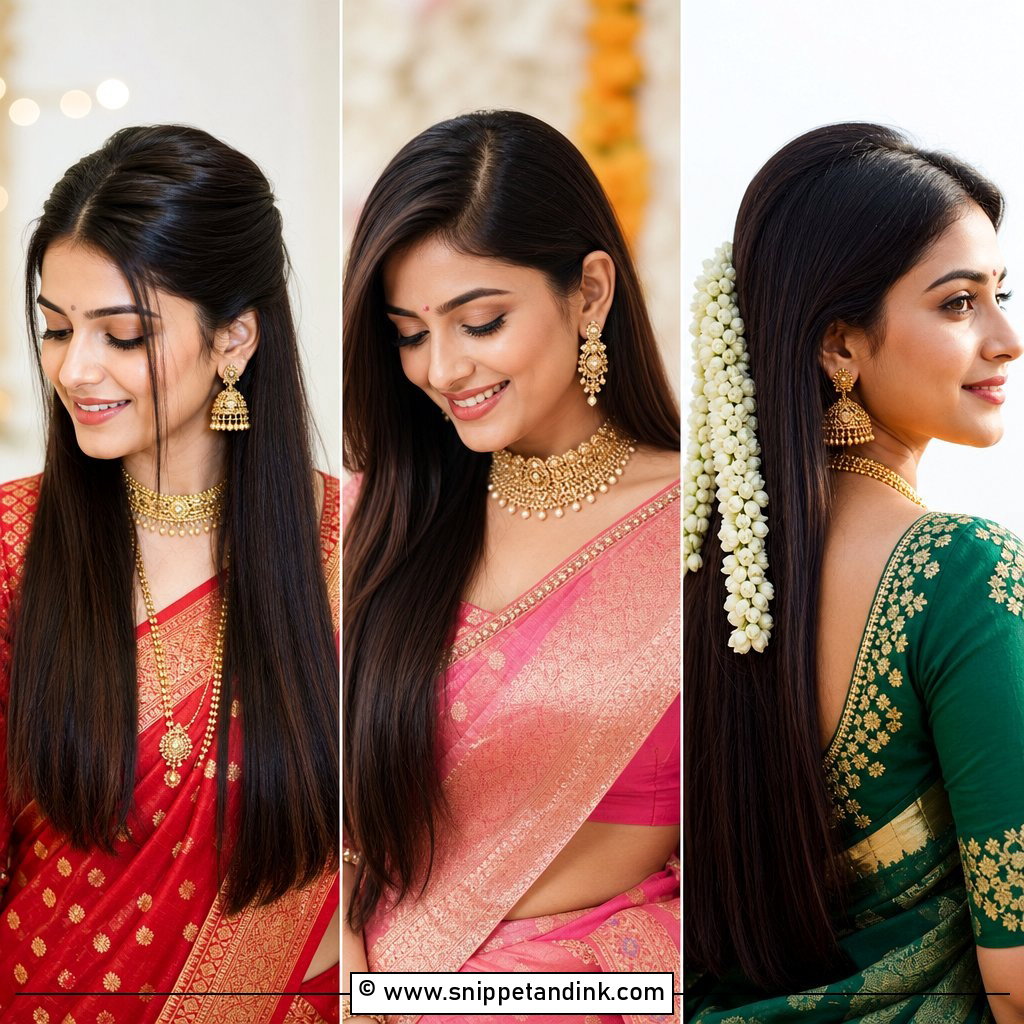
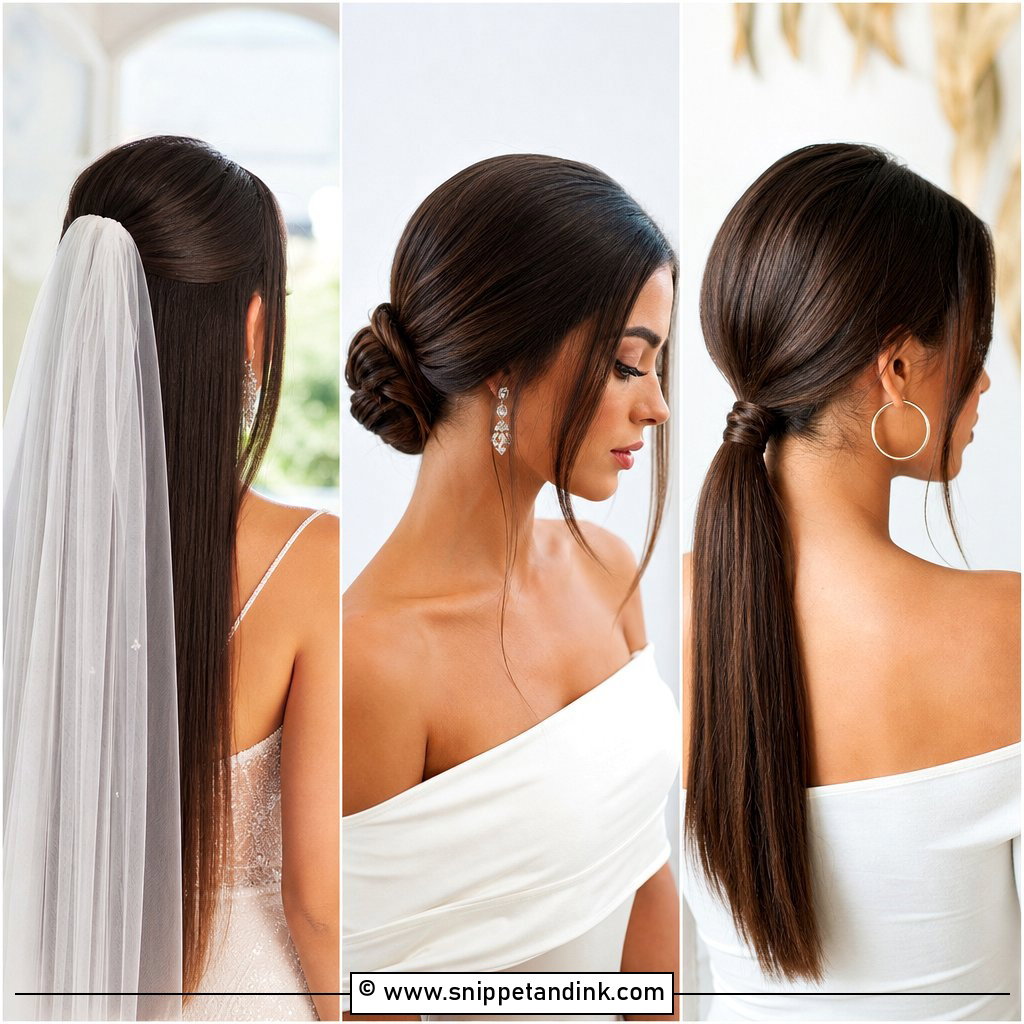
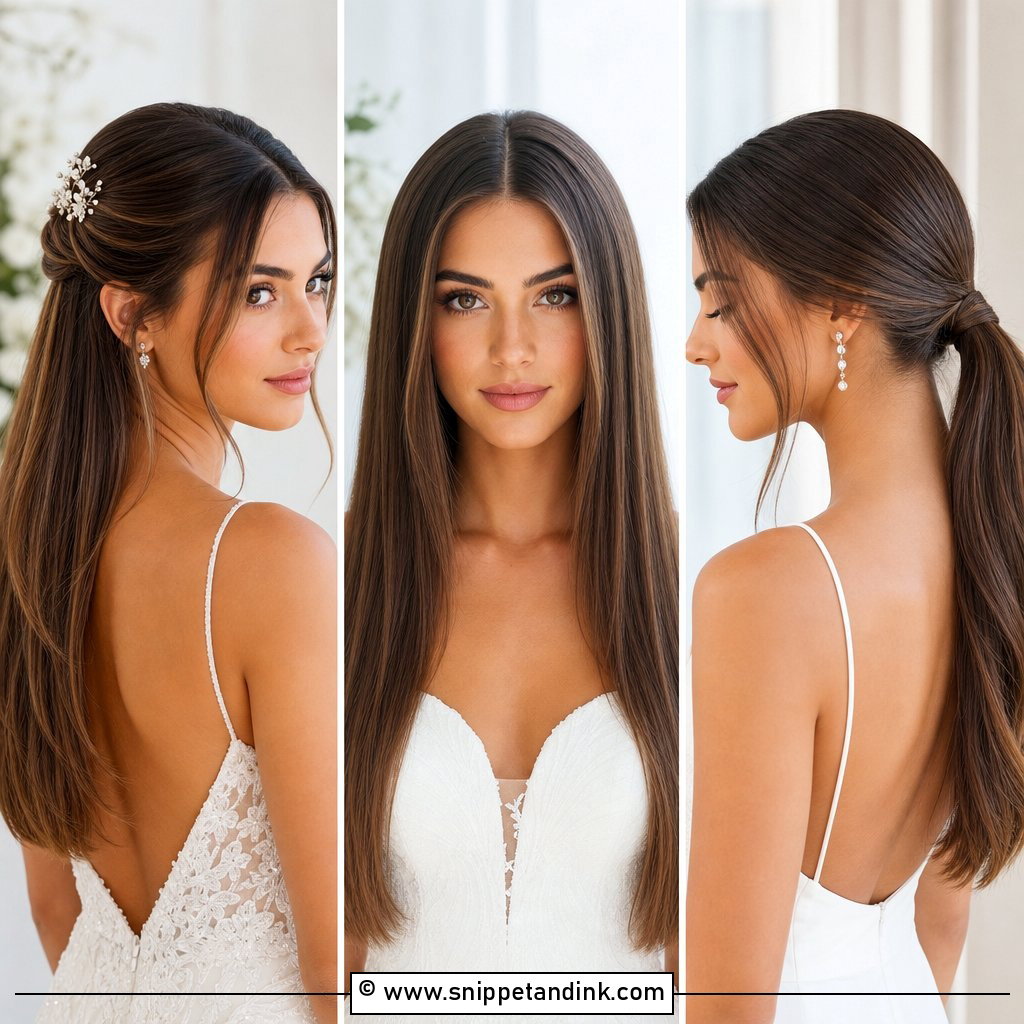
A decorative comb can do two jobs: it adds detail and anchors a veil. On straight hair, I build a small pinned base first and insert the comb into that, teeth angled upward. Vintage combs are often heavier, so test the weight at the trial. Place it to one side of a low bun or behind the ear for hair worn down. Choose a design that matches your other metals, since mixed gold and silver can look accidental.
How Accessories Stay Put on Silky Hair
Half of this list involves something added to the hair: a tiara, a headband, clips, pearls, a comb, flowers. On textured hair, these grip naturally. On straight hair, they slide unless I give them an anchor. Here is the order I work in.
- Finish the style first, including any spray, so nothing gets moved after the accessory goes in.
- Build the anchor: crossed bobby pins, a small backcombed patch or a tiny elastic, exactly where the piece will sit.
- Place the heaviest piece first, usually the veil or tiara, then lighter pins and clips around it.
- Thread a bobby pin through any loop or side comb on a tiara or headband; the decorative comb alone is never enough.
- Shake your head gently in the mirror. If anything moves, re-anchor it now, not after the ceremony.
Bring every accessory to your trial, even the ones you are unsure about. Weight matters more than looks here. A heavy vintage comb or a wide crystal headband that feels fine for ten minutes can ache by the reception, and it is far better to find that out weeks ahead.
Your Real Veil, Your Real Weather
Straight hair works for every length and nearly every dress, from a centre-parted blowout to a tiara over a low bun. What makes it last is the prep: healthy ends, a careful blow-dry, a secure anchor for whatever goes in your hair. Bring your real veil and accessories to the trial, and test the style in weather like your wedding day’s. Then the hair you see in the mirror at 10am will still be there for your last dance.
You'll Like These Ideas:


Leave a Reply