
A crown is the heaviest, most rigid thing most brides will ever wear in their hair, and the hairstyle underneath has to carry it. A rhinestone tiara, a slim jeweled band and a fresh floral crown each need a different base: something to grip, something to sit on, something to hide the combs. Hair length, texture and the gown’s neckline narrow it further. Below are 20 hairstyles I’d build for a crown, from sleek updos to loose waves and braids, with the practical reason each one works and the situations where I’d suggest something else.
Where a Tiara Sits Changes the Whole Hairstyle
There are really three positions for a crown, and each needs a different hairstyle under it. Close to the hairline reads as traditional and regal, but it needs volume behind it and doesn’t suit a fringe. A couple of inches back, on top of the head, is the most common and the easiest to secure. Further back, near the crown of the head or wrapped around a bun, feels modern and less formal.
Scale matters too. A tall tiara on a petite face or very fine hair can look like it’s wearing you, while a thin band disappears on big, voluminous hair. I ask brides to try the crown on with their hair loosely pulled back before we design the style, so we can see the proportion first.
Bring the crown to the trial, not a photo of it. The weight, the length of the combs and how far the ends reach down behind the ears all shape how I pin the base, and I can’t plan that from a screenshot.
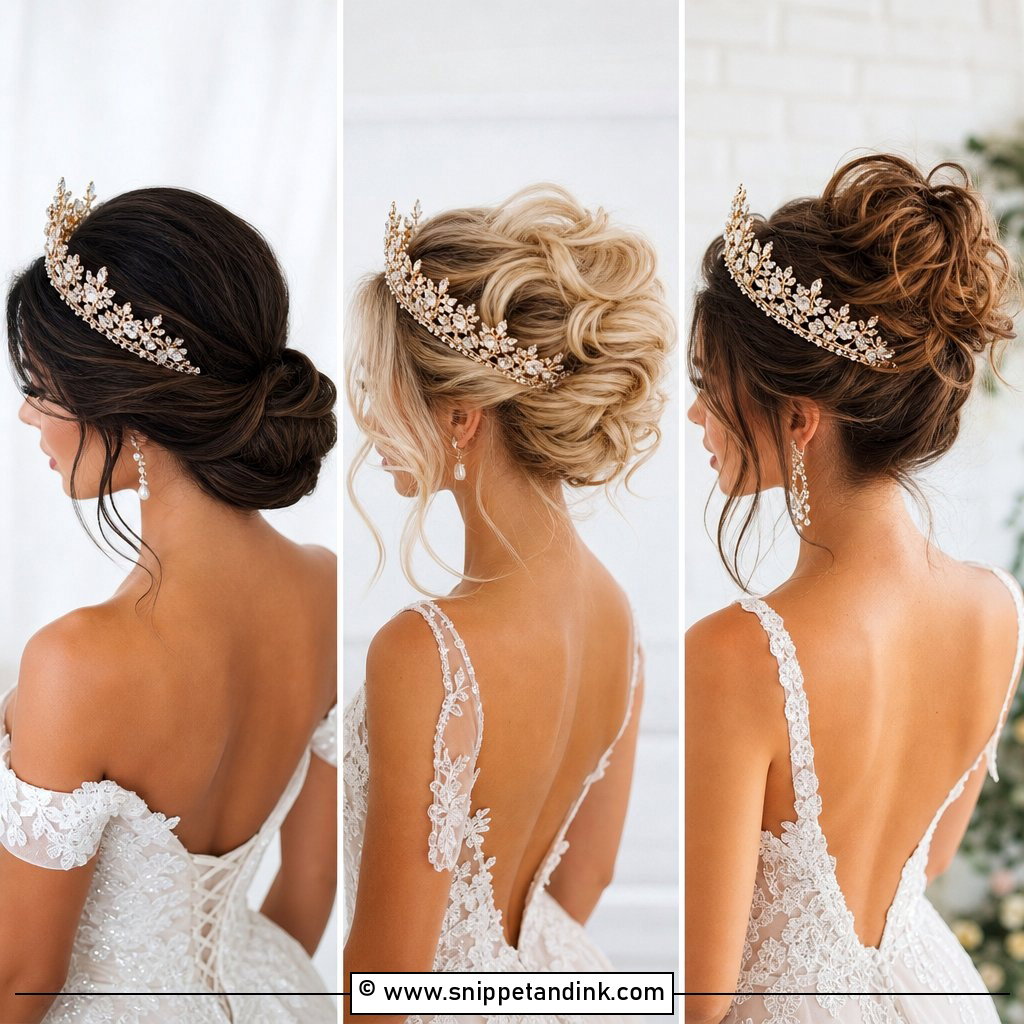
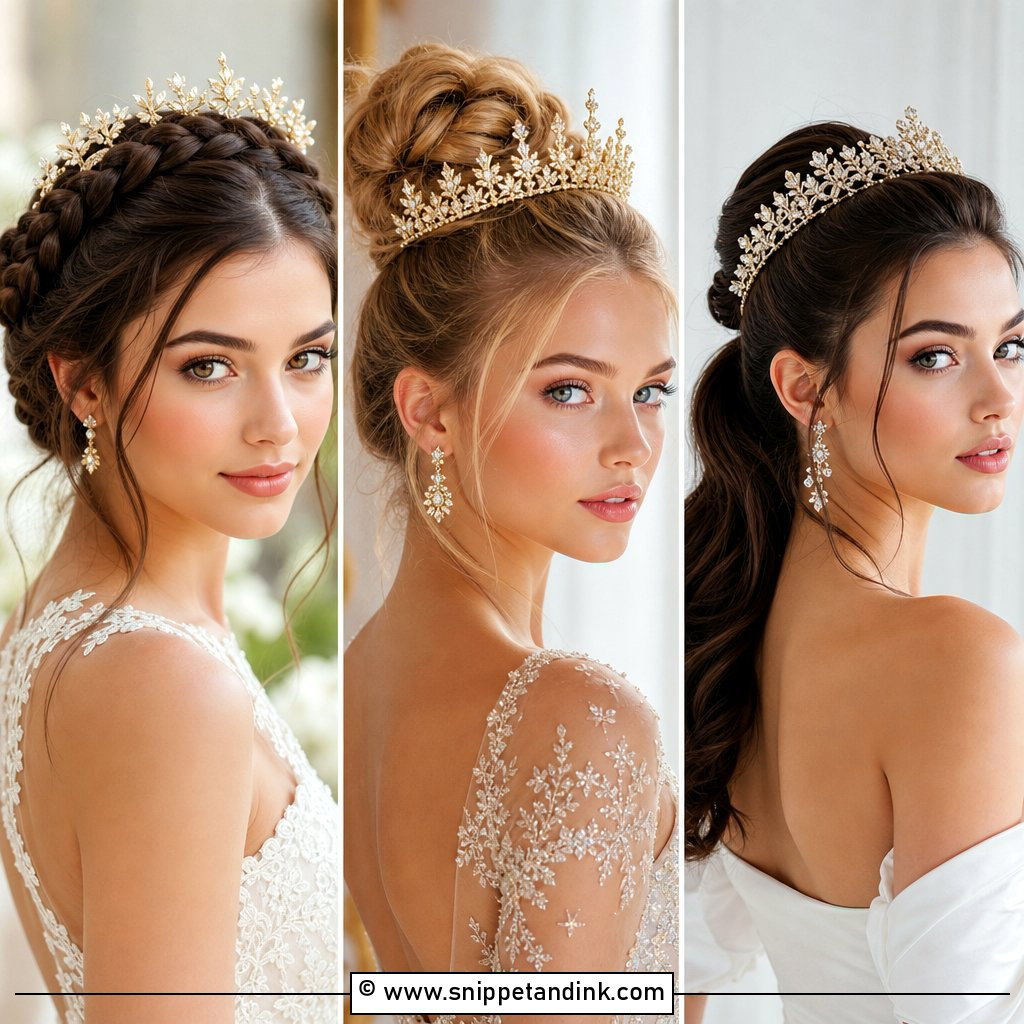
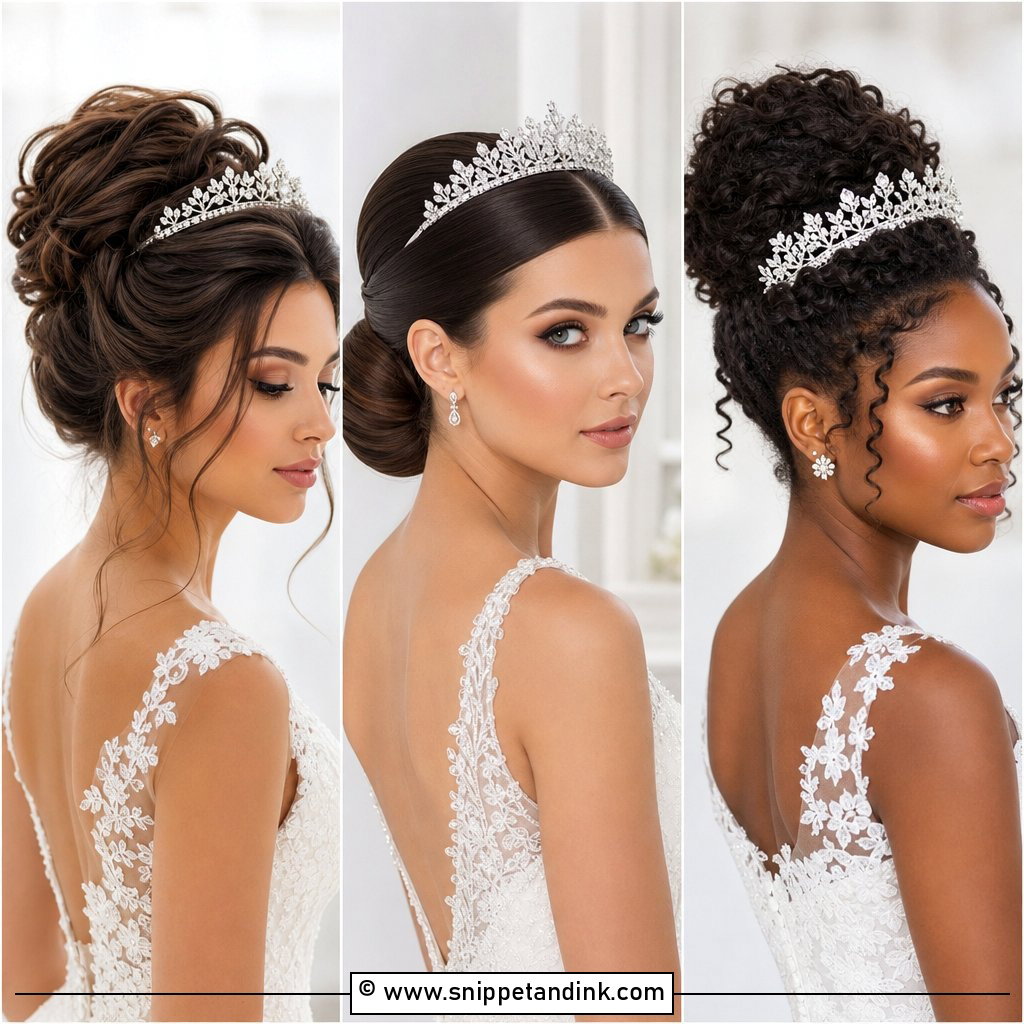
1. Sleek High Bun With Tiara
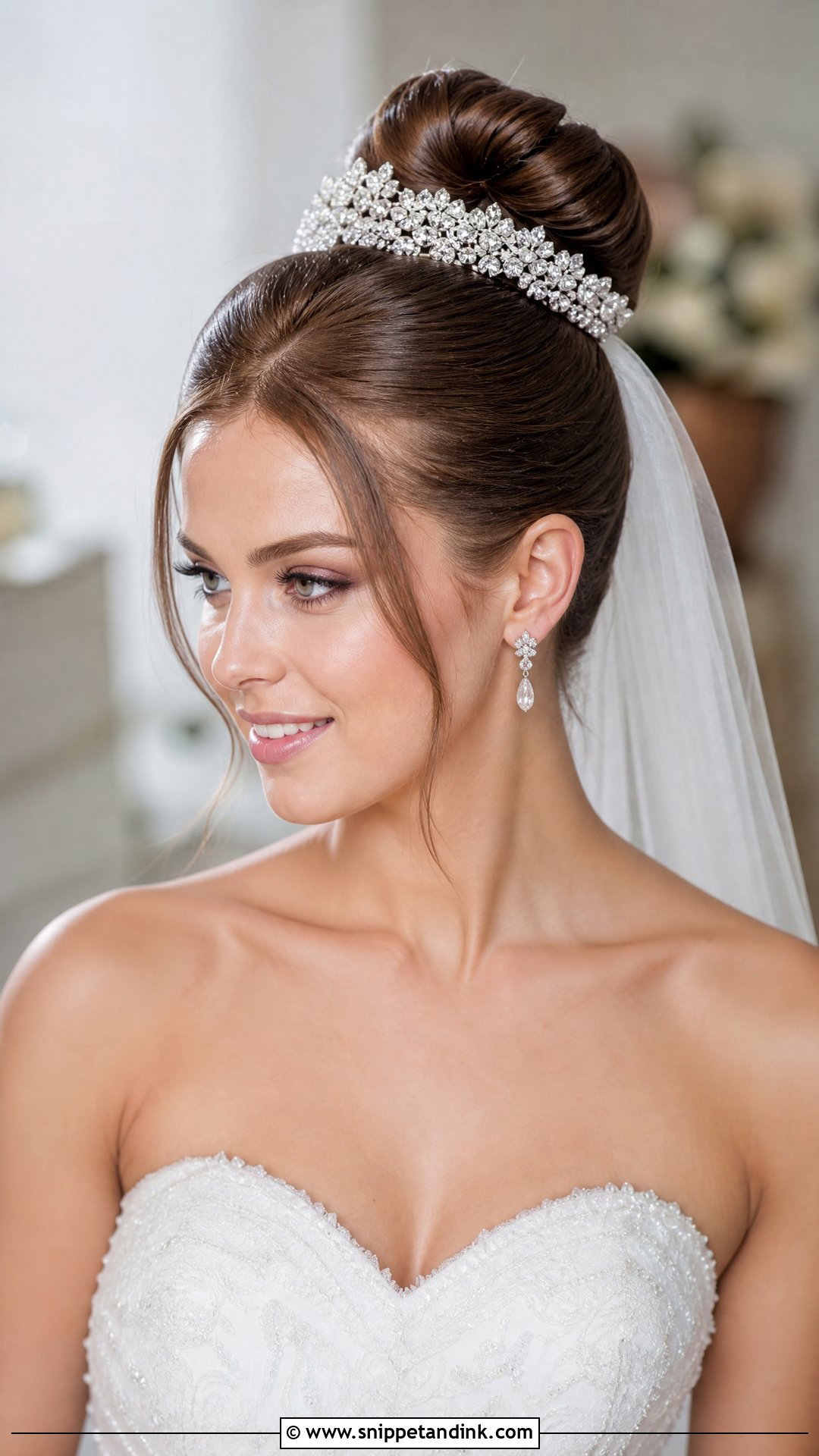
Height meets height here. A high bun pulls every strand up and back, so the tiara becomes the top line of the whole silhouette, which suits strapless gowns and busy necklines that need a clean frame. I build the tiara’s seat before the bun: a band of lightly backcombed hair just in front of where the bun will sit, so the combs have something to bite into. Keep it sleek or leave a few face-framing pieces, and the crown will stay level through photos and dancing.
2. Low Bun With Crystal Crown
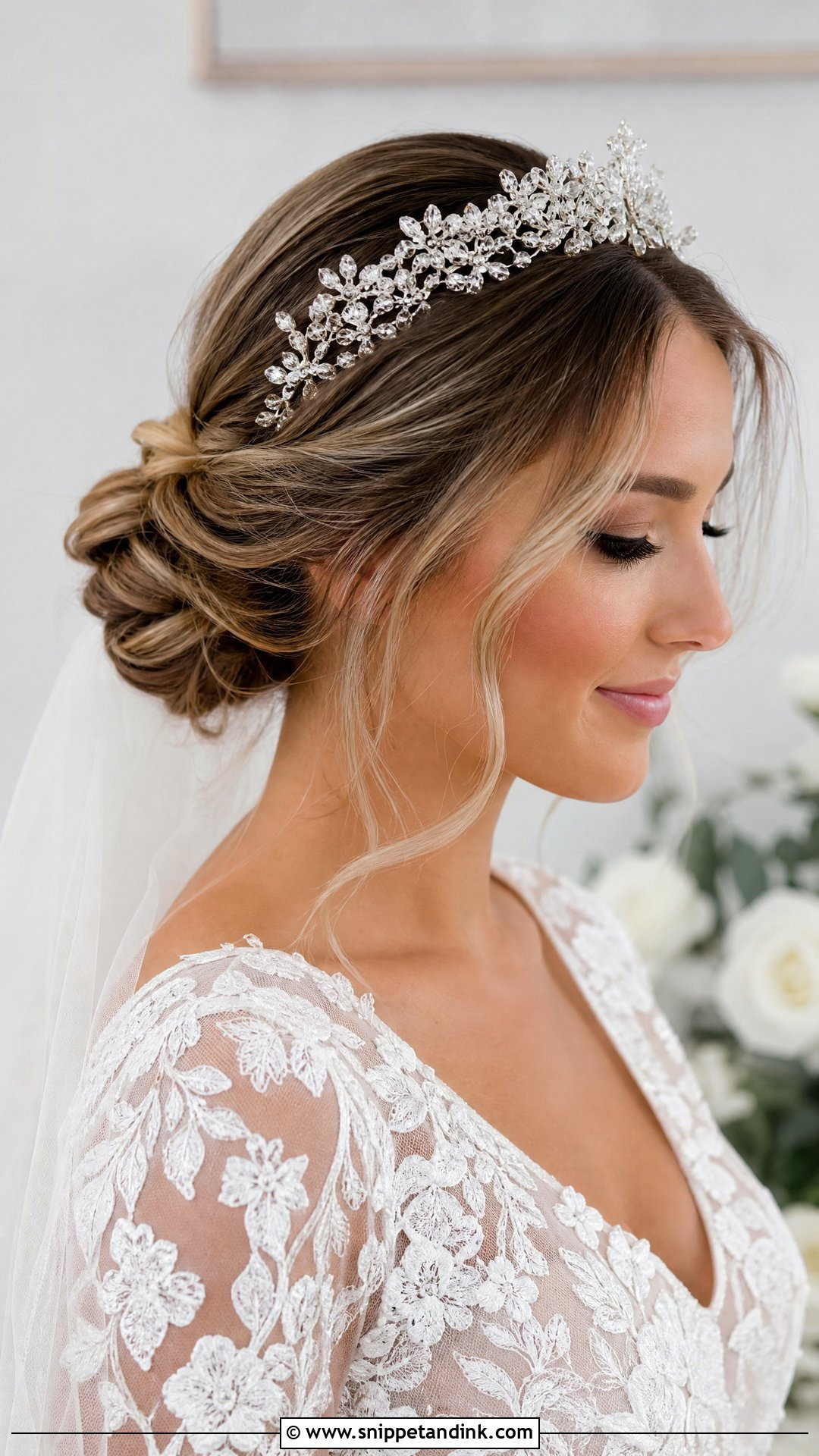
Crystal reflects best when it sits against smooth hair, which is why a low bun at the nape works so well under it. The silhouette stays balanced and leaves room for a veil to tuck in just below the bun. A few loose tendrils near the face soften it. In evening light, crystals throw sparkle into photos; under bright midday sun they can flare, so if your ceremony is outdoors at noon, I’d test the crown in daylight at the trial.
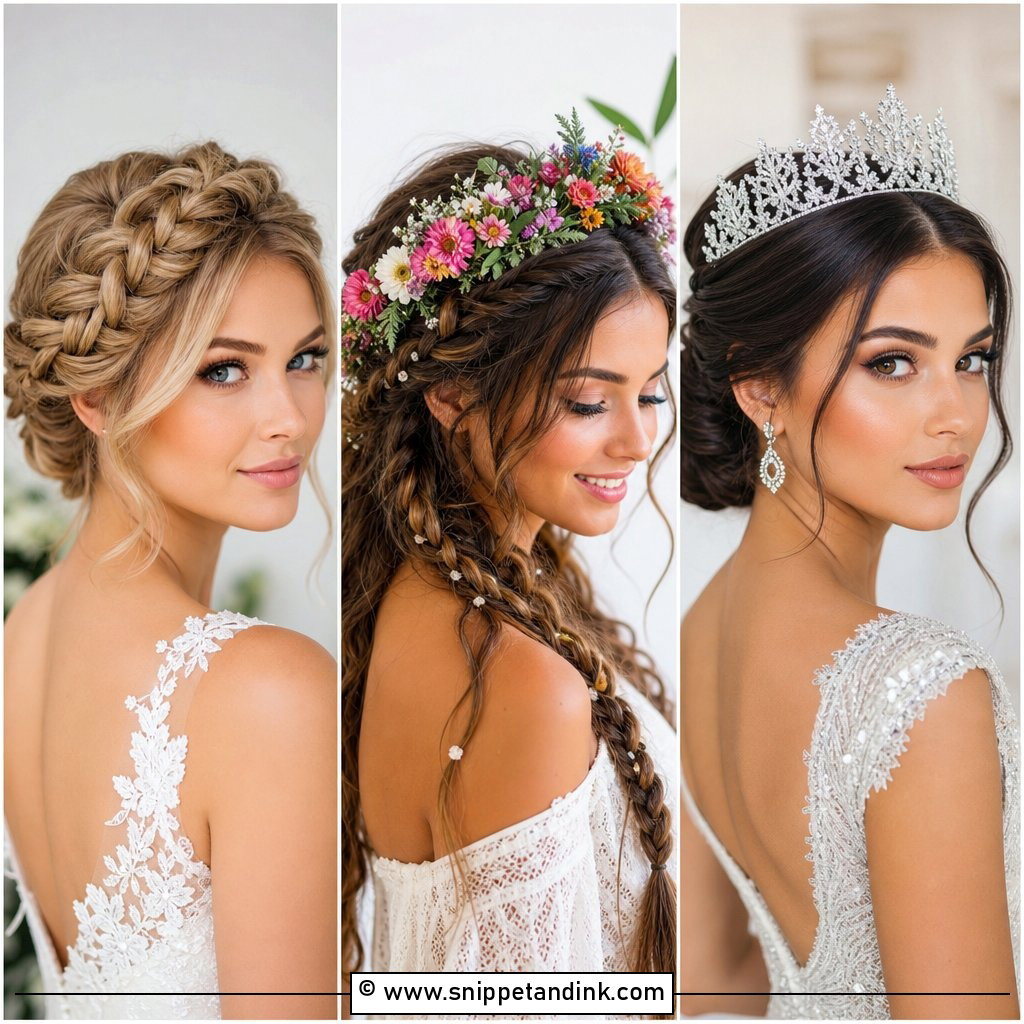
3. Crown Braid Updo
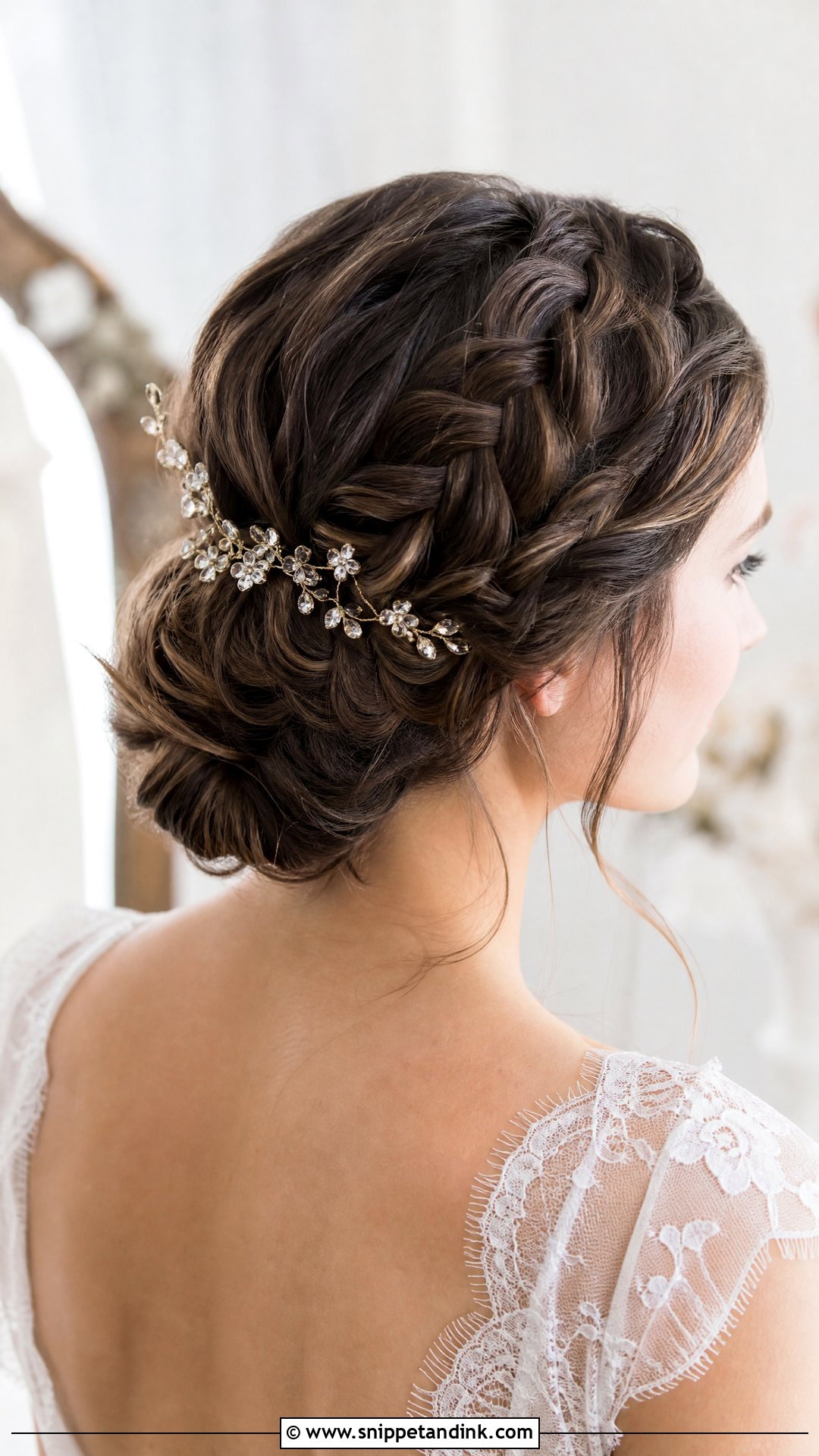
Braids wrapped around the head before gathering into a low bun already form a crown shape, so the jewelry only has to follow the line. That’s why I reach for this style with a delicate tiara or jeweled hair vine; a vine can be woven right into the braid instead of resting on top. It’s one of the most secure bridal styles there is, and it can comfortably last a full day. Tuck a few sparkling pins along the braid for shine. The one thing it needs is enough length: shoulder-length hair struggles to wrap all the way around.
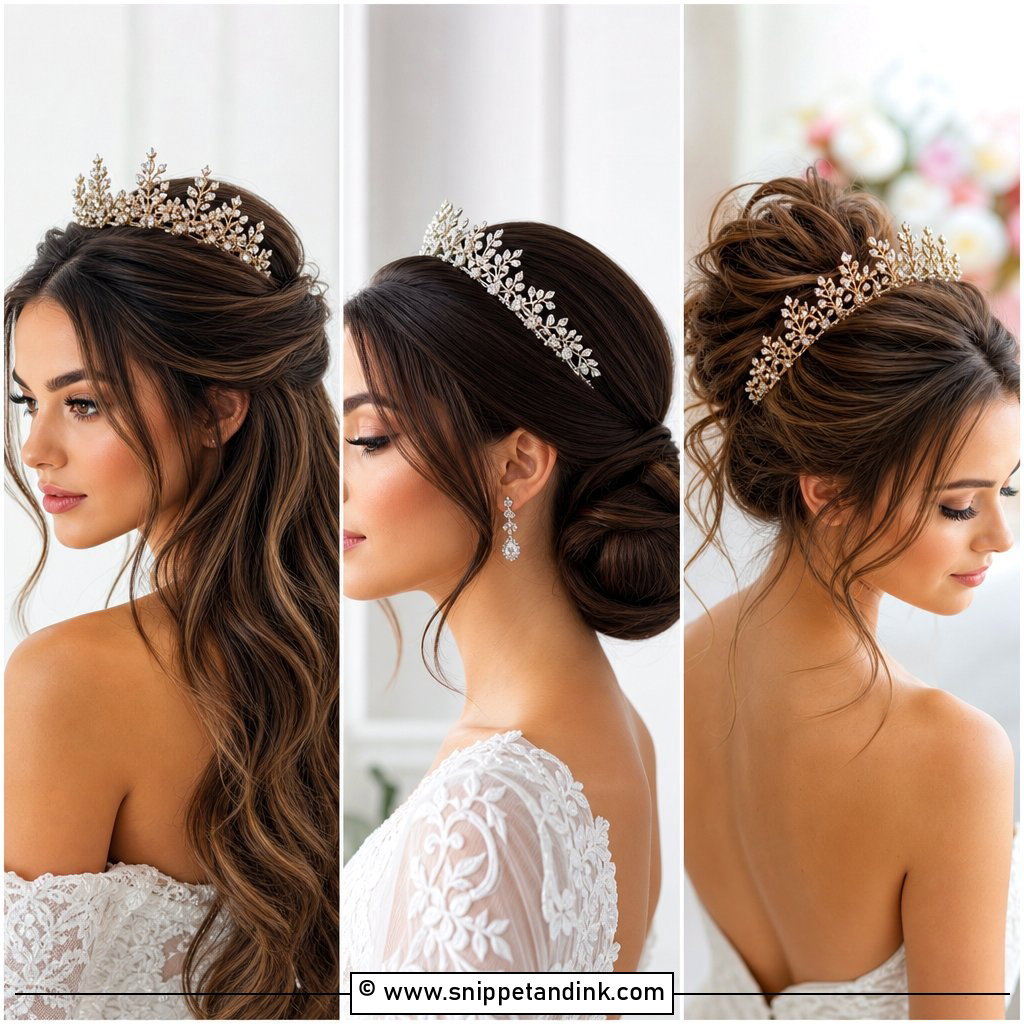
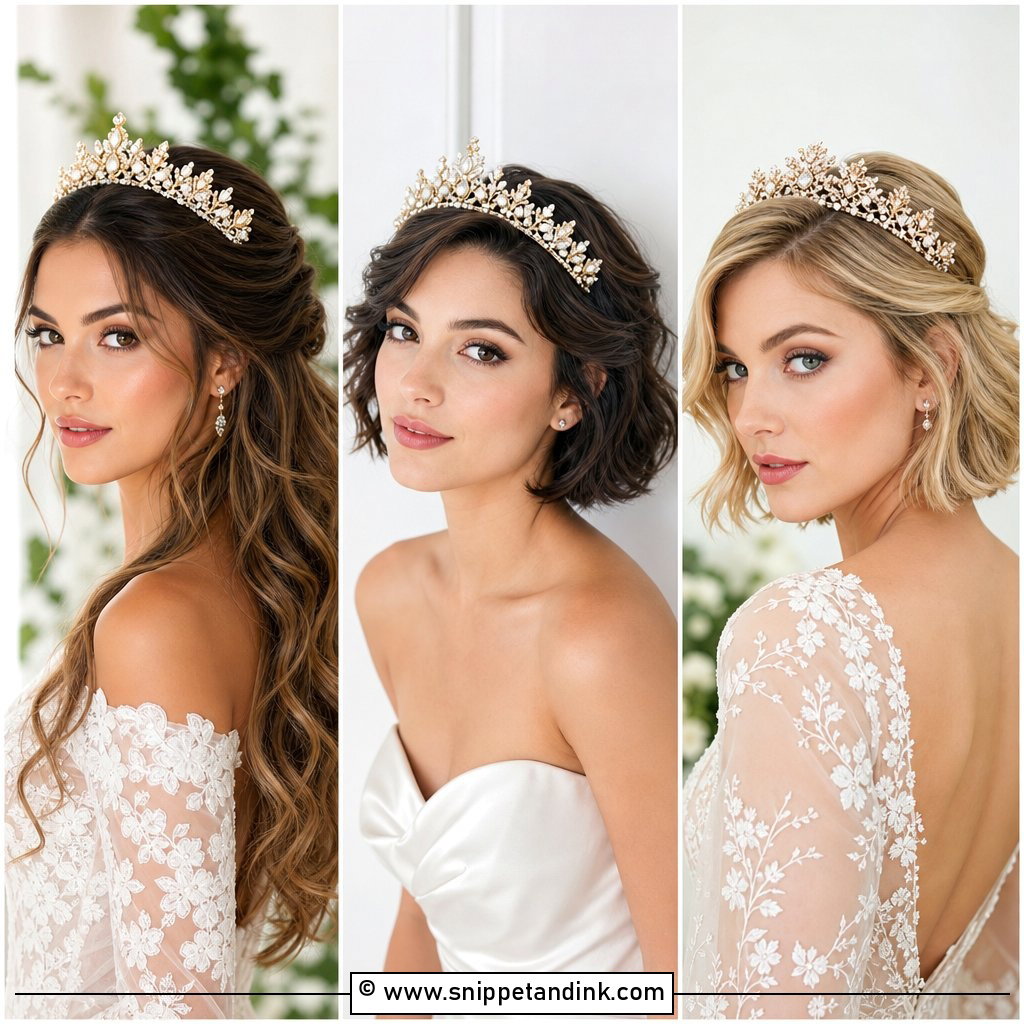
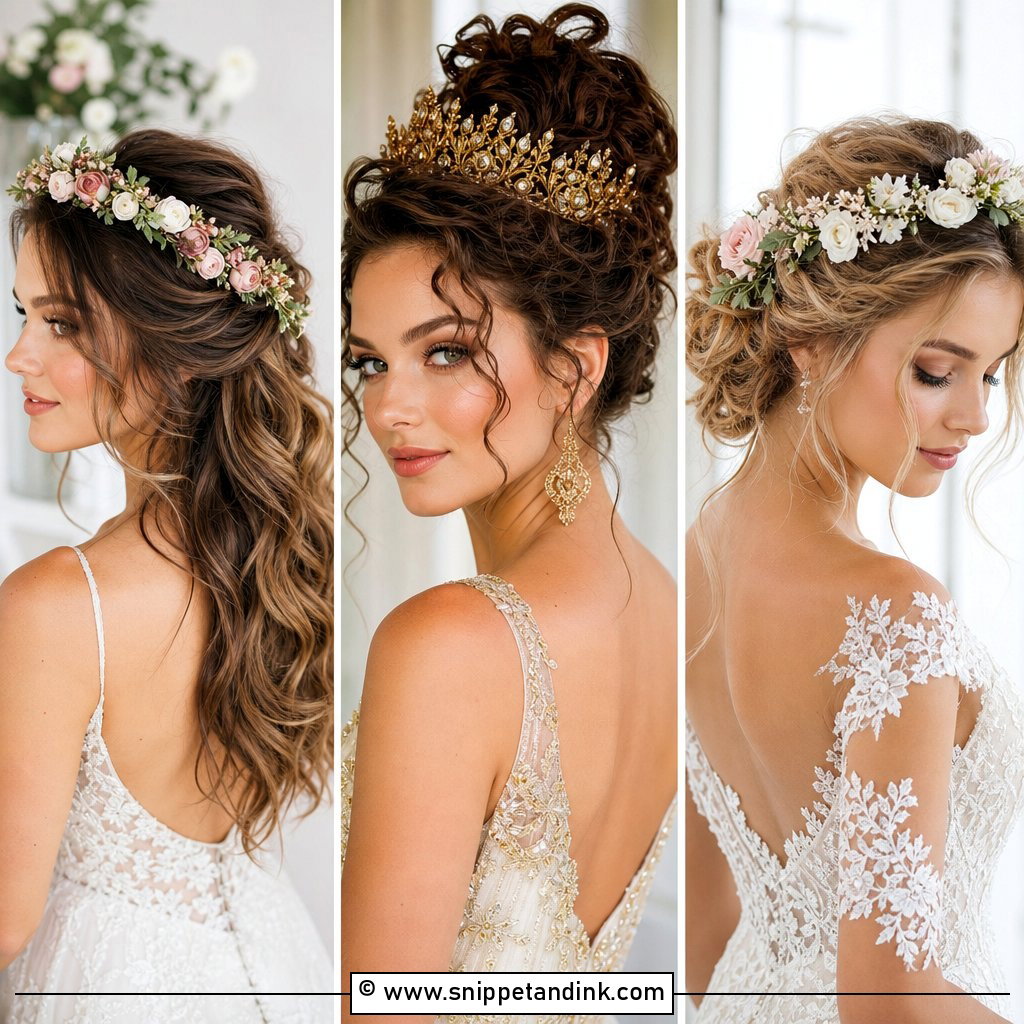
4. Loose Waves With Classic Tiara
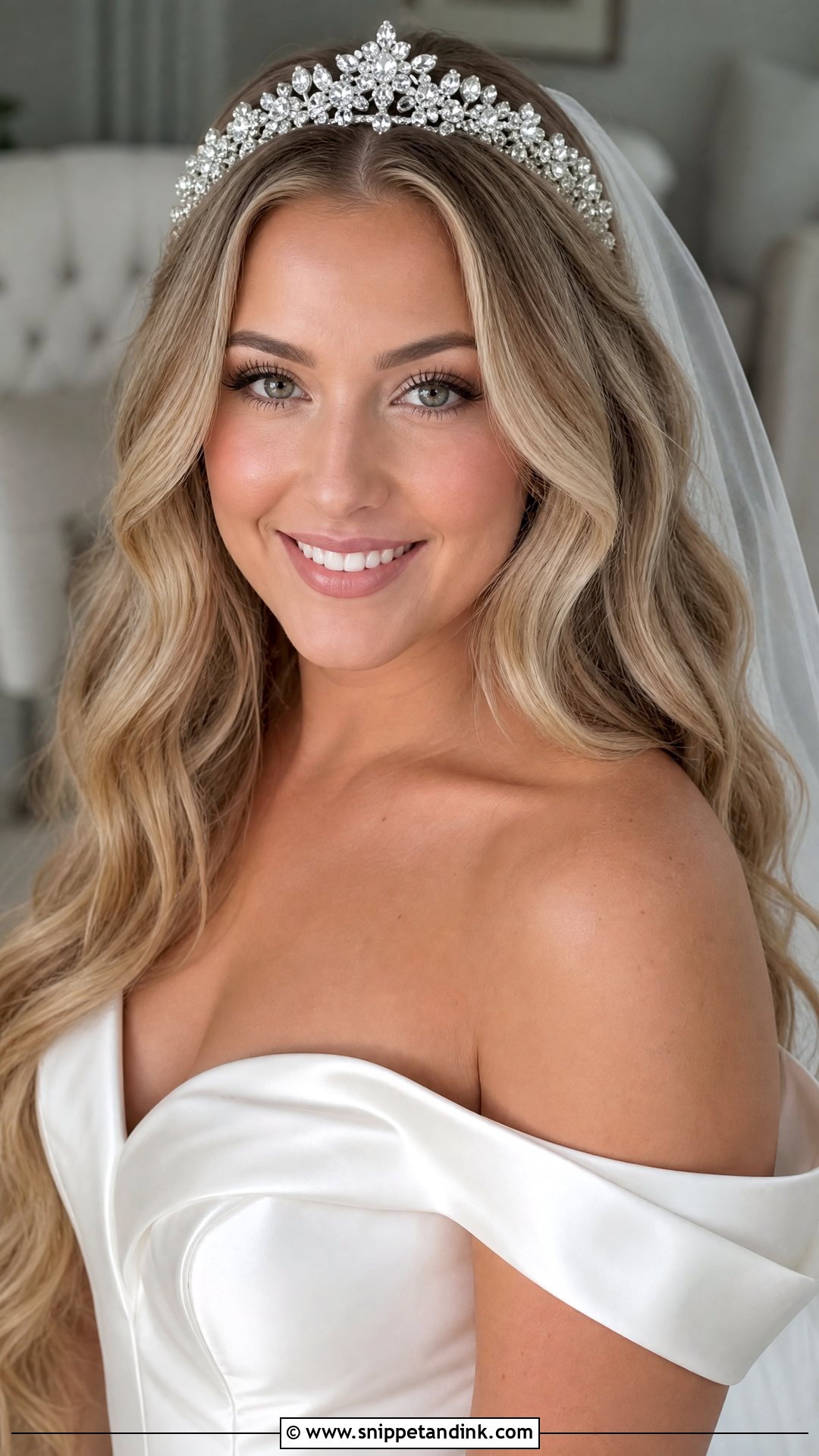
Wearing hair down under a tiara is lovely and slightly risky. Loose waves give movement around the face, and the crown sits like a halo above them, suiting boho lace and sleek satin alike. The risk is that loose hair gives the tiara combs nothing solid to hold. I hide a small pinned section underneath, right where the tiara sits, and anchor the combs into that. Curl with a wand, let the waves cool, then loosen them with your fingers.
5. Voluminous Bridal Blowout With Crown
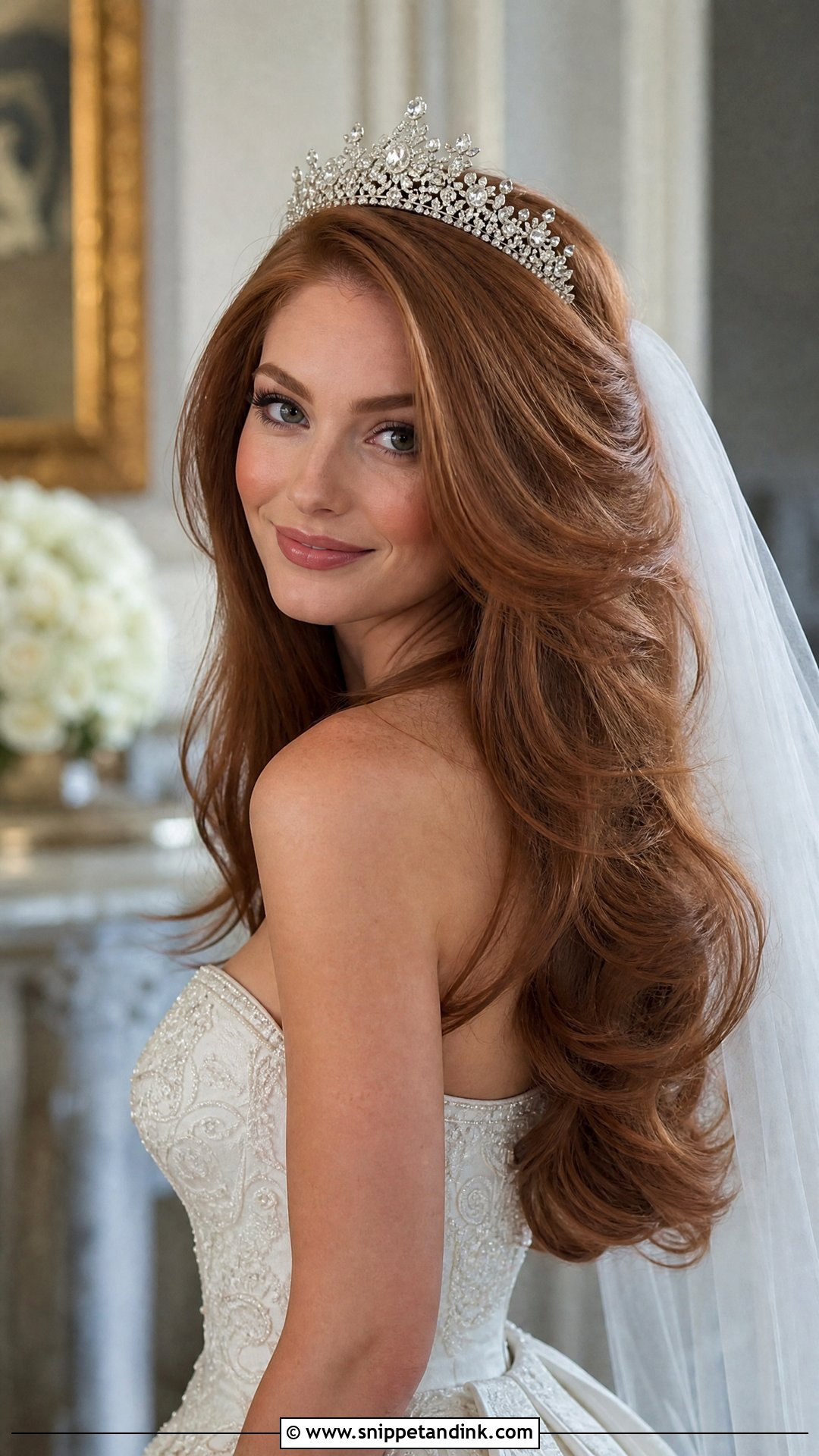
Volume does two jobs under a crown: it looks glamorous, and it physically supports the band. A voluminous blowout is smooth, bouncy and glossy, so the tiara can nestle into the body instead of perching on flat hair. Medium to long hair suits it. Volume drops through the day, especially in humidity, so I set the blowout with Velcro rollers while makeup is done. Finish with shine spray.
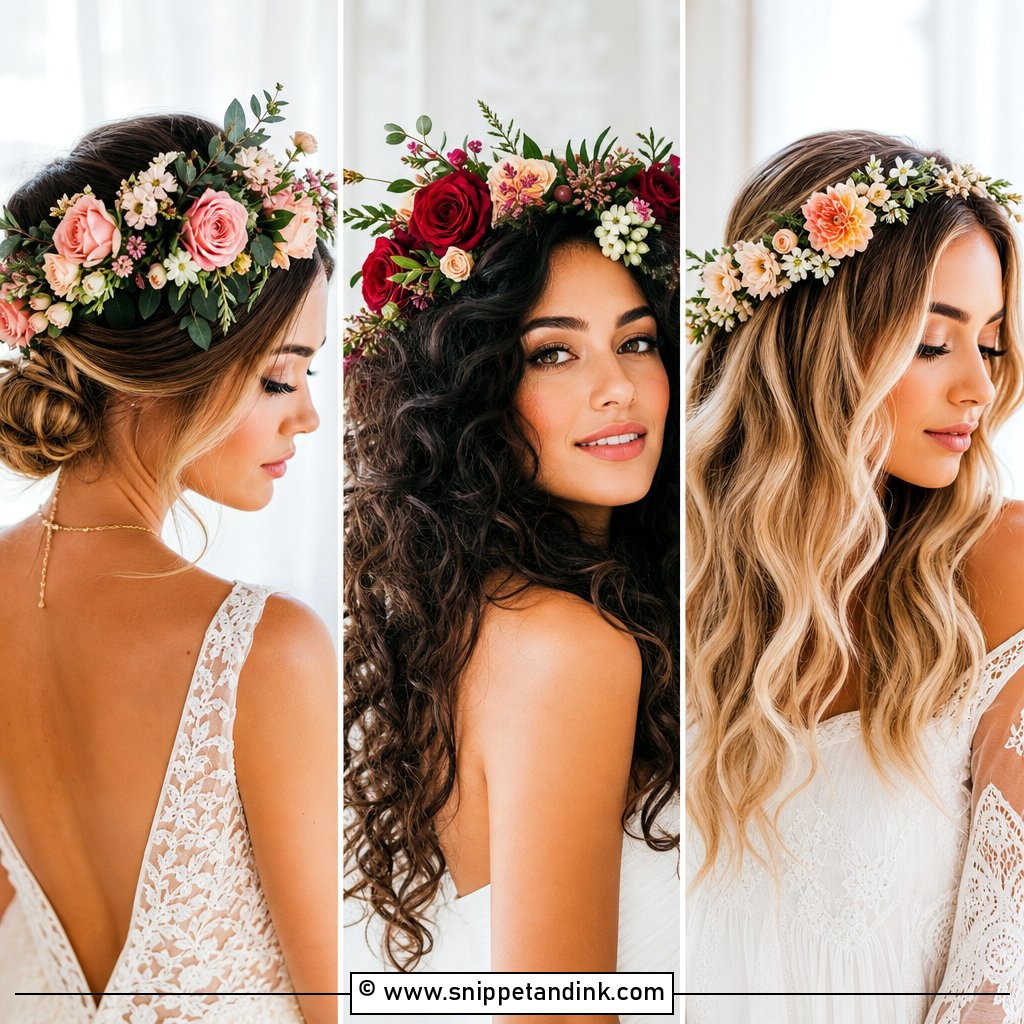
6. Boho Floral Crown With Waves
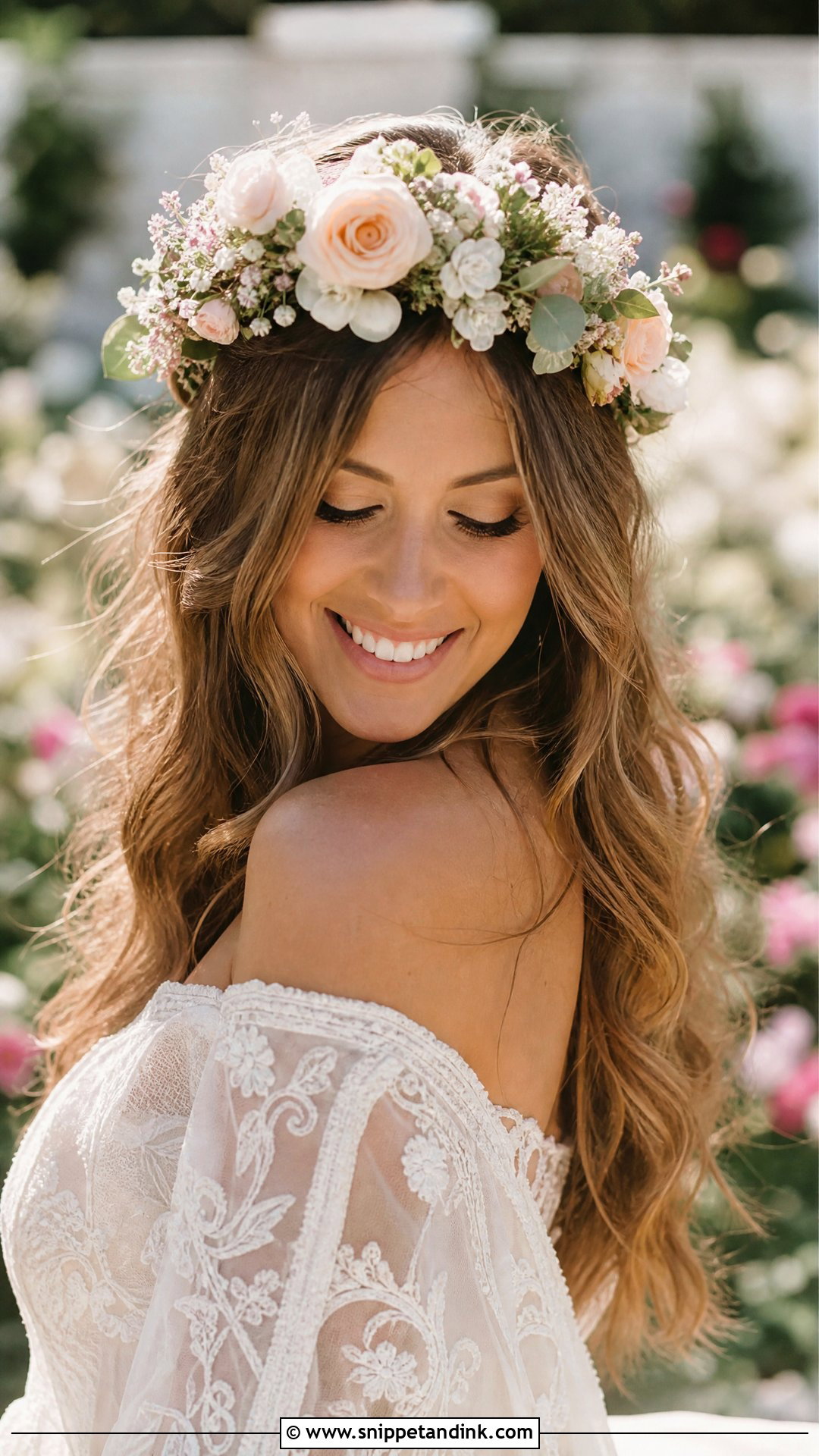
Floral crowns behave differently from metal ones. They’re lighter at first but lose shape as flowers drink and wilt, so the waves underneath should be soft and textured to hide the wire. Loose waves and a fresh or faux crown suit garden, meadow and vineyard settings. I always ask the florist to use blooms that cope without water for hours, and to match a few stems to the bouquet so it reads as one look.
7. Half-Up Half-Down With Tiara
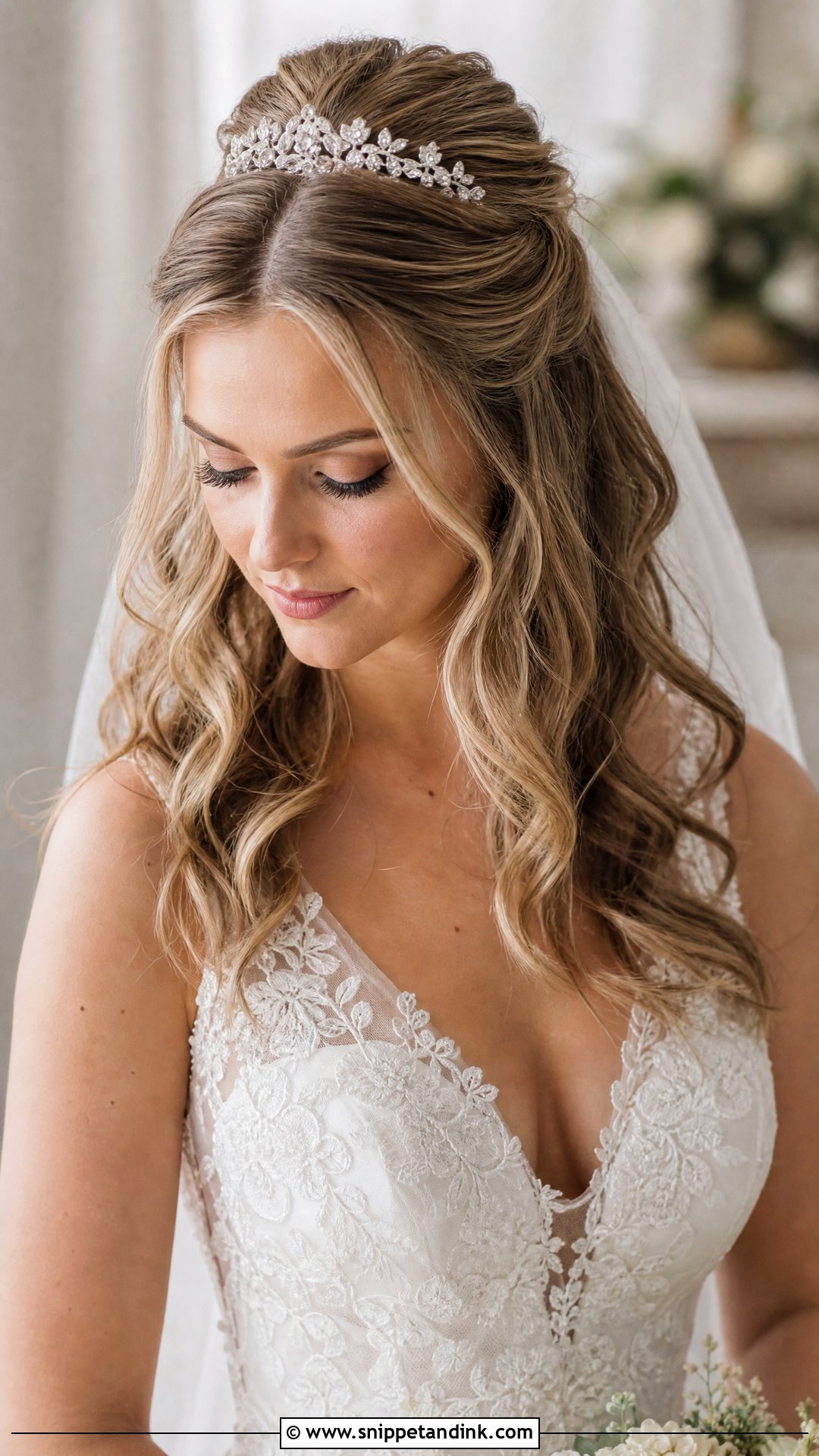
Half-up, half-down gives a tiara the stable base it needs while still showing length. The top section pulls back and gets pinned, and the tiara sits right in front of that gathered section, the most secure place on a mostly-down style. The rest falls in waves or curls. Add a little height at the crown first; a tiara placed on flat hair tends to tip backward.
8. Curly Hair Down With Crown
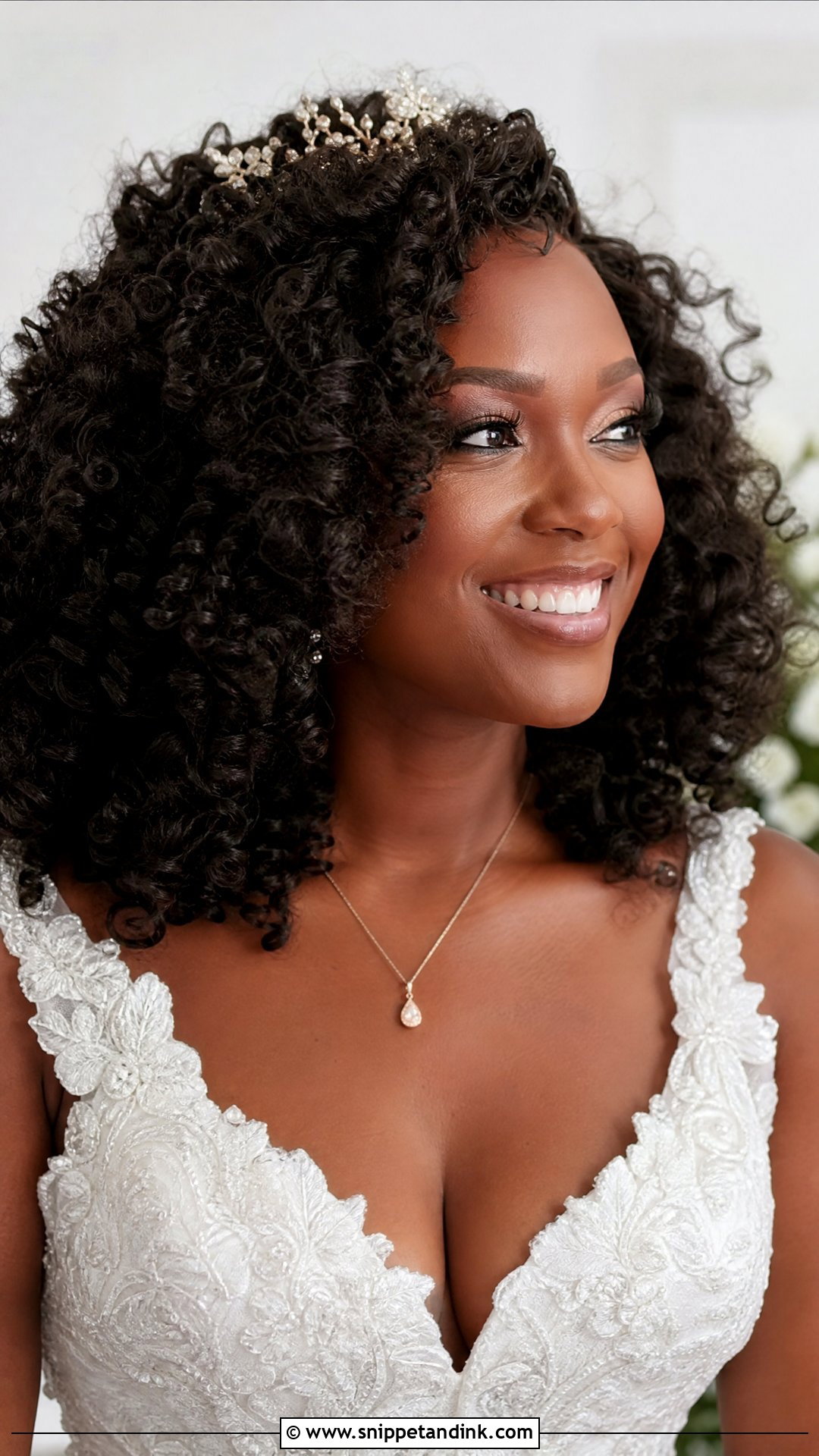
Natural curls are a crown’s best friend. Their density lets a tiara or headband nestle in so only the top line shows, and the curls hold it without much pinning. I’d skip anything that requires smoothing the hair under the band, since curls compressed there lose their pattern. Define with a curl cream, control frizz, and place the crown after the curls are completely dry so it doesn’t leave a dent.
9. Braided Updo With Jeweled Crown
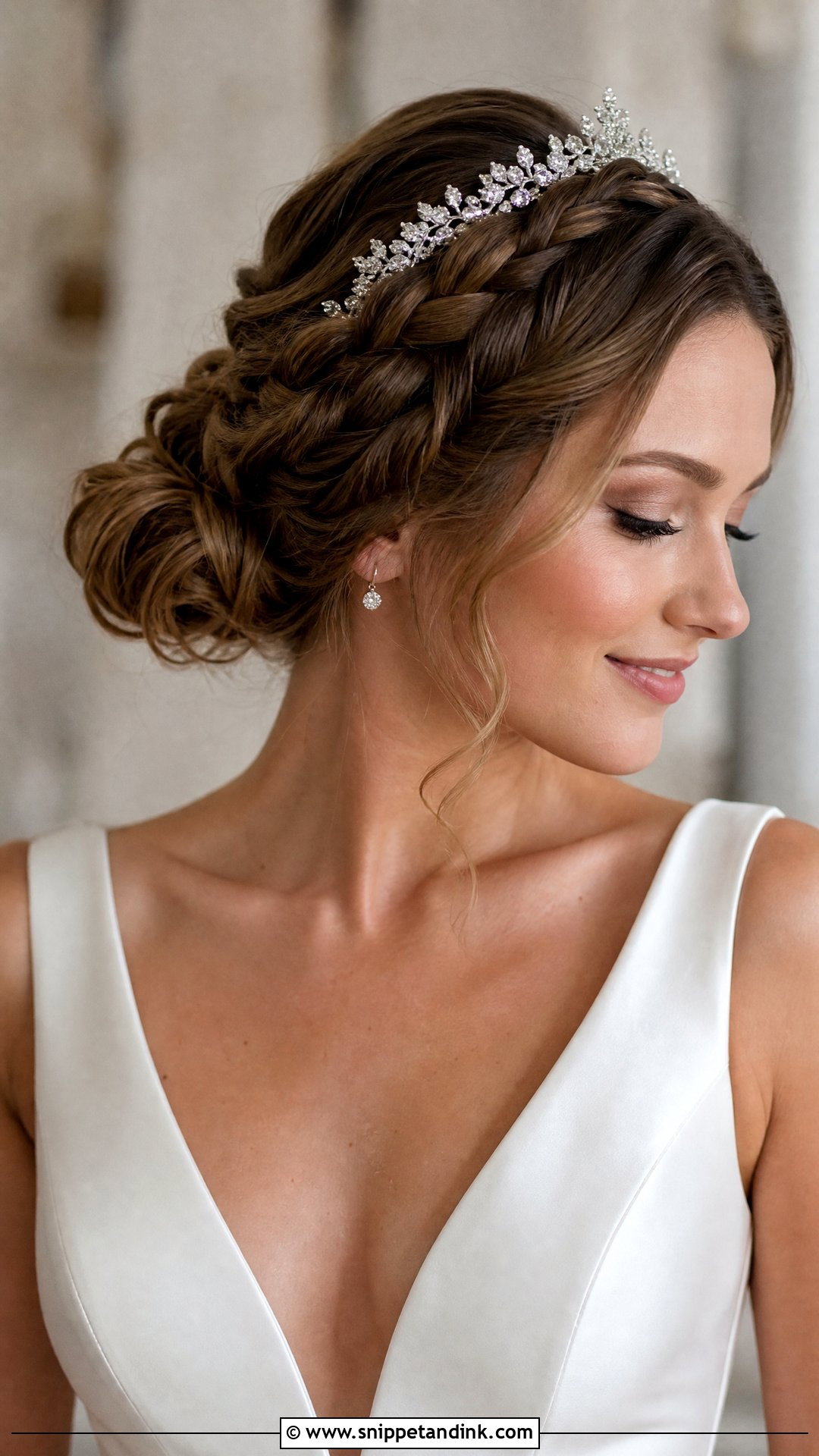
A slim jeweled crown or silver tiara sits naturally on a braided updo, with soft braids woven into a low bun. It takes time to build, so allow for that in the morning schedule. The braid gives texture and holds pins well, which is why it lasts through long days. Extra jeweled pins along the braid are optional. I place the crown last, sliding the combs under one braid so the braid locks them in. It suits a ballroom as easily as a barn.
10. Sleek Low Ponytail With Crown
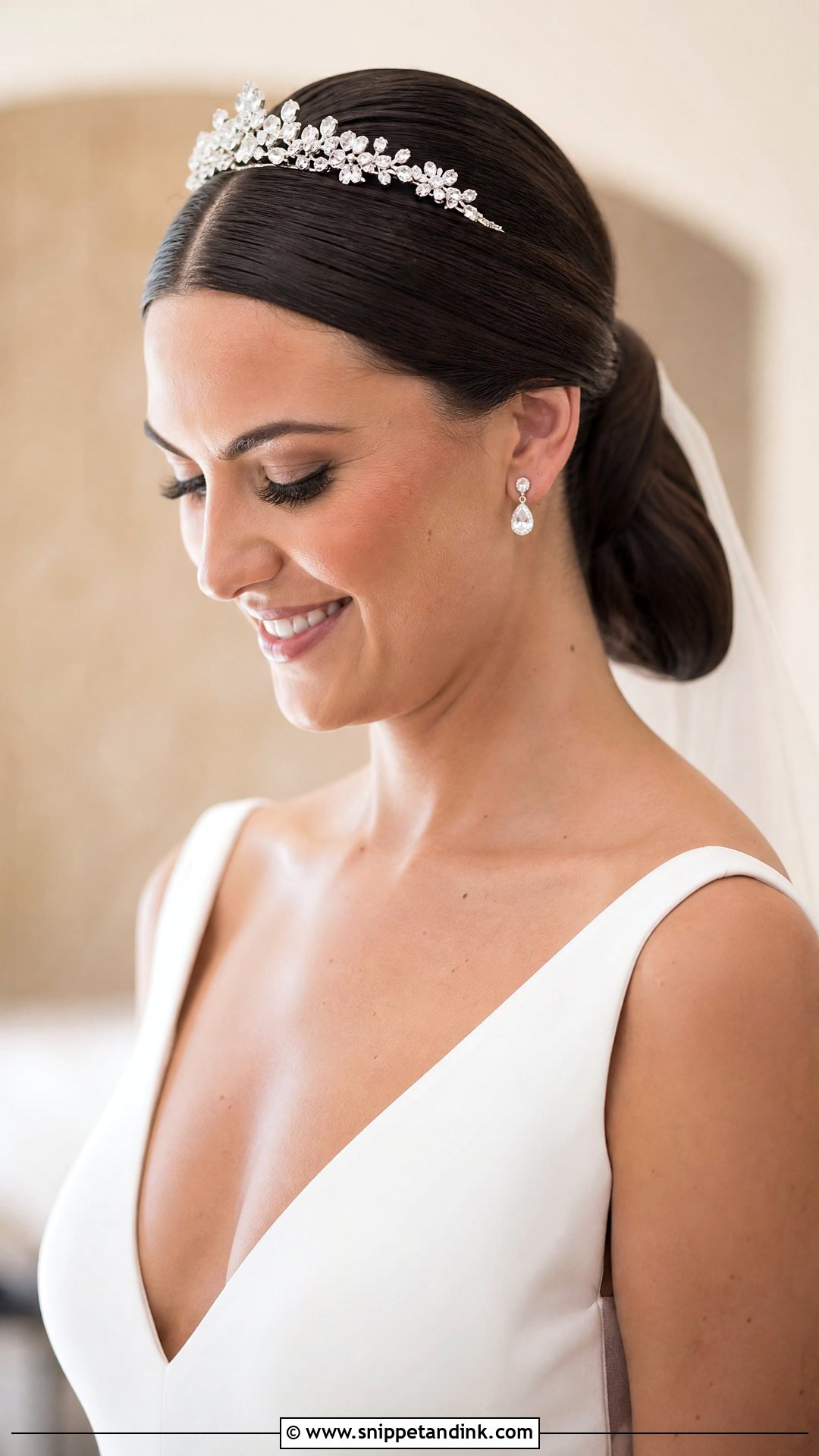
Minimalist brides often ask whether a crown is too much with a low ponytail. It isn’t, if the crown is delicate. The hair is pulled back smoothly and gathered at the nape, with a strand wrapped around the elastic, while the band sits on top as the only ornament. The difficulty is that sleek hair is slippery. A tiara on a pulled-back style needs a strip of texture spray and a couple of crossed bobby pins under where the combs go, or it will slide back by the reception.
11. Vintage Finger Waves With Crown
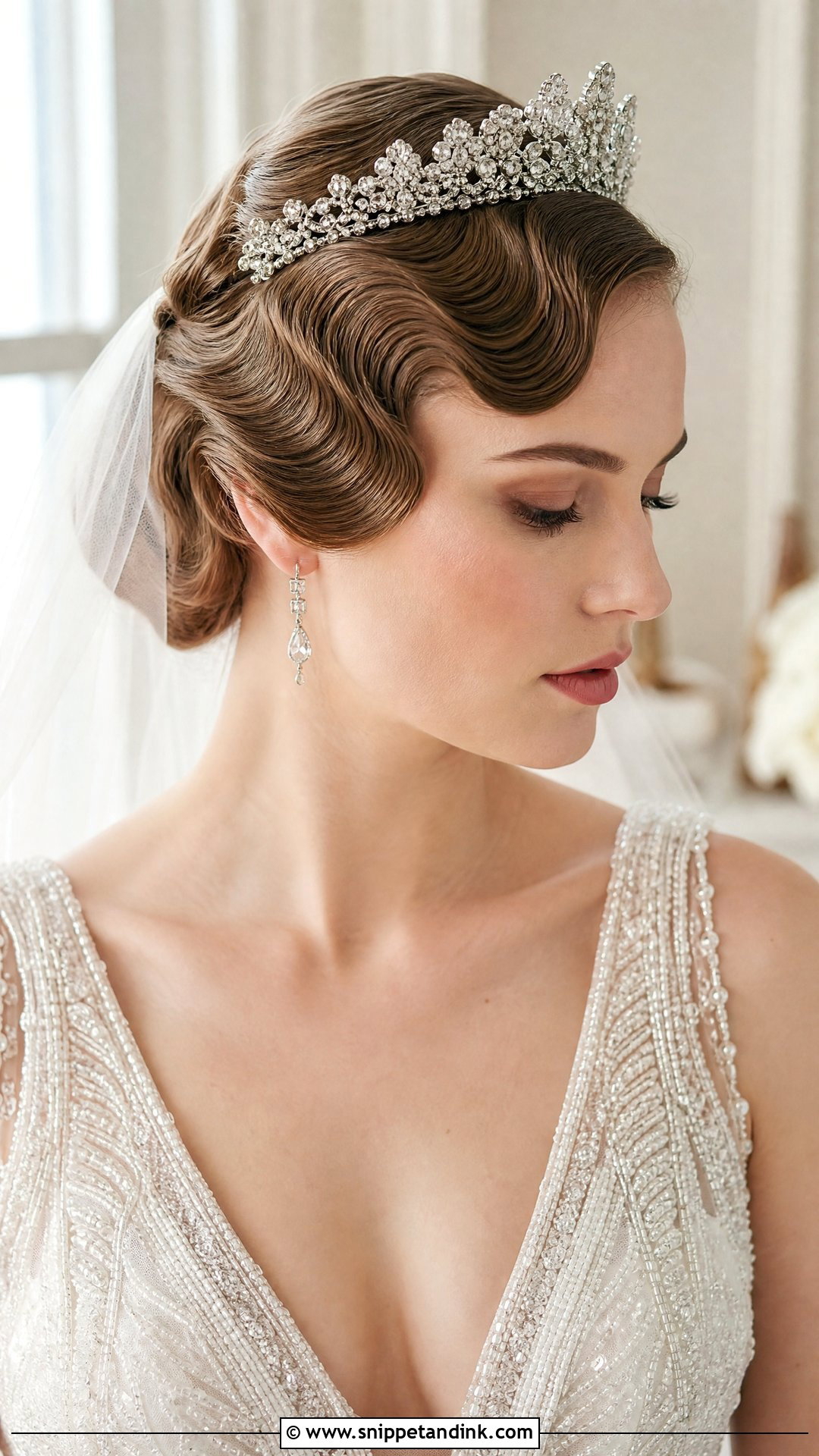
Finger waves are pressed flat to the head, so a crown on them should be low-profile too, an art-deco band rather than a tall tiara. To create sculpted finger waves, I work strong-hold gel through damp hair, form each S-curve with a comb and fingers, and secure it with wave clips until the gel is completely dry. Removing clips too early is the usual mistake. Statement earrings finish the vintage look, and it suits evening receptions and themed weddings.
12. Soft Curls Half-Up With Floral Crown
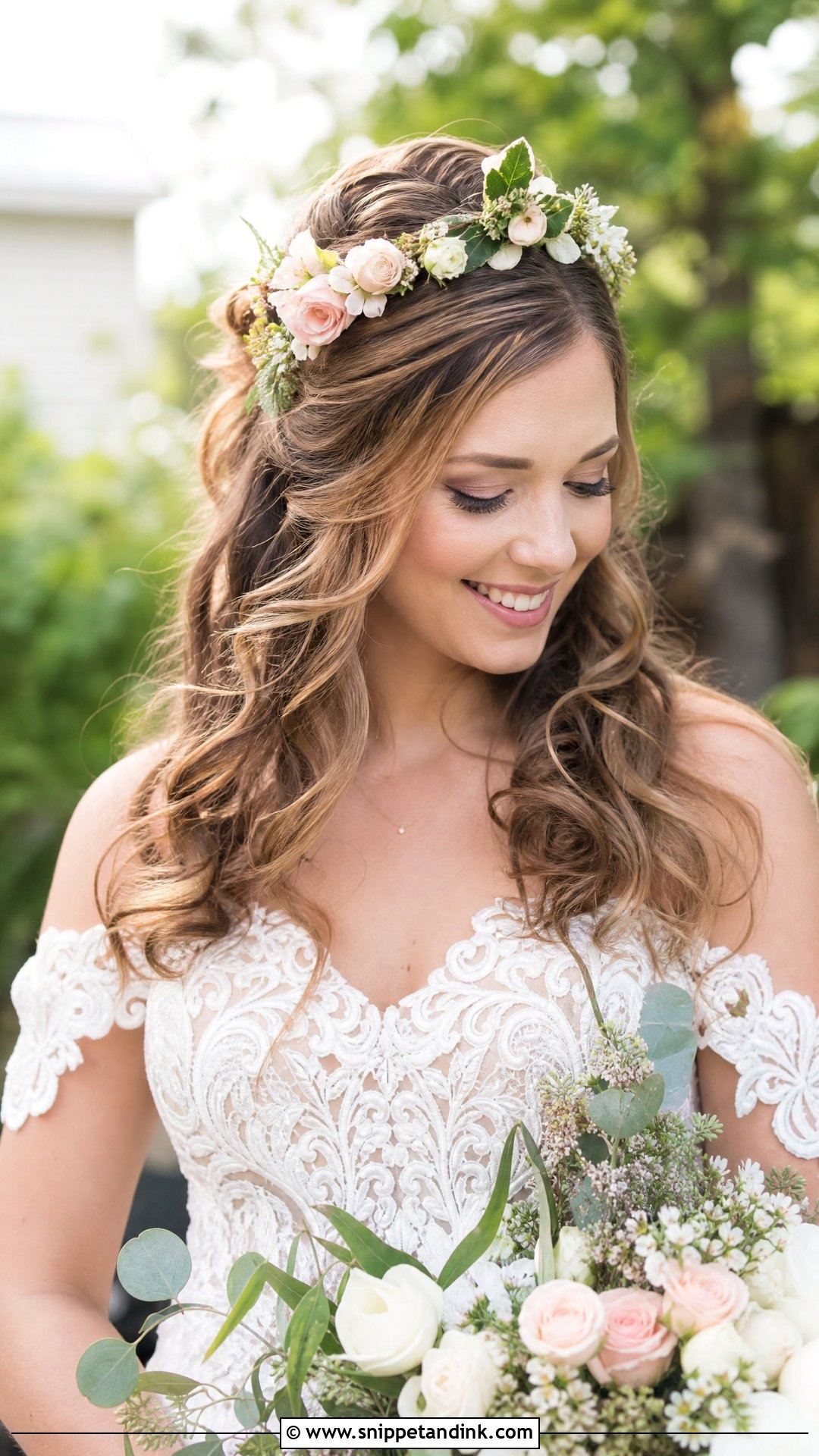
Soft curls in a half-up style are an easy base for a floral crown because the gathered top section supports it. Loose curls fall around the shoulders, which suits spring and summer garden venues. Pastel blooms feel delicate, while stronger colors give impact. I usually set the crown slightly forward of the gathered section, so the pins hide in the curls behind it.
13. Messy Bun With Delicate Tiara
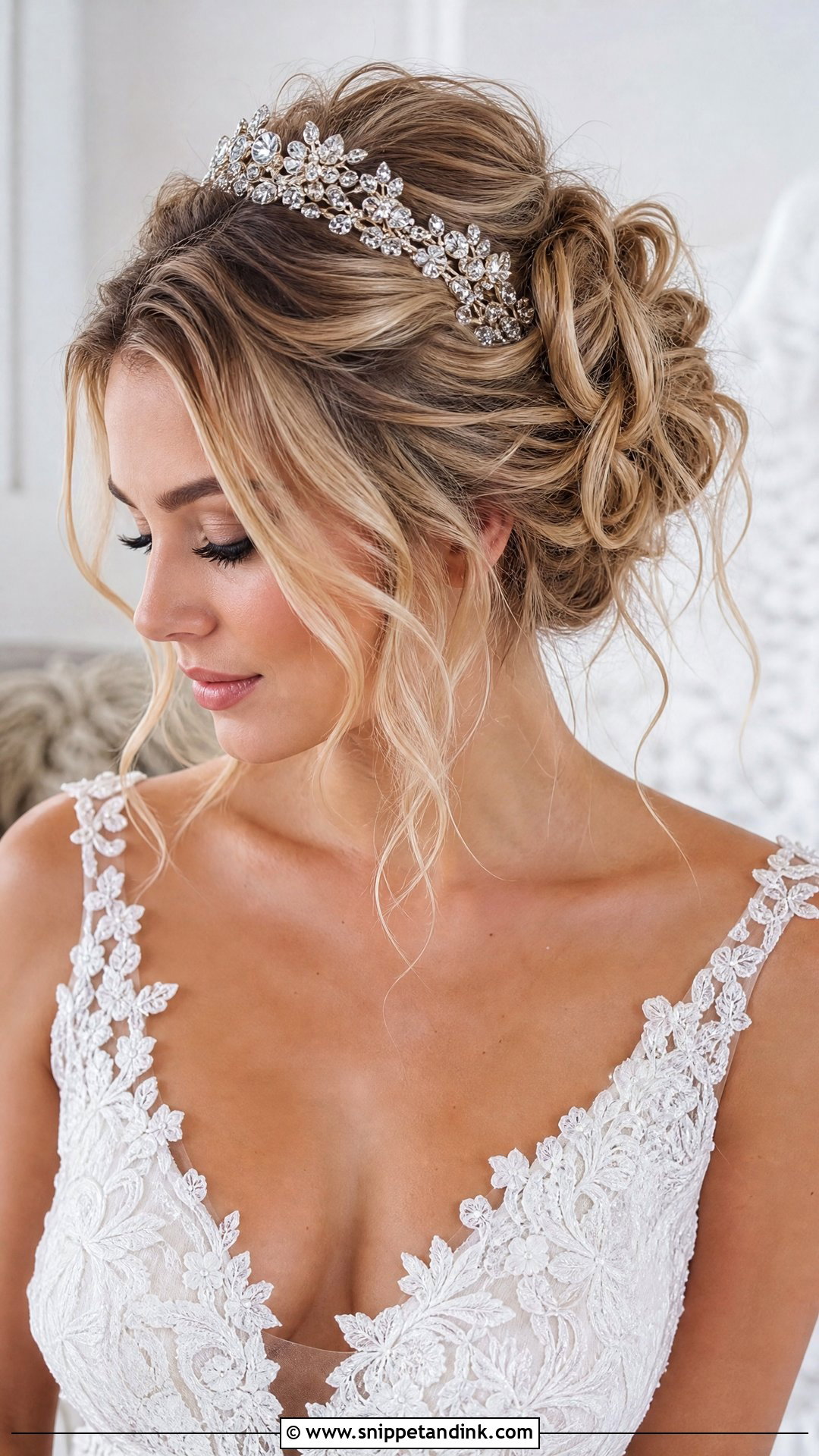
Messy buns are surprisingly good for tiaras. The undone texture means there’s plenty of hair for combs to grip, and a delicate tiara set into the loose bun brings polish to the relaxed look. Pull out a few face-framing strands and finish with a light spray. Just don’t make the base too loose: if the bun is pinned only lightly, a tiara’s weight pulls it down within the first hour.
14. Fishtail Braid With Crown
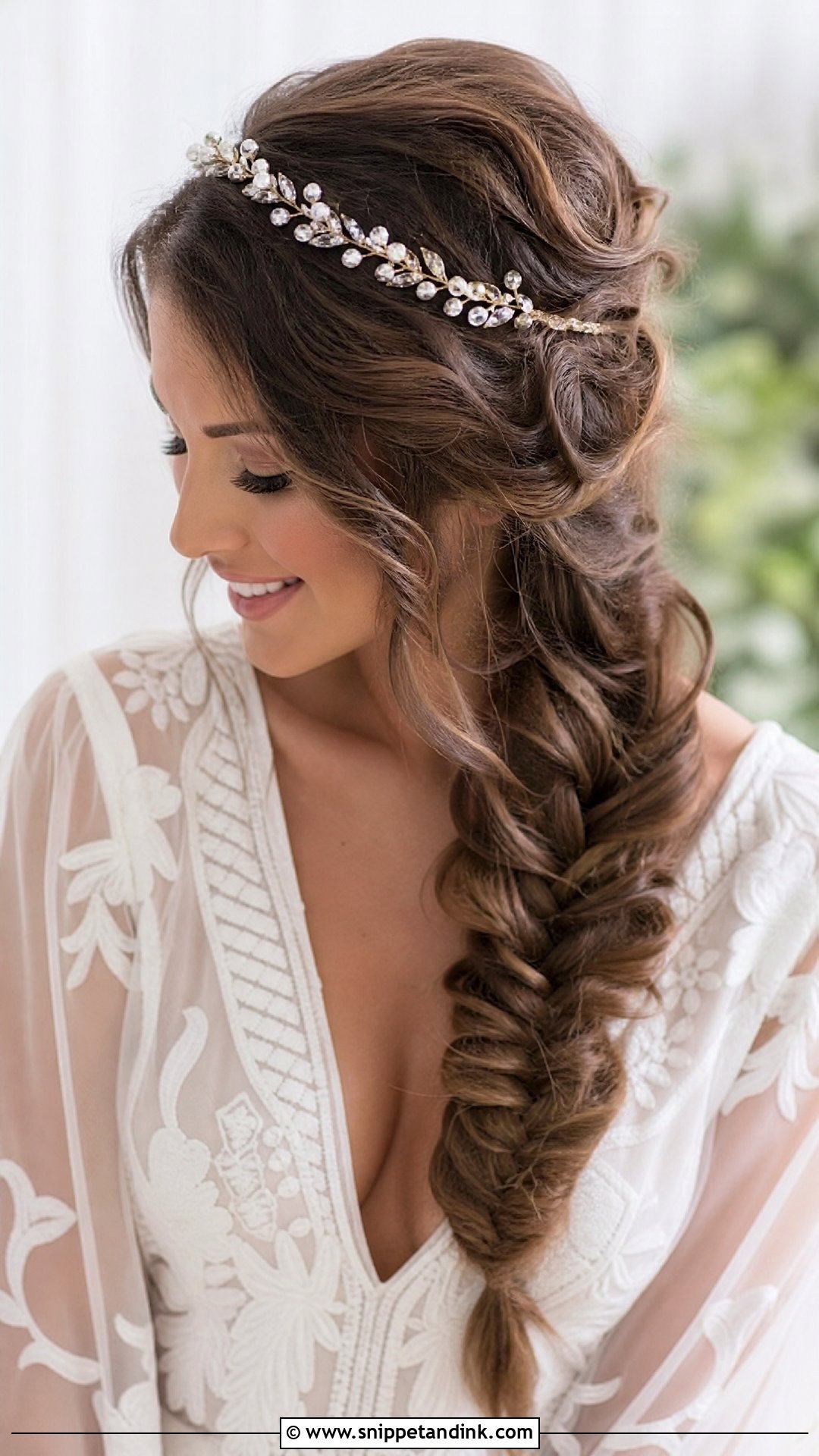
Worn to the side or wrapped into an updo, a fishtail braid gives a crown a textured base. The pattern is finer and tighter than a regular braid, so I loosen it gently once it’s secured to make it fuller. A floral crown or jeweled band rests above it. I’d choose it for relaxed outdoor weddings; on very fine hair, the fishtail can look thin unless the hair is texturized first.
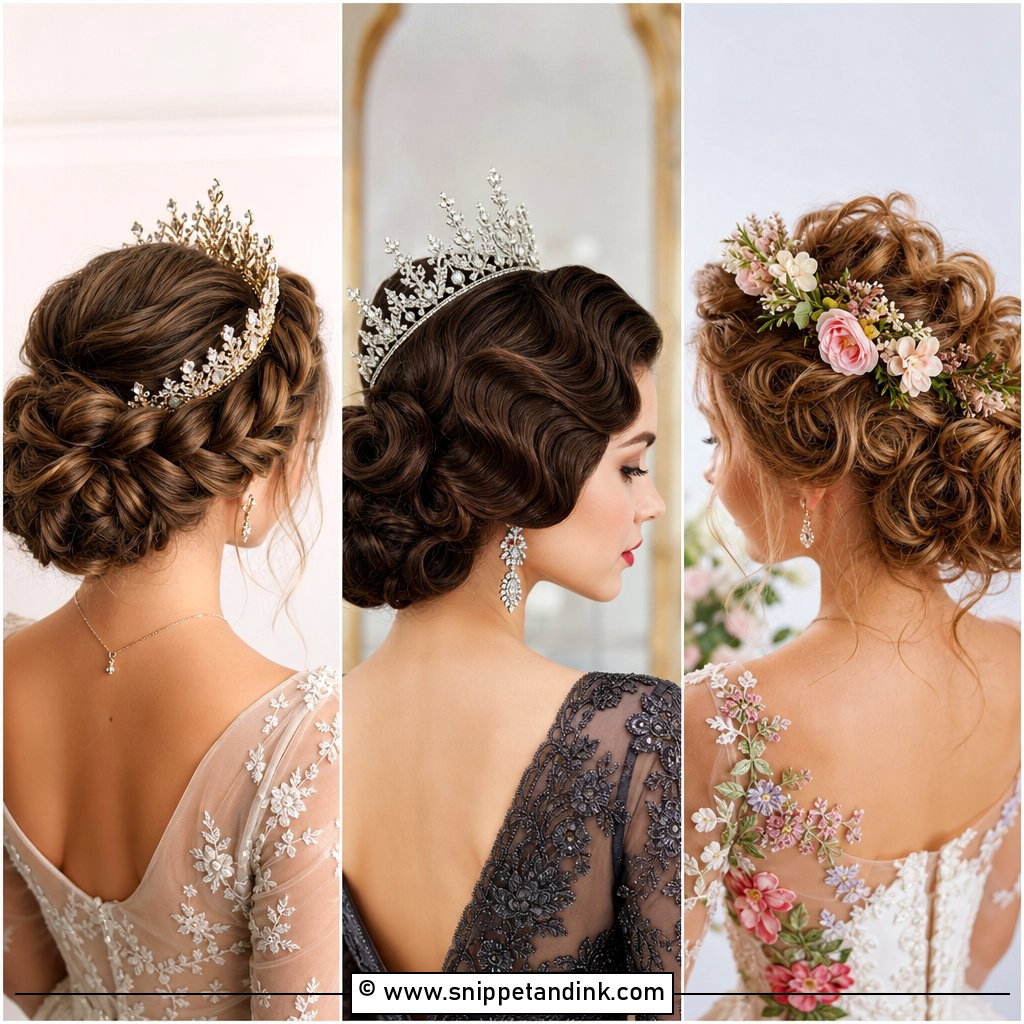
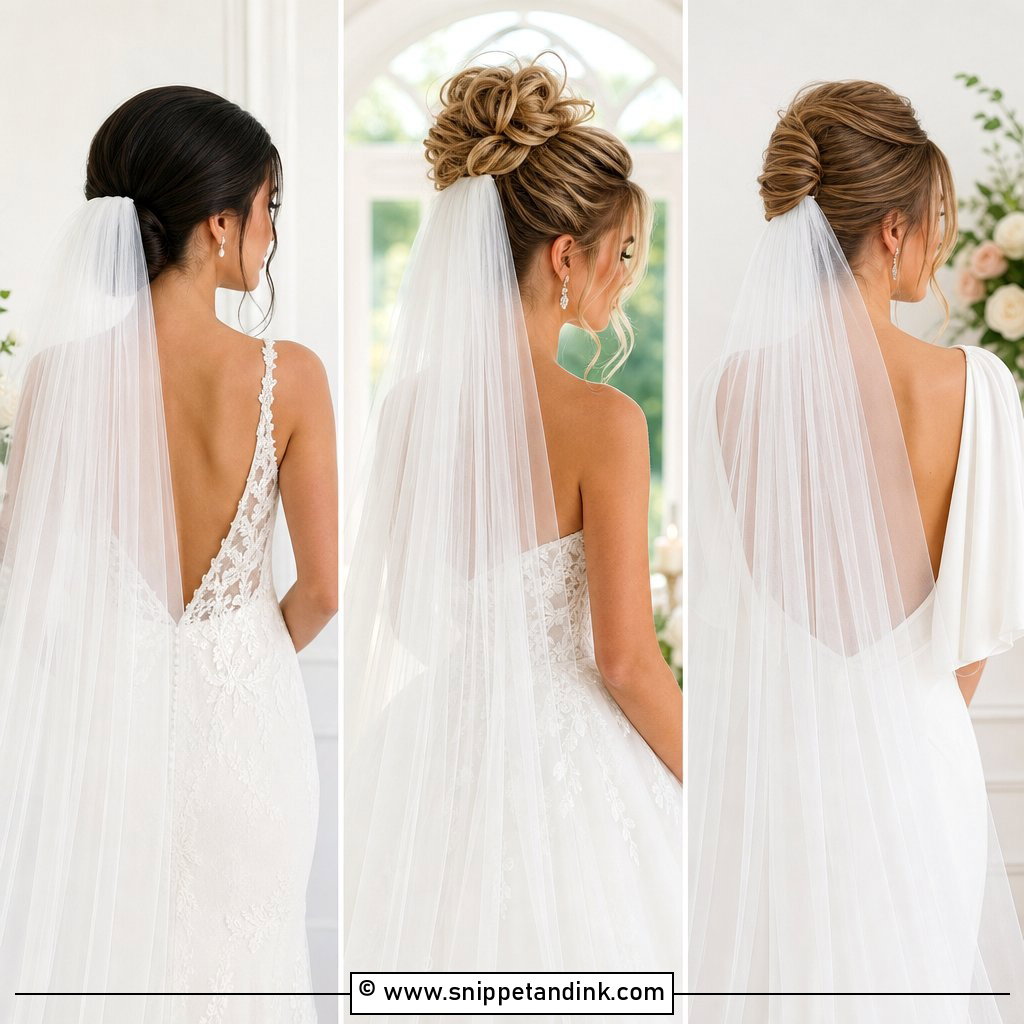
15. Updo With Cathedral Veil and Crown
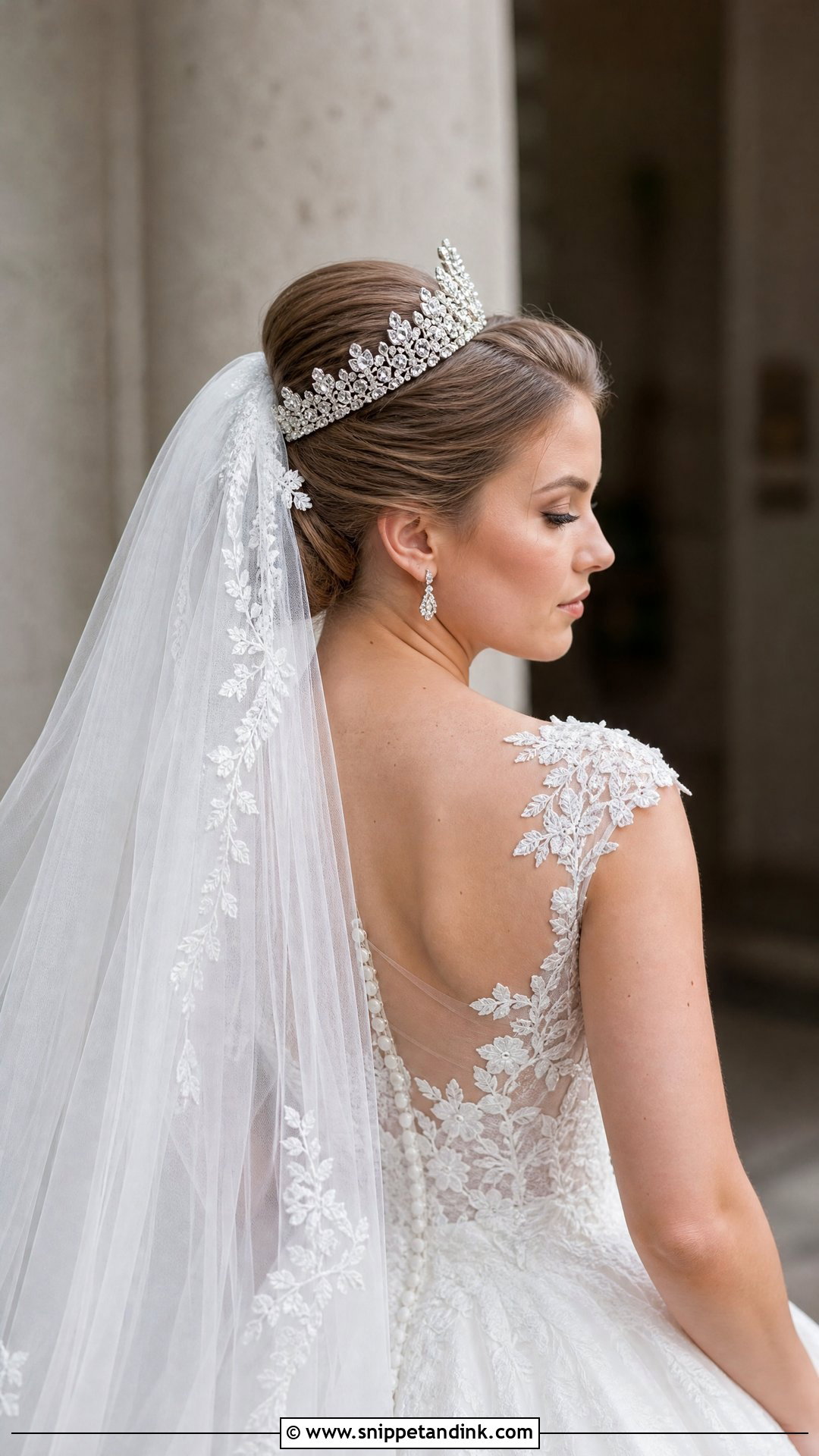
A cathedral veil and a crown together is a grand combination, and the hair has to bear both weights. Sweep the hair up into a clean updo, set the crown, then attach the veil below the crown at the back so the two don’t compete for the same space. I anchor the veil comb in the updo itself rather than near the crown’s combs. Long tulle pulls backward constantly, and keeping the loads separate stops the crown from tilting. Formal venues and long aisles suit it best.
16. Twisted Updo With Pearl Crown
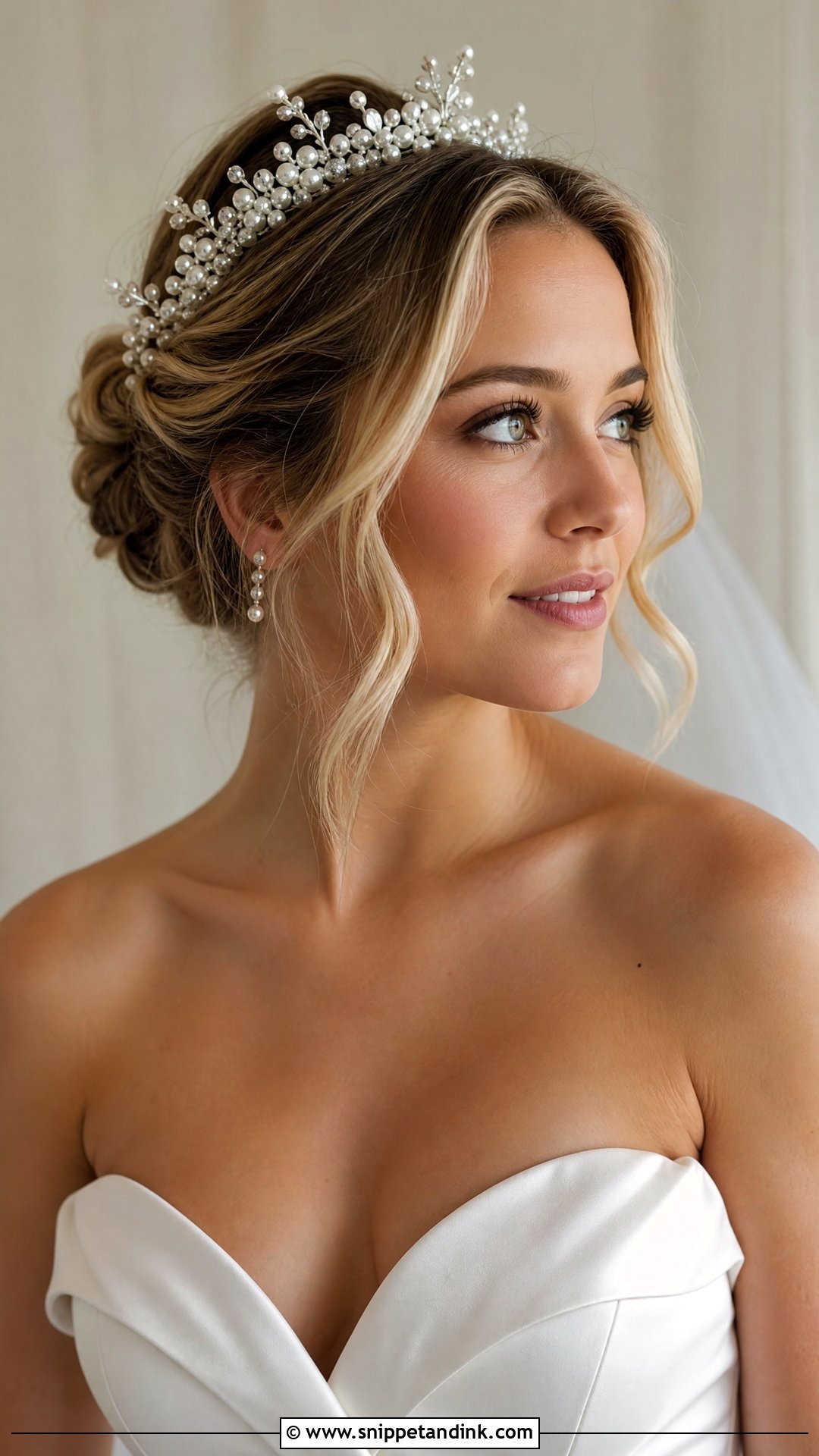
Pearls catch light gently, so a pearl crown suits a twisted updo where sections are twisted and pinned into shape with visible dimension. It feels classic and works with vintage and modern gowns alike. Leave a few tendrils loose. Pearl crowns are often wired on thin metal that bends, so I shape the crown to the head at the trial; bending it on the morning risks snapping a pearl off the wire.
17. Long Loose Curls With Princess Tiara
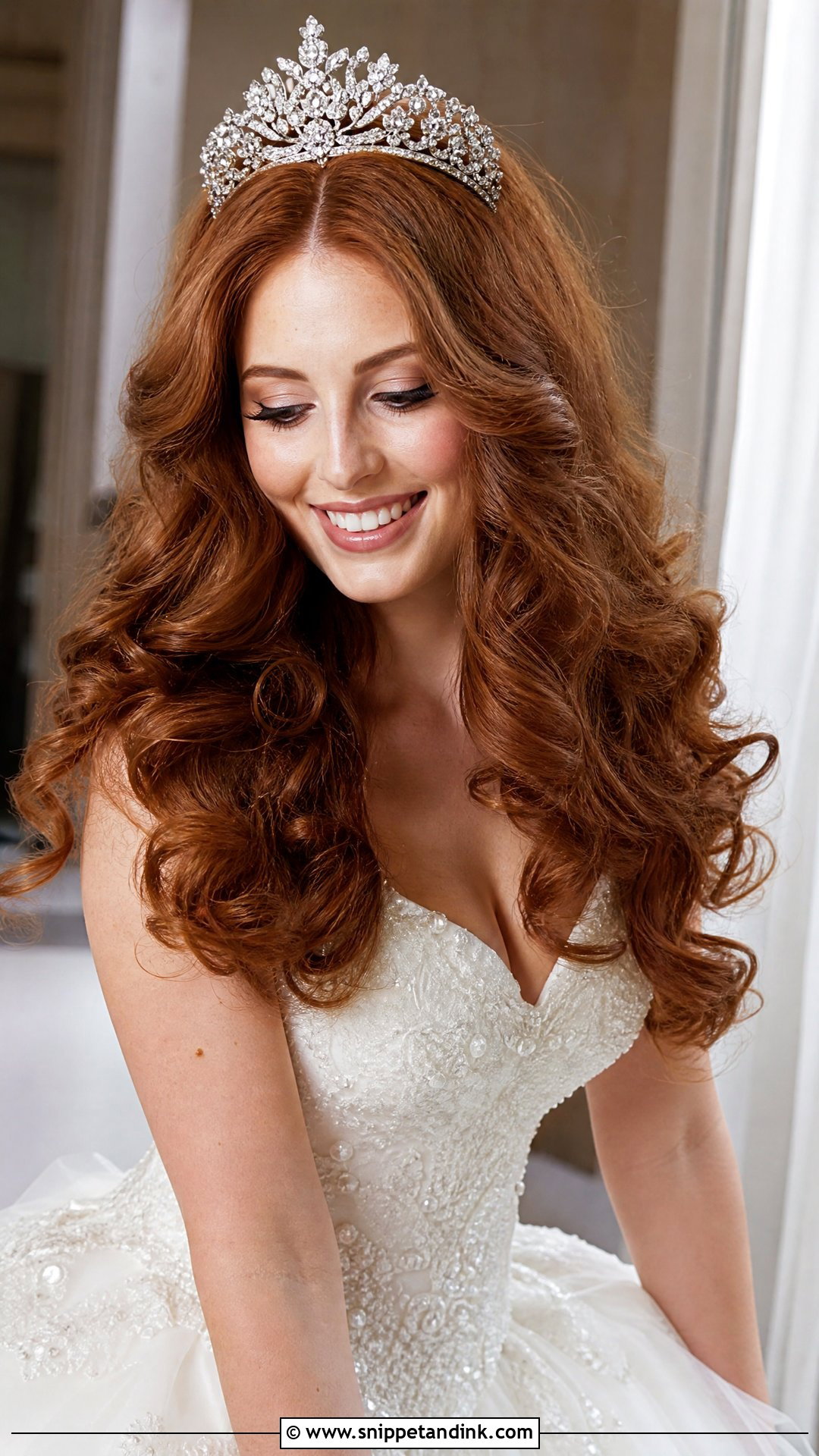
Long, loose curls with a statement tiara is the full princess look, and it’s dramatic. Curls down the back frame the face while a sparkling princess-style tiara sits above. Use a large-barrel wand for bouncy curls and finish with shine spray. The catch with very long hair is weight: curls drop faster on heavy hair, and the tiara has nothing pinned to hold. I’d add a hidden half-up section under the band, invisible from the front.
18. Side-Swept Curls With Crown
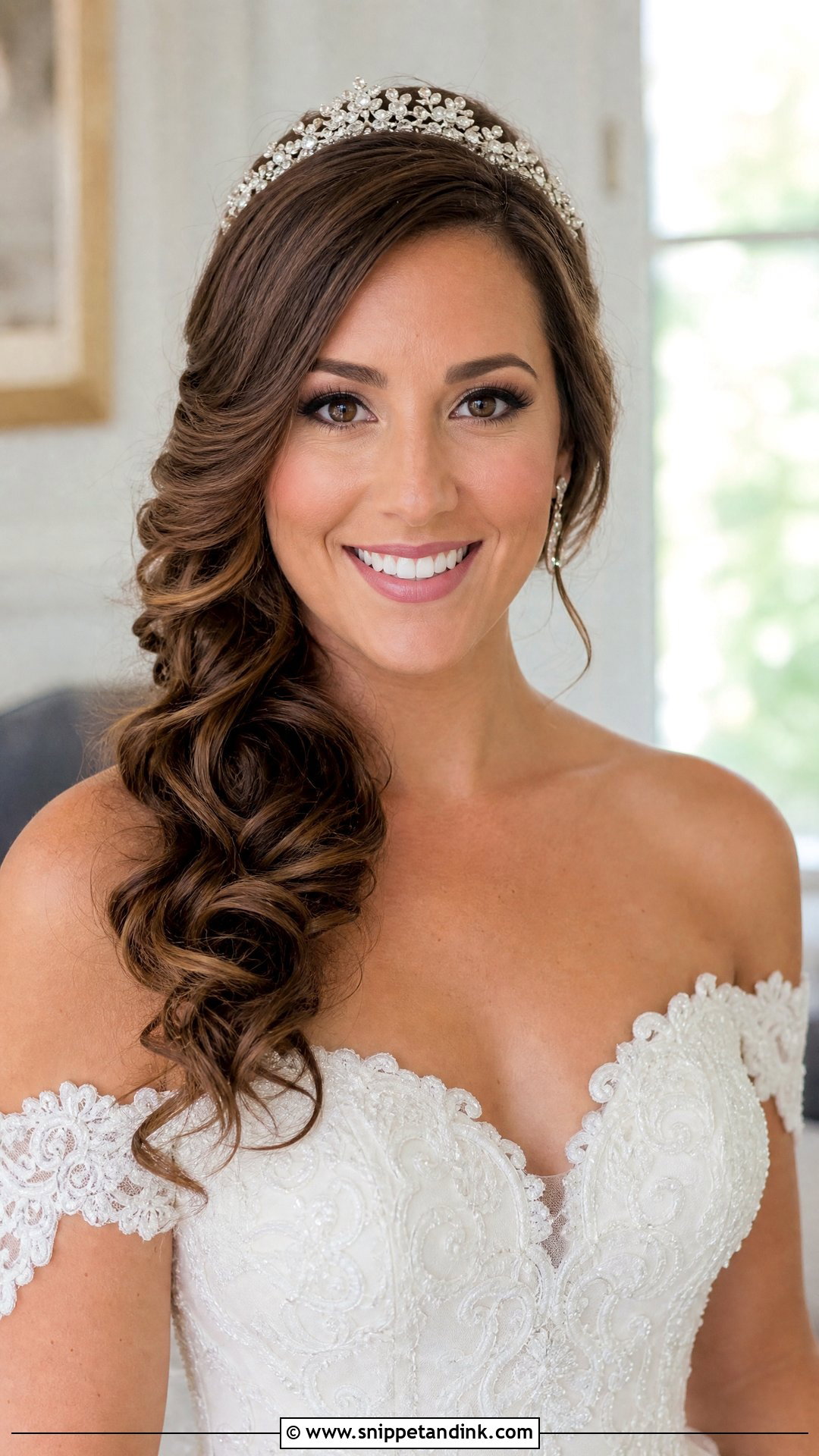
Side-swept curls go over one shoulder, which shows off statement earrings and shoulder details on the gown. A crown or jeweled band sits above to balance the asymmetry. The opposite side needs firm pinning to keep the shape; I use crossed pins hidden behind the ear. Crowns can look off-center on a side sweep, so I place it by eye in the mirror, centered on the face rather than on the parting.
19. Boho Braided Crown With Wildflowers
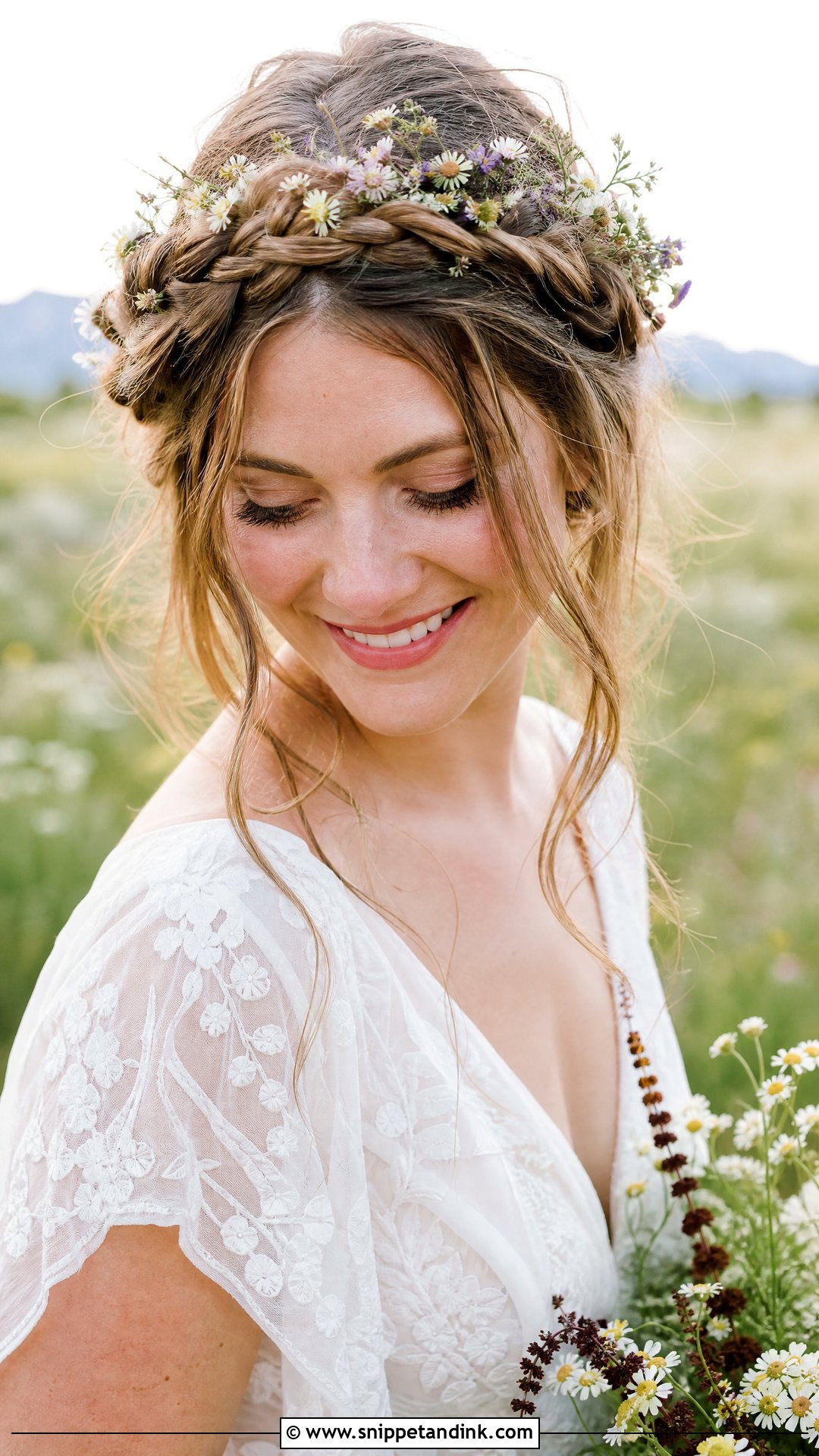
Wildflowers woven into a braided crown suit forest, meadow and festival-style weddings, and this earthy, whimsical style is very secure because the braids hold everything. Small blooms in varied colors look natural. Wildflowers wilt quickly out of water, so the florist should supply sturdier stems that mimic the look, and I push them in just before the ceremony. Loose strands around the face keep it relaxed.

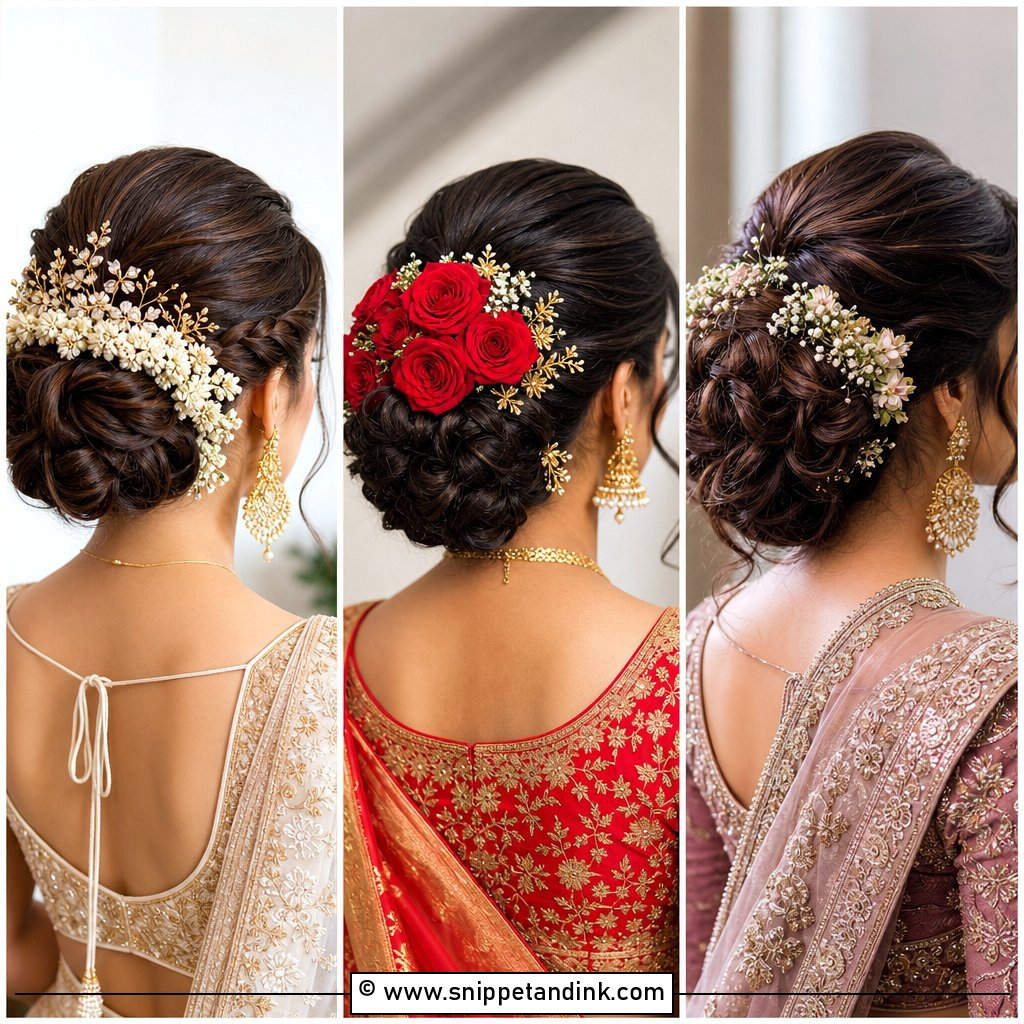

20. Classic Chignon With Royal Crown
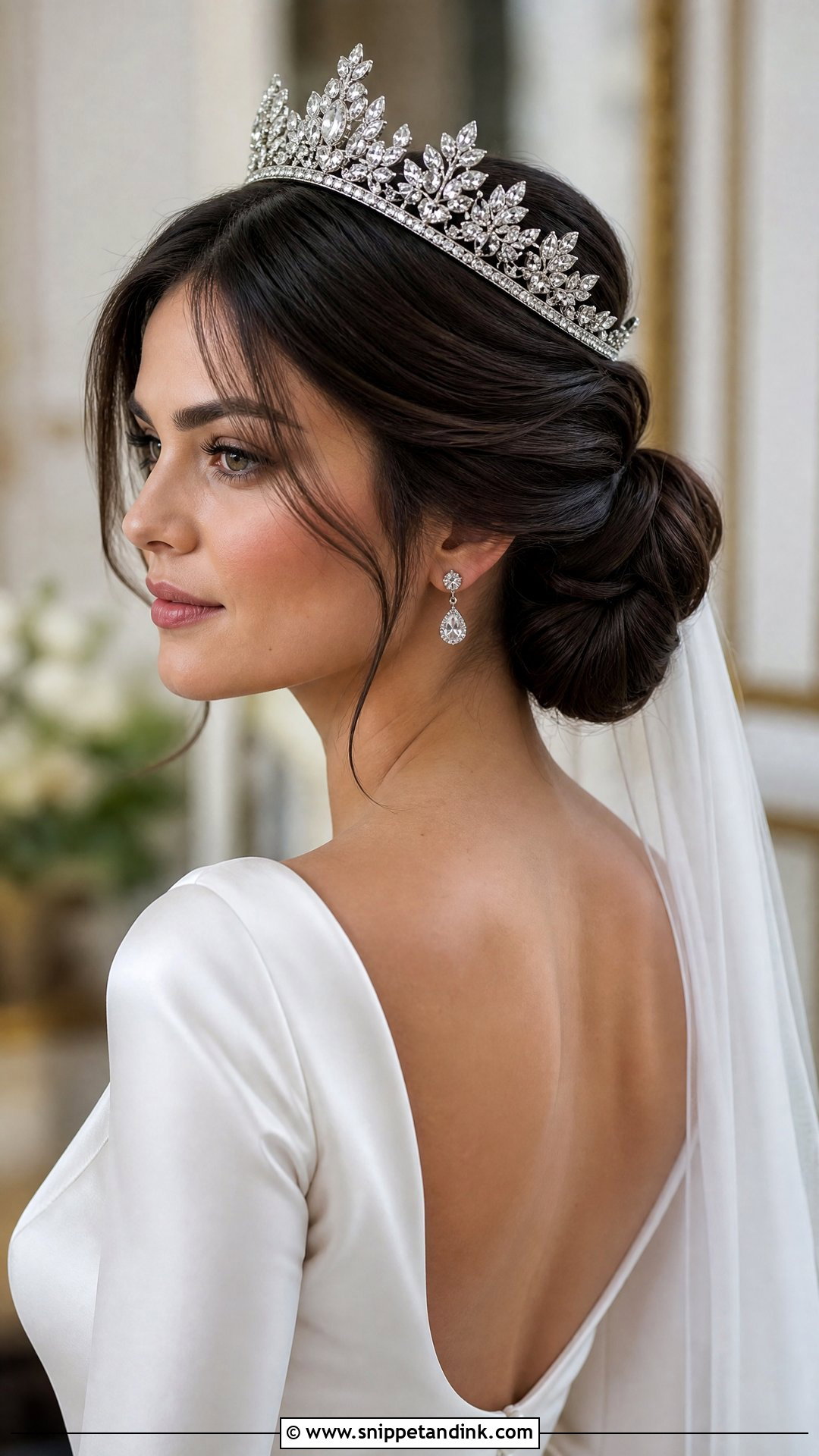
Royal brides have worn the chignon for generations because it supports a heavy crown well. The hair gathers into a smooth, twisted knot at the nape, which leaves the crown alone at the top. It works with veils and statement jewelry and suits almost any face shape. Soften a few face-framing pieces if you like. A tall crown on a very low chignon can look disconnected, so I add a little crown volume to bridge the gap.
Anchoring a Crown So It Won’t Slide or Pinch
Most crowns have small combs at each end, and sometimes loops. Combs alone rarely hold through a full day. I backcomb a small base where each comb will sit, slide the comb in against the direction of the hair, then lock it with a bobby pin crossed over each end. Crowns with loops get pinned straight through the loop into the base.
- Wear the crown for at least an hour at the trial. Pressure points that feel fine at minute five can turn into a headache by hour three.
- If it pinches behind the ears, bend the ends very slightly outward, gently and only on a metal frame, not on a wired pearl or crystal piece.
- Pad sharp combs with a little matching hair wrapped around them so they don’t dig into the scalp.
Fresh flower crowns need different care
Keep a fresh crown in its box in the fridge (not the freezer) until you’re dressed, and mist it lightly before it goes on. Heat and sun shrink petals within hours, so for a long afternoon outdoors, a silk crown or one made with hardy flowers will look far better in the evening photos.
Let the Crown Decide How High Your Hair Goes
The crown is fixed; the hair is flexible. Work out where the crown will sit and how heavy it is, and build the hairstyle to support it rather than the other way round. Consider the gown, venue and your hair’s texture, wear the real crown at your trial for as long as you can bear it, and keep the photos. That fitting tells you more than any inspiration picture.
You'll Like These Ideas:





Leave a Reply