
Every style in this list starts the same way: the hair is gathered and tied before anything else happens. That tie is the foundation, and it’s why buns, chignons, ponytails and braided updos outlast most loose styles at a wedding. What changes is where the tie sits, how much of the hair it holds, and what gets built around it. Bridal hair right now favors shapes that look deliberate, sleek or softly textured but never stiff. The right one for you depends on your neckline, your veil, your hair’s texture and how hot the venue will be. These tied wedding hairstyles are the ones I trust to hold from the first portrait to the last song.
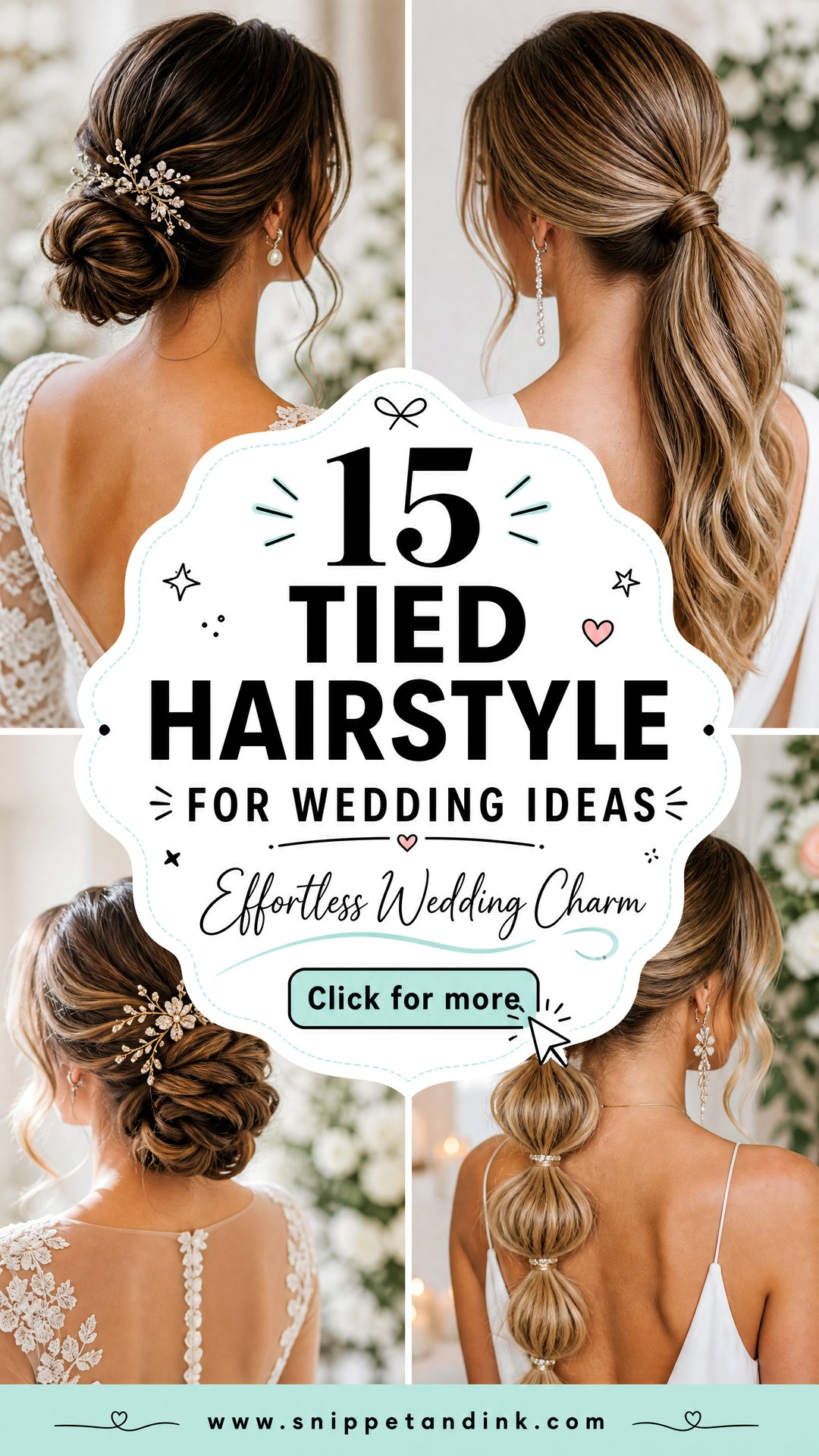
The Elastic Under Every Style Here
The tie itself gets very little attention, and it decides a lot. A cheap elastic snaps, rolls or catches hair when it comes out. These are the ones I use and why.
- Snag-free fabric elastics for the main ponytail. They grip without tearing hair when removed.
- Small clear elastics for bubble ponytails and braid ends, where you want the tie invisible.
- A strand of your own hair wrapped over the elastic and pinned underneath. It is the cleanest finish for any visible ponytail base.
- Two elastics on heavy hair: one to set the position, one just below to lock it.
Placement matters as much as the tie. A ponytail tied where your head naturally curves, behind the crown or at the occipital bone, sits more firmly than one tied on a flat spot, because the hair can’t slide down the slope.
At the end of the night, cut clear elastics out with small scissors rather than pulling them. They’re thin enough to tangle around strands, and snipping them takes seconds while dragging them free can break hair.
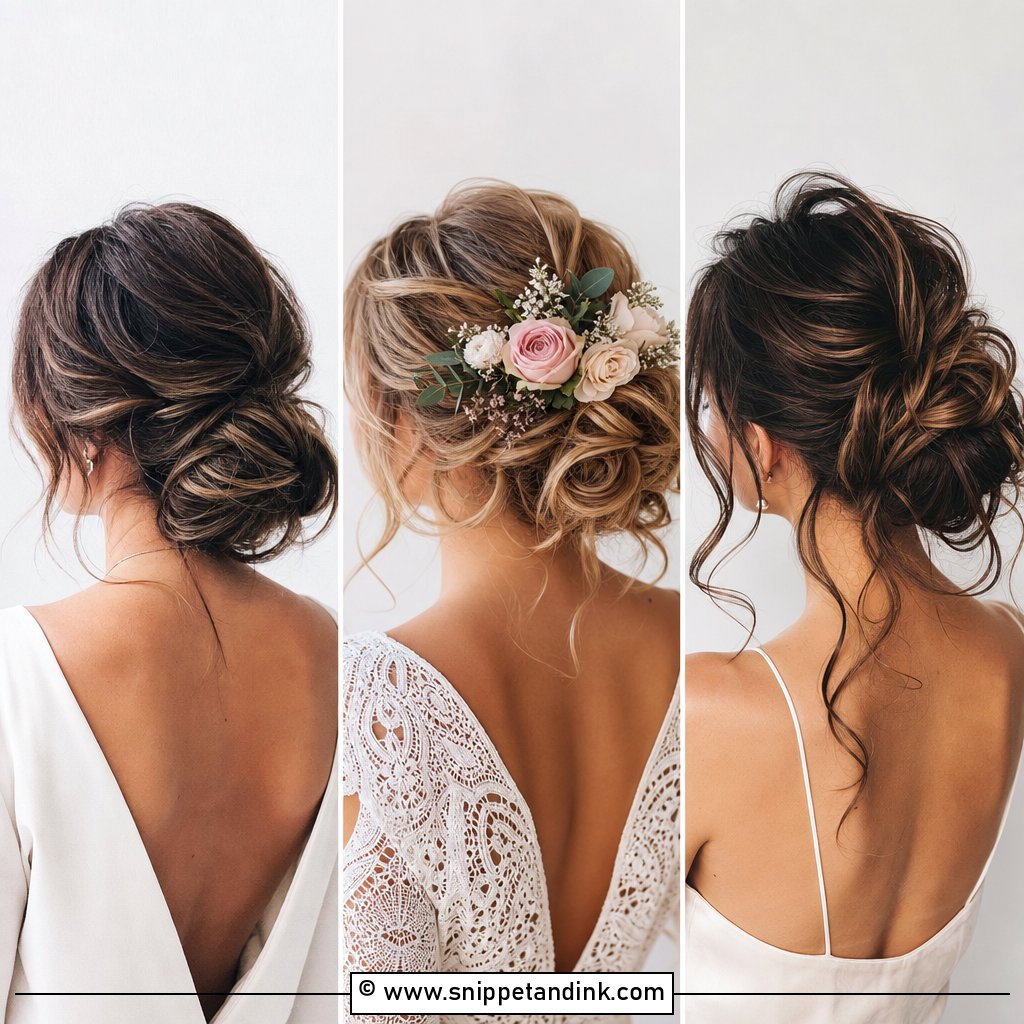
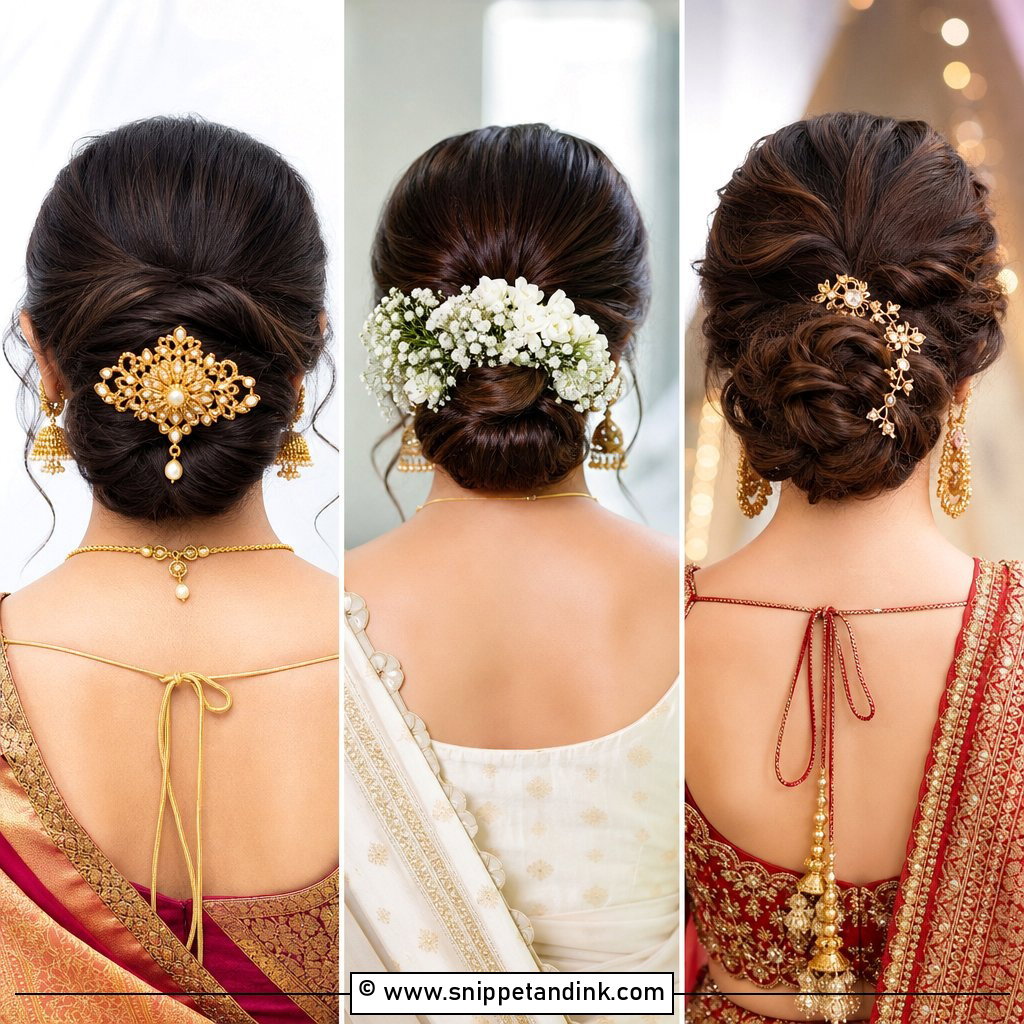
1. Low Bun Wedding Hairstyle
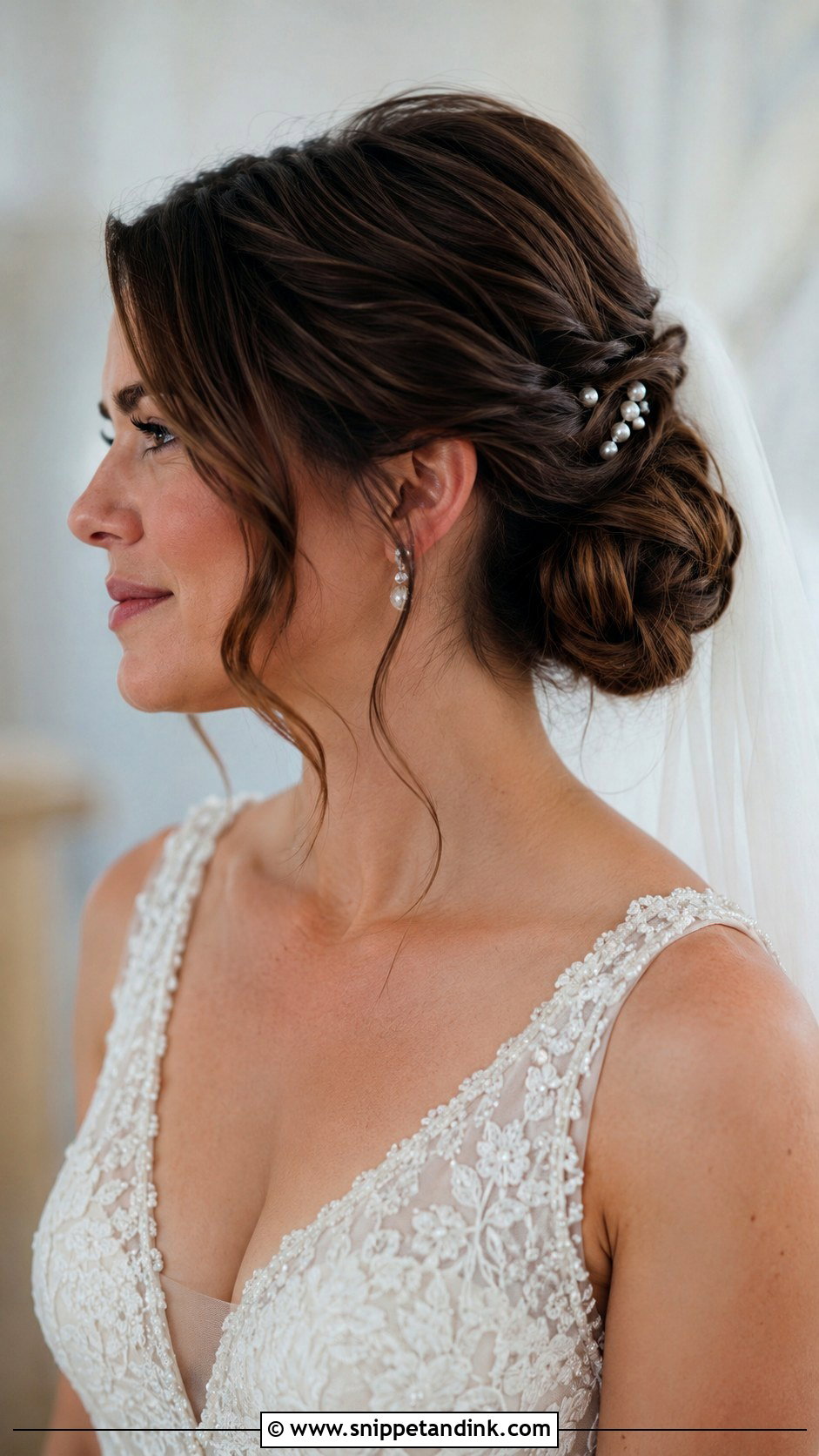
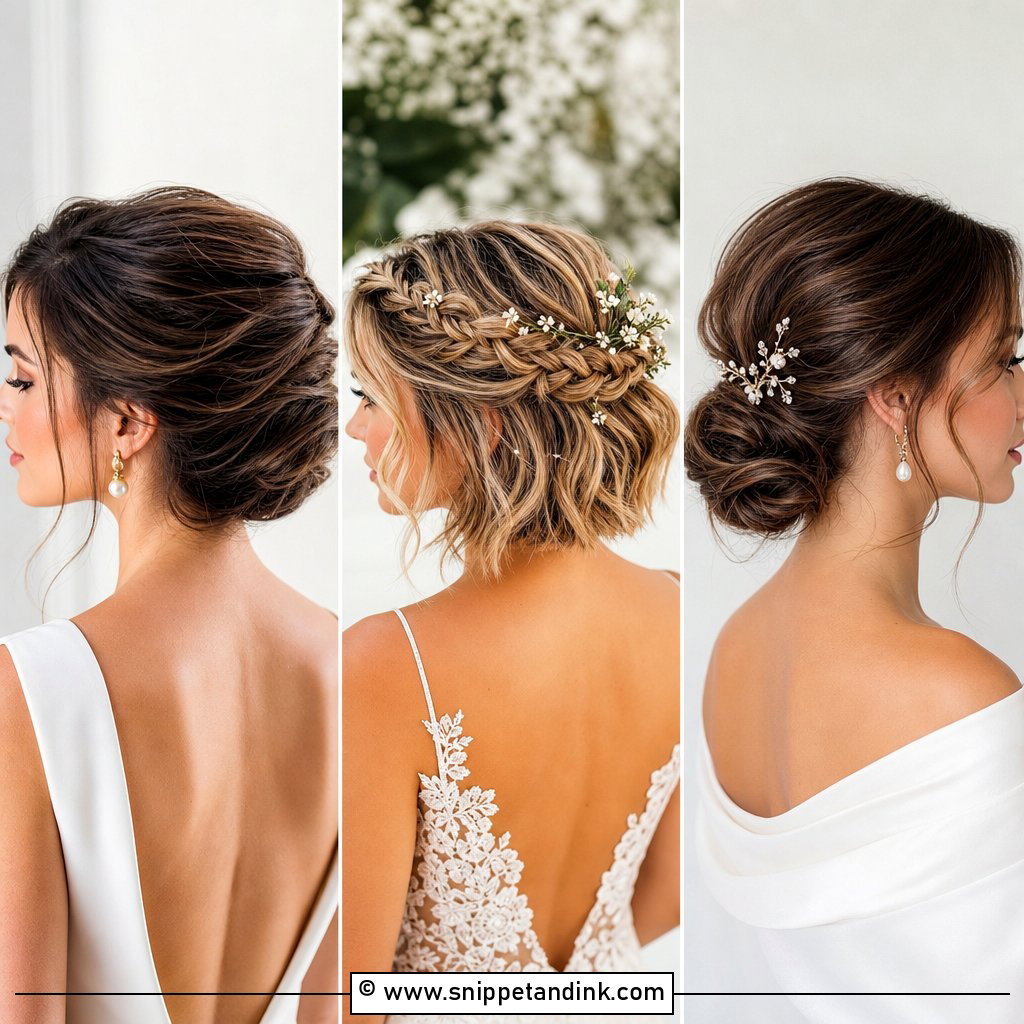
If I had to pick one style for a bride who couldn’t decide, it would be this. The bun sits close to the nape, which leaves room above it for a veil comb, pearl pins or a decorative comb, and keeps an open-back dress clear. Straight, wavy and curled hair all work. I tie the ponytail slightly higher than where the bun will sit, so the bun covers the elastic rather than resting under it. Face-framing pieces soften the cheeks and jaw if pulled-back hair feels severe on you.
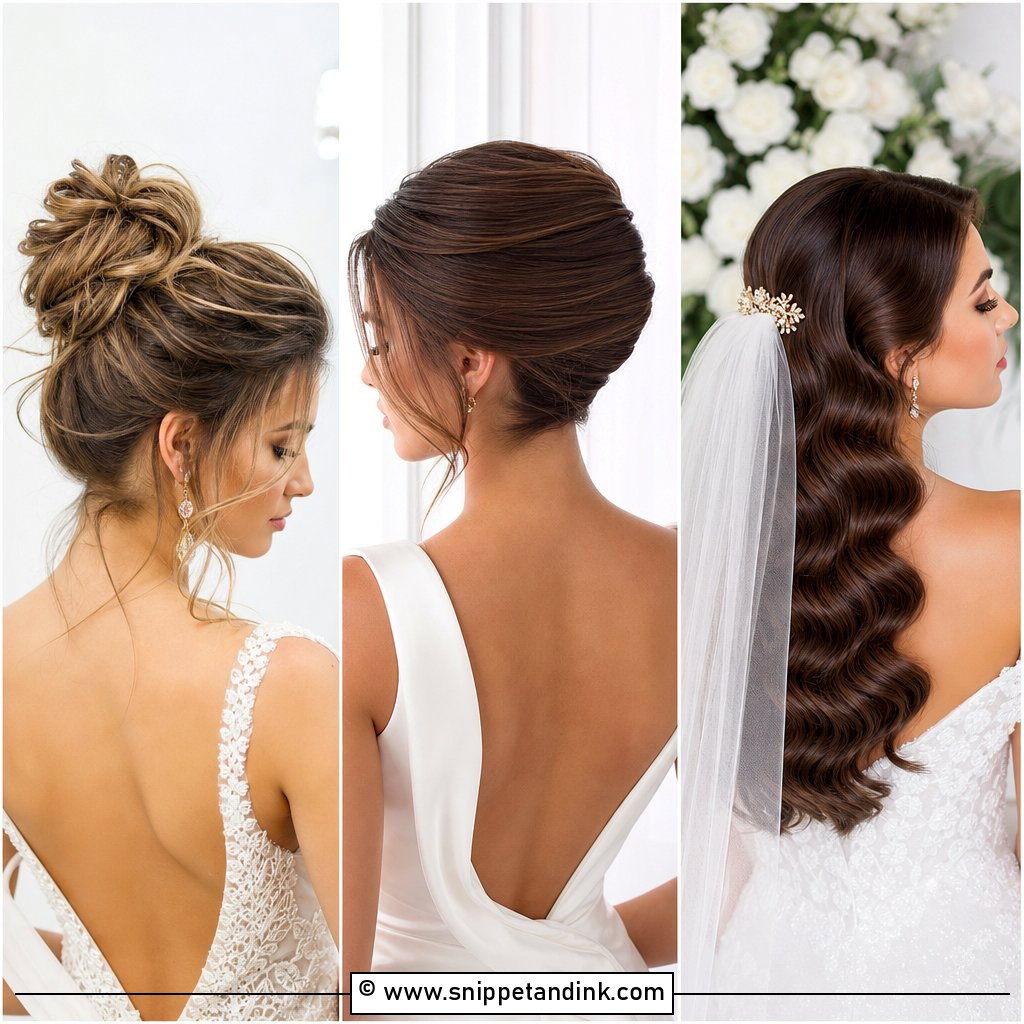
2. Sleek Low Bun Wedding Hairstyle
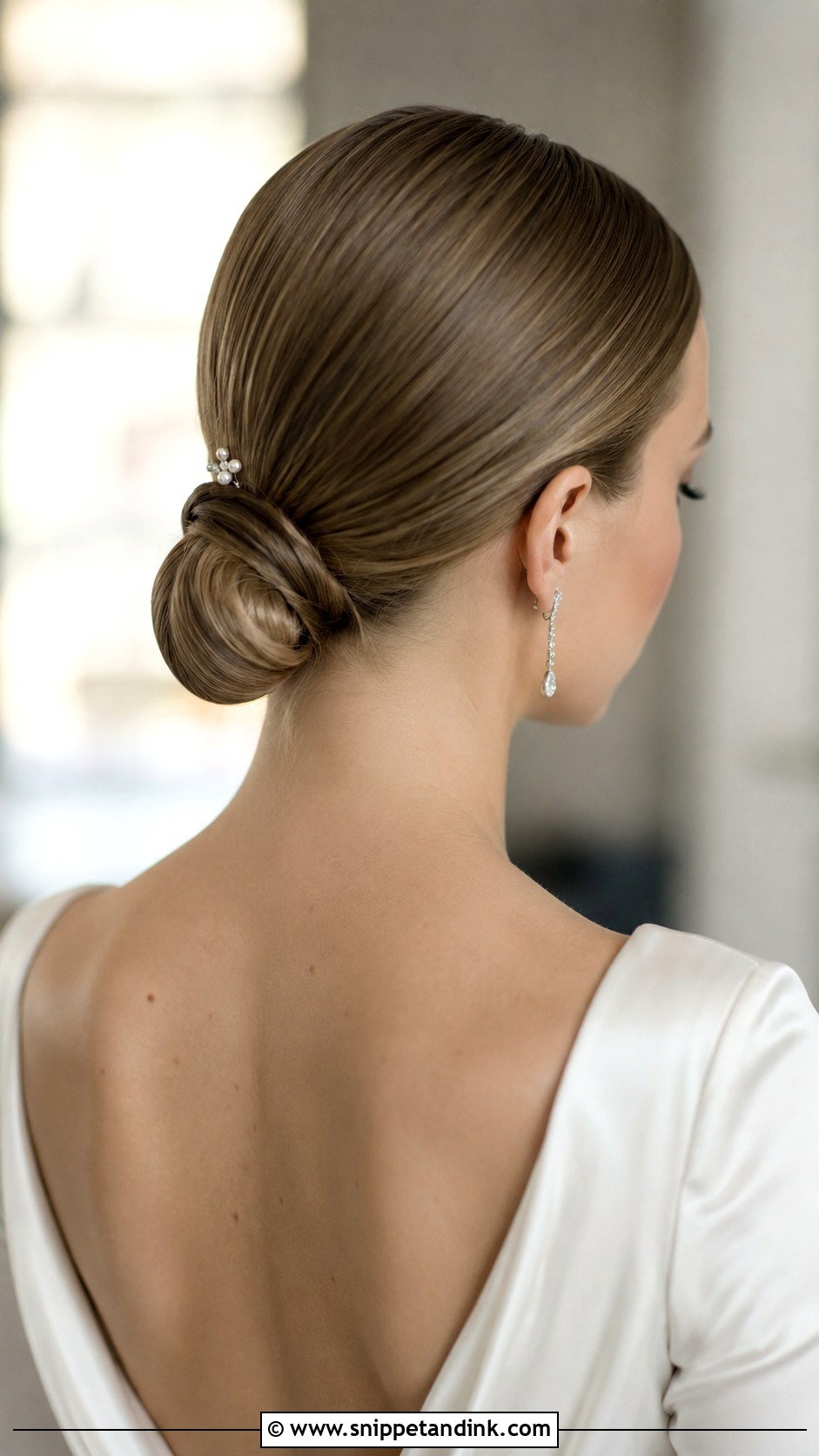
Sleek and low is the strictest version of the bun, and it rewards precise prep. Smooth hair, a clean part and controlled shine make it read modern next to satin, high necks and minimal styling. A center part feels more fashion-led; a side part reads classic. Frizz is the enemy here, so I smooth with a cream, brush flat and tie with a fine snag-free elastic before a light mist of spray. Humidity is where this style beats almost everything else, since there’s no curl to drop.
3. Messy Bun Wedding Hairstyle
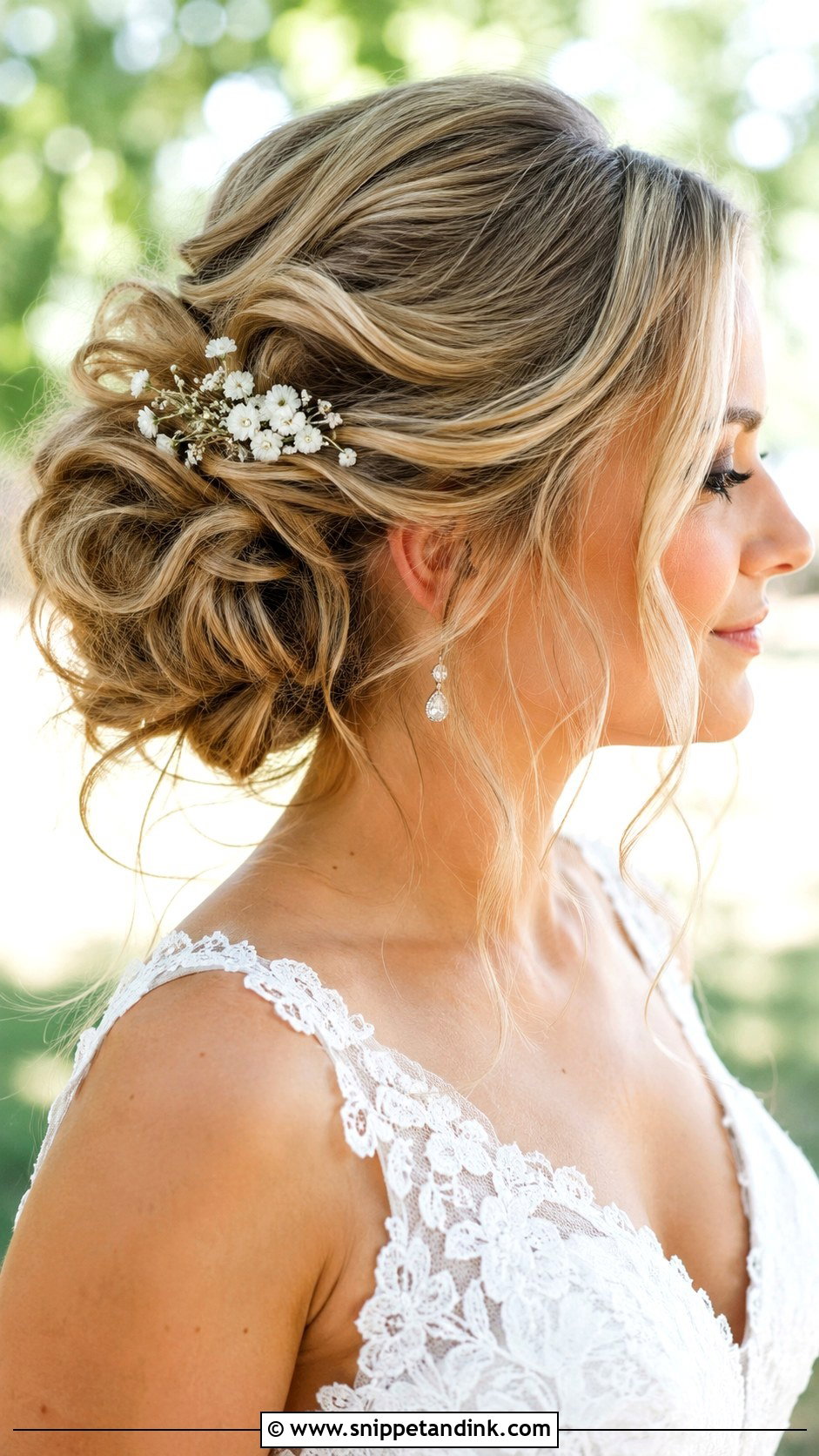
The relaxed look takes planning. Curls go in first, then the hair is tied loosely and pinned in loops, with soft pieces pulled out last. Without that curl prep, a messy bun deflates by the reception into a flat knot. It can sit low, mid-height or slightly to one side, depending on where your veil attaches. Gardens, beaches and lace dresses suit it. I’d skip it for a black-tie ballroom, where it can look like you ran out of time.
4. Chignon Wedding Hairstyle
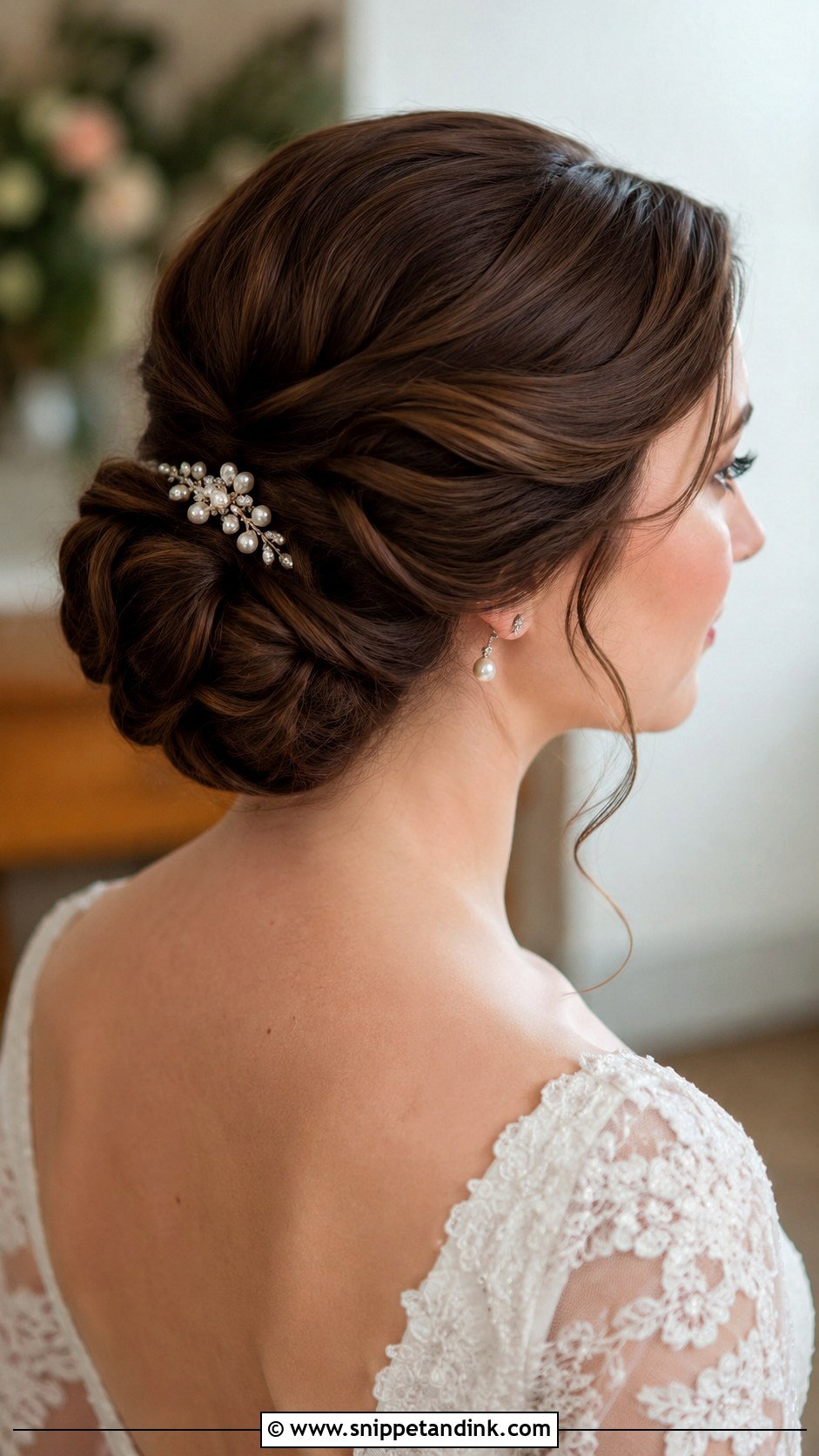
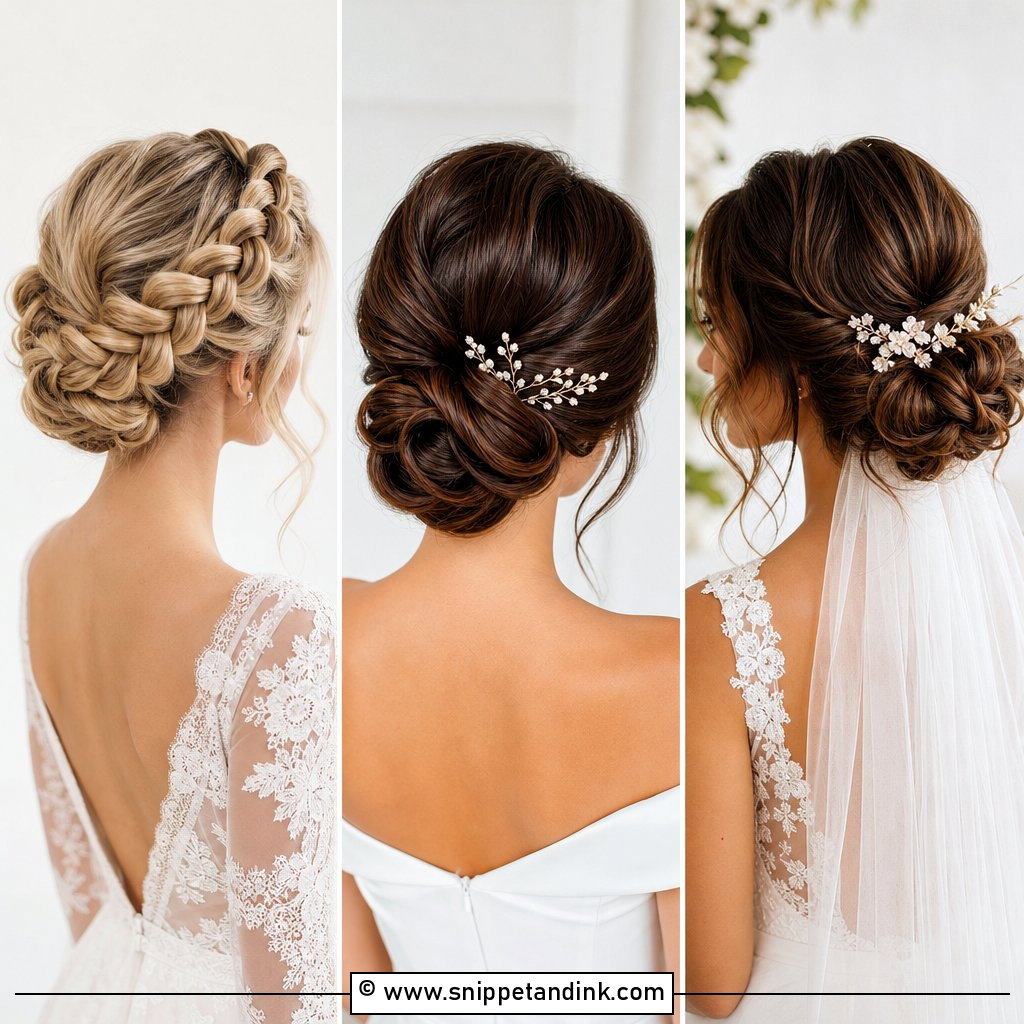
A chignon is a bun with tailoring. Instead of a simple coil, the hair is tucked, rolled or twisted into a shape that sits low and stays compact. It suits pearls, fine hair vines, cathedral veils and detailed backs, and it lengthens the neck. Smooth suits a ballroom; softly textured suits an outdoor ceremony. The roll needs enough length to wrap, so on shoulder-length hair I build the chignon from smaller twisted sections rather than one roll.
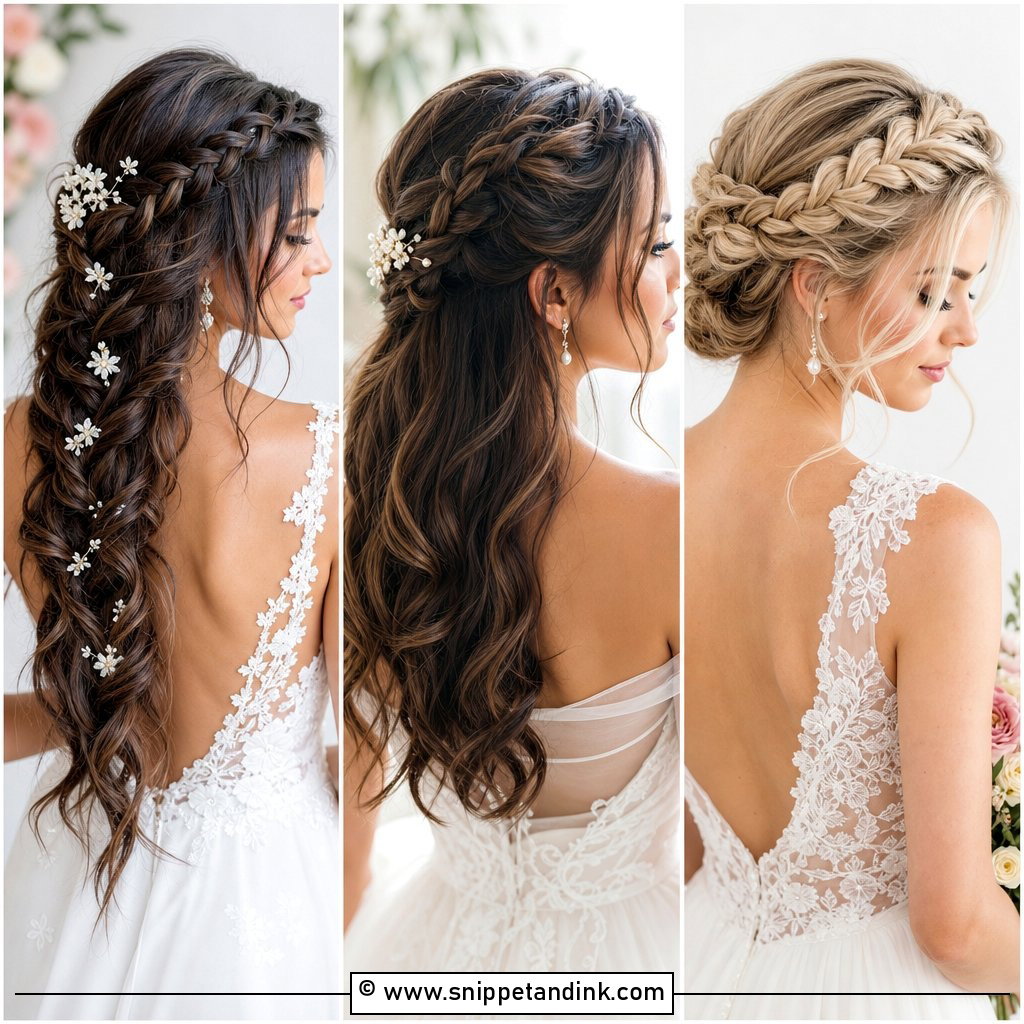
5. Braided Bun Wedding Hairstyle
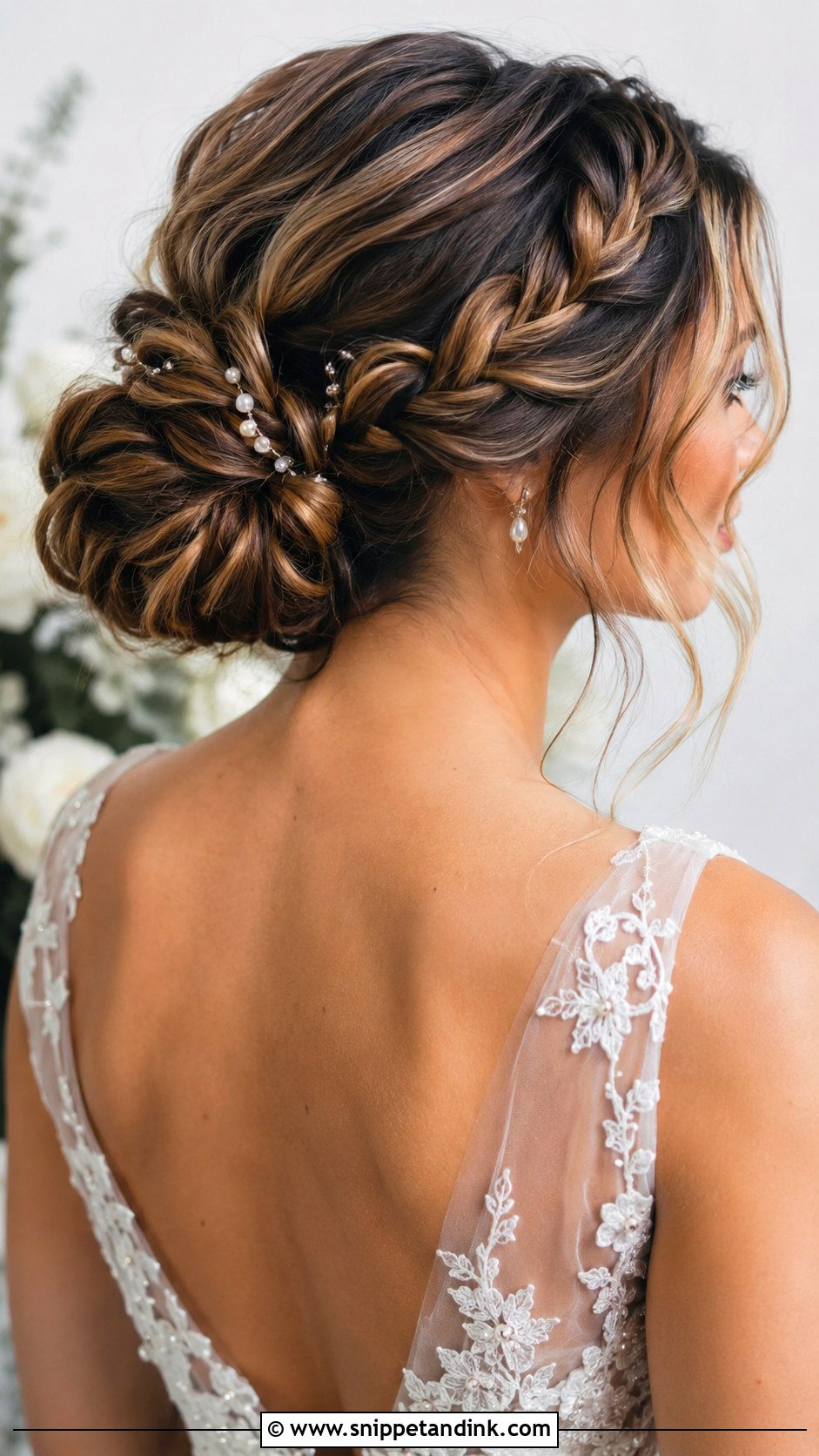
Braids pick up the different tones in highlighted or balayage hair in a way smooth hair can’t. The braid can wrap the bun, start at the crown or melt into the updo. It also gives thick hair structure, since plaiting compresses the bulk before the bun is formed. Braid firmly, then gently pull the edges once it’s pinned so it looks woven rather than tight. Small pearl pins or a few flowers settle neatly into the gaps.
6. High Bun Wedding Hairstyle
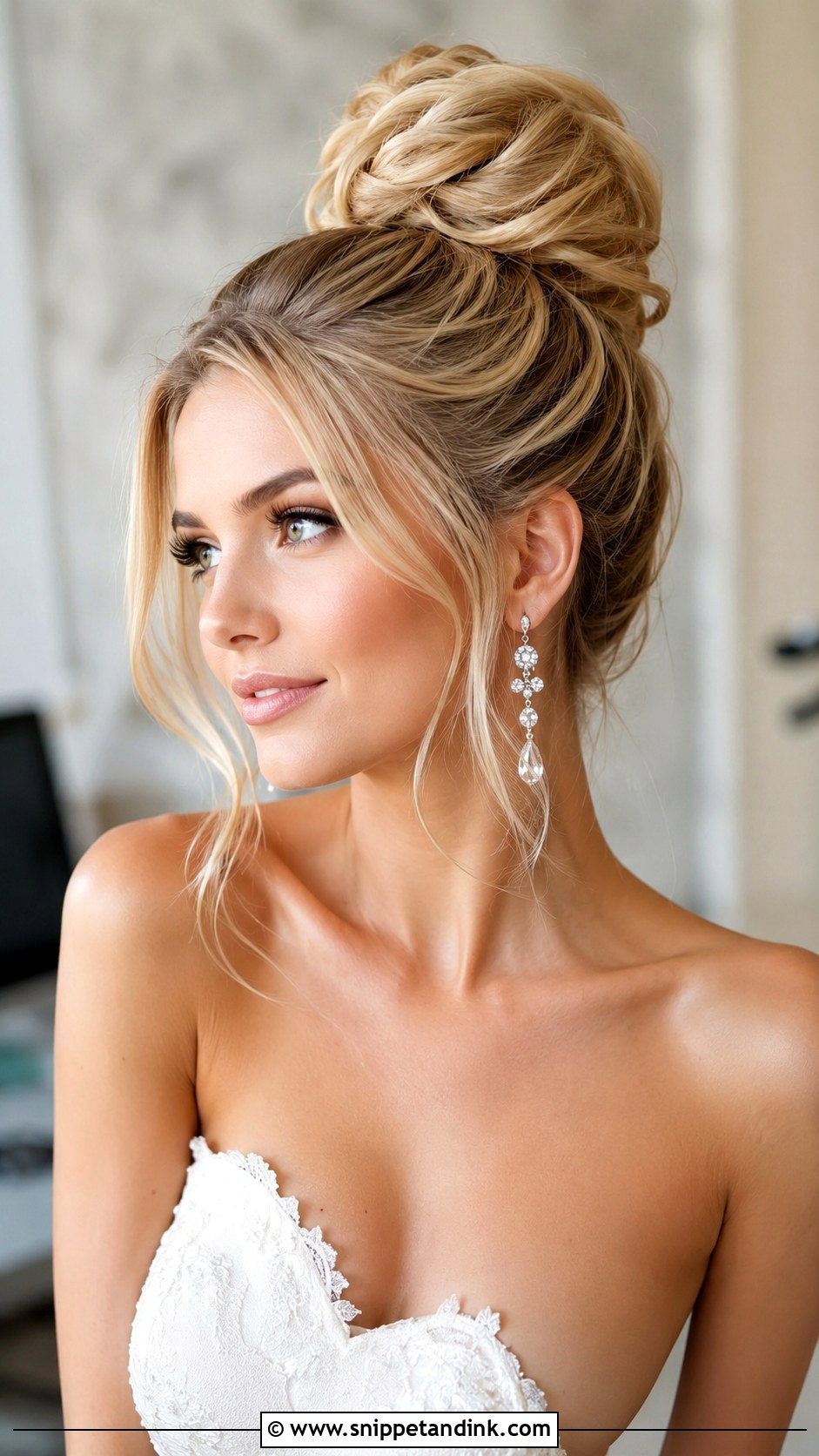
Height puts your cheekbones, earrings and neckline on show. A high bun can be sleek like a dancer’s or airy with texture at the crown, and it sits well with strapless and halter gowns. Fine hair often needs padding or extensions for a fuller shape. One honest limit: a high bun and a veil worn at the crown compete for the same spot, so if the veil matters to you, plan to attach it beneath the bun instead. It keeps the neck cool for summer weddings.
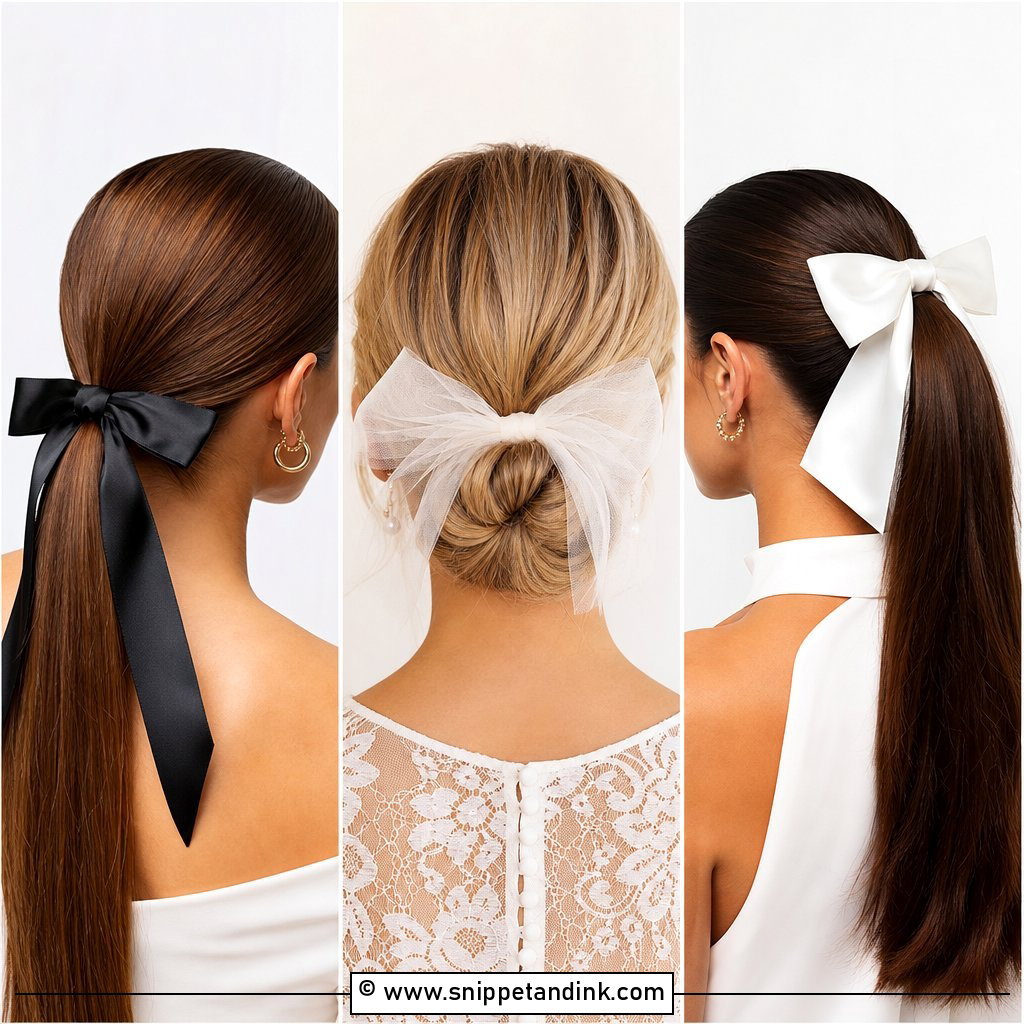
7. Bridal Ponytail Wedding Hairstyle
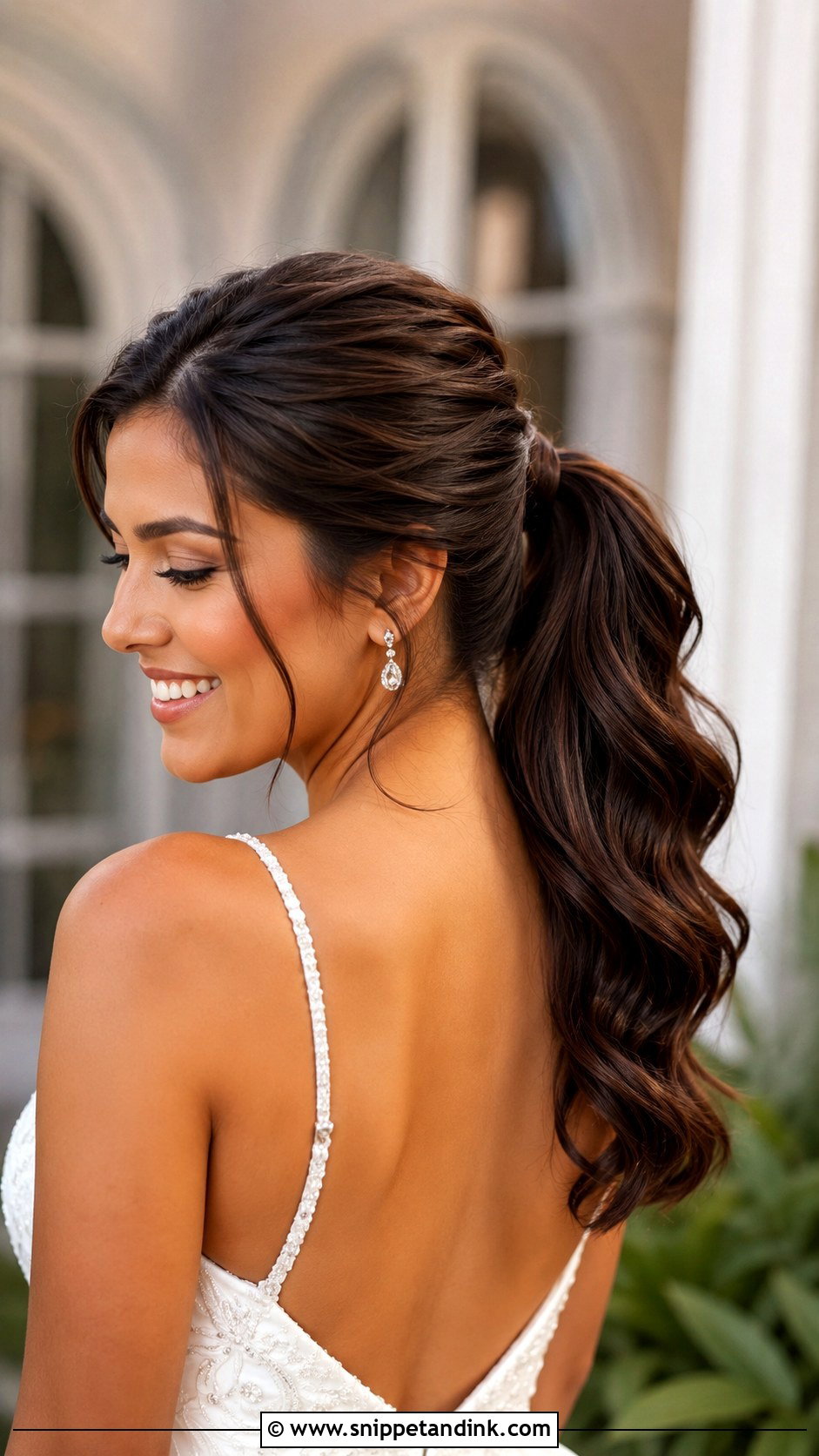
Ponytails used to feel too casual for a bride. Styled with care, they don’t. Low and smooth, mid-height and bouncy or high with volume, they give movement without loose hair falling in your face. I wrap a strand around the elastic and pin it underneath to hide it. Waves through the length keep it soft. Simple veils, bows and pearl clips sit easily at the base. Touch-ups before the reception take a minute: smooth the crown, re-wrap, done.
8. Low Ponytail Wedding Hairstyle
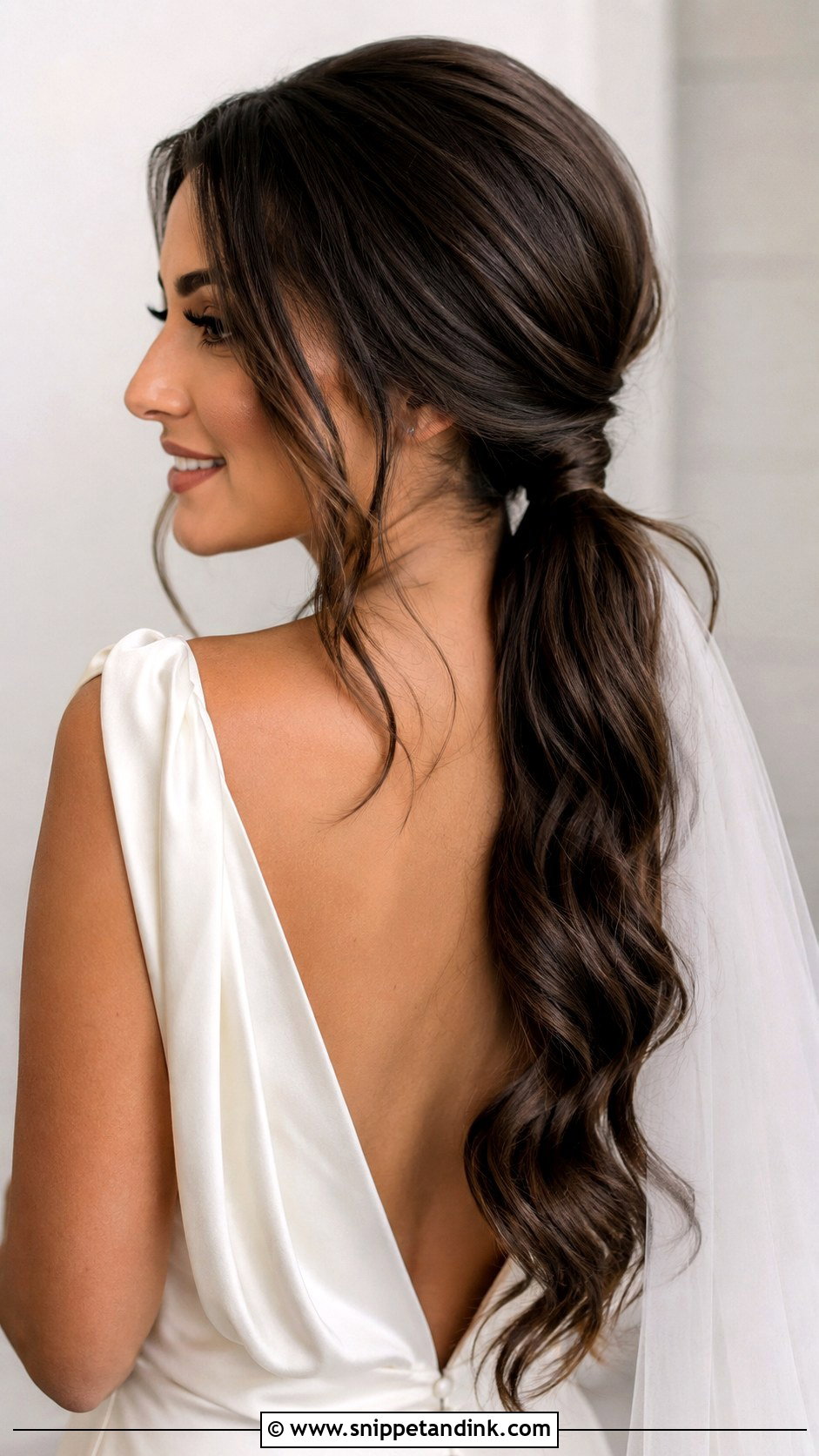
Two sentences sum this one up: tied at the nape, it is the gentlest ponytail to wear for twelve hours, and it suits nearly every face. Sleek, wavy or lightly textured, it looks best with a center part and face-framing layers, and it needs the elastic hidden to read as bridal. Bridesmaids with very different hair types can all wear it and still look like a set.
9. High Ponytail Wedding Hairstyle
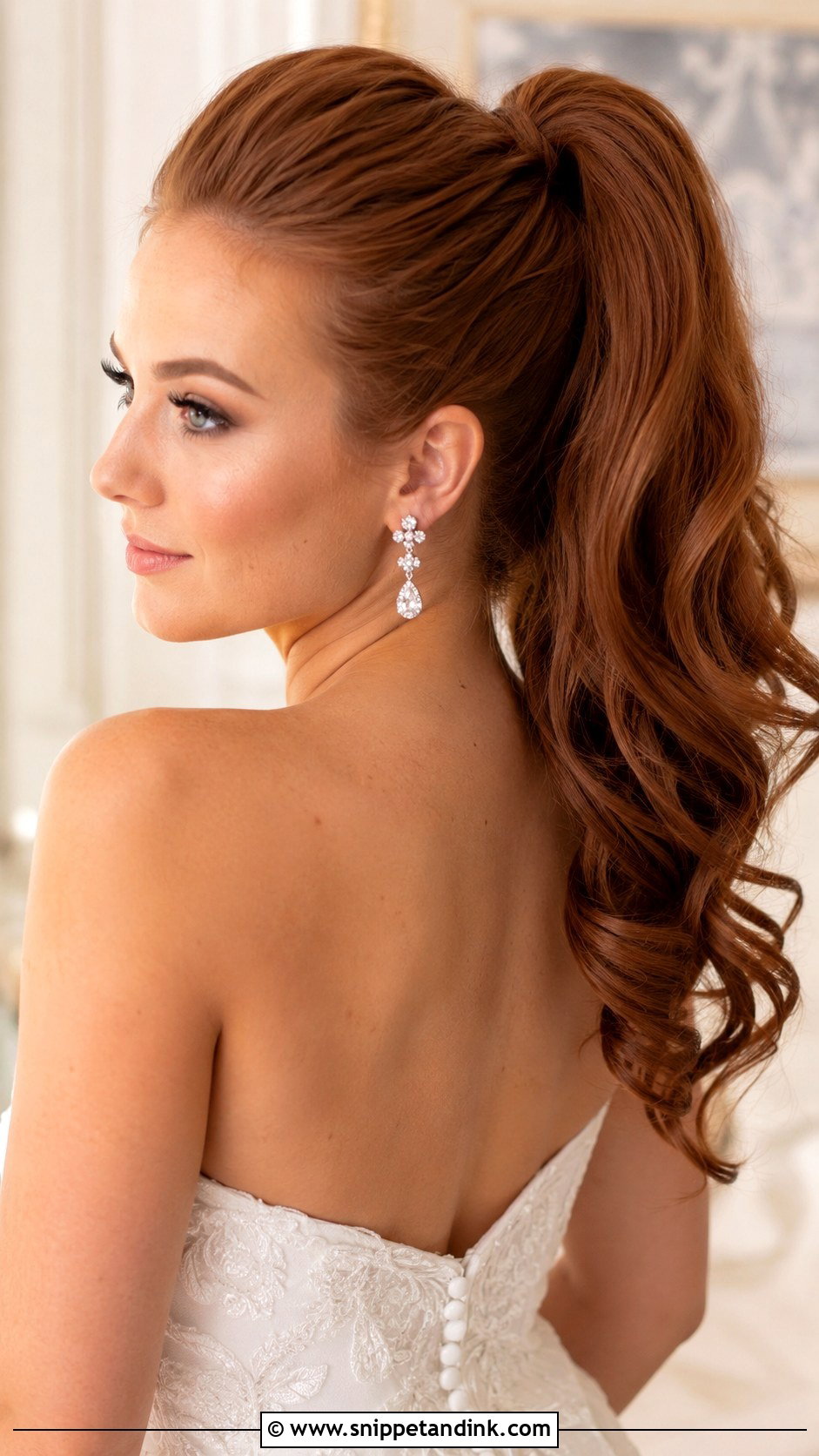
A high ponytail lifts the face and swings when you move, which brides either love or find distracting by the third hour. Long waves, extensions or naturally thick hair give it the most impact. The crown can be smooth or lightly teased. Strapless dresses and statement earrings suit it because the neckline stays open. Ask for a smooth wrapped base and a second elastic tucked just below the first; heavy ponies drop slowly over a day of dancing, and that second tie stops the sag.
10. Twisted Updo Wedding Hairstyle
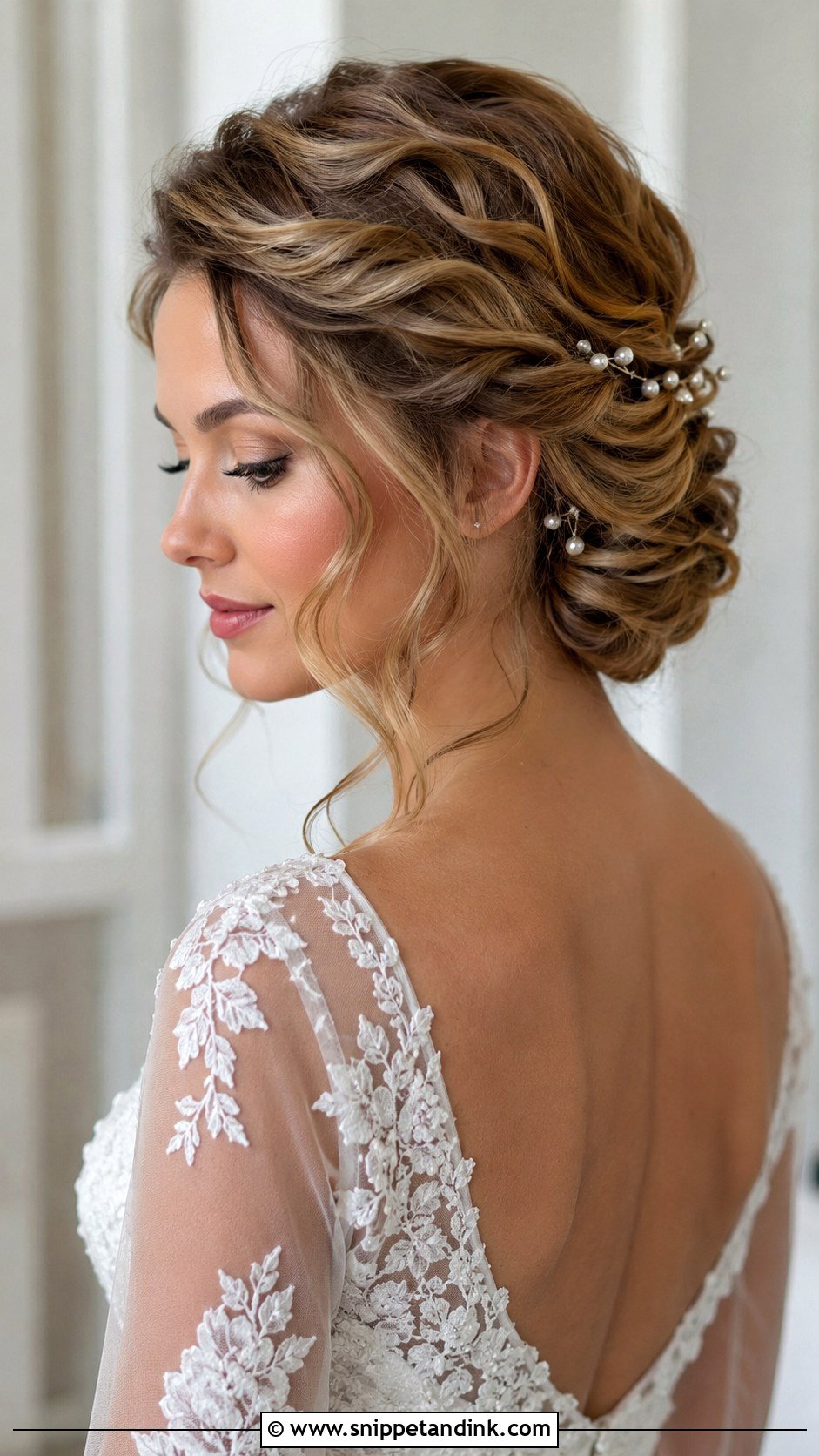
Twisting gives detail without a braid’s pattern. Twists run along the sides, wrap into a bun or layer across the back, and they show highlights well because each twist catches light differently. Loose twists read boho; tight ones read classic. Medium to long hair works best, since short sections untwist when pinned. A few pins, pearls or one comb are plenty.
11. French Twist Wedding Hairstyle
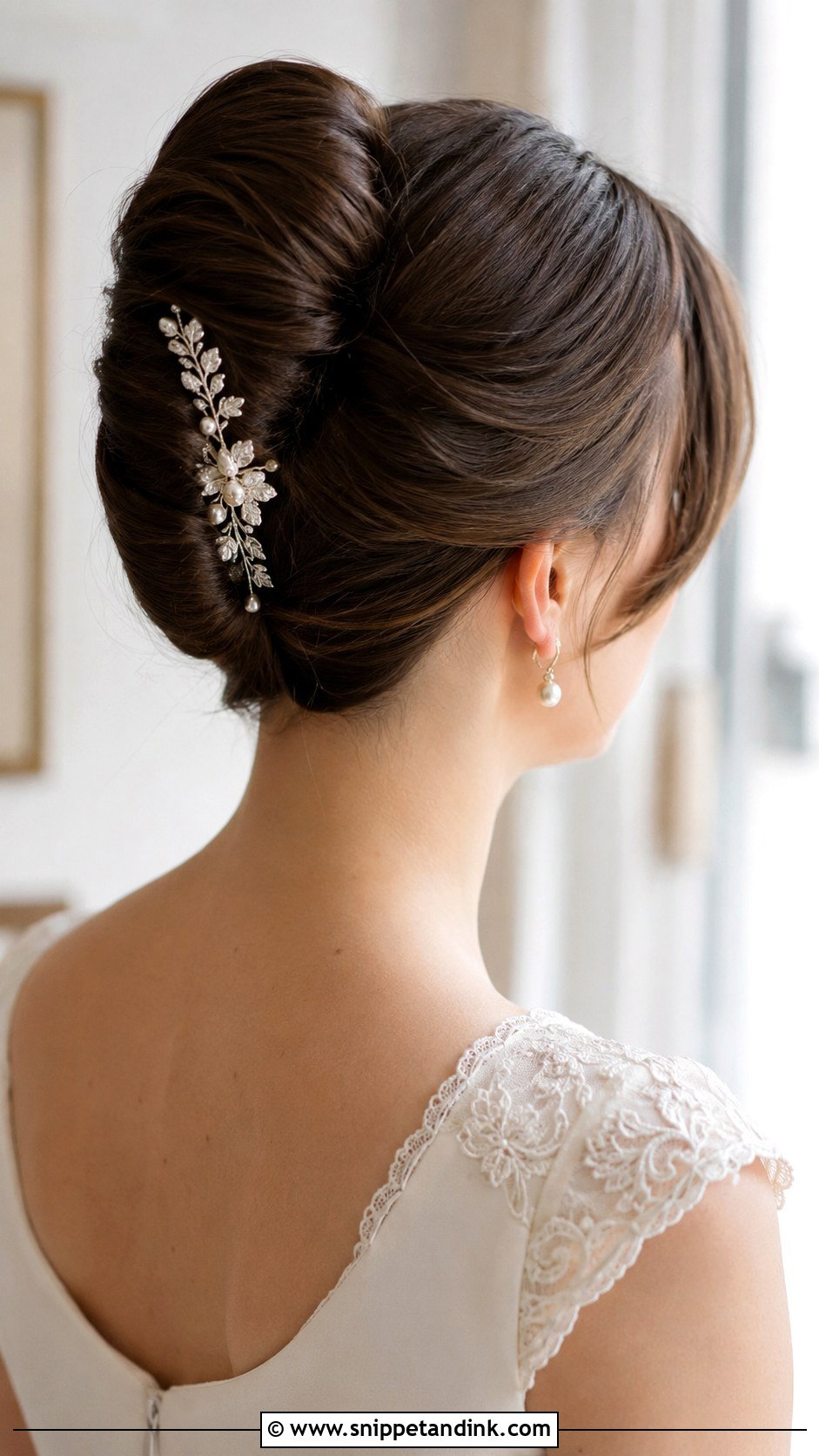
Of all the styles here, the French twist is the one people tend to underestimate on medium-length hair. Swept up and tucked into a vertical roll, it creates the impression of fullness because the hair folds over itself. Satin, lace, birdcage veils and evening weddings all suit it. I anchor a crisscross of pins down the center first, a kind of zipper, then fold the hair over it so the roll has something to hold onto. Leave pieces out at the front if a fully smooth twist feels too formal.
12. Side Bun Wedding Hairstyle
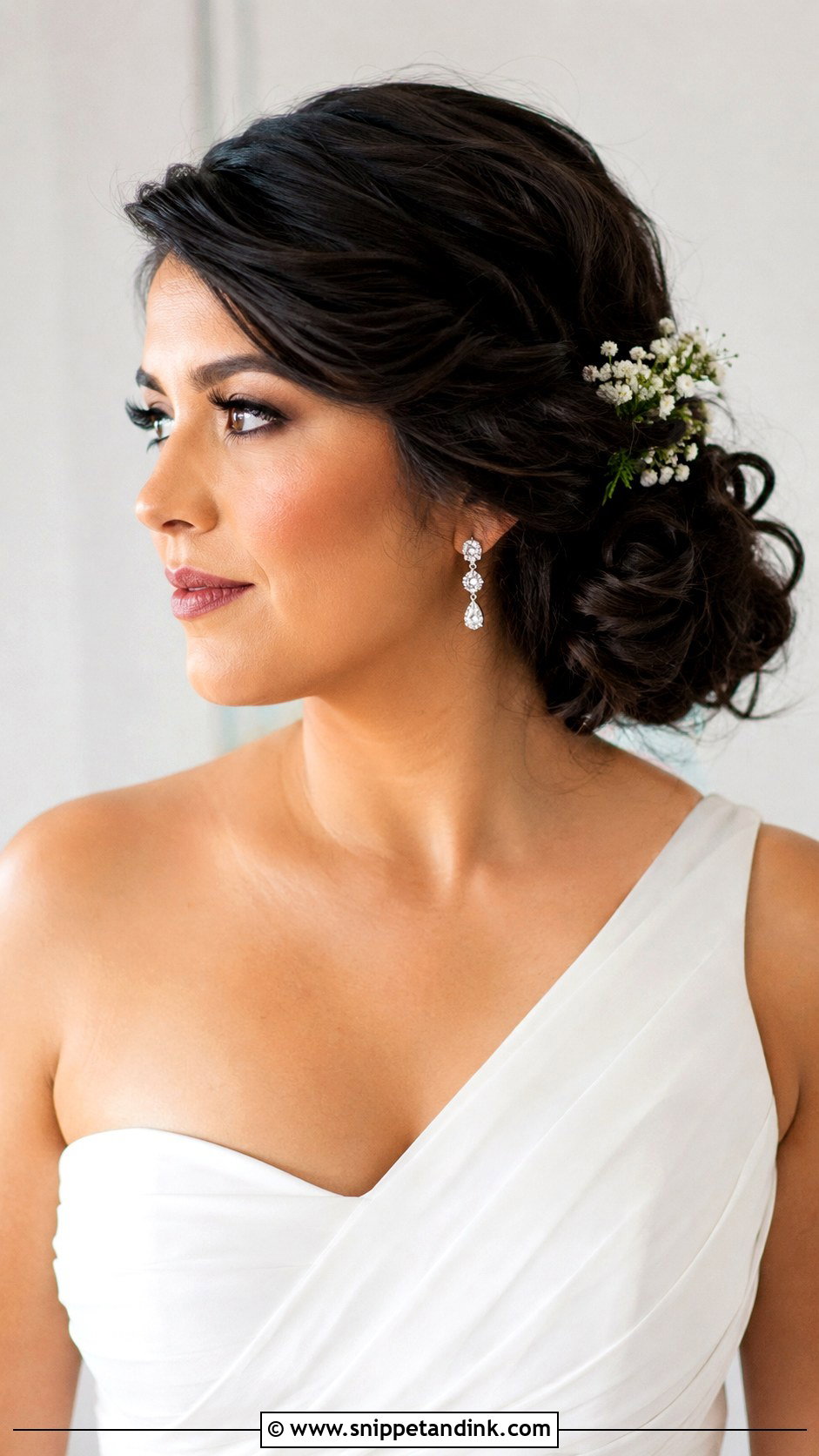
Placing the bun off-center works best when the dress gives it a reason, such as an asymmetrical neckline or one-shoulder design. Low near the nape, it shows from both front and side, which photographers appreciate. Smooth, curled, braided or textured, the bun can follow the wedding’s mood. I tie the ponytail on the side first, then build the bun over it, because a centered tie pulled sideways strains at the roots. Floral pins or a veil just above it finish it.
13. Fishtail Braid Wedding Hairstyle
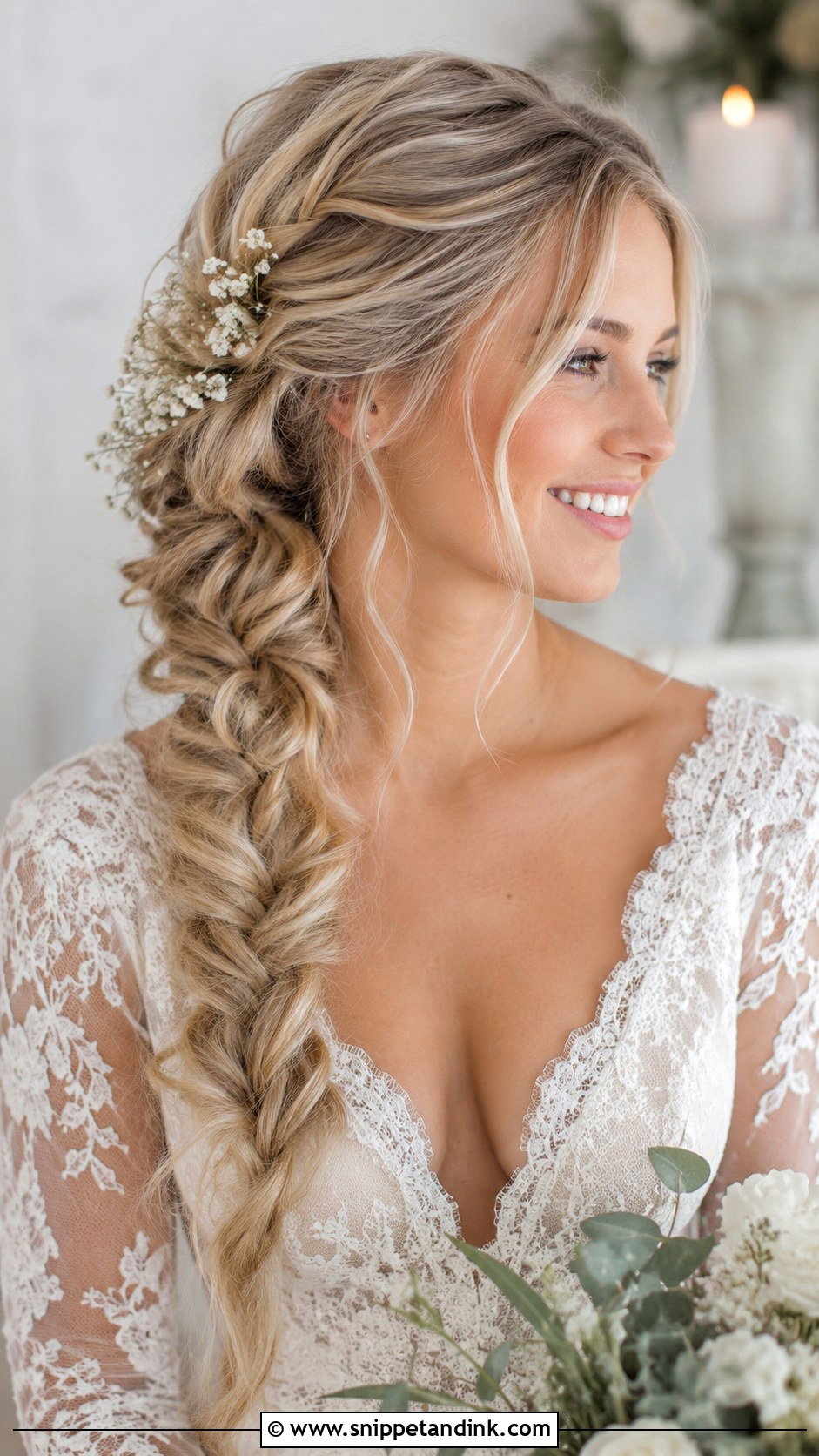
A fishtail takes longer to braid than a three-strand, and it’s worth it: the herringbone pattern is finer and looks more detailed in photos. It can hang down the back, sit over one shoulder or fold into a low updo. Pulling the edges loosens it into a fuller shape. Medium to long hair works; extensions help when hair is fine. A smooth crown and a few waves at the front stop it looking like a weekend braid next to a boho dress.
14. Bubble Ponytail Wedding Hairstyle
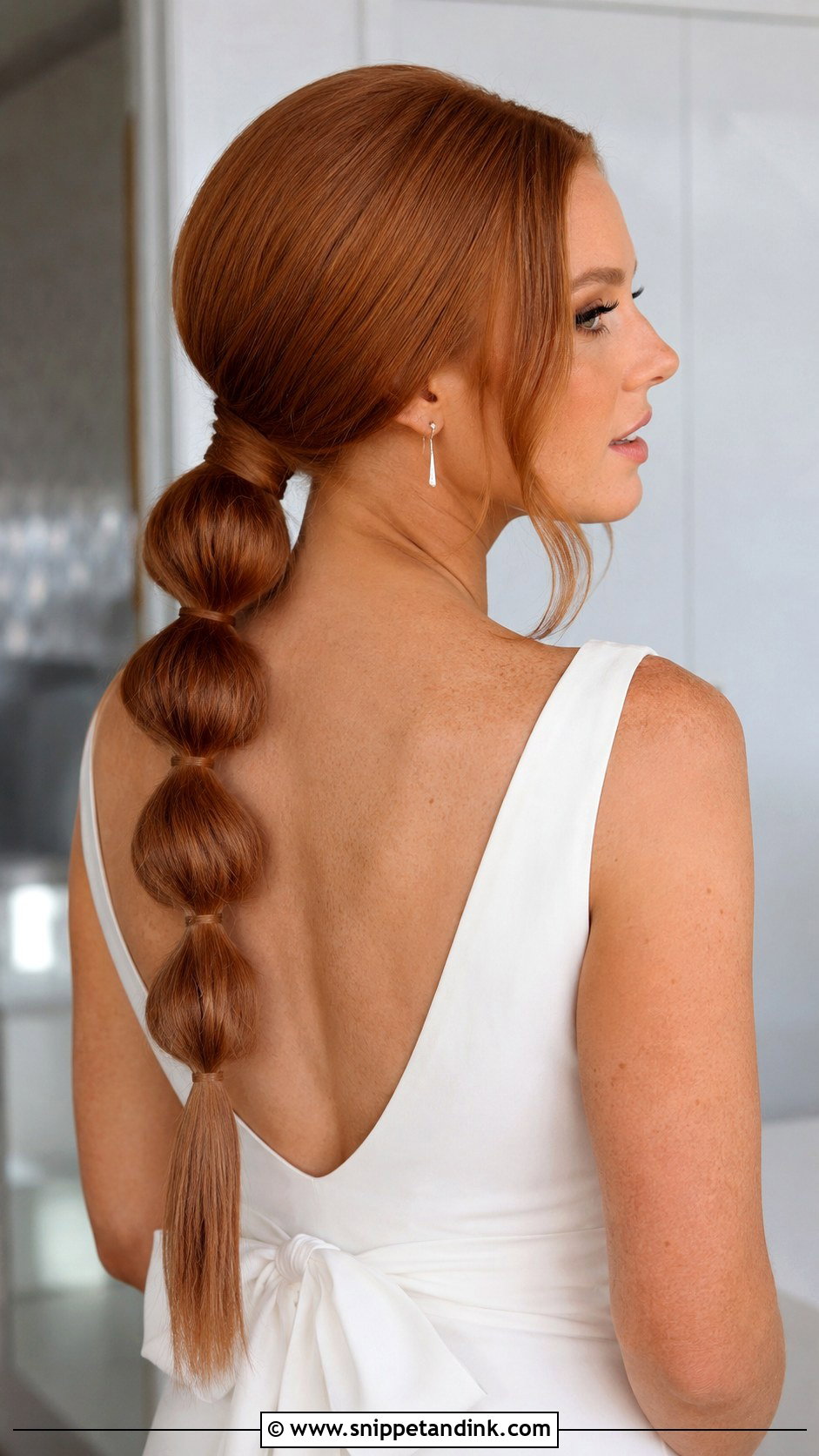
Bubbles are the playful pick here, and they need precision to look grown-up. The ponytail is divided by hidden clear elastics into rounded sections, each gently pulled wider. Uneven bubbles look sloppy, so I measure the gaps by eye against the length and space them evenly before pulling anything out. Long hair is a must. Curl the ends lightly if the bottom section looks thin.
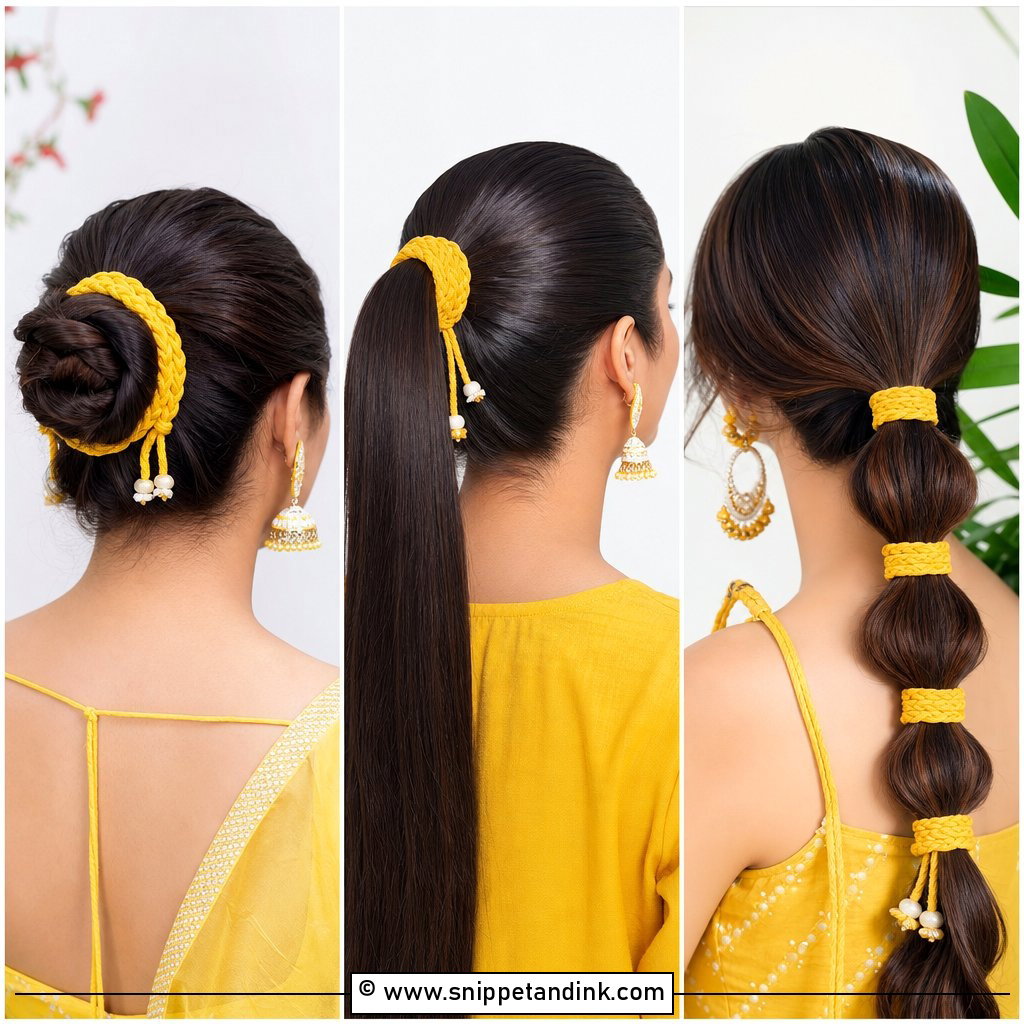
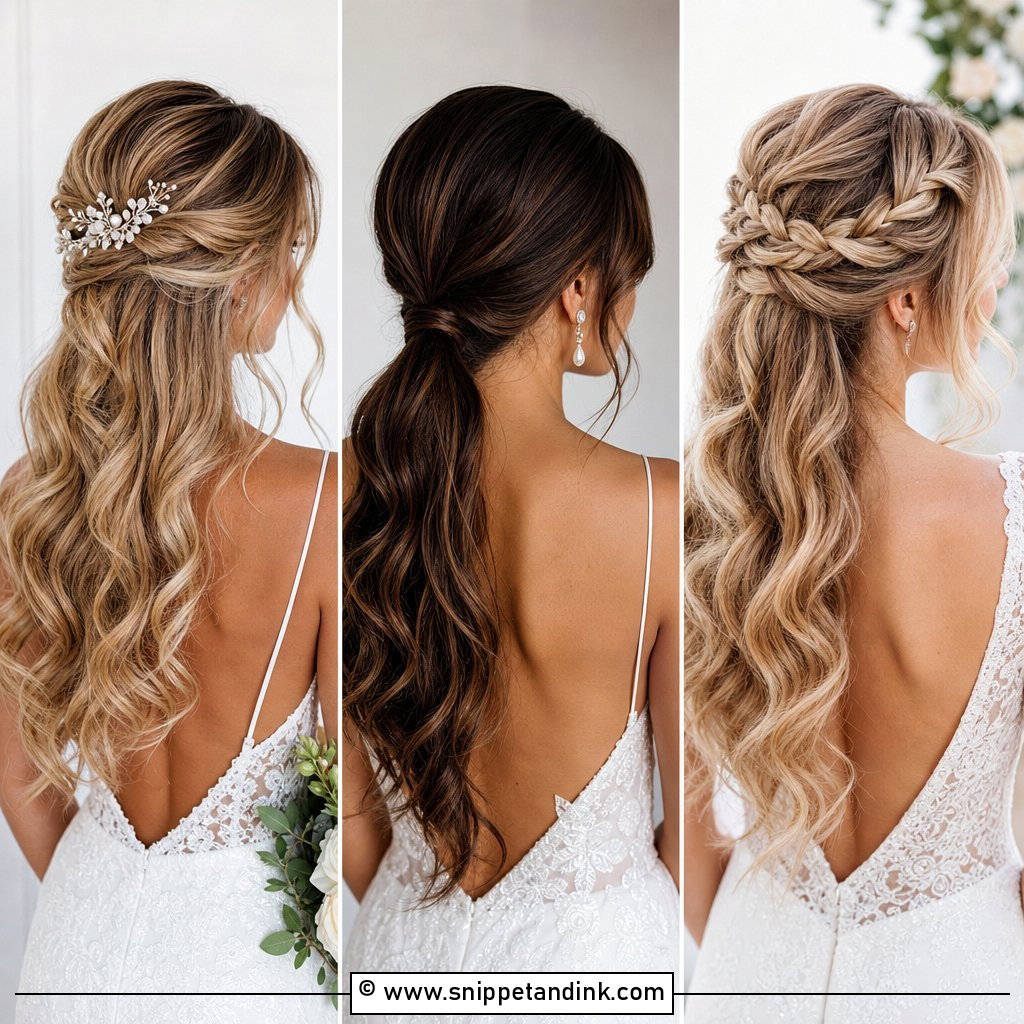
15. Half Up Tied Wedding Hairstyle
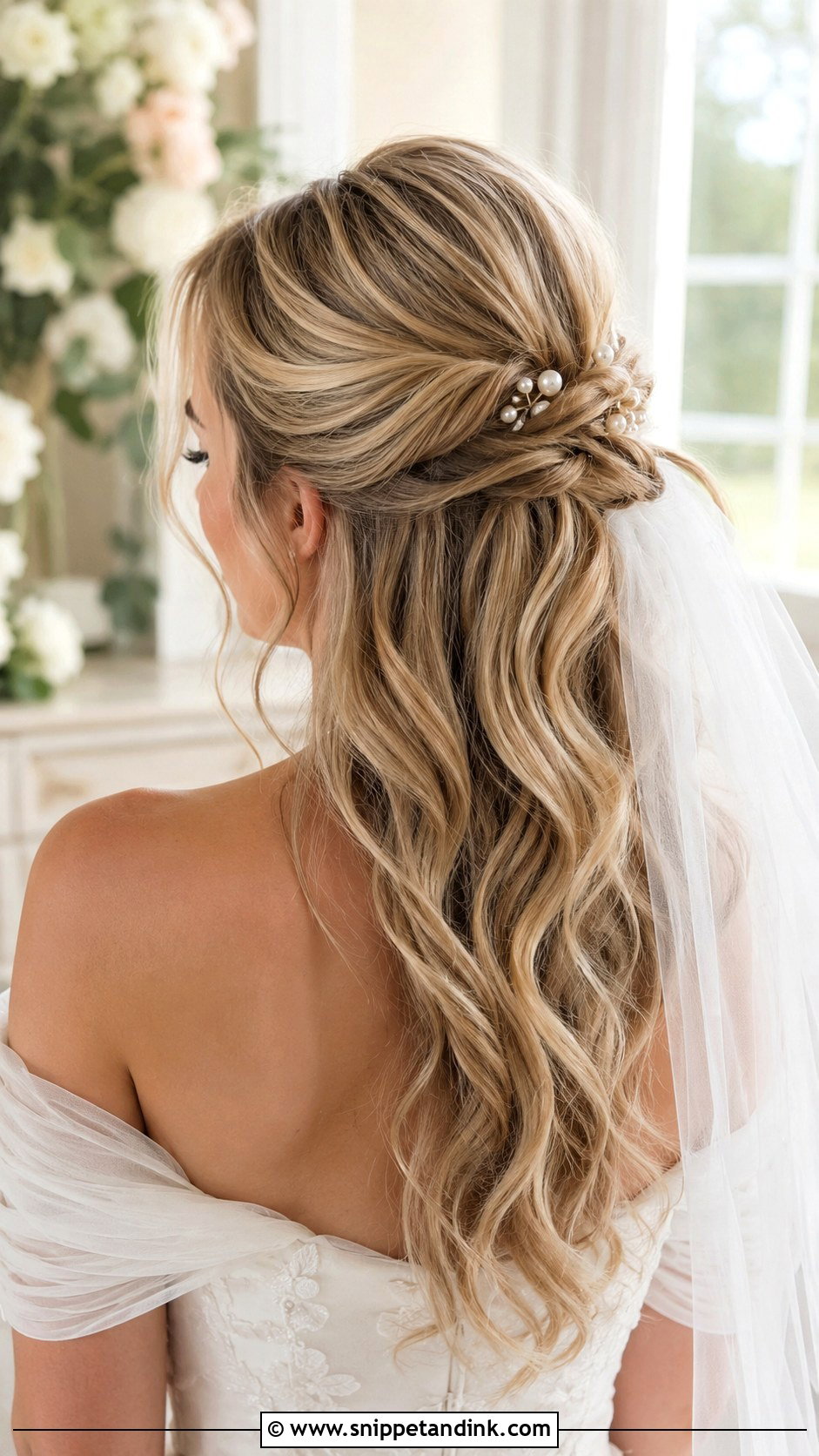
Half up gives you loose length with a tied base for security. The top section becomes a small bun, twist, braid or ponytail, and the rest is curled or waved. That tied section is the reason this style is so good with veils: the comb has something solid to grip. Medium and long hair suit it best. Lift the crown gently before tying so it doesn’t look flat in profile. Guests and bridesmaids can wear the same idea with a smaller section.
Car Seats, Hugs and Hour Nine
A tied style that looks right at the mirror can still have weak spots that only show later. These are the questions I ask before settling on one.
Will you lean back during the day?
High buns and voluminous low buns get crushed against a car headrest or a high-backed chair. If you’ll travel between ceremony and venue, a mid or slightly lower placement survives better.
How much will you dance?
Ponytails swing and loosen; buns stay put. For a reception that turns into a dance floor, a pinned style or a double-tied ponytail holds its shape longer.
Will the tie hurt by evening?
A tight elastic at the crown pulls more over time. If your scalp feels tender after an hour at the trial, the tie should move lower or be looser. Wearing it until bedtime on trial day is the most reliable test there is.
Do you need a quick refresh option?
Ask your stylist to show you how to fix the most fragile part of your style yourself, and pack a few pins, a small comb and a travel spray for a bridesmaid to carry.
A Ponytail, a Bun or a Braid? Let the Dress Decide
Tied styles last because their base is fixed before any shaping begins. Sleek buns read modern, messy buns and braided updos read soft, ponytails bring movement, chignons look classic and twists add detail. What narrows the list is practical: your neckline, the veil, your hair texture, the weather and how much you’ll be moving. Bring photos to your trial and be willing to adjust. A stylist who suggests moving the tie an inch higher is usually solving a problem you’ll only notice at hour eight.
You'll Like These Ideas:


Leave a Reply