
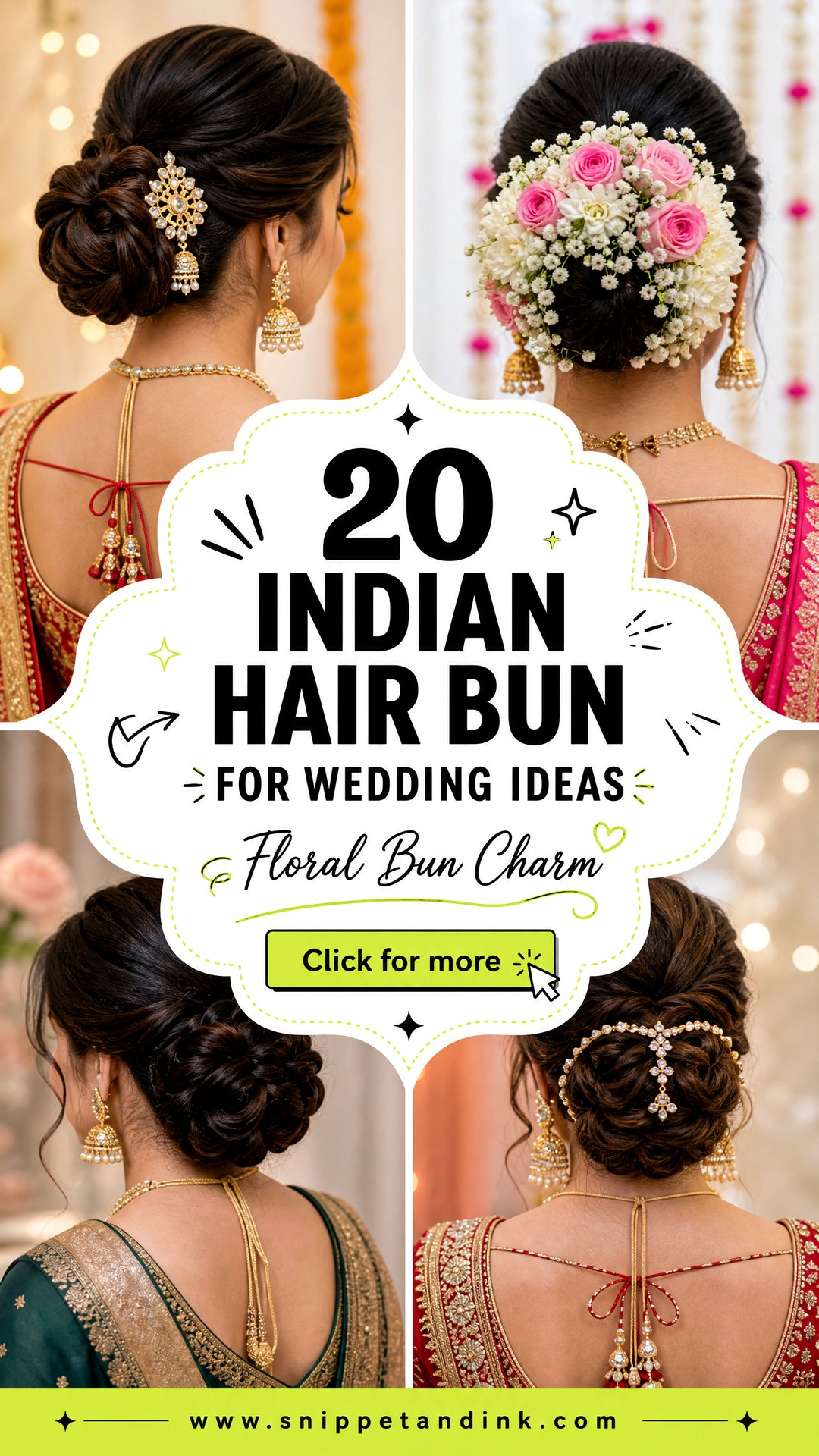
A bun carries more of an Indian bridal look than most people expect. It anchors the dupatta pins, holds the gajra, and balances a heavy lehenga or six yards of silk. When a bride sits in my chair before a muhurtham or the pheras, I’m building something that has to survive hours of sitting, bowing and being hugged by relatives, so the shape is only half the job. Below are twenty buns I’d happily put on a bride, a sister or a guest, from jasmine-wrapped classics to looser rose buns for the sangeet, with notes on what each one needs underneath to stay put.
The Foundation Under the Flowers
Before I think about flowers or ornaments, I think about what will hold them. An Indian bridal bun often carries a gajra, a dupatta, a juda pin and sometimes a matha patti chain, and all of that weight pulls on the same small patch of scalp. A bun that looks right at dawn and slips by the pheras was almost always built on pins alone.
How I build the base
- A ponytail first, secured with a snag-free elastic at the height the bun will sit. Everything else anchors into it.
- Padding or a donut ring matched to your hair colour when the hair is fine, short or heavily layered. A pale ring under dark hair shows through.
- U-pins to shape the bun and bobby pins crossed in an X to lock it. Two crossed pins grip better than five pushed in side by side.
- Hold spray on the brush while smoothing, not a heavy coat over the finished bun, so the surface stays soft enough for flowers to sit in.
Adjusting for your hair
Thick, long hair is heavy on its own, so I often split it and build the bun from two sections to stop it dragging at the nape. Fine hair needs padding and a little dry texture spray so the pins have something to grip. Curly hair holds pins well but should be set the day before rather than brushed out on the morning. If your hair sits above the shoulders, clip-in extensions or a ready-made bun piece in your shade will give you the size most of these looks need. Bring it to the trial so it can be colour-checked in daylight.
1. Indian Bridal Bun With Gajra
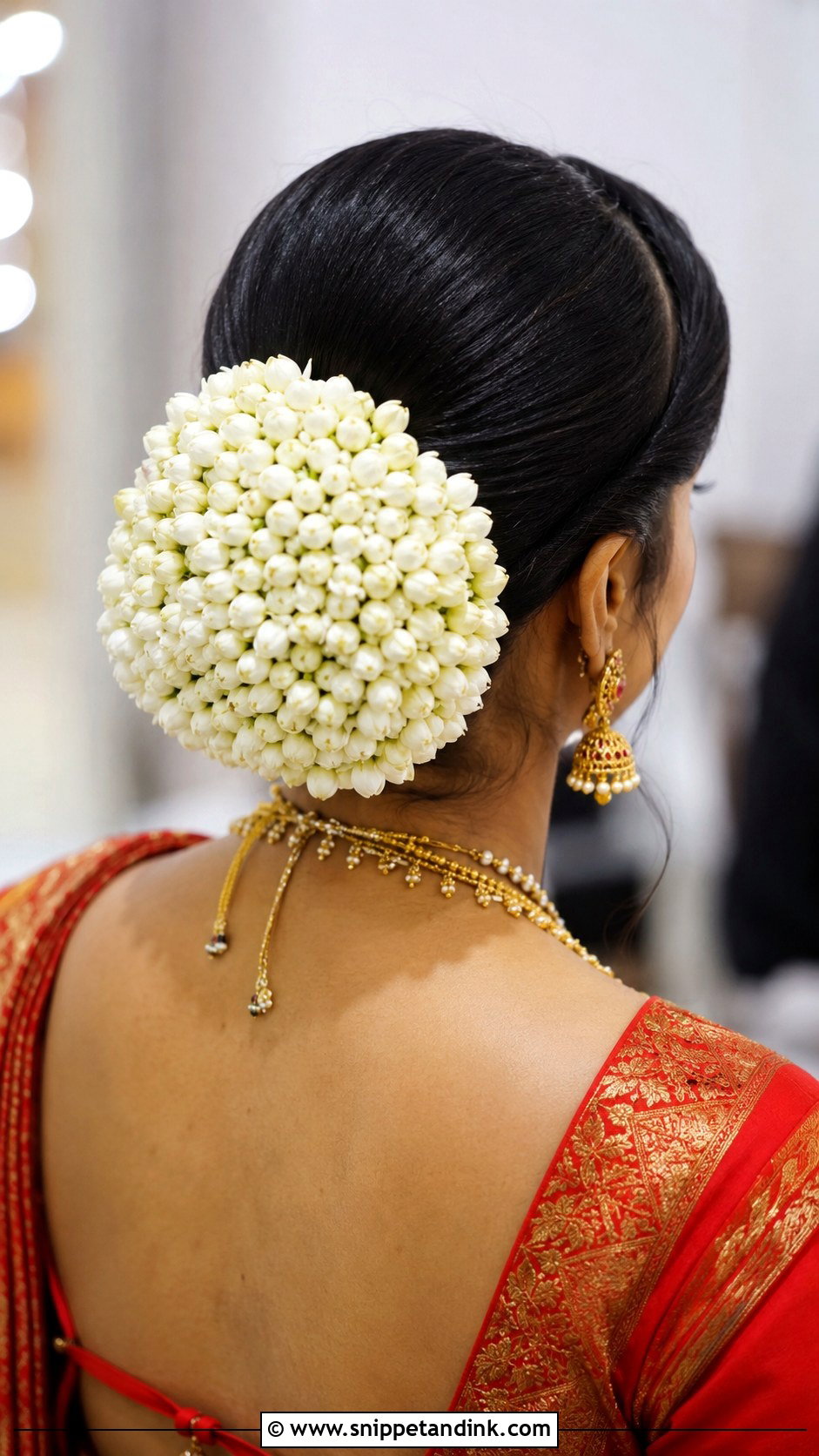
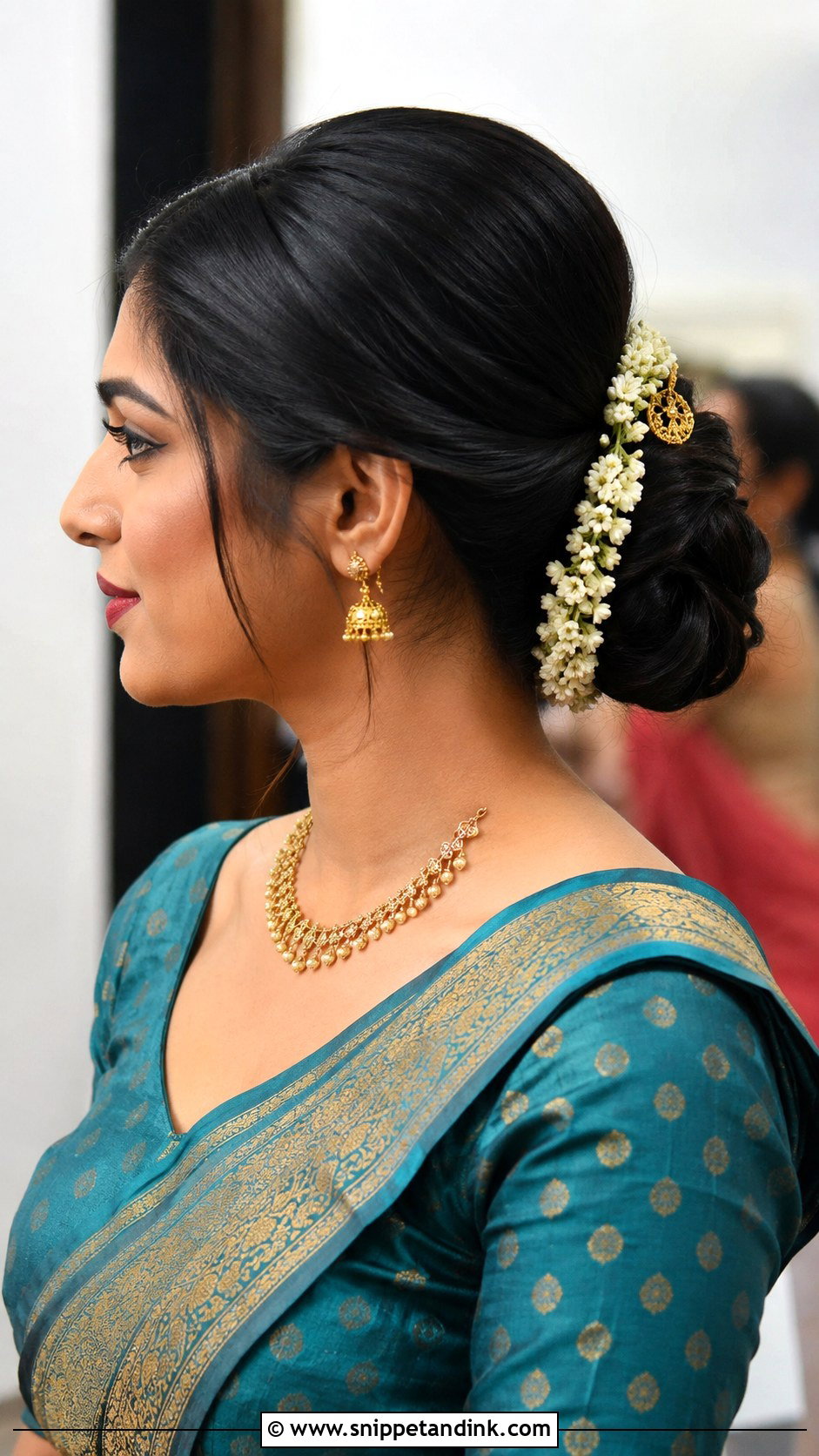
This is the one most people picture first: a clean centre part, hair smoothed back, a round bun set low or at mid height, and a string of fresh jasmine wound around it. I always secure a ponytail with an elastic before I wrap, because a gajra is heavier than it looks and will drag a bun held by pins alone. It suits silk sarees, red lehengas and temple gold, and it reads clearly from behind during the pheras, when guests see the back of your head far more than your face. I hook U-pins through the string itself rather than over it, so the jasmine can’t slide down as the evening goes on.
2. South Indian Bridal Bun With Temple Jewelry
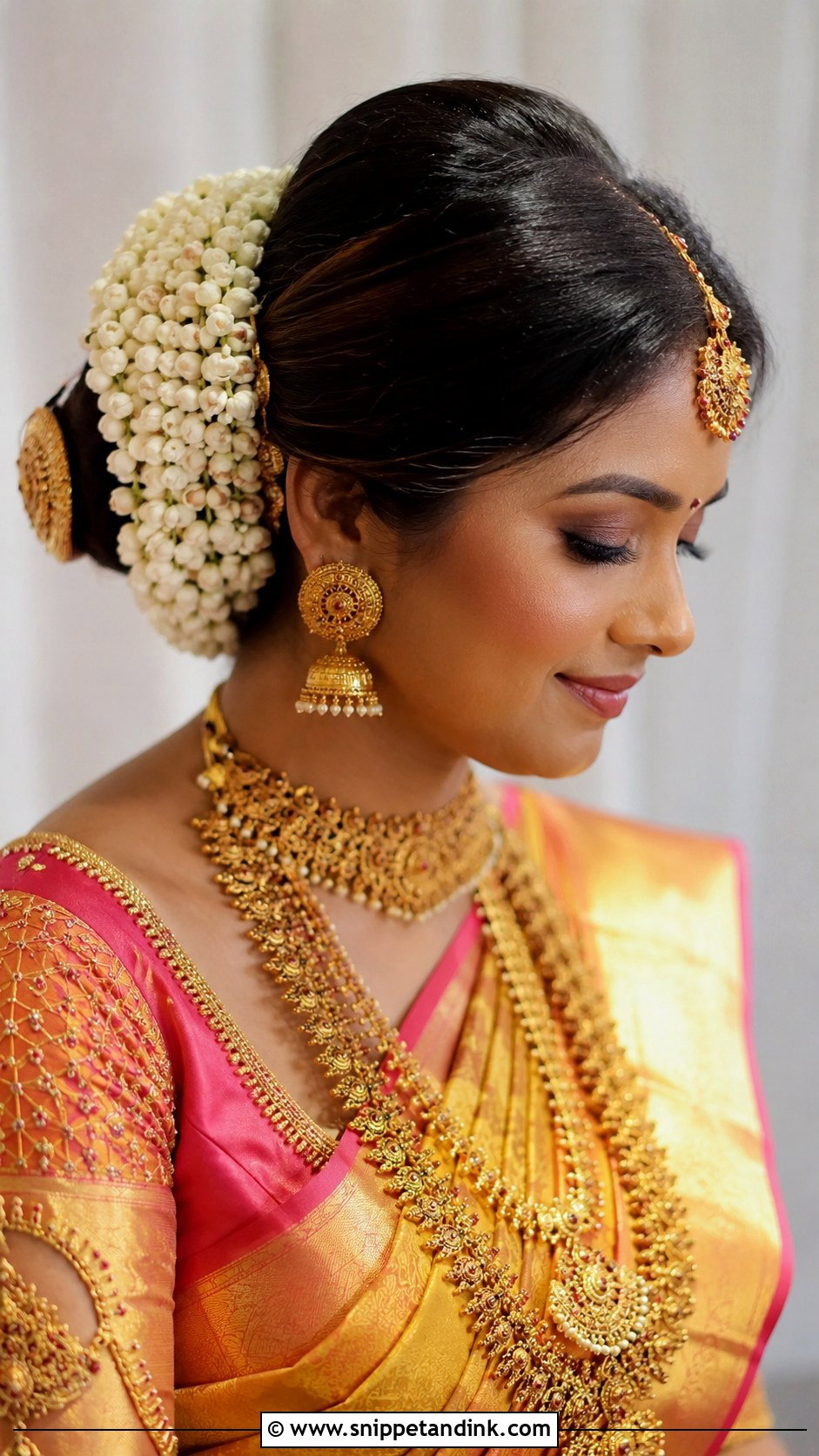
Temple weddings ask for structure. A South Indian bridal bun sits low and polished behind a sleek centre part, with jasmine and gold ornaments such as a rakodi, jada billalu or a decorative bun pin layered on. Antique gold is heavy, so I build this bun firmer than anything else on the list and spread the pins in a crisscross so the load doesn’t hang off one spot on the scalp. Fine or medium hair gets padding underneath for fullness. Morning muhurthams mean very early starts, so lay out every ornament the night before in the order it goes in.
3. Low Indian Wedding Bun With Roses
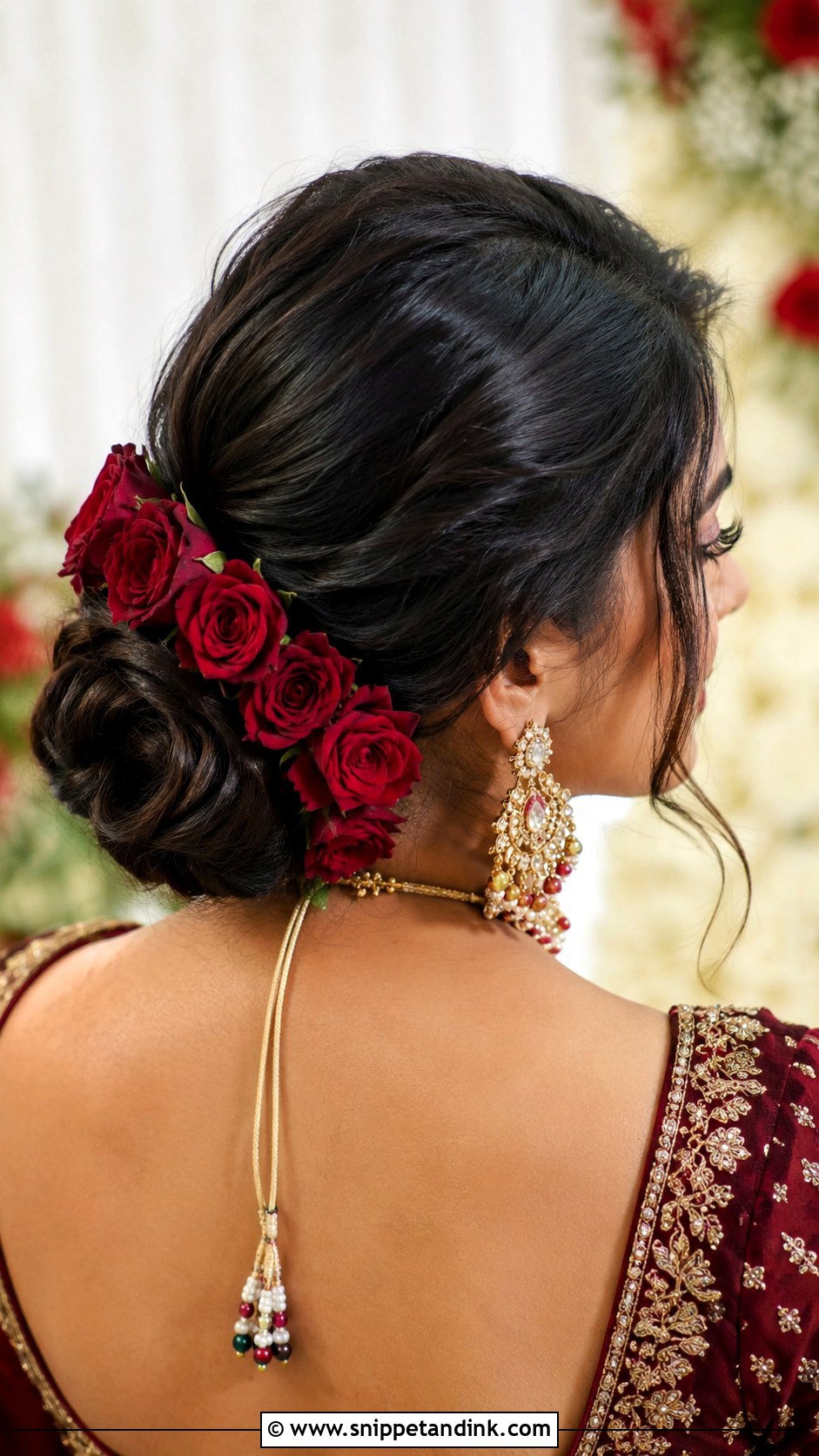
Roses give a fuller, warmer finish than jasmine and need less winding. I place them around one side, tucked under the bun or in a crescent, depending on where the camera will catch the back. Red reads strong against maroon and gold; blush sits better with pastel lehengas. Real roses bruise where a pin goes through the petals, so I wire the stems short, pin through the stem instead, and keep a couple of spares in my kit. Good silk roses are a fair trade for a long outdoor day. Keep the front clean so the earrings and tikka aren’t fighting the flowers.
4. Indian Messy Bun For Wedding
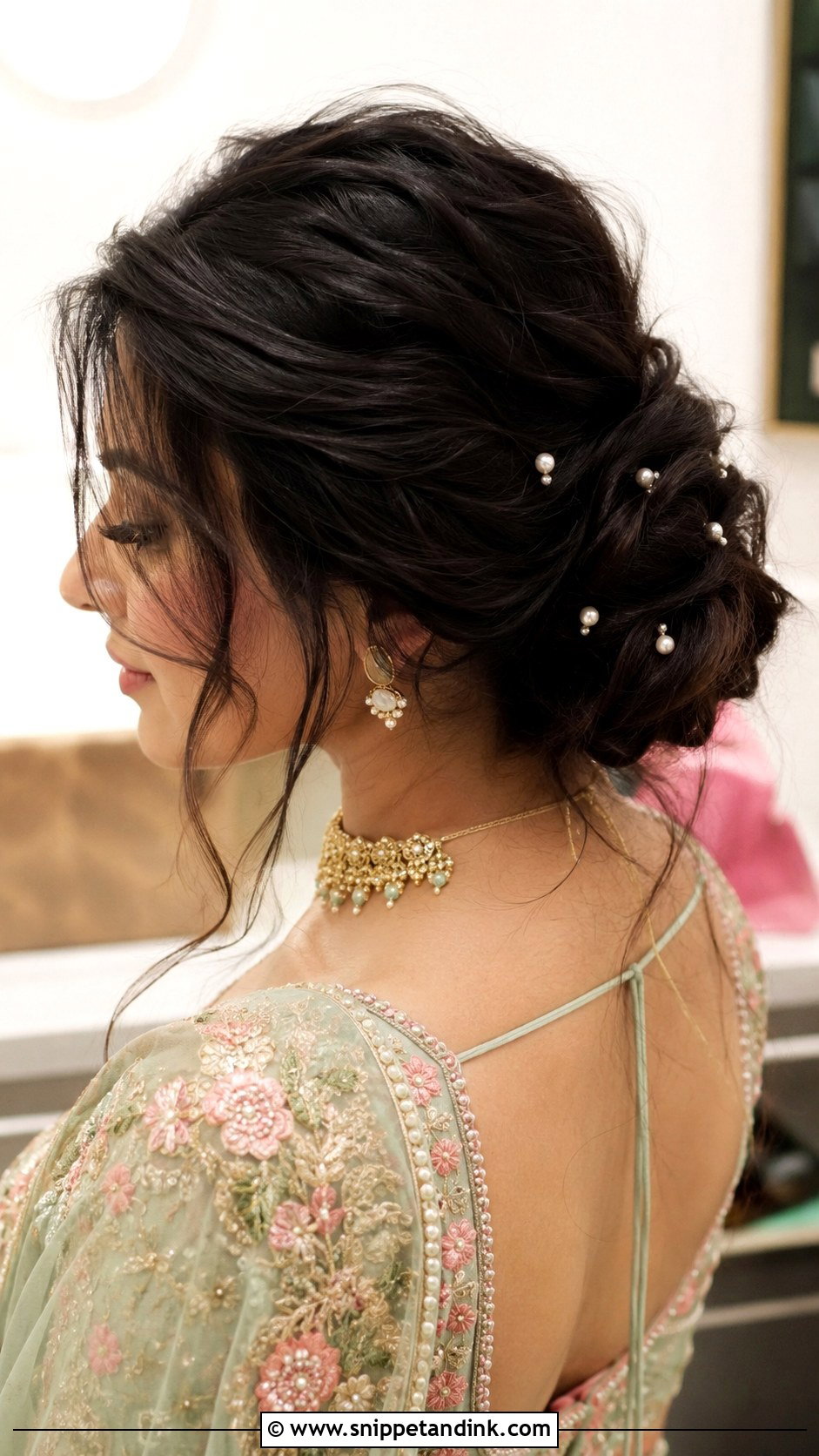
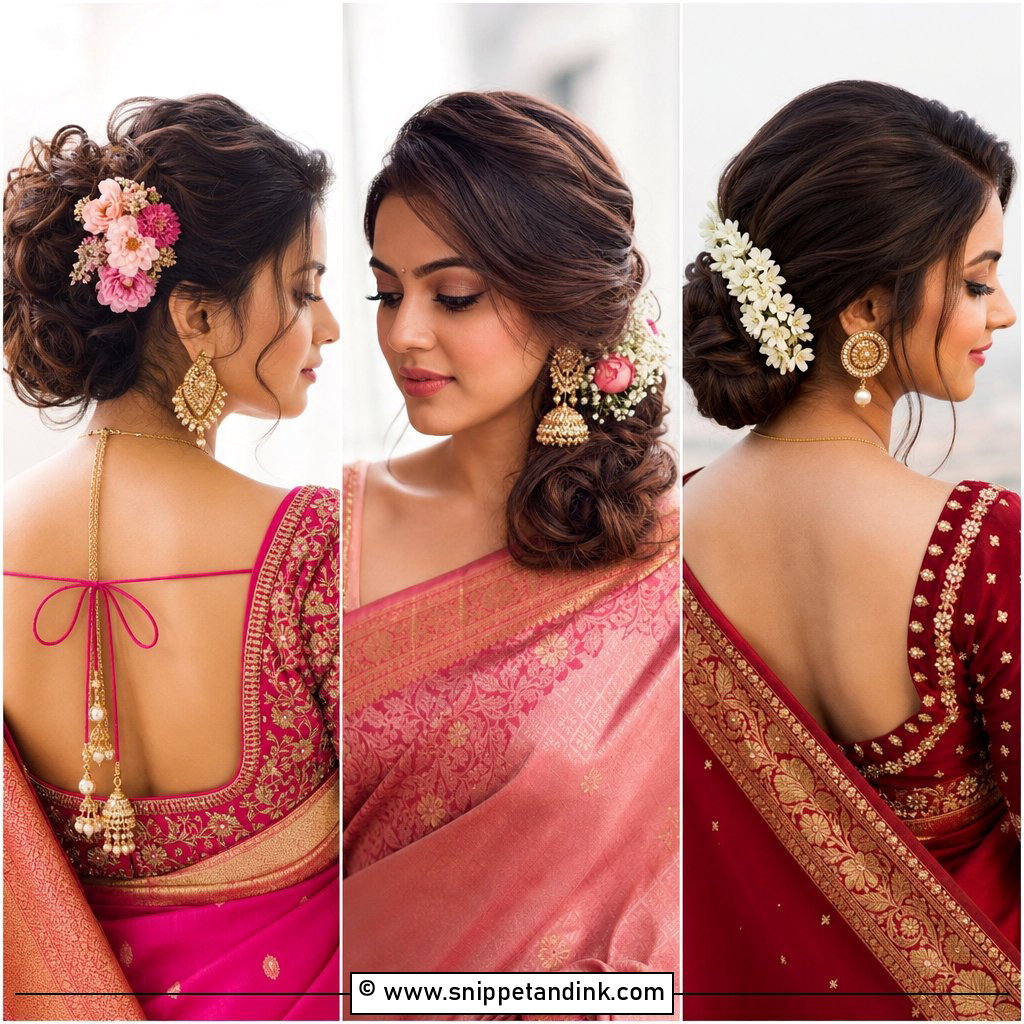
A controlled messy bun is my go-to for mehendi and sangeet, where you’ll be dancing and sitting on the floor. It sits low or a little off-centre, with lift at the crown and a few face-framing pieces near the cheeks. The mess is placed, not accidental: I curl the hair first, pin the bun firmly, and only then pull out texture with my fingers. Wavy hair takes to it easily. Very straight, slippery hair needs a texturising spray first or those loose pieces go flat within the hour. Small flowers, pearl pins or a thin hair vine make it festive.
5. Indian Bridal Donut Bun
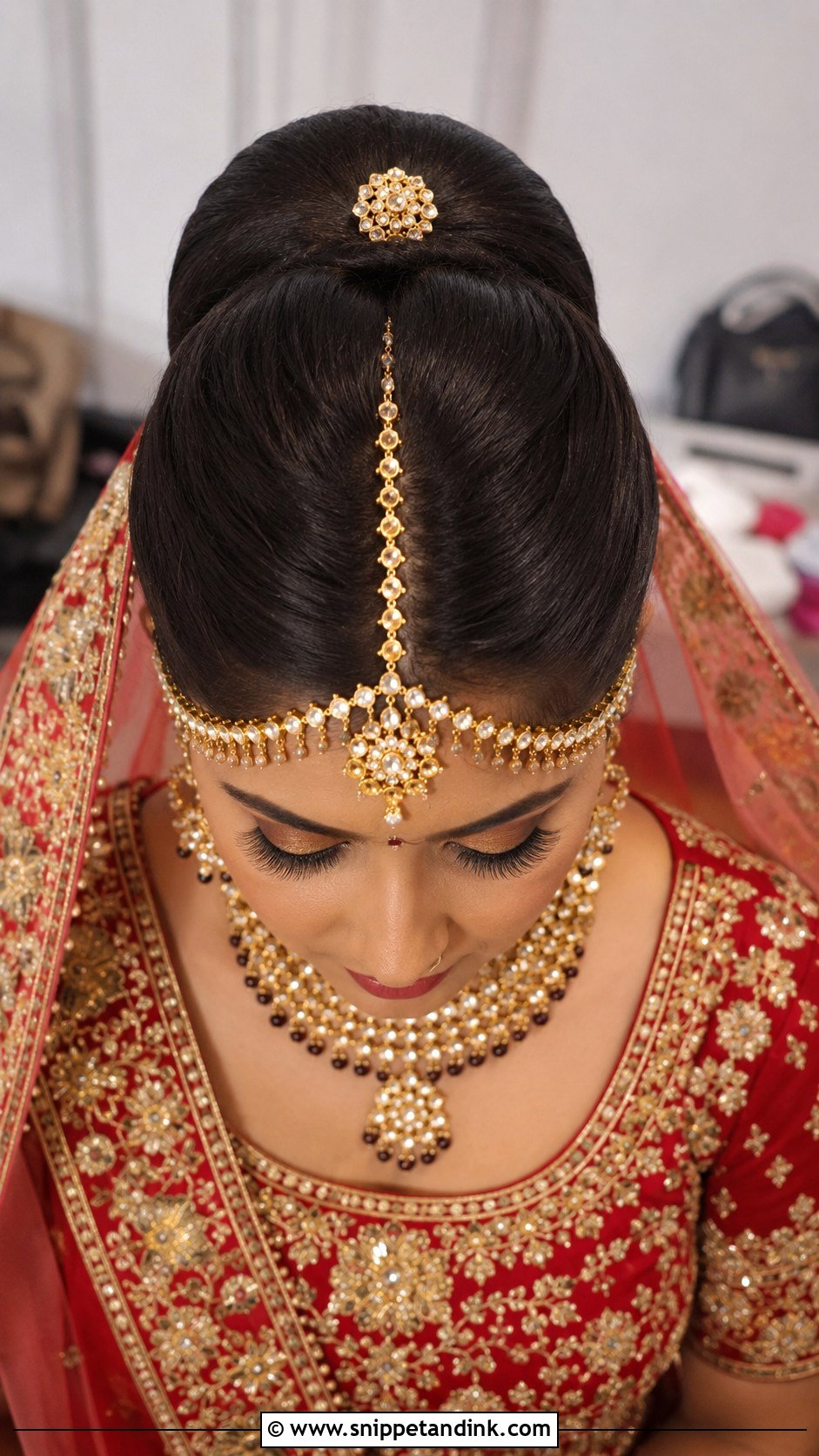
A donut base is the honest answer for fine or shoulder-length hair that won’t make a round bun on its own. I match the ring to your hair colour, pull the ponytail through, spread the hair evenly over it and pin the ends underneath. The shape stays round all day and gives a dupatta something solid to grip, and it carries a heavy matha patti, big earrings and a statement juda pin without collapsing. The thing I watch for: if the hair is too thin to cover the ring, the mesh shows in flash photos, so I wrap one last section around the outside to hide it.
6. Braided Indian Wedding Bun
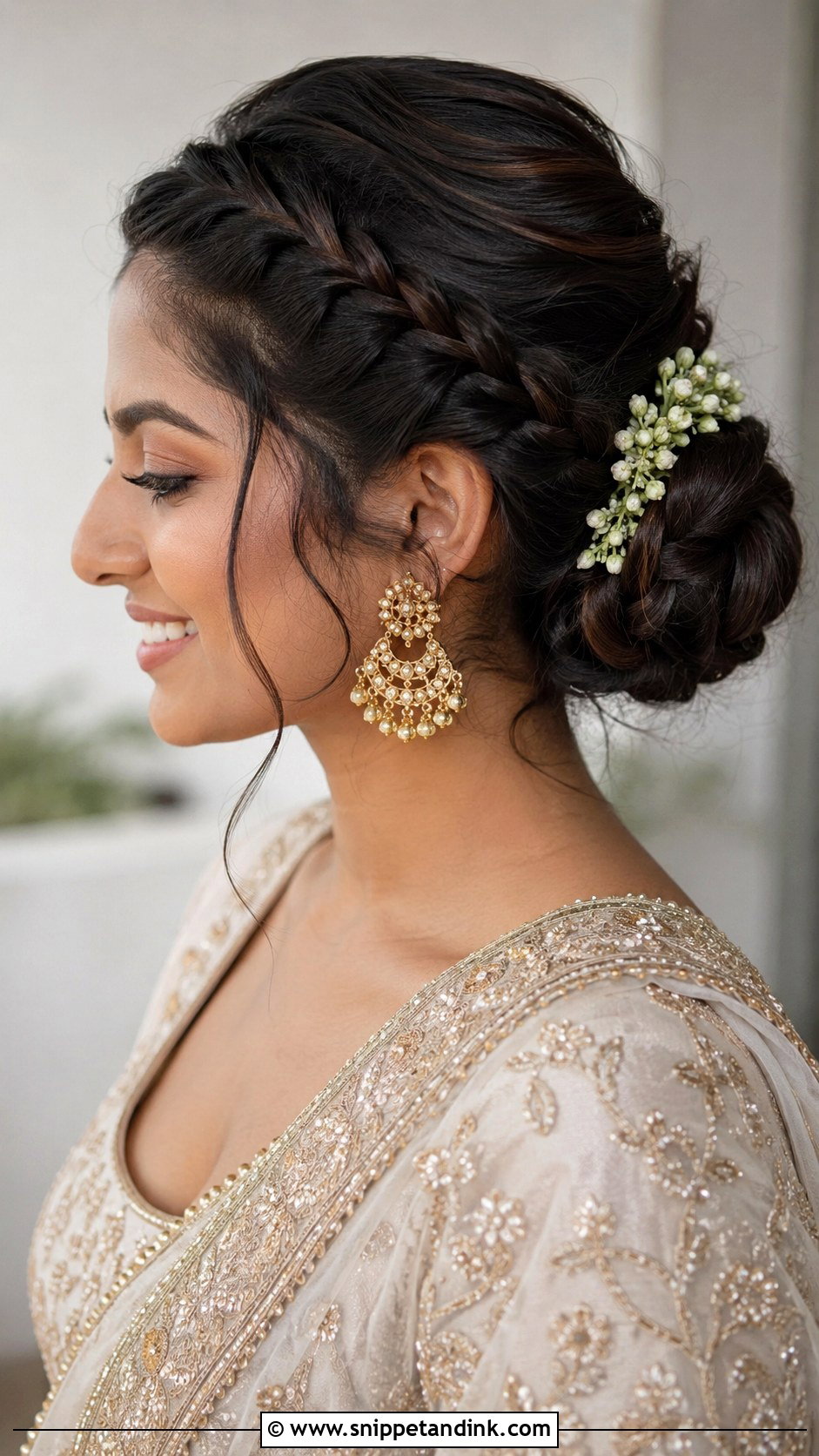
Braids add pattern and they also lock the bun, because a plait grips pins far better than smooth hair. I start the braid at the crown, along one side, or work a loose plait into the bun itself, then gently widen the loops so the pattern reads from a distance. Embroidered lehengas and zari sarees pair well here since the braid echoes the work on the fabric. Tiny flowers, pearl pins or gold accents slot neatly between the loops. Go light on shine spray; a little catches the light, too much looks greasy under flash.
7. Indian Bun With Juda Pin
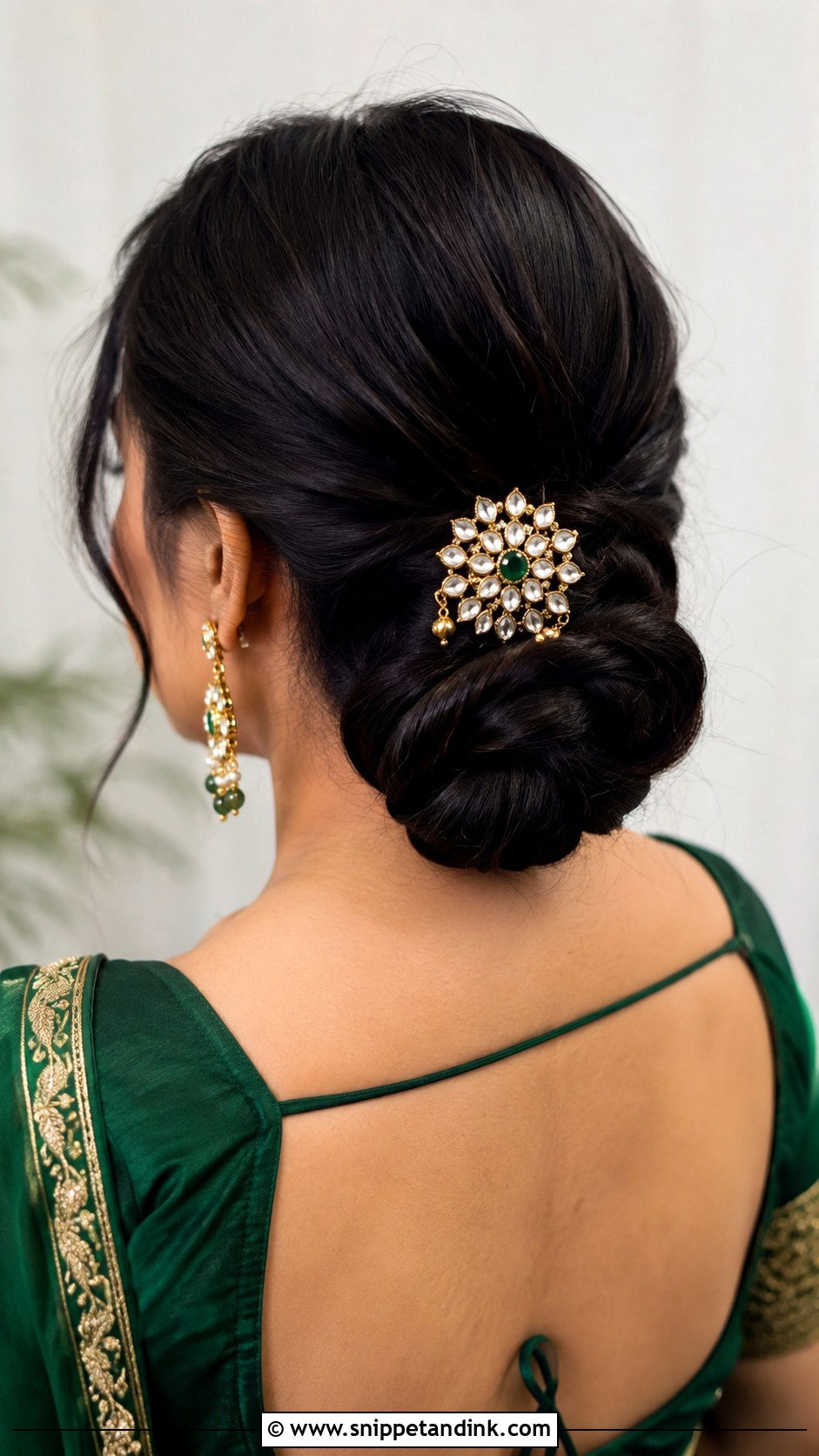
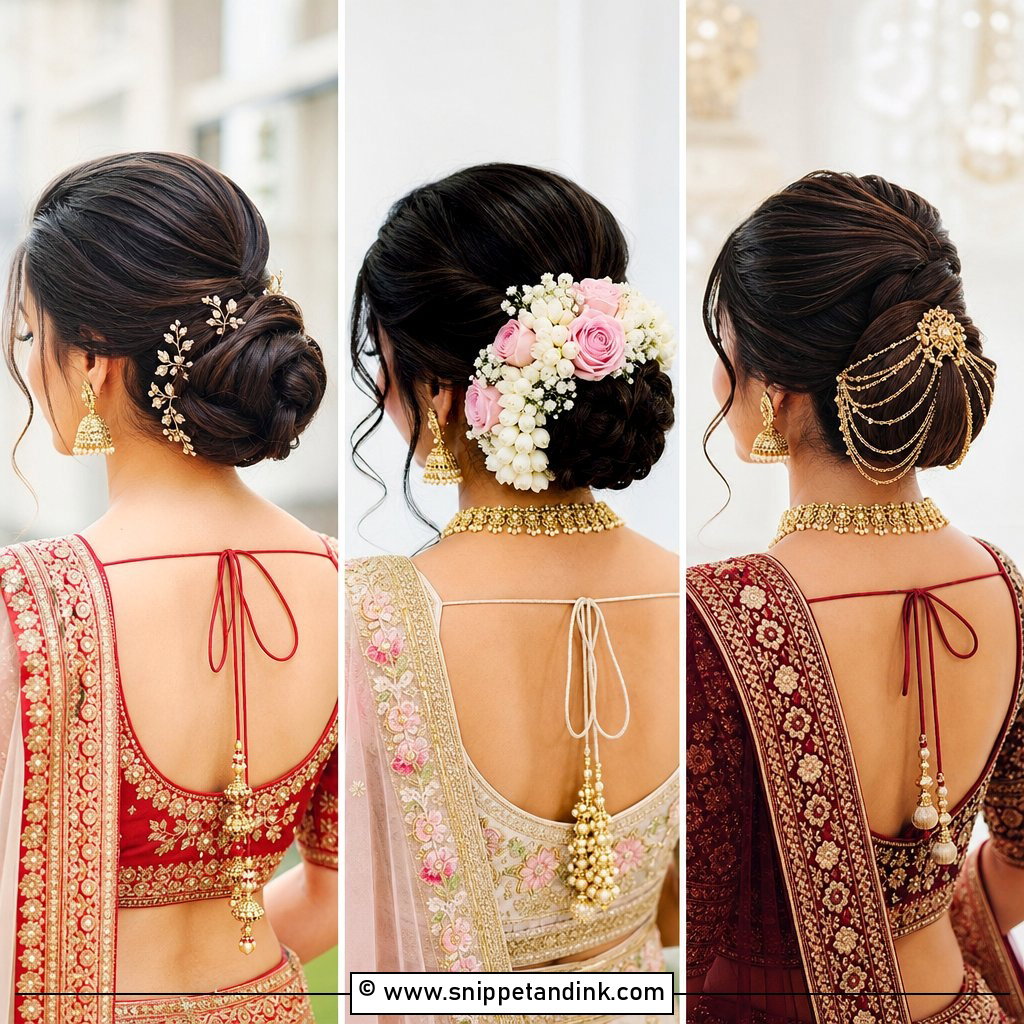
Here the pin does the decorating, so the bun underneath can be sleek, twisted, braided or rounded. Kundan reads royal, pearl reads softer, and plain gold sits best with traditional sarees. Guests ask me for this often because it needs no fresh flowers and holds up through a long dinner. Before I place the pin, I check the tikka from the front and the pin from the side so the two don’t compete; centred or just above the bun usually works. A heavy kundan pin needs a bobby pin crossed beneath it, or it starts to tilt within a couple of hours.
8. Indian Bun With Pearl Chains
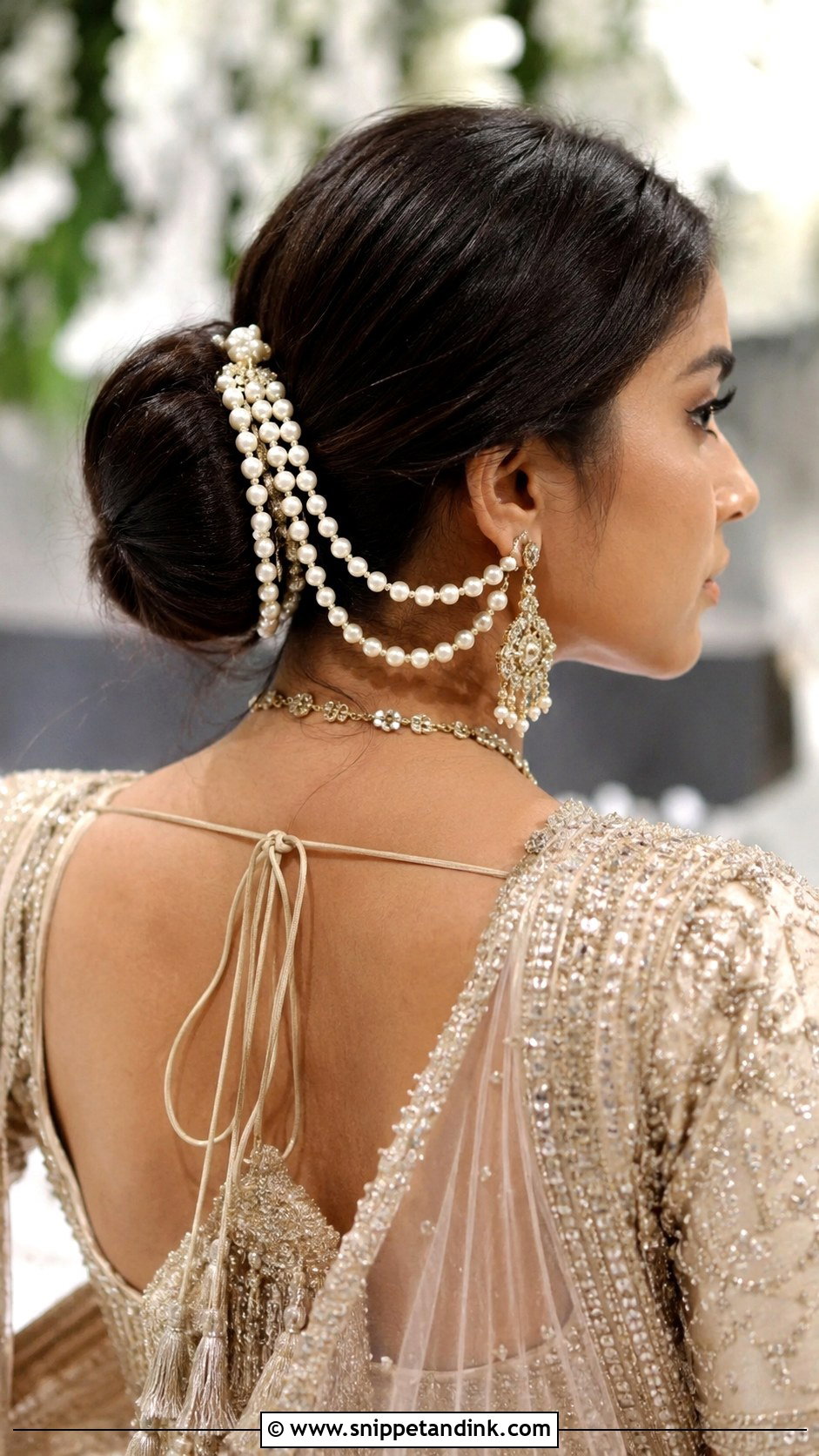
Pearl chains add shine without bulk. The base stays sleek and low, and strands drape around it or swing across the back of the head. Ivory, champagne, pastel and gold outfits suit it, especially at receptions and engagements. I anchor each chain in at least three places; one anchor lets the strands swing and catch on the dupatta or a necklace clasp. If your jewellery already uses pearls, this ties everything together without a single flower.
9. Indian Bun With Fresh Flowers
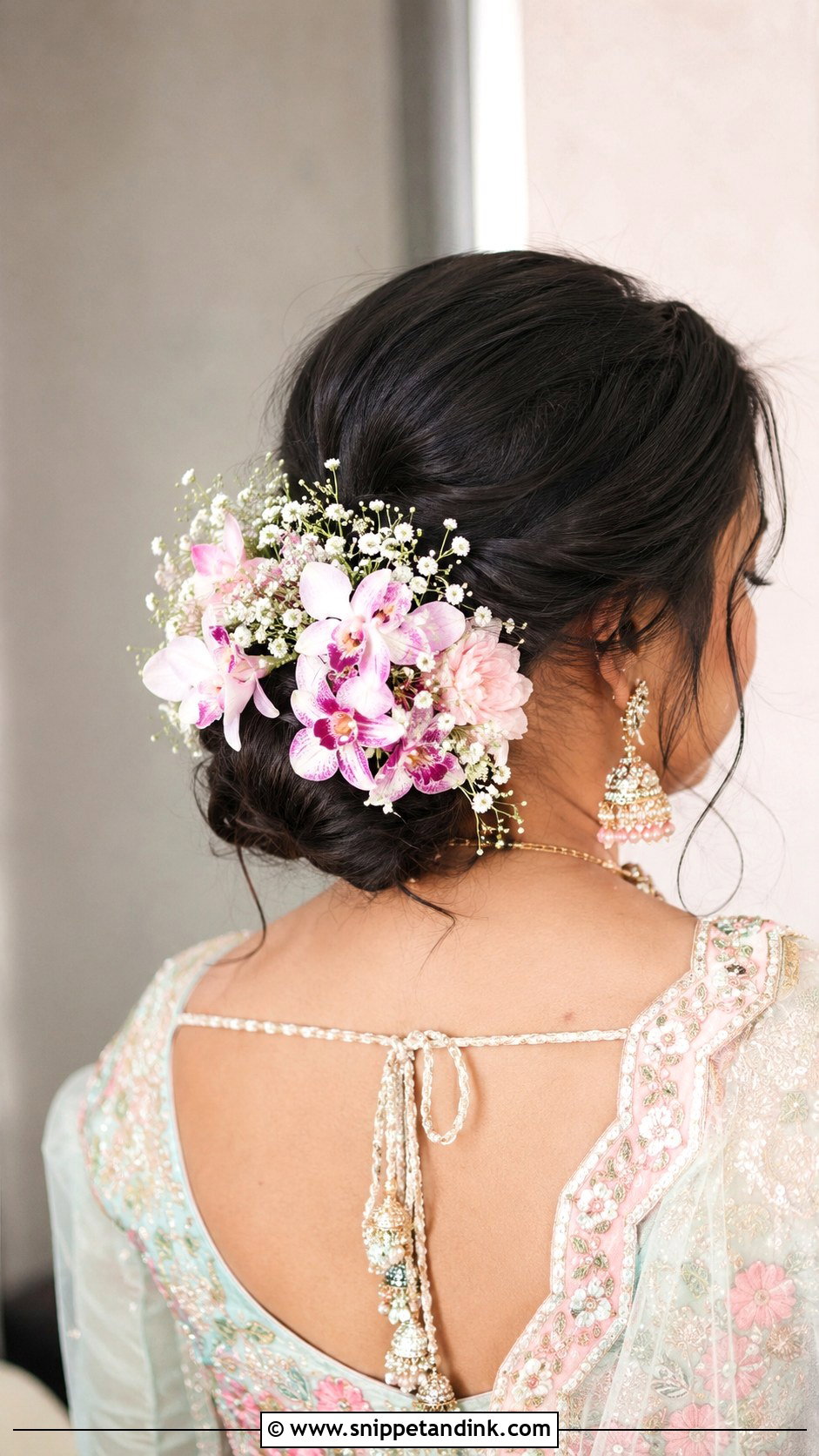
Mixed blooms let you match the outfit rather than defaulting to jasmine. Orchids, baby’s breath, carnations, marigolds, tuberose or pastel stems can cover the bun, sit in a half-moon or trail down one side. I lean on this for haldi, mehendi, day weddings and outdoor ceremonies. In heat, marigolds and orchids hold their shape for hours while softer garden flowers droop, which is worth knowing before you order. Flowers always go in last, after the hairspray, because spray dulls and spots fresh petals.
10. Sleek Indian Low Bun
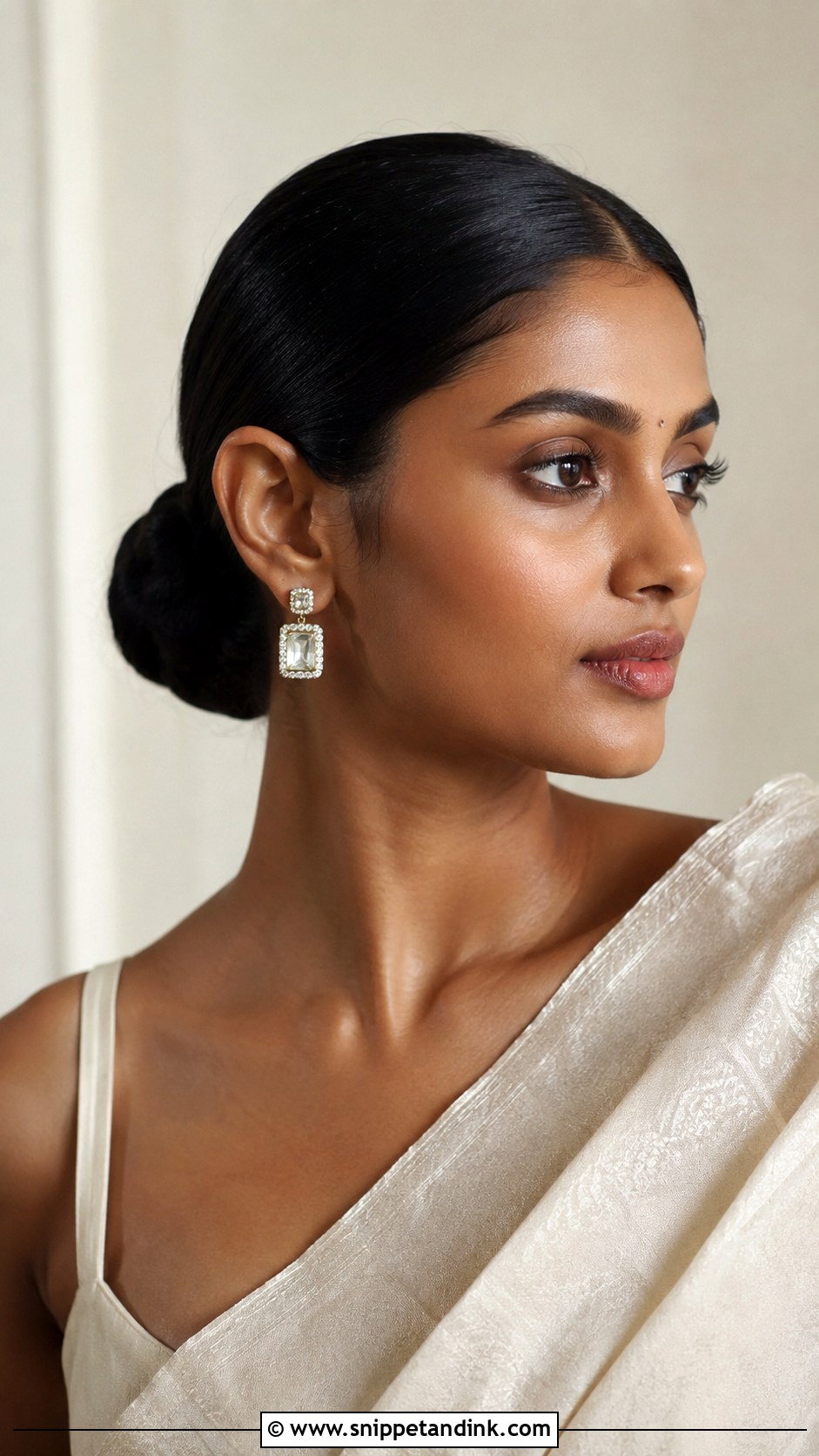
Low, tight and glossy at the nape, a sleek bun is the cleanest backdrop for chokers, layered necklaces, matha pattis and oversized earrings. It adds no height, so a dupatta drapes over it without lifting. It is also the least forgiving style here. Every bump shows, so I blow-dry the hair straight first and comb serum through before the elastic goes on. Frizz-prone hair at a humid venue needs a firmer hold product than you’d expect. Strong makeup and minimal jewellery work well with it for the reception, nikah or pheras.
11. Indian Side Bun For Wedding
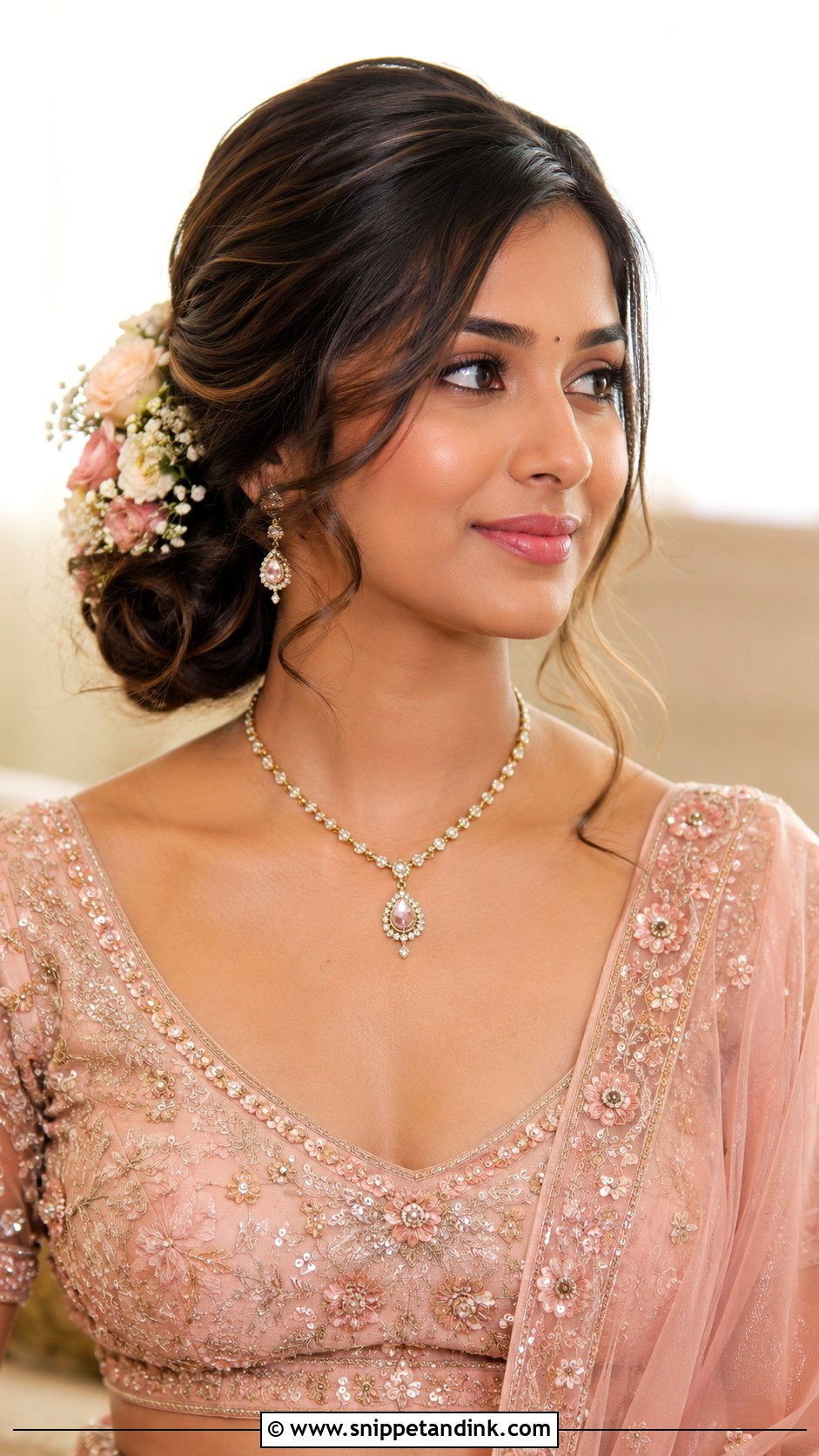
A side bun pulls the eye to one profile, which is why I ask which side of your face you prefer before I start. It sits low near the nape so it shows from the front and the side, and it pairs well with a side part, soft waves and a few flowers. Lehengas, gowns and sarees with detailed blouse backs benefit, since the open side of the neck shows off the work. Don’t let it drift too close to the ear. It ends up resting on your shoulder and gets crushed every time you turn to greet someone.
12. Indian Bun With Maang Tikka
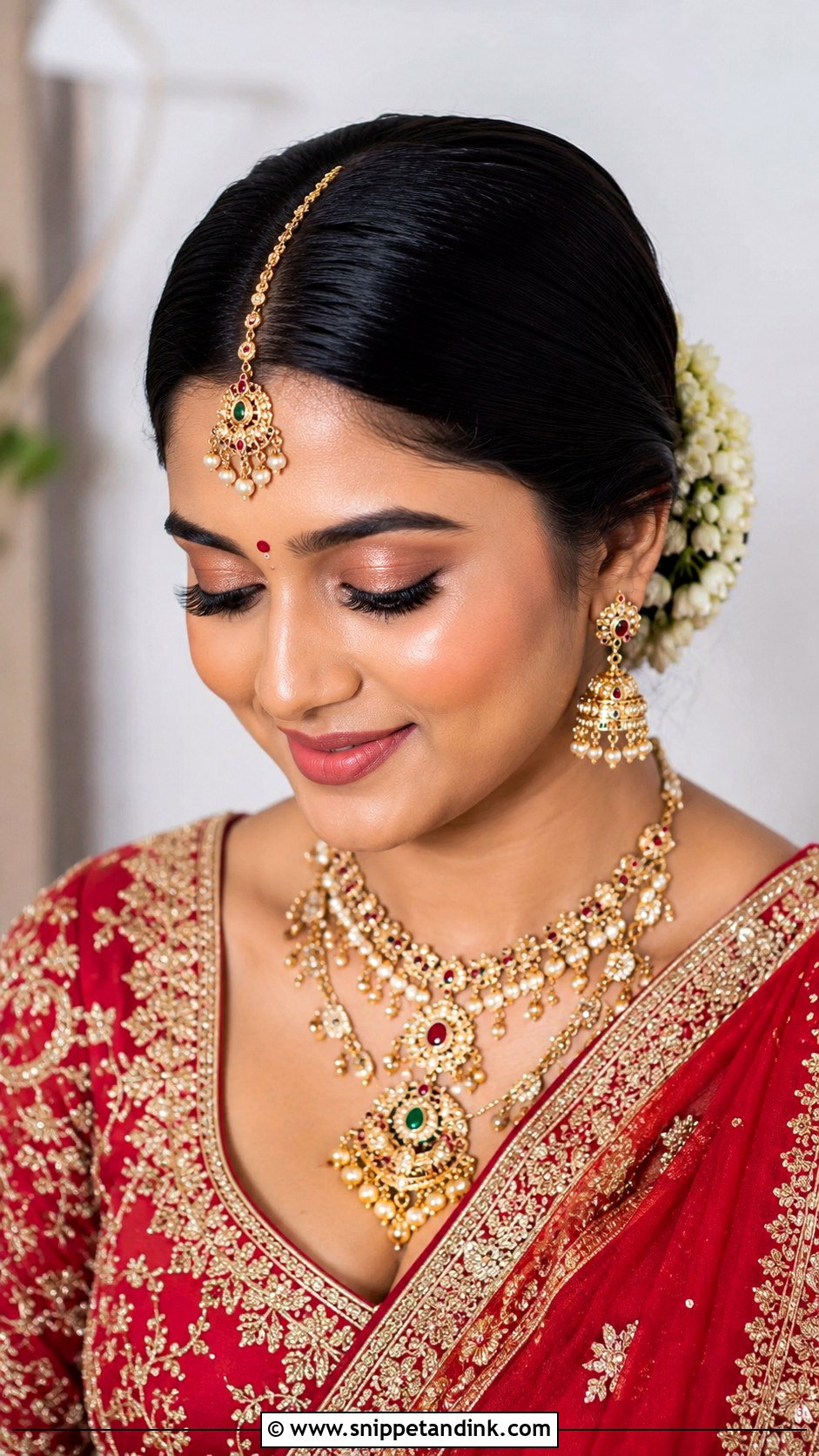
A clean centre part gives a maang tikka a straight line to sit on, so this look is about precision at the front. I draw the part with a tail comb lined up with the bridge of the nose, then gather the hair into a low or mid bun. The tikka chain gets two small pins crossed under the hair along the part, so its weight doesn’t pull the parting open by midday. The bun itself can carry flowers, pearls or a simple juda pin, but the front stays smooth. It suits almost every bridal outfit, from a red lehenga to a silk saree.
13. Indian Bun With Matha Patti
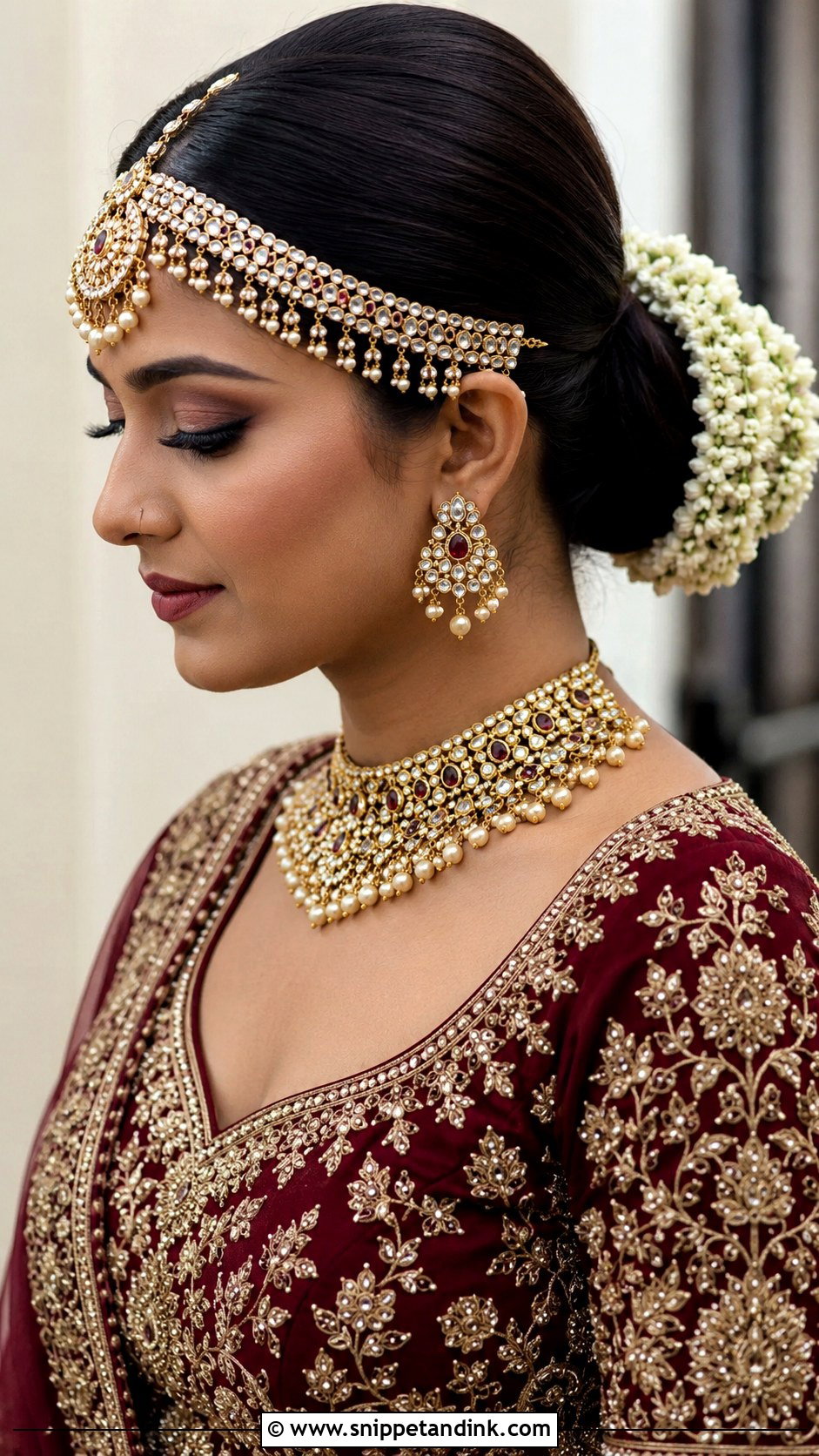
An Indian bun with matha patti puts a lot of metal across the hairline, so the bun’s job is to stay quiet and balanced. A low rounded bun or a sleek donut bun supports the dupatta and keeps attention on the jewellery. I keep loose pieces away from the front entirely; they snag on the patti chains and get yanked every time the bride adjusts her veil. Gajra or small flowers around the bun add drama at the back. Heavy lehengas, royal sarees and traditional makeup sit naturally with it.
14. Indian Bun With Dupatta
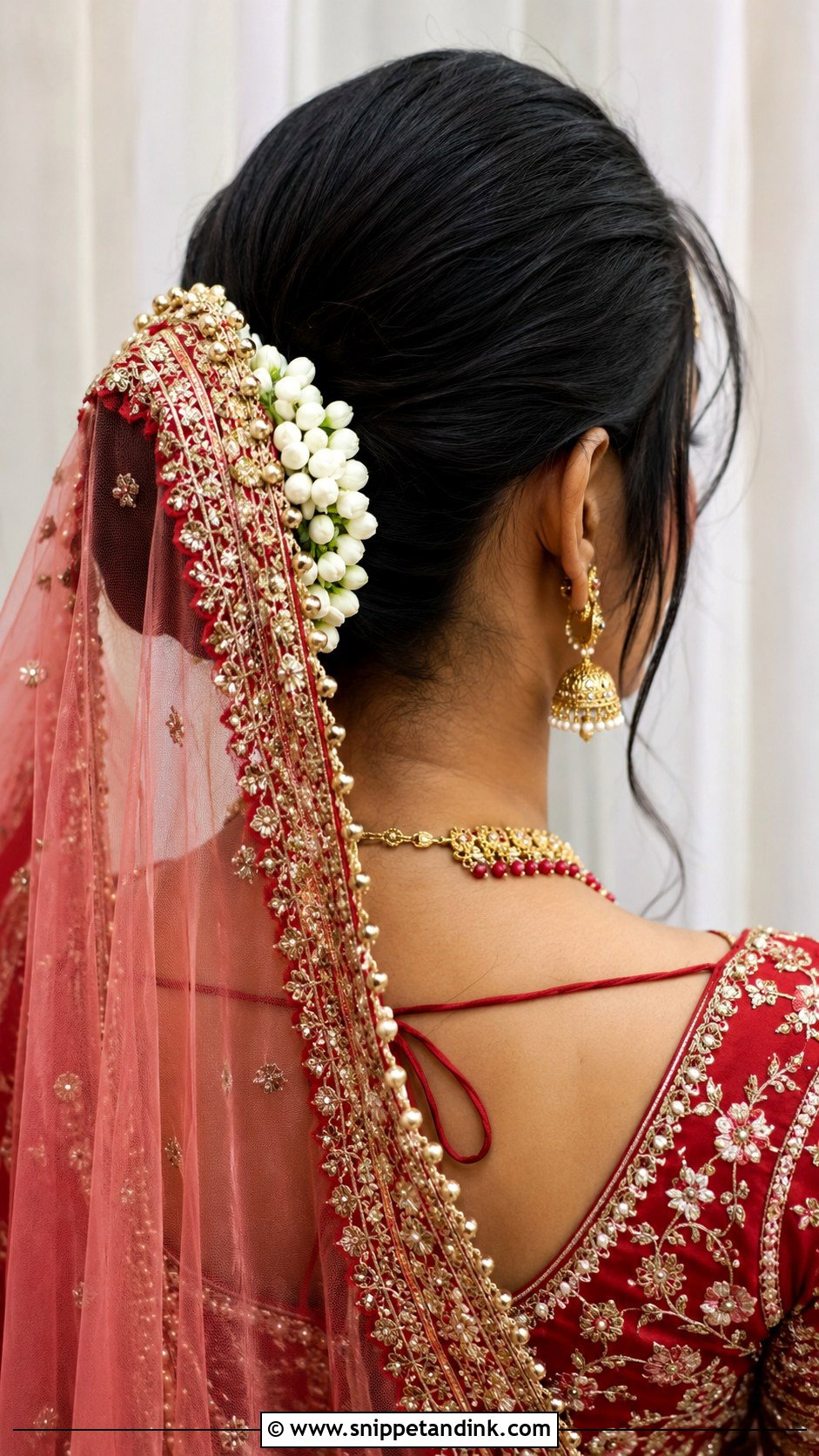
This bun is engineering first. It has to hold pins, veil weight and movement through a long ceremony, so I set it low or at mid height, where the dupatta gets a stable anchor. The front can be sleek, softly puffed or centre-parted to suit the face and the jewellery. A heavily embroidered dupatta weighs far more than chiffon, and if it’s pinned only to the surface of the bun it flattens the shape and tugs at the scalp. I pin through the base of the bun and the hair around it instead. Bring the real dupatta to your trial, not a lighter stand-in.
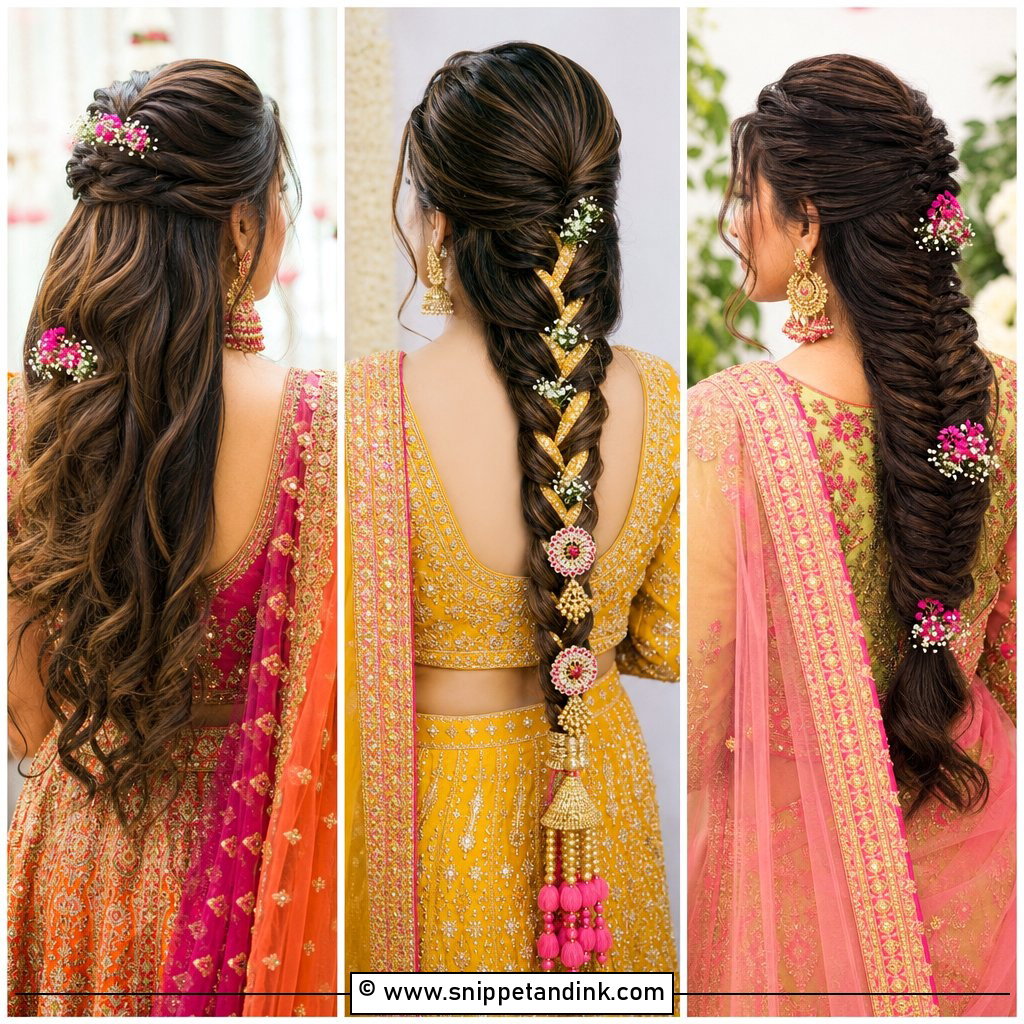
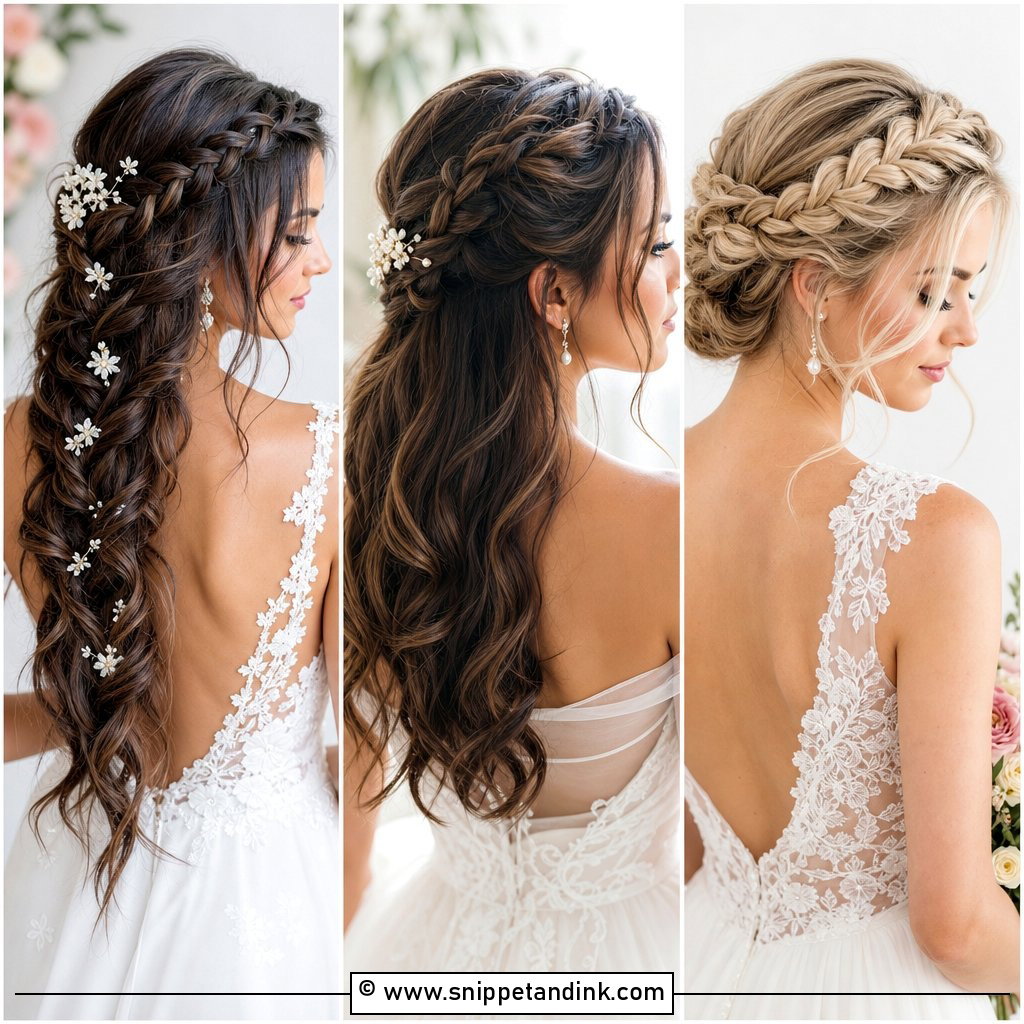

15. Indian Bun With Puff
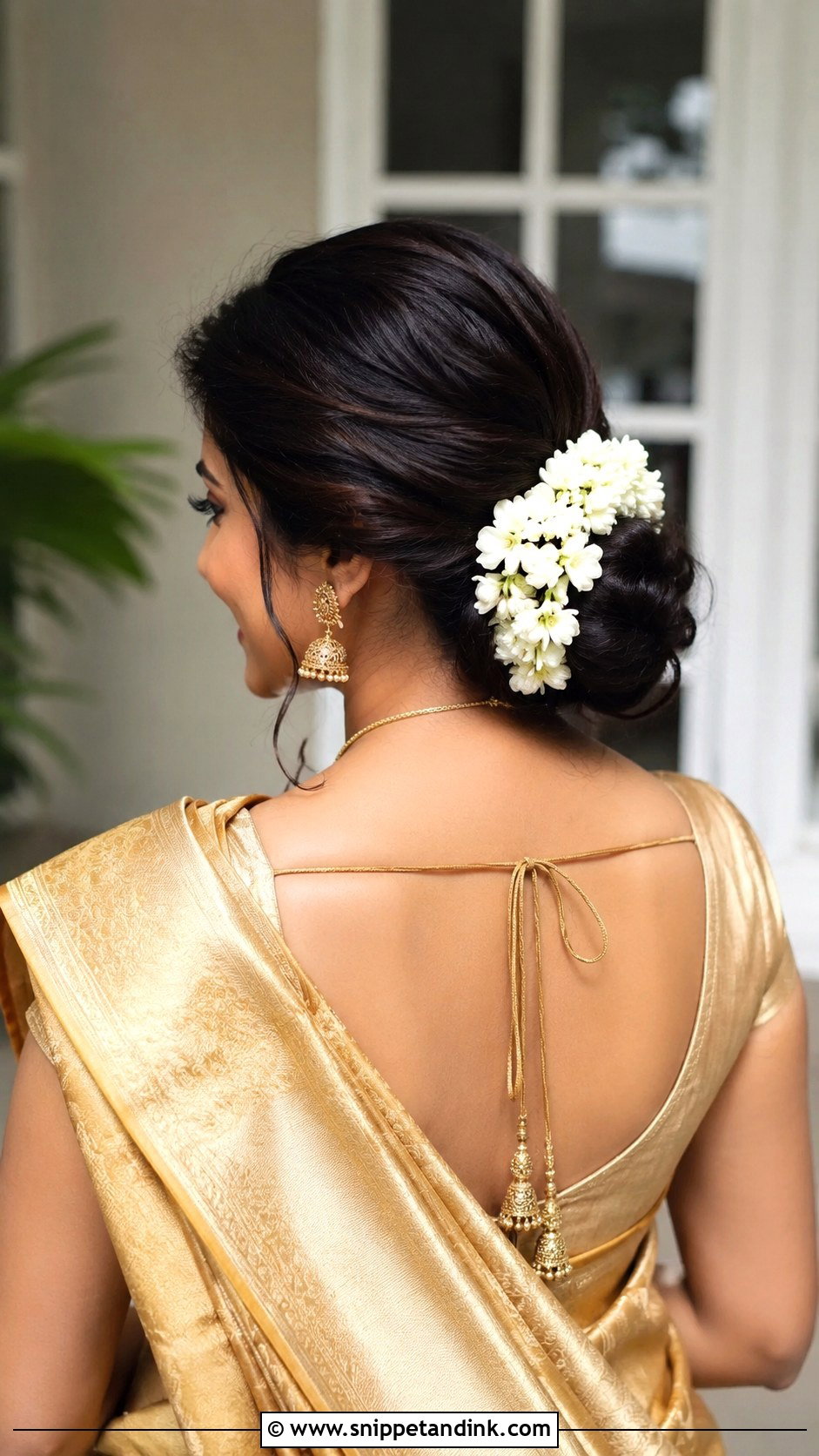
A small lift at the crown makes the bun look fuller from the front and can balance a round face or heavy jewellery. I backcomb the crown at the root, smooth the top layer over it and pin it before gathering the rest. Keep it modest. A puff that rises high reads dated in photos, and it lifts the dupatta off the head so the fabric slides back all evening. The bun below can be low, braided or floral, with gajra if you’d like it festive.
16. Indian Curly Bun For Wedding
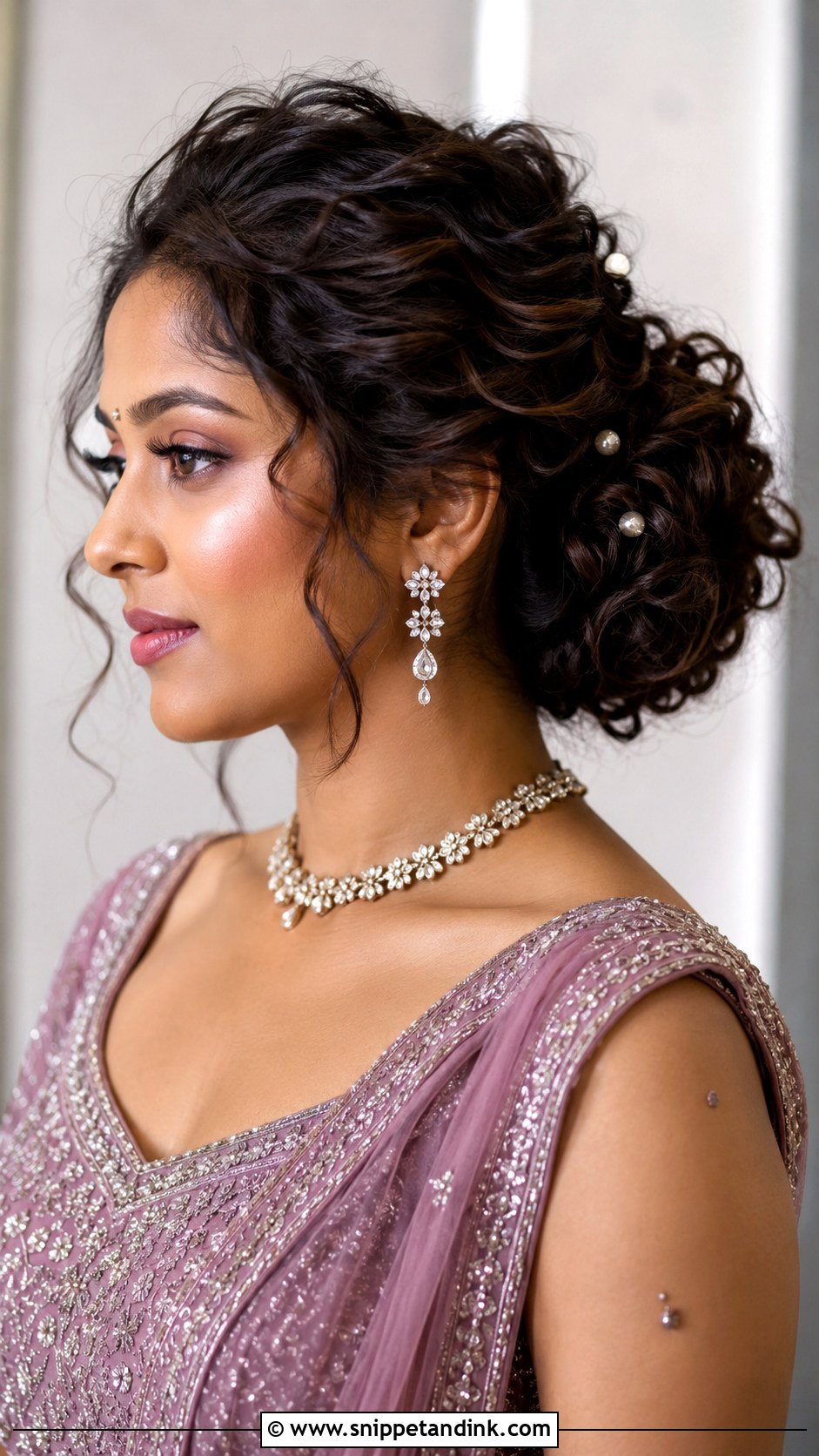
Curly hair should be shaped, not fought. I set the curls with cream, let them dry completely, then gather them loosely and pin each cluster into place rather than brushing through, which only turns curls into frizz. Soft pieces can stay around the face, and small flowers or pearl pins sit nicely in the texture. It works for mehendi and sangeet and holds up for the ceremony itself. Use a flexible hold spray; a strong one leaves curls looking wet and crunchy.
17. Indian Bun For Saree Wedding
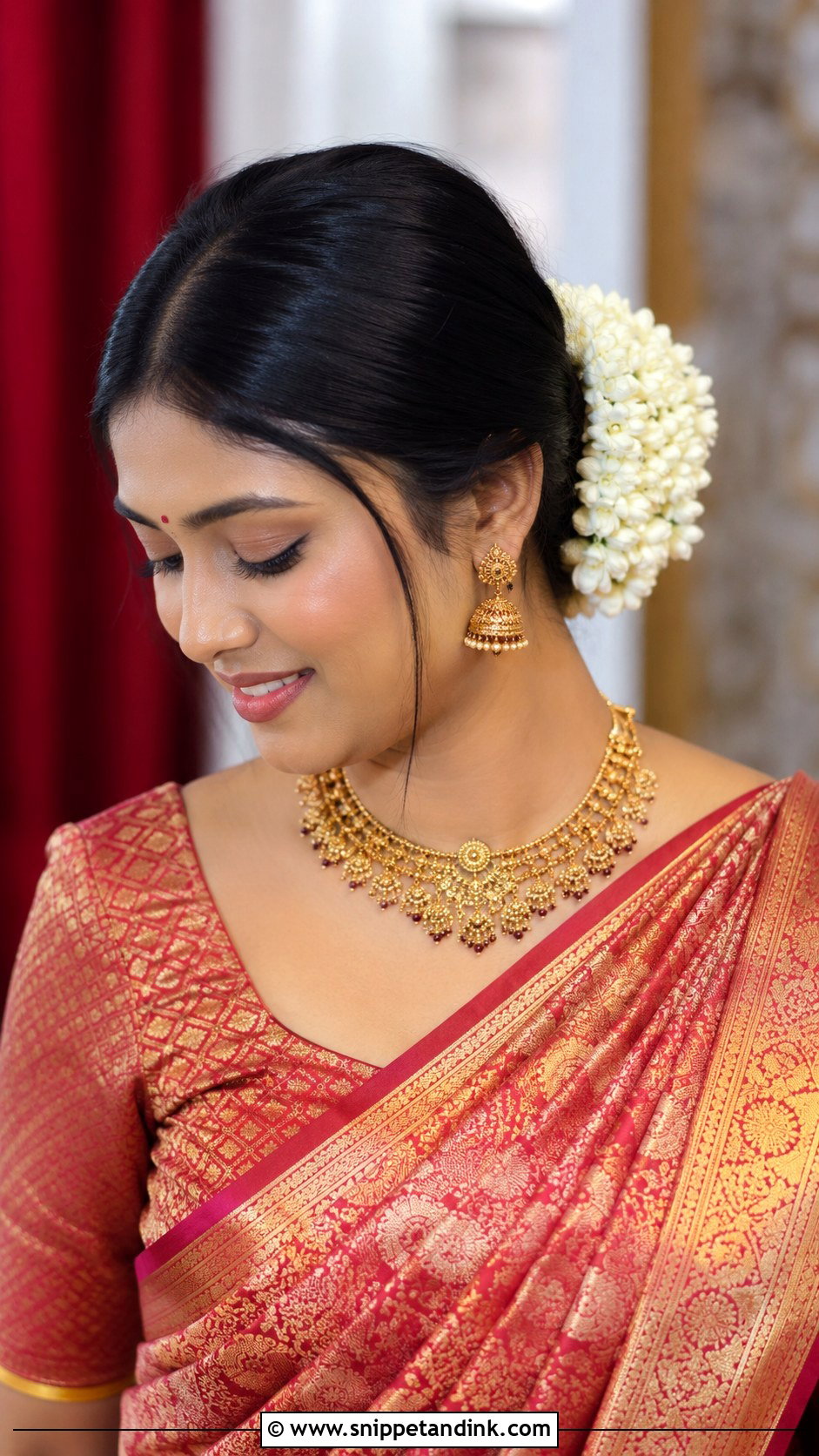
With a saree I keep the bun low so the blouse, neckline and pallu stay visible. Banarasi, Kanjeevaram, Paithani, Chanderi and plain silk all sit well with it. A traditional drape takes jasmine gajra or gold ornaments, while a modern saree looks sharper with pearl pins or a smooth twisted bun. One practical point: the pallu is usually pinned at the shoulder and brushes the back of the neck, so I set the bun close to the head rather than letting it hang, which keeps the fabric from rubbing it loose. The hair should support the saree, not compete with it.
18. Indian Bun For Lehenga Wedding
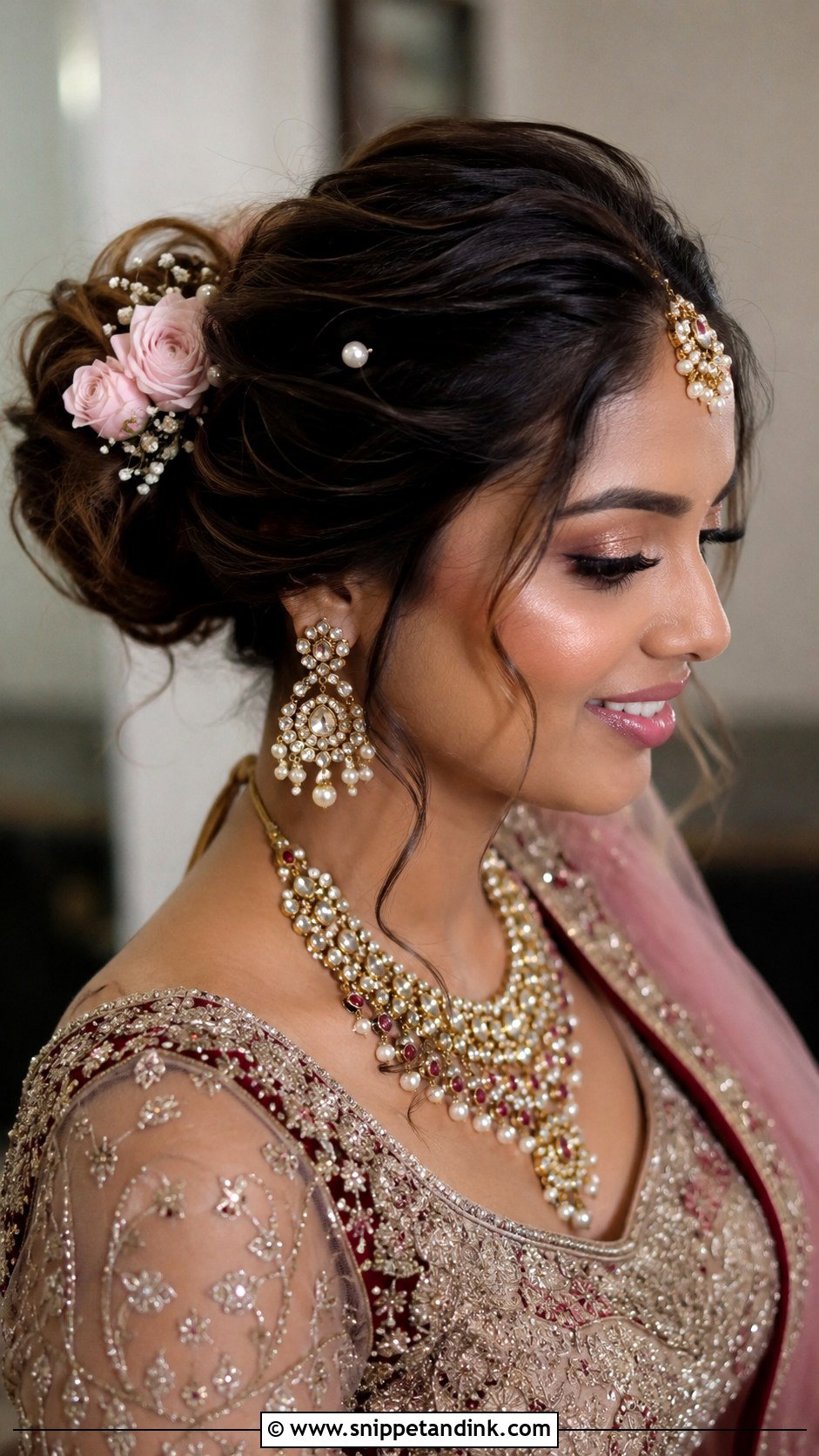
Lehengas are often busy at the back, with heavy embroidery, mirror work or wide borders, so the bun can carry bolder details: roses, gajra, pearls or a jewelled juda pin. A low textured bun suits a deep-neck blouse, and a sleek one sits better under a heavy dupatta. With the hair off the shoulders, the blouse and necklace get room to show. If there’s dancing, I add a second row of pins at the base, because buns loosen from the bottom up once you start moving.
19. Indian Reception Bun
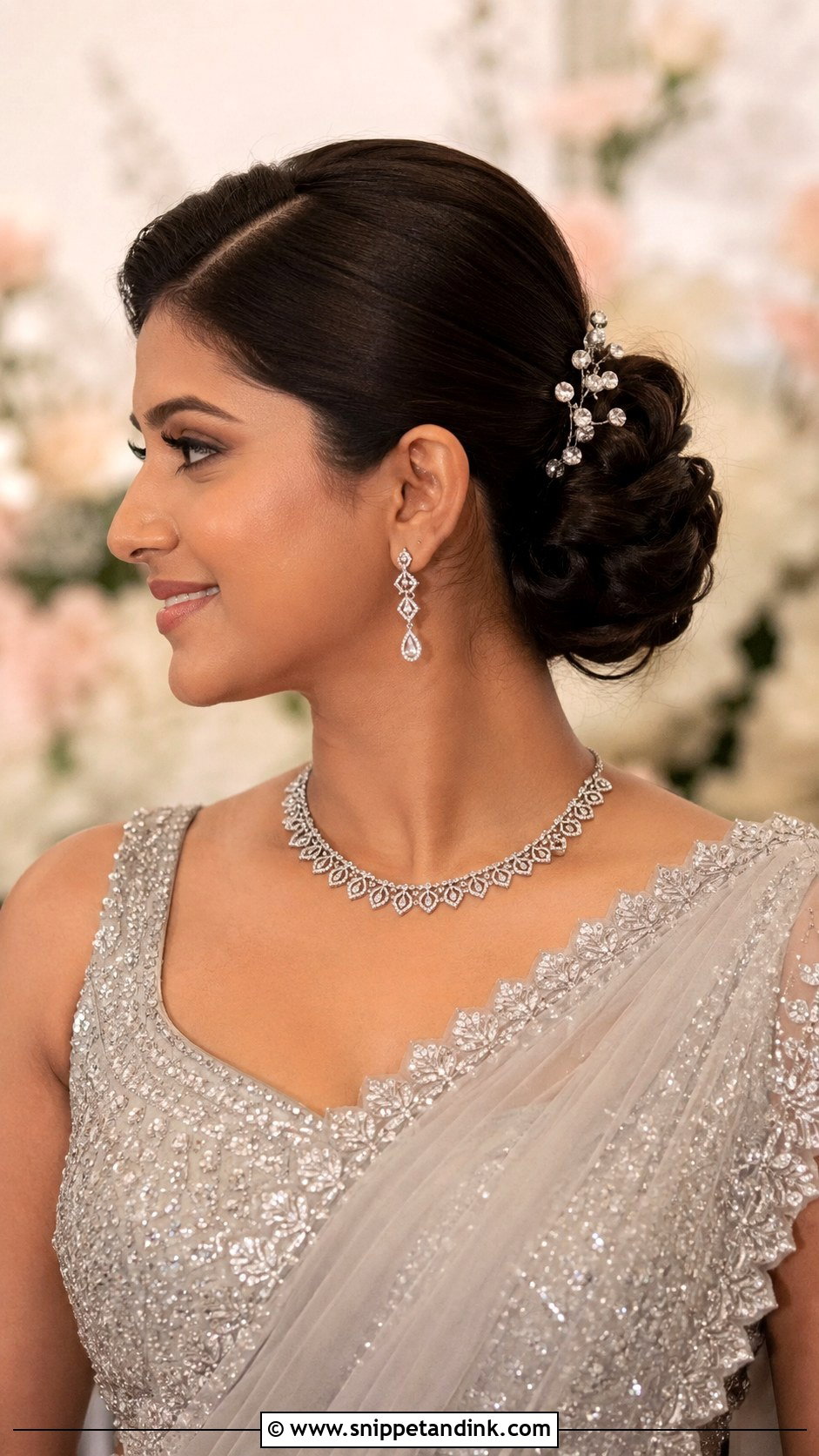
The reception is where I’d change the look rather than recycle the ceremony bun. A side part, smooth waves, pearl details, crystal pins or a glossy twisted low bun suit stage lighting and an evening of greeting guests, and the style has to hold up from the front and the back. With gowns, modern sarees and diamonds, one clean accessory is often enough, especially if the outfit is already detailed. By this point most brides have worn pins since early morning, so I take out the heavy ceremony pins and rebuild with fewer, better-placed ones. Firm spray keeps it neat without looking hard.
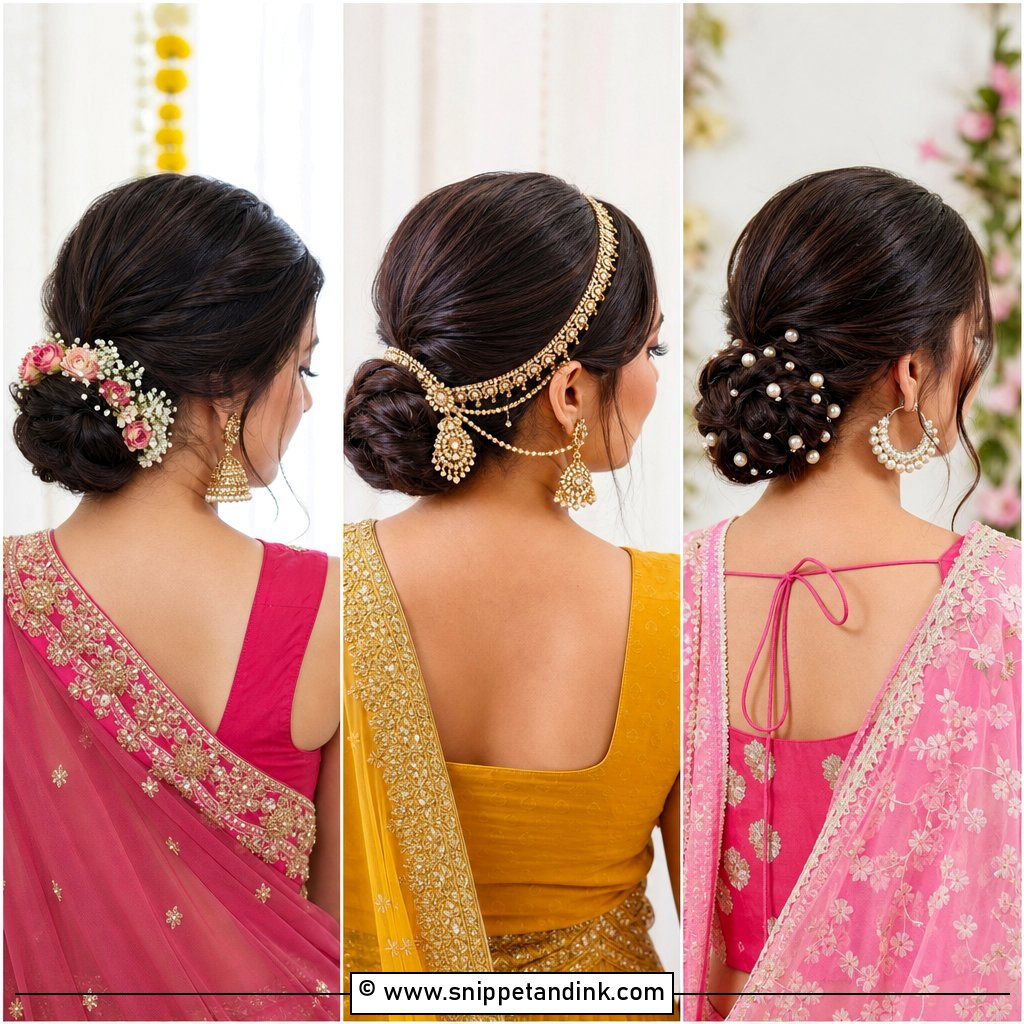
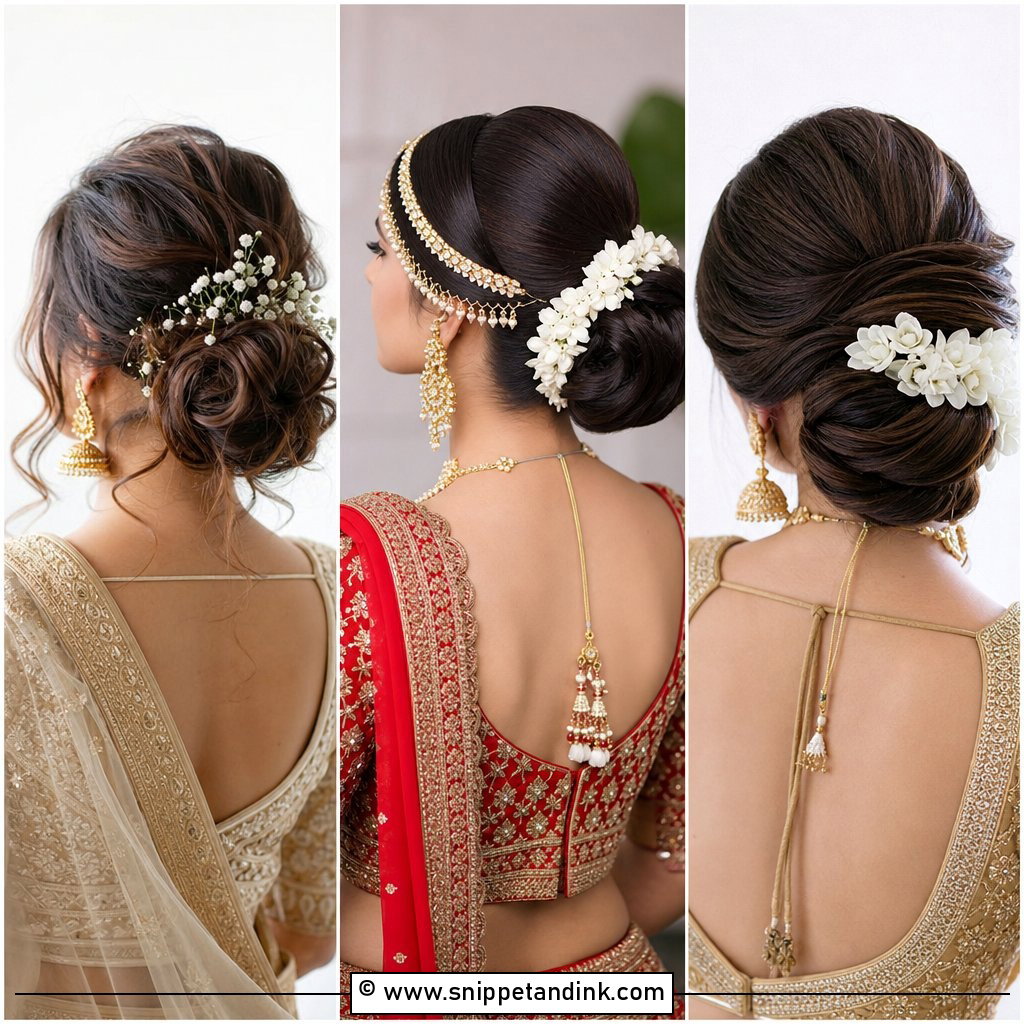

20. Simple Indian Wedding Bun
Not every bun needs ornament. A neat low or mid bun with a small gajra, a single flower or a delicate pin is what I do most for mothers, sisters and guests, and it suits minimalist brides too. It goes with sarees, lehengas, anarkalis and shararas, and it leaves room for the makeup and jewellery. Because there’s nothing to hide behind, the finish has to be exact: a straight part, smoothed edges and a bun that sits dead centre when you look from behind.
Fresh Jasmine Over a Ceremony That Runs Long
Real jasmine smells lovely and is fragile to work with. I ask for the gajra as tight buds on the wedding day, delivered wrapped in a damp cloth, and keep it somewhere cool until the last moment. The buds open over the next few hours, so they’re at their fullest around the pheras. By late evening the edges start to brown. That’s normal, and nobody at the reception will notice unless you’re standing under a spotlight.
- Order a second, smaller gajra for the reception if you’re keeping the same bun.
- Tell your stylist if strong scent gives you a headache. A full strand can be a lot in a closed mandap, and a half wrap is a fair compromise.
- Wired artificial jasmine looks convincing in photos and won’t wilt, which helps at outdoor summer ceremonies.
- Pat a damp gajra dry before it goes in. Wet flowers add weight and leave water marks on silk.
When the Pins Finally Come Out
After a full day of weight, the scalp is usually tender. Take out the flowers and jewellery first, then find the elastic and work outwards, sliding each pin back the way it went in. Don’t brush the bun out dry, because teased, sprayed hair snaps. Work conditioner or a little oil through the lengths so the knots slide apart, and wash properly the next morning. If there’s another function the next day, sleep in a loose braid rather than leaving the bun in.
Gajra for the Pheras, Pearls for the Reception
Each of these buns changes character with a few swaps. Gajra makes it classic, pearl chains suit a reception, a braid adds texture and a sleek low bun sits neatly under a dupatta. I’d decide in this order: outfit, jewellery, hair length, then the ceremony, because the heaviest accessories dictate how the base has to be built. If you can, do a trial wearing the real tikka, matha patti and dupatta. It’s the only way to know the bun will hold once everything is on.
You'll Like These Ideas:


Leave a Reply