
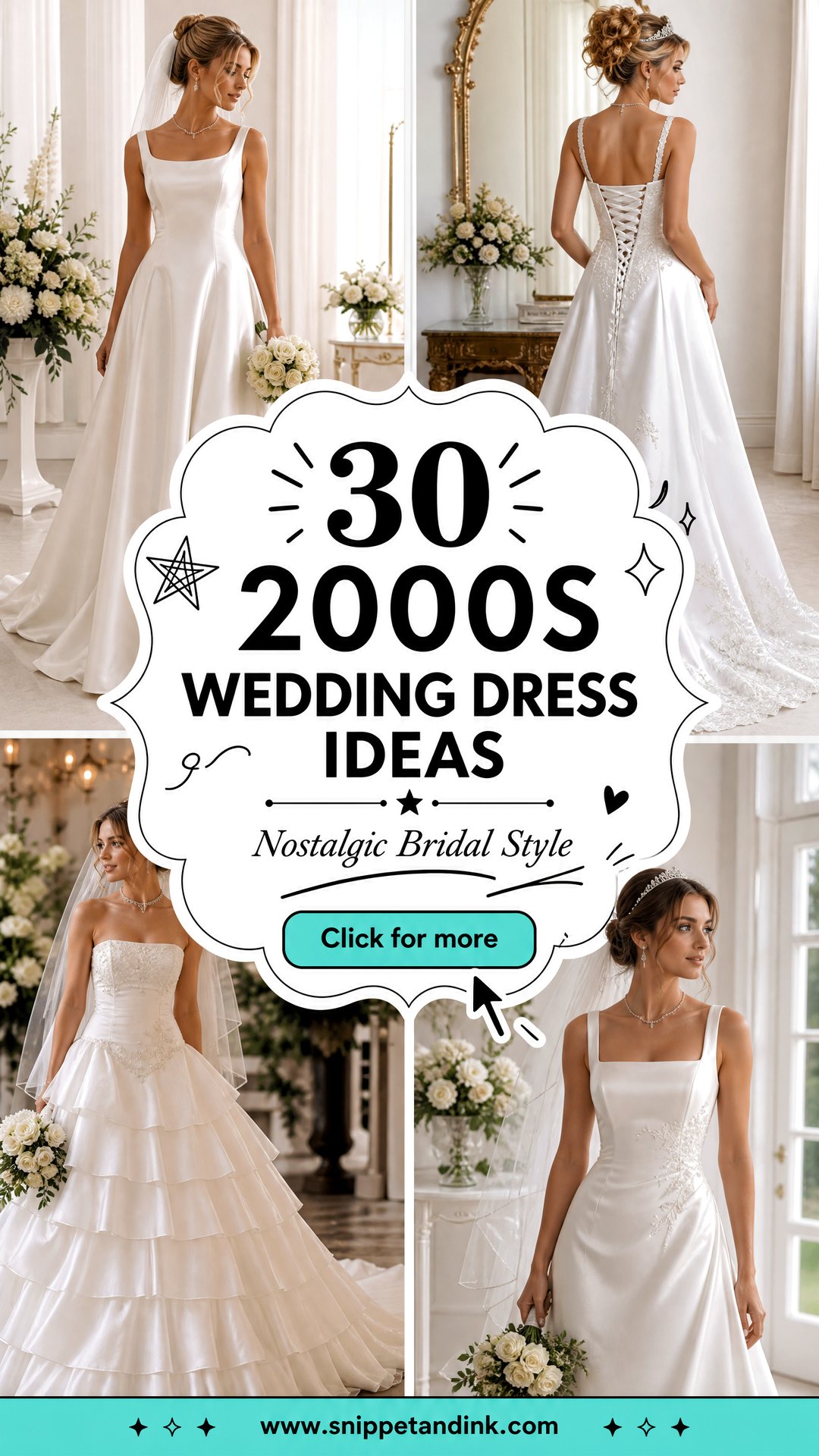
Glossy satin, corset bodices, pick-up skirts, colored sashes and trains that needed two bridesmaids to manage: early-aughts bridal had a very particular look, and more brides are asking me for it again. Some want the real thing from a resale rack; others want a new gown cut along the same lines. Either way, the trick to making it feel current is the same. Pick one signature detail from the decade and keep everything around it quieter than it would have been in 2004. Below are thirty shapes, fabrics and details from that era, with what I’d check on each before you buy.
Buying a Real 2000s Gown Secondhand: What I Inspect
Resale sites and consignment shops are full of gowns from that decade, and some are excellent. They also come with problems a new dress doesn’t. Before a client pays for one, I go over it in good light, inside and out.
- Color: white satin that was stored in plastic or near light often yellows along the folds. Compare the inside of a seam with the outside of the skirt.
- Underarms and hem: perspiration marks and ground-in dirt at the hem are common and don’t always come out.
- Embellishment: run a hand over beading and crystals. Loose threads and dried glue mean repair work.
- Zip and closures: an old zip under strain can split on the day, and replacing it is a routine but necessary job.
- Size label: bridal sizing runs small and has changed over the years, so go by measurements, never the number.
If you’d rather skip the gamble, many current designers cut gowns with those same lines. A new dress with a corset bodice and a ruched waist gives you the look without the restoration.
1. Strapless Satin Wedding Dress
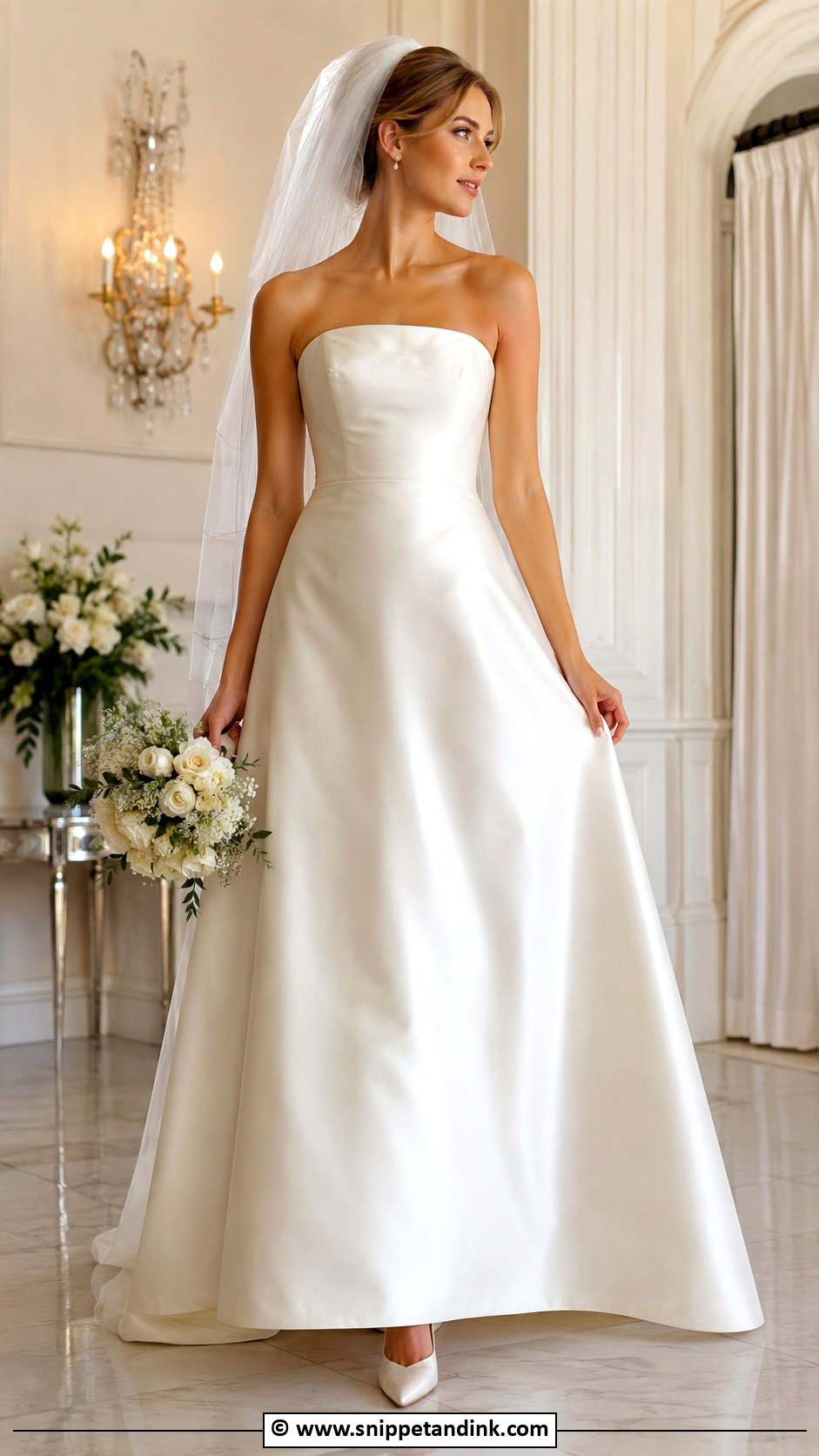
If one dress sums up the decade, it’s this one. A strapless satin bodice with a soft A-line or full skirt, worn with a simple veil and pearl studs. The satin of that era was often heavy polyester with a high shine; today’s versions tend to be a duchess or matte satin, which reads richer in photos and shows fewer wrinkles. Keep the hair sleek in a low bun to stop it tipping into costume. It suits a formal church ceremony or a ballroom.
2. Strapless Ball Gown Wedding Dress
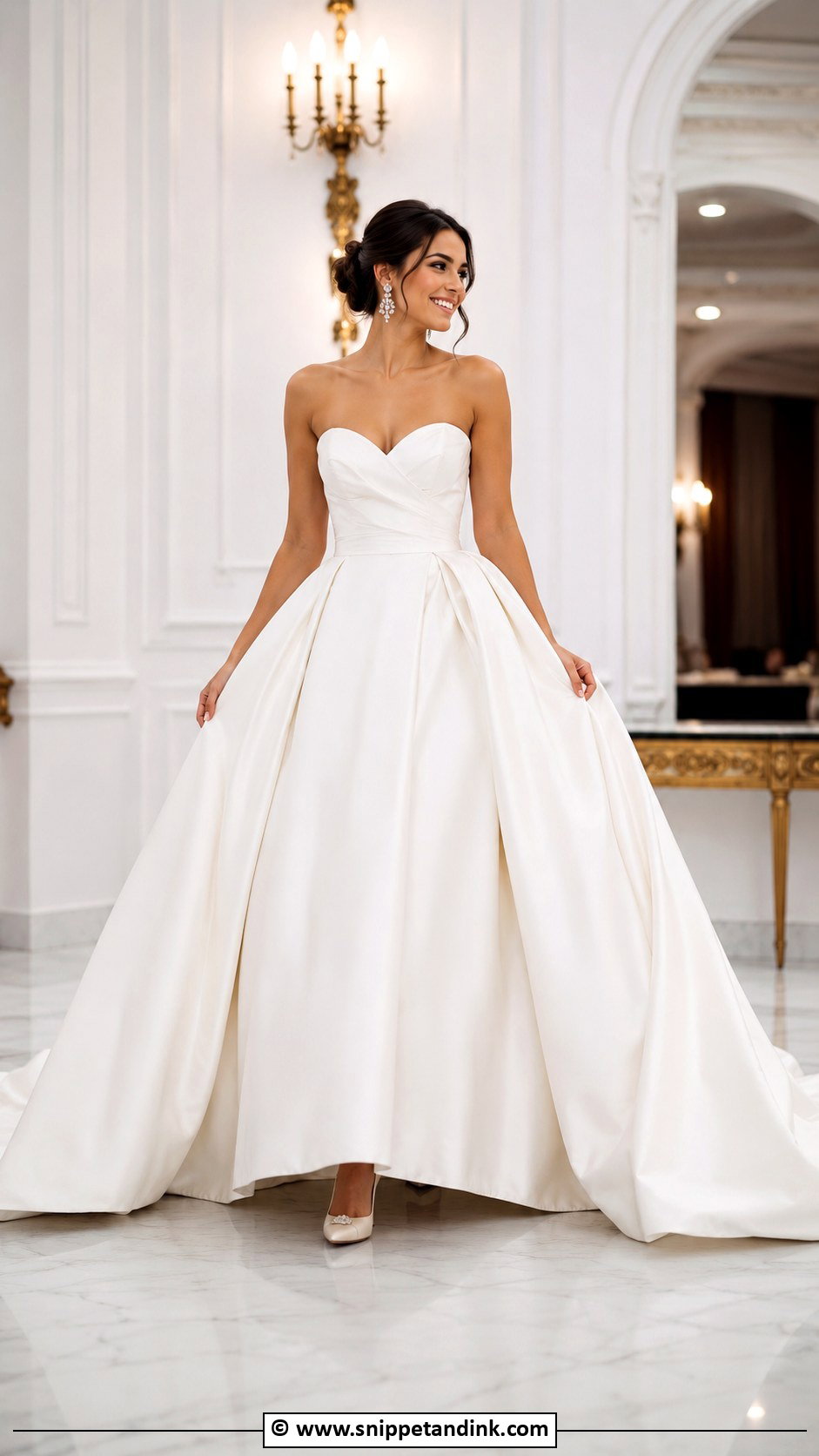
A strapless ball gown wedding dress is the grand-entrance option. Taffeta, satin or organza hold the volume; softer fabrics collapse after an hour. The thing I warn brides about is weight. A full skirt with layers of petticoat can be heavy on the hips by evening, so ask whether the crinoline is built in or removable. A sweetheart neckline softens the top, and with a long train, keep jewelry to drop earrings so the skirt stays the story.
3. Sweetheart Neckline Wedding Dress
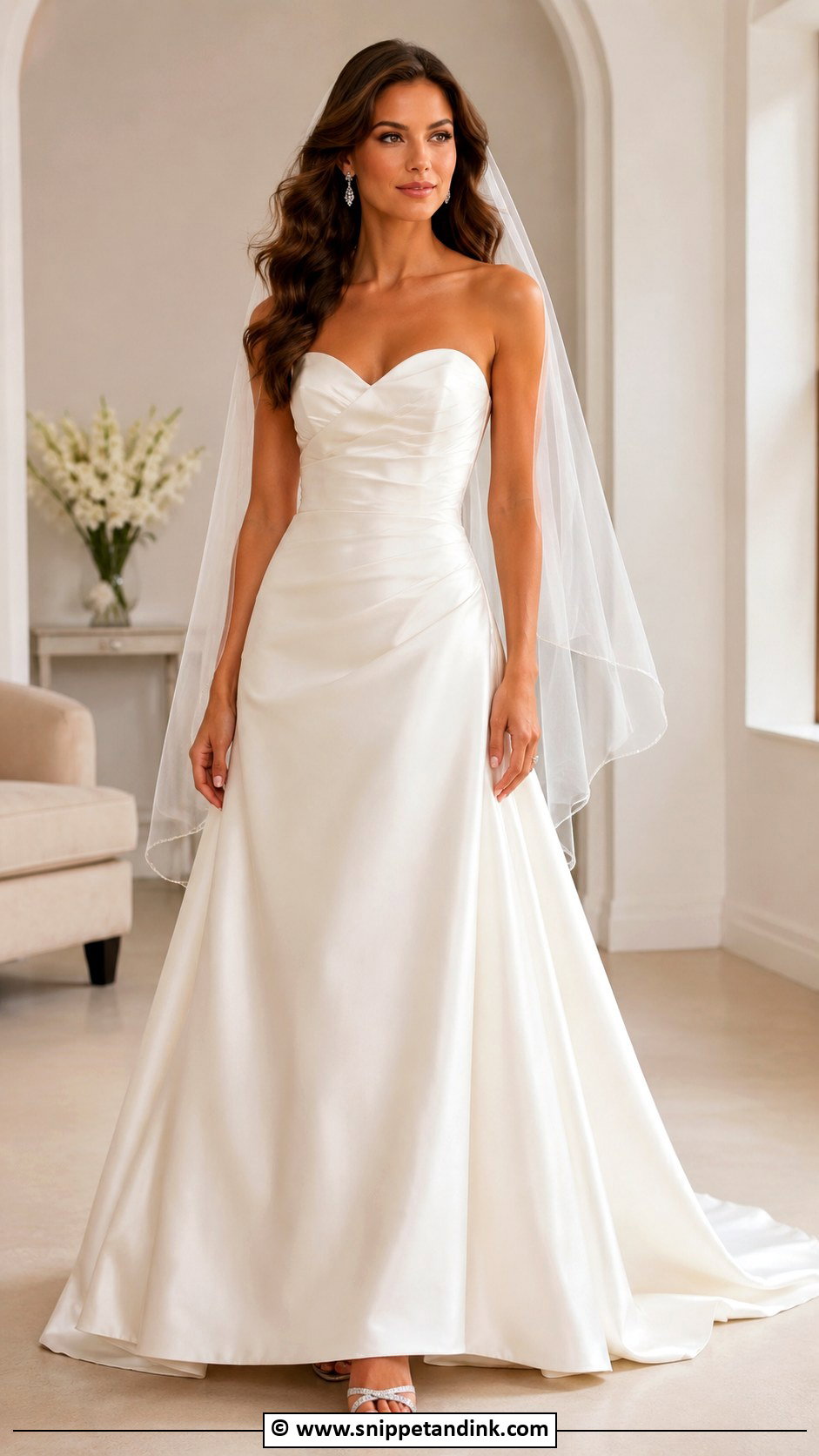
Sweetheart necklines were everywhere in that decade, and they’re still among the easiest to wear. The curve flatters the bust and works on A-lines and mermaids alike. For the true period look, pair it with a corset-style bodice and a little ruching at the waist. My fitting note: the dip at the center of a sweetheart has to sit flat against the sternum. If it gapes when you breathe in, the bodice needs taking in at the side seams, not more tape. Crystal earrings usually beat a necklace here.
4. Corset Bodice Wedding Dress
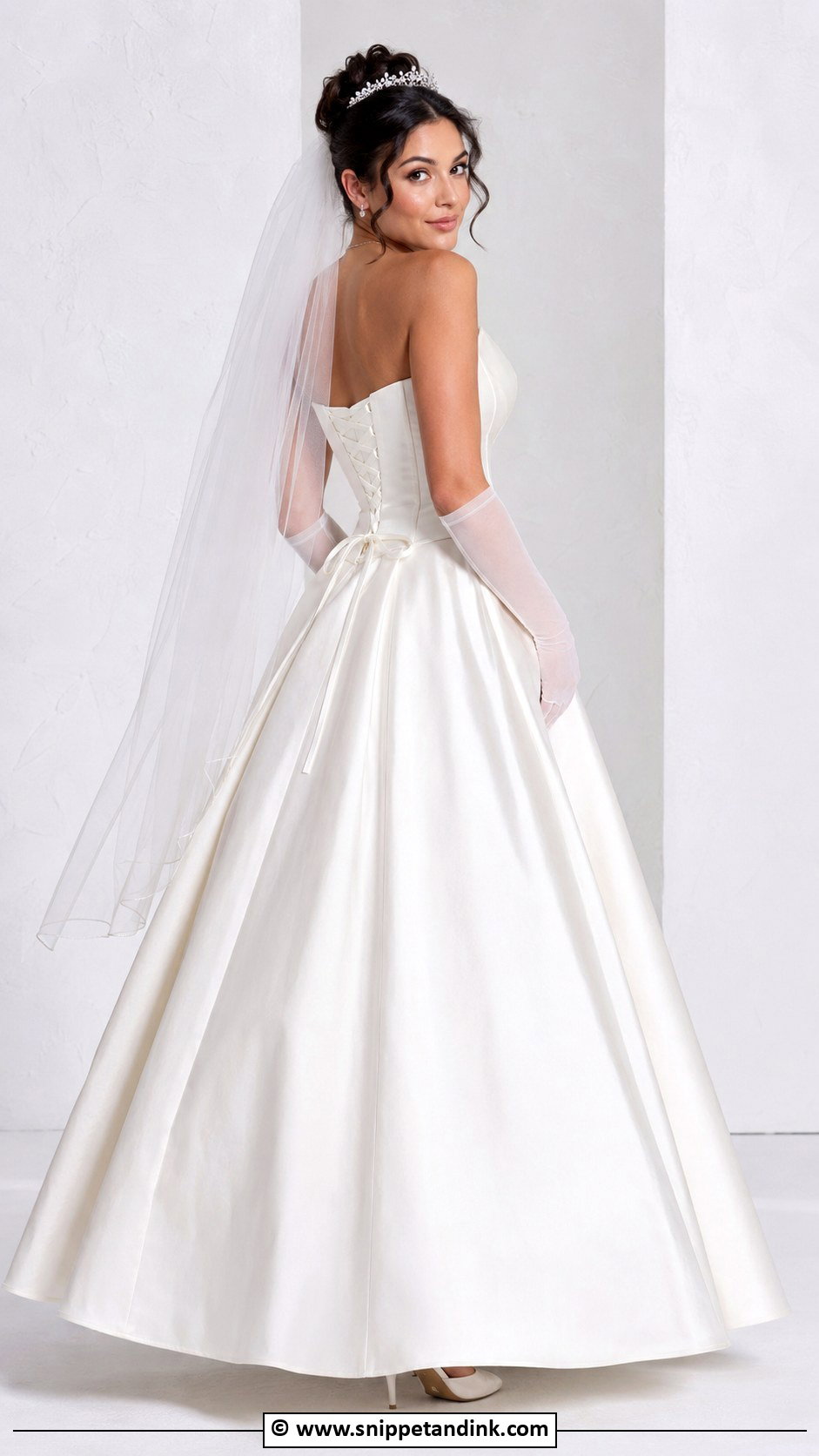
A corset bodice wedding dress holds you so you don’t need straps, which is exactly why it was so popular. Covered boning and smooth satin give the softer version; a lace-up back, beaded trim or a dropped basque waist push it bolder. An A-line skirt balances it, and a mermaid skirt makes it more glamorous. Corsetry fits well only if it’s fitted to your ribcage, so sit down at the fitting and see whether the bottom edge digs in. Crystal hair pins and a sheer veil finish it.
5. Pick Up Skirt Wedding Dress
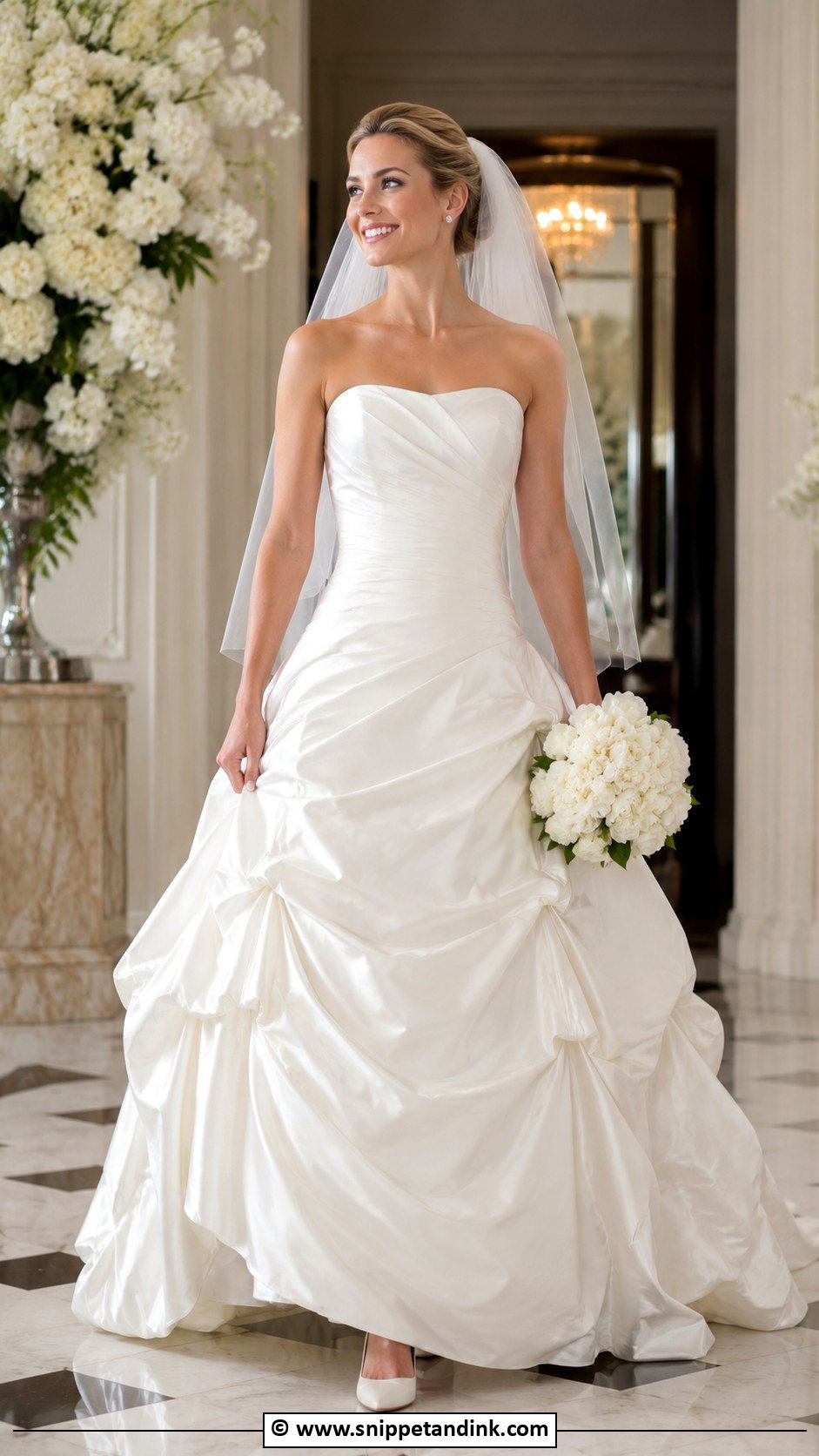
The pick-up skirt is pure nostalgia: fabric caught up in soft folds and tacked so it bubbles. Taffeta and satin hold the pickups crisply; softer fabrics just droop. Pair it with a strapless or sweetheart bodice and stop there on detail. One thing to know before ordering: pick-ups are hand-tacked, so they can loosen when the skirt is crushed in a car. I put a few extra stitches at each point before the wedding, and I’d tell any bride to sit carefully in transit.
6. Halter Wedding Dress
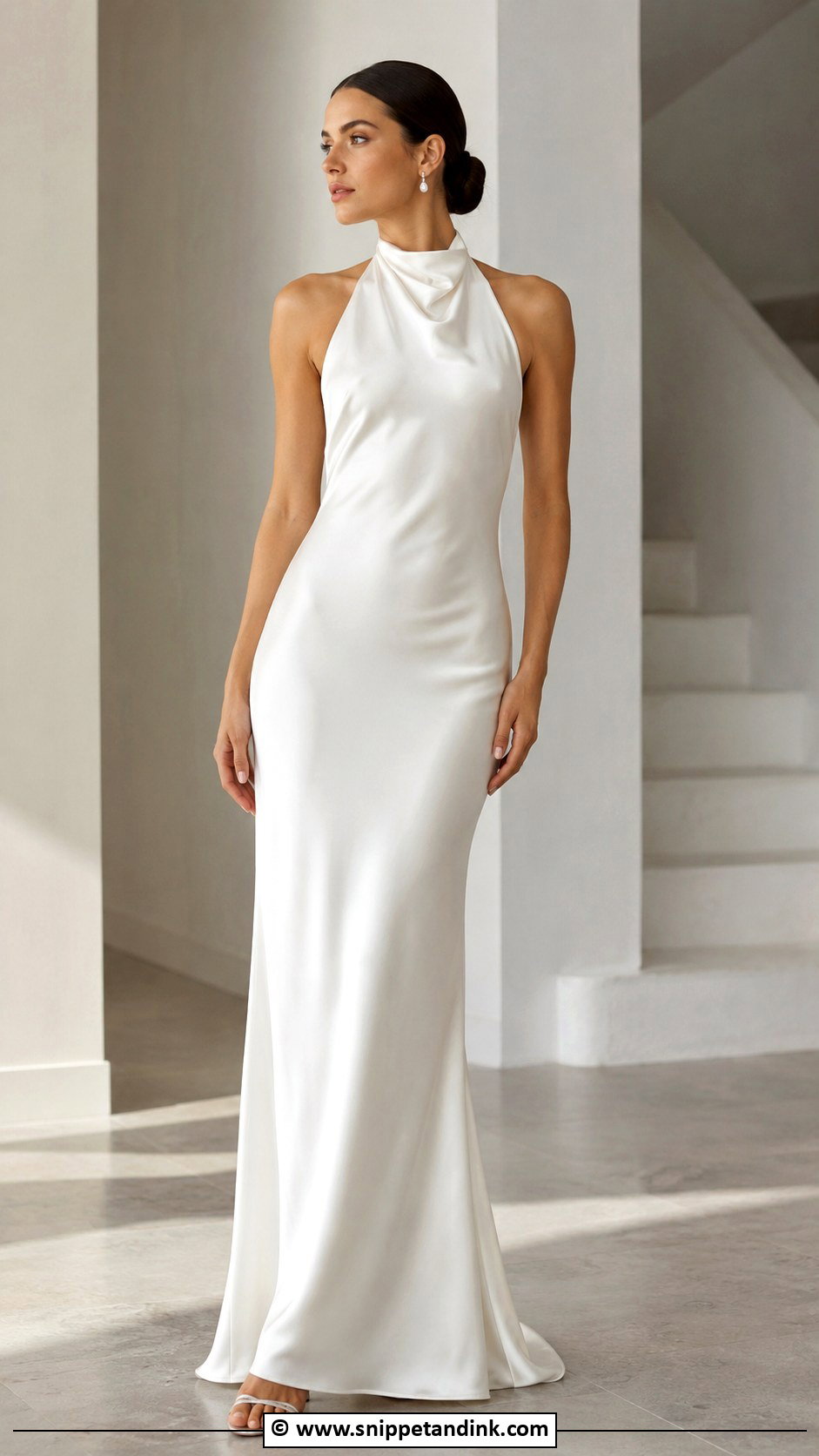
A halter shows the shoulders and the back but keeps the front covered, and it lifts the bust without a strapless bodice. Plain satin halters look minimal; beaded halter bodices sparkle. A slim A-line or column skirt keeps the line long. Skip the necklace. The neckline is the detail. I’d check the neck strap’s weight on a long day, as heavy beading can pull on the back of the neck, and an adjustable hook at the nape makes a real difference.
7. One Shoulder Wedding Dress
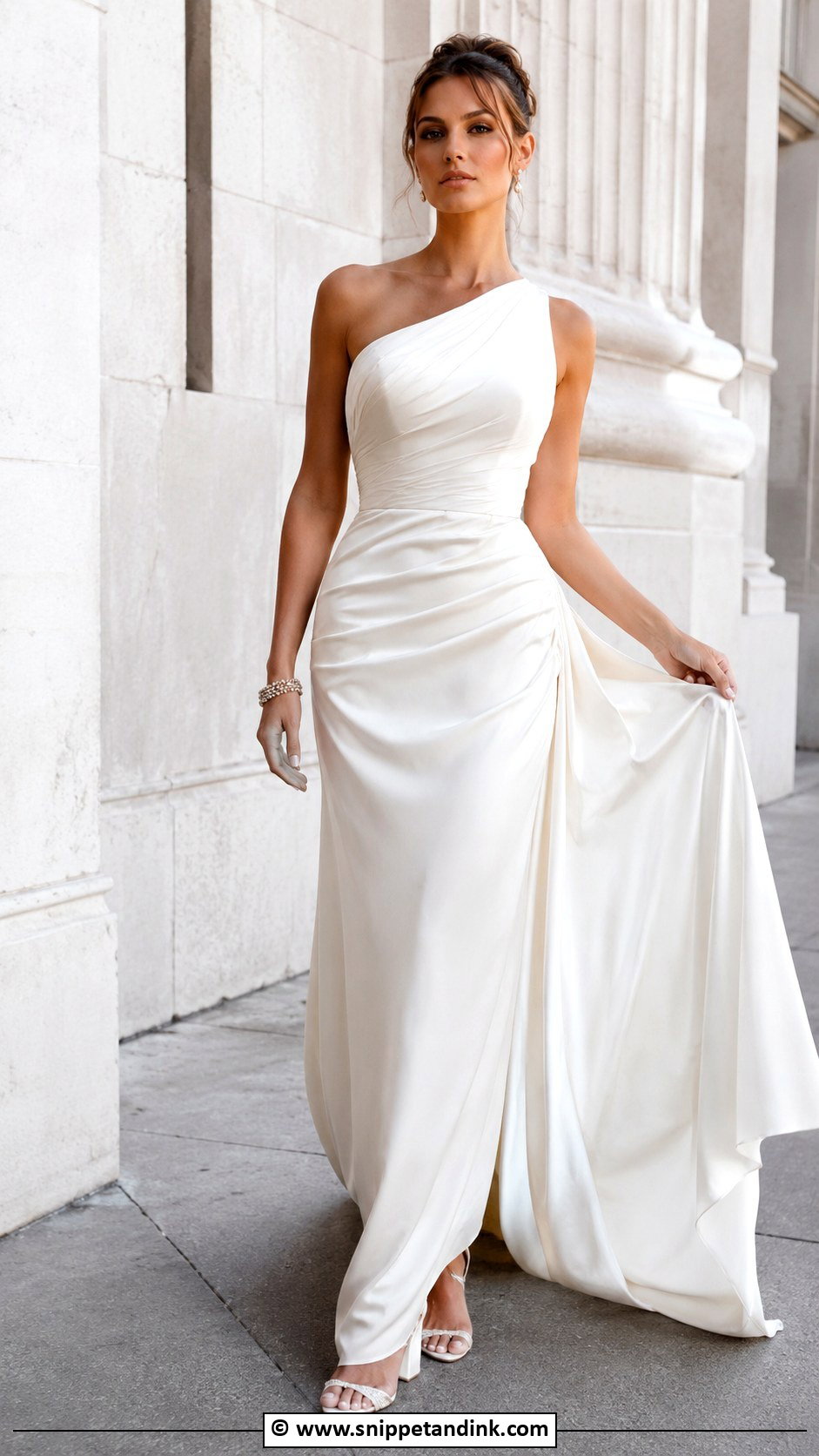
One-shoulder dresses were the decade’s answer to the endless strapless gown. The strap can be plain, ruched, beaded or finished with a fabric flower. A fitted bodice and flowing skirt balance it; a slim mermaid gives it a red-carpet look. Asymmetry pulls attention diagonally across the body, so I keep jewelry minimal and the hair swept to the bare side. Raise your arms at the fitting, because a single strap shifts more than two.
8. Mermaid Wedding Dress
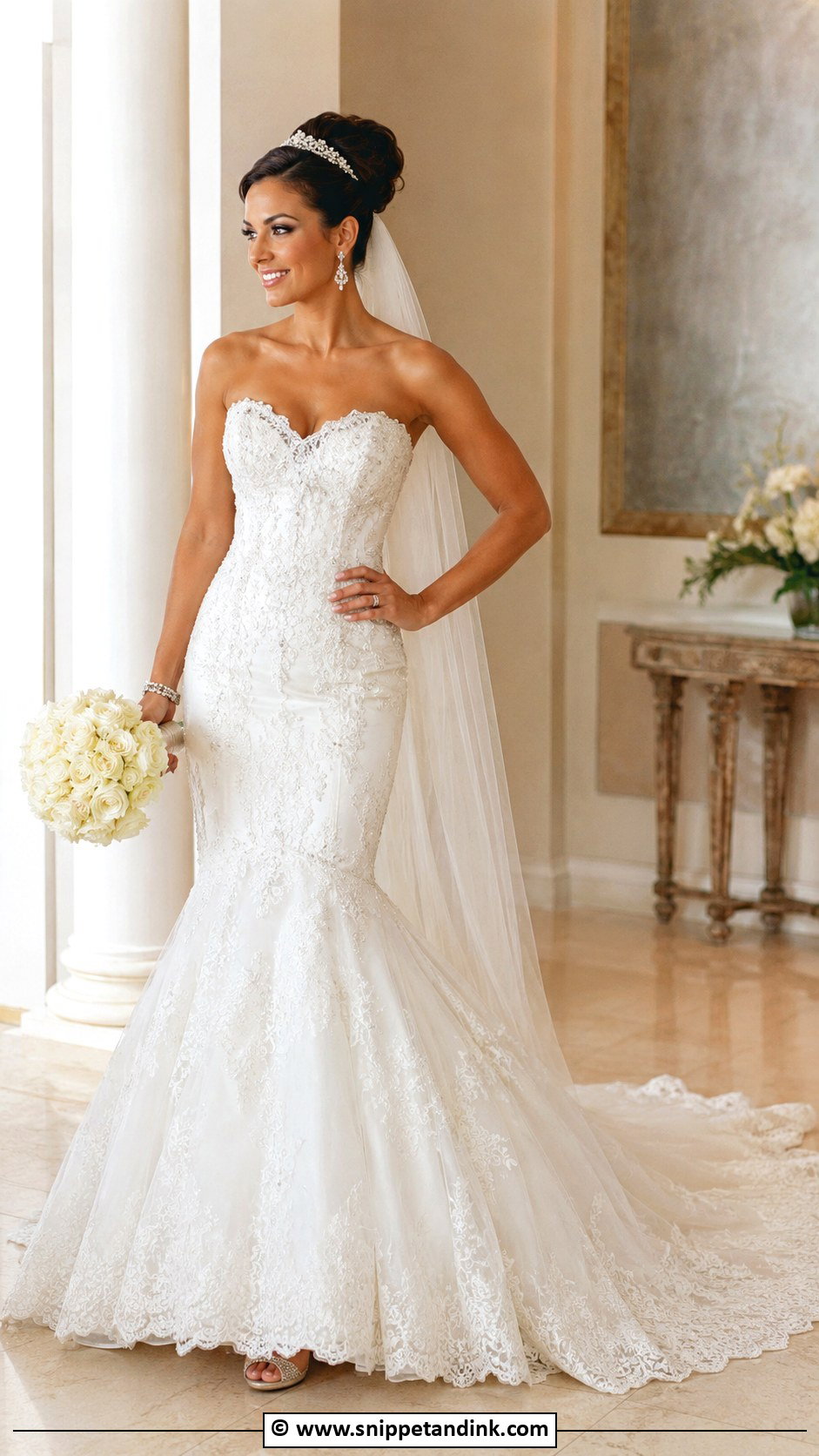
A mermaid wedding dress fits through the bust, waist, hips and thighs, then flares at or below the knee. That flare point decides everything. Too high and it looks like a fit and flare; too low and you’ll shuffle. I always have a bride walk the shop floor and step up onto the fitting platform before we lock the hem. Satin, lace or beading with a strapless sweetheart neckline gives you the true late-2000s version, and a chapel train adds weight without overwhelming the shape.
9. Fit And Flare Wedding Dress
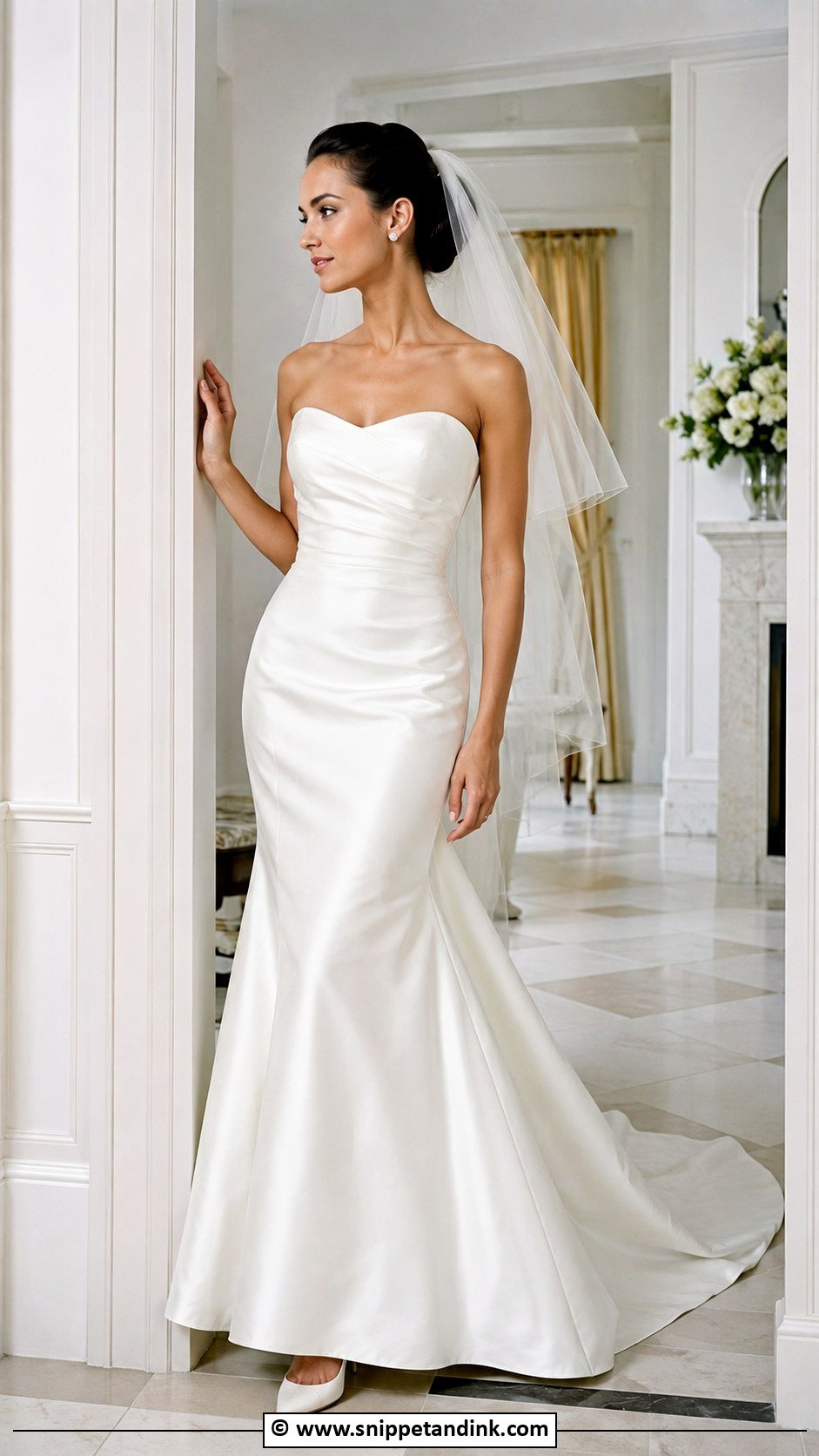
Fit and flare follows the waist and hips but opens higher and more gently than a mermaid, which means you can walk, sit and dance with far less effort. Satin and mikado look crisp; lace looks more romantic. A strapless or sweetheart top keeps it in period. It’s the shape I suggest to brides who love the mermaid look in photos but can’t face eight hours in one. A sparkling comb and pointed heels finish it.
10. A Line Satin Wedding Dress
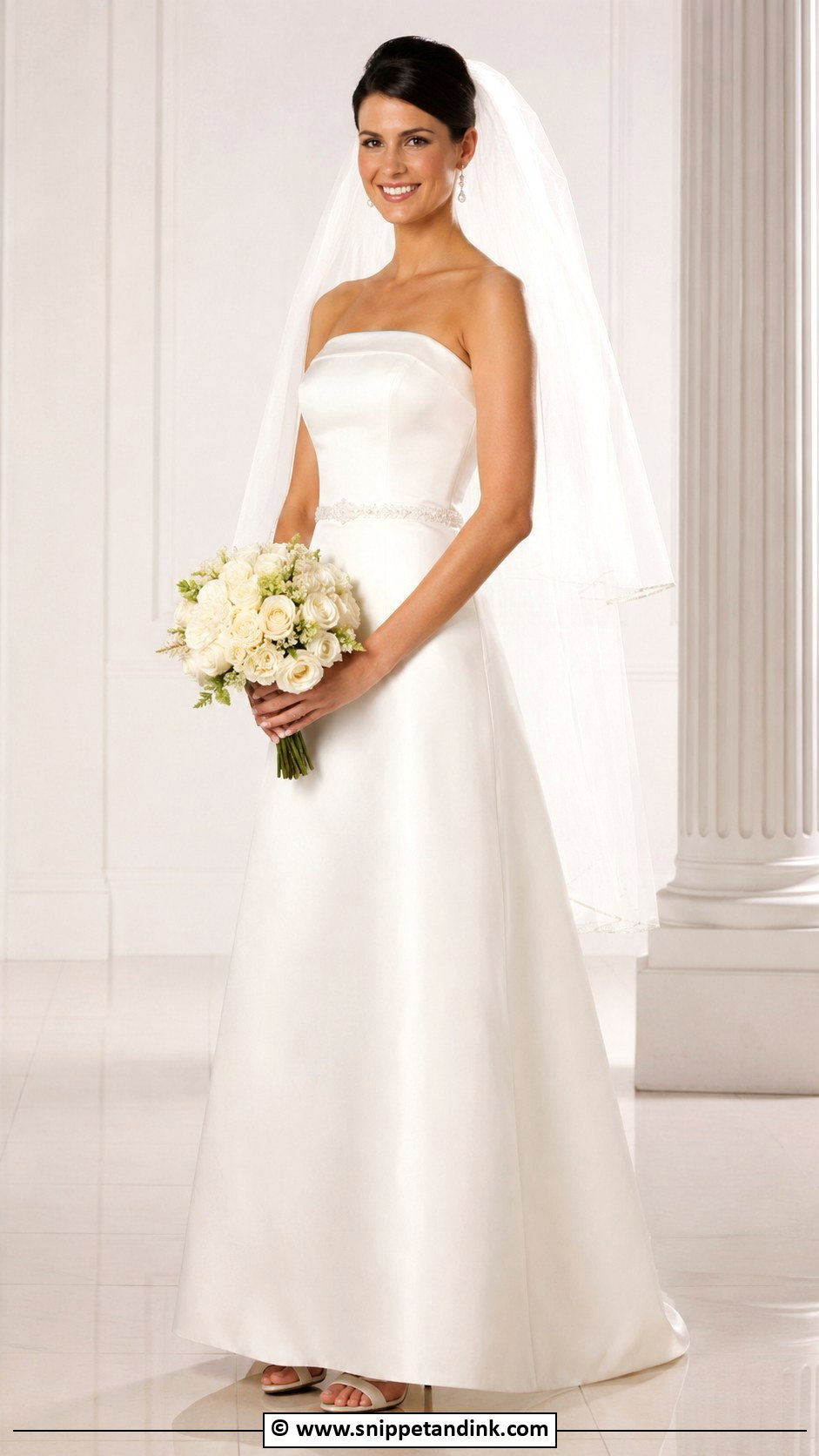
An A-line in satin is the easiest gown from that decade to wear now. The flare suits most bodies, and satin gives shine without needing ornament. Strapless, square or V neck all work, depending on how much support you need. A small band of beading at the waist is enough of a nod to the era. Satin shows creases, so I’d ask how much the skirt marks when you sit, and steam it at the venue rather than at home.
11. Empire Waist Wedding Dress
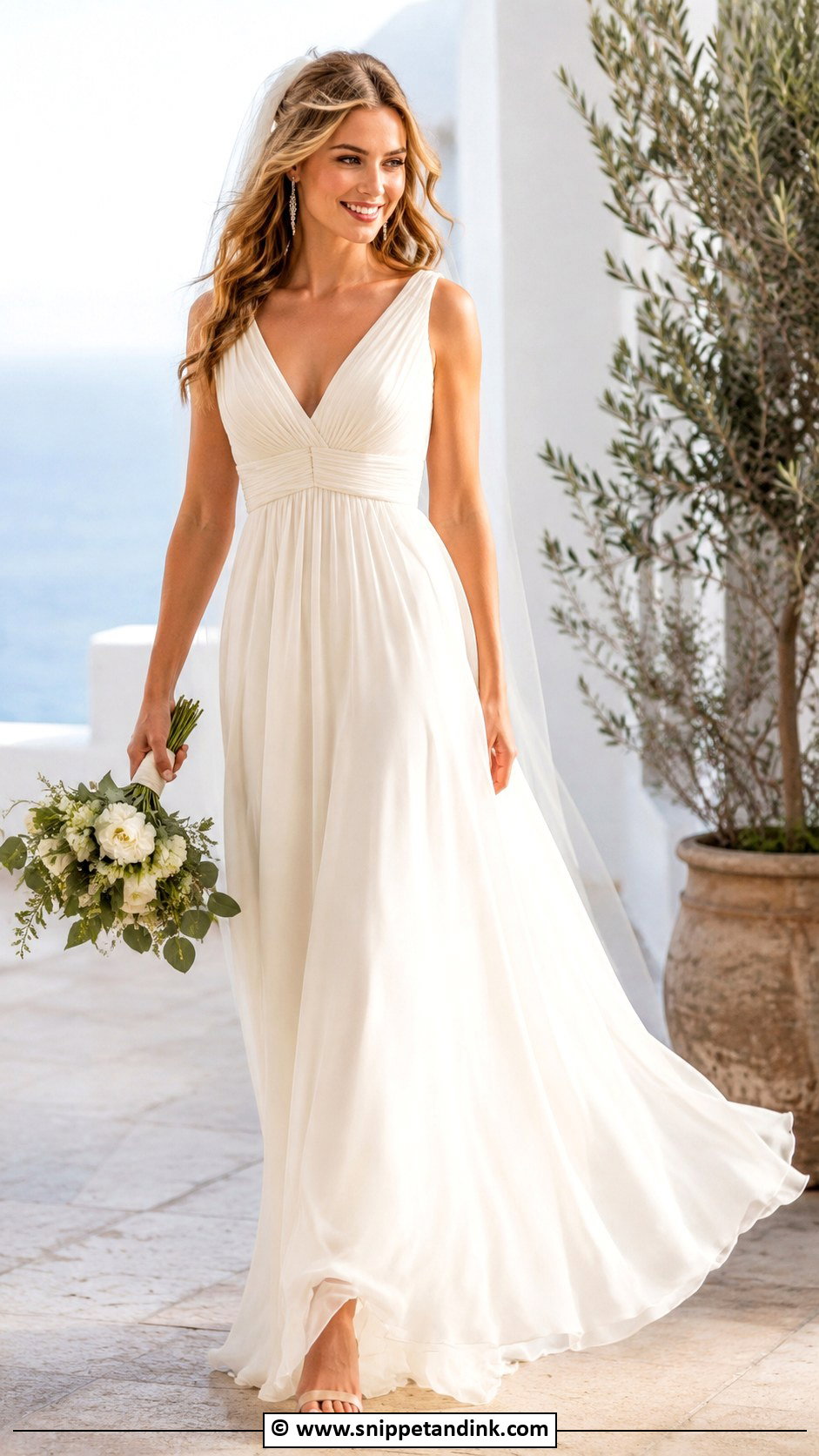
An empire waist wedding dress sets the seam just under the bust and lets the skirt fall from there. It was the beach and garden dress of the 2000s, and it still makes sense in heat because nothing is tight below the ribs. Chiffon, silk or soft satin keep it light. A halter, V neck or thin straps suit it. I’d steer petite brides with a short torso toward a slightly lower seam, since a very high one can look like maternity wear. Flat sandals and a light veil are enough outdoors.
12. Beaded Wedding Dress
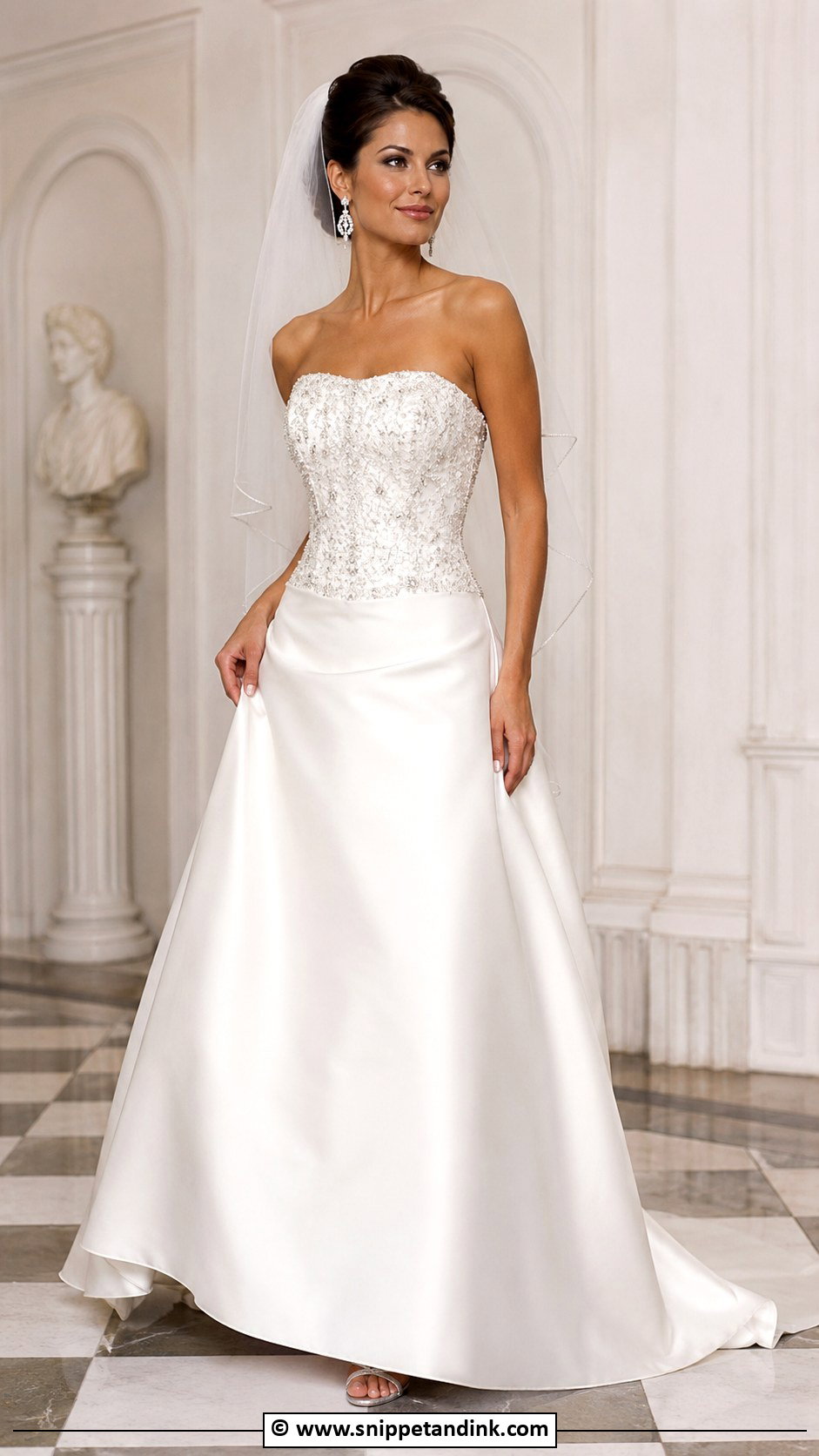
Beading was the decade’s sparkle. It can sit on the bodice, neckline, straps, skirt or train. My advice is to pick one area for it, not all of them. A beaded strapless bodice with a plain satin skirt is the most era-true version. Beading adds real weight, so ask the shop what a fully beaded gown weighs on the hanger before you fall for it, and check that the seams under the arms aren’t beaded, because that chafes. Silver heels and crystal earrings finish it.
13. Crystal Wedding Dress
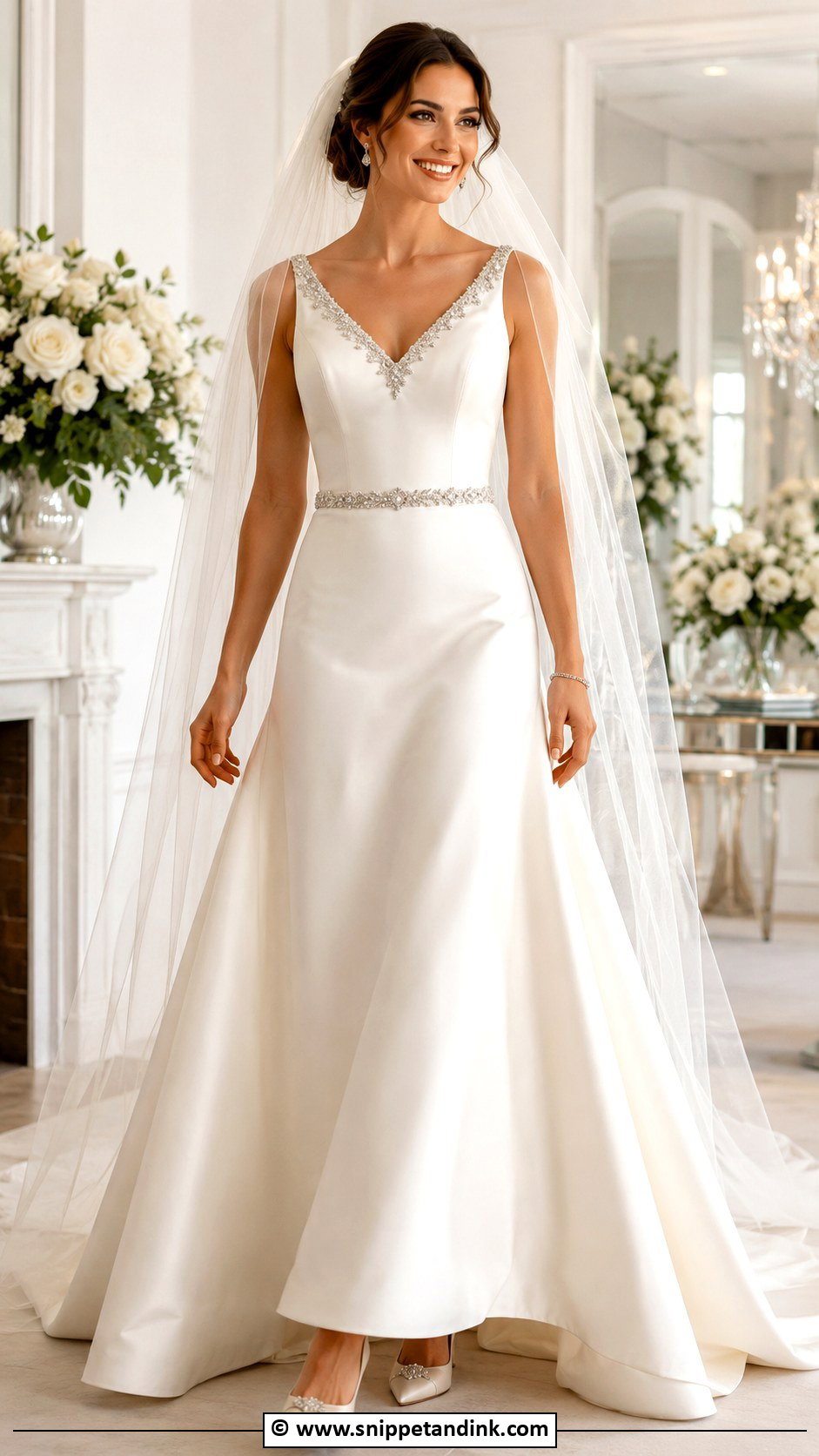
Crystals catch light more sharply than beads, so a little goes a long way. A satin gown with crystal trim at the neckline is subtle; a fully encrusted bodice is dramatic. Many crystals on budget gowns are heat-fixed with glue, and they can drop off during the day. I check by running a hand gently over the bodice; anything loose gets hand-sewn before the wedding. Keep the hair and bouquet soft so the dress doesn’t feel busy, especially for an evening reception.
14. Lace Up Back Wedding Dress
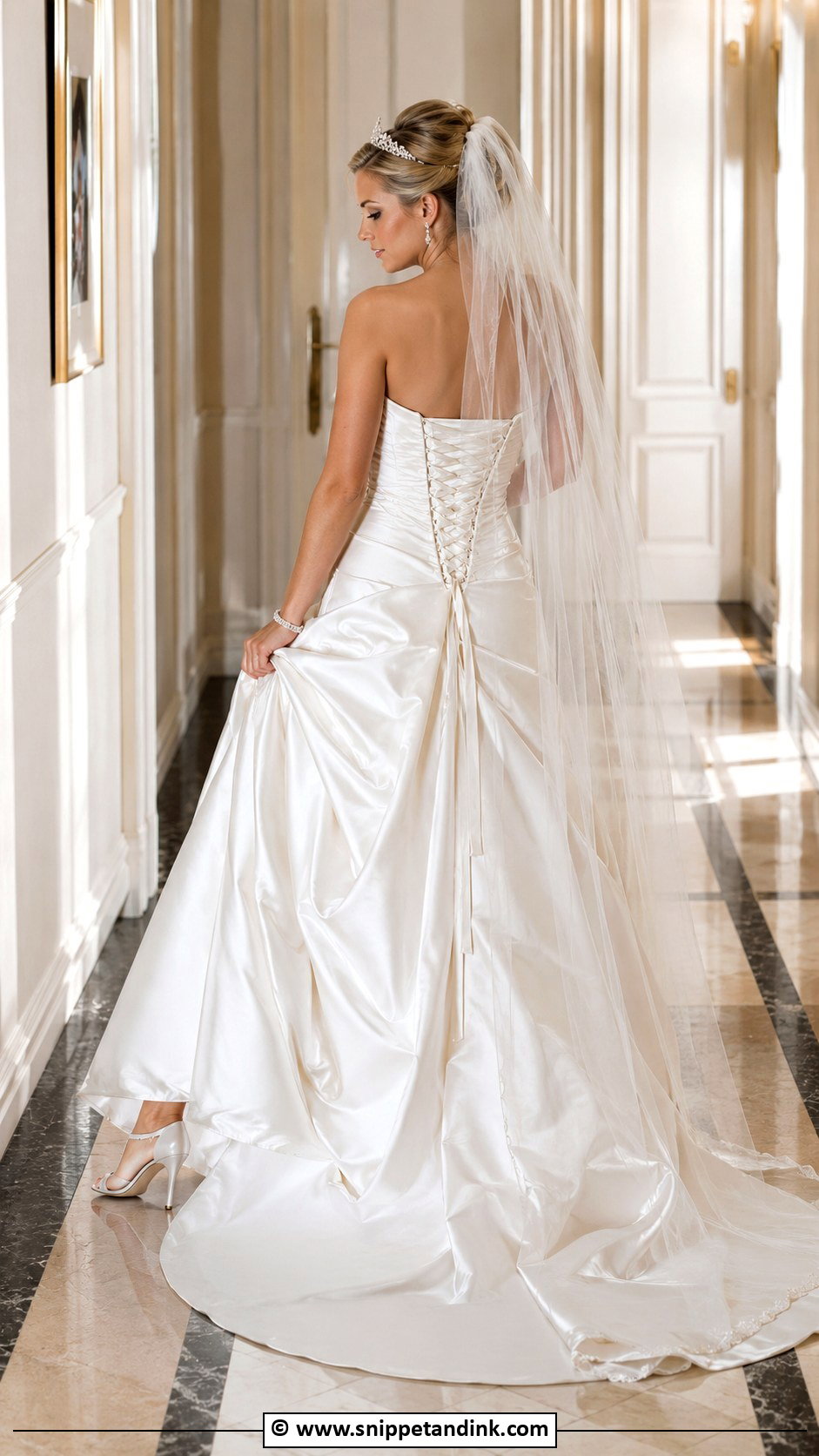
Lace-up backs were a signature of the decade, and there’s a practical reason: they adjust. If your weight shifts a little before the wedding, the laces take it up. Pair one with strapless satin, a taffeta ball gown or a fitted lace dress. I’d swap a wide contrast ribbon for a narrow cord that matches the gown, which looks more current. Have someone practise lacing it before the morning of the wedding. Done wrong, it puckers and loses support within an hour.

15. Colored Sash Wedding Dress
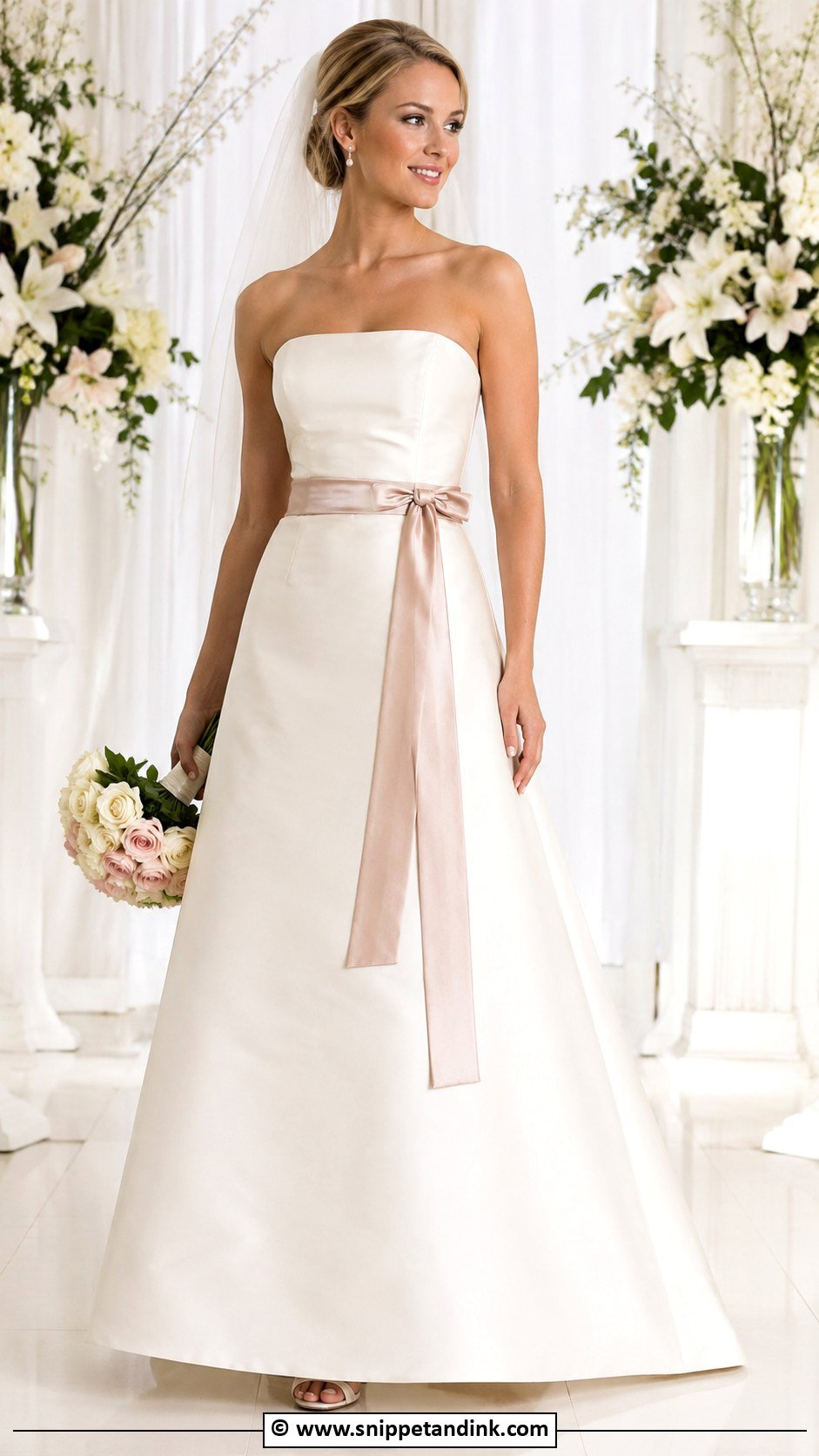
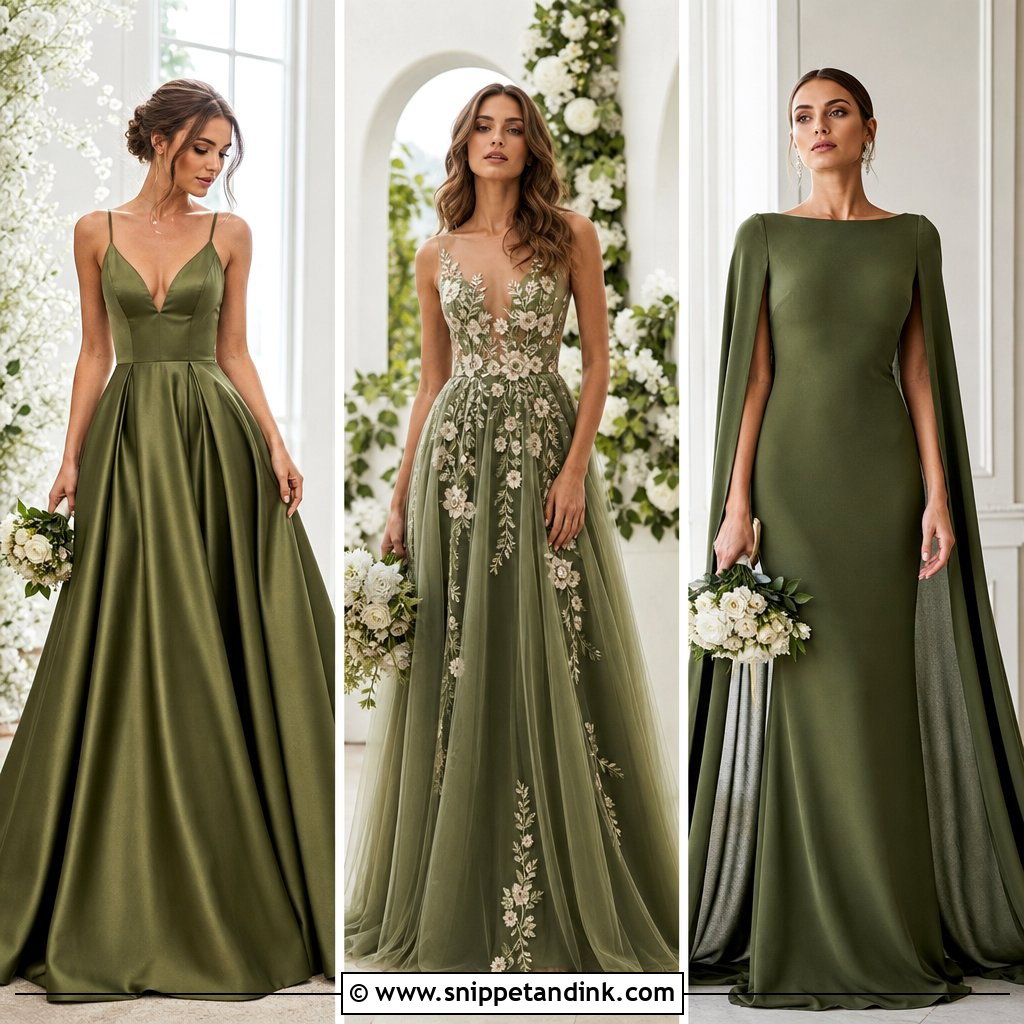
So many 2000s brides tied a ribbon at the waist in blush, champagne, black or a bridesmaid color. It defines the waist and gives a plain gown a personal note. It works best on A-lines, strapless ball gowns and simple satin. Tack the sash at the side seams so it doesn’t ride up when you sit, and choose a fabric with some body. Thin satin ribbon twists. Pearl earrings and a plain veil keep the rest calm.
16. Taffeta Wedding Dress
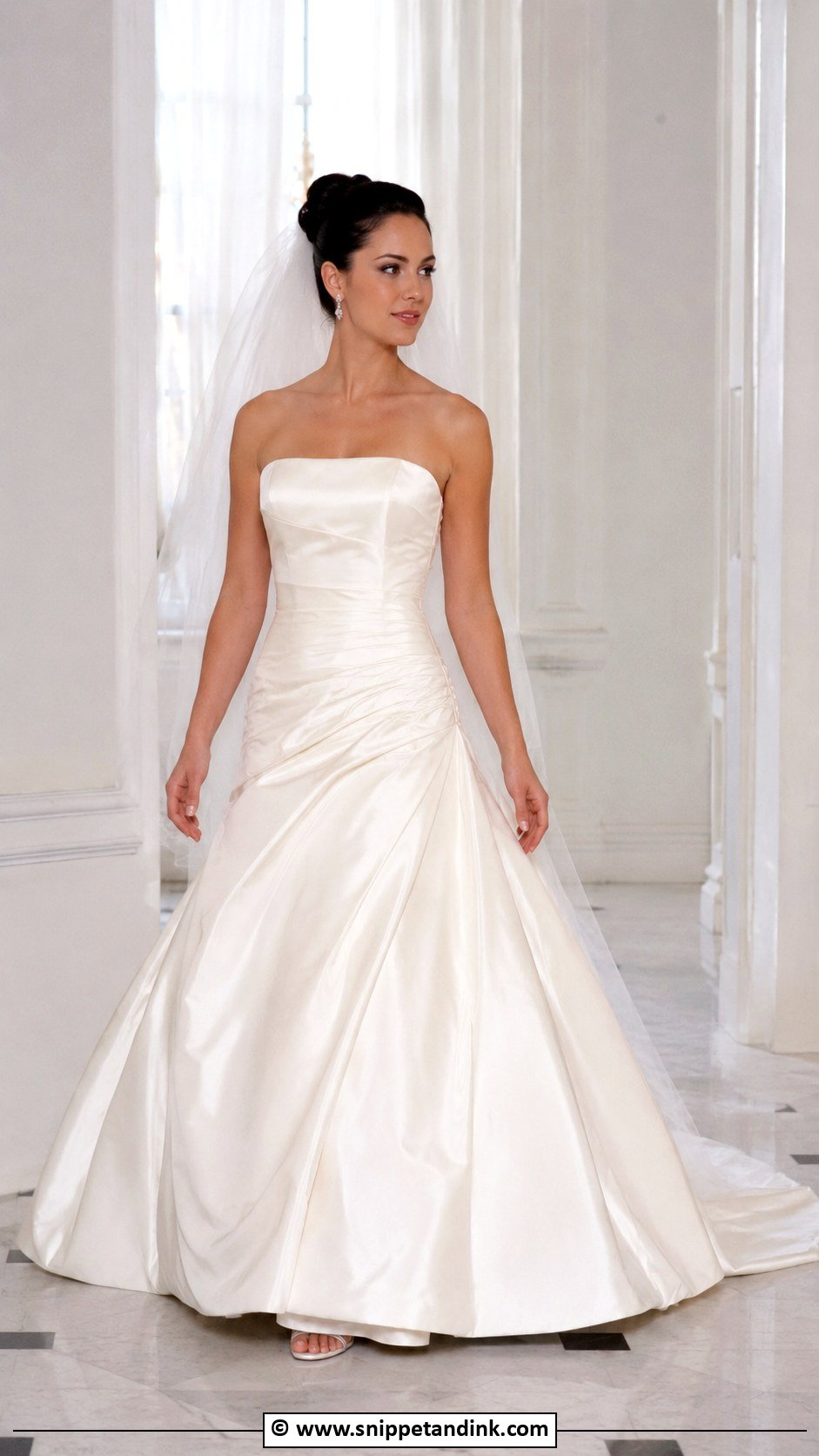
Taffeta has a crisp hand and a slight rustle, and it holds dramatic shapes better than almost anything else: ball skirts, pick-ups, pleated bodices. A strapless taffeta ball gown is very true to the decade. Because the fabric is textured already, it doesn’t need beading. The catch is that taffeta creases sharply, and those creases don’t always steam out, so I’d always have it pressed by a professional rather than tackling it at home. A ruched waist or a slim belt adds definition.
17. Ruched Bodice Wedding Dress
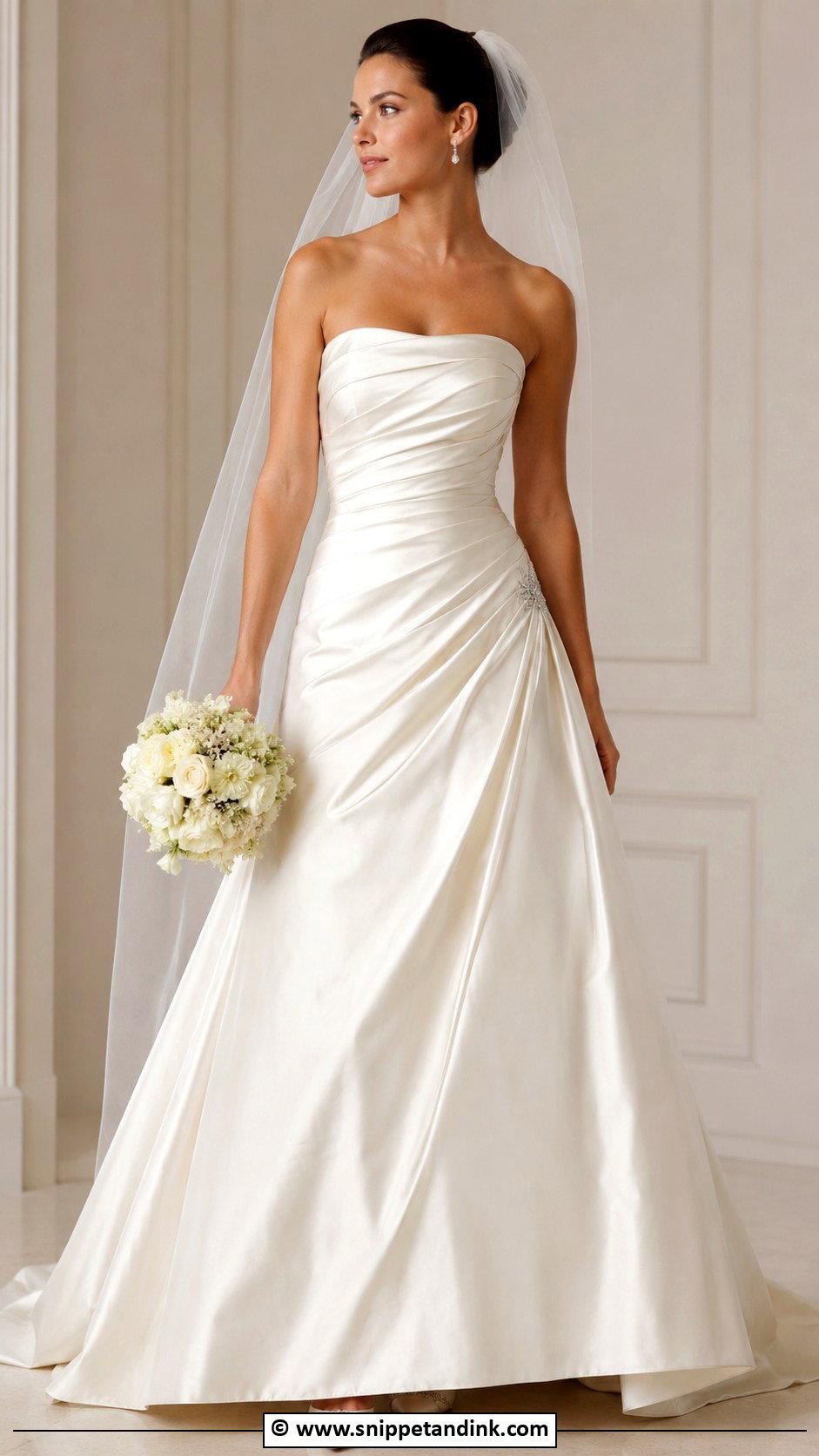
Ruching gathers fabric across the bodice, either straight across, to one side or on a diagonal. It’s forgiving, because the folds disguise small changes in fit, and it was all over strapless satin and taffeta gowns of the era. An A-line skirt keeps it classic; a fit and flare adds shape. I’d check the gathers are stitched to an inner lining rather than floating, otherwise they shift during the day and look messy in later photos.
18. Asymmetrical Draped Wedding Dress
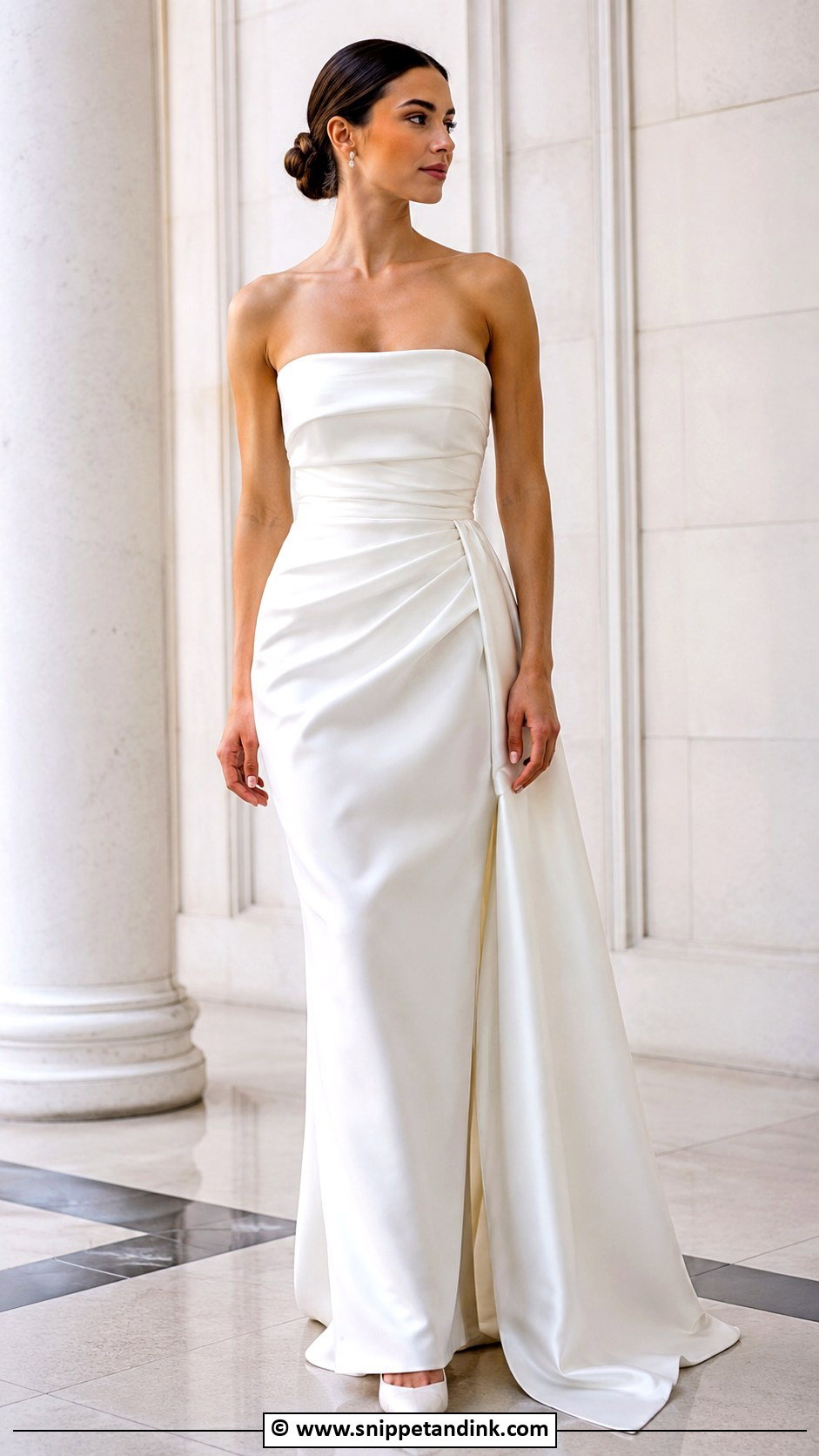
Draping gives that red-carpet feeling: fabric crossing, gathering or falling at an angle. Satin drapes most smoothly. A strapless gown with side ruching reads classic; a one-shoulder draped gown reads modern. Since the draping is the detail, accessories stay simple. A low bun and small earrings are plenty. Draped bodices are hard to alter without disturbing the folds, so buy one that’s already close to your size.
19. Floral Applique Wedding Dress
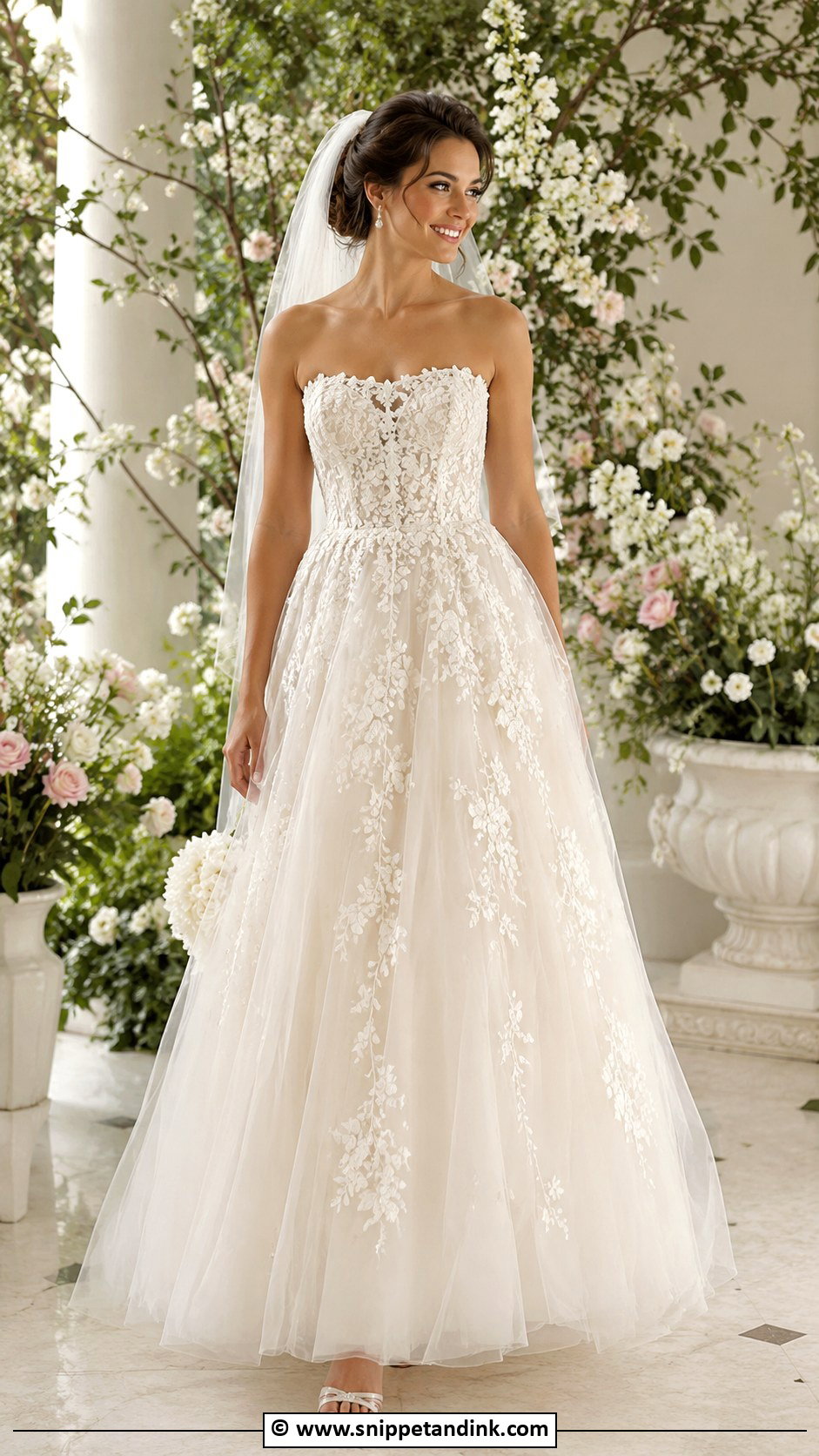
Floral appliqués add texture without the sparkle of beading. In that decade, they usually sat on strapless gowns with tulle or organza skirts, scattered down the skirt or across the train. For a fresher version, choose appliqués spaced apart rather than packed together. The ones that age best are stitched on by hand, while glued appliqués can lift at the edges. If the dress has flowers at the waist or shoulder, I’d keep the bouquet plainer than usual.
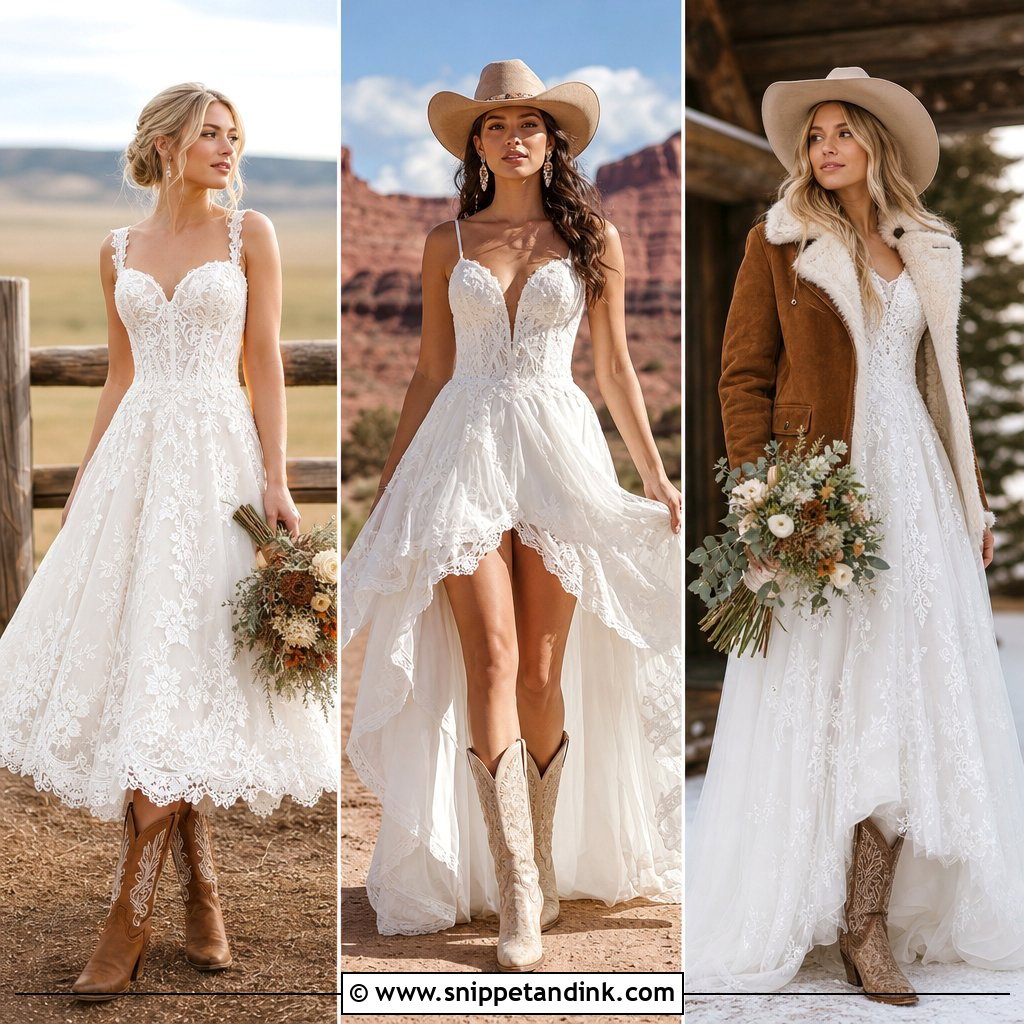




20. Ruffled Skirt Wedding Dress
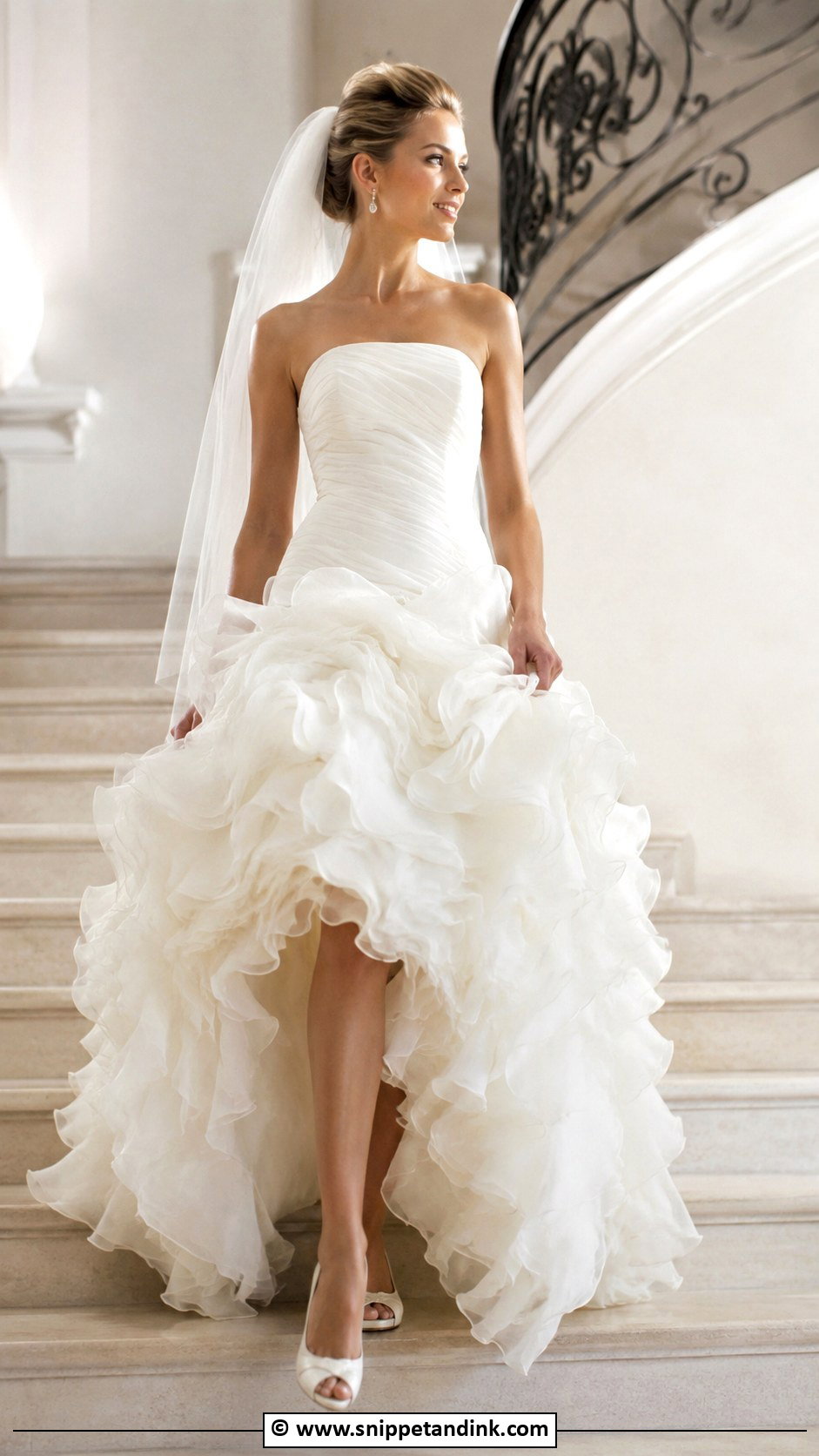
Ruffles bring movement and a little fun. They can be soft and layered or big and dramatic. A fitted strapless bodice keeps the skirt reading bridal. Organza and tulle make airy ruffles; satin ruffles are heavier and more formal. Watch for hem edges on ruffles, since a raw or lettuce edge frays and catches heels on dance floors. In photos, this skirt comes alive when you walk, turn or stand on a staircase.
21. Tiered Skirt Wedding Dress
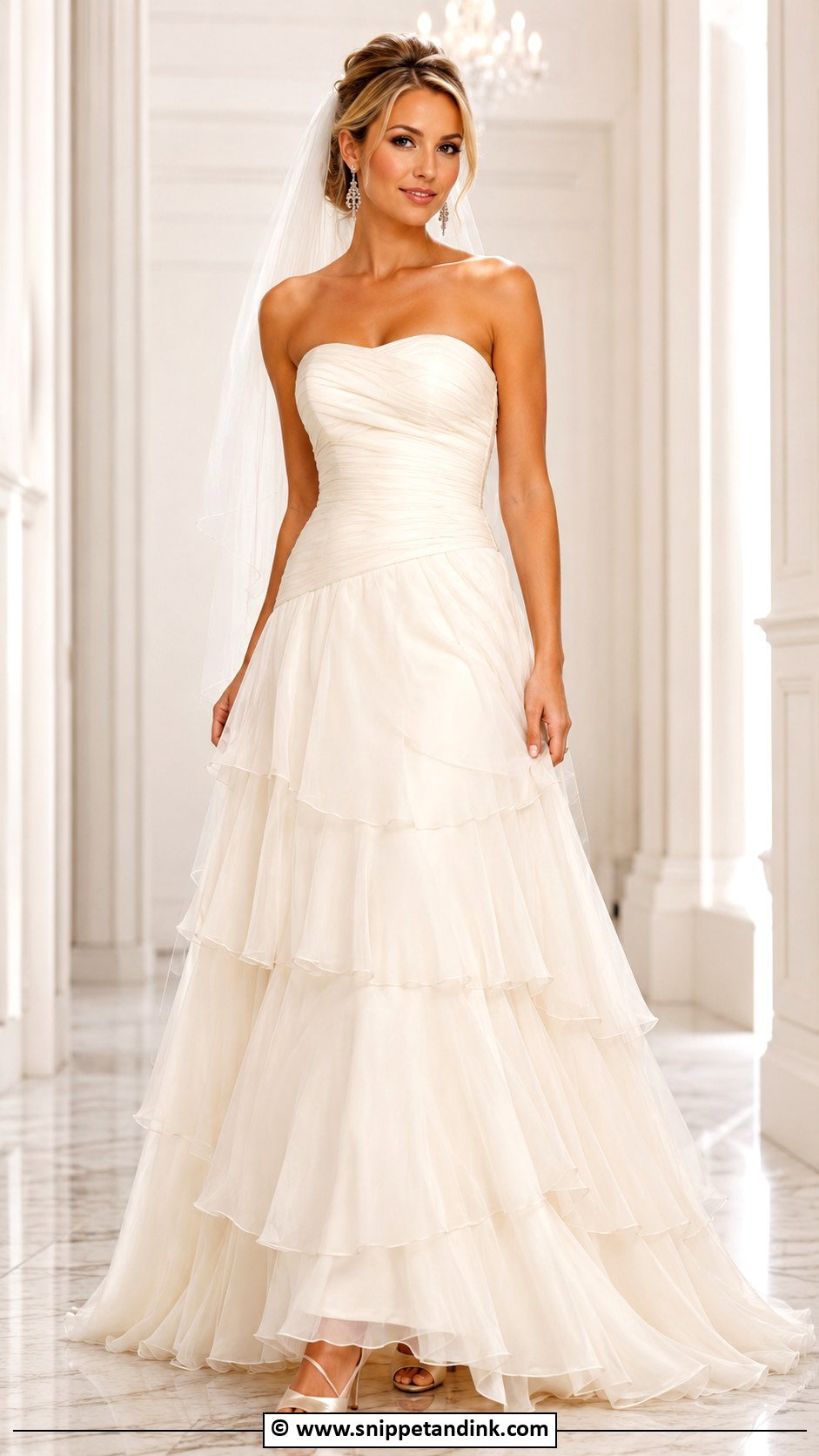
Tiered skirts build in horizontal layers, so the gown has depth without being a full princess skirt. Chiffon gives a soft effect, organza a dramatic one, taffeta structure. A plain bodice works best: a strapless sweetheart, a fitted corset or thin straps. Tiers add width at each seam, so I’d advise petite brides to choose fewer, longer tiers, which elongate rather than chop the figure into bands.
22. Spaghetti Strap Wedding Dress
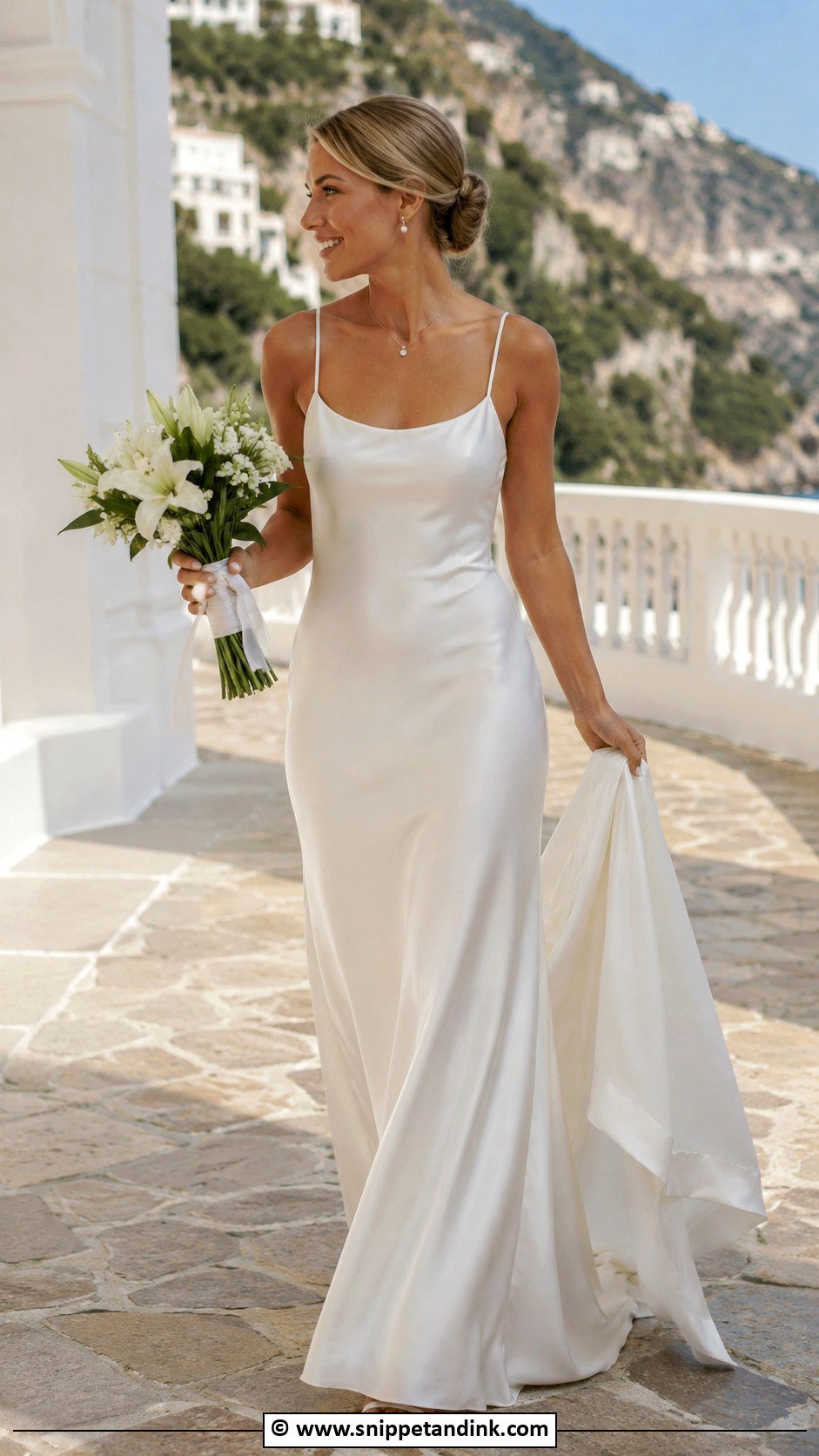
A spaghetti strap wedding dress is the lighter side of the decade. Thin straps showed up on simple satin gowns and slip-inspired dresses. They give a little security without a heavy neckline. A straight, scoop or slight sweetheart neck suits them, and beaded straps add a nostalgic touch. Fine straps carry little weight, so if you have a full bust, ask whether the bodice has internal support. Strappy heels and a low bun suit warm-weather and destination weddings.
23. Square Neck Wedding Dress
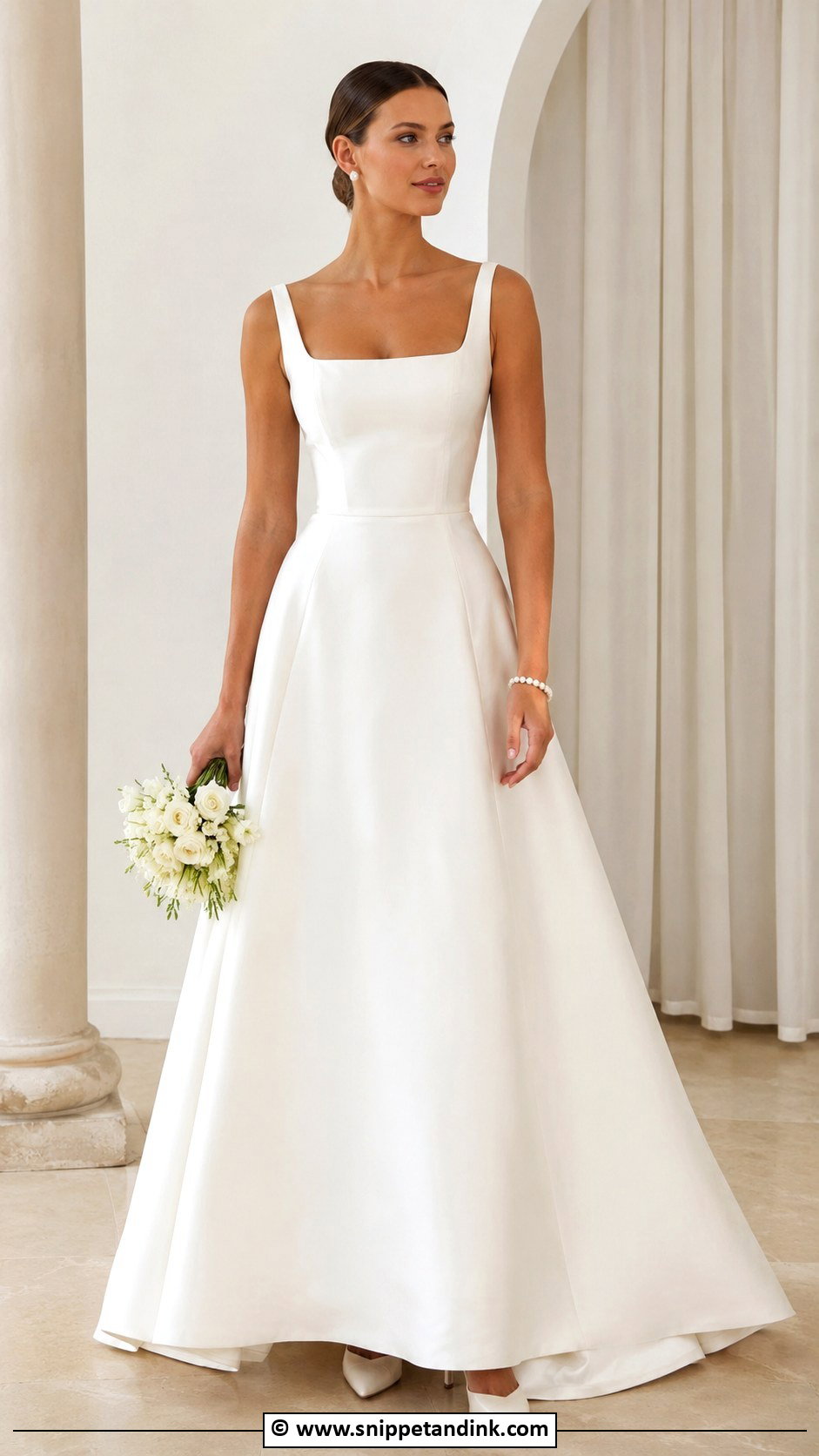
Strapless was everywhere, but square necklines quietly appeared on simple satin and A-line dresses too. The shape frames the collarbone, so you need almost no jewelry. Wide straps give support; thin straps feel softer. A fitted bodice with a satin A-line skirt is a wearable version. Lean forward at the fitting: a square neck that lifts away from the chest when you bend needs adjusting at the strap seams.
24. V Neck Wedding Dress
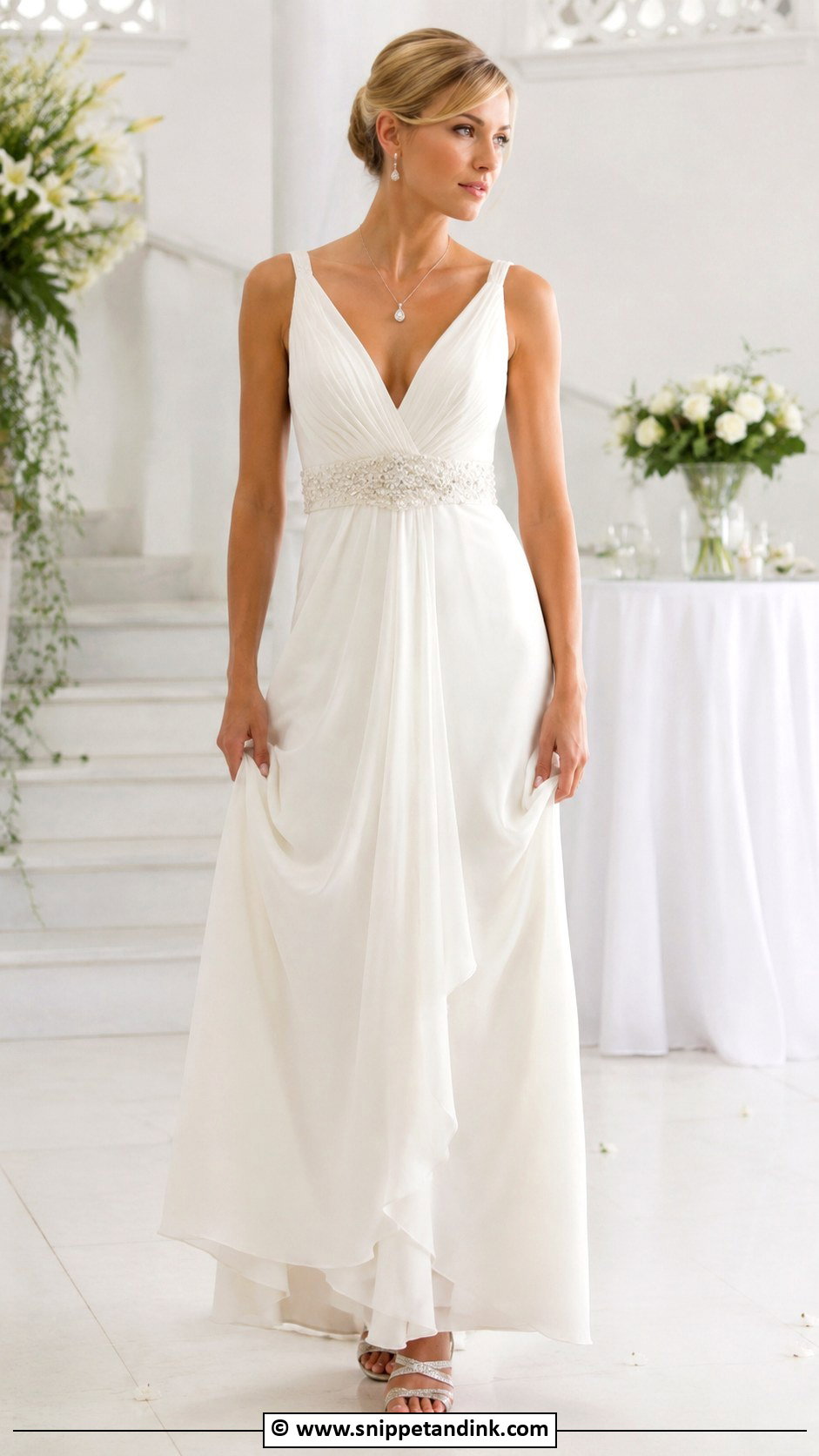
A V neck wedding dress gives a softer alternative to strapless. The line lengthens the torso and suits empire, A-line, sheath and fit and flare shapes. For a nostalgic version, choose soft satin or chiffon with a little beading at the waist or straps. A modest V reads classic; a deeper V reads glamorous and usually needs a hidden mesh panel. A pendant works only if the neckline is clean.




25. Off The Shoulder Wedding Dress
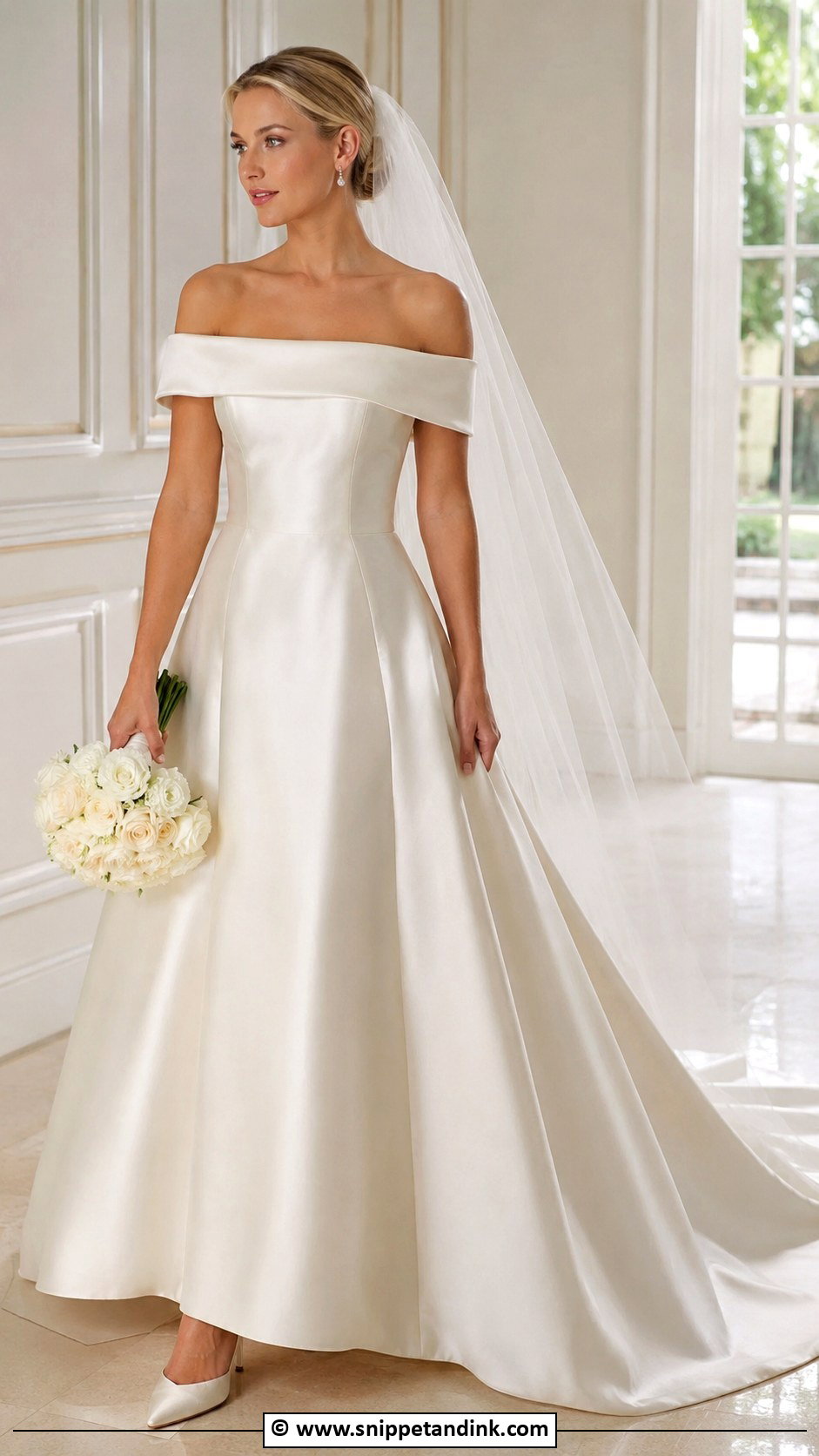
Off-the-shoulder necklines show the shoulders but give more coverage than strapless. A folded cuff looks clean; soft draped sleeves look gentler. They suit satin ball gowns, fitted lace and A-lines. The band across the arms limits how high you can reach, so test hugging and throwing a bouquet at the fitting. A silicone strip inside the band keeps it in place. Let earrings do the work, since the neckline already frames your face.
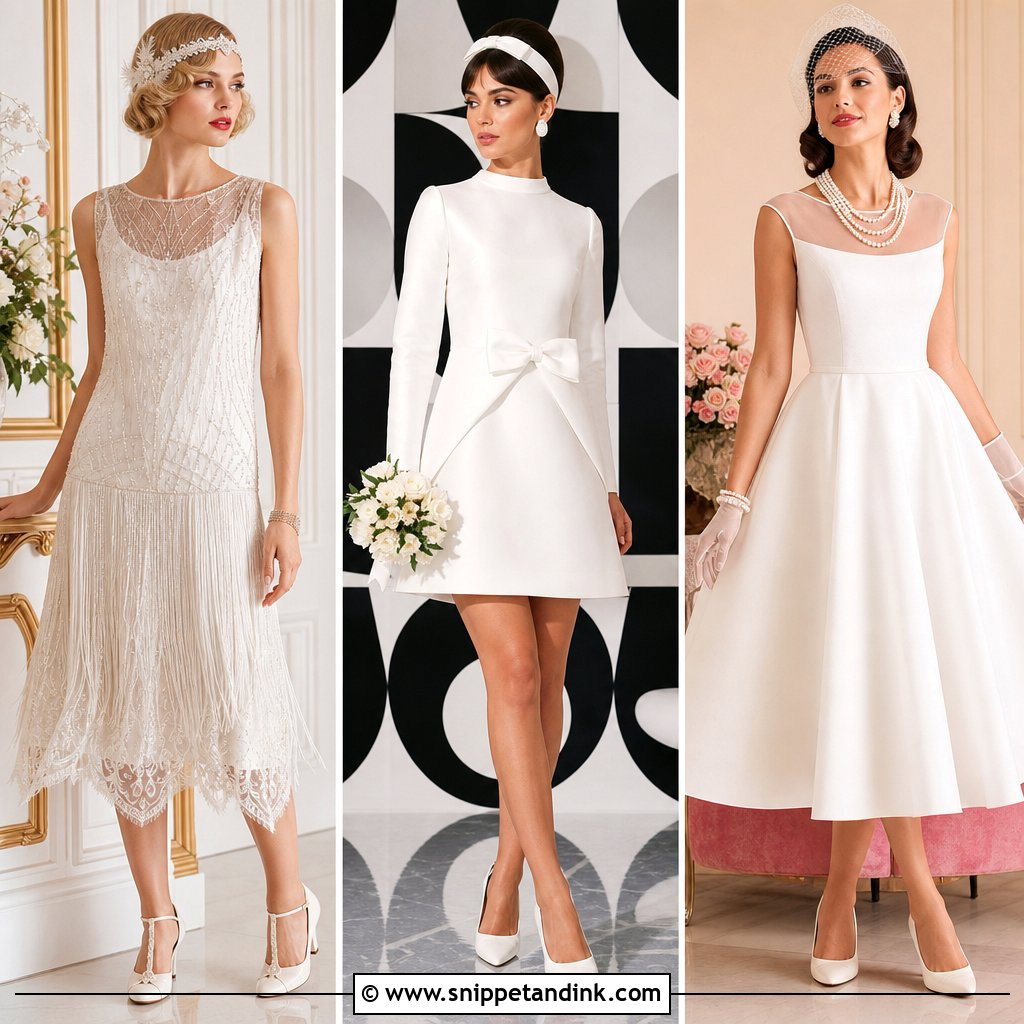
26. Tea Length Wedding Dress
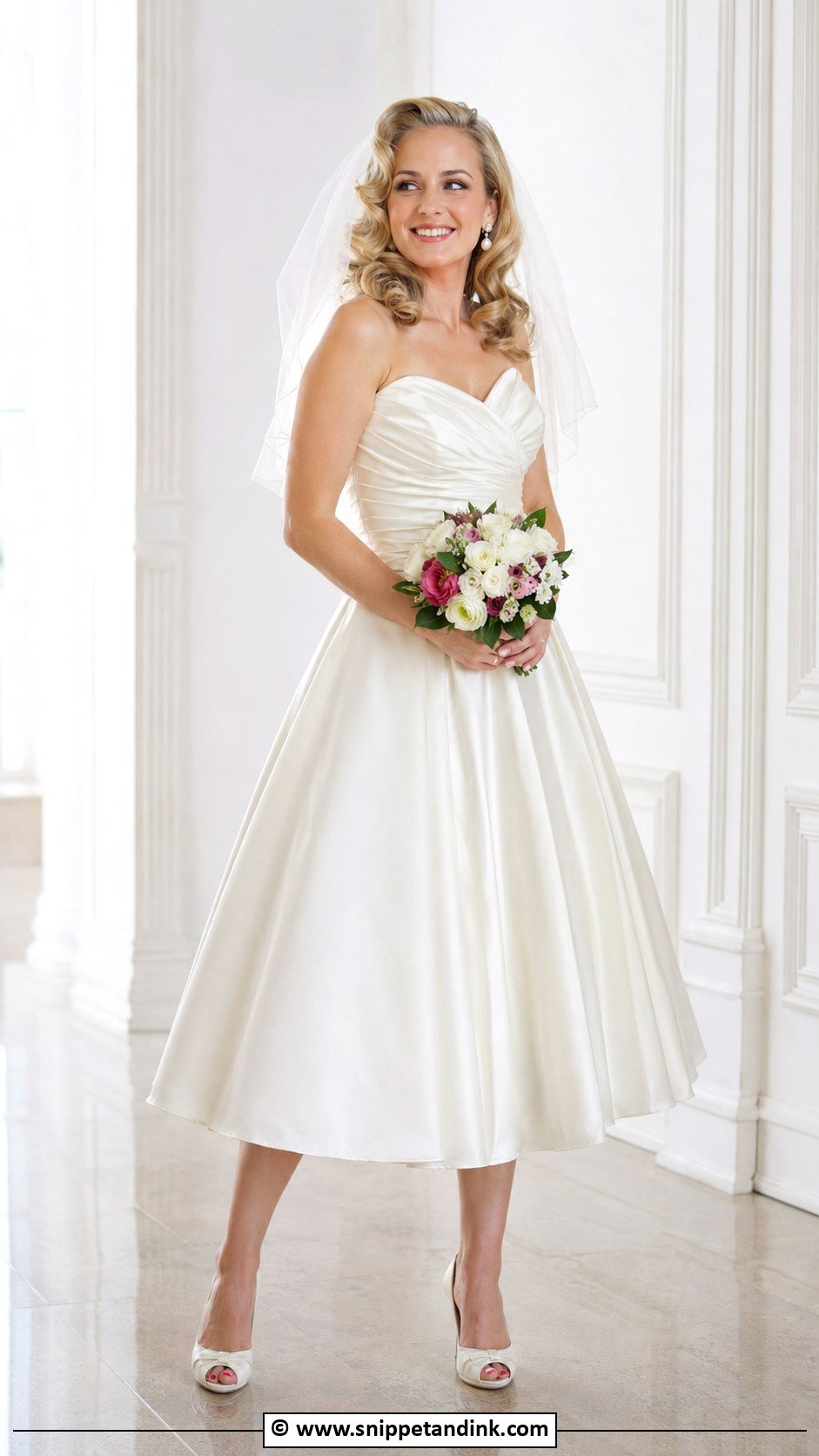
Tea length was part of the decade’s playful retro streak, when brides mixed modern bridal with vintage shapes. The hem falls between knee and ankle, which makes shoes part of the outfit. Satin pumps, peep-toes or embellished flats all suit it. A fitted bodice with a full skirt and petticoat underneath gives the classic shape. It’s easy to move in, which suits courthouse ceremonies, receptions and second looks.
27. Short Wedding Dress
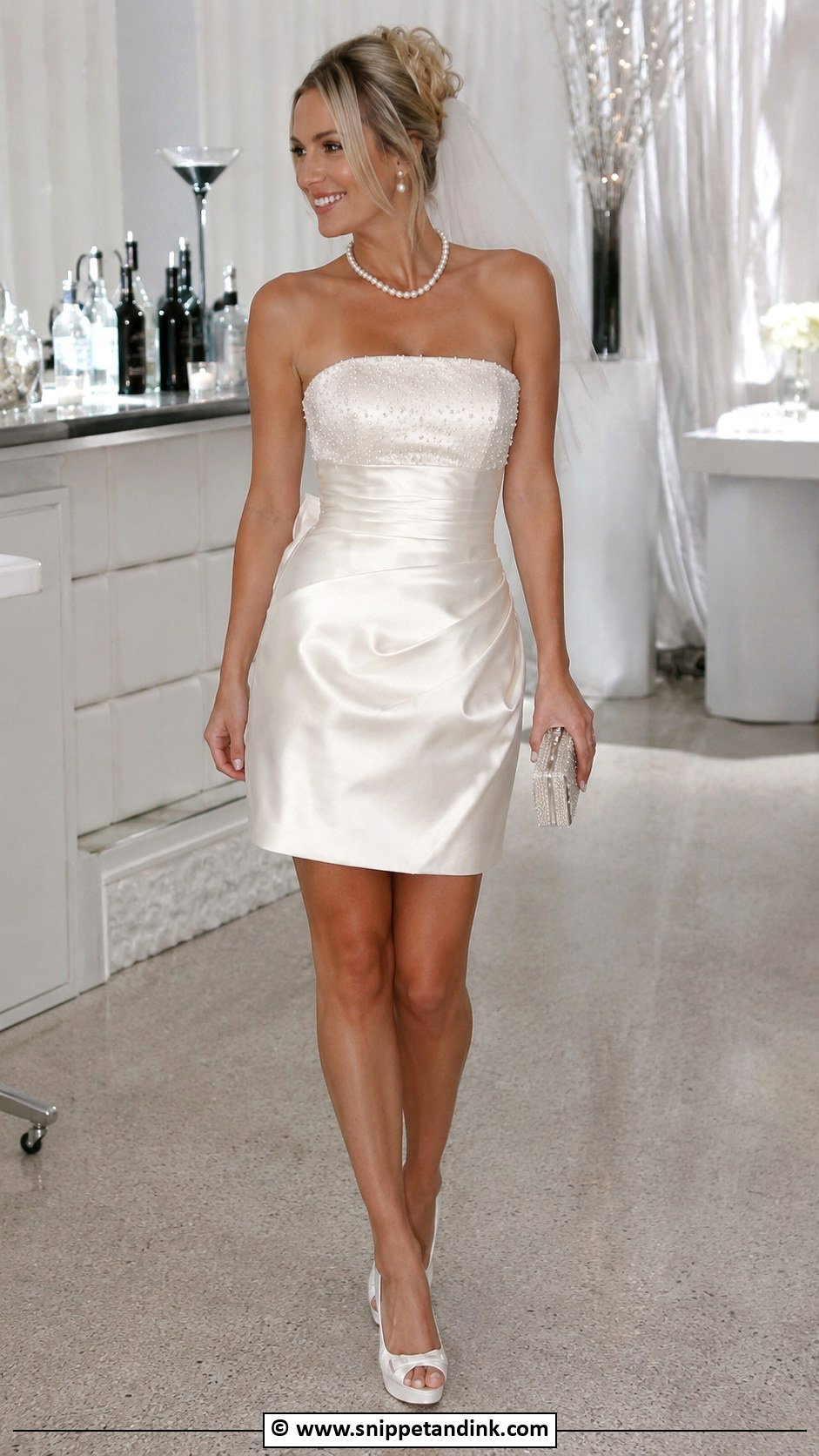
Short dresses gave the era a party edge. Strapless satin, a bubble hem, a beaded bodice or a mini A-line all read early aughts. Keep it bridal with white heels, a short veil, pearls or a small clutch, and add a cropped jacket for cover. Bubble hems are fun, but they balloon when you sit, so practise sitting in it. It’s a good reception change or civil ceremony dress, and it shows off statement shoes.
28. Pink Wedding Dress
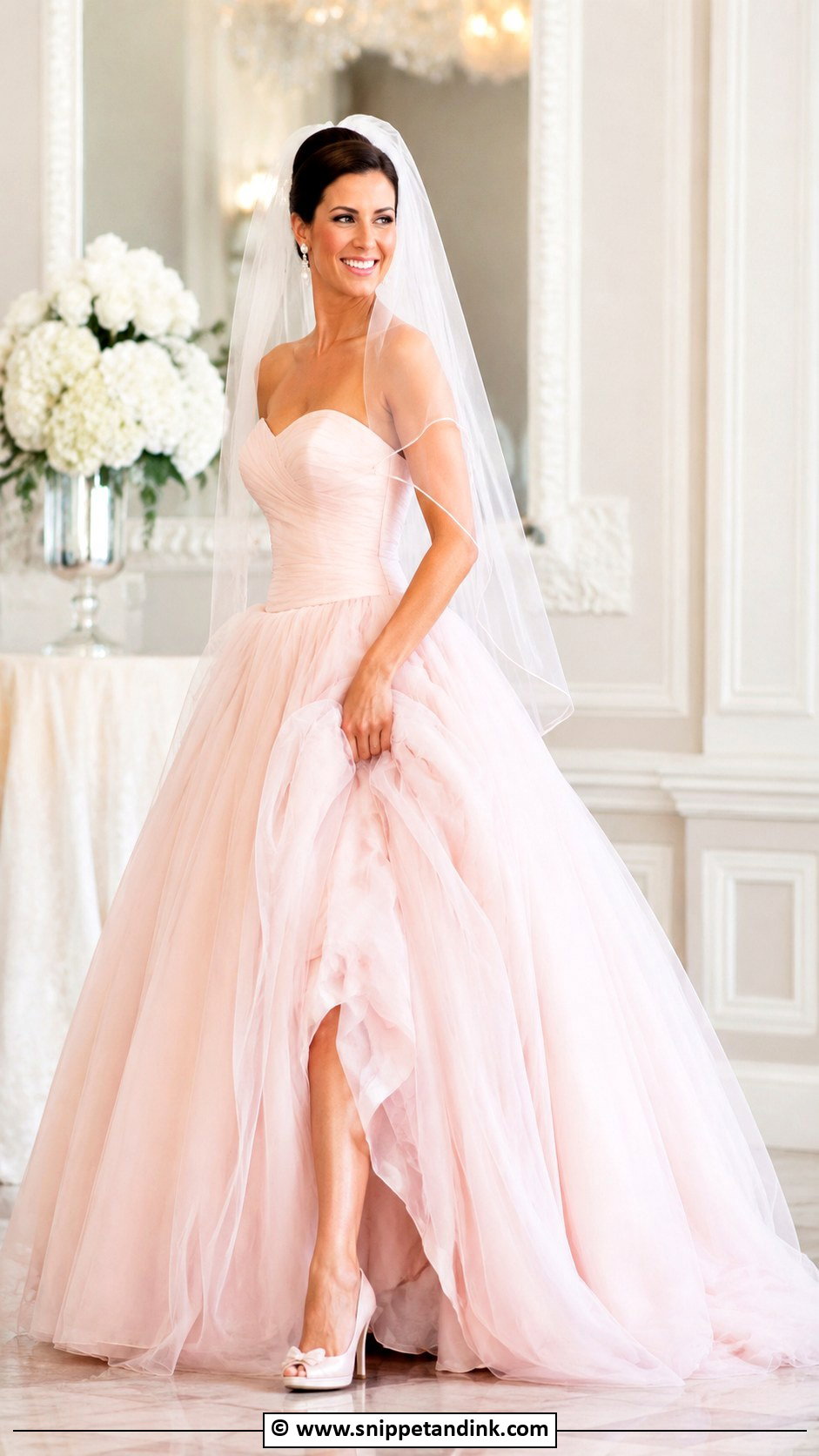
Pink wedding dresses got a real boost from celebrity weddings of that decade. Soft blush, pale rose and champagne-pink still read as bridal. A pink ball gown with a fitted bodice is bold; a blush A-line is easier. Check the shade against your skin in daylight, because some pinks can make fair skin look flushed in photos. Ivory heels, pearl earrings and a sheer veil keep it elegant, and soft waves bring it up to date.
29. Champagne Wedding Dress
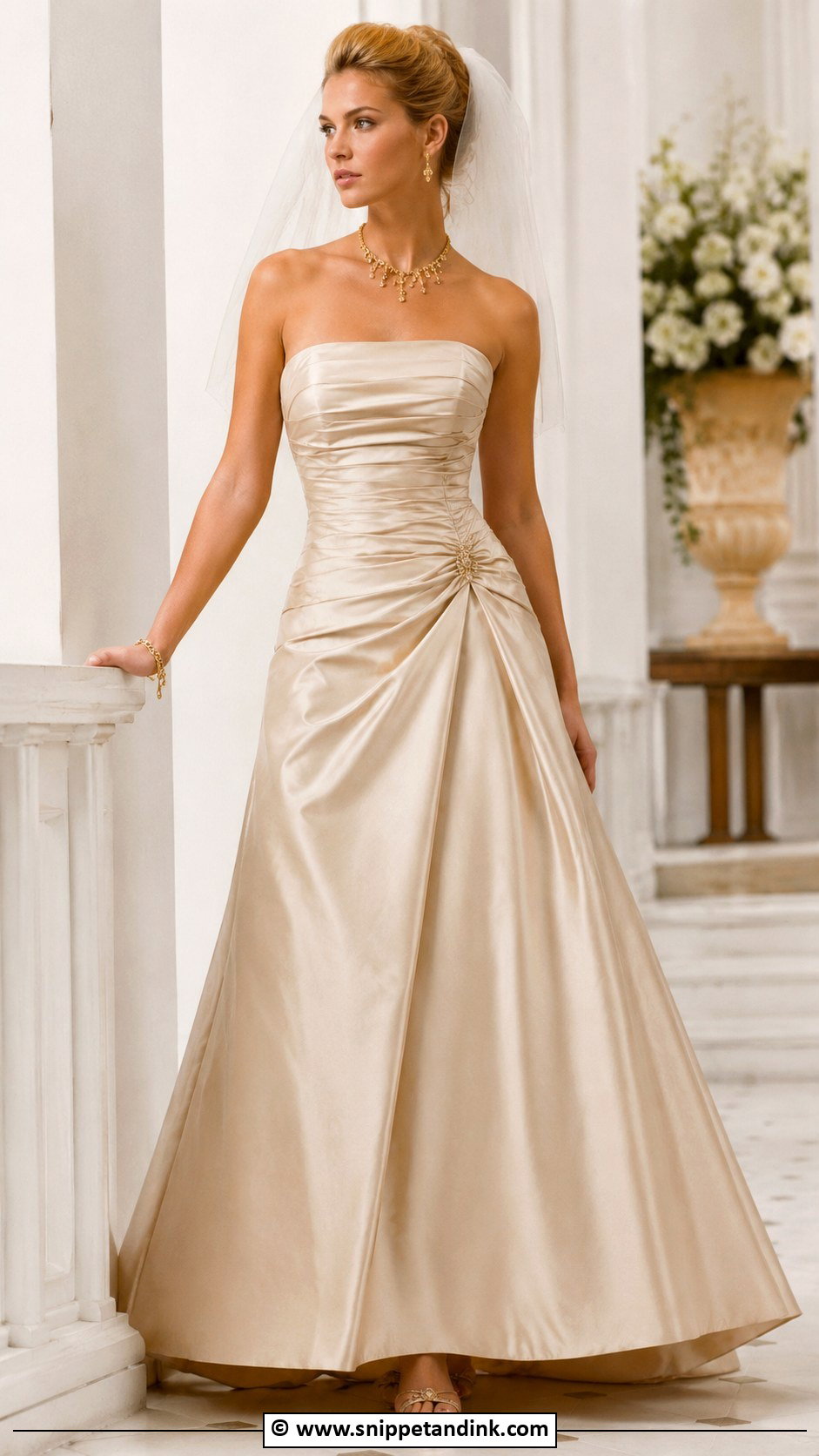
A champagne wedding dress was the warm alternative to bright white, and it fits the glossy mood of that decade. Satin, silk, tulle and beading all take the color well. A champagne strapless gown with a ruched bodice is very era-true; a beaded sheath is more glamorous. Hold it next to your face in natural light to make sure the undertone doesn’t fight yours. Gold-tone jewelry and a neutral bouquet keep the focus on the gown.
30. Long Train Wedding Dress
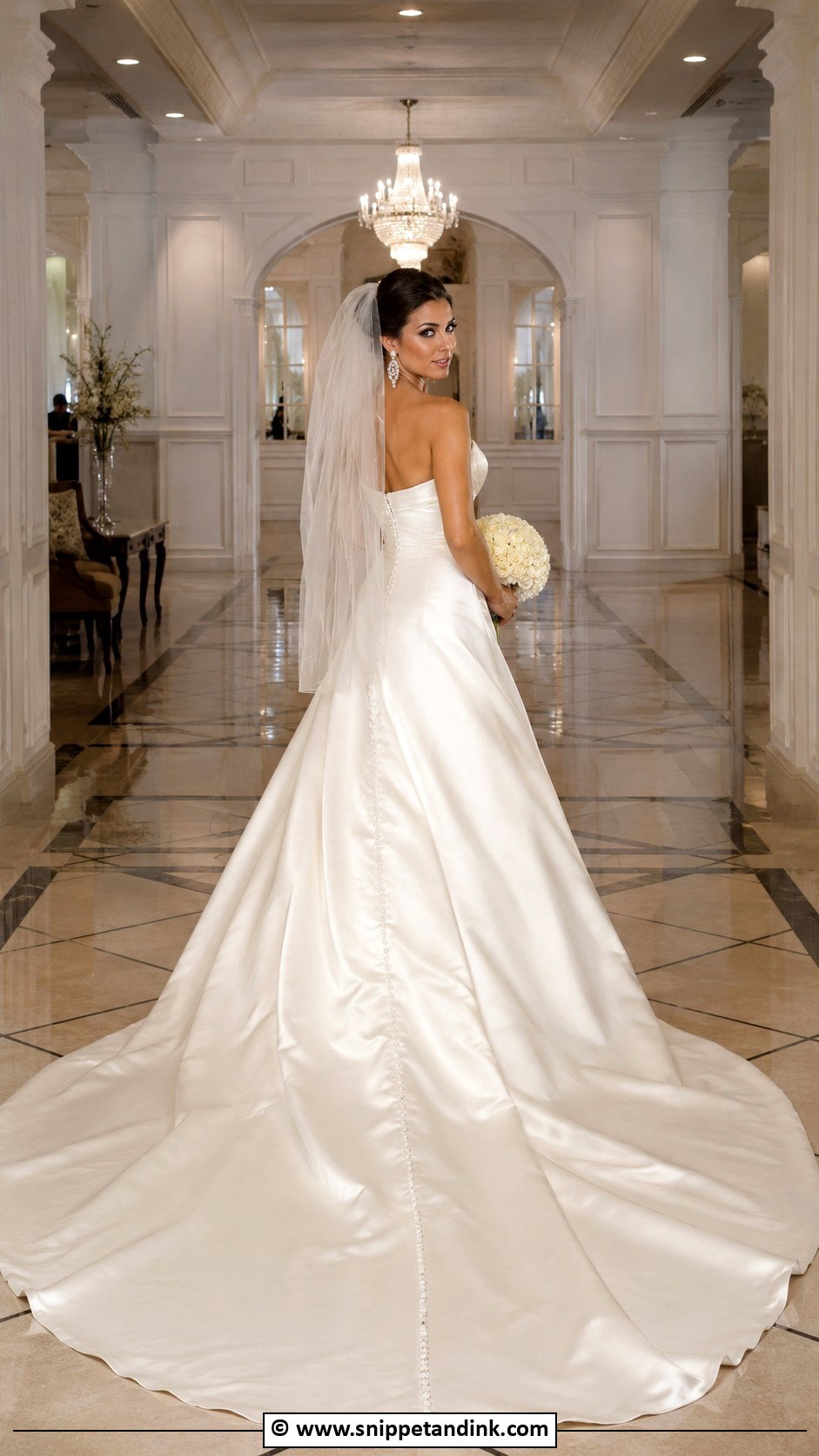
Long trains were the drama many brides of the decade wanted. The train can sit on a satin ball gown, a mermaid, an A-line or a heavily beaded style. It gives a real moment walking down the aisle and in portraits. Ask about the bustle the moment you order: without one, you’ll be holding the train all evening. Match the veil to the train for drama, or keep it shorter to be practical. Supportive heels matter, as trains pull backward with every step.
Why Strapless Bodices Slip, and Where the Fix Lives
Half the strapless dresses in the decade’s wedding albums are being hoisted up in at least one photo. The cause is almost always a bodice fitted to the bust instead of the ribcage. A strapless dress is held up by the band around your ribs and waist, so that’s where it has to be snug.
When I alter one, I look for internal boning that sits on the side seams and a waist stay, which is an inner grosgrain band that hooks closed before the zip. It takes the strain off the outer fabric and anchors the bodice. If a dress lacks one, a seamstress can usually add it. Silicone grip tape along the top edge helps, but it can’t rescue a bodice that’s too loose.
Bustles for Long Satin Trains
A long train needs a bustle for the reception. An over bustle hooks the train up onto the back of the skirt and shows off the fabric. An under or French bustle tucks it beneath with ribbon ties, which suits heavy satin. Ask your seamstress to color-code the ties and teach a bridesmaid how to do it, because in a crowded reception room it can take ten minutes the first time.
One Signature Detail Is Enough to Bring Back the 2000s
Early-aughts bridal was strapless satin, corset bodices, shine, beading, pick-ups, sashes and big shapes, and every one of those can be softened for a wedding now. The approach I give every bride is to choose one strong detail from the decade and keep everything else calm. Sleek hair, a plain veil, good heels and restrained jewelry will make a 2000s gown look chosen, not dated. A full ball gown or a simple satin slip can both carry it.
You'll Like These Ideas:



Leave a Reply