
Straight hair at an Indian wedding has a harder job than most people expect. It has to stay flat and glossy through a haldi morning, hours under a heavy dupatta, a warm mandap and then a reception dance floor. When it holds, it gives a lehenga or saree a clean frame and lets a maang tikka or passa read clearly instead of getting lost in curls. When it fails, it shows, because a kink or a frizzy halo is far more visible on sleek hair than on a textured style. These are the fifteen straight looks I reach for most, with what each one needs to last.
Why Pressed Hair Kinks and Puffs Halfway Through the Day
Hair that was glass-flat at seven in the morning can be wavy at the hairline by the pheras, and that’s chemistry more than bad styling. Heat straightening only holds while the hair stays dry. Humidity, sweat and a warm mandap let it slowly drift back toward its natural shape, and a dupatta rubbing the crown for hours adds flattened roots, static and a small halo of frizz.
This is what I do in the chair to stretch the finish:
- Blow dry until the hair is completely dry before a flat iron touches it. Pressing damp hair sizzles, damages the cuticle and never lasts.
- Work in thin sections and let each one cool flat before brushing it. Hair sets as it cools, so brushing it hot undoes half the work.
- Seal the outer layer with an anti-humidity spray rather than a heavy oil, which separates the hair into strands by afternoon.
- Keep the hairline drier than the lengths. A little wax stick on baby hairs stops them curling up from sweat under jewelry.
If your ceremony is outdoors in summer or monsoon, I’d honestly plan a bun or braid for the long ritual and save fully open hair for the evening.
Curly or Wavy Hair Pressed Straight for Three Days of Functions
Smoothing treatment or silk press?
If your hair is naturally curly or very wavy, you have two routes. A keratin or smoothing treatment cuts frizz and makes pressing much faster. I’d book it a few weeks out, not a few days, so you can wash it a couple of times and see how it settles, and ask the salon how long that particular product needs before washing or tying the hair, because it varies. A silk press uses heat alone, so it’s easier on your curl pattern in the long run, but it reverts the moment it meets water.
Making one press carry you
Pressing from scratch for mehndi, sangeet and the wedding means three rounds of high heat on the same strands. I’d rather press once, wrap the hair flat around the head under a silk scarf at night, and refresh only the roots and front each morning. Do a trial press a month ahead and wear it a full day; you’ll learn exactly where your hair reverts first, which is usually the nape and the hairline.
Never wear pressed hair open to the haldi. Turmeric paste and water revert it in minutes and can tint light ends, so go in with a braid and a shower cap in your bag.
1. Sleek Middle Part Straight Hair Indian Wedding
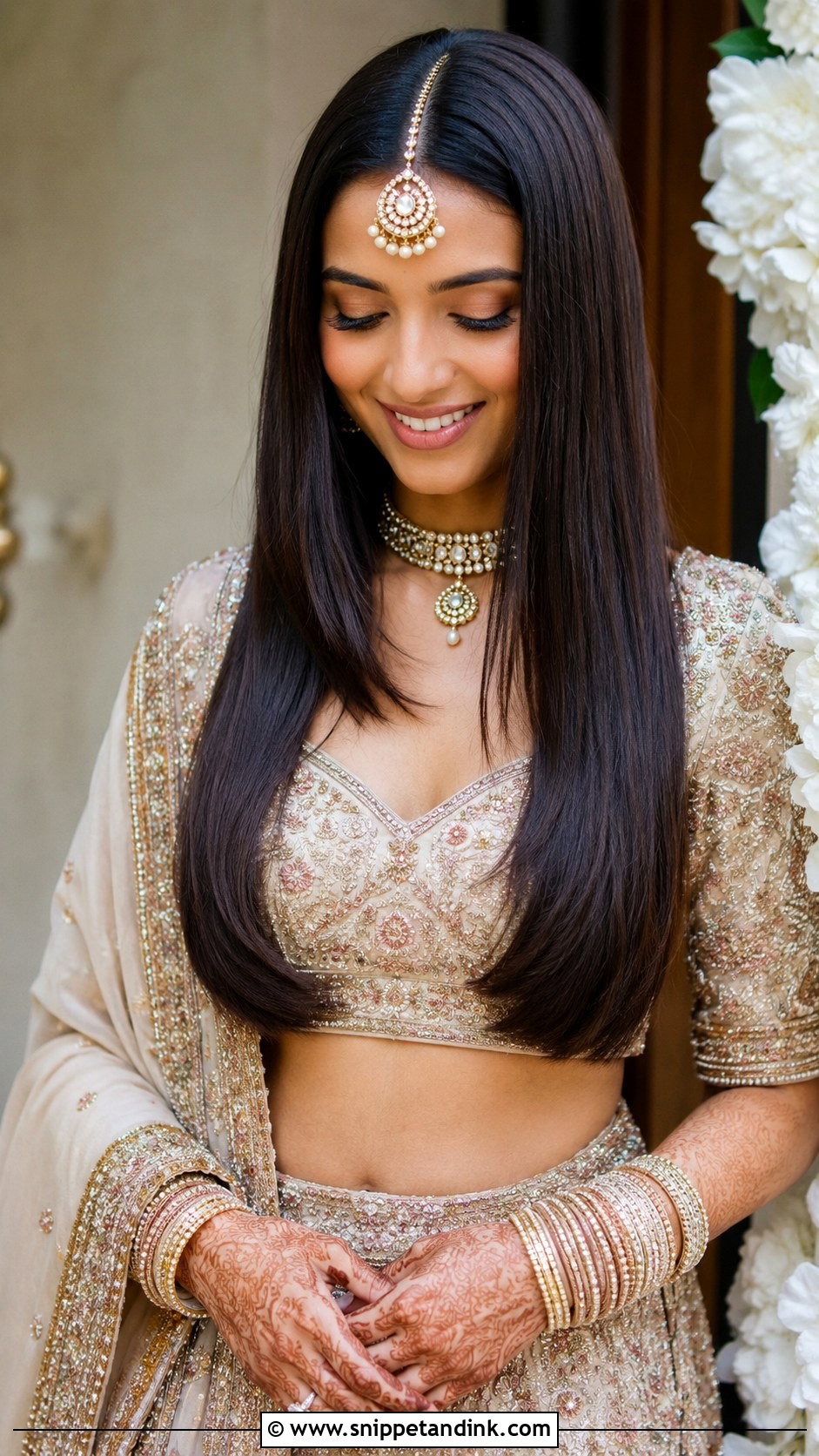
A dead-centre part is less forgiving than it looks. I check the part against the bridge of the nose and the brow arches before anything else, because a few millimetres off shows the moment a tikka hangs from it. Done right, it frames a maang tikka, matha patti or a single small bindi with complete symmetry. I press the lengths and bevel the ends under with the iron so they curve slightly instead of hanging flat in photos. Heat protectant first, a pea of smoothing serum on the mid-lengths only, then a light hold spray for flyaways.
2. Straight Hair With Maang Tikka Indian Wedding
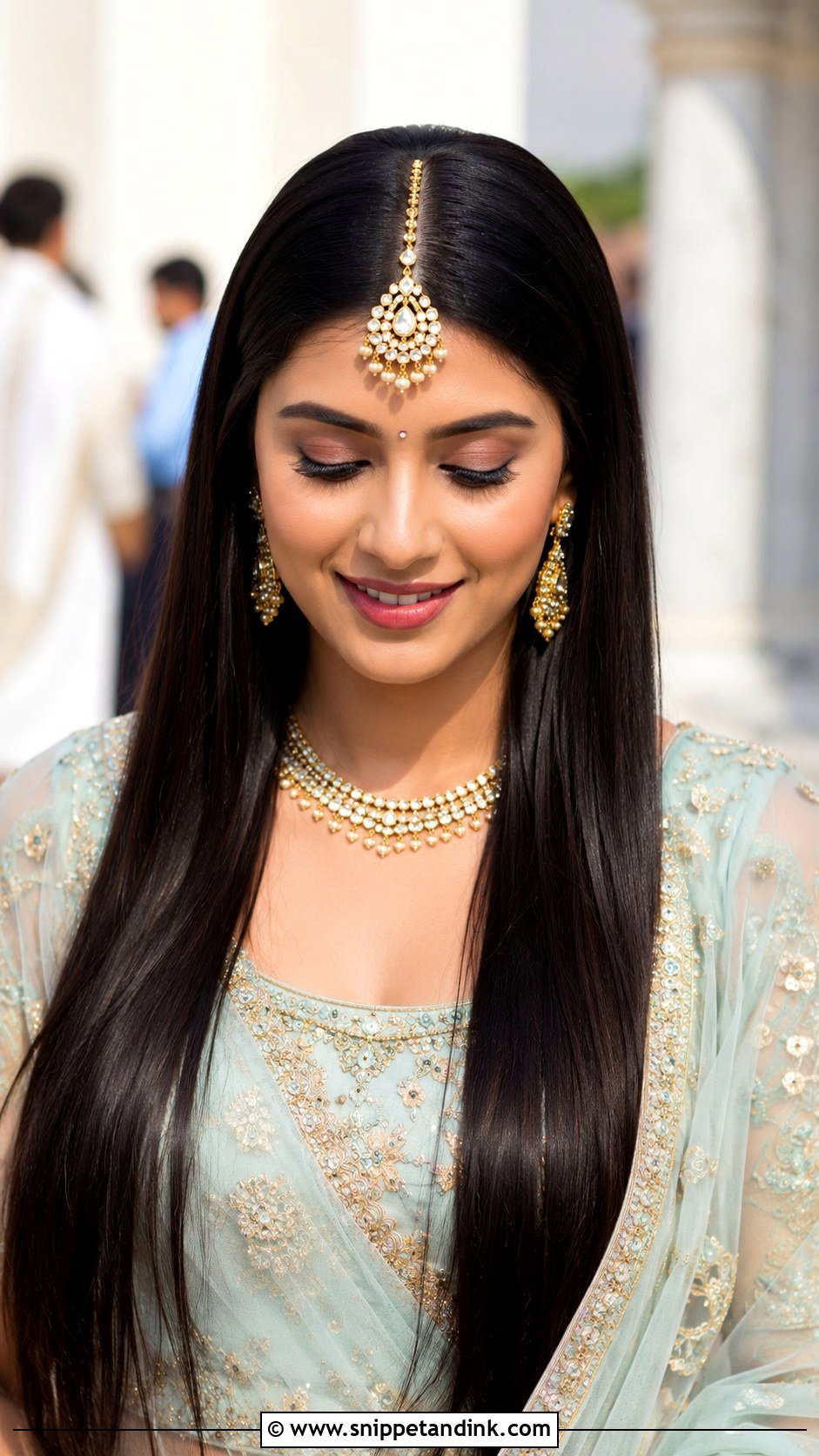
Here the tikka is the whole point, so the hair stays open and the part becomes a runway for the jewelry. What usually goes wrong is weight. A heavy kundan tikka drags the part open and creeps toward one eye by the second ritual, so I anchor the chain with two crossed bobby pins under a thin top section, then lay that section back over to hide them. The back gets pressed with a little movement at the ends. Shine spray goes on from arm’s length, and only a whisper of it, or the hair looks oily under flash.
3. Straight Half Up Hairstyle Indian Wedding
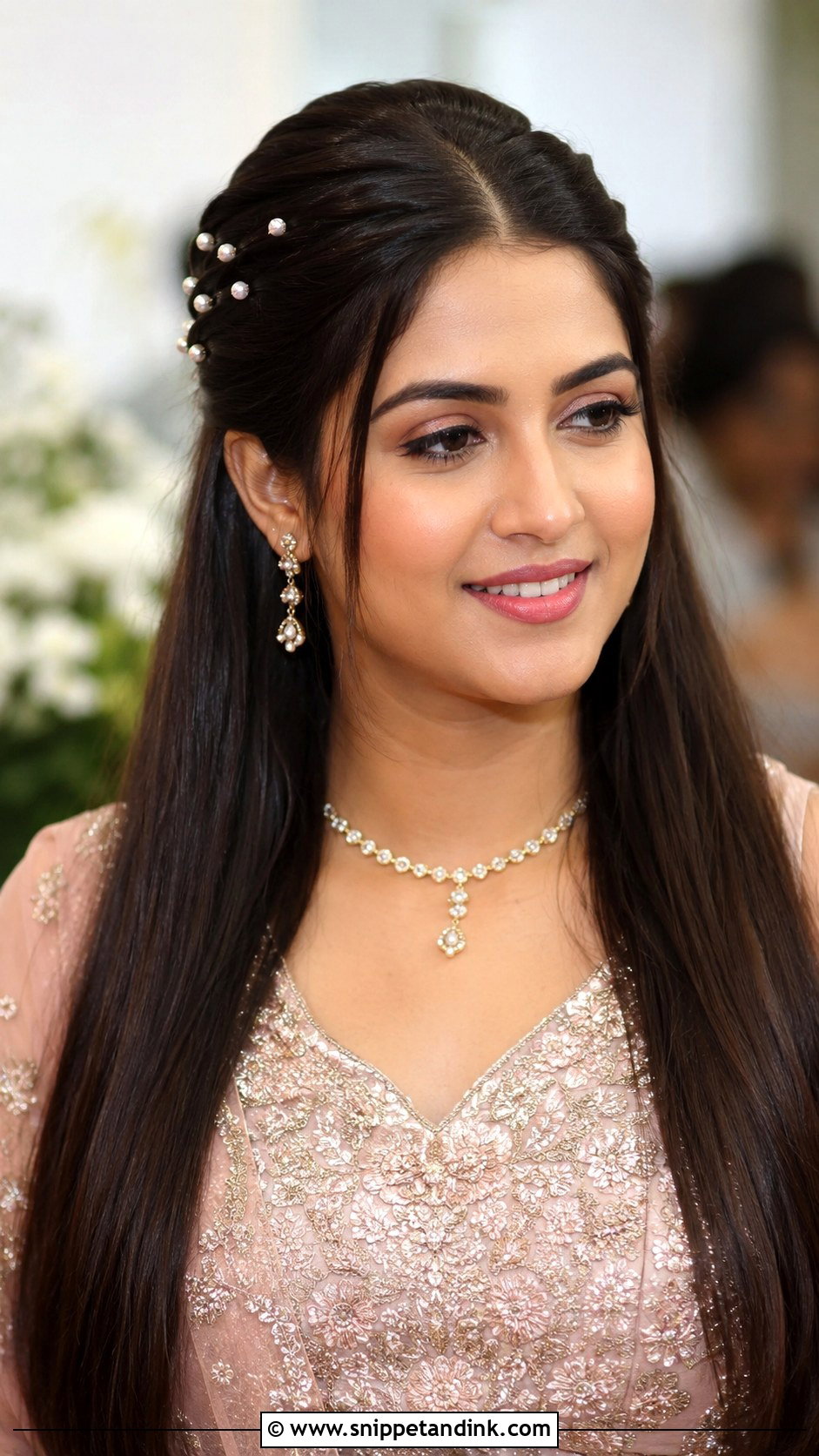
Half up gives you open hair with the front kept out of your lipstick, which is why I suggest it for sangeet, engagement and reception. Fine straight hair collapses at the crown, so I backcomb a small section underneath before pinning the top back, and I use a criss-cross of pins rather than one clip so the weight doesn’t drag it down by evening. A row of pearl pins or a small kundan clip hides the join. It sits well with sweetheart necklines and low blouse backs, since the lengths fall forward over the shoulders and leave the back detail visible.
4. Straight Hair Low Bun Indian Wedding
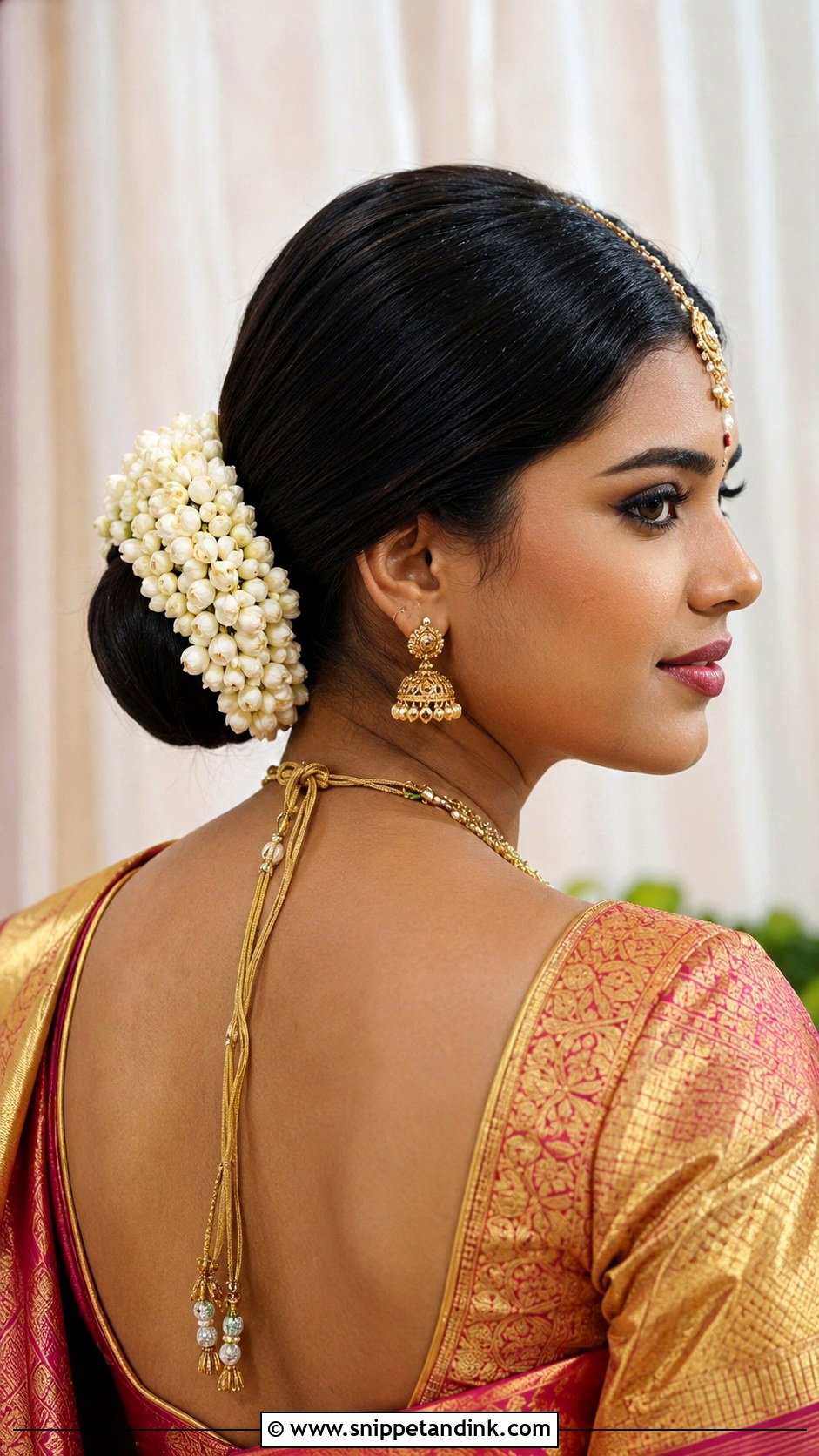
Straight hair makes the tidiest low bun there is, because there’s no texture to puff up as the hours go by. I smooth everything to the nape, secure it with an elastic first and only then wrap and pin, which matters once a heavy dupatta is pinned straight into the bun and starts pulling backward. The trade-off is grip: freshly washed, very slippery hair won’t hold pins, so I ask brides to wash the day before rather than that morning. Wrap jasmine gajra around it for the traditional finish, or switch to pearls for a reception. In humid weather this is the straight style I trust most.
5. Straight Hair High Bun Indian Wedding
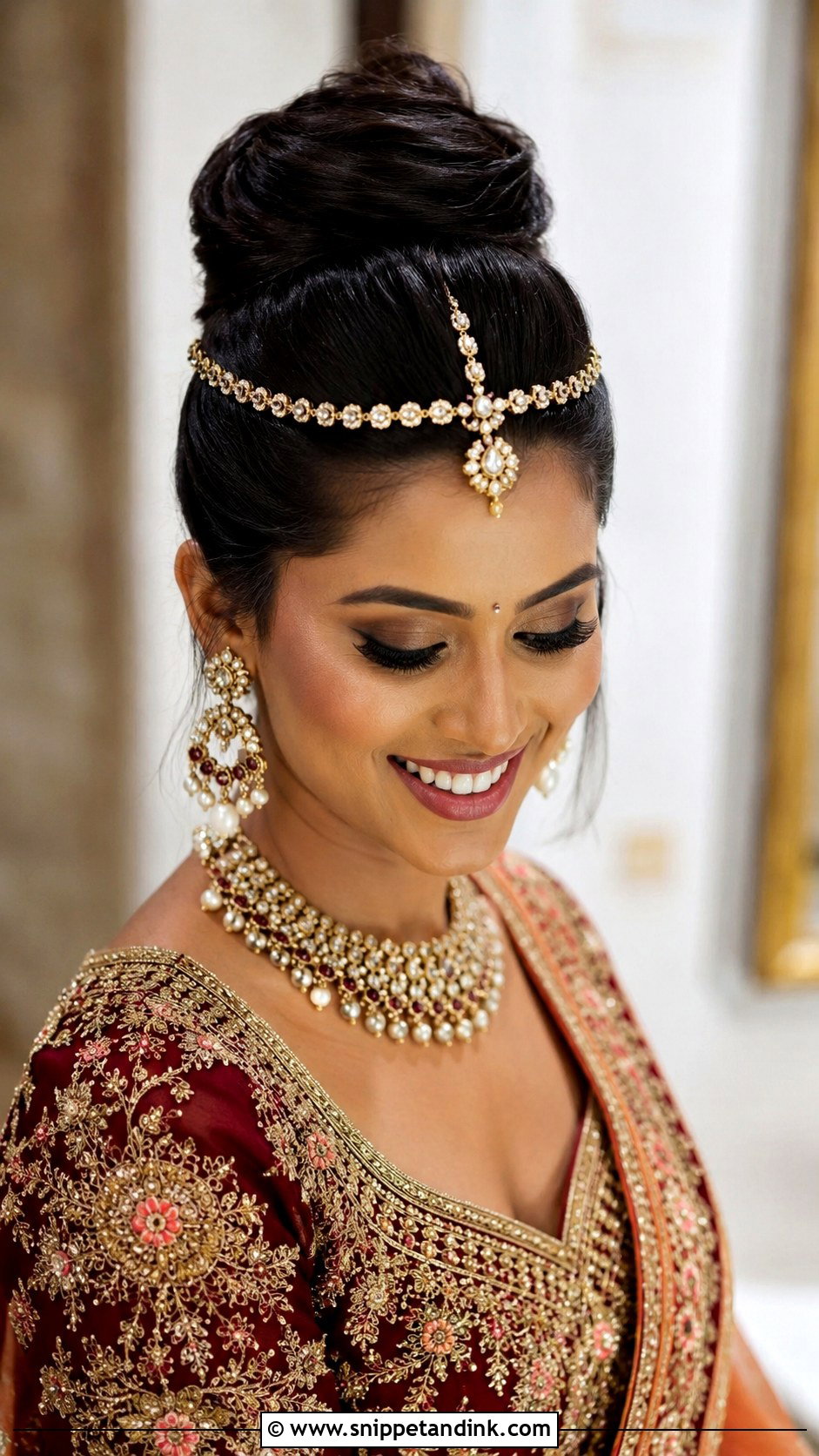
A high bun lifts the whole silhouette and clears the neck, so I pair it with high-neck blouses and sarees with heavy borders. On straight hair it looks either very sharp or very severe, and the difference is usually the hairline. I leave the front fractionally soft rather than scraping it back tight. If your hair is thin, a padding doughnut underneath gives fullness without extensions, and a hair chain or floral ring around the base makes it festive. One honest warning: a high bun fights a dupatta draped over the head, so for most brides it suits the reception better than the pheras.
6. Straight Ponytail Indian Wedding
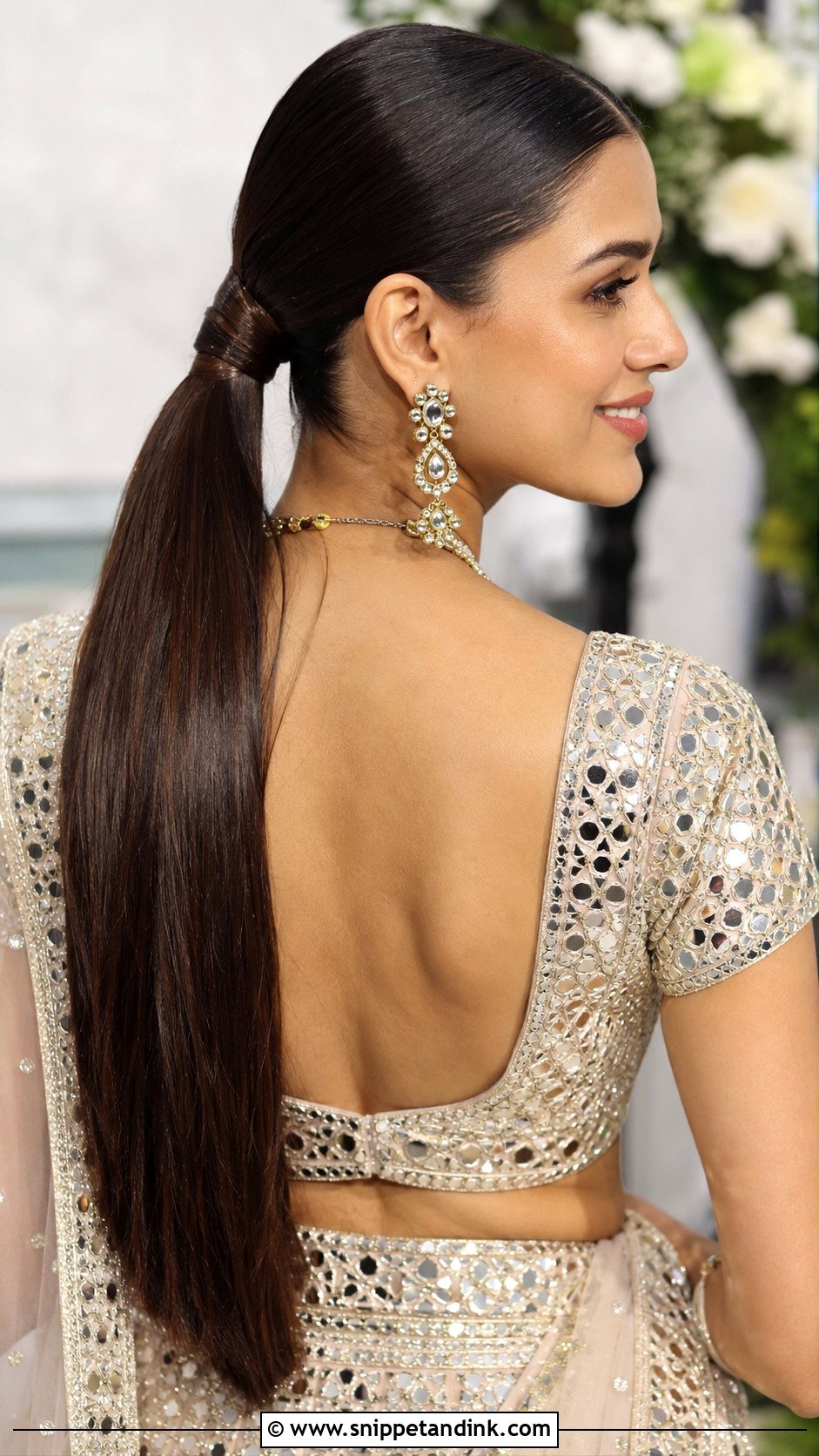
For sangeet I like a straight ponytail more than almost anything, because it swings when you dance and falls back into place. The lengths need pressing from root to tip, and I wrap a small strand around the elastic and pin it underneath so no band shows. Brush the crown back or give it a part; a side part softens a long face. It goes with mirror-work lehengas, modern sarees and Indo-western outfits. Anti-frizz cream goes on before the iron, not after, otherwise it fries on the plates and leaves the lengths stringy.
7. Straight Side Part Hair Indian Wedding
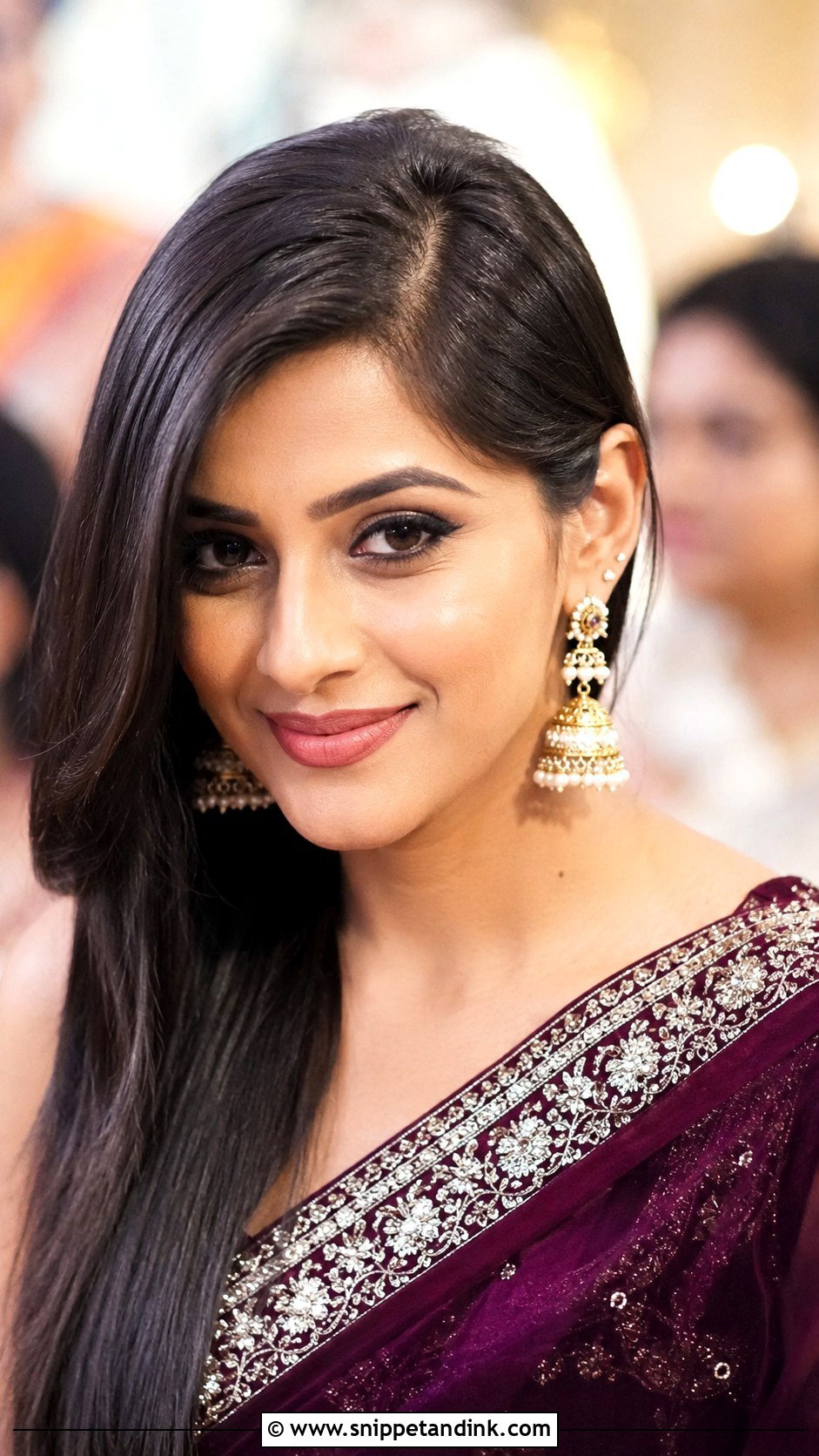
A deep side part does what curls usually do, putting shape around the face, without the risk of curls dropping. It flatters faces that look long with a centre part, and it clears one side for a statement earring or a passa. I press the roots flat in the direction of the part so it doesn’t flop back toward the middle, then tuck the lighter side behind the ear. Spray goes on the part line only. When someone tells me she wants glamour but hates the feel of hairspray, this is where I start.
8. Straight Hair With Gajra Indian Wedding
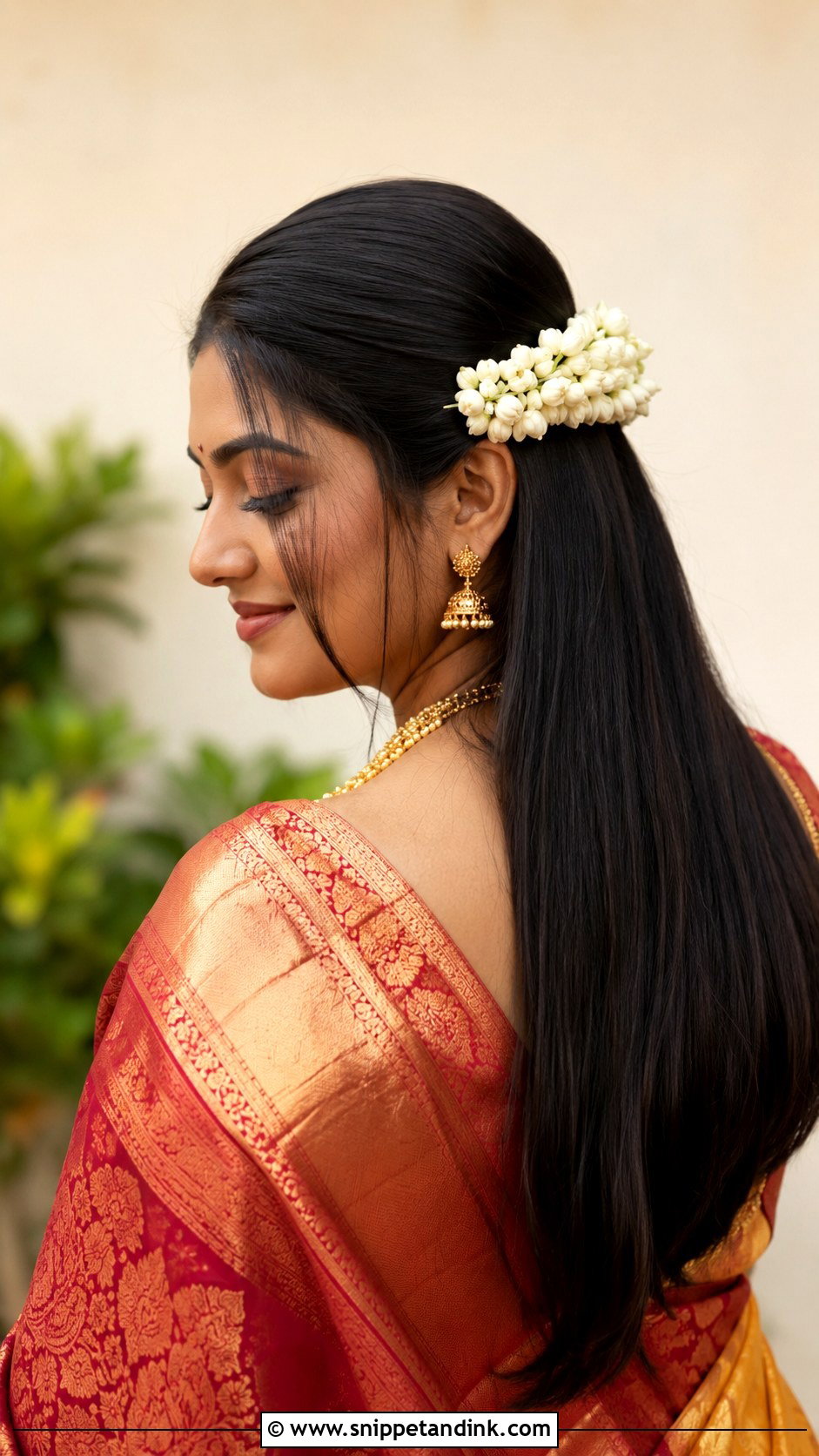
Gajra doesn’t have to live around a bun. Pinned along the base of a half up, coiled at a low ponytail or run down a sleek braid, white jasmine against glossy dark hair reads very clearly in photos, and it sits naturally with Kanjeevaram sarees, Banarasi sarees and classic bridal lehengas. Fresh jasmine is heavier than it looks and starts to brown in heat after a few hours. I secure it with U-pins every few centimetres along the strand so it can’t slide on smooth hair. For a long outdoor day, a good artificial gajra keeps its shape better, and a short fresh piece near the front still gives you the scent.
9. Straight Open Hair Indian Wedding
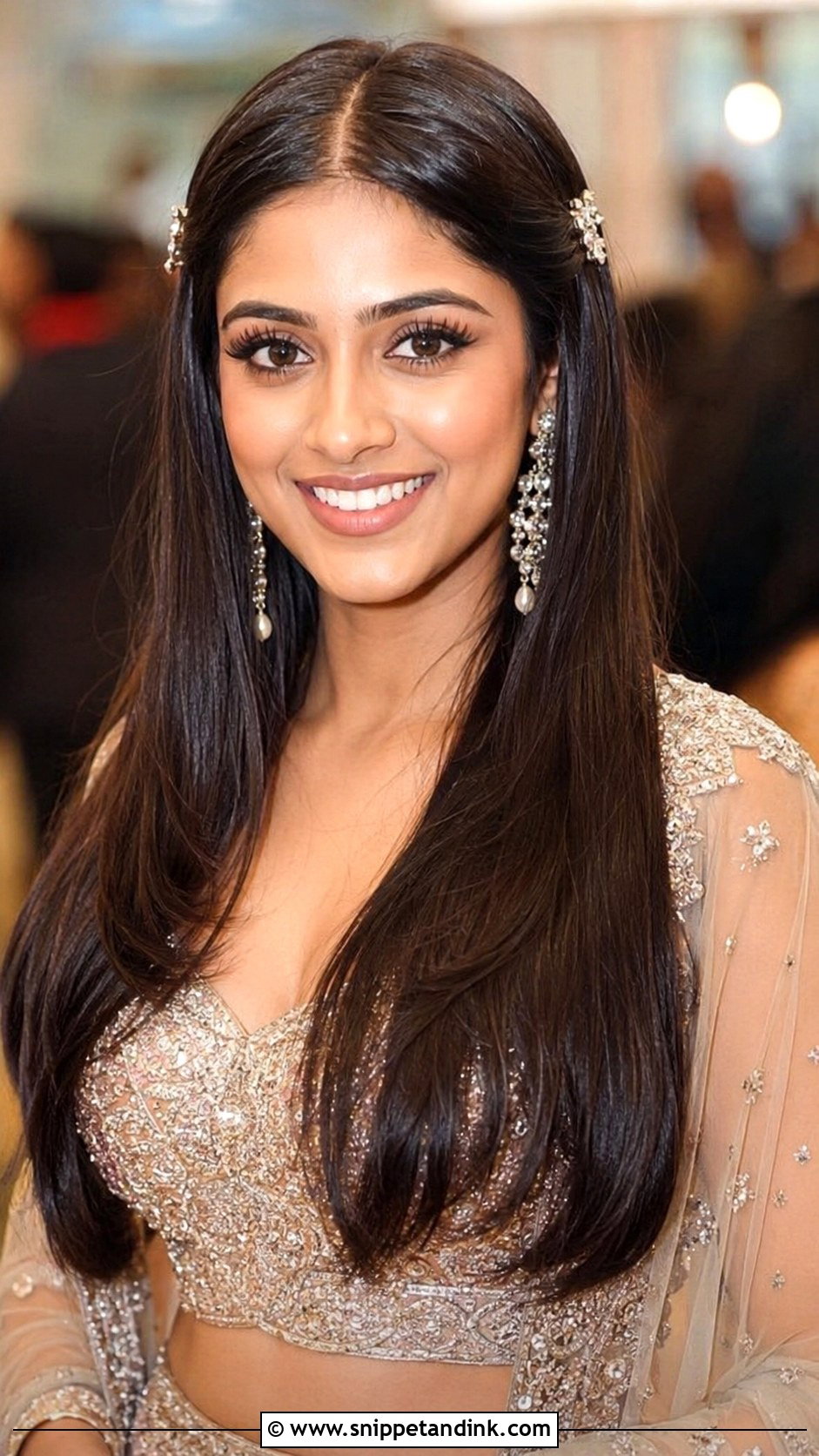
Open hair is the style most likely to look unplanned, so all the work is in the finish. It starts with a proper smooth blowout, a clean part and pressed roots, with the ends shaped rather than left blunt from the iron. I suggest it for mehndi, engagement and reception, when the outfit is carrying the detail and you want to move freely. A tikka or one jeweled pin is plenty. Keep the hair behind your shoulders while mehndi paste dries, because loose strands stick to it, and carry blotting papers and a small comb for between photos.
10. Straight Hair With Front Puff Indian Wedding
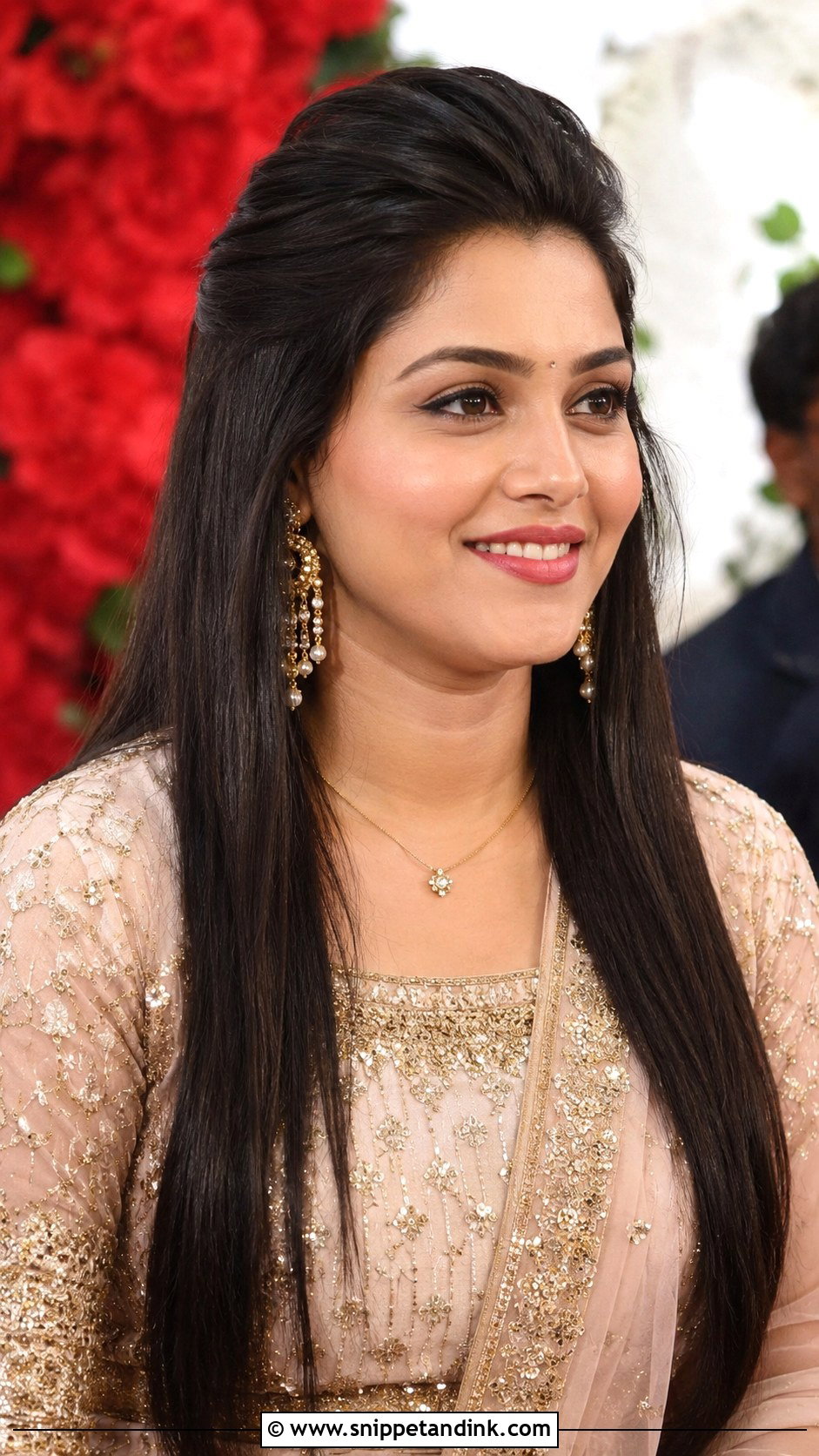
A front puff adds the height that straight hair lacks while leaving the lengths sleek. Lifting the front lengthens round and heart-shaped faces; on a long face I keep it very low or skip it. I tease only the underside of the front section, smooth the top layer over it with a soft brush and pin it from behind with two crossed pins. Keep it modest. A tall puff under a heavy dupatta gets dented within the hour, and a dented puff looks worse than none at all. Behind it, the hair can stay open, half up or in a ponytail.
11. Straight Hair With Passa Indian Wedding
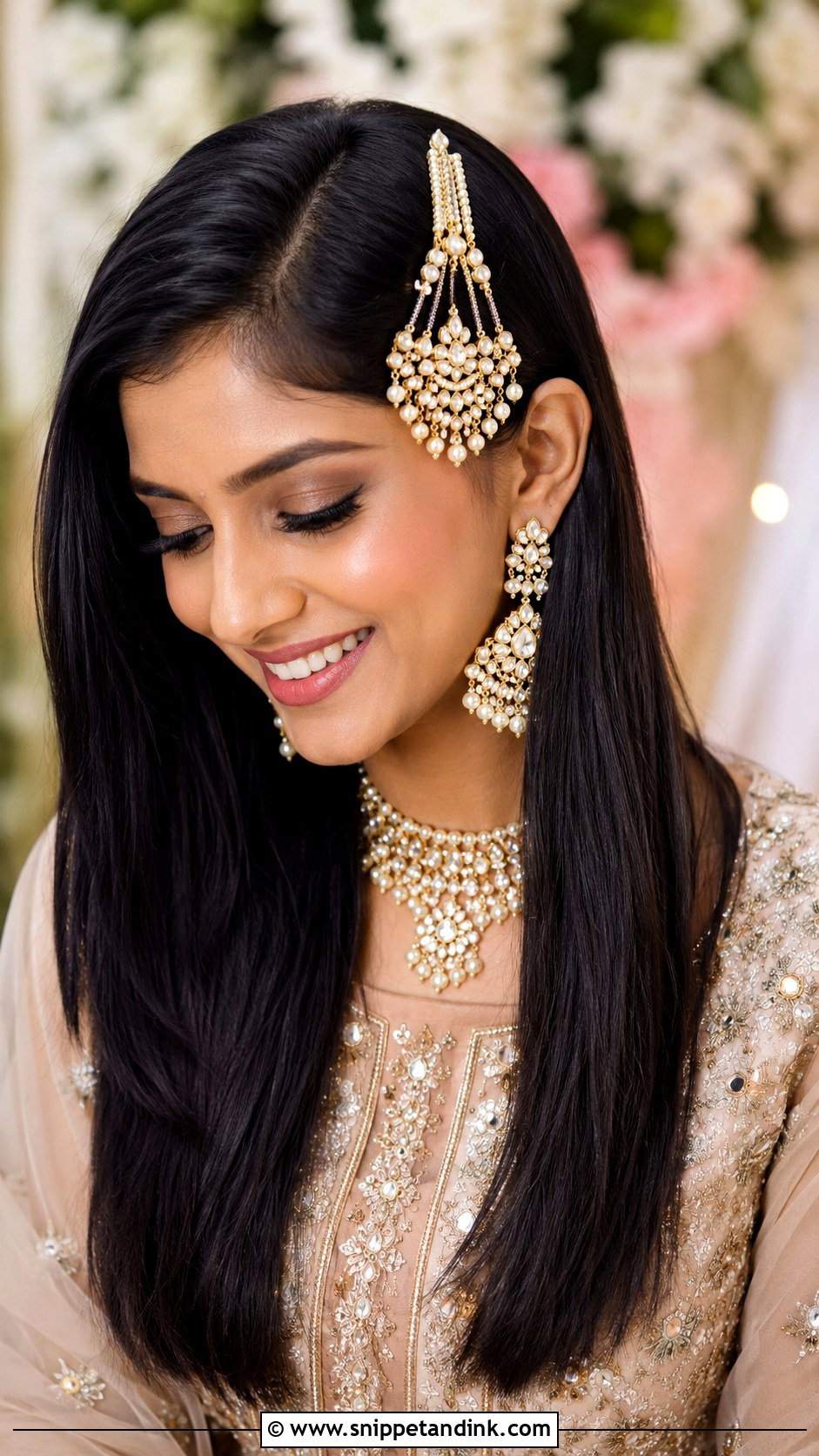
A passa hangs at one temple and pulls the eye sideways, which makes this the Mughal-leaning choice for shararas, ghararas and heavily worked lehengas. The jewelry decides the part, not the other way round: I hold the passa in place first, then part the hair to suit it, usually off-centre on that side. Serum is the enemy here. Anything slick near the anchor point and the pins slide straight out, so I keep product off that section and hold the passa with pins crossed underneath it. The back can stay open or go into a low bun, and both give the jewelry a smooth background.
12. Straight Braided Hairstyle Indian Wedding
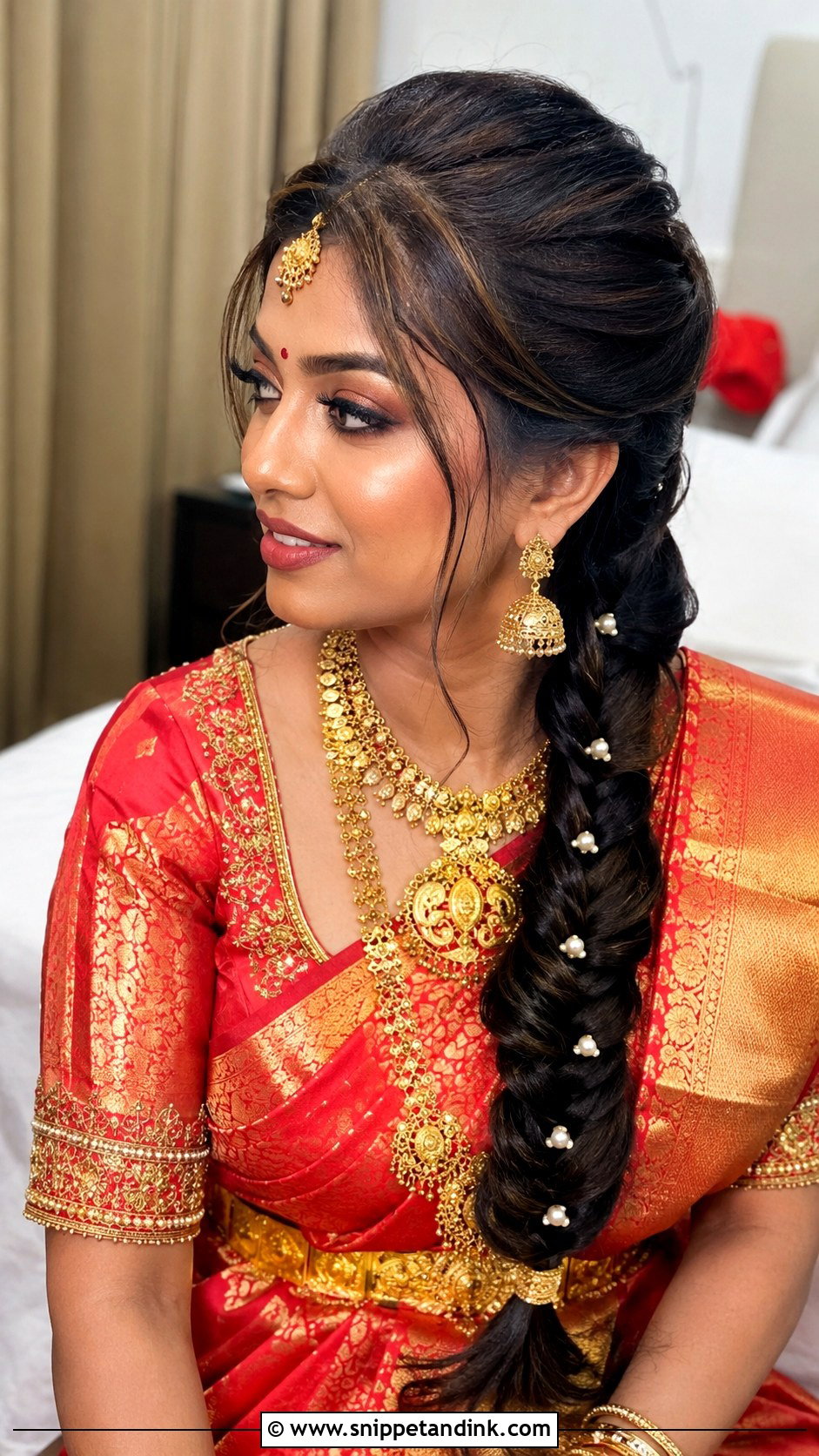
A straight braid looks crisp because every section is the same width with nothing frizzing between them. Press first, then go into a three-strand, a fishtail or a long bridal braid. It’s the practical pick for haldi and mehndi, when you want hair off your neck and away from paste, and it’s traditional in many South Indian bridal looks with flowers or a jada running down its length. Small flowers, pearl pins or a braid chain add the ornament. I keep a little lift at the crown, because a tight braid on straight hair drags the face back and looks severe in profile.
13. Straight Hair With Matha Patti Indian Wedding
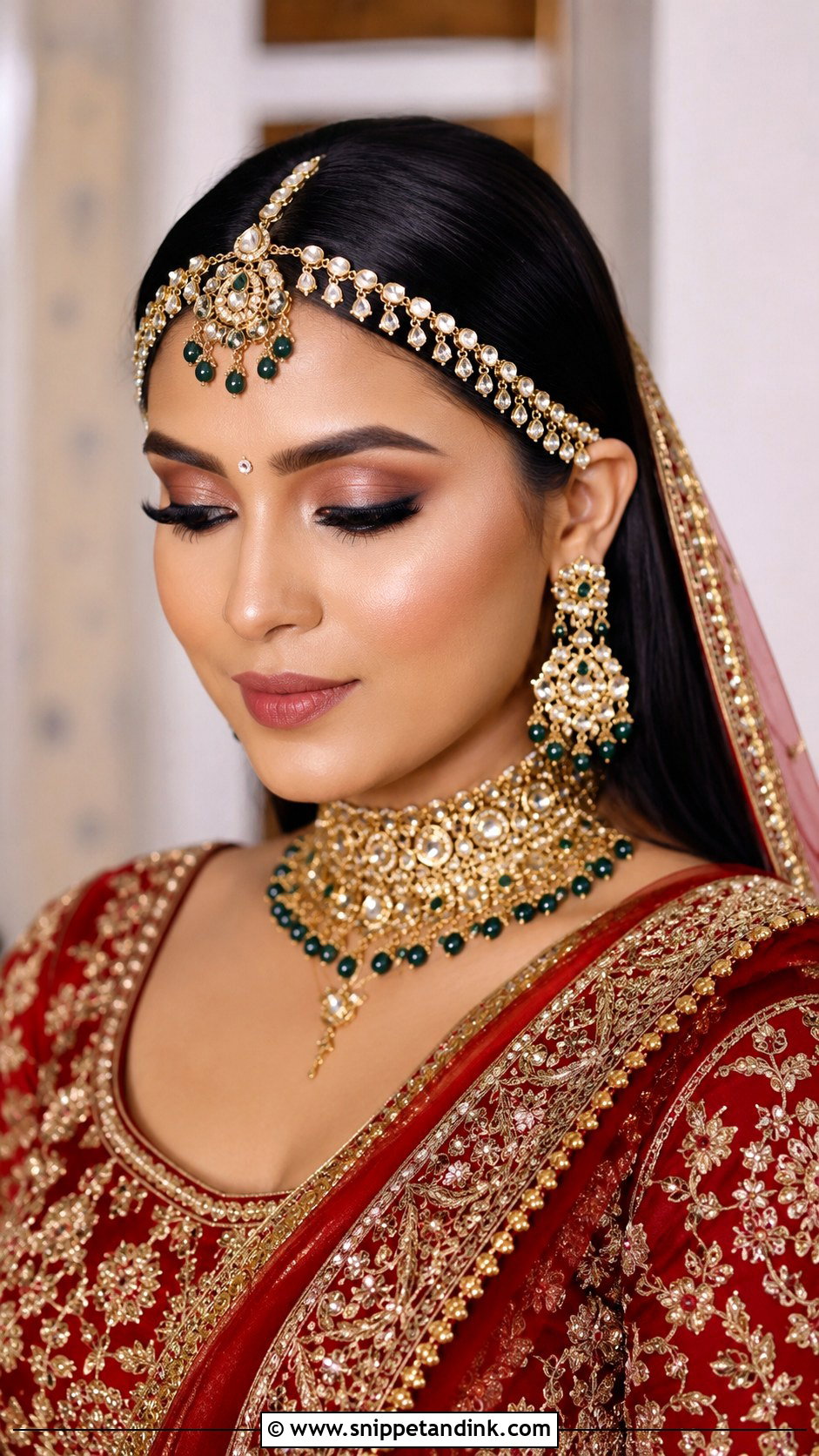
A matha patti runs its chains along the hairline, so every stray hair underneath shows. That makes a clean centre part and a disciplined hairline non-negotiable. I fit the piece before the final spray: place it, check the side chains sit evenly at both temples, pin, and only then spray. For the main ceremony with a heavily embroidered lehenga or saree, I’d tie the back into a low bun so the side chains have something firm to hook into. Leaving the lengths open is softer, but the chains drift more.
14. Straight Lob Hairstyle Indian Wedding
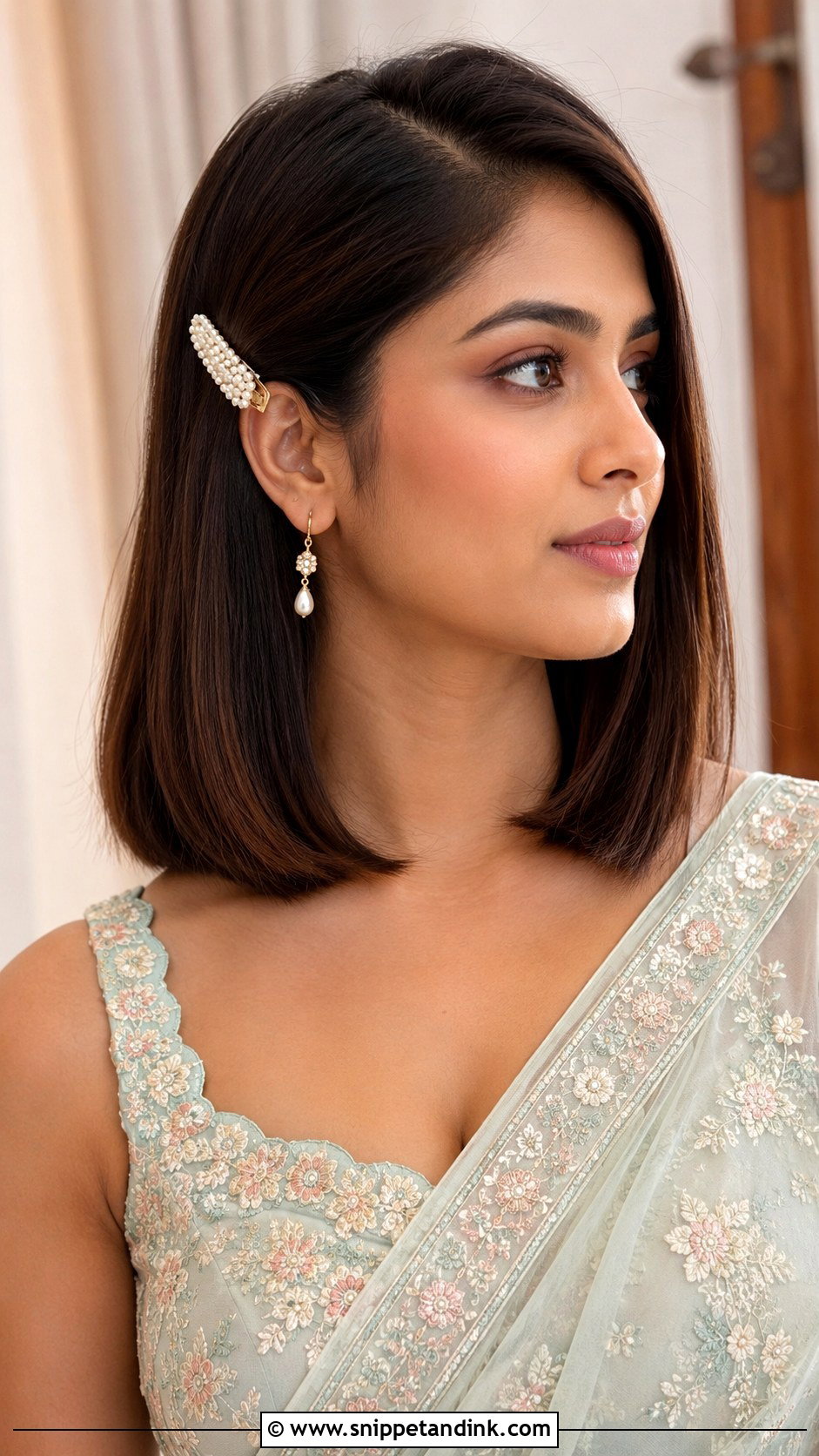
A collarbone lob is the modern route if your hair is short to medium and you’d rather not wear extensions. Blunt ends look sharpest when pressed; soft layers give more movement. The catch is that a lob can’t hold a bun or most traditional ornaments, so I suggest it for guests, bridesmaids and reception looks rather than the pheras. A pearl clip or a jeweled barrette gives enough festivity. That clean line at the shoulders sits especially well with boat-neck and off-shoulder blouses.
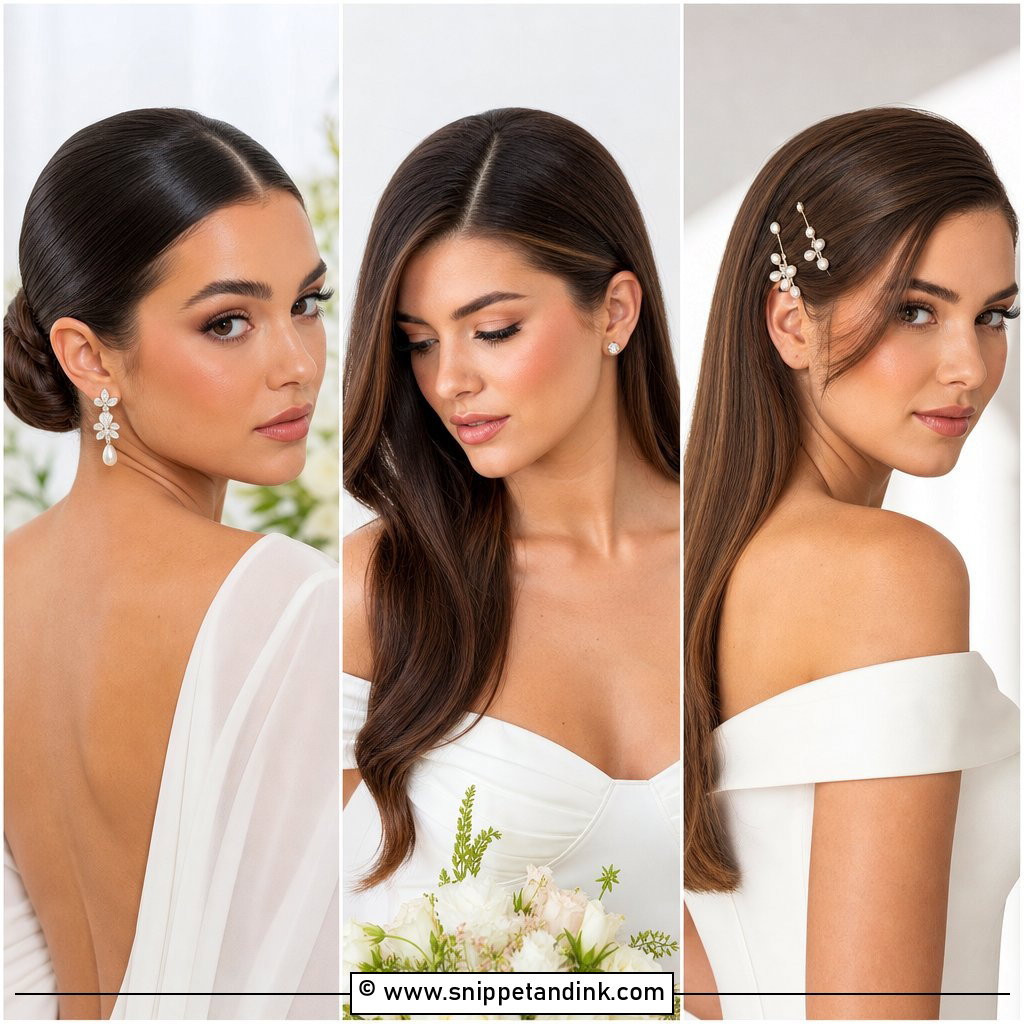
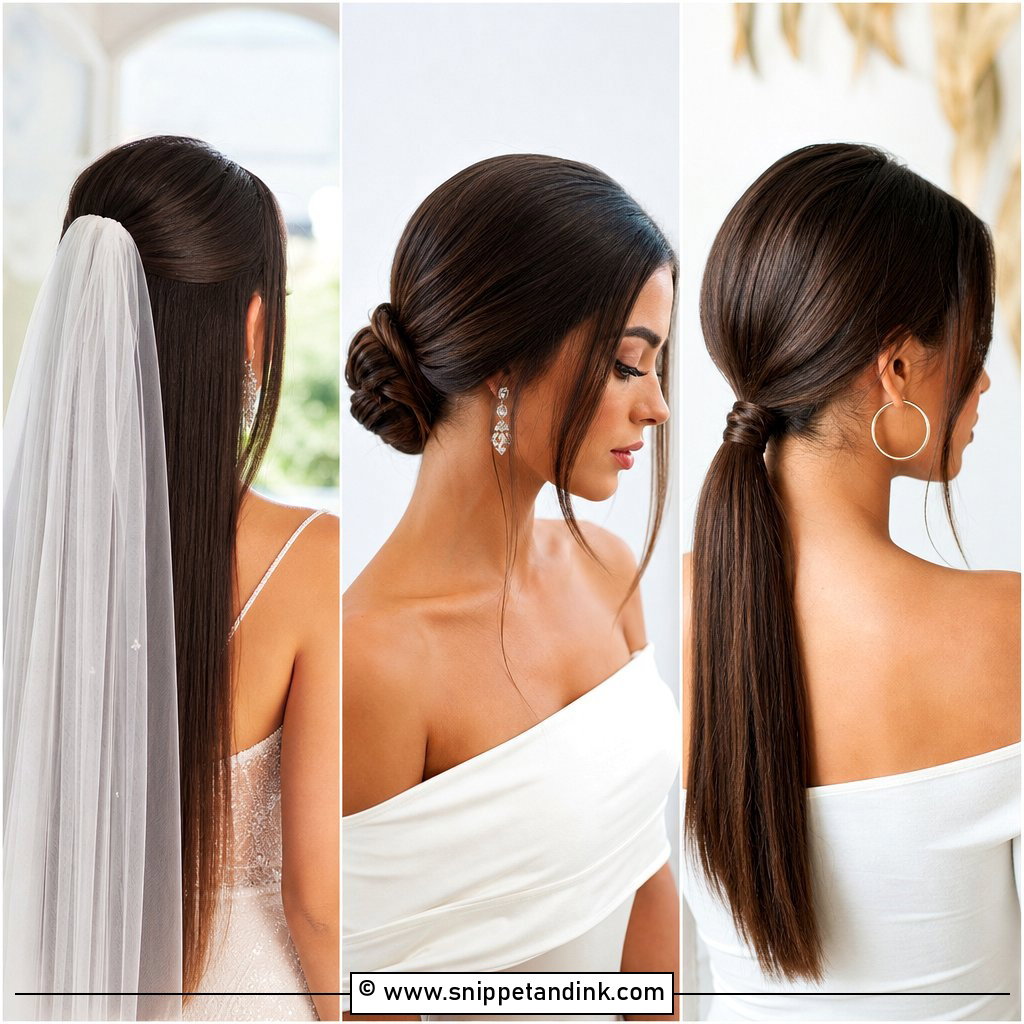
15. Straight Hair With Hair Accessories Indian Wedding
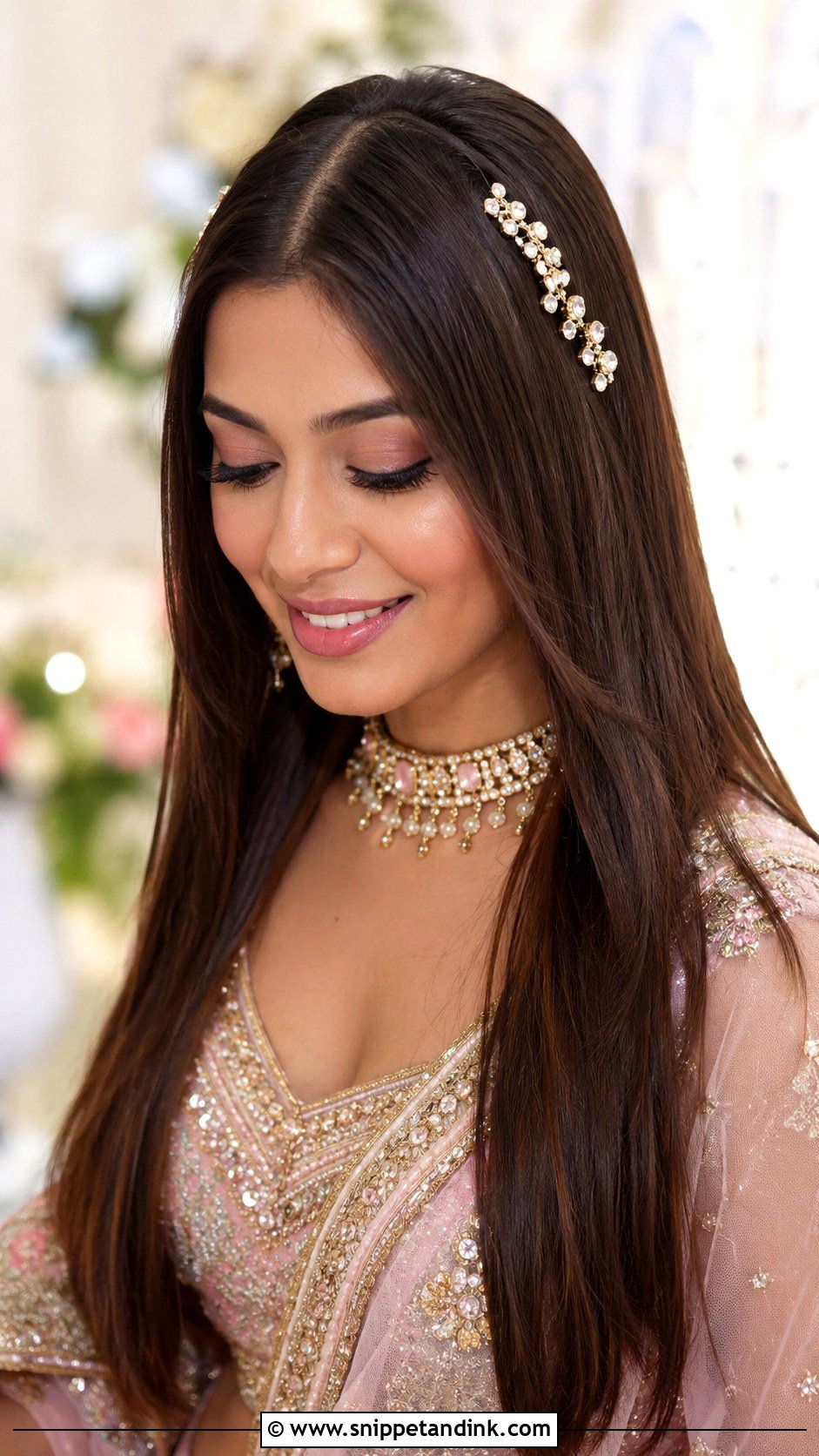
Kundan pins, pearl clips, crystal barrettes, floral combs and gold chains all show up clearly on straight hair, which is exactly why you should pick only one. Two competing pieces on sleek hair look cluttered very fast. I place the accessory where it connects to the neckline and earrings, usually just behind the ear on the side with the bigger earring. Smooth hair also gives an accessory nothing to grip, so I spray a little dry texture spray on that spot before the pin goes in. It suits engagement, cocktail and reception outfits, and guests as much as brides.
Mapping These Looks Onto Haldi, Mehndi, Pheras and Reception
An Indian wedding stretches over several days, and one hairstyle rarely suits every function. This is roughly how I split the fifteen looks above with a bride at her trial.
- Haldi: a braid or a tight low bun. The paste stains and wet hair reverts, so nothing open.
- Mehndi: half up or a low ponytail kept behind the shoulders, since loose hair sticks to wet paste while it dries.
- Pheras: a low bun, a matha patti look or gajra. These take a dupatta pinned into them and hours of sitting near the fire.
- Sangeet: a ponytail or half up, for movement on the dance floor.
- Reception: open hair, a side part, a lob or one accessory, once the dupatta usually comes off.
If you only book one trial, test the pheras look, because it carries the most weight and has to last longest.
The Vidaai Test for Sleek Hair
Straight hair covers more ground than people think, from a plain blowout for the mehndi to a matha patti look for the pheras. For the main ceremony I lean toward a low bun, a matha patti, gajra or a sleek middle part, since all of them stay put under a dupatta. Sangeet and reception can take open hair, half up, a ponytail or a single strong accessory. Whatever you choose, the result depends on the dull parts: heat protection, frizz control, pins that grip and a plan for touch-ups. Get those right and the shine lasts to the final dance.
You'll Like These Ideas:


Leave a Reply