
The right hairstyle is what makes a lehenga, a maang tikka and a pair of jhumkas read as one bridal look instead of three separate pieces. Indian bridal hair covers a lot of ground, from low buns with fresh jasmine to side braids threaded with pearls, and it has to work on long flowing hair, a sleek bob and thick textured hair alike. Here are 25 bridal hairstyles across buns, braids, open-hair looks and heavily accessorized updos, with the details I’d check before you settle on one for each function.
Bringing Photos That Actually Match Your Hair
Reference photos help, but they can mislead. Many bridal hair photos online use extensions, professional lighting and a model with very thick hair. Look for brides whose texture and density are close to yours, and save back and side views as well as the front, since the back is what most guests see during the pheras.
Bring the real things to the trial rather than descriptions of them:
- Your maang tikka, matha patti or passa, and any heavy earrings.
- The dupatta, or a fabric of similar weight if the real one isn’t ready yet.
- A top with a neckline close to your blouse, so the hair can be judged against it.
- Any hair accessories or ornaments you’ve already bought.
Ask your stylist to photograph the finished trial from the front, both sides and the back, in daylight and with flash. Those photos become the plan for the wedding morning.
1. Floral Bun Hairstyle for Bride
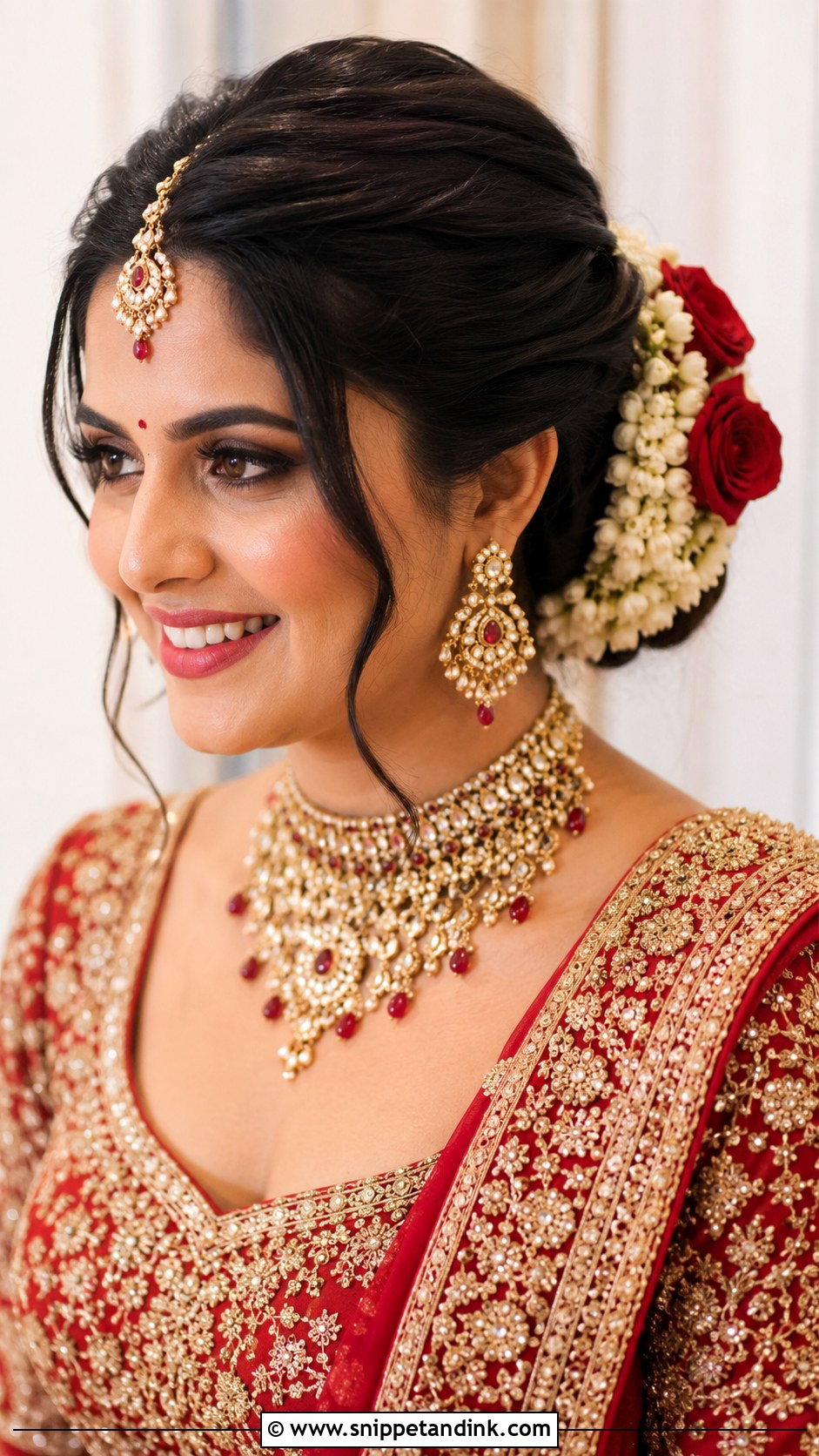
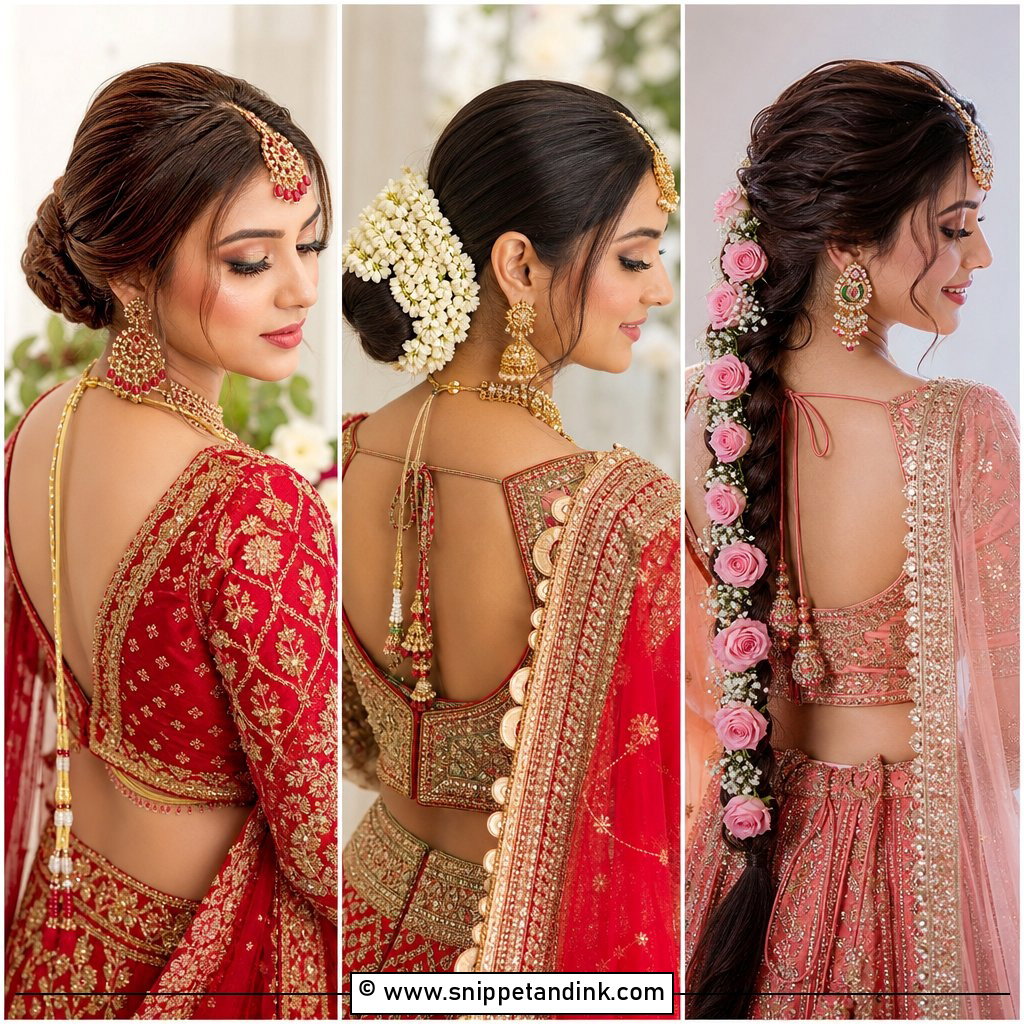
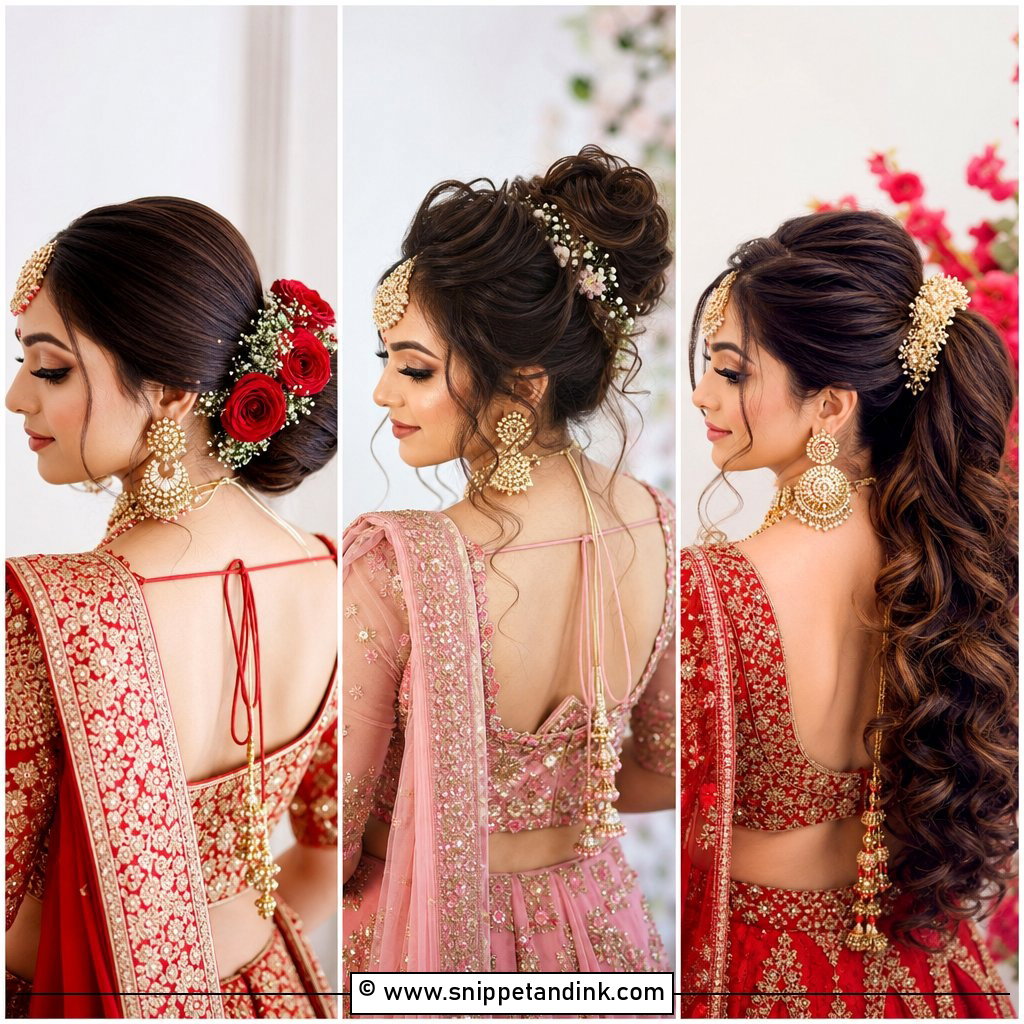
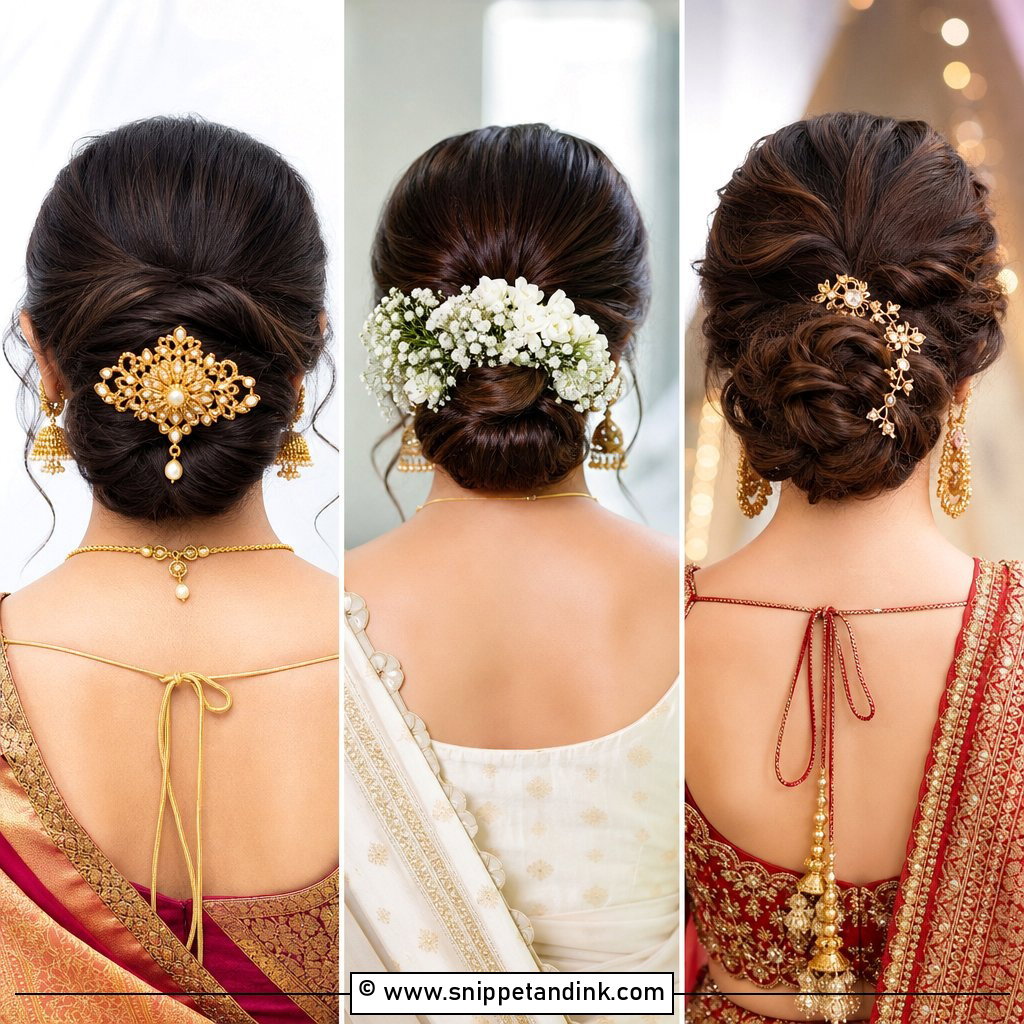
A neatly twisted low bun wrapped in roses or mogra is the look most families picture for the pheras. I match the bloom colors to the lehenga’s embroidery rather than its base color, which ties the hair into the outfit more subtly. Flowers add weight and moisture, so the bun underneath needs to be tight and fully pinned before a single bloom goes in. Add a maang tikka and it carries a heavy bridal lehenga easily.
2. Side Swept Curls for Reception
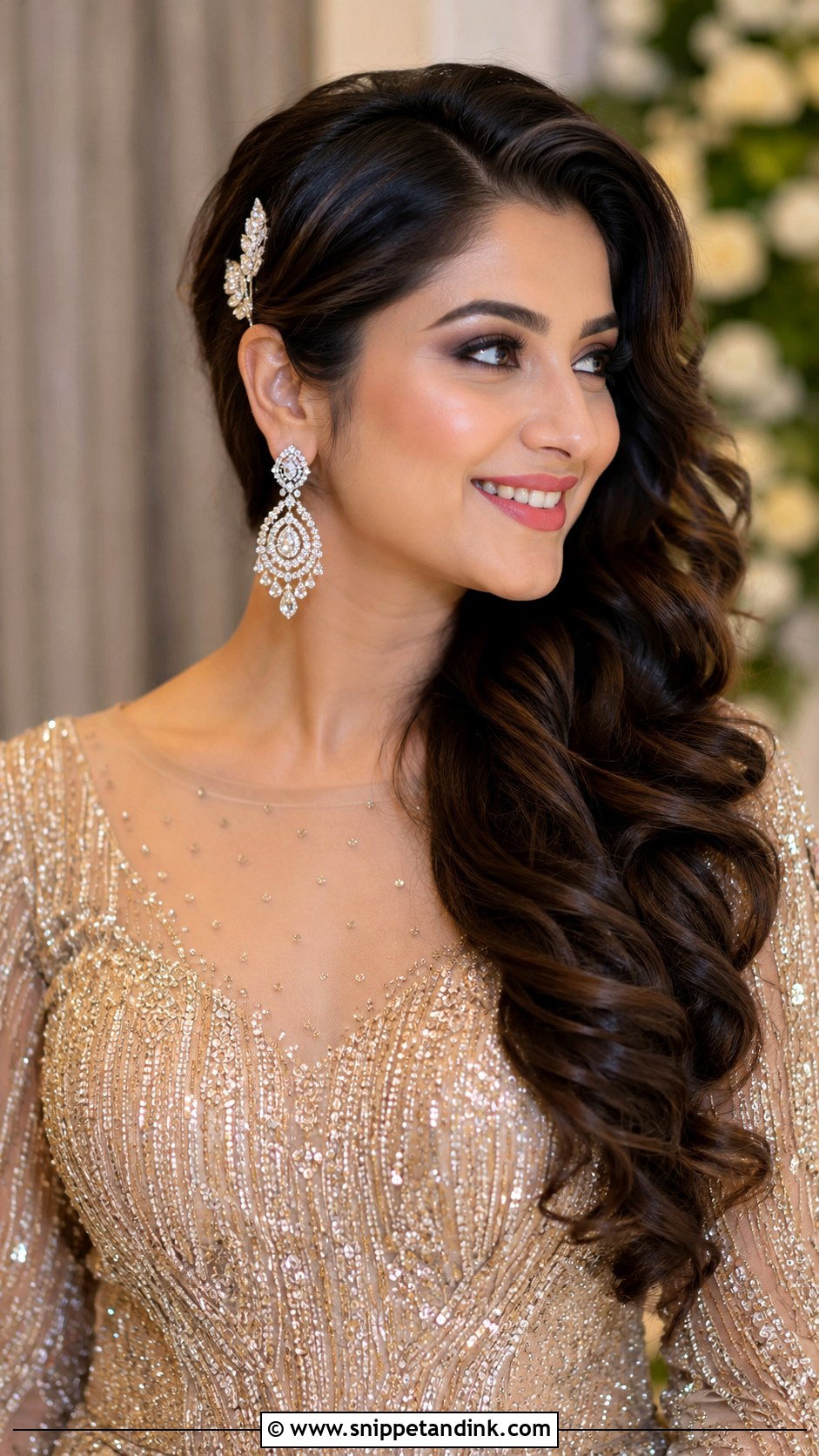
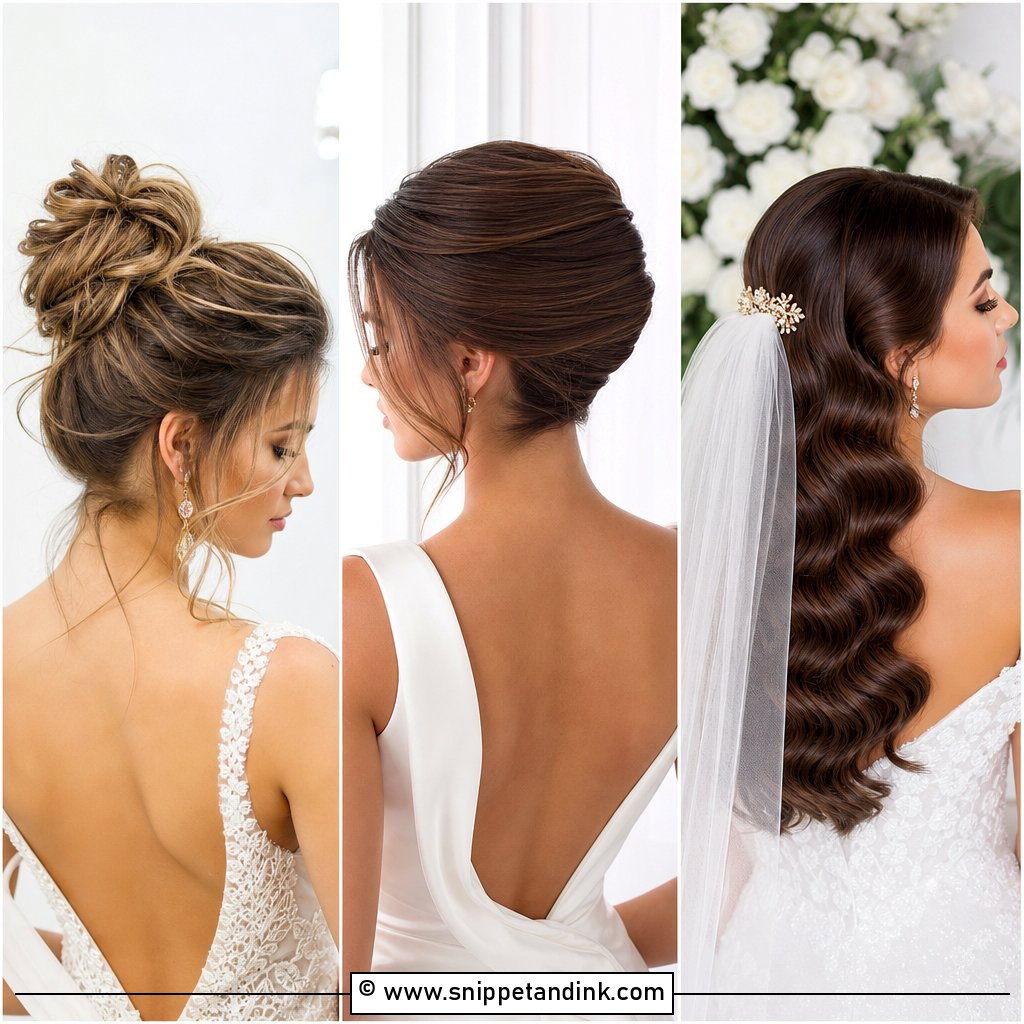
At the reception, side-swept curls bring Hollywood drama with an Indian twist, with all the hair cascading over one shoulder in soft, bouncy waves. Before curling, I tease a little at the crown on the swept side so the root lifts away from the head; otherwise the weight of the curls drags the part flat. A statement earring goes on the bare side, and a small diamond pin or floral accent near the part finishes it with a gown or shimmery saree.
3. Braided Bun for Traditional Look
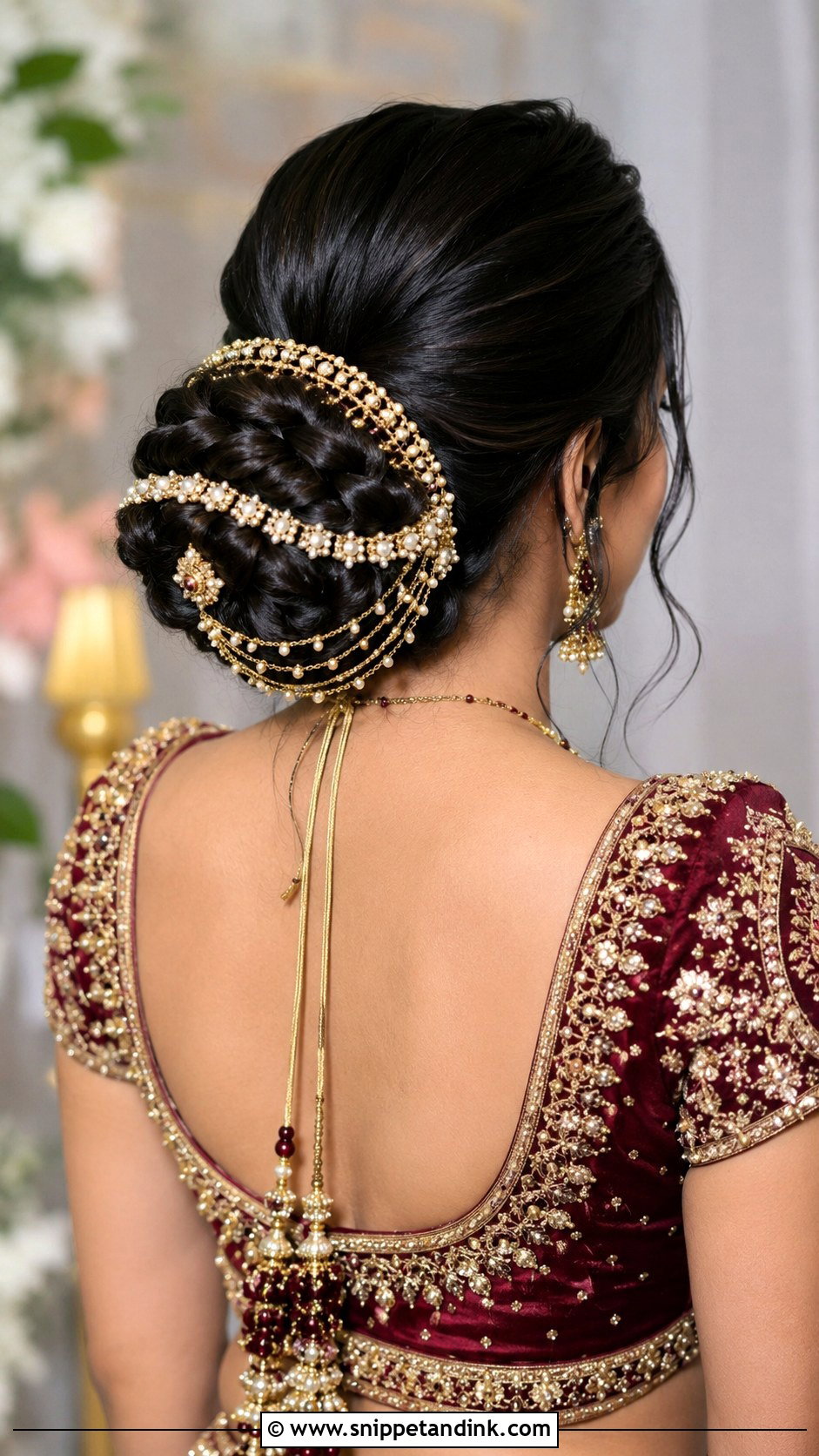
Braiding the hair in sections and coiling them into a bun at the nape gives more texture and size than a plain bun, which is why it stands up to a heavily embroidered lehenga. It holds through long ceremonies and dancing. I often suggest it for round and oval faces, since the low, wide shape doesn’t add height. Pearls, gold chains or fresh flowers threaded between the coils make it grand enough for the main wedding day.
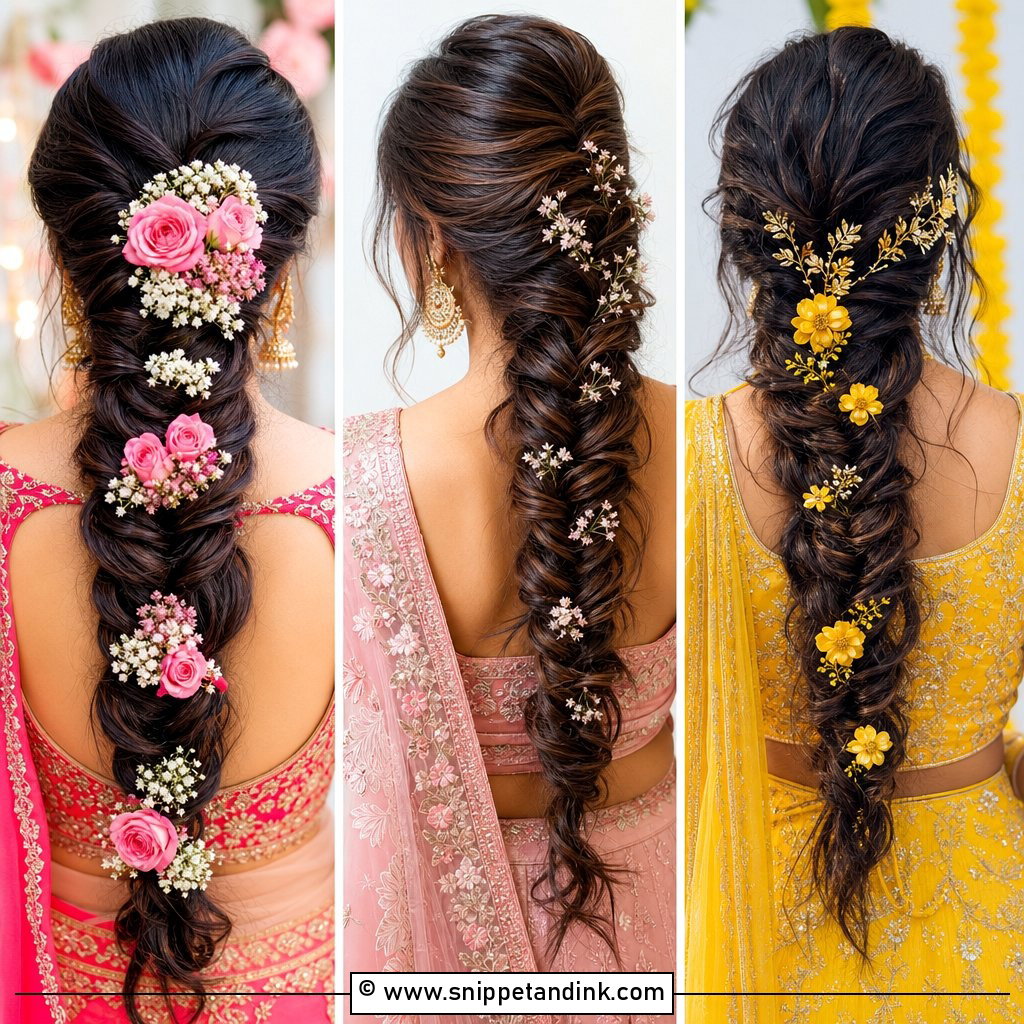
4. Fishtail Braid with Flowers
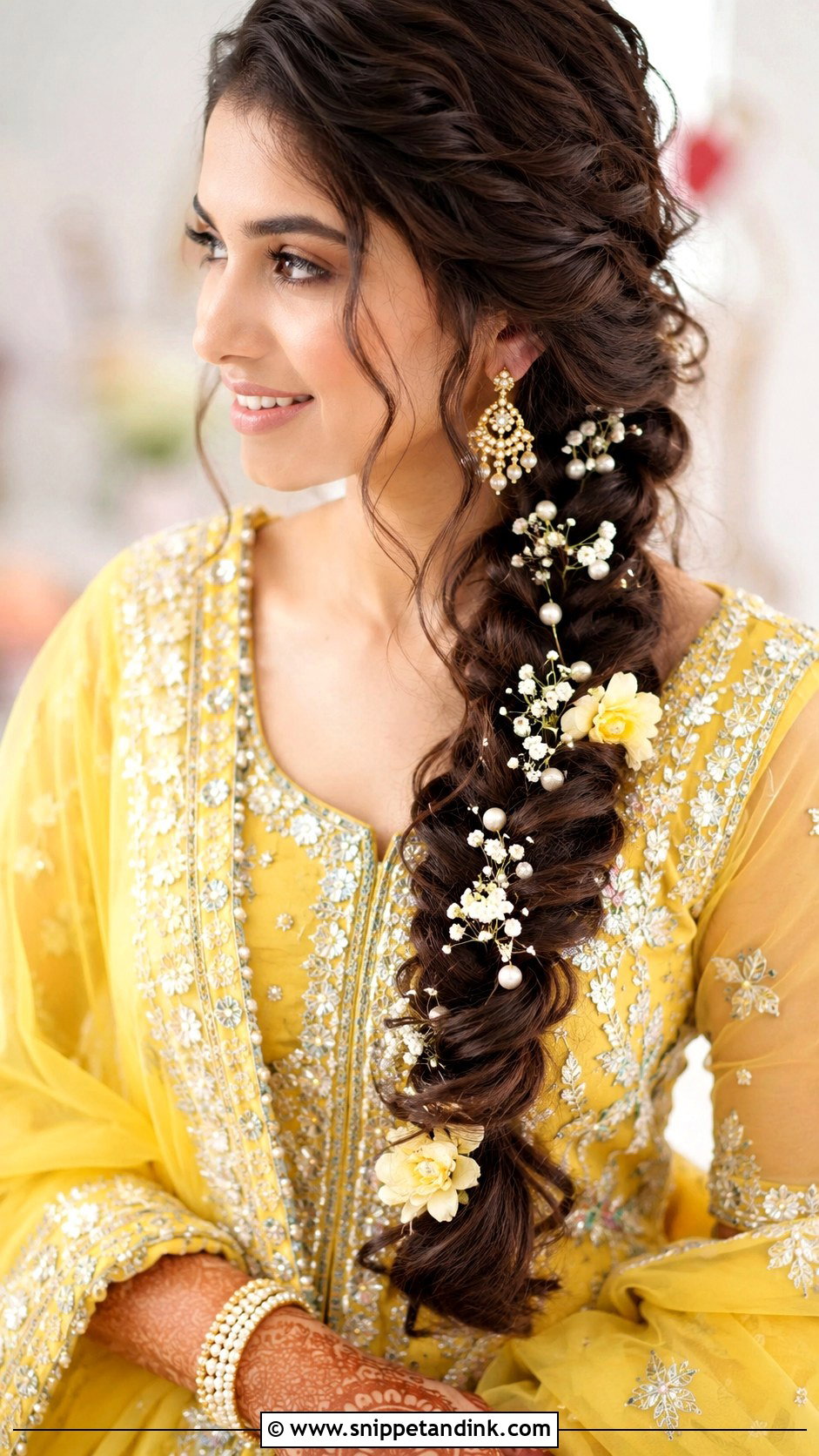
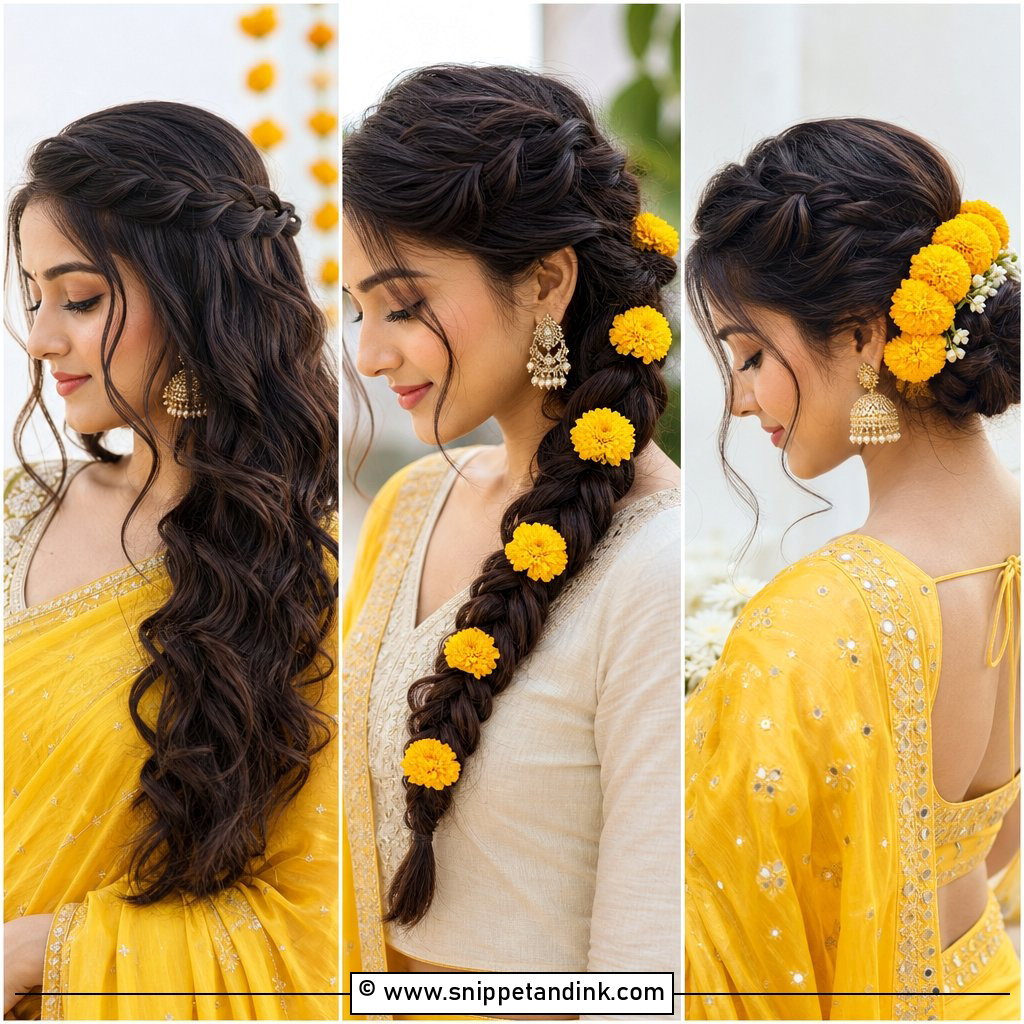
A thick fishtail draped over the shoulder looks more complex than it is: just two sections, with thin pieces crossed over from the outside in. Tiny flowers, pearl strings or fine gold pieces woven through suit mehendi or haldi ceremonies, where the mood is playful. Gently loosened, it looks fuller and softer. On layered hair the short ends can poke out of the weave, so I smooth a little wax down the length once it’s braided.
5. Low Bun with Maang Tikka
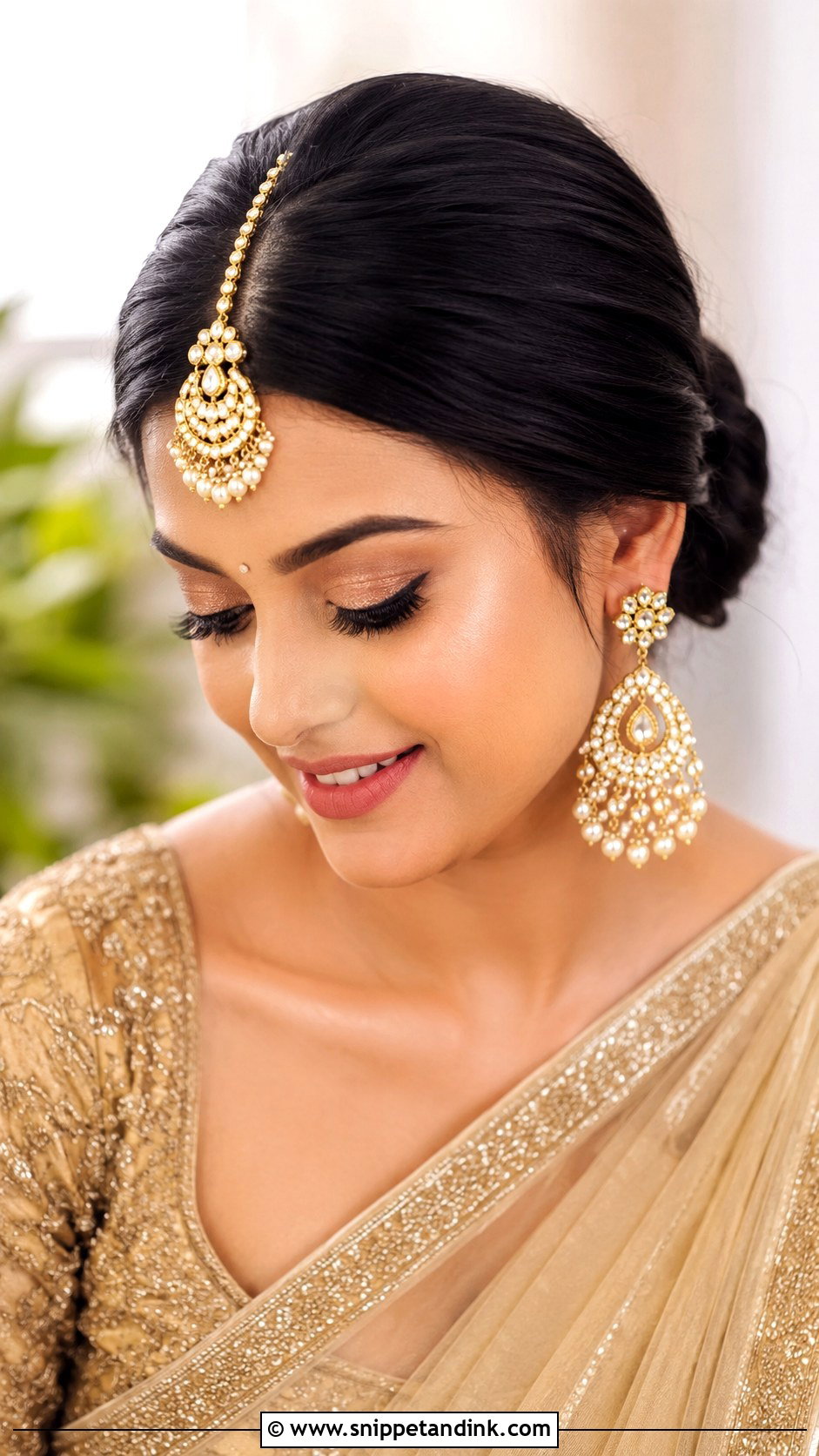
When the jewelry is the star, I recommend this one. A sleek low bun at the nape keeps the attention on your face and on a striking maang tikka and heavy earrings. For a mirror-smooth finish, I brush the hair back while it’s still warm from the dryer and set the shape before it cools. A gajra wrapped around it brings in tradition at South Indian and North Indian weddings alike.
6. Half Up Half Down Bridal Style
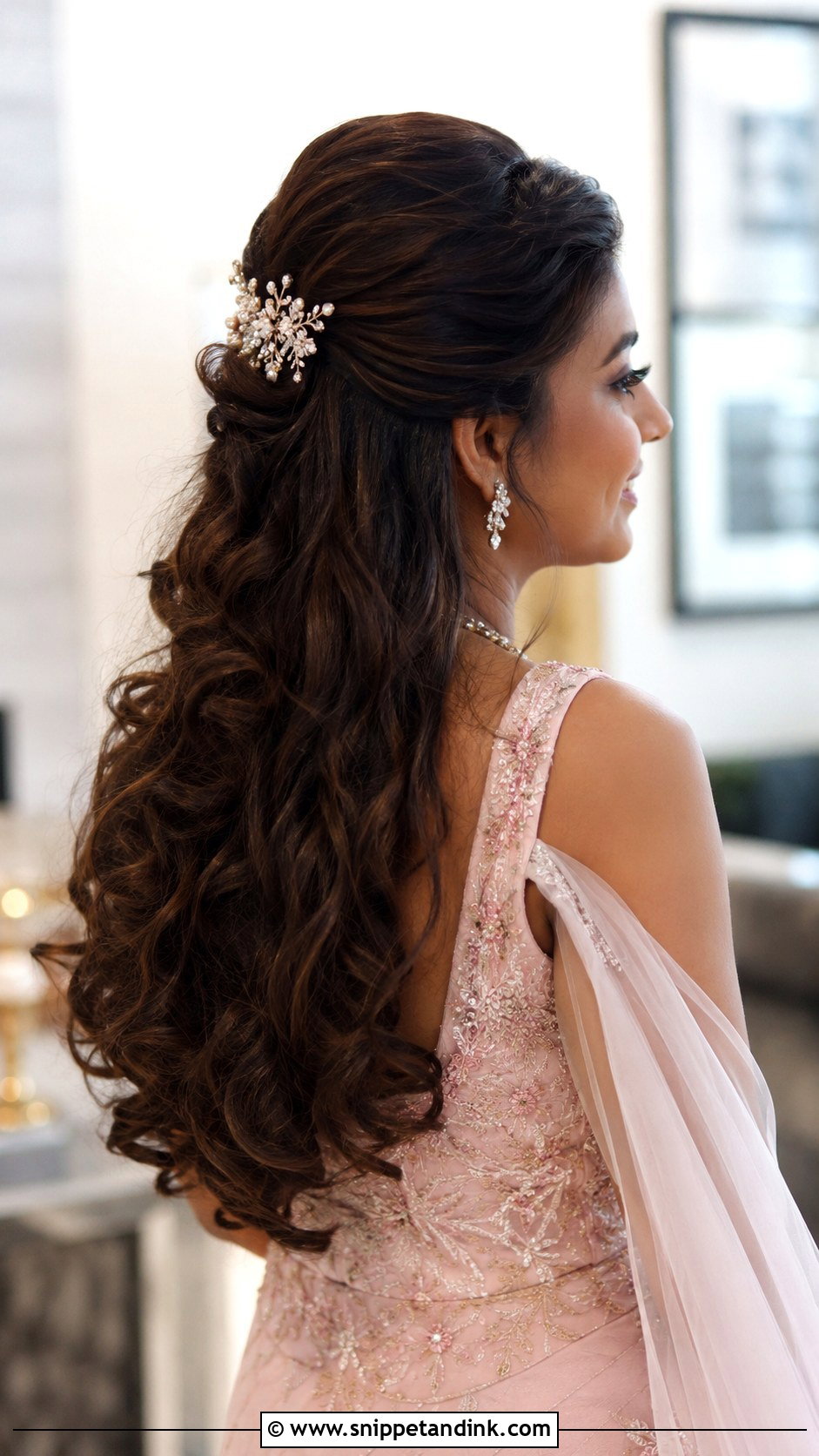
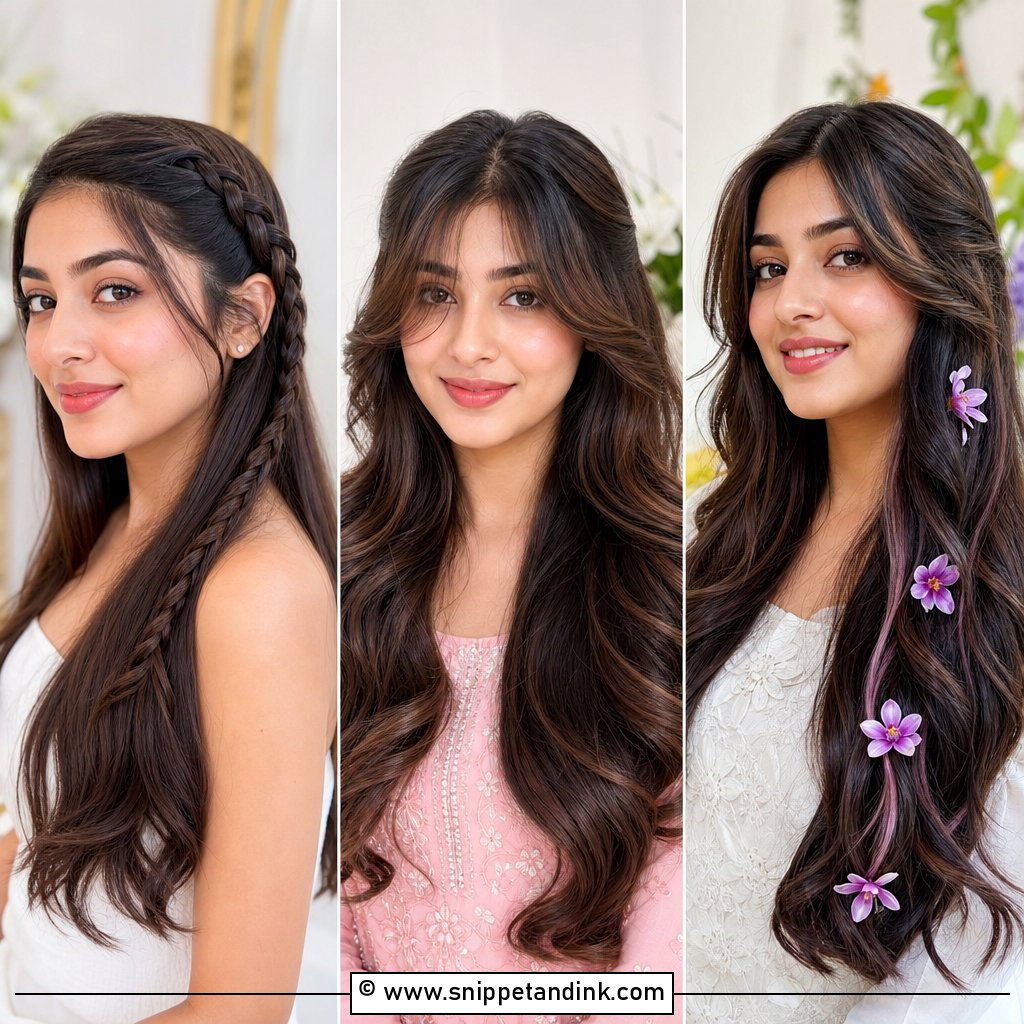
Half the hair is pulled back and secured and the rest falls in curls or waves, so your length stays on show without hair in your face. It fits sangeet, engagement and reception looks with gowns or sarees. Wavy and curly hair carries it best, because the natural texture hides the pins in the top section. A small floral clip, jeweled pin or braided detail decorates the pulled-back part.
7. Messy Bun for Mehendi Ceremony
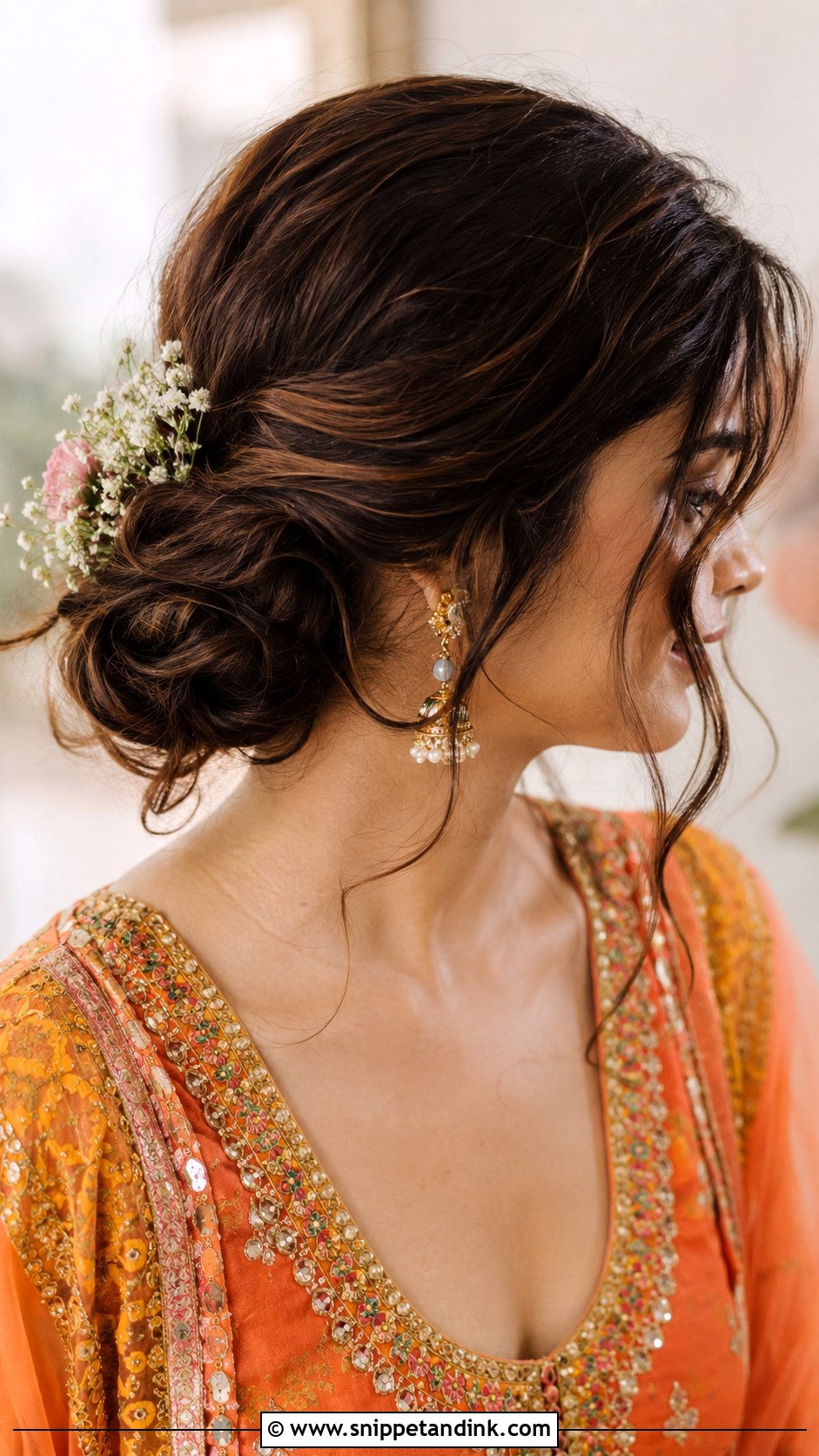
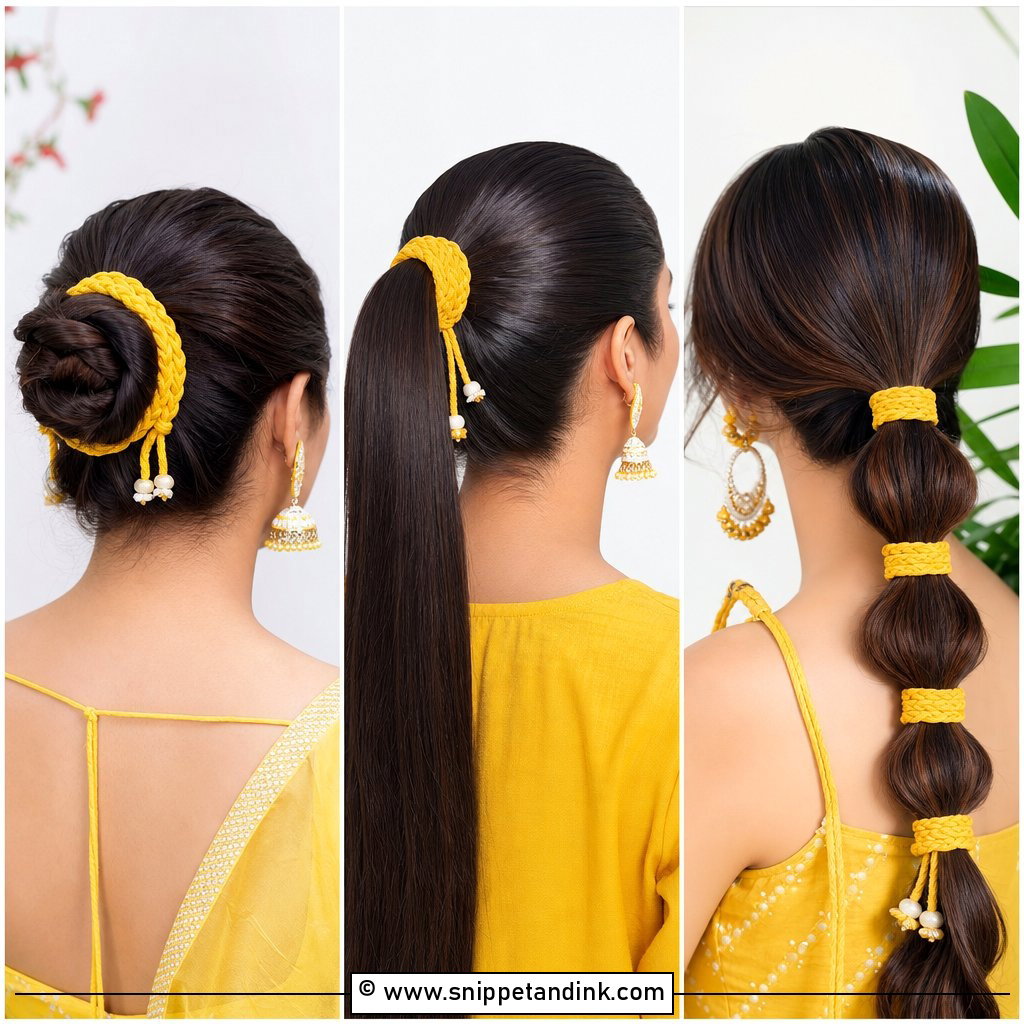
Mehendi is where a relaxed bun makes the most sense. You’ll sit with wet henna on both hands for hours, unable to push hair off your face, so getting it up off your neck is practical as well as pretty. Loose tendrils and soft volume suit the mood, and fresh flowers or a gota patti accessory pick up a bright outfit. I keep the tendrils short and few, because long ones end up stuck in the henna.
8. Sleek High Ponytail for Sangeet
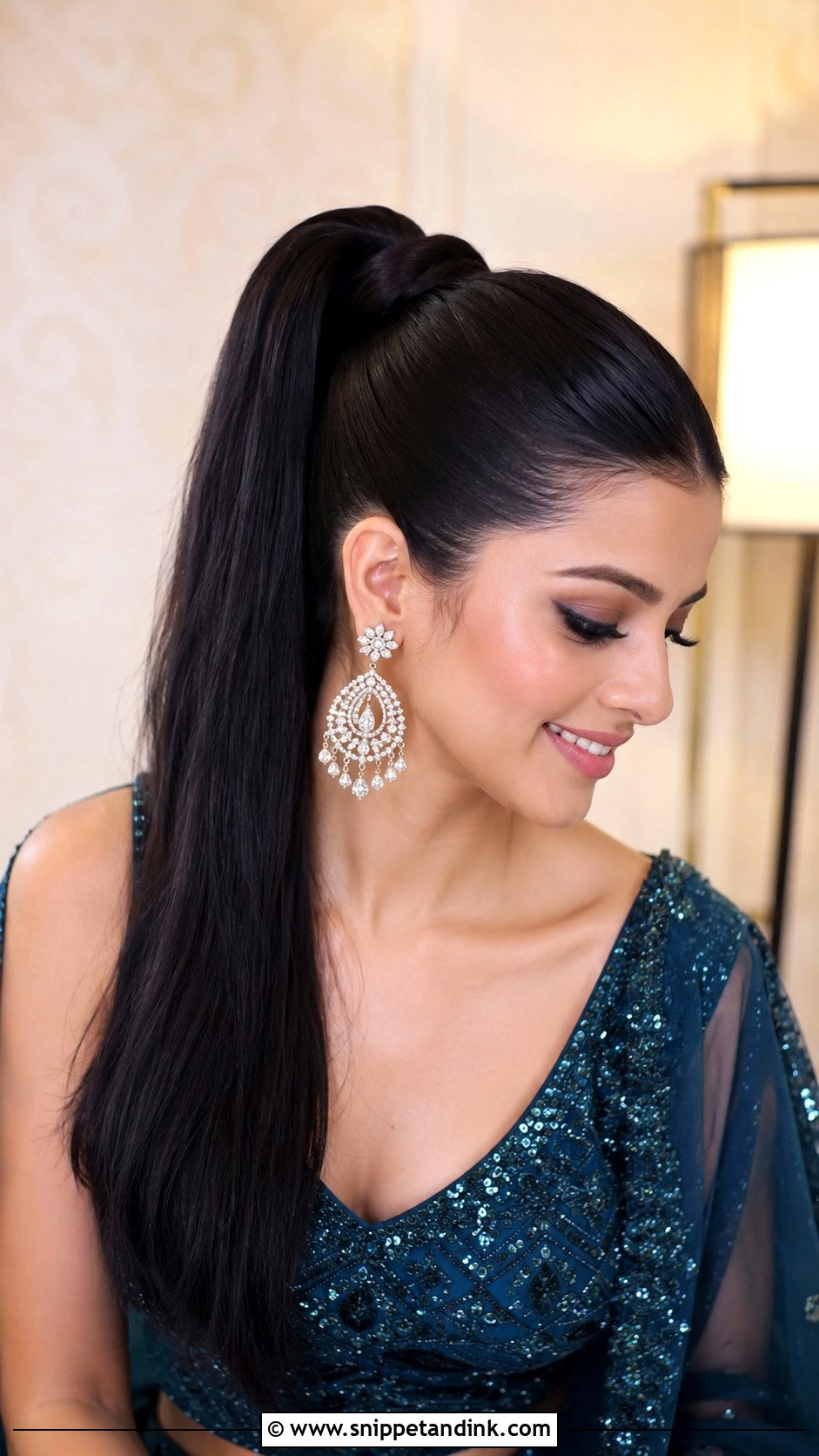
A sleek high ponytail moves with you on the dance floor and keeps your neck cool through a sangeet performance. I set the base slightly behind the crown rather than right on top, which looks fuller from the front and puts less strain on the scalp. Ponytail extensions add length if needed, and a section wrapped around the base hides the elastic. It works with Indo-western outfits and lehengas alike.
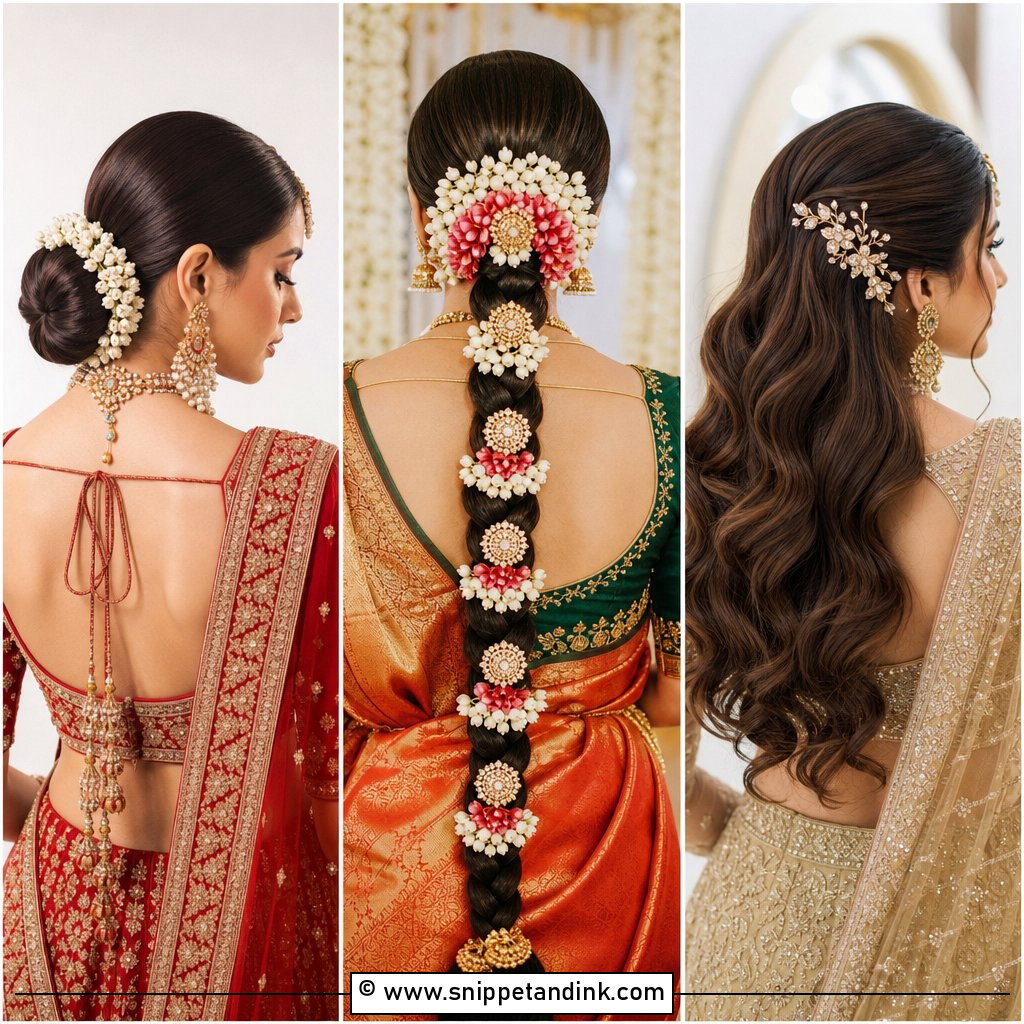
9. Open Hair with Soft Curls
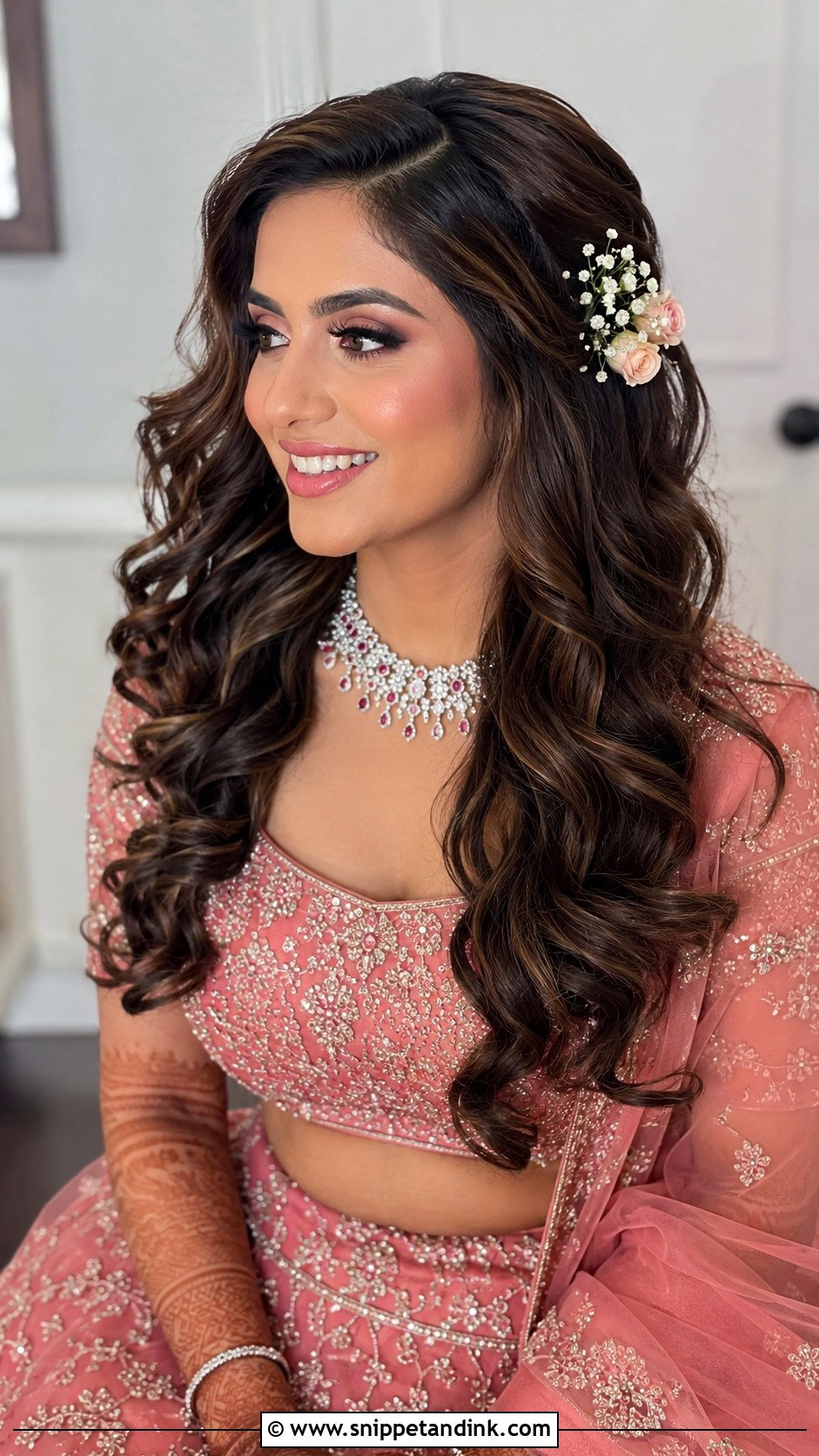
Open hair with bouncy curls has become a modern favorite, partly thanks to celebrity weddings. The curls add volume around the face, and a few small flowers behind one ear or a delicate hairband make it bridal. Thick hair loves this look. Fine hair can wear it too, but the curls need a firmer set and a mid-evening refresh. Receptions and sangeet nights with lehengas or gowns suit it.
10. Pearl Embellished Braid
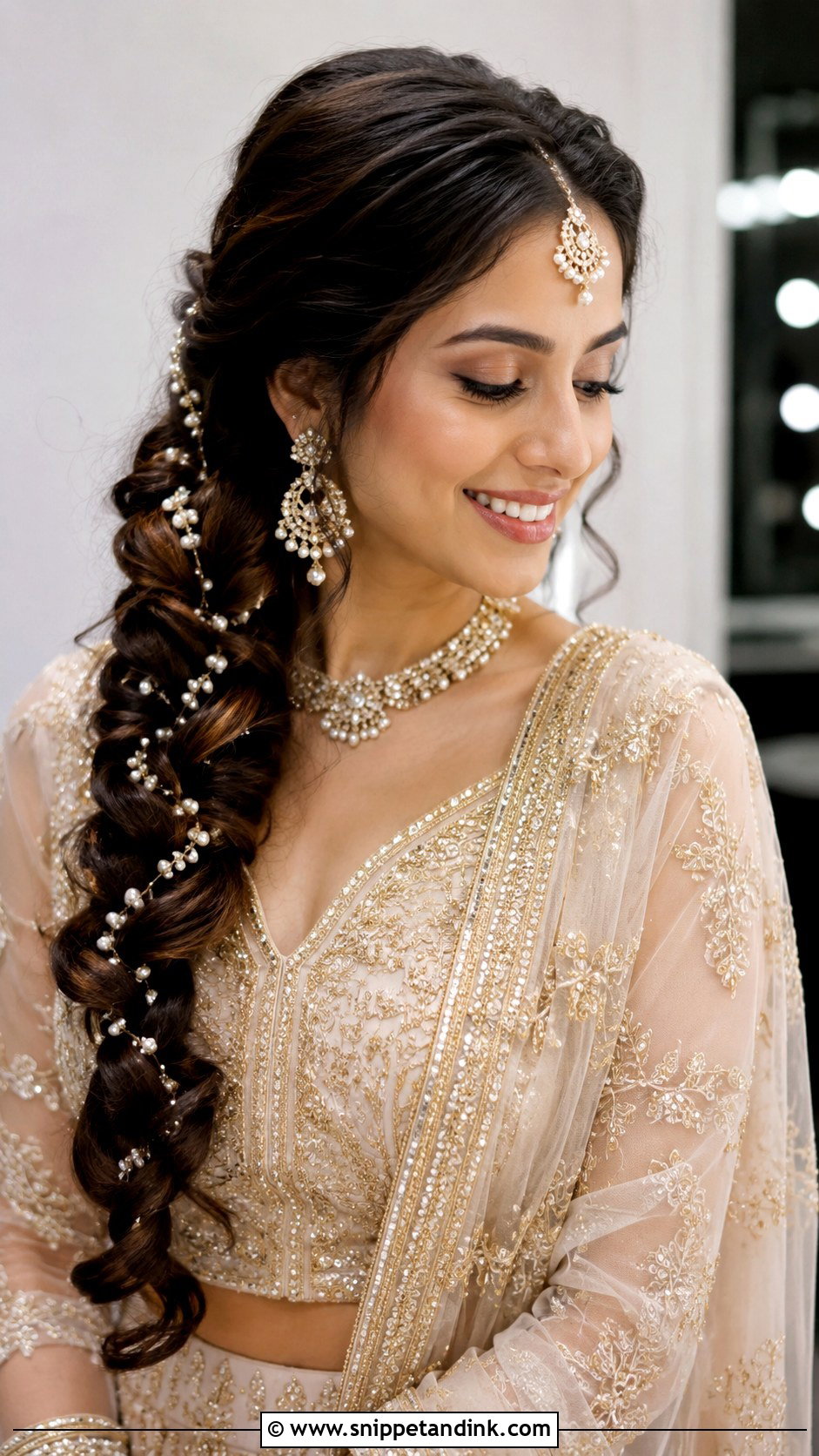
Strings of small pearls threaded along a classic braid add a polished, regal finish without the weight of flowers, and white pearls go with nearly every outfit color and metal tone. I thread the strand through as I’m plaiting rather than wrapping it on afterward, so it sits inside the weave and can’t slide off. Worn over one shoulder or down the back, it suits an engagement or reception.
11. Bun with Gajra for South Indian Bride
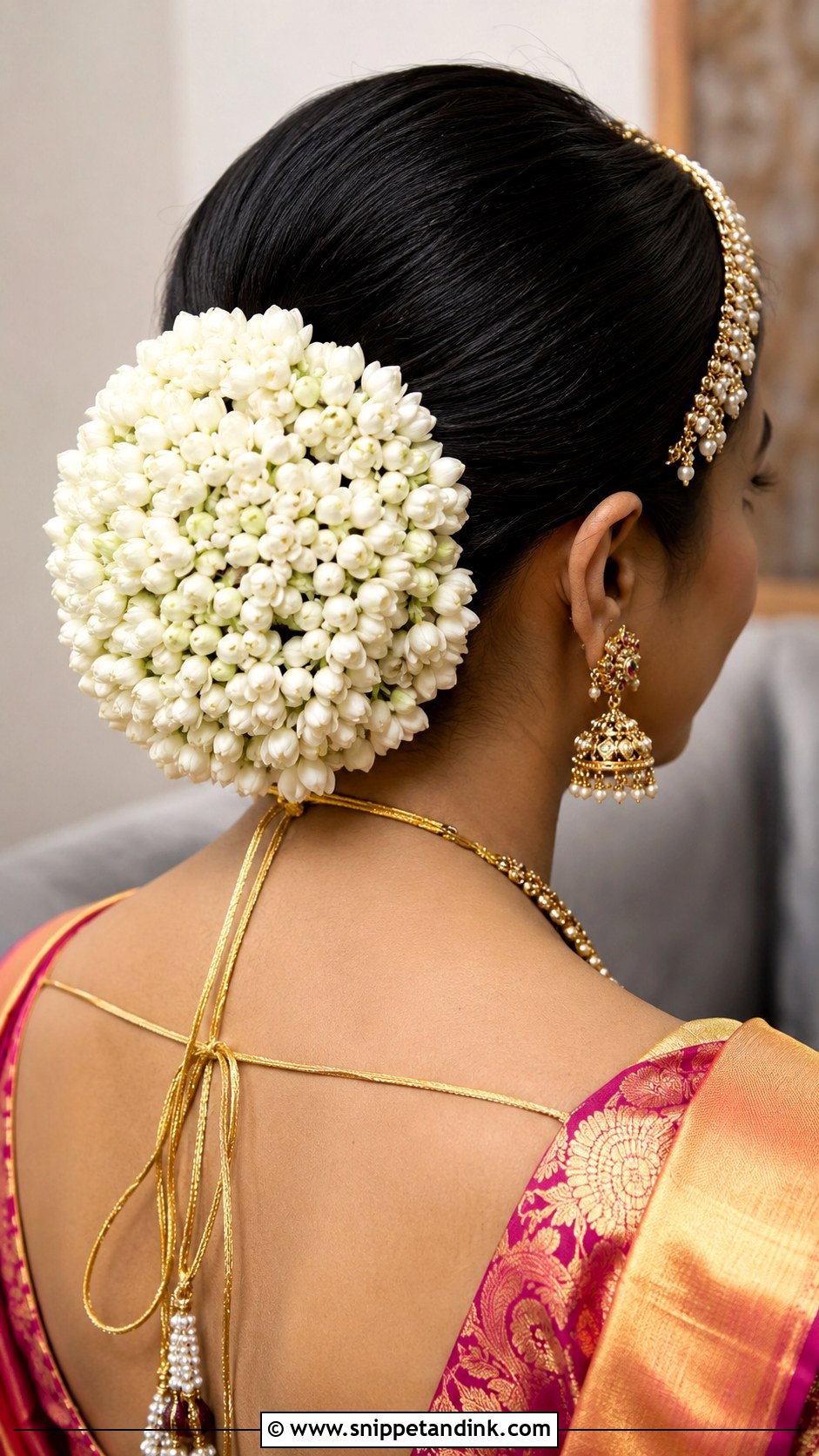
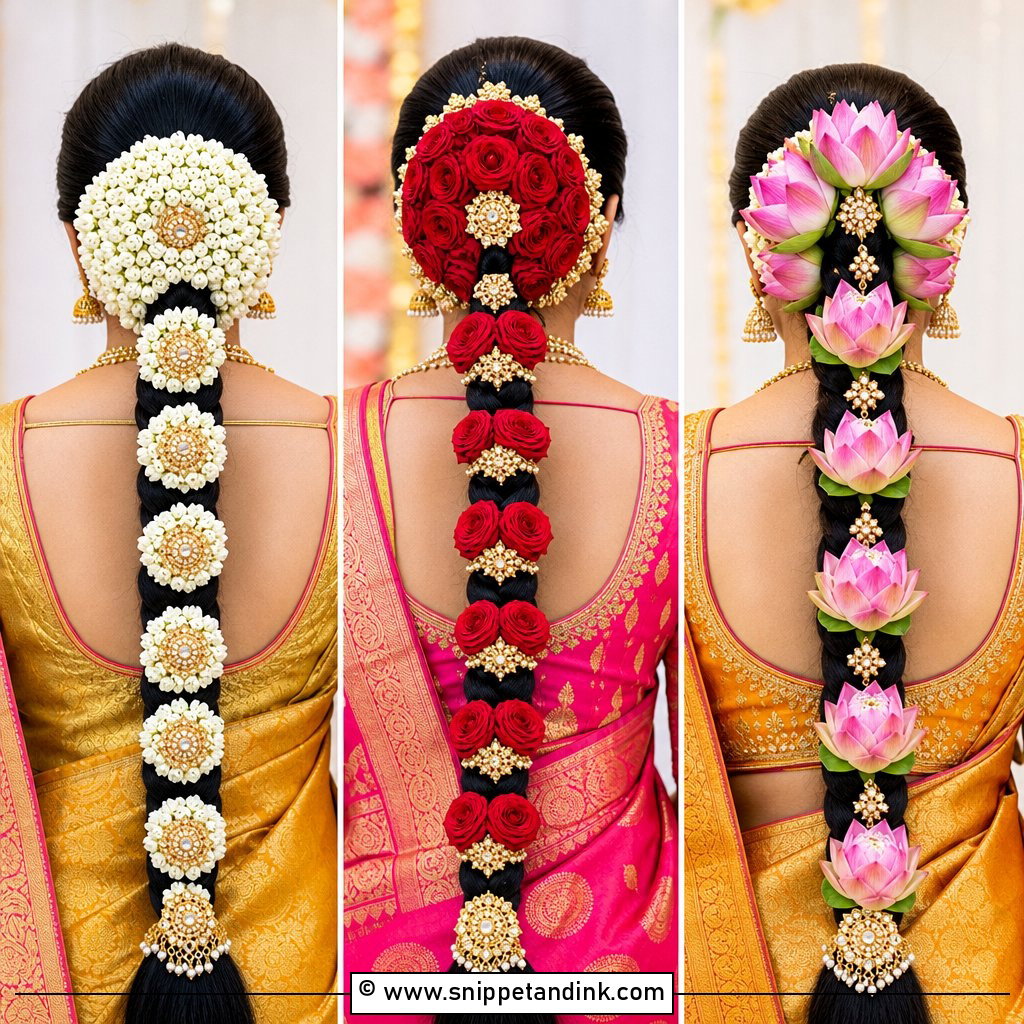
The gajra-adorned bun is the iconic South Indian bridal look: strings of jasmine around a neat, low bun, worn with a Kanjeevaram silk saree and temple jewelry, the white blooms traditionally linked with purity. Many brides extend the gajra into a long trailing braid for drama. If you do, the bun has to sit high enough that the trailing flowers clear the back of your seat during the muhurtham, or they get crushed for the whole ceremony.
12. Voluminous Curls Side Parting
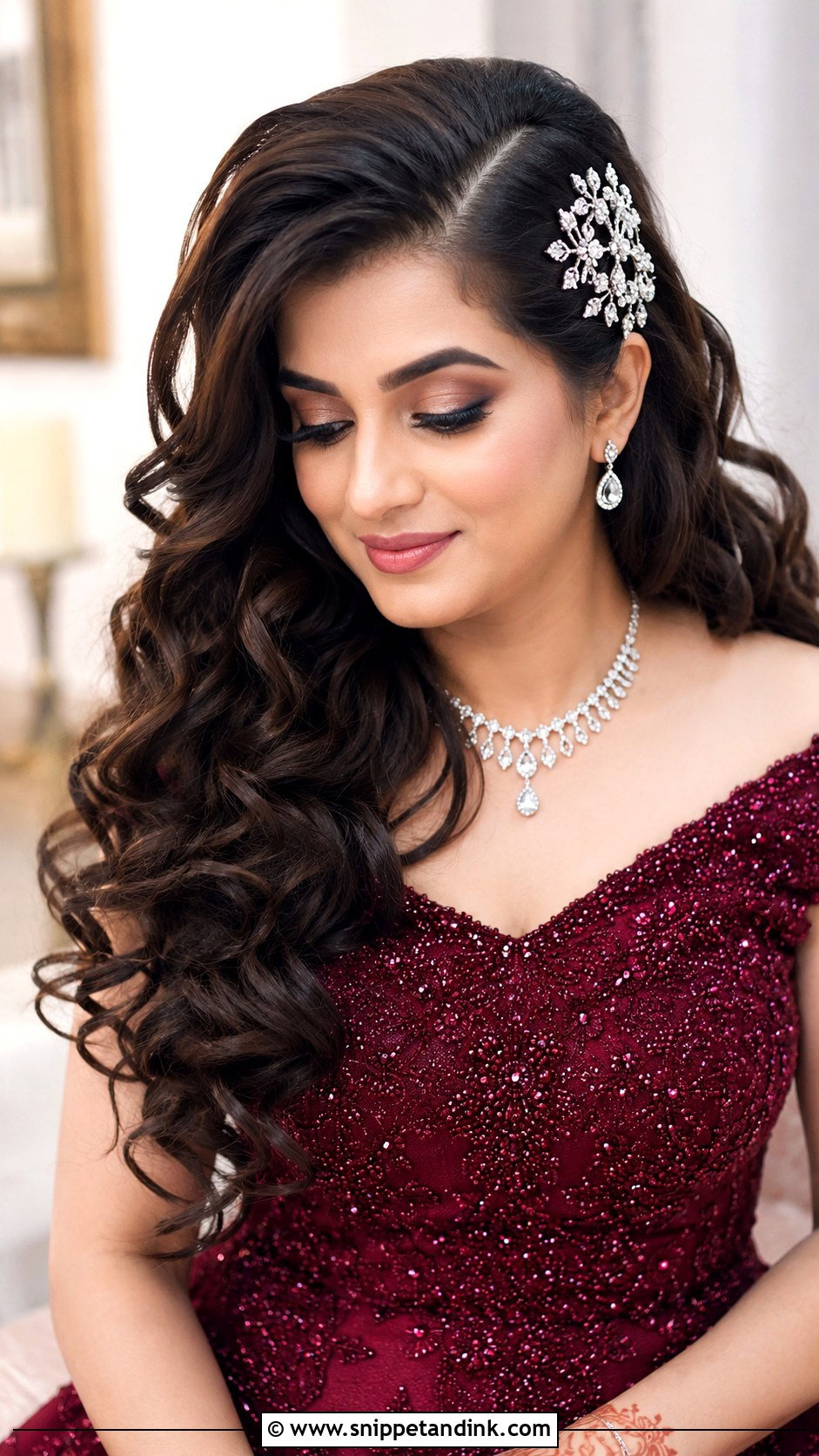
Big, soft curls swept to one side with a deep part give a reception or cocktail look real volume and asymmetry. Volume at this scale needs a foundation, so I dry the roots with a round brush and volumizing spray before curling anything. A sparkling pin or small flower near the part finishes it. Medium to long hair gives the best shape.
13. Rose Twist Hairstyle
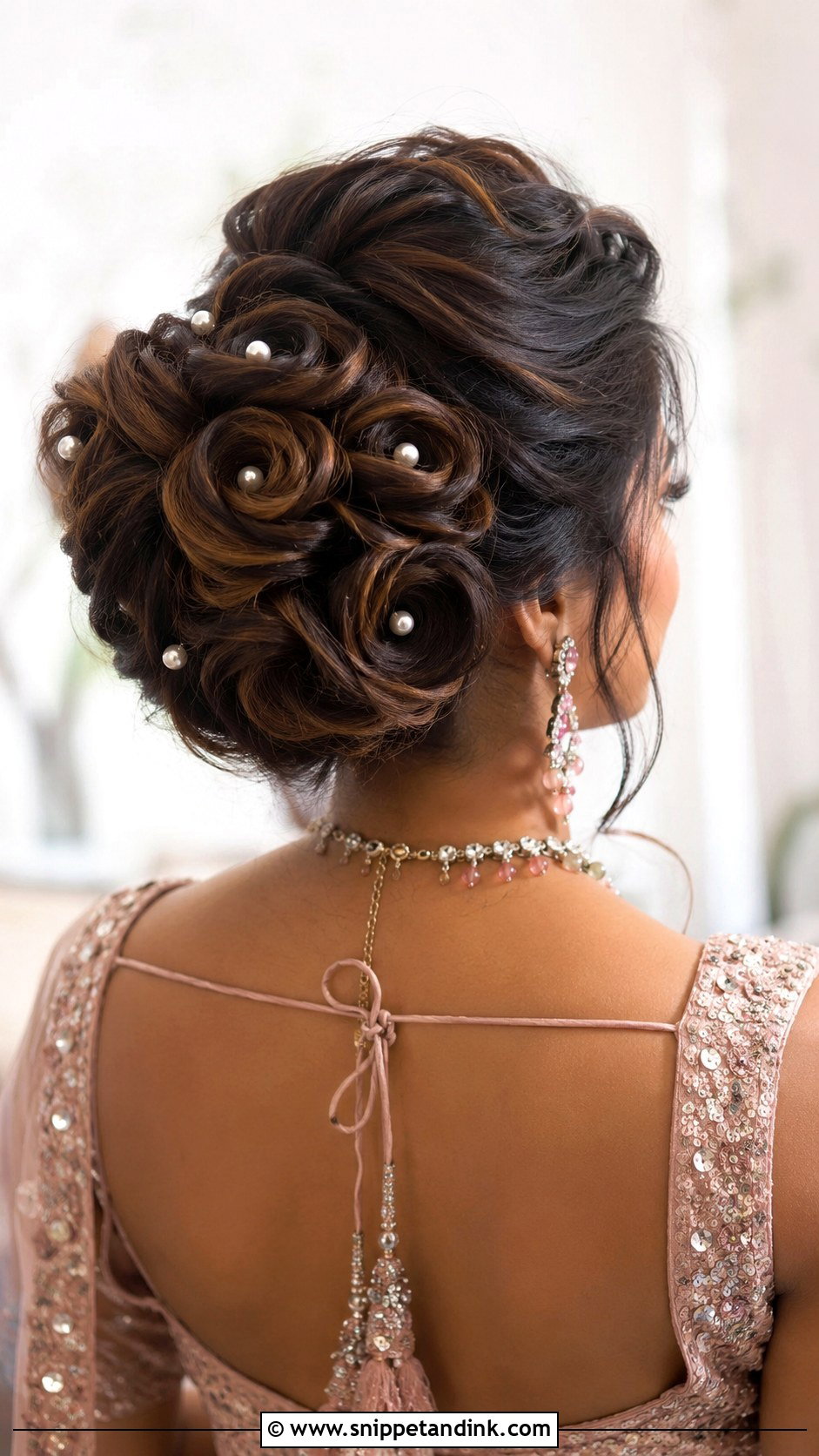
Sections twisted into rose-shaped swirls, at the back of the head or along a half-up, give you a floral detail without fresh flowers, which is handy in heat or when flowers are hard to source. Tiny pearls or crystals can sit in the centers. Medium to long hair makes the fullest roses. Short layers break out of the twists, though, so it isn’t the style for a heavily layered cut. Engagement and sangeet suit its whimsy.
14. Bridal Updo with Hair Accessories
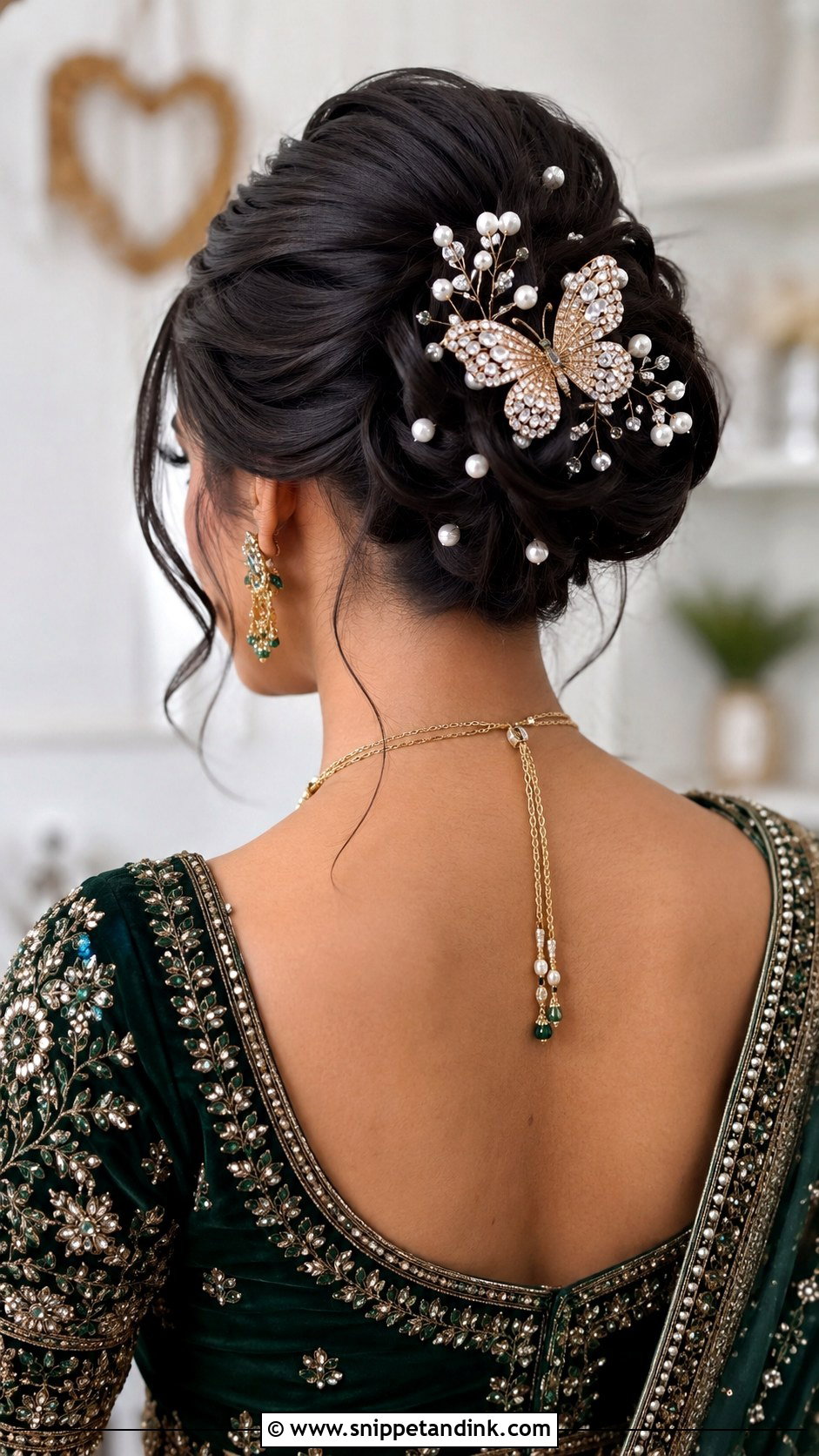
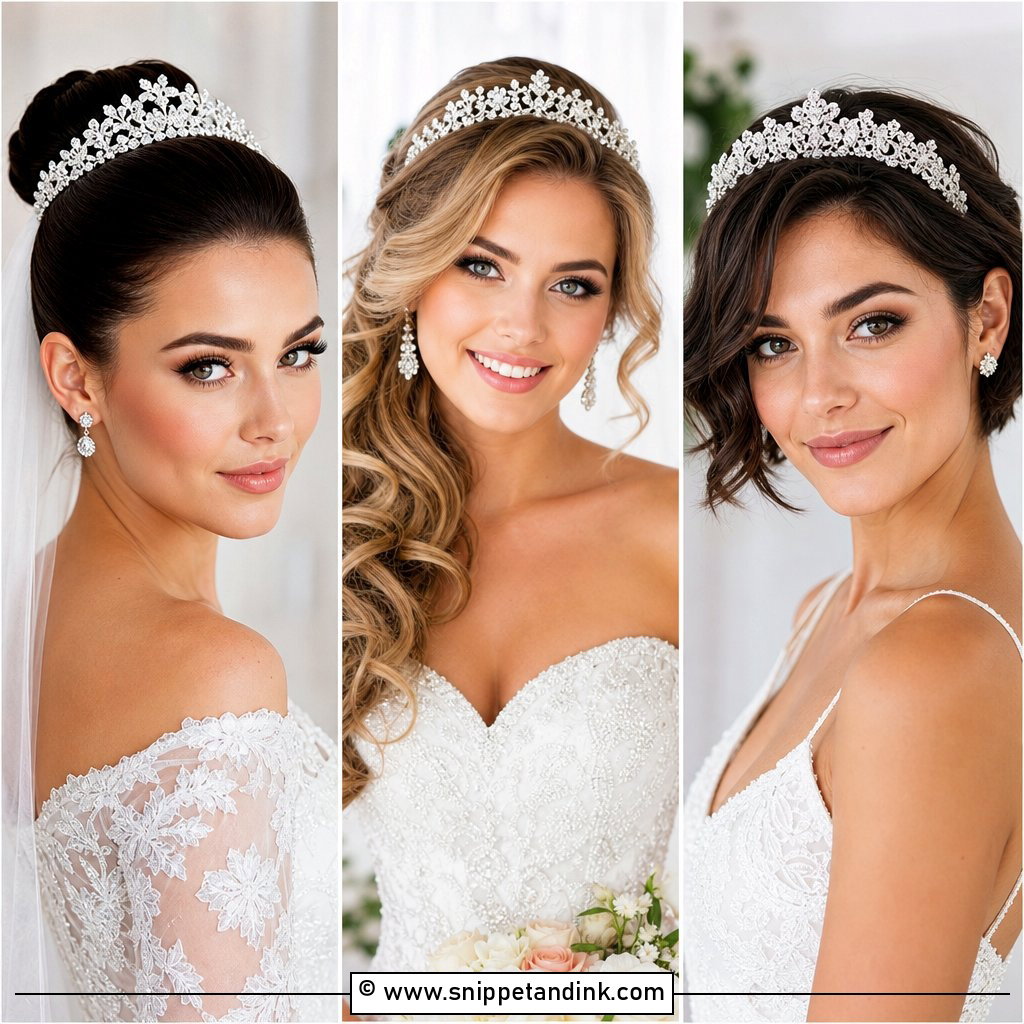
Bejeweled butterflies, sparkling headbands and pearl pins have joined flowers on bridal updos. Accessories only look good on a firm, smooth shape, so the updo underneath has to be structured and secure. I plan the placement at the trial and photograph it, because pieces placed by eye in a rush on the morning tend to end up uneven. Chandelier earrings and a maang tikka complete it for traditional or contemporary outfits.


15. Loose Waves with Maang Tikka
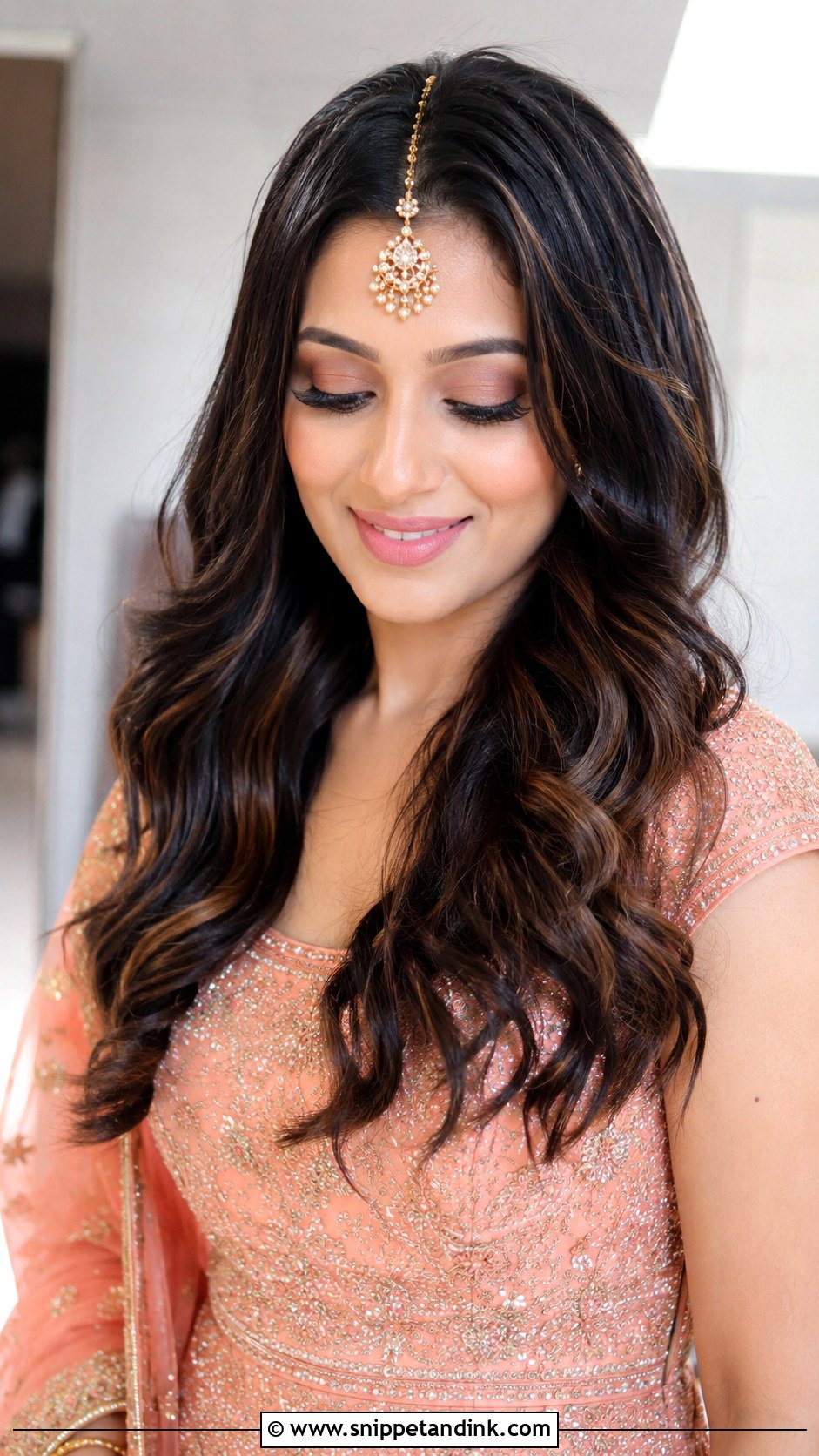
Gentle, beachy waves down the back and shoulders, with a delicate maang tikka for the traditional touch. It’s comfortable all day and suits brides who prefer a natural, undone finish to structured styles. Tuck small flowers near the part if you like. For haldi, I’d put it in a loose braid during the ritual and shake it out afterward, so the waves don’t fill up with paste.
16. Dutch Braid Crown for Bride
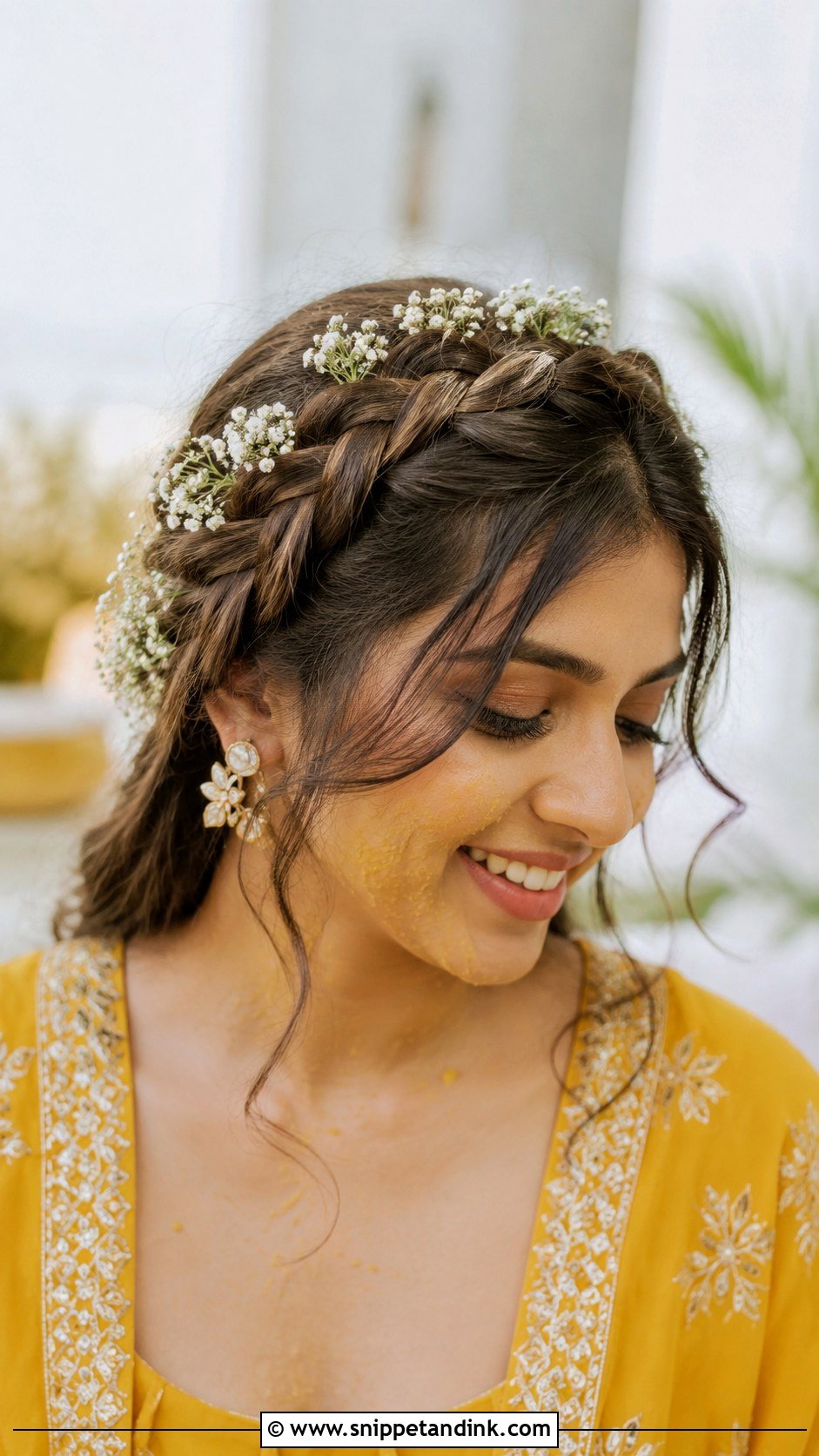
A Dutch braid crown wraps around the head like a halo and keeps every strand off your face. Because a Dutch braid sits raised, its texture shows from a distance, which counts in a crowded mehendi or haldi. Tiny flowers, pearls or gold accents decorate it. Long, thick hair gives the fullest crown; with finer hair I braid in a thin matching weft so it doesn’t look sparse.
17. Curly Ponytail for Reception
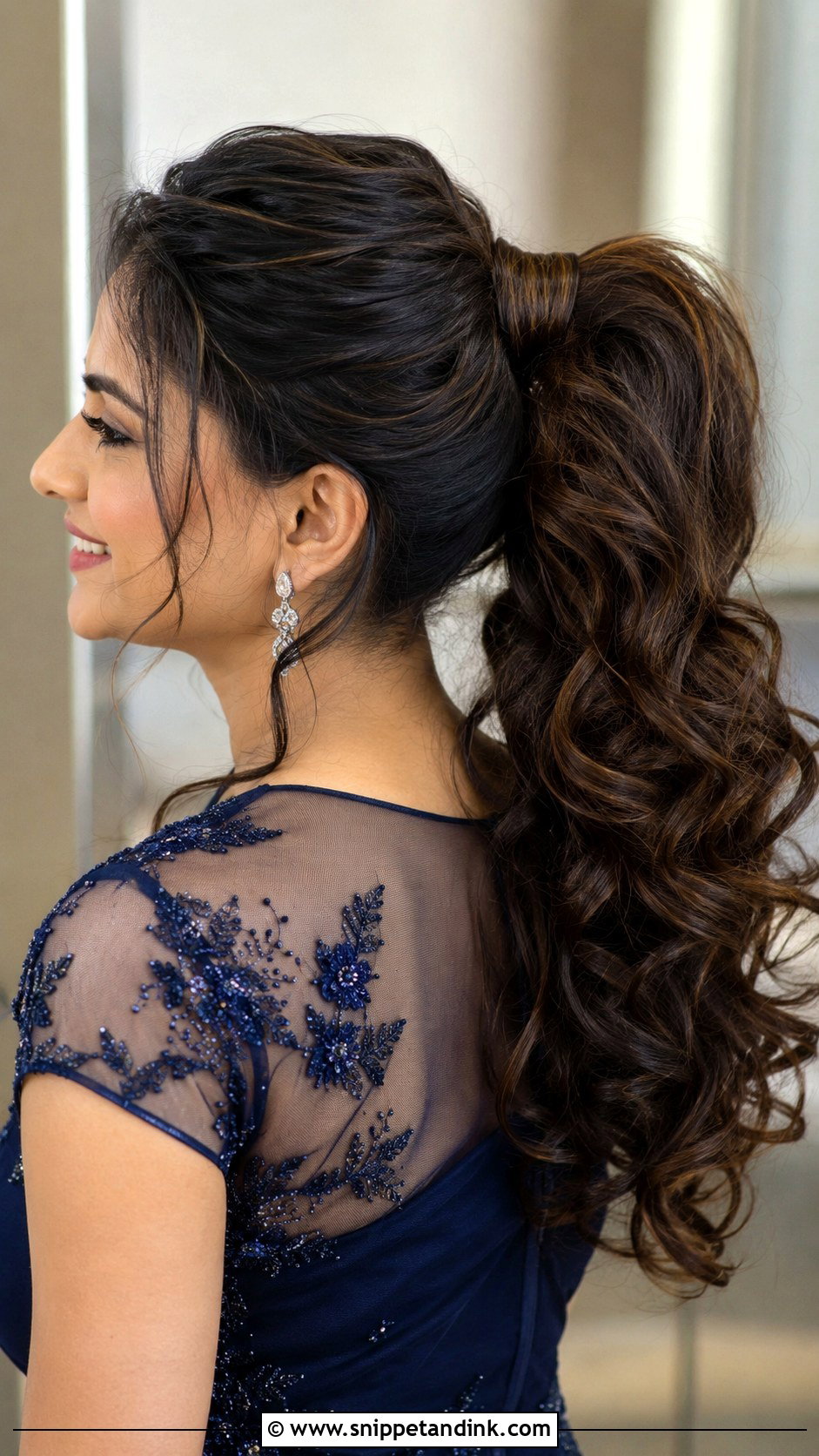
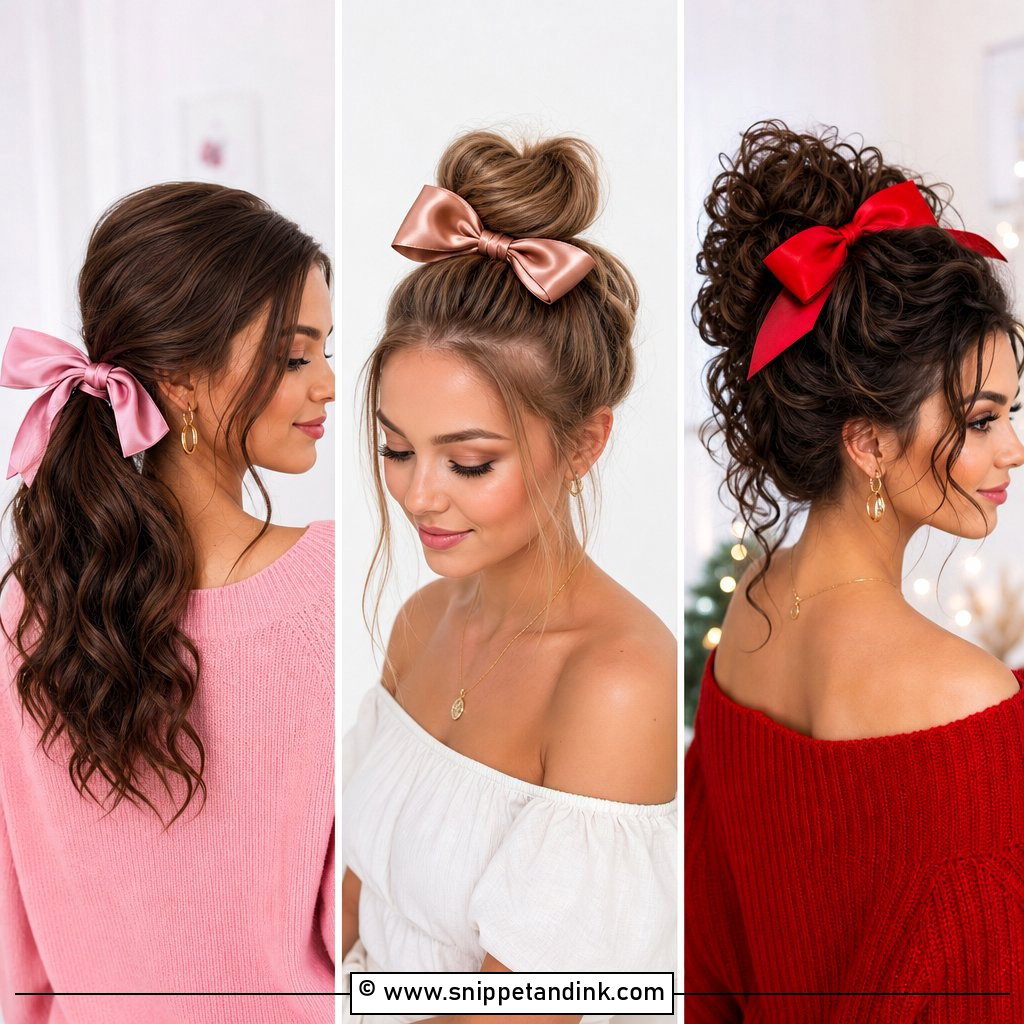
Cascading curls in a high or mid ponytail bring playful glamour to the reception. I curl the ponytail after it’s tied, not before, so the curls fall from the right point and keep their shape. Extensions add length and fullness, and a wrapped section hides the elastic. Sleek gowns and Indo-western outfits suit it, and the curls swing well on the dance floor.
18. French Braid Bun
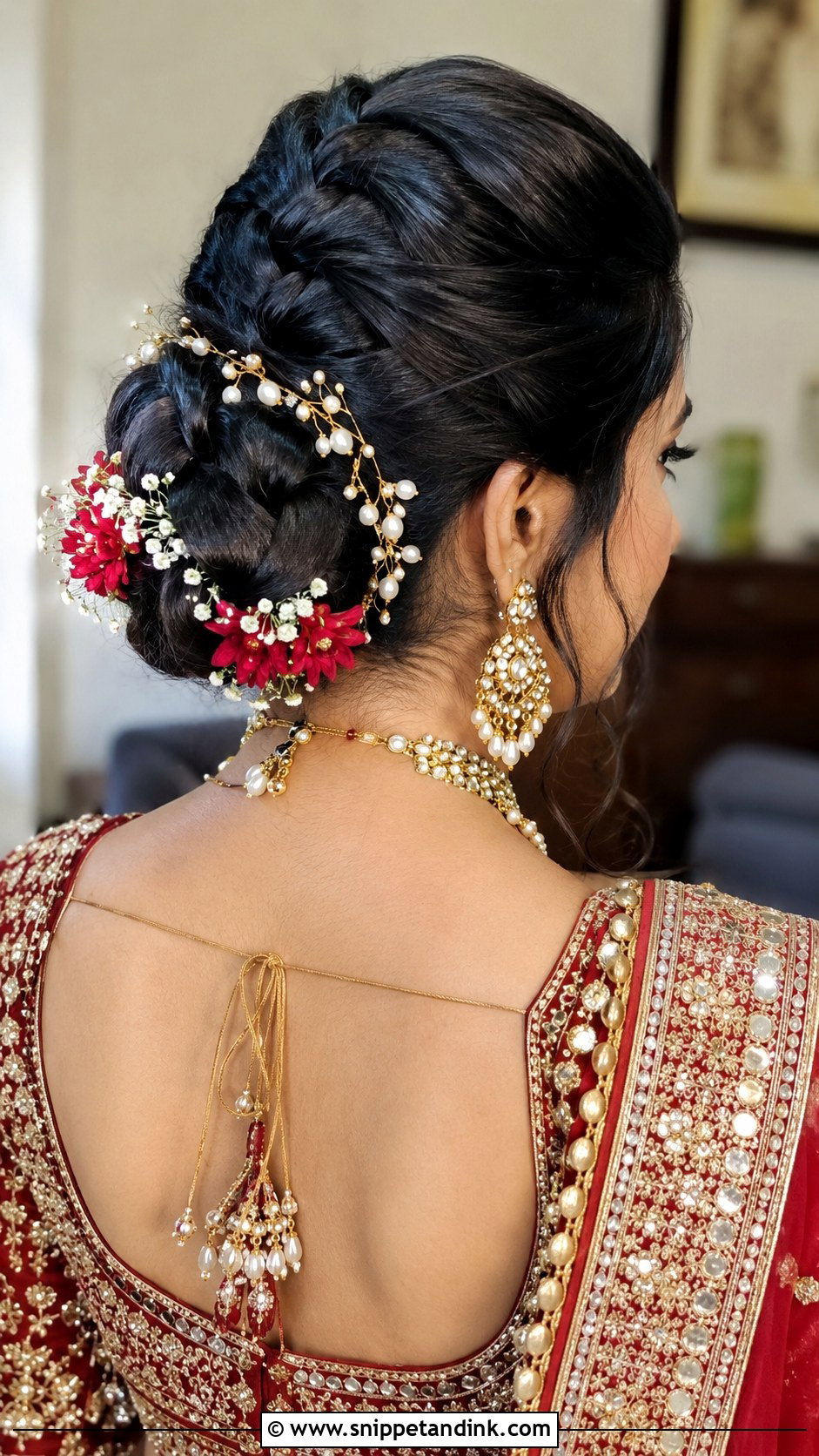
A French braid from the crown down, twisted into a neat bun at the nape, is one of the most practical bridal styles. Every strand is held, so it lasts through long ceremonies with very little touching up. Pearls, flowers or jeweled pins decorate the bun, and it flatters oval and heart-shaped faces. If you’ll wear a heavy dupatta, I braid a little tighter at the crown, since the fabric pulls backward on that spot for hours.
19. Bun with Long Trailing Braid
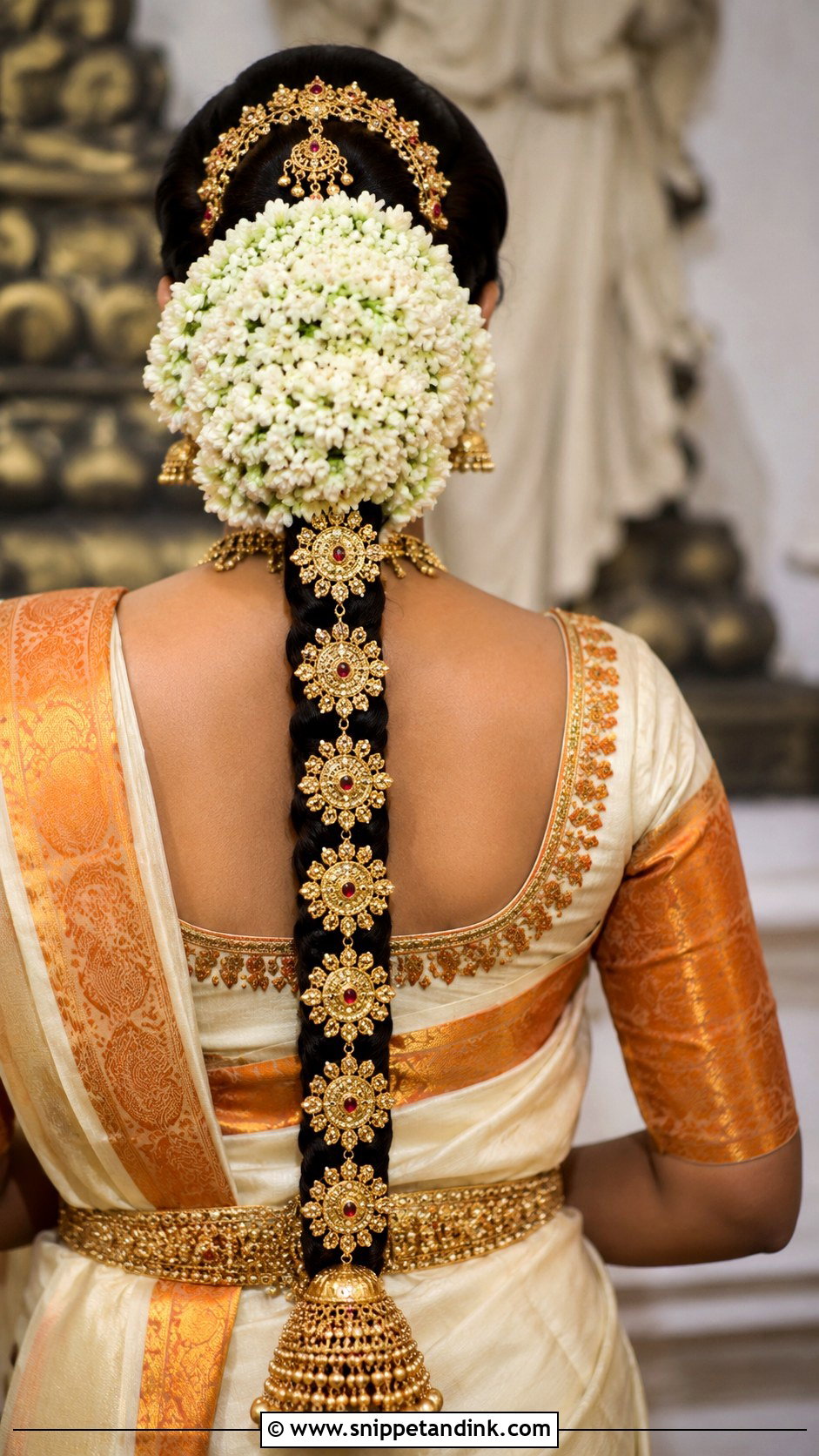
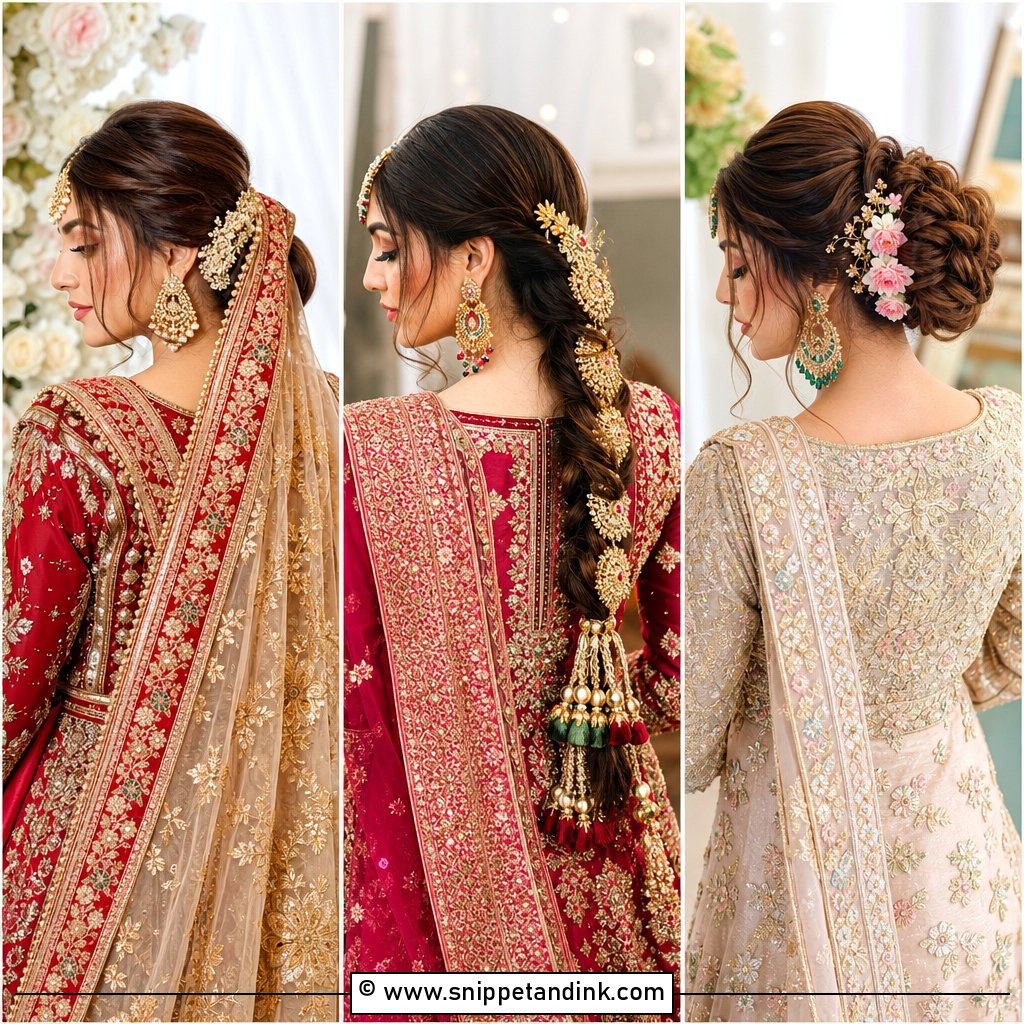
A neat bun at the crown with a long trailing braid running all the way down the back is a beloved choice for South Indian and classic ceremonies, decorated with flowers, jewelry chains or kunjalam tassels. When natural length runs out, a matching braid extension is attached under the bun and blended in, which is common and nothing to hide. It belongs with silk sarees and temple jewelry.
20. Side Bun with Flowers
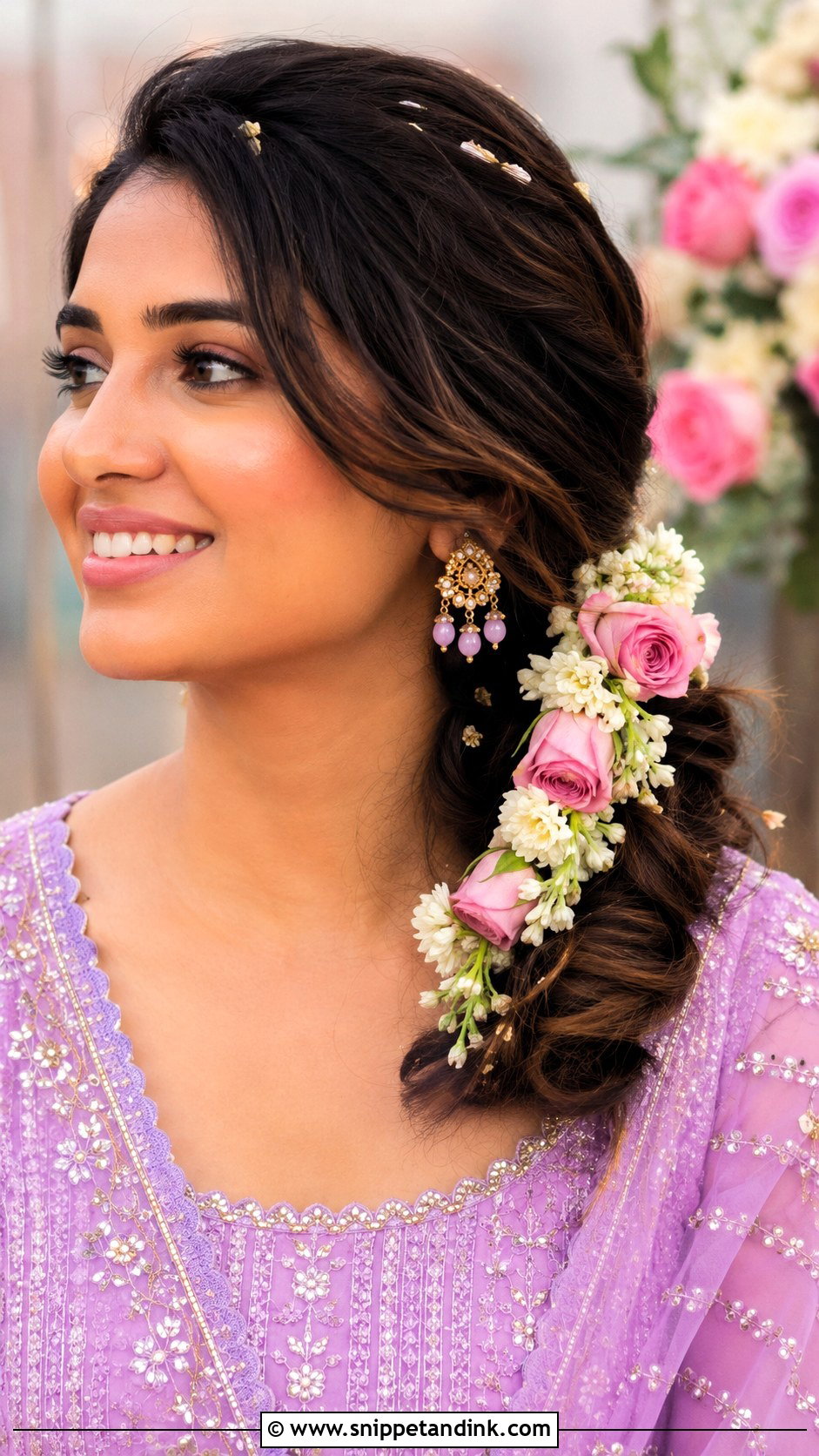
A low bun set behind one ear and wrapped with roses or jasmine gives a soft, asymmetric line and photographs well in profile. It draws the eye to the earring on the open side. I ask where the photographer will mostly stand during the ceremony, because the bun side should face the camera. Haldi and mehendi suit it, and so can the main ceremony.
21. Sleek Straight Open Hair
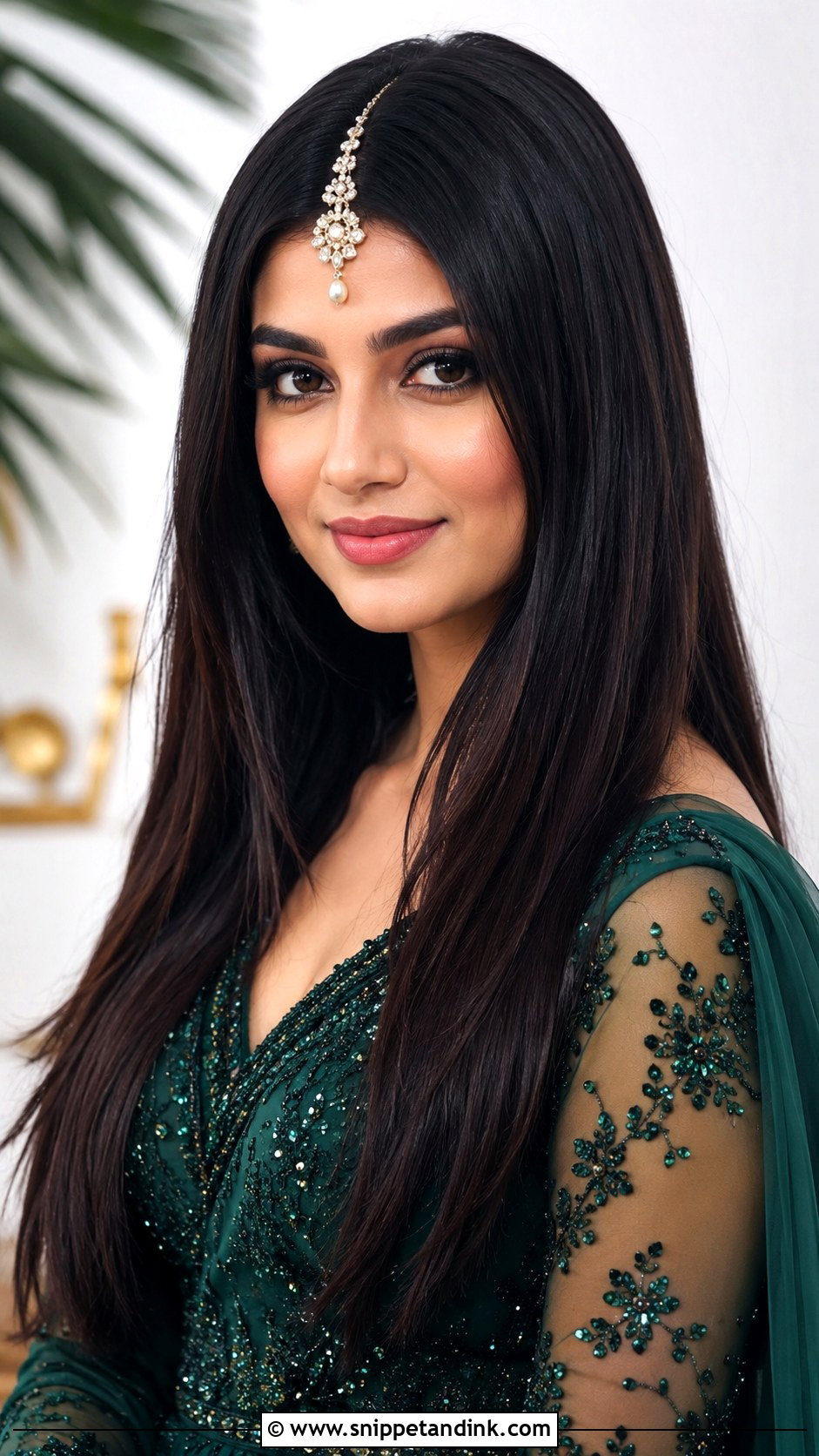
Glossy, straightened hair down the back lets your outfit and jewelry take center stage and is the most modern open-hair choice. Naturally straight hair holds it easily. Wavy or curly hair can wear it as well, but humidity undoes the work quickly, so I’d save it for indoor, air-conditioned functions like an engagement or reception. A maang tikka or delicate accessory adds the bridal note.
22. Braided Crown with Open Hair
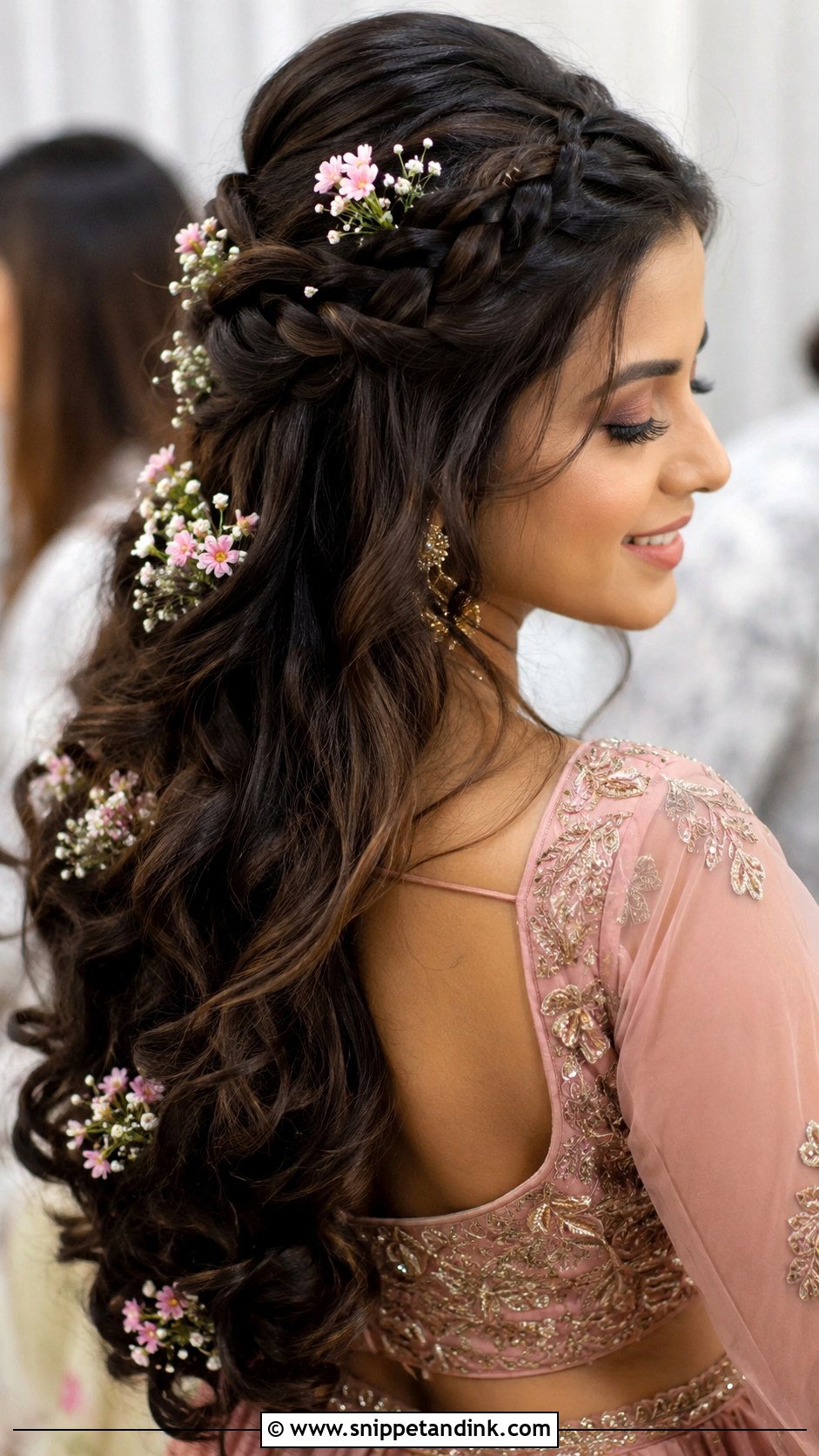
A braid wrapped across the crown like a tiara, with the rest in curls or waves, gives structure on top and movement below. I braid the crown section first and curl the lengths afterward, so heat from the iron doesn’t loosen the braid. Small flowers or pearls decorate it for sangeet, mehendi or a reception. Long hair gives the best balance between braid and loose hair.
23. Vintage Bun with Hair Jewelry
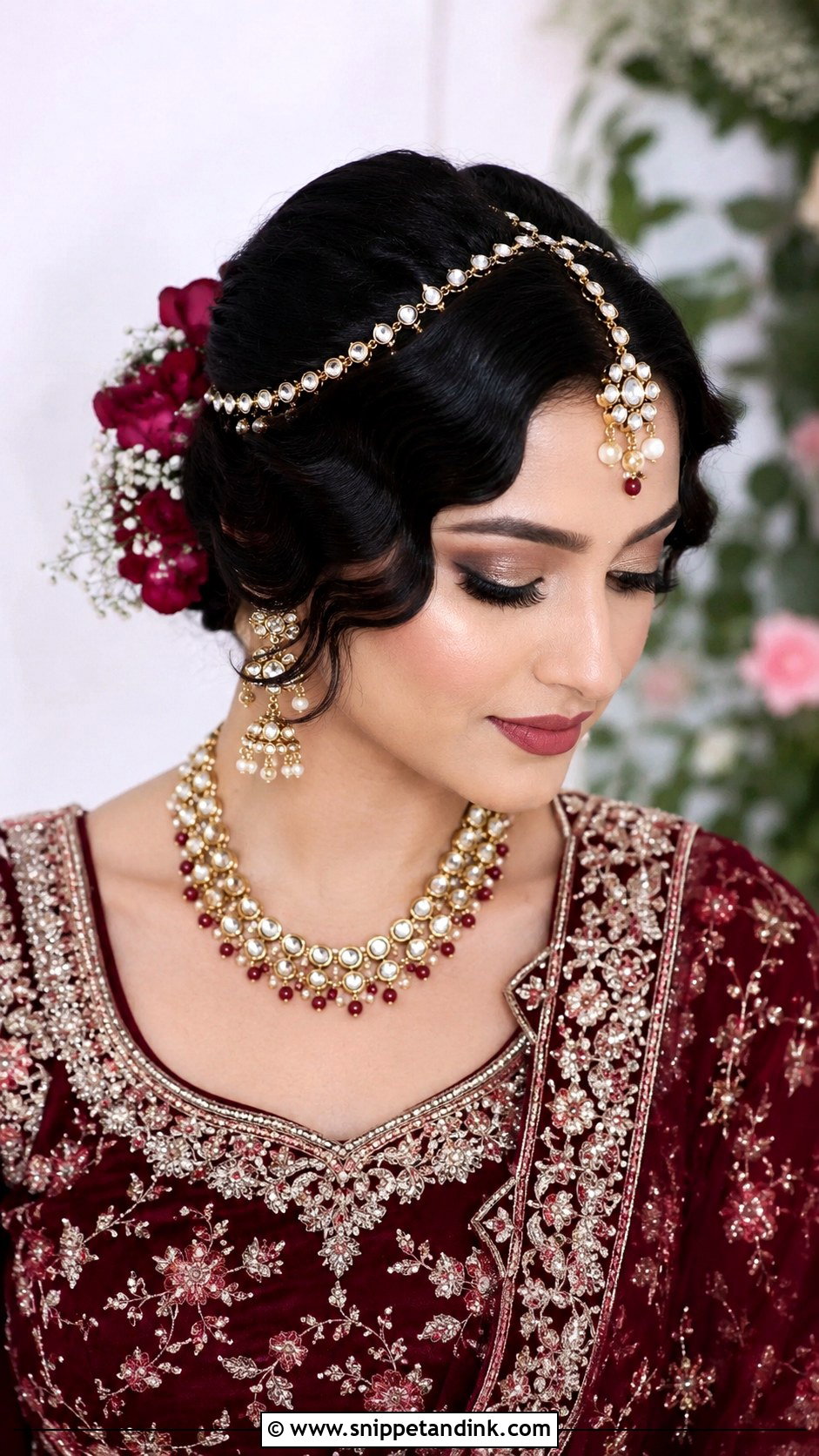
A structured retro bun, often with soft finger waves framing the face, brings an old-world glamour that works surprisingly well with a matha patti, jeweled combs or pearl strings. The finger waves are set before any jewelry goes on, so the matha patti chains rest in the troughs of the waves instead of lying across the ridges. It suits heavy traditional jewelry and rich bridal outfits and holds well through long ceremonies.
24. Wavy Half Updo with Pearls
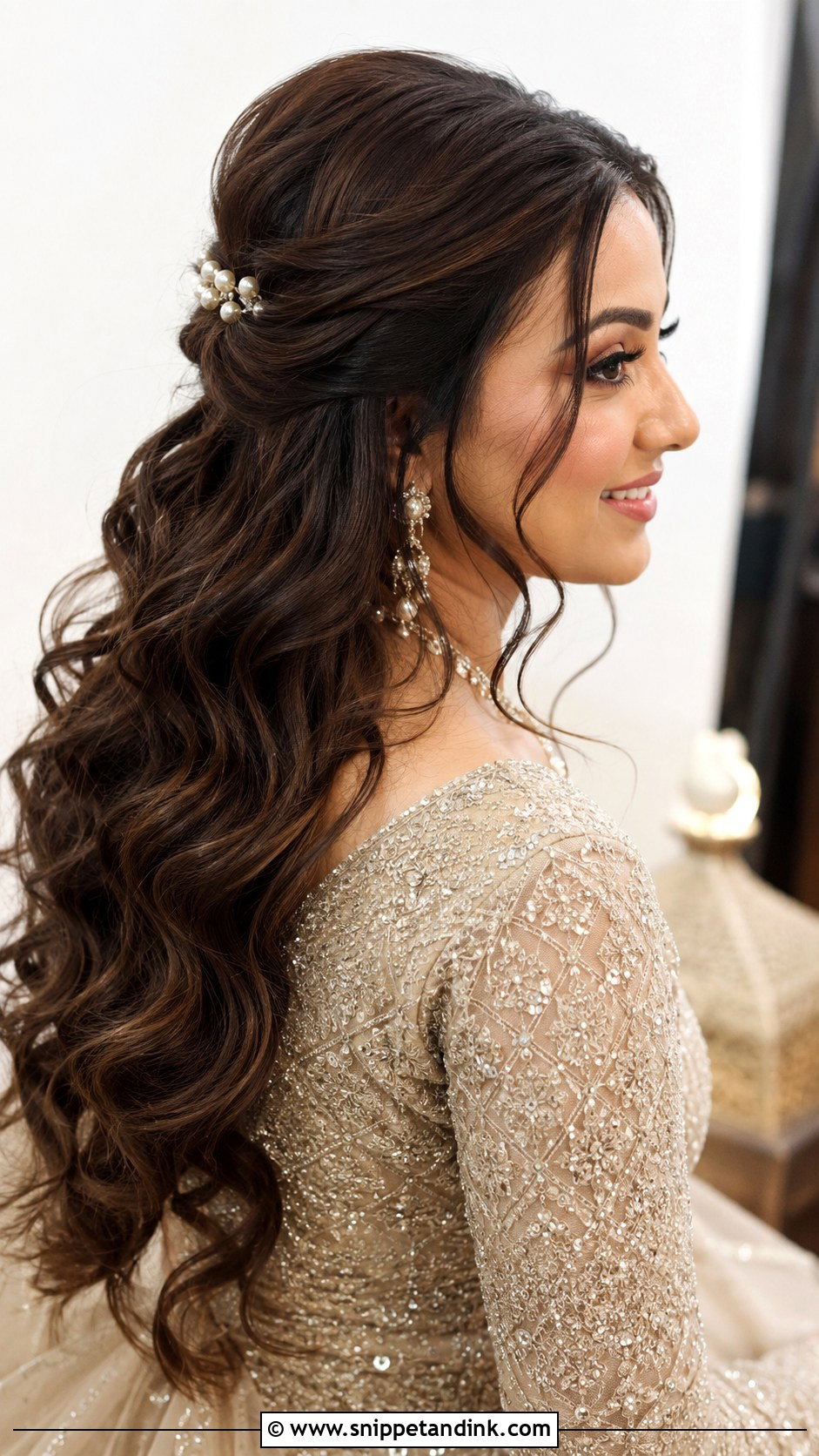
Half the hair gathers back with delicate pearl pins and soft waves flow below. The pearls catch light without weighing anything down. I scatter them in an uneven pattern rather than a straight line, which looks more natural from behind. Wavy or curly hair makes it look easy, and it fits engagement, reception or sangeet looks.
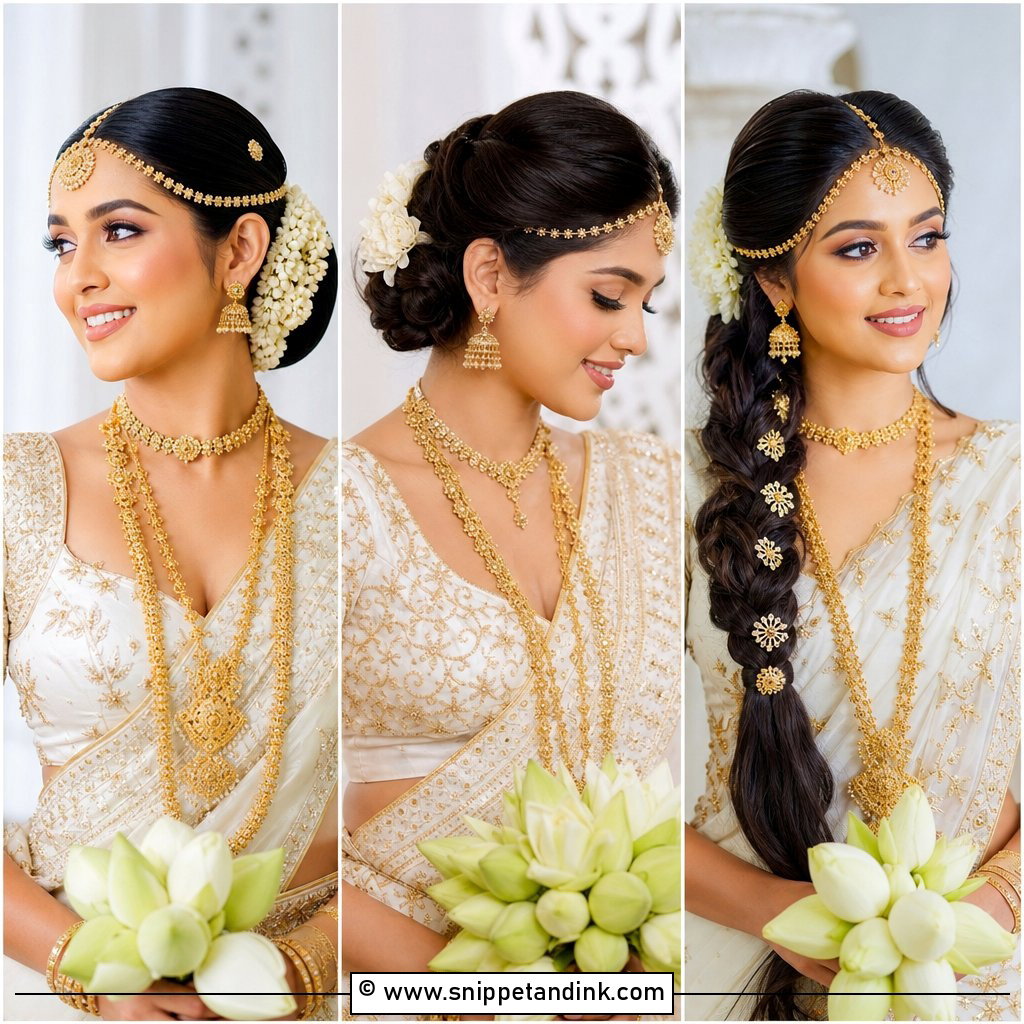

25. Floral Crown with Loose Braid
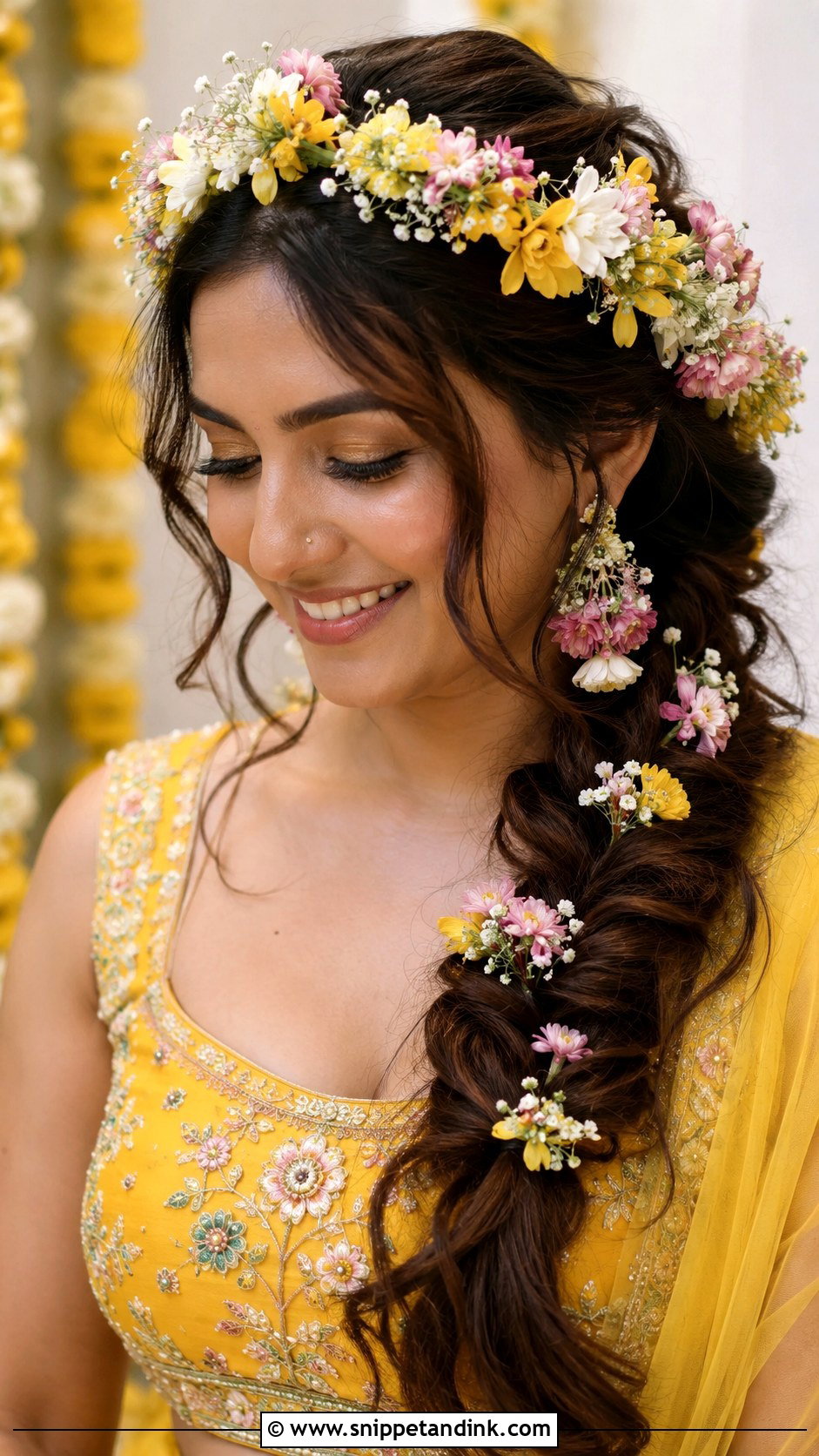
A halo of fresh flowers with a softly textured braid over one shoulder brings color and a garden feel to haldi and mehendi. I build the braid first, loosen it, and set the crown last, pinned through the hair at several points. Densely made flower crowns get heavy, so ask your florist for a light wire base. Once it’s on and secure, it’s comfortable for hours.
Humid Days, Outdoor Mandaps and a Tight Schedule
Weather changes what’s realistic. In humid or monsoon conditions, open curls and sleek straight hair fail first, while buns and braids hold their shape far better. An anti-humidity finishing spray helps, but it can’t stop frizz entirely on naturally wavy hair. Outdoor mandaps add wind, which lifts loose pieces and the dupatta, so pin the dupatta firmly and keep loose tendrils to a minimum.
If your heart is set on open curls and the forecast looks wet, agree a backup at the trial: usually a half-up or low bun version of the same curls. Then switching on the morning takes ten minutes instead of a debate in front of the mirror.
Blocking Time in the Getting-Ready Schedule
Ask your stylist for a time estimate per look, then add a buffer. A simple open style can be done well within an hour, while a braided bun with flowers, jewelry and dupatta setting often takes much longer; it varies with hair length and how much ornament is going in. If bridesmaids are also having their hair done, I start the bride early enough to leave a free half hour after her makeup for adjustments, because that’s when a tikka or flower always needs moving.
Four Functions, Four Different Looks
Each function in an Indian wedding can carry its own hairstyle, and many brides wear a different look at the mehendi, sangeet, wedding and reception. From floral buns and braided updos to open waves and pearl-accented half-ups, the styles above cover all of them. Think about your outfit, jewelry, face shape and comfort for each one, and be realistic about how much time each getting-ready slot allows. Mix tradition with modern touches where it feels right, and you’ll feel like yourself in every one of them.
You'll Like These Ideas:





Leave a Reply