
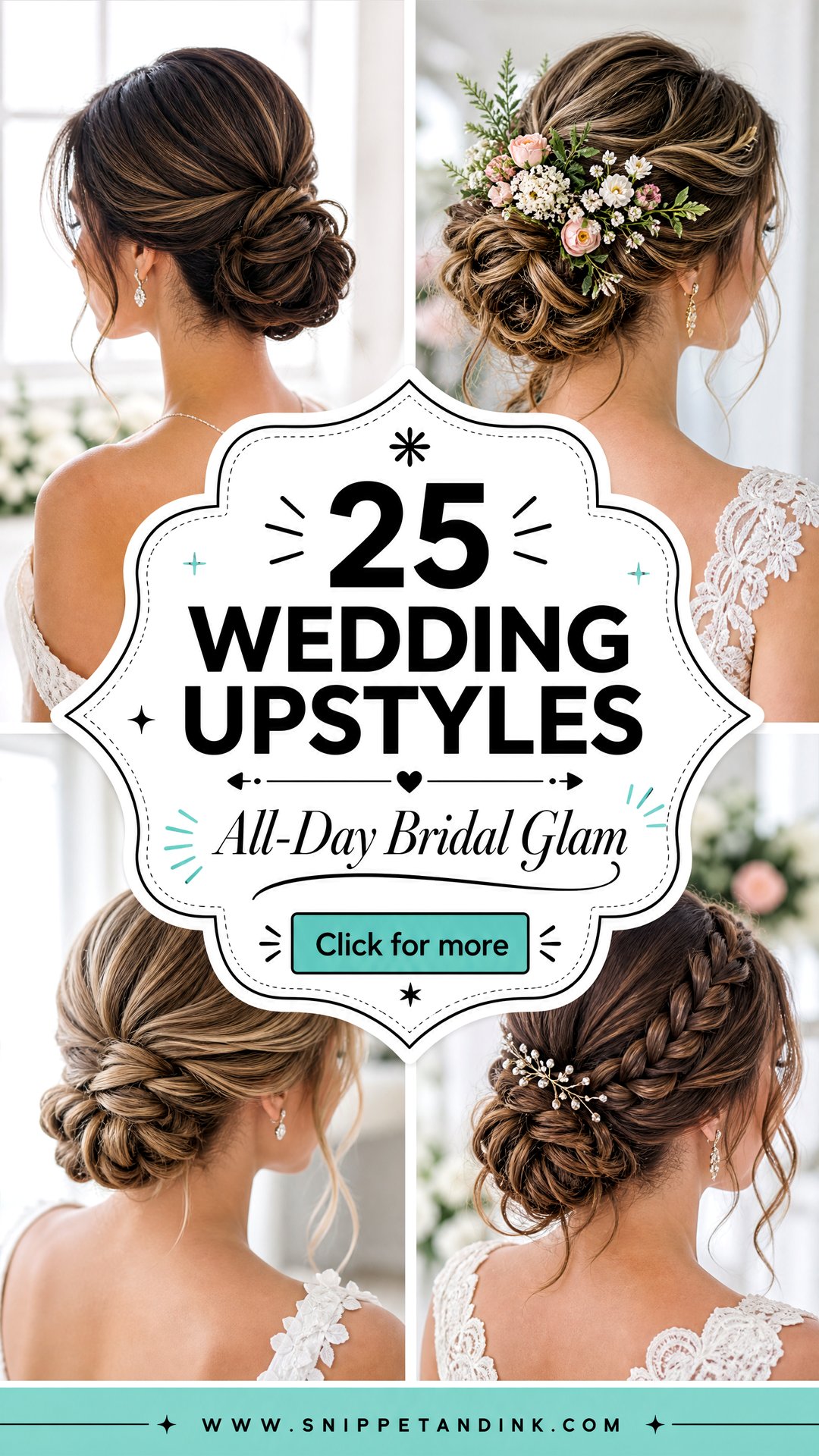
Most updos are judged at two in the afternoon and fall apart by nine. The ones that last are built differently from the ones that only look good in the salon mirror, and that’s the part brides rarely get to see. An air-conditioned ballroom and a garden in full sun ask very different things of the same bun. Below are 25 stunning wedding upstyles, from loose buns to French twists and braided shapes, each with notes on how I’d build it and who it suits.
What Holds an Updo From the First Look to the Last Song
The difference between an updo that lasts and one that sags by the cake cutting isn’t the hairspray. It’s the build. When I plan a long-wearing style, I work in this order:
- Give the hair grip, either by washing the evening before or with a dry texturizer on clean hair.
- Set an anchor where the weight will sit: a small ponytail, a hidden braid or crossed pins.
- Curl, then let each curl cool completely before it’s pinned. Warm curls drop.
- Pin into the anchor, not just into loose hair.
- Finish with a flexible spray and add accessories last, so they don’t carry the style.
Small details matter too. A bobby pin goes in with the wavy side against the scalp, where it grips. Larger U-pins hold bulky sections without flattening them, which is why you’ll see both in a good stylist’s kit.
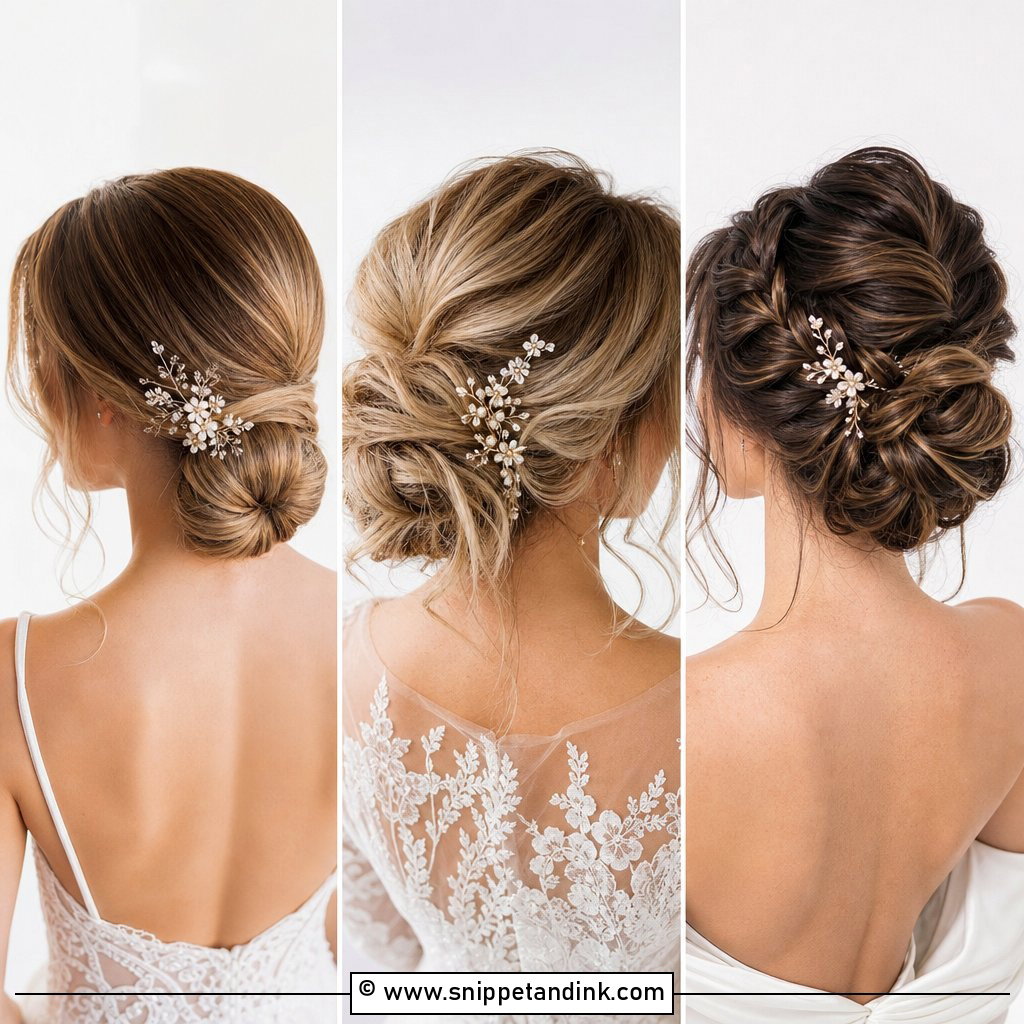
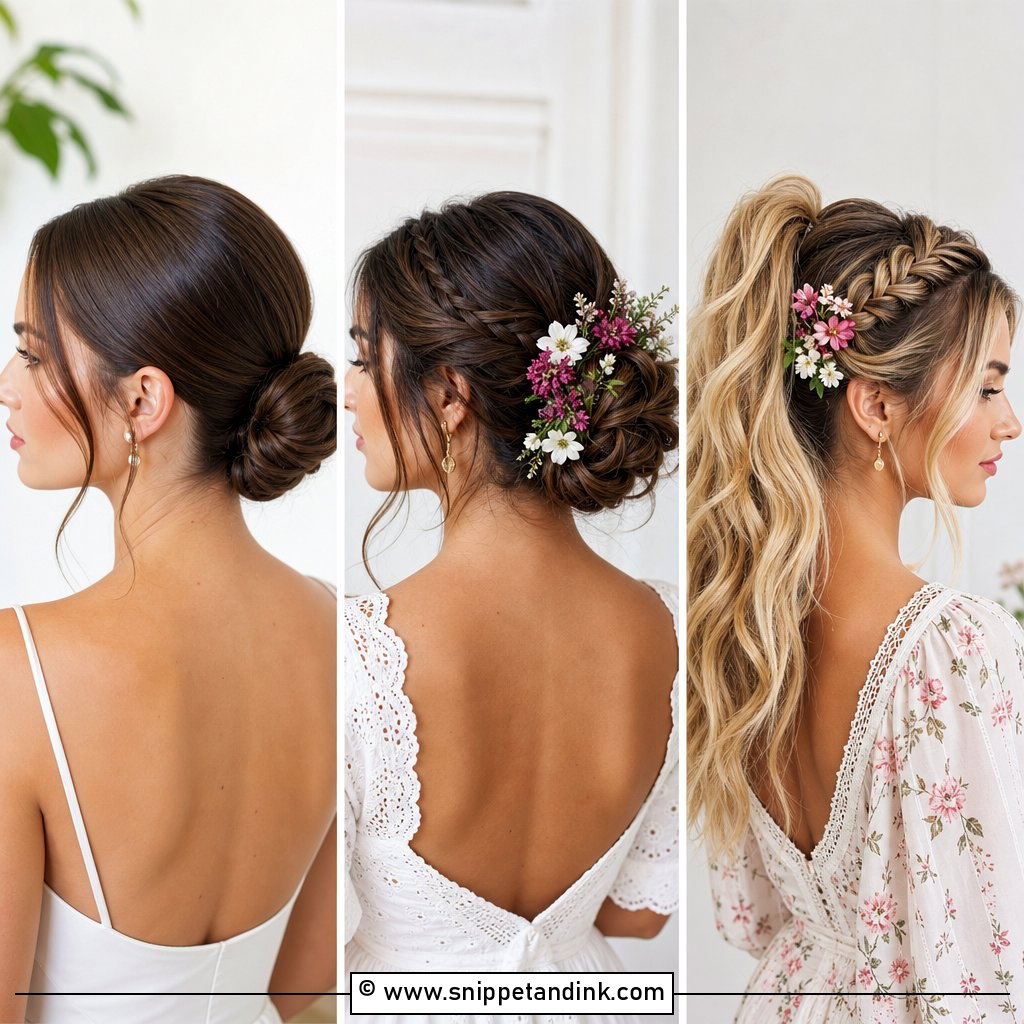
1. Low Chignon Wedding Updo
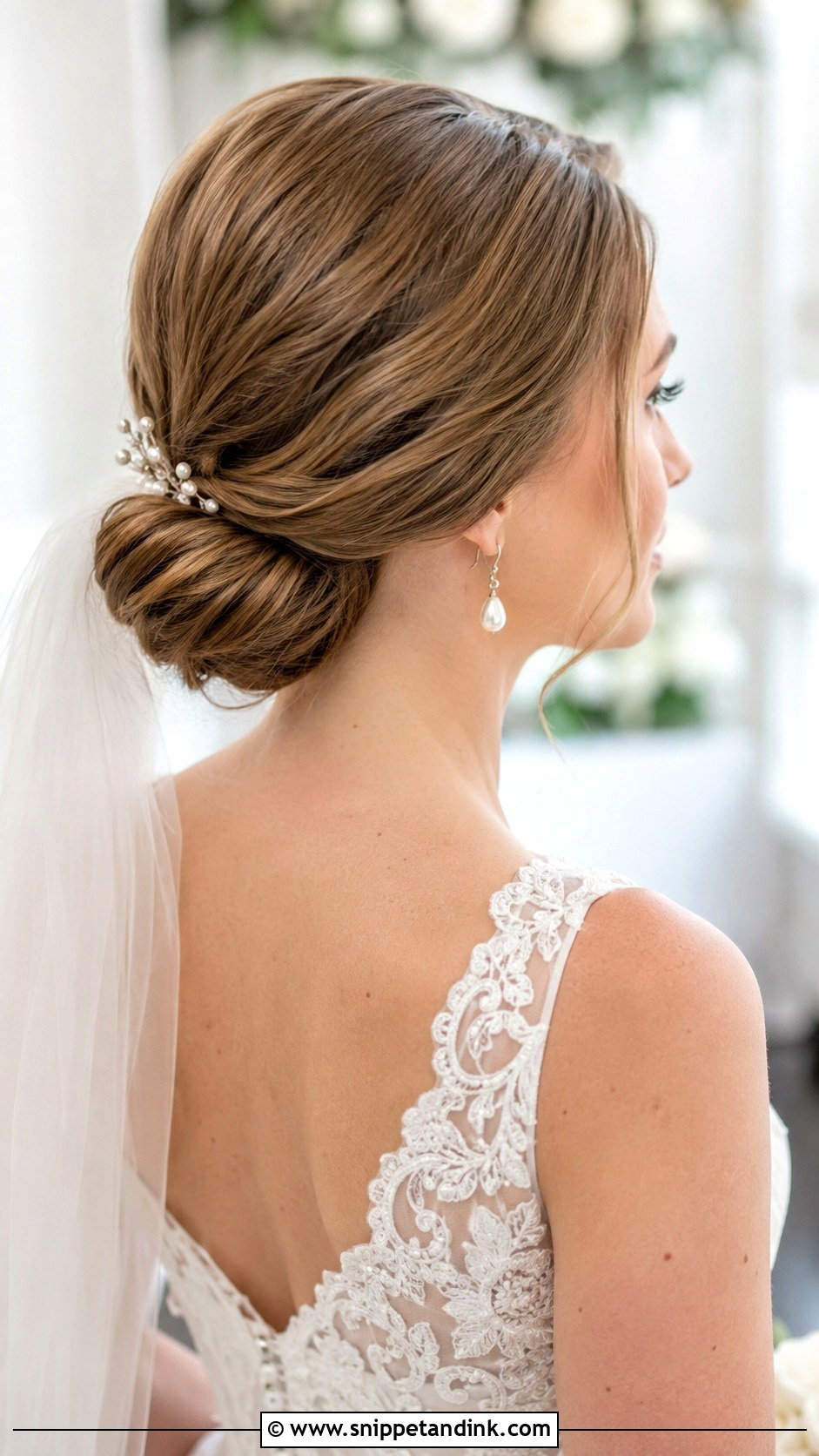
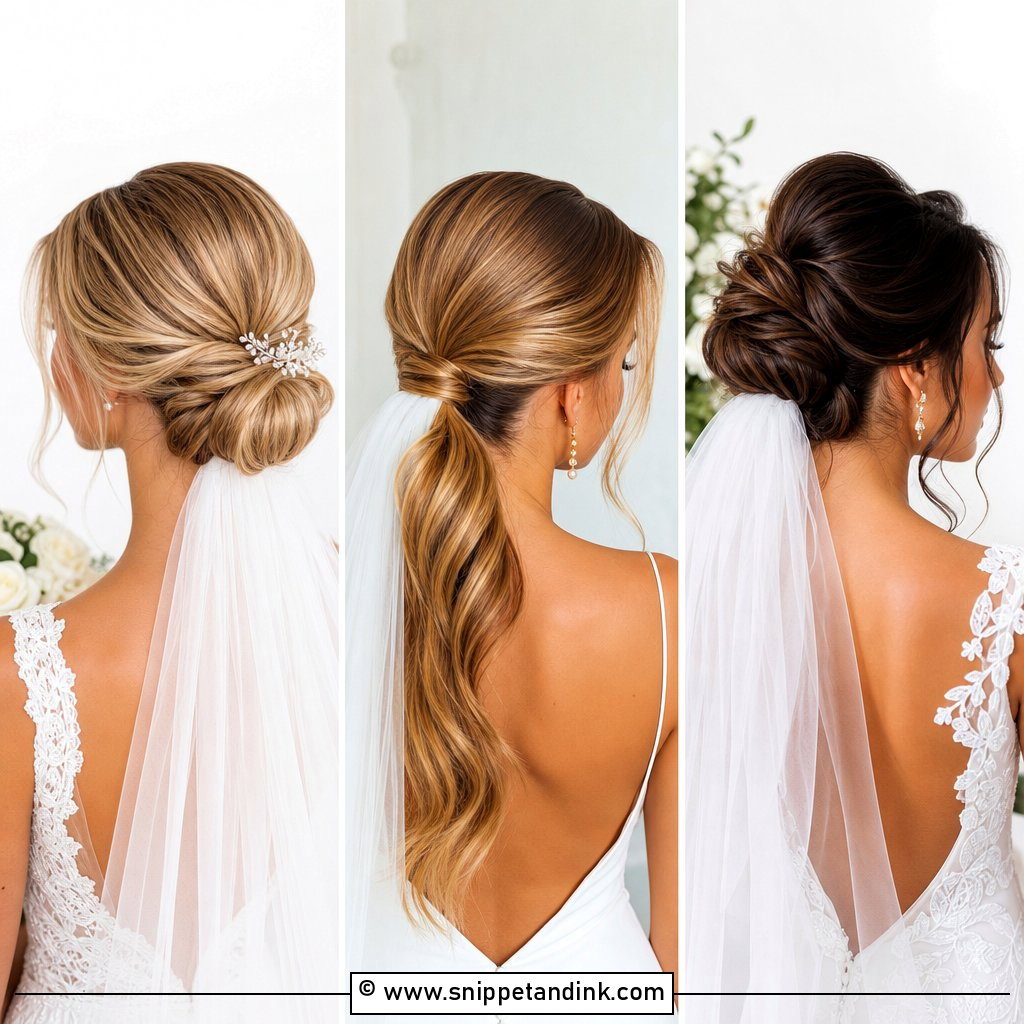
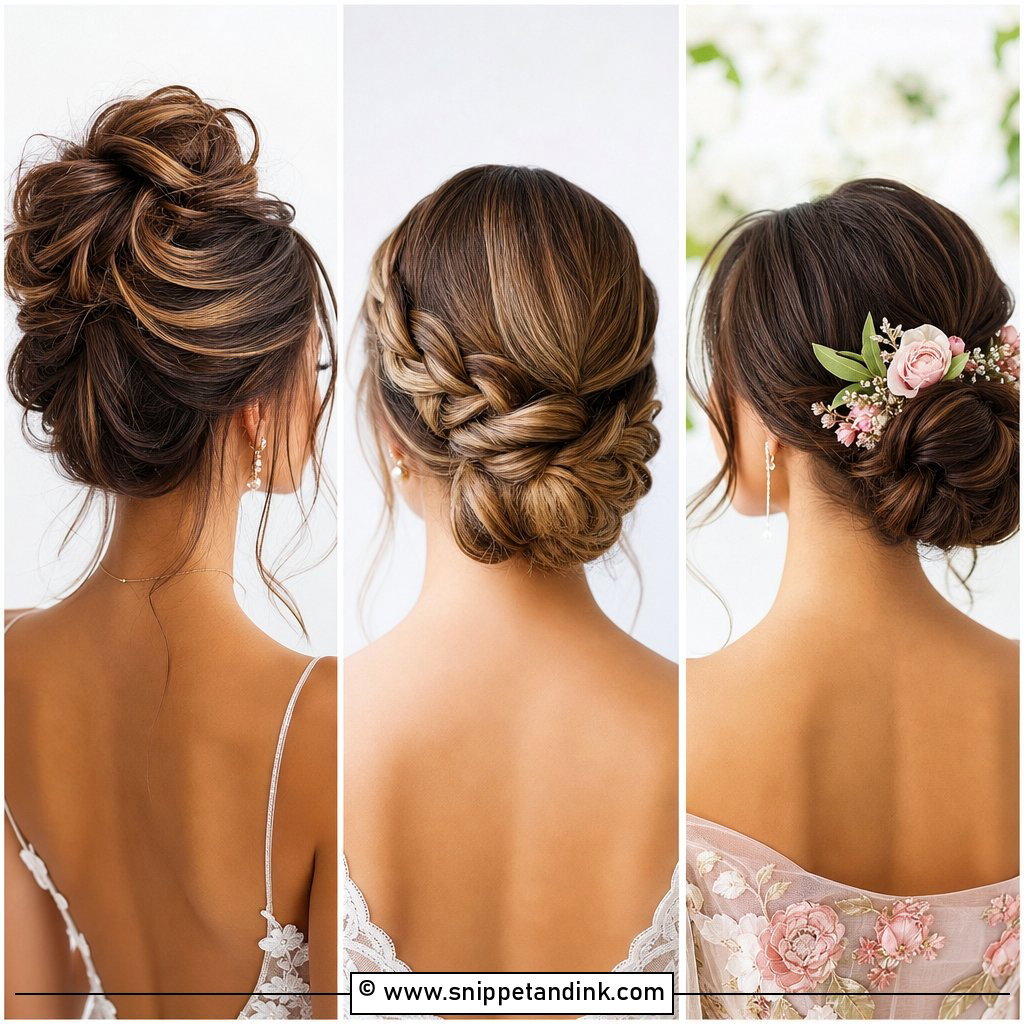
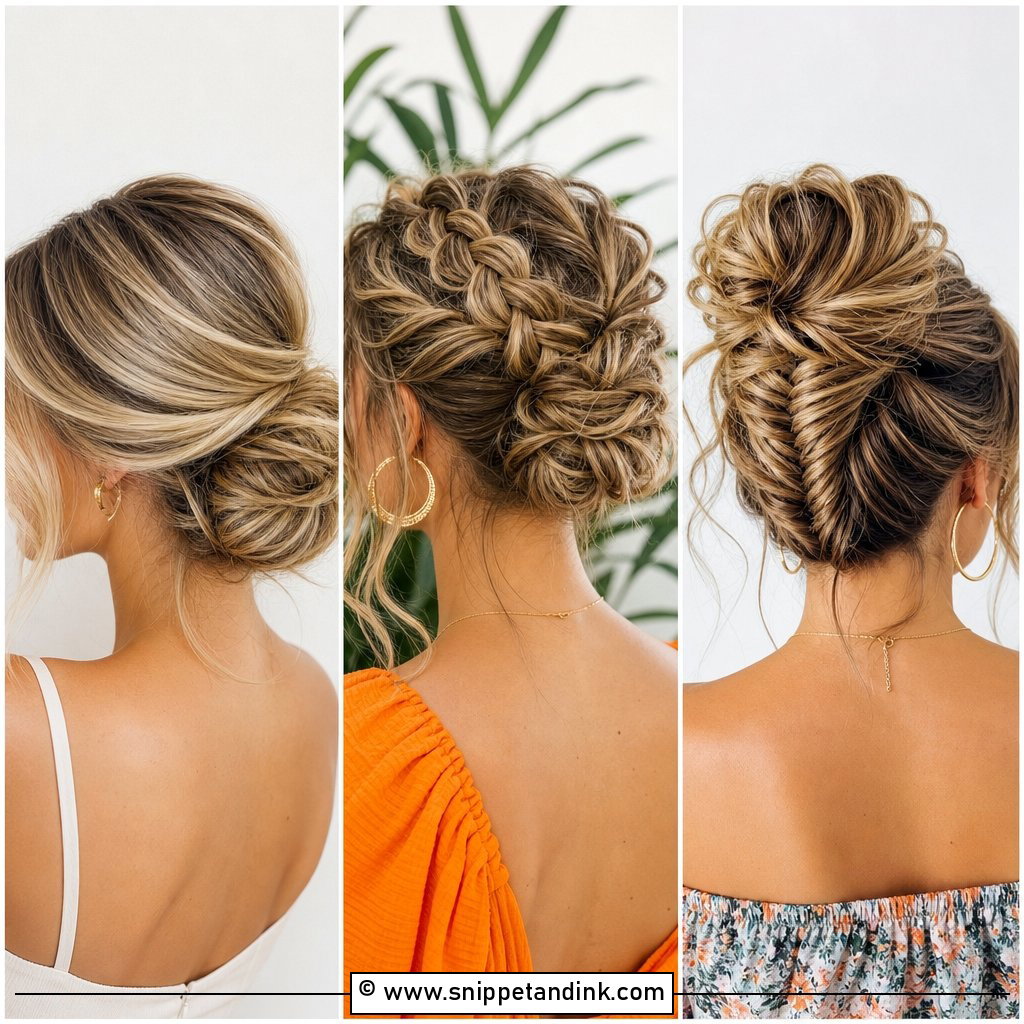
I start almost every chignon from a low anchor, either a small ponytail or two crossed pins at the nape, because the bun needs something solid to grip. The hair is smoothed down, twisted and tucked close to the skin, which lets it sit under nearly any veil. Its quiet shape is why it never dates. One caution: very thick hair can make it bulky enough to push a high collar forward, so I tuck some of the length inside the bun. A couple of small pins or a sprig of flowers is all it needs.
2. Messy Bun Bridal Updo
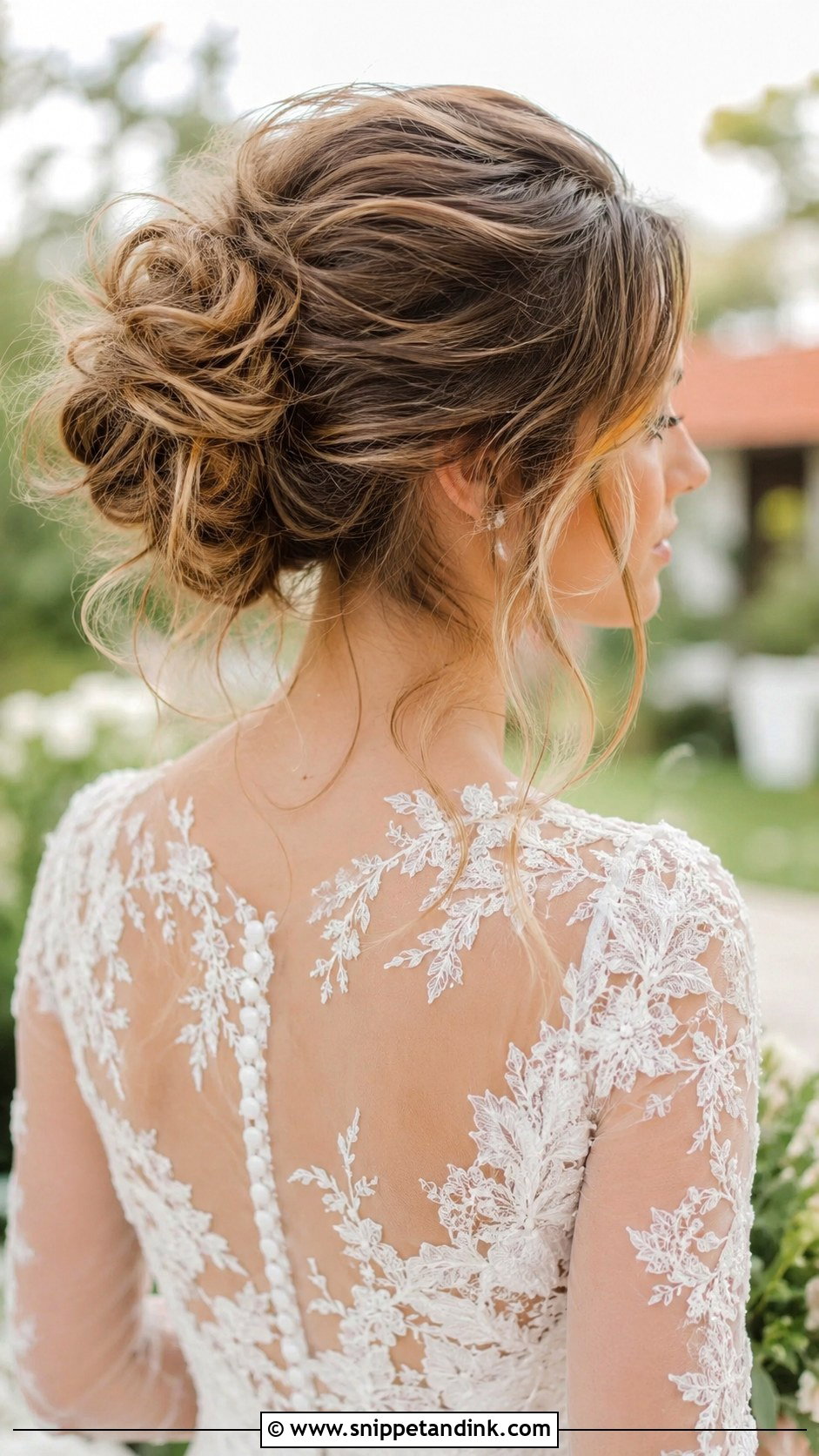
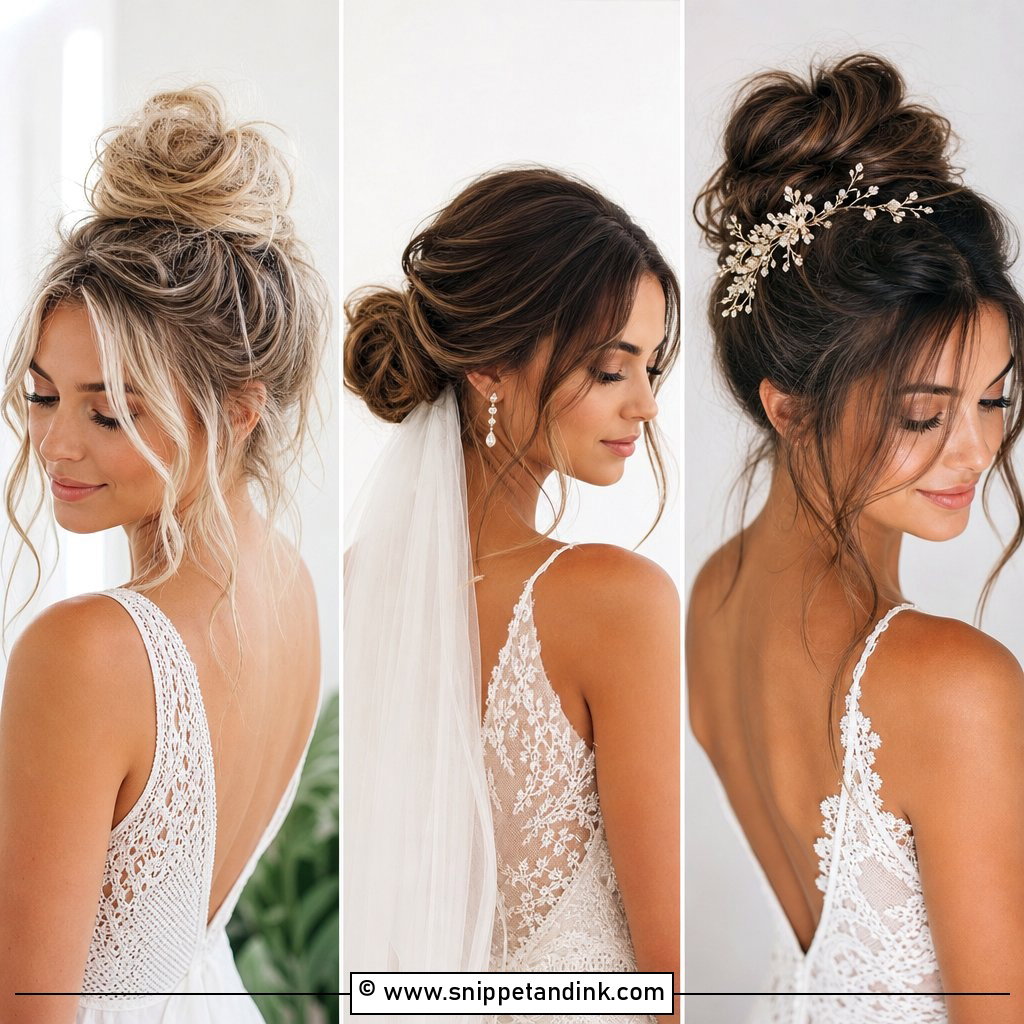
Loose is harder than tidy. A messy bun that lasts is pinned firmly underneath, and the softness is added on top by teasing out sections once the structure is in. I curl the hair first so the texture has shape, then pull the tendrils at the hairline last. Garden and boho weddings suit it. Silky, fine hair needs a dry texture spray before anything else, or the bun slides down the neck before the speeches.
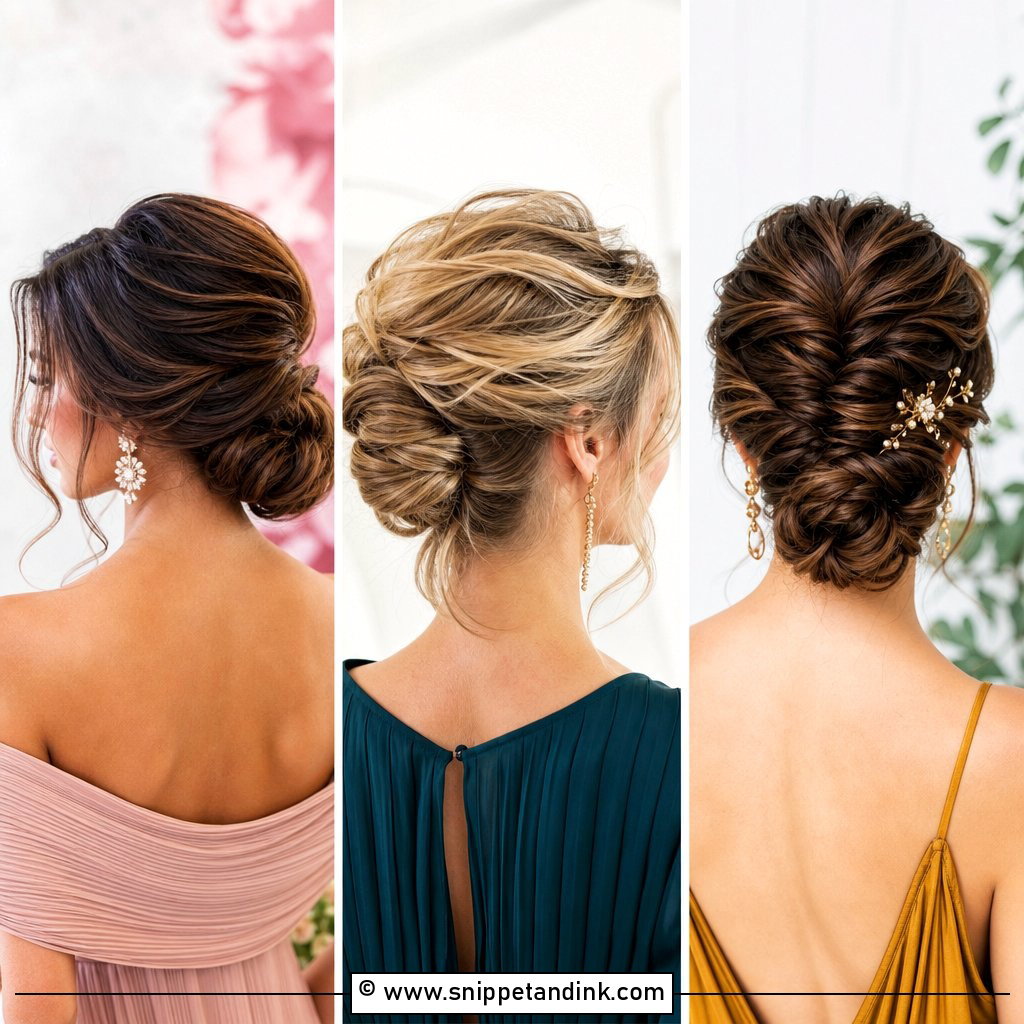
3. French Twist Wedding Updo
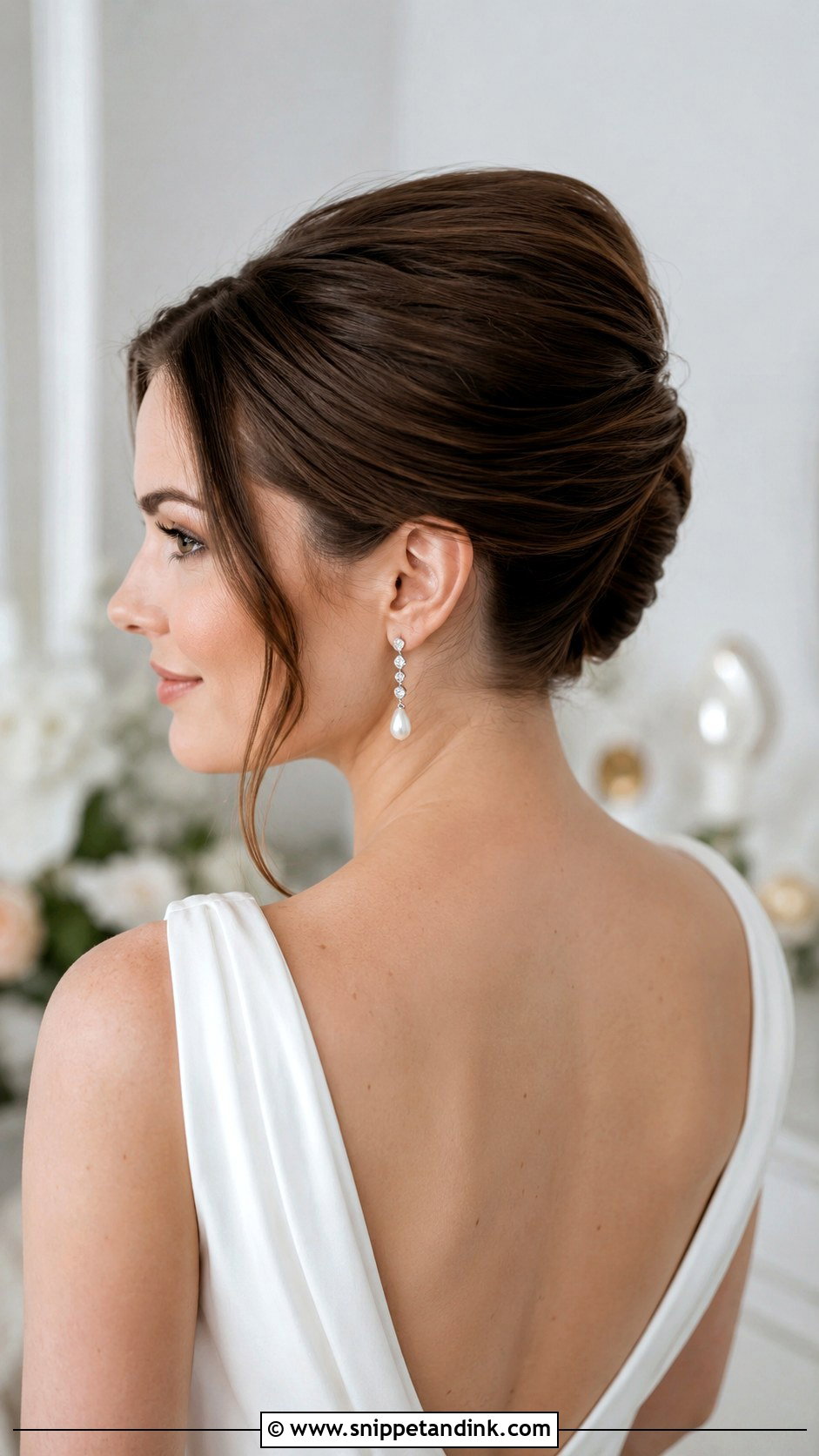
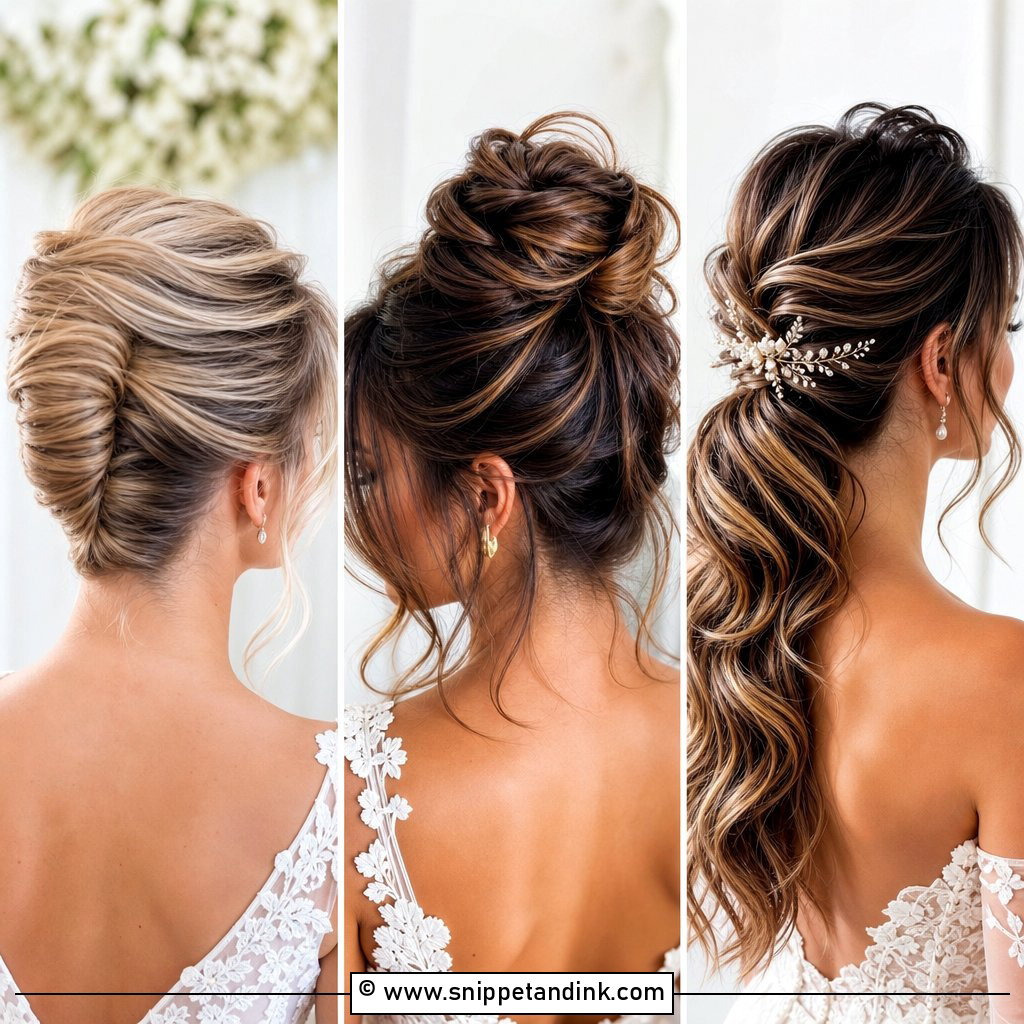
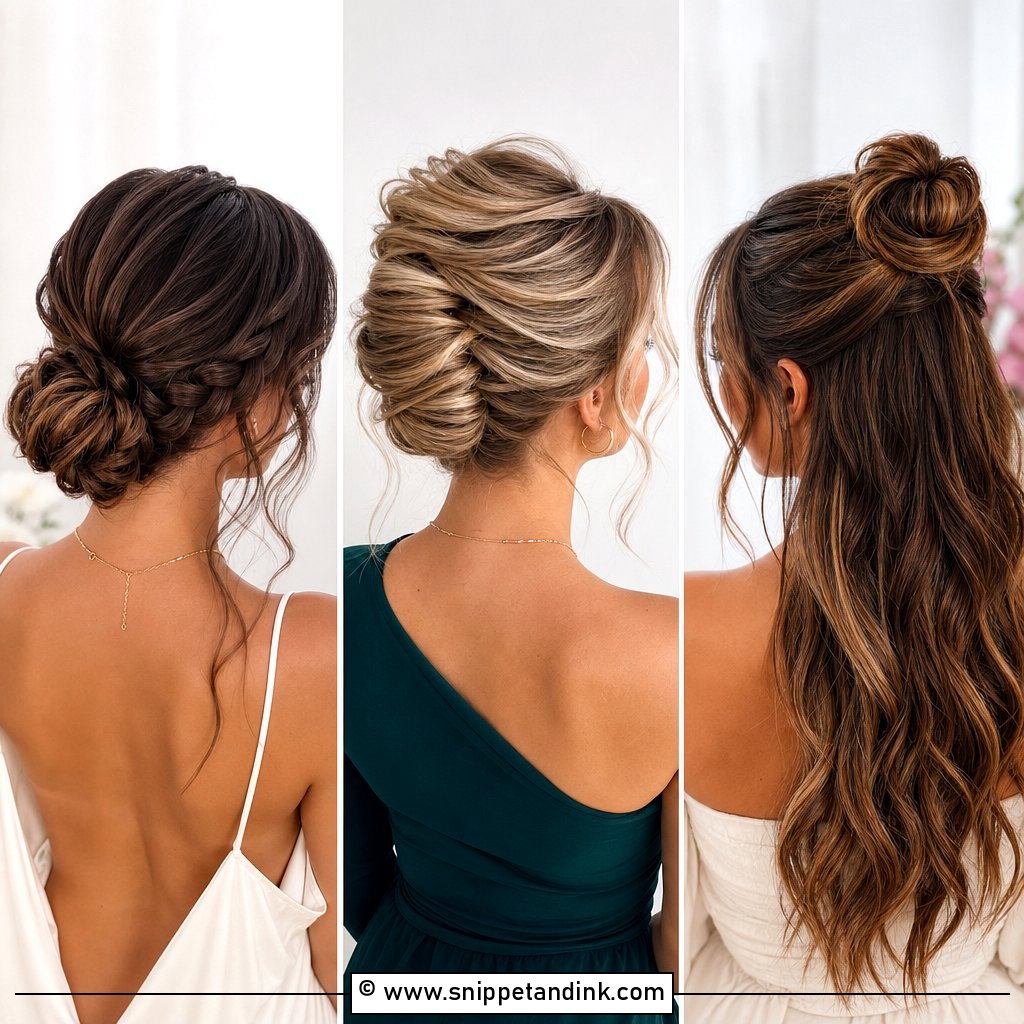
A French twist hides every pin inside a vertical roll, and that’s the trick of it. I sweep the hair to one side, cross-pin a seam up the middle of the back of the head, then fold the other side over it and tuck the ends in. Black-tie dresses suit it, and it keeps the neckline and earrings completely clear. A veil comb goes above the roll or beneath it, depending on how long the veil is. Shoulder-length hair is often too short to fold over the seam, so check that your ends reach before you fall for it.
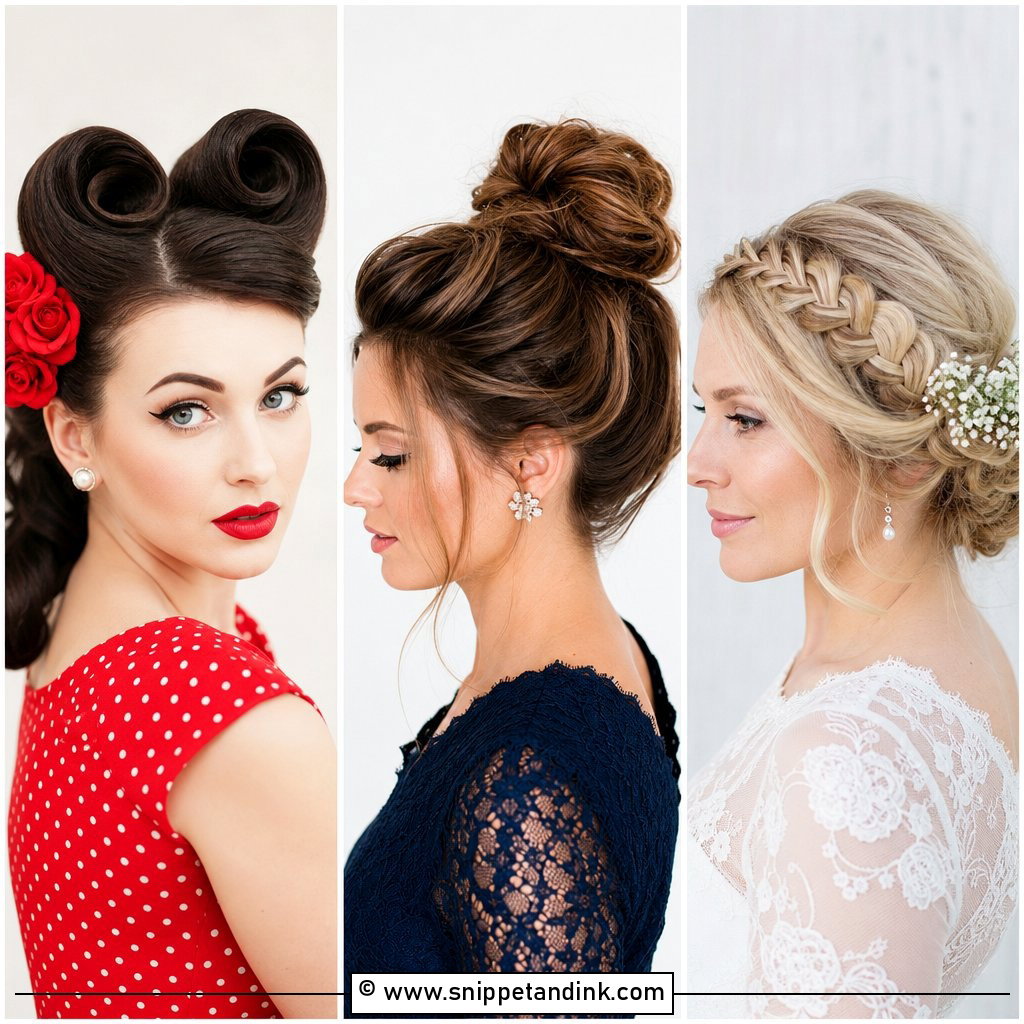
4. Braided Crown Updo
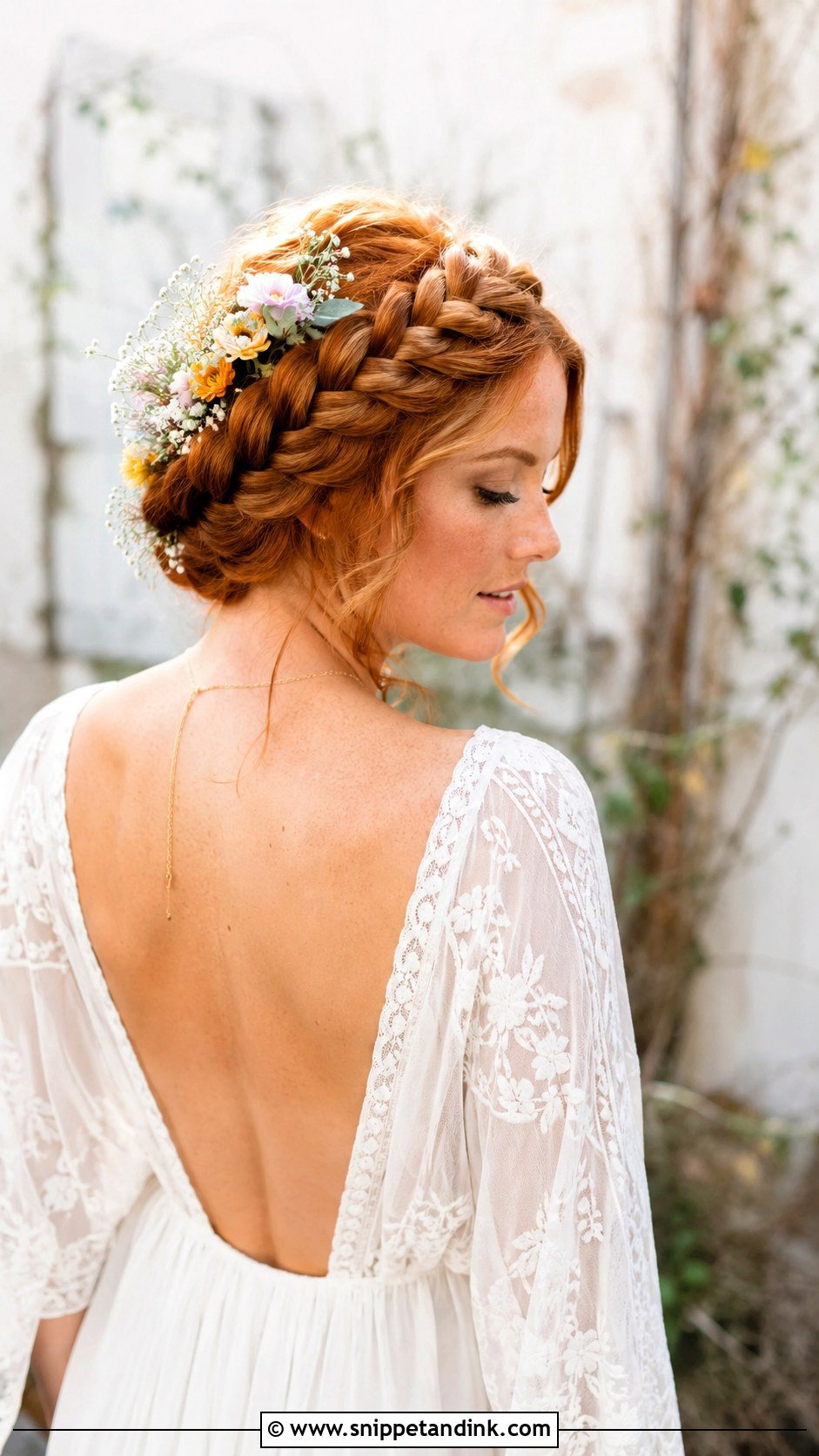
A braided crown sits across the top of the head like a halo, built from two Dutch braids or a single long plait wrapped around. It keeps hair off your face in summer heat and on the dance floor, and fresh flowers tuck neatly between the plaits. I pull the braids gently to widen them, but overdo that and they turn fuzzy by evening. Layered hair needs extra pins along the braid, because short layers poke out of a plait.
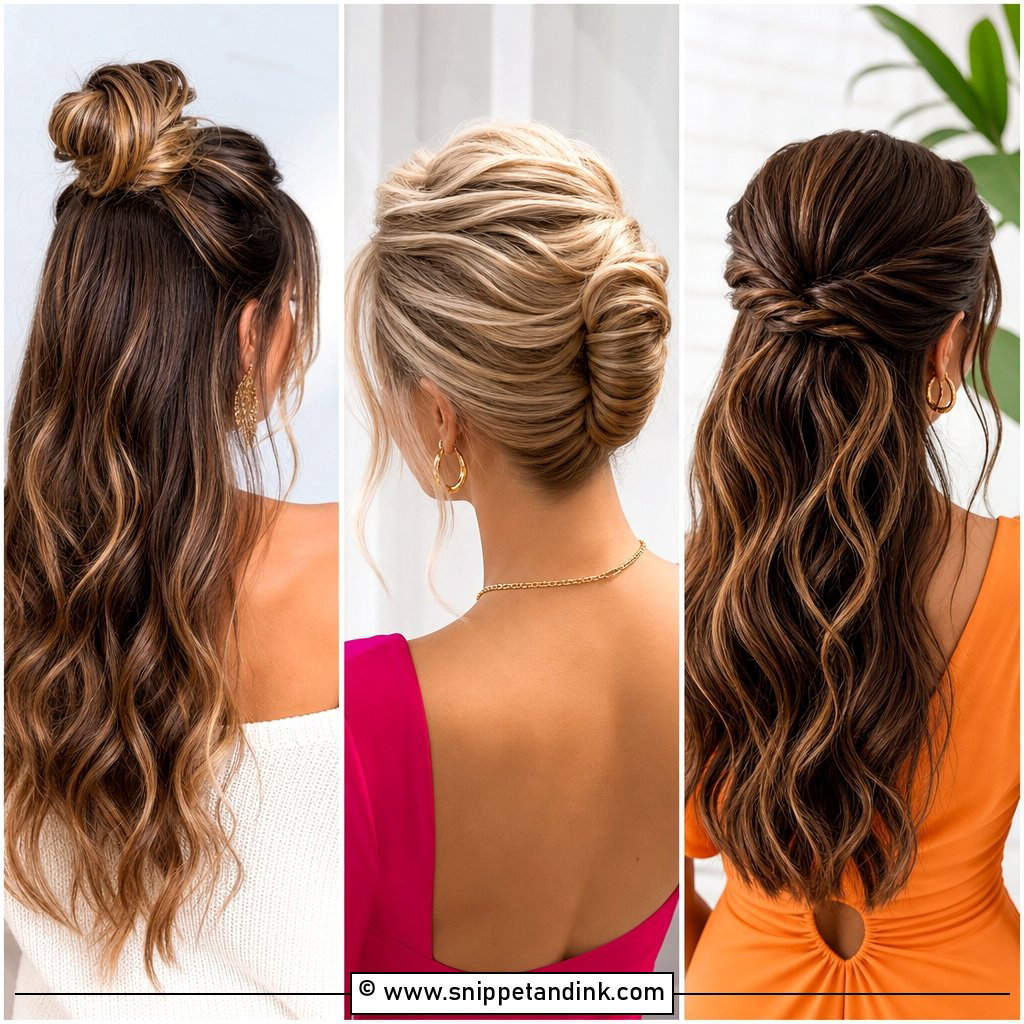
5. Half-Up Half-Down Bridal Style
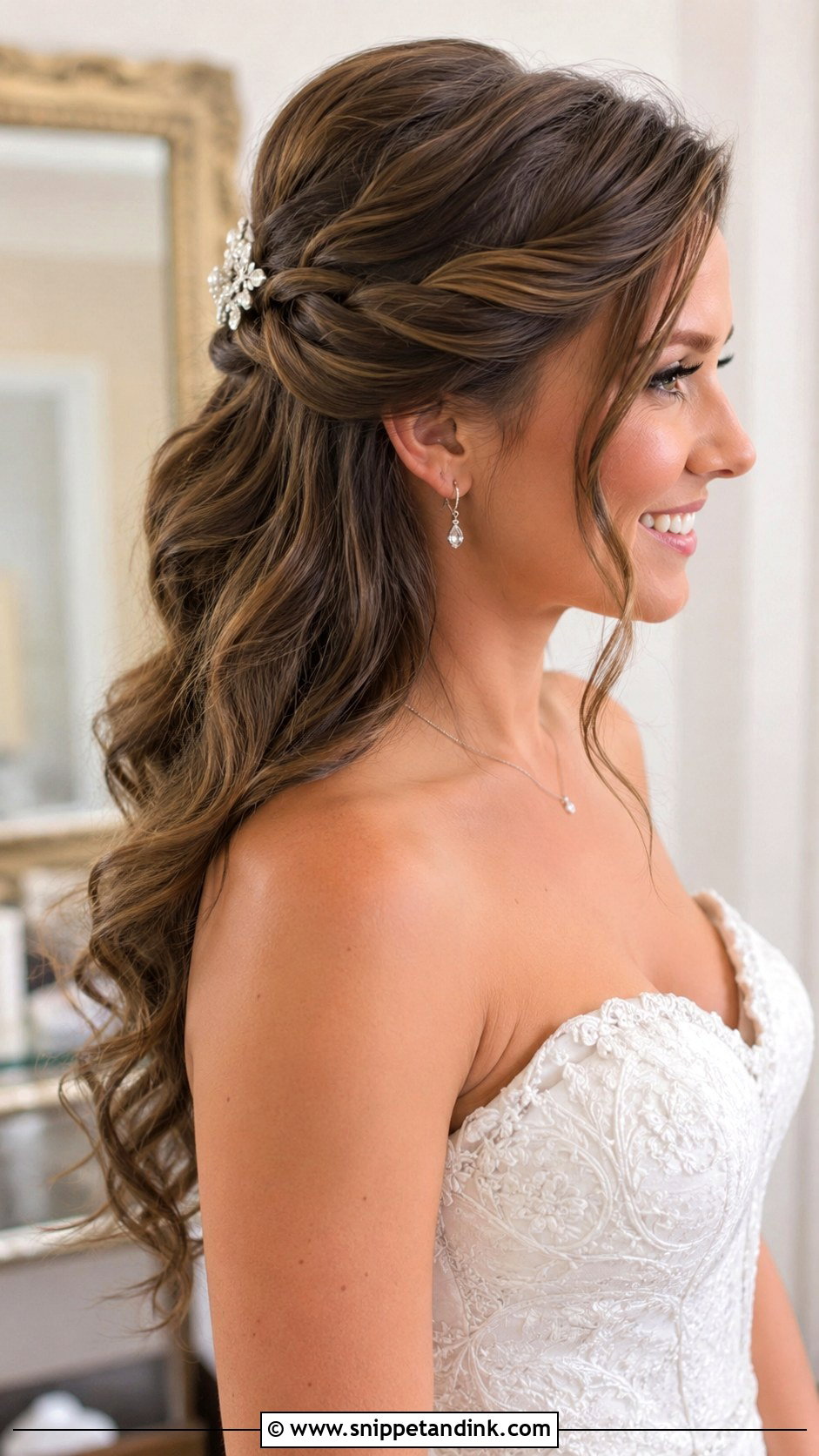
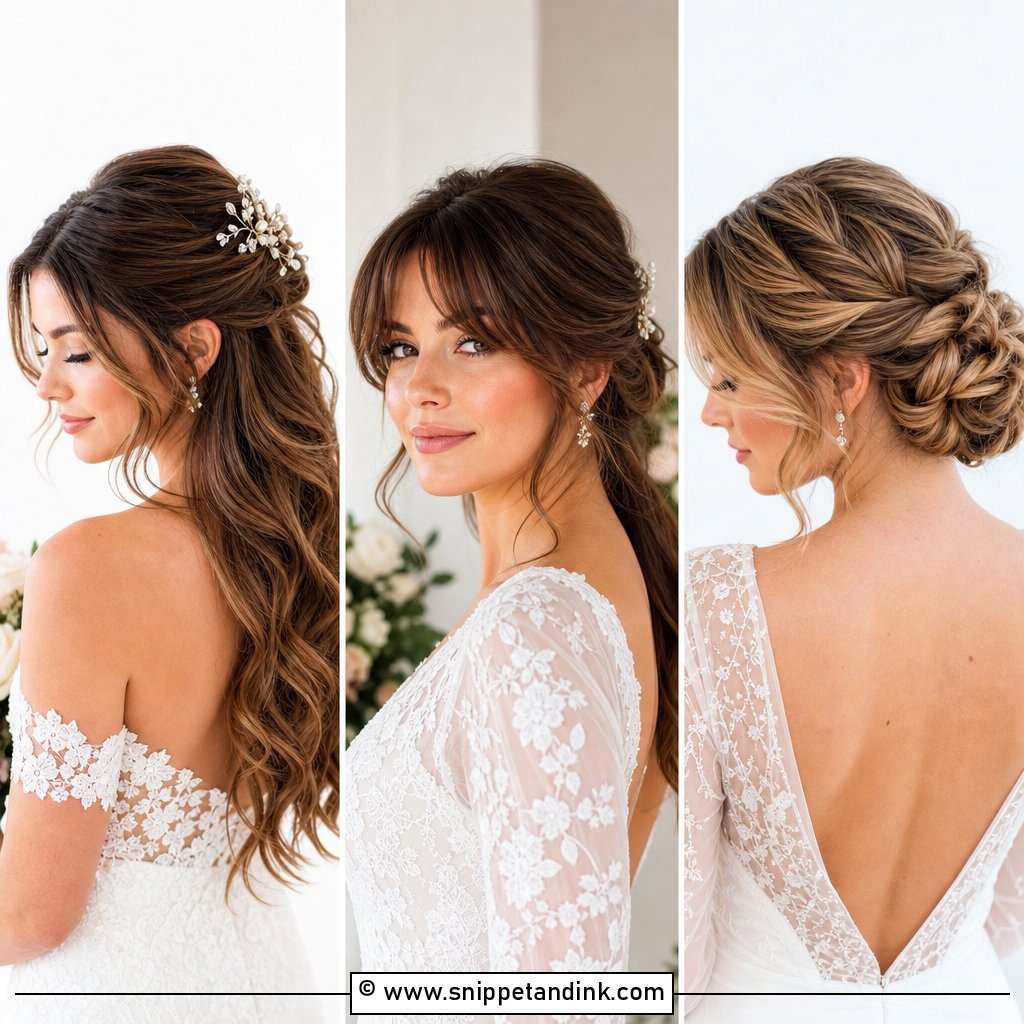
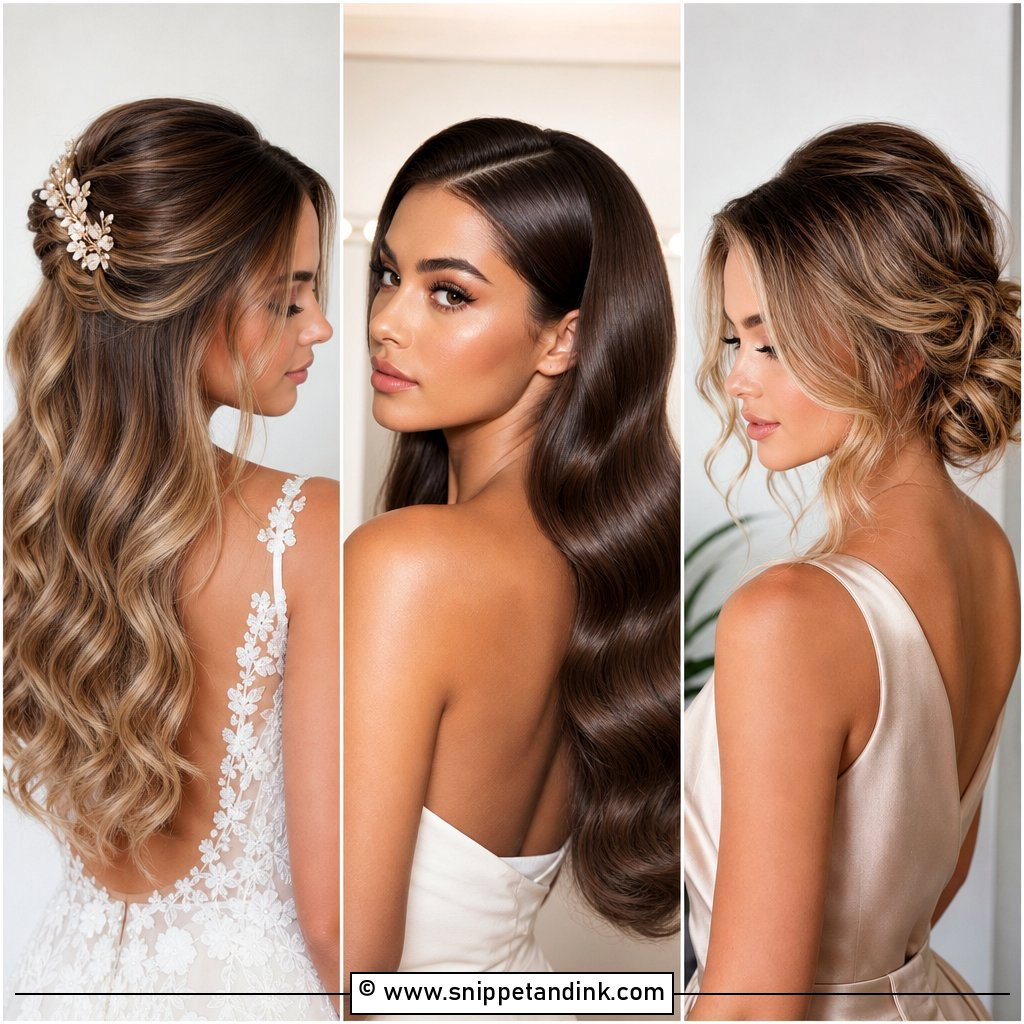
Half-up suits longer hair with natural movement. The top section is pulled back into a small twist or bun and the rest falls in waves, and lately I’ve been placing the gathered part a little higher so it shows from the front. The loose length is the weak point: curls dropping by dinner, or hair tangling under a long veil. On very straight hair I set the curls well and let them cool completely. A clip or a few fresh blooms at the join hides the anchor.
6. Sleek Low Bun Updo
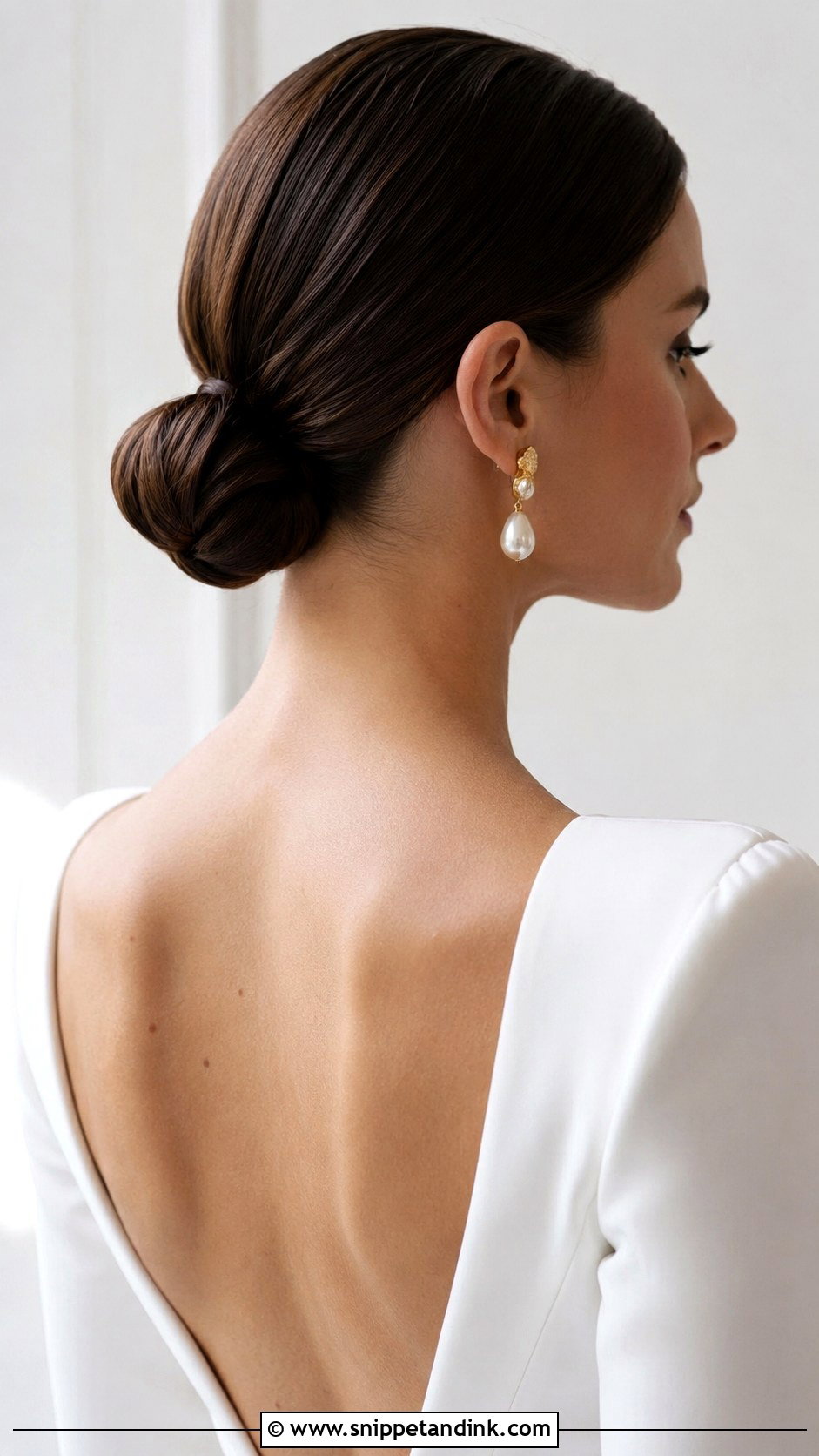
Sleek is only as good as the blow-dry underneath it. I dry the hair smooth first, brush it into a tight ponytail at the nape, wind it into a bun and pin it with pins matched to your color. There’s nowhere to hide a bump, so it takes longer than it looks. Structured gowns, a bold lip and minimal jewelry are its natural company, especially at a city wedding. If your hairline is fine at the temples, say so at the trial; tight pulling for twelve hours causes headaches and stresses the edges.
7. Textured Updo With Curls
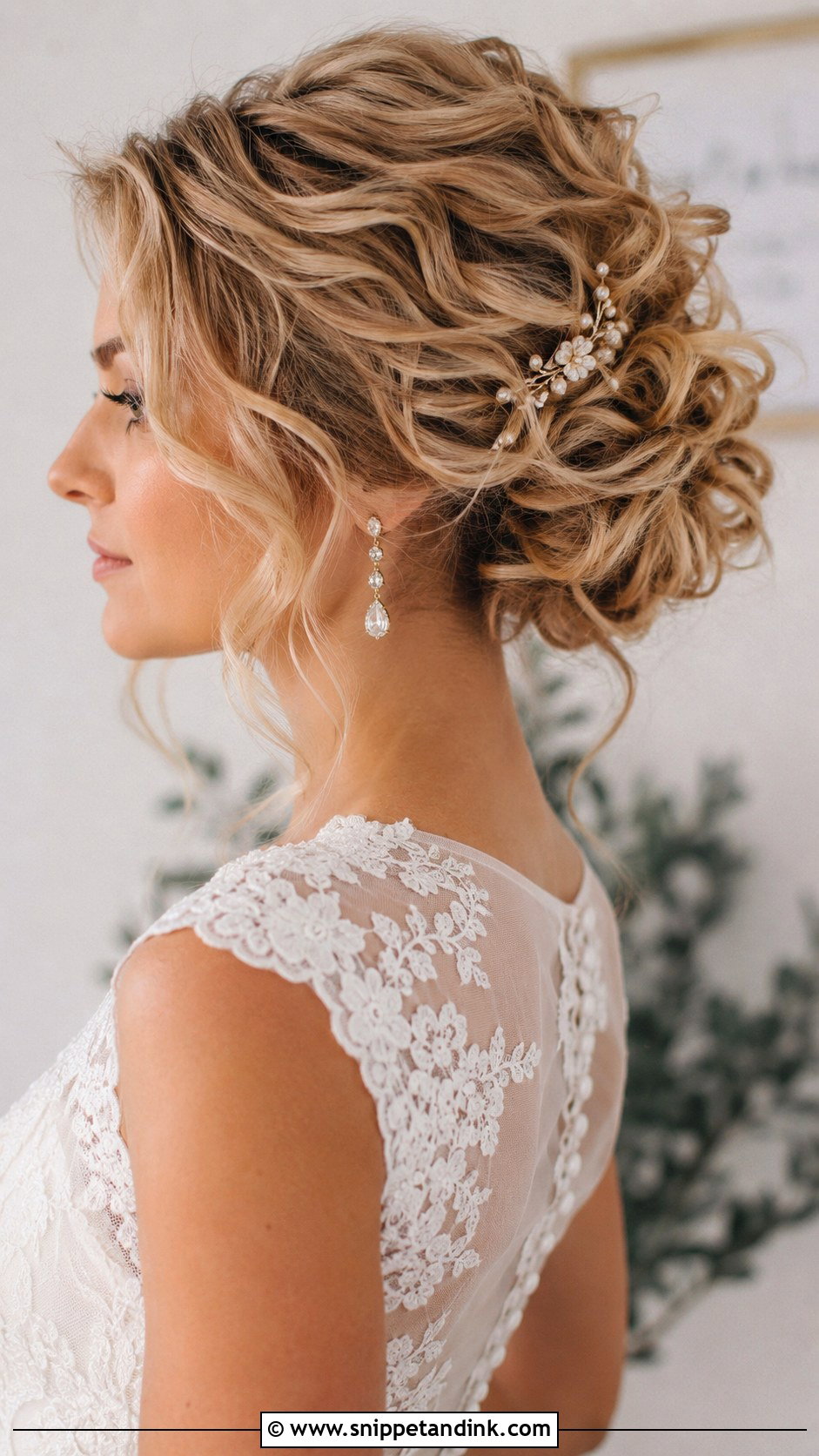
This is a volume style. Everything is curled first, then pinned loosely in clusters so the curls stay visible instead of being smoothed into one mass. The tendrils at the hairline need to be curled separately and smaller, because they’re always the first to straighten. Where the bulk sits depends on the back of your dress: a low-back gown looks better with the shape pinned higher. Vintage and whimsical weddings suit it best.
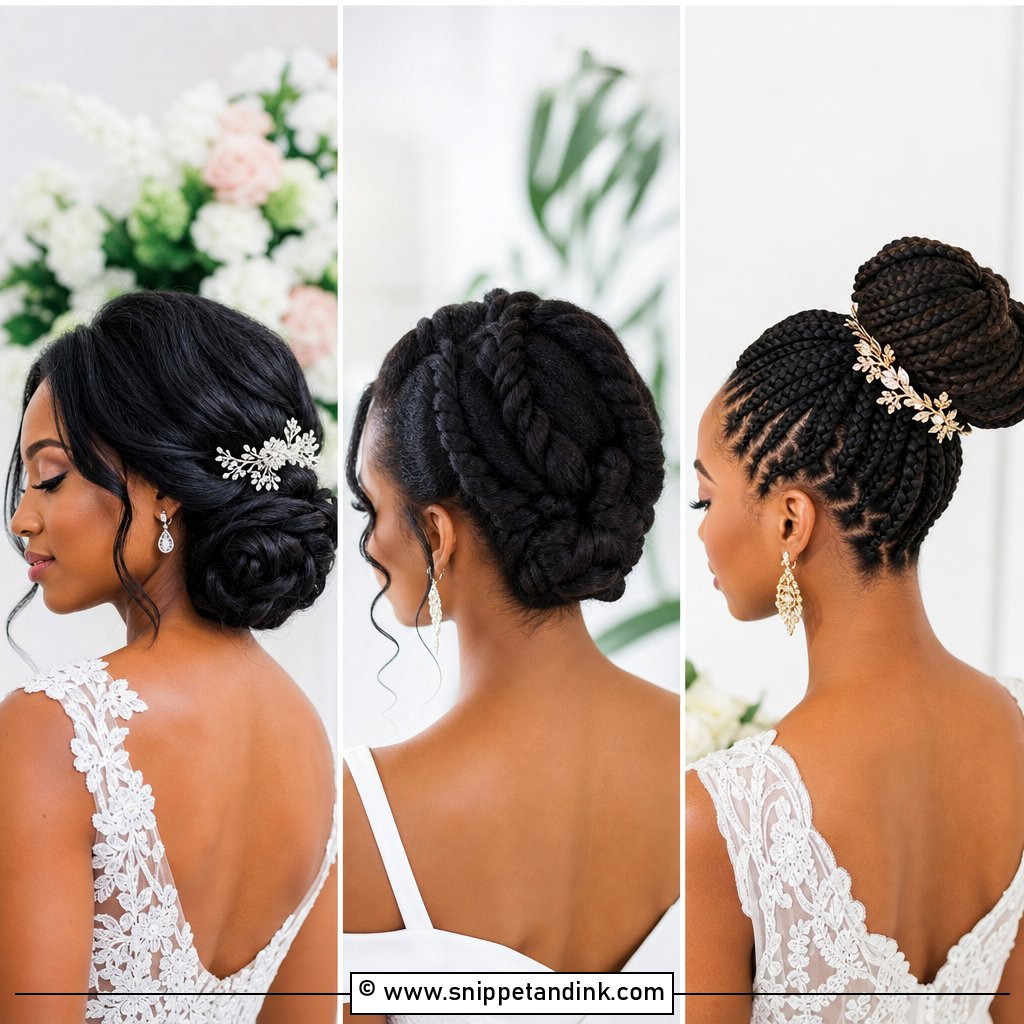
8. Braided Bun Wedding Updo
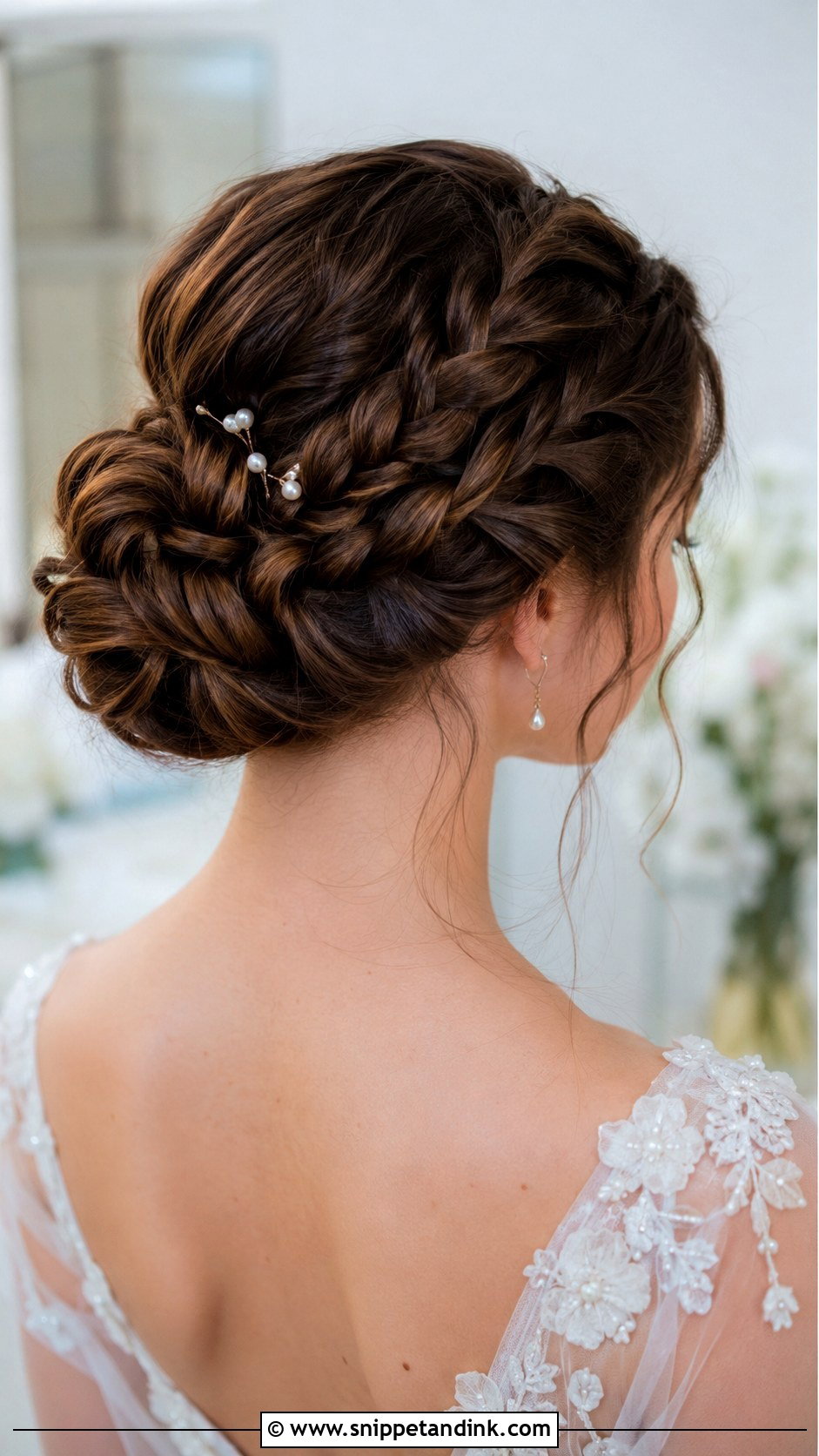
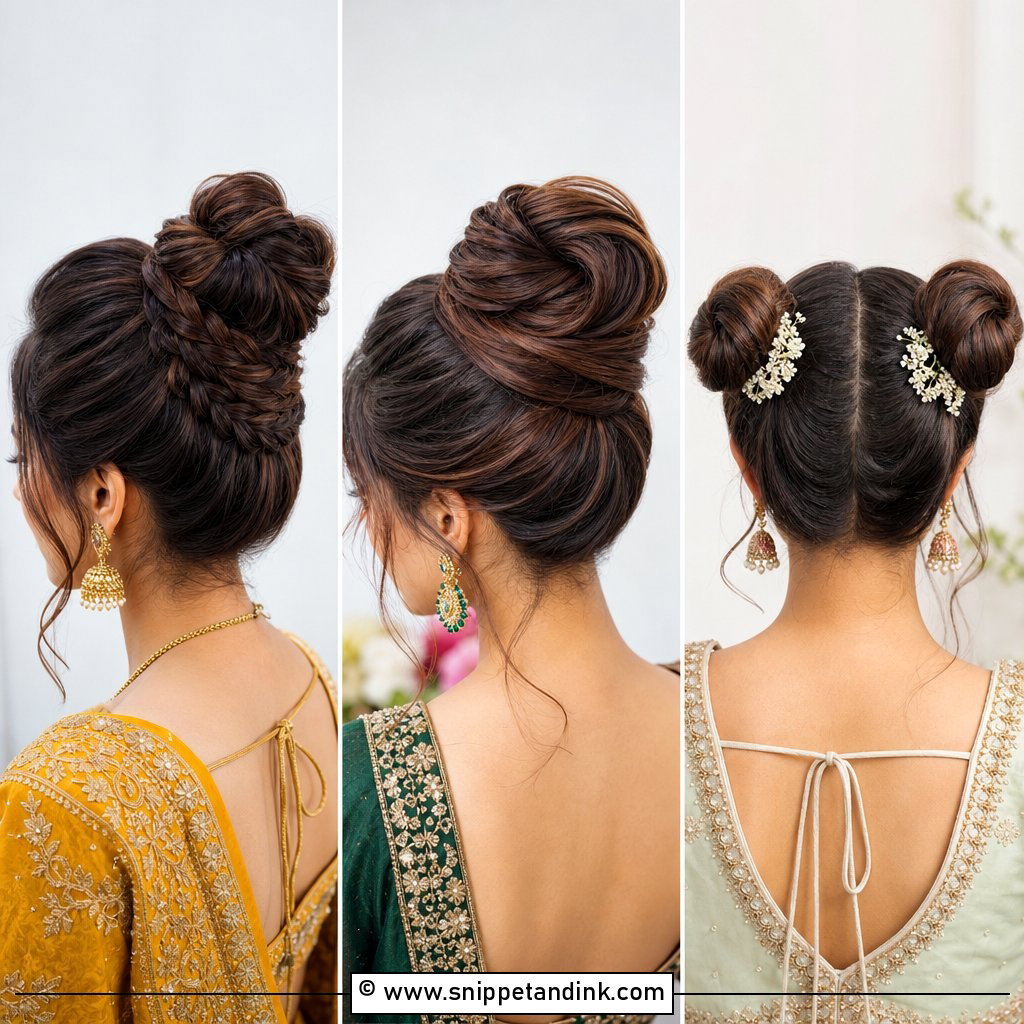
Here a plait wraps around the bun or leads into it, which puts most of the detail at the back. Braids are strong anchors, so this holds through hugs and dancing better than most loose buns, and it suits nearly every hair type. For a softer finish, I braid tightly and loosen the plait gently afterward. Braiding loosely from the start just makes it collapse. Pearl pins set into the braid pick up the light.
9. Updo With Fresh Flowers
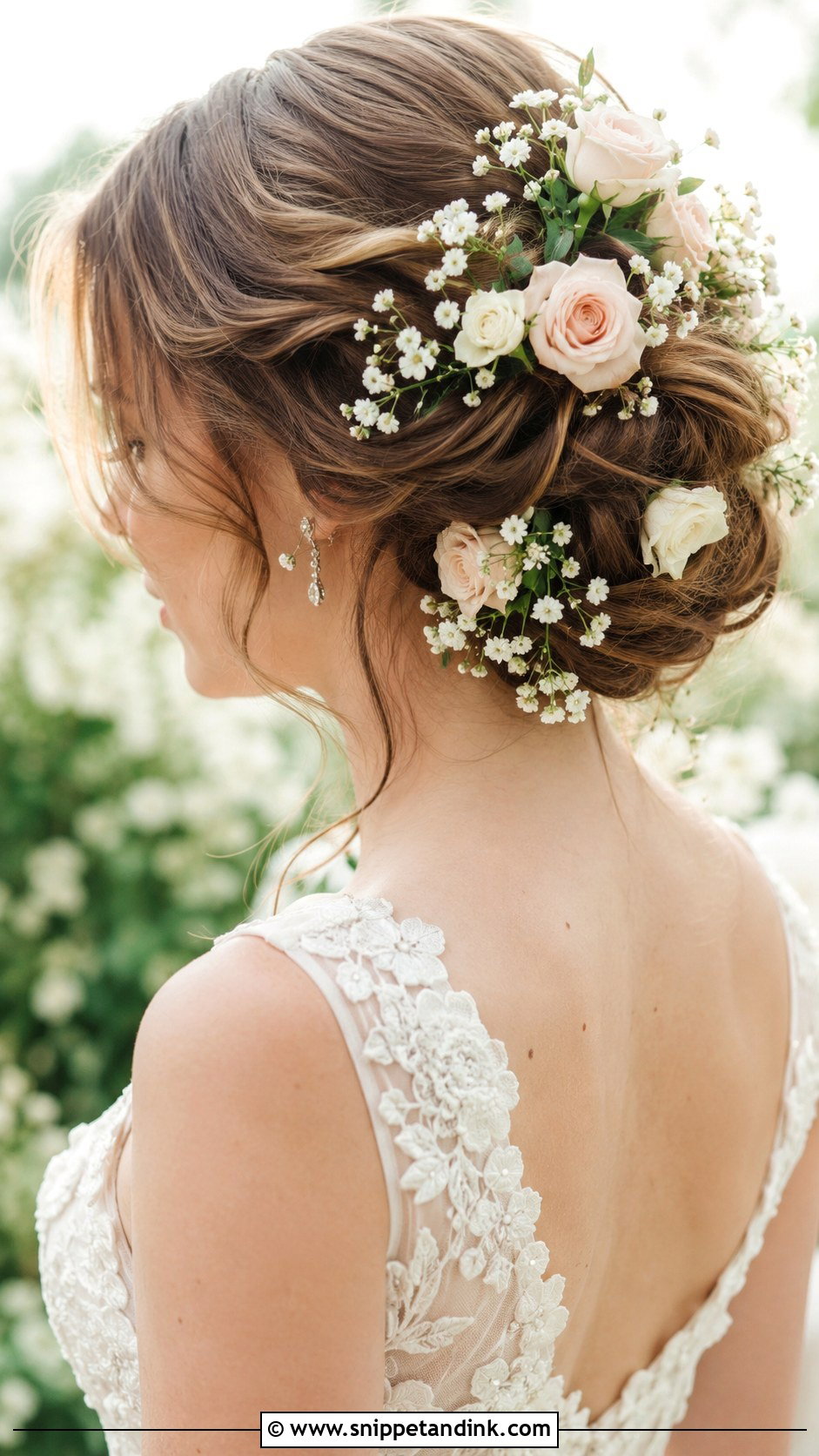
Flowers in an updo need your stylist and florist talking to each other. I build the bun or twist first, and the florist supplies blooms already wired and taped so I can pin them straight in. Baby’s breath, spray roses and waxflower last well out of water; gardenias brown at the edges quickly. Match them to your bouquet early. A few small blooms read as accents, while a large cluster becomes the focal point and needs a firmer anchor underneath.
10. High Messy Bun Updo
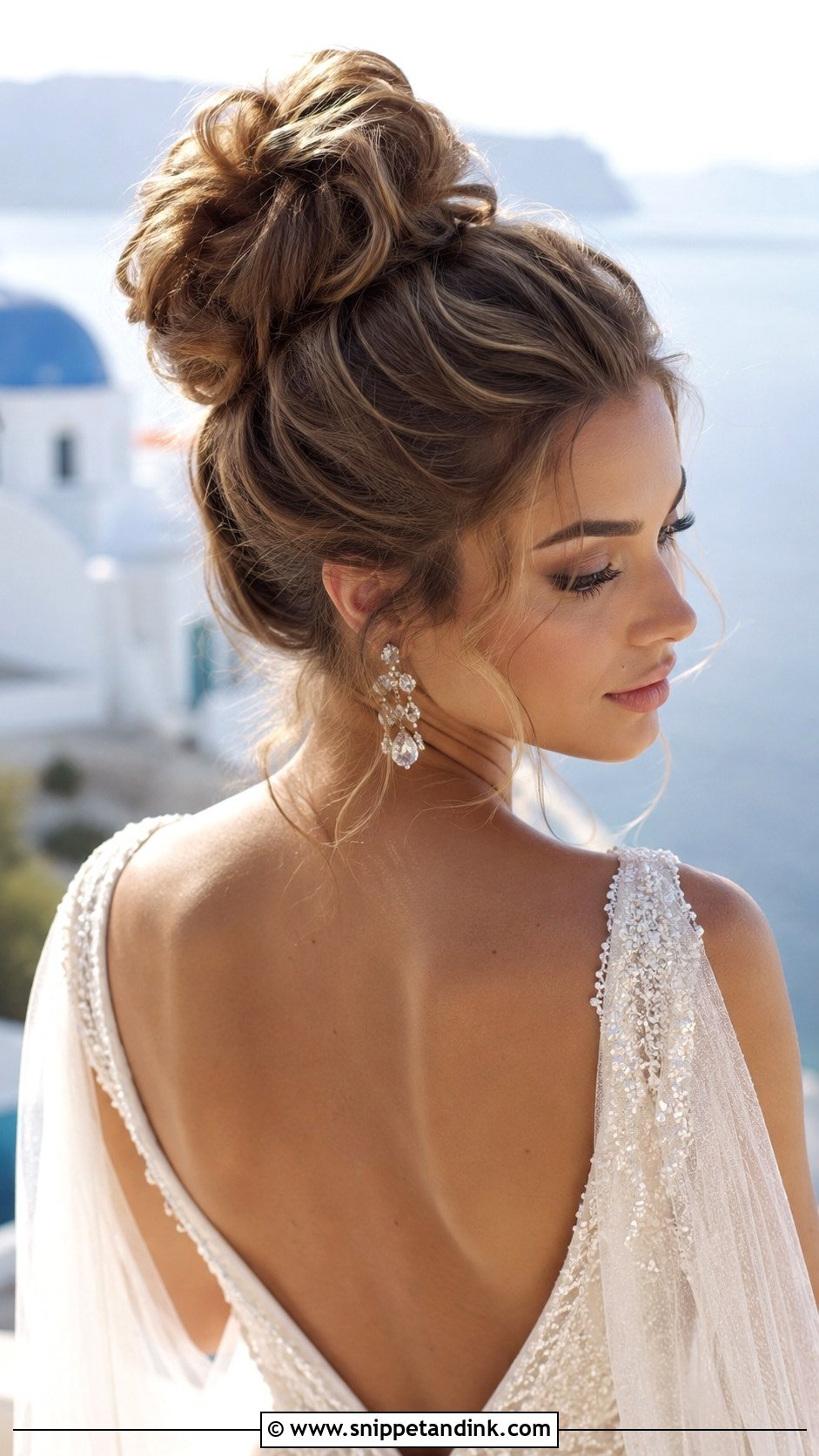
Pulling everything up off the shoulders matters at a hot outdoor wedding. This voluminous bun sits at the crown, so the ponytail has to be secured tightly before any texture goes in, or the weight drags it backward. It lengthens the neck and frees the neckline for earrings. Veils complicate a high bun, and a comb tucked beneath it looks better than one perched on top. I leave a few loose tendrils at the face.
11. Vintage Victory Roll Updo
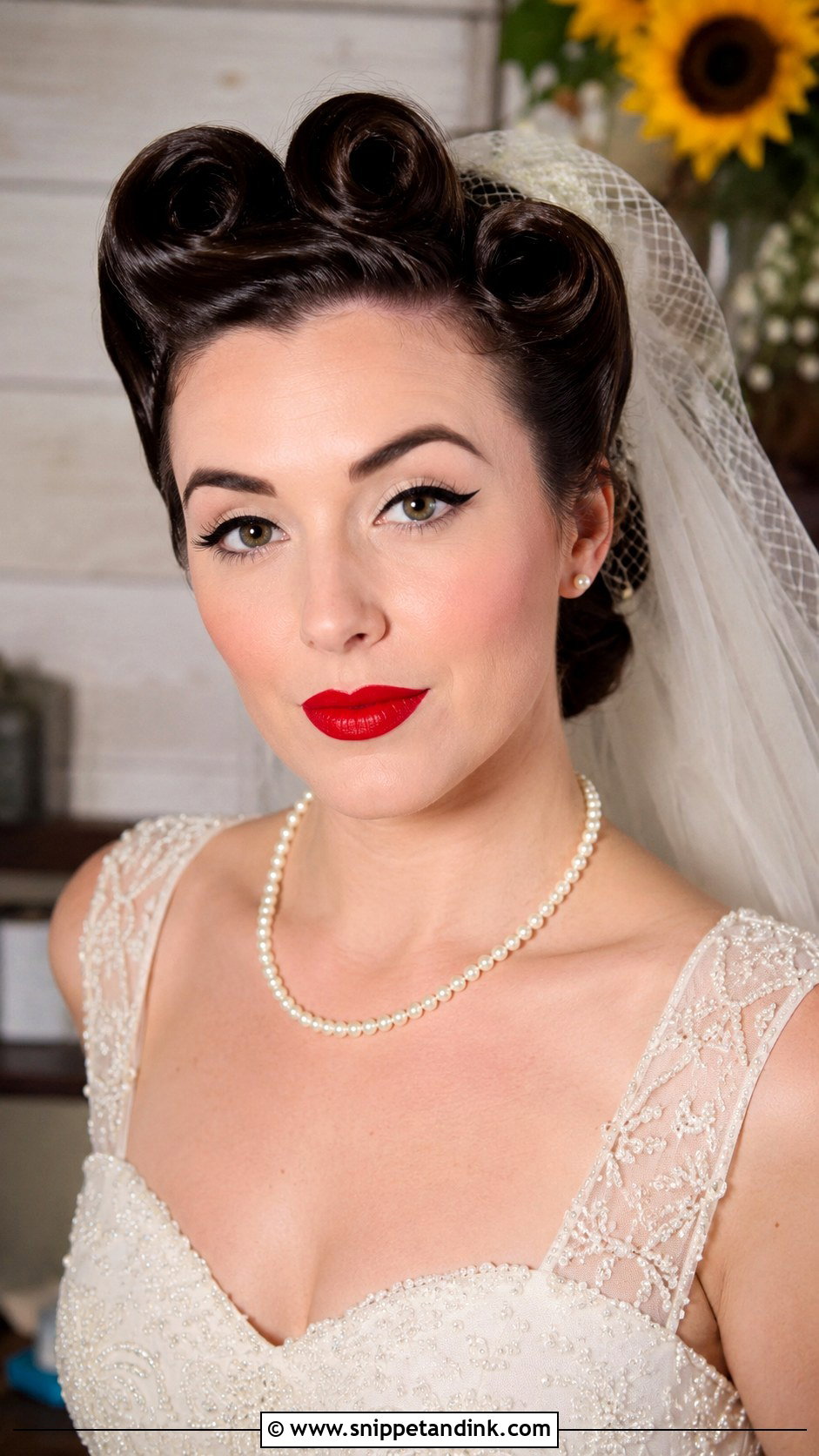
The Victory roll updo is made from curled sections rolled around the fingers and pinned into hollow tubes at the front or sides. It’s the 1940s look, and a red lip and pearls are its obvious partners. The skill lies in a smooth roll with no visible pins, which takes practice even for stylists, so book someone with vintage work in their portfolio. Hair set in rollers the night before holds the shape better than hair styled from scratch on the morning.
12. Twisted Low Updo
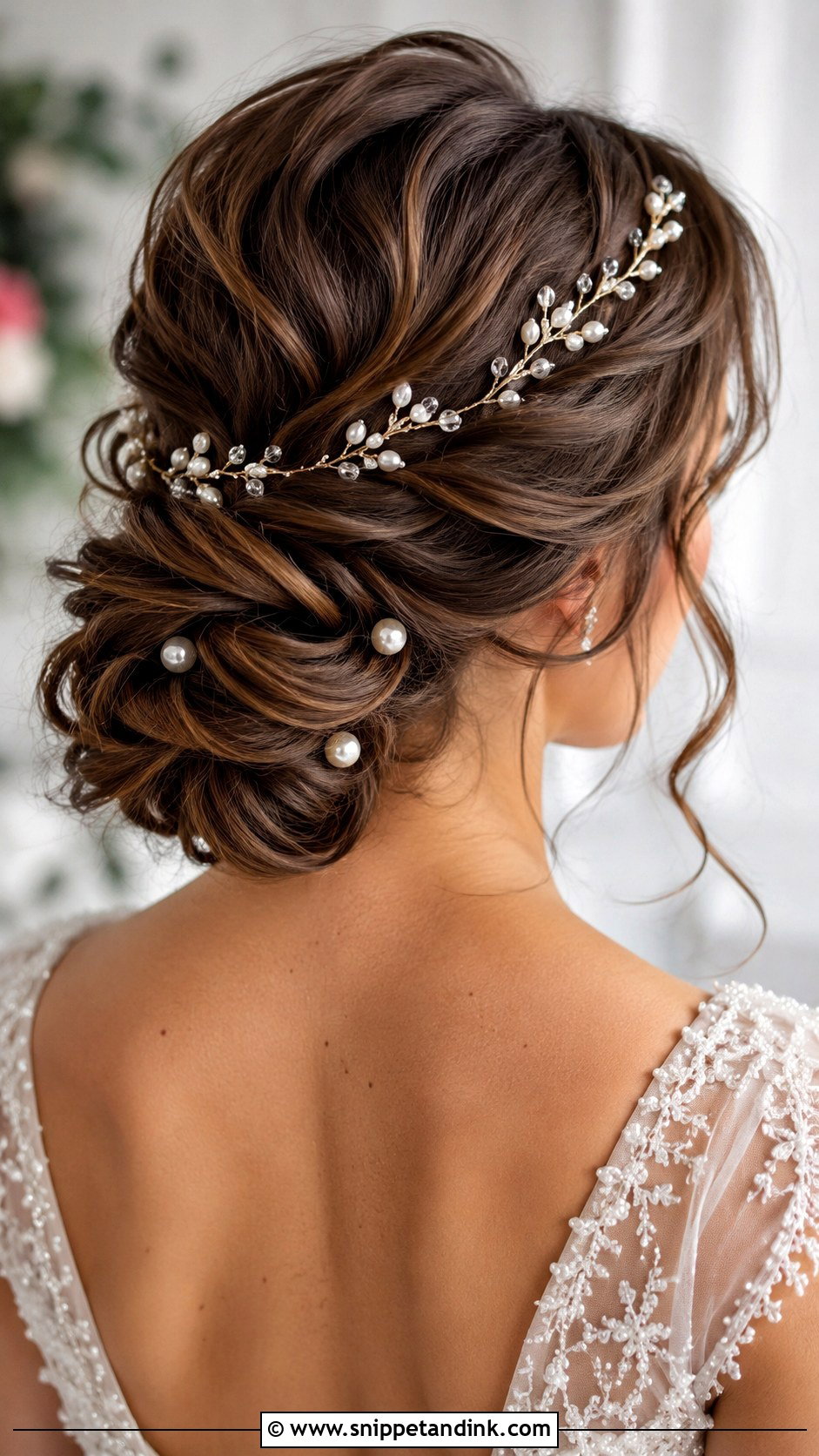
Guests look at the back of your head for the whole ceremony, so detail there earns its place. Twisted sections pinned at the nape give texture without strict structure, and the style works on medium to long hair. I pin each twist into the one before it so they interlock and don’t loosen as the evening goes on. Pearl pins or a fine vine can follow the line of the twists.
13. Boho Braided Updo
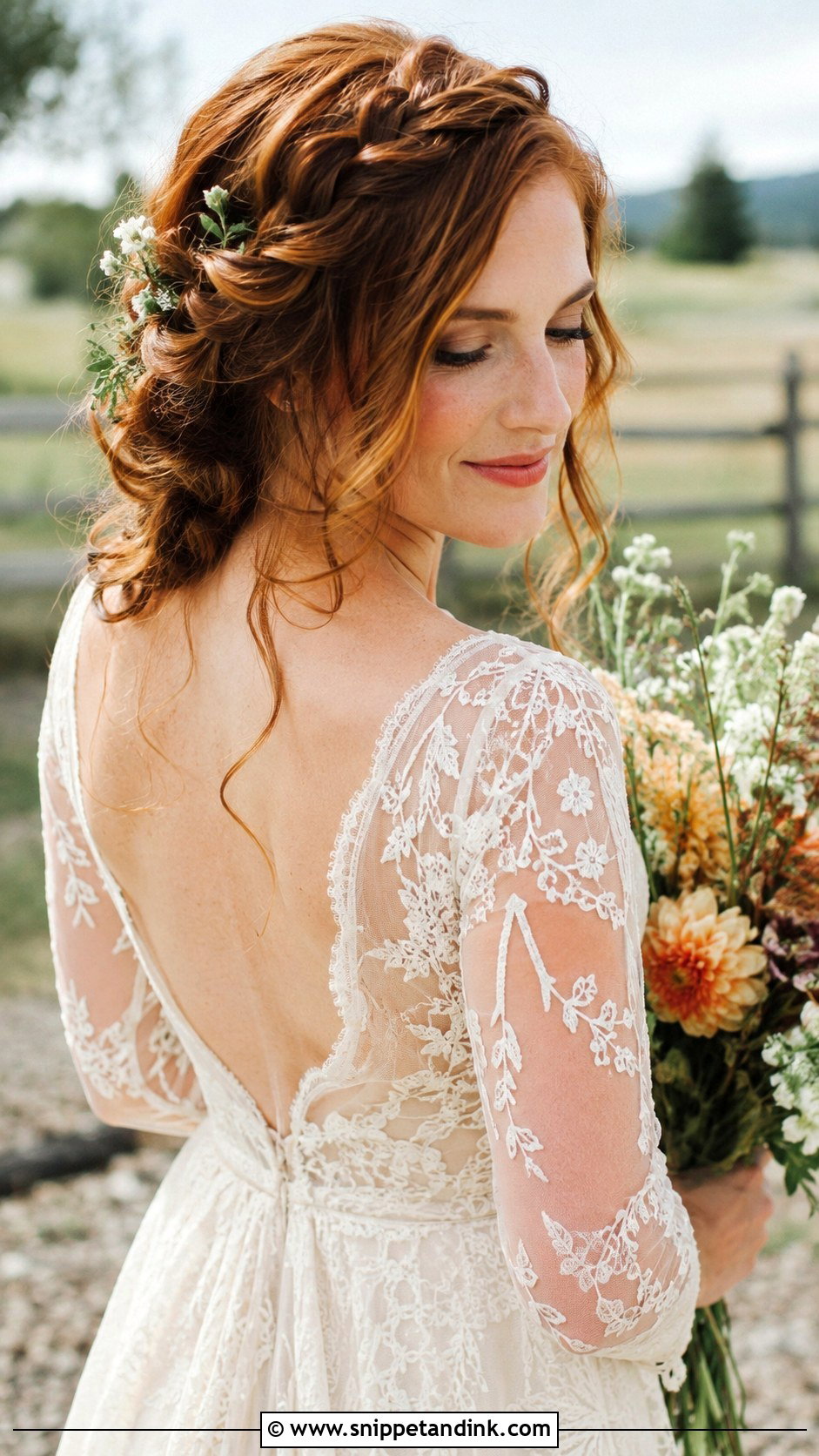
Loose braids, waves and texture make up this one, and the imperfection is deliberate. It belongs with flowing gowns at rustic, beach and festival-style weddings. Wind at the beach is the real test, so I work more of the loose pieces into the structure than it appears, which keeps it from blowing apart without making it stiff. Fresh leaves and small flowers suit it. Expect it to loosen through the day; it should look better for it.
14. Classic Ballerina Bun
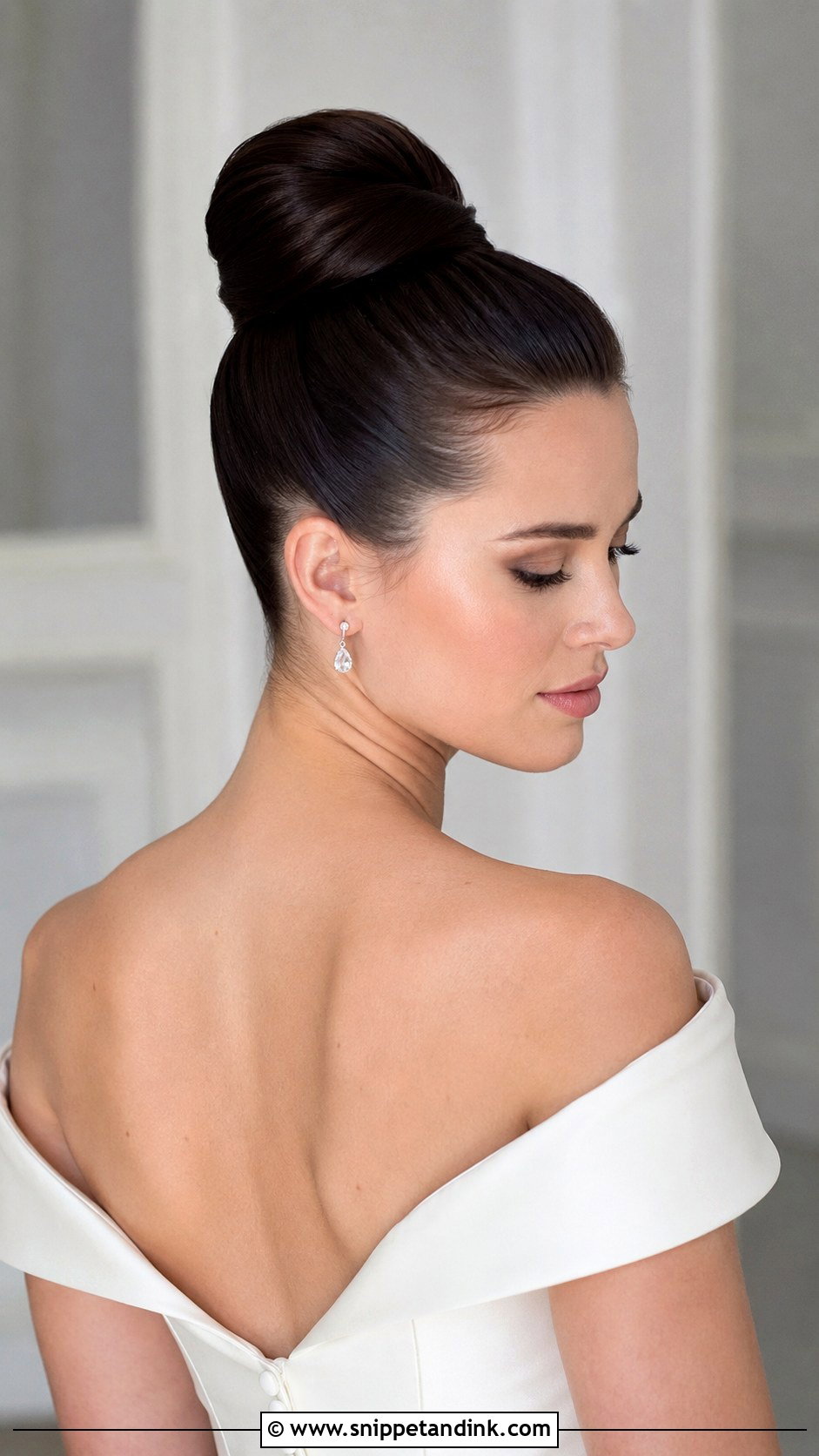
Tight, smooth and wound flat, a ballerina bun is one of the most secure styles on this list. The hair is brushed smooth, pulled up firmly to the crown or mid-crown and wrapped around itself. The ballerina bun pairs naturally with structured gowns and simple jewelry. Because it’s so tight, I check comfort at the trial; some brides get a sore scalp after a few hours, and moving the bun slightly lower usually fixes it. A few tendrils soften the face if you want them.
15. Updo With Pearl Accessories
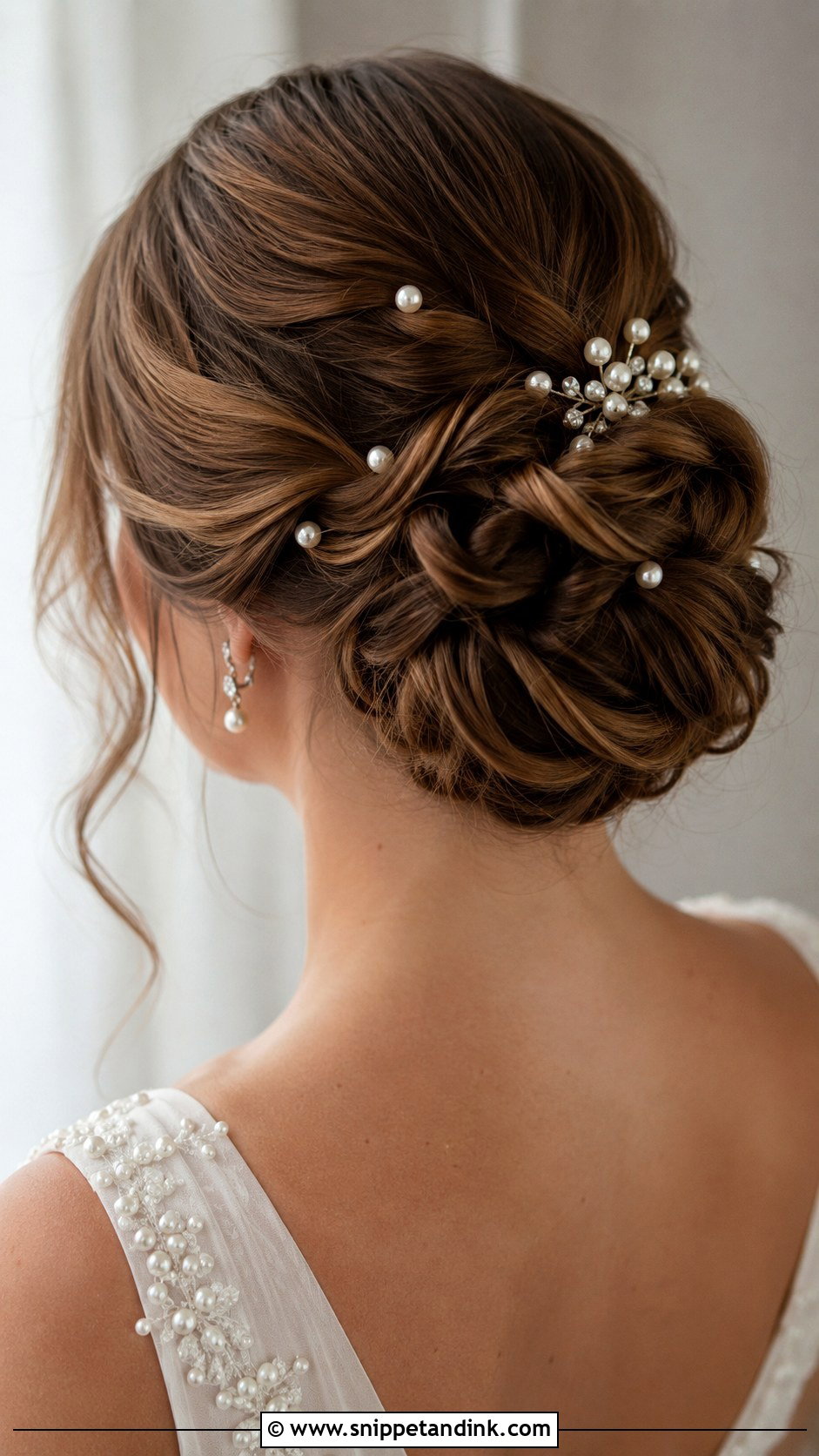
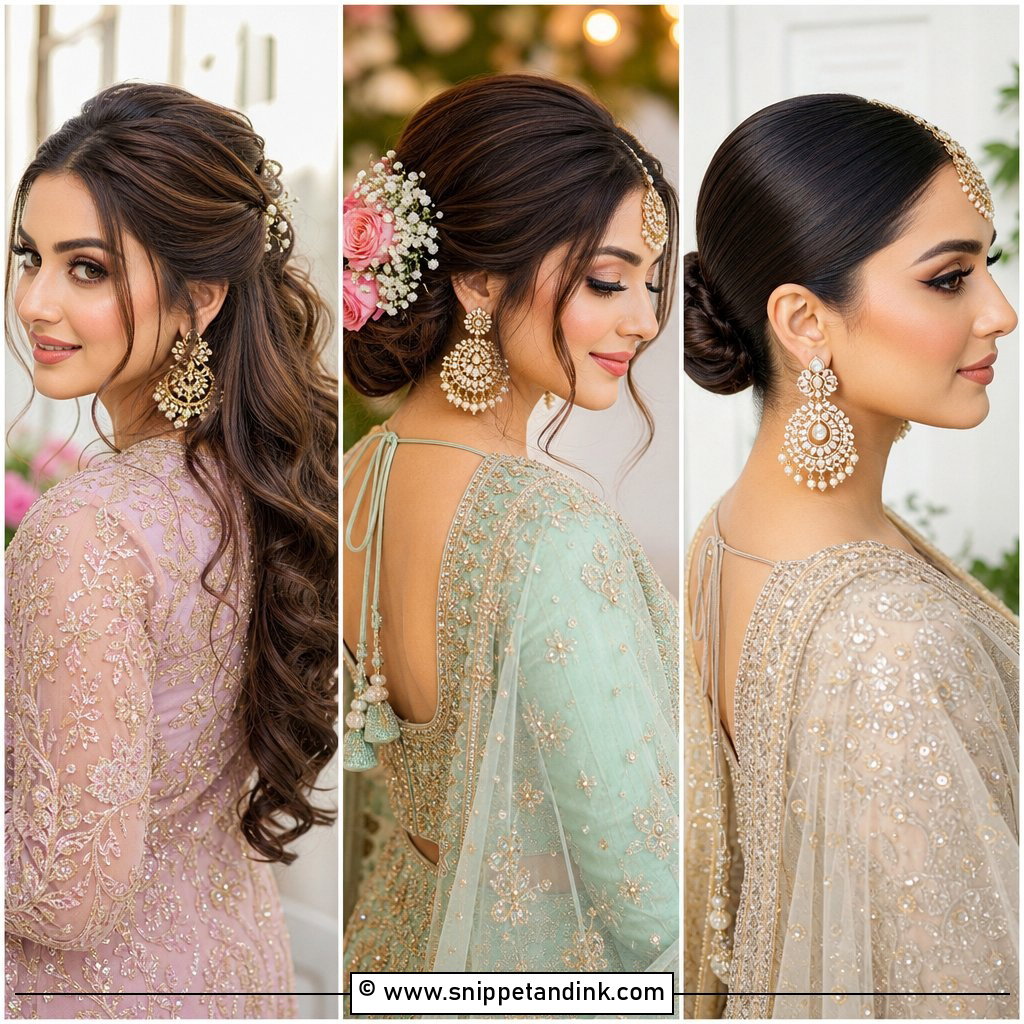
Pearls can be added to almost any updo. I scatter pins across a bun or twist, sliding each in at an angle so it catches hair below the surface instead of sitting on top. A pearl-studded vine works too. Glass and real pearls weigh more than plastic, so several of them need a firm base or they’ll droop toward the end of the night. They sit happily with vintage and modern gowns alike, and they make a plain updo look finished.
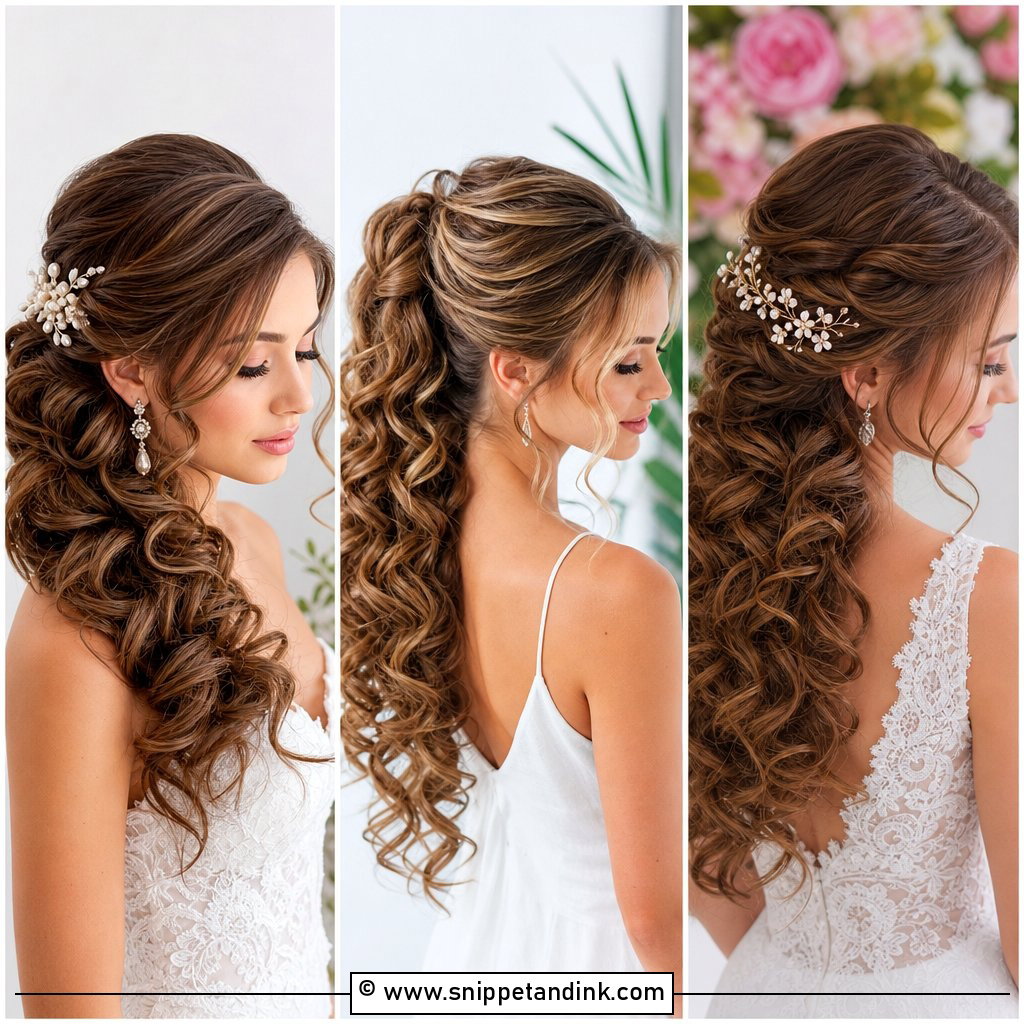
16. Side Swept Updo
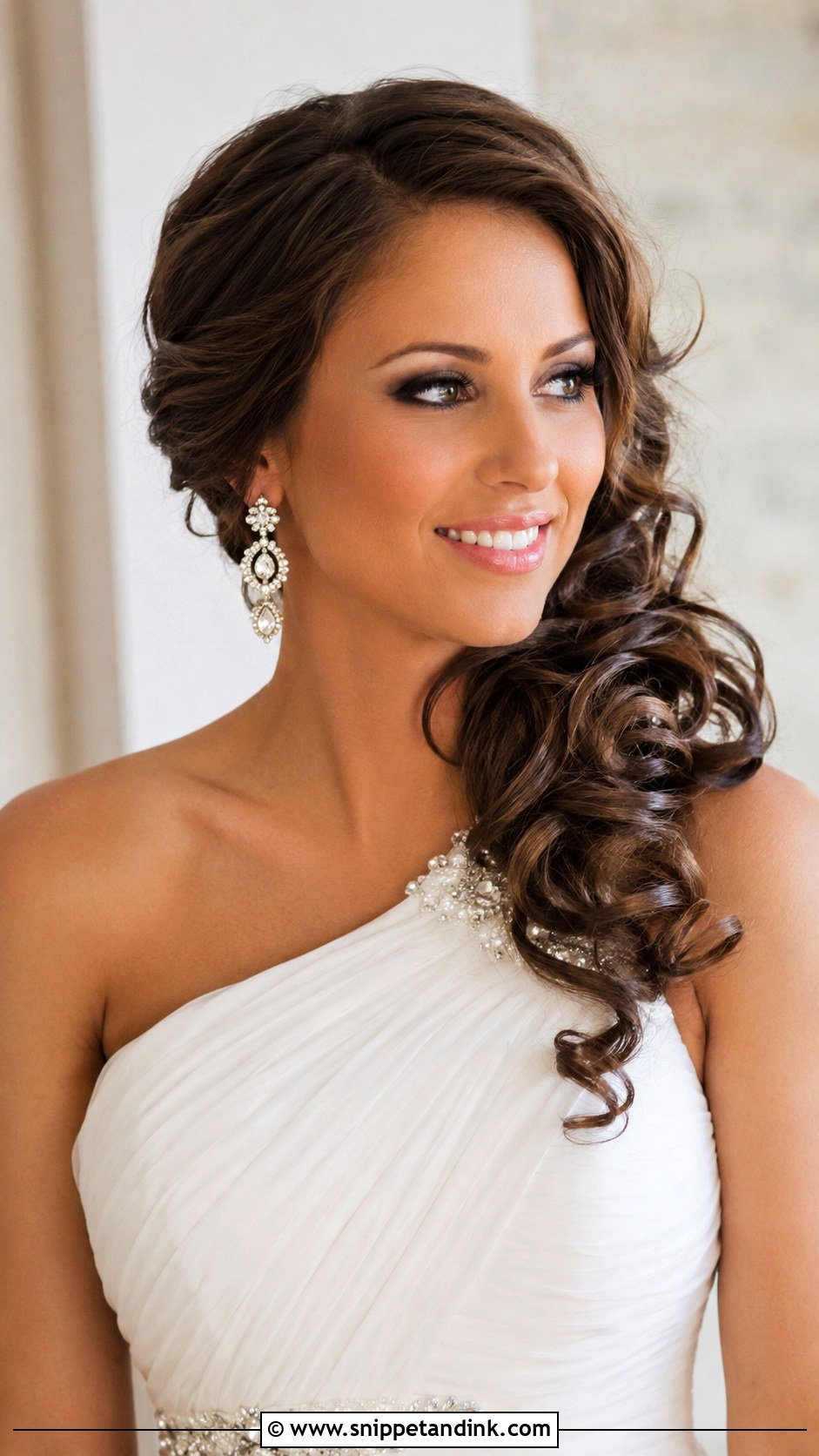
Curls pinned over one shoulder create an asymmetrical shape that shows off one earring. It’s especially good with one-shoulder gowns and asymmetrical necklines. I build an anchor braid behind the ear on the sweep side so that’s where the weight hangs. Think about which side faces your guests at the altar before deciding the direction. A decorative clip or a few flowers at the gather covers the pins.
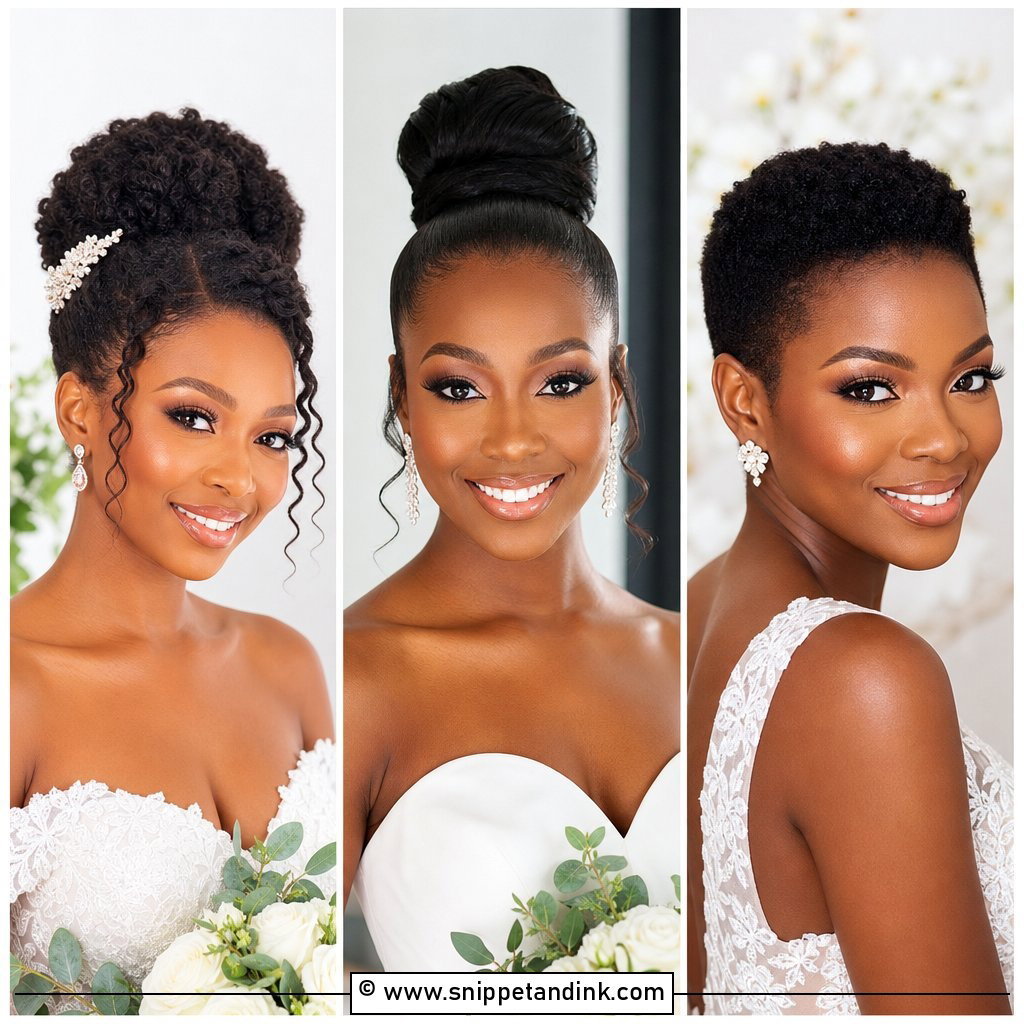
17. Sleek Top Knot Updo
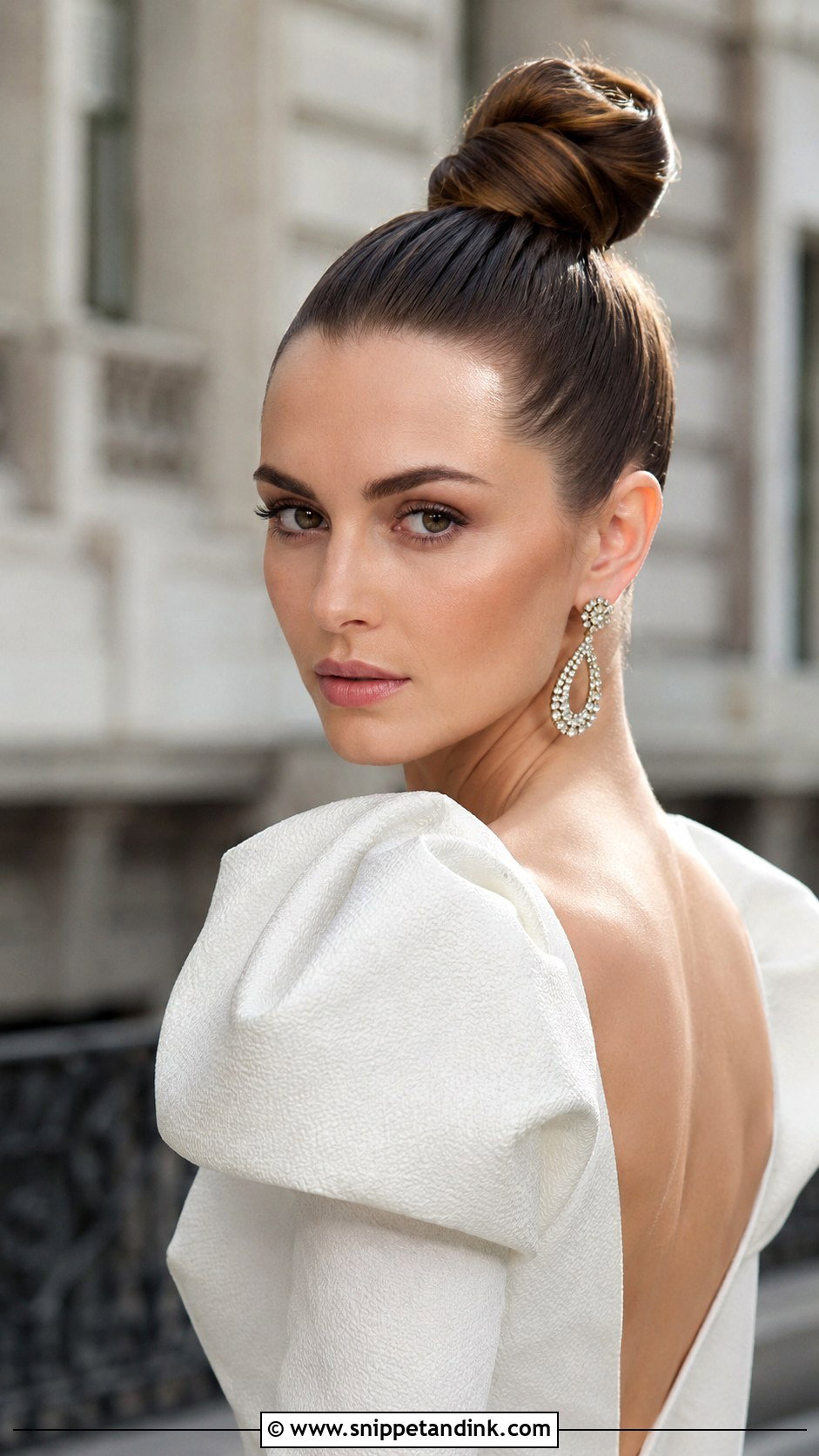
A top knot is smoothed back into a high, polished knot at the crown. It lengthens the neck and suits structured gowns, bold earrings and the editorial feel a city wedding wears well. The base ponytail must be very firm, since the knot sits high and moves every time you do. I add a touch of texture to the length before winding so the pins have grip. Long veils fight with it; go short or skip the veil.
18. Romantic Curly Updo
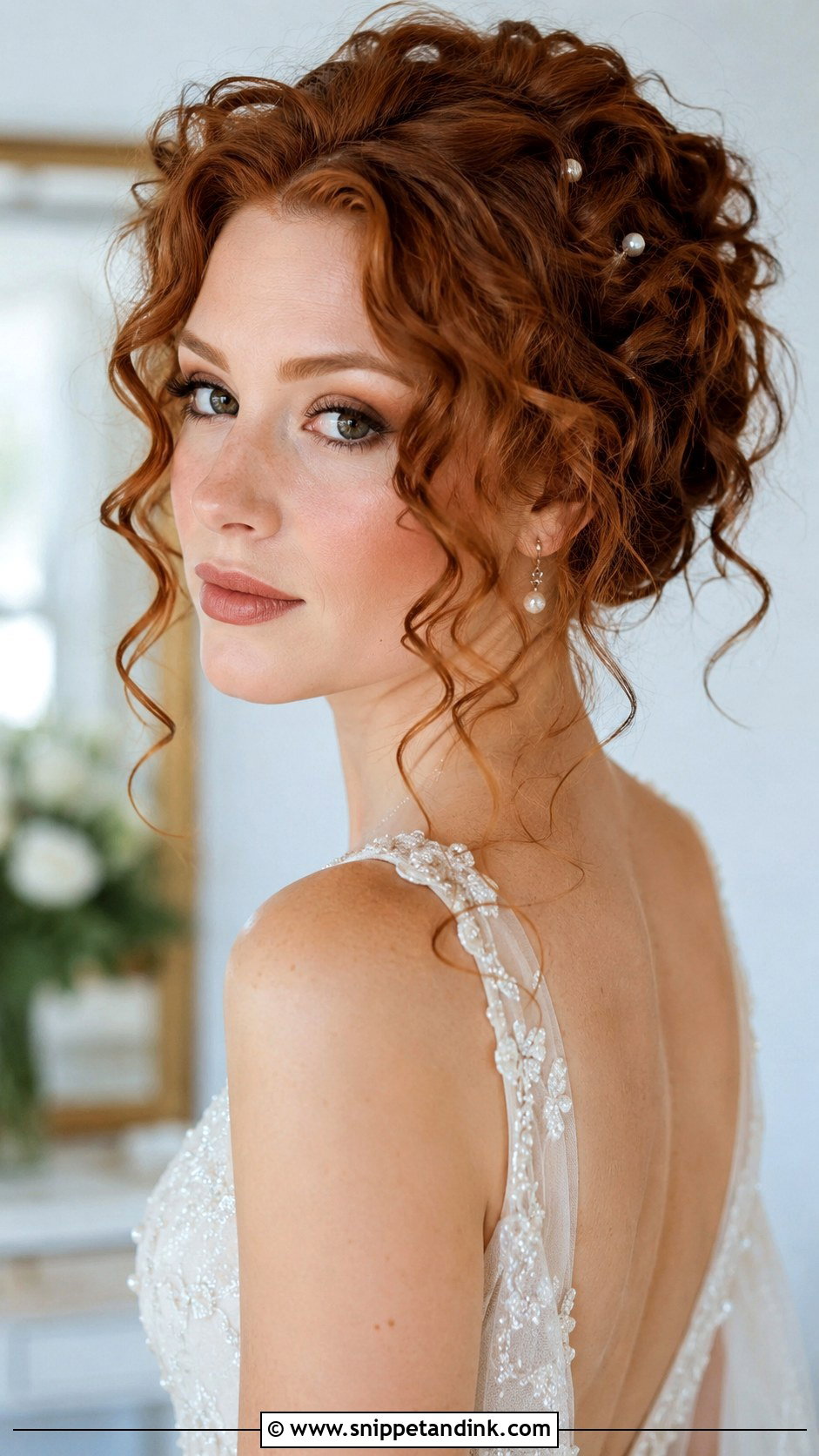
All the hair is curled and then gathered loosely so the texture shows. It’s a natural fit for curly hair or anyone after a voluminous look. With natural curls I work with your own pattern rather than recurling with heat, using a cream for definition. With straight hair I set the curls and let them cool fully before any pin goes in. Pearl pins or small flowers can sit between the curls.
19. Braided Halo Updo
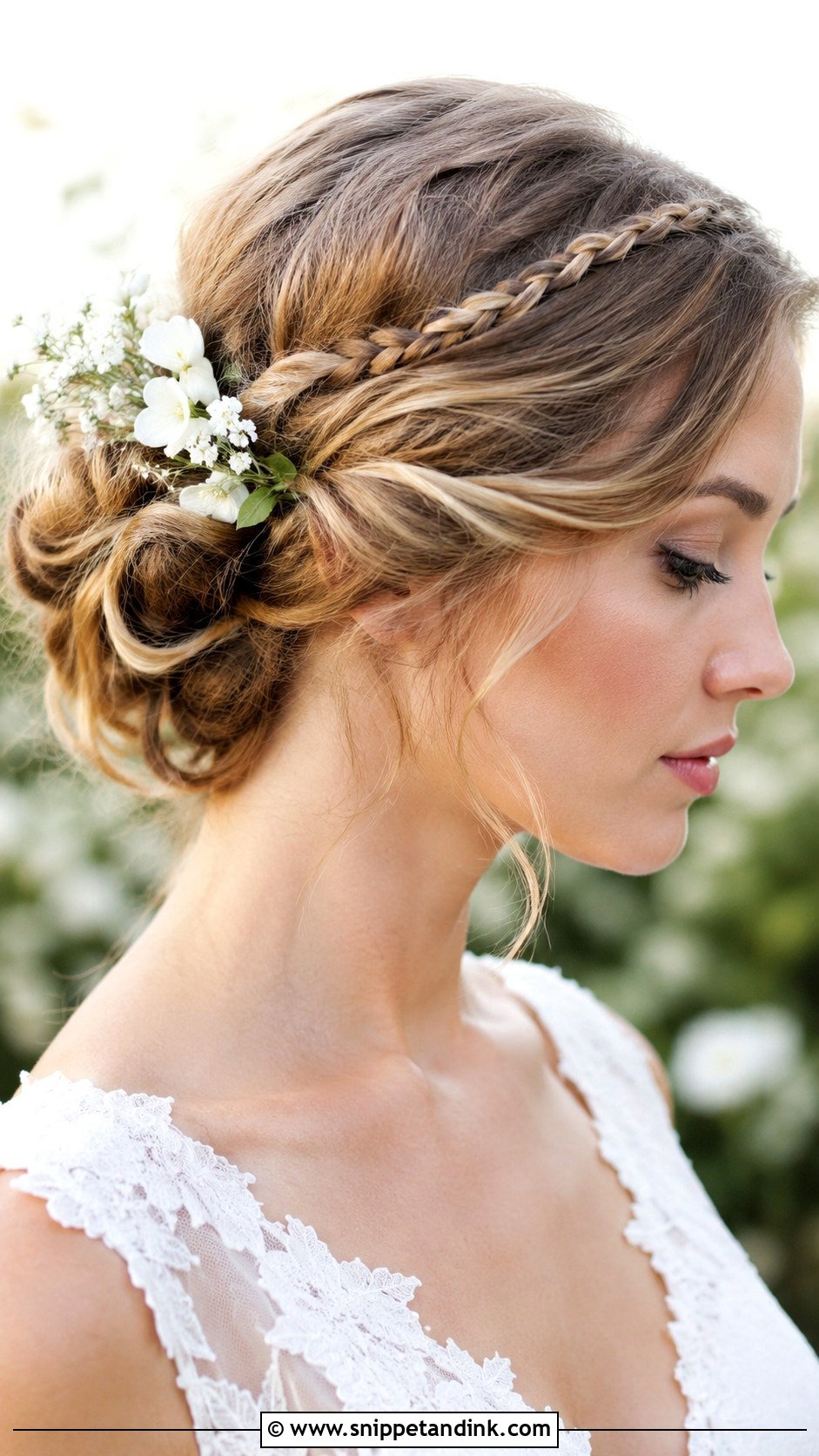
A halo is one thin braid wrapped around the head, quieter than a full crown, and it blends into a loose updo or waves beneath. On fine hair I braid a small section from behind one ear and pin it across to the other. On thick hair the braid can look heavy, so I take a slimmer section than you’d expect. Boho and garden weddings suit it, and flowers along the braid finish it.
20. Low Bun With Face-Framing Tendrils
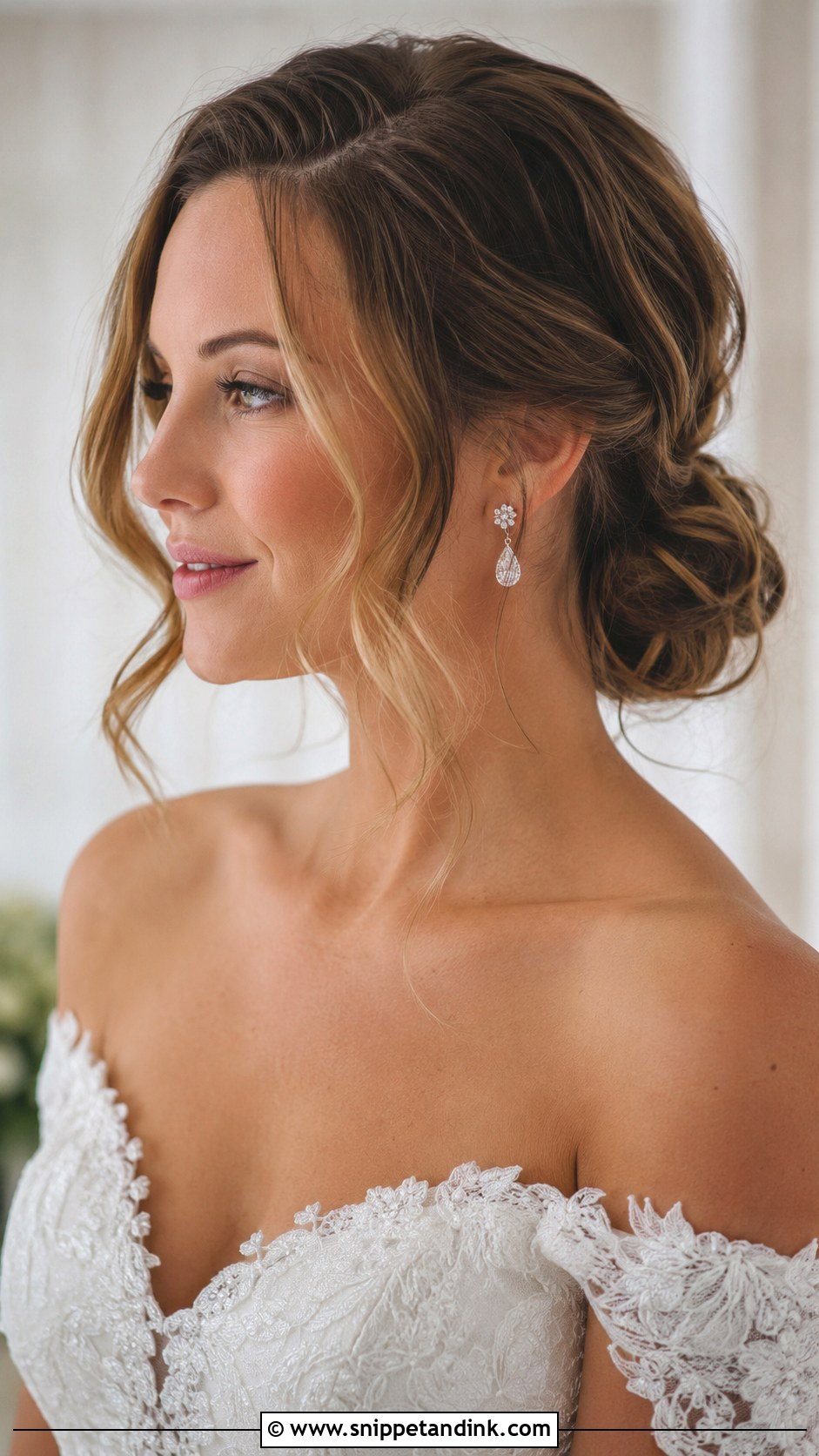
Tendrils are what balance a polished low bun. I gather the hair loosely at the nape and pull out face-framing pieces chosen for your face shape: shorter at the cheekbones on a round face, longer along the jaw on a longer one. They can be curled or left straight. Pieces that are too thick look like a mistake rather than a choice, so I take very fine sections. It works with any neckline.
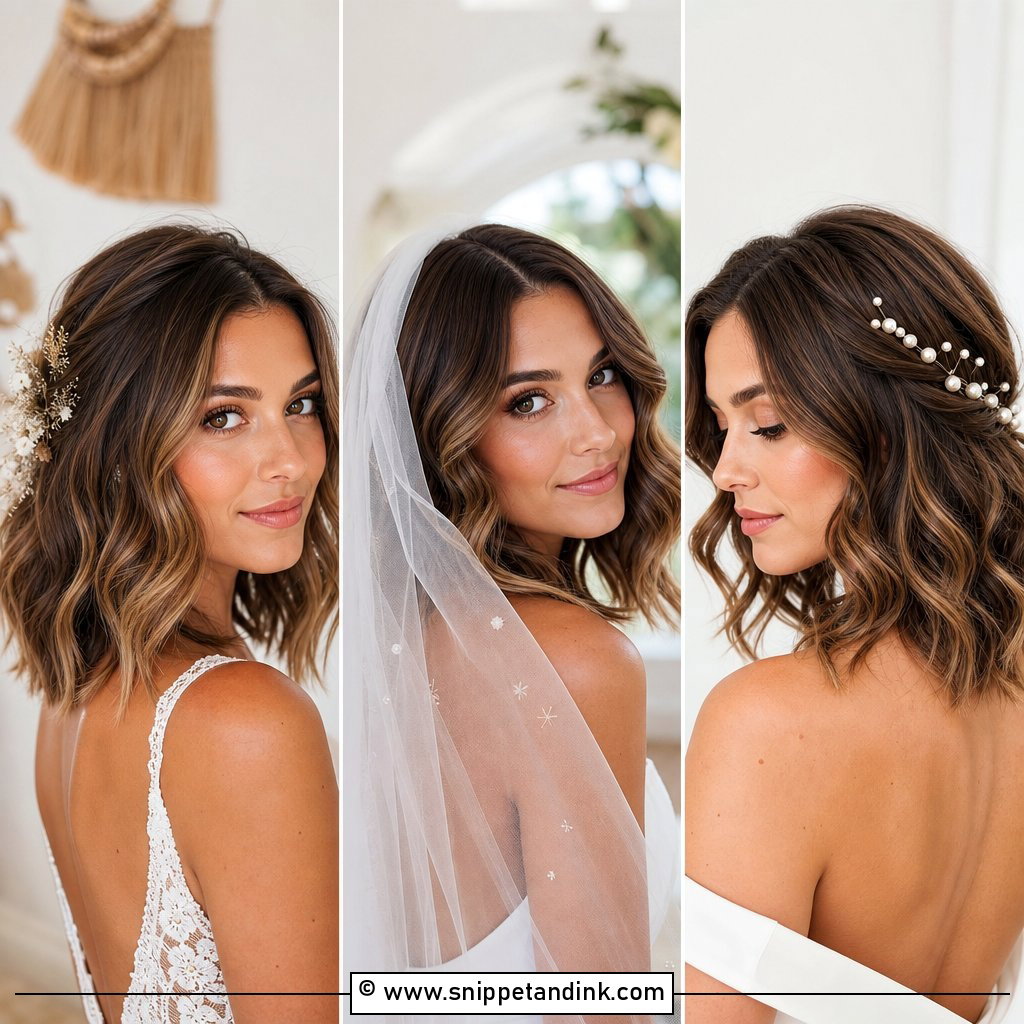
21. Updo With Birdcage Veil
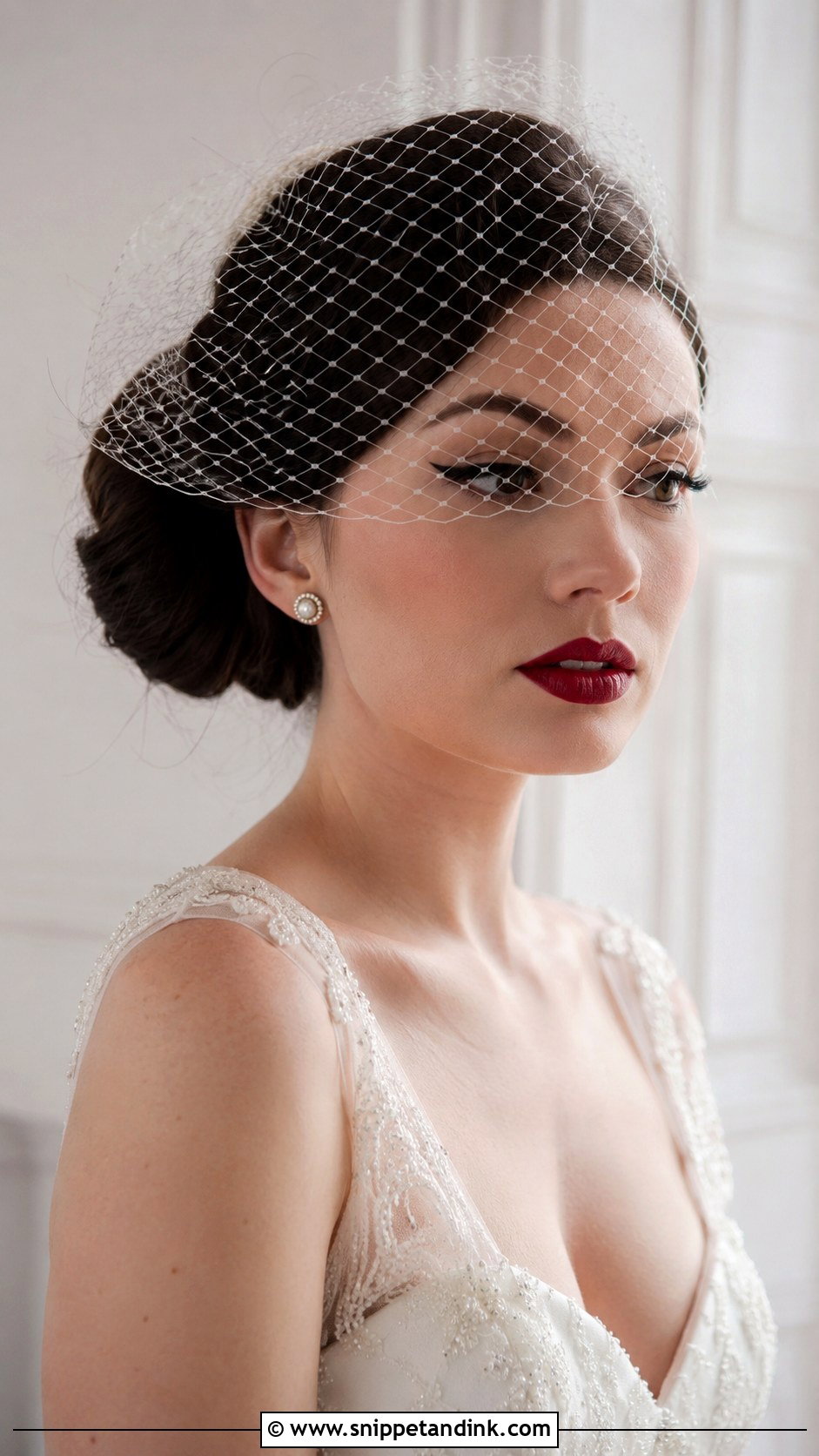
An updo paired with a birdcage veil needs a sleek, compact base, because the netting fastens with a comb or clips near the crown or side. Underneath, a smooth bun or twist keeps everything neat. The veil covers the forehead and eyes, so I keep the front of the hair flat enough for the netting to lie properly. Retro and intimate weddings suit it, along with a bold lip. Try it with your makeup on at the trial; netting can catch on long lashes.
22. Twisted Updo With Hair Vine
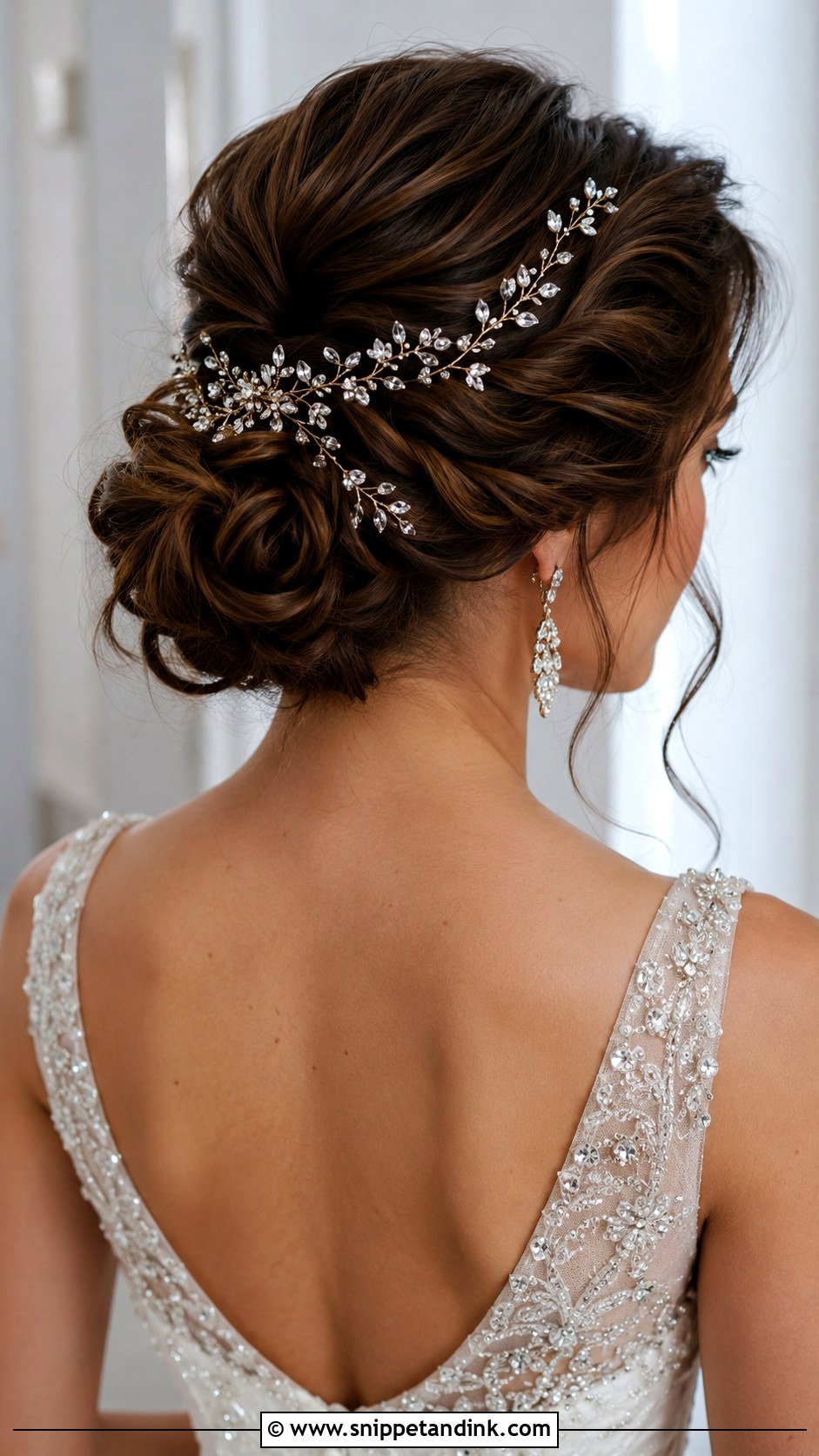
A hair vine is wired, so it bends along the lines of a twisted updo and pins down at several points. I twist and pin the hair first, then thread the vine through and secure it at each end and in the middle. Pearl, crystal and floral vines all catch the light. It suits medium to long hair. Bring the vine to the trial, since its length decides how much of the updo it can follow.
23. Voluminous Updo With Crown Height
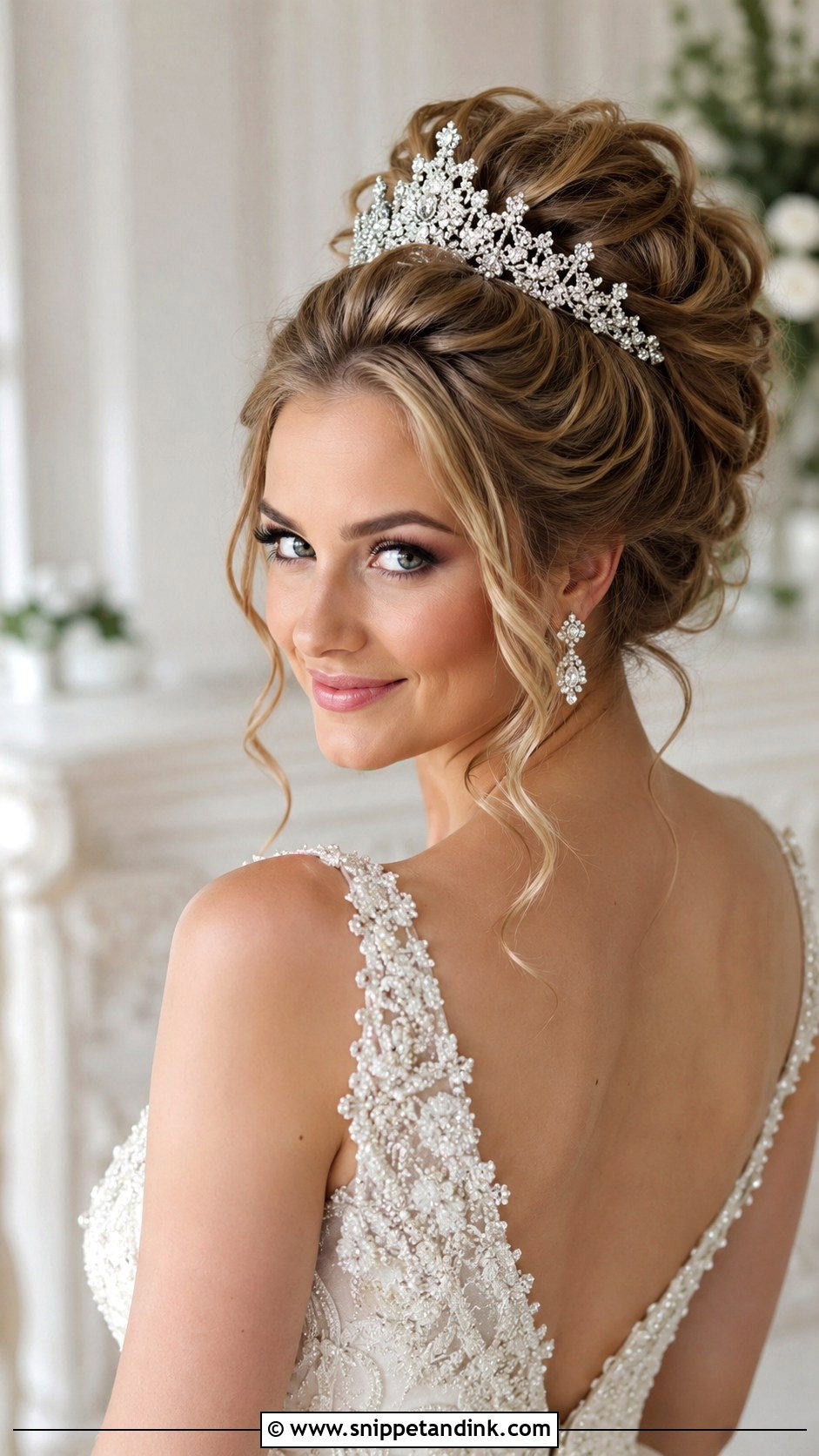
Height at the crown with soft texture is borrowed from Edwardian hair. The hair is teased and pinned for fullness on top, then softened with tendrils so it doesn’t look stiff, and the teasing must stay hidden under a smooth top layer. It suits formal ceremonies and tiaras. This shape adds visual length to the face, so if yours is already long, I’d keep the height modest.
24. Knotted Updo Wedding Style
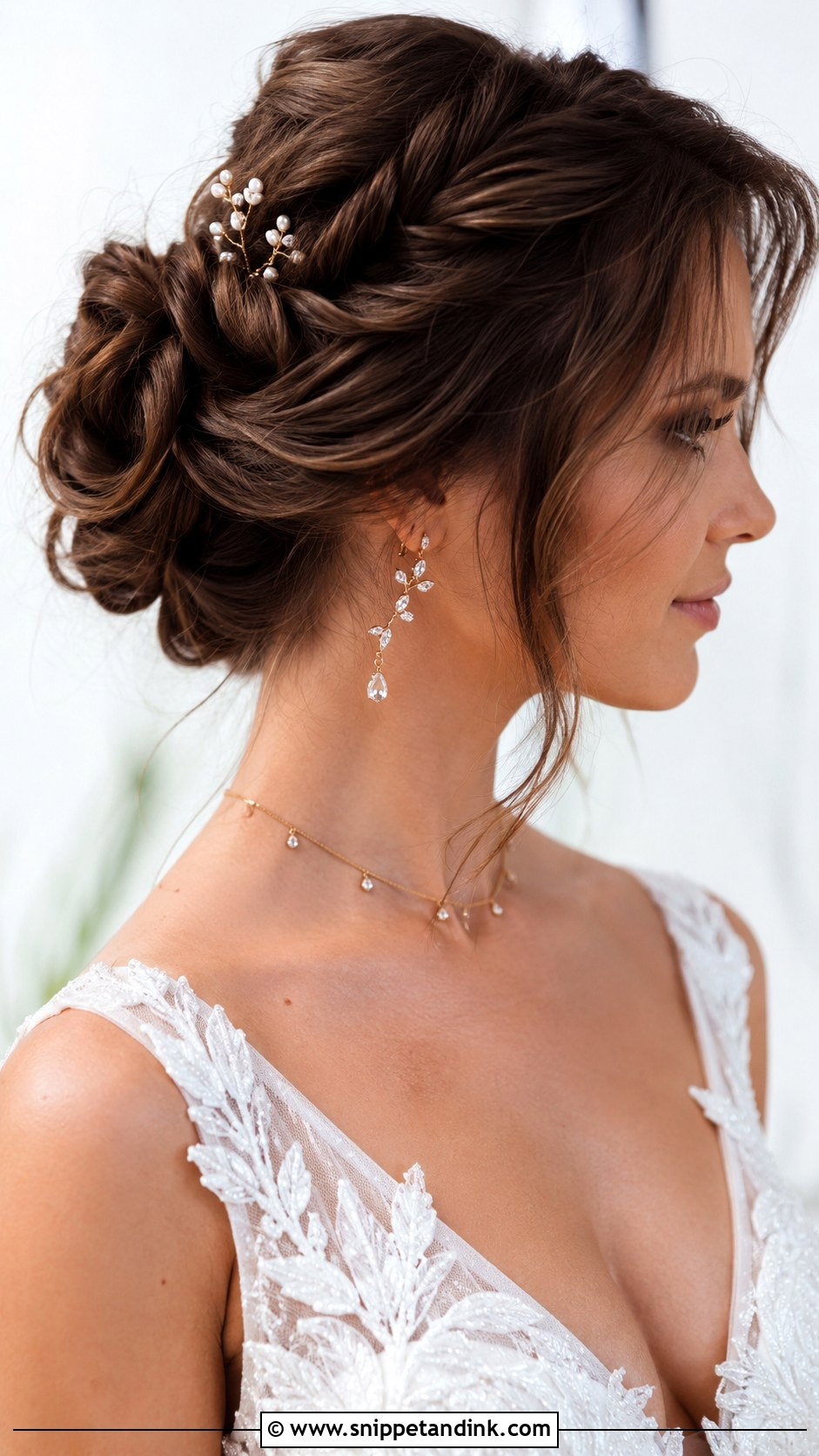
Sections are tied and looped into knots, then pinned together, and the back is where it gets interesting. It’s best on medium to long hair. I mist each section with texture spray before knotting, because silky hair slips out of a knot. It can be finished sleek or textured, and delicate pins or a vine can follow the knots.
25. Undone Bun With Wispy Strands
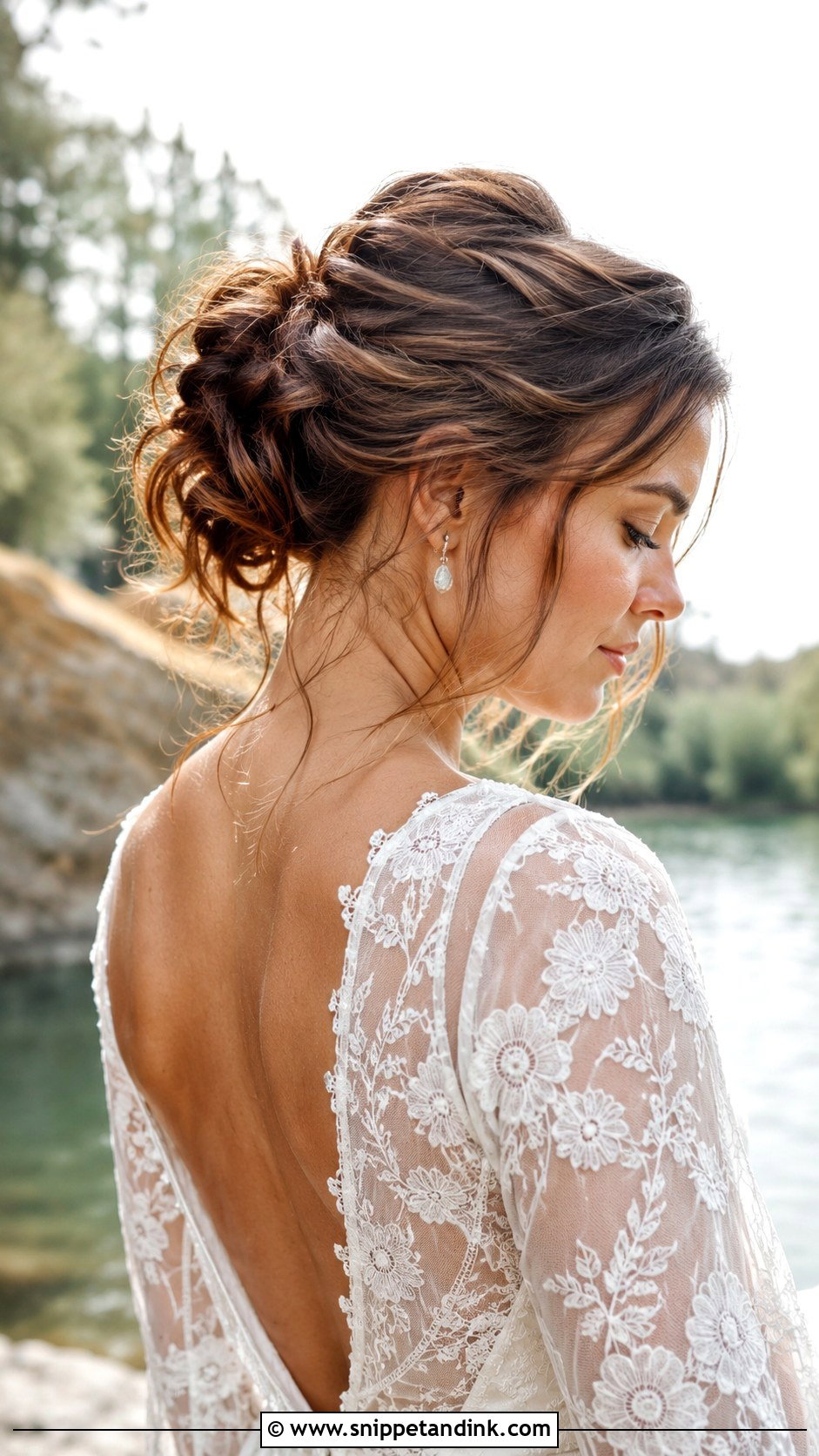
The loosest style here is a soft bun with flyaways and wispy strands placed on purpose. It belongs at outdoor, boho and intimate weddings. Despite the look, it’s pinned firmly underneath, and the softness is pulled out at the surface at the very end. Wisps that look right at noon can frizz by evening in humid weather, so a light anti-humidity spray is worth the extra minute.
Thick, Fine and Layered Hair Need Different Plans
Very thick hair
Weight is the problem. I tuck some length inside the bun or split it into two sections, and I rely on more U-pins than bobby pins. Heavy updos cause headaches, so I’d rather pin securely than tightly.
Fine hair
Fine hair needs grip and fullness. Texture spray, light teasing at the base of each section and sometimes a few clip-in pieces to fill out a bun all help. Sleek styles are kinder to fine hair than very loose ones, which can look sparse.
Heavily layered cuts
Short layers fall out of smooth buns. Braids and twists trap them far better, so if your cut is layered, lean toward the plaited and twisted styles above.
Undoing Sixty Pins Without Losing Hair
At the end of the night, go slowly. Feel for each pin with your fingertips and draw it out in the direction it went in, before loosening any hair. If the style was teased, mist the lengths with conditioner or a detangling spray and brush from the ends upward. Expect to shampoo twice the next morning to lift all the product.
If a pin has been digging in all evening, the scalp underneath can feel tender. A warm shower and a gentle scalp massage help, and next time that spot is worth mentioning to your stylist at the trial.
An Updo Is Only as Good as Its Trial
Look at your dress, veil and venue together before settling on any of these updos. A heavy veil, a low back and an outdoor ceremony each change what will last. Book a trial with your stylist, wear a top with a similar neckline, and keep the style in for several hours afterward to see how it really holds. Bring photos of two or three favorites, and be honest about anything that pulled or pinched.
You'll Like These Ideas:


Leave a Reply