
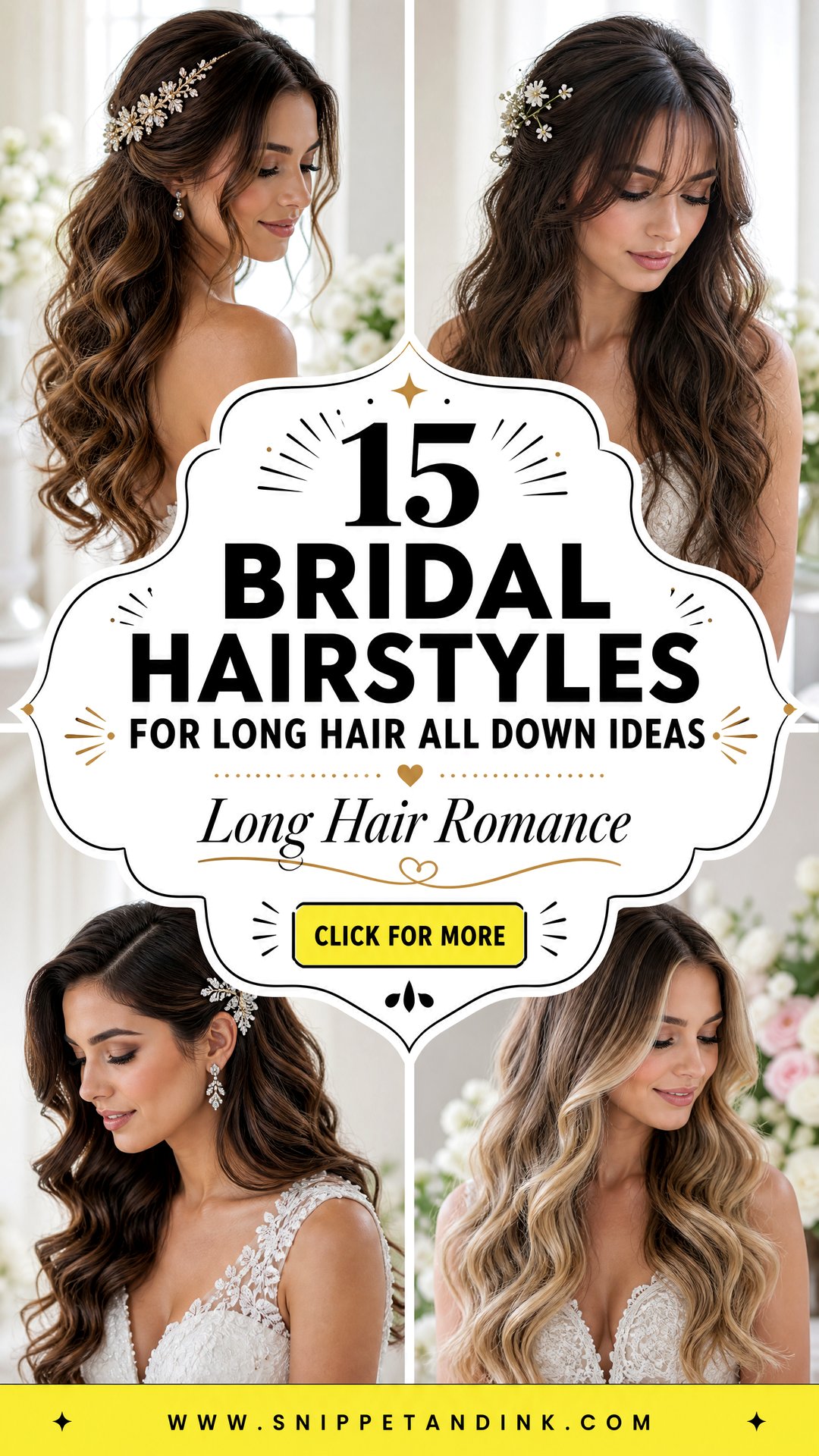
If you’ve spent years growing your hair, of course you want all of it in the photos. Worn down, long hair moves when you move, and it looks like you. It also doesn’t have to mean a head of loose curls: polished Hollywood waves, soft boho texture, glass-straight lengths, your own defined curls, a big bouncy blowout or a clean part under a veil are all on the table. I decide between them with four questions at every consultation: what’s the neckline, what does your hair do on its own, what’s the forecast, and how much fuss will you tolerate? Take the looks below that catch your eye to your trial and we’ll test them against those answers.
Long Hair Is Heavy, So the Set Matters More Than the Curl
The reason all-down styles fall flat faster than updos is simple weight. Every extra inch of length pulls on the curl above it, and nothing is pinned to share the load. So the work that keeps hair looking good at the reception happens before the curling iron cools, not after.
- Wash the day before, not the morning of. Hair that’s had a night of its natural oils usually grips a curl better than squeaky-clean hair. If yours gets greasy fast, wash the morning of and ask your stylist to add a texture spray at the roots.
- Arrive with hair completely dry and unstyled, no heavy conditioner or oil left in from the night before.
- Ask for curls to be pinned or clipped while they cool. A curl that sets in its coil holds far longer than one dropped straight from the iron.
- Have the brushing-out done last, just before you get dressed, so the waves have the most hold left when the ceremony starts.
Very fine long hair is the hardest case. Clip-in extensions or a halo piece add density at the back, which gives the curls something to lean on, and they’re worth trying at the trial rather than deciding on the morning.
1. Bridal Hollywood Waves For Long Hair
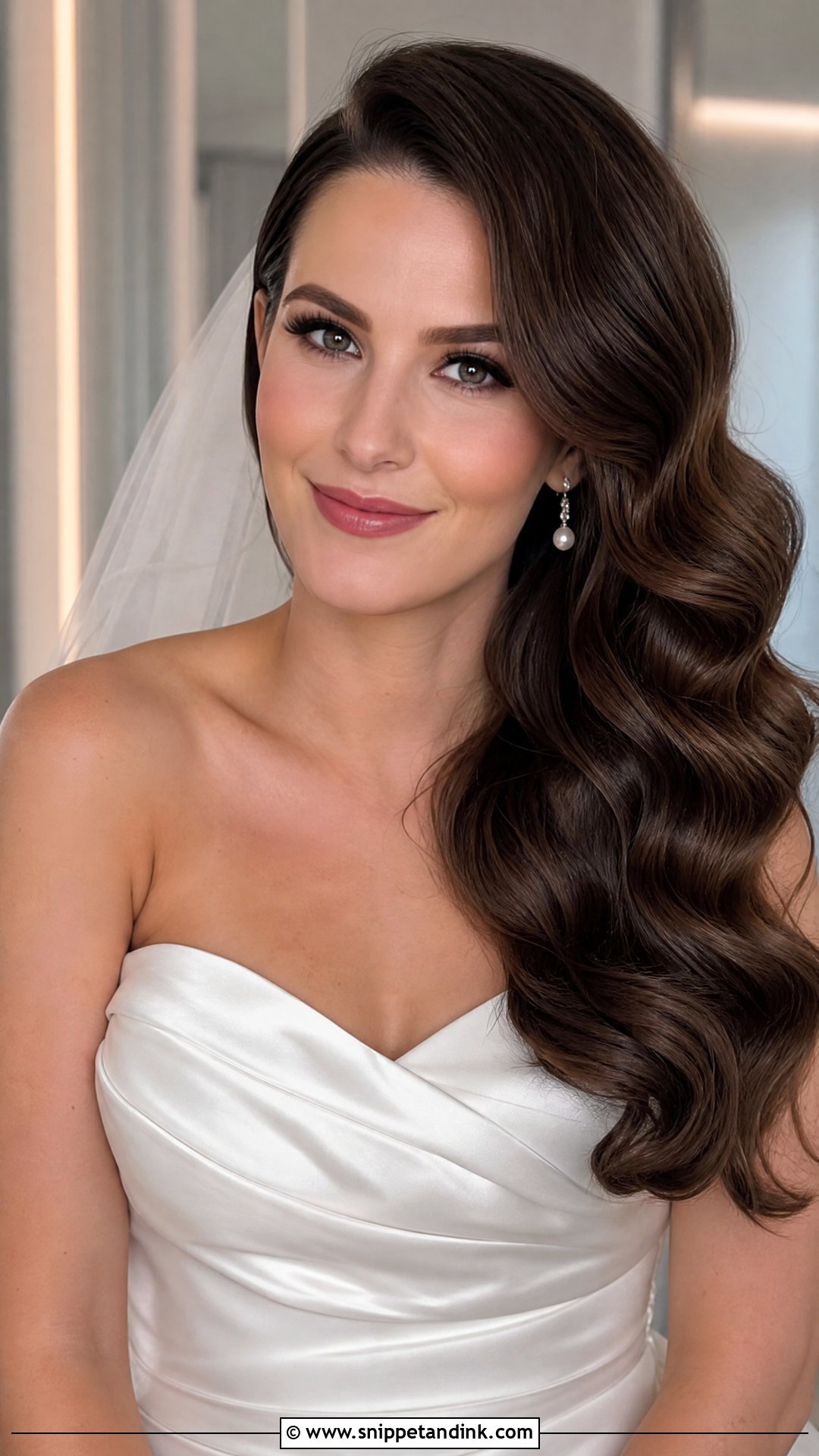
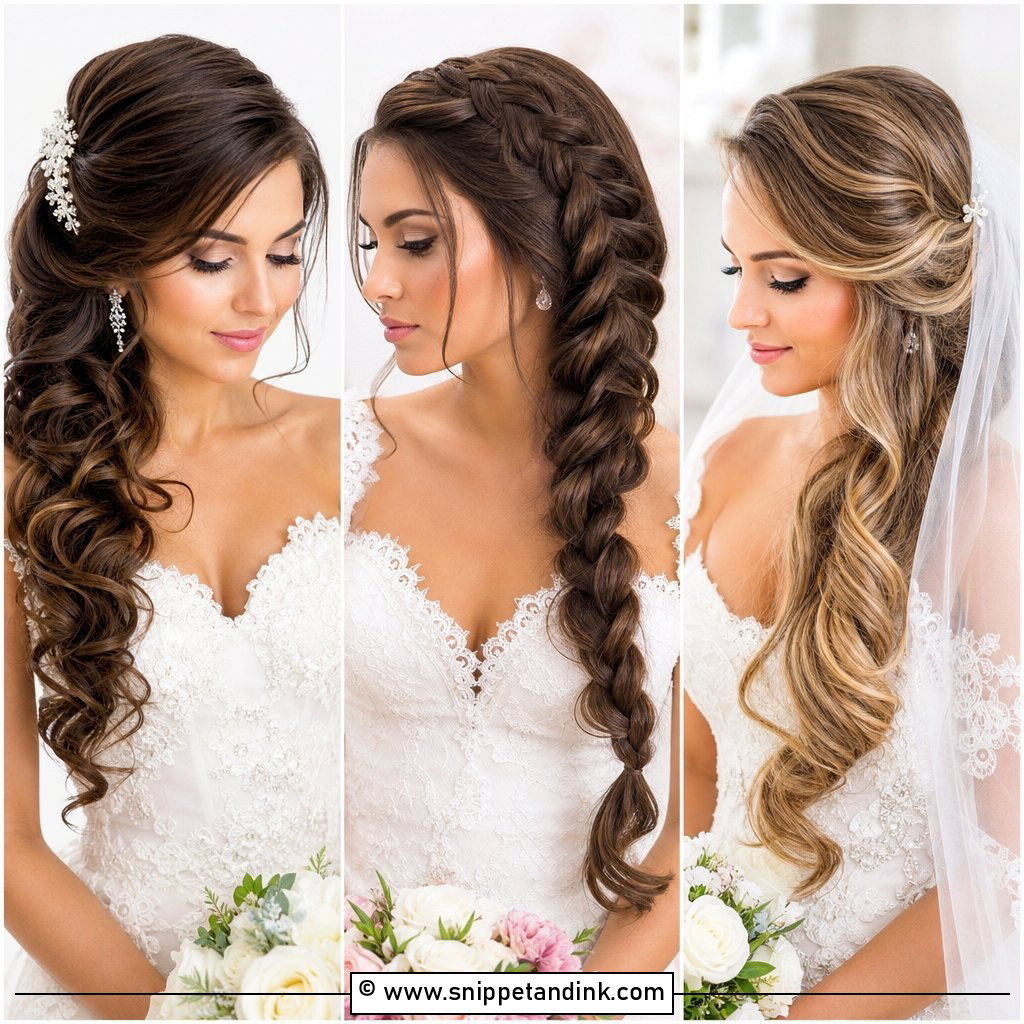
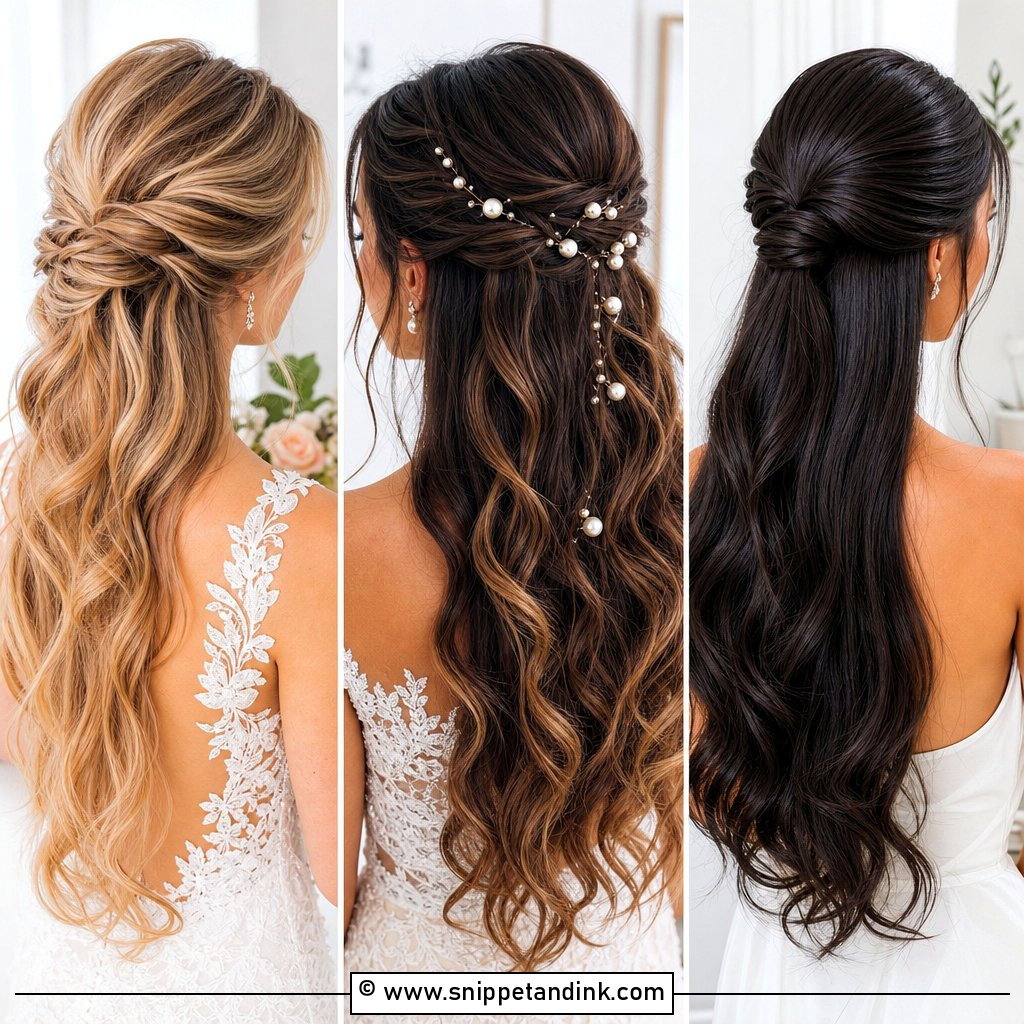
Hollywood waves are the all-down look that stays polished from every angle, because every wave travels in the same direction off a deep side part. I set them in pin curls and let them cool completely before I brush, which is what turns separate curls into that continuous ribbon. Ask for a strong wave pattern, not loose beachy texture. Thick and medium-density hair holds the shape best; on very fine hair I add a little backcombing at the root of each section so the waves don’t collapse into each other. Strapless gowns and satin give them the setting they need.
2. Bridal Soft Waves For Long Hair
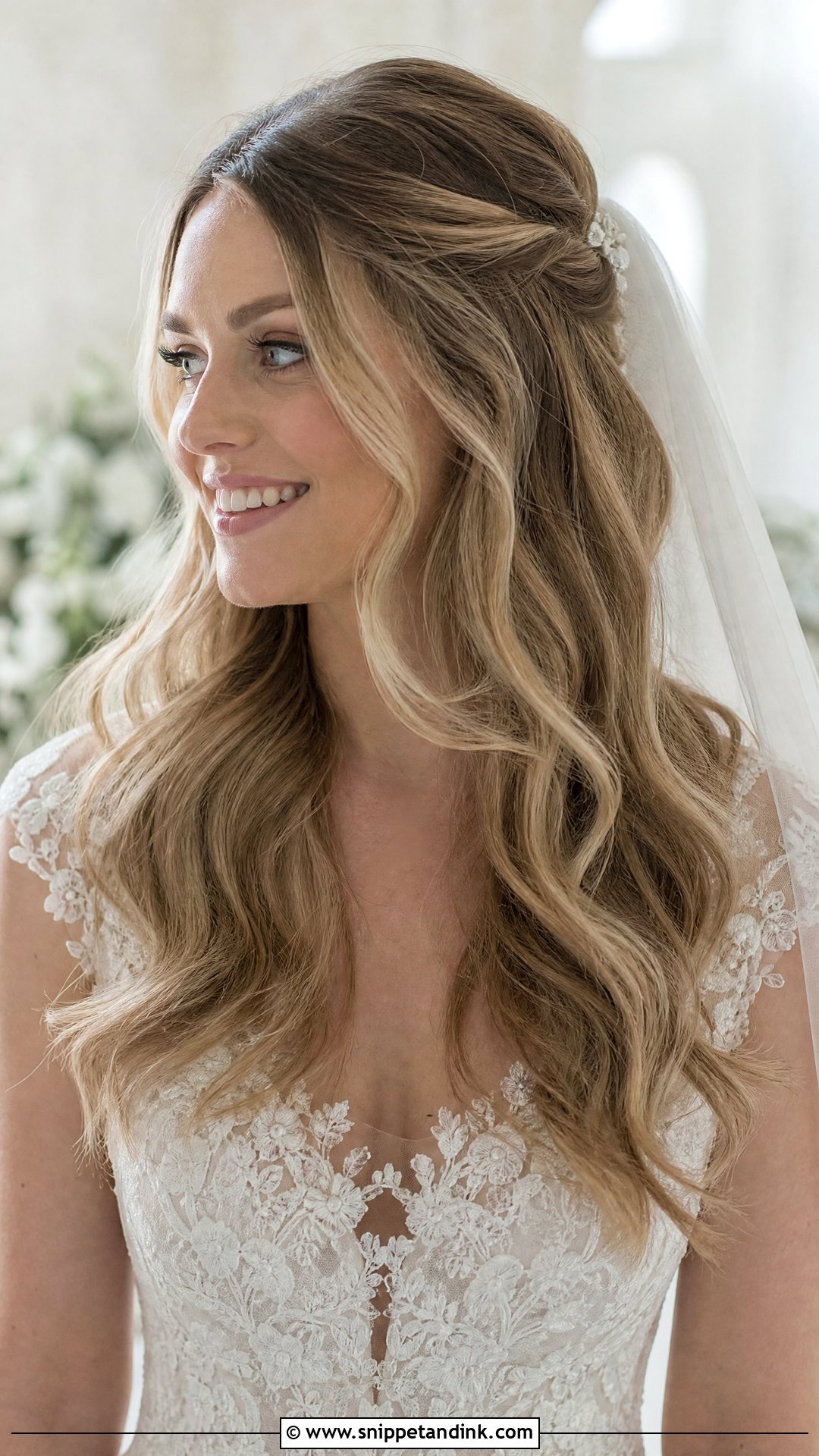
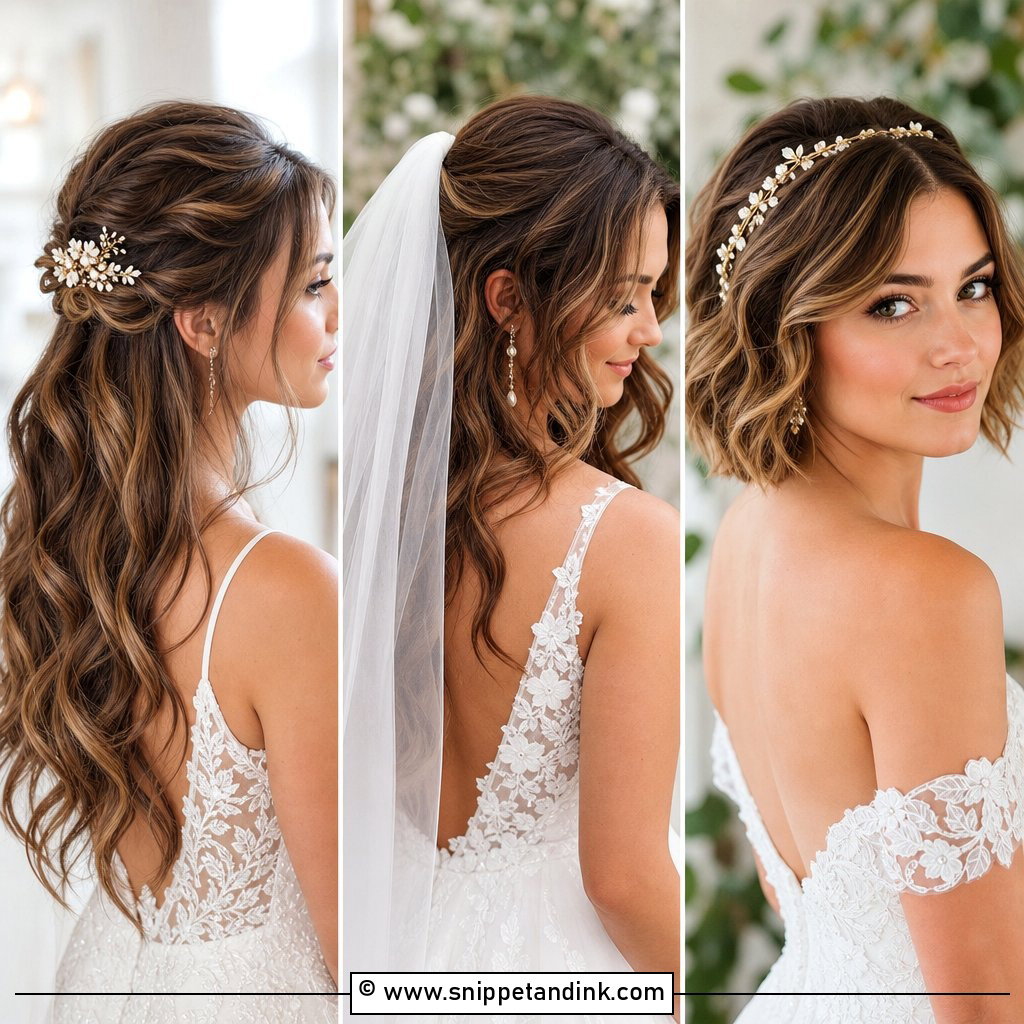
Soft waves are what most of my brides wearing hair down end up choosing, often after trying something more dramatic first. The curls are loose and brushed so the hair still moves, which suits gardens, beaches and simpler gowns. I prep with a light mousse at the root and set each curl before brushing it out, otherwise soft waves turn into straight hair by dinner. Face-framing layers get curled away from the face, never toward it, so they open up the cheekbones.
3. Bridal Loose Curls For Long Hair
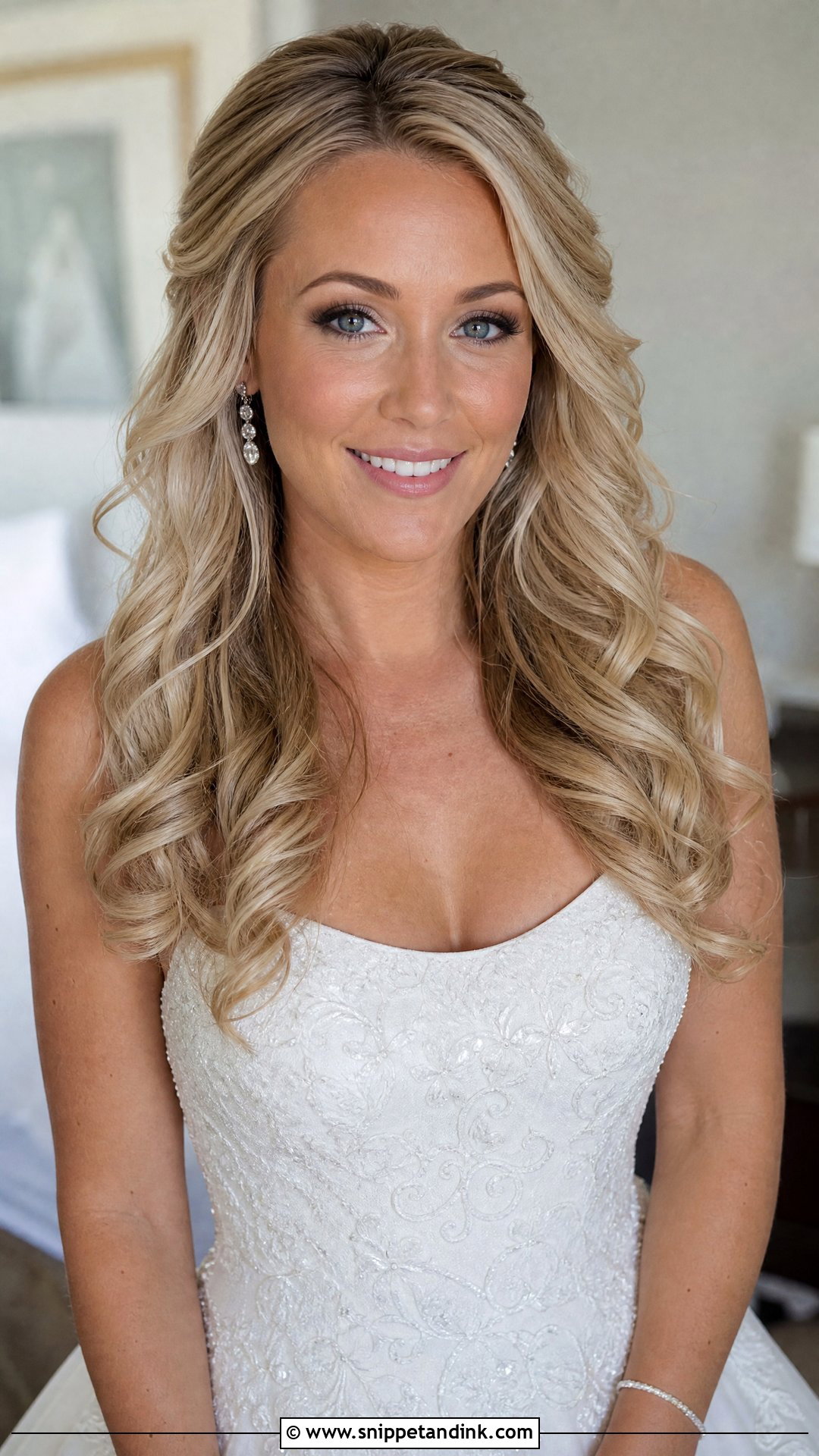
Curls and waves aren’t the same thing. Curls keep their bounce and separation, which makes fine or layered hair look noticeably thicker, so this is the down-style I suggest when someone worries their length looks thin in photos. Where the curl starts changes the mood: below the cheekbone feels relaxed, higher up feels more dramatic. I add a touch of volume at the crown so the top doesn’t look flat against all that movement. Lace, sweetheart necklines and a delicate veil all suit it.
4. Bridal Beach Waves For Long Hair
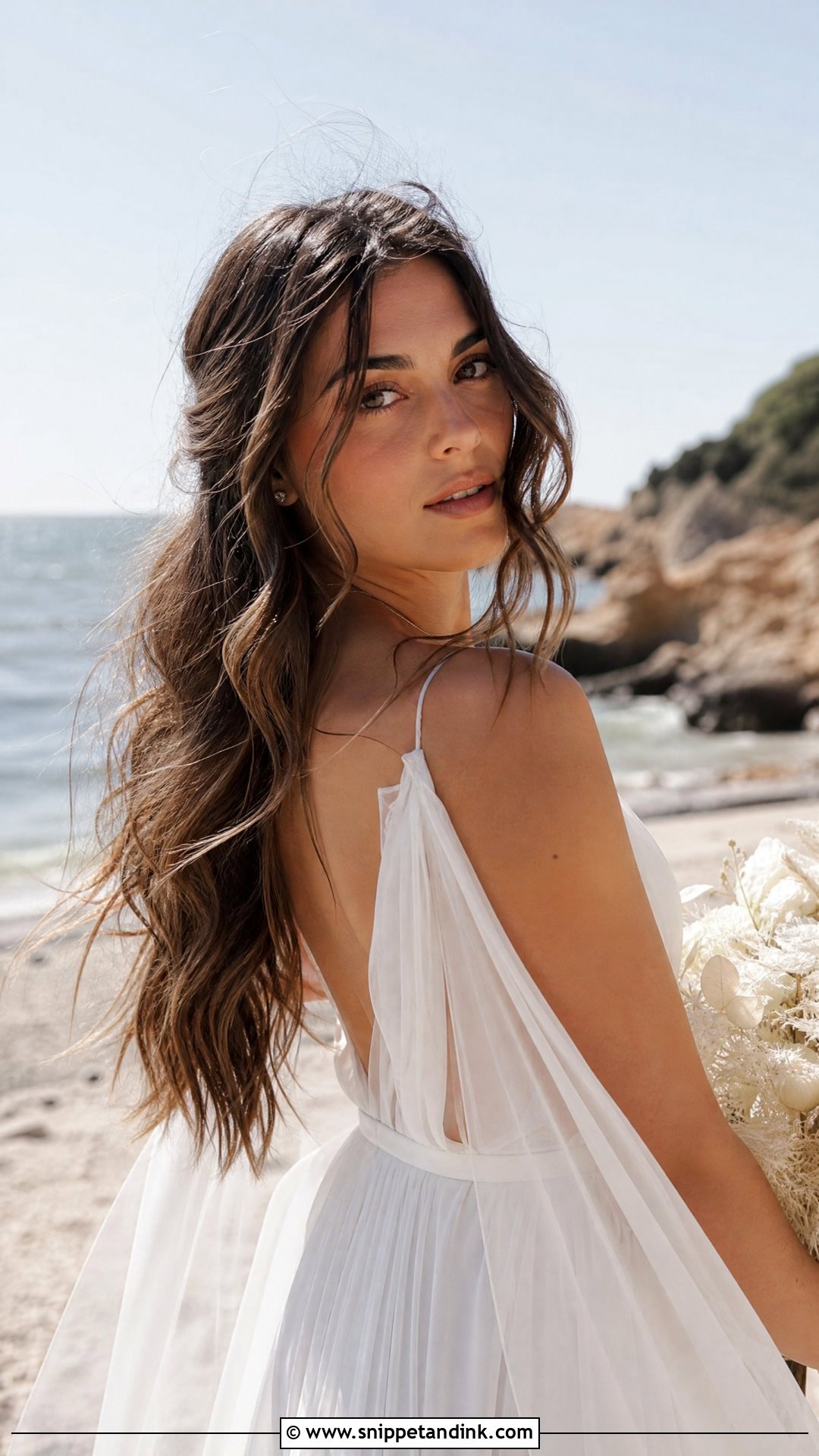
Beach waves have to look undone without looking unbrushed, and that line is thinner than people think. I use a flat iron twist or a larger barrel, then break the waves up with my fingers rather than a brush. Long layers matter here; one-length hair tends to form a single heavy curtain instead of separate waves. Outdoors near water, humidity is the real enemy, so I go light on hold but heavy on anti-humidity spray. Middle part for a modern feel, a soft side part for something more romantic.
5. Bridal Straight Hair For Long Hair
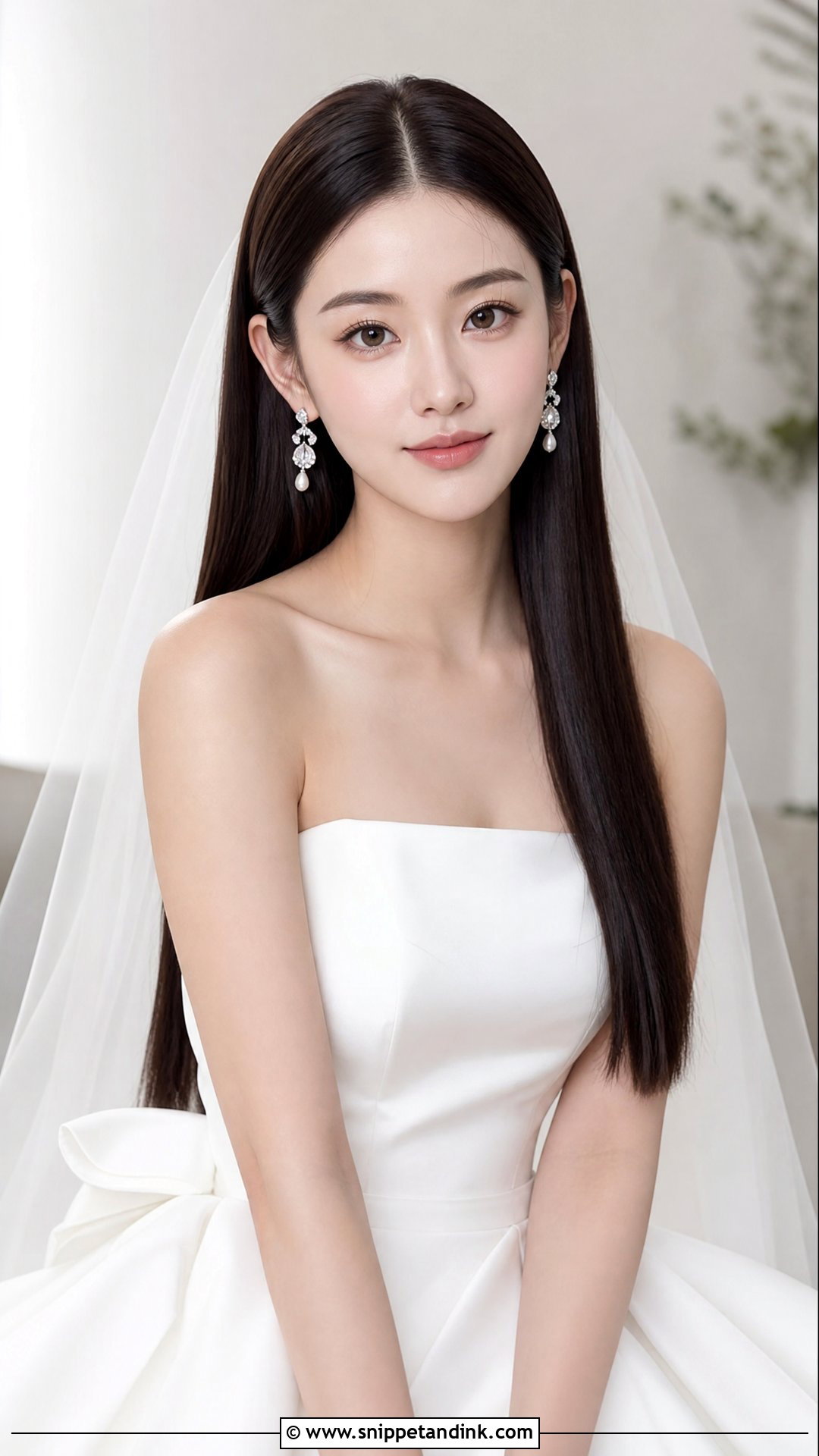
Sleek and straight is the riskiest down-style I do, because there’s nowhere to hide. Every kink, flyaway and bit of frizz shows, and flat hair photographs as flat hair. I build subtle lift at the root with a round brush, polish the ends and finish with an anti-frizz serum used very sparingly. It’s best on naturally straight or slightly wavy hair; on curly hair it rarely survives humidity or dancing. Extensions can add the length and density this look depends on. Structured gowns, high necks and big earrings are where it earns its place.
6. Bridal Long Hair With Curtain Bangs
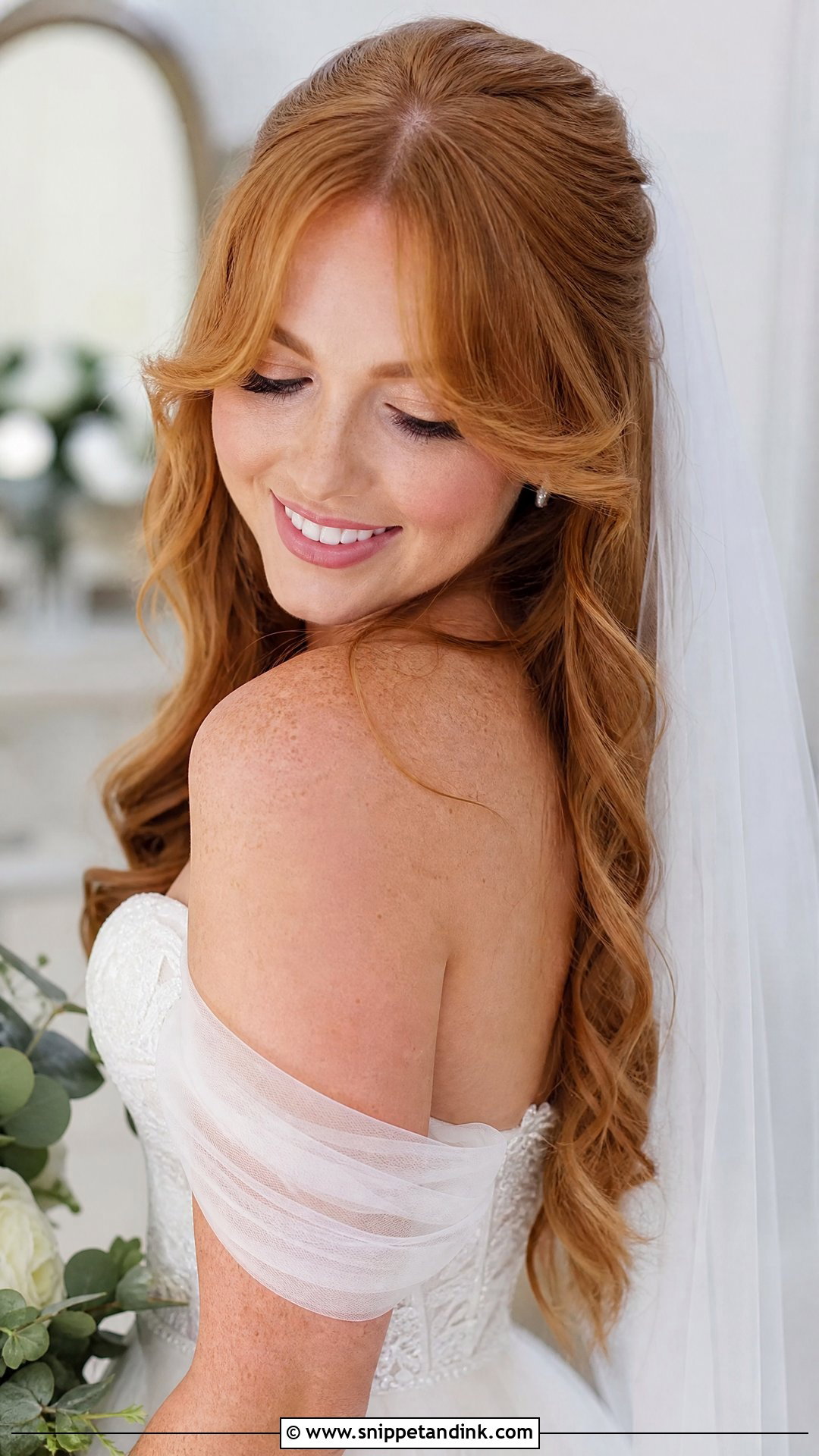
Not everyone wants every strand pushed behind the shoulders. Long hair with curtain bangs gets a soft frame, opening at the cheekbones and blending back into the length. They work with waves, curls or a smooth blowout. I shape them with a small round brush and set them in a velcro roller while I finish the rest, so they hold their curve. Tell your stylist where the veil or comb will sit, since the bangs need to fall clear of it.
7. Bridal Long Hair With Face Framing Layers
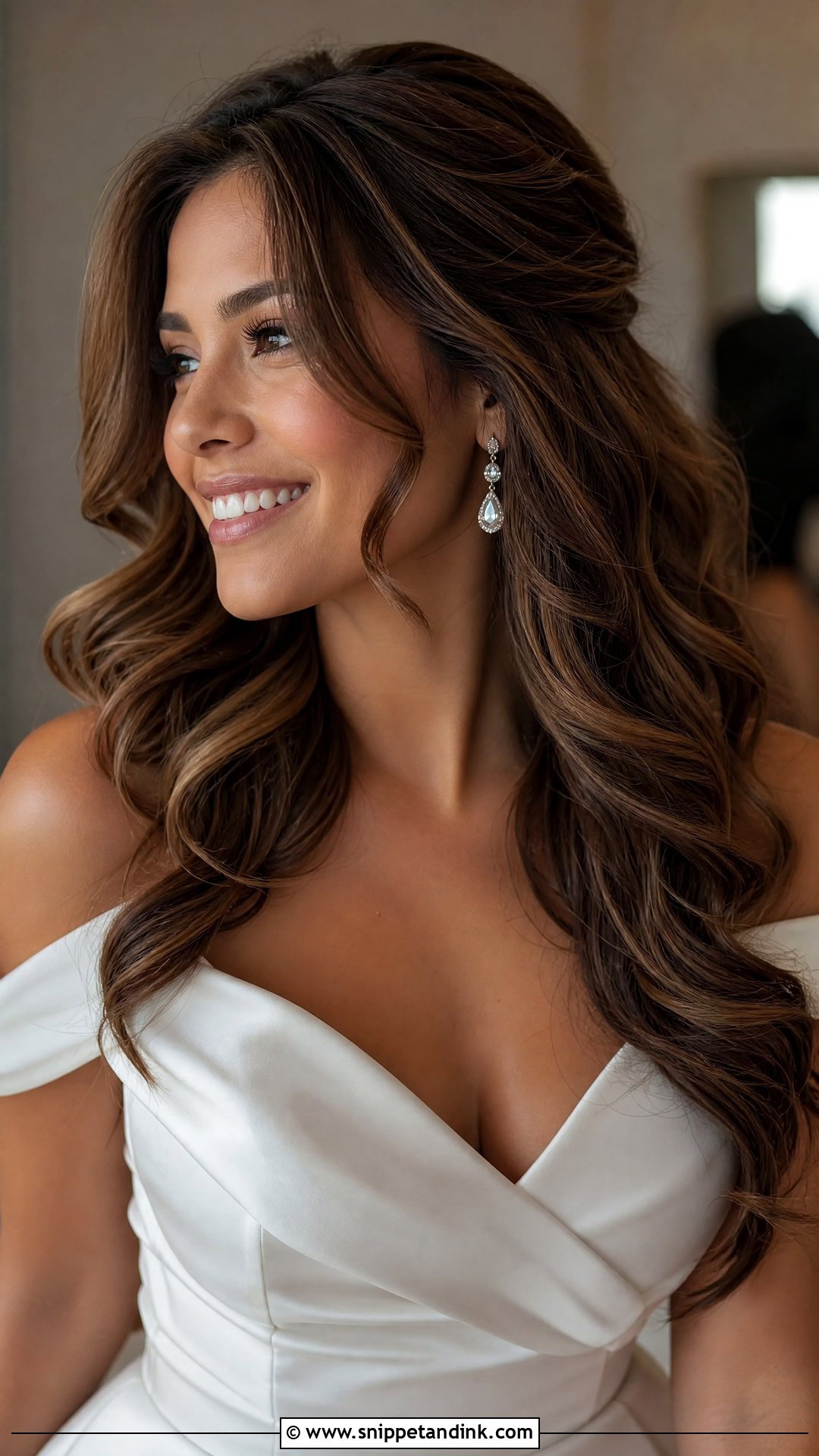
Heavy one-length hair tends to hang flat in pictures, and face-framing layers are the fix that keeps your length. Curled back off the face, they open the eyes, cheekbones and neckline, while the rest can be soft curls, polished waves or a bouncy blowout. I like them with veils for a simple reason: the back gets covered, but the front shape stays visible. If you’re getting the layers cut for the wedding, do it four to six weeks ahead so they’ve settled.
8. Bridal Mermaid Waves For Long Hair
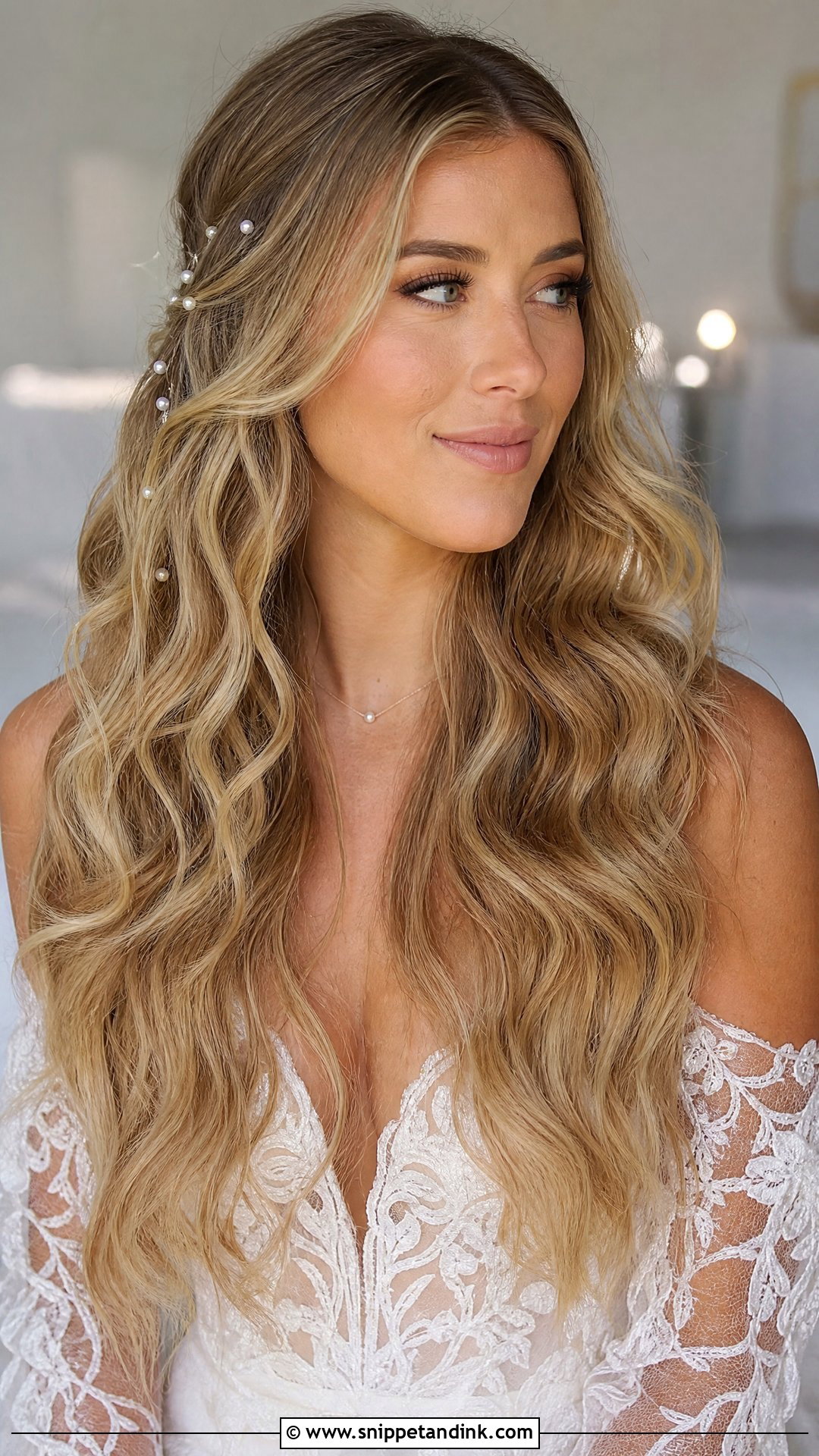
Mermaid waves run from root to end in a rippled, continuous pattern. They sit between beach waves and crimped hair: softer than one, more defined than the other. I make them with a deep waver, working in sections no wider than the plates, and the pattern needs real length to show, so extra-long hair suits them best. A middle part keeps them fresh. Go easy on shine spray, since the texture already reflects light and too much makes it look oily.
9. Bridal Voluminous Blowout For Long Hair
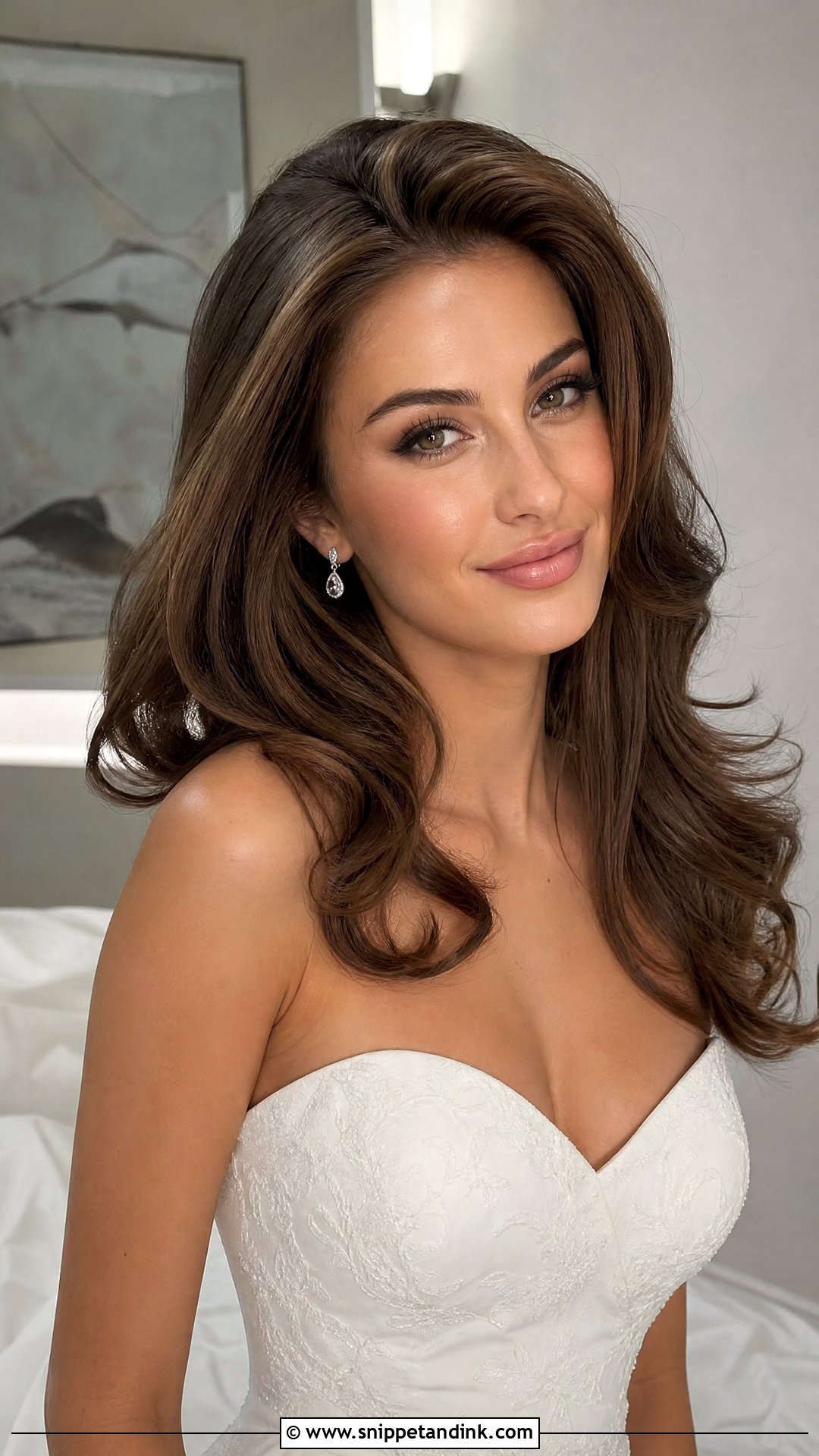
Some brides wear a blowout every week and feel most like themselves with one. A bridal voluminous blowout gives that: smooth roots, fullness through the mid-lengths and a soft flip at the ends, no obvious curl. The volume comes from the set, not the dryer. I round-brush each section, then roll it in a velcro roller and leave it to cool while makeup is finished. Without that cooling time, the bounce is gone within an hour.
10. Bridal Side Part Waves For Long Hair
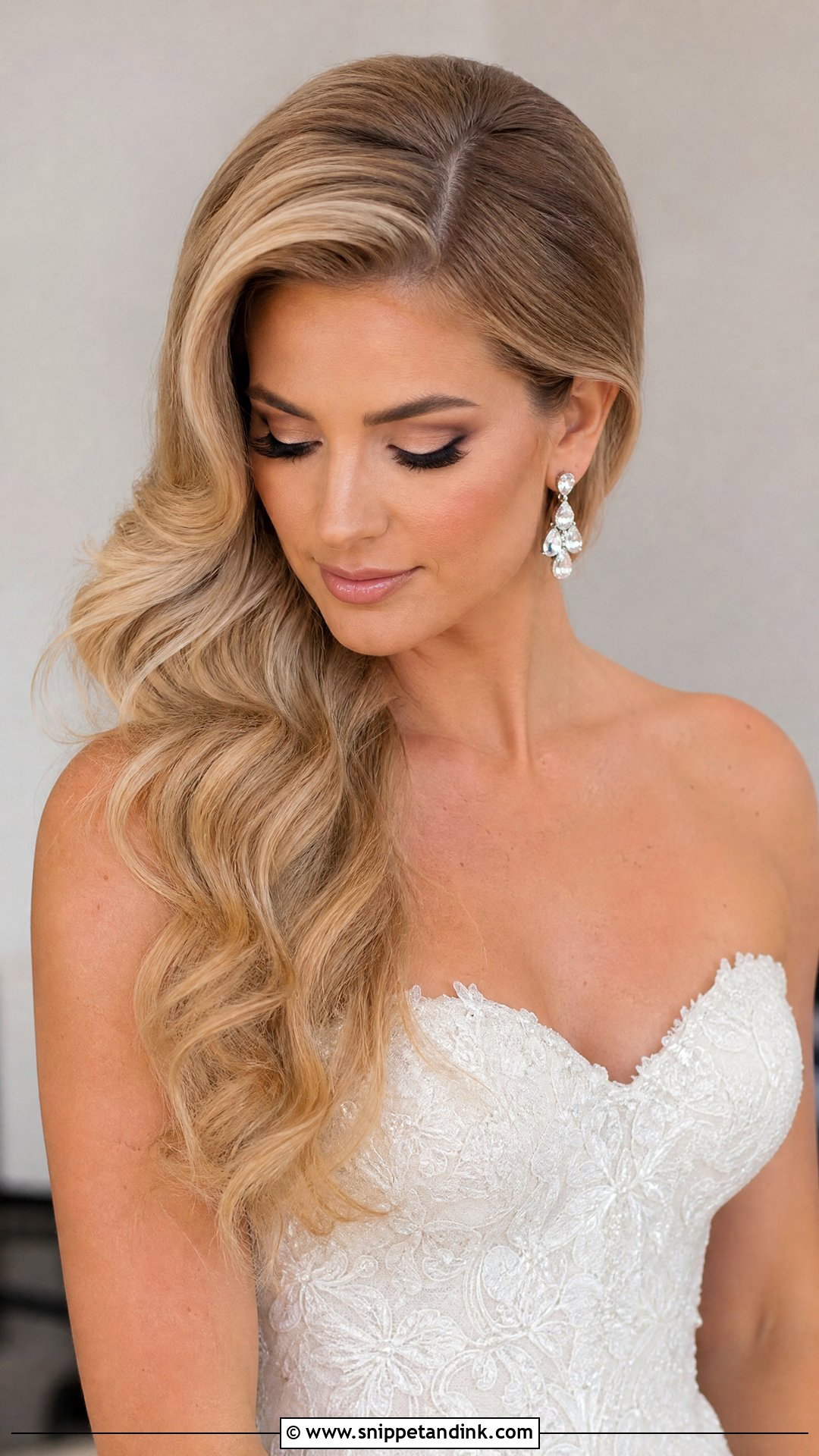
Side part waves bring drama because the part creates lift on one side while the waves fall over the opposite shoulder. That open side is useful: earrings and makeup show properly in portraits. I tease a little at the root right beside the part so the lift holds, and keep the ends smooth so it reads bridal rather than casual. The waves can be polished like Hollywood hair or softer. Check which side your guests will see during the ceremony, because the open side should face them.
11. Bridal Middle Part Waves For Long Hair
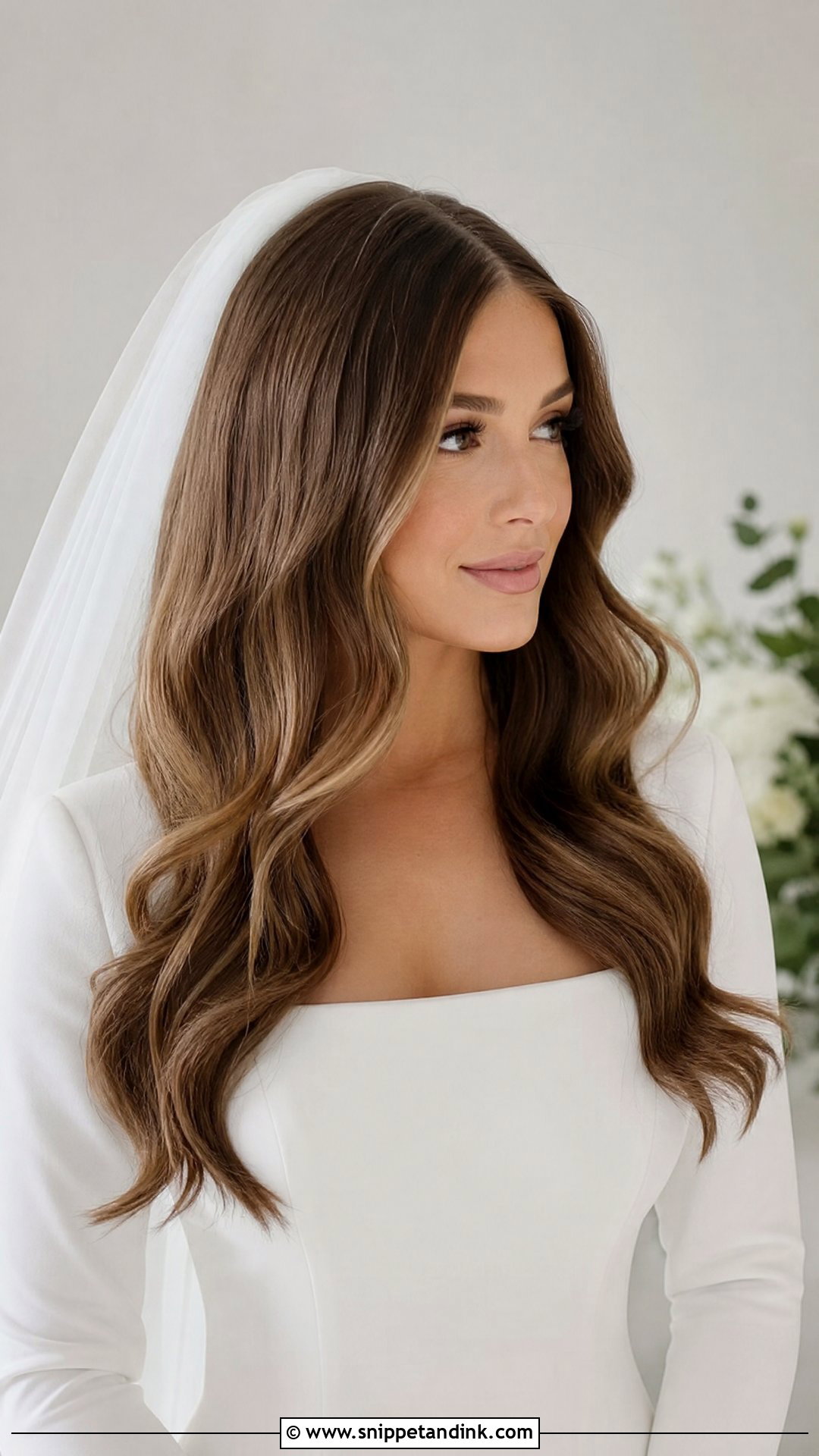
Middle part waves are the easiest all-down look to accessorize. The length falls evenly over both shoulders, so a veil at the crown or pins placed on both sides sit symmetrically. I keep the roots smooth and put the volume into the lengths. The one thing I check first is whether your natural part is truly central; forcing a middle part against a strong cowlick leaves a gap at the crown that shows in every overhead shot.
12. Bridal Natural Curls For Long Hair
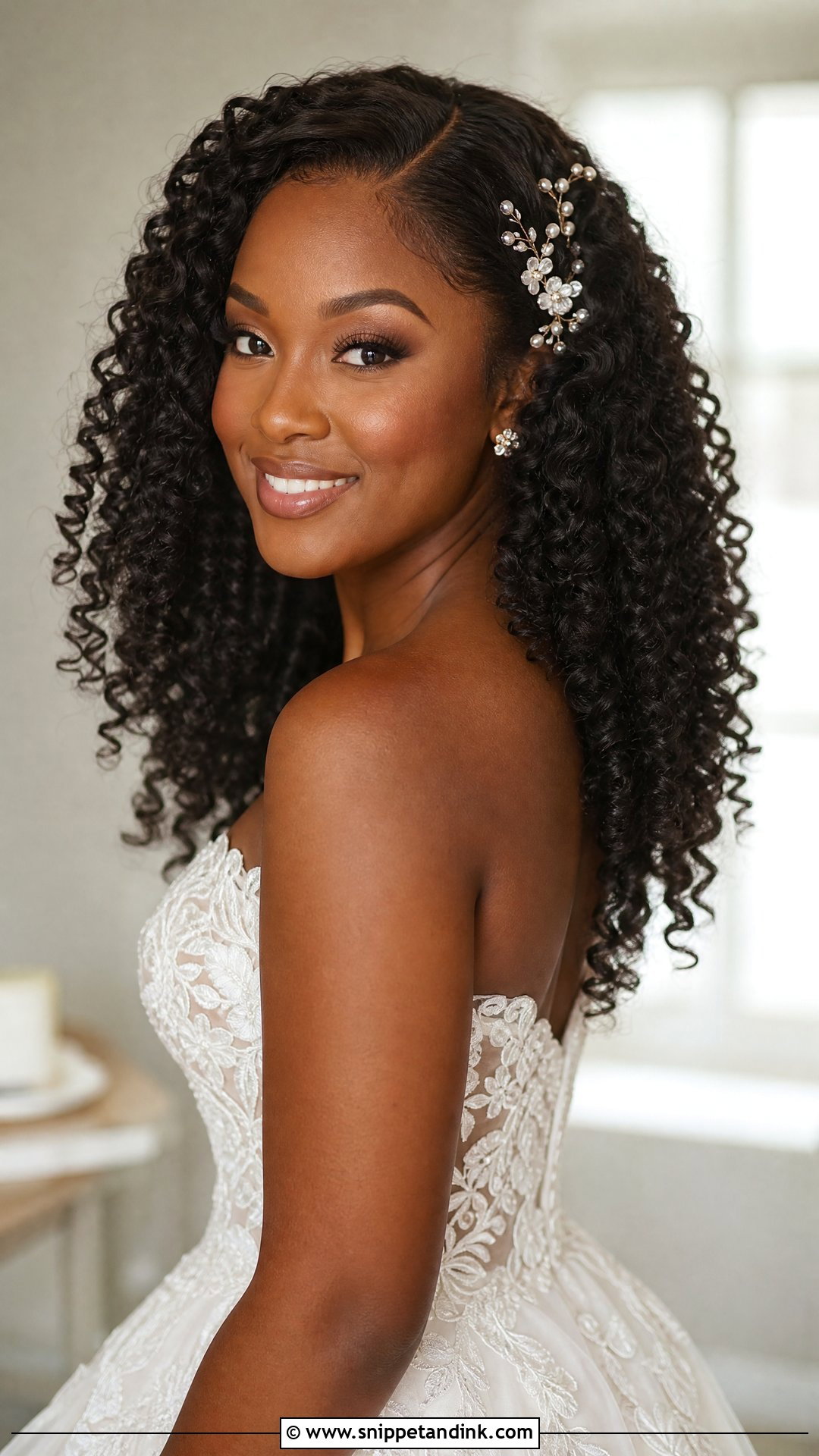
Curly brides are often told, kindly but wrongly, to straighten for the wedding. I’d rather define the texture you already have, hydrate it and shape it to frame the face. Long curls look best with layered shaping, soft volume and a few controlled pieces at the front. Ask for a stylist who works with curls regularly, and plan the trial around your real curl pattern, wash-day routine included. Products should hold without crunch. Last-minute straightening on curly hair rarely lasts through a humid ceremony anyway.
13. Bridal Long Hair With Pearl Pins
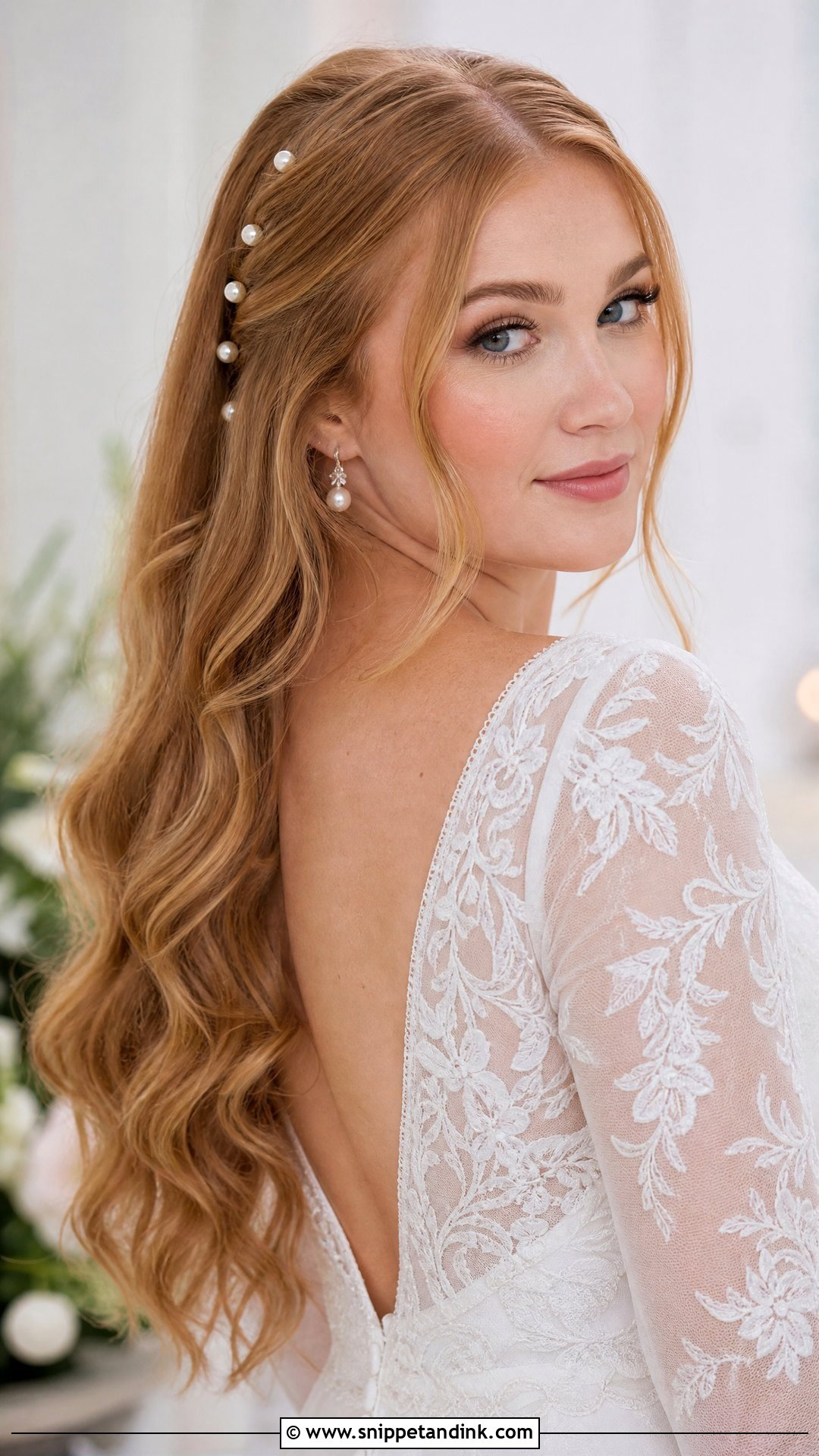
Pearl pins add detail without changing the fully down shape. Restraint is the whole trick. I’ll usually place a small loose cluster near one side or across the crown rather than scattering dozens through the lengths, which reads busy in photos. Match the pearl tone to your jewelry; a bright white pin next to ivory pearls looks off. On slippery straight hair, I spray the section with dry texture first so the pins don’t slide out.
14. Bridal Long Hair With Veil
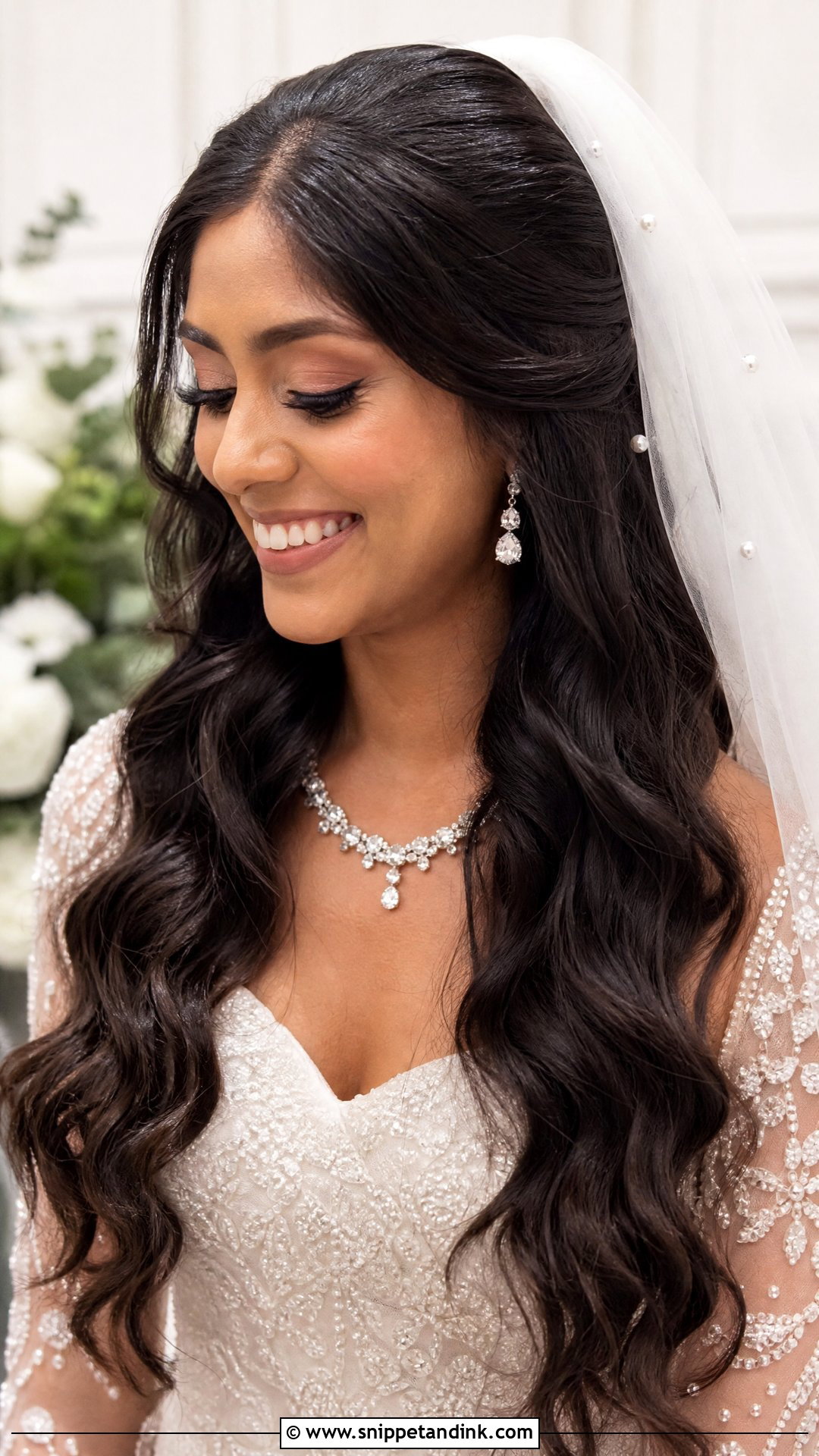
A veil on loose hair needs something to grip. I secure the comb at the crown, just above the occipital bone, or under a small hidden teased section with two crossed bobby pins underneath for support. Soft waves are the safest pairing because they hold their shape under tulle and still look good once the veil comes off. Heavy cathedral veils pull backward on the comb, so test the exact veil at your trial and walk around in it for ten minutes before agreeing on placement.
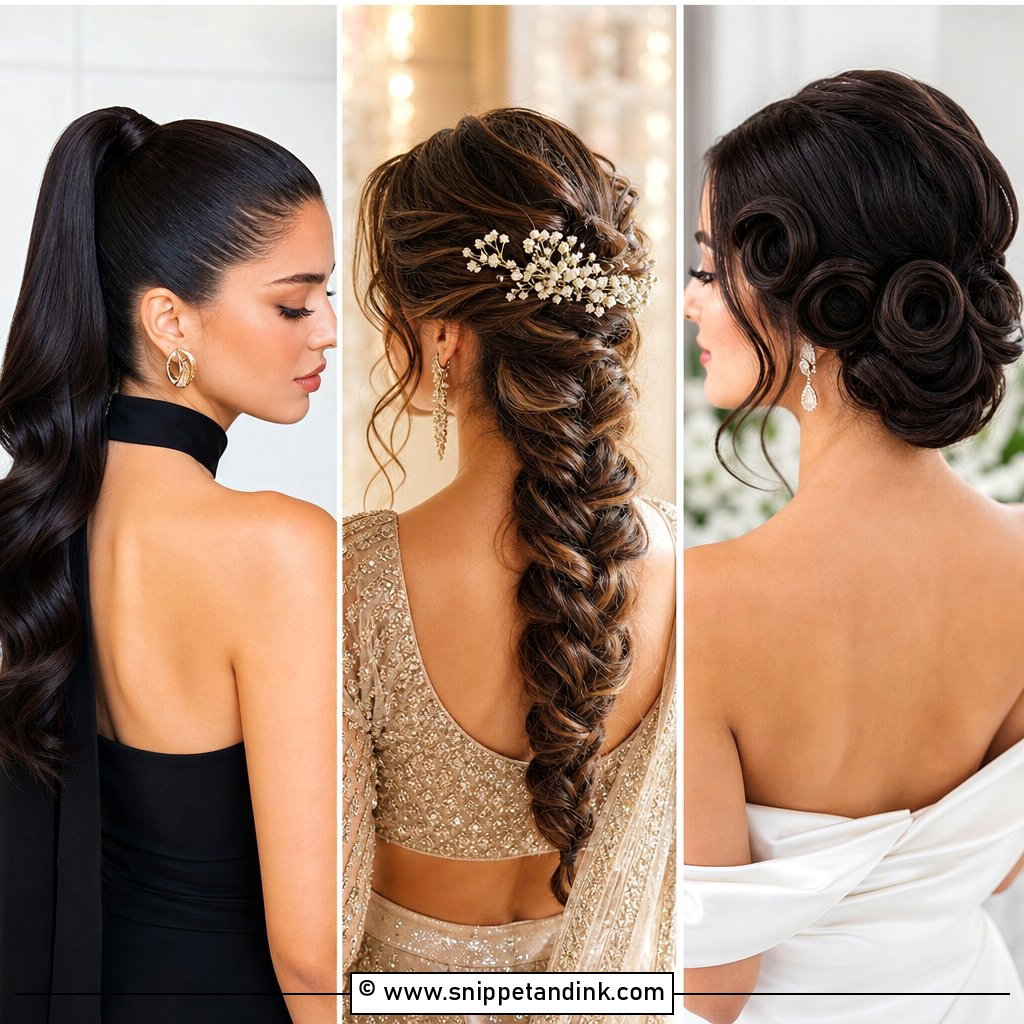
15. Bridal Glossy Waves For Long Hair
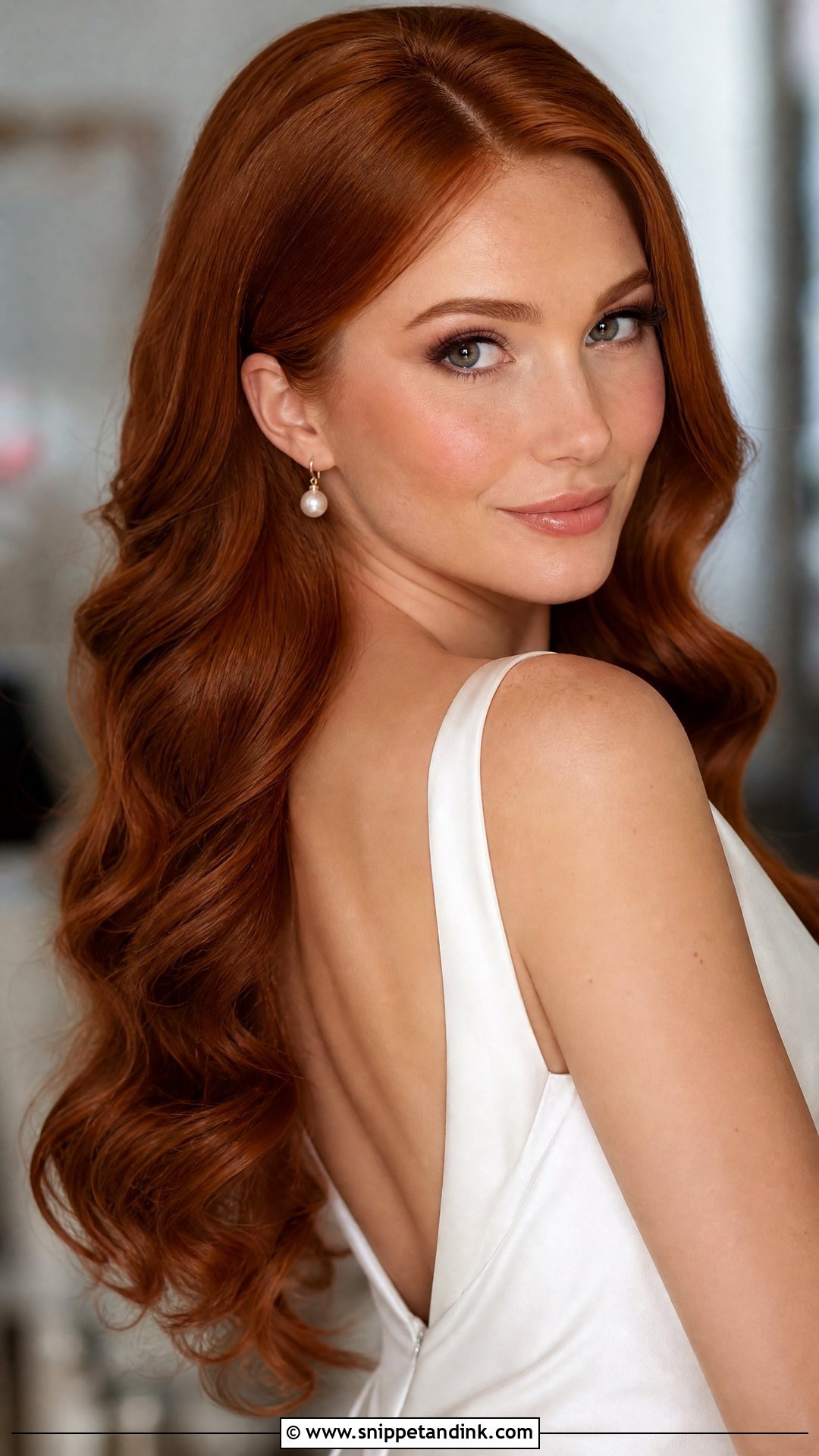
Glossy waves sit between the two extremes: less structured than Hollywood waves, more polished than beach waves. The shine is the point, and it reflects nicely in natural light and under flash. I start with a smooth blowout, curl in large sections with a big barrel and brush carefully. Keep products light; oil weighs long hair down quickly, and by the reception luminous can tip into greasy. Silk gowns and minimal dresses suit them.
Lace Backs, Bouquets and Hugs: What Loose Hair Runs Into
Hair down sits right on top of the dress, and that creates a few problems updo brides never think about. None of them are reasons not to do it, but it helps to know before you’re standing in the receiving line.
- Beaded and lace backs snag. Fine strands catch on sequins and the edges of appliqué, especially when you turn your head. A light smoothing cream on the lengths and keeping the back section slightly more polished cuts down on it.
- Necklace clasps tangle at the nape. If you’re wearing a delicate chain, have the clasp checked after the first round of hugs.
- Your bouquet and your shoulder will brush the front pieces all day. Expect them to loosen first and don’t panic when they do.
- The back of your neck gets hot. At a summer reception, loose hair against the skin through an hour of dancing is a lot. Decide in advance if you’d be happy sweeping it up for the party.
Pack a quick second look
A slim claw clip or a couple of pins and a hair tie in your bridesmaid’s bag can turn waves into a soft low twist in a couple of minutes. Ask your stylist to show you how at the trial. Plenty of brides wear their hair down for the ceremony and portraits, then lift it for dancing, and the second look often ends up as one of the favorite candids.
Plan Your Down Hair as Carefully as an Updo
Hair worn down looks easy, but the good versions rarely are. Before you settle on one, be honest about your texture, your neckline, the veil, the forecast and what your hair normally looks like by late afternoon. That’s what the trial is for: testing how long the curls last, where the part sits, how much volume you can carry and whether the veil comb stays put. For something classic, I’d lean toward soft waves, Hollywood waves or glossy waves. For something looser, beach waves, mermaid waves or your own curls. Go with the one that still feels like you when you catch yourself in a mirror at eleven at night.
You'll Like These Ideas:


Leave a Reply