
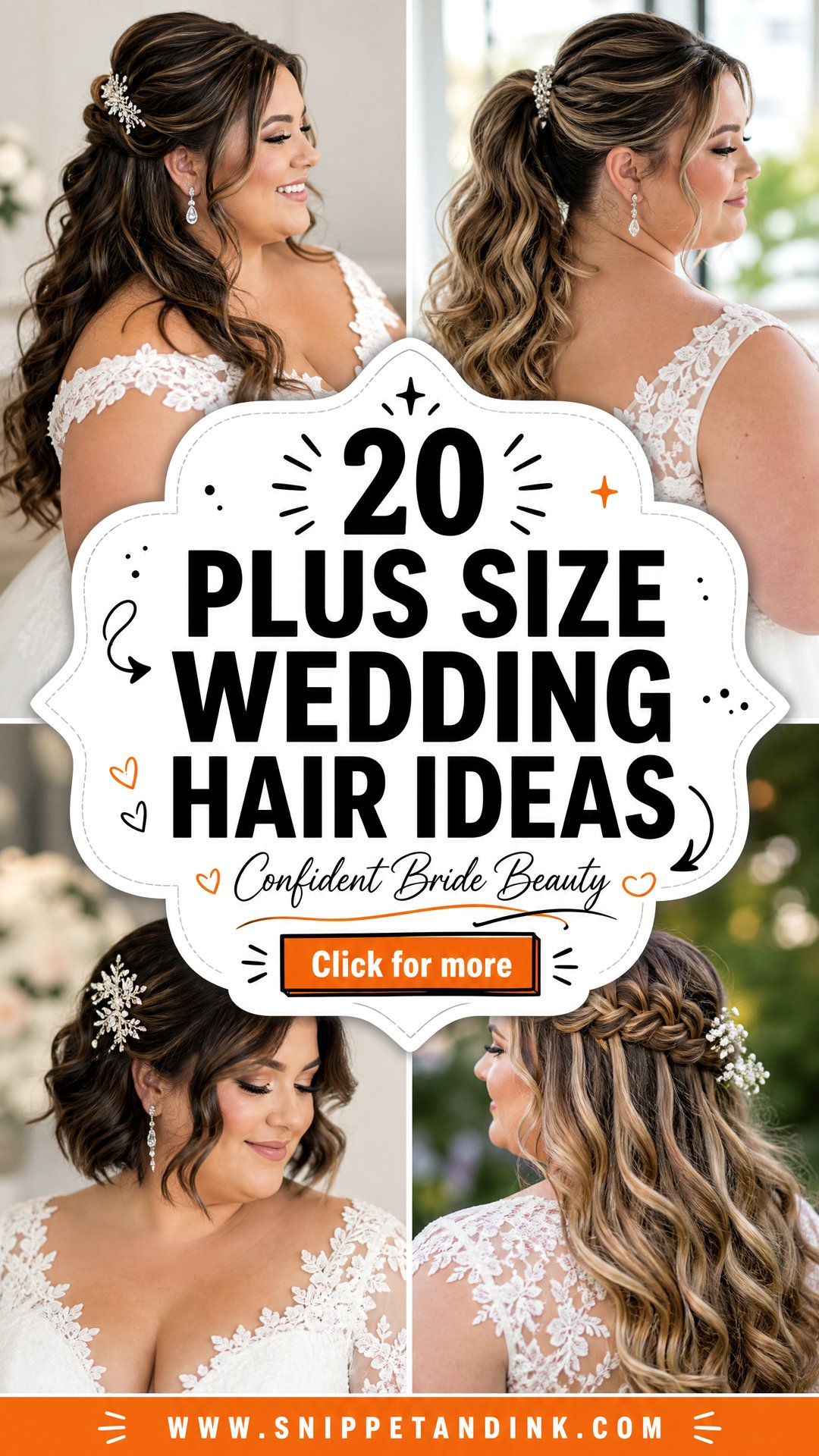
Hair changes the whole outline of a bridal look more than people expect: lift at the crown, softness at the jaw, a bun that sits low or high. When I work with plus size brides, the conversation is never about hiding a face or a neck. It’s about proportion with the dress and veil, and about a style that stays secure through hugs, vows and dancing. These plus size wedding hair looks cover updos, waves, natural curls, locs, braids and short cuts, and for each one I’ve added what I’d check on your hair before committing to it.
Where I Put the Volume, and Why It’s Rarely at the Sides
Every plus size bride I style gets the same first question from me: where do you want the eye to go? Volume draws attention and adds visual width wherever it sits, so I place it on purpose.
Crown lift for length
A little height at the crown lengthens the face and neck, which balances a full skirt or a fitted bodice. It doesn’t need to be a bouffant. An inch of backcombing under smooth hair is enough.
Softness below the cheekbone
Face-framing pieces that fall below the cheekbone soften the jaw. Big curls sitting right at cheek level do the opposite and widen the face, so I cut tendrils longer and curl them away from the face rather than toward it.
The profile view
Half of your wedding photos are taken from the side. At every trial I check the style in profile with a hand mirror, because a bun that looks right from the front can vanish from the side if it sits too flat against the head.
1. Plus Size Bridal Hollywood Waves
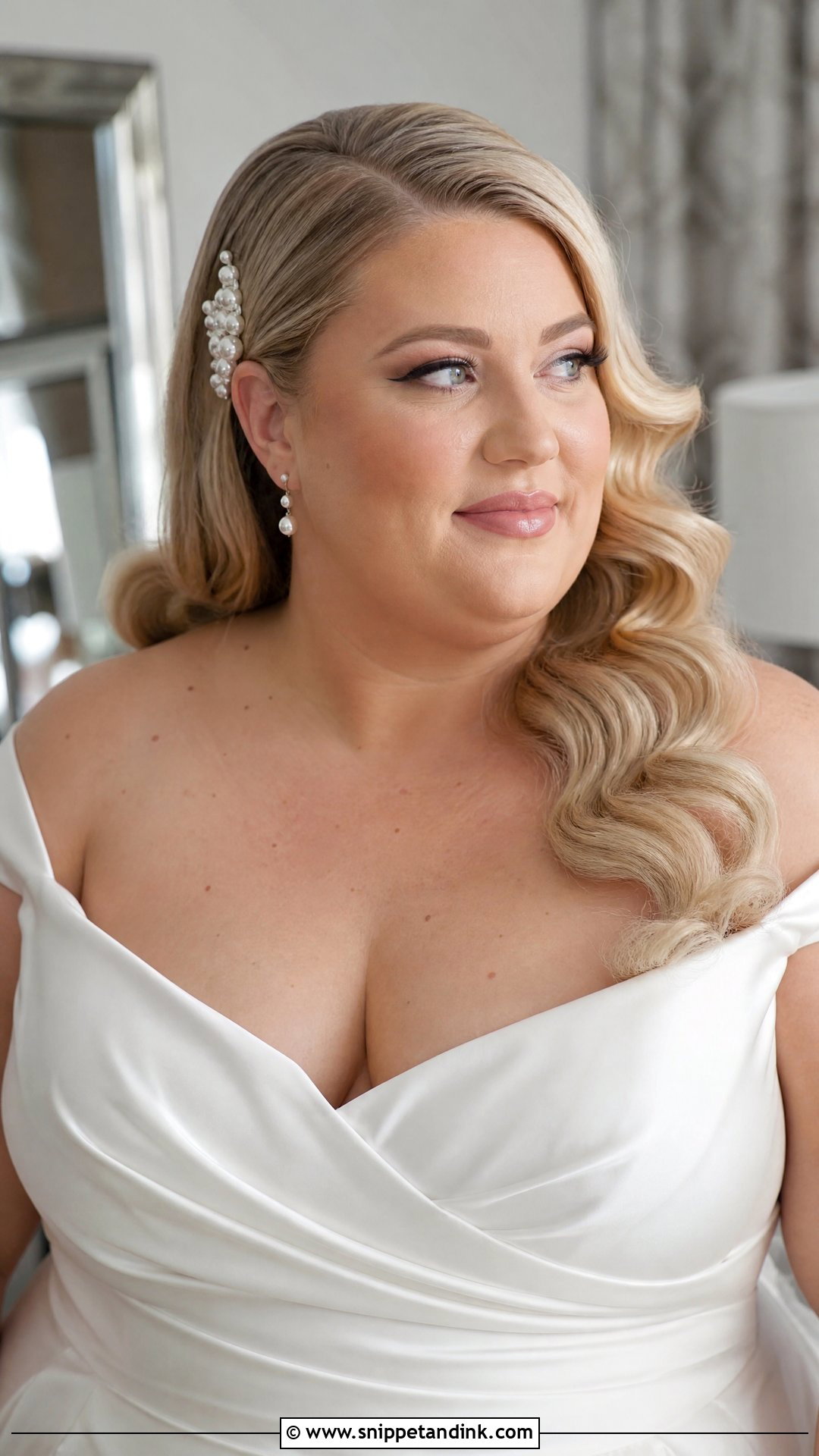
Hollywood waves depend on one thing more than any product: the curl set has to cool completely before it’s brushed. I curl in even sections, pin each one in a coil, and only brush out once the whole head is cold, which gives that continuous S-shape instead of frizzy ripples. A deep side part adds height on one side and softens a rounder face. The style sits naturally with off-the-shoulder gowns and sweetheart necklines, fitted dresses. Tuck the short side behind the ear with a crystal comb if you want the jawline open.
2. Plus Size Bridal Low Chignon
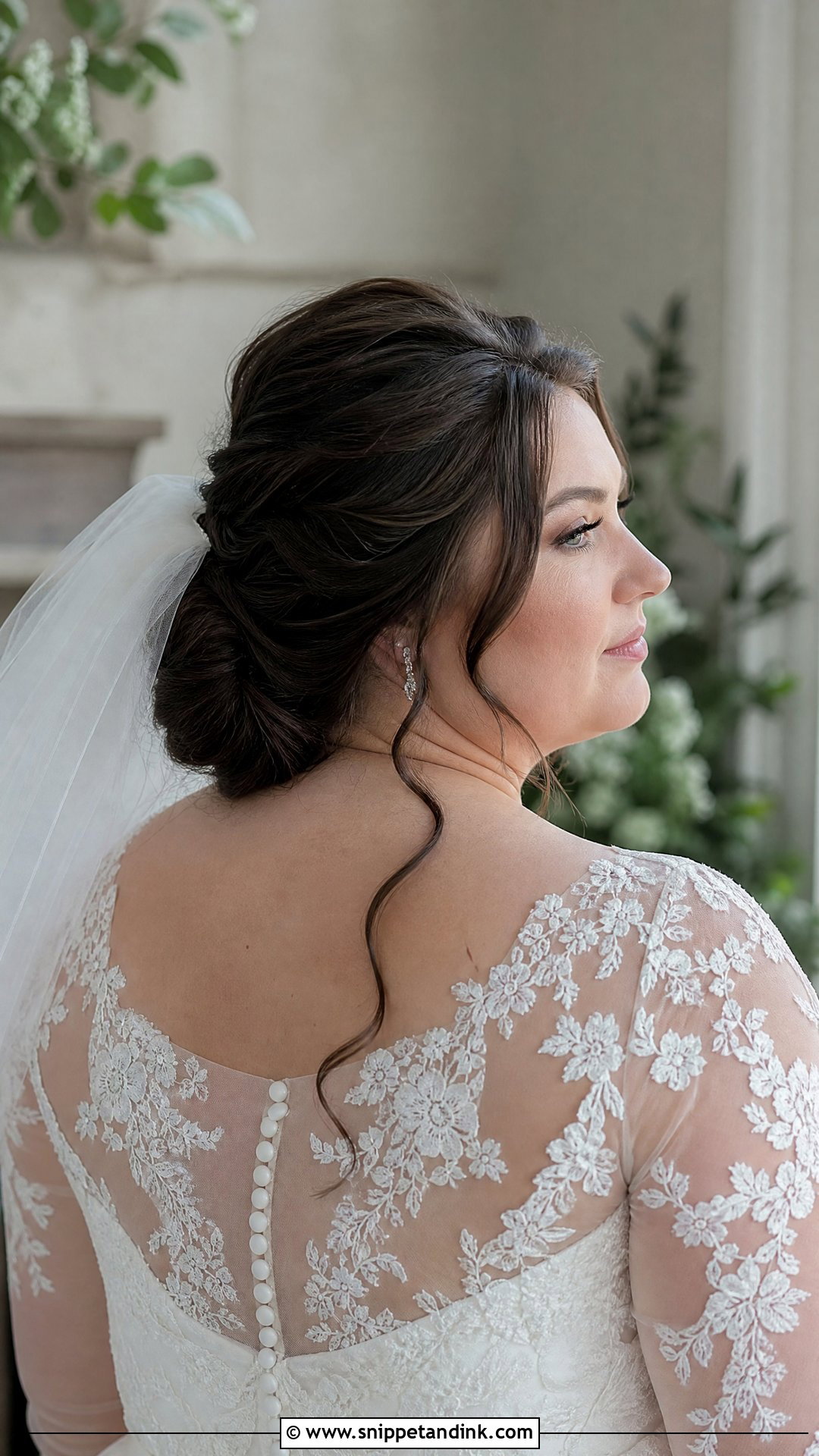
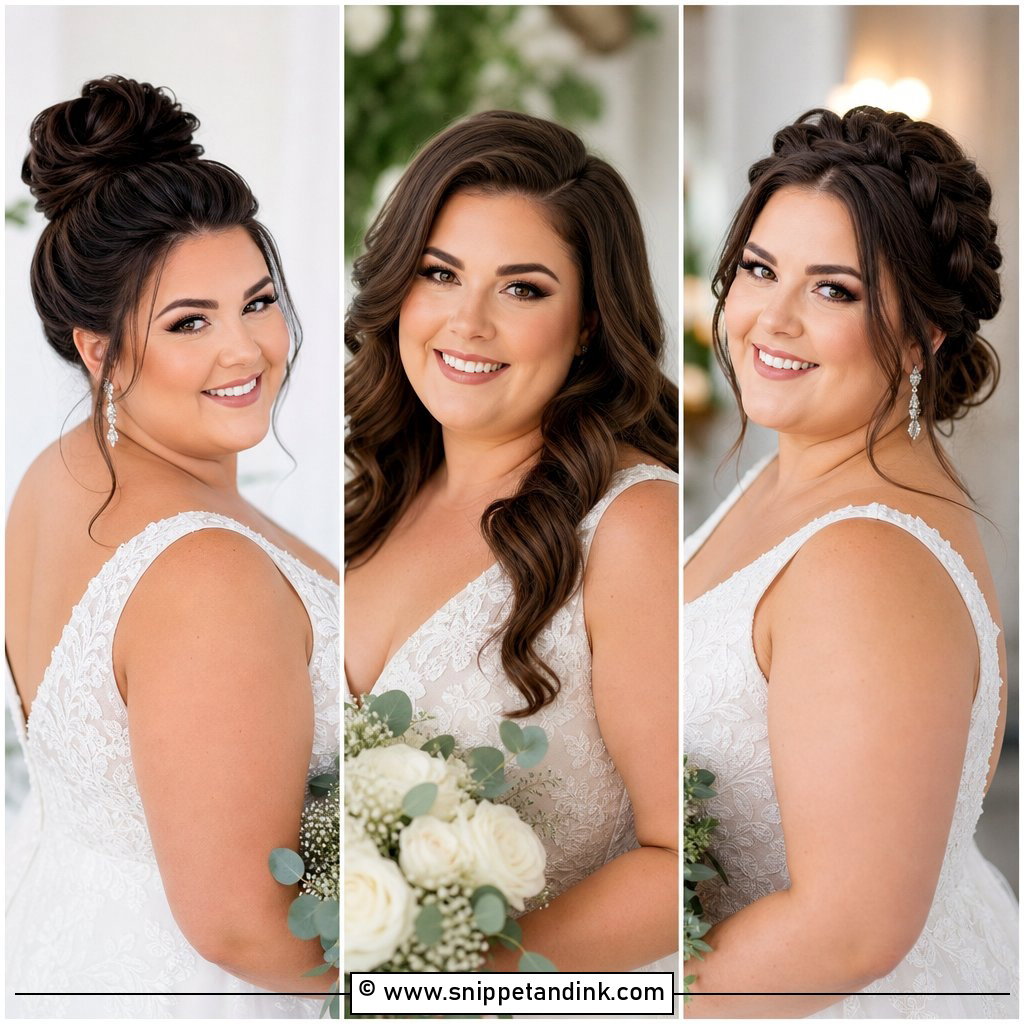
A low chignon is among the most flattering wedding hairstyles I do, mainly because it frames the face from the side as well as the front. What I avoid is a tight, flat bun on a full face, which leaves the head looking small against the body. A little lift at the crown and a rounded bun that shows in profile fixes the balance. One practical note: a low chignon sits exactly where a high-backed chair presses during dinner, so with upholstered reception chairs I set it slightly above the nape.
3. Plus Size Bridal Half Up Half Down Hair
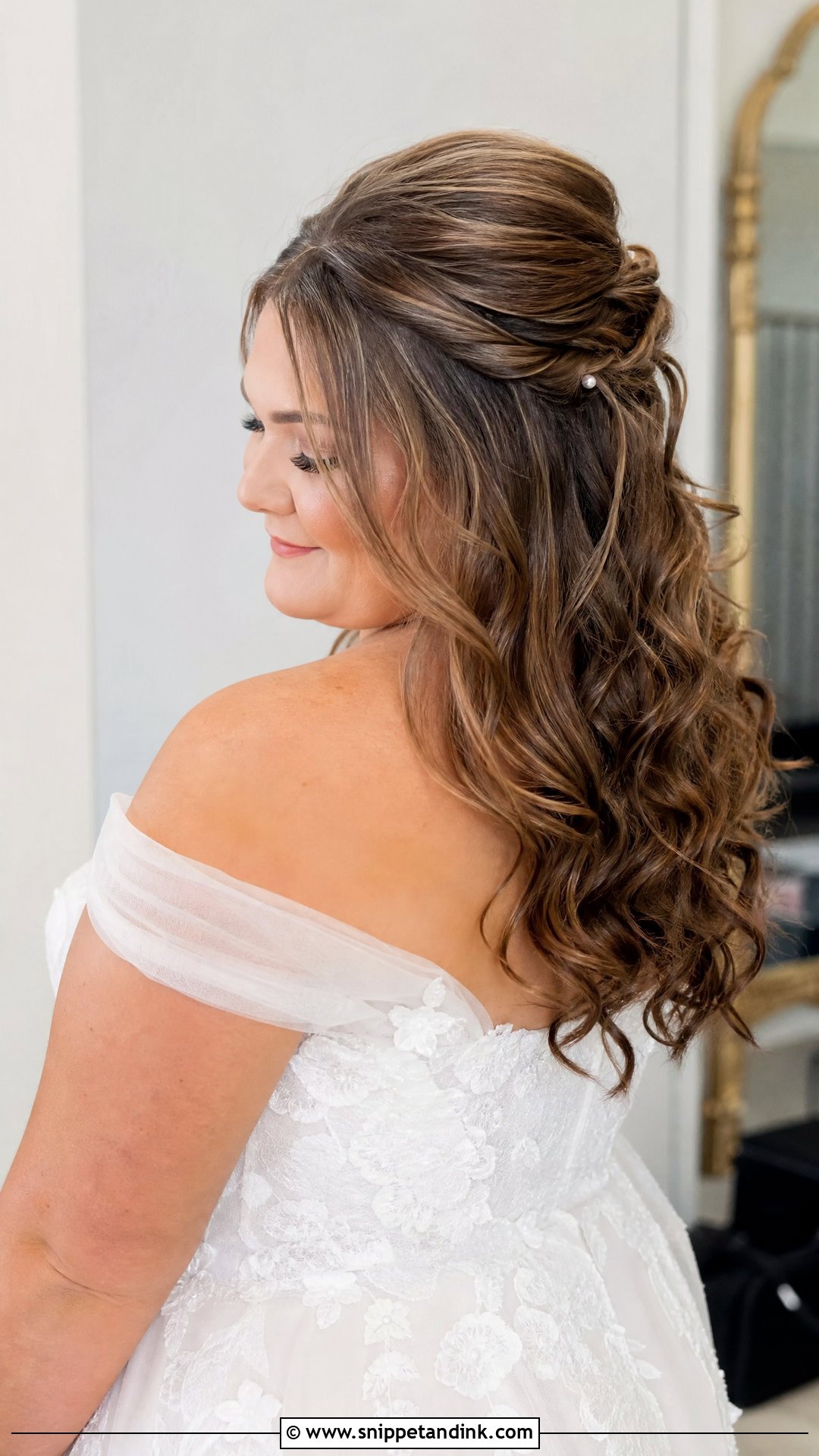
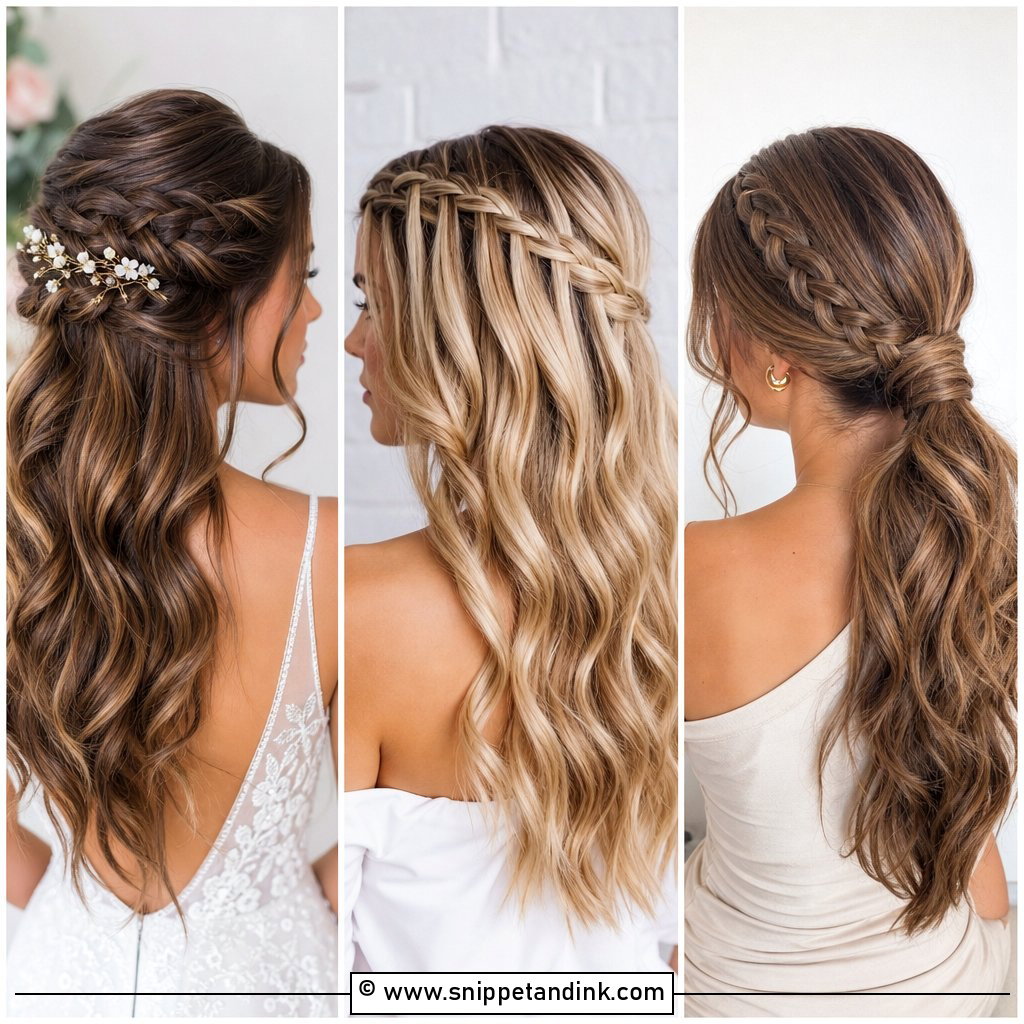
Half-up styles fail at the crown section. If that top part isn’t anchored to a small hidden braid or crossed pins, it slides down through the day and the shape flattens. I build the base first, then twist or pin the top over it with a little backcombing for lift. Face-framing layers keep softness at the cheeks, and clip-ins blend into the loose length if your hair is fine. It’s a natural match for strapless or V-neck wedding dresses, where the loose lengths fill the open neckline.
4. Plus Size Bridal Curly Updo
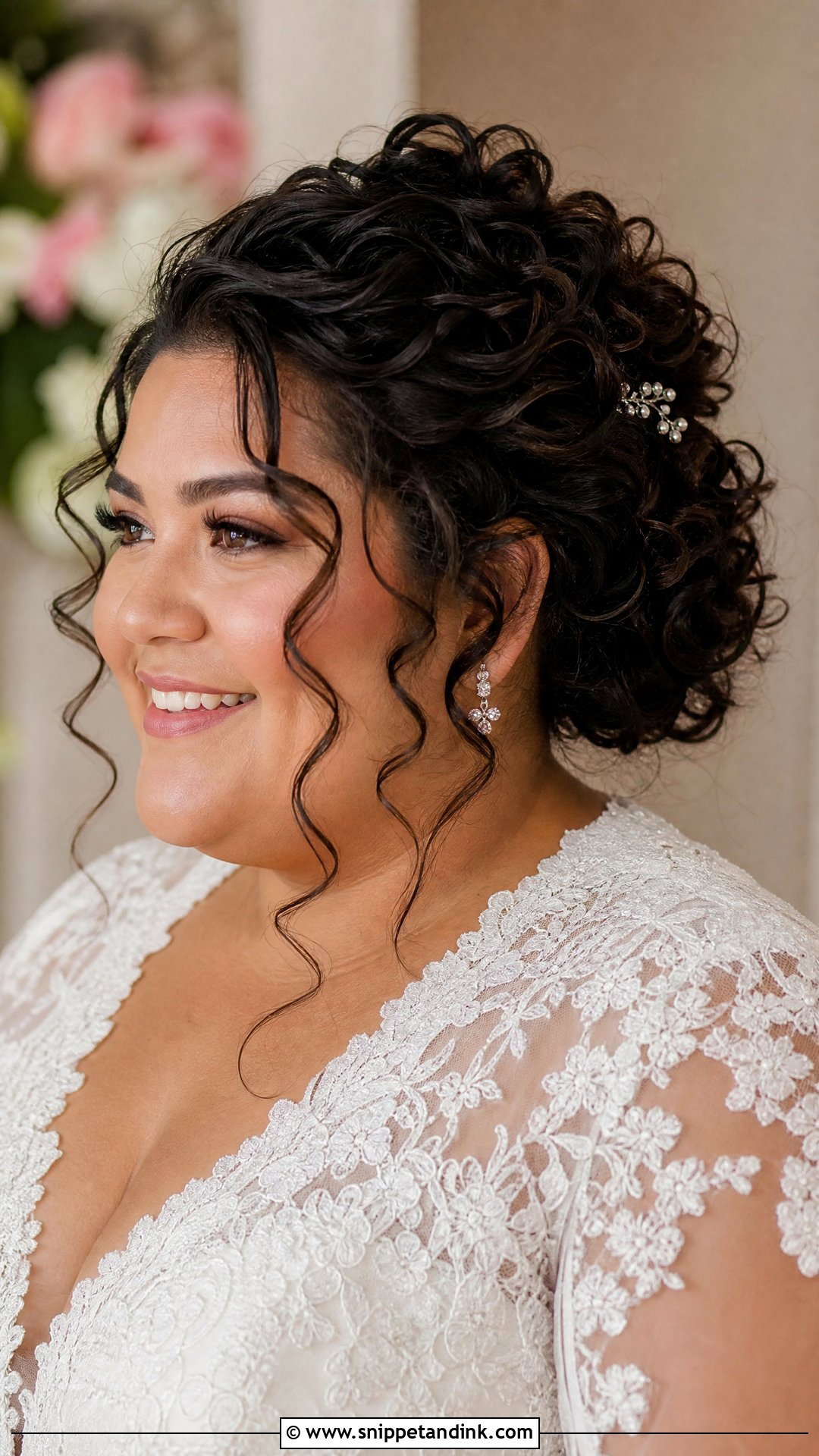
Natural curls hold an updo better than straight hair, so I work with the texture instead of ironing it out. I refresh the curl pattern with a curl cream, then pin in clusters, gathered softly at the crown or low at the nape. The usual problem is humidity on the morning of an outdoor wedding: curls expand and the outline turns fuzzy. An anti-humidity spray, plus a few defined tendrils rather than lots of wispy ones, keeps it looking deliberate. Lace gowns and cathedral veils suit it.
5. Plus Size Bridal Sleek Bun
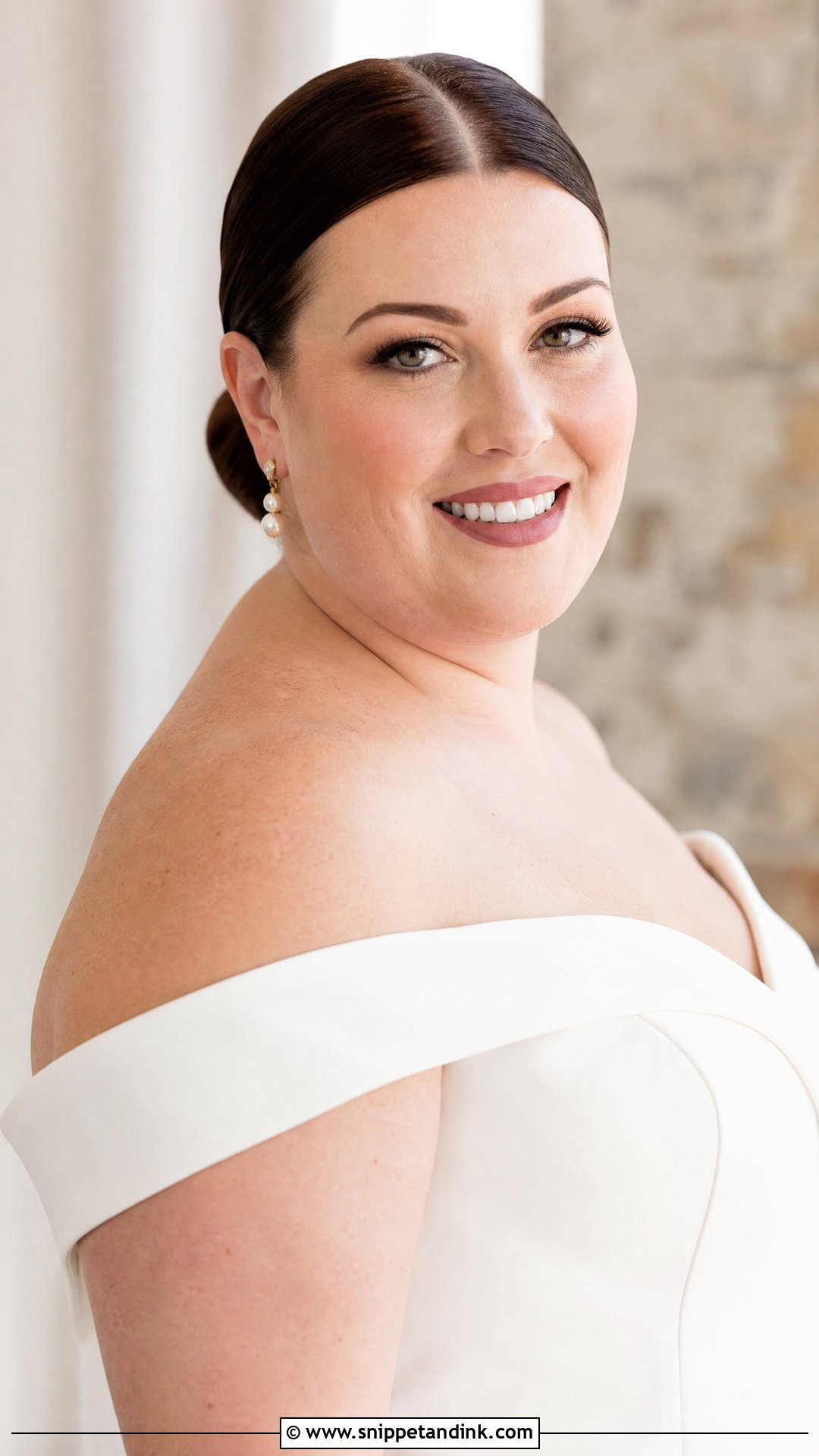
Sleek buns are honest. Every bump and parting shows, so the prep matters more than the bun. I smooth the hair with a light gel and a boar-bristle brush, then tie a scarf around the hairline for a few minutes to set it before pinning. Low reads classic; mid-height reads editorial. On a fuller face, I keep the hairline smooth but never scraped, since a little softness at the temples avoids the severe effect a tight pull gives. It’s also the most secure base for a heavy veil.
6. Plus Size Bridal Side Swept Curls
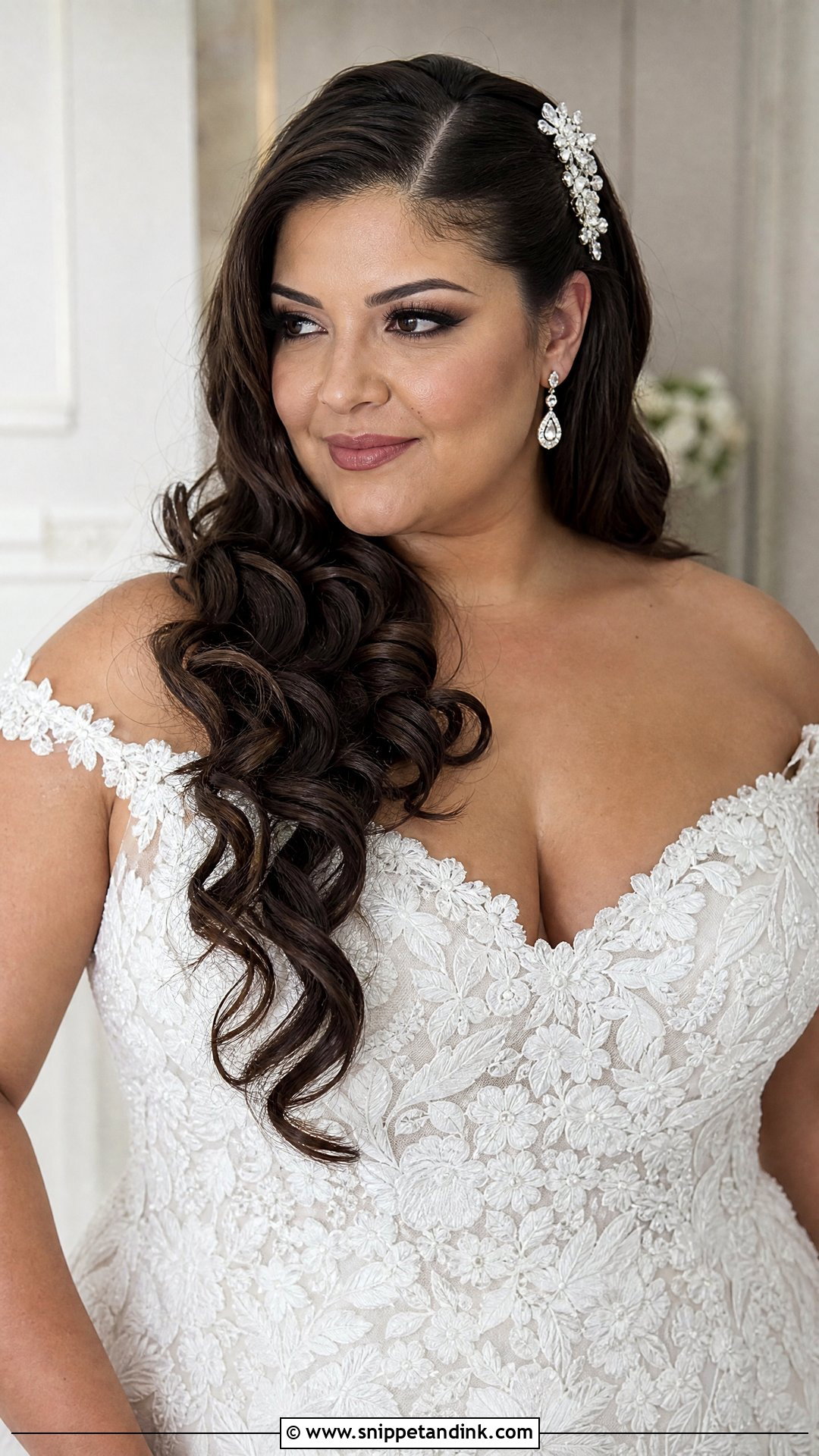
Sweeping everything to one side creates a diagonal from the opposite temple down over one shoulder, which lengthens the neck on the open side. The hidden base is what makes it last. I pin a small anchor braid behind the ear and secure the curls onto it, so they don’t migrate back across your shoulders. Sweep toward the side your dress detail isn’t on, or the hair will cover it. One-shoulder gowns and strapless bodices work best.
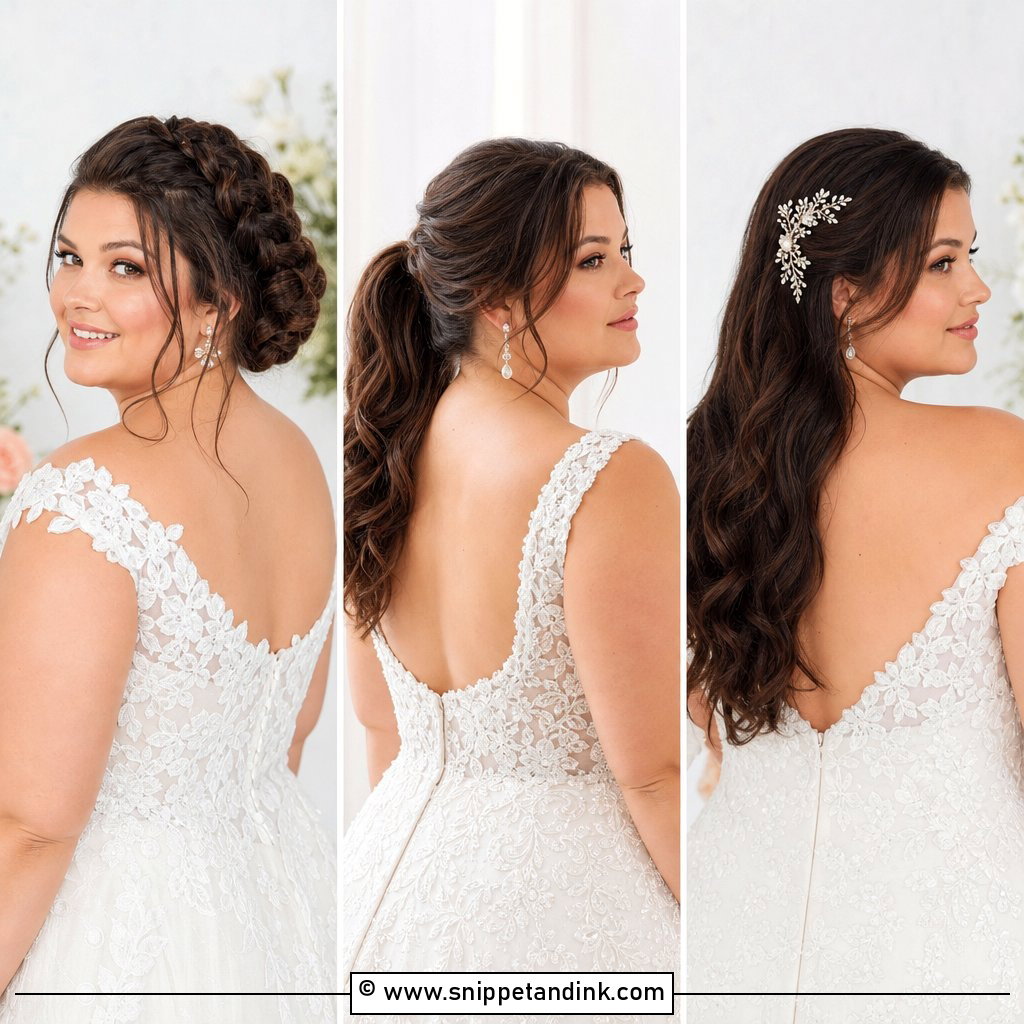
7. Plus Size Bridal Braided Crown
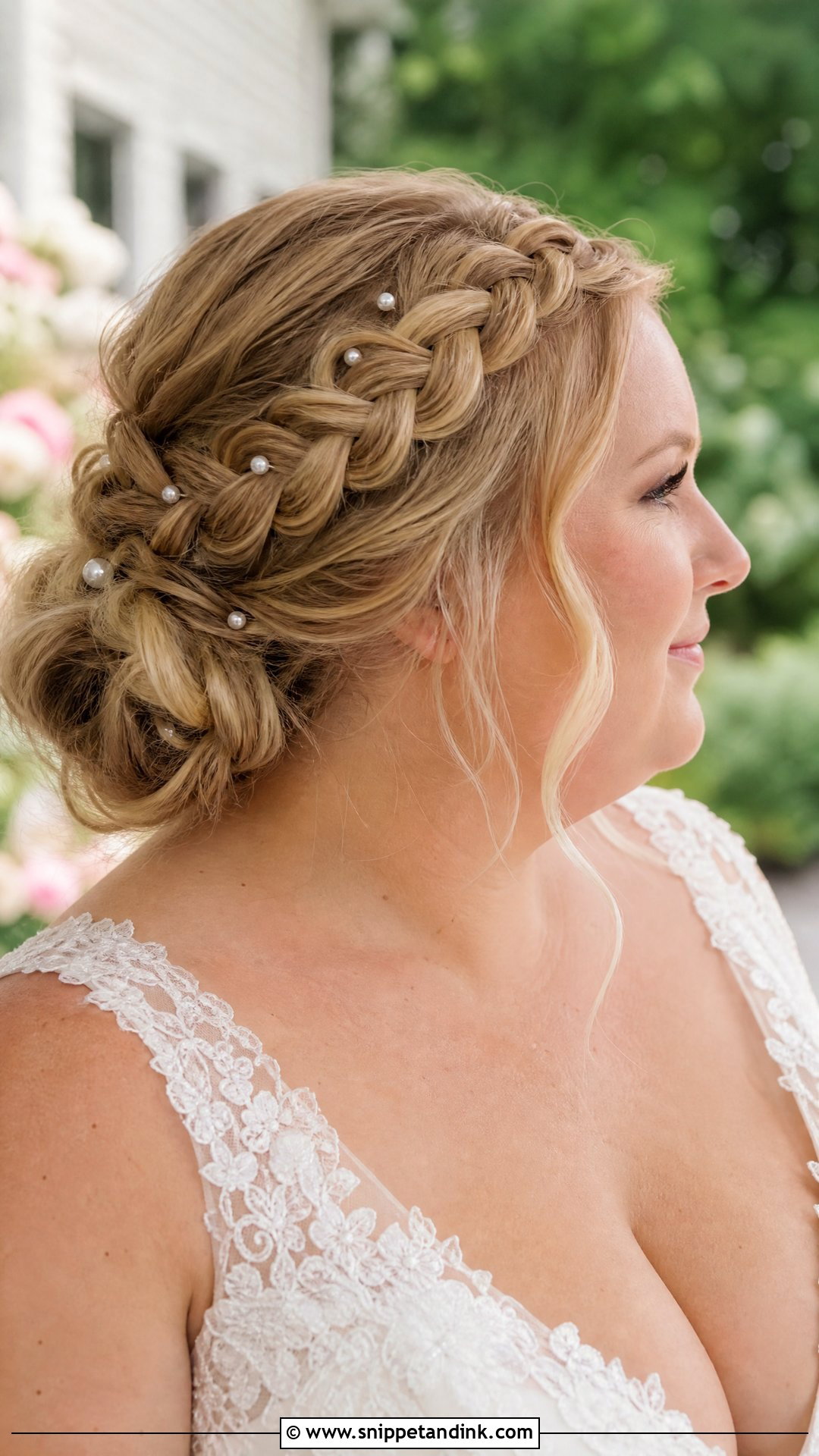
Crown braids look soft but they’re one of the most secure styles I do, because the braid carries the weight around the head instead of at one point. On thick hair it’s ideal; on fine hair I add a clip-in weft so the braid reads full. I gently pull the edges outward afterward so it looks relaxed rather than tight. Leave a few pieces loose at the forehead if you don’t want the whole face exposed.
8. Plus Size Bridal High Bun
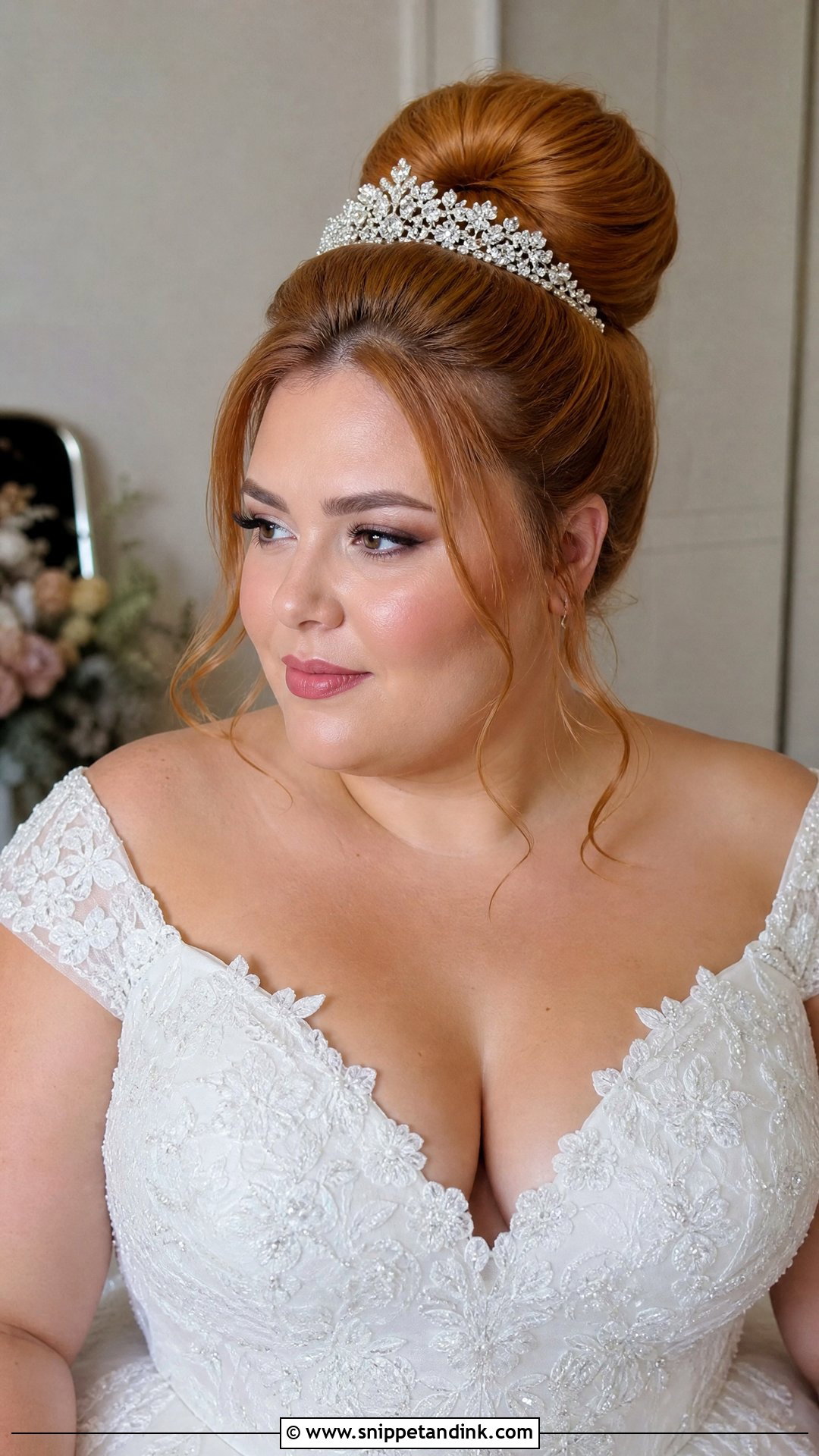
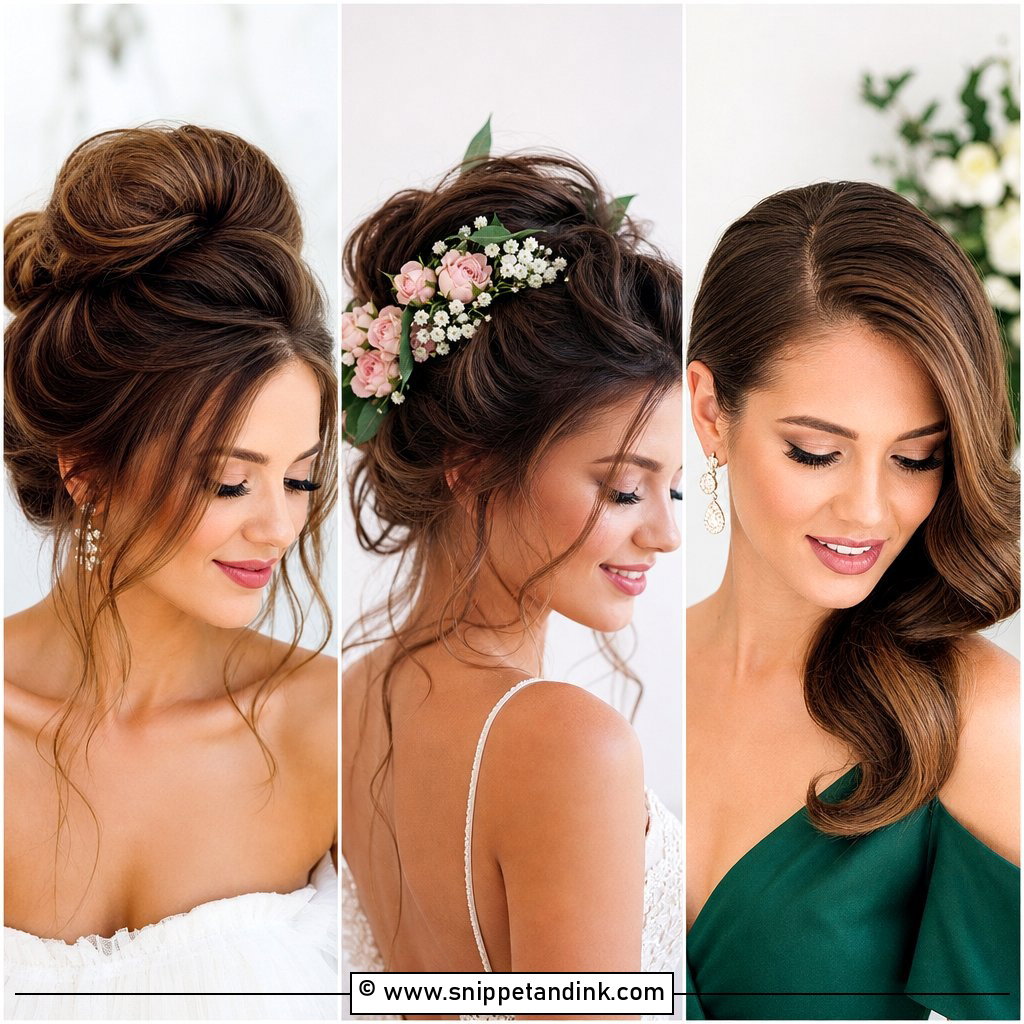
Height at the crown lengthens the neck and balances a full skirt, which is why I suggest a high bun more often than brides expect. Proportion is everything here, because a tiny bun on top of a full face looks lost. I build it around a donut or padding so it’s rounded and full, and keep some softness at the front. It takes a tiara or hair vine well and keeps hair off the shoulders, ideal in summer or with dresses with detailed straps.
9. Plus Size Bridal Loose Waves
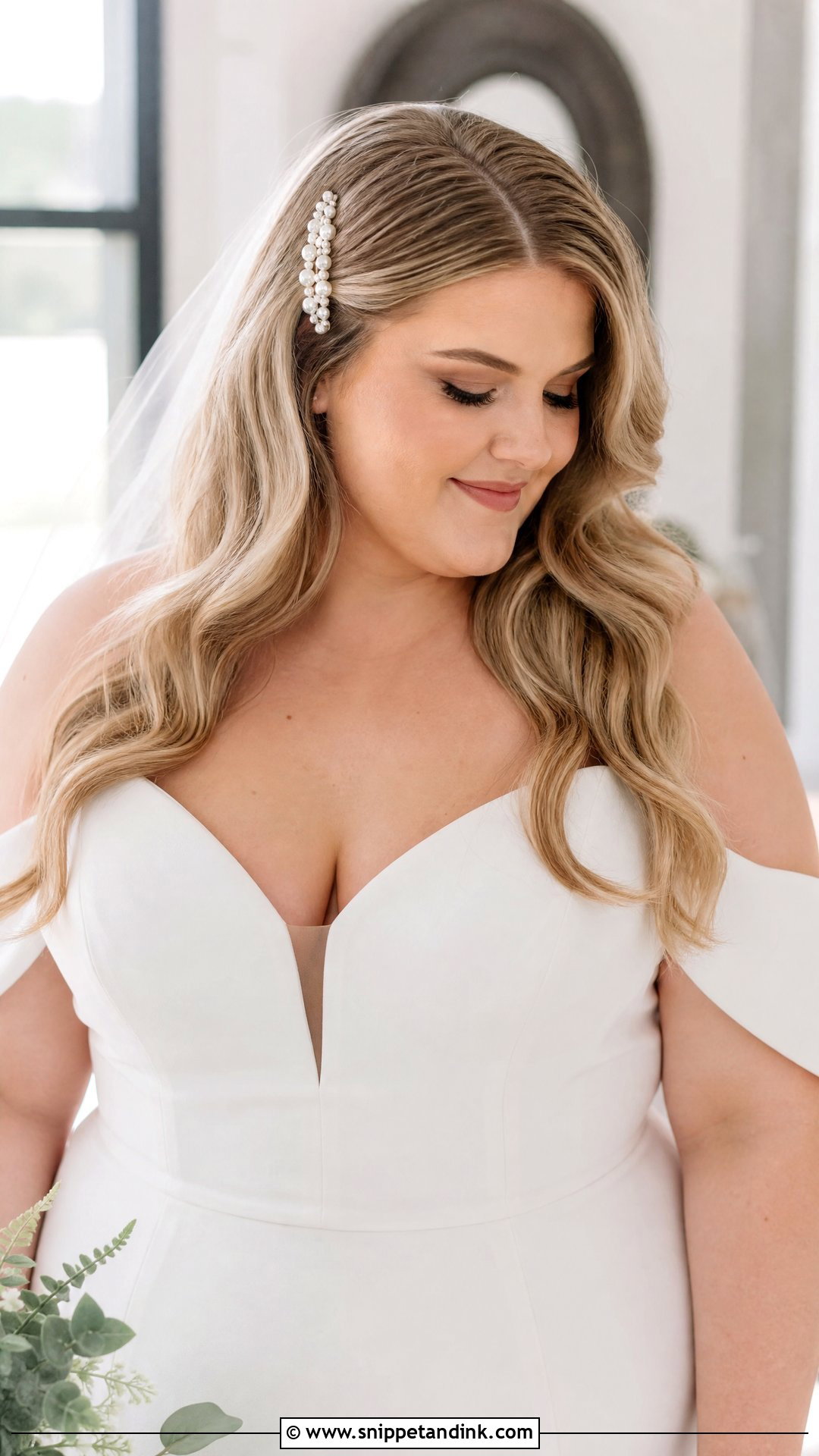
Loose waves look simple, yet they’re the style most likely to fall flat by the reception. I prep with mousse at the root and texture spray through the length, and curl with a slightly smaller barrel than the wave I want, because curls relax over a few hours. A middle part suits a symmetrical face; a side part adds lift. Clip-in extensions help fine hair. A veil at the crown or a pearl barrette finishes it for a garden or beach ceremony.
10. Plus Size Bridal Natural Afro
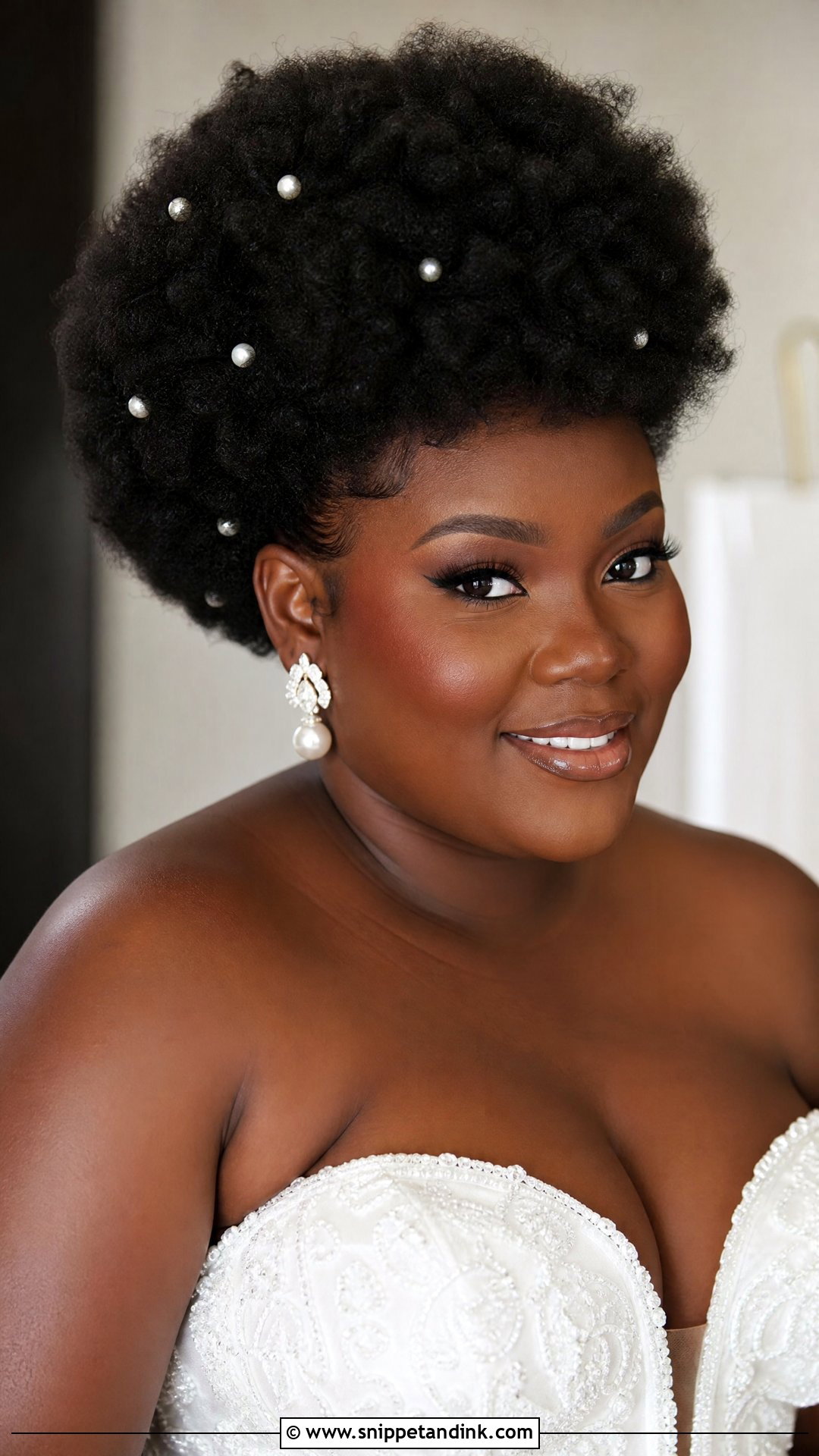
A shaped afro makes a strong silhouette, and the bride usually knows her hair better than anyone. My job is shape and longevity. I’ll stretch the hair the day before so shrinkage on the morning doesn’t shorten the outline, then pick and sculpt it rounded or tapered depending on density. Moisture is the long-wear step: hydrated coils stay defined, dry ones frizz by the first dance. A wide headband, gold cuffs or a veil set behind the shape works well. Choose a stylist with real textured-hair experience and look at their portfolio first.
11. Plus Size Bridal Twisted Updo
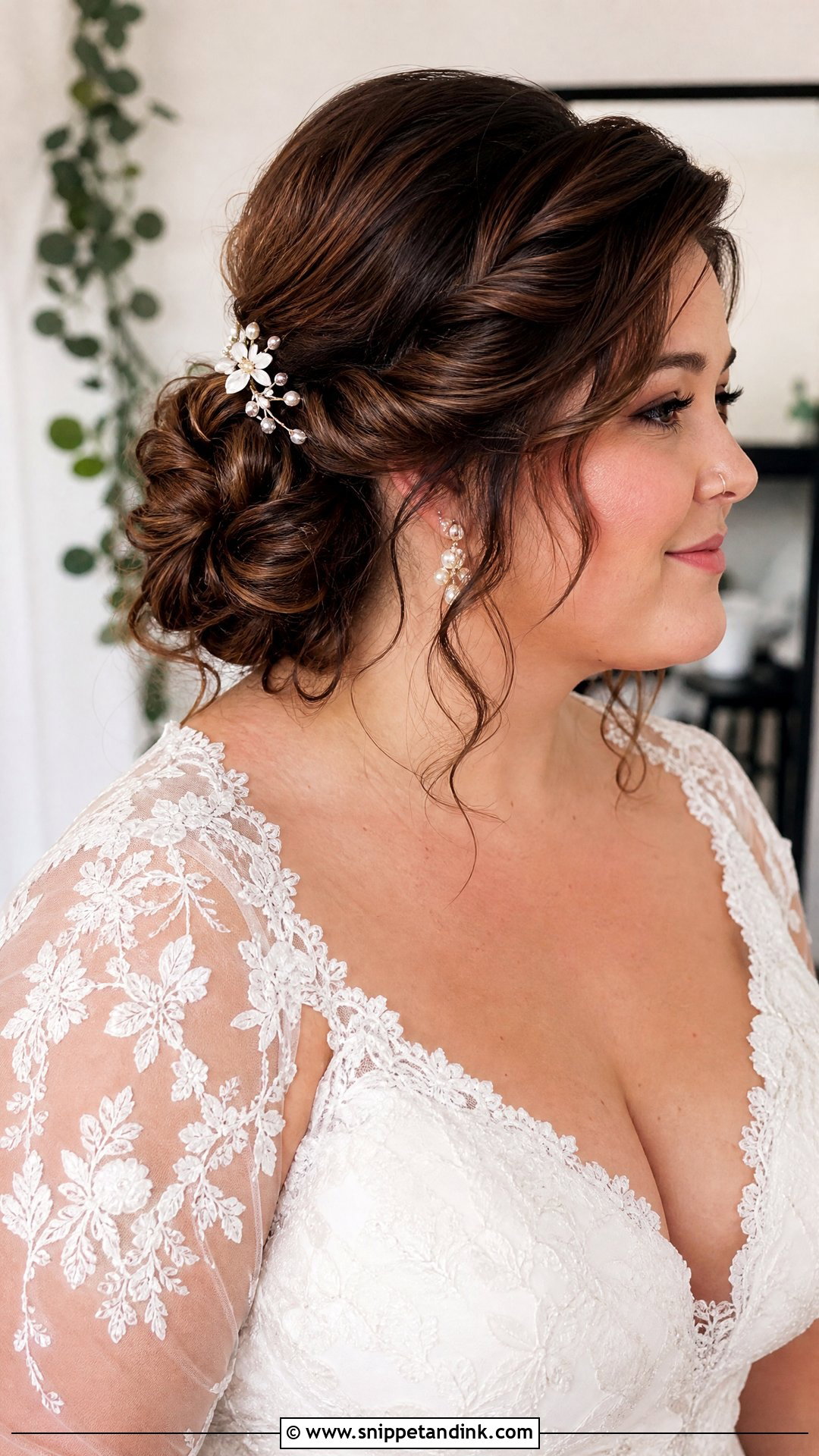
Twists let me put volume exactly where it’s needed, which makes this one of the most adaptable styles on a fuller face. Want width at the back of the head to balance the jaw? Twist there. Need lift at the crown? Twist upward. The back can finish as a low roll or a loose knot. Thick hair suits it best, since twisting compresses bulk into neat sections that hold without dozens of pins, and combs slot easily between the twists.
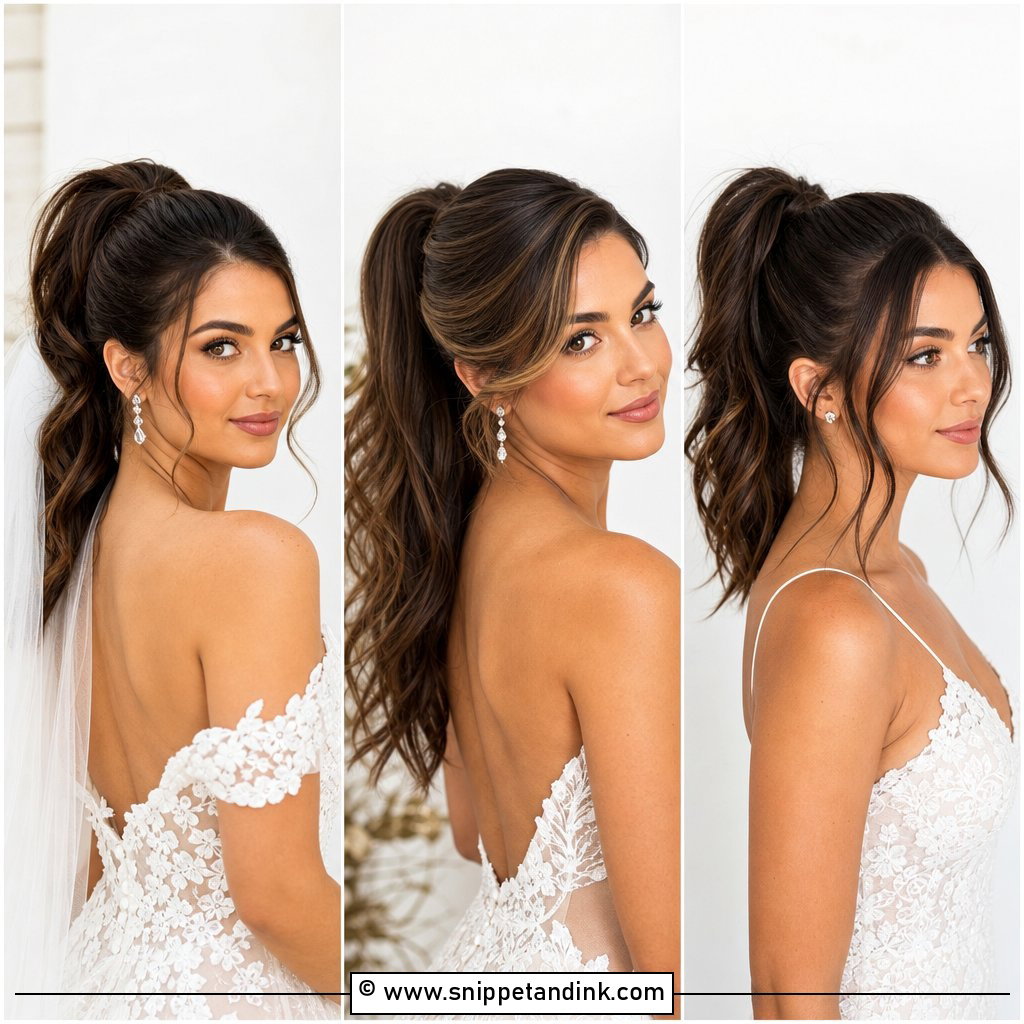
12. Plus Size Bridal Ponytail
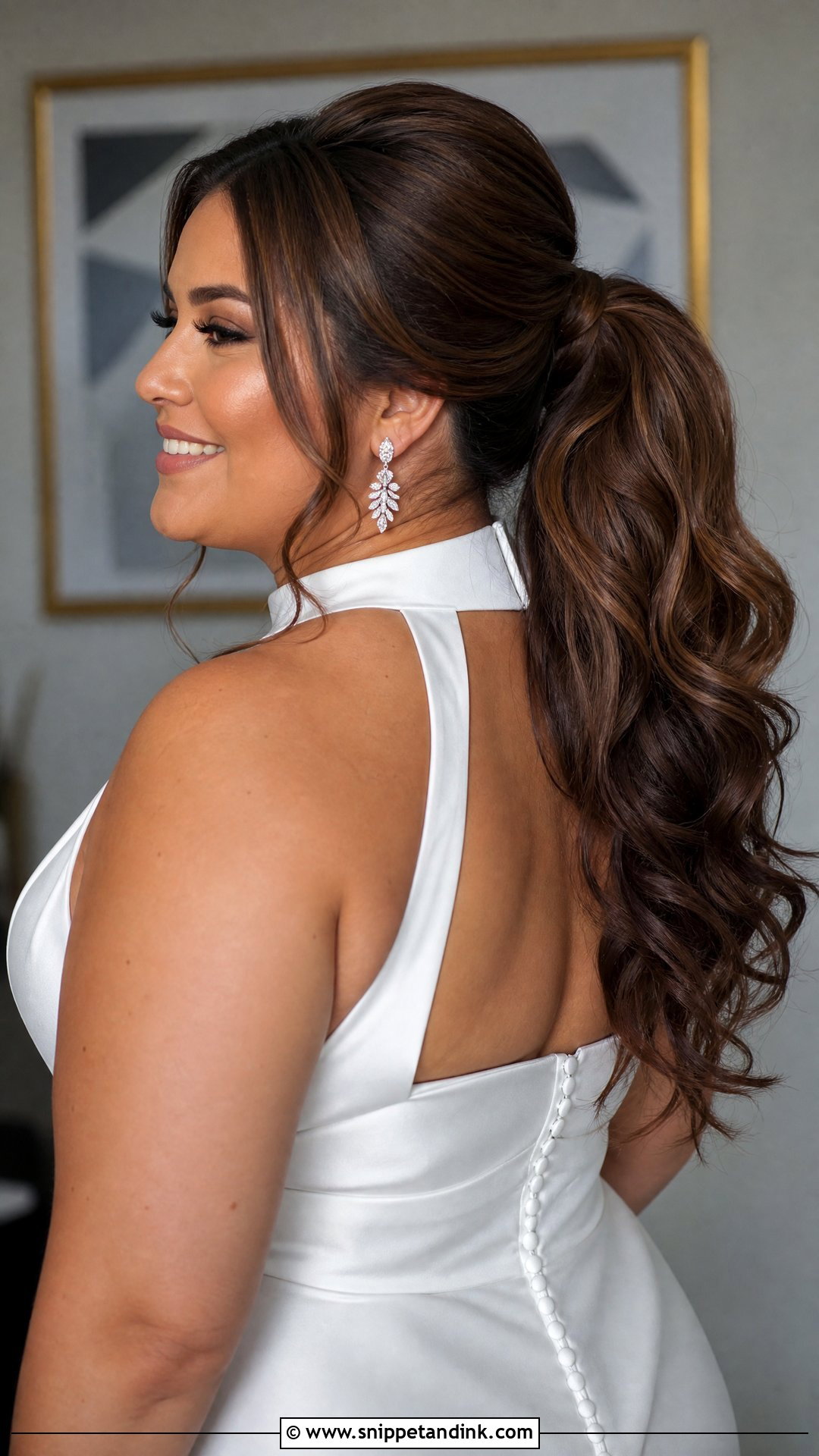
A wedding ponytail needs more engineering than an everyday one, or it droops by the speeches. I secure the base with two elastics and a few crossing pins, wrap a section of hair around it to hide them, and add waves through the length. A high pony adds height; a low one feels softer. It’s my go-to for brides changing into a reception outfit or planning to dance for hours, since nothing comes loose.
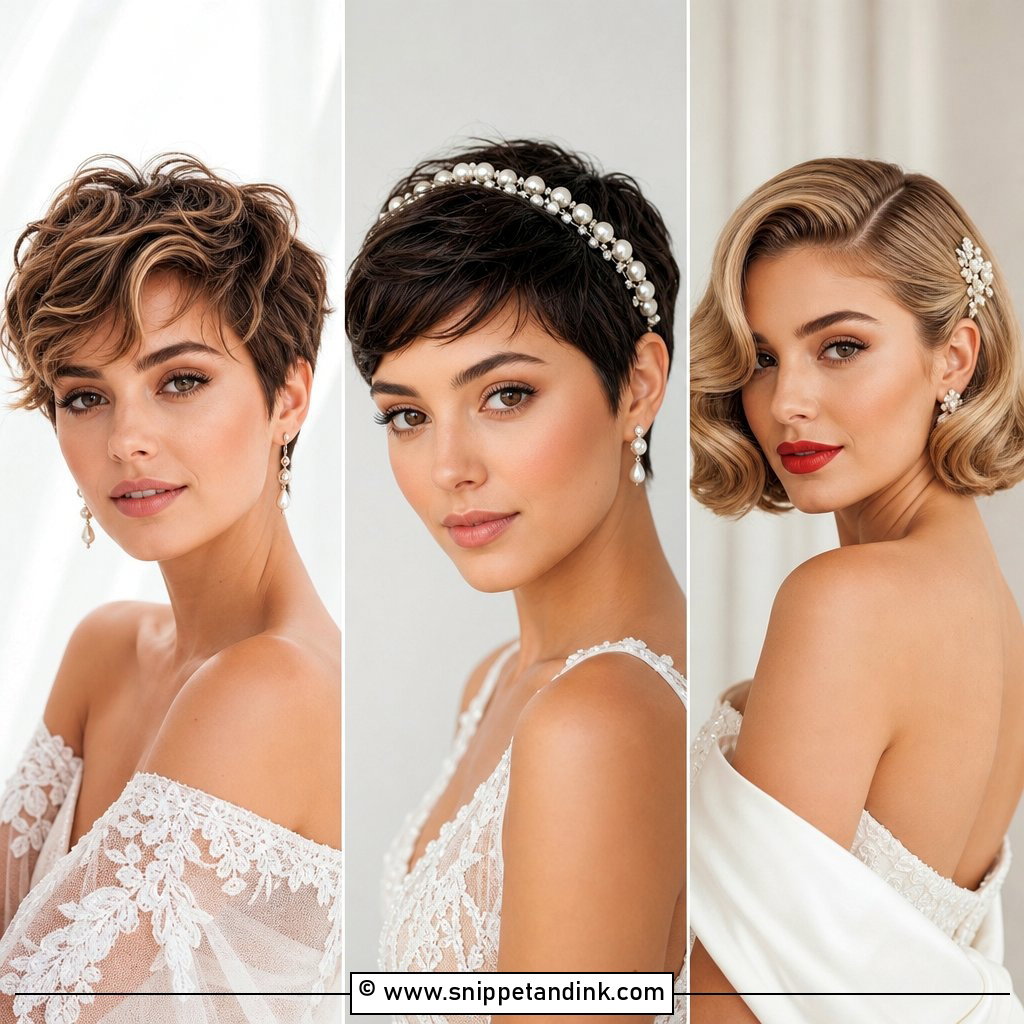
13. Plus Size Bridal Bob Hair
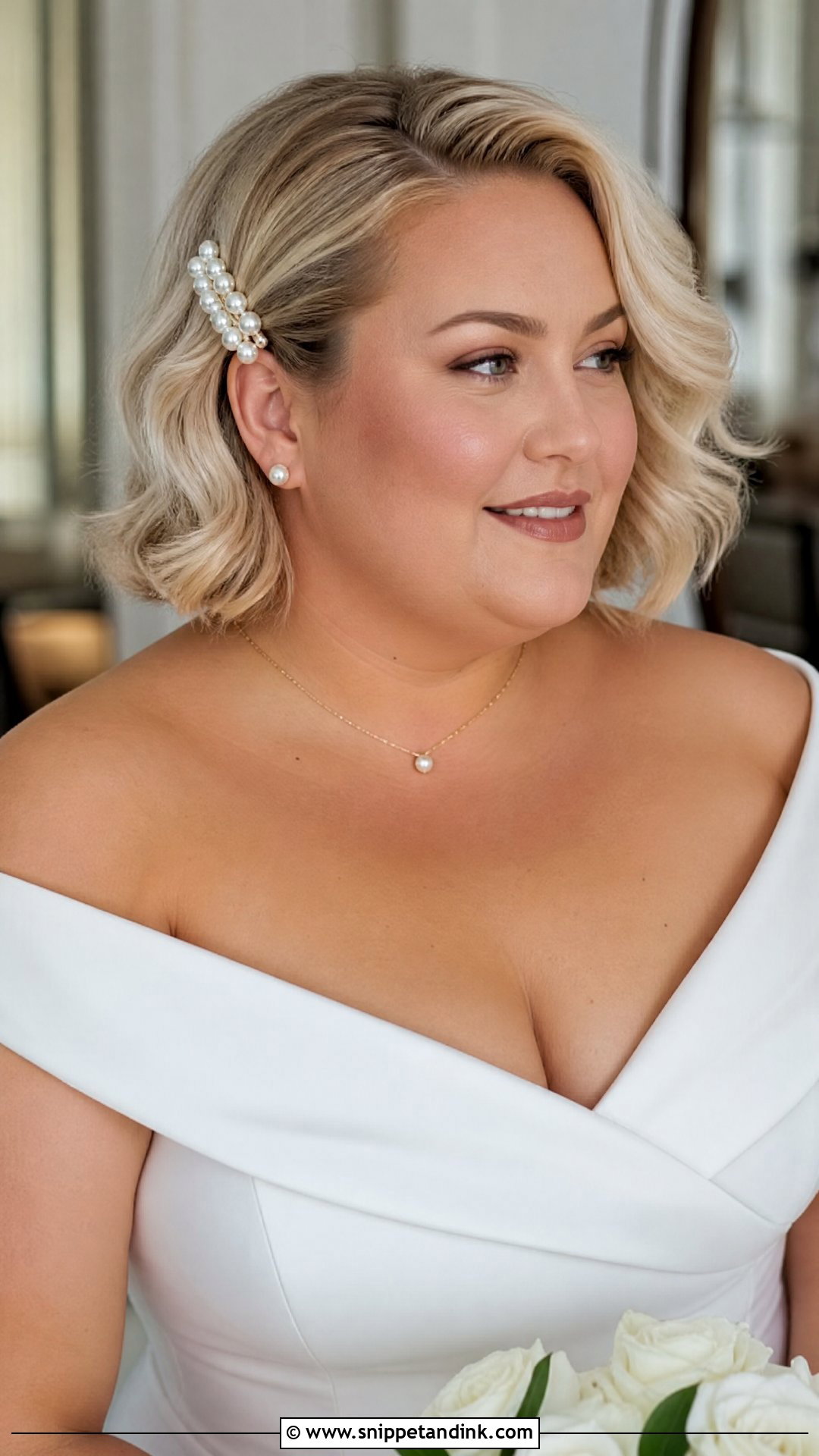
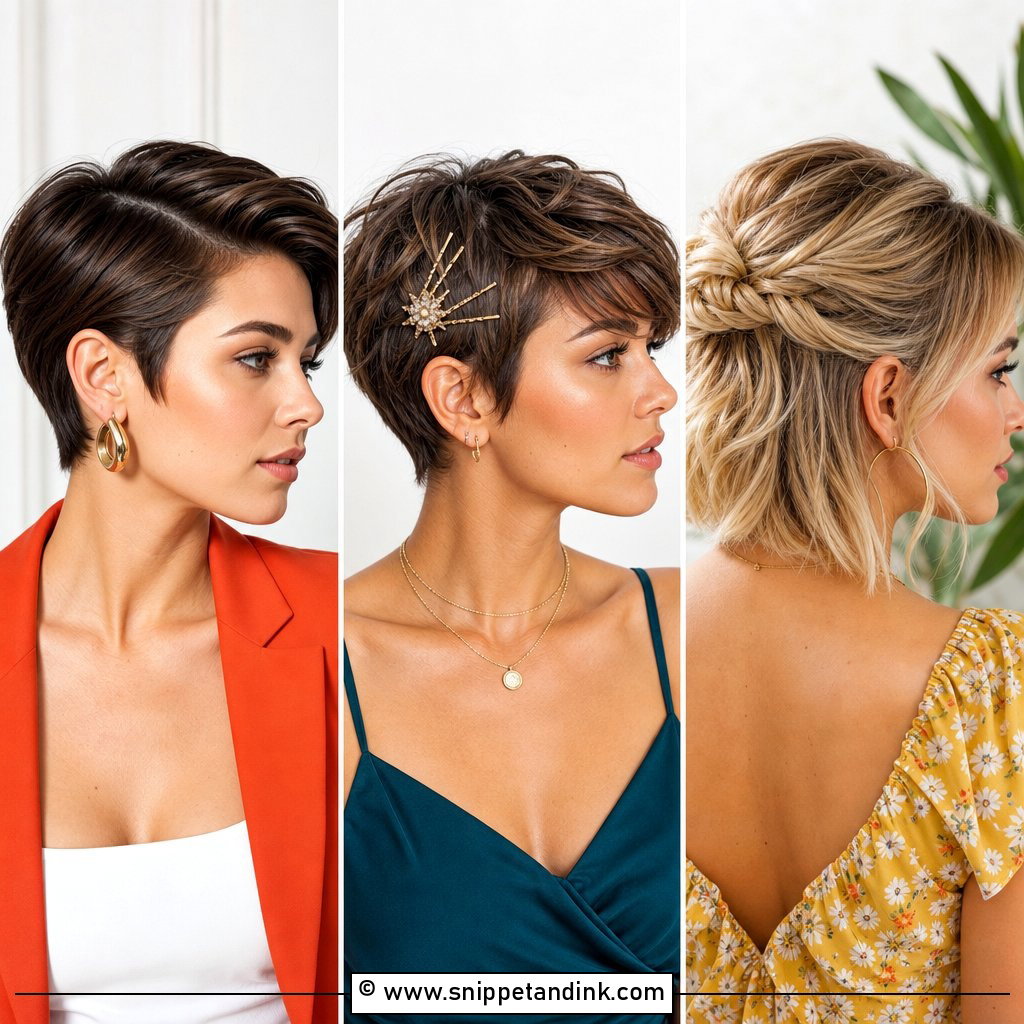
Short hair needs a clear finish to look bridal rather than everyday. On a bob I either set soft waves with a small iron or do a sleek polished blowout with tucked ends, and I ask brides to have the cut refreshed about a week before so the line is crisp without looking freshly chopped. Chin length opens the neckline; a longer bob frames the collarbone. A pearl headband or short veil adds the occasion.
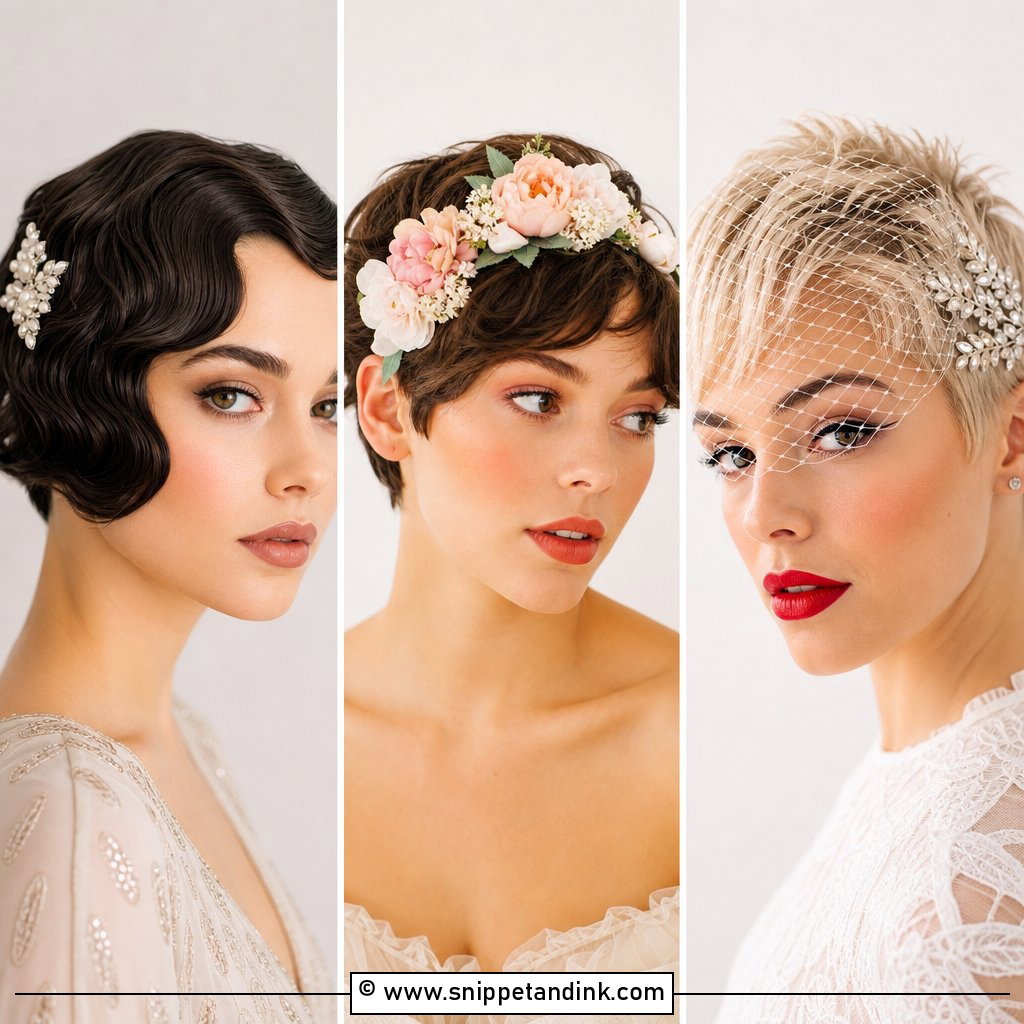
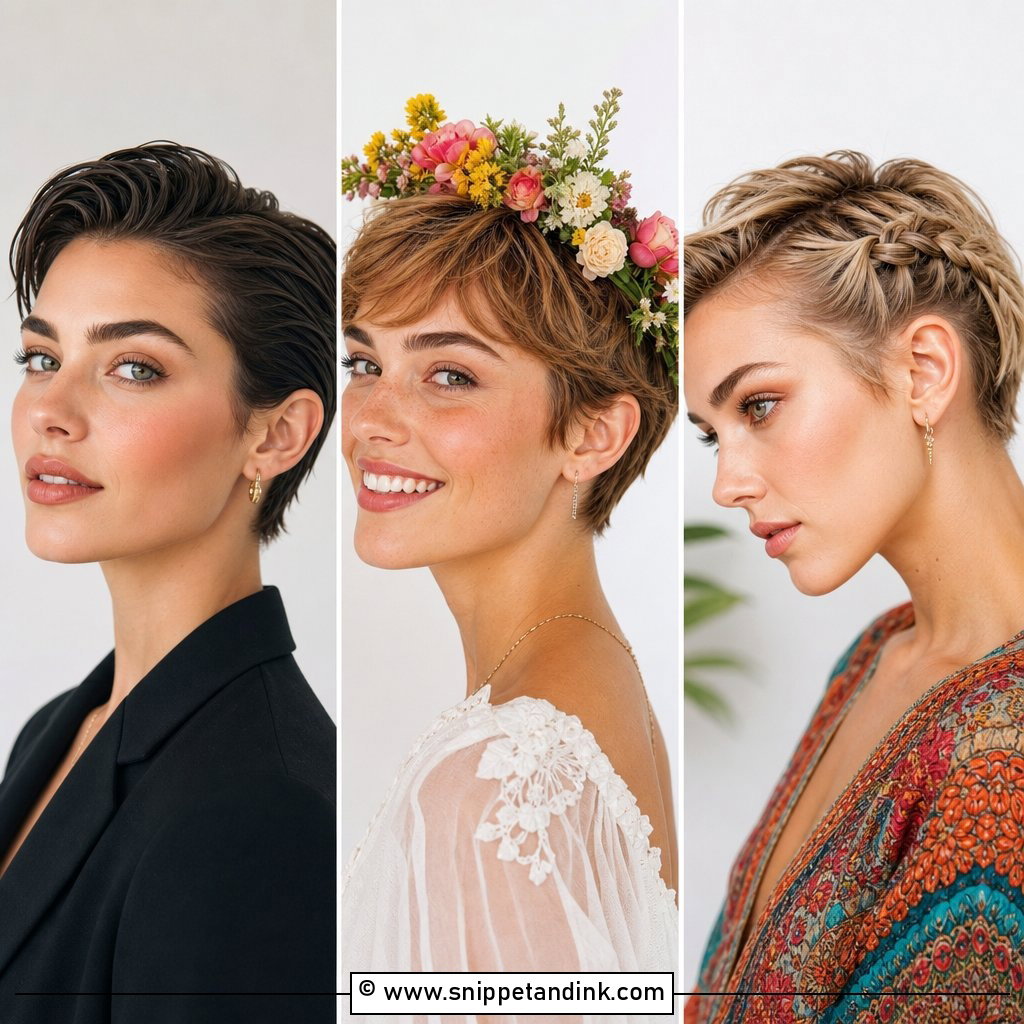
14. Plus Size Bridal Pixie Cut
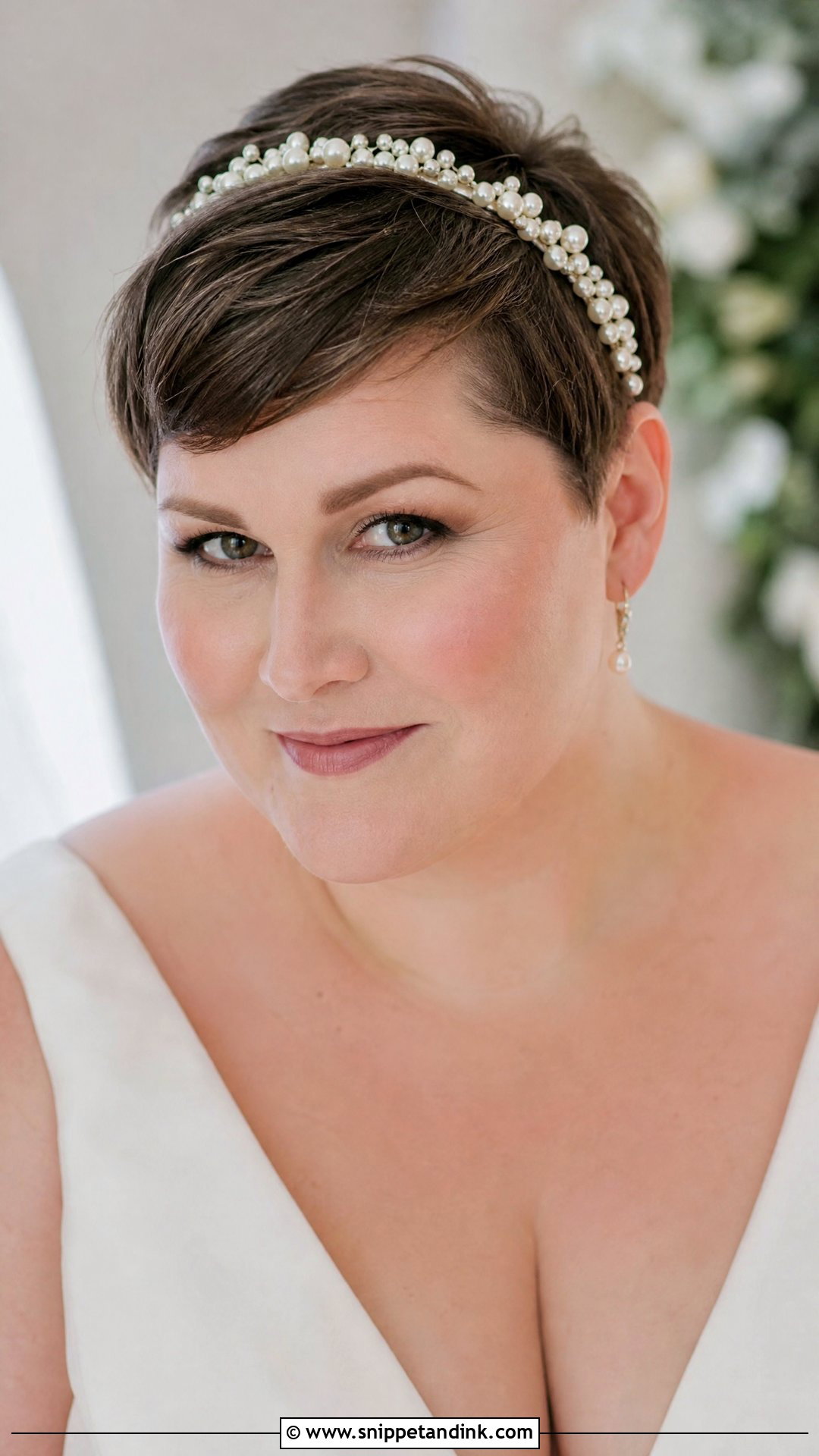
Pixie cuts are about timing. The shape looks freshest a few days after a trim, so I suggest booking one in the final week rather than the day before, when edges can look too sharp. Soft volume on top balances the face and shows off the neck, and a light styling cream gives texture without stiffness. Plan accessories that clip or band on. A heavy comb won’t have enough hair to grip.
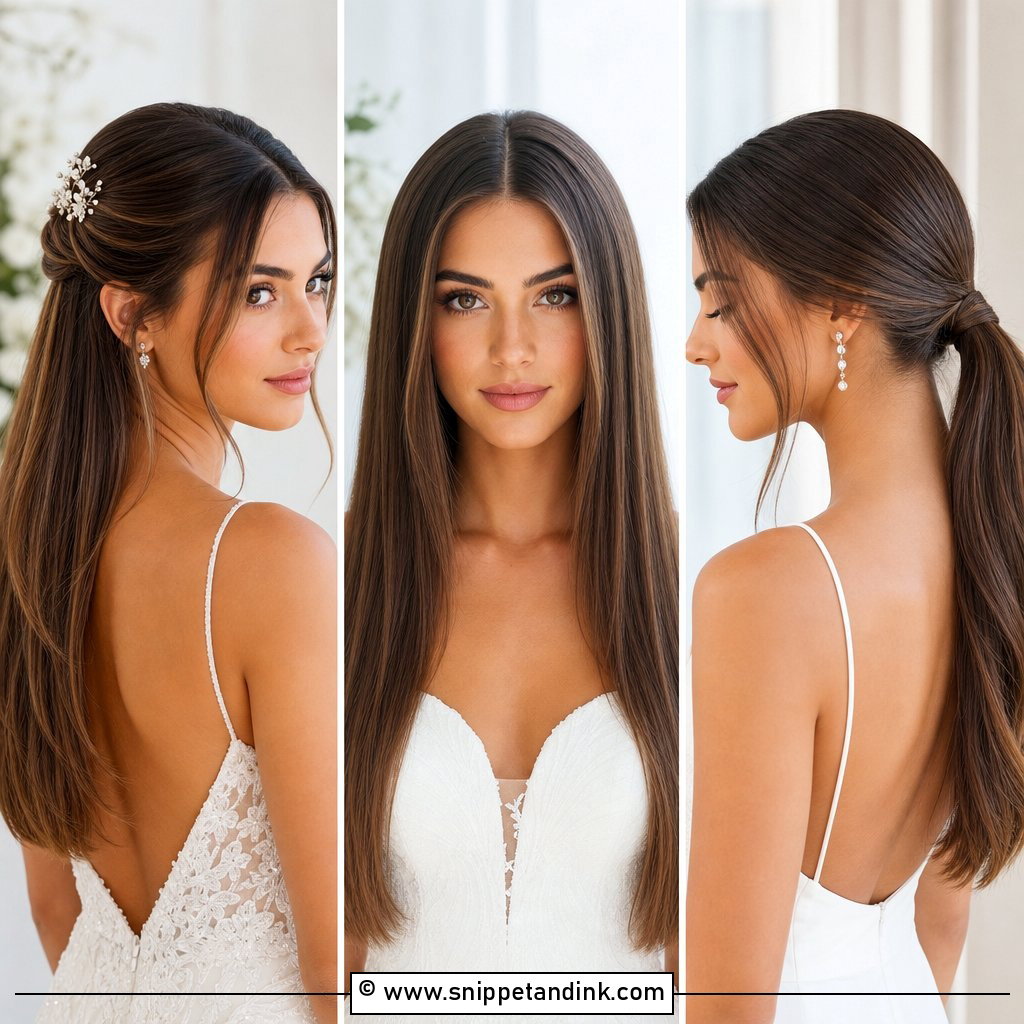
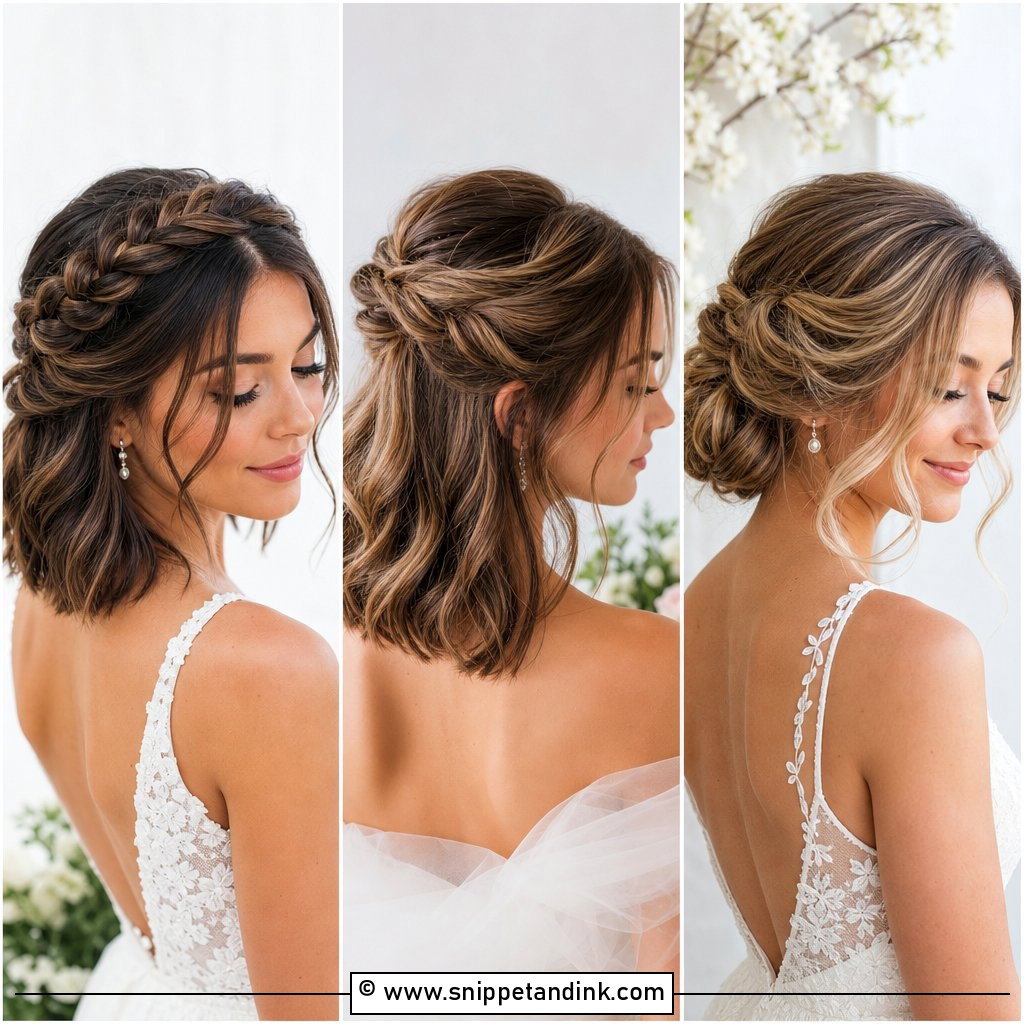

15. Plus Size Bridal Long Layers
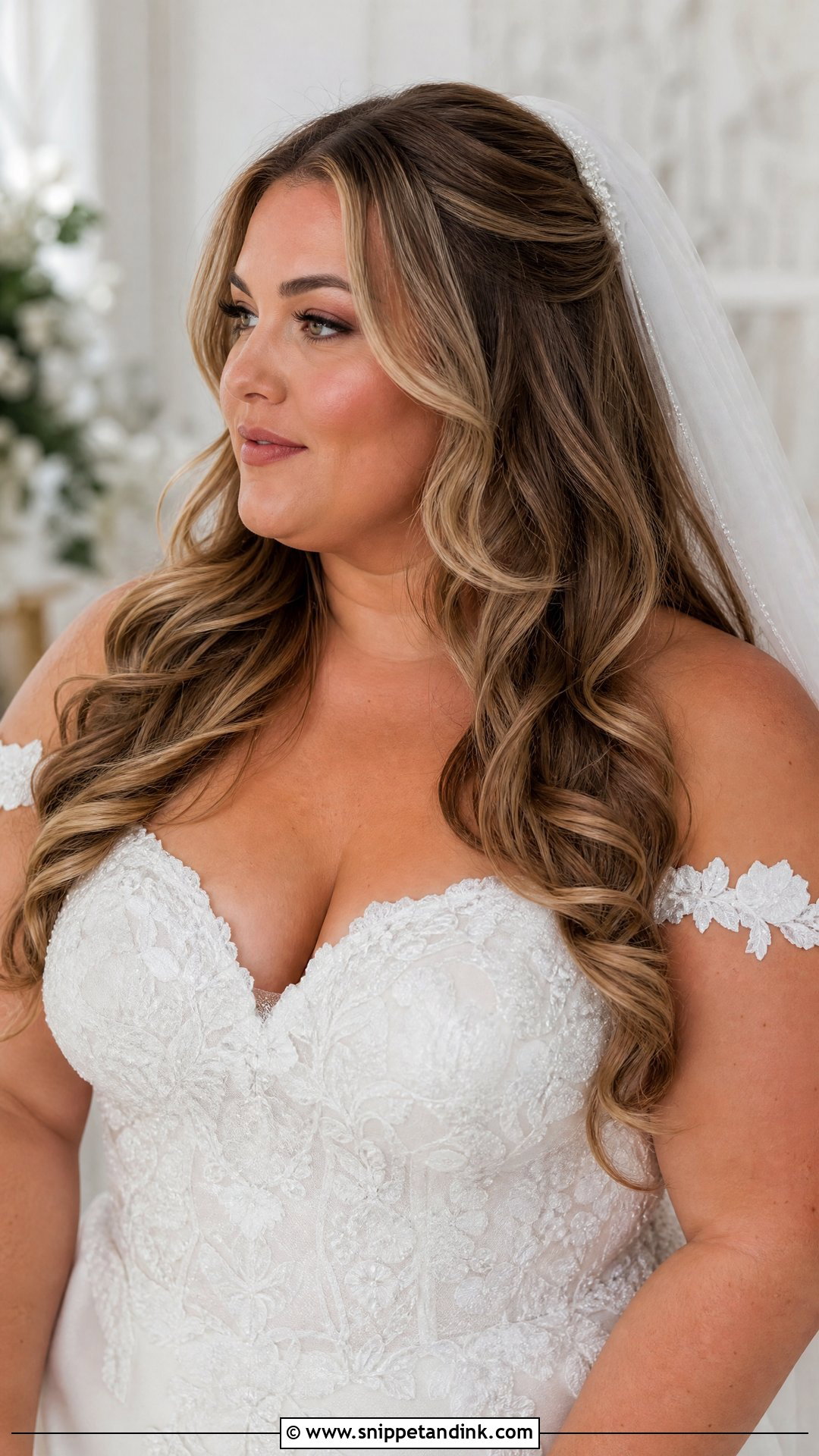
Layers move well when hair is worn down, but they make an updo harder, since shorter pieces poke out of a bun. If you’re wearing it loose, though, they’re a gift. Face-framing pieces starting at the cheekbone or collarbone add softness exactly where you want it. I curl layered hair in alternating directions so the pieces don’t clump together. Off-the-shoulder necklines and flowing skirts suit it.
16. Plus Size Bridal Curtain Bangs
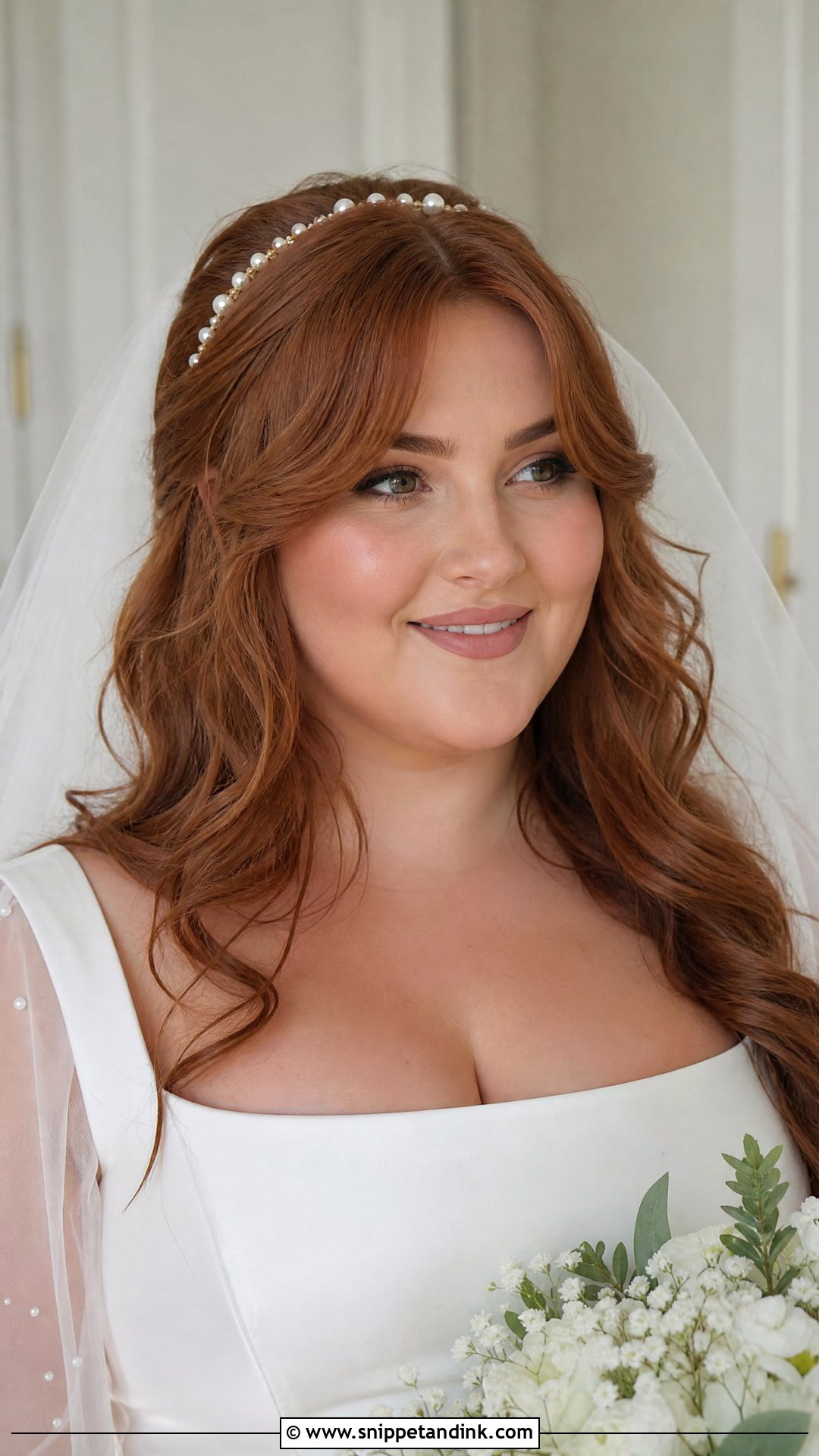
Curtain bangs frame the face without hiding it, which is why I like them for brides who feel exposed with everything pulled back. Length is the deciding detail: I want them sitting at or just below the cheekbone, because too-short bangs separate and stick to the forehead in heat. Have them trimmed about a week out. On the day, I blow them out with a round brush from a center part so they sweep outward, and set the veil behind the crown to keep them visible.
17. Plus Size Bridal Loc Updo
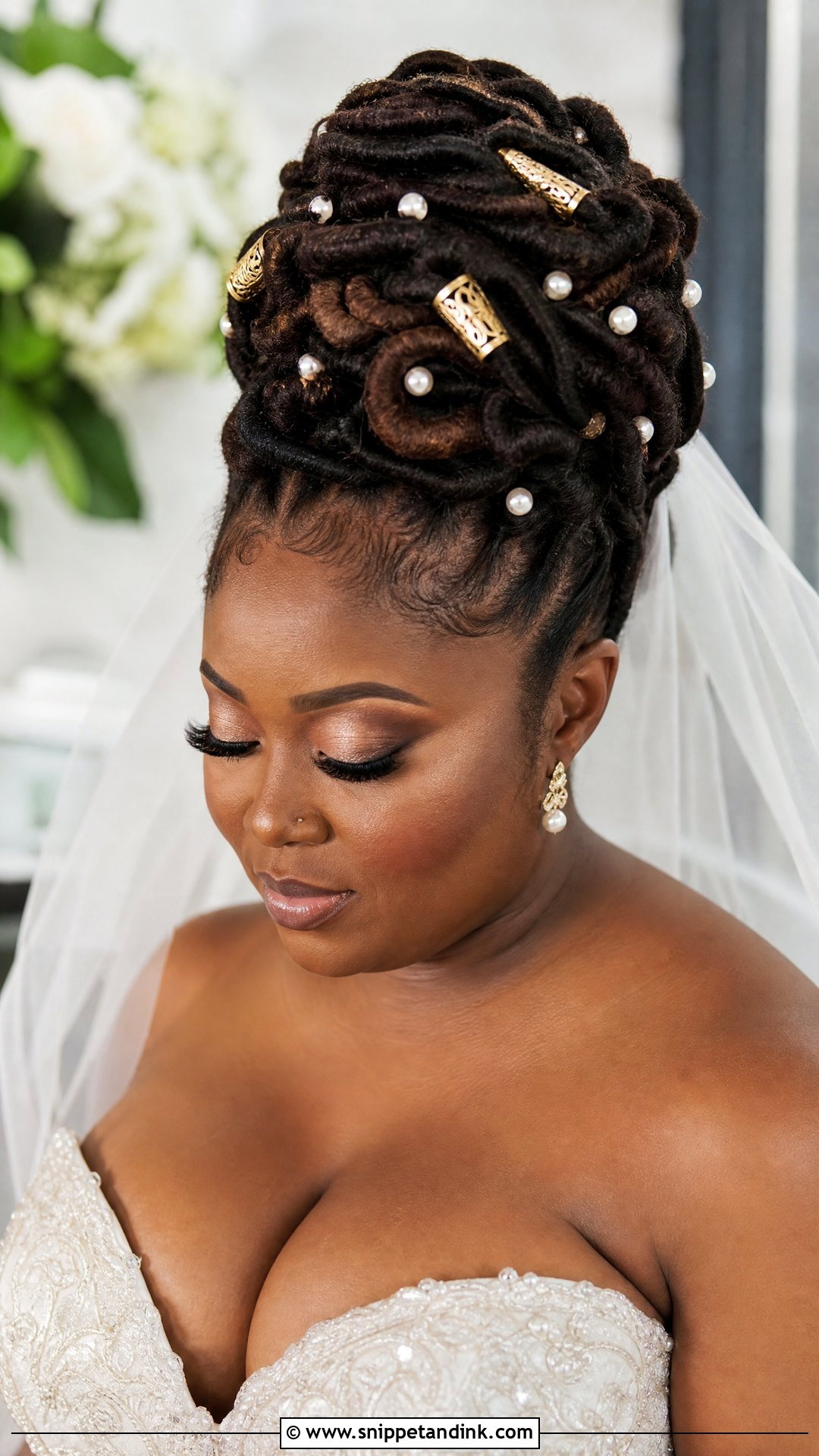
Locs are heavy, and that weight is the first thing I plan around. A sculptural updo can pull hard at the scalp if it all hangs from one point, so I spread it across several anchor points and avoid tension at the edges, where traction can damage the hairline. A crown-like shape adds height; a low gathered bun feels softer. Gold cuffs, pearls or a veil slot neatly between locs. Wear the trial style for a few hours. If it aches then, it’ll ache at the reception.
18. Plus Size Bridal Soft Blowout
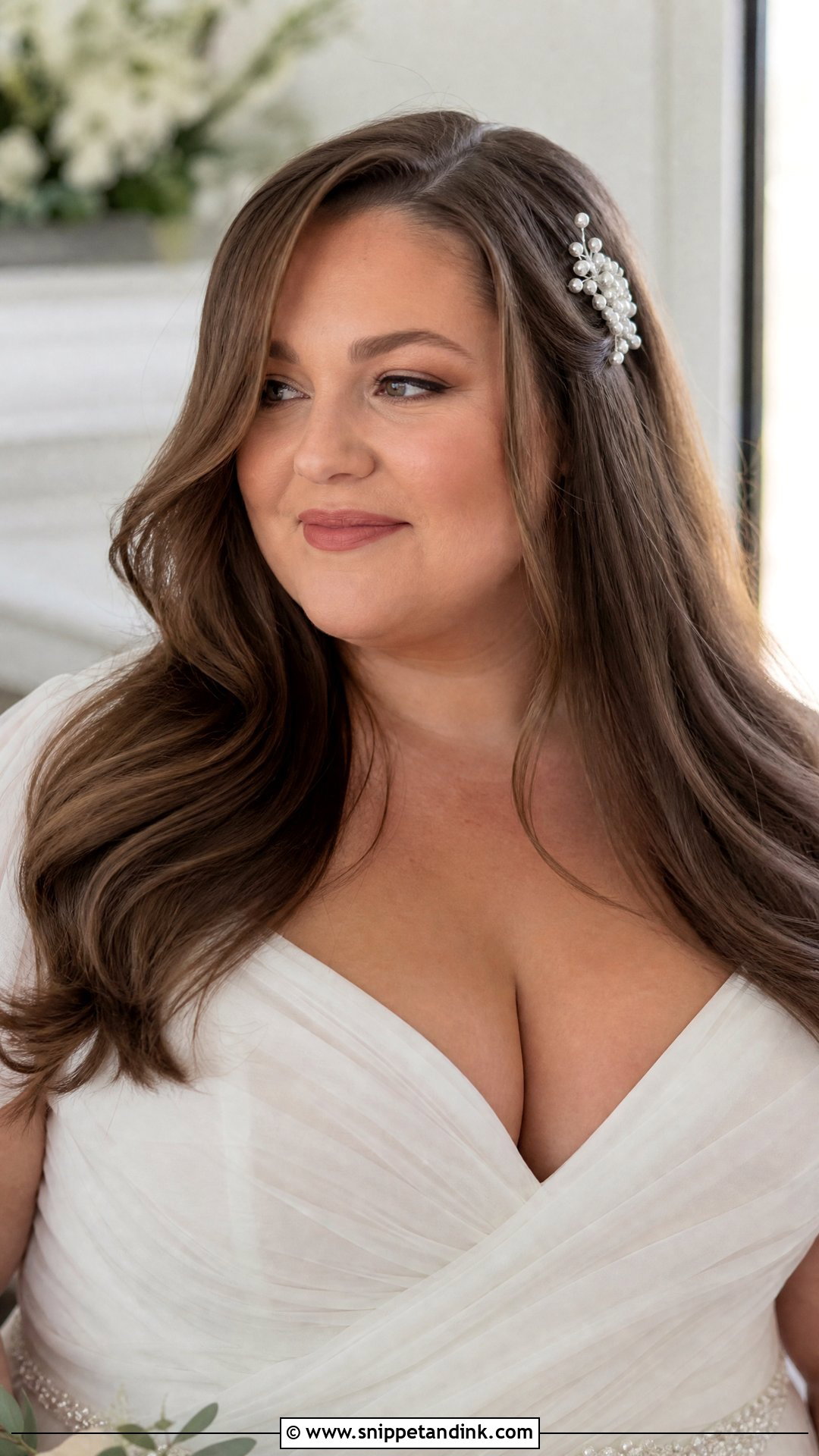
A soft blowout gives polish without the formality of set curls. I dry in sections with a large round brush, lifting at the root and bending the ends. It suits medium to long hair, lobs and curtain bangs. Humidity is its weakness, so it’s the riskiest choice for an outdoor summer wedding; I’d keep a flat iron and an anti-frizz product nearby for touch-ups. A bow or pearl clip makes it bridal with a simple modern gown.
19. Plus Size Bridal Messy Bun
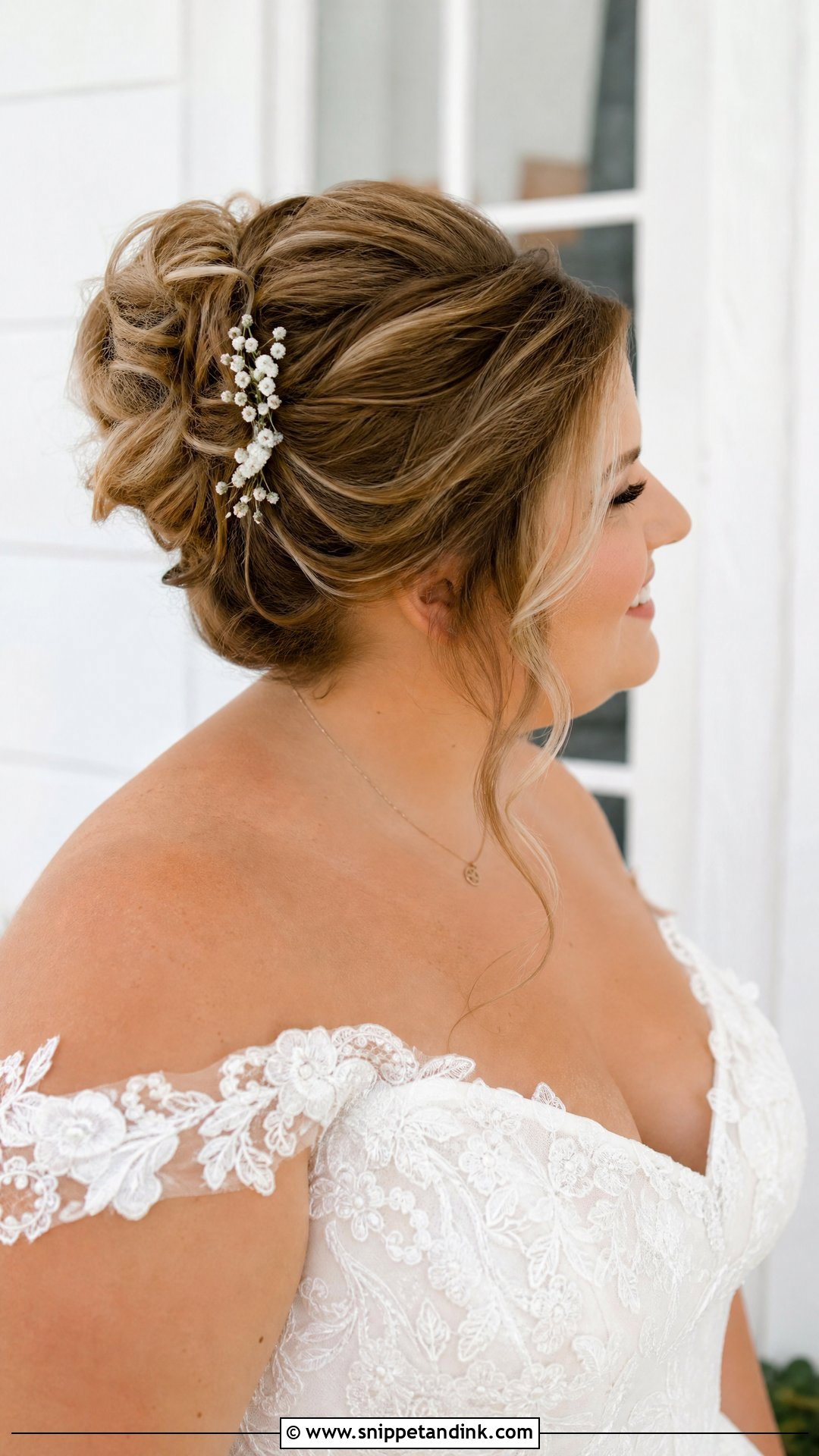
Messy is the hardest effect to create on purpose. I curl the hair first so the texture is planned, then pin it loosely in sections around a secure base so it looks relaxed but can’t collapse. The bun should be visible from the front, which on a fuller face means full and a little higher than the nape. A few twisted pieces and face-framing strands finish it, with pearl pins or small flowers for a garden wedding.
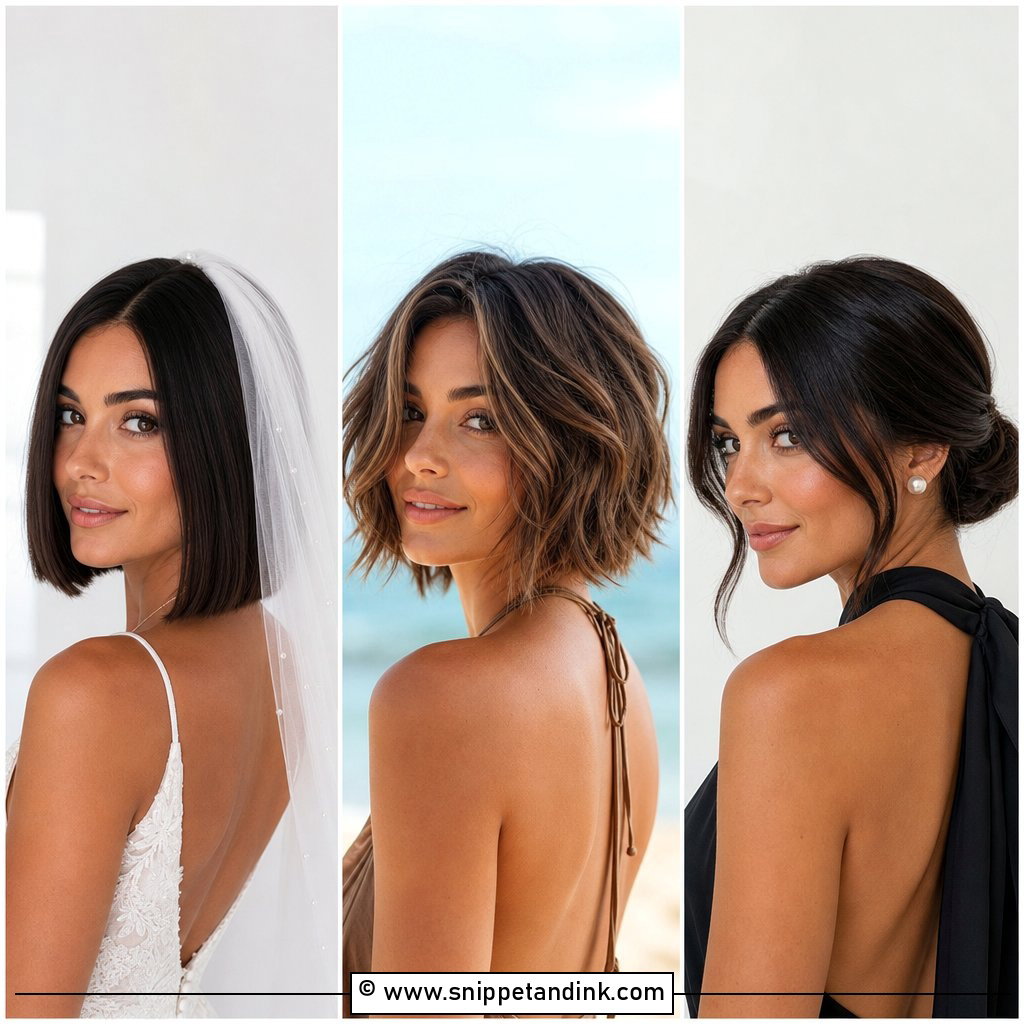
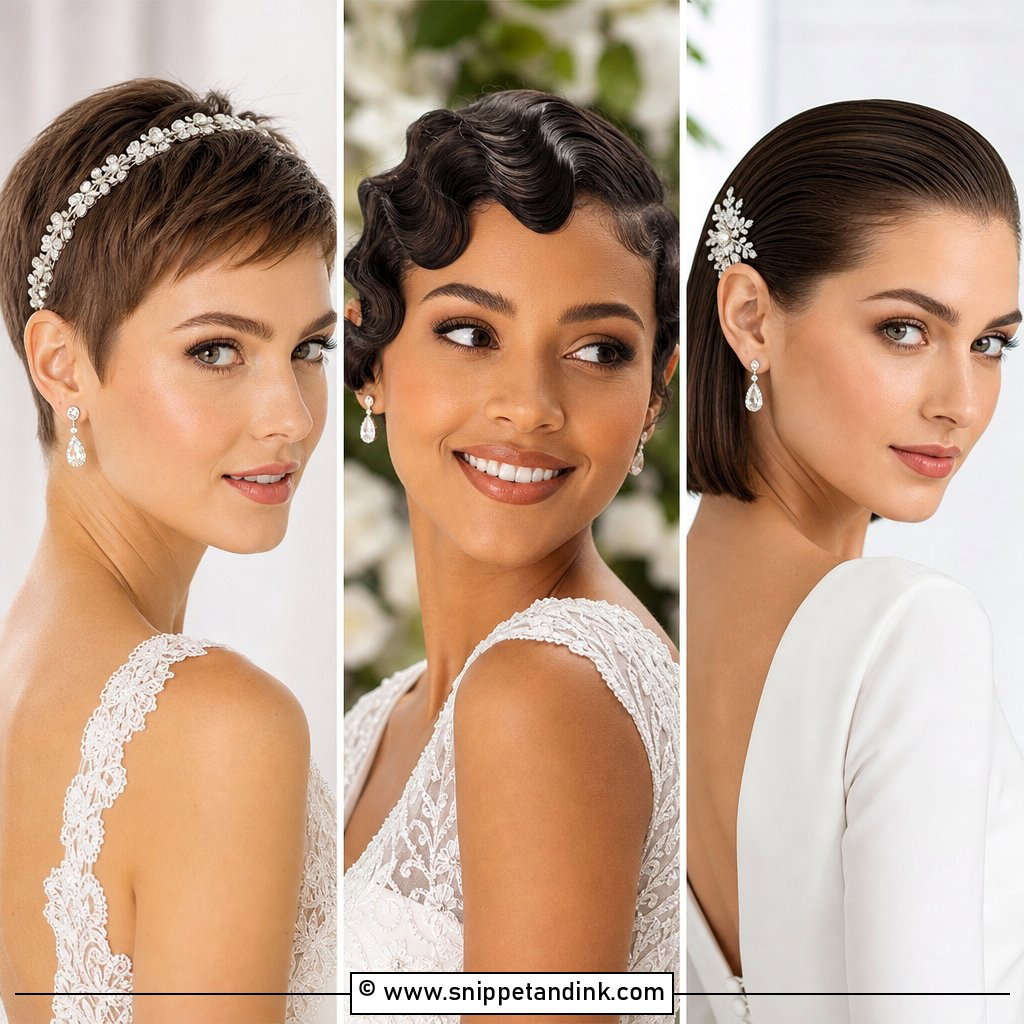
20. Plus Size Bridal Waterfall Braid
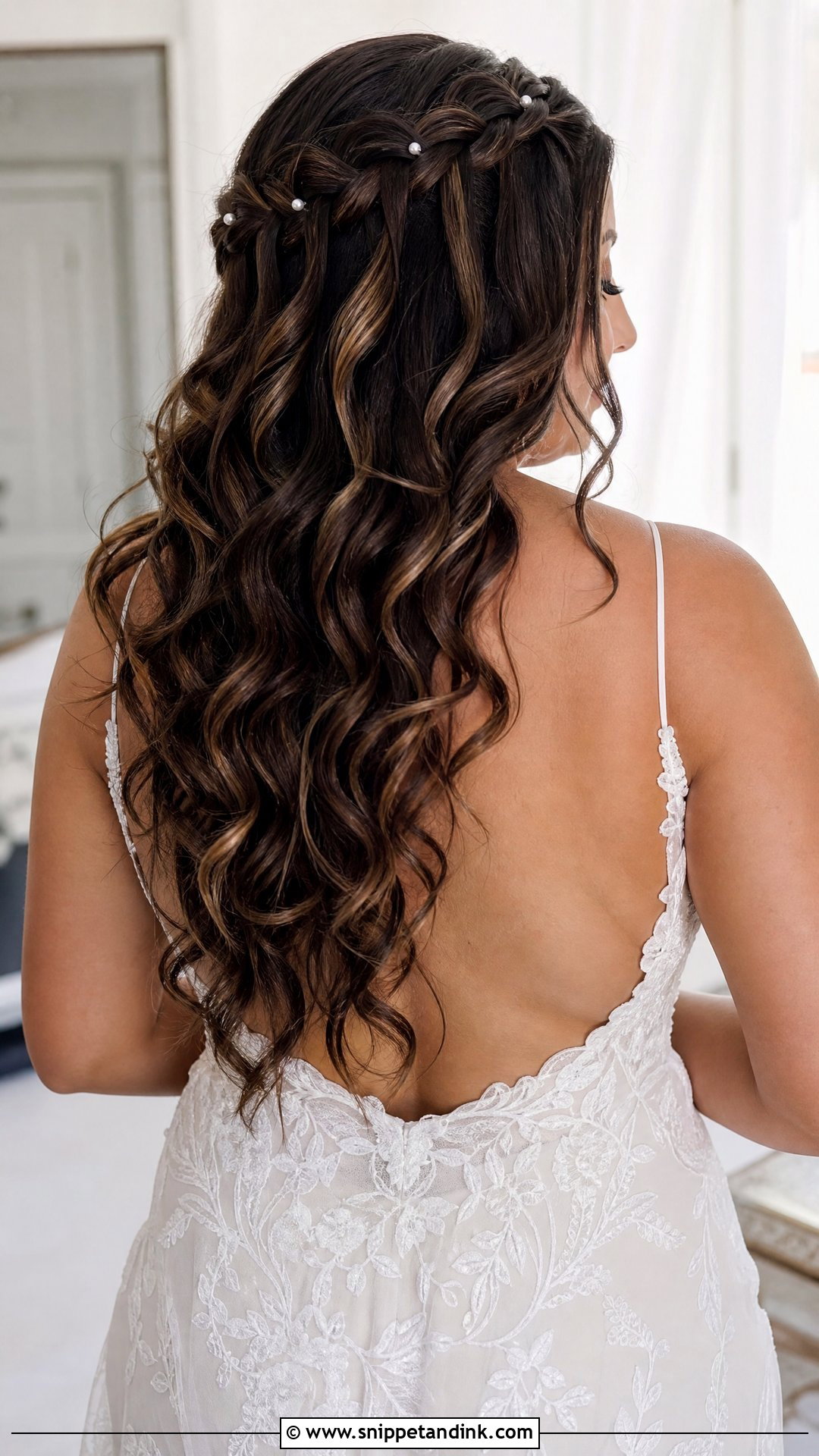
Waterfall braids show up best on dimensional hair. Highlights or balayage let the woven pattern stand out, while one solid dark color tends to swallow it in photos. I start near one temple and work across the back, dropping a strand at each pass so the length falls through, then curl the loose hair soft and full. It’s a lovely detail with an open-back dress, because the back of your head will be in so many ceremony shots.
Heavy Hair Shouldn’t Give You a Headache by the Speeches
Thick, long or extension-filled hair weighs a lot once it’s pinned up. A style that feels fine at noon can ache by eight, and brides often blame the pins when the real issue is how the weight was distributed.
- I pin heavy hair onto several small anchor points rather than one big base, so no single spot on the scalp carries it all.
- Veils go into a braid or bun base, never straight into loose hair, so the comb doesn’t yank every time someone steps on the train.
- Clip-in extensions are worth wearing once for a full evening before the wedding, so you find any clip that pinches.
- If anything aches at your trial, say so there and then, and keep the style in for a few hours afterward, ideally through a meal.
On the day, ask your stylist to leave you a few matching pins and a small tail comb. Pulling one tight pin in the evening is easy; taking down half a style in a restroom is not.
Small Adjustments Matter Most at Your Trial
There’s no single flattering formula for plus size wedding hair. The right style balances your dress, veil and texture, and stays comfortable from the first look to the last dance. At your trial, think about neckline, veil placement, weather and how much movement you want. Bring inspiration photos, and stay open to small changes: a softer part, a little more crown height, an accessory moved an inch. Those small adjustments are where a trial earns its value.
You'll Like These Ideas:


Leave a Reply