
In nearly every wedding photo, the front of the hair is what shows: the part, the lift over the forehead, the way the maang tikka sits. The back can be a perfect bun, but if the front is flat, crooked or fighting the jewelry, that’s what you’ll notice. These 25 Indian front hairstyles cover puffs, twists, braids and parts across haldi, mehendi, sangeet and the main ceremony. With each one I’ve noted how I build it and which faces, hairlines and outfits it suits.
Reading Your Hairline Before You Pick a Front Style
Face shape gets talked about a lot, but in my chair the hairline usually decides more. Before I suggest any front style, I pull the hair back and look closely at what’s there.
- A cowlick at the front pushes hair in its own direction. Work with it by parting on the side it already falls toward, instead of forcing a center part that springs up by noon.
- A widow’s peak looks sharp with a sleek middle part, and a softer swept front blurs it if you’d rather it didn’t show.
- Thin temples or a receding edge show through tight braids and sleek styles. Twists, a soft puff or swept waves cover more.
- Baby hairs that won’t lie flat can be brushed down with a little gel and a soft toothbrush, or left fluffy for a softer frame. Decide before makeup, since gel near the hairline can lift foundation.
Also check how high your forehead is relative to the maang tikka you plan to wear. A long tikka on a short forehead lands on the brows; the chain can usually be shortened by a jeweler if you ask early.
1. Front Puff With High Bun
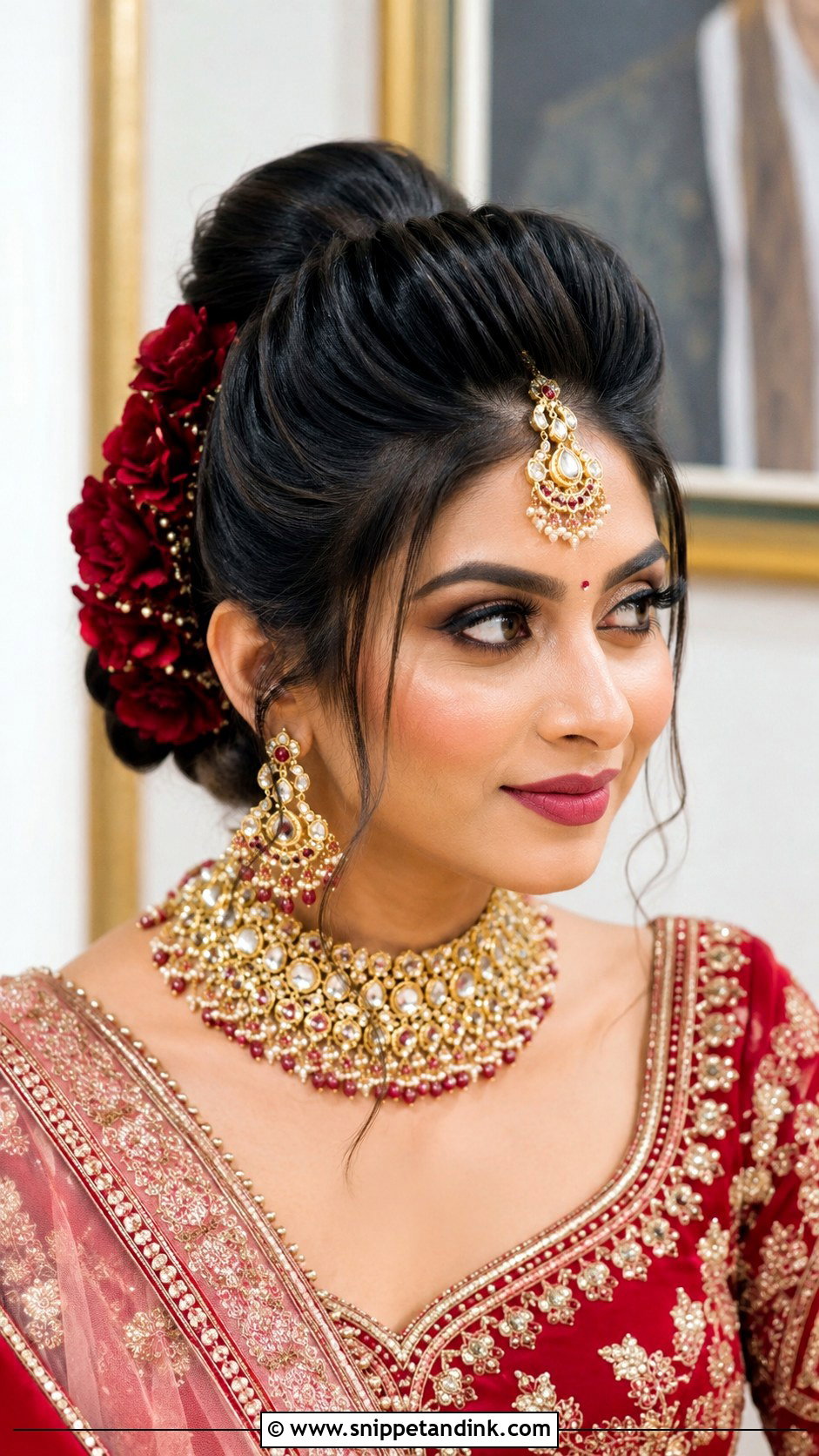
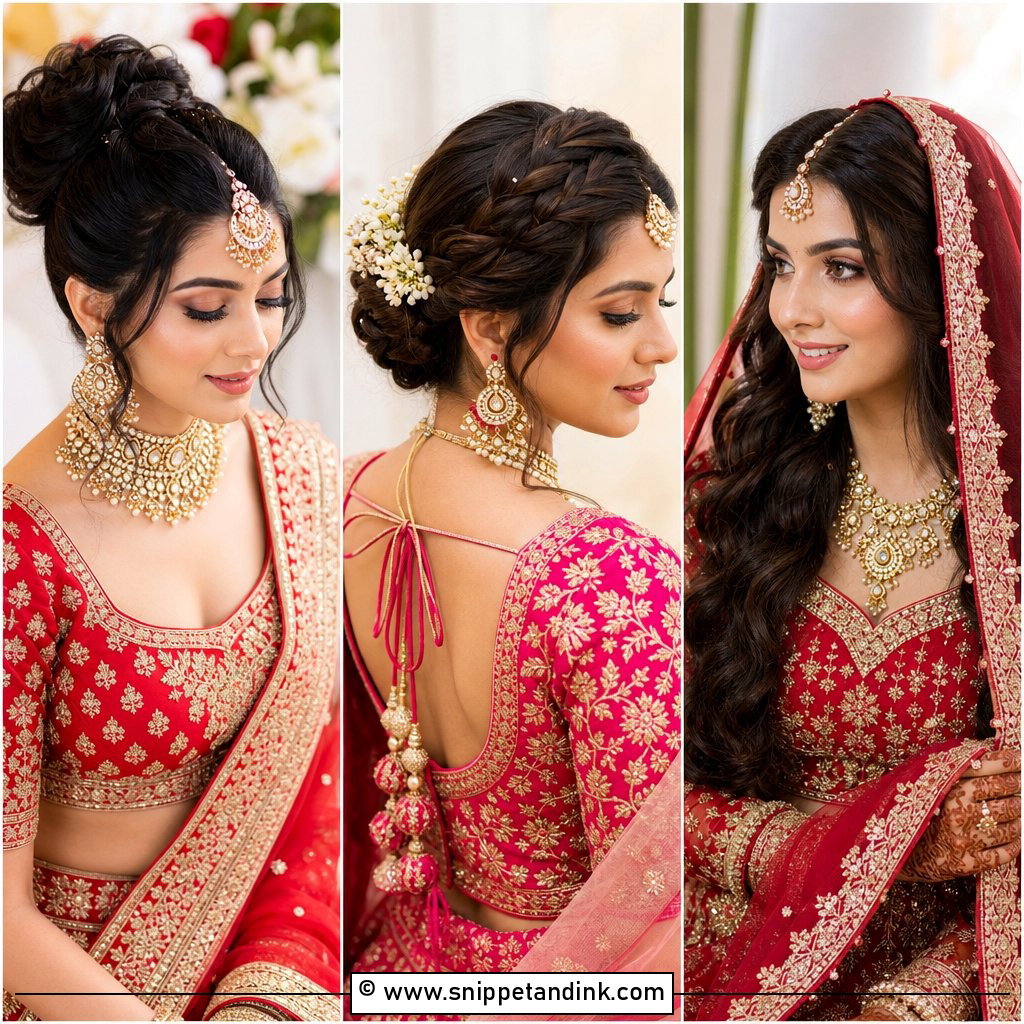
A front puff with a high bun gives the most height of anything here. I backcomb only the underside of the front section, smooth the top layer over it, then roll it back and pin it with two crossed grips hidden under the lift. The rest goes into a sleek high bun. It lengthens a round face and balances heavy jewelry. Where it fails is under a dupatta worn over the head, which flattens the puff within minutes, so I’d keep it for functions where the dupatta sits on the shoulder.
2. Side Swept Front With Maang Tikka
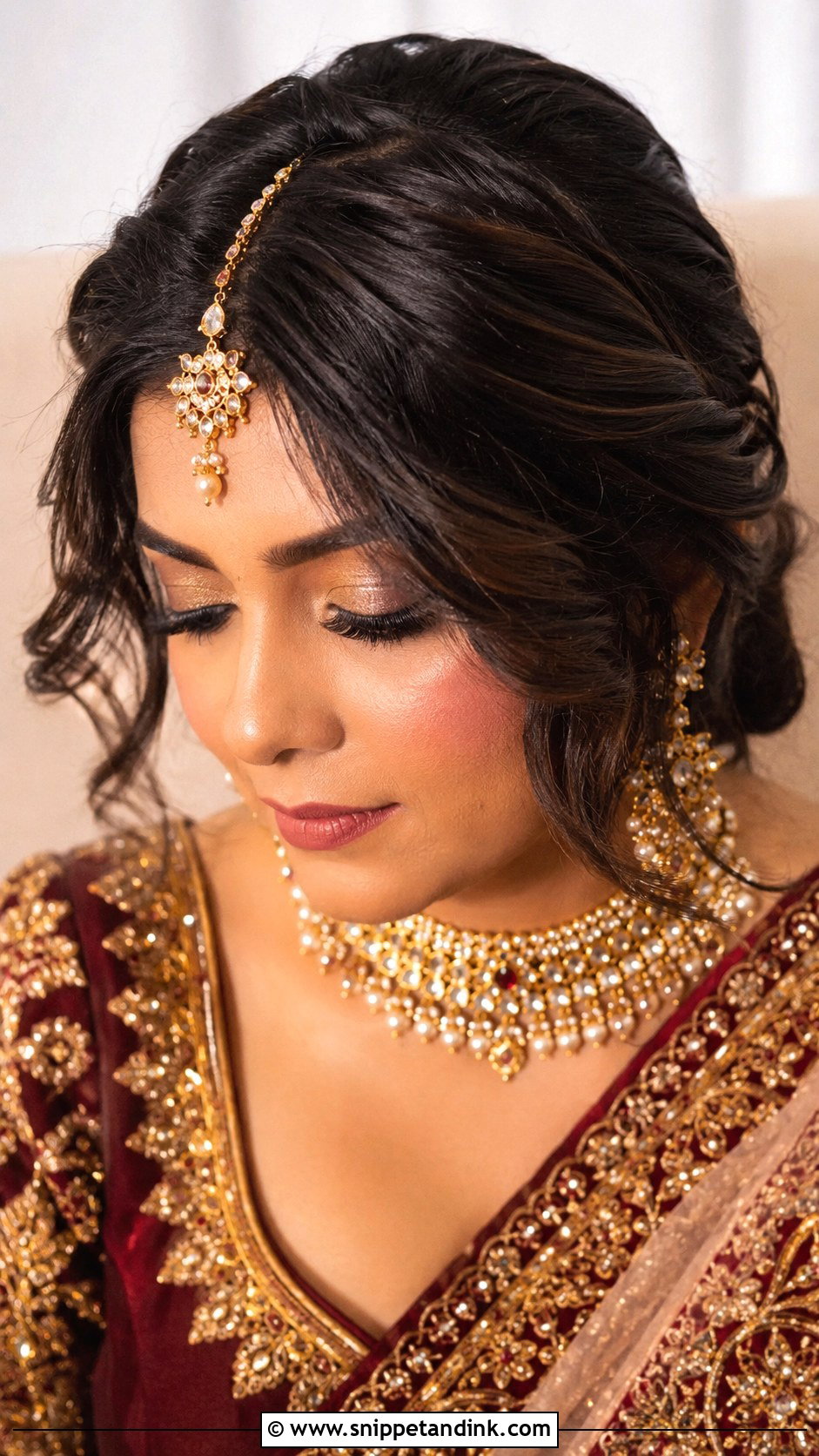
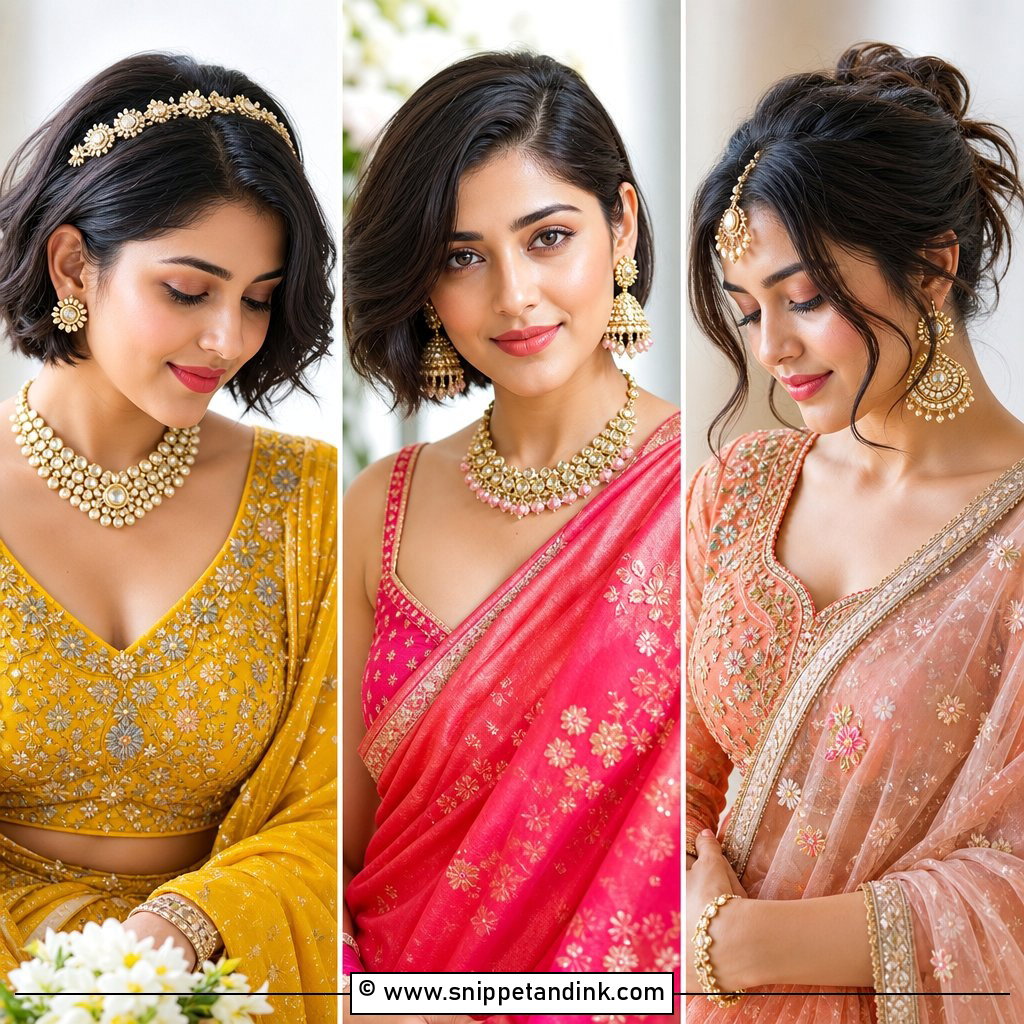
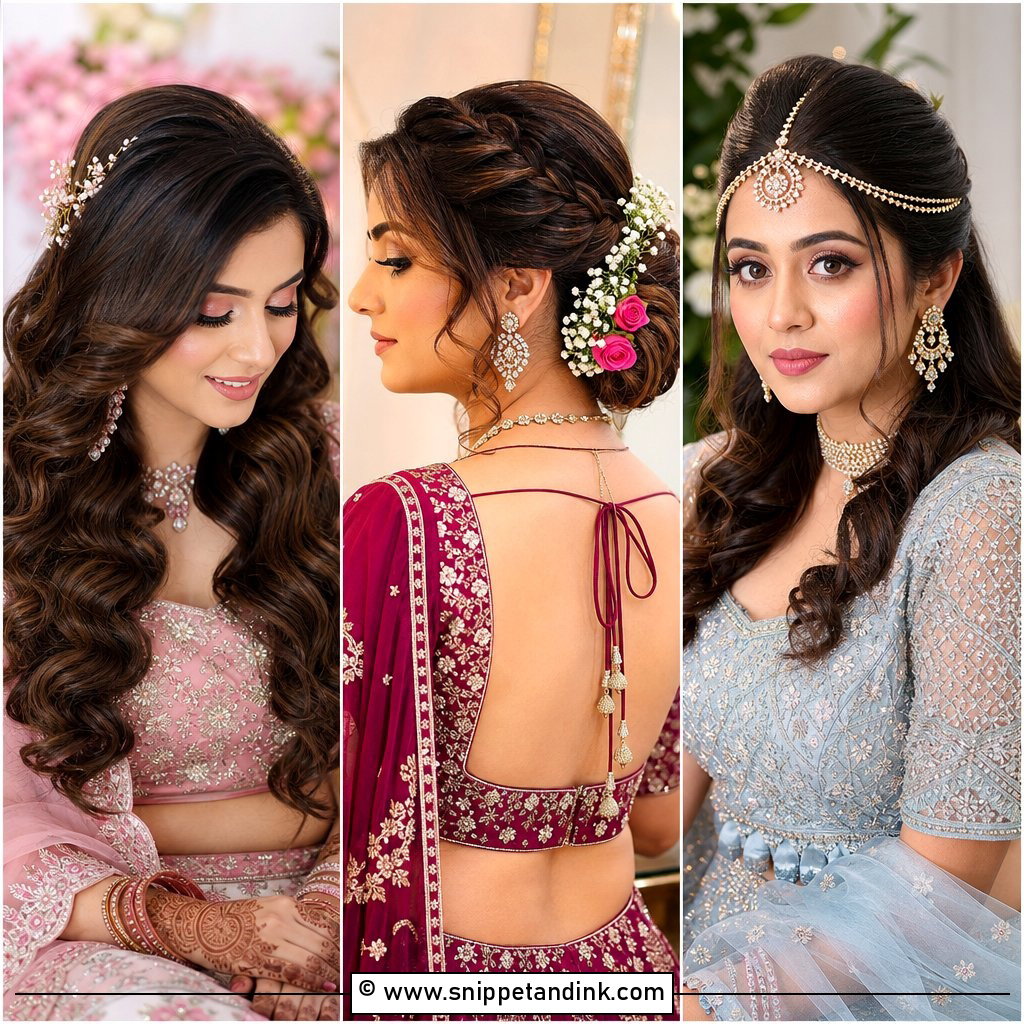
A deep side part with the front swept across the forehead in a soft wave suits round and square faces, because the diagonal line breaks up width. The maang tikka still sits on the part, which means it sits off center; some brides love that, and some find it looks unbalanced in photos, so try it at your trial. I set the front wave with a clip while it cools so it doesn’t fall into the eyes by evening. It goes with open hair or a loose side bun at sangeet and reception.
3. Middle Part With Maang Tikka
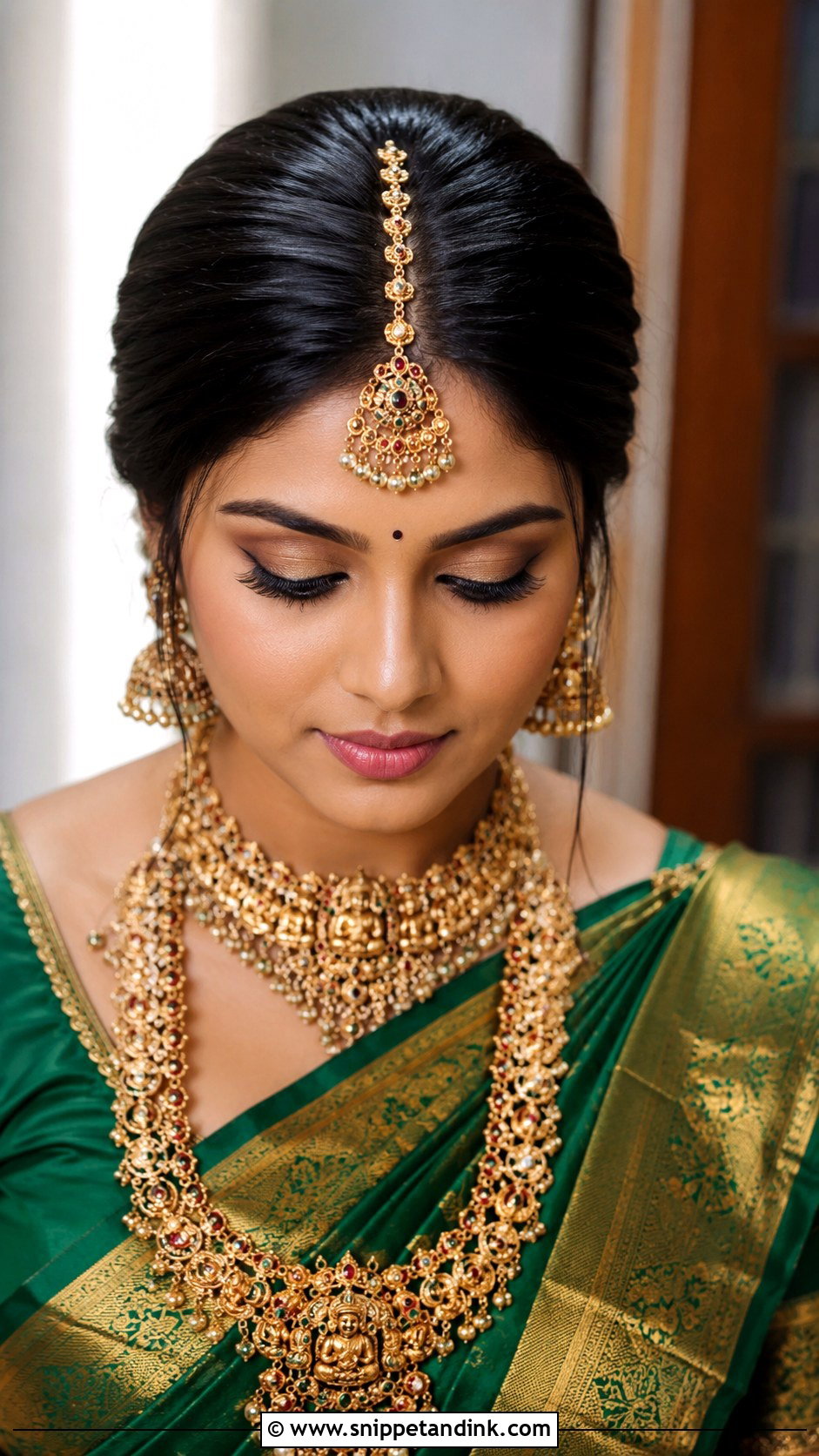
A clean middle parting with a maang tikka is the traditional South Indian bridal front, and it’s often what I’d recommend for a muhurtham. I find the center by lining up with the nose, then smooth both sides flat with a little gel. The tikka hook pins just behind where the part meets the crown. It suits oval and heart-shaped faces; on a very long face, a middle part can lengthen it further, so I add a little width at the sides.
4. French Braid Front
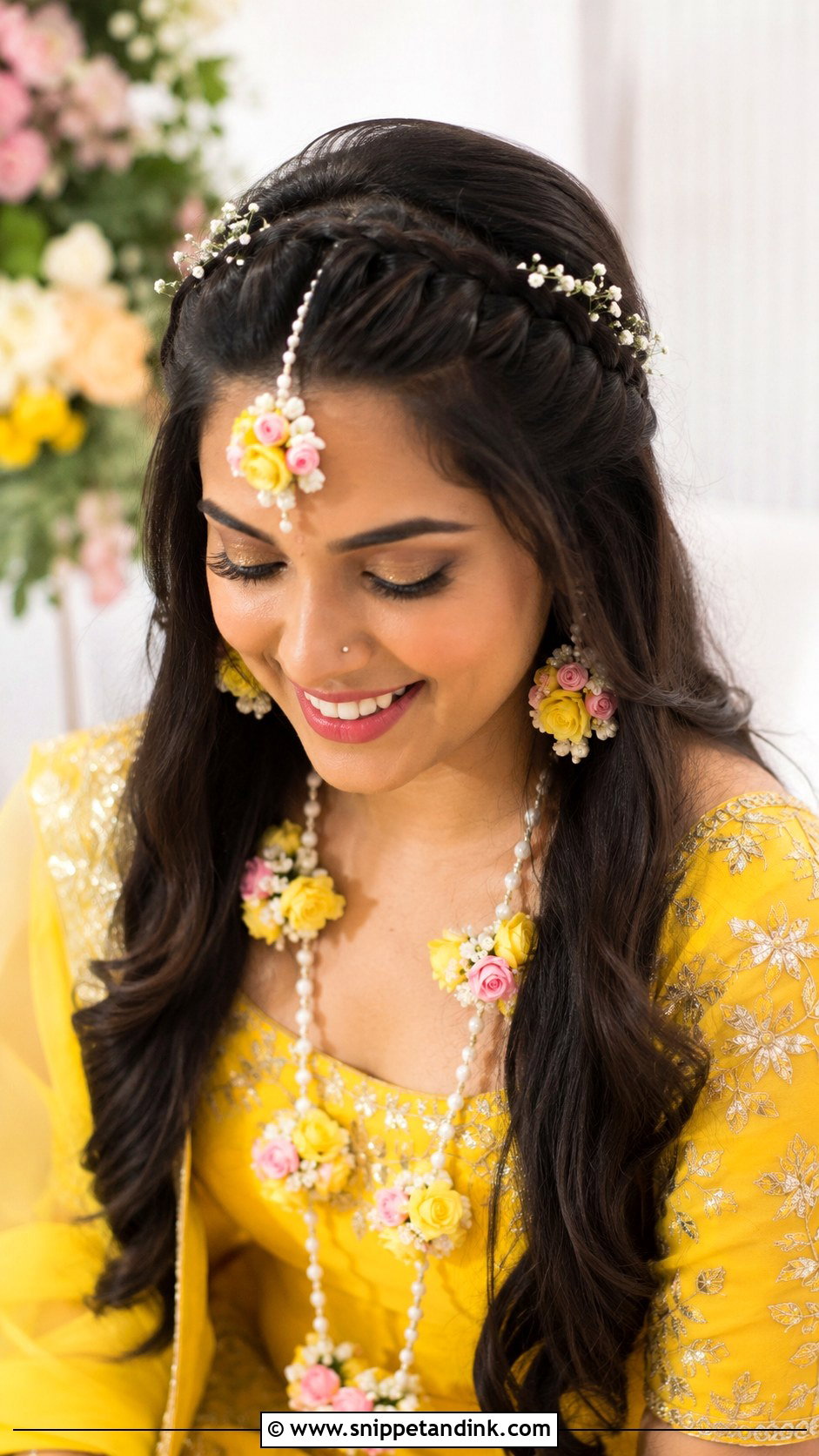
A French braid along the front starts at the hairline and picks up small sections as it moves back. It’s practical: nothing falls in your face during a mehendi when your hands are covered in paste, or during haldi. I side-part first, then carry the braid to a bun or ponytail. On very fine or layered hair, short pieces can escape the braid, so a light spray as you go keeps it tidy. Tiny flowers or pearls along it add a bridal touch.
5. Front Twisted Braid Bun
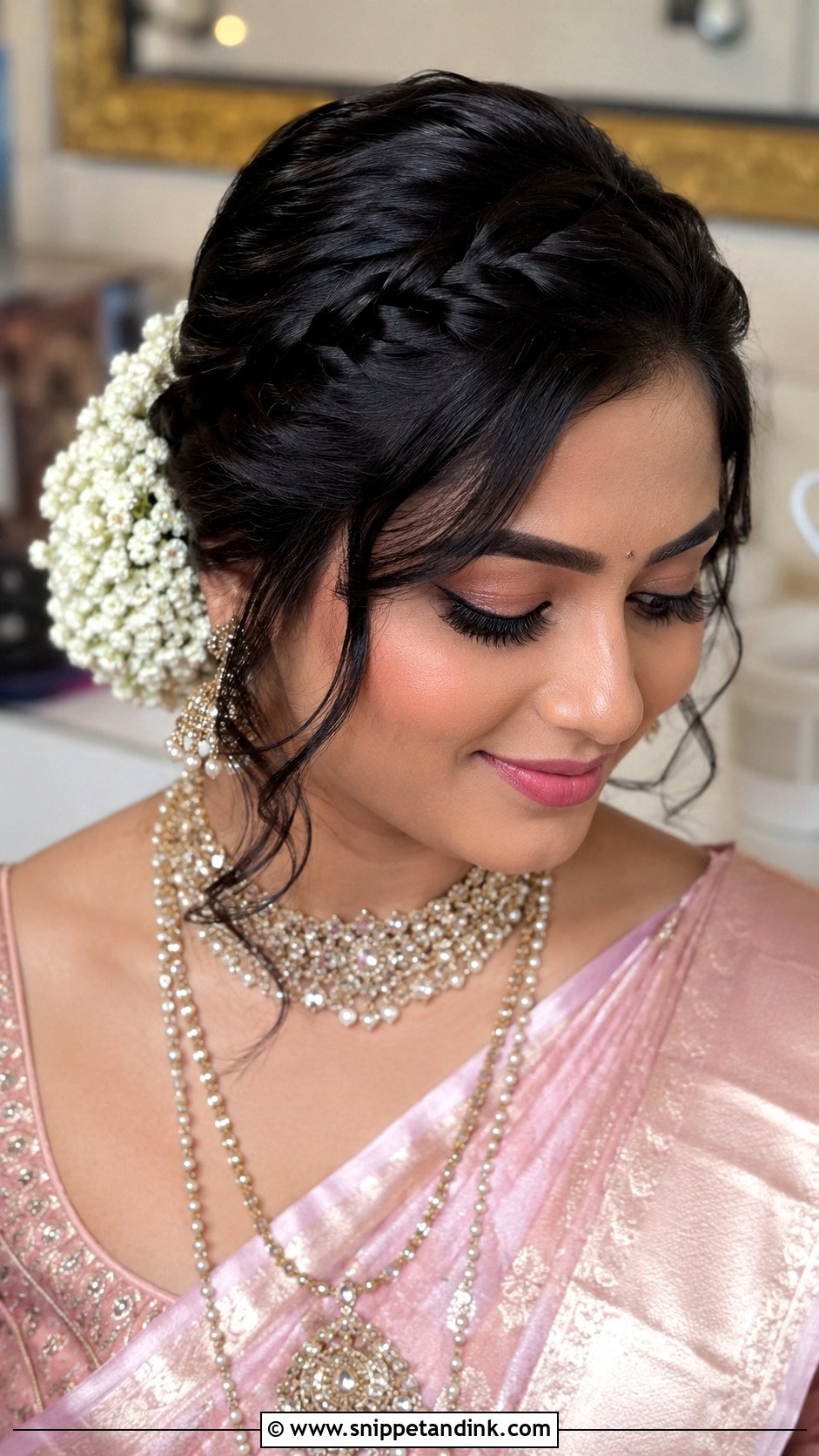
Front twists are softer than braids and less tight at the hairline, which I appreciate for brides with sensitive scalps or thinning temples. I take small sections from the front, twist them back gently and pin each one before gathering everything into a low or mid bun. Jasmine or baby’s breath tucked near the bun finishes it. With a silk saree it looks traditional without much weight around the face.
6. Bouffant Puff With Curls
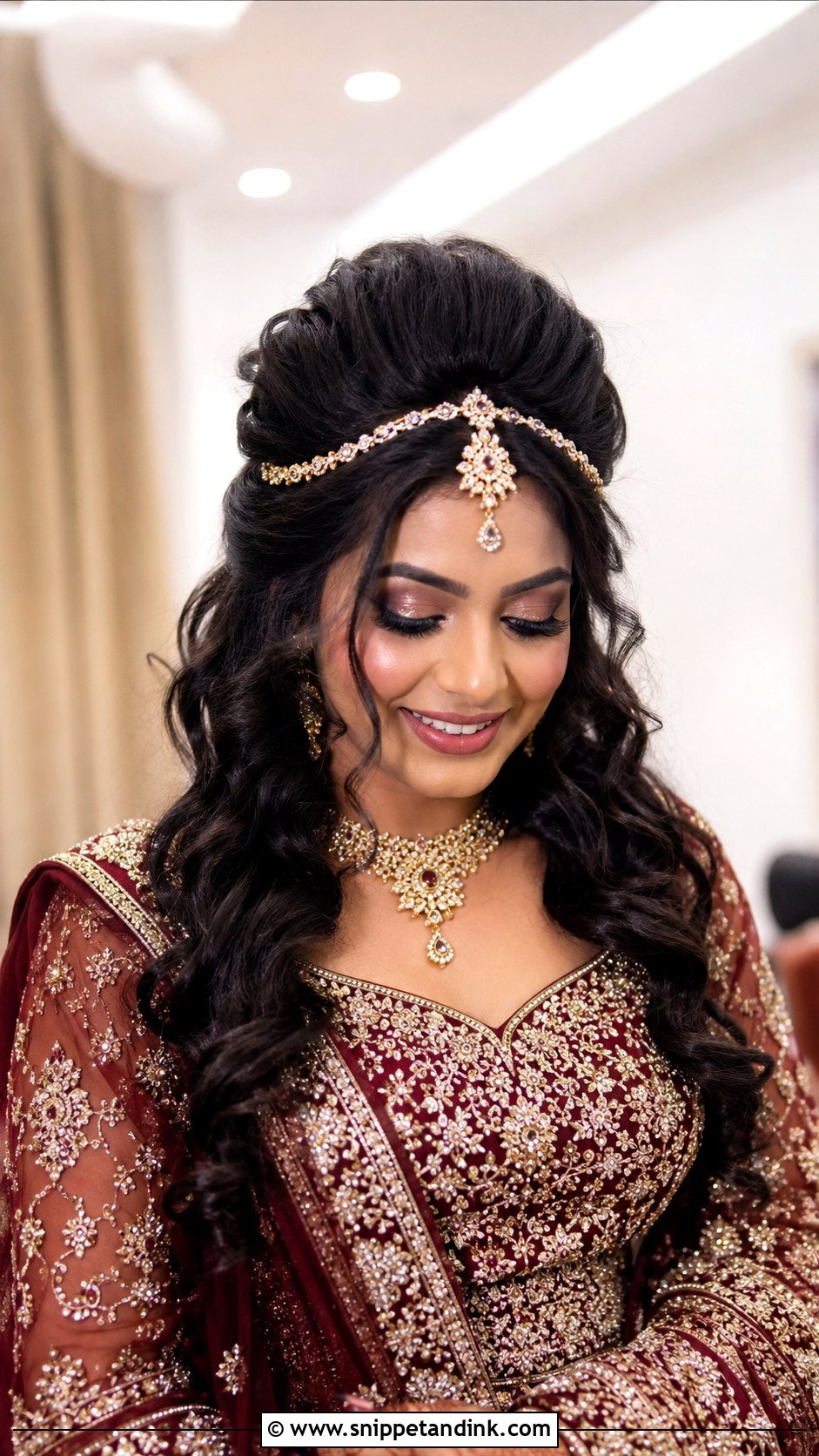
A bouffant puff has more height and roundness than a standard puff, with curls falling below. It takes thorough backcombing at the base and careful smoothing on top. Leave the rest down in curls or pull half back. With a maang tikka or matha patti, it looks regal at a reception. It’s a heavy look, and on petite brides with small faces it can overwhelm, so I scale the height down.
7. Side Braid With Front Twist
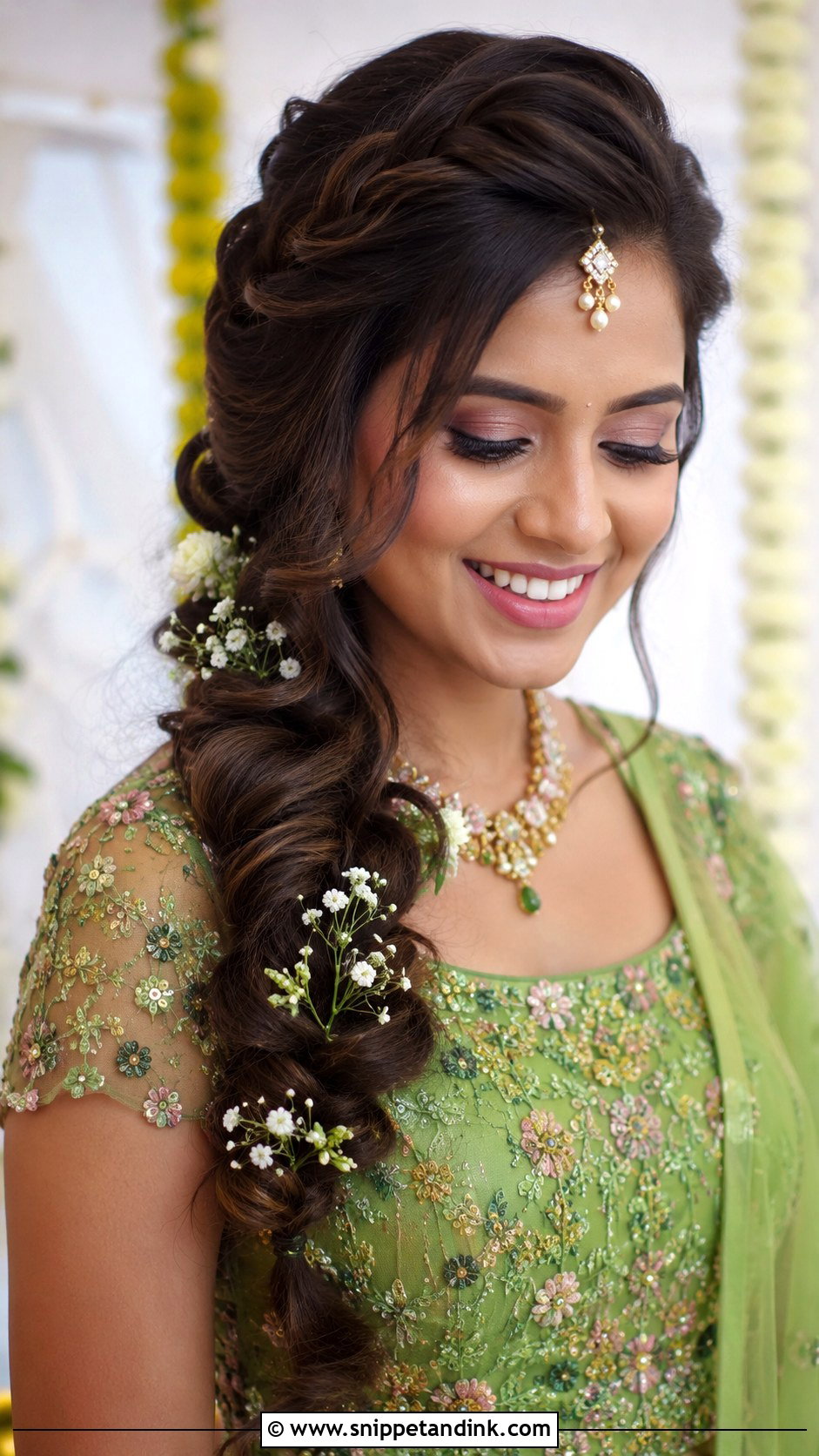
Here the front is twisted back and pinned to give a little lift, then all the hair is swept to one side into a loose braid. It drapes over one shoulder and leaves the opposite earring on full display. I pin the twist firmly before braiding, because the weight of a side braid pulls the front loose. Flowers or pearls along the braid suit a mehendi or sangeet. It’s one of the more comfortable styles for long, active functions.
8. Half Up Half Down With Front Volume
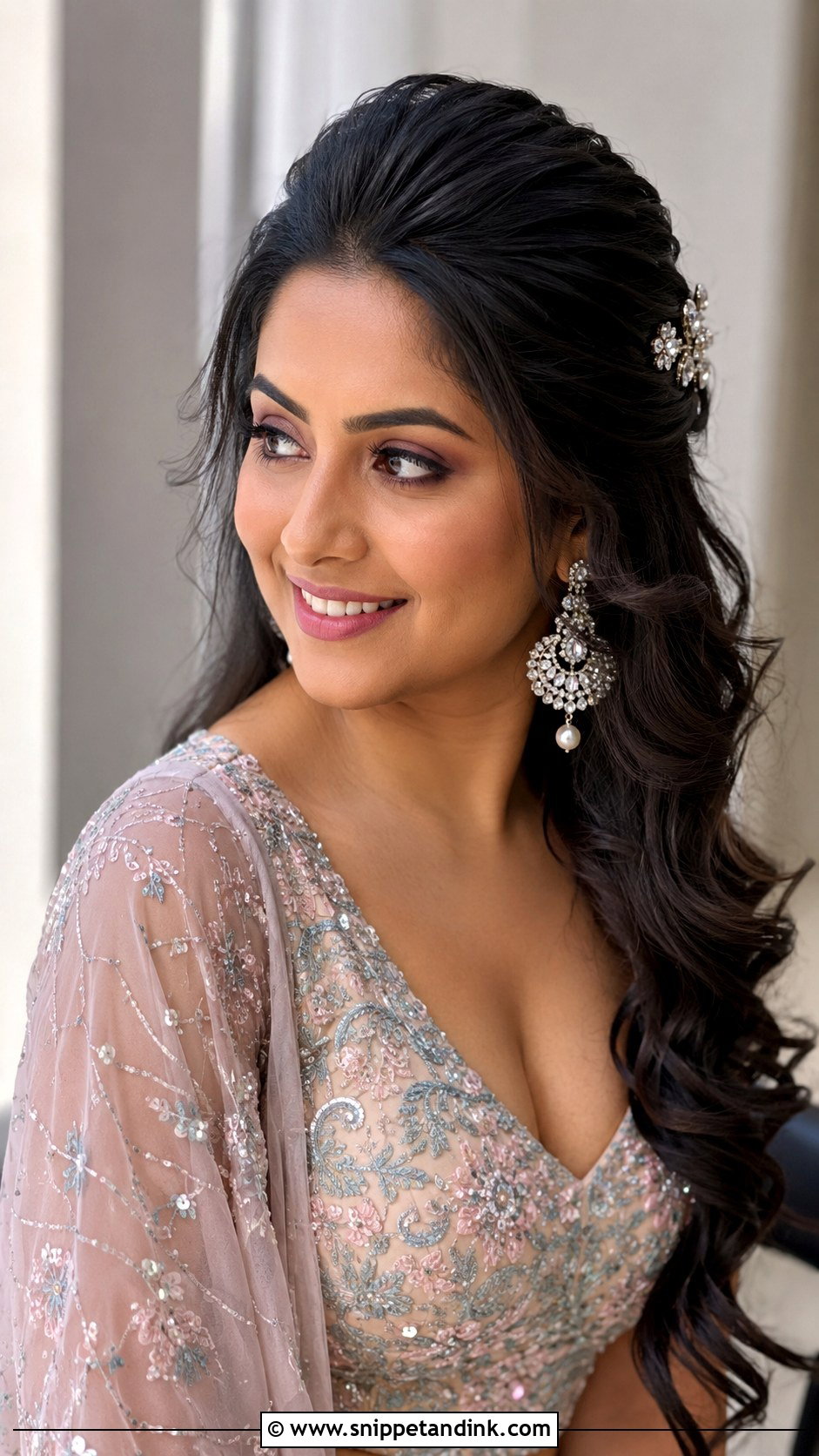
Half up, half down with volume at the front gives you open hair with a lifted crown. I tease the front gently, pull the top back, secure it, then curl the rest. Curls left down need to be set properly; open hair loses curl faster than pinned hair. A decorative clip or small flowers at the pin point covers the grips. It suits Indo-Western gowns and lehengas at receptions and destination weddings, and shows off length well.
9. Curly Front Open Hairstyle
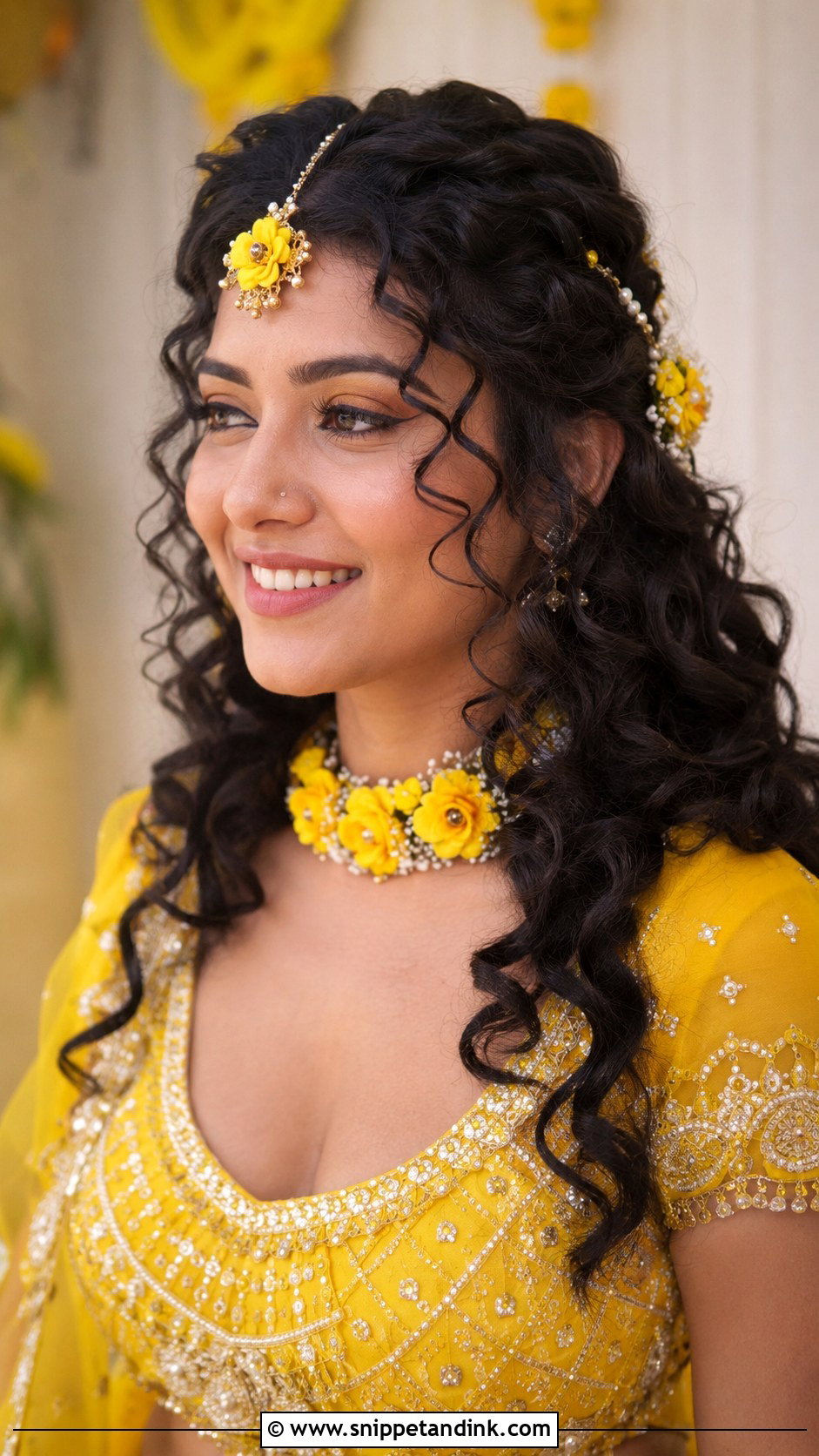
Natural curls deserve a style that works with them, and an open curly look does that. I let voluminous curls frame the forehead and lift the crown with a small puff or twist to keep hair off the face. Curly hair shouldn’t be brushed once styled, or it frizzes. A curl cream and diffusing give the best definition. A delicate maang tikka on the part adds tradition. It’s best for haldi, mehendi or beach weddings where a relaxed look fits.
10. Fishtail Front Braid
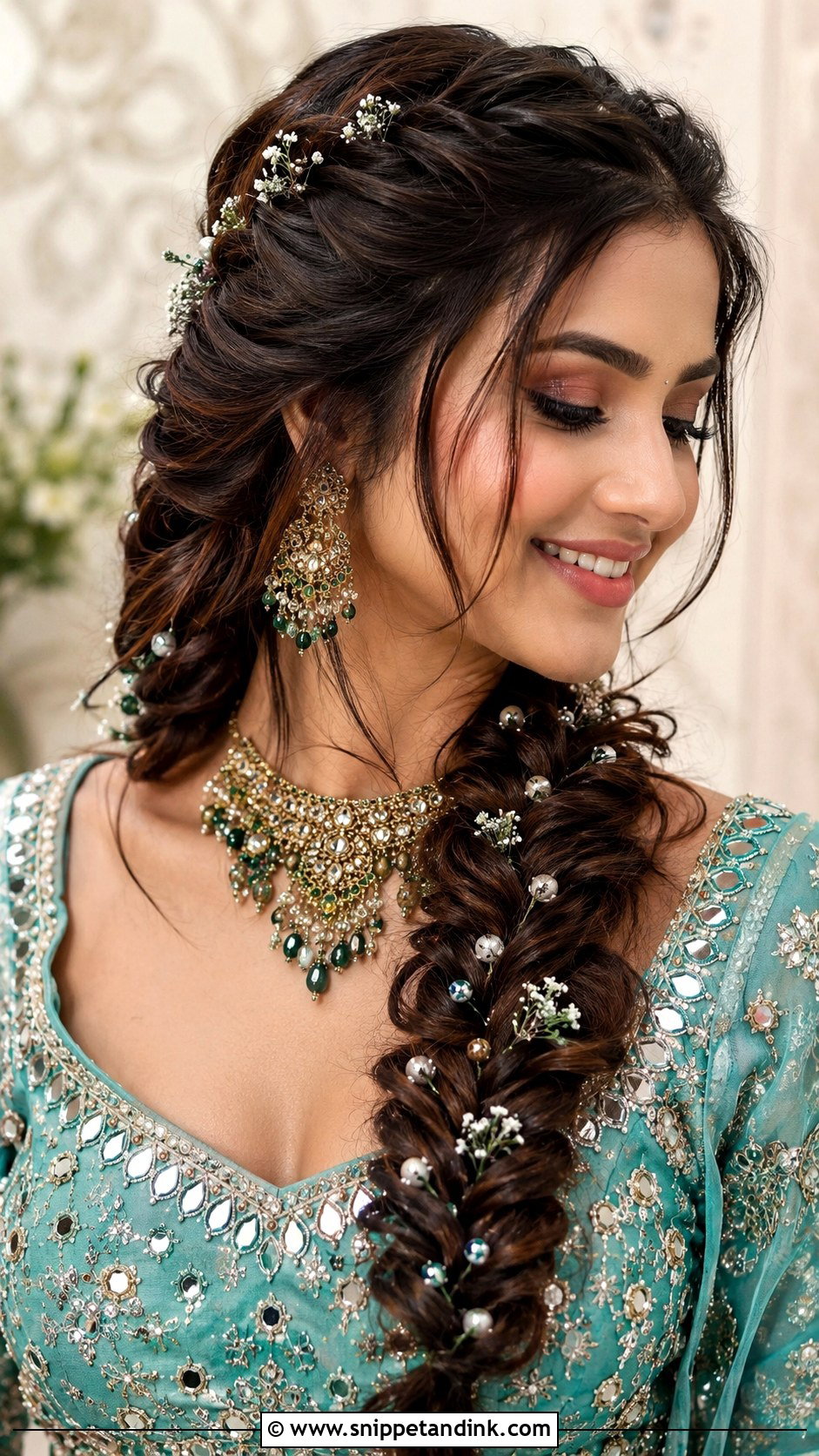
A fishtail braid along the front has a herringbone pattern that looks complex but stays neat for hours. I start it near the hairline with thin sections, guide it back and connect it to a bun or open hair. Loosening the edges gives a softer finish. It takes longer than a French braid and needs reasonably long front pieces, so on short layers it won’t hold. Tiny pearls or blooms tucked into the weave suit a mehendi.
11. Messy Front Puff With Loose Curls
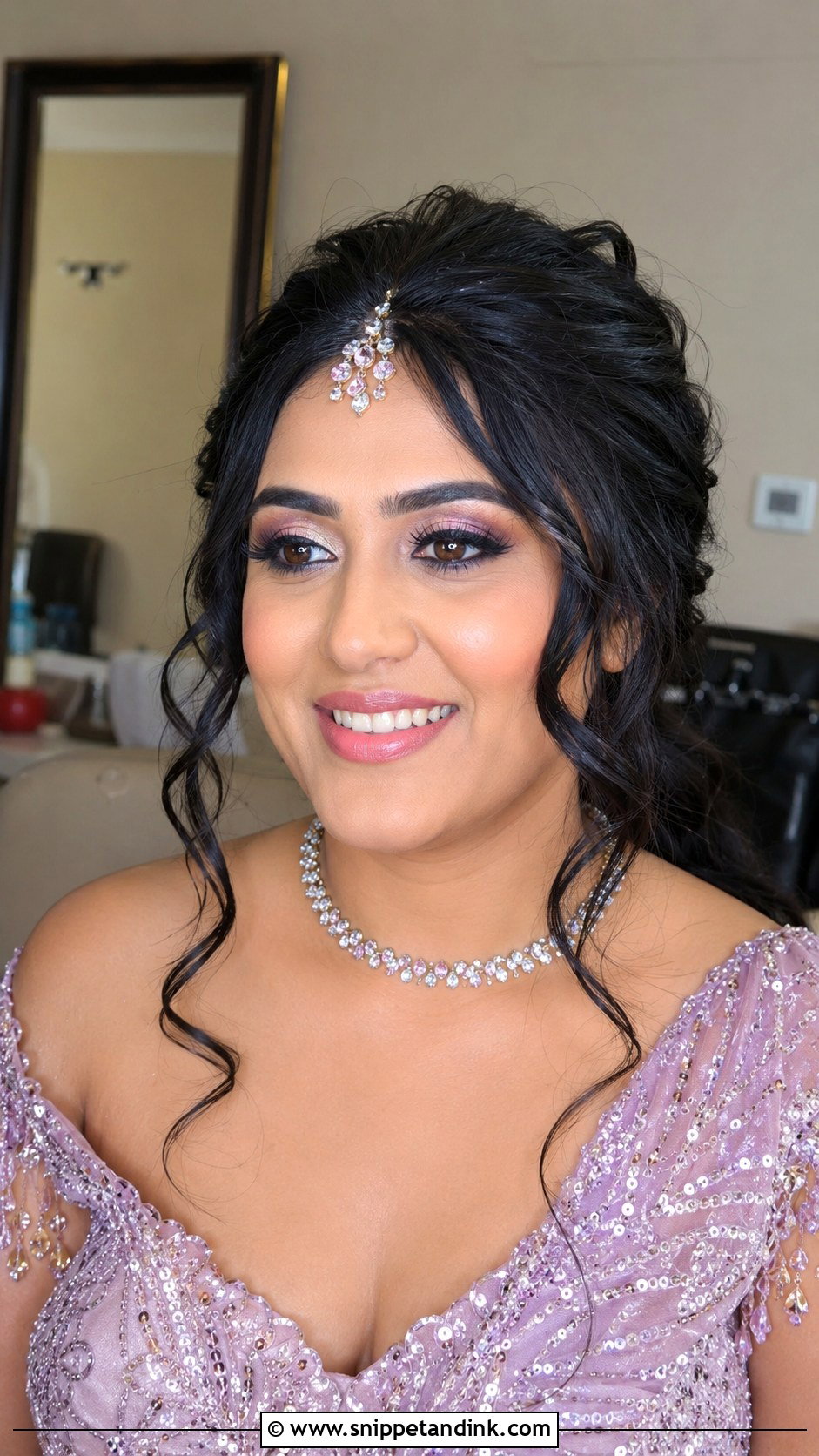
A messy front puff is a deliberately tousled lift at the crown with loose curls around it. Imperfect is the point, but there’s still structure: I backcomb lightly and pin the base securely so the mess stays where I put it. Pull a few strands free at the temples and add a maang tikka or small flowers. It suits sangeet nights and smaller ceremonies, and it’s more forgiving than a polished puff if it moves a little during dancing.
12. Sleek Middle Part Bun
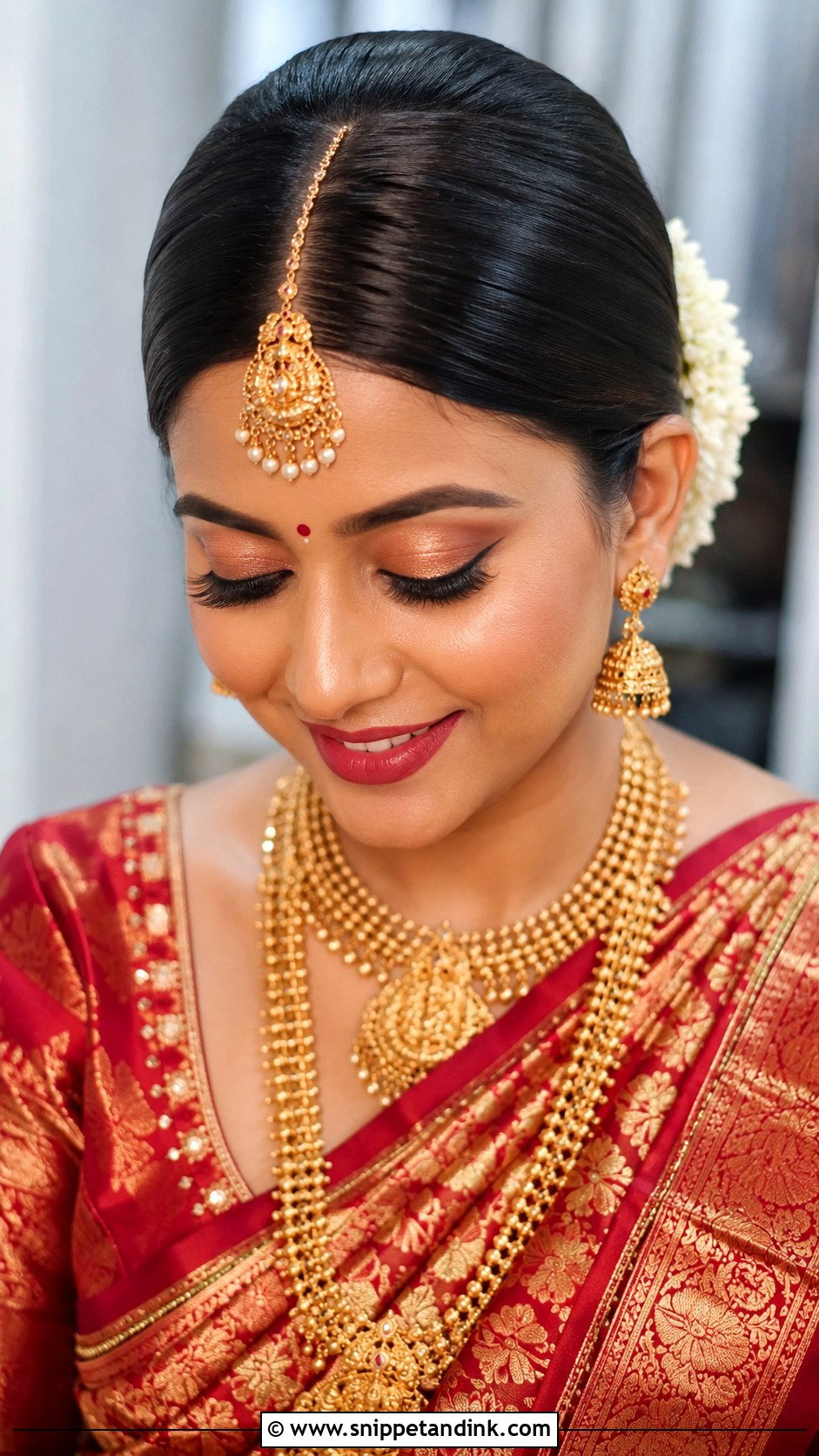
A sleek middle-part bun is the cleanest front of all. I part it straight, smooth every strand with gel and a fine brush, and gather it into a low bun at the nape. It puts the face and jewelry first, so it suits heavy necklaces and big earrings. The downside is honesty: a sleek middle part shows a thinning part or uneven hairline clearly. Root powder in the part helps on camera. A maang tikka along the part adds a traditional note.
13. Front Poof With Soft Waves
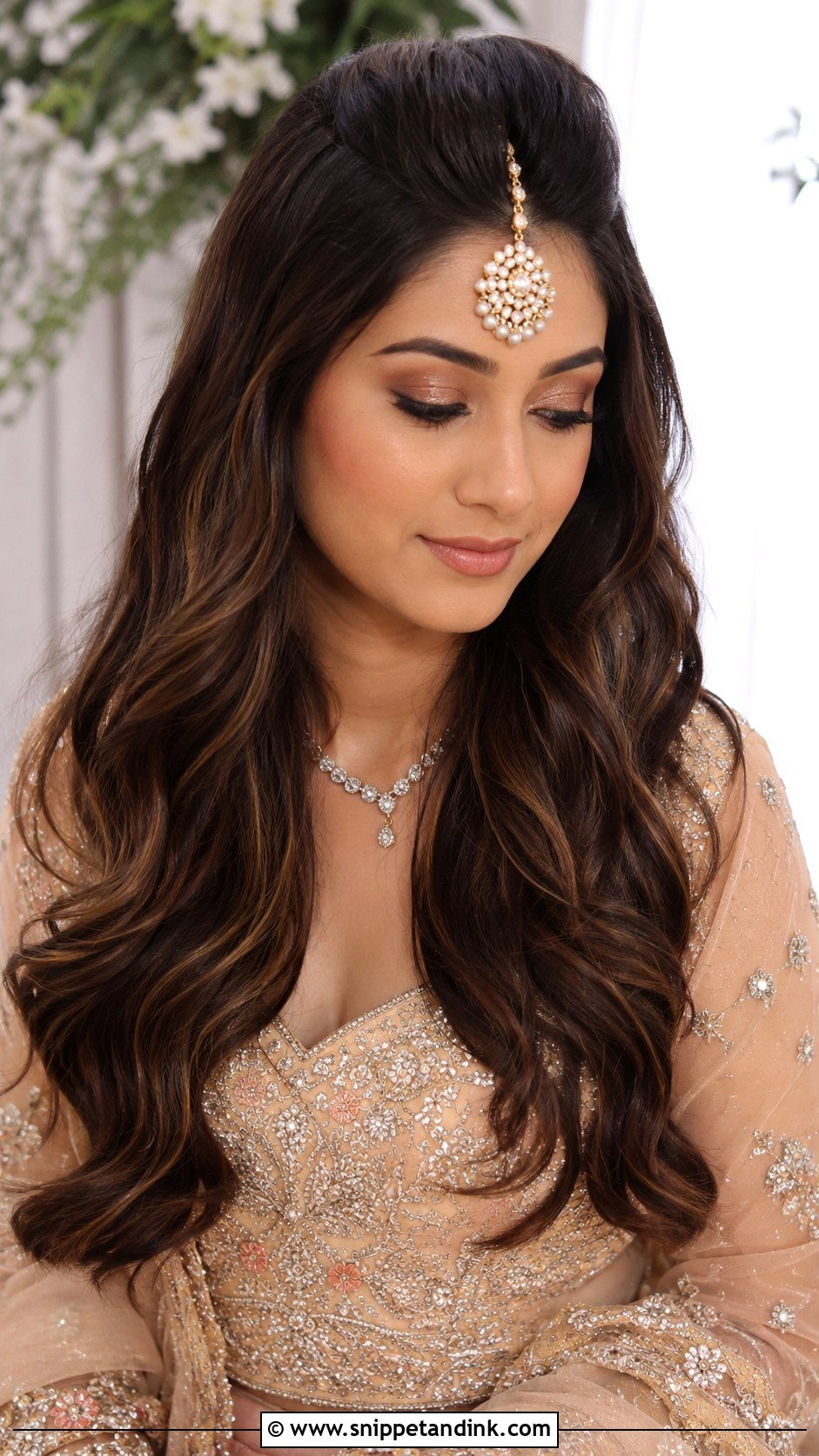
A front poof with soft waves balances height on top with movement below. I tease the front gently and pin it into a smooth, rounded shape, then wave the length with a large barrel. It suits oval and long faces, though on a long face I keep the poof lower so it doesn’t add more length. A delicate maang tikka finishes it. It’s versatile enough for a reception or sangeet.
14. Crown Braid Front
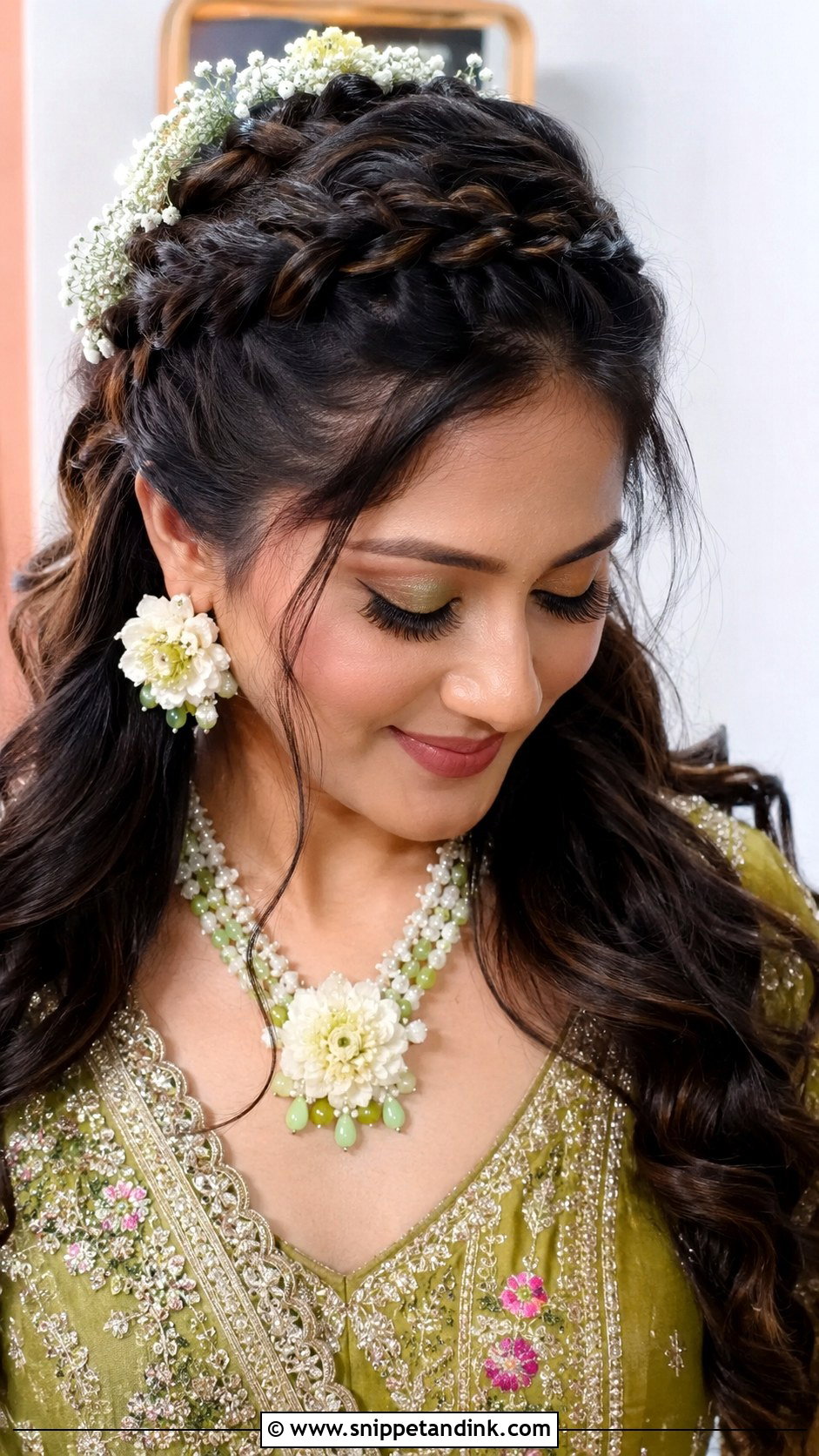
A crown braid wraps over the head like a headband. I braid two sections, one from each side, and bring them across the crown, pinning them together where they meet. The back can stay loose in curls or go into a bun. Flowers tucked along the braid suit haldi and mehendi. It keeps every strand off the face, which is helpful in heat, and it holds up well outdoors.
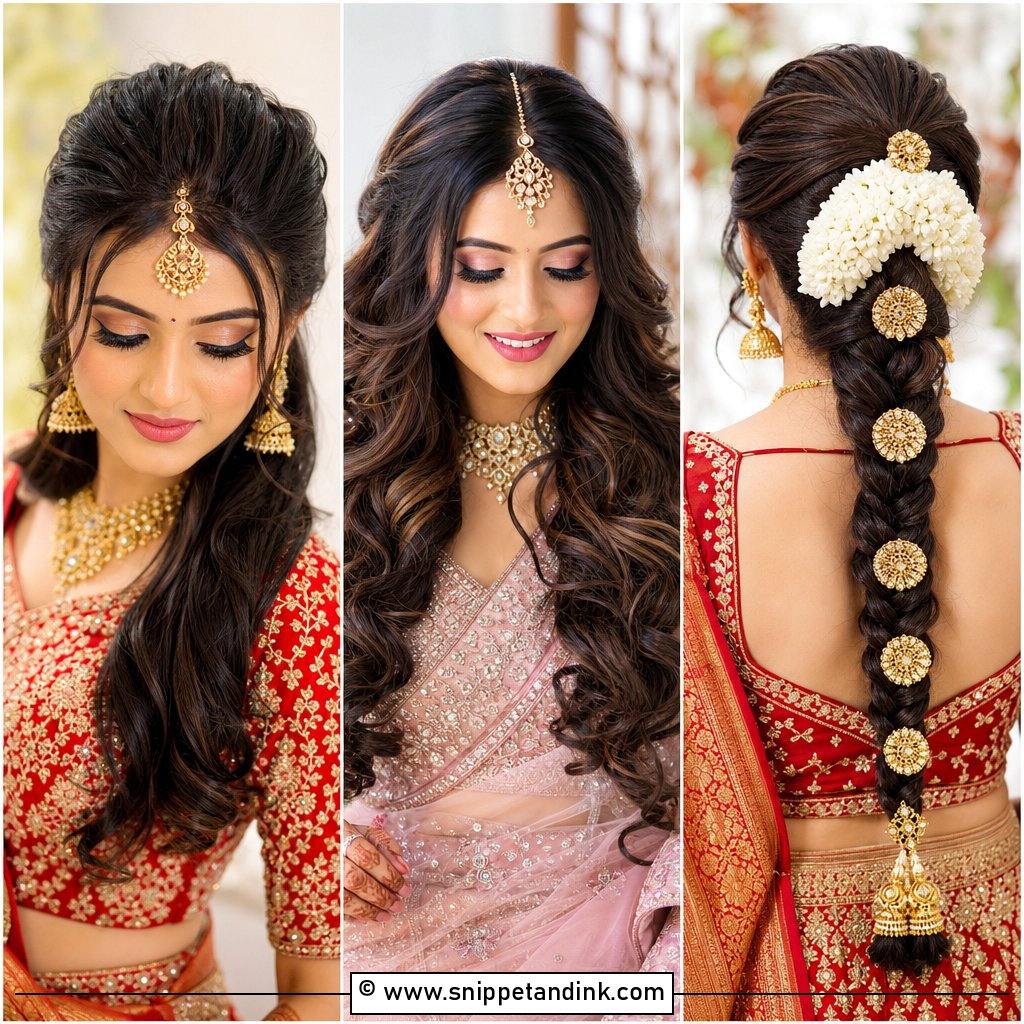
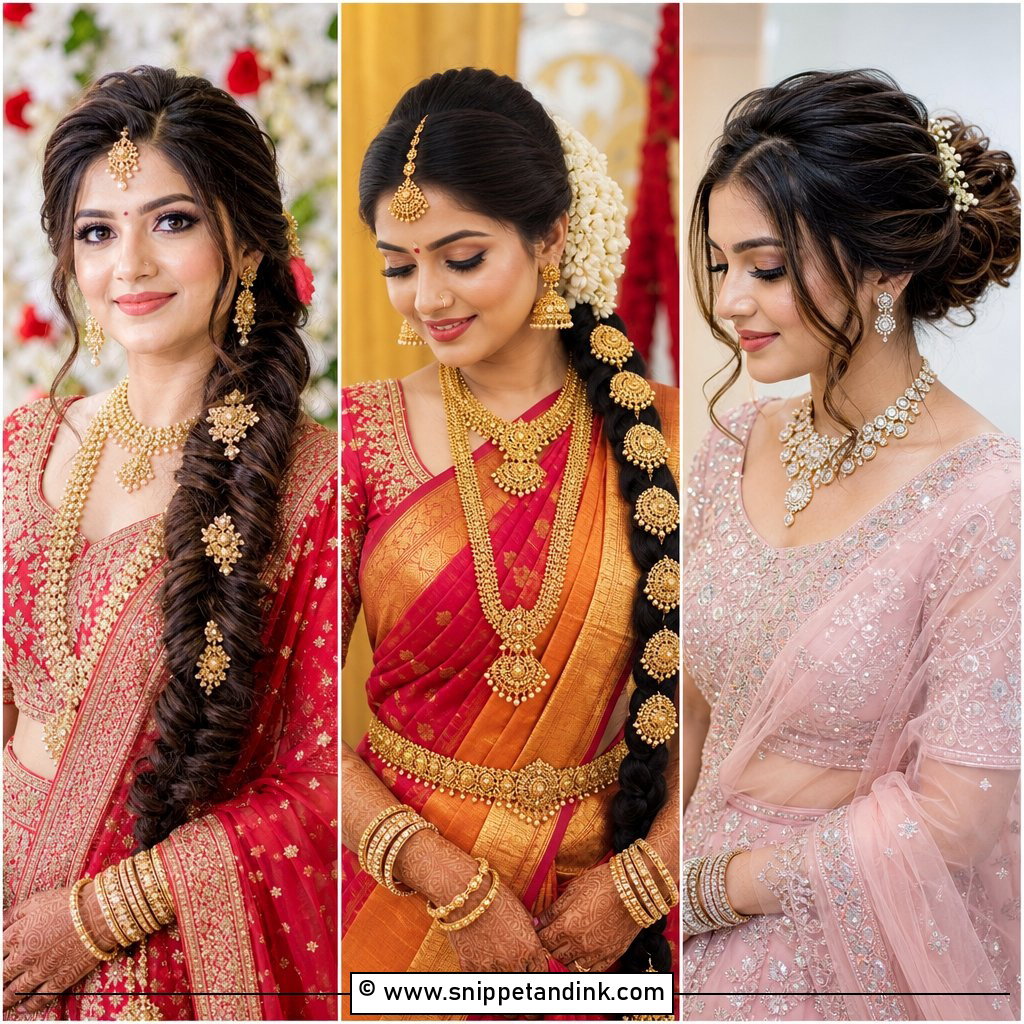
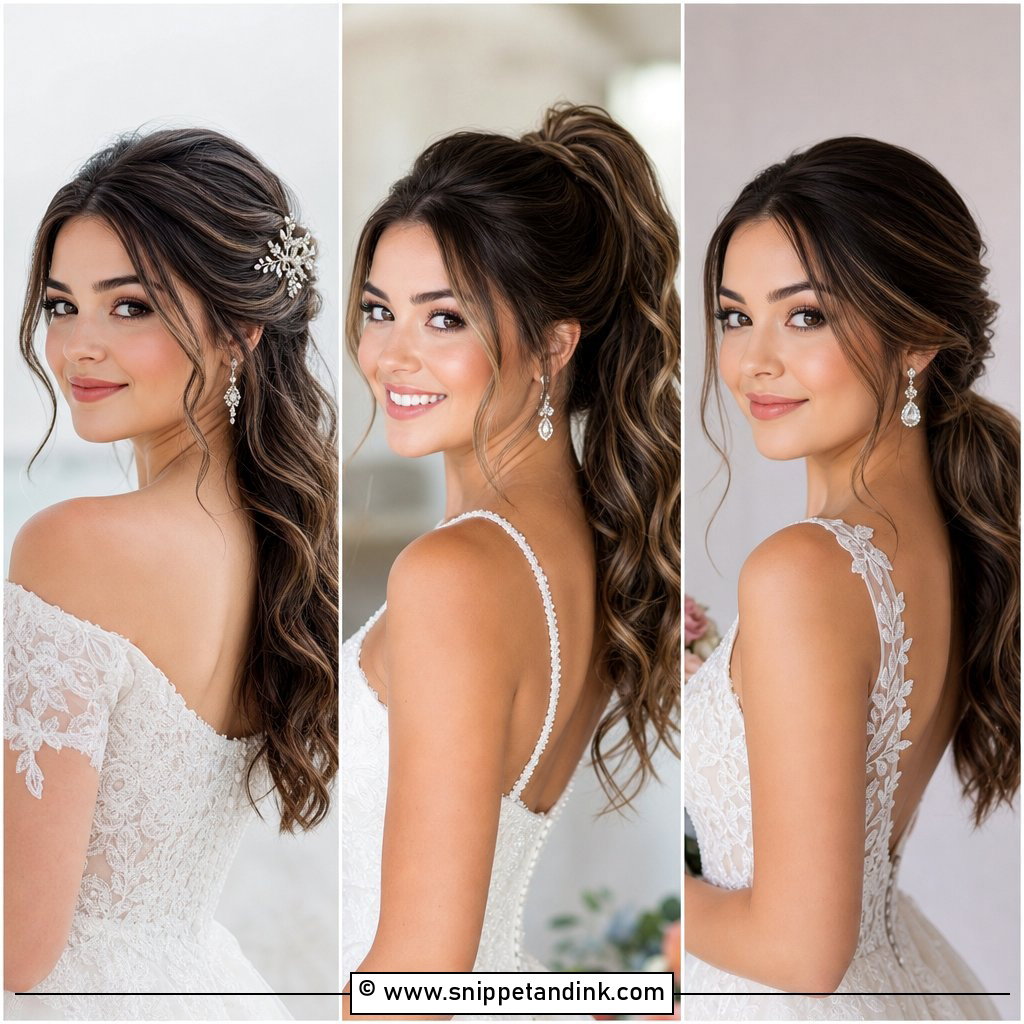
15. Side Swept Bun
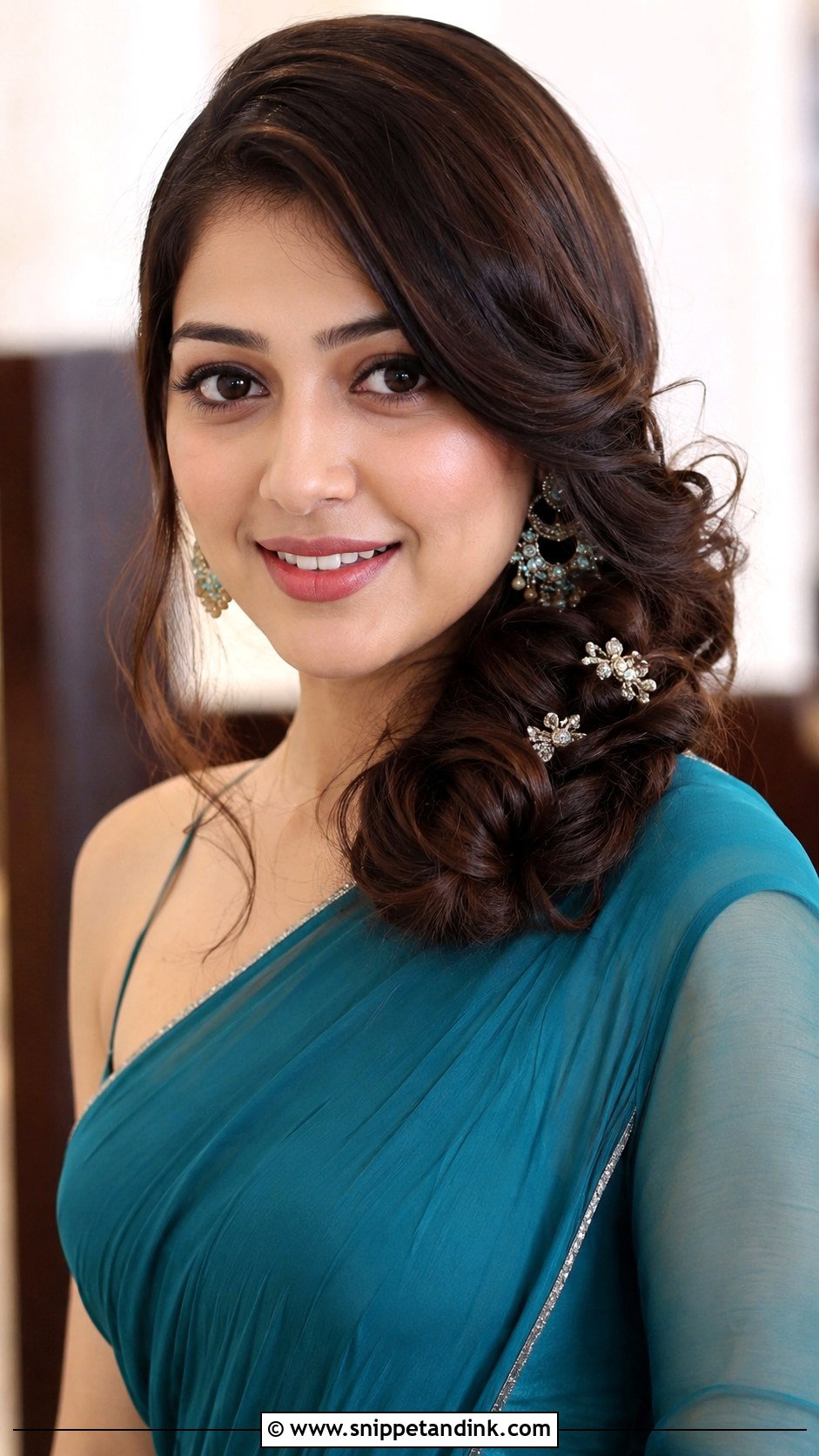
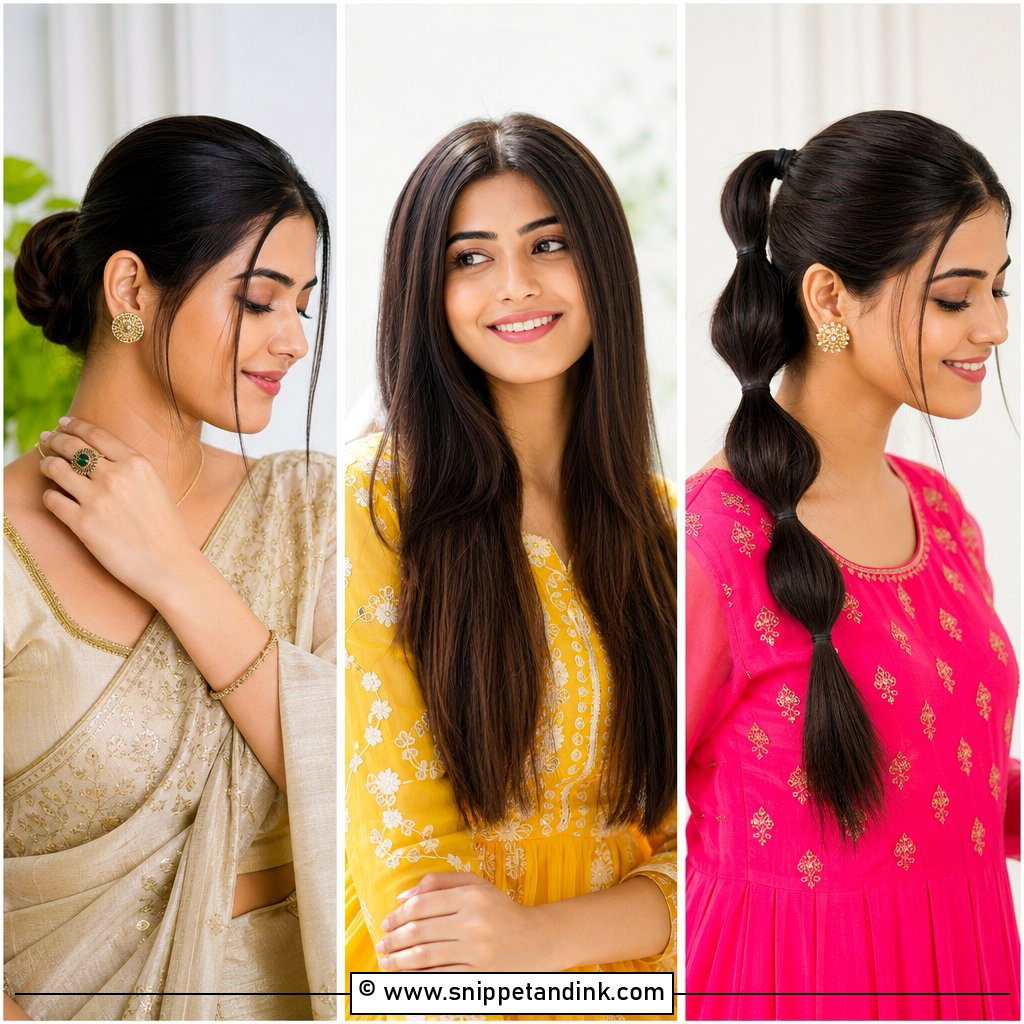
A side-swept bun sits near the ear or nape and is visible in front-facing photos, which a center bun isn’t. I sweep the hair over, twist and pin it, leaving a few strands loose at the front. It shows off one statement earring. With a saree, put the bun on the side where the pallu doesn’t fall, so the drape and the hair balance each other. Fresh flowers or pearl pins on the bun finish it.
16. Twisted Temple Locks With Flowers
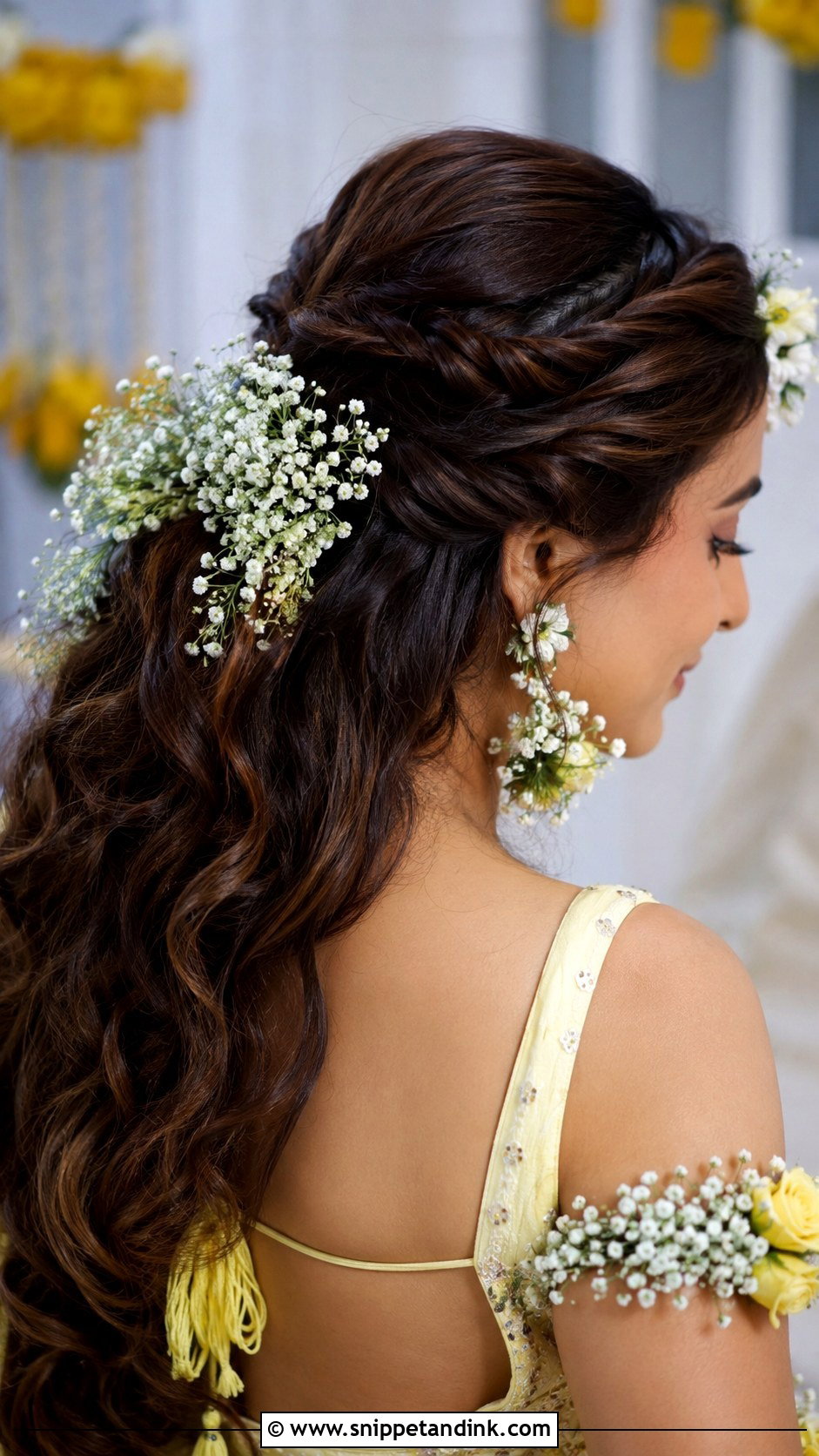
Temple twists are the subtlest option here: small sections from each temple twisted back, crossed and pinned at the back of the head. They frame the face and keep hair out of the eyes without changing the rest of the style. Cover the pin point with baby’s breath or tiny jasmine buds. Leave the rest open in waves or pulled into a loose bun. For a minimalist bride at a haldi or mehendi, it’s an easy, comfortable choice.
17. Front Pouf With Matha Patti
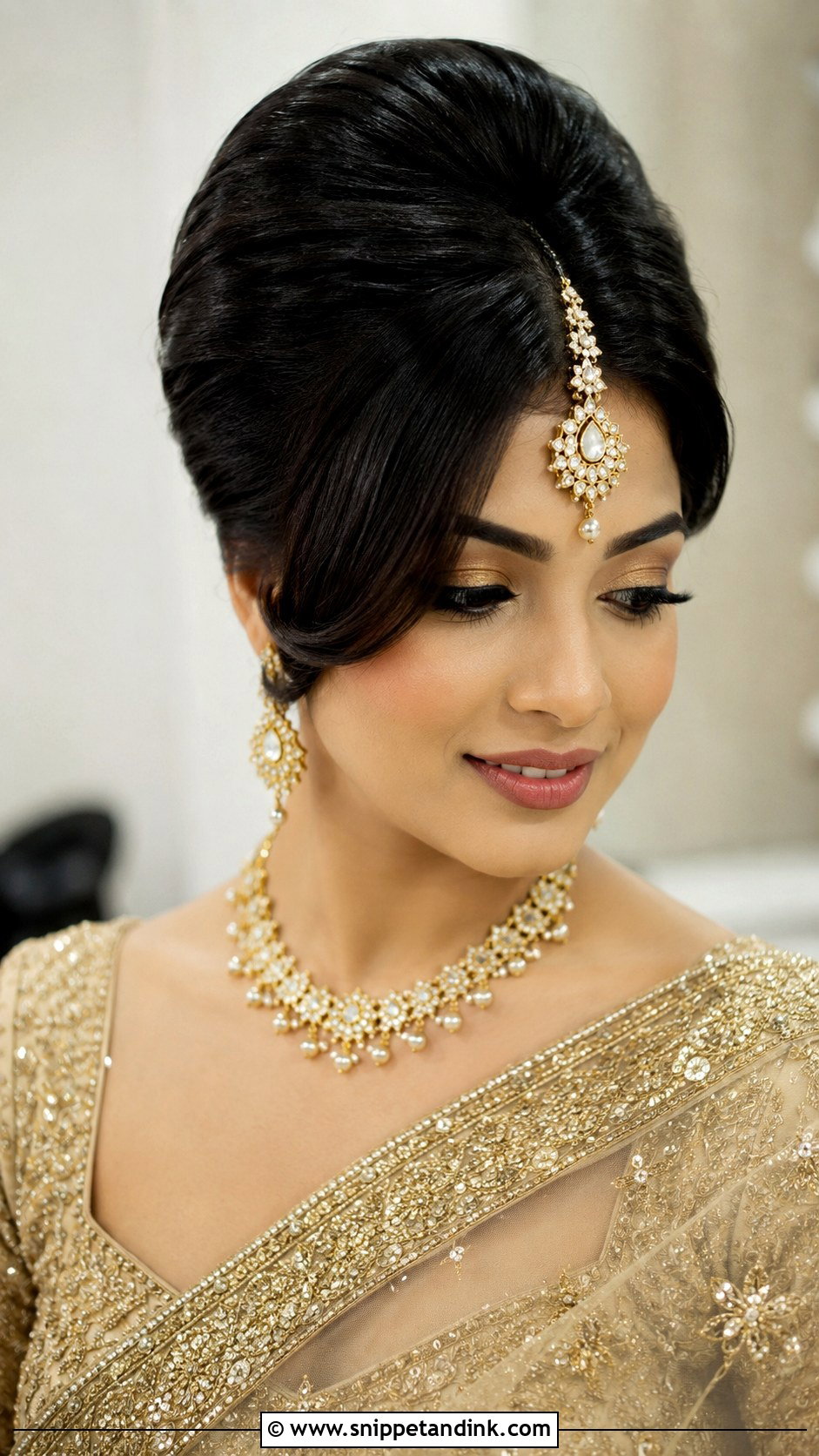
A front pouf with a matha patti is about the most traditional, grand front a bride can wear. The matha patti’s side chains need a base to sit on, so I build a smooth pouf first and pin the chains along its edge so they frame the forehead evenly. Check the length at the trial; a matha patti that’s too wide sits over the ears and pulls. The rest goes into a bun or curls. It suits the main ceremony with a heavy lehenga.
18. Vintage Bouffant
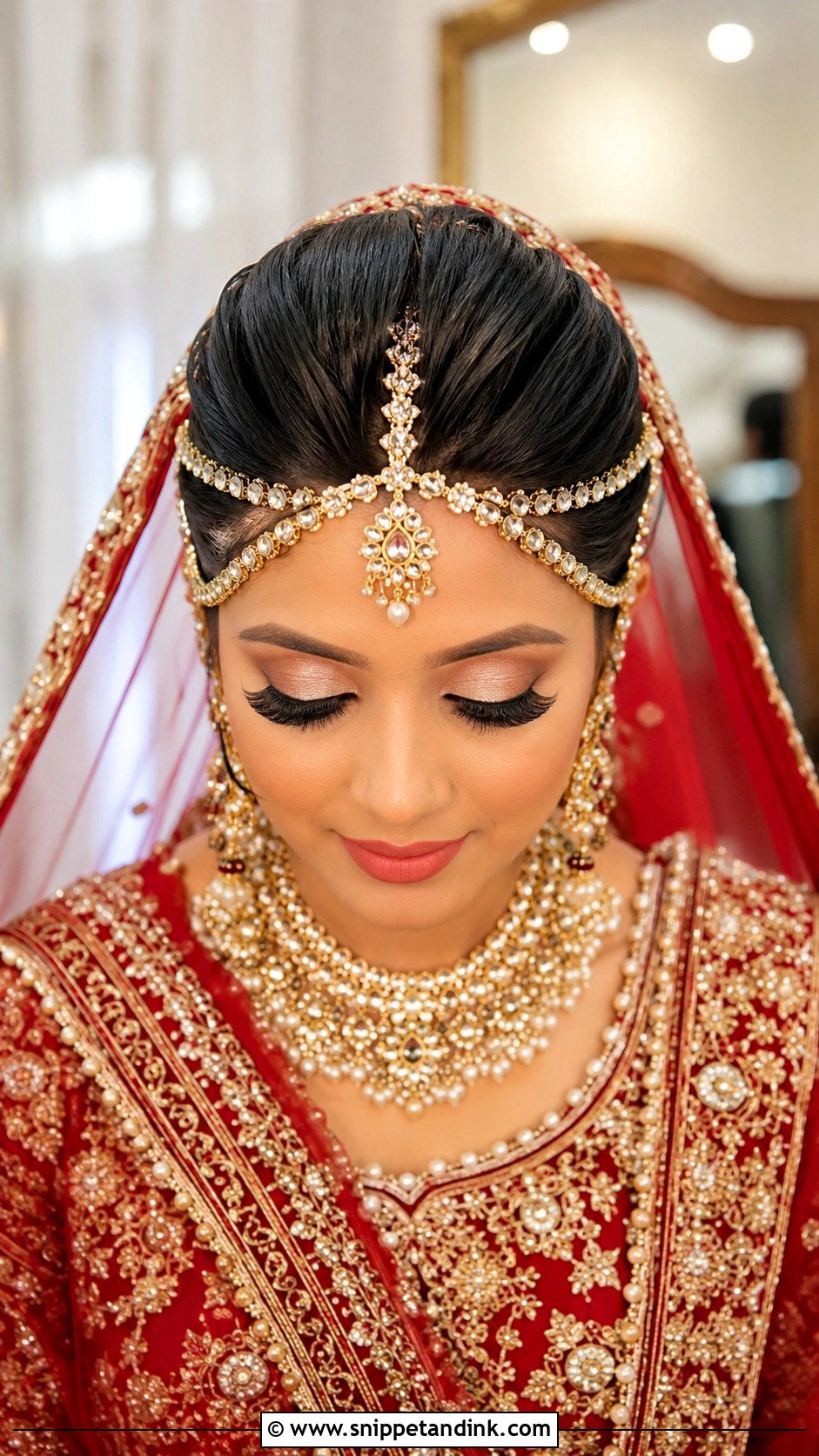
The vintage bouffant takes its cue from classic Bollywood film heroines: a high, rounded front that adds real drama. It needs heavy backcombing and a careful smooth over the top, plus strong spray. The rest can go into sleek waves or a chignon, with a maang tikka for balance. It lengthens the face, so it suits round and square faces more than long ones. It’s a reception look, built for bright lights.
19. Braided Crown With Front Twist
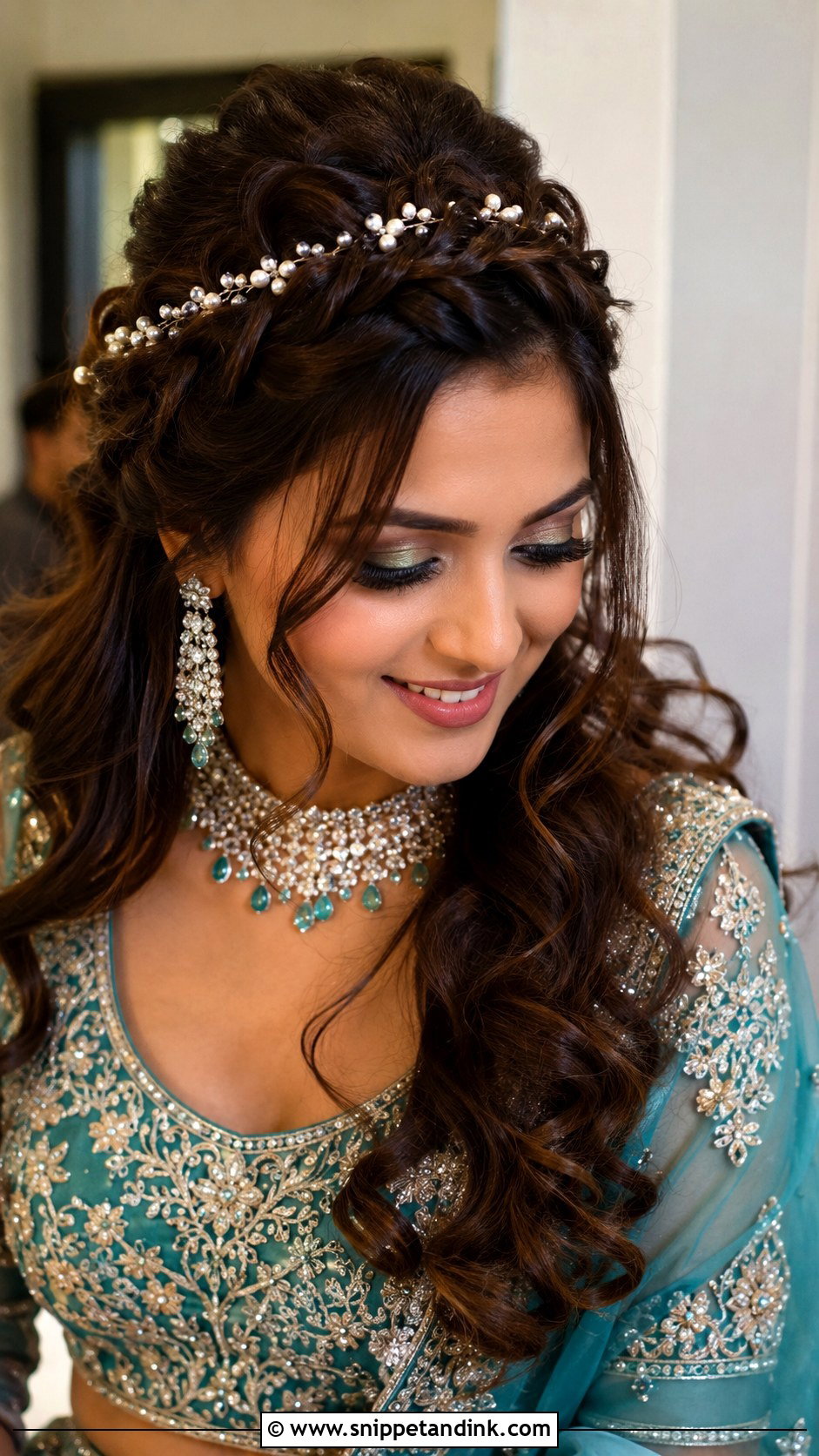
A braided crown with a front twist starts with twists at the front that then weave into a braid across the crown. It gives a lot of detail around the forehead without the tightness of a full braid at the hairline. Pin everything firmly and let the back fall in curls or a soft bun. Small flowers or pearls along the braid suit mehendi and haldi functions, and it keeps hair off the face all day.
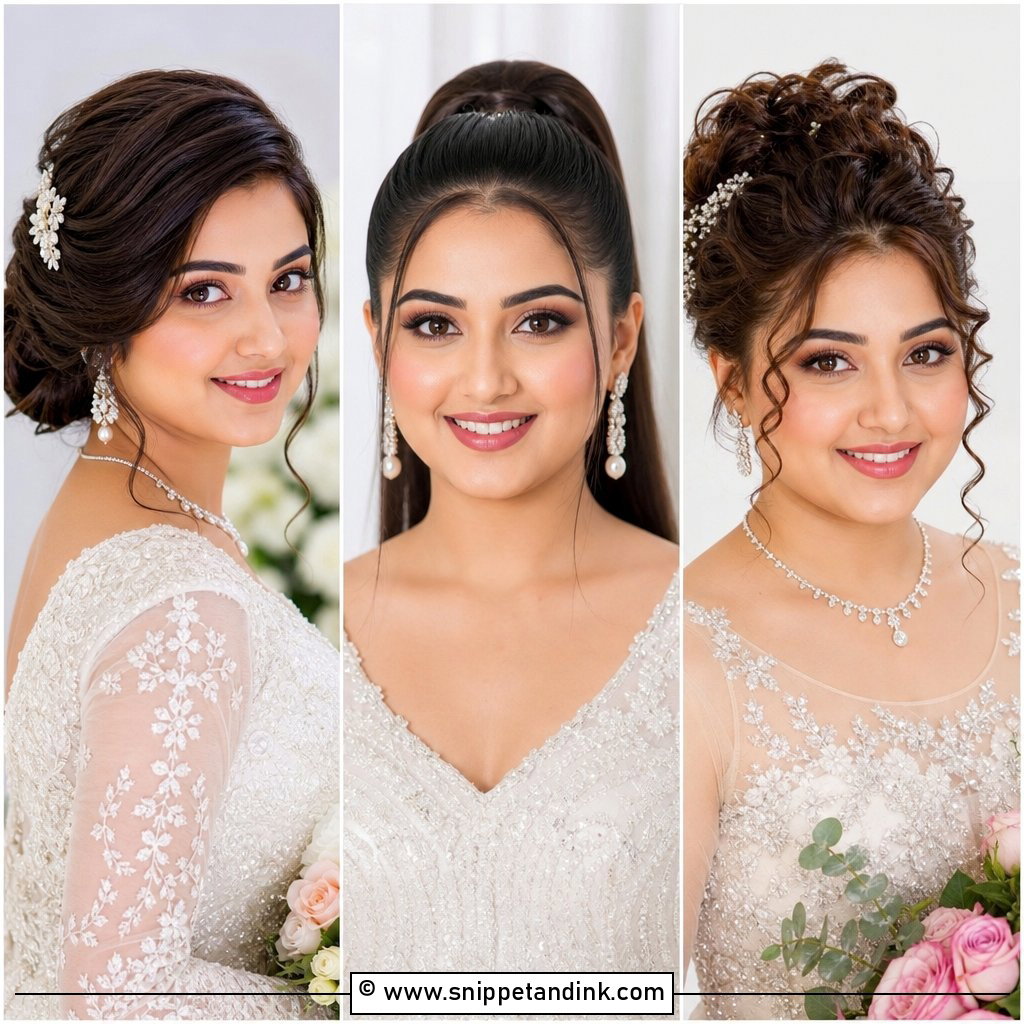
20. Low Bun With Front Curls
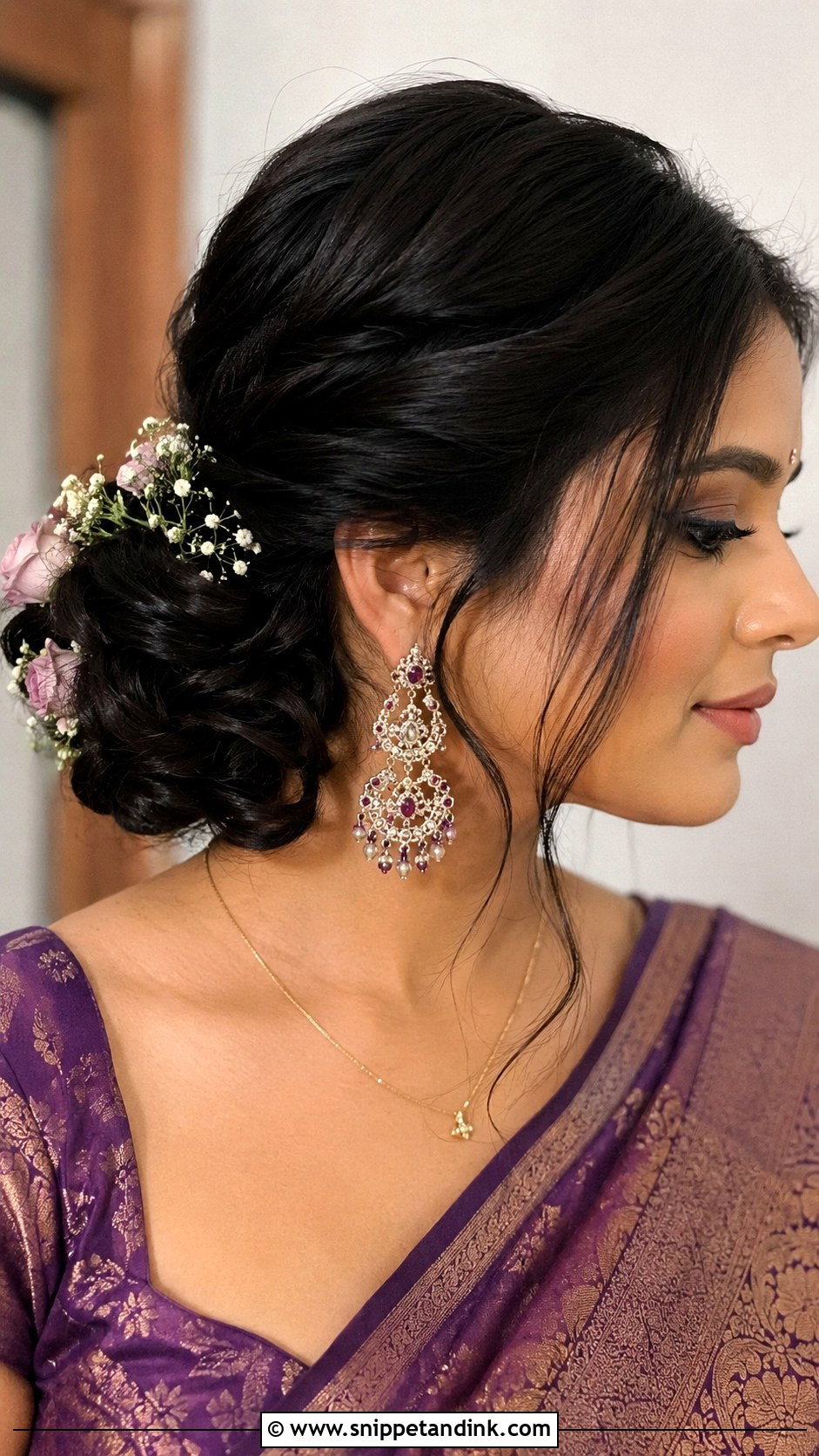
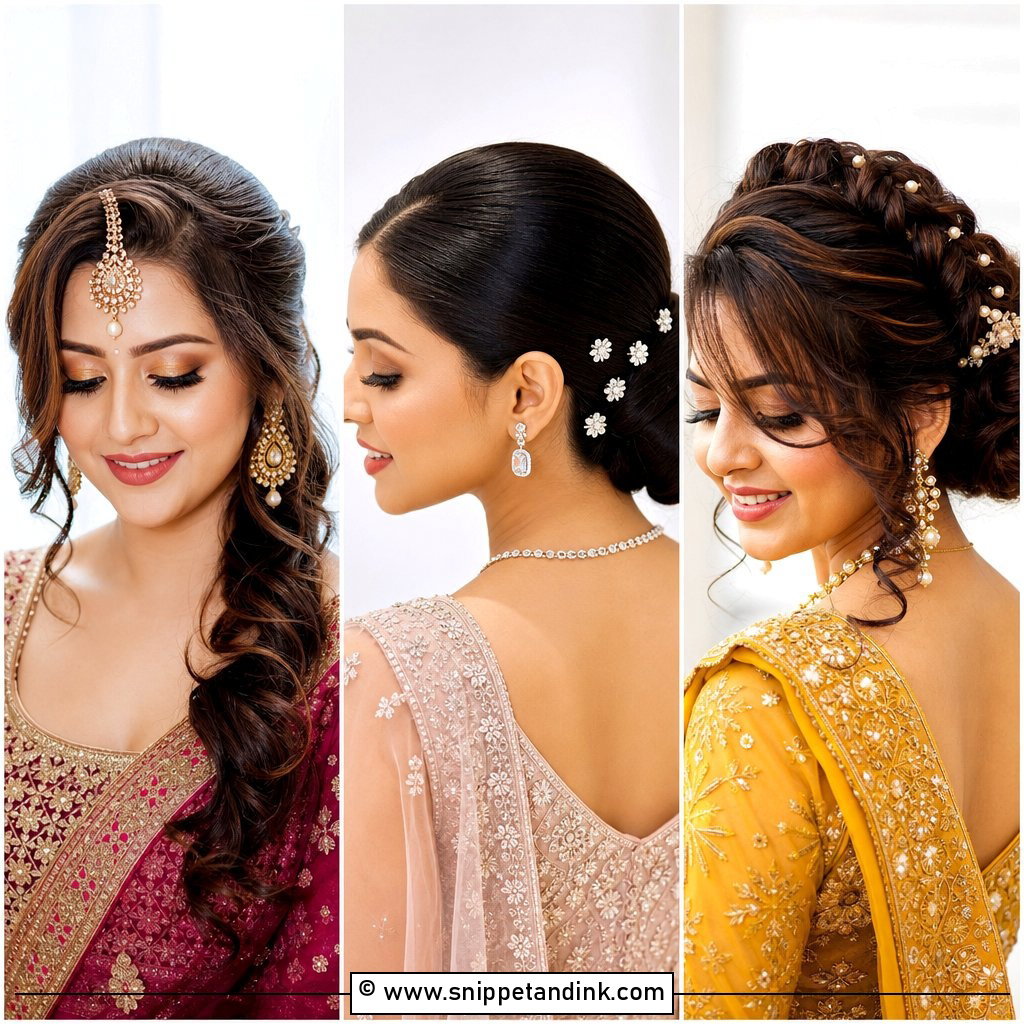
A low bun with front curls pairs a smooth, sleek knot with a few curled pieces near the face. The contrast is what makes it work. I curl those front pieces before the bun is done and set them in clips, then release them last so they’re still bouncy. It suits sarees and lehengas, and the main ceremony especially. Fresh flowers or jeweled pins on the bun add tradition.
21. Side Parting With Soft Waves
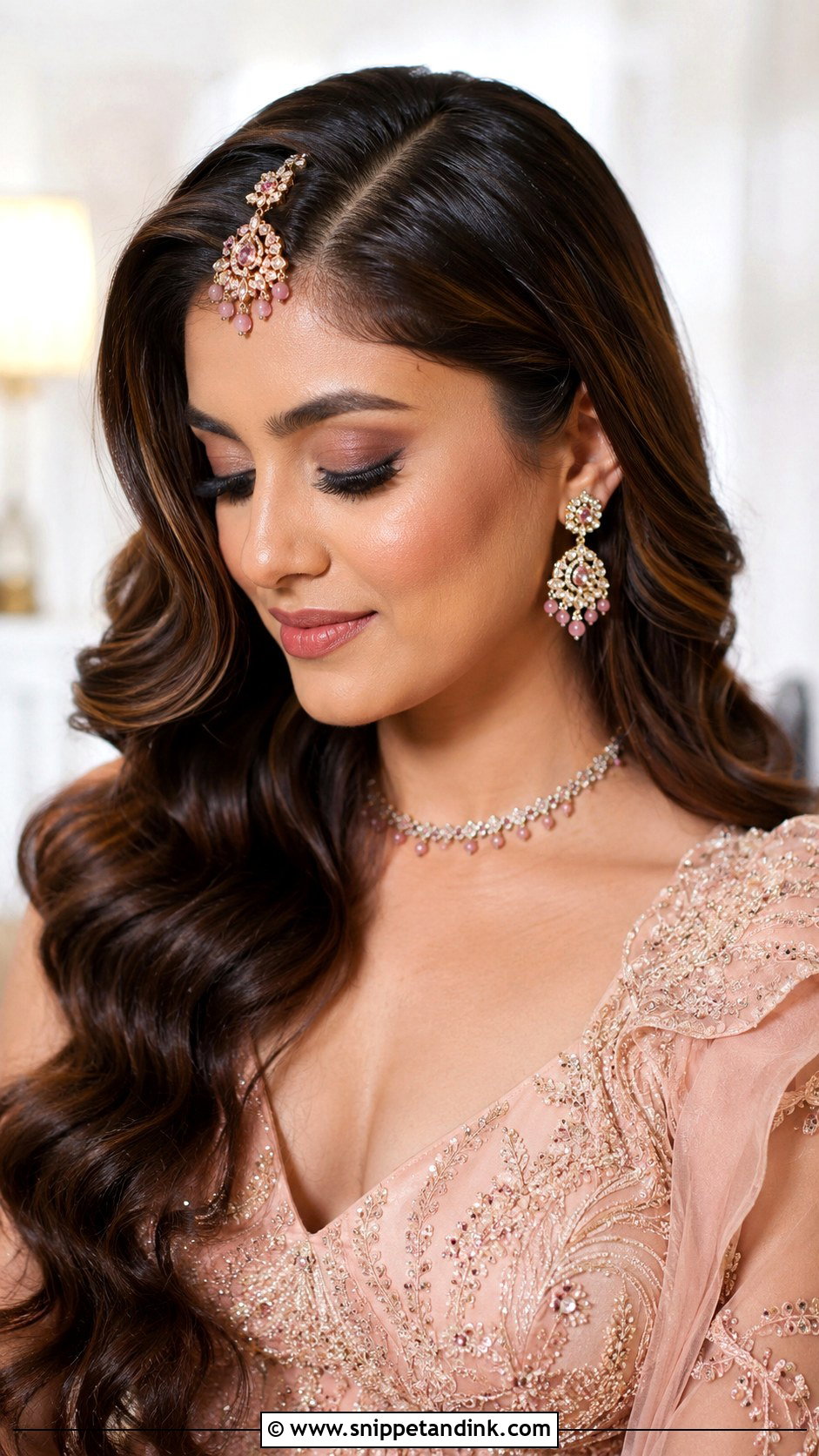
Sometimes the simplest front is the most flattering: a deep side part with loose waves. I part it, wave the lengths, then sweep the front across the forehead. A maang tikka or nothing at all both work. It suits Indo-Western outfits and lighter ceremonies. It’s also the style most affected by humidity, because open waves lose shape faster than pinned hair, so I’d book it for an indoor evening function where possible.
22. Floral Braided Front Bun
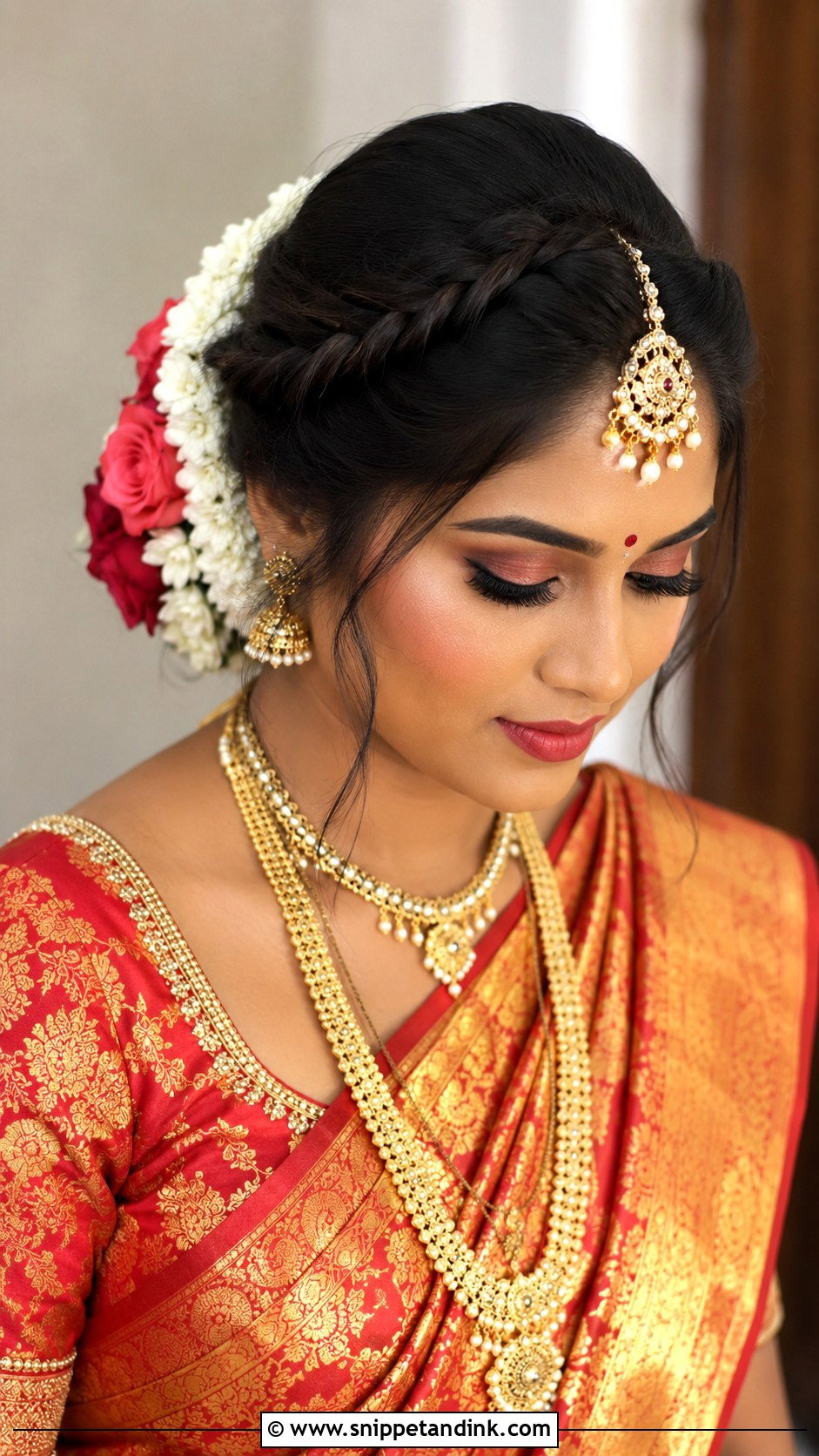
A floral braided front bun braids the front sections back into a soft bun, then dresses it with jasmine, roses or baby’s breath. The flowers add scent and color and connect the look to Indian bridal tradition. I sit the bun at the nape and leave a few face pieces loose. Order flowers for the morning, keep them cool, and add them at the very end. It suits a muhurtham or reception.
23. Double Twist Front
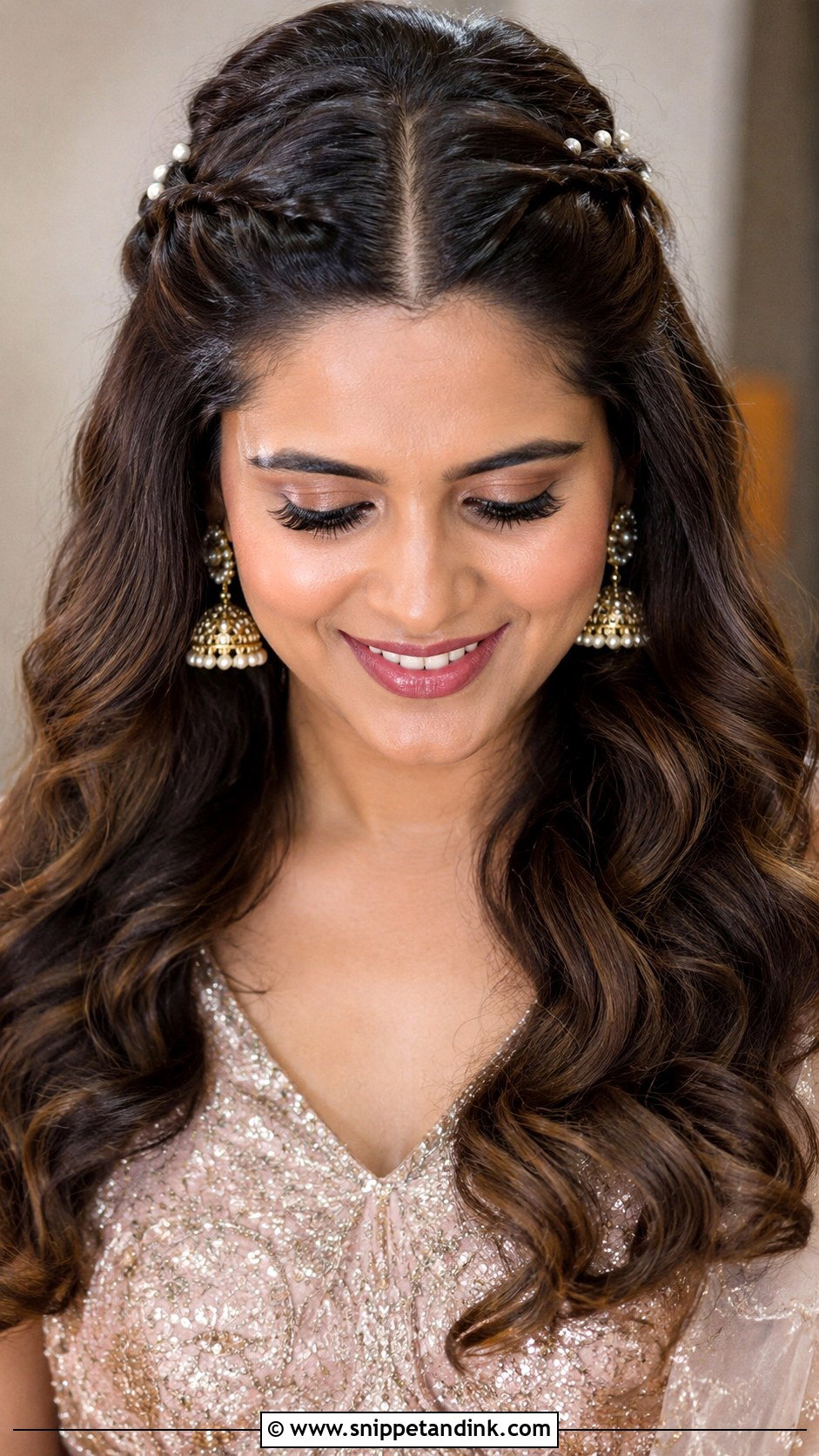
A double twist takes two sections from each side of the front and twists them back in parallel lines. It’s neat, adds texture and keeps hair off the forehead. Connect the twists to a bun, ponytail or open waves below. Pearls or small flowers along the twists dress it up. I suggest it when a bride wants detail but finds braids at the hairline too tight; twists put much less tension on the temples.
24. Puff With Long Fishtail Braid
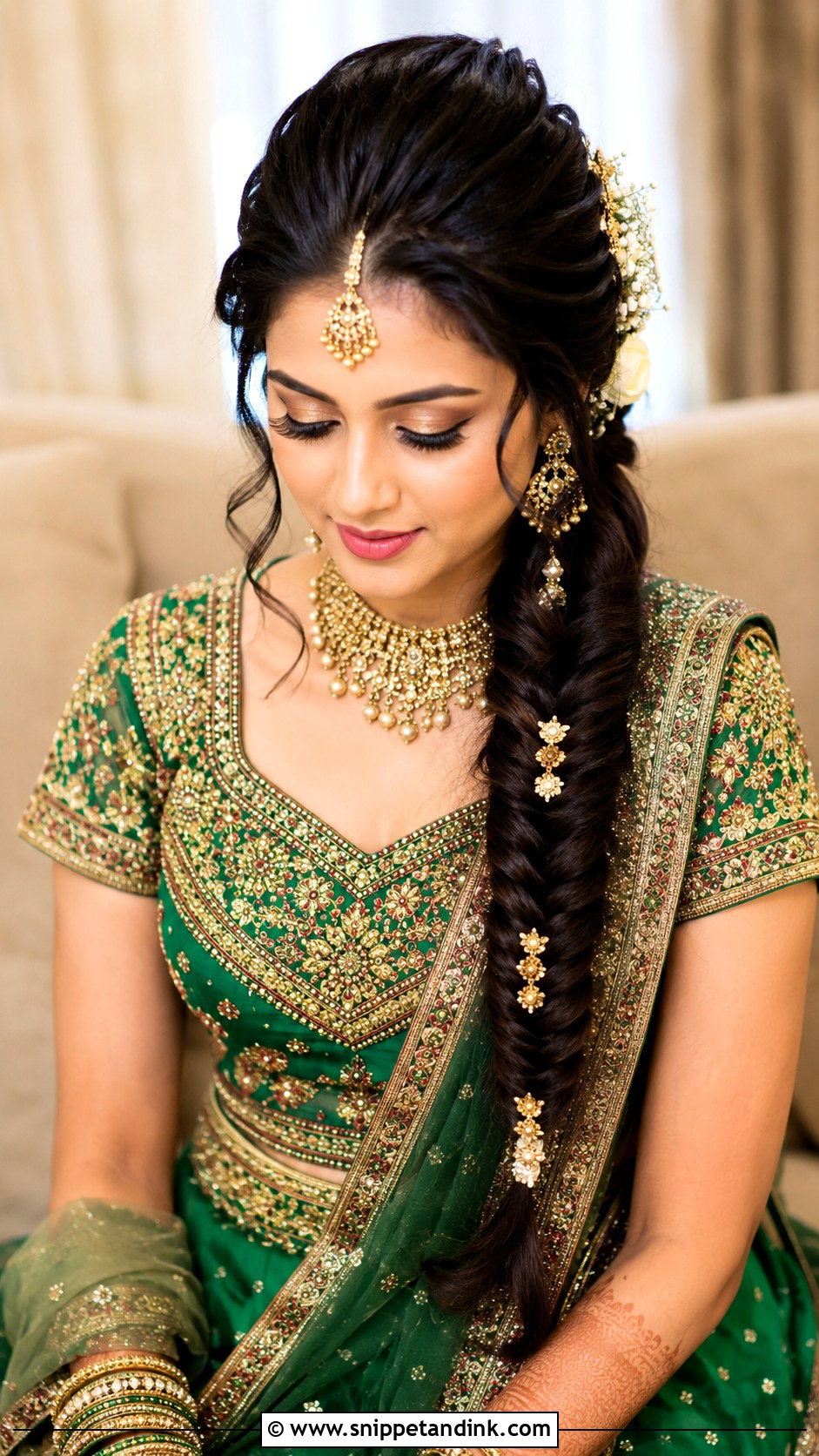
A front puff into a long fishtail braid combines height with length. I smooth a puff at the crown, then gather everything into a fishtail down the back and loosen it slightly. It suits brides with thick, long hair best; on shorter hair, a clip-in extension braided in can give the length. Flowers, pearls or gold accents along the braid suit a mehendi or a traditional ceremony.
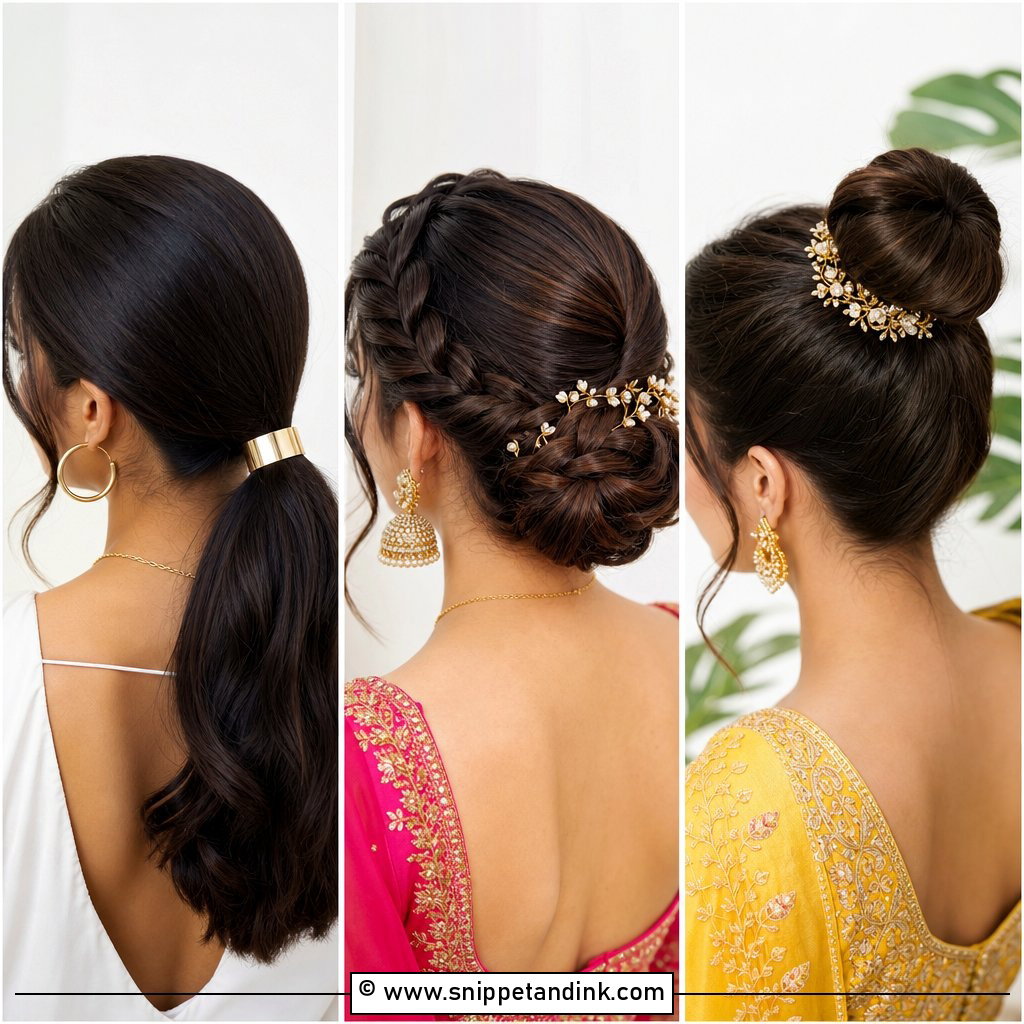
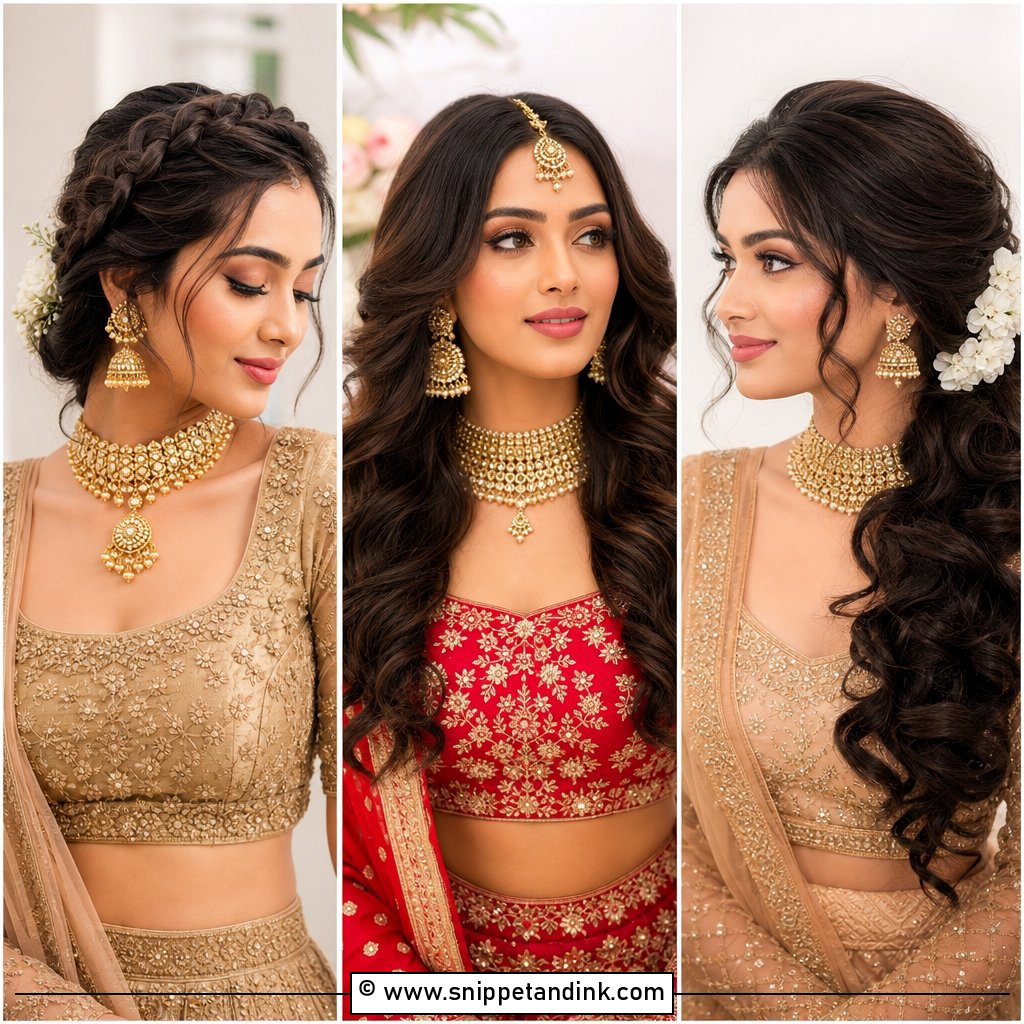

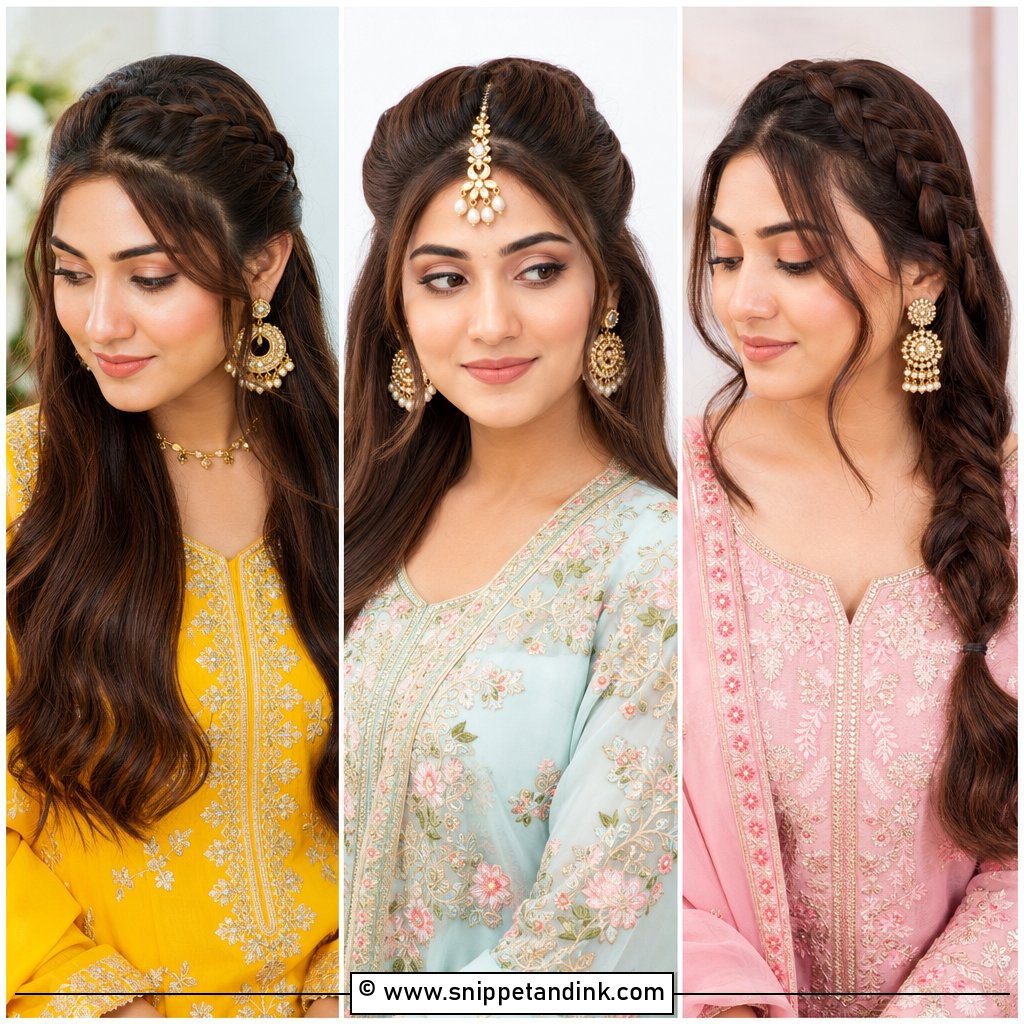
25. Open Hollywood Waves With Front Volume
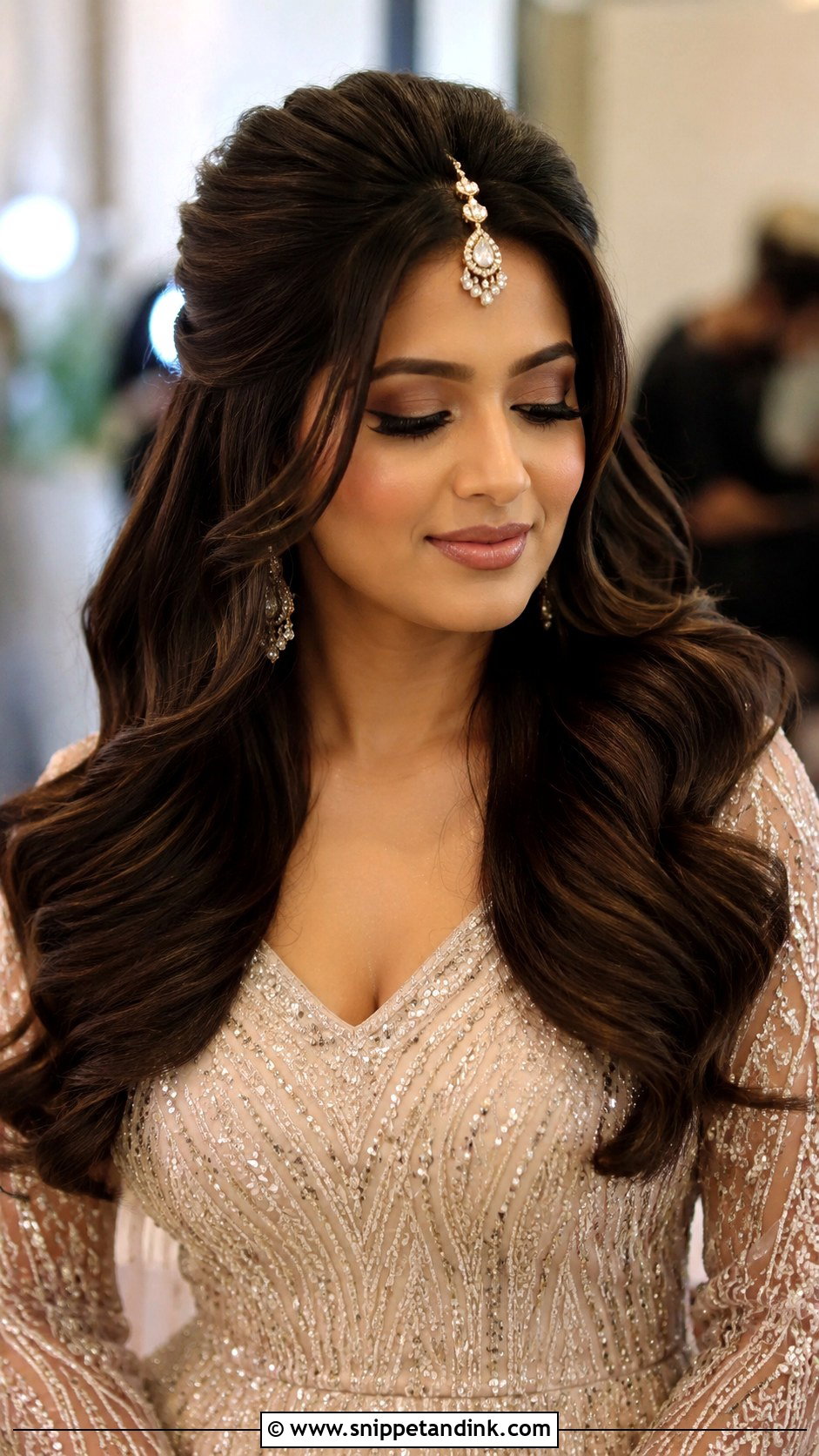
Open Hollywood waves with front volume close the list. I tease the front lightly for height, then set the length in smooth, glossy waves all falling in one direction and brush them into a continuous ripple. A maang tikka on the part or nothing at all both work. It suits receptions, sangeet and destination weddings. Hollywood waves need a smooth blow-dry first; on frizzy hair, skip that step and they won’t hold the shape.
Heat, Sweat and a Dupatta: Keeping the Front in Shape All Day
The front section takes more abuse than any other part of the hair. It’s closest to the sweat at your hairline, it’s where the dupatta gets pinned, and it’s what you touch without noticing.
In heat, a puff is the first thing to fall. I build it with backcombing at the root and a strong spray between layers, never on top only. If the mandap is outdoors in summer, a twist or braid at the front will outlast any puff.
Where the dupatta is pinned matters. Pins should go behind the front section, into the bun or the base, not through the puff itself. Pinning straight into a puff flattens it and pulls hair loose every time the dupatta shifts.
For touch-ups, a small comb with a tail, a few bobby pins and blotting papers for the forehead fix most problems. Keep your hands off the front during the day. Brides adjust their hair without thinking, and that’s how a smooth front turns frizzy by the reception.
The Front Is What the Camera Sees First
The front of your hair frames your face and jewelry, so it’s worth choosing carefully. Puffs and bouffants give height; braids and twists keep hair off the face; Hollywood waves bring glamour. Think about your face shape, your outfit and your wedding function. A high puff suits a grand ceremony, and softer waves suit mehendi and haldi. Add a maang tikka, matha patti or flowers to finish, and test the jewelry on the actual front style at a trial before the wedding.
You'll Like These Ideas:


Leave a Reply