
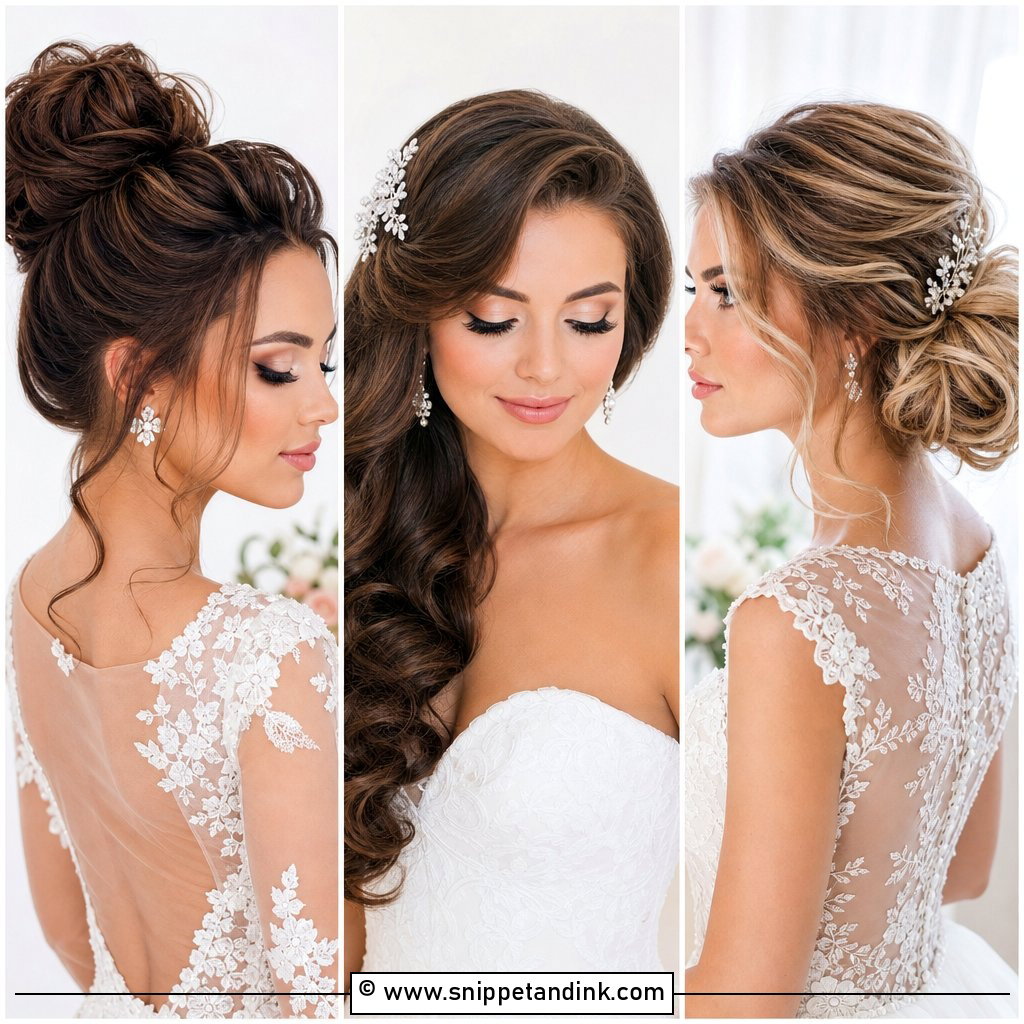
Guests mostly see the back of your hair during the ceremony. The camera sees the front. Every portrait, every close-up during the vows and every candid at the table is framed by the few inches of hair around your face, and that’s where I spend the most time at a trial. The front decides whether an updo looks soft or severe, and it’s also the part most likely to stick to lip gloss, go flat or frizz. Below are twenty front details, from curtain bangs to face-framing curls, for different lengths and textures, with notes on how each behaves through a long day.
Thin Temples, Widow’s Peaks and Uneven Hairlines
Before I suggest any front style, I look at the hairline itself. Most people have some unevenness there, and a wedding style that pulls hair tight across the front shows it. The right front detail can hide almost all of it.
Thinning or receding temples
Thinning at the temples is common, especially after years of tight ponytails or after pregnancy. A slicked-back front exposes it. Soft tendrils or a side sweep cover the area naturally, and a tinted root powder that matches your color fills in sparse spots so they don’t show under flash.
Widow’s peak
A widow’s peak resists a center part and pushes the hair into a cowlick at the front. I usually work with it: a side part or curtain bangs that split naturally at the point, rather than forcing hair across it.
Regrowth and short baby hairs
New growth after hair loss or postpartum shedding shows up as short pieces sticking up along the hairline. A light wax on a clean toothbrush smooths them, and on curly hair, gently laying them with a soft brush and a little gel blends them in.
1. Curtain Bangs With a Low Bun
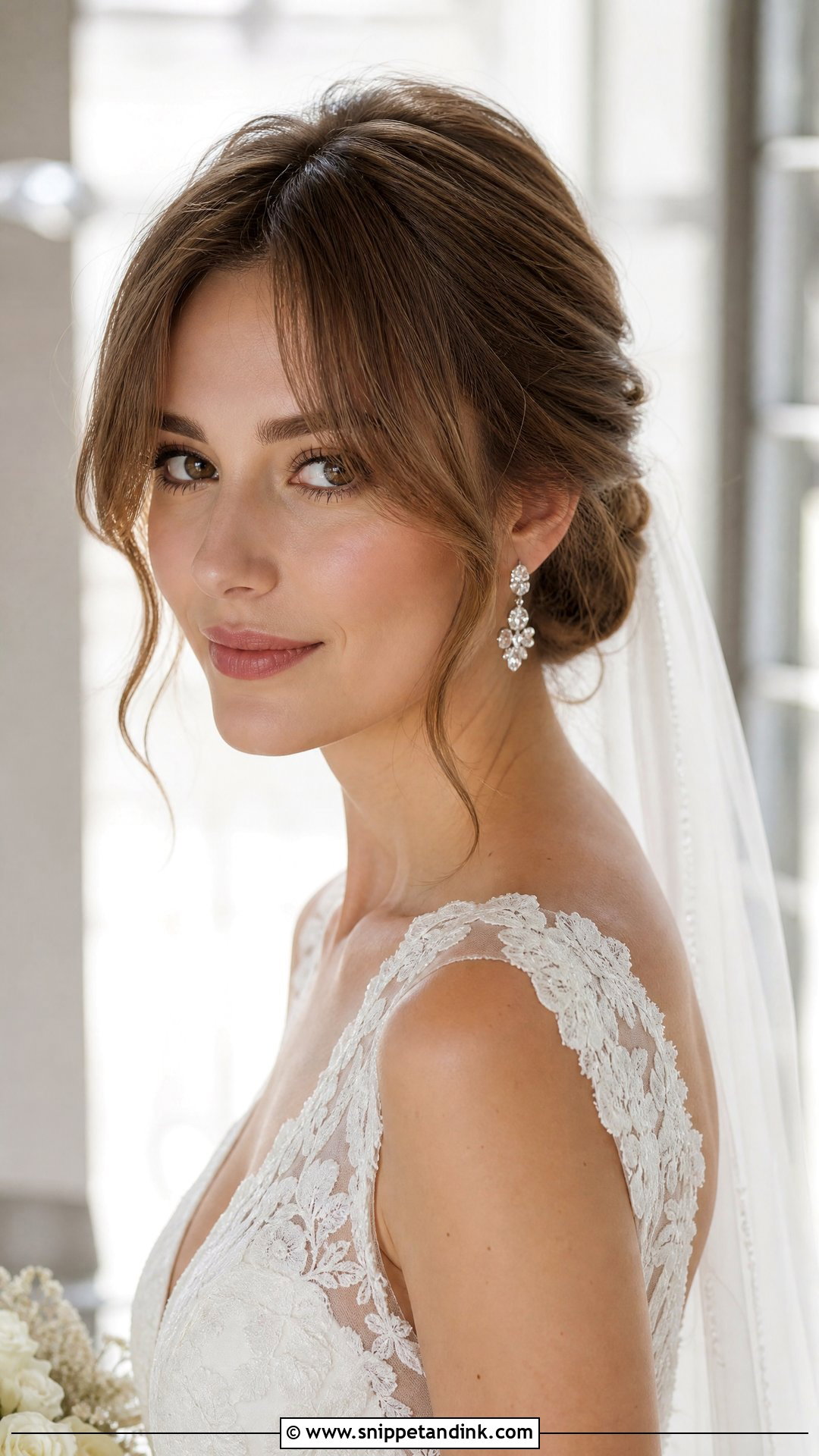
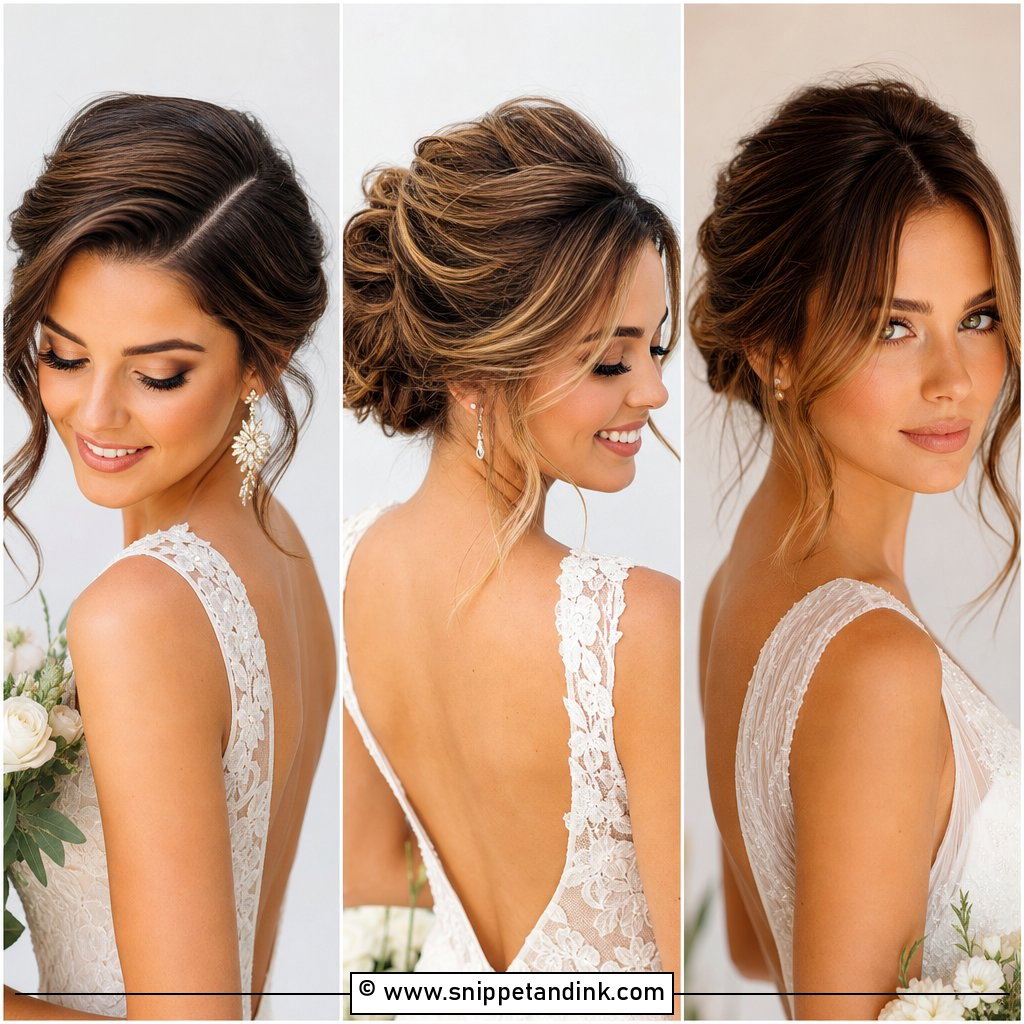
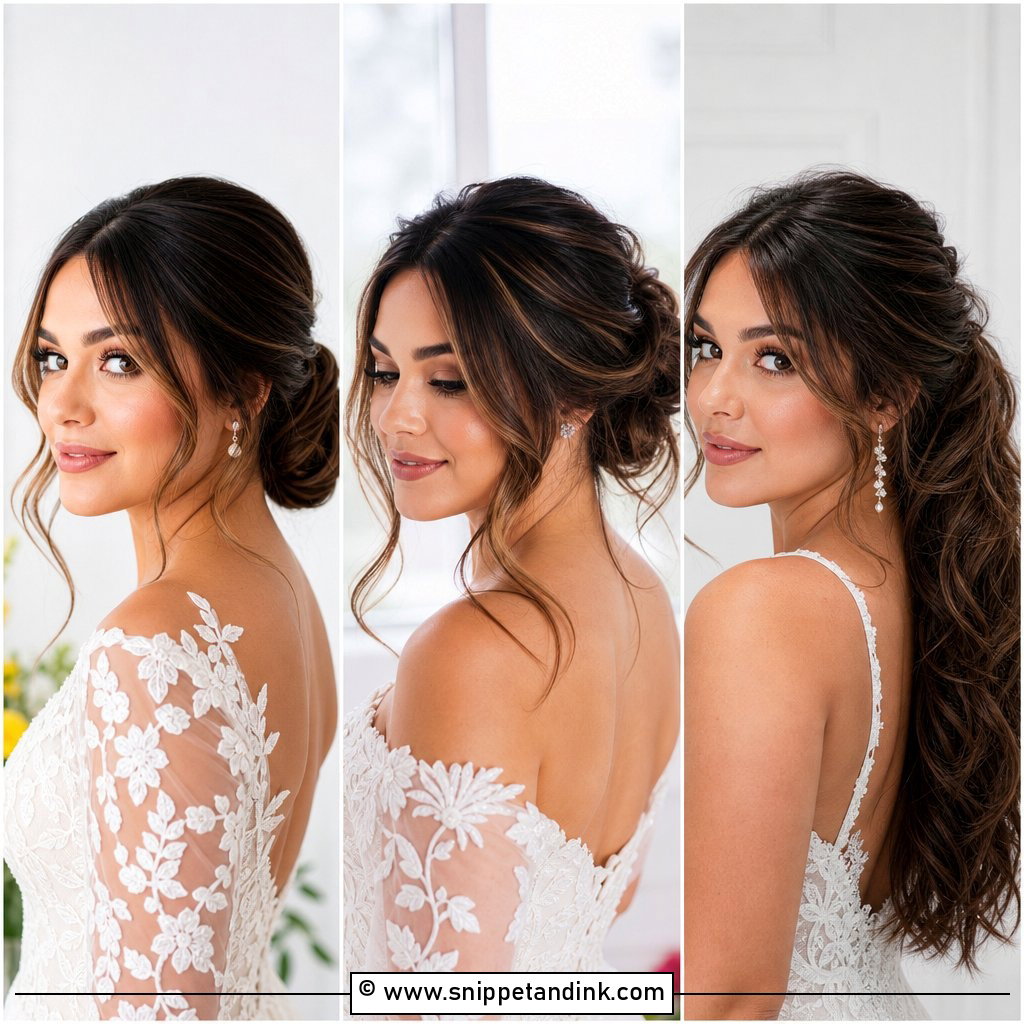
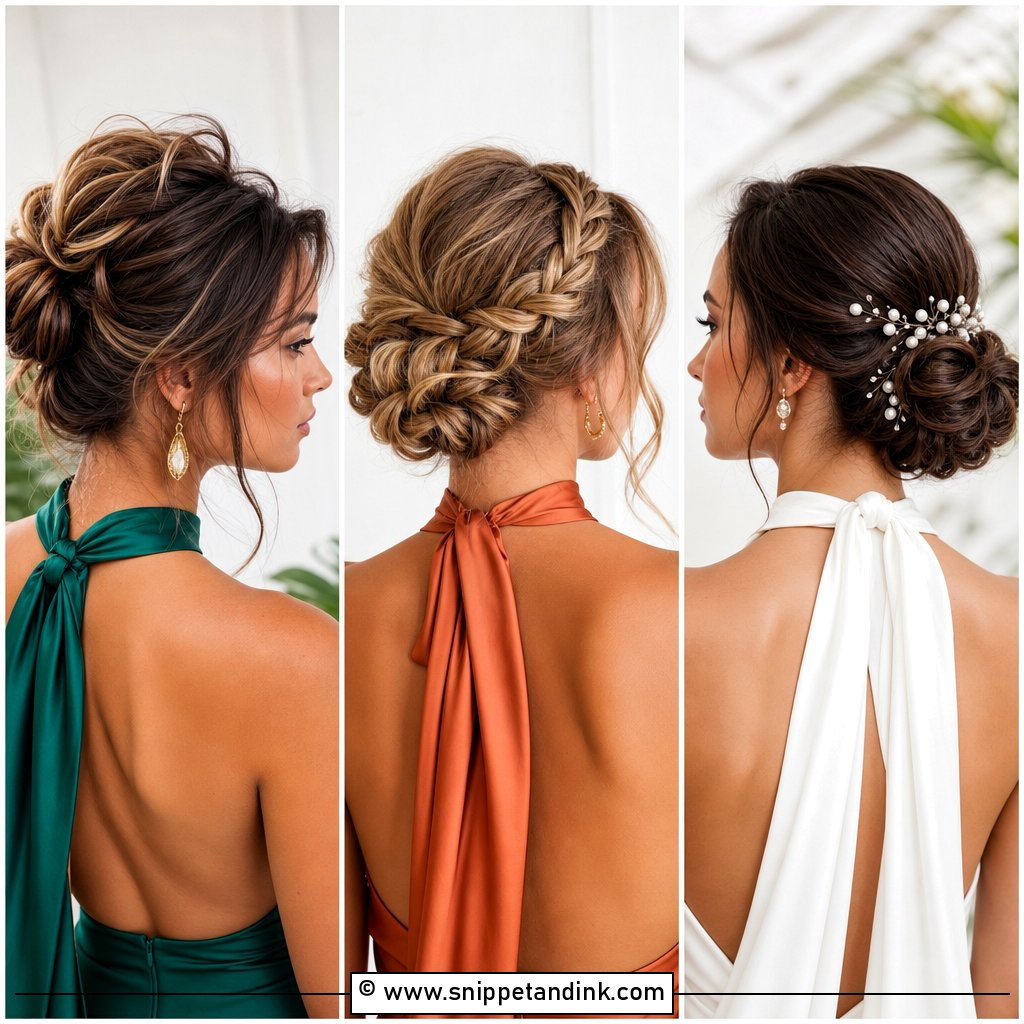
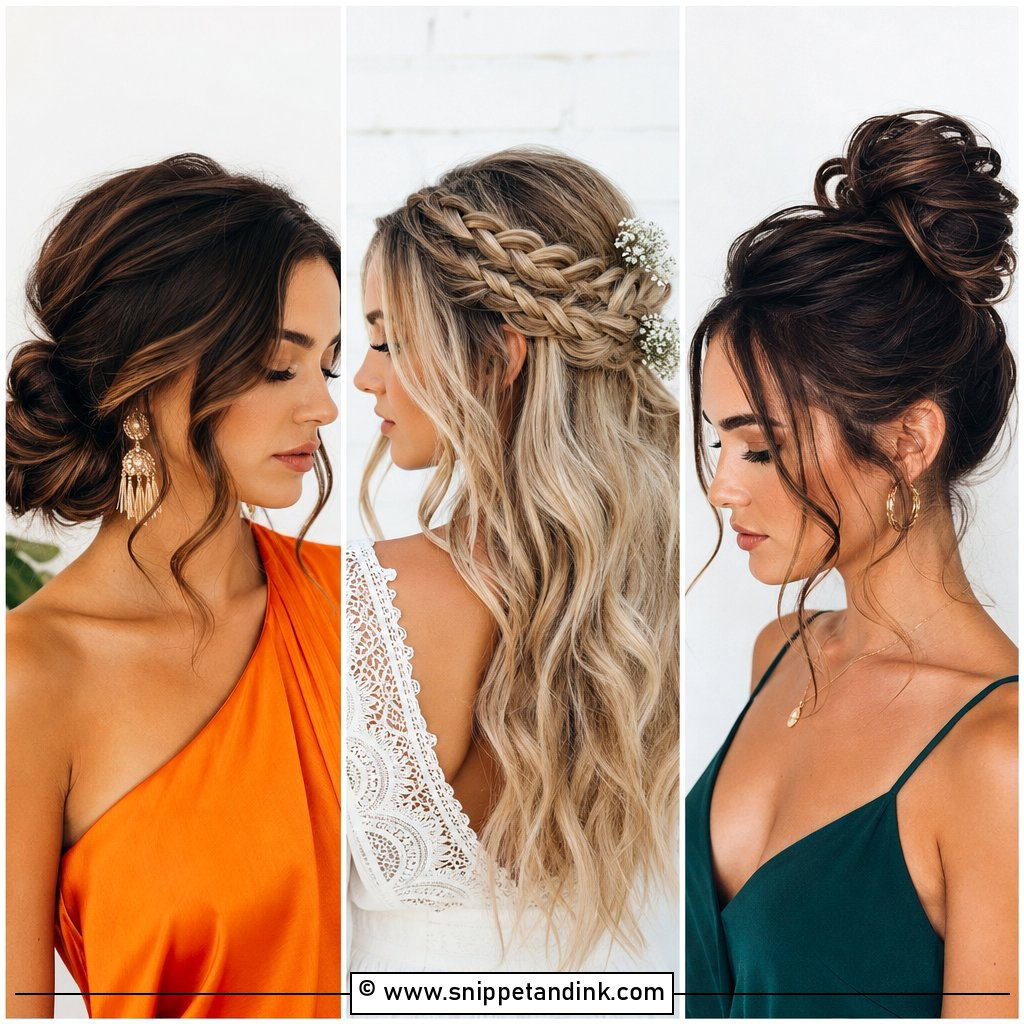
Curtain bangs with a low bun are a pairing I do often because they balance each other: the fringe parts at the center and sweeps aside to frame the eyes and cheekbones, while the bun keeps the back neat. It flatters most face shapes and leaves room for a veil or small hairpiece. I bend the bangs outward with a round brush rather than curling them, which keeps them from flipping up as the day warms. It works for classic and contemporary weddings, and the front reads well in close-up portraits.
2. Face-Framing Tendrils With an Updo
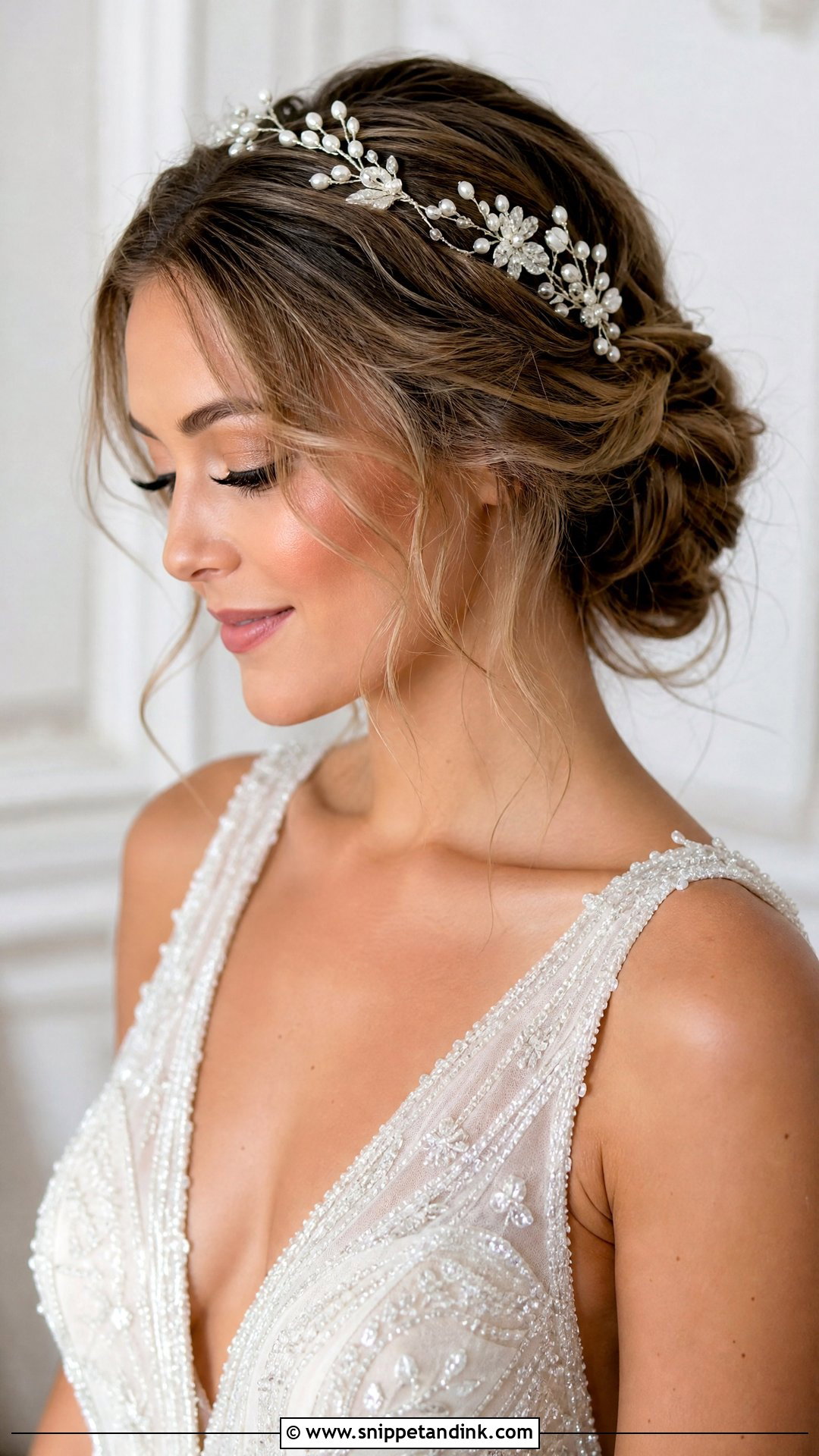
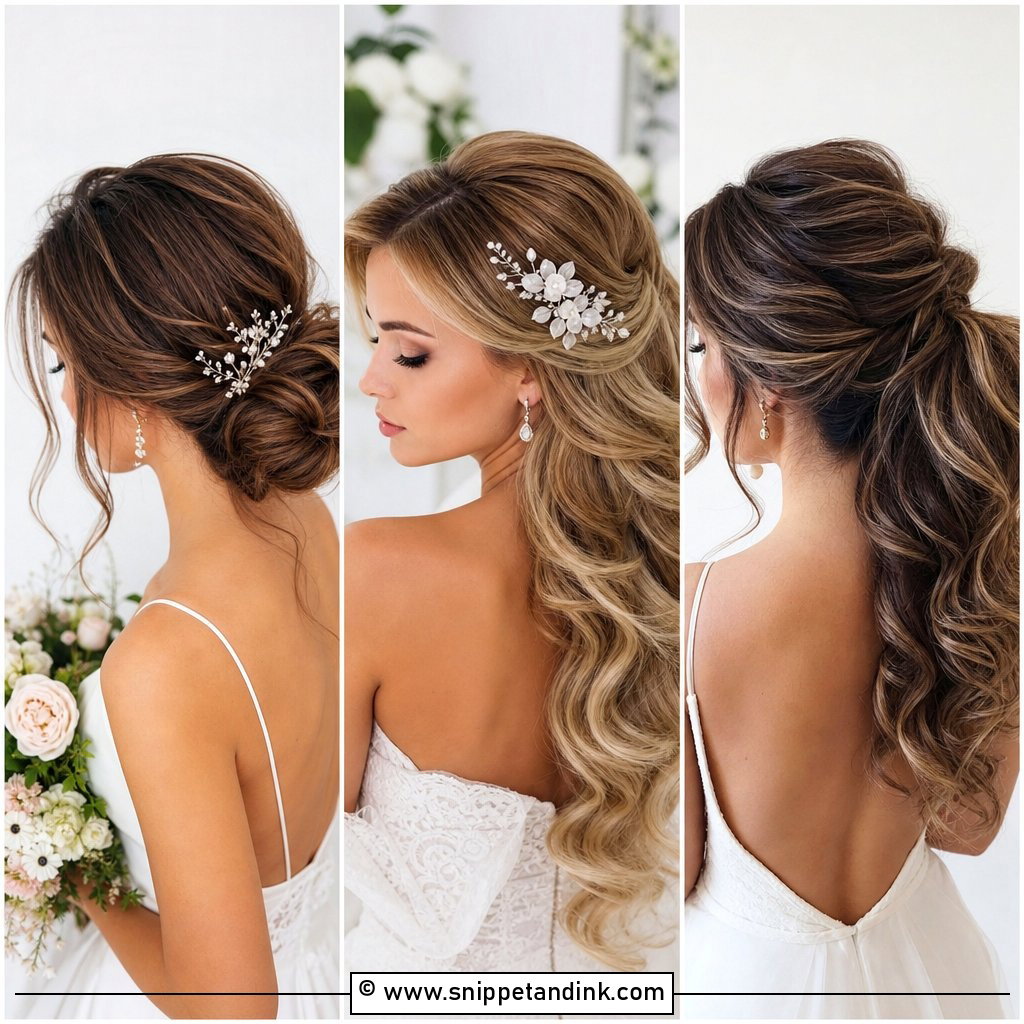
Leaving a few soft tendrils loose softens any updo. I gather the rest into a chignon or twisted bun and release two thin sections near the temples, then curl them so they follow the jaw. The mistake is pulling them out too thick; a heavy tendril hangs straight down and hides the cheekbone. Thin pieces curl tighter and spring back after a hug. This suits brides who want structure at the back and softness at the front, and a hair vine or a few flowers pairs nicely with it.
3. Side-Swept Bangs for Brides
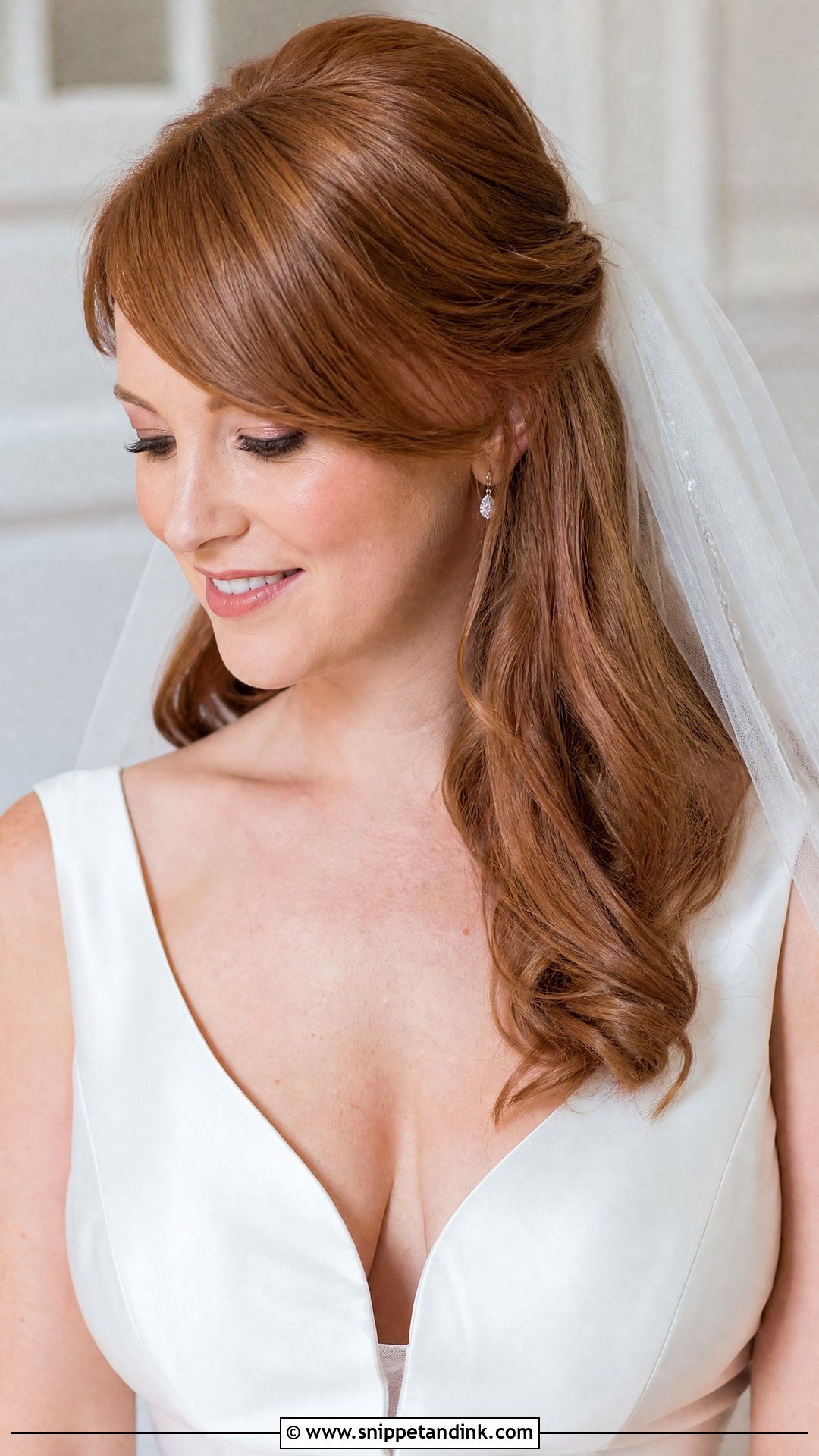
Side-swept bangs cross the forehead on a diagonal, which lengthens round and square faces and puts the focus on the eyes. Wear them with waves or an updo; both work with veils and headbands. If you don’t have bangs, clip-in fringe pieces can give the same effect, but test them at the trial, because a clip-in has to blend with your color and texture at the root. If you do have bangs, I’ll shape them to sweep in the direction they naturally want to fall, never against a cowlick.
4. Half-Up Half-Down With Front Curls
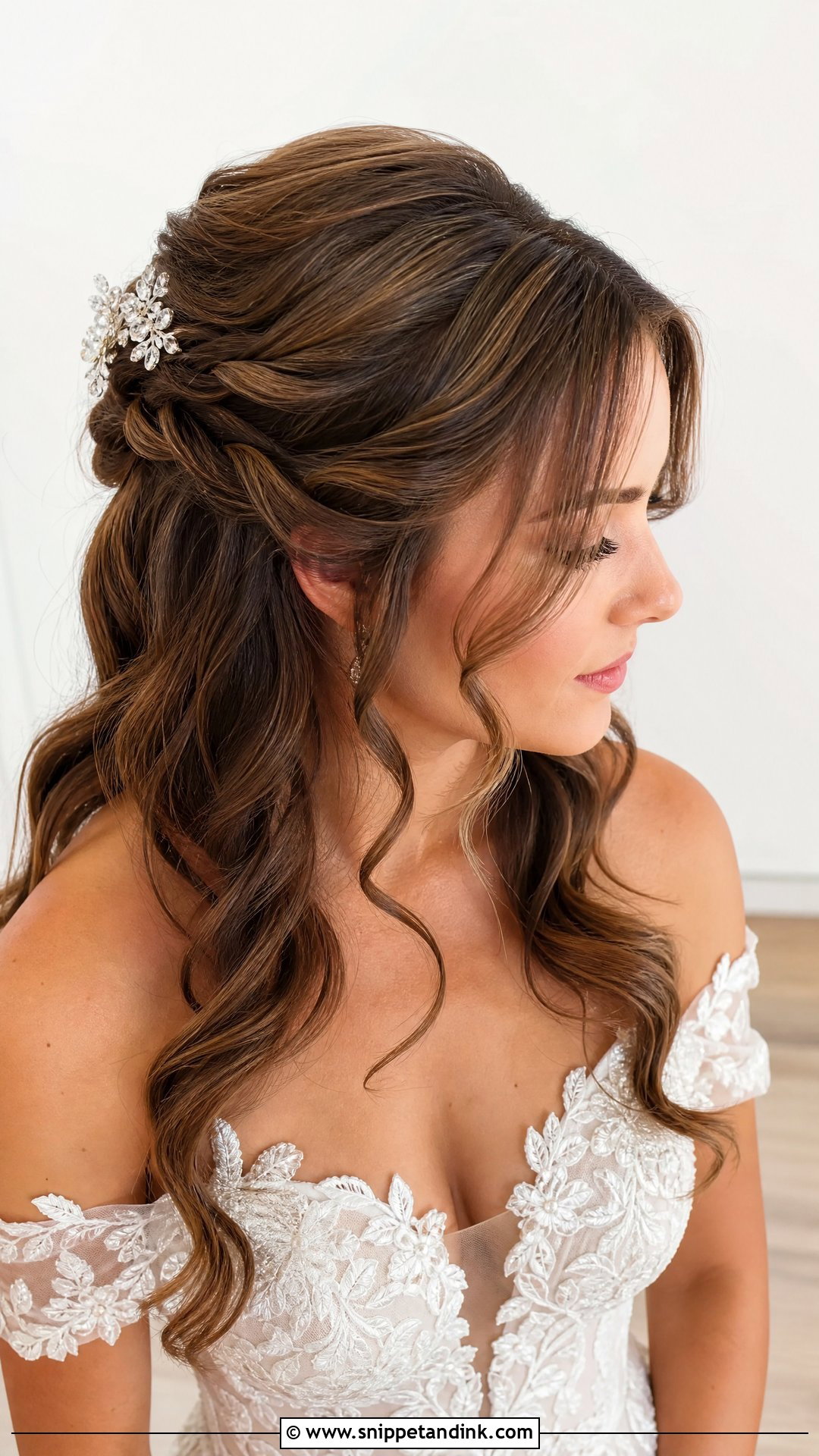
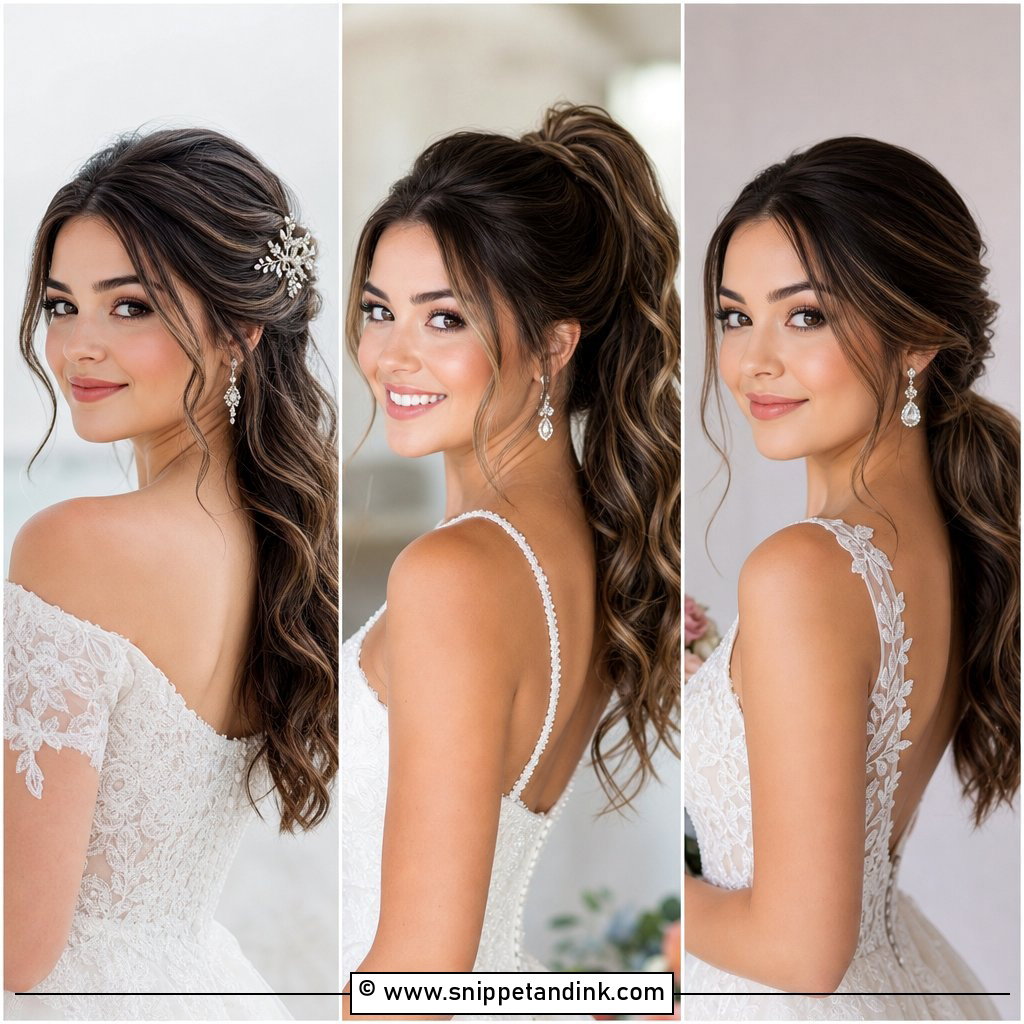
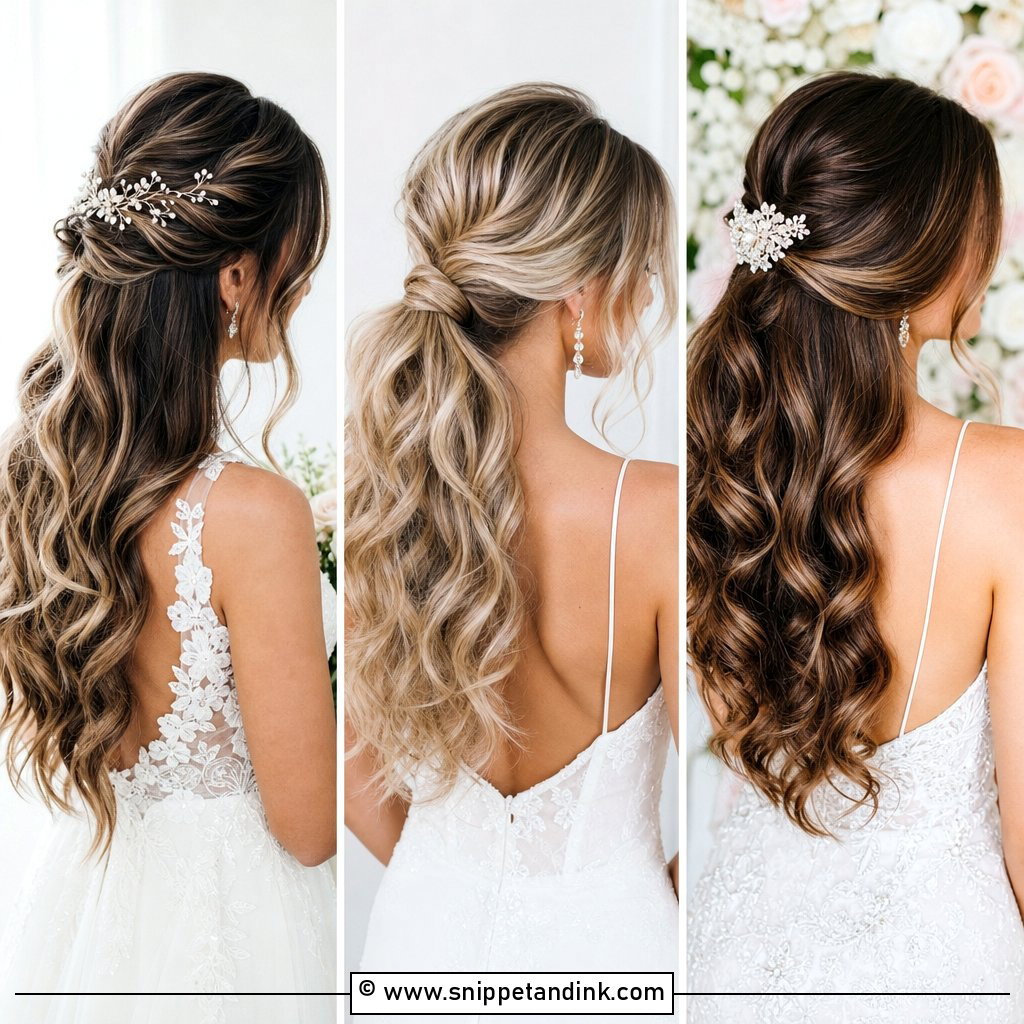
Front curls make a half-up style softer. I twist the top section back or pin it into a small bun, let the rest fall in waves and curl the front pieces separately so they frame the cheeks. The style suits medium and long hair and most face shapes. I curl the front pieces away from the face; curls aimed toward the face close it in and tend to fall into your eyes. A small clip or a few flowers finish it.
5. Soft Baby Bangs for a Bridal Look
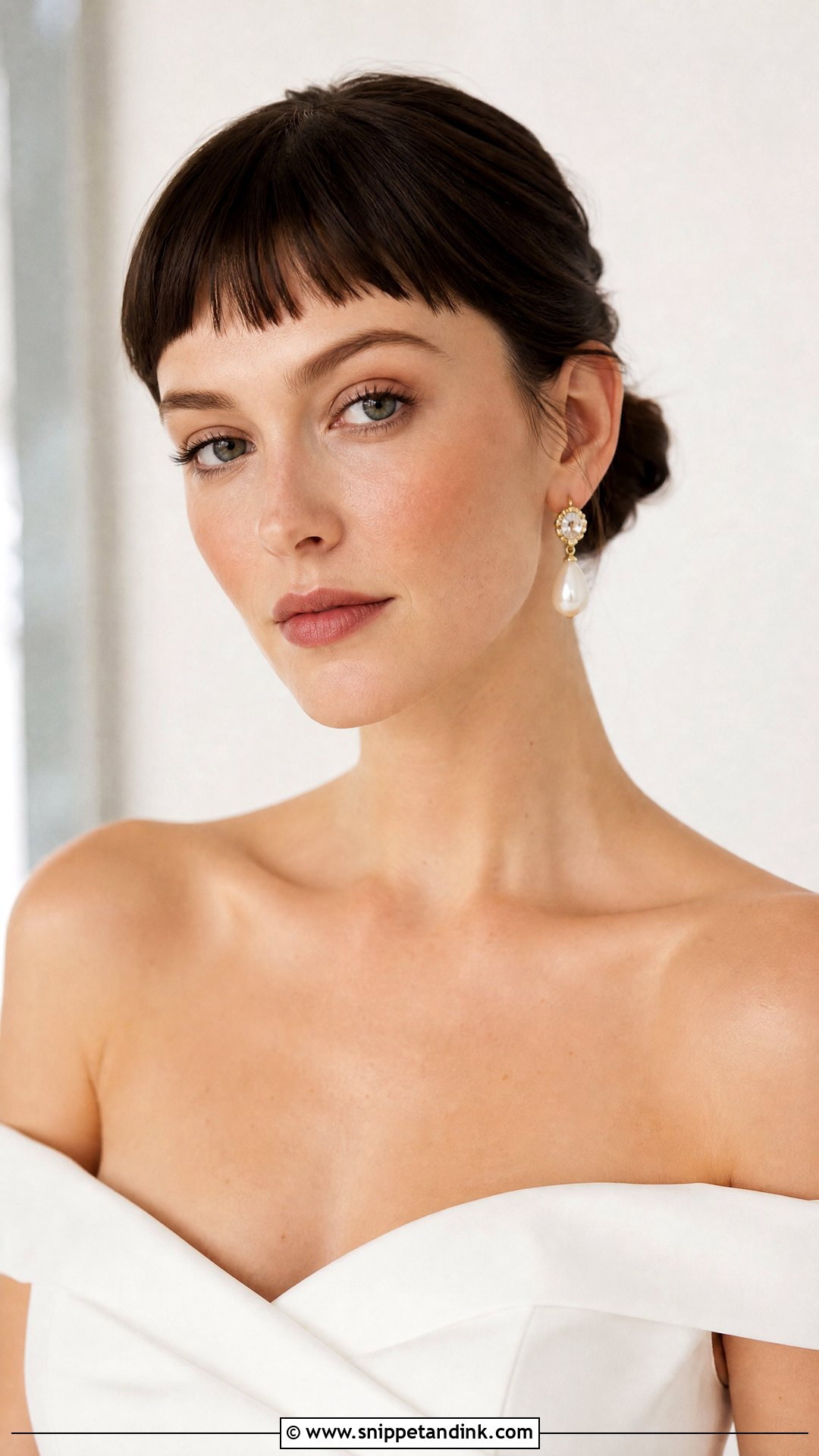
Baby bangs are short and blunt, sitting high on the forehead. They’re a bold choice, and they put the eyes and cheekbones on show. A sleek bun or soft waves set them off. I’d only suggest baby bangs if you already wear them; cutting them for the first time near a wedding is a risk, because they can’t be hidden if they don’t suit you. Keep the rest soft and accessories minimal so the fringe stays the focus.
6. Wispy Bangs With Loose Waves
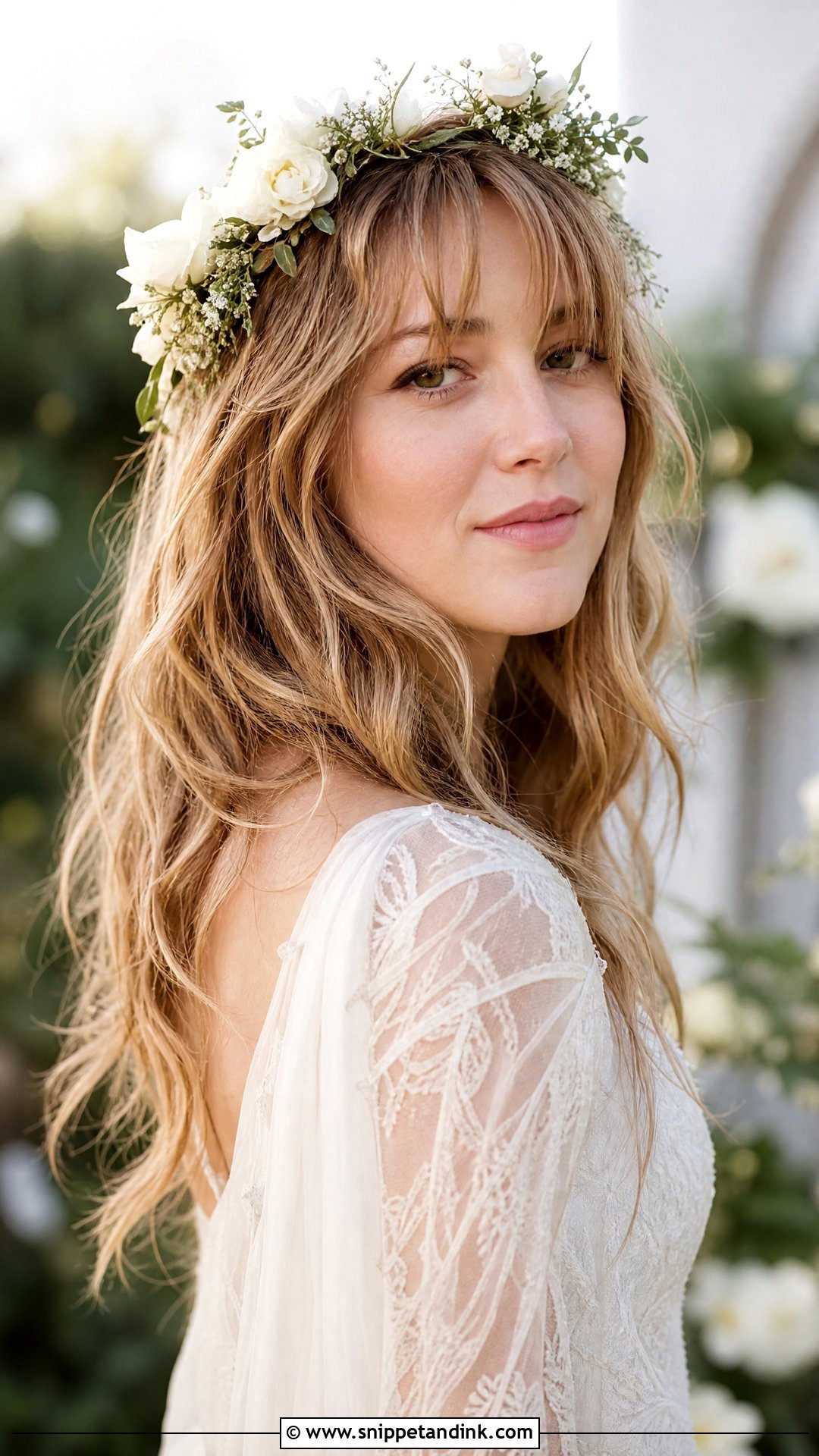
Wispy bangs and loose waves suit a boho bride and an outdoor or garden wedding. The light, feathery fringe falls across the forehead without feeling heavy, and it softens most face shapes because it doesn’t cover too much. Wispy fringe is also the easiest to blend into the rest of the hair. I set it with a little powder rather than cream so it doesn’t separate into strings when the forehead warms. A flower crown or a few scattered blooms complete it.
7. Slicked-Back Front With a Bun
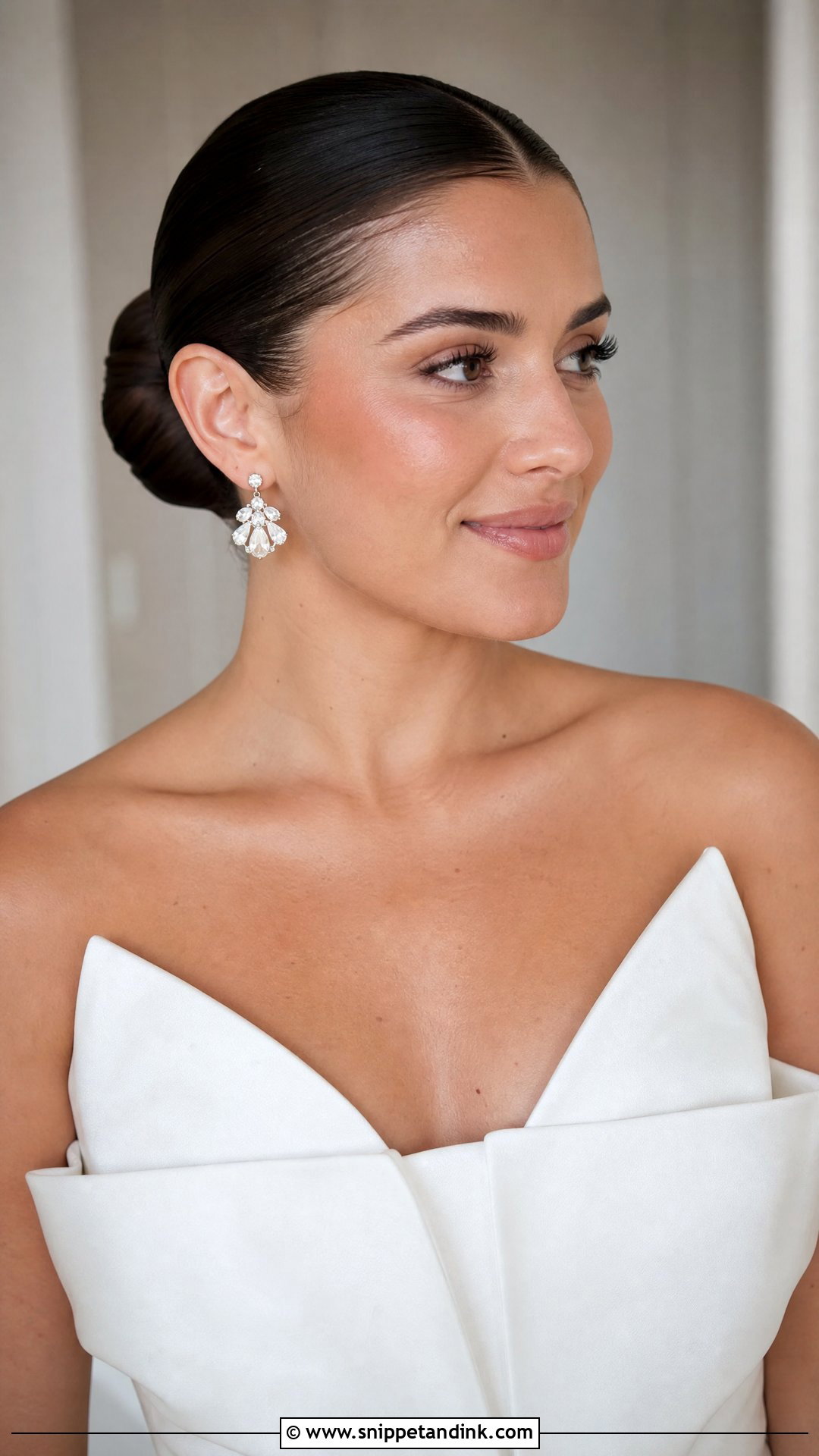
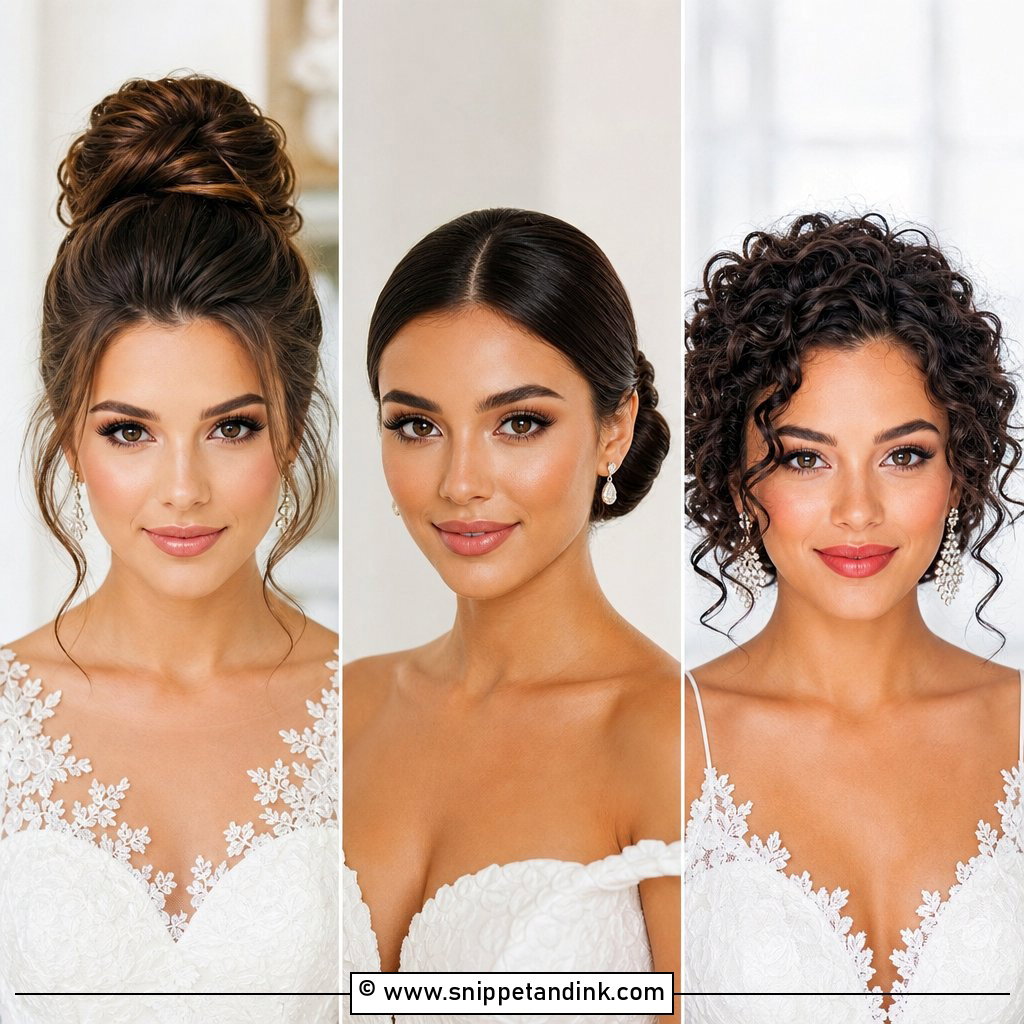
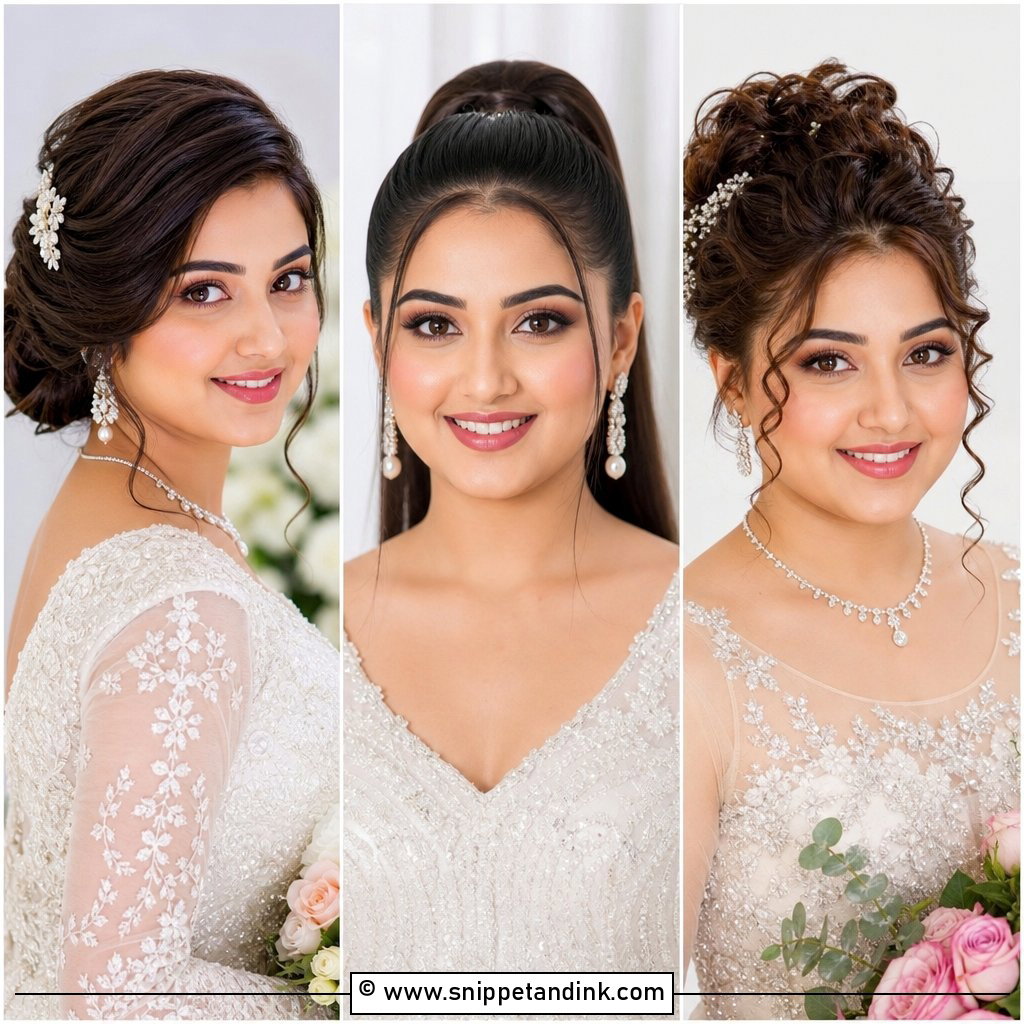
Pulling all the front hair smoothly back into a sleek low bun or ballerina bun makes a sharp, clean silhouette. I use a strong gel or pomade and a fine comb, and brush in one direction so there are no ridges. It shows off the face, makeup and big earrings, and it suits modern venues and structured gowns. It keeps hair off the face all day, which some brides find a relief. The honest caveat: a slicked front shows every thin patch and every uneven hairline, so it’s the look I’m most careful about recommending.
8. Middle Part With Face-Framing Layers
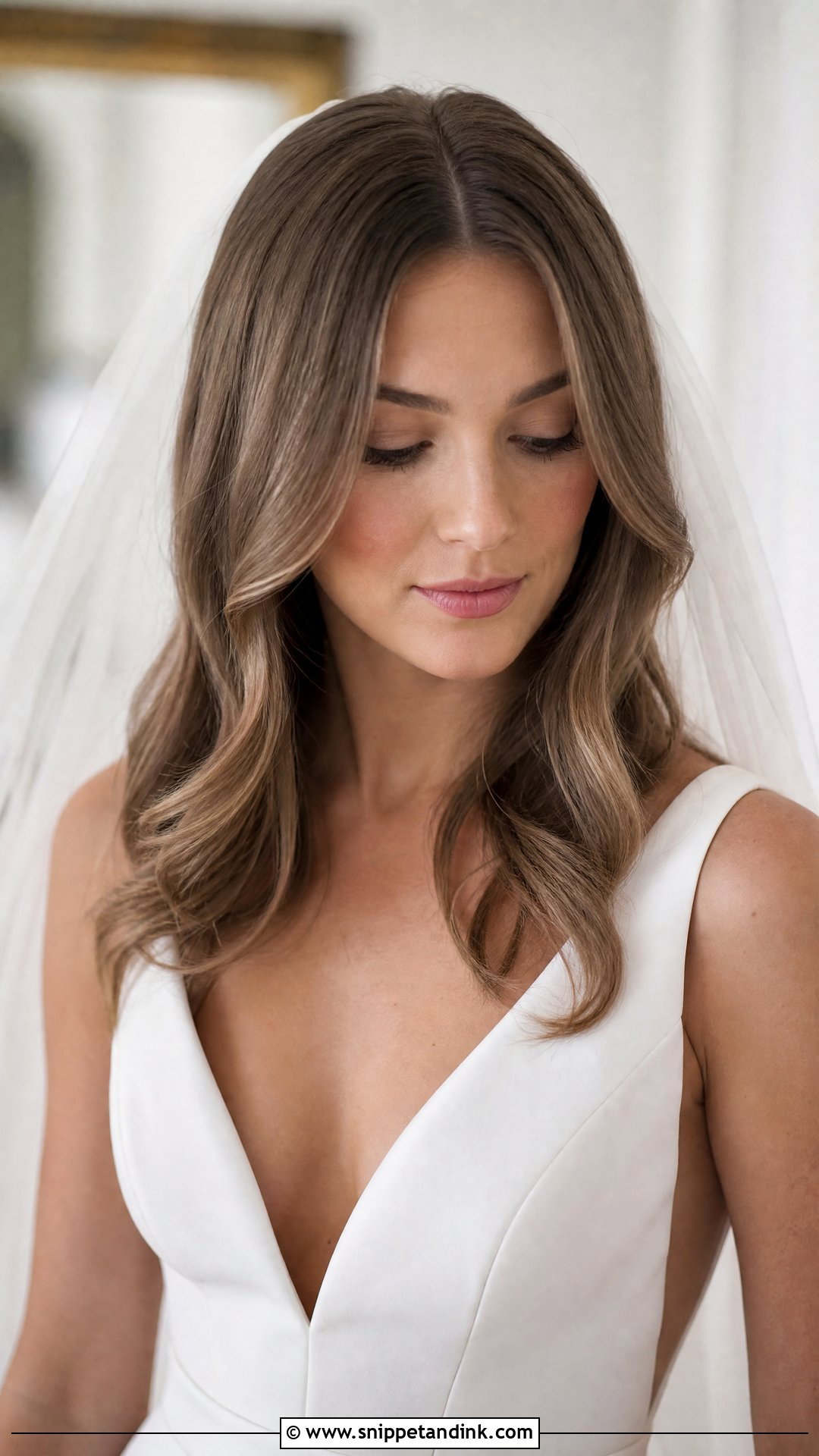
A middle part with face-framing layers suits oval and heart-shaped faces, because the symmetry plays to their balance. The layers curve around the cheekbones and jaw and can be worn down in smooth waves or with a half-up section. For the layers to frame rather than hang, they need to start at or below the cheekbone; layers cut too short flick out. Ask your stylist to check this at your last cut. A simple veil or no accessory at all lets the shape speak.
9. Voluminous Bangs With an Updo
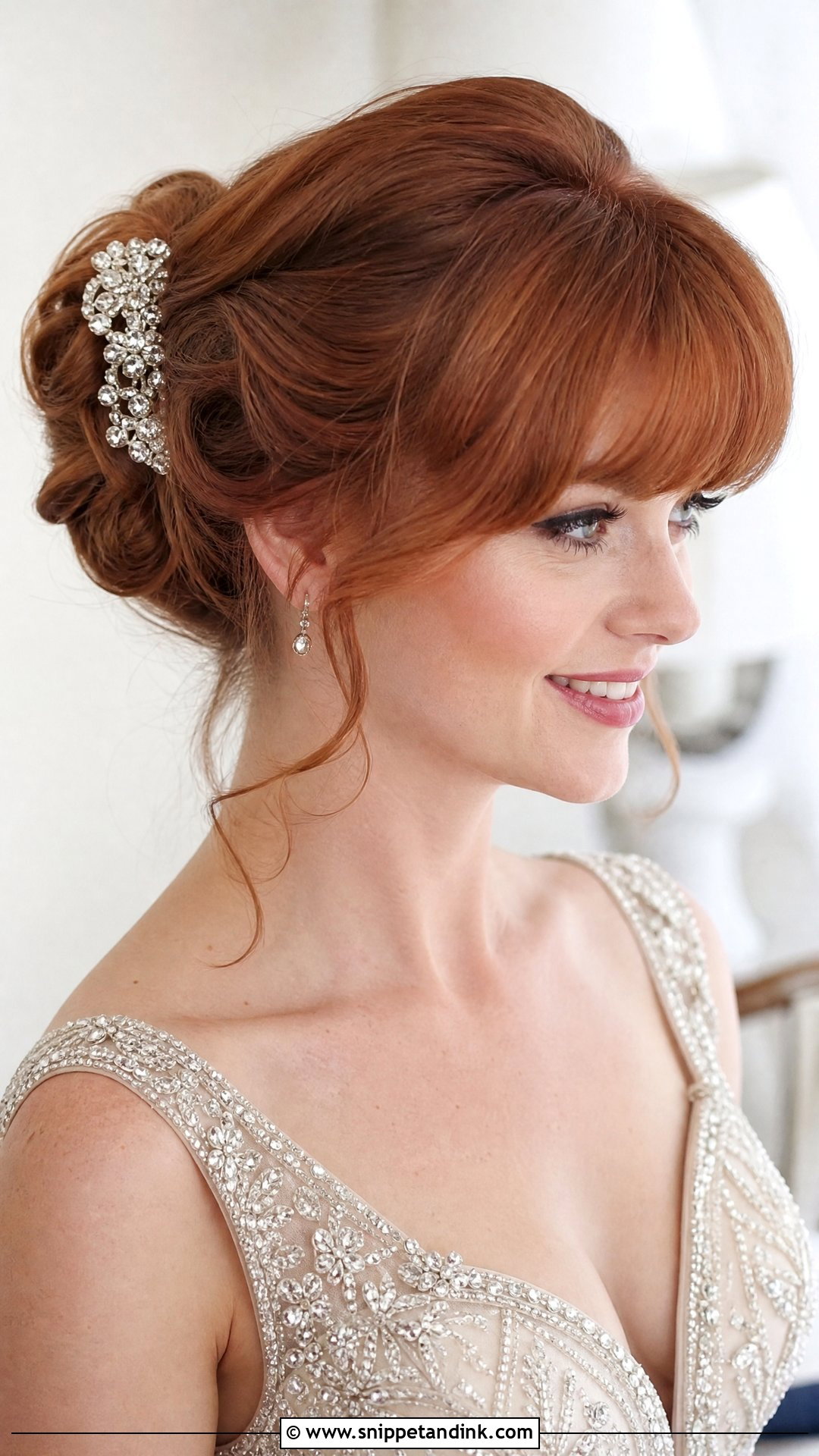
Voluminous bangs are styled with body and lift so they form a rounded shape over the forehead. They pair with a sleek chignon or a twisted updo for a vintage, glamorous feel. I build the volume with a round brush and a little back-combing underneath, never on the top layer, which would show. Hairspray holds it. A jeweled comb or tiara behind the fringe completes it. Under a veil, keep the volume moderate so the veil doesn’t sit too high.
10. Braided Front for a Boho Bride
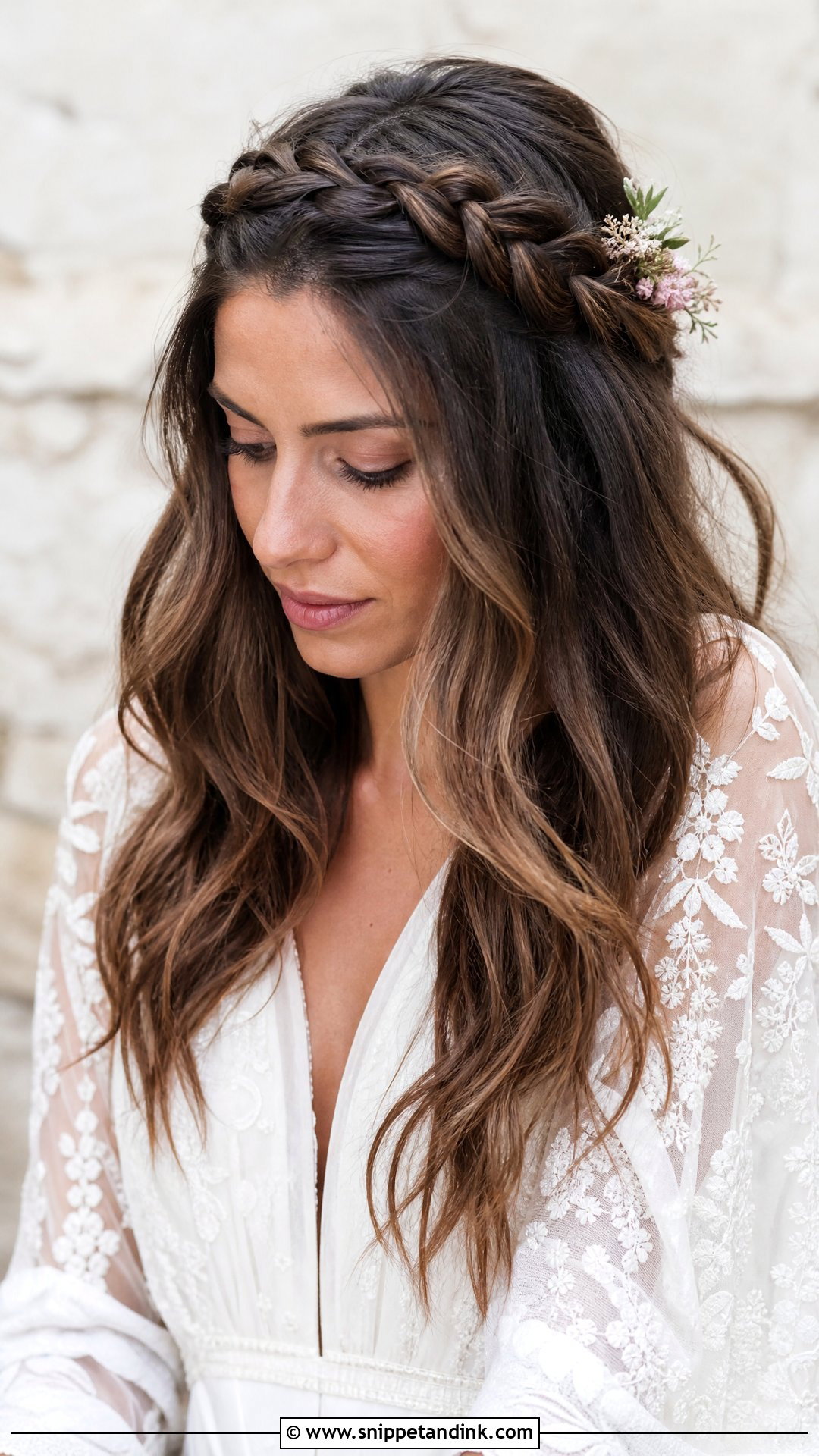
A braided front works a small braid along the hairline, or twists front sections into a delicate plait. It keeps hair off the face and adds texture. You can pair it with loose waves, a half-up style or a soft bun. It suits outdoor, garden and festival-style weddings, and tiny flowers or beads can be woven in. I braid tight to the scalp at the start and loosen only the outer loops; a braid that’s loose at the root lifts away from the hairline after a few hours.
11. Curtain Bangs With Hair Down
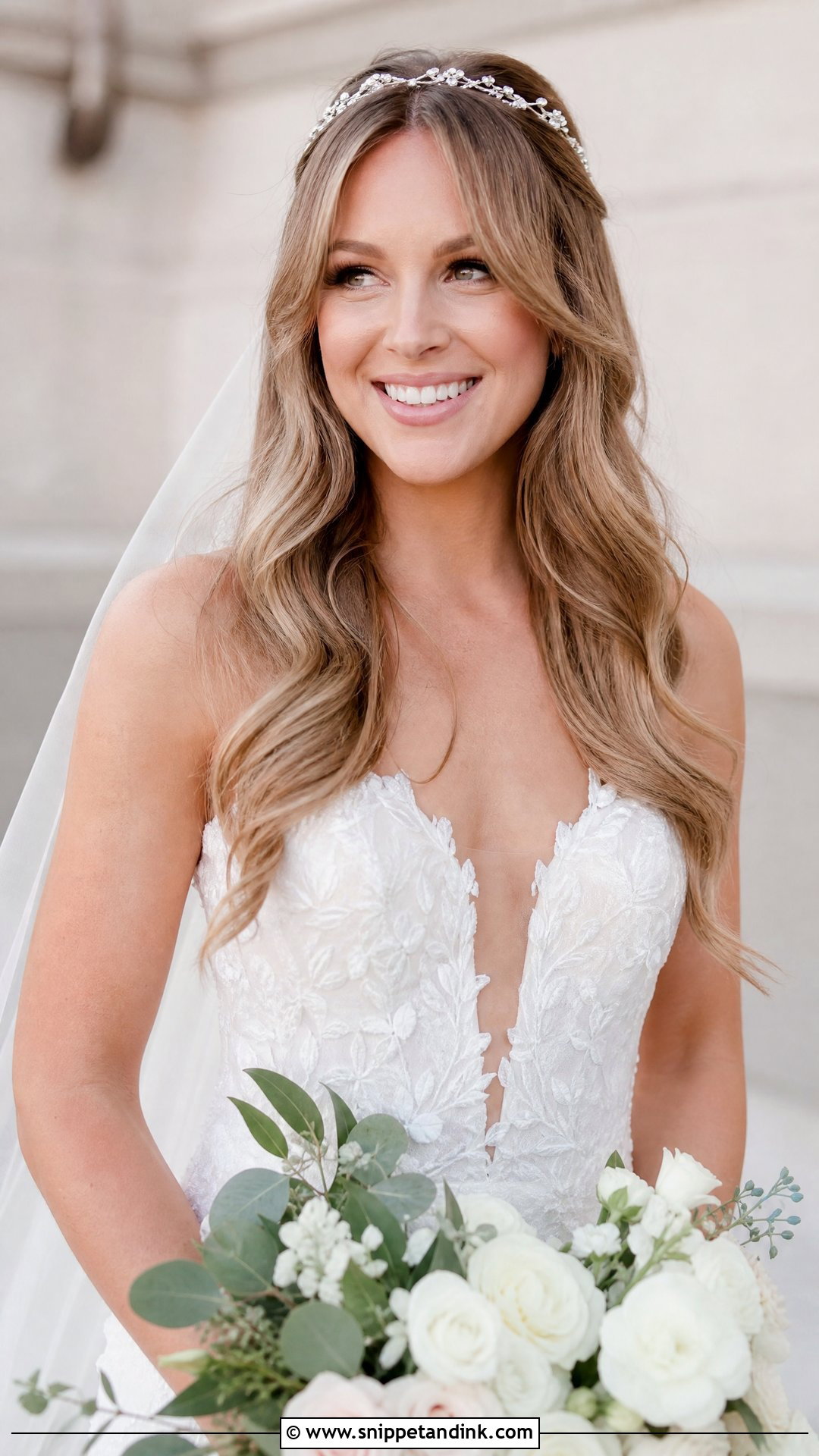
Nothing keeps the front softer than curtain bangs worn with hair down. The fringe sweeps to each side and the lengths fall in waves or smooth, straight sections. Curtain bangs suit most face shapes and soften the overall look, which is why I find them the most forgiving fringe for a bride. Down hair and a fringe can both stick to the face in heat, so I keep the bangs light on product. A thin headband adds sparkle, or you can leave it plain.
12. Twisted Front Sections for an Updo
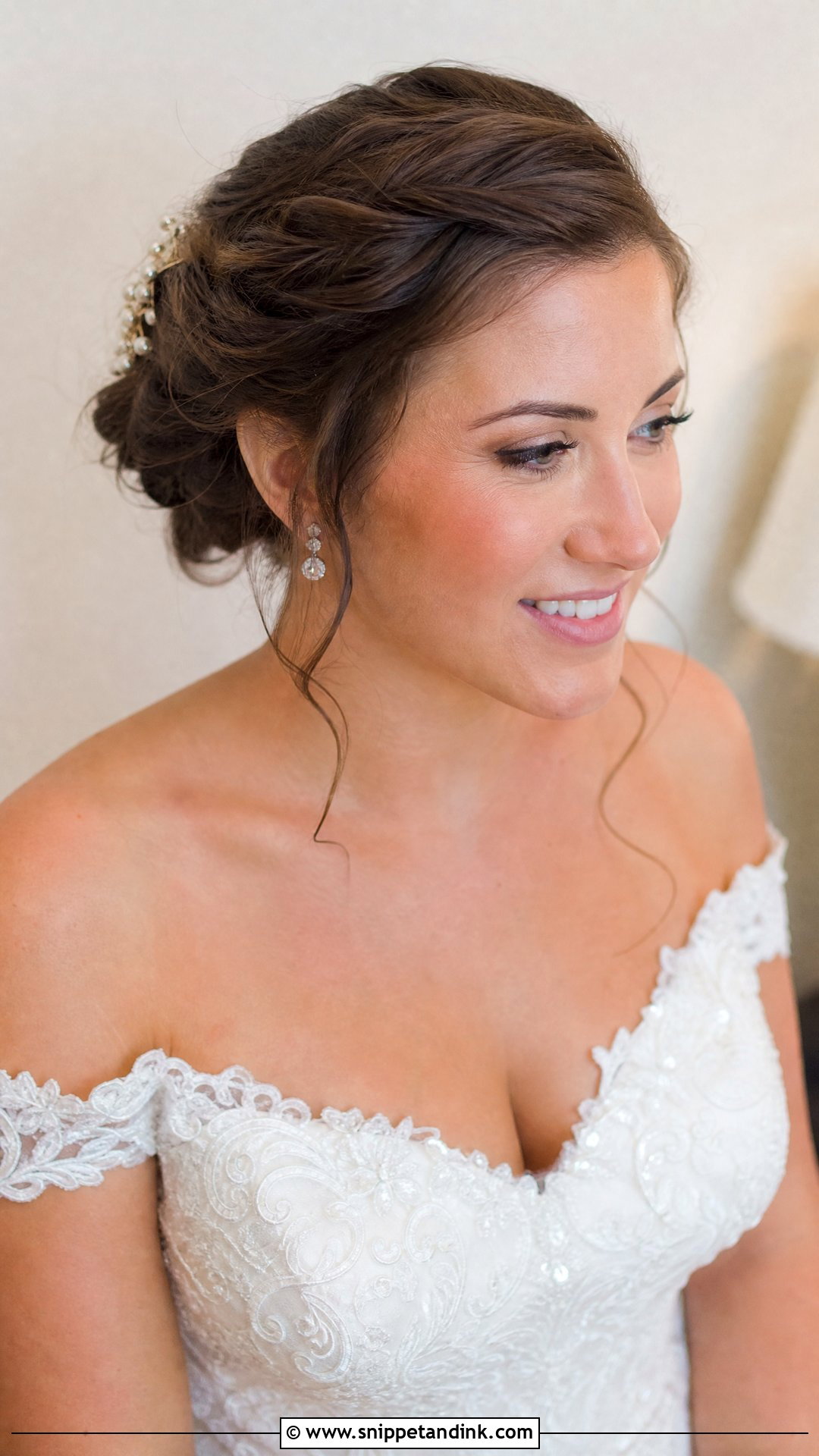
Twisting small sections from each side of the hairline back toward the crown adds sculpted detail to an updo. Each twist is pinned into the updo at the back. It keeps hair off the face and suits formal weddings, and jeweled pins along the twists add sparkle. On fine hair, the twists can look thin, so I lightly back-comb each section before twisting it to add volume. It pairs well with veils and hairpieces.
13. Soft Fringe With a Sleek Ponytail
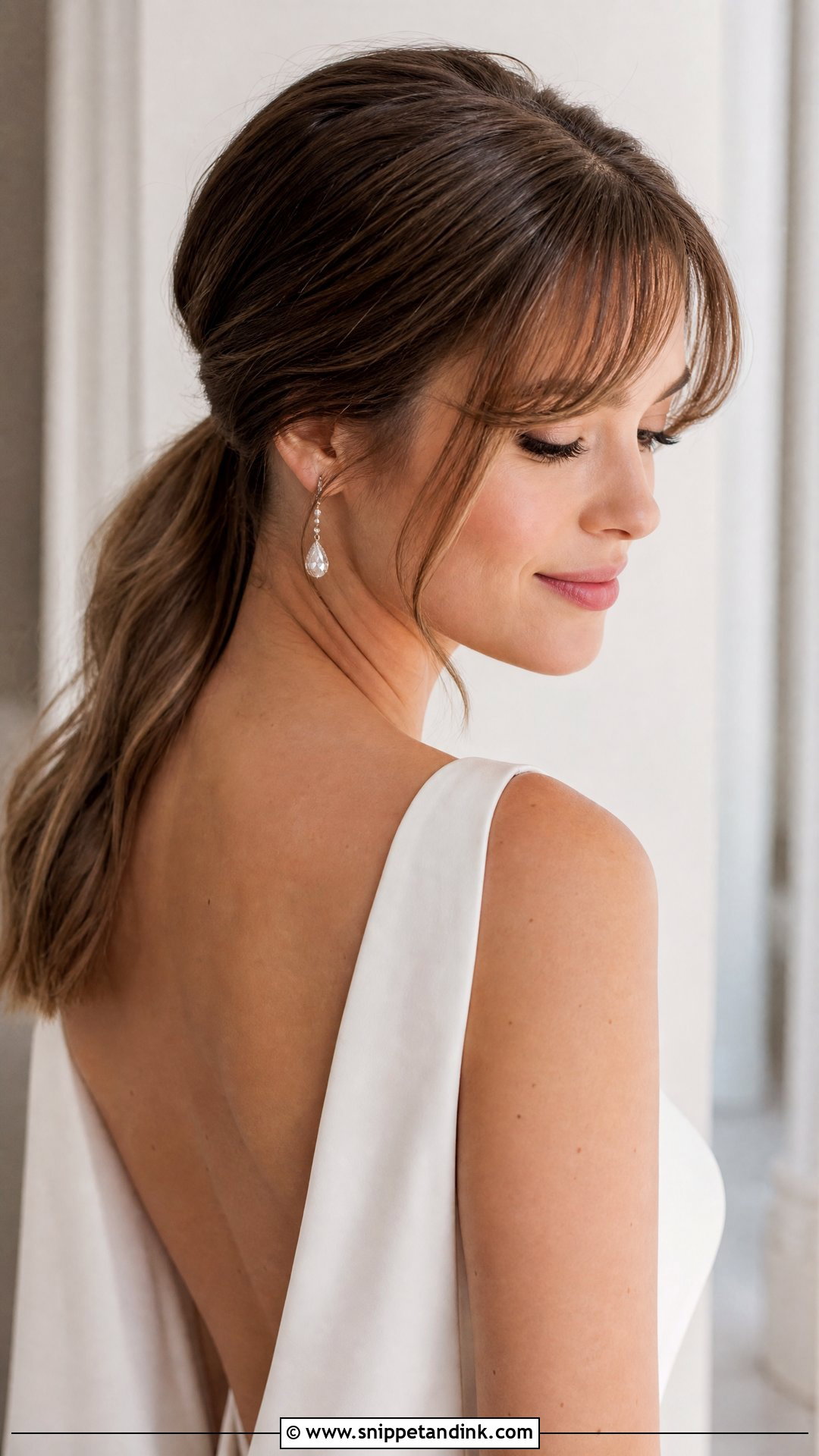
A soft fringe takes the edge off a sleek ponytail. The gentle bangs frame the forehead and the ponytail stays clean. Set it high for drama or low for something quieter. I wrap a section of hair around the base to hide the elastic. It keeps hair secure and comfortable through a long day. Be aware that a tight high ponytail pulls the hairline back and can make a soft fringe sit higher than usual, so I check the fringe after the ponytail is in, not before.
14. Vintage Finger Waves at the Front
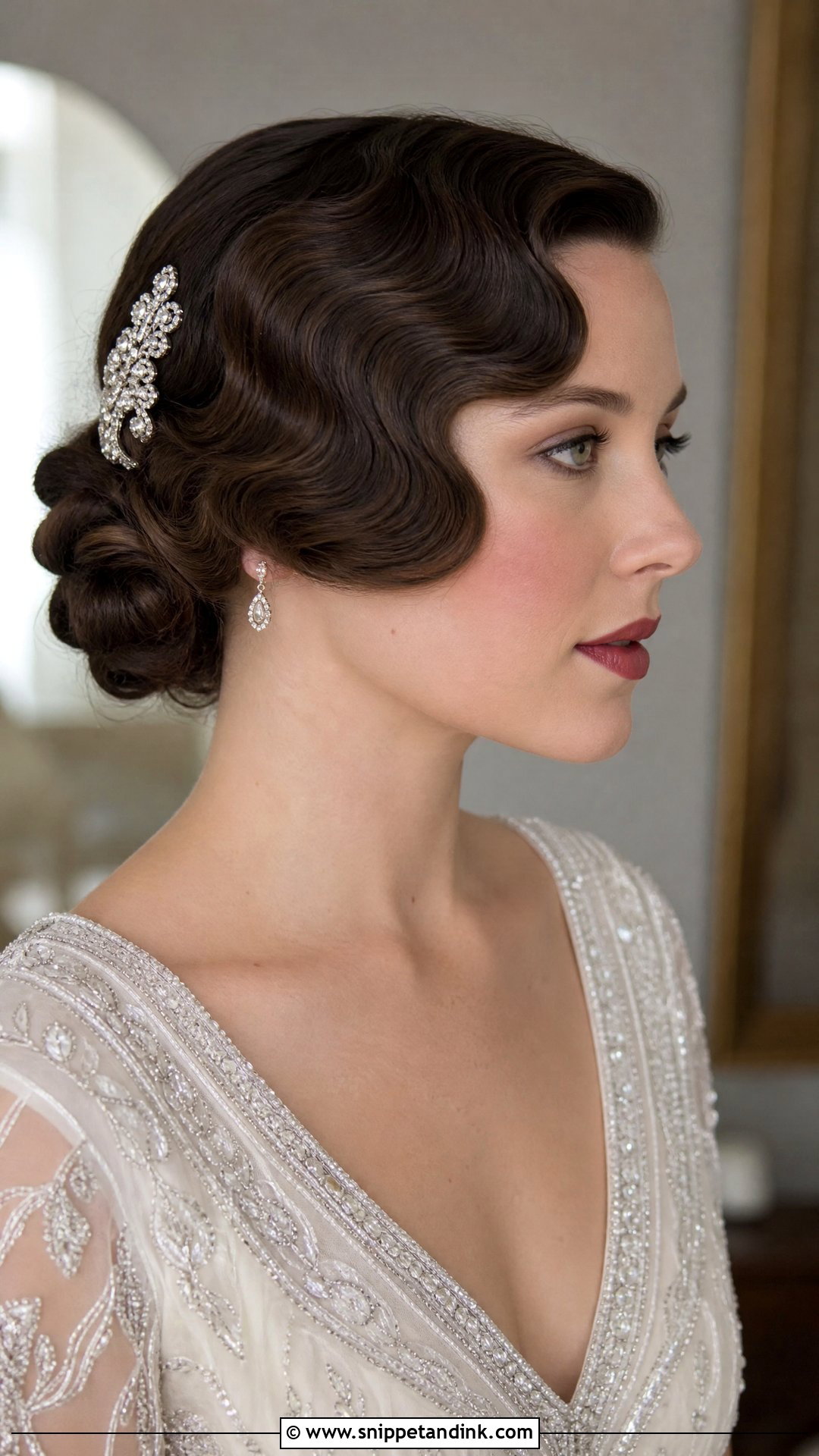
Finger waves at the front are sculpted S-shapes set close to the head, paired with a low bun or soft waves behind. They suit vintage and art-deco weddings. I set them on wet hair with a strong-hold gel and clips, and the clips stay in until the gel is fully dry; removing them early is why finger waves go soft. A jeweled clip or art-deco hairpiece completes the look. Expect a longer chair time for this one.
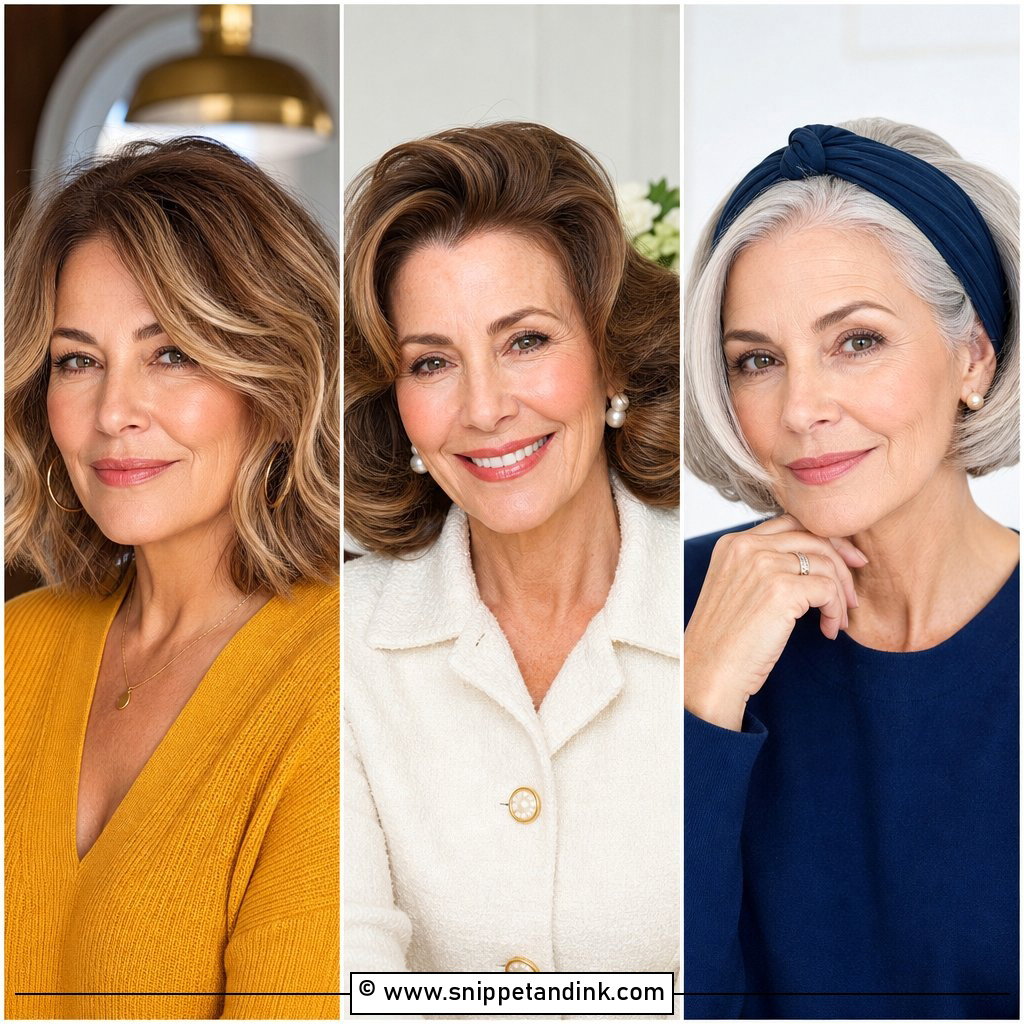
15. Flower Crown With Front Curls
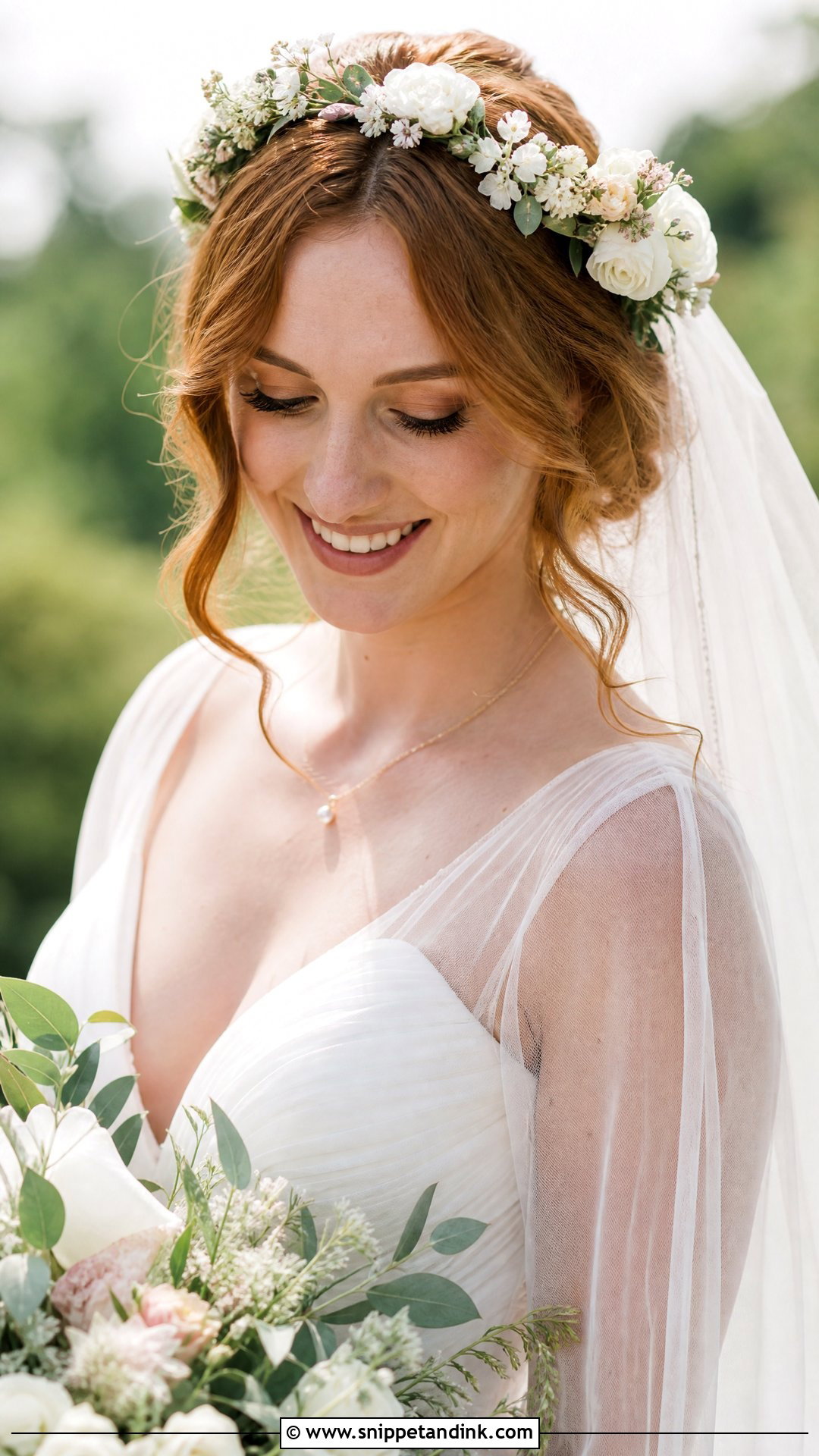
Place a flower crown along the hairline and curl the front pieces so they fall softly beneath it. It suits garden and outdoor weddings and works with hair down, half-up or in a loose updo. Fresh or silk flowers both work; choose blooms that echo the bouquet. I pin the crown before curling the front pieces, because the crown pushes the hair around and I want to curl the pieces where they’ll actually sit. In heat, fresh flowers wilt, so ask your florist which stems hold up.
16. Deep Side Part With Waves
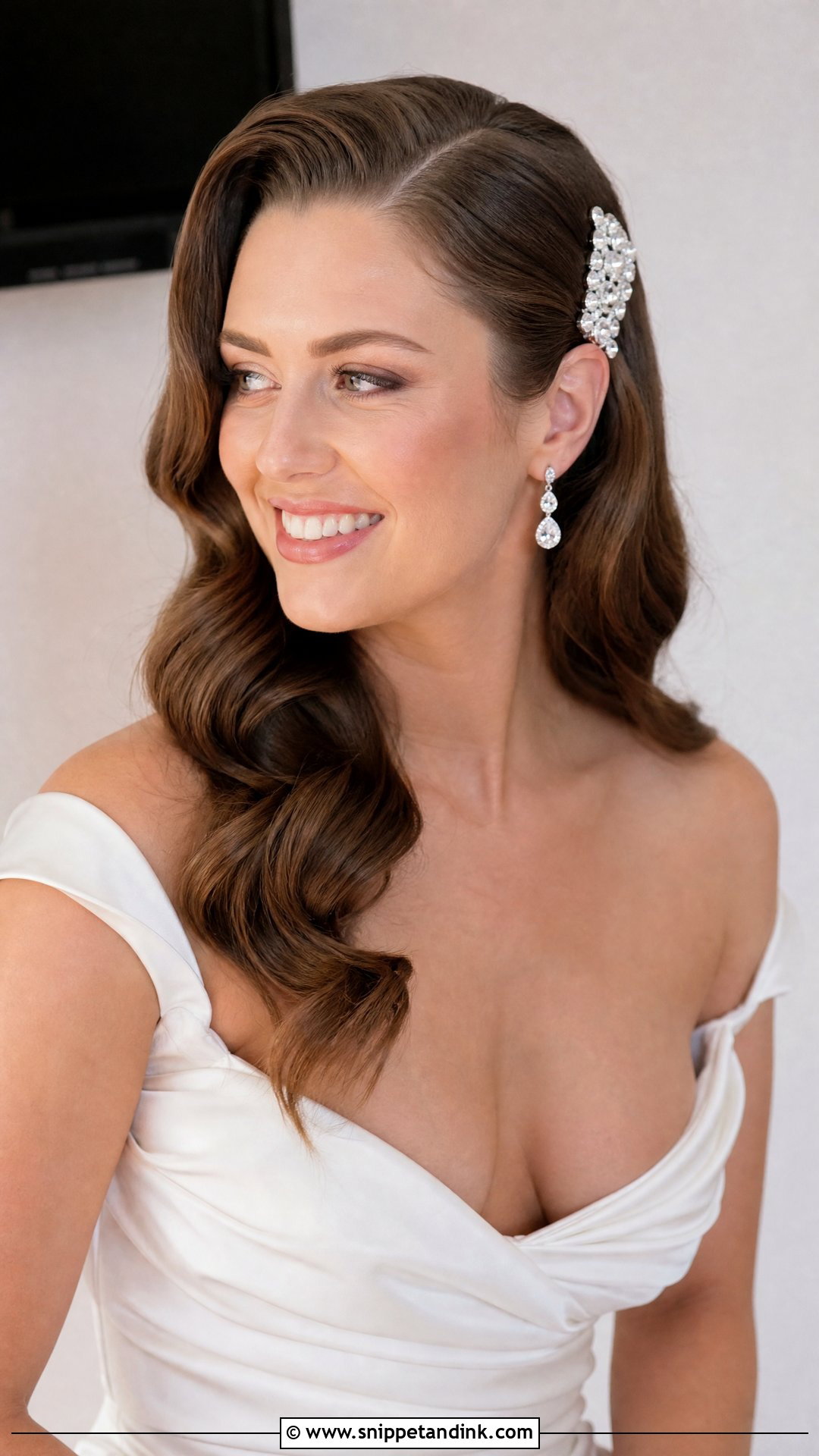
Parting the hair far to one side adds volume on the heavy side and creates an asymmetrical frame. Paired with soft waves, it has an old-Hollywood feel. The diagonal line softens round and square faces. It works with hair down or a side-swept updo, and a sparkling clip on the heavy side adds glamour. Hair that’s always parted on one side resists being flipped to the other, so I prep the new part the night before or blow-dry it into place to train the roots.
17. Wispy Baby Hairs Styled Down
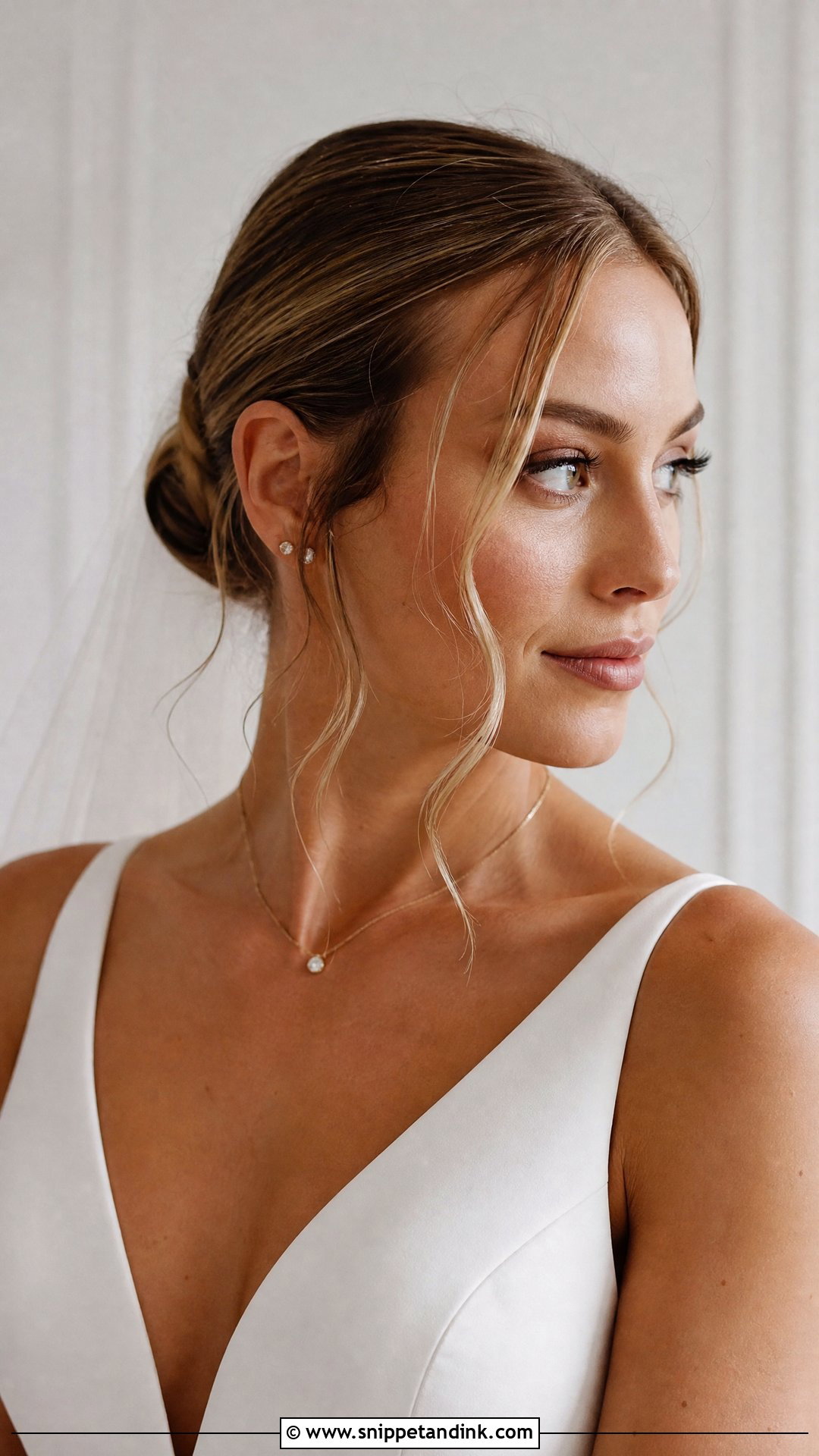
Many brides ask me to slick their baby hairs flat; I usually suggest leaving them. Fine hairs at the hairline, gently swept or curled, soften sleek buns, ponytails and updos that would otherwise look severe. I style them with a soft brush and a light gel or wax, not heavy product, so they look natural rather than drawn on. It suits brides who prefer a natural finish, and the effect shows nicely in close-up portraits. Keep accessories minimal.
18. Braided Crown With Loose Front Pieces
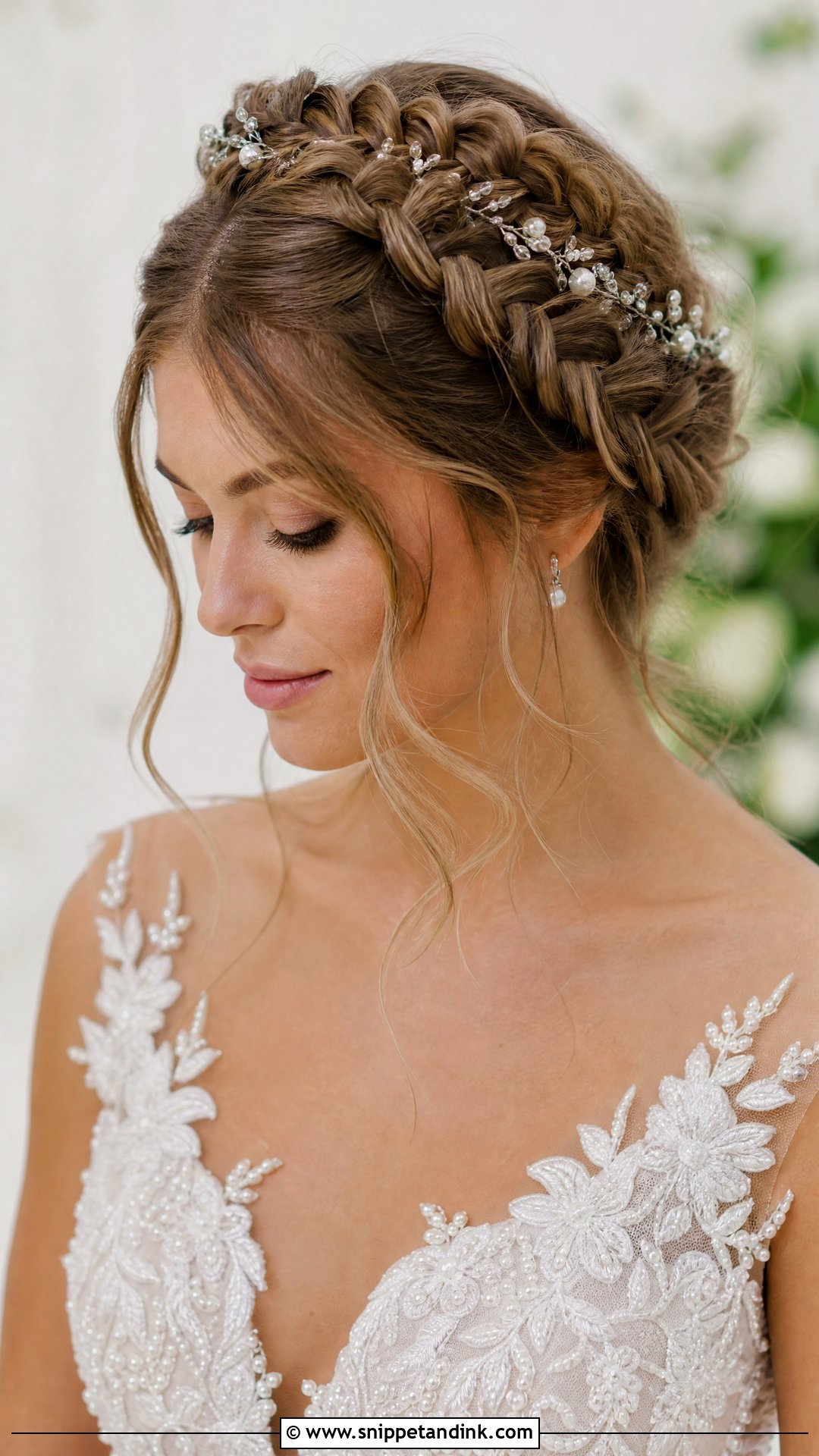
A braided crown wraps around the head like a halo, and a few loose pieces at the front stop it from looking tight. It suits boho, garden and fairytale weddings. Small flowers or pearls can be woven into the braid. I pin the crown at four points around the head so its weight doesn’t pull at the temples, and I leave the front pieces out before braiding, not after, so the braid isn’t loosened by pulling them free. It pairs well with veils and floral accents.
19. Sleek Center Part With Straight Hair
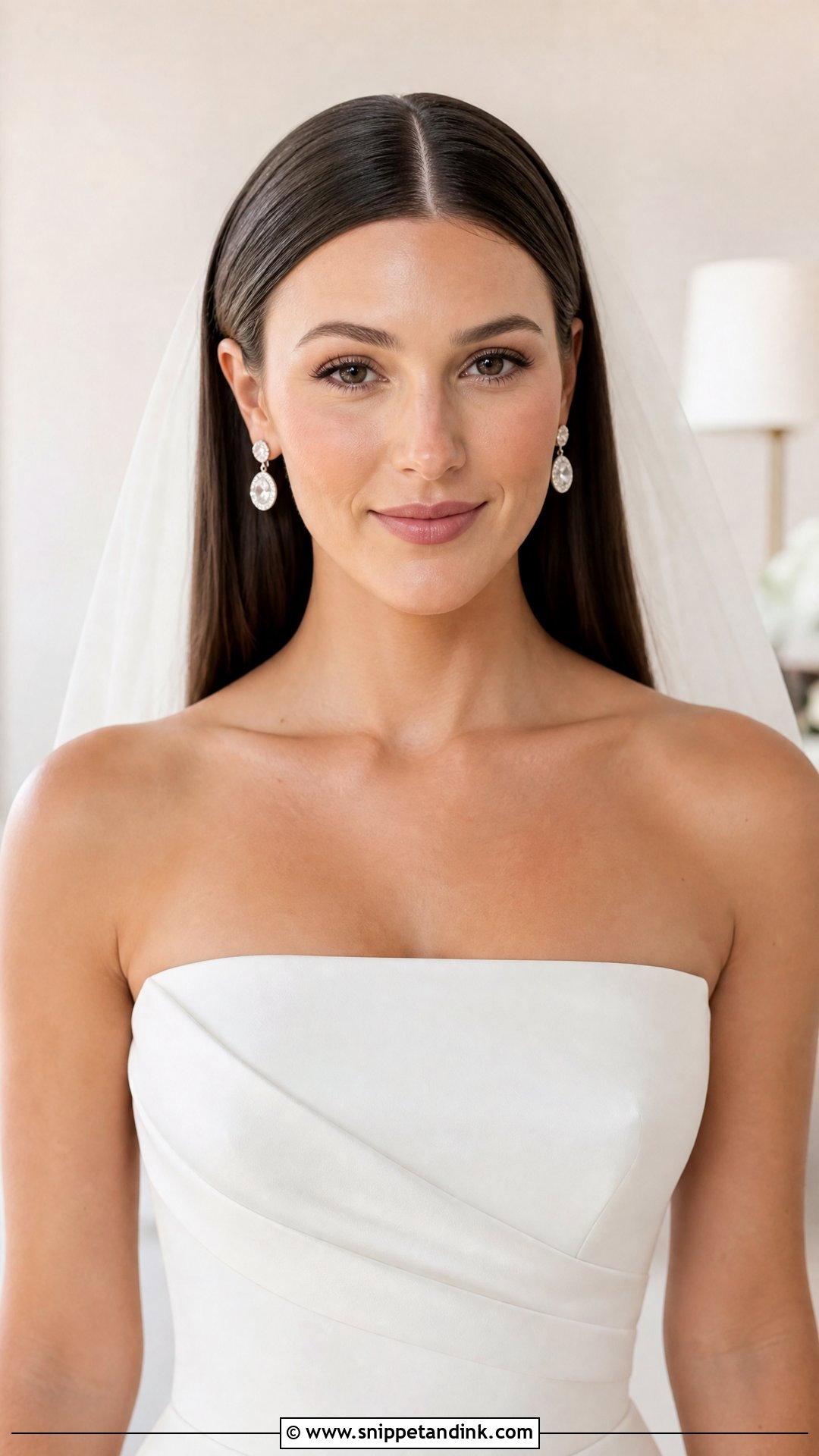
A sleek center part with smooth, straight hair is minimal and modern. It suits oval and heart-shaped faces, modern venues and minimalist gowns, and leaves room for statement earrings. I flat-iron in thin sections until glossy and let the hair fall naturally around the shoulders. The part must be perfectly straight, so I check it in a mirror held behind the head. Smooth straight hair shows frizz and oil first, so a tiny serum in someone’s bag helps through the evening.
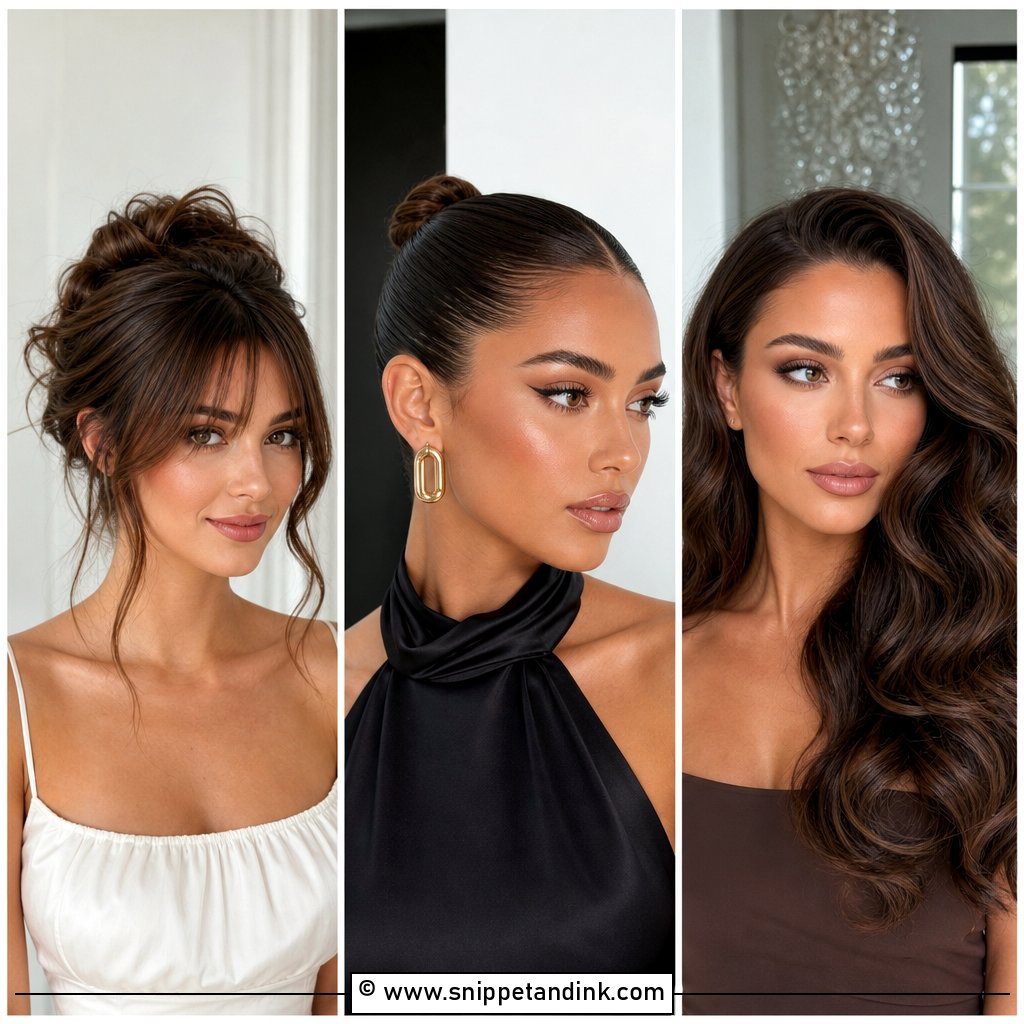
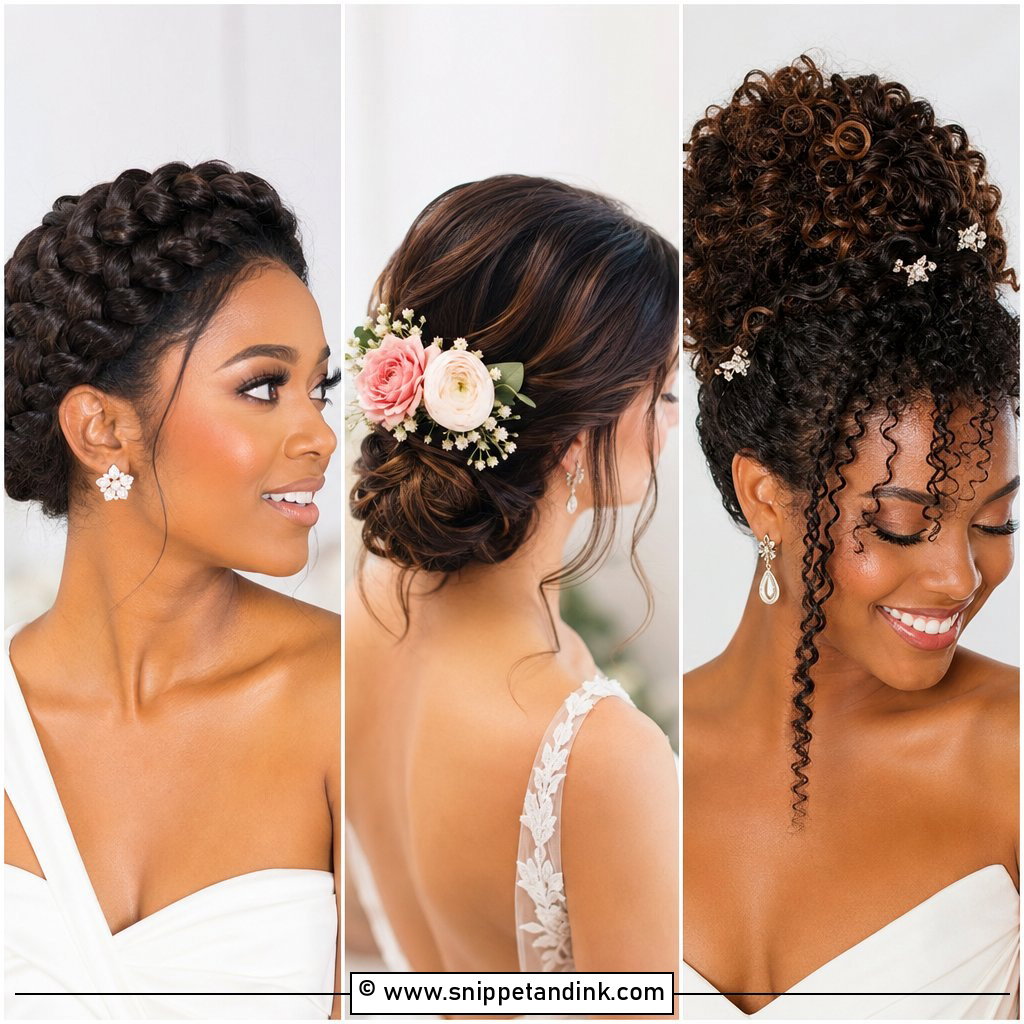
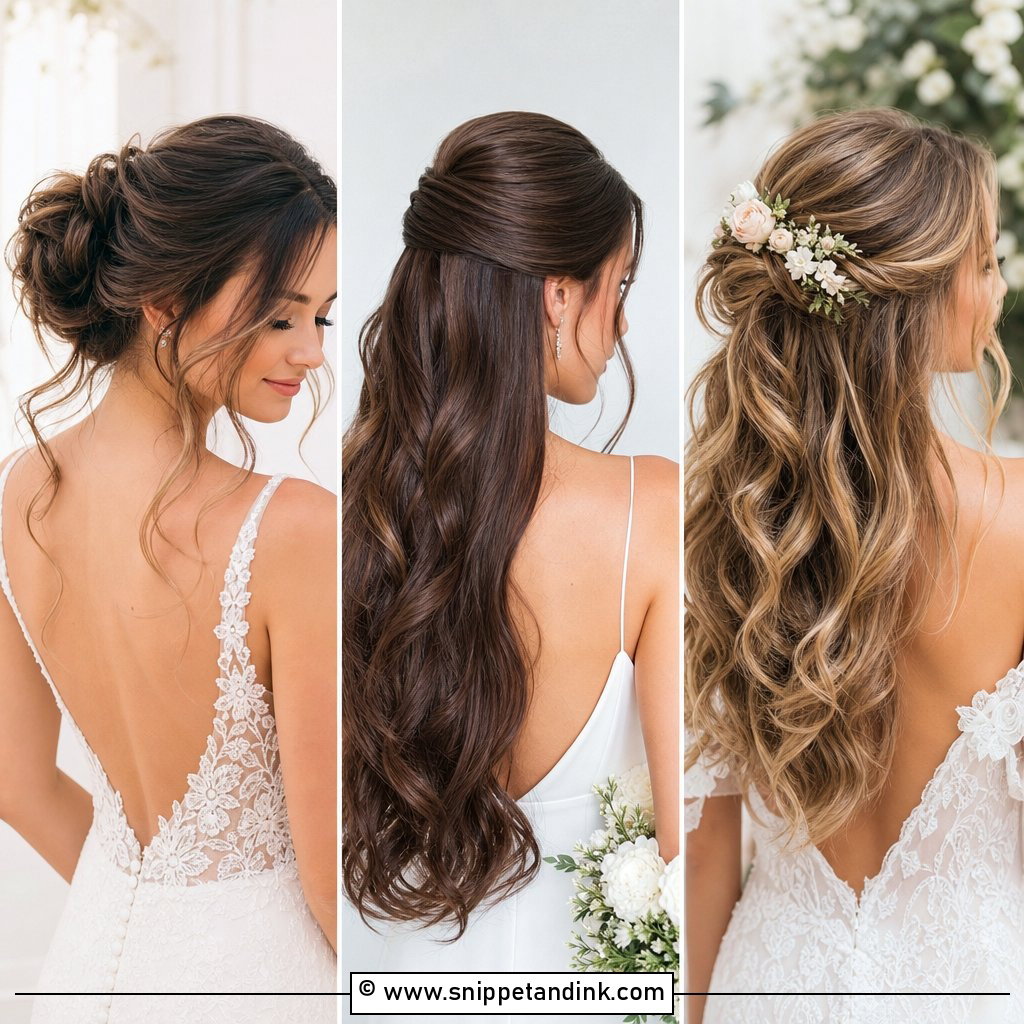
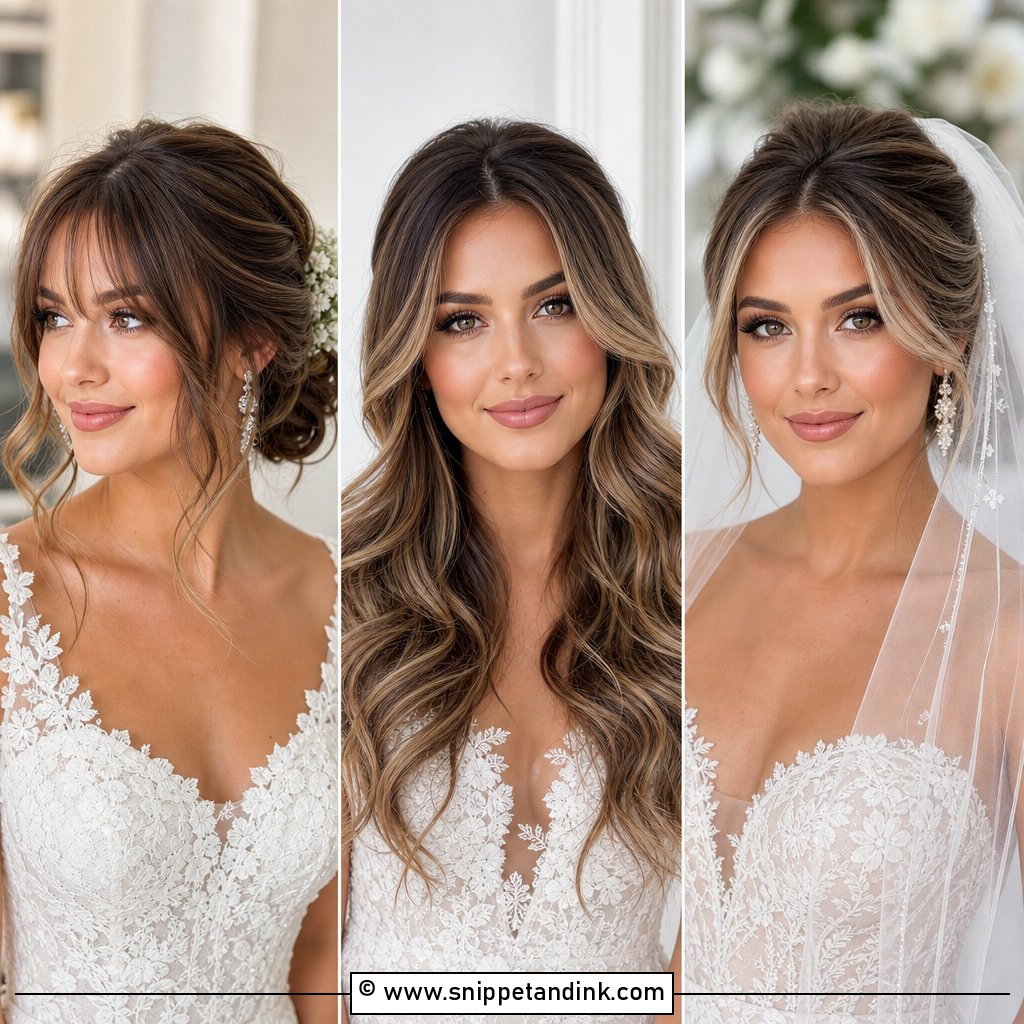
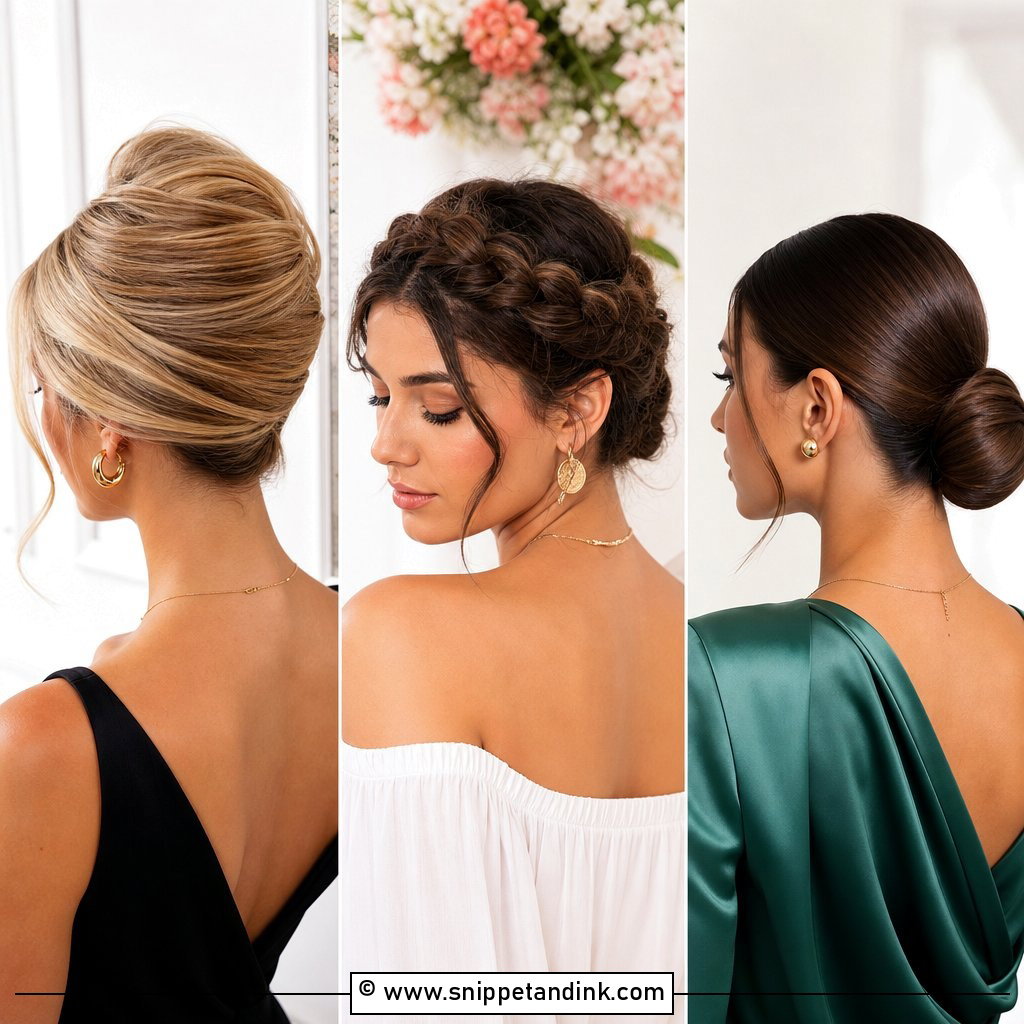
20. Romantic Curls Framing the Face
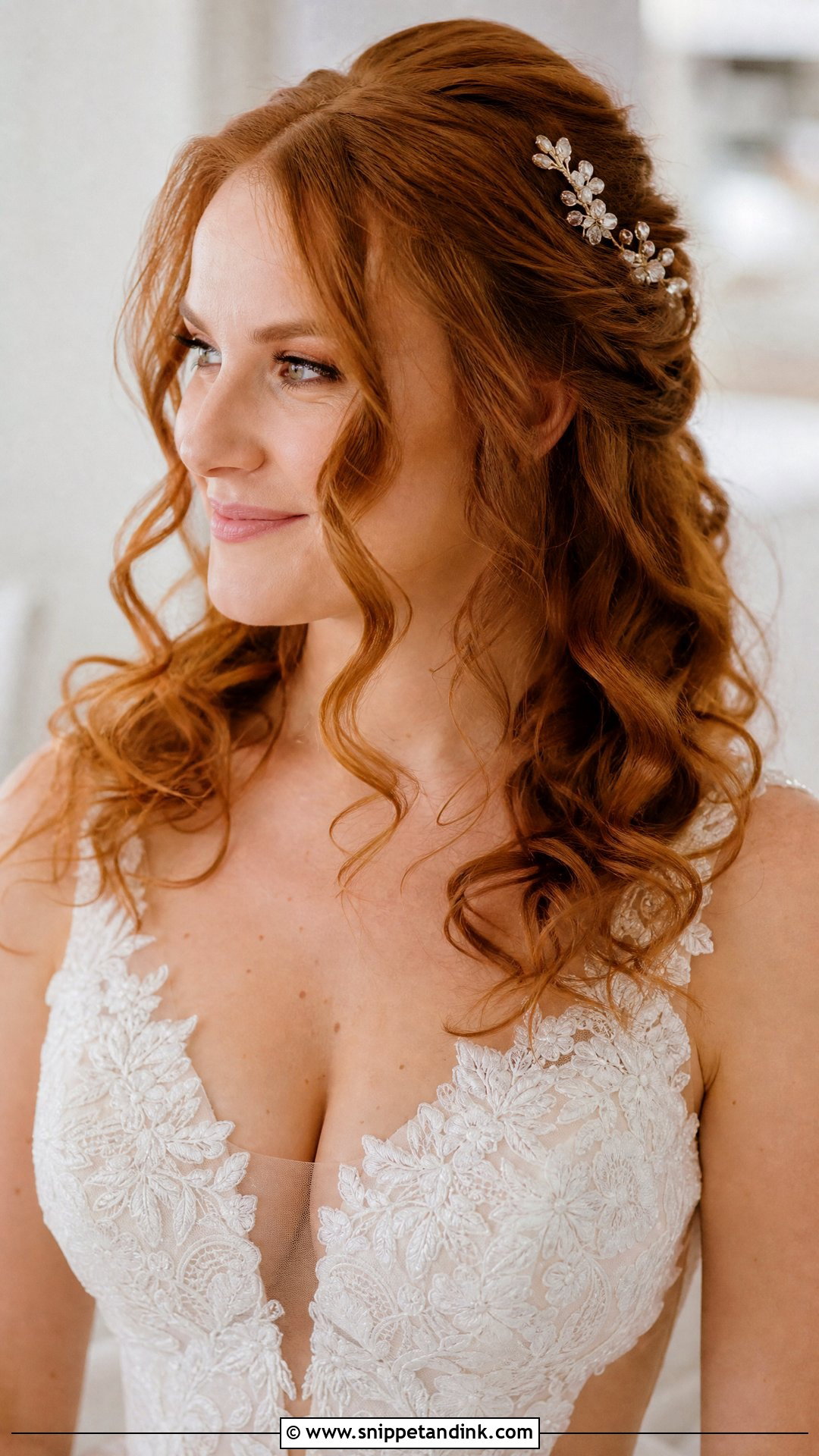
Face-framing curls are the most adaptable detail in this list: they work with hair up, down or half-up, and with nearly any face shape. I curl the front sections so they curve around the cheeks and jaw, and pin each curl to cool before brushing it out. They draw attention to the eyes. Front curls are the first to drop because the face is warm, so I set them with a heat-activated spray before curling. A veil, flowers or clips all suit them.
Take a Photo of the Front at Your Trial
A mirror shows you a flipped image, so the side part and front pieces you see aren’t what the camera sees. Many brides love their front at the trial and feel something is off in the photographs, and the reason is that their face looks reversed to them. Before I call a trial finished, I ask the bride to take a few photos facing the camera, one in profile and one with the veil in.
- Look at the photos, not the mirror, when deciding which side to part.
- Take one under bright light and one with the flash on, since front pieces can look thin or shiny under flash.
- Check how the front looks after an hour or two; face-framing curls can loosen into straight strands.
- Note which pieces get stuck to lip gloss or lashes, and ask for them to be shaped or pinned back.
Front pieces get the most wear on the day: hugs, wiping a tear and pushing hair aside to drink. Ask for a little spray or a spare pin to go to someone who’ll be with you, so a fallen piece can be fixed before the next photo.
The Front Is What Every Photo Remembers
The front of your hair sets the tone for the whole look, because it frames your face in every portrait. Curtain bangs, tendrils, braids, finger waves and face-framing curls each change how your face reads. Sleek and minimal, boho or vintage, the front ties the style together. Bring photos to your stylist, talk through what flatters your features, and have a trial. Check the front at the end of the trial, after a few hours, not just at the start. Then you can walk down the aisle without thinking about your hair at all.
You'll Like These Ideas:


Leave a Reply