
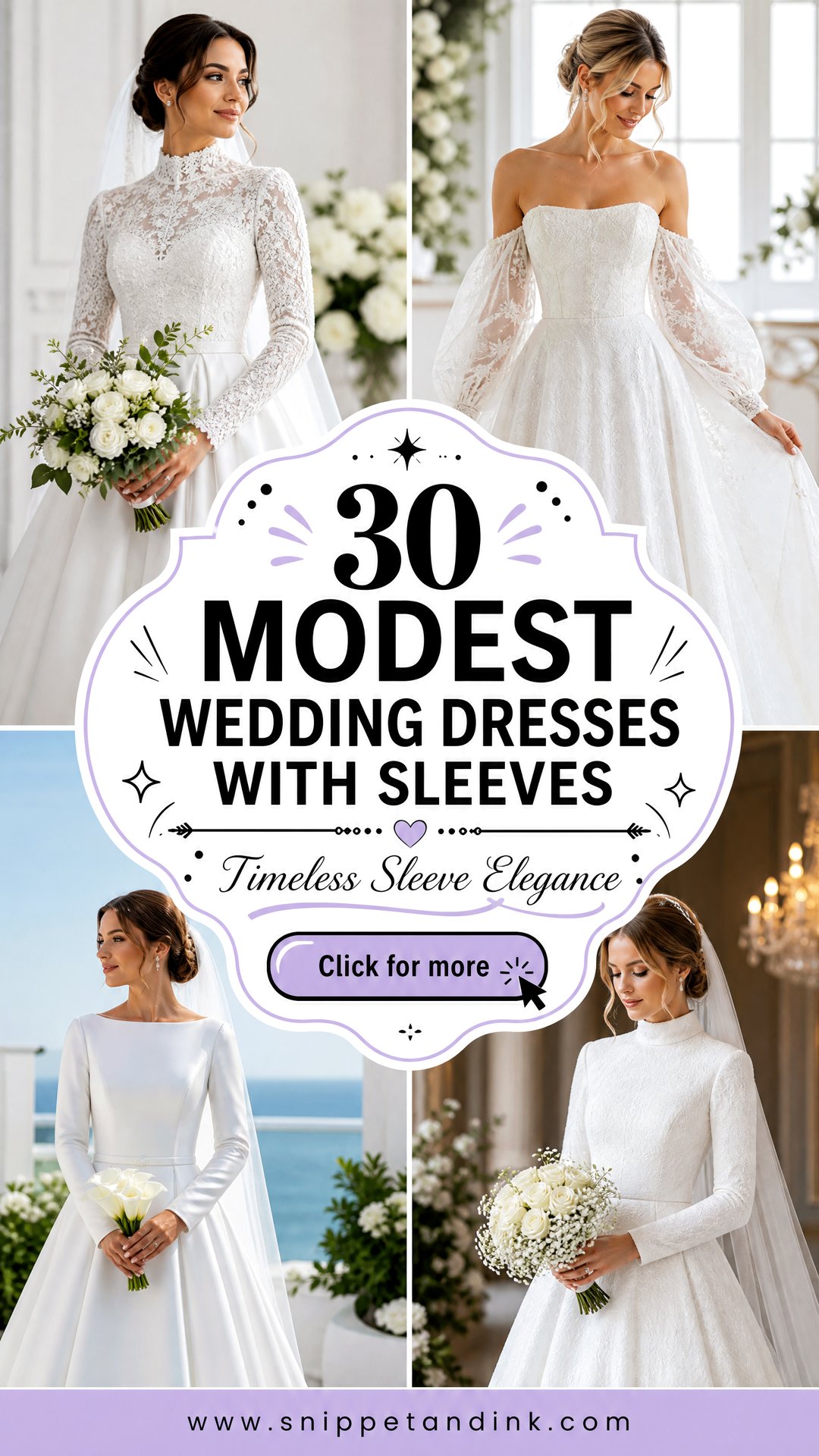
Most brides who ask me for sleeves have one of two reasons: they need real coverage for faith or family, or they simply feel more like themselves with their arms covered. Both are good reasons, and both change how I shop with them. A sleeve affects the fit of the whole bodice, how a skirt balances, and how you move while hugging people all evening. The range of modest bridal fashion is wide now, from Mikado ball gowns to bias crepe with bishop sleeves. Below are 30 head-to-toe looks, with my notes on what each one asks of you and where it tends to go wrong.
The Arm Test I Run at Every Sleeved Fitting
A sleeved gown can look right in the mirror and still fail the moment you move. Sleeves restrict the shoulder far more than straps do, so I check the fit in motion, never just standing still. At a first fitting I ask every bride to run through the same short routine, and you can do it in any shop.
- Raise both arms as if hugging someone taller than you. If the bodice lifts or the waist seam rides up, the armhole is cut too low or the sleeve cap is too tight.
- Bend your elbow and touch your shoulder. A fitted lace or crepe sleeve should not pinch the inner elbow or pull across your back.
- Sit down and lean forward. High necklines and illusion panels gape or dig in when you’re seated, and you’ll spend hours that way.
- Look at the sleeve under your phone’s flash. Mesh that reads opaque in shop lighting can photograph nearly bare.
- Kneel or bow if your ceremony includes it. Prayer, a blessing or a family ritual changes what the dress has to do.
A gown that fails one of these is usually fixable, but sleeve work is slow and fiddly, and it often costs more than a hem. Ask for an alterations quote before you order, not after.
Leave more time than a strapless bride would
Where you can, order a made-to-order sleeved gown six to nine months ahead and plan two or three fittings starting about two months out. Matching lace for a new or remade sleeve can add weeks while the fabric is sourced, so build that cushion in early.
1. Long Sleeve Lace Modest Wedding Dress
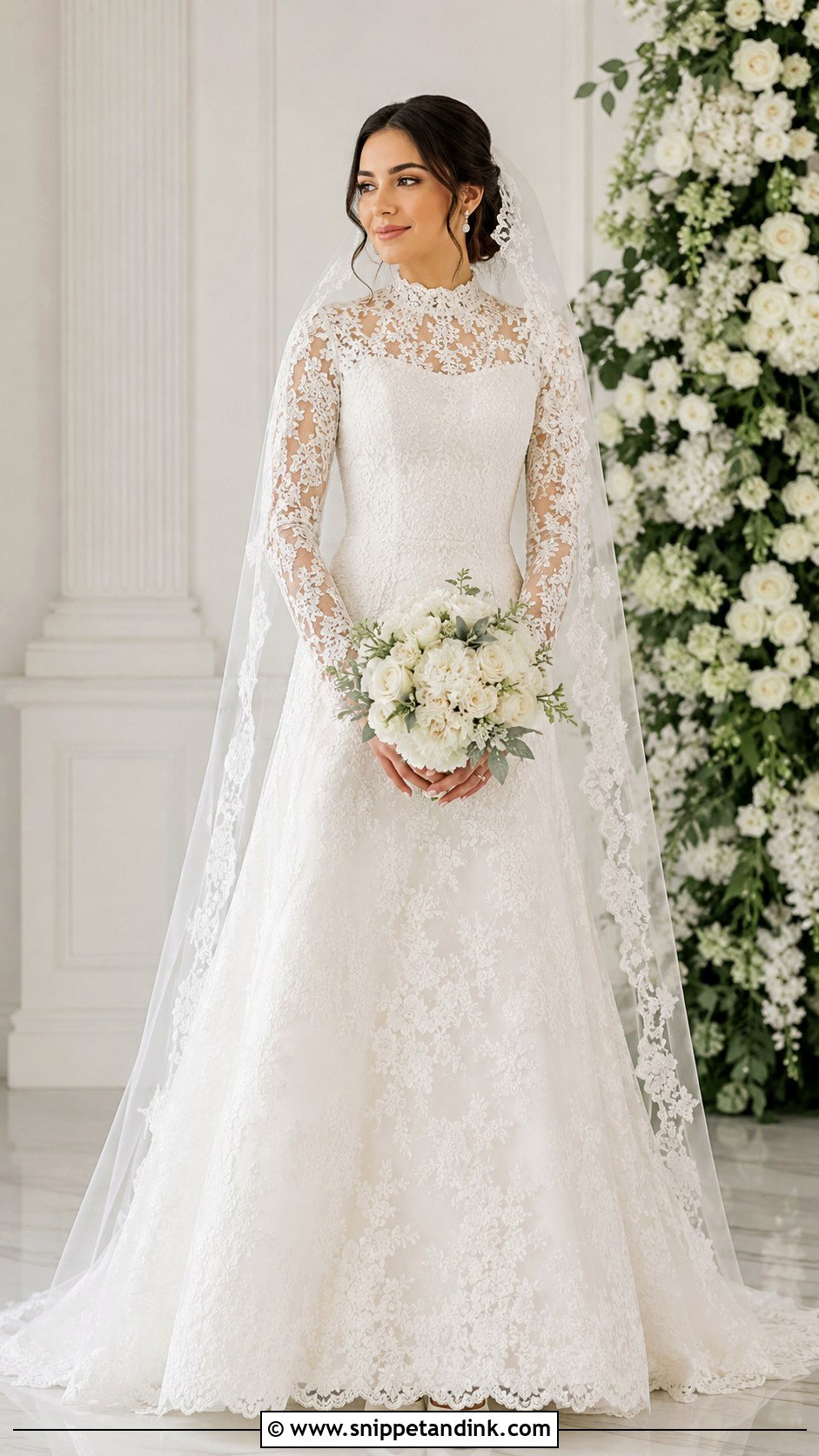
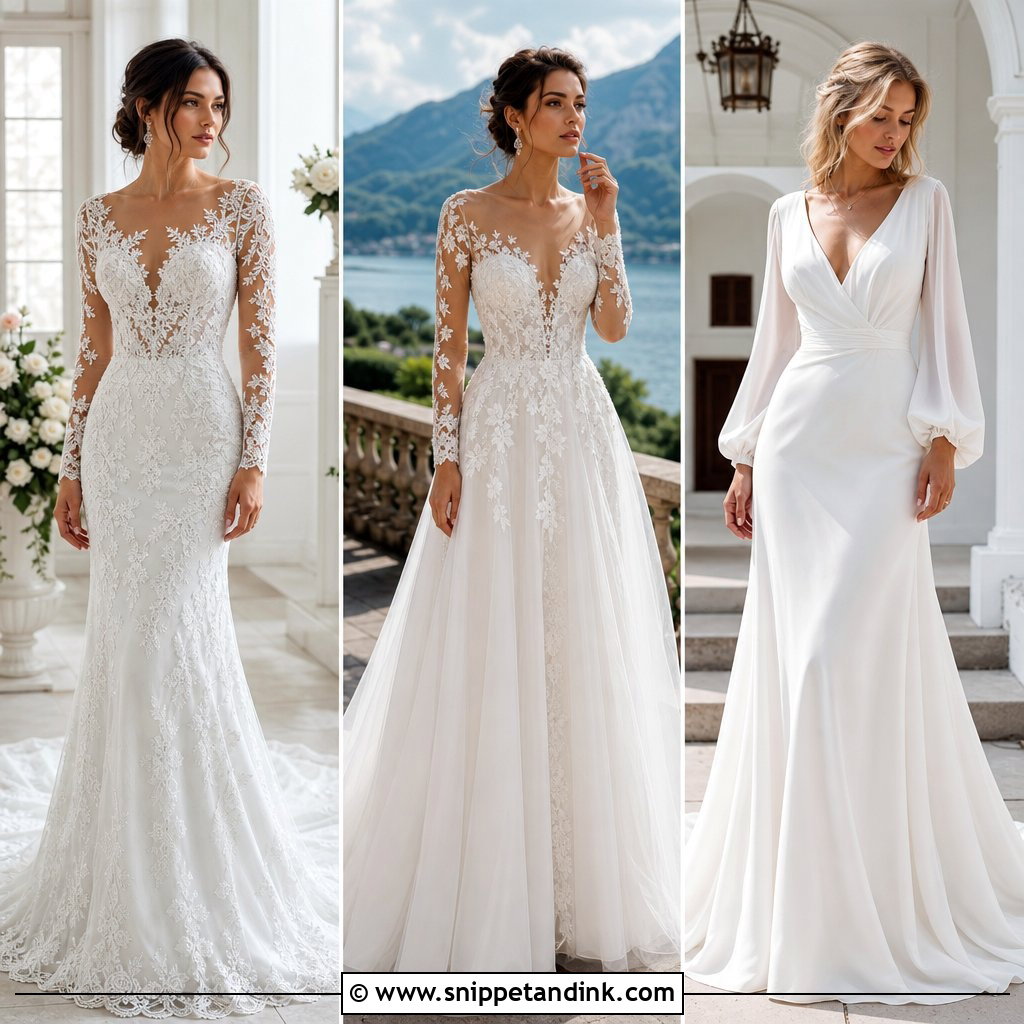
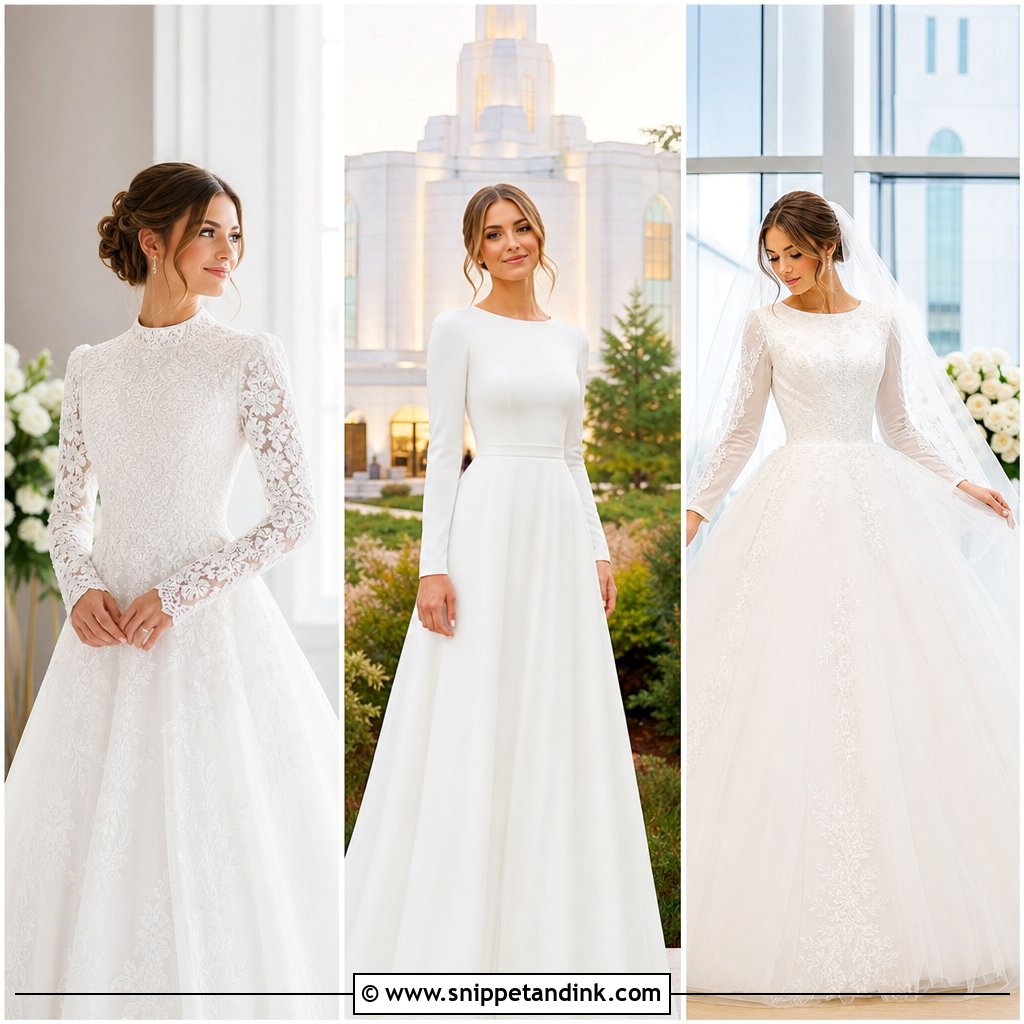
Corded lace on a long sleeve is what I suggest first when a bride asks for coverage that still feels romantic. Ask whether the lace is cut along its motif edge at the cuff; a scalloped wrist looks finished, while a plain hem on patterned lace looks like an afterthought. A lined bodice, high illusion neckline and soft A-line skirt keep the shape graceful. I pair it with a chapel veil, pearl drops and closed-toe ivory heels, and if the lace is busy, the bouquet stays plain with white roses or peonies. It sits just as comfortably in a formal hall as in a garden.
2. High Neck Modest Wedding Dress With Sleeves
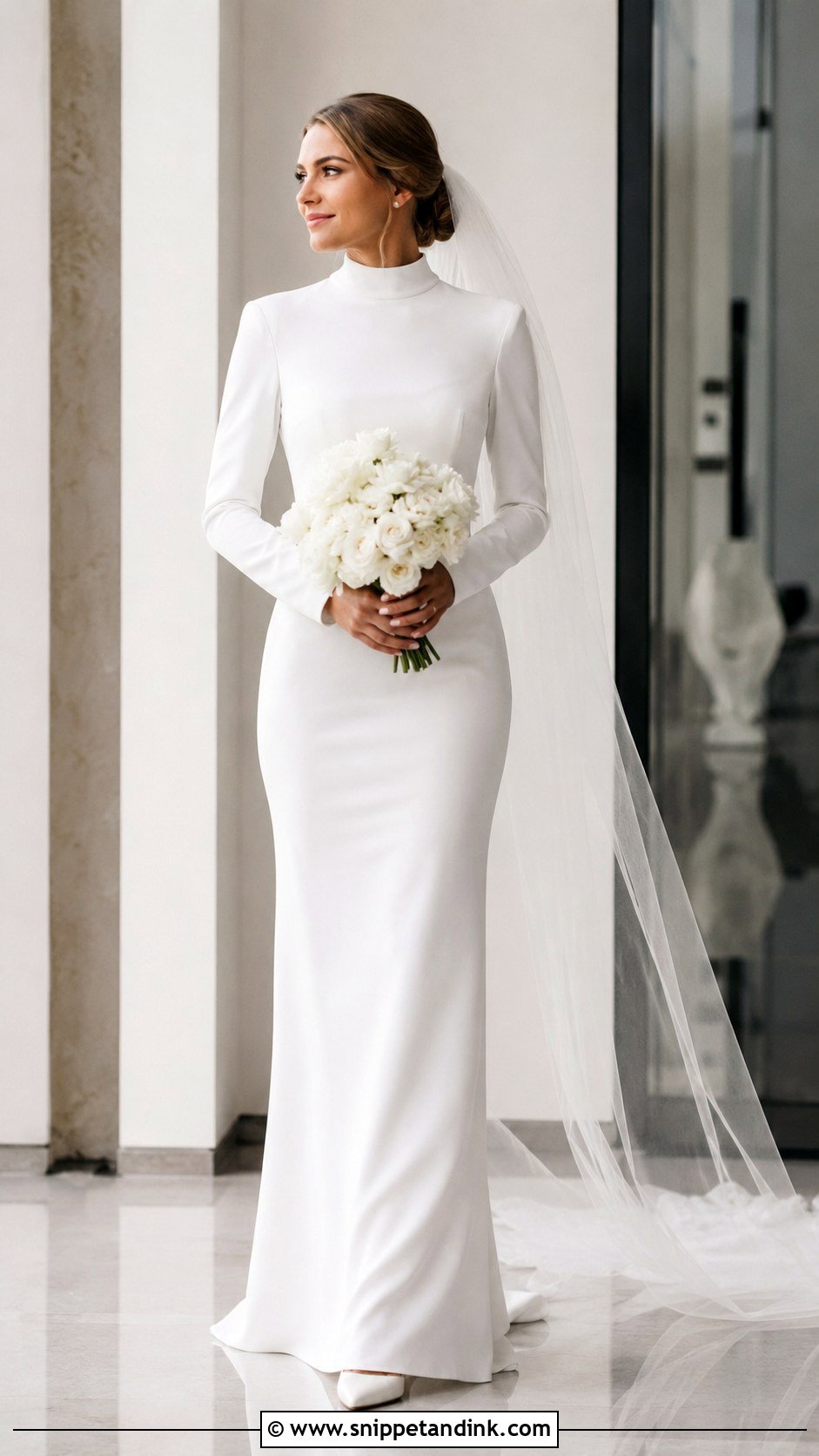
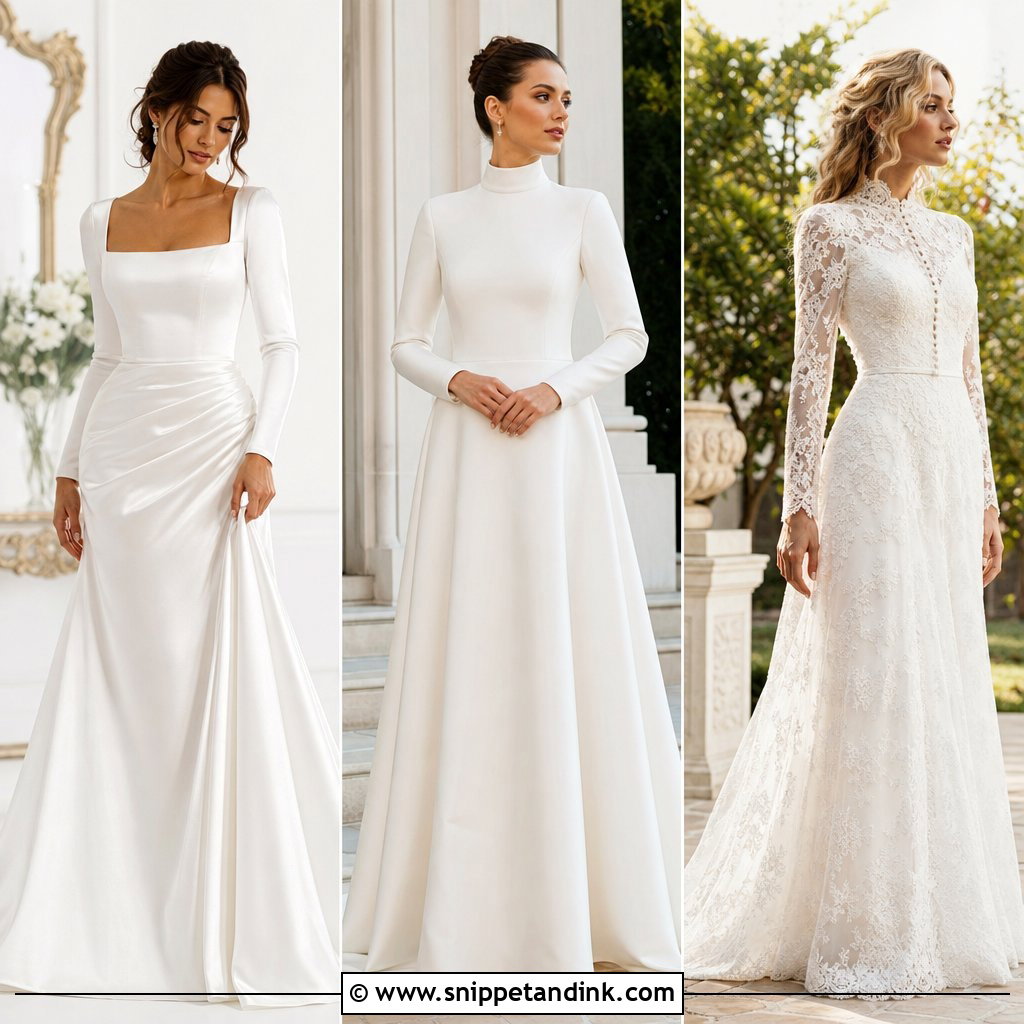
The high neck is the most honest test of tailoring in this whole list. If the collar gapes even slightly when you turn your head, the camera catches it, so I have brides look over each shoulder at the fitting. Fitted sleeves keep the line sleek, with crepe reading modern and lace softer. Wear a low bun so the collar stays visible, and ask for the veil comb to sit behind the crown rather than on top. Pointed ivory pumps and a small structured bouquet finish it. On a shorter neck I’d lower the collar slightly or move to a jewel neckline instead.
3. Satin Modest Wedding Dress With Long Sleeves
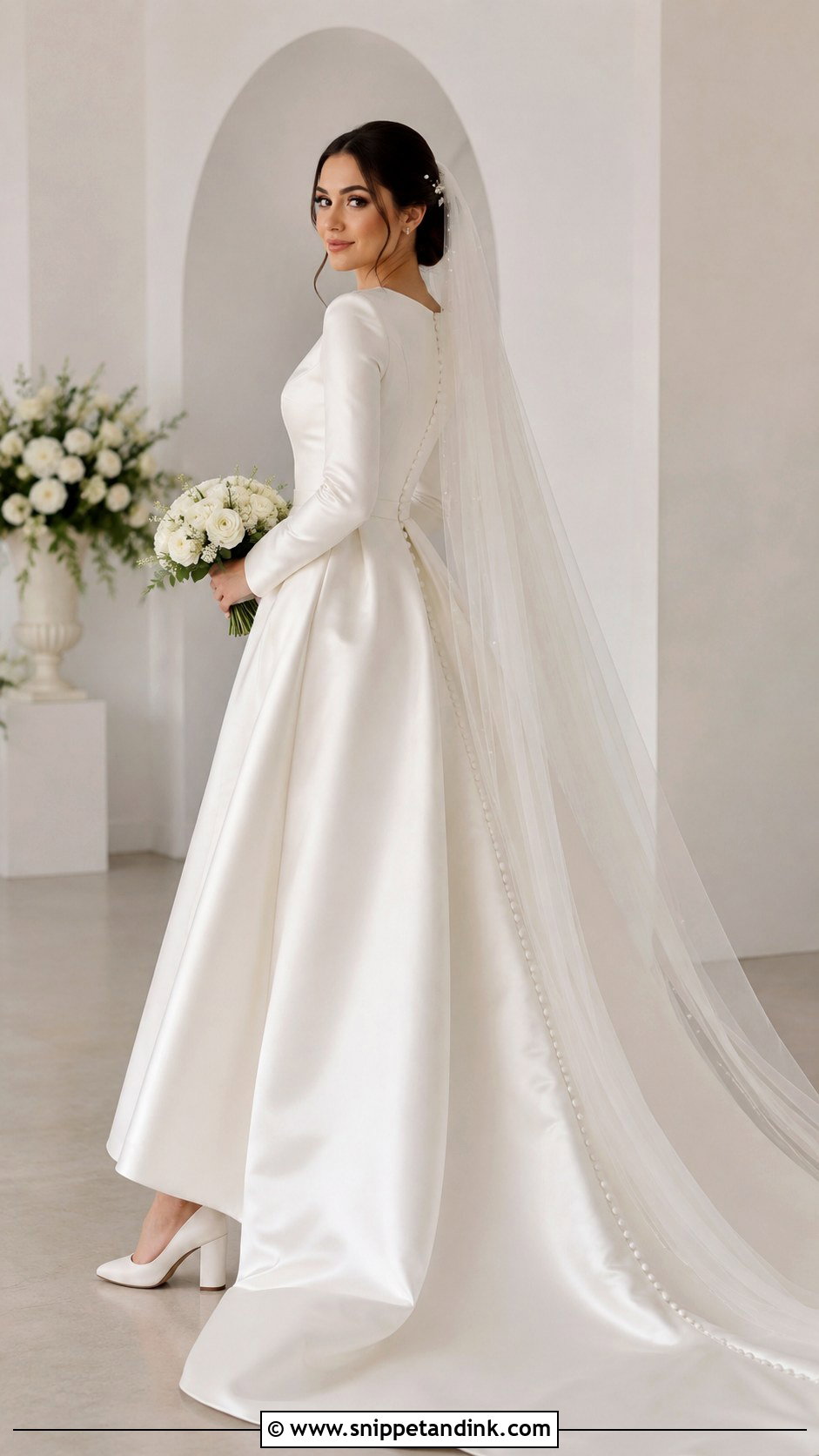
Satin does the talking here, so the dress needs very little else. The trade-off brides don’t expect is creasing: satin sleeves wrinkle at the inner elbow after an hour of holding a bouquet, and a heavier duchess satin creases far less than a light charmeuse. A fitted bodice, modest neckline and full skirt give the classic shape, while satin-covered buttons down the back and a little structure at the wrist make it feel current. I keep jewelry quiet because the fabric already shines, then add a cathedral veil, pearl pins and satin block heels.
4. A Line Modest Wedding Dress With Sleeves
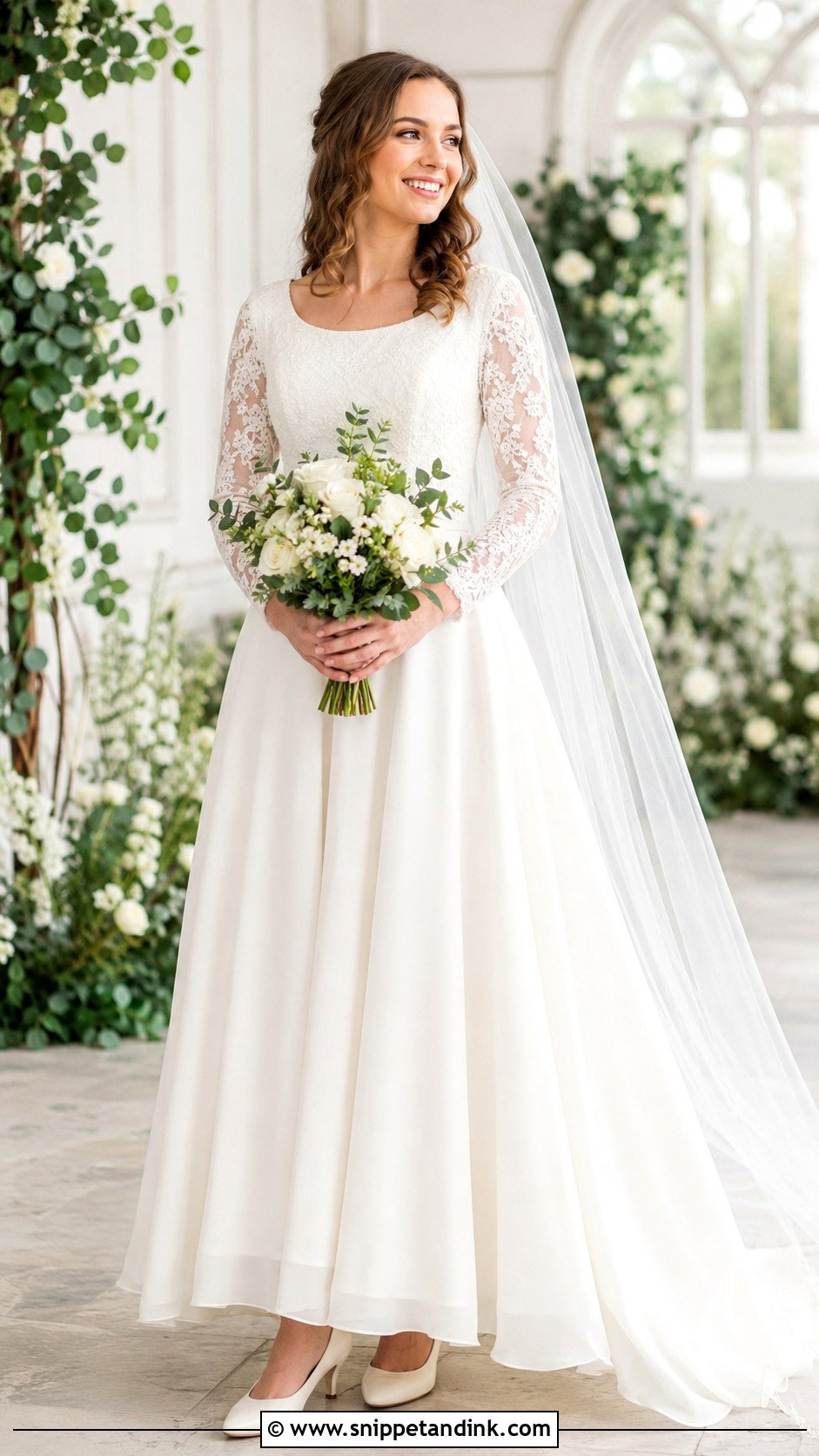
An A-line is the silhouette I pull first when a bride isn’t sure what suits her, because it marks the waist and then falls clear of the hips without the weight of a ball gown. Long lace sleeves lean romantic; crepe sleeves lean minimal. A scoop, bateau or jewel neckline keeps it comfortable all day. The one thing I check closely is armhole height. On a sleeved A-line, a low armhole pulls the whole bodice up every time you lift your arm to hug someone. A fingertip veil, soft curls and low ivory heels keep you moving freely.
5. Ball Gown Modest Wedding Dress With Sleeves
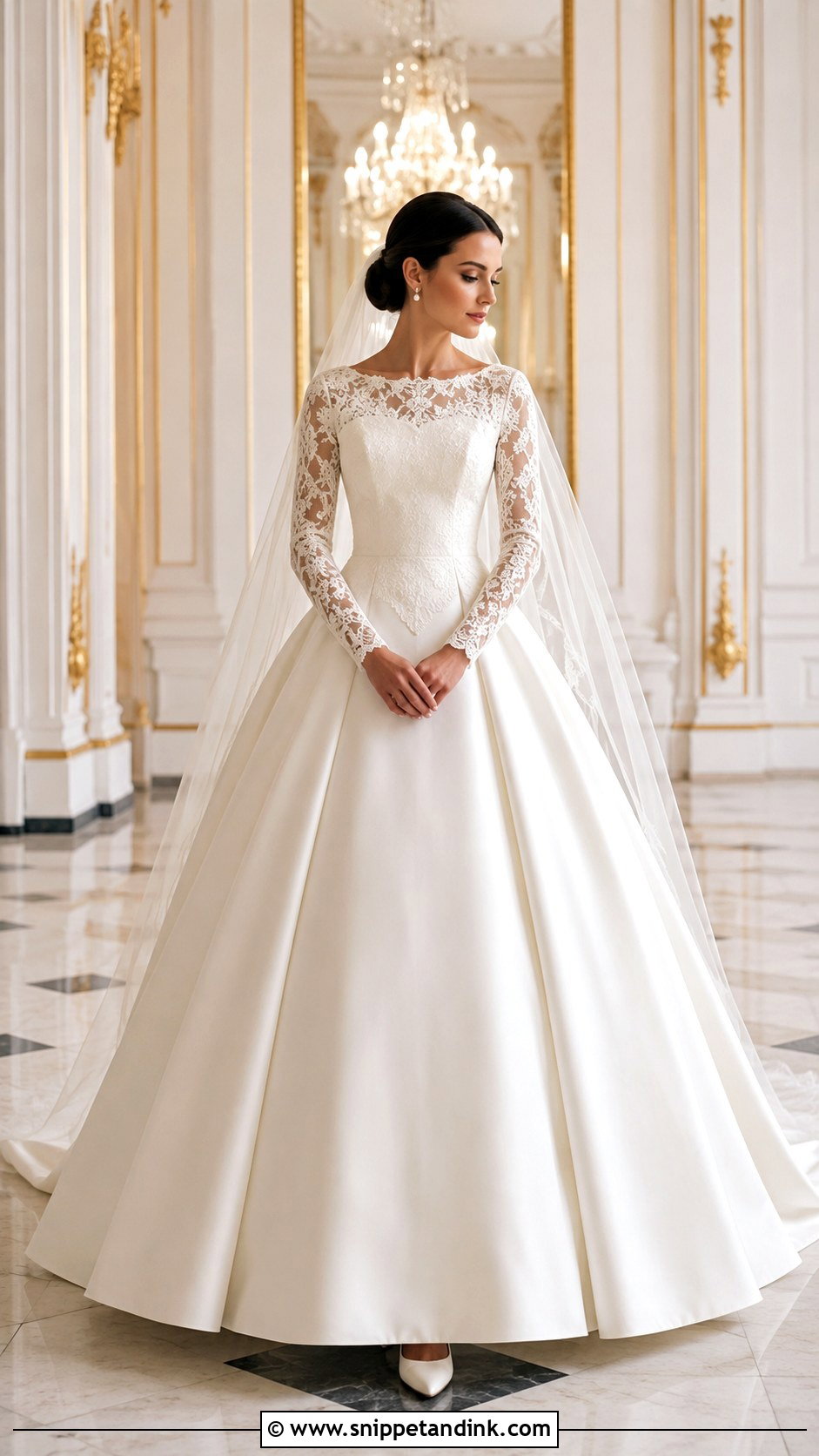
Few silhouettes feel as formal as a ball gown modest wedding dress with sleeves, and the sleeves are what stop the top half looking like a strapless gown with something added. Lace sleeves soften the volume; satin or Mikado sleeves hold their own shape. Be realistic about weight. A full skirt over a crinoline or several tulle layers feels heavy by evening, so ask for a bustle that genuinely lifts the hem off the floor. Keep the neckline bateau, jewel or high illusion, the earrings simple and the updo neat. Grand rooms and winter dates suit it best.
6. Crepe Modest Wedding Dress With Long Sleeves
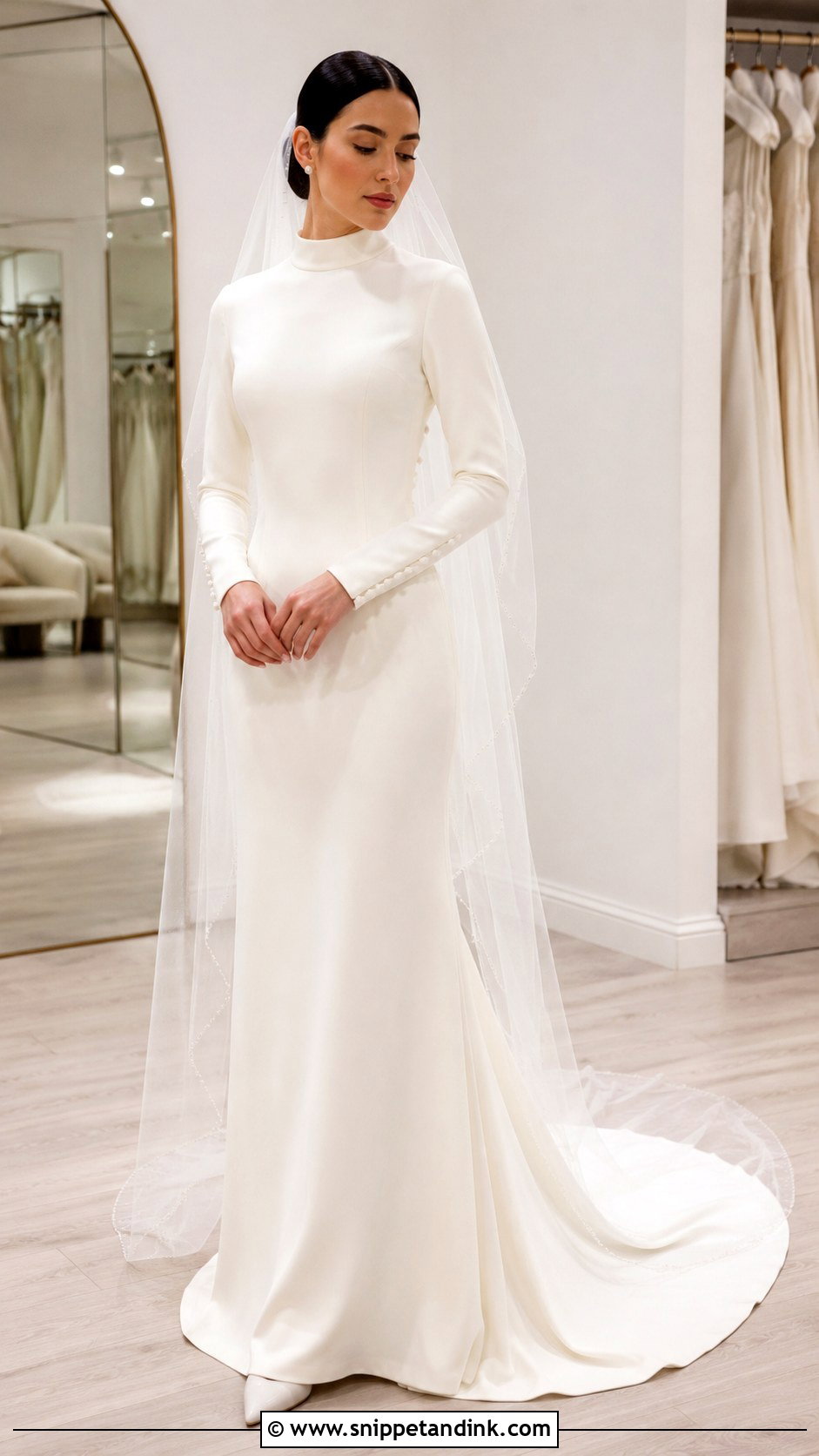
Crepe is the fabric I suggest to brides who hate fuss. It has enough weight to skim the body without clinging, so it works in sheath, fit-and-flare and A-line cuts. What crepe will not do is hide anything. Seams, a visible bra line or a badly set sleeve all show through, which is why I send crepe gowns to a specialist bridal seamstress rather than a general alterations counter. Pair a high or bateau neckline with covered buttons and a simple train, then add pearl studs, a sleek veil and pointed heels.
7. Modest Wedding Dress With Bishop Sleeves
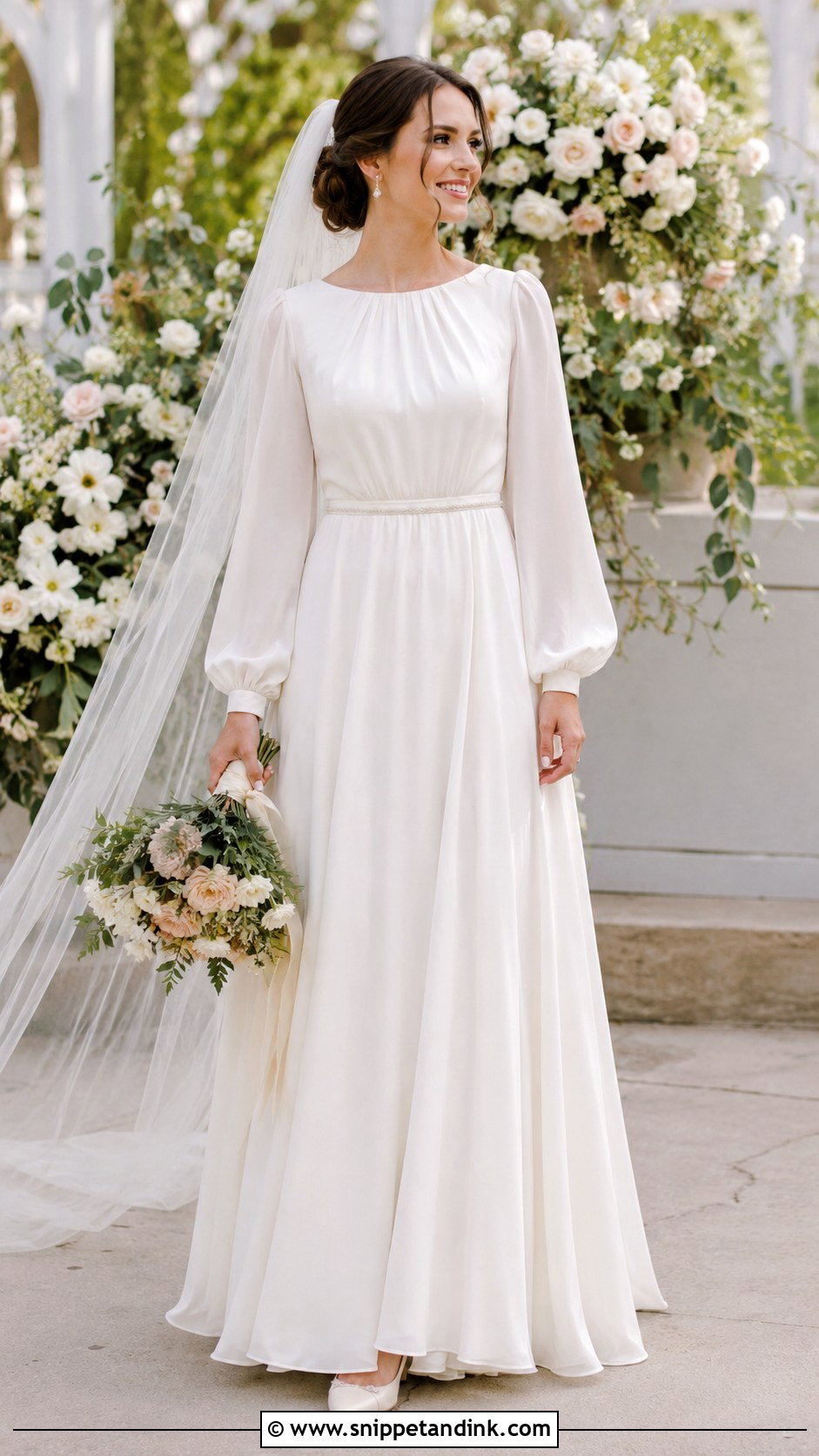
Bishop sleeves are full through the forearm and gathered into a cuff, and they’re among the most comfortable sleeves for a long day because nothing grips the upper arm. Chiffon, organza and lightweight crepe give them the best movement. The gathering adds width at the wrist, so I balance it with a fitted bodice and a plain A-line or sheath skirt. Watch the cuff length: too long and it covers your hand while you sign the register or hold the bouquet. A thin belt, soft veil, small earrings and low heels are all it needs, and outdoor spring or autumn weddings let the fabric move.
8. Modest Wedding Dress With Puff Sleeves
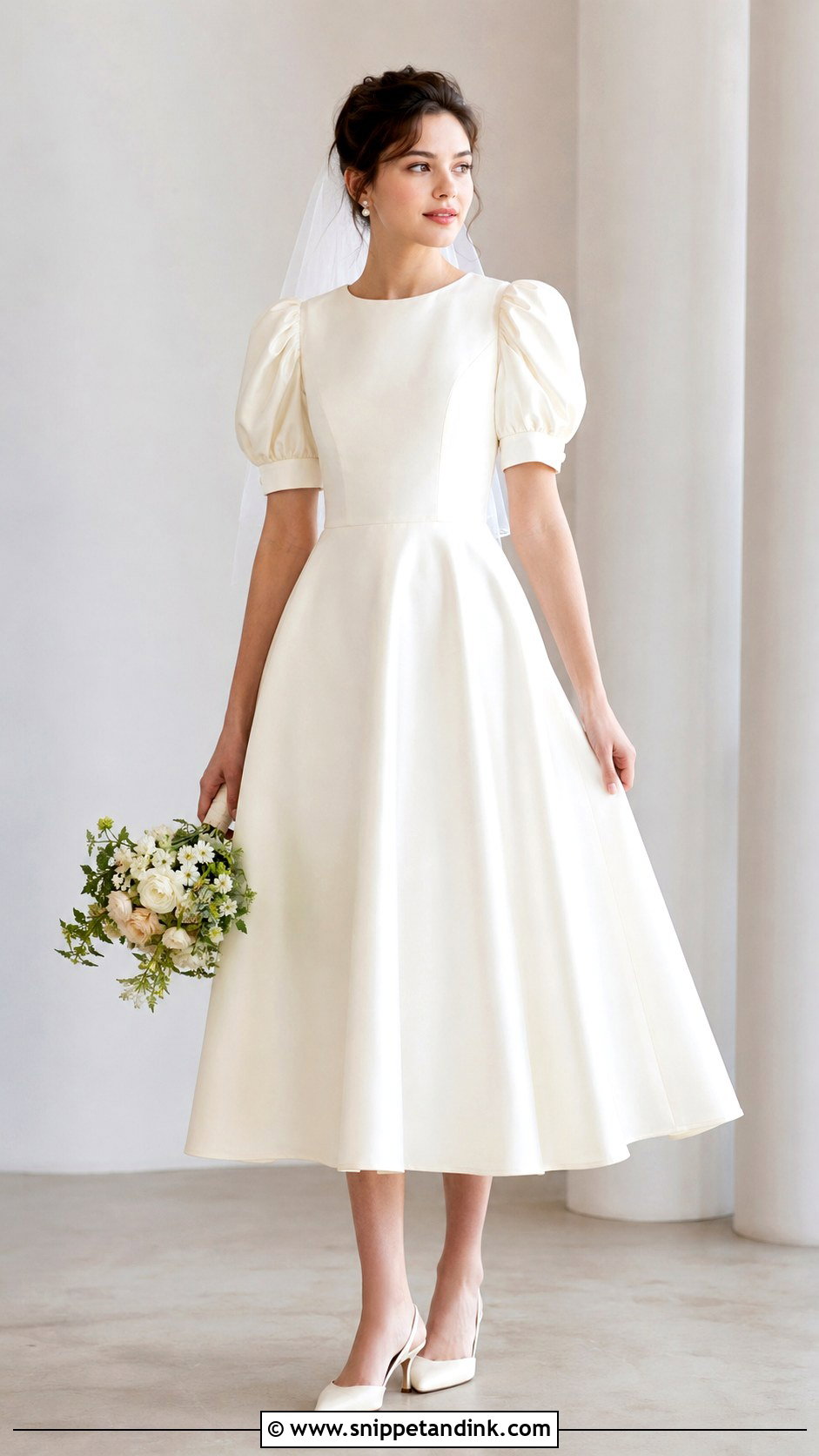
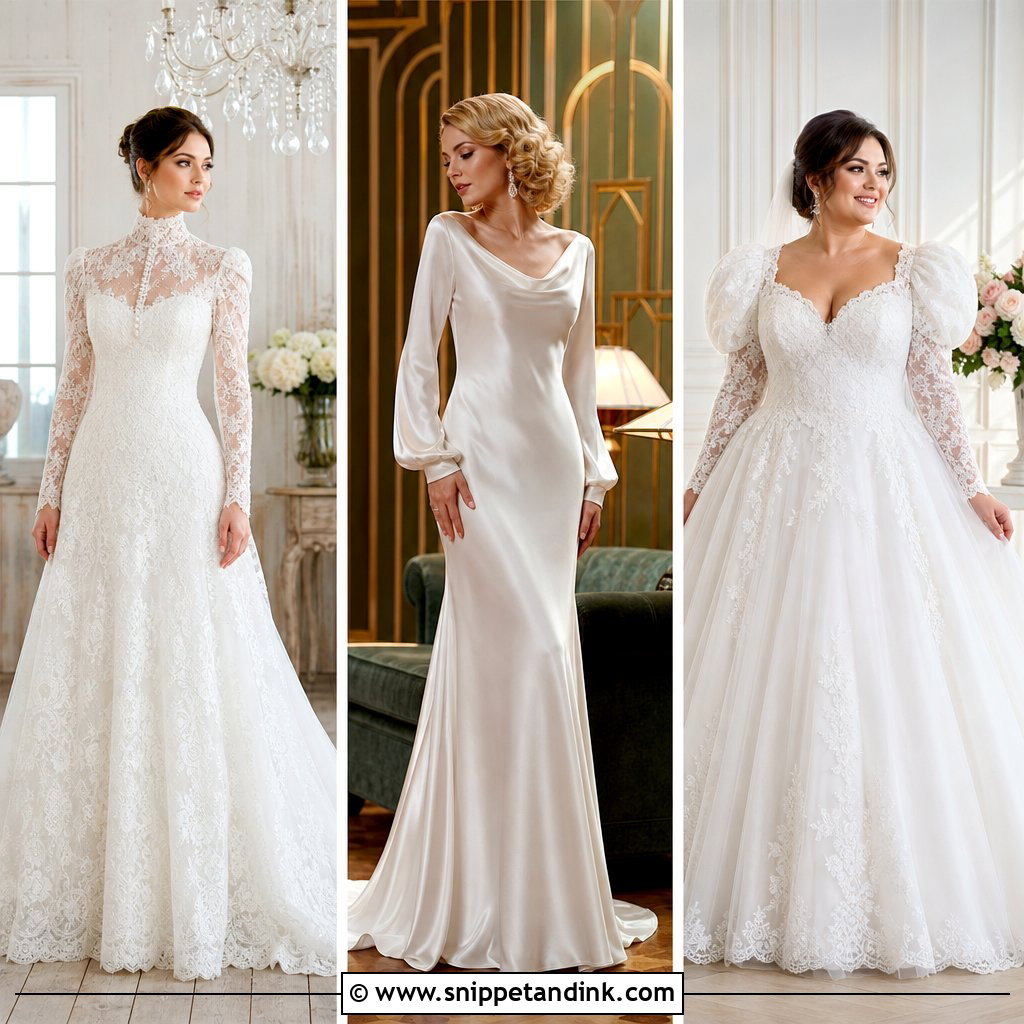
Puff sleeves are all about volume control. A small puff at the shoulder broadens a narrow frame and balances a wider hip. A big one is a fashion statement, and it makes broad shoulders look broader, so I steer athletic builds toward the smaller version. A clean bodice, modest neckline and A-line or tea-length skirt keep it fresh, with pearl earrings, satin heels and a short veil stopping it from tipping into costume. Ask how the puff is supported inside. An organza or tulle interlining keeps it from collapsing by the reception.
9. Modest Wedding Dress With Bell Sleeves
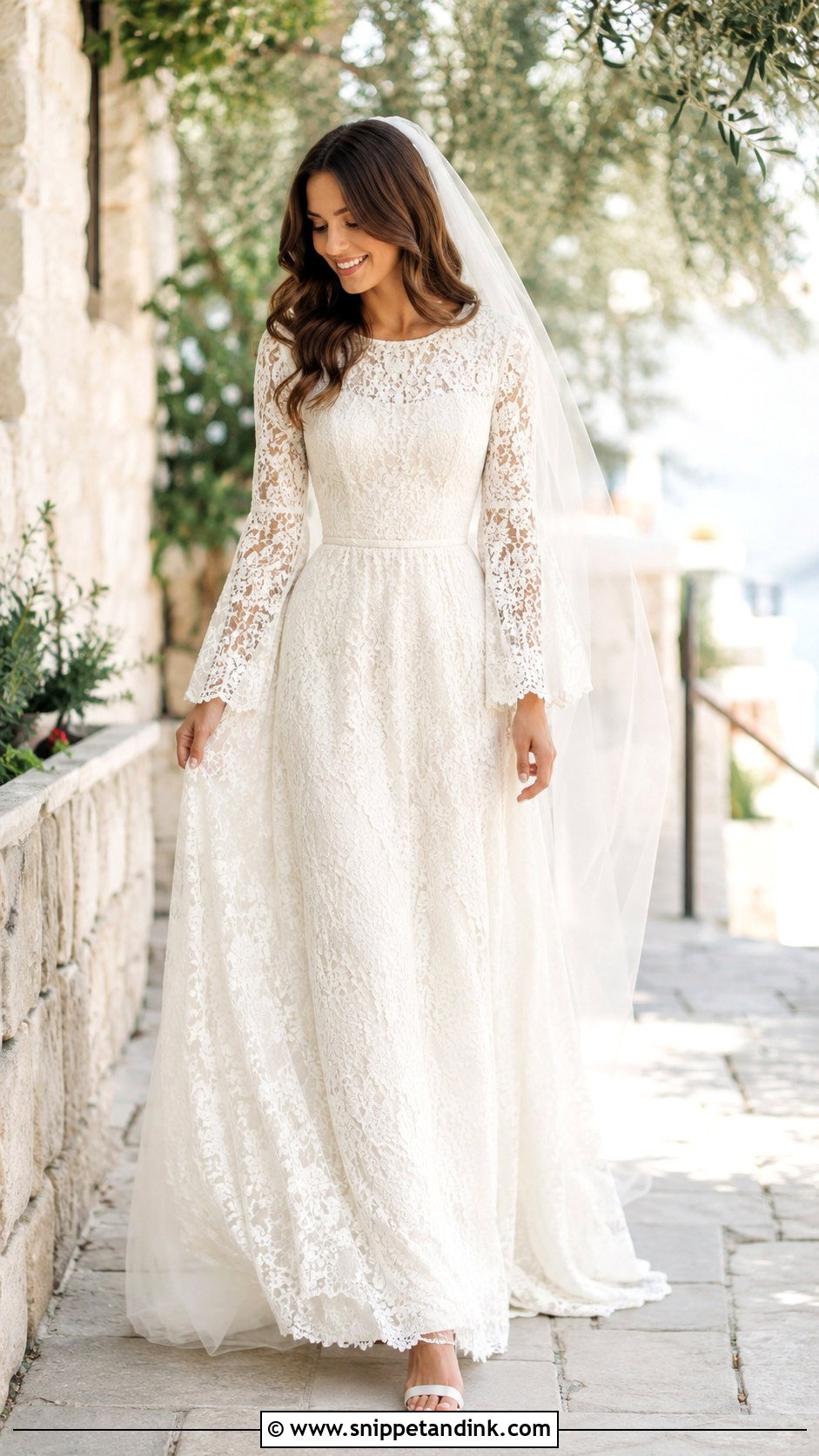
Bell sleeves widen from elbow to wrist, giving movement without uncovering the arm. Soft lace, chiffon or crepe drapes best. The practical catch is eating: a wide bell trails through plates and near candle flames, so either practise holding the cuff back or ask for a slightly shorter bell. Keep the bodice fitted so the sleeve is the feature. Loose waves, a soft veil and minimal jewelry suit it, and if the cuff has lace edging, a veil with matching edging ties the look together.
10. Modest Wedding Dress With Illusion Sleeves
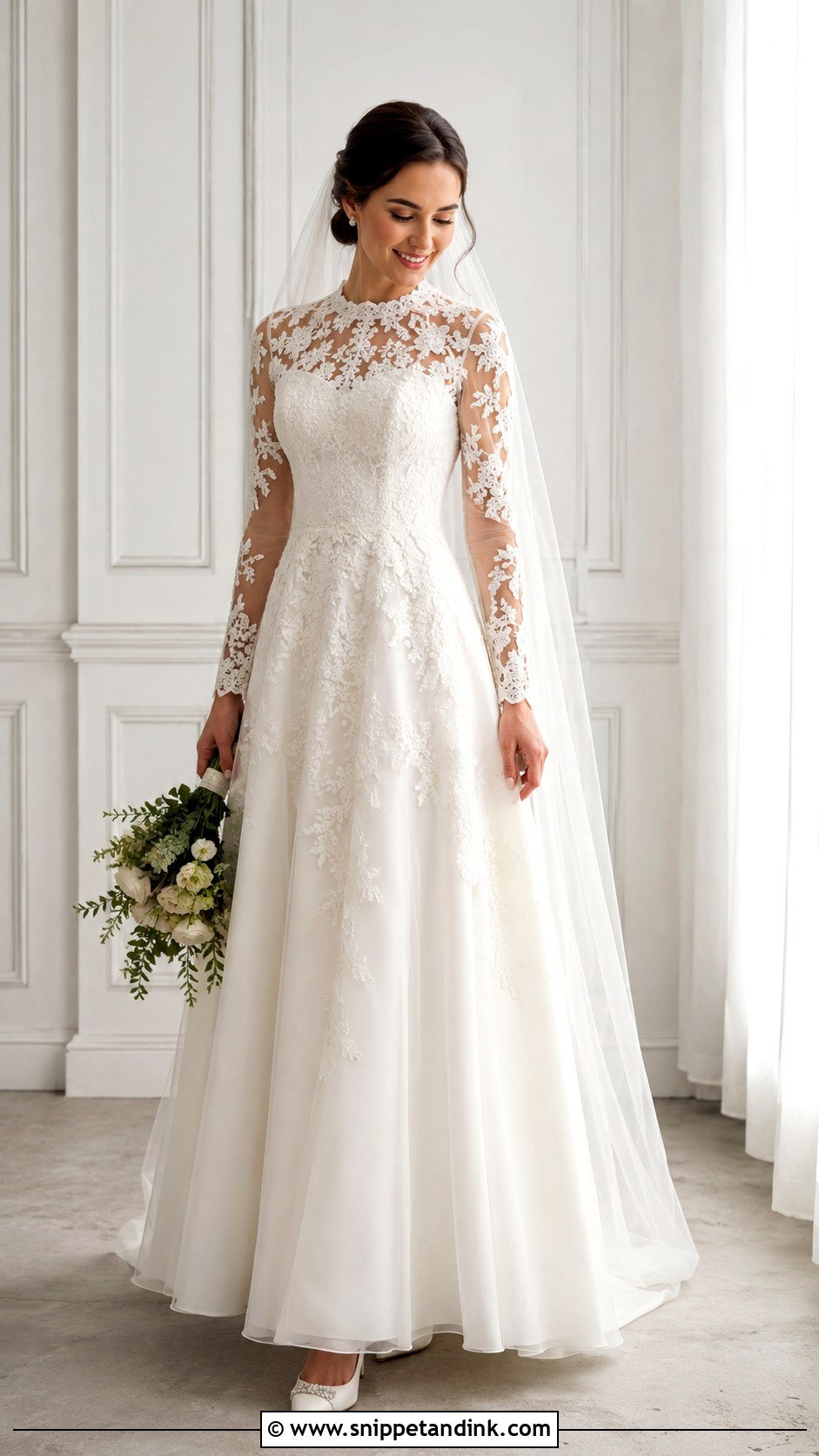
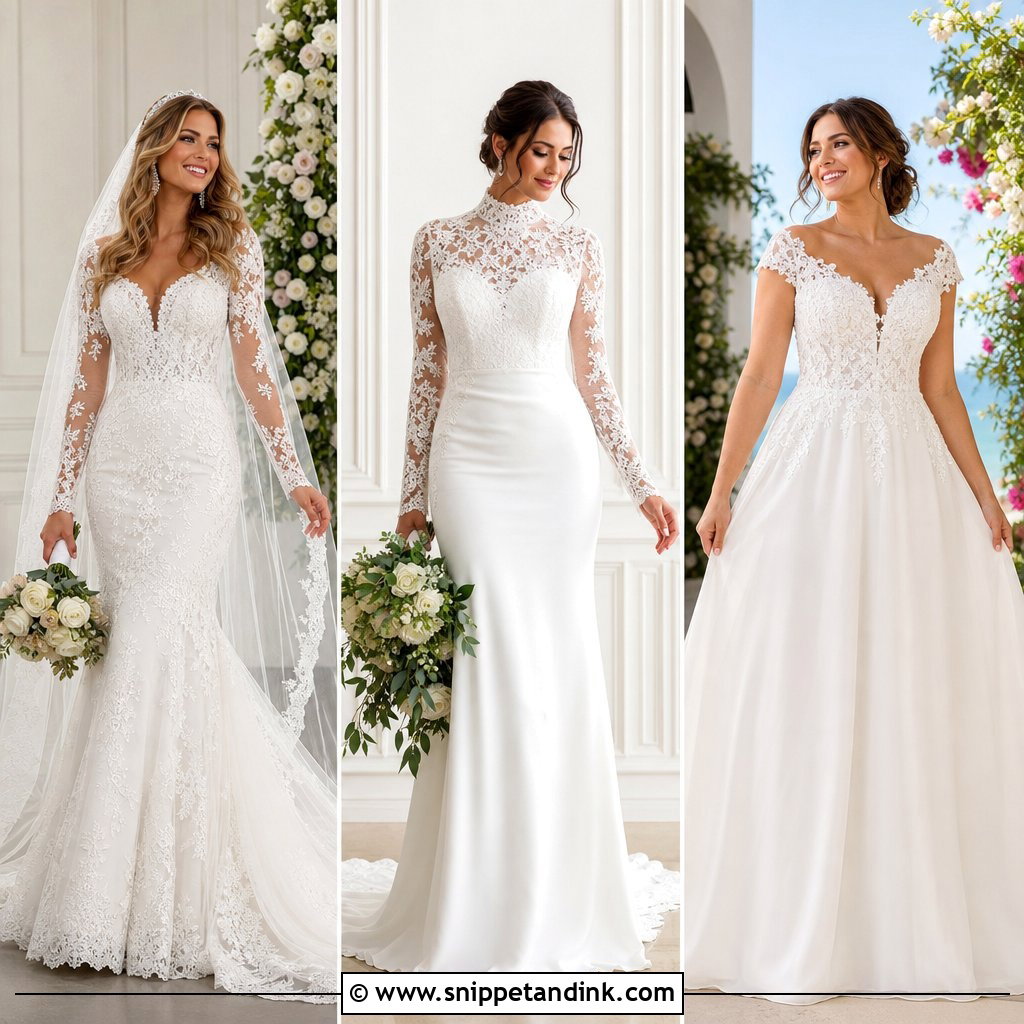
Illusion sleeves are sheer mesh with lace, appliqué or embroidery laid over it, so your coverage depends entirely on how dense that decoration is. For brides whose modesty needs are firm, I look at the sleeve in daylight and under a phone flash, because thin mesh can read almost bare in photos. Ask for denser lace placement or a lined sleeve if it falls short. A high illusion neckline keeps everything light. Choose a simple veil, crystal studs and ivory heels, and skip bracelets, which snag the mesh.
11. Modest Wedding Dress With Three Quarter Sleeves
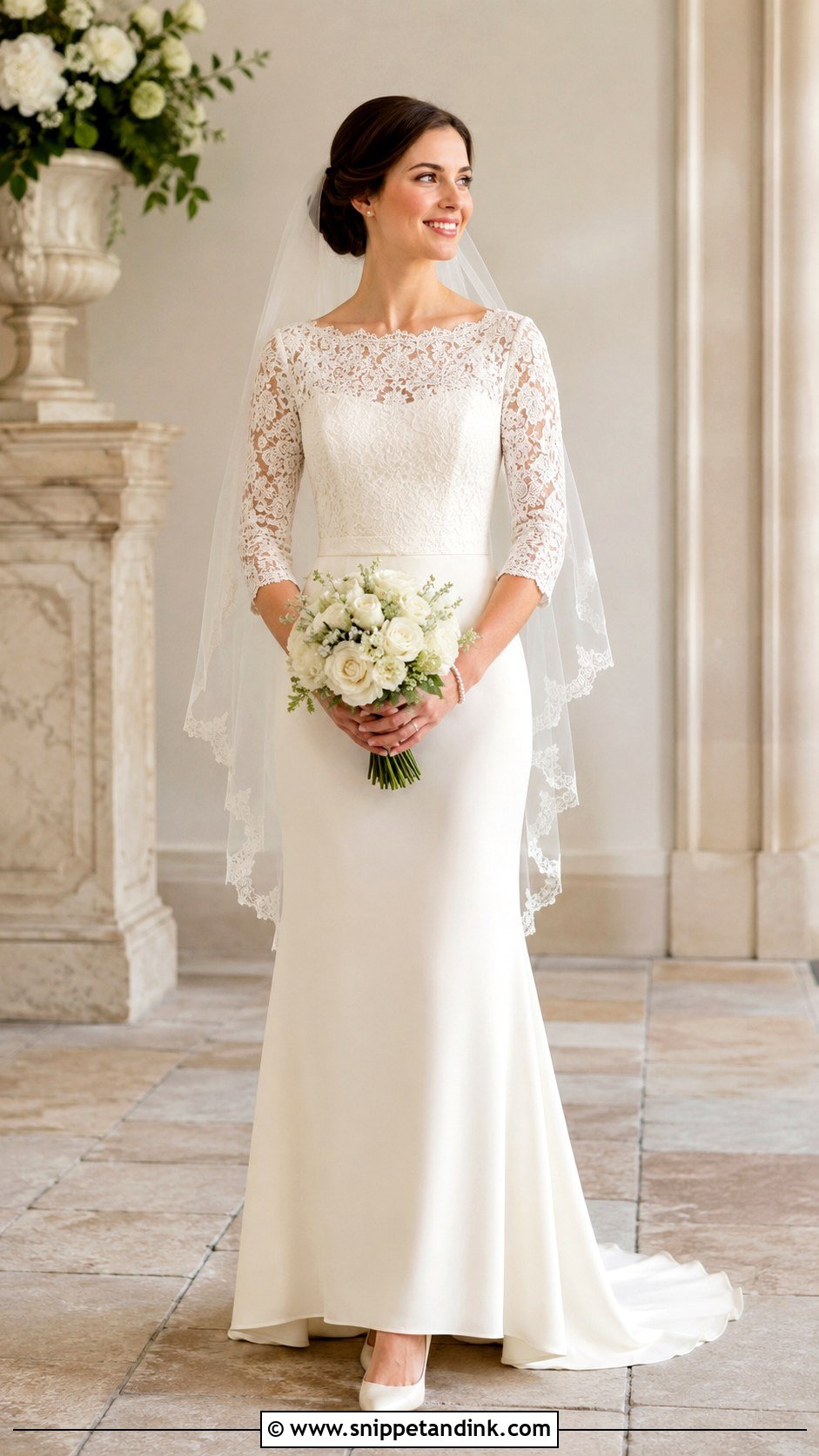
Three-quarter sleeves end below the elbow and leave the wrist free, which makes this one of the most practical lengths in any season. You can wear a watch, wash your hands without pushing fabric up, and the sleeve never sits over your ring in close-ups. Lace, crepe, satin and tulle all work, with a bateau, modest V illusion or scoop neckline. Add a bracelet if the sleeve is plain; skip it if it’s lace. Mid-height heels and a fingertip veil finish it. This is the length I suggest when a bride wants coverage but runs warm.
12. Modest Wedding Dress With Detachable Sleeves
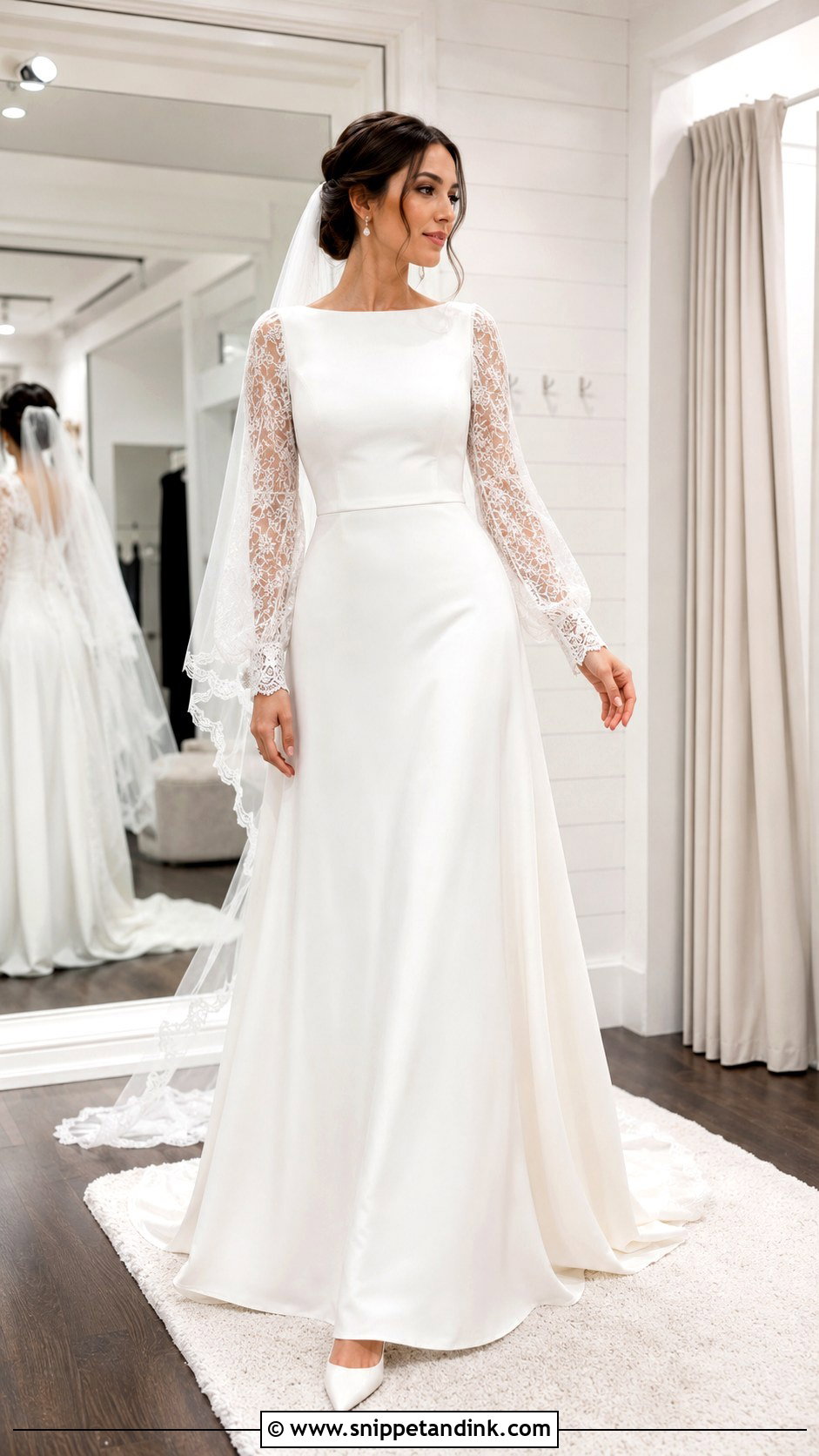
Detachable sleeves give you two looks from one gown: covered for the ceremony and portraits, lighter for dancing. How they attach matters more than how they look. Sleeves that fasten with hidden snaps, or a separate bolero-style piece, come off in a minute; sleeves sewn into the armhole do not. The base gown must still meet your coverage needs on its own, with a lined bodice and a comfortable neckline. Choose shoes and a veil that suit both versions, and have someone in your party practise removing the sleeves at the final fitting.
13. Modest Wedding Dress With Cape Sleeves
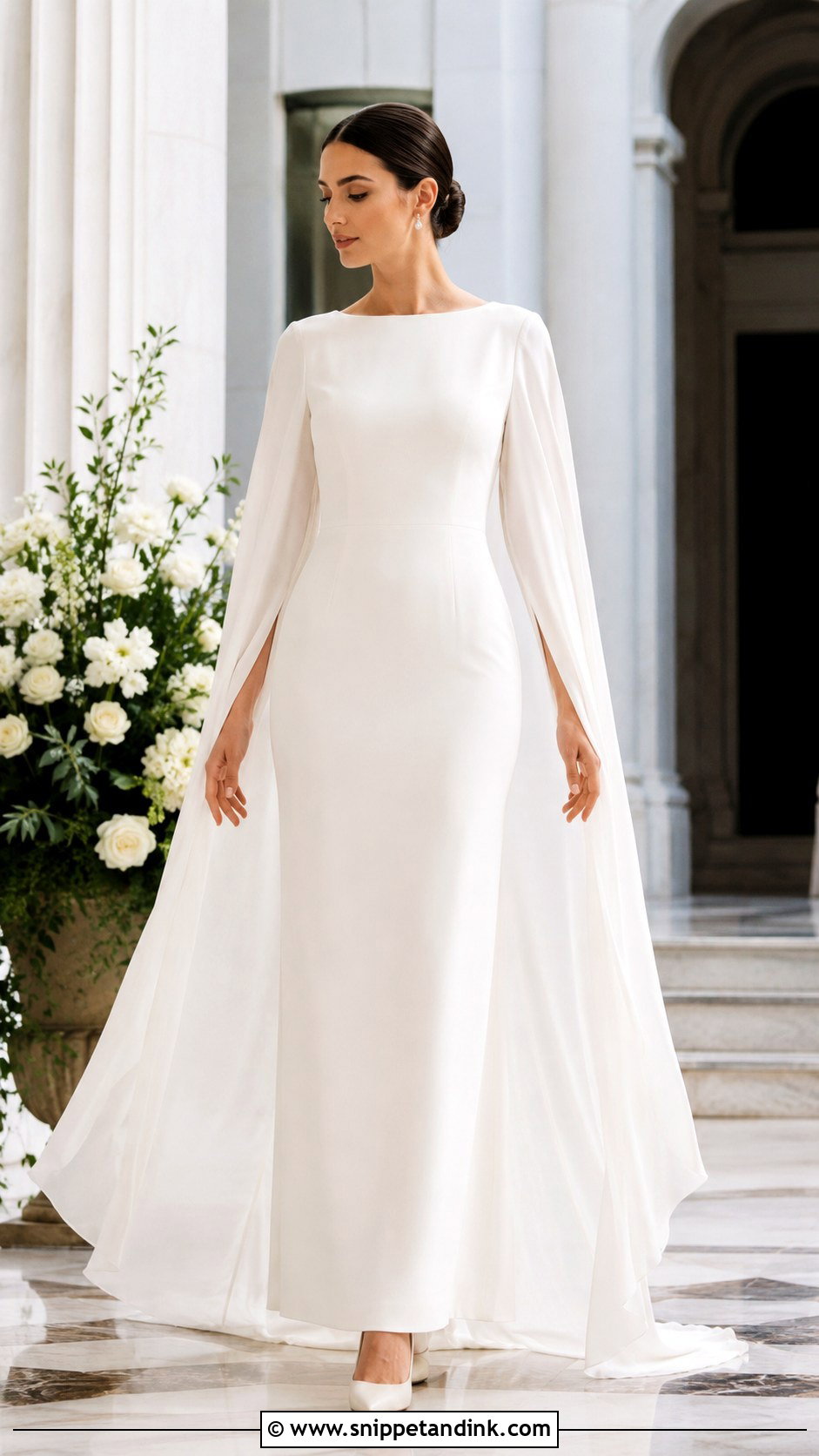
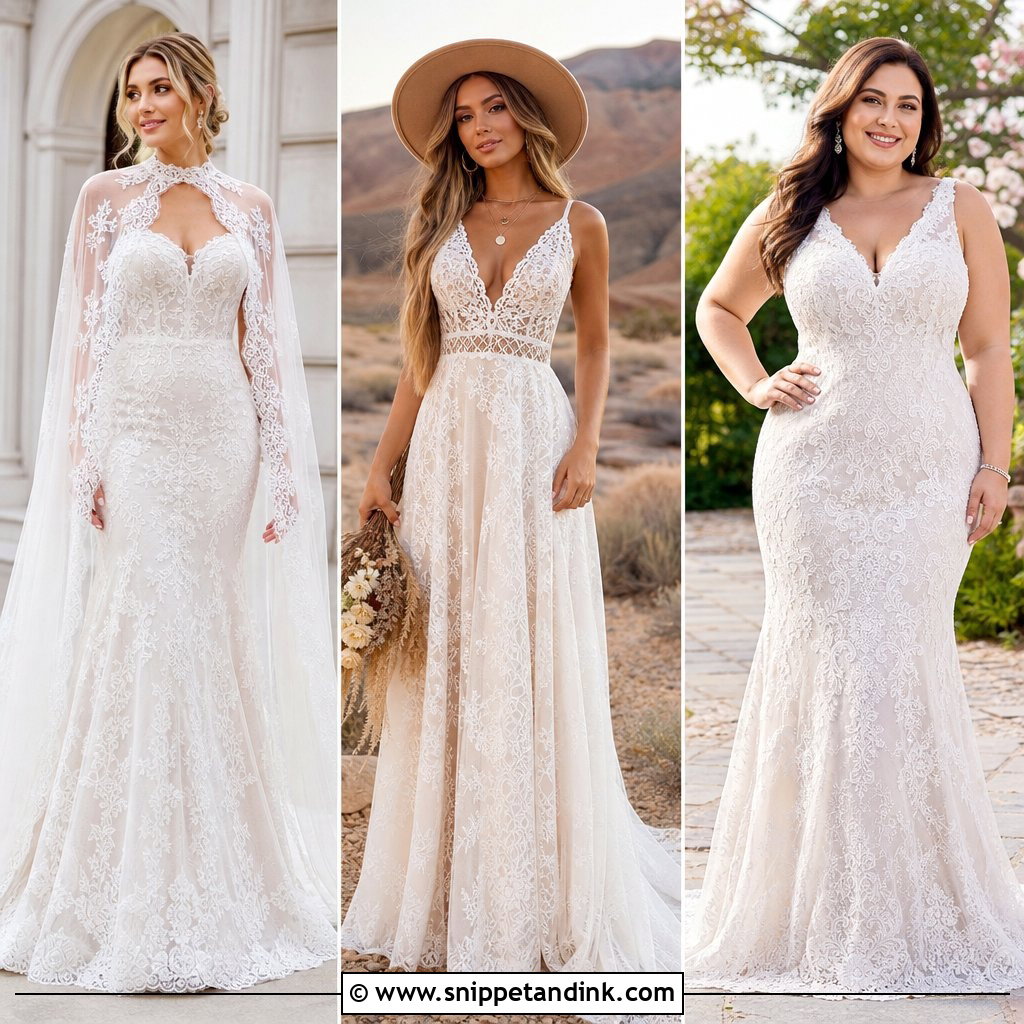
A cape sleeve falls from the shoulder or neckline like a short cape, covering the arms while leaving them free underneath. Chiffon, tulle and lightweight crepe hang best. Keep the dress beneath it simple, a sheath or A-line, and you may not need a veil at all since the cape already moves. Small earrings, sleek hair and plain heels are enough. One thing I flag at fittings: a cape fixed only at the shoulders drifts backward every time you hug someone, so ask for a discreet snap or thread loop to anchor it.
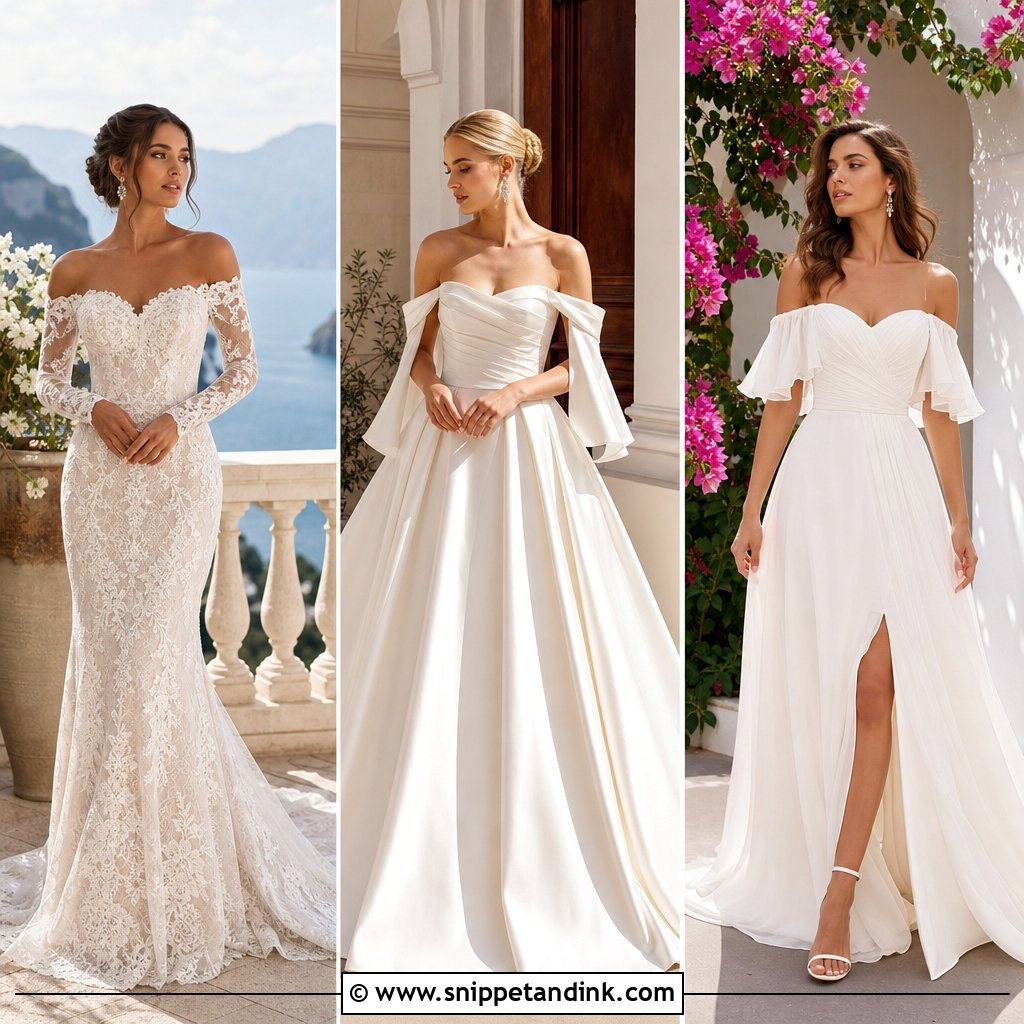
14. Modest Wedding Dress With Lace Bodice And Sleeves
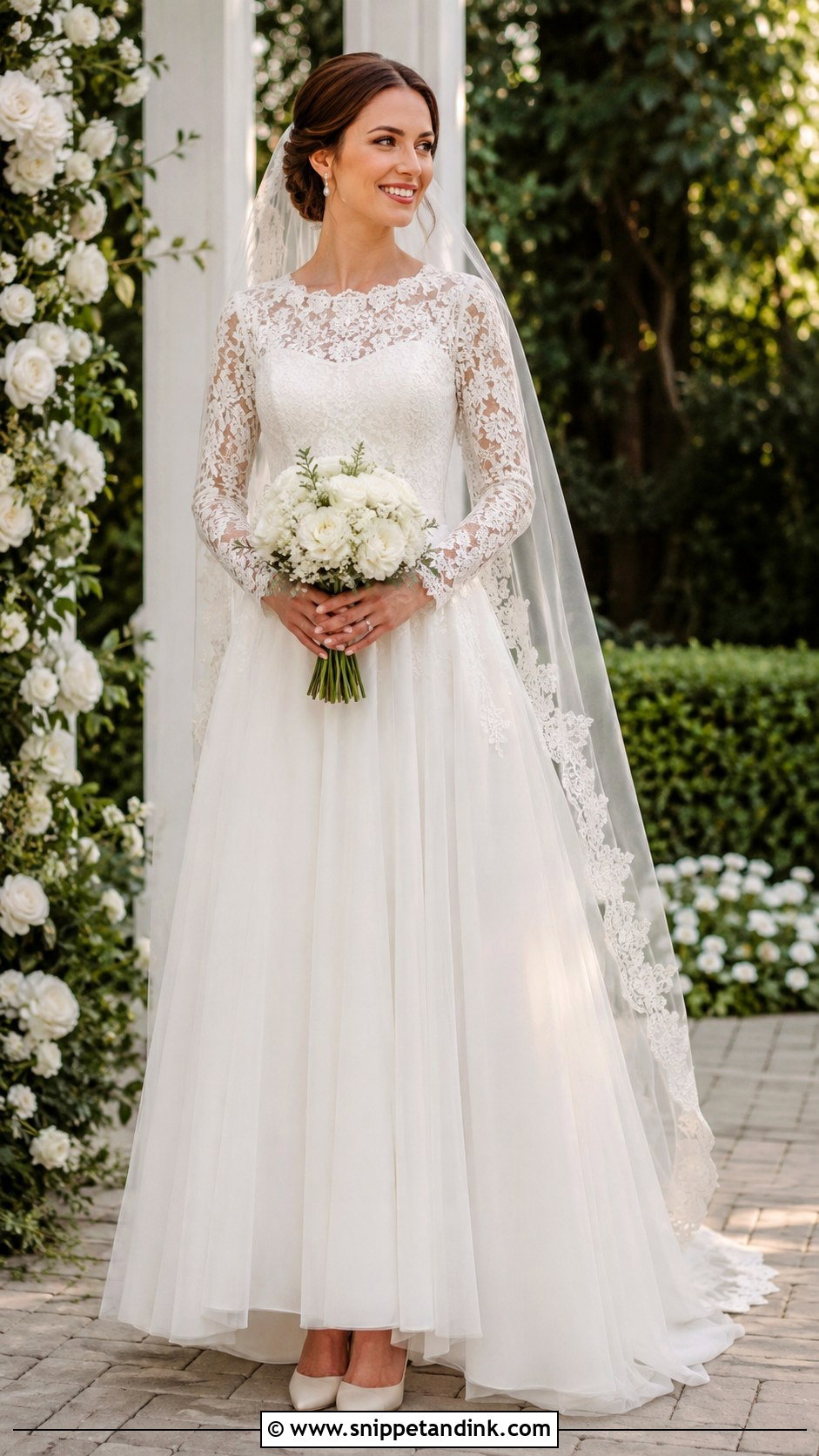
When the lace runs unbroken from bodice into sleeve, the gown reads as one design instead of separate pieces. That continuity takes skill. The motifs should be matched across the shoulder seam, and I check that before anything else, because a mismatched motif sits right in the line of every portrait. A lined front, higher neckline and satin or tulle skirt lighten the lace. Pearl earrings, a lace-edged veil and ivory pumps suit it, and if the lace pattern is bold, keep the bouquet small.
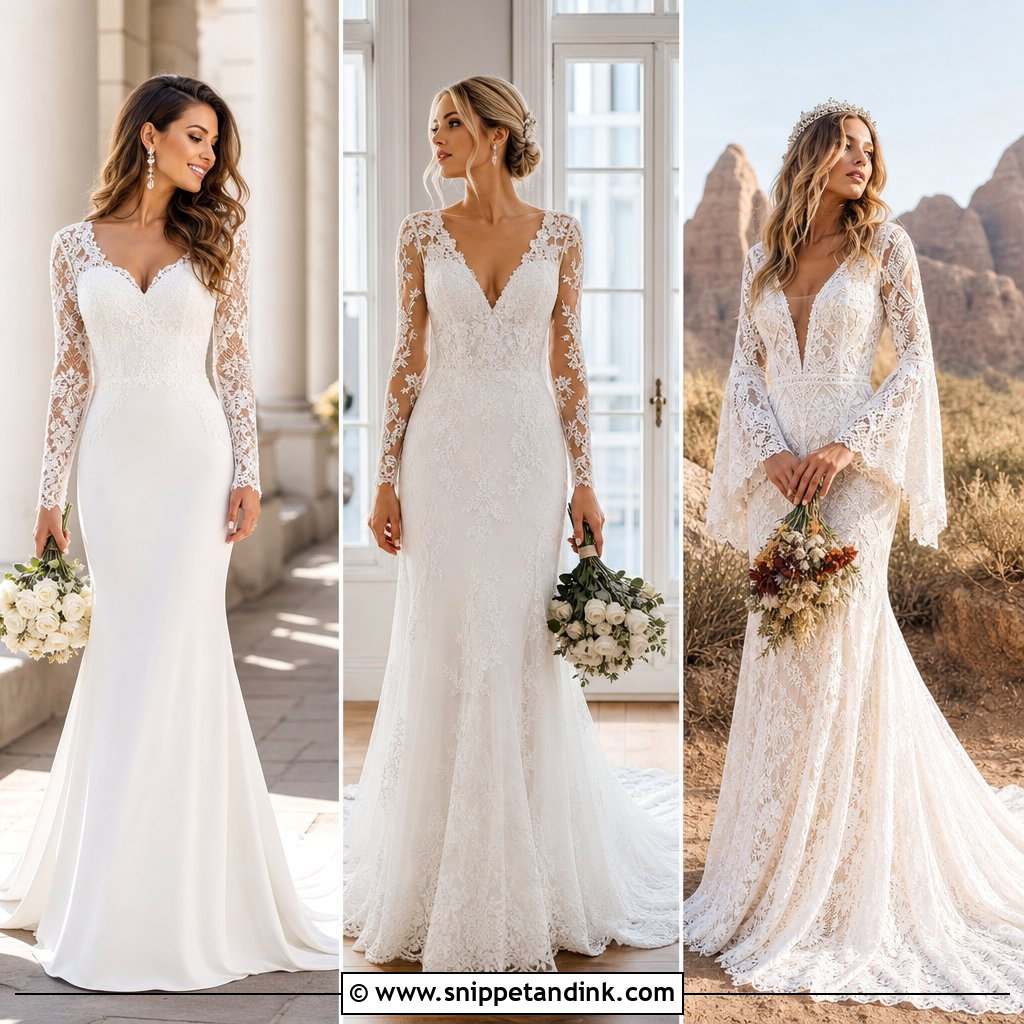

15. Modest Wedding Dress With Beaded Sleeves
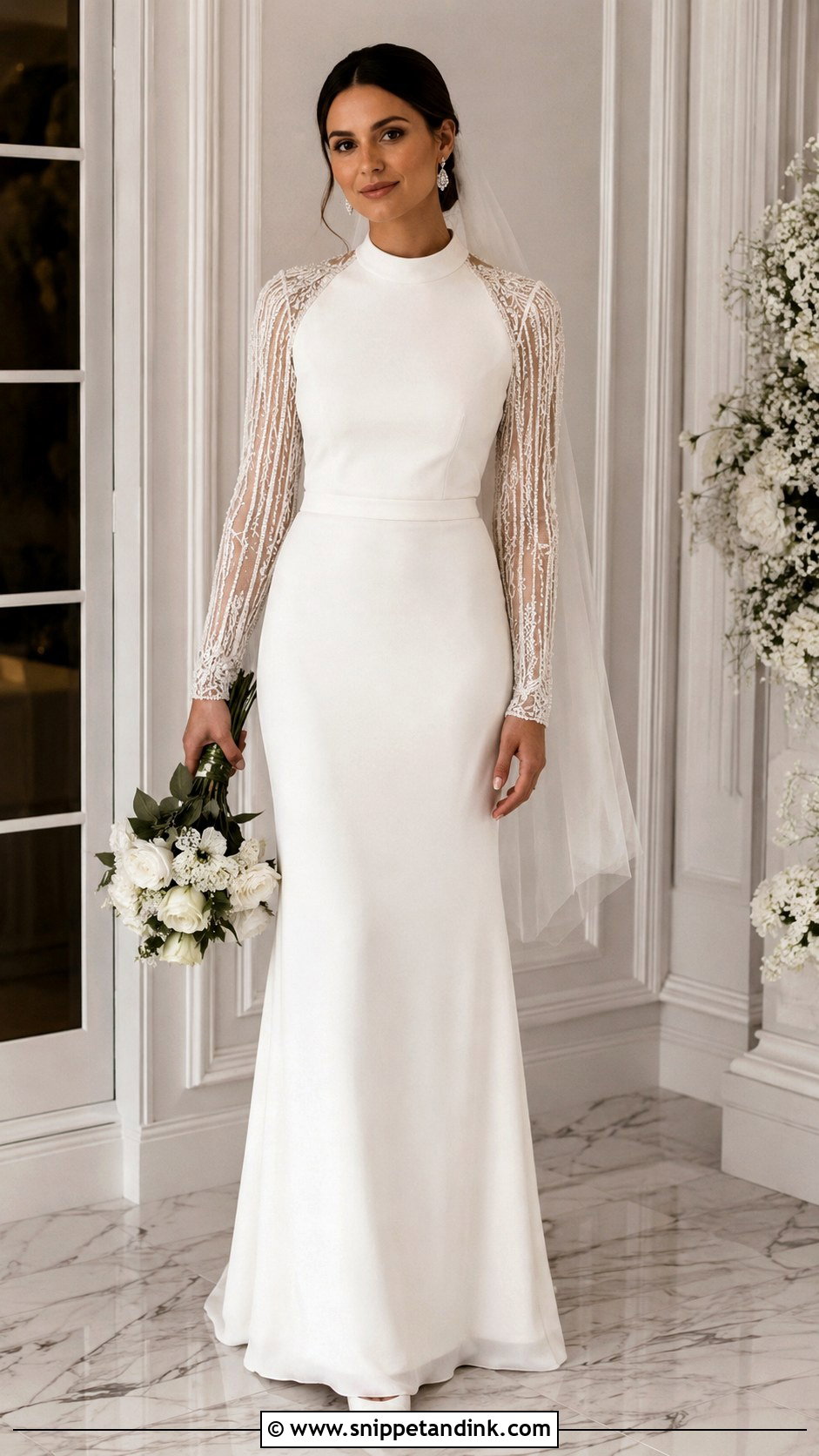
Beaded sleeves bring sparkle in a controlled way, catching light around the arms and upper body. Beading adds weight, though, and heavily worked sleeves can drag on the shoulder seam over a long day. Ask how the beads are secured and whether spares come with the gown, since a few always loosen. Delicate beadwork on a sheer or lined sleeve pairs well with a crepe, satin or tulle skirt and a high or bateau neckline. Small crystal earrings, a plain veil and closed-toe heels with a slight sheen keep it from competing. Evening receptions are where it belongs.
16. Modest Wedding Dress With Embroidered Sleeves
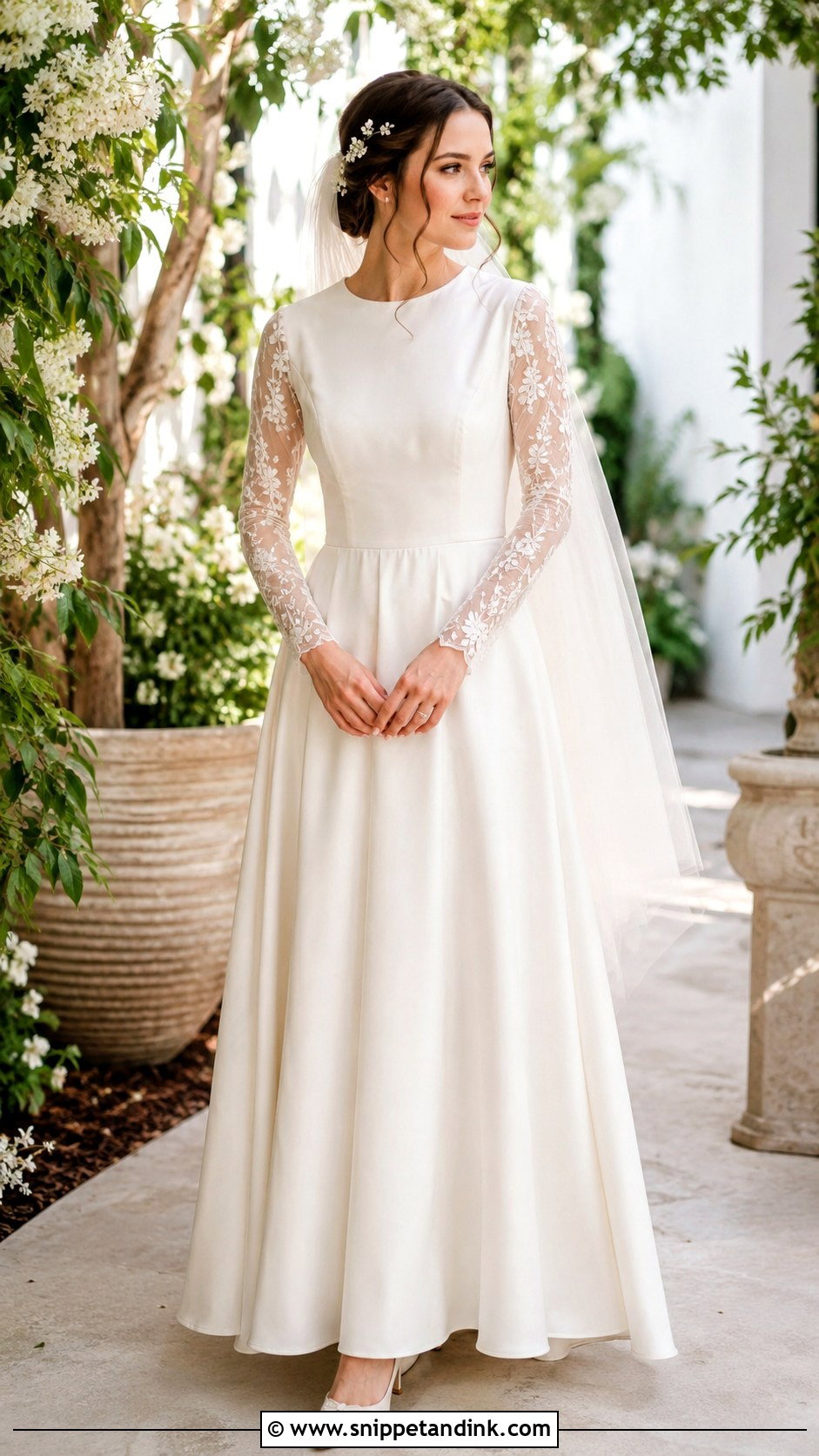
Embroidered sleeves make a gown feel handmade, whether the design is floral, trailing vines or tonal threadwork. Tonal stitching blends in for a classic look; raised appliqué adds texture. I always turn the sleeve inside out, because thread ends and knots on the reverse can scratch the arm for hours, and an unlined embroidered sleeve is the usual culprit. A clean bodice and modest neckline let the sleeves lead. Pair them with a simple veil, pearl or floral pins and comfortable ivory heels. Daytime and garden weddings show the stitching best.
17. Modest Wedding Dress With Tulle Sleeves
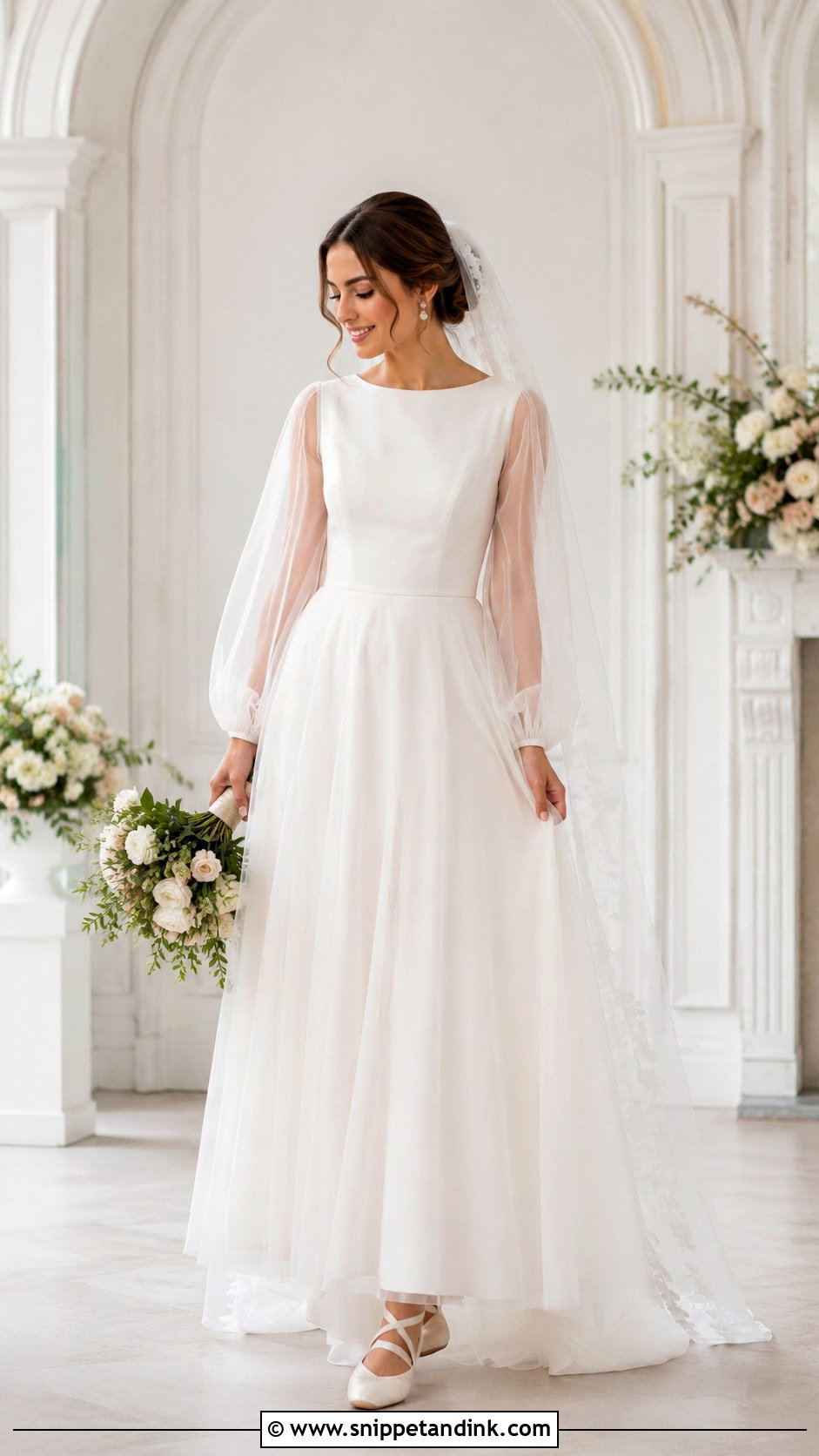
Tulle gives coverage with almost no weight, so it suits brides who want sleeves but hate feeling wrapped up. Gathered tulle, fitted tulle with appliqué and soft bishop shapes all behave differently, so try more than one. Its weakness is snagging. Rings with raised prongs and chain bracelets catch it constantly, so keep anything near the sleeve flat. A lined bodice and A-line skirt keep it modest, with a delicate veil, small pearl earrings and ballet-style heels.
18. Modest Wedding Dress With Chiffon Sleeves
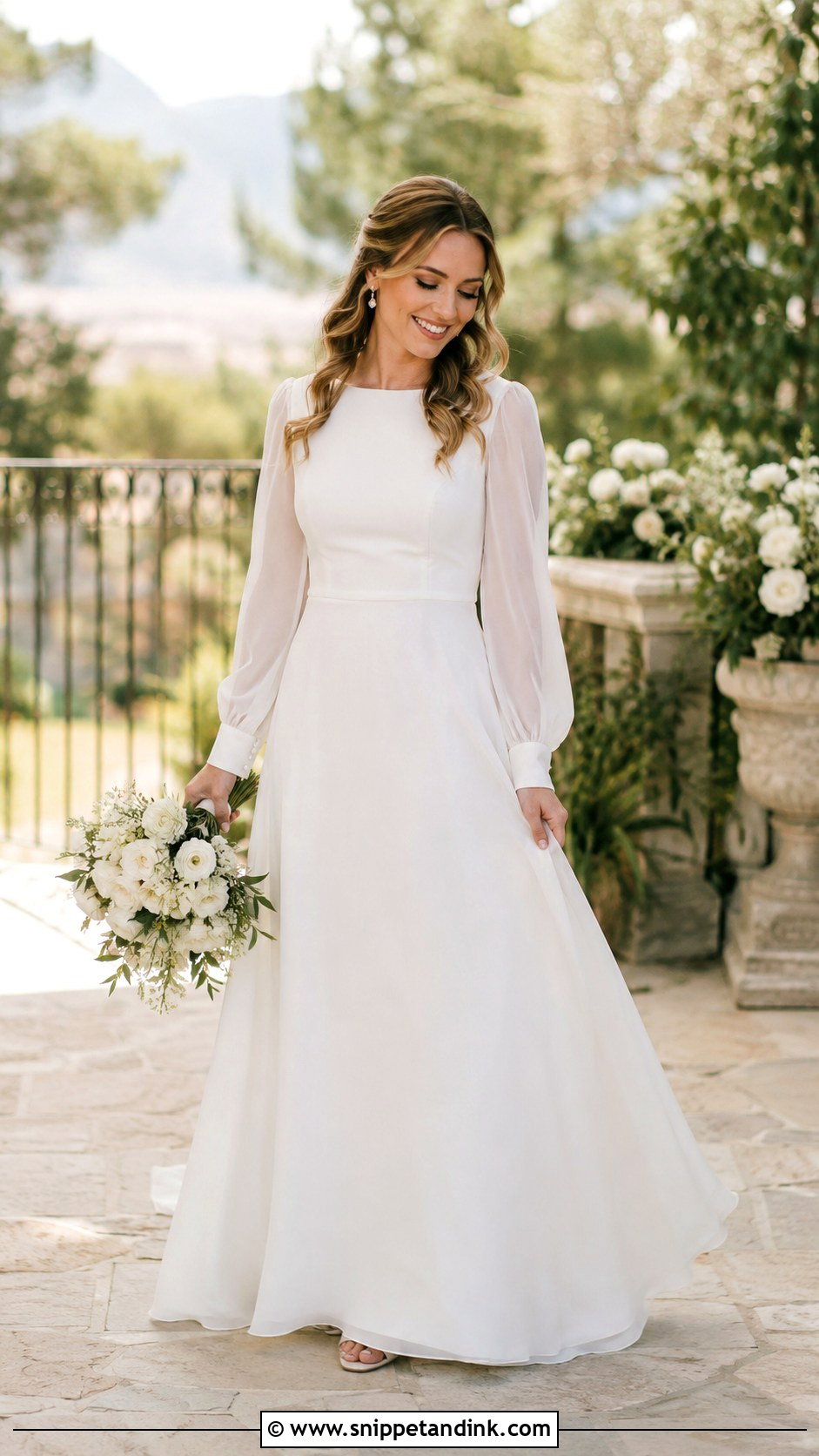
Chiffon moves with you and breathes, which is why I reach for it when a bride needs coverage outdoors or in warm weather. Long chiffon sleeves with a fitted cuff stay put; three-quarter chiffon sleeves are easier still. An A-line or empire waist suits it. Silk chiffon can water-spot, so keep drinks well away during portraits and never dab a mark with a wet napkin. Natural makeup, soft curls, small drop earrings and low block heels or bridal flats keep the whole look relaxed.
19. Modest Wedding Dress With Organza Sleeves
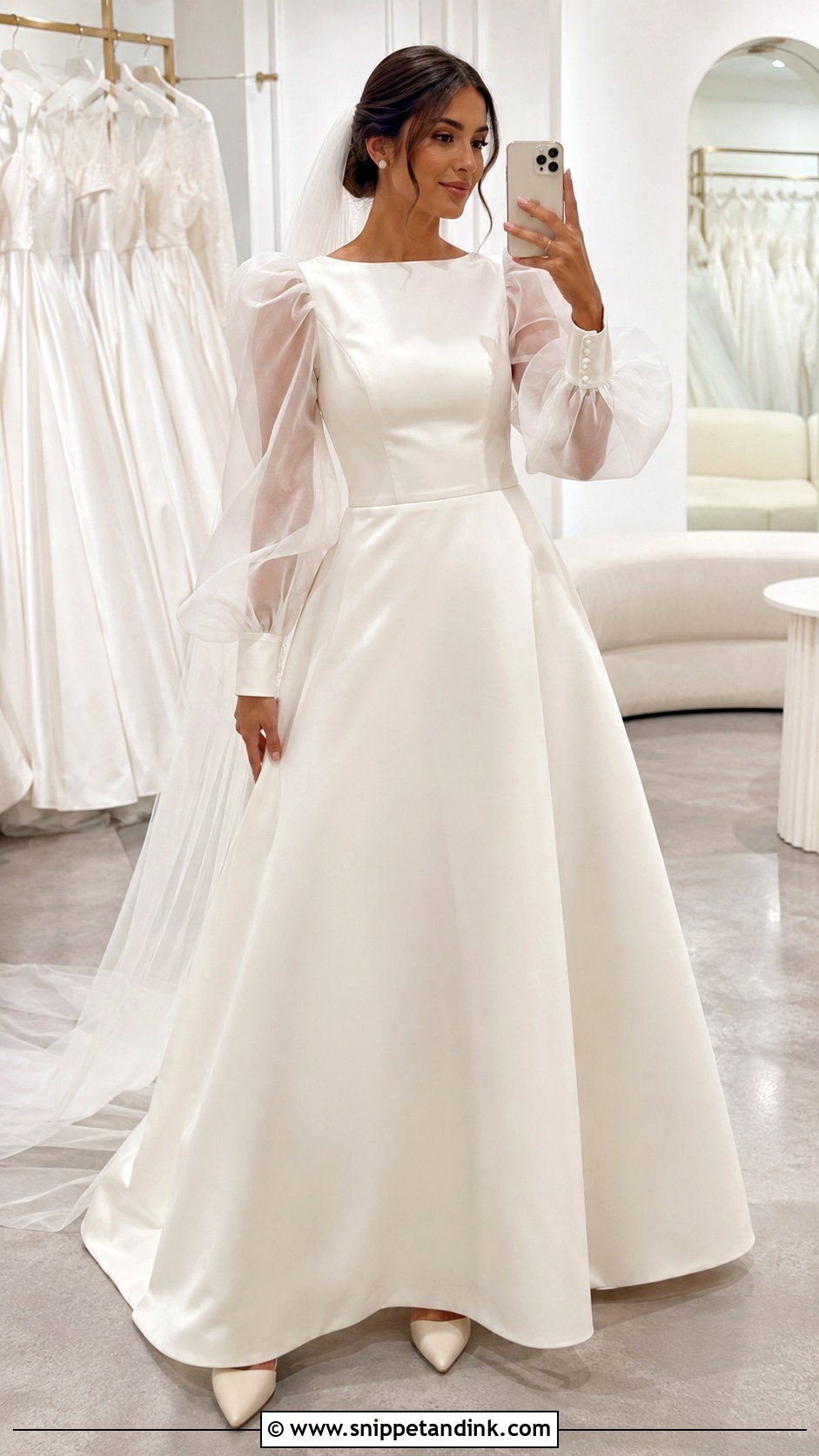
Organza is crisp but sheer, so it holds puff, bishop and lantern shapes that softer fabrics can’t. On its own it is see-through. For real coverage I’d layer it over a lined bodice or back it with lace appliqué. A satin or Mikado skirt gives it polish, and since organza already has volume, the rest stays clean: a simple veil, pearl studs and pointed heels. Expect it to crush when you sit in the car; a quick steam before the reception brings the sleeves back.
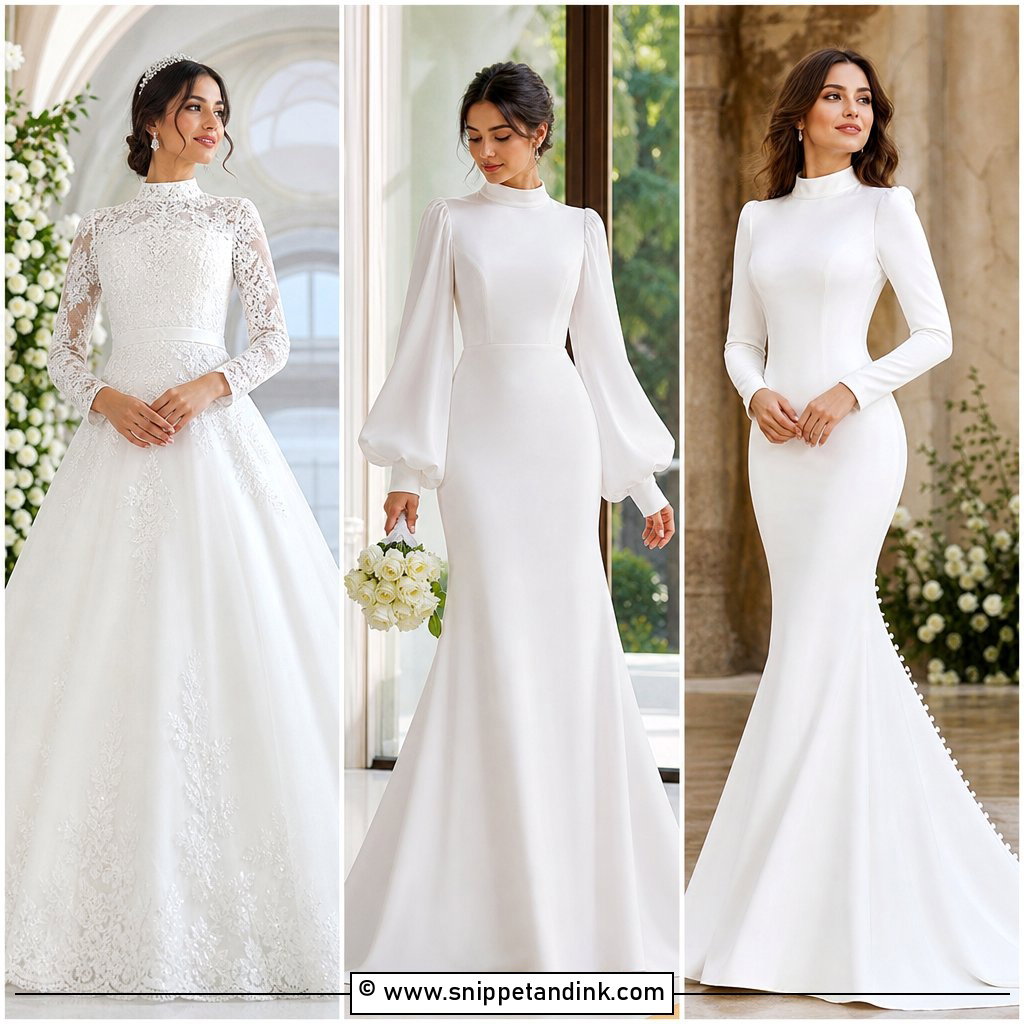
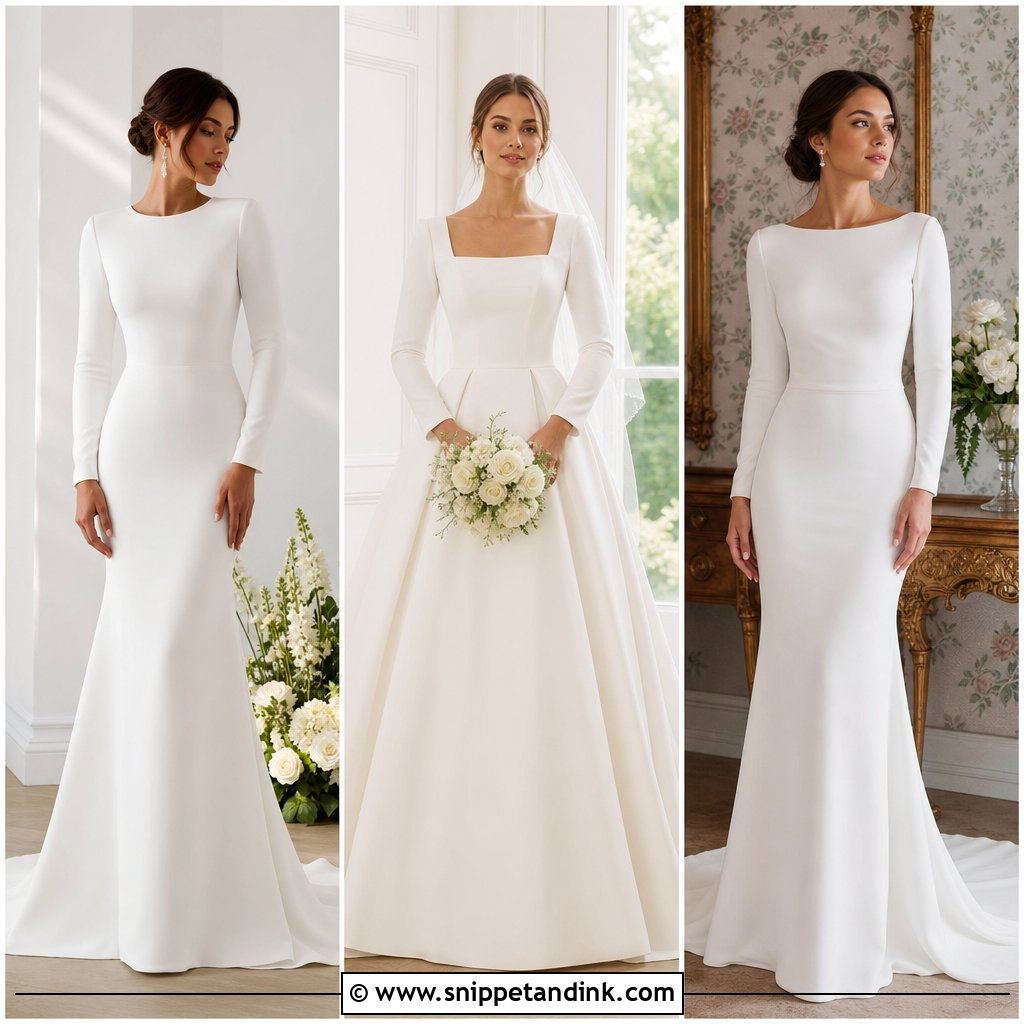

20. Modest Wedding Dress With Mikado Sleeves
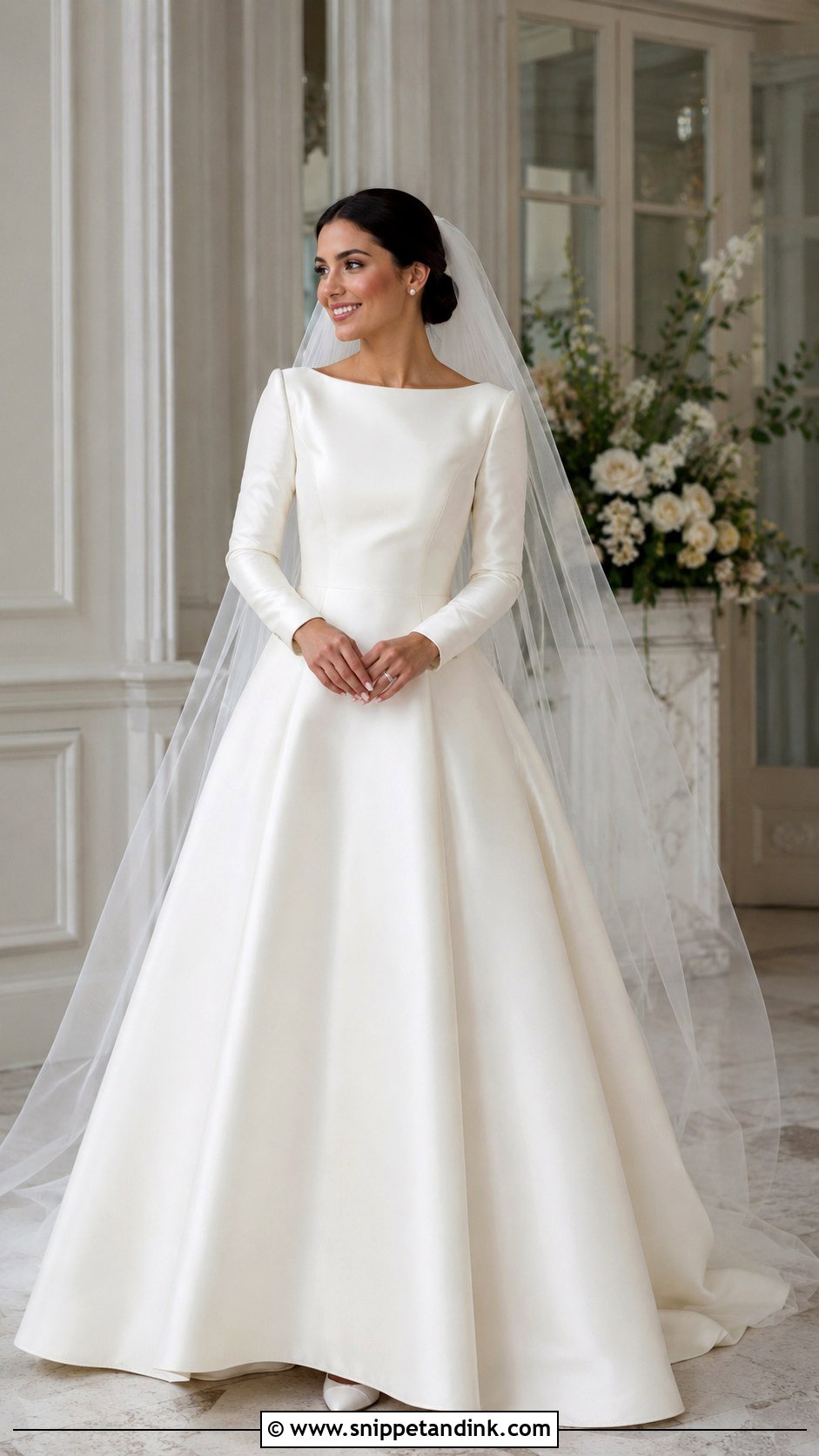
Mikado is a heavy, slightly textured weave that holds its own shape, which suits clean ball gowns, A-lines and gowns with architectural seams. Long Mikado sleeves look sharp with a bateau or high neckline. The same stiffness works against you in two ways: it’s warm, and a structured sleeve limits how high you can lift your arms. At every fitting I have brides reach up and hug me before we sign off. A simple waist seam, covered buttons and a long train finish it formally, with sleek hair, pearl studs and satin heels.
21. Modest Wedding Dress With Boat Neck And Sleeves
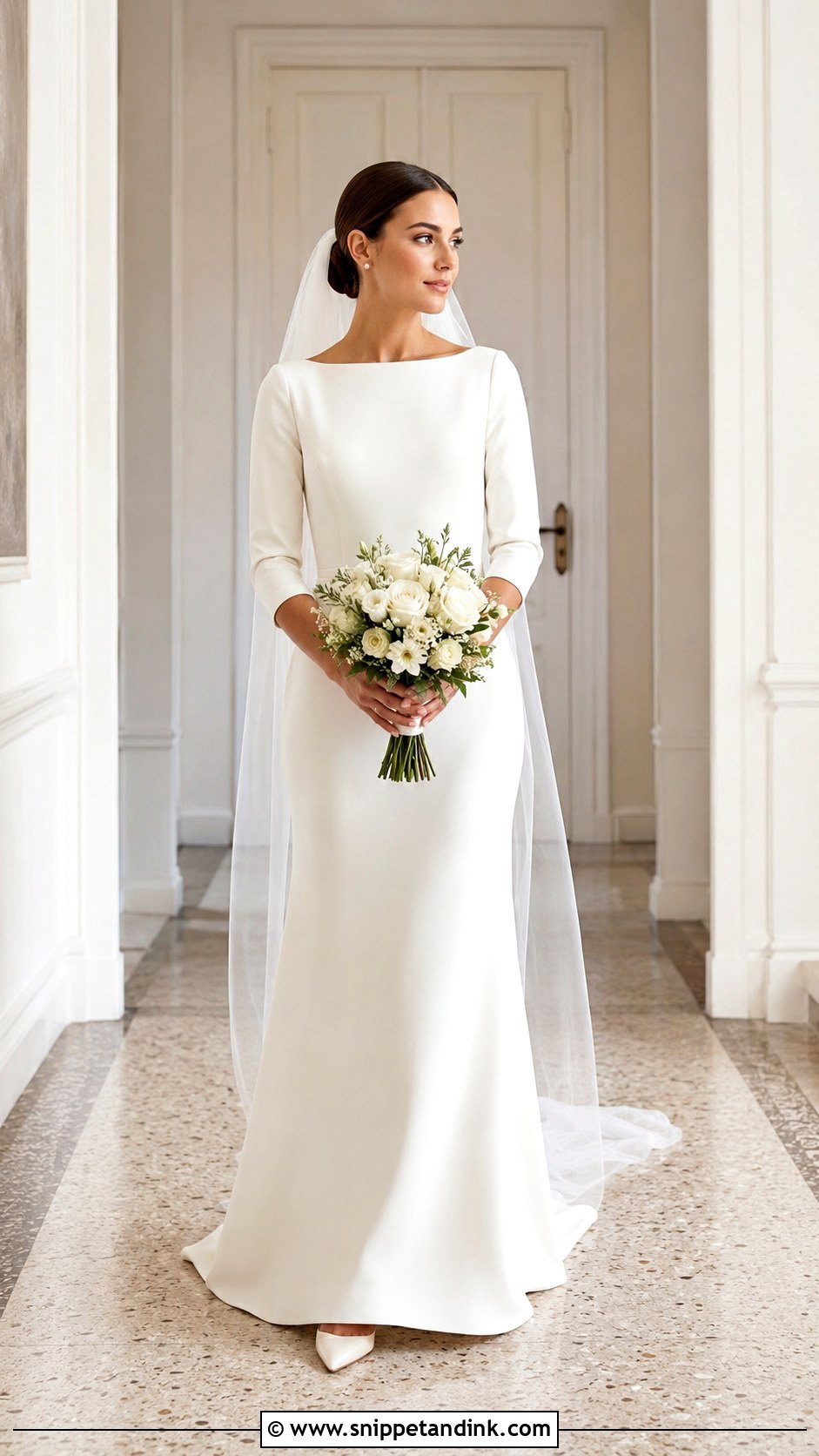
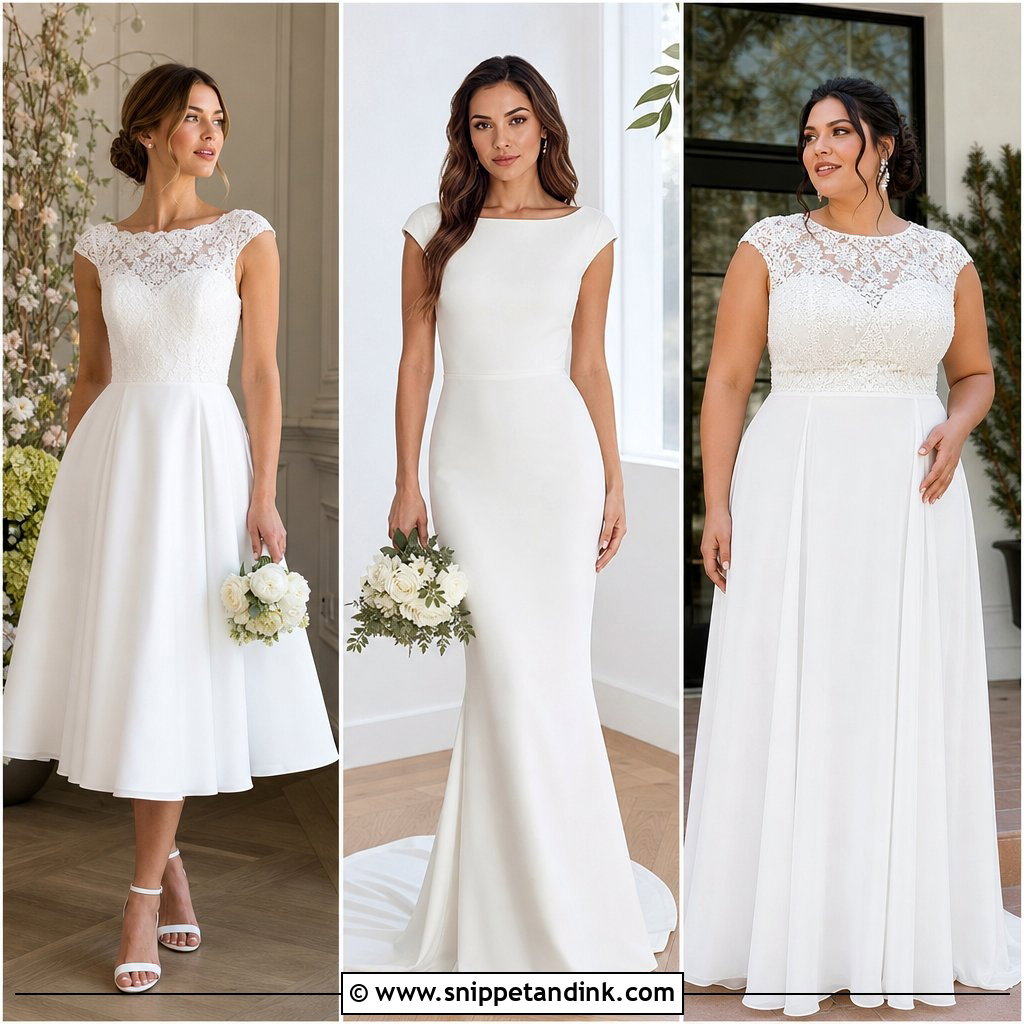
Pairing a boat neck and sleeves is one of my favorite modest combinations, because the neckline runs wide and high across the collarbone and shows the shoulder line while covering it. It works with three-quarter, fitted long or plain satin sleeves. On sloping shoulders a bateau can creep toward the arm, so I add lingerie strap holders inside the neckline. Crepe looks modern, lace romantic, satin classic. A low bun, pearl studs, a plain veil set behind the hair and pointed heels complete it.
22. Modest Wedding Dress With Square Neck And Sleeves
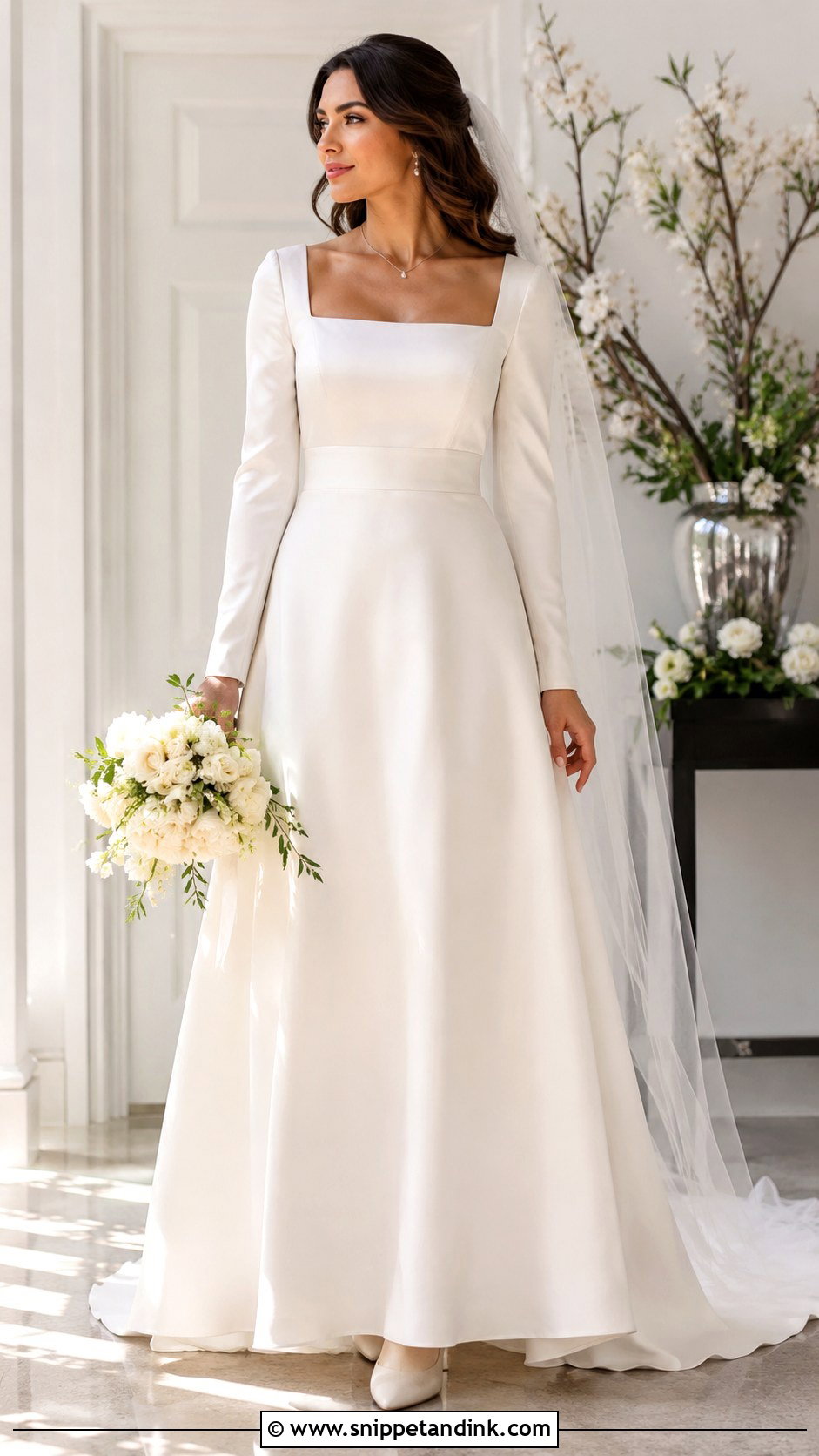
A square neckline frames the collarbone without going low, and sleeves balance its straight lines. Check the corners. They should lie flat, and if they buckle when you breathe in, the bodice needs taking in at the side seams. A lined front and proper support matter more here than with rounder necklines. A square-neck A-line reads romantic, a square-neck crepe sheath reads modern. Wear a fine necklace only if the neckline leaves room, with soft waves or half-up hair and closed-toe heels.
23. Modest Wedding Dress With Jewel Neck And Sleeves
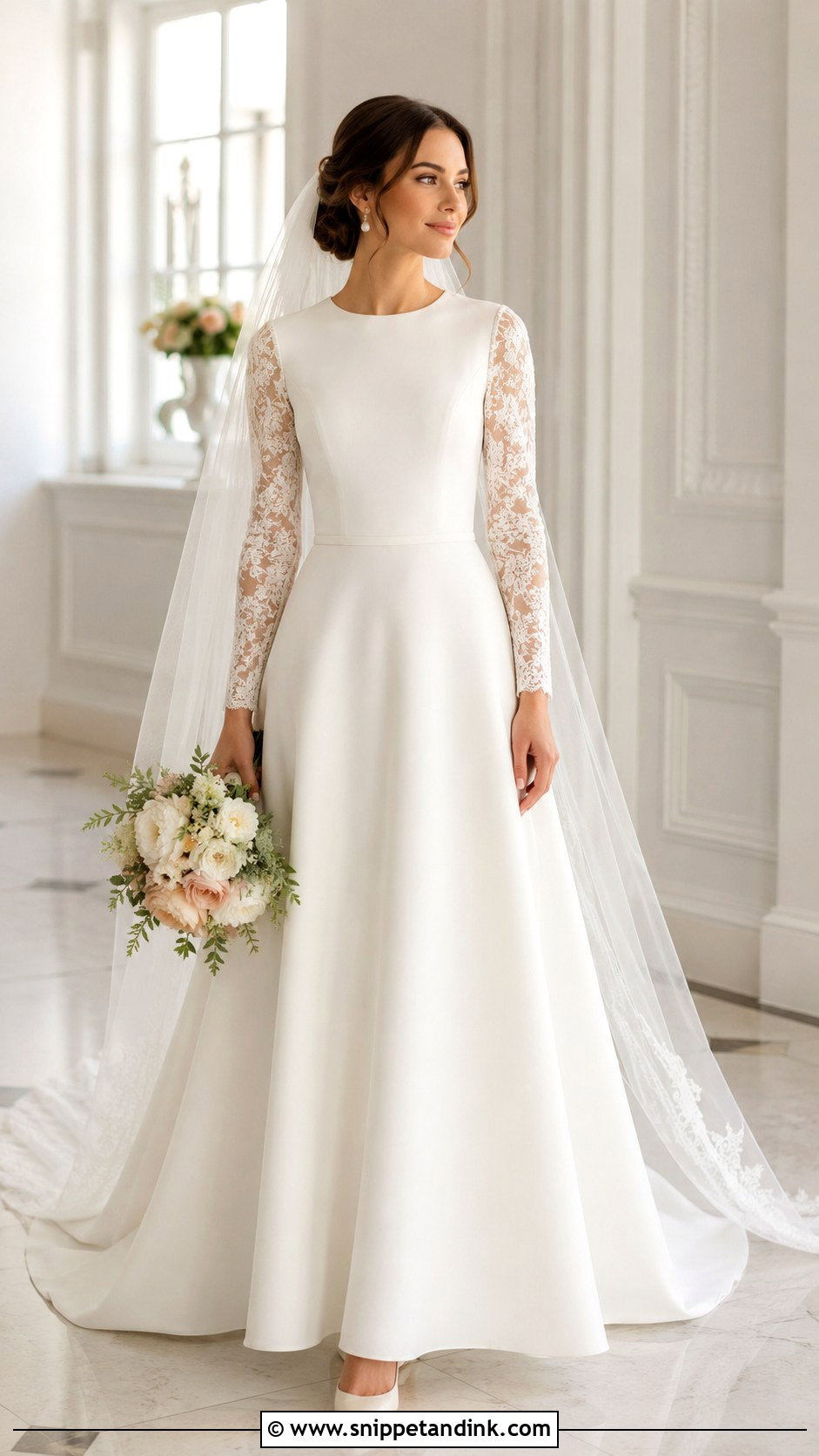
The jewel neckline sits close around the base of the neck, giving high coverage that won’t shift when you lean forward to sign or greet guests. Lace, satin or crepe sleeves all suit it, as does an A-line or sheath shape. Skip the necklace and let earrings do the work, then add a long veil, smooth updo and classic pumps. I find it kinder than a mock neck or turtleneck for brides who feel trapped in high collars, because it never actually touches the throat.
24. Modest Wedding Dress With Mock Neck And Sleeves
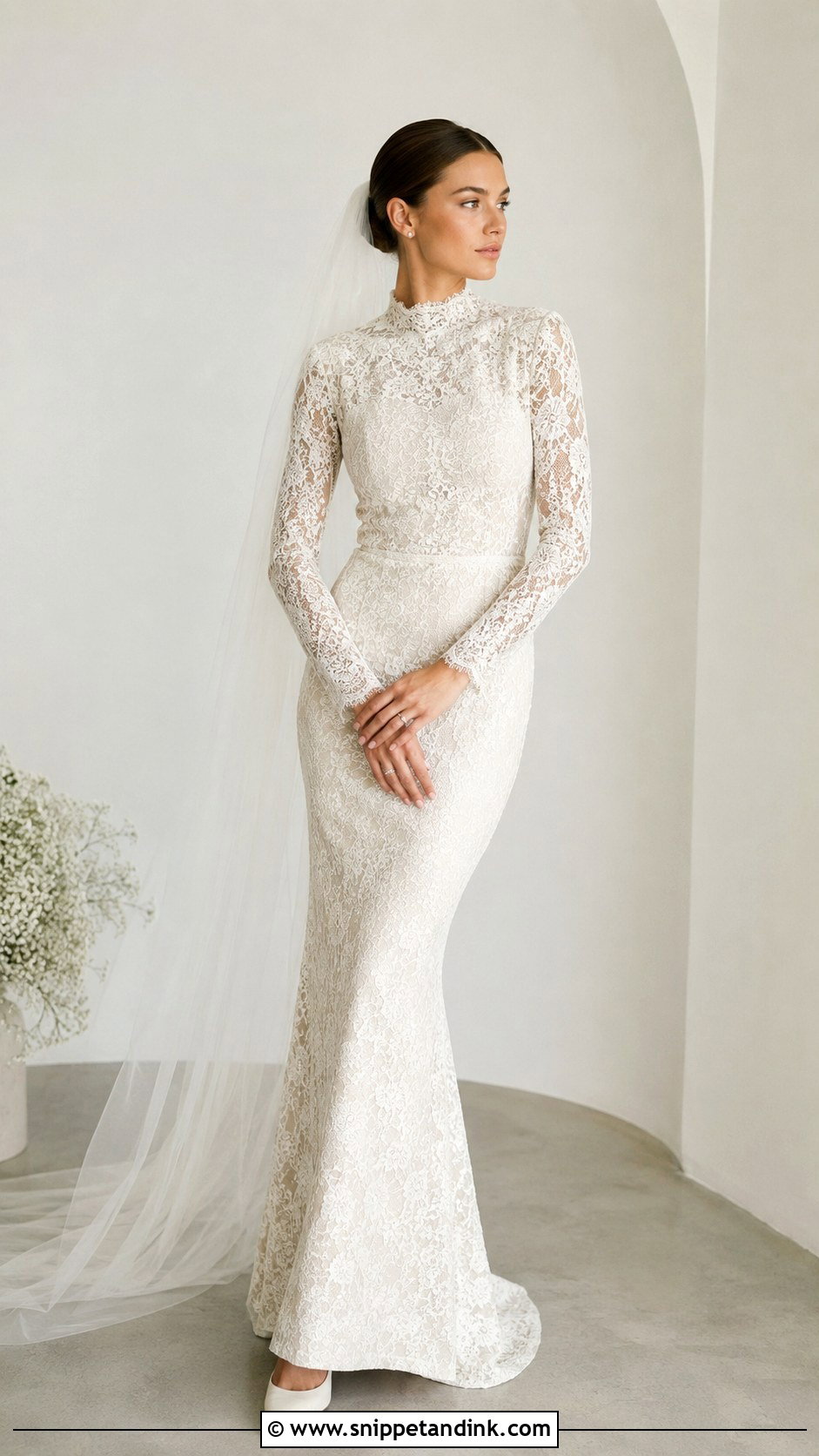
A mock neck sits higher than a jewel neckline but stops short of a folded turtleneck, which gives a modern, fashion-led look while staying covered. Lace, crepe or a stretch lining with appliqué work best. That stretch matters: a rigid mock collar digs in every time you look down at your vows or your shoes. Fitted long sleeves keep it sleek, sheer ones keep it light. Keep styling to small earrings, a sleek bun and a plain veil.




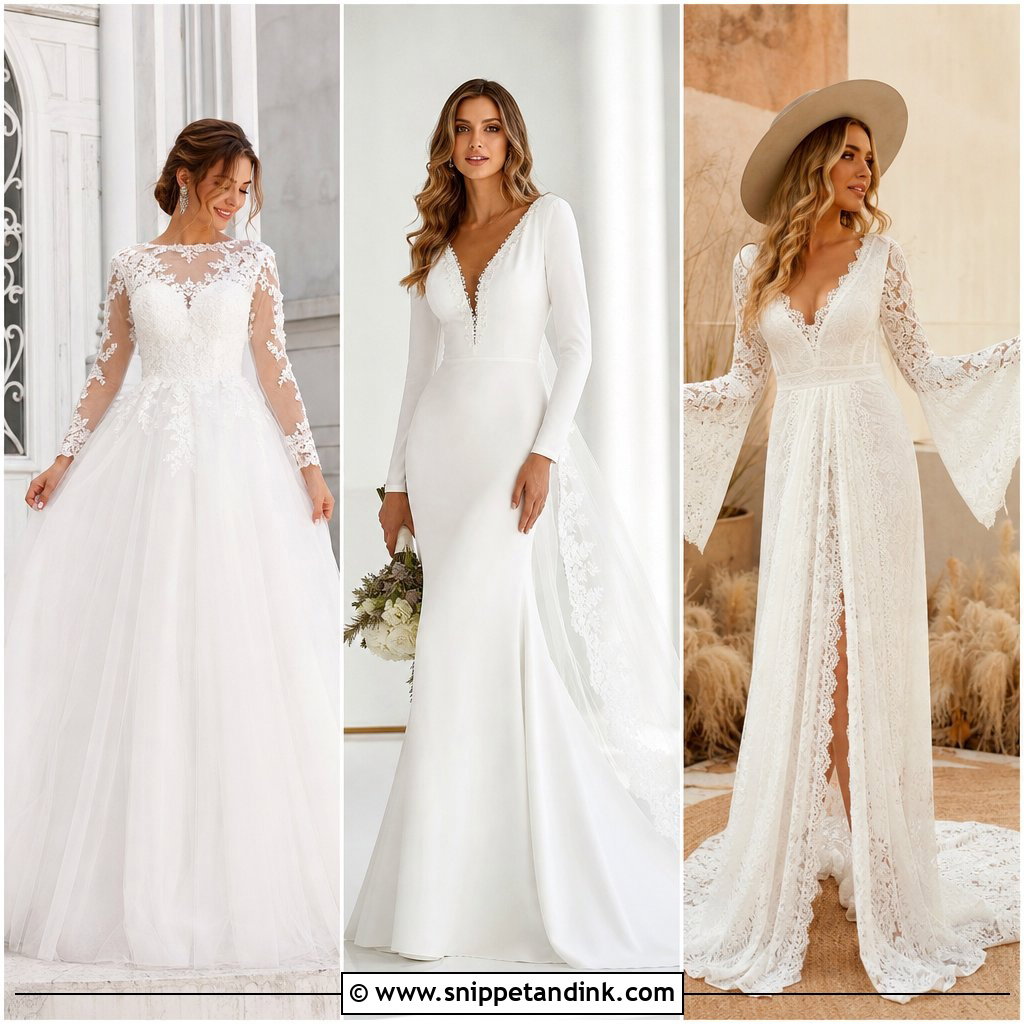
25. Modest Wedding Dress With Turtleneck And Sleeves
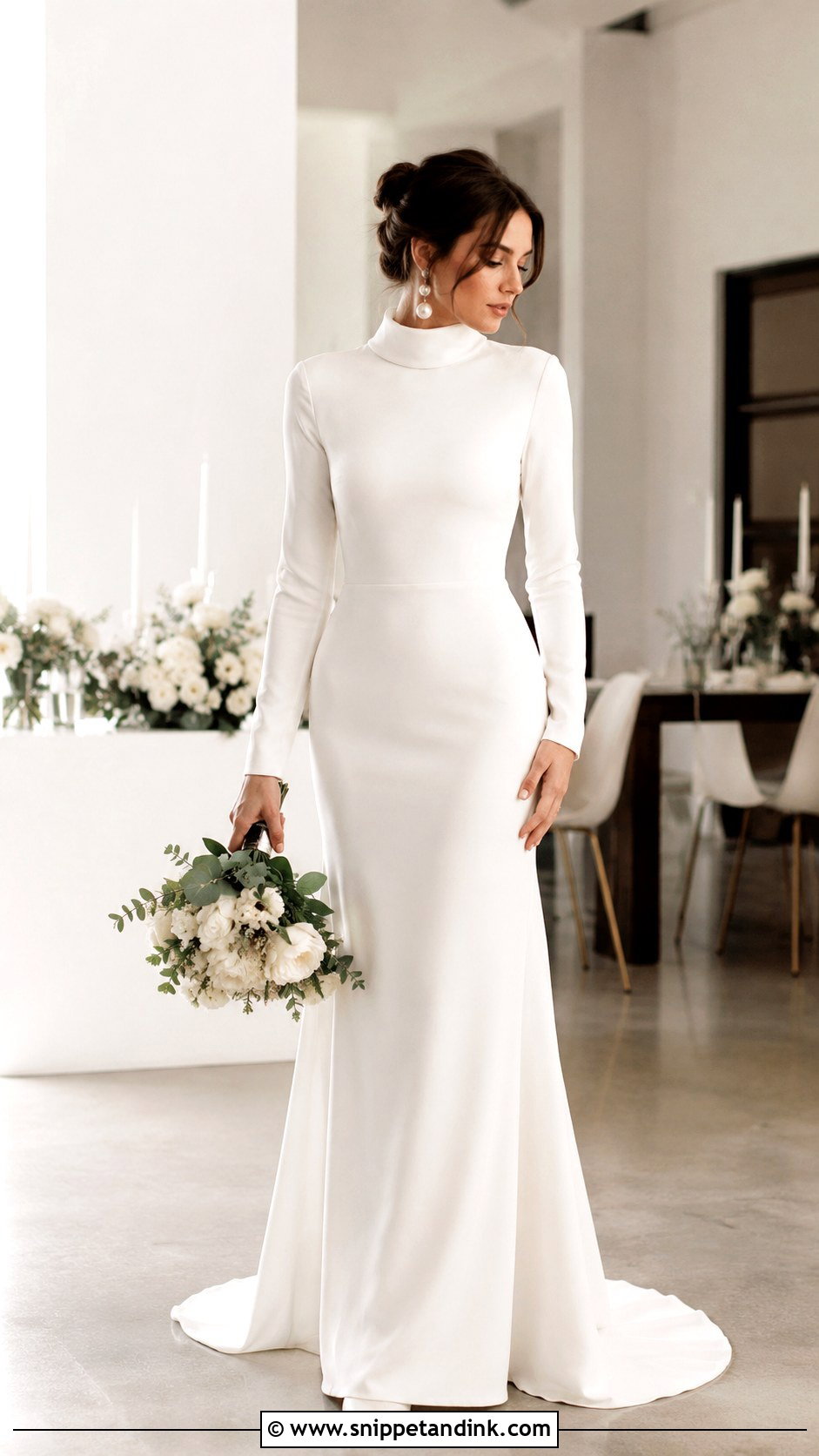
A turtleneck gives the most coverage of any neckline here, and on the right bride it is very chic. Fit around the neck and shoulders decides everything. I have brides sit, nod and talk for a few minutes at the fitting, since a collar that feels fine standing can feel tight once you’re seated at dinner. Soft lace reads romantic, smooth crepe reads minimal; a slim skirt gives a sleek line and an A-line softens it. Wear an updo with statement pearl earrings, no necklace, and save it for cool-weather dates.
26. Modest Wedding Dress With Long Sleeves And Train
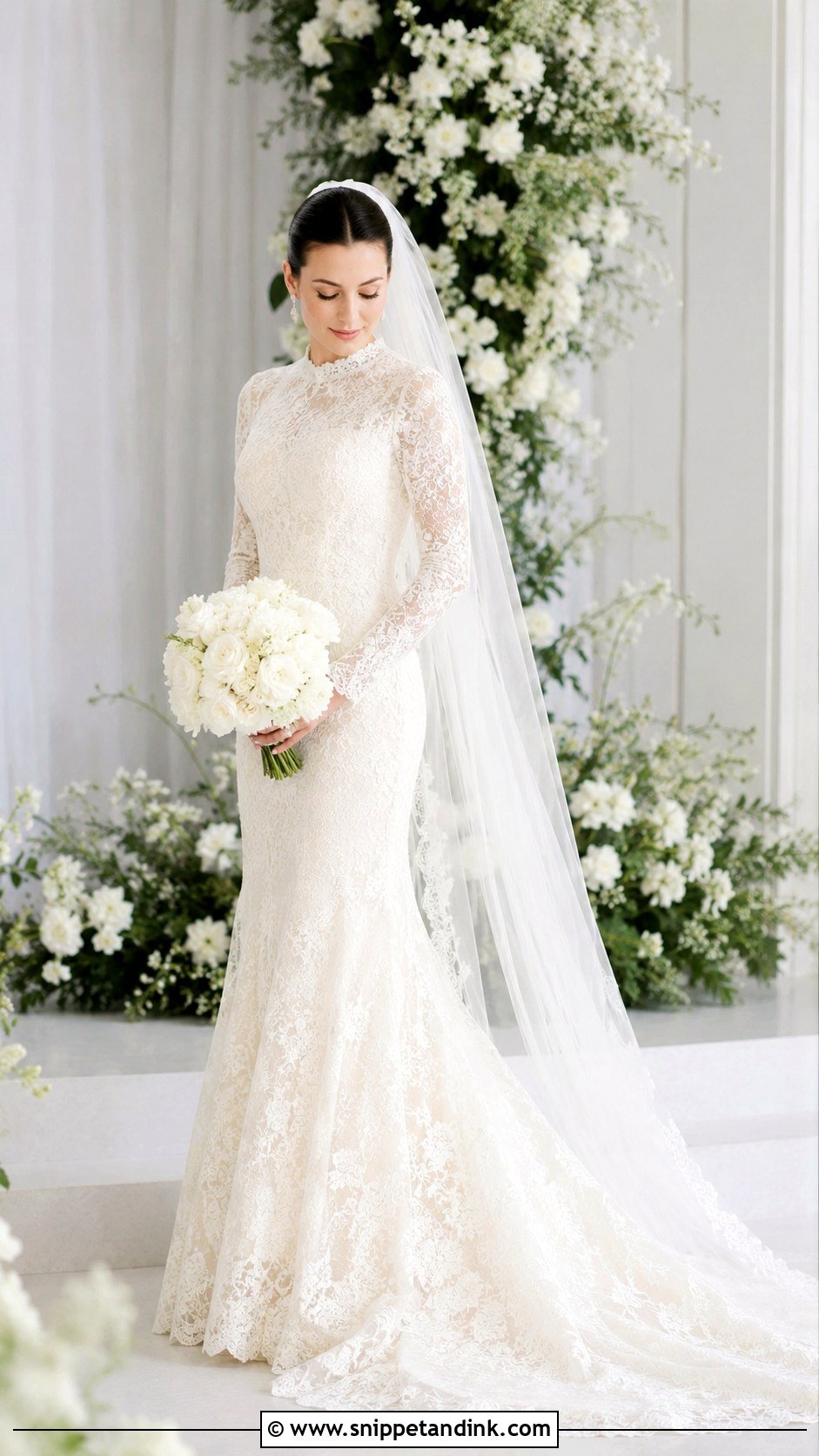
Long sleeves with a train give you an entrance without any revealing detail. A chapel train moves easily, while a cathedral train needs a formal setting and someone to arrange it at the aisle. The part brides forget is the bustle. A long train needs a reliable one, and a bridesmaid should practise fastening it at the final fitting rather than in a dark corner at the reception. A fitted bodice with a modest neckline balances the longer back. Add a long veil, classic earrings and comfortable heels hidden under the skirt.
27. Modest Wedding Dress With Sleeves For Winter
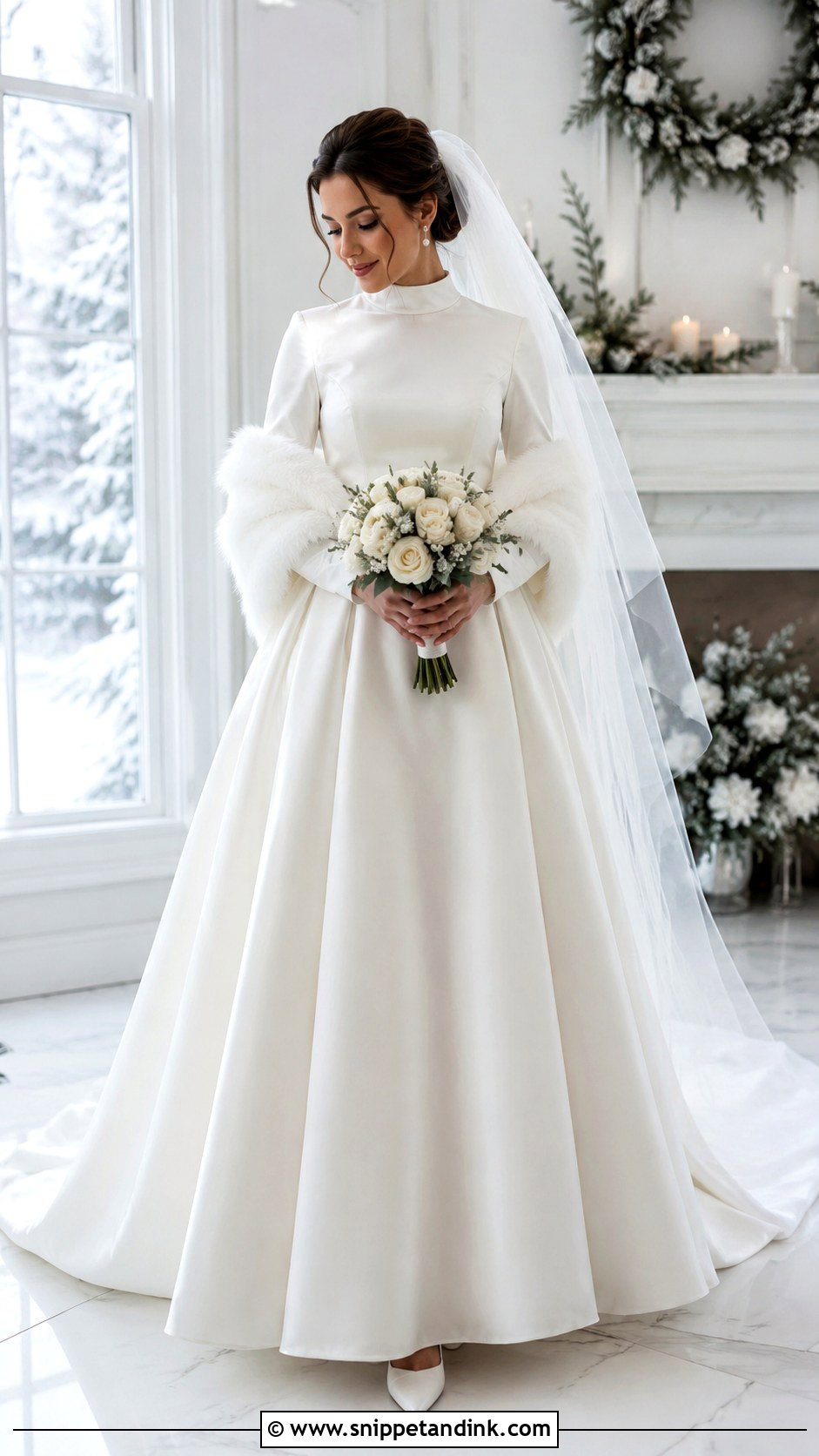
Winter is where sleeves feel most natural. Satin, Mikado, crepe or lined lace give structure and real warmth, and a high neckline over a fuller skirt reads formal without bulk. A faux-fur wrap, pearl earrings, closed-toe heels, a long veil and a soft updo complete it. If you have outdoor portraits, a white bridal coat worn between shots saves you from shivering through every frame. Keep a lint roller handy too, because faux fur sheds onto dark suits and satin alike.
28. Modest Wedding Dress With Sleeves For Summer
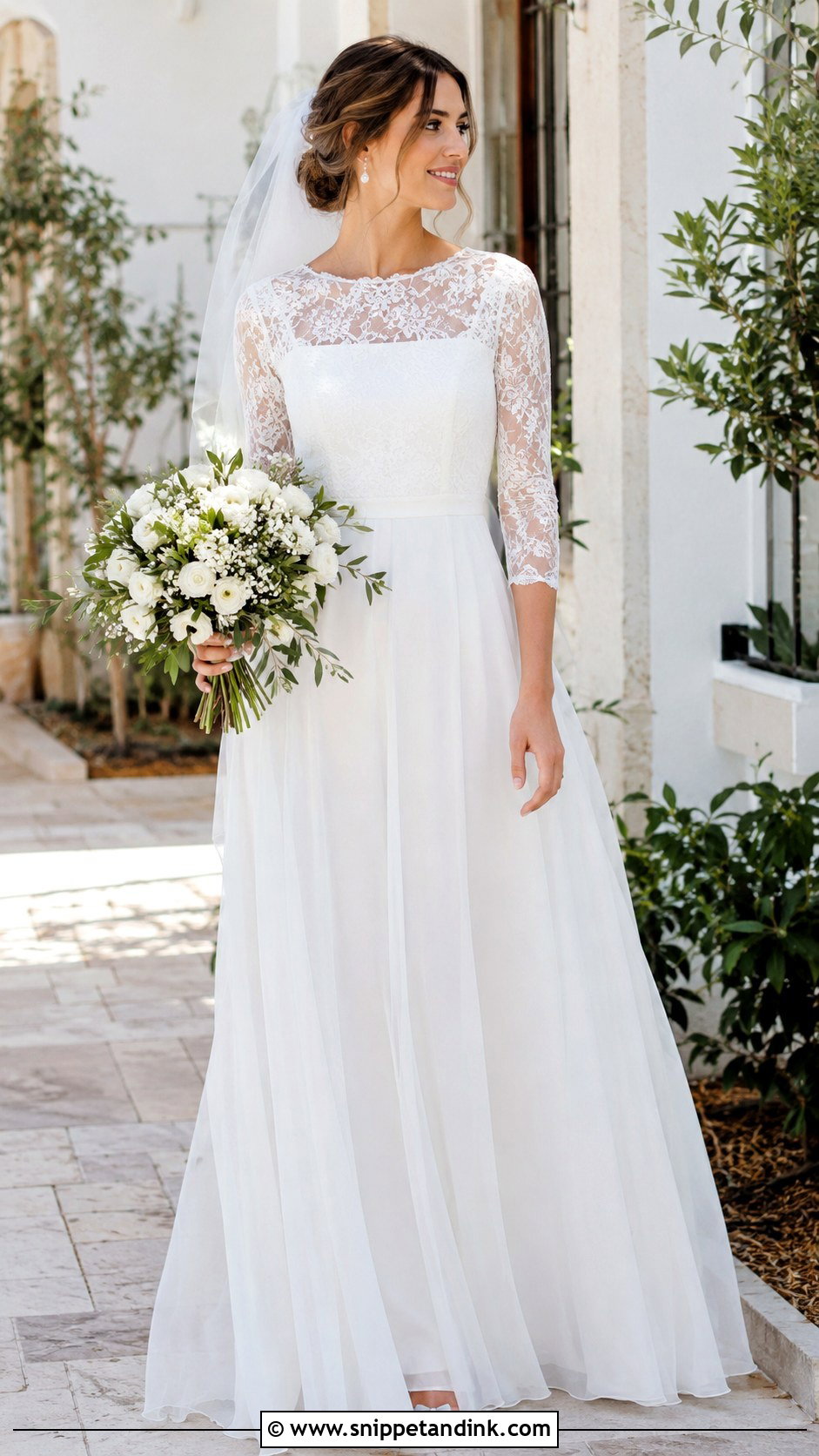
Summer sleeves come down to fabric. Chiffon, soft tulle, lightweight lace or crepe with unlined sleeves keep you cooler, and Three-quarter sleeves, fluttery long sleeves or sheer lace sleeves give coverage without weight. Polyester satin traps heat badly, so where your coverage needs allow, I steer summer brides toward open-weave lace or natural fibers. A simple A-line or sheath lets air move. Add a light veil, delicate earrings, sandals or low heels and seasonal white blooms.
29. Plus Size Modest Wedding Dress With Sleeves
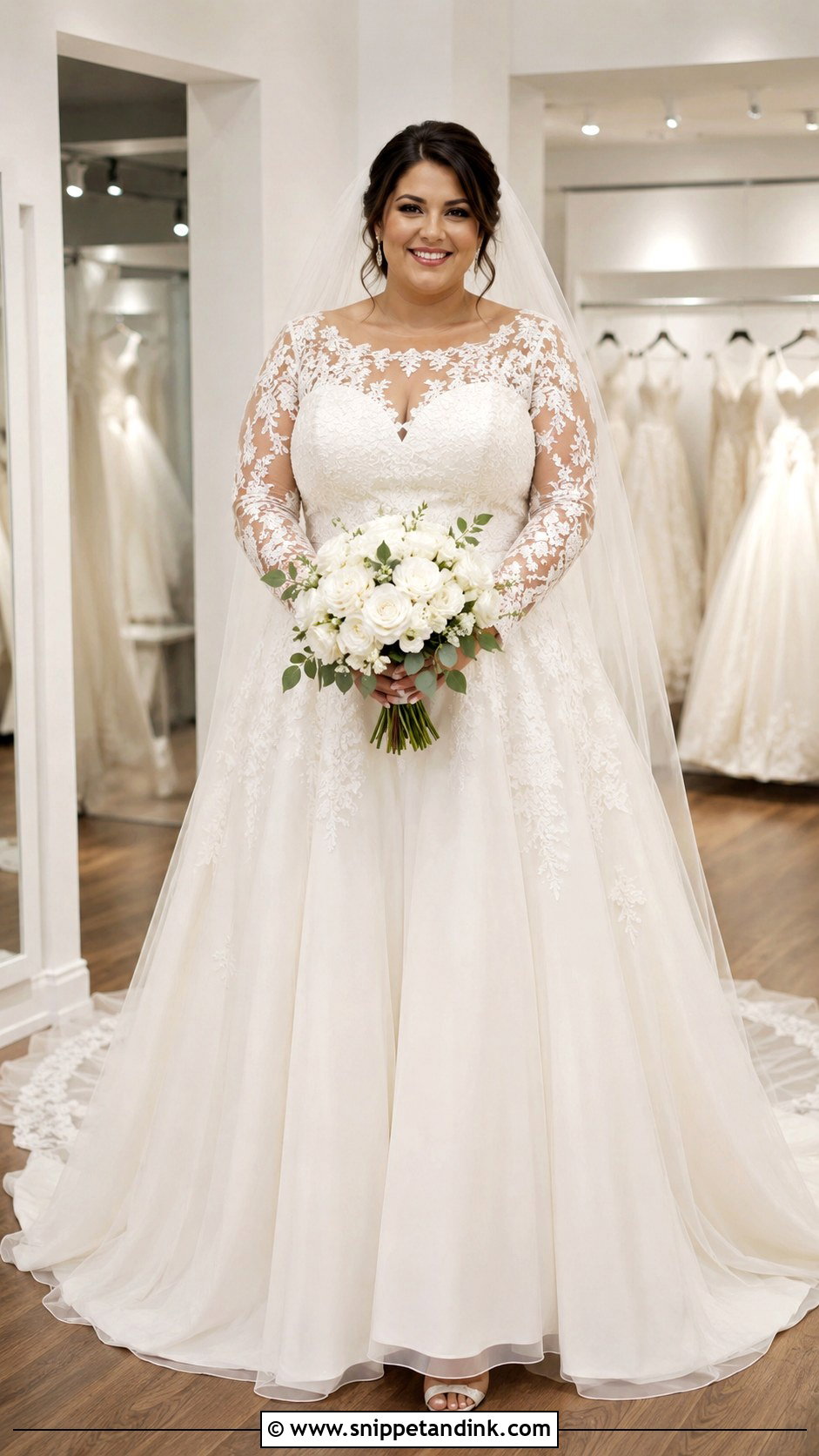
With a plus size modest wedding dress with sleeves, fit starts with the bodice: real boning, quality lining and a sleeve set so you can raise your arms without the gown lifting. A-line, ball gown and fit-and-flare all work depending on your shape. I size the sleeve to your upper arm rather than to the dress size, because many sample sleeves are cut narrow and bind when you bend your elbow, so ask whether the sleeve can be let out or recut. Lace softens the arm, crepe smooths it. Bring your real undergarments and shoes to every fitting.
30. Simple Modest Wedding Dress With Sleeves
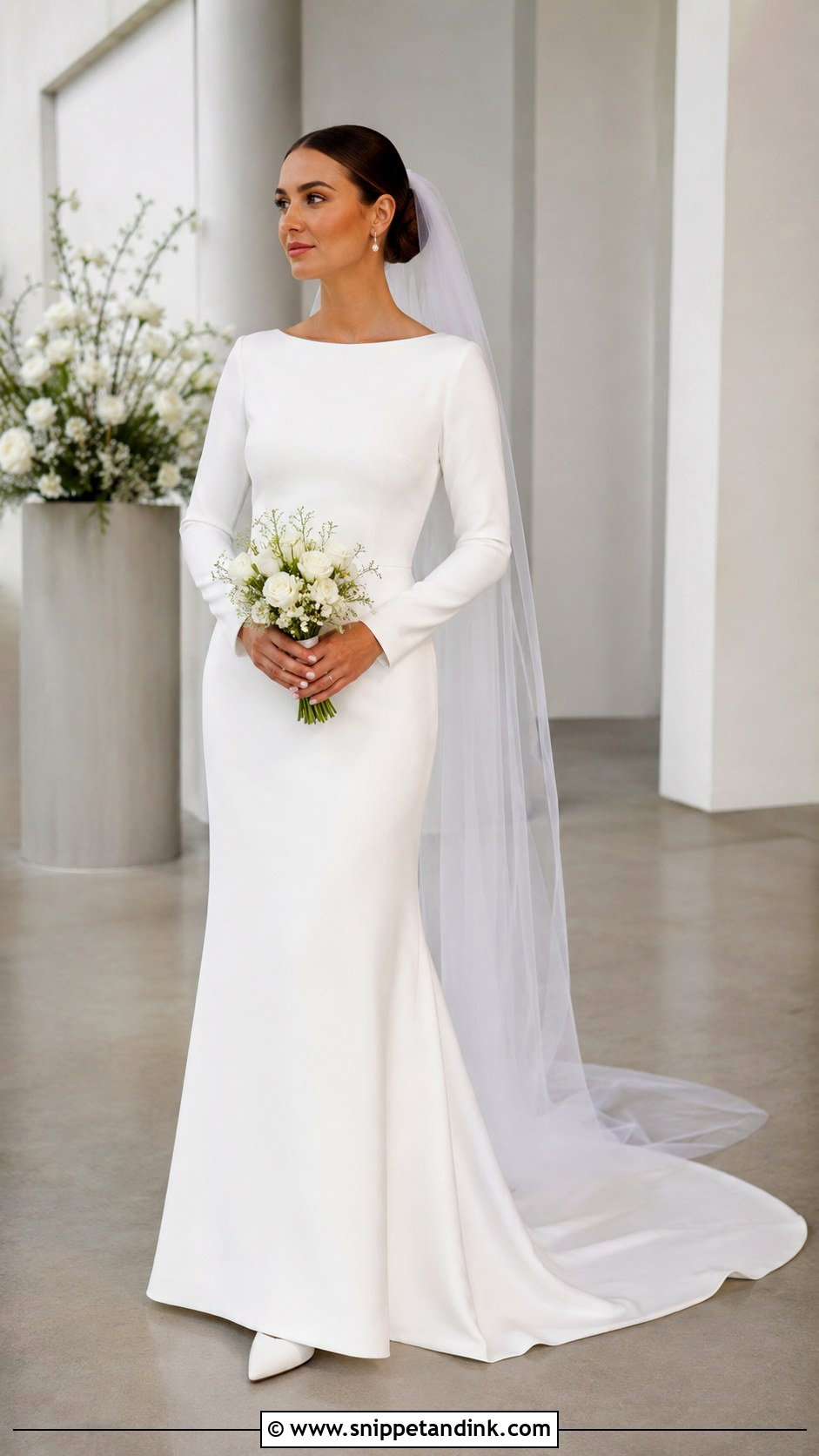
Without beading or lace, a gown is carried entirely by fabric and tailoring, and that is why I respect this style most. Crepe, satin or Mikado gives the smooth finish. Long fitted sleeves, a modest scoop or boat neckline and a subtle train look polished with very little fuss. Spend what you save on embellishment on alterations instead, because every seam shows. Pearl earrings, a plain veil, sleek hair, ivory heels and a small bouquet are all it needs.
Adding Coverage to a Gown That Came Without It
Plenty of brides fall for a strapless or sleeveless gown and assume it’s off the list. It rarely is. A good bridal seamstress can add coverage in several ways, and each carries a different level of difficulty.
- Matching lace sleeves. Ask whether the designer sells extra lace from the same run. Ivory from one mill rarely matches ivory from another, and the difference shows in daylight.
- Illusion sleeves with appliqué. Usually the simplest addition, since mesh is forgiving and appliqués can often be cut from the train or hem allowance.
- A separate bolero or topper. No change to the gown at all, so you can take it off for the reception and the dress stays unaltered.
- Lining a sheer sleeve you already have. A nude or ivory layer under illusion mesh adds real coverage while the outside looks exactly the same.
Cuffs, Makeup and Candle Flames on the Day
Sleeves are the first part of a dress to get marked. Cuffs touch tables, hand cream, makeup brushes and every glass you hold. A few habits save a lot of panic.
- Let your foundation set fully before stepping into the dress, and drape a scarf over your face while you dress. A high neck or mock collar picks up makeup instantly.
- Lift lace and bell cuffs back when you eat, and keep them clear of table candles.
- Blot spills on satin or chiffon, never rub, and leave water marks on silk to a professional cleaner.
- Afterwards, store the gown folded in acid-free tissue in a breathable box rather than on a hanger. Over months, the skirt’s weight stretches the shoulders and sleeves out of shape.
Sleeves Are Decided at the Fitting, Not on the Hanger
Lace with a full skirt suits some brides; clean crepe or a sleek high neckline suits others. Sleeves can be fitted, sheer, beaded, puffed, flowing or structured, so modest never means one narrow look. What decides it is fabric, lining and how the sleeve moves on your body. Before you commit, sit, hug, raise your arms and walk in the dress. If it lets you do all of that without tugging at anything, you’ve found it.
You'll Like These Ideas:







Leave a Reply