
An Indian wedding rarely asks for one hairstyle. Mehendi, sangeet, haldi, the pheras and the reception each have their own outfit, their own jewelry weight and their own length of day, and the hair has to suit all of that while you sit, dance and bend through rituals. I put this set of 20 stunning Indian wedding hairstyles together with that in mind, for brides and for guests. Under each one I’ve noted where it holds up, where it struggles, and what I’d check before committing to it.
One Head of Hair Across Five Functions
The thing brides underestimate most is how much heat their hair takes over a wedding week. A curled look for the sangeet, a sleek bun for the pheras and open curls for the reception means three or four days of irons on the same lengths. By the reception, hair that held a curl beautifully on day one can look dry and refuse to set.
So I plan the week as a whole, not as separate looks:
- Put the heat-free or low-heat styles (braids, messy buns, braid crowns) on the earlier functions like mehendi and haldi.
- Save the heaviest curling for the one event where open hair matters most to you.
- Wash the day before the main ceremony, not the morning of. Second-day hair grips pins and holds a bun far better than freshly washed, slippery hair.
- Haldi paste stains light hair and leaves a residue; plan a wash between haldi and the next styled look.
Timing on the day matters too. A bridal updo with gajra takes me around an hour, a braided updo longer, and I always ask for the dupatta setting to be added on top of that, since pinning a heavy dupatta properly is its own job.
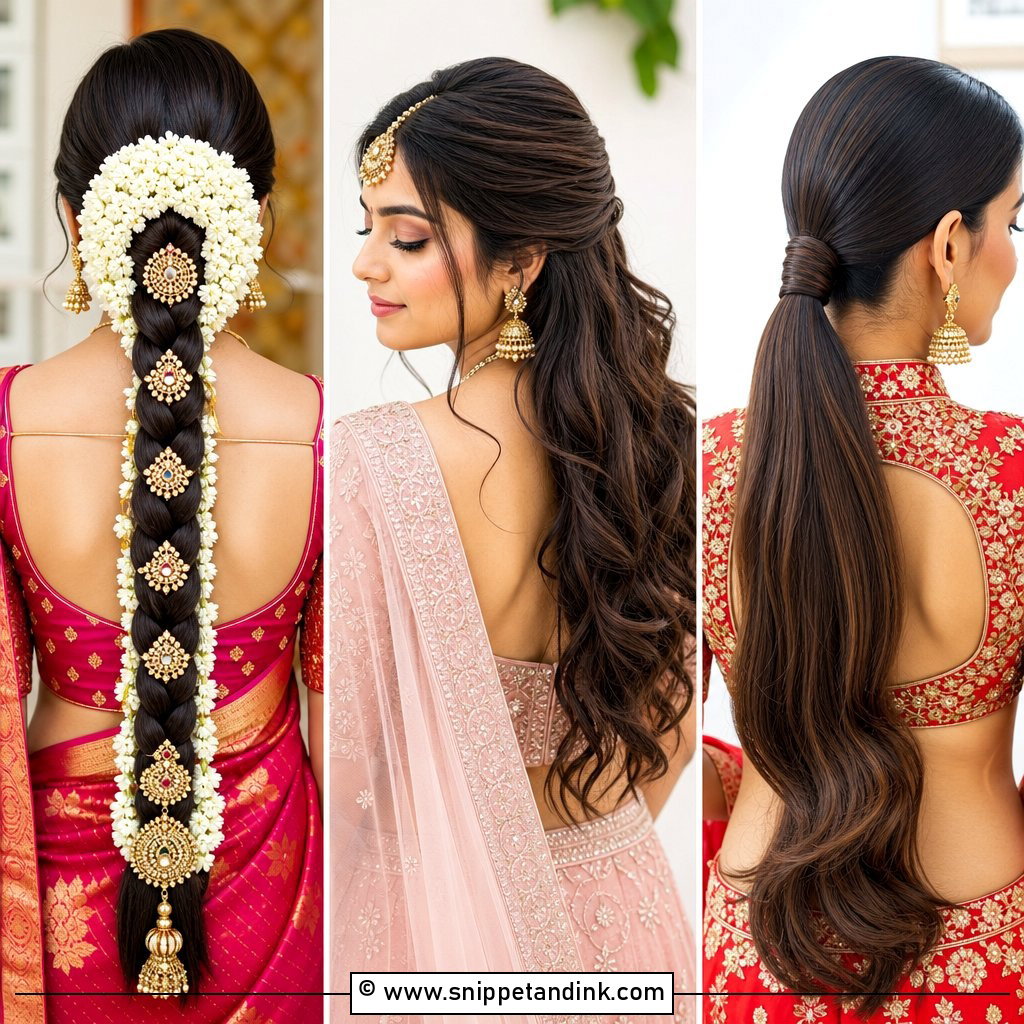
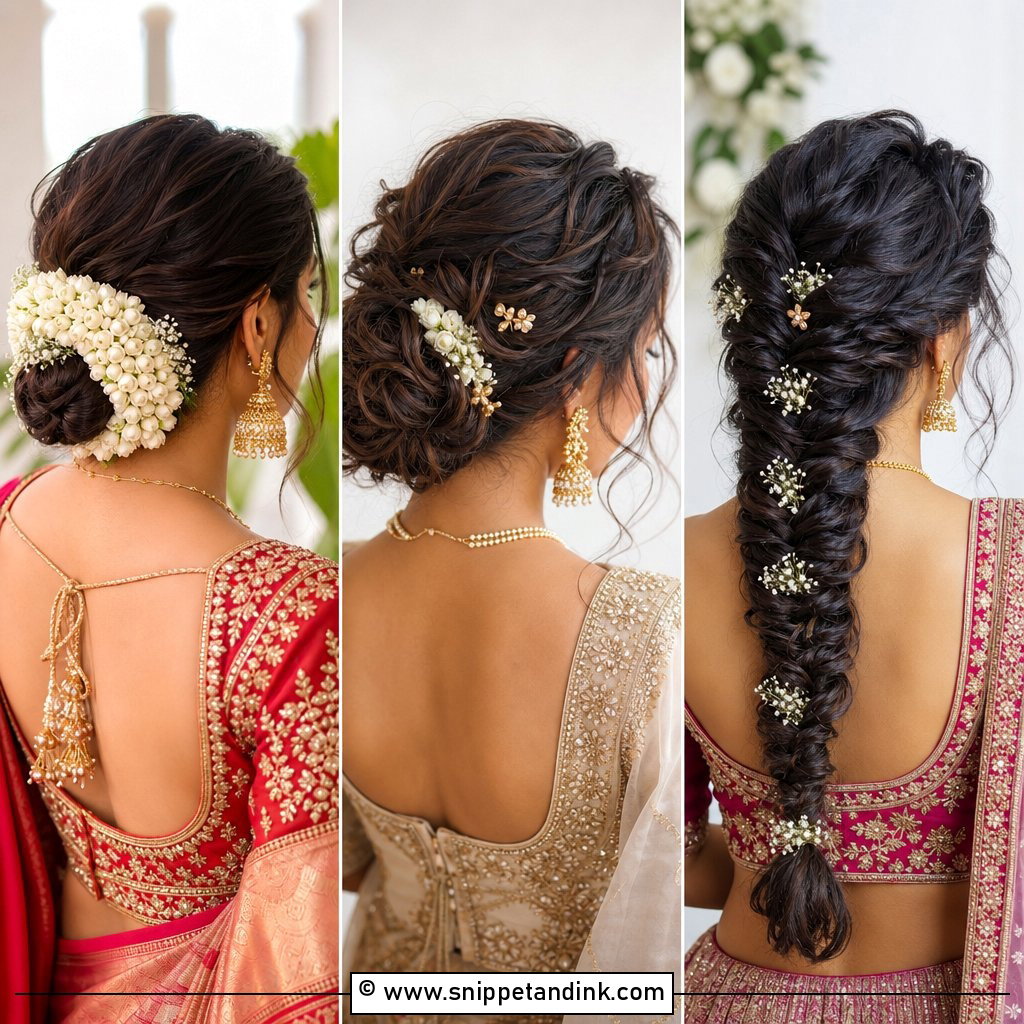
1. Floral Bun With Fresh Jasmine
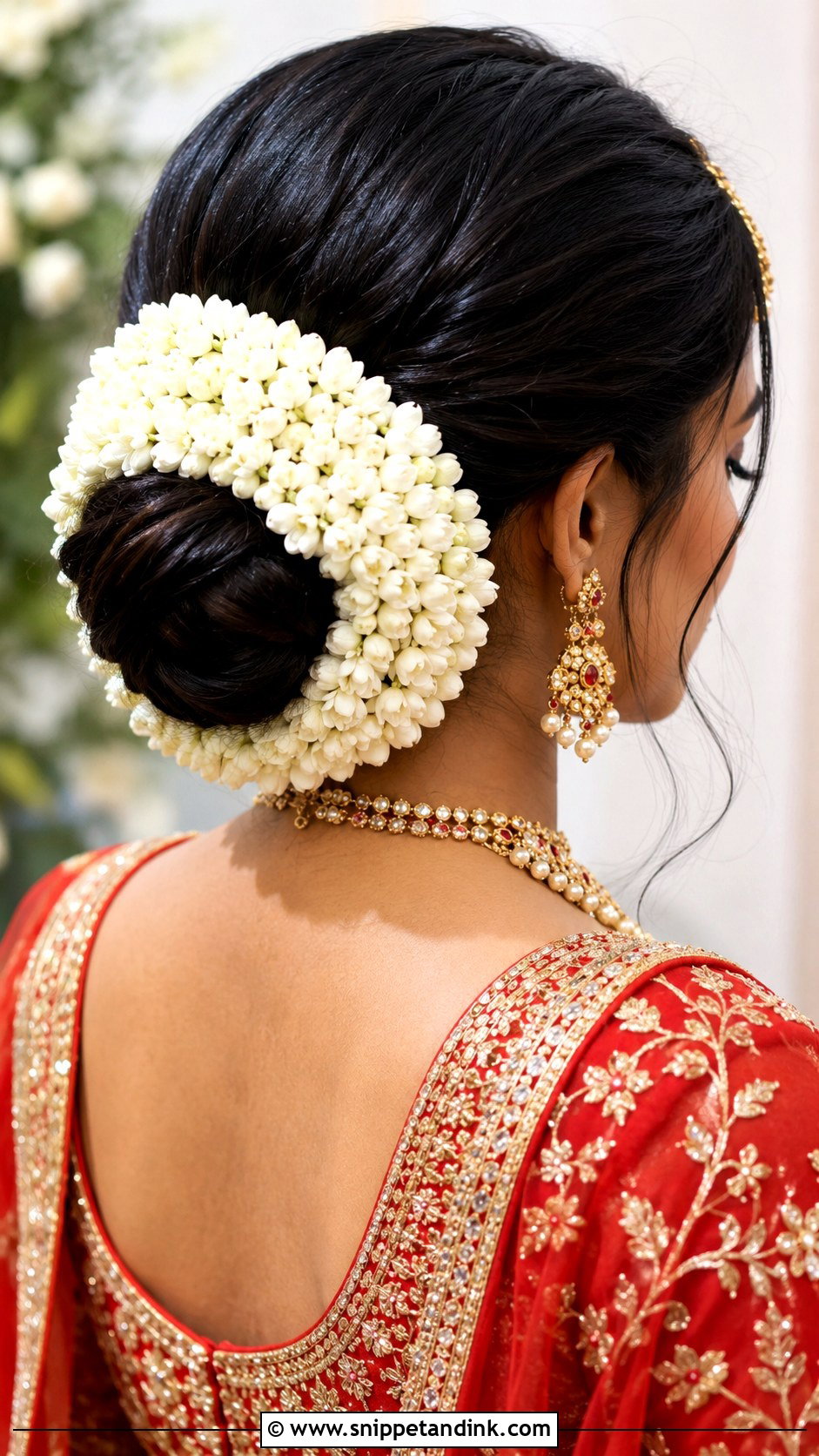
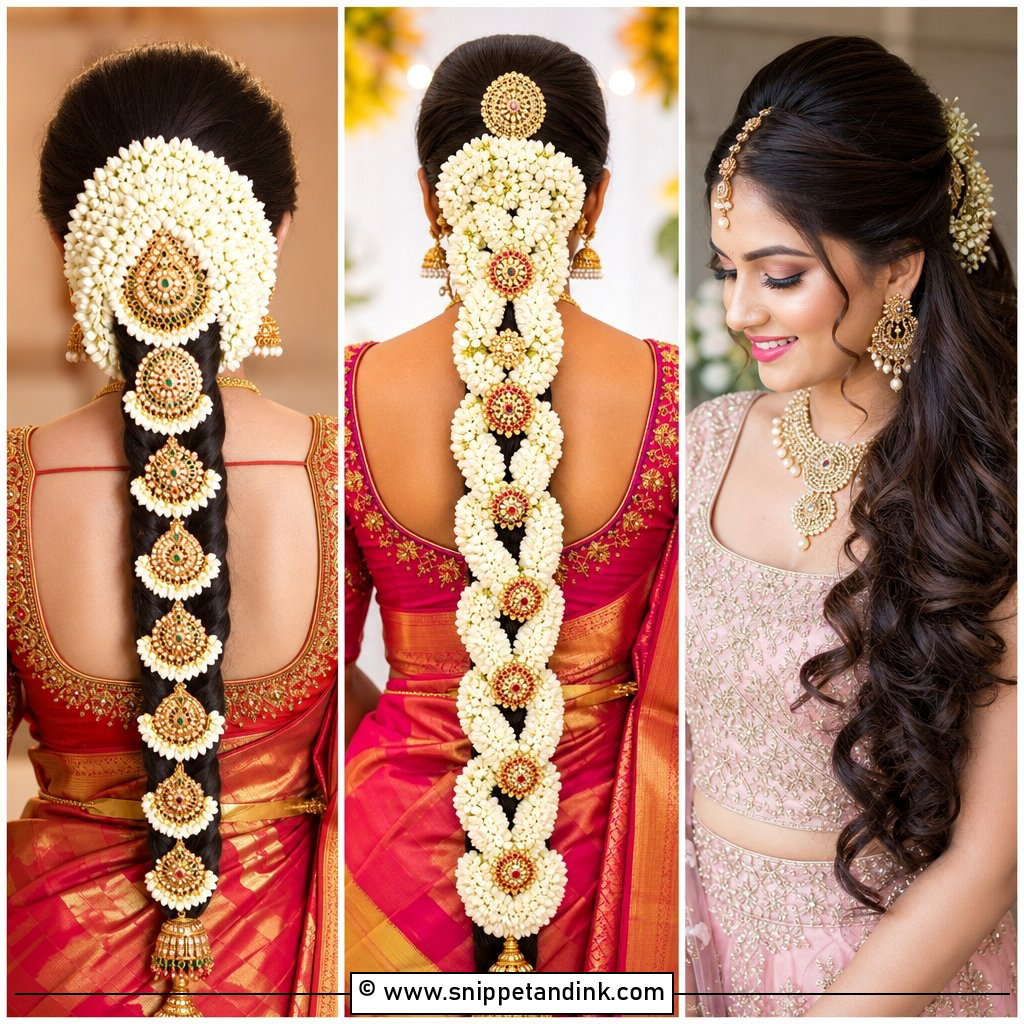
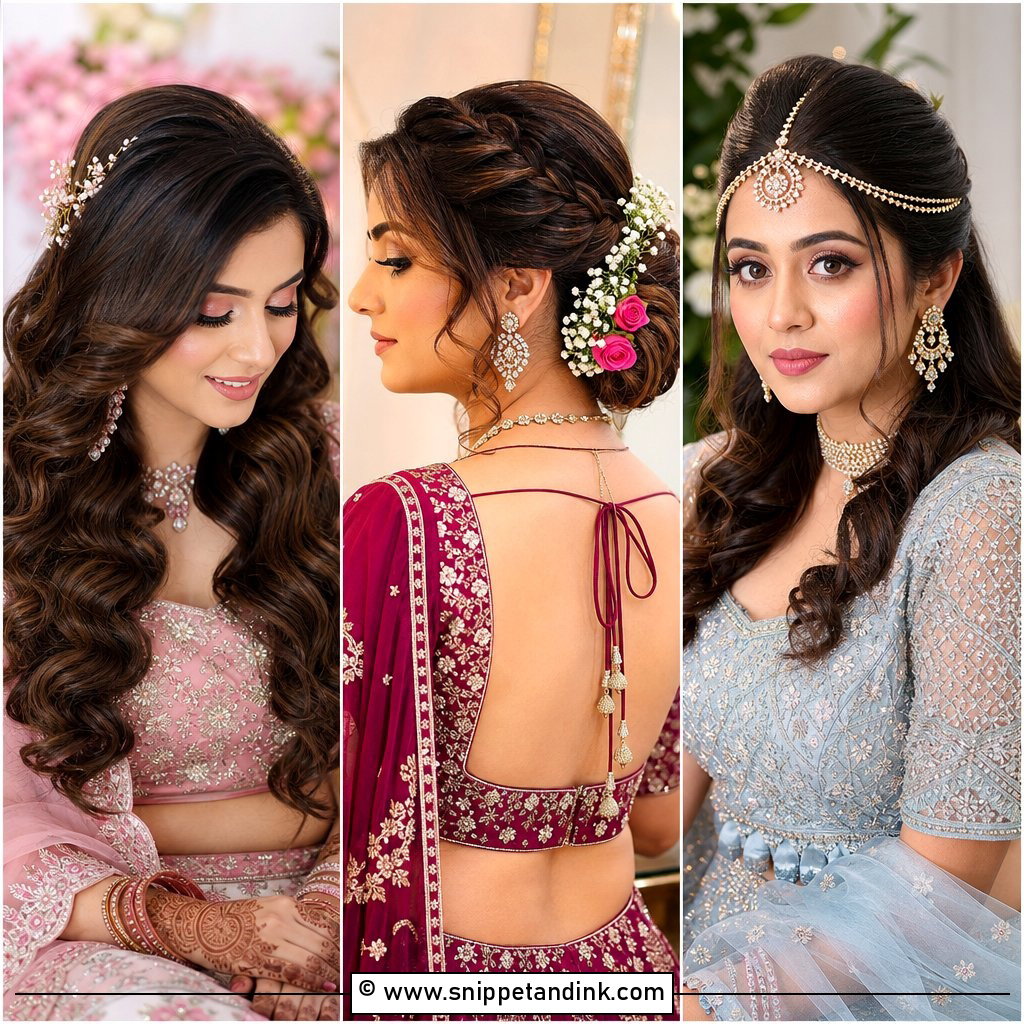
A low bun wrapped in jasmine is still the look most families picture for the main ceremony, and for good reason: it sits under a dupatta without lifting it, and the scent carries through the whole puja. I build the bun on a tight base ponytail first, because loose buns slide once the flowers add weight. Jasmine garlands, called gajra, should go on last and be pinned with U-pins through the string, not the buds. Leave a strand or two out at the temples only if your hair has some grip; very silky hair lets them fall flat within the hour. It suits long, thick hair best, and with a maang tikka and jhumkas there’s very little else to add.
2. Fishtail Braid With Pearls
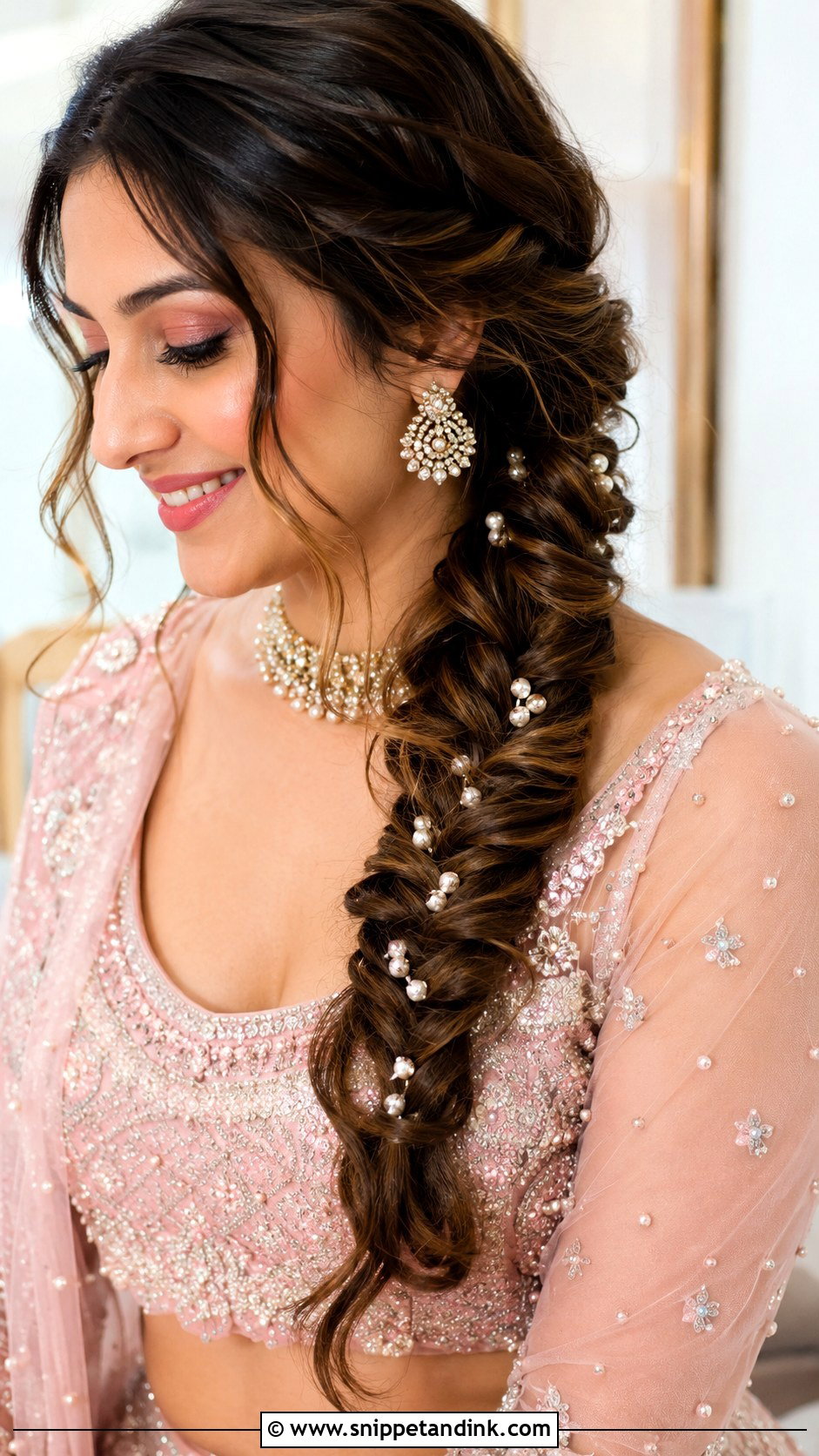
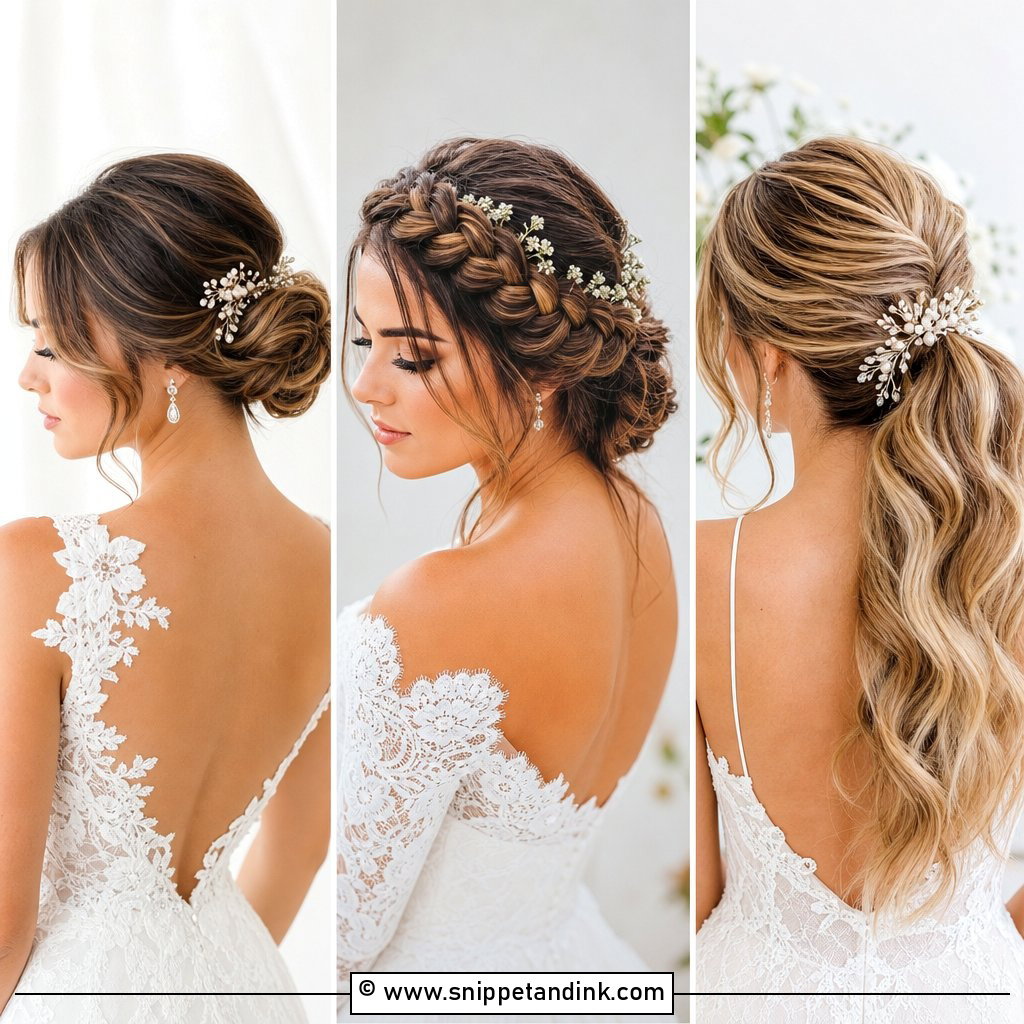
A fishtail is slower to weave than a three-strand braid, but the tight, small sections lock pearls in place far better. I thread pearl pins in after the braid is finished and pancaked, pushing each pin in along the braid rather than across it so it grips two sections. Drape it over one shoulder for sangeet or the reception. On layered hair, short pieces poke out along the length, so a light wax pass before weaving matters more than any finishing spray. Medium to long hair works; a pearl pin at the crown connects the braid back to the front.
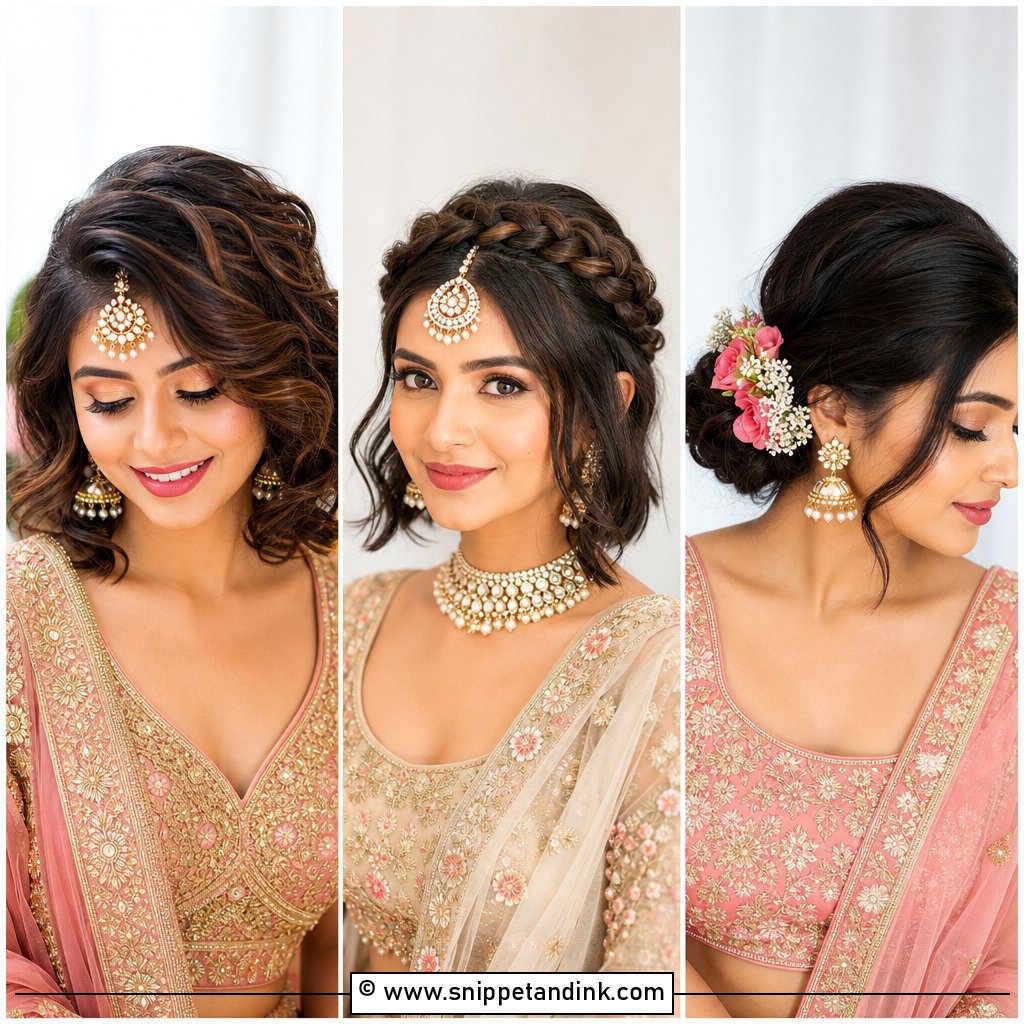
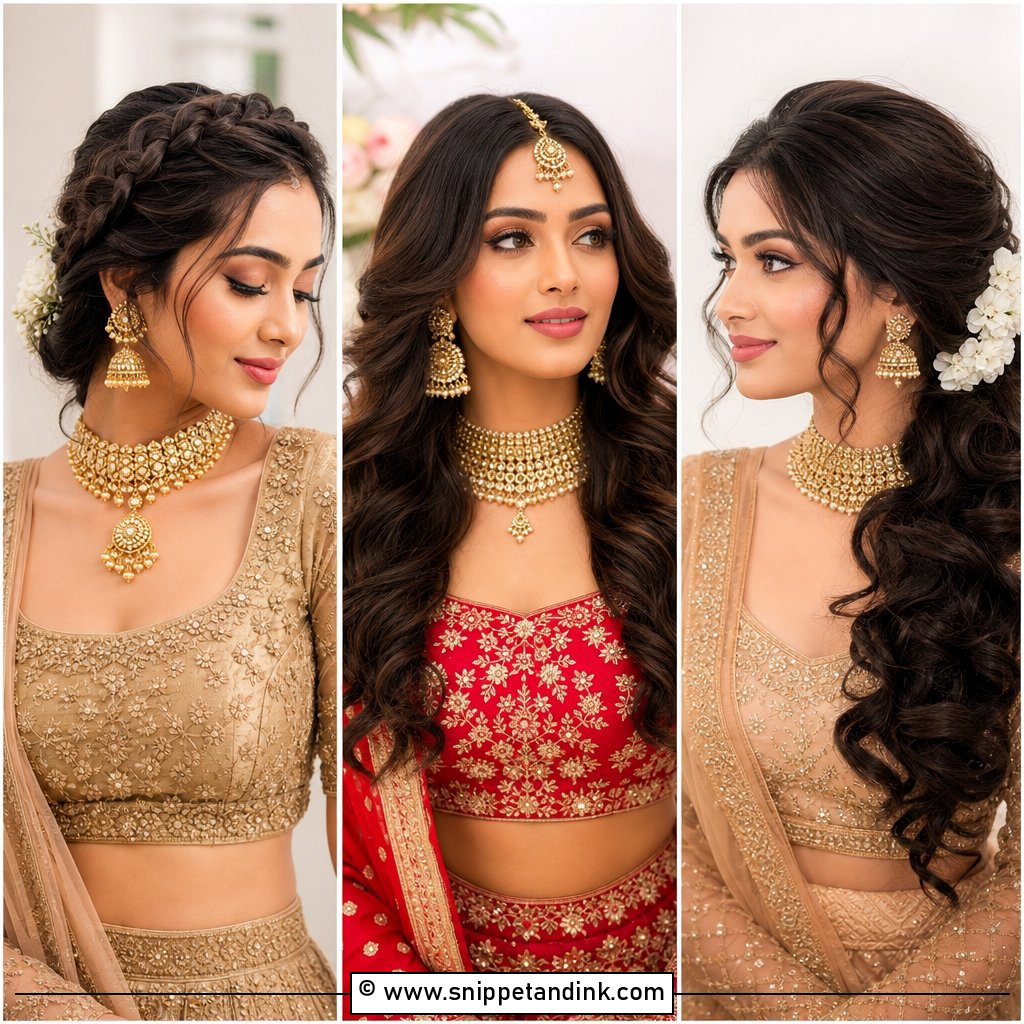
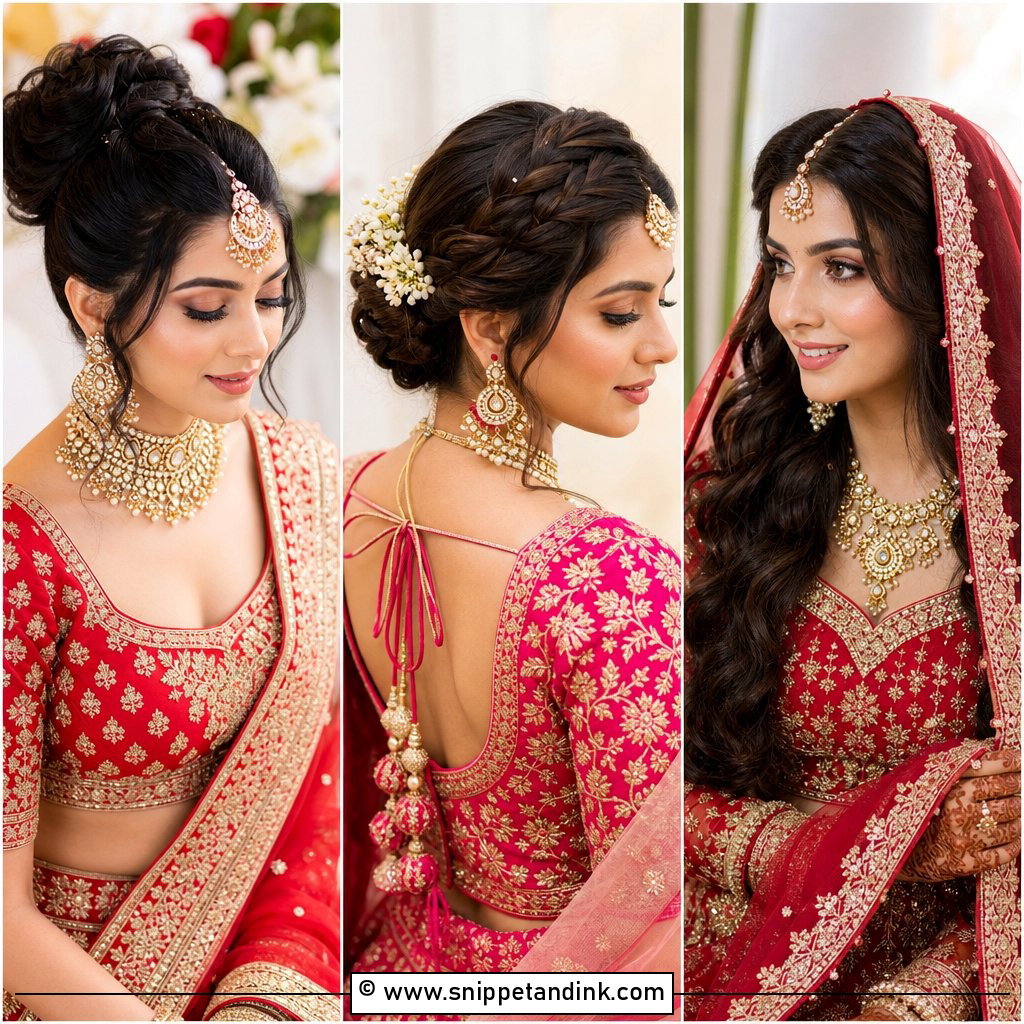
3. Soft Side Curls With Maang Tikka
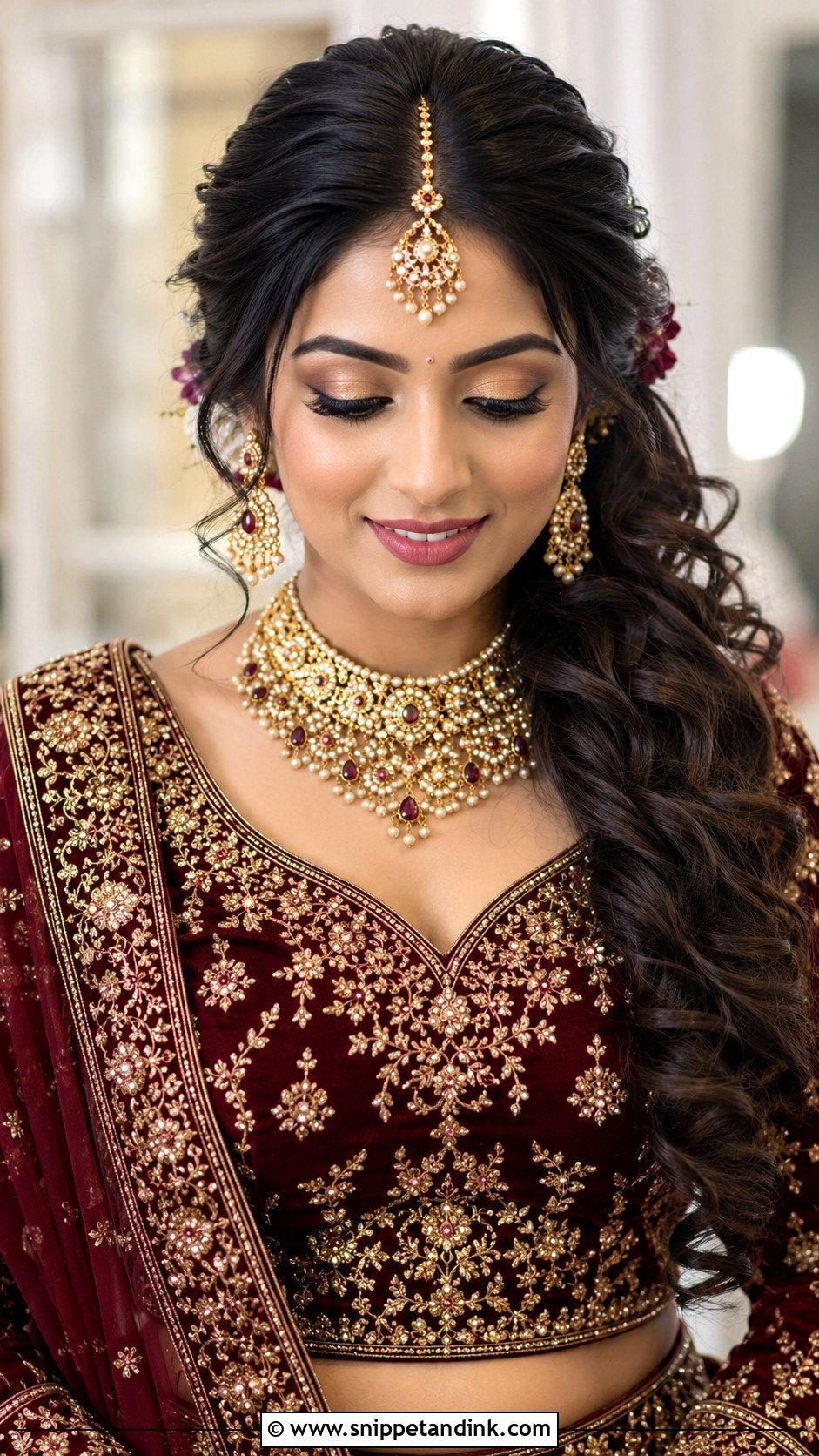
Open side curls look simple and are the hardest style here to keep. Heavy jewelry, warm halls and hours of photos all pull curls flat, so I set every curl with a clip while it cools and only brush them out at the very end. A gorgeous maang tikka sits best on a center part with this look; a deep side part can push the tikka off line. I save it for reception nights, and I’d steer a bride with very fine, straight hair toward a half-up version instead, because fully open curls on fine hair usually drop before the first dance.
4. Braided Bun With Gajra
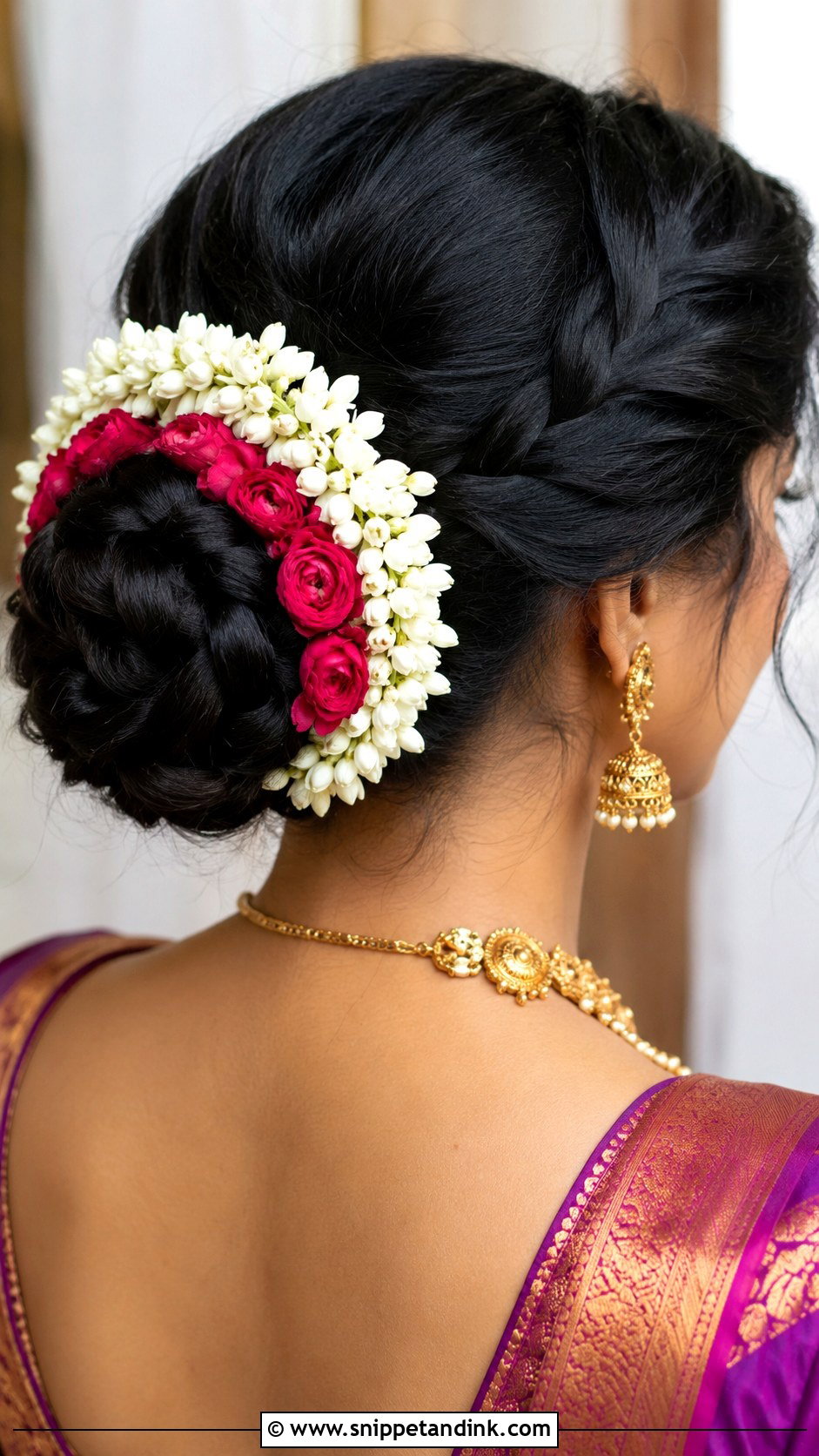
Braiding before you coil gives the bun texture and a much firmer grip for pins, which is why I prefer it under heavy temple jewelry. The braid is pinned around a base ponytail, then the gajra wraps the outside edge. Jasmine and roses can be mixed, though roses bruise easily, so I tuck them into the jasmine rather than pinning them exposed. It’s the South Indian bridal shape I trust most for long rituals: it stays secure through bending, sitting cross-legged and dancing after, as long as the hair is long and thick enough to braid.
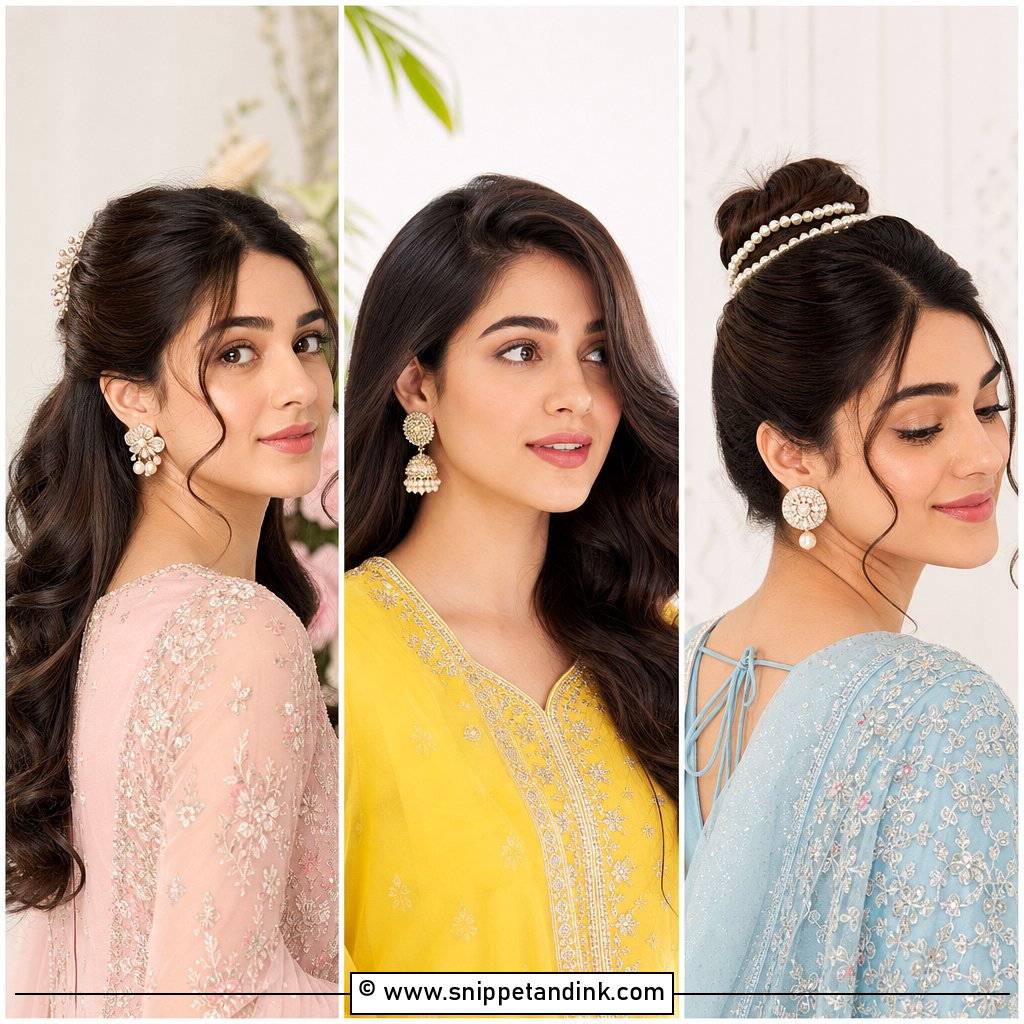
5. Half Up Half Down With Baby’s Breath
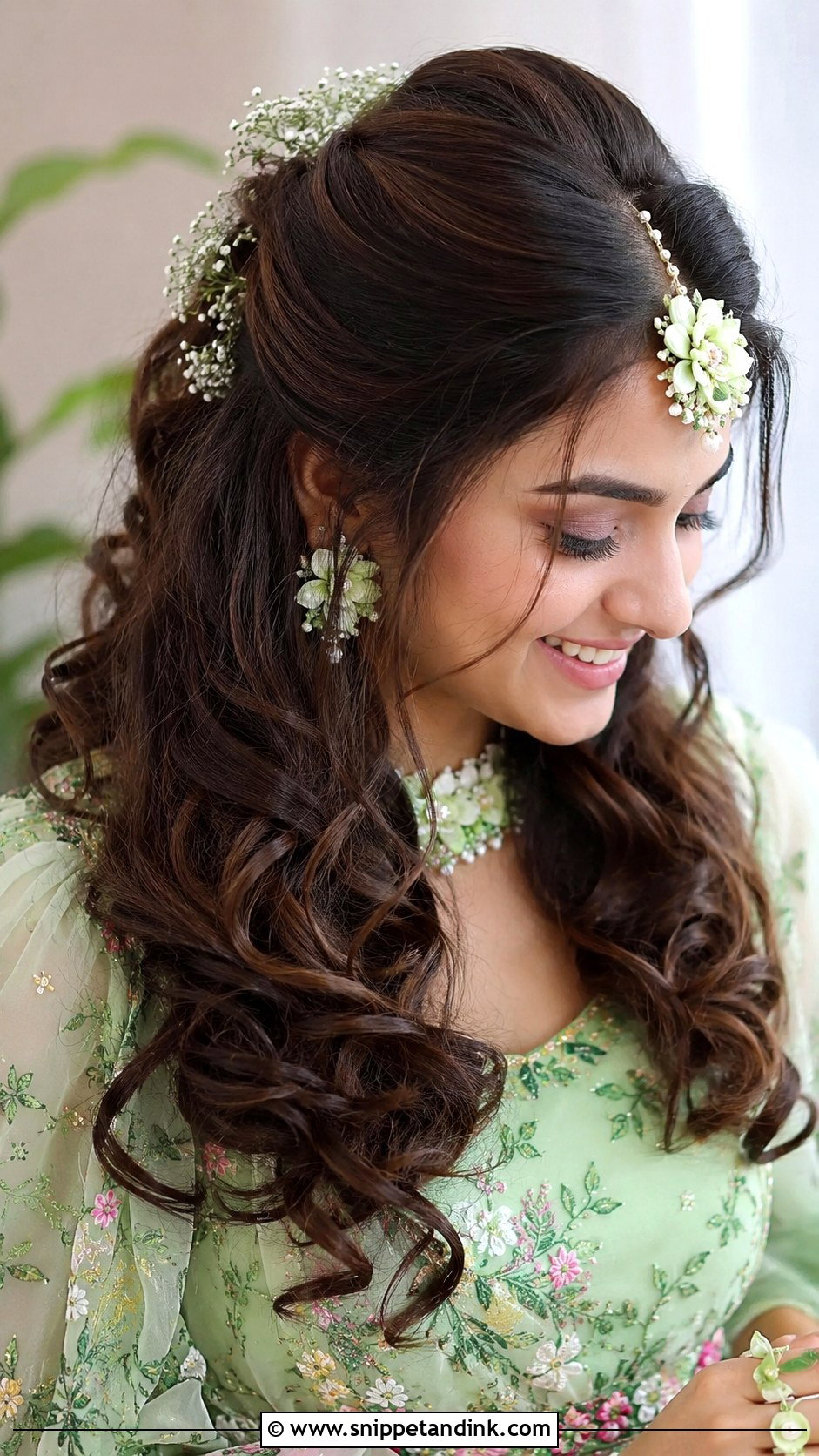
Baby’s breath is light enough that it doesn’t drag a half-up section down, which is exactly why it works here. I gather and pin the top section first, curl the lengths, then tuck small clusters of flowers along the pinned line where the hair holds them. Mehendi and daytime functions suit it. One caution: baby’s breath browns quickly in sun and heat, so I pin it on just before you step out and keep spare sprigs in a damp tissue. It works on most lengths from the shoulders down.
6. Sleek Low Bun With Diamond Pins
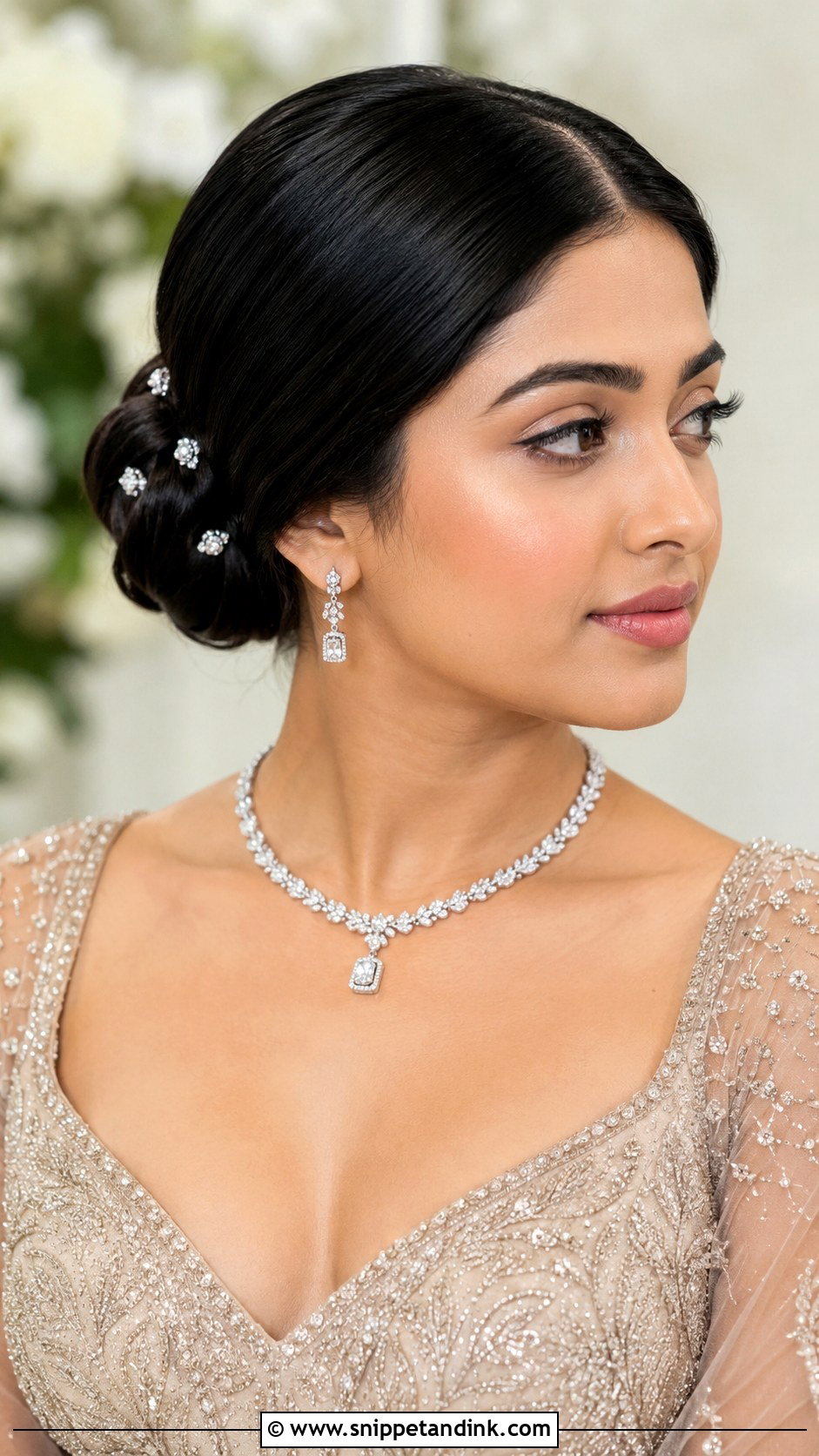
A sleek low bun is the reception style I recommend most to brides wearing heavy necklaces, because a clean nape lets the jewelry lead. The work is in the smoothing: I blow-dry the hair completely straight, set the parting, and use a firm gel only at the hairline so the shine doesn’t look wet in photos. Diamond pins or a small clip go on one side of the bun. It suits fine to medium hair well, since fine hair actually makes a neater sleek bun than very thick hair. A few baby hairs at the edge soften it if your face looks harsh with everything pulled back.
7. Open Curls With Bejewelled Headband
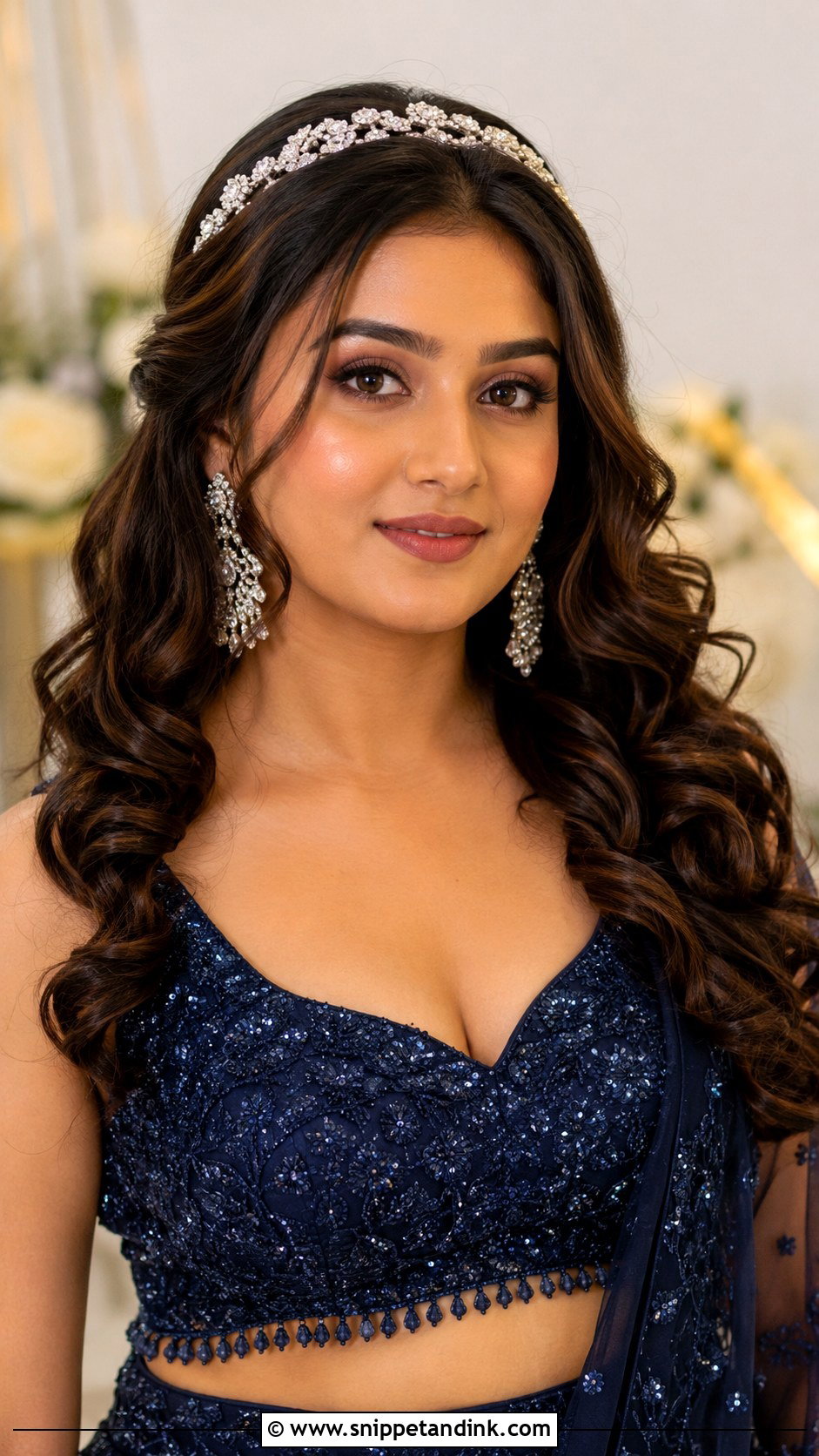
A bejewelled headband swaps the floral look for metal and crystal, and it changes how I set the curls. The band presses the hair at the crown, so I backcomb a little underneath where it sits and curl away from the face to keep weight off the front. Cocktail nights and the reception suit it. Check the headband’s width at the trial: a thick band on a small head can look like it’s sliding forward. Long and medium hair both carry it, and a band with crystals or pearls should echo the outfit’s embellishment rather than add a third metal.
8. Messy Bun With Loose Tendrils
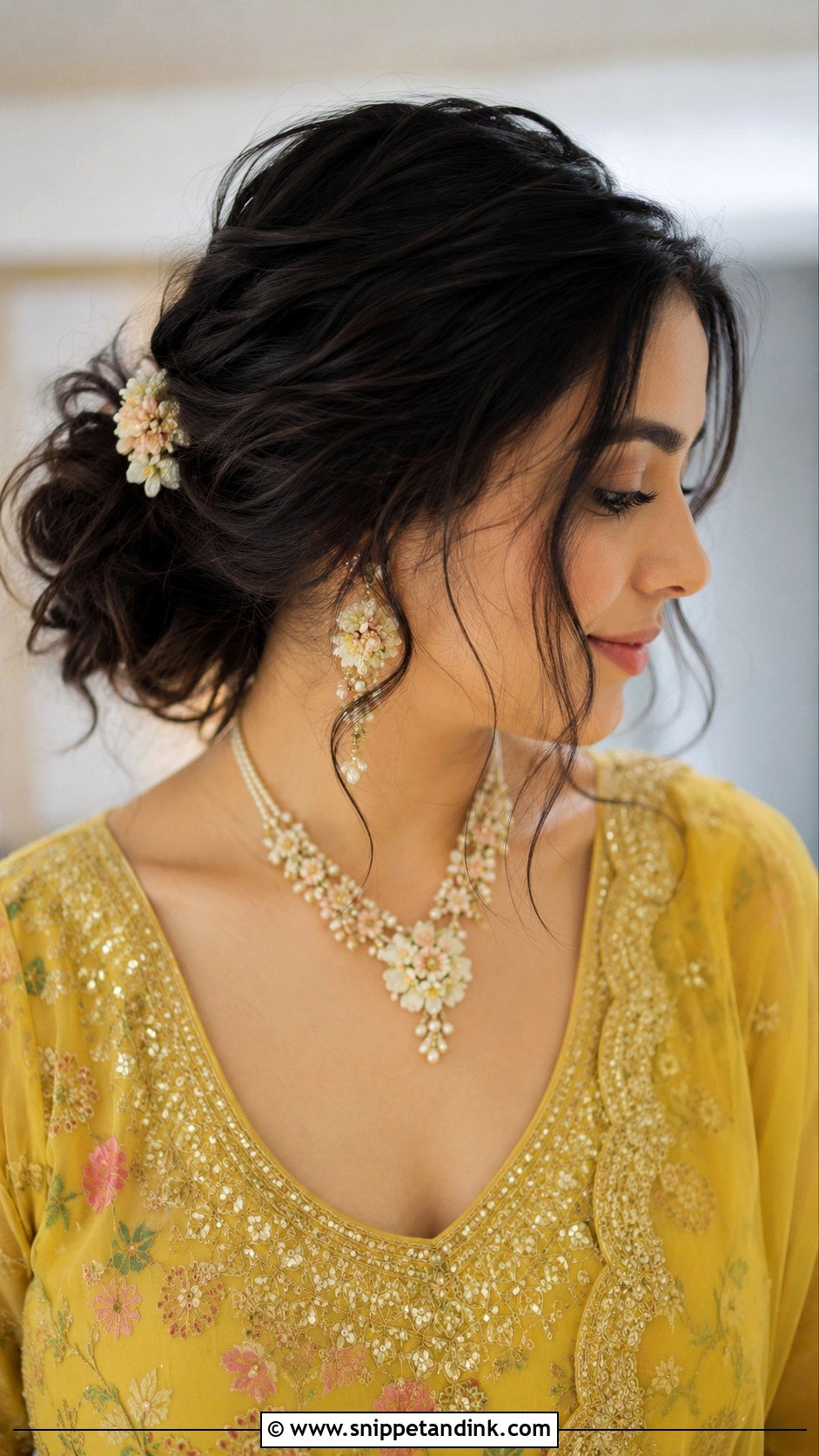
For a mehendi morning, a messy bun makes practical sense. You’ll be sitting for hours with wet henna on your hands and can’t touch your hair, so it needs to be low enough to lean back on and loose enough not to give you a headache. I build it on a soft elastic and pull out face-framing strands last. Small flowers or a single pin add enough detail. It works on every texture, and on curly hair it looks better if you don’t fight the natural pattern.
9. Dutch Braid Crown With Flowers
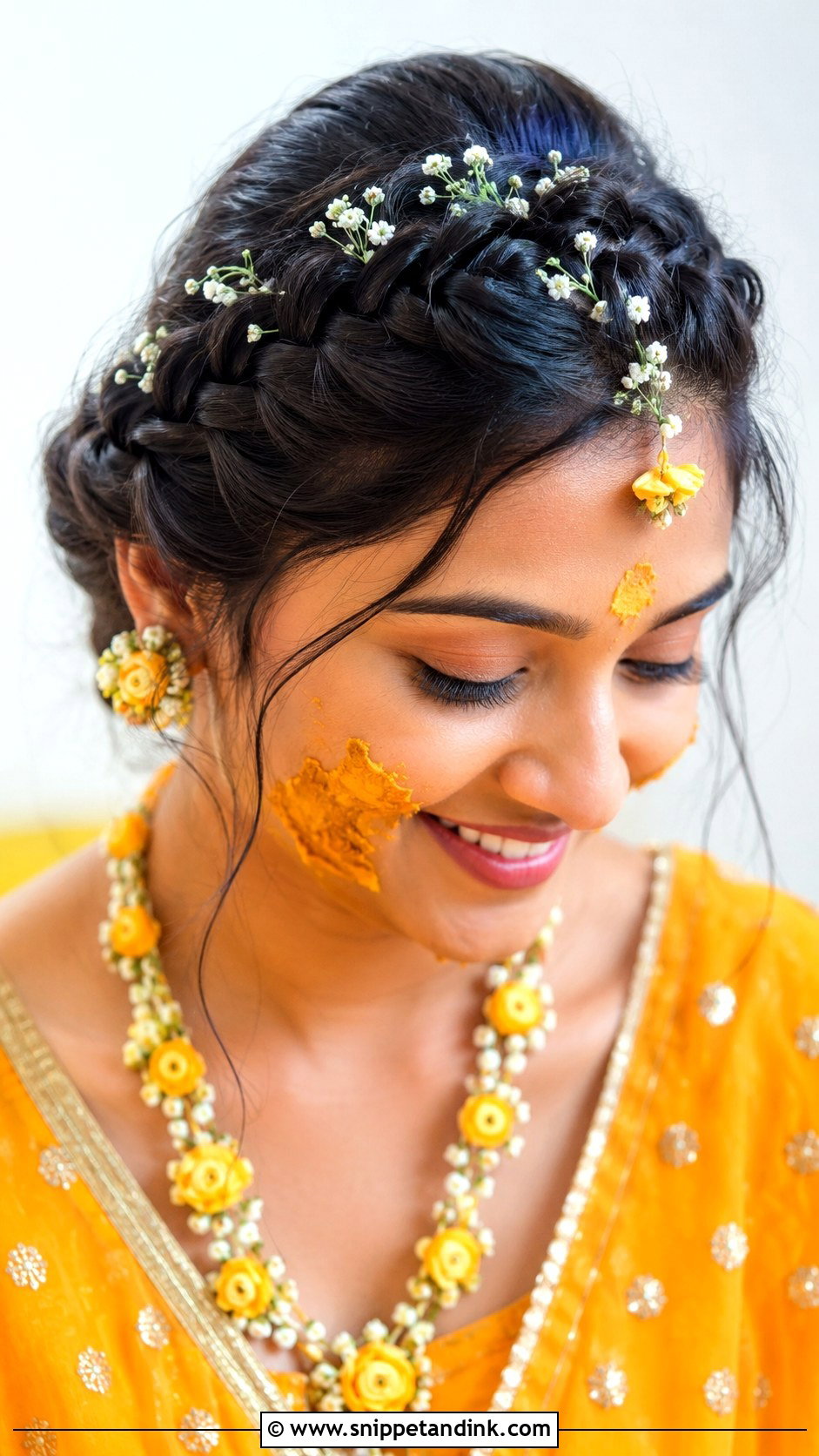
A Dutch braid crown sits on top of the hair rather than inside it, so the braid stands out as a raised halo. Starting it behind one ear and working round means the join hides at the back. Tiny flowers sit nicely in the gaps between strands. I’d pick it for mehendi or haldi, especially outdoors, since nothing touches your neck in the heat. It needs long, thick hair to go all the way round; on shorter hair I braid two halves and pin the ends under. Bright floral jewelry suits it better than heavy gold.
10. Voluminous Ponytail With Hair Accessory
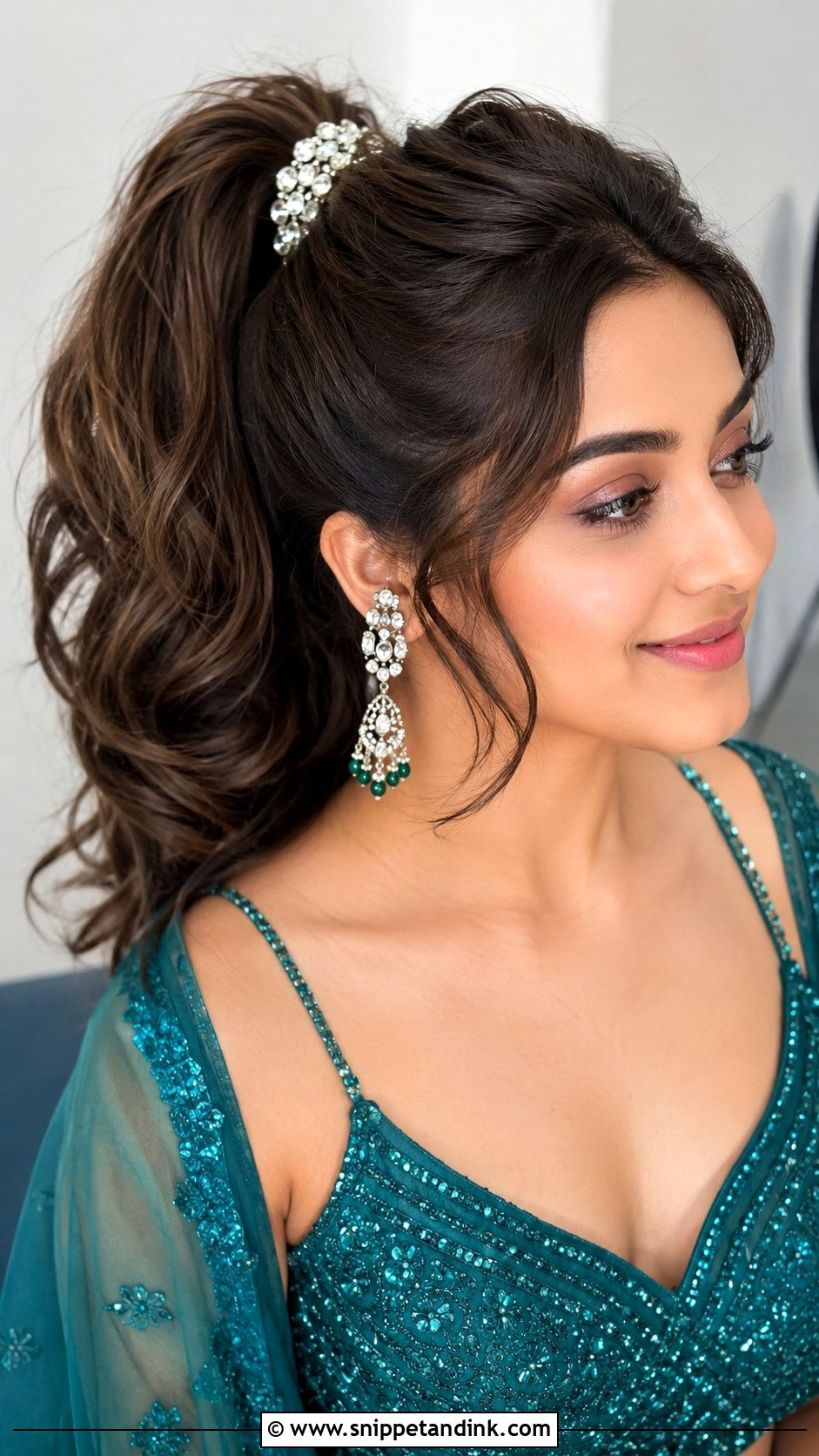
A high ponytail is a good choice for brides who plan to dance hard at the sangeet. I backcomb the crown for height, secure the tail with two elastics instead of one so it doesn’t droop, then wrap a section around the base to hide them before adding the accessory. Curling the ends gives bounce. The catch: a high ponytail can pull on the scalp after a few hours, so if you get headaches from tight styles, drop it to mid-height. Long hair suits it, and statement earrings stay in full view.
11. Twisted Side Braid With Roses
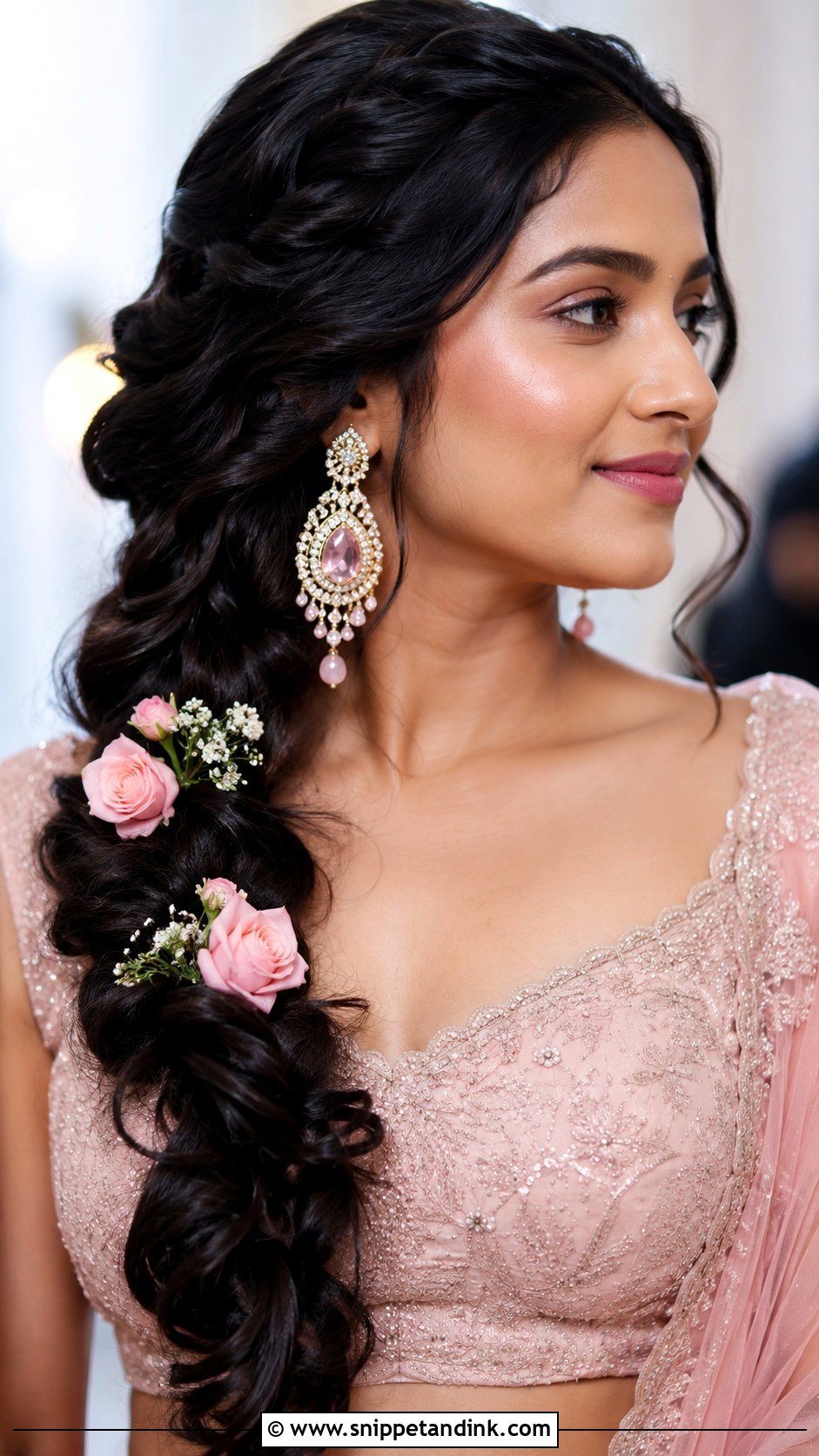
A twisted side braid is looser than a classic plait, so it reads soft and holds roses well between the twists. I give it its texture by pulling at the edges once secured. It works for sangeet or reception nights, and pairs well with a deep or one-shoulder neckline that leaves the opposite side clear. Long, thick hair gives the fullest result. Spray roses or small garden roses hold better than large blooms, which turn heavy and pull the braid out of shape over a long evening.
12. Bouffant Bun With Maang Tikka
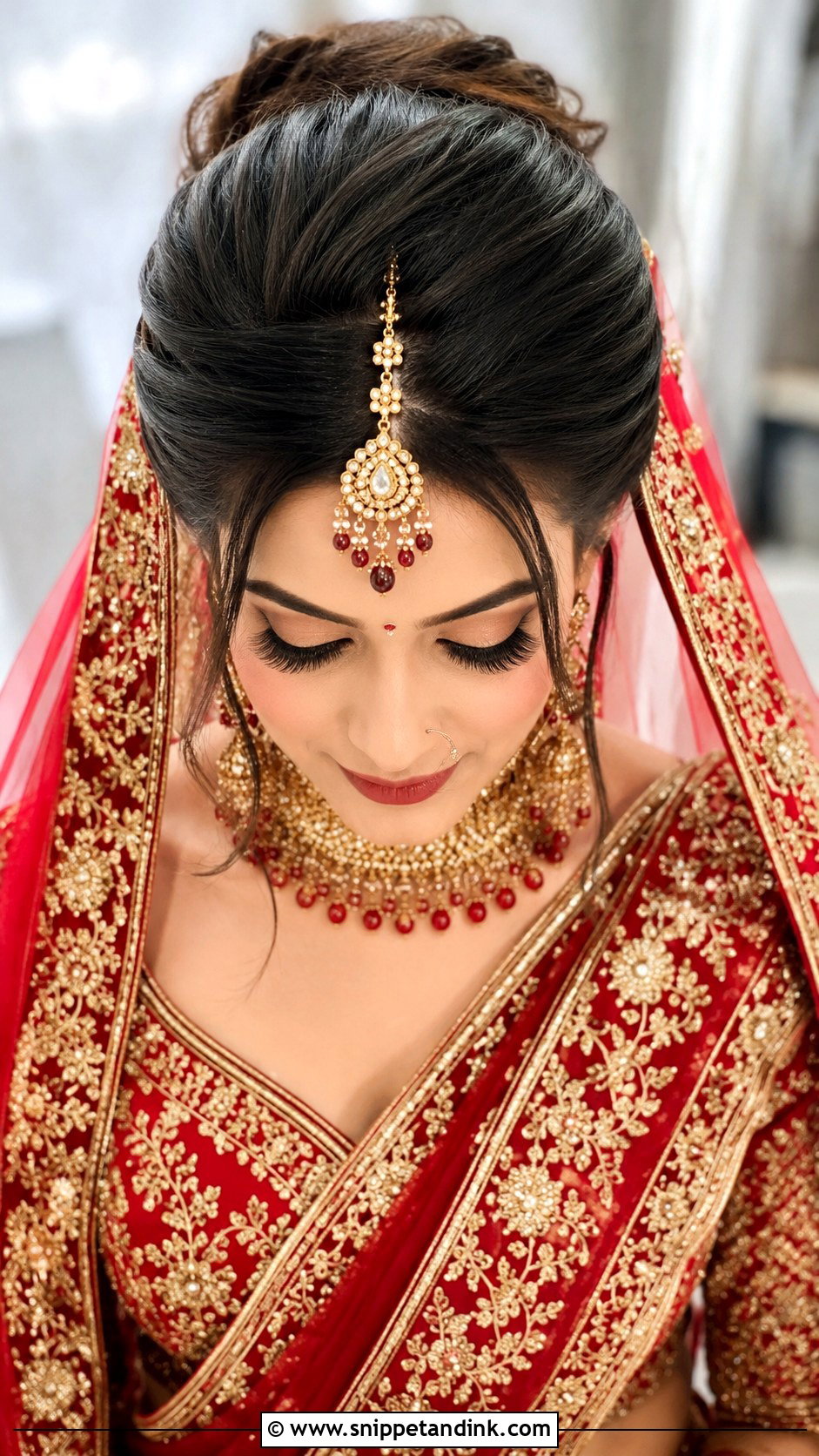
A bouffant bun gives the height that balances a heavy lehenga and a dupatta draped over the head. I tease the crown in small horizontal sections and smooth the top layer over it, otherwise the volume collapses the moment the dupatta is pinned. The bun goes at the back and a bold maang tikka finishes the front. It works best on long, thick hair; fine hair often needs a small padding to hold the shape. I pin it more firmly than any other look here, since it has to survive every ritual and the weight of the dupatta.
13. Curly Bun With Side Bangs
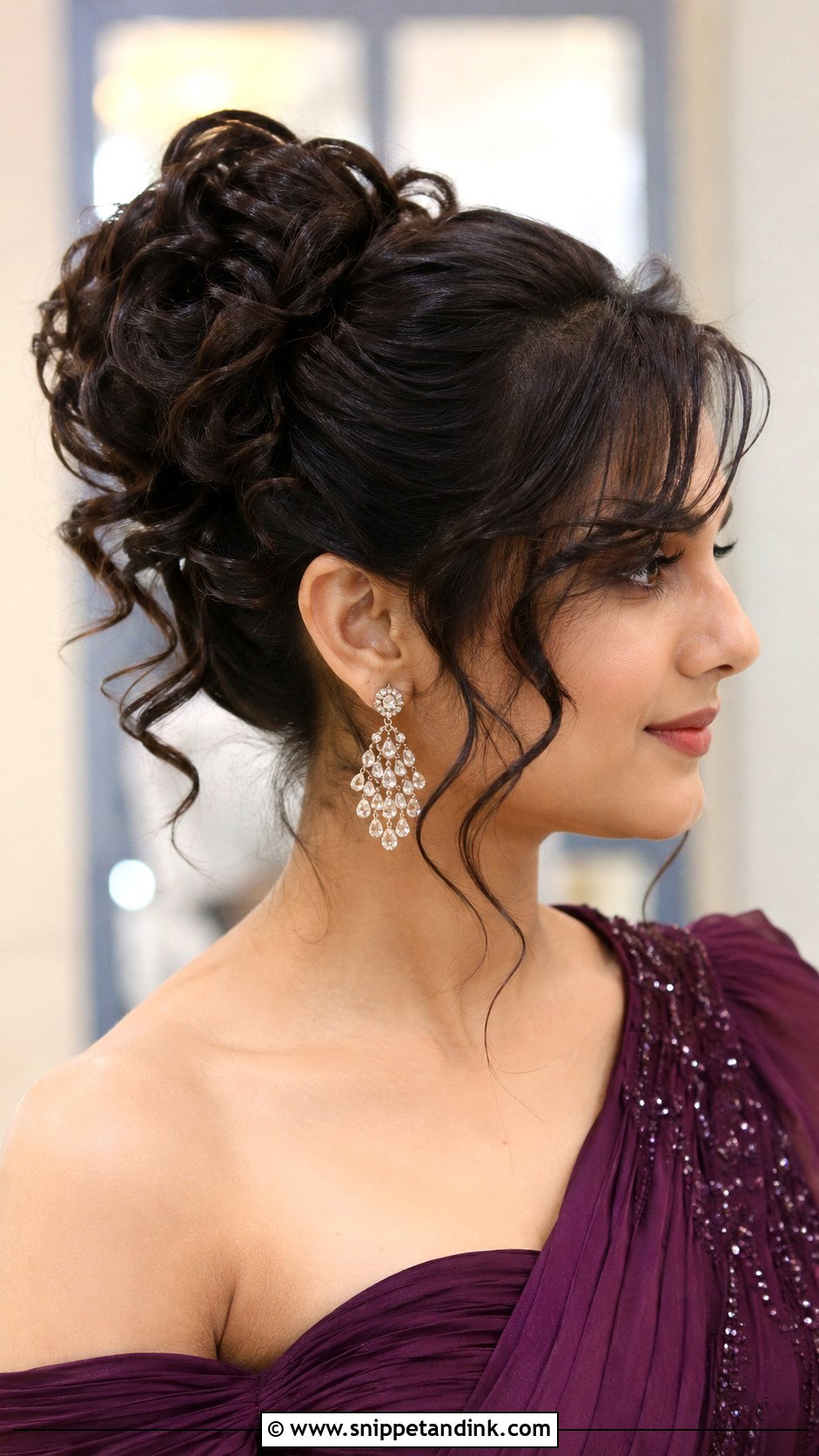
Side bangs make a curly bun feel more relaxed and softer around the face. I curl the whole head first, then build the bun loosely so the curl texture stays visible instead of being flattened into a smooth shape. The bangs should be cut or styled well before the wedding; a new fringe at the trial almost never sits the way you hoped. Reception and cocktail nights suit it, and it works on medium to long hair. Chandelier earrings show well with the neck clear.
14. Sleek Straight Open Hair With Center Part
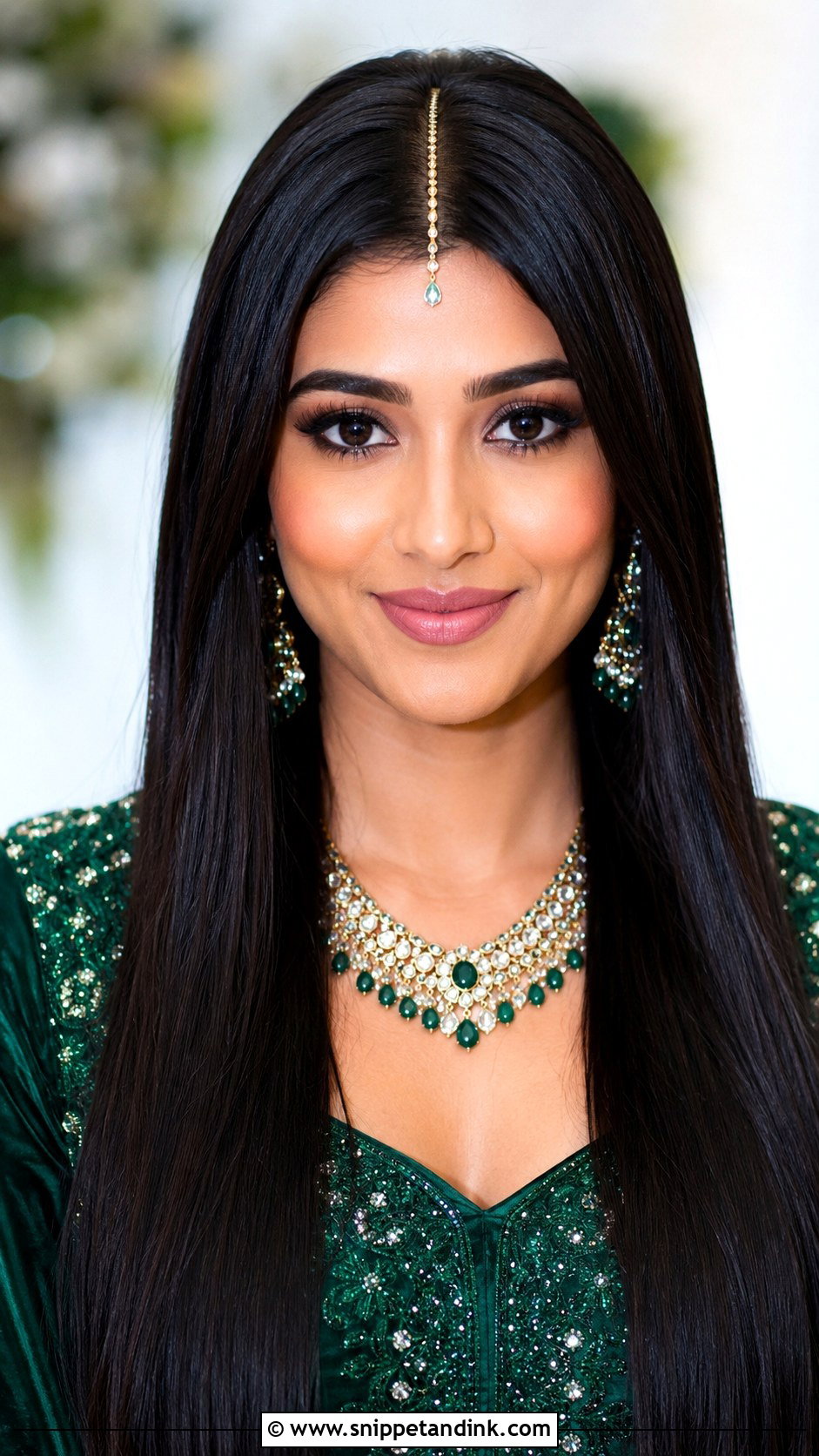
Sleek straight hair looks easy, and it’s actually one of the least forgiving looks for a long day. Humidity, a dupatta brushing against it and leaning on a chair all show on smooth hair. I straighten in fine sections, finish with a light serum on the lengths only, and keep a small anti-frizz balm in the bride’s bag. A center part keeps it modern; a maang tikka or a thin hair chain adds the traditional note. It suits naturally straight, long hair best. On curly or wavy hair in a warm venue, I’d choose a sleek bun over straight open hair.
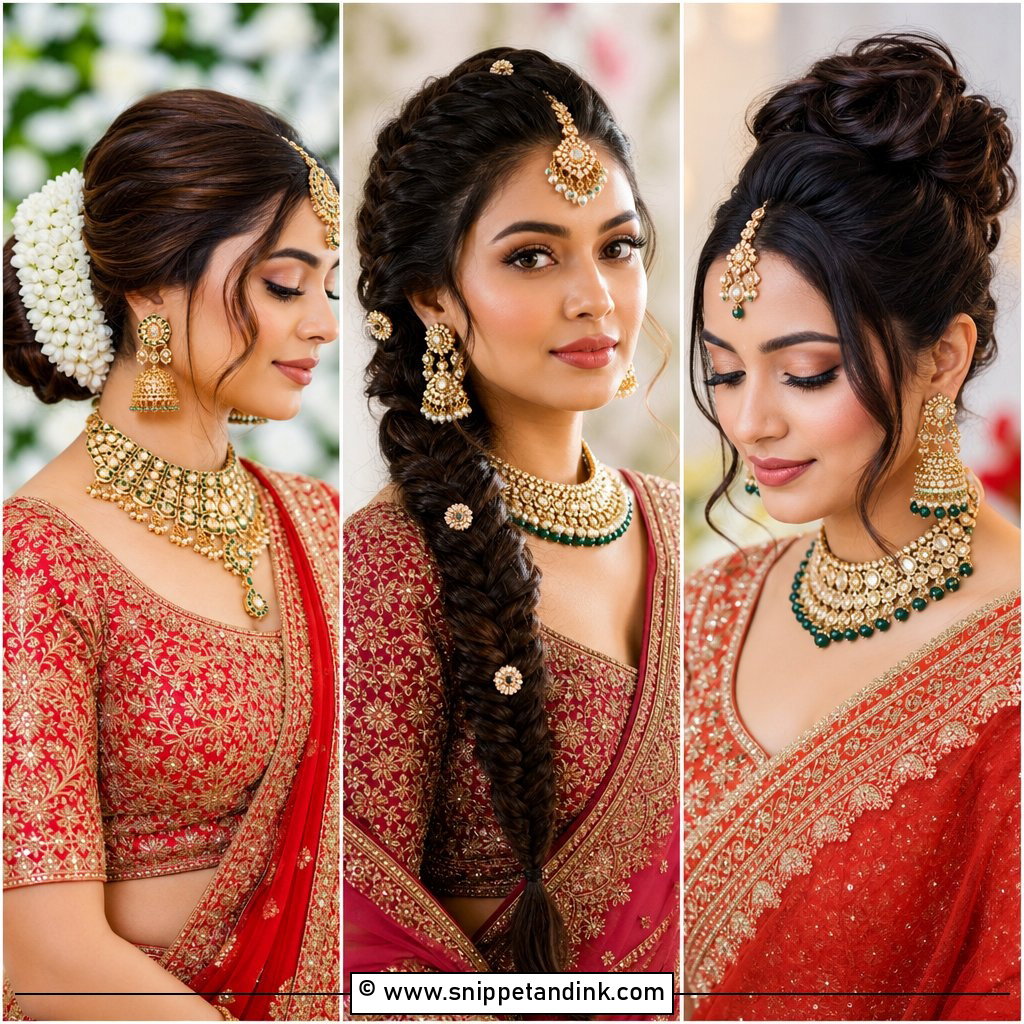
15. Floral Side Bun With Gajra
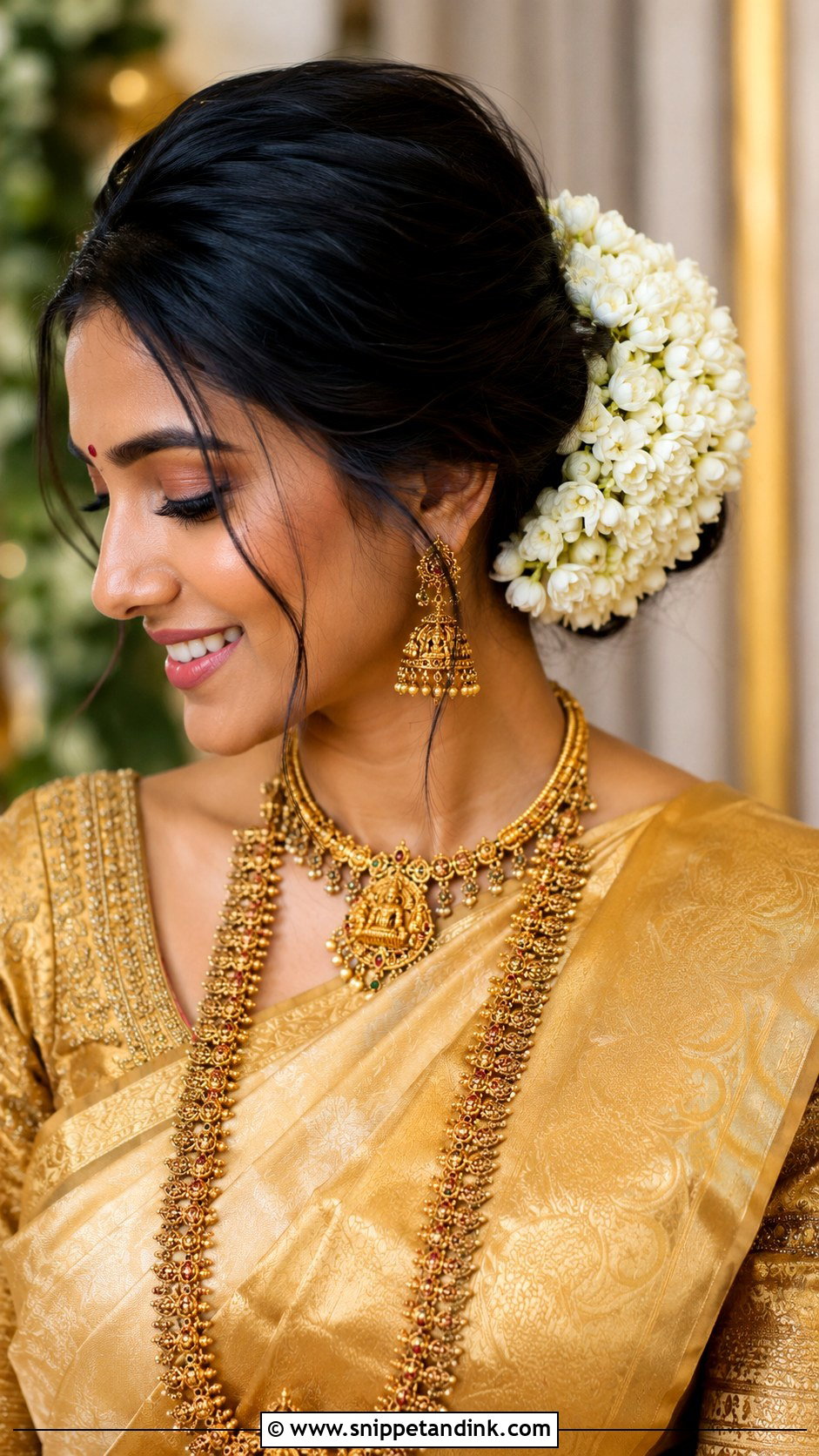
A side-swept bun adorned with gajra places the weight of the flowers on one side, so the pinning has to be stronger on that side. I set the base ponytail just behind the ear, coil, and then wrap the jasmine. It shows the neckline and pairs well with temple jewelry. Before choosing it, check which side the photographer will mostly shoot from during the pheras; the bun should face the camera, not the fire. Long, thick hair holds this shape best.
16. Boho Waves With Hair Vine
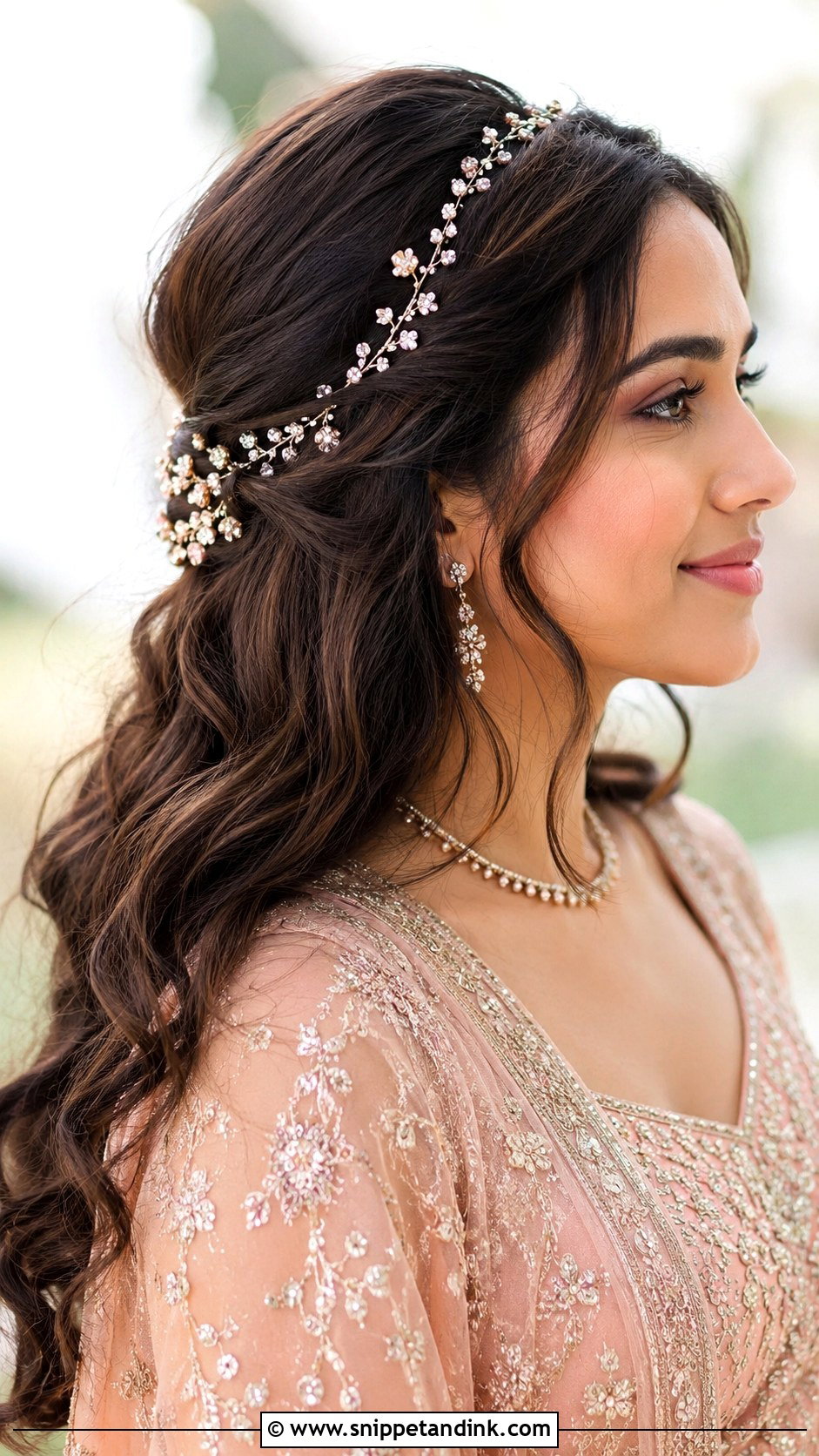
Loose boho waves need a thin vine, not a heavy one. Waves have no structure for pins, so I anchor the vine with small pins at a few strategic points under the top layer and let the wire sit lightly on the surface. Sangeet, mehendi and outdoor functions suit it. The texture comes from a large-barrel curl brushed out, then a little texture spray. It works on long and medium hair. Minimal or floral jewelry keeps it consistent; heavy gold pulls against the relaxed feel of the waves.
17. Braided Updo With Pearls
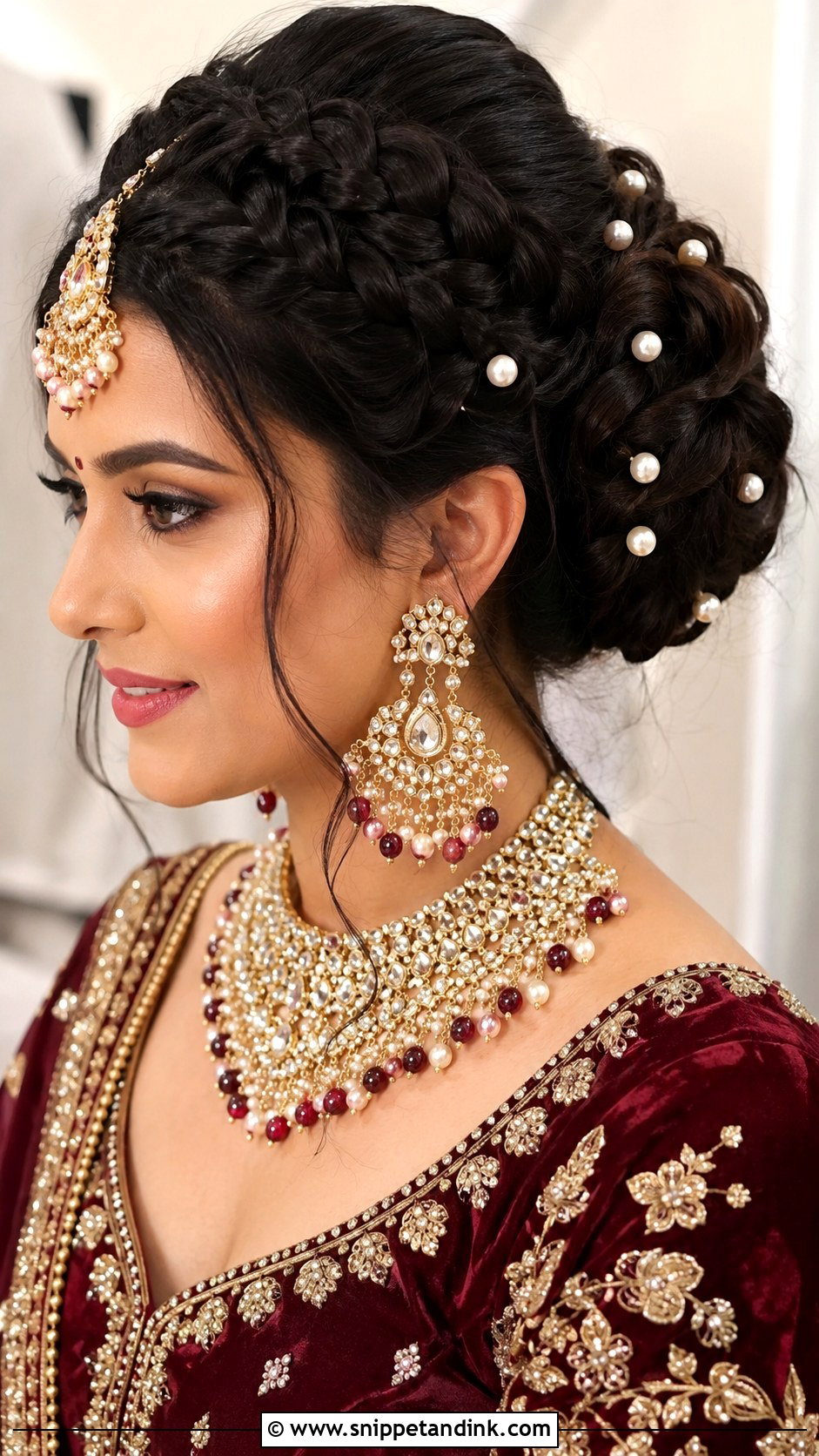
A braided updo with pearls is the most labour-intensive style on this list, and it rewards the effort. I braid several sections separately, then pin them into a pattern at the back, which spreads the weight and holds firmly through a long ceremony. Pearls are threaded last so they sit on top of the braids. It’s my choice for the main ceremony or reception when the bride wants a lot of detail at the back. Thick, long hair is needed for the braids to show their pattern; on finer hair I’d use fewer, larger braids.
18. Wavy Half Updo With Flower Clip
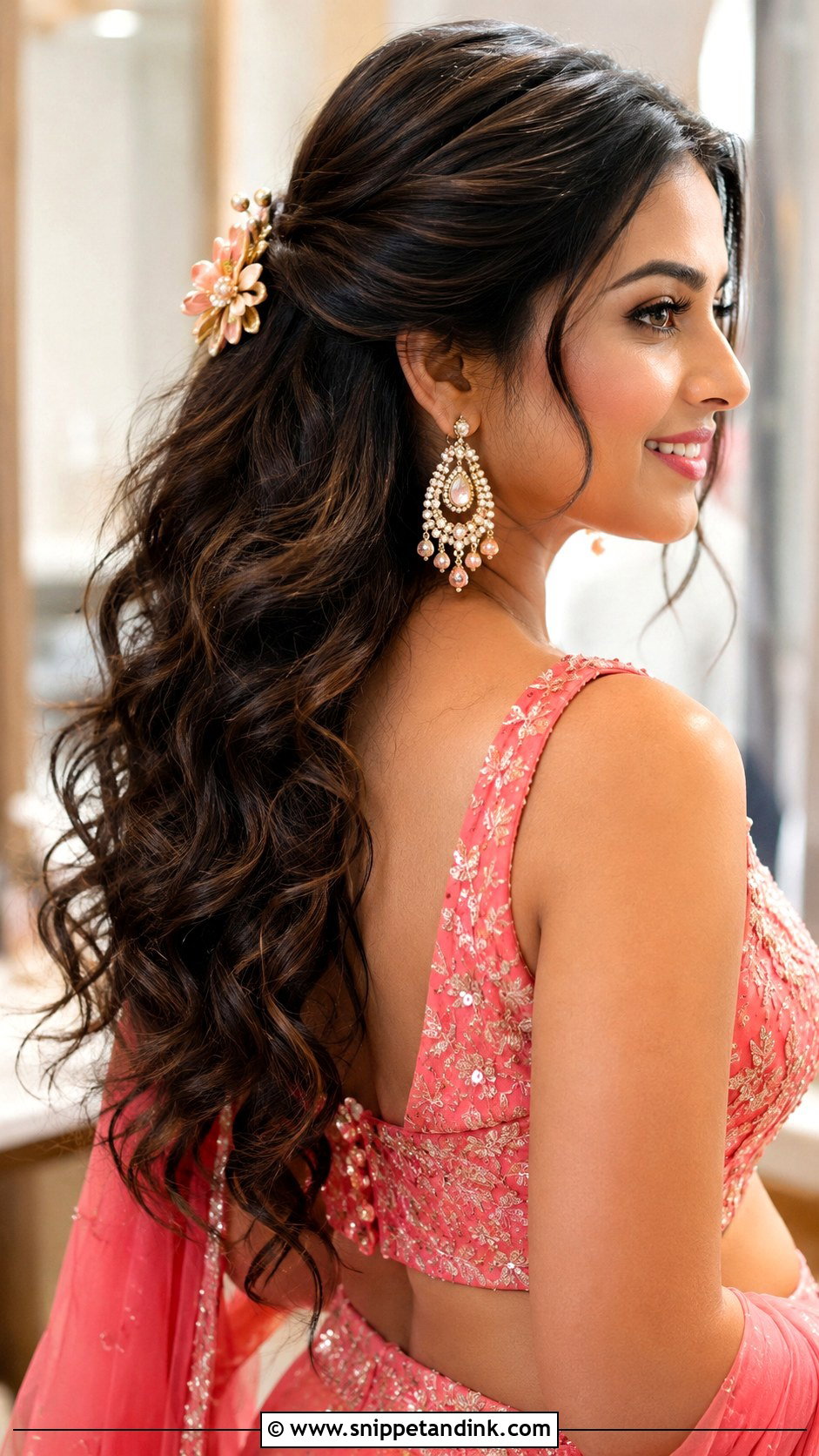
A half updo with a flower clip keeps hair off the face while showing length. I pin the top section securely before adding the clip, because the clip alone can’t hold weight and slips. Waves go in the lengths below. It suits sangeet and reception events and most hair types. Choose the clip against the outfit fabric in daylight; colours that match under a ring light can clash in a sunlit courtyard. Statement earrings finish it.
19. Low Chignon With Hair Brooch
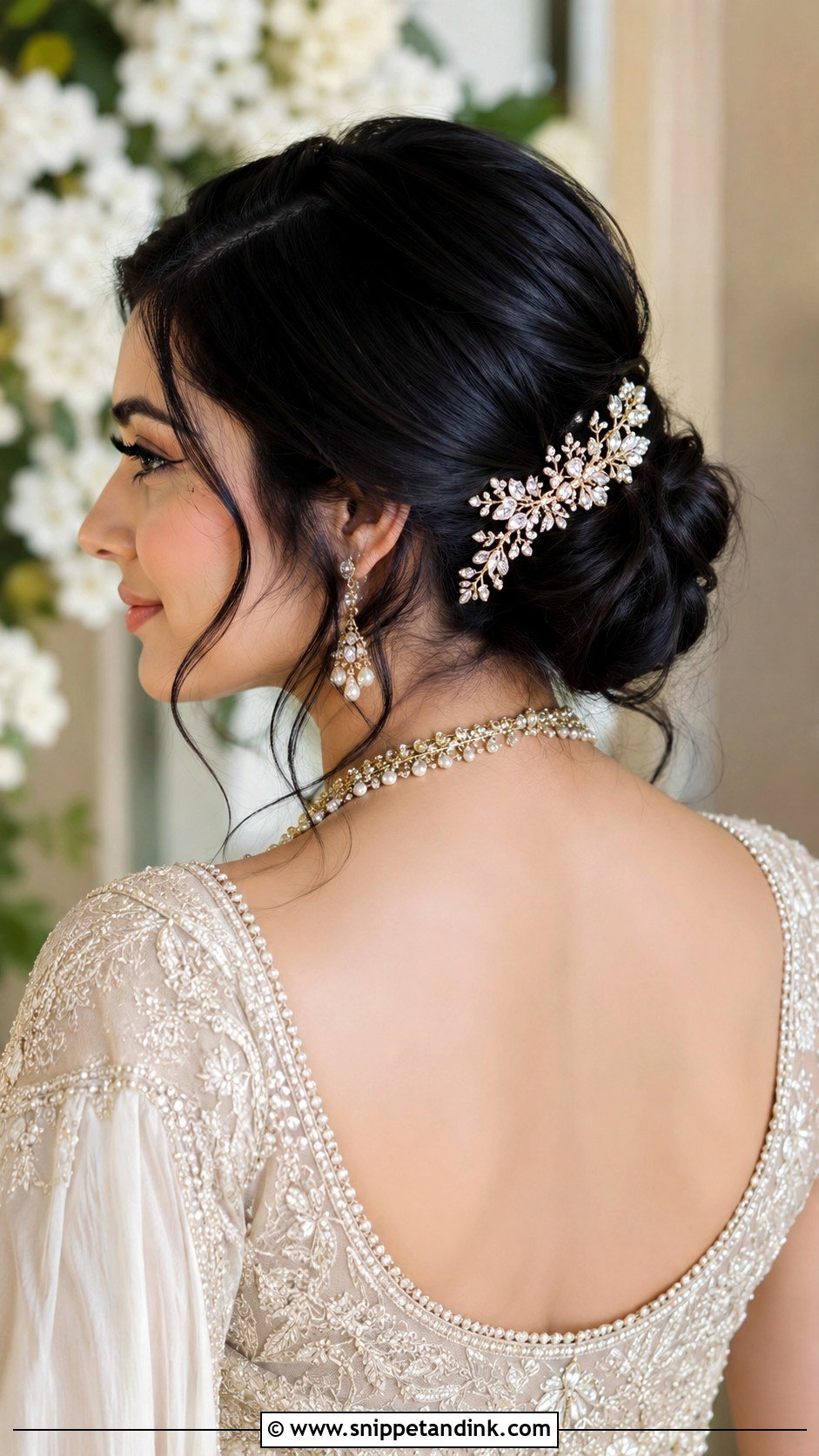
A low chignon is a twisted bun set at the nape. It’s quieter than a coiled bun and shows a sparkling hair brooch well, especially one set on the side of the twist. I pin the twist with crossed pins so the brooch has a firm base. It suits the reception and works on fine to medium hair and all face shapes. A few tendrils near the face are a choice, not a rule; I leave them out if the necklace is heavy, since too much going on around the face distracts from both.

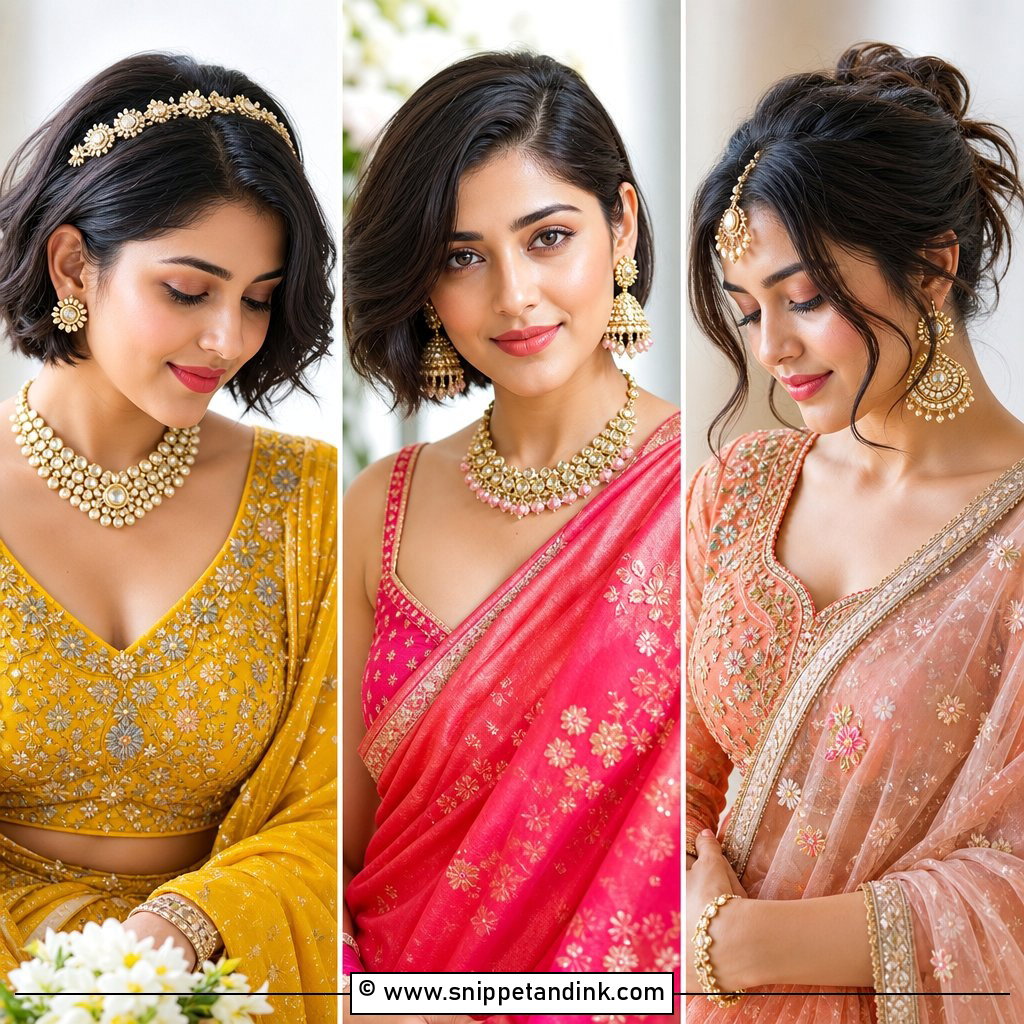
20. Curly Ponytail With Floral Accents
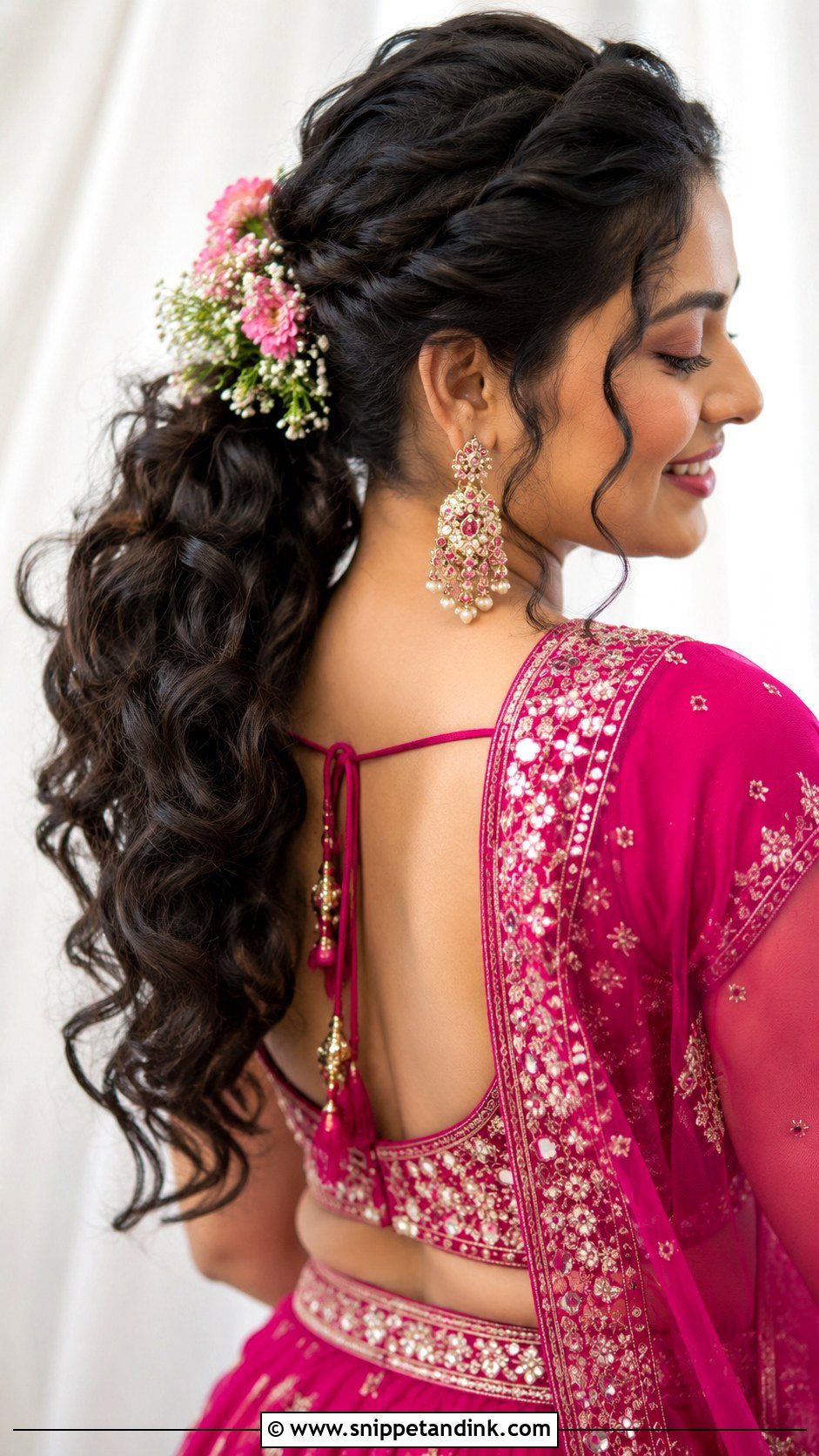
A curly ponytail with flowers at its base brings energy to the sangeet or mehendi. I backcomb the crown slightly for lift, secure the ponytail firmly and curl the lengths. Flowers tucked into the elastic should be small and sturdy, because the ponytail swings constantly. It suits long hair. If you know you’ll be on the dance floor for hours, a mid-height ponytail is more comfortable and stays neat longer.
Where the Dupatta Pins Will Actually Go
For the main ceremony, the hairstyle is really a base for the dupatta. A heavily embroidered dupatta can weigh far more than a Western veil, and it needs something solid to pin into. When I plan a bun, I set it so its top edge sits just where the dupatta should rest. Too low and the dupatta slides back off the head; too high and it puffs up and looks like a hood.
Sleek buns, braided buns and bouffant buns all give strong pinning points. Open curls and loose waves don’t, which is why I rarely suggest them for a ceremony with the dupatta on the head. If you love open hair, keep it for the reception, or ask for a hidden half-up section underneath that the dupatta can be pinned to.
What to bring to the trial
- The actual dupatta, or one of the same weight and fabric.
- Your maang tikka and matha patti, since their chains need a parting set for them.
- Earrings with sahare or ear chains that tie into the hair.
Jasmine That Still Smells Fresh at the Pheras
Real jasmine is the most demanding accessory in this list. Gajra bought too early wilts and turns brown at the edges; bought in bud, it opens and gets fragrant as it warms on your head. I ask families to collect it on the morning of the wedding, keep it wrapped in a damp cotton cloth in a cool place, and give it to me only at the end of styling.
A long gajra can be heavier than it looks, so it should be pinned into the hair through the thread with U-pins at several points, never hanging from a single pin. If you have a sensitive scalp or a flower allergy, good silk or pearl versions photograph very close to real flowers and don’t wilt in a hot mandap.
Your Dupatta Comes First, Then the Hair
Start with what you’re wearing, not with the hairstyle. The weight of your dupatta, the jewelry around your face and the length of each function will narrow down these 20 styles faster than any photo. A jasmine bun and a bejewelled headband can both be right, just on different days. Bring the shortlist to your trial along with your dupatta and tikka, test the styles you’re unsure about, and ask your stylist which ones will hold up best in your venue’s heat.
You'll Like These Ideas:



Leave a Reply