
Most of the headpieces I place on brides now are lighter and more flexible than the stiff tiaras of a few years ago: headbands, vines, scattered pins, bows. That shift suits hair that moves. But a headpiece is never just sparkle you add at the end. It changes where I put volume, how I anchor the style and whether the veil sits above or below it. Below are fifteen pairings, with the hairstyle each one actually needs underneath and the places where they tend to go wrong.
Bring the Actual Headpiece to Your Hair Trial
A photo of a tiara tells me what it looks like. It doesn’t tell me how much it weighs, whether it has loops or a comb, or how wide the band is. Those details decide the hairstyle, so I always ask brides to buy the headpiece before the trial and bring it in.
Here is what I check when it arrives:
- How it attaches: combs, loops for pins, a band or elastic. Loops are the most secure.
- Weight: heavier pieces need more volume and more pins underneath.
- Where it presses: headbands and crowns pinch behind the ears or at the temples after an hour or two.
- How it sits with the veil: above, below or replacing it after the ceremony.
If you’re still deciding between two pieces, bring both. It takes a few minutes to try each on the same finished style, and the difference is usually obvious once they’re both in the mirror.
1. Wedding Hair With Pearl Headband
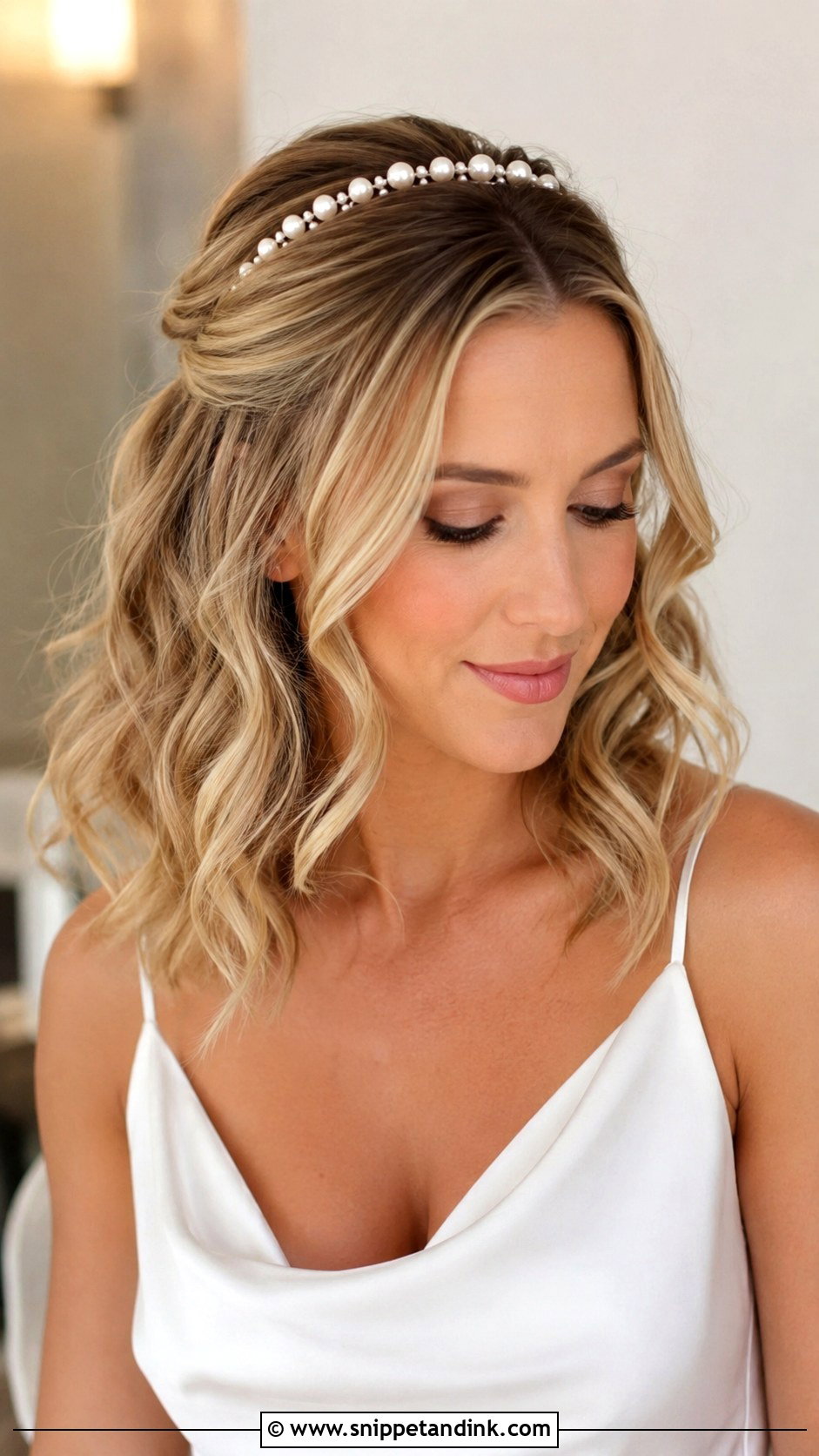
Headbands press on the same spot behind the ears for hours, so the first thing I check is fit. A pearl headband that feels fine for five minutes in a shop can give you a headache by the speeches. Pearls sit nicely with soft waves, a smooth low bun or a half-up style, and they echo pearl beading or a satin gown without matching it exactly. On fine hair I backcomb a little at the root before the band goes on so it doesn’t flatten the crown. On thick hair I smooth the crown first, or the band rides up.
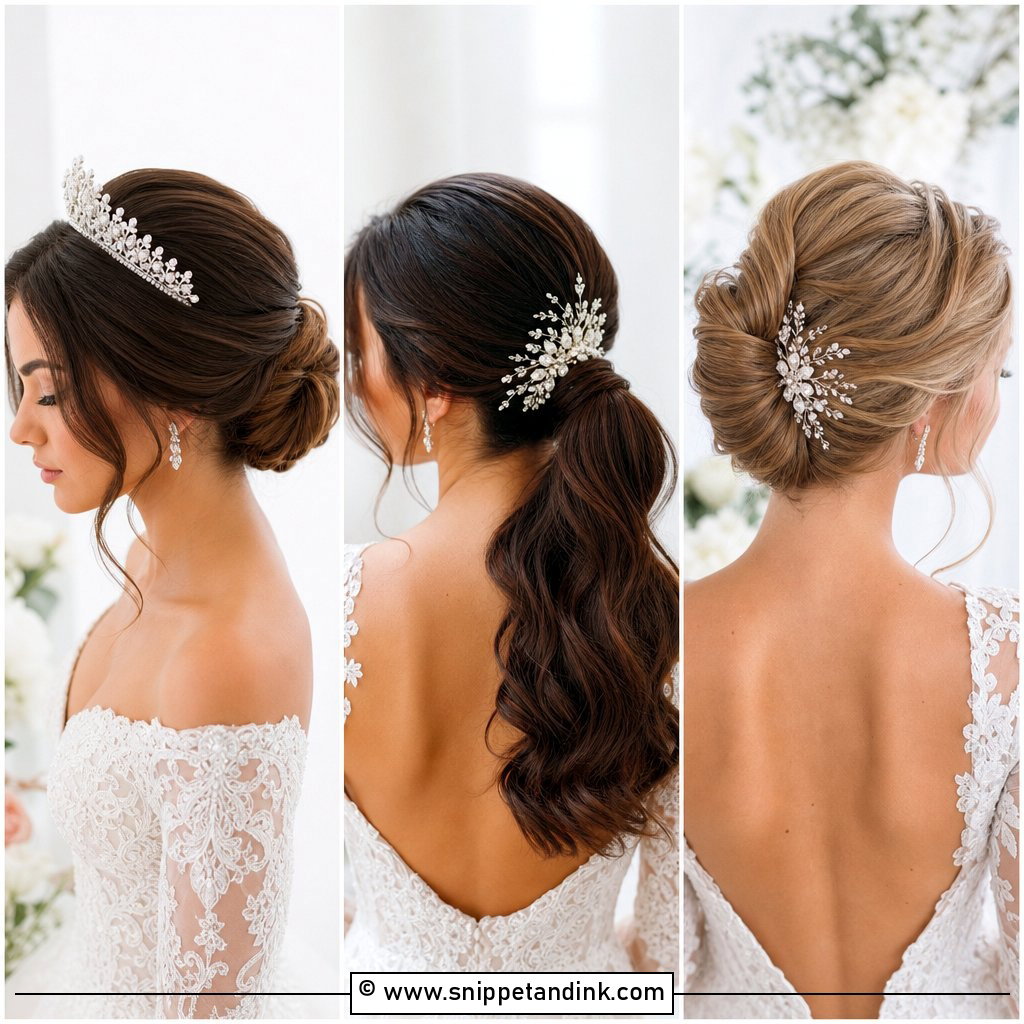
2. Wedding Hair With Crystal Tiara
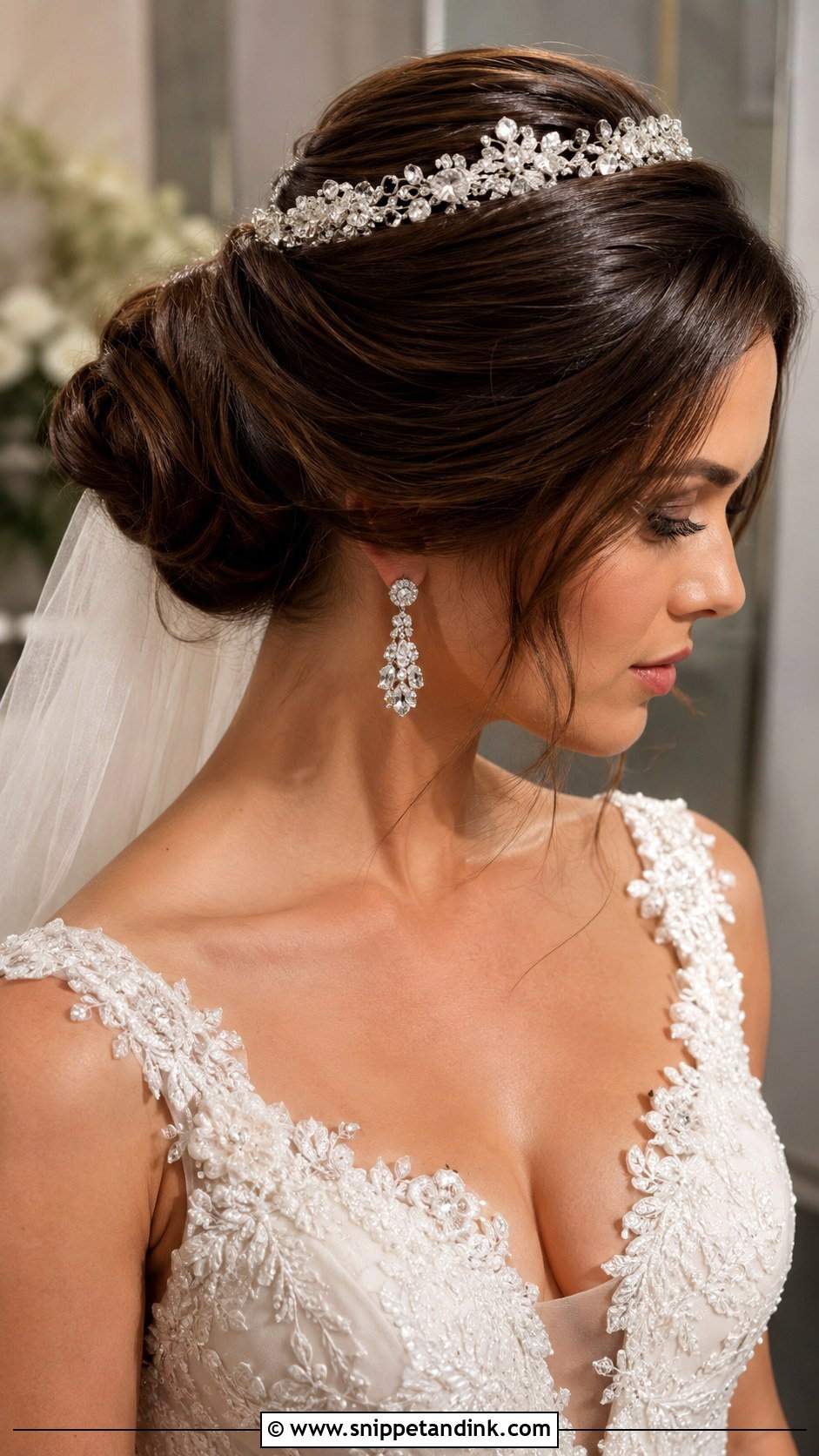
The most common tiara mistake I fix at trials is placement too far forward, right at the hairline, which reads as a costume. I set a crystal tiara about an inch or two behind the hairline and build a little height behind it so it has something to lean against. Underneath, a soft updo, curled half-up hair or a sleek low bun all give it a stable base. It belongs with ball gowns, lace and cathedral veils. Most tiaras have small loops at each end; I thread bobby pins through those and cross them into the hair so it doesn’t tilt when you bend.
3. Wedding Hair With Floral Hair Vine
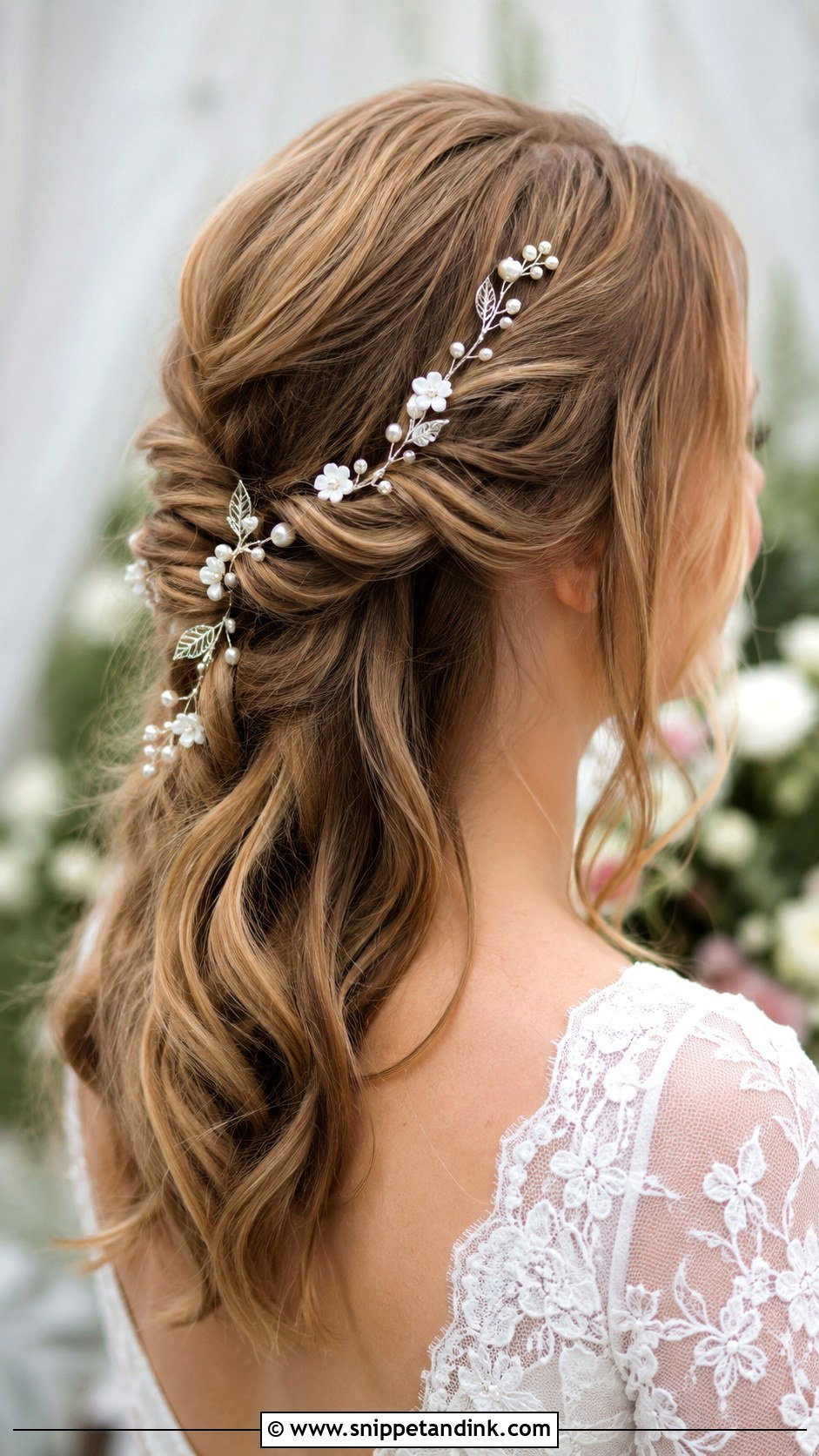
A hair vine is wire, so it bends to whatever shape the hair has. I wrap it around a low bun, weave it along a braid or lay it along one side of loose waves. It gives detail without the rigid outline of a crown. If your dress already has heavy texture, pick a vine with small leaves or a few crystals rather than big flowers. The weak point is the ends of the wire: they have to be tucked under and pinned, or they work loose and scratch. Test the hold at your trial by shaking your head a little.
4. Wedding Hair With Gold Headpiece
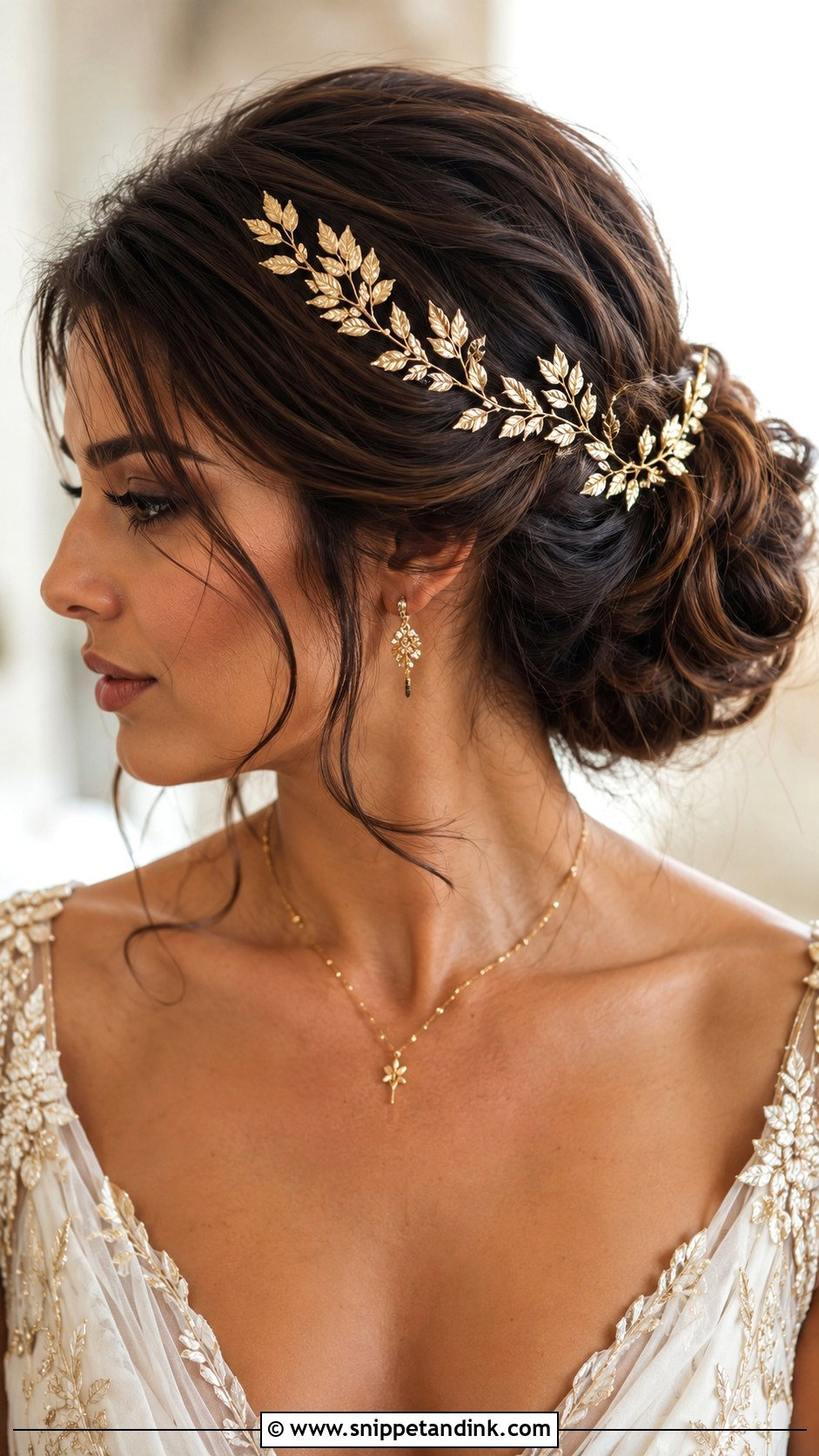
Gold reads warm against ivory and champagne, and it sits better than silver next to warm-toned makeup and yellow-gold jewelry. Brushed gold leans vintage; bright polished gold is a statement; small gold leaves look botanical. I’d pair it with soft curls, a twisted updo or a low bun depending on how much shine the piece already has. Whatever the hairstyle, the crown area needs to be smooth and set with a little hold. Frizz next to metal shows up badly in close-ups, far more than it does with pearls.
5. Wedding Hair With Side Hair Comb
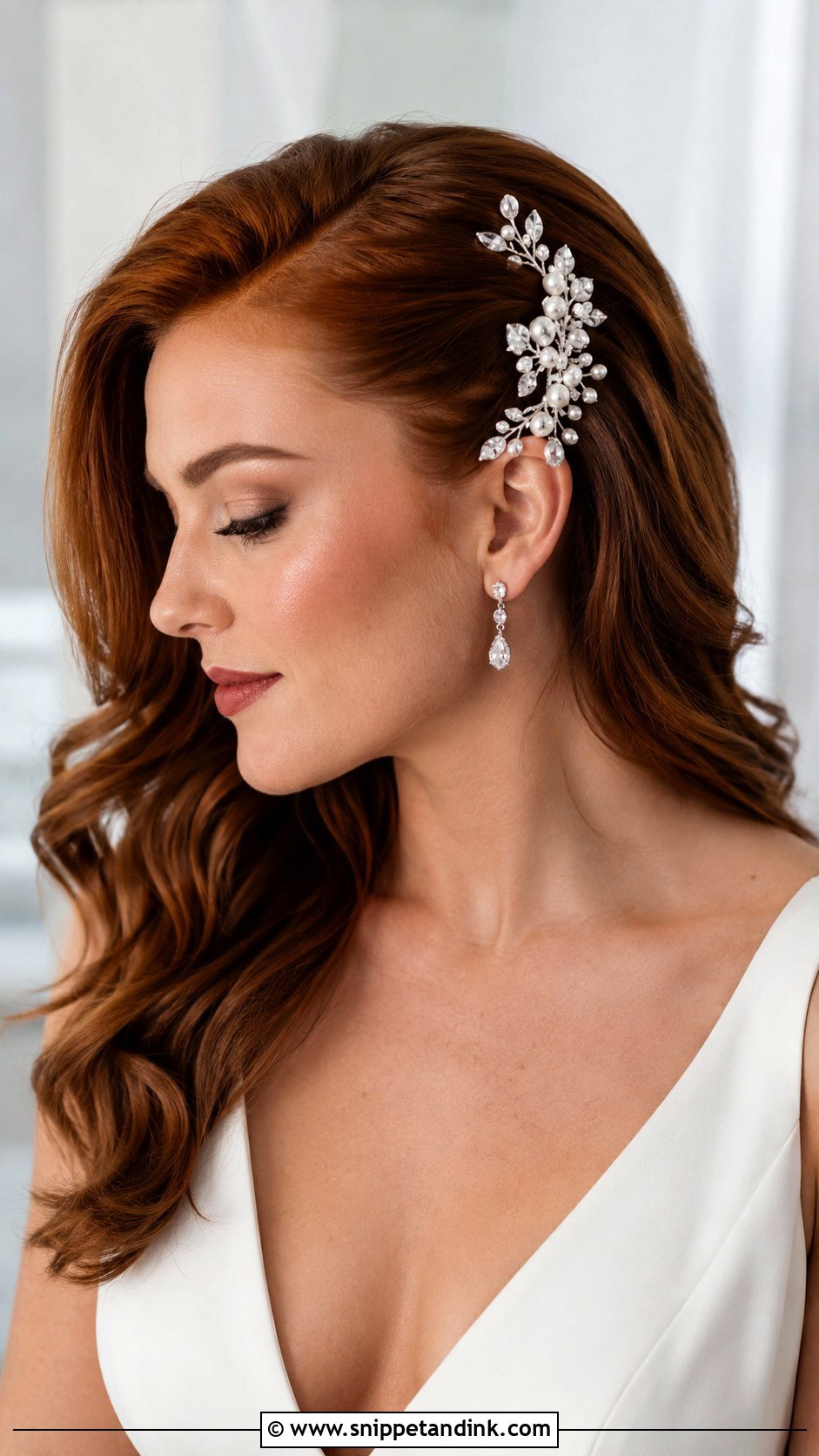
A comb puts the detail exactly where profile photos and the ceremony angle from the guests’ side will catch it. Tucked above one ear, beside a low bun, or at the base of a side-swept wave, it does a lot with very little. The catch is grip. A comb slid into loose, silky hair falls out within the hour, so I make a small anchor first: two crossed pins or a tiny hidden braid, then slide the comb in against the direction of the hair and push it down over the anchor. Pearl, crystal or metal flowers are all fine; the anchor matters more than the design.
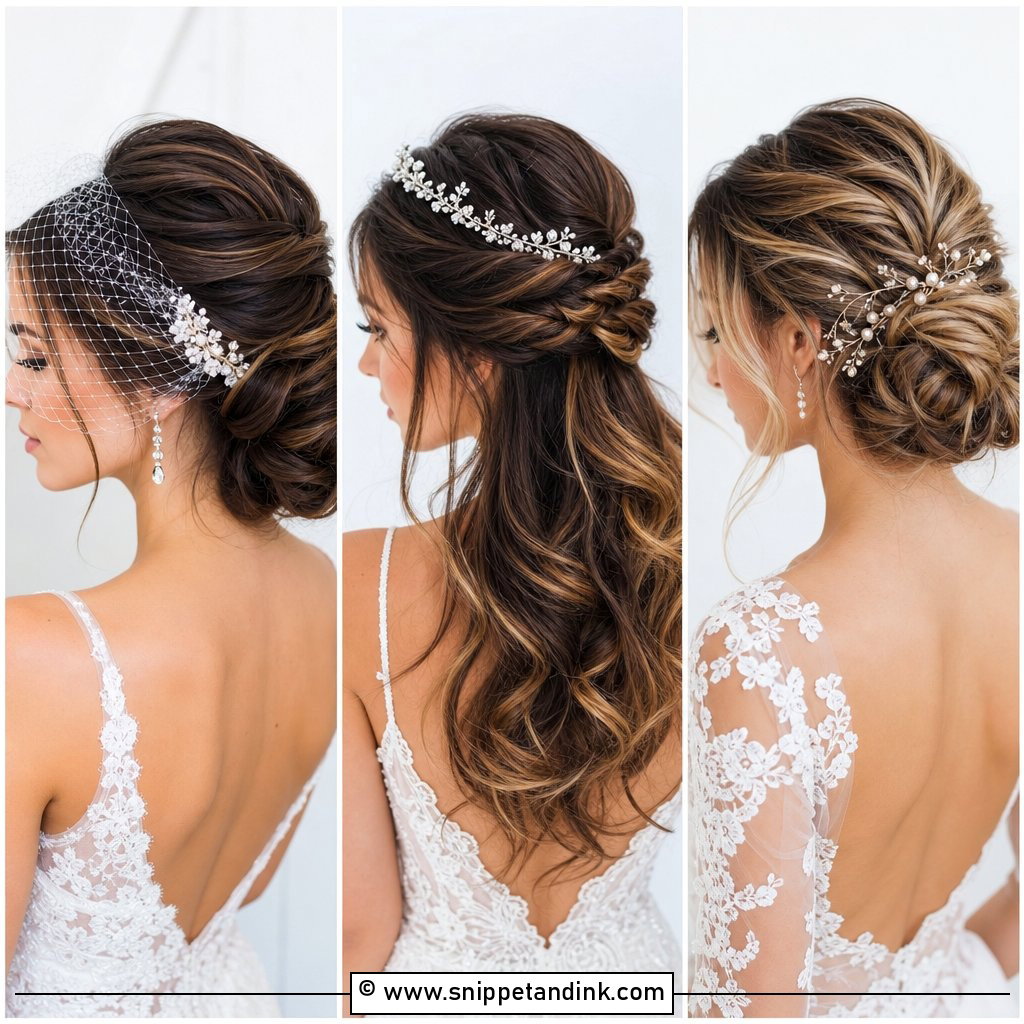
6. Wedding Hair With Veil And Hair Pins
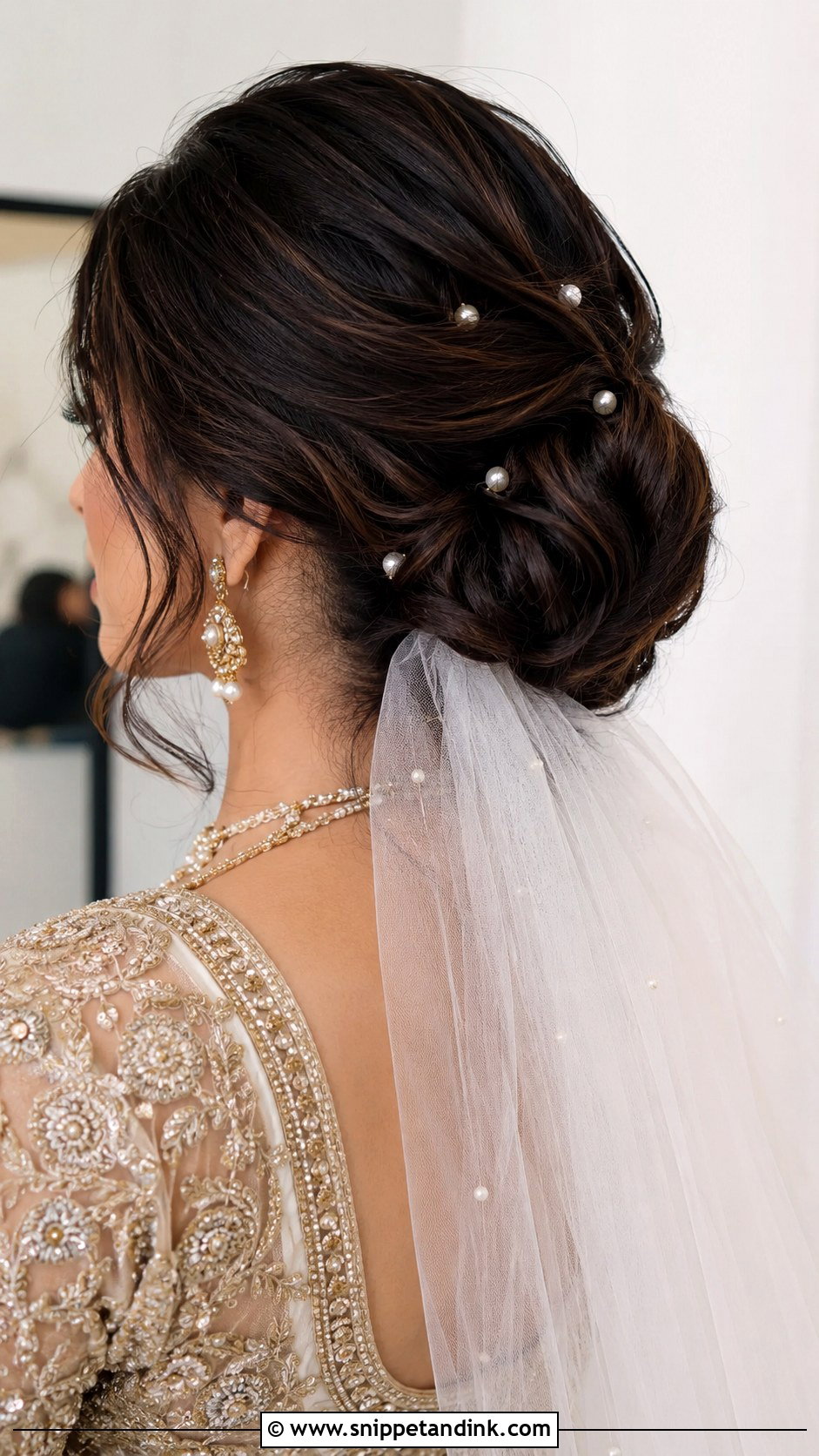
Here’s a plan I use often: veil for the ceremony, a few scattered hair pins that stay in for the rest of the night. Once the veil comes out, the hair still looks finished. It suits low buns, textured chignons, braided updos and half-up curls. I place the veil comb under the updo or at the crown first, then add the pins around it so none of them sit where the comb needs to go. I place pins unevenly on purpose; a neat row of pearls looks like a hair clip from a drugstore card.
7. Wedding Hair With Bow Headpiece
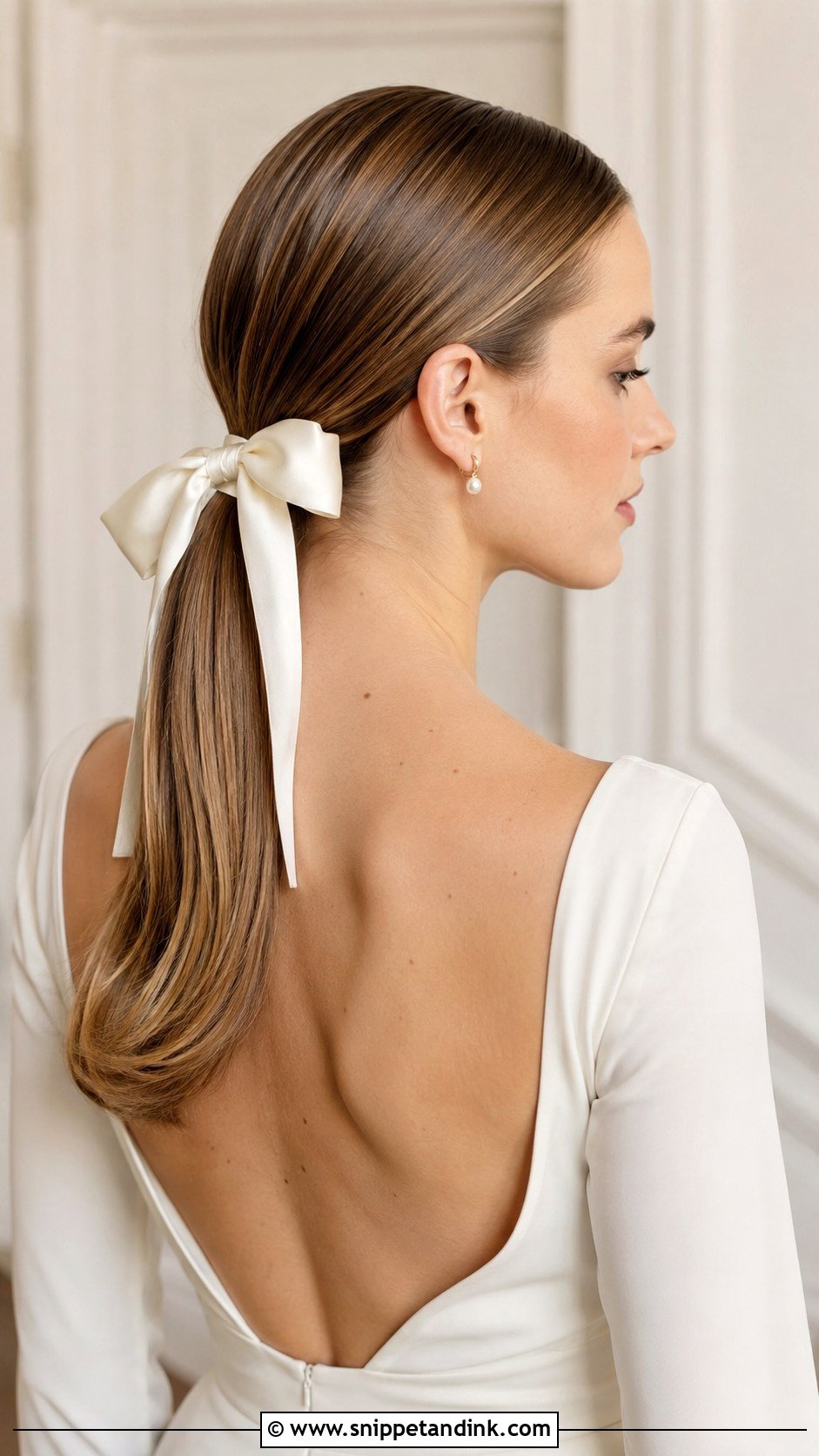
A bow headpiece changes completely with fabric. A soft satin bow tied around a low ponytail is clean and modern; a stiff structured bow above a bun is more fashion. With a plain dress it adds personality that crystals wouldn’t. Scale it to your skirt: a small bow reads delicate, and a long trailing bow can even replace a veil. Satin bows crush when you lean back in a car, so I fluff and re-tie them once you arrive.
8. Wedding Hair With Flower Crown
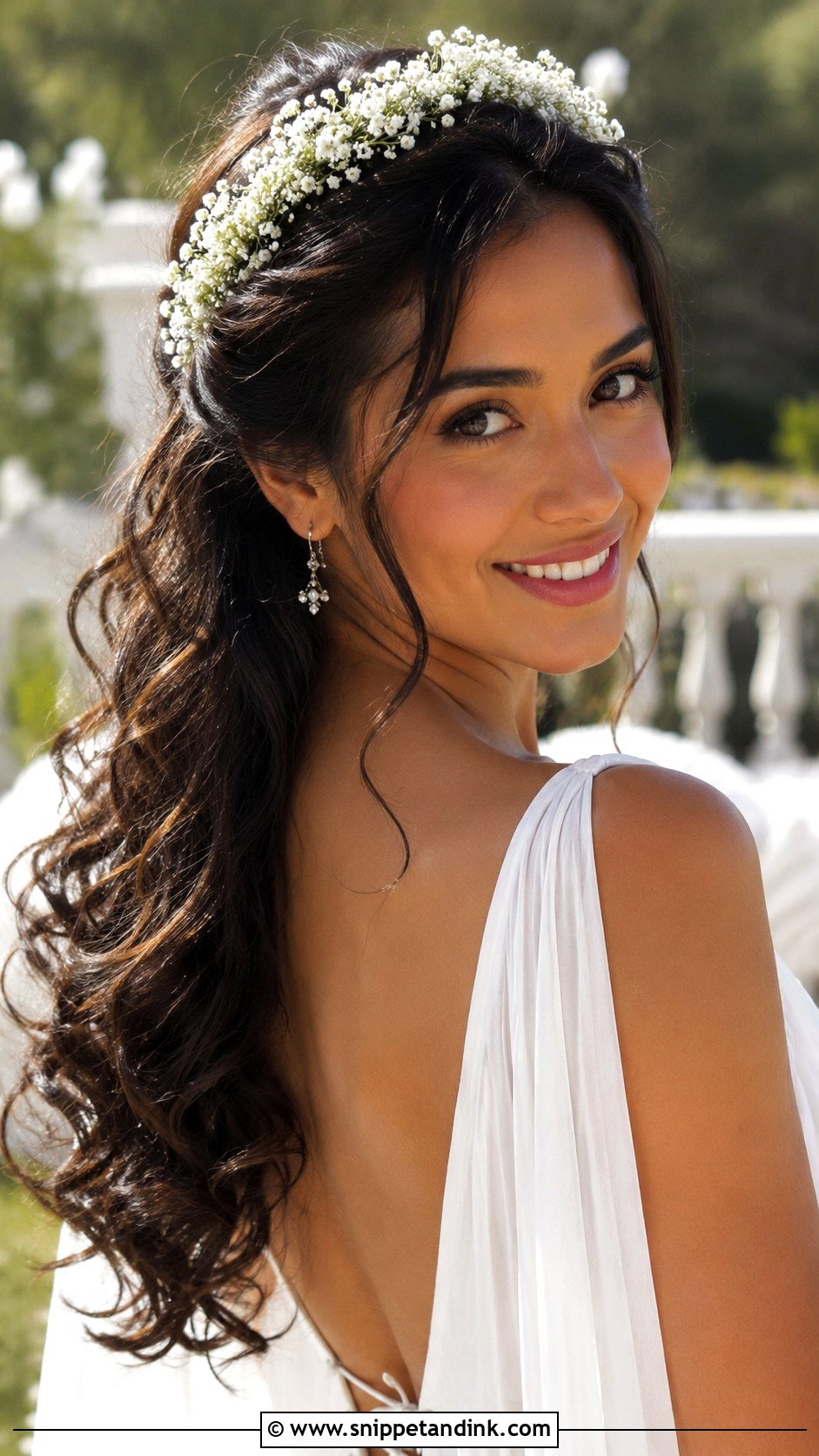
Fresh flower crowns are heavier than they look and they wilt, so the florist and I need to talk before the morning. I ask for small blooms that hold out of water, wired onto a band that I can pin through. Crowns sit best on loose waves, textured curls, soft braids or half-up hair, because movement around them hides the wire. I’d keep the crown lighter than your bouquet so it doesn’t swallow your face, and smaller flowers photograph better than oversized ones. For a hot outdoor ceremony, a silk or dried version is the safer bet.
9. Wedding Hair With Rhinestone Headband
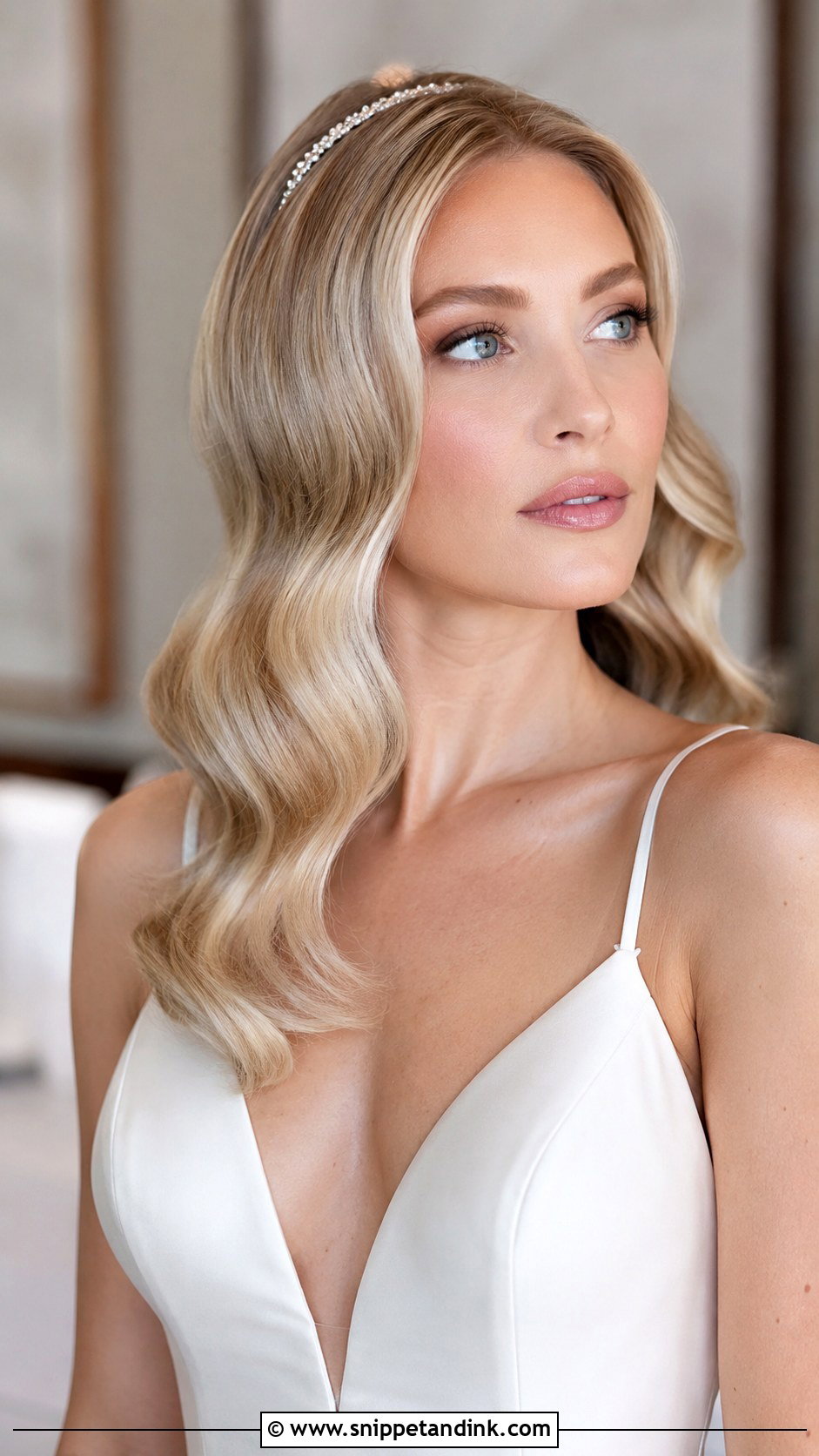
Rhinestone headbands give tiara-level shine at half the height, and they’re easier to wear for a long day because they sit close to the head. They lift a simple style instantly: sleek waves, a middle-part bun, a smooth blowout. A slim band with clean spacing looks modern; a wide band with mixed stones is more dramatic. If the band is bold, keep earrings to studs. Two strong pieces at the same eye level compete in every photo.
10. Wedding Hair With Boho Hair Chain
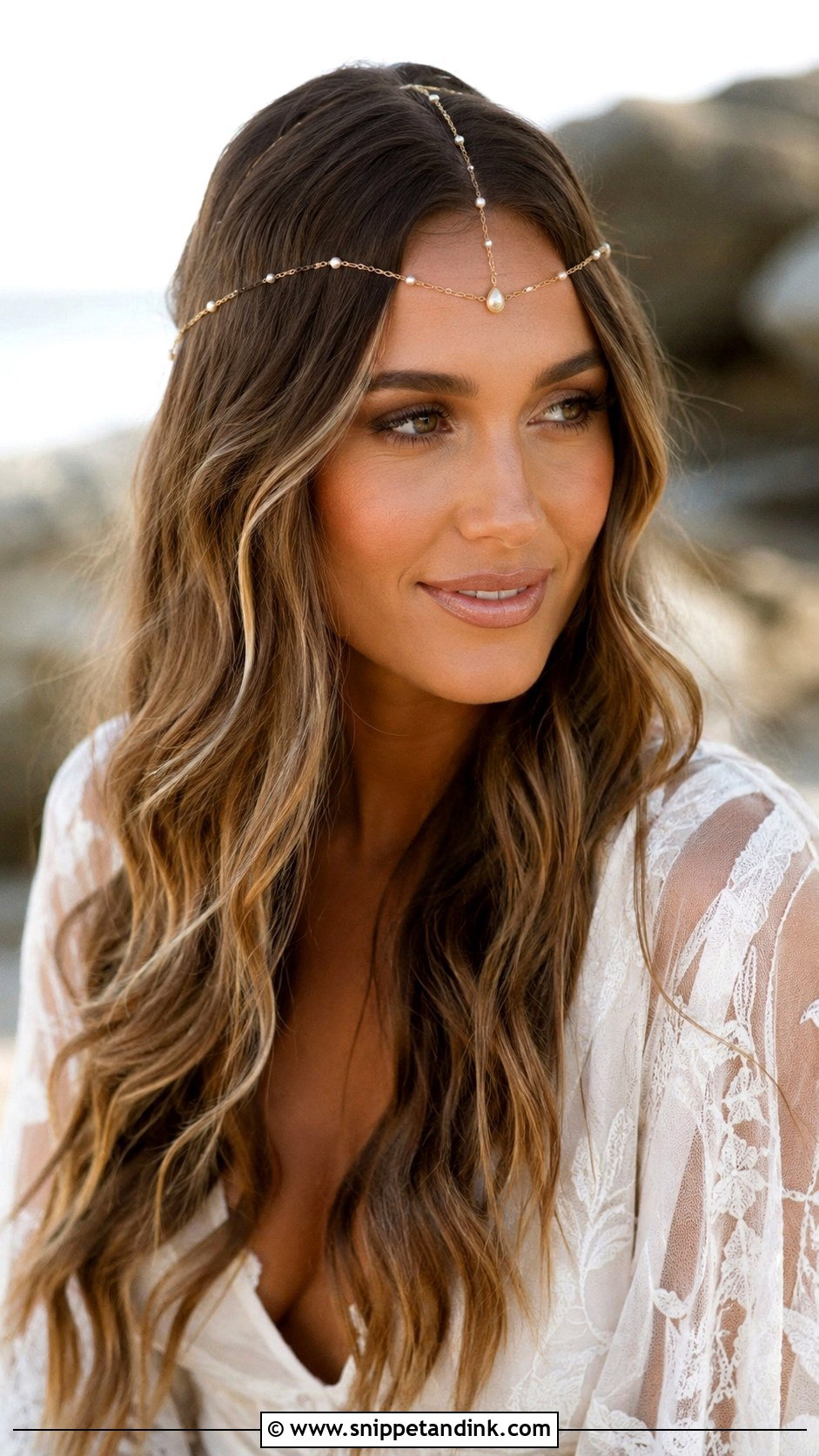
A boho hair chain drapes rather than sits, which is why I pin it at three points, both sides and the back, and let the sections between hang free. It suits long waves, loose curls, braided crowns and center parts. The chain should be fine; anything heavy drags on the hair and pulls the pins out over the day. Small charms, tiny pearls or leaves are enough. It’s at its best with open backs, flowing sleeves and outdoor venues where the hair is already soft.
11. Wedding Hair With Lace Headband
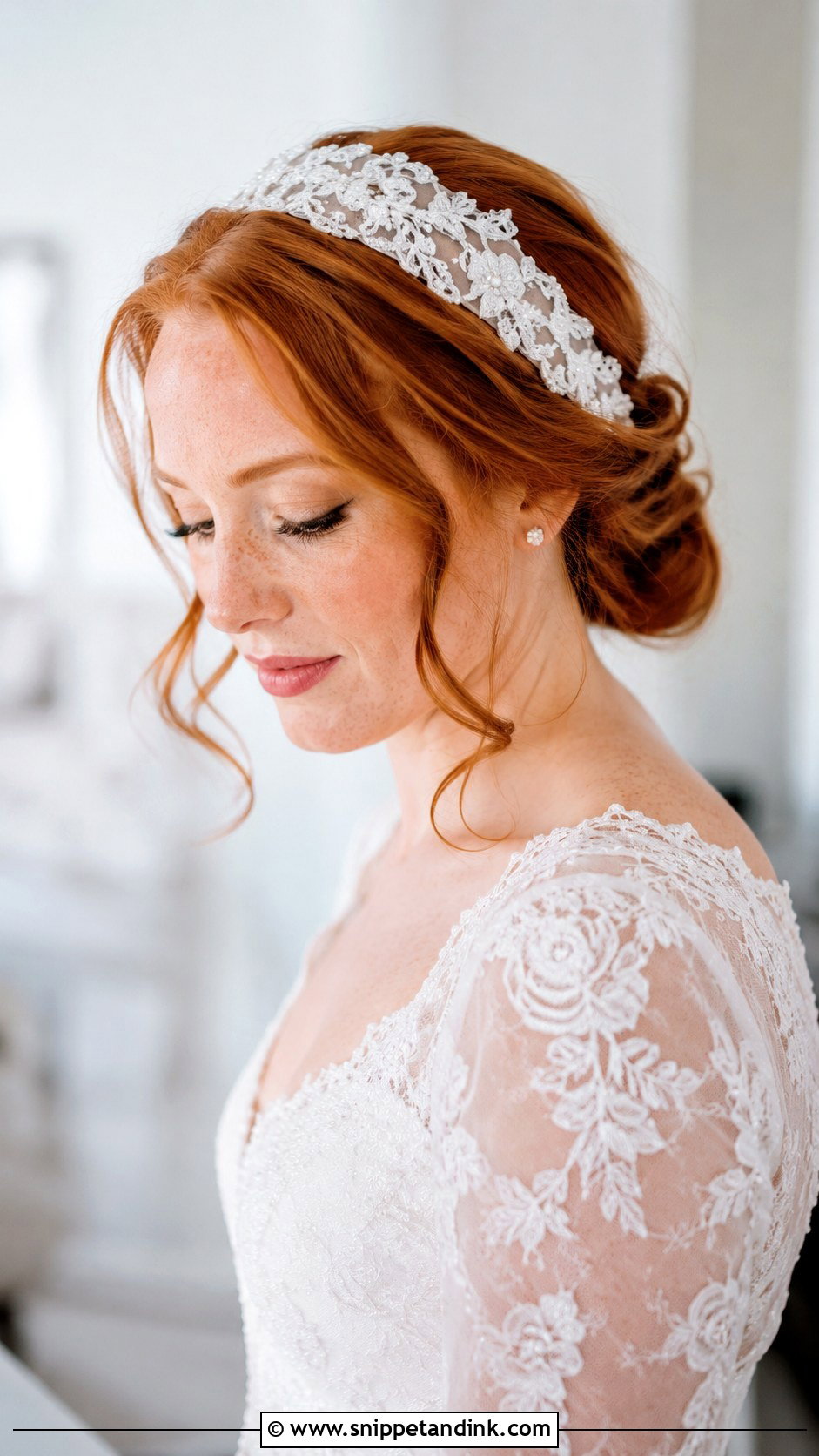
Lace near the face reads vintage, and the way to keep it from looking dated is to keep the crown fairly flat rather than teased high. A lace headband sits well over loose curls, a low chignon or a tucked bun, and it repeats lace sleeves, a high neckline or embroidered detail on the dress. Lace bands are usually on a thin comb or elastic, which grips less than metal, so I add a pin through each end. It can stay on under the veil and carry the look once the veil comes off.
12. Wedding Hair With Pearl Hair Pins
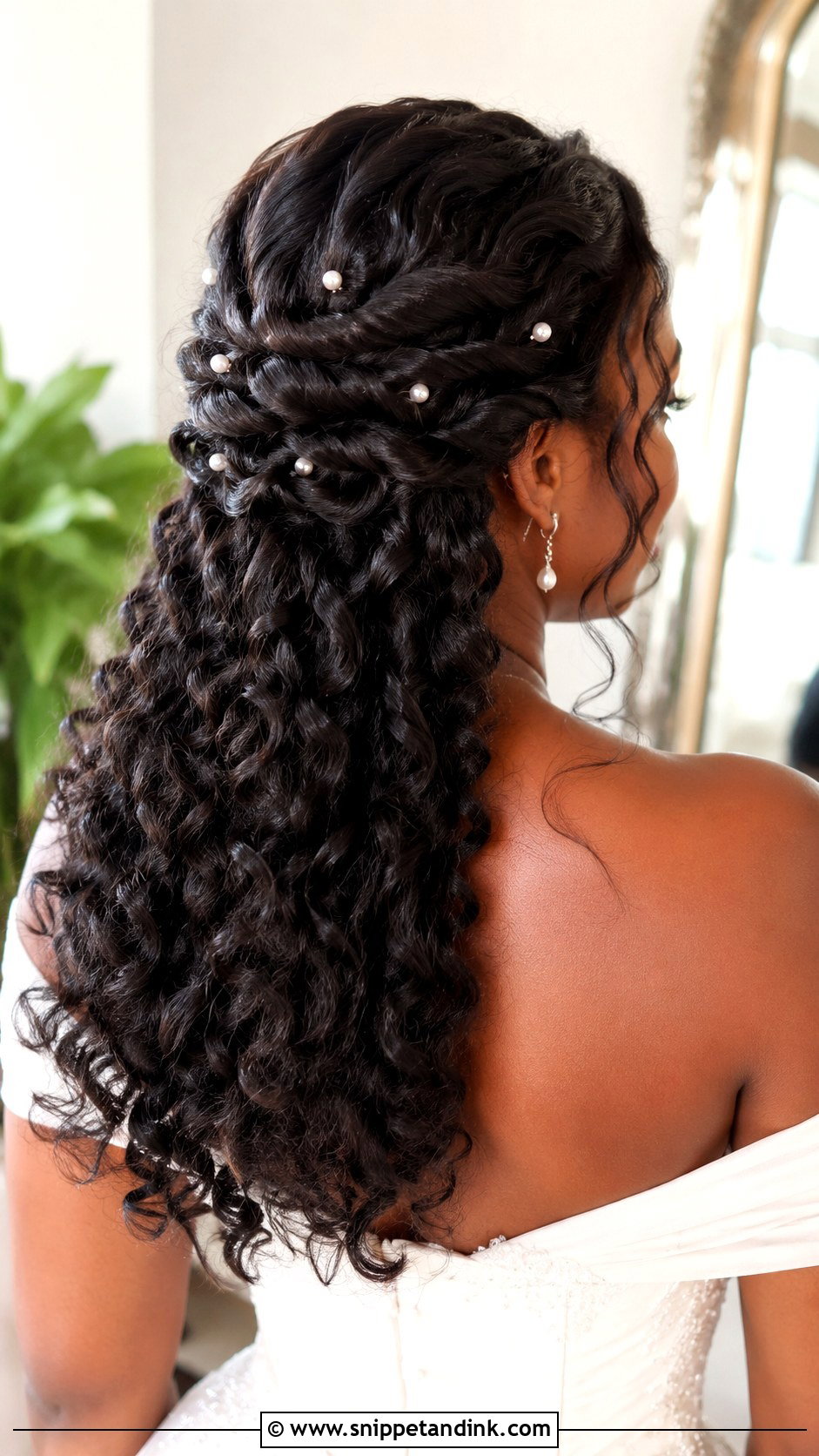
Scattered pearl pins are the most forgiving accessory on this list. They go into almost any style: low buns, twisted updos, half-up curls, braids. I put larger pearls around the bun and smaller ones near face-framing pieces, and I place them unevenly so they look tucked rather than arranged. On fine hair this is often my first suggestion, since each pin weighs almost nothing. Keep the hair smooth but not flat underneath, because pearls disappear into frizz.
13. Wedding Hair With Bridal Crown
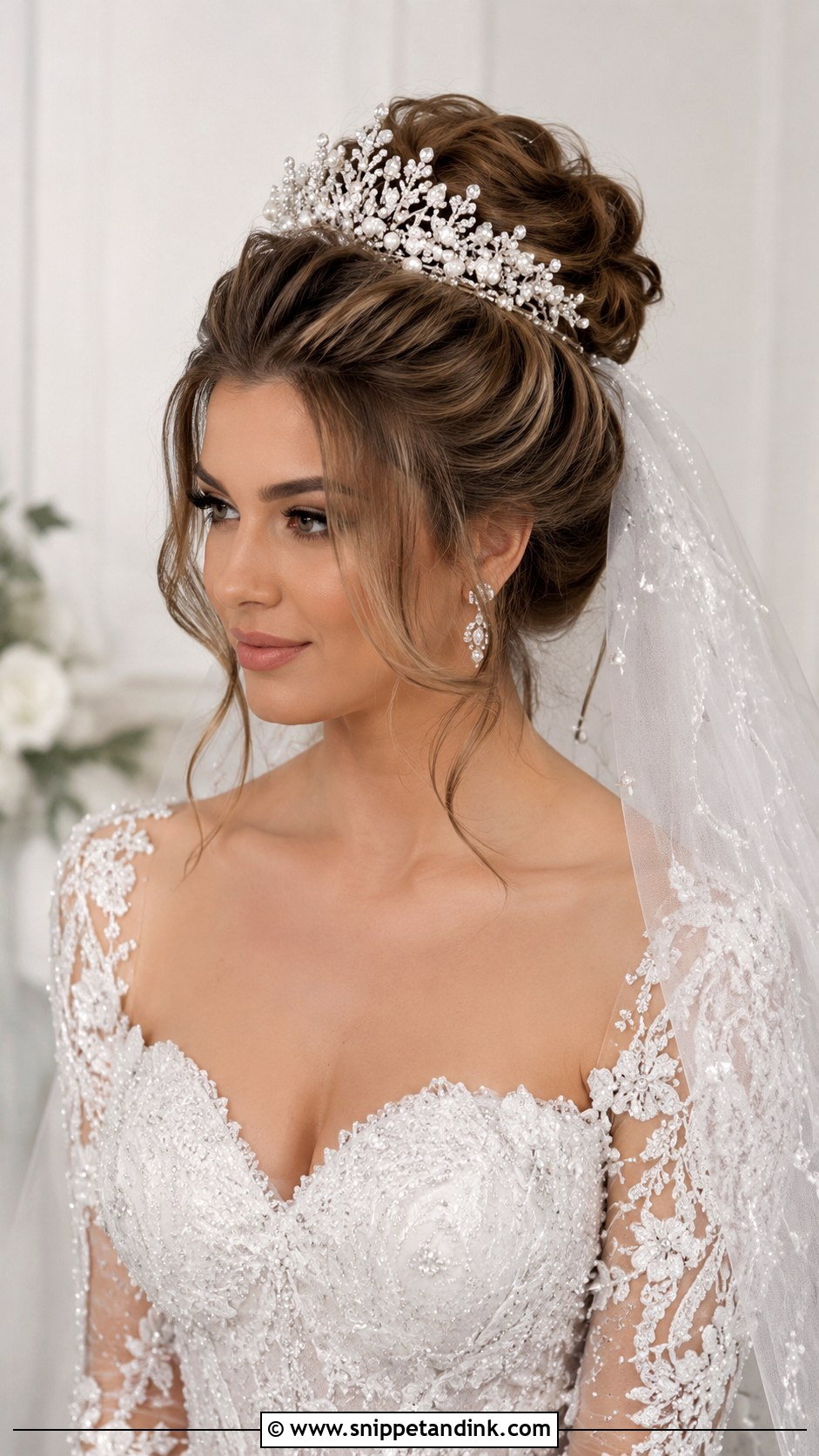
A crown is taller and heavier than a tiara, so the hair underneath has to carry it. I build volume at the root, then a full low bun or a structured updo behind it so the crown has something to rest against. If it has pearls, crystals or metal flowers, I’d skip other hair accessories. It suits formal gowns, dramatic veils and grand rooms, and it can look surprisingly modern over a minimalist dress. Get the angle right at the trial and take a photo of it, because a crown that tilts even slightly looks accidental.
14. Wedding Hair With Jeweled Barrette
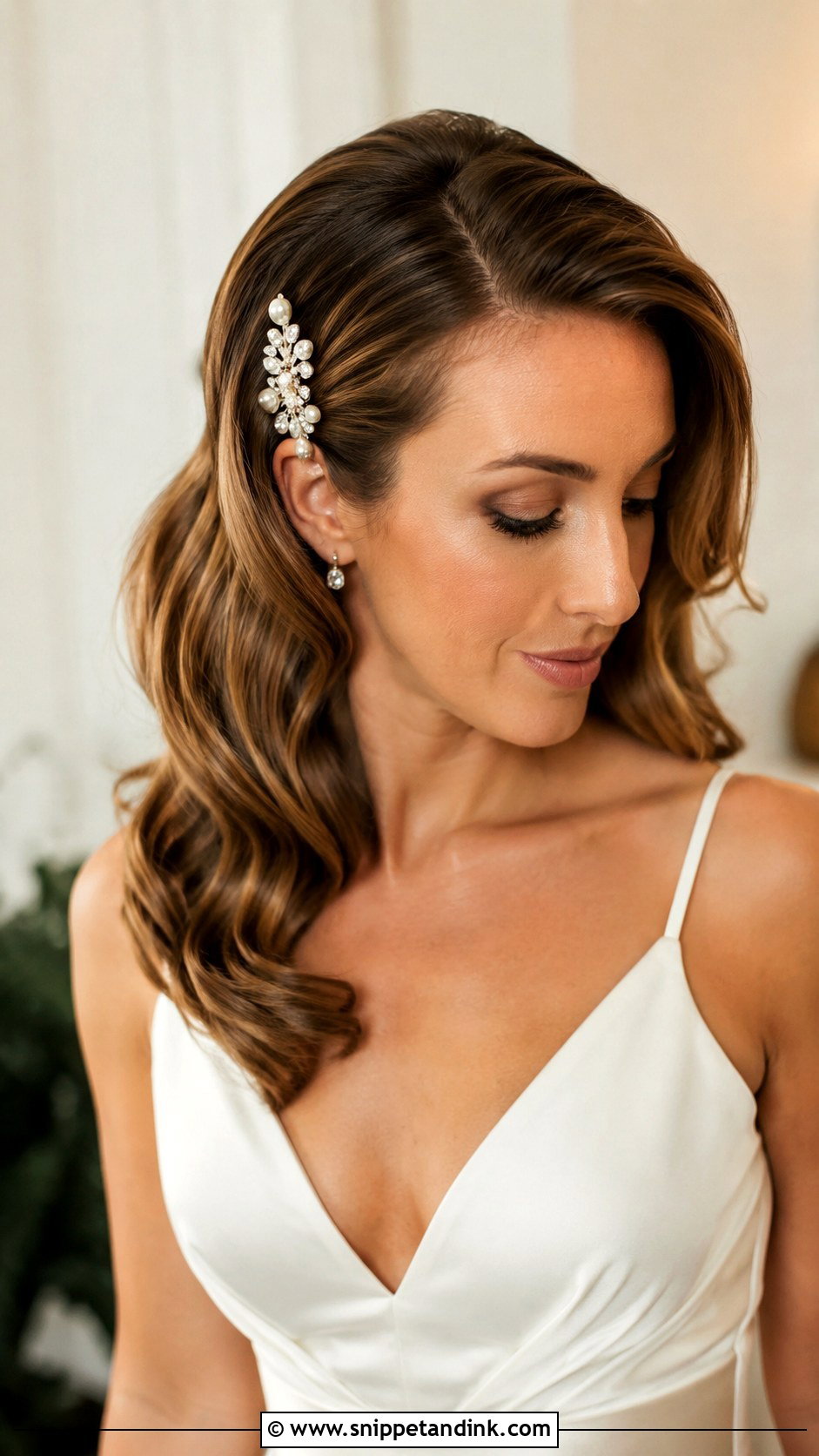
A jeweled barrette is small, but it sits at eye level in photos, so it carries more than its size suggests. I clip it into side-part waves, above a low bun or to hold back one side of half-up hair. Pick pearls, crystals or plain metal to suit the dress. The thing to check is the clasp: many decorative barrettes are made for thin hair and won’t close on thick hair, or they slide on silky hair. If it doesn’t grip, I hide two pins underneath it.
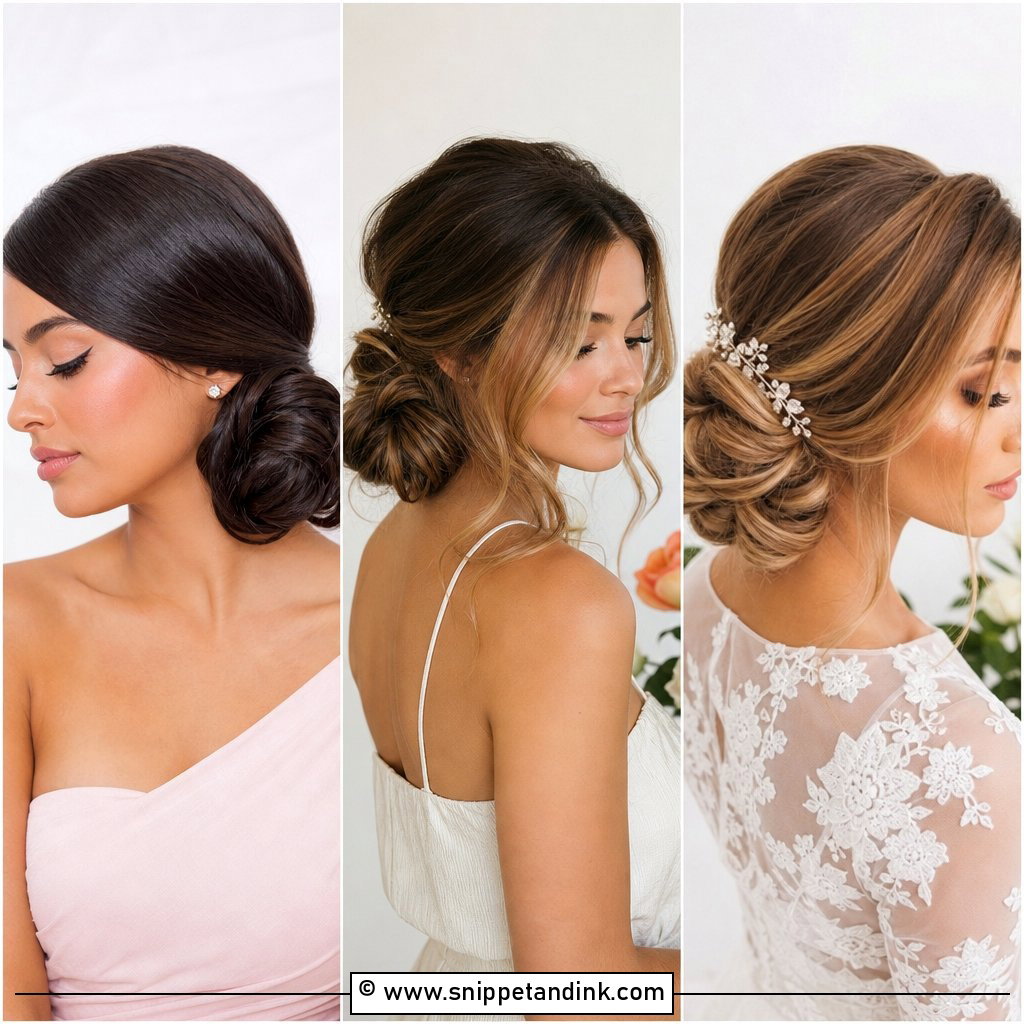
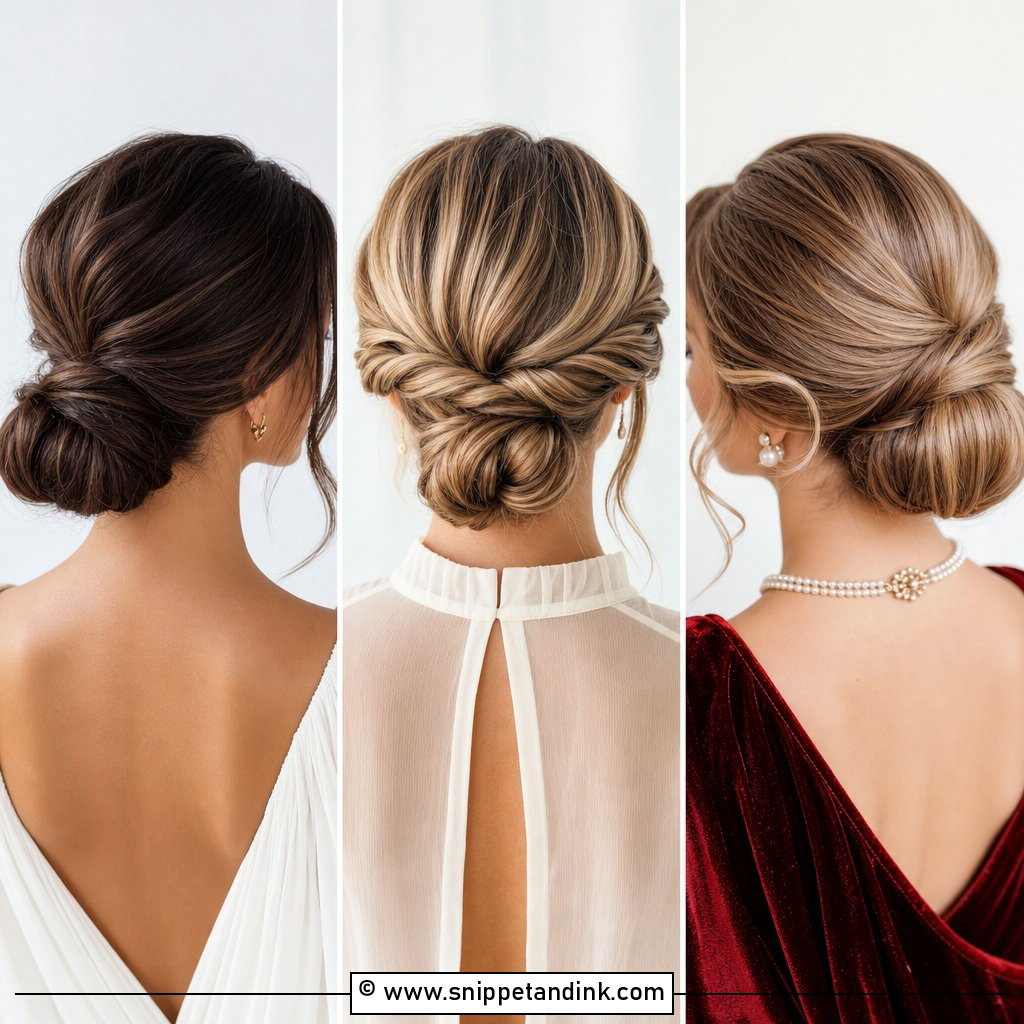
15. Wedding Hair With Juliet Cap Veil
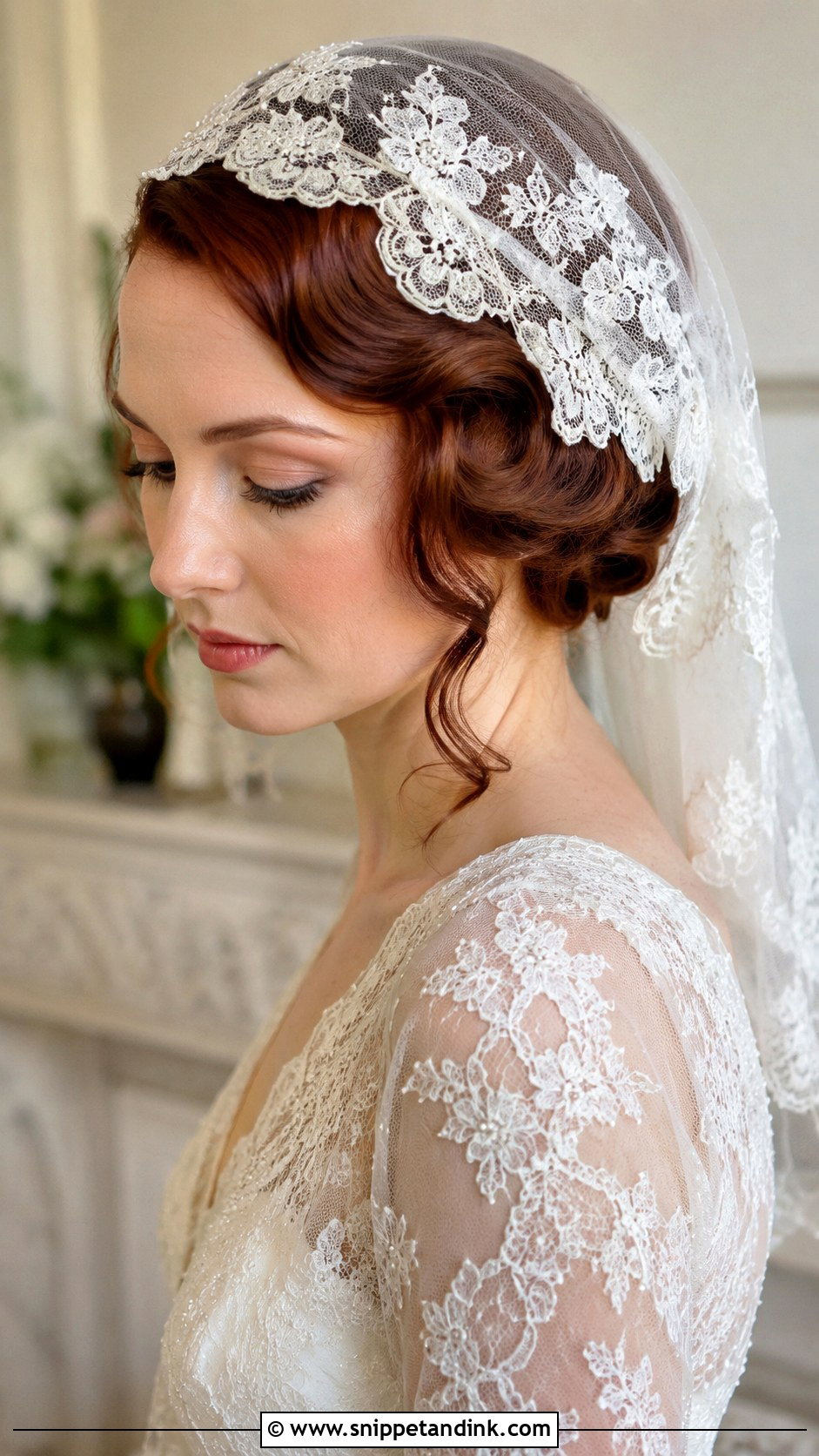
A Juliet cap veil follows the shape of your head closely, so any bump underneath shows. I keep the hair smooth at the crown and build the shape lower: soft waves, a low bun, tucked curls or a loose chignon. It pairs well with lace, long sleeves and soft makeup, since the cap already frames the face. Control the front pieces so the cap lies flat. At the trial, look at it from the side and back, not just the mirror in front, because the back is where it most often sits wrong.
The Ten-Minute Swap From Veil to Reception Piece
Many brides wear a veil for the ceremony and a different headpiece for the party. It sounds simple, but if nobody plans where each one sits, the veil comb pulls hair out when it’s removed and the second piece has nowhere solid to go.
I place the veil comb and the reception piece at the trial, together, so they don’t fight for the same spot. Usually the veil goes under or just above the bun, and the reception piece sits at the crown or the side. The person who removes the veil should practice once: loosen the pins first, then slide the comb out in the direction it went in.
If the headpiece starts to hurt
A headband or crown that pinches won’t get better as the day goes on. Before the ceremony, move it a few millimeters back, or slip a small piece of moleskin under the ends behind the ears. If it’s still painful after photos, take it off and switch to a few pins. Nobody at dinner will notice, and you’ll enjoy the evening a lot more.
Placement Matters More Than the Piece
The right headpiece looks like it belongs to the hairstyle, not like something added at the last minute. Start from your neckline, your venue, your veil plans and your hair texture, then pick a piece that works with the style instead of against it. Pins are flexible, tiaras and crowns add height, headbands add polish, vines add movement, combs put detail on one spot. At your trial, take photos in daylight, turn your head, hug someone and wear it for an hour. If you forget it’s there by then, it’s right.
You'll Like These Ideas:



Leave a Reply