
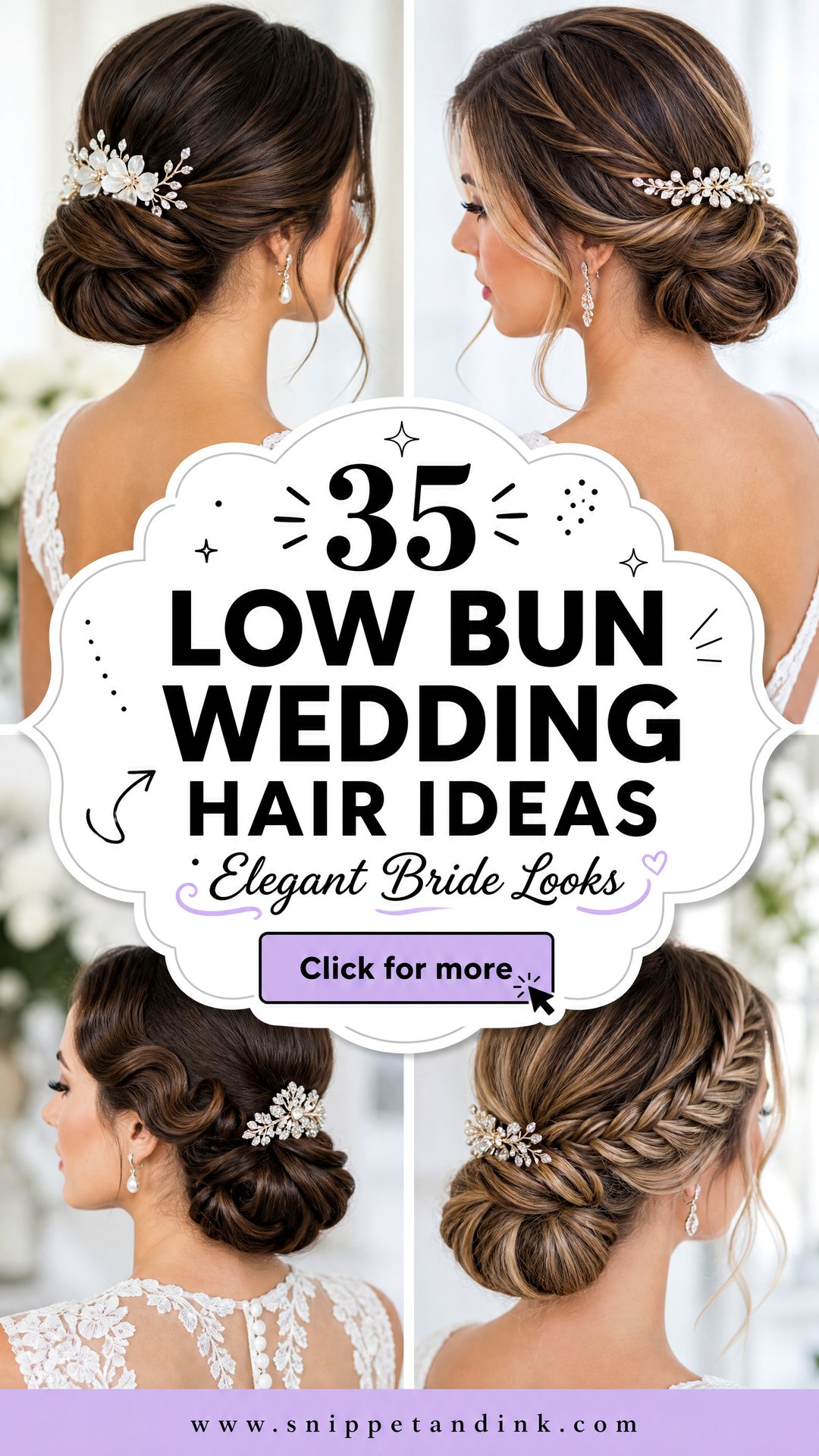
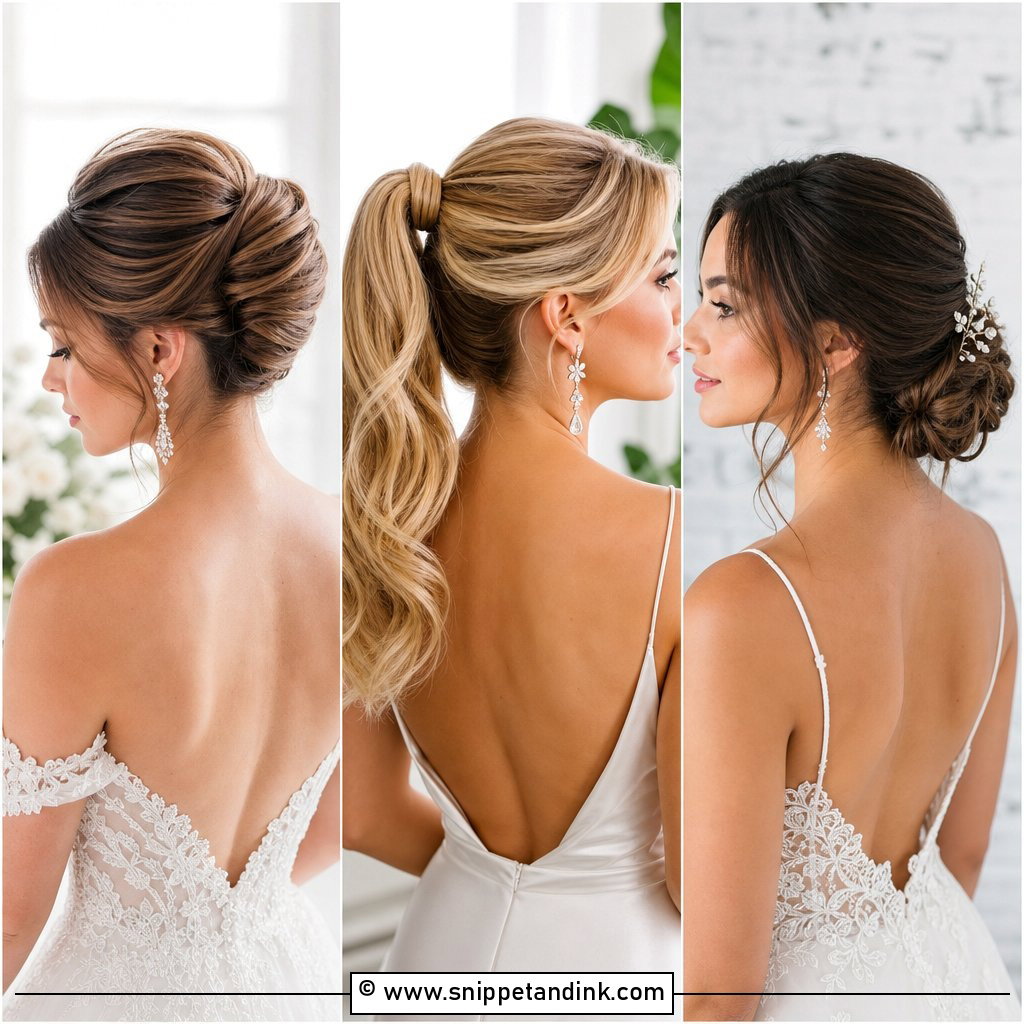
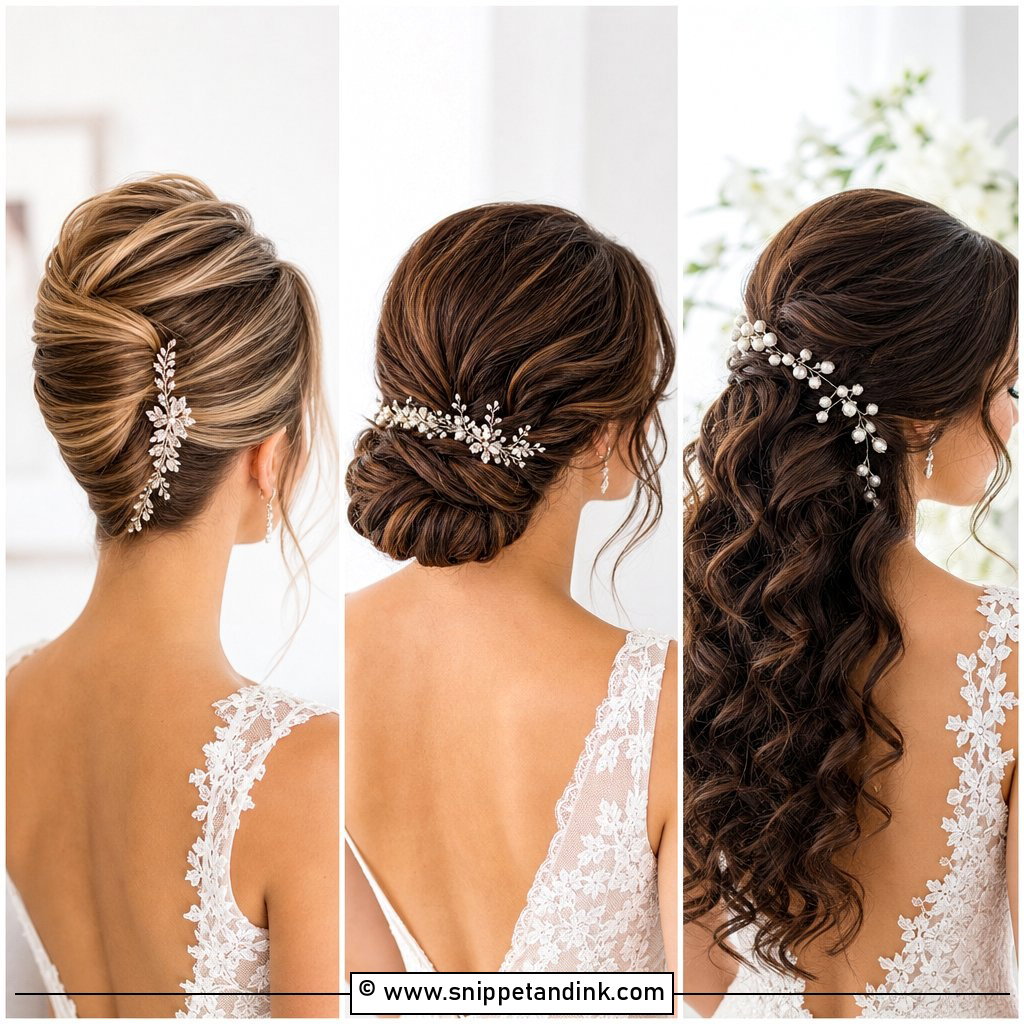
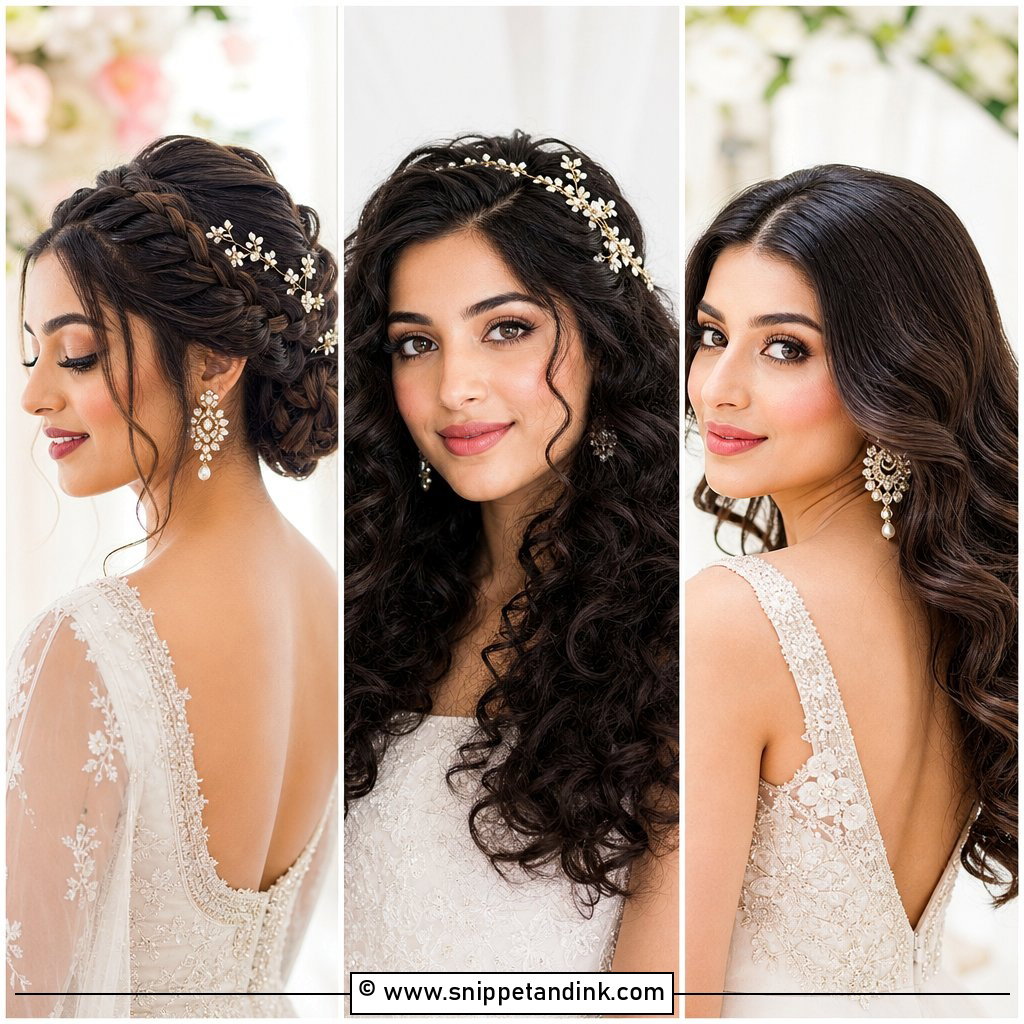
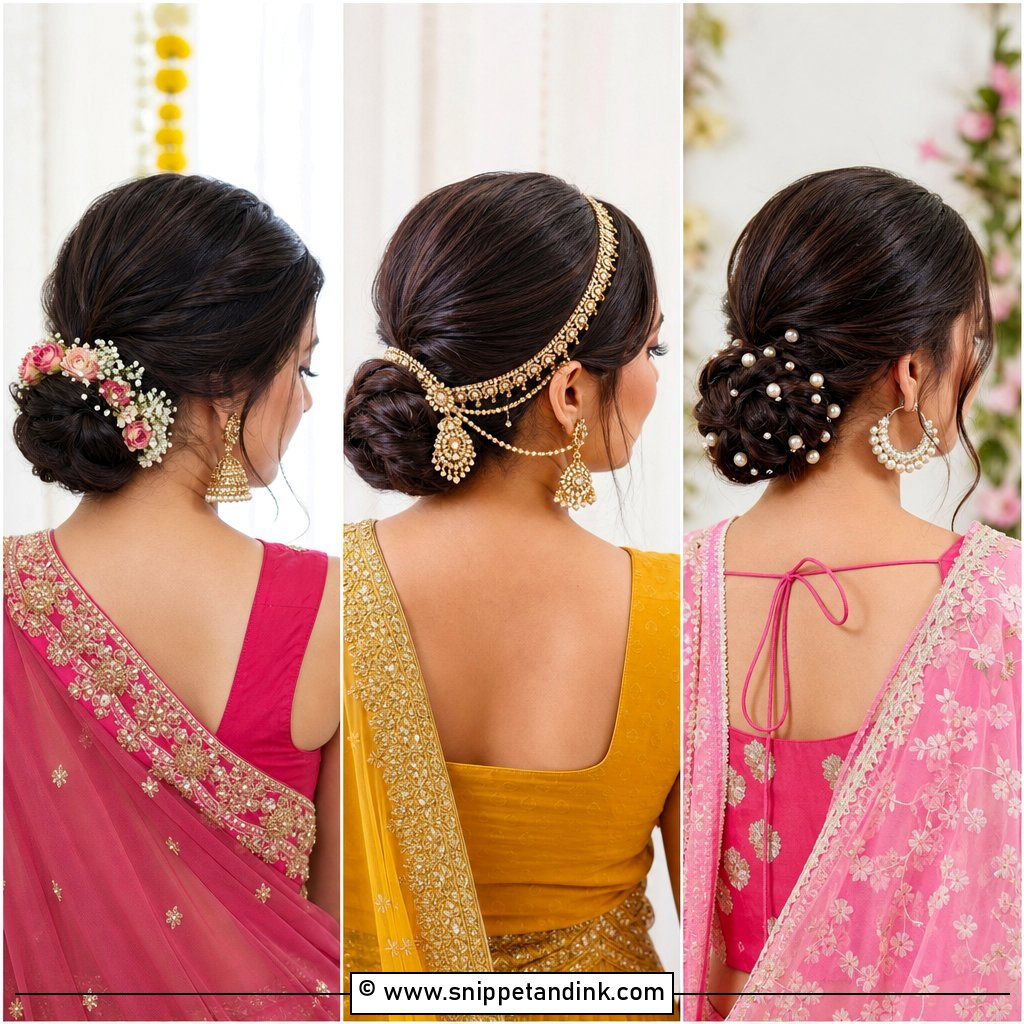
A low bun is the style I’m asked for more than any other, and for good reason. It sits at the nape where the head is narrowest, so it carries a veil without fighting it, it stays out of the way for hugs and dancing, and it looks right from the front, the side and the back. It also hides a lot of practical work: the difference between a bun that’s still neat at midnight and one that’s sliding by the first dance is almost always in the base. Here are 35 versions, sleek, textured, braided and dressed with pearls or flowers, each with a note on how I’d build it and who it suits.
How I Build a Low Bun That Holds From Ceremony to Last Dance
Every bun in this list starts the same way, with a base you never see. Get that right and the visible style, sleek or messy, will last. Skip it and even the prettiest bun starts to slide by the speeches.
- Prep the hair the day before. I prefer hair washed the night before the wedding, not the morning of, because freshly washed hair is slippery and pins slide out.
- Add grip. A texture spray or dry shampoo at the roots gives pins something to hold, even on a sleek style.
- Set the anchor. A secure ponytail or a few crossed pins at the nape form the base everything else attaches to.
- Pin in crosses. Two pins crossed in an X hold far better than one pin pushed straight in.
- Spray in layers as I go, not just at the end, so the hold is inside the style rather than a crust on top.
Adjusting for your hair type
Fine hair needs volume added before it’s pinned, so I curl and lightly backcomb it, and sometimes use a small padded base or a clip-in piece. Thick, heavy hair needs the opposite: splitting into sections so the weight is spread, and pins that are longer and stronger. Curly and coily hair often holds a bun beautifully with less product, and I work with the natural texture rather than straightening it flat. Layered hair needs extra pins around the nape and a light wax to tuck short ends.
1. Sleek Low Bun With Middle Part
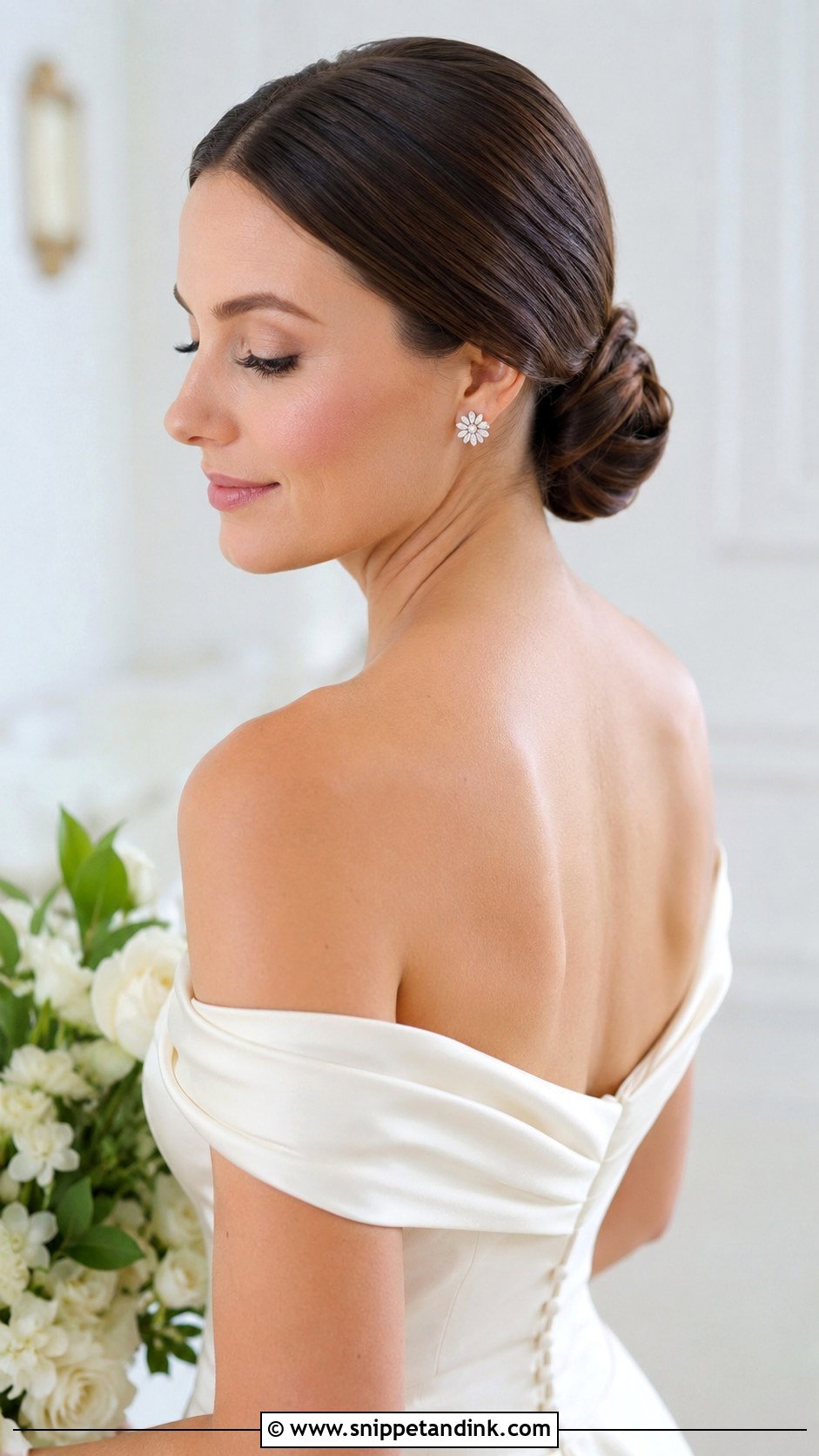
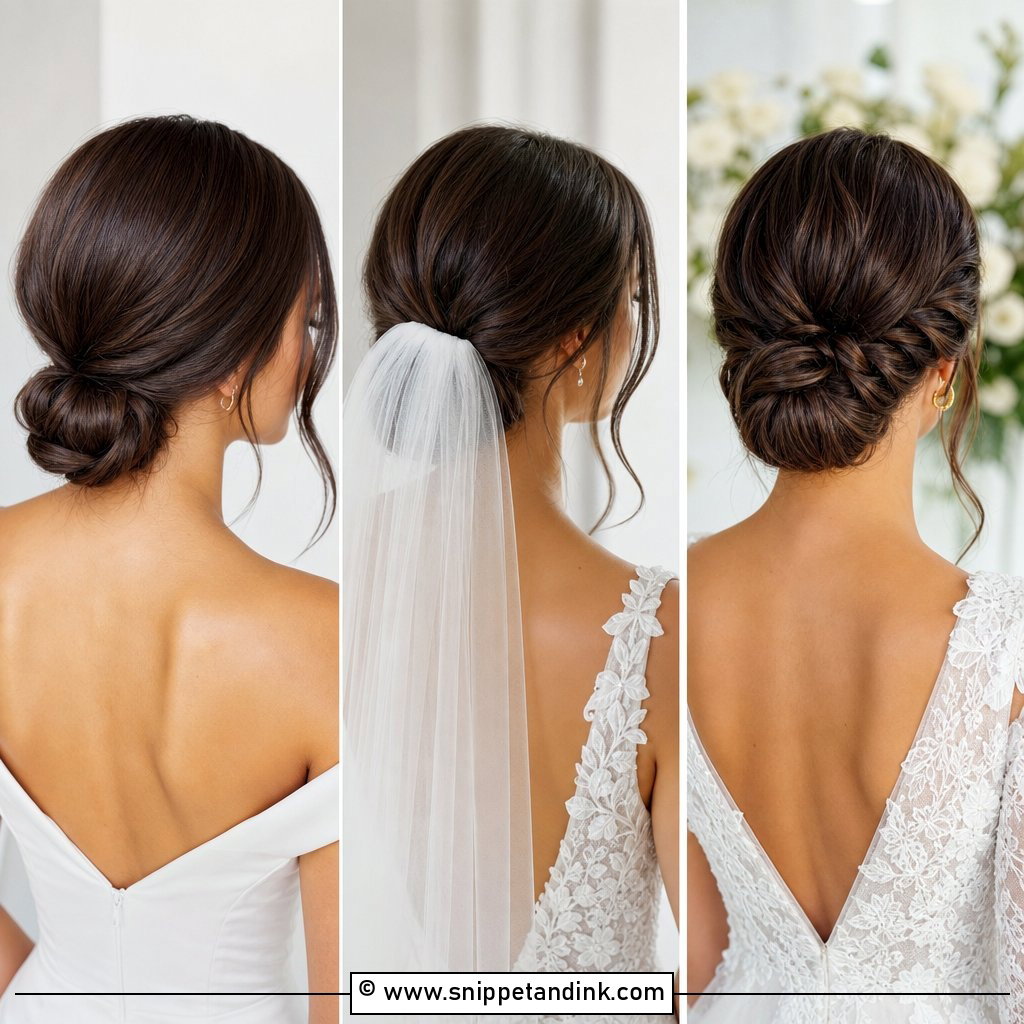
A centre part with every strand pulled back into a smooth knot. It’s the cleanest bun there is, which also makes it the least forgiving. Any bump or flyaway shows. I smooth the hair while it’s still slightly damp with a paddle brush and a light cream, tie it off, and only then add a little shine serum. It suits faces with fairly even features; if your hairline is uneven at the centre, a middle part will show it, and a slightly offset part is kinder. On camera, it reads sharp from every angle.
2. Soft Textured Low Bun
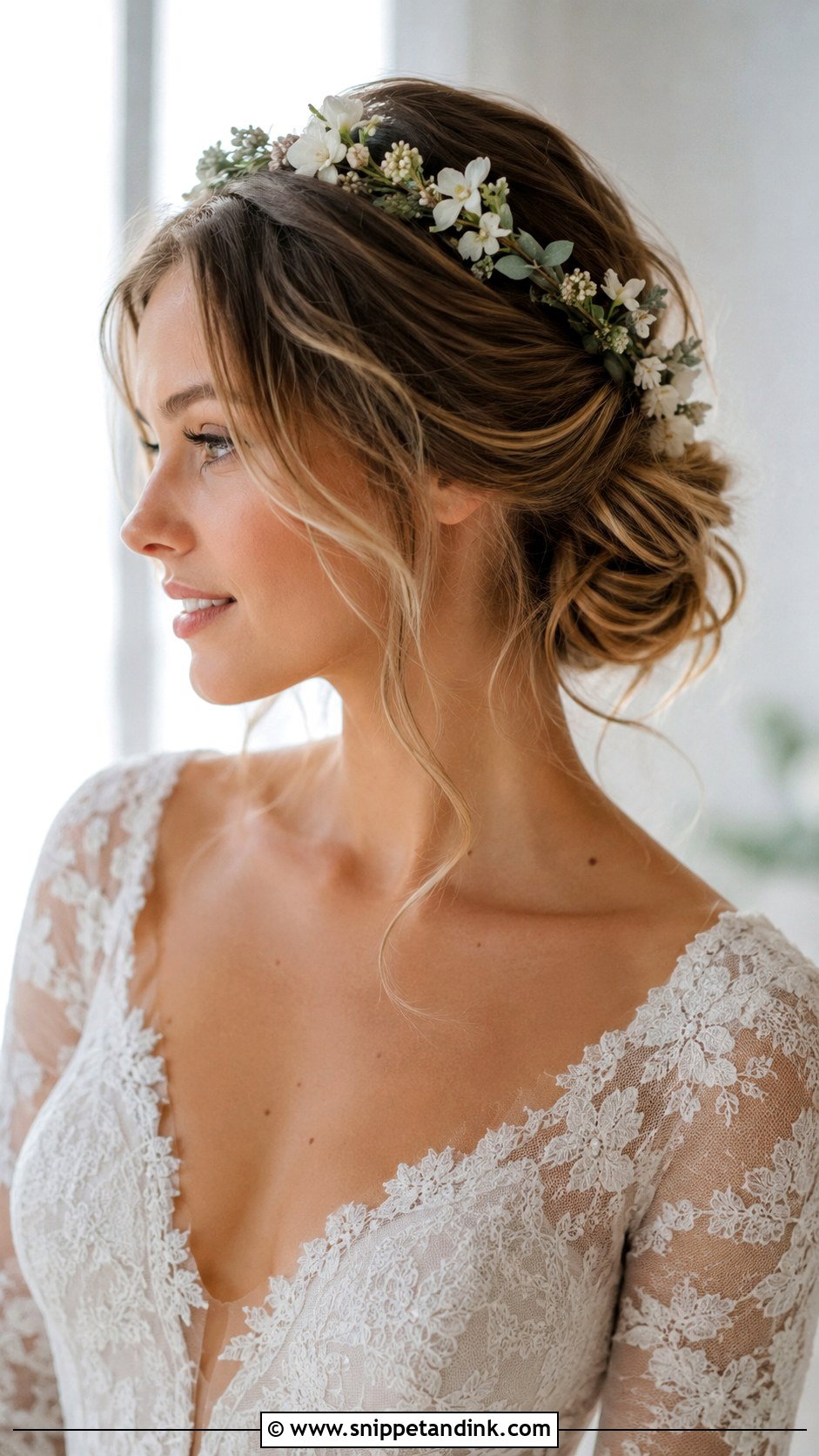
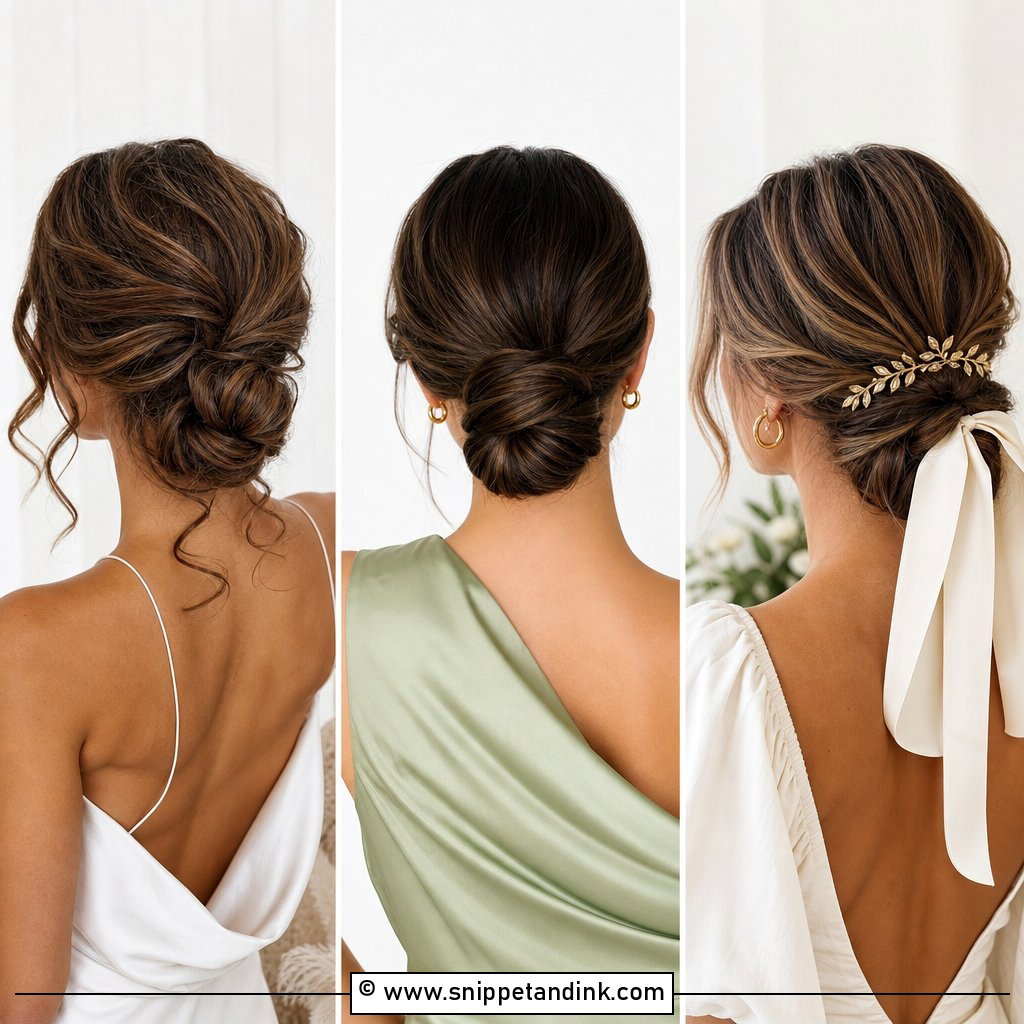
This one should look like five minutes and actually takes forty. I curl the hair first with a large barrel, brush the curls out, then gather and pin it loosely and pull small pieces at the crown and sides to soften the outline. A few tendrils come out at the cheeks. Garden ceremonies and relaxed dresses suit it. For fine hair, the texture is a real advantage, since curling and teasing add bulk the hair doesn’t have on its own. A few gold pins or small flowers are enough.
3. Braided Low Bun
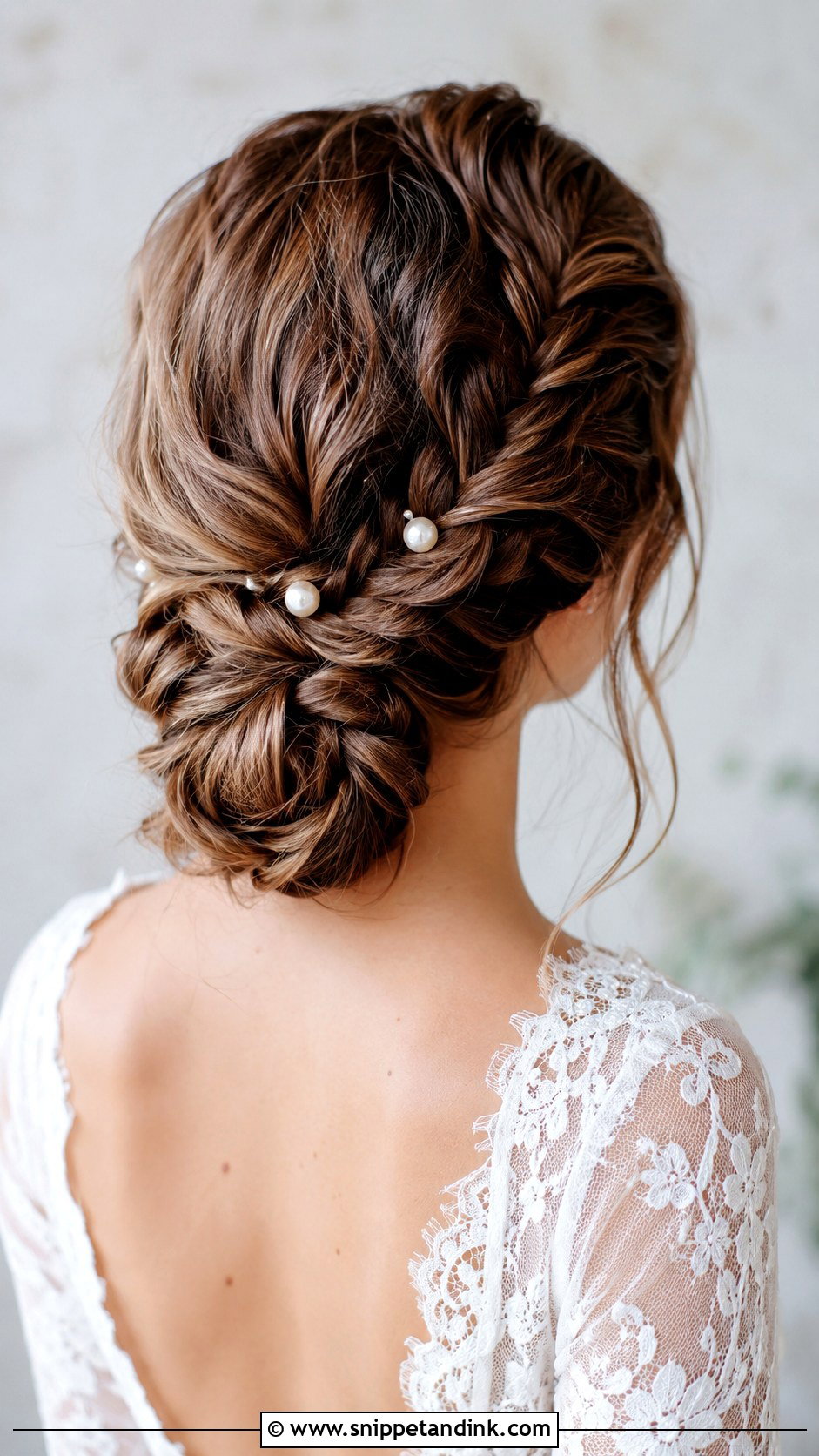
A braid wrapped into the bun, whether fishtail, French or Dutch, adds texture the camera picks up well. One braid wrapped around the base, or several thin braids worked through the knot, both hold well. Braids are also the most secure way to build a bun for an outdoor or windy wedding, because each section is locked in before it’s pinned. I braid slightly loosely and then pull at the edges, since a tight braid looks thin once it’s coiled. Tiny pearl pins in the woven sections catch the light.
4. Low Bun With Side Sweep
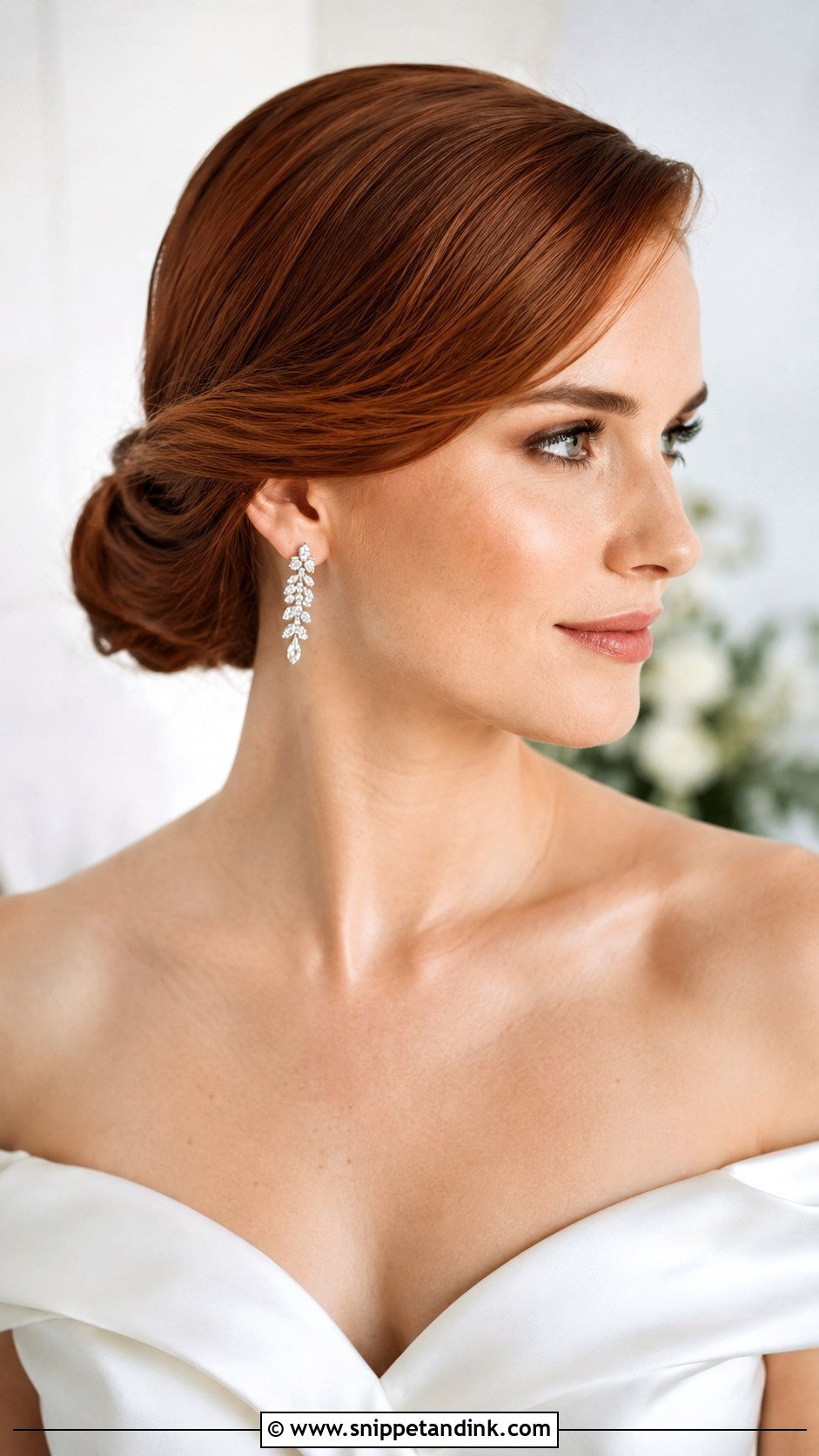
Hair swept hard to one side before it gathers into a smooth knot gives a slightly old Hollywood shape. The sweep leaves one ear and side of the neck open, which is exactly where statement earrings and an off-shoulder or asymmetric neckline want the attention. I set the sweep with a hot roller or a large curl first, so it holds its curve instead of falling flat across the forehead. A jeweled comb where the hair gathers suits it, especially for evening.
5. Voluminous Low Bun
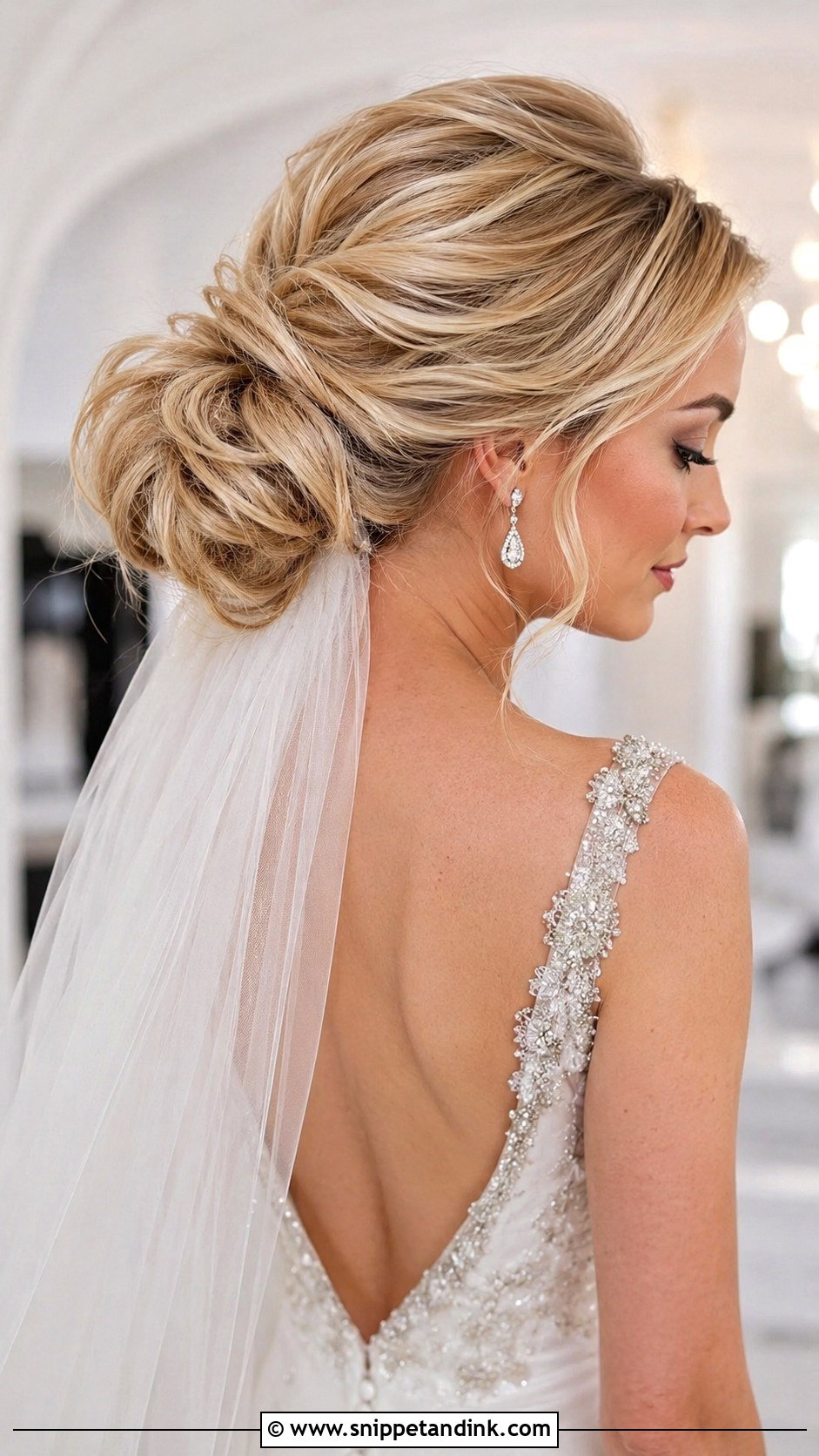
A big, rounded knot built on backcombing. Thick, long hair gets there on its own; finer or shorter hair needs a padded base or clip-in extensions, and there’s no shame in either. I’d steer petite brides with small faces away from the very largest versions, since a bun wider than your head can look heavy from the side. Grand gowns and long veils balance it. Flexible hairspray between layers, not just at the end, is what keeps the volume up all evening.
6. Low Bun With Loose Curls
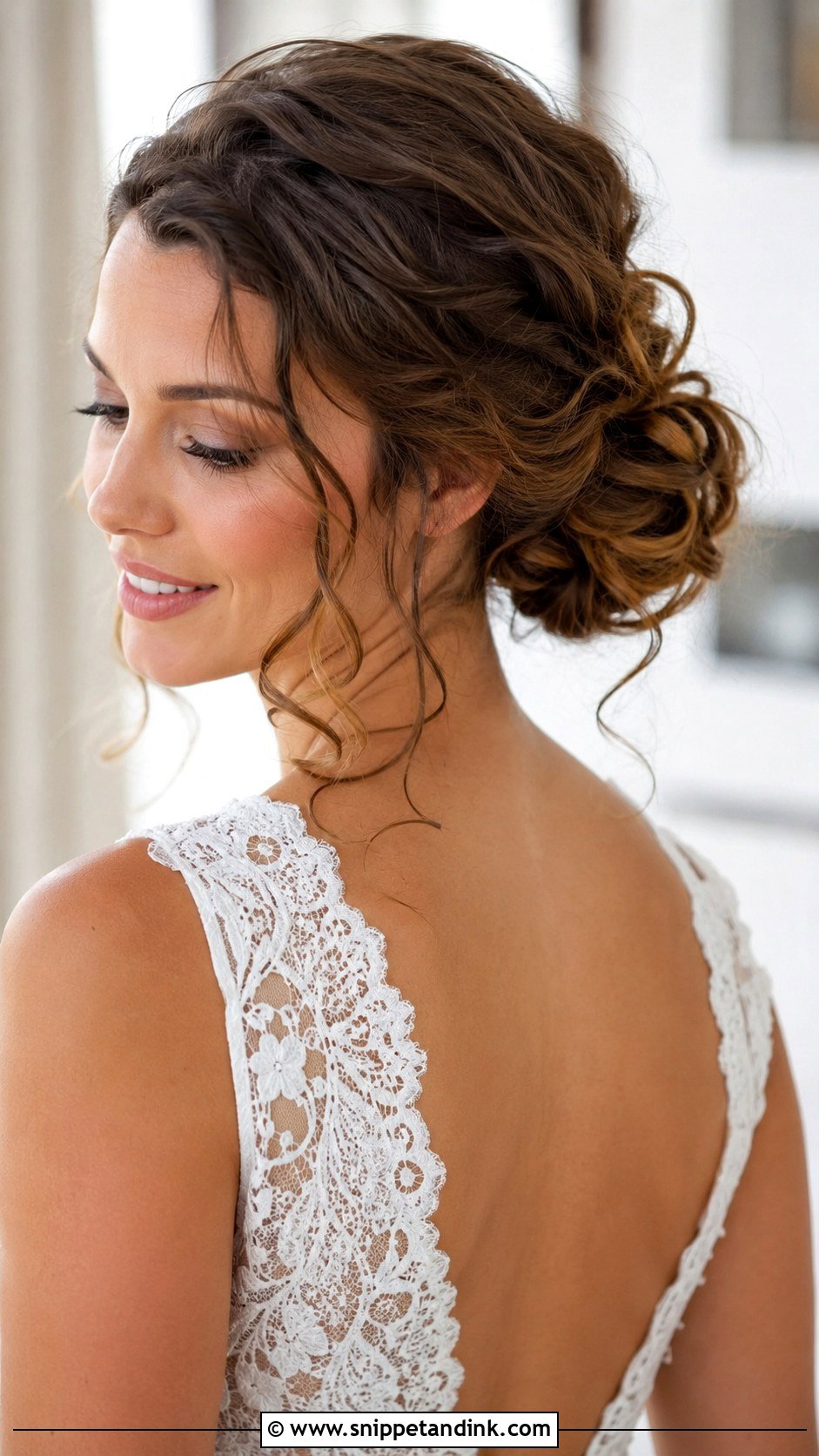
A relaxed knot with curled pieces pulled out around the face and neck. The risk with this one is that the loose curls drop by the reception, especially in humid weather or on fine, straight hair. I set those pieces with a curling wand, pin each curl up while it cools, and only release them just before you put the dress on. It suits a gown with lace or floral detail and photographs naturally in candids, sitting halfway between polished and loose.
7. Sleek Low Bun With Veil
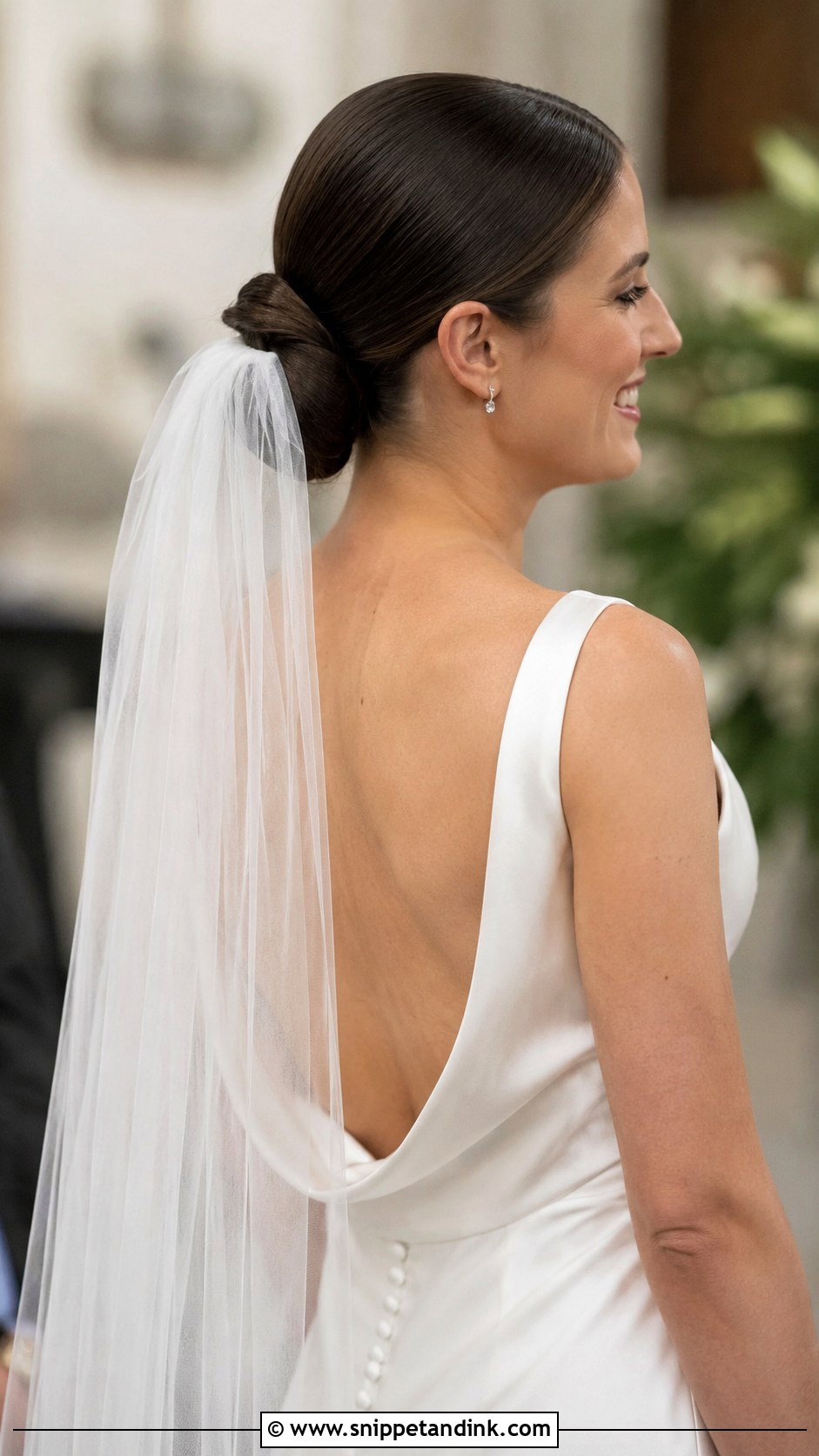
The classic pairing. A low, smooth bun gives a veil comb something solid to bite into, either just above the bun or tucked underneath it, and the veil falls cleanly down the back. Cathedral or short birdcage, both sit well. I always anchor the comb into a pinned section, not just loose hair, because a long veil is heavier than it looks and pulls backward every time you turn. Once the veil comes out for the reception, the bun underneath is untouched, which is the real reason I recommend it for traditional ceremonies.
8. Twisted Low Bun
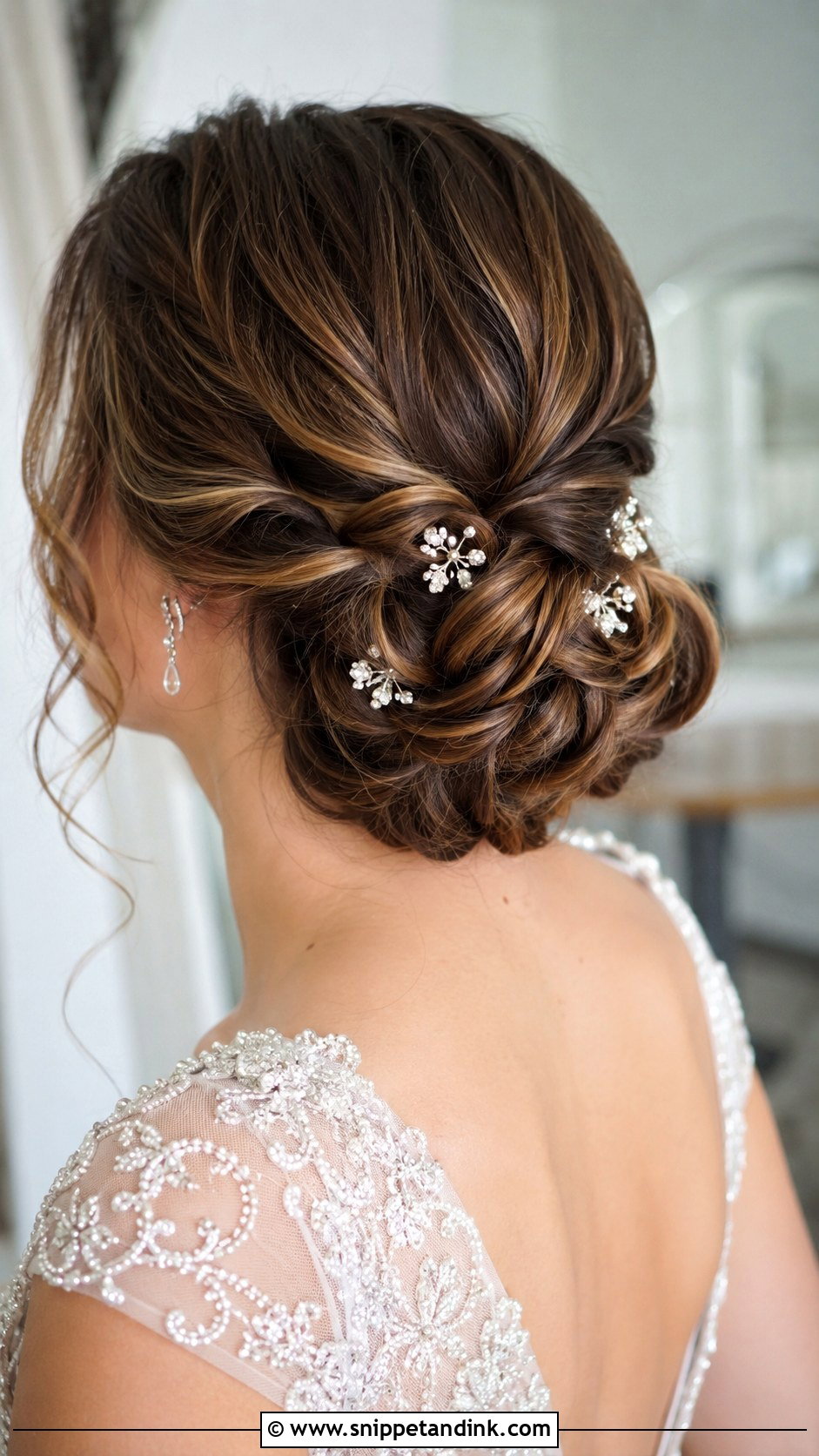
Sections twisted and looped together rather than wrapped into one knot give texture without a full braid. It has a soft, slightly sculptural look and holds well, because each twist is pinned separately. The trade-off is that twisted buns need some grip in the hair. On freshly washed, silky hair, the twists slip loose, so I prep with a texture spray and often ask for hair washed the night before. Pearl or crystal pins between the twists finish it, and it suits modern and vintage weddings alike.
9. Low Chignon Bun
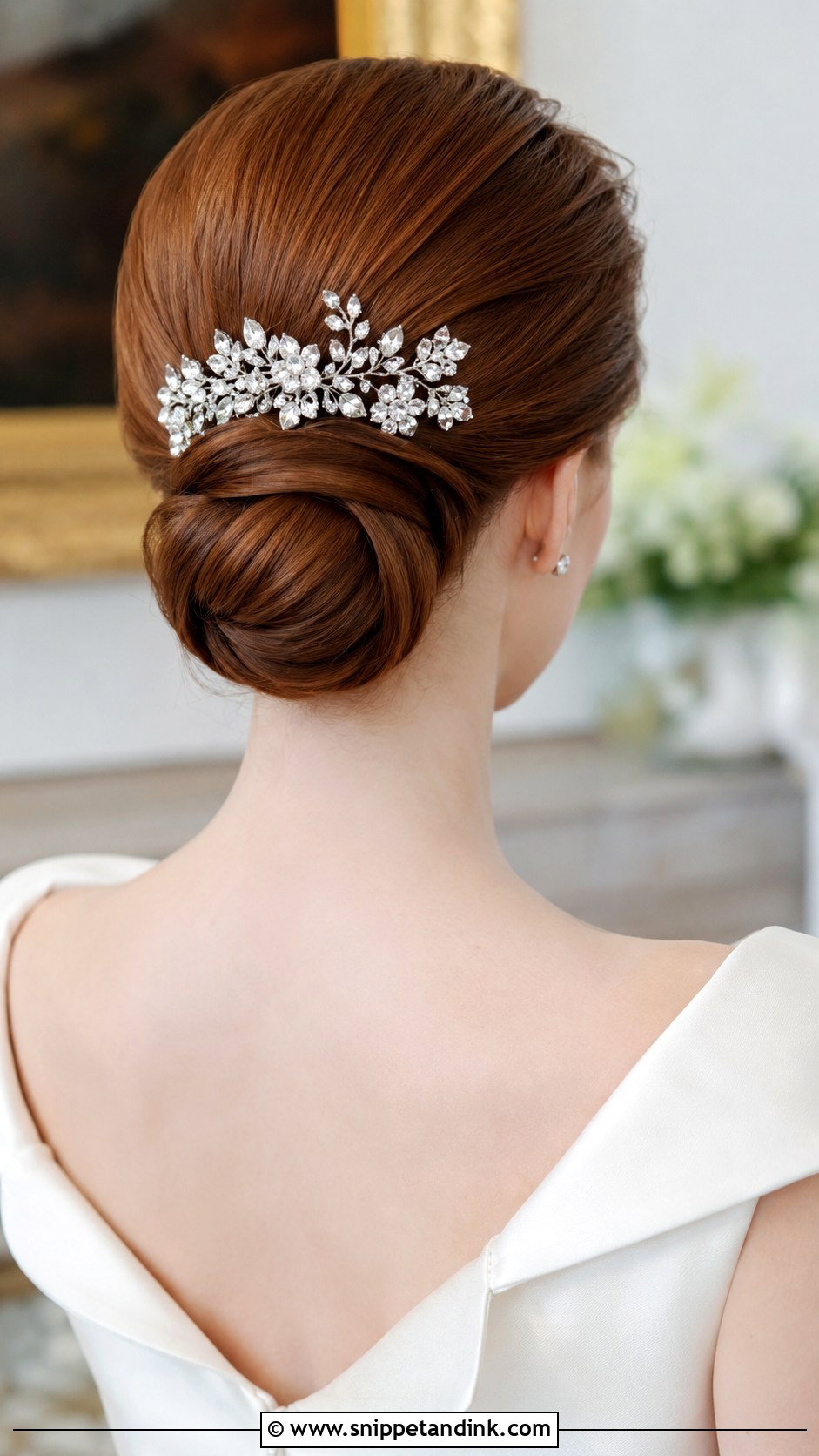
The rolled chignon has been a bridal staple for generations because it suits almost any face and any neckline. The hair is gathered and rolled into a smooth knot at the nape. It’s the right call for formal and black-tie weddings. I usually roll it over a small padded form in a shade close to your hair, which keeps the shape full and gives me something to pin into. It can stay sleek or have a few strands loosened. A jeweled comb or a single fresh flower is all it needs.
10. Messy Low Bun
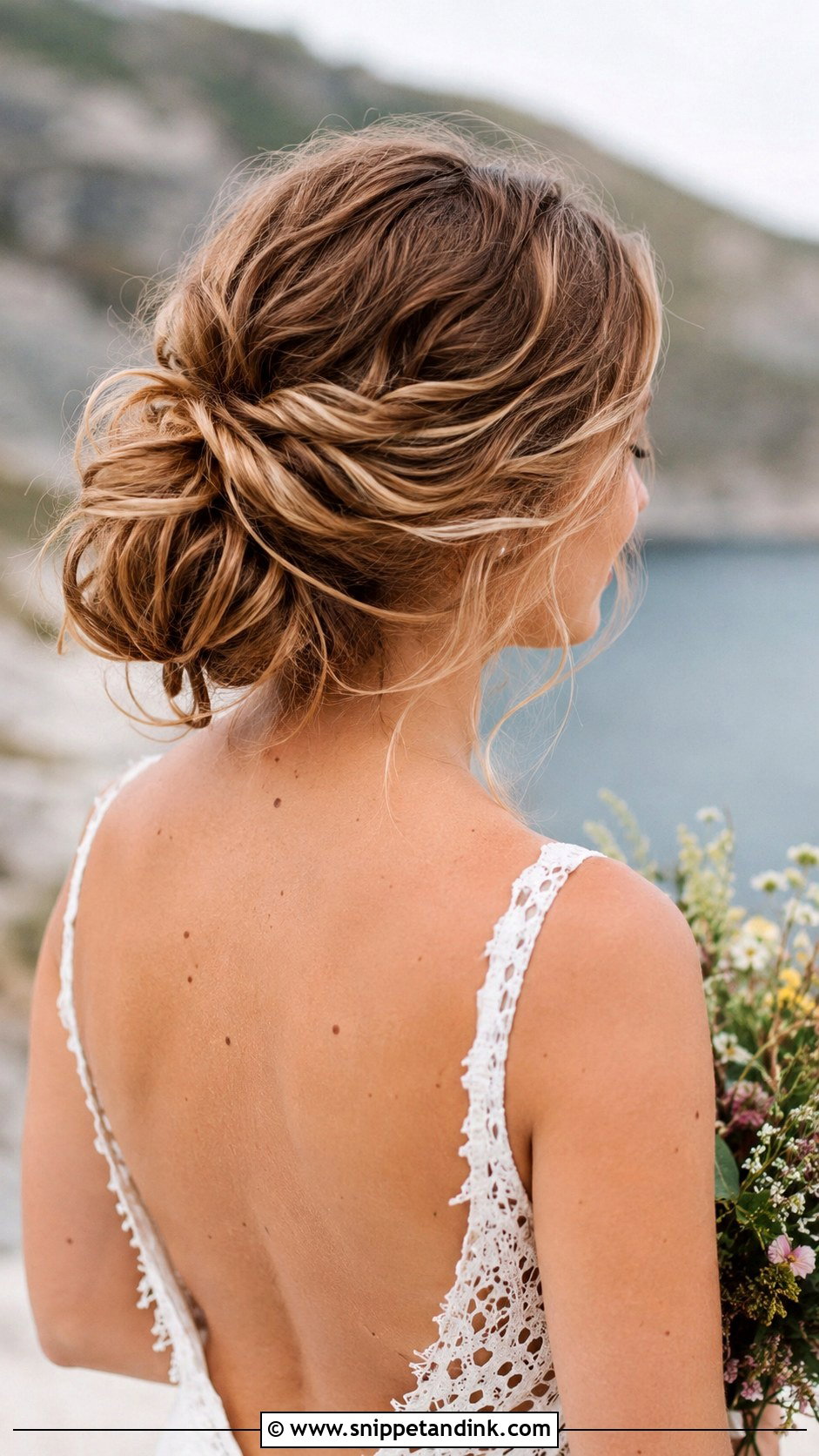
Loose, tousled strands and a deliberately undone finish. Beach ceremonies and small outdoor weddings are its natural home. It’s the bun that most needs a professional, oddly enough, because truly messy hair looks unkempt in photos. I build it from curled hair, pin it securely underneath, then pull the outer layer loose. Wildflowers or greenery work with it. Salt air and wind actually help the texture, which makes it one of the few styles that improves at a beach.
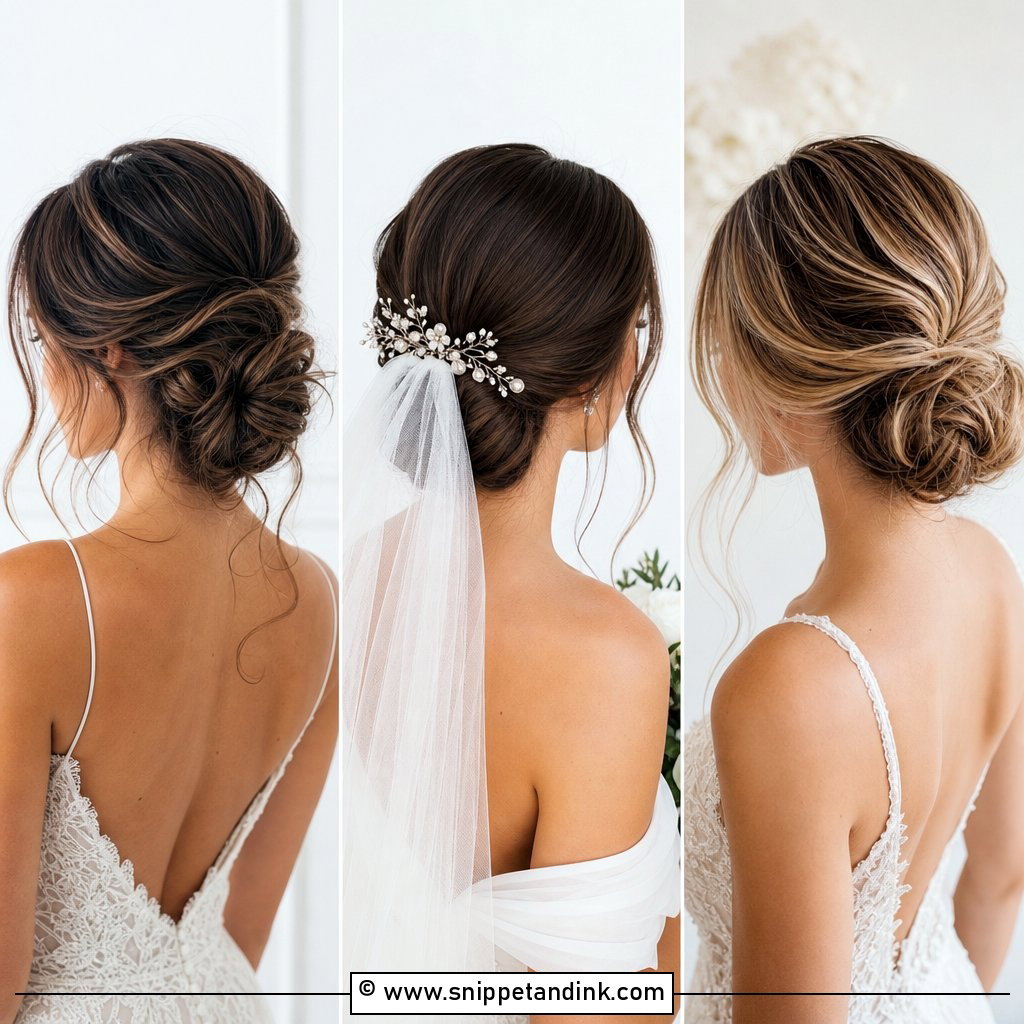
11. Low Bun With Pearl Accessories
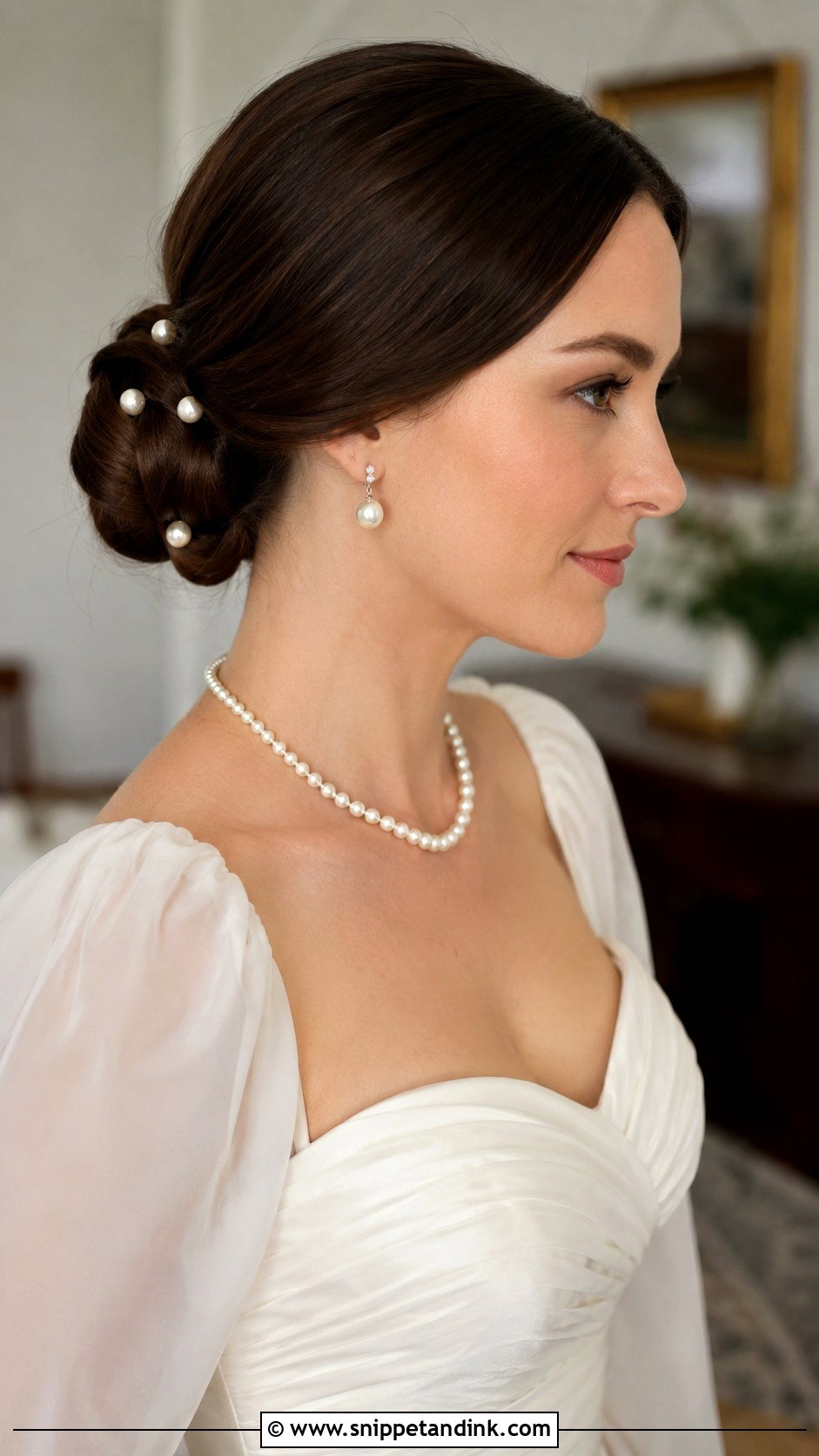
Pearls sit naturally on a low bun. A handful of scattered pearl pins catch the light softly and don’t compete with a veil, and they suit sleek and textured buns equally. A pearl comb is the alternative if you’d prefer one piece. Placement is the part people underestimate: I put pins on the side of the bun that faces the camera during the ceremony, usually the side away from your partner, so they actually show in the vows photos. They tie in with pearl earrings and beaded veils.
12. Low Bun With Braided Crown
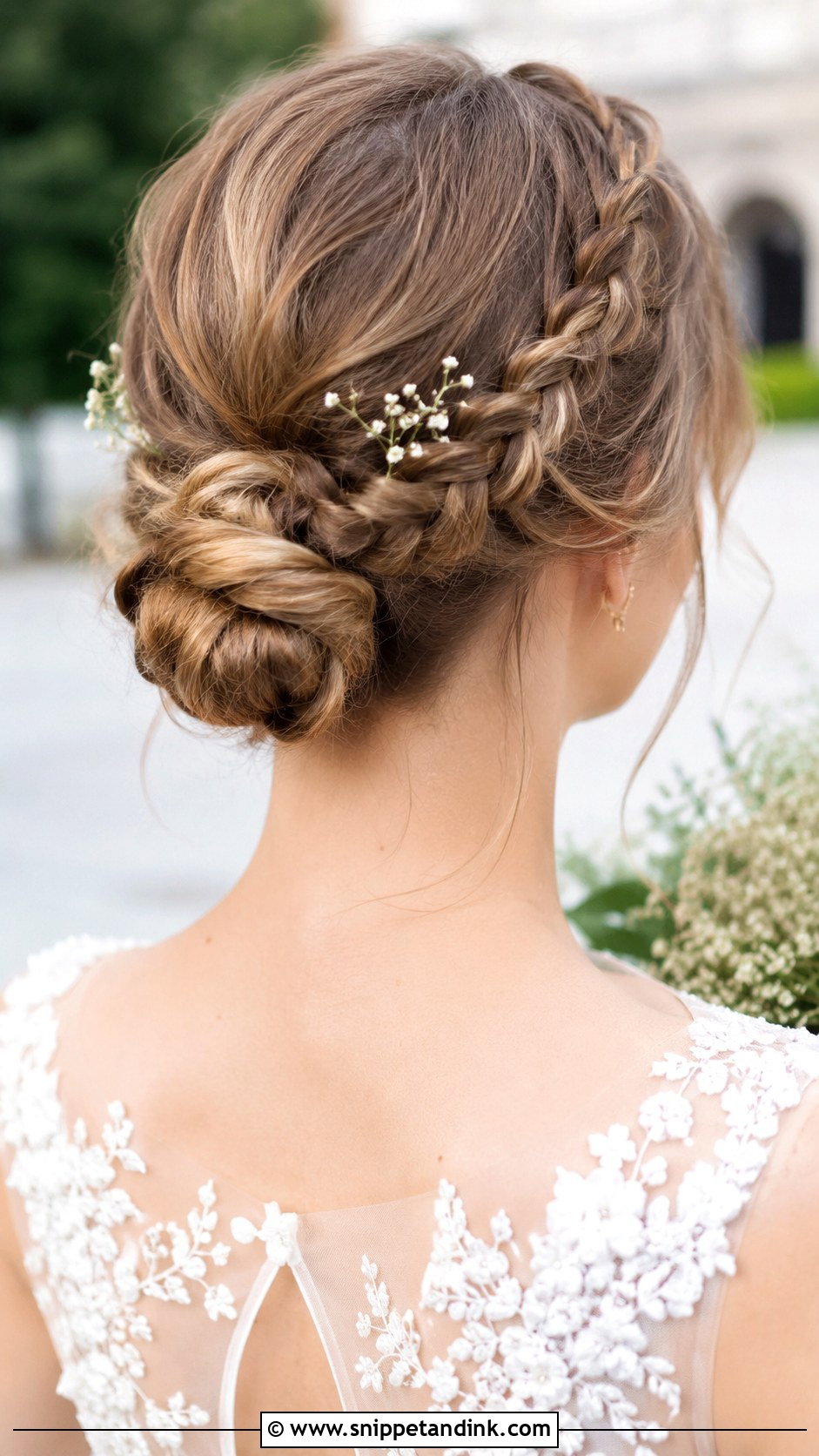
A braid wrapped over the top of the head like a halo, with the rest of the hair gathered into a soft knot at the nape. It has a bohemian and regal feel that suits gardens and summer weddings. The crown braid needs enough length to reach across the head, so it’s a long-hair style unless we add a clip-in braid. It’s also very secure, since the braid holds the front hair firmly. Tuck baby’s breath or small blooms into the braid for the finishing touch.
13. Low Bun With Curtain Bangs
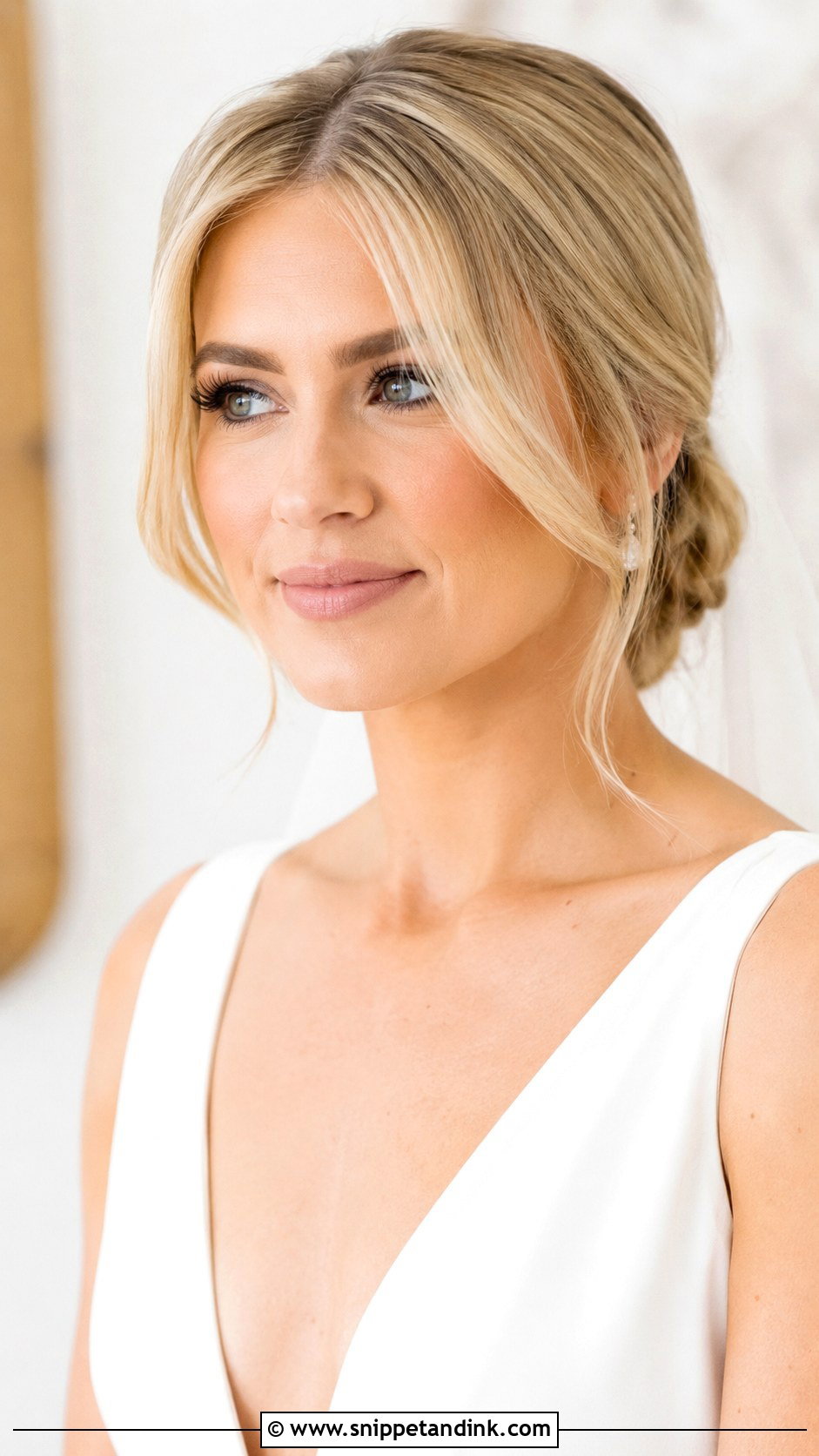
Curtain bangs soften a low bun by framing the eyes and cheekbones, and they stop a sleek style from feeling severe. If you already have them, this is an obvious choice. If you’re thinking of cutting them for the wedding, do it at least six weeks ahead, so the first awkward length has passed and you know how they fall. I style them with a round brush and set them with a little spray so they don’t separate into strands by evening.
14. Low Bun With Flowers
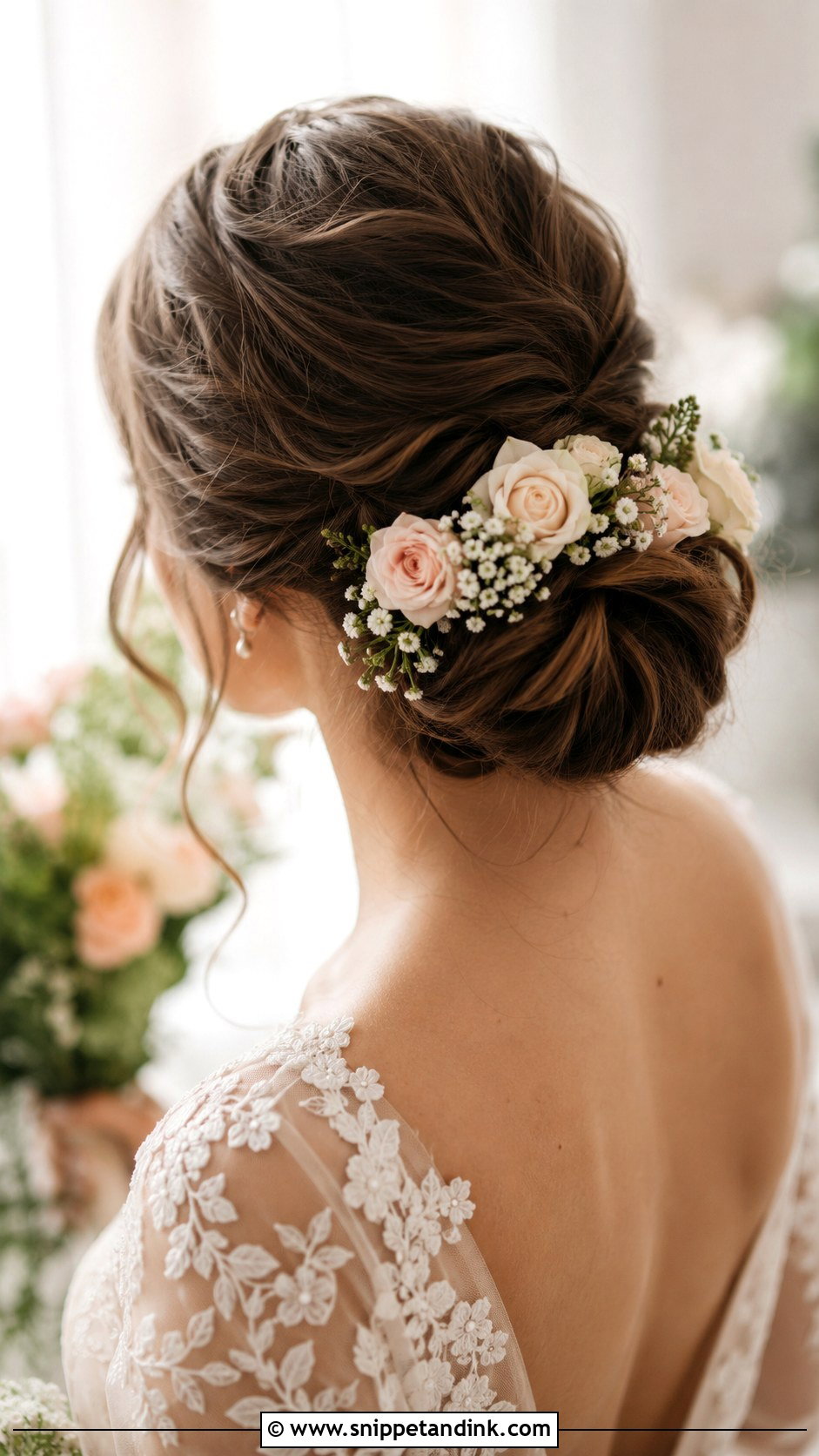
Flowers tucked into or around the bun bring colour and tie your hair to the bouquet. A sprig of baby’s breath keeps it delicate; roses make it bolder. A practical note: fresh flowers wilt out of water, and hair is warm, so I ask the florist for blooms that are wired and taped, and for hardy varieties. Silk flowers are a sensible backup for long summer days. Clustered on one side reads modern; scattered reads softer.
15. Sleek Low Bun With Deep Side Part
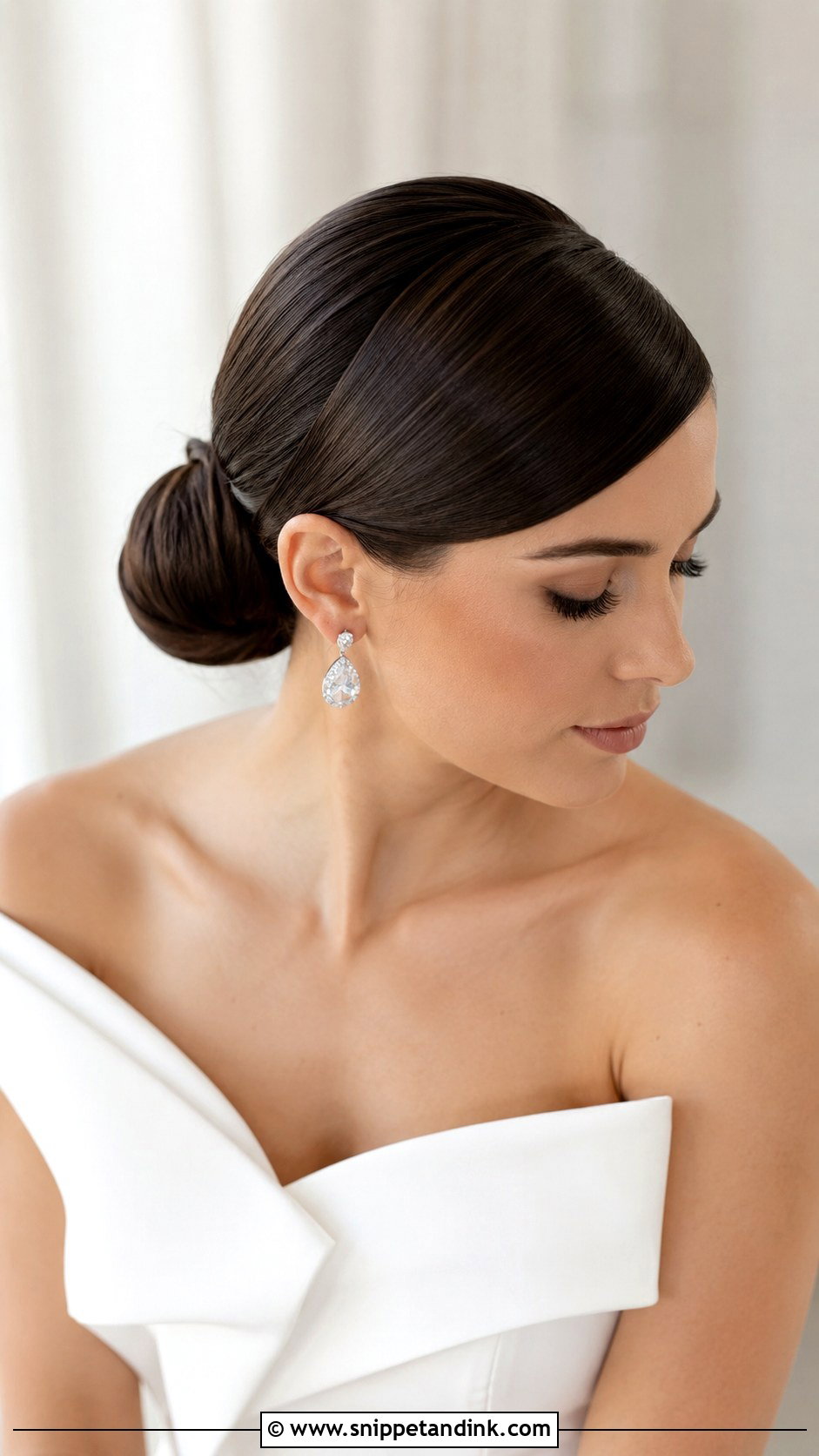
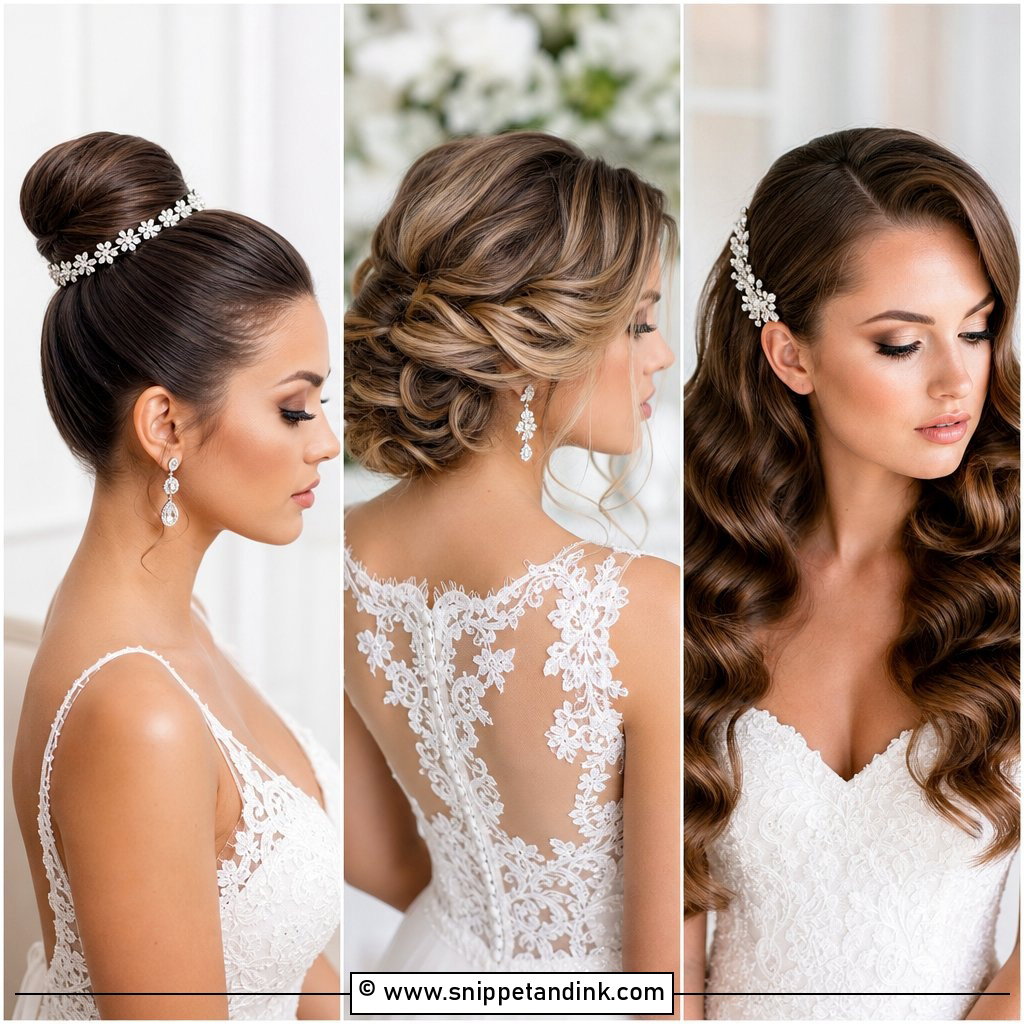
A deep side part sweeps hair across the forehead and gives a sleek bun real drama. It suits structured, modern gowns and statement jewelry. It does change how your face reads, so I always try it at the trial before committing, especially if you’ve worn a centre part for years. The heavier side needs a hidden pin or two above the ear, or it slowly slides forward into your eyes. Keep the bun low and smooth to balance the sweep.
16. Low Bun With Hair Vine
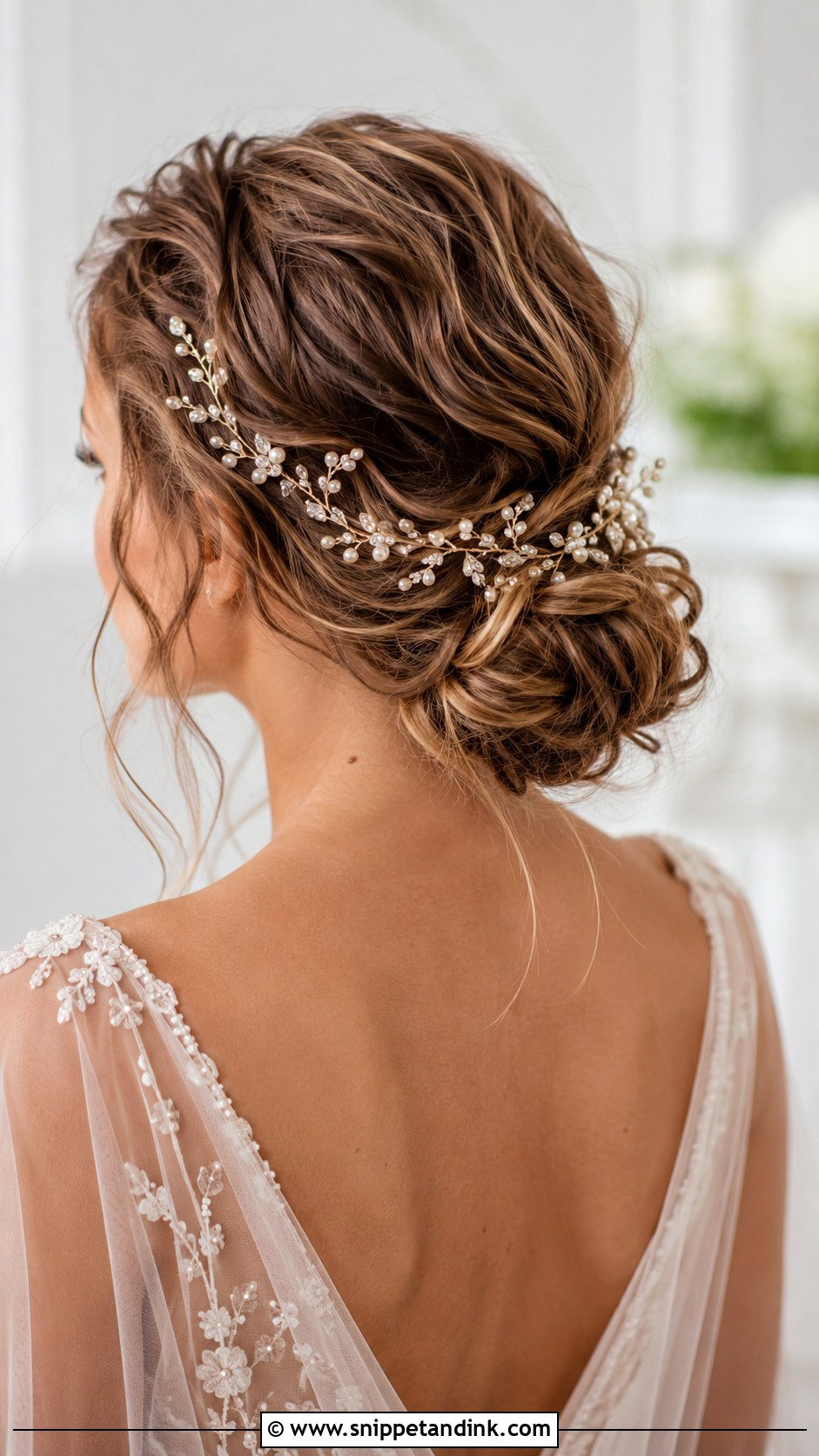
A hair vine is a flexible strand of tiny crystals, pearls or leaves that I weave through the bun and pin in place. It can wrap the bun, trail across the back of the head or curve along one side, so it adapts to almost any style. Bring it to your trial, not on the morning, because it takes time to find where it sits best on your particular bun. It adds detail without weight, which matters if you’re also wearing a veil.
17. Low Bun With Tendrils
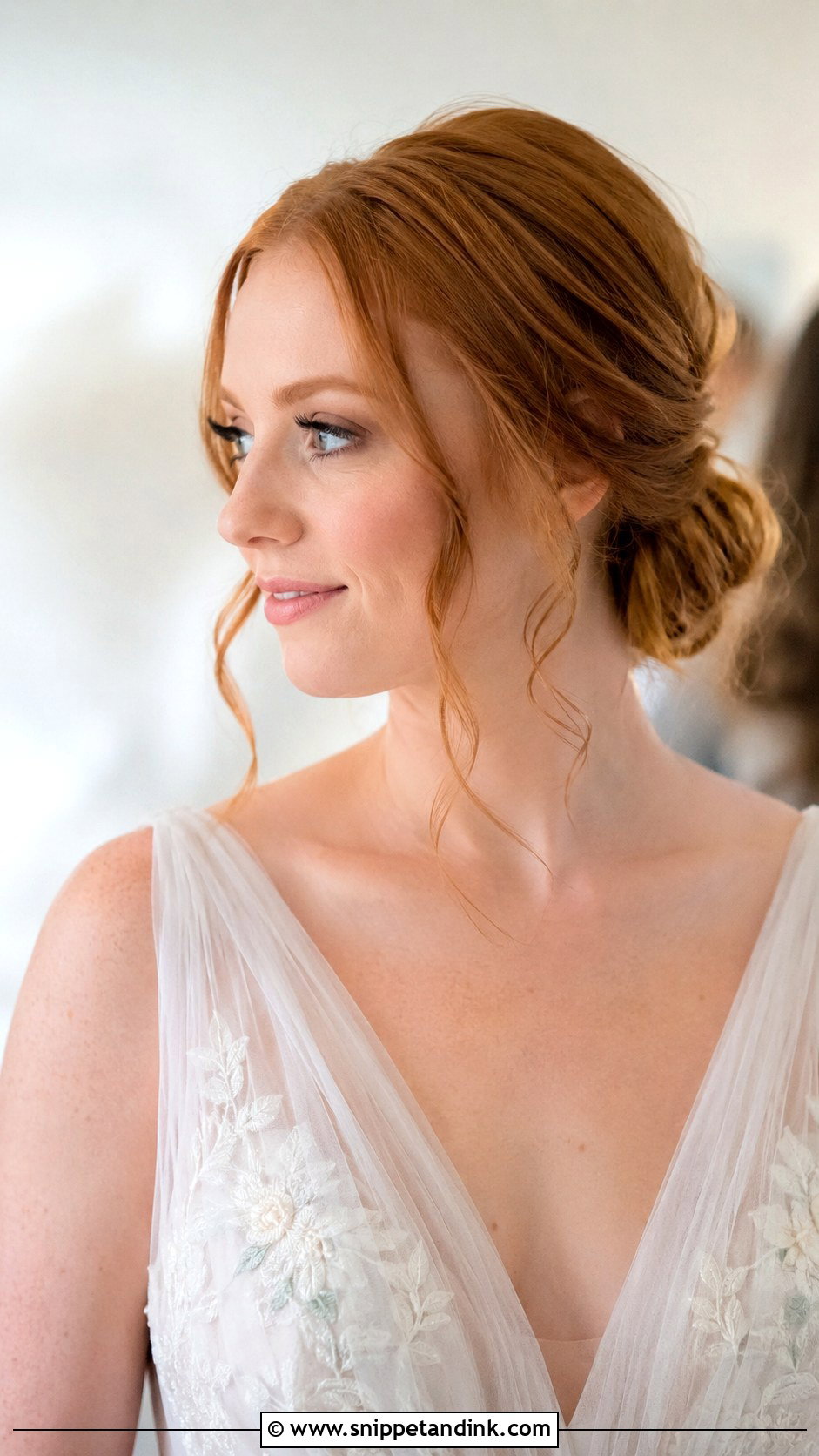
Loose, curled tendrils at the temples, cheeks and nape soften any low bun, and wispy tendrils are the detail I’m asked for most at trials. How many to leave out is the real question: too few looks accidental, too many looks like the bun is falling apart. I leave them longer than you’d expect, because curls tighten and spring up shorter once they’re set. A gentle bend from a wand is enough. They read well in candids.
18. Knotted Low Bun
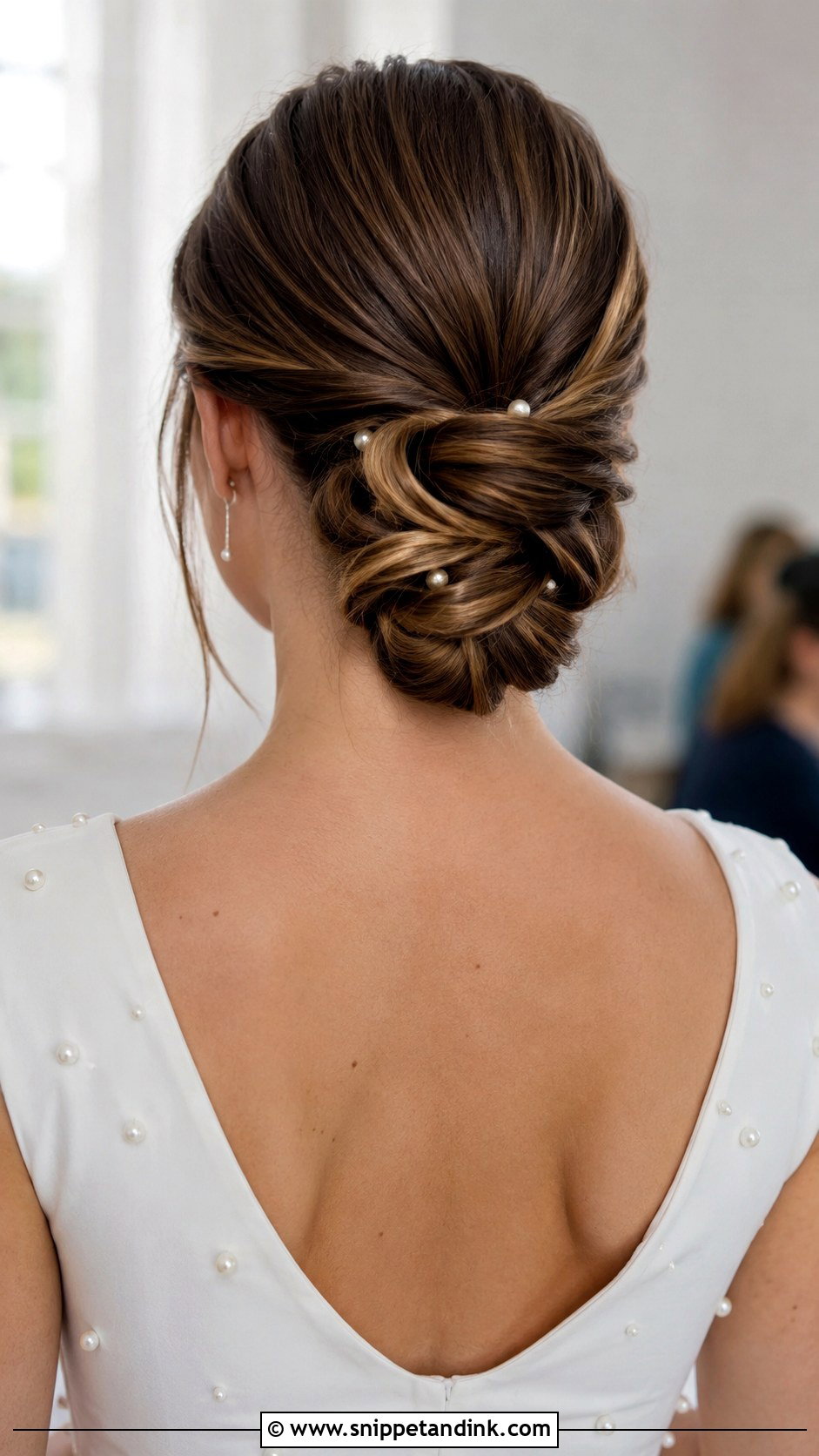
Sections tied into small knots and then gathered into a low bun give an unusual, sculpted finish that’s most interesting from behind. It’s a good choice if you’ve seen a hundred chignons and want something with more character. Knots need hair at least past the shoulders, and medium to thick hair shows them best; on very fine hair, the knots end up tiny. It pairs with minimalist and embellished gowns alike, and a few scattered pins add sparkle.
19. Low Bun With Headband
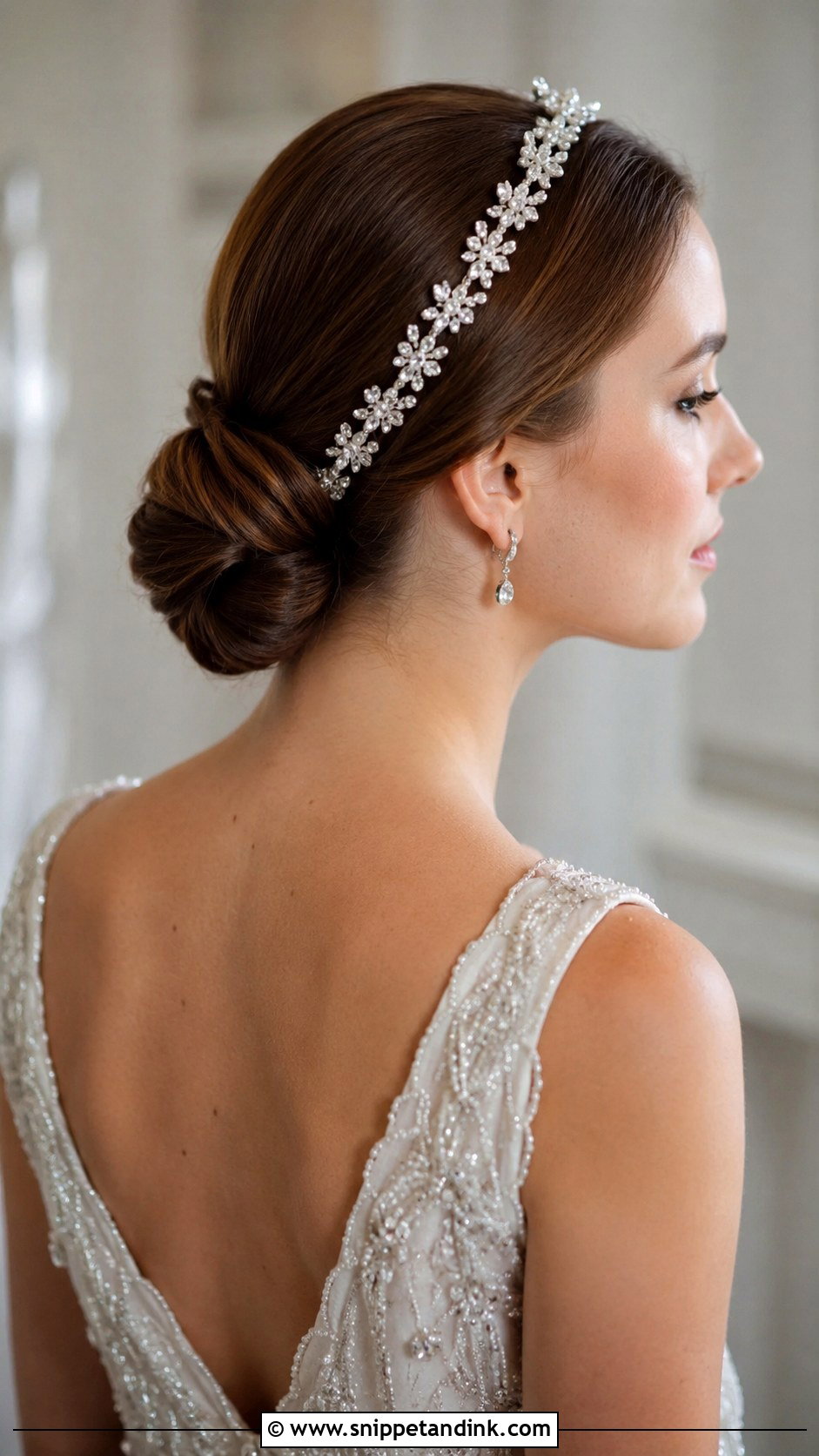
A jeweled or pearl headband frames the face and gives the hair a clear line across the top. It suits vintage, art deco and 1920s themes particularly well. The common problem is comfort: a stiff band pressing behind the ears gets painful after a few hours. I bend the band to fit your head at the trial and pin it from underneath so it doesn’t slide. Crystal, pearl or floral bands each suit different gowns. It looks best with simple earrings and a sleek or softly textured bun.
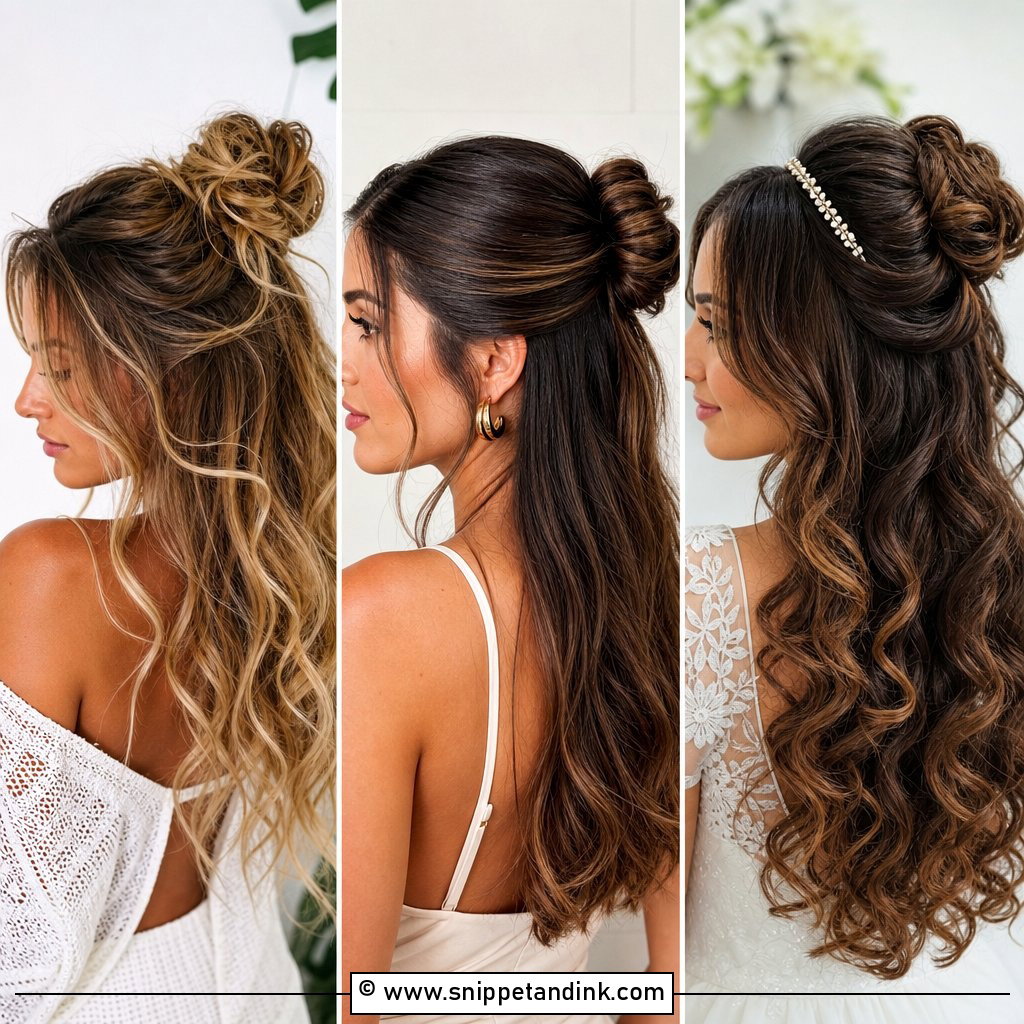
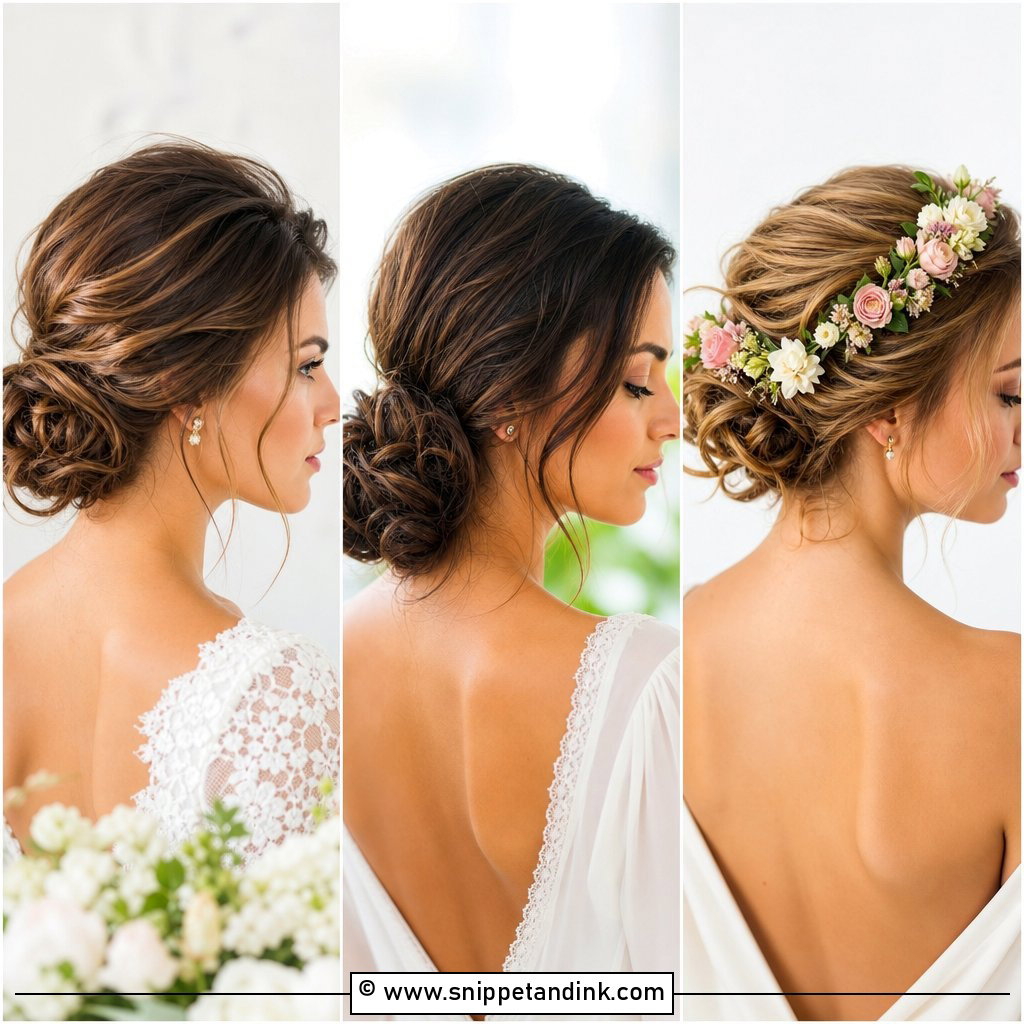
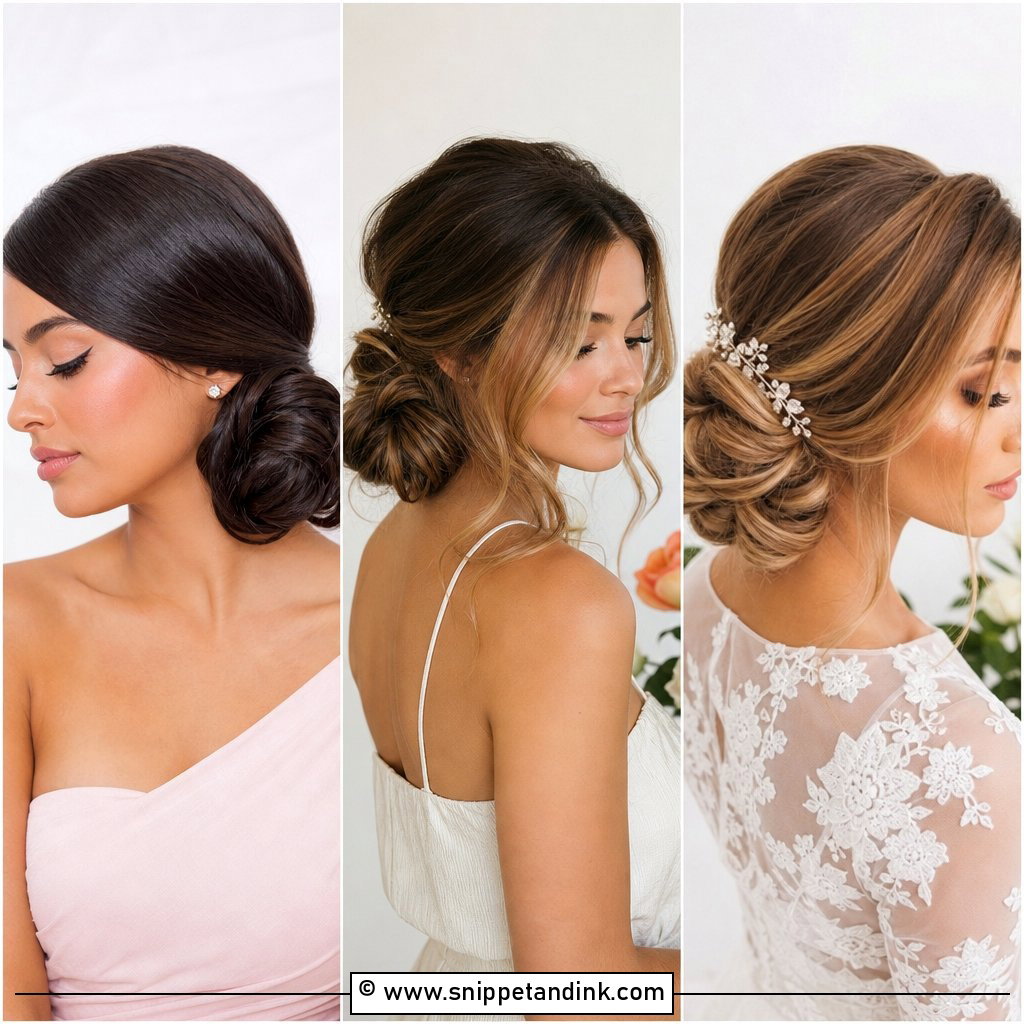
20. Low Bun With Wrapped Hair Base
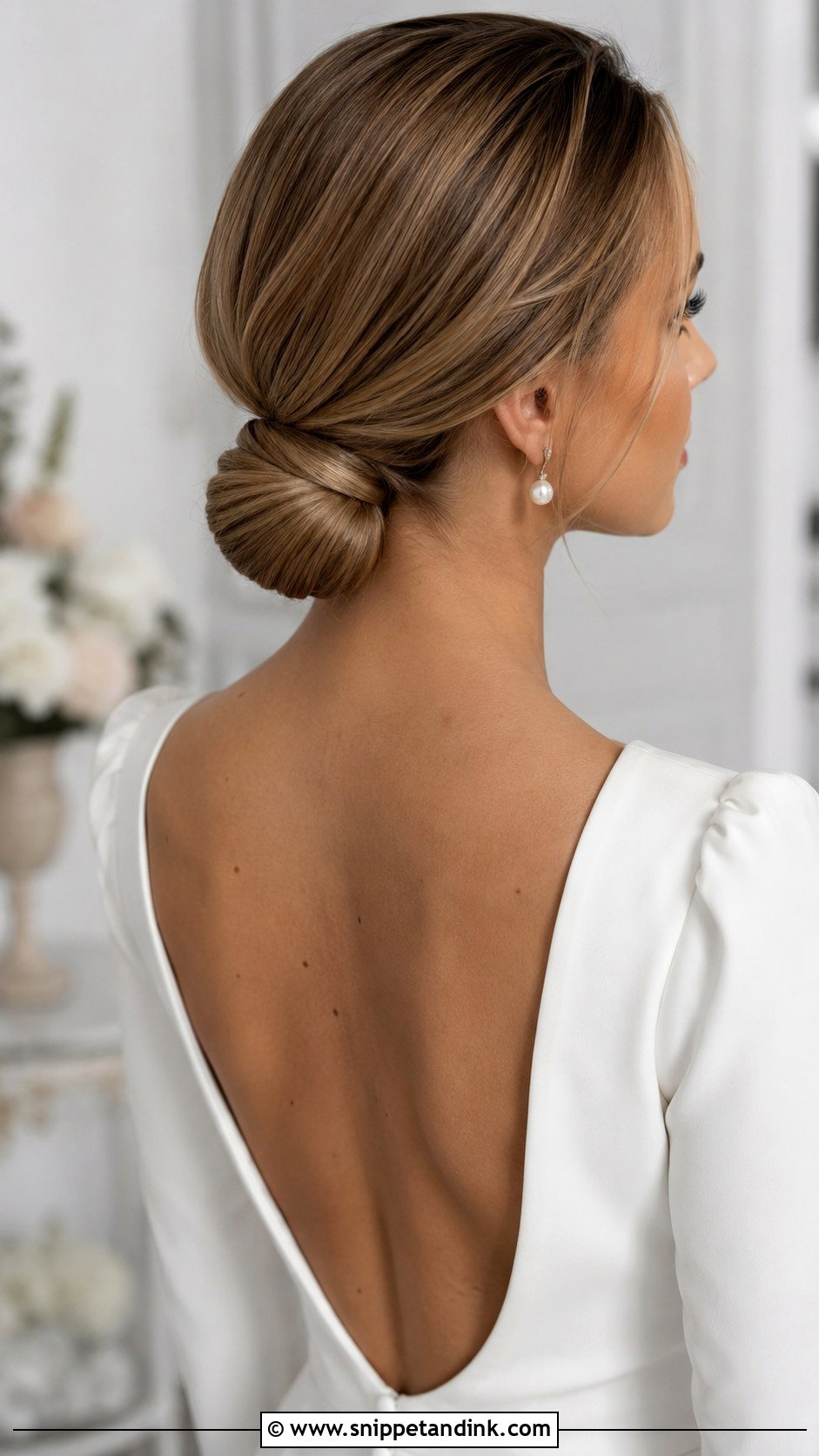
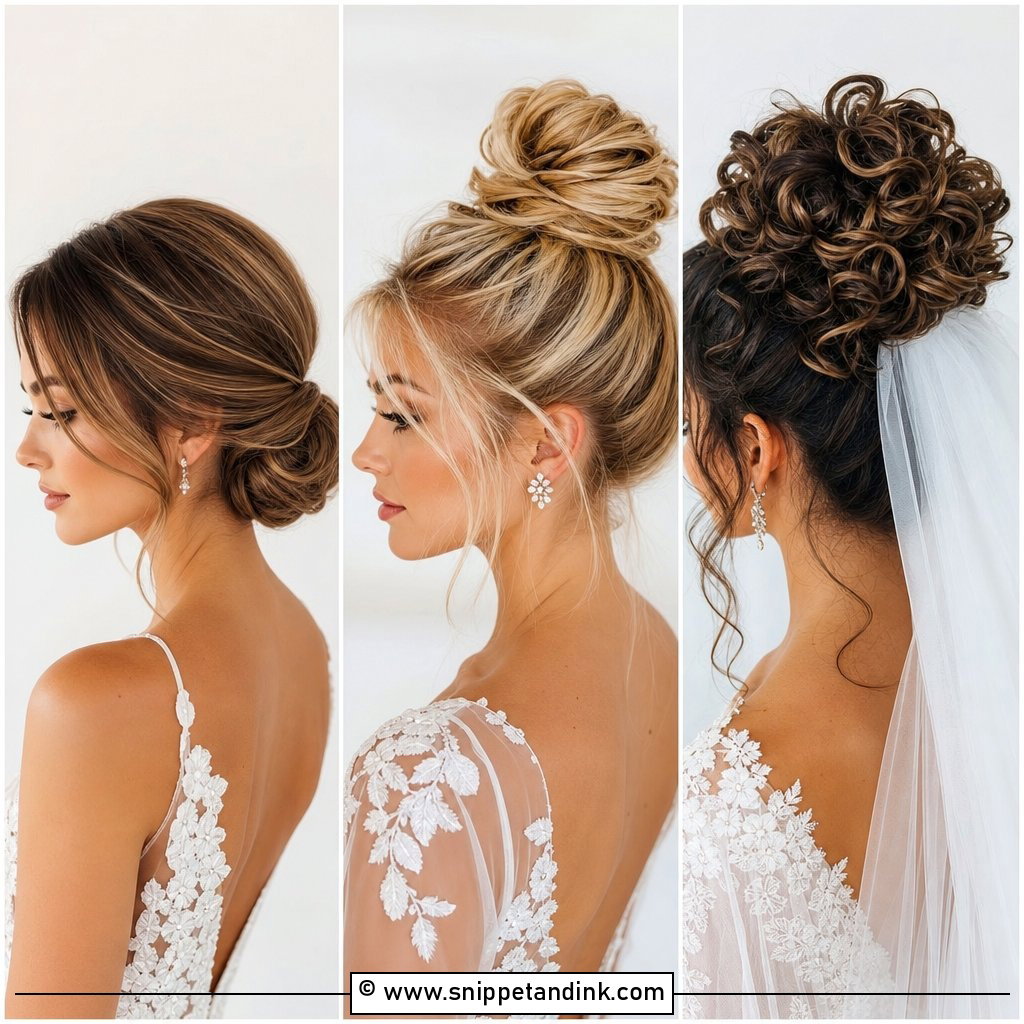
This is the detail that separates a finished bun from a quick one. I take a small section from the ponytail, wrap it around the base to cover the elastic, and pin it underneath. No visible hardware, no flash of rubber in the back-of-head photos. It’s essential on a sleek bun, where anything visible shows. On textured buns I still do it, because the wrapped section also adds a little grip and stops the bun from rotating.
21. Bohemian Low Bun
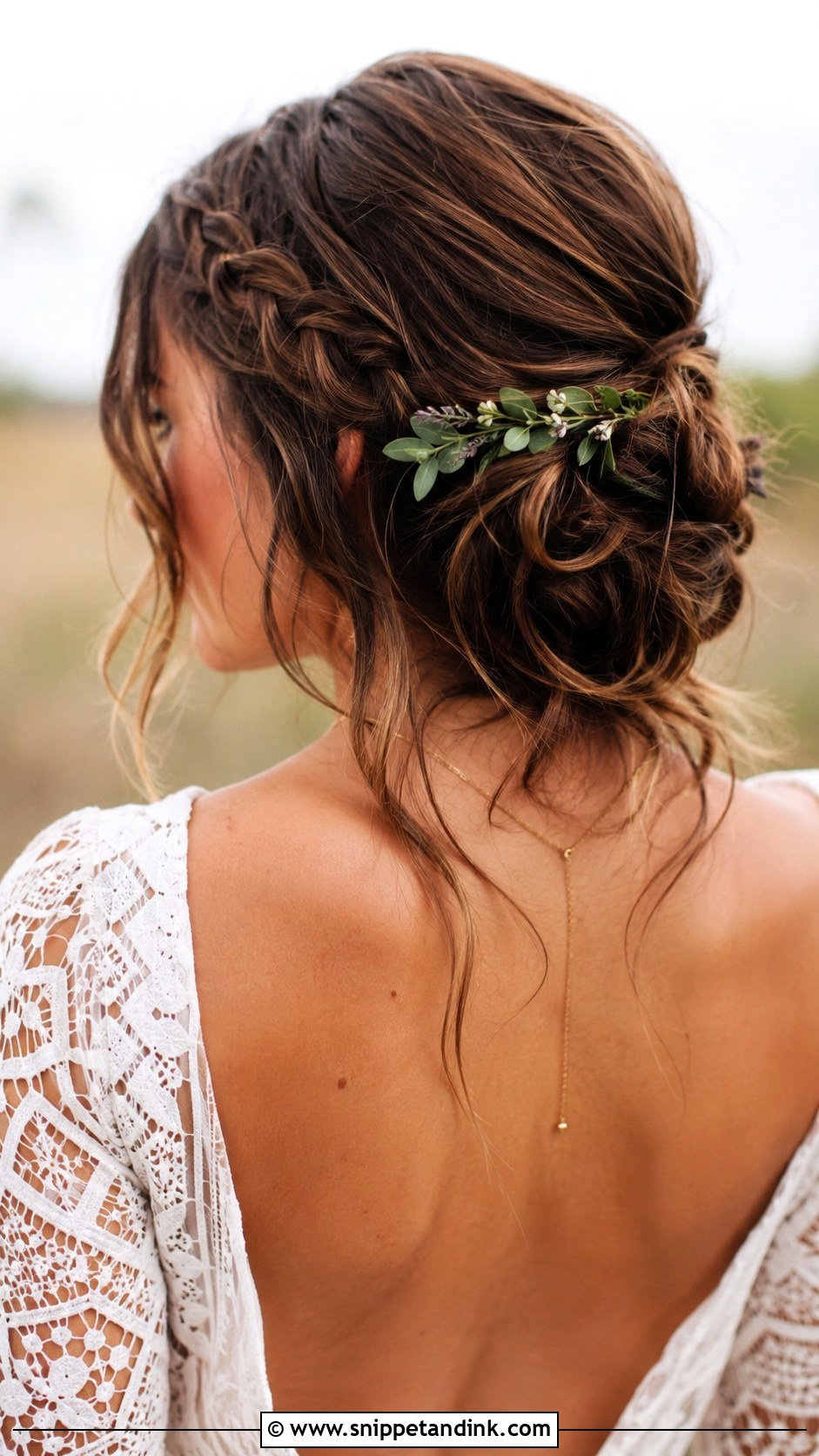
Loose waves, soft braids and pieces left out to frame the face, all gathered into a relaxed, airy bun. It’s built for outdoor, beach and festival-style weddings. Dried flowers, greenery or small gold accents suit it. The trap is that a bohemian bun is pinned loosely by design, so it needs a solid hidden structure underneath. I build a small secure base and only keep the outer layers soft, so the look stays loose while the bun itself doesn’t move.
22. Low Bun With Gold Accessories
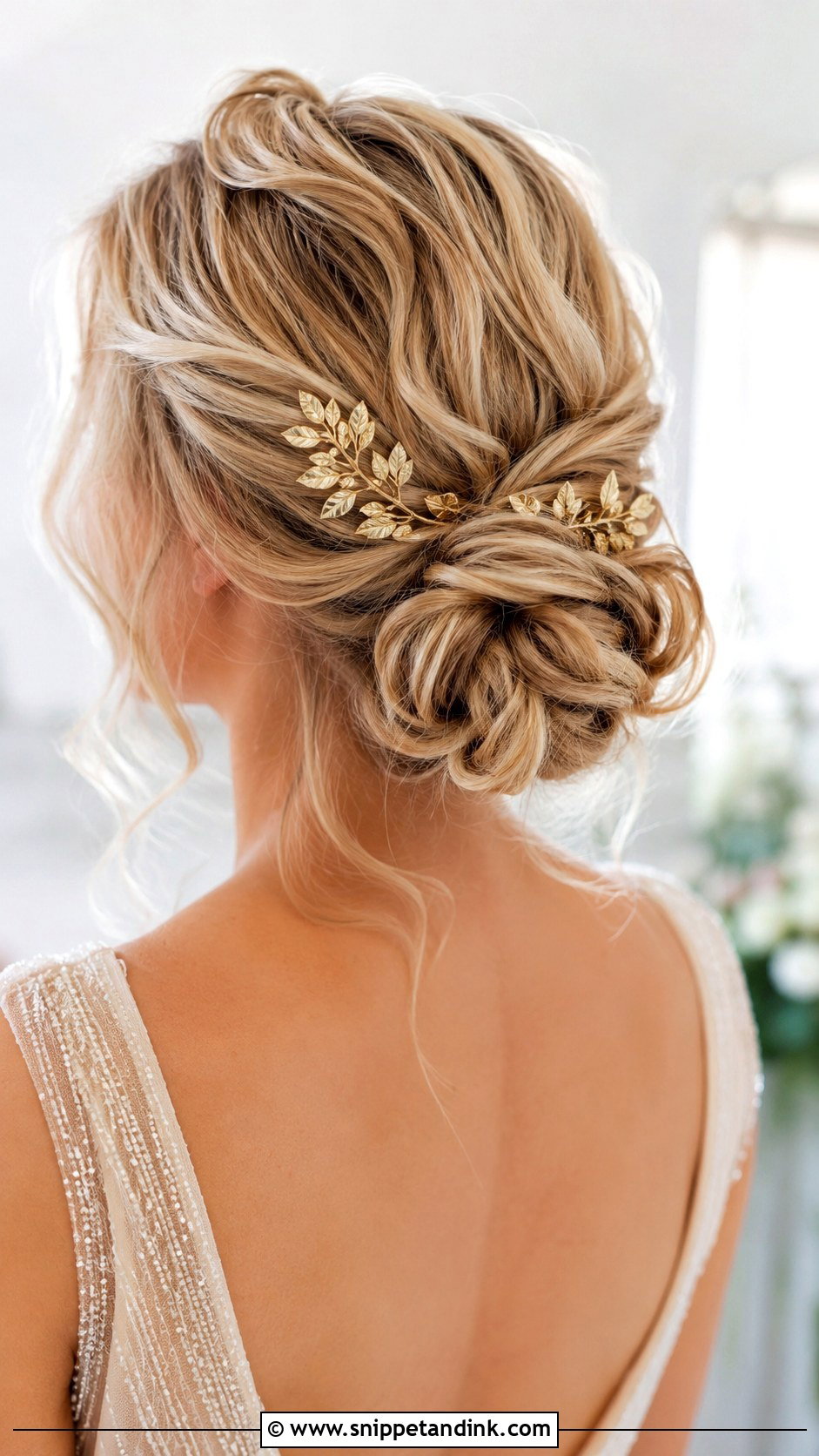
Gold leaf pins, a fine comb or a shimmering vine add warmth to a low bun, and gold tends to suit warm skin tones and ivory or champagne gowns. A single statement comb looks pared back; scattered pins look more festive. Match the gold to your jewelry and any metallic detail on the dress. Yellow gold next to rose gold earrings shows more in close-ups than people expect. It catches the light in every shot, indoors or out.
23. Low Bun With Twisted Sides
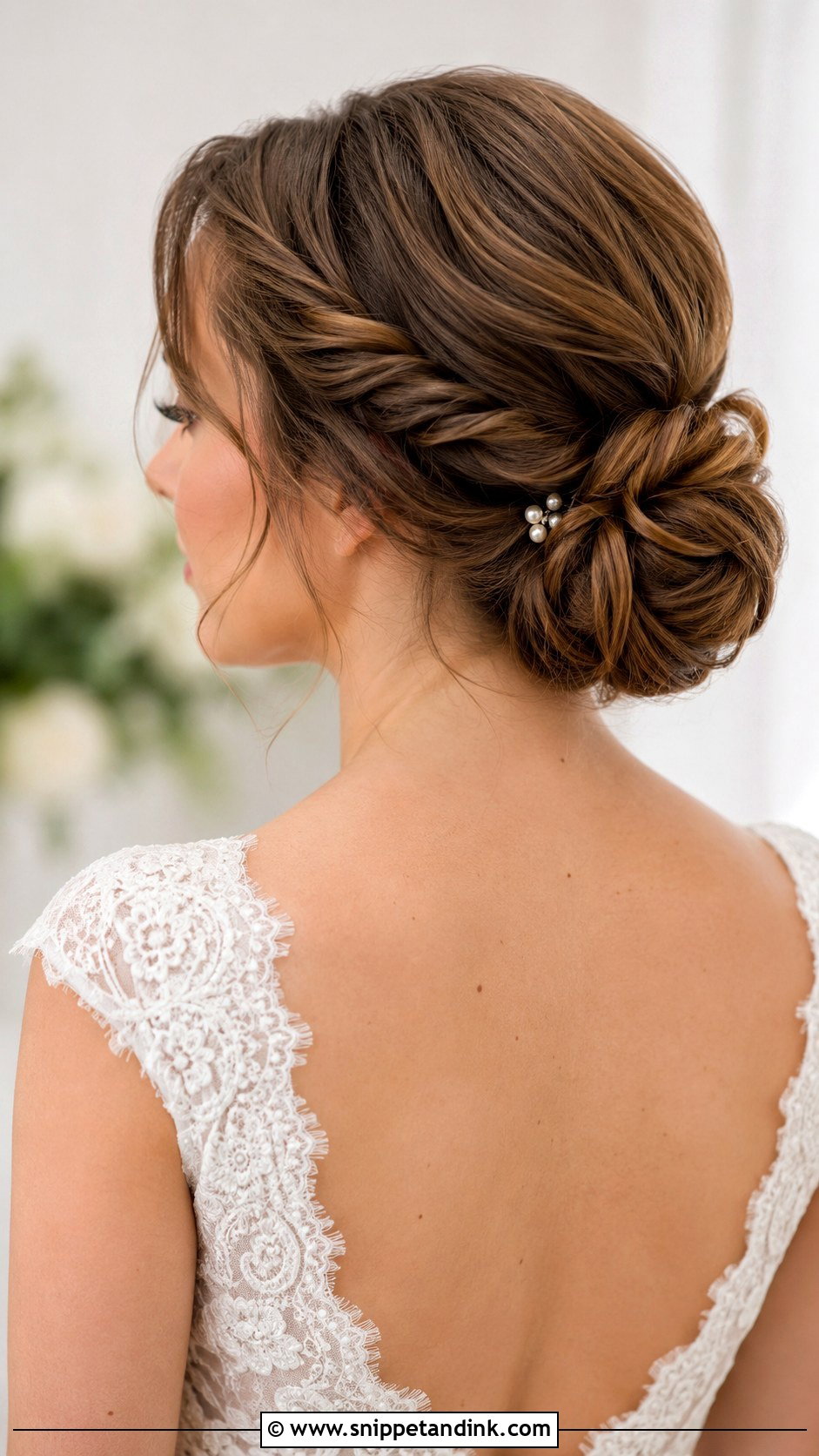
Sections from each side are gently twisted back and gathered into the bun at the nape. It adds detail without the time a full braid takes, and the twists hold the front hair secure, which makes it a good option for windy outdoor ceremonies. I twist away from the face, so the twists open the face rather than pulling hair across it. Small pearl pins along the twists finish it. It suits both small and large weddings.
24. Vintage Low Bun
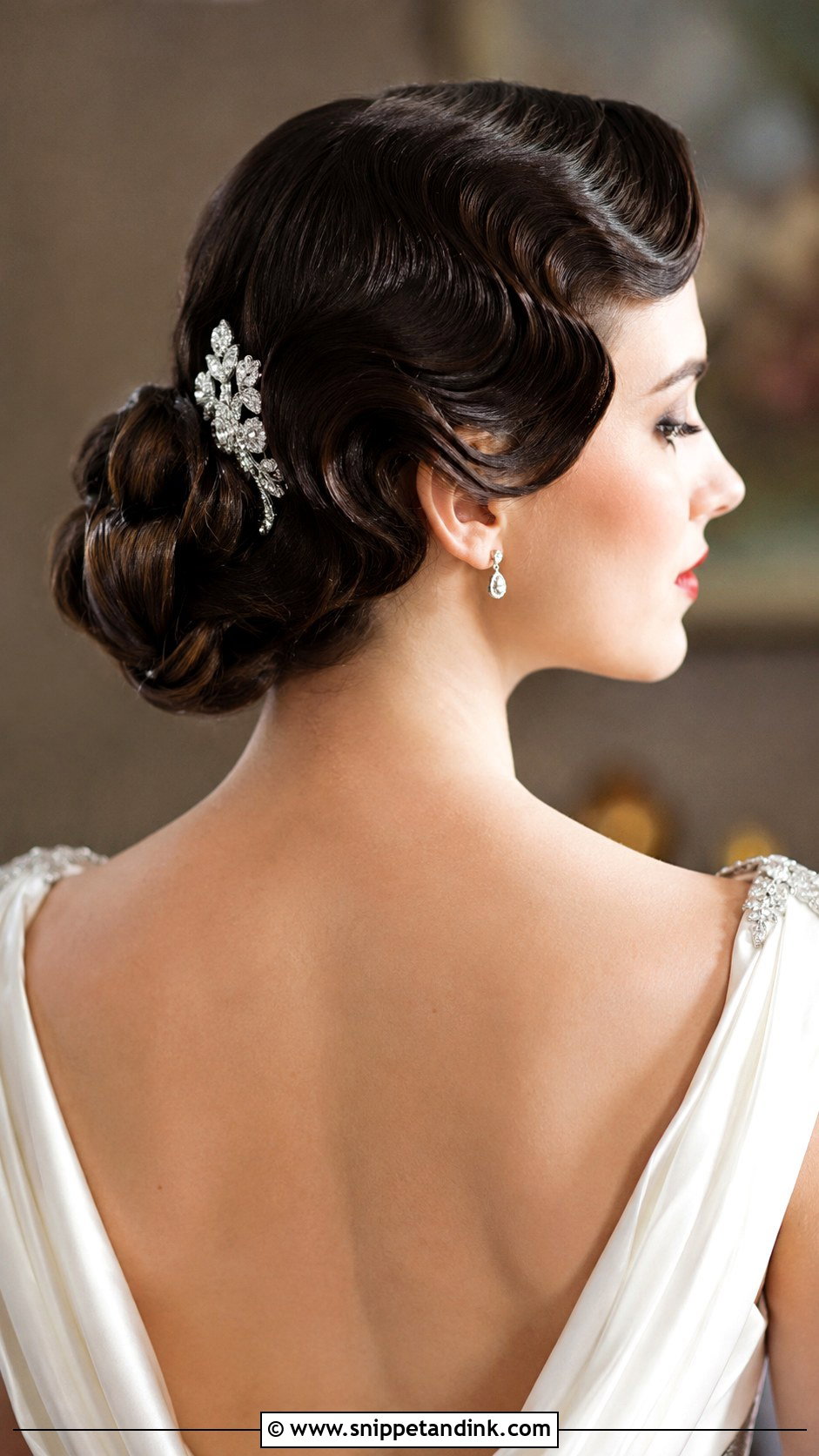
For a classic film-star look, I set soft finger waves and sculpted curls that lead into a smooth knot at the nape. Waves are set with heat and pinned while they cool, and they need a bit of time, so this isn’t a style to squeeze into a short slot. It pairs with art deco accessories, statement earrings and classic gowns. A jeweled comb or a small feathered clip adds a period touch. The waves hold longest on hair with some natural body.
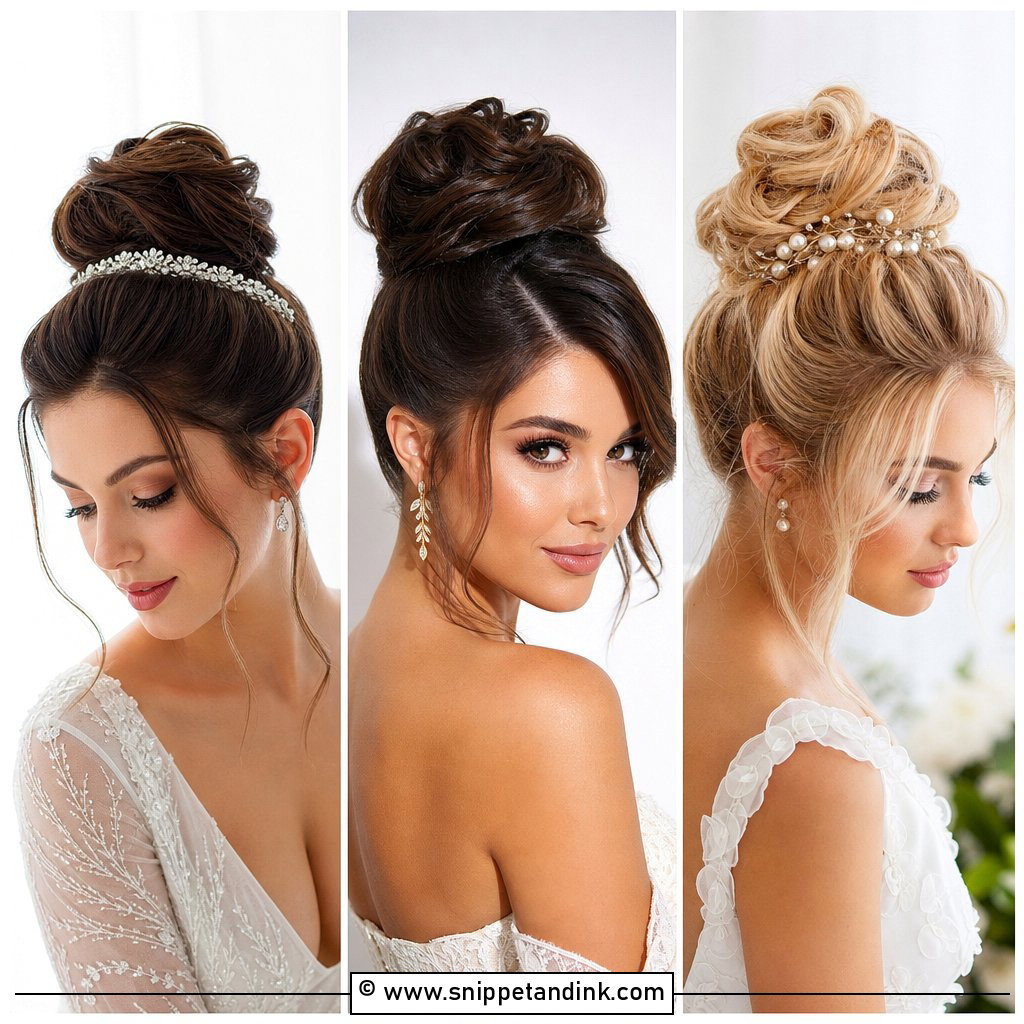
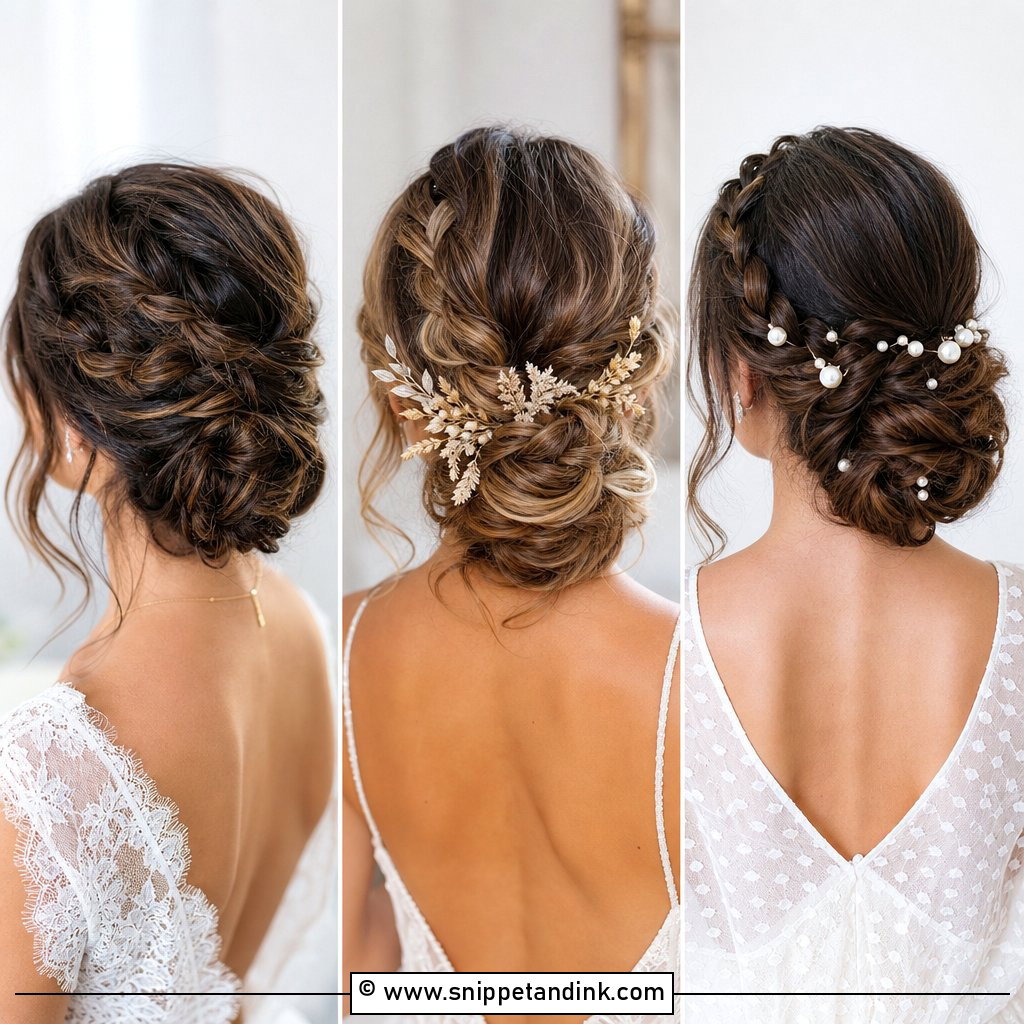
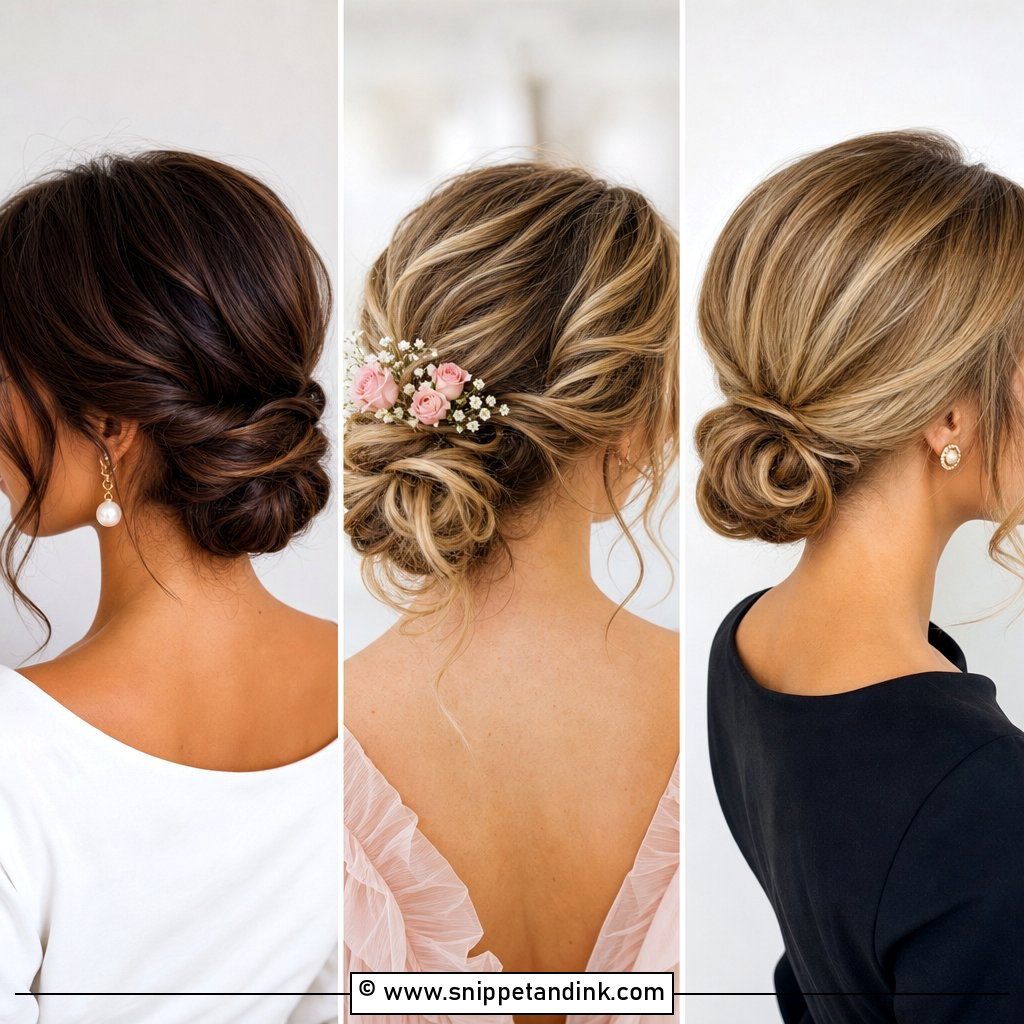
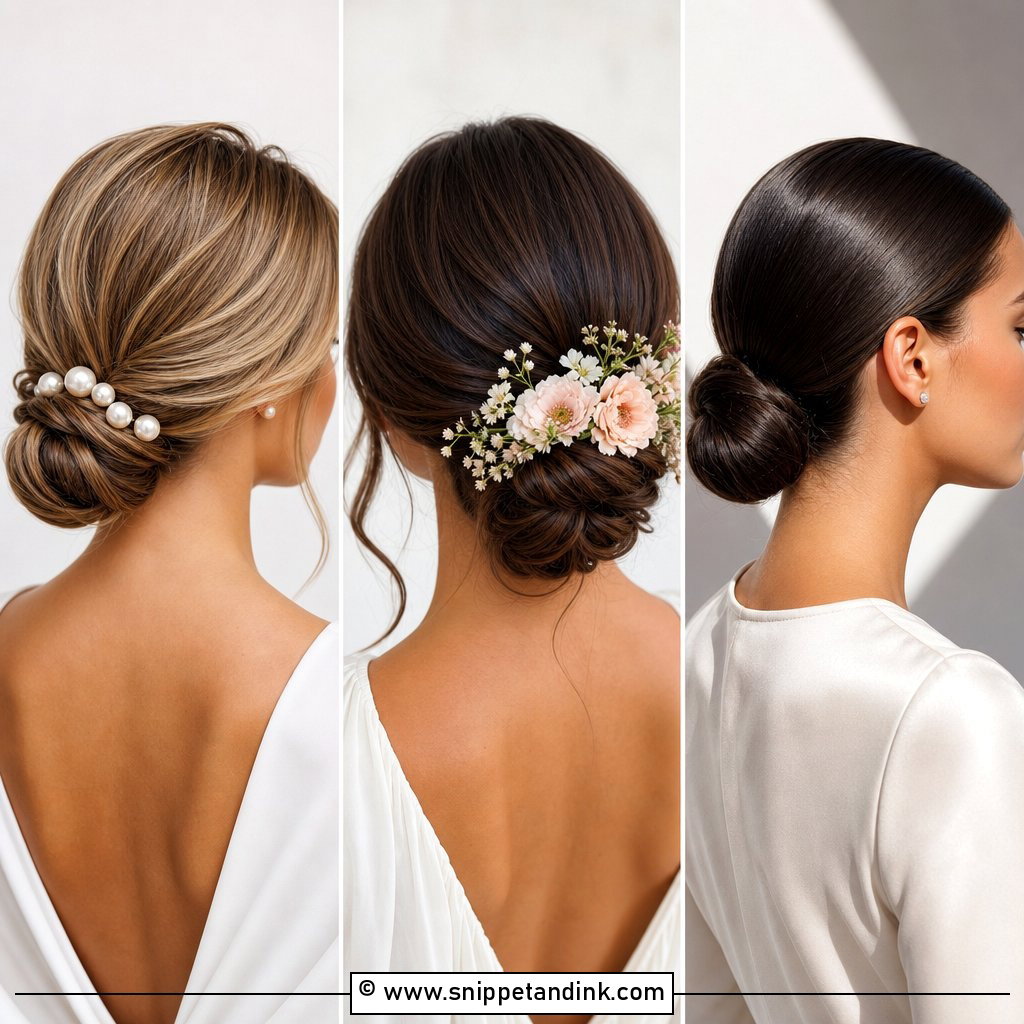
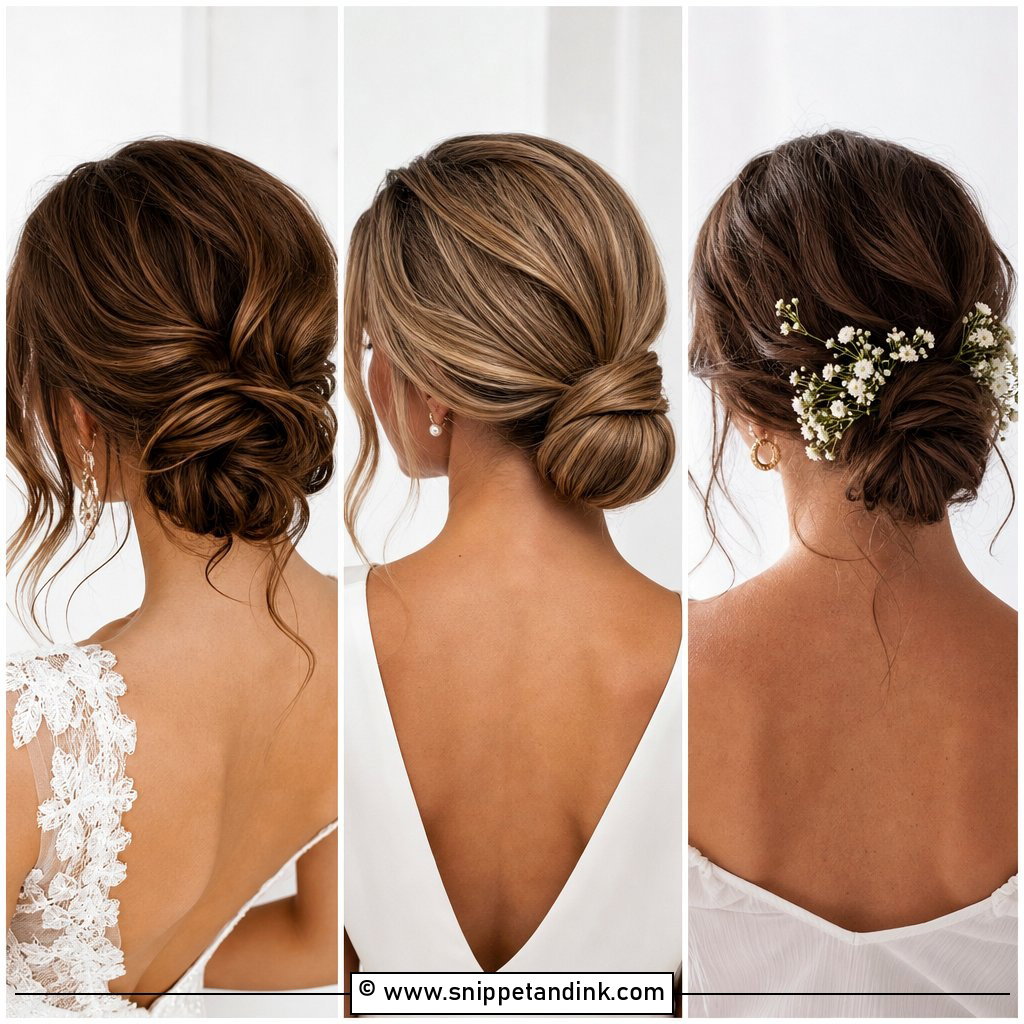
25. Low Bun For Long Hair
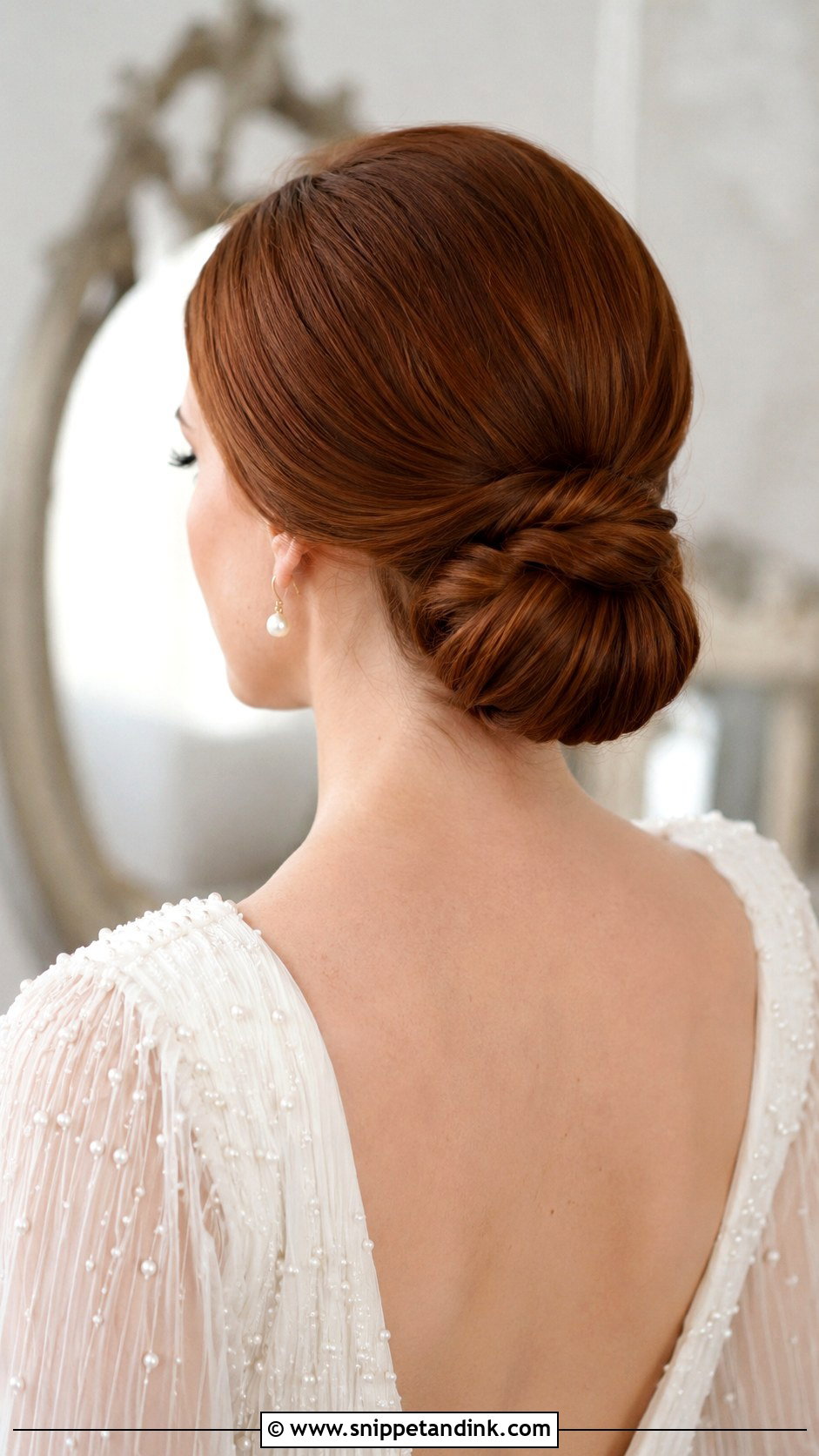
Long hair gives a full, generous knot and room for braiding, twisting and wrapping. It’s also heavy, and weight is the main enemy of a low bun. I split long hair into two or three sections and pin each one separately rather than winding it all into one coil, which would pull downward and give you a headache by mid-afternoon. Sleek or soft, it suits formal and relaxed weddings alike, and pearls or flowers sit well in all that volume.
26. Low Bun For Short Hair
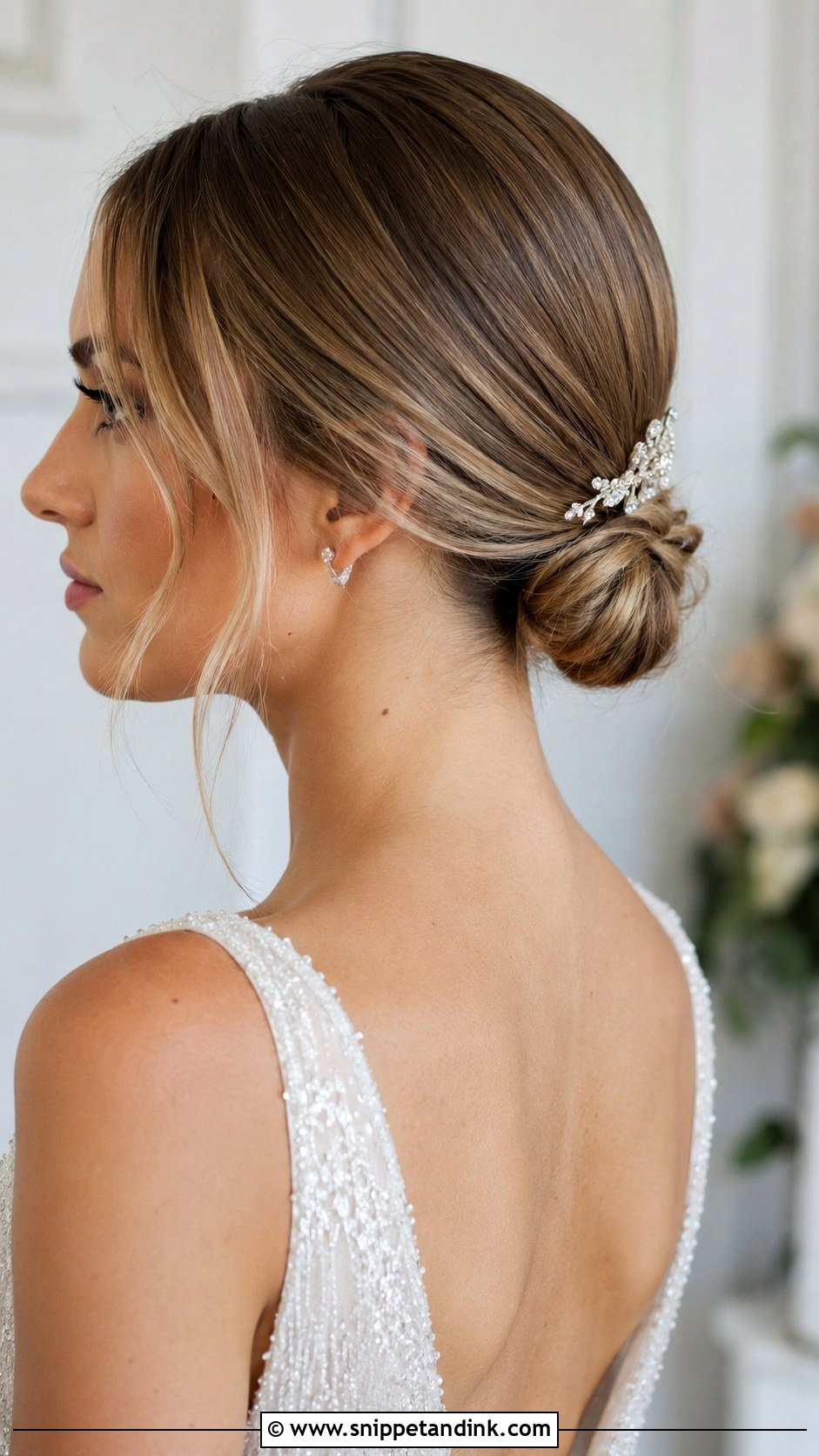
Bob and lob lengths can make a small low bun, and it’s one of my favourite challenges. Short hair doesn’t wrap, so I pin it in overlapping sections, almost like scales, after adding a texture spray so the pins have something to grip. The shortest layers at the nape usually need a few hidden pins or a small clip-in piece. Pieces left out at the face soften it. A sparkly clip or a few small flowers draw the eye to the bun rather than its size.
27. Low Bun With Fishtail Braid
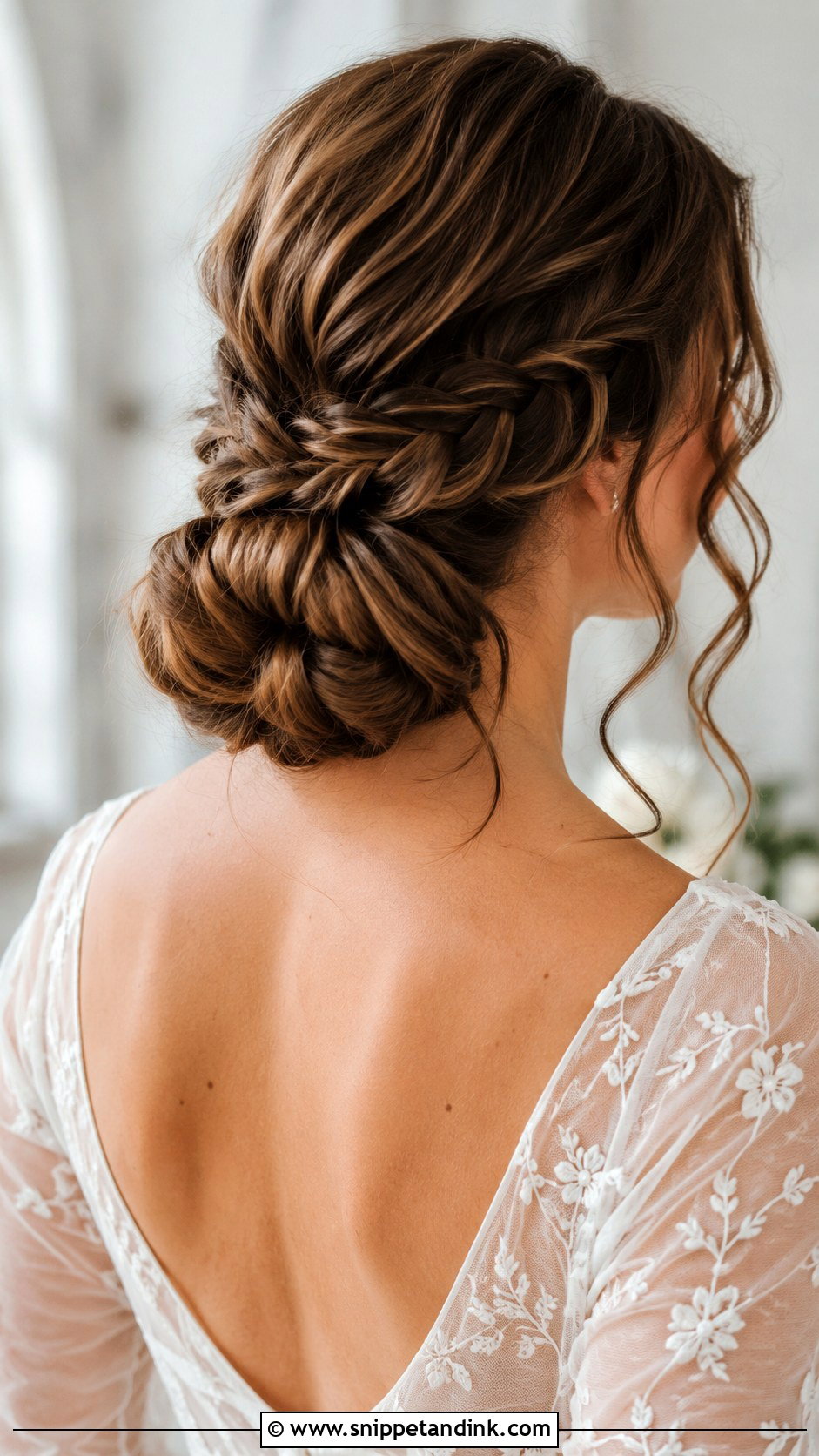
A fishtail braid coiled into a low bun, or run down one side before it joins the knot, gives fine, detailed texture that shows best from behind. Fishtails look fuller if you gently pull the edges after braiding. It takes longer than a standard braid, so allow for it in the timeline. Tiny flowers or pearls along the braid add a finishing touch. On layered hair, short ends can poke out of a fishtail; a light wax on the fingers while braiding keeps them in.
28. Low Bun With Crystal Pins
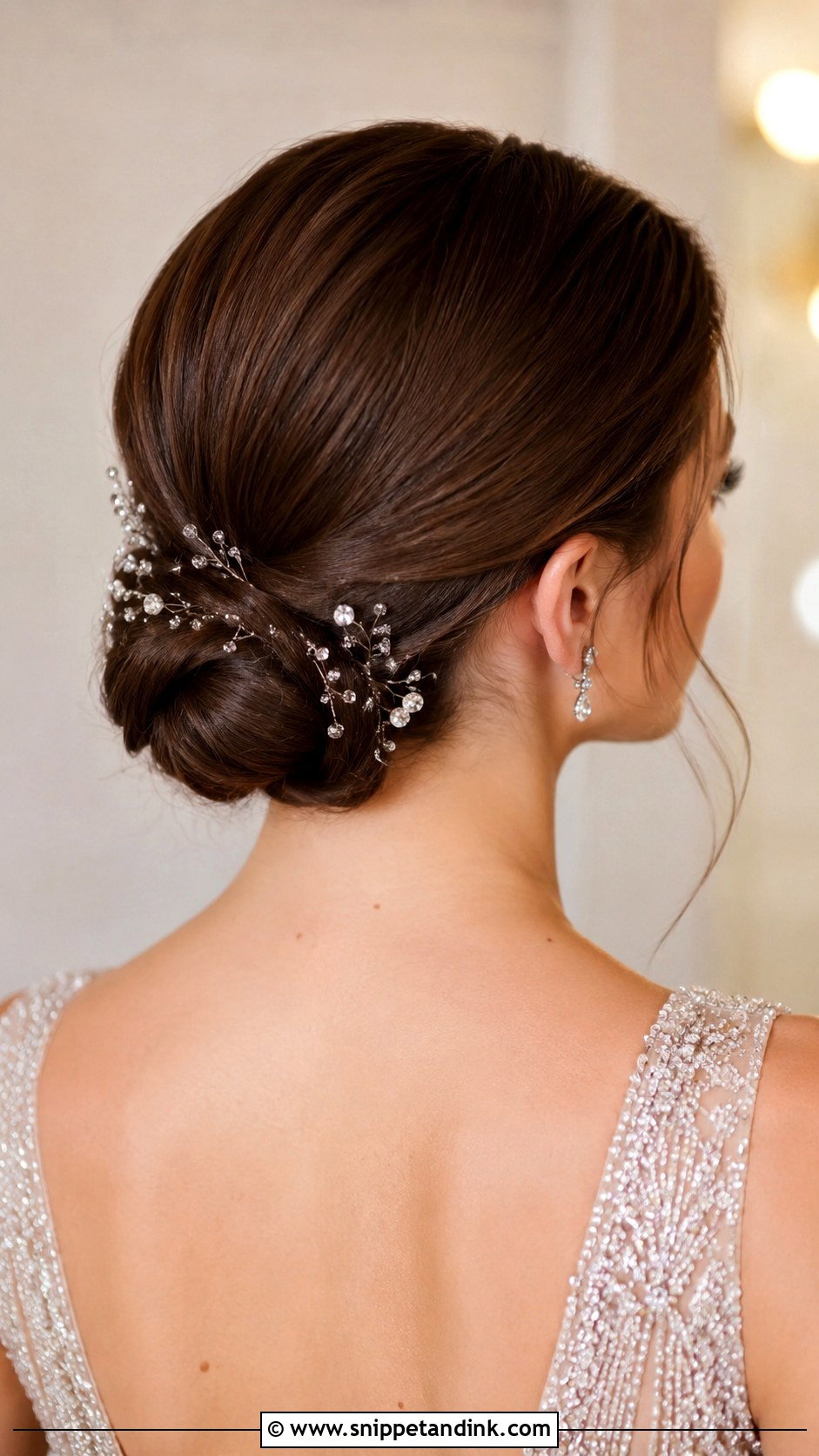
Crystal pins scattered through the bun catch light every time you move, which is why they’re popular for evening receptions under warm lighting. They sit in sleek and textured buns alike and suit beaded gowns. The mistake I see most is using too many: a few placed where the light hits works better than a full scatter. Pins with a small spiral or a grip coating stay put far better than straight decorative pins, which tend to slide out over a long night.
29. Low Bun With Half-Up Detail
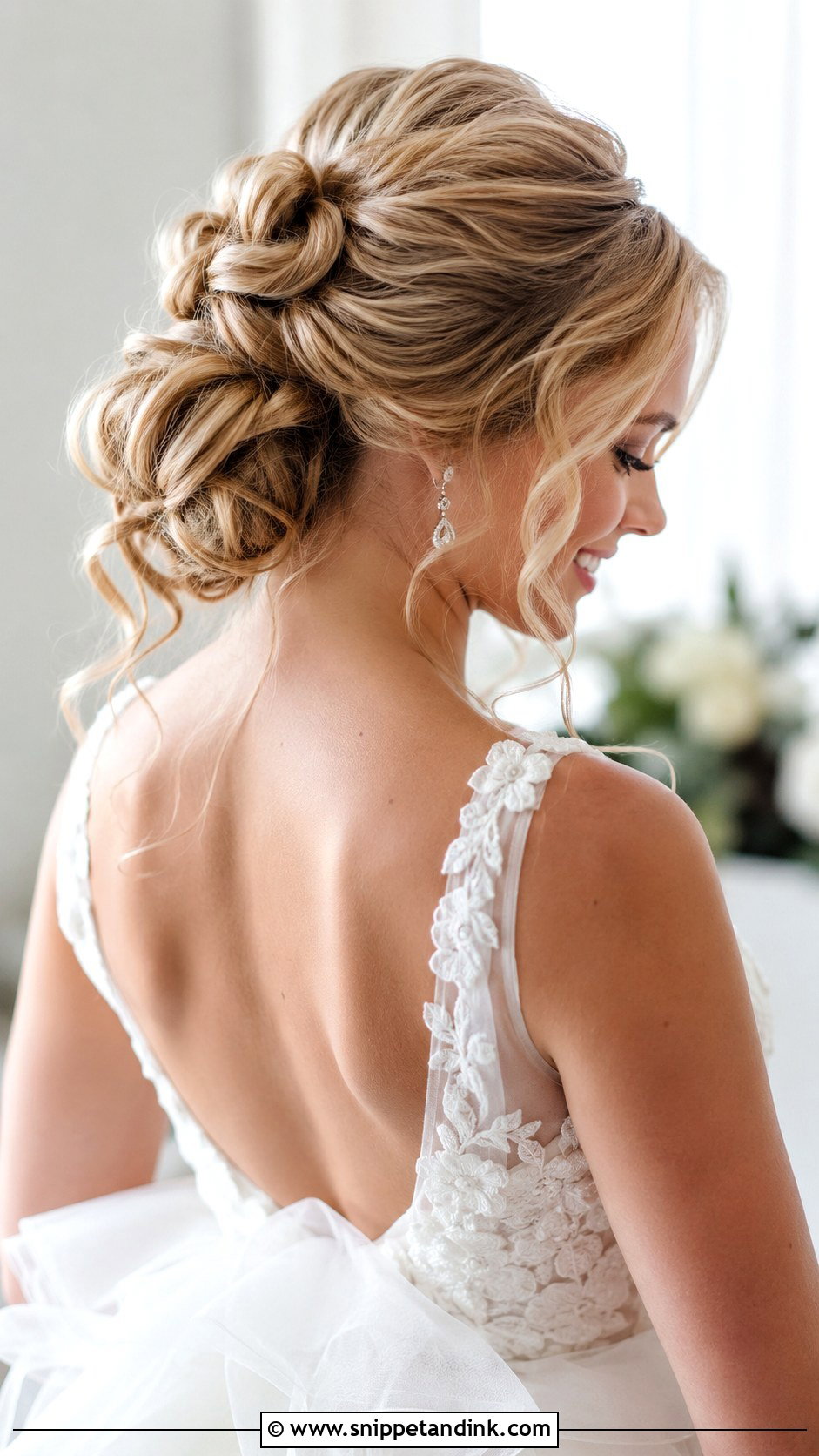
The top section is pulled back into a small knot or twist, and the rest gathers into a low bun below. The half-up part adds height at the crown, which helps balance a round or full face and gives volume to flat, fine hair. I backcomb lightly at the crown before securing it. Curled tendrils soften it further. It’s comfortable for bohemian and classic weddings alike and holds well because the top section is pinned independently.
30. Low Bun With Greenery
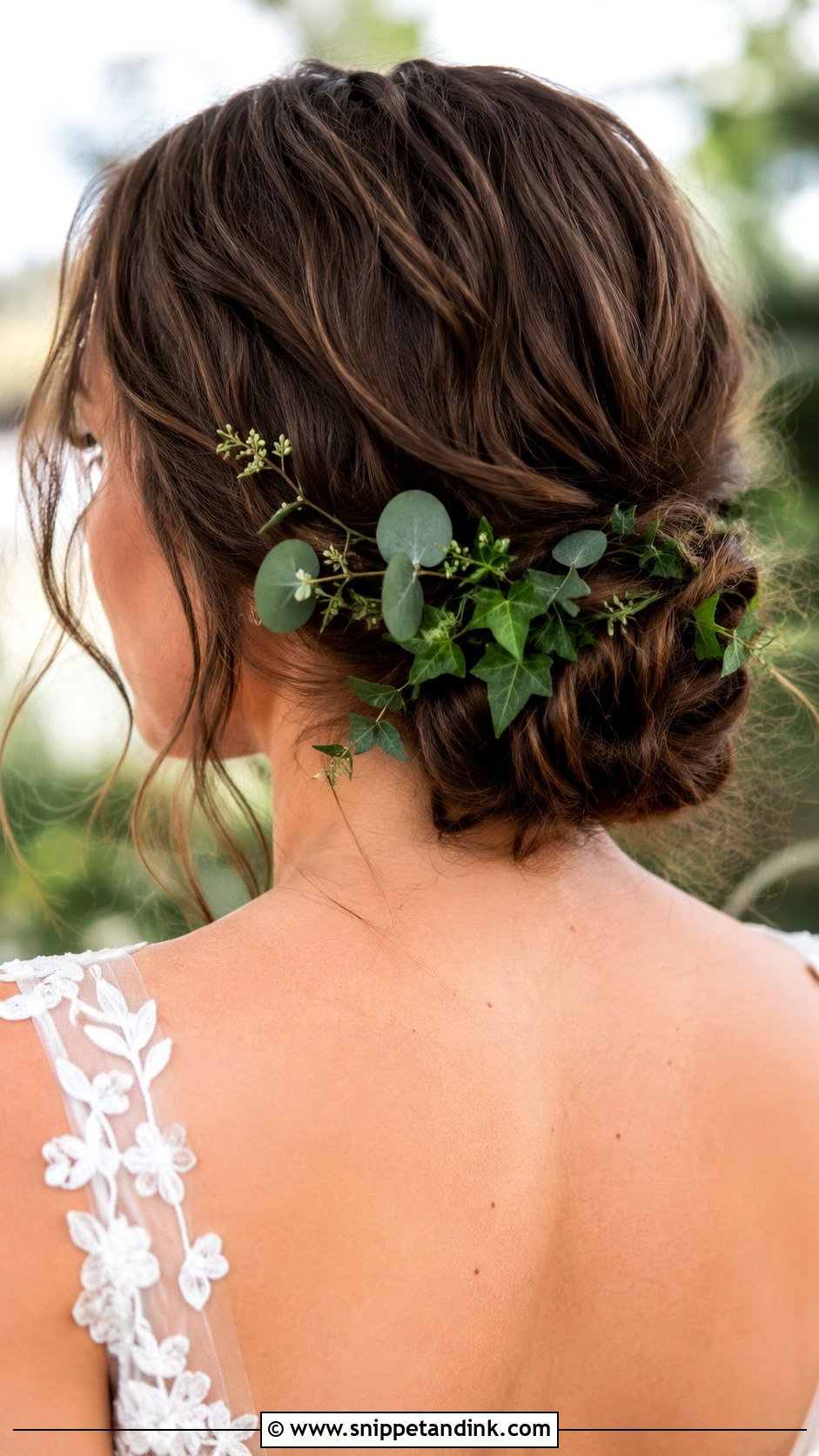
Eucalyptus, ferns or ivy tucked around the base of the bun or trailing down one side bring a fresh, natural feel suited to garden, woodland and rustic weddings. Greenery stands out especially against lighter hair colours. It holds up better than many flowers, but eucalyptus can leave a sticky residue and a strong scent, so test it at your trial. I ask the florist for small, flat sprigs that sit close to the head rather than large stems that stick out.
31. Sleek Low Bun With Slicked Back Hair
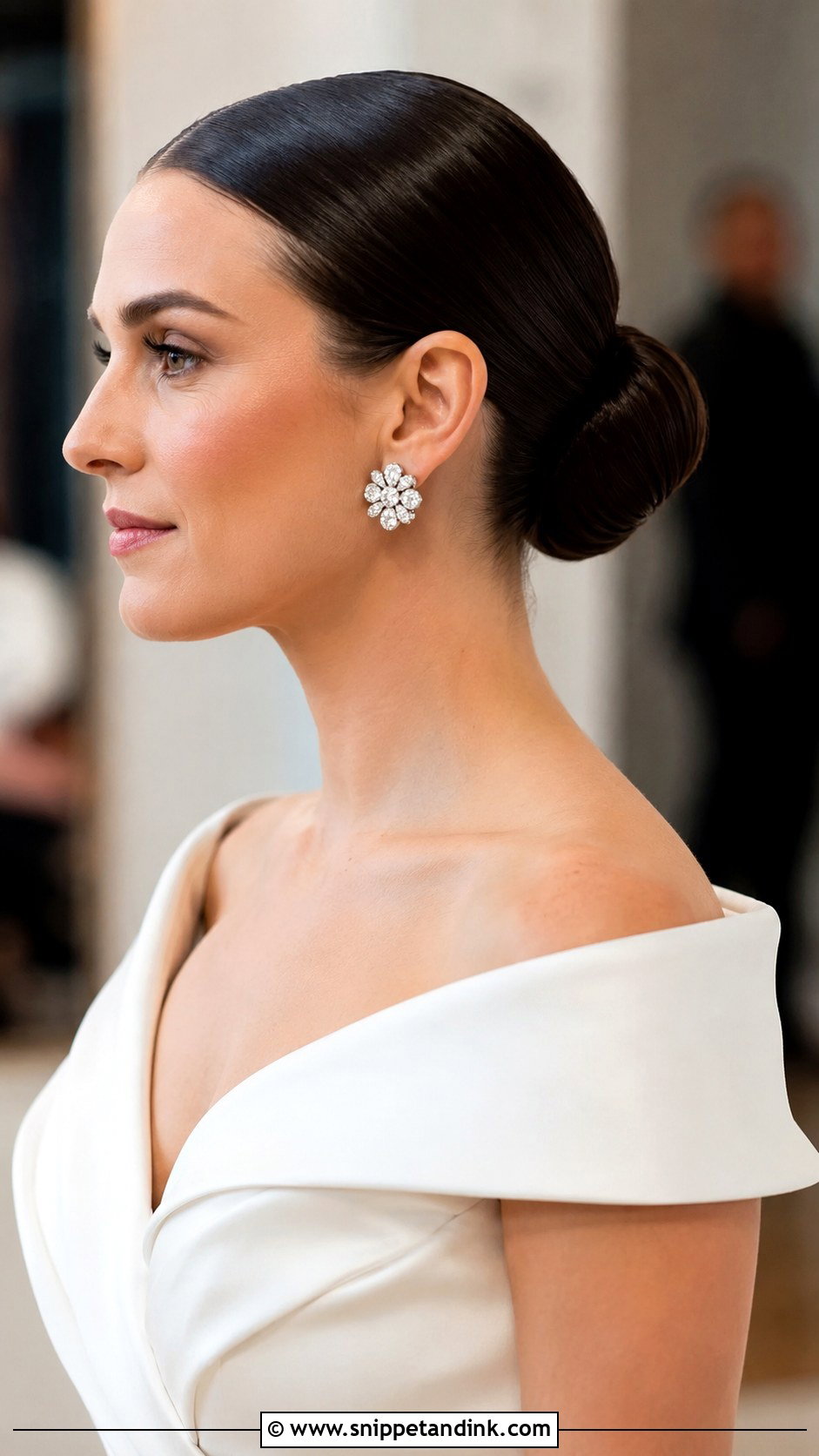
Every strand pulled back tight and glossy into a low bun: clean lines, the face and jawline fully on show, and nothing to distract from statement earrings. It’s editorial and suits minimal, structured gowns. The tension is the issue. A slicked-back bun pulled too tight gives headaches within hours and can pull at fine hairlines, so I use gel for the shine, not extra tension. If you’re sensitive at the scalp, a slightly softer version reads almost the same on camera.
32. Romantic Low Bun With Waves
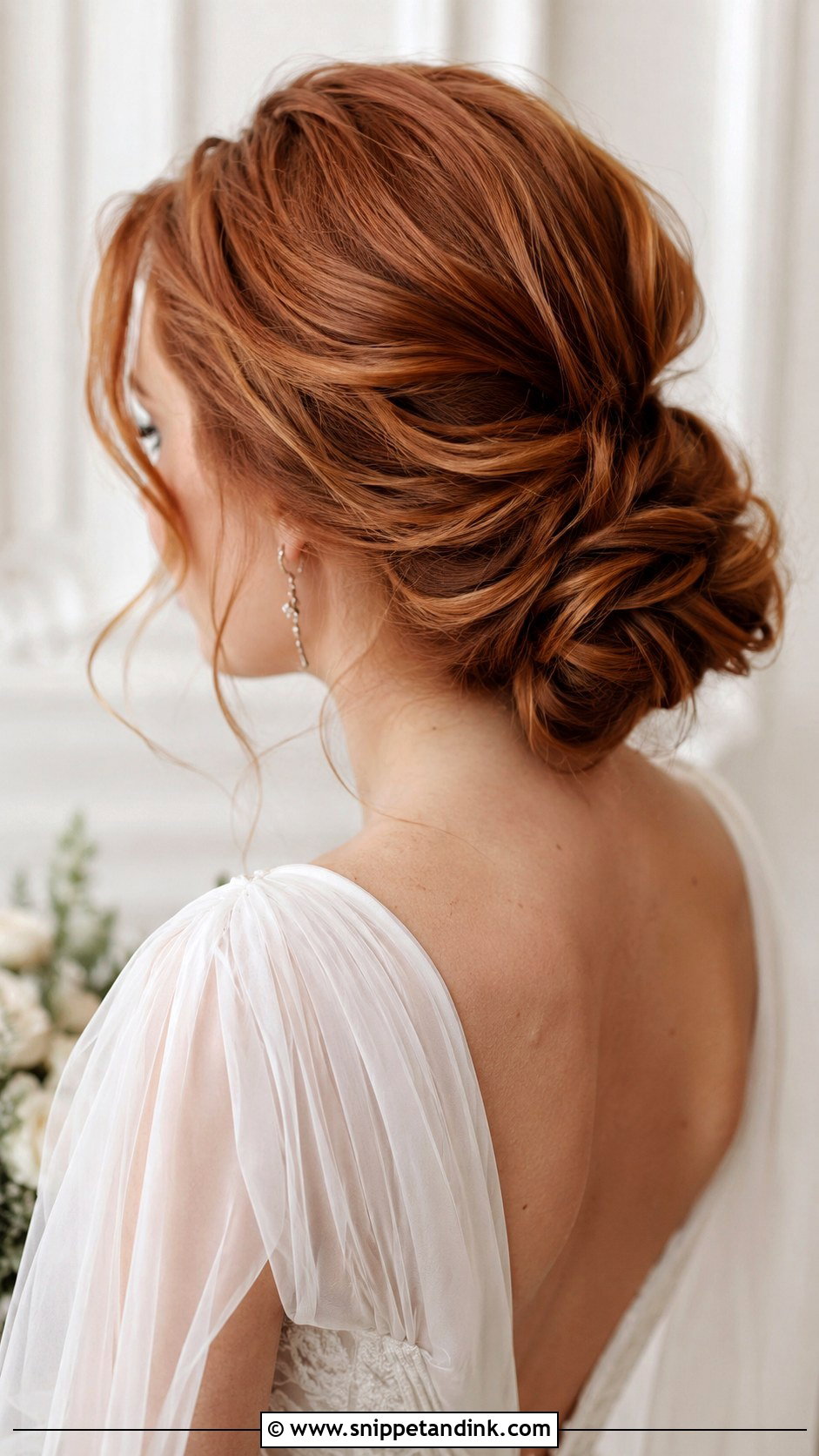
Soft waves throughout the hair, gathered into a loosely textured knot with a few waves left out at the face. It’s soft, full of movement and natural in daylight. Waves are the first thing to drop in humidity, so for a summer outdoor wedding I set them with a hold spray before curling and leave the face-framing pieces pinned up until the last minute. It suits flowing gowns and delicate accessories.
33. Low Bun With Side Braid
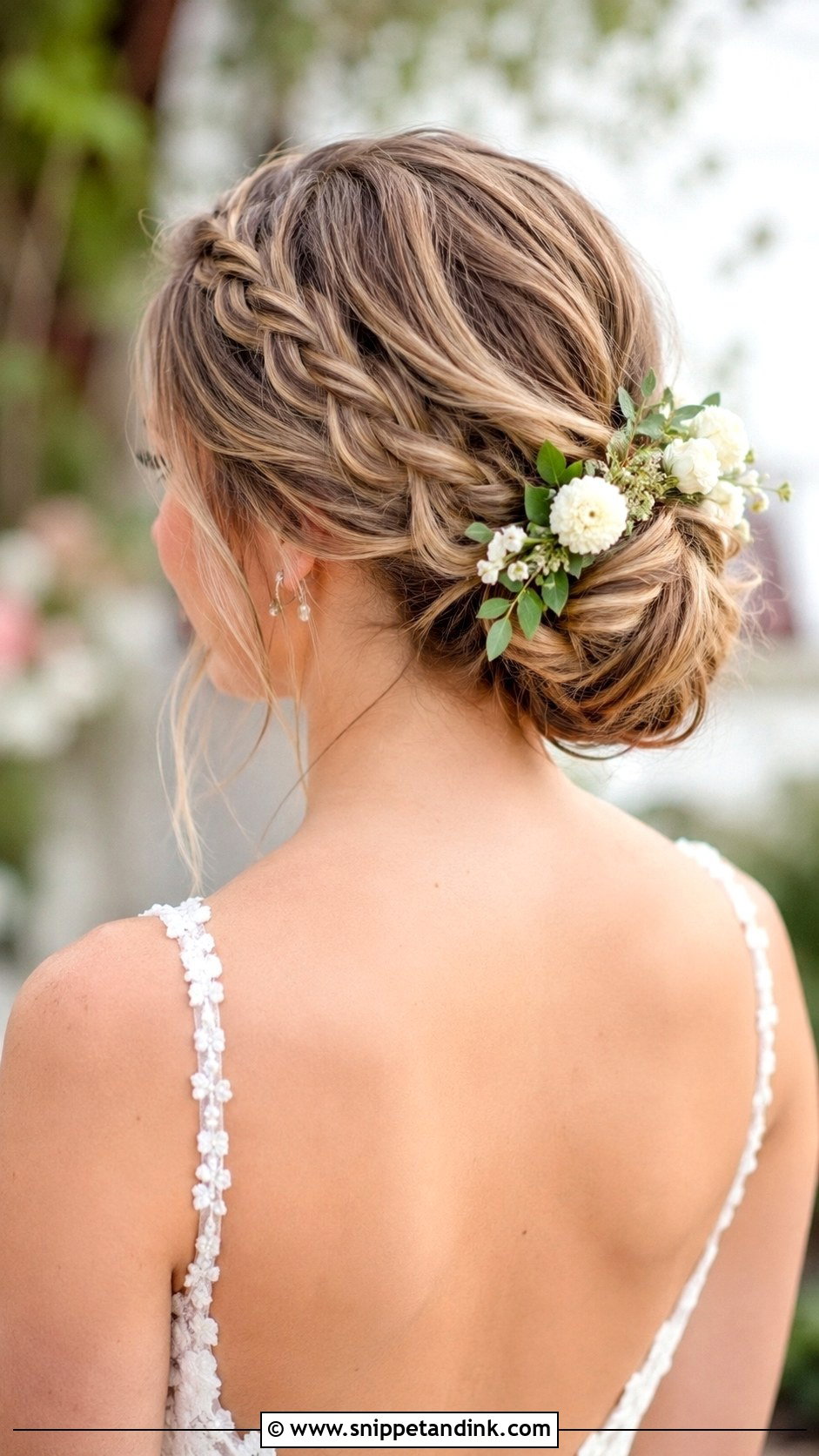
One braid running along the side of the head and blending into a soft knot at the nape: asymmetric, natural and well suited to garden and outdoor weddings. It frames one side of the face and draws attention to that side’s earring. Sleek or loosened, both work, though I loosen it slightly for thin hair so it reads fuller. Small flowers or pearls along the braid are a simple finish. Decide which side the braid goes on by thinking about which side faces the guests at the ceremony.
34. Low Bun With Tiara
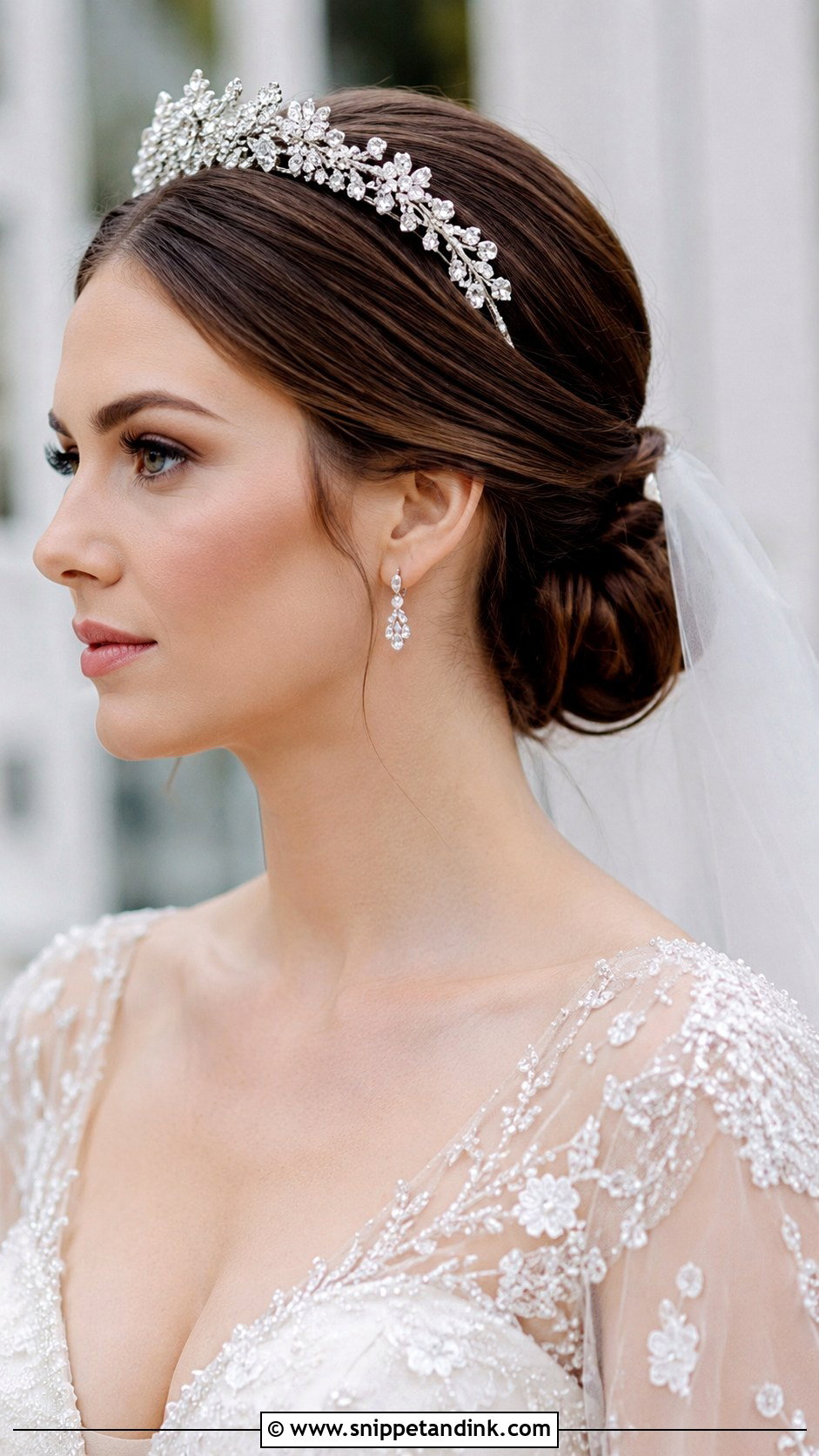
A tiara at the crown with an elegant knot below. The low bun provides a solid, polished base and lets the tiara take centre stage, which suits formal and traditional weddings and long, dramatic veils. Tiaras need to be anchored into a pinned base, usually with small combs and pins threaded through the frame, or they tip forward. I try the tiara on at the trial and check it from the side, since the angle that looks right in the mirror often sits too far back in photos.
35. Low Bun With Face-Framing Layers
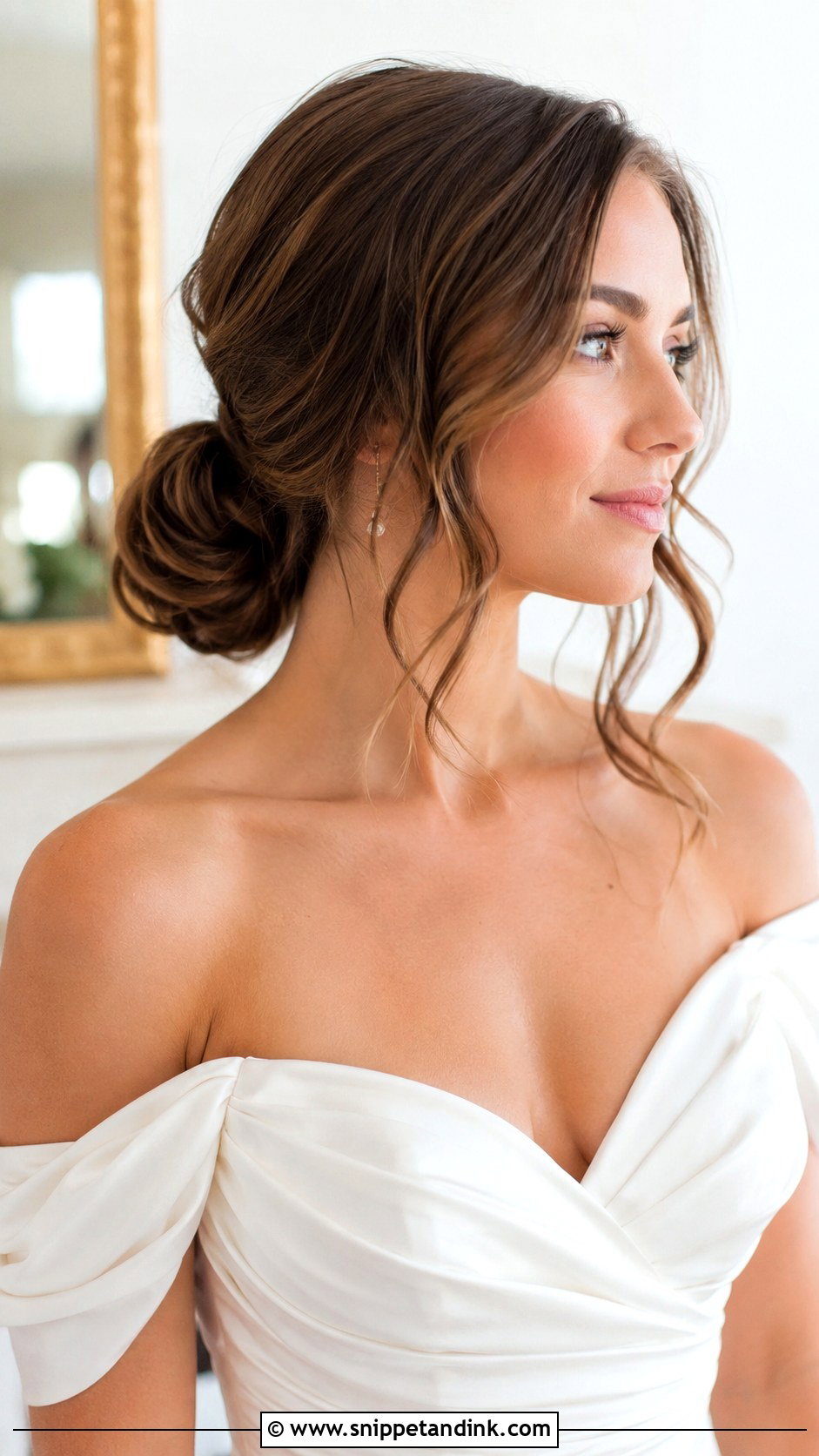
Shorter layers around the face, gently curled, with the rest of the hair in a neat low bun. If you already have face-framing layers, this is the most natural way to style them, since they often won’t reach the bun anyway. The curls should be soft, a slight bend rather than ringlets, and set so they don’t fall straight by evening. It works with sleek and textured buns and balances structure with softness.
Veil Combs, High Necklines and the Back-of-Head Photo
A low bun lives right where the veil, the neckline and the camera all meet. That’s why I always ask you to bring the veil and wear a top with a similar neckline to your trial.
The veil
A veil comb can sit just above the bun, so the veil falls over it, or slide in underneath, so the bun stays fully visible. Above the bun suits long, sheer veils; underneath shows off a decorated bun. Either way, the comb goes into a pinned section, never loose hair.
The neckline
High necks, collars and some lace backs rub against a very low bun every time you turn your head, which slowly flattens and frays it. If your dress has a high neck, I raise the bun slightly, still low but clear of the fabric. An open or detailed back usually looks best with the bun kept compact so it doesn’t cover the dress.
The photo you don’t see
Half the ceremony is photographed from behind. At the trial, I take a picture of the back of your head so you can see what guests will see. And on the day, watch out for car headrests: leaning back on the drive to the venue flattens a bun quickly, so sit slightly forward. At night, take it down slowly, removing pins one by one before brushing, and use a little conditioner to loosen the hairspray.
Is a Low Bun Right for Your Hair and Your Dress?
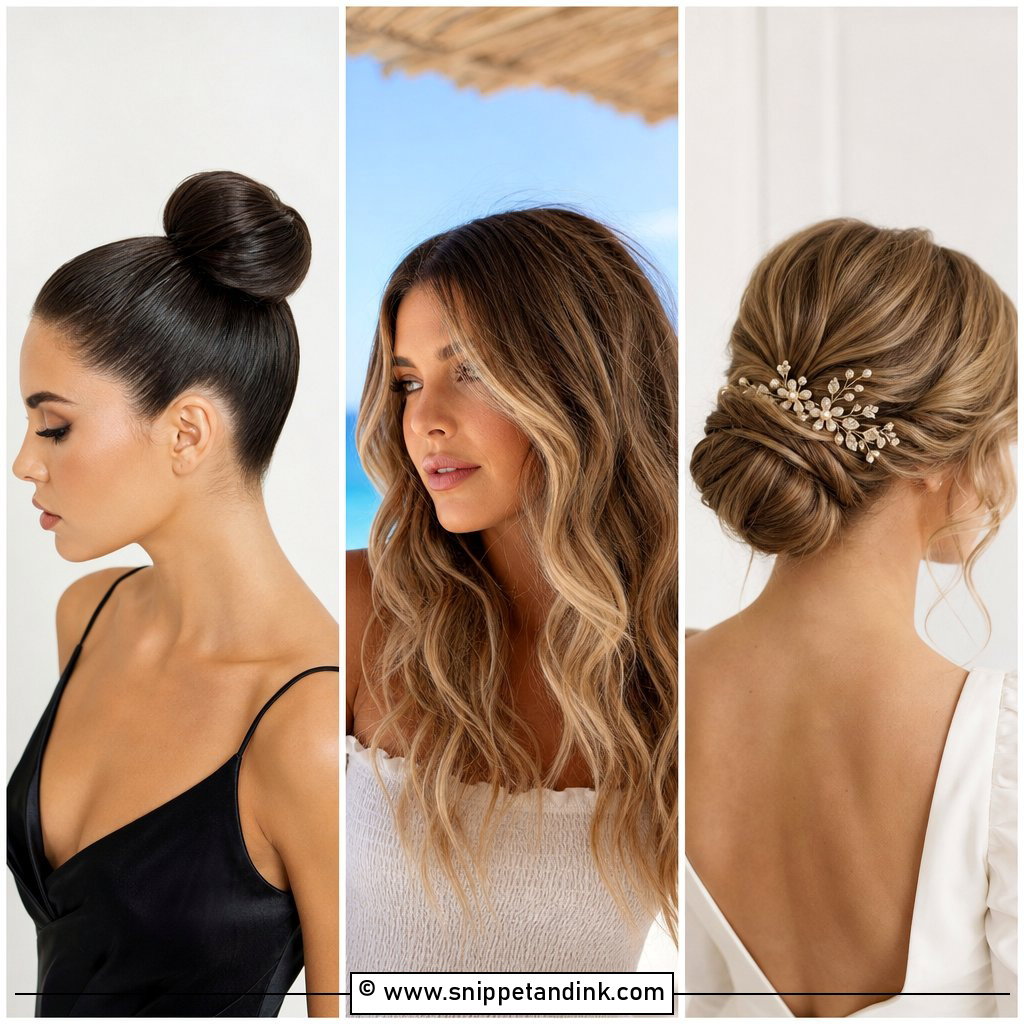
One shape, many versions: the low bun moves from sleek and modern to soft and romantic, plain or dressed with pearls, flowers, crystals or braids. It suits most face shapes, hair lengths and wedding styles, and it stays secure through a long day when the base is built well. Bring a few pictures to your trial, say what you like about each one, and test it with your veil and in your dress. The right version is the one that still feels like you after twelve hours.
You'll Like These Ideas:


Leave a Reply