
A low ponytail looks like the simplest thing I could do for a bride, and it’s the style I spend the most care on at trials. It has nowhere to hide: the base has to sit exactly at the nape, the sides can’t bubble, and it has to stay put through hugs, a veil and hours of dancing. Done well, it keeps your neckline and earrings in full view and suits a ballroom as easily as a garden. Below are 25 low ponytail ideas, from glassy and sleek to braided and flower-filled, with notes on how each is built and who it suits.
Ponytails Sag by the First Dance Unless the Base Is Built Right
A ponytail that looks perfect at noon and drooping at nine has almost always been tied with one elastic on smooth hair. This is how I anchor a wedding ponytail so it stays at the nape.
- Prep with grip: a light texture spray or dry shampoo at the nape gives the elastic something to hold.
- Use two elastics: a clear one to set the position, then a stronger one over it for hold.
- Lock it with pins: two bobby pins crossed through the base, pushed upward into the hair above the elastic, stop the ponytail sliding down.
- Hide the hardware: wrap a section of hair around the base and pin it underneath.
- Set the shape: spray once the style is finished, not before, so the hair moves when you do.
The other thing I check is weight. Long, thick hair pulls on a low ponytail and can cause a headache by evening. Sometimes I split the ponytail into two sections secured one above the other, which spreads the weight and looks the same from behind.
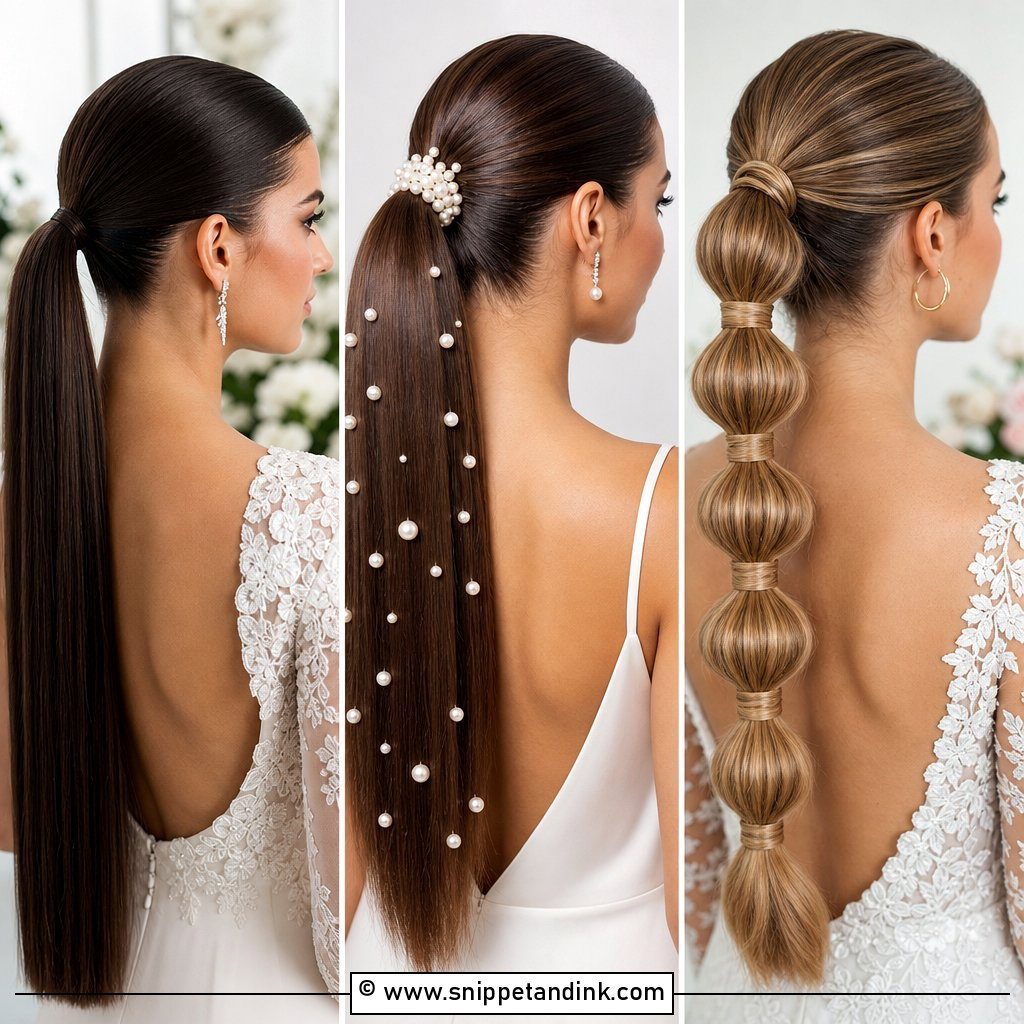
1. Sleek Low Ponytail Wedding Hair
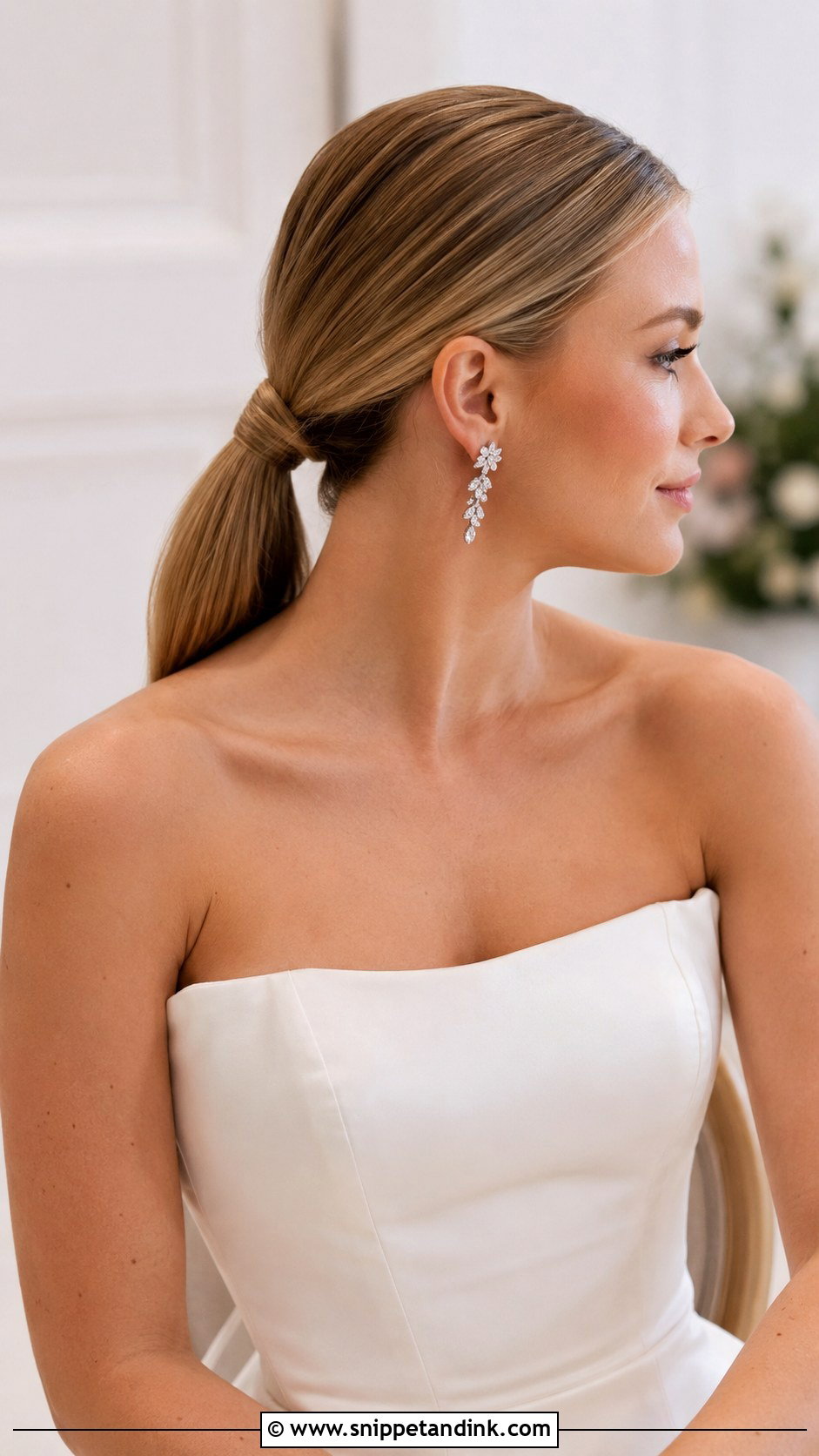
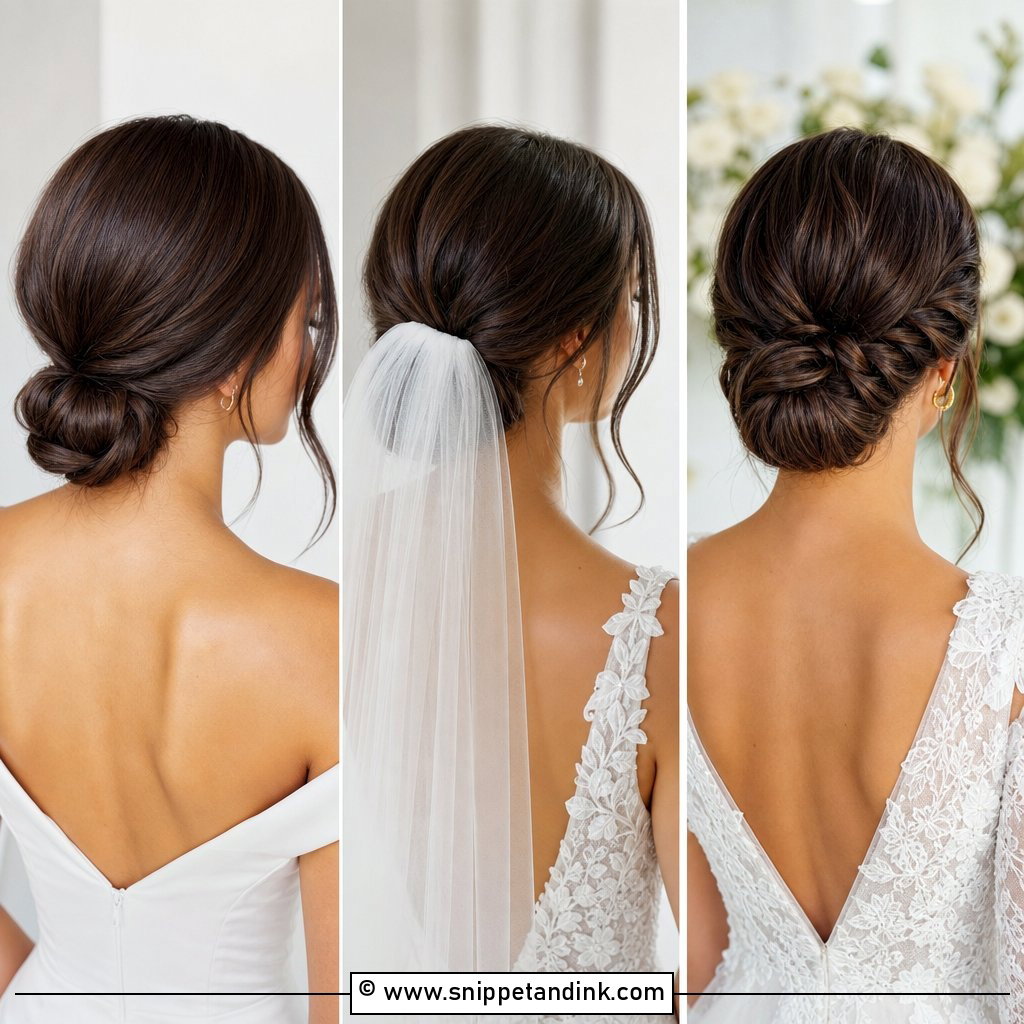
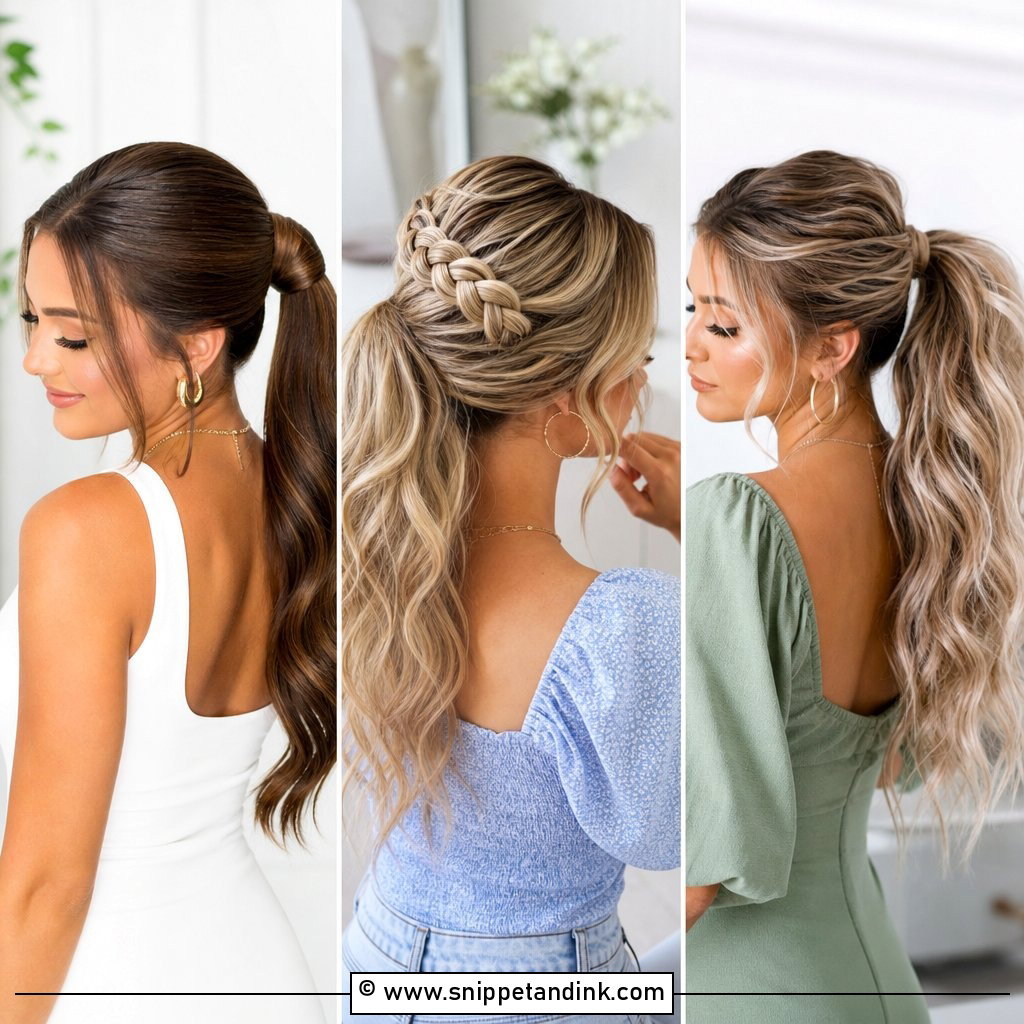
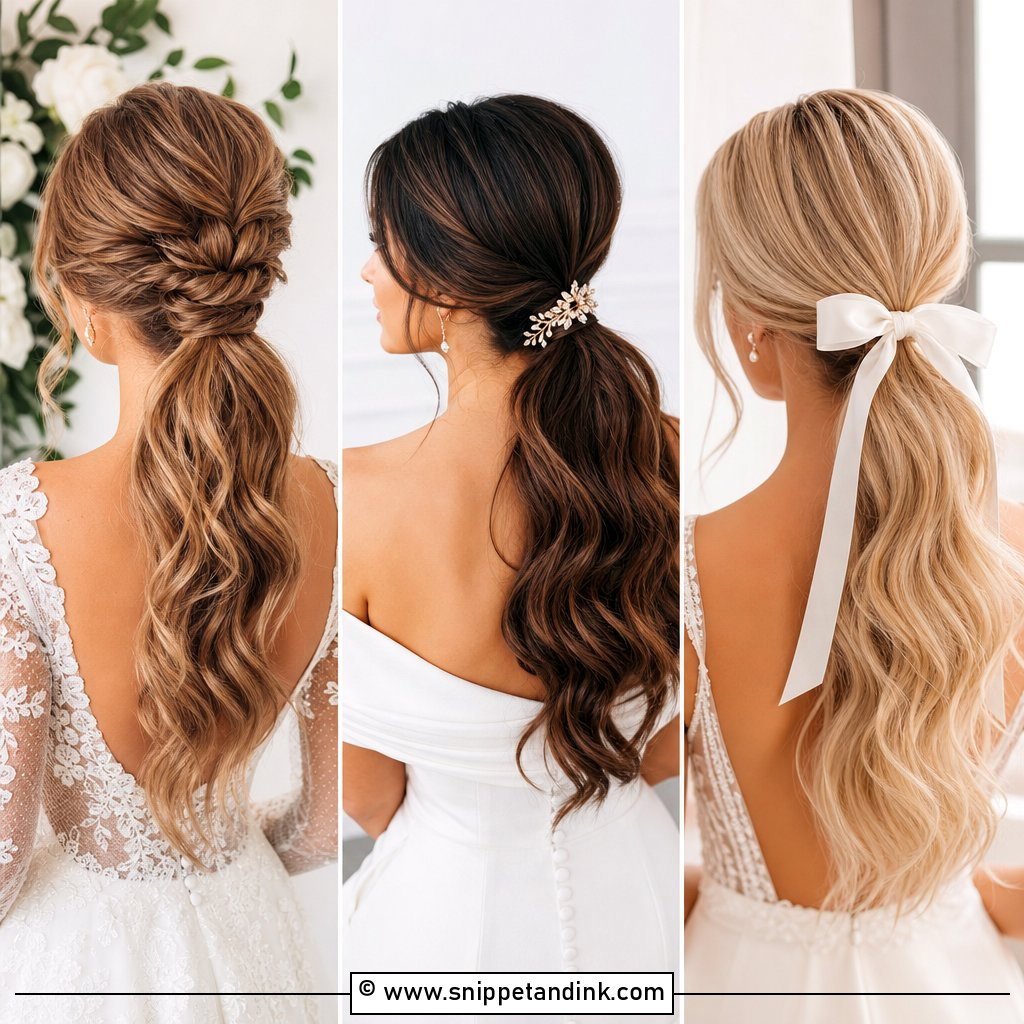
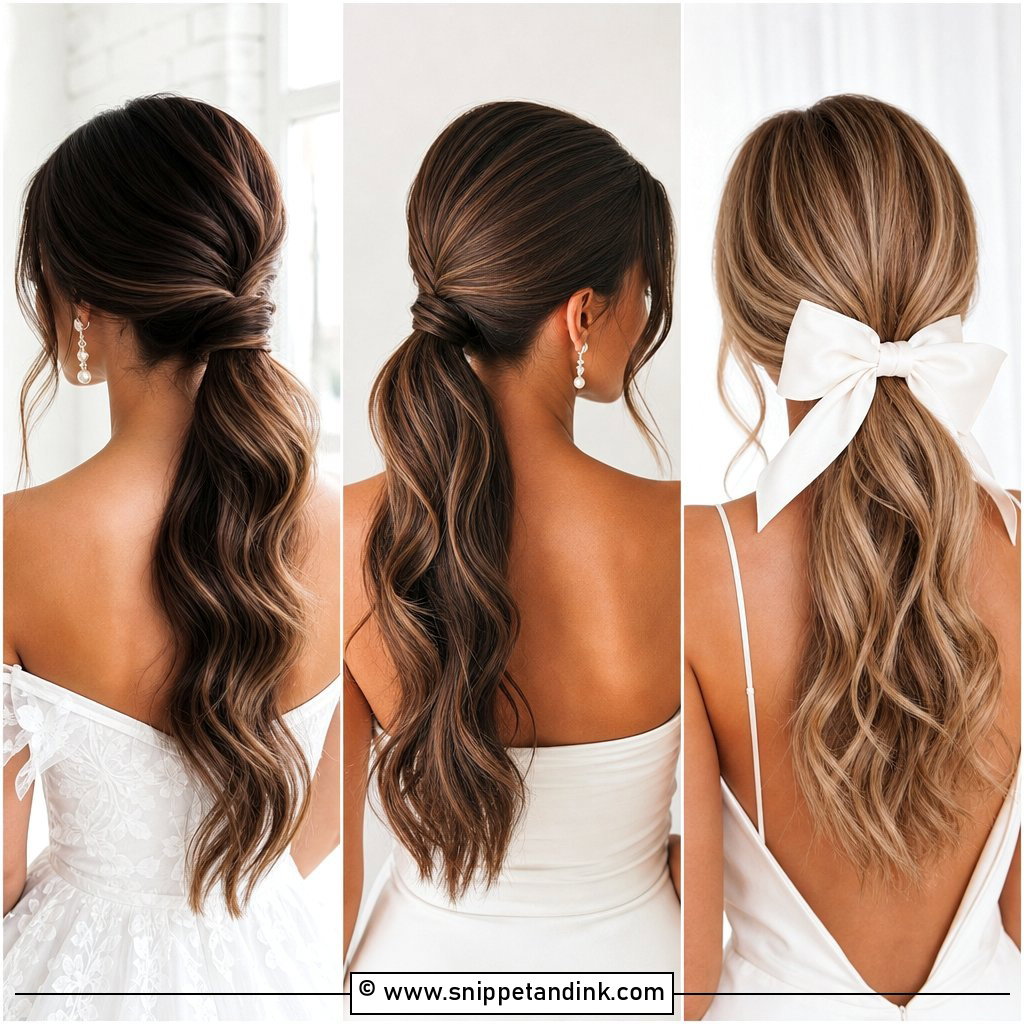
Clean lines are the whole point, so the prep matters more than the styling. I smooth the hair back with a fine-tooth comb and a little shine serum, gather it at the nape, then wrap a small section around the elastic to hide it. On frizz-prone hair I’ll blow-dry the night before or that morning with a paddle brush, because sleek styles show every raised strand. Statement earrings and a minimalist gown suit it, and it keeps your face fully visible through the vows.
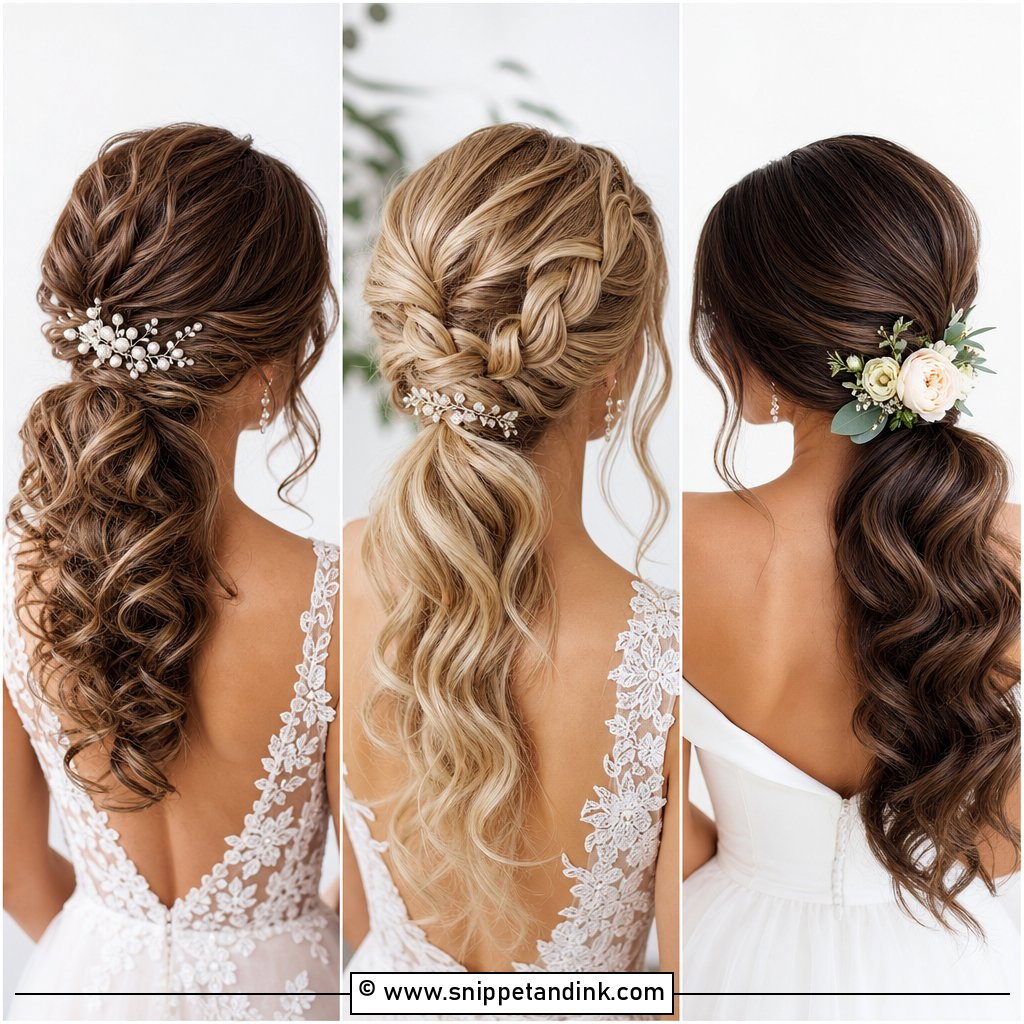
2. Low Wavy Ponytail Wedding Hair
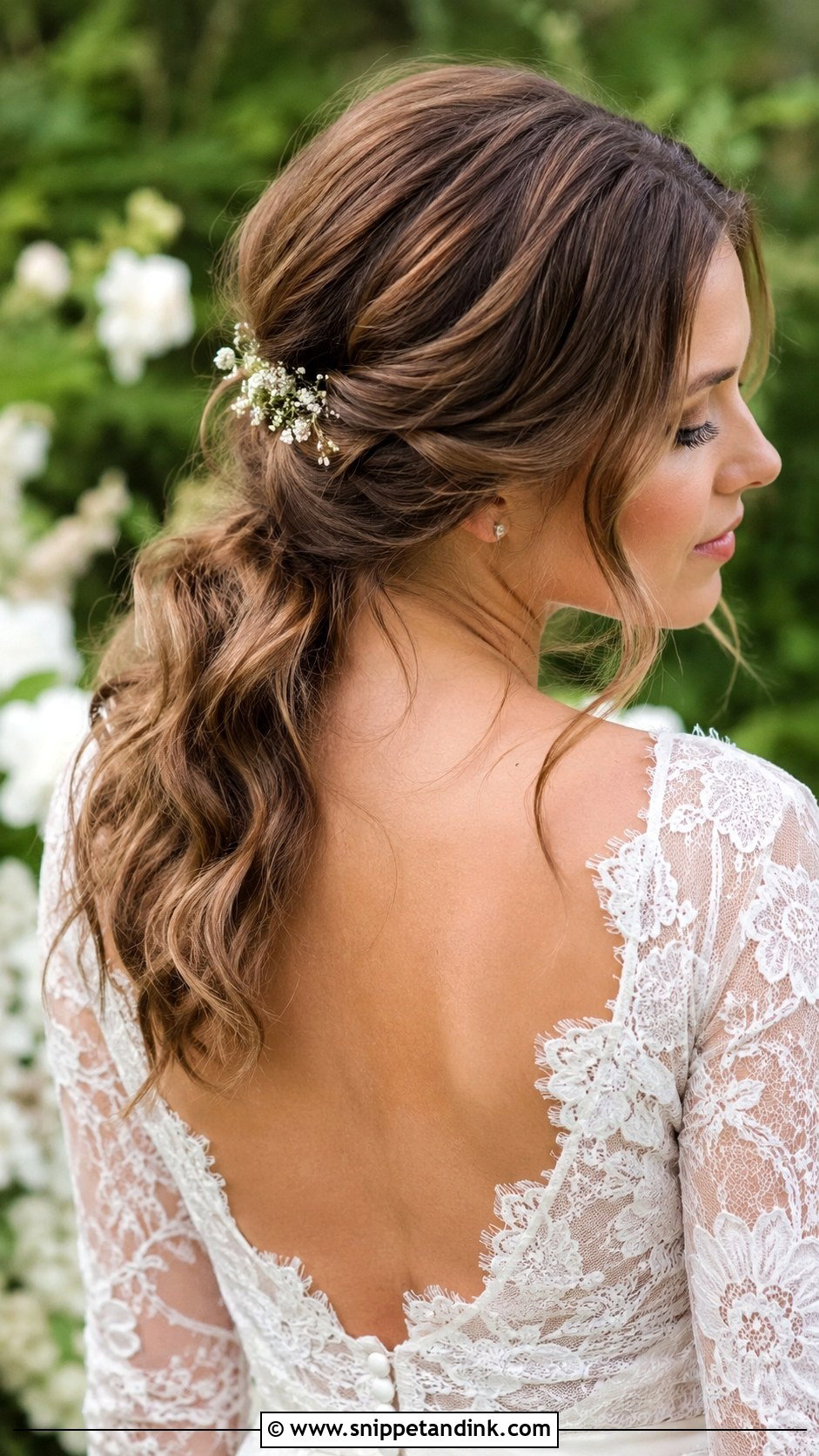
The waves are curled before the hair is gathered, with a wide-barrel iron and each section left to cool in a pin curl. That cooling step is what makes them last; brushed out hot, they fall flat in a couple of hours. Then I gather everything loosely at the nape and let the waves cascade past the elastic. A light texturising spray keeps them touchable. Outdoor and garden weddings, where the hair can move a little, are where this one shines.
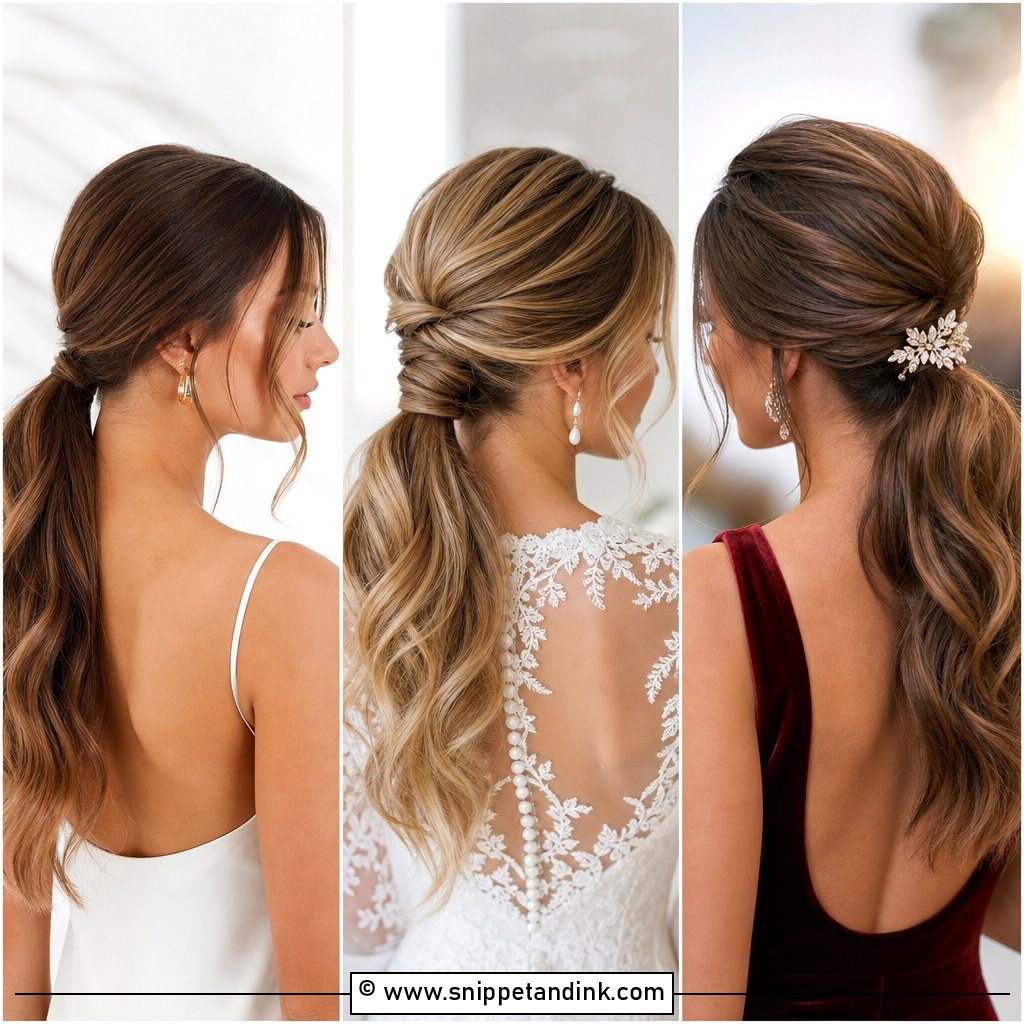
3. Textured Low Ponytail Wedding Hair
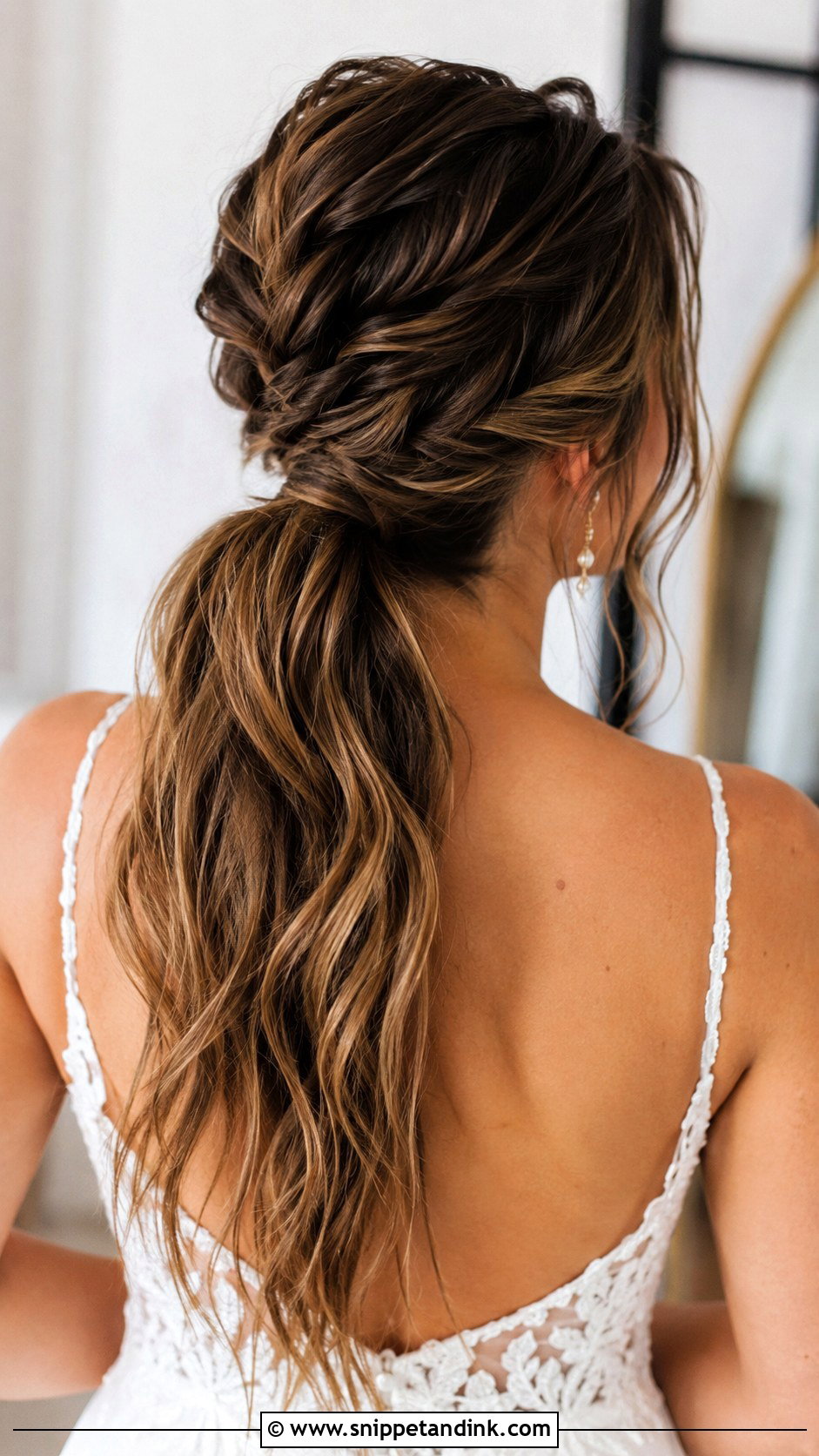
Texture is easier to wear than sleekness, and it forgives a breeze. I tease the crown gently, gather the hair loosely and pull out a few fine pieces around the face. A matte texture spray holds the shape without shine. The risk with this look on very fine hair is that it starts to look flat by evening, so I build the texture with a dry texturiser rather than relying on backcombing alone. It suits both flowy bohemian gowns and sleeker silhouettes.
4. Low Ponytail With Face-Framing Pieces
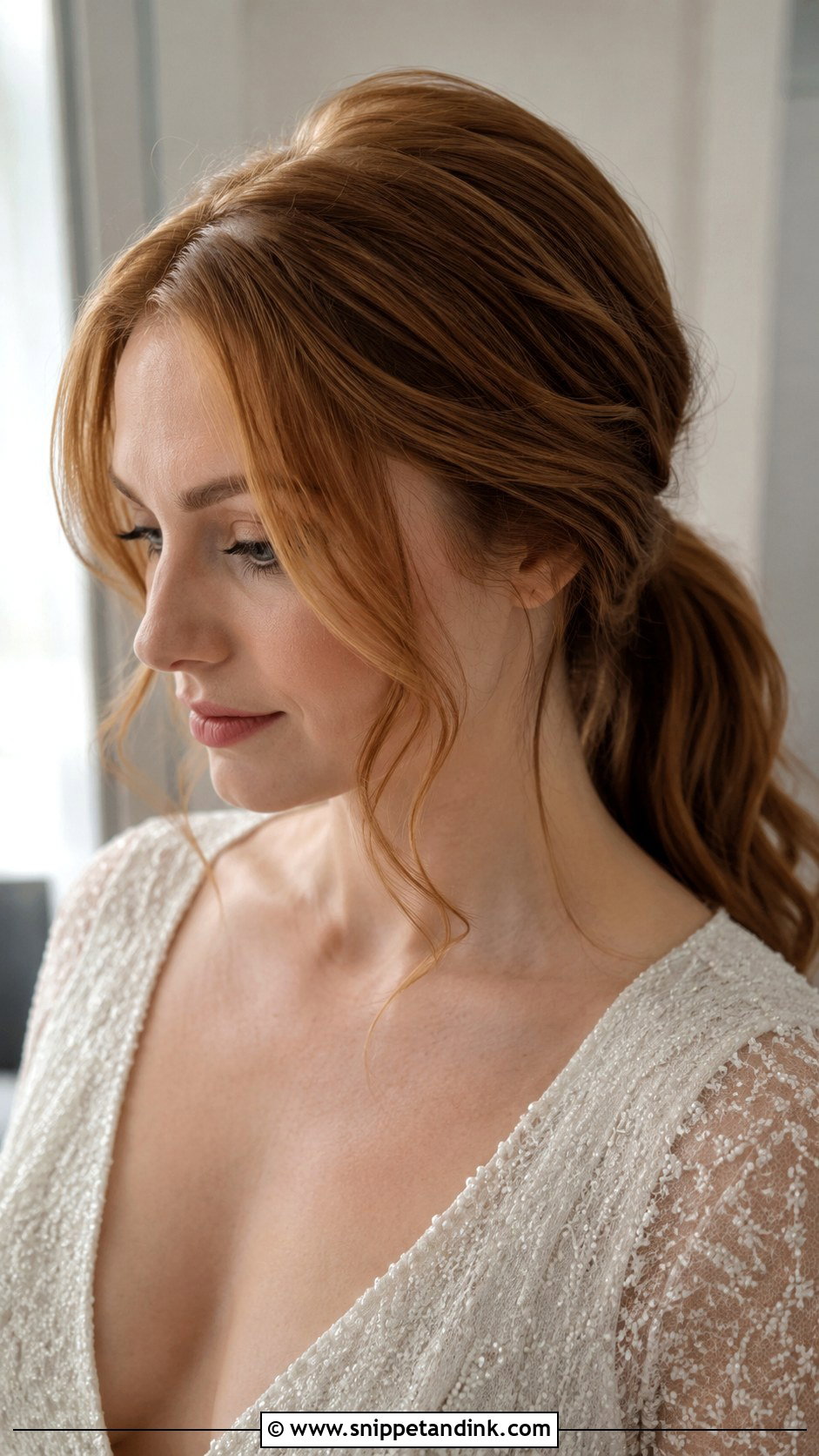
The front pieces are the detail people notice first, so I cut nothing and curl them to fall just past the cheekbone. They can be straight, curled or loosely waved depending on the rest of your look; I match them to the ponytail so the front and back feel like one style. I’d keep them to two or three per side. Anything more starts to look like the ponytail is coming loose.
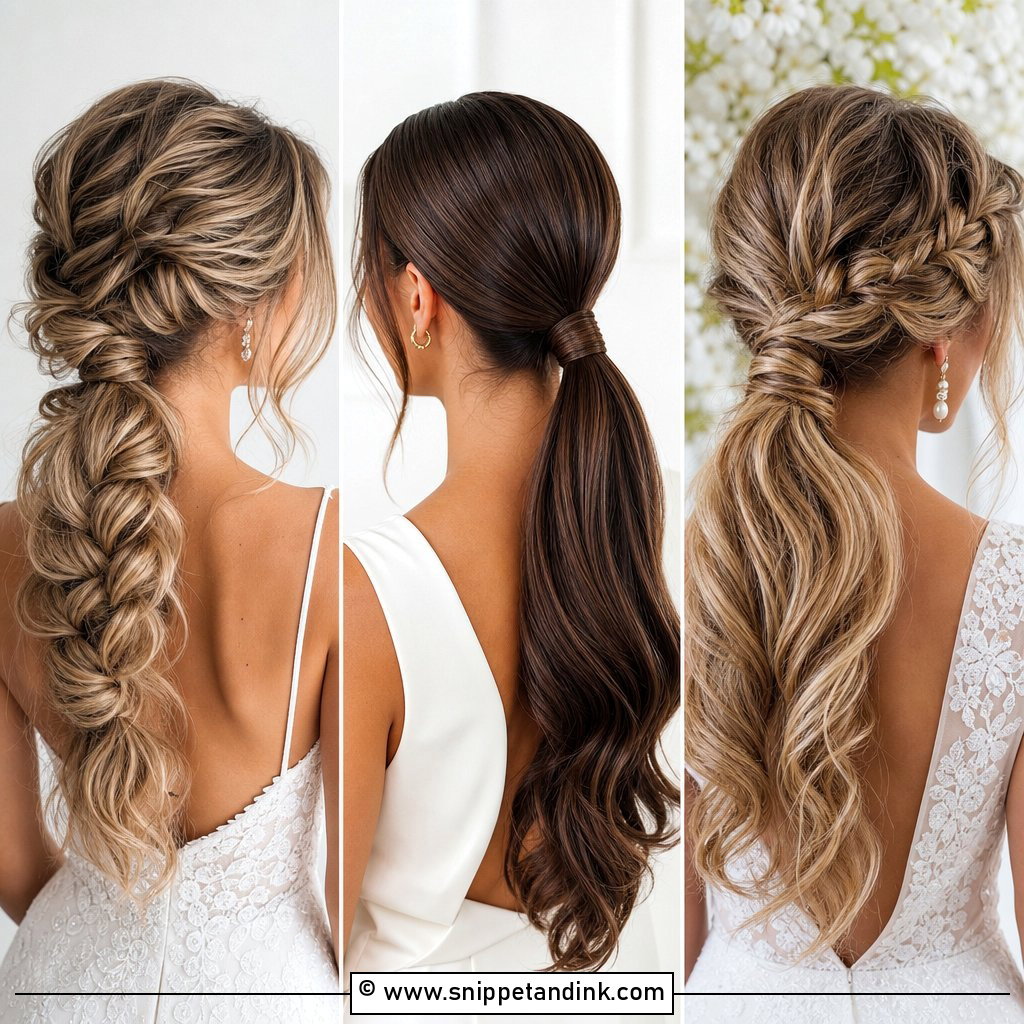
5. Braided Low Ponytail Wedding Hair
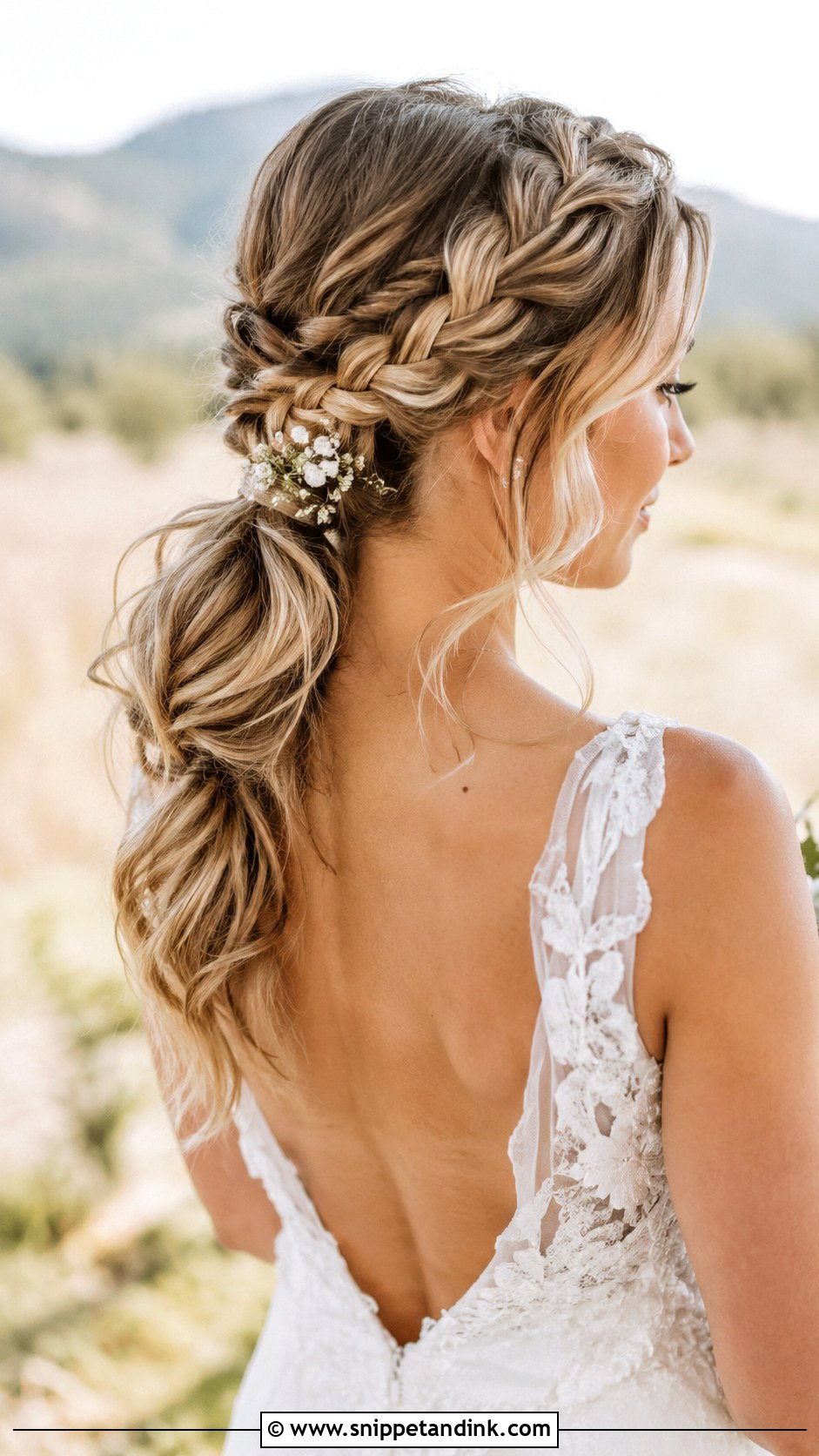
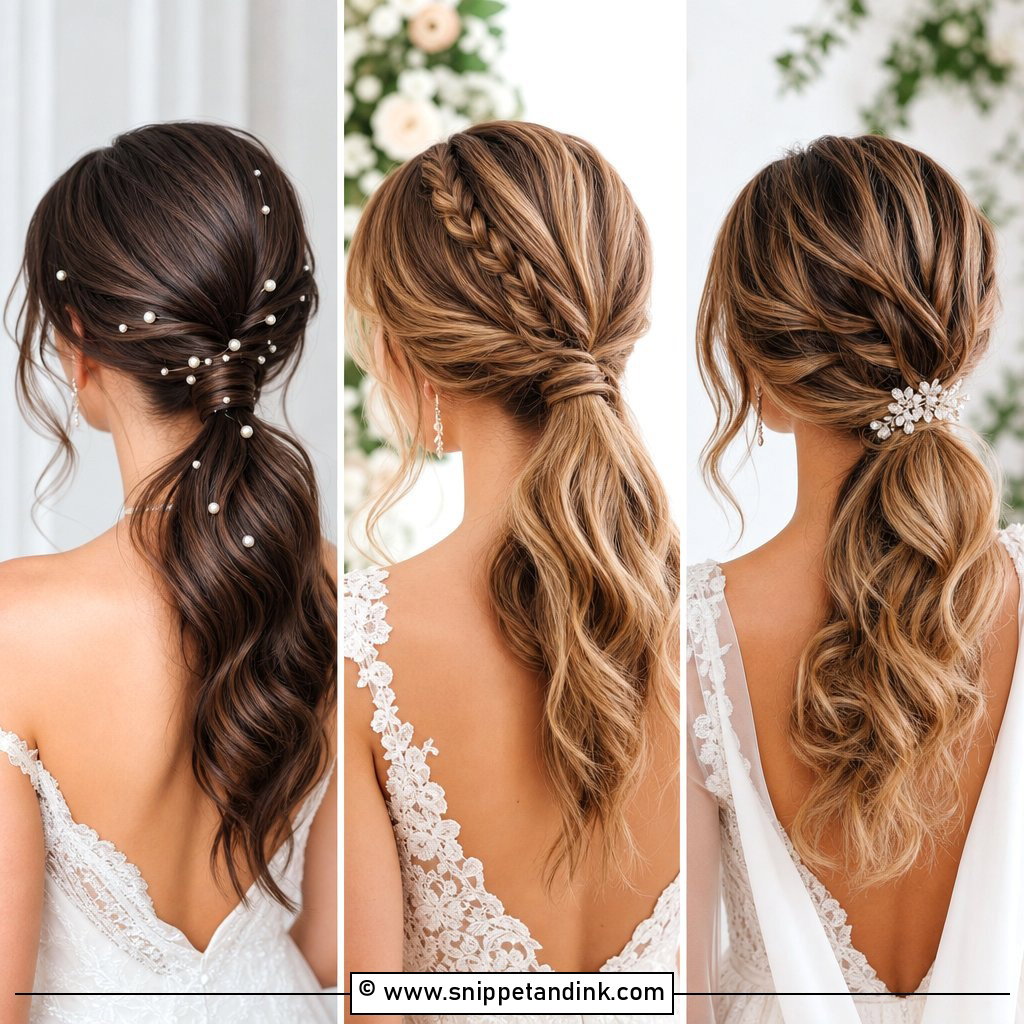
A braid gives the ponytail detail that holds better than loose sections. It can run along the crown into the ponytail or wrap around the base. I braid first, secure it into the ponytail, then pancake the edges slightly for a fuller effect. Boho and rustic weddings suit this best, and small flowers or pearls can be tucked into the braid. On layered hair, a braid is also the most practical way to hold the short pieces that would otherwise fall out of a plain ponytail.
6. Low Ponytail With Bow
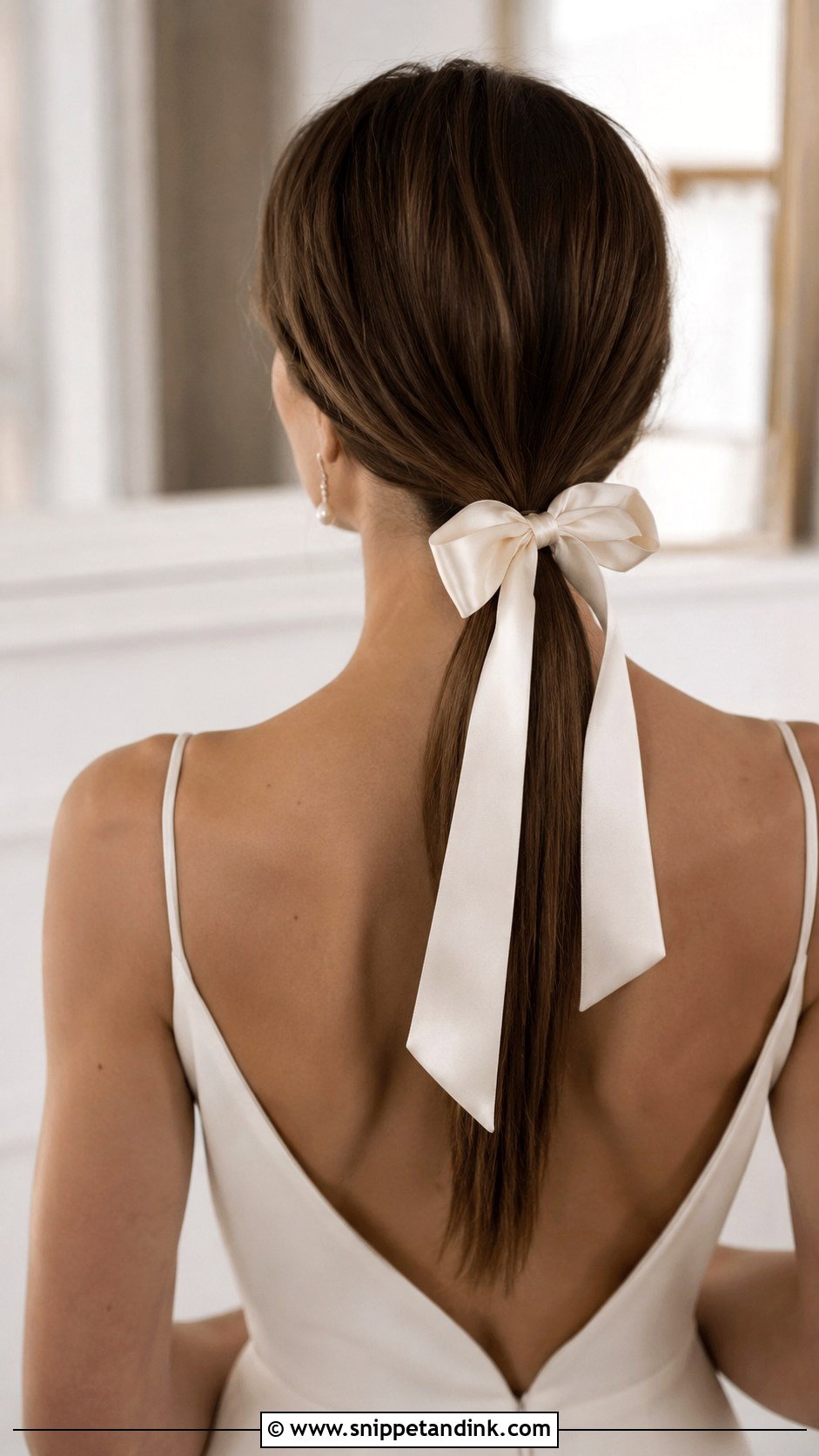
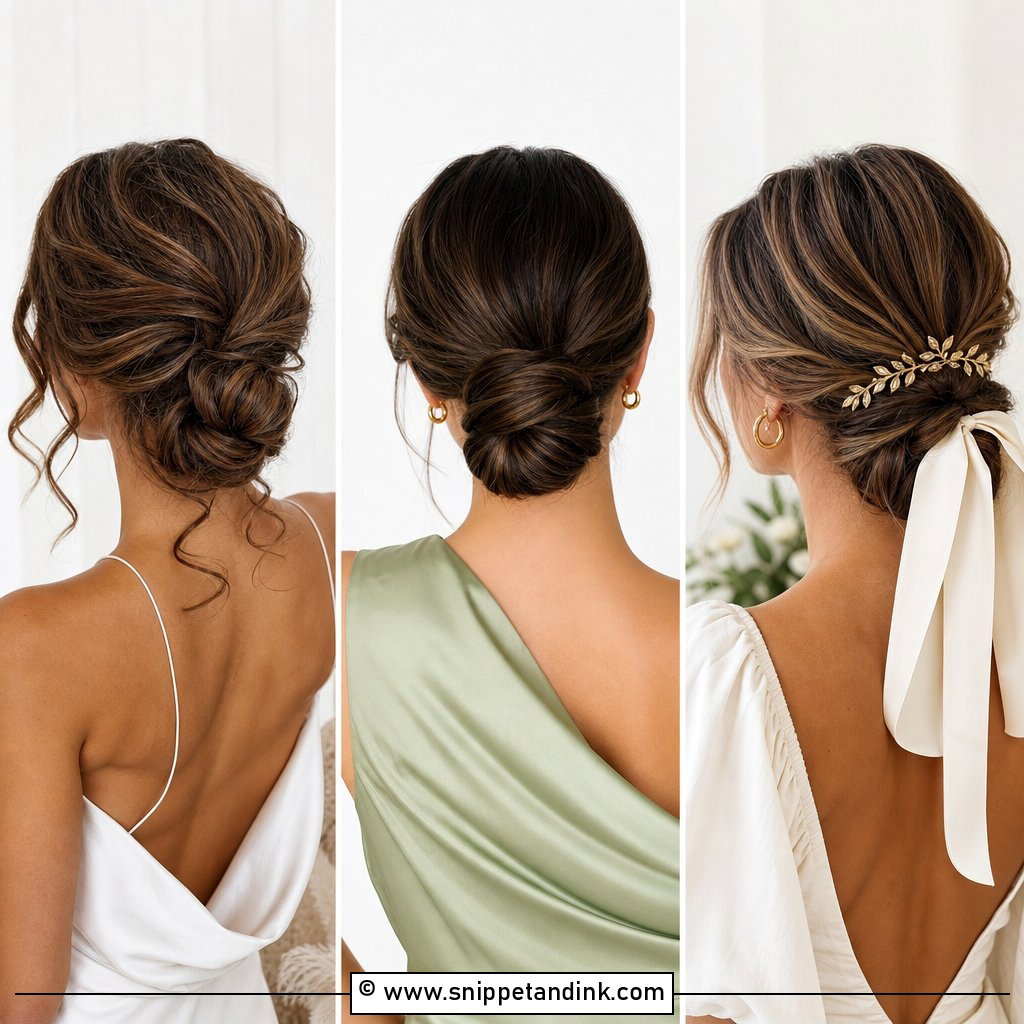
Bows are back, and on a low ponytail they make a sweet focal point right at the base. I tie the soft satin or organza bow over the elastic and then pin it through the knot, because a bow tied only around hair slides down as the ponytail moves. Ivory or a subtle blush tone suits most gowns. It pairs well with sleek or wavy ponytails and draws the eye to an open back.
7. Curly Low Ponytail Wedding Hair
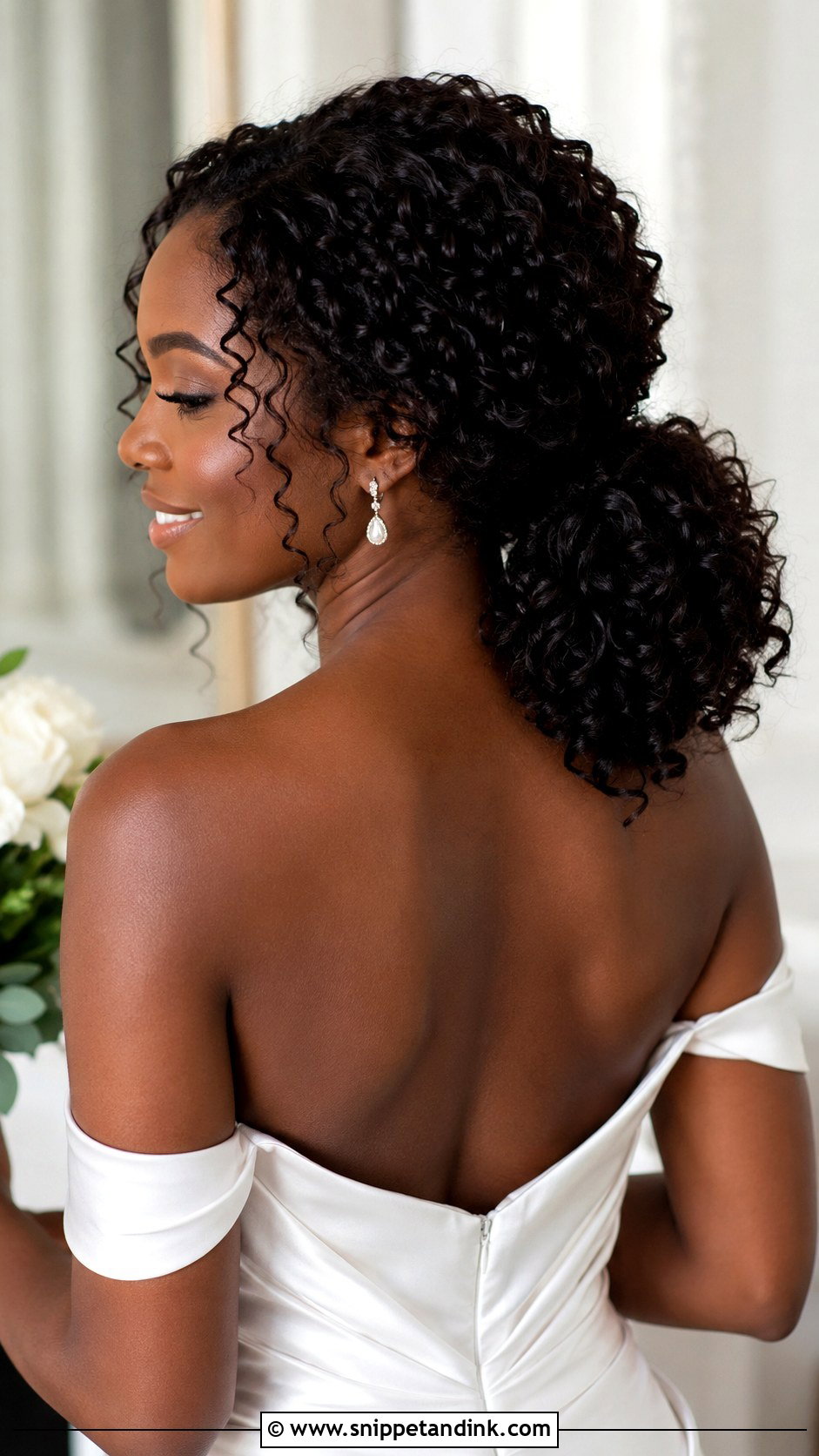
Natural curls make one of the easiest ponytails to wear, as long as you don’t fight them. I gather the curls at the nape without brushing them through, which keeps the pattern defined. A curl cream keeps them hydrated and reduces frizz. Leave a few around the face so the front isn’t scraped back. If your curls shrink a lot when dry, plan the ponytail position at the trial with fully dry hair, not damp.
8. Low Ponytail With Pearl Accessories
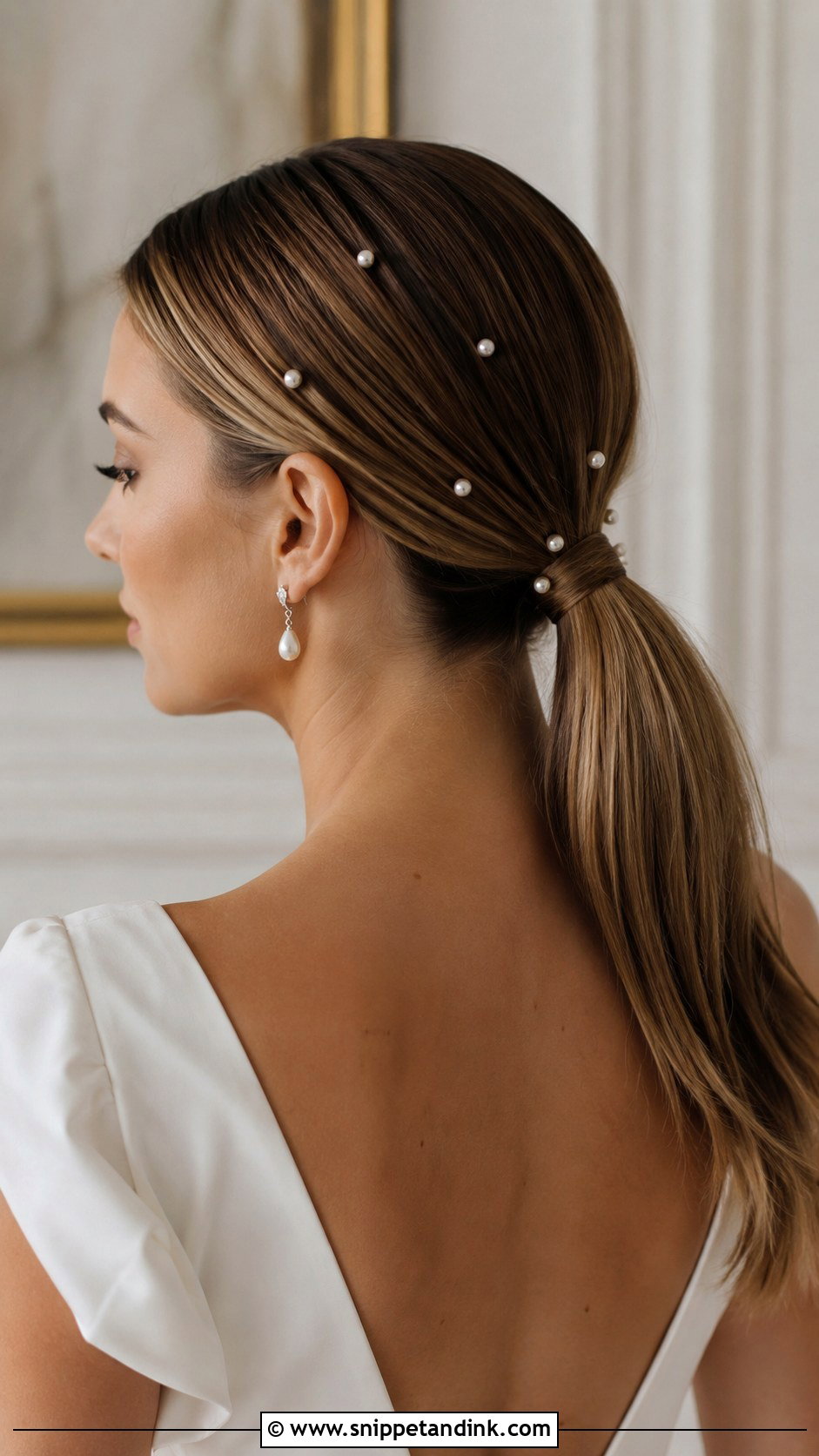
Pearls work on nearly any ponytail because they read as polished without being loud. delicate pearl pins can be scattered along the crown or clustered at the base. I insert each pin at an angle into a firm section of hair, since pins pushed into loose texture fall out within an hour. Coordinating them with pearl earrings ties the look together.
9. Bubble Low Ponytail Wedding Hair
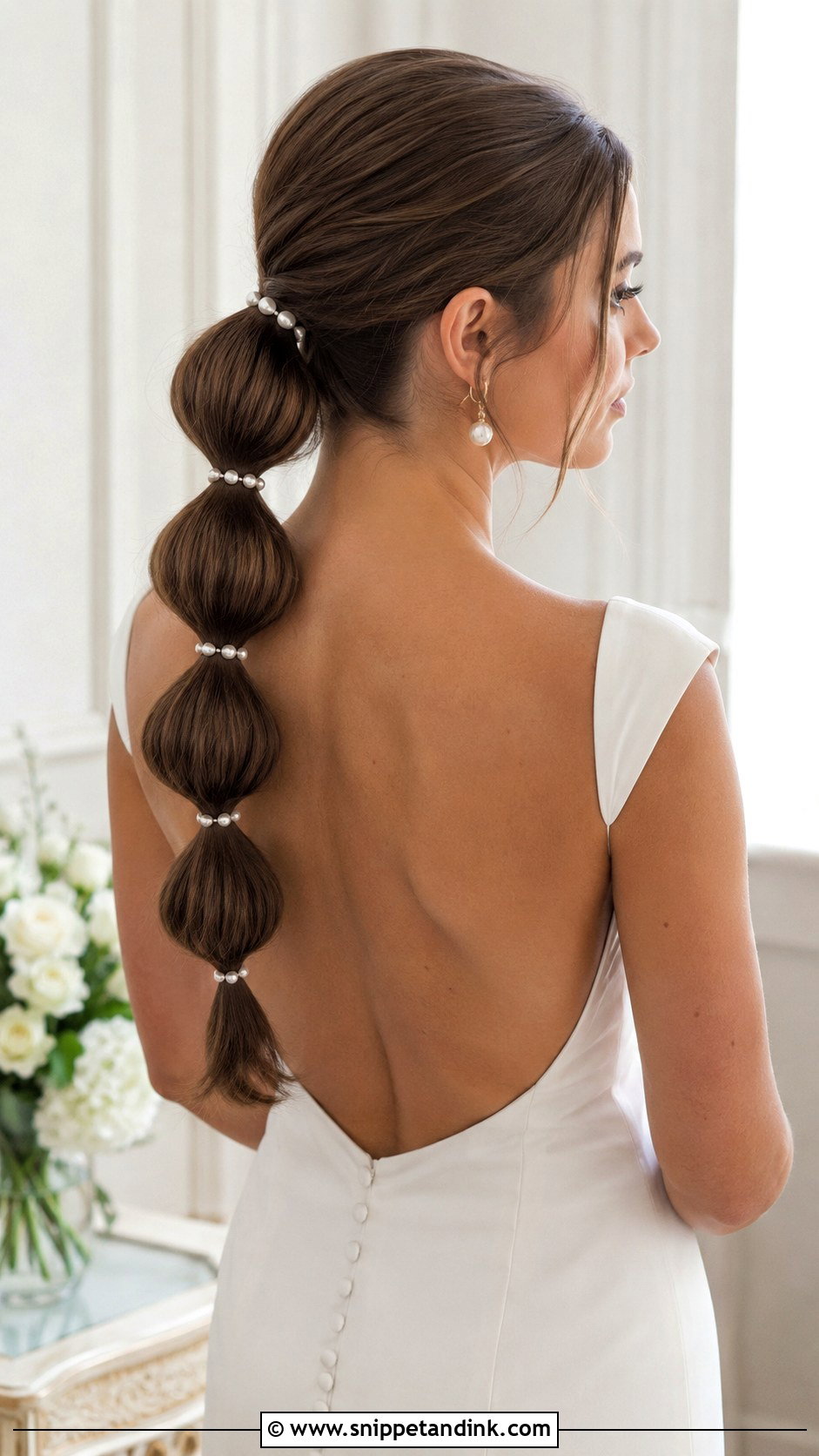
A bubble ponytail ties small elastics down the length of the hair, then each section is gently puffed out. It needs length to work; on hair shorter than the shoulder blades, you’ll get two bubbles at most. I hide the elastics with small wraps of hair or thin ribbon, and you can add tiny pearls or flowers between the bubbles. It’s the clearest choice here for showing off the back of a gown.
10. Low Ponytail With Veil
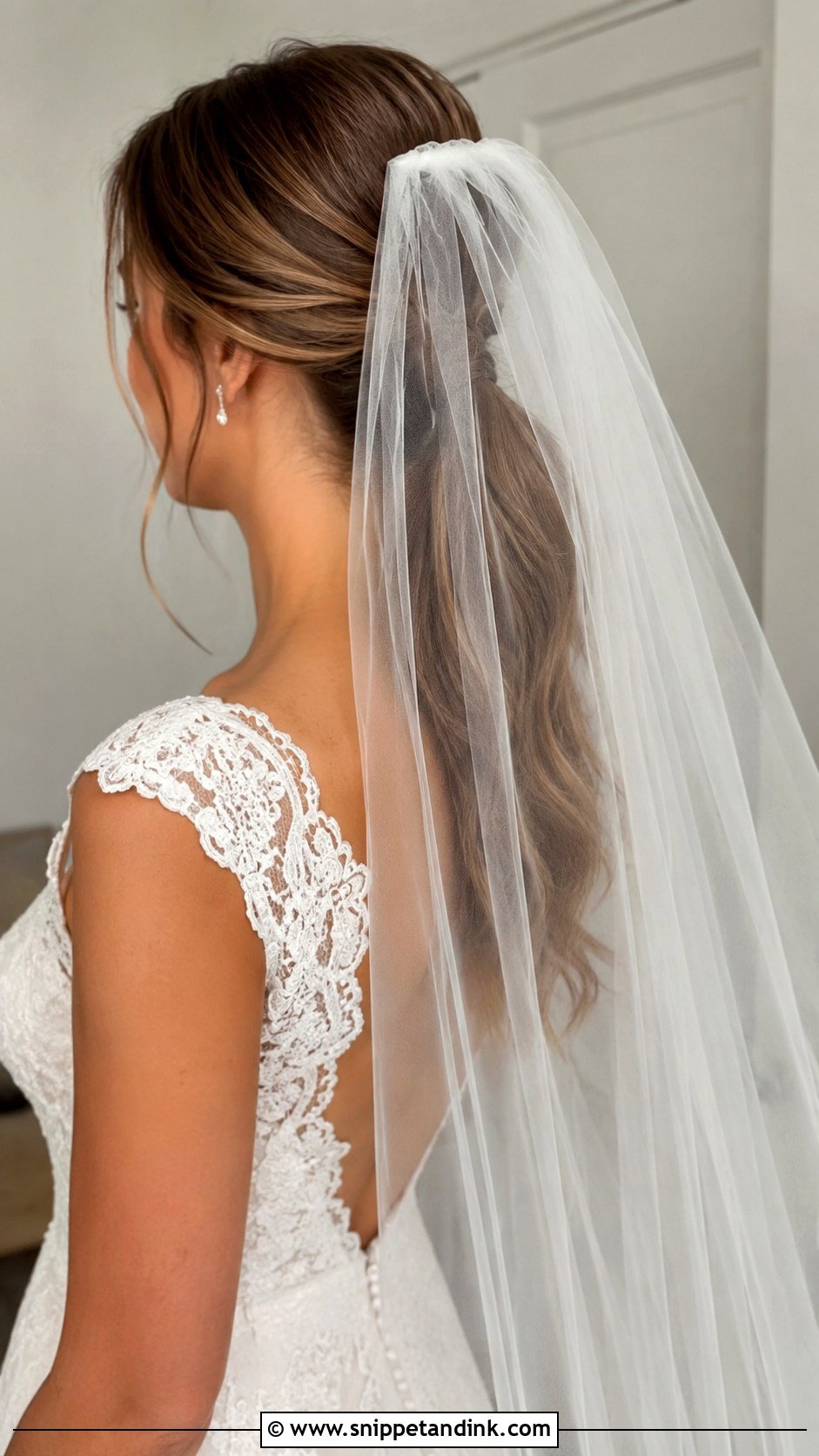
Wearing a veil with a ponytail is easier than most brides think. The veil comb goes in just above the elastic, hooked into the base, so the weight is carried by the tightest point rather than loose hair. Placed below, the veil flows over the ponytail; placed above, the ponytail sits on top of the tulle. If the veil comes off after the ceremony, I leave the comb’s grip easy to reach so no one pulls the ponytail loose.
11. Twisted Low Ponytail Wedding Hair
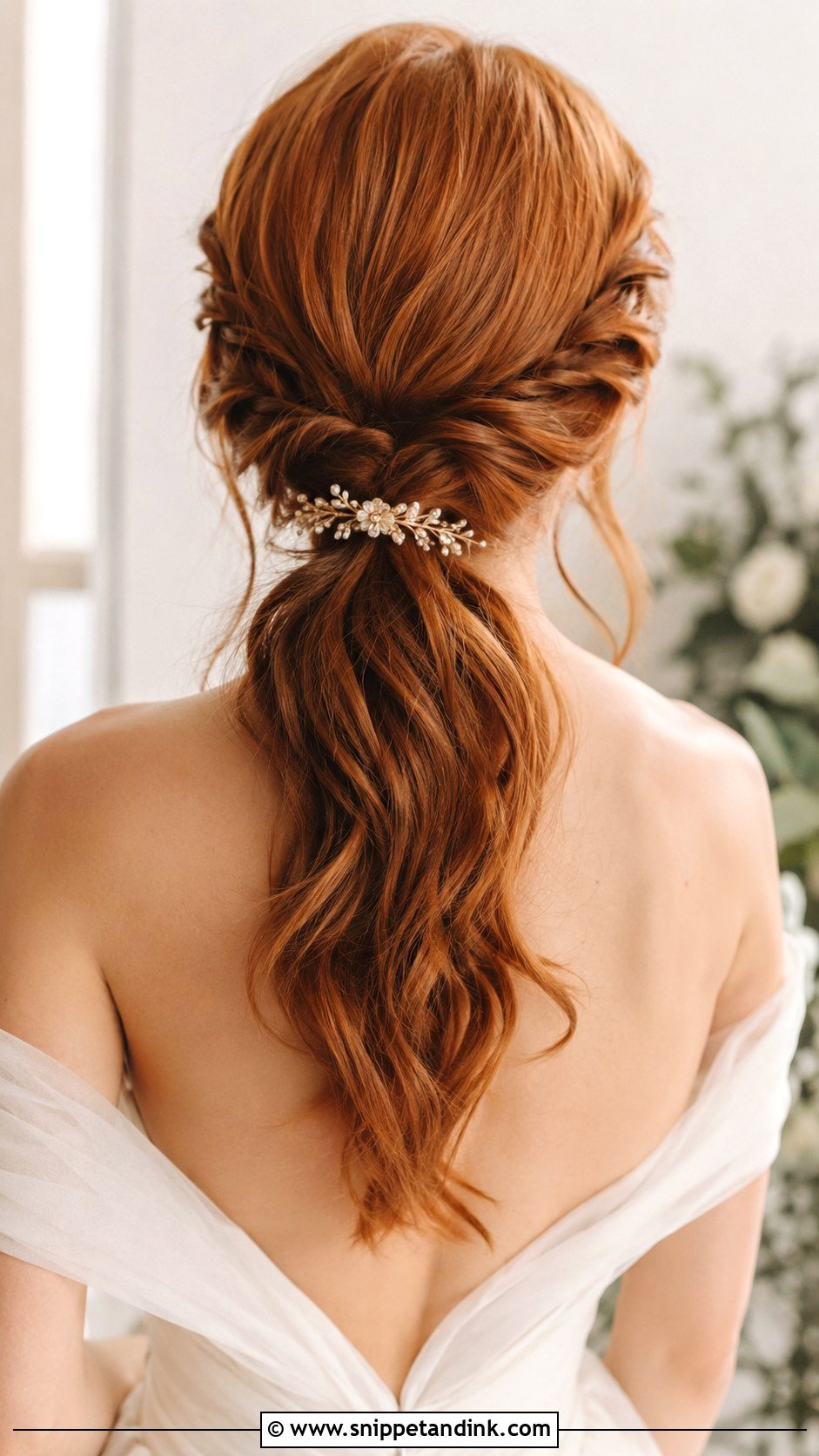
Twists along the sides give a ponytail structure without the commitment of a full updo. I twist each side section back toward the nape, pin it, then join it into the low ponytail. Loosening the twists slightly softens the look. A small clip or a few flowers can finish it. The twists also hold back shorter side layers, which makes this a strong pick for layered hair.
12. Side-Swept Low Ponytail Wedding Hair
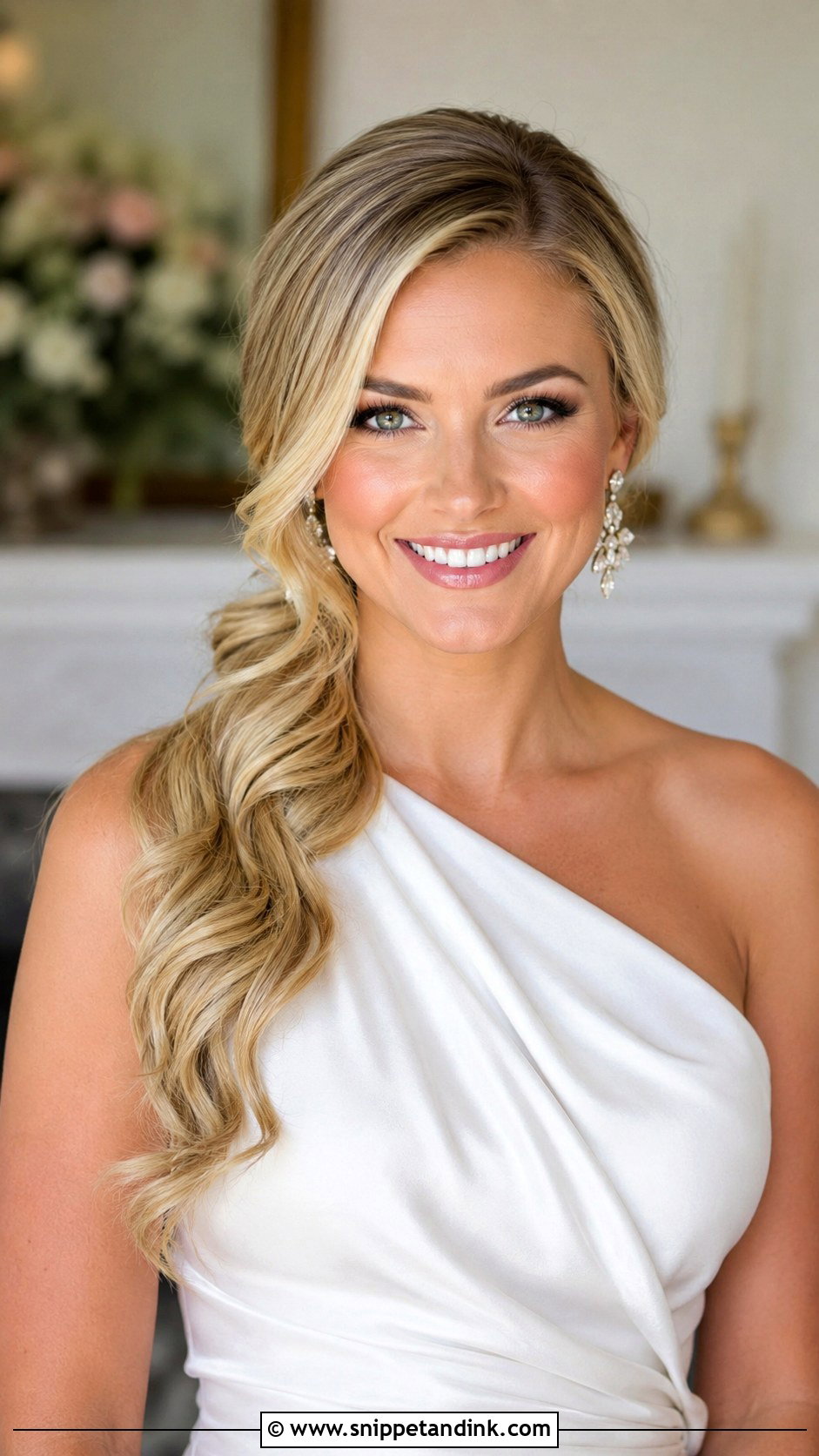
The side-swept ponytail is gathered to one side and draped softly over the shoulder. It suits a one-shoulder gown on the bare side and shows off a statement earring on the other. I curl the hair first so the drape has body. Plan which side faces your guests at the ceremony; this is the one ponytail where profile photos really matter.
13. Low Ponytail With Fresh Flowers
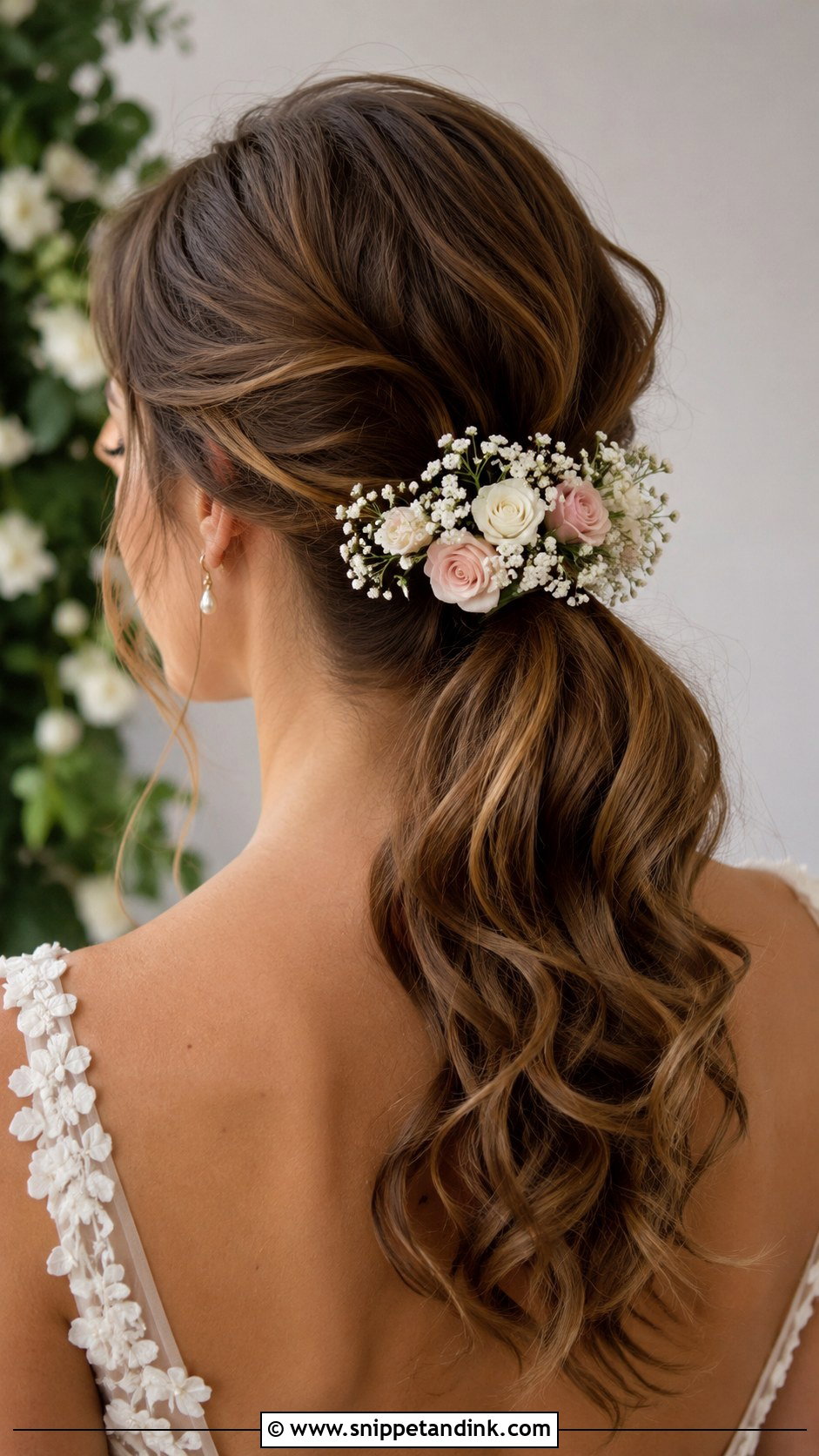
Fresh flowers bring a natural, seasonal feel to the base or crown. baby’s breath, small roses or eucalyptus all hold up well; larger, soft-petalled flowers wilt and bruise once pinned. I ask florists to wire the stems so they can be secured without poking out. Matching them to the bouquet keeps the look tied together, and on a hot day I place them as late as possible.
14. Voluminous Low Ponytail Wedding Hair
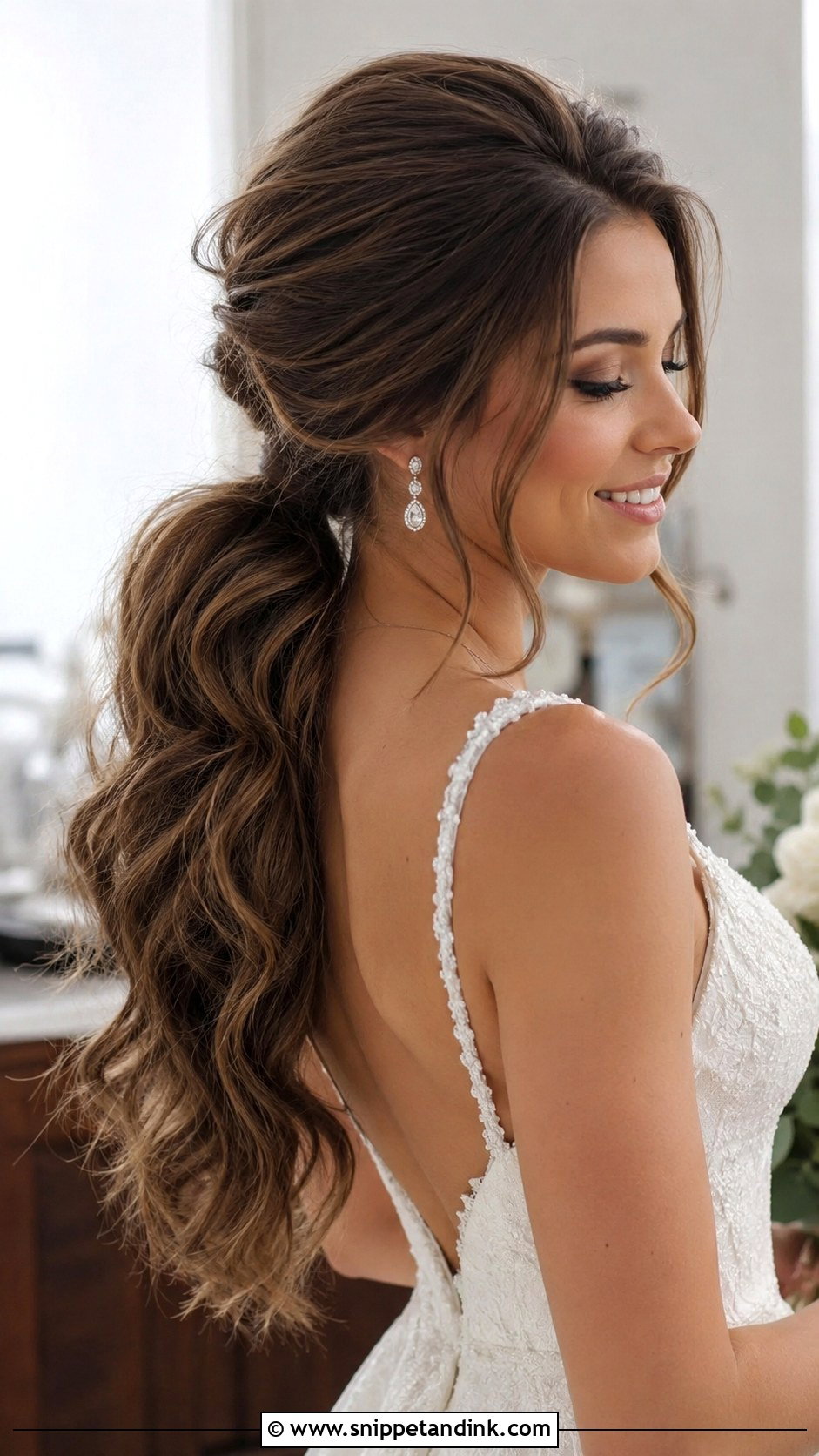
Volume at the crown balances a low ponytail and gives fine hair the illusion of thickness. I tease the crown in small sections, smooth the top layer over it, then gather everything into a full ponytail. A strong-hold hairspray locks in the height. Be careful with how much lift you ask for; a little height elongates the face, while too much can look dated in photos.
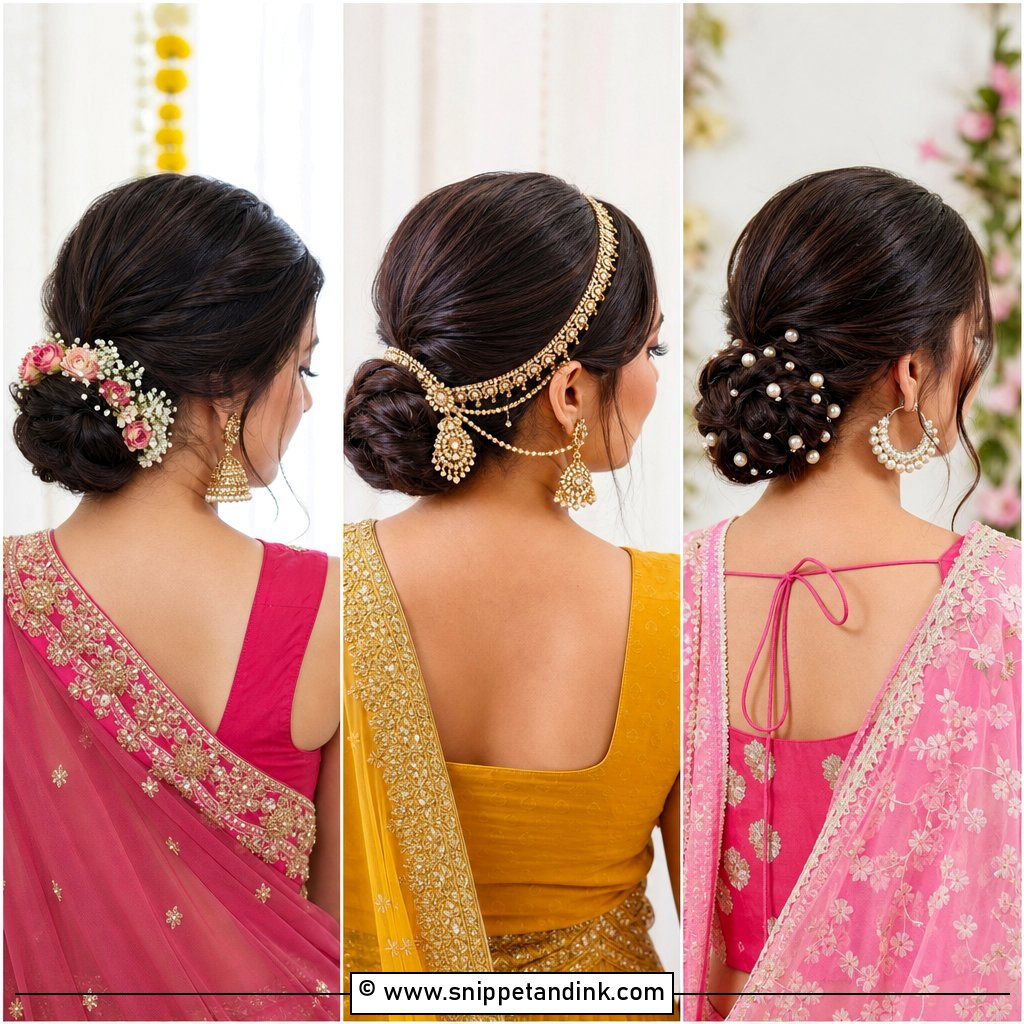
15. Boho Low Ponytail Wedding Hair
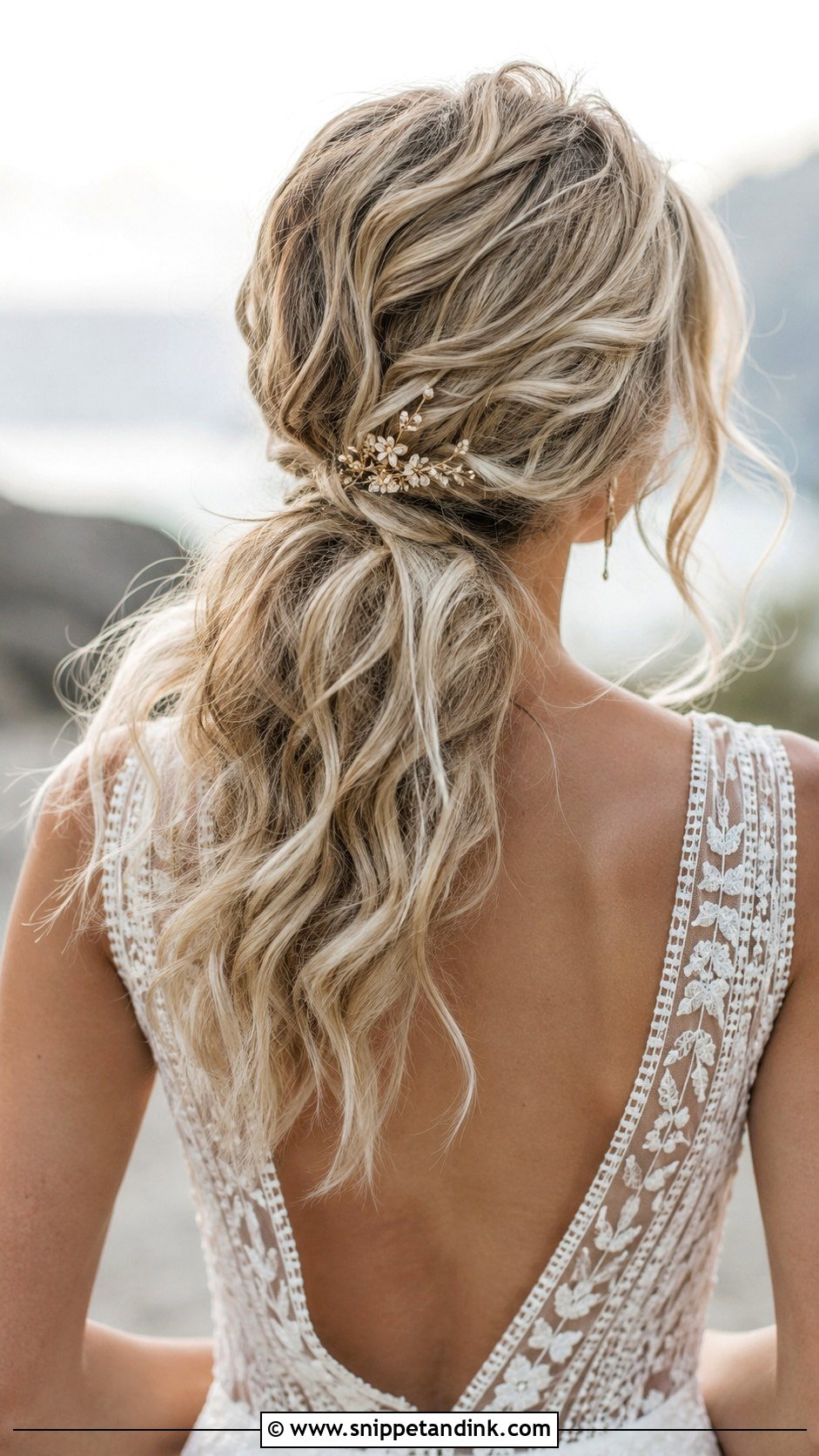
Boho ponytails depend on soft texture and loose pieces around the face. I pull out wispy strands, keep the ponytail loose and add waves for movement. Braids, flowers or delicate gold pins can be layered in. Flowy gowns and outdoor settings suit it. The trade-off is hold: a loose ponytail will soften further through the day, so I tell brides to expect it to look more relaxed by the reception.
16. Low Ponytail With Headband
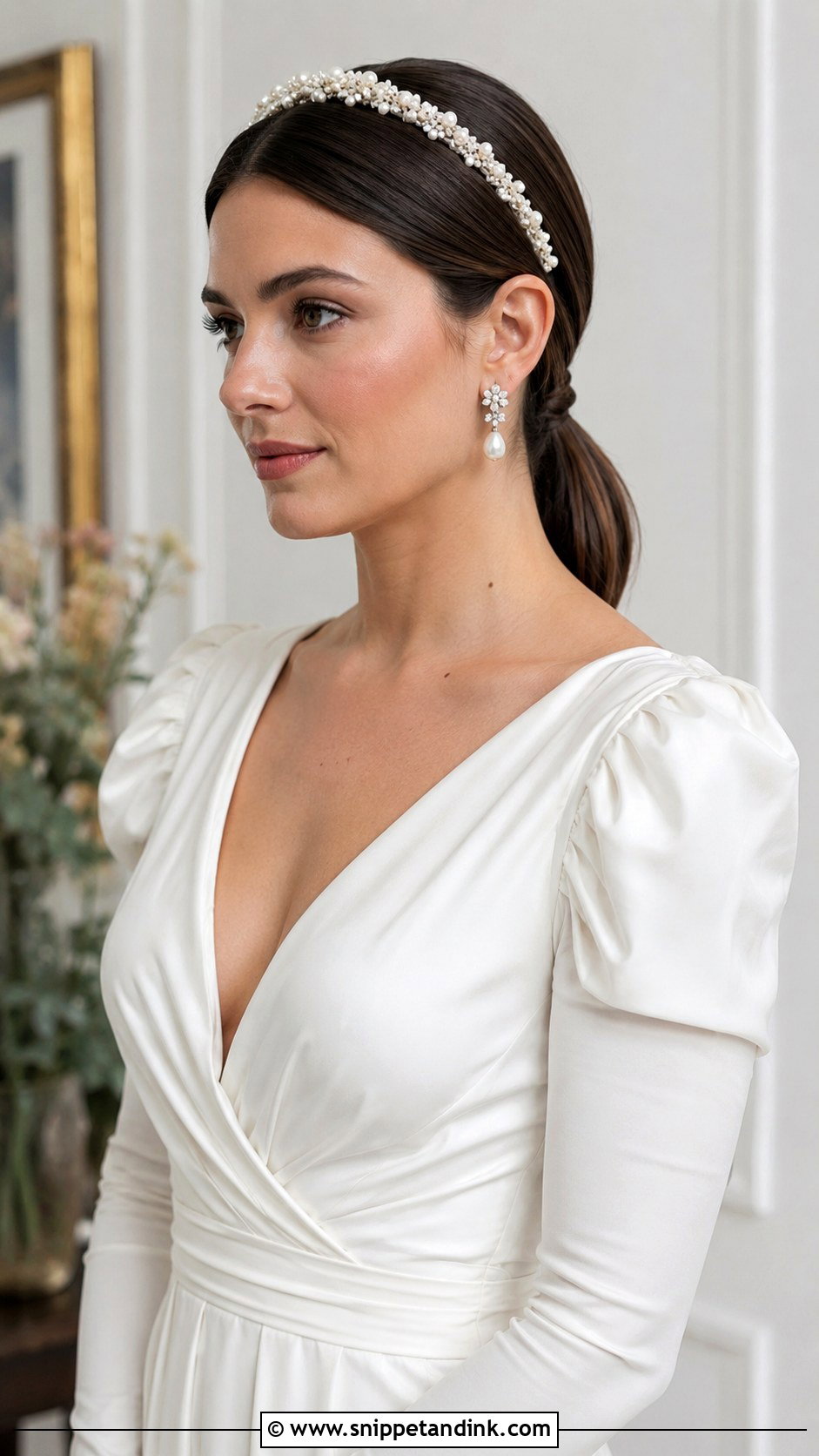
A bridal headband gives a low ponytail a finished look and adds sparkle near the face. It sits across the crown while the ponytail flows behind. Bands can pinch behind the ears after a few hours, so wear yours for twenty minutes at the trial before deciding. I secure it from underneath with small pins so it doesn’t creep forward. Thin bands look subtle; wider ones read as more vintage.
17. Low Ponytail With Center Part
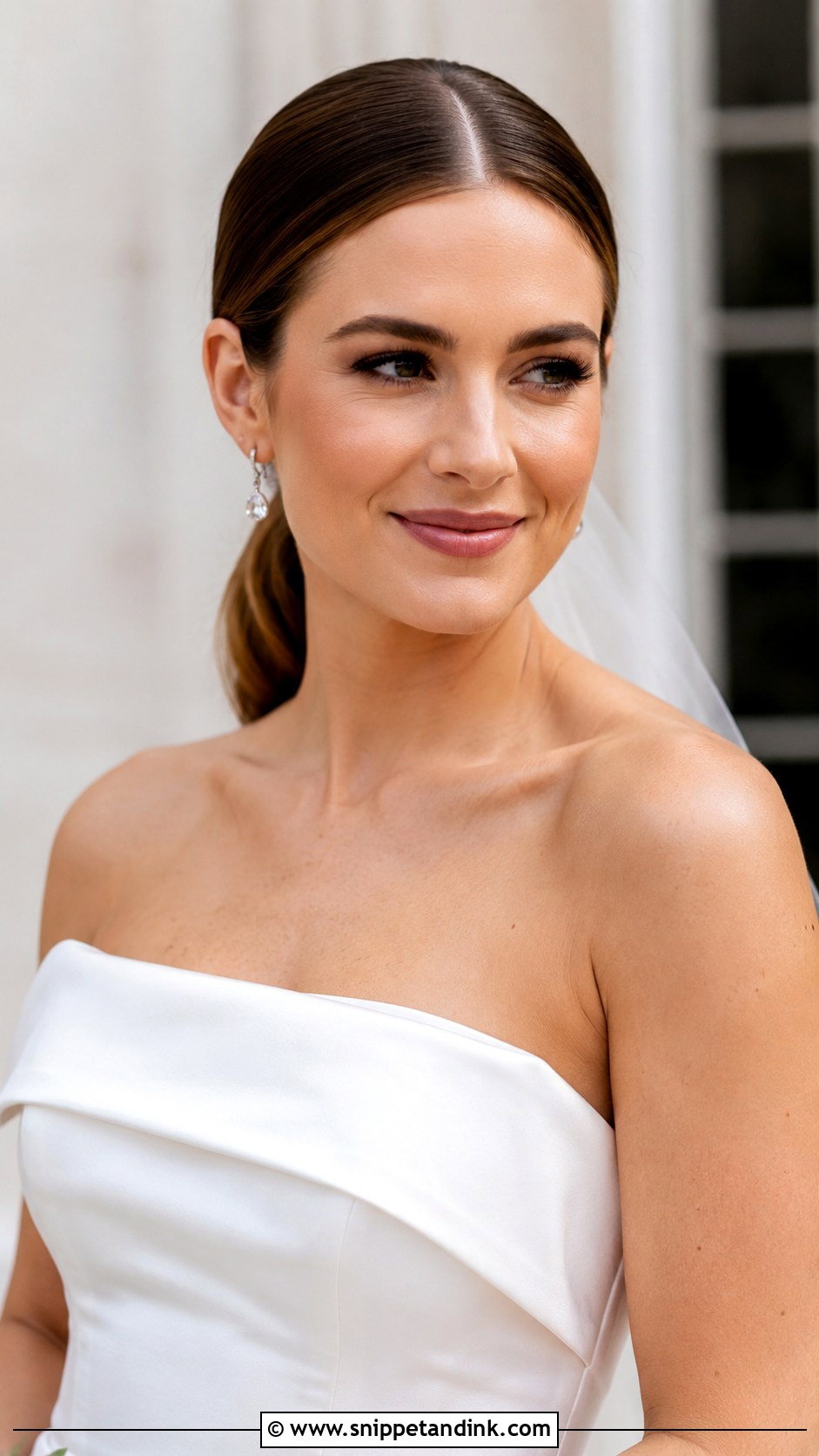
The centre part looks minimalist and balanced, but it shows any unevenness in the hairline. I check your natural part at the trial and sometimes shift it slightly so it reads as straight. The hair is smoothed back into a low ponytail, either sleek or with soft waves. Structured, modern gowns suit it. Oval and heart-shaped faces tend to look best with a centre part, though it can suit others too.
18. Low Ponytail With Ribbon
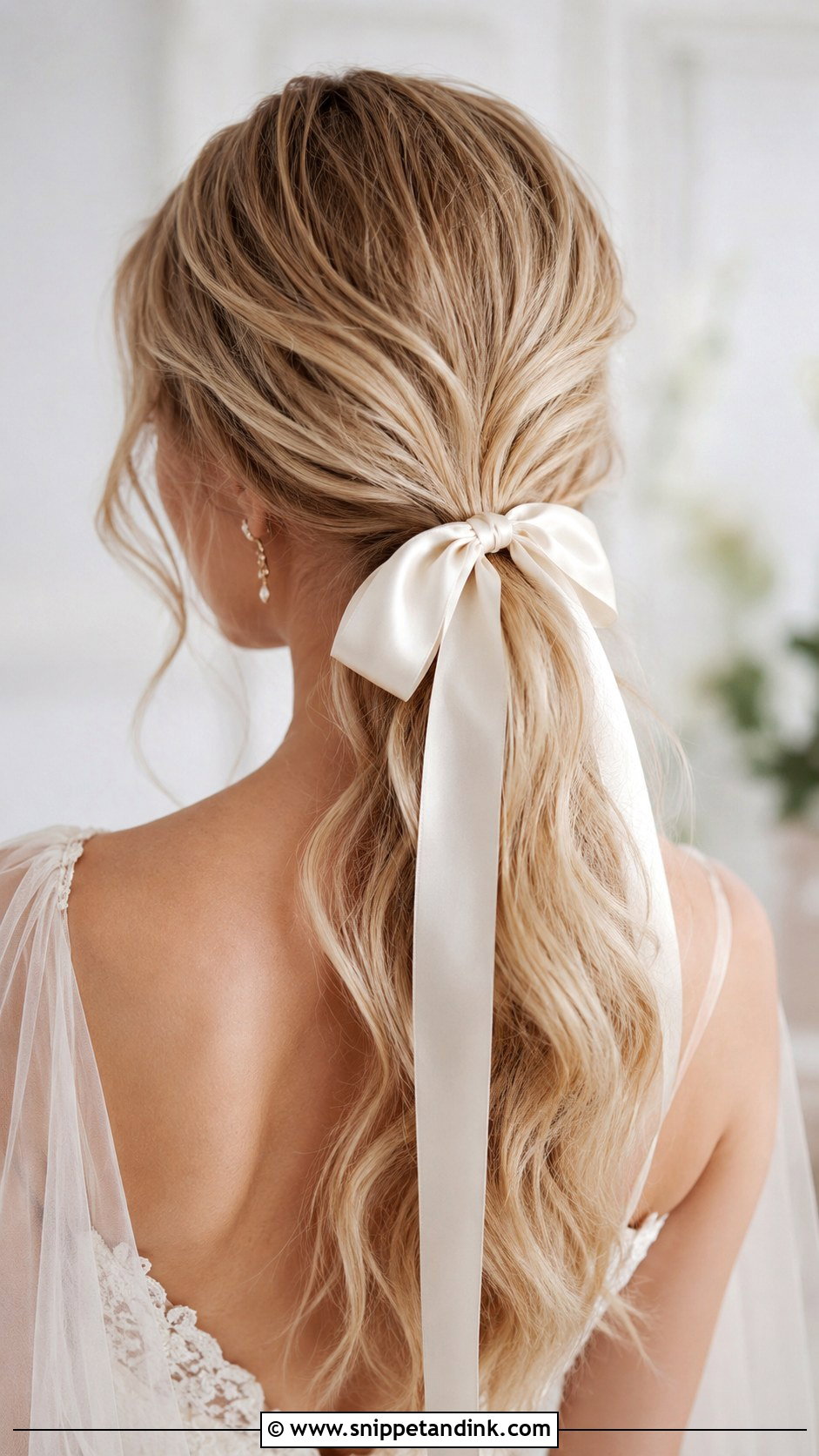
Ribbon woven through a ponytail adds a softer, more playful detail than a bow. Satin or silk is easiest to work with; I tie it at the base or lace it along the length, then pin the ends so they don’t unravel. Ivory, blush or champagne tones complement most gowns. It suits both sleek and wavy ponytails, and the ribbon tails catch movement as you walk.
19. Low Ponytail With Curtain Bangs
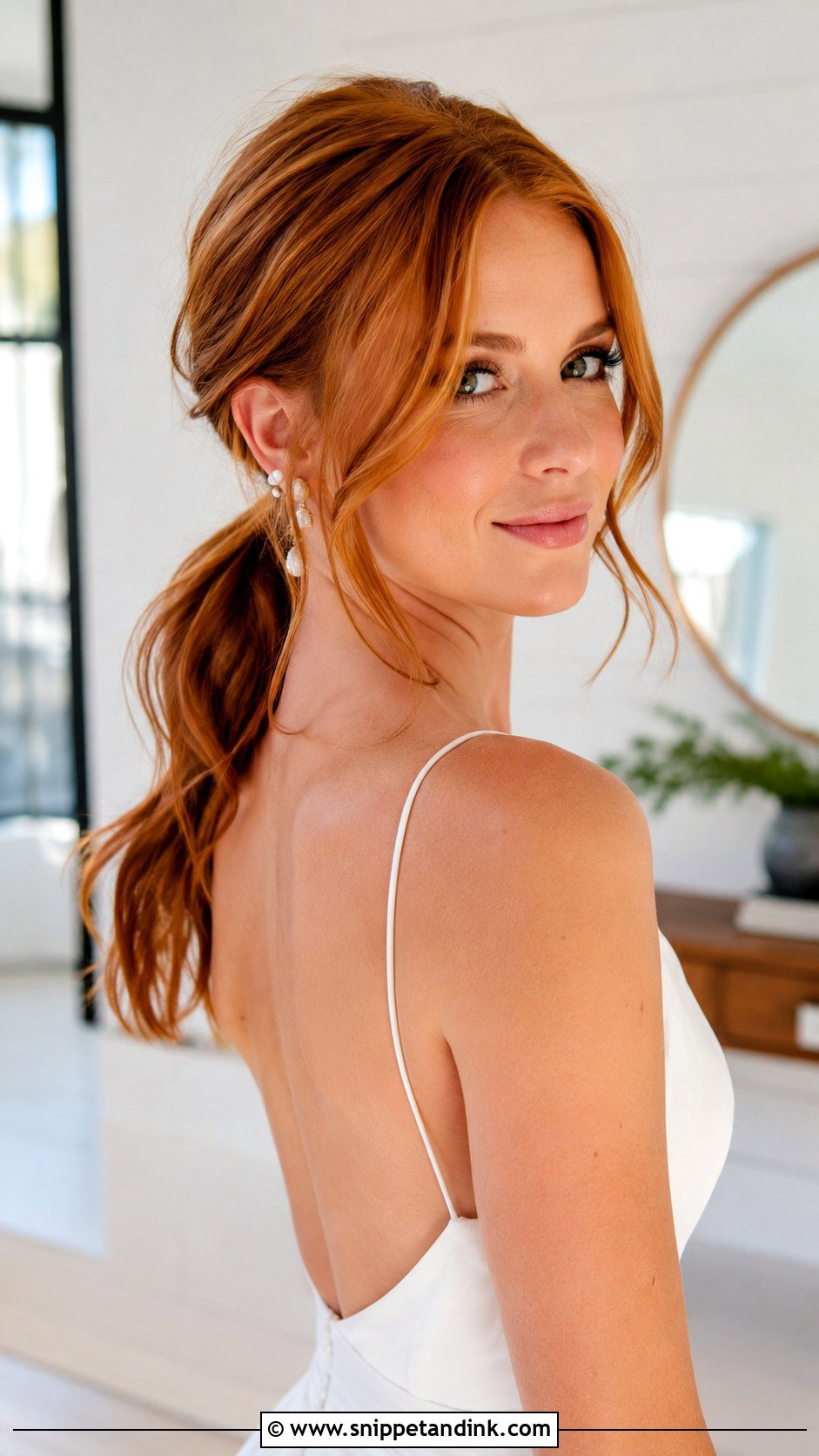
Curtain bangs frame the face and soften a pulled-back ponytail. I style the bangs first with a small round brush, then gather the rest of the hair into a smooth or wavy ponytail. The bangs sweep toward each cheekbone. If they’re freshly cut, schedule the trim two to three weeks before the wedding so they settle into their natural fall.
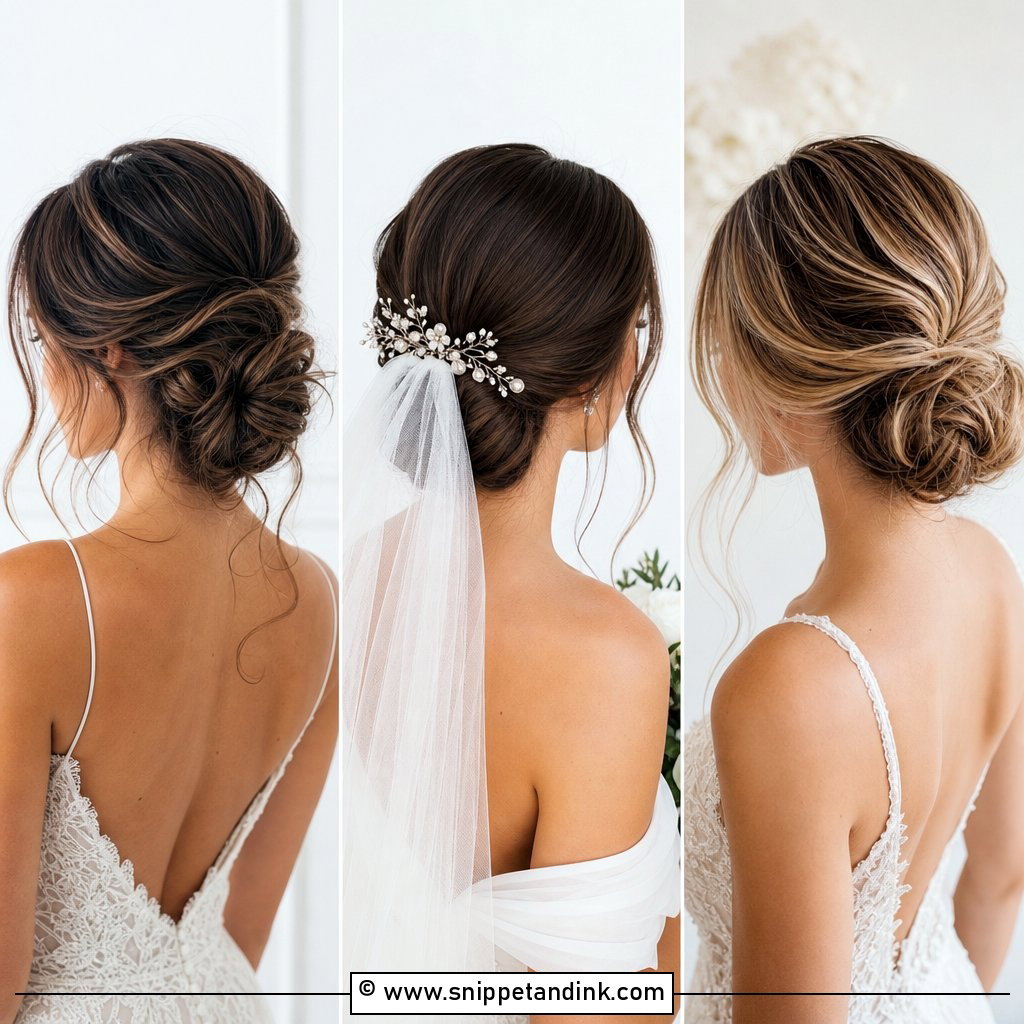
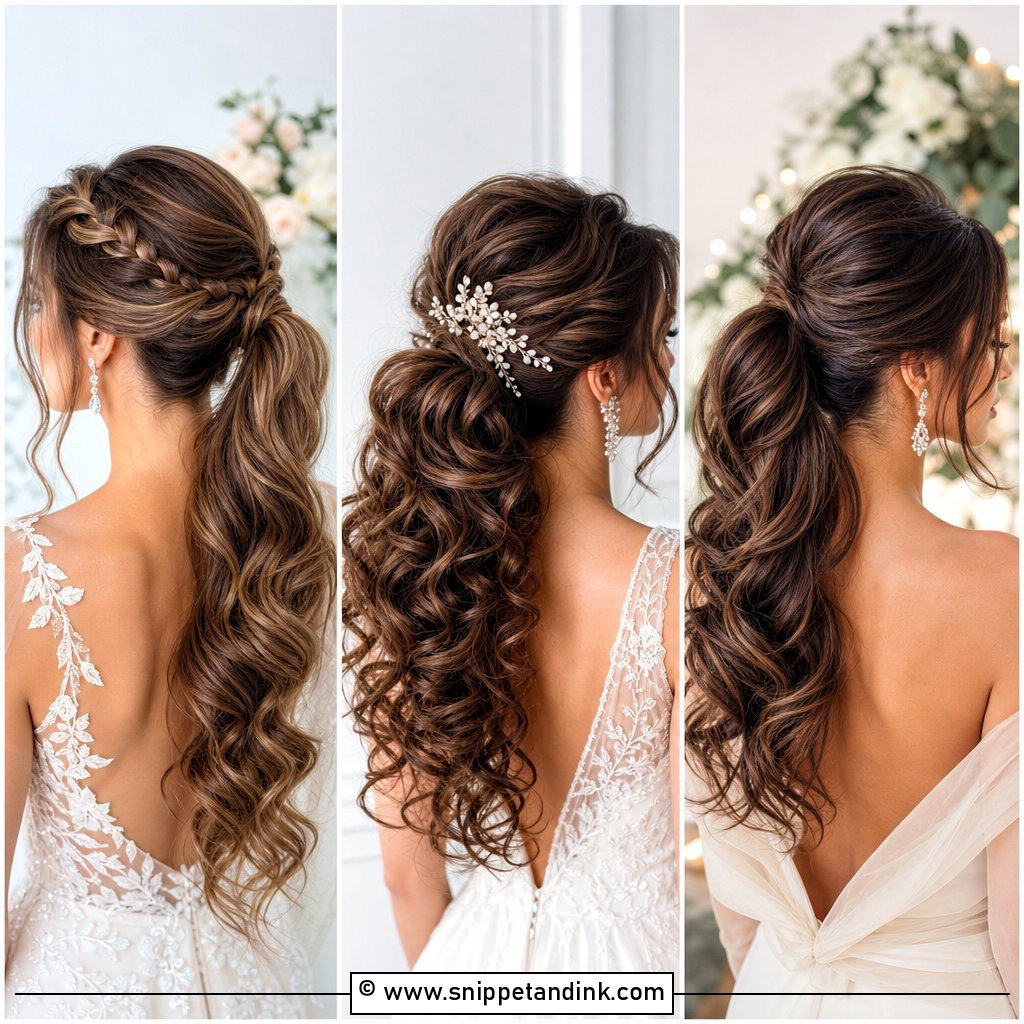
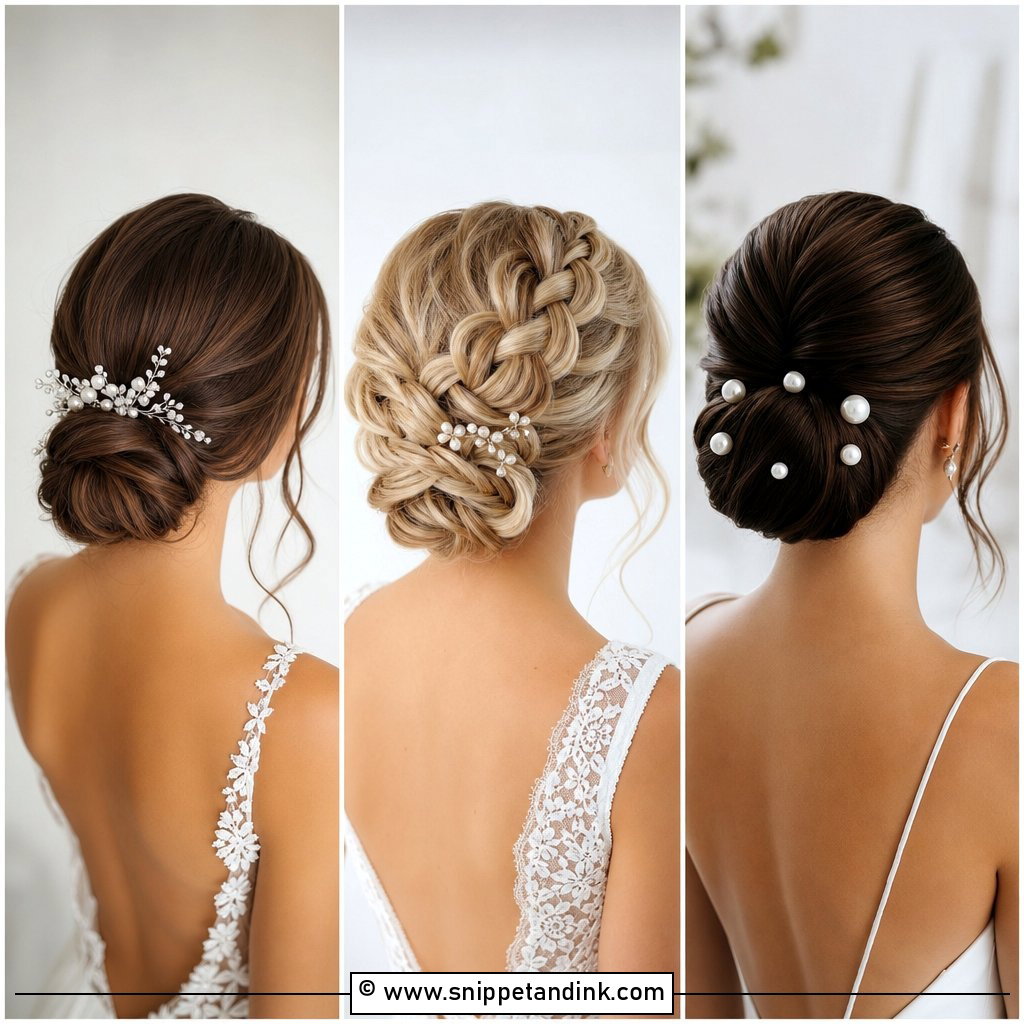
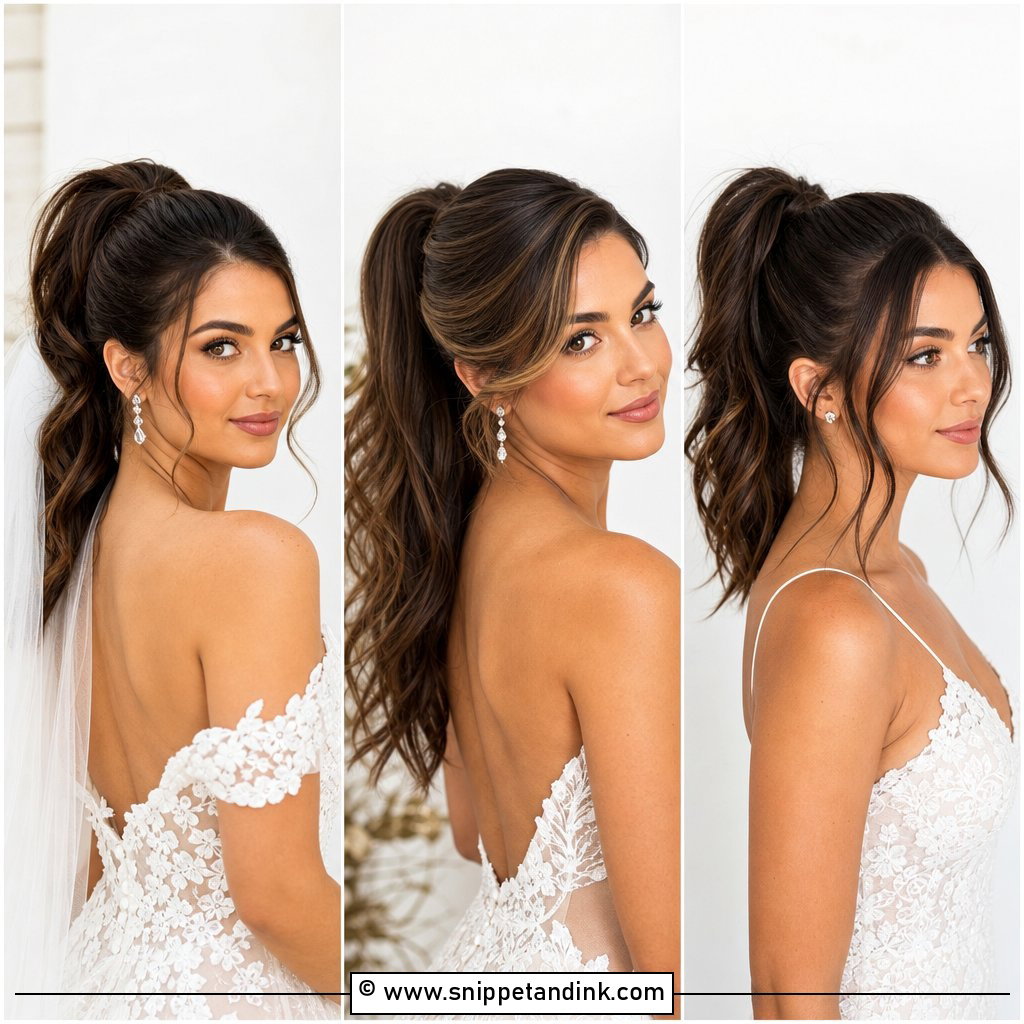
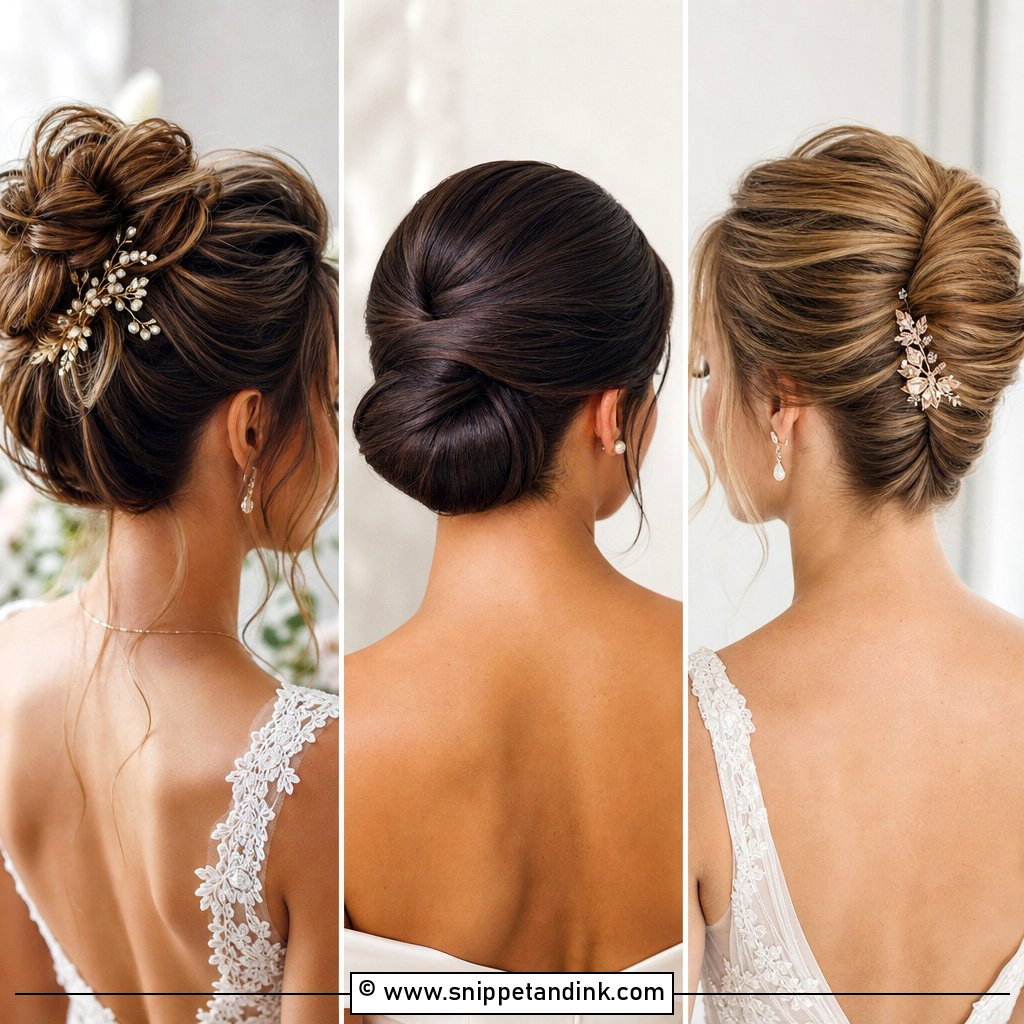
20. Low Ponytail With Loose Tendrils
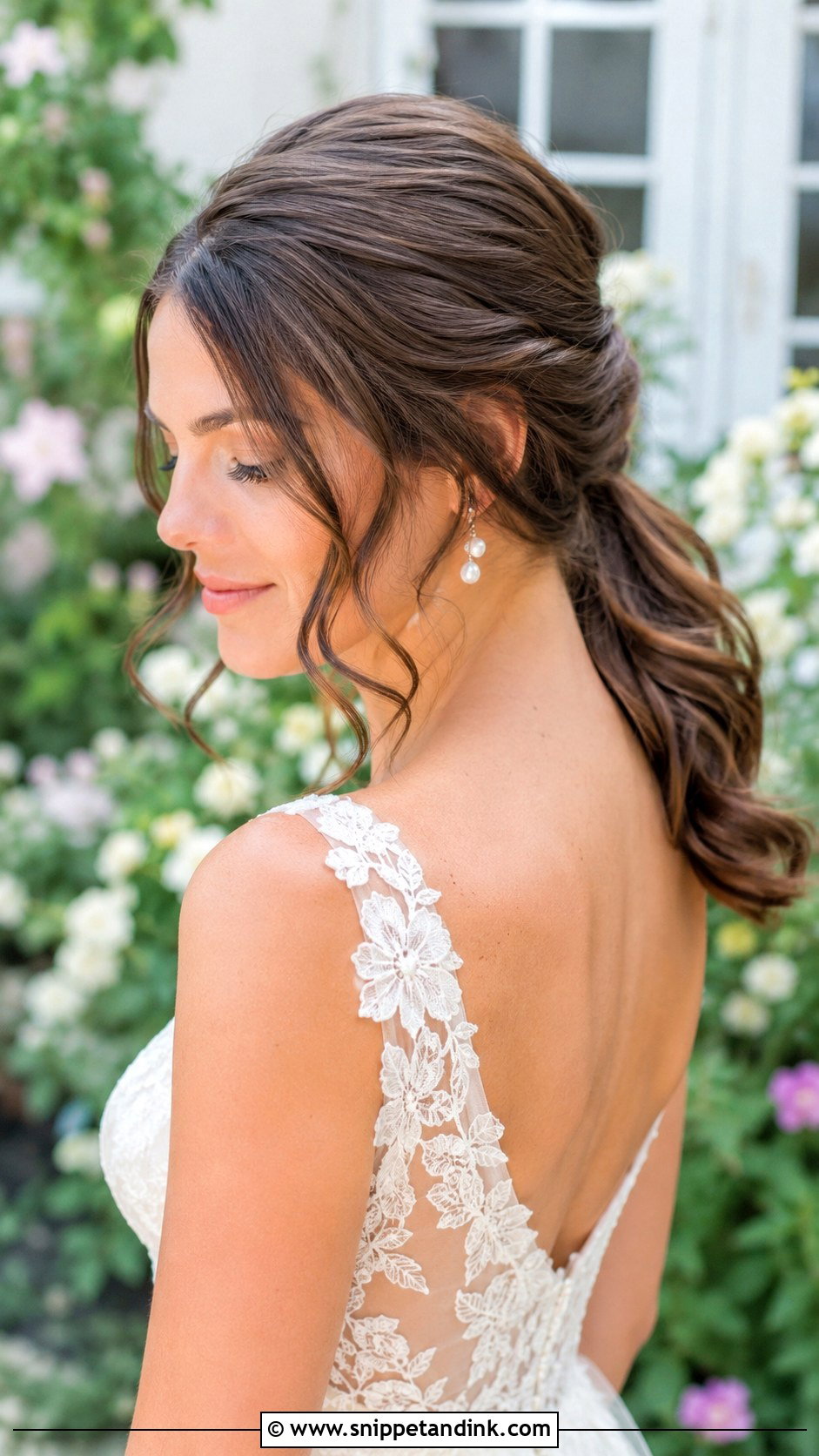
Loose tendrils escaping a low ponytail around the face and nape give it a romantic softness. I use a curling wand to shape each piece separately, keeping them fine rather than chunky. The main ponytail stays neat so the tendrils read as deliberate. They suit garden weddings, but in humidity they’ll lose curl fastest, so a light spray and a small wand in your touch-up kit help.
21. Low Ponytail With Gold Accessories
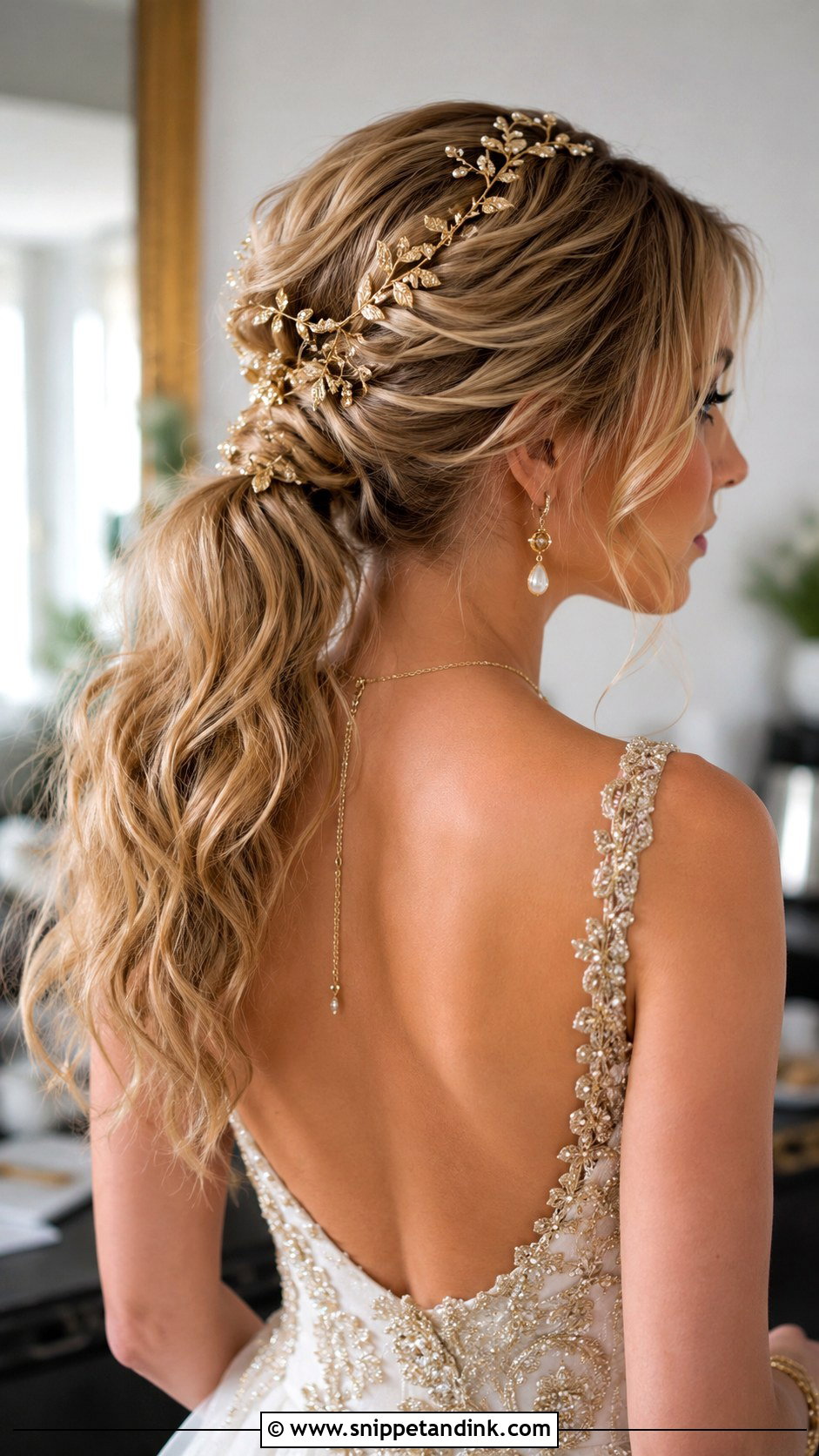
Gold hairpieces bring warmth to a low ponytail. Gold leaf pins, combs or vines can be clustered at the base or trailed along the crown. The gold tones flatter warm skin and pair naturally with gold jewellery. I secure heavier combs with crossed pins underneath, since metal pieces are heavier than they look. It suits boho, vintage and glamorous weddings.
22. Low Ponytail With Crown Braid
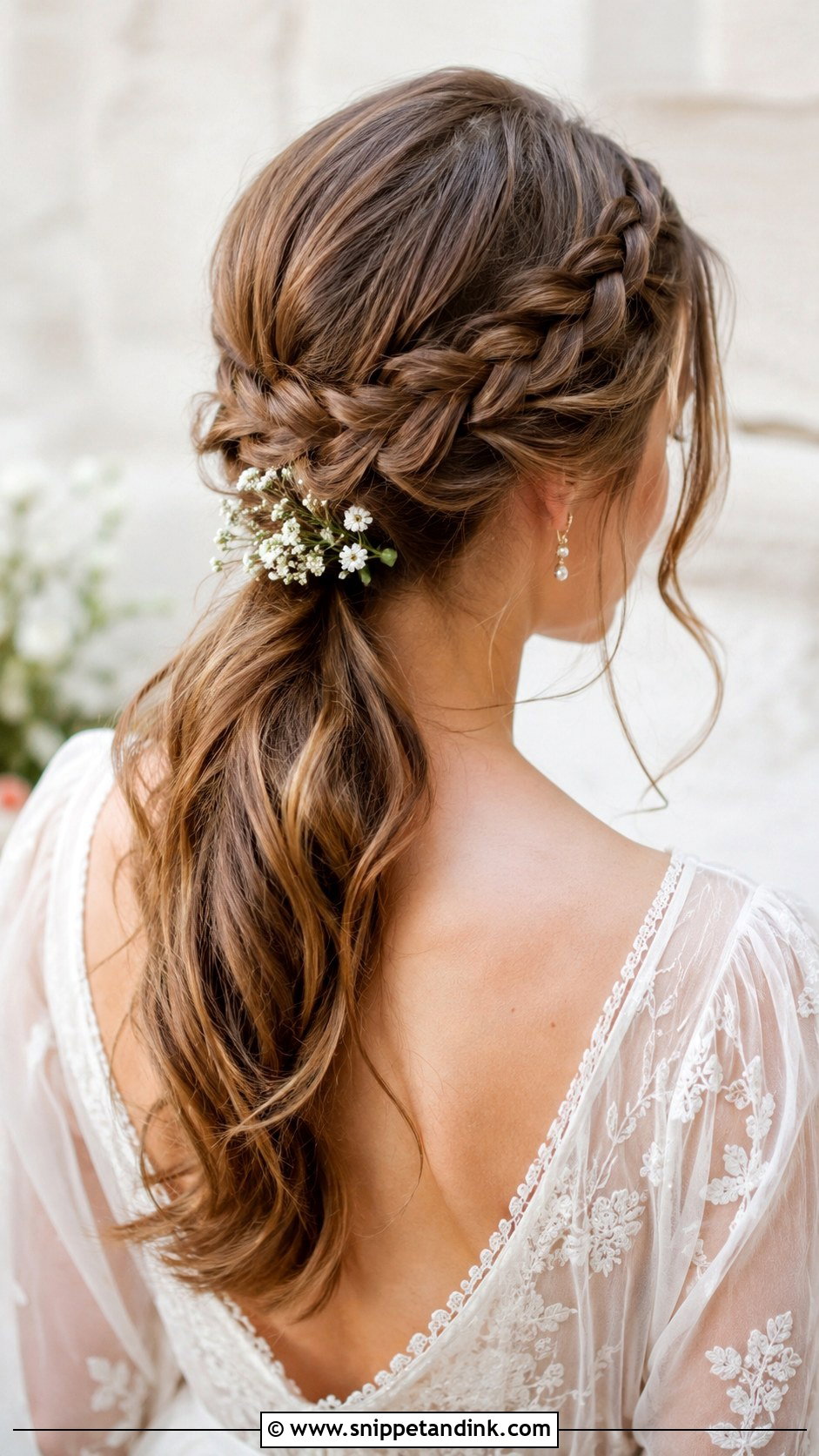
A crown braid wrapping around the head with a low ponytail behind it gives structure at the top and softness at the back. I start the braid at one side, carry it over the crown and finish it into the ponytail. Loosening it slightly makes it fuller. Small flowers or pearls can be tucked in. Short layers sometimes poke out of a crown braid, so a little pomade along the plait keeps it tidy.
23. Low Ponytail With Wrapped Base
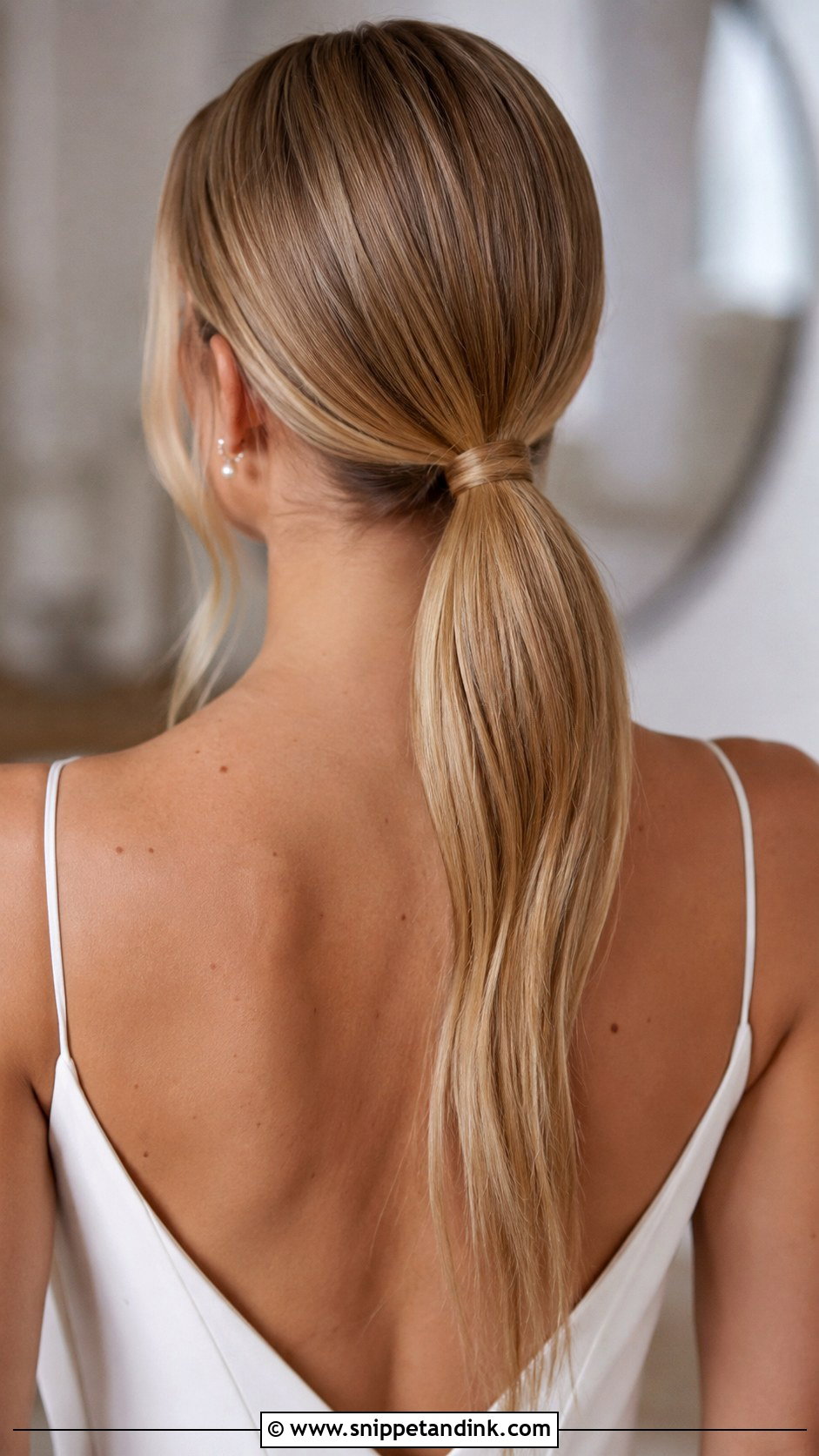
A wrapped base is a small detail that makes a ponytail look finished. Instead of a visible elastic, a section of hair wraps around the base and is secured with a hidden bobby pin. It works with sleek, wavy or textured ponytails. I take the wrap section from underneath the ponytail, so it doesn’t thin the top layer that shows.
24. Half-Up Low Ponytail Wedding Hair
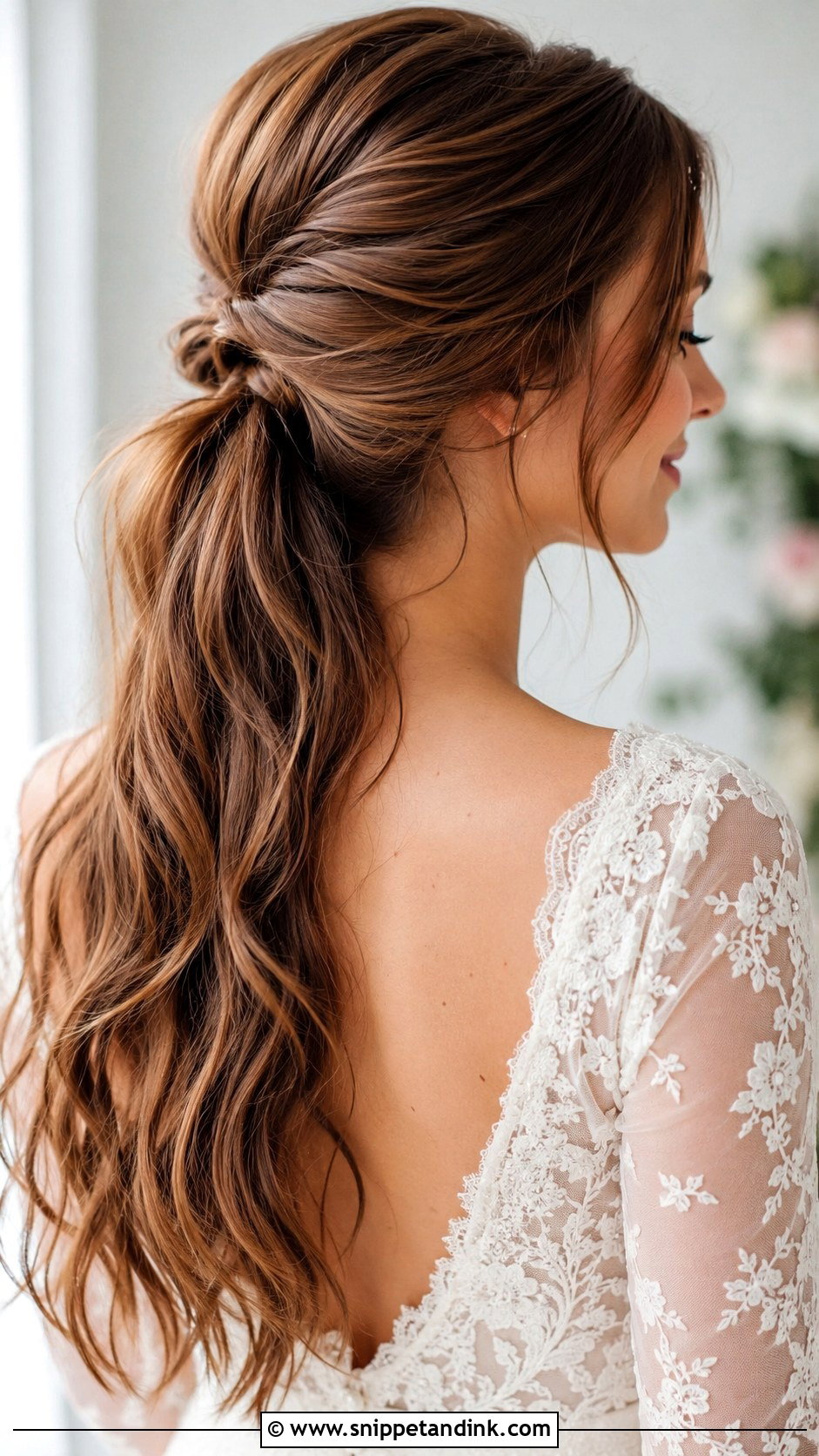
Can’t decide between up and down? A half-up low ponytail gathers the top section at the back of the head while the rest stays loose. It keeps hair off your face and shows off length. I add soft waves to the loose section and secure the ponytail with a clear elastic so it doesn’t sag. Pearls, flowers or a delicate clip can finish it. It suits most themes and face shapes.
25. Low Ponytail With Deep Side Part
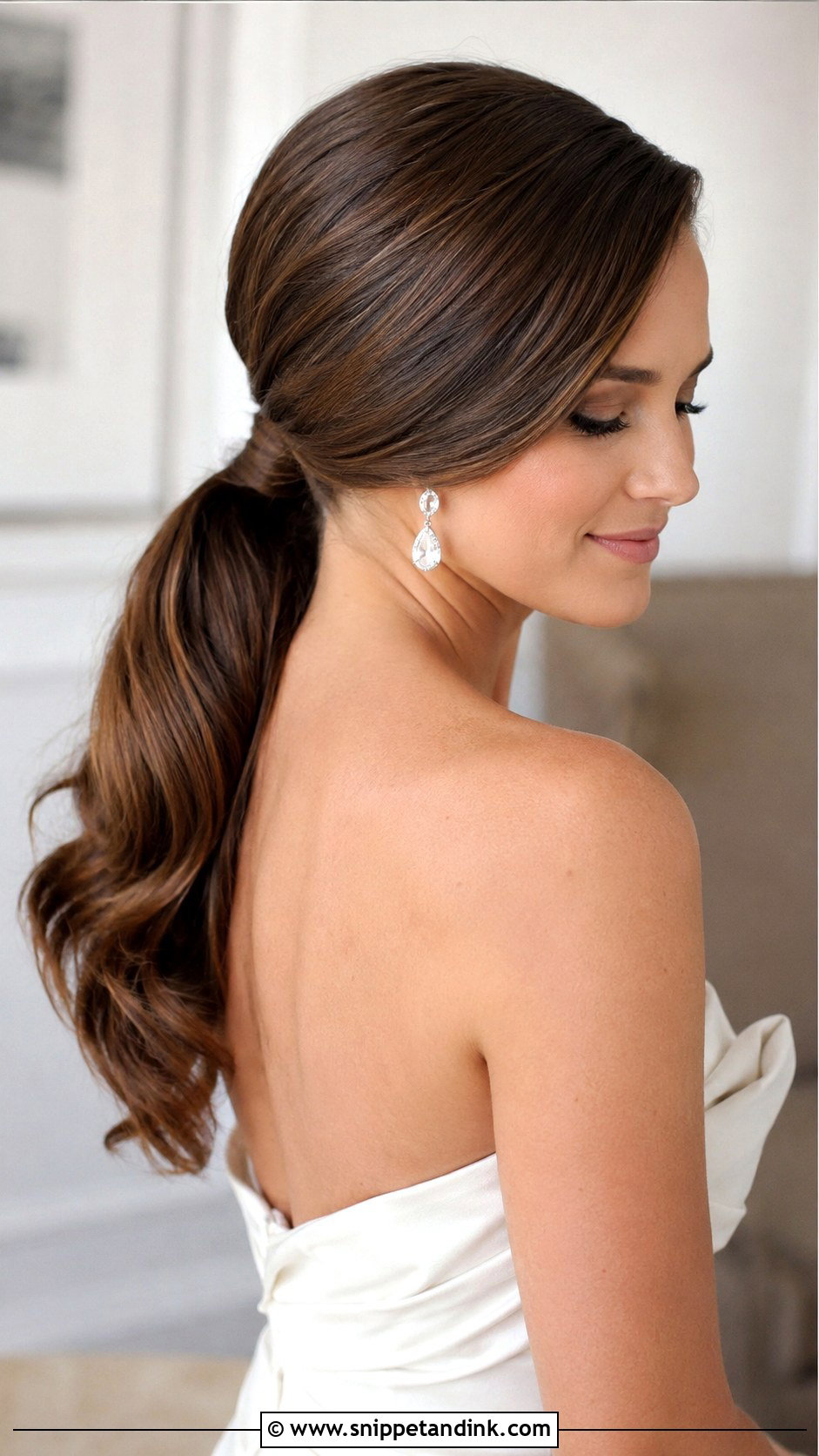
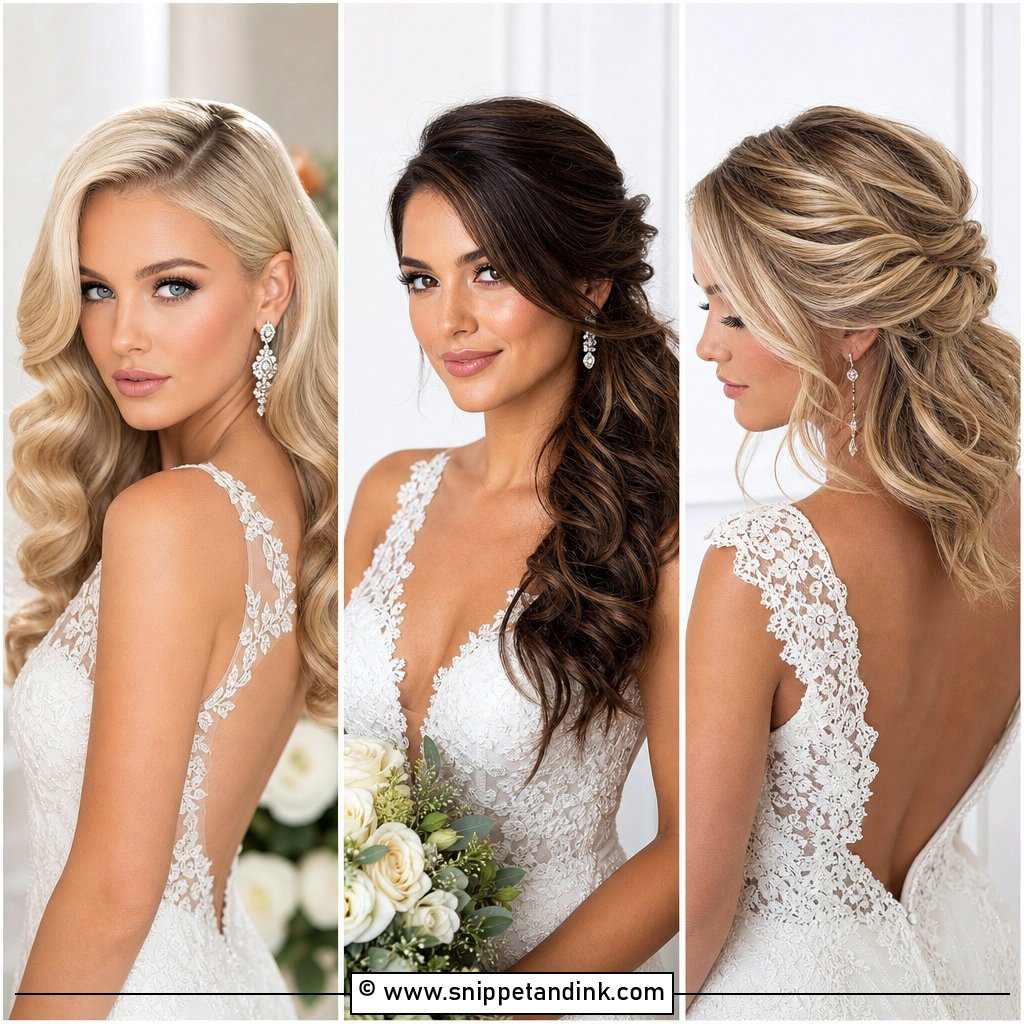
A deep side part sweeps the hair across to one side and into a low ponytail. It gives volume at the crown and an asymmetrical frame. I set the swept section with large rollers so it keeps its shape. Wear your statement earrings on the fuller side. It suits formal weddings, but test it with your veil, since the swept section and the comb sometimes compete for space.
Adding Length With Extensions So Nobody Sees the Wefts
Many of the ponytails in photos are fuller and longer than the bride’s natural hair. If you want that look, extensions are worth considering, but they need planning.
- Colour match in daylight, not under salon lighting. Most hair has two or three tones, so the extensions should too.
- Clip-in wefts sit lower than a ponytail’s base, under the hair at the back, so they need to be placed before the hair is gathered.
- Wear them at the trial. Clip-ins add weight, and you should know how they feel after a few hours.
- Bring them clean and brushed out. I style extensions with the rest of the hair, so they curl and wave the same way.
A ponytail wrap, a single piece that wraps around the base, is an easier option for short hair. It hides the elastic and adds length in one step, though it can look less natural on very fine hair because the volume difference shows.
Two Things to Bring to Your Ponytail Trial
Bring two things to your trial: a photo of the gown’s neckline and the accessory you plan to wear. Those decide the ponytail’s height, how sleek it should be and where the decoration goes. A low ponytail suits almost every face shape and hair type, and most of these 25 can be adjusted for your hair. Wear the finished style for a while at the trial, turn your head and hug someone, and check that the base doesn’t move.
You'll Like These Ideas:



Leave a Reply