
An updo is the most secure way to wear your hair on a wedding day, and it’s the style I build most often. It frames the face, clears the neckline and gives a veil a solid base. But a good updo starts with practical questions: how much hair you have, how humid the venue will be, where the veil sits and how much softness you want near your face. The fifteen updos below run from sleek to textured, each with the detail I’d check in your chair so it fits the bride wearing it rather than looking like a costume.
Updo Height Against Your Neckline and Veil
Where the bun sits on your head changes the whole outline of your look, and the neckline is the best place to start. These are the pairings I suggest most often, though the trial always has the final word.
- High neck or halter: a higher bun or a French twist keeps the hair clear of the collar, which otherwise pushes a low bun out of shape when you turn.
- Strapless or sweetheart: a low bun or chignon fills the space between neck and shoulders.
- Deep V or open back: a low chignon or side bun leaves the back of the dress visible.
- One shoulder: a side bun on the bare shoulder side balances the asymmetry.
- Off the shoulder: almost any height works, but a mid-height bun keeps the line clean.
The veil adds one more layer. A long veil anchored at the crown needs a firm updo underneath, while a veil tucked under a low bun keeps the comb hidden. If you’re much taller or shorter than your partner, look at side photos from your trial too; a very high bun can change how you stand together in portraits.
1. Low Bun Wedding Updo
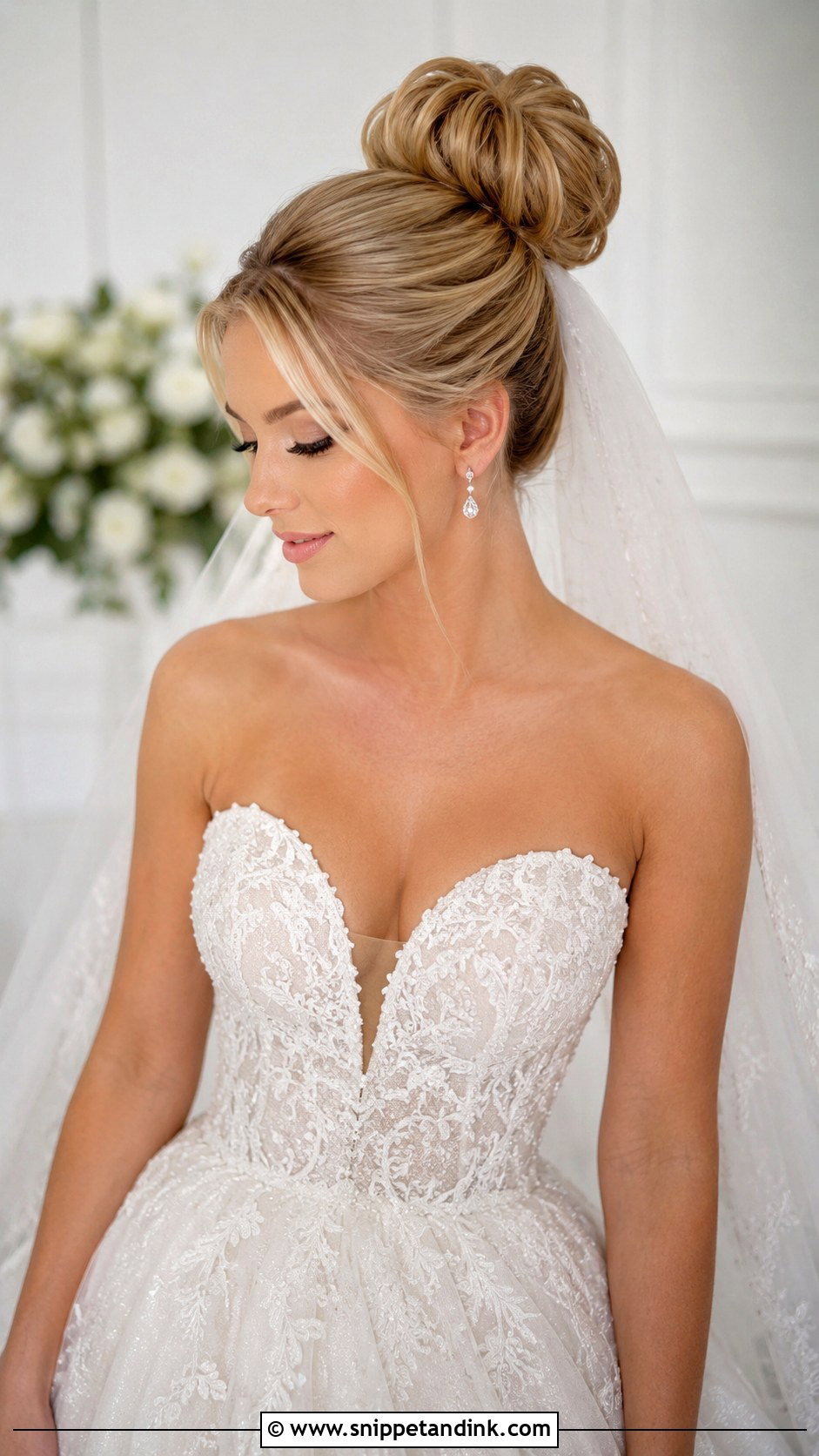
I recommend a low bun more than any other updo, mainly because it’s comfortable. It sits at the nape, where the weight rests on the neck instead of pulling at the crown, so it’s easy to wear through a long ceremony. Fine hair often needs a small padded donut or a clip-in piece hidden inside to give the bun shape; thick hair can be twisted into something more sculpted. I keep the crown smooth and add texture only through the bun itself. Center part or soft side part both work.
2. Textured Bridal Bun
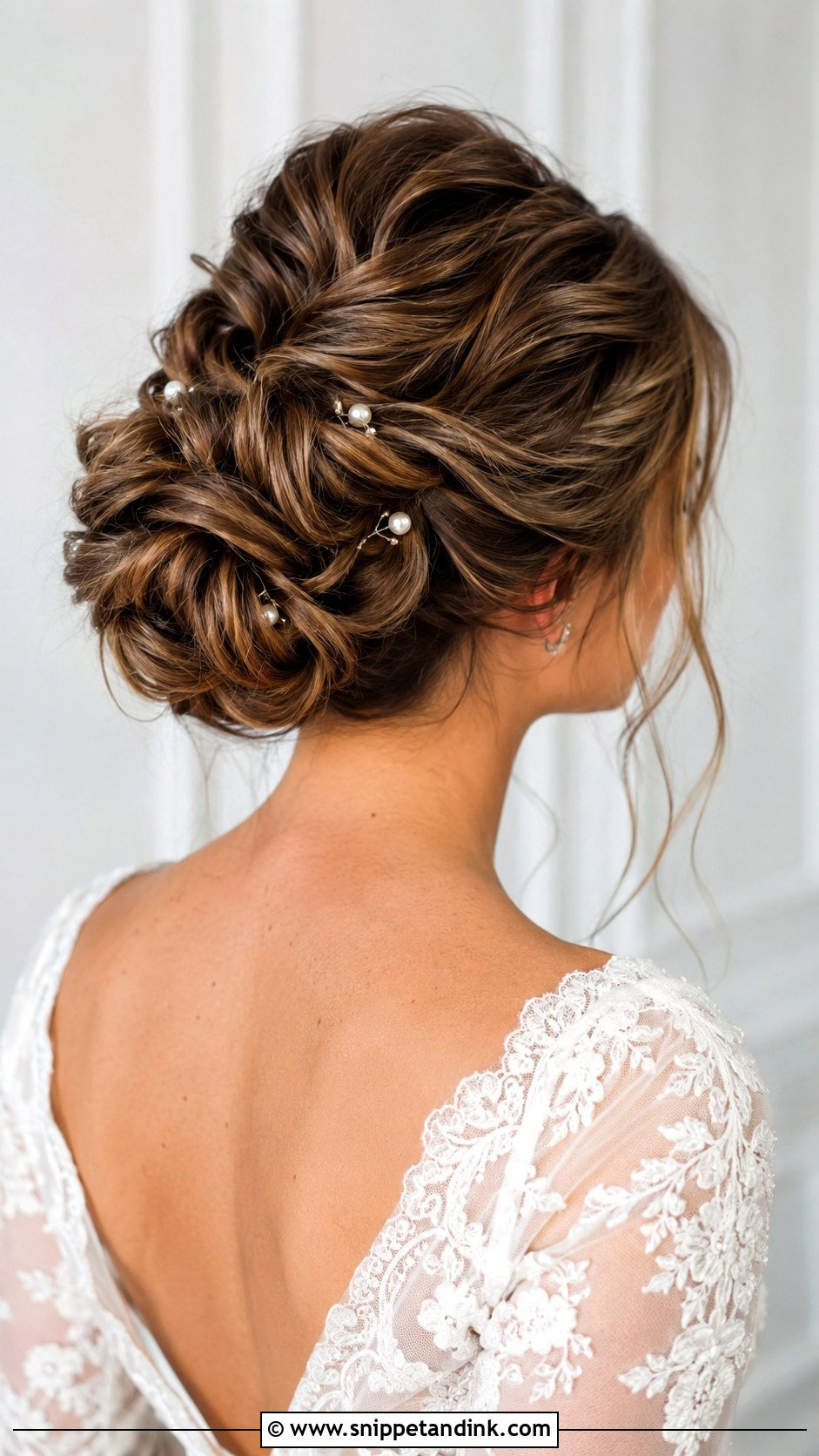
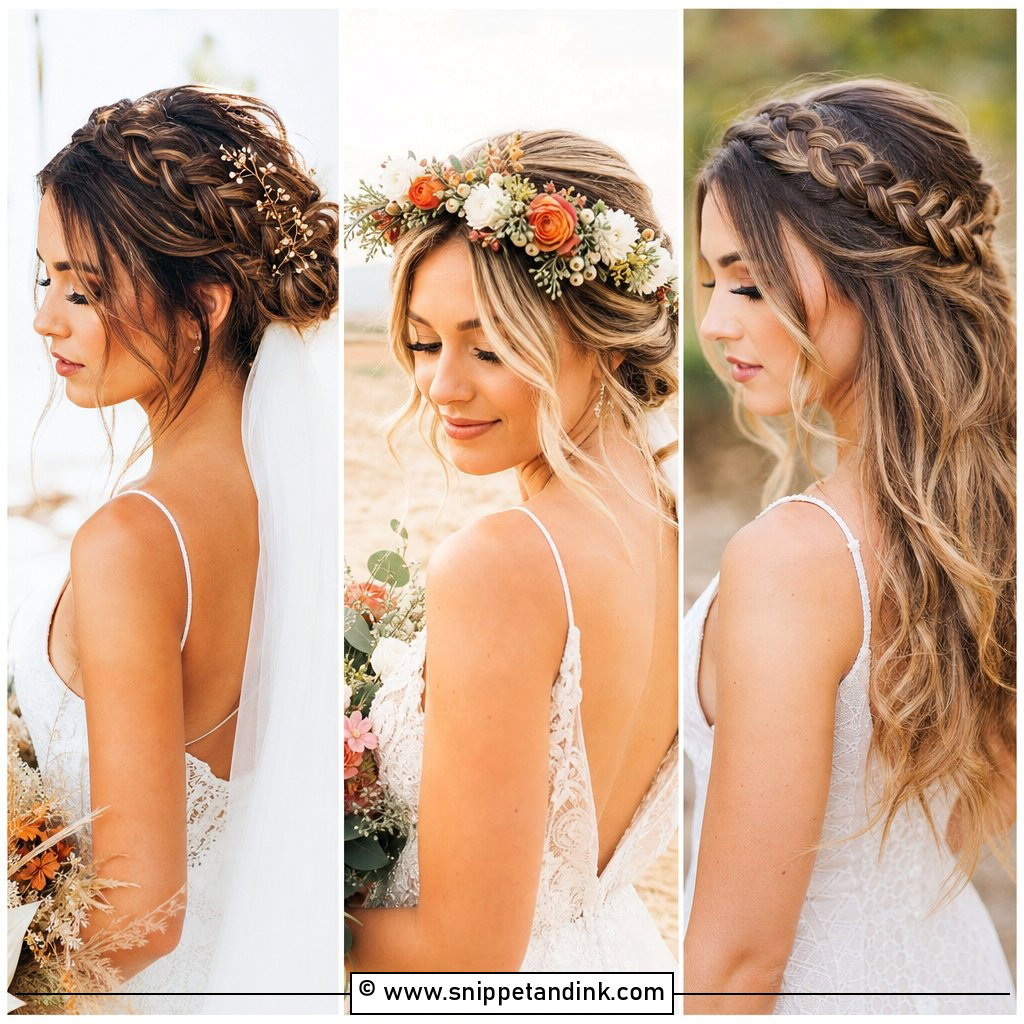
Texture is what makes this bun look soft, but texture alone won’t hold. I build it on a secure base, usually a small ponytail or a pinned anchor, then pull loose twists and airy pieces around it. Second-day hair takes texture far better than freshly washed hair. Highlights, balayage and dimensional brunette color show up well in every twist. A few pearl pins add detail; a large comb tends to flatten the very texture you’re paying for.
3. Sleek Wedding Updo
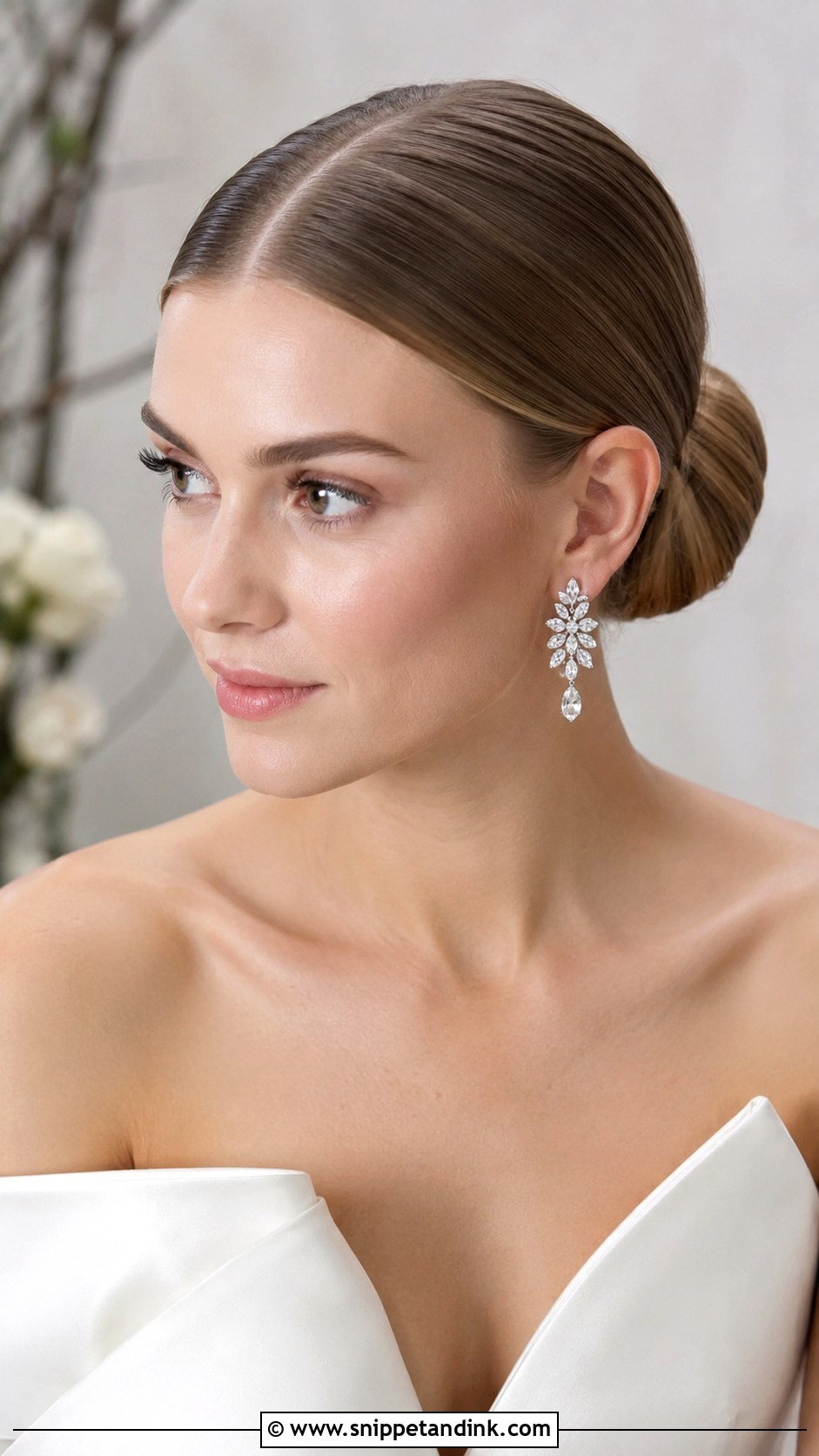
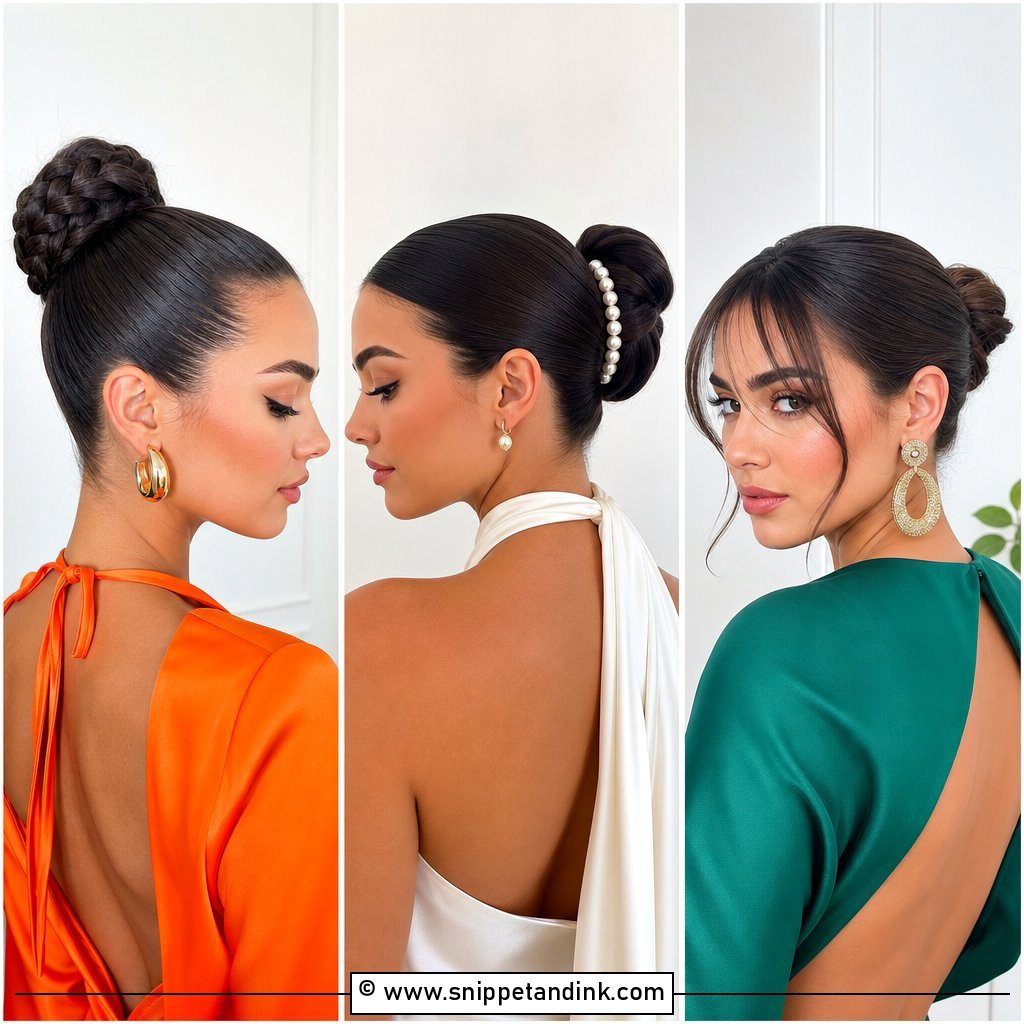
A sleek updo has nowhere to hide flyaways, so the blow-dry matters more than the bun. I smooth the hair completely, work in a cream before pinning, and use firm pins placed underneath so none catch the light. It’s the safest choice on a humid day, since controlled hair resists frizz better than loose texture. Structured gowns, high necklines, strapless dresses and bold earrings suit it. A strong middle part reads editorial; a side part softens it.
4. Messy Wedding Bun
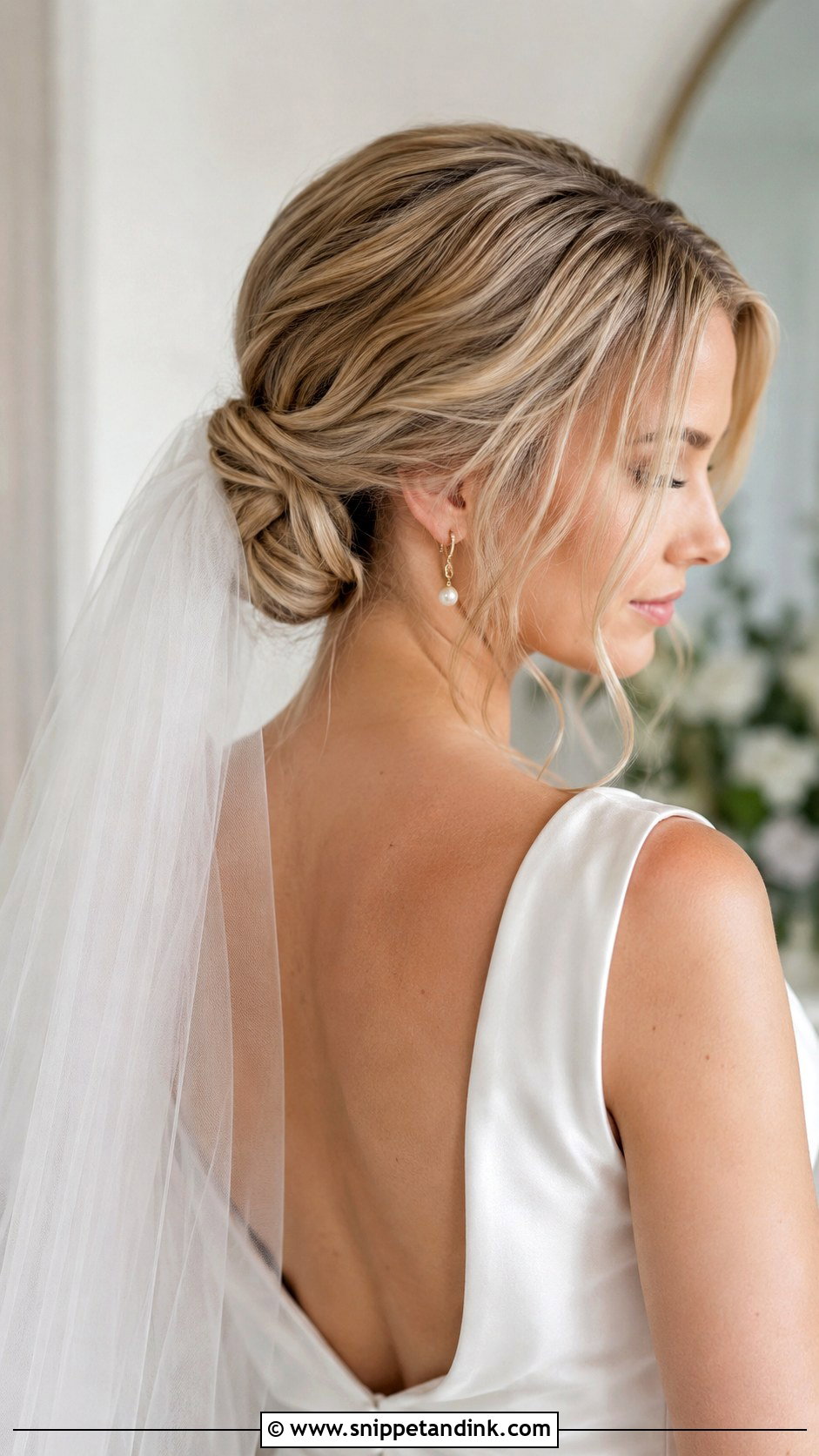
The messy bun is controlled softness, not actual mess. In my chair it takes longer than a sleek bun because every loose piece is placed. I curl the hair first, build the bun, then pull out wisps around the face. Natural wavy hair is ideal, since the bend gives softness without much styling. Outdoor ceremonies and barn venues suit it. One honest warning: on very straight, slippery hair, the loose pieces fall flat quickly, so plan for texture spray and some extra time.
5. Chignon Wedding Updo
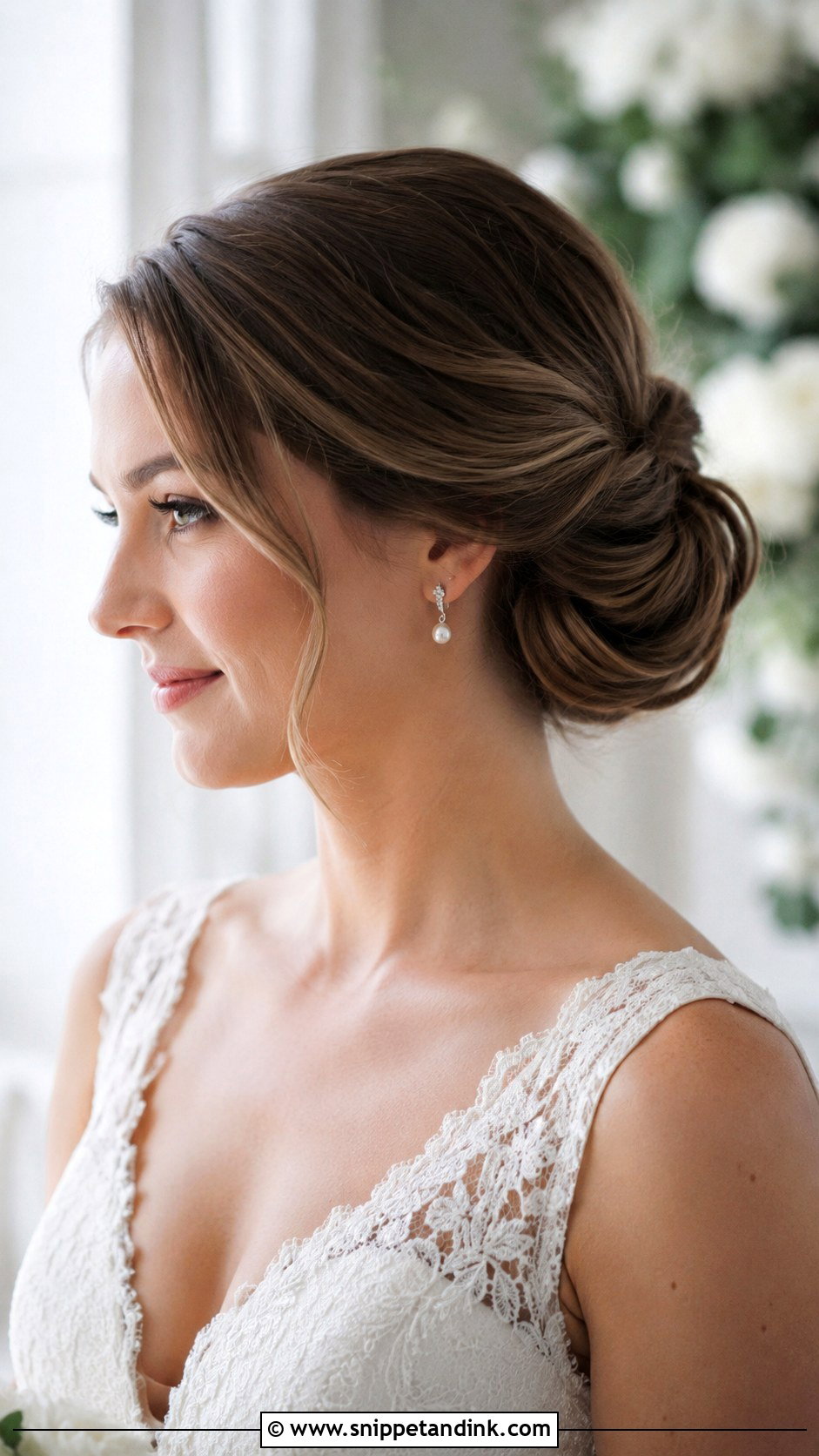
A chignon sits low at the back of the head, and it can be smooth, twisted, braided or textured. Its strength is the side profile: the shape at the nape looks graceful when you turn your head, which happens constantly during a ceremony. It shows off shoulders, a collarbone, a veil or the back of a gown. Fine hair suits a compact chignon; thicker hair can roll into a fuller shape. I pin a chignon in layers, working from the inside out, so the outer roll hides every pin.
6. French Twist Wedding Updo
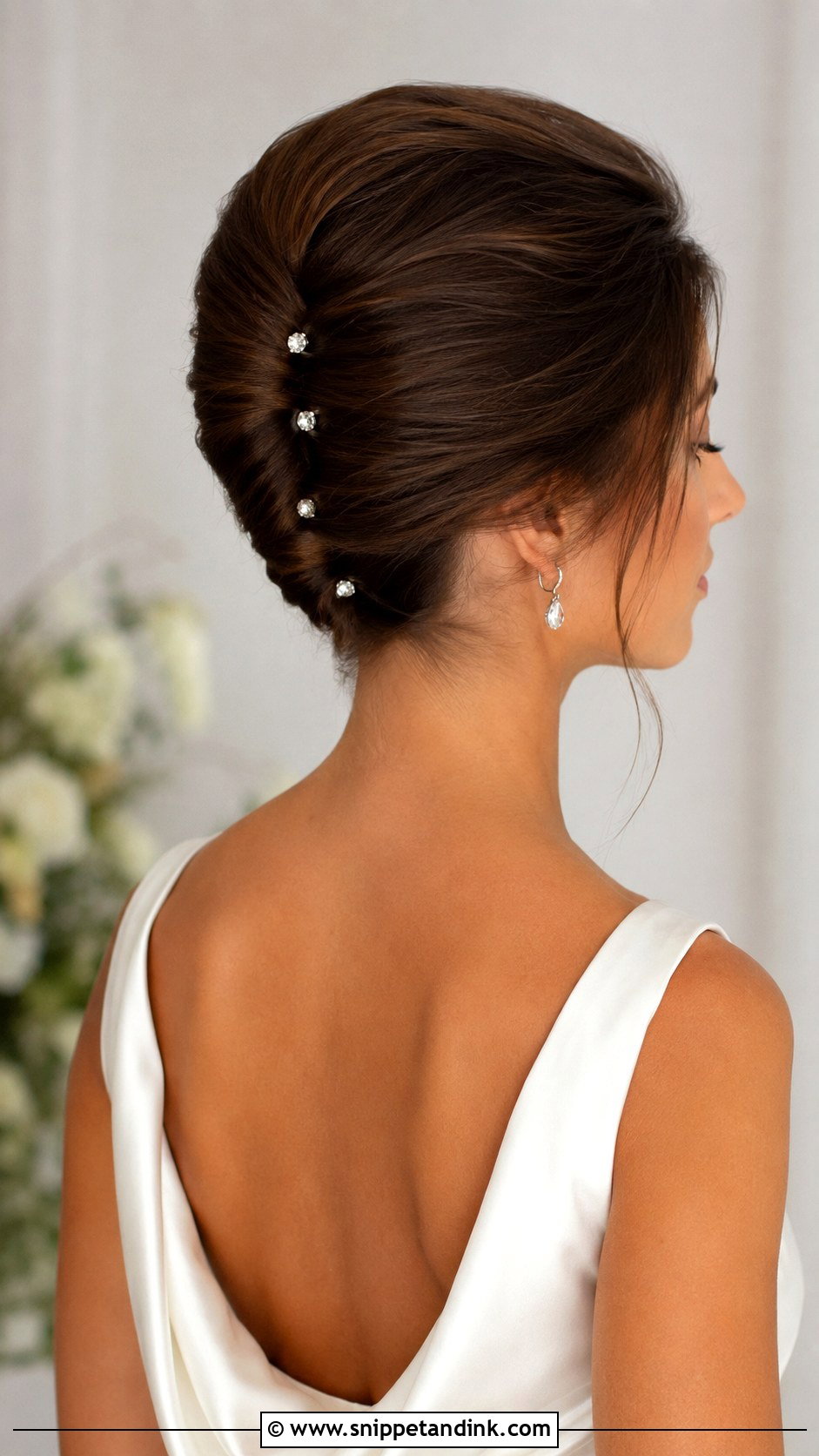
A French twist is swept upward and tucked into a vertical roll, which lengthens the neck. It’s one of the few updos that works on medium-length hair, since it doesn’t need long strands to make an impact. The trick is a row of bobby pins locked in a zipper pattern up the center before I fold the hair over, otherwise the roll can open during the evening. Satin gowns and city weddings suit it. A pearl comb or a few small crystal pins finish it without crowding the line.
7. Braided Wedding Updo
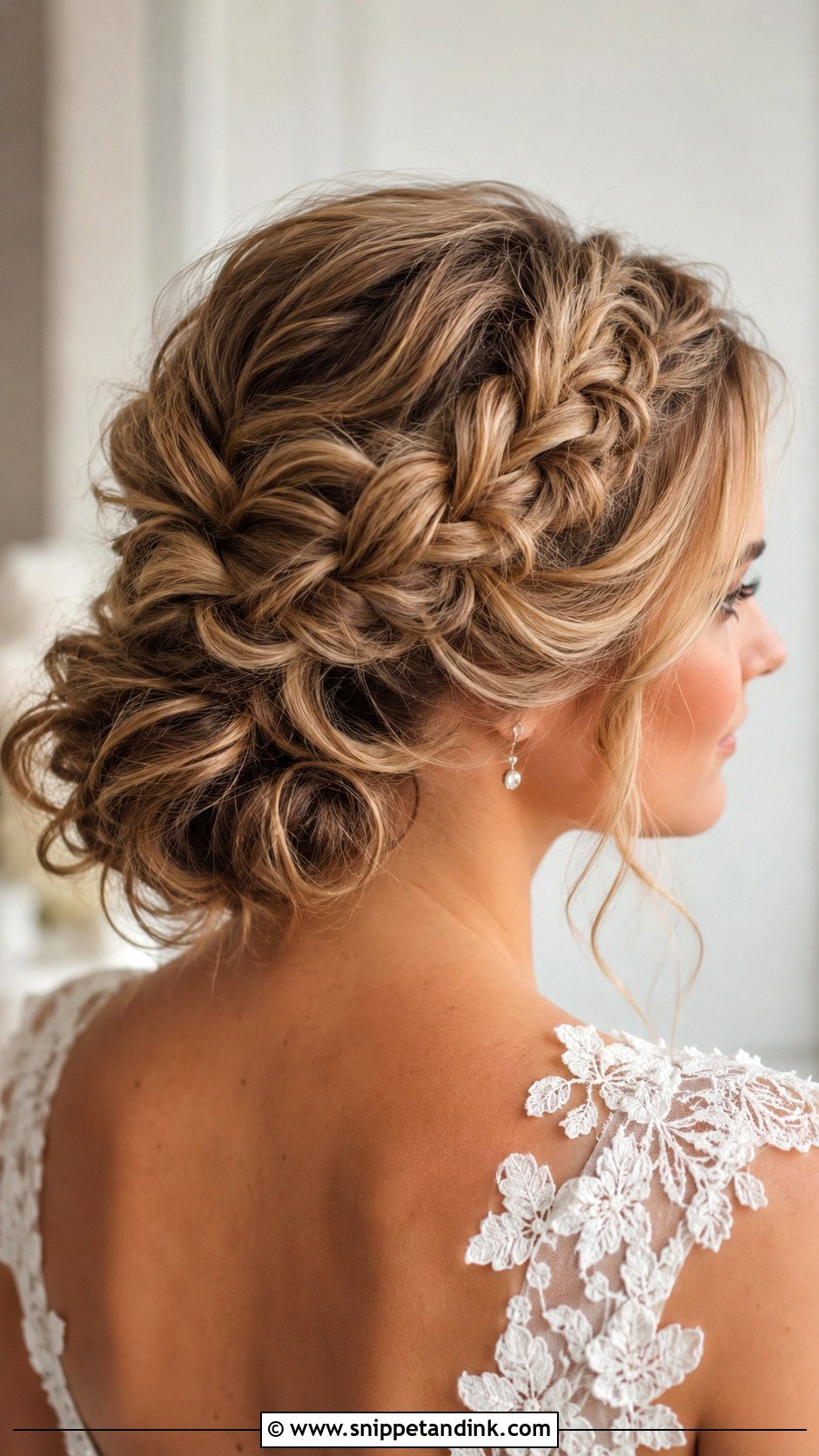
Braids make an updo more secure, because each section locks the one beside it. The braid can wrap around the crown, feed into a low bun or run along one side. Highlighted hair shows every twist. I pull the braid apart slightly for fullness, but I stop before it loosens too much; an over-pancaked braid can unravel if you’re dancing outdoors in wind or heat. Rustic venues and garden ceremonies pair naturally with this look.
8. Curly Wedding Updo
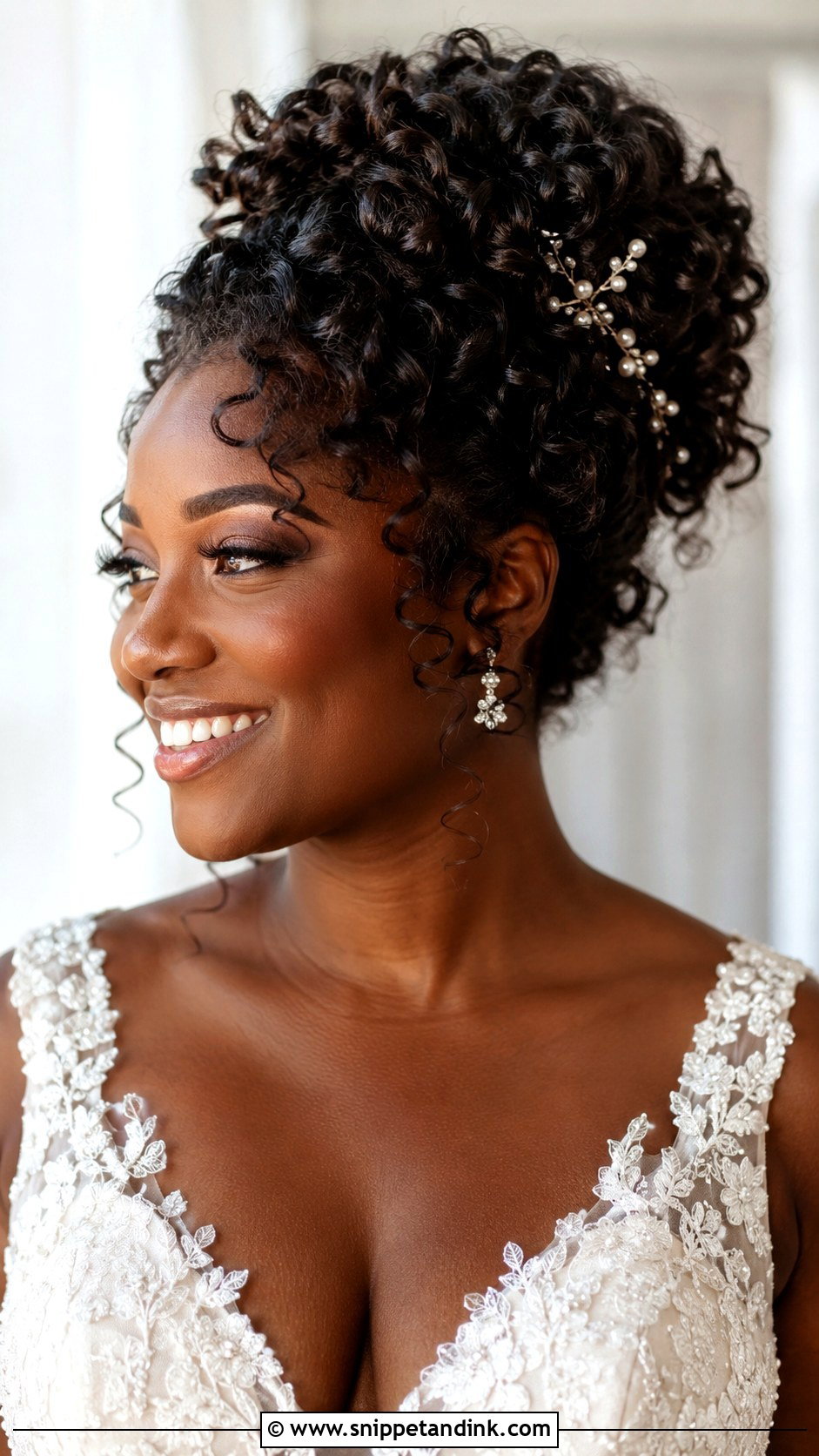
Curly, coily or permed hair holds an updo better than straight hair, because pins grip the texture. I define the curls first with a cream or gel, then pin them into shape, checking the balance from the front, side and back as I go. I don’t brush the curls out, which would turn definition into frizz. A few face-framing curls keep it soft. Small pearls or flowers sit well among the curls without weighing them down.
9. High Bun Wedding Updo
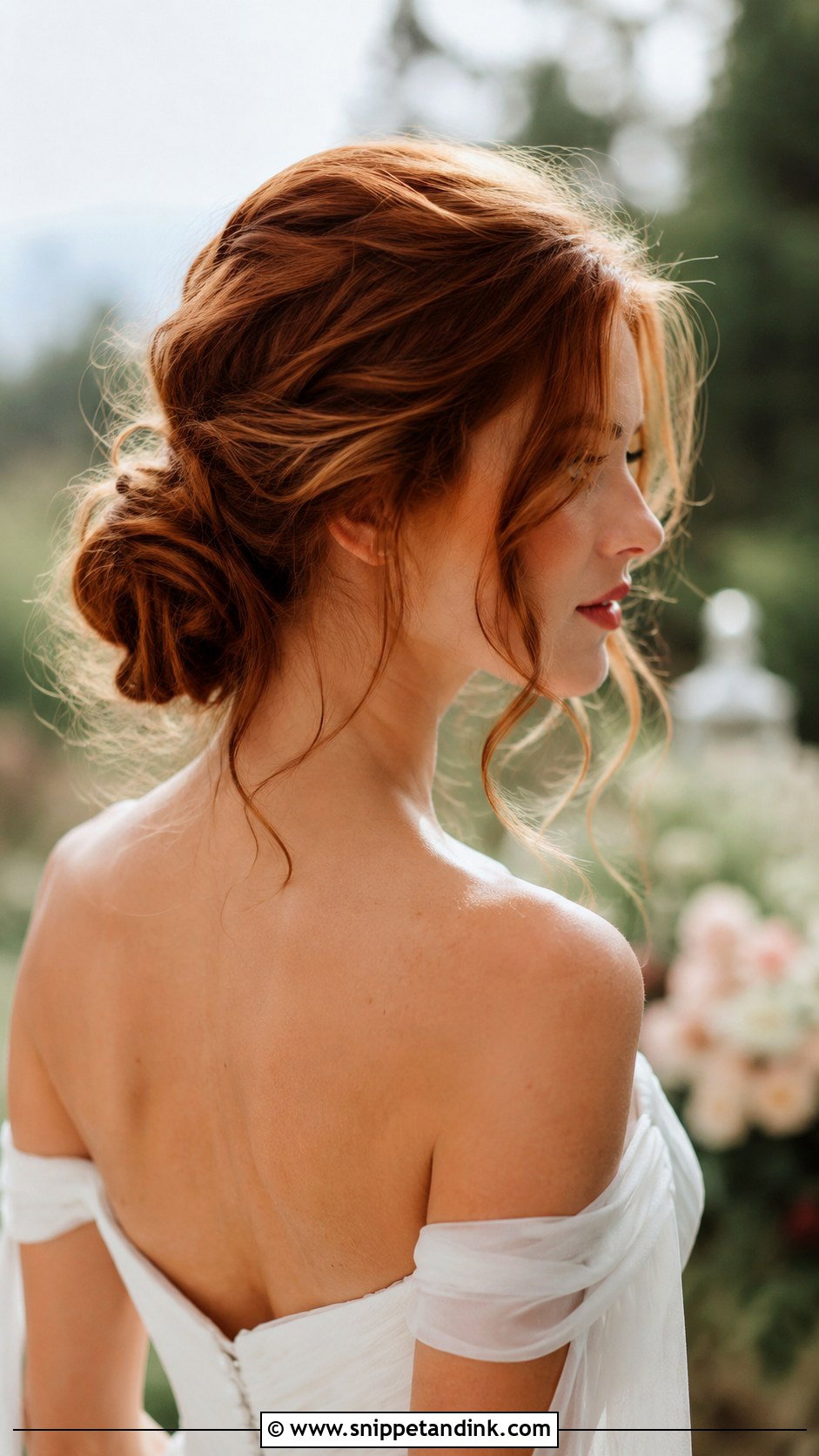
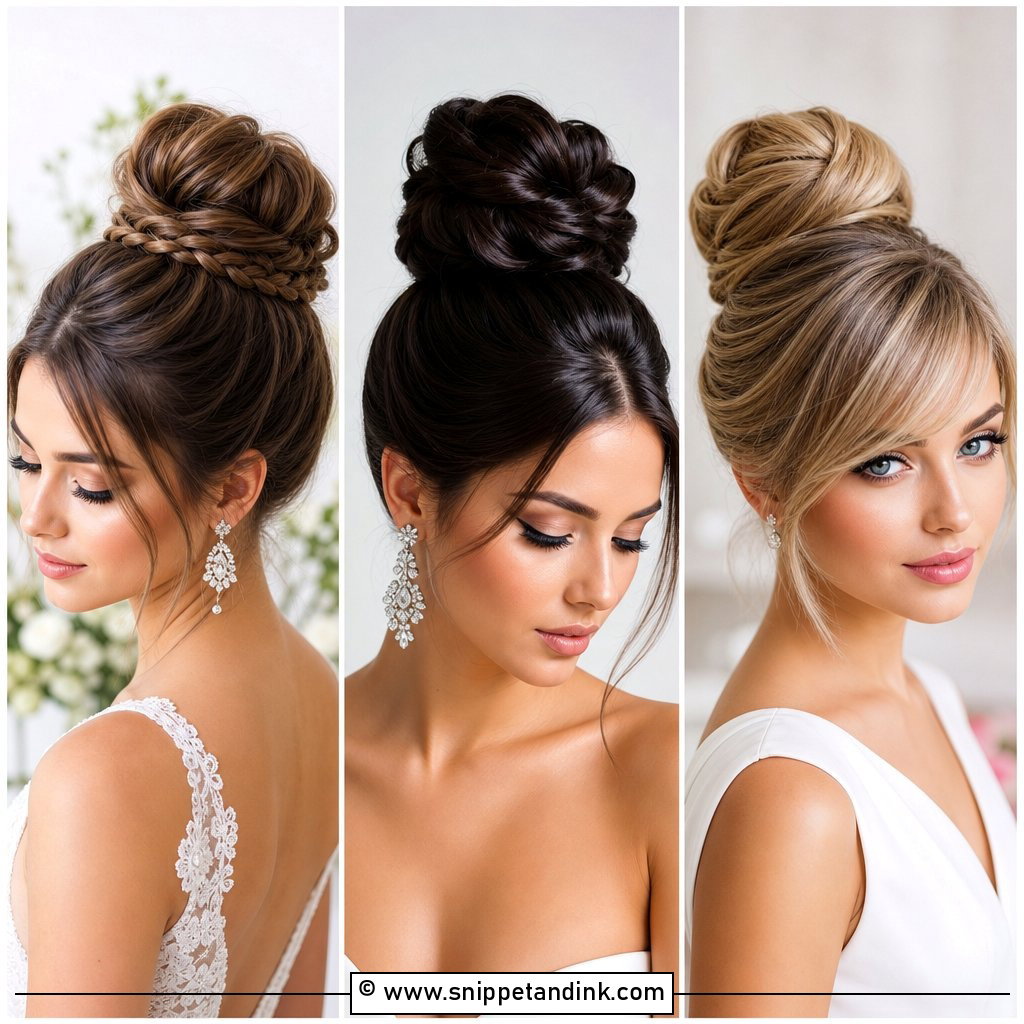
A high bun sits at the crown and lifts the whole silhouette. It clears the neck and shoulders completely, which suits dramatic gowns, ball gowns and sleek dresses. The veil usually sits beneath the bun. Long or thick hair is heavy at the crown, and that weight can bring on a headache by the evening, so I secure the base with an elastic and spread the pins rather than stacking them in one spot. Smooth and ballet-inspired or slightly textured, both work.
10. Side Bun Wedding Updo
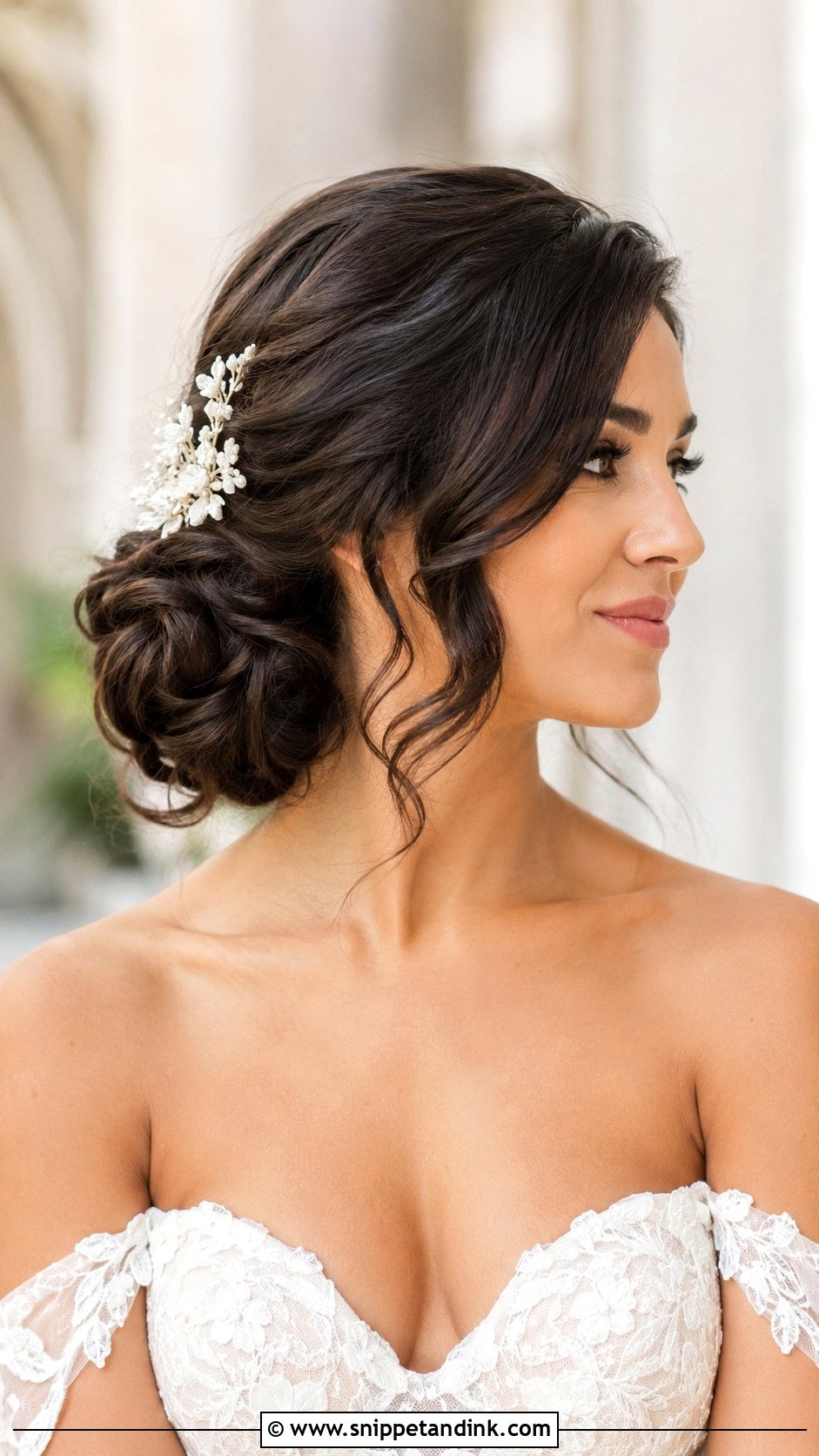
A side bun is slightly asymmetrical: the bun usually sits low near one side of the nape. It’s flattering in side-profile photos and pairs well with one-shoulder gowns and sweetheart necklines. Think about which side faces the guests during the ceremony; I usually place the bun on that side so it’s visible during vows. Loose tendrils on the opposite side balance it. A hair comb above the bun or small flowers in the twist finish it.
11. Boho Wedding Updo
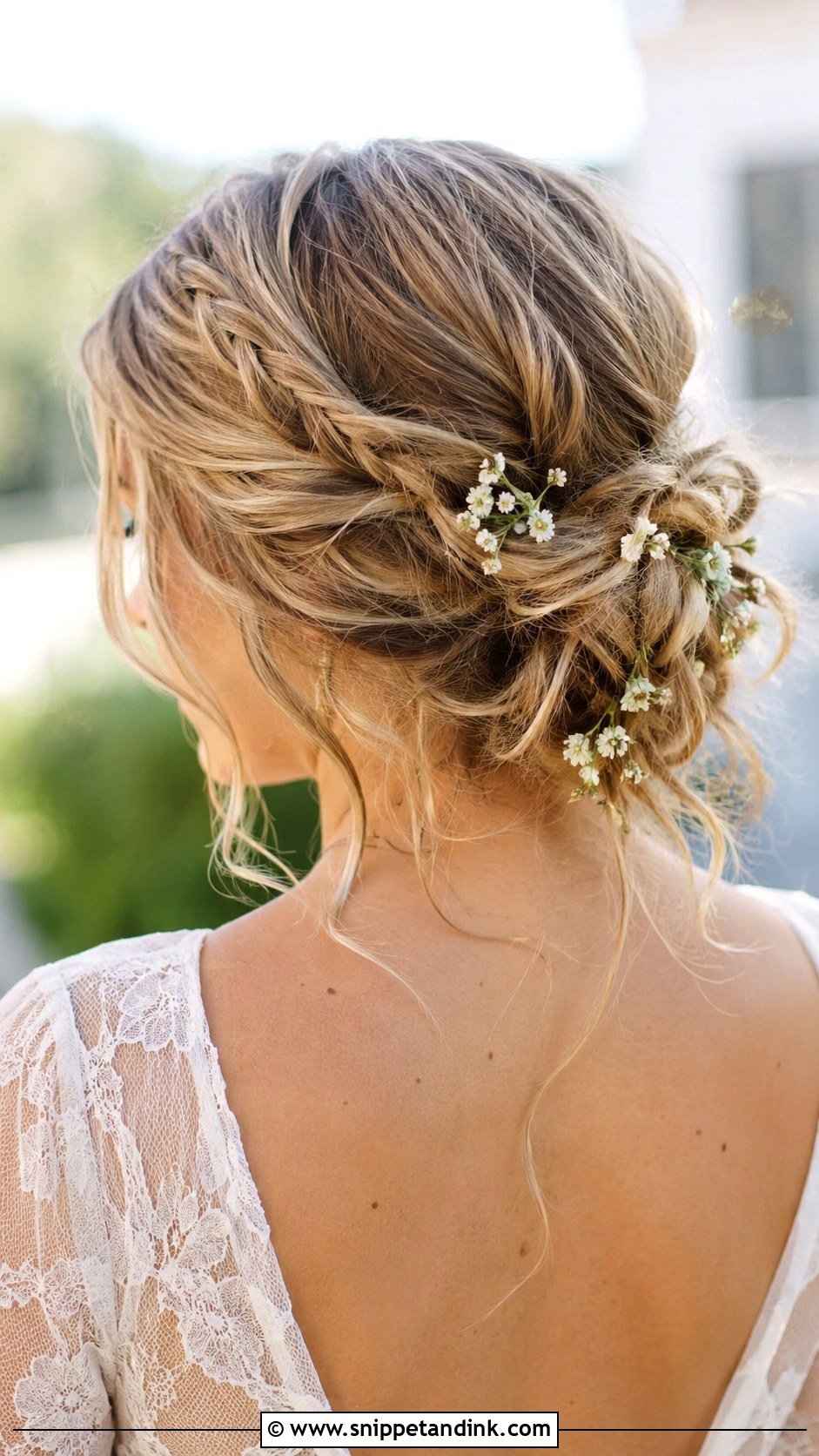
Boho updos mix soft waves, loose twists and small braids, and they still need a strong foundation underneath. I braid or pin a hidden base first, then build the airy parts on top, so the loose look survives a full day outside. Floral pins, leafy combs and small pearl details suit it. Lace dresses and flowing gowns pair well. Keep the front pieces soft and skip heavy spray; once a boho updo is stiff, it loses its point.
12. Vintage Wedding Updo
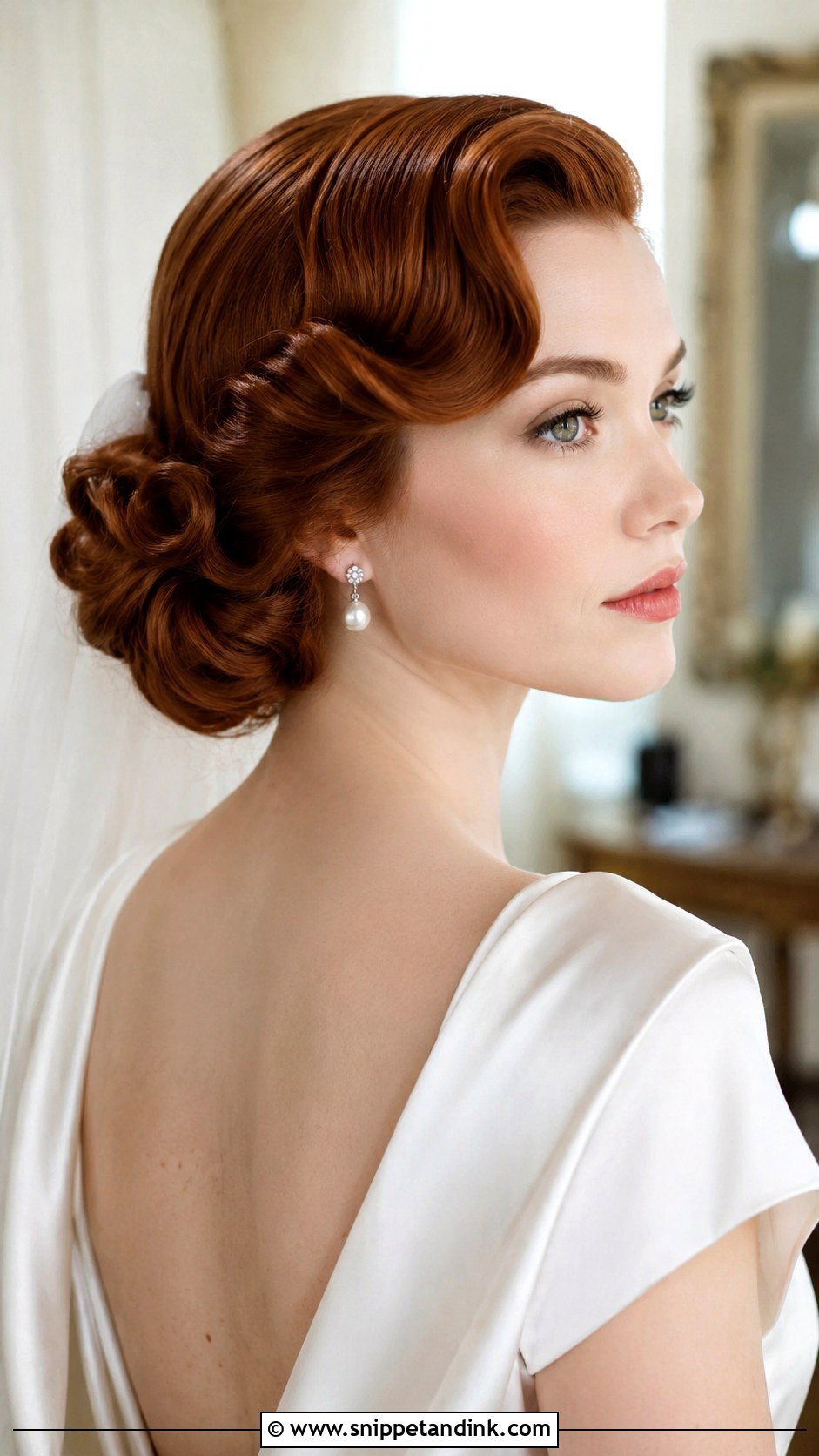
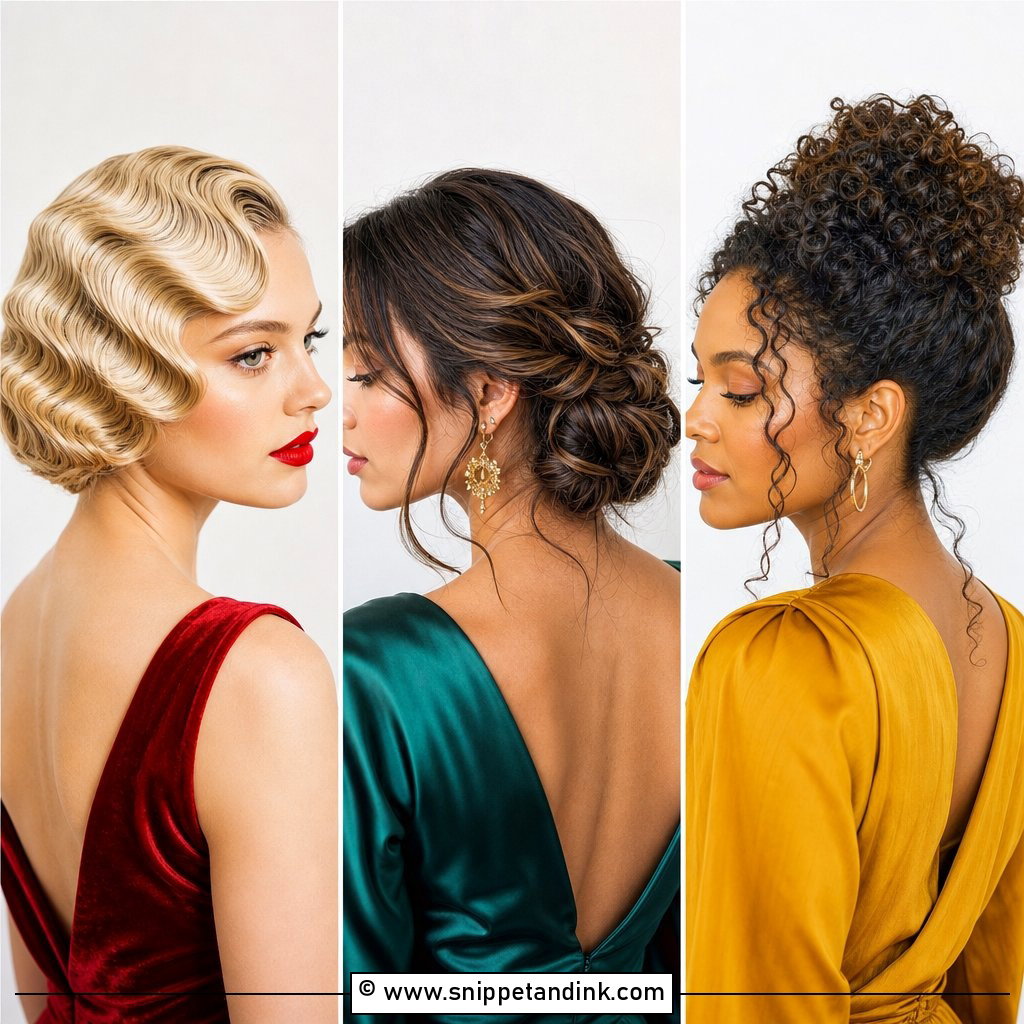
A vintage updo draws on rolls, sculpted waves and tucked curls from earlier bridal eras. It pairs with red lipstick, satin gowns, birdcage veils and pearl earrings. The challenge is smoothness without stiffness. I set the hair in curls first, let them cool, then shape the rolls, so the hair has memory and doesn’t need heavy product. It suits medium to long hair, and it adapts to straight, wavy or curly textures. Careful pinning matters, because close-up photos show every stray pin.
13. Wedding Updo With Veil
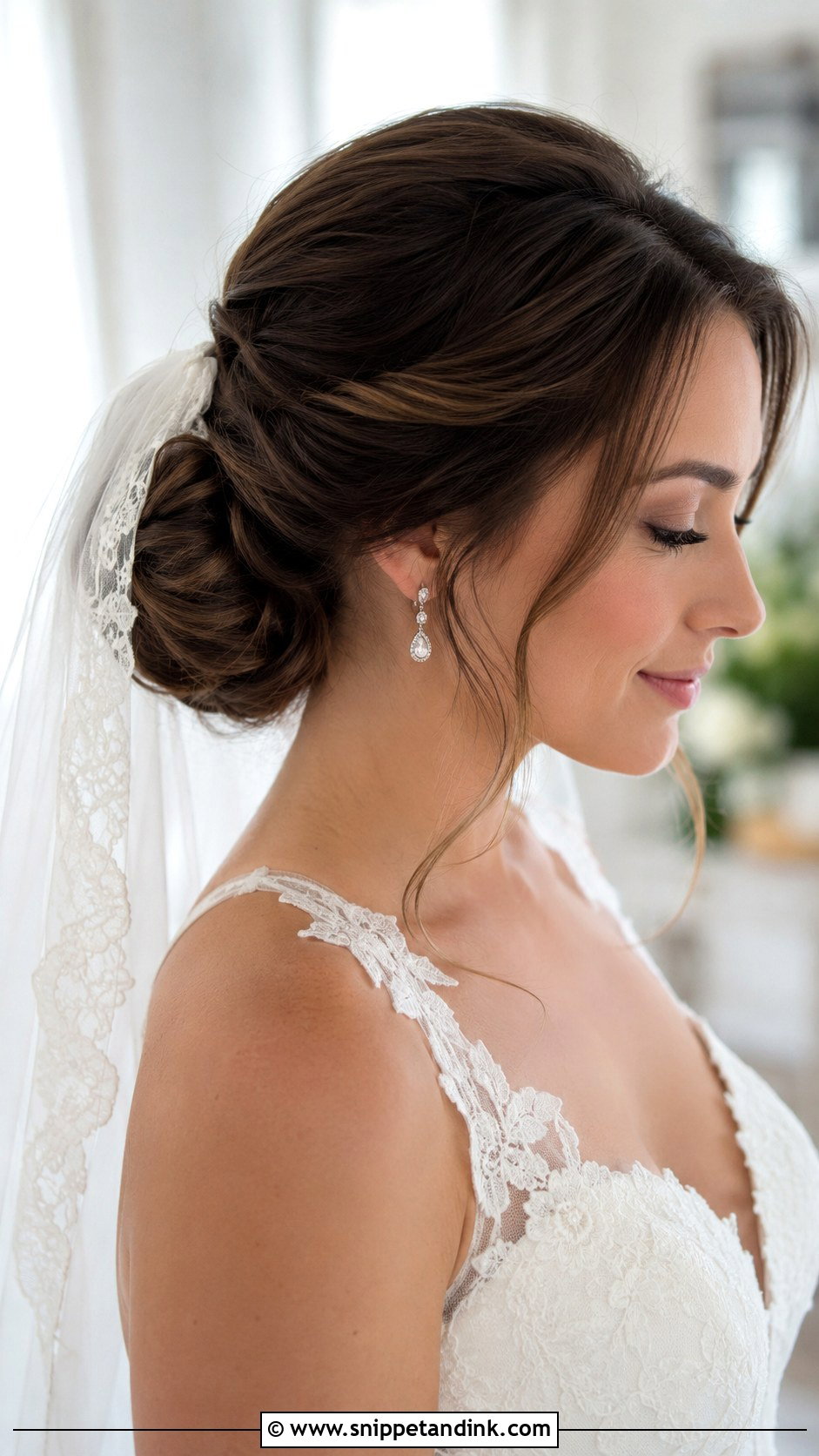
A veil affects the whole updo, so I plan the two together. With a low bun or chignon, the veil can sit above or under the bun; with a high bun, it usually goes underneath. The updo needs a firm, pinned section for the comb to grip without pulling or slipping. If you’ll remove the veil after the ceremony, the updo should still look finished without it. Bring the real veil to your trial so placement and balance can be tested.
14. Wedding Updo With Pearls
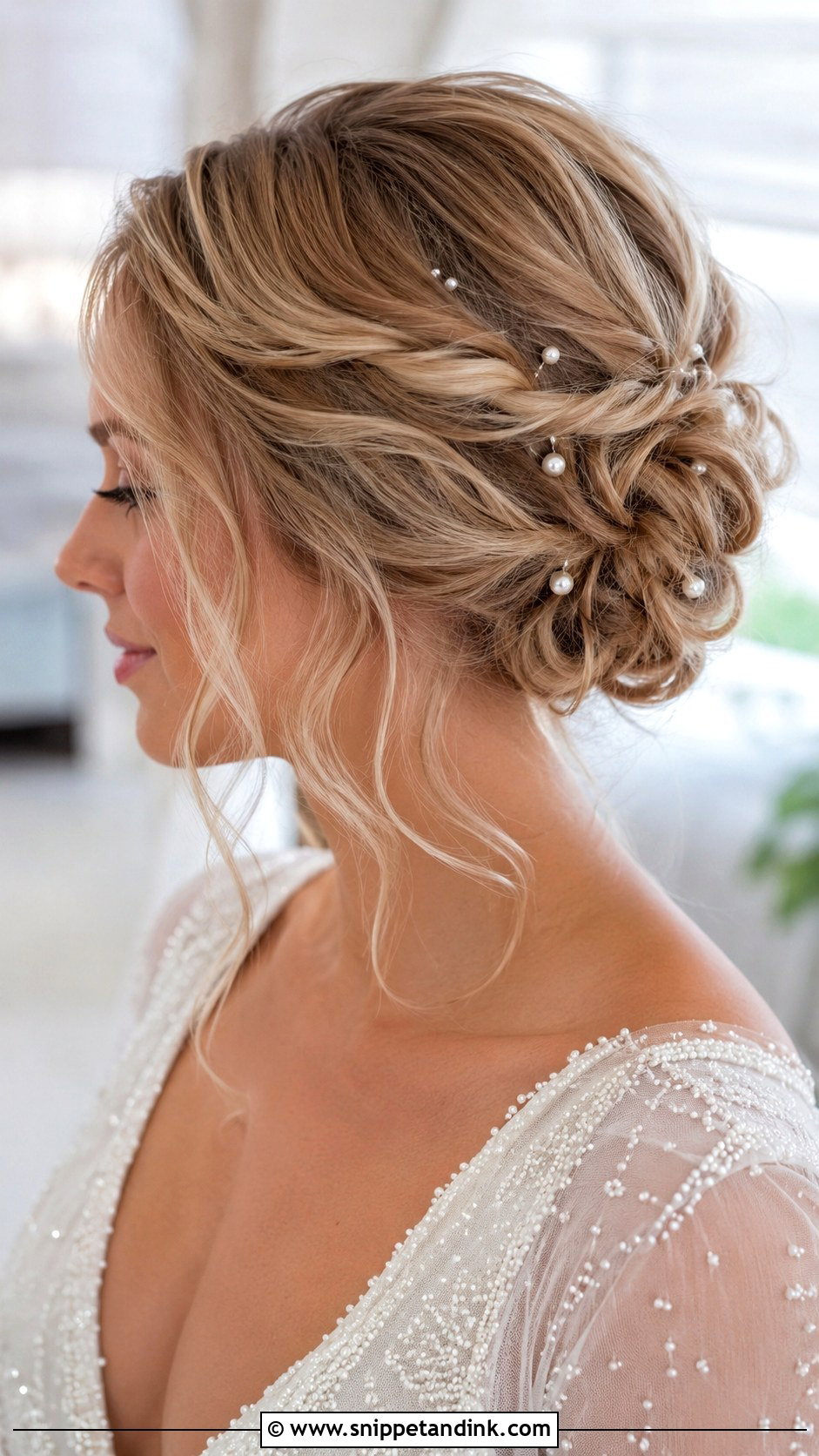
Pearls add detail without needing a large accessory. Scattered through a textured bun, placed along a braid or set around a chignon, they echo pearl beading on a dress especially well. I mix pin sizes, two or three small ones for every larger one, so the effect looks natural rather than lined up. A low bun, braided bun or soft twisted updo makes the best base. Keep the hairstyle balanced so the pearls enhance it.
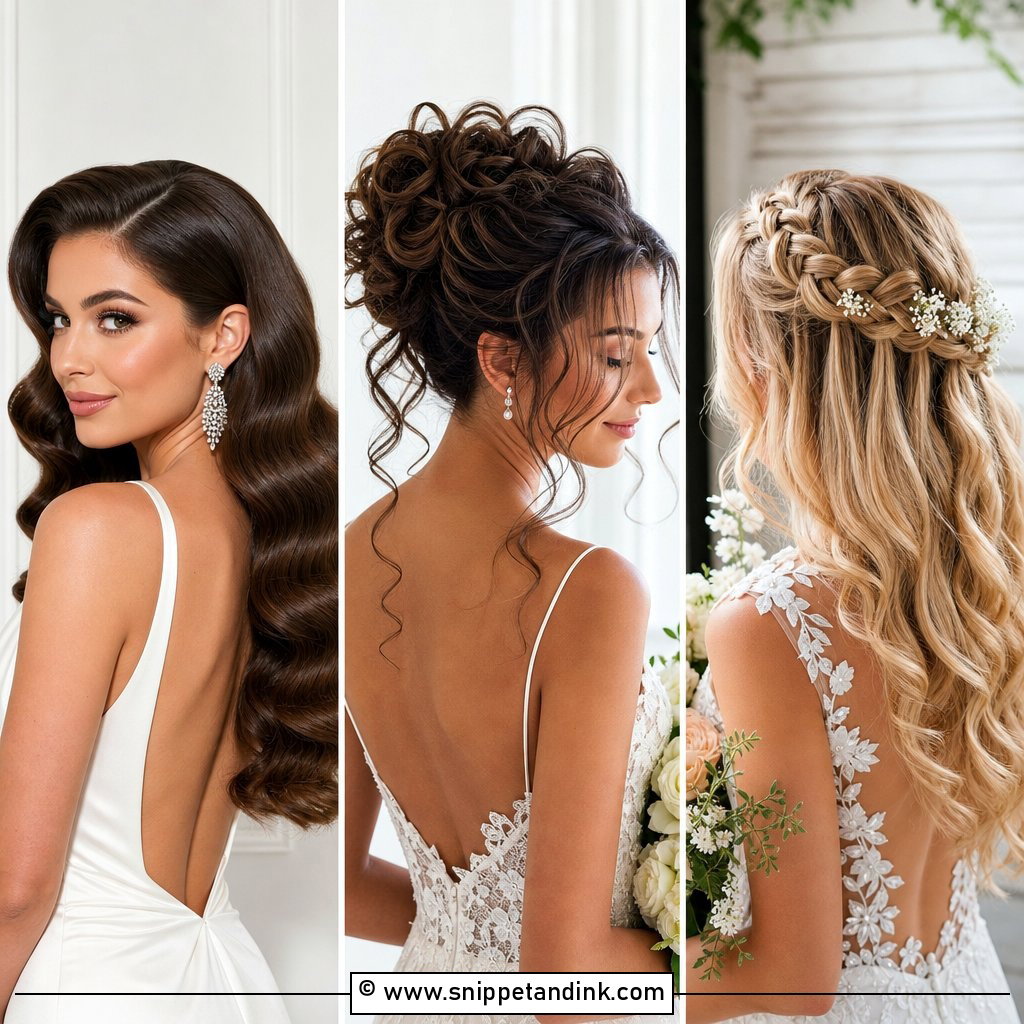
15. Simple Wedding Updo
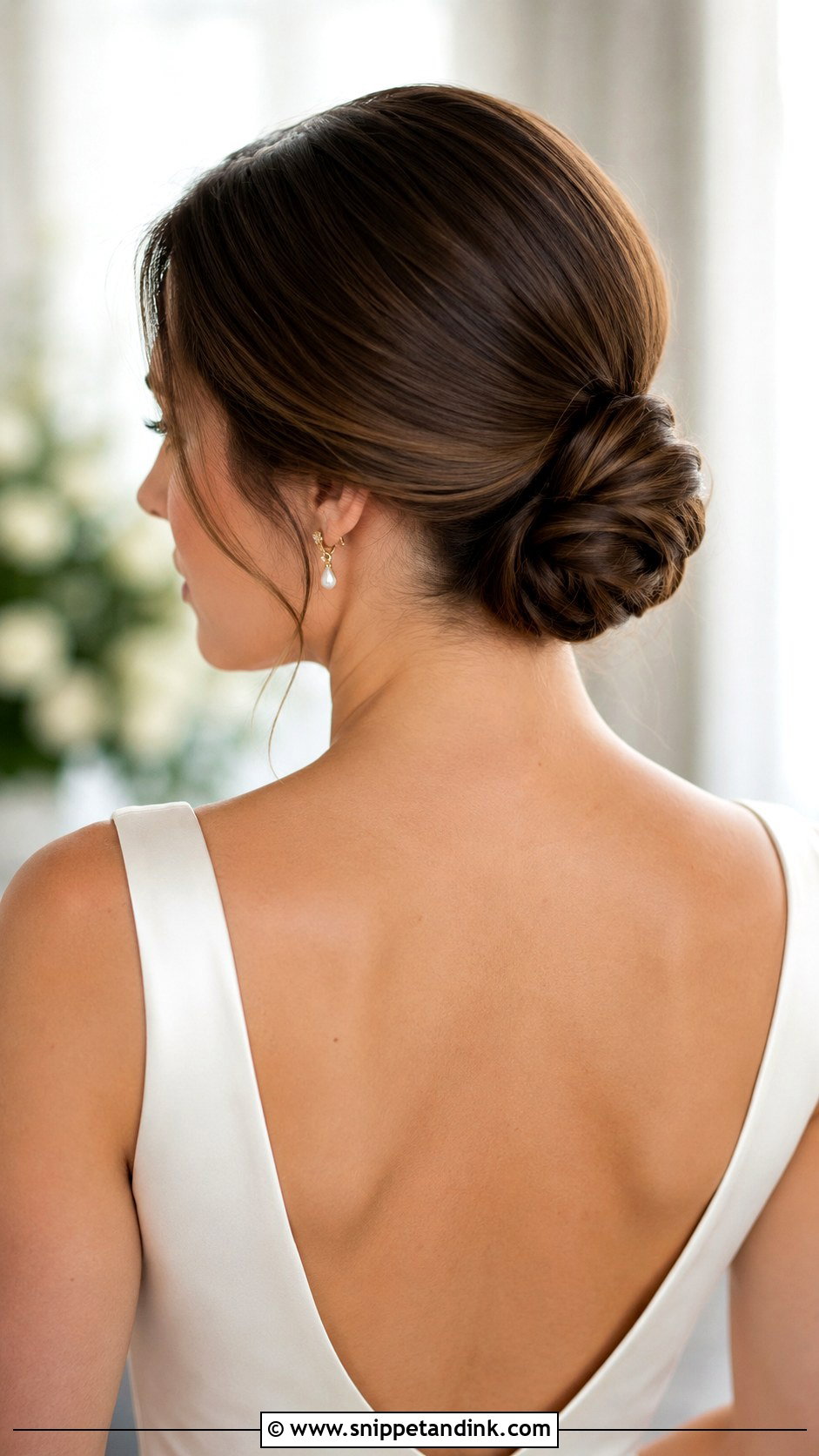
A simple updo skips heavy texture and large accessories in favor of a neat bun, soft volume and smooth sides. Simple is harder to fake than it looks: with no texture to hide behind, the shape and the finish have to be precise. It works with almost any dress, from minimal satin to romantic lace. It’s comfortable and lets your makeup and dress carry the attention. If you’re unsure about everything else, this is the style that rarely disappoints.
Pin Fatigue and the Midnight Takedown
An updo holds because of tension and pins, and both can wear on you. Most brides feel some pressure by evening, but a pounding headache means something is too tight or too heavy.
During the day
Mention any pinching while you’re still in the chair; a single pin pressing on the scalp gets worse over hours, and it takes your stylist seconds to move it. A heavy bun anchored at the crown is the usual cause of headaches, so if you get them easily, choose a lower placement.
Taking it down
Take pins out slowly, in reverse order, feeling for each one before pulling. Don’t brush right away; sprayed, teased hair tears when brushed dry. Work a little conditioner or detangling spray through, finger-comb from the ends up, and wash the next morning. A few minutes of care here saves a lot of broken strands.
A Mirror Check From the Side and Back
The right updo supports your dress, venue, hair texture and comfort level all at once. A sleek bun suits a modern city wedding; a textured chignon may suit a garden better. For romance, look at curls, braids, pearls or soft face-framing pieces; for clean simplicity, a low bun, French twist or smooth chignon. Schedule a trial, bring your veil and accessories, and take photos from the side and back as well as the front, since that’s how most guests will see your hair.
You'll Like These Ideas:


Leave a Reply