
Slick hair is honest. It has no volume to hide behind, so the condition of your hair and the care taken in the brushing show in every photo. In return, it gives you a clean outline that lets your face, dress and jewelry do the talking, and it holds through hugs, weather and a long ceremony better than loose curls. And slick wedding hair isn’t one look. It covers buns and ponytails, but also waves, straight hair worn down, bobs and braids. These fifteen show how wide the range is, with notes on what each one asks of your hair.
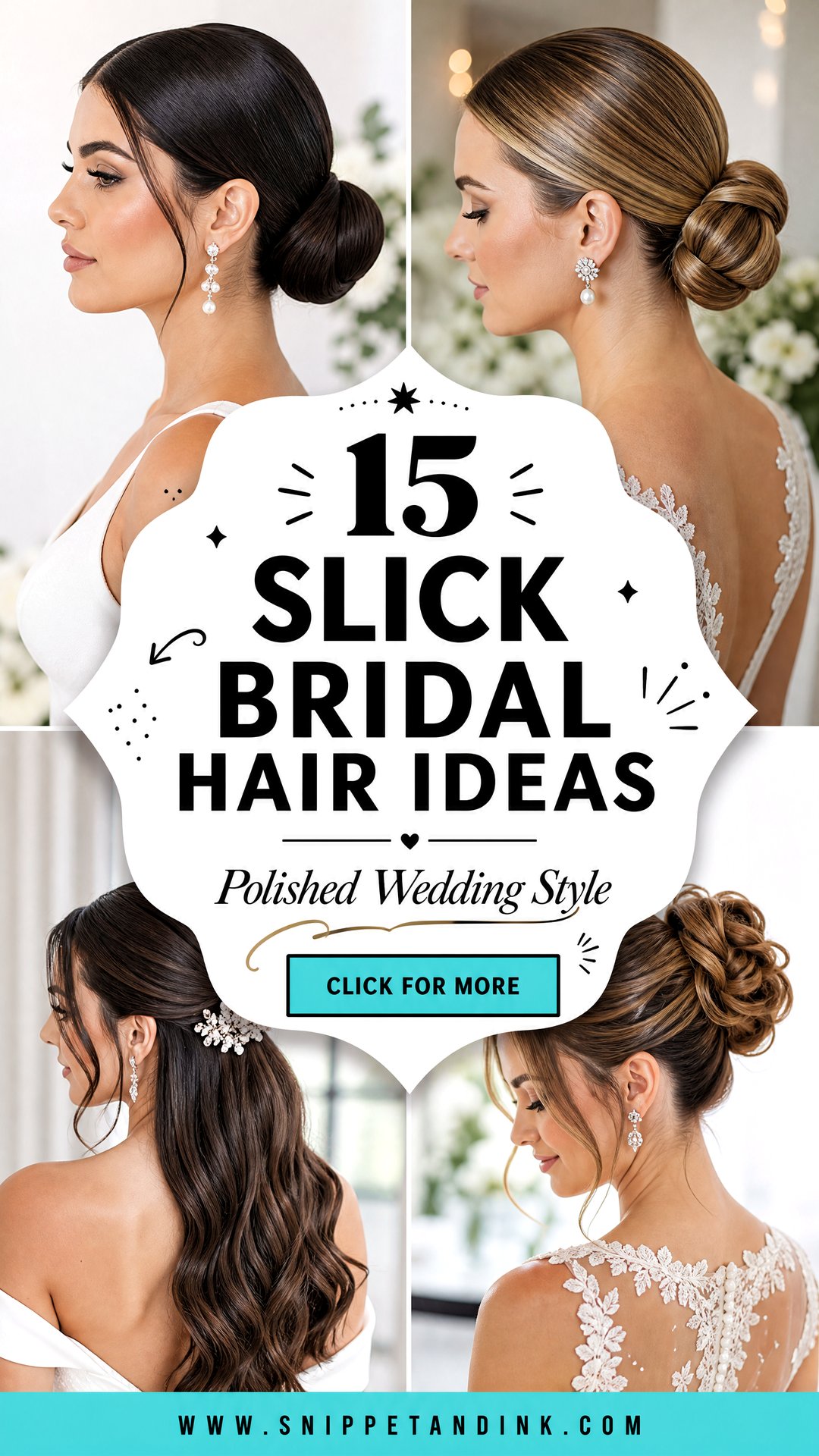
Healthy Ends Are What Make Slick Hair Shine
Shine comes from the hair, not just the product. A smooth style shows dry, frayed ends far more than curls do, so the preparation starts weeks before the wedding, not on the morning.
- Six to eight weeks before: book any colour change and your trial. If the colour changes after the trial, the shine and tone in your trial photos won’t match the day.
- About two weeks before: trim the ends and do a final colour refresh. That gives the colour time to settle and the cut edges time to soften.
- The final week: a deep conditioning mask once or twice is plenty. Avoid trying a new smoothing or keratin treatment now; if it reacts badly, there’s no time to fix it.
- The night before: wash and condition, and skip oils at the roots.
If your hair is very damaged from bleaching, I’d honestly steer you toward a softer, textured style instead of glass-smooth hair. Texture hides damage; slick hair puts it on display.
1. Slick Bridal Low Bun
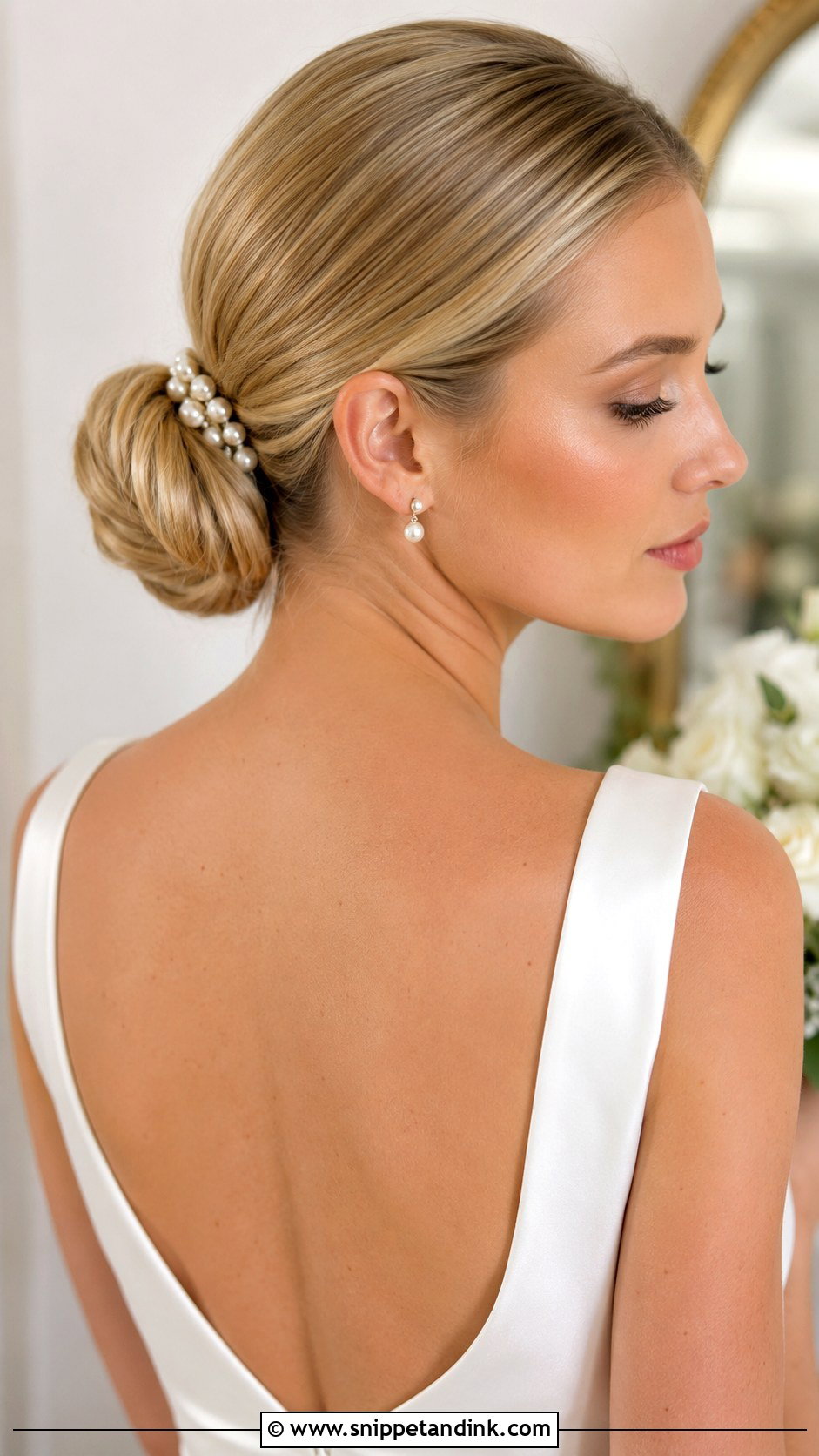
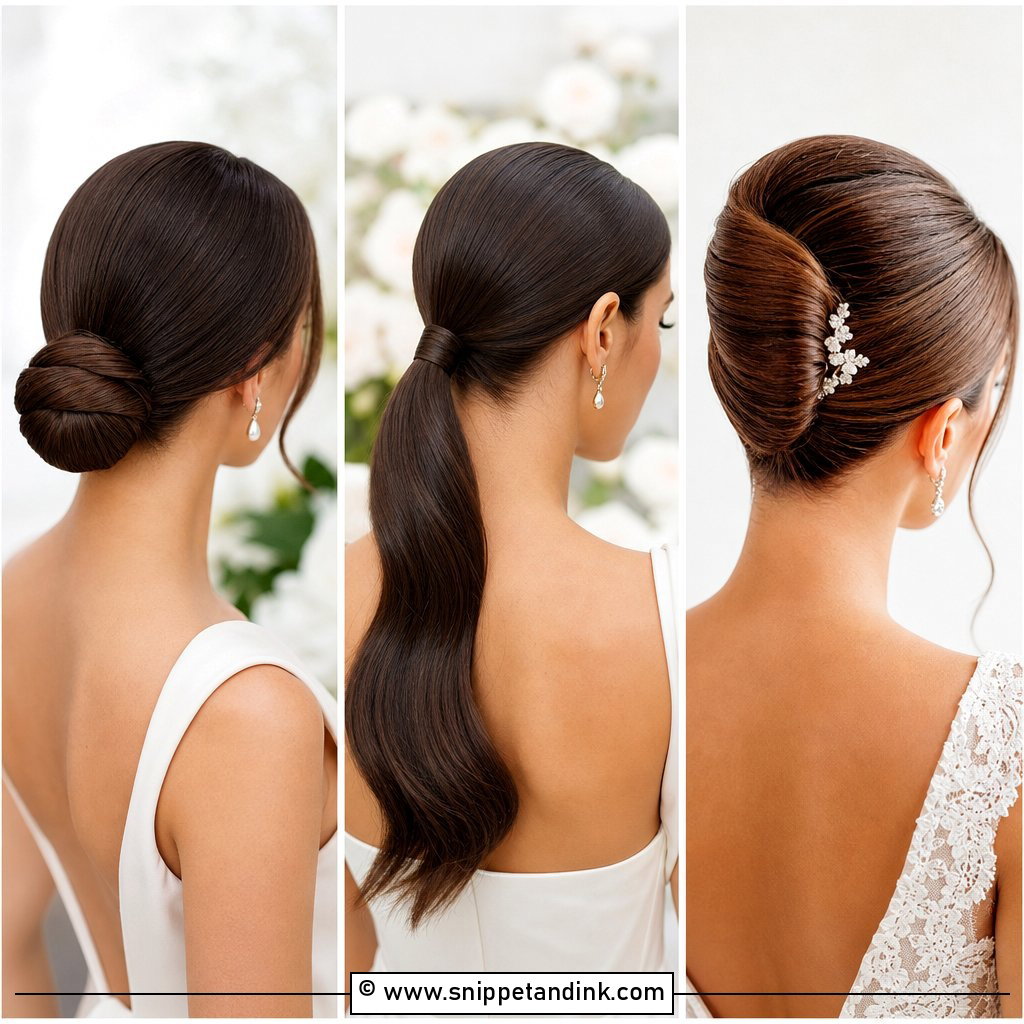
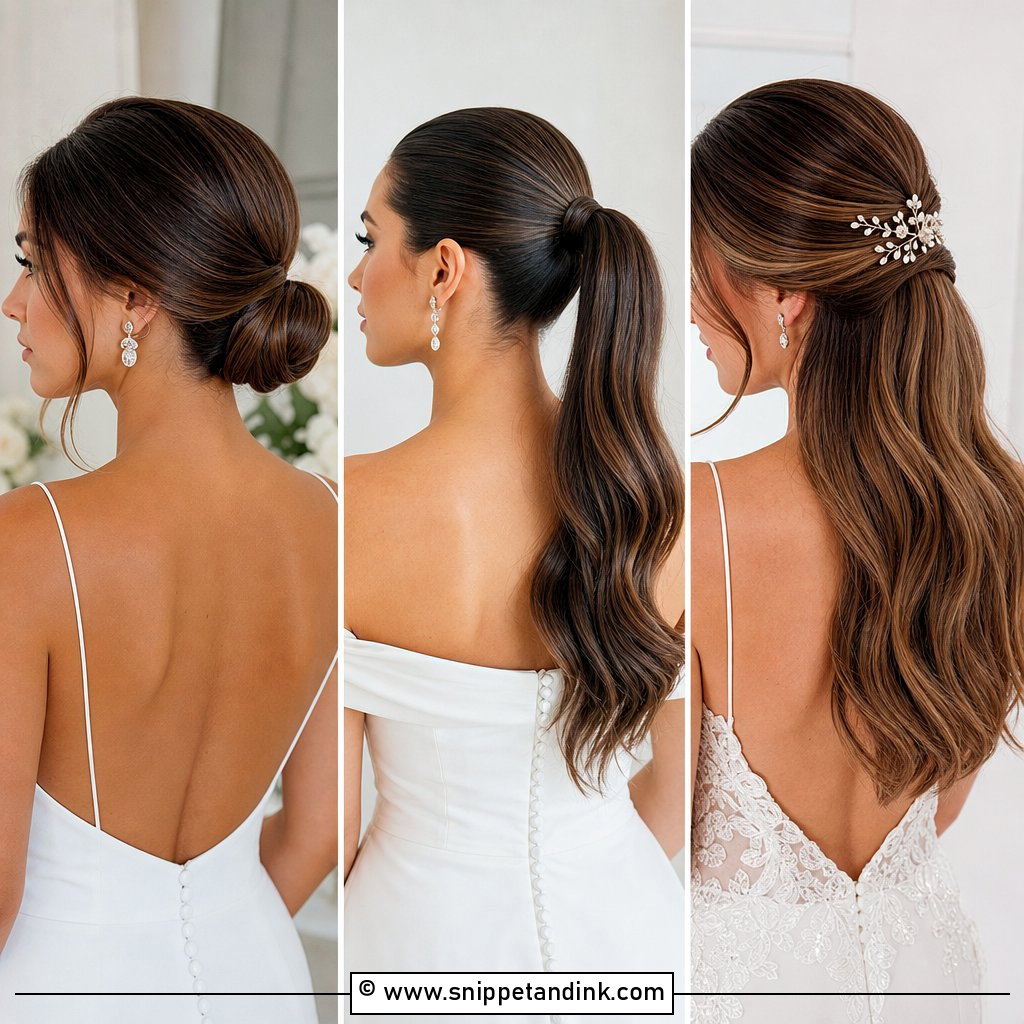
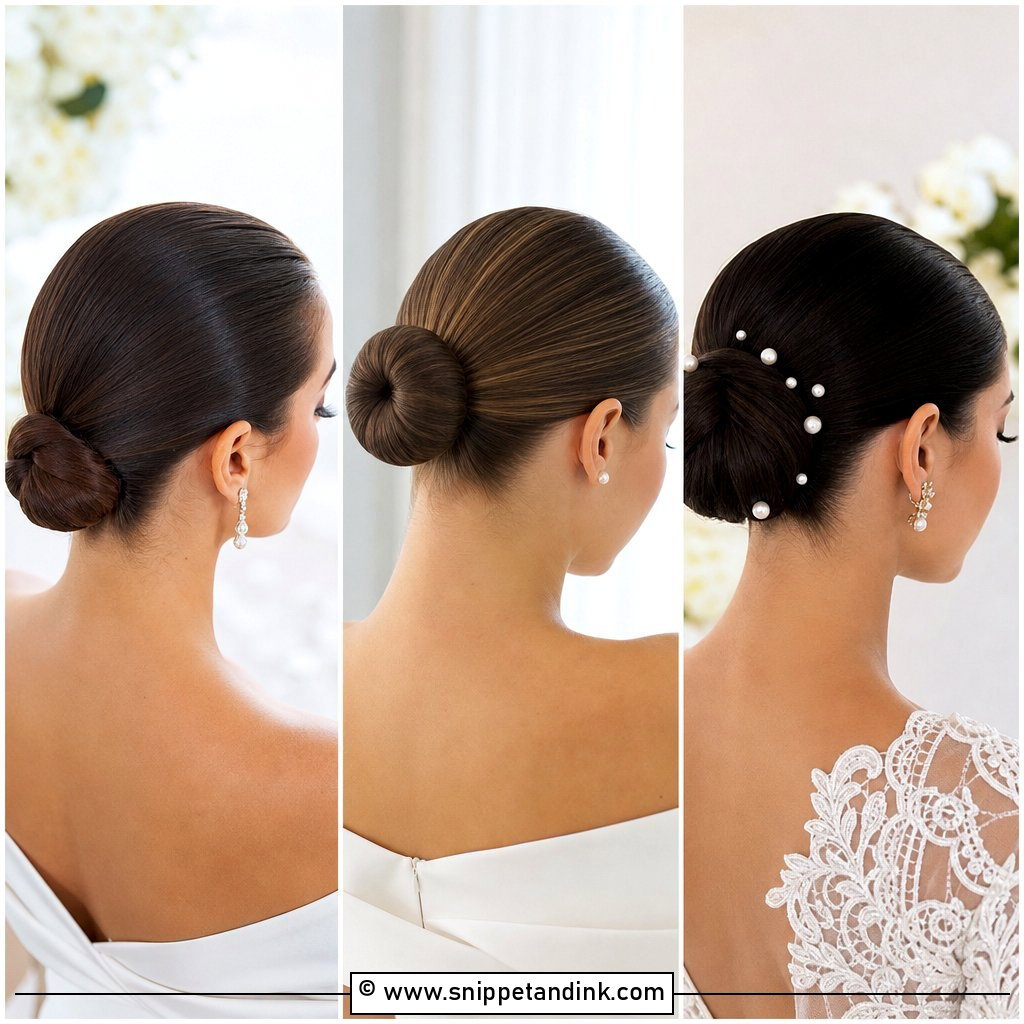
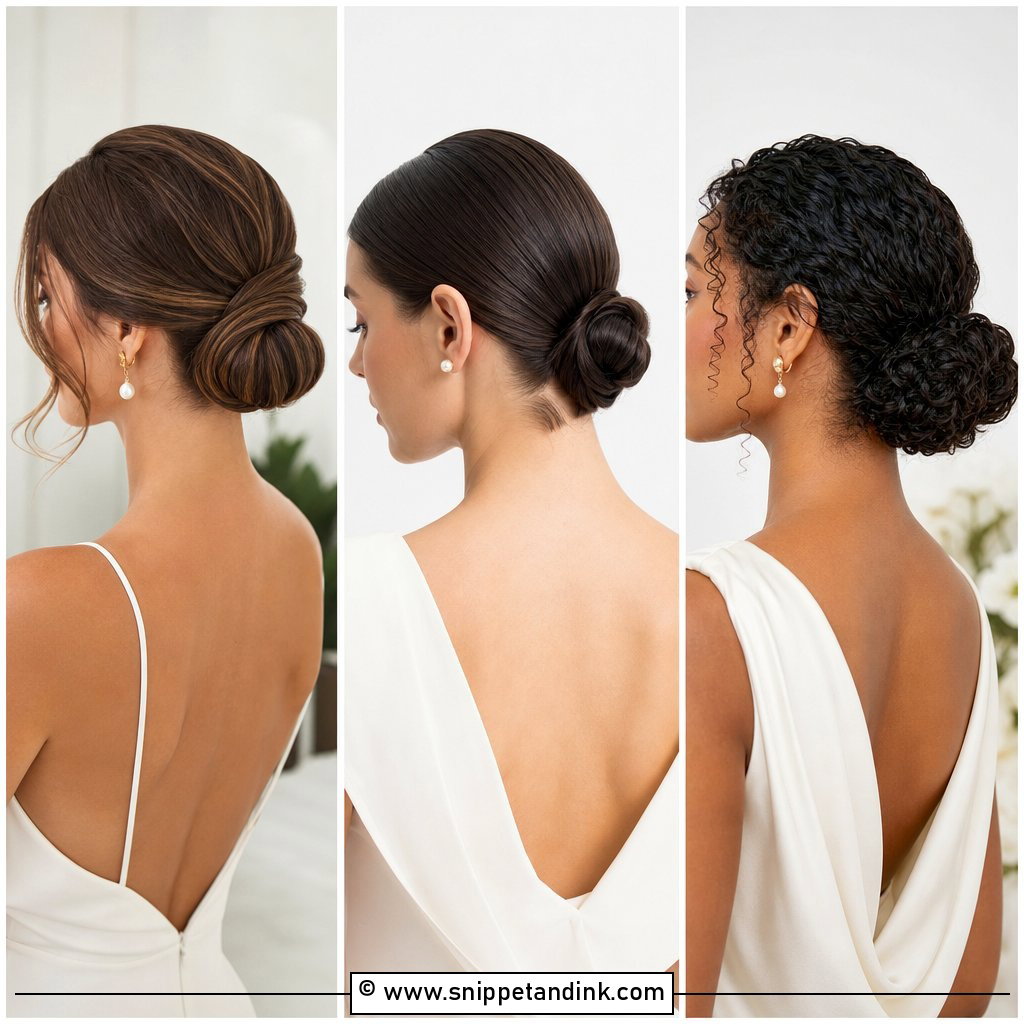
The low bun is the reference point for everything else here. Brushed from the hairline and gathered at the nape, it sits under veils, takes pearl pins and leaves high necks clear. Center or side part changes the mood more than the bun does. What I ask for every time is shine without stiffness: a cream for smoothness, a light spray to hold, and no heavy lacquer that turns the surface hard and makes it crack when you move your head.
2. Slick Bridal Middle Part Bun
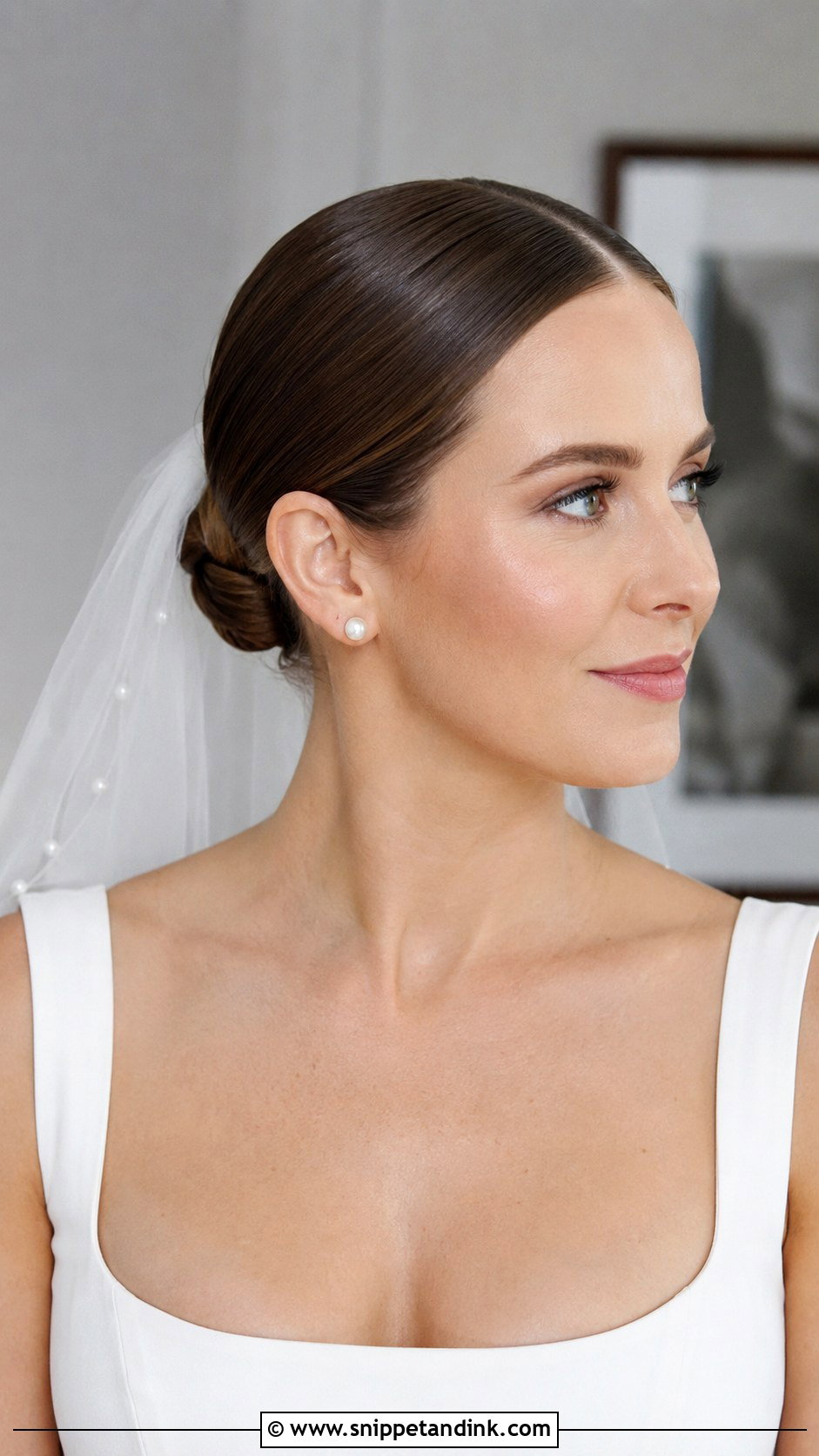
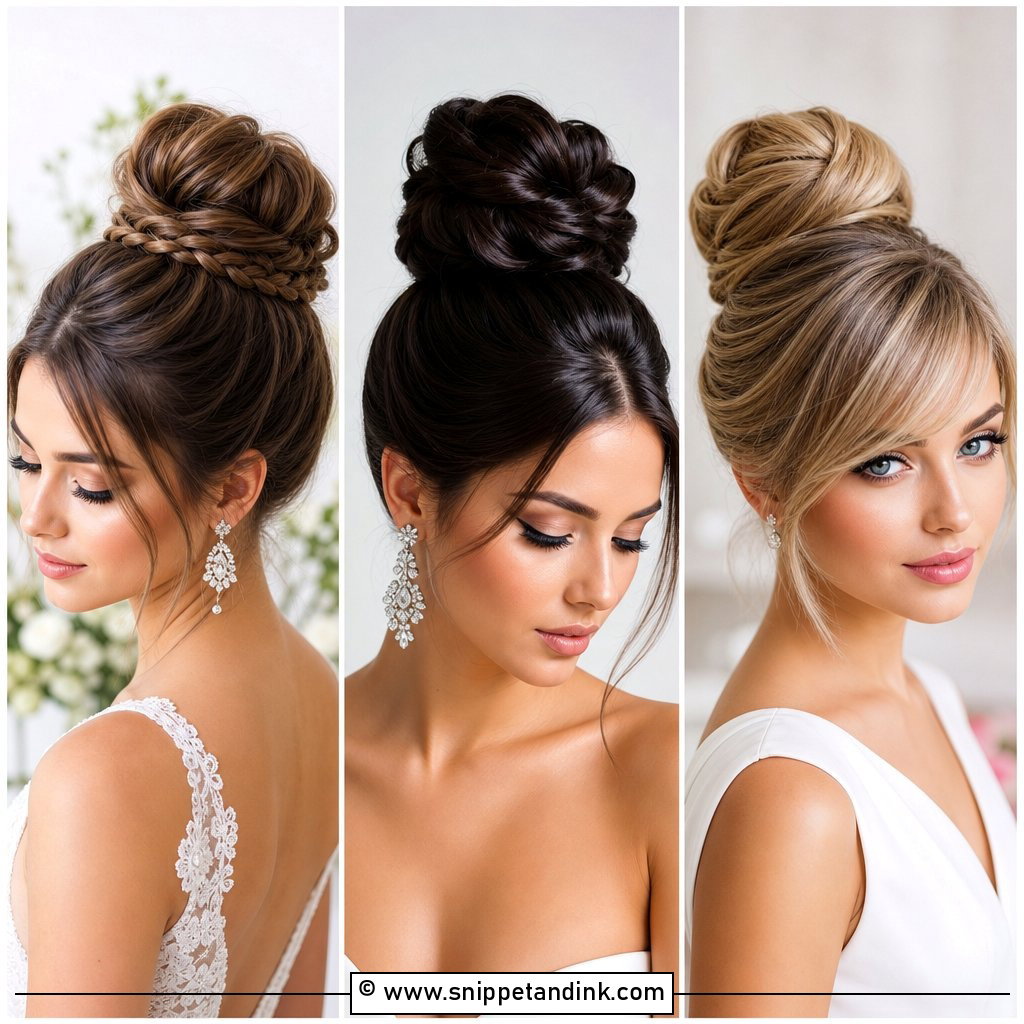
The slick bridal middle part bun is all about symmetry, so precision matters more than technique. The part needs to be straight, both sides equally smooth, and the bun centered; if one side is even slightly fuller, it shows in a front-on portrait. Strapless, square and satin necklines suit it because the line from part to bun to bodice reads as one shape. I check where your face looks most balanced at the trial and set the bun low or mid-height from that, not from the photo you brought.
3. Slick Bridal Side Part Bun
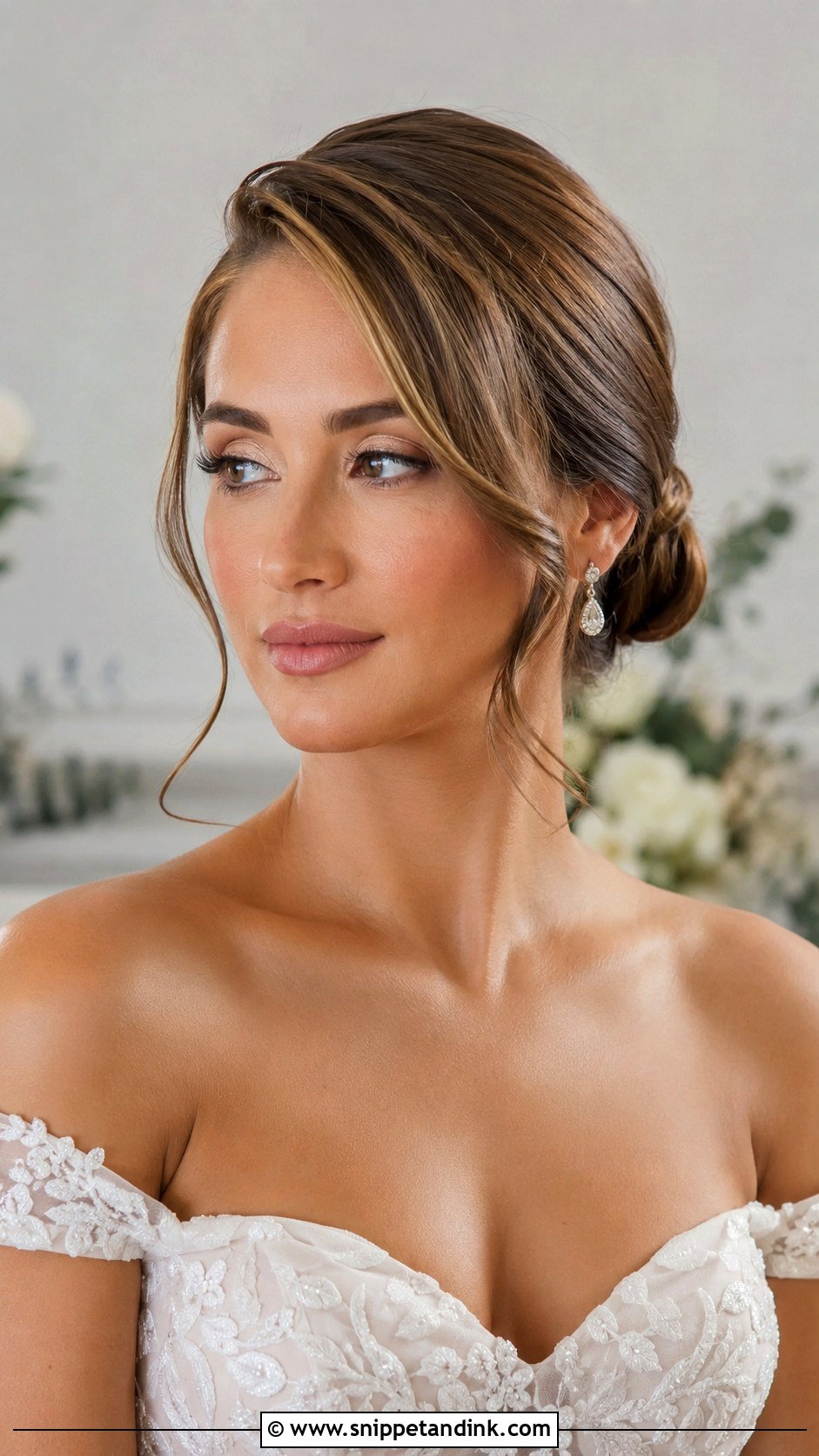
A deep side part swings across the forehead before tucking into a low bun or chignon, which gives it a vintage curve. That diagonal is kinder to many faces than a straight center line. Layered front pieces are the challenge: they spring out of the sweep within an hour. I mold them flat with a little gel and set the curve with clips while it dries, so the line stays unbroken through the ceremony. Drop earrings and off-shoulder dresses sit naturally with it.
4. Slick Bridal High Bun
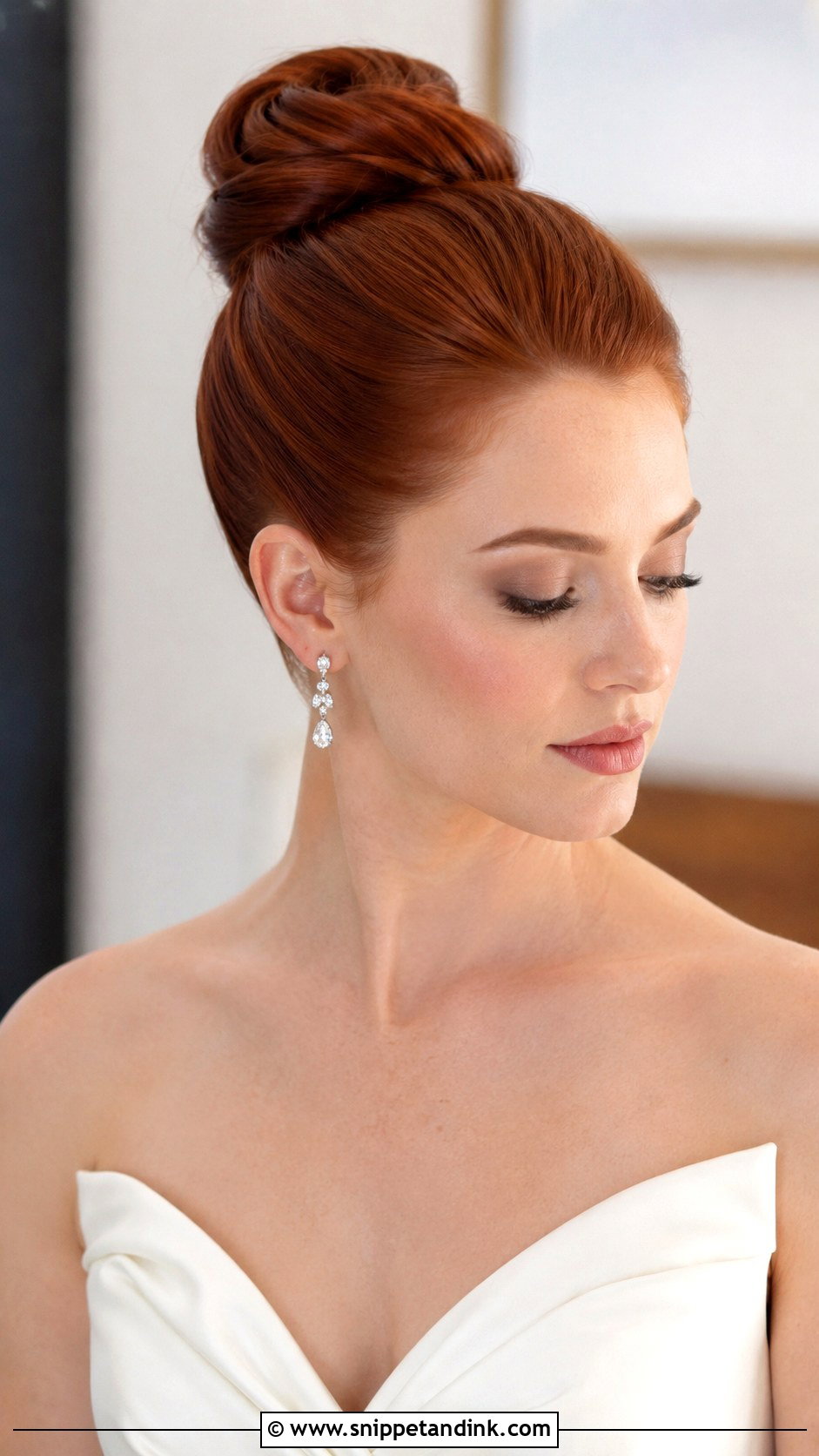
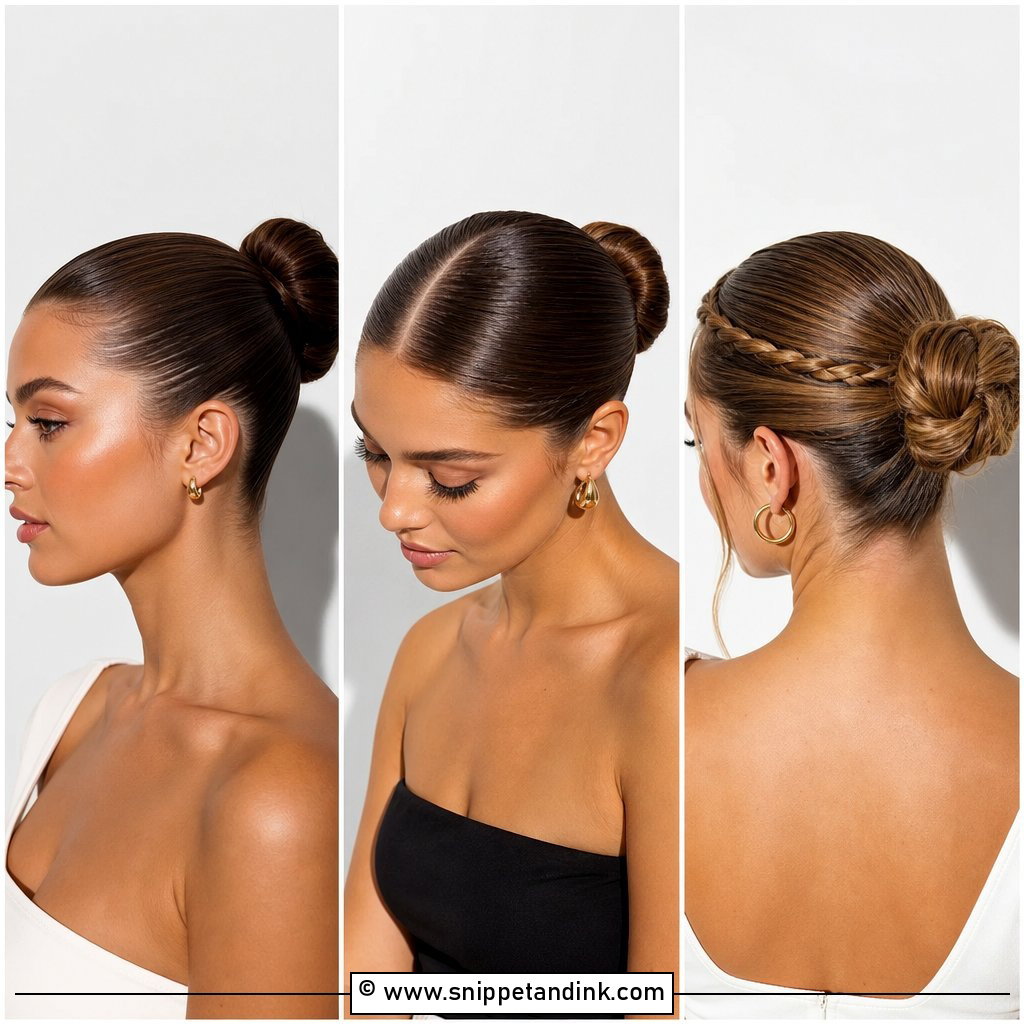
A slick bridal high bun lengthens the neck and gives you the strongest silhouette on this list. It works with a veil placed underneath the bun, big earrings and detailed bodices you don’t want covered. It’s cool in summer, too. A completely smooth, tight high bun can look harsh on a soft face, so I often round it out, wrap it with a braid, or leave the bun slightly loose against the sharp sides. Wear it for a few hours at your trial; some brides find the crown tension tiring.
5. Slick Bridal Chignon
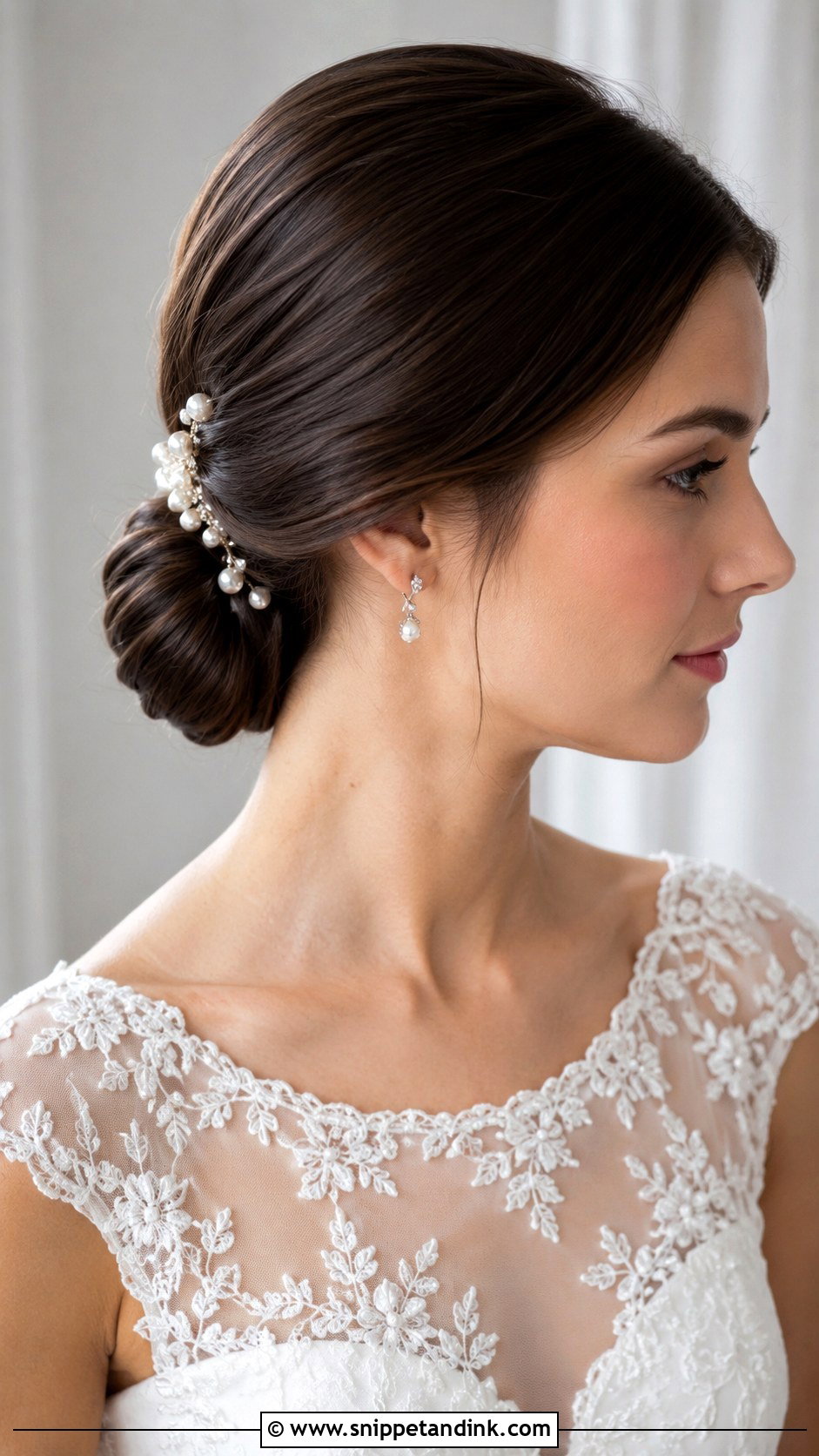
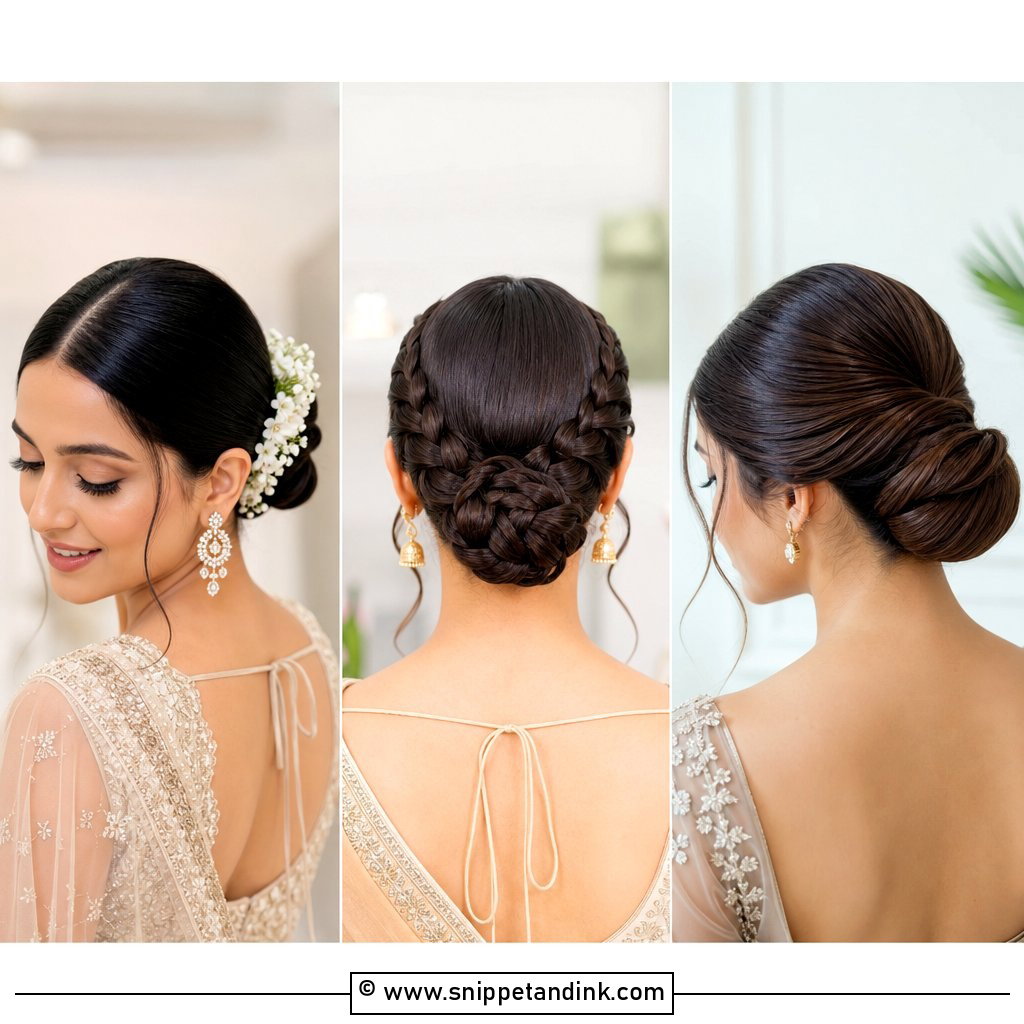
A chignon is folded and tucked rather than wound, so it sits longer and flatter at the nape. That’s why it feels formal without volume and gives a cathedral veil a firm base. Lace and silk both suit it. The same shape with less shine works for bridesmaids or mothers of the bride, which helps the group look connected without copying the bride. For the bride, I add a glossier finish and a few fine pins hidden along the folds.
6. Slick Bridal Ponytail
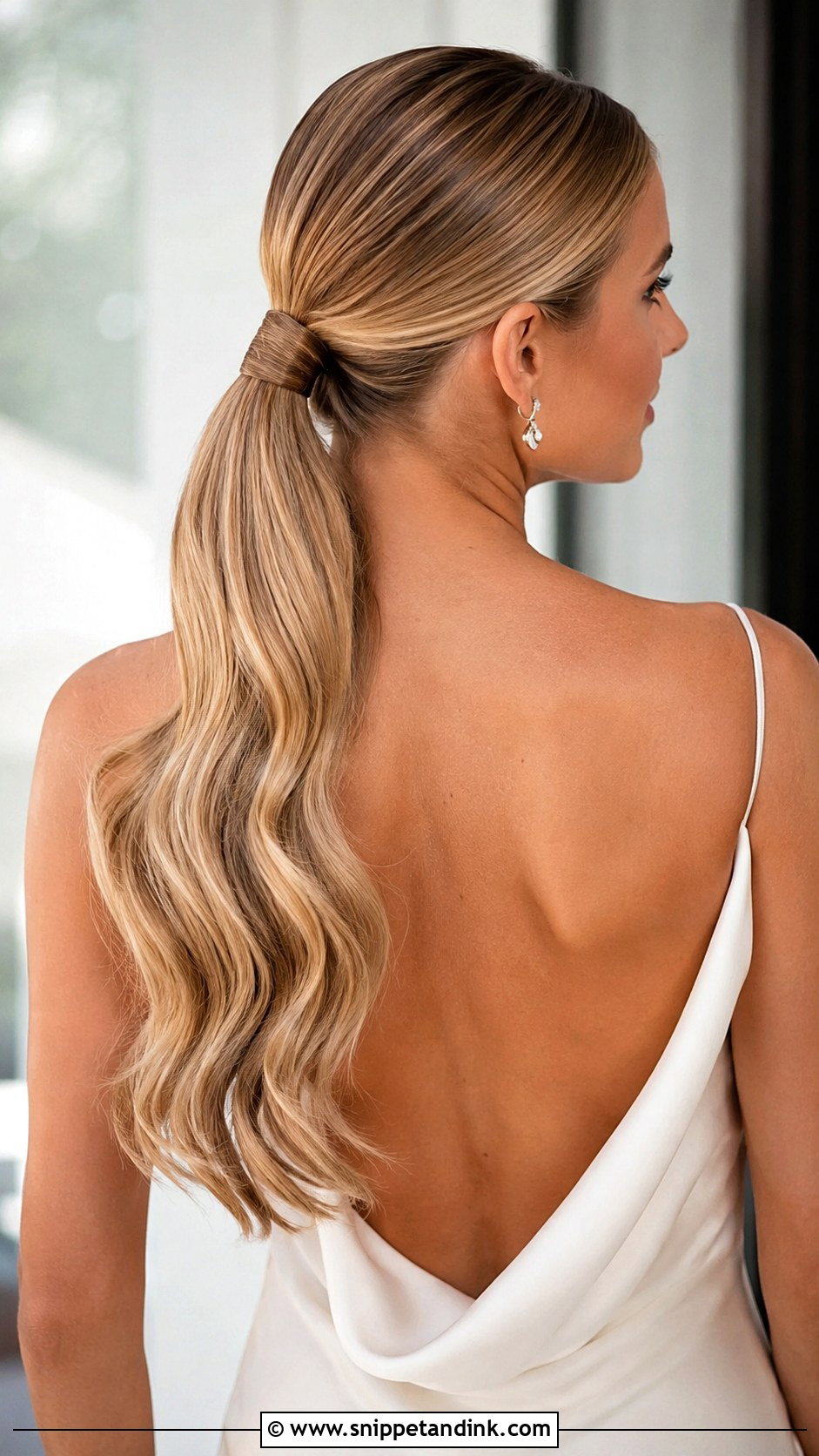
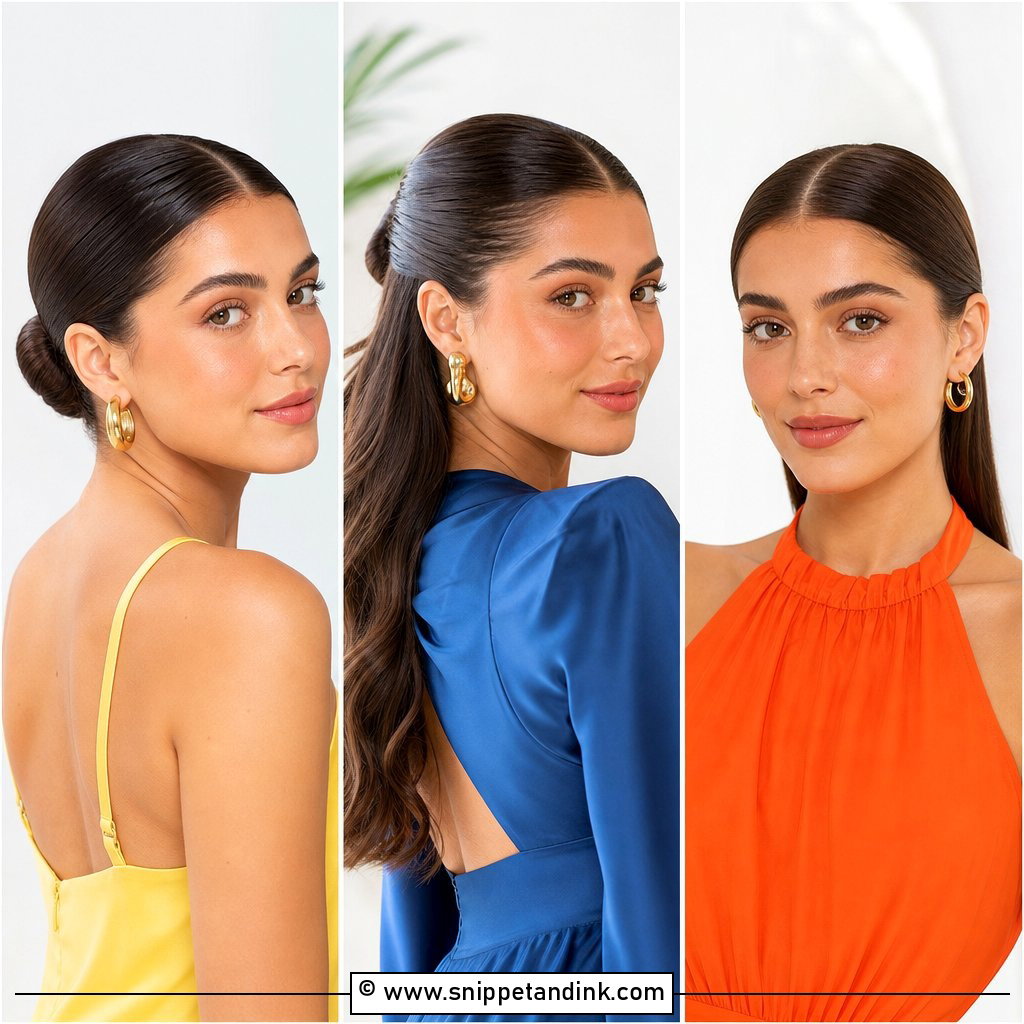
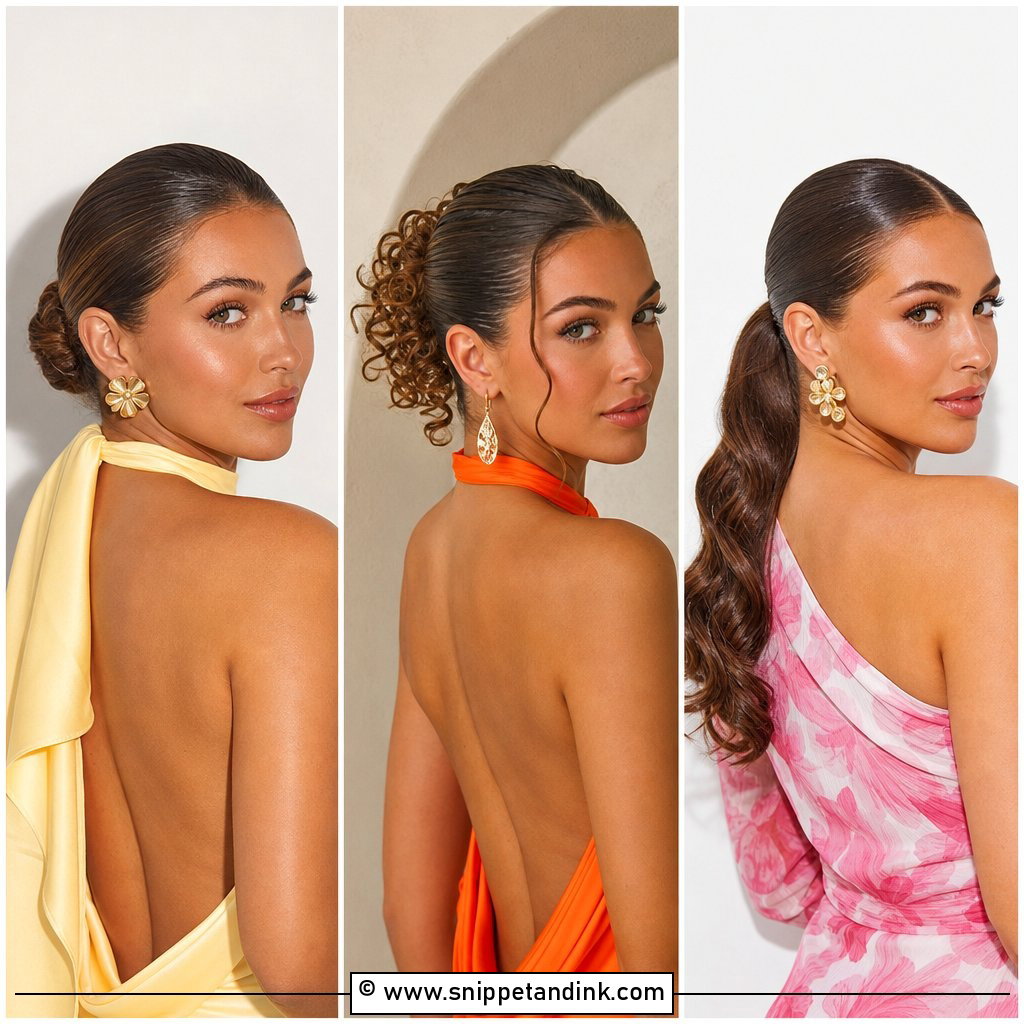
A ponytail gives you movement without anything loose around the face. The crown is brushed flat, and the tail falls straight, waved or smooth. Open-back dresses suit it, since the length draws the eye down the back without covering it. Wrapping a strand of hair around the base is what separates it from an everyday pony. If your hair is fine or shoulder-length, extensions make the tail look full in photos; I blend them at the trial so the join is hidden under the wrap.
7. Slick Bridal Low Ponytail
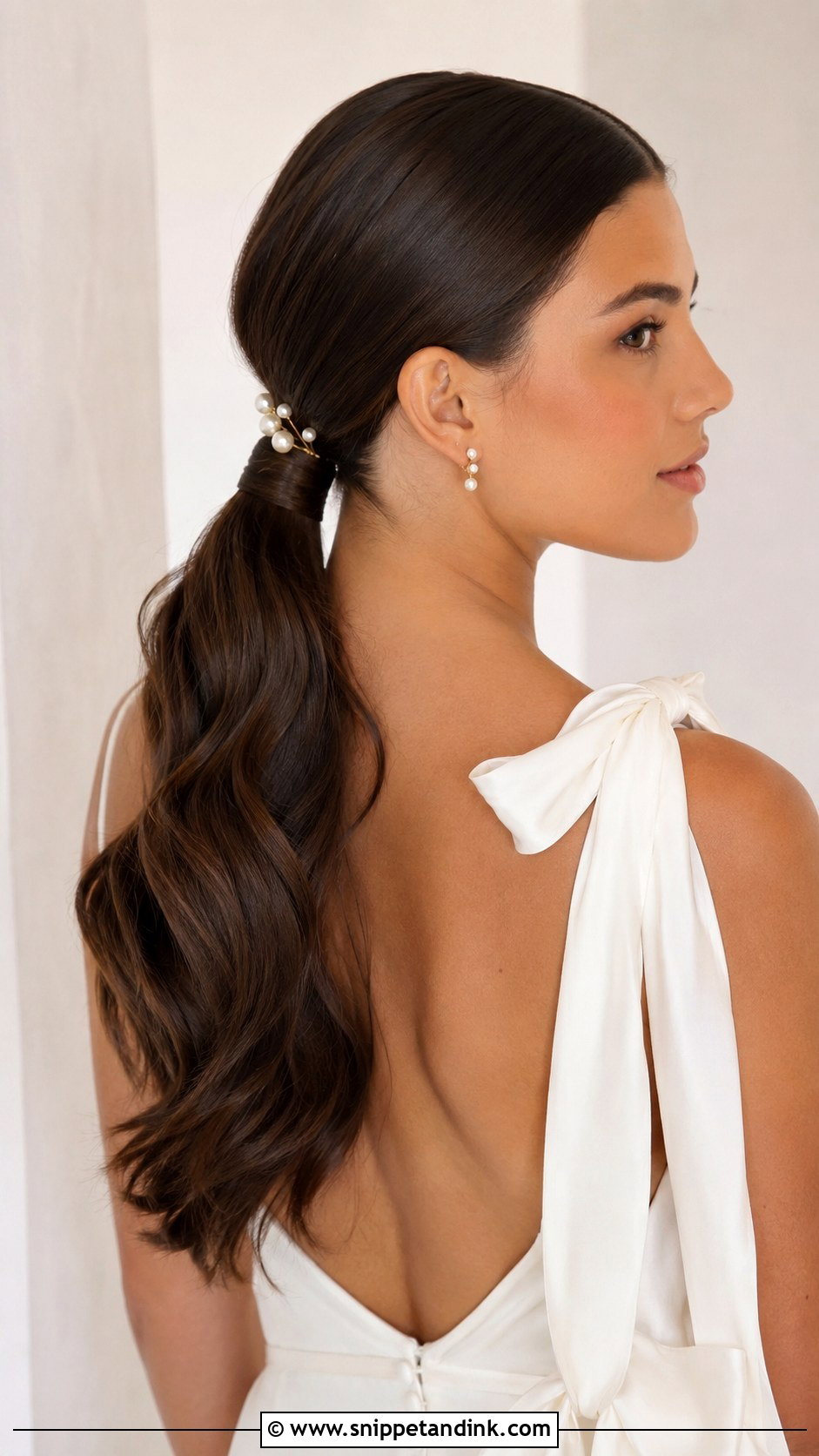
The low ponytail is the softer cousin of the sleek updo. Sitting at the nape, it reads calm and works with almost any part. Leave the tail straight for minimalism or wave it gently. A small veil above the base, a ribbon or two pearl pins add detail without fuss. The thing I watch on low ponies is the collar: some necklines and high backs rub against the base and slowly loosen the elastic, so I check how it sits when you’re seated.
8. Slick Bridal Half Up Hair
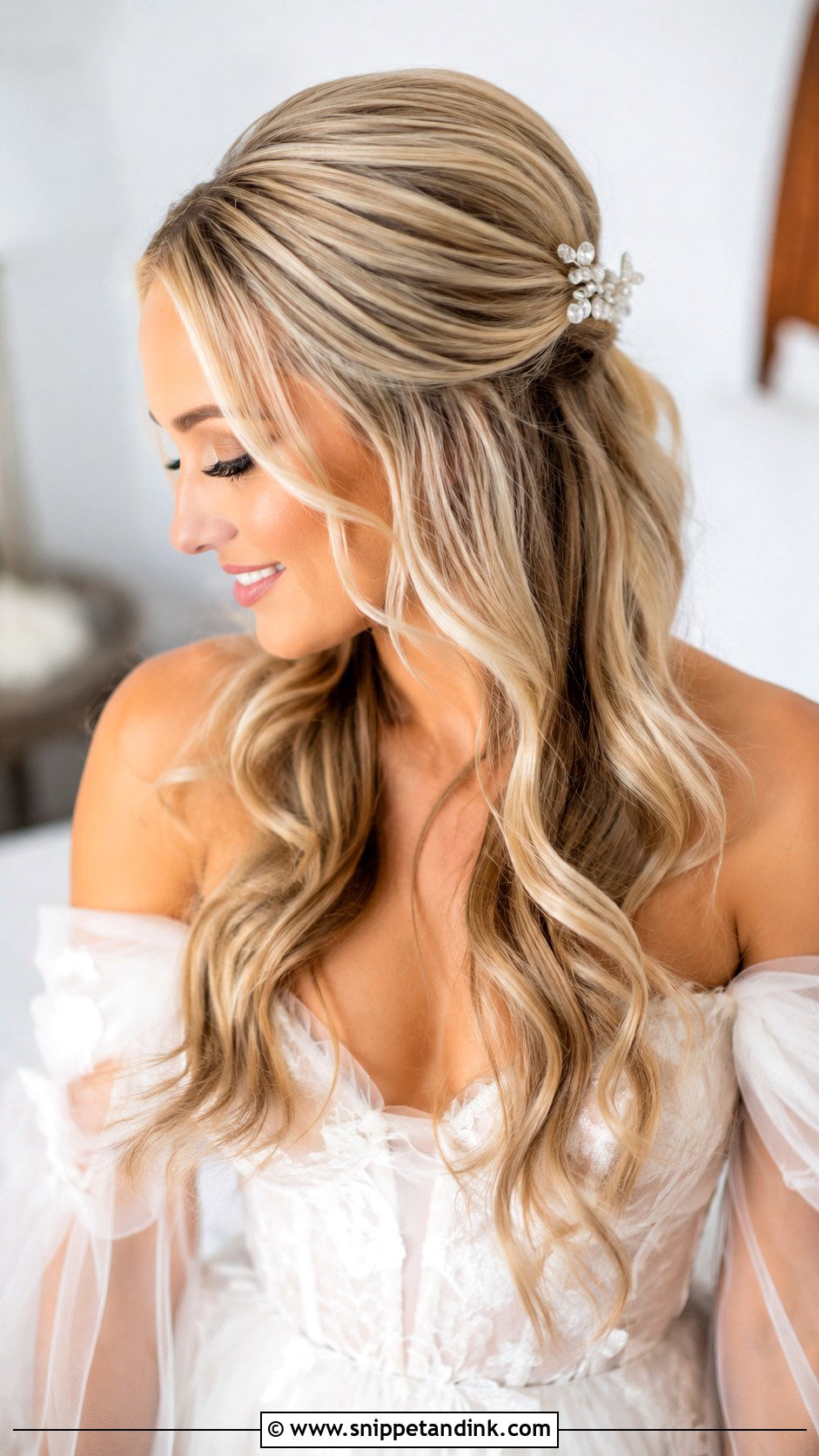
Half up lets you keep length while lifting the face. The front and crown are smoothed and secured at the back with a twist, clip or small bun; the rest falls straight, waved or in smooth curls. It suits medium to long hair and a less formal wedding, and it holds a comb or veil well. Expect the loose half to relax over the day, especially if it’s humid, so I set curls a bit tighter than they’ll finally sit.
9. Slick Bridal Hollywood Waves
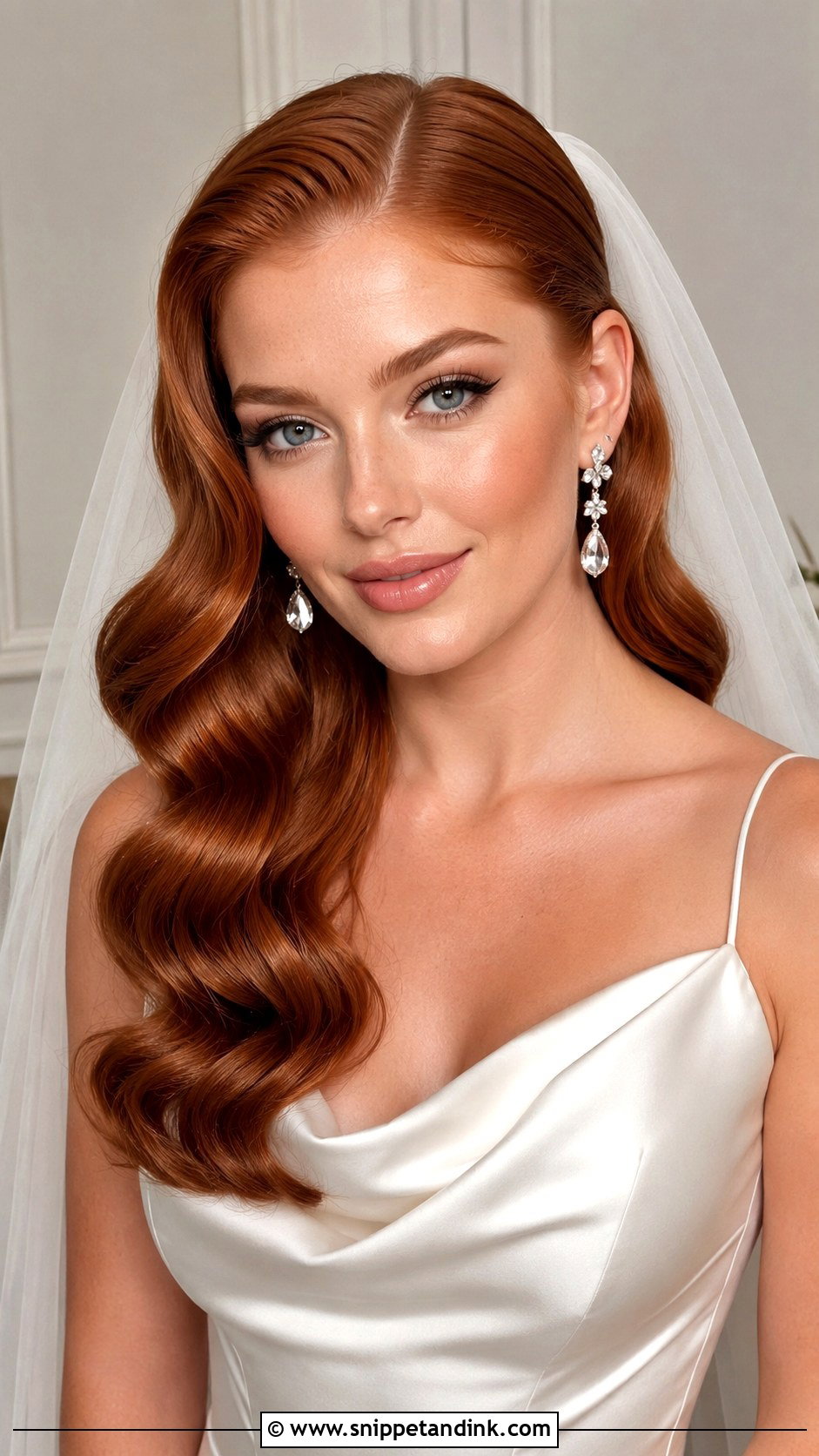
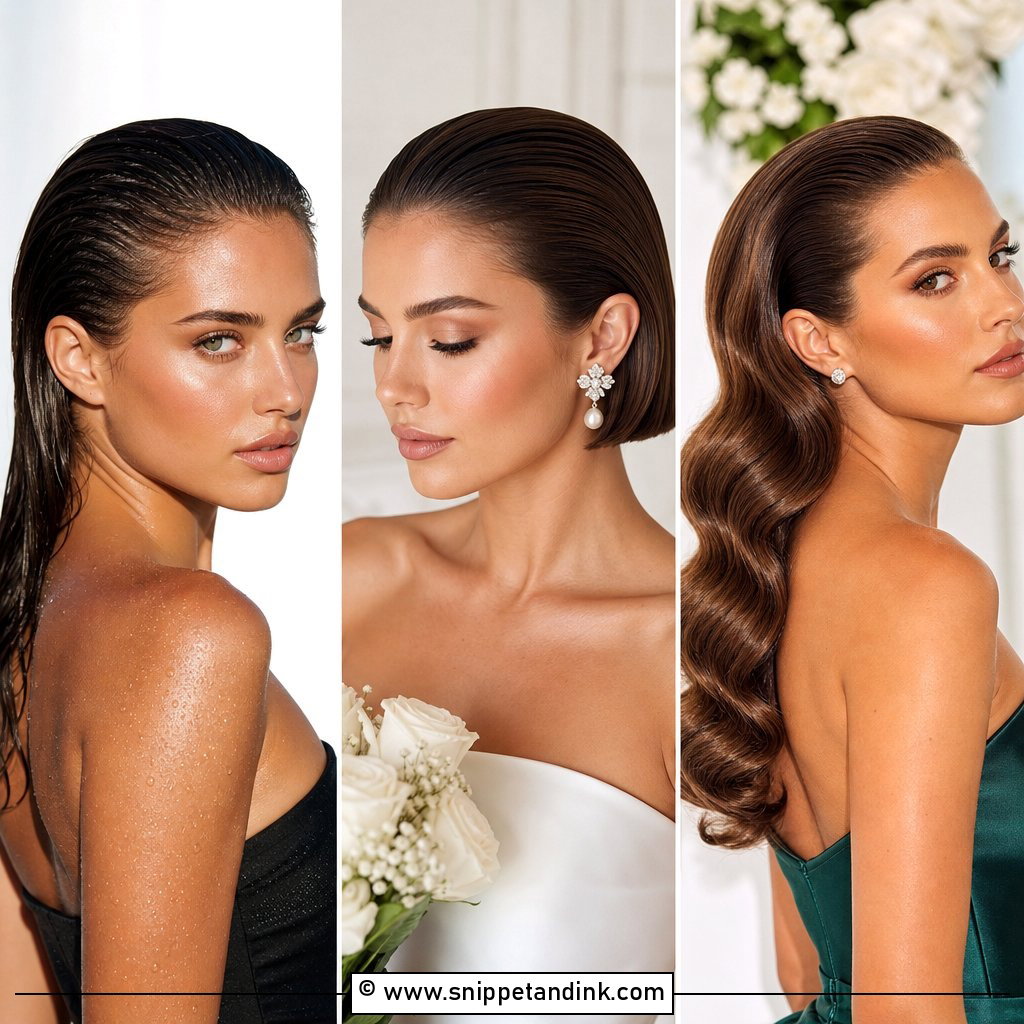
Hollywood waves are how you wear slick hair down. Parted deep on one side and smoothed at the crown, the hair is set in uniform curls, all in the same direction, then brushed out into a continuous S-shape. The brushing is where most attempts go wrong: too little and you get separate ringlets, too much and the pattern collapses. Satin gowns, red lips and statement earrings all suit it. A strong but flexible hold keeps the waves crisp through photos and dancing.
10. Slick Bridal Straight Hair
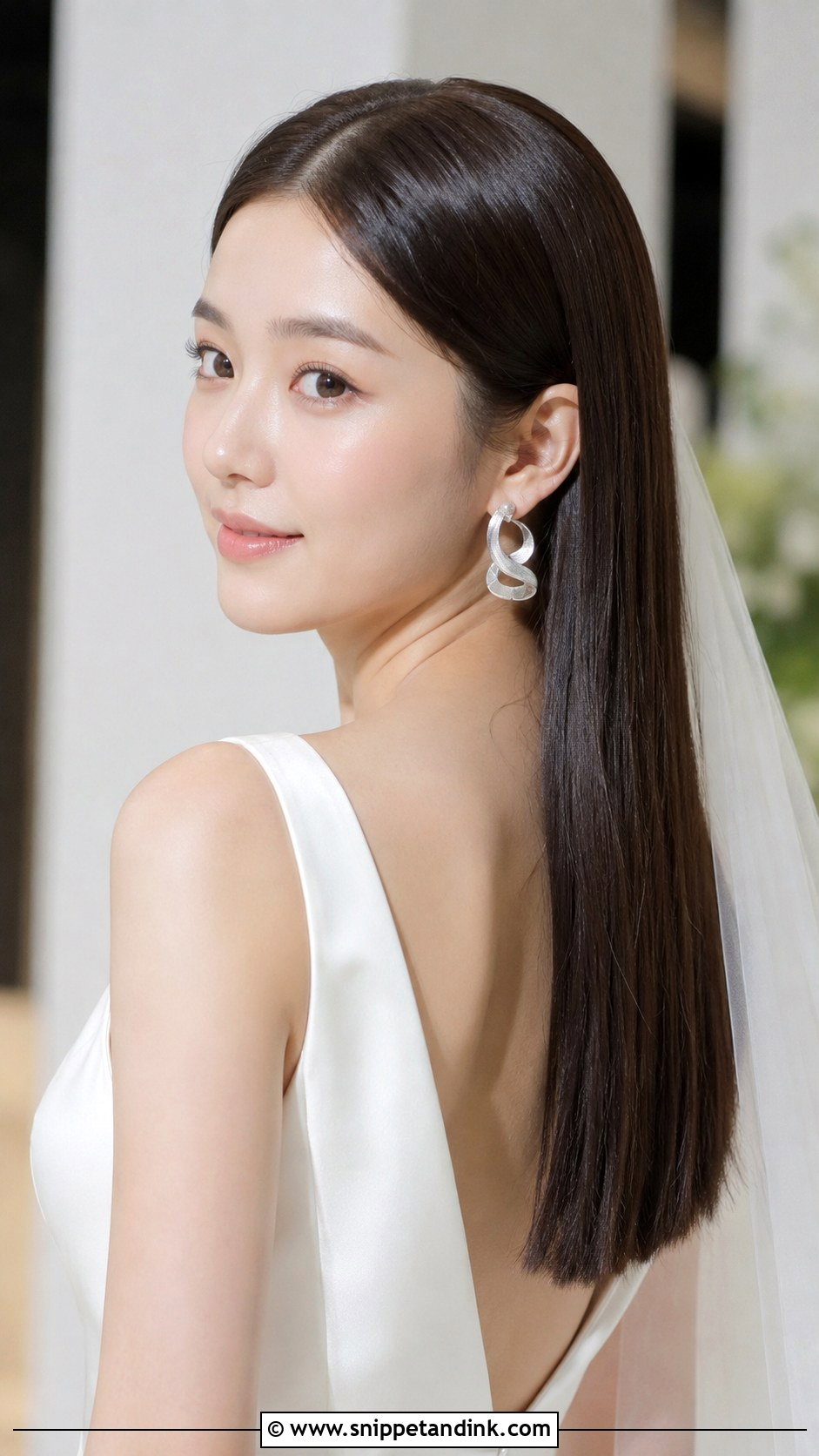
Straight hair worn down is the most minimal option, and the least forgiving. Every split end shows when hair is glossy and flat, so it really needs a recent trim and healthy lengths. I use heat protection and a flat iron in thin sections, with a smoothing product, to get a soft glass finish. It should still move when you turn. Simple gowns, modern veils and sculptural earrings suit it; humid outdoor weddings don’t, because straight hair puffs at the roots first.
11. Slick Bridal Bob
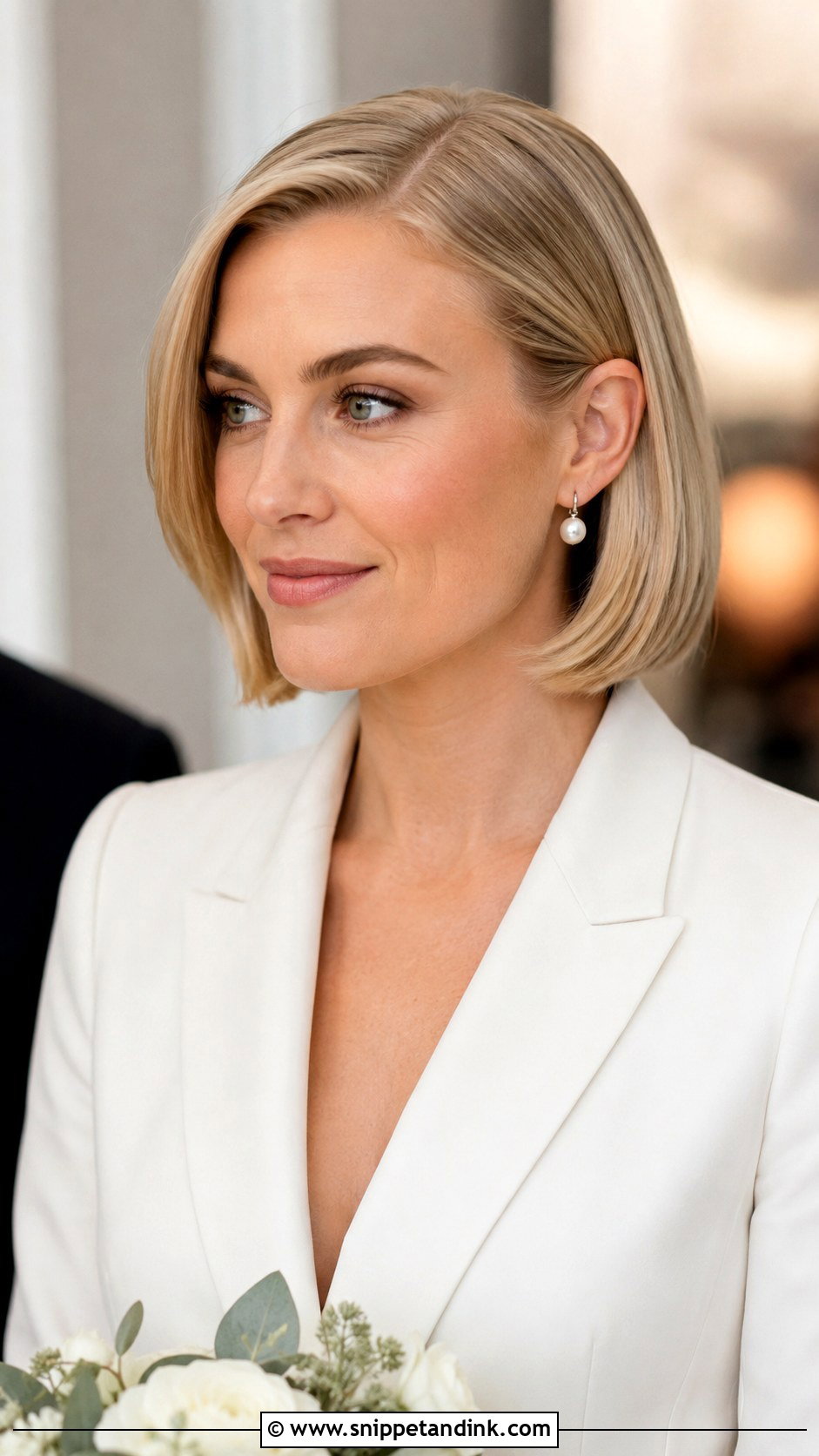
Short hair doesn’t need to grow out for the wedding. A slick bob puts the cut itself at the center, so the finish has to be smooth and shaped. A chin-length or jaw-length bob can take a clean middle part for a fashion look or a side part for a vintage one. Tucking one side behind the ear frees an earring. Book your trim two weeks before the wedding so the edges have softened. A veil, headband or pearl barrette makes it bridal.
12. Slick Bridal Braid
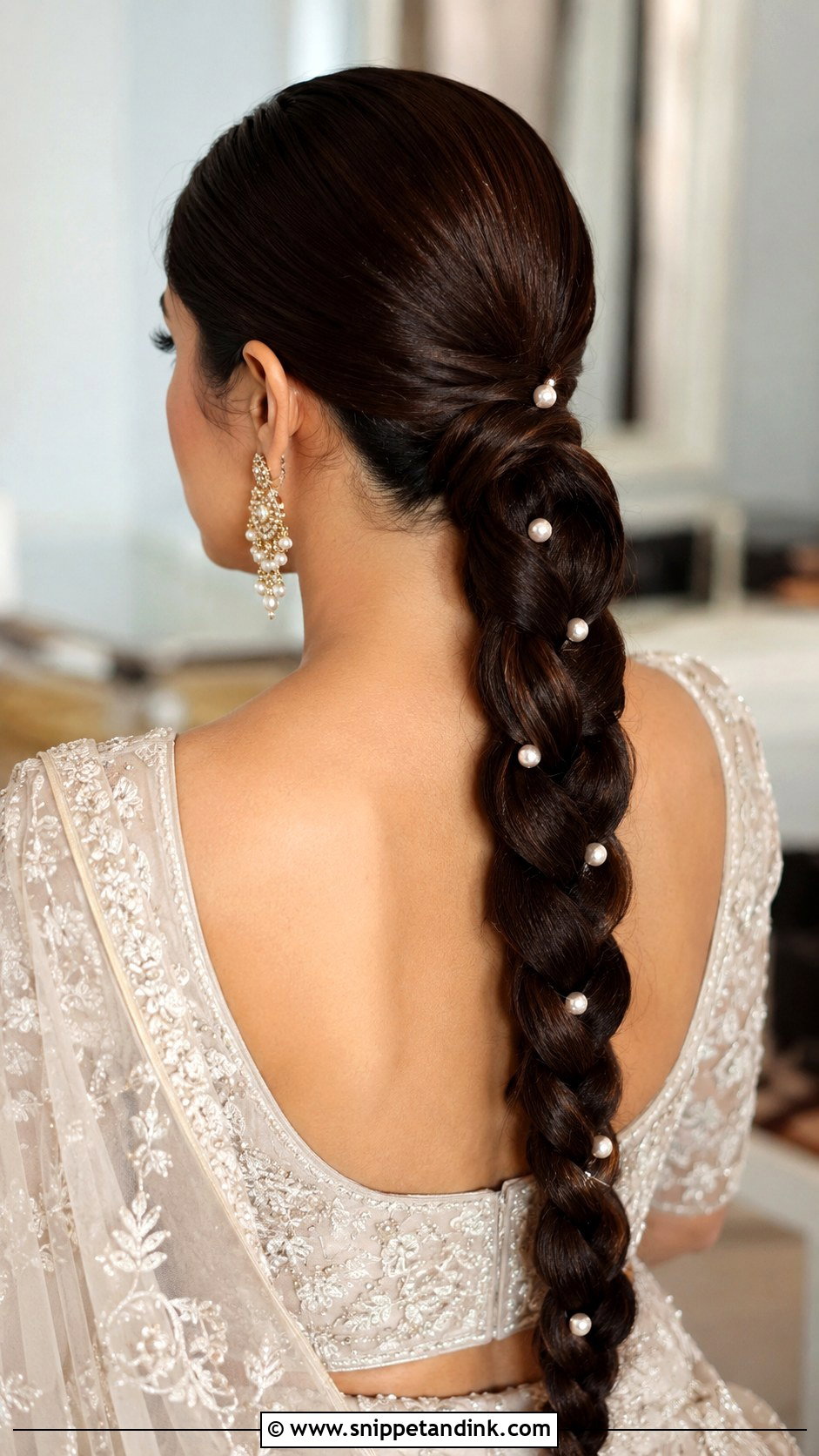
A single braid is the long-hair answer to weather. The top is smoothed flat and the length braided into a classic plait, fishtail or rope, which keeps everything locked in through heat and humidity. A low braid down a backless gown follows the line of the spine. I braid slightly loose and widen the edges, because a tight braid looks thin from a distance. Pearl pins woven in add a bridal touch, and added length or wefts give fullness if your hair is fine.
13. Slick Bridal Updo
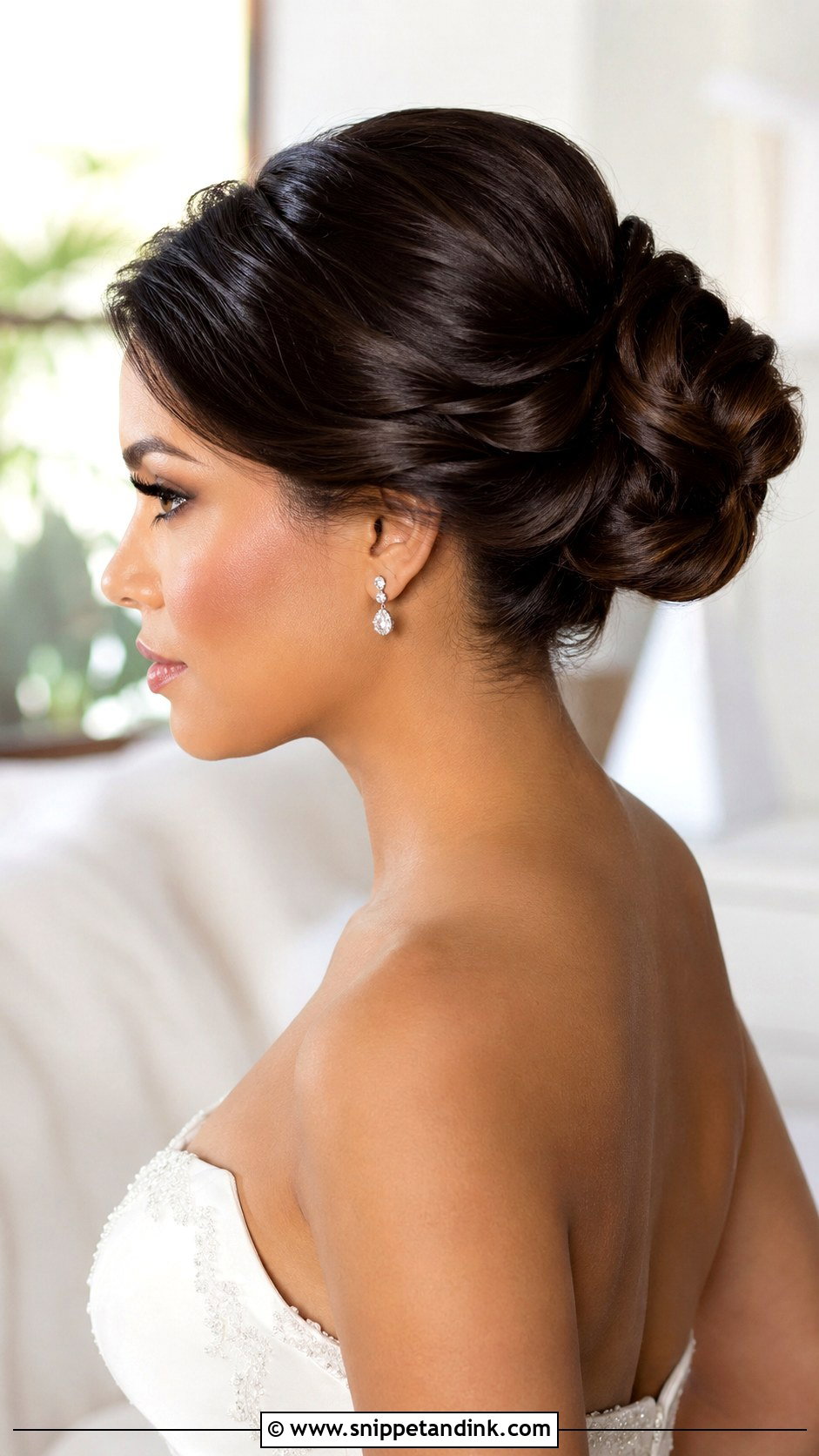
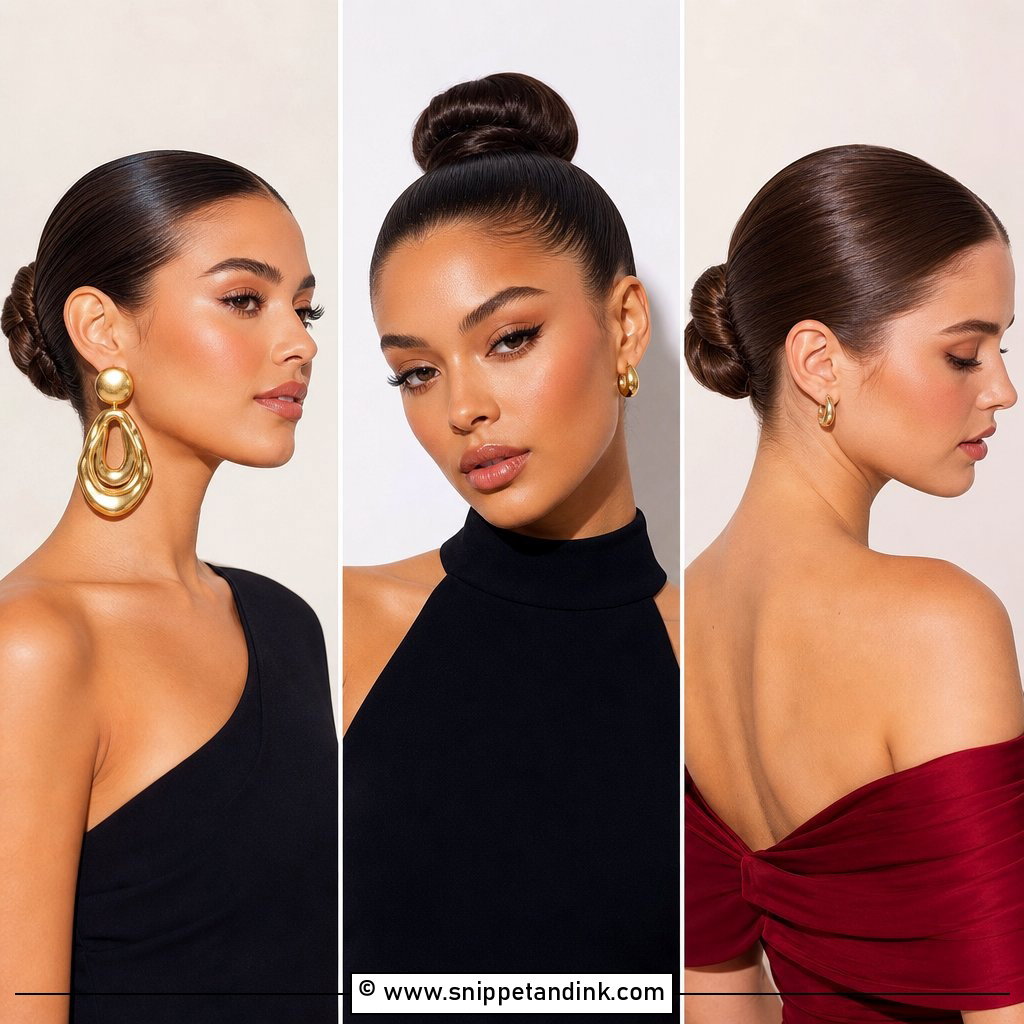
A slick updo can include twists, a tucked shape, a wrapped bun or a smooth knot, so long as the surface stays clean. It’s my default for black tie and for necklines with detail, because it keeps hair from competing with the dress. It also gives your makeup artist room to show the cheekbones, brows, and lips. I check the style from the side and back in a hand mirror before finishing, since that’s how most of your guests will see it during the ceremony.
14. Slick Bridal Wet Look Hair
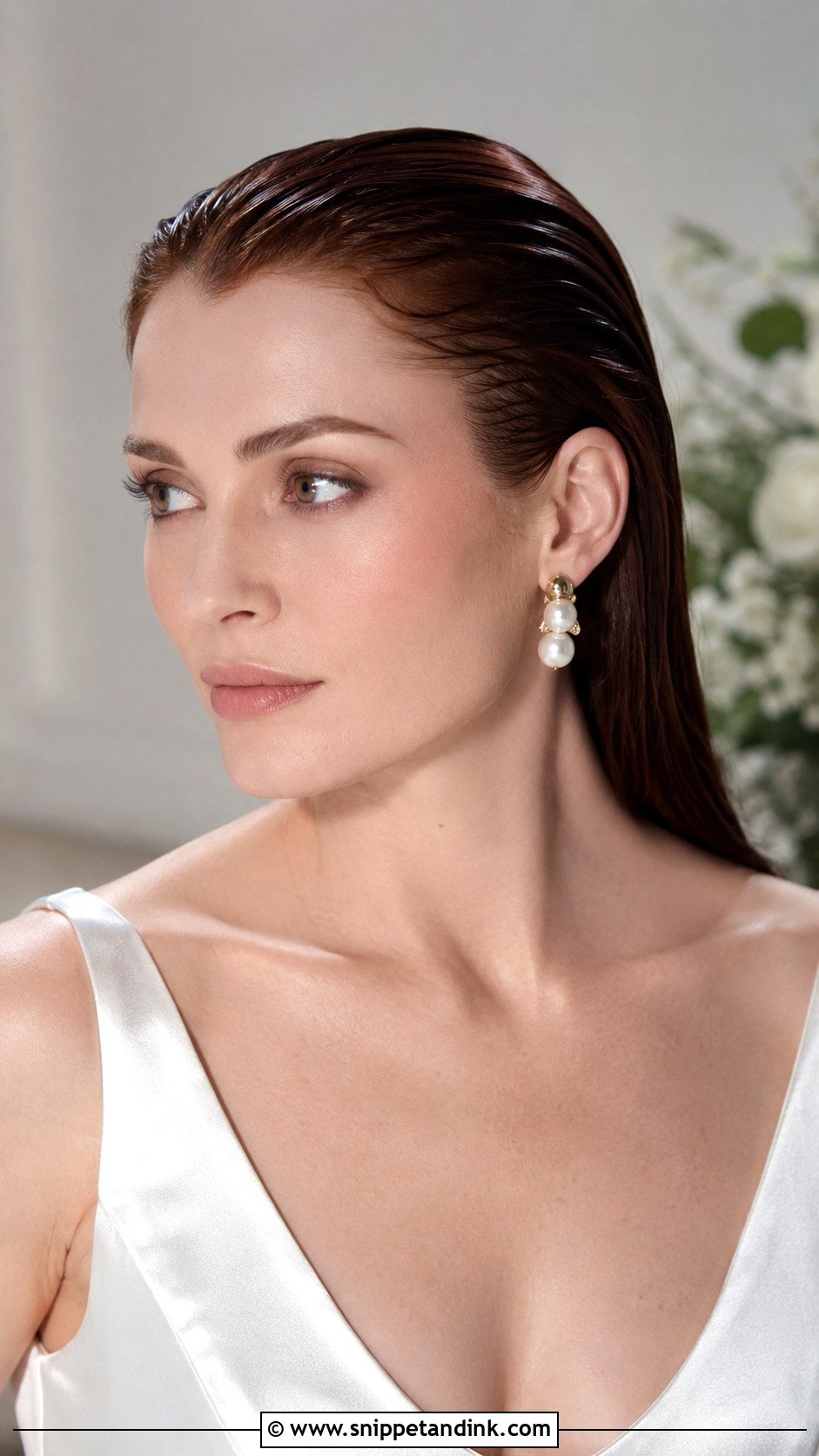
Slick bridal wet look hair is the editorial option. It’s glossy and sculpted without being damp, and it can be worn down, tucked behind the ears or set into a low bun. Product placement makes or breaks it: gel at the roots, a cream through the lengths, shine serum last. Too much and it looks heavy under flash; too little and it just looks under-styled. Keep the dress and jewelry simple, since the hair is already the bold element.
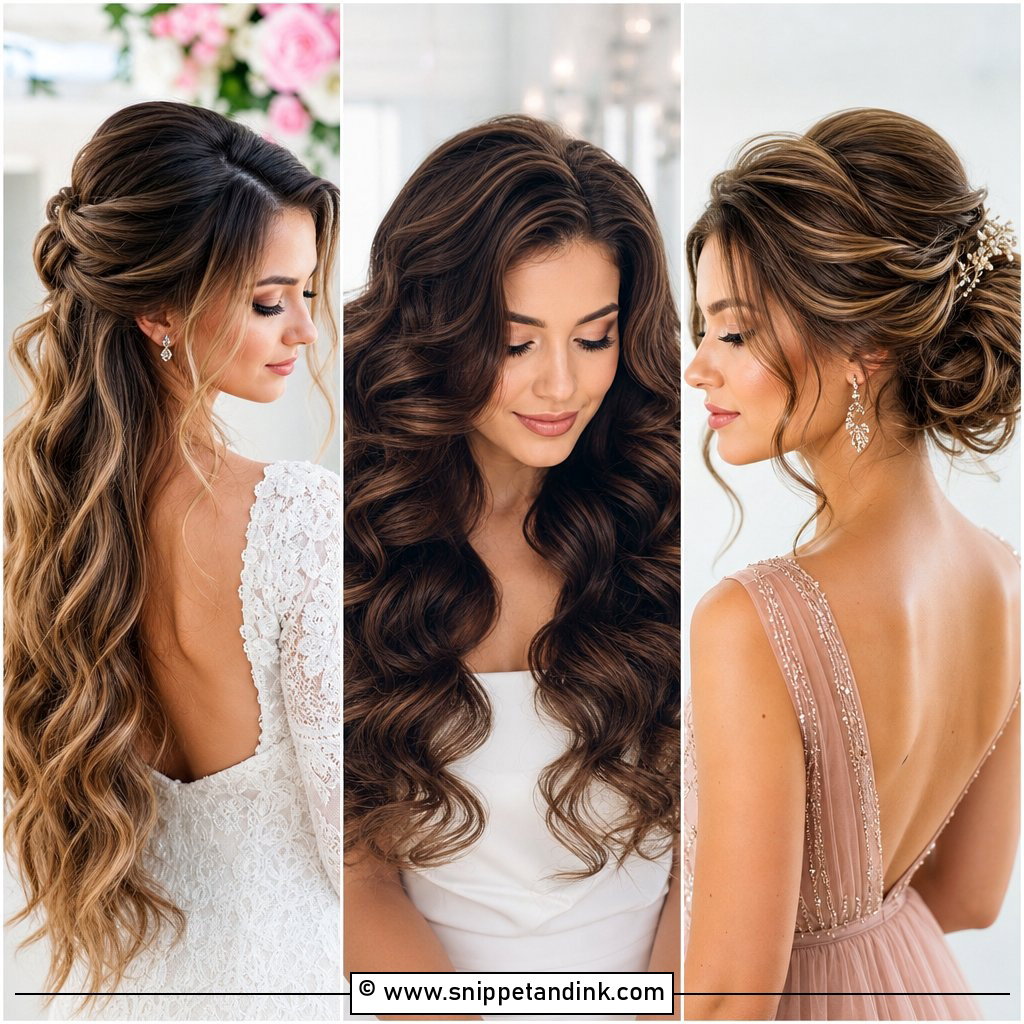
15. Slick Bridal Bun With Veil
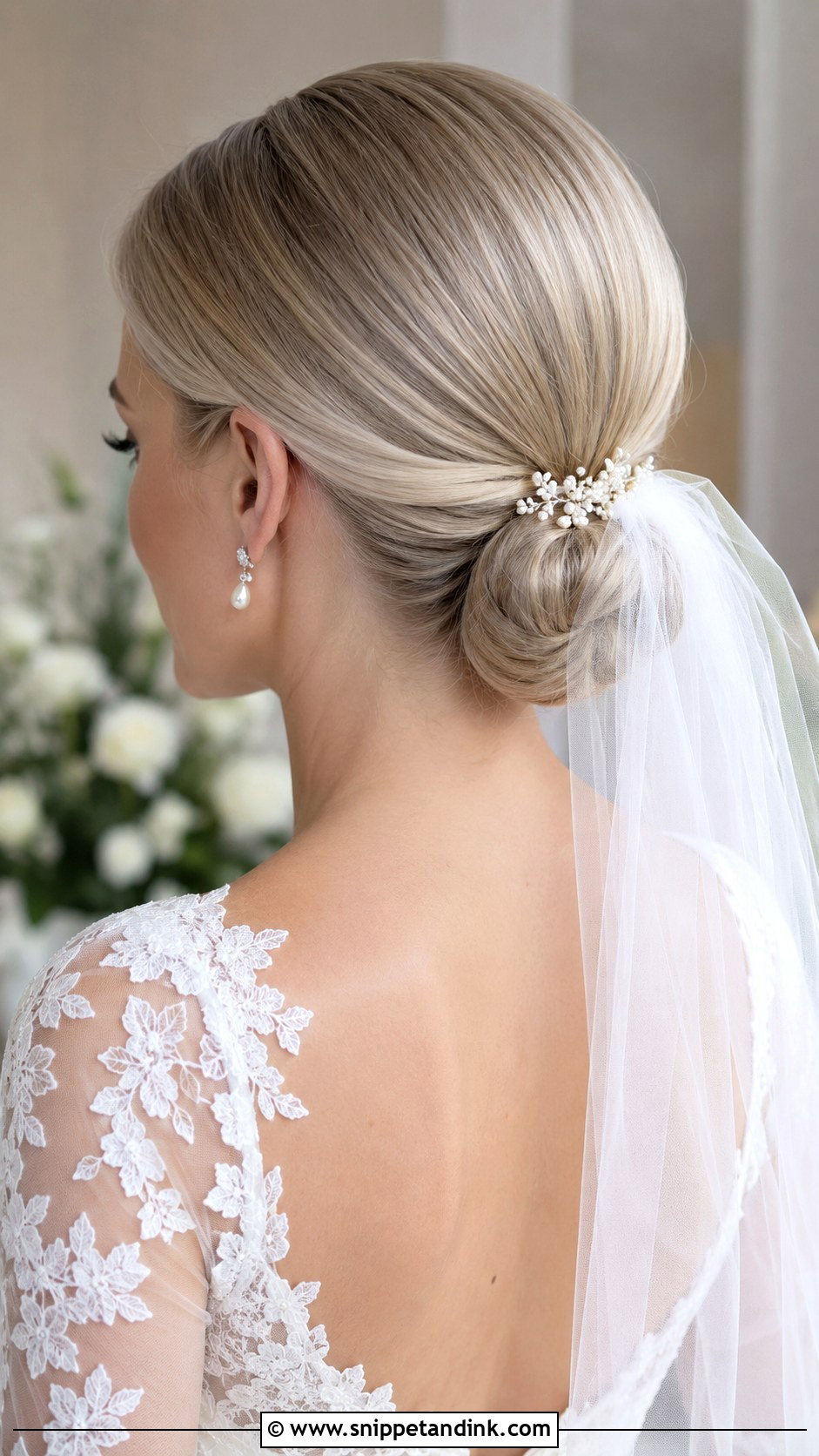
A smooth bun gives the veil a firm, clean base. The bun can sit at the nape, mid-head or higher, and the height you choose depends on where the comb goes. A veil above a low bun is the traditional look. Tucked underneath, the veil shows off the hair more clearly. When your dress has a detailed back or lace sleeves, this is the style I’d suggest, because the hair stays out of the way and every detail of the gown remains visible.
Your Whole Face Is on Show, So Plan Hair and Makeup Together
Pulling hair back reveals parts of you that loose hair normally covers: your ears, the sides of your neck, the hairline and the edges of your foundation. That changes how your hair and makeup artist should work together.
Who goes first?
With slick styles, I like to set the hairline before foundation goes on. Gel spreading over finished makeup leaves streaks, and foundation spread into a gelled hairline turns it grey. If the timing doesn’t allow that, a clean edge of tape or a headband during makeup protects both.
Blend further back
Ask your makeup artist to blend foundation over the ears and down the neck. With hair down, nobody sees the line at the jaw; with slicked hair, the camera does. A touch of brow gel helps balance a very exposed forehead too.
Keep the shine levels matched
Very glossy hair next to very glowy skin can look oily in flash photos. If you want a wet-look finish, ask for a slightly more matte base on the forehead, and the contrast will look intentional.
Smooth Hair, Healthy Ends and a Calm Morning
Slick hair works because it’s practical and photographs cleanly, from a sharp bun to soft waves. Let your neckline, veil, face shape, hair length and the weather decide which version you wear. For a polished updo, start with the bun, chignon or ponytail. If you’d rather have movement, try Hollywood waves, straight hair or a half-up style with a smooth crown. At your trial, test the veil and ask for shine that won’t turn greasy. Then trust the plan, and enjoy the morning.
You'll Like These Ideas:


Leave a Reply