
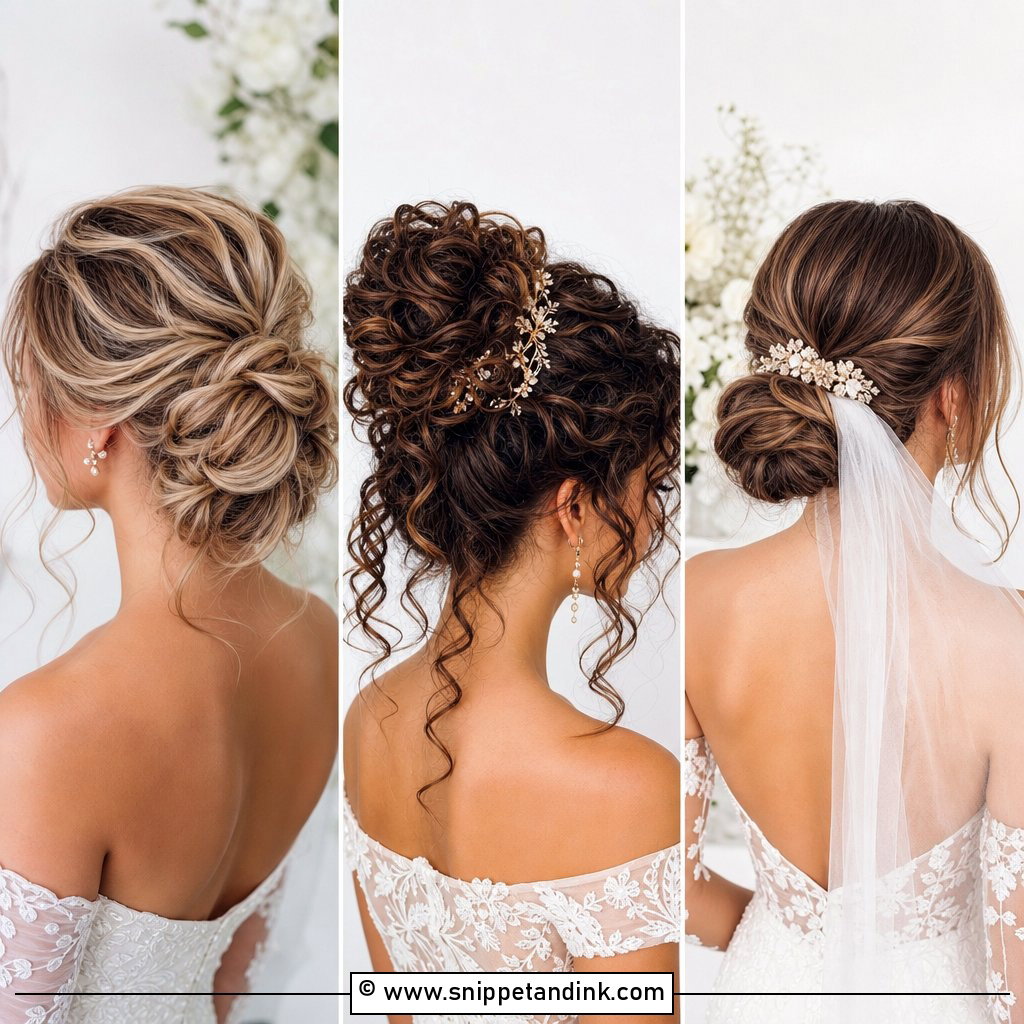
The low bun is the style I build more than any other on wedding mornings, and there’s a practical reason. Sitting at the nape, it rests on the strongest part of the head, leaves room for a veil comb above it and doesn’t fight the neckline of the dress. It can be glassy and sleek or loose and textured, braided or dressed with floral-adorned looks. Below are 25 versions, with notes on how each one holds, which hair it suits and what I’d change for fine, thick or curly hair.
The Length and Density Behind a Full Low Bun
Most low buns in photos are bigger than the hair that made them. Stylists add padding or clip-in hair more often than people realise, and you should know what your own hair can do before you fall for a picture.
- Shoulder length: enough for a small sleek knot or twisted chignon. A full ballerina bun usually needs a mesh donut or one or two wefts.
- Below the shoulder blades: enough for nearly every style here without help.
- Very thick or very long hair: the bun gets heavy, so I thin it out by braiding some underneath and using it as a base.
Fine, curly and coily hair
Fine hair slips, so I prep it with a texturising spray or dry shampoo and build the bun around a hidden elastic. Curly hair holds pins far better than straight hair; I prefer to work with your curl pattern and smooth only the outer layer, rather than straightening everything. Coily hair makes a sleek bun easily with edge control and a smoothing gel, and clip-in extensions matched to your texture blend well if you want more size. If you plan to add extensions, bring them to the trial, not just on the day.
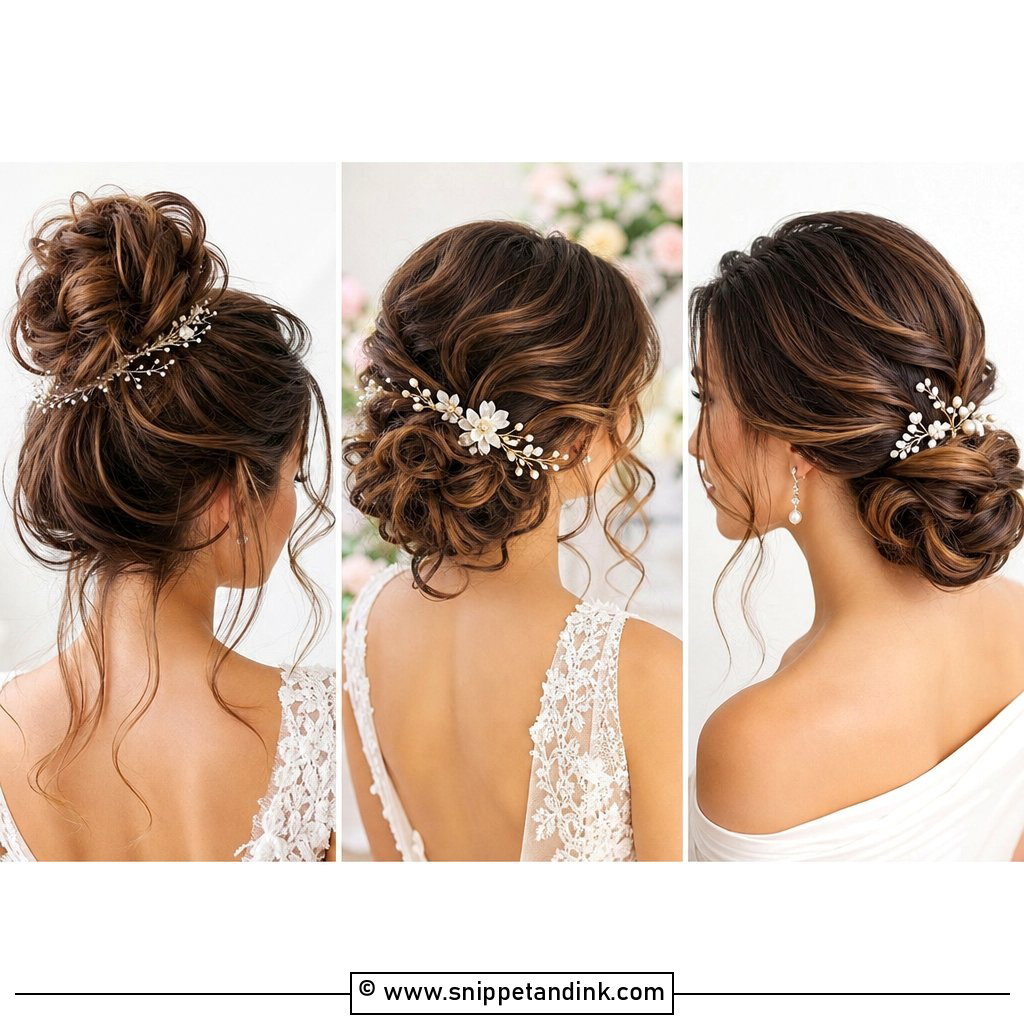
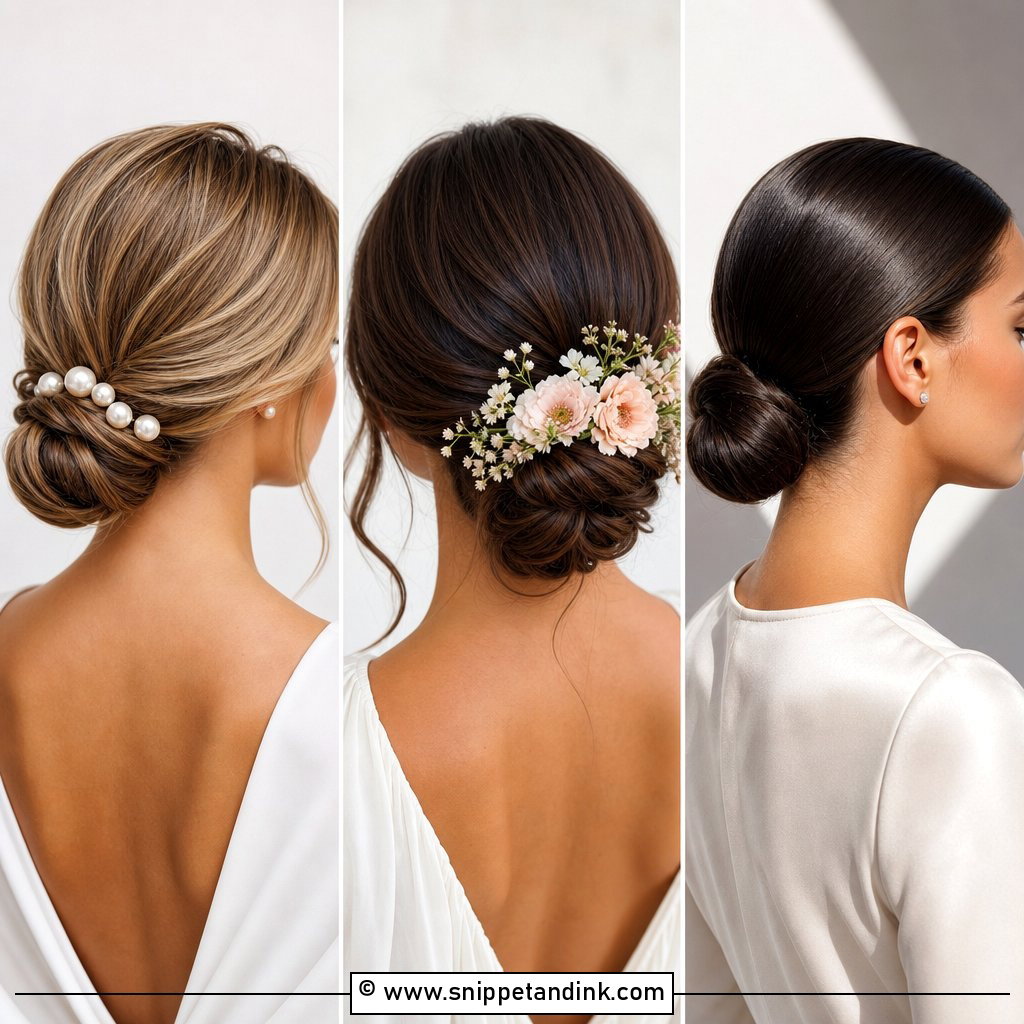
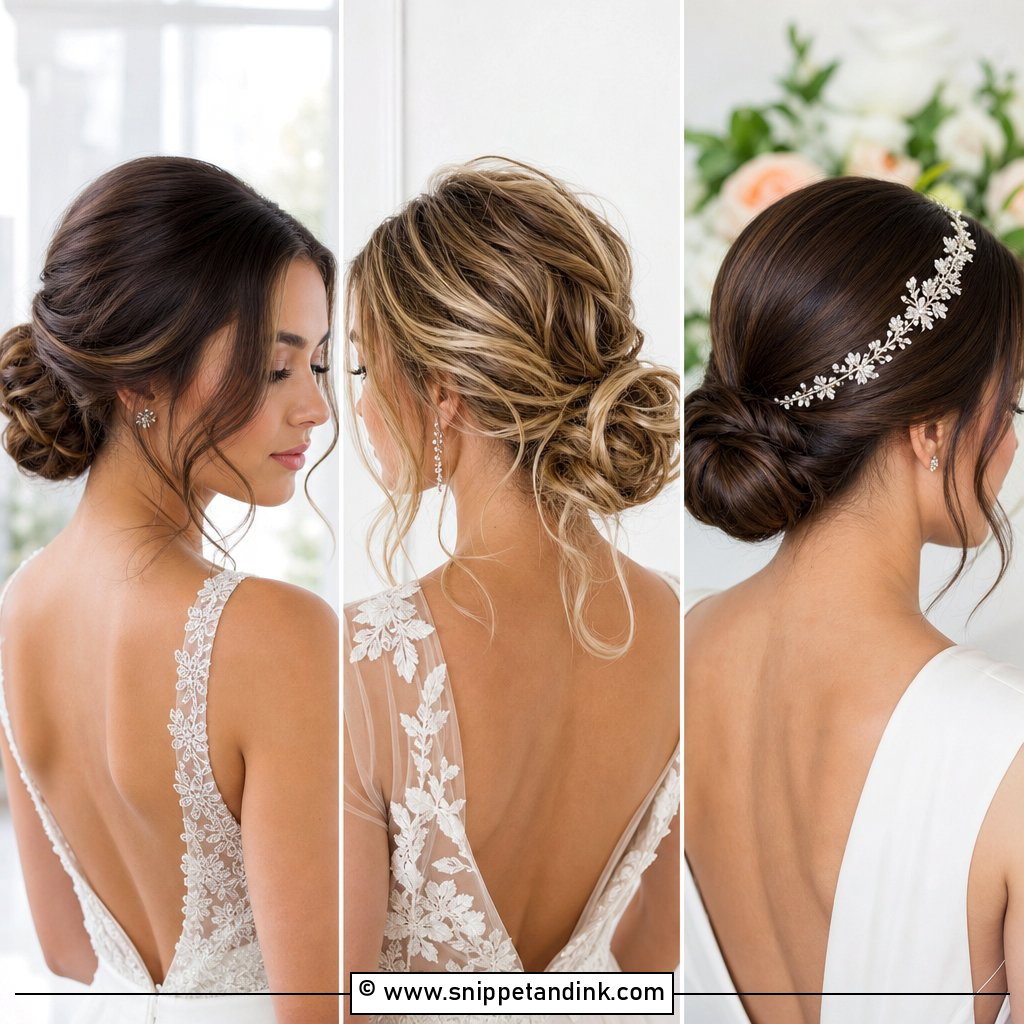
1. Sleek Low Bun With Middle Part
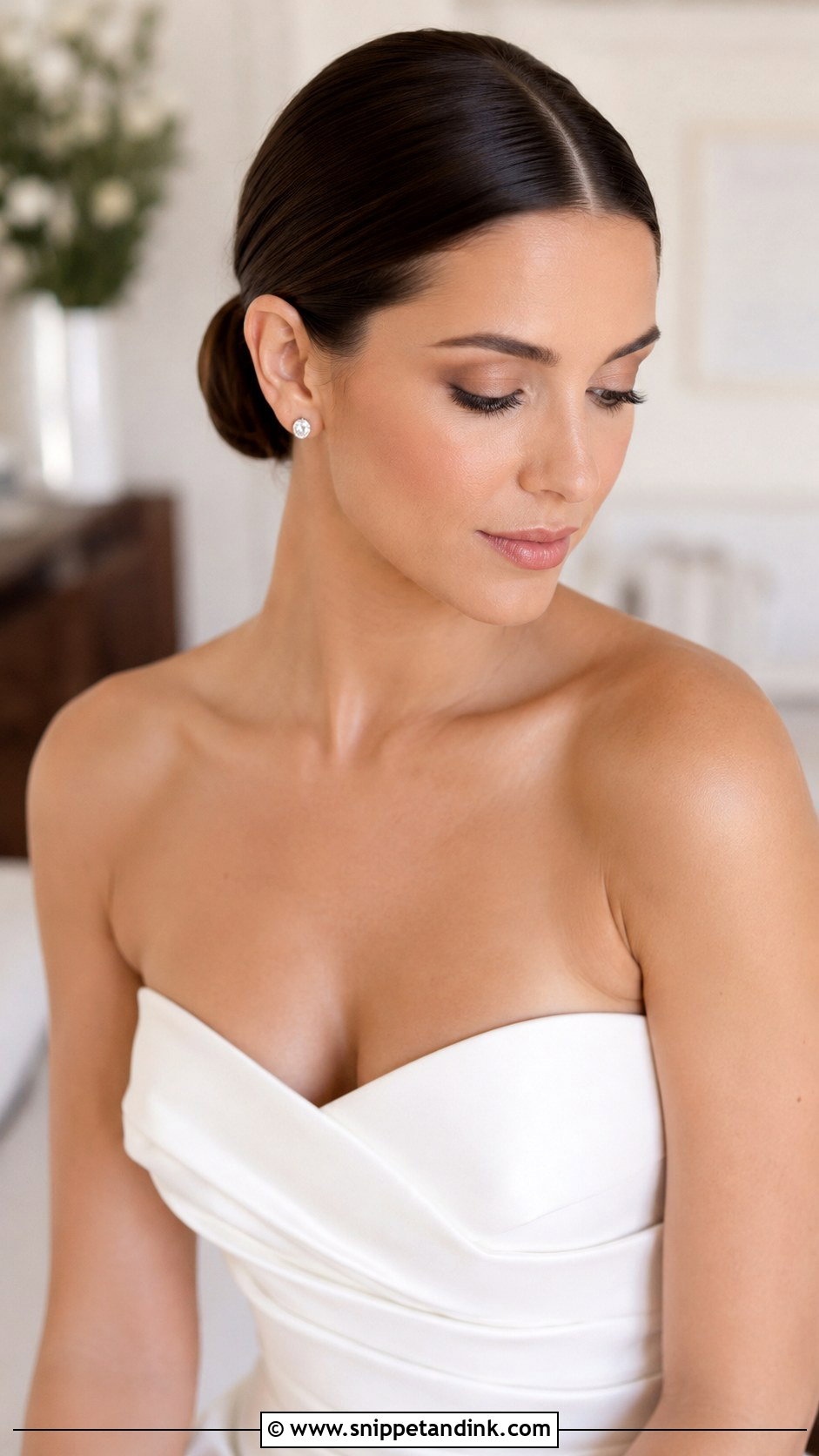
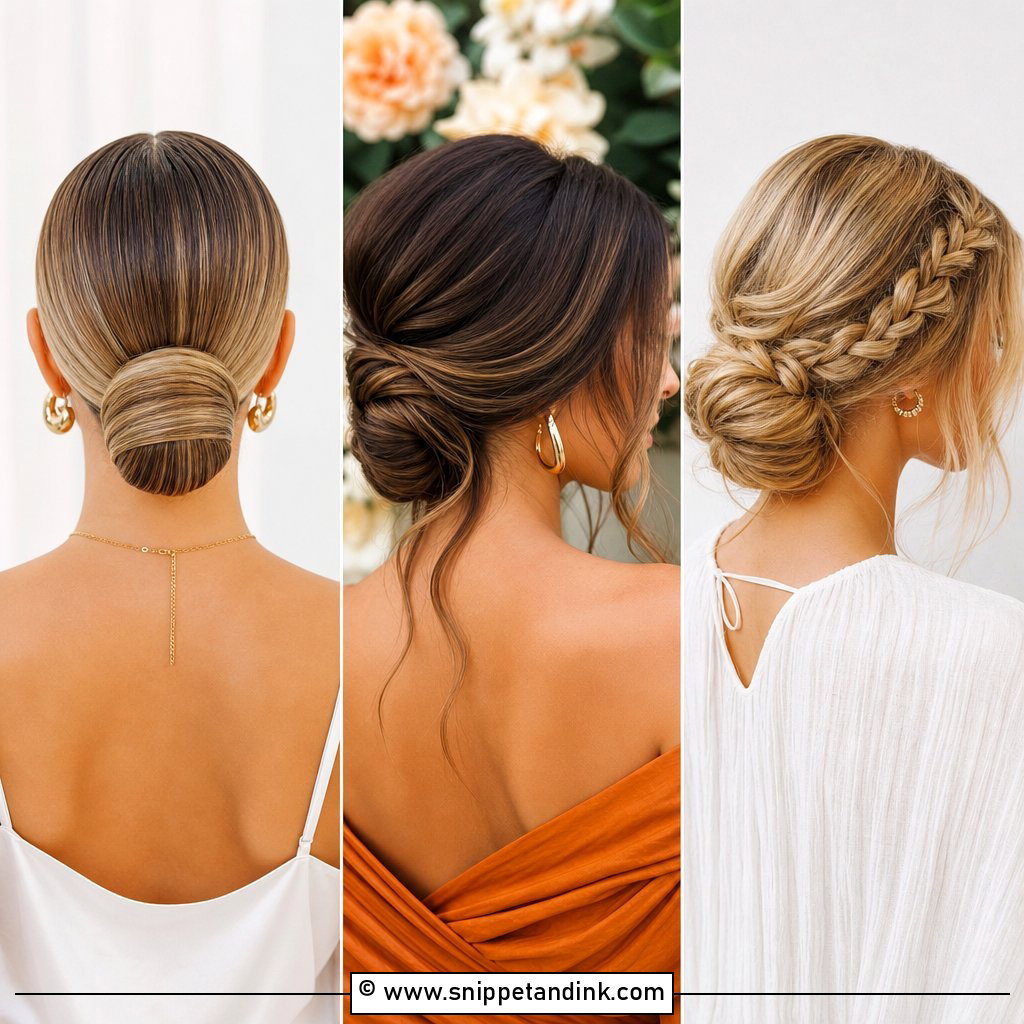
A middle part is unforgiving; if the part isn’t straight or the hair dips on one side, everyone notices because the look is symmetrical. I map the part with a tail comb on dry hair, smooth with a flat iron, then brush the hair back with a boar bristle brush and a little cream before tying it at the nape. Serum goes on last, sparingly, or the hair looks wet in flash photos. It suits oval and heart-shaped faces most easily, sits well under a sheer veil and pairs with a structured gown.
2. Classic Ballerina Low Bun
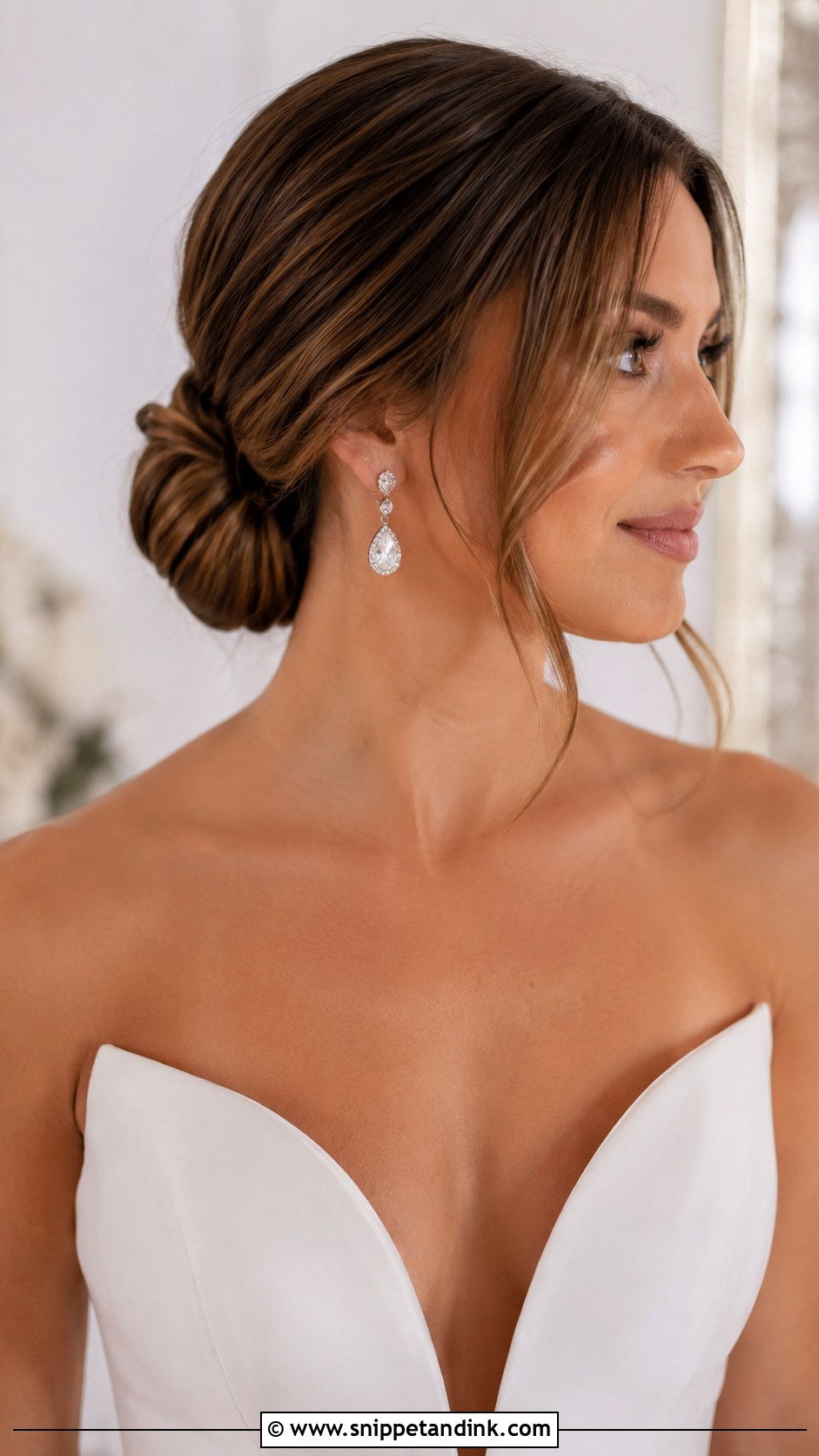
A ballerina bun is a neat, rounded knot at the nape, and the roundness comes from a smooth wrap, not from size. For medium hair I often slip a small mesh donut or padding inside so the bun stays full without extensions. Statement earrings or a fine tiara keep it from looking plain. It lasts very well, since the hair is wrapped tightly and pinned flat. If the clean shape feels too strict on you, I pull two thin pieces at the temples, never more.
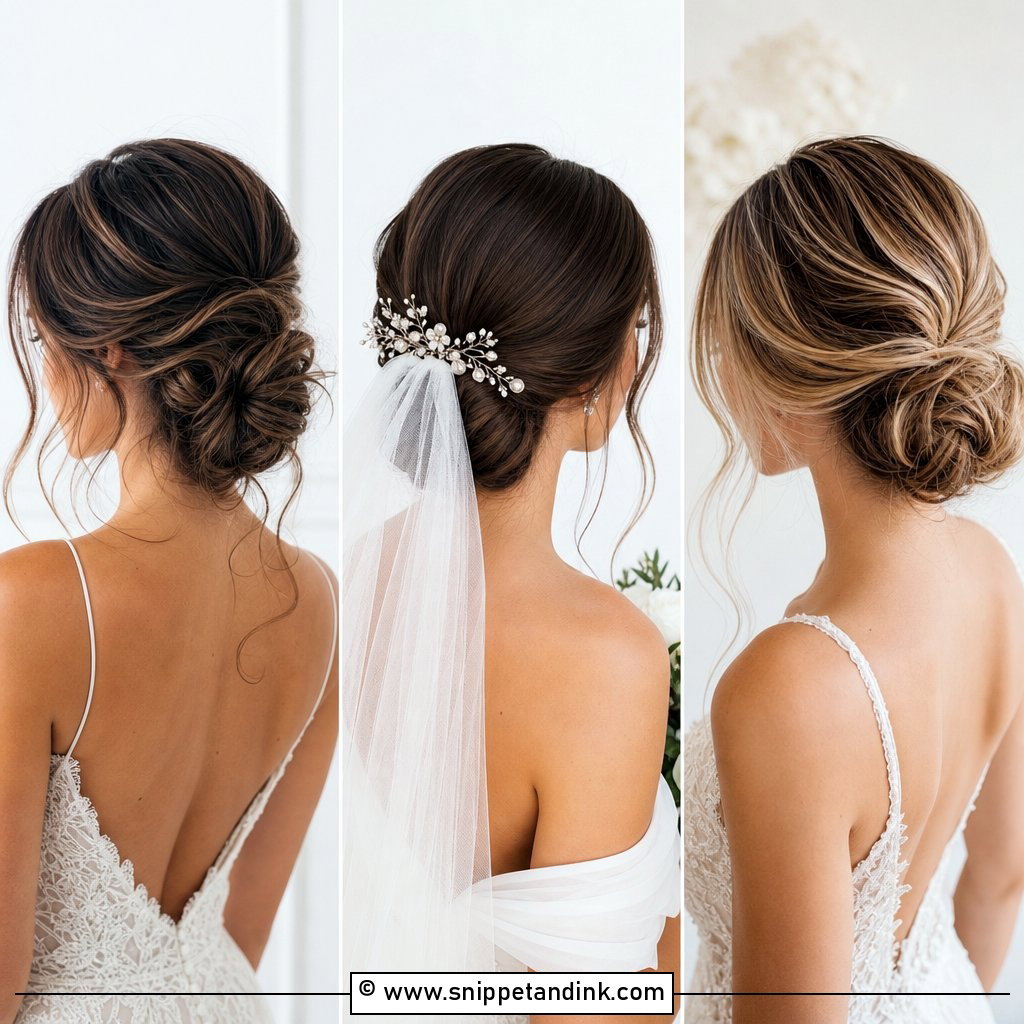
3. Messy Low Bun With Loose Tendrils
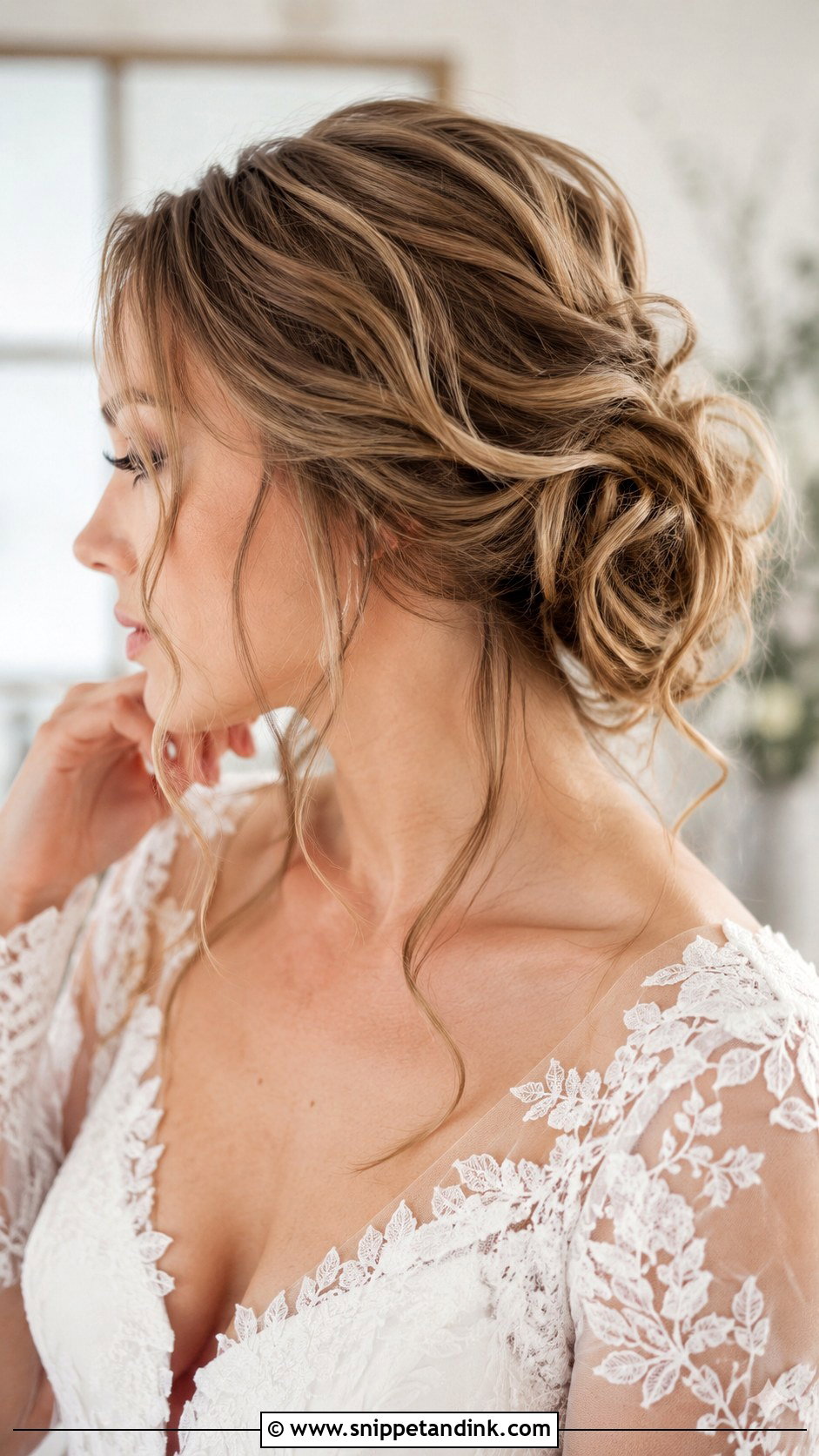
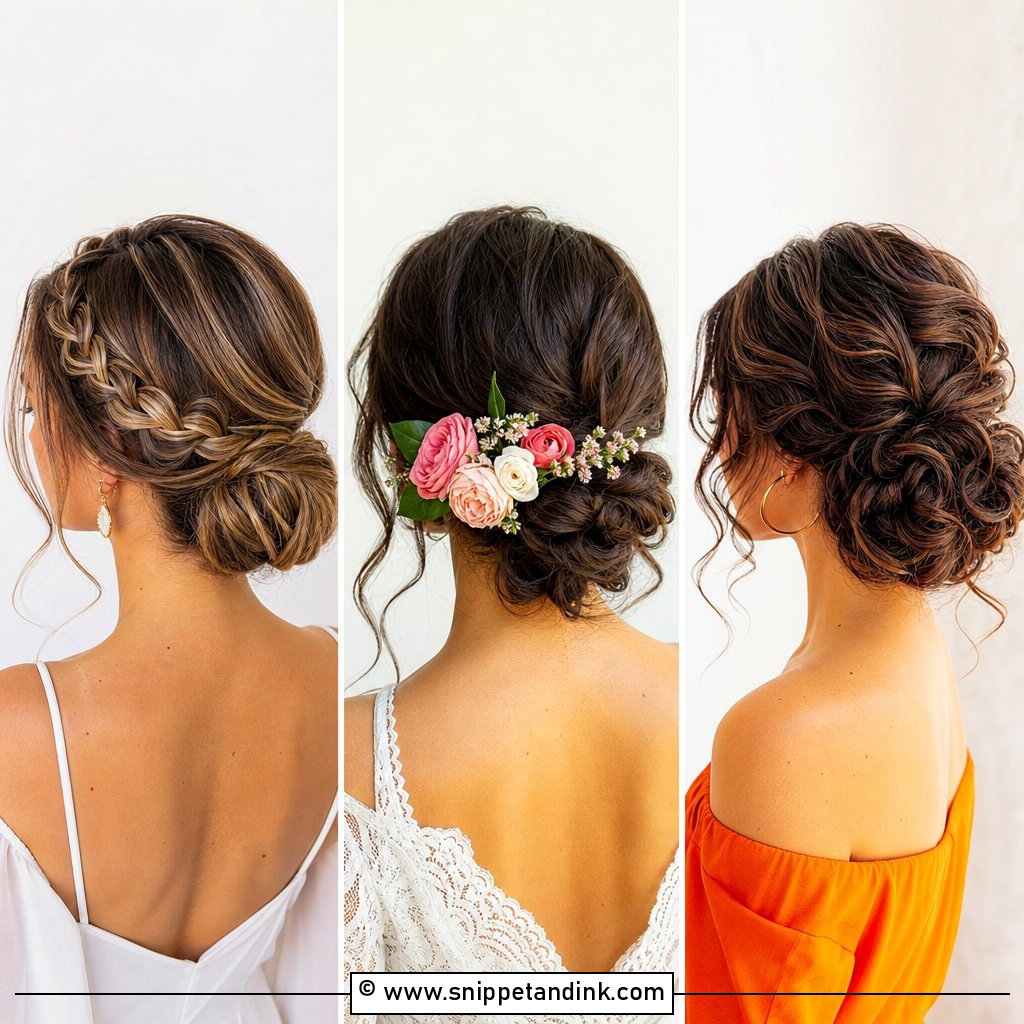
Messy buns are usually the ones that take longest at a trial. Every “loose” piece is placed, and the texture has to be built first with a curling wand and a texture spray, then pinned in sections so it doesn’t collapse. I tease lightly at the base, twist the hair into a soft knot and leave a few waved strands at the front. On fine, slippery hair I put a hidden elastic underneath so the bun has an anchor. Done properly, it relaxes a little through the evening and still looks intentional for the last dance.
4. Low Bun With Braided Halo
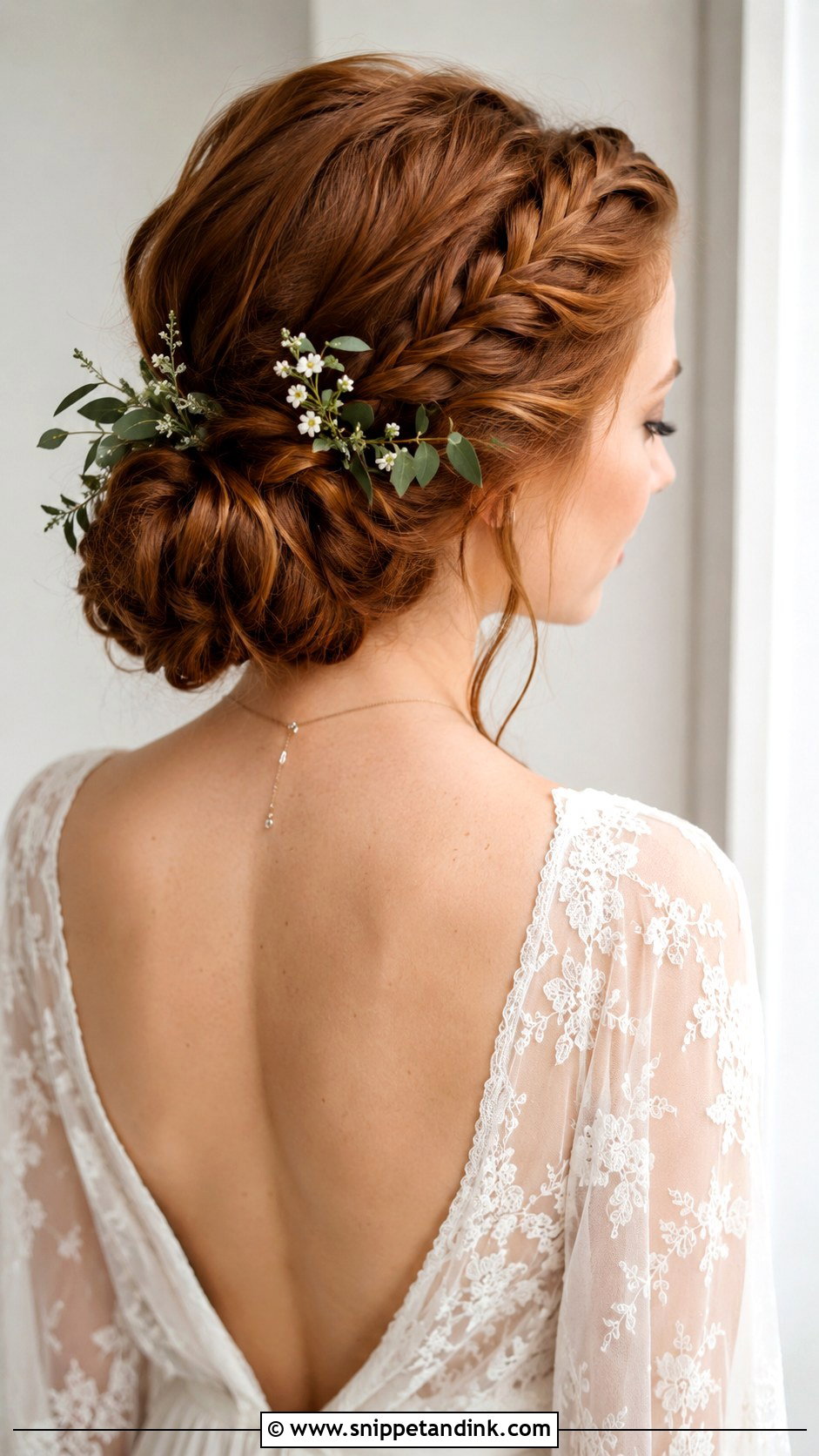
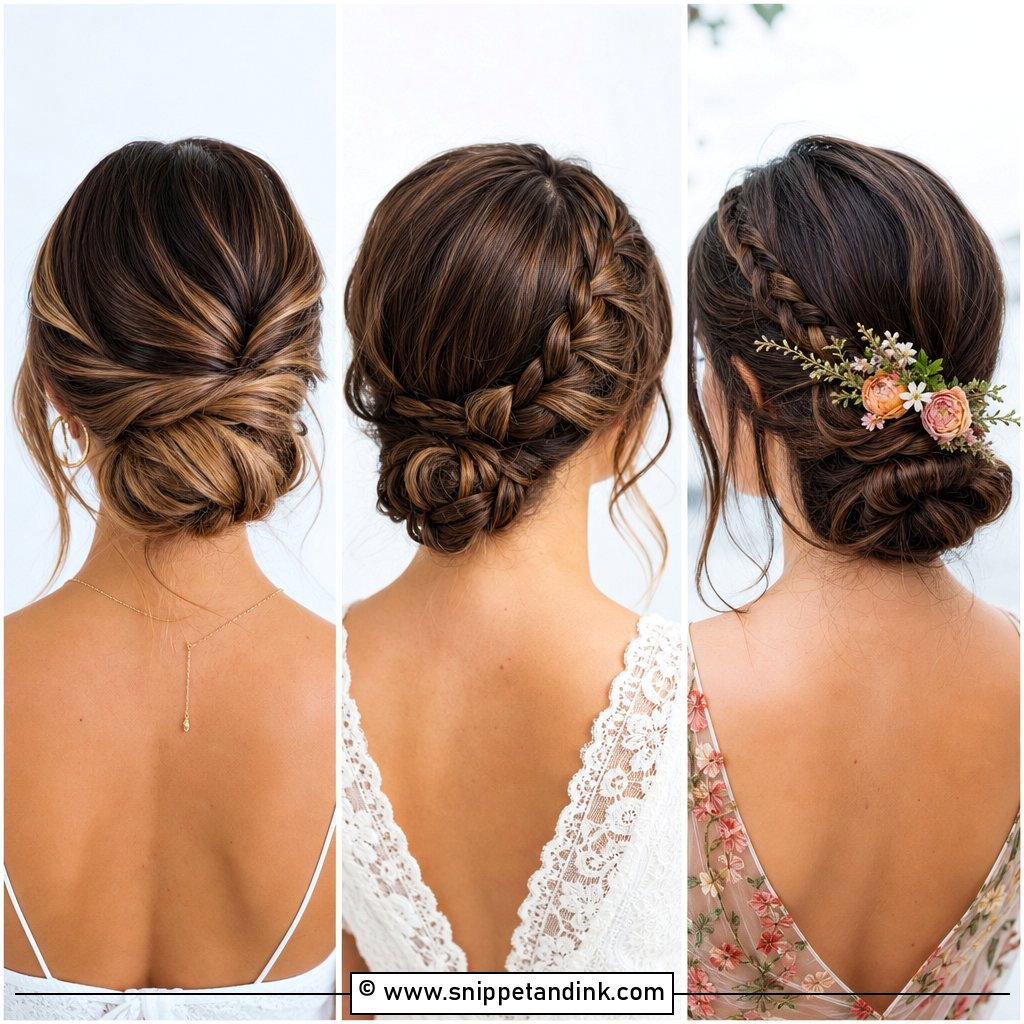
A halo braid runs across the crown or along the hairline and ends in a soft knot at the nape. I braid it a little tighter than it looks in photos, then pancake the edges gently, because a braid loosened too early falls apart by the reception. It suits rustic and boho weddings and takes fresh flowers or greenery well. Long hair gives the fullest braid; shoulder-length hair can borrow a few clip-in wefts. The braid frames the face, so it’s a good choice if you want structure without a tiara.
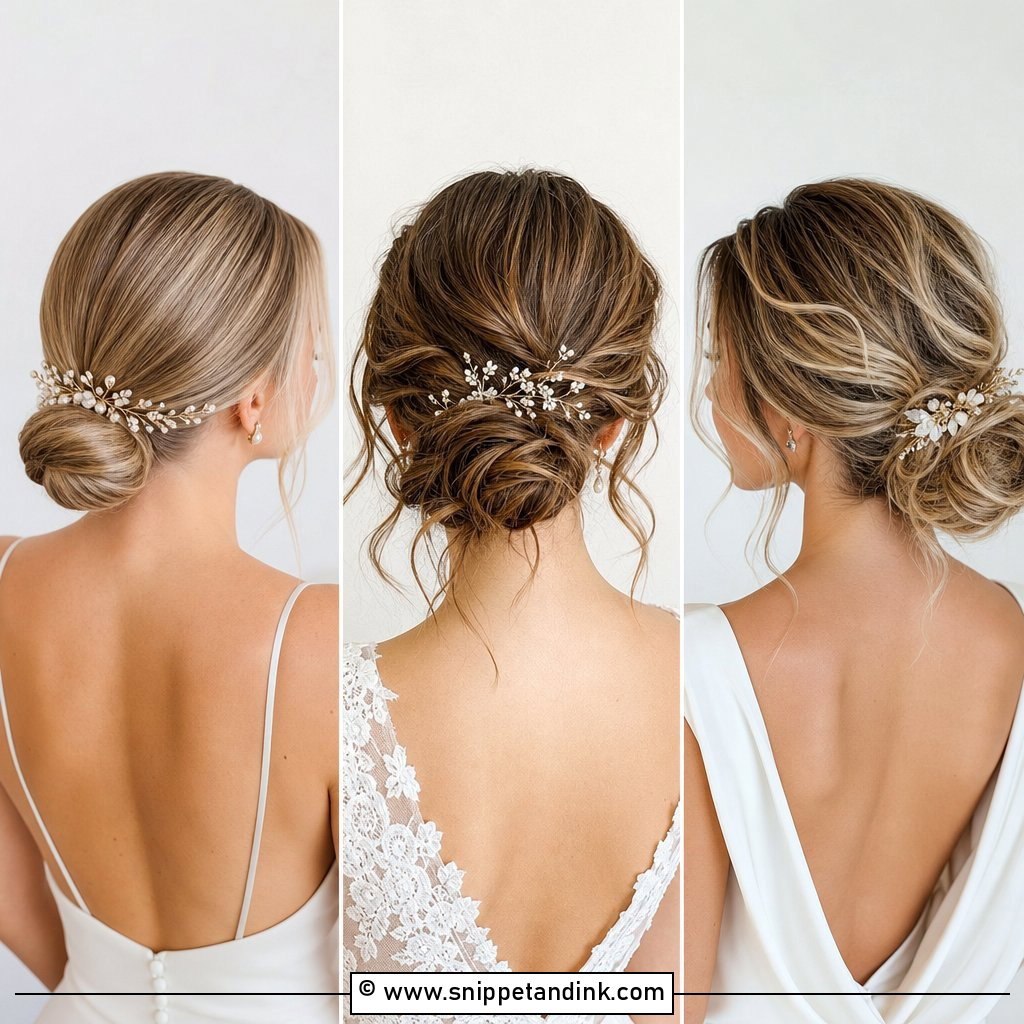
5. Sleek Low Bun With Sparkly Hairpiece
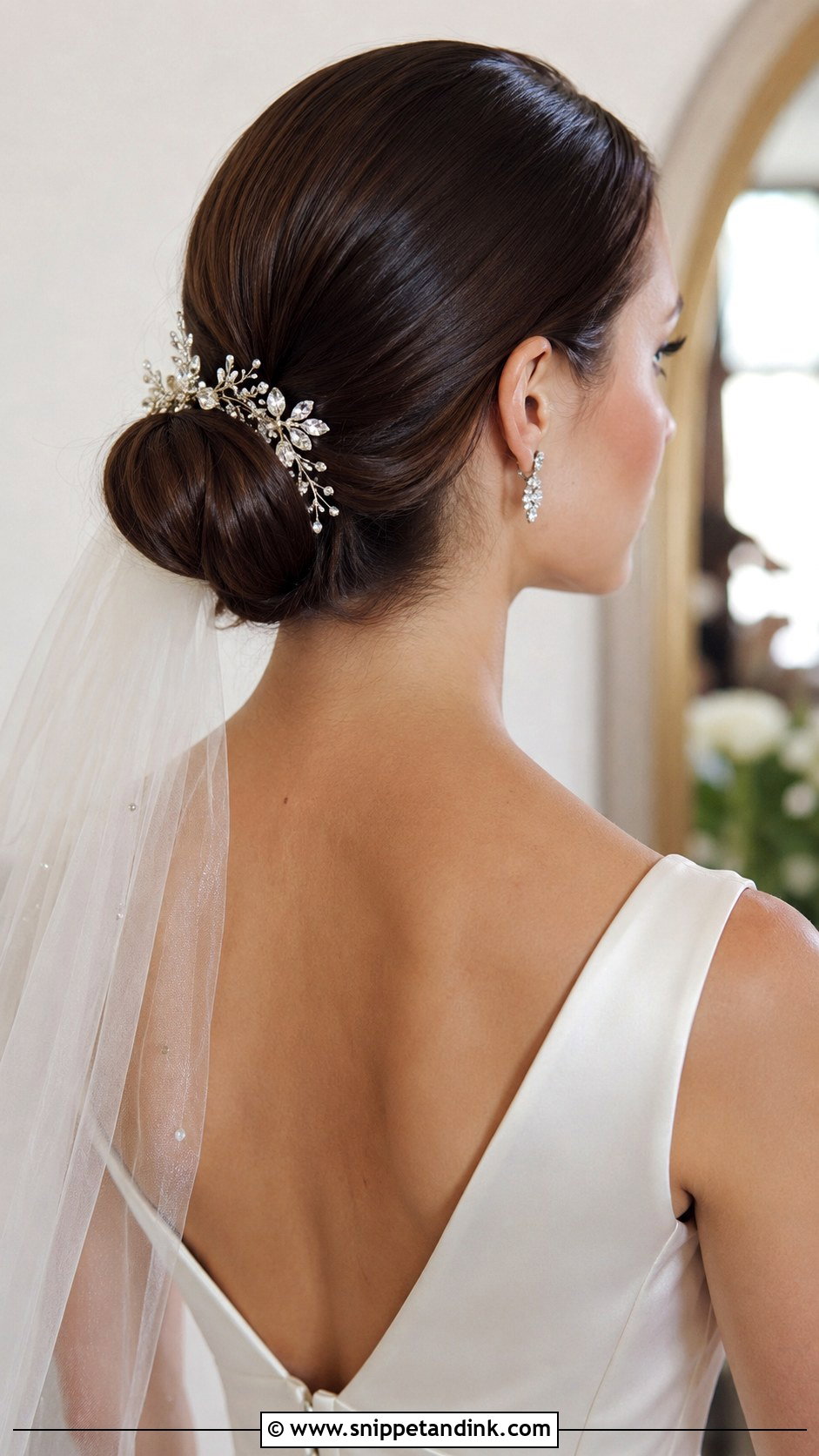
A crystal or rhinestone hairpiece needs a smooth surface to sit flat, so I keep the bun polished where the piece will go. Check the back of the accessory before the day: combs hold well in thick hair, while fine hair needs a few bobby pins crossed through the frame. Under a veil, place the piece below the veil comb so the two don’t compete. A ballroom or formal evening wedding suits this look, and the metal tone should match your earrings and any beading on the dress.
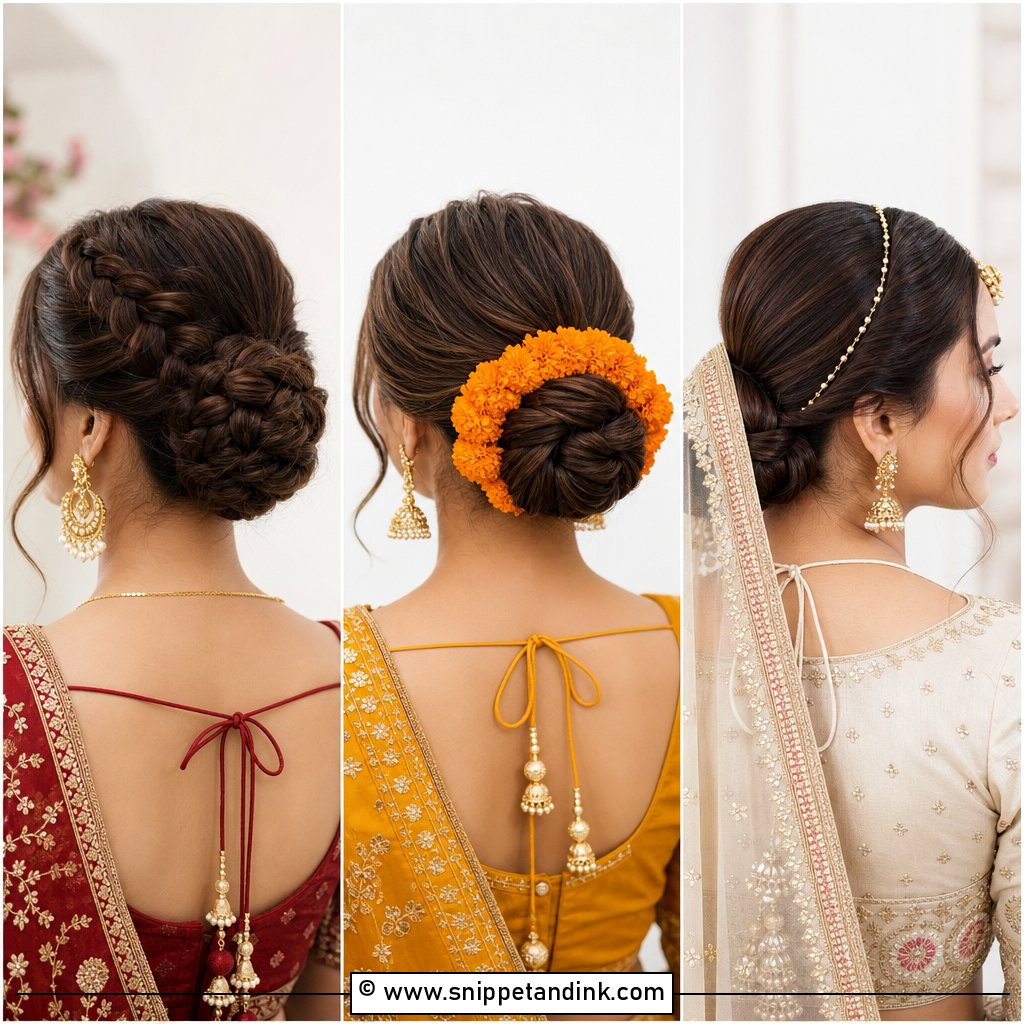
6. Low Side Bun With Florals
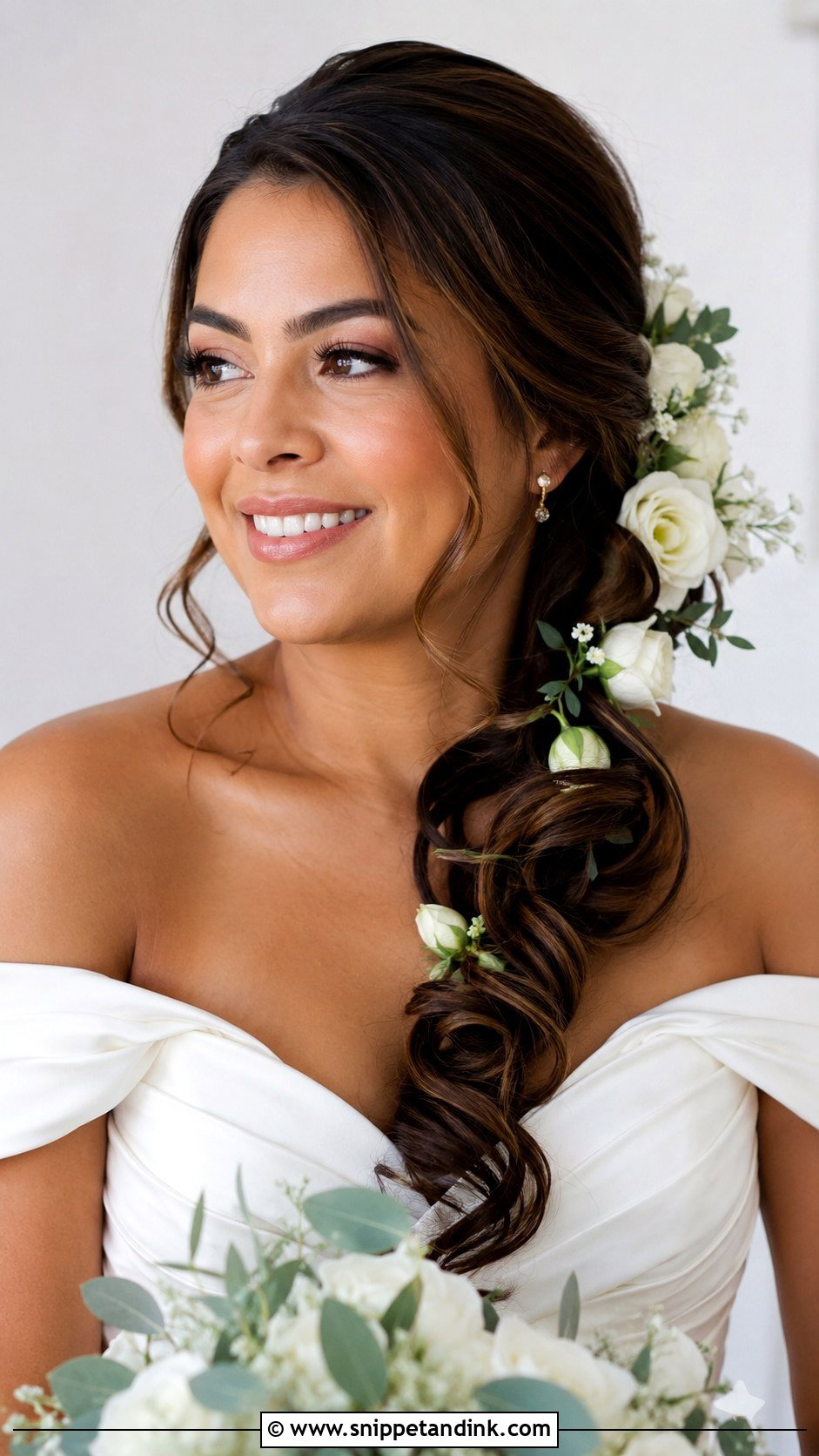
Draping the bun over one shoulder shows off the neck and the back of a gown, which is why I suggest it for backless and off-shoulder dresses. Choose the side carefully: it should be the side the camera sees at the altar, which is usually the side facing your guests. Texture can go from sleek to tousled. Small blooms or baby’s breath tuck into the twists. A side bun is heavier on one side, so I anchor it with pins locked in an X pattern.
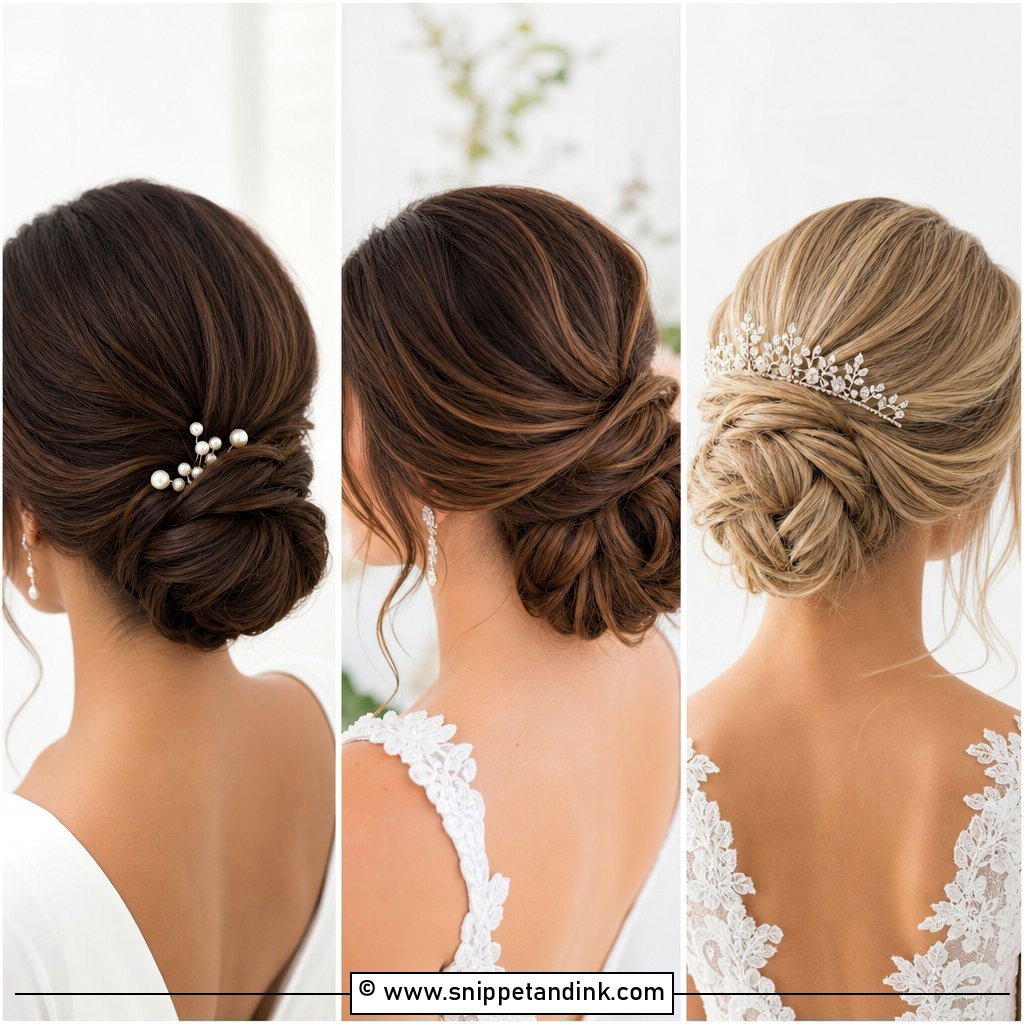
7. Twisted Low Chignon
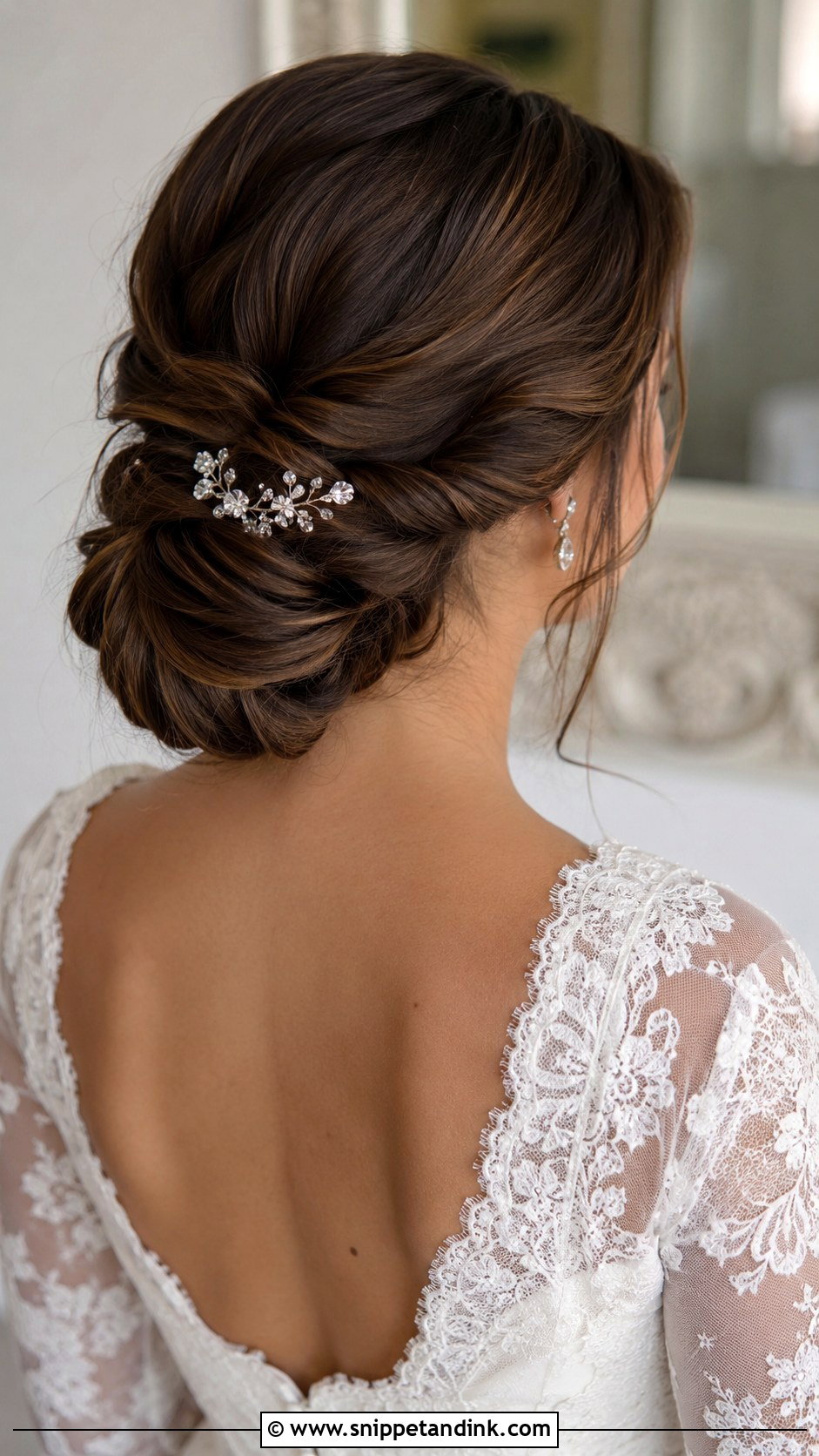
Twisted sections give the chignon its sculpted shape, and twists are actually more secure than a single wrapped knot because each one gets its own pins. It’s a style with real staying power through a long day. Vintage gowns and pearl accessories suit it. Keep the twists tight for a formal look or loosen them slightly for softness. Decorative pins slide right into the gaps between twists. It works on most face shapes and on hair from shoulder length down, though very short layers can poke out between twists.
8. Low Bun With Pearl Pins
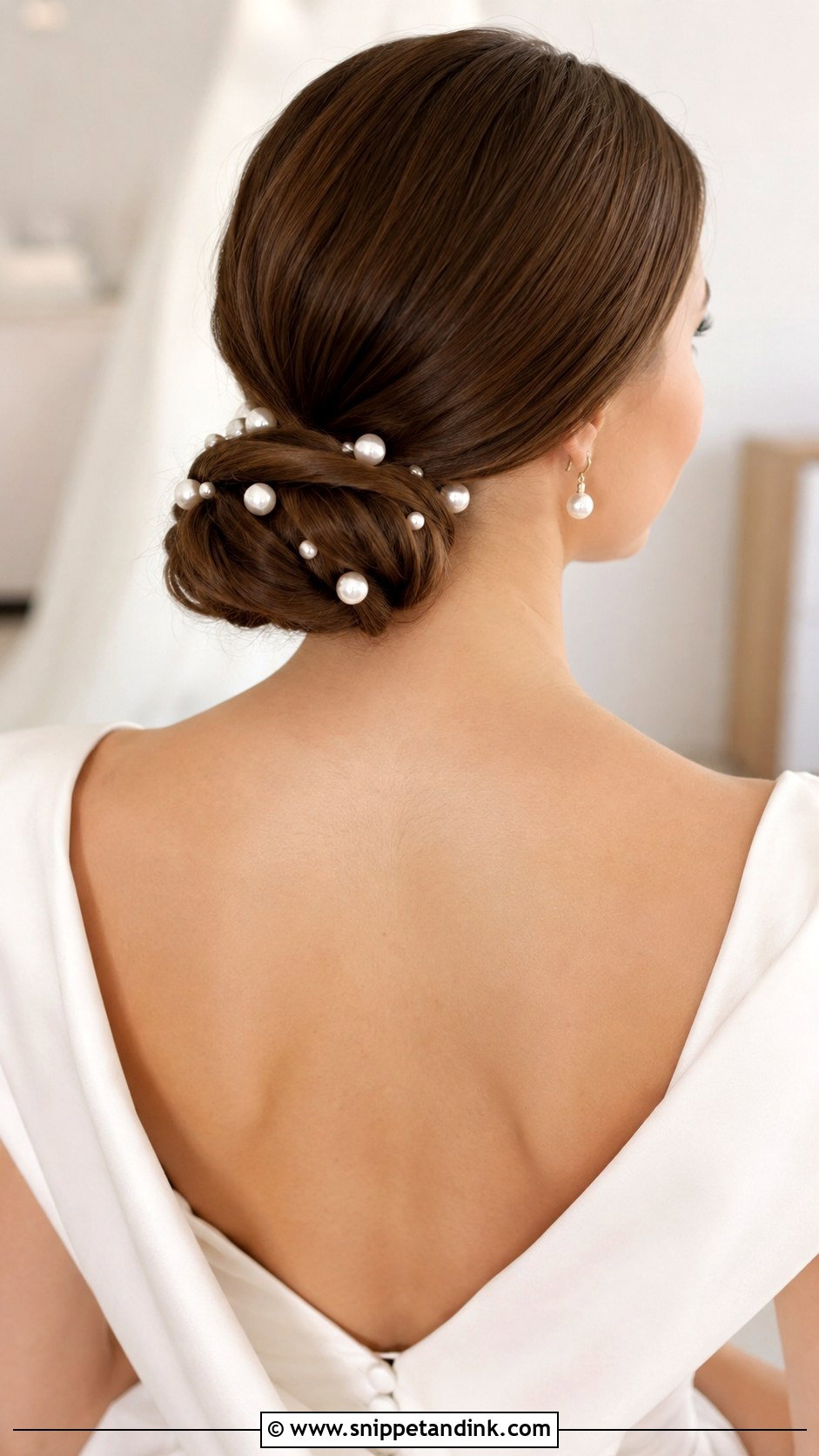
Pearl pins on a low bun are an easy accessory, and placement is what makes them work. A single curved line of five or seven pins looks designed; pins scattered at random look like they fell in. I set them in after the bun is finished and fixed with spray, so they don’t shift. Cluster them for a modern look or space them out for a softer one. Pearls flatter most skin tones and suit classic and modern gowns. Matching pearl earrings tie it together.
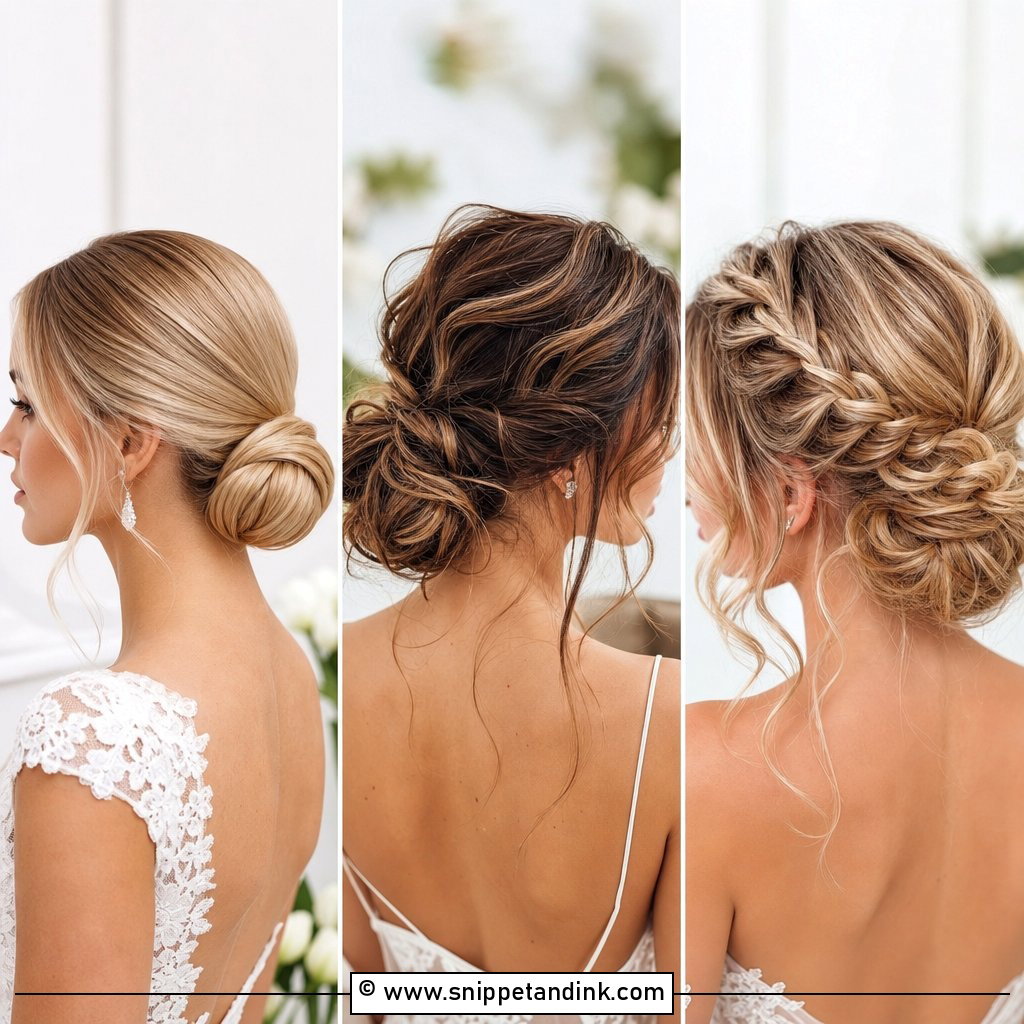
9. Low Bun With Curtain Bangs
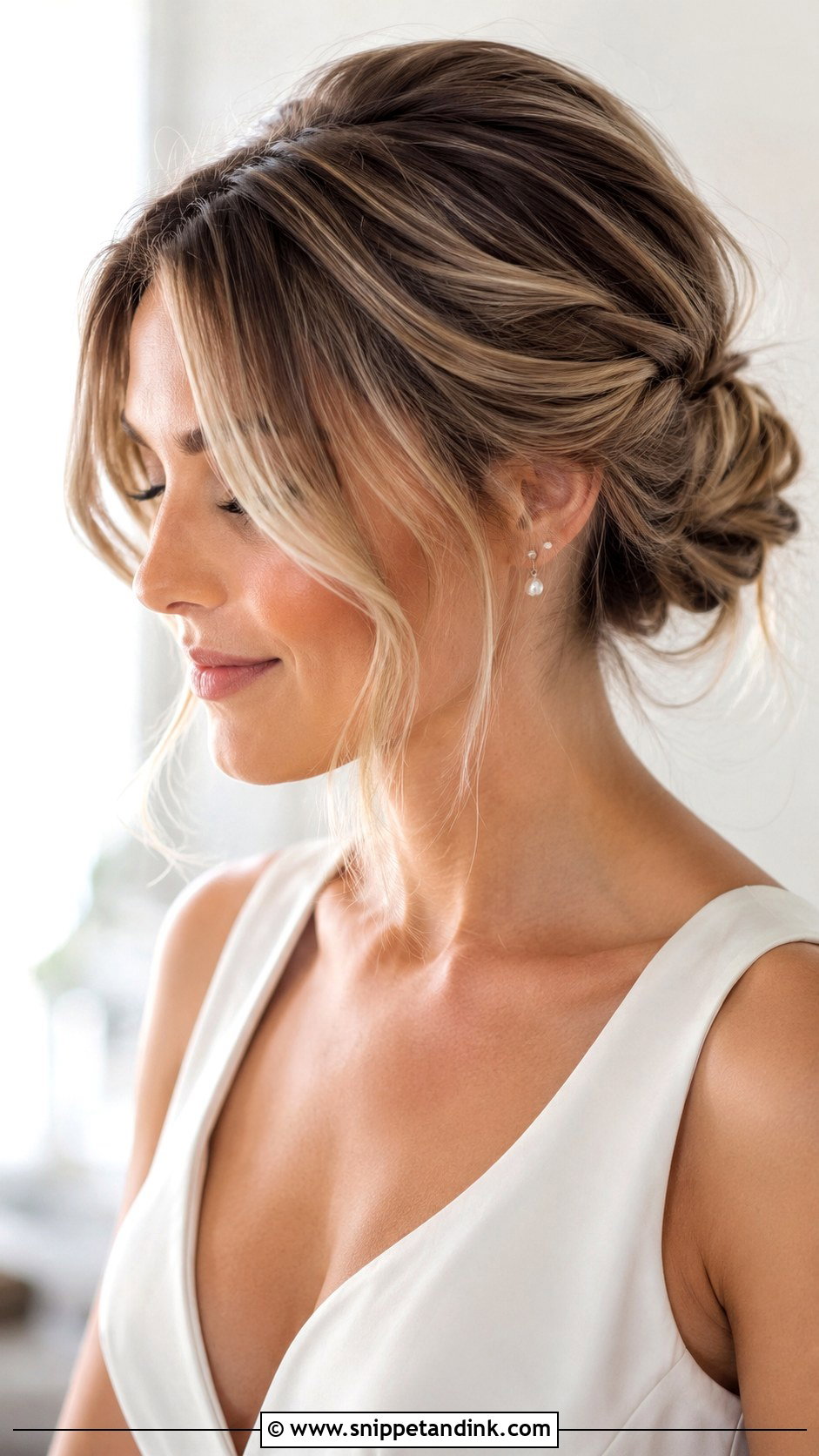
Curtain bangs soften a pulled-back bun by sweeping along the cheekbones. If you don’t have them already, please don’t cut them a week before the wedding; ask your stylist about it three months ahead so they have time to grow into the right length, or use a clip-in fringe for the day. I blow-dry them with a round brush away from the face so they open at the centre. They sit nicely around a veil, and they pair with a smooth or tousled bun on straight or wavy hair.
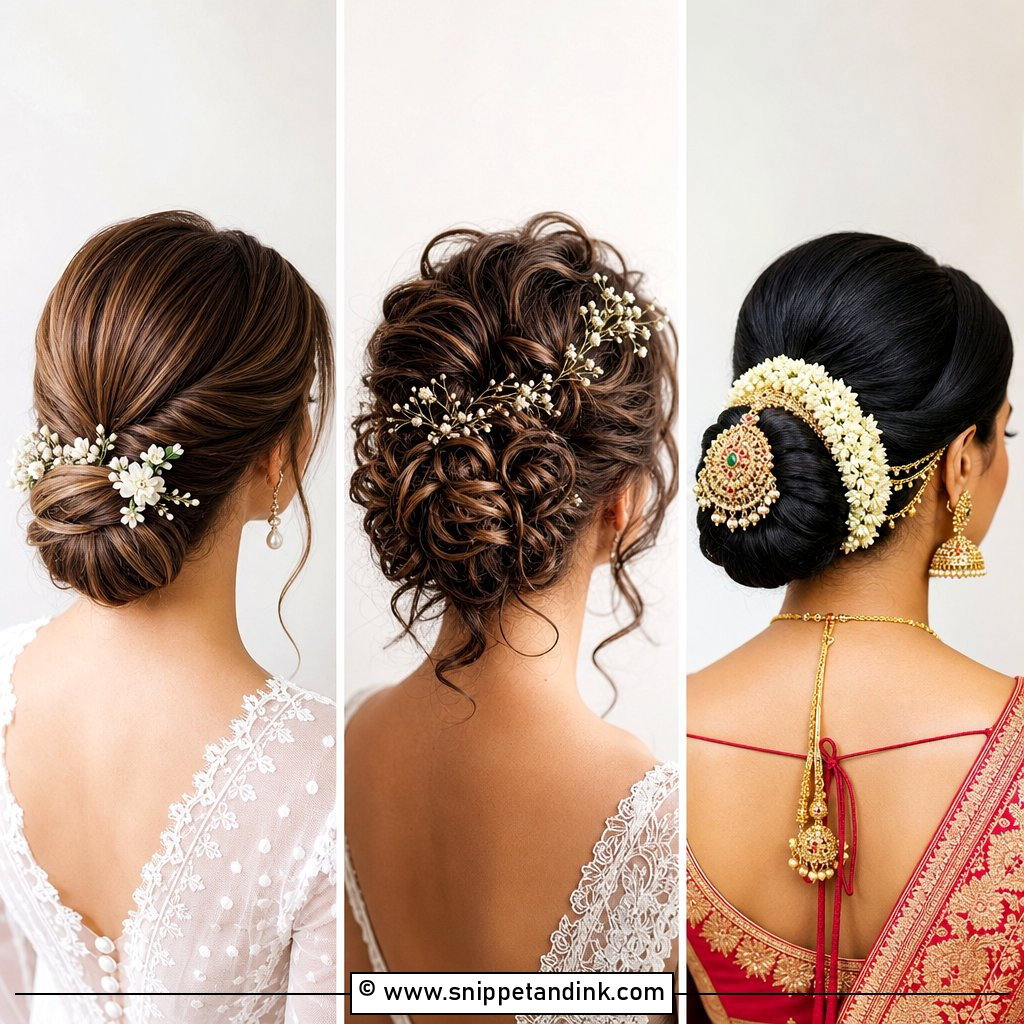
10. Bohemian Low Bun With Fishtail Braid
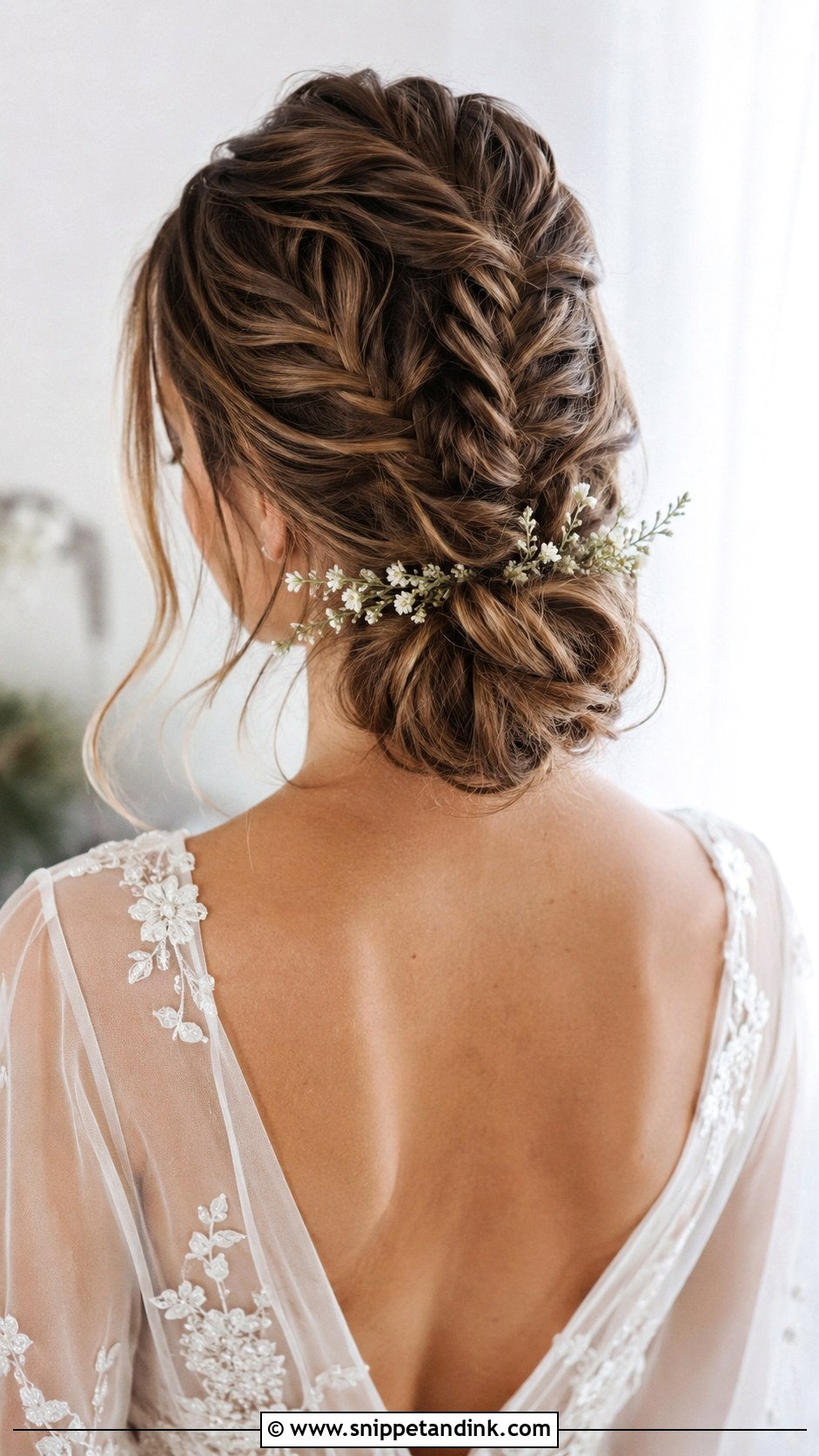
A fishtail braid splits the hair into two sections instead of three, which gives it that fine, woven look. I run it along one side or across the back and then gather it into a loose knot. Pancake it slightly for a lived-in finish, and add tiny flowers or a vine if you like. Fishtails are slow to braid, so allow extra time on the morning. For beach weddings I add more pins than usual, because wind and salt air loosen a textured braid quickly. Flowing gowns and natural makeup suit it.
11. Low Bun With Soft Waves
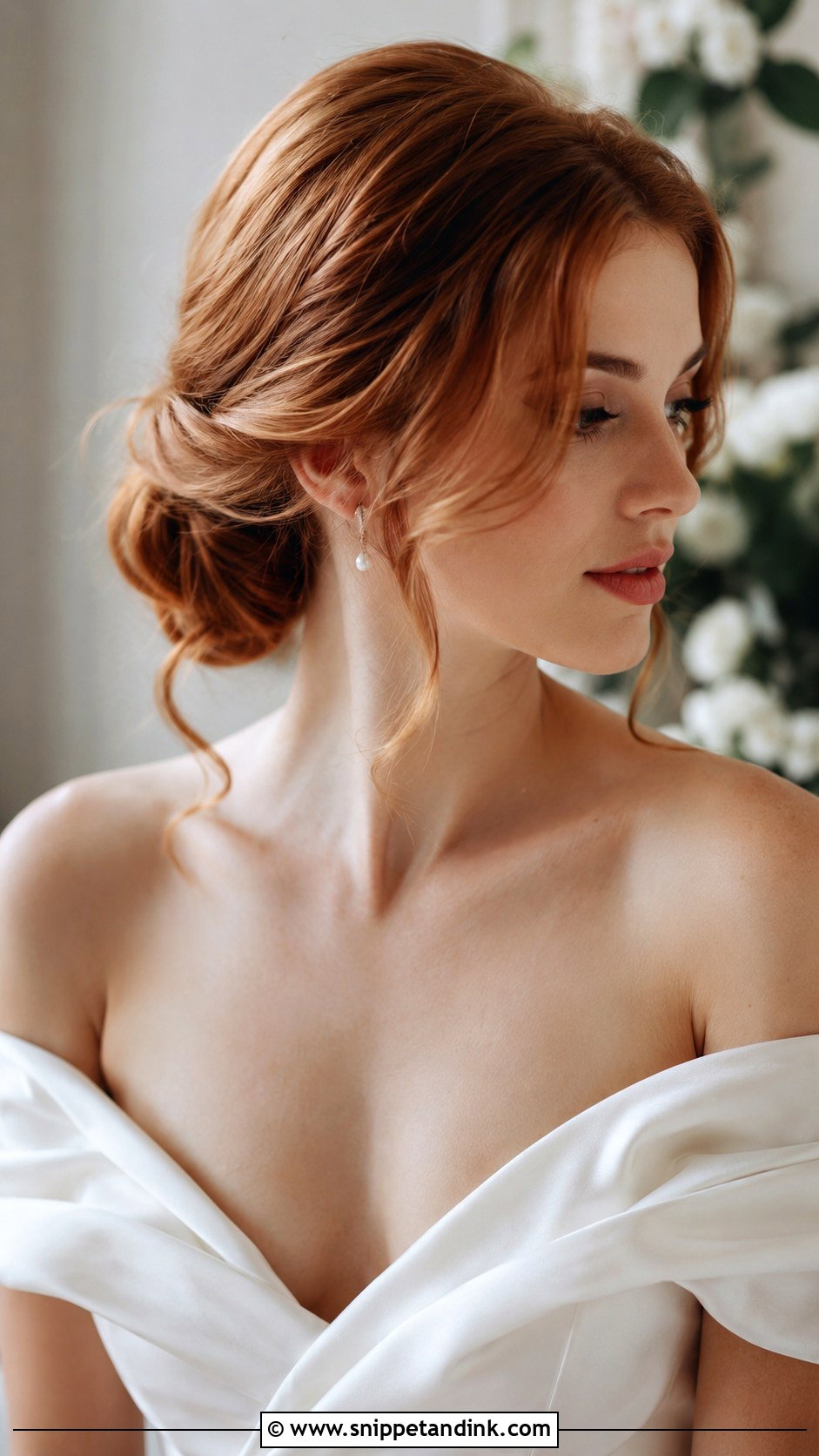
Mixing a bun with soft, loose waves gives you the shape of an updo with the softness of curls. I curl everything first with a wand, let the curls cool fully, then gather most of the hair into a gentle knot and leave waved pieces at the face. Curls that aren’t cool before brushing drop within an hour. On hair that doesn’t hold a curl, a light setting spray before curling makes a big difference. It suits gardens, vineyards and classic venues.
12. Vintage Low Bun With Finger Waves
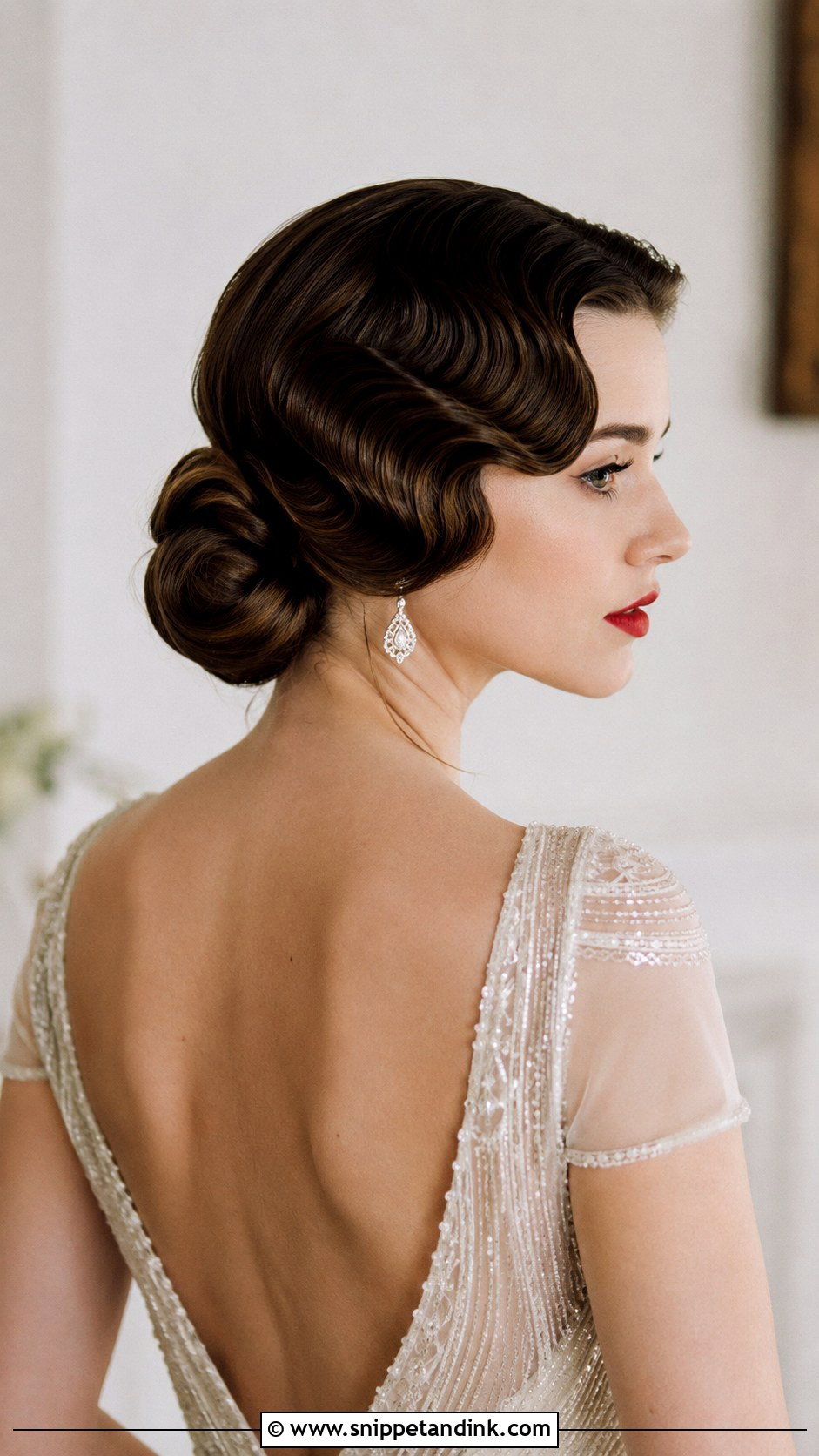
Real finger waves are set into damp hair with strong gel, pressed into S-shapes with fingers and a comb, then held with clips until fully dry. On long hair I usually fake them with a flat iron and clips, since true wet sets work best on short hair. The waves frame the face; the smooth low bun keeps everything else neat. It’s a natural fit for an Art Deco theme, statement earrings, bold lips and a sleek gown. Book enough time; this one can’t be rushed.
13. Low Bun With Wrapped Headband Braid
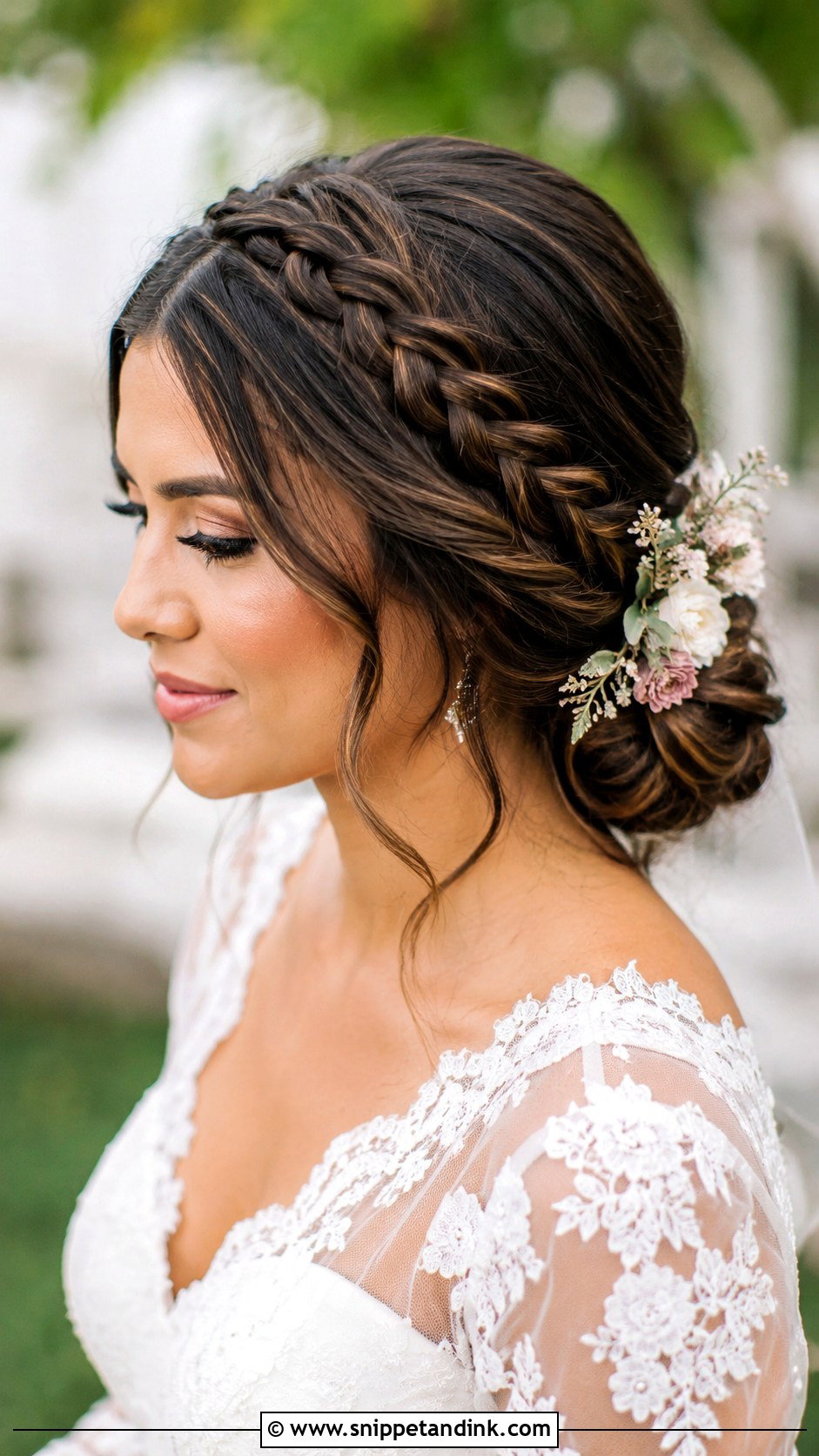
The headband braid runs over the top of the head like a band and meets the knot at the back. It keeps every strand off the face, which helps if you’ll be crying, hugging and dancing in wind. I start it behind one ear and pin the end under the bun on the opposite side so it’s invisible. Delicate flowers can sit along it, or it can stay plain. Longer hair or extensions give it more width. It suits rustic and garden weddings.
14. Sleek Low Bun With Deep Side Part
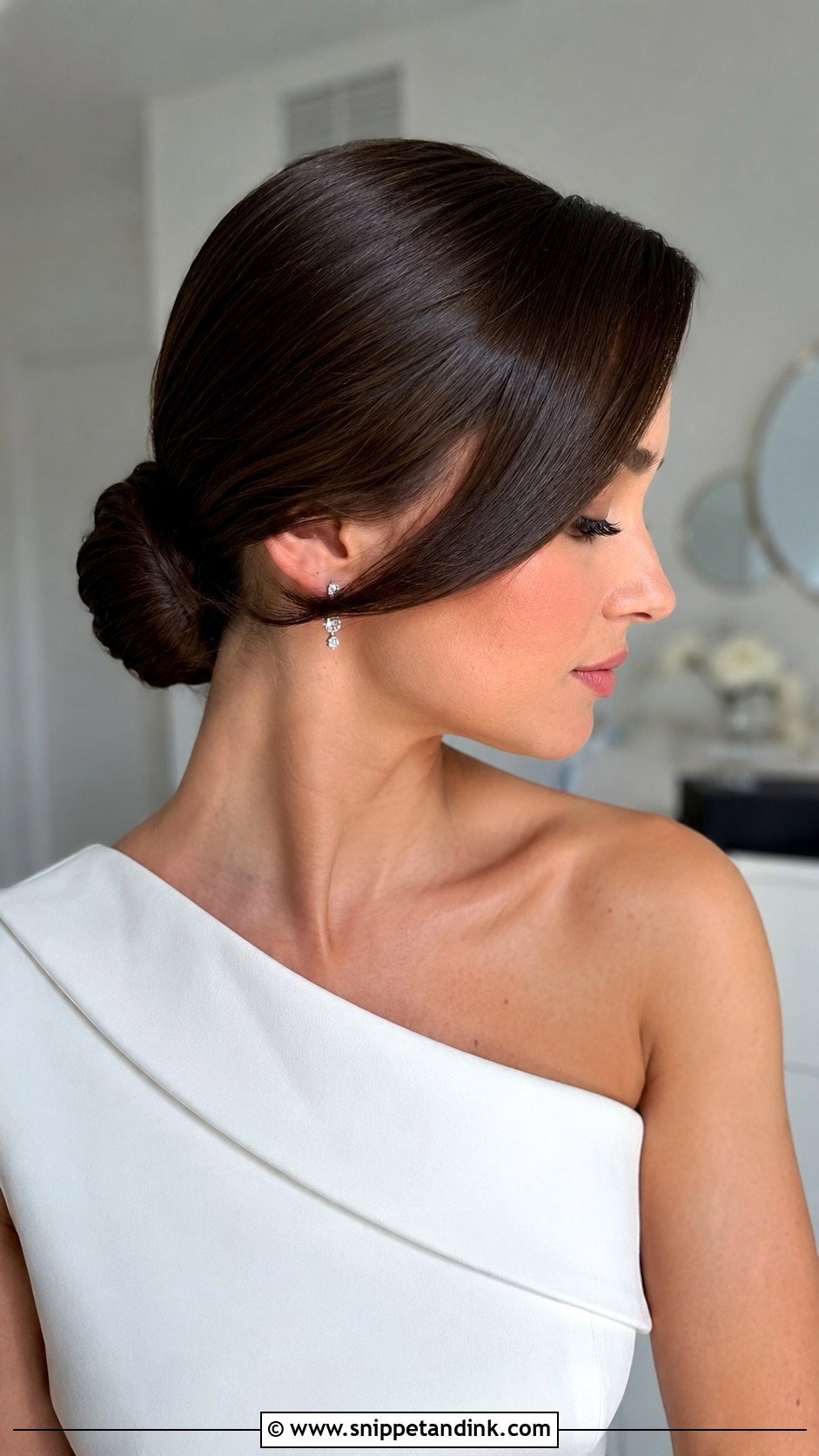
A deep side part sweeps across the forehead and lifts the hair on one side, which adds height to a sleek style without teasing. I set the part where your hair naturally falls; forcing a part on the opposite side means it fights back by mid-afternoon. Smooth everything with serum and a fine-tooth comb. Bold accessories, structured gowns and a city venue suit it. If you have a cowlick at the hairline, flag it at the trial, as it decides which side the part can go.
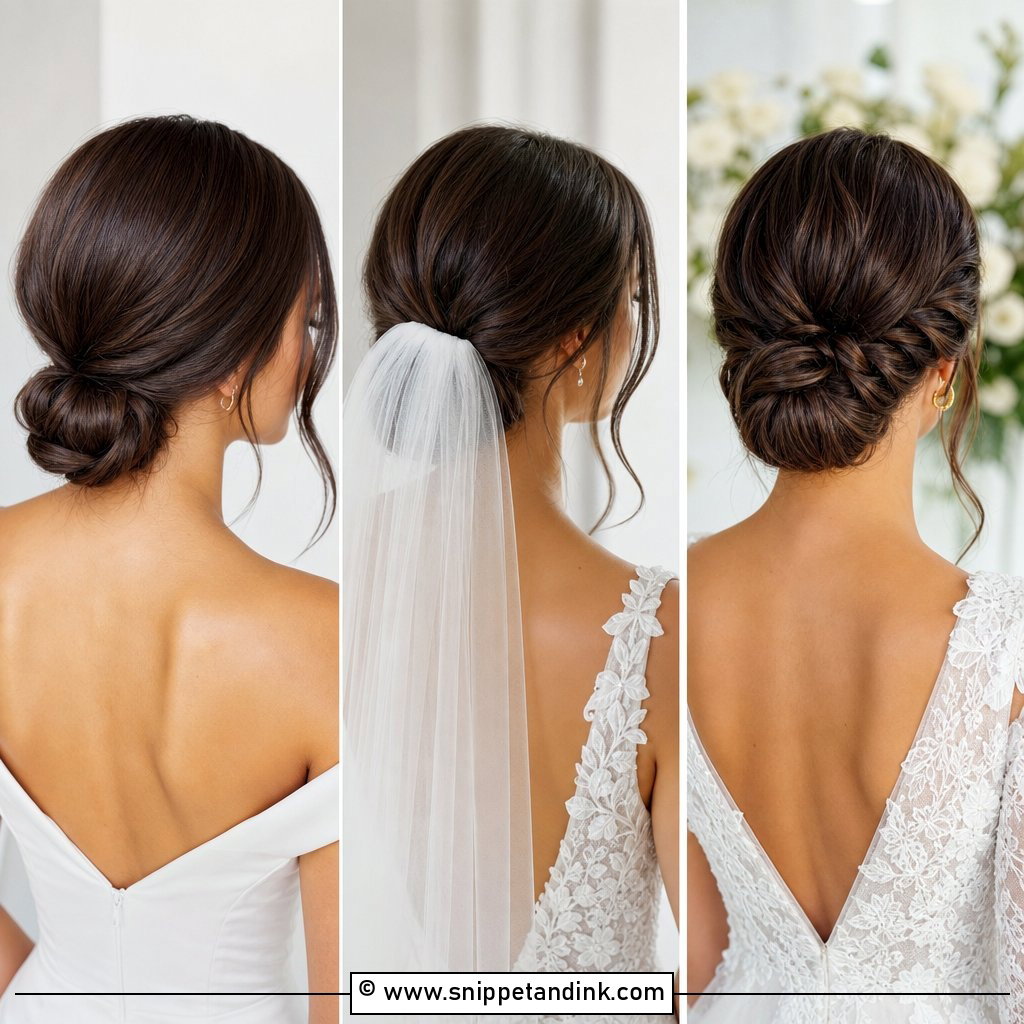
15. Low Bun With Babys Breath
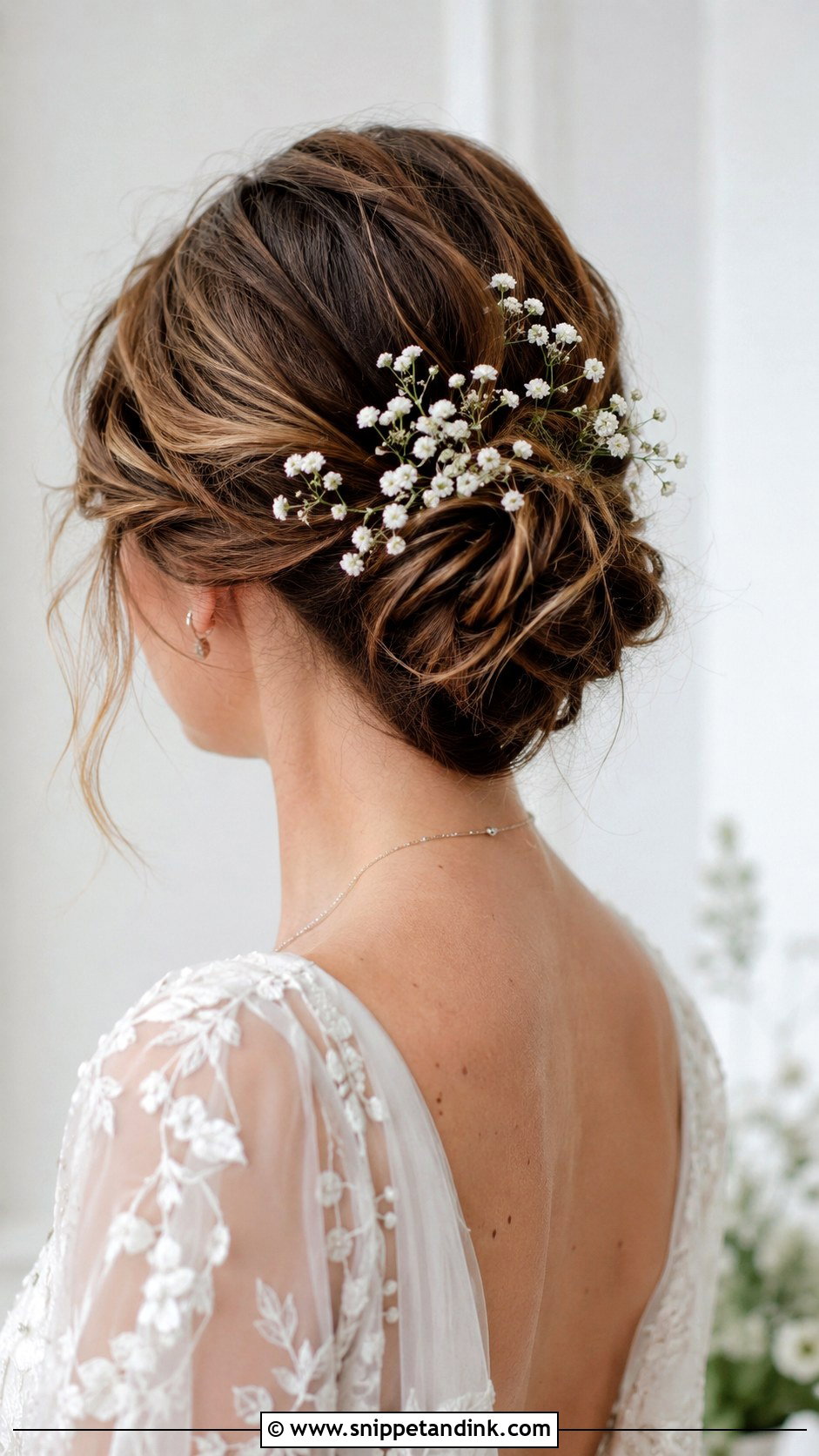
Baby’s breath gives a light, scattered white effect, and it’s one of the few florals that dries well out of water instead of wilting, so it holds up through a long day. I snip it into tiny clusters and push the short stems into the bun’s twists rather than pinning each piece. It suits tousled and sleek buns, outdoor spring and summer weddings, and loose tendrils at the face. Some people find the smell a little sour up close, so smell a stem before committing.
16. Low Knotted Bun
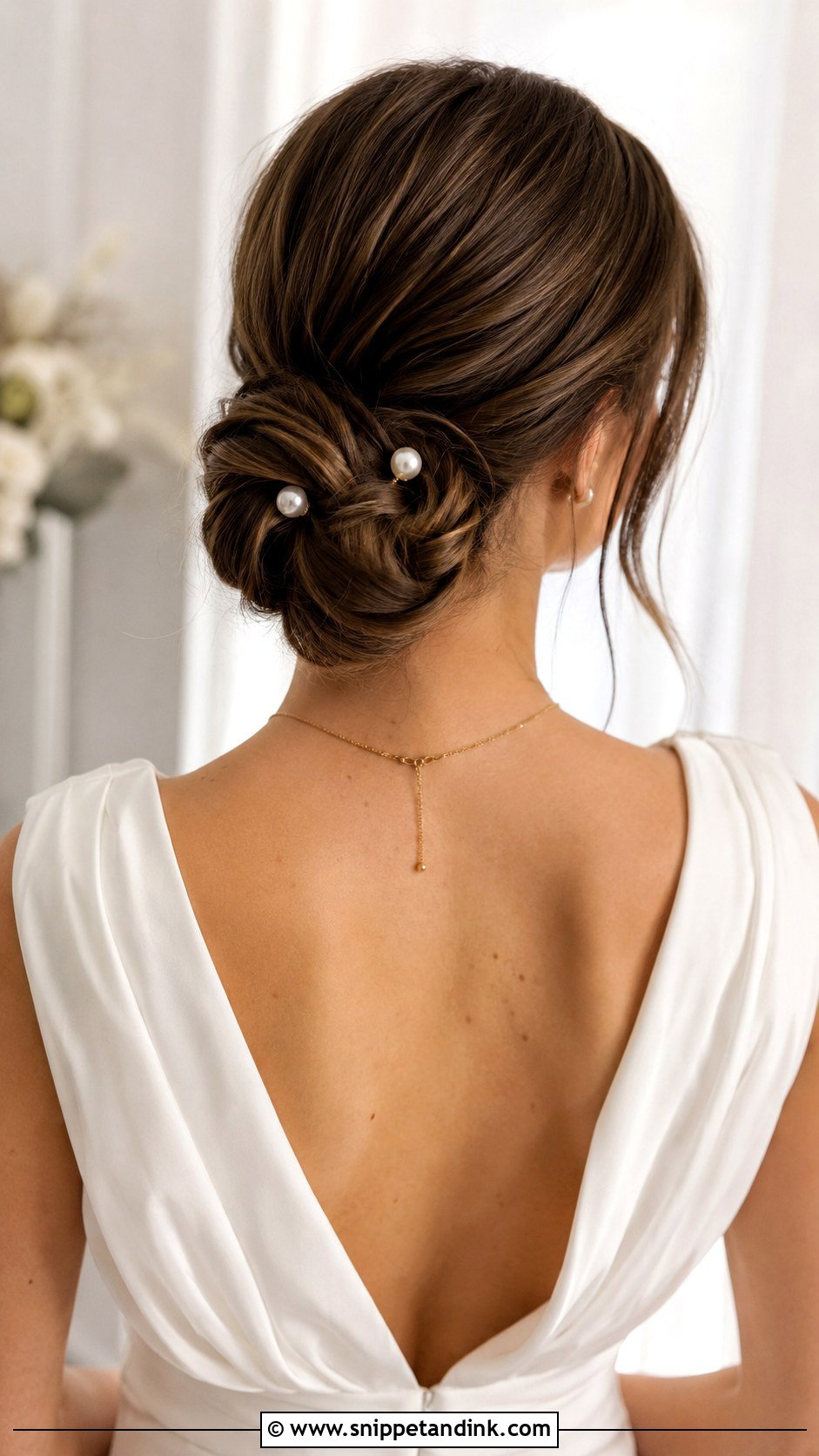
Knots are made by tying sections of hair over each other, a bit like a loose shoelace, then pinning each one. The result has natural volume and texture without much product. Thick hair suits knotted buns best; fine hair knots can look thin, so I add volume powder at the root first. Keep it sleek or pull pieces loose, and add pearl or crystal pins between the knots. Because each knot is pinned separately, it holds well for hours.
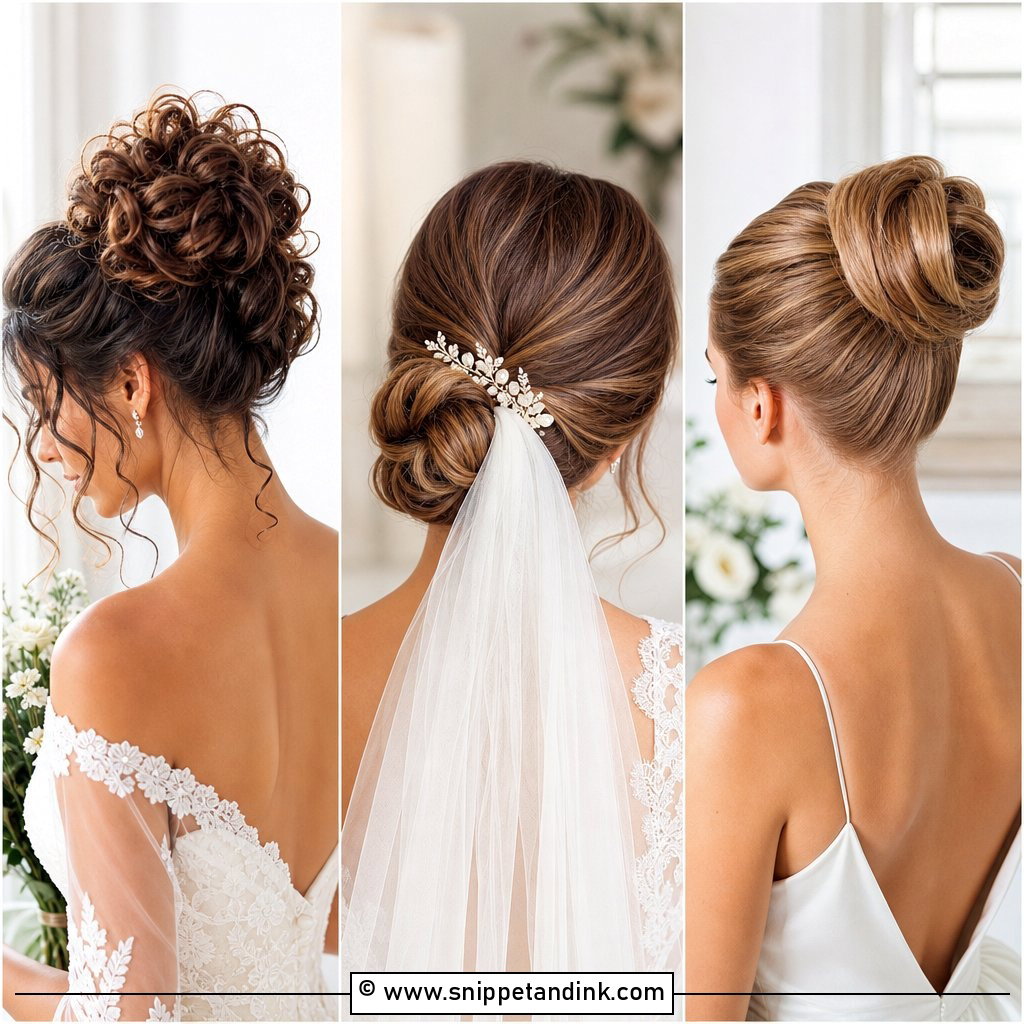
17. Low Bun With Face Framing Layers
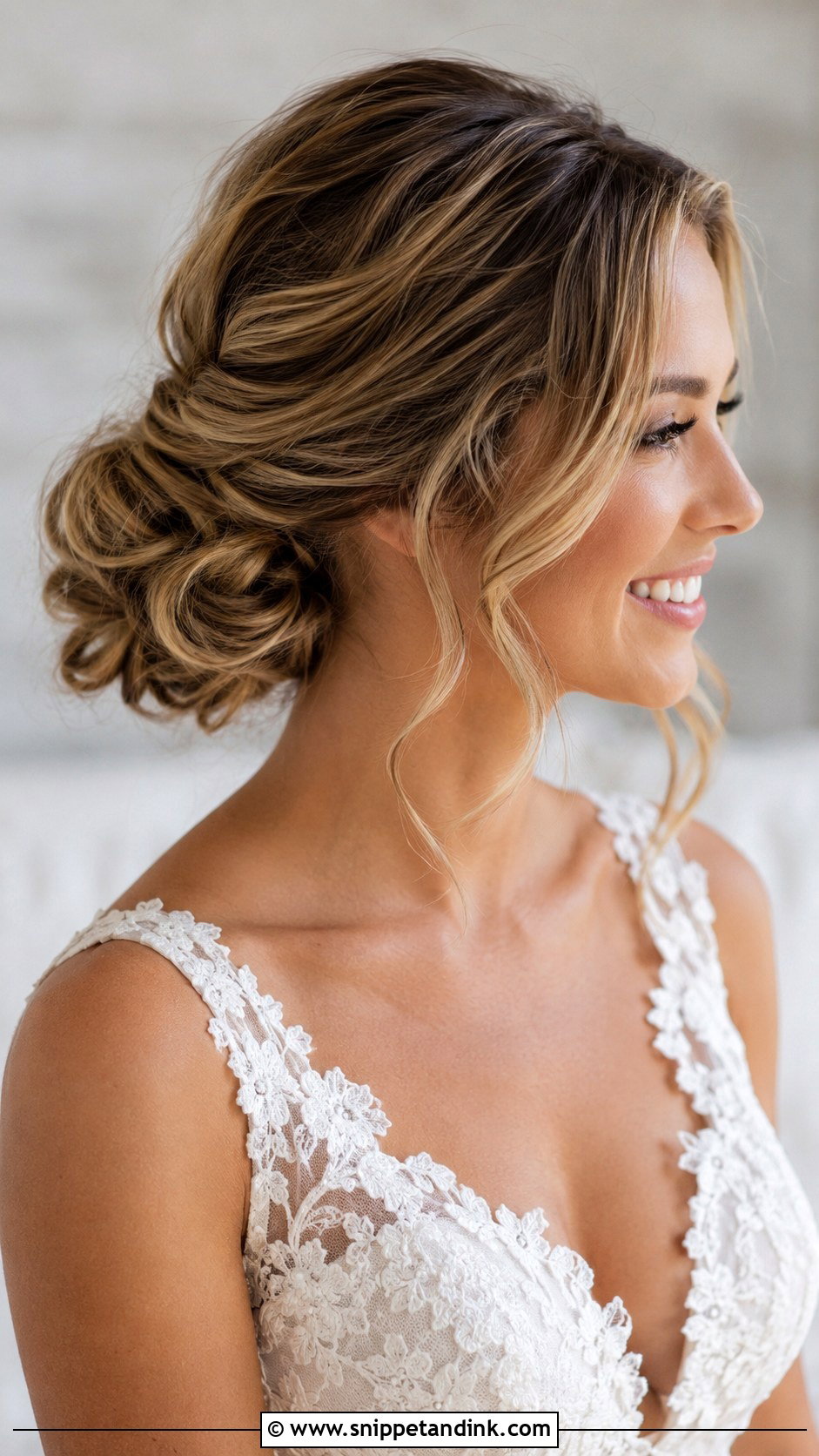
Face-framing pieces soften the line of a pulled-back bun, falling around the cheekbones and jaw. If you have layers cut at chin or cheekbone length already, I use those; otherwise I pull small sections out after the bun is set. Curl them away from the face so they don’t stick to lipstick. Humidity is their enemy: straight framing pieces turn frizzy outdoors, so a light anti-humidity spray helps. They work with a smooth or textured bun, a veil or a floral crown.
18. Low Bun With Jeweled Comb
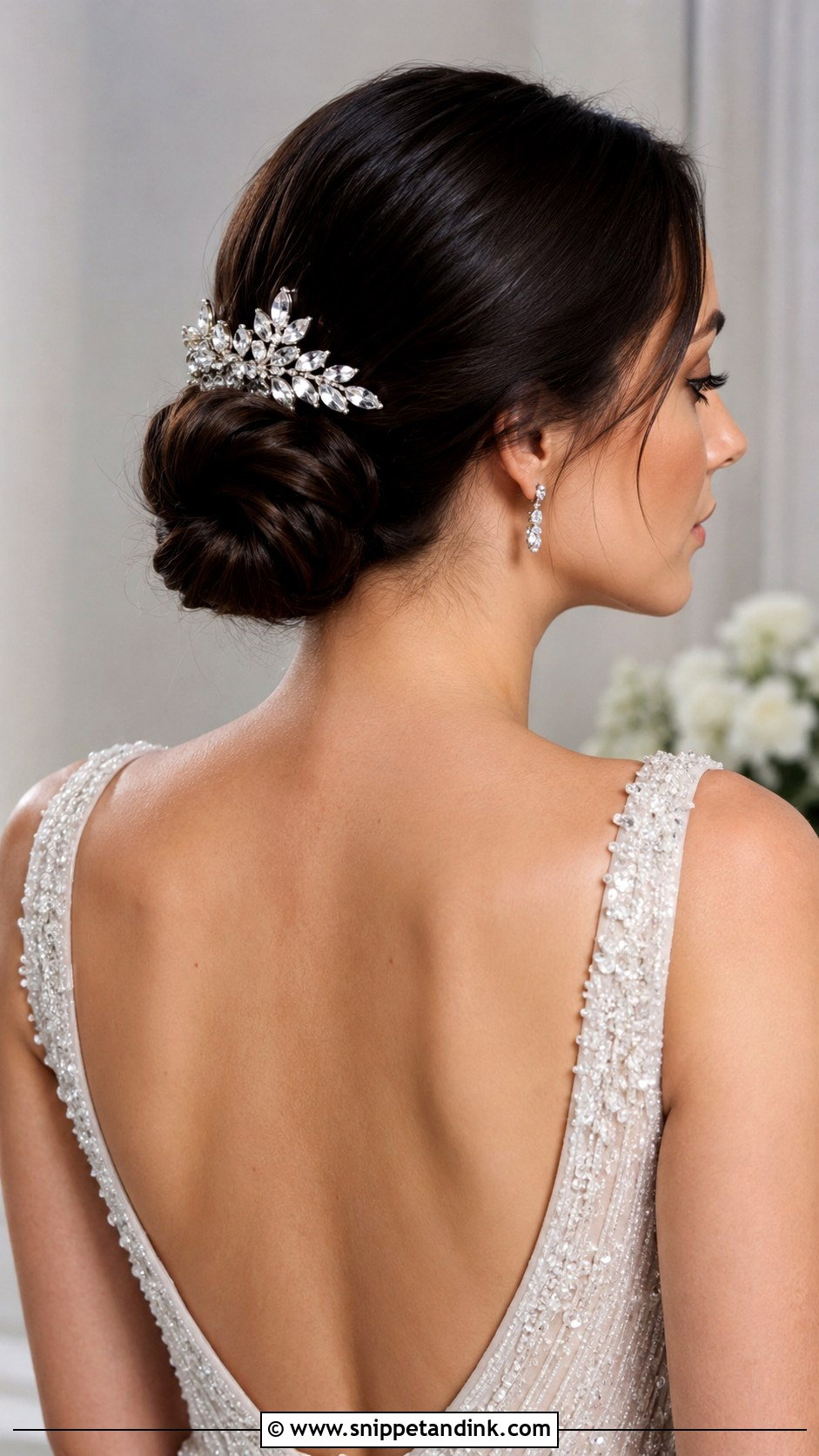
A jewelled comb is placed where the bun meets the hairline, usually slightly to one side. The teeth need something to grip, so I slide the comb in against a row of crossed pins hidden underneath. In very fine hair, a comb alone will slide out by the reception. Crystals, pearls or gold detailing should match your jewellery and dress. Sleek or twisted buns suit it, and it does well at formal and ballroom weddings.
19. Low Bun With Dutch Braid
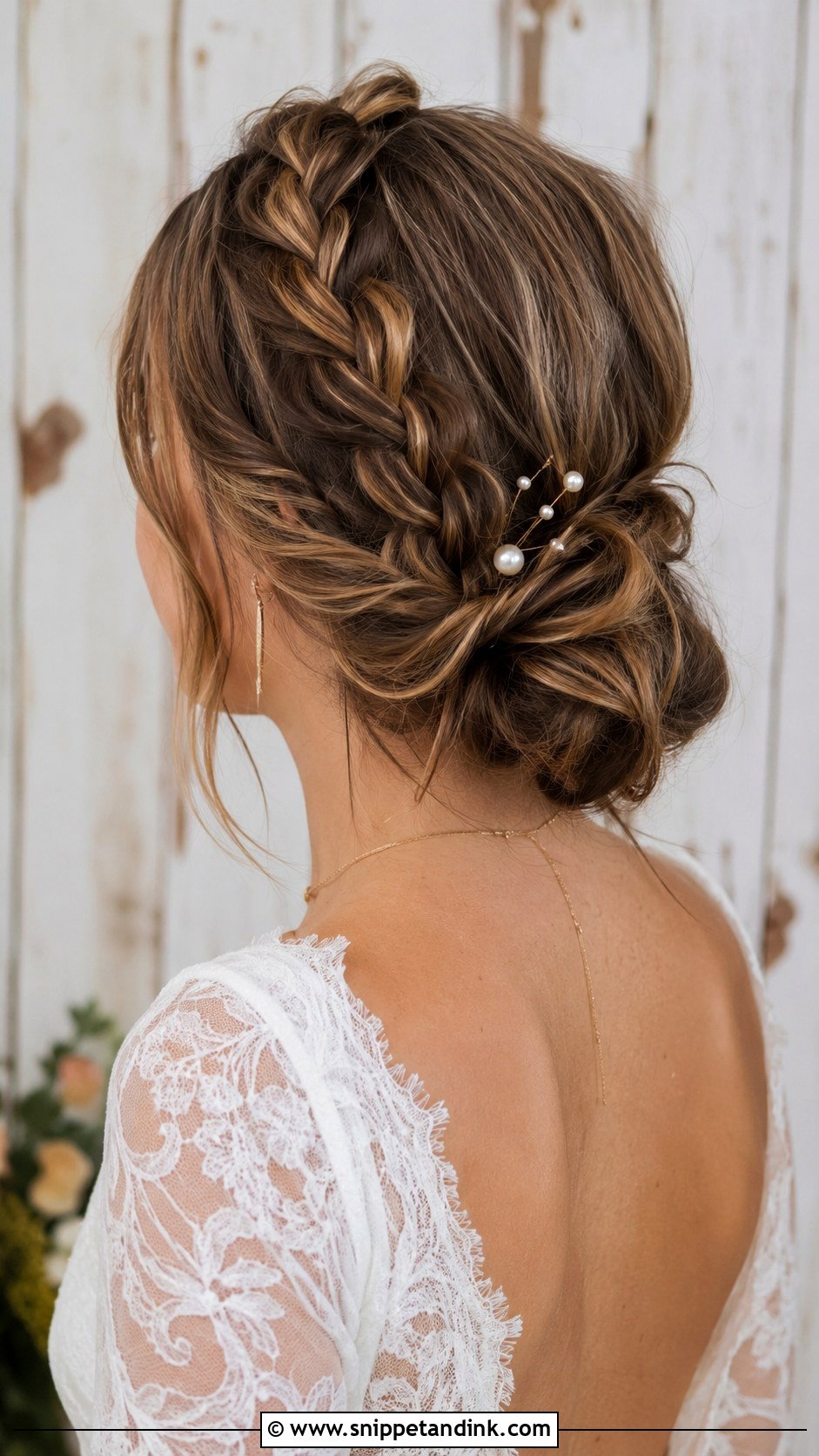
A Dutch braid is braided underhand, crossing strands beneath rather than over, so it stands up off the head instead of lying flat. I run it from the hairline or along one side into a soft knot. Loosen it gently for a relaxed finish, and add small flowers or pearl pins. It works best on thick or long hair; on fine hair a Dutch braid can look thin once it’s pulled apart, so I braid with a small piece of clip-in hair added. It suits outdoor and rustic weddings.
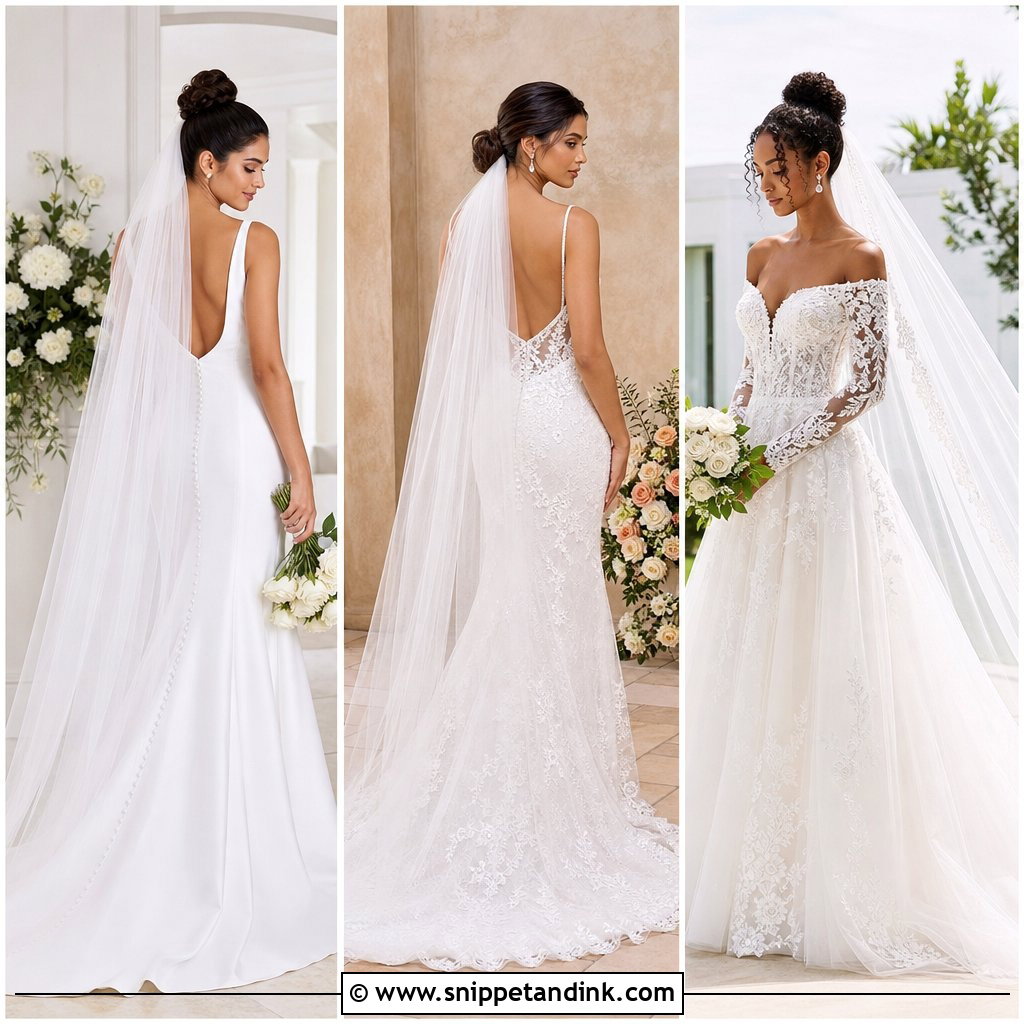
20. Low Bun With Veil
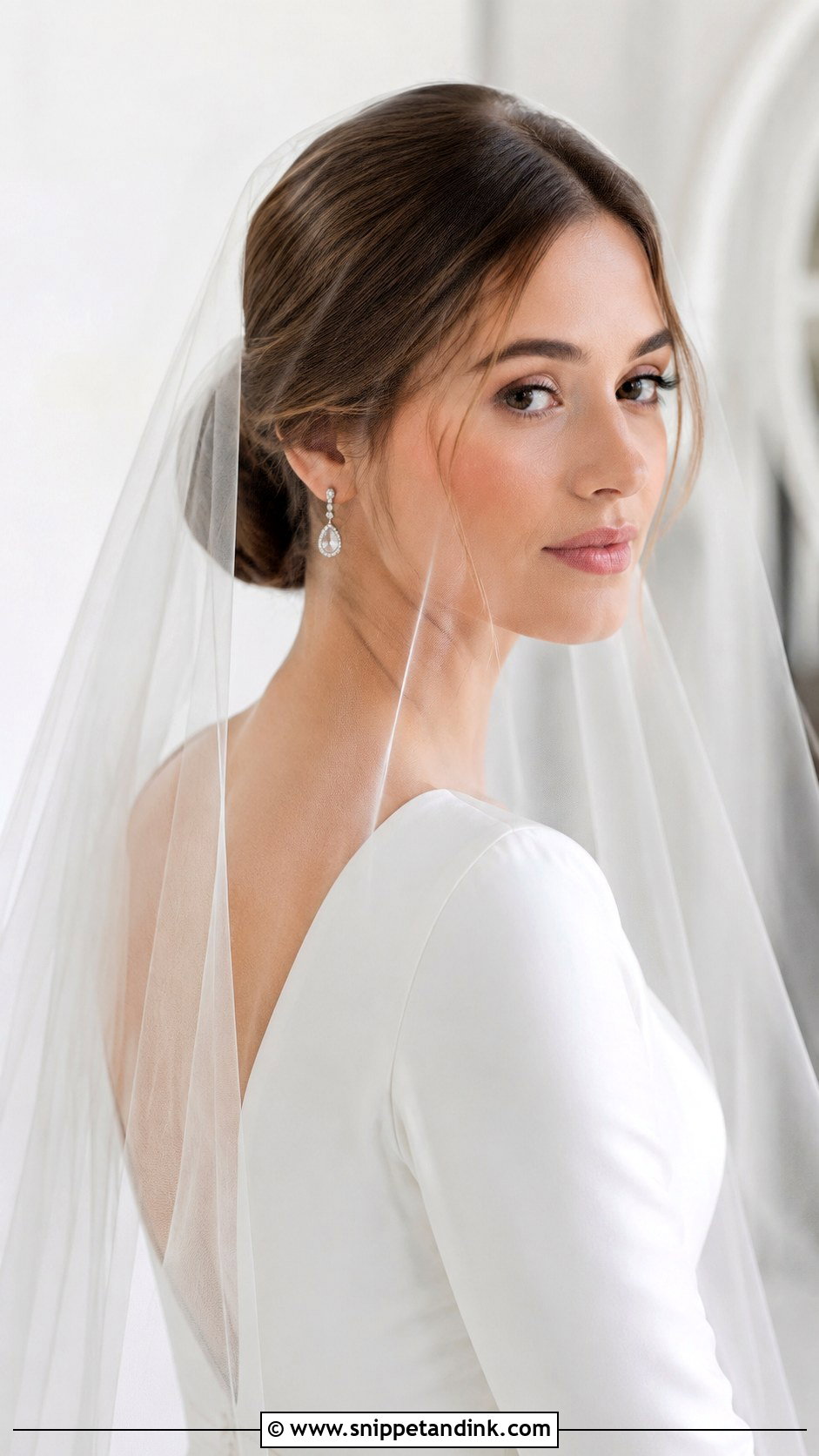
A low bun is the best base for a veil because the comb can grip the hair right above or below the knot. Above the bun, the veil falls over it; below, the bun shows above the veil. I usually suggest above for a cathedral length, since that height balances the long train, and below for a fingertip veil. Sleek buns suit long, sheer veils; tousled ones suit softer fingertip styles. When the veil comes off after the ceremony, the bun underneath should look finished on its own, so I style it that way from the start.
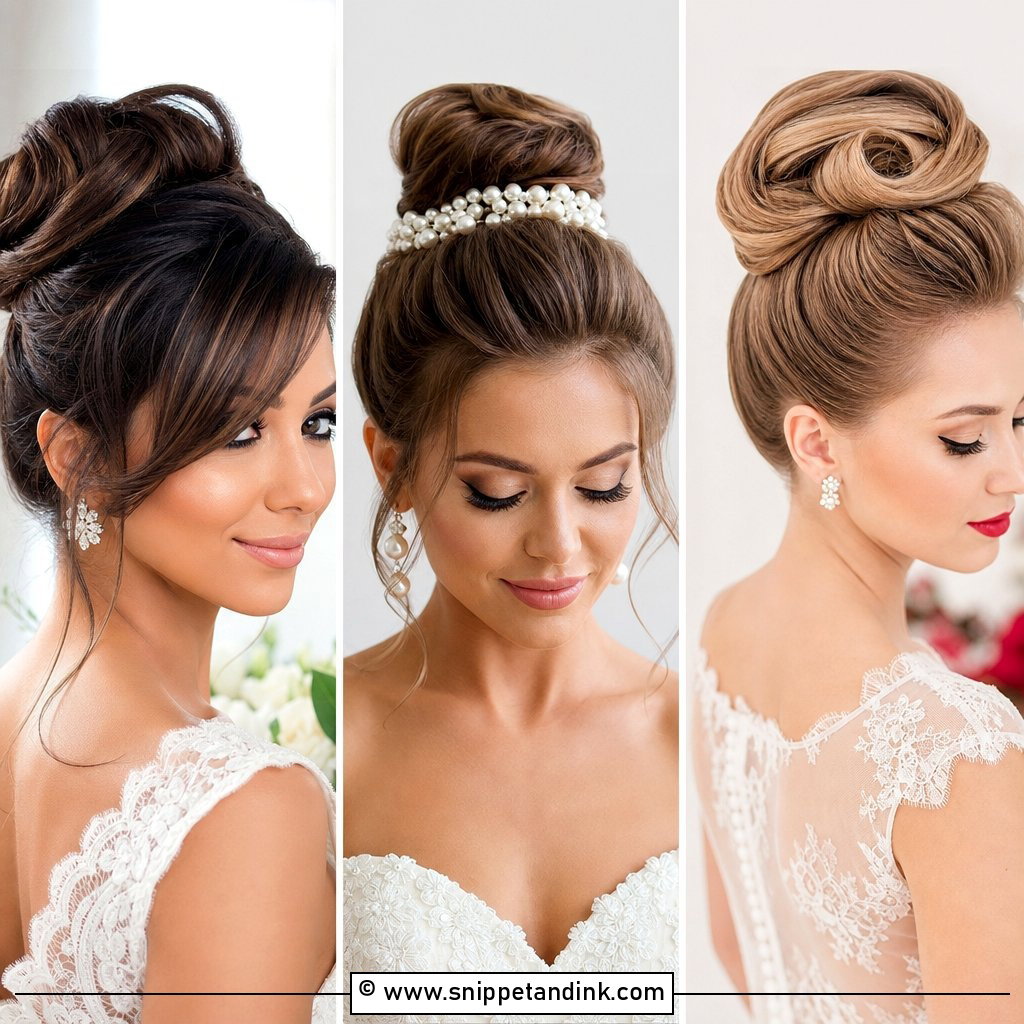
21. Low Bun With Tiara
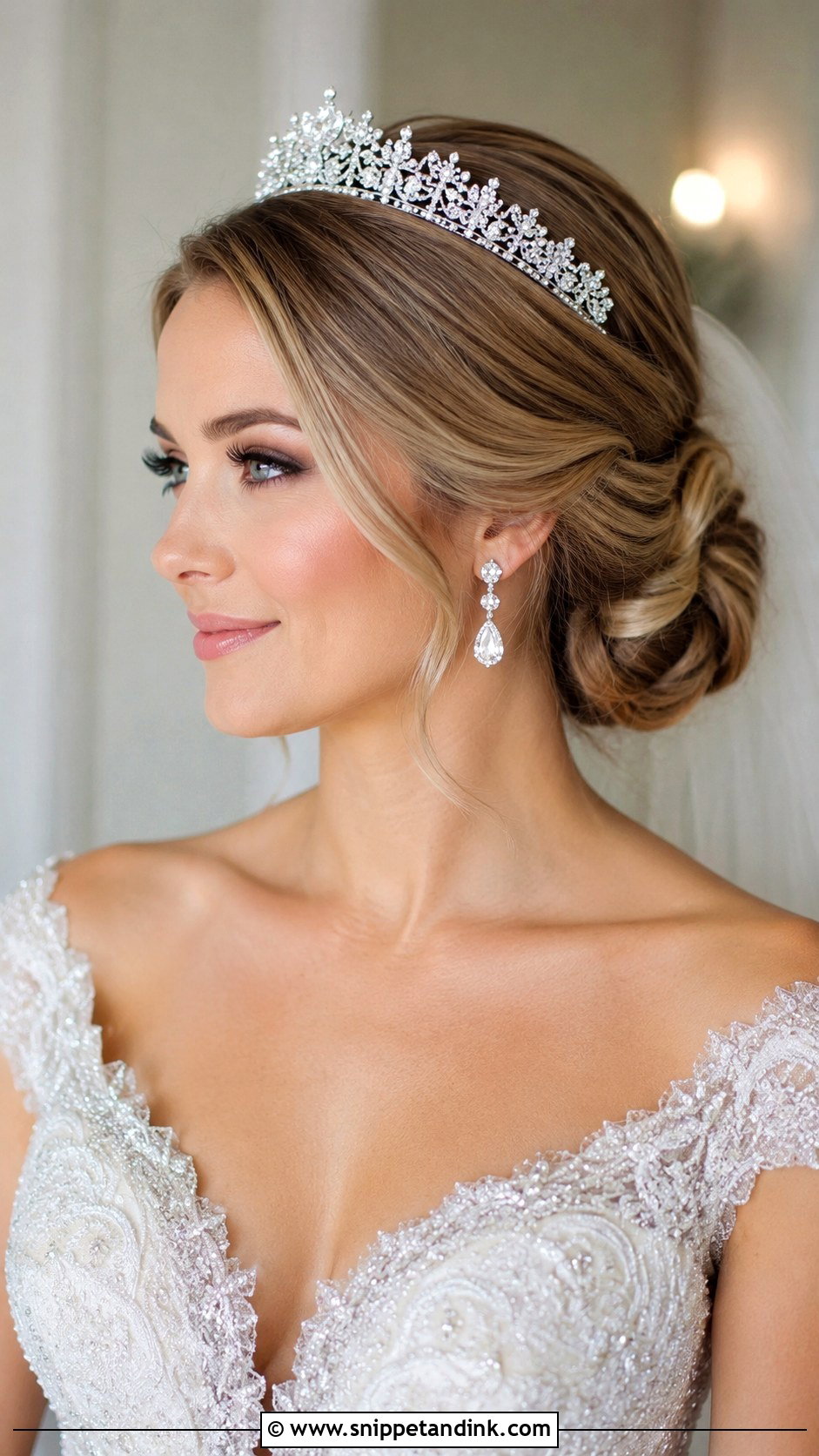
A tiara sits in front of the bun, at the crown, and it needs a little height behind it so it doesn’t lie flat on the scalp. I tease lightly at the crown, smooth over it, then secure the tiara with pins threaded through its loops or crossed over its band. Wear it on its own or with a veil. Sleek or twisted buns give the best base. Match the metal to your jewellery. It’s a formal look and suits a ballroom wedding.
22. Textured Low Bun With Bouffant
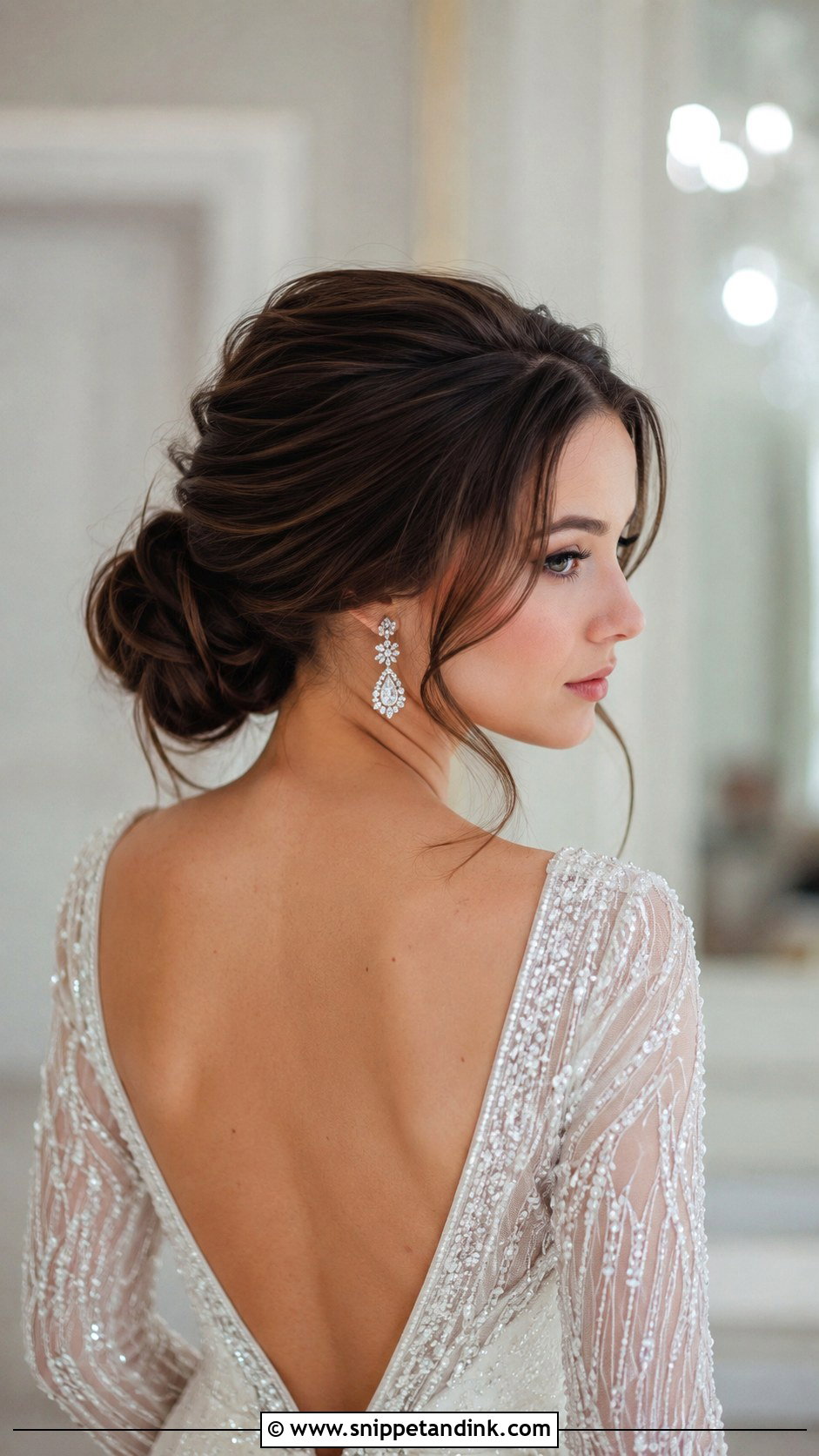
The bouffant adds height at the crown, which lengthens a round face and balances a strong jaw. I backcomb small sections at the root, then smooth the top layer over so the teasing never shows, and set it with a medium hold spray before the bun goes in at the nape. Too much height looks dated, so I keep it to a gentle lift. Statement earrings and a sleek gown suit it. On fine hair, the lift lasts longer if you set the crown with velcro rollers while doing makeup.
23. Low Bun With Twisted Sides
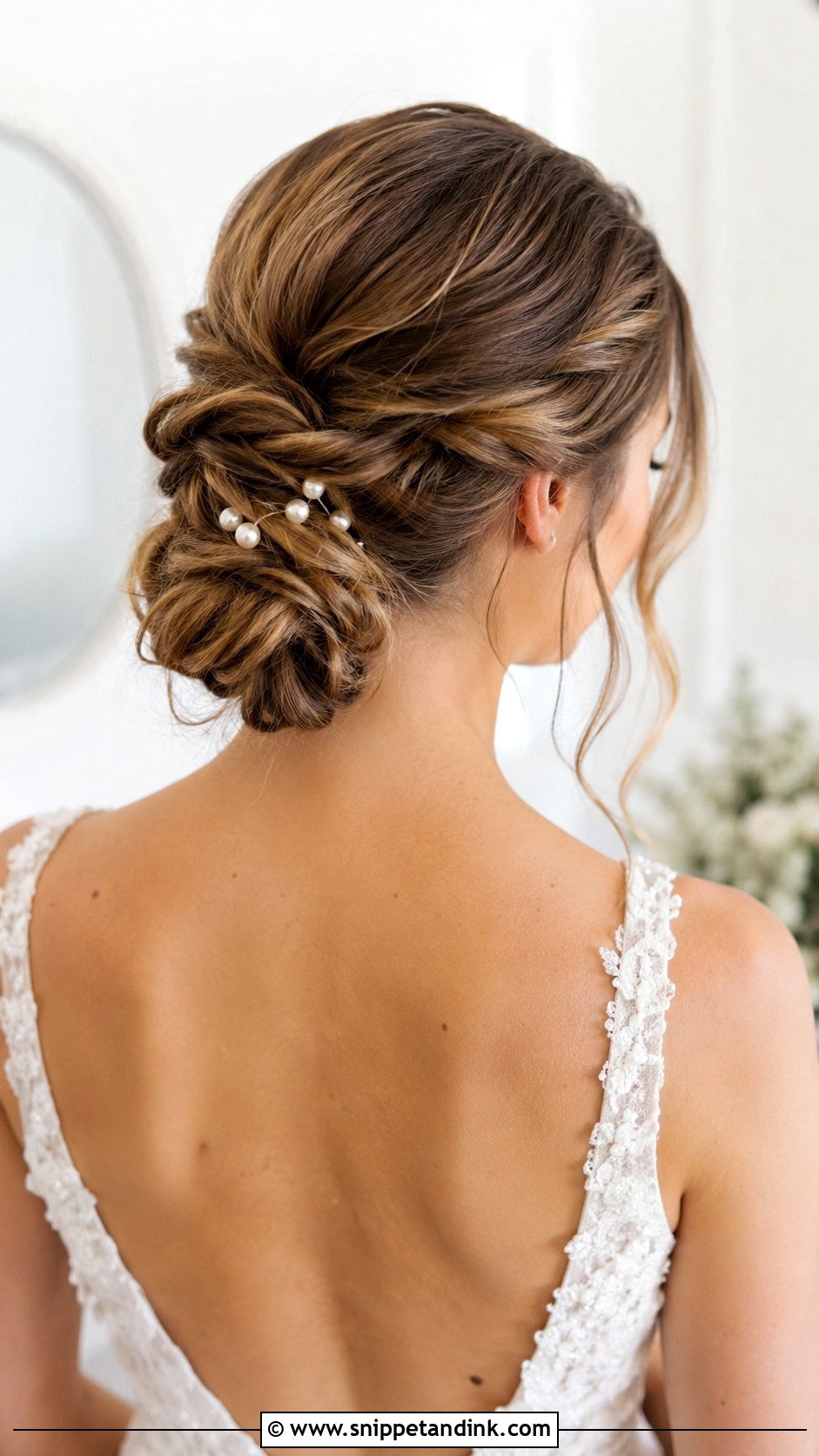
Twisted sides are the simpler cousin of braided sides. I twist a section from each temple toward the back, pin each twist where it meets the nape, then gather everything into a soft knot. Twisting toward the face loosens; twisting away from the face holds, which is the detail most tutorials leave out. It suits classic and boho weddings, takes pearl pins or small flowers well, and works on most hair types, including fine hair that’s too slippery for braids.
24. Low Bun With Hair Vine
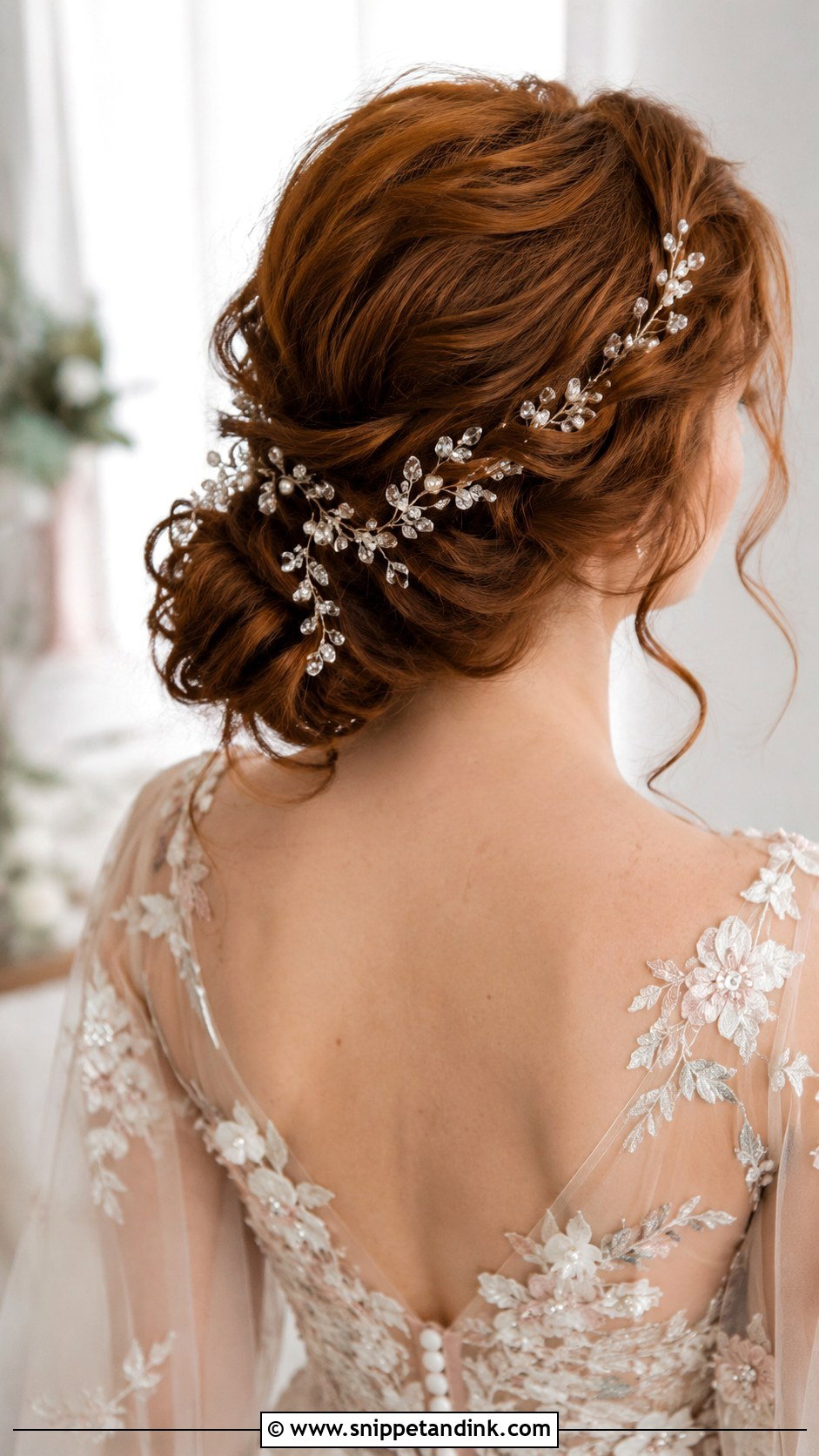
A hair vine is a flexible wire of pearls, crystals or tiny flowers that you weave around and through the bun for a fairy-tale effect. I attach the vine by its end loops with bobby pins, then wind it through and pin it again in a few places so it doesn’t sag. Pearl vines suit classic gowns, floral ones suit garden and boho themes. A vine works on most hair lengths, though a very small bun gives it little to wrap around.
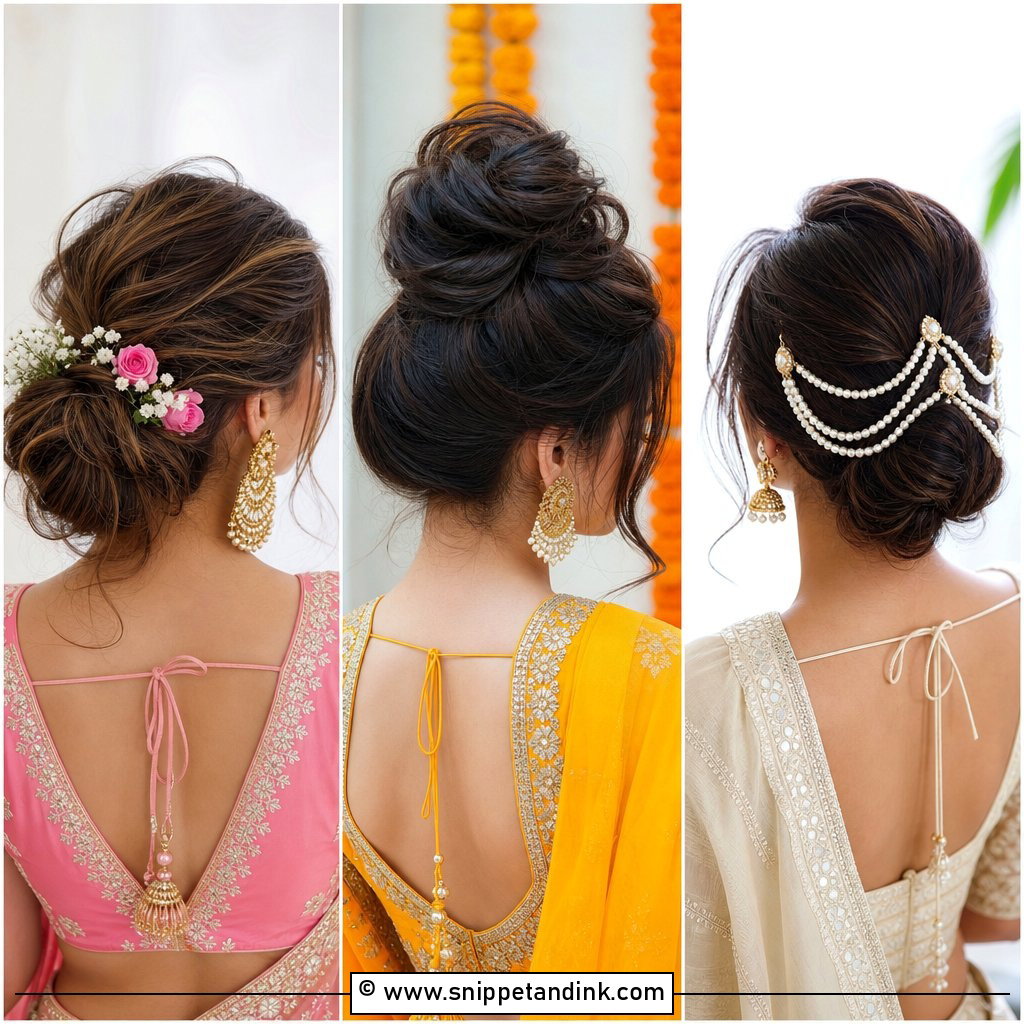
25. Low Bun With Wispy Bangs
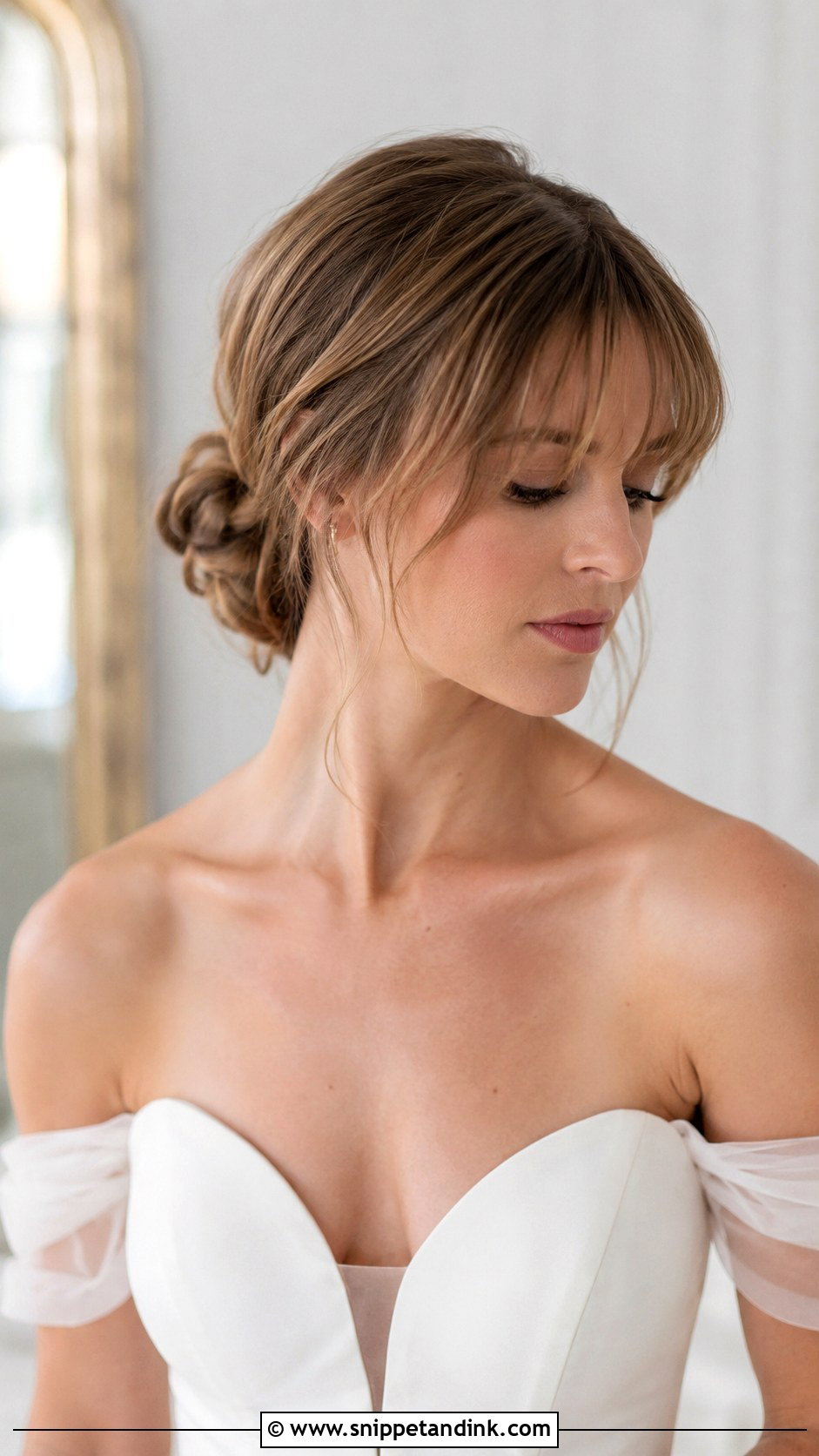
Wispy bangs are a light, broken fringe that grazes the forehead without covering it. They suit a sleek or textured bun and work with a veil or flowers. I trim them dry and leave them a little longer than everyday length, because bangs that sit at the eyebrows can catch on false lashes. Keep them light with a small amount of dry shampoo at the roots, so they don’t separate into clumps in heat. As with curtain bangs, don’t cut them for the first time the week of the wedding.
Heavy Buns, Pin Headaches and the Midnight Takedown
A well-made bun should feel secure but not tight. If you have a dull ache at the nape or temple within the first hour, tell your stylist then, while it’s easy to loosen. A headache at hour six is much harder to fix.
- Pins locked in an X hold more weight than many pins pushed straight in, and they press less on the scalp.
- A veil comb adds weight. Ask for a few anchor pins placed under it, so the comb isn’t pulling on a single section.
- At the end of the night, find the pins by touch and pull them out the way they went in. Count them if your stylist tells you the number.
- Don’t brush a teased or sprayed bun straight away. Work conditioner through with your fingers in the shower, then comb from the ends up.
Keep two bobby pins in your partner’s pocket or your clutch. A single loose piece after the first dance is easy to fix if you have a pin within reach.
Bring Your Earrings and Hair Accessory to the Trial
A low bun can be sleek and modern or loose and romantic, braided or dressed with flowers, pins, a comb or a tiara. Which one suits you depends on your face shape, your hair type and how much detail the dress already carries. Bring your actual accessories and earrings to the trial, wear a top with a similar neckline to your dress, and take photos from the back and sides. Then pick the version that still feels like you when you look at those photos a day later.
You'll Like These Ideas:


Leave a Reply