
Curly hair comes to an updo with half the work already done, because the texture holds shape on its own. My job at a curly trial is mostly to stop the hair being fought: I pin into the curl pattern instead of brushing it out, and I build the base on hair that has been defined, not frizzed. The fifteen styles below run from low buns to crown braids, and for each one I’ve noted how it actually holds up through a ceremony, photos and a long reception. Most of them suit bridesmaids and mothers of the bride as well as brides; where a style needs a certain length or density, I say so.
Prepping Curls So the Pins Have Something to Grip
Most curly updos that collapse were set on hair that wasn’t ready. Curls hold pins best when they’re clean but not freshly washed, and defined without being crunchy. This is the prep I ask for before a curly trial and again before the wedding.
- Wash and deep condition the day before, not the morning of. Hair washed a few hours before styling is still full of water and drops as it dries.
- Define your curls the way you normally do, with your usual leave-in and gel, and let them dry completely. Diffuse on low heat if time is short.
- Sleep in a satin bonnet, or pineapple the hair loosely on a satin pillowcase, so the pattern survives the night.
- Skip new products in the final week. A cream your hair has never met can weigh curls down or leave them sticky.
- Arrive with dry, untouched hair. I’d much rather refresh a curl with a damp hand than rebuild a section that got brushed out.
If your hair is coily or very tight, ask your stylist whether they want it stretched first with a braid-out or banding. Stretched hair gives more length to pin and less shrinkage to plan around.
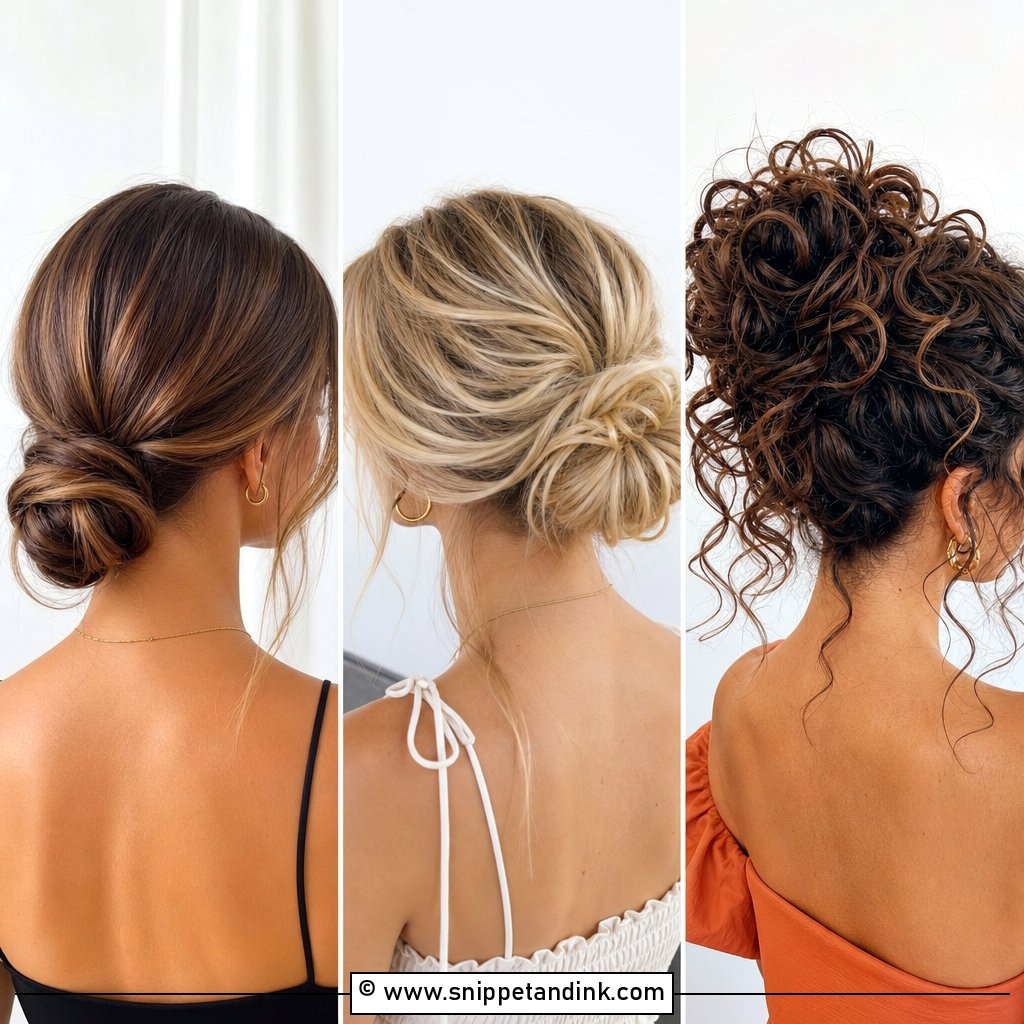
1. Curly Low Bun Wedding Updo
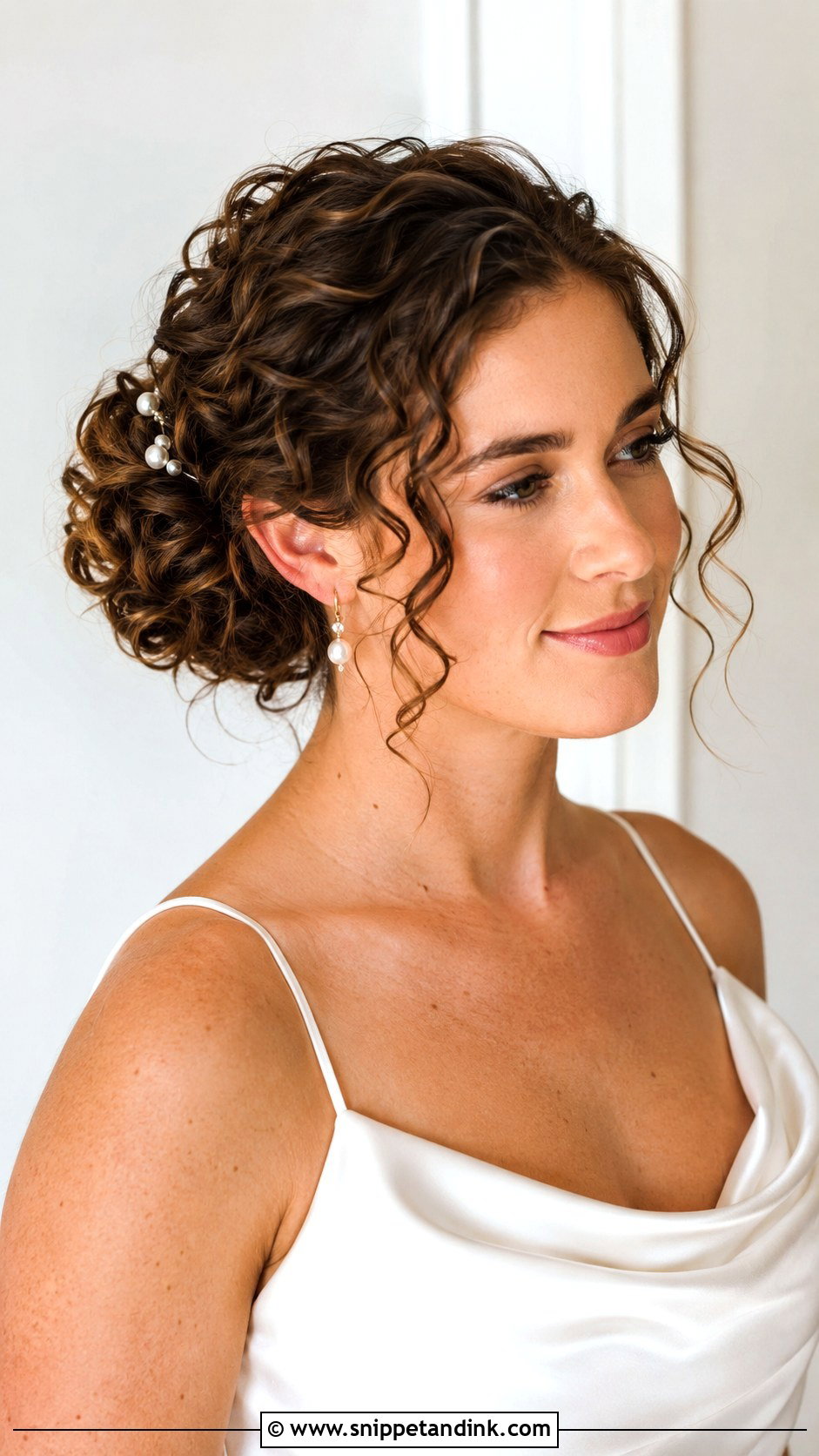
The low bun is the one I reach for most often with curly brides, and the reason is practical. Curls gathered at the nape sit on the most secure part of the head, so the bun stays put even when the hair swells in humidity. I build it in two or three pinned sections rather than from one ponytail, which keeps the rounded shape without dragging on the scalp. Leave a couple of tendrils at the temples for softness, or smooth the front with a little gel for a cleaner line. It sits well under a veil and with an open-back dress, since the whole neckline stays visible.
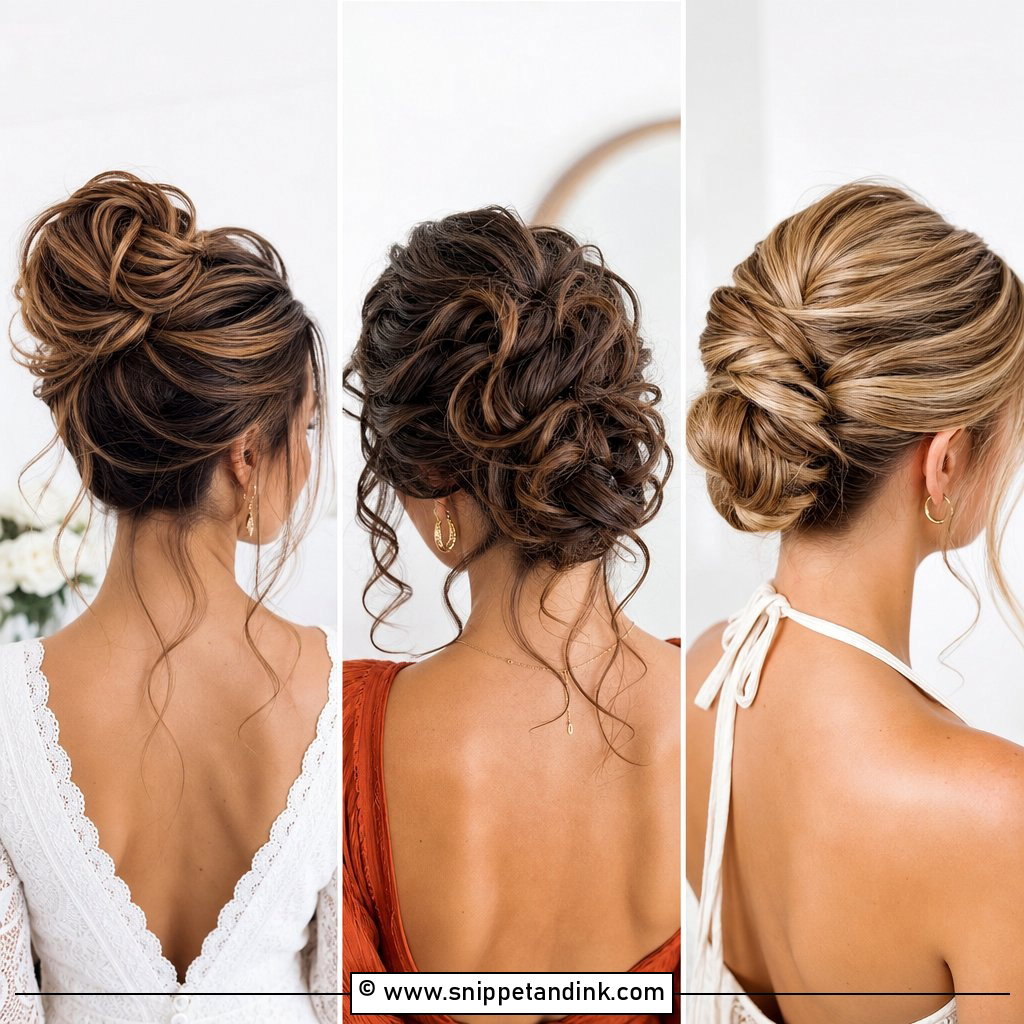
2. Curly High Bun Wedding Updo
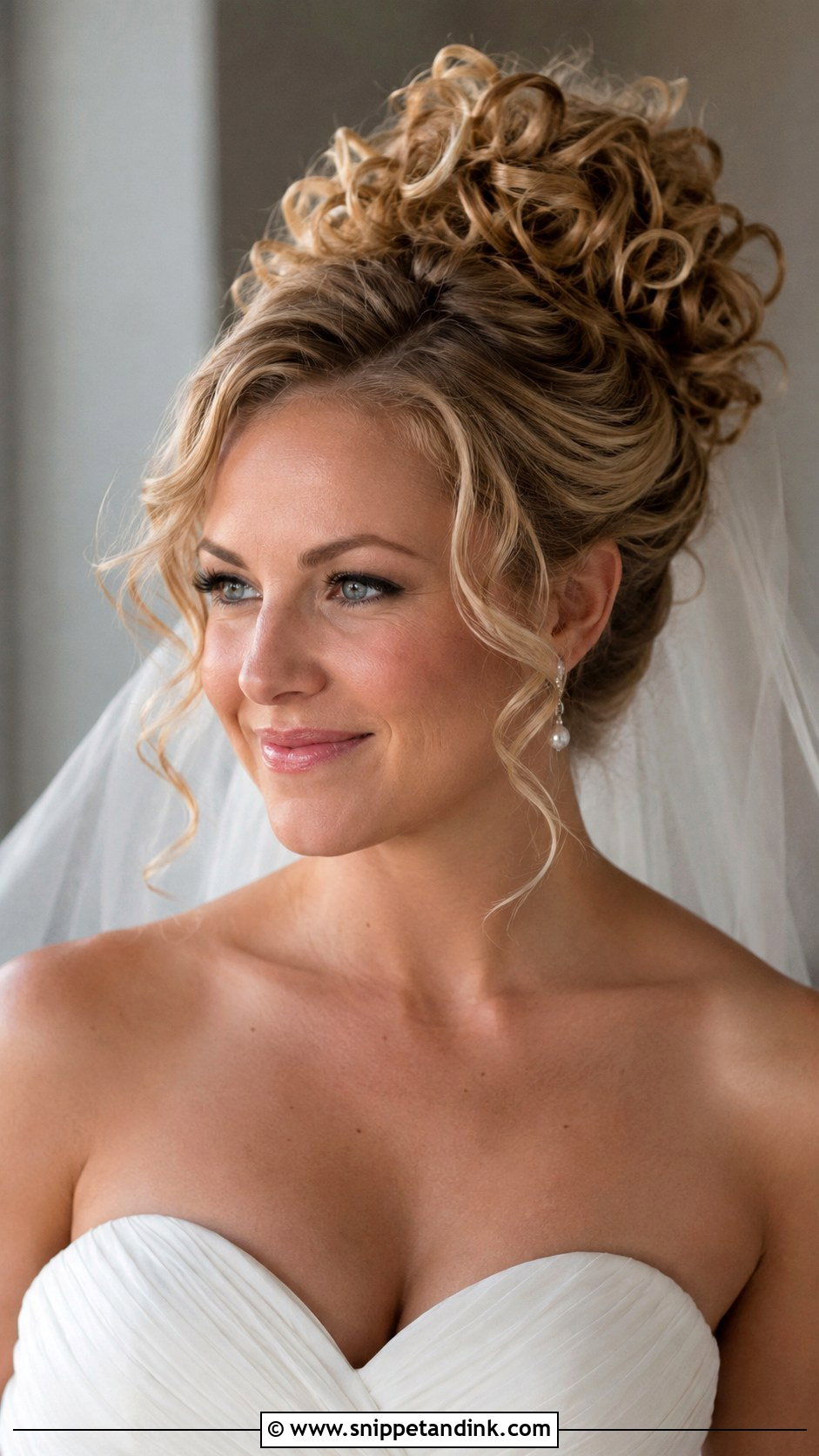
Lifting curls to the crown pulls the eye upward, which is why a high bun pairs so naturally with strapless gowns and statement earrings. On thick curly hair I set a small, firm anchor ponytail first and pin the curls around it, because a high bun built straight from loose hair tends to tilt by the reception. Fine curls need a small padding or donut underneath to reach the same fullness. I’d skip this one if weight at the crown gives you headaches, since every curl ends up resting on one spot. Keep the outer curls touchable rather than lacquered so they still read as curls in close-ups.
3. Curly Chignon Wedding Updo
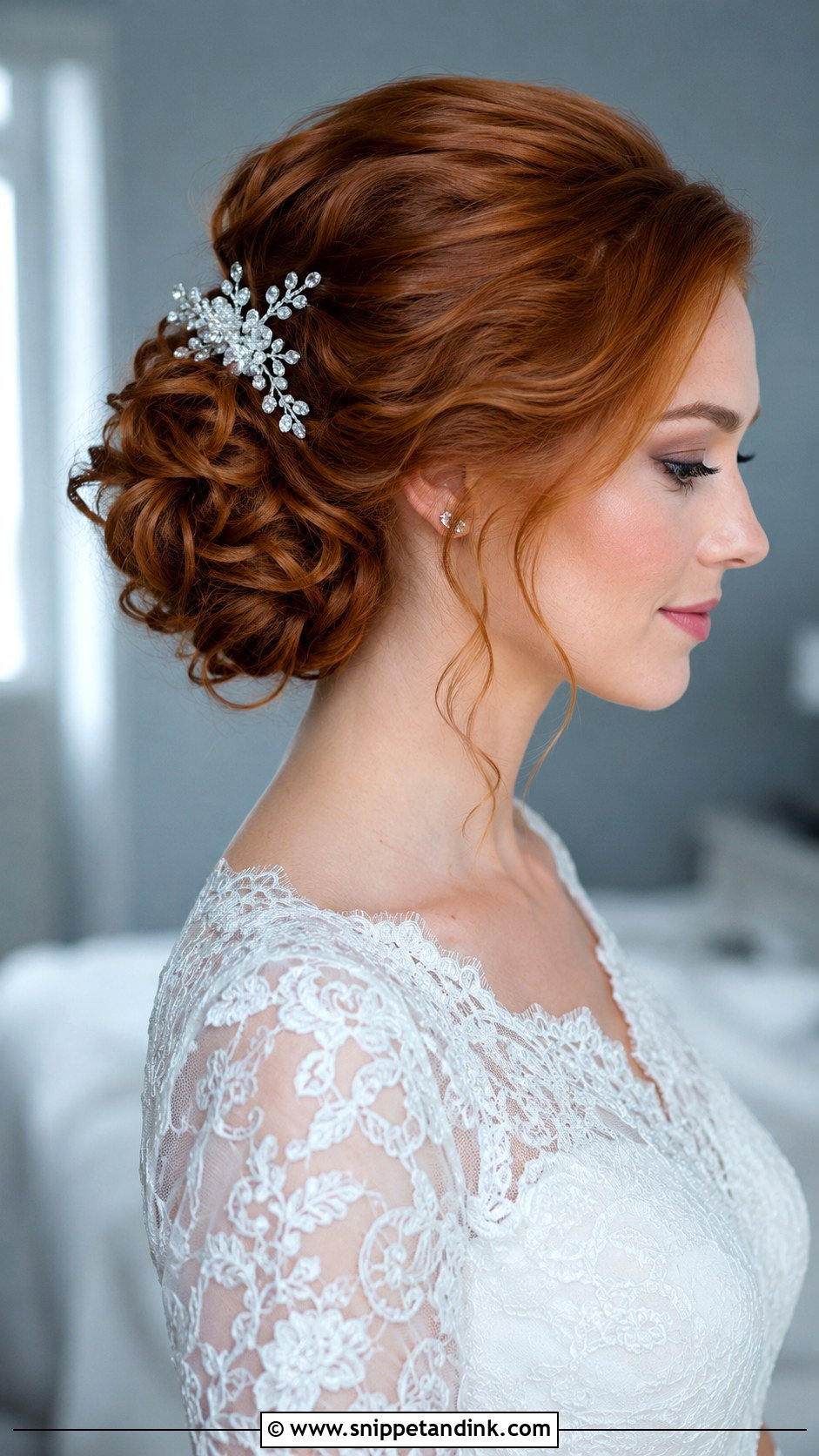
A chignon sits low and close to the head, centered at the nape or tucked slightly to one side. With curls I never brush the sections flat first. I twist each section along its own curl direction and pin it into place, so the pattern stays visible and the chignon has depth instead of a smooth helmet finish. That twisting also locks the curls together, which means fewer pins overall. It works under a cathedral veil because there is nothing tall for the comb to fight, and its quiet profile suits lace.
4. Messy Curly Bun Wedding Updo
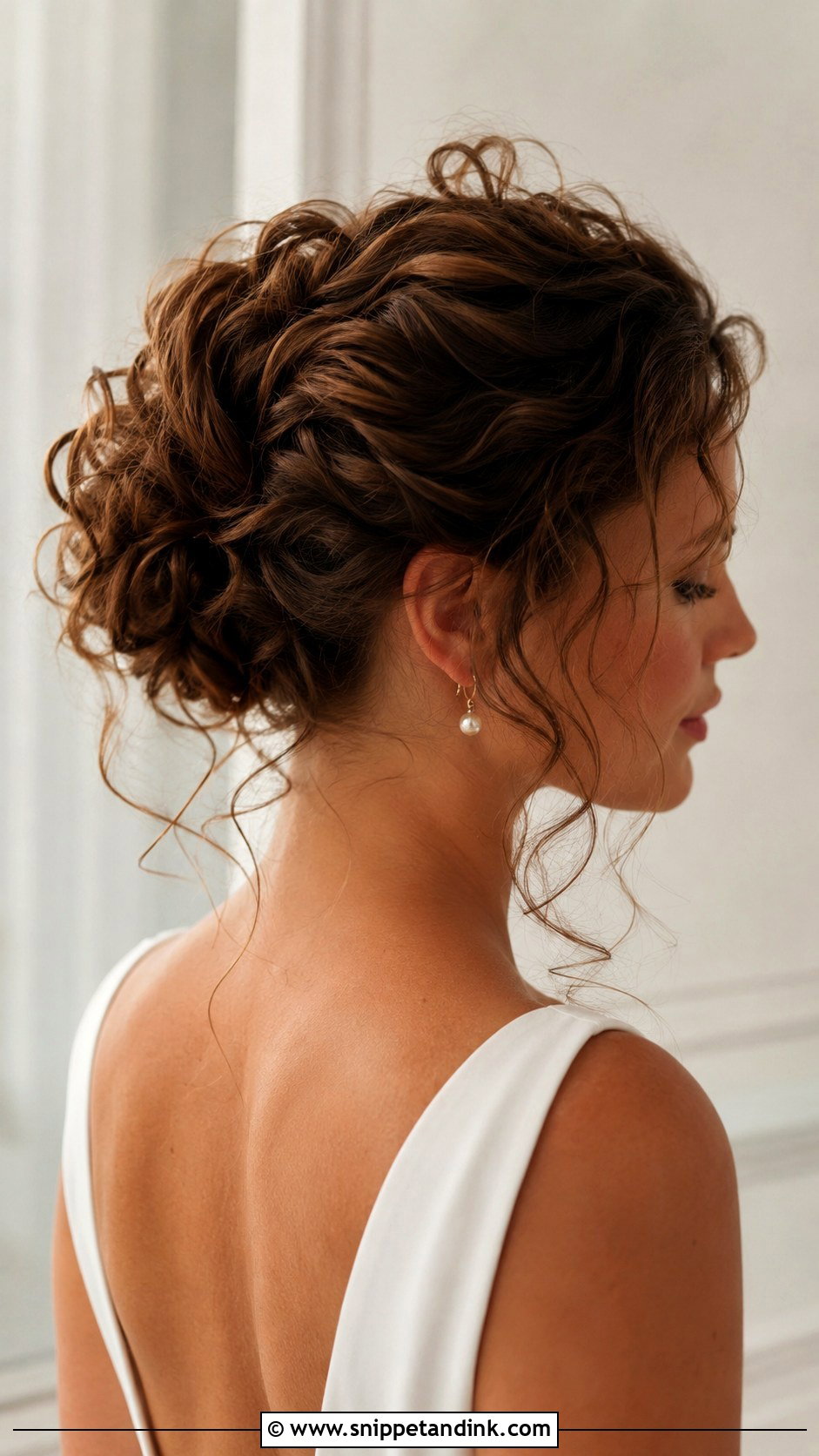
Messy is the hardest look to get right on curls, because random pinning reads as unfinished in photos. What makes it work is a firm hidden base with the natural loops, bends, and tendrils placed on top, one at a time. I pull pieces loose only after the bun is secure, never before. This is the style I suggest when a bride knows her curls will grow over the day: an airy shape absorbs the extra volume, while a sleek bun just starts to look frizzy. Garden and beach venues suit it far better than a black-tie ballroom.
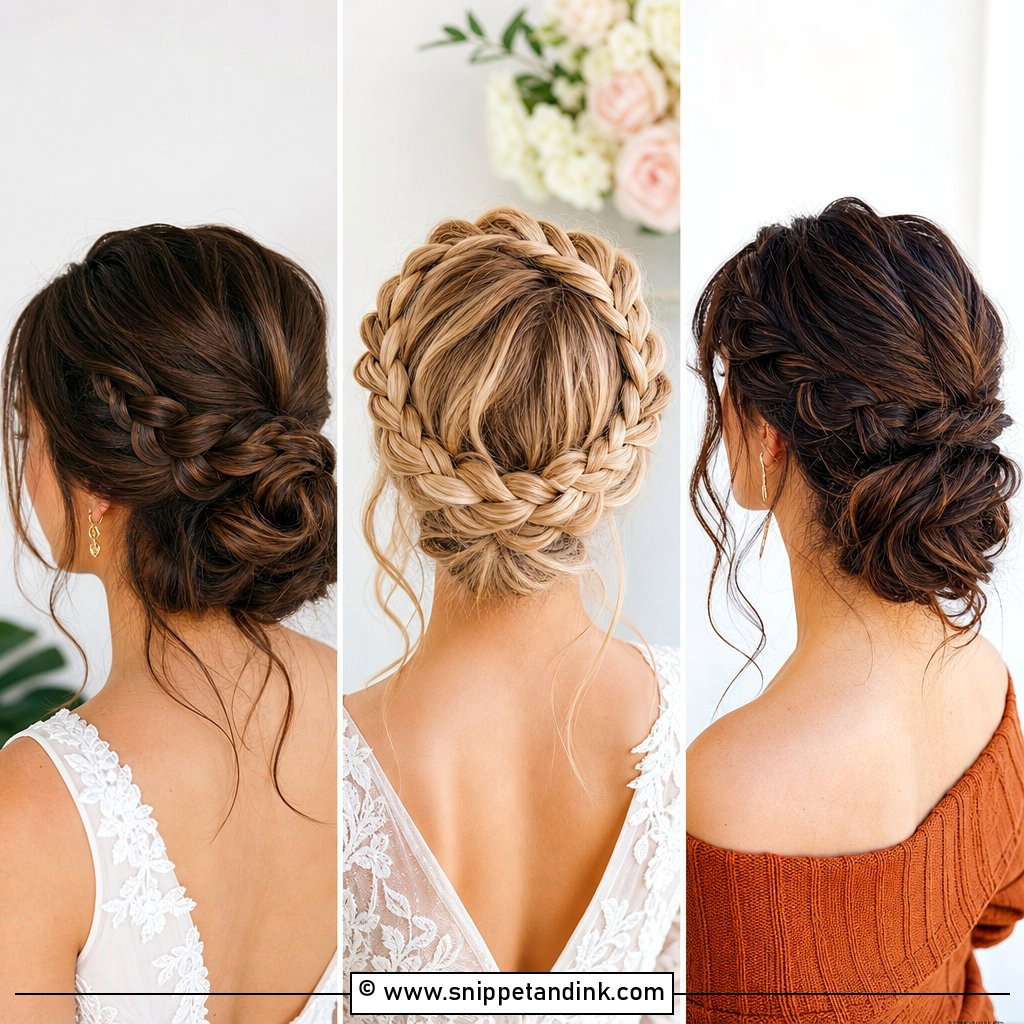
5. Curly Braided Wedding Updo
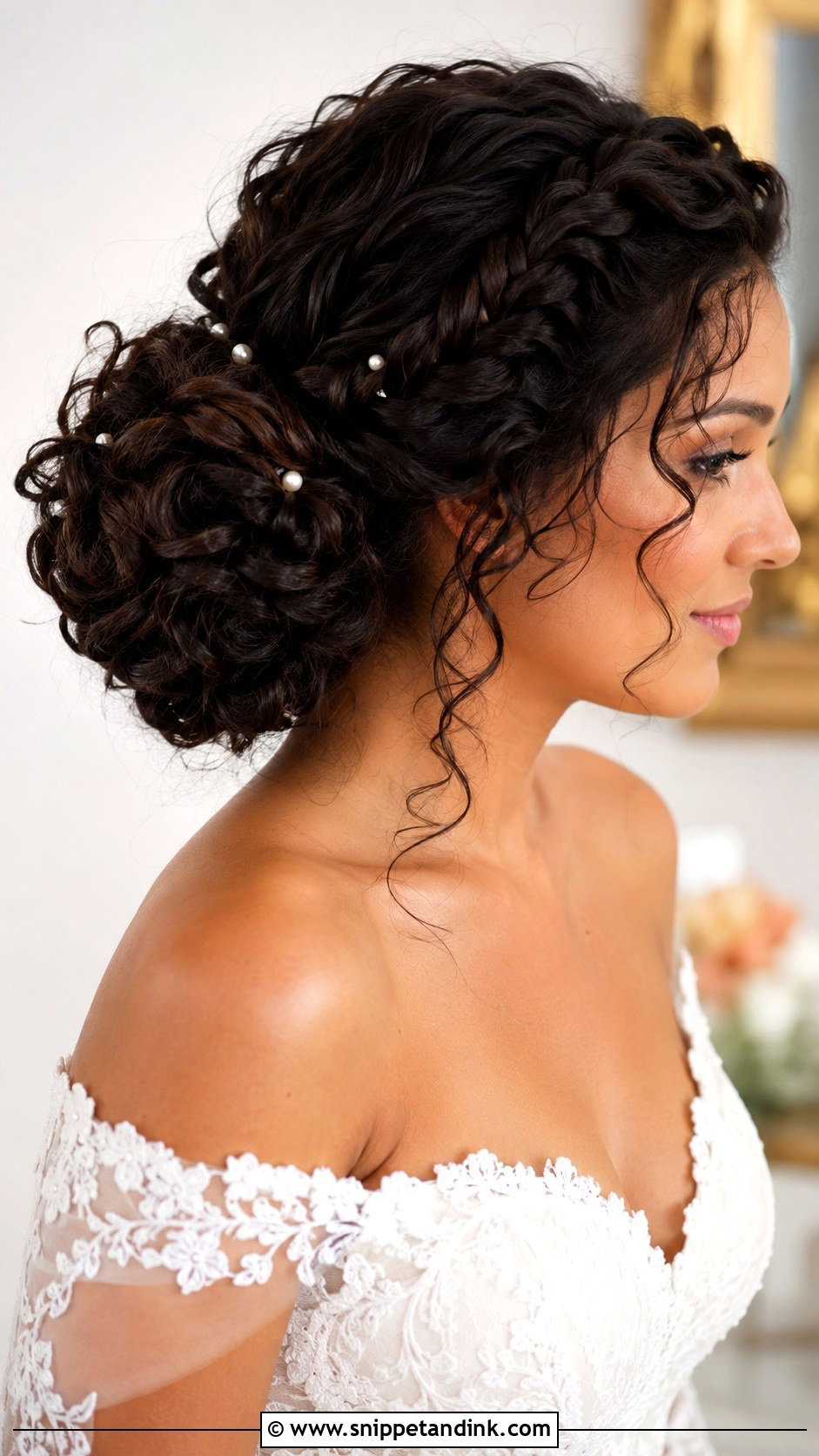
Braids give curly hair the one thing it lacks on its own, a fixed line. I use the braid as the structure, wrapping it across the crown or running it down one side into a low bun, and let the curls supply the fullness. Braiding while the hair is slightly damp with a leave-in keeps the plait firm at the root and stops frizz along its edges. On fine density I gently pull the braid wider; on thick hair I braid a smaller section, or the plait turns into a rope that dominates the head. Small flowers or a veil tucked under the bun both sit securely against it.
6. Side Curly Wedding Updo
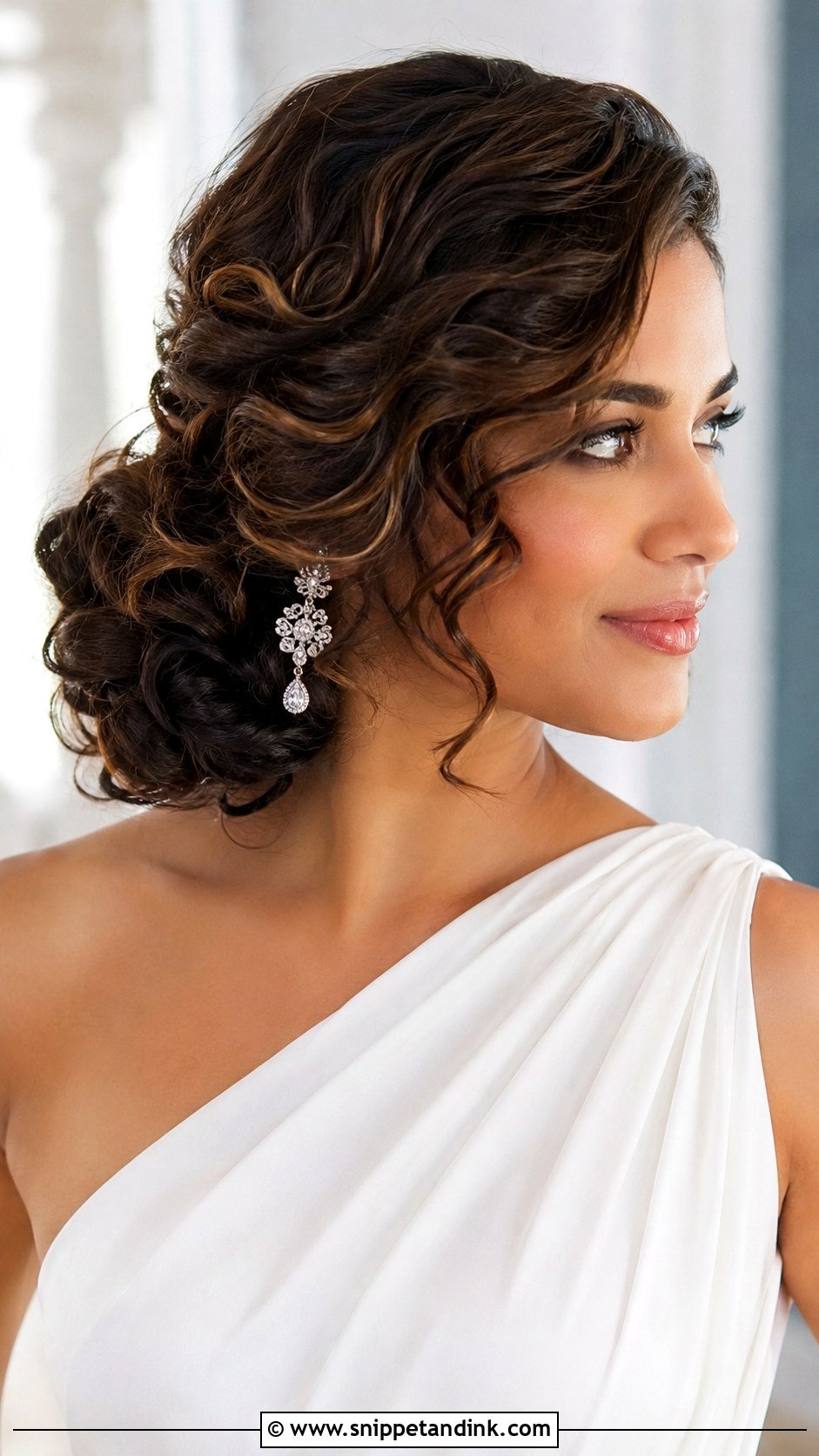
Sweeping everything to one side looks best from the front and the open side, so before choosing a side I always ask which way you’ll face the guests at the altar. The curls get pinned into a low twist or gathered cluster just behind the ear. One-shoulder gowns pair naturally with it, provided the hair sits on the bare side. The hidden risk is wind. All the weight is on one side, so I cross the base pins in an X and add a few on the light side too; without that, the cluster creeps forward by the end of the photos.
7. Curly French Twist Wedding Updo
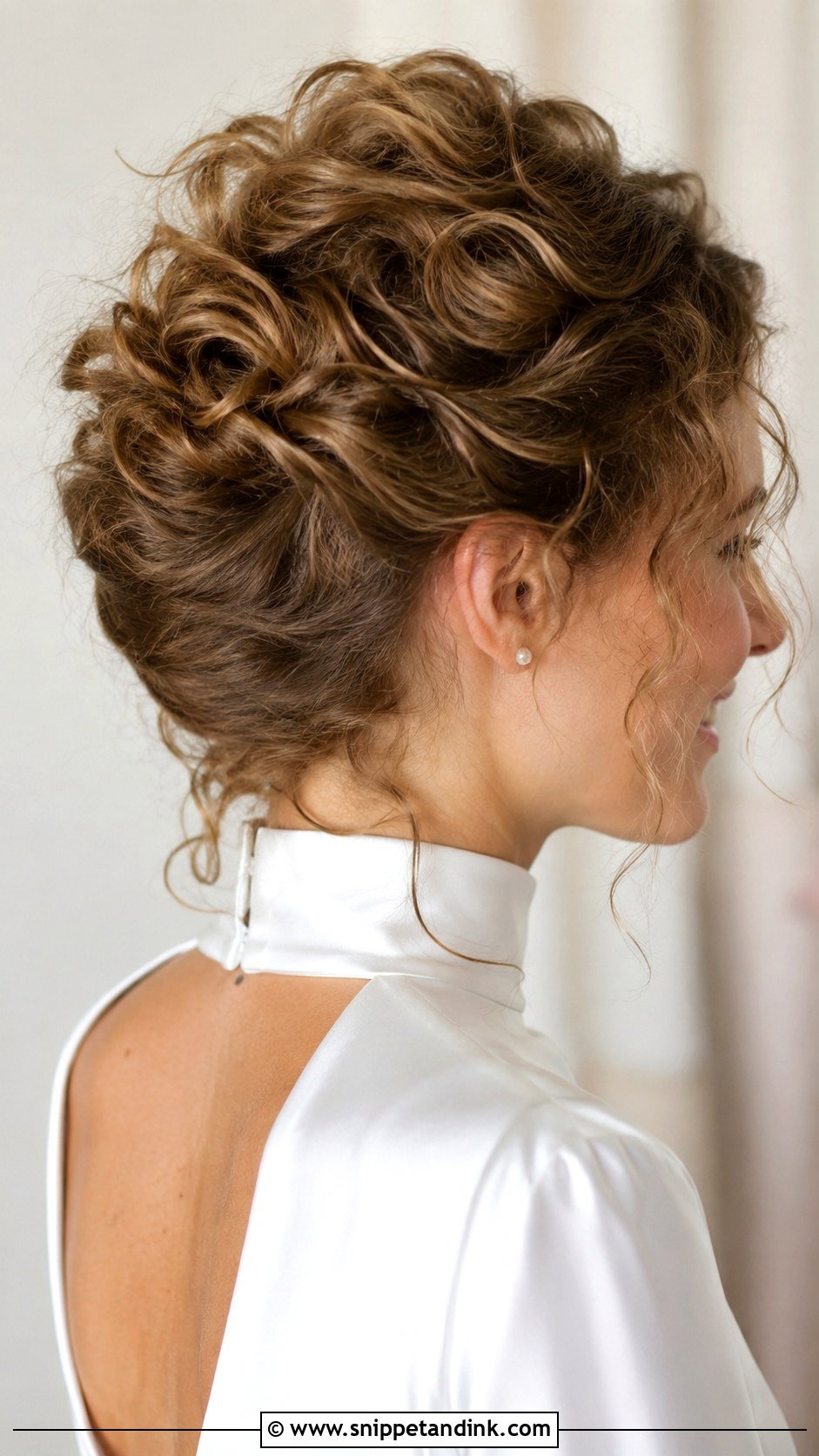
A traditional French twist is smoothed into a sleek, tight roll, but curly hair rarely wants to be that smooth, and forcing it means heat and a lot of product. I let the curls stay full through the back and fold the twist more loosely, then pin along the seam with long hairpins woven in rather than bobby pins pushed straight. The ends can tuck in for a tidy finish or spill out softly at the top. A comb slides into that seam securely without crushing anything, which makes it a reliable base for evening receptions and courthouse ceremonies alike.
8. Curly Crown Braid Wedding Updo
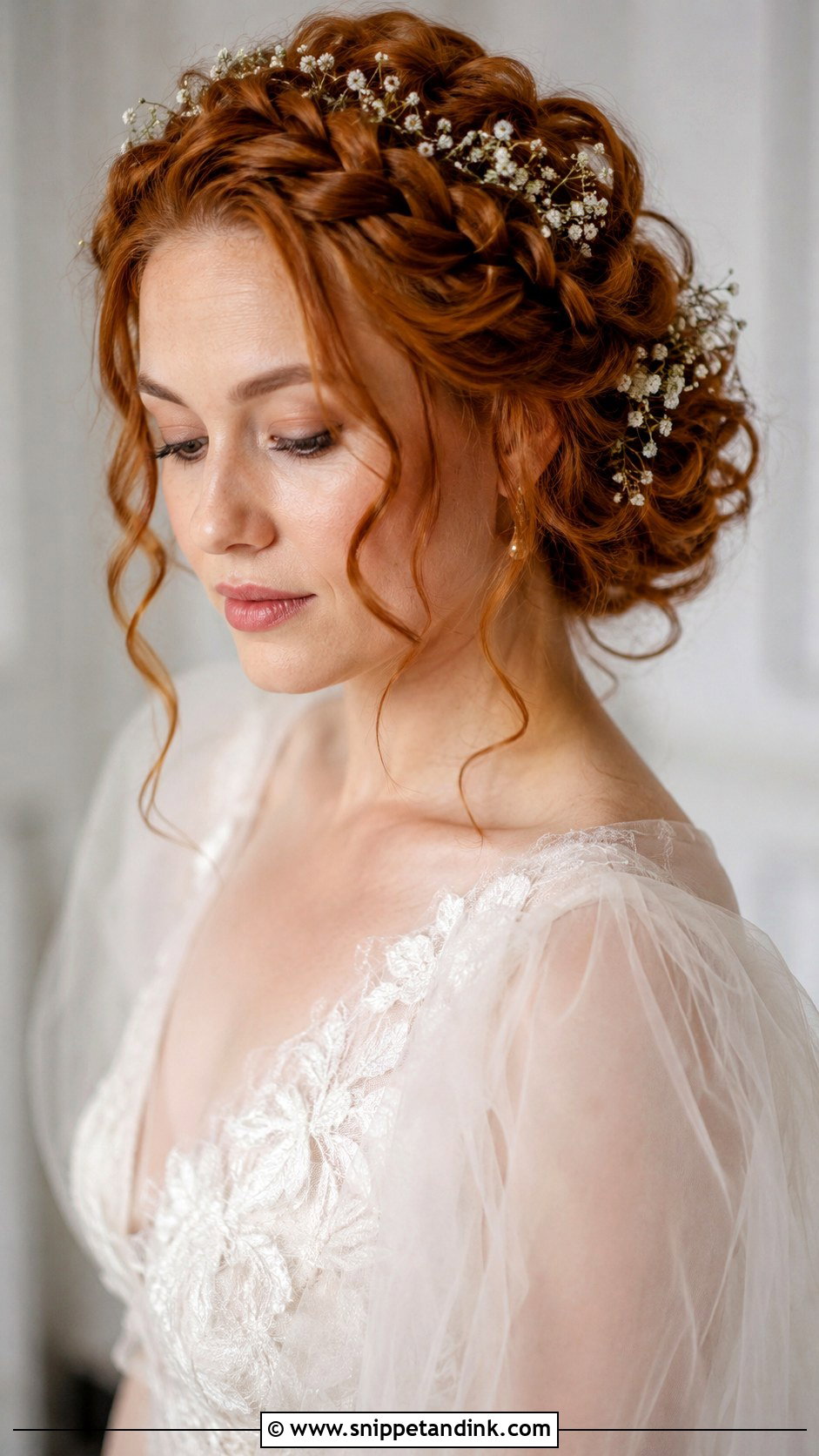
A crown braid has an almost fairy-tale feel, and it’s one of the more practical choices outdoors because nothing hangs loose to catch the wind. The braid circles the head and the remaining curls either tuck into it or pin into a low bun. It needs length, though: shoulder-length curls usually won’t make the full circle once shrinkage takes its share. I braid it a little looser than looks right, since a tight crown braid pulls at the hairline after a few hours and starts a headache. Small blossoms or gold pins slide easily between its sections.
9. Curly Updo With Pearl Pins
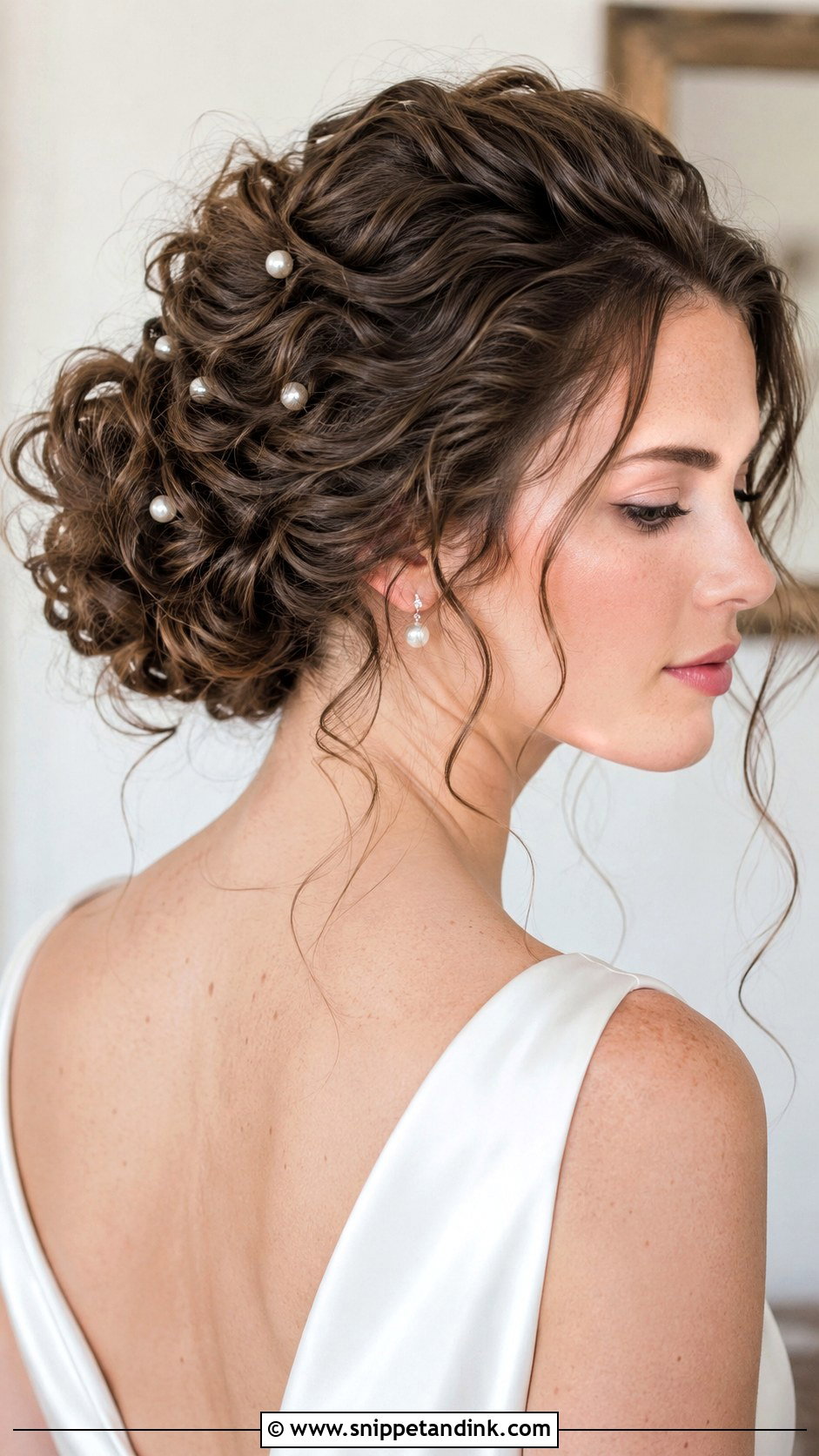
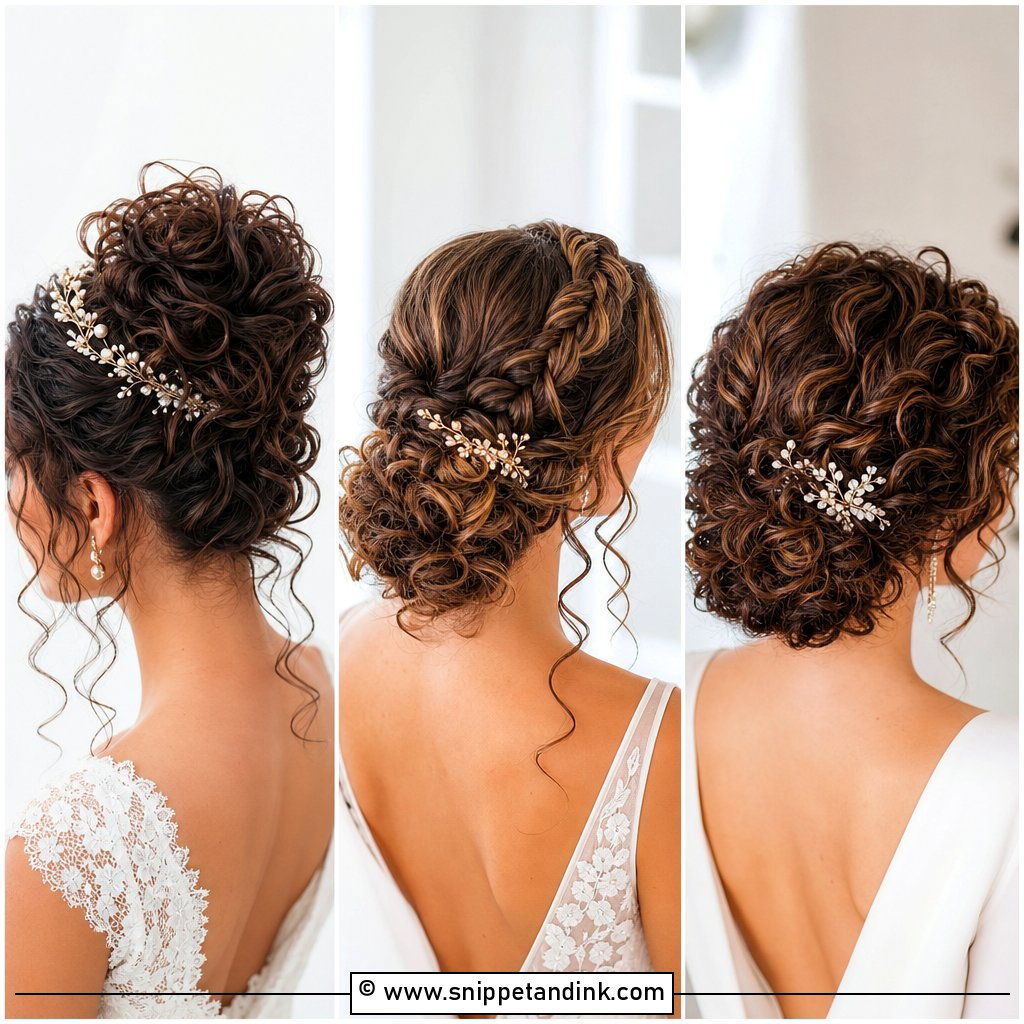
Pearl pins are the accessory I find easiest on curls, because each pin hides its grip inside a curl and only the pearl shows. The base can be any shape from this list; what matters is placement. I scatter an odd number at slightly different depths, which looks natural, rather than lining them up, which looks like a pattern. If your dress has pearl beading or plain satin, they echo it without competing. They also make bridesmaid hair easy to coordinate, since everyone can wear the same pins placed to suit her own style.
10. Curly Updo With Flowers
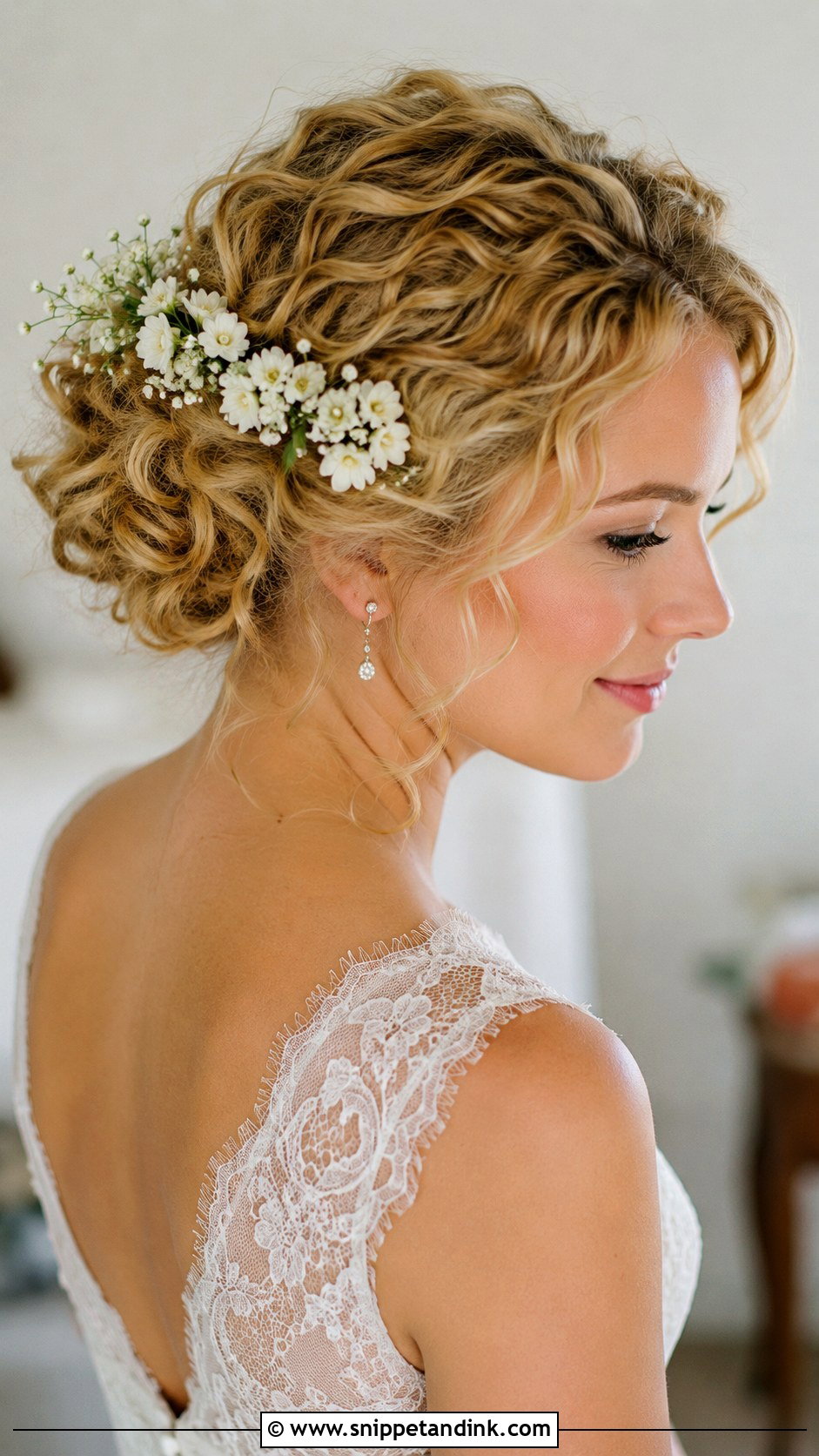
Flowers and curls are an easy match, as long as the flowers stay small. Large blooms flatten the curl shape around them and end up being the whole hairstyle. I tuck them into a low bun, run them along a braid, or cluster them beside a twist. Fresh petals sit against a warm scalp all day and soft varieties wilt quickly, so for summer I usually suggest faux, which is far more reliable in heat. If you want fresh, ask your florist to wire them and keep them chilled until the last moment.
11. Curly Updo With Veil
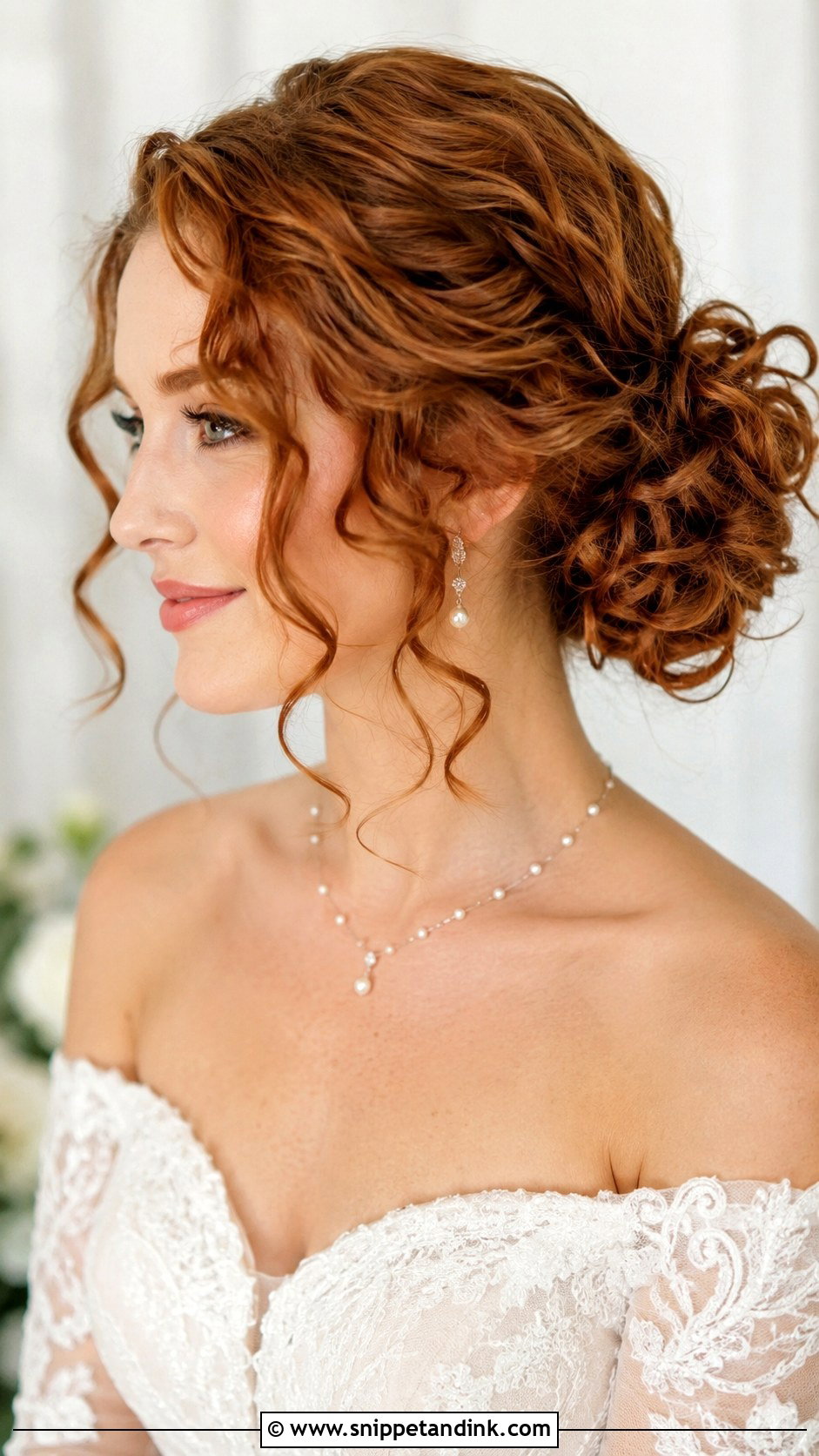
A veil adds weight and pulls backward, so the updo under it has to be a solid base. Low buns, chignons and French twists all give the comb something firm to grip. I secure the comb with a couple of crossed bobby pins beneath it rather than trusting its teeth, because well-conditioned curls are slippery. Worn above the bun, the veil reads traditional; tucked under, it feels softer. Leave a few curls around the face so the hair still has life once the veil comes off for the reception.
12. Curly Updo For Short Hair
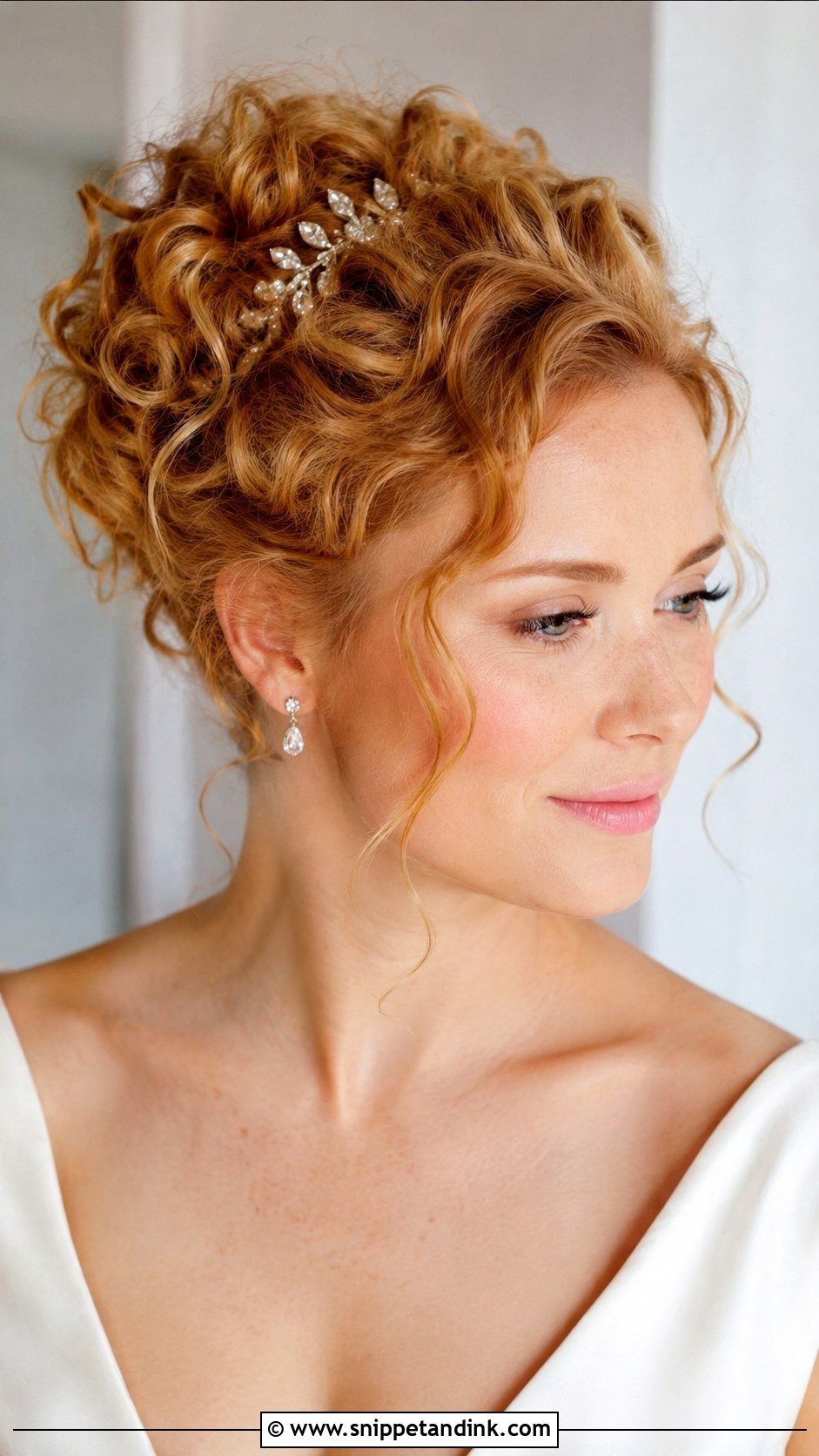
Short curly hair can absolutely go up; it just won’t make a big bun, and forcing one leaves ends poking out everywhere. I lift and twist the curls in small sections and pin them into a soft shape at the back or crown, letting the shortest pieces at the nape and temples frame the face. Bobs and curly lobs both work this way. Choose small decorative pins or mini combs, since a heavy accessory has nothing to anchor into. One caution: if your shortest layers are around chin length, a few will escape by evening, so plan for that look rather than fighting it.
13. Curly Updo For Long Hair
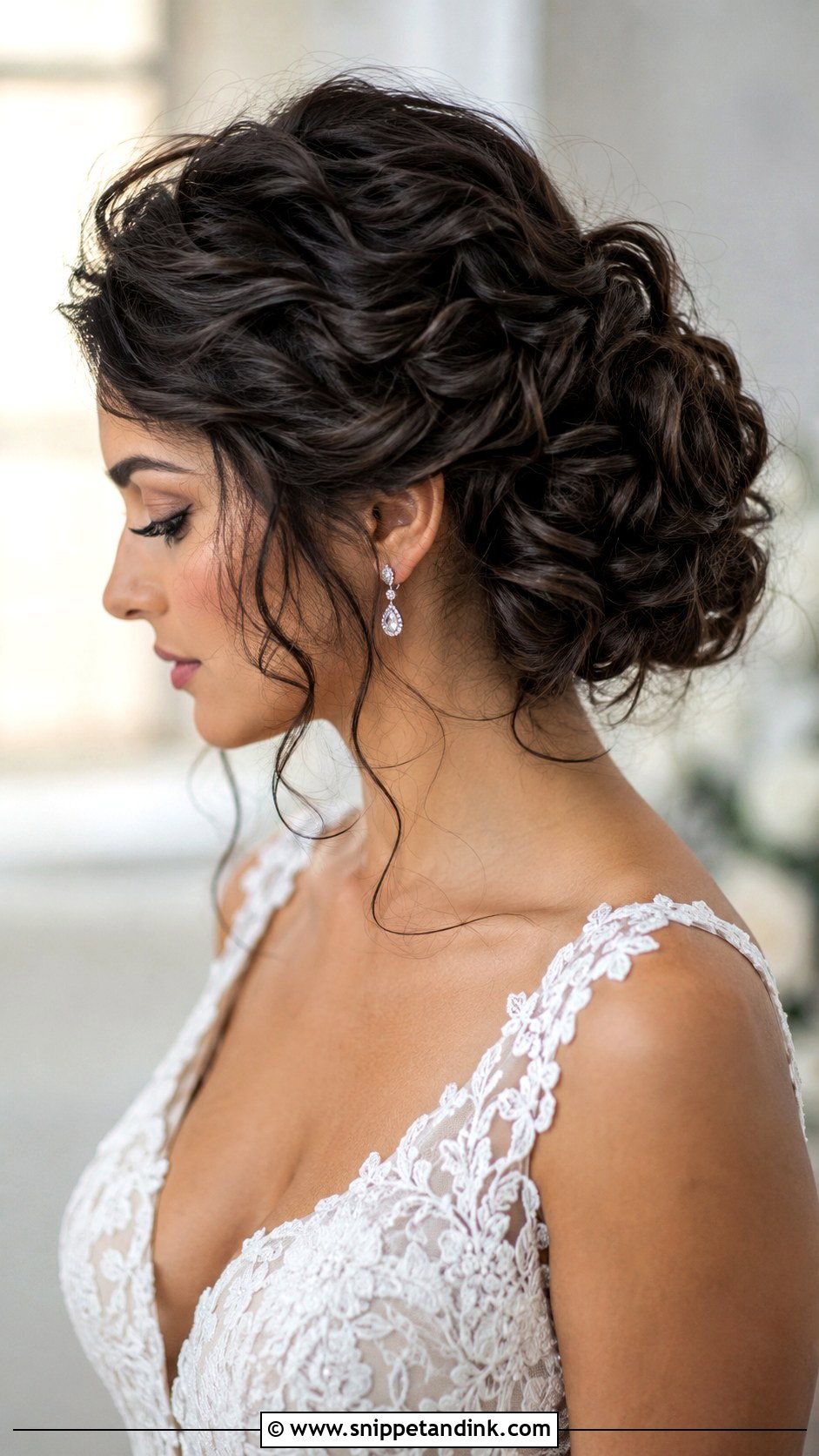
Long curls give me the most material to work with, and also the most weight. A very long curly updo can pull hard on the scalp by the reception if all the hair lands in one bun. I divide the length and pin it across the back of the head so the load spreads out, and I keep the inside of the bun loosely packed so it doesn’t swell outward. The extra length lets me build a twisted chignon or braided low bun with real depth, plus face-framing pieces that have room to curl. A bigger shape like this stays in proportion with dramatic gowns and formal venues.
14. Natural Curly Wedding Updo
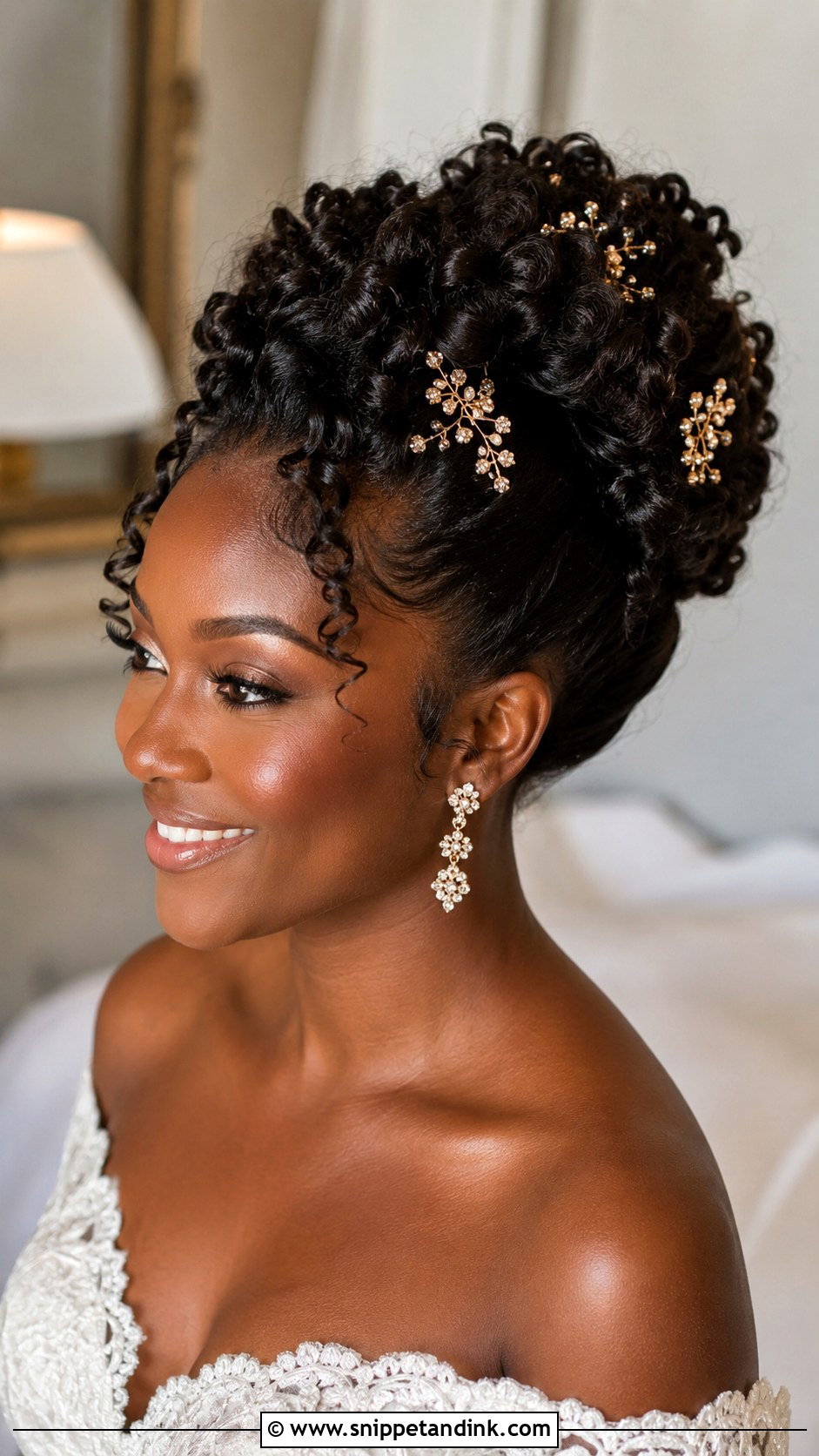
A natural curly updo keeps your actual curl pattern, from loose spirals to tight coils. The groundwork matters more than the pinning here: hydrated, defined curls set with a cream or gel the day before hold their shape, while dry hair styled on the morning tends to frizz and lose definition. A puff, pinned crown or sculpted bun can all look bridal once the edges are laid neatly and the accessories go in. For coily hair I’d avoid anything that needs heavy tension at the hairline, since you’ll be wearing it for a very long day. Looking like yourself in the photos is reason enough to choose it.
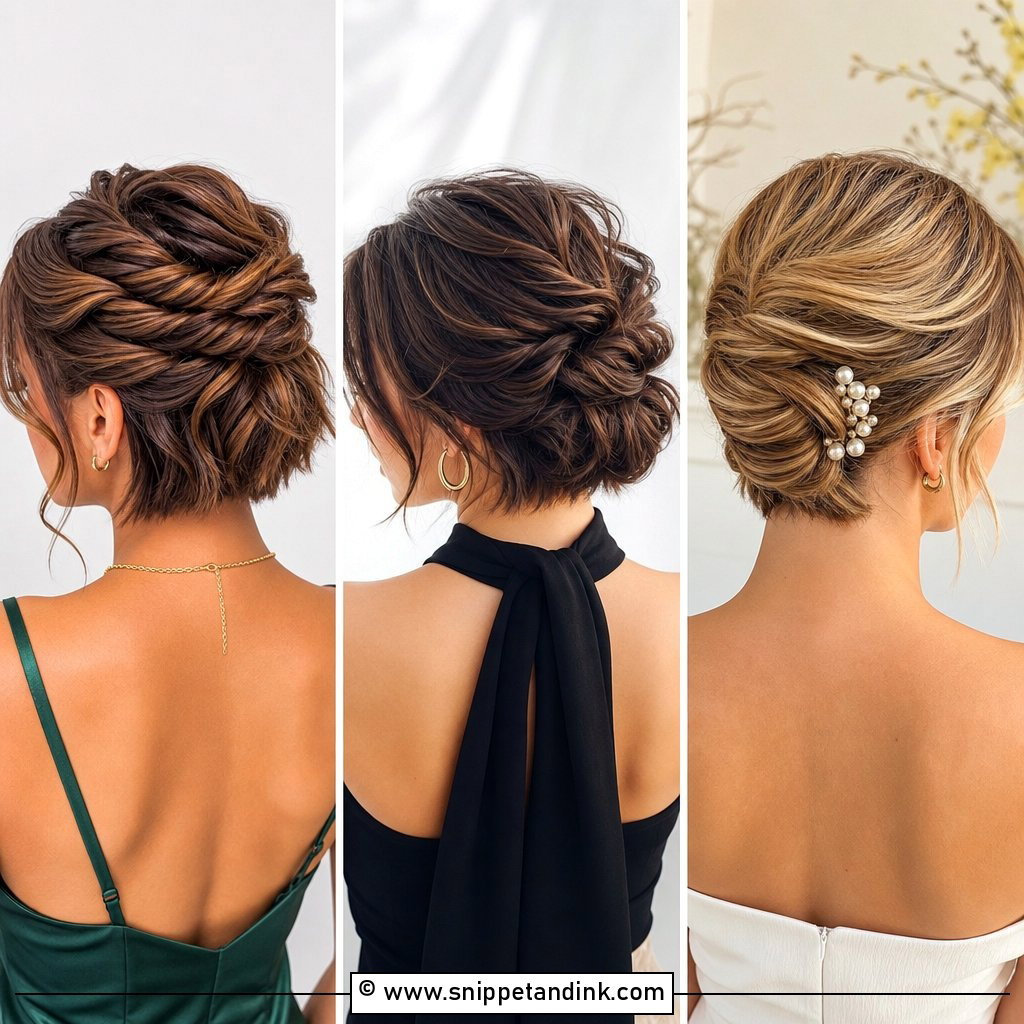
15. Curly Updo With Face Framing Curls
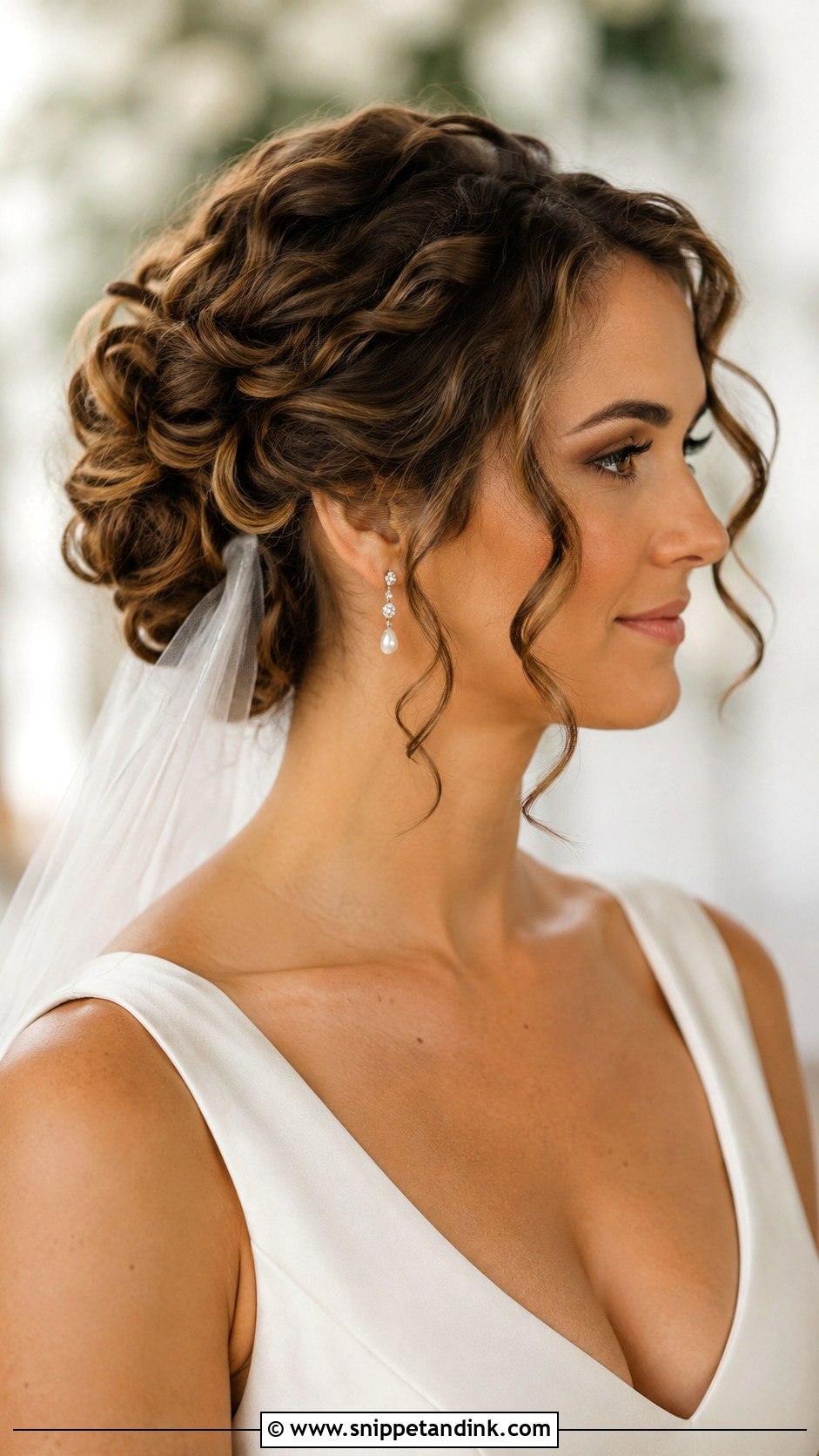
Leaving a few curls out at the front softens the hairline and draws attention to the eyes, cheekbones, and neckline. Those loose curls get their own treatment: I define and set each one, because front pieces are the first thing to frizz or drop. Two or three on each side look intentional. More than that, and it starts to look like the updo is coming down. If you feel exposed with every strand pulled back, this is the gentlest way into an updo, and it suits guests as well as brides.
Shrinkage, Humidity and the Bun You See at Hour Six
Curly hair changes size during a wedding. Humidity, body heat and dancing all push moisture into the strands, and a bun that looked neat at noon can be noticeably wider by the first dance. I plan for that instead of fighting it.
Build it smaller than the final shape
I pin the bun a little more compact than the photo you brought, knowing it will grow. A gel or curl cream with some hold, worked in before pinning, slows the swelling without making the curls stiff to the touch.
Count the length shrinkage takes
Your curls are shorter than their stretched length, sometimes by several inches. A crown braid or a big chignon in an inspiration photo may need more hair than you have once the curls spring up, which is why a trial matters more for curly brides than for almost anyone else.
A Clutch Fix for Frizz Late in the Evening
Once your stylist has gone home, a few small things in your bag will handle most problems:
- Six or eight bobby pins in your hair color, for a bun that starts to loosen.
- A tiny pot of the same gel or cream used in your style, to smooth a frizzed front curl with one fingertip.
- A travel mist bottle of water, because a light spritz and a scrunch revives a flattened curl.
- A satin scrunchie for the end of the night, when the updo comes down and you want the curls protected on the way home.
Curls Styled as Curls Hold Up Best
Each of these works best when the curls are styled as curls, not smoothed into something else. Settle on the shape that fits your dress and how many hours you’ll wear it, then book a trial and keep the style in for the rest of that day. That’s when you learn whether the pins dig, the bun sinks or the front pieces frizz, and there is still time to adjust before the wedding.
You'll Like These Ideas:


Leave a Reply