
A French manicure looks simple until you try to get one right for a wedding. The base has to match your skin without going chalky, the tip has to suit the length of your nail bed, and the whole set has to look clean in ring photos taken a few inches from the lens. That is why I treat it as a design job rather than a default. Below are twenty versions I’d happily put on a bride, from barely-there micro tips to pearl chrome, along with notes on which shapes and nail lengths each one actually suits.
Matching Tip Depth and Base Shade to Your Own Nails
Before I pick a design, I look at the nail bed itself. The pink part of the nail and the white free edge have their own proportions, and a French tip has to respect them. A deep white band on a short nail bed makes the whole nail look stubby. A thin line on a long free edge looks unfinished. Most of what separates a polished French set from a tired one comes down to these two choices.
How deep the white should go
As a rough guide, the tip should cover only the free edge, or a fraction past it, on short nails. On medium and long nails you have more room, and a slightly deeper smile line looks intentional. I also curve the line a little lower at the sides than in the middle. A flat, straight-across tip almost always looks older than it is.
Testing the base against your skin
- Ask for two or three sheer bases painted side by side on one hand, then look at them by a window, not under the salon lamp.
- A base that is too pink makes fair skin look ruddy; one that is too pale goes grey on deeper skin.
- If you have a self-tan or spray tan booked, decide the base after it, because the tan shifts how every nude reads.
- Bring your ring if you can. The metal tone changes which white or ivory sits best beside it.
1. Classic French Wedding Nails
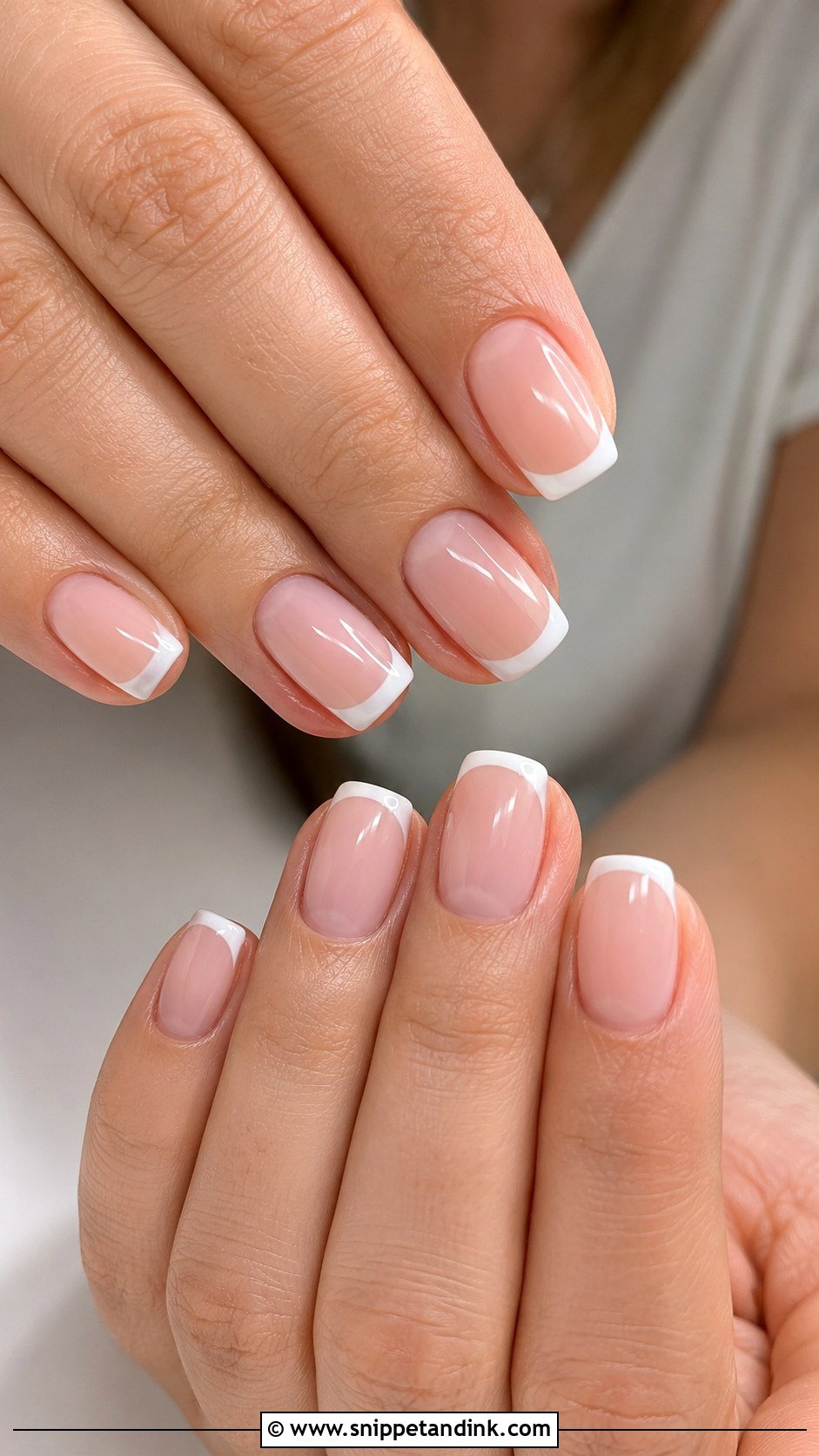
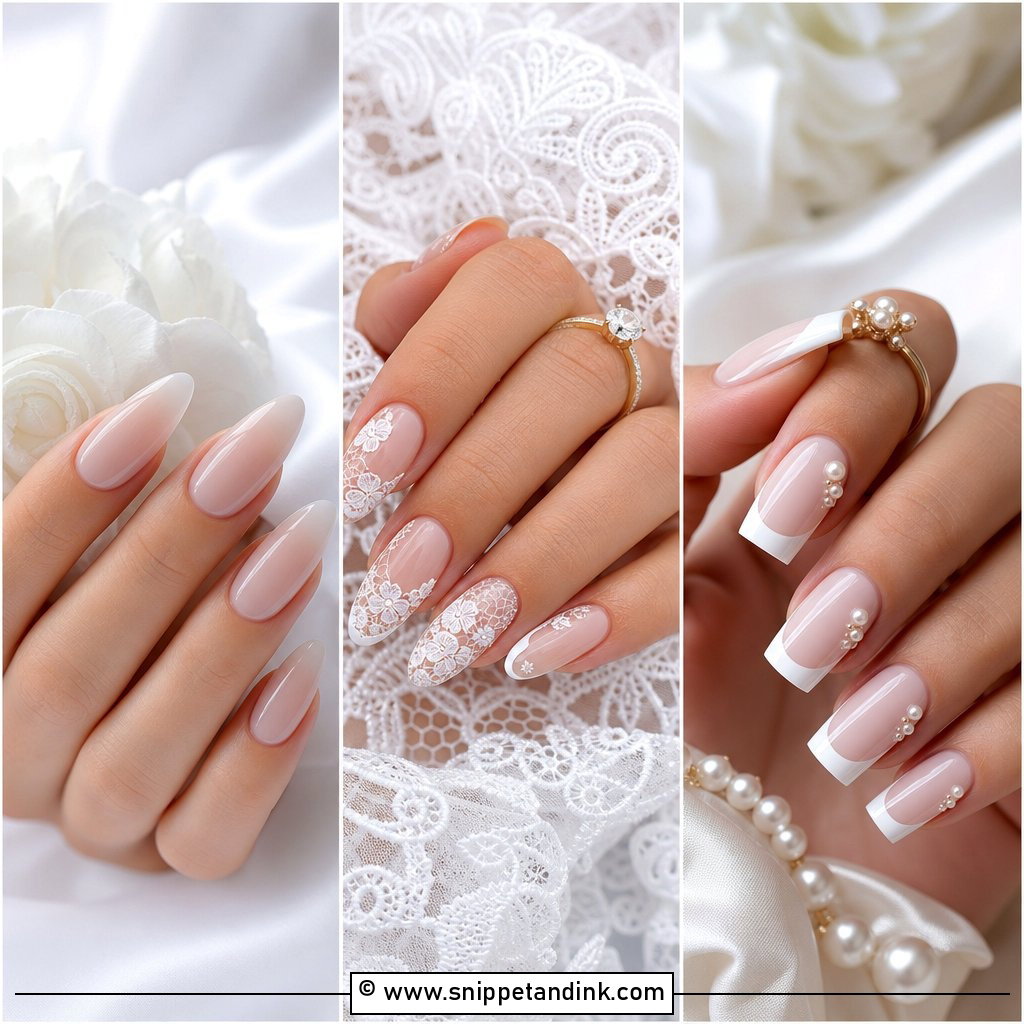
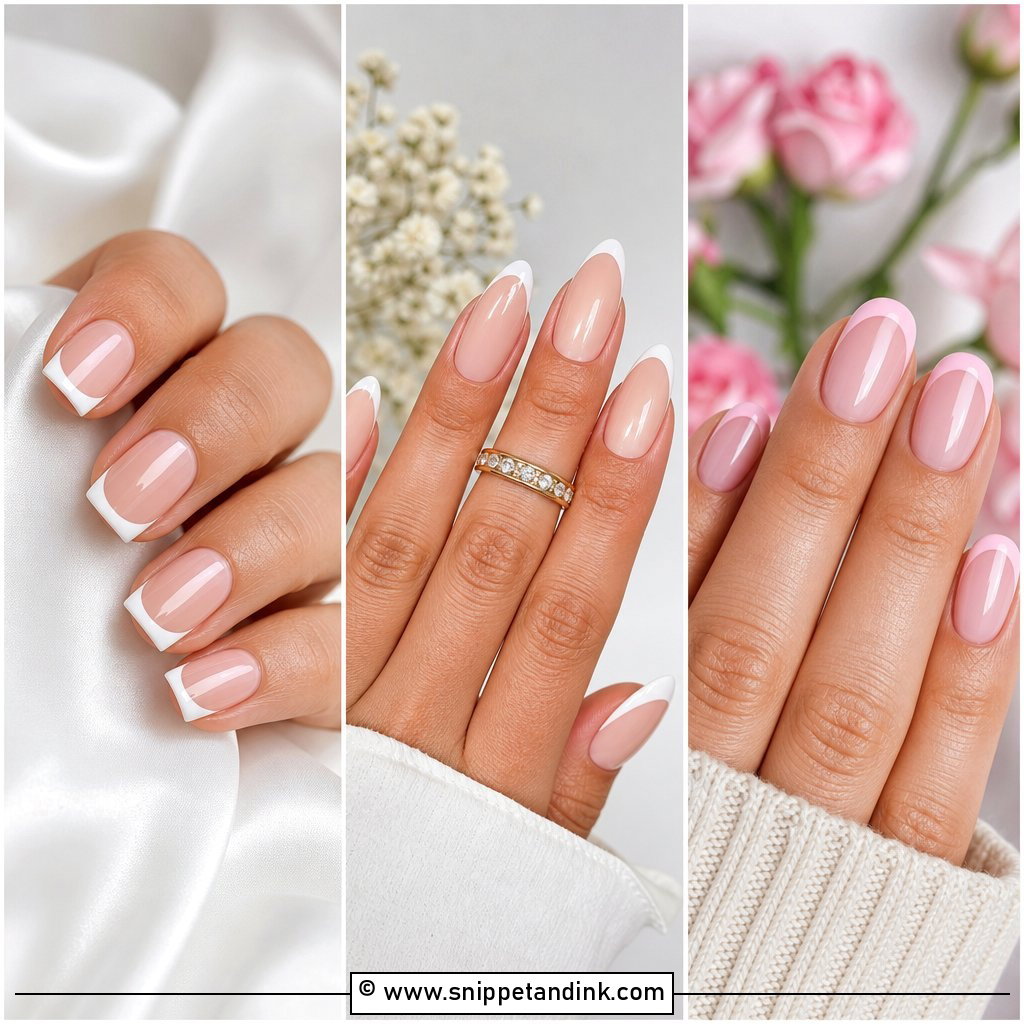
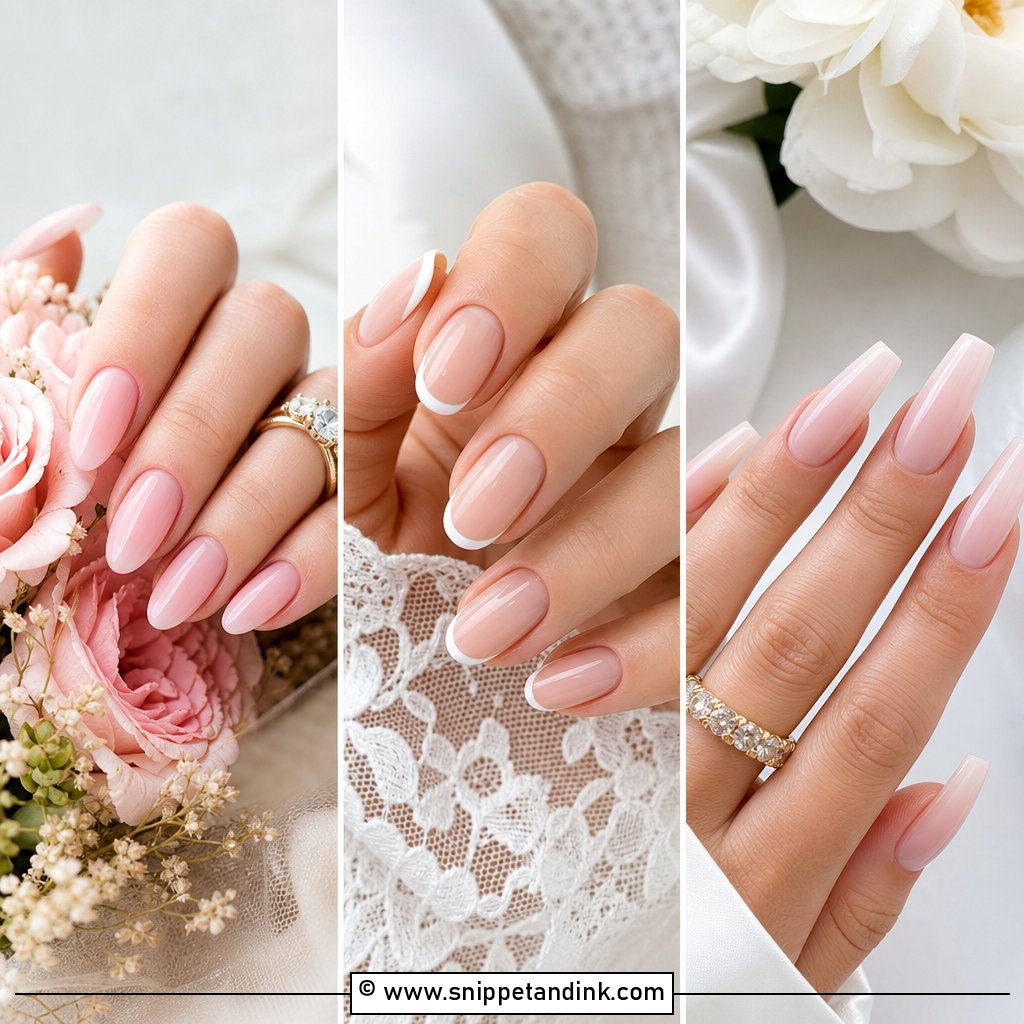
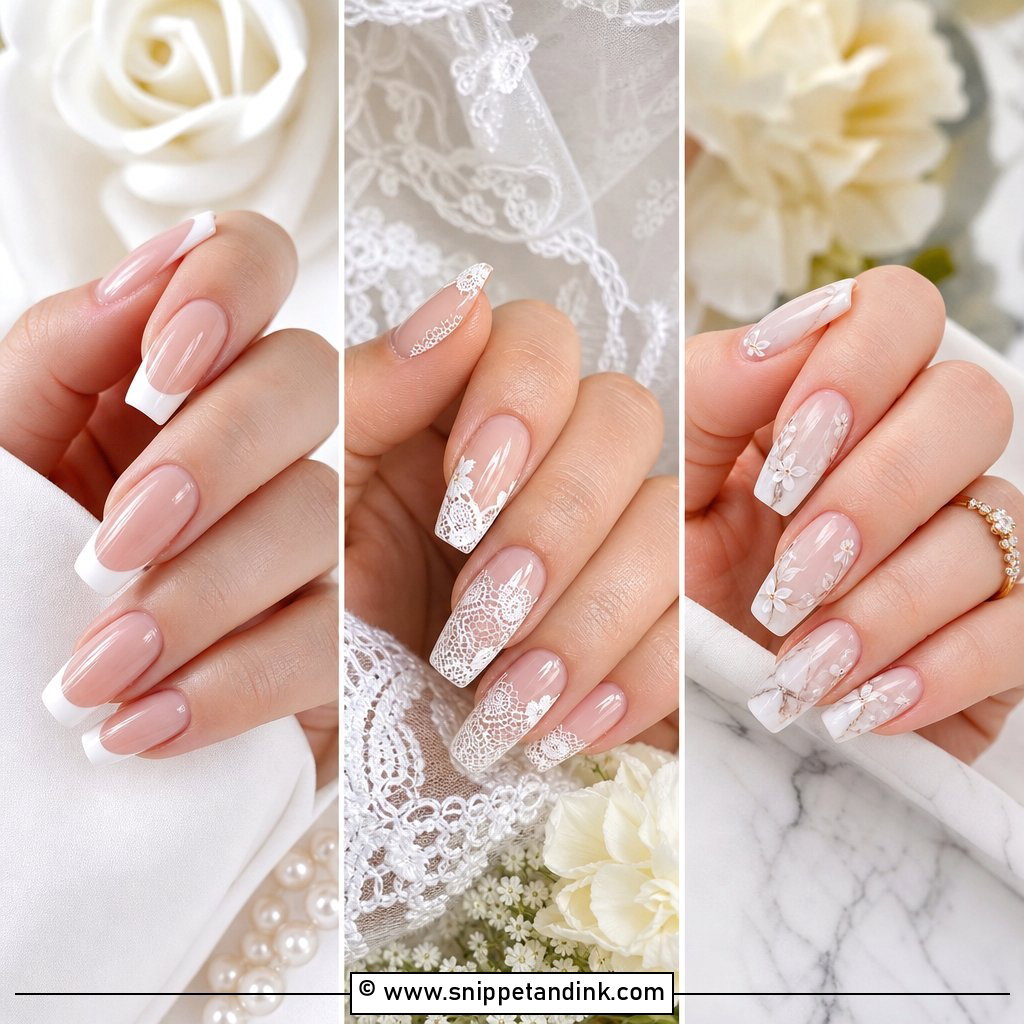
This is the version most people picture: a sheer pink or nude base and a clean white tip. It sits comfortably next to white, ivory, champagne and blush gowns, and it never pulls attention away from the ring. The detail I fuss over is the smile line. A thin, slightly deeper curve looks finer than a thick flat band, which is what makes a classic set look dated. Square keeps it traditional; almond softens it. I finish with a high-gloss top coat because a matte surface reads flat at close range.
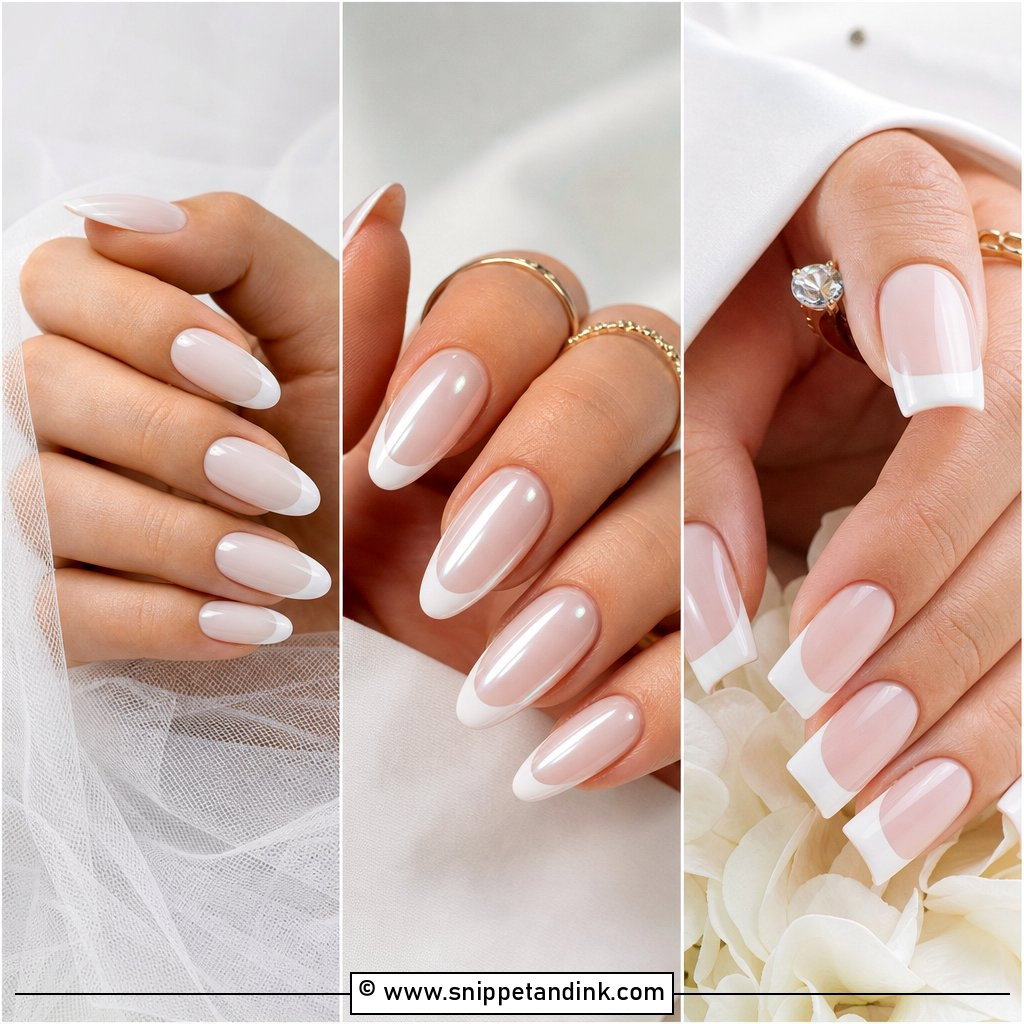
2. Milky French Wedding Nails
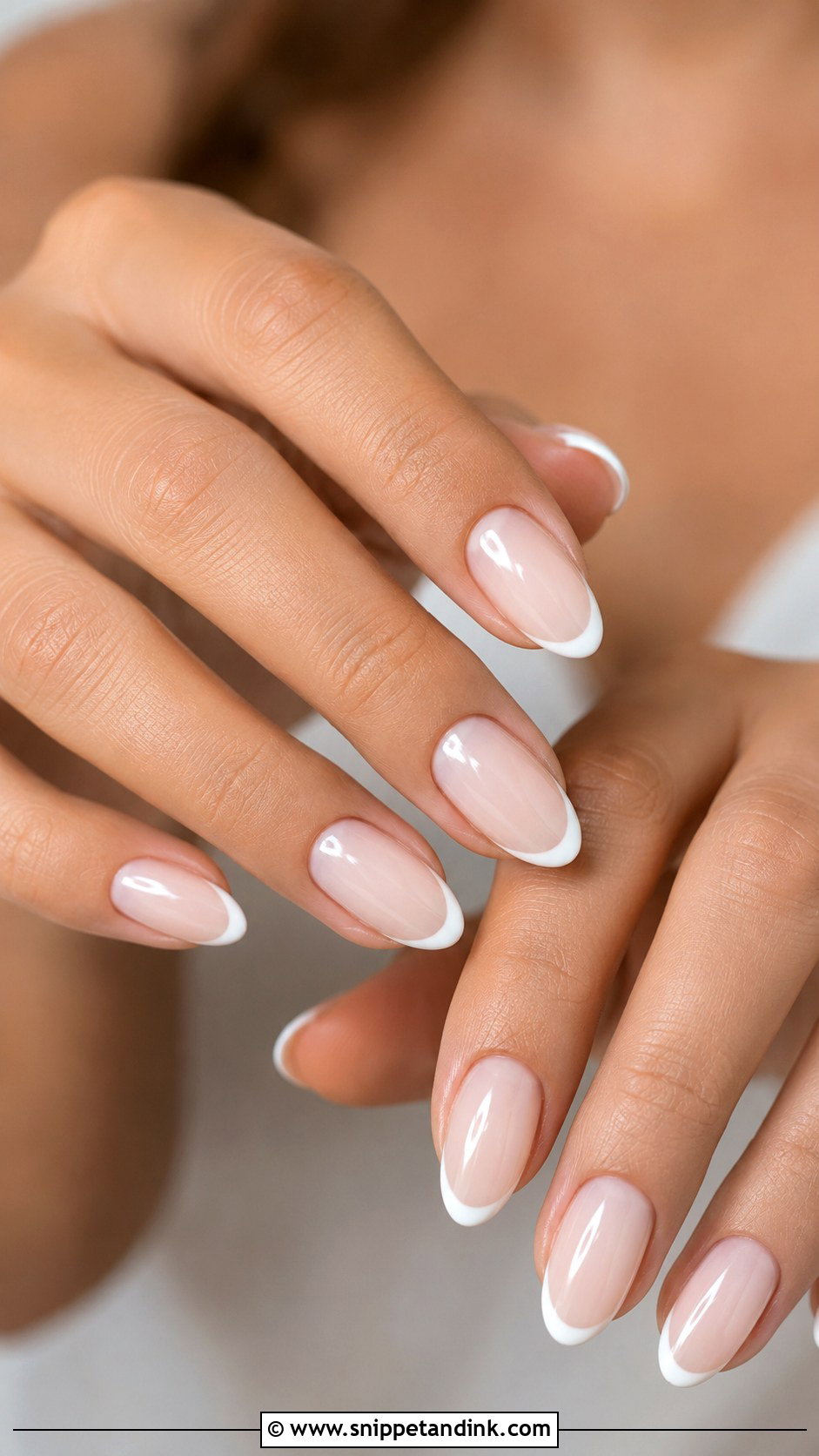
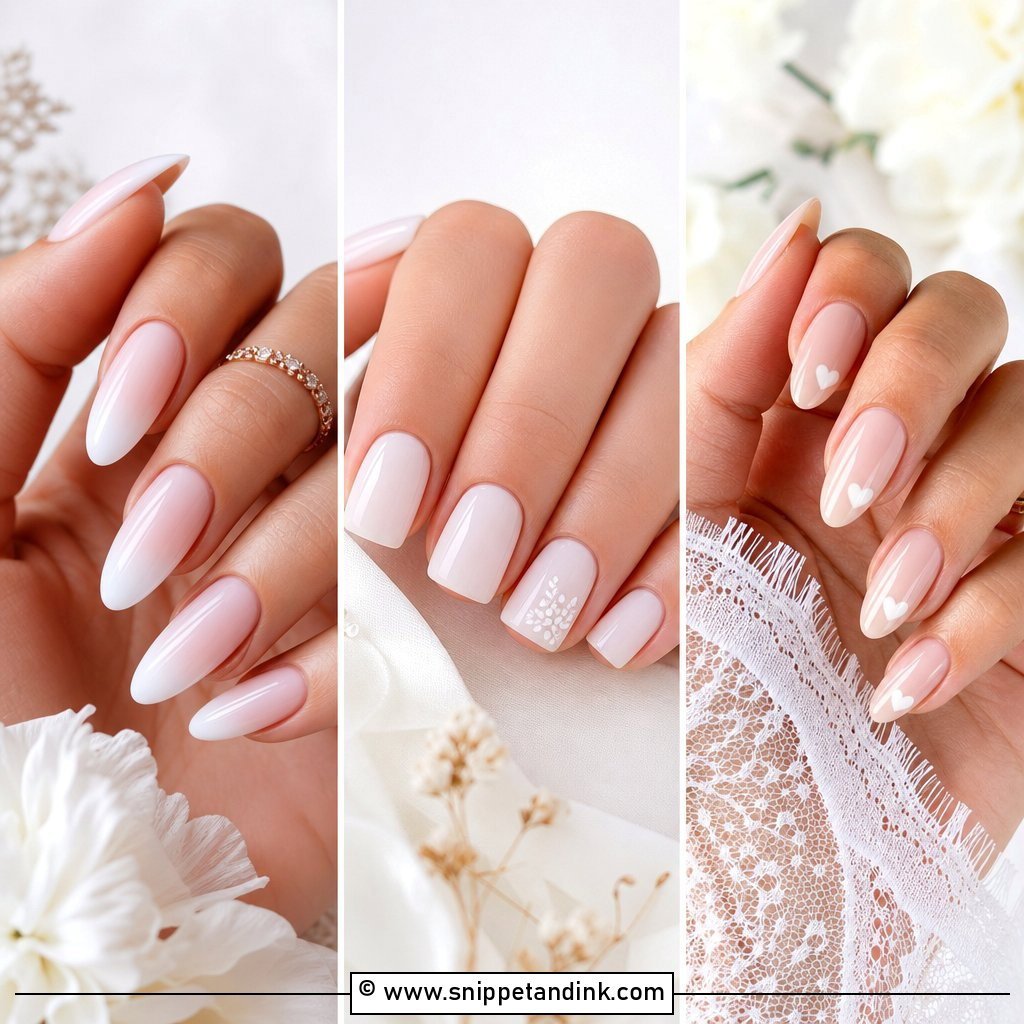
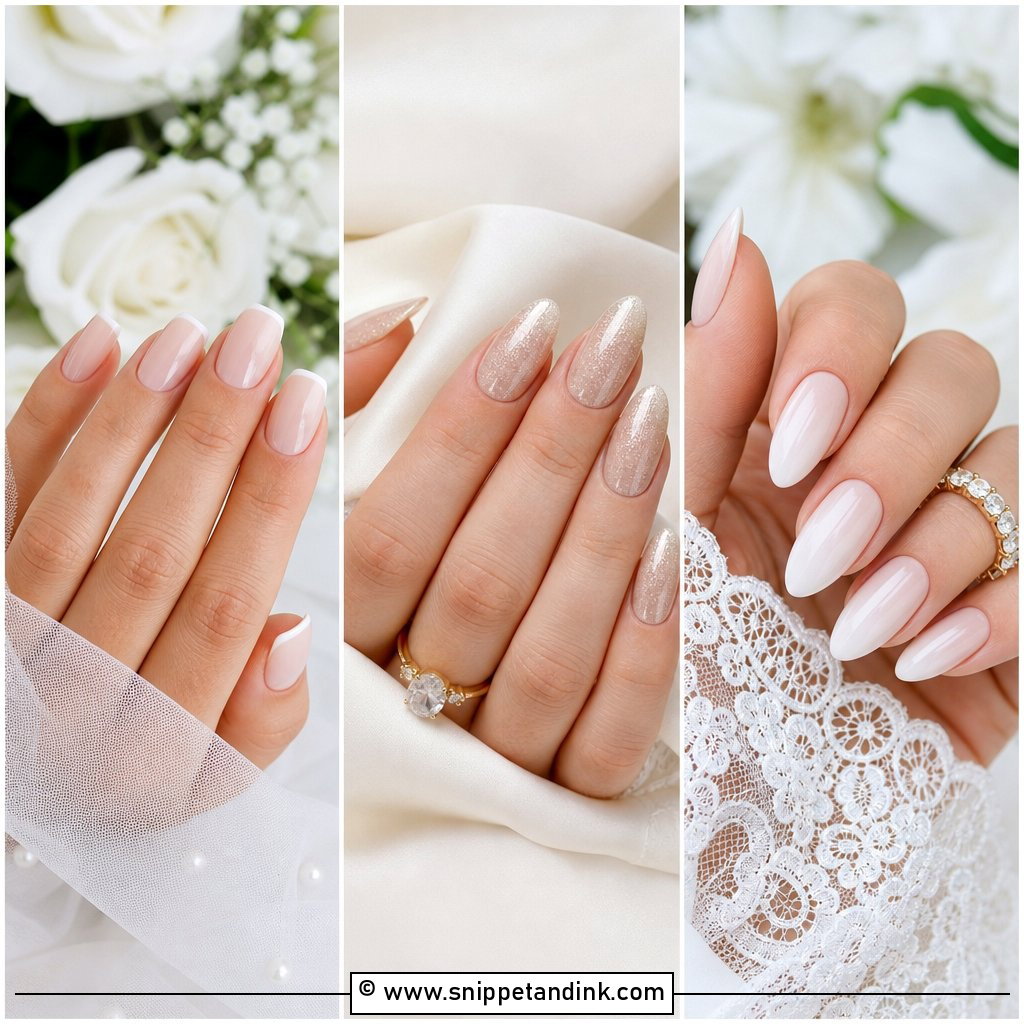
Milky French swaps the pink base for a semi-sheer creamy white, so the tip melts into the nail instead of sitting on top of it. It hides a lot: uneven nail beds, small white spots, a smile line that is not perfectly symmetrical from finger to finger. That makes it my usual suggestion for short and medium nails. Ask for a base you can still just see your nail through. Too opaque and it starts to look like correction fluid under flash.
3. Baby Boomer French Wedding Nails
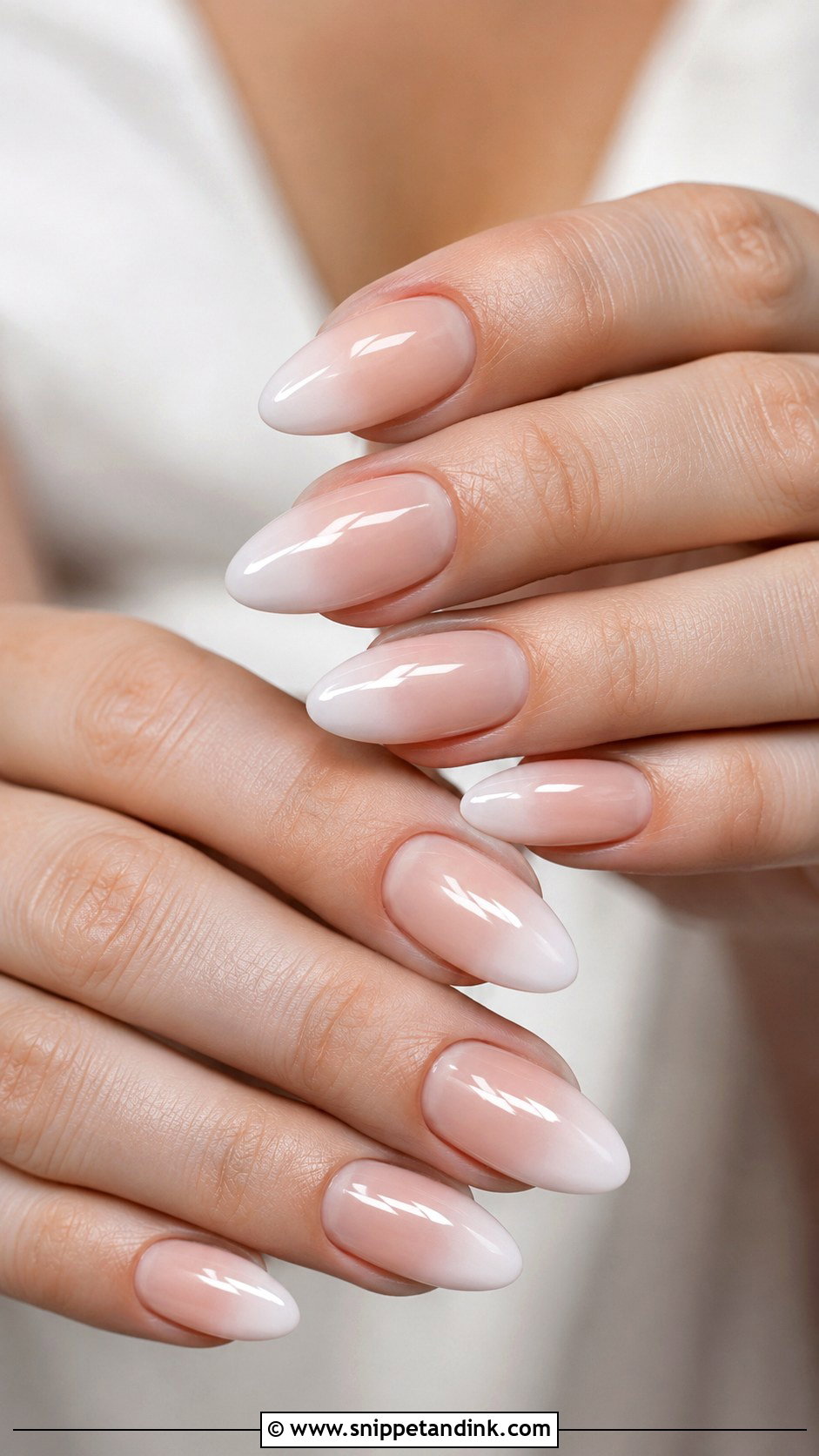
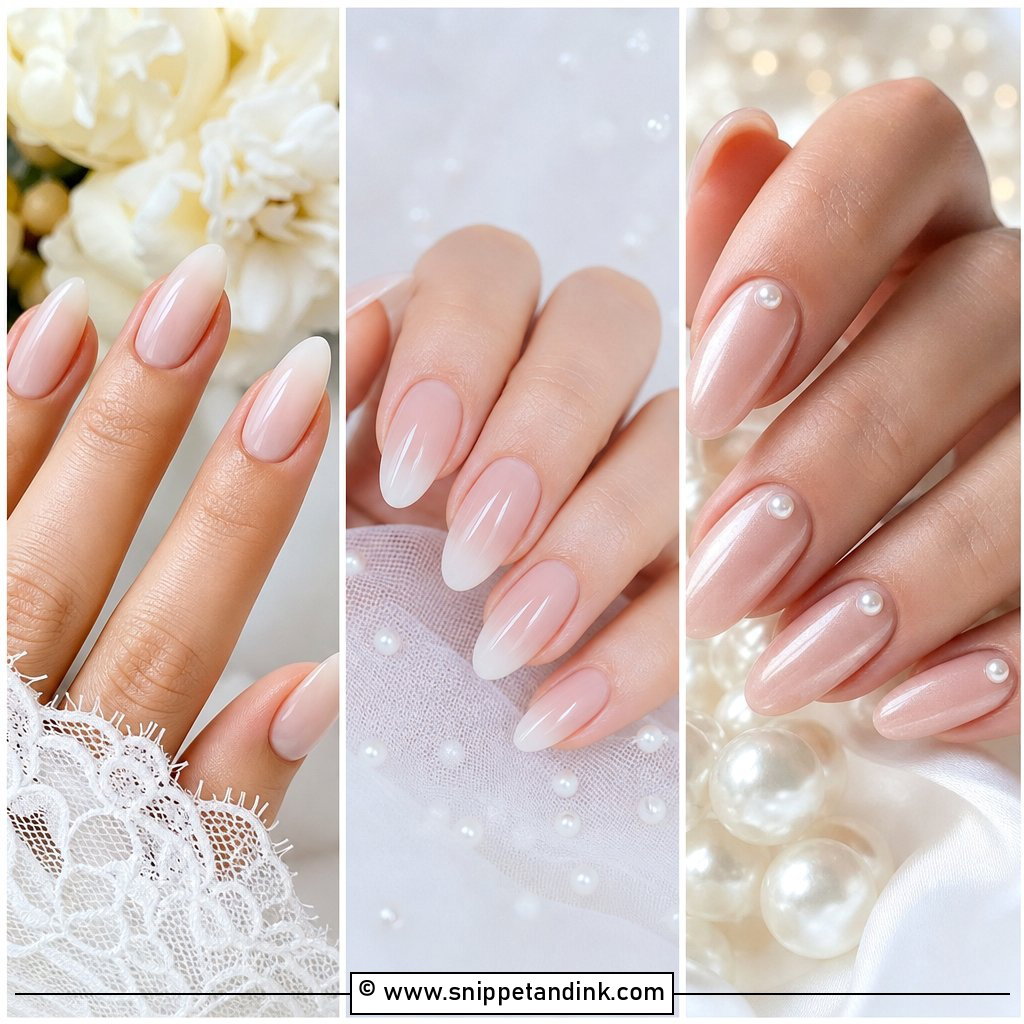
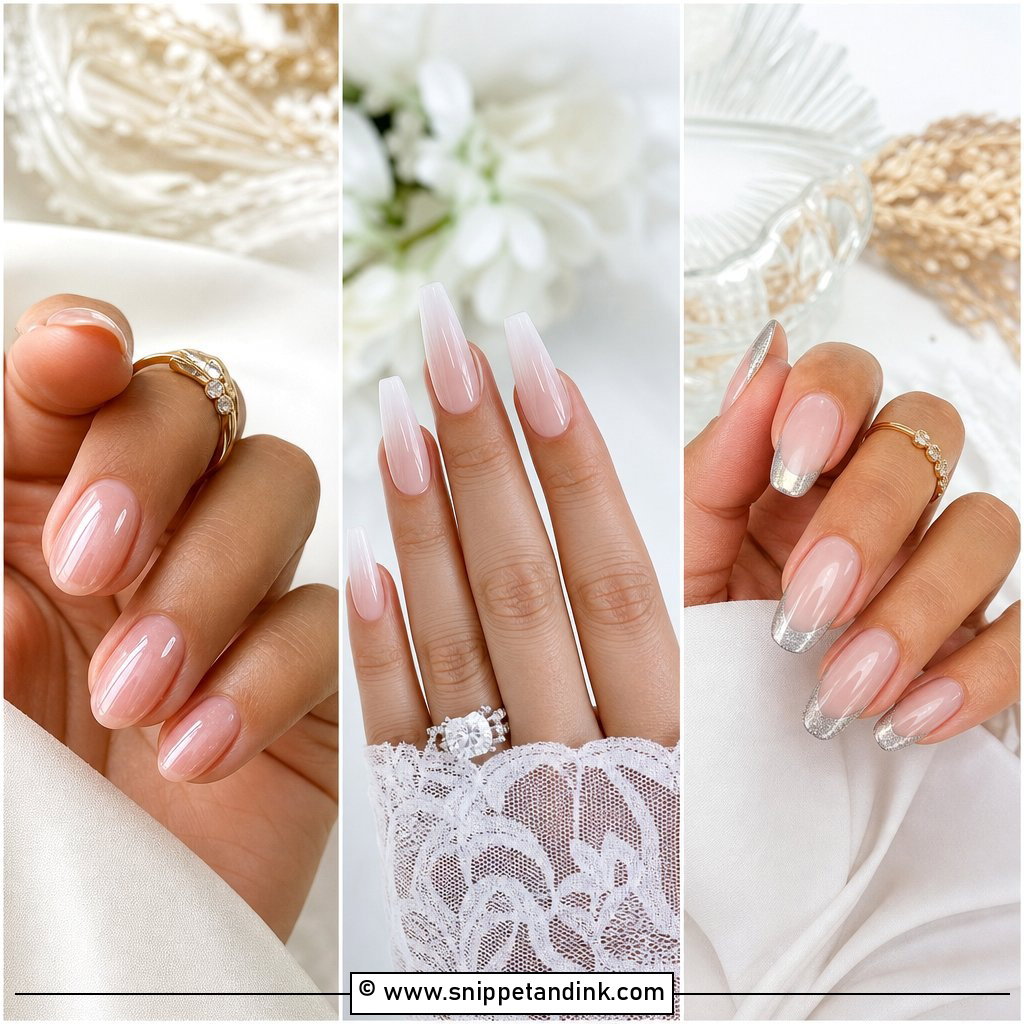
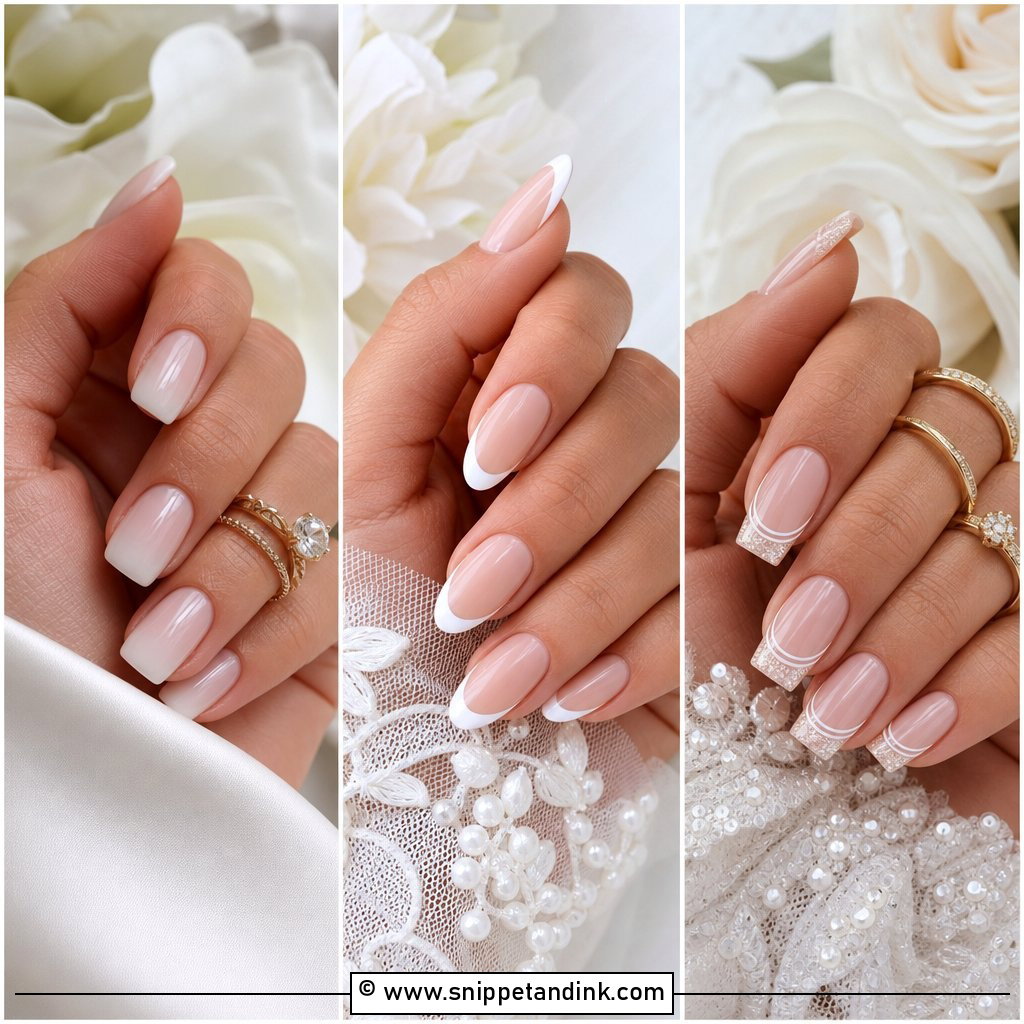
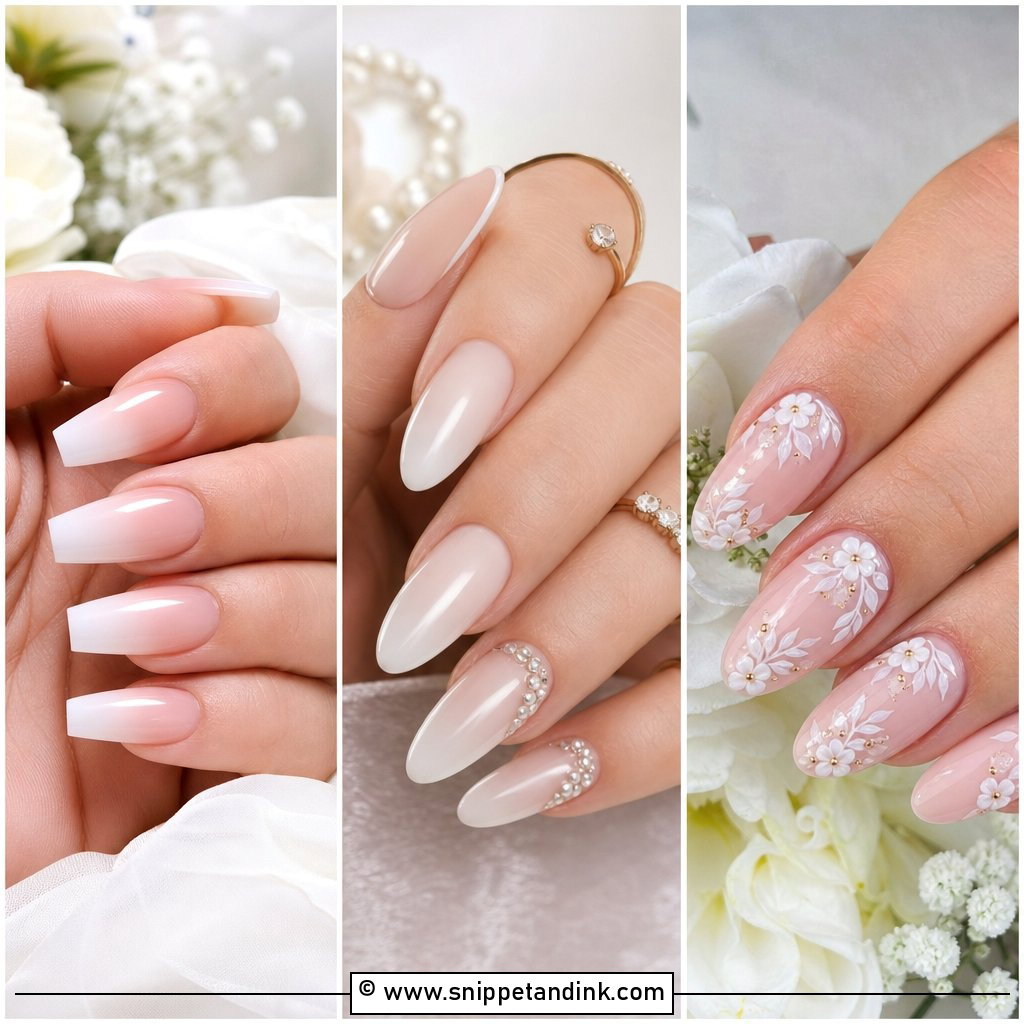
Baby boomer is a gradient rather than a line: white at the free edge fading into nude, pink or beige. I build it with a sponge or an airbrush and blend in thin layers, because one heavy pass leaves a visible band halfway down the nail. With no hard edge, the nail looks longer, and a slightly uneven natural curve stops being a problem. Almond and coffin shapes give the fade enough room to travel, especially at medium length. On very short nails the gradient has nowhere to go and can look smudged, so I’d pick micro French there instead. Finish with gloss, or a sheer pearl chrome if you like a glow.
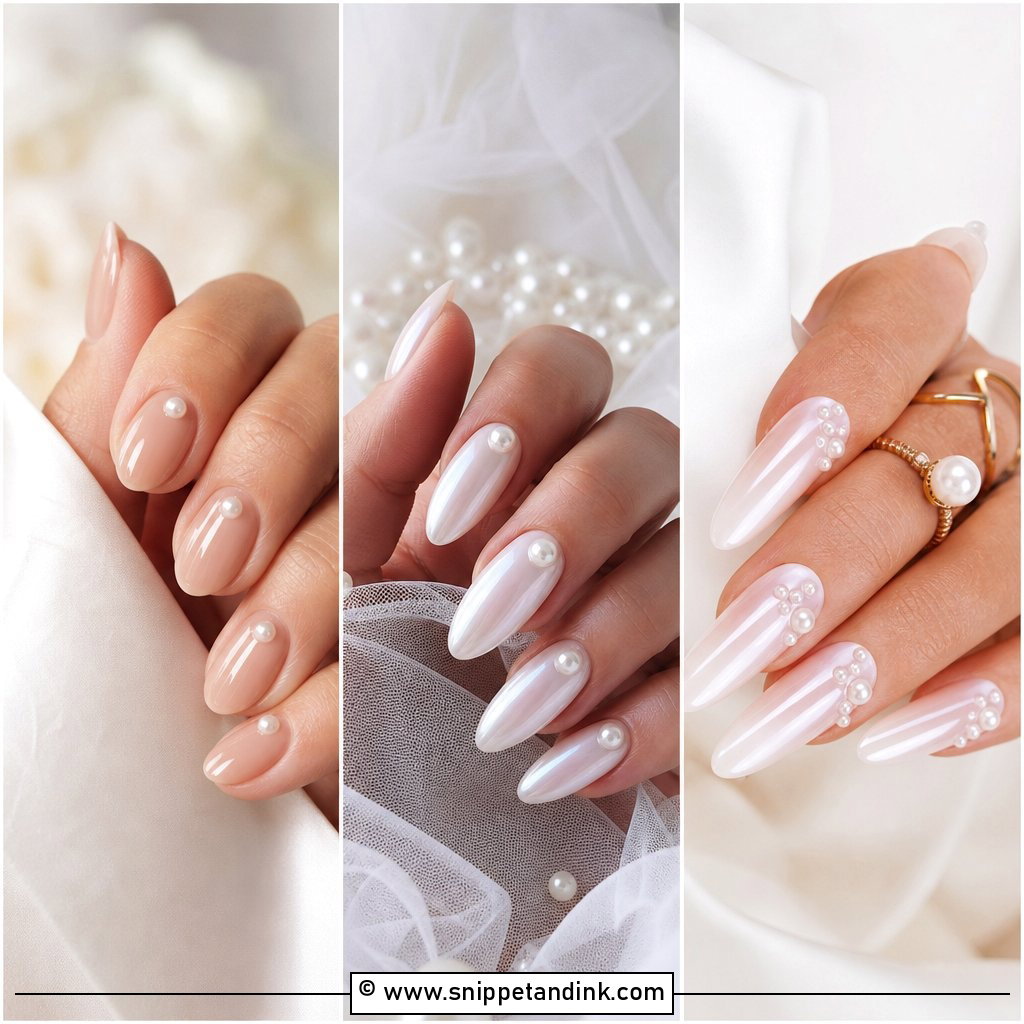
4. Pearl French Wedding Nails
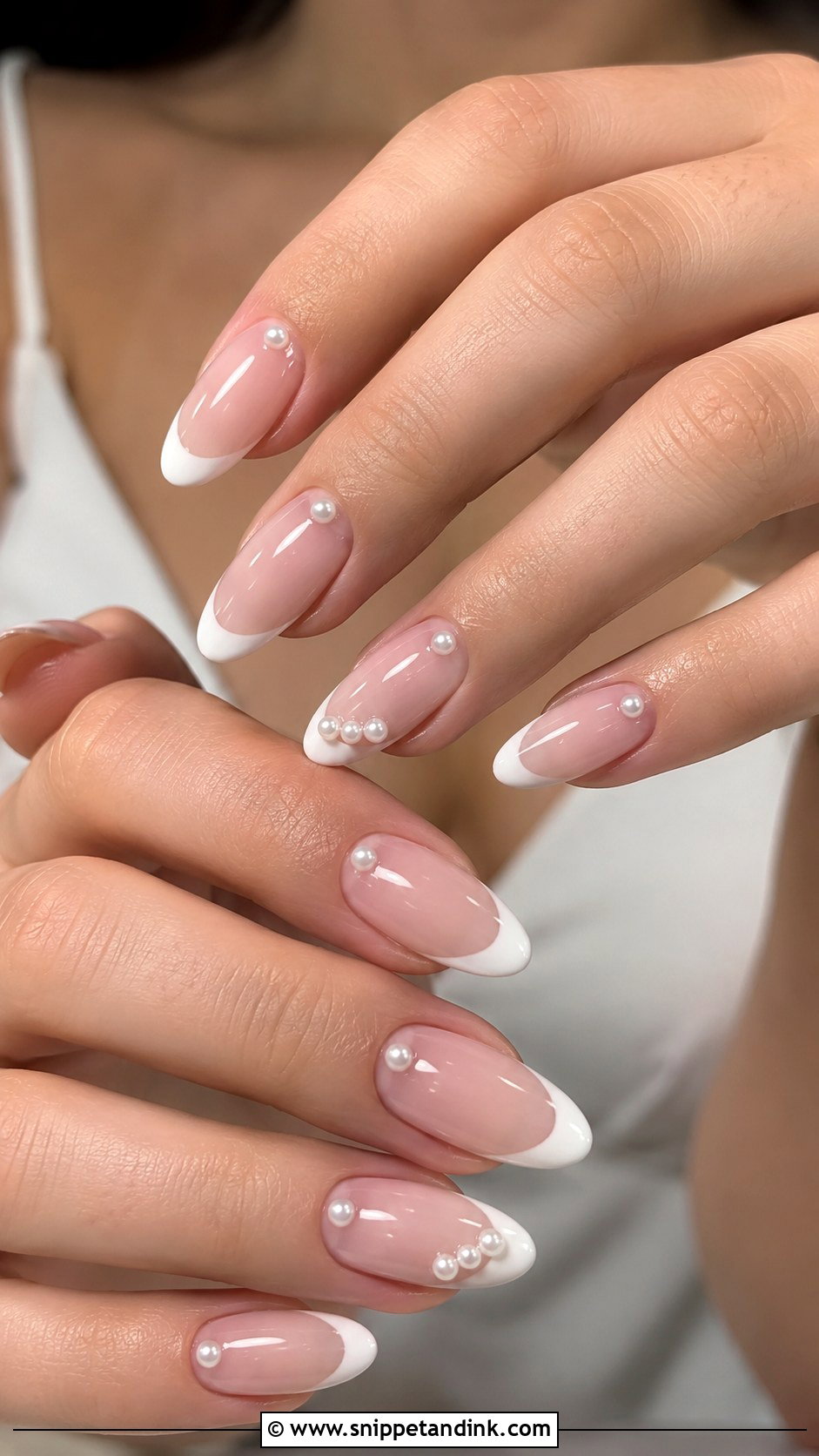
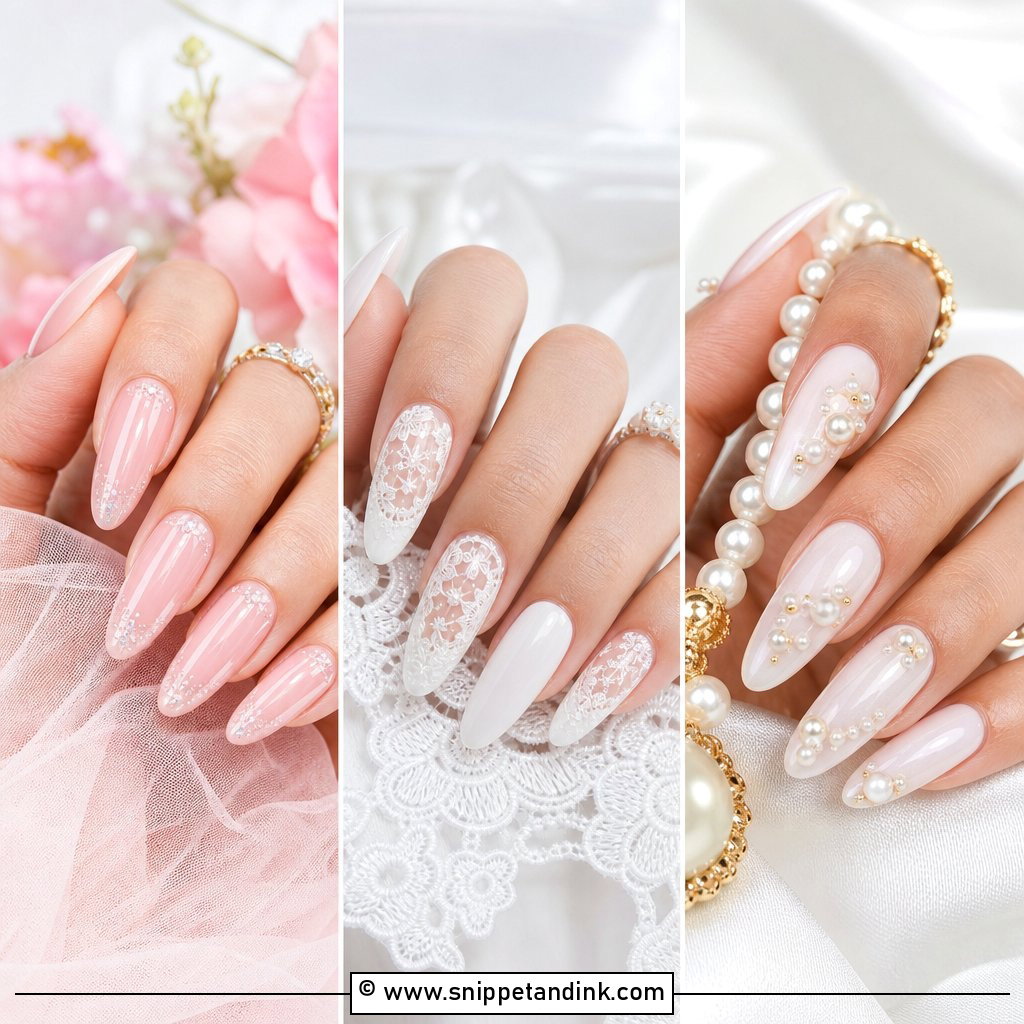
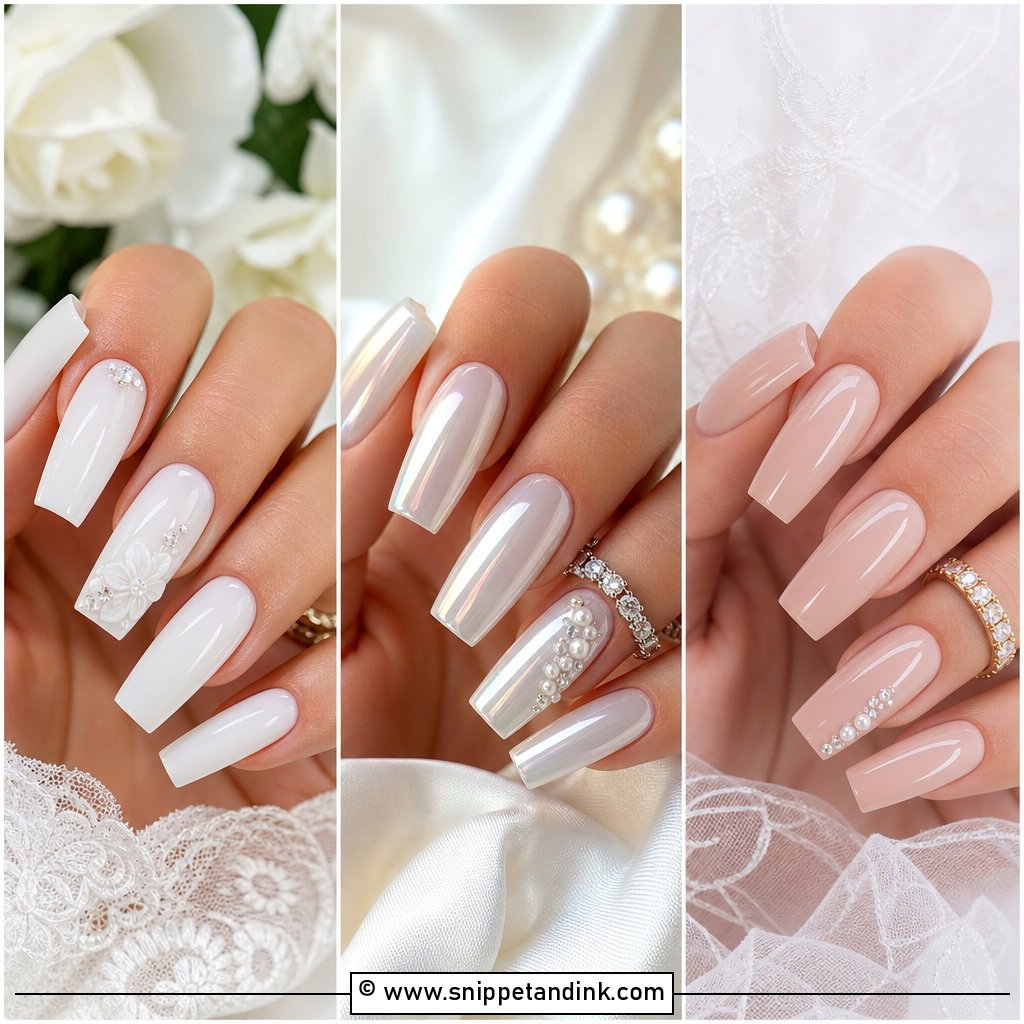
Pearls tie the nails to everything else a bride tends to wear: earrings, veil edging, hair pins, buttons down the back of a dress. I set them in builder gel rather than glue, since a glued pearl can pop off the first time you dig in a clutch. Keep the placement tidy. A single pearl at the base of each ring-finger nail is enough for most people, and a short almond or medium oval gives it a soft frame. If you want more, a row of tiny pearls along the smile line works, but expect them to catch on lace and tulle.
5. Chrome French Wedding Nails
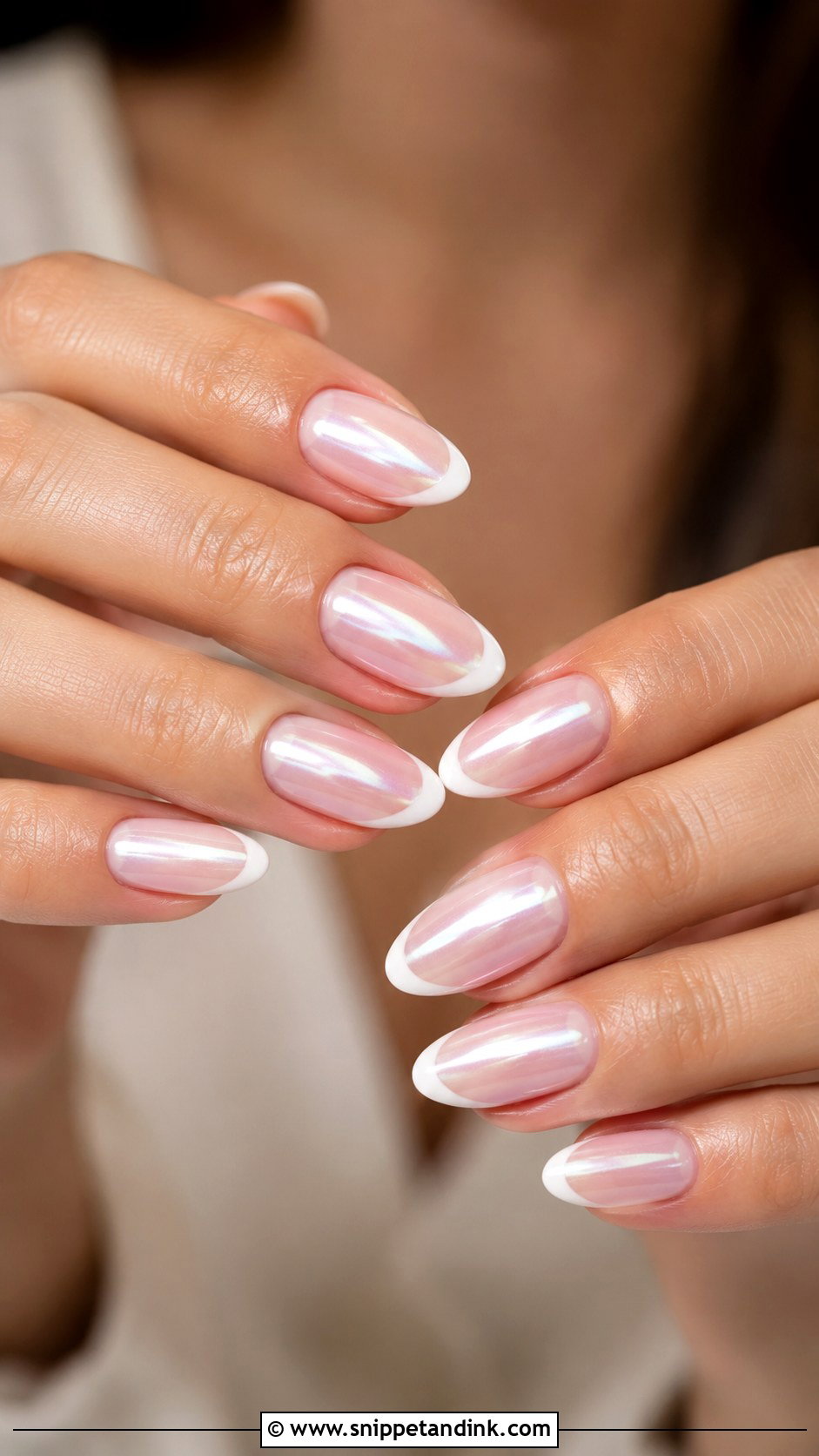
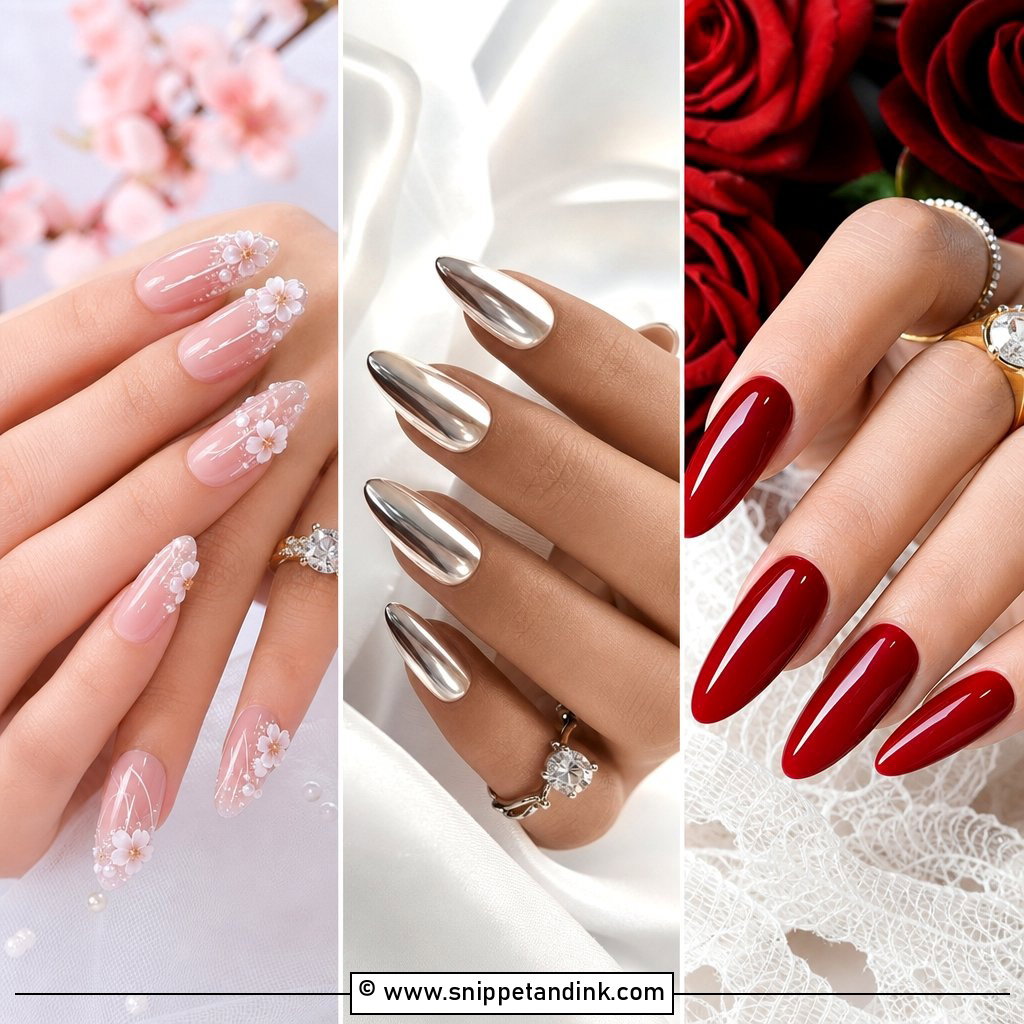
Chrome French wedding nails take a normal French set and buff a fine pearl or glazed powder over a no-wipe top coat, so the whole nail picks up light. The thing to know is that chrome shows every ridge. I spend longer on the base layer for these than for almost any other design, because a bump that disappears under gloss turns into a visible stripe under powder. Pearl chrome stays soft; silver goes cooler and more fashion-led. Keep the tip thin and the powder sheer, or it slides toward metallic.
6. Micro French Wedding Nails
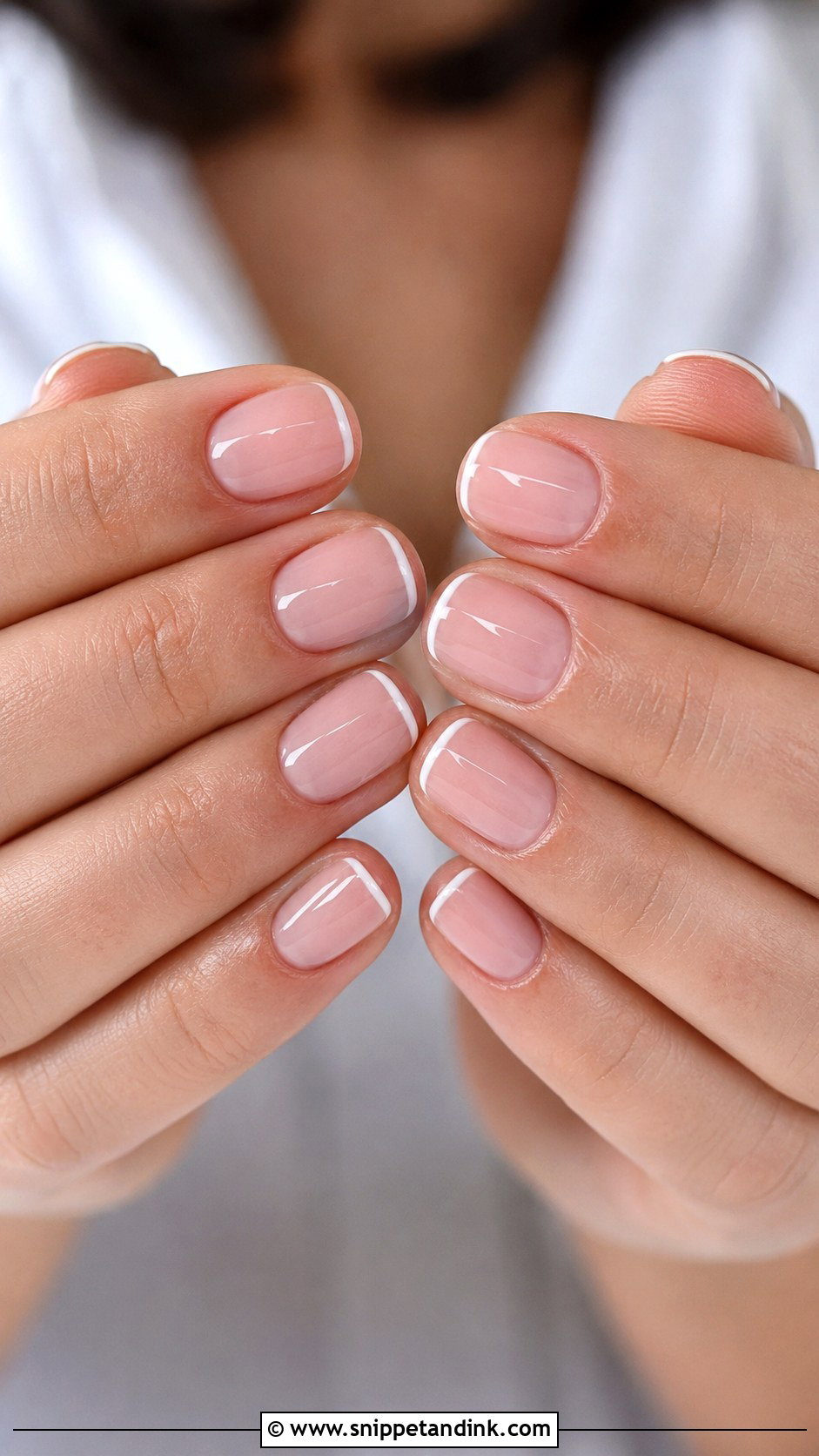
Micro French uses a very thin tip, often only a millimetre or two, in white, ivory or cream over a natural base. On short nails it adds definition without shrinking the nail bed, which a thick white band always does. It is the set I recommend to brides who never wear nail art and worry about feeling unlike themselves. The hard part is consistency. A line that thin shows any wobble, so I use a fine striper brush and check each hand from a distance before curing.
7. Almond French Wedding Nails
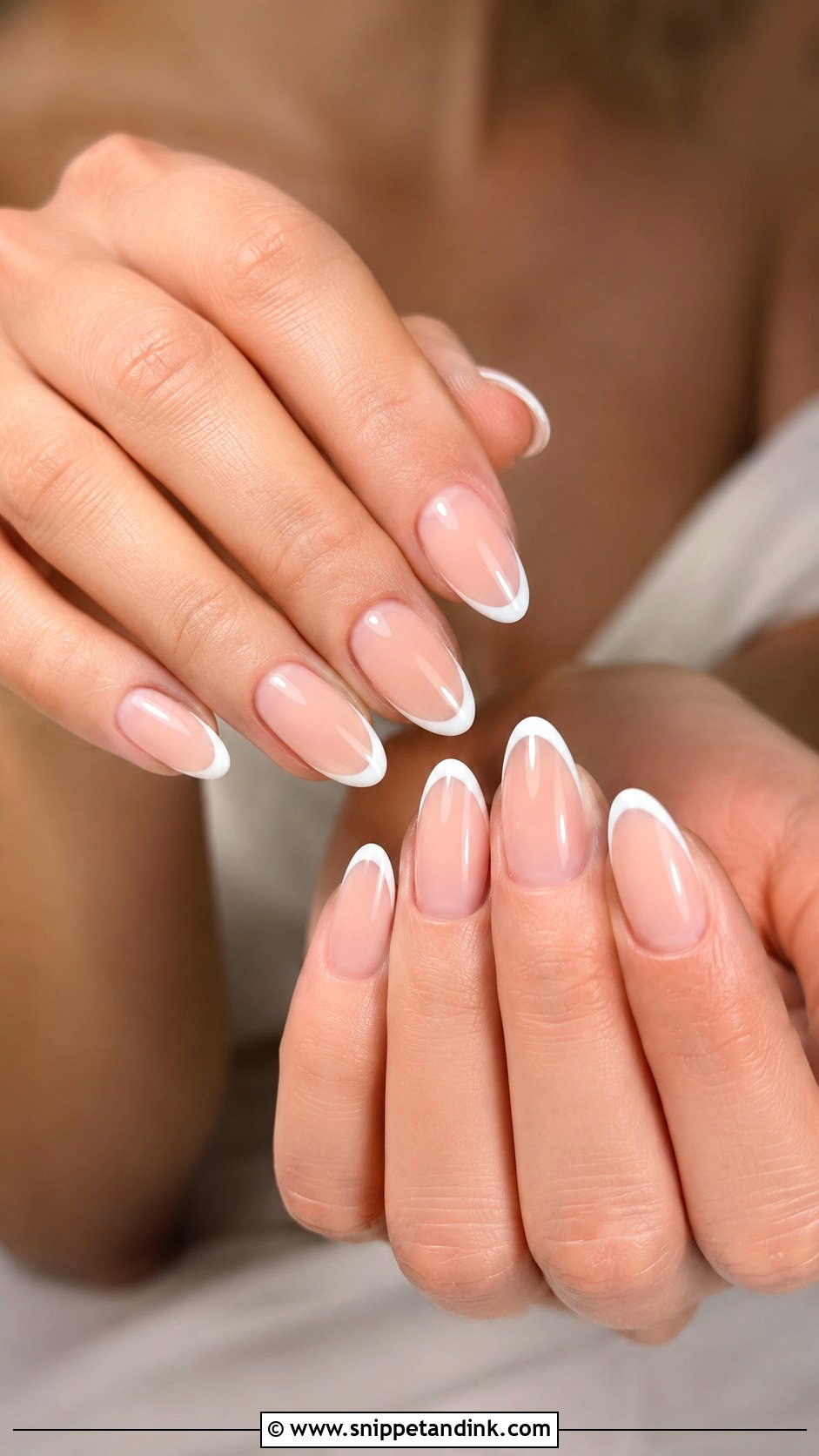
Almond tapers at the sides and rounds at the tip, which slims the fingers in ring shots. The French curve then follows the shape naturally, so the whole set looks balanced without any effort on the smile line. Medium length suits it best: long enough for a proper curve, short enough to type, pin a corsage and do up a zip. If your nails are weak at the sides, the taper can snap, so I usually add a thin builder layer for strength. Ivory or champagne tips warm it up; white keeps it crisp.
8. Short French Wedding Nails
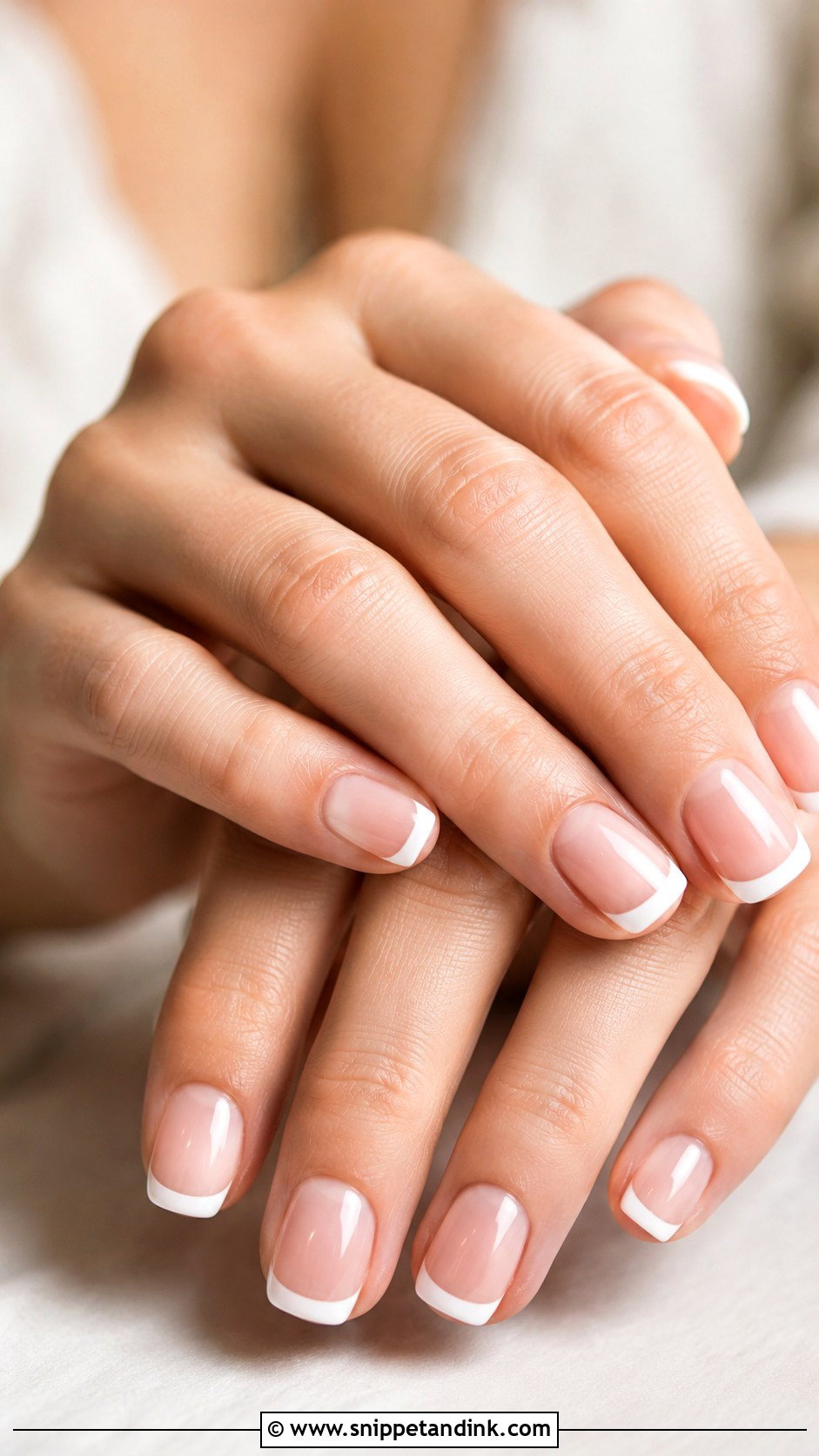
Short nails are where a French set earns its keep. Most of the brides I see who keep their nails short do it for work or comfort, and they don’t want to lose that for one day. A thin white tip over a sheer pink or nude base makes short nails look deliberate. Squoval, soft square and rounded shapes keep the edges neat. On very short nails, go micro rather than a thick band, and consider a milky base to blur where the natural free edge sits. Bridesmaids and guests can wear the same set without fuss.
9. Square French Wedding Nails
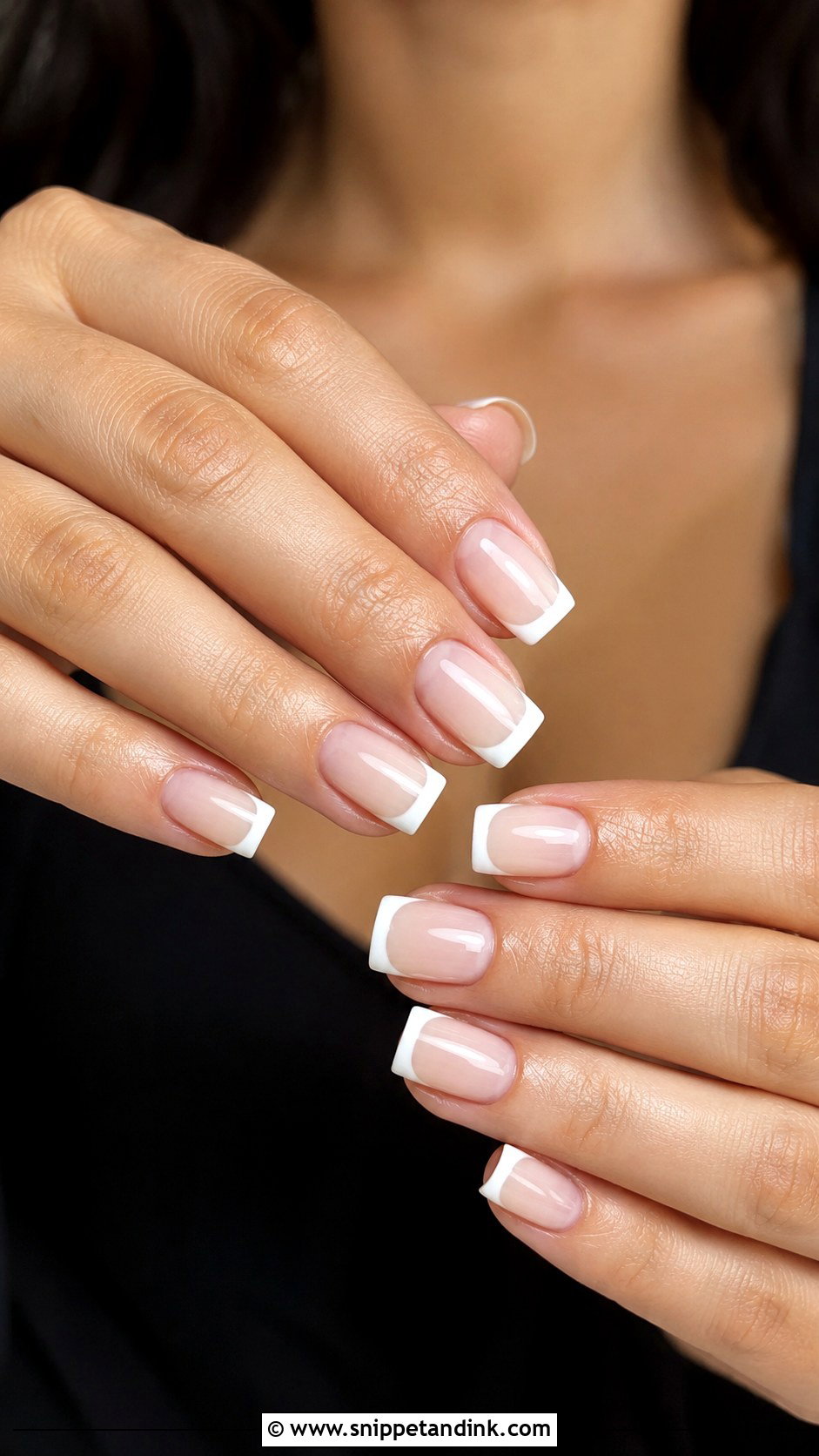
A straight free edge makes the white tip look crisp and graphic. The risk is that sharp corners snag tights, lace and hair, and they chip first. I soften the corners slightly and keep the tip narrow, which reads much more delicate than a deep square band. Pair a sheer blush base with it and it suits minimalist gowns, sleek hair and simple jewelry. Square also handles length well if you are building with gel or acrylic.
10. Coffin French Wedding Nails
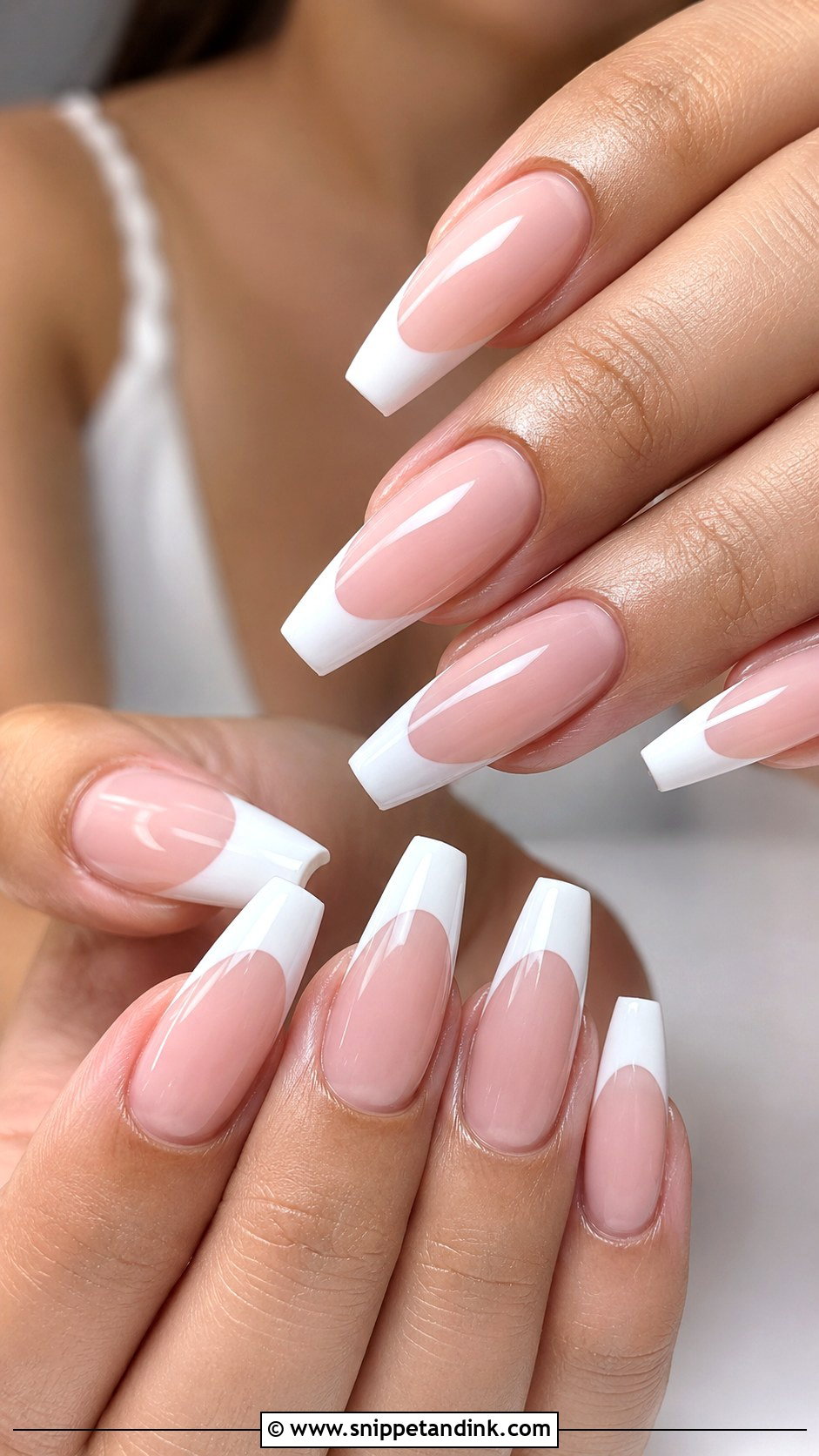
Coffin French wedding nails need length, and usually some kind of extension, to show the tapered sides and flat tip. The sheer French base is what keeps that length looking bridal rather than clubby. Ivory, white or milky tips all sit well here. I’d limit yourself to one extra detail, maybe pearl chrome or a few crystals, because coffin already has a strong silhouette. If you’ve never worn long nails, wear a set for a week before the wedding. Fastening a bustle, holding a pen to sign the register and handling a phone all feel different with length.
11. Nude French Wedding Nails
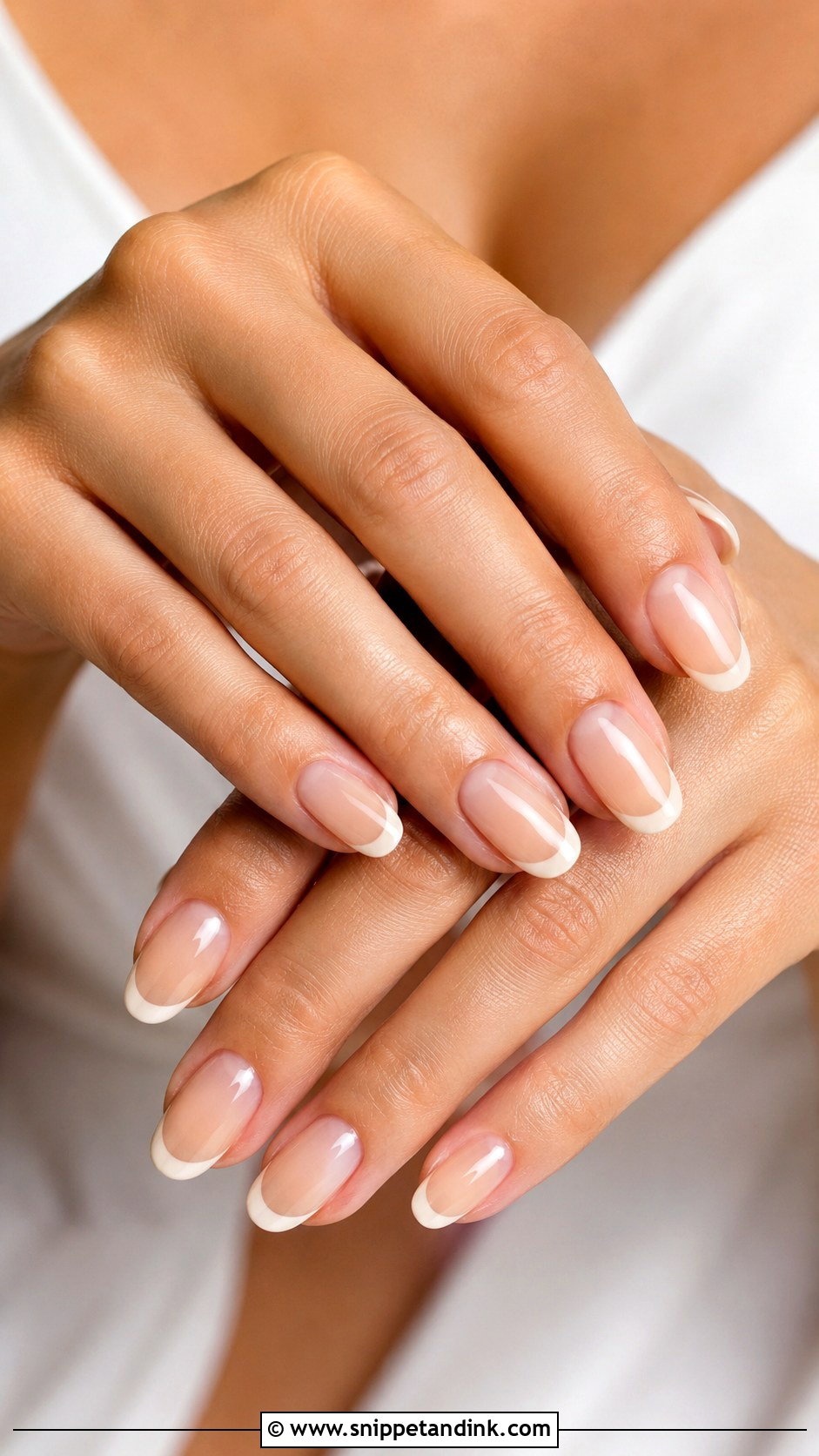
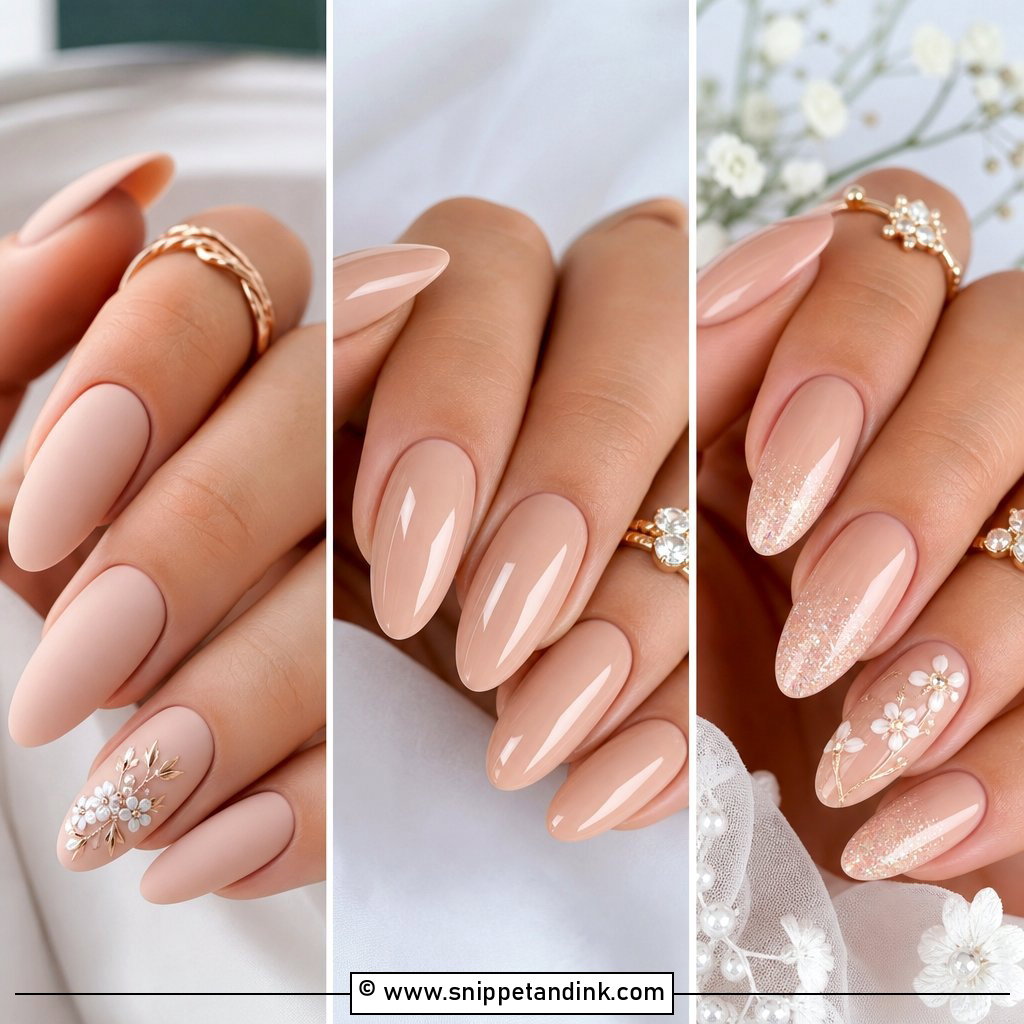
Swapping the pink base for beige, tan, caramel or a deeper nude makes a French set read as your own skin with a clean edge. The whole design depends on the shade. A nude that is too light or too pink turns grey or chalky against the hand, which is especially noticeable on deeper skin. I paint two or three swatches on a nail and look at them in daylight before committing. Cream tips warm it up; white keeps contrast. Gloss stays bridal, and a satin top coat makes it more modern.
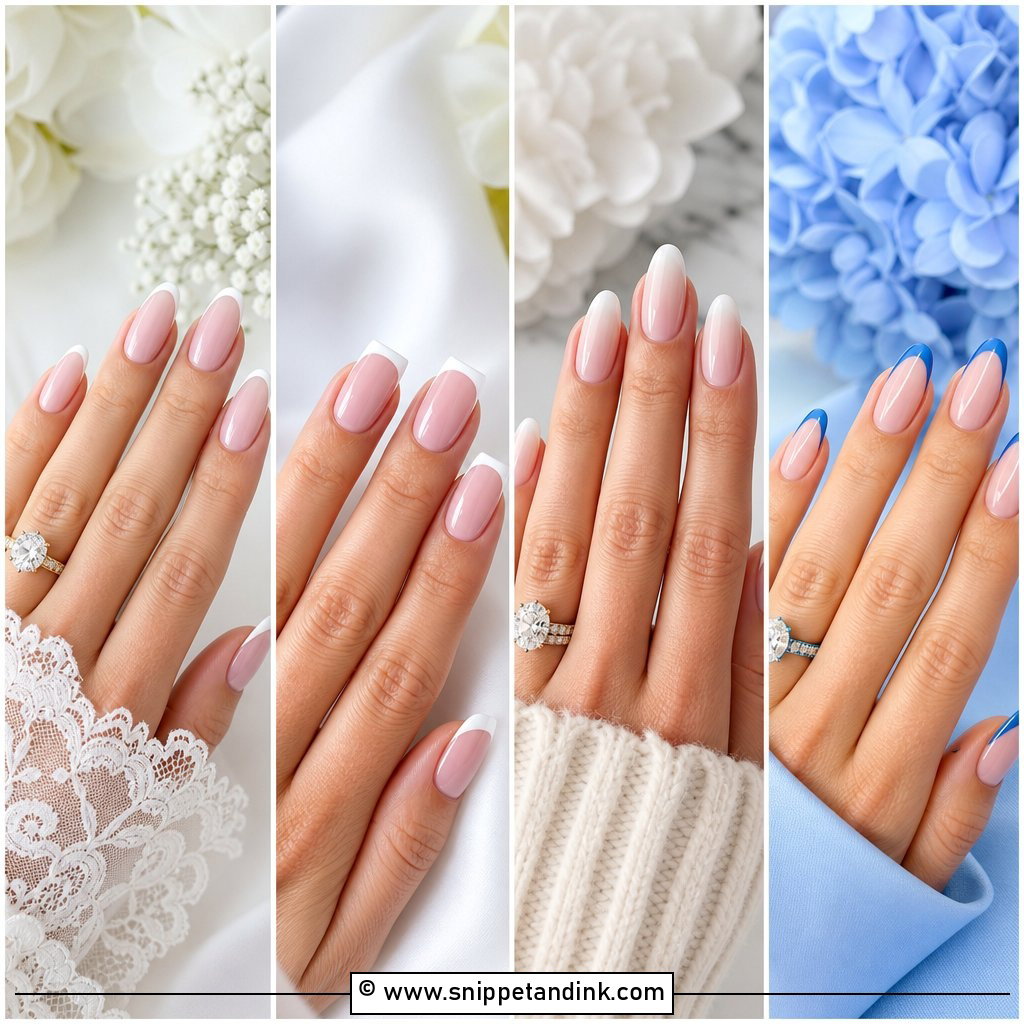
12. Blush Pink French Wedding Nails
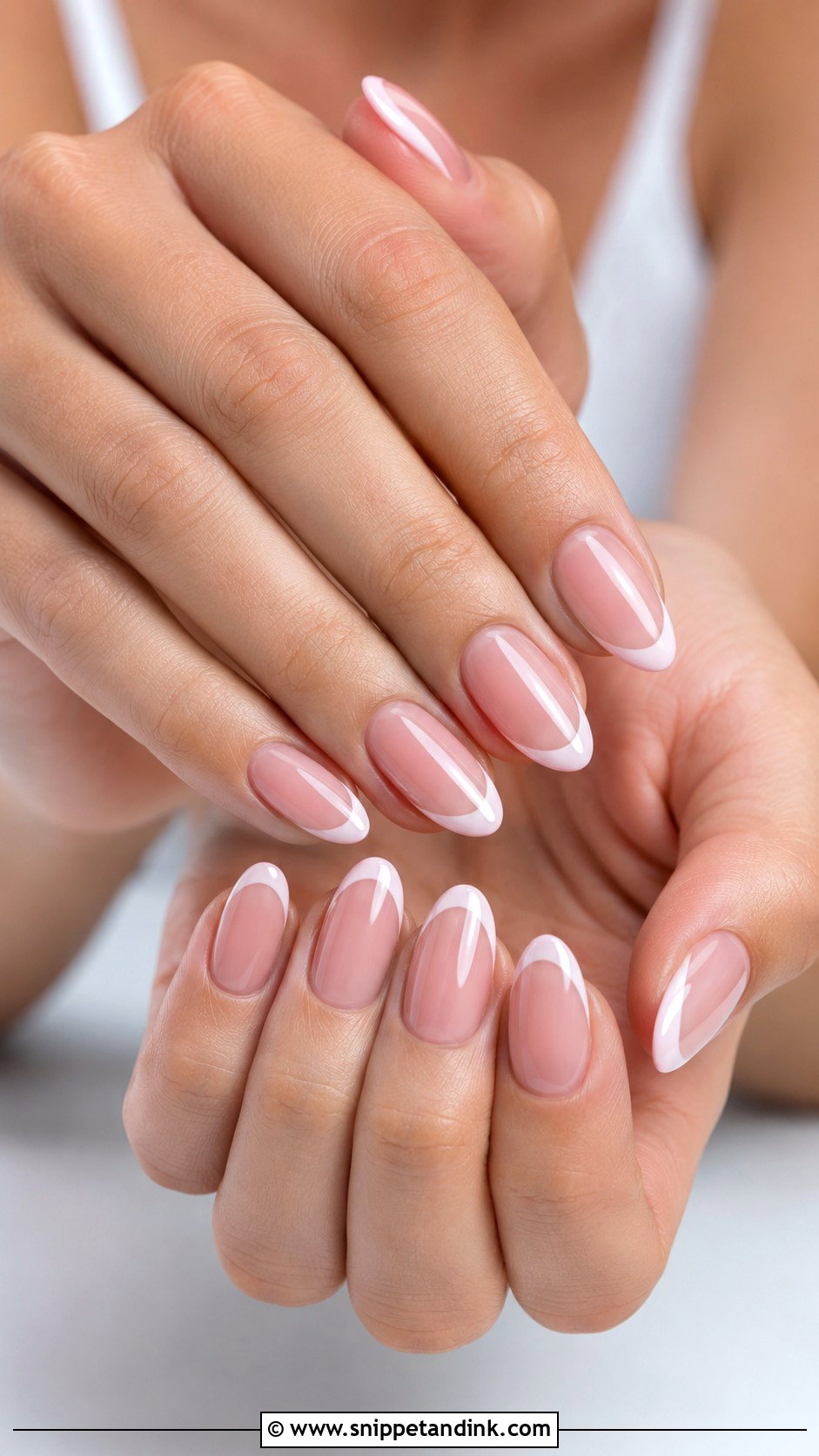
Blush French uses a pink base with white, ivory or pale pink tips. It ties in neatly with rose-toned makeup and blush flowers. The version I like most at the moment is pink-on-pink, where the tip is only a shade or two off the base, so the French line shows up in close-ups but disappears across a room. On warm or olive skin, a cool baby pink can look slightly lilac in photos, so I steer those brides toward a peachier blush.
13. White French Wedding Nails
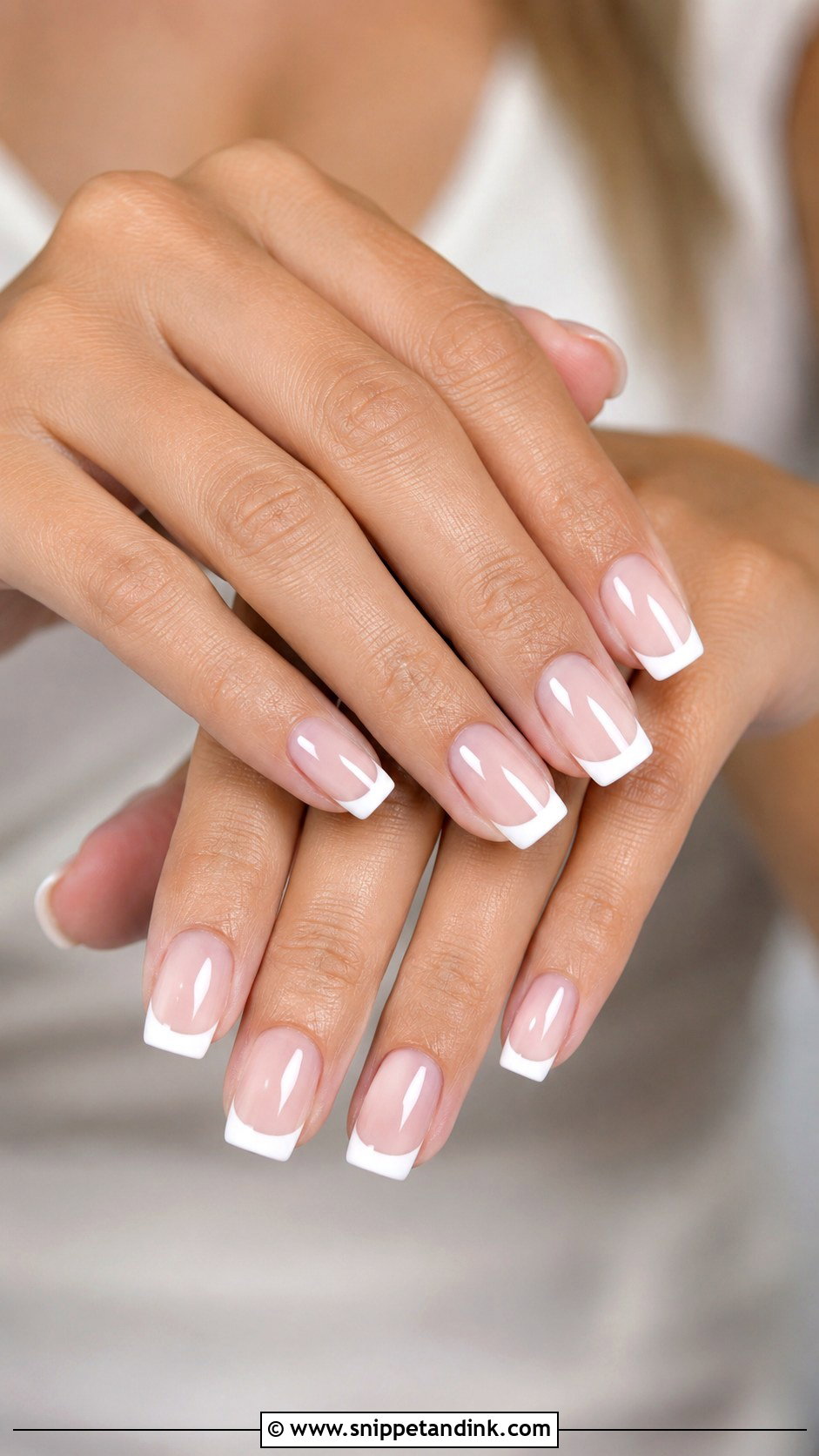
A sheer base with clean white tips is the version everyone recognises, and it is crisp next to a white gown and pearls. Tip depth is the main decision. Thin tips suit short nails; medium tips can work on longer almond or coffin shapes. Bright white can look stark against warmer skin or an ivory dress, so I often mix a drop of nude into the white to knock it back. That small change makes the manicure sit with the dress instead of fighting it.
14. Ivory French Wedding Nails
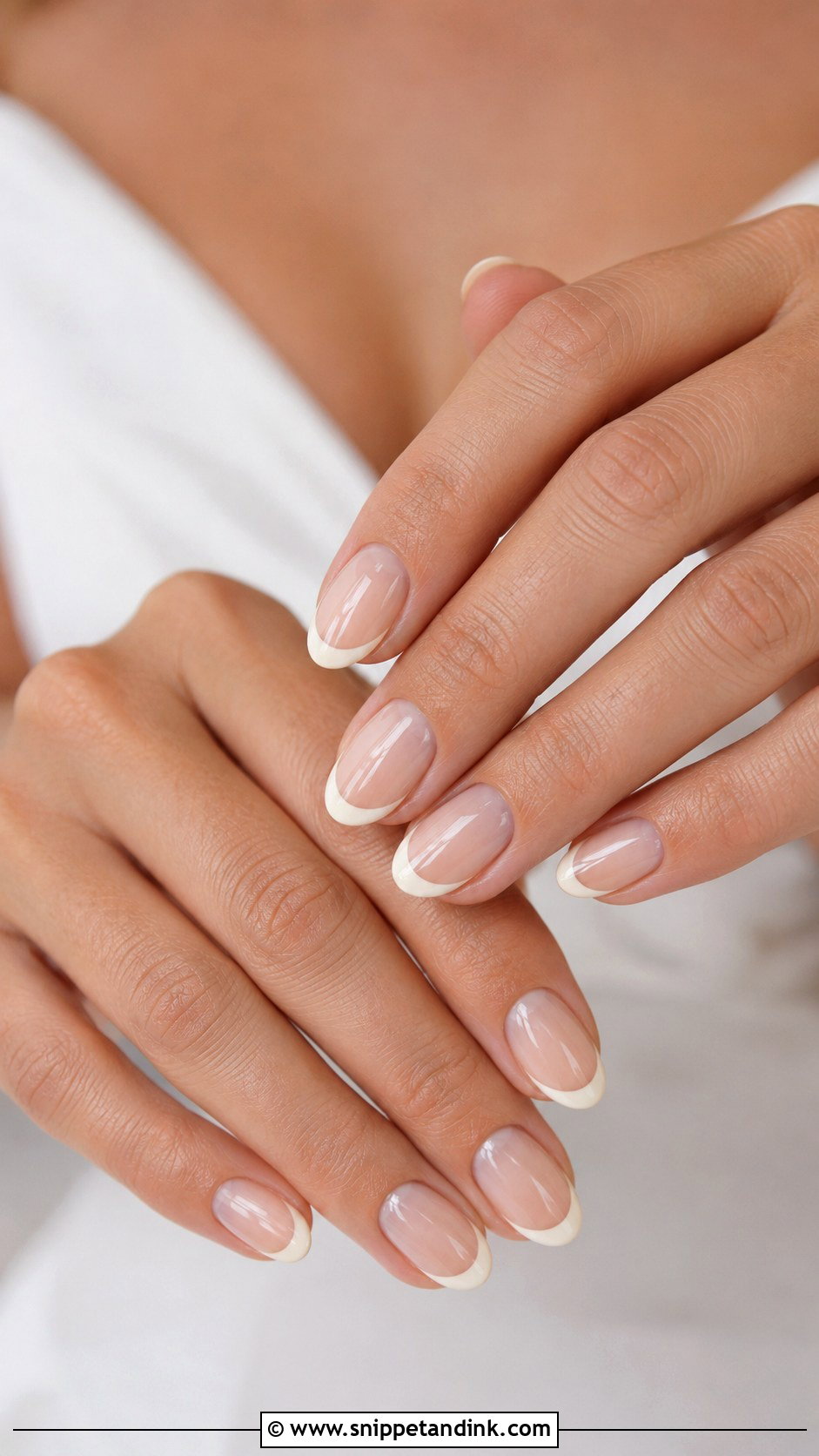
Ivory tips are softer than bright white and usually closer to the actual colour of a bridal gown, which is rarely pure white. Hold your nail next to a fabric swatch from your dress if you can; it is the quickest way to see whether white or ivory belongs. Pair it with a sheer nude, beige or milky pink base. The lower contrast is kind to mature hands and to anyone who finds a white tip too sharp. Oval, almond and squoval all suit it.
15. Glitter French Wedding Nails
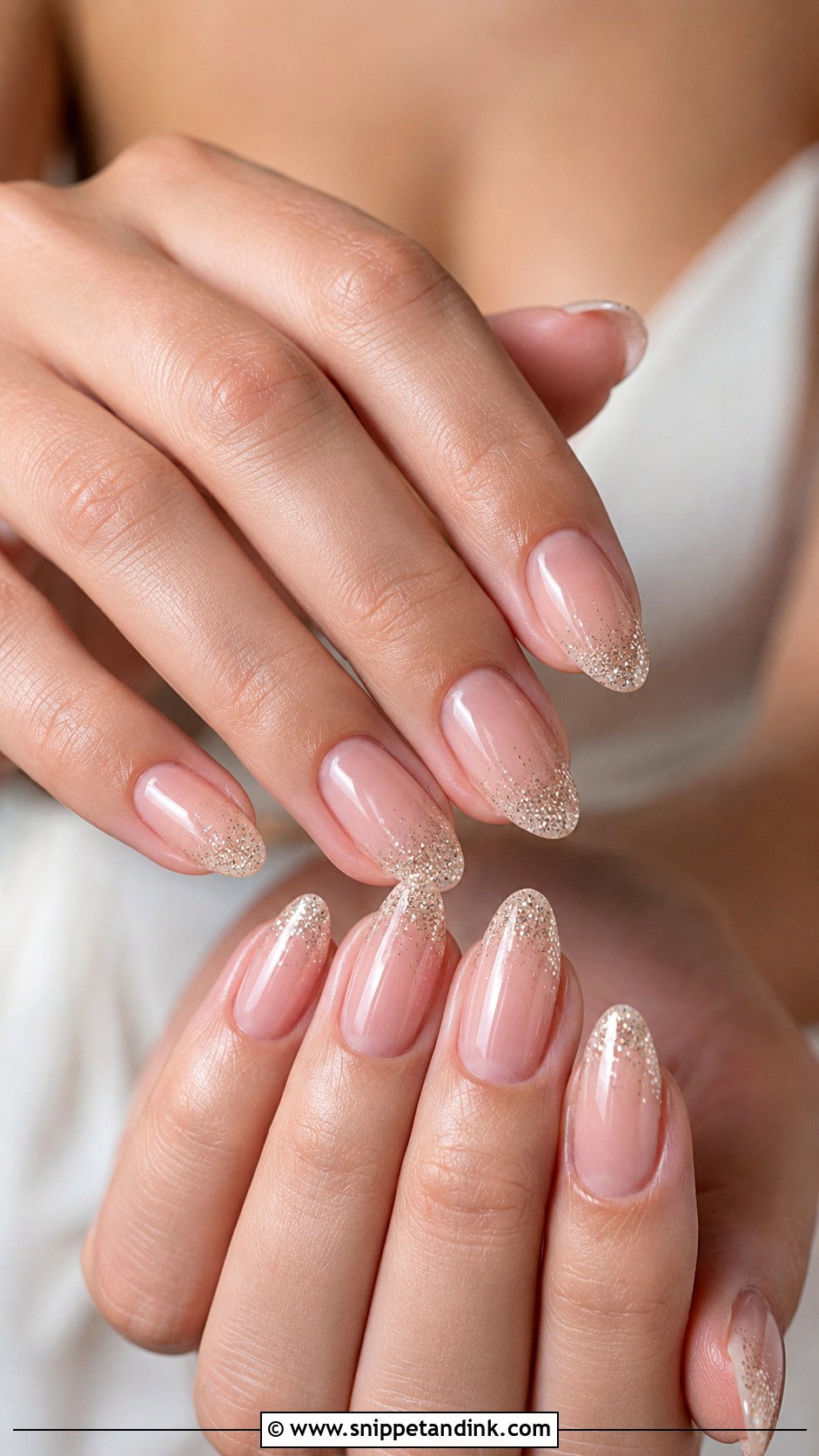
Glitter French puts the sparkle at the tip, blends it into the base or traces the smile line. Fine shimmer is the safer pick. Chunky glitter grabs flash unevenly and can look patchy in photos, and it is harder to seal flat, so the edges catch hair. Silver, champagne, pearl and soft rose-gold sit closest to bridal jewelry. Fine glitter tips suit short nails; longer nails can carry a soft glitter ombré. I’d save the stronger versions for an evening reception.
16. Floral French Wedding Nails
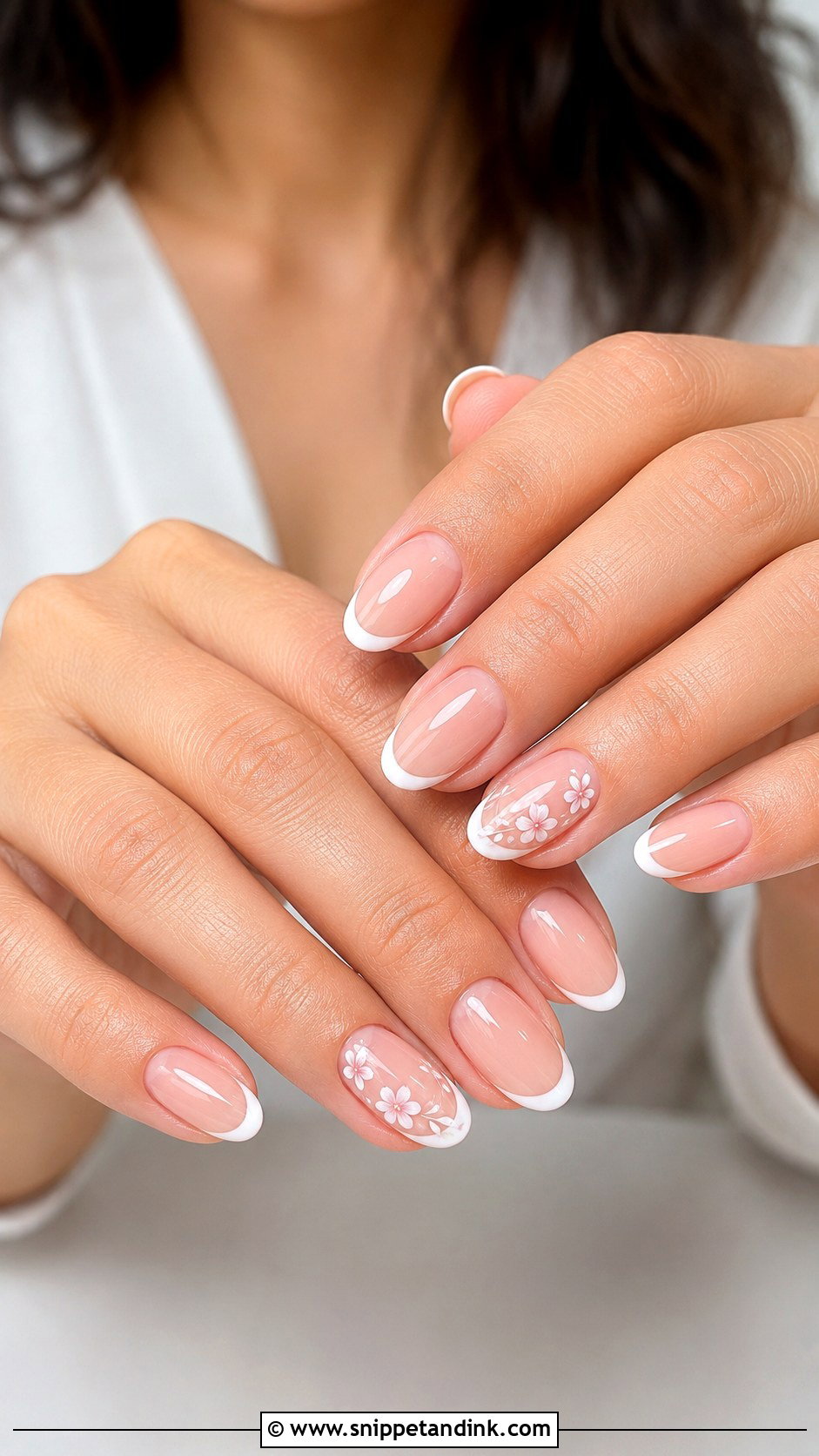
Floral French adds tiny white, blush or pastel flowers to one or two nails over a classic or milky base. I paint them freehand with a dotting tool and a fine liner, because stickers often lift at the edges after a day or two. The flowers can sit at the cuticle, along the tip or overlapping the French line. Garden and spring weddings suit this one, as do lace gowns with floral motifs. Keep the flowers small so the base still shows; three petals is usually plenty.
17. Lace French Wedding Nails
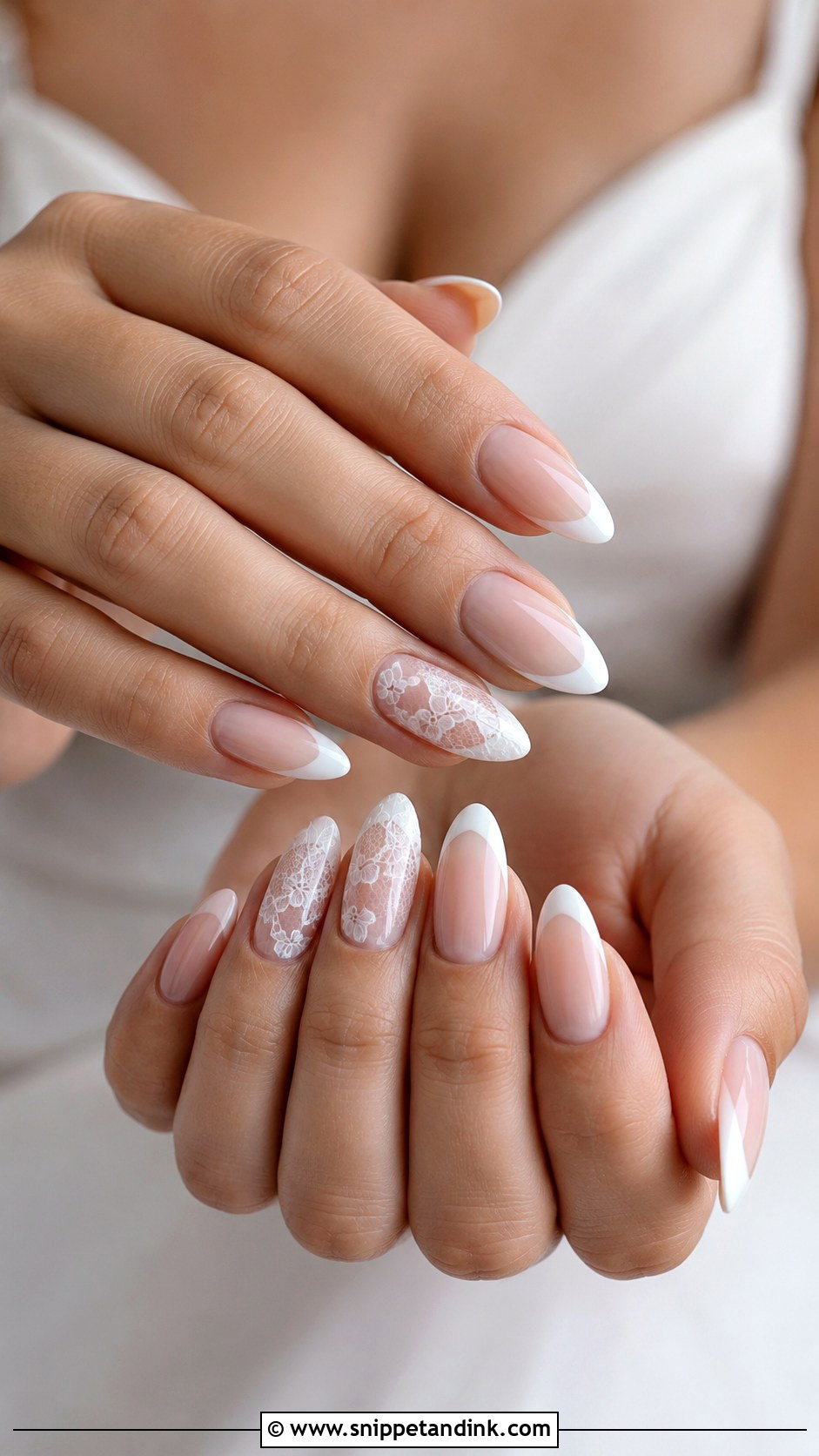
Lace nail art copies the pattern from lace sleeves, veils or embroidered fabric. It can run over the tip, cover an accent nail or sit as a thin white pattern down one side. This is slow, careful work with a fine brush, and it only looks like lace if the lines are thin and the gaps are open. Bring a photo of your actual dress lace to the appointment so the pattern matches. Glossy suits it better than matte for bridal photos, and almond, oval and medium square all give the pattern space.
18. Crystal French Wedding Nails
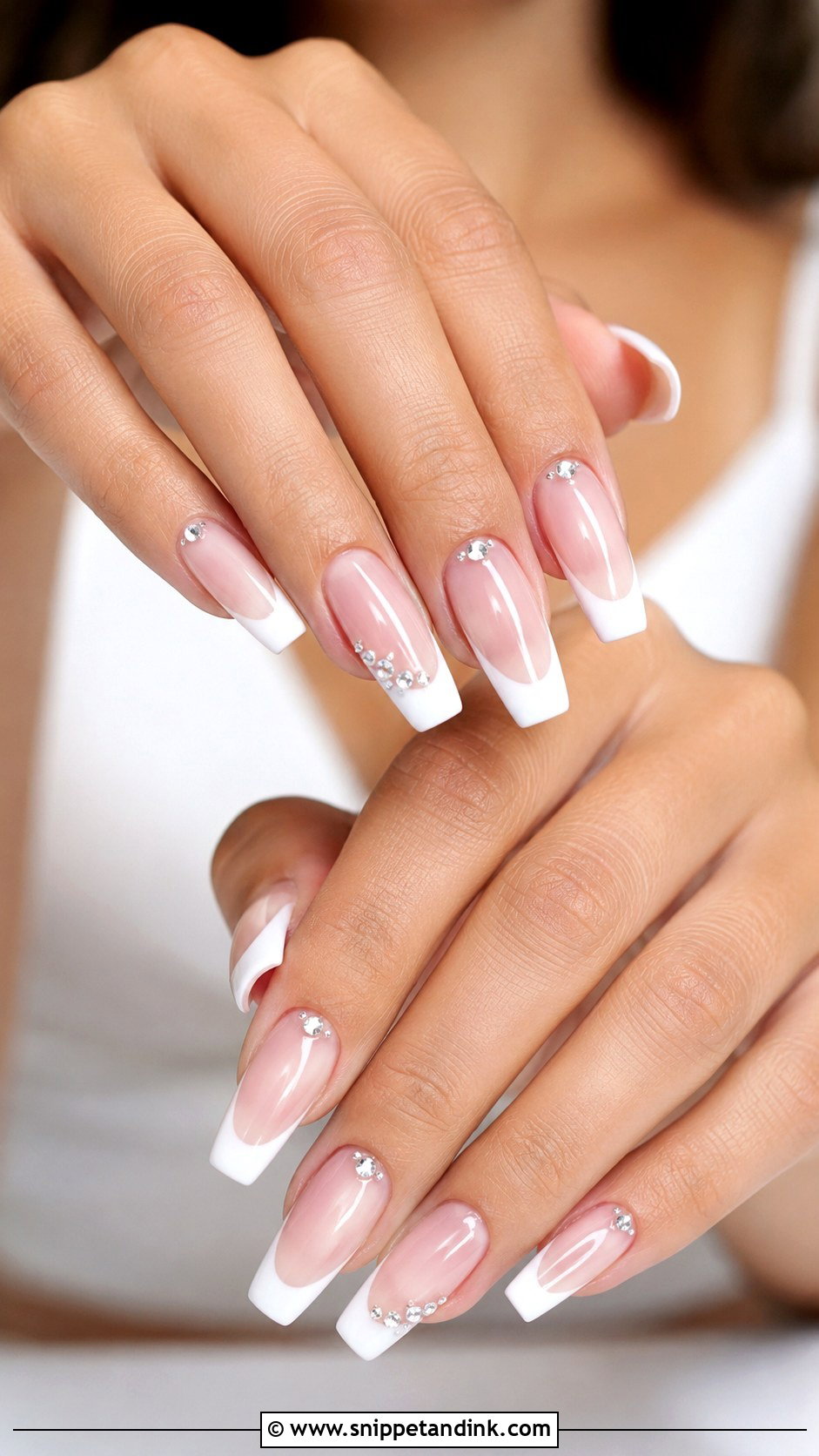
Crystals near the cuticle or on one accent nail add sparkle without fighting the ring. Restraint is the whole trick. A few small stones look polished, while a crowded nail competes with the diamond in every ring shot. Clear, pearl and champagne-toned crystals sit best with wedding jewelry. I embed them in gel and cap the edges, otherwise flat-backs catch on tulle and lift. Almond, coffin and square all work. Keep the French tip thin so the stones have room.
19. Gold French Wedding Nails
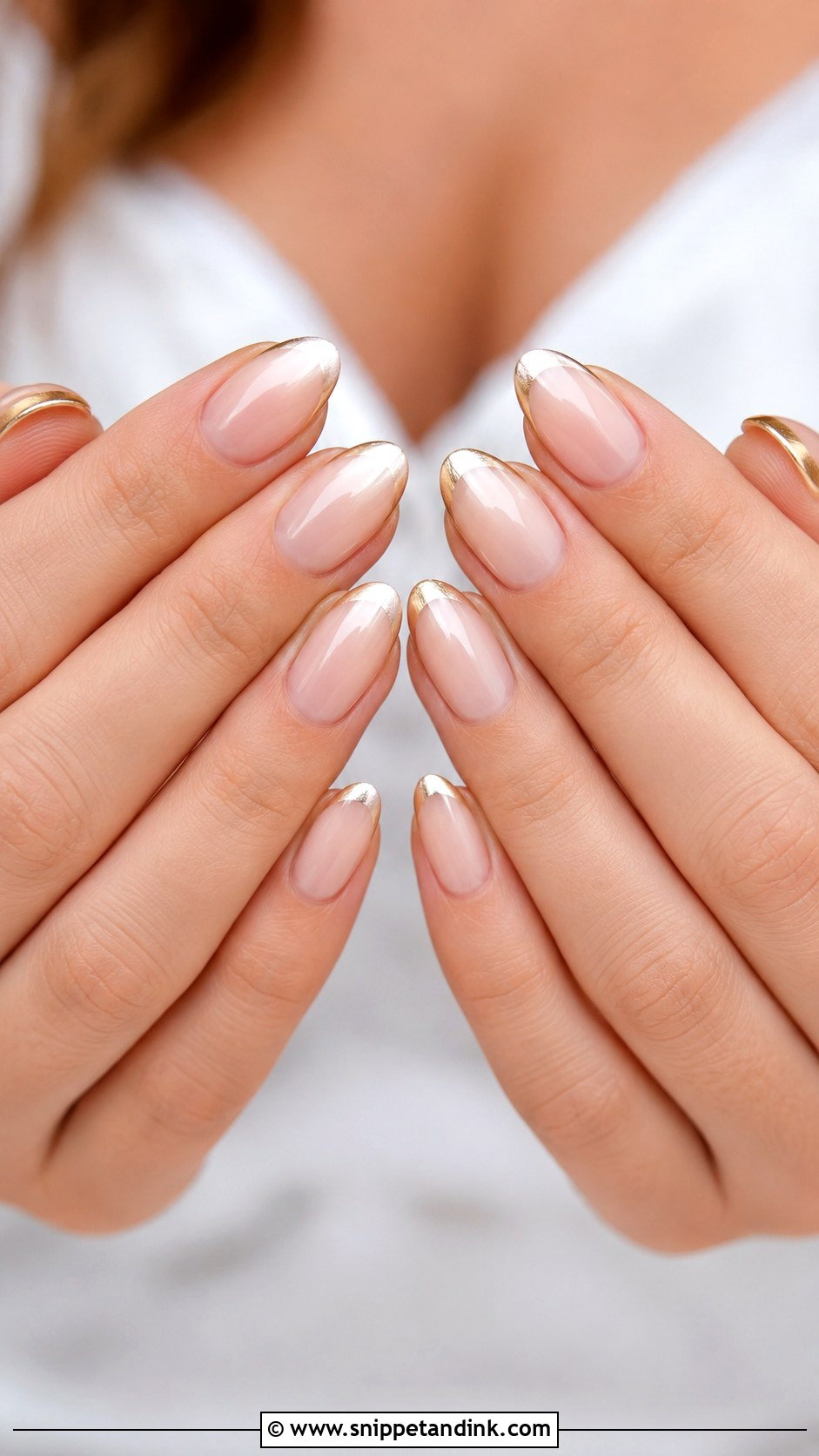
Gold French uses fine gold tips, a gold outline or a thin metallic line above a white tip. It suits brides whose jewelry, dress embroidery or hair pieces are gold, and it reads warm against a sheer nude or blush base. Metallic gel and foil both show unevenness, so the tip needs a very smooth edge. Pale gold and champagne gold are the gentlest options. Warm skin tones carry it most easily; on very cool skin, I’d check the shade against your ring first, because yellow gold next to platinum can look mismatched.
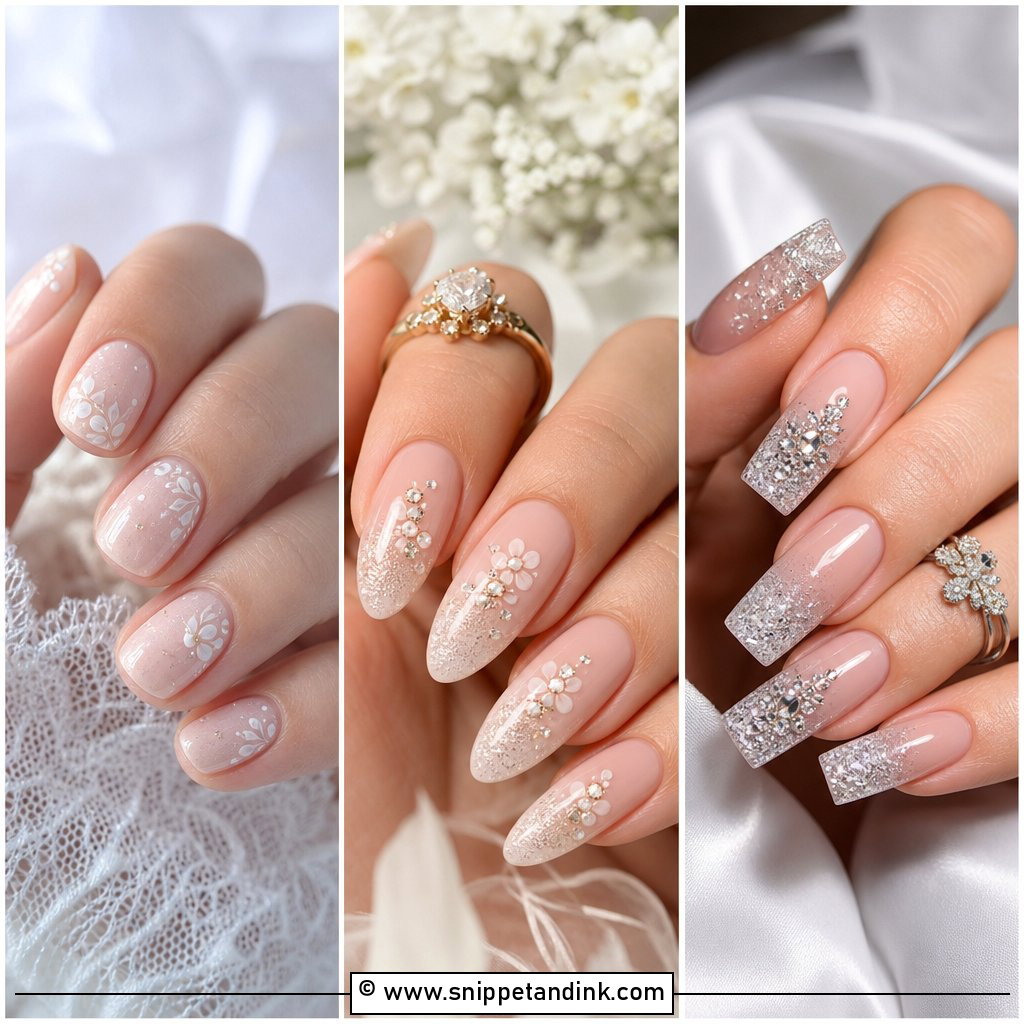
20. Blue French Wedding Nails
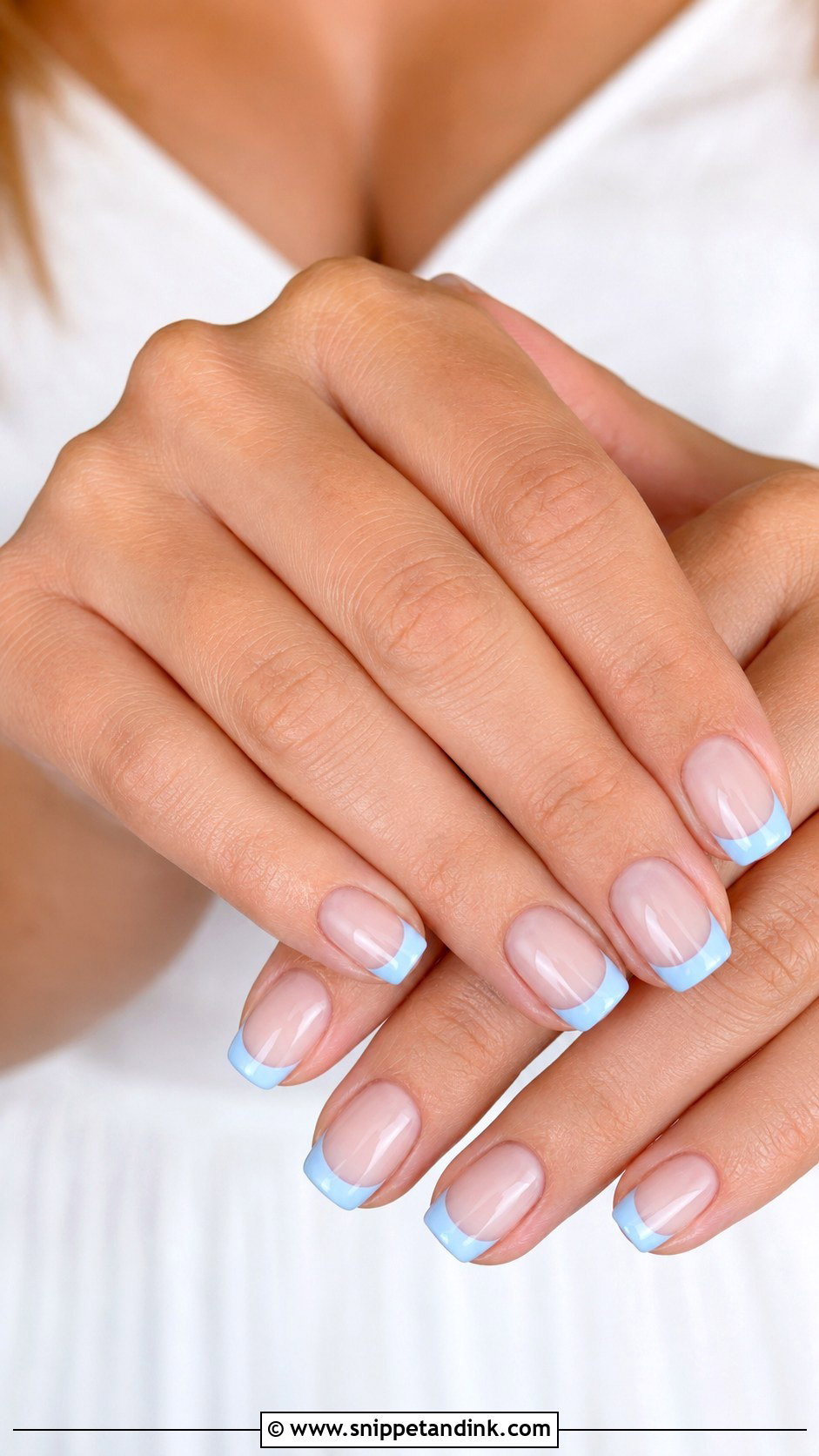
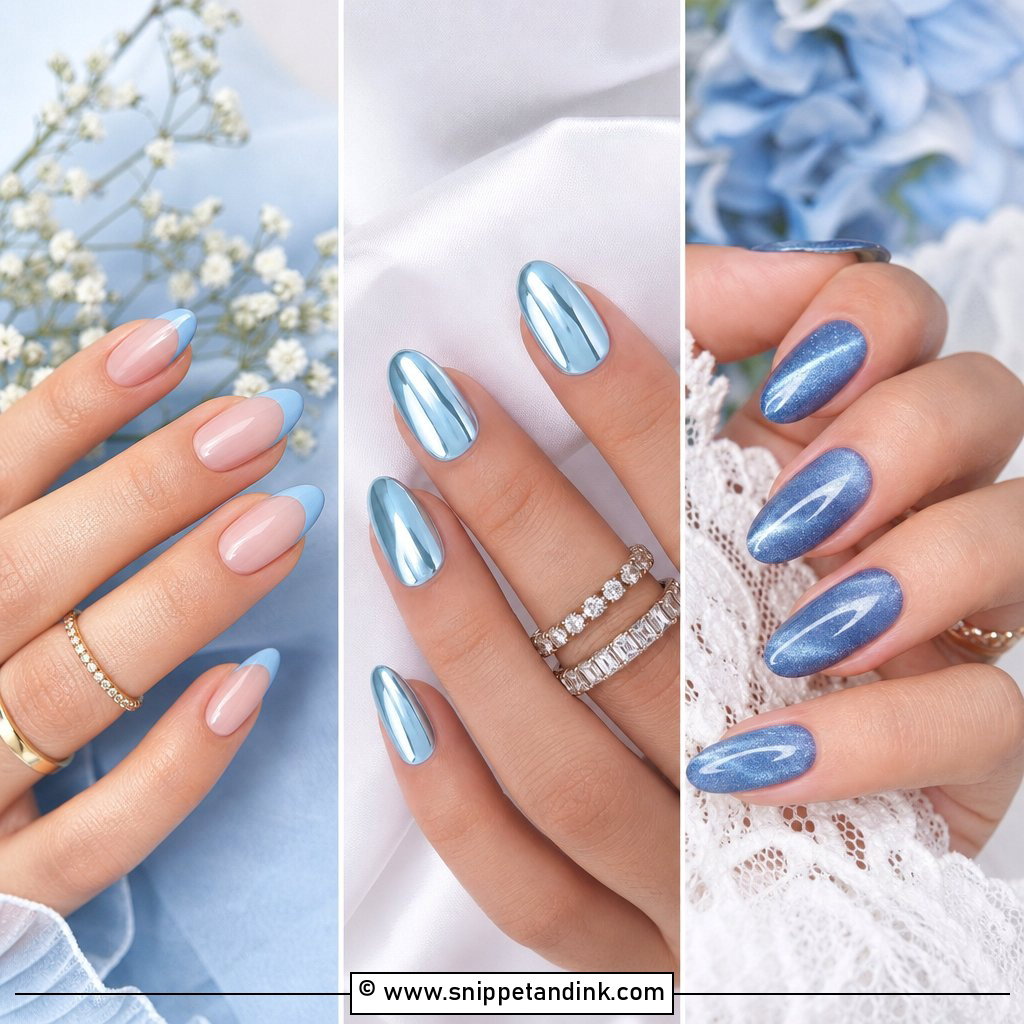
Blue French wedding nails are an easy way to wear your something blue where people actually see it. Pale blue tips over a sheer pink or milky base are the subtle version; a thin blue line under a white tip or a tiny blue flower takes it a step further. Baby, powder and icy blue suit bridal styling best. Very pale blues can disappear under warm indoor lighting, so I usually go a shade deeper than the bride first points to. Short square keeps it clean; almond softens it.
Gel, Dip or Press-On for a French Set That Lasts the Weekend
French is less forgiving than solid colour once it has been on for a few days. A sheer base shows regrowth at the cuticle quickly, and the white tip is the first thing to chip because it takes every knock. That shapes my advice on what to wear and when to book it.
Gel polish is my default for natural nails. It stays glossy for about two weeks, but I book it one to three days before the wedding so the cuticle area still looks fresh in close-ups. Builder gel or acrylic suits anyone who wants length or has nails that peel at the tip. Dip powder is hard-wearing, though getting a really fine smile line in dip takes real skill, so ask to see that technician’s French work first. Press-ons are fine for a guest or a backup set, and a custom set sized to your nails can look convincing, but they need careful prep or they pop off when you are hugging people all day.
If a tip chips on the morning
Pack a small bottle of your exact white and your top coat, plus a fine brush and a cuticle stick. A tiny chip at the free edge can be repainted and sealed in a few minutes, and a regular top coat will dry well enough over gel if you leave it alone. Don’t try to file a chipped gel tip down on the day; you’ll take the shape with it. And keep hand sanitiser off freshly painted nails, because the alcohol dulls the shine.
One Manicure, Twenty Ways to Wear the Tip
French nails earn their place on so many wedding hands because they flatter nearly everyone and still leave room for personal detail. If you lean traditional, start with classic white, ivory, nude or blush French. For something more current, look at milky ombré, pearl chrome, micro tips or a fine gold line. Pearls, lace, florals and crystals add a personal touch, but one detail is usually enough. Whatever you pick, wear it at the trial for a few days, and make sure it still feels like your own hands by the time you’re cutting the cake.
You'll Like These Ideas:


Leave a Reply