
A French manicure is the set brides ask me for more than any other, and it has changed more than people expect. The bright white strip over a pink base has softened into sheer blush bases, milky washes, micro tips and a thin veil of pearl chrome. A French bridal manicure also adapts to almost any length, from short natural nails to long almond or coffin extensions. The 25 sets below run from the plainest classic to pearls and lace, and for each one I’ve added what I check at the table before I paint it on.

Matching the Smile Line to Your Own Nail Bed
Every French set starts with two decisions I make before any colour goes on: where the smile line sits, and which pink goes underneath it. Get those right and even the plainest set looks made for you. Get them wrong and the most detailed pearl design still looks a little off.
Reading your natural free edge
Look at your bare nails in daylight. The white part that grows past your fingertip has its own curve, and on most hands it isn’t symmetrical from finger to finger. I paint the new tip slightly over that natural edge, following one even arc across all ten nails rather than tracing each finger’s wobble. If your nail beds are short, a thin tip placed right at the edge makes them look longer; a deep tip dragged down onto the nail bed does the opposite.
A base that looks like your skin, only better
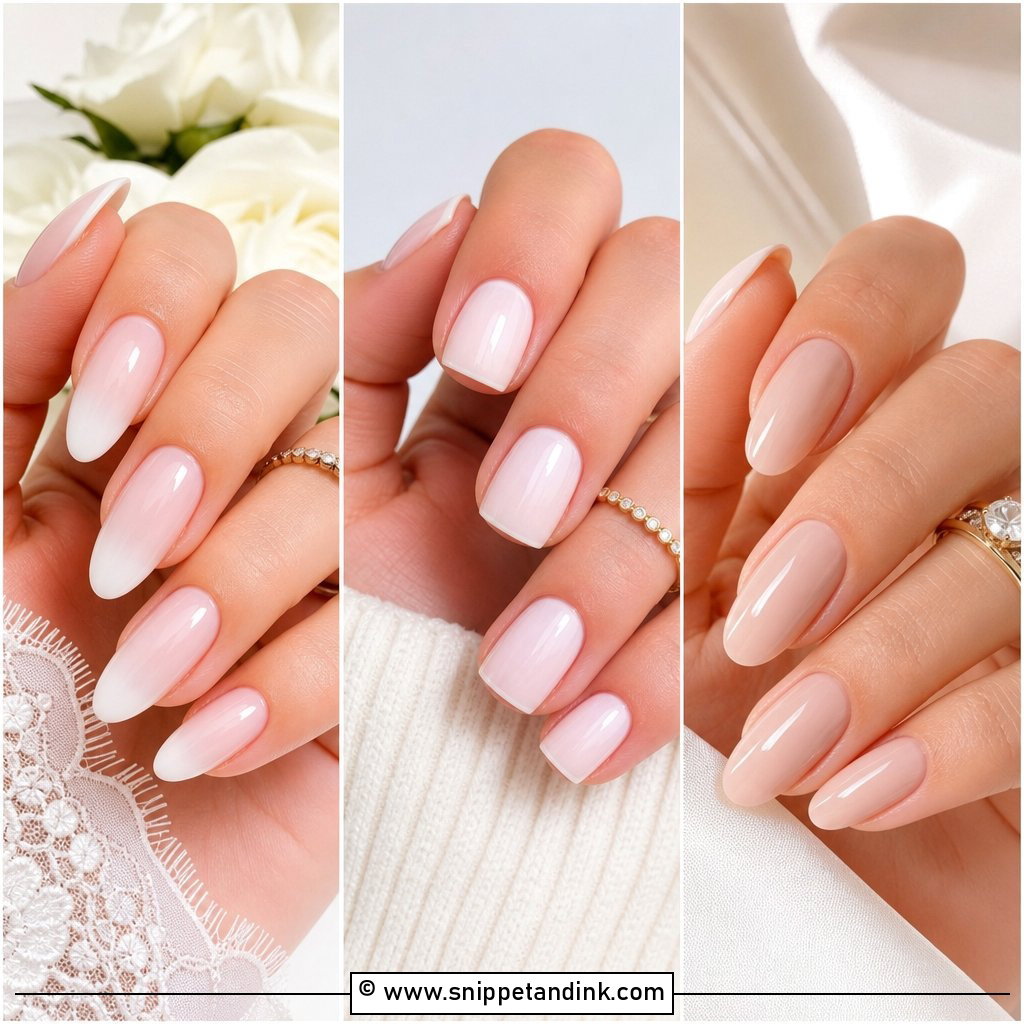
Sheer pink, beige and milky bases each change how your hands read. I paint a stripe of two or three options on one nail and look at them next to the engagement ring in natural light. The right one makes the nail look like healthy skin rather than a colour sitting on top of it.
- Cool or pink undertones usually suit a sheer baby pink or milky pink.
- Warm or olive undertones look better with a peachy beige or a nude that has a little yellow in it.
- Deeper skin tones often suit a sheer caramel or warm nude, with an ivory tip instead of bright white.
- If you can’t tell, start with a milky base. It blurs rather than tints, so it flatters most hands.
1. Classic French Bride Wedding Nails

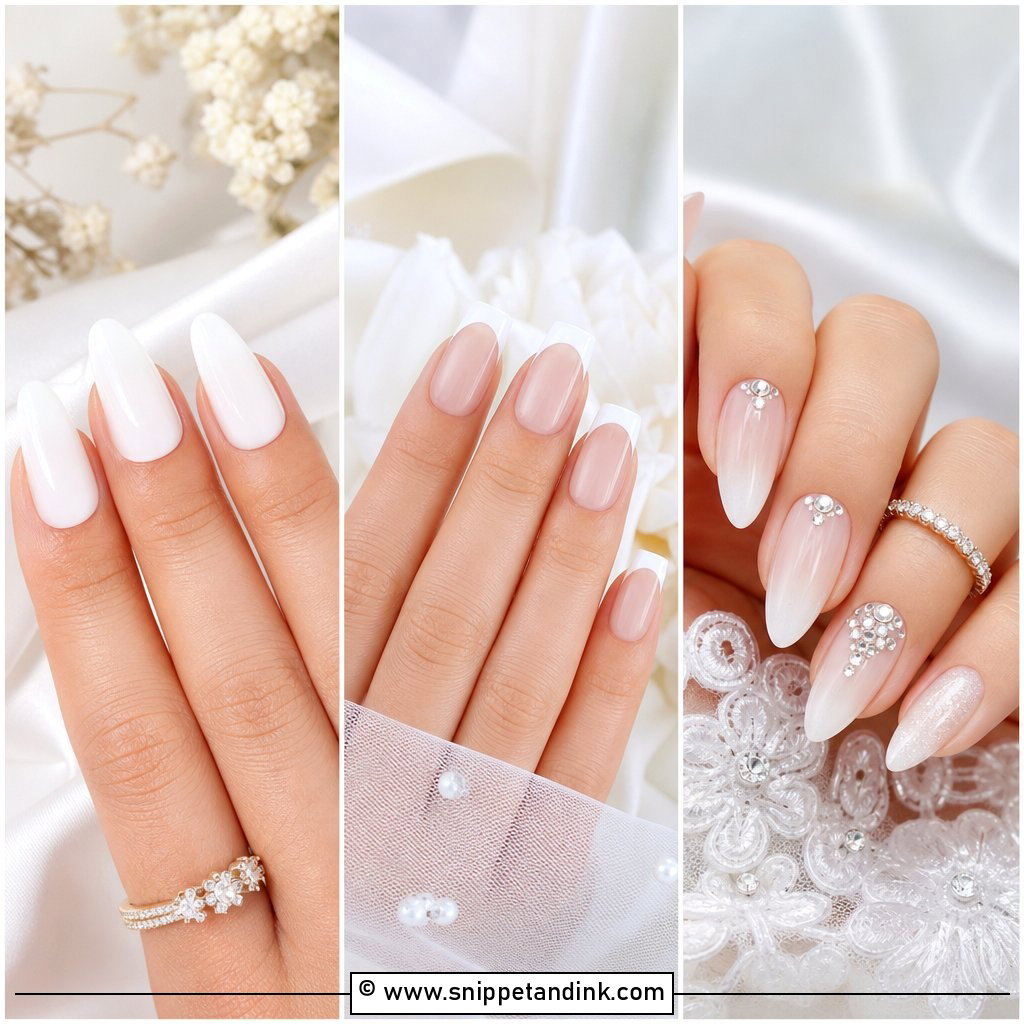
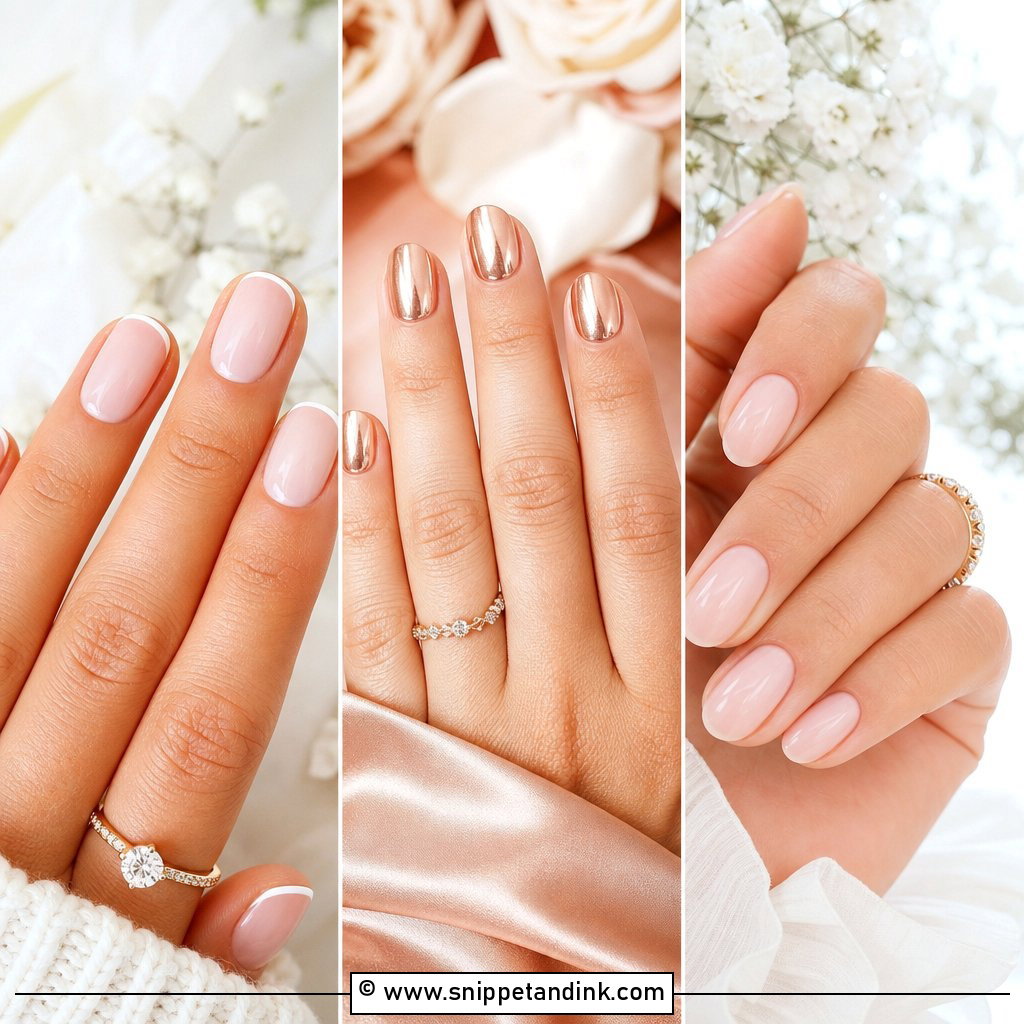
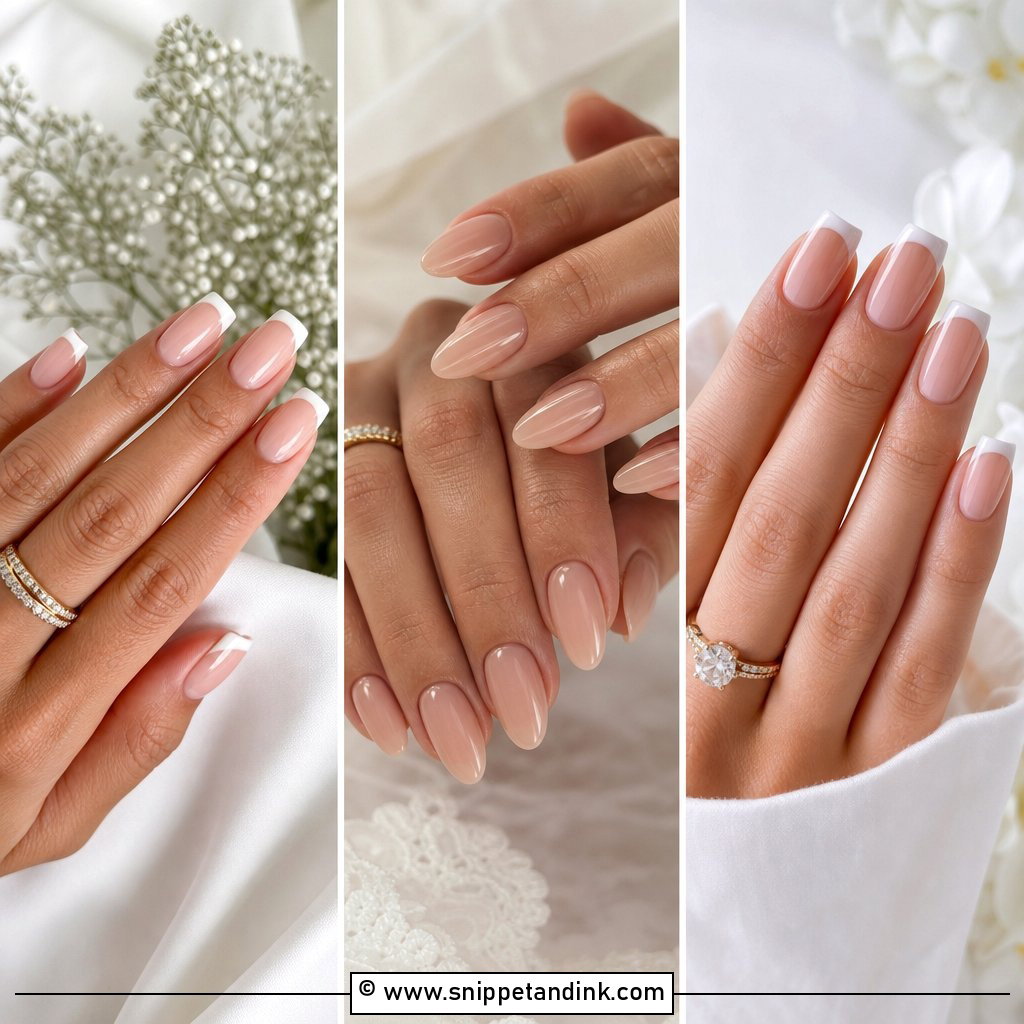
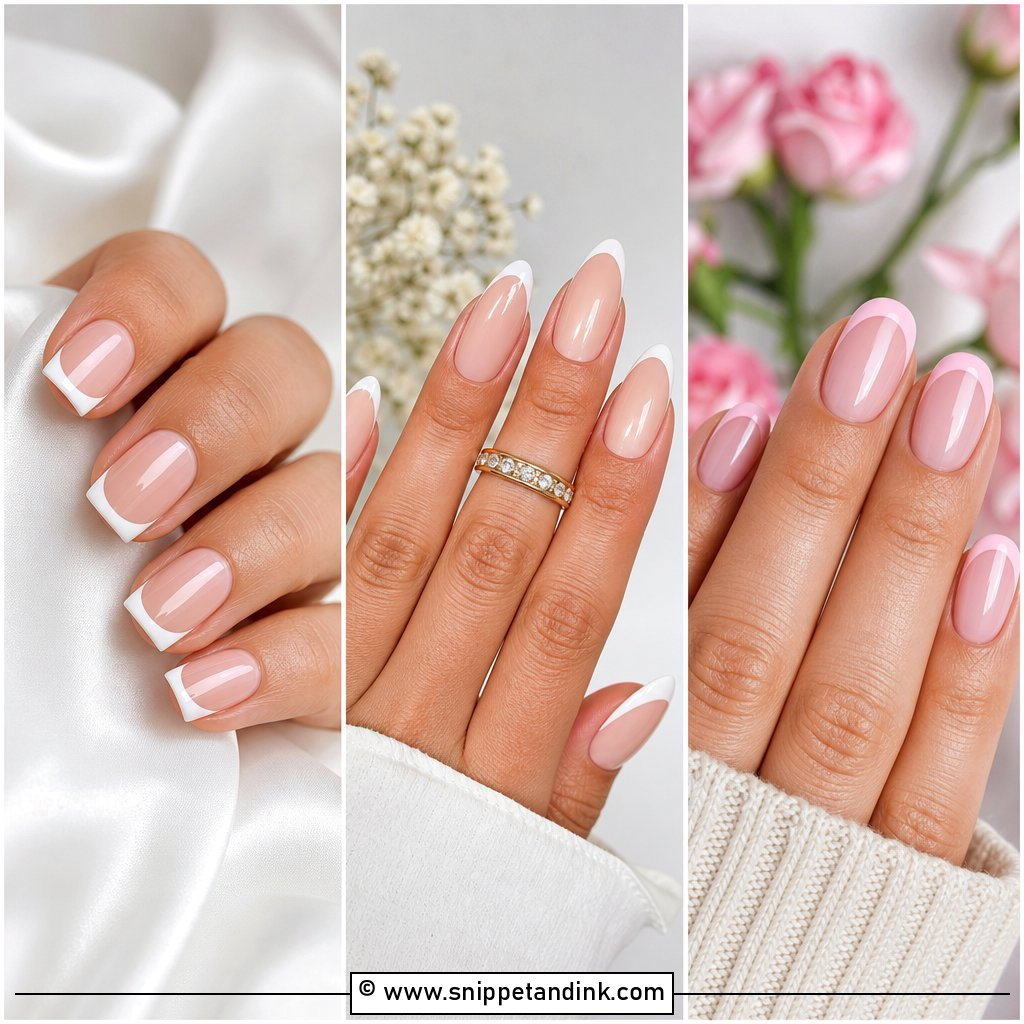
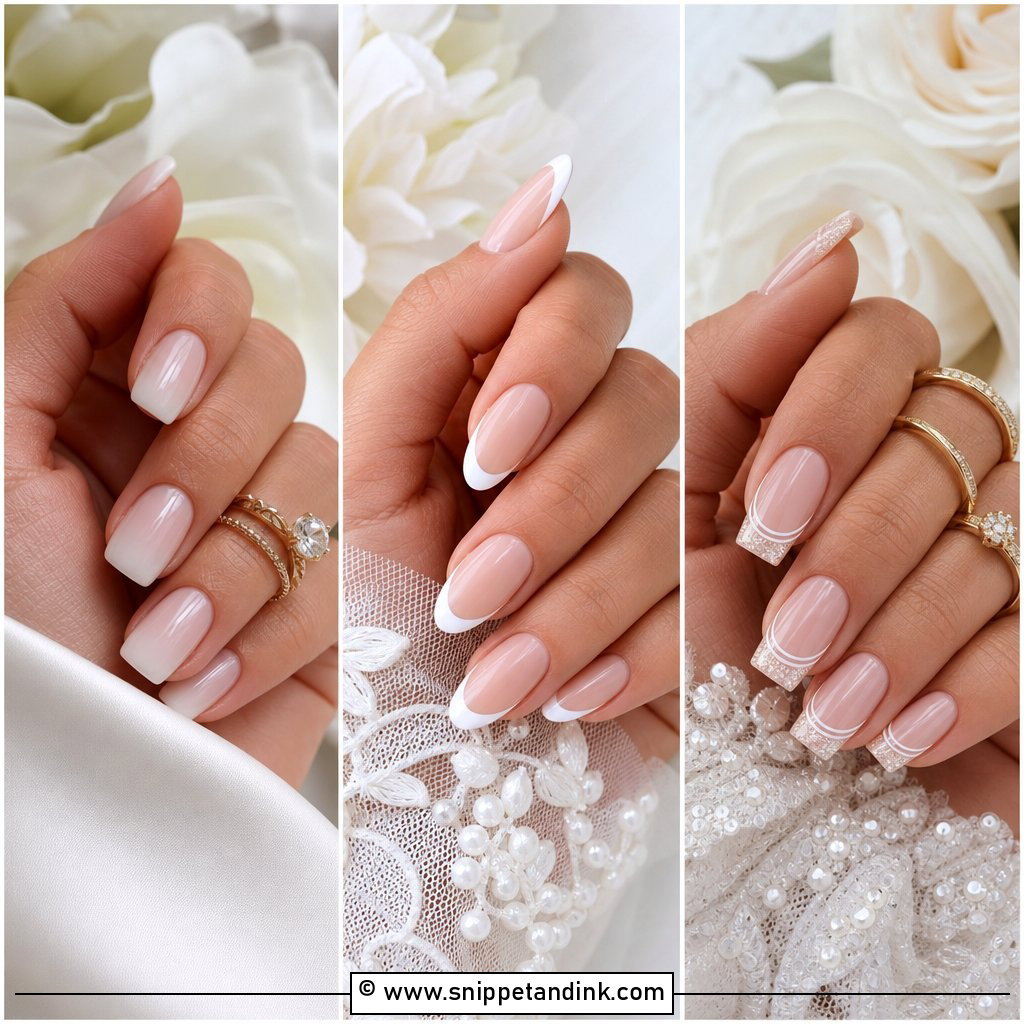
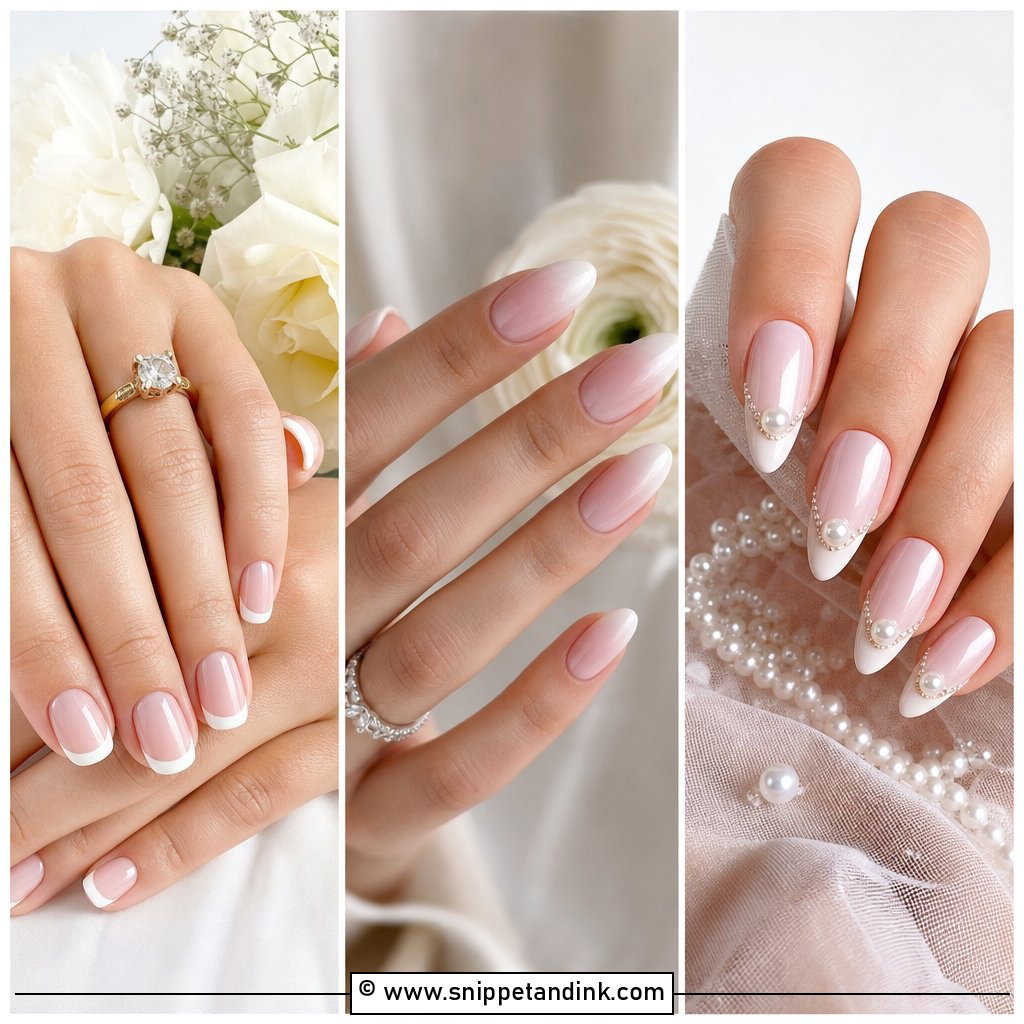
This is the set I still recommend to most brides who can’t decide. A sheer pink or nude base, a white tip and a high-gloss top coat sit quietly next to satin, lace and structured gowns alike. What makes it look bridal rather than salon-standard is the white itself: I usually mix a drop of base into pure white so the tip reads soft in close-up ring shots instead of chalky. Keep the shape oval, almond or a soft square, and let the ring do the talking.
2. Micro French Bride Wedding Nails

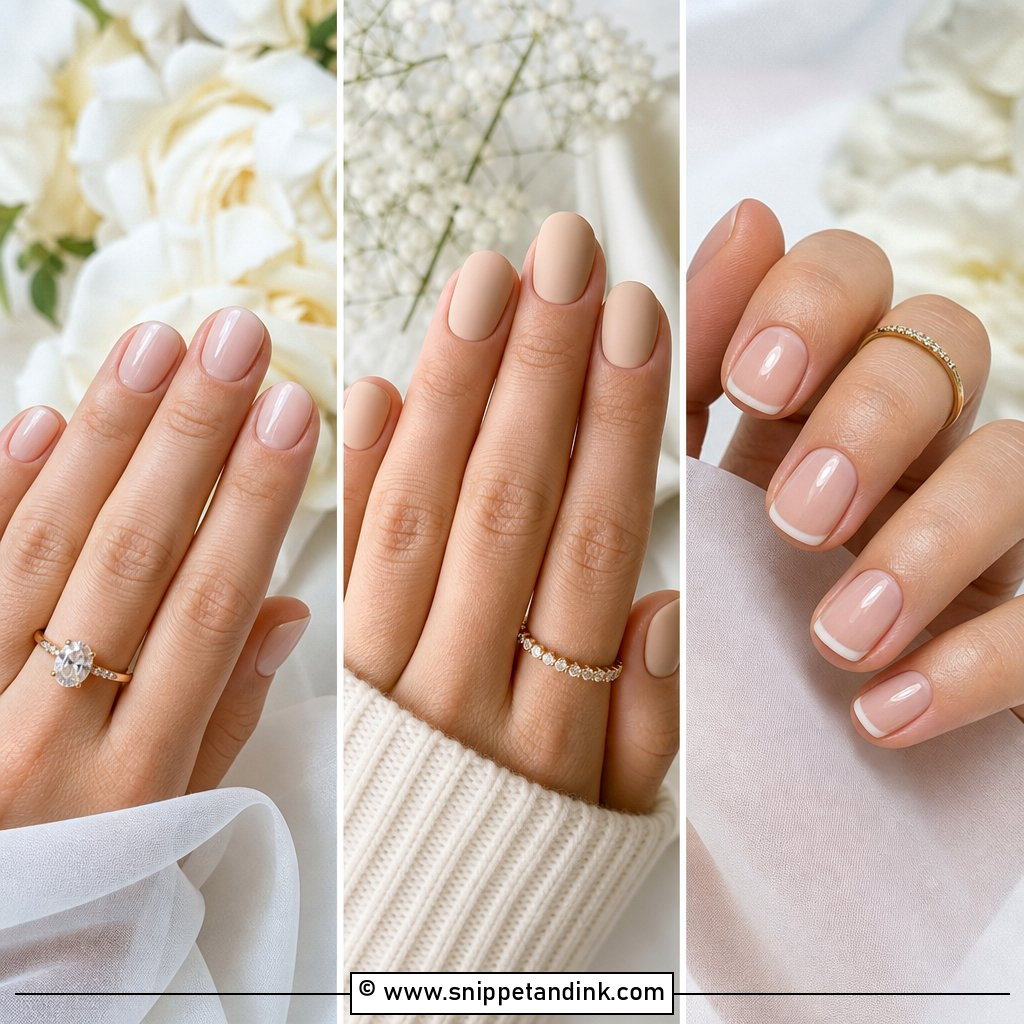
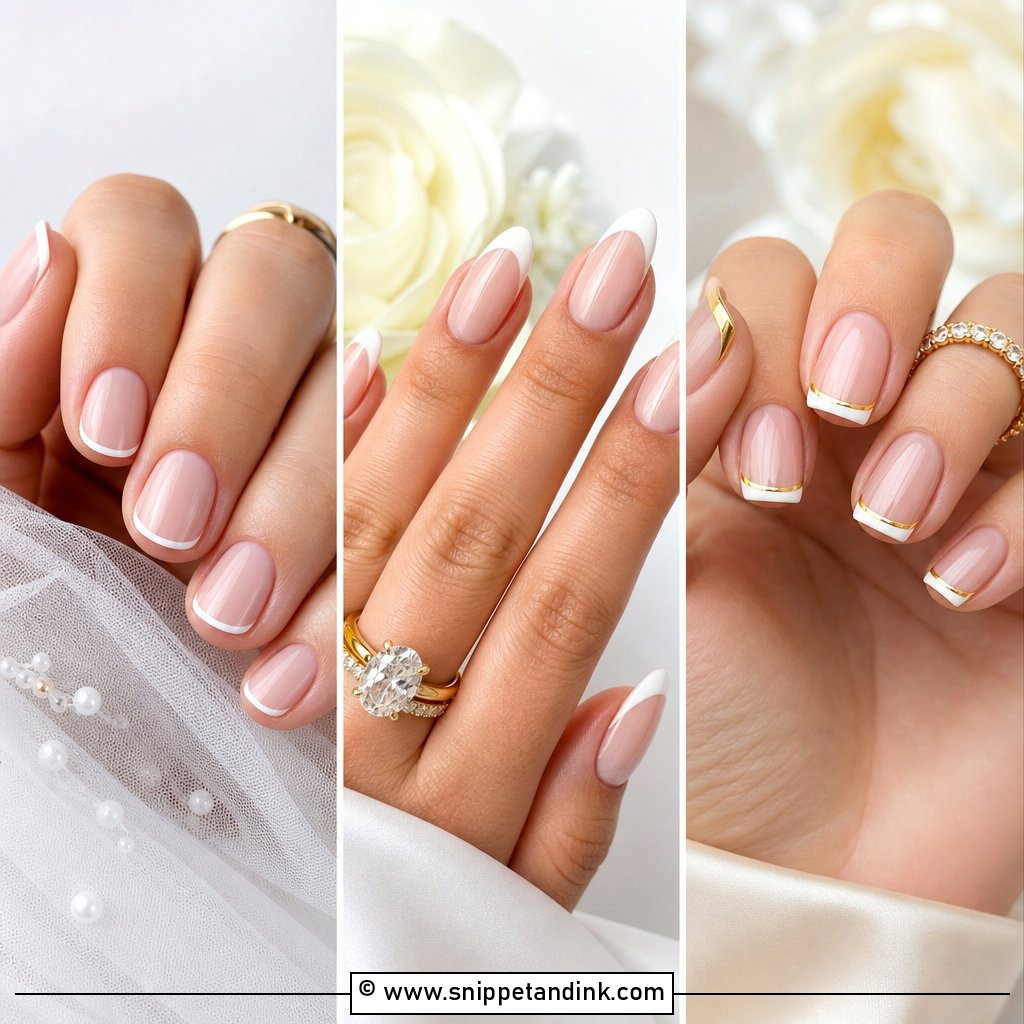
A micro tip is a white line only a millimetre or two deep, and it’s my first suggestion for short nails. A deep tip on a short nail eats the pink and makes the nail bed look stubby, while a thin one gives definition without crowding. The hard part is a steady line, so I paint it with a long liner brush and clean the edge with a small brush dipped in cleanser before curing. Sheer pink, beige or milky nude bases all suit it, and a pearly top coat is the only extra it needs.
3. Milky French Bride Wedding Nails

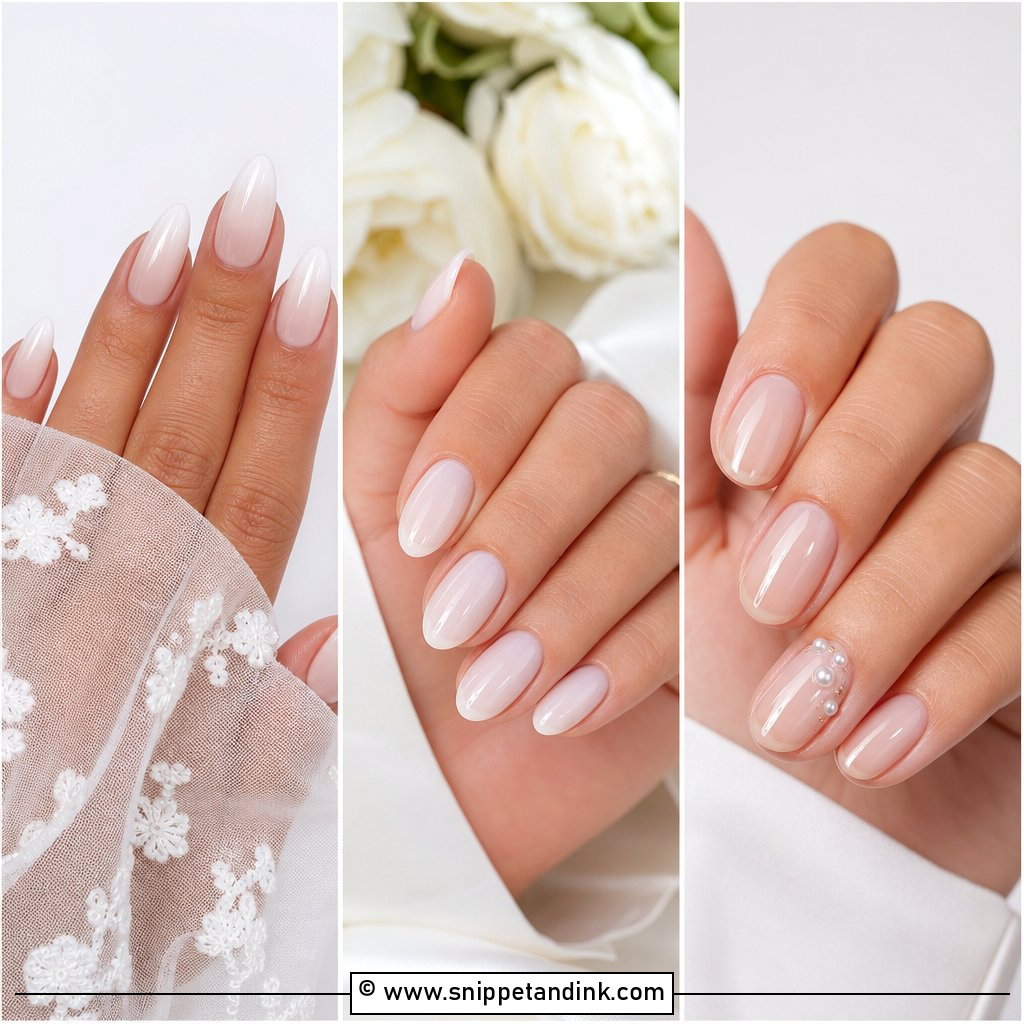
Swapping the clear pink base for a cloudy white or milky pink wash blurs the natural nail underneath. That blur is useful: it hides uneven free edges, small white spots and a natural smile line that isn’t symmetrical. I build the milky base in two thin coats rather than one thick one, because a heavy single coat can look streaky in direct sun. Tips can be soft white, ivory or almost translucent. On almond or oval nails it reads delicate; on short square nails it looks neat and current.
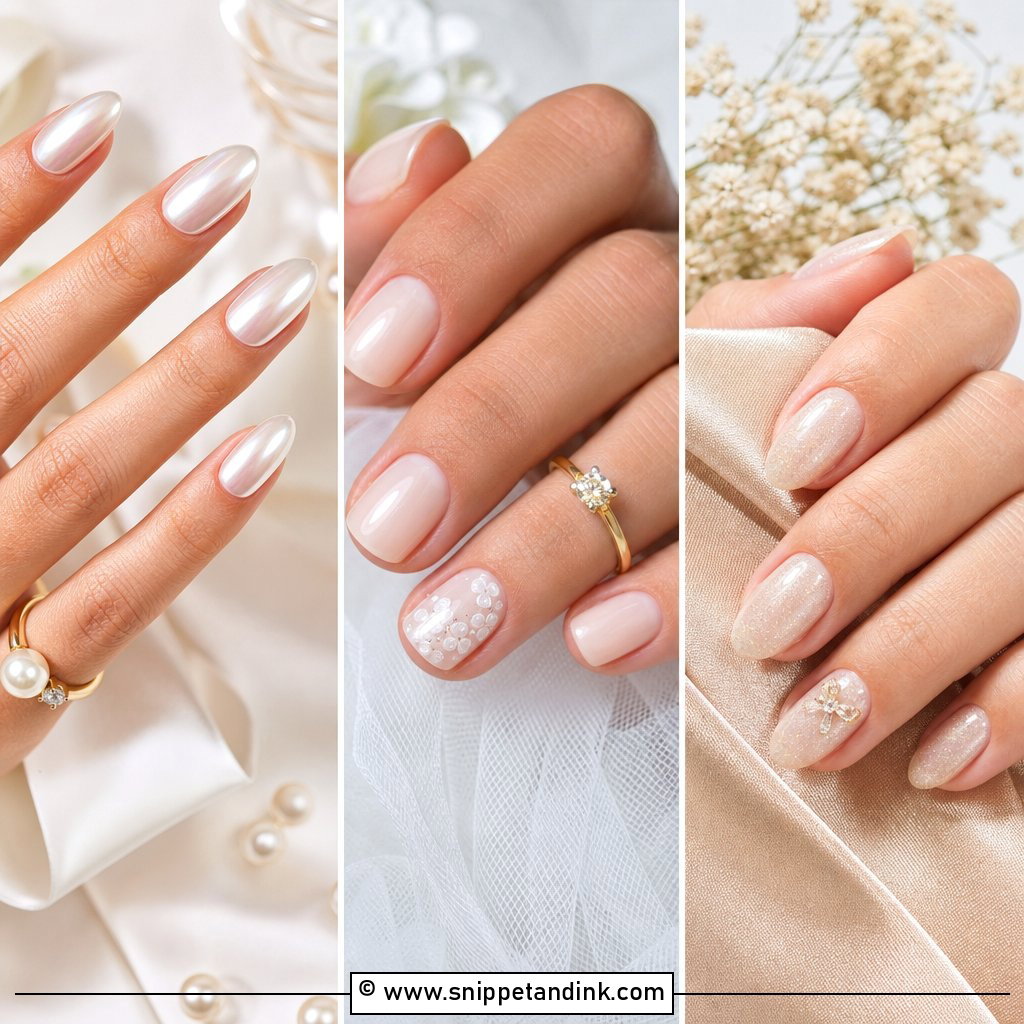
4. Pearl French Bride Wedding Nails

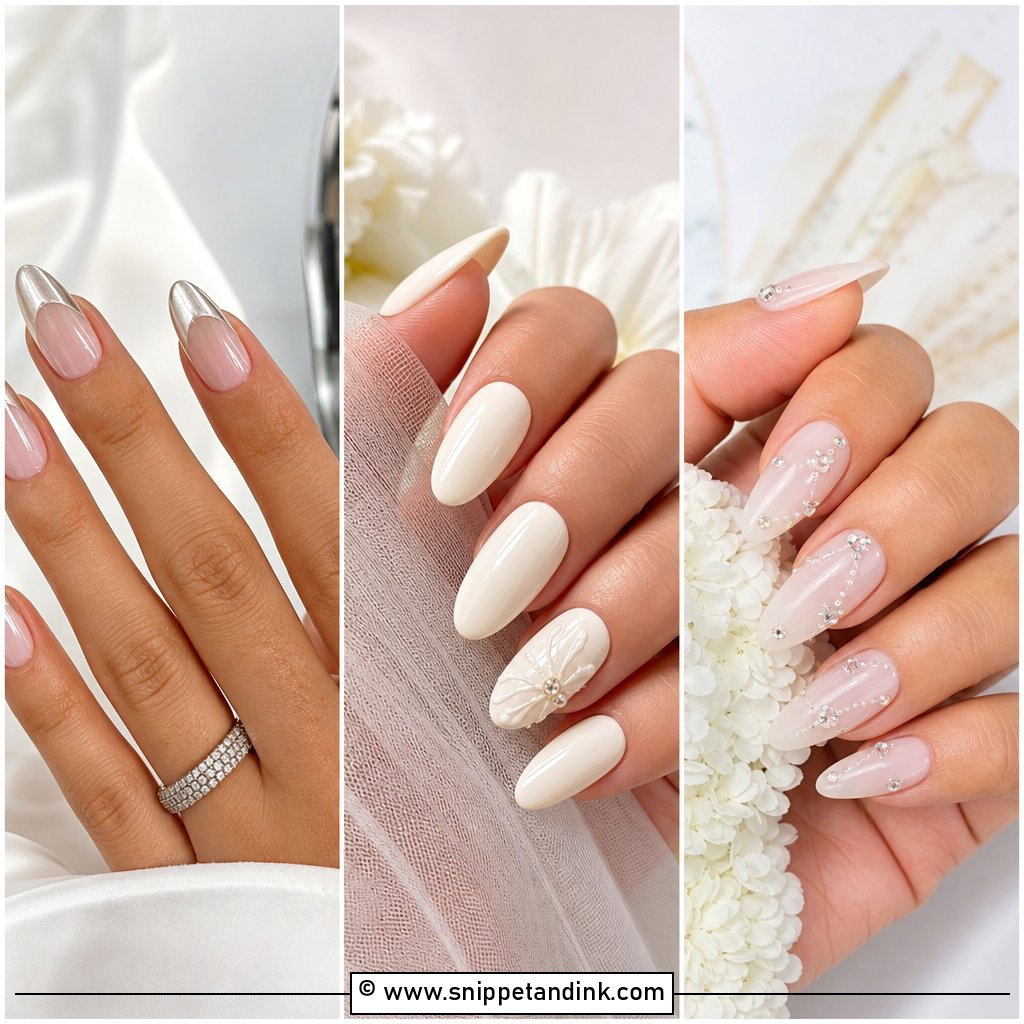
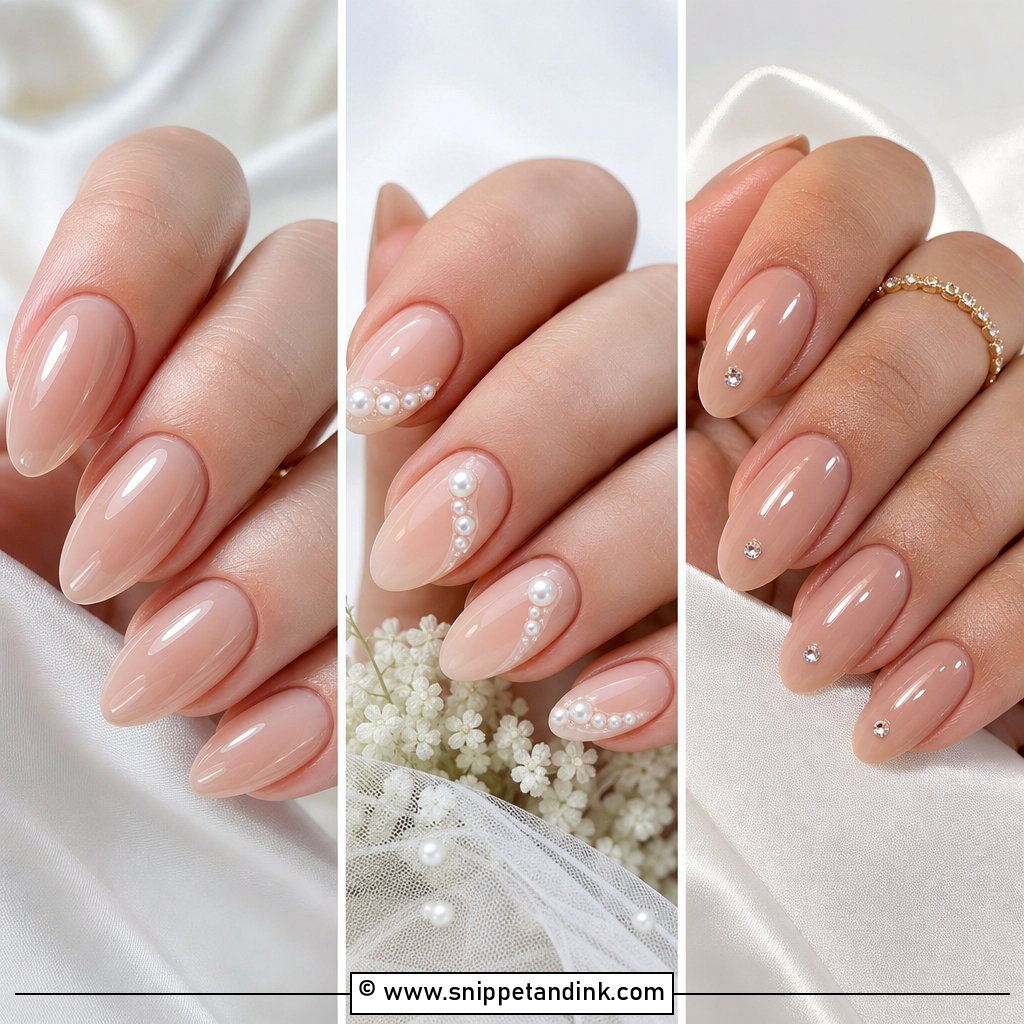
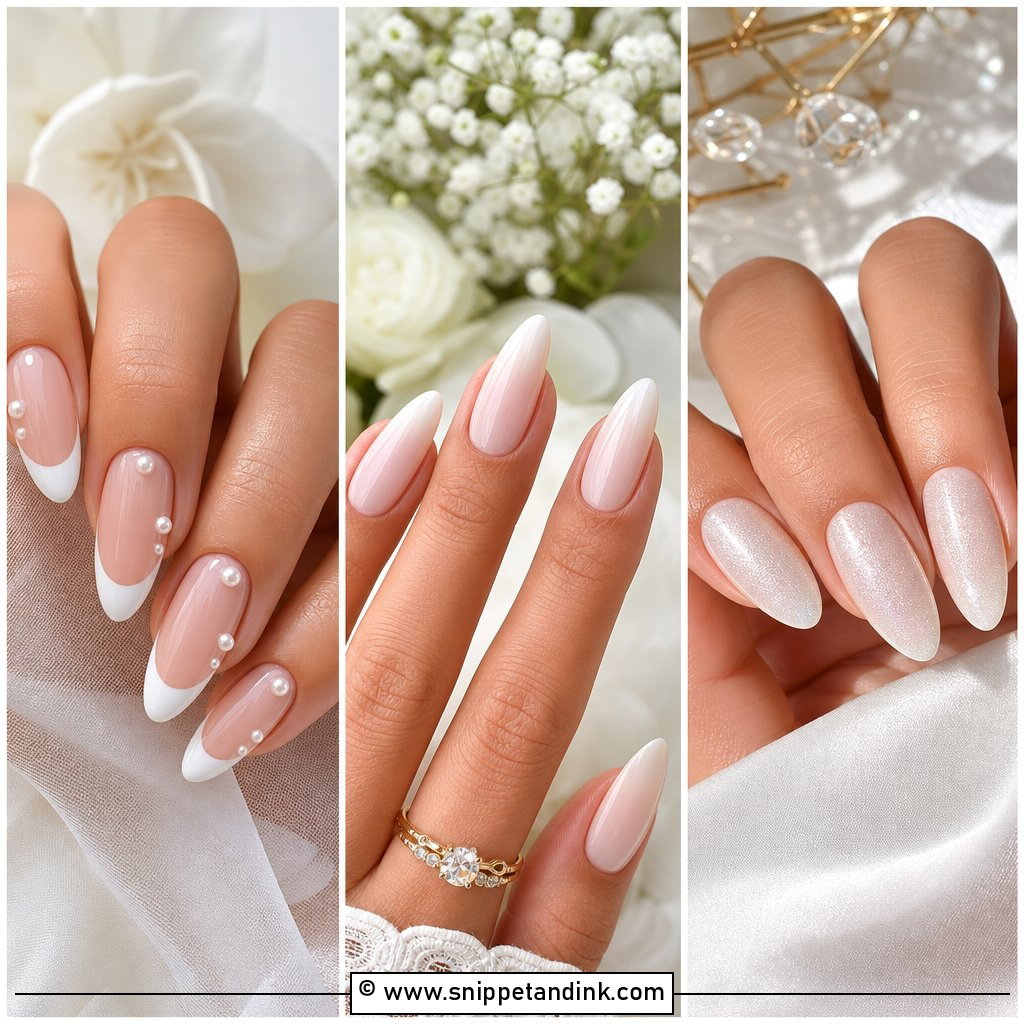
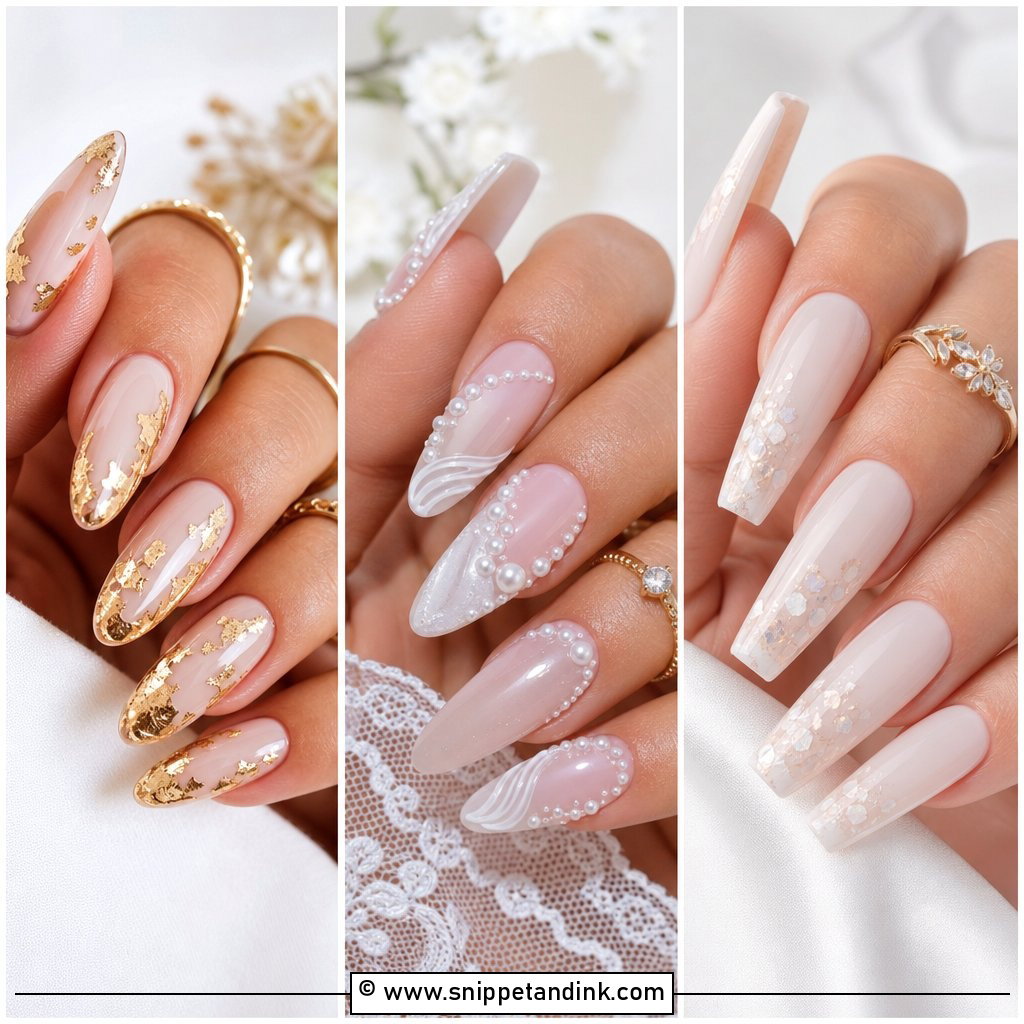
Here tiny pearls sit near the cuticle or along one accent nail, on top of a classic tip. Size is the whole decision. I use pearls of one to two millimetres because anything larger catches on hair, lace and the veil every time you adjust it. Each pearl is set into a small bead of builder gel and sealed around its base, not just stuck on top, so it survives the first round of hugs. One or two accent nails are enough for most brides; a few on every finger suits a heavily beaded gown.
5. Chrome French Bride Wedding Nails

Chrome French keeps the classic shape and rubs a fine powder over the base, the tips or both. For a wedding I’d pick pearl chrome over silver or gold mirror powder almost every time, because pearl gives a glassy sheen while a full mirror can look metallic next to ivory fabric. Chrome needs a no-wipe top coat to bond to, and the free edge has to be capped carefully or the tips start to wear within a few days. Silk and minimalist dresses suit it, on almond or square shapes.
6. Glazed French Bride Wedding Nails

The method starts with a sheer pink or milky nude base, then a fine tip, then a light pearly glaze over everything. It isn’t glitter at all; it’s closer to a thin film of light across the nail. I keep the tips thin or medium here, because a deep tip under the glaze can look slightly grey. If your skin is warm, ask for a glaze with a pink or gold shift rather than a cool blue-white one, which can make fingers look dull in shade.
7. Ombre French Bride Wedding Nails

Ombre French, sometimes called a baby boomer, fades the white into the base instead of drawing a hard line. I build it with a sponge or by blending gel with a soft brush, and it takes several thin passes to avoid a muddy middle band. The payoff is practical. As the nail grows there’s no sharp line drifting away from the cuticle, so it still looks fresh if the wedding falls ten days after your appointment. It lengthens almond, coffin and oval shapes nicely.
8. Almond French Bride Wedding Nails

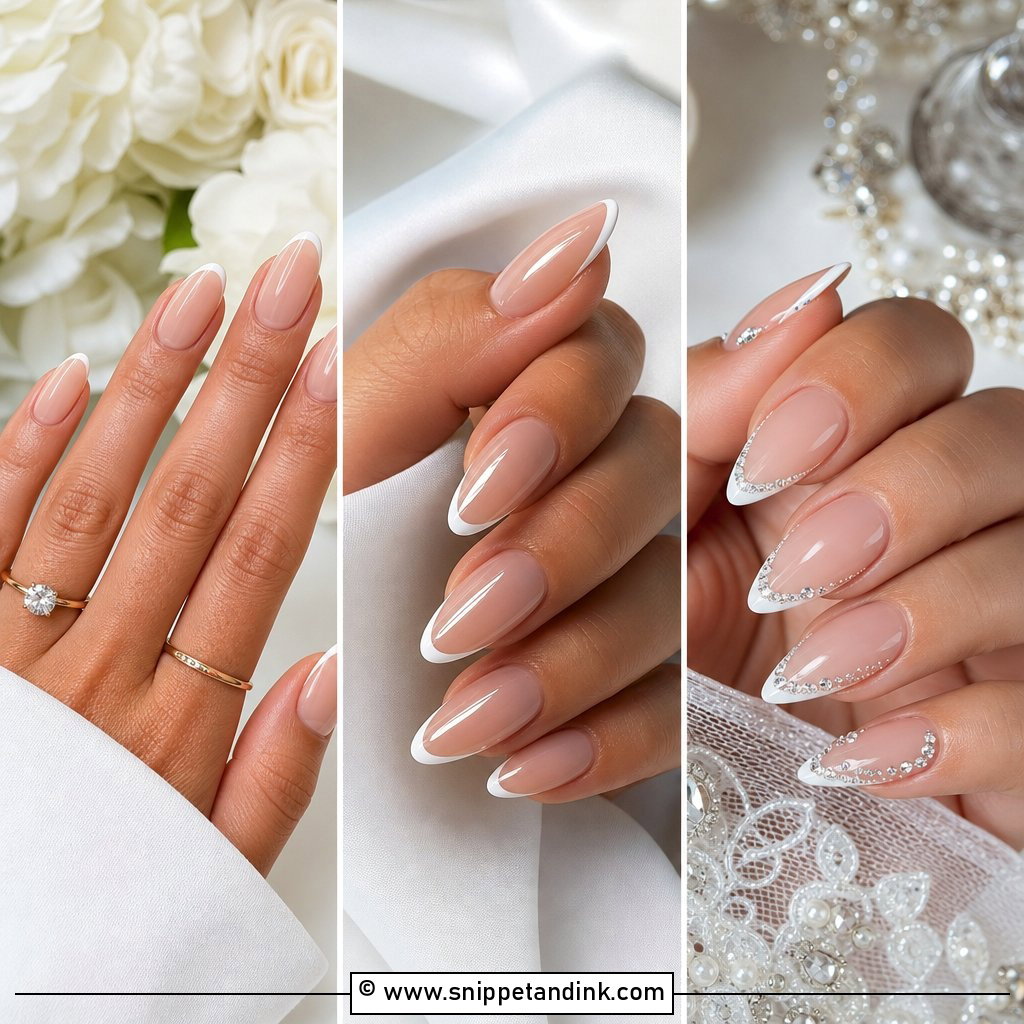
Tapering the sides toward a soft point makes fingers look longer, which is why I reach for this shape so often. Almond French bride wedding nails also take nearly every tip style: classic white, micro, glazed or pearl chrome. When I file almond for a bride, I keep the length medium. A long, sharp almond is the shape most likely to snap at the stress point on someone carrying a bouquet and hugging a hundred people. A sheer pink or nude base keeps it natural under lace sleeves and slim rings.
9. Short French Bride Wedding Nails

You don’t need extensions for a bridal French. On a short rounded square or oval, I paint a thin tip and keep the white exactly at the free edge so the nail bed looks as long as possible. Short nails are also the easiest choice if you never wear length, since fastening buttons, holding a phone and pinning a veil all feel normal. A glossy top coat is usually enough; add a soft chrome sheen or one tiny pearl if you want a single bridal detail.
10. Square French Bride Wedding Nails

A square tip line looks crisp, and that’s exactly why I soften the corners. Sharp square corners snag on tulle and lace, and they chip first because they take every knock. A soft square keeps the straight French line but rounds each edge with a few strokes of the file. I pair a sheer blush base with ivory or soft white tips, and a thinner tip or a pearly chrome overlay brings it up to date. Structured gowns and clean makeup suit it best.
11. Oval French Bride Wedding Nails

Oval follows the curve of the fingertip, so it’s the shape I suggest for natural nails that tend to split, or for brides who type all day and don’t want to relearn their hands. The risk is a lopsided smile line, because the arc has to mirror the rounded tip. I’d rather redo one nail than leave an uneven curve. Classic white, milky, ombre and glazed tips all sit well on it.
12. Coffin French Bride Wedding Nails

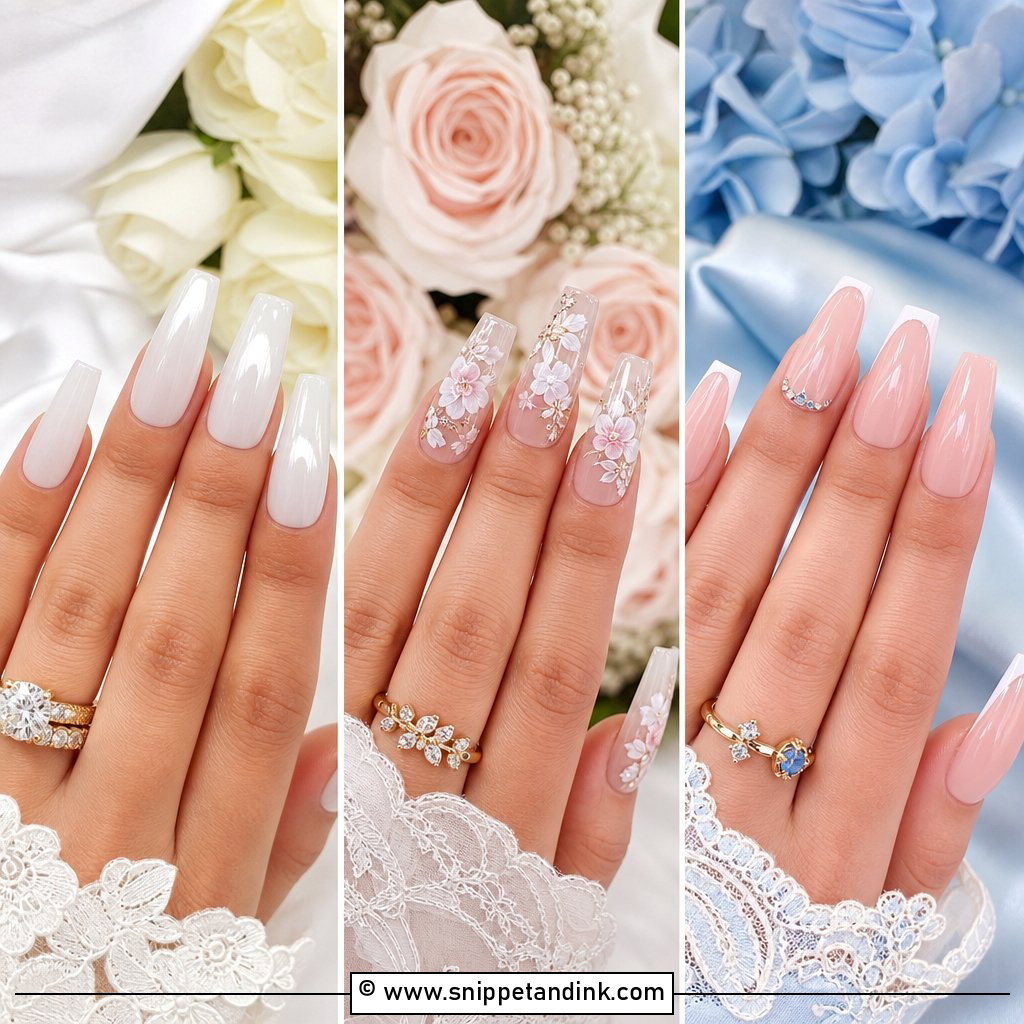
Coffin is the glamorous end of this list: tapered sides, a flat tip and usually some length. Long coffin carries a deeper French tip well, but I keep the colours soft, such as nude pink, milky beige or ivory, so the shape doesn’t feel harsh against a bridal gown. Long coffins need a proper apex built in with builder gel or acrylic, otherwise they bend or crack where the nail leaves the finger. Fine white florals or a few pearls on one or two nails are plenty. Fitted gowns and dramatic veils suit it.
13. White French Bride Wedding Nails

Bright white tips look crisp beside a white or pearl-toned dress, but next to ivory they can make the gown look slightly yellow. I hold the bottle against a swatch of the dress fabric before deciding. If your style is romantic, a soft white is kinder; on square or coffin nails, a clean bright white gives the most defined line. The base can be sheer pink, nude or milky, and a subtle chrome top coat is the only extra I’d add.
14. Nude French Bride Wedding Nails

In place of pink, this set uses a beige, tan, caramel or neutral base, with a soft white, ivory or lighter nude tip for a tonal effect. Undertone matters more here than anywhere else on this list. I test two or three nudes on the client’s own nail before painting, because a nude with the wrong undertone turns fingers grey or sallow in photos, while the right one simply looks like polished skin. It sits well with gold jewelry, warm makeup and champagne or ivory gowns.
15. Pink French Bride Wedding Nails

A sheer baby pink, blush or rose base makes nails look healthy, and the tip can be classic white, milky white or a soft pink for a tonal version. Sheer pinks are unforgiving of ridges. I always smooth the natural nail with a thin layer of rubber base before the colour goes on, otherwise every ridge shows straight through. Blush bouquets and rosy makeup pick it up nicely, and a light glaze is enough if plain gloss feels too simple.
16. Ivory French Bride Wedding Nails

Ivory sits closer to cream than to paper white. If your dress is ivory, champagne or warm white, this is the tip I’d choose, because it doesn’t fight the fabric. I pair it with a sheer nude, milky pink or warm beige base so there’s enough contrast for the line to read without looking stark. Almond, oval and soft square shapes all carry it.
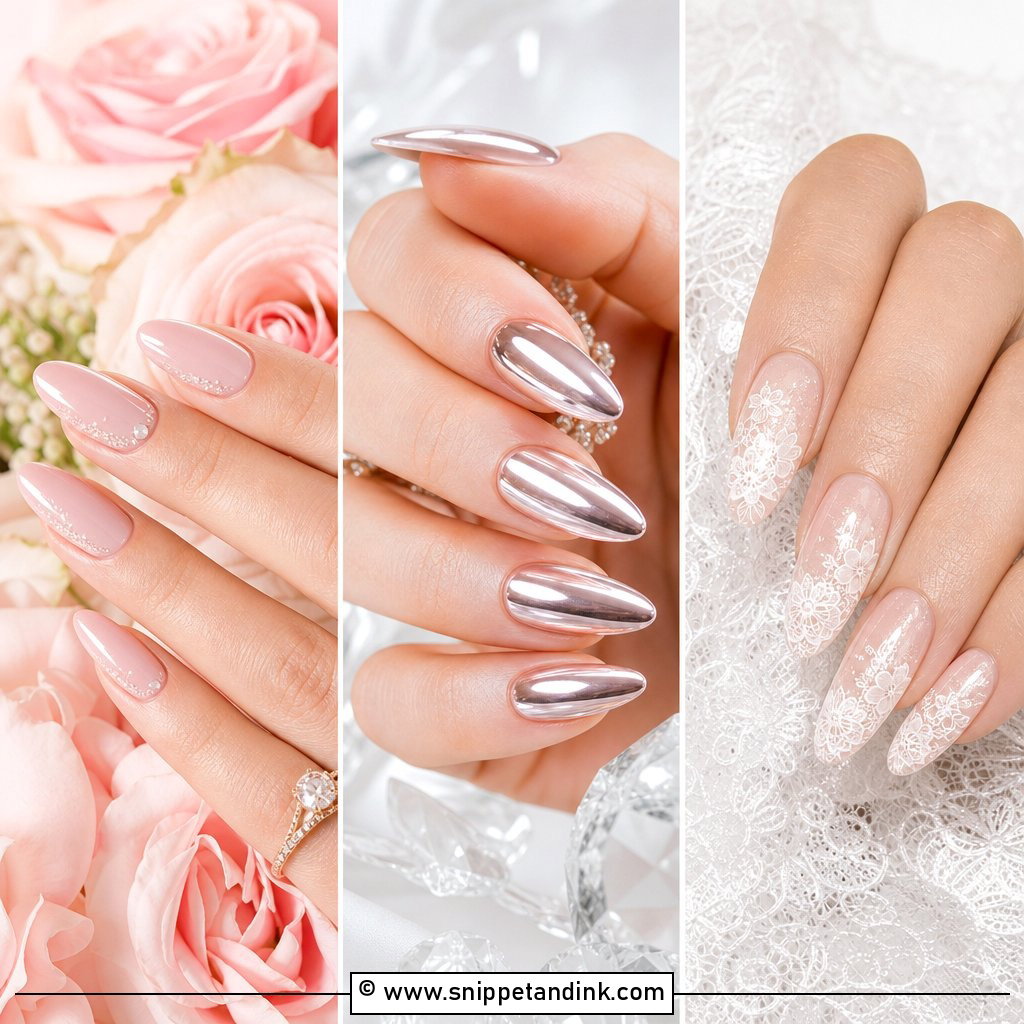
17. Lace French Bride Wedding Nails

This one starts with a sheer base and classic tips, then adds fine white lace on one or two accent nails. I hand-paint the lace with a very thin striping brush, which gives softer, more irregular lines than a stamping plate. Bring a photo of your dress lace to the appointment so your artist can echo its motif rather than inventing one. Keep the other nails plain, and choose almond or oval so the pattern has room.
18. Floral French Bride Wedding Nails

Tiny white flowers, blush petals or raised floral accents sit over classic tips here. I keep florals to one or two nails, because on every finger they start to look busy in a close-up ring shot. Raised flowers built in gel or acrylic catch on knitwear and hair, so if you’re tempted by 3D, try it on the ring finger only. Spring and garden weddings, and gowns with floral embroidery, suit this set best.
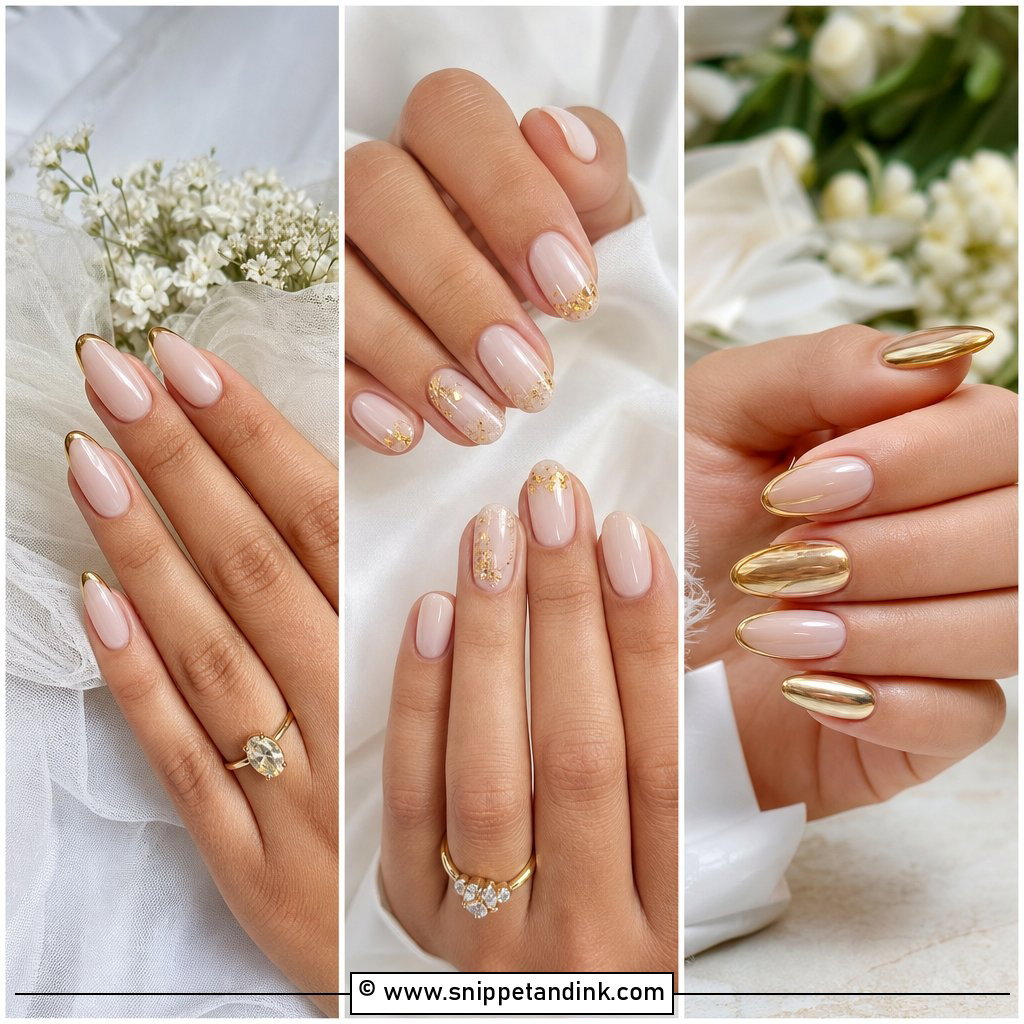
19. Gold French Bride Wedding Nails

Gold can edge or replace the white: a thin gold line under the French tip, a gold chrome edge, or tiny gold foil accents over a nude base. Metal on a nail looks expensive when it’s thin and cheap when it’s thick, so I draw gold lines with a striper and keep them hairline. Foil needs a tacky layer to grip and has to be fully sealed, or the edges lift within days. A milky nude base keeps it bridal, and it’s the obvious match for a yellow-gold ring.
20. Silver French Bride Wedding Nails

The cool-toned partner of the gold set uses white tips with a fine silver outline, soft silver chrome tips, or a little shimmer over sheer pink. It goes with platinum or white-gold rings, crystal details and cool white gowns. A thin metallic line looks bridal; heavy silver glitter tends to look like a party manicure. I’d skip it if your skin is very warm and your jewelry is yellow gold, because two metals at the fingertip pull the eye away from the ring.
21. Glitter French Bride Wedding Nails

Sparkle stays elegant when it’s fine and controlled: a soft fade at the tips or a single shimmer line along the French edge rather than full glitter nails. I use fine champagne, pearl or silver glitter suspended in gel, never chunky flakes, which cast tiny shadows and look gritty in macro ring shots. Glitter is also harder to remove, so plan a proper soak-off after the honeymoon. Evening receptions and ballroom venues suit it, and short nails can carry a micro glitter tip.
22. Double French Bride Wedding Nails

A second fine line runs below the main tip, following the same curve, in white, ivory, gold, silver or pearl chrome. The spacing between the two lines makes or breaks it. Too close and they blur into one thick band in photos, so I leave a clear gap of base colour roughly the width of the line itself. Almond and square shapes show the lines best.
23. Reverse French Bride Wedding Nails

Here the detail moves down to the cuticle. Reverse French bride wedding nails carry a thin white, pearl, gold or silver half-moon at the base, often paired with soft tips at the free edge. That half-moon has to sit a hair’s width away from the skin: if gel touches the cuticle it lifts there first, and a lifted half-moon is very easy to spot. A sheer nude or milky pink base keeps it airy. It suits brides who want minimal art with one unusual detail, on oval, almond or short square nails.
24. Pearl Chrome French Bride Wedding Nails

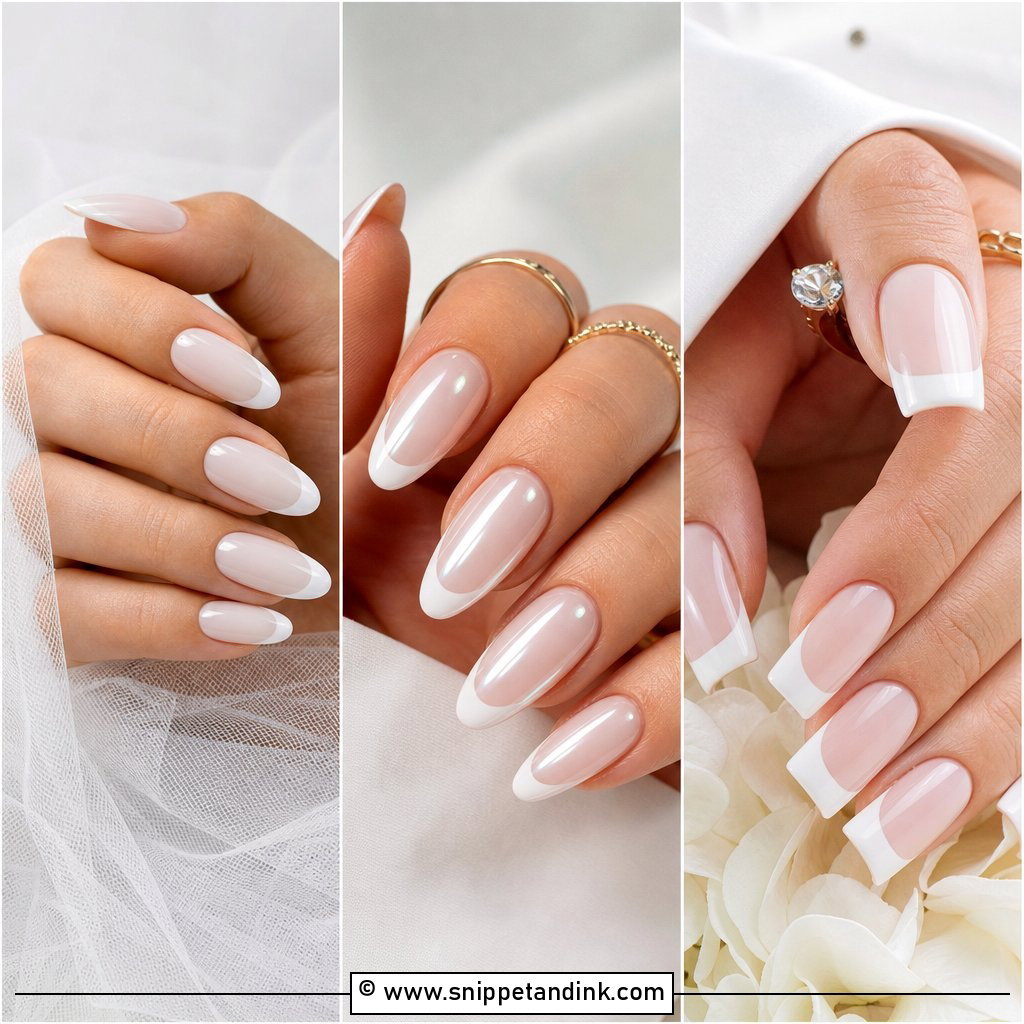
Soft tips go on first, then pearl chrome powder is buffed over the whole nail. The finish is luminous without visible glitter, and it suits pearl-beaded dresses and satin especially well. Ask for a light layer. One thin pass of powder lets the tip show through, while a heavy pass turns the whole nail opalescent and the French line disappears.
25. 3D Pearl French Bride Wedding Nails

This is the textured version: small pearls set over sheer pink, milky nude or soft beige with classic tips, placed near the cuticle, along the tip or on one feature nail. Spacing matters as much as size, so I lay the pearls out with a dotting tool before curing and keep them small enough that the nail still reads as French. Raised pearls do snag. If you’ll be fixing your own veil or hair through the day, keep them to a single nail, and choose almond or oval for the most graceful line.
How a French Tip Holds Up from the Rehearsal Dinner to the Honeymoon
A French manicure shows wear faster than a solid colour. The white sits right on the edge that takes every knock, and regrowth at the cuticle is easy to see through a sheer base. So timing and finishing matter more here than with almost any other bridal set.
- Book the final gel set one to three days before the wedding. Any closer leaves no time to fix a lifted nail; much earlier and regrowth starts to show.
- Ask for the free edge to be capped, so the base, the tip colour and the top coat each wrap over the very end of the nail. That one step does the most to stop tip wear.
- Wear gloves for washing up, packing favours and anything involving cleaning sprays. Solvents can dull a high-gloss top coat in an afternoon.
- Rub cuticle oil in every evening. Hydrated nails flex instead of cracking, and the skin around a sheer base stays neat in close-ups.
- If you’re flying straight off afterwards, book a professional soak-off for when you’re back. Peeling gel off pulls layers of your own nail away with it.
When a tip chips on the morning itself
It happens, usually while someone is zipping a dress or wrestling with a garment bag. I tell brides to carry a fine file, a small bottle of the white or ivory used for the tips if their artist can spare one, and a quick-dry top coat. File the chipped edge smooth first so it doesn’t catch and tear further, then touch in the tip with a thin brush and seal it. At arm’s length, and in nearly every photo, a careful patch disappears.
Settling on a French Set That Suits Your Hands and Your Ring
French bridal nails stay popular because one idea stretches from plain classic to softly glamorous. The right version depends on your dress, your ring, your nail length and how used you are to wearing length. If you want the safe route, classic, micro, oval or milky French will not let you down; pearl, lace, floral, chrome and double French add personality without looking out of place at a ceremony. Book a trial set a few weeks ahead, especially if you’re adding extensions, pearls, or chrome, so you can see how the shape feels after several days of real life.
You'll Like These Ideas:


Leave a Reply