
Anne Barge bridal fashion leans on clean structure and restraint, the kind of gowns that look better the closer you stand. That restraint is also what makes styling them tricky. A plain satin ball gown can tip into severe or into forgettable depending on the veil, shoes and hair you put with it. So rather than gowns alone, I’ve written up whole outfits: ball gowns, columns, lace, overskirts, a pantsuit and some reception changes, each with the accessories I’d actually pull for a fitting. Venue and season come up throughout, because a gown that works in a ballroom can feel stiff in a garden.
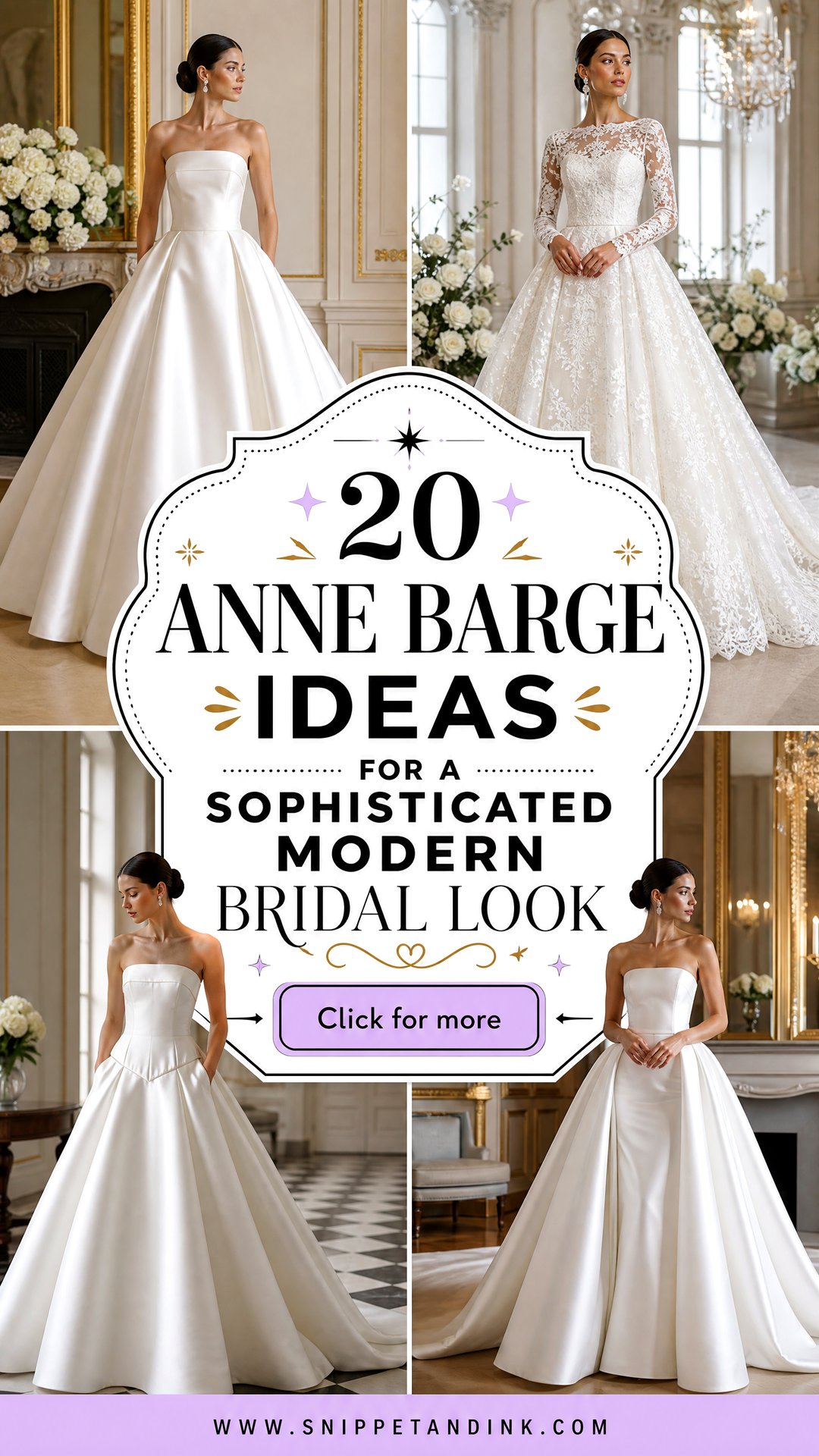
Satin, Mikado and Crepe by the End of the Night
Structured gowns like these depend on the fabric as much as the cut, and each one ages differently over a long wedding day. Before you choose a silhouette, it helps to know what the cloth will look like at 11 p.m., not just at the fitting.
- Satin has a soft sheen and drapes well, but it creases where you sit and shows water spots. Expect lines across the lap after dinner. Steam the gown on the morning of the wedding, not the night before.
- Mikado is heavier, with a crisp, slightly textured surface. It holds the big shapes in a ball gown or a bow back and resists wrinkles better than satin. It can feel warm in summer.
- Crepe is matte and fluid. It is the most comfortable to wear for hours and suits columns and fit-and-flare cuts, but it shows every seam and every line of shapewear, so fit is everything.
- Lace hides small creases and marks better than any of these, which is one reason it suits outdoor or very long days.
My honest advice is to sit down in the sample for ten minutes before deciding. The creases you see when you stand up are a preview of your reception photos.
1. Anne Barge Strapless Satin Ball Gown
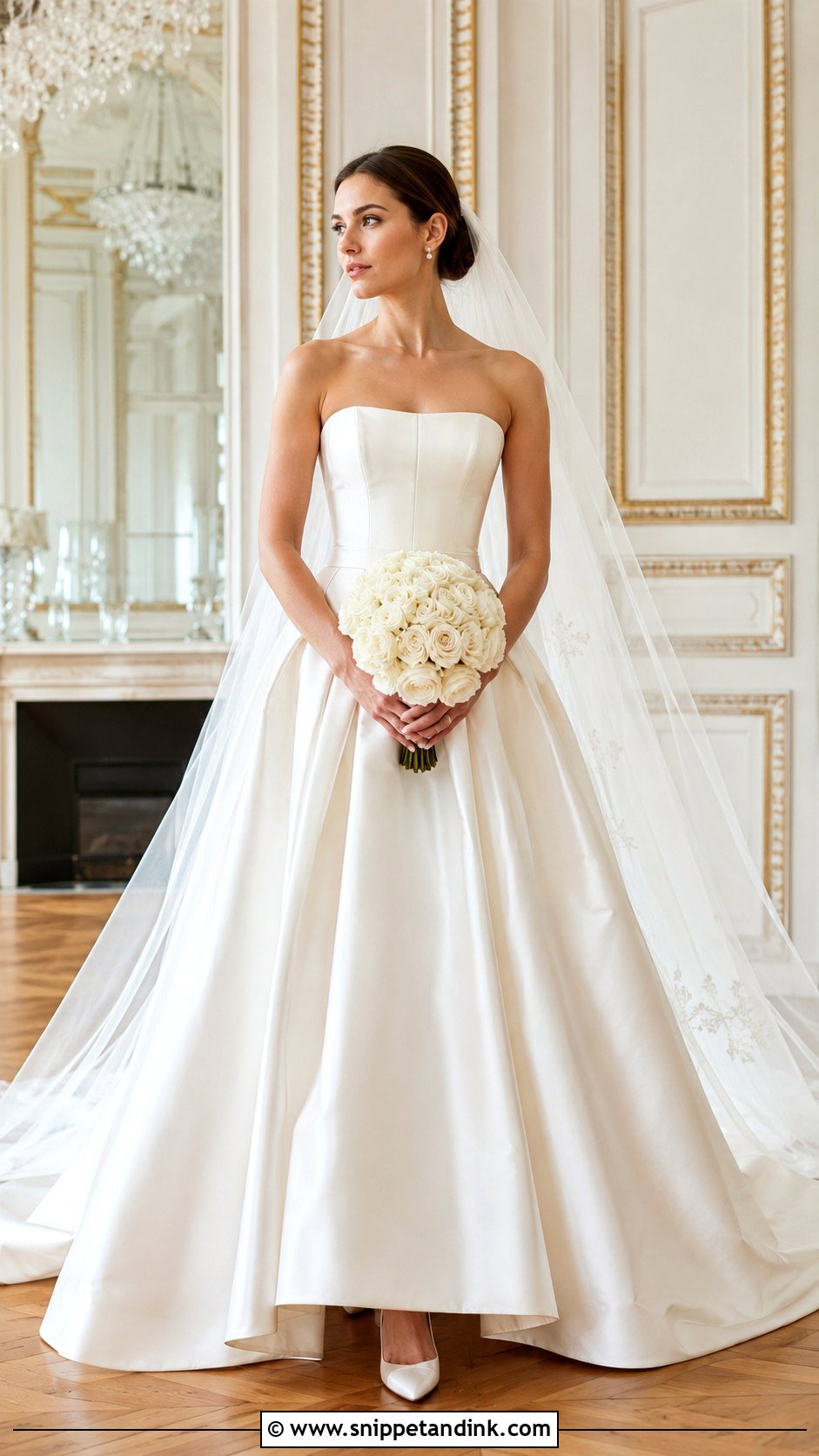
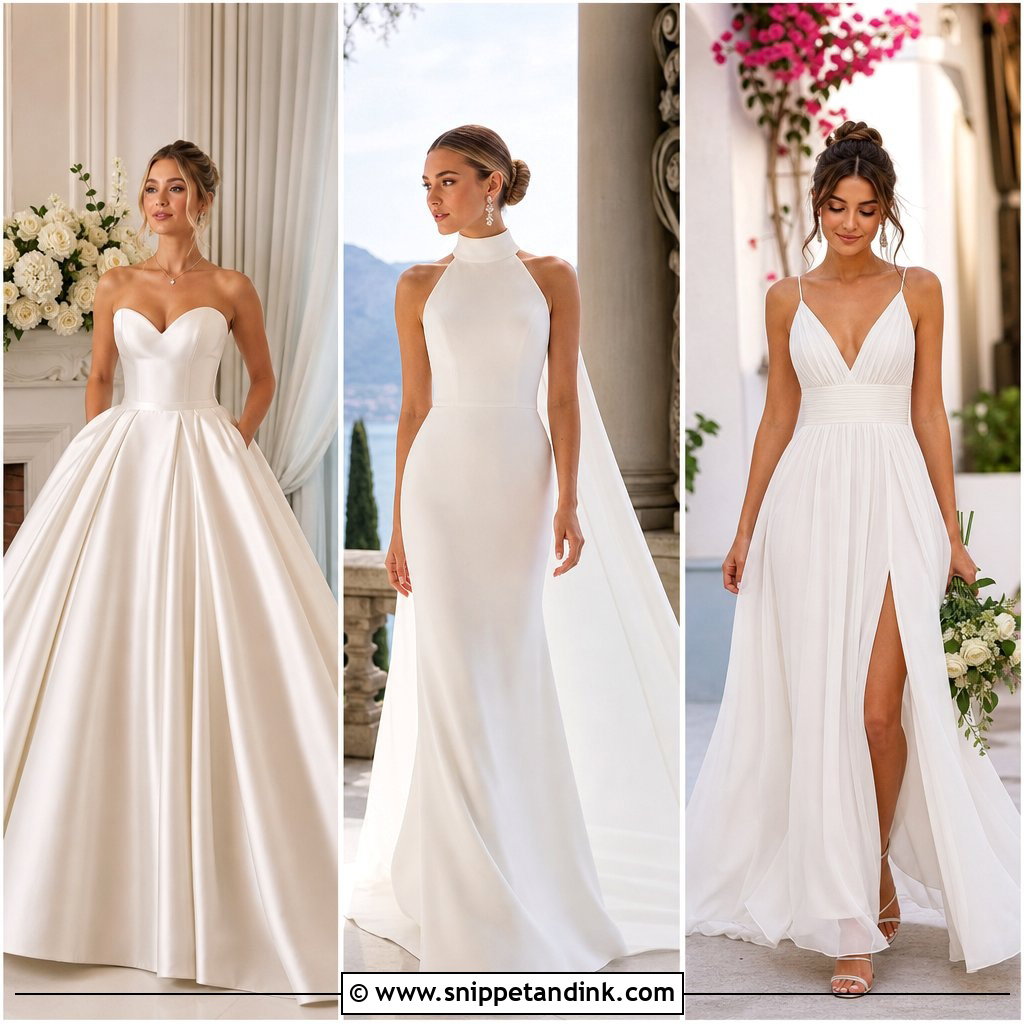
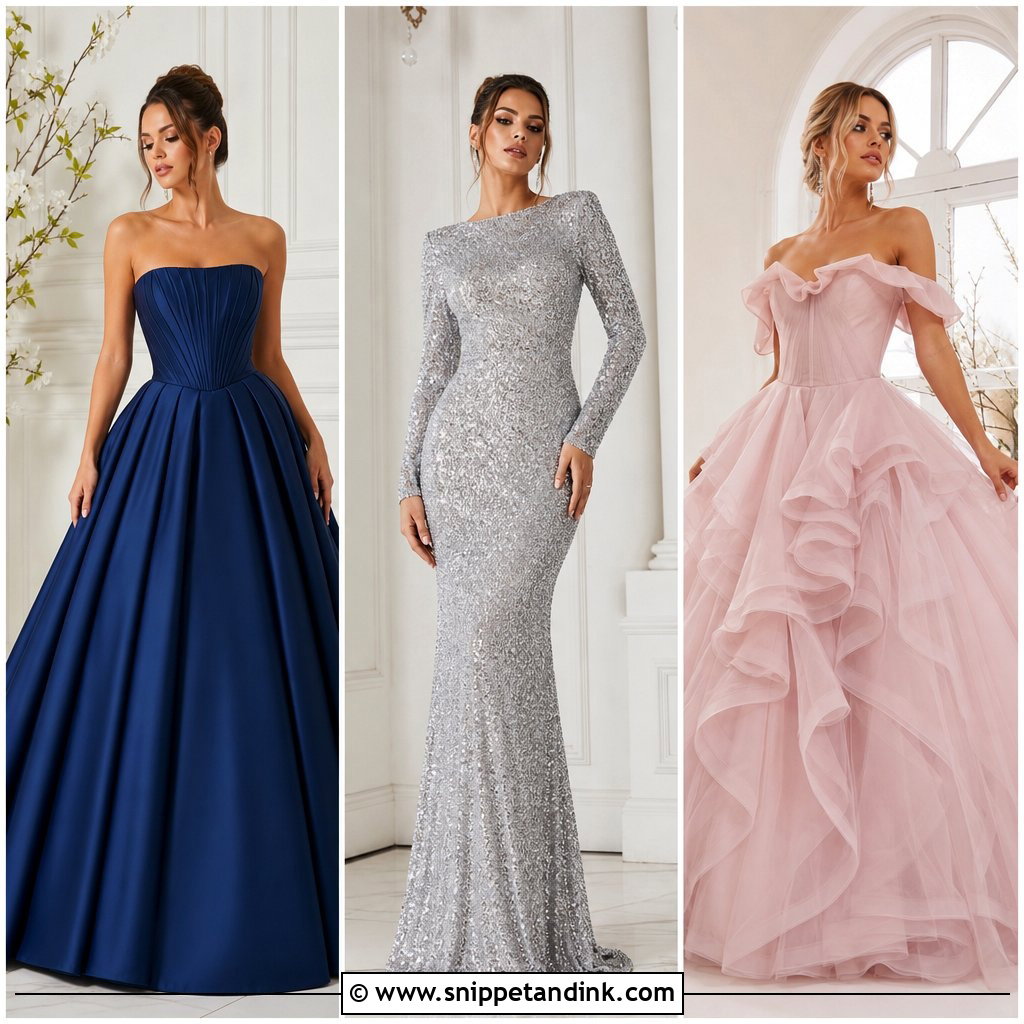
Strapless satin with a full skirt is the most formal look here, and it lives or dies on the bodice. Satin shows every ripple, so the boning has to sit flat against the ribs and the waist seam has to land exactly at your natural waist. I check it with the bride seated, because that is when a loose bodice gapes at the top edge. Pointed ivory pumps, a cathedral veil with a plain edge and pearl drops keep the line clean. A low bun shows the shoulders. Carry rounded roses and ranunculus, and add a fitted satin topper for a cold ceremony that comes off before dinner.
2. Anne Barge Square Neck Wedding Dress
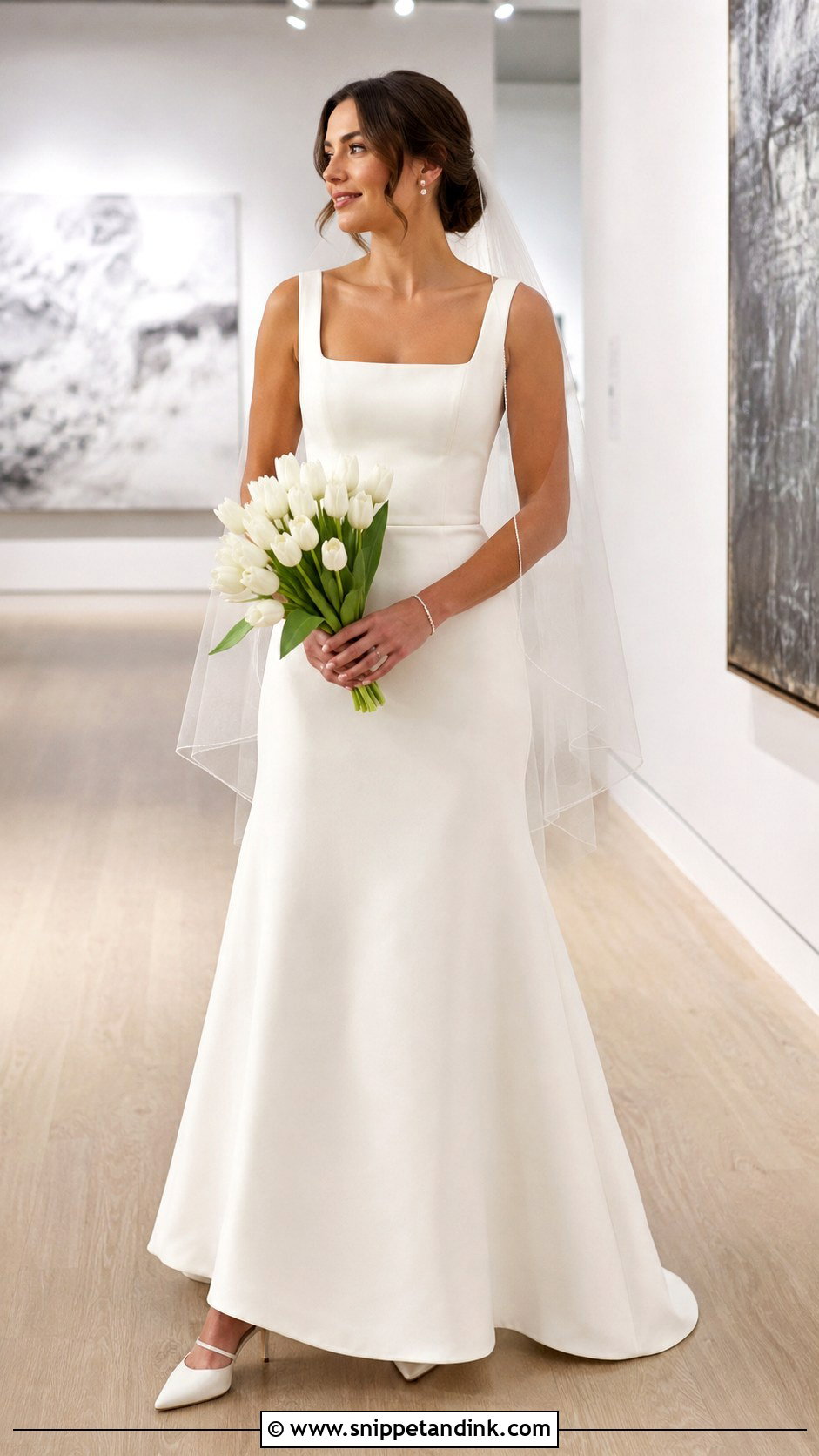
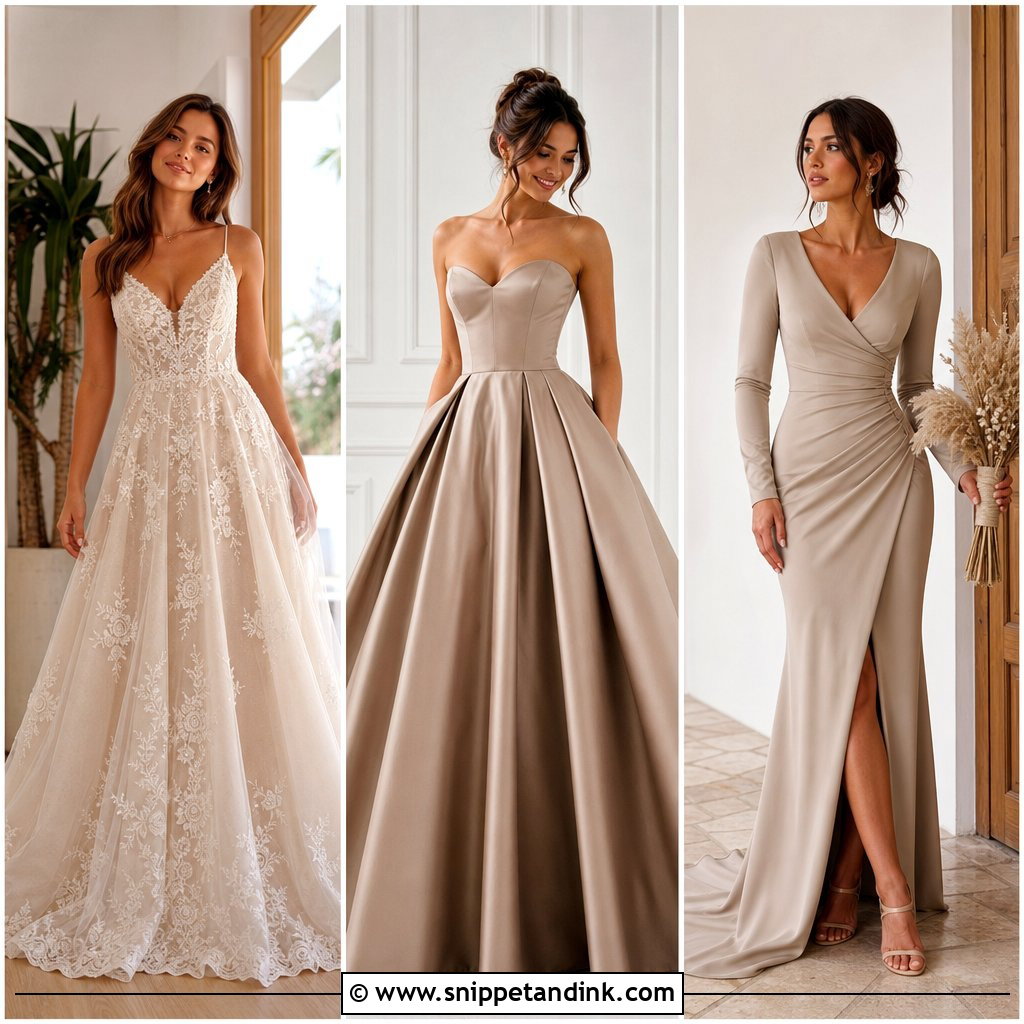
Square necklines suit brides who find sweethearts too sweet and plunges too much. In mikado or satin, the neckline needs firm interfacing along its edge or the corners soften and start to curve by midday. Wide straps and a gently flared skirt keep it architectural, which suits hotels, galleries and city venues. Pearl studs, a slim tennis bracelet and pointed slingbacks are plenty. A fingertip veil keeps it light. Echo the sharp corners with calla lilies or tulips, and wear the hair in a sleek chignon or tucked behind the ears.
3. Anne Barge Lace Long Sleeve Ball Gown
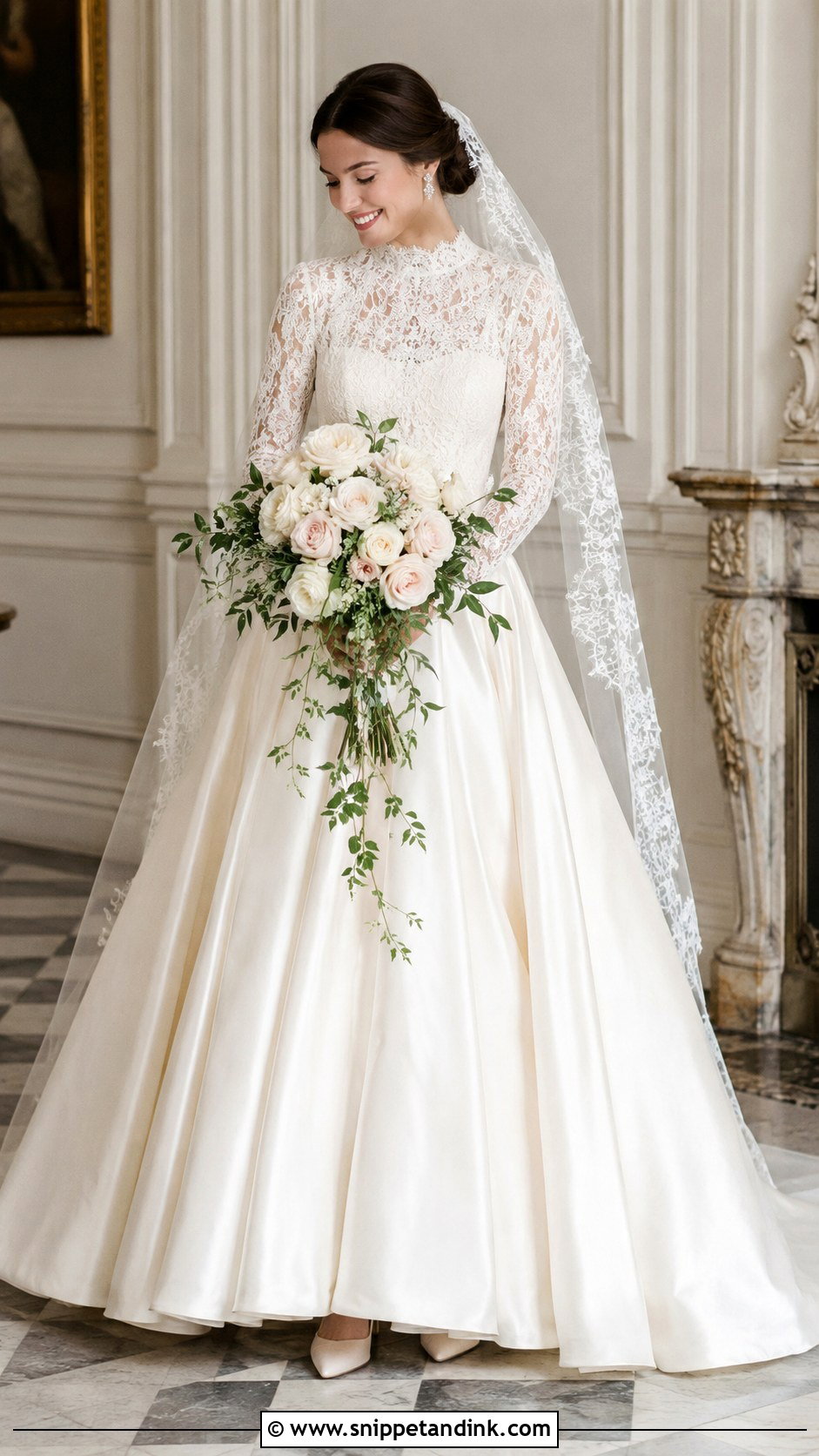
Long lace sleeves and a full skirt read formal and romantic at once, ideal for winter, old estates and grand rooms. Look for fitted sleeves, a defined waist and lace that runs continuously across the bodice. Lace sleeves are where I spend fitting time: too tight at the upper arm and you cannot lift your bouquet, too loose and the lace bags at the elbow in photos. A long lace-edged veil, ivory satin pumps and small crystal earrings suit it. Garden roses, sweet peas and trailing greenery keep the bouquet loose. Throw a plain white coat over the gown for travel between locations.
4. Anne Barge Off Shoulder Wedding Dress
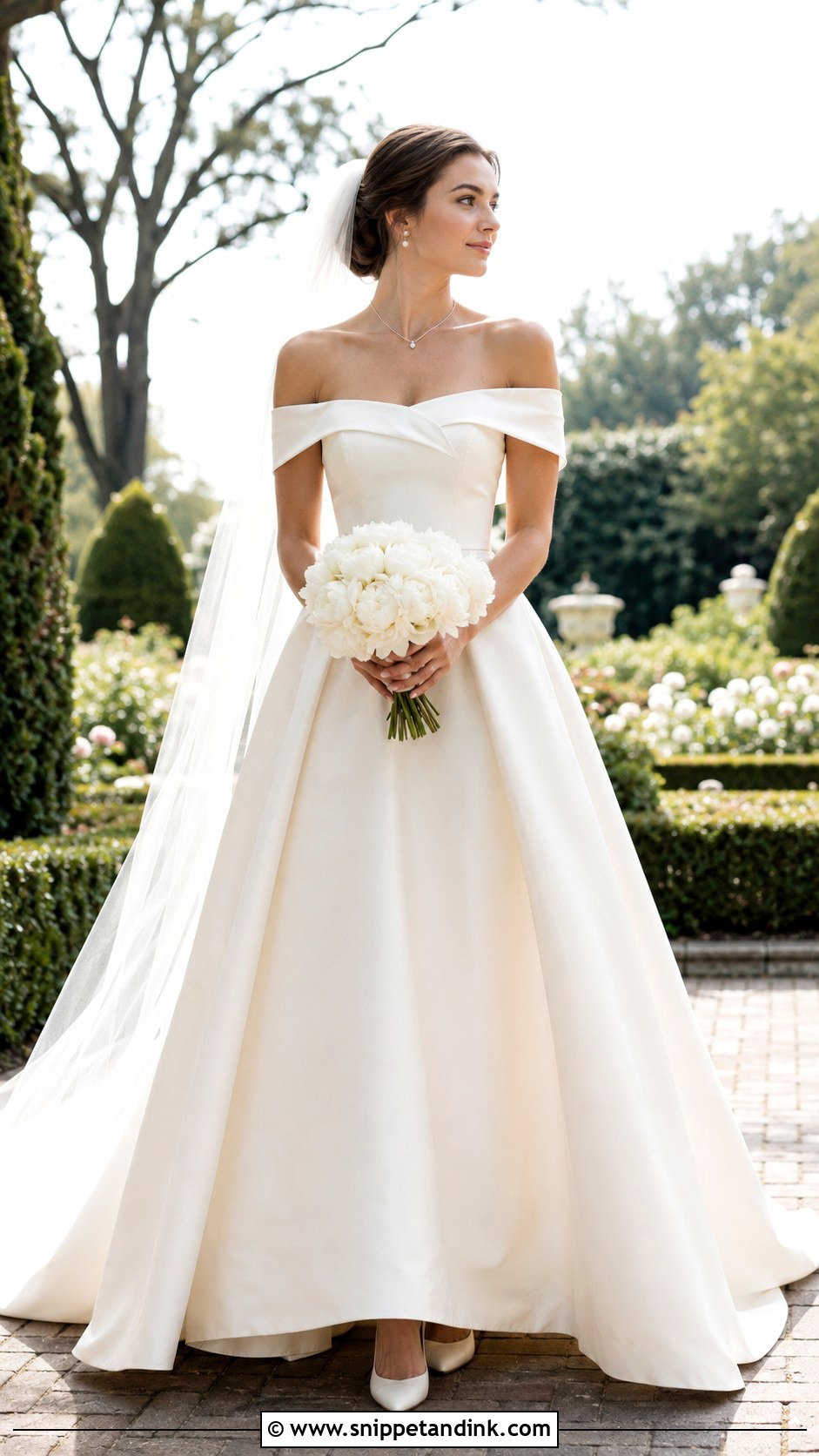
Off-shoulder necklines soften a structured gown, but they move when you move. The band sits on the upper arm, so hugging or raising a glass can push it up, and I always fit it with the arms lifted and ask for gripper tape inside. Choose a fitted bodice with solid inner support over an A-line or ball gown skirt. A delicate necklace, small pearls and closed ivory satin heels complete it. Set the chapel veil under a low bun so the neckline stays clear from behind. At the reception, take off the veil and switch to bolder earrings.
5. Anne Barge Fit And Flare Wedding Dress
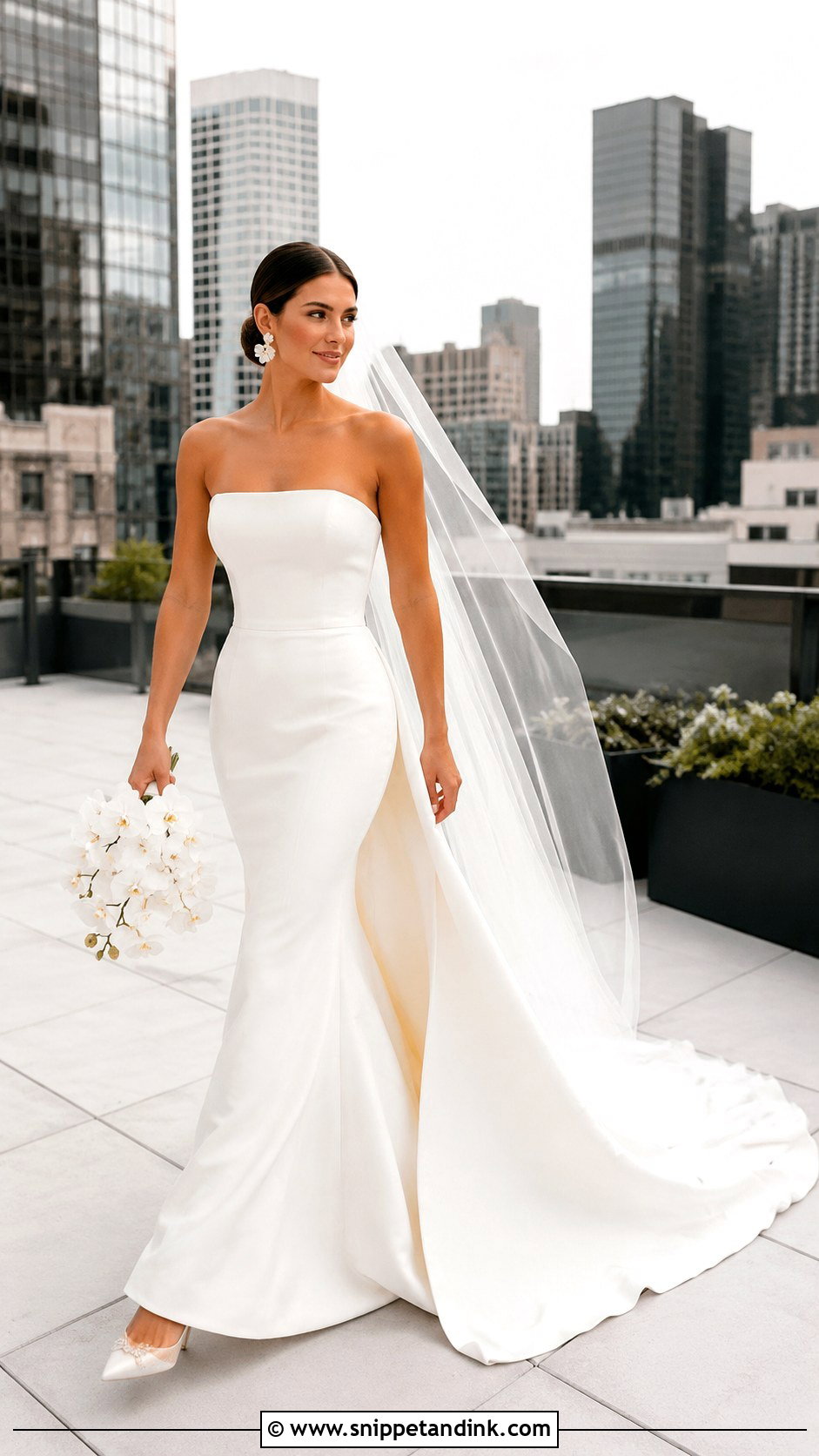
Fit-and-flare gives you shape through the bodice and hips without the volume of a ball gown. The important fitting point is where the flare starts. Set it too high and the skirt looks short-waisted; set it too low and you cannot climb steps. In smooth crepe or satin, the line stays clean. Balance it with a detachable train or a long veil, wear pointed pumps, and choose sculptural earrings over a necklace. Orchids or white roses in a compact bouquet feel modern. Side-parted waves or a polished ponytail fit a rooftop or contemporary ballroom.
6. Anne Barge Drop Waist Ball Gown
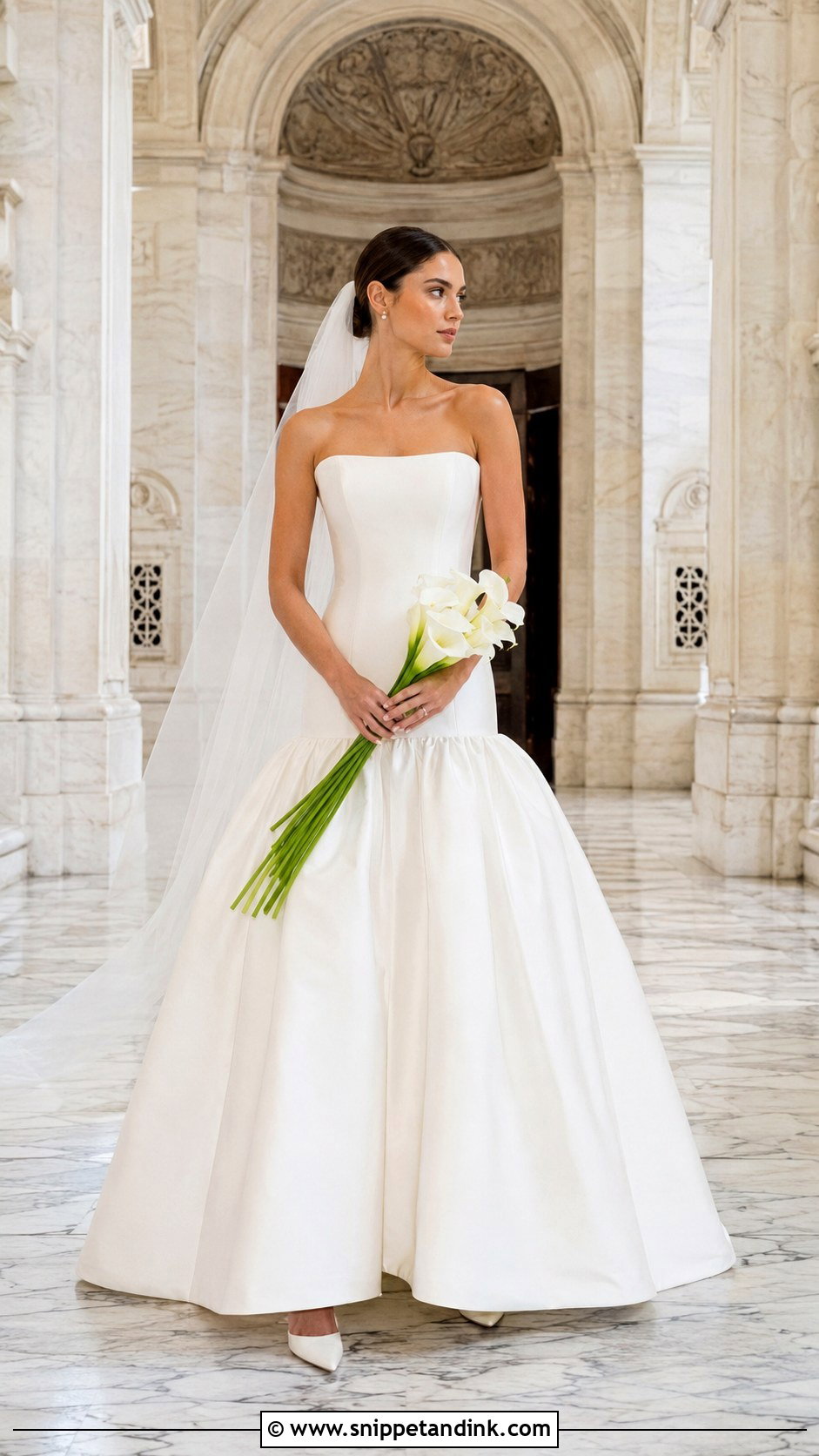
Drop waists are dramatic and honestly not for everyone. The bodice runs past the natural waist onto the hips before the skirt opens, which lengthens a short torso nicely but can make a long torso look stretched. Try one on before you fall for the photos. Keep everything else quiet: a simple tulle veil, pointed ivory heels, small studs and one slim bracelet. Long-stem calla lilies repeat the long bodice line, and a smooth center-parted bun matches the gown’s precision. Skip big necklaces; the dress is already making the statement.
7. Anne Barge Sweetheart Neckline Wedding Dress
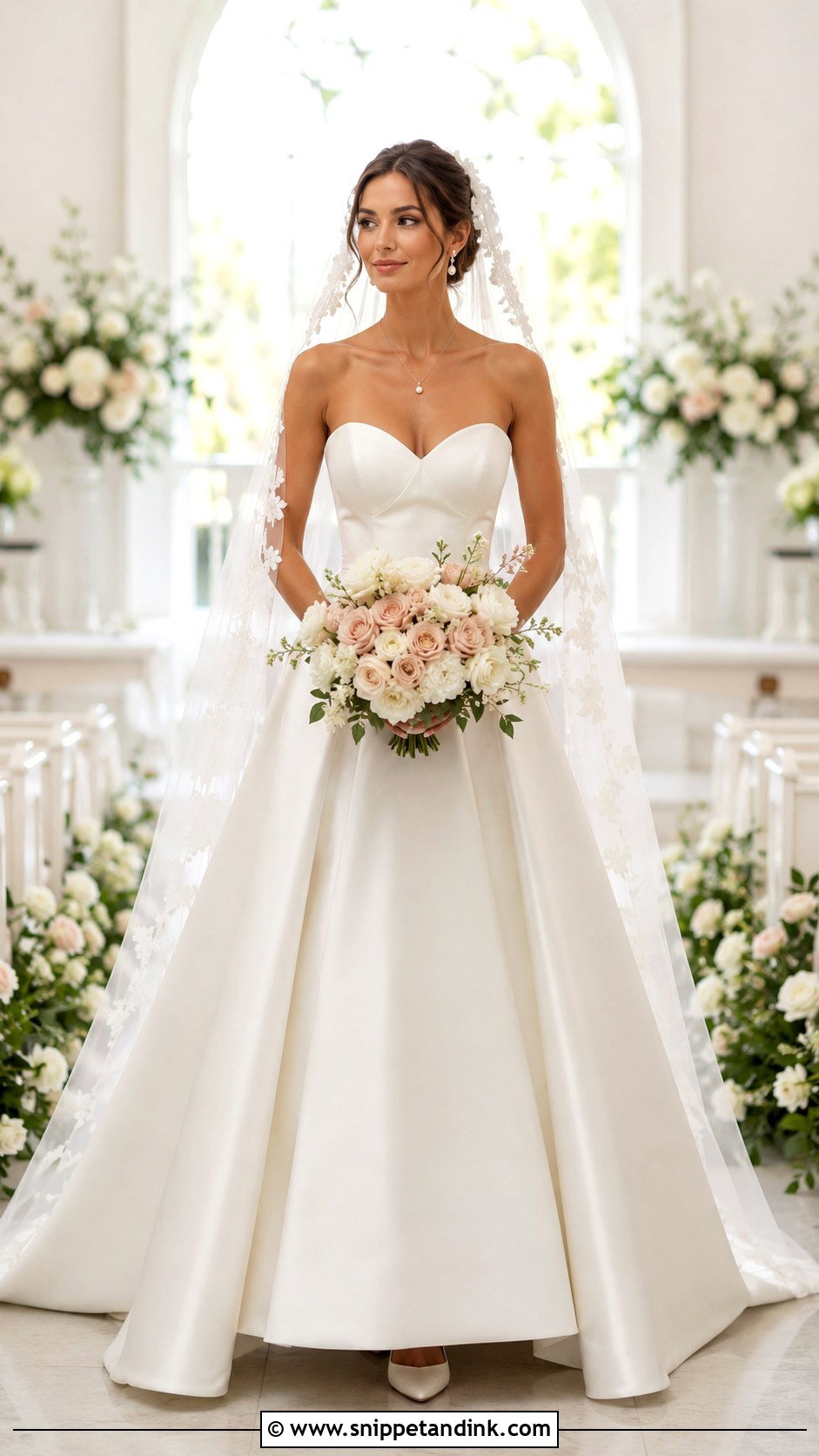
A sweetheart neckline softens a structured gown, and it is one of the most forgiving shapes I fit. The curve frames the face and the defined waist gives clear proportions on many body types. A full A-line skirt in satin or mikado balances it. Watch the center dip of the sweetheart: if it sits too low, it pulls when you lean forward to sign the register. A fine pendant, pearl drops, classic ivory pumps and a chapel veil with scattered appliqués suit it. Blush and white roses add gentle color. Loose waves pinned behind one ear feel relaxed; a low bun is more formal.
8. Anne Barge High Neck Lace Wedding Dress
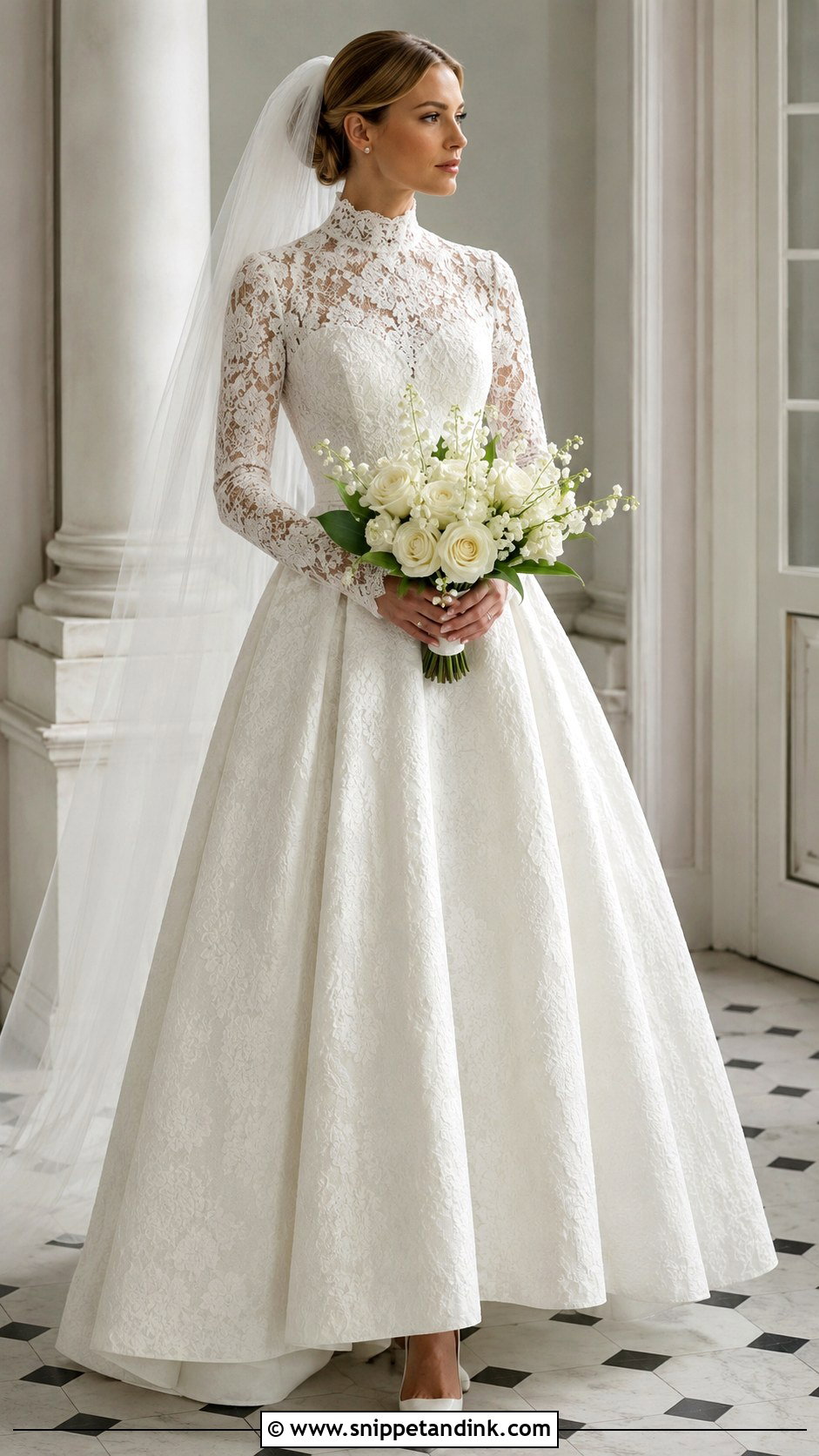
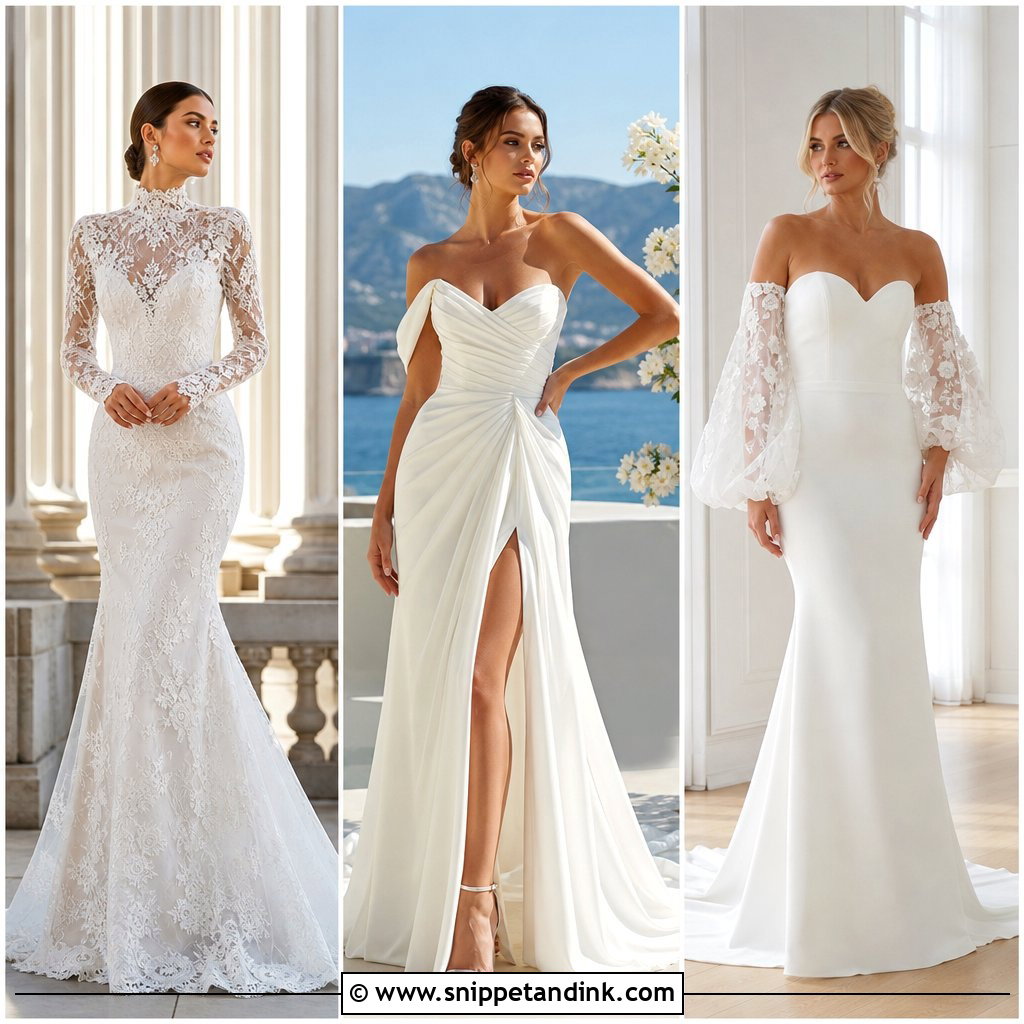
High-neck lace has a quiet vintage pull, and it needs almost no jewelry. A fitted lace bodice with long sleeves over a full pleated or gathered skirt is the shape. I always check the collar with the bride turning her head fully, because a lace collar that grazes the jaw itches by the speeches. Skip the necklace and wear small pearl or diamond studs. Low or mid-height ivory pumps keep you comfortable. A plain cathedral veil contrasts with the detailed lace, and a neat nape bun with roses and lily of the valley suits autumn and winter.
9. Anne Barge Bow Back Wedding Dress
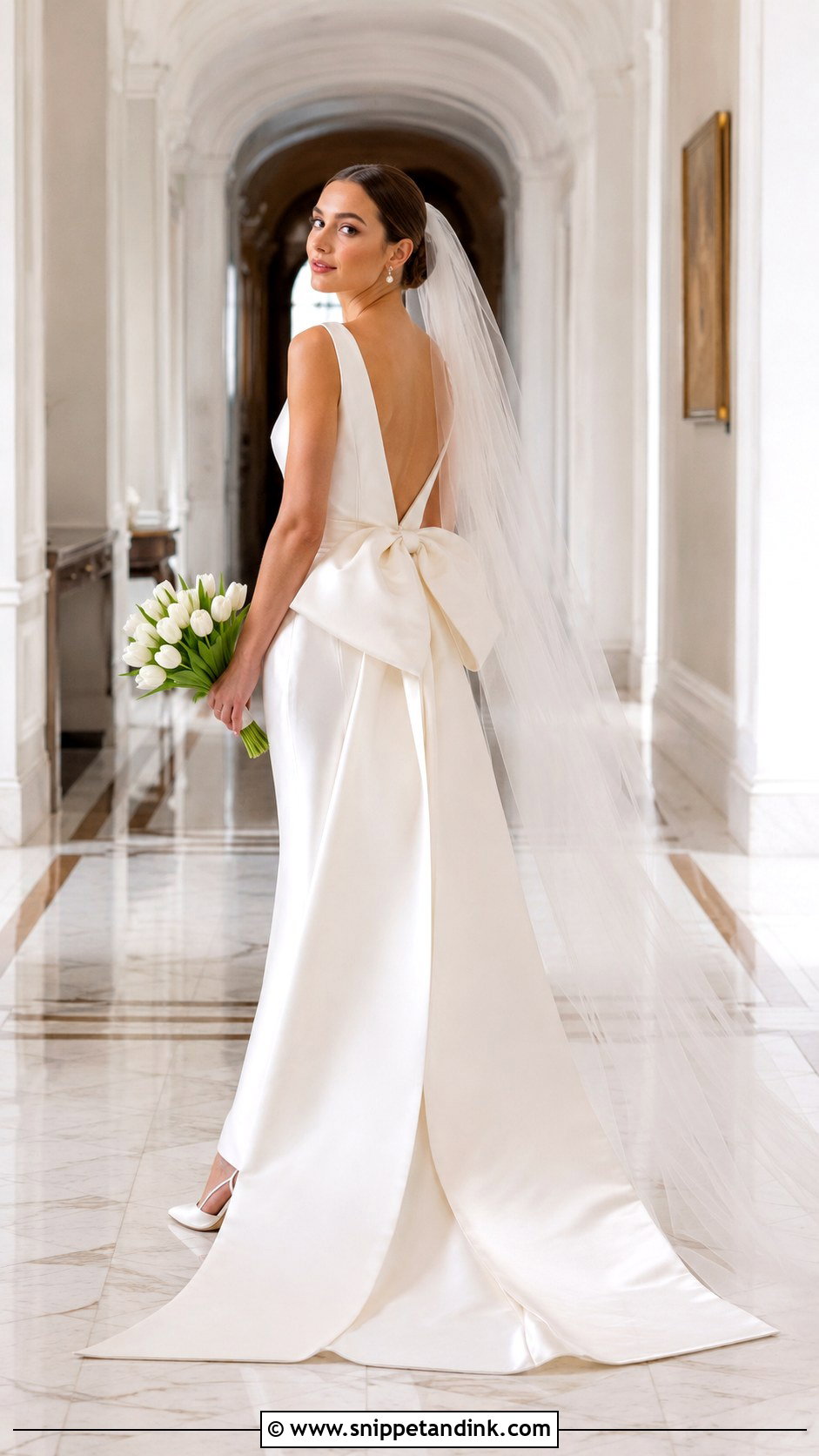
Bow backs work because guests spend most of the ceremony looking at the bride from behind. A smooth satin gown with a clean front and an oversized bow at the waist or upper back is the cleanest version. Big bows can droop by evening, so I ask for interfacing inside the loops. Keep the veil sheer and plain so it does not bury the bow, and style the hair up or in a side bun. Pearl earrings, ivory slingbacks, a structured mini bag and white tulips finish it. Once the veil comes off after the ceremony, the bow becomes the focus.
10. Anne Barge Floral Appliqué Wedding Dress
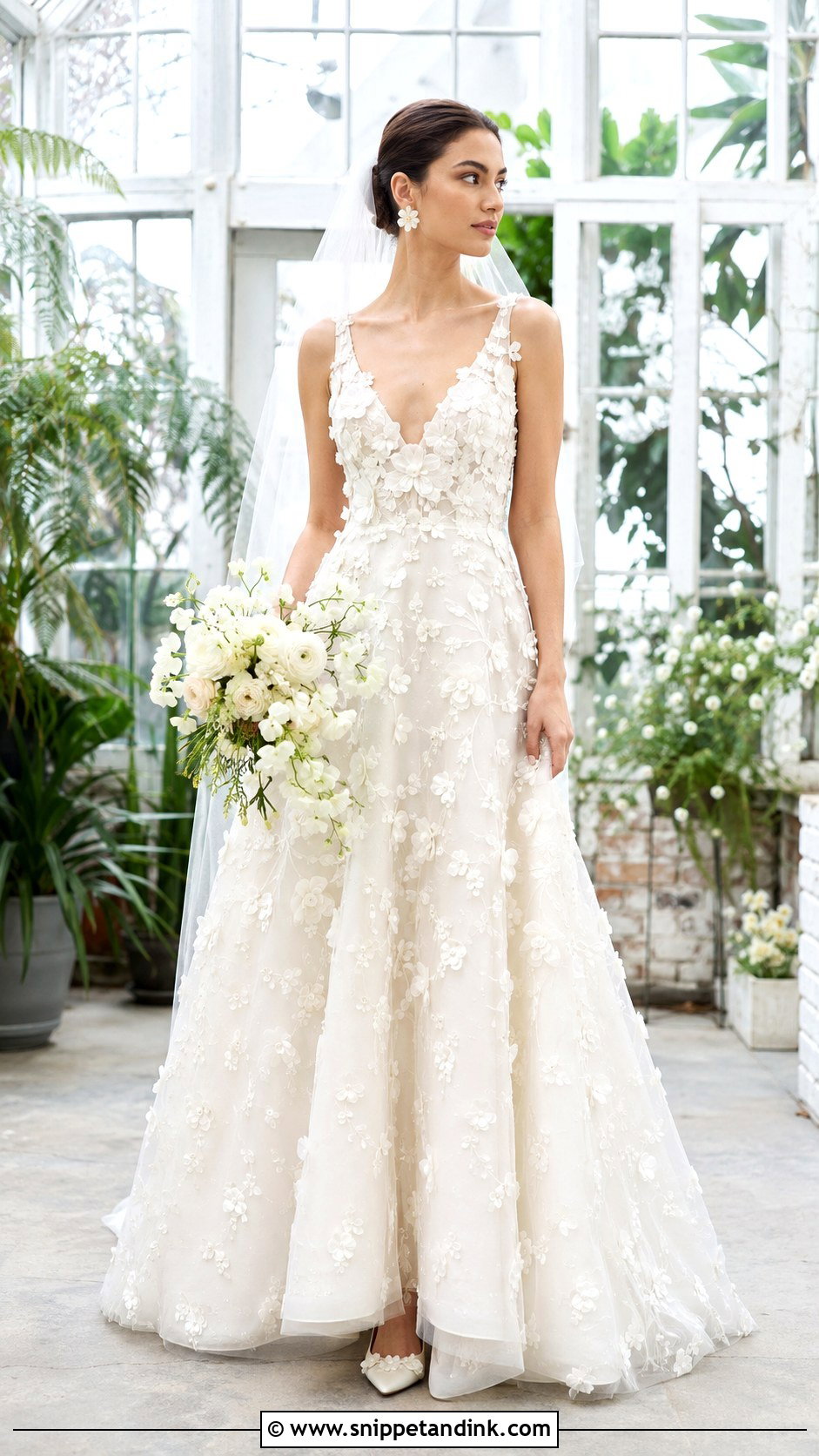
Dimensional appliqués add romance without changing the silhouette, especially when they cluster on the bodice and thin out down the skirt. That fading placement keeps the hem light and stops flowers catching on your shoes. Pair the gown with a plain tulle veil, delicate floral earrings and pointed ivory shoes. The bouquet should be quieter than the dress: ranunculus, sweet peas and a few green stems. Loose waves or a soft bun keep it airy for a garden or conservatory. Check the appliqué edges at the final fitting, as a loose petal is easy to tack now and hard to fix on the day.
11. Anne Barge Column Wedding Dress
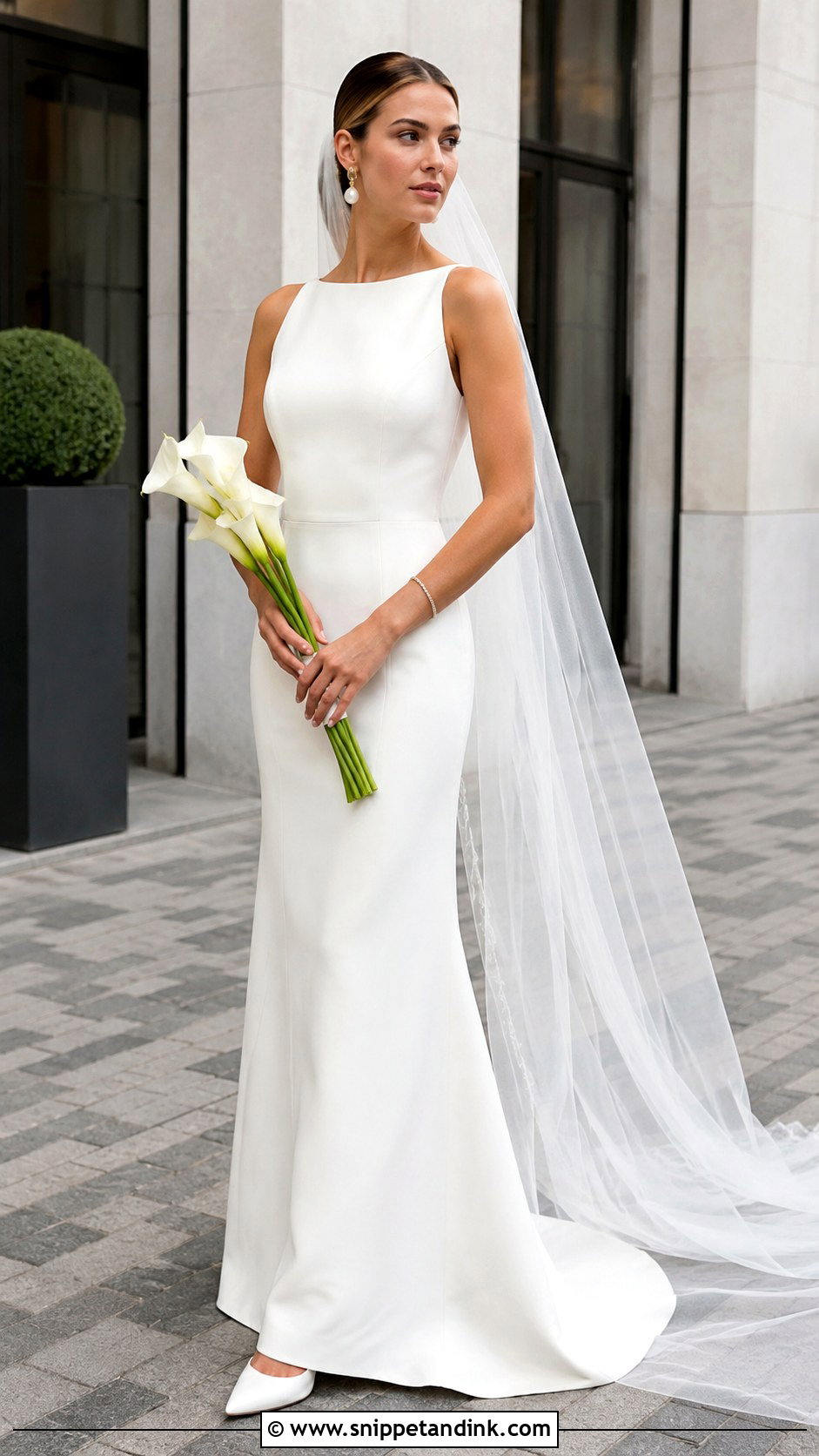
Column gowns are the most honest silhouette in bridal. Smooth crepe, satin or silk with precise seams shows everything, so your undergarments and the fit through the hips matter more than any accessory. A city wedding or small ceremony suits it best. Pointed slingbacks, sculptural pearl earrings and a slim bracelet keep it sharp. A long sheer veil adds ceremony drama without changing the line. Calla lilies or orchids in a narrow bouquet follow the vertical shape, and a polished ponytail completes it. Swap the veil for a short neck scarf or blazer at the reception if you want a second look.
12. Anne Barge A Line Wedding Dress
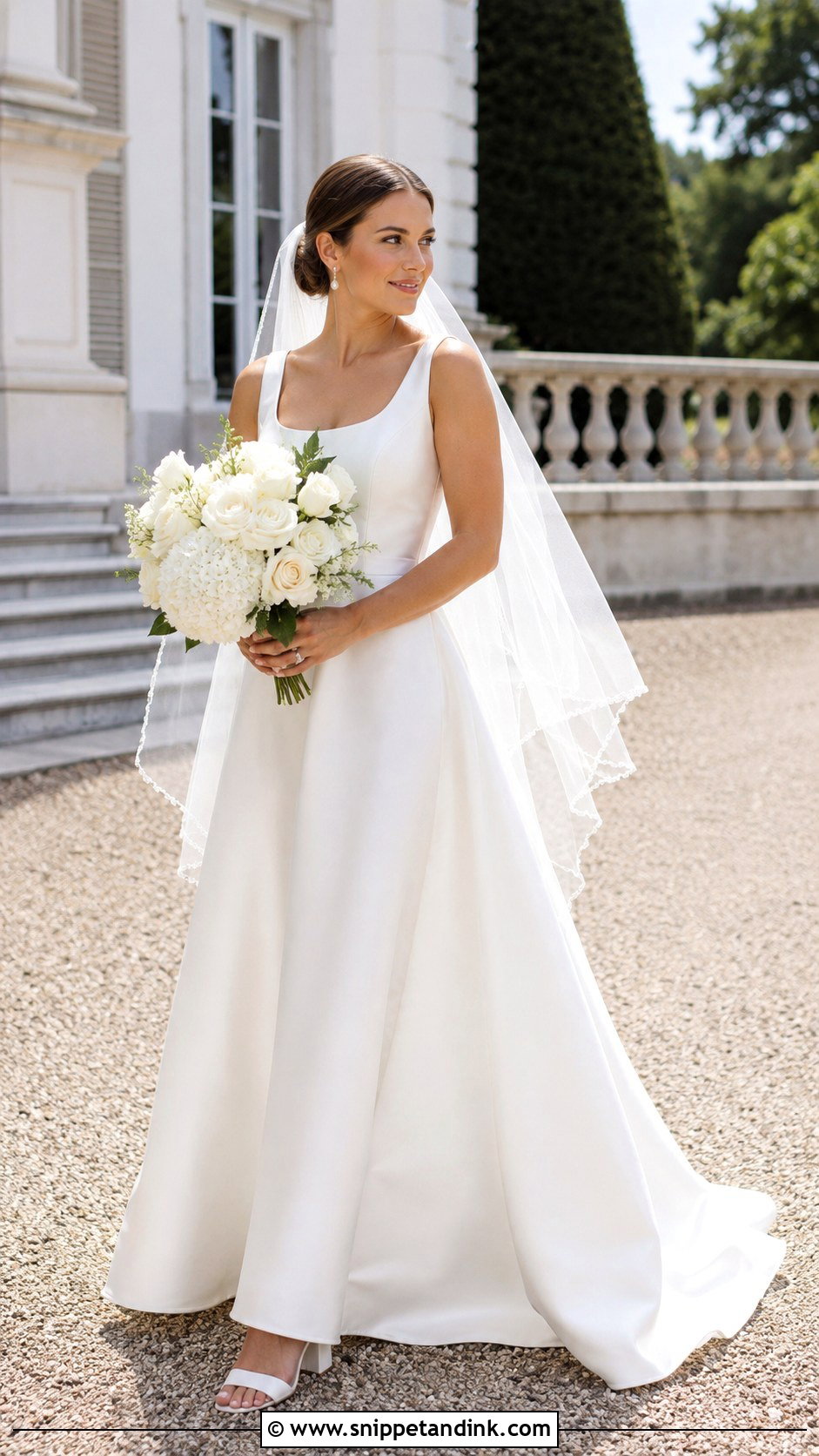
If a bride is unsure what she wants, I usually start her in an A-line. It gives movement and comfort with gentle definition at the waist, and it rarely fights a venue. Choose a fitted bodice with wide straps or a soft curve and let the skirt fall without much volume. For outdoor ceremonies, skip a long train that collects grass. Pearl drops, block heels and a fingertip veil keep it easy, and hydrangeas with roses add fullness. Soft waves, half-up hair or a low bun all work. You will be able to walk, sit and dance in it all night.
13. Anne Barge Wedding Dress With Overskirt
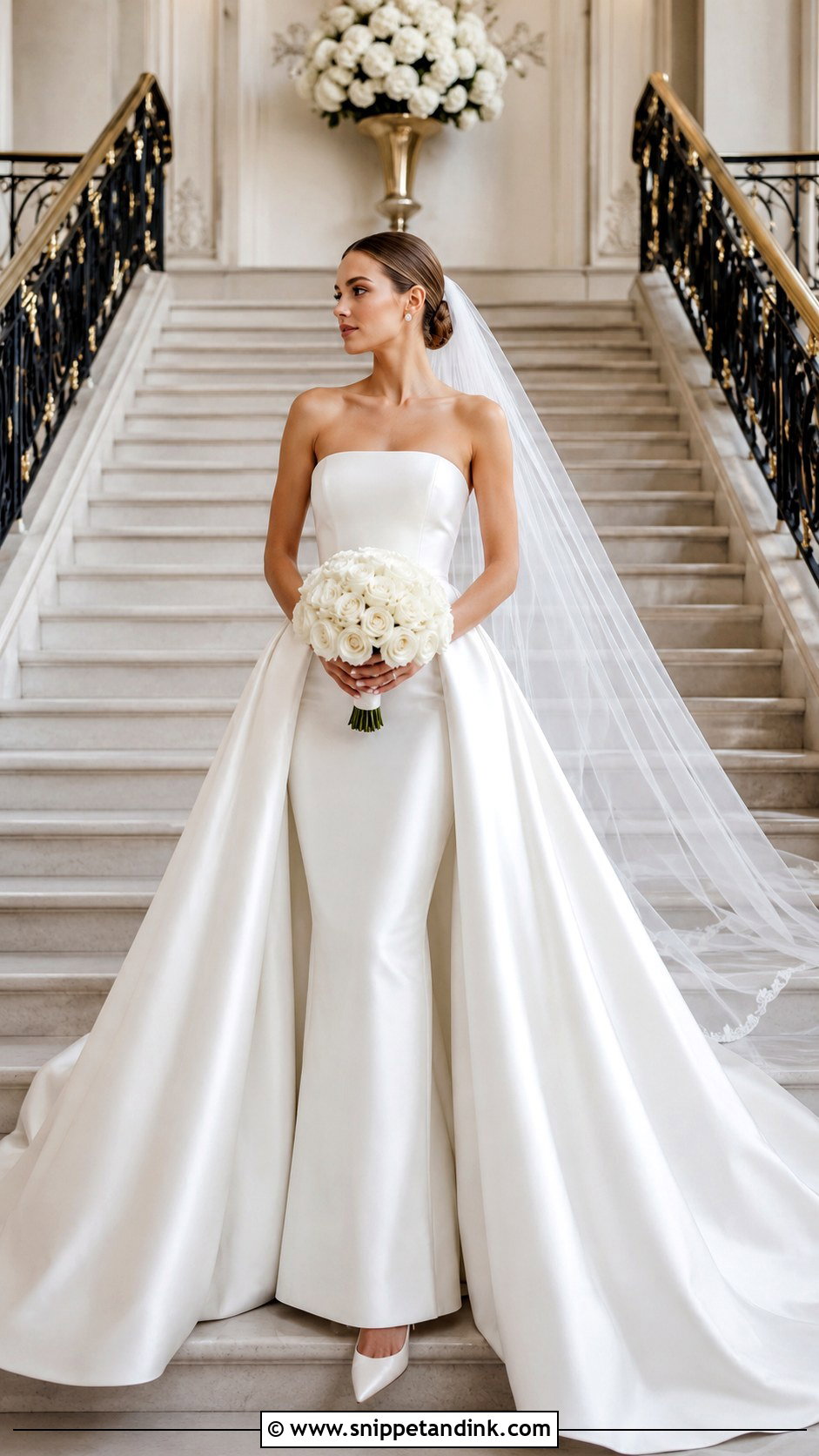
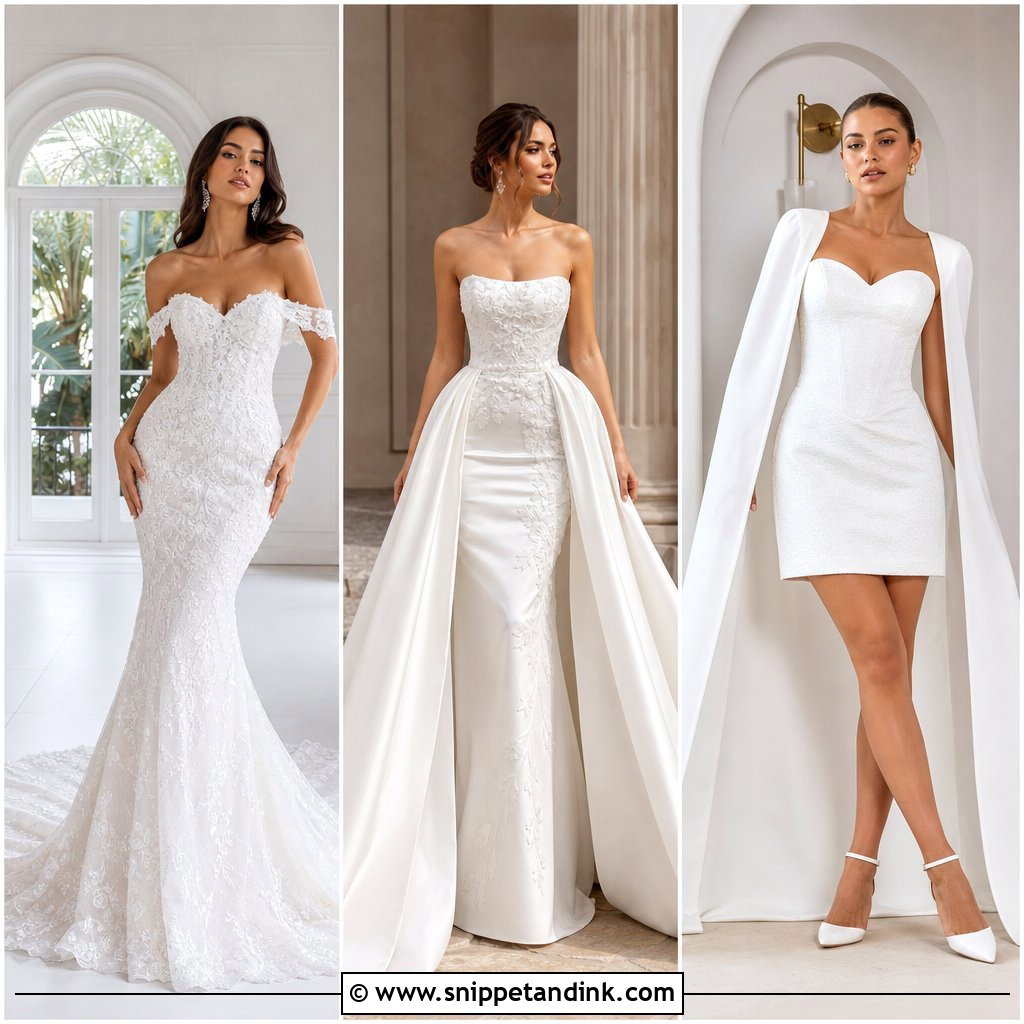
Two looks from one gown is the main appeal of a detachable overskirt. Start with a fitted strapless or square-neck dress and add a full satin overskirt for the aisle, with a cathedral veil, simple studs and pointed ivory heels. A structured rose bouquet keeps it formal. After the ceremony, remove the overskirt and veil, then add larger earrings or a satin neck scarf. A full satin overskirt is heavy, so I ask for wide hooks and bars on a flat waistband and a practice run with whoever will help you change. A sleek bun ties both versions together.
14. Anne Barge Wedding Dress With Bridal Scarf
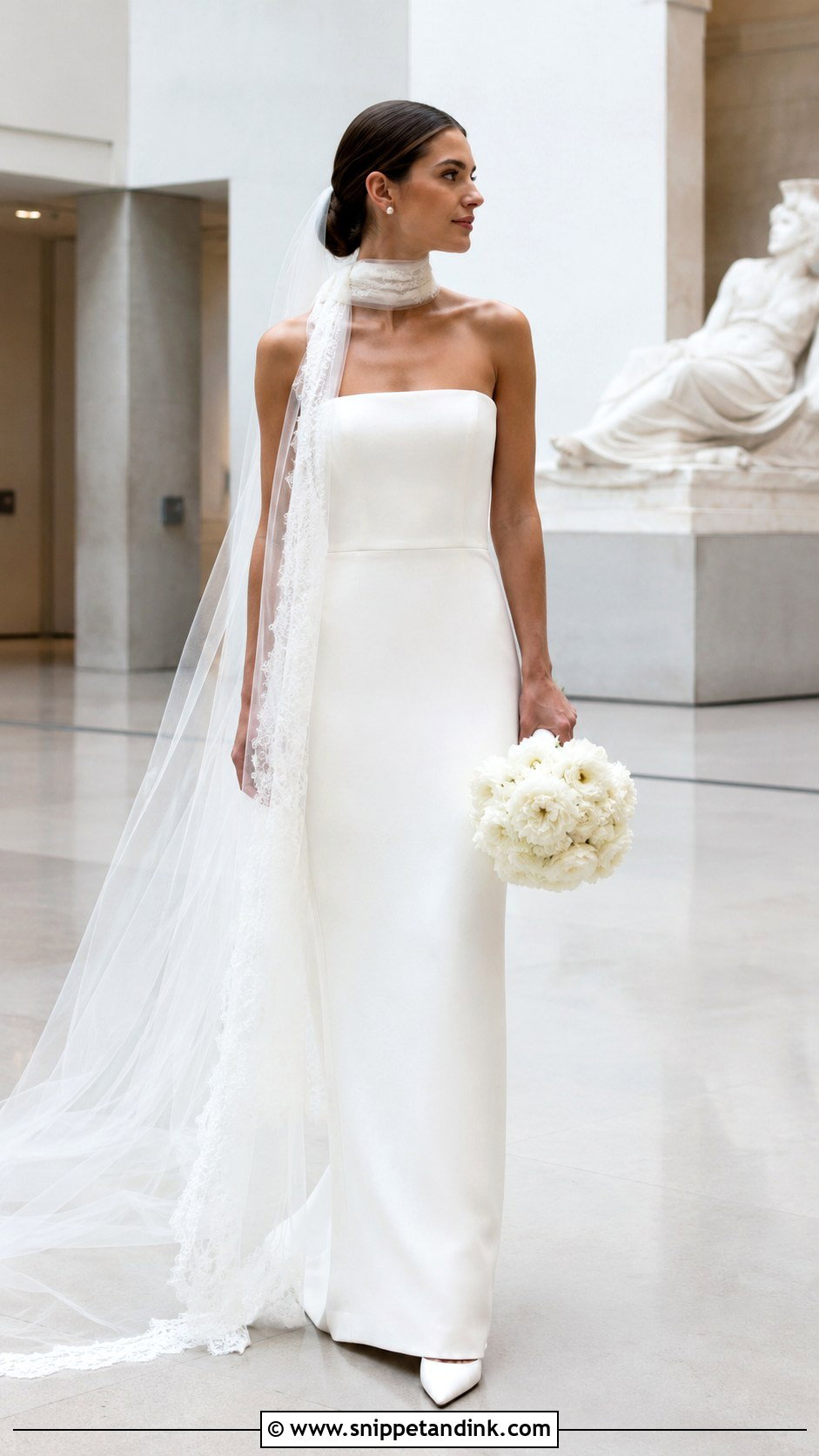
A bridal scarf is one of the easiest ways to make a simple gown feel fashion-led. Start with a strapless column, fit-and-flare or clean A-line, then wrap a light lace, chiffon or satin scarf loosely at the neck with the ends falling down the back. Pin it at the nape with a small clear elastic or a hidden pin; otherwise it slides every time you turn your head. Small earrings, pointed pumps and a compact bouquet keep the scarf in focus. Wear a low bun or sleek ponytail so it does not tangle. A sheer veil underneath works for the ceremony, then drop one for the reception.
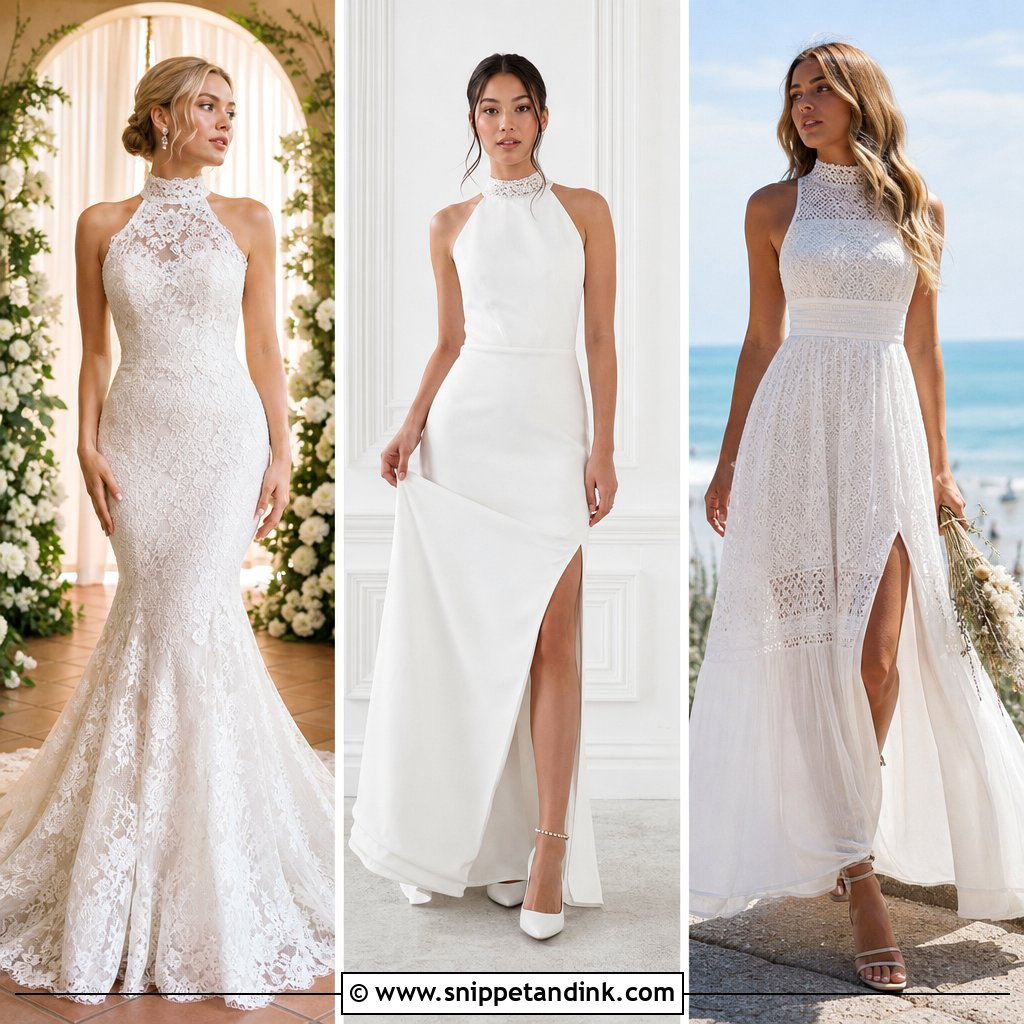
15. Anne Barge Wedding Dress With Cape
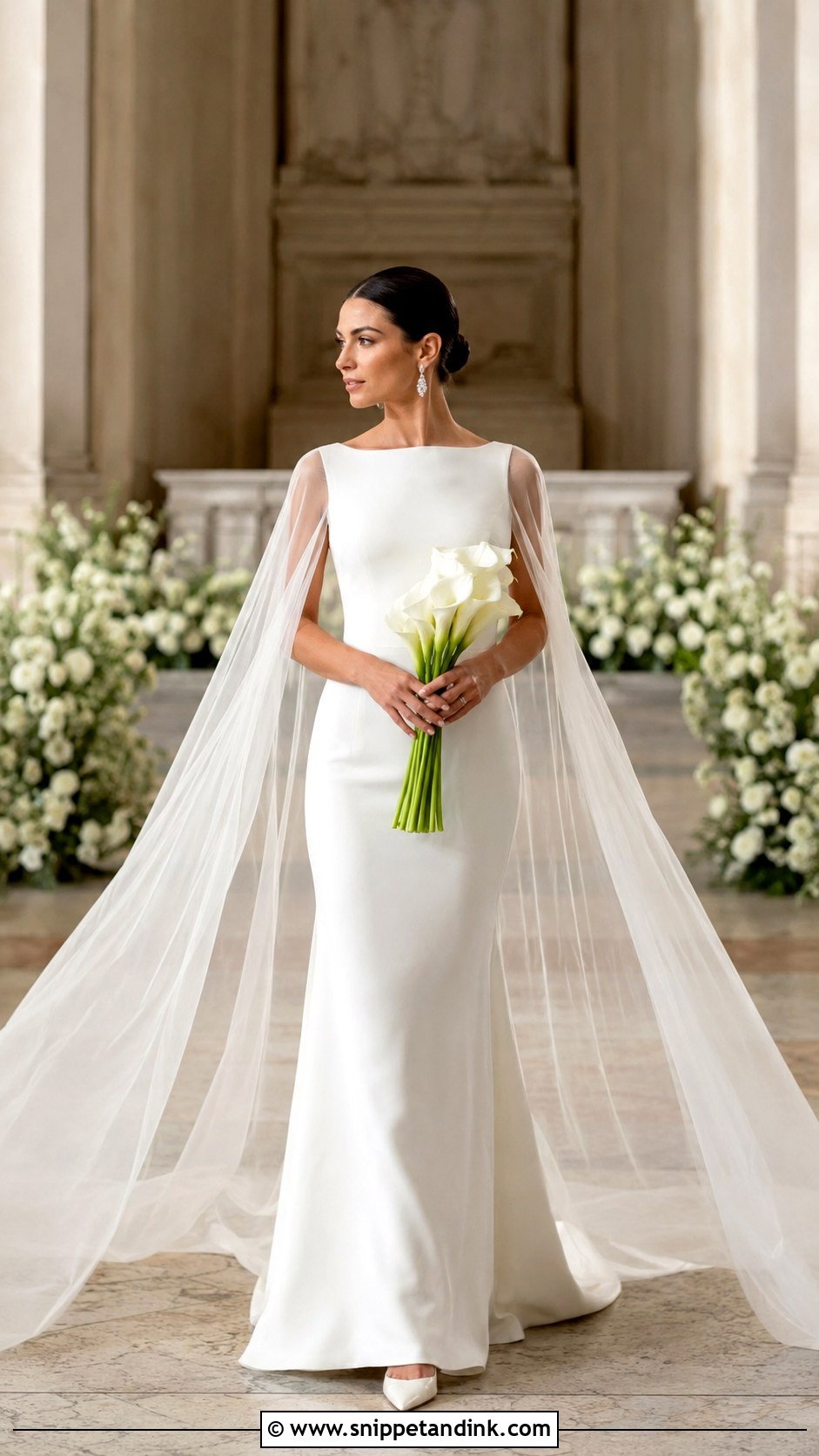
A bridal cape gives coverage and drama without hiding the dress. Pair a fitted crepe or satin gown with a sheer floor-length cape attached at the shoulders or neckline, long enough to trail past the train. It can replace a veil entirely. The fastening matters: a cape tied only at the throat pulls backward, so I attach it at both shoulder seams with small hooks. Pearl studs or small diamond drops, pointed ivory heels and long-stem white flowers keep it regal. Wear a polished bun or smooth waves tucked behind the shoulders so the cape lies flat. It suits cooler seasons and chilly air-conditioned rooms.
16. Anne Barge Wedding Dress With Pockets
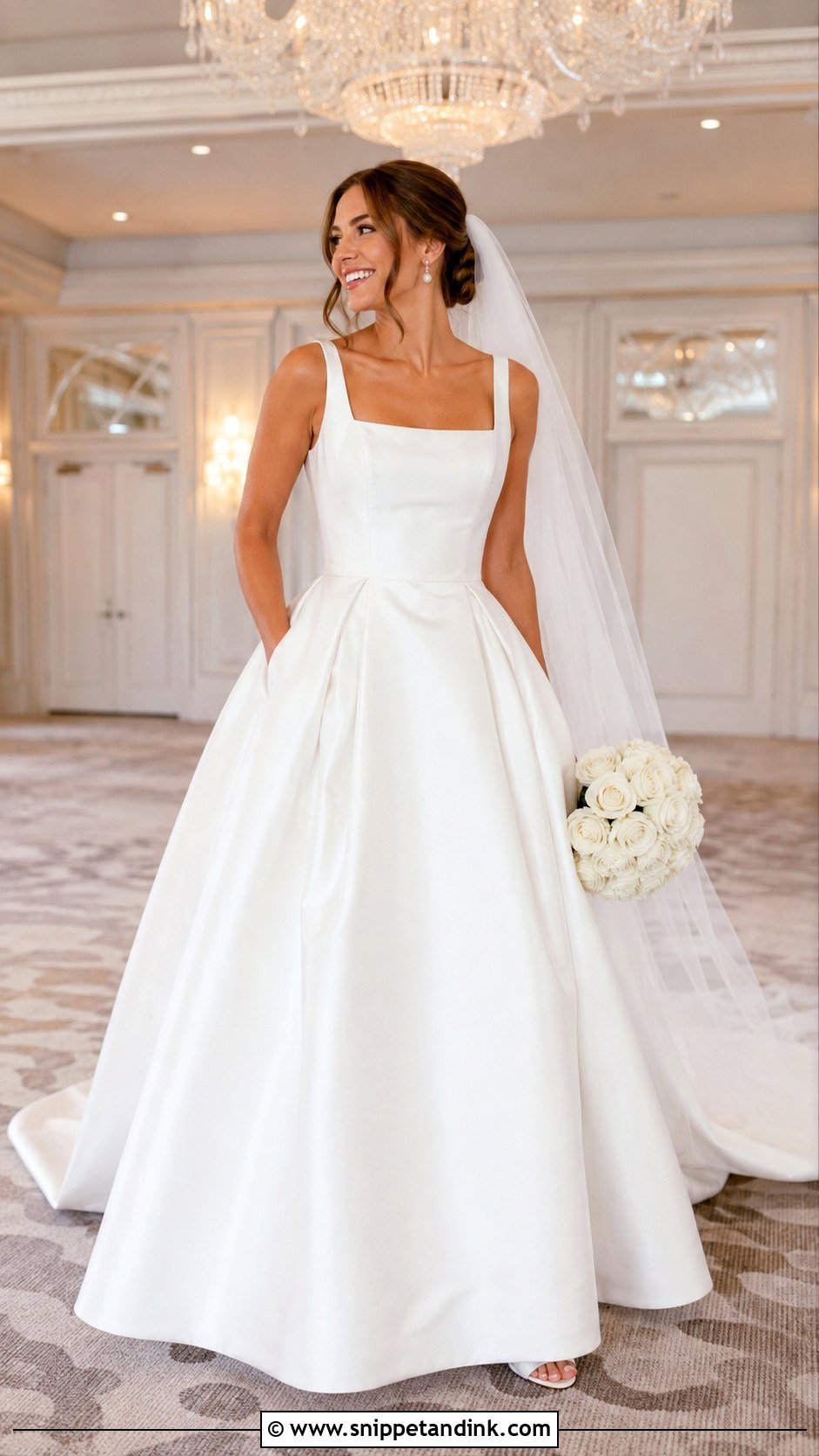
Pockets give brides something to do with their hands in portraits, and a natural pose looks better than a clutched bouquet. Crisp satin or mikado on an A-line or ball gown hides pockets well. Soft fabrics show them, and anything heavier than a lip balm will drag the skirt, so keep them for hands, not a phone. A strapless or square-neck bodice, pearl earrings, block heels and a simple chapel veil keep things clean. Carry loose roses for the ceremony, then let the pockets take over for relaxed reception photos. A low bun or soft half-up style completes it.
17. Anne Barge Tea Length Wedding Dress
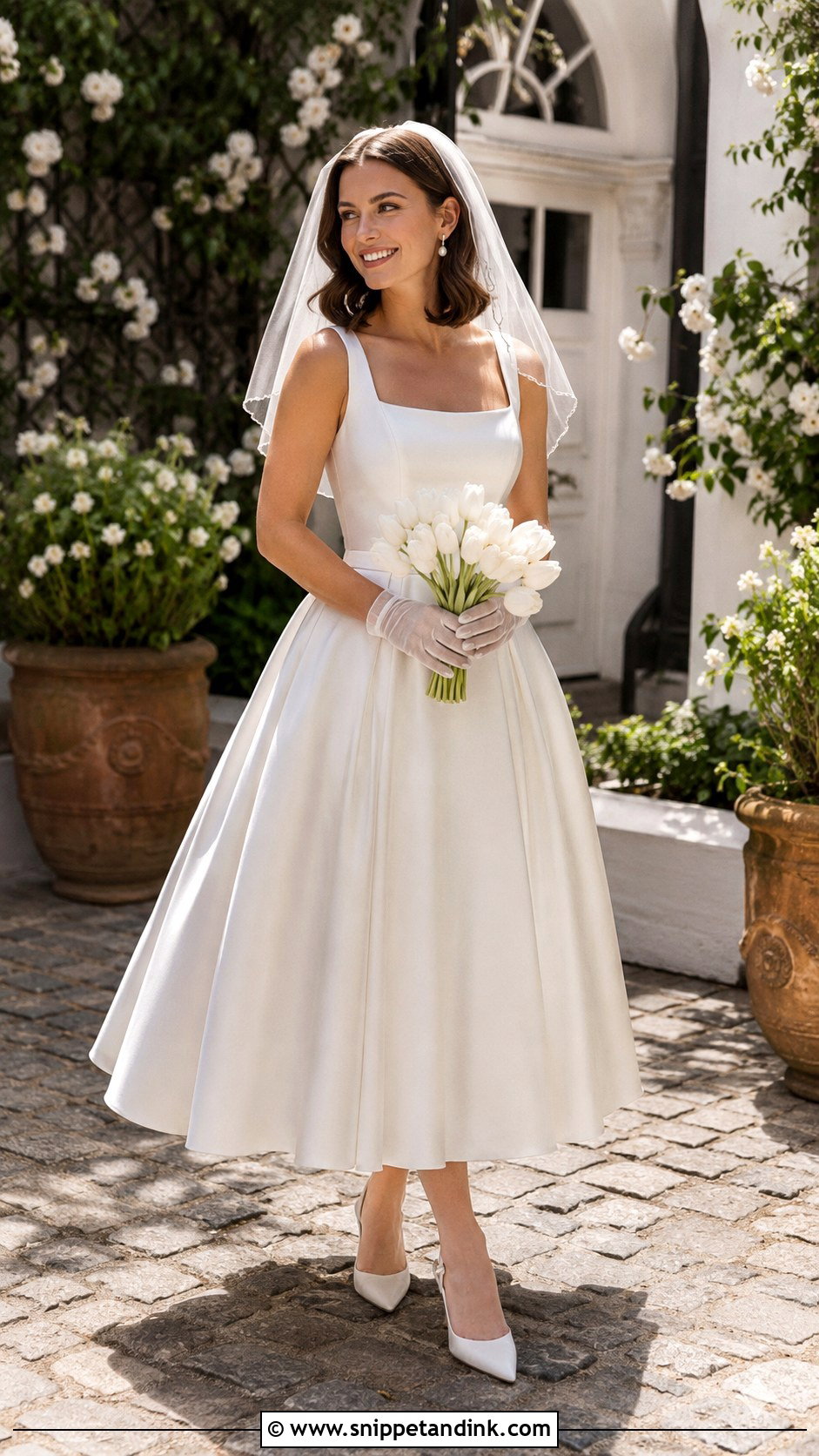
Tea length suits a courthouse wedding, a garden party or a daytime reception, and it shows off your shoes. A structured bodice with a full skirt ending between knee and ankle is the classic shape. Since the shoes are visible, choose pointed pumps or slingbacks you can stand in for hours. Pearl earrings, short gloves and a birdcage or shoulder-length veil give a vintage feel. Hem the dress with a petticoat in place, never without, because a petticoat lifts the skirt. White tulips or ranunculus, and a bun, soft waves or a neat bob, keep it fresh. Stay mostly in ivory so it still reads bridal.
18. Anne Barge Bridal Pantsuit Outfit
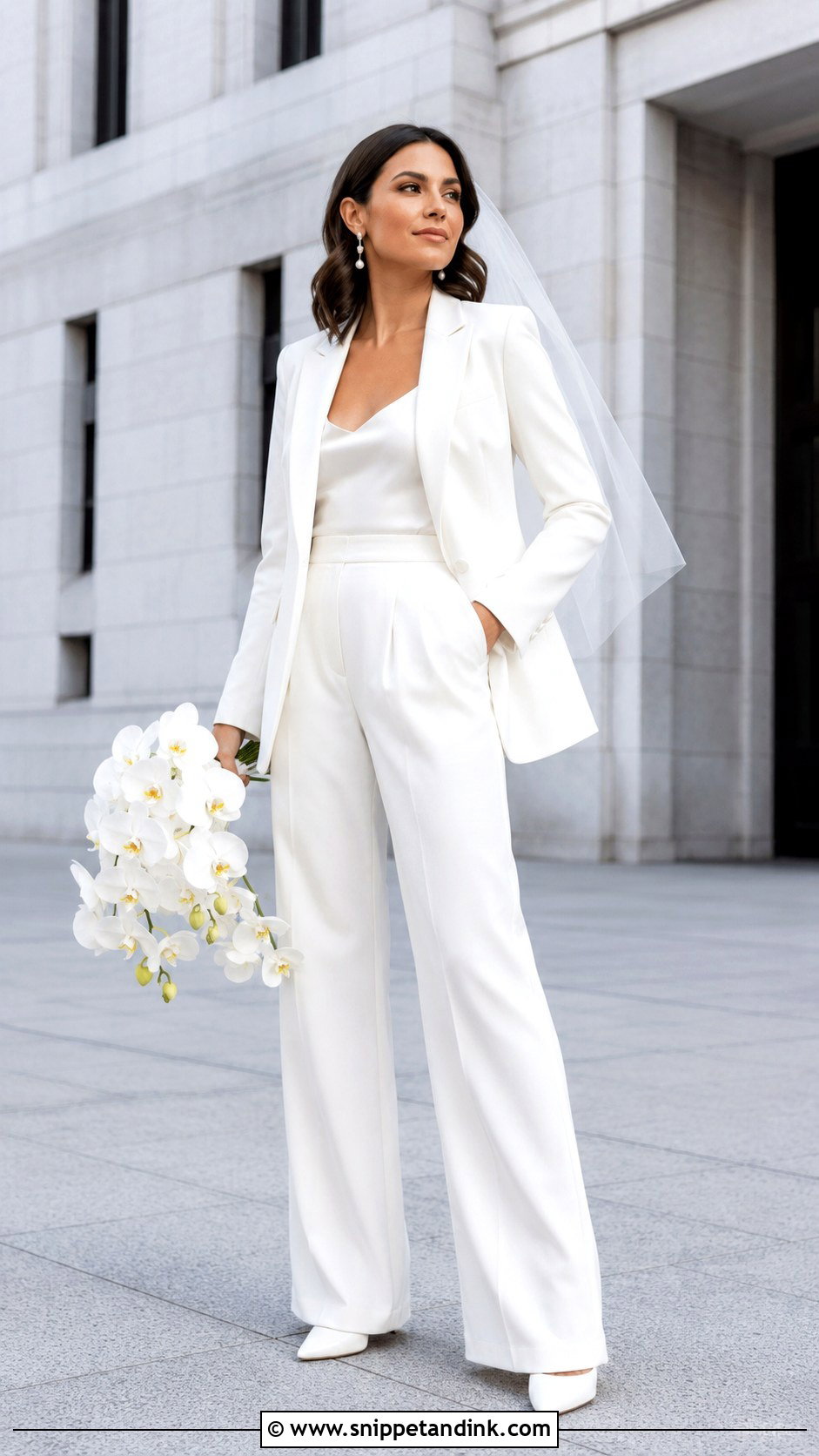
A bridal pantsuit needs sharper tailoring than a gown, because trousers show every fit problem. A fitted white blazer with defined shoulders and high-waisted wide-leg trousers is the shape I reach for. Hem the trousers to just skim the top of your pumps; too short looks borrowed, too long gathers. Under the jacket, wear a silk camisole, corset top or satin shell. Pearl drops, pointed pumps and a small structured bag finish it, while a shoulder-length veil marks it as bridal. Orchids or callas, and a sleek ponytail or low bun, suit a courthouse, rehearsal or reception change.
19. Anne Barge Bridal Mini Dress Outfit
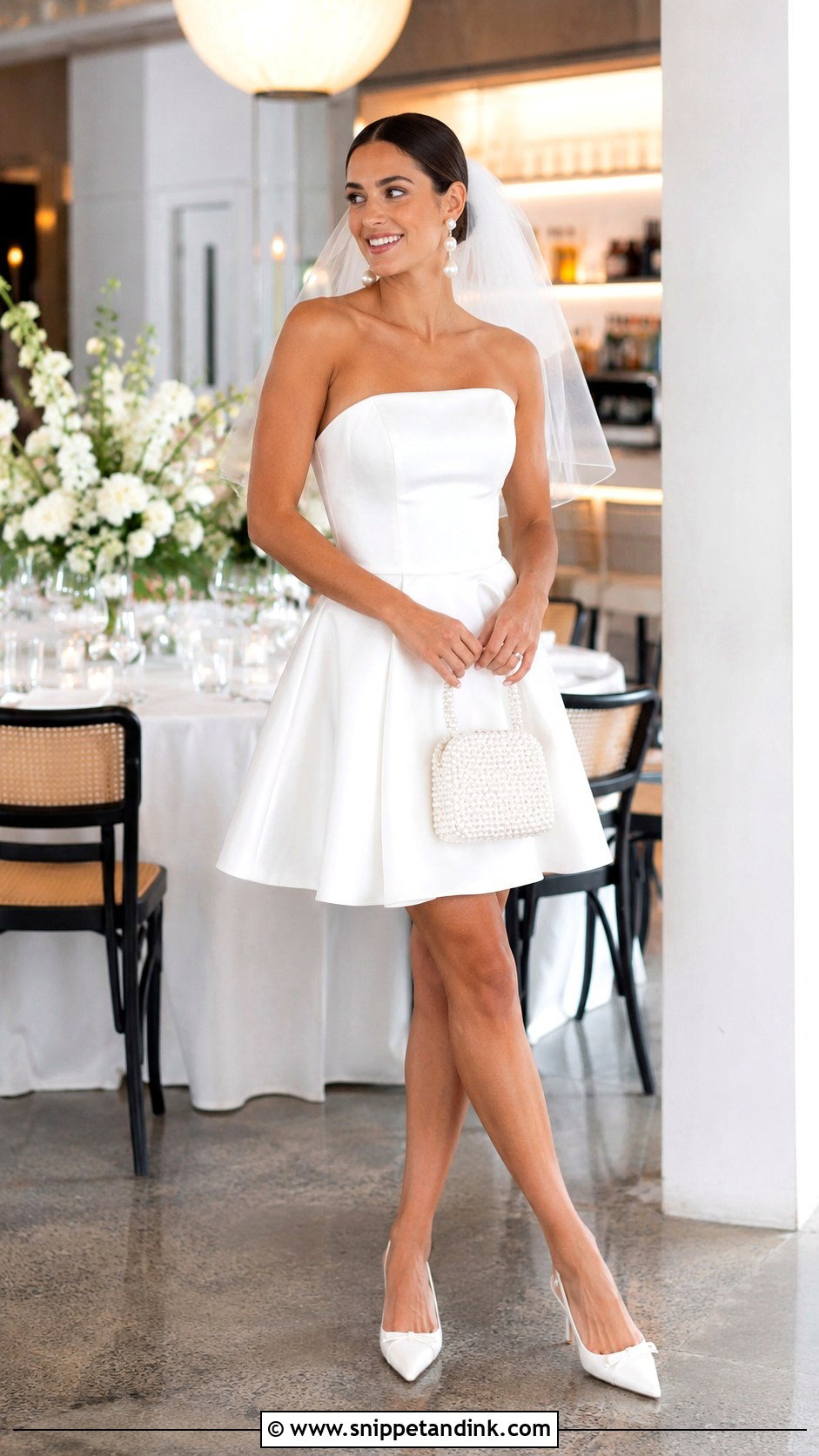
A bridal mini is for the part of the night when you want to move. It works as a reception change, a welcome party look or an after-party dress. Choose a structured white design with a fitted bodice, defined waist and enough skirt to sit down in. Sit on a chair at the try-on; minis rise more than you expect. Satin slingbacks, pearl statement earrings and a top-handle bag suit it. A short veil or oversized hair bow keeps it bridal. Add sheer gloves or embellished shoes if the dress is plain, and wear smooth waves or a high ponytail.
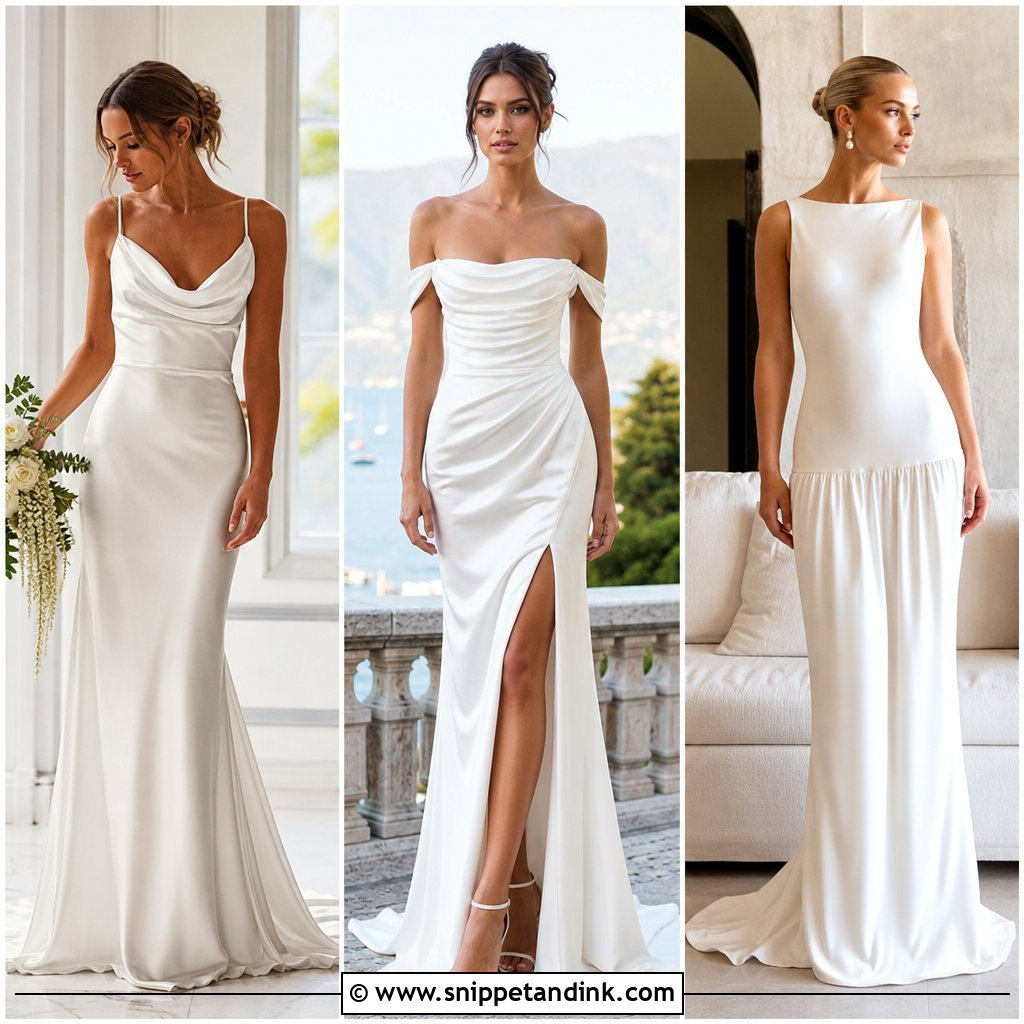
20. Anne Barge Rehearsal Dinner Dress Outfit
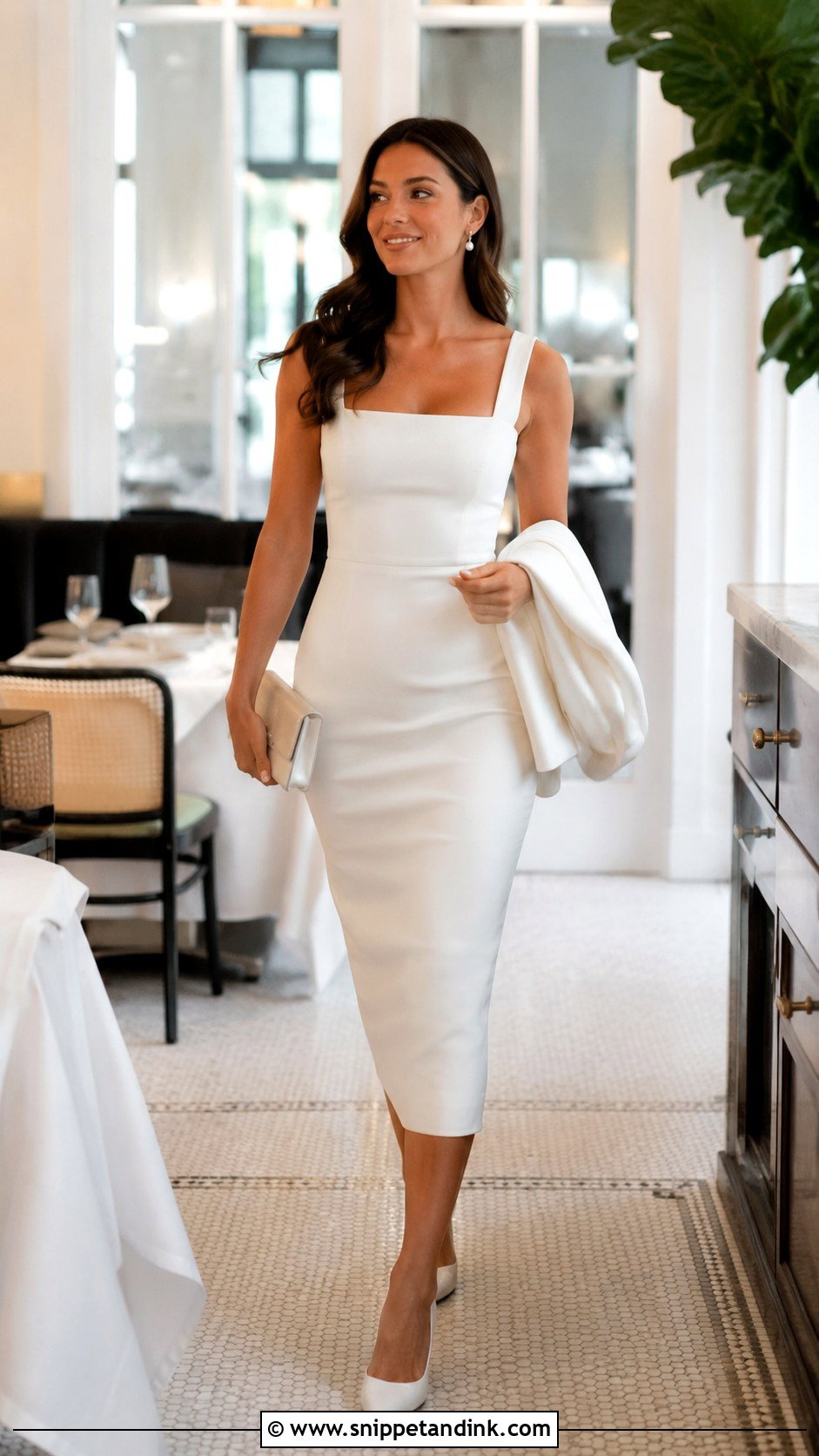
Your wedding dress should be the only showstopper of the weekend, so a rehearsal dinner outfit works best as a refined white midi. A tailored silhouette with a square neckline, off-shoulder detail or soft drape fits most venues. Ivory slingbacks, pearl earrings and a structured clutch keep it polished. A light blazer or cropped jacket helps on a cool evening. Soft waves, natural makeup and a neutral manicure keep the beauty relaxed, and a slim headband, silk scarf or small bow replaces a veil. With different accessories, the same dress covers a shower, engagement party or farewell brunch.
Ordering a Designer Gown Without a Last-Minute Panic
Designer gowns are usually made to order after you try a sample in the shop, and that takes longer than most people think. Exact timings vary by designer and season, so confirm with your boutique, but this is the order I plan around.
- Start trying on about nine to twelve months before the wedding. Bring shoes at the heel height you plan to wear and a strapless bra or the shapewear you expect to use.
- Order once you are sure. Production commonly takes several months, and rush orders, when available, cost extra.
- Book alterations as soon as the gown arrives. Two or three fittings over six to eight weeks is normal for a structured gown.
- Plan the extra outfits after the main gown, so the pantsuit, mini or rehearsal dress complements it rather than competing.
- Pick up the gown a week or two before the wedding and keep it hanging in its bag with the bodice supported.
Measure honestly at the order stage. Gowns are ordered from a size chart, and boutiques order the size that fits the largest of your bust, waist and hip measurements, then altered down. It can feel odd to order a size larger than your usual clothes, but taking in a gown is far easier than letting one out.
Build the Look Outward From One Silhouette
Thoughtful styling is what turns a well-made gown into a complete, personal look. Start with the silhouette you feel at ease in, from a full ball gown to a column, lace, a pantsuit or a mini. Then choose accessories that support the dress. Veils, scarves, capes, jewelry, shoes, flowers and hair should connect through shape, texture and formality. Think about venue, season and what you will actually be doing all day before deciding. With balanced proportions and purposeful details, these outfits can shape a bridal wardrobe that feels cohesive and true to you.
You'll Like These Ideas:




Leave a Reply