
Most brides walk into their first appointment with a folder of necklines and lace swatches, and most of them change their minds once they see a full silhouette on their own body. That’s why I start styling from the whole outline of the gown and work outward to shoes, veil and jewelry. Bridal collections now run from heavy ceremony gowns to light, dance-friendly dresses, so you have real room to dress for your venue and for how you want to feel by midnight. Each of the 20 shapes below comes with the finishing pieces I’d put with it and the fitting checks I’d make before anyone signs an order.
Reading a Silhouette on Your Own Frame at the First Appointment
Shop samples rarely fit anyone properly. They’re clipped at the back, often in a standard size, so I ask brides to judge the outline, not the fit. Look at three places in the mirror: where the waist seam falls on your torso, where the skirt starts to widen, and whether the neckline sits flat when you breathe out.
I usually pull one dress from three families on the first visit: something fitted all the way down, something that opens at the hip, and something with real volume. Most brides know within those three tries which family they belong to, and it saves an afternoon of trying twelve versions of a shape you didn’t like.
- Wear or bring underwear close to what you’ll wear on the day.
- Bring shoes of roughly the right heel height so hems and proportion read correctly.
- Move in each dress: sit, lift your arms, and take a few steps backward the way you would leaving the altar.
- Limit the group to one or two people whose taste you trust.
1. A-Line Wedding Dress
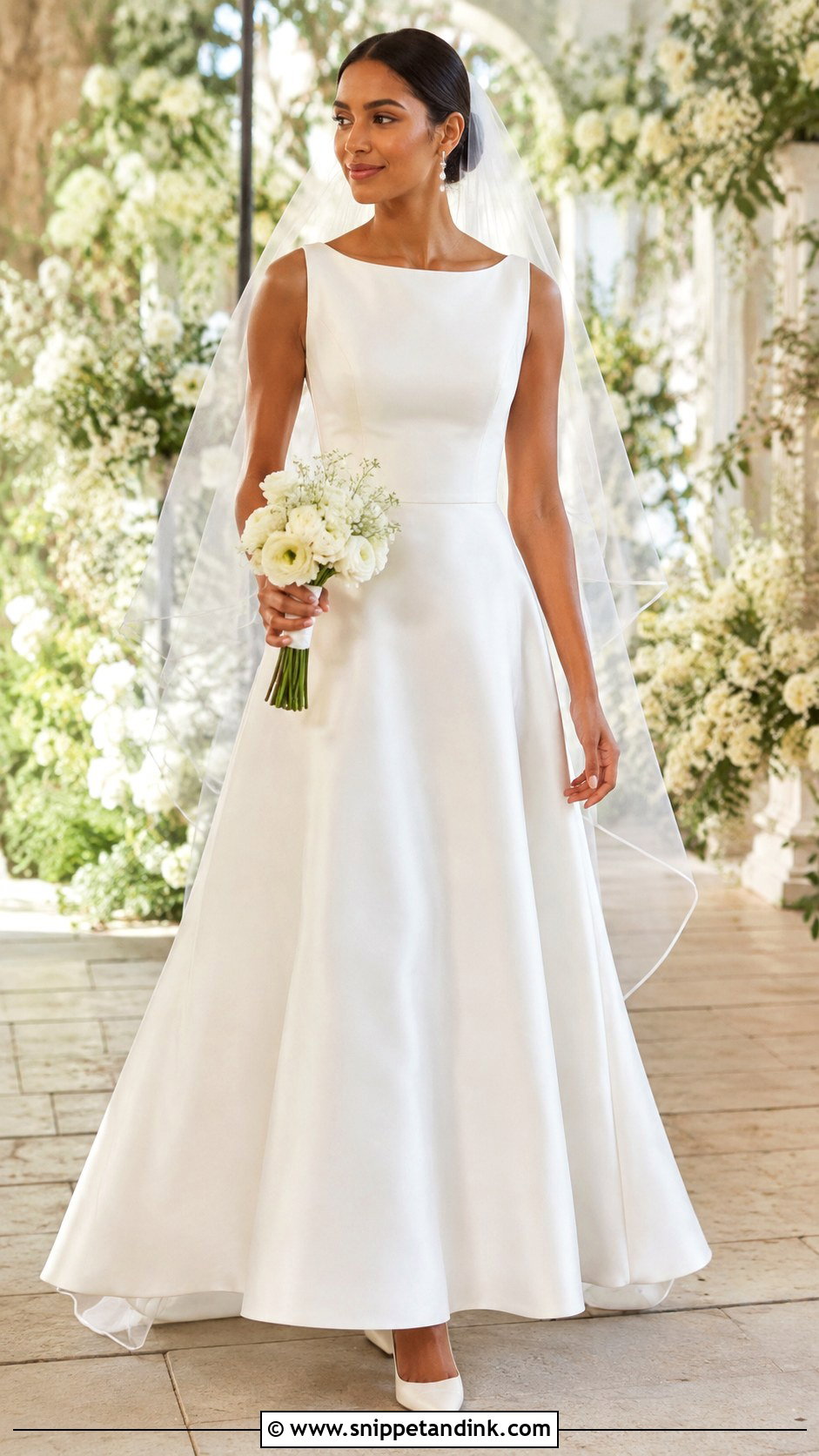
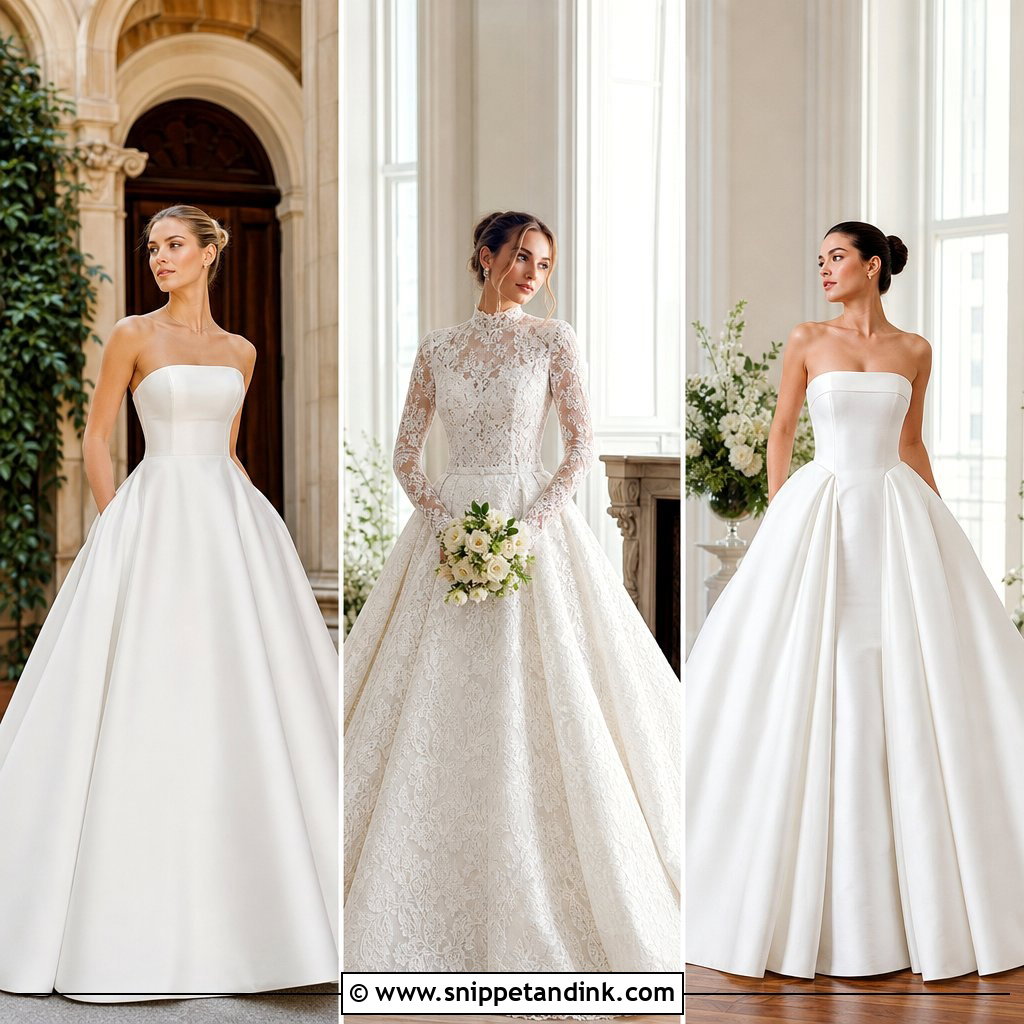
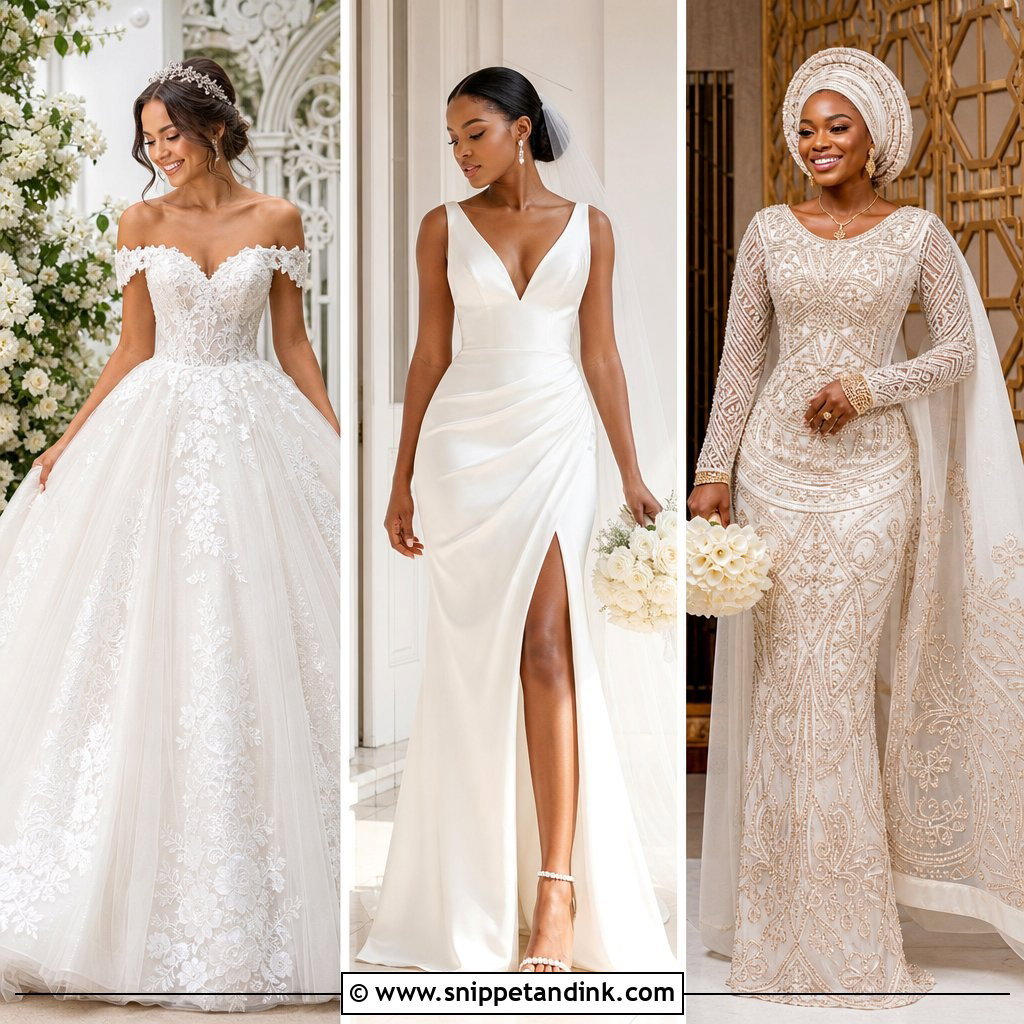
The A-line is the shape I pull first for a bride who doesn’t know where to start, because it flatters almost every frame. The bodice stays close, then the skirt widens gradually to the floor in that letter-A outline. Fabric changes its mood more than any cut detail: satin reads formal and clean, chiffon moves, floral lace softens it. I’d keep the veil at fingertip length so it ends where the skirt starts to open. Pointed ivory pumps, pearl drops and a small structured bouquet finish it, and a narrow embellished belt helps if you want a sharper waist. It’s light enough for a garden and polished enough for a ballroom.
2. Ball Gown Wedding Dress
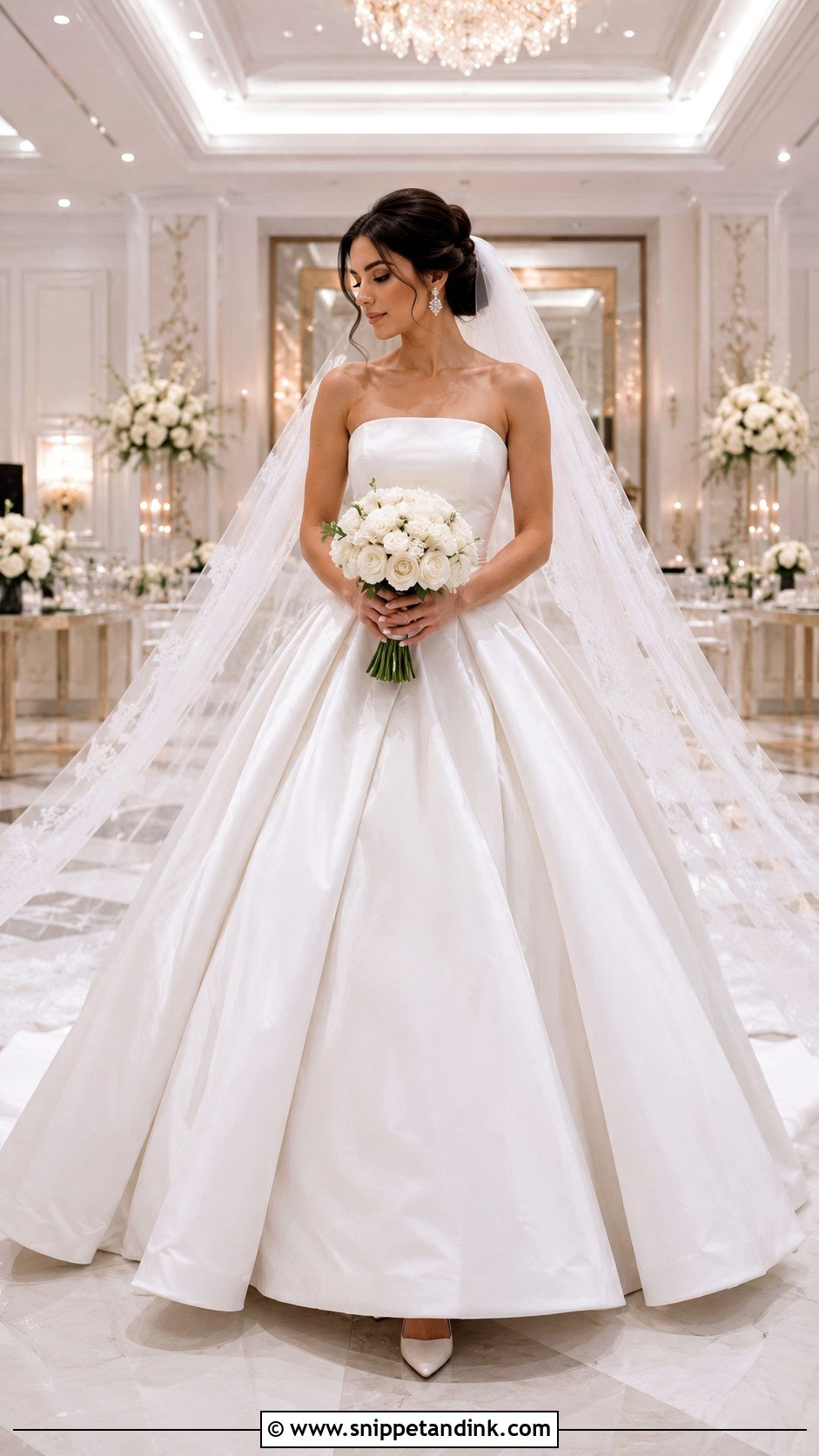
A ball gown needs room. Before I let a bride fall for one, I ask about the aisle width, the car and the bathroom at the venue, because the skirt goes everywhere she does. The fitted bodice and full structured skirt give the grandest entrance on this list. A strapless satin bodice looks regal; lace sleeves or appliqué soften it. A cathedral veil only makes sense where there’s space for it to spread. Crystal studs, a fine bracelet and closed-toe heels are enough. Insist on a secure bustle for the reception, and keep the bouquet compact so it doesn’t fight the skirt.
3. Mermaid Wedding Dress
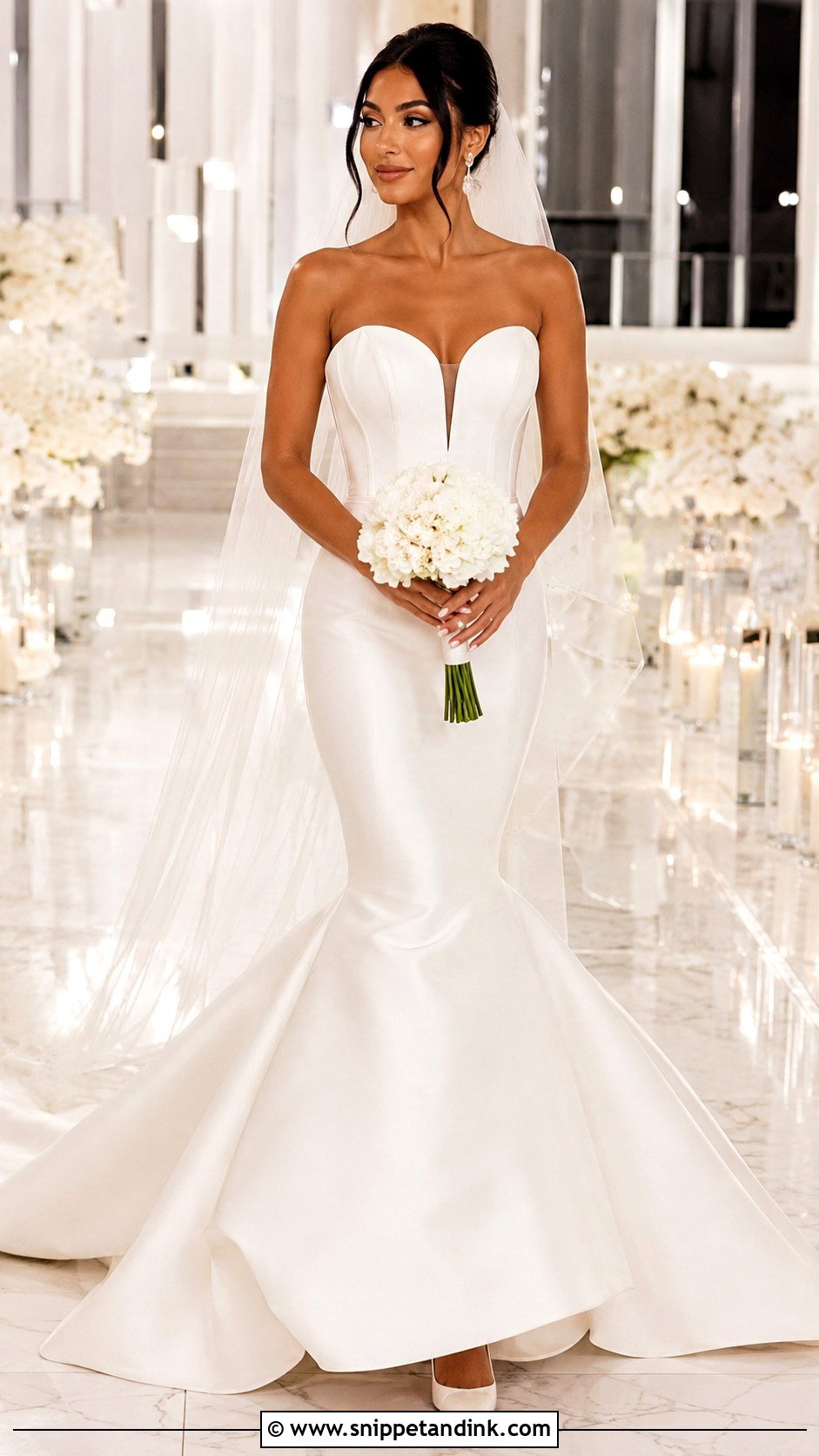
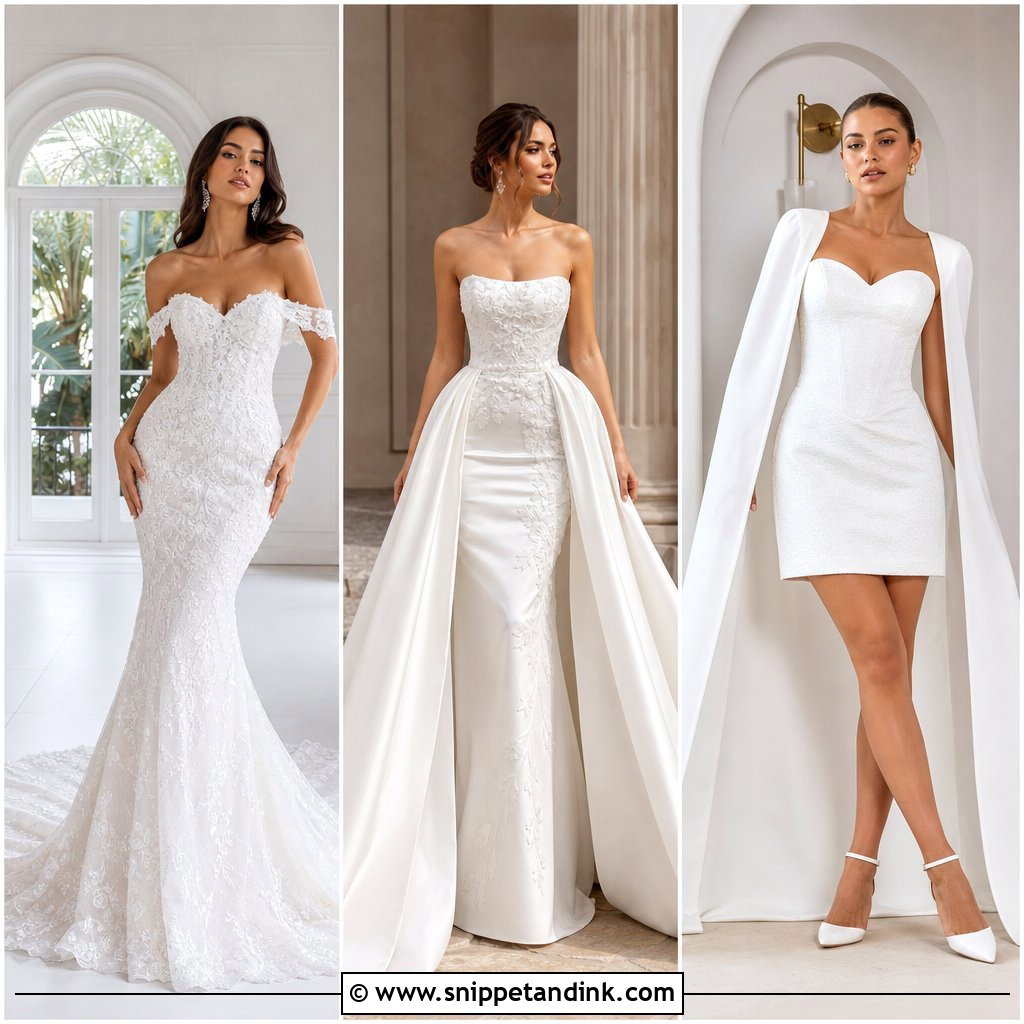
A mermaid gown follows the torso, waist and hips, then flares hard at the knee. It’s the most sculpted shape here and the least forgiving to move in, so at every fitting I make the bride sit, walk and climb a step or two. If the flare starts too low, stairs become a shuffle. Structured crepe gives a smooth modern line; lace brings texture. A plain chapel veil keeps the shape visible, pointed heels lengthen the leg, and understated earrings keep it from looking overdone. A compact bouquet and a polished low bun suit a rooftop or an evening ballroom.
4. Trumpet Wedding Dress
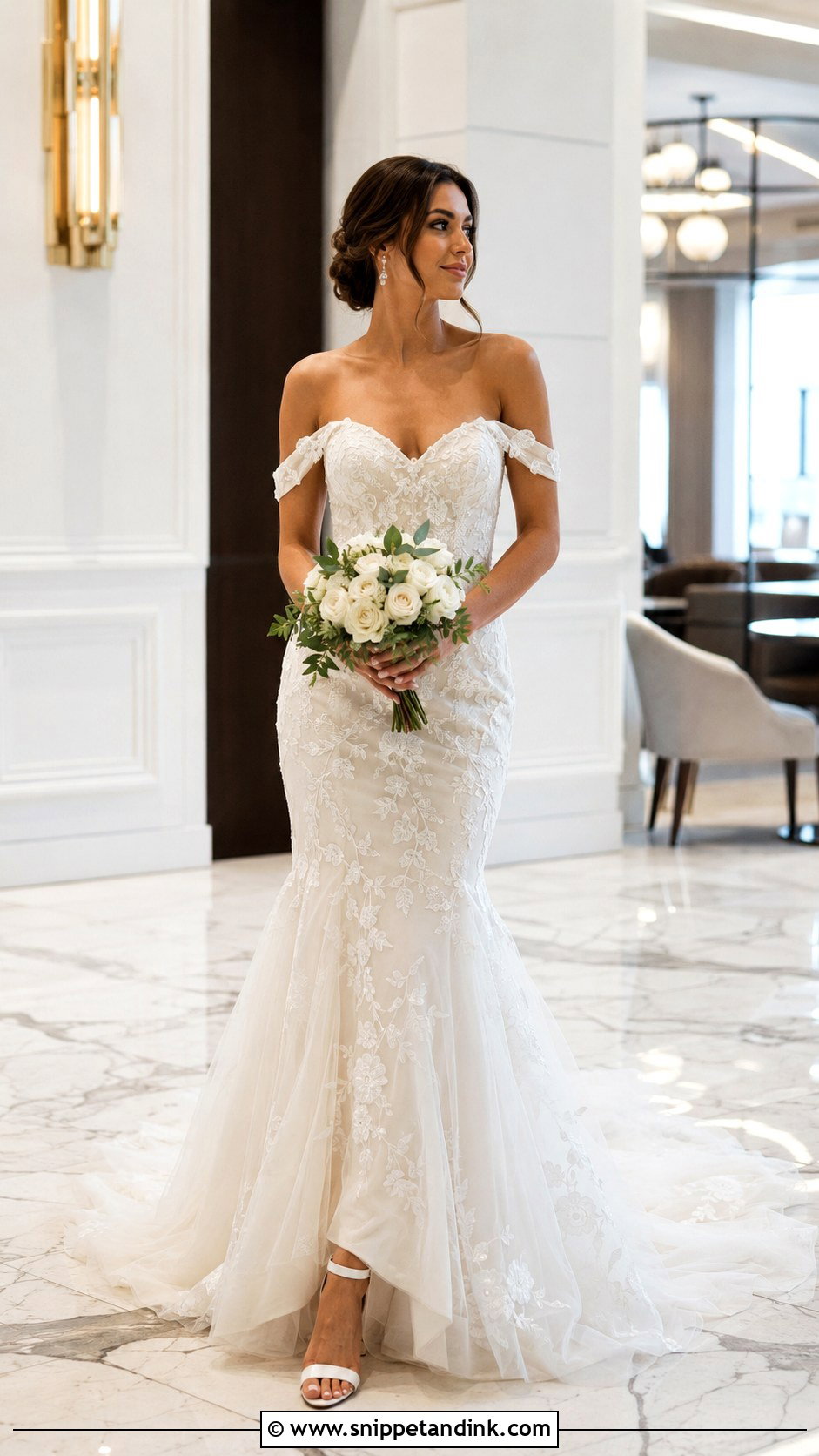
Love the fitted look but not the restricted knees? A trumpet wedding dress is the compromise I suggest most. It hugs the upper body and opens around mid-thigh, so the flare is softer and higher than a mermaid’s and the stride is far easier. Stretch crepe gives clean lines; embroidered tulle adds detail. A shoulder-length veil, slim drop earrings and slingbacks work well, and removable off-the-shoulder straps let you change the look for the reception. The flare placement is what I watch with the tailor, since an inch either way changes the whole proportion.
5. Sheath Wedding Dress
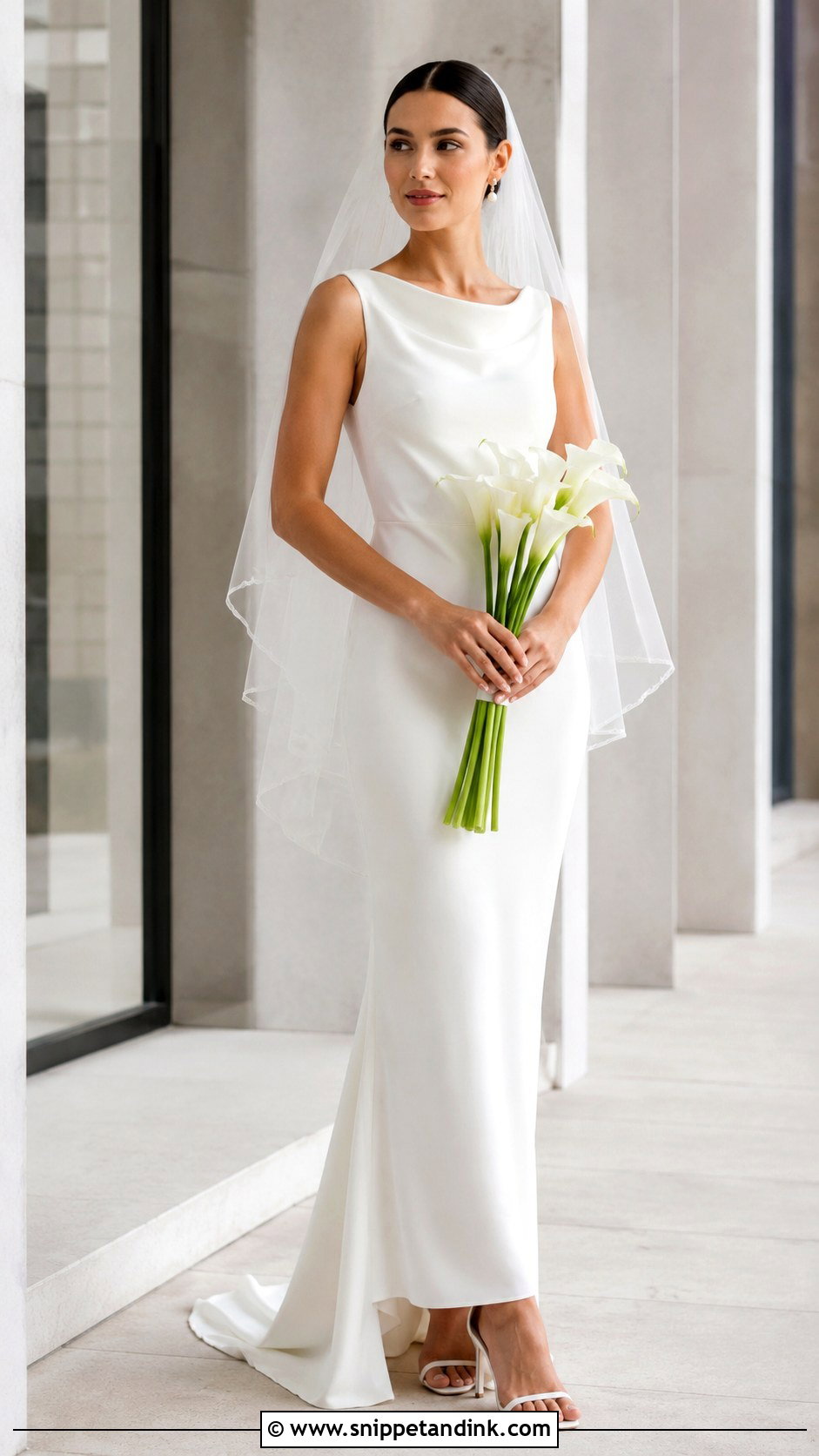
A sheath wedding dress drops from neckline to hem without much volume, so it shows everything underneath. My first job with a sheath bride is foundation: smooth, no-line underwear tested at every fitting, because one visible edge ruins the line. Crepe looks crisp and current; lace or beading takes it romantic. Style it with a light chapel veil, slim ankle-strap heels and one meaningful piece, such as pearl earrings or a family bracelet. Test your stride before the hem is finalized, since a narrow skirt can shorten your step. A low chignon and long-stemmed bouquet suit a city venue or an intimate ceremony.
6. Column Wedding Dress
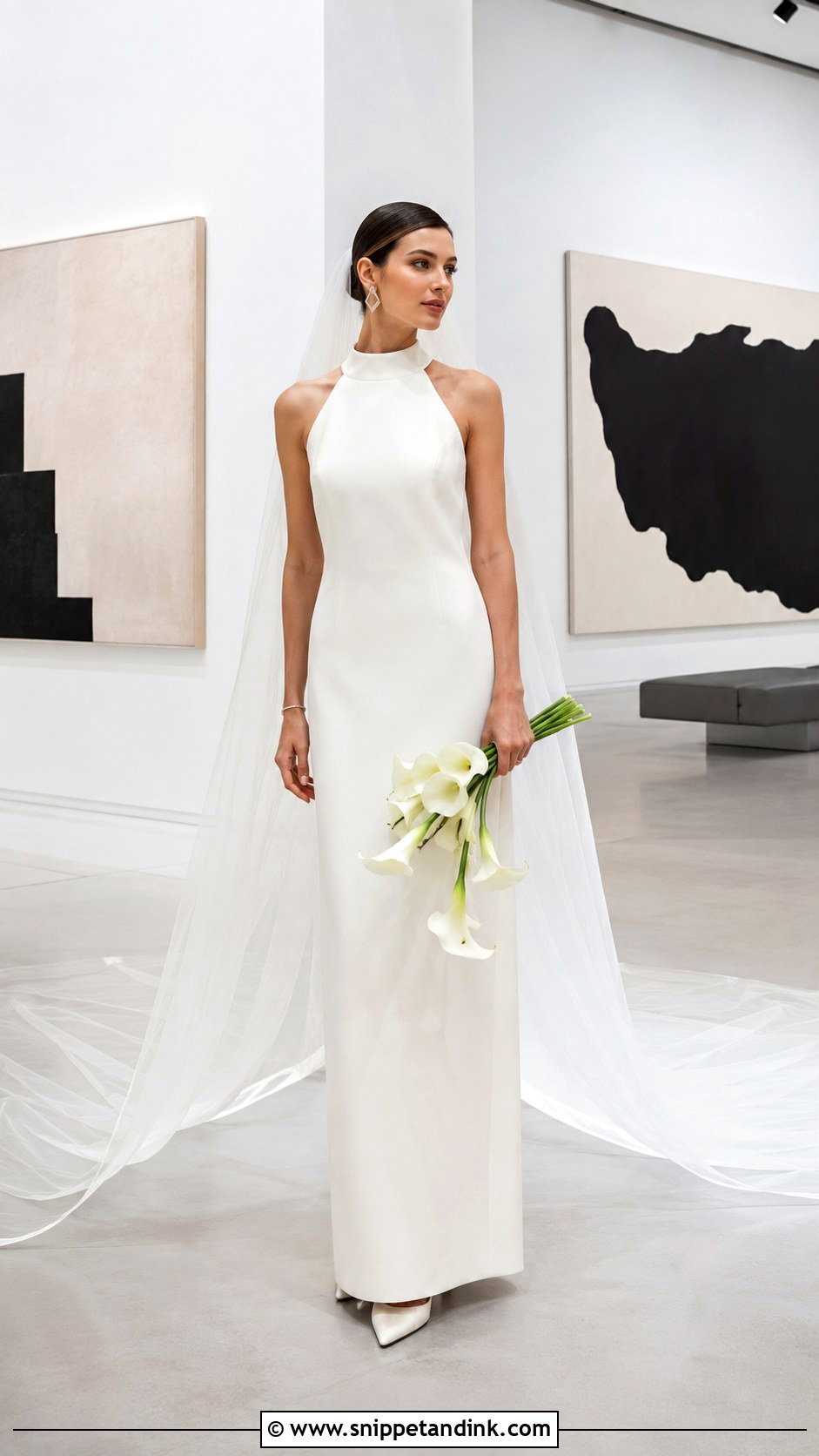
A column gown has more structure than a sheath but none of the volume of an A-line. Heavy crepe, mikado and satin are the fabrics I trust here because they hold a straight line from shoulder to hem rather than clinging. Pair it with a sleek bun, geometric earrings and pointed pumps. A narrow cathedral veil adds drama without widening the shape. With a high neckline, skip the necklace and lean on earrings or a cuff. Tailoring through the waist and hip is where a column succeeds or fails, so budget for it. It suits galleries, hotels and minimal rooms.
7. Empire Waist Wedding Dress
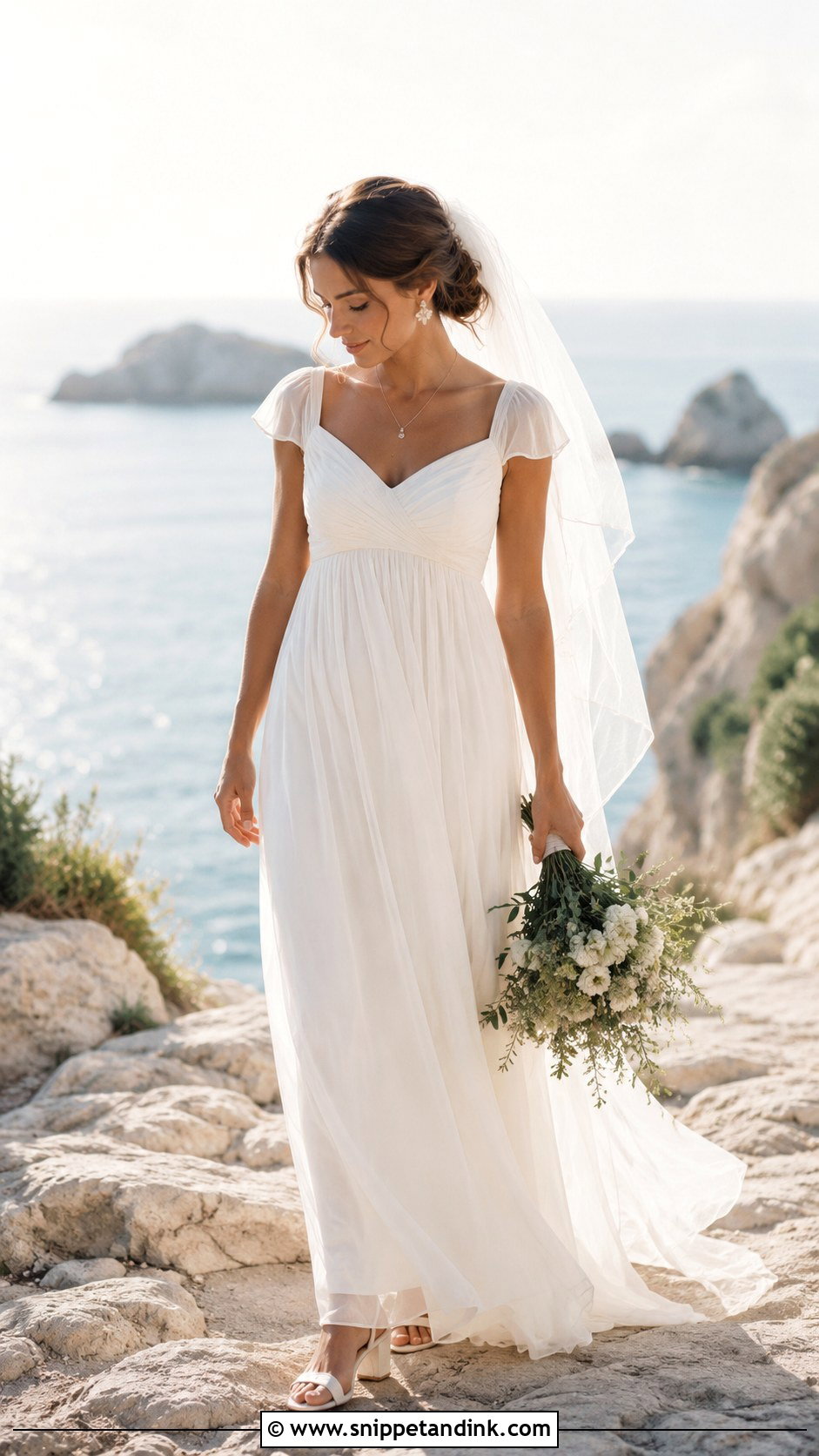
The raised seam on an empire waist wedding dress sits just under the bust, and the skirt falls loose from there. It’s my go-to for a bride who doesn’t want a fitted midsection or who is pregnant on the wedding day. Chiffon travels well for a destination; silk or fine lace feels more formal. The one thing I check carefully is bust support, because there’s no waist seam doing the work lower down. Low block heels or embellished flats suit soft ground, and a fingertip veil, fine pendant and small floral earrings keep it light. Have the hem set with your actual shoes on.
8. Fit And Flare Wedding Dress
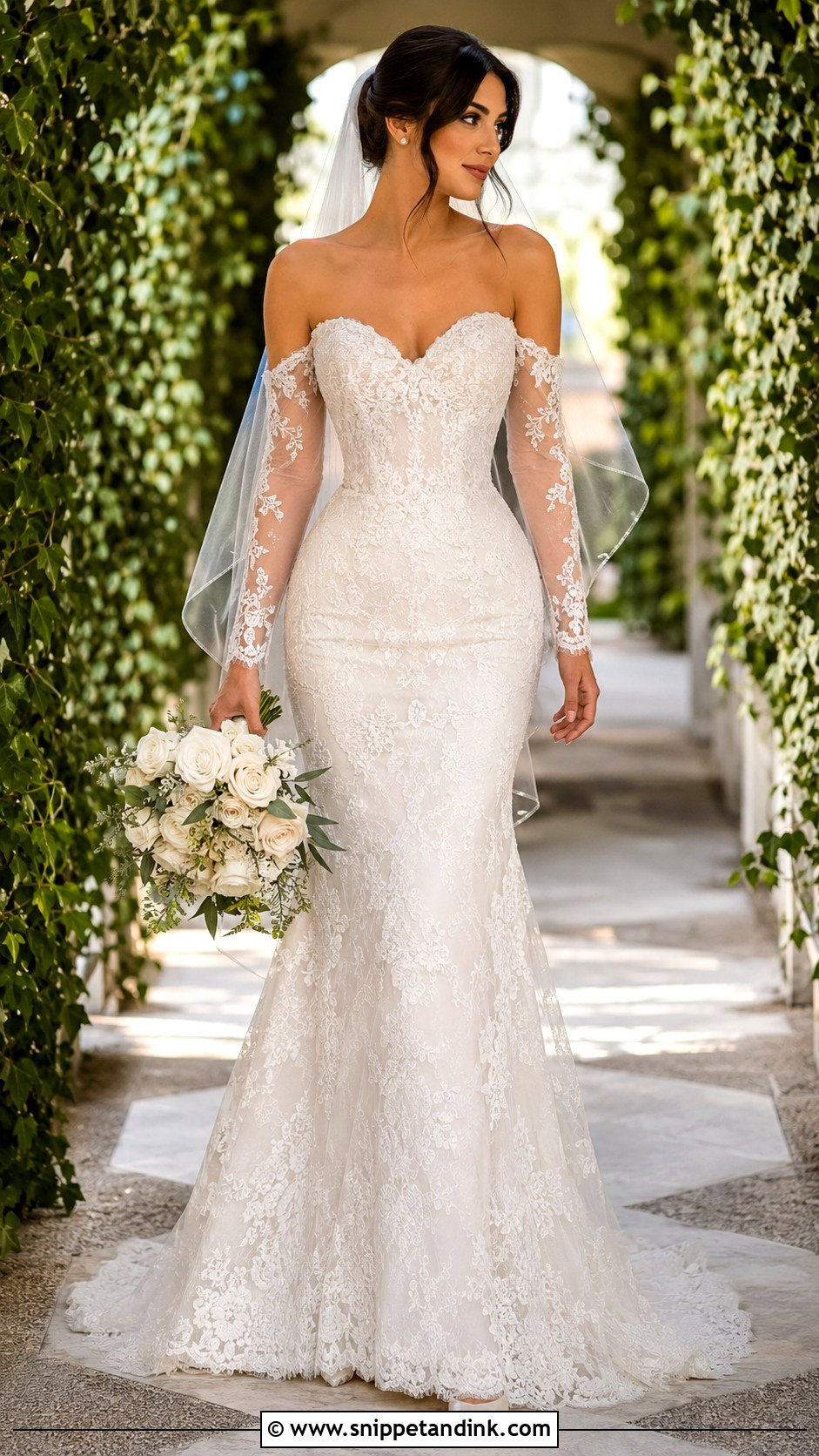
Fit and flare sits between A-line and mermaid: shaped through the bodice, opening gently below the hip. You get definition without the tight knee. Smooth crepe reads minimal; layered lace adds depth. A medium-length veil, pearl studs and comfortable pointed heels are all it needs, and detachable sleeves give you a second look later in the night. In fittings I look at where the skirt seam lands. Too high or too low and the fabric drags across the hips instead of falling cleanly.
9. Tea Length Wedding Dress
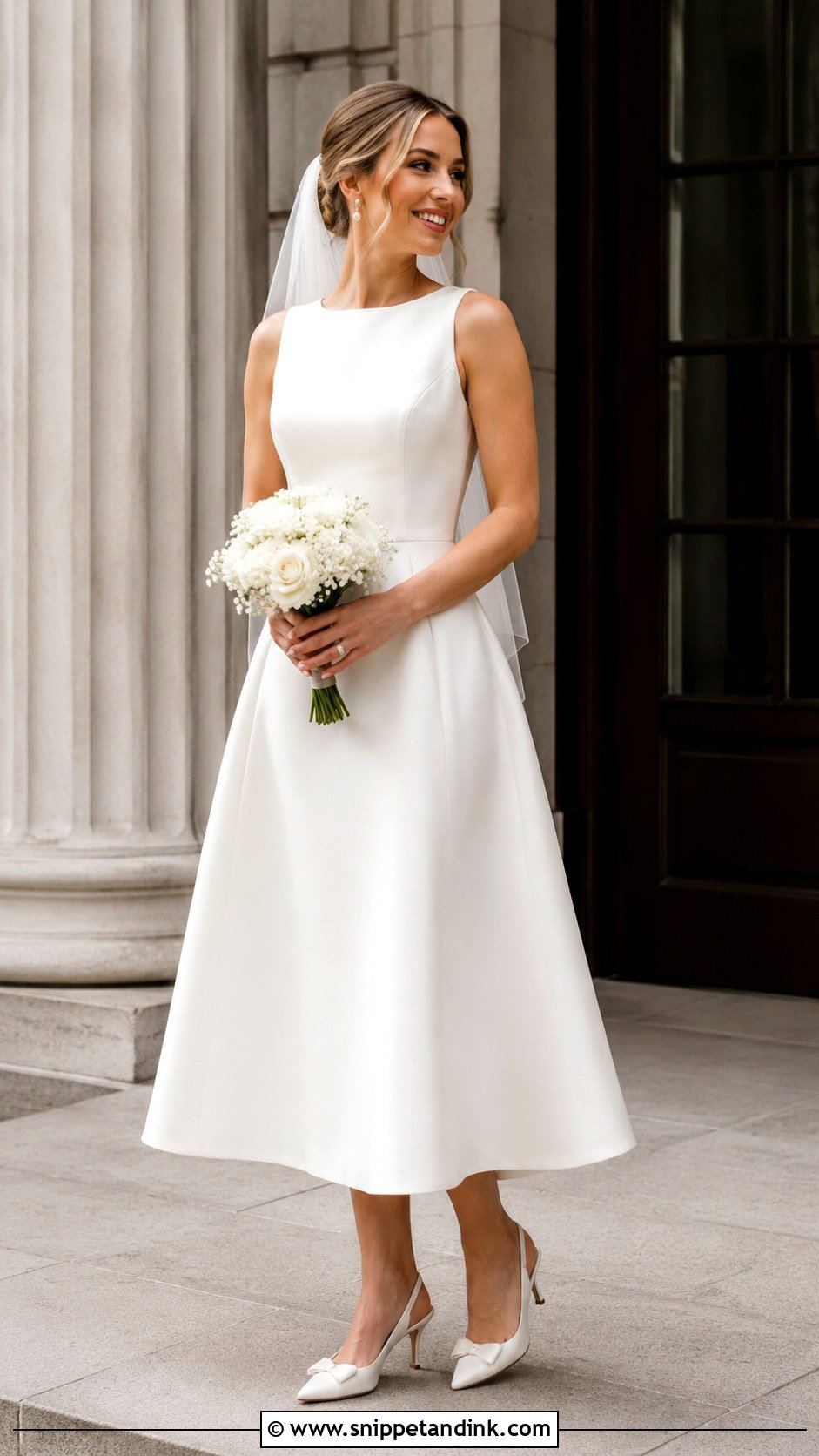
A tea length dress ends between knee and ankle, which means the shoes are on show all day. I tell brides to choose them as carefully as the dress, and to check them from the side and back as well as the front. A structured fit-and-flare looks vintage; a plain satin version looks fresh. A short veil or a birdcage suits the shorter hem far better than a long train. Pearl earrings, a compact bouquet and a polished updo finish it. It’s easy to walk and dance in, and I reach for it most for a courthouse wedding, a daytime reception or a small garden party.
10. Mini Wedding Dress
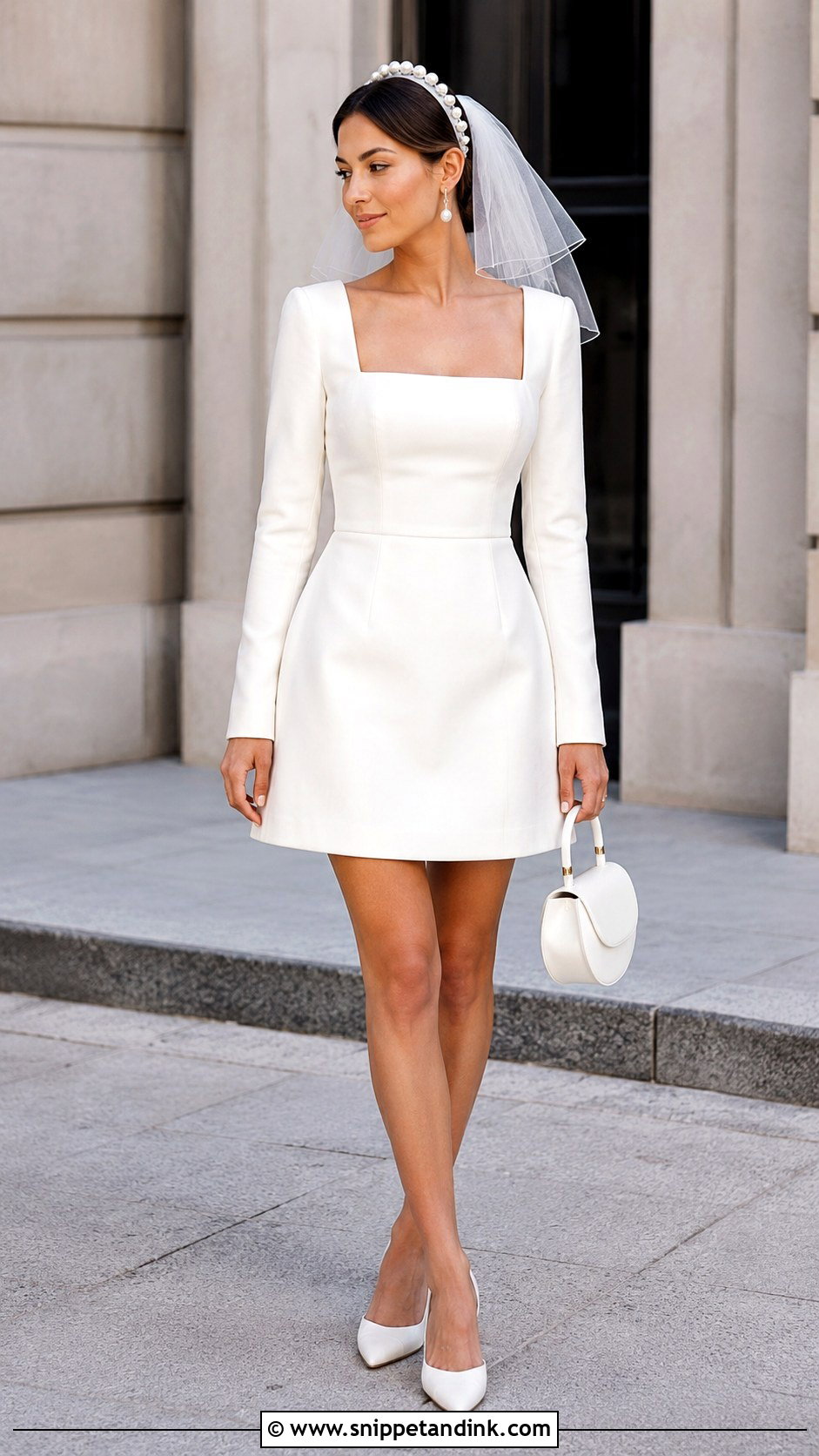
A mini is bold, and the trick with it is balance. Show leg, then cover something else: a refined neckline, fitted long sleeves or a clean square-neck bodice. Structured satin, tailored crepe or dimensional floral appliqué make the short length feel bridal rather than borrowed from a party. Pointed pumps, platforms or slingbacks, a short veil, a pearl headband and a small bag complete it. At the fitting I have the bride sit on a low chair and bend to pick something up, because a hem that feels fine standing can ride up fast. It makes a strong city ceremony look and an easy after-party change.
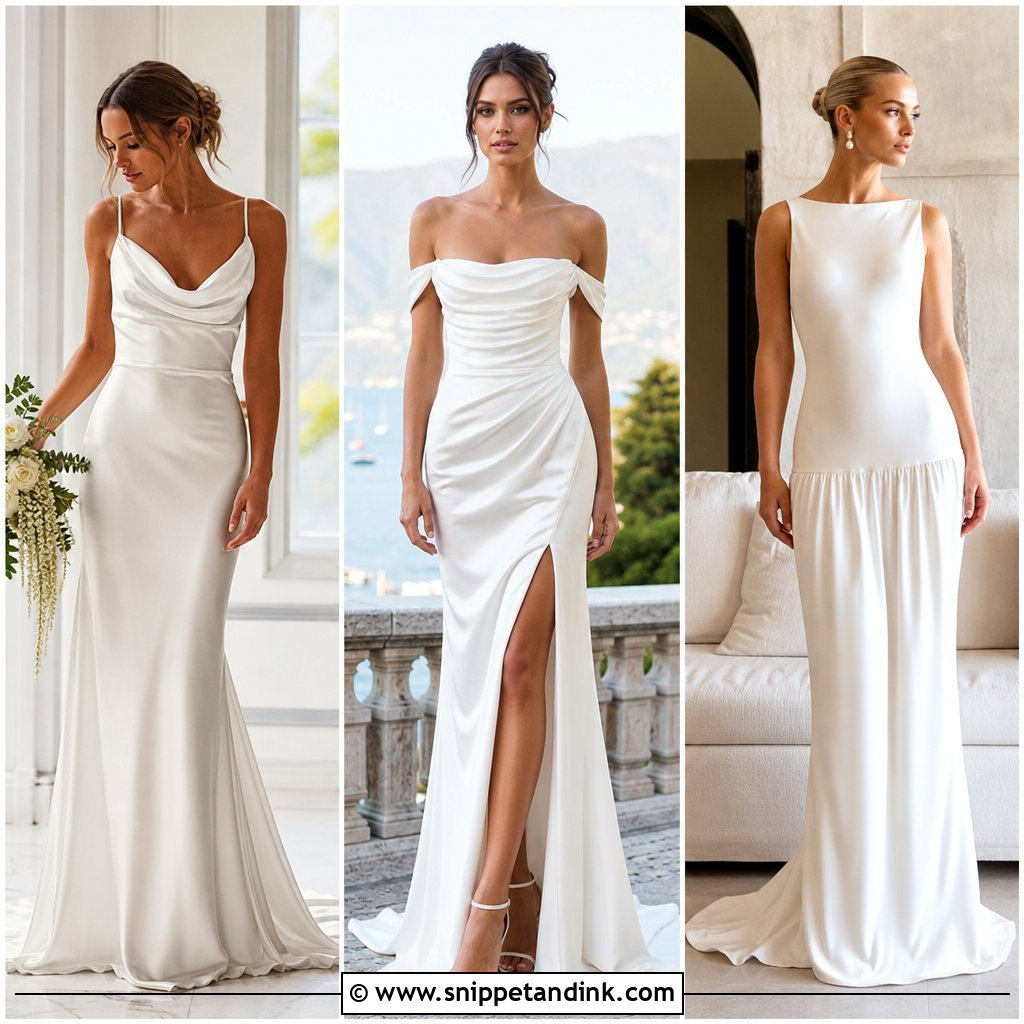
11. Slip Wedding Dress
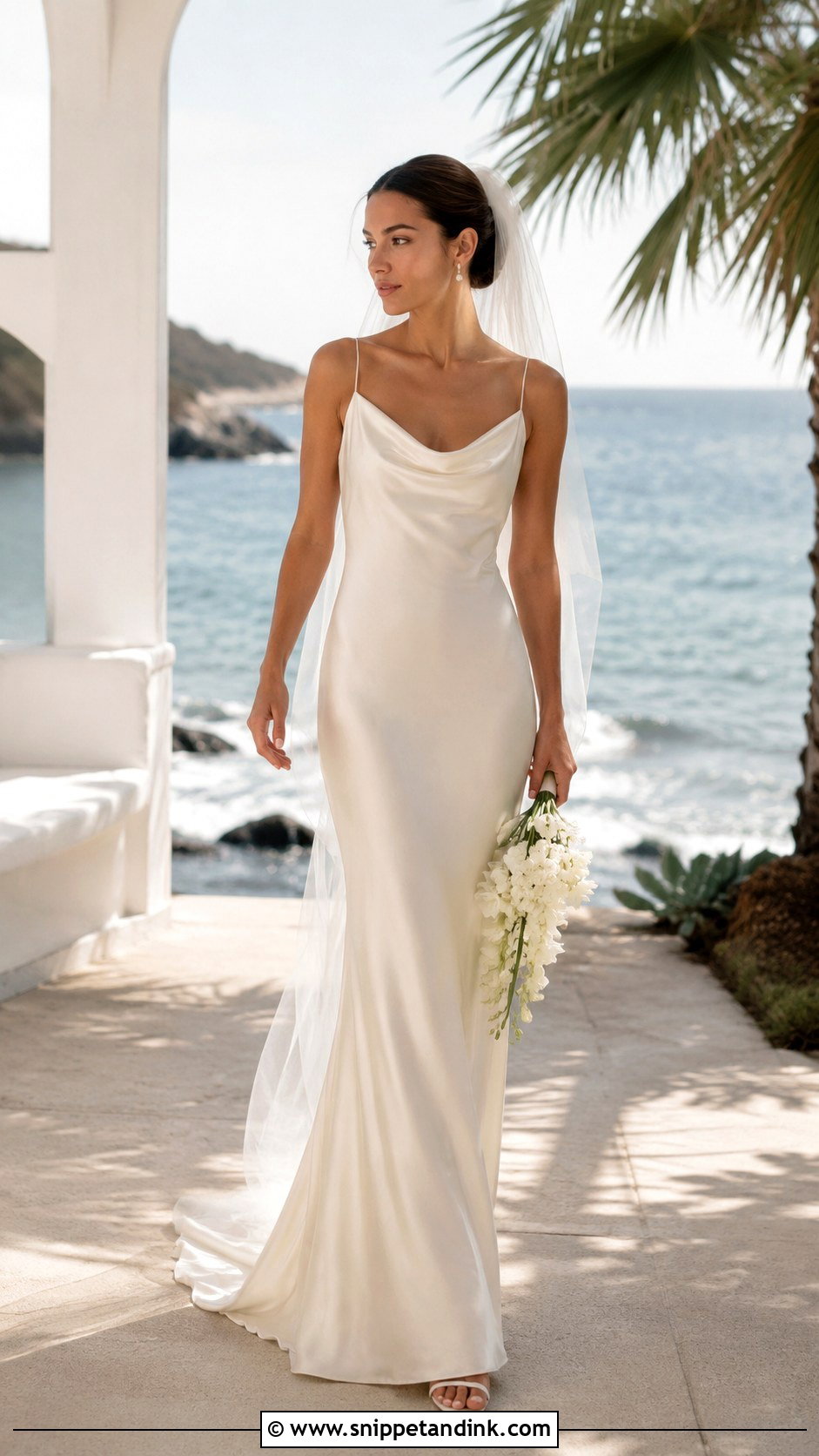
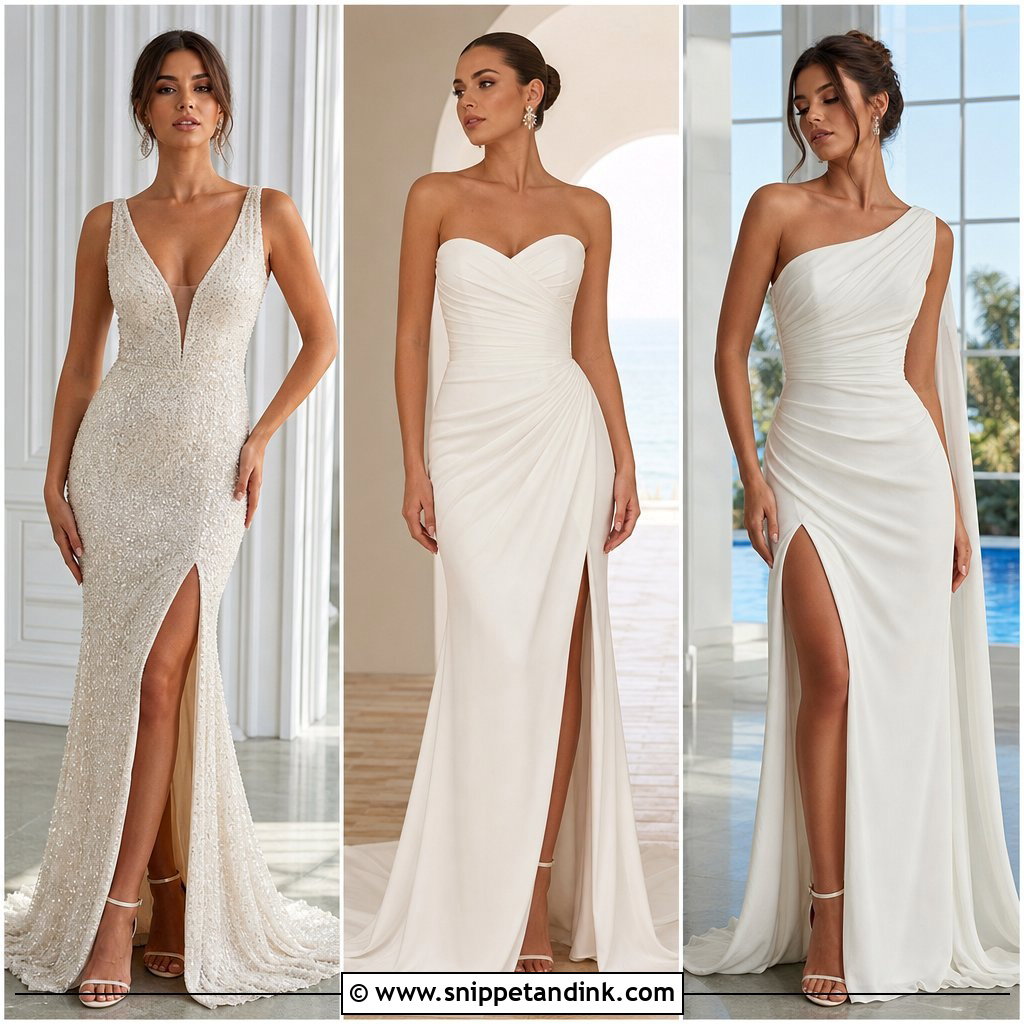
Smooth satin cut on the bias gives the slip dress its ’90s-inspired character. The bias cut skims rather than grips, which is exactly why it shows every line underneath, so foundation pieces get tested at each fitting. Satin also creases when you sit for dinner; a heavier silk or a satin with a little more body creases less. Slim sandals, fine drop earrings and a barely there fingertip veil suit it, along with a low bun or polished waves. For more coverage at the ceremony, add a sheer cape, a tailored blazer or a detachable overskirt. It’s at home on a beach or in a small restaurant.
12. Long Sleeve Lace Wedding Dress
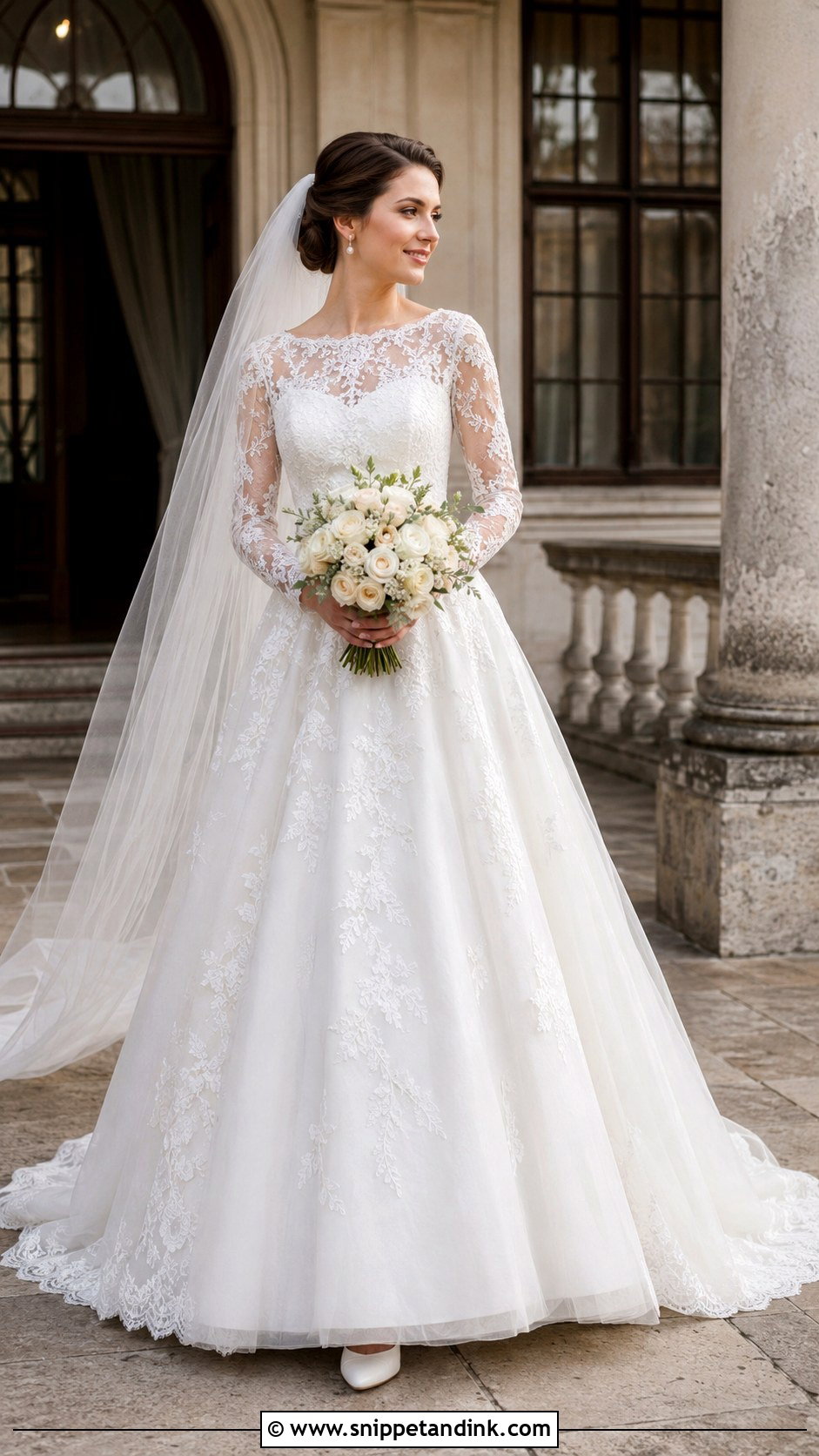
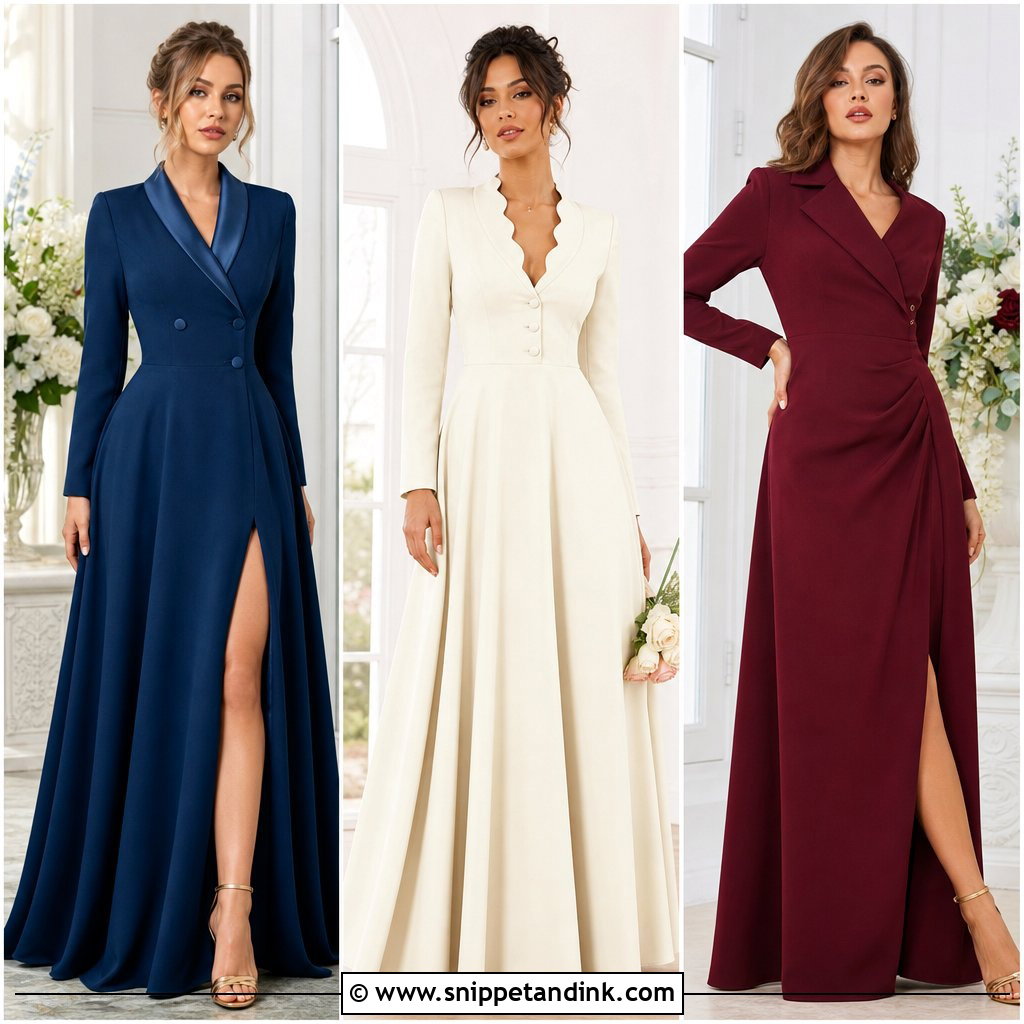
Long lace sleeves are my answer for a cool-season wedding or a ceremony that asks for coverage. Look for a fitted bodice with carefully placed appliqué and pick the skirt by the venue, A-line for movement or sheath for a sleeker finish. A plain tulle veil stops the pattern looking crowded. Closed-toe pumps, small pearl earrings and a soft bouquet in quiet colors are plenty. I always have the bride bend her elbows and reach forward: sheer lace can scratch at the inner arm and tight sleeves restrict hugging. Button loops and covered cuffs give a tailored finish.
13. Off Shoulder Wedding Dress
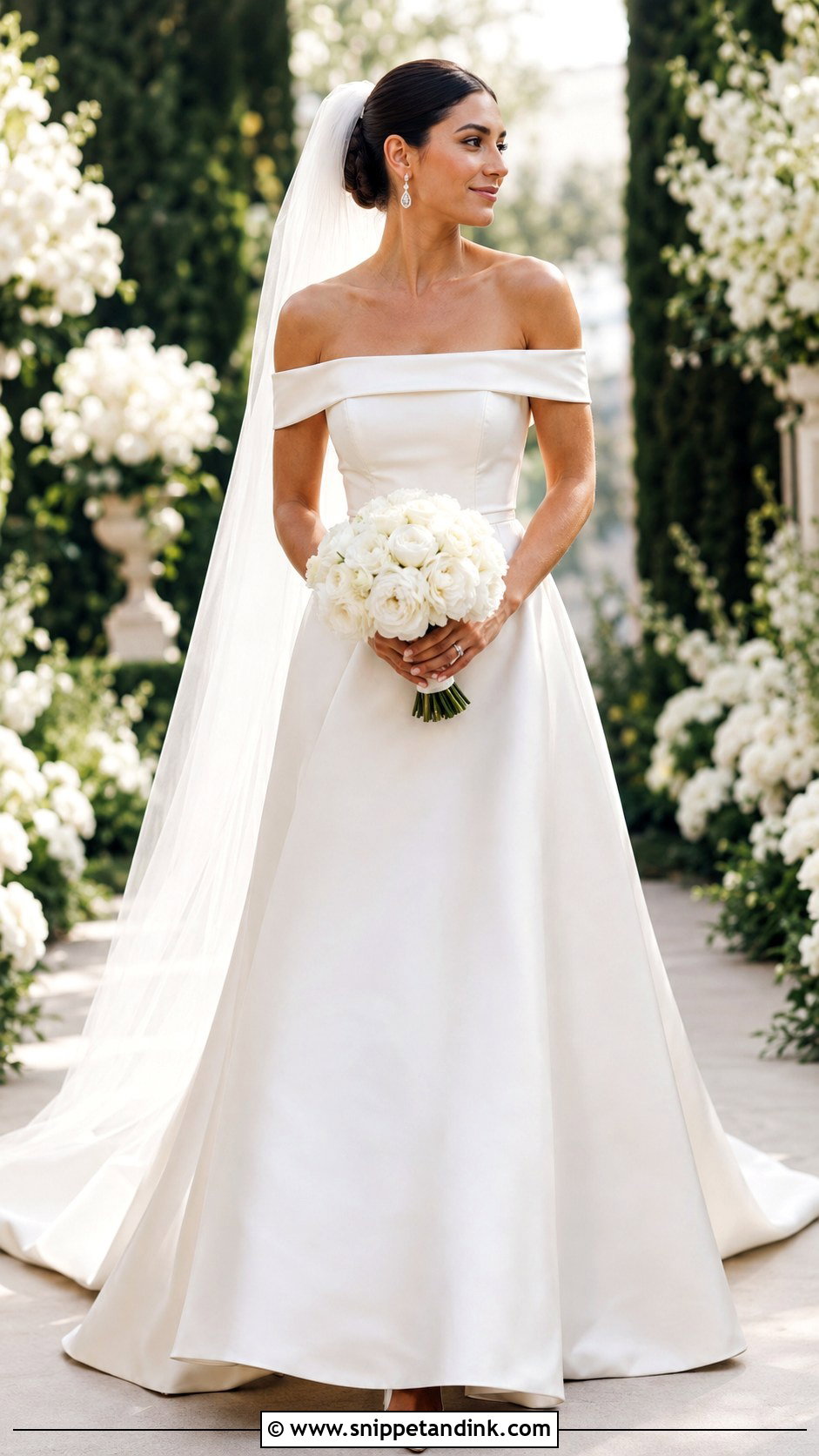
An off-shoulder neckline frames the collarbone and shoulders, and it can sit on a ball gown, an A-line or a fitted crepe base. The construction inside matters most: boning and a well-fitted bodice keep it from slipping, so you’re not hitching it up all evening. Before final alterations, lift your arms as if for a hug, because many off-shoulder designs pin the upper arm. A simple updo keeps the shoulder line clear and drop earrings draw the eye up. Add a chapel veil, pointed ivory heels and a rounded bouquet, and skip a heavy necklace; a fine pendant or nothing at all looks cleaner.
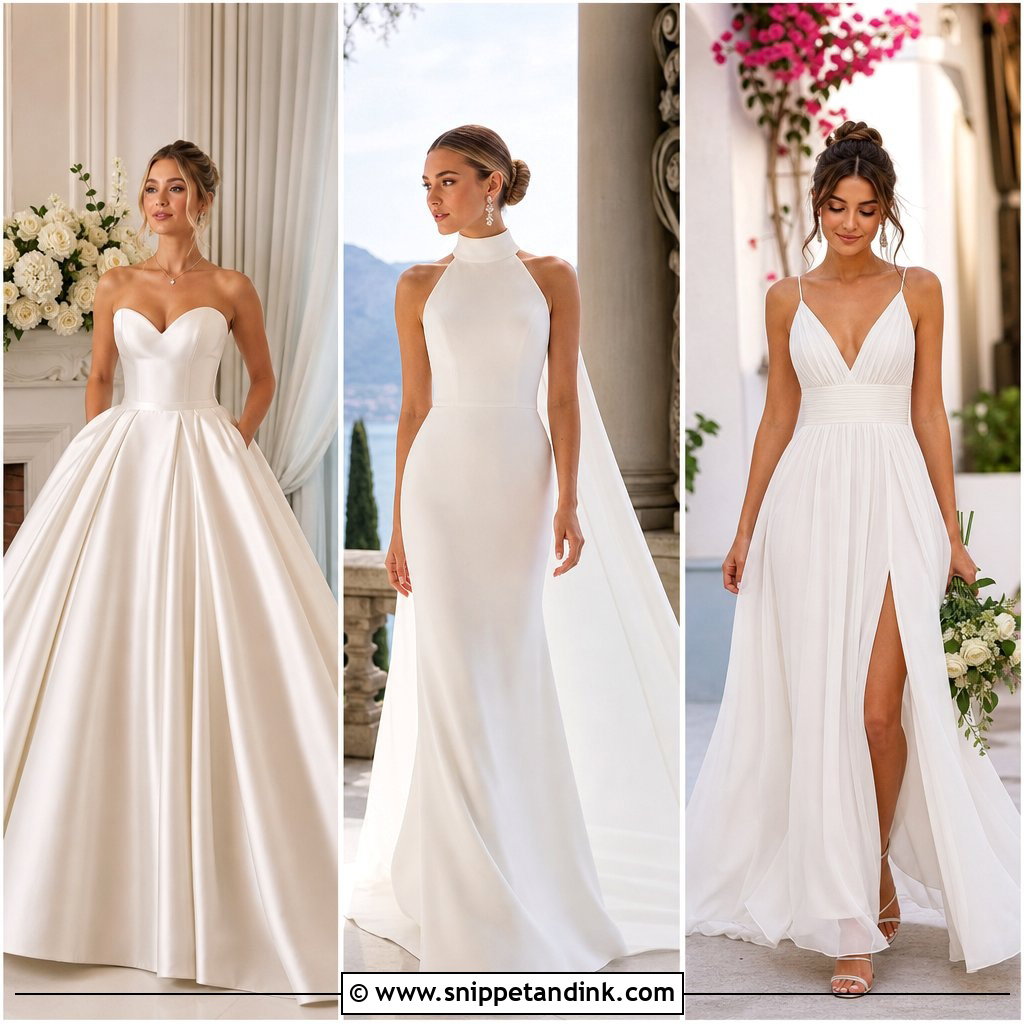
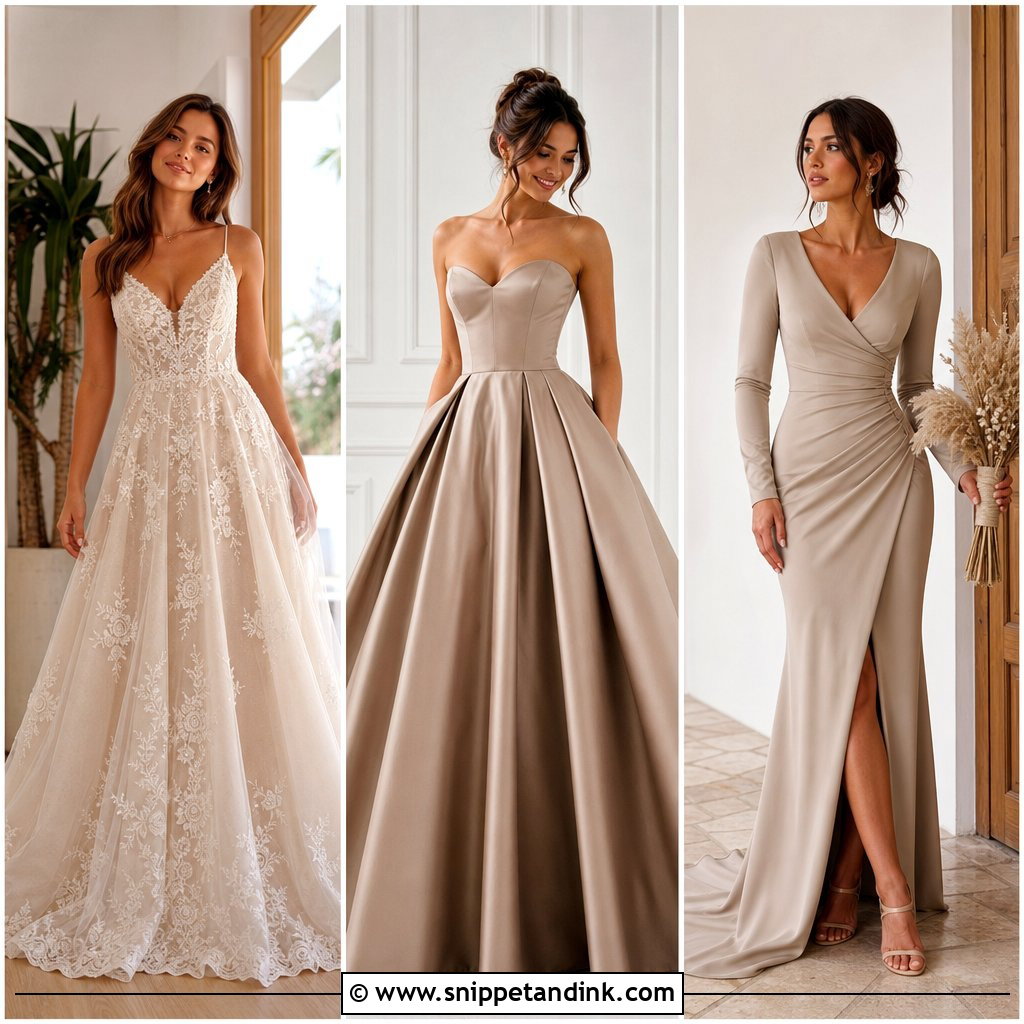
14. Strapless Satin Wedding Dress
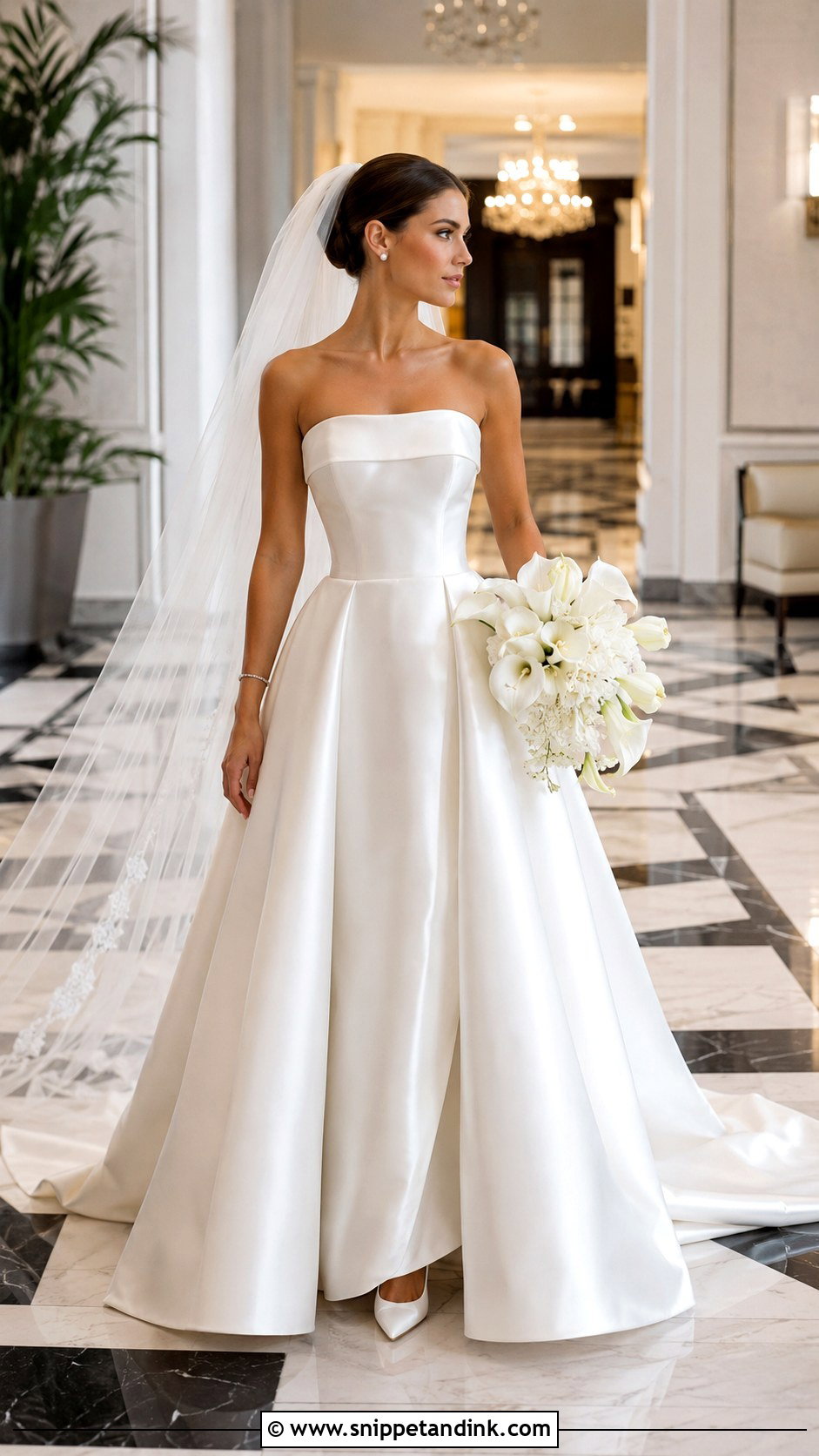
Strapless satin has nowhere to hide, so it’s all shape, fit and construction. A structured bodice over an A-line or full skirt looks classic; a narrow column skirt feels newer. I fit the bodice so it supports without pinching and never slides. If the bride is tugging at it during the fitting, she’ll be tugging at it in every photo. Wear a long veil for the ceremony, then take it off to show the clean neckline. Pearl studs, a slim tennis bracelet and pointed pumps add a little shine. A satin wrap, sheer cape or detachable sleeves give coverage when you want it.
15. Square Neck Wedding Dress
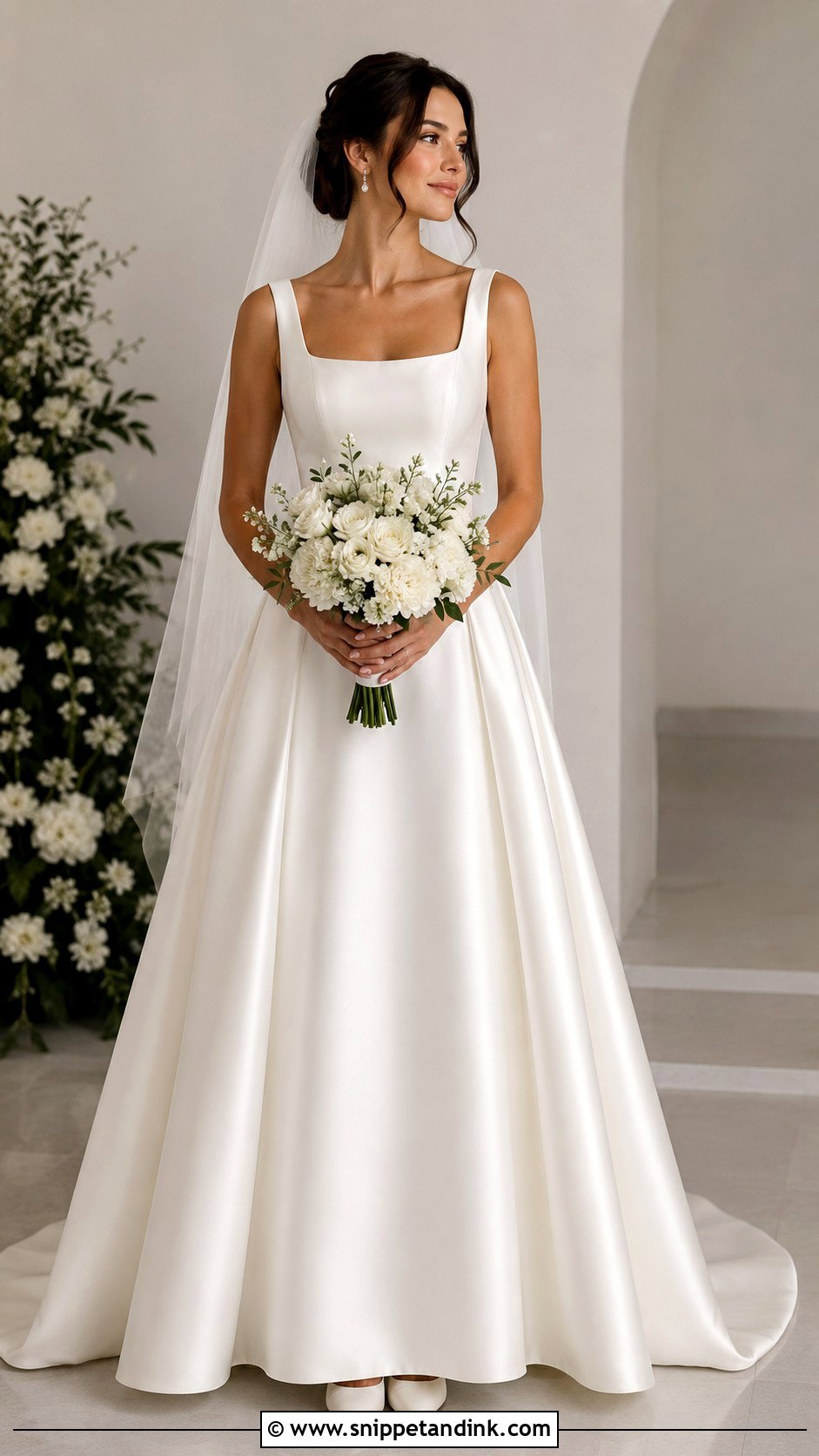
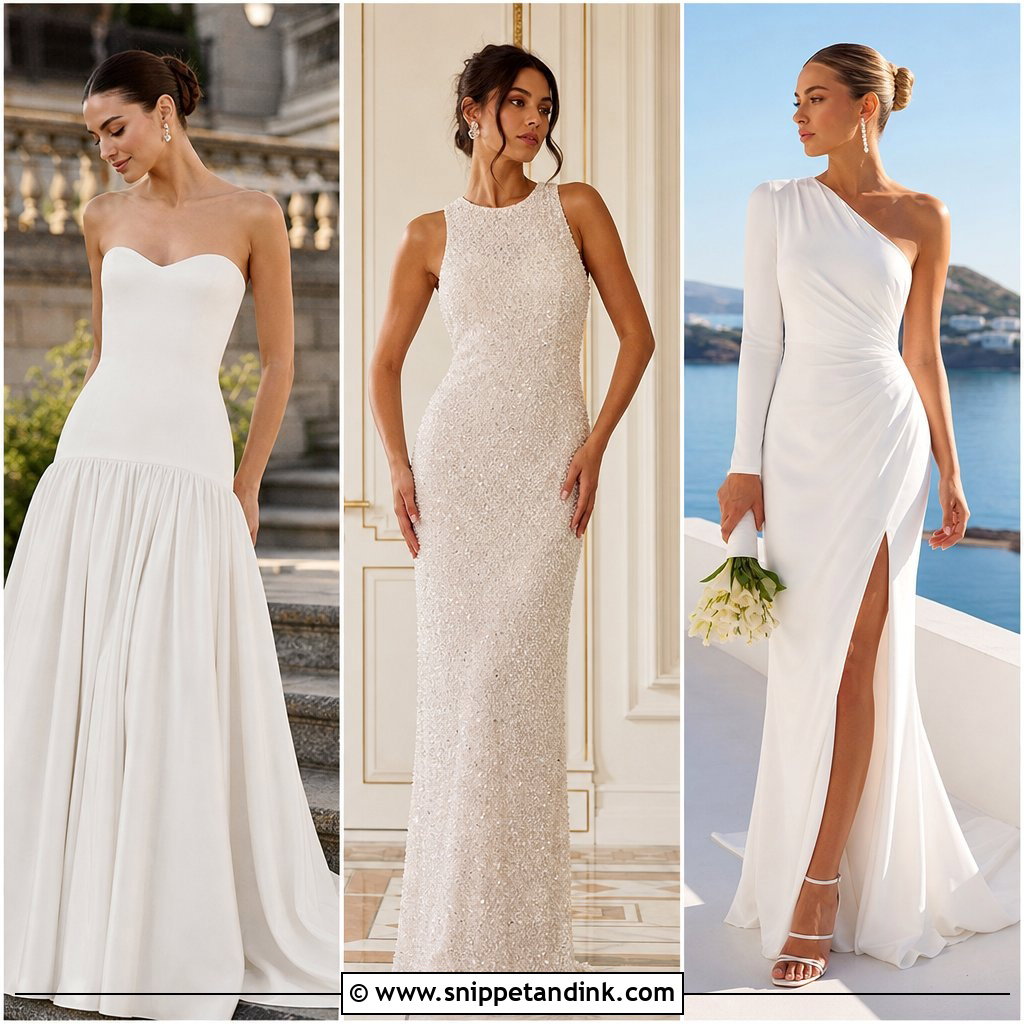
Square necklines frame the face and collarbone with straight lines, so they need almost no decoration. Wide straps over an A-line satin skirt read formal; fitted long sleeves in crepe read modern. A low bun, small drop earrings and a clean tulle veil keep the neckline clear, with closed-toe heels and a structured bouquet that echoes its geometry. The fitting check I never skip is movement: lean forward and turn, and the neckline should stay flat against the chest without gaping. It pairs with nearly any sleeve or skirt, which makes it easy to build a look around.
16. Basque Waist Wedding Dress
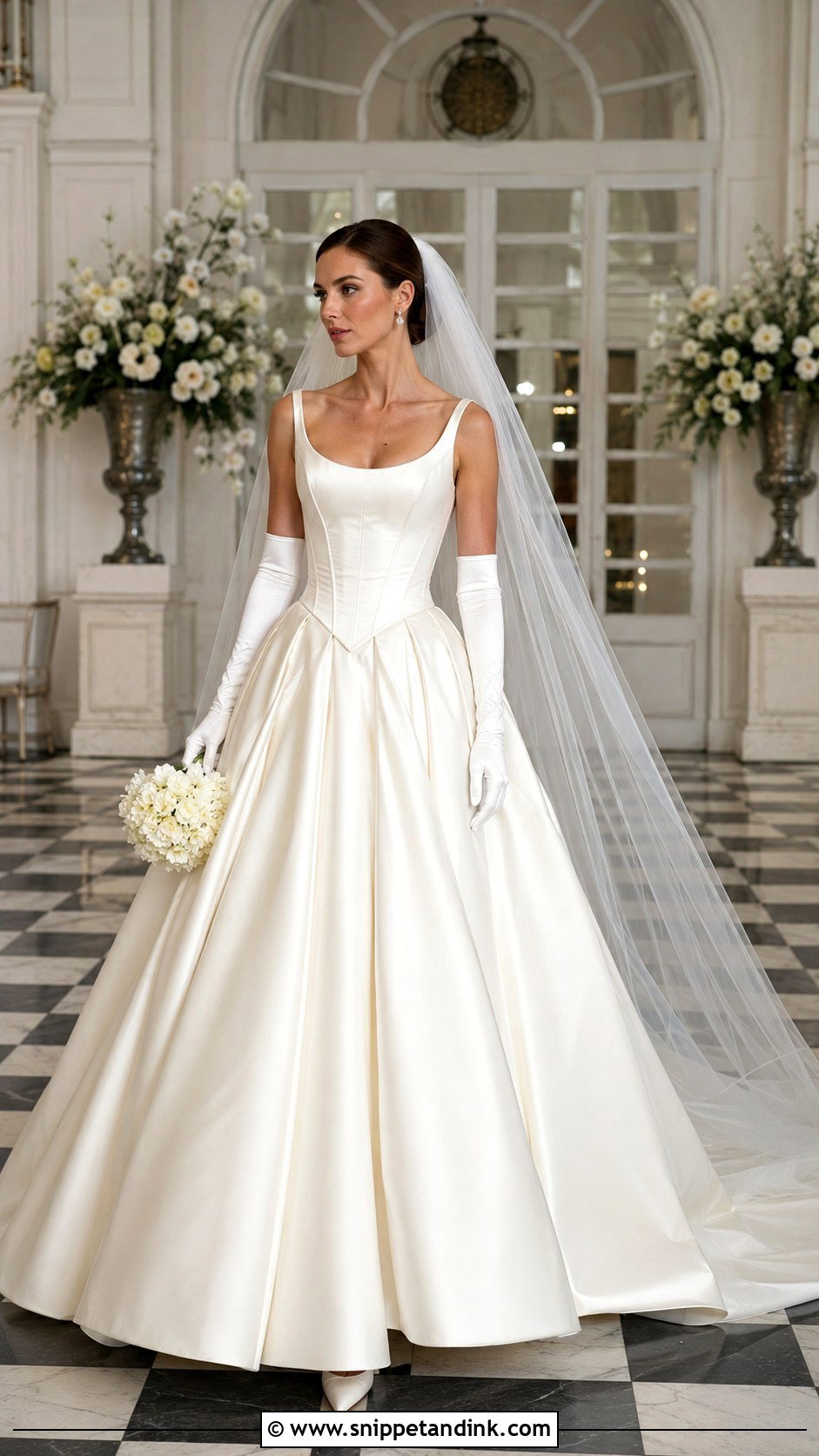
A basque waist runs the bodice below the natural waist and finishes in a pointed or curved V at the center, then releases into a full or softly flared skirt. The V has to land exactly at center front, so I’d allow extra time for alterations on this one. Satin or mikado holds the sculpted line, and a cathedral veil plays up the formal proportions. Long gloves lean into the historic feel, while simple earrings and pointed pumps keep it current. Never add a belt across it; it cuts straight through the shape. If you want to see how different makers handle the point, browse numerous designer presentations before your appointment.
17. Drop Waist Wedding Dress
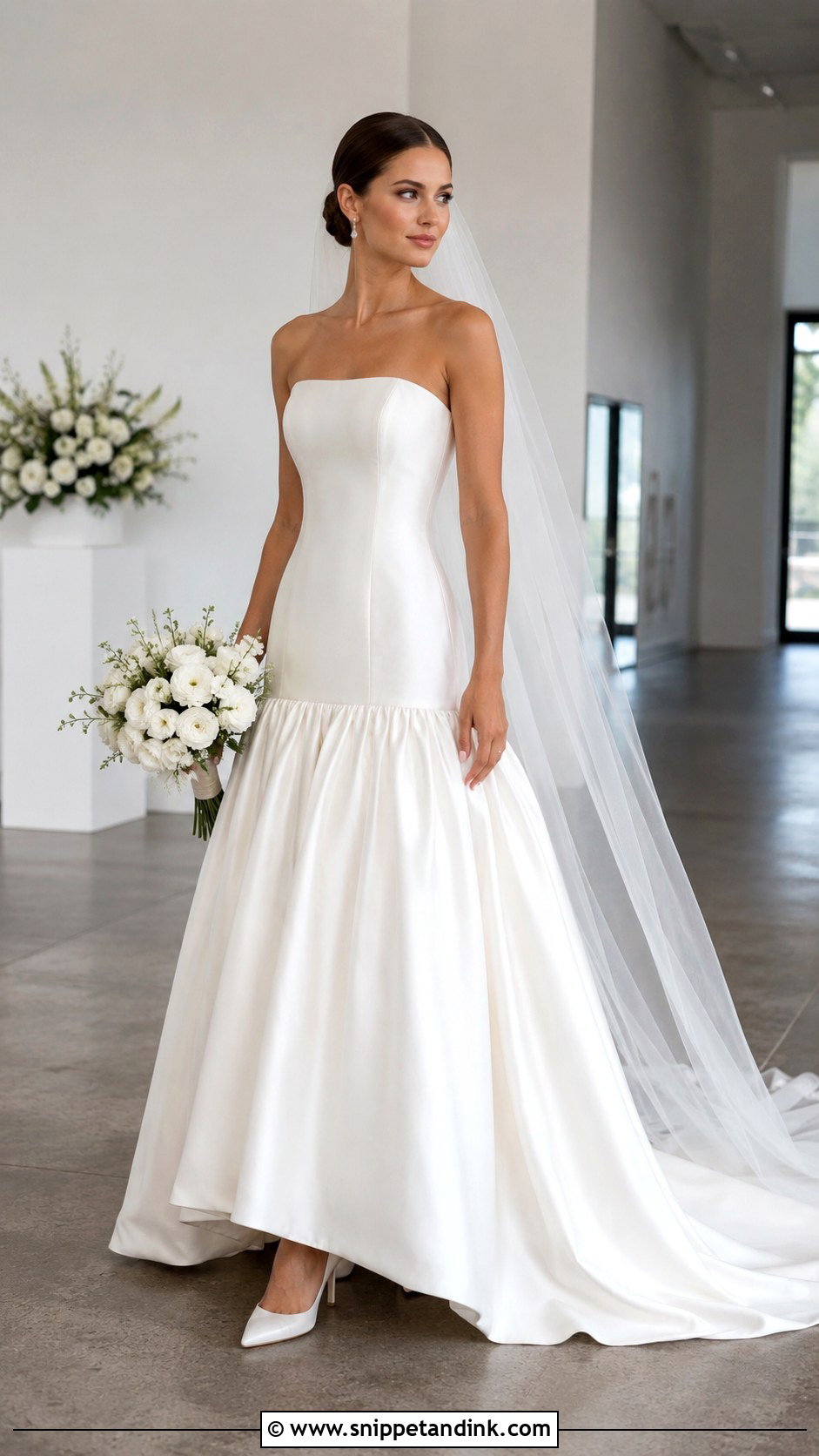
A drop waist extends the bodice past the natural waist and opens the skirt near the upper hip. Where that seam lands changes everything, so I ask brides to try several versions rather than judging one on a hanger. A seam that suits a long torso can make a shorter one look cut in half. Satin, taffeta and mikado hold the shape best; softer fabrics give a looser effect. Finish with a plain cathedral veil, slim earrings and pumps, and keep the bouquet moderate so the seam stays visible in photos. Both A-line and ball gown skirts work with it.
18. High Neck Wedding Dress
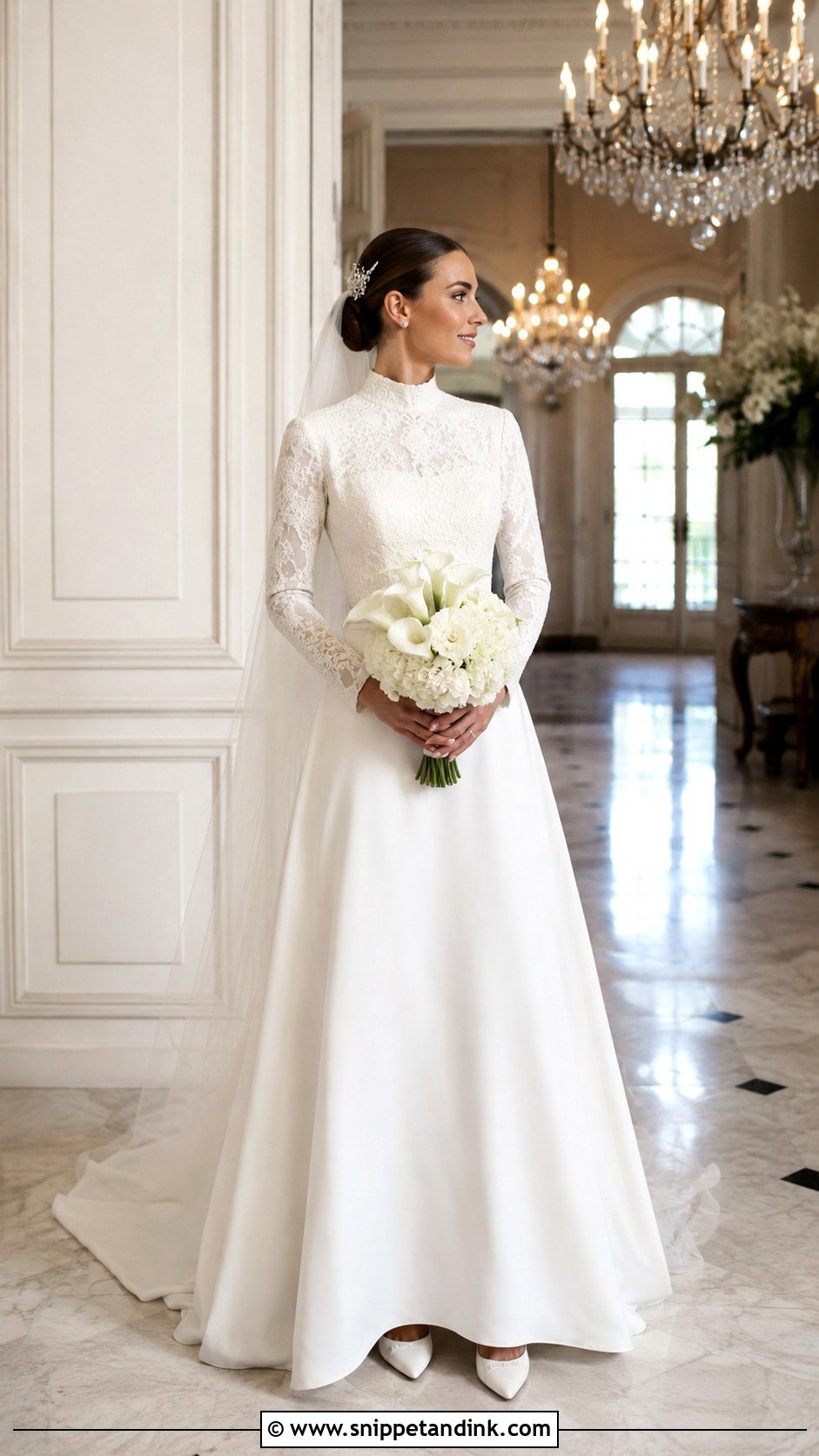
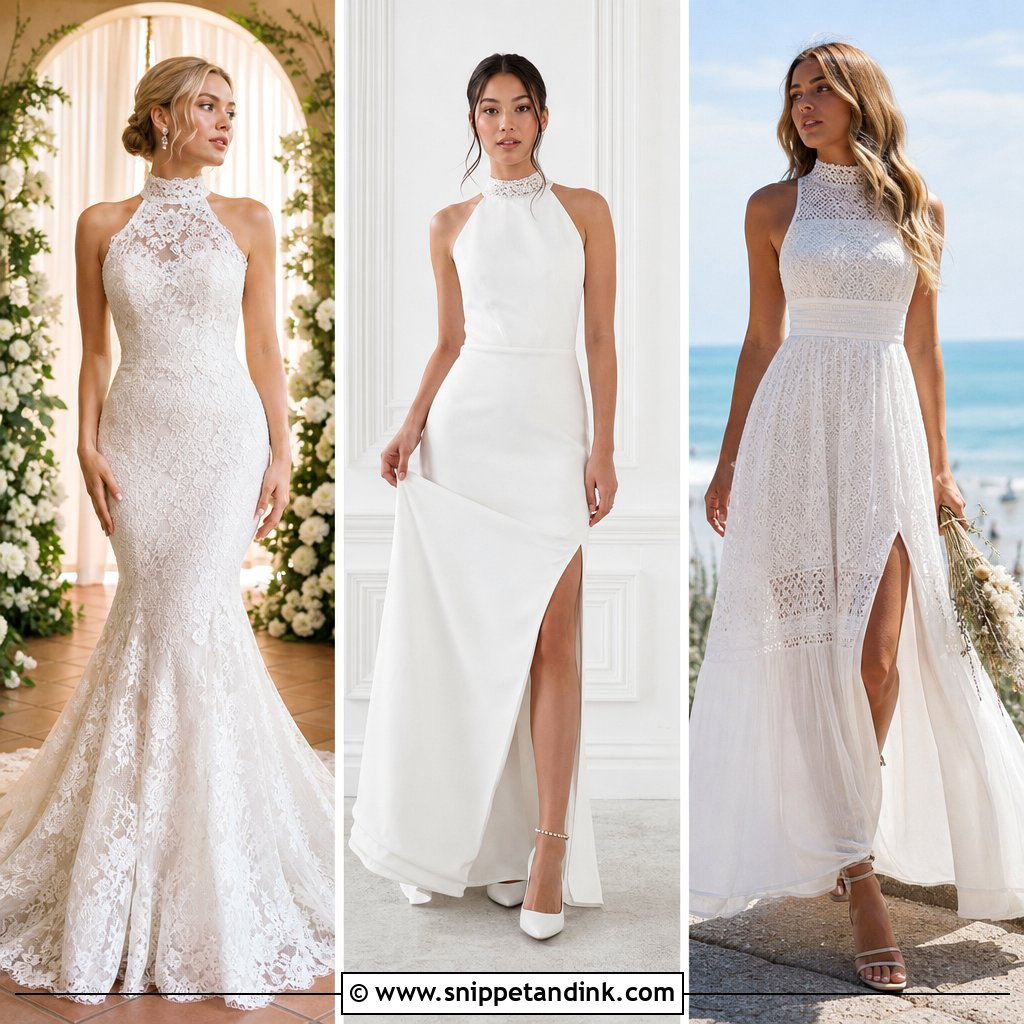
High necks give coverage and strong detail up top. Lace looks romantic; smooth crepe or satin looks minimal. A fitted high-neck bodice balances well over an A-line skirt, and a column cut makes it sharper. Skip the necklace and wear small earrings, a fine hair comb or a slim bracelet. A low bun keeps the hair from crowding the collar, with the veil anchored beneath it. The test I give every high-neck bride: turn your head fully both ways and sit down. If the collar presses or rides up, it needs adjusting. It’s a natural fit for cool weather and formal ceremonies.
19. Boho Wedding Dress
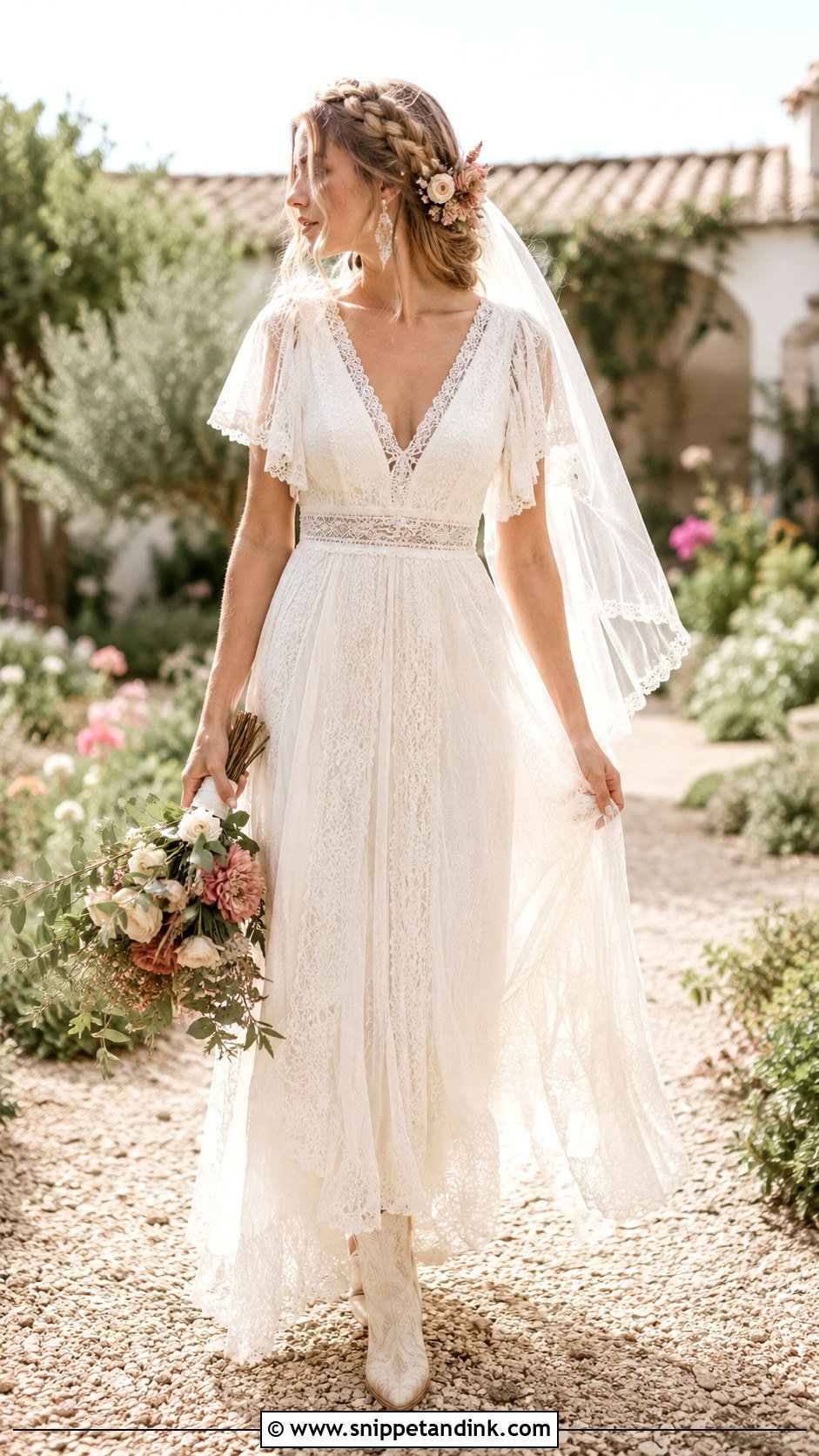
Boho dresses usually pair a relaxed shape with light fabric and natural texture: a flowing A-line or empire cut, flutter sleeves, openwork lace, a soft waist. What I check first is the lining, because open lace in direct sun shows more than brides expect. Shoes depend on the ground, so think low block heels, neat ankle boots or embellished flats. A loose braid, delicate earrings and a floral hairpiece suit it, with soft fingertip tulle or a light cape in place of a structured veil. It belongs in woods, gardens, desert and beach settings where you’ll be walking on uneven ground.

20. Wedding Dress With Detachable Overskirt
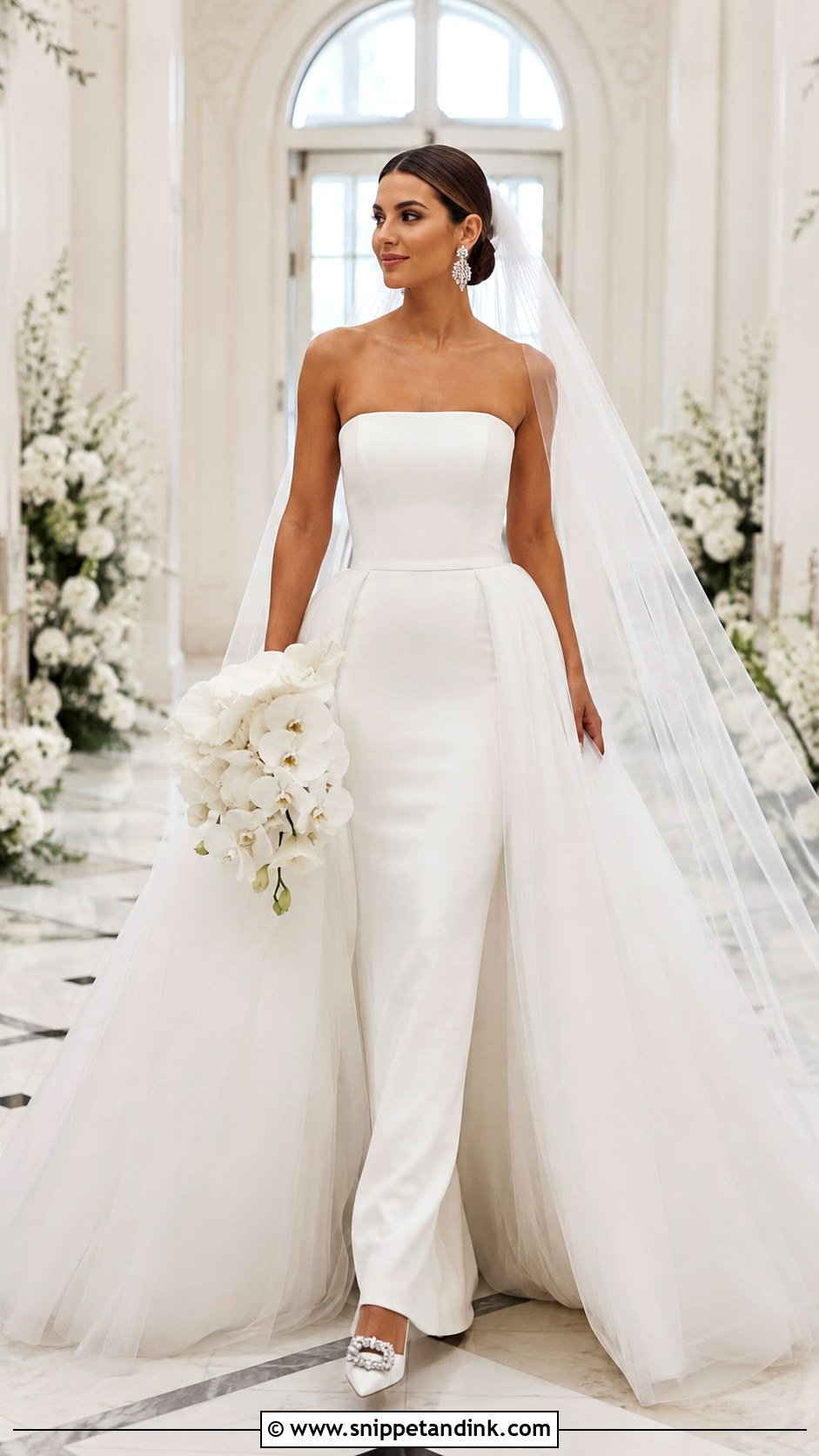
A detachable overskirt gives you two dresses in one. Start the ceremony in a fitted crepe, satin or lace base under a full tulle or mikado skirt, with a long veil, crystal earrings and pointed pumps. After photos, take off the overskirt and veil and you’re in a slimmer dress for dinner and dancing. Practice the removal before the day with whoever will help you. Snaps and hooks should lie flat and release quickly without a seamstress. If the base gown has a train, it still needs its own bustle. It saves buying a separate reception dress.
Ordering Timeline From Sample to Final Fitting
Made-to-order gowns take months to arrive, and the timing varies a lot by designer and shop. I suggest ordering roughly nine to twelve months out where possible, since production plus delivery commonly runs several months and leaves little slack. Rush options exist but usually cost extra and narrow your choices.
Alterations normally begin around two to three months before the date, with two or three fittings. Bring your shoes and undergarments to each one. Heavily structured gowns, basque waists and anything with lace placed over seams take longer, so I’d book those first.
Cleaning and Storing the Gown After the Wedding
Get the dress to a specialist cleaner within a few weeks. Spilled champagne and white wine often look invisible at first, then turn brown as the sugar oxidizes, so mention every spill you remember even if you can’t see it. Hems pick up grass and pavement grime that sets the longer it sits.
For long-term storage, I fold the gown loosely with acid-free tissue in the creases and keep it in a breathable cotton bag or acid-free box, somewhere cool, dark and dry. Avoid sealed plastic, which can trap moisture, and avoid hanging a heavy gown for years, since the weight slowly stretches the straps and shoulders.
Walk, Sit and Raise Your Arms Before You Say Yes
There’s a shape here for nearly every venue, season and comfort level. Settle the silhouette first, the one you feel confident standing in, then work through fabric, neckline, train and accessories. In every gown, walk, sit, raise your arms and turn around before deciding. Photos matter, but comfort is what you’ll feel for the ten or twelve hours you wear it. A good alterations team can turn a promising dress into one that’s secure and truly yours, whether that’s a classic A-line, a basque waist, a relaxed boho gown or a short modern mini.
You'll Like These Ideas:




Leave a Reply