
A modern, elegant wedding dress almost always comes down to restraint: one strong idea, good fabric, and a fit that has been worked on until nothing pulls. The gowns below range from slip dresses and sculpted mikado to soft lace, pearl detailing, detachable sleeves and high necks, plus a few updated ball gowns. In fittings, I find brides fall for a silhouette in photos and then discover the fabric behaves nothing like they expected. So alongside each idea I’ve added what I watch for when a bride actually puts it on, sits in it and walks in it.
Fabric Decides the Dress More Than the Sketch Does
Two gowns with the same silhouette can look and feel completely different depending on what they’re made of. Before you fall for a shape, it’s worth knowing how the main modern fabrics behave over a long day.
Satin
Silk satin has a deep, soft glow; polyester satin is shinier and cheaper but can look plastic in flash photos. Both show creases, water marks and every line underneath. Heavy duchess satin holds structure; lighter charmeuse drapes and clings.
Crepe
Matte and fluid, it hides creases better than satin and travels well. The weight matters. A thick crepe skims and flatters; a thin one shows every seam of shapewear and can look limp by the reception.
Mikado
Stiff, heavy and slightly lustrous, it builds clean architectural shapes and holds a full skirt without layers of petticoat. It is warm to wear in summer heat and can feel heavy on a long walk.
Organza and tulle
Light and airy, they create volume without weight. Tulle snags on rough surfaces like stone steps and bark, so an outdoor venue calls for a slightly sturdier mesh or a bustled hem.
Ask the shop for a fabric swatch to take home. Look at it in daylight, crumple it in your hand for a minute, and photograph it with flash. You’ll learn more from that than from any sample on a hanger.
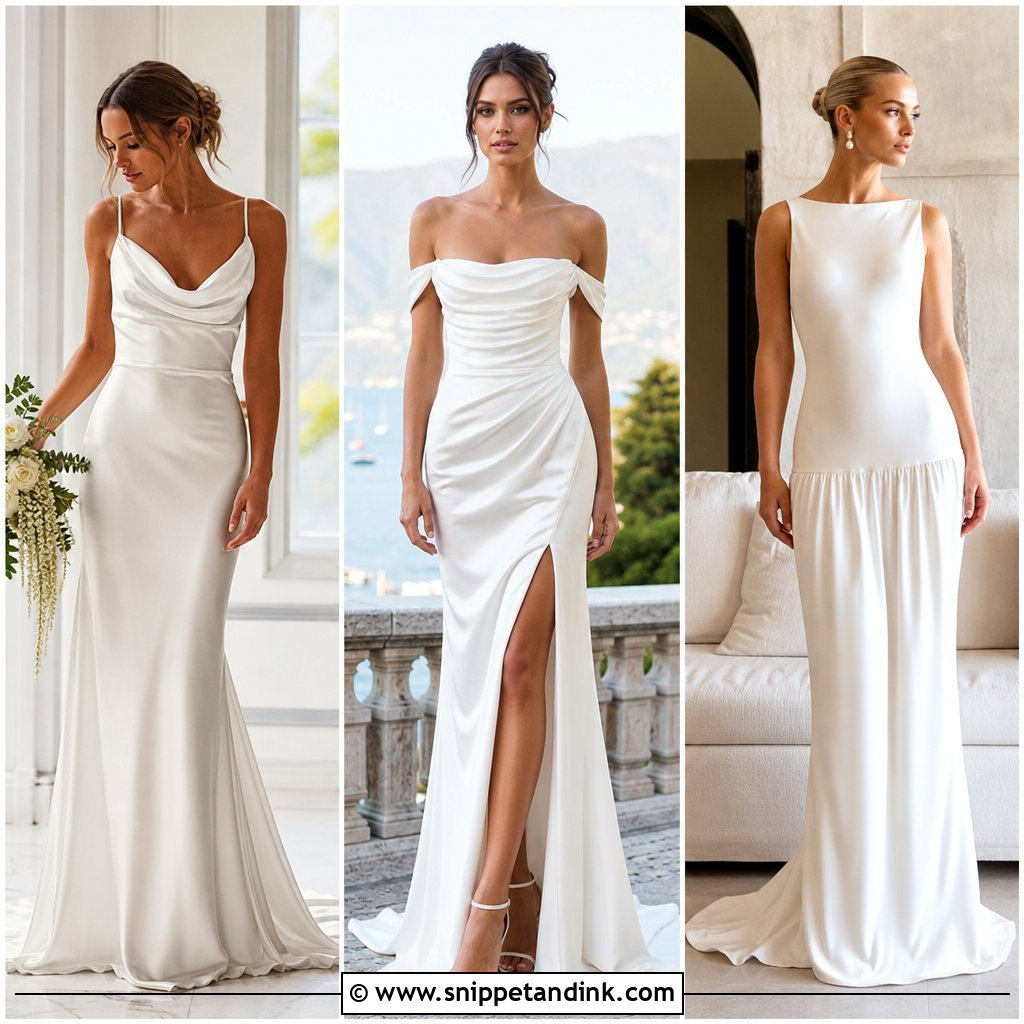
1. Satin Slip Wedding Dress
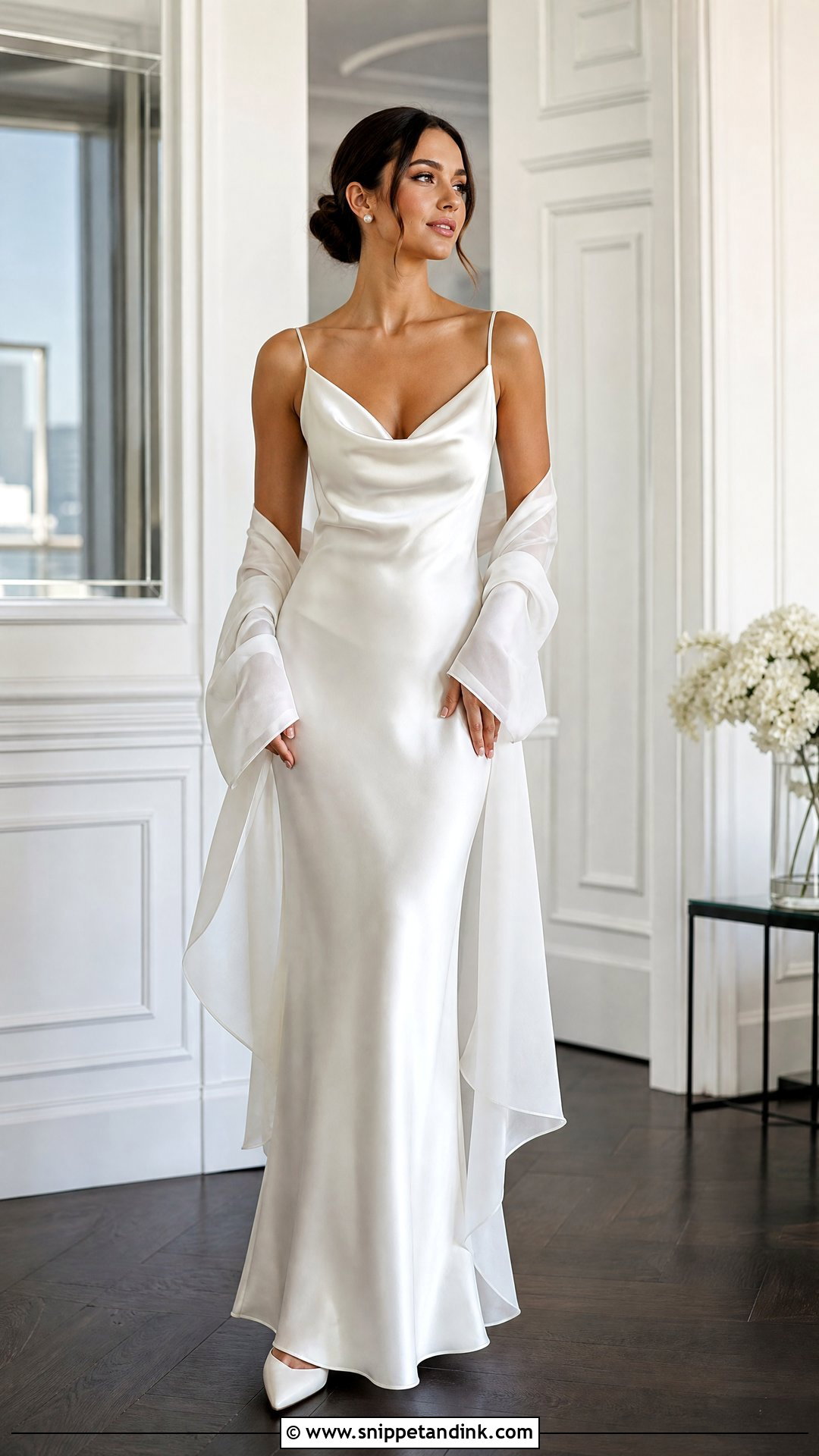
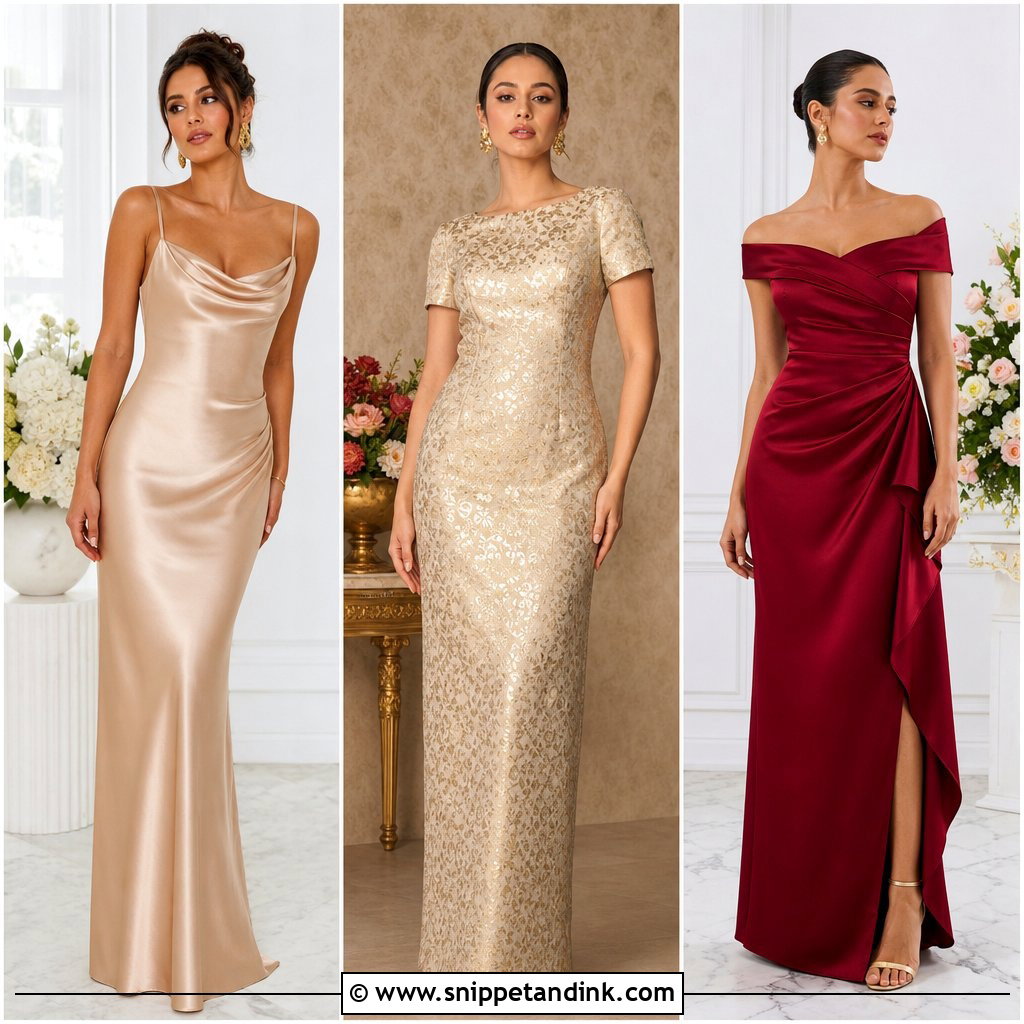
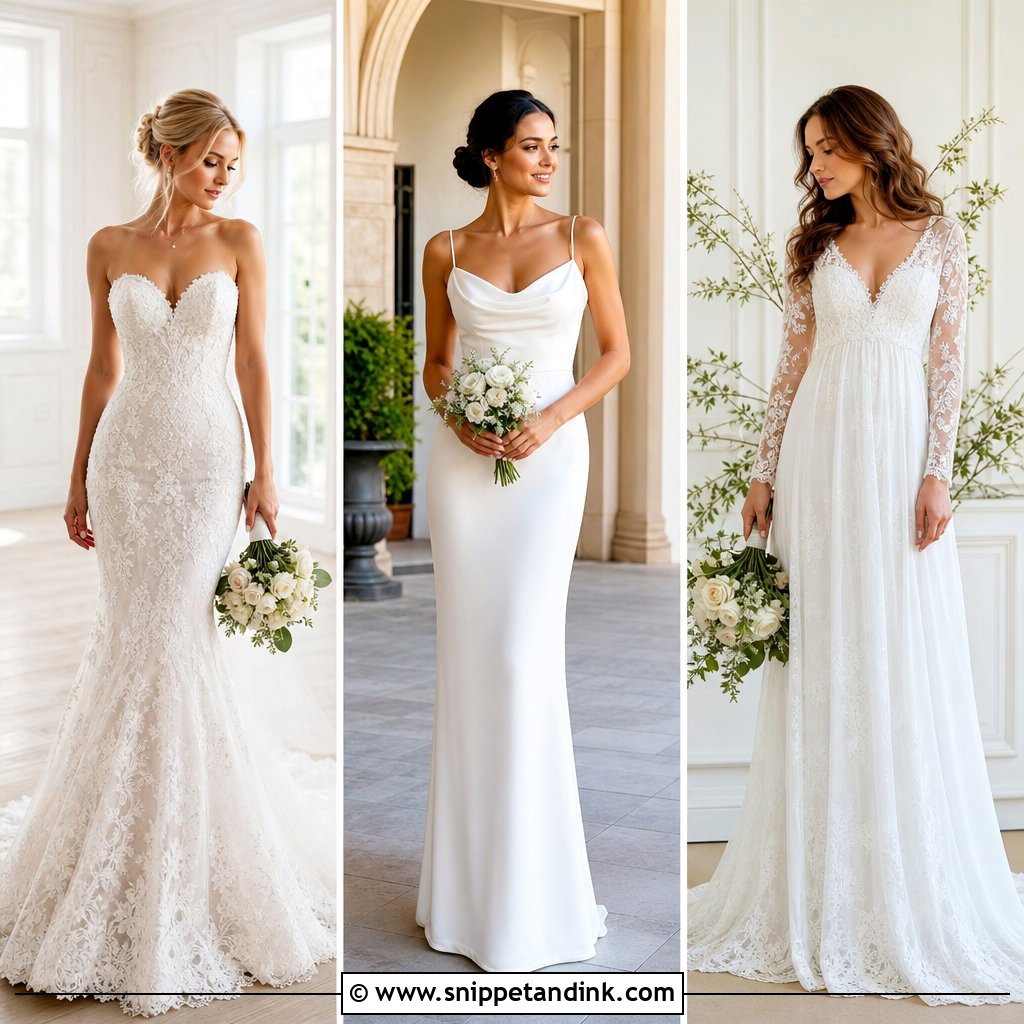
A satin slip is the most honest dress on this list, because it hides almost nothing. Cut on the bias, ivory or pearl satin skims the body and moves like liquid, and that same quality shows every seam of your underwear and every ridge of shapewear. I always fit a slip with the exact undergarments the bride plans to wear. A cowl neck, thin straps and a low back keep it modern. Pointed white heels, pearl studs, a sleek bun and a fingertip veil are all it needs, and a sheer wrap or tailored coat adds coverage for a city ceremony or a cool evening abroad.
2. Off Shoulder Satin Wedding Dress
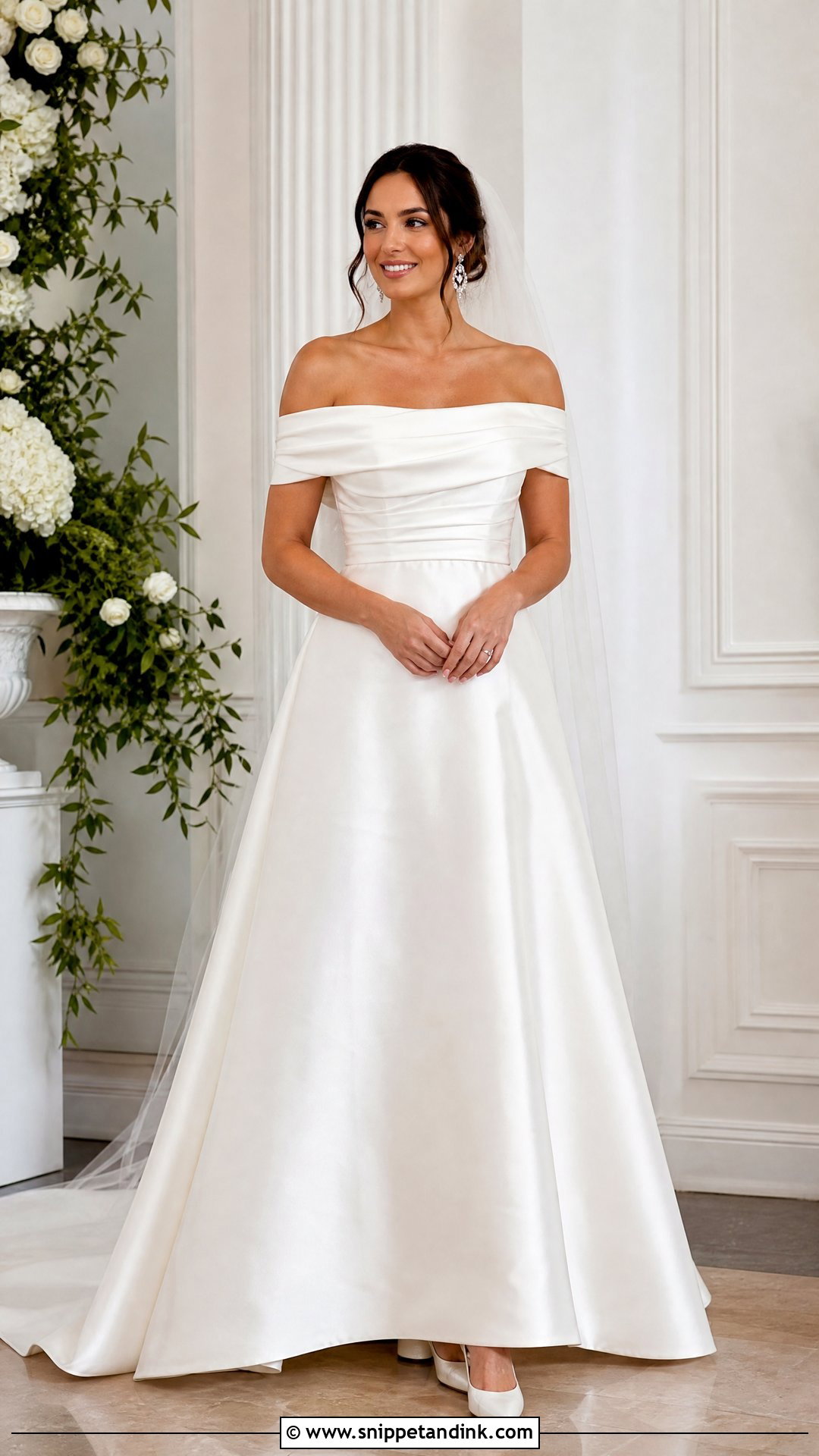
The off-shoulder line frames the collarbone better than almost any other neckline, and structured satin keeps it crisp rather than romantic-soft. What makes or breaks it is the band across the arms. It needs to be tight enough to stay put and loose enough that you can hug your mother, and I check that by having the bride lift both arms to shoulder height. A fitted bodice over a smooth A-line or sheath skirt works well. Crystal drops, soft waves and a simple veil suit it, along with a bouquet of white roses or calla lilies.
3. Long Sleeve Lace Wedding Dress
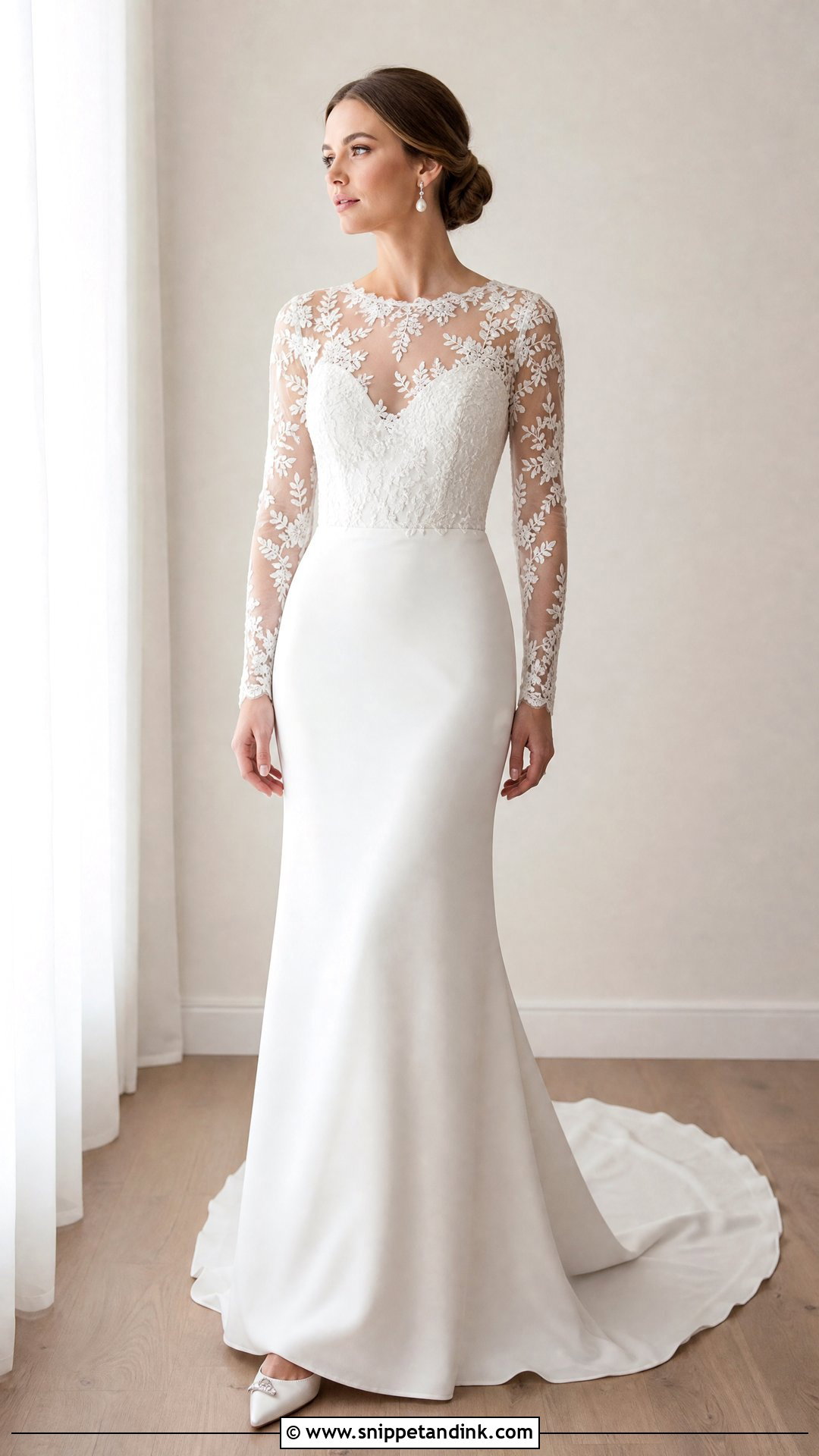
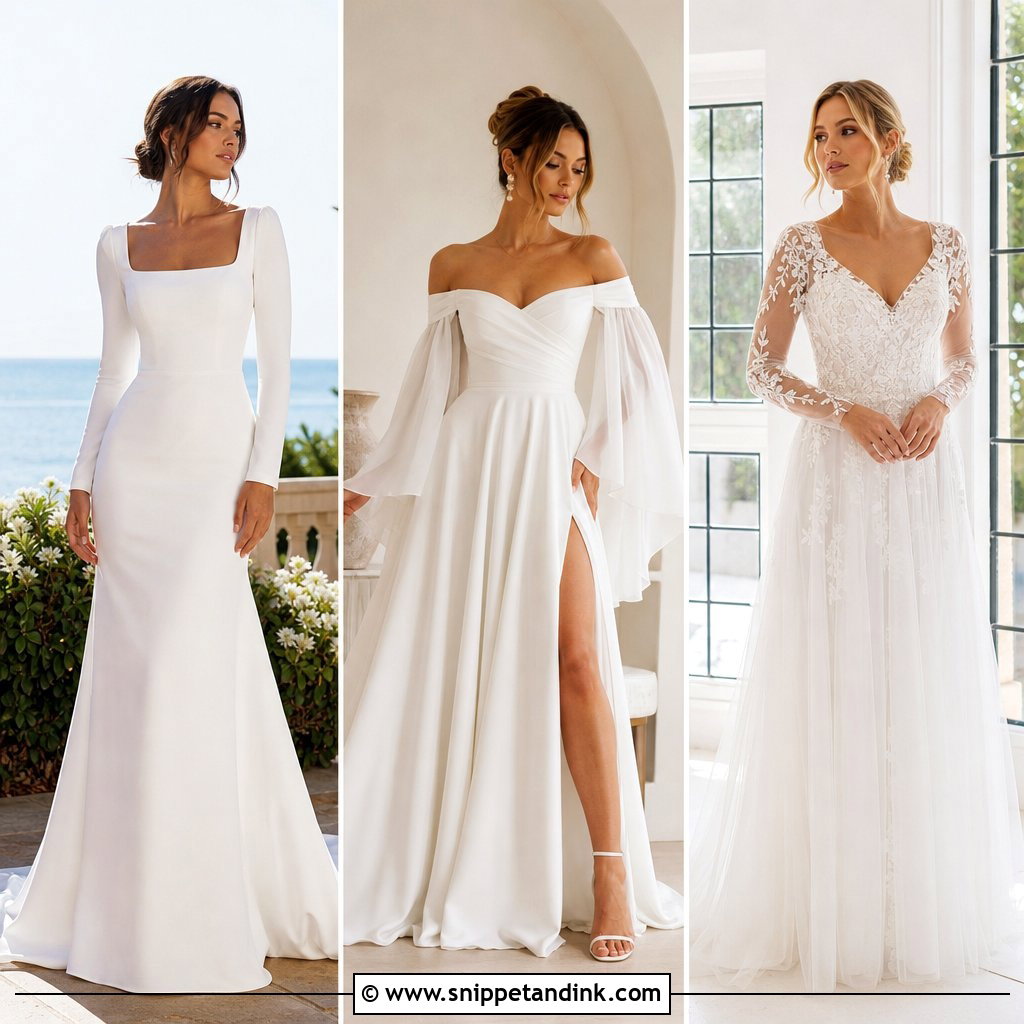
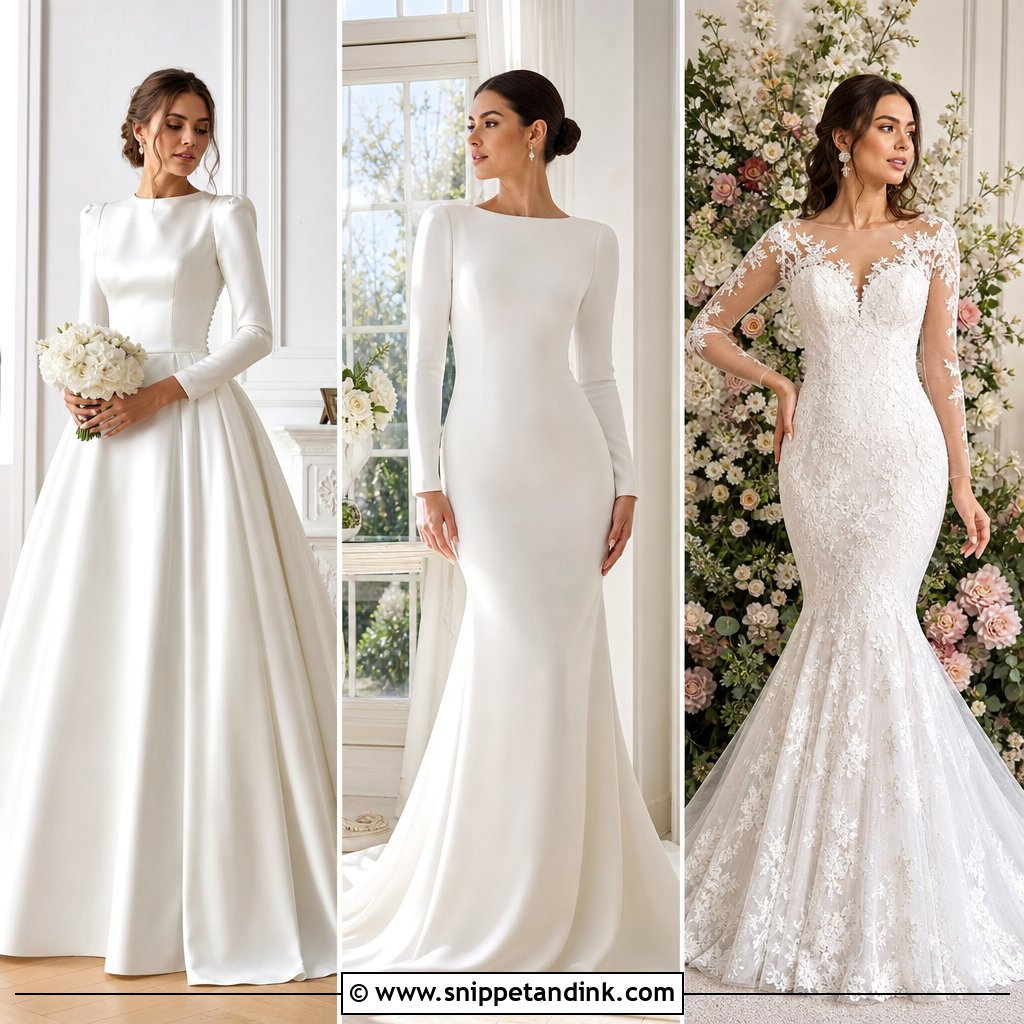
Lace sleeves on a clean crepe or satin body feel far lighter than the full-lace gowns many of us remember. That contrast between plain body and patterned sleeve is what keeps it current. Watch the sleeve length when you bend your elbow: lace with little stretch rides up the forearm, and a sleeve that ends at the wrist bone while standing can end well above it once you hold a bouquet. An illusion neckline and soft train complete the shape. If the lace is busy, skip the necklace and wear only pearl earrings, satin heels and a low chignon.
4. Minimalist Crepe Wedding Dress
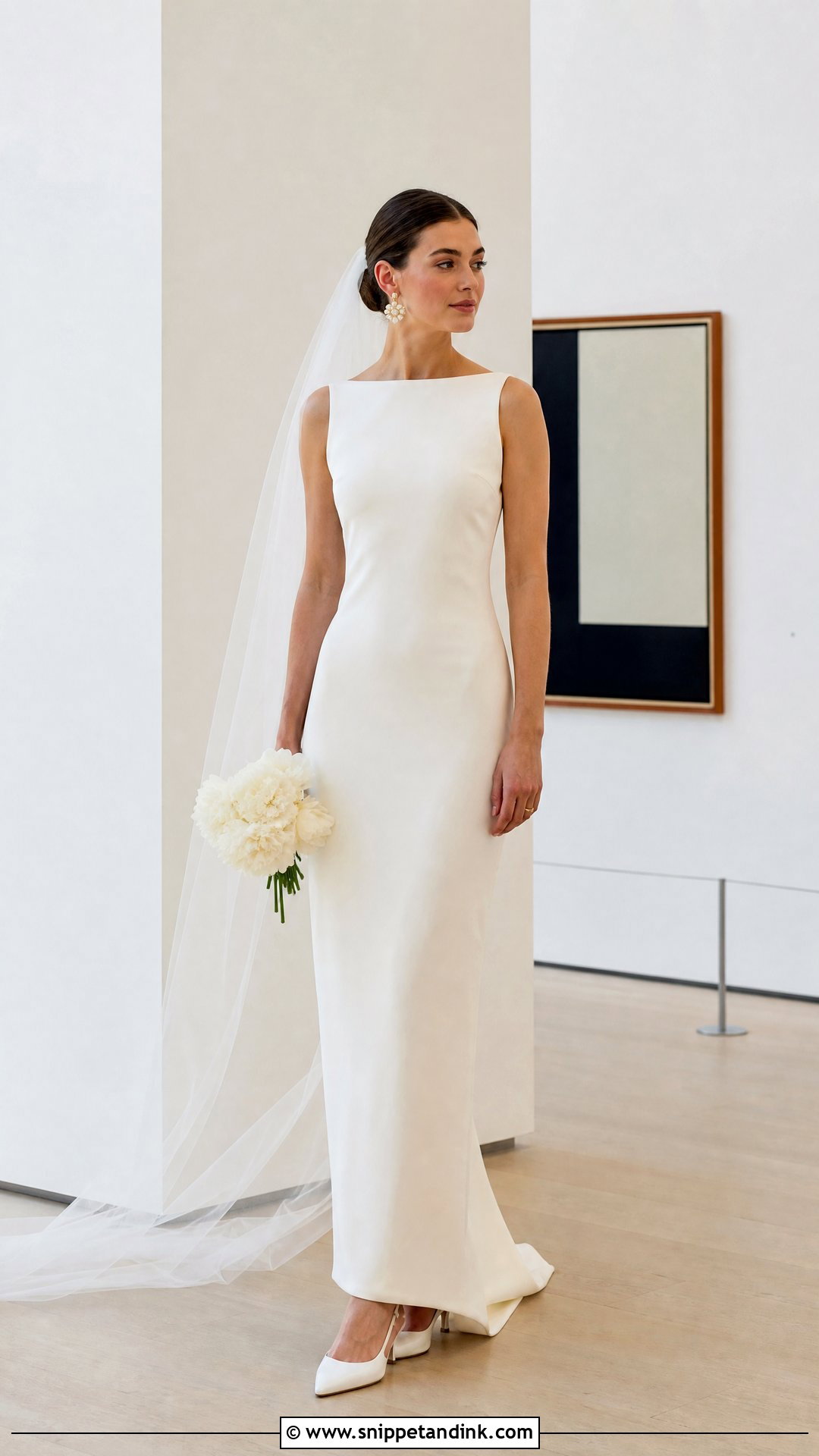
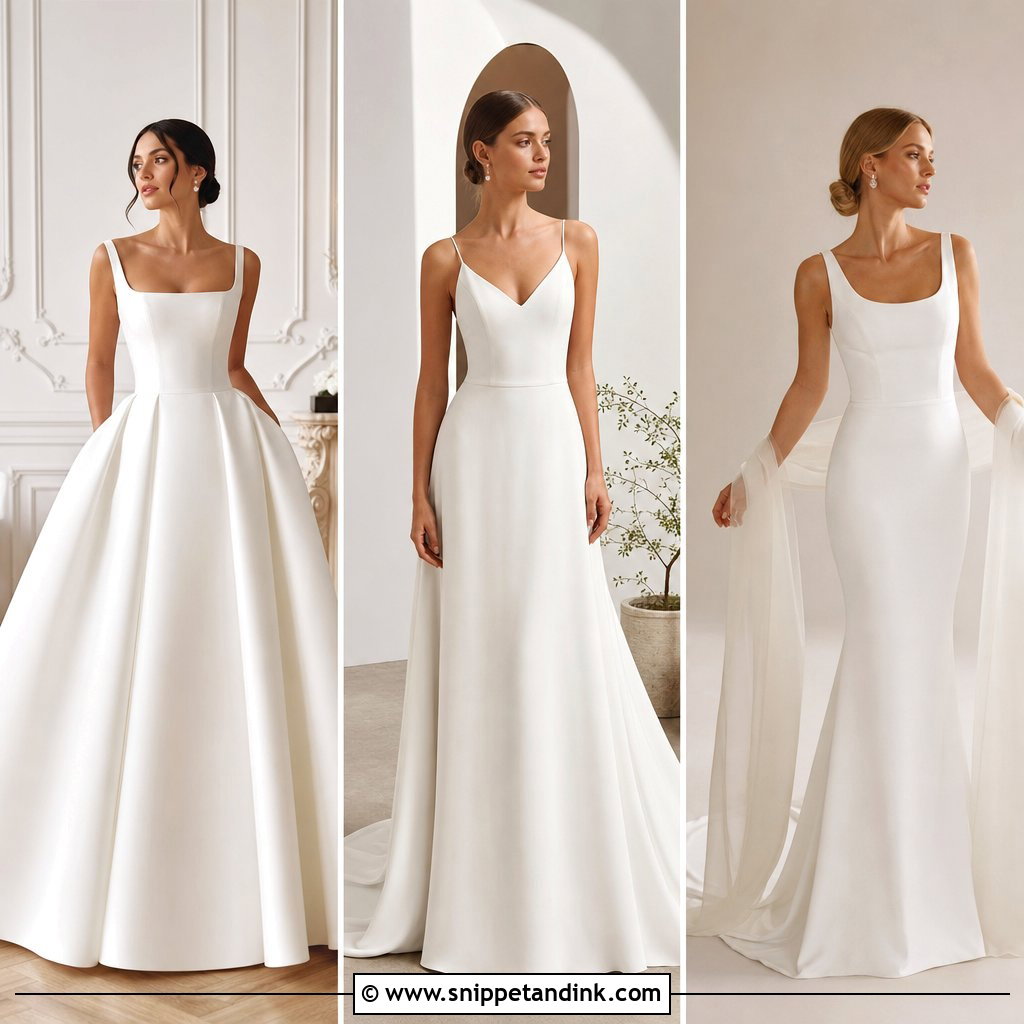
Crepe is unforgiving in the most flattering way. Its matte surface reads expensive, but because there’s no lace or beading to distract, every fitting flaw shows, so the tailoring has to be sharp. Heavier crepes drape better and hide undergarments; thin ones cling. I’d choose a column, square or bateau neckline and let a long plain veil supply the drama. Sculptural earrings, white slingbacks and a smooth low bun finish it. It belongs in a hotel, museum or rooftop setting where clean lines suit the room.
5. Square Neck Wedding Dress
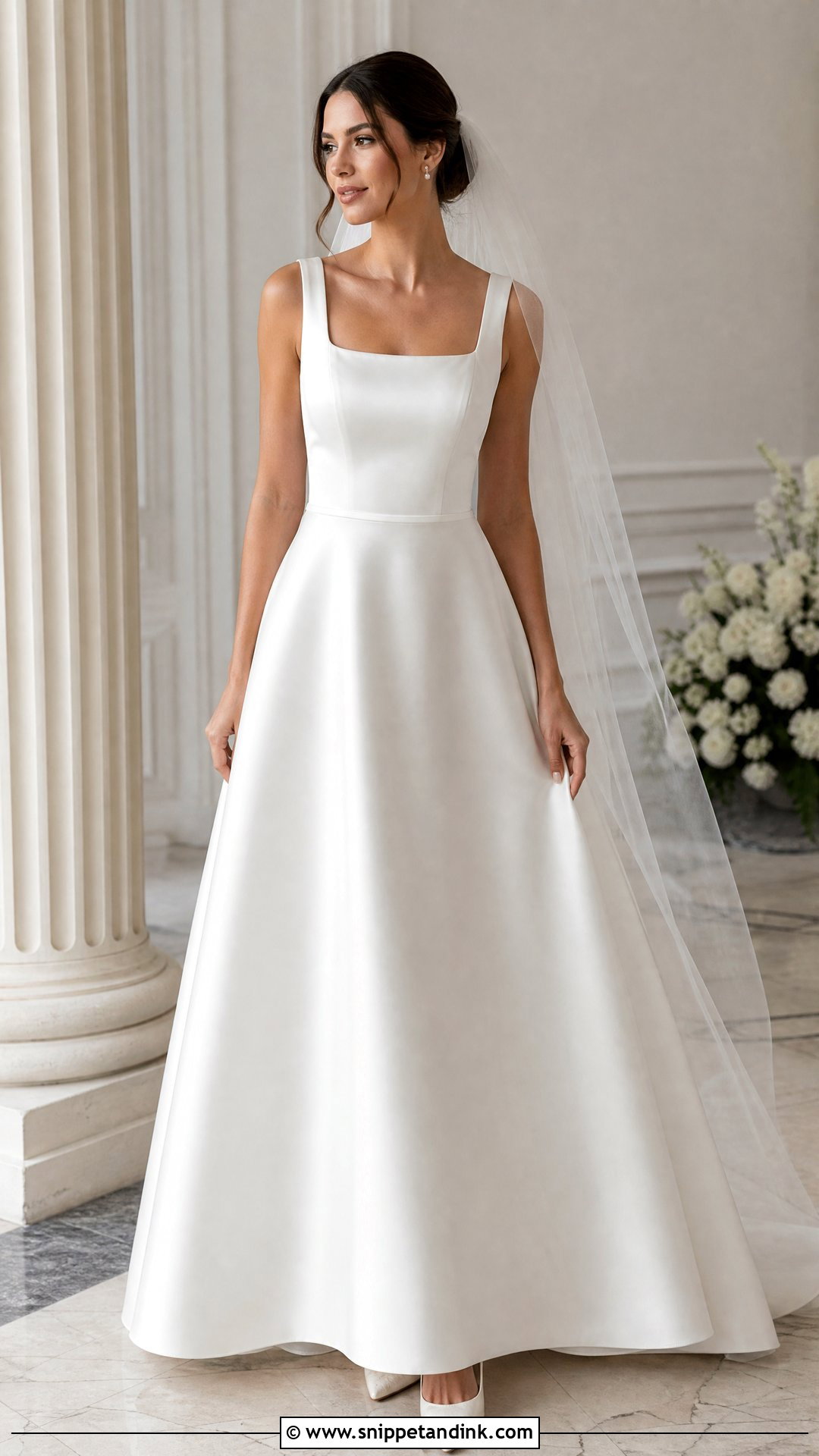
The square neck flatters more figures than almost any neckline I fit, because the straight line gives structure to the upper body without exposing much. In satin, mikado or crepe with wide straps and a defined waist, it sits well over either an A-line skirt or a straight city-bride skirt. Wide straps also mean you can usually wear a regular strapless bra or have cups sewn in. Pearl studs, a delicate bracelet, pointed heels and a soft veil keep it clean, and it works with hair up or down.
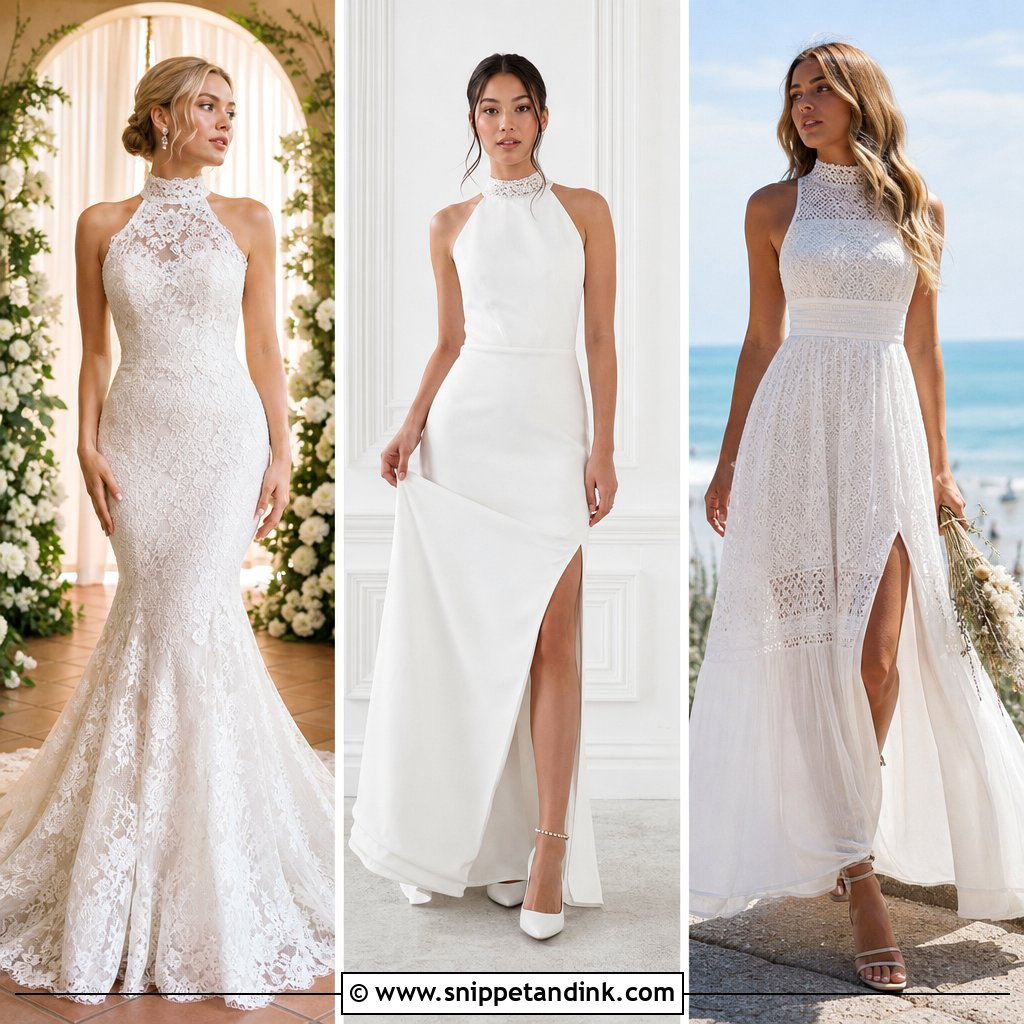
6. High Neck Wedding Dress
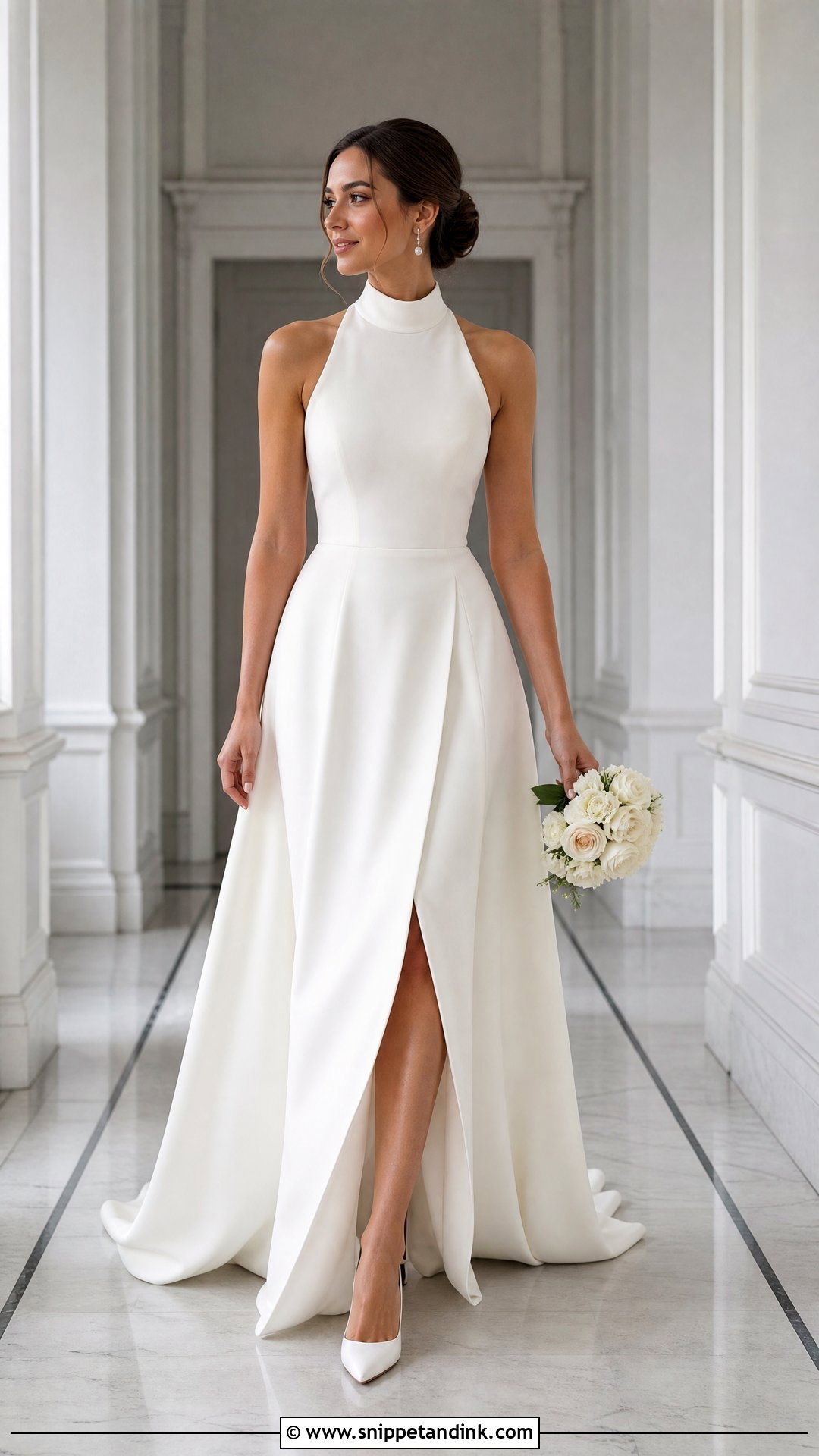
A high neck reads composed and modest at once. In crepe, satin or sheer lace with a slim bodice, it can go sleeveless for a contemporary feel or long-sleeved for something more formal. The neckline should sit flat against the collarbone with no gap when you turn your head, and I have it checked with the hair already styled, since a low bun can push a high collar forward. No necklace here. Simple earrings, a smooth updo and elegant heels are enough.
7. Pearl Embellished Wedding Dress
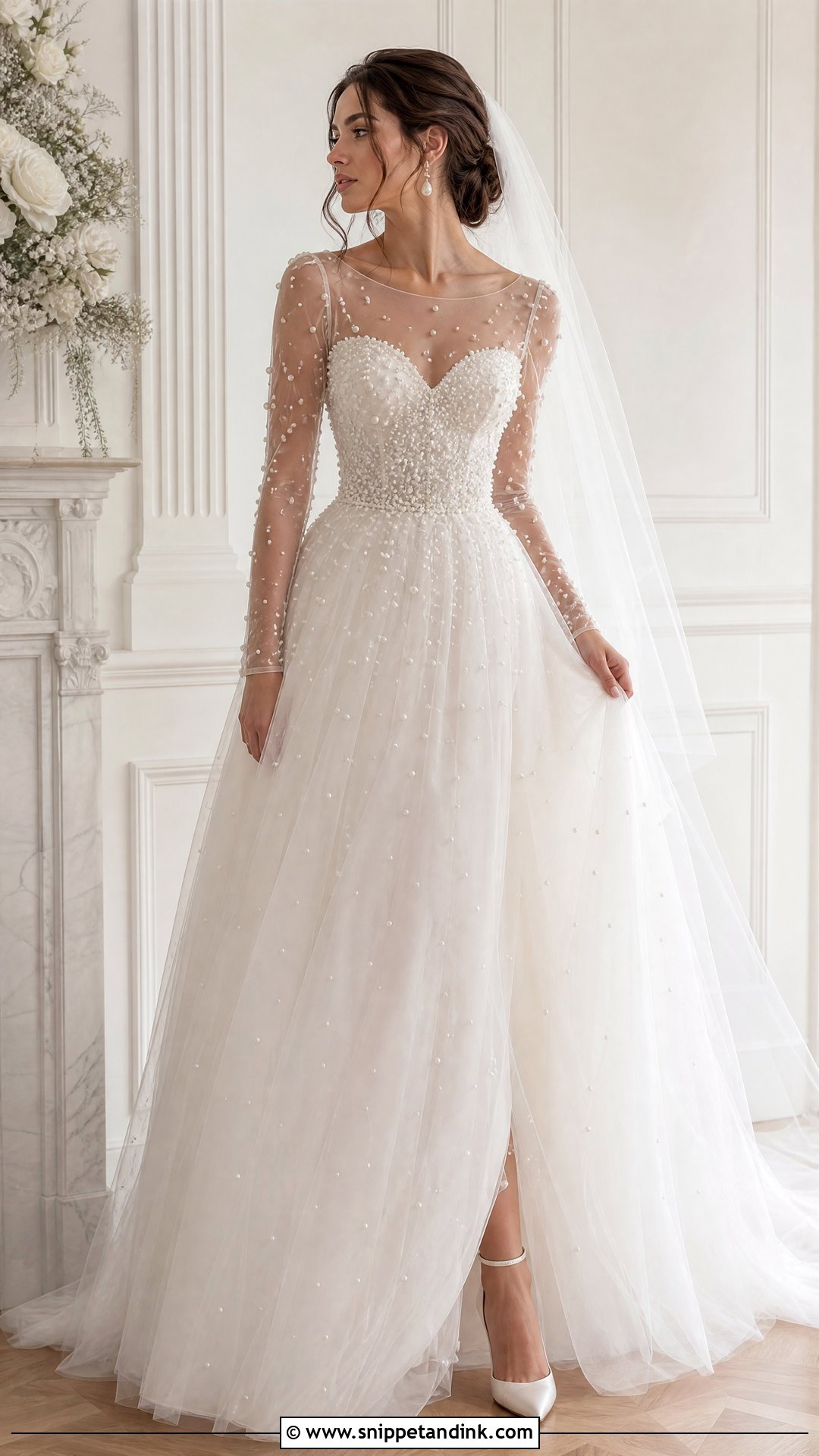
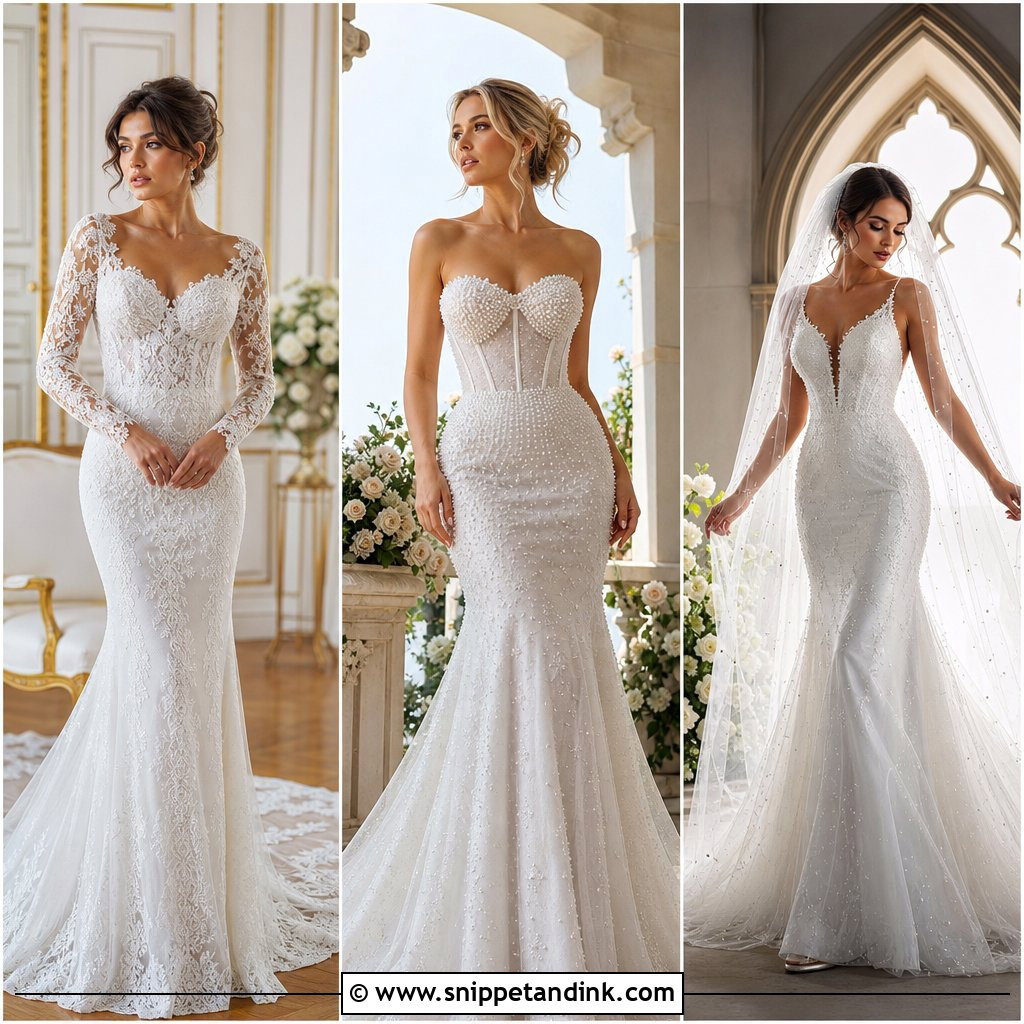
Pearls give texture without sparkle, which suits brides who find crystals too loud. The best versions scatter them across sheer sleeves, a fitted bodice or a tulle overlay and keep the silhouette simple, so the pearls look placed rather than piled. Check how they’re attached. Sewn pearls on a sleeve or the inside of the arm can snag a veil or a bouquet ribbon, and loose stitching means pearls dropping during the reception. Pearl earrings, satin heels, a veil with minimal trim and a soft bun or half-up style keep everything quiet.
8. Strapless Ball Gown Wedding Dress
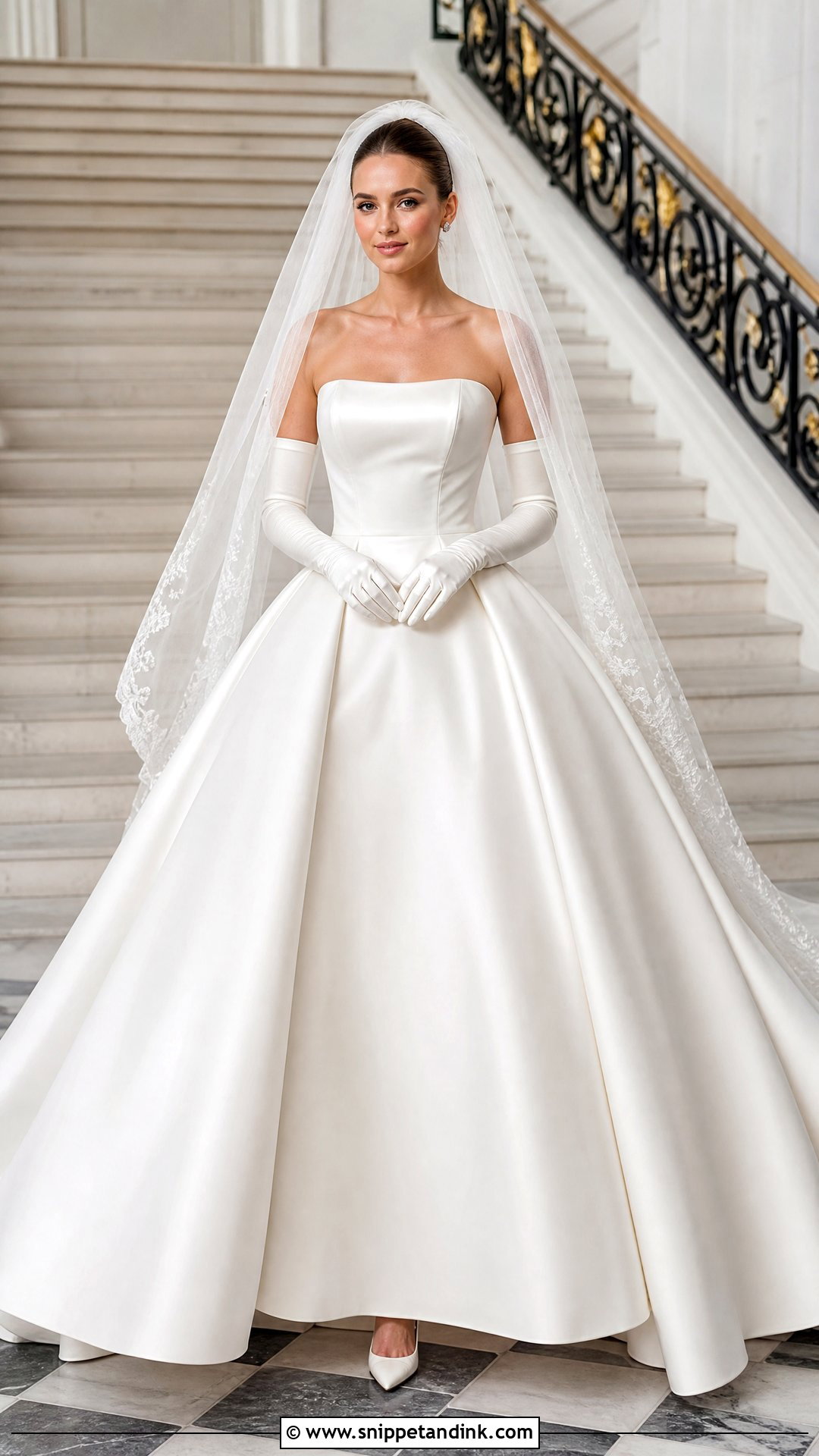
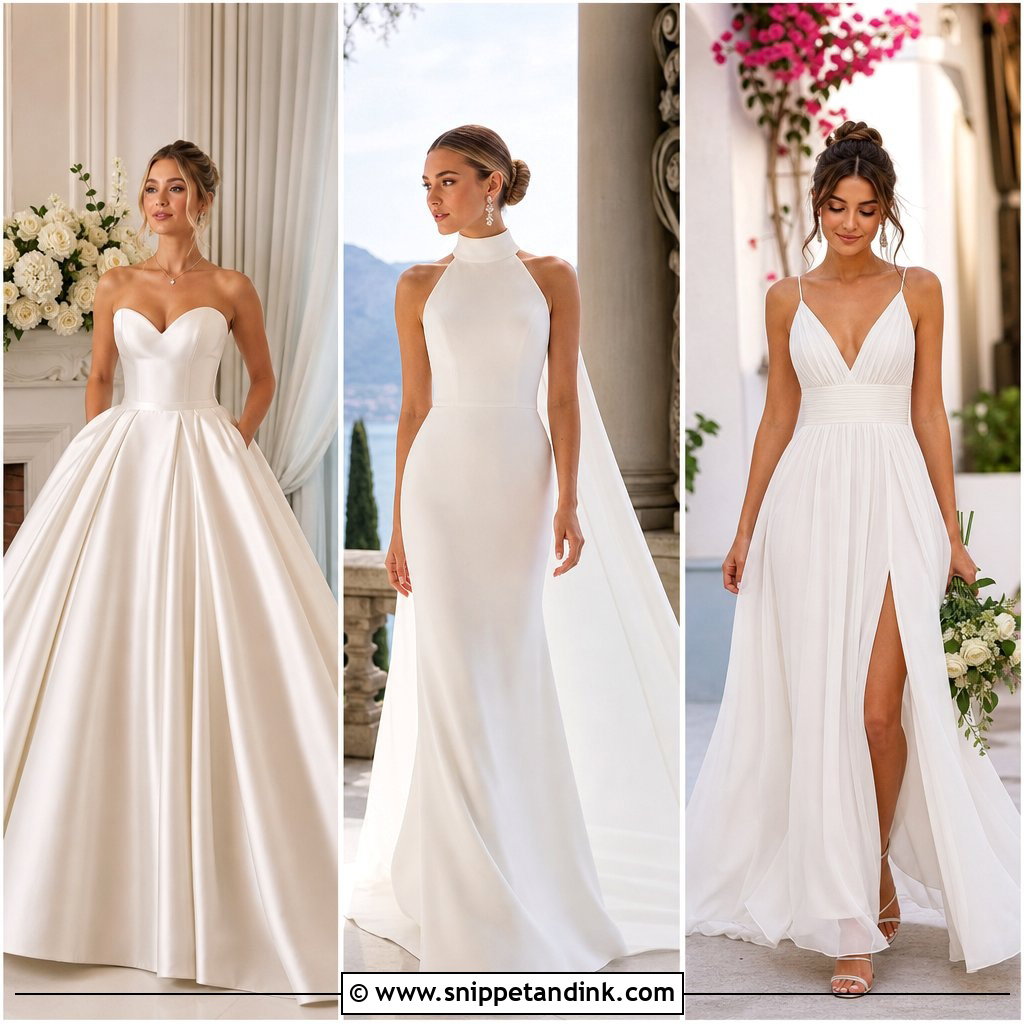
A strapless ball gown looks current when the fabric has structure and the seaming is minimal. Mikado, satin or organza all hold the full skirt without busy embellishment. The bodice has to be built properly, with internal boning and a waist stay, so you aren’t hitching it up all evening. Pair it with opera-length gloves for a fashion edge, or keep it to diamond-style studs and ivory heels. A cathedral veil suits a formal room, though a skirt this wide needs a bustle plan for the dance floor.
9. Basque Waist Wedding Dress
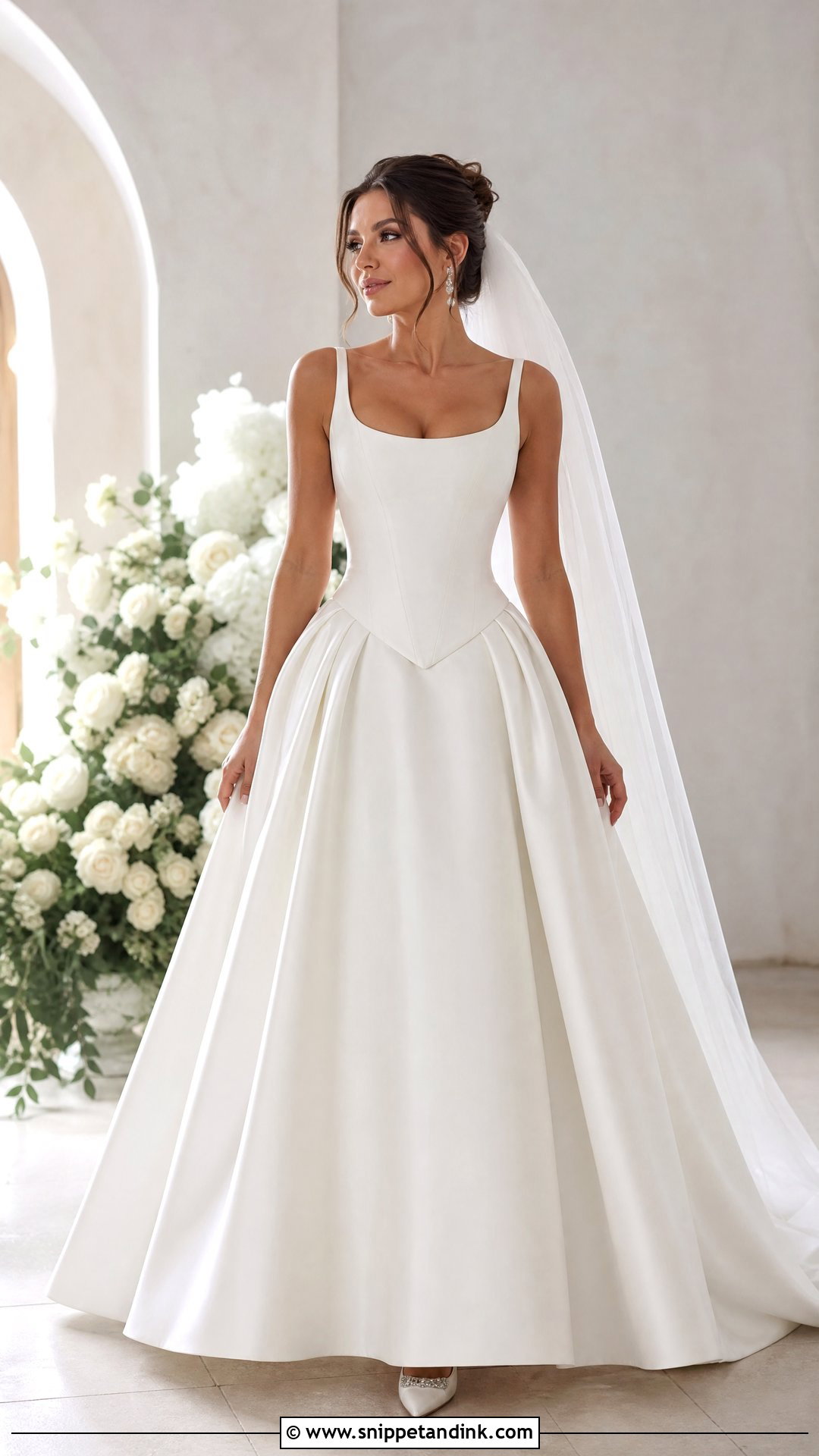
The basque waist has come back because it shapes the waist without forcing you into a mermaid fit. The dipped V at the front lengthens the torso and has a vintage note that modern satin or lace bodices freshen up. It suits strapless and off-shoulder necklines especially well. The point of the V should land just below the natural waist; too low and it pokes when you sit, which I check in every fitting. Soft curls, pearl drops and pointed heels finish it, with a simple veil that leaves the waistline visible.
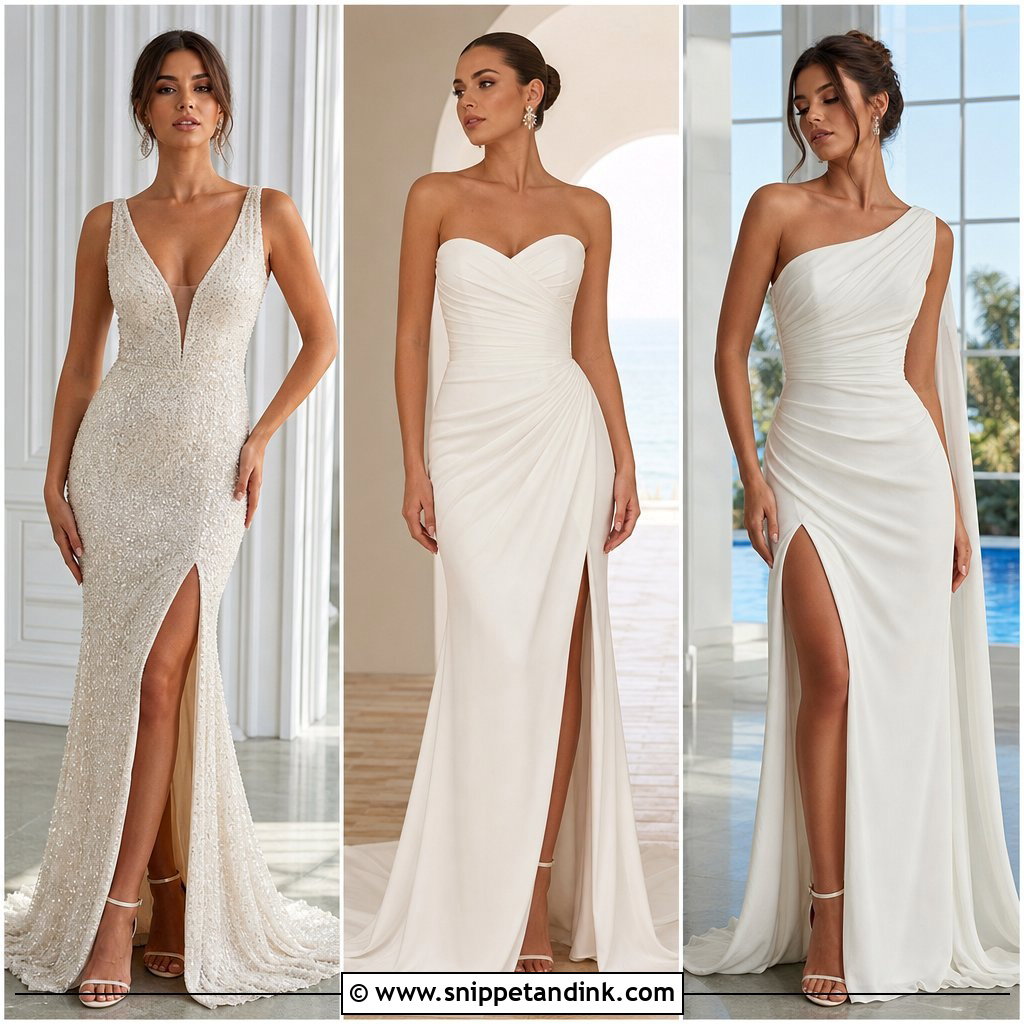
10. Draped Wedding Dress
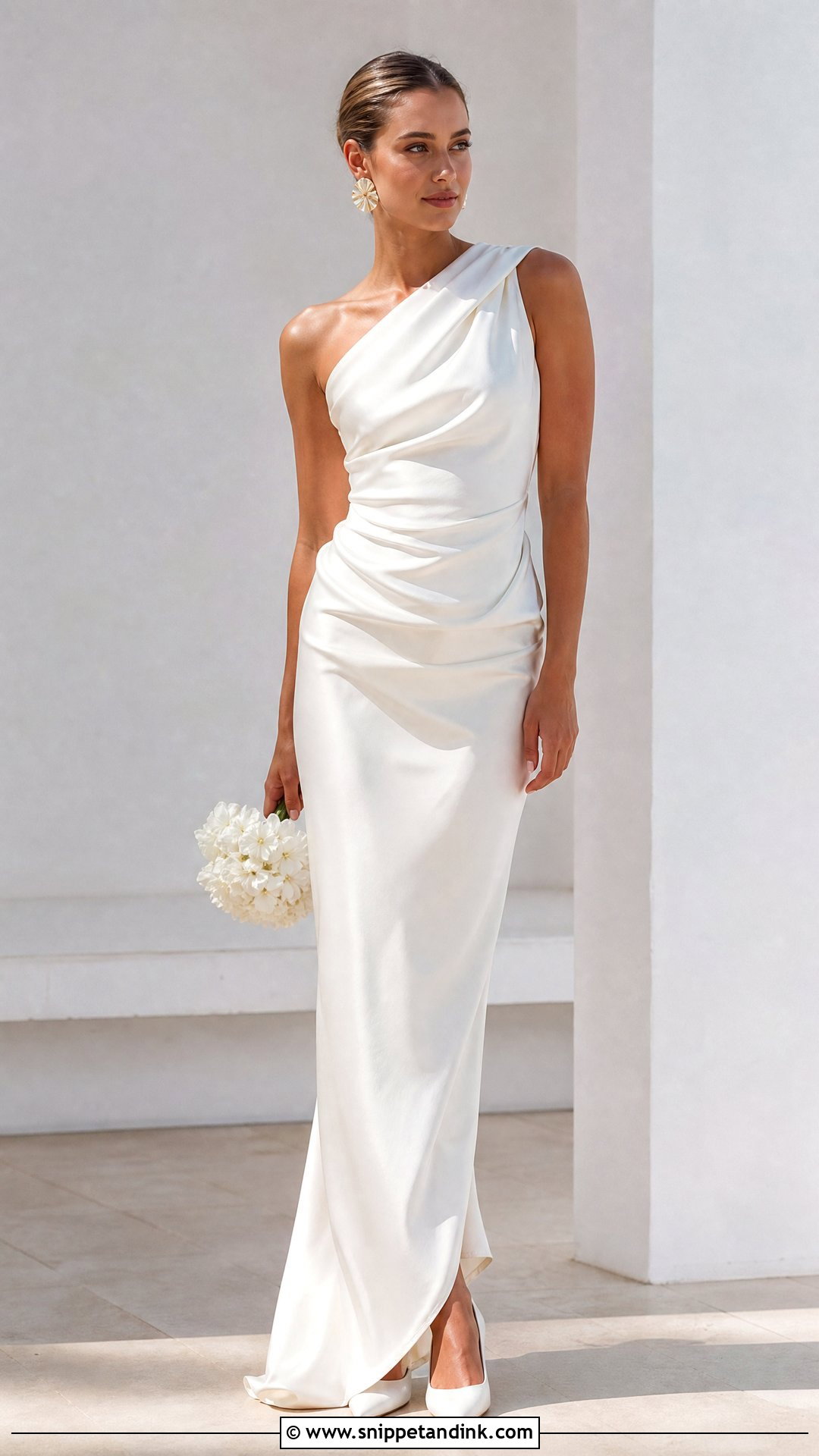
Draping does the decorating here. Folds of satin, silk or crepe at the waist, neckline or hip add interest with no beading or lace at all. A one-shoulder drape feels the most current; a softly draped bodice is more classic. Draped fabric is tacked in place by hand, and those tacks need checking at the final fitting, because a loose one lets a fold slide out of position by evening. Sleek heels and brushed-back hair keep the focus on the fabric.
11. One Shoulder Wedding Dress
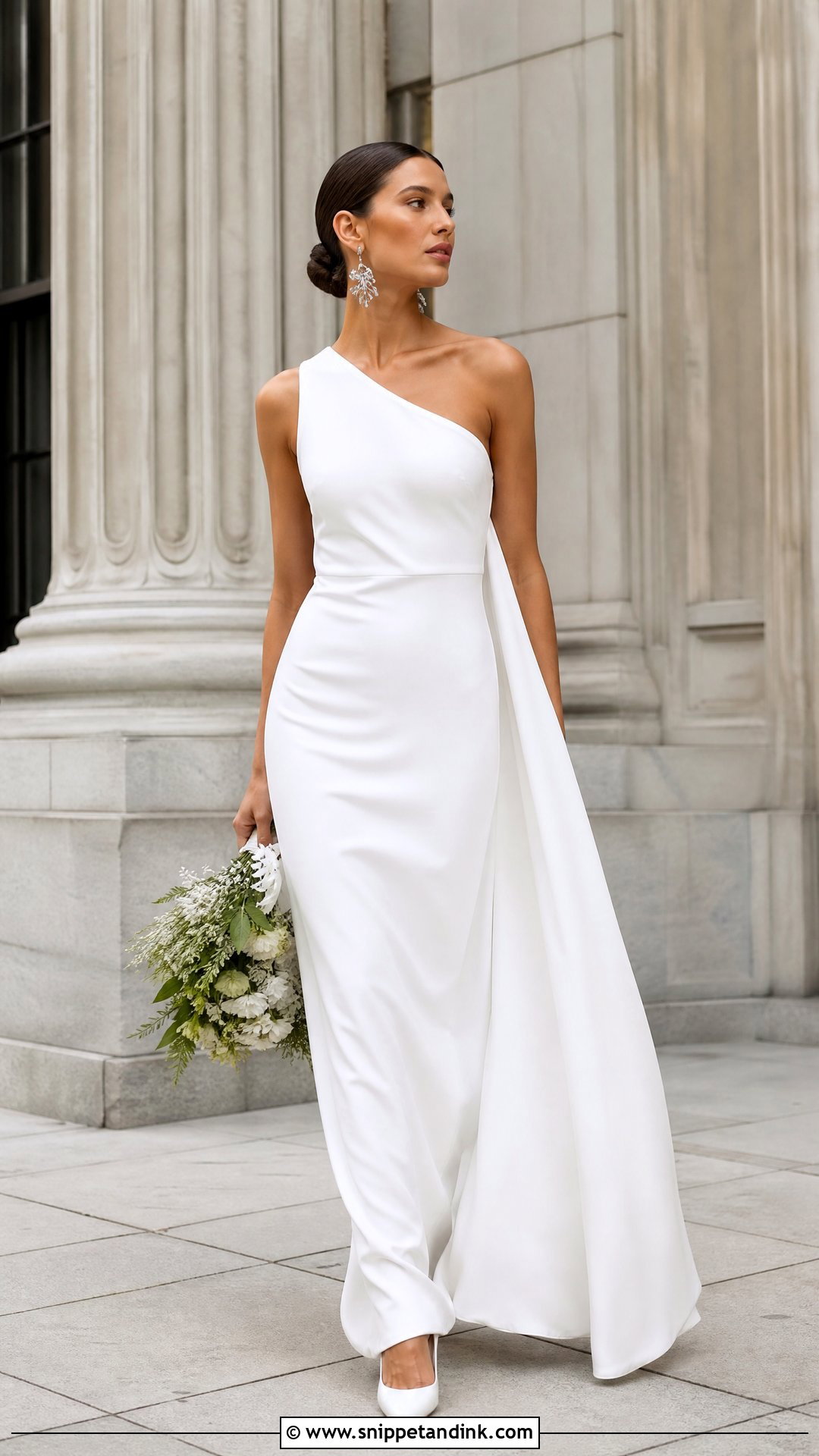
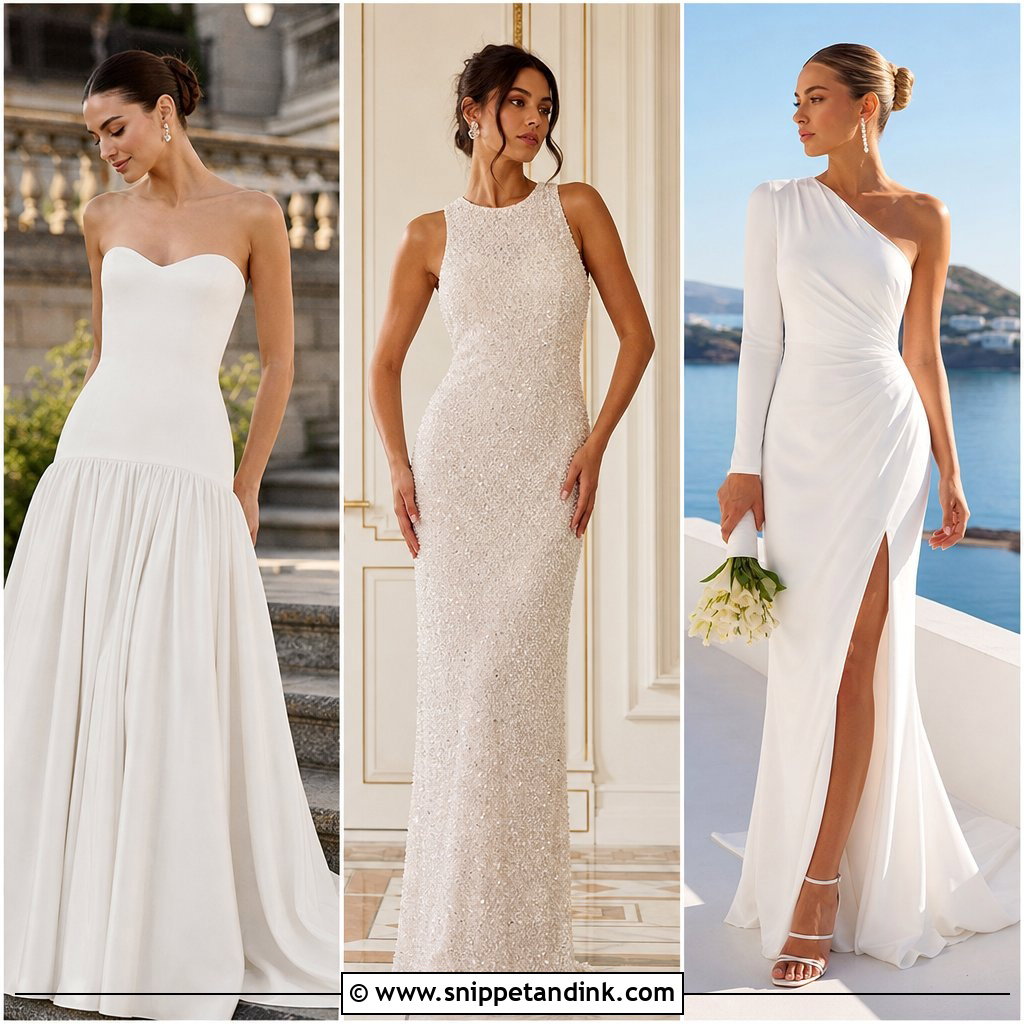
Asymmetry gives a one-shoulder gown its interest, so everything else should stay quiet. A crepe column, satin sheath or soft A-line with one clean shoulder strap or a draped panel is enough. Put a statement earring on the bare side, skip the necklace and wear the hair low or tucked so the line stays clear. I check that the single strap is anchored to the bodice’s internal structure, not just the fabric, or it slips outward as the day goes on. It suits city weddings and destination ceremonies well.
12. Puff Sleeve Wedding Dress
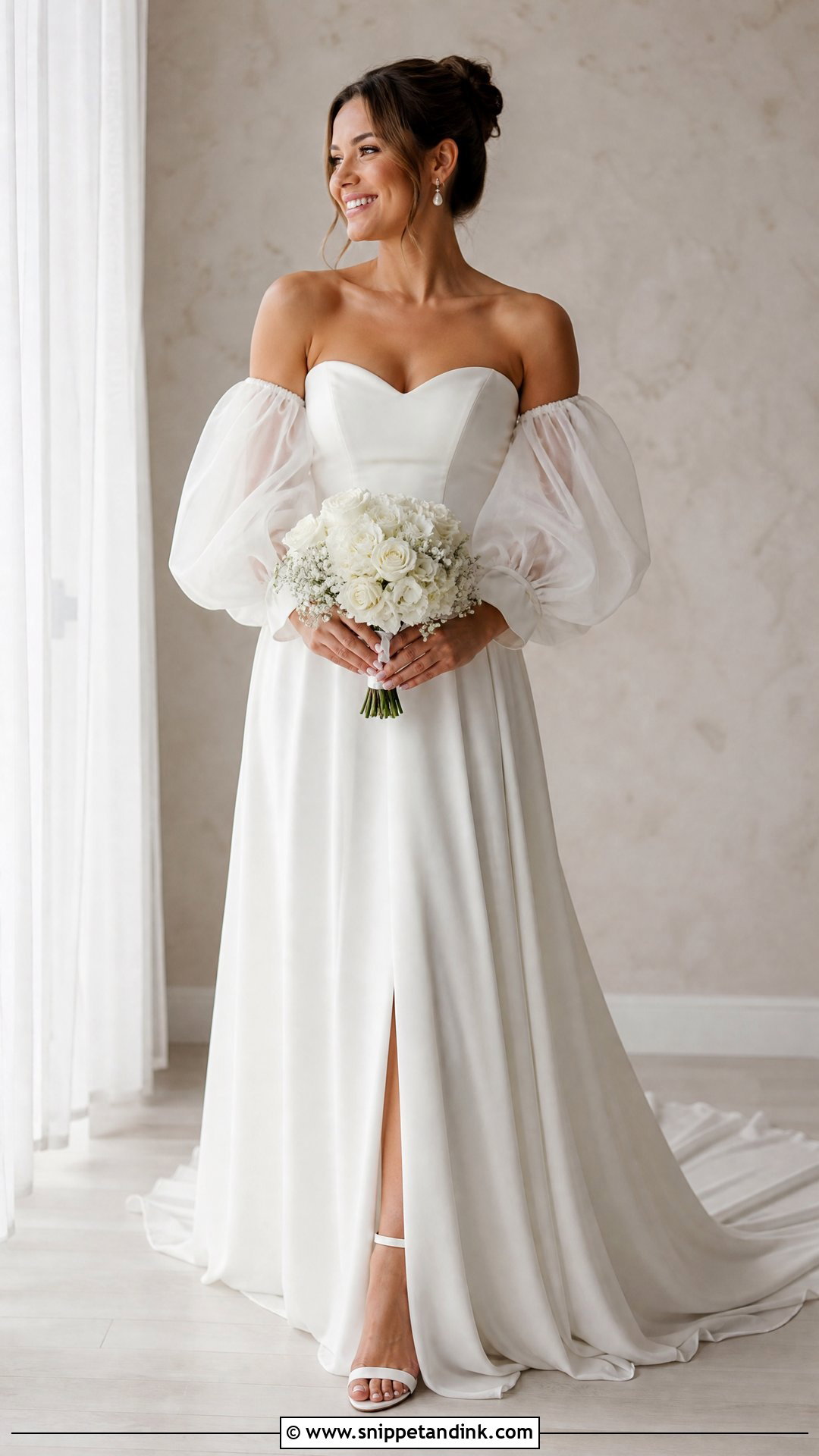
Puff sleeves look elegant only when they’re airy. Organza or tulle holds volume without weight, while satin puffs can look costume-like. Pair them with a fitted bodice and a simple skirt so the volume is the only big gesture. Detachable puffs give you two looks, one for the ceremony and one for dancing, but ask how they attach: elastic bands slip, while snaps or hidden ties hold. Delicate earrings, satin heels and a neat updo keep it refined.
13. Detachable Sleeve Wedding Dress
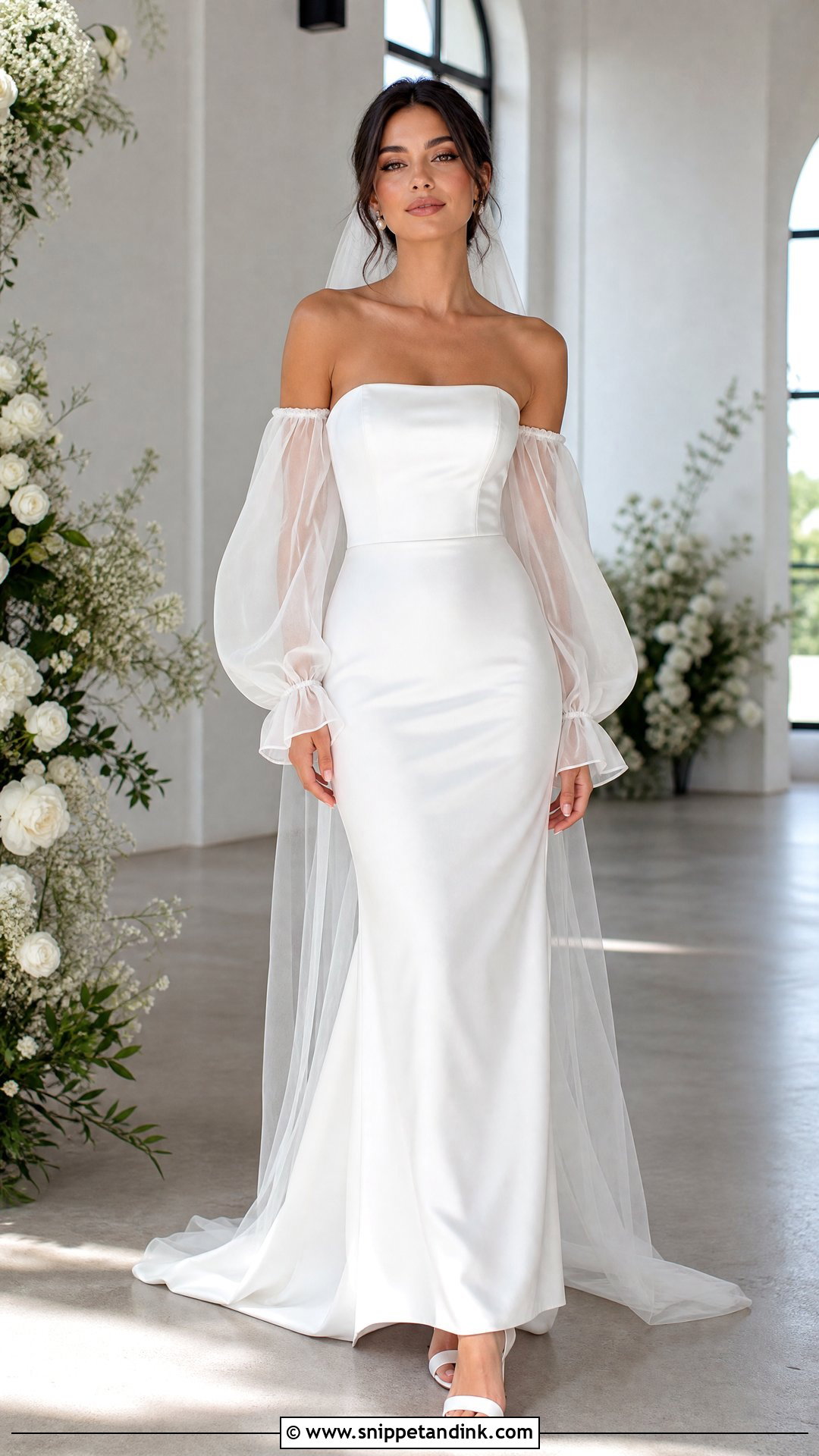
Detachable sleeves solve two problems at once: a covered church ceremony and a hot dance floor. The base is usually strapless or sleeveless, with organza, lace or draped satin sleeves added on top. The test I give every version is simple. Look at the dress both ways in the mirror, and if either one looks unfinished, it’s the wrong design. Keep jewelry subtle enough to suit both looks, and have someone practice taking the sleeves off before the day so the changeover is quick.
14. Floral Applique Wedding Dress
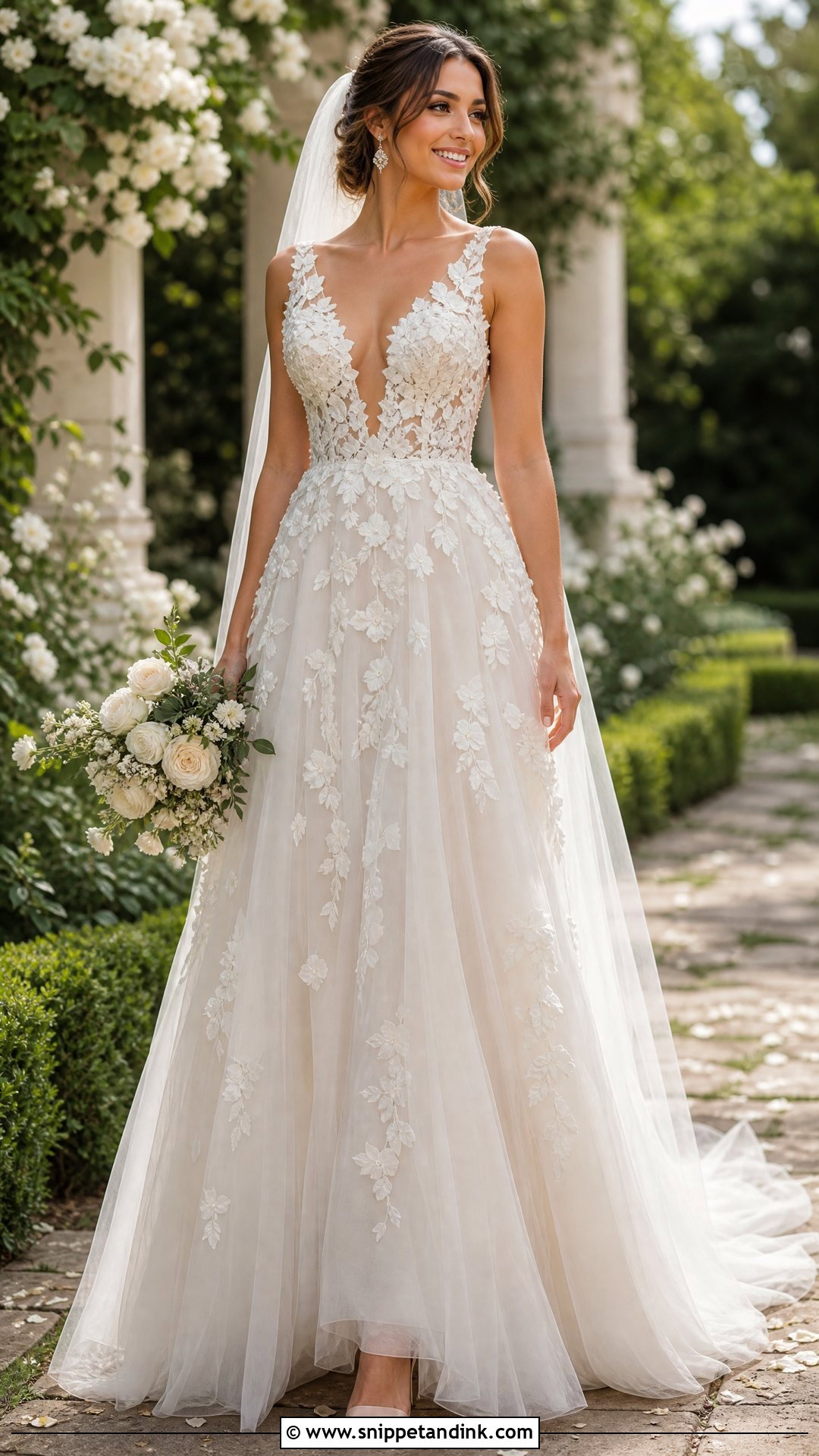
Placement is everything with floral applique. Scattered 3D flowers on the bodice, sleeves or skirt read modern; dense coverage tips into sweet. Organza petals, embroidered vines and soft tulle layers add depth that shows well in side light outdoors. Keep the silhouette simple, an A-line or fitted bodice with a flowing skirt. Raised petals crush easily, so the gown should travel and hang with space around it. Tiny floral earrings, neutral heels, a soft veil and a loose bun suit a garden wedding.
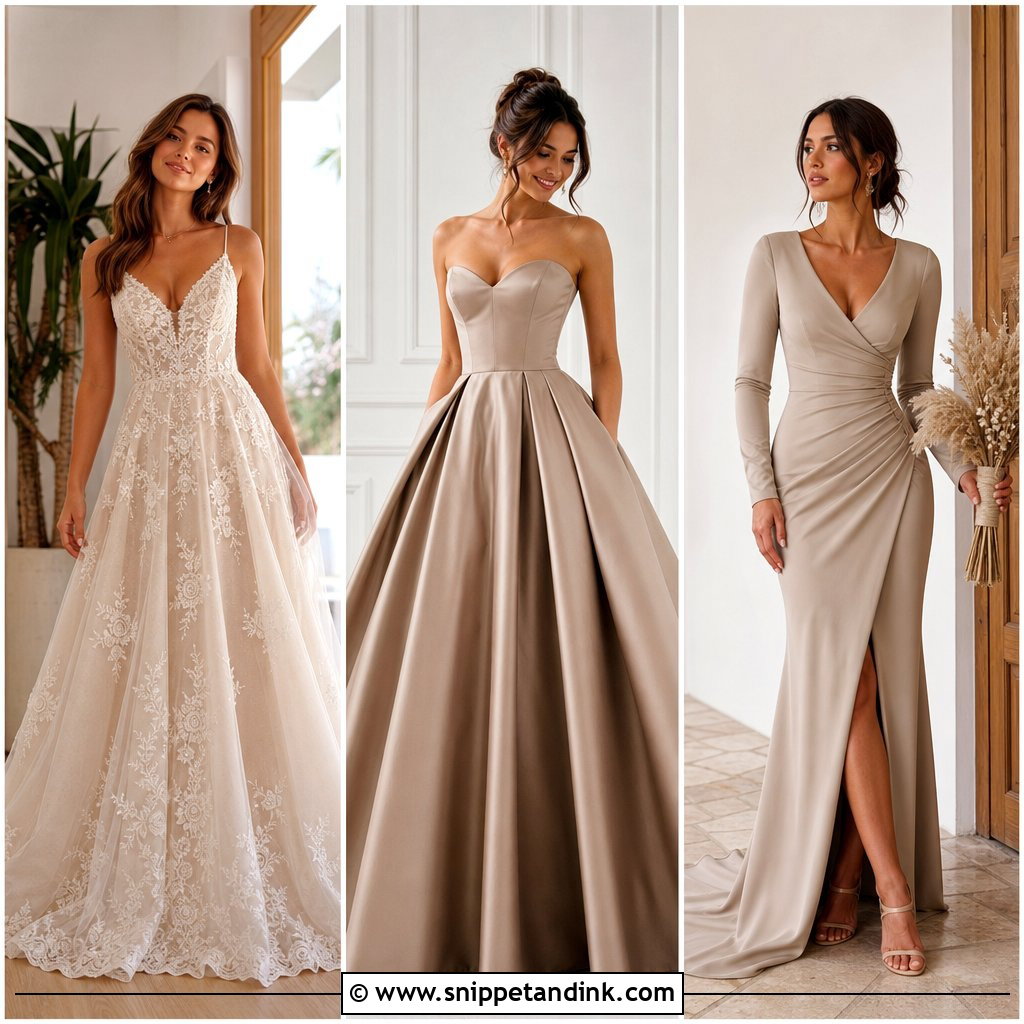
15. Modern Lace Wedding Dress
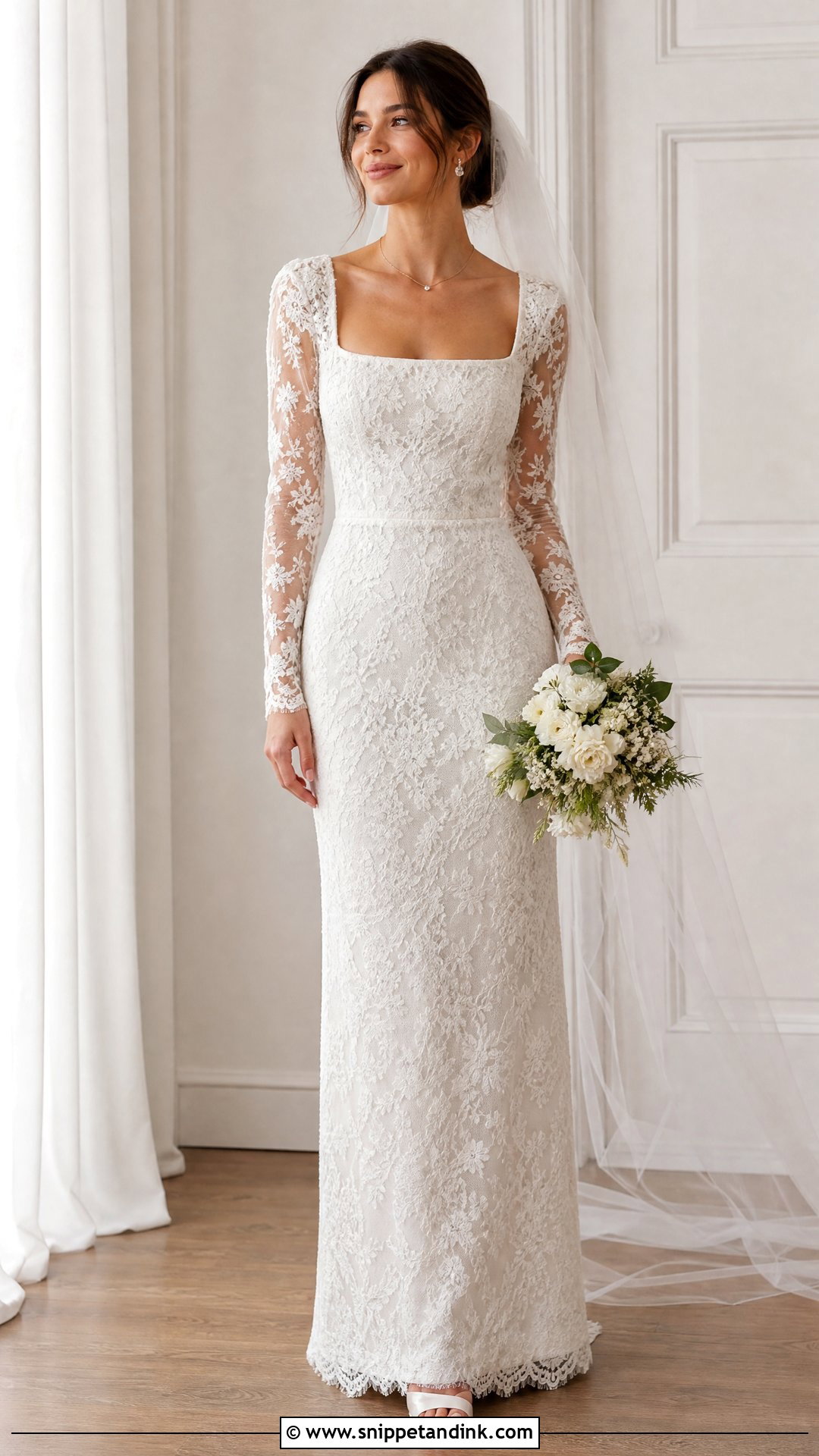
Lace looks current when the pattern is clean or slightly graphic and laid over a nude or ivory lining, or used only as sleeves or panels on a plain gown. Sheath, A-line and square-neck shapes all update it. The lining color changes everything. Nude lining makes lace look like it sits on the skin; ivory lining makes it read as a dress. Hold both against you in daylight before choosing. Sleek heels, a plain veil and minimal jewelry let the lace carry the look.
16. Mikado A Line Wedding Dress
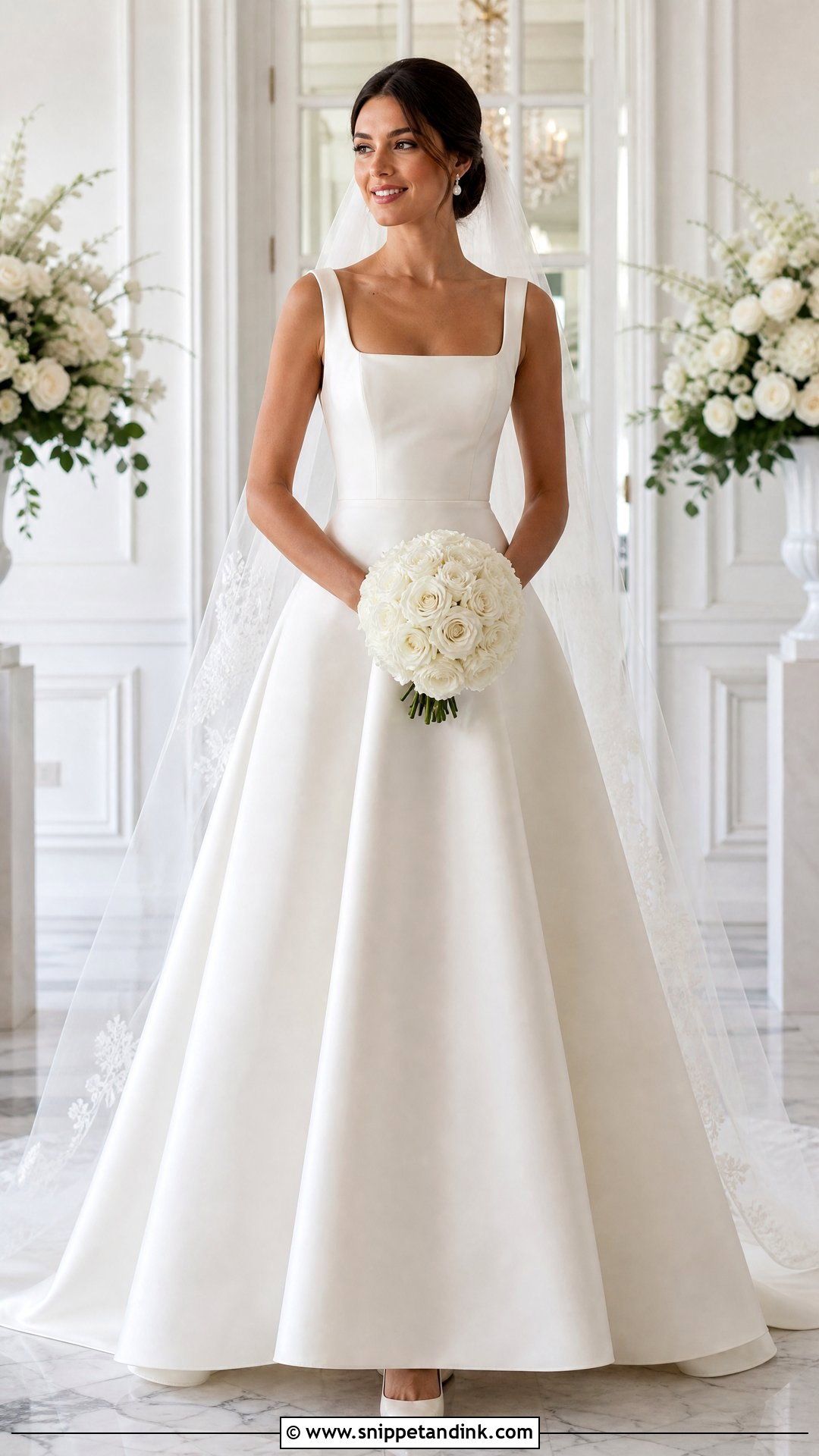
A mikado A line wedding dress is the one I suggest to brides who want structure without fuss. Mikado is a heavy silk or blended weave with a low sheen, so it holds its shape and stands away from the hips with almost no decoration. A fitted bodice, defined waist and A-line skirt suits a wide range of figures. Mikado does crease at the lap, so plan a quick steam after the ceremony if you’re seated for long. A square, strapless or bateau neckline all work, with pearl earrings, satin pumps and a long veil.
17. Column Wedding Dress
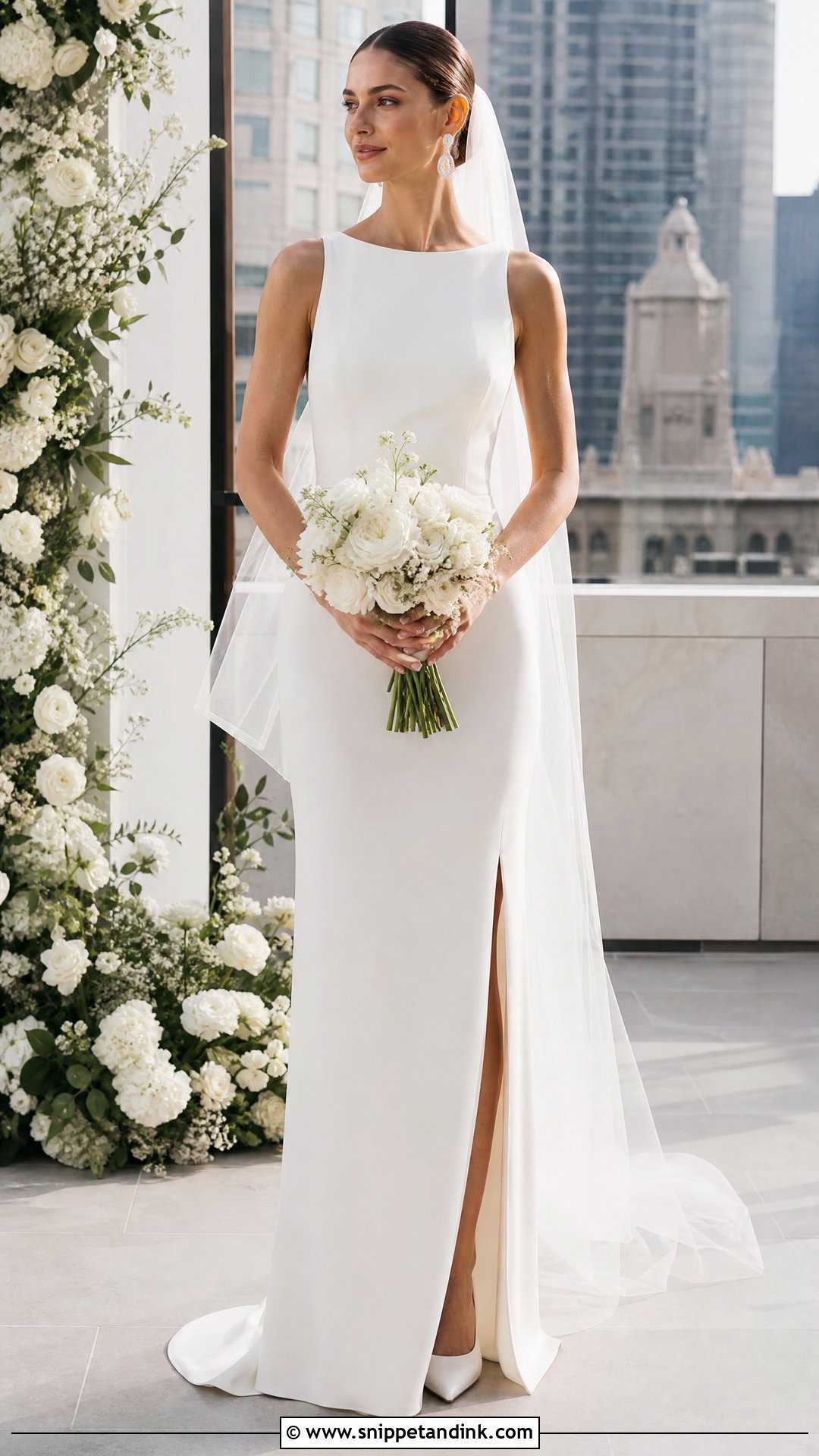
A column falls straight from neckline to hem in one long line, and in crepe, satin or silk with minimal seams it is the most fashion-led shape here. Because it’s narrow, walking is the issue I solve first: a subtle slit or a small kick pleat at the back gives you a normal stride without changing the silhouette. Pointed heels, a sculptural earring and a veil that follows the dress finish it. It suits a rooftop, a courthouse or a gallery wedding.
18. Corset Bodice Wedding Dress
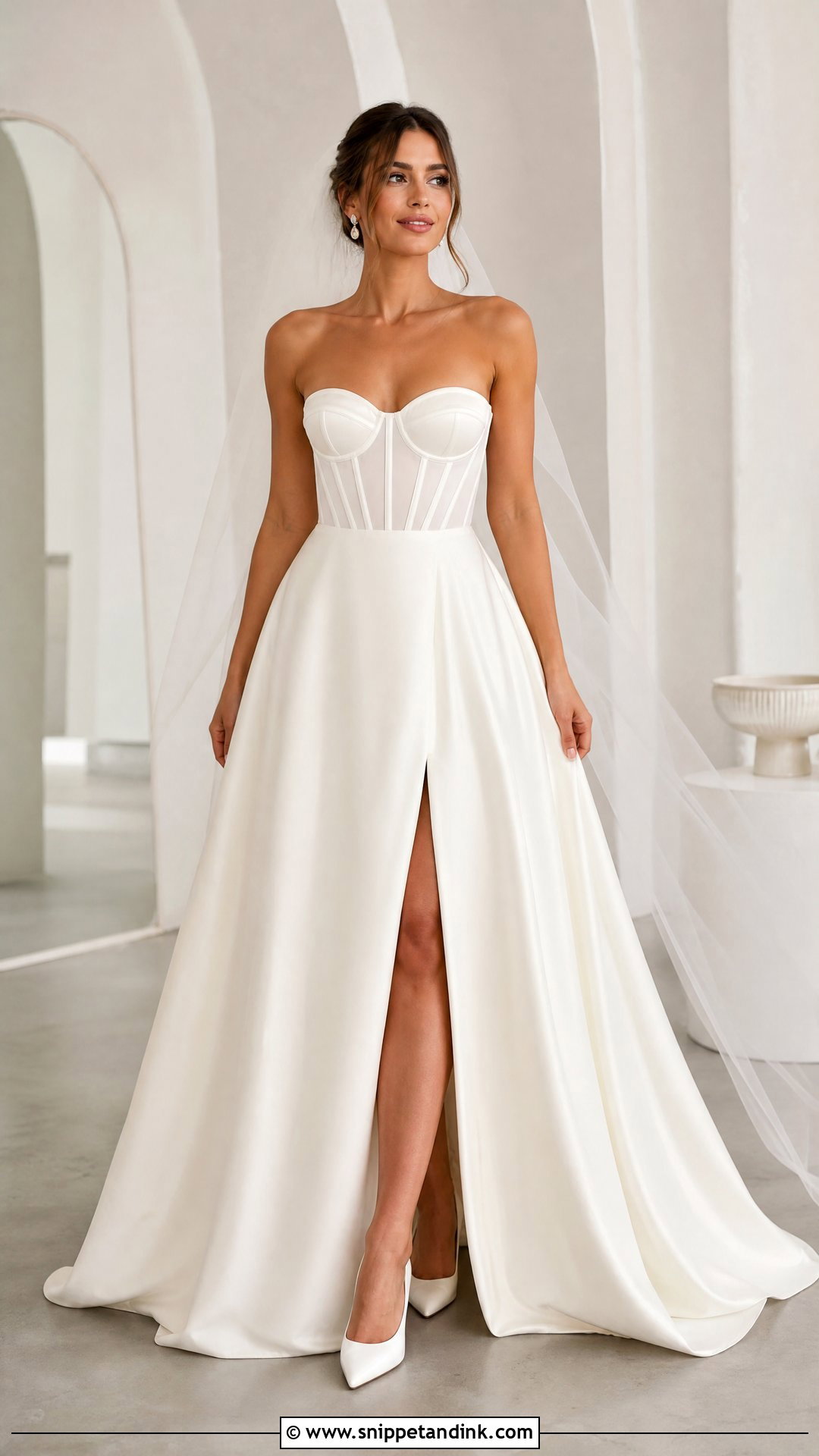
Modern corset bodices are softer than historical ones, with visible boning, smooth satin panels or lace overlay, paired with an A-line, column or tulle skirt. Support matters more than looks. Spiral steel boning bends with you; cheap plastic boning warps and pokes by evening. Sit down in it for several minutes at the fitting and breathe deeply. If it pinches at the ribs, it will feel worse after dinner. Drop earrings, elegant heels and a simple veil keep the attention on the waist.
19. Bow Back Wedding Dress
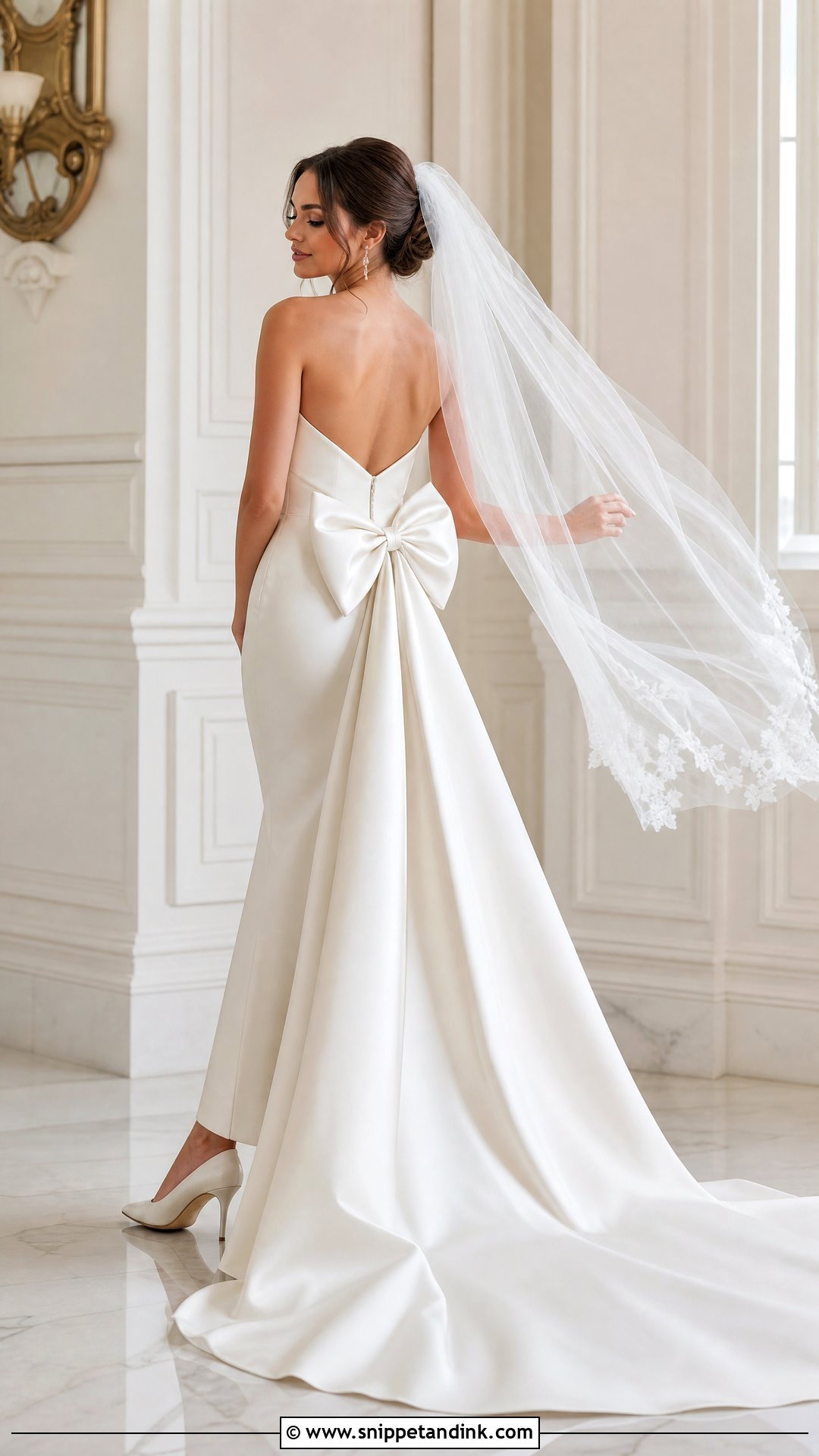
A bow at the back gives you an exit moment and keeps the front clean. Satin bows hold their shape best; soft organza ones can collapse after hours of sitting against a chair. A detachable bow train adds length for the ceremony and comes off later. Choose a simple strapless, square or high neck so the bow carries the look, and pick a veil you’ll remove early enough that the back is seen. The bow needs structure and proportion, or it starts to look like gift wrapping.
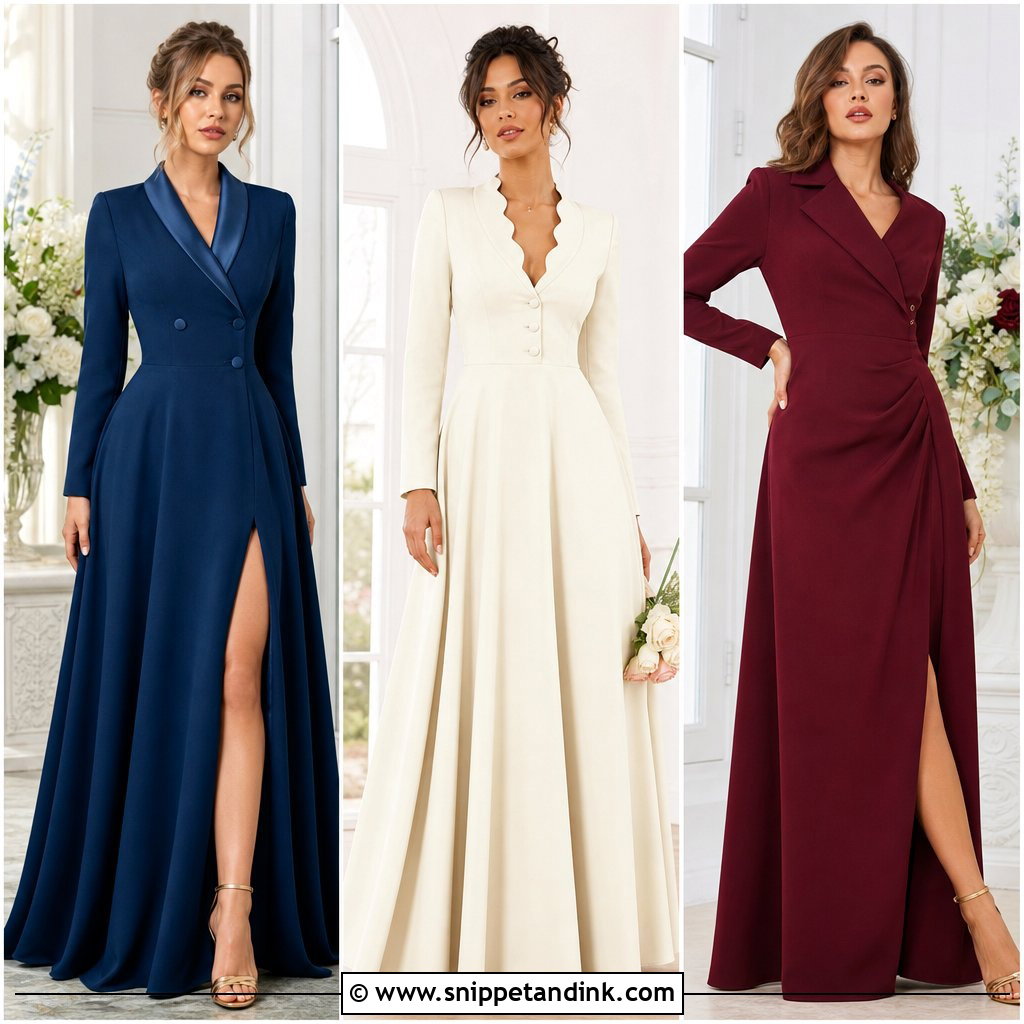
20. Cape Wedding Dress
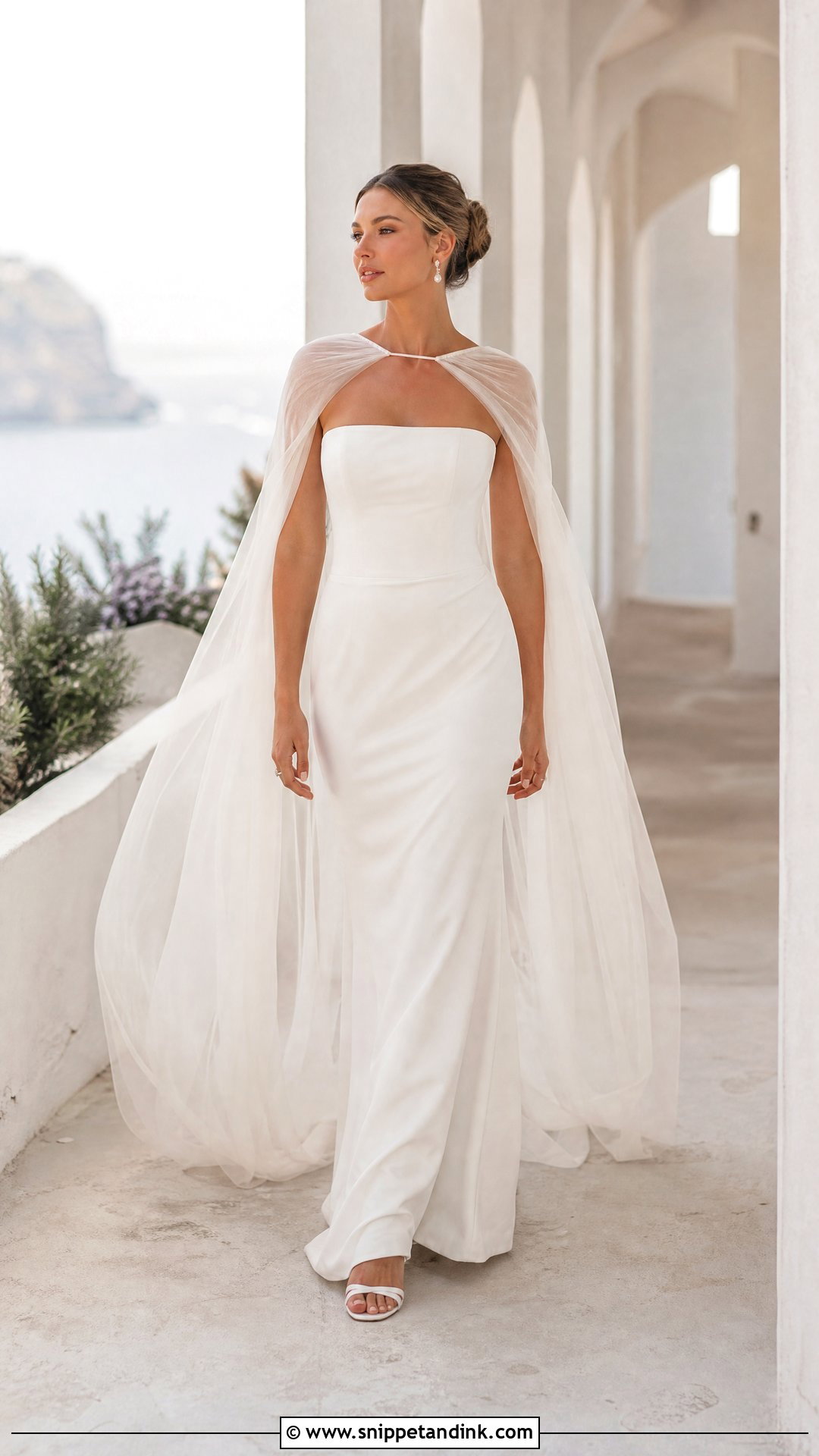
A cape can replace a veil entirely, and on a minimalist gown it adds the drama the dress leaves out. Sheer tulle, pearl-trimmed edges and smooth crepe all work, attached at the shoulders over a column, strapless or fitted crepe dress. Outdoors, a long tulle cape catches every breeze. That movement looks wonderful in photos and can be a nuisance during vows, so ask for a wrist loop if the venue is exposed. Keep jewelry minimal and the hair sleek. It gives you coverage without sleeves.
21. Tea Length Wedding Dress
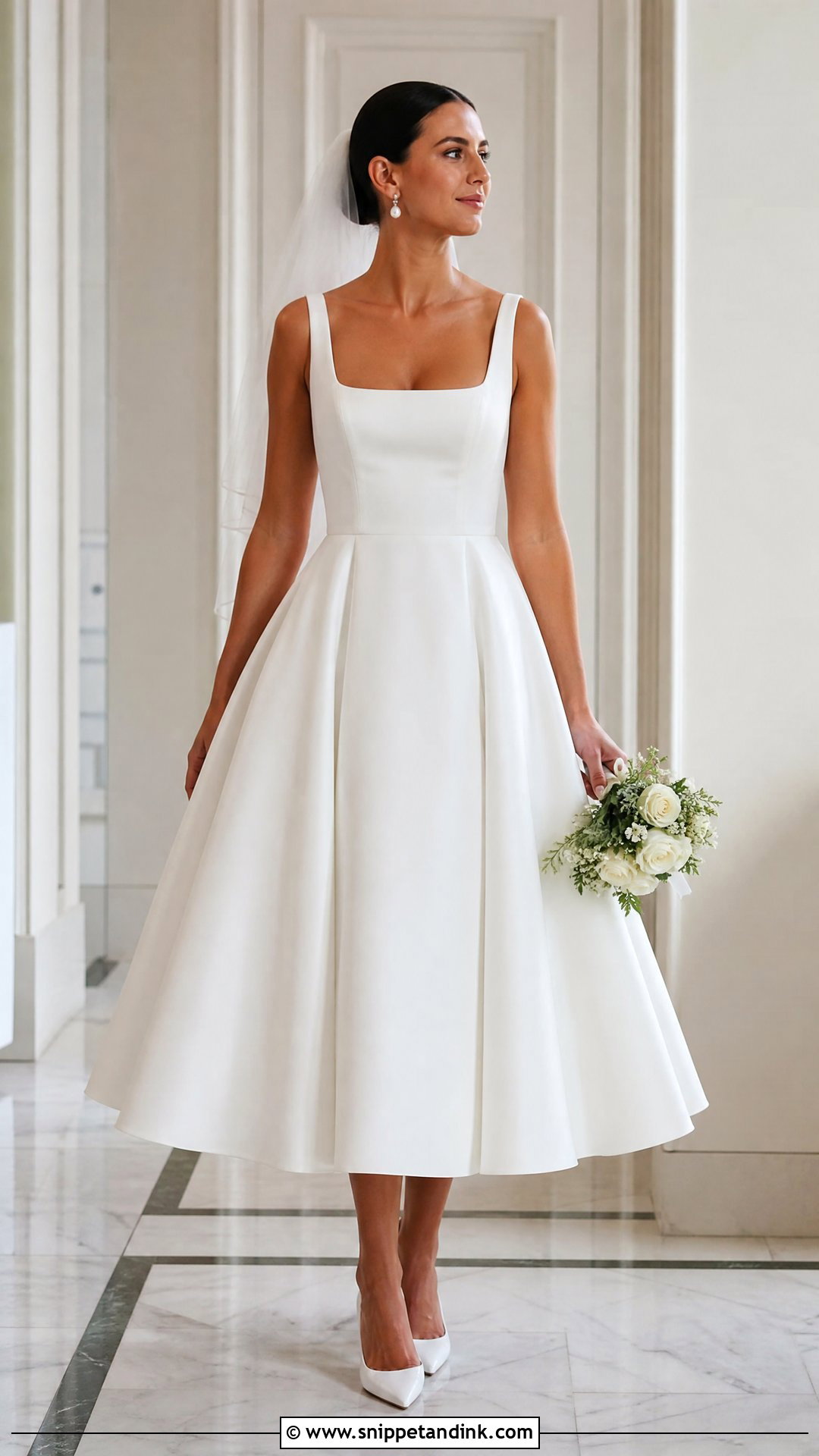
Tea length falls between knee and ankle, which makes your shoes part of the outfit. Structured satin, a lace bodice over a full skirt or a minimal square neck all hold this length well. The hem needs setting with your actual shoes on, since an inch matters at mid-calf. Pointed pumps or slingbacks, pearl earrings and a short veil or modern headband suit it. I’d reach for this at a courthouse ceremony, a brunch reception or a small dinner.
22. Bridal Mini Dress
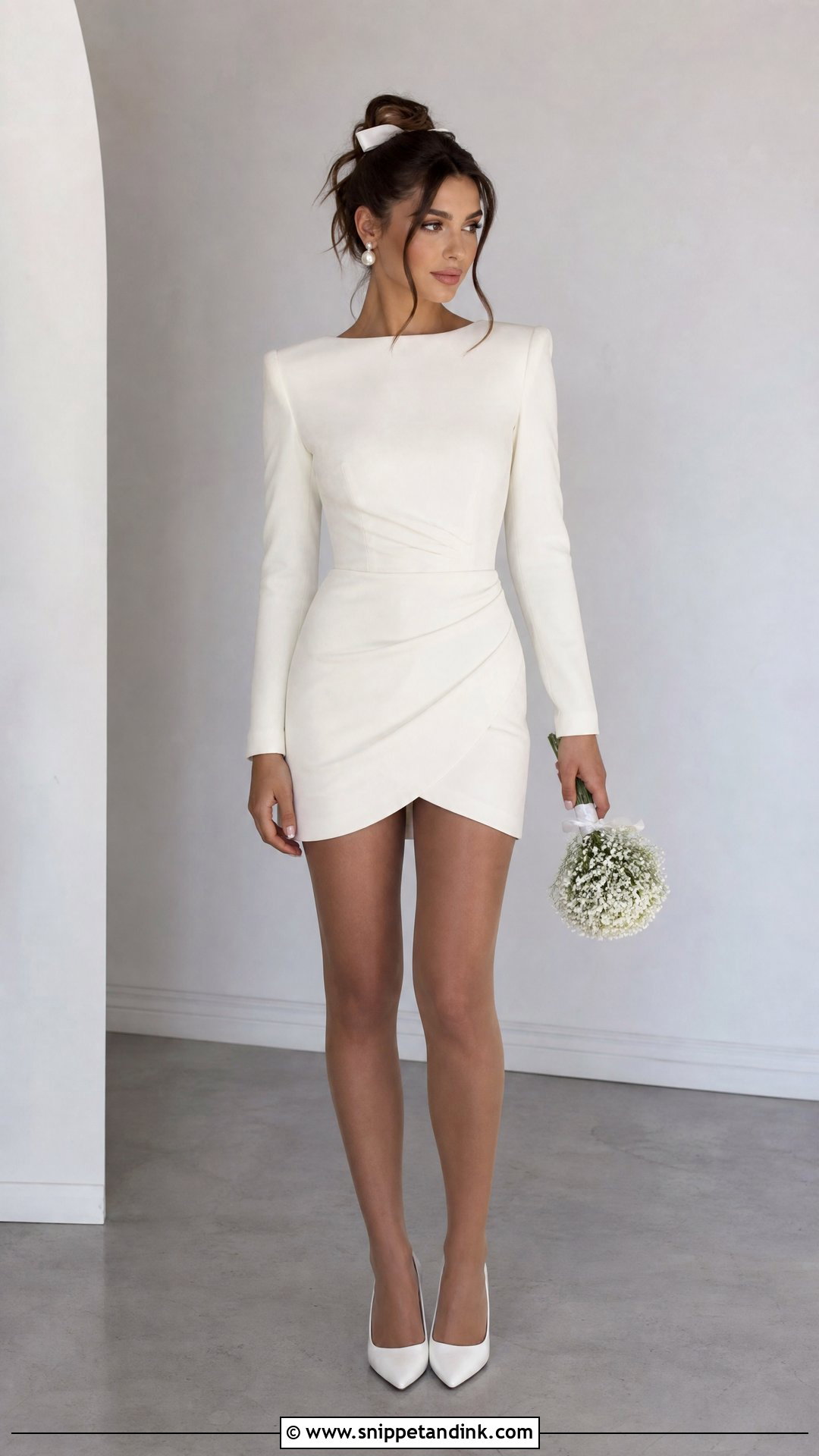
A mini only reads bridal when the fabric is serious. Crepe, satin or structured jacquard hold a short shape; thin stretch fabrics make it look like a party dress. It works for a reception change, a civil ceremony or an elopement. A long-sleeve mini, a bow back or a clean shift each feel chic. Sit down in it before you buy. Short structured skirts ride up more than you expect, so the length should be judged seated. Pointed heels, sheer tights in cold weather and a short veil or hair bow finish it.
23. Two Piece Wedding Dress
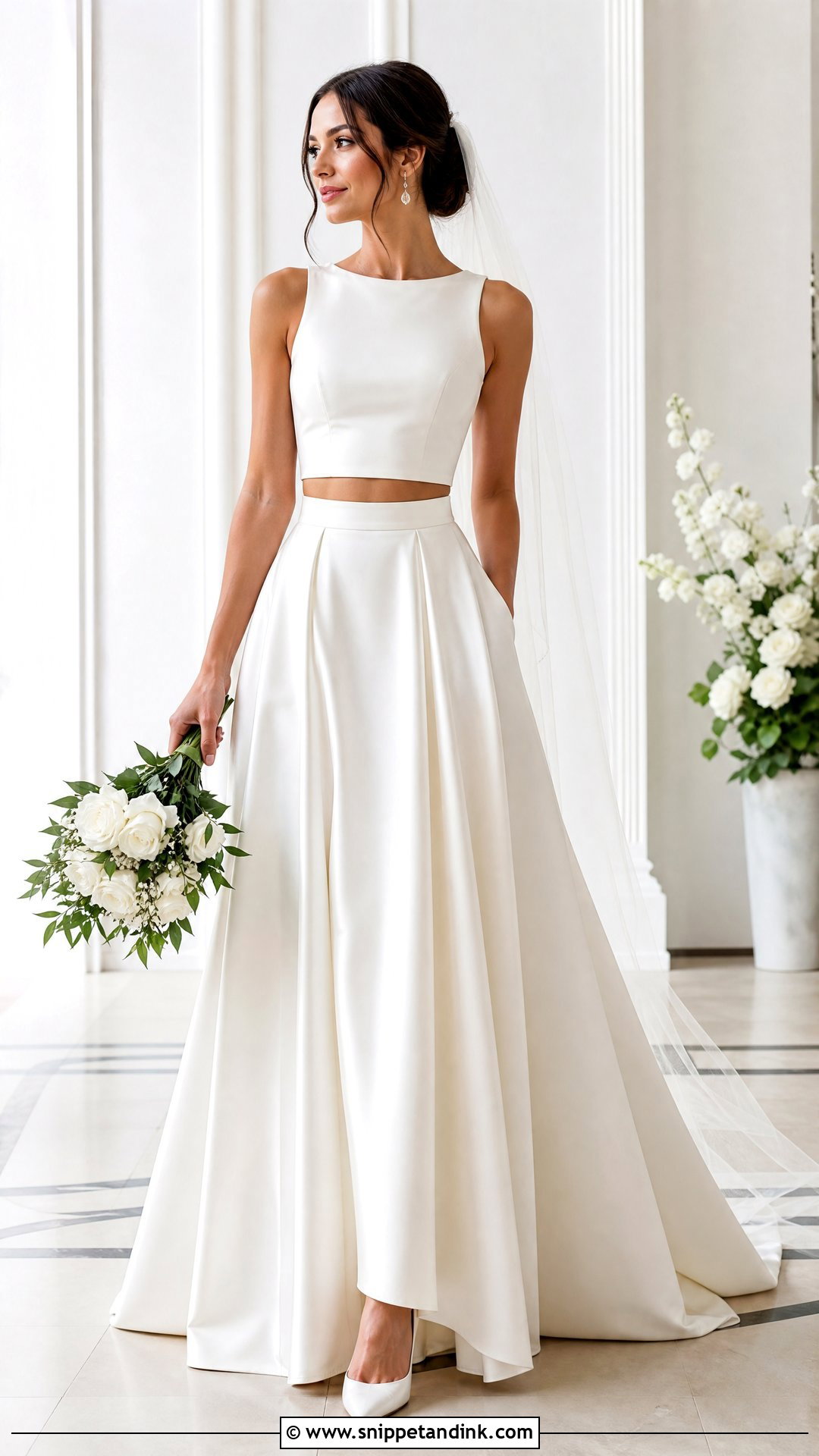
Bridal separates look polished when the pieces are clean and the gap between them is small or closed. A structured crop top over a high-waist skirt, a lace top with a satin skirt, or a tailored bridal blouse over an A-line all work. The waistband is where I spend fitting time, because a skirt that sits even slightly loose will turn as you walk. Separates are also easier to alter than a one-piece gown when you’re different sizes on top and bottom. Sleek heels, delicate earrings and a soft veil complete it.
24. Wedding Dress With Overskirt
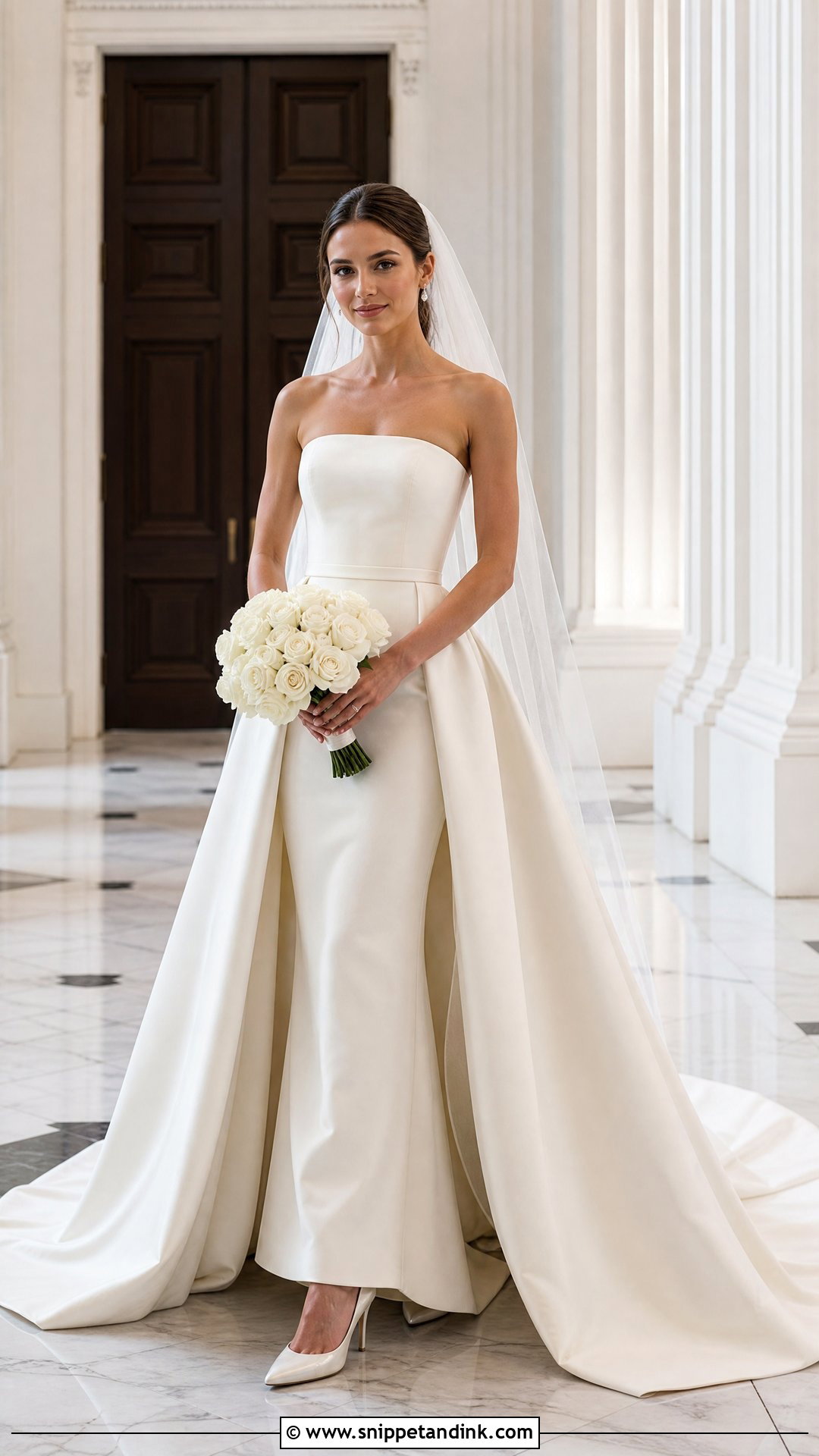
An overskirt gives you two dresses: a fitted sheath, column or mermaid underneath, and a removable layer of satin, tulle or organza for ceremony volume. Tulle overskirts are light and forgiving; satin ones are heavier and need firm closures. I always ask the bride to have her maid of honor practice taking it off before the day, because hooks hidden at the back are hard to reach in a hurry. Classic heels and refined earrings suit both versions, and the veil should match the more formal one.
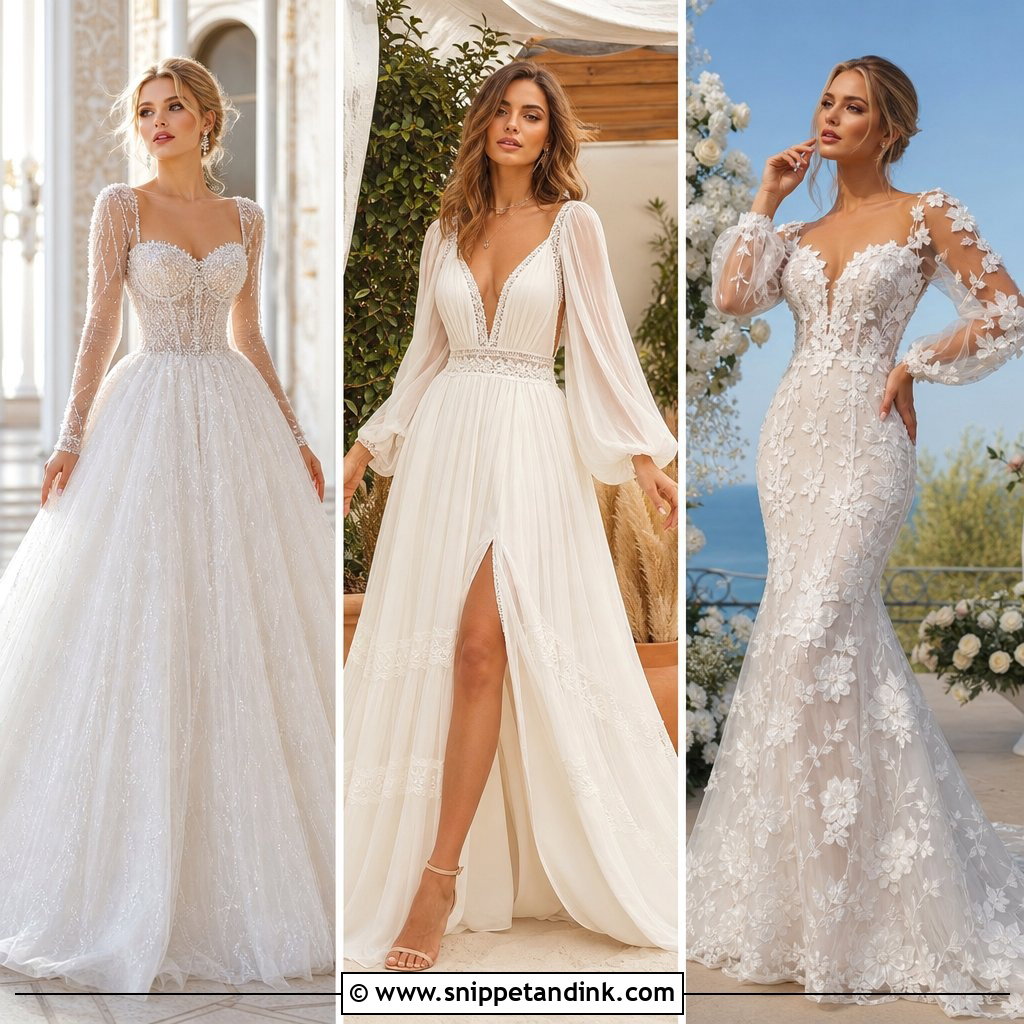
25. Sculptural Wedding Dress
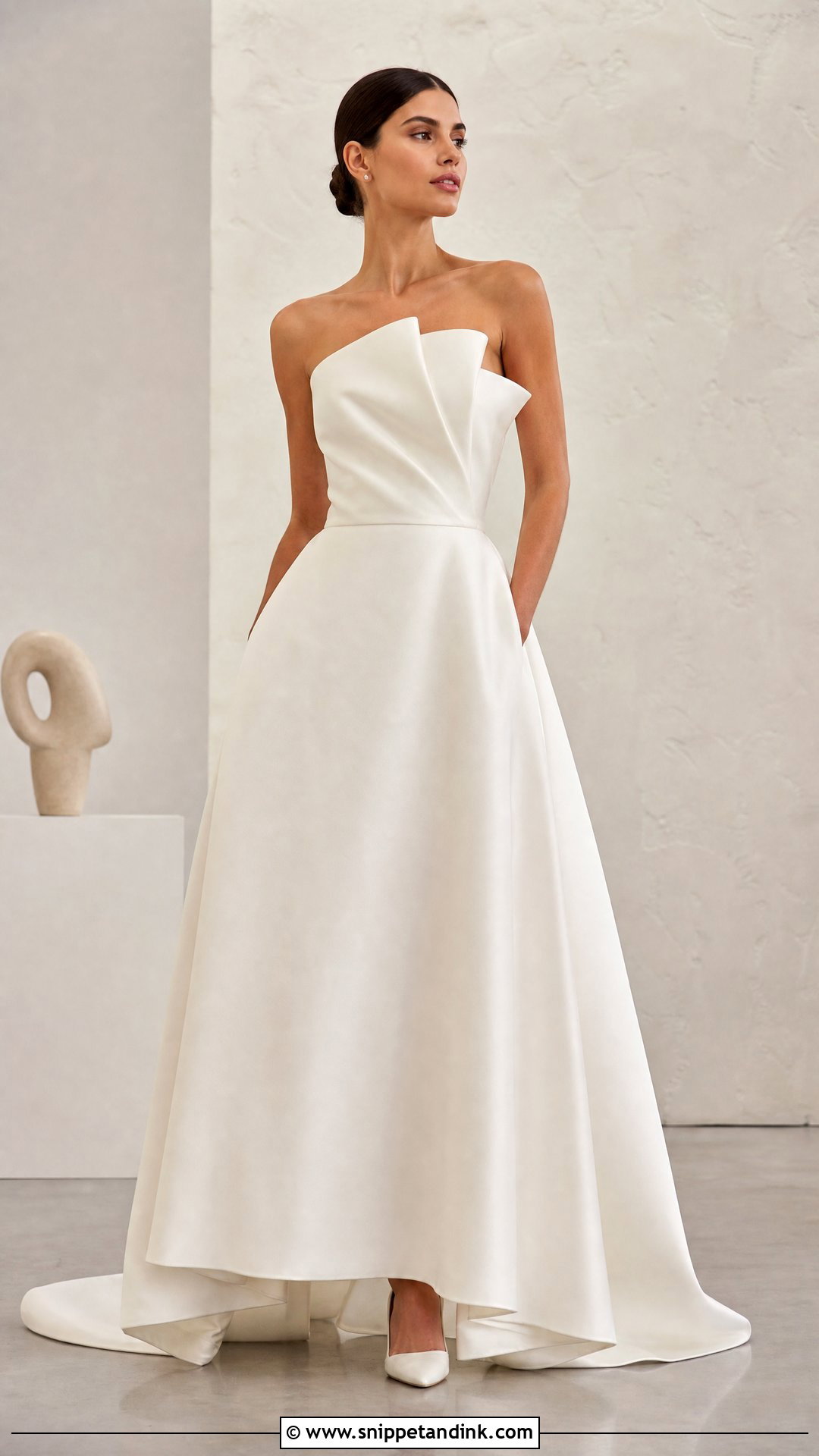
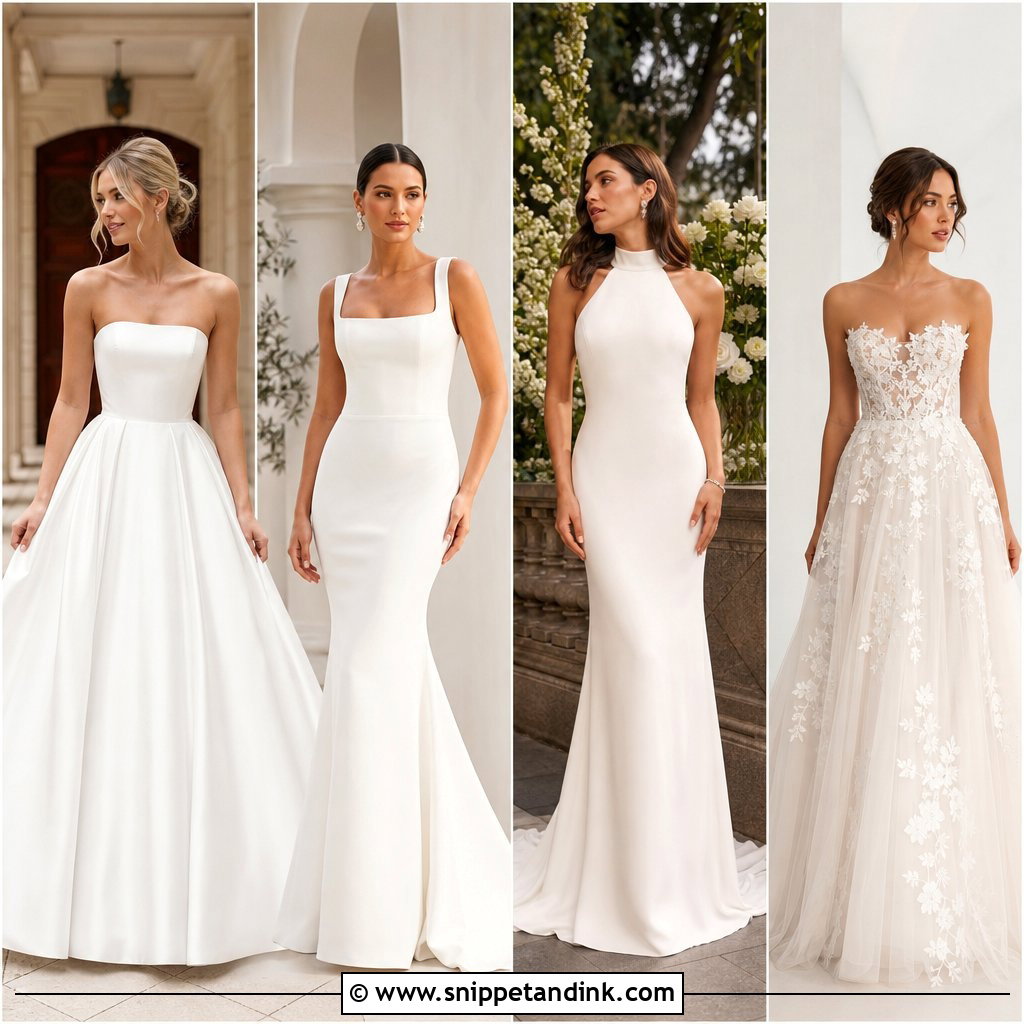
A sculptural wedding dress treats the gown as a piece of design: architectural folds, structured bodices, dramatic necklines or clean pleating in satin, mikado or crepe. The structure is built from interfacing and boning, which makes these gowns stiff to sit in, so test a chair before committing. A folded neckline, a sculpted strapless or a modern peplum each make a strong silhouette. Keep accessories to simple earrings, sleek heels and polished hair. Anything more competes with the construction.
Alterations and Undergarments Set the Real Timeline
Most of the elegance in a clean modern gown comes from fit, not decoration, which means alterations carry more weight than they would on a beaded dress. Many seamstresses like to start fittings around two to three months before the wedding, with two or three appointments and a final one a week or two out. Rush work is possible but usually costs more and leaves less room to correct anything.
Buy your undergarments before the first fitting, not after. A bra or shapewear changes your measurements and how the fabric falls, so every fitting done without them is guesswork. What works depends on the dress:
- Slip and crepe column: smooth, laser-cut briefs and no visible lines; consider sewn-in cups instead of a bra.
- Strapless or off-shoulder: a longline strapless bra or cups built into the bodice so nothing shifts when you raise your arms.
- Low back: adhesive cups or a low-back converter, tested for a full day before the wedding to make sure they hold in heat.
- Corset or basque bodice: often nothing at all, since the boning does the work. Your seamstress can tell you at the first fitting.
Bring your wedding shoes to every appointment too. The hem is set to the heel height, and a change of shoes after the final fitting can leave you tripping or showing ankle.
One Idea, Done Well, Is the Whole Secret
Modern elegance doesn’t force you to pick between classic and current. A slip, a mikado gown, a lace sleeve or a sculpted bodice can all look refined when the fabric suits the shape and the fit has been taken seriously. Decide on the one idea you love most, then keep everything around it quiet. Before you sign anything, sit, walk and lift your arms in the dress, because a gown that still feels right after that test will see you through the day.
You'll Like These Ideas:



Leave a Reply